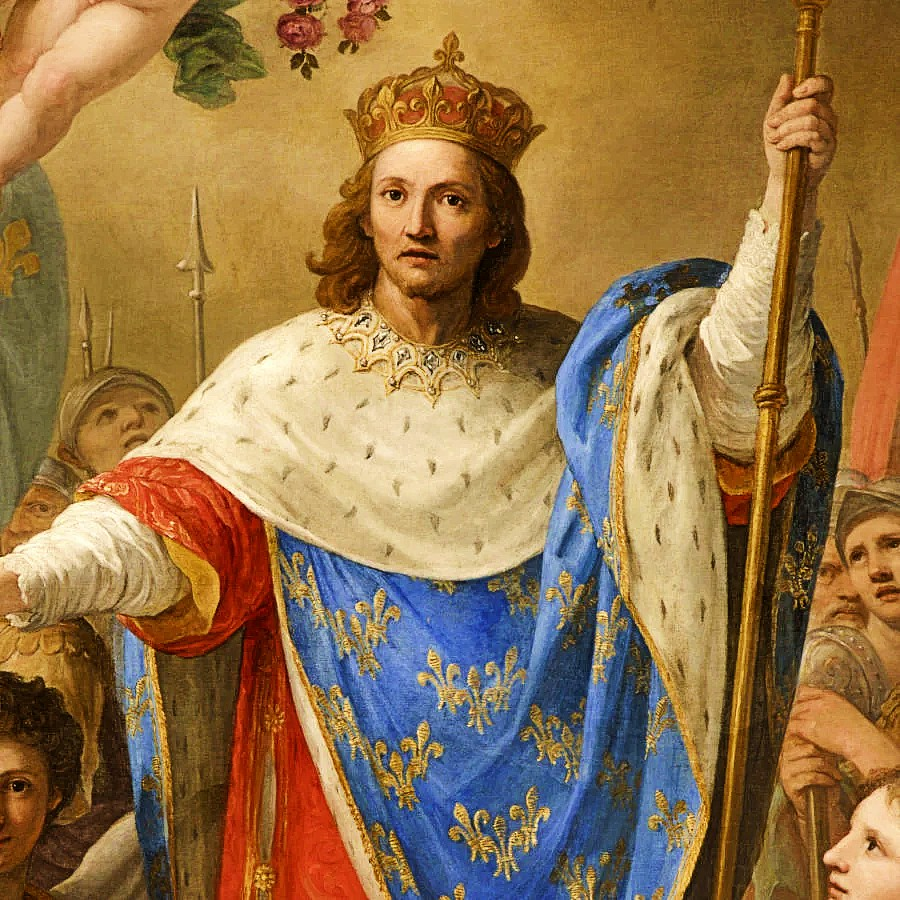
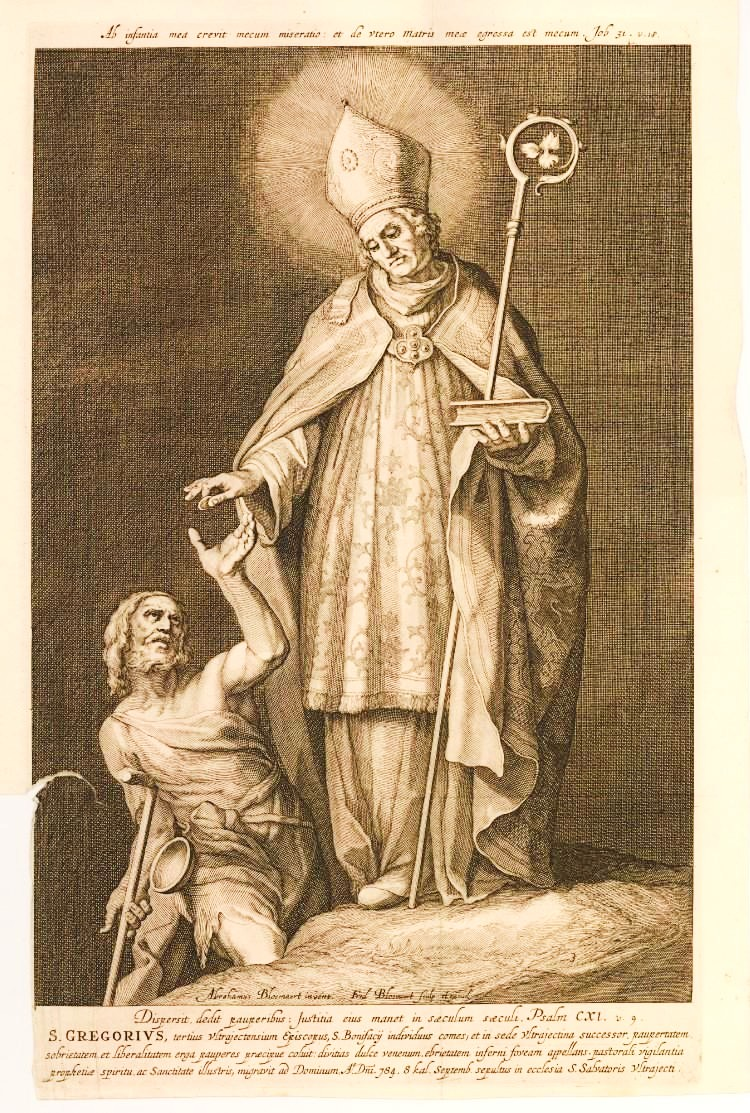
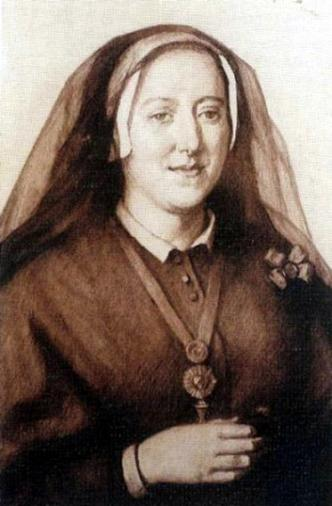
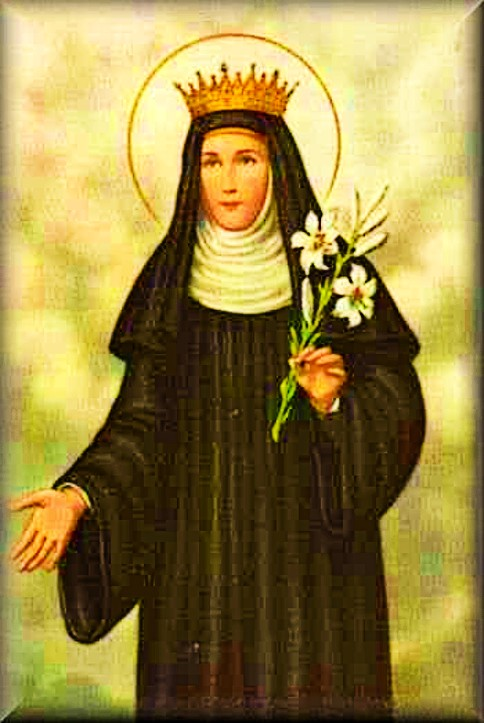
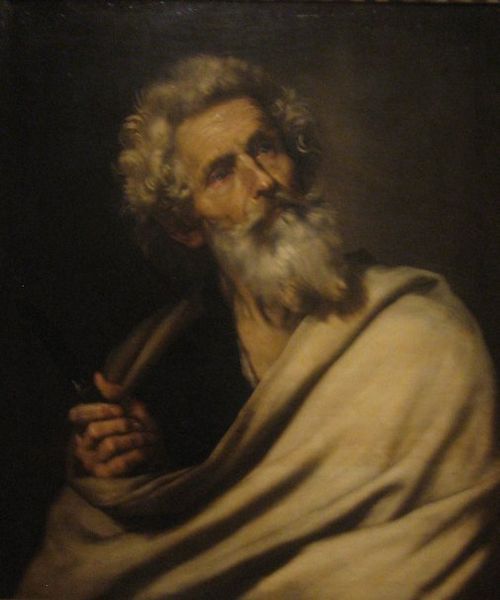
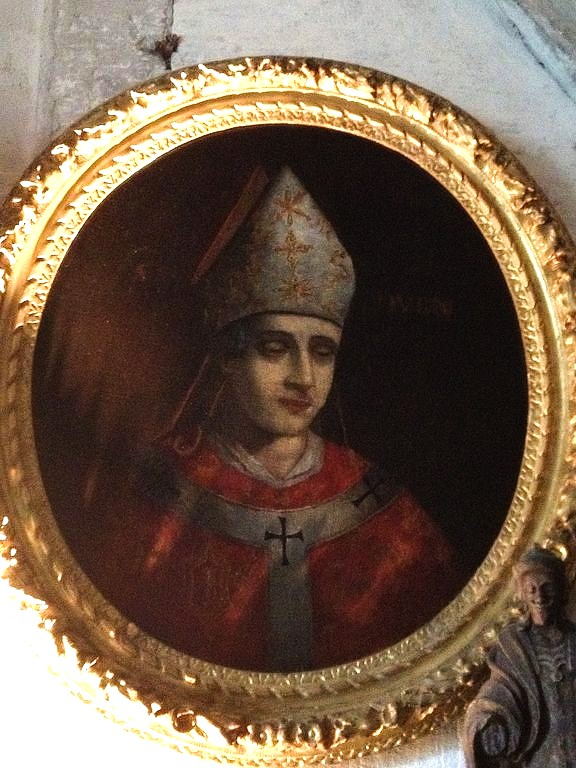
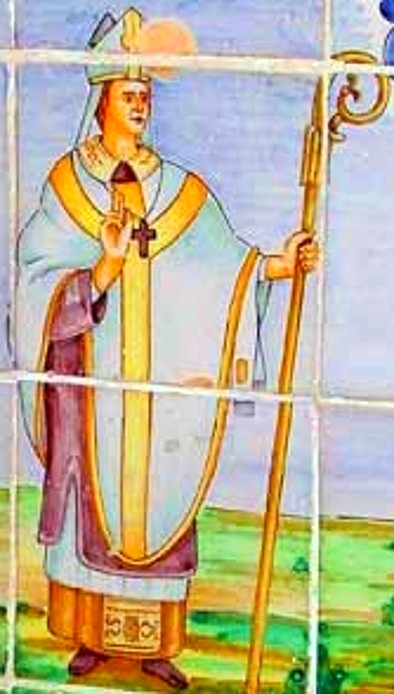
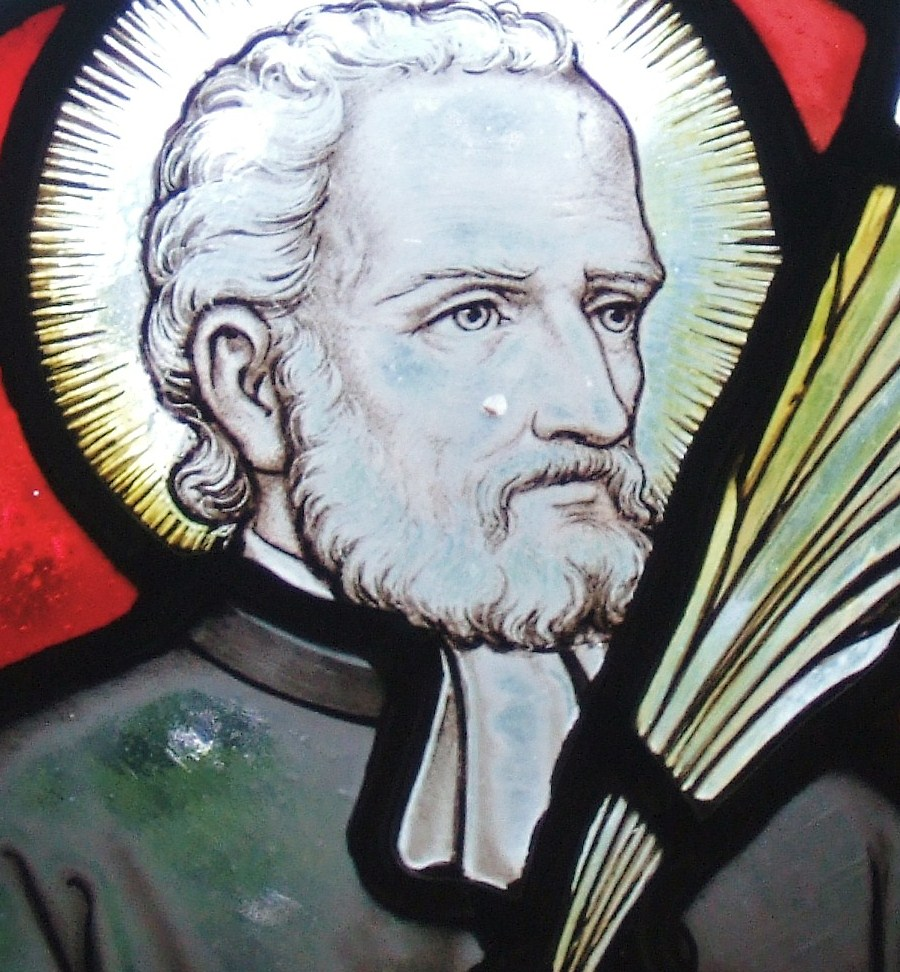
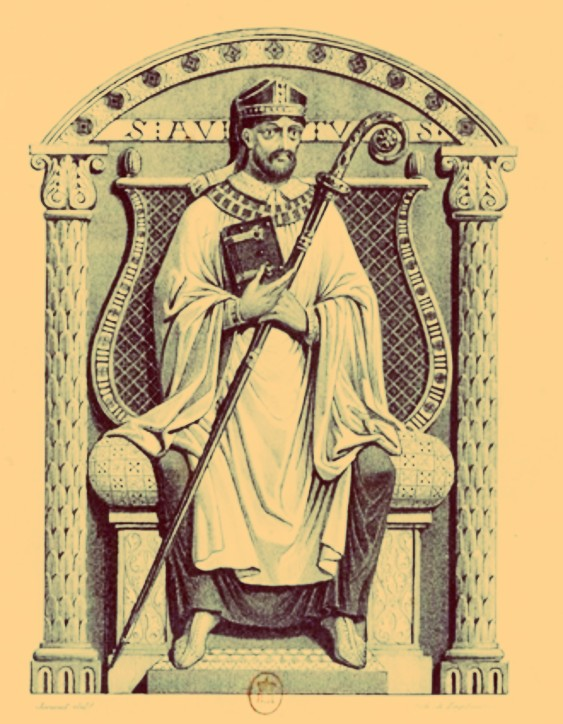
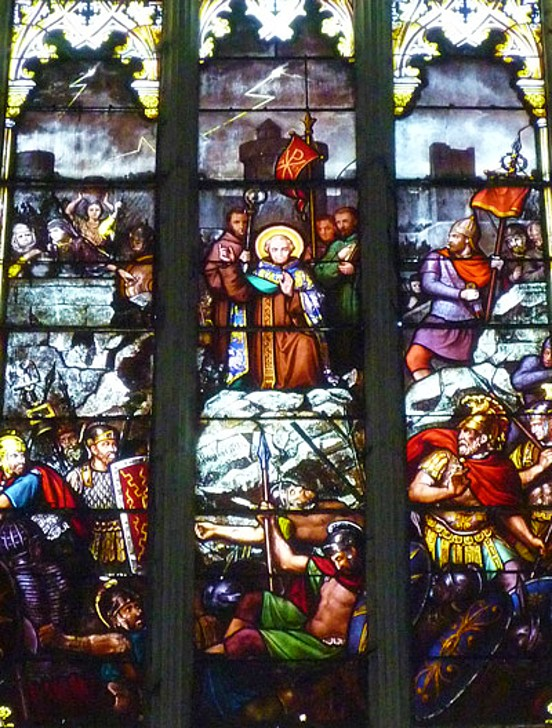
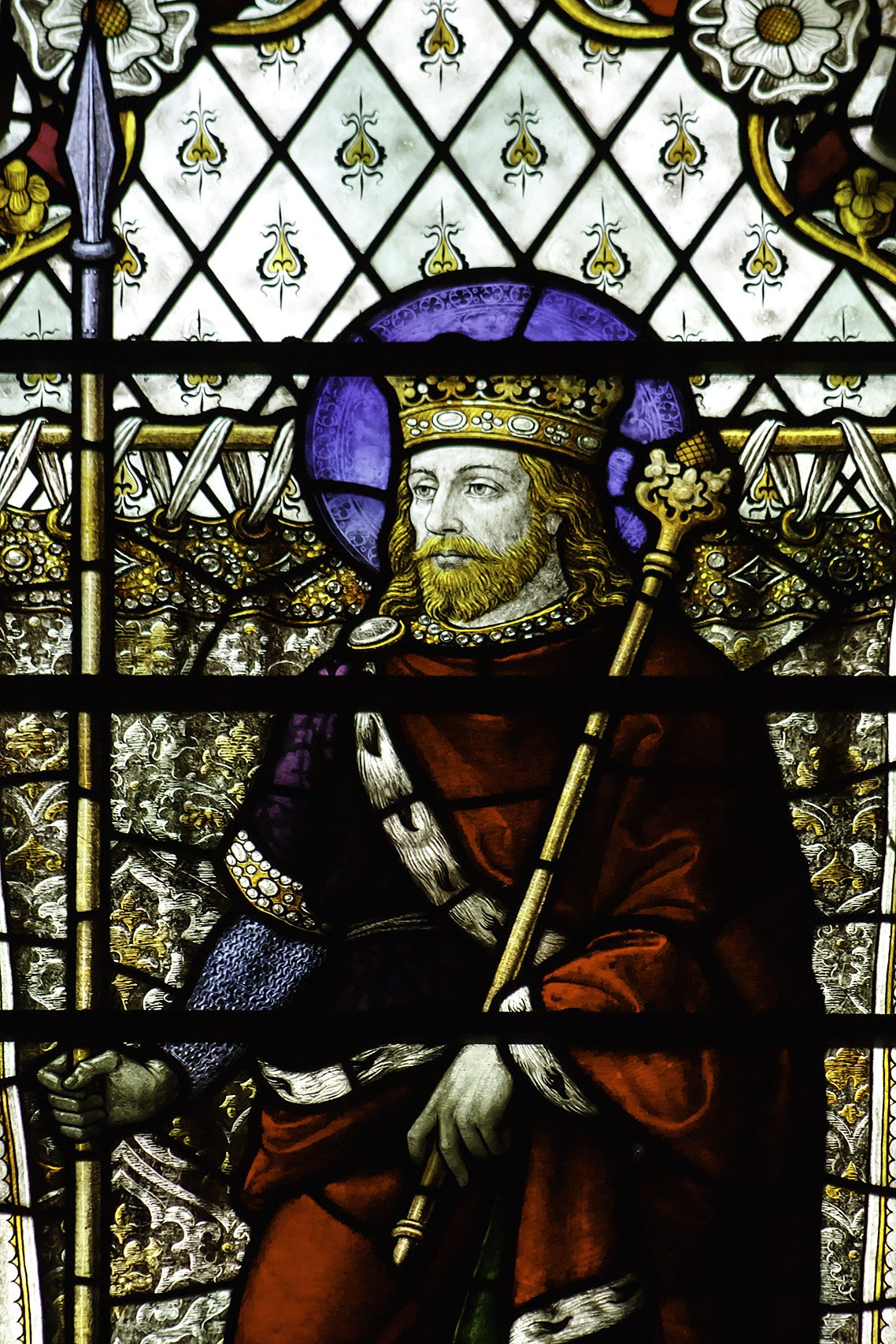
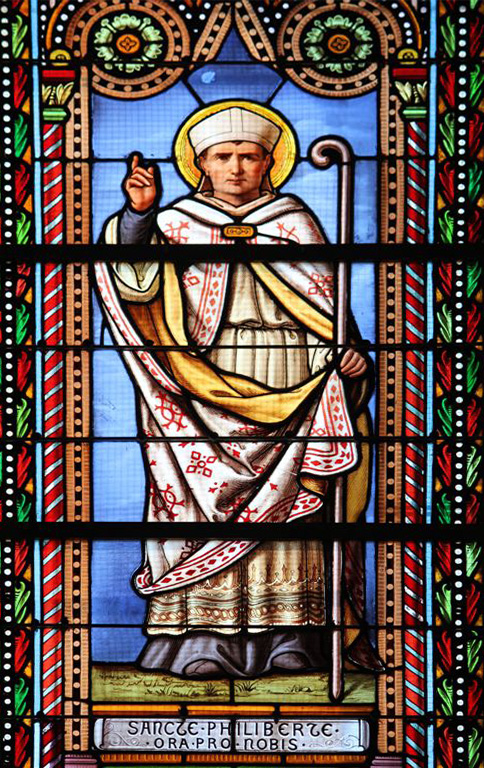
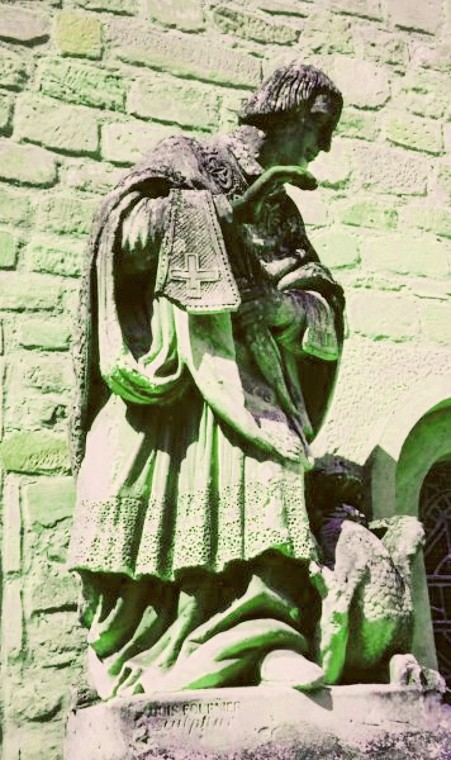
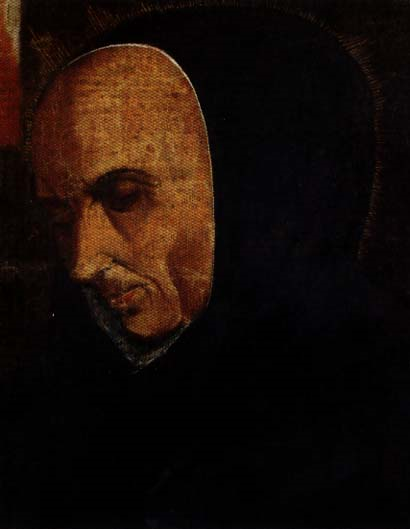
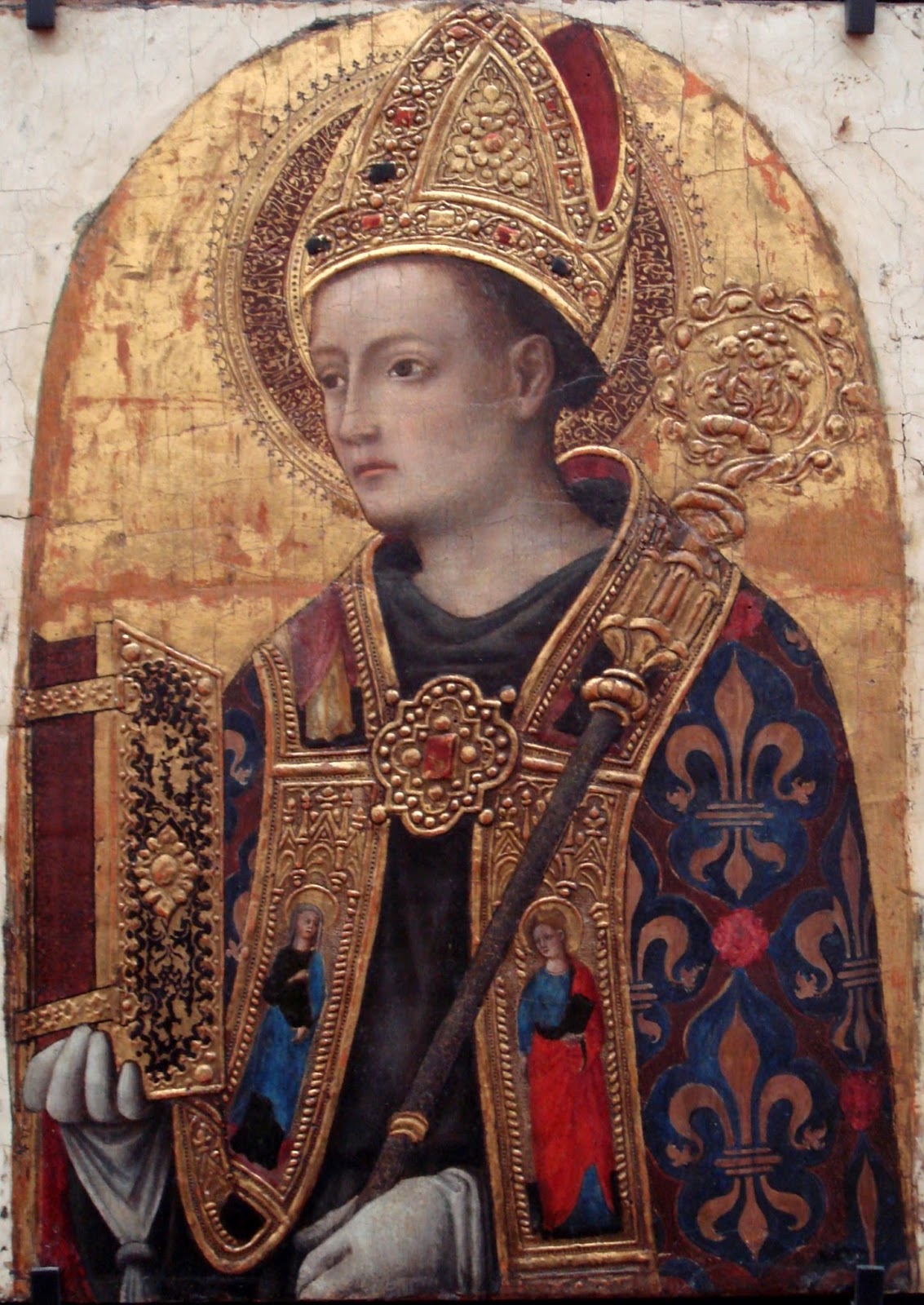
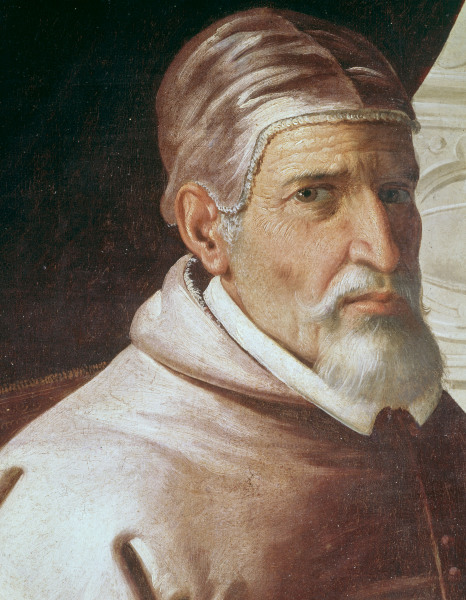
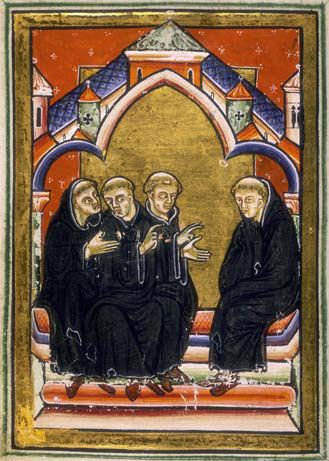
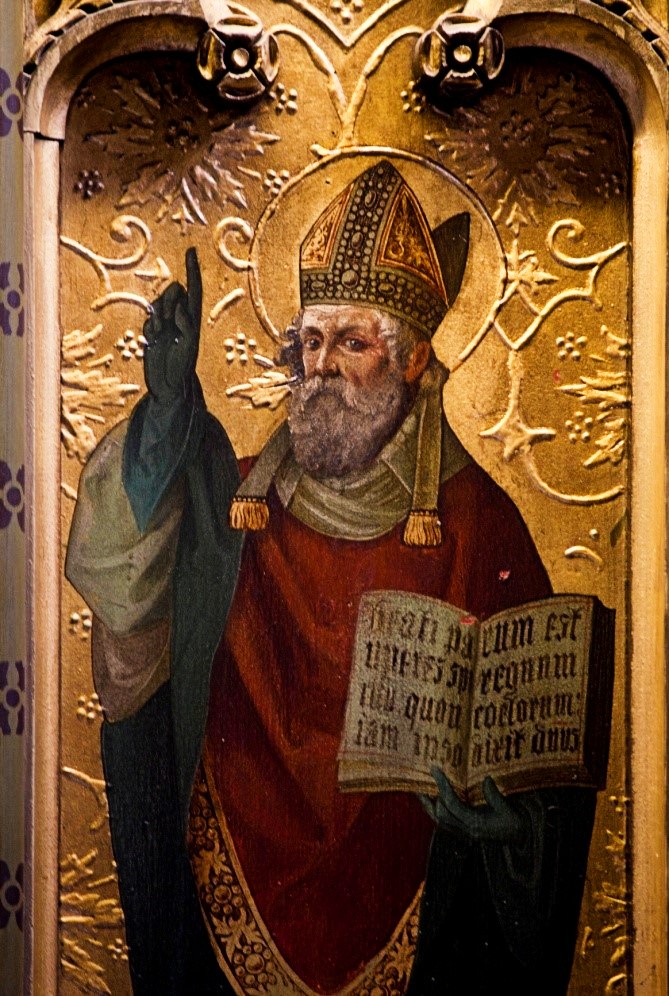
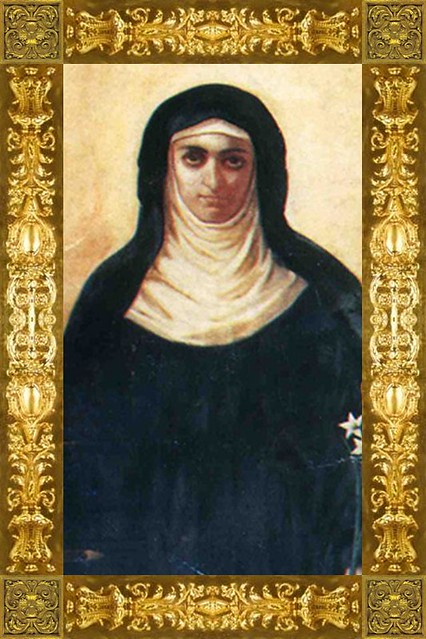
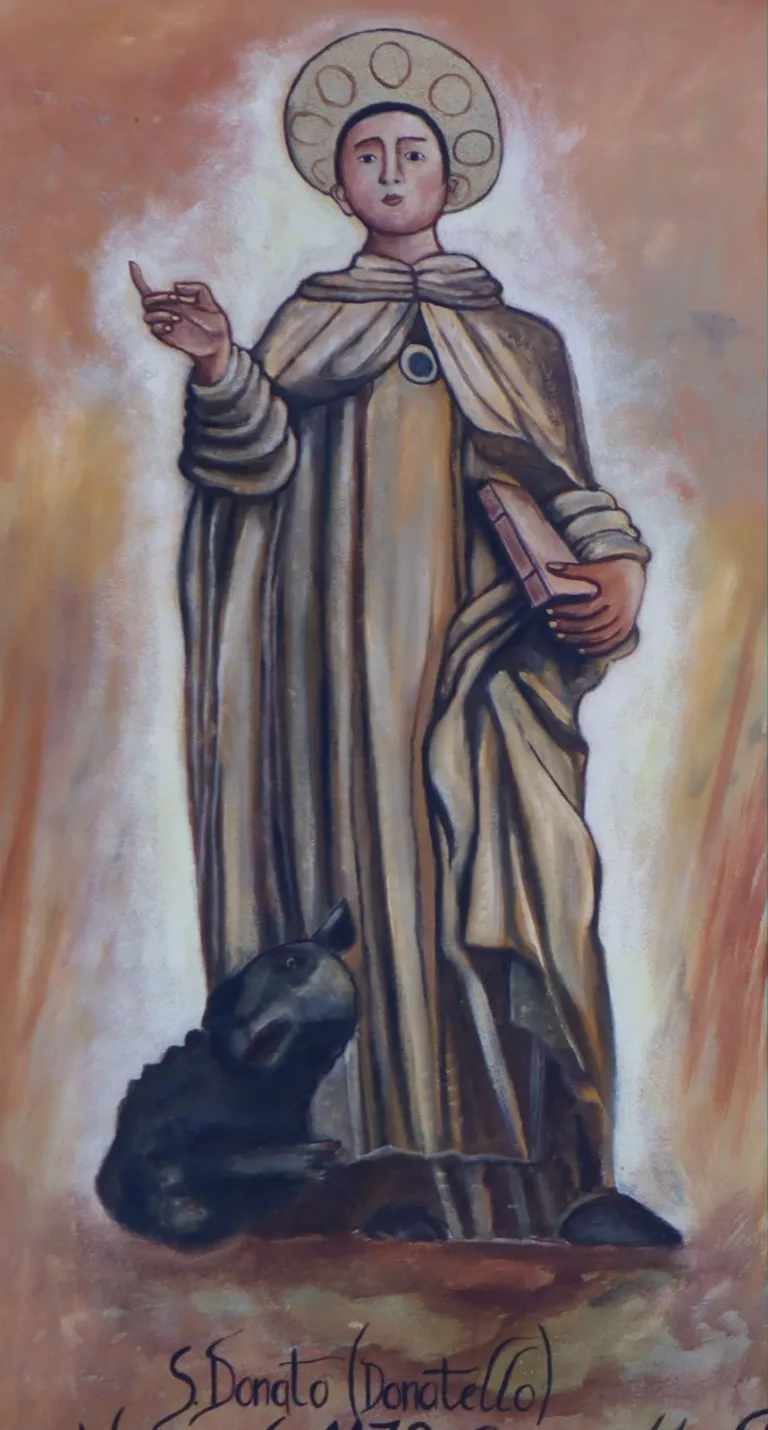
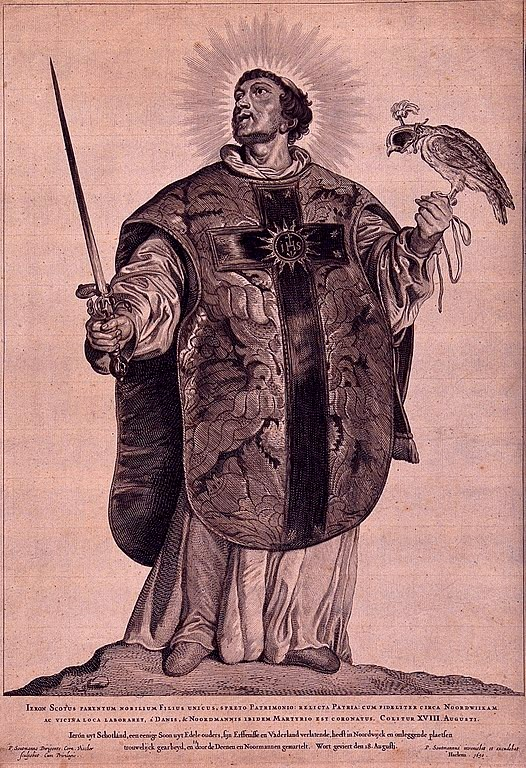
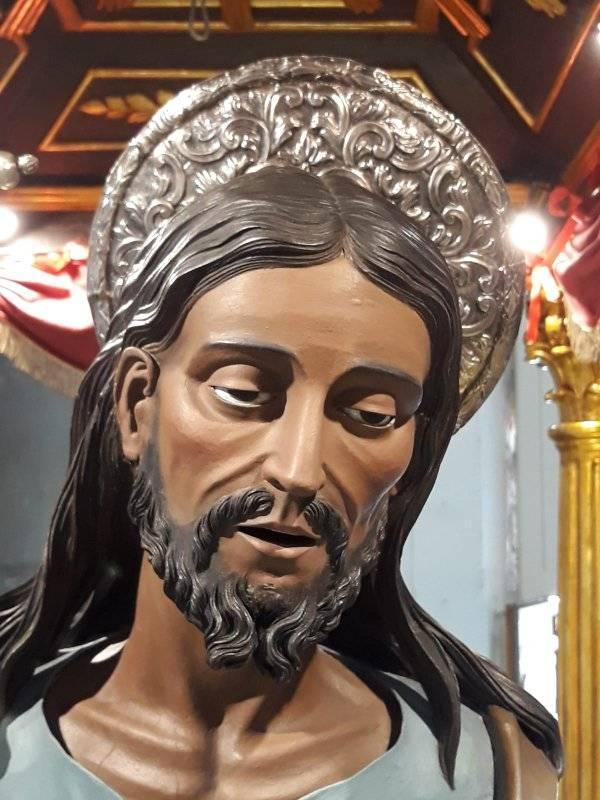
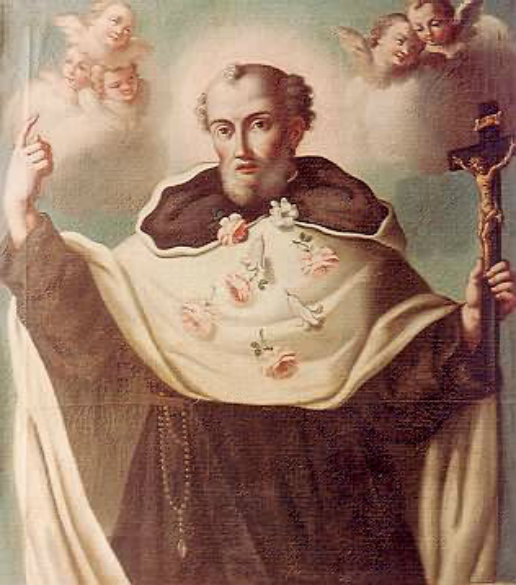
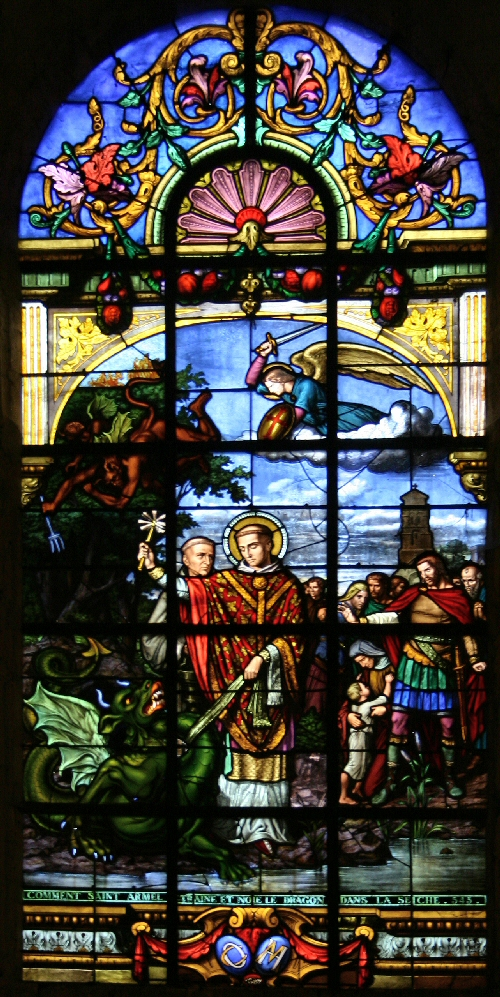
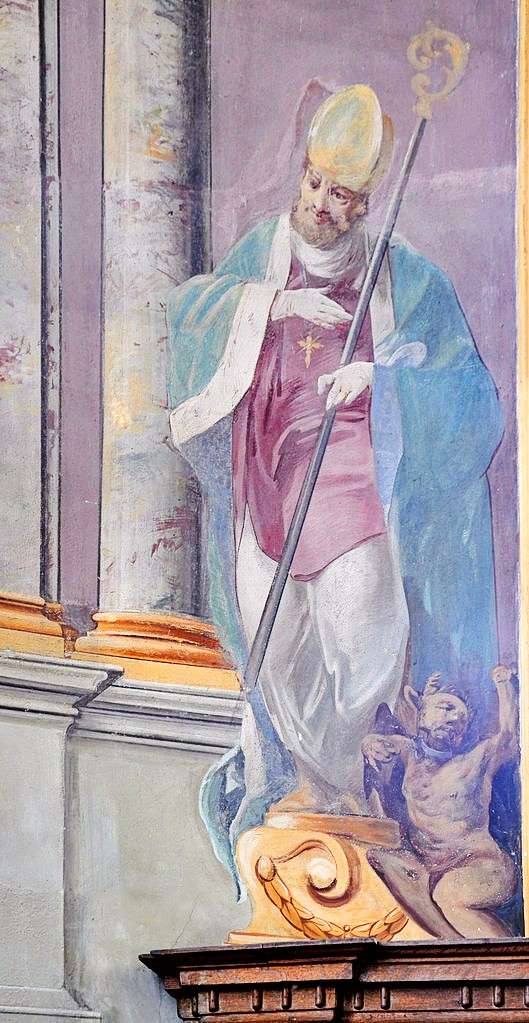
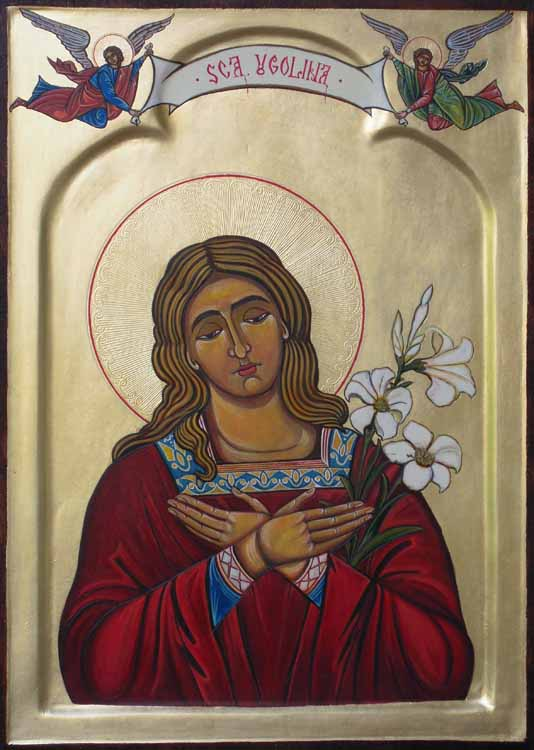
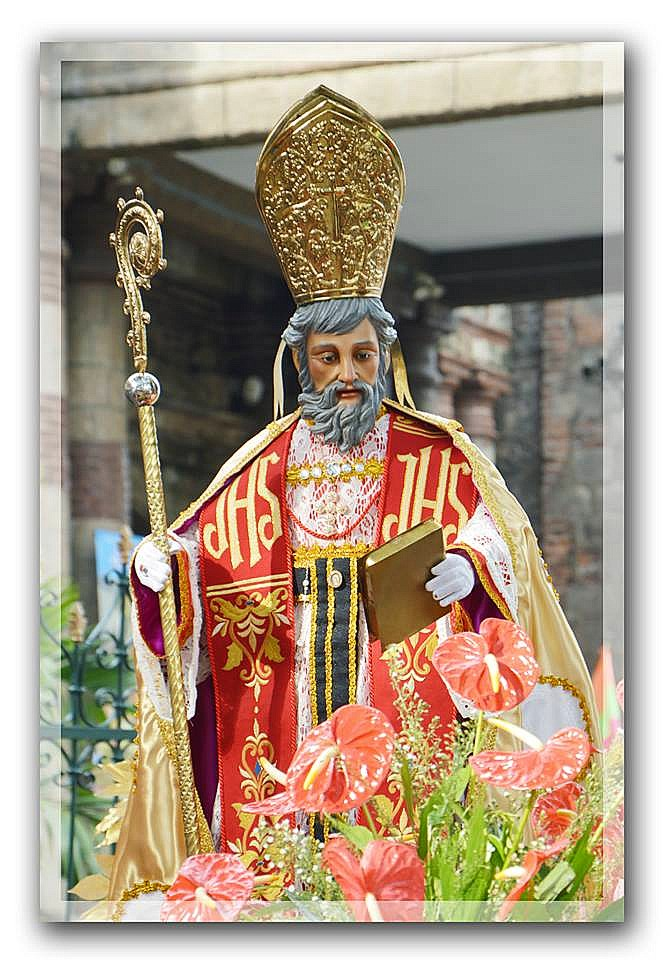
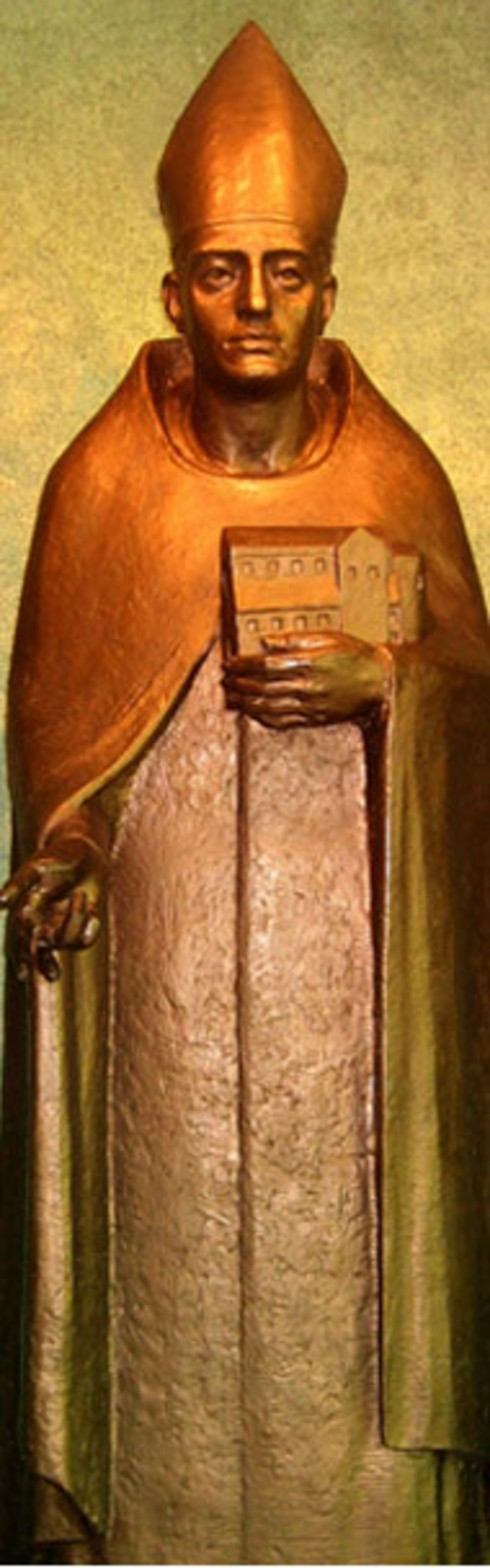
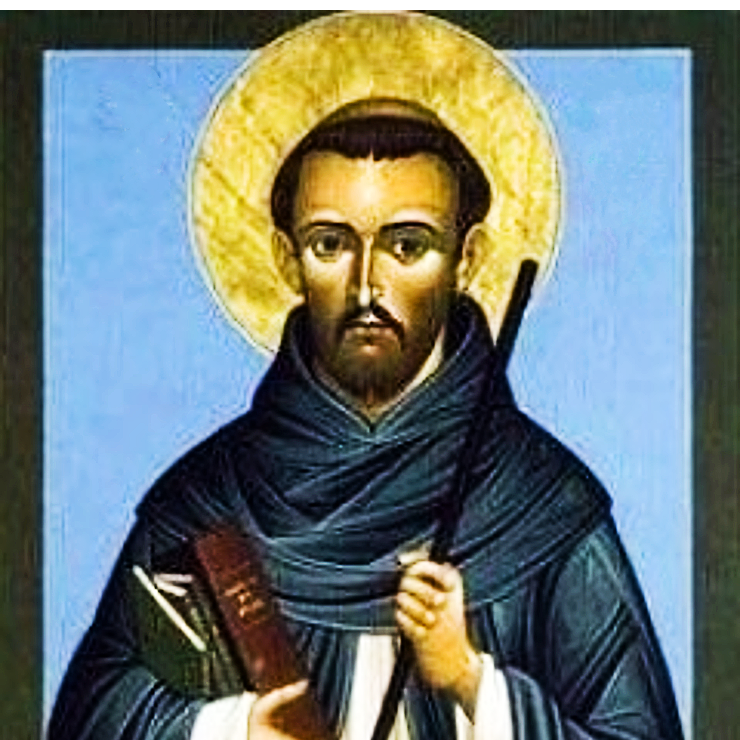
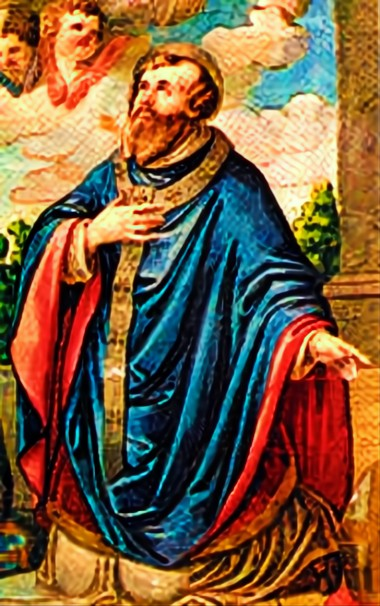
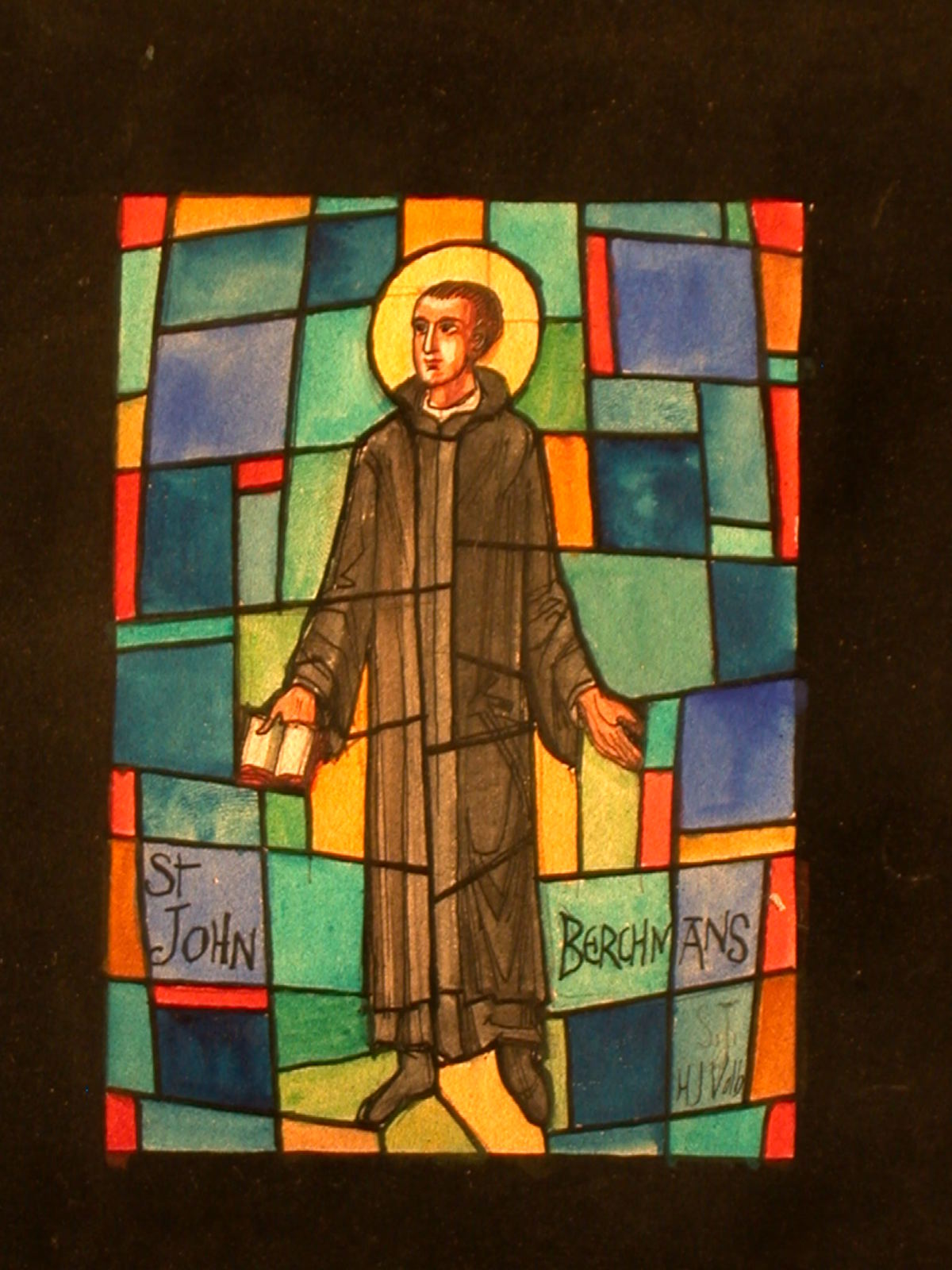
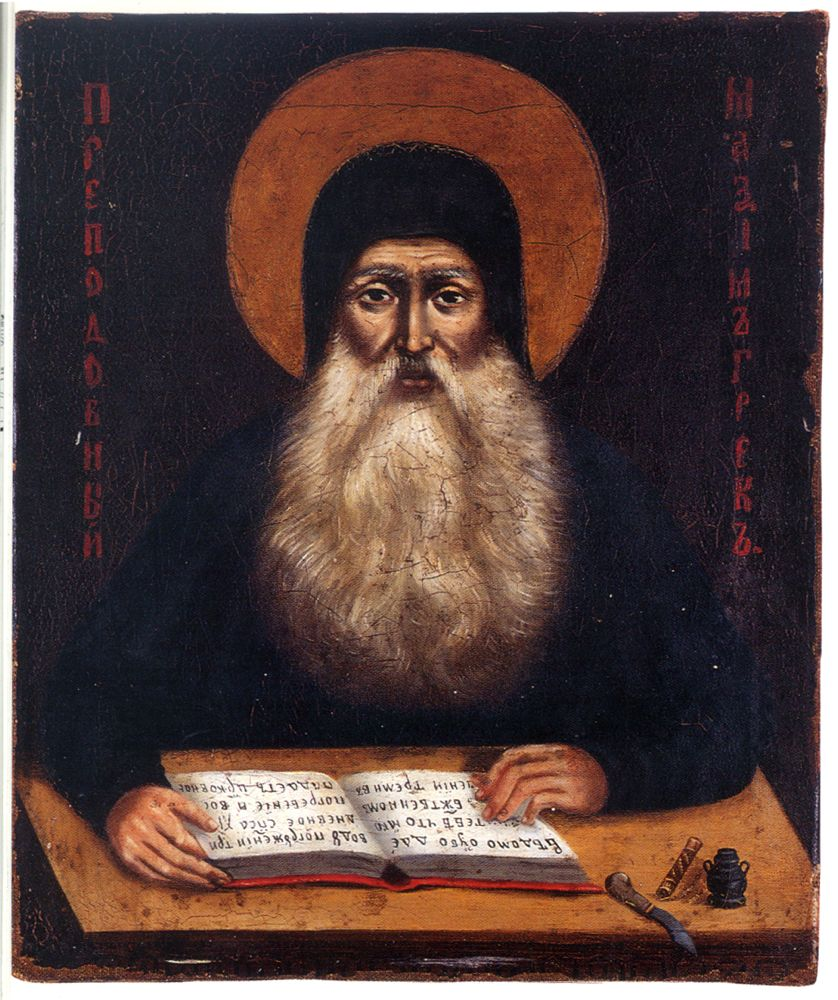
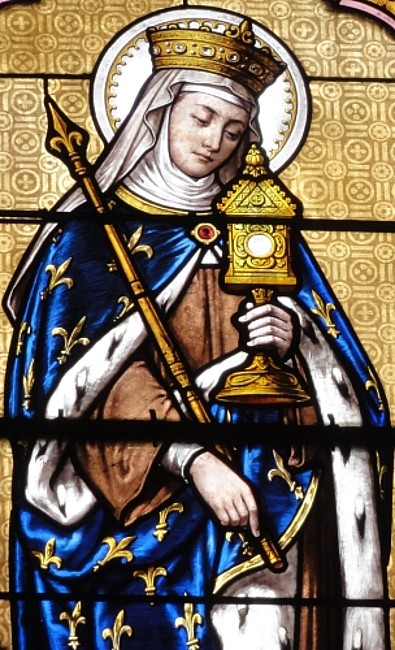
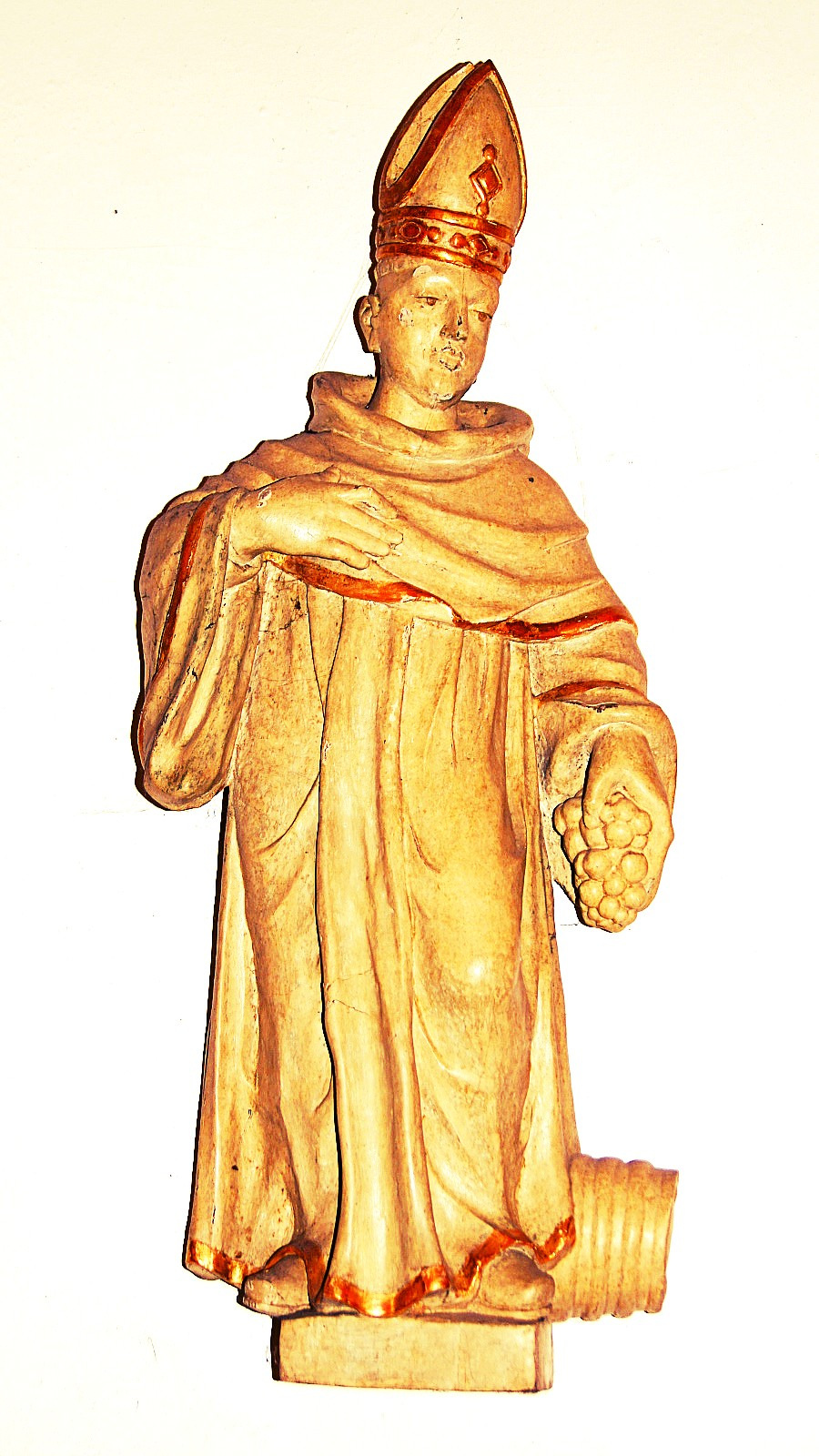
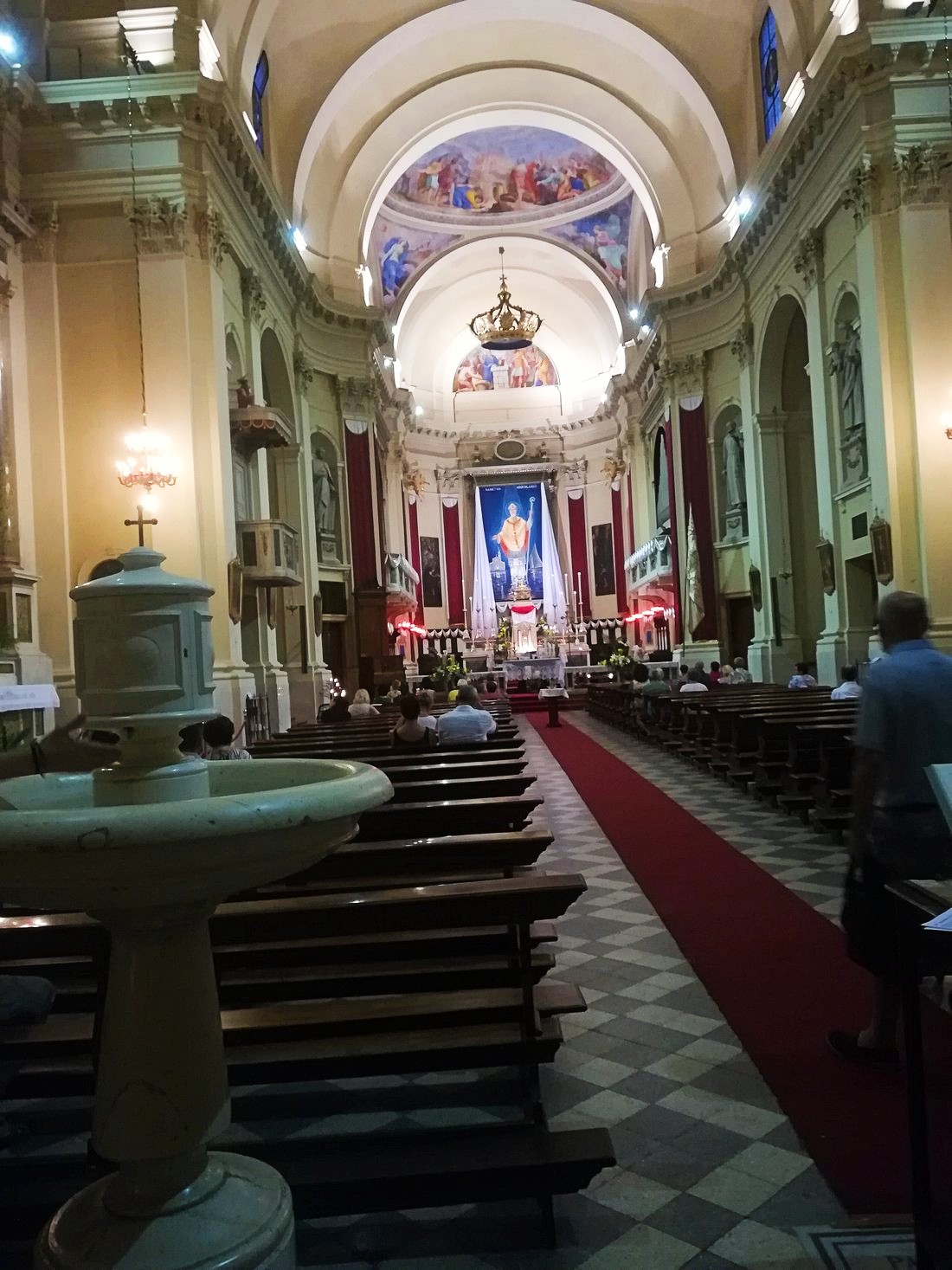
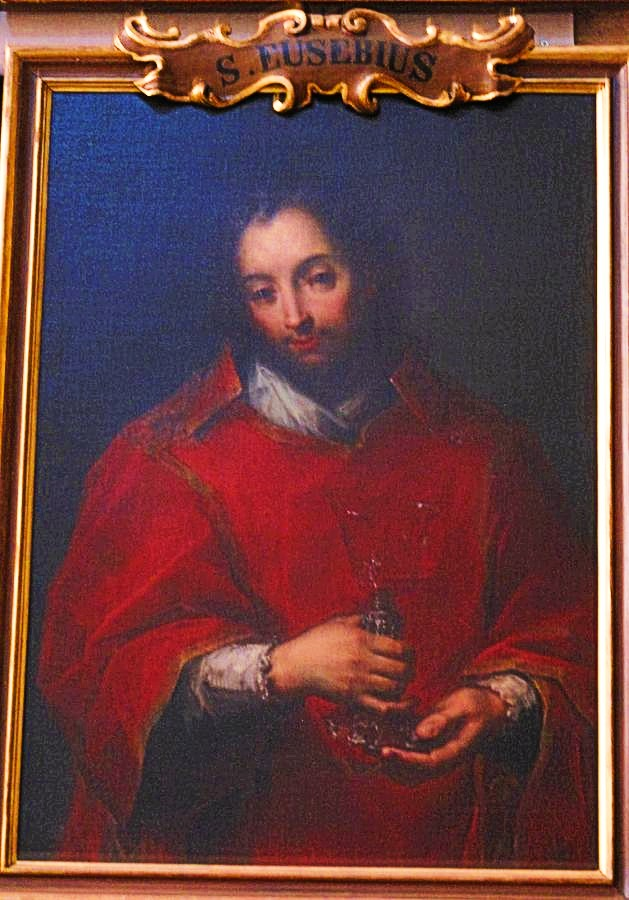
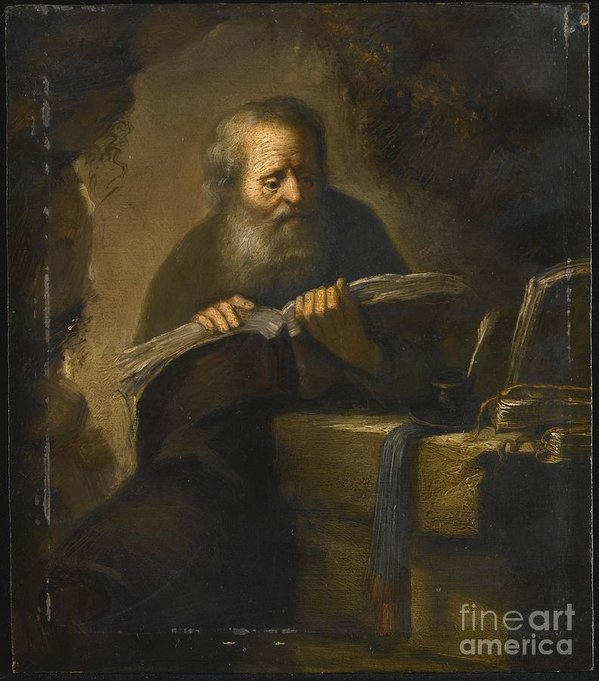
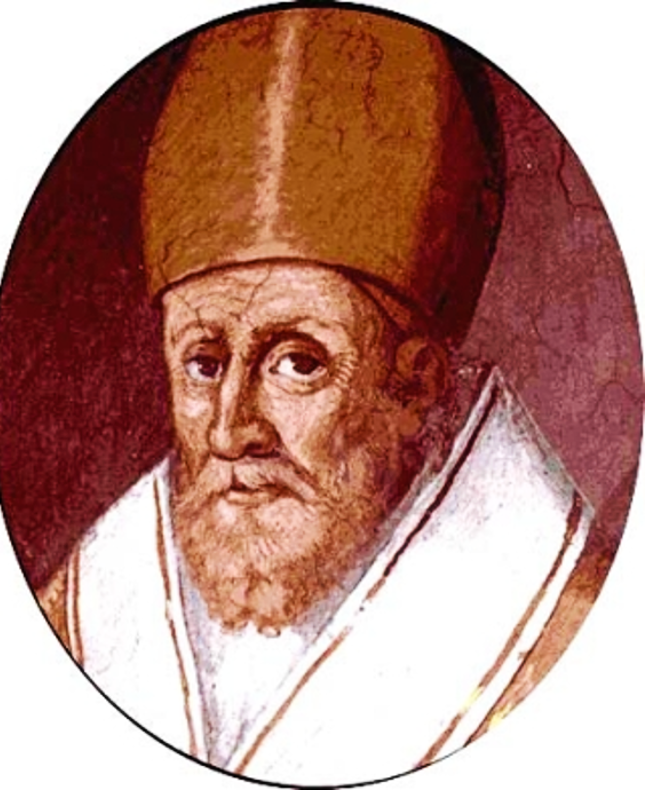
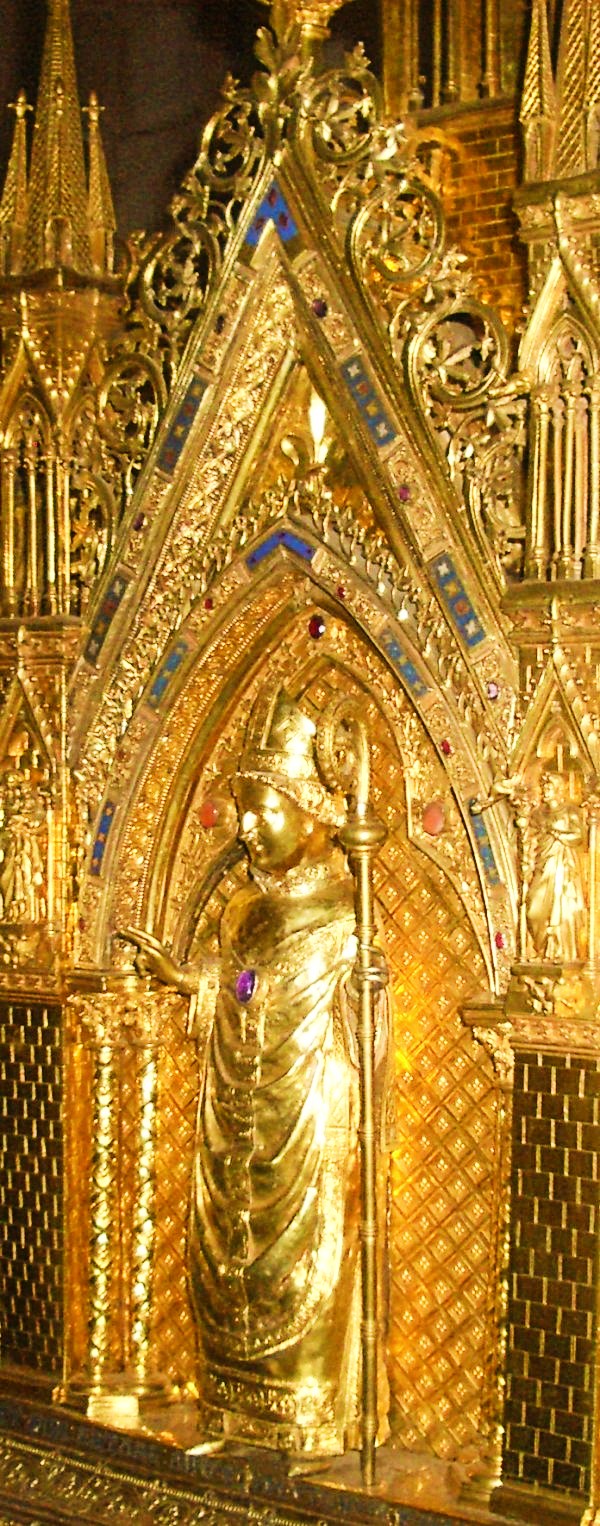
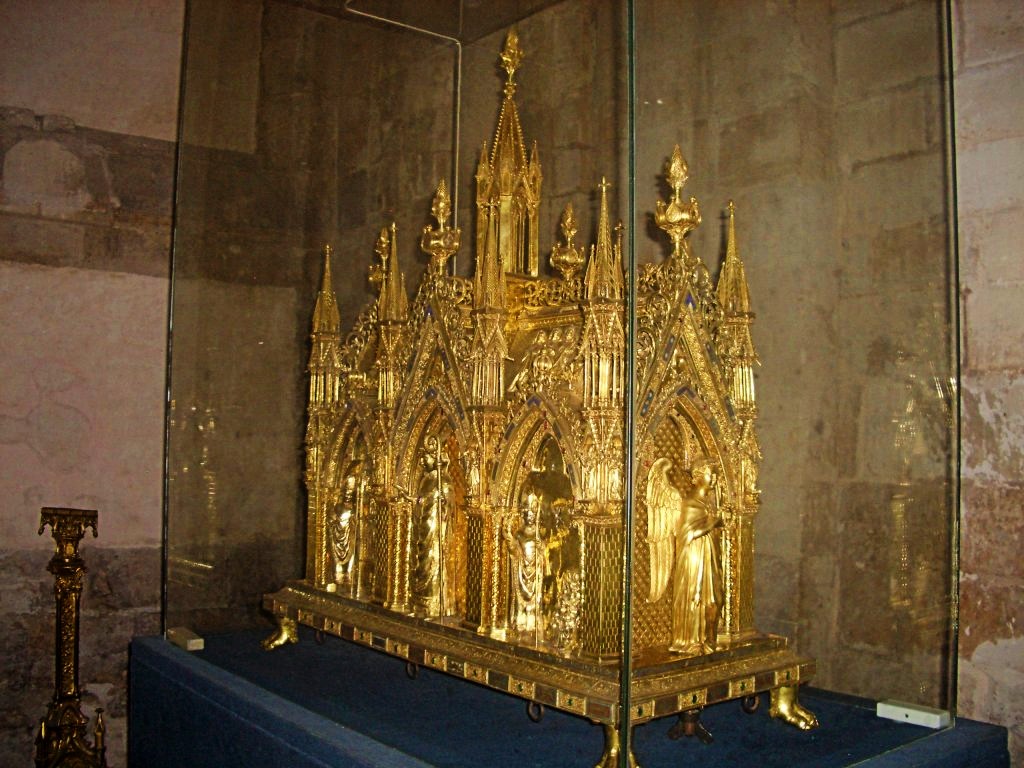
Saint of the Day – 17 June – St Avitus (Died c530) Priest, Confessor, Abbot, Hermit. Born in Orléans, France and died there in c530. Patronages of Orléans and Perche, France. Also known as – Avitus of Micy, Avit, Avito, Avy … of Orléans, … of Perche.
The Roman Martyrology reads today: “At Orléans, St Avitus, Priest and Confessor.”
Avitus was a native of Orléans and, retiring into Auvergne, took the monastic Habit, together with St. Calais, in the Abbey of Menat. This Monastery was, at that time very small, though afterward enriched by Queen Brunehault, and by St Boner, Bishop of Clermont.
The two Saints soon after returned to Miscy, a famous Abbey situated a league and a half below Orleans. It was founded toward the end of the reign of Clovis I. by St Euspicius, a holy Priest, honoured on 14 June and his nephew St Maximin or Mesnim, whose name this Monastery nears. It is now of the Cistercian Order. Many call St Maximin the first Abbot, others St Euspicius, St. Maximin the second and our St Avitus the third.
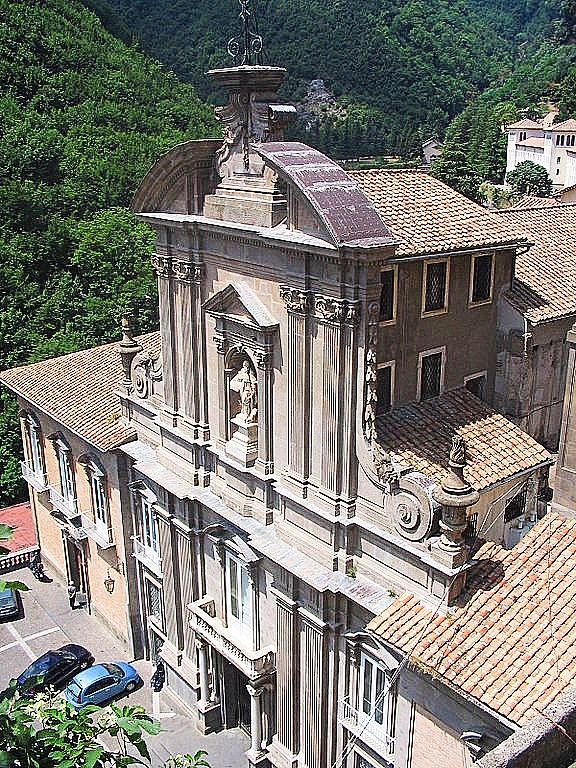
But our Saint and St Calais did not remain at Miscy very long, although St Maximin gave them a gracious reception. In quest of solitude, Avitus, who had succeeded St Maximin, soon after resigned the Abbacy and with St Calais lived as a recluse in the territory now called Dunois, on the border of La Perche. Others soon joining them, St Calais retired into a forest in Maine and King Clotaire built a Church and Monastery for Avitus and his companions. This is at present a Benedictine Nunnery, called St.Avy of Chateaudun and is situated on the Loire, at the foot of the hill on which the Town of Chateaudun is built, in the Diocese of Chartres.
Three famous Monks, Leobin, afterwards Bishop of Chartres, Euphronius and Rusticus, attended our Saint to his happy death which happened about the year 530. His body was carried to Orléans and buried with great pomp in that City now protected by our St Avitus. (Taken from Lives of the Saints, by Alban Butler).
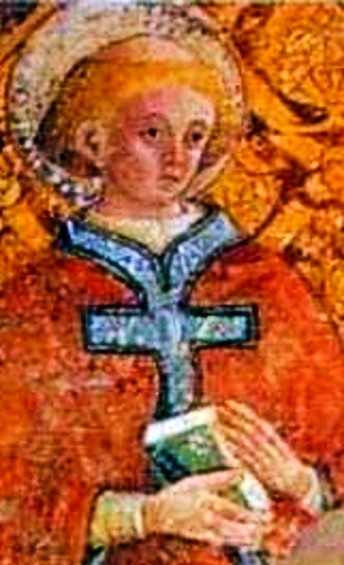
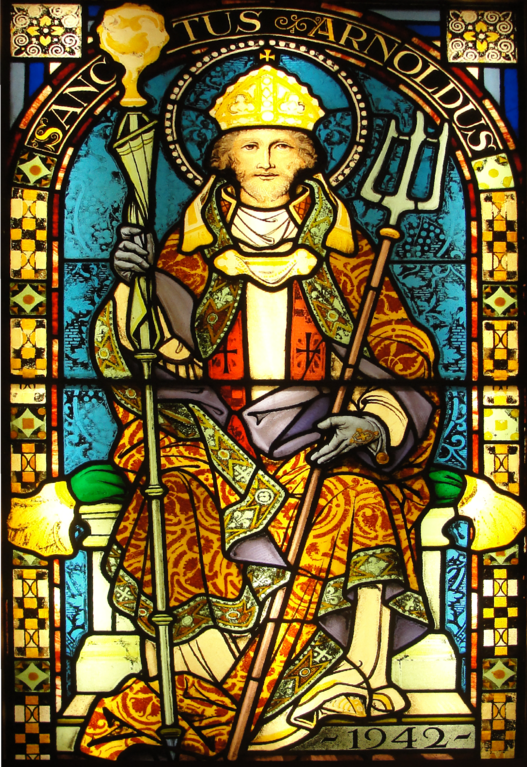
St Adolph of Utrecht St Agrippinus of Como St Antidius of Besançon Bl Arnold of Foligno St Avitus (Died c530) Priest, Confessor, Abbot St Blasto of Rome
St Himerius of Amelia St Hypatius of Chalcedon St Molling of Wexford St Montanus of Gaeta St Nectan of Hartland Bl Paul Burali d’Arezzo Bl Peter Gambacorta Bl Philippe Papon St Prior St Rambold of Ratisbon
Martyrs of Apollonia – 7 Saints: A group of Christians who fled to a cave near Apollonia, Macedonia to escape persecution for his faith, but were caught and executed. The names we know are – Basil, Ermia, Felix, Innocent, Isaurus, Jeremias and Peregrinus. They were beheaded at Apollonia, Macedonia.
Martyrs of Aquileia – 4 Saints: Four Christian Martyrs memorialised together. No details about them have survived, not even if they died together – Ciria, Maria, Musca and Valerian. c.100 in Aquileia, Italy.
Martyrs of Chalcedon – 3 Saints: Three well-educated Christian men who were sent as ambassadors from King Baltan of Persia to the court of emperor Julian the Apostate to negotiate peace between the two states, and an end of Julian’s persecutions of Christians. Instead of negotiating, Julian imprisoned them, ordered them to make a sacrifice to pagan idols and when they refused, had them executed. Their names were Manuel, Sabel and Ismael. They were beheaded in 362 in Chalcedon (part of modern Istanbul, Turkey) and their bodies burned and no relics survive.
Martyrs of Fez – 4 Beati: A group of Mercedarians sent to Fez, Morocco to ransom Christians imprisoned and enslaved by Muslims. For being openly Christian they were imprisoned, tortured, mutilated and executed. Martyrs – Egidio, John, Louis and Paul. They were martyred in Fez, Morocco.
Martyrs of Rome – 262 Saints: A group of 262 Christians Martyred in the persecutions of Diocletian. In c303 in Rome, Italy. They were buried on the old Via Salaria in Rome.
Martyrs of Venafro – 3 Saints: Three Christian lay people, two of them imperial Roman soldiers, who were converts to Christianity and were Martyred together in the persecutions of Maximian and Diocletian – Daria, Marcian and Nicander. They were beheaded c.303 in Venafro, Italy. By 313 a basilica had been built over their graves which were re-discovered in 1930. They are patrons of Venafro, Italy.
Saint of the Day – 16 June – Blessed Thomas Redyng (Died 1539) O.Cart. Monk of the Carthusian Charterhouse of London, Enland, Martyr. Born in England and died by being starved to death in Newgate Prison on 16 June 1539. Also known as – Thomas Reding. He was Beatified on29 December 1886 by Pope Leo XIII. Additional Memorial – 4 May as one of the Carthusian Martyrs.
In the great persecution against Catholics, decreed by Henry VIII, King of England, every Religious Order of the time, together with the Diocesan Clergy, left a tribute of blood and Martyrdom for the defence of the Catholic Church.
Even the Carthusians, although well-liked as Monks not involved in any political activity, contributed to this river of blood and field of the Palms of Martyrdom. The Monks of the Charterhouse of London, received a visit from the King’s Officials who, according to the decree issued, asked all adults, including Religious, for the approval of the repudiation by the King, by Queen Catherine of Aragon and, therefore, the acceptance of Anne Boleyn as Sovereign.
The Prior and the Procurator were arrested and confined in prison for having objected to the legitimacy of the repudiation but after a month, convinced that this oath did not affect the Faith, they did in fact alter their position to the Oath and were then released. Upon returned to the Charterhouse they convinced the other Monks of their arguments and so on 25 May 1534, they swore to the Officials, who had returned accompanied by soldiers.
The hoped-for peace did not last long, however, at the end of 1534 a new decree of the King and Parliament established that all subjects had to disown the authority of the Pope and instead, recognise the Henry VIII as the head of the English Church even in spiritual matters and, whoever did not consent, was guilty of High Treason. Having heard of this, the Prior John Houghton gathered all the Carthusians and communicated this and this time everyone said they were ready to die for the Roman Catholic Church. Two Priors from other Houses had also arrived at the Charterhouse, who, informed of the dangerous situation of the Monks, went in common agreement to the Vicar of the King, Thomas Cromwell, to ask him to convince King Henry VIII to exempt them from this Oath.
The two priors, after making their requests, were arrested by an indignant Cromwell and locked up in the Tower of London as rebels and traitors. After a week they were put on trial at Westminster where they reiterated their refusal and then sentenced to death and locked up again, where they were joined by two other Religiouswho had also been condemned for the same reason.
On 4 May 1535, the two Priors, Father Robert Laurence and Father Augustine Webster, together with Father Richard Reynolds of the Order of St Bridget and the Priest John Haile, Parish Priest of Isleworth, robed in their Religious Habits, were tied, stretched out on mats and dragged through the stony and muddy streets which led to Tyburn Tree, the infamous place of capital executions.
Father John Houghton, Prior of London Charterjhouse was then also arrested and condemned, was the first to ascend the scaffold and collaborated with the executioner in the hanging, uttering words of forgiveness and trust in God but he had not yet suffocated to death, when one of those present cut the rope and the Father fell to the ground, the executioner stripped him and took out his entrails while still alive so as to be able to show his heart to the King’s advisors. The execution of the other four followed and their bodies were cut to pieces and exposed to the people to strike terror into the ‘papists’.
Three other Carthusians – Humphrey Middlemore, vicar, William Exmew, a learned Latinist and Sebastian Newdigate, of noble origins, were arrested, tortured and Martyred on 19 June 1535. Two other,s who had moved from London to Hull Charterhouse were denounced, arrested and hanged on 11 May 1537.
Ten more Carthusians were imprisoned on 29 May 1537 in Newgate Prison, where they died of hardship and suffering in a short time – among them, on 16 June 1537, it was Thomas Reding ‘s turn . Only William Horn survived the prison and was hanged on 4 November 1540.
Eighteen other Monks remained in the Charterhouse, who, hoping to save the Monastery, had adhered to the Oath but after some time they were expelled and the Charterhouse was sold to private individuals.
The 18 Carthusians of London, together with 35 other Martyrs of that period, were Beatified by Pope Leo XIII on 9 December 1886. A common Feastday is celebrated on 4 May, while the individuals are remembered on their respective anniversaries of Martyrdom, today 16 June being the Feastday of Blessed Thomas Redyng.
St Berthaldus St Ceccardus of Luni St Cettin of Oran St Colman McRhoi St Crescentius of Antioch St Cunigunde of Rapperswil St Curig of Wales St Cyriacus of Iconium (c 301-c 304) Child MartyrSt Elidan St Felix of San Felice St Ferreolus of Besançon St Ferrutio of Besançon Bl Gaspare Burgherre St Graecina of Volterra St Ismael of Wales St Julitta of Iconium St Justina of Mainz
St Maurus of San Felice St Palerio of Telese St Similian of Nantes Bishop and Confessor Blessed Thomas Redyng (1537) O.Cart. Monk Martyr St Tycho of Amathus
Martyrs of Africa: A group of 5 Christians Martyred together. We know nothing else but the names – Cyriacus, Diogenes, Marcia, Mica, Valeria. They were martyred in an unknown location in Africa, date unknown.
Saint of the Day – 15 June – St Trillo (6th Century) Abbot of Wales, Monk Missionary Founder of the Churches at Llandrillo, Denbighshire and Llandrillo yn Rhos, Rhos-on-Sea in Conwy County Borough, all in Wales., Born in the 6th Century in Brittany, France and died in the same Century in Wales. Patronage –of Llandrillo, Denbighshire, and Llandrillo yn Rhos – in Wales. Also known as – Terillo, Drillo, Drel.
Trillo the brother of Saints Tegau, Twrog and Llechid. According to some late information from St George’s Church, there were also two other brothers, Saints Bagian and Tanwg.
They were of nobly birth in Brittany and Trillo went to Wales with his brothers Saint Tegai and Saint Twrog as a disciple and student of Saint Cadfan, who later admitted Trillo to the religious life.
Trillo became the Abbot and Church-founder and was widely renowned for his holiness and counsel.
He died and was buried on the island of Bardsey, in the Irish Sea in north-west Wales. The island was once called ‘the island of 20,000 Saints’ to remember the twenty thousand pilgrims who died on various journeys, who wanted to visit the local Monastery. The remains of an Abbey are evident on Bardsey which ruins are said to be those of St Trillo’s Abbey, see below.
His Church at Llandrillo contains representations in stained glass of some of the tales of Trillo’s life.
Father’s Day + 2025 Wishing all Dads a Blessed and Happy Father’s Day!
A Parent’s Prayer to St Joseph
O holy Joseph, thou faithful Spouse of the Blessed Mother, thou who didst protect her and her Divine Child with such care and didst devote thy whole life to them; I beseech thee to be also my and my children’s protector and advocate, with Jesus, thy adopted Son. Obtain for me the grace to fulfil my duties to my children, as thou and Mary have done to Jesus.
St Joseph Pray for all our Fathers and for our spiritual Fathers of Holy Mother Church Amen.
St Vitus (c 290-c 303) – Martyr, One of the Fourteen Holy Helpers. Died aged 12-13 years of age. Patronages – against animal attacks, against dog bites, against epilepsy; epileptics, against lightning, against over-sleeping, against rheumatic chorea or Saint Vitus Dance, against snake bites, against storms, against wild beasts, of actors, comedians, dancers, dogs, Bohemia, Czech Republic, Serbia, 17 cities. His very short life: https://anastpaul.com/2017/06/15/saint-of-the-day-15-june-st-vitus/
St Achaicus of Corinth St Barbara Cui Lianshi St Benildis of Córdoba
St Bernard of Montjoux/Menthon CRSA (c 1020-1081) “Apostle of the Alps” Priest, Founder of a patrol that cleared robbers from the mountains and he established hospices for travellers and pilgrims. The large dogs, trained to search for lost victims in the mountains, are named for him. Patronages – Alpinists, Alps (proclaimed by Pope Pius XI on 20 August 1923), Campiglia Cervo, Italy, mountain climbers (proclaimed by Pope Pius XI on 20 August 1923), mountaineers, skiers, travellers in the mountains (proclaimed by Pope Pius XI on 20 August 1923). Wonderful Bernard: https://anastpaul.com/2018/06/15/saint-of-the-day-15-june-st-bernard-of-menthon-c-r-s-a-c-1020-1081-apostle-of-the-alps/
St Hadelinus of Lobbes St Hesychius of Durostorum St Hilarion of Espalion
St Isfrid O.Praem (c 1115-1204) Bishop of Ratzeburg, Confessor, Spiritual advisor, Missionary, Mediator and Peacemaker, a renowned Administrator and gentle corrector of his flock, whom he protected against political abuses, Defender of the Pope and the Holy See. Istfrid also built and restored Churches and Monasteries and established many new Parishes. A Holy and Untiring Shepherd: https://anastpaul.com/2022/06/15/saint-of-the-day-15-june-saint-isfrid-of-ratzeburg-o-praem-c-1115-1204/
St Julius of Durostorum St Landelin of Crespin St Leonides of Palmyra St Libya of Palmyra St Lotharius of Séez St Melan of Viviers St Orsisius Bl Pedro da Teruel St Pierre de Cervis
St Tatian of Cilicia Bl Thomas Scryven St Trillo (6th Century) Abbot of Wales St Vaughen of Ireland
St Vouga of Lesneven
Martyr of Lucania – 11 Saints: Eleven Christians Martyred together. We known nothing else about them but the names – Anteon, Candidus, Cantianilla, Cantianus, Chrysogonus, Jocundus, Nivitus, Protus, Quintianus, Silvius, Theodolus in Lucania (modern Basilicata), Italy, date unknown.
DISCLAIMER: Please note: I cannot control the content of the Advertisements on this Site, or of pop-ups which may appear, The revenue from the Advertisements, however, does provide a little assistance in the support of the Site. I do apologise for any inappropriate content.

St Anastasius of Córdoba St Burchard of Meissen St Caomhán of Inisheer St Castora Gabrielli St Cearan the Devout Bl Constance de Castro St Cyprien St Cyriacus of Zeganea St Davnet St Digna of Córdoba St Dogmael of Wales St Elgar of Bardsey
St Nennus of Arran Bl Peter de Bustamante St Protus of Aquileia St Quintian (Died c525) Bishop of Rodez St Richard of Saint Vannes
St Rufinus of Soissons * (Died 4th Century) Layman, Martyr. AND St Valerius of Soissons * (Died 4th Century) Layman, Martyr The Roman Martyrology reads: “At Soissons in Belgic Gaul, today in France, the Holy Martyrs – Saints Valerius and Rufinus, who after enduring many torments, were condemned to be beheaded by the Governor, Rictiovarus, in the persecution of Diocletian.” Their Lives and Deaths: https://anastpaul.com/2023/06/14/saints-of-the-day-14-june-st-valerius-and-st-rufinus-of-soissons-died-4th-century-laymen-martyrs/
Saint of the Day –13 June – St Peregrinus/Cetteus (Died c597) Bishop Martyr, Defender of the Faith. Unknown date and location of his birth but he died in c597 by being drowned in the Pescara River in Abruzzo region of Italy. Patronage of – the Diocese and City of Pescara in Italy. Also known as – Cetteus, Ceteo, Cetteus, Cetheus, Cetteo. Pellegrino, Pelligrinus. Additional Memorial – 10 October (Pescara, Italy).
The Roman Martyrology reads today: “In Abruzzo, Italy, St Peregrinus, Bishop and Martyr. For the Catholic Faith, he was thrown into the river Pescara, by the Arian Lombards.”
The Pescara Cathedral dedicated to our Saint today
Peregrinus, although he is more commonly referred to as Cetteus (his real name). According to our source, he was the Bishop of Amiterno (now St Vittorino, in Abruzzo) at the time of St Gregory the Great. During his Episcopate two Lombard leaders, Alai and Umbolo, occupied the City and he, in order not to witness their depredations, took refuge in Rome. To quell the citizens’ discontent, a Lombard mission went to St Gregory the Great and, after having solemnly promised that the subjugated citizens Peregrinus returned to Amiterno.
But, when a disagreement arose between the two Iongobard leaders who held the City, Alai allied himself, with Count Veriliano of Orte, occupied Amiterno at night. When the betrayal was discovered, the furious people wanted to kill Alai but their Bishop Peregrinus intervened, trying to have him condemned only to prison. But Umbolo suspected that the Bishop was also conniving with the traitor and ordered that our Saint and his accomplice be killed. Alai’s sentence was immediately carried out, while Peregrinus’ execution was suspended due to the executioner’s firm refusal.
Umbolo then ordered that he be thrown into the river (now Pescara) with a large millstone around his neck. His body was carried by the current to the sea and thrown onto the shore. According to one manuscript, it would have reached Zara, on the eastern shore of the Adriatic Sea but, with much greater likelihood, it arrived in Pescara, at the mouth of the river of the same name.
When Peregrinus was found by a fisherman, the local Bishop was notified and, not knowing who he was, called him “Peregrinus” and buried him on the spot. Later, following a miracle which occurred at his tomb, the Bishop had him transferred and buried, with greater honour, nine miles from the City.
Peregrinus/Cetteus is commemorated in the Roman Martyrology on 13 June and the Diocese and City of Pescara remember him on 10 October.
Bl Achilleo of Alexandria Bl Alfonso Gomez de Encinas Bl Anthony of Ilbenstadt
St Aquilina (281–293) Virgin Martyrof Suria. The Roman Martyrology reads today: “At Byblos, in Palestine, St Aquilina, Virgin and Martyr, at the age of 12 years, under the Emperor Diocletian and the Judge Volusian. For the confession of the Faith, she was buffeted, scourged, pierced with red-hot bodkins and, being struck with the sword, consecrated her virginity by Martyrdom.” Her Short Life and Early Death: https://anastpaul.com/2024/06/13/saint-of-the-day-13-june-saint-aquilina-of-syria-281-293-virgin-child-martyr/
St Fandilas of Penamelaria St Felicula of Rome St Fortunatus of North Africa
Blessed Gerard of Clairvaux (Died 1138) – was the elder brother of Saint Bernard of Clairvaux. He was a Soldier. When he was wounded in combat at the siege of Grancy, Gerard resolved to become a Monk. He became a Cistercian Monk at Citeaux. He worked with Saint Bernard at Clairvaux and became his closest confidant. He died in 1138 of natural causes.
St Lucian of North Africa St Mac Nissi of Clonmacno St Maximus of Cravagliana St Nicolas Bùi Ðuc The St Peregrinus (Died c597) Bishop Martyr St Rambert St Salmodio Bl Servatius Scharff St Thecla
Saint of the Day – 12 June – St Onuphrius (Died c400) Hermi, living a miraculous life assisted by his Angel alone in the Egyptian desert for 60 years. Speaking to God and His Angel only, who weekly brought him Holy Communion and daily brought him bodily sustenance. The dates and details of his birth and death are unknown except that he died in June c400. Patronages – of weavers (apparently due to his leaf-woven garment and his long hair which also acted as clothing, Towns in Italy – Centrache, Catanzaro Paterno, Avezzano, Siena and Sutera. Also known as – Onuphrius of Egypt, Humphrey… Onofre… Onofrio… Onophry… Onouphrius… The name Onophrius is of Egyptian origin and means ‘who is always happy.’
The Roman Martyrology reads today: “In Egypt, St Onuphrius, an Anchorite, who led a religioys life in the desert for 60 years and renowned for great virtues and merits, departed for Heaven. His admirable deeds were recorded by the Abbot, Paphmutius.”
The Vita of our Saint today, Onuphrius, was written by another Saint, Paphmutius, an Egyptian Monk. His writing bears an unmistakable resemblance to two other great classics of the genre, St Jerome’s life of St Paul the First Hermit and the tale of St Mary of Egypt.
Paphmutius, eager to meet the desert Hermit, to learn about their lives and their eremeiic experience which was so much discussed at that time, went into the desert in search of them. After two stops in 21 days, exhausted, he collapsed onto the ground. Looking up, he saw a human figure of terrible appearance appear, covered from head to toe only by long hair and a few leaves.
This was usual for Hermits, who were accustomed to being always alone and seen only by Angels, in the end did without a garment difficult to obtain or replace in the desert.
Initially frightened, Paphmutius tried to escape but the human figure called him telling him to stay, then he understood that he had found who he was looking for, it was an Hermit. Once mutual trust had been established, the confidences began, the Hermit said his name was Onuphrius and he had been in the desert for around 60 years and had never seen another living soul! He ate herbs and rested in caves but initially it was not like this, he had lived in a Monastery in the Thebaid area, together with a hundred Monks.
But desirous of a more solitary life following the example of St. John the Baptist and the Prophet Elijah, he left the Monastery to dedicate himself to the eremitical life; having advanced into the desert area with little food, after a few days he met another Hermit in a cave, whom he asked to assit him and initiate him into that very particular life.
The Hermit obliged and then accompanied him to a place which was an oasis with palm trees, stayed with him for thirty days and then left, returning to his cave. Once a year the Hermit would come to visit him and comfort him but on one of these visits, as soon as he arrived he bowed to greet him and collapsed and died. Filled with sadness Onuphrius buried him in a place near his Hermitage. Onuphrius then told Paphmutius how he adapted to the changing seasons; how he resisted the elements and how he supported his physical needs, an Angel provided for his daily nourishment, the same Angel brought him Holy Communion on Sundays. The miracle of the Angel was also seen by Paphmutius whom Onuphrius led to his Hermitage of ‘Calidiomea,’ the place of palm trees.
They continued their spiritual conversations until the holy Hermit said: “God has sent you here so that you may give my body a suitable burial, since I have reached the end of my earthly life.” Paphnutius proposed that Onuphrius take his place, but the Hermit replied that this was not God’s Will, he had to return to Egypt and tell what he had witnessed.
After blessing him, he knelt in prayer and Died. Paphnutius covered him with part of his own tunic and buried him in a crevice in the rock. Before he left, a landslide reduced Onuphrius’ cave to ruins, also knocking down the palm trees, a sign of God’s Will that no one else would live as a Hermit in that place.
Regardless of the historical existence of St Onuphrius, the Greek ‘Life’ of Paphnutius concludes by saying that the holy Hermit died on 11 June 11, however St Onuphrius is celebrated on 12 June. Anthony, Archbishop of Novgorod, reports that in his time (1200) the head of St Onuphrius was preserved in the Church of St Acindino.
St Onuphrius’ cult and his memory spread to all the countries of Asia Minor and to Egypt, all the calendars of these regions report him on the 10th, 11th, 12th of June; in Arabic he is Abü Nufar, (the herbivore).
The image of St Onuphrius, a naked Hermit, covered only with his hair, was the object of figurative representation in art, in all the centuries, enriched by the many narrated details, the loincloth made of leaves, the camel, the skull, the Cross, the host with the chalice, the Angel.
St Amphion of Nicomedia Bl Antonio de Pietra St Arsenius of Konev St Christian O’Morgair of Clogher St Chrodobald of Marchiennes St Cominus Bl Conrad of Maleville St Cunera St Cuniald St Cyrinus of Antwerp St Eskil St Galen of Armenia St Gerebald of Châlons-sur-Seine St Geslar
St Pope Leo III (c 750-816) Bishop of Rome and Ruler of the Papal States from 26 December 795 to his death. Defender of the City ad peoples of Rome and of the Church. Peacemaker and restorer of Churches and Monasteries, Patron of the Arts and Apostle of the poor. Know as “Charlemagne’s Pope” His Holy Life: https://anastpaul.com/2021/06/12/saint-of-the-day-12-june-st-pope-leo-iii-c-750-816/
St Odulf (Died c865) Priest, Monk, Prior, zealous Missionary to the Frisians. Odulf was gifted with the charism of prophecy. Born in Brabant (in modern Belgium) and died in c865 of natural causes at his Monastery, Saint Martin of Utrecht. Patronages – Borgloon, Belgium, Evesham, England, Stavoren, Holland, Utrecht, Holland. Zealous St Odulf: https://anastpaul.com/2024/06/12/saint-of-the-day-12-june-saint-odulf-of-utrecht-died-c865-priest/
St Olympius of Aenos St Onuphrius (Died c400) Hermit Bl Pelagia Leonti of Milazzo St Peter of Mount Athos St Placid of Val d’Ocre St Ternan of Culross St Valerius of Armenia
Martyrs of Bologna: Three Christians who were Martyred at different times and places, but whose relics have been collected and enshrined together – Celsus, Dionysius, and Marcellinus. Their relics were enshrined in churches in Bologna and Rome in Italy.
St Basilides and Companions / Martyrs of Rome: Four members of the Imperial Roman nobility. They were all soldiers, one or more may have been officers and all were Martyred in the persecutions of Diocletian – Basilides, Cyrinus, Nabor and Nazarius. They were martyred in 304 outside Rome, Italy and buried along the Aurelian Way.
Three Holy Exiles: Three Christian men who became Benedictine Monks at the Saint James Abbey in Regensburg, Germany, then Hermits at Griestatten and whose lives and piety are celebrated together. – Marinus, Vimius and Zimius.
Saint of the Day – 11 June – Saint Blitharius (7th Century) Priest, Hermit , Missionary in Ireland and France, as a disciple of St Fursey (Died c648) He became a renowned and fervent Preacher and Evangeliser. Born in Scotland and died in the late 7th century in Sézanne, France, Also known as – Blitarius, Blitario, Blier. Additional Memorial – 17 June in the Diocese of Troyes.
St Fursey and his Companions journey of evangelisation in England and France
Born in Scotland, Blitharius embarked on a spiritual journey following in the footsteps of St Fursey, an Irish Monk revered for his sanctity and wisdom. Under his guidance, Blitharius was Ordained a Priest and began a journey through Ireland and France, spreading the message of the Gospel and inspiring the faithful with his preaching.
Between 640 and 644, Blitharius’ life took a decisive turn. Attracted by quiet and solitude, he settled in Verzeracus, France, where he built a small shelter which became his hermitage. In this ascetic refuge, Blitharius dedicated his whole life to prayer, fasting and mortification of the body, offering himself to God as a “victim” as a sign of absolute devotion.
Blitharius’ ermitic life was characterised by rigid discipline and profound austerity. He deprived himself of all material comforts, eating only herbs and roots and spending his days in prayer and meditation.
His fame for sanctity spread rapidly, attracting pilgrims from all over the region who sought his spiritual counsel and blessing.
After a life devoted to prayer and mortification, Blitharius left this world to jo enter his eternal home. His body was buried in Sézanne, where his tomb became a place of pilgrimage for the faithful who venerated his memory.
In 1568, Saint Blitharius’ Relics were translated to the Collegiate Church of Broyes in the Marne. However, during the Wars of Religion in France in 1568, Calvinists burned the Relics, destroying this precious tangible link to the Saint.
The Feast of Saint Blitharius was always celebrated on J11une 11. However, in the Proper of Troyes, his Feast was moved to 17 June, a date which is still commemorated there today.
St Bardo (c981-c1053) Archbishop of Mainz from 1031 until 1051, the Abbot of Werden from 1030 until 1031 and the Abbot of Hersfeld in 1031. Ascetic, renowned for his piety and devotion, for his care and love of the poor, renowned Preacher, called “The Chrysostom” of his time. Born in c981 in Oppershofen, Germany and died on 10 or 11 June in 1051 or 1053 (records vary) in Oberdorla near Mühlhausen in Thuringia, of natural causes. Patronage – of Oppershofen “The Chrysostom” of his time: https://anastpaul.com/2024/06/11/saint-of-the-day-11june-saint-bardo-of-mainz-c981-c1053-archbishop-the-chrysostom-of-his-time/
St Herebald of Bretagne Bl Hugh of Marchiennes Bl Jean de Bracq
Bl Kasper of Grimbergen
St Parisius ECMC (c1160-1267) Priest and Monk of the Camaldolese Hermits of Mount Corona, Spiritual Director, Reformer, Miracle-worker during his life and after his death. A very long life of humble and loving service, for the glory of God!: The Roman Martyrology reads: “In Treviso, Saint Parisio, Priest of the Camaldolese Order, who for seventy-seven years took care of the spiritual direction of the Nuns with healthy advice, dying at the age of one hundred and eight.” https://anastpaul.com/2022/06/11/saint-of-the-day-11-june-st-parisius-ecmc-c-1160-1267-a-very-long-life-of-humble-and-loving-service-for-the-glory-of-god/
St Rembert (c830-888) Archbishop of Hamburg-Bremen, Missionary, Miracle-worker, Founder of Churches and Monasteries, Disciple of St Ansgar (801-865) “The Apostle of the North.” The Roman Martyrology reads : “In Bremen in Saxony, in today’s Germany, Saint Rembert, Bishop of Hamburg and Bremen, who, a faithful disciple of Saint Ansgar and his successor, extended his ministry to the regions of Denmark and Sweden and, at the time of the invasions of the Normans, he took care of the ransom of the Christian prisoners.” A True Shepherd: https://anastpaul.com/2023/06/11/saint-of-the-day-11-june-st-rembert-of-hamburg-c830-888-archbishop/
St Riagail (Died c881) Abbot of Bangor Monastery Bl Stephen Bandelli OP St Tochumra of Kilmore St Tochumra of Tuam
Martyrs of Tavira – 7 Beati: Members of the Knights of Santiago de Castilla. During the re-conquest of the Iberian peninsula from the Muslims by Christian forces, in a period of truce between the armies, the group was allowed to leave the Portuguese camp to hunt. Near Tavira, Portugal, he and his companions were ambushed and killed by a Muslim force. Making a reprisal attack, the Portuguese army took the city of Tavira. The murdered knights were considered to be martyrs as they died in an action defending the faith. They were – Blessed Alvarus Garcia, Blessed Beltrão de Caia, Blessed Damião Vaz, Blessed Estêvão Vasques, Blessed Garcia Roiz, Blessed Mendus Valle, Blessed Pedro Rodrigues’ They were Martyred in 1242 outside Tavira, Faro, Portugal. Their relics are enshrined under the altar of Saint Barnabas in the Church of Our Lady, Queen of the Angels (modern Santa Maria do Castelo) in Tavria, Portugal.
Mercedarian Martyrs of Damietta: Three Mercedarian Lay Knights who worked to ransom Christians enslaved by Muslims. During the 7th Crusade, a plague swept through the Christian army and these knights volunteered to work with the sick. During this work they were captured by Muslims and ordered to convert to Islam; they refused. They were tortured, taken to Damietta, Egypt where they were murdered for their faith. They were thrown from a tower in the mid-13th century in Damietta, Egypt.
Saint of the Day – 10 June – St Asterius (Died c364) Bishop of Petra, in Arabia and Confessor, Defender of the true Faith against the heresy of the Arians, surviving banishment and persecution to protect St Athanasius and the holy Church.
The Roman Martyrology reads today: “At Petra, in Arabia, St Asterius, a Bishop, who suffered much from the Arians for the Catholic Faith. He was banished, by the Emperor Constantius, to Africa where he died a glorious Confessor.”
In 343, Emperor Constantius II an Arian sympathiser, convened the Council of Sardica to resolve the theological controversies which were desiccating the Church. Among the participants was Asterius, sent by the Arians to accuse Saint Athanasius, a staunch defender of orthodox doctrine.
However, during the work of the Council, Asterius had the opportunity to witness, first-hand, the machinations and falsehoods of the heretics. In an act of extraordinary moral and spiritual integrity, he decided to abandon the Arian and instead, he supported and agreed with Saint Athanasius, publicly denouncing the Arians’ perfidy.
Asterius’ choice did not fail to provoke harsh reactions from the Arians, who threatened and persecuted him. But his faith was unshakable. Despite intimidation and obstacles, he remained faithful to his principles, demonstrating extraordinary courage. His testimony became a symbol of resistance against doctrinal oppression and a shining example for all those who were called to defend the truth of the Faith.
The date of Saint Asterius’ death is uncertain,but it is assumed to have occurred around the middle of the 4th Century.
St Margaret of Scotland (1045-1093) Queen consort of Scotland, Wife and Mother, Apostle of the poor, Reformer. Saint Margaret’s name signifies “pearl” “a fitting name,” says Bishop Turgot, her Confessor and her first Biographer, “for one such as she.” Her soul was like a precious pearl. A life spent amidst the luxury of a Royal Court never dimmed its lustre, or stole it away from Him who had bought it with His Blood. Pope Innocent IV Canonised St Margaret in 1250 in recognition of her personal holiness, fidelity to the Roman Catholic Church, work for Ecclesiastical reform and charity. In 1693 Pope Innocent XII moved her feast day to 10 June but it was changed after Vatican II to 16 November. Illustrious St Margaret: https://anastpaul.com/2018/11/16/saint-of-the-day-16-november-st-margaret-of-scotland-1045-1093-queen/ AND: https://anastpaul.com/2022/06/10/saint-of-the-day-10-june-st-margaret-of-scotland-1045-1093/
Bl Amata of San Sisto St Amantius of Tivoli St Asterius (Died c364) Bishop of Petraand Confessor St Bardo of Mainz
St Caerealis of Tivoli St Censurius of Auxerre (Died 486) Bishop St Crispulus of Rome
Blessed Diana d’Andalo OP (1201-1236) Virgin, Nun of the Order of Preachers Beatified on 8 August 1888 by Pope Leo XII. The Roman Martyrology states: “In Bologna, blessed Diana d’Andalò, Virgin, who, having overcome all the impediments posed by her family, took a vow of cloistered life in the hands of Saint Dominic himself, entering the Monastery of Saint Agnes, which she founded.” Her Holy Life: https://anastpaul.com/2023/06/10/saint-of-the-day-10june-blessed-diana-dandalo-op-1201-1236-virgin/
Bl Elisabeth Hernden Bl Elizabeth Guillen St Evermund of Fontenay St Faustina of Cyzicus Bl Gerlac of Obermarchtal St Getulius of Tivoli
St Maurinus of Cologne (9th Century) Abbot, Martyr. St Maurinus . His Relics are kept in a Romanesque casket, a true masterpiece of goldsmith’s craft, dated around 1180. In 1922, it was brought back to the Church of St Pantaleone, from the Chapel of St Maria alla Schnurgasse. Since the 12th Century the Feast of St Maurinud is celebrated throughout the Diocese of Cologne on 10 June and in the Universal Church. His Life and Death: https://anastpaul.com/2024/06/10/saint-of-the-day-10-june-saint-maurinus-of-cologne-9th-century-abbot-martyr/
St Primitivus of Tivoli St Restitutus of Rome Bl Thomas Green St Timothy of Prusa Bl Walter Pierson St Zachary of Nicomedia
Martyrs of North Africa – 17 Saints: A group of seventeen Christians Martyred together in North Africa; the only surviving details are two of their names – Aresius and Rogatius. Both the precise location in North Africa and the date are unknown.
Martyrs of the Aurelian Way – 23 Saints: A group of 23 Martyrs who died together in the persecutions of Aurelian. The only details that survive are three of their names – Basilides, Mandal and Tripos. c.270-275 on the Aurelian Way, Rome, Italy.
Saint of the Day – 9 June – St Pelagia (Died c311) Virgin Martyr of Antioch, aged 15. Born in the late 3rd Century in Antioch and died during the persecution of Diocletian around c311 by voluntarily plunging to her death in order to protect her virginity. Patronage – protection of virginity. Also known as – Pelagia the Virgin … of Antioch.
The Roman Martyrology reads today: “At Antioch, St Pelagia, virgin and Martyr, whose eulogy has been presented by St Ambrose and St John Chrysostom.”
Pelagia is mentioned by St Ambrose and was the subject of two sermons by St John Chrysostom.
She was 15 years old when Roman soldiers arrived during the Diocletian Persecution. Pelagia was at home alone at the time, coming outside to meet them, she discovering they intended to compel her to participate in a pagan sacrifice (or to molest her). Receiving their agreement to enter her house to change her garments, she went to the roof of her house and threw herself into the sea. Thus earned the Sacred Palm of Martyrdom.
St Felicianus and St Primus * (Died c304) Brothers, Confessors, Lay Martyrs. The Roman Martyrology reads today: “At Rome, on Mount Caelius, the birthday of the holy Martyrs, Primus and Felician, under the Emperor Diocletian and Maximian. These glorious Martyrs lived long in the service of the Lord and endured sometimes together, sometimes separately, various cruel torments. They were finally beheaded by Promotus, Governor of Nomentum and thus happily ended their combat.” Their Lives and Death: https://anastpaul.com/2023/06/09/saints-of-the-day-9-june-saints-primus-and-felicianus-died-c304-martyrs-confessors/
St Alexander of Prusa St Arnulf of Velseca
St Baithen of Iona (c536-c 599) Abbot, the first successor of St Columba of Iona. An Irish Monk, especially selected by St Columba, as one of the band of Missionaries who set sail for Scotland in 563. St Baithen of Iona is generally known as Baithen Mor, to distinguish him from eight other Saints of the same name — the affix mor meaning “the Great.” This holy man was closely related to the great St Columba. His Illustrious Life: https://anastpaul.com/2022/06/09/saint-of-the-day-9-june-st-baithen-of-iona-c-536-c-599/
St Comus of Scotland St Cumian of Bobbio St Cyrus Bl Diana d’Andalo OP St Diomedes of Tarsus St Julian (Died c370) Monk in Edessa, Syria St Luciano Verdejo Acuña
St Maximian of Syracuse (Died 594) Bishop, Monk at St Gregory the Great’s Monastery in Rome and a close friend and collaborator with St Gregory in many instances and on many projects. The Roman Martyrology states: “In Syracuse, Saint Maximian, Bishop, of whom Saint Pope Gregory the Great often makes mention.” His Holy and Dedicated Life: https://anastpaul.com/2024/06/09/saint-of-the-day-9-june-saint-maximian-of-syracuse-died-594-bishop/
Master of Portillo The Mass of Saint Gregory the Great (possibly the Bishop is our St Maximian)
St Pelagia (Died c311) Virgin Martyr of Antioch St Primus * St Richard of Andria Bl Robert Salt Bl Sylvester Ventura St Valerius of Milan St Vincent of Agen
Martyrs of Arbil – 5 Saints: Five Nuns who were Martyred together in the persecutions of Tamsabur for refusing to renounce Christianity for sun-worship – Amai, Mariamne, Martha, Mary and Tecla. They were beheaded on 31 May 347 at Arbil, Assyria (in modern Kurdistan, Iraq).
Saint of the Day – 8 June – St Clodulphus (c605-c696) Bishop of Metz, modern France, serving for around 40 years from approximately 647 until his death in 606 or 607. A man of great holiness and charity, he served his Diocese and his King and Government with brilliant and faithful apostolic fervour. Devoting himself to both spiritual and pastoral care of the most needy to the King and noblemen. Born in c605 and died on 8 June in c696. Patronage – of Metz. Also known as – Chlodulf, Clodould, Clodulphe, Clodulph, Clou, Cloud, Clodolfo, Clodulfo,
The Roman Martyrology reads today: “At Metz, St Clodulphus, Bishop.”
St Clodulphus and his wife Maria
Clodulphus was the son of St Arnulf, the Bishop of Metz and his wife, Doda. He was raised in an environment permeated by religious values and commitment to the community.
Together with his brother, Ansegis, Clodulphus distinguished himself for his abilities and his high sense of duty, obtaining important positions at the Court of the Kings of Austrasia, modern France.
However, it was at the death of his father’s successor, St Arnulf, on the Episcopal seat of Metz, that Clodulphus embarked on a path destined to leave an indelible mark on history. Although he was a layman and already led a devout and holy life, he was elected as the Bishop, accepting the office with humility and deep dedication.
Bishop Clodulphus led the Diocese of Metz for forty years, distinguishing himself for his wisdom, his generosity and his commitment to promoting the well-being of the people. His pastoral work was characterised by the attentive care of the clergy, the promotion of devotions and piety among the faithful and the realisation of numerous charitable works, including the distribution of alms to the most needy.
Clodulphus did not limit himself only to the spiritual aspect,but also proved to be a skilled administrator, wisely managing the resources of the Diocese and contributing to its economic and social development. It is thought that he also composed a biography of his father St Arnulf, testimony to his deep family ties and his admiration for his parent’s work.
In addition to his Episcopal role, Clodulphus played a leading role as an advisor to the Kings of Austrasia. His wisdom and political experience made him an important point of reference for the Sovereigns, who relied upon his judgement in crucial matters for the Kingdom.
Clodulphus’ influence also extended to the dynastic sphere. His brother, Ansegis, by marrying Begga, daughter of Pepin of Landen, became the founder of the Carolingian Dynasty, destined to profoundly mark European history. In this way, Clodulphus found himself playing an indirect but significant role in the birth of this powerful Dynasty.
Clodulphus died at the age of about ninety-one, leaving a lasting legacy in the Diocese of Metz and in Frankish history. As Patron Saint of the Diocese and City of Metz, Clodulphus is celebrated on 8 June each year.
Blessed Armand of Zierikzee OFM (Died c1524) Friar of the Order of the Friars Minor, renowned Scriptural Scholar. St Bron of Cassel Bishop, Spiritual student of Saint Patrick. St Calliope St Clodulf (c605-c696) Bishop of Metz Bl Engelbert of Schäftlarn St Eustadiola of Moyen-Moutier St Fortunatus of Fano Bishop
St Gildard of Rouen (c 456-c 545 Bishop of Rouen, Confessor * Twin Brother of St Medard below. The Roman Martyrology states of St Medard and his twin brother, St Gildard, today: “At Soissons, in France, the birthday of St Gildard, Bishop of Rouen, whose life and precious death are illustrated by glorious miracles – at Rouen, St Gildard, Bishop, twin brother of St Medard,who was born with his brother on the same day, Consecrated Bishops at the same time and being taken away from this life, also on the same day, they entered Heaven together!” About St Gildard: https://anastpaul.com/2022/06/08/saint-of-the-day-8-june-st-gildard-of-rouen-c-456-c-545/
Bl Giorgio Porta Bl Giselbert of Cappenberg St Heraclius of Sens
Blessed John Davy O.Cart. (c1490-1535) Deacon of the Carthusian Order, Martyr. Born in York in c1490 and died by being chained to a wall in the Tower prison, London and starved, until his death on 8 June 1535. Also known as – John Davies. Additional Memorial – 4 May as one of the Carthusian Martyrs of London. Blessed John was Beatified on 20 December 1886 by Pope Leo XIII. His Life and Death: https://anastpaul.com/2024/06/08/saint-of-the-day-8-june-blessed-john-davy-o-cart-c1490-1535-deacon-martyr/
Bl essedJohn Rainuzzi Bl Maddallena of the Conception
St Medard (c456-545) Bishop and Confessor * Twin Brother of St Gildard above. About these iluustrious Saint: https://anastpaul.com/2020/06/08/saint-of-the-day-8-june-saint-medard-c-456-545-bishop/ The Roman Martyrology states of St Medard and his twin brother, St Gildard, today: “At Soissons, in France, the birthday of St Medard, Bishop of Novon, whose life and precios death are illustrated by glorious miracles – at Rouen, St Gildard, Bishop, twin brother of St Medard,who was born with his brother on the same day, Consecrated Bishops at the same time and being taken away from this life, also on the same day, they entered Heaven together!”
St Melania the Elder St Muirchu St Pacificus of Cerano Bl Peter de Amer Bl Robert of Frassinoro St Sallustian St Syra of Troyes St Victorinus of Camerino
Quote/s of the Day – 22 May – St Rita of Cascia (1386-1457) Widow, Stigmatist – Patron of Impossible Causes
A Prayer to St Rita When in Special Need
O powerful St Rita, rightly called Saint of the Impossible, I come to you with confidence in my great need. You know well my trials, for you yourself were many times burdened in this life. Come to my aid, speak for me, pray with me, intercede on my behalf before the Father. I know that God has a most generous heart and that He is a most loving Father. Join your prayers to mine and obtain for me the grace I desire ……………… (here mention your request). You who were so very pleasing to God on earth and are so much now in Heaven, I promise to use this favour, when granted, to better my life, to proclaim God’s Mercy and to make you more widely known and loved. Amen
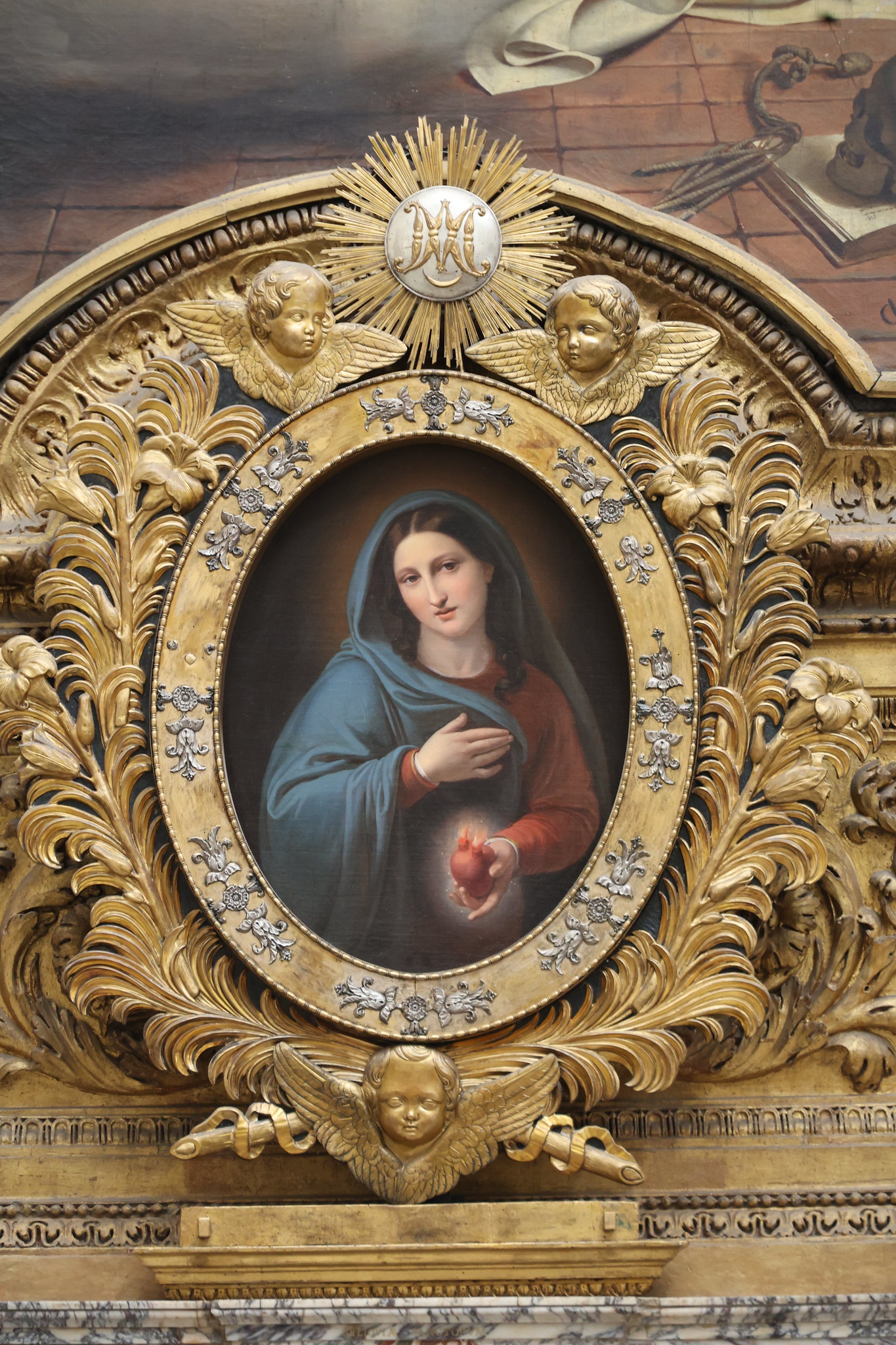
Memorare to Our Lady of the Sacred Heart of Jesus By the Missionaries of the Sacred Heart (MSC) Patronag: Of Difficult and Impossible Causes.
Remember, Our Lady of the Sacred Heart, what ineffable power thy Divine Son hath given thee over His own adorable Heart. Full of trust in thy merits, we come before thee and beg thy protection. O heavenly Treasurer of the Heart of Jesus that Heart which is the inexhaustible source of all graces which thou mayest open to us at thy good pleasure, in order that, from it may flow forth upon mankind the riches of love and mercy, light and salvation which are contained therein; grant unto us, we beseech thee, the favours which we seek. We can never, never be refused by thee and since thou art our Mother, O our Lady of the Sacred Heart, graciously hear our prayers and grant our request. Amen
Prayer to Sts Simon and Jude From the Liturgical Year, 1903
Great evils surround us! is there any hope left to the world? The confidence of thy devout clients proclaims thee, O Jude, the Patron of desperate cases and for thee, O Simon, this is surely the time to prove thyself Zelotes, full of zeal. Deign, thou both, to hear the Church’s prayers and aid her, with all thy Apostolic might, to re-animate faith, to rekindle charity and to save the world! Amen
Prayer to St Jude Patron of Impossible Causes
It is a beautiful tradition, associated with prayer to St Jude, to leave a copy of the prayer in a Church or before his Statue, Image or Shrine, for someone else, who is in great need, to find.
Most holy Apostle, St Jude, faithful servant and friend of Jesus, the Church honours and invokes you universally, as the patron of hopeless causes, of things almost despaired of. Pray for me, I am so helpless and alone. Help me, I implore you, by that particular privilege given to you, to bring visible and speedy help where help is almost despaired of. Come to my assistance in this great need, that I may receive the consolation and help of Heaven in all my necessities, tribulation and sufferings, particularly ………………… (state request) and that I may praise God with you and all the elect forever. I promise, O blessed St Jude, to be ever mindful of this great favour, to always honour you as my special and powerful patron and to gratefully encourage devotion to you. Amen
Saint of the Day – 22 May – St Quiteria (5th Century) Virgin Martyr., Princess. Born in the 5th Century in Braga, Lusitania (now Portugal) and died in Aire-sur-l’Adouron the borders between France and Spain by beheading. Patronages – against rabies and rabid dogs, against anger, of the City of Higueruela in Spain. Also known as – Kitheriammal, Quiteira, Quitterie.
The Roman Martyrology reads today: “In Spain, St Quiteria, Virgin Martyr.”
18th Century Portuguese painting of Quiteria
One will discover several Churches dedicated to Saint Quiteria while wandering between the south-west of France and the north of Spain, areas which, in the first centuries of Christianity, formed a single cultural entity. Several apostles of the area, such as Saint Saturnin of Toulouse, in fact worked on both sides of the Pyrenees. Furthermore, it should not be forgotten that a few centuries later ,a good part of southern Spain fell into the hands of the Arabs and this constituted a powerful stimulus to strengthen the Christian ties across the Pyrenees.
The centre of the cult paid to Quiteria is constituted by her ancient and valuable sarcophagus, kept since time immemorial, in the French City of Aire-Sur-Adour, in Gascony, on the banks of the Adour River, on the route which crosses the Pyrenees from north to south.
Ancient references help to strengthen the evidence of her cult which St Gregory of Tours also mentions. She is usually considered a virgin and marty, but her life is almost totally unknown.
Believed to have been a Princess, originally from Spanish Galicia, she ran away from home because her father wanted to marry her and make her renounce her personal vows within the Christian Faith.
Quiteria firmly refused and sought refuge in the Aire region but her father’s emissaries reached her and ruthlessly beheaded her. Legend tells that a dog then grabbed the Saint’s head by the hair, now detached and the depiction of this curious episode has spread the belief among the people that the Saint is a powerful defence against rabid dogs.
Quiteria is also venerated in Portugal, where, however, a different legend is attributed to her. The Martyrologium Romanum places the Feastday on the traditional date of 22 May.
St Boethian of Pierrepont St Castus the Martyr St Conall of Inniscoel Bl Diego de Baja Bl Dionisio Senmartin St Emilius the Martyr St Faustinus the Martyr
DISCLAIMER: Please note: I cannot control the content of the Advertisements on this Site, or of pop-ups which may appear, The revenue from the Advertisements, however, does provide a little assistance in the support of the Site. I do apologise for any inappropriate content.
Saint of the Day – 21 May – St Hospitius (Died 581) Confessor, Hermit, Ascetic, Penitent, Spiritual Guide, gifted with the Charisms of Prophecy and physical cures, Miracle-worker. Believed to have been born in Egypt in the 6th Century, he died in 581 in France. Patronage – of the French Town of San-Sospis named after him. Also known as – Sospis, Hospitus, Ospicio, Ospizio.
The Roman Martyrology reads today: “At Nice, in France, St Hospitius, Confessor, distinguished by the virtue of abstinence and the spiorit of prophecy.”
Having retired to a tower near Villafranca, not far from Nice, Hospitius led a life devoted to prayer and the mortification of the flesh. His home, now known as St-Sospis in his honour, was the scene of a life stripped of all comforts – bread, herbs and dates made up his frugal diet, while heavy chains and a rough hair shirt encircled his body.
Hospitius was not only a model of austerity but also, included among his gifts, God had graced him with the ability to foresee the future. Famous is the prophecy he pronounced about the invasion of the Lombards – he accurately predicted the raid which would devastate Nice in 574. Hospitius was seized by these raiders but his life was spared when he worked a miracle in favour of his attacker, who subsequently embraced the Faith and then the religious life and was known personally to St Gregory of Tours. It was from this former Lombardian soldier that St Gregory, to whom we are indebted for the meagre details of the Saint’s life, learned of the austerities and numerous miracles of the saintly Hermit. This Statue of the event is displayed in the Church dedicated to St Hospitius in Saint-Jean-Cap-Ferrat (Alpes-Maritimes, France).
Hospitius’ fame spread far beyond the confines of his tower, attracting to his hermitage, countless pilgrims in search of comfort and cures. Numerous miracles were attributed to his intercession, including the cure of a man blind from birth and another, who was deaf and mute. It is said that the very dust of his tomb possessed healing properties.
Hospitius foretold his death and died around 581, surrounded by a devotion which has never waned over the many centuries. Even today, his figure inspires the faithful with his testimony of unshakable faith, strength of spirit and self-denial. He was buried by his friend, Austadius, the Bishop of Nice.
His memory is celebrated every year on 21 May and his Relics are kept in the Cathedral of Nice and in several other Churches in the Diocese.
Information about Saint Hospitius comes to us mainly from the works of Saint Gregory of Tours, his contemporary, who briefly described his life and virtues, much of this information gleaned from a Religious disciple of our Saint. Various biographies dedicated to the Saint were written over time but unfortunately none of them have reached us.
The figure of St Hospitius is closely linked to the history of Provence in the 6th Century, a period marked by barbarian invasions and political upheavals. His prophecy on the arrival of the Lombards makes him an eyewitness to crucial events which shaped the future of the region.
Painting of Saint-Hospice interceding to the Blessed Virgin Mary, in the Chapel of Saint-Jean-Cap-Ferrat.
St Polieuctus of Caesarea St Polius of Mauretania St Restituta of Corsica St Rodron of Bèze St Secundinus of Cordova St Secundus of Alexandria St Serapion the Sindonite St Sifrard of Bèze Bl Silao St Synesius St Theobald of Vienne St Theopompus St Timothy of Mauretania St Valens of Auxerre St Vales St Victorius of Caesarea
Martyrs of Egypt: Large number of Bishops, Priests, Deacons and lay people banished when the Arian heretics seized the diocese of Alexandria, Egypt in 357 and drove out Saint Athanasius and other orthodox Christians. Many were old, many infirm and many, many died of abuse and privations while on the road and in the wilderness. Very few survived to return to their homes in 361 when Julian the Apostate recalled all Christians and then many of those later died in the persecutions of Julian.
Martyrs of Pentecost in Alexandria: An unspecified number of Christian clerics and lay people who, on Pentecost in 338, were rounded up by order of the Arian bishop and Emperor Constantius and were either killed, or exiled, for refusing to accept Arian teachings. 339 in Alexandria, Egypt.
DISCLAIMER Please note: I cannot control the content of the Advertisements on this Site, or of pop-ups which may appear, The revenue from the Advertisements, however, does provide a little assistance in the support of the Site. I do apologise for any inappropriate content.
One Minute Reflection – 20 May – “The Month of the Blessed Virgin Mary” – St Bernadine of Siena OFM (1380-1444) “Apostle of the Most Holy Name of Jesus” Confessor – Ecclesiasticus 31:8-11 – Matthew 19:27-29 – Scripture search here: https://www.drbo.org/
“… Shall receive a hundredfold and shall possess life everlasting.” – Matthew 19:29
REFLECTION – “The possessions which we have, are not our own:, God has given them to us to cultivate and He wishes us to render them fruitful and profitable … Always deprive yourself, therefore, of some part of your means, giving them to the poor with a willing heart … It is true that God will return it to you, not only in the next world but also in this, for there is nothing which makes a person prosper, in temporal matters, as much as almsgiving. But until such time as God shall repay it, you will always be impoverished to that extent. Oh! how holy and rich is the impoverishment which is caused by almsgiving.
Love the poor and poverty, for by this love you will become truly poor, since, as Scripture says: “We become like the things that we love” (cf Hos 9:10). Love makes those who love, equal to one another: “Who is weak and I am not weak?” says St Paul (2 Cor 11:29). He might have said: “Who is poor, with whom I am not poor?” For love made him become, such as those whom he loved. If, then, you love the poor, you will be truly participating in their poverty and poor like them. Now, if you love the poor, be often among them; be pleased to see them in your house and to visit them in theirs; associate willingly with them; be glad that they are near you in the Churches, in the streets and elsewhere. Be poor in speech with them, speaking to them as their equal but be rich in deed, giving them of your goods, as one who possesses more abundantly.
Will you do even more? … Become a servant of the poor; go to serve them … with your own hands … and at your own expense. This service has more glory in it than a throne!” – St Francis de Sales (1567-1622) Bishop of Geneva and Doctor of the Church (Introduction to the devout life, Part three Ch 15).
PRAYER – O Lord Jesus, Who bestowed on blessed Bernardine, T Thy Confessor, an unusual love for Thine Holy Name, we beseech Thee, by his merits and intercession, graciously pour upon us the spirit of Thy love. Who livest and reignest with God the Father, in the unity of the Holy Ghost, God, world without end. Amen (Collect).
Saint of the Day – 20 May – St Austregisilus (c551-624) Bishop and Confessor of Bourges , Apostle of Charity to the poor and suffering, Defender of his flock by his assiduous care against all forms of strife, Born in c551 in Bourges, France and died there on 20 May 624. Patronages – Bourges and Lyon in France. Also known as – Aoustrille, Austregesilio, Outril, Outrille.
The Roman Martyrology reads today: “At Bourges in France, St Austregisil, Bishop and Confessor.”
Statue of Austregisilus in the Church of Frontenas.
Born of a nobile family, Austregesilus’ youth was spent in the shadow of the Royal Court of King Guntram, where he had the opportunity to experience first-hand, the dynamics of power and the miseries of the people. It is said that, despite his noble origins, Austregesilus was deeply touched by the suffering of the weakest, developing a strong desire to devote himself to the service of God.
According to tradition, Austregesilus refused the marriage arranged for him by the Court, preferring to follow the Divine call to the Priesthood. This courageous choice, in contrast to the social expectations of the time, testifies to his profound faith and his desire to dedicate himself, body and soul, to the good of others.
Around 612, Austregesilus was Consecrated as the Bishop of Bourges, assuming leadership of the Diocese during a turbulent period marked by political conflicts and social tensions. Despite these difficulties, the new Bishop distinguished himself by his dedication to the people, becoming a beacon of hope and an example of Christian charity.
Saint Austregesilus committed himself fully to the pastoral care of his Diocese, regularly visiting all his Parishes and preaching the Gospel with fervour. His work was directed, in particular, to the most needy: the poor, orphans, the sick and those condemned to death. With dedication and compassion, Austregesilus did his utmost to alleviate their suffering, offering them not only material support but also, spiritual comfort.
In 614, Austregesilus participated in the Council of Paris, an important event which brought together the Frankish Bishops to discuss theological and disciplinary issues. His presence at the Council underlines his role as a reference within the Frankish Church and his commitment to promoting unity and cohesion among the faithful.
Saint Austregesilus died on 20 May 624, leaving a deep sorrow and eternal memory of sanctity and charity among his people. His figure soon became an object of veneration in Bourges and surrounds and a Church was dedicated to him in Bourges, of which he is still the Patron today.
St Abercius Blessed Albert (Died 1245) Priest and Abbot of the Vallombrosan Abbey near Bologna, Italy. St Alexander of Edessa St Althryda St Anastasius of Brescia St Aquila of Egypt Bl Arnaldo Serra and Companions St Asterius of Edessa St Austregisilus (c551-624) Bishop and Confessor of Bourgesof Bourges St Basilla of Rome St Baudelius of Nîmes St Codrato
Bl Guy de Gherardesca St Helena St Hilary of Toulouse St Lucifer of Caglieri St Marcello
St Plautilla (Died 67) A Roman Widow, Mother of St Flavia Domitilla. She was Baptised by St Peter and is believed to have seen the Martyrdom of St Paul. The Roman Martyrology reads today: “At Rome, St Plautilla, wife of an ex-Consul and mother of the blessed Flavia Domitilla. She was Baptised by the Apostle, St Peter and after giving the example of all virtues, rested in peace.” Blessed Indeed St Plautilla: https://anastpaul.com/2023/05/20/saint-of-the-day-20-may-st-plautilla-of-rome-died-67-a-roman-widow/
St Talaleo of Egea St Thalalaeus of Edessa St Theodore of Pavia
DISCLAIMER: Please note: I cannot control the content of the Advertisements on this Site, or of pop-ups which may appear, The revenue from the Advertisements, however, does provide a little assistance in the support of the Site. I do apologise for any inappropriate content.
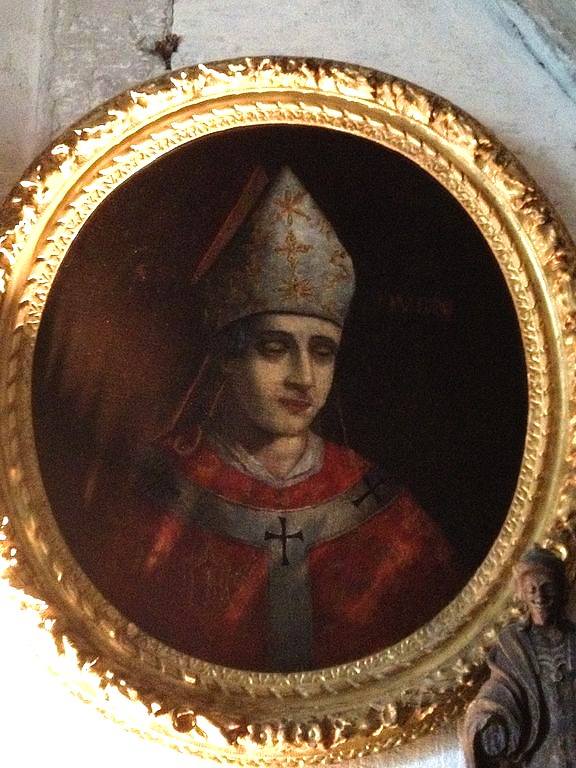
Saint of the Day – 19 May – St Pudentiana (Died c160) Virgin Martyr(?) although sources do not confirm her Martyrdom. Patronage – Co Patron of the Philippines, with St Rose of Lima under the Principal patronage of Our Lady of the Immaculate Conveption. Also known as – Potentiana.
The Roman Martyrology reads today: “At Rome, the saintly virgin, Pudentiana, who, after numberless tribulations, after with great respect, burying many Martyrs and distributing all her goods to the poor for Christ’s sake, departed from this world to go to Heaven.”
This mosaic is present in the Apse of the Basilica dedicated to St Pudentiana in Rome
According to her Acta and the Martyrology of Reichenau, she was a Roman virgin of the early Church, daughter of Saint Pudens, friend of the Apostles and Disciples and sister of St Praxedes, also a Martyr.
These 2 sisters, together with Pope Pius I, built a Baptistry in the Church inside their father’s house and started to Baptise pagan converts there.
Pudentiana died at the age of 16, possibly a Martyr and is buried next to her father St Pudens, in the Priscilla Catacombs on the via Salaria.
While there is evidence for the life of Pudens, there is no direct evidence for either Pudentiana or Praxedes. However, these 2 have a Church in Rome but not their fahter.
Santa Pudenziana, a Basilica in Rome, is named for her, and her commemoration in the General Roman Calendar fell on 19 May until its 1969 revision. Pudentiana is still mentioned on 19 May in the Roman Martyrology.
St Pudentiana on the South Colonnade at St Peter’s. Here she raises a sponge used to collect the blood of the Martyrs.
The Spanish Conquistador, Miguel López de Legazpi, the Founder of the modern City of Manila, Philippines, gained possession of the territory on 19 May 1571. As it was the Feastday of Saint Pudentiana, Legazpi declared her the Patron.
By the Apostolic Letter “Impositi Nobis Apostolici” of 12 September 1942, Pope Pius XII, at the request of the Philippine Episcopacy, declared the Virgin Mary under the title of the Immaculate Conception, as principal Patron of the Country, with Saints Pudentiana and Rose of Lima, as secondary patrons. His Decree mentions the historic documents, indicated Pudentiana as Patron from the 16th Century and Rose of Lima from the 17th.
St Pudentiana’s Relics were transferred to the Basilica in Rome, (see below) dedicated to her and her sister from the Catacombs of Priscilla.
St Calocerus of Rome St Crispin of Viterbo St Cyriaca of Nicomedia and Companions St Cyril of Trèves St Dunstan of Canterbury St Evonio of Auvergne St Hadulph of Saint-Vaast Bl Humiliana de’ Cerchi
Bl Juan of Cetina St Parthenius of Rome Bl Peter de Duenas Bl Peter Wright St Philoterus of Nicomedia St Theophilus of Corte
DISCLAIMER: Please note: I cannot control the content of the Advertisements on this Site, or of pop-ups which may appear, The revenue from the Advertisements, however, does provide a little assistance in the support of the Site. I do apologise for any inappropriate content.
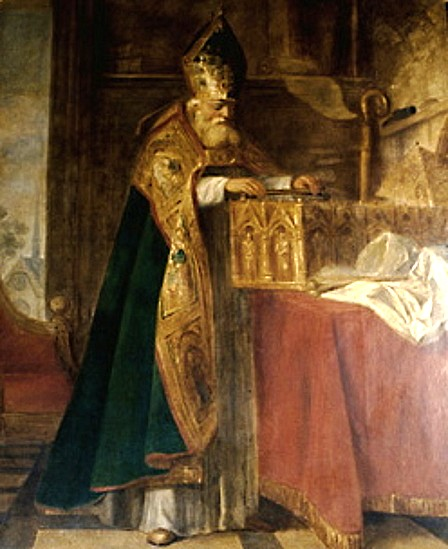
Saint of the Day – 18 May – St Felix (Died c304) Bishop of Spoleto in Italy, Martyr. Martyred in the persecutions of Diocletian in Salona, Dalmatia. Also known as – Felix of Epetium, of Martana, of Spalato, of Spello, of Split, of Stobrec, Felice…
The Roman Martyrology reads today: “At Spoleto, St Felix, a Bishop, who obtained the Palm of Martyrdom under the Emperors Diocletian and Maximian.”
The “Prologus Paschae” written in 395, tells of Bishop Felix’s Martyrdom in Salona, not in Spoleto, during the persecution of Diocletian and Maximian. Here we read: “During the consulship of Diocletian and Maximian, … the Christians suffered the sixth persecution.”
The testimony of the Prologus is, at this point, confirmed by contemporary documents and can be accepted without fear, with the exception of the consular date which evidently must be brought back to at least the year 303, the beginning of the persecution.
Felix’s cult is still alive in Split, the ancient Salona, where, in the Franciscan Church his Relics are preserved and he has been celebrated since time immemorial on 18 May. On the same day the Saint is honoured in Stobrec, formerly Epetium, a few miles from Split, in the vicinity of which the ruins of a Church dedicated to him have been brought to light. Stobrec too, considers him one of its ancient Bishops but wrongly, because the Town was never an Episcopal Seat.
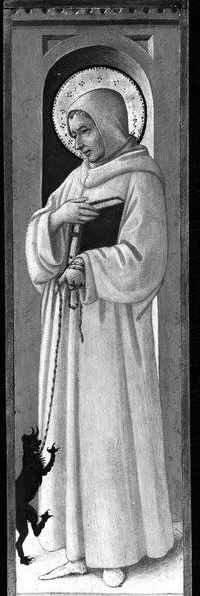
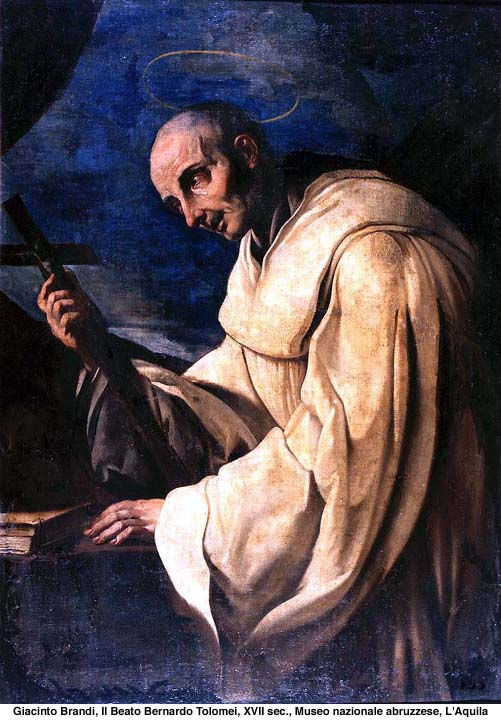
In the Martyrology of the 9th Century, on 18th May we find this eulogy: “On the same day, Saint Felix, Bishop, who obtained the Palm of Martyrdom at the City of Spelle, under the Emperor Maximian.” The same name and the same day of veneration (18 May) as Felice di Spalato. This and other circumstances have led the best scholars, to conclude that Felice di Spello is, in reality, nothing more than the namesake of Spalato and it is probable that the assonance of the words had, as has occurred in many other cases, its share of blame in the genesis of the error. Certainly it was only because of the similarity that Baronio (he himself confesses it) created Felice the Bishop of Spoleto.
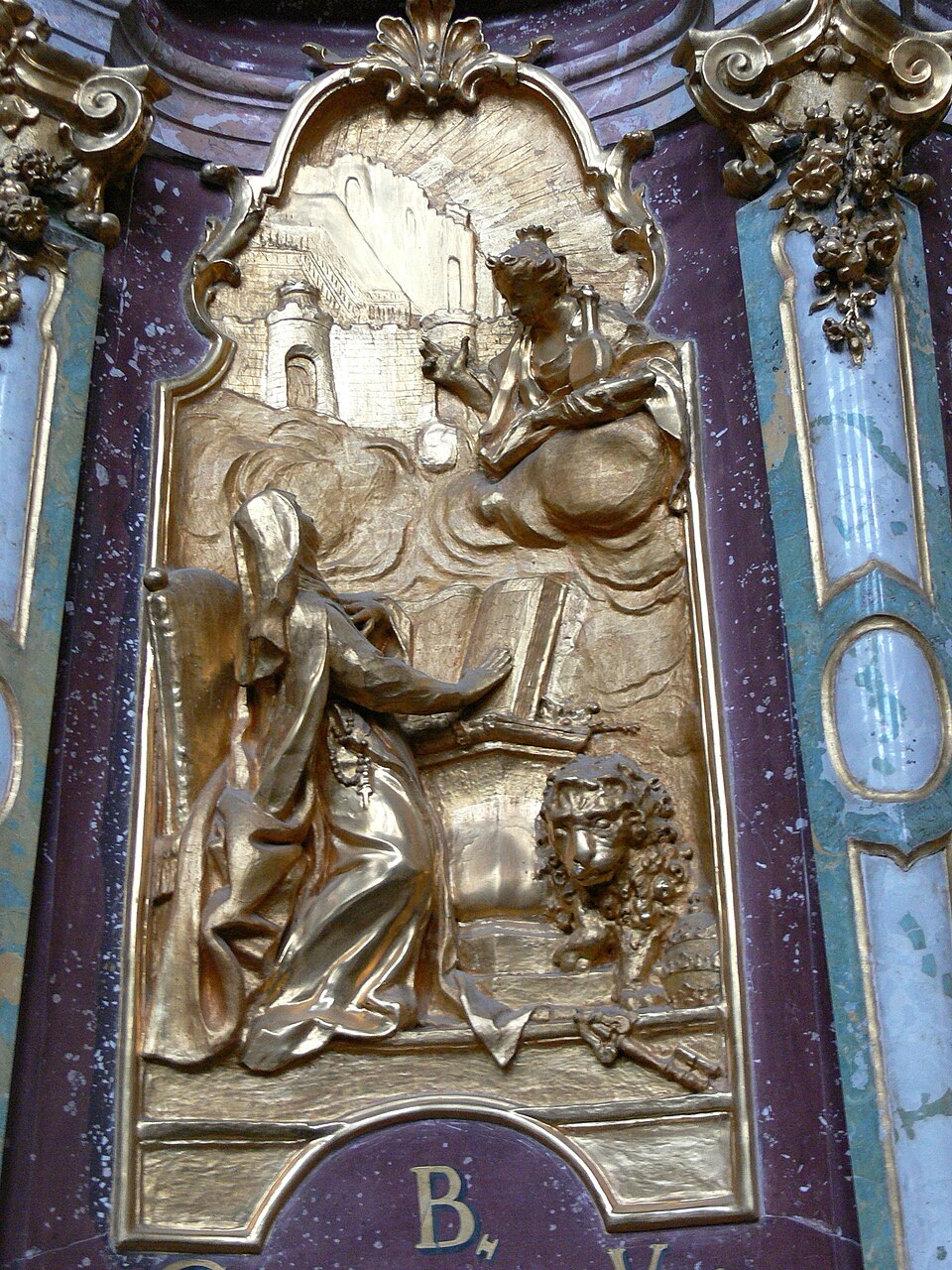
In addition to Epetium, Spello and Spoleto, Felice was considered the Bishop of Martana, another Diocese which never existed, where he is celebrated on 30 October. The passio of Felice of Martana is identical, except for the topographical notes, to that of Felice of Spello. Furthermore, since Martana is located in the territory of Todi, the historians of the latter City, since Felice could not have been the Bishop of Martana, assigned him the Seat of Todi.
You must be logged in to post a comment.