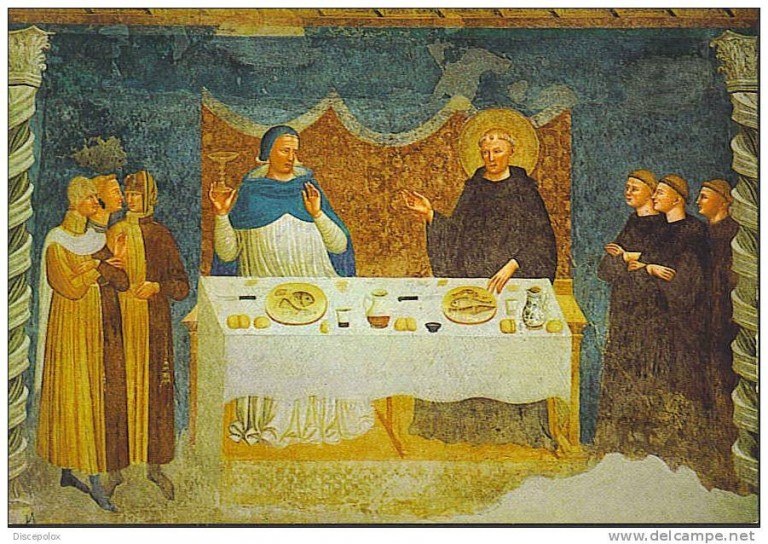
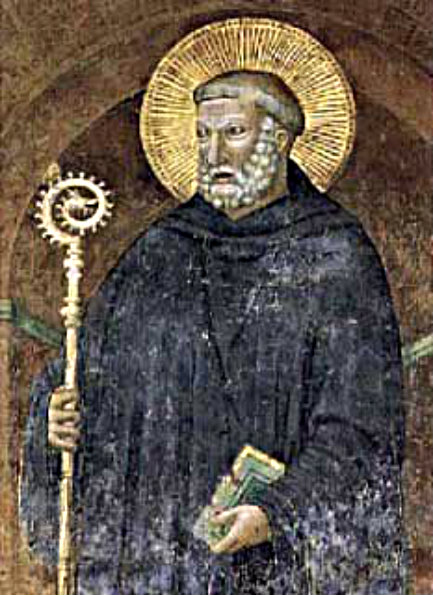
Posted in GOD ALONE!, GOD the FATHER, QUOTES of the SAINTS, QUOTES on LOVE, QUOTES on LOVE of GOD, QUOTES on the CHURCH, QUOTES on THE MYSTICAL BODY, QUOTES on ZEAL, SAINT of the DAY, The PASSION

Quote of the Day – 7 April – “Be driven by the love of God”

Quote of the Day – 7 April – The Fifth Sunday of Lent, Year C, Gospel: John 8:1–11 and the Memorial of St John Baptiste de La Salle (1651-1719)

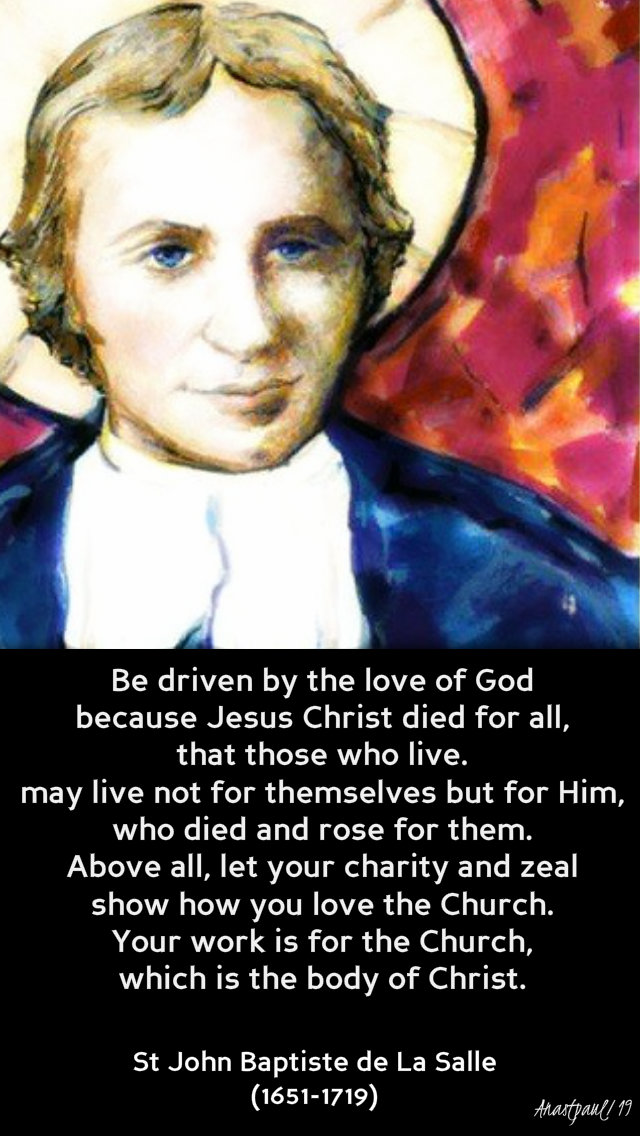
“Be driven by the love of God
because Jesus Christ died for all,
that those who live.
may live not for themselves but for Him,
who died and rose for them.
Above all, let your charity and zeal
show how you love the Church.
Your work is for the Church,
which is the body of Christ.”

St John Baptist de La Salle

more quotes by St John Baptiste here:  https://anastpaul.wordpress.com/2018/04/07/quote-s-of-the-day-7-april-easter-saturday-and-the-memorial-of-st-john-baptiste-de-la-salle-1651-1719/

be driven by the love of god - st john baptsiste de la salle 7 april 2019.jpg

Posted in franciscan OFM, INCORRUPTIBLES, SAINT of the DAY

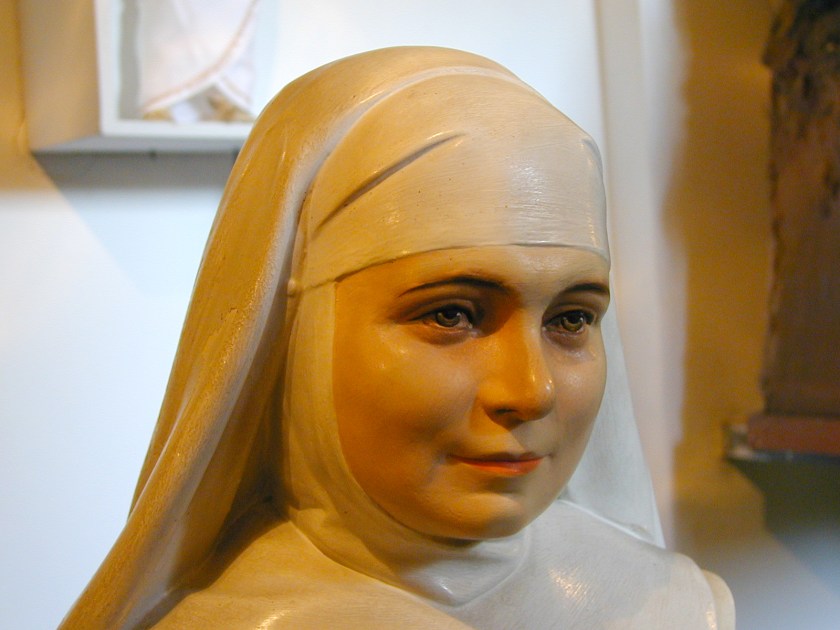
Saint of the Day – 7 April – Blessed Maria Assunta Pallotta (1878-1905)

Saint of the Day – 7 April – Blessed Maria Assunta Pallotta (1878-1905) aged 27, born Assunta Maria Pallotta, was an Italian professed Religious who served as a member of the Franciscan Missionaries of Mary, Missionary to China.  Patronages – Missionaries, against typhus.   Her body is incorrupt.Bienheureuse_Maria_Assunta_Pallotta.jpg
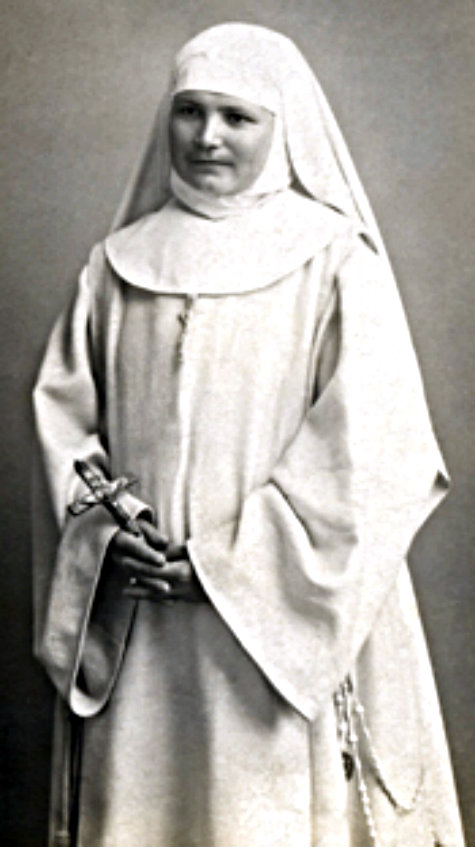
Assunta Maria Pallotta was born on 20 August 1878 in a little village called Force, Italy. Of a gentle and peaceful nature, Assunta was the ray of sunshine in the family home where she was the eldest of four boys and two girls. Although Assunta’s childhood was relatively happy, her family lived in great poverty.   She attended school just for the time necessary to learn to read and write.   In spite of her young age, very soon she had to devote herself fully to the life of the family.   She was a skilful little housekeeper, full of good sense and very active and she helped her mother in everything.

In order to help her family, she courageously faced the humblest and hardest work.   At a certain time, she worked as a diligent little labourer, carrying in a willow basket the materials necessary for the construction work.

When still very young, her attraction for prayer could already be seen.   She had a filial tenderness for the Blessed Virgin and she could be seen setting up little altars or decorating with flowers the pictures of the beloved Madonna in the countryside.  Assunta’s piety very naturally radiated around her by means of a discreet apostolate.   She liked to gather the children of her own age together in the church or under the porch, to speak to them about the goodness of God with all the fervour of her heart.

​On Sundays and in her rare moments of leisure, she would be seen very often in the Church, kneeling for hours before the altar, conversing with the Friend of the humble and the lesser people.   Apprenticed to the old tailor in the village, she liked to place in front of her a holy picture which she looked at from time to time, while her lips murmured the Hail Marys of the Rosary.

At the age of twelve Assunta received Jesus in the Eucharist for the first time.   It was an inexpressible moment of happiness for her, the memory of which would remain as one of the most beautiful of her life.

As a teenager, everyone who knew her was struck by her serenity in look and manner. She was a girl of calm common sense.   Her spirituality was really quite simple.   To God she offered her heart in frequent prayer.   Then, as a continued prayer, she dedicated her exterior actions.

Drawn to give her life entirely to God, Assunta confided in her parish priest, her director, who encouraged her vocation.   When she was nineteen, Assunta decided to enter the convent but encountered many obstacles not least among them her mother’s objections and her lack of dowry.  mariaassuntasite.jpgBut prayer prevailed and at last a letter from Rome, from the Foundress of the Franciscan Missionaries of Mary, arrived, “Let the little one come as she is.   The doors of the convent of the Franciscan Missionaries of the Mary at 12 Via Giusti are open to receive her.”
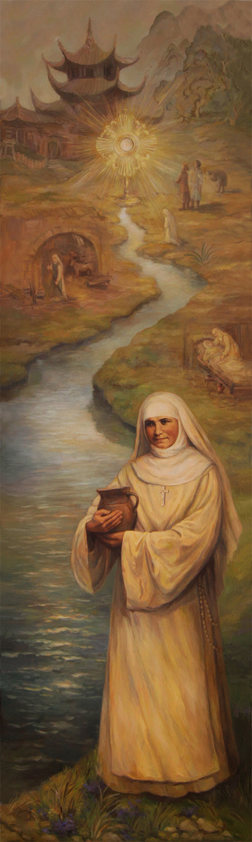
Assunta began her postulancy at St Helen’s Convent in Rome.   During her time as a postulant, Assunta was employed in the kitchen.   Humble and silent, she fulfilled her charge so perfectly that for a long time she was cited as a model to those who came after her.

On 9 October 1898, Assunta was received as a novice and sent to the convent at Grottaferrata.   Here, Sr Maria Assunta was employed in work in the fields.   In this modest field of work, sparing herself neither time nor trouble, Sister Maria Assunta was as happy as in the most attractive work.   To serve God and her neighbour in the humblest and most mortified ways was her motto.   It enabled her to feel true Franciscan joy.

There at the end of November, 1898, Assunta met Mother Mary of the Passion.   Upon learning that Assunta came from an area called “The Marches” Mother Mary of the Passion said, “That is the land of saints.  You must become a saint too”. Assunta had her watchword.   In the depth of her heart, Assunta was stowing away these simple words as her precious heritage.

In January 1902, Sr. Assunta left her beloved Grottaferrata to join a new convent in Florence.   For two years she was to be the joy of this house.   Without having any fixed employment, she helped in all the charges.   When there was extra work or when a harder job presented itself, one was sure to find her ready  . She accepted the request for a service with a lovely smile, nothing changed her good humour.  This angelic patience, the gentleness of her character, caused her to be sent as a helper to the infirmary where the sick benefited from the charitable devotedness of their improvised nurse.

On 19 March 1904, together with nine other Franciscan Missionaries of Mary, Assunta set sail for China.   Ardently Sister Maria Assunta began to study the Chinese language in order to be able to speak of the goodness of God to those around her.   In the convent where the Franciscan nuns cared for four hundred orphans Maria Assunta joyfully worked in the kitchen.   She did her work there with as much diligence and care as she would have taught catechism.   To accomplish her daily duties as perfectly as possible seemed to her the best way of working as a true missionary.   Ever intimately united with God, she lived day by day the ordinary community life for His honour and glory.

A serious epidemic of typhus broke out in the community and she fell victim to it.   She bore the suffering with great patience and fortified by the rites of Holy Church, she died at sunset on 7 April 1905, being then only twenty-seven years old.   Non-believers as well as Christians flocked to the place where she lay as a mysterious perfume filled the entire house for three days after her death.bl maria assunta portrait
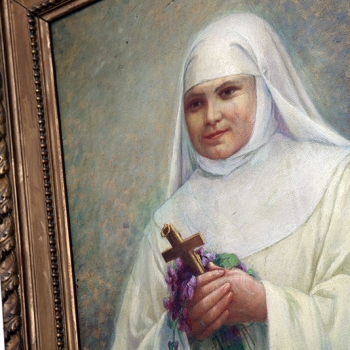
Eight years after Sister Assunta’s death when the community was moving to Tai-Yuan-Foo, the Bishop asked for the body of Sister Assunta to be transferred.   The disinterment revealed the fact that the body was incorrupt.    After being exhumed, the body remained exposed to the air in the chapel of the cemetery for a month without being affected.   Once again, God showed His favour for the little missionary Sister who lived for Him alone.

On 7 November 1954, Sister Assunta was beatified by Pope Pius XII.   The Church officially recognised the little Italian girl whose life had been a song of simplicity, purity and love and who is indeed the beloved of Christ whom she had served so devotedly.OLYMPUS DIGITAL CAMERA
Posted in SAINT of the DAY

Memorials of the Saints – 7 April

Fifth Sunday of Lent *2019 Year C

St John Baptiste de La Salle (1651-1719) (Memorial)
Biography – https://anastpaul.wordpress.com/2018/04/07/saint-of-the-day-7-april-st-john-baptiste-de-la-salle-1651-1719-the-father-of-modern-education/ 

St Albert of Tournai
Bl Alexander Rawlins
St Brenach of Carn-Engyle
St Calliopus of Pompeiopolis
Bl Cristoforo Amerio
St Cyriaca of Nicomedia
St Donatus of North Africa
Bl Edward Oldcorne
St Epiphanius the Martyr
St Finian of Kinnitty
St George the Younger
St Gibardus of Luxeuil
St Goran
St Guainerth
St Hegesippus of Jerusalem
St Henry Walpole
Bl Herman Joseph
Bl Maria Assunta Pallotta (1878-1905)
St Peleusius of Alexandria
St Peter Nguyen Van Luu
Bl Ralph Ashley
St Rufinus the Martyr
St Saturninus of Verona
Bl Ursuline of Parma

Martyrs of Pentapolis – 4 saints: A bishop, deacon and two lectors at Pentapolis, Lybia who for their faith were tortured, had their tongues cut out, and were left for dead. They survived and each died years later of natural causes; however, because they were willing to die and because there were attempts to kill them, they are considered martyrs. We know little else except their names – Ammonius, Irenaeus, Serapion and Theodore c 310 at Pentapolis, Lybia.

Martyrs of Sinope – 200 saints: 200 Christian soldiers martyred together for their faith. We don’t even have their names. They were martyred in Sinope, Pontus, Asia Minor (in modern Turkey).

Posted in QUOTES of the SAINTS, QUOTES on FAITH, QUOTES on HOPE, QUOTES on PATIENCE, QUOTES on SACRIFICE, QUOTES on SUFFERING, QUOTES on WORK/LABOUR, QUOTES on WORRY/ANXIETY, SAINT of the DAY

Quote of the Day – 6 April – Do not be dismayed

Quote of the Day – 6 April – Saturday of the Fourth week of Lent, Year C and the Memorial of Blessed Zefirino Agostini (1813-1896)

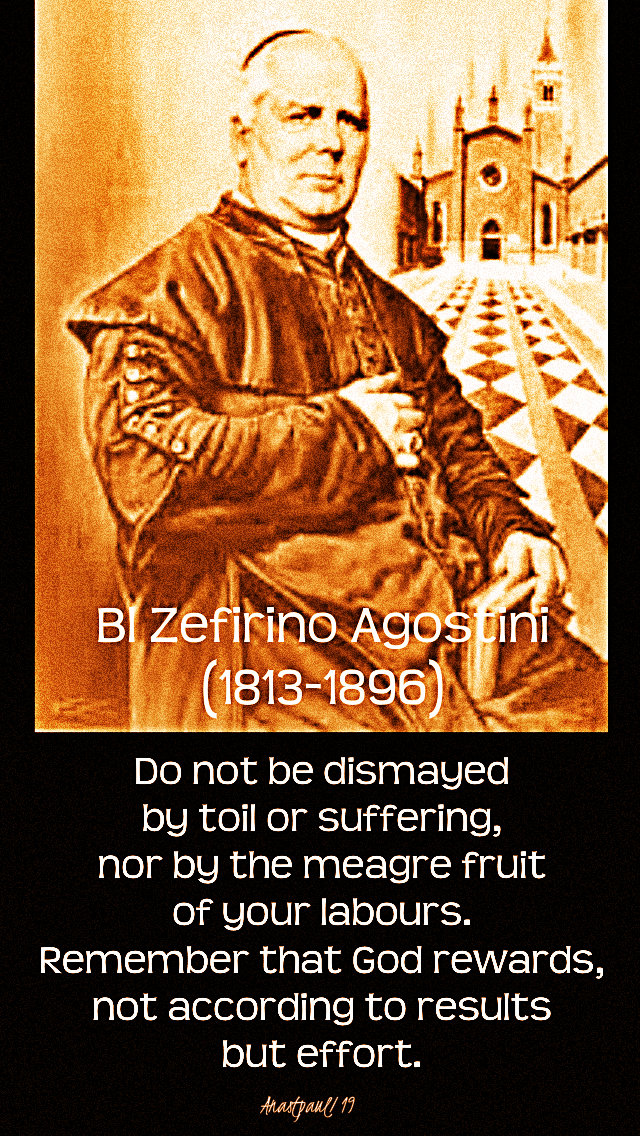
“Do not be dismayed by toil or suffering,
nor by the meagre fruit of your labours.
Remember that God rewards,
not according to results but effort.”

Blessed Zefirino, 1874do not be dismayed by the meagre fruits - bl sefirino agostino 6 april 2019.jpg

Posted in SAINT of the DAY

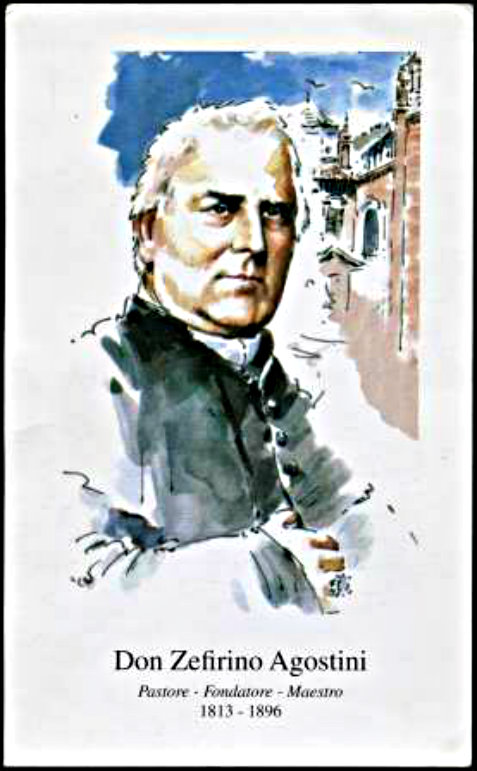
Saint of the Day – 6 April – Blessed Zefirino Agostini (1813-1896)

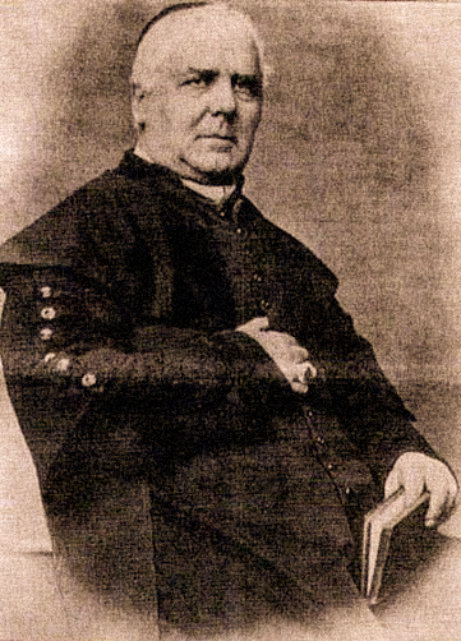
Saint of the Day – 6 April – Blessed Zefirino Agostini (1813-1896) Priest, Apostle of the Poor and Founder of the Pious Union of Sisters Devoted to Saint Angela Merici and the Ursuline Sisters of the Daughters of Mary Immaculate of which orders he is the Patron.bl zefirino.jpg

Blessed Zefirino Agostini was born in Verona, Italy on 24 September 1813.   He was the oldest son of his parents, his father was a physician, who died when Zefirino was very young.

Blessed Zefirino commenced his studies for the priesthood at the age of eighteen and was Ordained on 11 March 1837.    He was then and was assigned to a very poor parish in Verona.   There he established an after-school programs for girls, religious education for mothers and education for women.

He began a devotion to Saint Angela Merici for the female parishioners and founded the Pious Union of Sisters Devoted to Saint Angela Merici whose rule was approved by Bishop Ricabona in 1856.

On All Souls Day of that same year, he opened his first charitable school of poor girls.  In 1860, local women who worked in the school chose community life and Father Agostini prepared the first rule for the community and on 24 September 1869, the first 12 Ursulines made their profession.   On 18 November 1869, they founded the Congregation of Ursulines, Daughters of Mary Immaculate.zefirino agostini

Father Agostini died on 6 April 1869 in Verona, Italy of natural causes.   His order received diocesan approval on 24 June 1923 while the papal decree of praise of Pope Pius XI was issued on 14 March 1932 and full papal approval for the institute came on 3 April 1940 from Pope Pius XII during World War II.   The order now operates in places such as Switzerland and Benin and as of 2005 has 628 religious in 78 houses.

He was Beatified on 25 October 1998 by St Pope John Paul II, after approval of the required miracle.   At the Beatification St John Paul said:

“The Lord stood by me and gave me strength” (2 Tm 4:17).

“These words of the Apostle to Timothy certainly apply to Fr Zefirino Agostino, who never lost heart despite countless difficulties.   He stands before us today as a humble, steadfast witness to the Gospel in the latter half of the 19th century, a fruitful period for the Church in Verona.   His faith was steadfast, his charitable work effective and ardent was the priestly spirit that distinguished him.

The love of the Lord spurred him in his apostolate to the poor, especially in the Christian education of girls, particularly the most needy.   He understood well the important role women play in the rehabilitation of society by teaching the values of freedom, honesty and charity.

He advised the Ursulines, his spiritual daughters:  “Poor girls, let them be the favourite object of your care and attention.   Awaken their minds, teach their hearts virtue and save their souls from malignant contact with the wicked world” (Scritti alle Orsoline, 289).   May his example strongly encourage those who honour him today as blessed and invoke him as their protector.”

Zefirino_Agostini

Posted in SAINT of the DAY

Memorials of the Saints – 6 April

St Agrarius the Martyr
St Amand of Grisalba
St Berthanc of Kirkwall
St Brychan of Brycheiniog
Bl Catherine of Pallanza
St Diogenes of Philippi
St Elstan of Abingdon
St Galla of Rome
St Gennard
St Irenaeus of Sirmium
Bl Jan Franciszek Czartoryski
St Marcellinus the Martyr
Bl Maria Karlowska (1865-1935)
About Blessed Maria:  https://anastpaul.wordpress.com/2018/04/06/saint-of-the-day-6-april-blessed-maria-karlowska-1865-1935/

Bl Michele Rua
Bl Notker Balbulus OSB (c 840-912)
Biography:  https://anastpaul.wordpress.com/2017/04/06/saint-of-the-day-6-april-blessed-notker-balbulus/

St Phaolô Lê Bao Tinh
St Philaret of Calabria
Bl Pierina Morosini
St Platonides of Ashkelon
St Prudentius of Troyes
St Pope Sixtus I
St Timothy of Philippi
St Ulched
St Urban of Peñalba
St William of Eskilsoe
St Winebald
Bl Zefirino Agostini (1813-1896)

Martyrs of Sirmium : 7 saints – A group of fourth century martyrs at Sirmium, Pannonia (modern Sremska Mitrovica, Serbia). We know little more than seven of their names – Florentius, Geminianus, Moderata, Romana, Rufina, Saturus and Secundus.

Martyred in the Spanish Civil War:
Bl Enric Gispert Domenech
Bl Josep Gomis Martorell

Posted in PRACTISING CATHOLIC, QUOTES - J R R Tolkien and MORE, QUOTES on CHARITY, QUOTES on HUMILITY, QUOTES on LOVE, QUOTES on MERCY, SAINT of the DAY

Thought for the Day – 5 April – “A saint of the ordinary?”

Thought for the Day – 5 April – Friday of the Fourth Week of Lent, Year C and the Memorial of Blessed Mariano de la Mata Aparicio OSA (1905-1983)

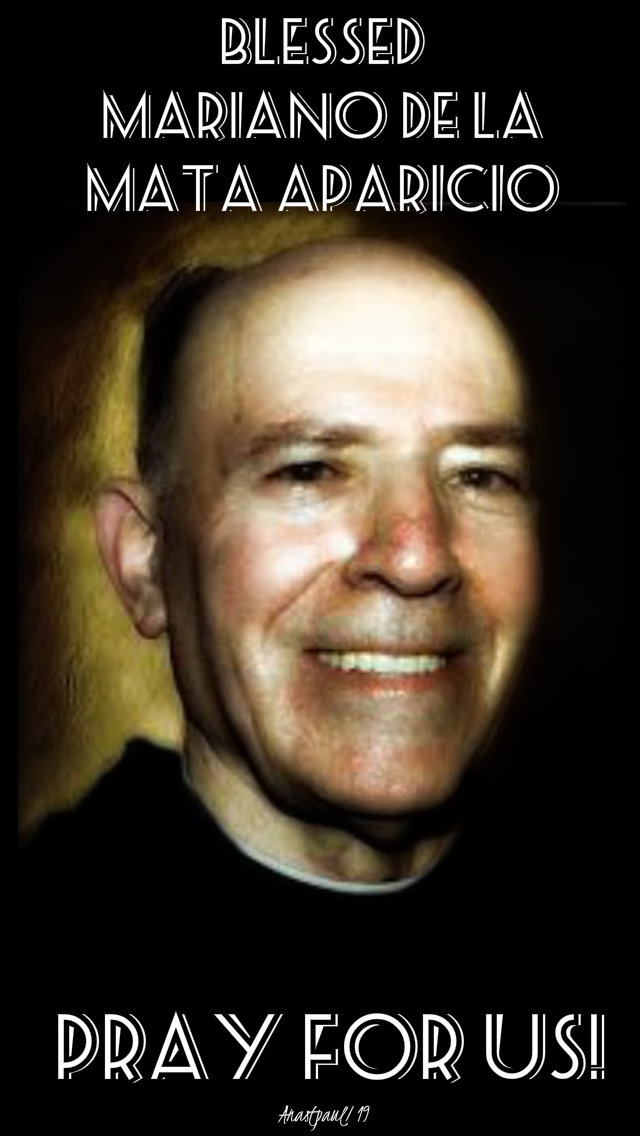
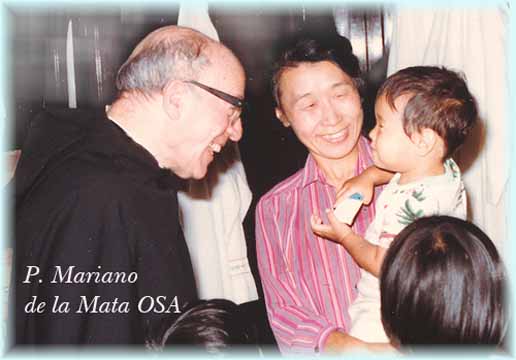
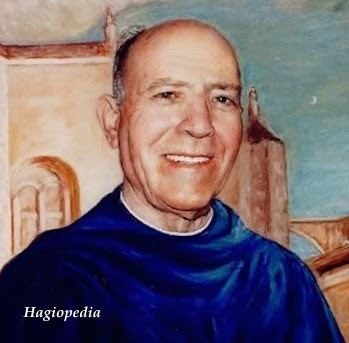
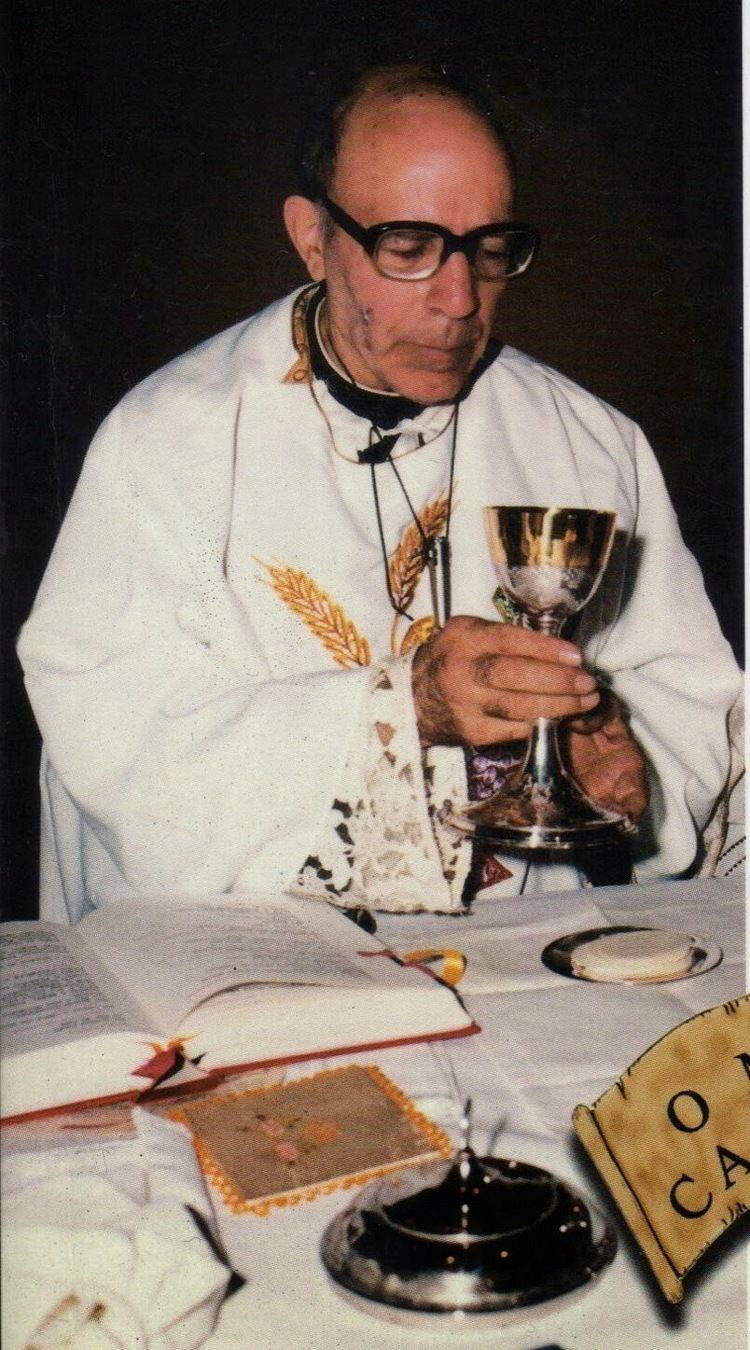
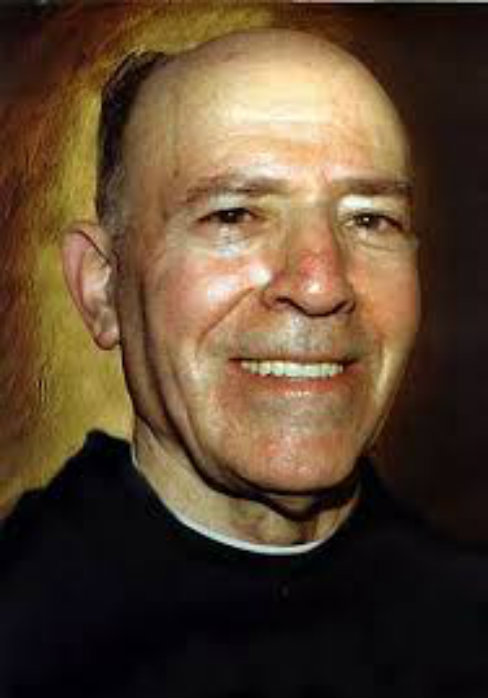
Blessed Mariano has been called “a saint of the ordinary”, this giving, loving and holy man who spent all he had for his people.   Is this ‘ordinary’, is this how ‘ordinary’ folk live, though we should be living thus.  Is St Mother Teresa, who likewise, gave all, what we would call an ordinary saint  . For the suffering sheep are the beloved of God, they are not ordinary, they are His most in need of the extraordinary love and charity of us, ‘the ordinary.’

I am reminded of the words of Fr Henri Nouwen (1932-1996):

“Visiting the sick, feeding the hungry, consoling the dying or sheltering the homeless, may not catch the public eye and are often perceived as irrelevant when put in the perspective of a possible nuclear holocaust. There are many voices that say: ‘These little acts of mercy are a waste of time when we consider the urgency of stopping the arms race, etc etc.” But the peacemaker knows that true peace is a divine gift that has nothing to do with statistics or measures of success and popularity. Peace is like life itself. It manifests itslef quietly and gently.
Who can say that a lost afternoon with a sick friend is in truth not much more than an interruption of ‘true’ peace work?
Who knows?
Jesus’ way is the humble way. He calls out to use – “Learn from me, for I am gentle and humble of heart.'”
Blessed Mariano de la Mata Aparicio , Pray for Us!bl mariano de la mata aparecio pray for us 5 april 2019.jpg

Posted in DOMINICAN OP, LENT 2019, PRACTISING CATHOLIC, QUOTES of the SAINTS, QUOTES on CHARITY, QUOTES on HUMILITY, QUOTES on LOVE, SAINT of the DAY

Quote of the Day – 5 April – “Humility”

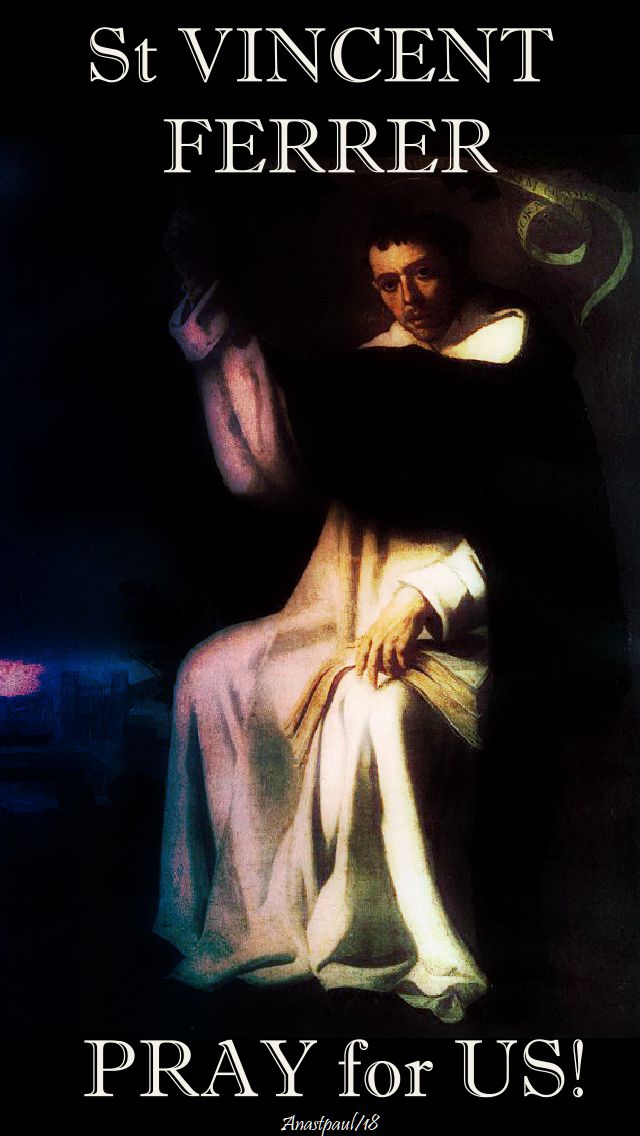
Quote of the Day – 5 April – Friday of the Fourth Week of Lent, Year C and the Memorial of St Vincent Ferrer OP (1350-1419)

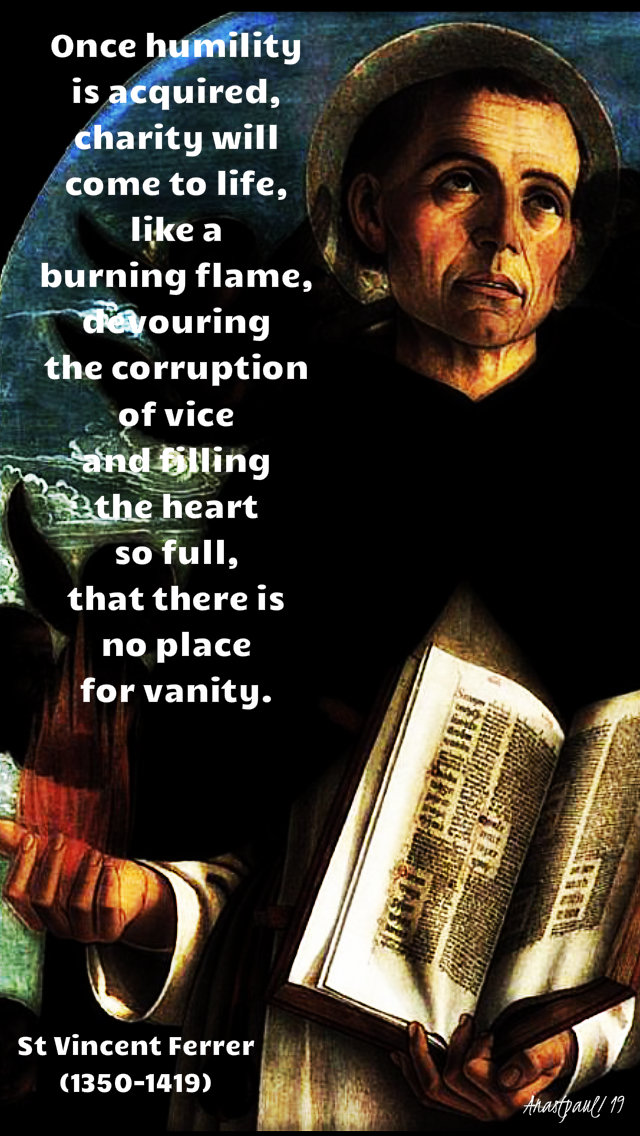
“Once humility is acquired,
charity will come to life,
like a burning flame,
devouring the corruption of vice
and filling the heart so full,
that there is no place for vanity.”…

St Vincent Ferrer (1350-1419)once humility is acquired - st vincent ferrer - 5 april 2019.jpg

Posted in JESUIT SJ, LENT 2019, MORNING Prayers, PRACTISING CATHOLIC, SAINT of the DAY, The WORD

One Minute Reflection – 5 April – “You know me?”

One Minute Reflection – 5 April – Friday of the Fourth Week of Lent, Year C, Gospel: John 7:1-2, 10, 25-30 and celebrating St Vincent Ferrer and Blessed Mariano de la Mata

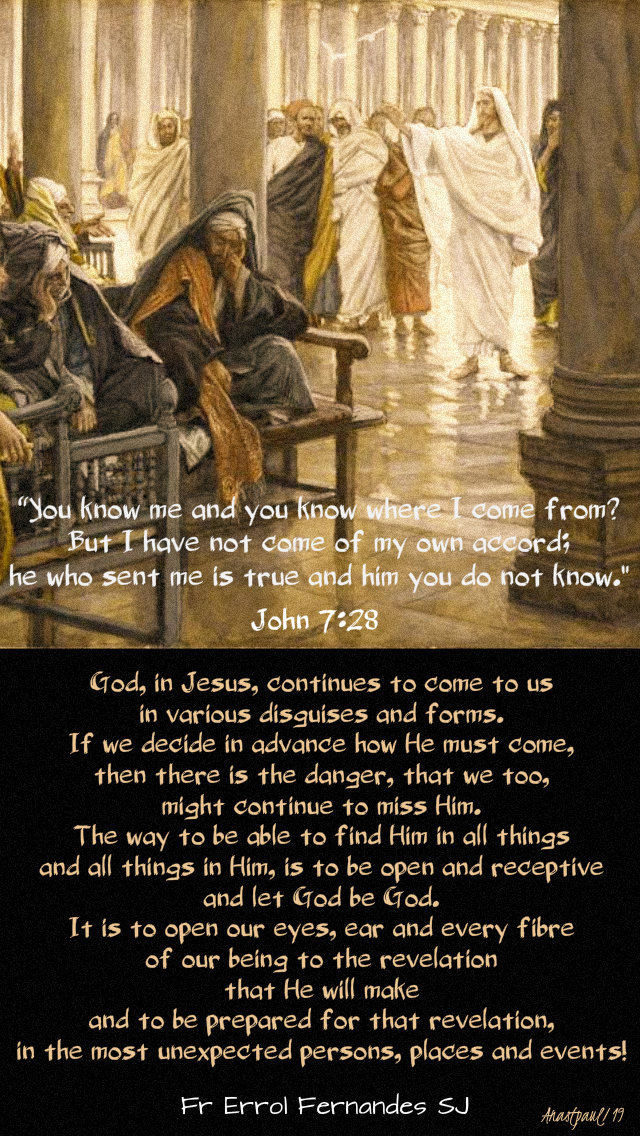
“You know me and you know where I come from?   But I have not come of my own accord;  he who sent me is true and him you do not know.”…John 7:28

REFLECTION – “The crowds are surprised to see Jesus teaching in public, despite the death threats and so wonder if He could indeed be the Messiah.   The crucial question here is, whether or not one perceives Jesus as having been sent by God.   The answer to this question determines whether one is on the right track or engaged in only superficial reflection.   God, in Jesus, continues to come to us in various disguises and forms. If we decide in advance how He must come, then there is the danger that we too might continue to miss Him.   The way to be able to find Him in all things and all things in Him, is to be open and receptive and let God be God.   It is to open our eyes, ear and every fibre of our being to the revelation that He will make and to be prepared for that revelation, in the most unexpected persons, places and events!”…Fr Errol Fernandes SJjohn 7 28 you know me - god in jesus continues to come - gods word 5 april 2019.jpg
PRAYER – Loving God and Father, open our eyes and ears and our hearts.   Help us to recognise the Light of Christ in the world around us.   Too often we are hard of heart and closed up in our ‘rites’ – He is there but He is not only there and we are blind.   May the prayers of the saints and angels help us to be open to Him.   Mary, the Mother He gave us, pray for us.   Through Jesus Christ, our Lord, with the Holy Spirit, God for all eternity, amen.mother mary pray for us - 5 oct 2018.jpg

st-vincent-ferrer-pray-for-us-5-april-2018.jpg

Posted in DOMINICAN OP, Our MORNING Offering, PRAYERS of the SAINTS, SAINT of the DAY

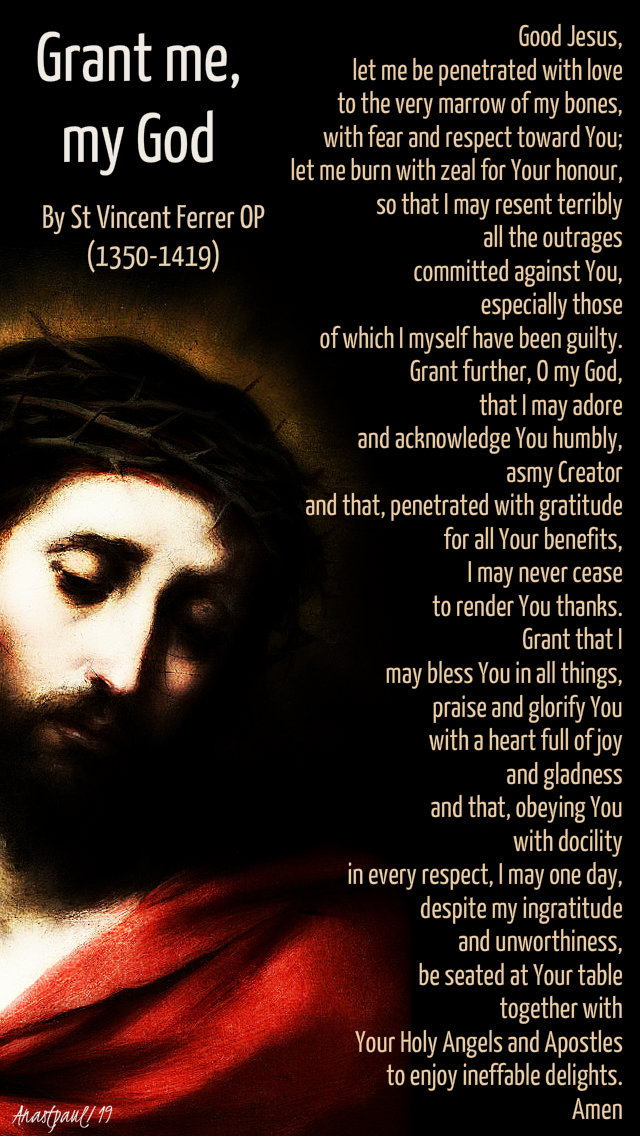
Our Morning Offering – 5 April – Grant me, O my God

Our Morning Offering – 5 April – Friday of the Fourth Week of Lent, Year C and the Memorial of St Vincent Ferrer OP (1350-1419)

Grant me, O my God
By St Vincent Ferrer (1350-1419)

Good Jesus,
let me be penetrated with love
to the very marrow of my bones,
with fear and respect toward You;
let me burn with zeal for Your honour,
so that I may resent terribly all the outrages
committed against You, especially those
of which I myself have been guilty.
Grant further, O my God,
that I may adore
and acknowledge You humbly, as my Creator
and that, penetrated with gratitude
for all Your benefits,
I may never cease to render You thanks.
Grant that I may bless You in all things,
praise and glorify You
with a heart full of joy and gladness
and that, obeying You with docility
in every respect, I may one day,
despite my ingratitude and unworthiness,
be seated at Your table
together with Your Holy Angels and Apostles
to enjoy ineffable delights.
Amengrant me o my god by st vincent ferrer - 5 april 2019.jpg

Posted in SAINT of the DAY

Saint of the Day – 5 April – Blessed Mariano de la Mata Aparicio OSA (1905-1983)

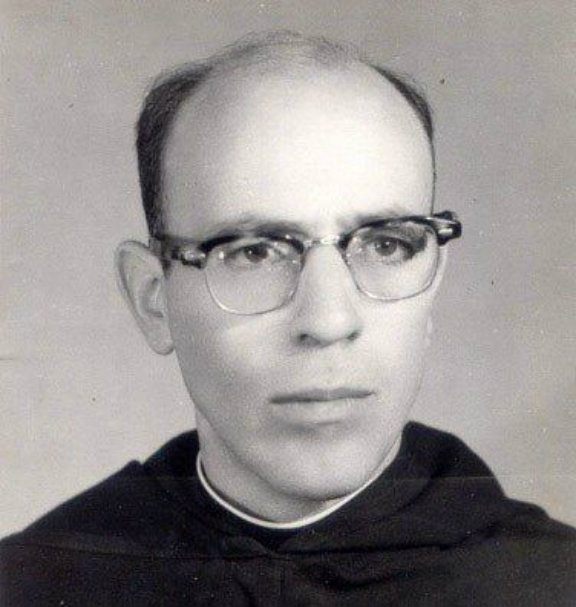
Saint of the Day – 5 April – Blessed Mariano de la Mata Aparicio OSA (1905-1983) was a Spanish Priest, a professed religious of the Order of Saint Augustine, Missionary, Apostle of Charity, Eucharistic and Marian devotee, Spiritual Director, Teacher and Professor.   He joined the missions in Brazil where he served until his death and was known for his educational work with the poor.   His age and diminishing health was no obstacle for him throughout his time in Brazil and it did not hinder his efforts to visit the sick or go out to be with the people he looked after.blessed-mariano-de-la-mata-aparicio

Mariano was born into a simple Christian family from Barrio de la Puebla de Valdavia (Palencia), Spain, on 31 December 1905.   Three of his brothers preceded him into the Order of Saint Augustine.   He himself studied in Valladolid and La Vid.   He was vested in the habit on 9 September 1921 and in 1922 made his initial profession, he had received the habit from the Blessed Anselm Polanco (1881–1939) Martyr.   In 1926 he was transferred back to Santa María de la Vid where he completed his theological courses.  He made his solemn profession on 23 January 1927 and he was later ordained to the priesthood on 25 July 1930.   After two years ministering in Spain, he left for Brazil, where he carried out an extensive apostolate in the field of education and especially in the daily care of the poor, the infirm and children.mariano-de-la-mata-d3ba9213-80cf-48f5-bb2c-1b699d374a9-resize-750.jpg

In 1961 he went to teach at the Saint Augustine college and also took on the duties of a spiritual director at the Saint Rita of Cascia Workshop as well as the parochial vicar of the Saint Augustine church.   He tended to the needs of those who surrounded him and went to visit the sick on a regular basis as was the case with Sergio Teixera. He visited this student of his for twelve months and gave him private lessons during his illness. Another student – Horacio Gentile – was visited during his two month stay in the hospital, notwithstanding the great distance and steep climb, the prelate had to endure to get to him.bl mariano-de-la-mata-b272cc97-4609-4d6a-8add-37c47860ef4-resize-750

In character he was remembered as an active and enterprising prelate who was open and communicative to all, a person of affection and kindness.   He organised more than 200 of the Saint Rita Workshops, which attracted poor people to make clothing that the poor could afford.   He was often seen walking down the streets of São Paulo to pastoral visits, though, even as he aged and his strength waned and his vision grew dim he still continued all his pastoral practices.

Fr Mariano may be called ‘a saint of the ordinary.’   He possessed a strong character but was at the same time, a generous and sensitive individual, friendly and approachable with all.   He was devoted to the Blessed Virgin, thoroughly committed to his priestly vocation and fervent in his love for the Eucharist.bl mariano-de-la-mata-1a576c19-e4b0-485d-8879-190b26f8a2b-resize-750

Mariano was diagnosed with cancer in early 1983.   He underwent surgery to remove a malignant tumour but the cancer continued to spread.   He died on 5 April 1983 and was Beatified on 5 November 2006 in the Cathedral of Sao Paulo, Brazil by Cardinal José Saraiva Martins, who said of the new blessed:

“Fr Mariano was poor with the poor, humble among children and compassionate towards the infirm and the elderly.   He was conscientious with his students, the faithful and the association of Workshops of Saint Rita (he founded over 200 such workshops which employ people to make affordable clothing for the poor).   He was merciful toward his penitents, pure of heart and a lover of peace in his Augustinian community and in his family, overcoming difficulties through prayer and sacrifice, constantly having recourse to the Virgin Mary under the title of Our Lady of Consolation up until the moment he departed this life.”

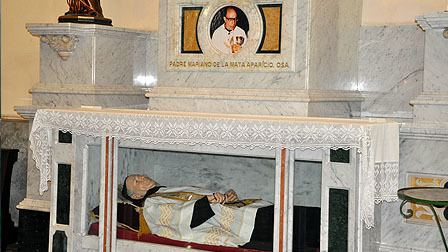
His body rests beside the altar of his beloved Virgin of Consolation in the Church of Saint Augustine in Sao Paulo.bl mariano-de-la-mata-867f9ef2-1e49-4ed8-9cab-afeab82c250-resize-750

As a “saint of the ordinary,” Father Mariano reminds us that the path to holiness is essentially simple – it consists in living the Gospel message in a spirit of faith, freedom and generosity, loving God and neighbour as Jesus instructed us.   Mariano is a modern saint, a saint who lived surrounded by the challenges of our contemporary world but with the timeless truth and wisdom of the two great commandments.bl mariano de la mata.jpg

Posted in DOMINICAN OP, SAINT of the DAY

Memorials of the Saints – 5 April

St Vincent Ferrer OP (1350-1419) (Optional Memorial)
Biography of St Vincent:  https://anastpaul.wordpress.com/2018/04/05/saint-of-the-day-5-april-st-vincent-ferrer-o-p-1350-1419/

St Albert of Montecorvino
Bl Antonius Fuster
St Becan
Bl Blasius of Auvergne
St Claudius of Mesopotamia
St Derferl Gadarn
St Gerald of Sauve-Majeure
St Irene of Thessalonica
St Maria Crescentia Hoss
Bl Mariano de la Mata Aparicio OSA (1905-1983)
St Pausilippus
Bl Peter Cerdan
St Theodore the Martyr

Martyrs of Lesbos: 5 saints – Five young Christian women martyred together for their faith. We don’t even know their names. island of Lesbos, Greece.

Martyrs of North-West Africa: Large group of Christians murdered while celebrating Easter Mass during the persecutions of Genseric, the Arian king of the Vandals. They were martyred in 459 at Arbal (in modern Algeria).

Martyrs of Seleucia: 120 saints – One-hundred and eleven (111) men and nine (9) women who, because they were Christians, were dragged to Seleucia and martyred for refusing to worship the sun or fire or other pagan idols during the persecutions of King Shapur II. They were burned alive in 344 in Seleucia, Persia.

Posted in DOCTORS of the Church, FATHERS of the Church, SAINT of the DAY

Thought for the Day – 4 April – St Isidore, the Patron of the Internet?

Thought for the Day – 4 April – Thursday of the Fourth Week of Lent, Year C and the Memorial of St Isidore of Seville (560-636) Father & Doctor of the Church

St Isidore, the Patron of the Internet?

Isidore may seem like a strange choice but his academic works make him a perfect fit.
It may seem strange that a 7th-century saint was chosen as the patron saint of the internet but after a careful examination of his life, St Isidore of Seville turns out to be the perfect choice.

Isidore was a great scholar whose encyclopedic knowledge was far reaching.

Before his death, Isidore wrote a collection of books called Etymologiae, which, according to the Catholic Encyclopedia, was “a vast storehouse in which is gathered, systematised and condensed, all the learning possessed by his time.   Throughout the greater part of the Middle Ages it was the textbook most in use in educational institutions.”

Interestingly enough, Isidore did not contain himself to only theological topics but successfully collected information on all subjects, both secular and religious. Pope Benedict XVI explained in a General Audience, “The wealth of cultural knowledge that Isidore had assimilated enabled him to constantly compare the Christian newness with the Greco-Roman cultural heritage, however, rather than the precious gift of synthesis it would seem that he possessed the gift of collatio, that is, of collecting.”

For this reason, Isidore has been regarded as the patron saint of the internet.   He was, in a certain sense, a human “Wikipedia,” possessing a vast storehouse of information on every topic available.

St Isidore is a great intercessor for all those logging on to the internet, a saint who can help us find what we need as well as protect us from the darker side of the World Wide Web.

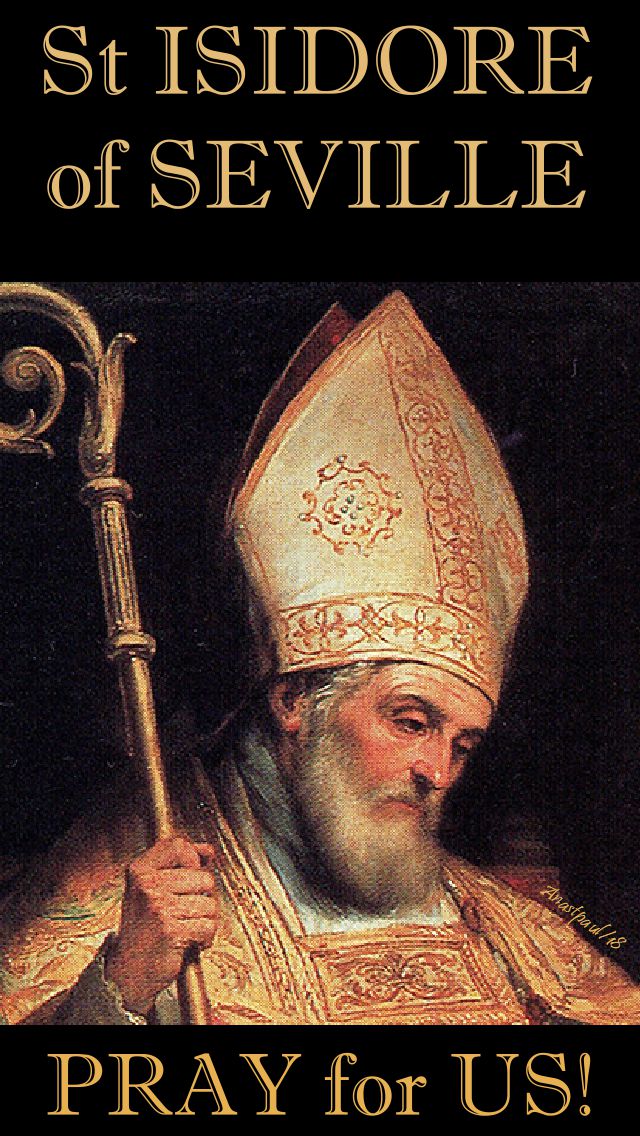
St Isidore of Seville, Pray for Us!st-isidore-pray-for-us-no-2-4-april-2019.jpg

Posted in CONFESSION/PENANCE, DIVINE Mercy, Goodness, Patience, DOCTORS of the Church, FATHERS of the Church, QUOTES on SUFFERING, SAINT of the DAY

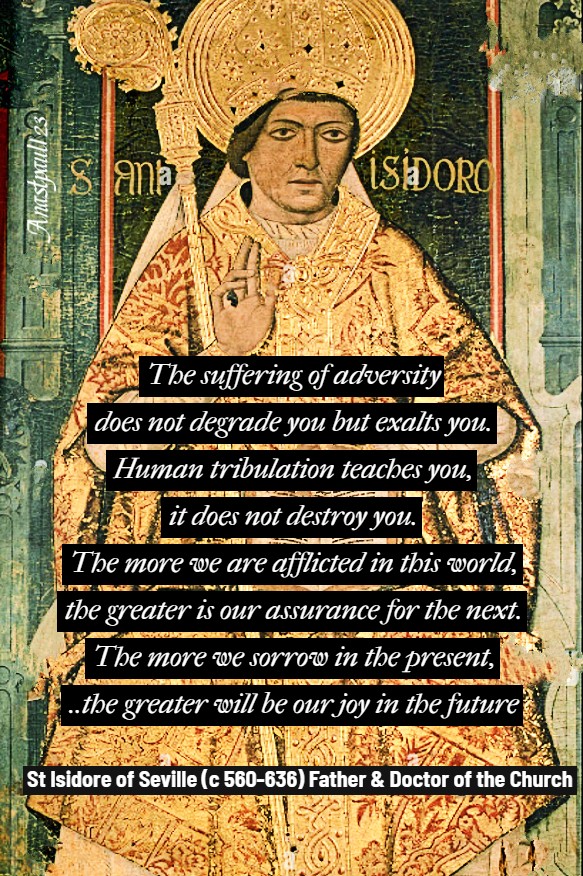
Quote/s of the Day – 4 April – St Isidore of Seville

Quote/s of the Day – 4 April – Thursday of the Fourth Week of Lent, Year C and the Memorial of St Isidore of Seville (560-636) Father & Doctor of the Church

“The suffering of adversity
does not degrade you but exalts you.
Human tribulation teaches you,
it does not destroy you.
The more we are afflicted in this world,
the greater is our assurance for the next.
The more we sorrow in the present,
..the greater will be our joy in the future.”

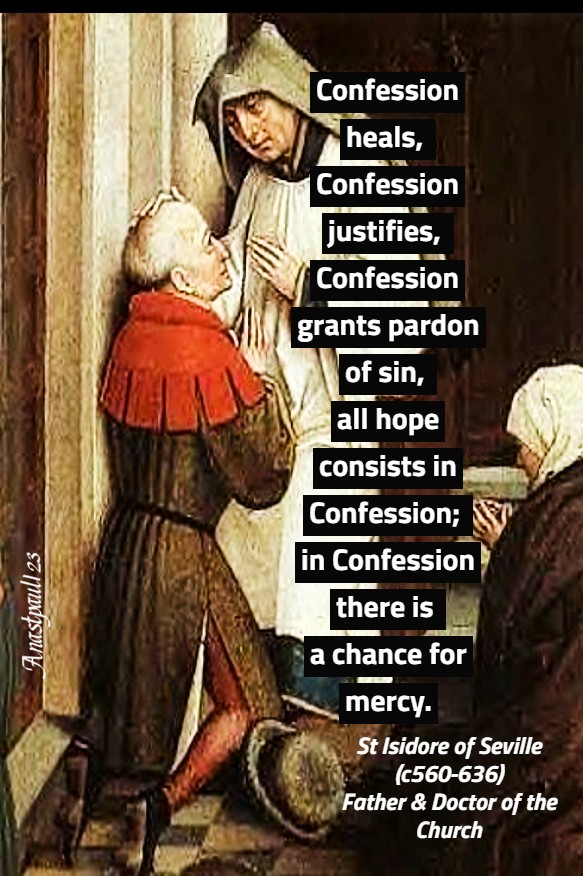
“Confession heals,
Confession justifies,
Confession grants pardon of sin,
all hope consists in Confession;
in Confession there is
a chance for mercy.”

St Isidore of Seville (560-636)

Father & Doctor of the Church

Posted in LENT 2019, MORNING Prayers, QUOTES of the SAINTS, SAINT of the DAY, The WORD

One Minute Reflection – 4 April – “A veil hid Him from their eyes”

One Minute Reflection – 4 April – Thursday of the Fourth Week of Lent, Year C, Gospel:  John 5:31–47 and the Memorial of St Isidore (c 560-636) Father & Doctor of the Church

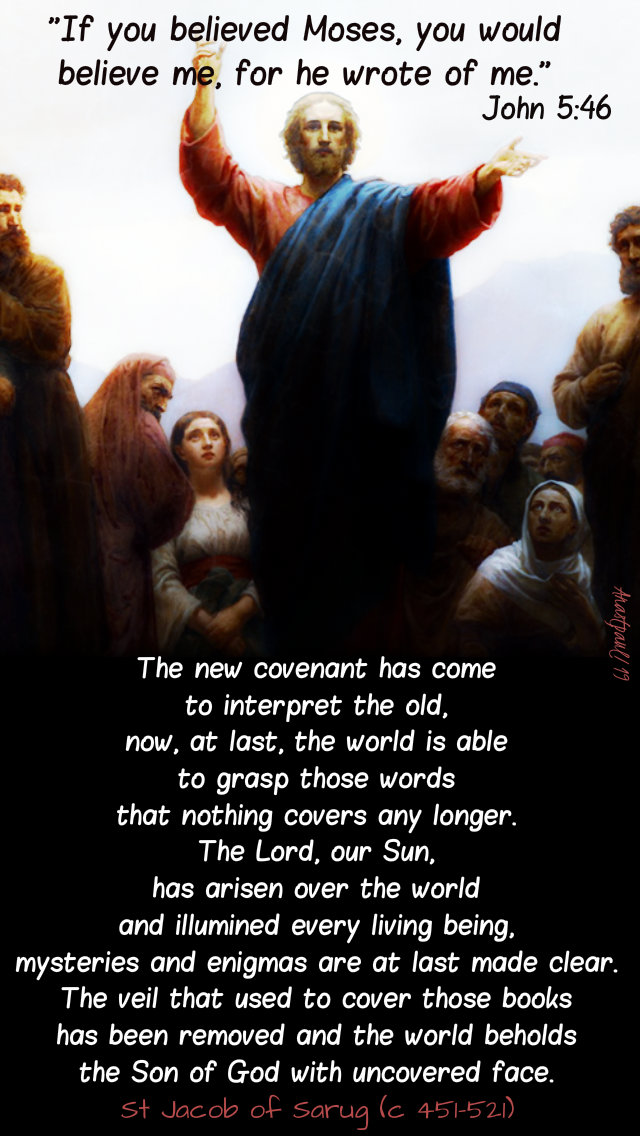
“If you believed Moses, you would believe me, for he wrote of me.”…John 5:46

REFLECTION – “Moses face had become radiant while he conversed with the Lord. Aaron and the other Israelites saw (it)… and were afraid to come near him… When Moses had finished speaking with them, he would again put the veil over his face” (cf. Ex 34:29f.).   The radiance lighting up Moses’ face was Christ shining within him but He was hidden from the eyes of the Hebrews who did not see him… The Old Testament as a whole is shown to us, veiled like Moses, the symbol of all prophecy.   Underneath this veil, displayed by the lips of the prophets, Christ appears, a judge in majesty, seated on his throne of glory…

If Moses was veiled, what other prophet could have uncovered his face?   All veiled their speech in imitation of him.   They simultaneously heralded and veiled, they put forth their message and, at the same time, covered it with a veil… Because Jesus shone out in their books, a veil hid Him from their eyes, a veil that makes known to all the world how the words of Holy Scripture contain a hidden meaning…

Our Lord lifted this veil when He expounded His mysteries to the whole of creation.   By His coming, the Son of God uncovered Moses’ face, the incomprehensible words, that up to then had been veiled.   The new covenant has come to interpret the old, now, at last, the world is able to grasp those words that nothing covers any longer.   The Lord, our Sun, has arisen over the world and illumined every living being, mysteries and enigmas are at last made clear.   The veil that used to cover those books has been removed and the world beholds the Son of God with uncovered face.”…St Jacob of Sarug (c 451-521) Syrian Bishop and Monkthe new covenant has come to interpret the old john 5 46 thurs4thweeklent 4 april 2019.jpg

PRAYER – Father almighty, grant us Your good grace to trust completely in the Word made Flesh whom You sent to lead us to our heavenly home and save us from our evil ways.   As we proceed by penance and prayer, grant us now perseverance in listening to Him and learning from Him.   May the prayers of St Isidore, assist us on our journey.   We make our prayer through Christ our Lord, in the unity of the Holy Spirit, one God with You, now and forever, amen.st-isidore-pray-for-us-4-april-2018.jpg

Posted in SAINT of the DAY

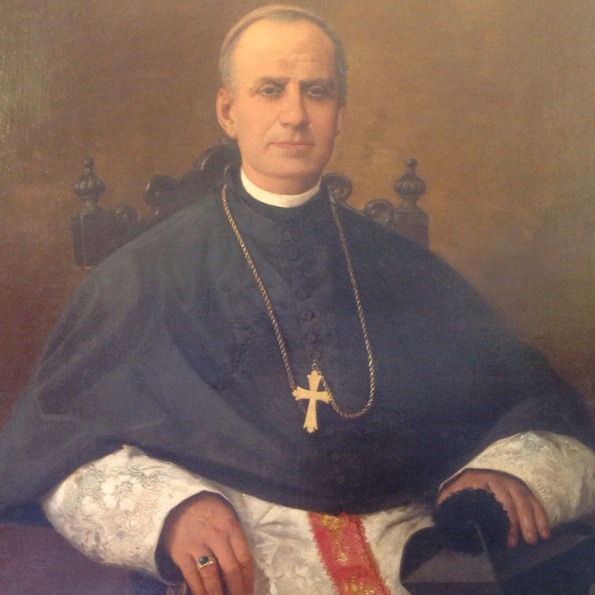
Saint of the Day – 4 April – Blessed Giuseppe Cardinal Benedetto Dusmet OSB (1818-1894)

Saint of the Day – 4 April – Blessed Giuseppe Cardinal Benedetto Dusmet OSB (1818-1894) aged 75 Cardinal Archbishop of Catania, Italy, professed Benedictine religious, Abbot, Professor, Apostle of the sick and the poor- born on 15 August 1818 at Palermo, Sicily and died on 4 April 1894 at Catania, Sicily of natural causes.   Patronage – Archdiocese of Catania.   Blessed Giuseppe served as the Archbishop of Catania from 1867 until his death. He became professed into the Order of Saint Benedict where he took “Benedetto” as his religious name.   He studied under the Benedictines prior to joining them before serving as a professor, in addition to prior and abbot.   His elevation to the episcopate saw him distinguish himself in cholera epidemics when he tended to the ill while also remaining a strong advocate for the poor of his archdiocese.   He remained a Benedictine and was known to continue to don the Benedictine habit instead of the red cardinal’s regalia.bl giuseppe-benedetto-dusmet-13322b60-4158-4903-b772-910e56206a7-resize-750

Giuseppe Dusmet was born in Palermo in 1818 as the first of six children to the nobles Luigi Dusmet and Maria dei Dragonetti.   His lineage can be traced back to Flanders in Belgium.   Dusmet was baptised just hours after his birth in the Archdiocesan Cathedral as “Giuseppe Maria Giacomo Filippo Lupo Domenico Antonio Rosolino Melchiorre Francesco di Paola Benedetto Gennaro”.   He would be referred to as Melchiorre at home.

His two maternal uncles Vincenzo and Leopoldo Dragonetti were both monks of the Order of Saint Benedict.

Dusmet was educated at the San Martino delle Scales convent in Monreale from 1824.   It was around this time that the Dusmet’s moved to Naples and his father made him return there in 1832, since he feared exposure in the convent, would mean his son would harbour the desire to follow a religious vocation.   But Dusmet returned to the school in 1834 when his father realised that he could not change his son’s vocation.   He would later teach philosophical and theological studies at Benedictine houses.   He entered the Benedictines at Montecassino and chose the name “Benedetto” as his middle name after professing his formal vows on 15 August 1840.  In preparation for his profession he went on a retreat where the preacher was the future cardinal Michelangelo Celesia who became his lifelong friend.

He received the subdiaconate from Archbishop Domenico Balsamo on 11 October 1840 in the Archiepiscopal palace and would later receive the diaconate from the same prelate in the same location on 15 November 1840.   He was ordained to the priesthood on 18 September 1841 and had to receive a special dispensation to be ordained since he was under the canonical age requirement.

In 1845 he began serving as an aide to the abbot Carlo Antonio Buglio and travelled with him as the latter made visitation.   The General Chapter in 1847 saw Buglio – and Dusmet accompanied him – moved to the San Flavio convent of Caltanissetta.   Dusmet served as the prior convent in Naples from 12 June 1850 until May 1852 when he was named as the prior for the San Flavio convent in Caltanissetta.   He held that position until 1858 when the General Chapter at Perugia named him as the abbot for the San Nicolò l’Arena convent.   But he no longer could hold that position as of 15 October 1866 after the Italian kingdom was established with the state confiscating all religious properties.bl guiseppe.jpg

He was appointed Archbishop of Catania in 1867 and he received his episcopal consecration on 10 March in the Basilica of St Paul’s Outside the Walls in Rome.   Dusmet issued his first pastoral letter to the faithful on 14 March.   He served as a Council Father at the First Vatican Council that Pope Pius IX had convoked.   Dusmet could not assume formal possession of his episcopal see since the new political situation with the kingdom saw the government approve bishops prior to formal enthronement.  The government did not grant Dusmet the approval until 1878 when he was then enthroned in Catania. Dusmet was later elevated to the Cardinalate in 1889 with Pope Leo XIII naming him as the Cardinal-Priest of Santa Pudenziana.  bl giuseppe-benedetto-dusmet-2706873d-f454-4064-8c62-38c66553239-resize-750

Dusmet was close friends with fellow Sicilian cardinal and Servant of God Giuseppe Guarino and he knew also the Servant of God Giuseppina Faro.  He was awarded the Grand Cross of the Knights of the Order of the Holy Sepulchre and also received the Gold Medal for the Benefits of Public Health on 23 November 1889 in Rome due to his efforts in aiding the ill in cholera epidemics.

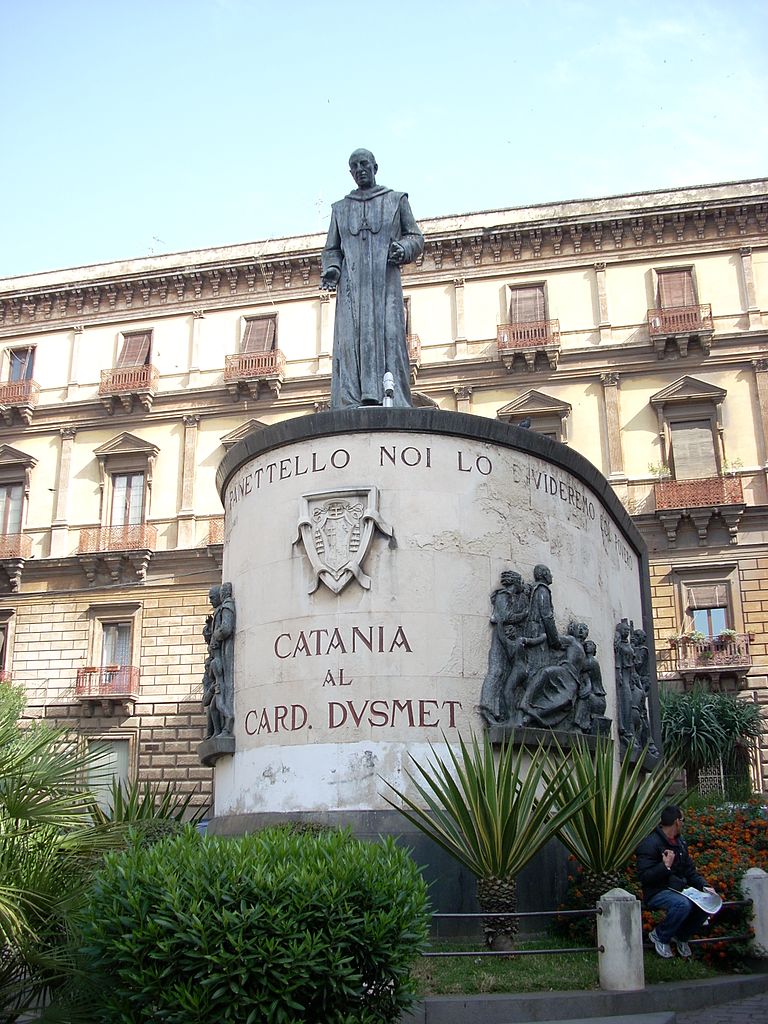
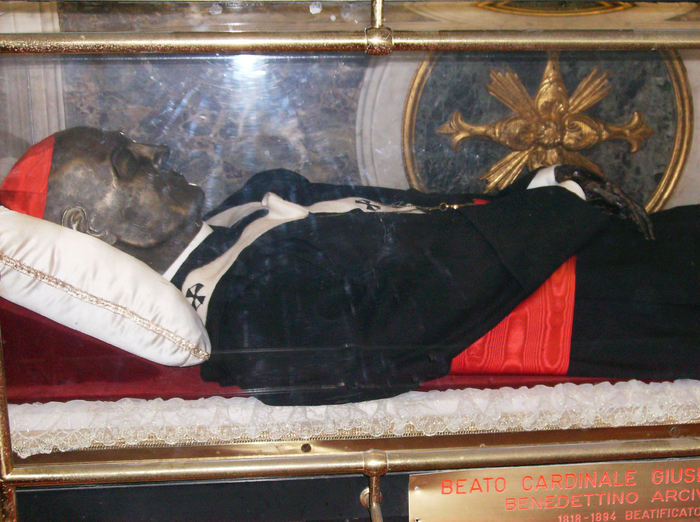
Bl Giuseppe died on 4 April 1894 at around 10:30 pm and was buried in the chapel of the Confraternita dei Bianci at a funeral on 6 April that started at 10:00am and ended with his burial at 4:30pm.   He had fallen ill at the beginning of 1894 and on 2 April left instructions not to be embalmed and to have a simple funeral.   On 4 April attempts at artificial respiration were stopped when doctors said that Dusmet’s death was imminent. His final words echoed that of Jesus Christ:  “it is finished”.   His relics were later translated to the Catania Cathedral in May 1904.   Cardinal Alfredo Ildefonso Schuster – a future Blessed and a Benedictine himself – unveiled a monument dedicated to Dusmet in Catania in 1935.bl guiseppe dusmet catania-monumento-al-cardinale-dusmetCatania_al_Cardinale_Dusmet_-_panoramio

St Pope John Paul II presided at Dusmet’s Beatification in Saint Peter’s Square on 25 September 1988.bl guiseppe shrine relics

Posted in SAINT of the DAY

Memorials of the Saints – 4 April

St Isidore of Seville (c 560-636) (Optional Memorial) Father & Doctor of the Church
St Isidore’s life: https://anastpaul.wordpress.com/2017/04/04/saint-of-the-day-4-april-st-isidore-of-seville-father-and-doctor-of-the-church/

Bl Abraham of Strelna
St Agathopus of Thessalonica
St Aleth of Dijon
St Benedict of Sicily OFM (1526-1589)
About St Benedict: https://anastpaul.wordpress.com/2018/04/04/saint-of-the-day-4-april-st-benedict-of-sicily-o-f-m-1526-1589/

Bl Giuseppe Benedetto Dusmet OSB (1818-1894)
St Gwerir of Liskeard
St Henry of Gheest
St Hildebert of Ghent
St Peter of Poitiers
St Plato
St Theodulus of Thessalonica
St Theonas of Egypt
St Tigernach of Clogher
St Zosimus of Palestine

Posted in QUOTES of the SAINTS, QUOTES on SACRIFICE, SAINT of the DAY

Quote of the Day – 3 April – I am unable to live a mere earthly life!

Quote of the Day – 3 April – Wednesday of the Fourth Week of Lent, Year C and the Memorial of Blessed Maria Teresa Casini (1864–1937)

“I feel within my soul an impulse
which spurs me onto God.
I am unable to live a mere earthly life!…
I must raise myself above all worldly things
in order to live for God alone,
to sacrifice myself for priests
and to console the Pierced Heart of Jesus.
Thus fulfilling His desire of love
toward me and toward souls.”

Blessed Maria Teresa Casini (1864–1937)i feel within my soul - bl maria teresa casini 3 april 2019.jpg

Posted in EUCHARISTIC Adoration, QUOTES of the SAINTS, SAINT of the DAY, The HOLY EUCHARIST / The HOLY MASS

Saint of the Day – 3 April – Blessed Maria Teresa Casini (1864–1937)

Saint of the Day – 3 April – Blessed Maria Teresa Casini (1864–1937) – Religious Sister and Founder of the Oblate Sisters of the Sacred Heart of Jesus and Priests known as Little Friends of Jesus , Apostle of Eucharistic Adoration, of Prayer especially for priests.   Also known as Sister Maria Serafina of the Heart of Jesus Pierced and Mother Maria Teresa. Additional Memorial – 29 October (Oblate Sisters of the Sacred Heart of Jesus, diocese of Frascati, Italy, based on the date of her baptism).   Born on 27 October 1864 in Frascati, Italy and died around 5am on 3 April 1937 at Oblate monastery on the via del Casaletto in Grottaferrata, Rome, Italy of natural causes, aged 72.

Maria Teresa Casini was born on 27 October 1864 to Tommaso Casini and Melania Rayner as their first born daughter, she was baptised on 29 October.

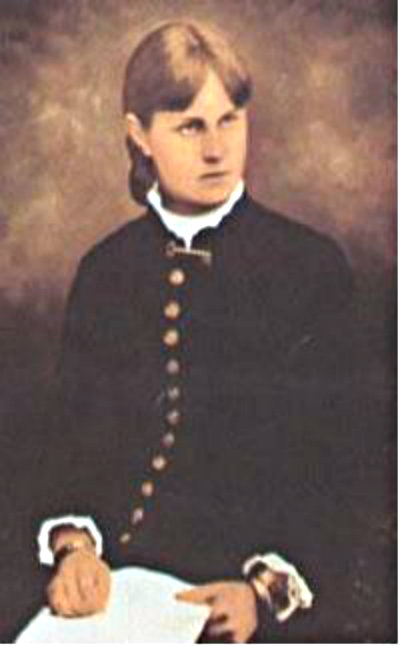
She travelled to Rome for her studies at the Santa Rufina boarding school that the nuns of the Madams of the Sacred Heart conducted. She received her First Communion on 7 May 1878 which solidified her vocation.   Due to a period of ill health, she had to leave school and return home for recuperation.bl maria teresa casini young

Shortly after she turned eighteen, she responded to her vocation and met Father Arsenio Pellegrini who became her guide and her spiritual director and who served as the Abbot of the Basilian Monks of Grottaferrata.   Despite entering the convent, ill health forced her to leave, though she attempted to enter once again yet failed due to the death of the foundress after which the institute she joined ceased to exist.

In due time, she became a nun after entering the monastery of Sepolte Vive in Rome on 2 February 1885.   Casini only started to live in Grottaferrata with fellow entrants from 17 October 1892 onwards.   On 2 February 1894, she founded the Oblate Sisters of the Sacred Heart of Jesus.

It was not until 1925 that Casini started the special work of the “Little Friends of Jesus” in order to promote and to cultivate the vocations of prospective priests.   The group’s special character came to life when Cardinal Francesco Satolli requested Casini and her congregation to take up new and vigorous apostolic work.   This group also worked for the sanctification of all priests and so the group opened a boarding school for males in order to please the Lord’s request for good and wholesome priests.

Throughout her life, Casini offered “the oblation of herself, in faithful response to the Love that overflows from the open Heart of the Savior, and which she imparted to so many daughters and priests”. This even earned the praise of Pope Pius X in 1904 who wrote:  “In order to bring about the reign of Jesus Christ, nothing is more necessary than the sanctity of the clergy.   God bless these sisters for their selfless love for these men of God, for through them, through the sacraments, we are fortified and purified for the journey”.bl maria teresa casini

Casini grew ill in the final years of her life and she died in 1937.   Her final words were: “I am peaceful.   I feel God is near me”.

Casini’s order continues to flourish on an international level in places such as Africa, the United States of America, Argentina, Brazil, Peru, India, Guinea Bissau.  The Generalate is in Rome and the Motherhouse is in Grottaferrata, Italy.

The first of the males of the Little Friends of Jesus that Casini herself oversaw was ordained as a priest in 1938.bl maria teresa casini 2

Blessed Maria Teresa was buried in the chapel of the Zealots of the Sacred Heart in a nearby cemetery and her remains were re-interred at the Generalate of the Oblates of the Sacred Heart in Grottaferrata on 20 May 1965.   She was Beatified on 31 October 2015 by Pope Francis.   The Beatification recognition was celebrated at the Piazza San Pietro at the cathedral in Frascati, Italy, presided by Cardinal Angelo Amato.   Her Beatification miracle involved the 25 – 27 June 2003 healing of the brain lesions and trauma of Jacob “Jack” Ronald Sebest, a five year old drowning victim in Youngstown, Ohio.canonisation bl maria teresa maxresdefault.jpg

The Oblate Sisters are called to live and to participate intimately in the Oblation of Jesus to the Father, to repair and console His Pierced Heart, with an intense life of prayer and unconditional gift of ourselves, so that Priests may be holy.   They also care for retired and convalescent priests in special homes which they administer.

From their Constitution:
“The exclusive pursuit of God – which is the goal of our community life – is the foundation of that spirit of prayer that must characterise our whole existence as
Christians, religious and Oblates.   From the spirit of prayer, springs prayer itself as the source and fundamental expression of our community and personal life because “the Oblate’s life is intimately tied to the altar.”   In founding the Institute, Mother
Teresa wanted to root it in faith, prayer and that unconditional gift of herself to priests, which knew no limits in our first sisters, if not in the consummation of life itself.

In silent and adoring prayer we express the typical attitude of our consecration and
Oblate spirituality, because with it, we join our feelings to the feelings of Jesus Himself, which are an endless act of love and an unceasing supplication to the Father for the Church and for its priests.   Our individual prayer finds its climax in daily adoration.   It brings us close to the altar, seen as the true source of our specific mission in the Church: suppliant and atoning prayer for the holiness of priests.”

“The life Jesus leads in the Sacrament of His love and which the Oblate must imitate and make her own is this – a life of generous and limitless sacrifice… a life of incessant prayer …a life of obedience… a life of poverty…”….Blessed Mother Maria Teresa

Posted in SAINT of the DAY

Memorials of the Saints – 3 April

Bl Alexandrina di Letto
St Attala of Taormina
St Benatius of Kilcooley
St Benignus of Tomi
St Burgundofara
St Chrestus
St Comman
St Evagrius of Tomi
Bl Francisco Solís Pedrajas
Bl Gandulphus of Binasco
Bl Iacobus Won Si-bo
St John I of Naples
Bl John of Penna
St Joseph the Hymnographer
Bl Juan Otazua Madariaga
Bl Lawrence Pak Chwi-deuk
St Luigi Scrosoppi Cong. Orat. (1804-1884)
About St Luigi:   https://anastpaul.wordpress.com/2017/04/03/saint-of-the-day-3-april-st-luigi-scrosoppi/

A little Note about St Luigi – his Canonisation Miracle occurred in my Parish in Oudtshoorn!

Bl Maria Teresa Casini (1864–1937)
St Nicetas of Medicion
St Papo
Bl Piotr Edward Dankowski
St Richard of Chichester (1197-1253)
Biography:   https://anastpaul.wordpress.com/2018/04/03/saint-of-the-day-3-april-st-richard-of-chichester-1197-1253/

Bl Robert Middleton
St Sixtus I, Pope
Bl Thurstan Hunt
St Vulpian of Tyre

Posted in QUOTES - J R R Tolkien and MORE, SAINT of the DAY

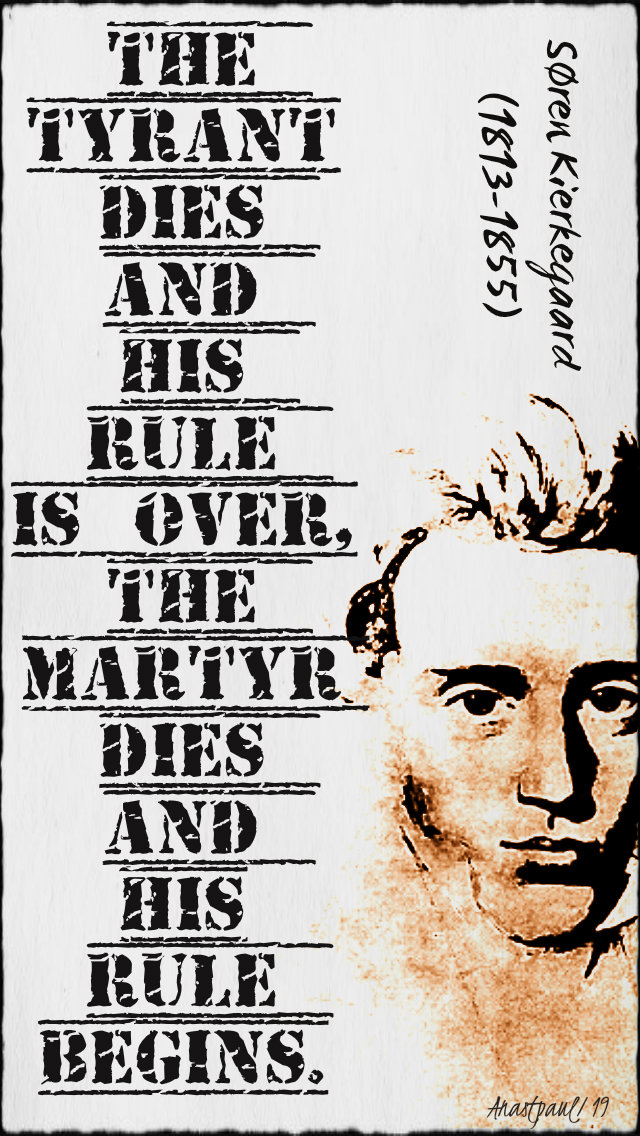
Thought for the Day – 2 April – A martyr dies and his rule begins.

Thought for the Day – 2 April – The Memorial of St Pedro Calungsod (1654–1672) Martyr

SOREN Kierkegaard once said,
“A tyrant dies and his rule ends.
A martyr dies and his rule begins.”the tyrant dies and his rule is over the martyr dies and his rule begins - soren kierkegaard 21 jan 2019

Pope Benedict XVI referred to San Pedro Calungsod in his homily by his English and German name ‘Peter’.   Without saying it directly the Holy Father was signalling all of us to go beyond our usual, if natural, patriotic yet myopic perspective when looking at San Pedro’s elevation to the altar of the Lord.   San Pedro or St Peter Calungsod now belongs to the whole Church or, rather, to the whole believing world.   We need to rejoice, as he is now officially one of our intercessors with God, for our various needs and concerns.

We need San Pedro Calungsod’s courage to shine through our efforts to face up to the spears of secularism, materialism and hedonism that subject our young and adult Filipinos under constant attack.   We need the same courage of San Pedro Calungsod who did not abandon a priest-mentor-friend in mortal danger, to prod us not to abandon what we once heard from the tender lips of our mothers, grandmothers, grandfathers and catechists – the things of God, of His Son Jesus Christ, of His Church, of eternal life, not only of the life here and now.

The early Christian writer Tertullian once wrote, “The blood of martyrs is the seed of Christians.”   May the blood of St Pedro Calungsod give birth to all of us becoming more Christ-like, not abandoning the truth of the Lord for the tricks of the world.

Then we, like him, shall rediscover the secret of eternal youth.
Fr Eutiquio Belizar SThD (Excerpt)

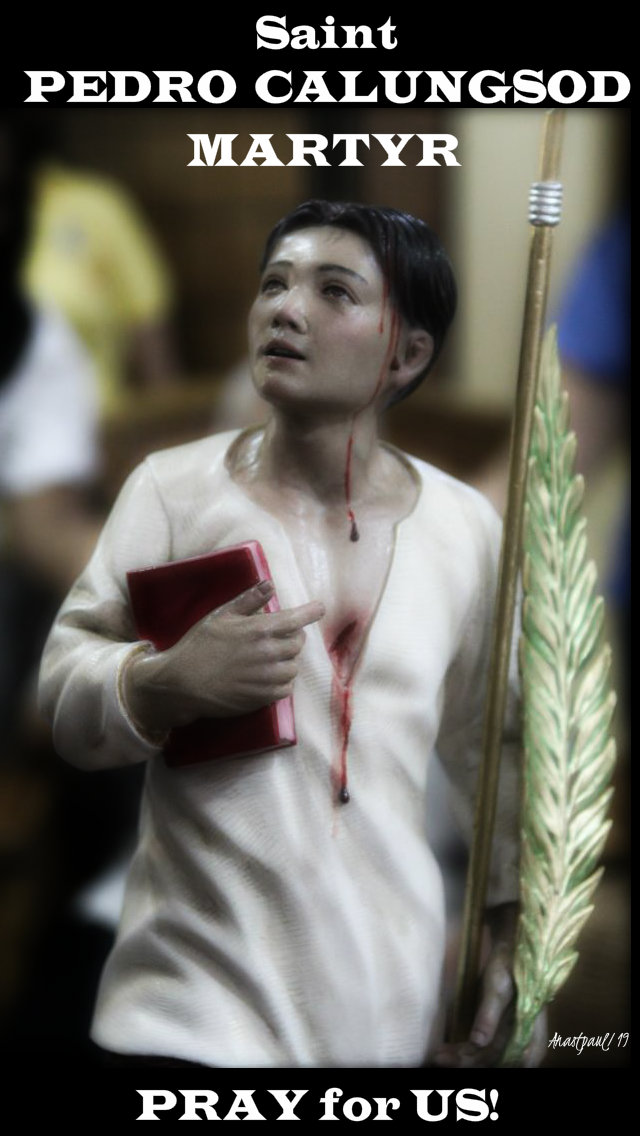
St Pedro Calungsod, Pray for us!ST PEDRO CALUNGSOD MARTYR 2 APRIL 2019 PRAY FOR US.jpg

Posted in CHRIST, the WAY,TRUTH,LIFE, QUOTES of the SAINTS, QUOTES on LOVE, QUOTES on PATIENCE, QUOTES on the CROSS of CHRIST, SAINT of the DAY, The PASSION

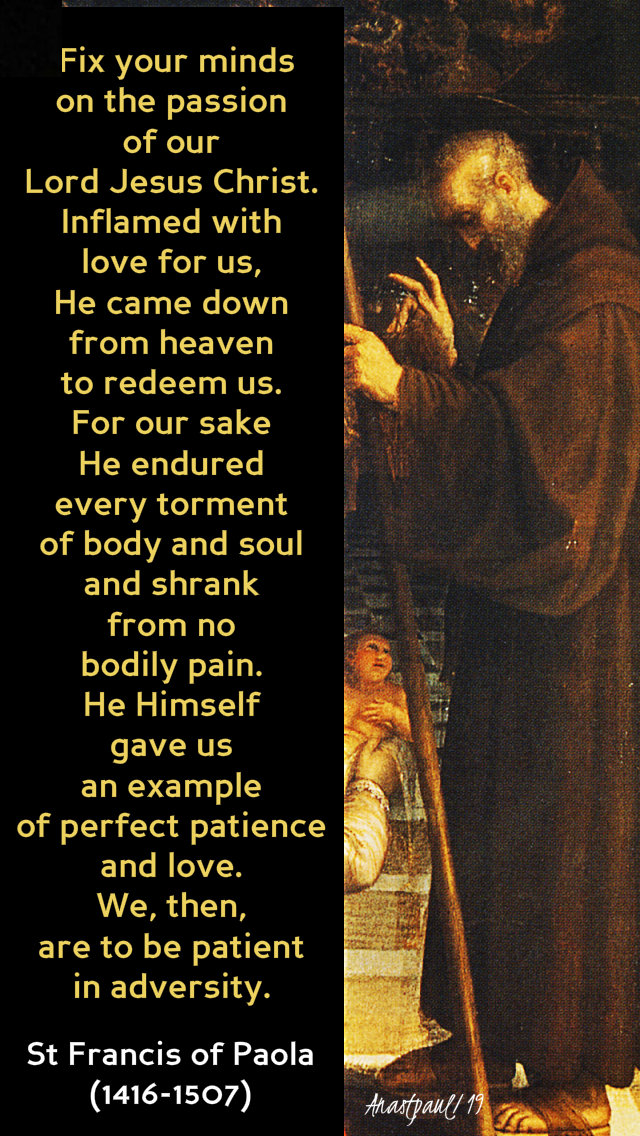
Quote of the Day – 2 April – Fix on your minds on the Passion

Quote of the Day – 2 April – Tuesday of the Fourth Week of Lent, Year C and the Memorial of St Francis of Paola O.M. (1416-1507)

“Fix your minds on the passion of our Lord Jesus Christ.
Inflamed with love for us, He came down from heaven to redeem us.
For our sake He endured every torment of body and soul
and shrank from no bodily pain.
He Himself gave us an example of perfect patience and love.
We, then, are to be patient in adversity.”

St Francis of Paola O.M. (1416-1507)fix your minds on the passion - st francis of paola 2 april 2019.jpg

Posted in LENT 2019, MORNING Prayers, QUOTES on CHARITY, QUOTES on the CHURCH, SAINT of the DAY, The WORD

One Minute Reflection – 2 April

One Minute Reflection – 2 April – Tuesday of the Fourth Week of Lent, Year C and the Memorial of St Francis of Paola O.M. (1416-1507) and St Pedro Calungsod (1654–1672) Martyr

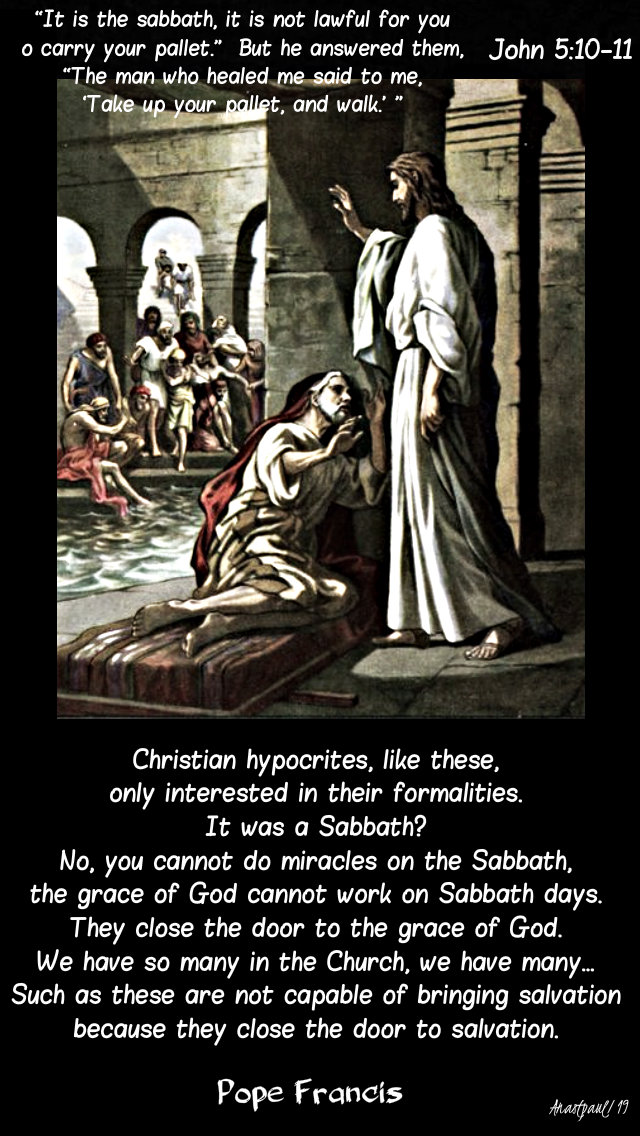
So the Jews said to the man who was cured, “It is the sabbath, it is not lawful for you to carry your pallet.”  But he answered them, “The man who healed me said to me, ‘Take up your pallet, and walk.’ ”...John 5:10-11

REFLECTION – “Christian hypocrites, like these, only interested in their formalities.   It was a Sabbath?   No, you cannot do miracles on the Sabbath, the grace of God cannot work on Sabbath days.   They close the door to the grace of God.   We have so many in the Church, we have many!   It is another sin.   The first, those who have the sin of sloth, are not able to go forward with their apostolic zeal, because they have decided to stand firm in themselves, in their sorrows, their resentments, in all of that.   Such as these are not capable of bringing salvation because they close the door to salvation.”…Pope Francis – Santa Marta 1 April 2014john 5 10-11 - it is not lawful to carry your pallet - christian hyprocrites - pope francis - 2 april 2019.jpg

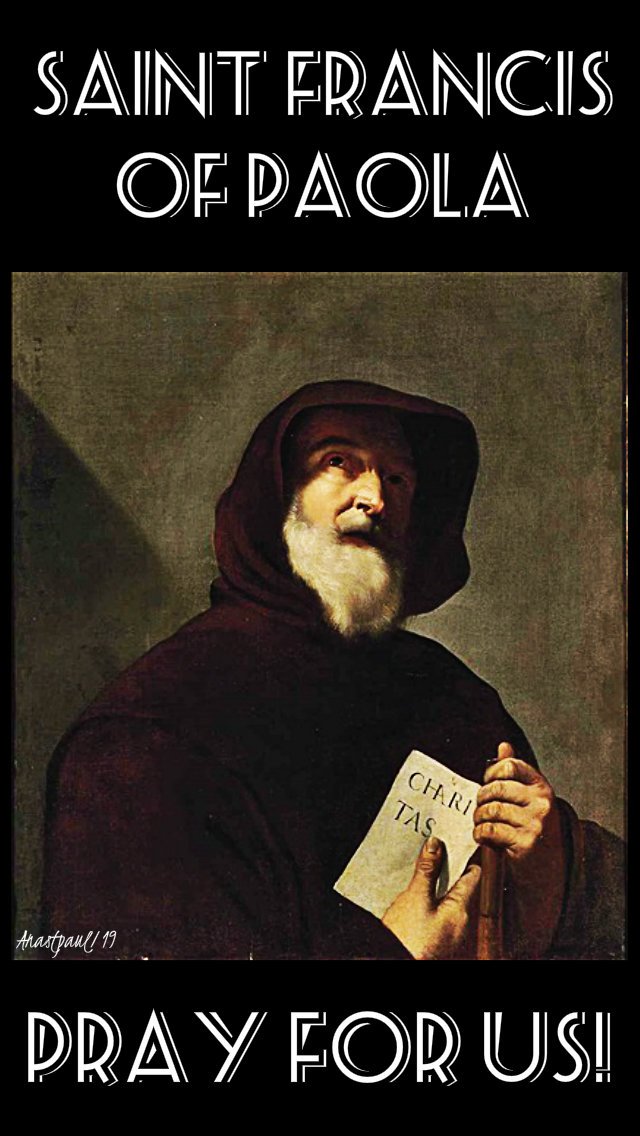
PRAYER – God, our Father almighty, You gave us Christ Your Son to be our Bread of life and the message of truth, justice and love.   May we live His lessons in every fibre of our being and thus pass from death to life.   May the prayers of your Holy angel, saints and martyrs, St Francis of Paola and St Pedro Calungsod, be an inspiration and a balm in our trials.   Through Jesus our Lord with the Holy Spirit, one God forever, amen.st francis of paola pray for us 2 april 2019

st pedro calungsod pray for us 2 april 2019

Posted in SAINT of the DAY

Saint of the Day – 2 April – St Pedro Calungsod (1654–1672) Martyr

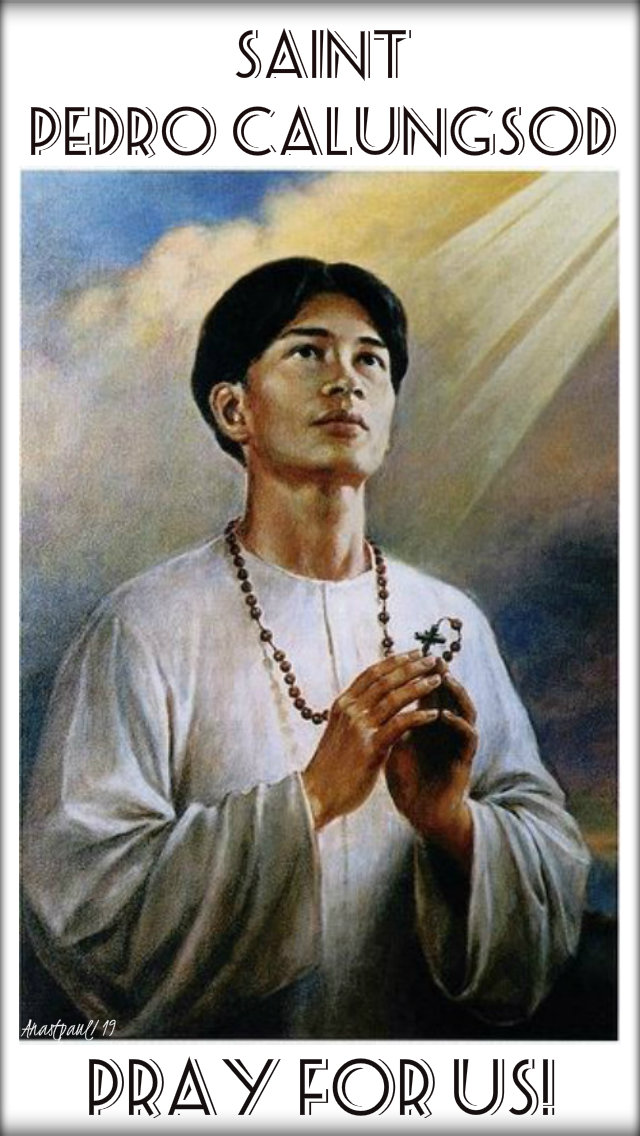
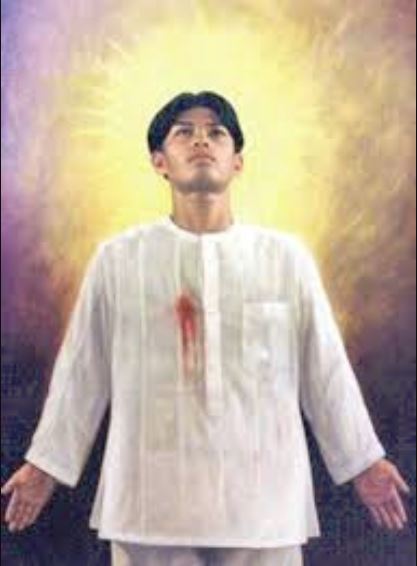
Saint of the Day – 2 April – St Pedro Calungsod (1654–1672) Martyr, Sacristan, Missionary Lay Catechist – born in c 1654 in Ginatilan, Cebu, Philippines, named after Saint Peter the Apostle and died by being hacked to death with a catana on 2 April 1672 at Tomhom, Guam.   His mutilated body was thrown into the sea.   Patronages – Filipino youth, Catechumens, altar boys, the Philippines, Overseas Filipino Workers, Guam, Cebuanos, Visayans, Archdiocese of Cebu.st pedro snip 2.JPG

Pedro Calungsgod was young native of the Visayas Region in the Philippines.   Little is known about his life.   Based on accounts, Pedro was taught as a lay catechist in a Jesuit minor seminary in Loboc, Bohol.   For young recruits like him, the training consisted of learning the Catechism, Spanish, and Latin.   They would be later sent with the priests to the countryside to perform daily religious functions as altar boys or catechists.   Some of them were even sent to mission centres overseas to accompany the Jesuits in their arduous task of proclaiming the Good News and establishing the Catholic faith in foreign lands.   And that was the case of Pedro Calungsod.

He served as a teenage catechist alongside Spanish Jesuit missionaries to the violent Chamarros in the Ladrones Islands (modern Marianas) in 1668 at age 14.

When he was 17, he and his companion Fr Diego Luis de San Vitores were martyred after baptising the daughter of a Christian woman and a non-Christian village chief in the now-U.S. territory of Guam.   Upon hearing of her baptism (with the mother’s consent), the chief attacked the two missionaries.   Though Pedro could have escaped, he did not leave his companion.

“From his childhood, Pedro Calungsod declared himself unwaveringly for Christ and responded generously to His call.   Young people today can draw encouragement and strength from the example of Pedro, whose love of Jesus inspired him to devote his teenage years to teaching the faith as a lay catechist,” Pope St. John Paul II declared during his beatification in 2000.

“In a spirit of faith, marked by strong Eucharistic and Marian devotion, Pedro undertook the demanding work asked of him and bravely faced the many obstacles and difficulties he met.   In the face of imminent danger, Pedro would not forsake Fr Diego but as a ‘good soldier of Christ’ preferred to die at the missionary’s side,” he added.

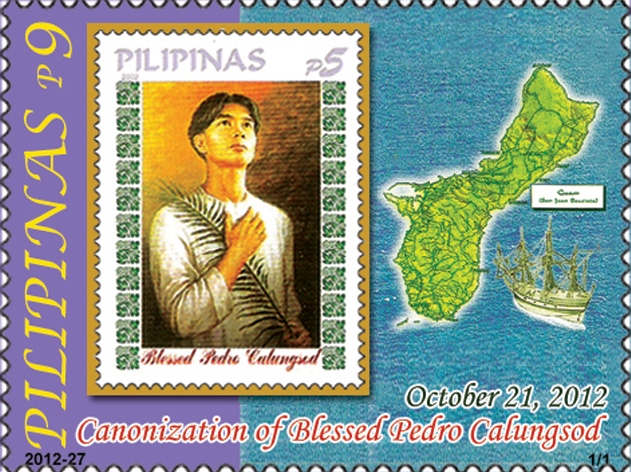
He was Beatified on 5 March 2000 by St Pope John Paul II at Vatican City and Canonised on 21 October 2012 by Pope Benedict XVI.Pedro_Calungsod_2012_stamp_of_the_Philippines.jpg

Posted in SAINT of the DAY

Memorials of the Saints – 2 April

St Francis of Paola O.M. (1416-1507) (Optional Memorial)
St Francis’s Life: https://anastpaul.wordpress.com/2018/04/02/saint-of-the-day-2-april-st-francis-of-paola-o-m-1416-1507/

St Abundius of Como
St Agnofleda of Maine
St Appian of Caesarea
St Bronach of Glen-Seichis
St Constantine of Scotland
St Ðaminh Tuoc
Bl Diego Luis de San Vitores-Alonso
St Ebbe the Younger
St Eustace of Luxeuil
St Francis Coll Guitart
St John Payne
Bl Leopold of Gaiche
St Lonochilus of Maine
St Musa of Rome
Bl Mykolai Charnetsky
St Nicetius of Lyon
St Pedro Calungsod (1654–1672) Martyr

St Rufus of Glendalough
St Theodora of Tiria
St Urban of Langres
St Victor of Capua
Bl Vilmos Apor

Posted in CHRIST the KING, CHRIST, the WAY,TRUTH,LIFE, FATHERS of the Church, LENT 2019, QUOTES of the SAINTS, QUOTES on the CROSS of CHRIST, SAINT of the DAY, The HOLY CROSS, The LAMB of GOD, The PASSION, The RESURRECTION

Quote/s of the Day – 1 April – St Melito Bishop of Sardis (Died c 180)

Quote/s of the Day – 1 April – Monday of the Fourth week of Lent, Year C – Saint Melito Bishop of Sardis (Died c 180) Early Church Father

Prayer in Praise of Christ

Born as a son,
led forth as a lamb,
sacrificed as a sheep,
buried as a man,
He rose from the dead as a God,
for He was by nature God and man.

He is all things:
He judges and so He is Law,
He teaches and so He is Wisdom,
He saves and so He is Grace,
He begets and so He is Father,
He is begotten and so He is Son,
He suffers and so He is Sacrifice,
He is buried and so He is man,
He rises again and so He is God.
This is Jesus Christ,
to whom belongs glory for all ages.born as a son led forth as a lamb no 2 st melito 1 april 2019.jpg

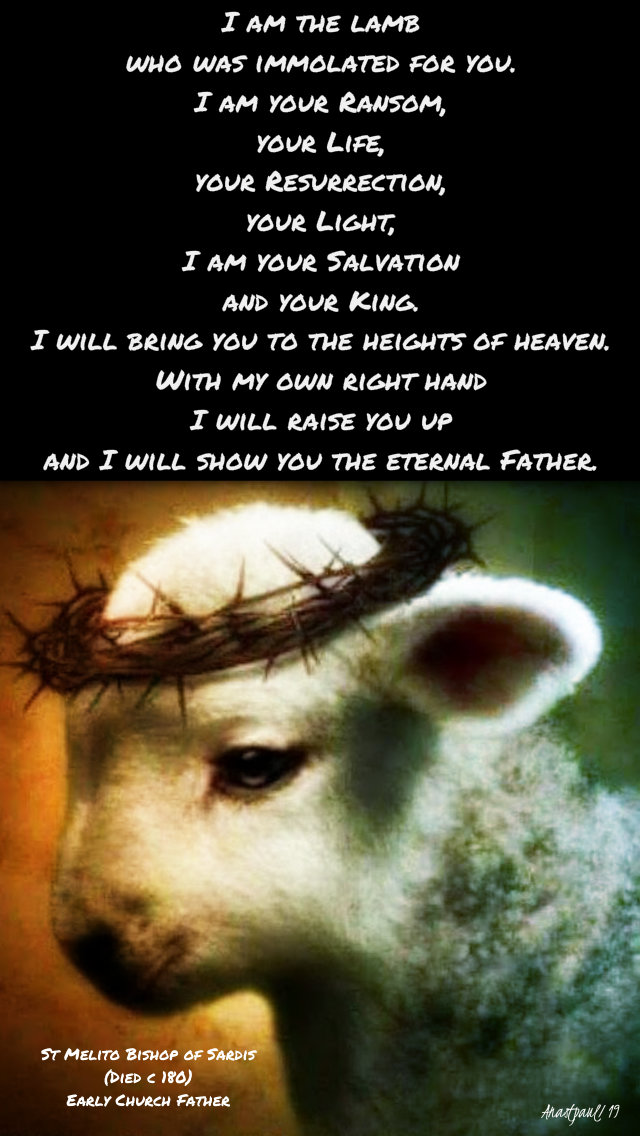
“The Lord, though He was God, became man.   He suffered for the sake of whose who suffer, He was bound for those in bonds, condemned for the guilty, buried for those who lie in the grave but He rose from the dead and cried aloud:  “Who will contend with me?  Let him confront me.”   I have freed the condemned, brought the dead back to life, raised men from their graves.   Who has anything to say against me?   I, He said, am the Christ,  I have destroyed death, triumphed over the enemy, trampled hell underfoot, bound the strong one and taken men up to the heights of heaven.   I am the Christ.   Come, then, all you nations of men, receive forgiveness for the sins that defile you.   I am your forgiveness.   I am the Passover that brings salvation.   I am the lamb who was immolated for you.   I am your Ransom, your Life, your Resurrection, your Light, I am your Salvation and your King.   I will bring you to the heights of heaven.   With my own right hand I will raise you up and I will show you the eternal Father.”

– from a letter by Saint Melito of Sardis

St Melito Bishop of Sardis (Died c 180)

Early Church Fatheri am the lamb who was immolated for you - st melito 1 april 2019.jpg

Posted in FATHERS of the Church, SAINT of the DAY

Saint of the Day – 1 April – St Melito (Died c 180)

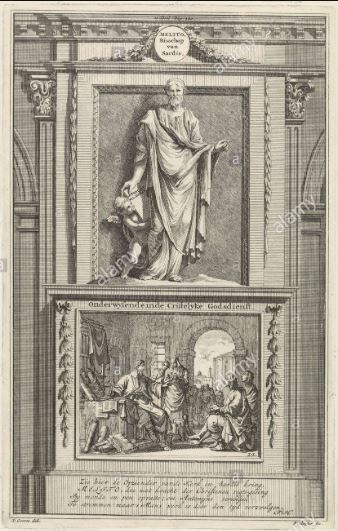
Saint of the Day – 1 April – St Melito Early Church Father – Bishop of Sardis (Died c 180), ecclesiastical Writer, Confessor, Apologist, Defender of Christ’s dual nature.   Saint Melito is believed to have been martyred around the time he wrote his apology to Marcus Aurelius circa 180.Saint Melito of Sardis

Saint Melito of Sardis was Bishop of the Church in Sardis and a prominent ecclesiastical writer in the latter half of the second century.   Indications are that he was the second Bishop of Sardis and was successor to “the angel of the Church of Sardis” (the apostle of that Church) to whom was addressed one of the apocalyptic messages.   Very little is known of his life and the majority of his writings exist only in fragments and quotations from Eusebius, Polycrates, Tertullian and others.   A letter of Polycrates of Ephesus to Pope Victor about 194 states that “Melito the eunuch (this is interpreted “the virgin” by Rufinus in his translation of Eusebius), whose whole walk was in the Holy Spirit”, was interred at Sardis and had been one of the great authorities in the Church of Asia who held the Quartodeciman theory (this was those Churches, primarily in Asia Minor, who celebrated Easter according to the Jewish calendar for Passover).

Saint Melito gave us the earliest indications of the Canon of the Old Testament in his writings and Saint Jerome, speaking of this canon, quotes Tertullian that Melito was esteemed as a prophet by many of the faithful.   Saint Melito, also wrote an apology to the emperor Marcus Aurelius, in which he defended the Christians against accusations made against them, urged the emperor to end the persecutions of the Christians and even urged Aurelius to proclaim Christianity the religion of the Roman Empire!

In the early 20th century, there was great excitement among Christian scholars when a homily by Saint Melito on Easter, “Peri Pascha”, was discovered.   This homily shows how the early Christians saw Christ’s suffering, death and resurrection foreshadowed throughout The Old Testament.   Indeed, in the writings attributed to Saint Melito by Eusebius, the prolific writer Melito gave a listing of the books of The Old Testament, which Saint Melito referred to as “The Old Books”, which indicates to many scholars that the Church of Melito’s time may well have had a New Testament as well.   There is also a strong indication from the fragments of Melito’s writing that exist in references by Tertullian, Eusebius, Polycrates, and others, that Saint Melito made extensive use of the Gospel of Saint John and he may have been acquainted with Saint Polycarp, Saint Ignatius of Antioch and other Early Church Fathers of his day.   His writings influenced the thinking of St Irenaeus of Lyons, St Clement of Alexandria and Tertullian.

In regard to the death of Melito, there is not much information preserved or recorded. Polycrates of Ephesus, in a letter addressed to Pope Victor (AD. 196) preserved in Eusebius’ history, says, “What shall I say of Melito, whose actions’ were all guided by the operations of the Holy Spirit?   Who was interred at Sardis, where he waits the resurrection and the judgement?”.   From this it may be inferred that he had died some time previous to the date of this letter at Sardis, which is the place of his interment and it is believed he might have been martyred.

Melito was especially skilled in the literature of the Old Testament and was one of the most prolific authors of his time.   Eusebius furnished a list of Melito’s works.   While many of these works are lost, the testimony of the fathers remains to inform us how highly they were viewed.   Eusebius presents some fragments of Melito’s works and some others are found in the works of different writers.   Melito was a Chiliast, and believed in a Millennial reign of Christ on Earth and followed Irenaeus in his views.  St Jerome and Gennadius both affirm that he was a decided millennarian and as such believed that Christ would reign for 1000 years before the coming of the final judgement.

The following was written by Saint Jerome, in his book, Lives of Illustrious Men :

Melito the Bishop

Melito of Asia, bishop of Sardis, addressed a book to the emperor Marcus Antoninus Verus, a disciple of Fronto the orator, in behalf of the Christian doctrine.   He wrote other things also, among which are the following:   On the passover, two books, one book On the lives of the prophets, one book On the church, one book On the Lord’s day, one book On faith, one book On the psalms, one On the senses, one On the soul and body, one On baptism, one On truth, one On the generation of Christ, On His prophecy, one On hospitality and another which is called the Key, one On the devil, one On the Apocalypse of John, one On the corporeality of God and six books of Eclogues.   Of his fine oratorical genius, Tertullian, in the seven books which he wrote against the church on behalf of Montanus, satirically says that he was considered a prophet by many of us.st melito

Posted in SAINT of the DAY

Memorials of the Saints – 1 April

Blessed Abraham of Bulgaria
Blessed Alexander of Sicily
Saint Anastasio
Blessed Antonius of Noto
Saint Berhard of Amiens
Blessed Bernhardin of Noto
Saint Celsus of Armagh
Saint Dodolinus of Vienne
Blessed Gerard of Sassoferrato
Saint Gilbert de Moray
Blessed Giuseppe Girotti
Blessed Hugh of Bonnevaux
Saint Hugh of Grenoble
Saint Jacoba of Rome
Blessed John Bretton
Saint Leucone of Troyes
Saint Ludovico Pavoni
Blessed Marcelle
Saint Mary of Egypt
Saint Melito Bishop of Sardis (Died c 180) Early Church Father

Blessed Nicolò of Noto
Saint Prudentius of Atina
Saint Tewdrig ap Teithfallt
Saint Theodora of Rome
Saint Valery of Leucone
Saint Venantius of Spalato
Blessed Vinebault
Blessed Zofia Czeska-Maciejowska

Apostles of Picardy:
Saint Caidoc
Saint Fricor

Martyrs of Dalmatia and Istria – 9 saints: A group of Christians martyrs who died at various locations in Dalamtia and Istria (in modern Croatia, whose relics were later taken to Rome, Italy, and who are remembered together. We know the names Anastasio, Antiochiano, Asterius, Gaiano, Mauro, Paoliniano, Septimius, Telio and Venantius.
Died
• on the Adriatic coast of modern Croatia
• relics translated to Rome, Italy

Martyrs of Thessalonica – 6 saints: A group of Christians martyred. We know nothing about them but the names Alexander, Dionysius, Ingenianus, Panterus, Parthenius and Saturninus.
Died
Thessalonica, Greece, date unknown

Martyred Sisters of Thessalonica:
Saint Agape
Saint Chionia

Martyred in Alexandria:
Saint Stephen
Saint Victor

Martyred in Armenia:
Saint Irenaeus
Saint Quintian

Martyred in Heraclea:
Saint Castus
Saint Victor

Martyred in the Mexican Revolution
Blessed Anacleto González Flores
Blessed Jorge Vargas González
Blessed Luis Padilla Gómez
Blessed Ramón Vargas González

Posted in SAINT of the DAY

Saint of the Day – 31 March – St Guy of Pomposa (Died 1046)

Saint of the Day – 31 March – St Guy of Pomposa (Died 1046) Monk, Abbot, Hermit, Spiritual Adviser, Ascetic – Patronage – Speyer, Germany. Also known as Guido, Guion, Wido, Wit, Witen. Born at Ravenna, Italy and died in 1046 at Borgo San Donnino, Italy of natural causes. His remains were interred in the church of Saint John the Evangelist, Speyer, Germany, which was renamed Saint Guido-Stift.guy pomposa snip of getty.JPG

Guy was born near Ravenna in northern Italy to parents who took great pride in him. Primarily to give them pleasure, he was meticulous in his dress and personal appearance.   Still, one day during a festival, realising the vanity of this way of being and taken with deep compunction, he stripped himself of his fine garments and gave them all away to the poor.   To his parents’ further mortification, their son donned shabby garments and departed for Rome, where he received the tonsure.guy holy card

On his return, he placed himself under the direction of a hermit named Martin, who lived alone on a small island in the River Po.   After three years of directing Guy, the hermit sent him to the Abbey of Pomposa to learn the ways of monastic life.

There Guy so advanced in virtue that he quickly rose to high office and was elected abbot.   Such was his reputation and so many flocked to the abbey that he was obliged to build another.   Even his father and his brother joined the monastery.guy of pomposa 31 mar - 2

At certain times of the year Abbot Guy would retire into solitude a few miles from his monastery and there would submit his body to severe austerities.   Particularly during the forty days of Lent, the austerities were such, as to resemble tortures and yet, he was extraordinarily tender toward his monks who were devoted to him.

Guy did not escape the persecution which often comes to those seeking holiness.   For unknown reasons, the Archbishop of Ravenna had developed a hatred for the holy abbot and determined to destroy his monasteries.   When Guy learned of the imminent attack, he fasted for three days, joined in this mortification by the entire community of monks. When the archbishop arrived with his soldiers, he was met by Guy with such humility and respect, that he was overwhelmed and asked the abbot’s pardon.Mar+31+Guy+of+Pomposa+1

Towards the close of his life Guy again withdrew to his solitary hermitage.   The Emperor Henry III, who had come to Italy to consult with the holy abbot, summoned him to Piacenza.   Though he was unwilling to do so, the aged abbot obeyed, taking a tender farewell from his brothers whom he said he would see no more.   Attacked by a sudden illness in Borgo San Donnino near Parma, he died three days later.

Both Parma and Pomposa claimed his relics but the emperor settled the dispute by having his body translated to the Church of St John the Evangelist at Speyer in Germany.guy of pomposa 31 mar

Posted in SAINT of the DAY

Memorials of the Saints – 31 March

St Abda
St Acacius Agathangelos of Melitene
St Agigulf
St Aldo of Hasnon
St Balbina of Rome
St Benjamin the Deacon
Bl Bonaventure Tornielli of Forli
Bl Christopher Robinson
St Daniel of Venice
St Guy of Pomposa (Died 1046)
Bl Guy of Vicogne
Bl Jane of Toulouse
St Machabeo of Armagh
Bl Mary Mamala
St Mella of Doire-Melle
Bl Natalia Tulasiewicz
St Renovatus of Merida

Martyrs of Africa – 4 saints: A group of Christians martyred together for their faith. No details have survived except for of their names – Anesius, Cornelia, Felix and Theodulus. They were martyred in Roman pro-consular Africa.