Posted in SAINT of the DAY, St PAUL!

Saints of the Day – 26 January – Sts Timothy and Titus – Disciples of St Paul

Saints of the Day – 26 January – Sts Timothy and Titus – Bishops, Disciples and trusted and loyal Companions of St Paul.

memorial-sts-tim-and-titus-2017


“Timothy” is a Greek name and means “who honours God.”   While Luke, in the Acts of the Apostles, mentions him six times, Paul names him on 17 occasions in his letters (moreover he appears once in the Letter to the Hebrews).   We can deduce that from Paul he enjoyed great consideration, although Luke does not tell us all that he had to do with him.   The Apostle, in fact, entrusted him with important missions and saw in him a sort of “alter ego,” as can be seen in his great praise of him in the Letter to the Philippians. “I have no one like him, who will be genuinely anxious for your welfare” (2:20).

Timothy was born in Lystra (some 200 kilometers northwest of Tarsus) of a Jewish mother and a pagan father (cf. Acts 16:1).   The fact that his mother had contracted a mixed marriage and that she did not circumcise her son leads one to think that Timothy was brought up in a family that was not strictly observant, though it is said that he knew the Scriptures from his childhood (cf. 2 Timothy 3:15).   His mother’s name has been transmitted to us, Eunice, and that of his grandmother, Lois (cf. 2 Timothy 1:5).

When Paul passed through Lystra at the start of his second missionary journey, he chose Timothy as his companion, as “he was well spoken by the brethren at Lystra and Iconium” (Acts 16:2), but he “circumcised him because of the Jews that were in those places ” (Acts 16:3).   Together with Paul and Silas, Timothy went across Asia Minor to Troas, from where he went to Macedonia.   We are told that in Philippi, where Paul and Silas were accused of disturbing the city and imprisoned for having been opposed to some unscrupulous individuals who were taking advantage of a slave girl who had a spirit of divination (cf. Acts 16:16-40), Timothy was released.   When Paul then was obliged to travel to Athens, Timothy caught up with him in that city and from there was sent to the young Church of Thessalonica to confirm her in the faith (cf. 1 Thessalonians 3:1-2).   He then joined the Apostle in Corinth, giving him good news about the Thessalonians and collaborating with him in the evangelisation of that city (cf. 2 Corinthians 1:19).

We again find Timothy in Ephesus, during Paul’s third missionary journey.  From there, the Apostle wrote probably to Philemon and to the Philippians and both letters were written with Timothy (cf. Philemon 1; Philippians 1:1).   From Ephesus, Paul sent him to Macedonia with a certain Erastus (cf. Acts 19:22) and later to Corinth, with the task to take a letter, in which he recommended to the Corinthians that they give him a good reception (cf. 1 Corinthians 4:17; 16:10-11).

He appears again as co-writer of the Second Letter to the Corinthians and when from Corinth Paul wrote the Letter to the Romans, he transmitted greetings to Timothy, as well as to others (cf. Romans 16:21).   From Corinth, the disciple again travelled to Troas, on the Asian shore of the Aegean Sea, there to await the Apostle who was going to Jerusalem at the end of his third missionary journey (cf. Acts 20:4).

From that moment, we can say that the figure of Timothy stands out as that of a pastor of great importance. According to Eusebius’ subsequent “Ecclesiastical History,” Timothy was the first bishop of Ephesus (cf. 3:4).   Some of his relics have been in Italy since 1239, in the Cathedral of Termoli, in Molise, having come from Constantinople.

Stoning of Saint Timothy,

As regards the figure of Titus, whose name is of Latin origin, we know that he was Greek by birth, that is, pagan (cf. Galatians 2:3).   Paul took him to Jerusalem on the occasion of the so-called Apostolic Council, in which the preaching of the Gospel to pagans was solemnly accepted without imposing upon them the precepts of the Mosaic law.

In the Letter he addresses to him, the Apostle praises him describing him as “my true child in our common faith” (Titus 1:4).   After Timothy went to Corinth, Paul sent Titus with the task to call that rebellious community to obedience.   Titus brought peace to the Church of Corinth and the Apostle wrote these words:  “But God, who comforts the downcast, comforted us by the coming of Titus, and not only with his coming but also by the comfort with which he was comforted in you, as he told us of your longing, your mourning, your zeal for me, so that I rejoiced still more…. Therefore we are comforted.   And besides our own comfort we rejoiced still more at the joy of Titus, because his mind has been set at rest by you all” (2 Corinthians 7:6-7,13).   Paul again sent Titus — whom he called “partner and co-worker” (2 Corinthians 8:23) — to organise the completion of the collections for the Christians of Jerusalem (2 Corinthians 8:6).   Subsequent news found in these pastoral letters speak of him as bishop of Crete (cf. Titus 1:5), from whence, by invitation of Paul, he joined the Apostle in Nicopolis, in Epirus, (cf. Titus 3:12).  Later he also went to Dalmatia (cf. 2 Timothy 4:10).   We do not have any more information on Titus’ subsequent trips or on his death.

st titus

In short, if we consider together the two figures of Timothy and Titus, we are aware of some significant facts.   The most important is that Paul used collaborators in the development of his missions.  He is, of course, the Apostle par excellence, founder and pastor of many Churches.   Nevertheless, it is clear that he did not do it all alone but leaned on trustworthy persons, who shared the effort and responsibilities.

To be pointed out, moreover is the willingness of his collaborators.   The sources we have on Timothy and Titus underline their willingness to take on the different tasks, which often consisted in representing Paul even in difficult circumstances.   In other words, they teach us to serve the Gospel with generosity, knowing that this also implies a service to the Church herself.   (Pope Benedict 13 December 2006)

tim and titus

Posted in SAINT of the DAY

26 January – Memorials of the Saints

St Timothy (Memorial)
St Titus (Memorial)


St Alberic of Citreaux
St Alphonsus of Astorga
St Ansurius of Orense
St Athanasius of Sorrento
St Conan of Iona
Bl Eystein Erlandsön
Bl José Gabriel del Rosario Brochero
Bl Marie de la Dive veuve du Verdier de la Sorinière
Bl Michaël Kozal
St Paula of Rome
St Robert of Molesme
St Theofrid of Corbie
St Theogenes of Hippo
St Tortgith of Barking

Martyred Family of Constantinople: Saint Mary and Saint Xenophon were married and the parents of Saint John and Saint Arcadius. Theirs was a wealthy family of Senatorial rank in 5th century imperial Constantinople, but were known as a Christians who lived simple lives. To give their sons a good education, Xenophon and Mary sent them to university in Beirut, Phoenicia. However, their ship wrecked, there was no communication from them, and the couple assumed, naturally, that the young men had died at sea. In reality, John and Arcadius had survived and decided that instead of continuing to Beirut, they were going to follow a calling to religious life and became monks, eventually living in a monastery in Jerusalem. Years later, Mary and Xenophon made a pilgrimage to Jerusalem – where they encountered their sons. Grateful to have their family re-united, and taking it as a sign, Xenophon and Mary gave up their positions in society in Constantinople, and lived the rest of their lives as a monk and anchoress. in Jerusalem. A few years later, the entire family was martyred together.
They were martyred in 5th century Jerusalem.
St Xenophon
St Mary
St John
St Arcadius

Posted in MORNING Prayers, ON the SAINTS, PAPAL SERMONS, SAINT of the DAY, SPEAKING of ....., St PAUL!, The APOSTLES & EVANGELISTS, VATICAN Resources

Series on the Catechesis of Pope BENEDICT XVI “Speaking of St Paul” – No 1 – Religious and Cultural Environment

Series on the Catechesis of Pope BENEDICT XVI on St Paul

“Speaking of St Paul ” No 1 – Wednesday, 2 July 2008

Religious and Cultural Environment

386px-Marco_Zoppo_-_St_Paul_-_WGA26005
Marco Zoppo (1433–1478) – Italian painter (1433-1478) St Paul circa 1468

Dear Brothers and Sisters,

Today I would like to begin a new cycle of Catechesis focusing on the great Apostle St Paul. As you know, this year is dedicated to him, from the liturgical Feast of Sts Peter and Paul on 29 June 2008 to the same Feast day in 2009.   The Apostle Paul, an outstanding and almost inimitable yet stimulating figure, stands before us as an example of total dedication to the Lord and to his Church, as well as of great openness to humanity and its cultures.   It is right, therefore, that we reserve a special place for him in not only our veneration but also in our effort to understand what he has to say to us as well, Christians of today.   In this first meeting let us pause to consider the environment in which St Paul lived and worked.   A theme such as this would seem to bring us far from our time, given that we must identify with the world of 2,000 years ago.   Yet this is only apparently and, in any case, only partly true for we can see that various aspects of today’s social and cultural context are not very different from what they were then.

A primary and fundamental fact to bear in mind is the relationship between the milieu in which Paul was born and raised and the global context to which he later belonged.   He came from a very precise and circumscribed culture, indisputably a minority, which is that of the People of Israel and its tradition.   In the ancient world and especially in the Roman Empire, as scholars in the subject teach us, Jews must have accounted for about 10 percent of the total population.   Later, here in Rome, towards the middle of the first century, this percentage was even lower, amounting to three percent of the city’s inhabitants at most.   Their beliefs and way of life, is still the case today, distinguished them clearly from the surrounding environment and this could have two results:  either derision, that could lead to intolerance, or admiration which was expressed in various forms of sympathy, as in the case of the “God-fearing” or “proselytes”, pagans who became members of the Synagogue and who shared the faith in the God of Israel.   As concrete examples of this dual attitude we can mention on the one hand the cutting opinion of an orator such as Cicero who despised their religion and even the city of Jerusalem (cf. Pro Flacco, 66-69) and, on the other, the attitude of Nero’s wife, Poppea, who is remembered by Flavius Josephus as a “sympathiser” of the Jews (cf. Antichità giudaiche 20, 195, 252); Vita 16), not to mention that Julius Caesar had already officially recognised specific rights of the Jews which have been recorded by the above-mentioned Jewish historian Flavius Josephus (cf. ibid., 14,200-216).   It is certain that the number of Jews, as, moreover, is still the case today, was far greater outside the land of Israel, that is, in the Diaspora, than in the territory that others called Palestine.

It is not surprising, therefore, that Paul himself was the object of the dual contradictory assessment that I mentioned.   One thing is certain: the particularism of the Judaic culture and religion easily found room in an institution as far-reaching as the Roman Empire.   Those who would adhere with faith to the Person of Jesus of Nazareth, Jew or Gentile, were in the more difficult and troubled position, to the extent to which they were to distinguish themselves from both Judaism and the prevalent paganism.   In any case, two factors were in Paul’s favour.   The first was the Greek, or rather Hellenistic, culture which after Alexander the Great had become a common heritage, at least of the Eastern Mediterranean and of the Middle East and had even absorbed many elements of peoples traditionally considered barbarian.   One writer of the time says in this regard that Alexander “ordered that all should consider the entire oecumene as their homeland… and that a distinction should no longer be made between Greek and barbarian” (Plutarch, De Alexandri Magni fortuna aut virtute, 6, 8).   The second factor was the political and administrative structure of the Roman Empire which guaranteed peace and stability from Britain as far as southern Egypt, unifying a territory of previously unheard of dimensions.   It was possible to move with sufficient freedom and safety in this space, making use, among other things, of an extraordinary network of roads and finding at every point of arrival basic cultural characteristics which, without affecting local values, nonetheless represented a common fabric of unification super partes, so that the Jewish philosopher, Philo of Alexandria, a contemporary of Paul himself, praised the Emperor Augustus for “composing in harmony all the savage peoples, making himself the guardian of peace” (Legatio ad Caium, 146-147).

There is no doubt that the universalist vision characteristic of St Paul’s personality, at least of the Christian Paul after the event on the road to Damascus, owes its basic impact to faith in Jesus Christ, since the figure of the Risen One was by this time situated beyond any particularistic narrowness.   Indeed, for the Apostle “there is neither Jew nor Greek, there is neither slave nor free, there is neither male nor female; for you are all one in Christ Jesus” (Gal 3: 28).   Yet, even the historical and cultural situation of his time and milieu could not but have had an influence on his decisions and his work.   Some have defined Paul as “a man of three cultures”, taking into account his Jewish background, his Greek tongue and his prerogative as a “civis romanus [Roman citizen], as the name of Latin origin suggests.   Particularly the Stoic philosophy dominant in Paul’s time which influenced Christianity, even if only marginally, should be recalled.   Concerning this, we cannot gloss over certain names of Stoic philosophers such as those of its founders, Zeno and Cleanthes and then those closer to Paul in time such as Seneca, Musonius and Epictetus: in them the loftiest values of humanity and wisdom are found which were naturally to be absorbed by Christianity.   As one student of the subject splendidly wrote, “Stoicism… announced a new ideal, which imposed upon man obligations to his peersbut at the same time set him free from all physical and national ties and made of him a purely spiritual being” (M. Pohlenz, La Stoa, I, Florence, 2, 1978, pp. 565 f.).   One thinks, for example, of the doctrine of the universe understood as a single great harmonious body and consequently of the doctrine of equality among all people without social distinctions, of the equivalence, at least in principle, of men and women and then of the ideal of frugality, of the just measure and self-control to avoid all excesses.   When Paul wrote to the Philippians, “Whatever is true, whatever is honourable, whatever is just, whatever is pure, whatever is lovely, whatever is gracious, if there is any excellence, if there is anything worthy of praise, think about these things” (Phil 4: 8), he was only taking up a purely humanistic concept proper to that philosophical wisdom.

In St Paul’s time a crisis of traditional religion was taking place, at least in its mythological and even civil aspects.   After Lucretius had already ruled polemically a century earlier that “religion has led to many misdeeds” (De rerum natura, 1, 101, On the Nature of Things), a philosopher such as Seneca, going far beyond any external ritualism, taught that “God is close to you, he is with you, he is within you” (Epistulae morales to Lucilius, 41, 1).   Similarly, when Paul addresses an audience of Epicurean philosophers and Stoics in the Areopagus of Athens, he literally says: “God does not live in shrines made by man,… for in him we live and move and have our being” (Acts 17: 24, 28).   In saying this he certainly re-echoes the Judaic faith in a God who cannot be represented in anthropomorphic terms and even places himself on a religious wavelength that his listeners knew well.   We must also take into account the fact that many pagan cults dispensed with the official temples of the town and made use of private places that favoured the initiation of their followers.   It is, therefore, not surprising that Christian gatherings (ekklesiai) as Paul’s Letters attest, also took place in private homes.   At that time, moreover, there were not yet any public buildings.   Therefore, Christian assemblies must have appeared to Paul’s contemporaries as a simple variation of their most intimate religious practice.   Yet the differences between pagan cults and Christian worship are not negligible and regard the participants’ awareness of their identity as well as the participation in common of men and women, the celebration of the “Lord’s Supper”, and the reading of the Scriptures.

In conclusion, from this brief over-view of the cultural context of the first century of the Christian era, it is clear that it is impossible to understand St Paul properly without placing him against both the Judaic and pagan background of his time.   Thus he grows in historical and spiritual stature, revealing both sharing and originality in comparison with the surrounding environment.   However, this applies likewise to Christianity in general, of which the Apostle Paul, precisely, is a paradigm of the highest order from whom we all, always, still have much to learn.   And this is the goal of the Pauline Year:  to learn from St Paul, to learn faith, to learn Christ, and finally to learn the way of upright living.

St Paul Pray for us!st paul pray for us - 25 jan2018 - catechesis of pope benedict no 1

Posted in MORNING Prayers, SAINT of the DAY, St PAUL!, The APOSTLES & EVANGELISTS

Second Thoughts for Today – 25 January – Feast of the Conversion of St Paul the Apostle

Second Thoughts for Today – 25 January – Feast of the Conversion of St Paul the Apostle

St Paul’s life is perhaps the best known in the annals of the saints and his conversion was one of the most earth-shattering miracles of the early Church.

Of course, not all of us can be knocked off our feet by a vision of Jesus Christ but we can live our faith with the same intensity as that of St Paul did.   After his conversion, St Paul spent his life spreading the news of Jesus everywhere and died as his final witness to the faith.

It is total commitment and heroism that planted the Christian faith and it is still needed very badly in our day.   The bottom-line is this:

the question is “what is it about”

and the answer is “love”.

St Paul, Pray for us!st paul - pray for us - no 3- 25 jan 2018

Posted in DOMINICAN OP, MORNING Prayers, SAINT of the DAY

Thought for the Day – 25 January – The Memorial of Blessed Henry Suso O.P. (1290-1365)

Thought for the Day – 25 January – The Memorial of Blessed Henry Suso O.P. (1290-1365)

Henry Suso is a bundle of contradictions and a person, moreover, who has gathered legends about him like a snowball rolling downhill.   He was a poet, which is not always a key to happiness in this world; a mystic of the highest order;  a hard working Dominican;  and a man with a positive genius for getting into embarrassing situations. He has suffered at the hands of chroniclers who dislike his followers, or his tactics, or his poetry;  he is all but canonised by those who see in him the Dominican mystic.   It will require many years of exhaustive research to sort out the diverse elements in his personality, if, indeed, it can ever be accomplished.   Poets are not easy to analyse, and Henry, before all else, was a poet and a mystic.

Anyone who endures dryness at prayer or feels abandoned by God will find instruction, and perhaps some relief, in the experience of Henry Suso.   A mystic who called himself the “servant of Eternal Wisdom,” he endured long stretches of spiritual darkness interrupted only by occasional bursts of brightness.   Henry’s life says to us that in apparent barrenness the soul draws closest to God.   And we see him only by learning to look deep within.

Henry Suso was born at Constance, Switzerland and became a Dominican there at 13. Five years later an extraordinary divine encounter launched him on his lifelong mystical pursuit of God.   For the next decade, however, Suso suffered severe depression and doubt.   Finally, counsel with Meister Eckhart, the patriarch of 14th-century German mysticism, delivered him from the worst of it.

Like many other mystics, at midlife Henry threw himself into active Christian work.   For nearly two decades he travelled throughout the Rhineland preaching, teaching and giving spiritual direction.   He also wrote extensively about the inner life.   His work on prayer, The Little Book of Eternal Wisdom, became the most popular Christian book in Europe before The Imitation of Christ appeared.   In this excerpt he asks God, the Eternal Wisdom, why he seems to forsake those he loves:

Eternal Wisdom: When I hide myself, only then do you become aware of who I am or who you are. I am eternal Good, and so when I pour myself forth so lovingly, everything I enter becomes good. One can thus detect my presence as one detects the sun by its brightness since one cannot see its essence.

Servant: Lord, I find within myself a great unevenness. When I feel forsaken, my soul is like a sick person to whom everything is repugnant. But when the bright morning star bursts forth in my soul, all gloom disappears. Quickly, however, it is all snatched away and I am again forsaken. But then after intense sadness it returns. What is going on?

Eternal Wisdom: I am causing it, and it is the game of love. As long as love is together with love, love does not know how dear love is. But when love departs from love, then truly love feels how dear love was.

Servant: Dear Lord, teach me how to conduct myself in this game.

Eternal Wisdom: On good days you should consider the bad days, and on the bad days consider the good days. Then neither exuberance at my presence nor despondency can harm you. To find joy on earth, it is not enough that you give me a certain period of the day. You must constantly remain within yourself if you want to find God, hear his familiar words and be sensitive to his secret thoughts.

Suso’s individualistic piety and his association with Meister Eckhart, who was suspected of heresy, won him many enemies.   He was accused of theft, sacrilege, fathering a child, poisoning and heresy, he suffered greatly but he was completely cleared of all charges. Toward the end of his life he served as the prior of the Dominican house at Ulm in central Germany. Henry Suso died there in 1366.

Henry died in 1365, in Ulm and was buried there in the convent of St Paul.   However, in spite of the fact that his body was found intact and giving forth a sweet odour two hundred and fifty years later, the beatification was delayed until 1831.   The relics, meantime, had disappeared entirely and have never been recovered.

Blessed Henry Suso, pray for us!bl henry suso - pray for us - 25 jan 2018

Posted in DOMINICAN OP, EUCHARISTIC Adoration, MORNING Prayers, QUOTES of the SAINTS, QUOTES on LOVE, QUOTES on SANCTITY, QUOTES on SILENCE, QUOTES on SUFFERING, SAINT of the DAY, The HOLY EUCHARIST / The HOLY MASS

Quote/s of the Day – 25 January – The Memorial of Blessed Henry Suso O.P. (1290-1365)

Quote/s of the Day – 25 January – The Memorial of Blessed Henry Suso O.P. (1290-1365)

“Suffering is the ancient law of love;
there is no quest without pain;
there is no lover
who is not also a martyr.”

“Suffering is
a short pain
and a long joy.”

“After big storms
there follow
bright days.”suffering is the ancient law of love - bl henry suso - 25 jan 2018

“I have often repented of having spoken.
I have never repented of silence.”i have often repented - bl henry suso - 25 jan 2018

“The eternal God asks a favour of His bride:
“Hold me close to your heart,
close as locket or bracelet fits.”
No matter whether we walk
or stand still, eat or drink,
we should at all times
wear the golden locket
“Jesus” upon our heart.”the eternal god asks a favour - bl henry suso - 25 jan 2018

“Nowhere does Jesus
hear our prayers
more readily than
in the Blessed Sacrament.”

Blessed Henry Suso O.P. (1290-1365)nowhere does jesus hear our prayers - bl henry suso - 25 jan 2018

Posted in DOCTORS of the Church, FATHERS of the Church, FEASTS and SOLEMNITIES, MORNING Prayers, QUOTES of the SAINTS, QUOTES on FAITH, SAINT of the DAY, St PAUL!, The APOSTLES & EVANGELISTS, The WORD

One Minute Reflection – 25 January – Feast of the Conversion of St Paul the Apostle

One Minute Reflection – 25 January – Feast of the Conversion of St Paul the Apostle

I have appeared to you for this purpose, to appoint you as a servant and witness of what you have seen and what you will be shown.   I shall deliver you from this people and from the Gentiles to whom I send you,to open their eyes that they may turn from darkness to light and from the power of Satan to God, so that they may obtain forgiveness of sins and an inheritance among those who have been consecrated by faith in me…Acts 26:16-18acts 26-16

REFLECTION – “Paul, more than anyone else, has shown us what man really is and in what our nobility consists and of what virtue this particular animal is capable.   Each day he aimed ever higher; each day he rose up with greater ardour and faced with new eagerness the dangers that threatened him.   He summed up his attitude in the words:  “I forget what is behind me and push on to what lies ahead”…The most important thing of all to him, however, was that he knew himself to be loved by Christ.   Enjoying this love, he considered himself happier than anyone else”…….St John Chrysostomchrysostum-on-paul-2018

PRAYER – Today Lord, we celebrate the conversion of St Paul, Your chosen vessel for carrying Your name to the whole world.   Help us to make our way towards You by following in his footsteps and by being Your disciples before the men and women of our day.   Grant that by the prayers of St Paul, we too may say, “Yet I live, no longer I, but Christ lives in me; insofar as I now live in the flesh, I live by faith in the Son of God who has loved me and given himself up for me.” (Galatians 2:20)   Through Jesus Christ, our Lord, in union with the Holy Spirit, one God forever and ever, amen.st paul apostle, pray for us - 25 jan 2018

Posted in BREVIARY Prayers, CATHOLIC-PRAYERS OF THE CHURCH, HYMNS, MORNING Prayers, ON the SAINTS, SAINT of the DAY, St PAUL!

Our Morning Offering – 25 January – Feast of the Conversion of St Paul the Apostle

Our Morning Offering – 25 January – Feast of the Conversion of St Paul the Apostle

Morning Hymn from the Psalter
for the Feast of the Conversion of St Paul

Apostle of the gentiles, Paul
The greatest witness of them all.
You turned to Christ, the risen Lord,
When out of light you heard Him call.

You journeyed far and wide to tell
That Christ was risen from the dead,
That all who put their faith in Him
Would live forever, as He said.

To Father, Son and Spirit blest,
The light of man’s uncharted ways,
With all the Church throughout the world,
Give glory and unceasing praise.apostle of the gentiles paul - hymn from the psalter - 25 jan 2018

Posted in FEASTS and SOLEMNITIES, MIRACLES, MORNING Prayers, ON the SAINTS, QUOTES of the SAINTS, SAINT of the DAY, St PAUL!, The APOSTLES & EVANGELISTS

Feast of the Conversion of St Paul – 25 January

Feast of the Conversion of St Paul – 25 January

St Paul the Apostle is the greatest of the early Christian missionaries.   He first appears in the Acts of the Apostles under the name of Saul.   Saul was raised in the Jewish faith as a Pharisee trained in the strict observance of God’s Law.   He believed the Law should be obeyed by himself and all Jews.   Saul was upset by the early Christian Church, believing that the early Christians had broken away from their Jewish traditions.   He actively persecuted the Church in Jerusalem.   As the first Christian martyr Stephen was being stoned to death, Saul watched the cloaks of the persecutors (Acts 7:58).

Paul then traveled to Damascus to further persecute early Christians.   On the road to Damascus Saul had an encounter with the Risen Jesus Christ (Acts of the Apostles 9:1–19, Galatians 1: 13–14).   Jesus asked, “Saul, Saul, why are you persecuting me?”   Paul replied, “Who are you, sir?”   Jesus responded, “I am Jesus whom you are persecuting” (Acts 9: 4 – 5).   Jesus then sent Saul into Damascus to wait for further instructions.   Saul was shaken and blinded by the experience.   When a Christian named Ananias came and baptised Saul, his blindness went away.   As a result of this encounter Saul became a follower of Christ.   He was now convinced that fellowship with the risen Jesus Christ, not the observance of the Law, was all that was needed to receive God’s promise of salvation. (Galatians 1:11–12; 3:1–5)header 1 conversionHEADER 2 - conversion of st paulheader - conversionStPaulEscalante

Saul, whose name now became Paul, went to Jerusalem to consult with Peter (Galatians 1: 18).   After his first missionary journeys, Paul was called by Jesus to proclaim the Gospel to the Gentiles.   He spent the rest of his life journeying on his missions, establishing local churches and writing to them when he heard of their accomplishments and failures.   Paul’s letters are the earliest records of the life and history of the early Church.   As inspired by the Holy Spirit Paul’s letters are part of the Canon of the New Testament.   As a record of the happenings in the early Church they are in invaluable record of the expansion of the Christianity.LARGE - conversion - caravaggio

St Paul’s Writings

All together, there are 13 epistles that bear Paul’s name as the author.   However, scholars do not believe that he wrote them all.   Paul himself was the author of first and second Thessalonians, Galatians, Philippians, first and second Corinthians, Romans and Philemon.  The epistles to the Ephesians, Colossians, Titus and first and second Timothy bear Paul’s name but it is believed that they were written after his death.   The writers of these letters were disciples of Paul who wanted to continue his teaching.   Whoever the authors of these epistles were, these writings have been accepted into the New Testament as inspired by the Holy Spirit.
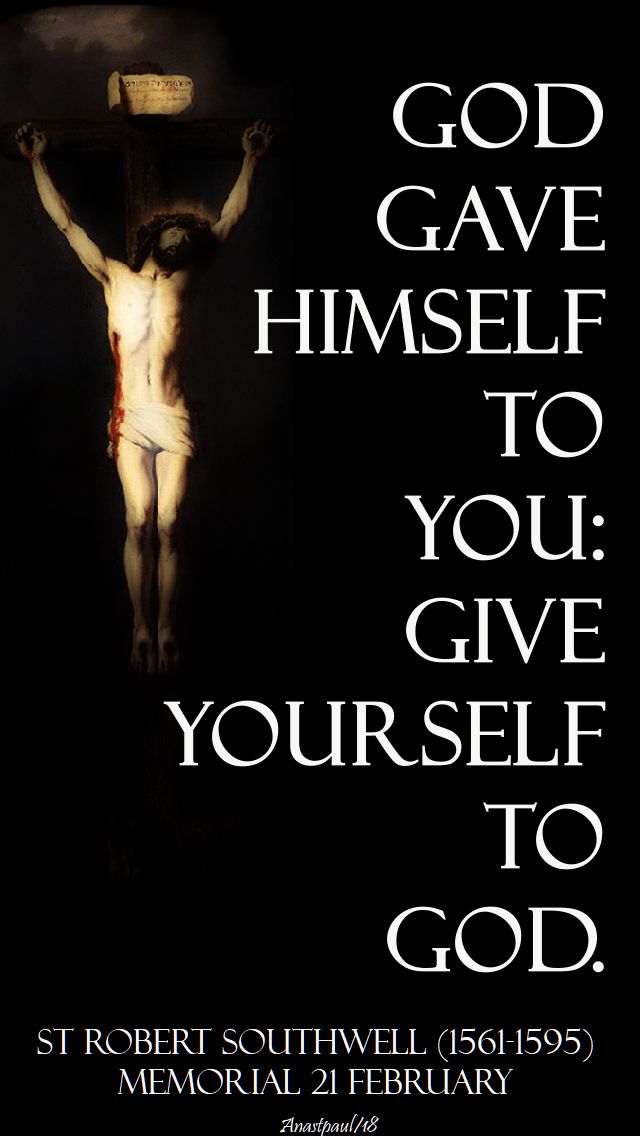
Centrality of Jesus Christ

The most profound and moving day in Paul’s life was when he met the risen Jesus Christ. Paul was well respected by the Jewish community and his peers.   But he gave it all up for Christ.  “More than that, I even consider everything as a loss because of the supreme good of knowing Jesus Christ my Lord.” (Philippians 3:8) Jesus Christ, Paul realised, was sent by the Father to bring salvation for all.   Paul taught that we are united with Christ in faith and Baptism – “We were indeed buried with him through baptism into death, so that, just as Christ was raised from the dead by the glory of the Father, we too might live in newness of life.” (Romans 6:4)

On the personal level, individual Christians recognise that when they are united with Christ, they receive the grace needed to overcome sin and to live moral lives.  (Galatians 5:16–26)conversion of st paul 2conversion of st paul - LARGE VERSION detail

Justification

Paul teaches that the justice of God was saving justice at its best.   God is faithful, fulfilling the promises made in the Old Testament covenant.   Through the sin of Adam and Eve the human family was alienated from God.   Through Christ the human family is called back into relationship with God.   This process of reuniting the human family with God is called justification. (Romans 3:21–31)   It is impossible for us to justify ourselves; we are only justified by being united in faith with Jesus Christ and by accepting the gift of grace won by Christ. (Romans 5:1–2)   We can only be made right with God and set free from a life of immoral living by accepting the gift of God’s reconciling grace.

Life in the Spirit

Paul teaches that the love of God is being poured into our hearts through the Holy Spirit. (Romans 5:5)   The Holy Spirit is the source of all love.   The Holy Spirit creates a bond between us and God like children bound to a father.  (Romans 8:14–16)   The Holy Spirit not only establishes our relationship with the Father.   Even though we are weak, the Holy Spirit helps us to live faithfully within that relationship. (Romans 8:26–27) It is through the Holy Spirit that we can live in love with all people. (1 Corinthians 13:3–7)

The Moral Life

What does it mean to live a Christian moral life?   Paul thought deeply about this question.   He was raised as a faithful Jew.   As we have seen Paul, was raised to believe that following the strict moral code of the Jewish faith was the way to salvation.   Paul believed “… the law is holy and the commandment is holy and righteous and good.” (Romans 7:12.)   What Paul realised, however, that because we are weakened by the sin of Adam and Eve, it was impossible to us to reconnect in our relationship with God through our efforts alone (Romans 7:14).

After his experience with Jesus Christ, Paul knew that he was not alone on the road to salvation.   Jesus Christ has already accomplished salvation for us.   In faith and Baptism, Christians receive the grace of the Holy Spirit, who is our constant guide.   The Holy Spirit helps us to live in relationship with God and others.

So Paul’s great message to the world was:  You are saved entirely by God, not by anything you can do.   Saving faith is the gift of total, free, personal and loving commitment to Christ, a commitment that then bears fruit in more “works” than the Law could ever contemplate.

St Paul Pray for us!conversion-of-st-paul-2018

Posted in FEASTS and SOLEMNITIES, SAINT of the DAY

Feast of the Conversion of St Paul and Memorials of the Saints – 25 January

Conversion of Paul the Apostle (Feast)


St Agape the Martyr
St Agileus of Carthage
St Amarinus of Clermont
St Ananias of Damascus
Bl Antoni Swiadek
Bl Antonio Migliorati
St Apollo of Heliopolis
Bl Archangela Girlani
St Artemas of Pozzuoli
St Auxentius of Epirus
St Bretannion of Tomi
St Donatus the Martyr
St Dwynwen
St Emilia Fernández Rodríguez de Cortés
St Eochod of Galloway
Bl Francesco Zirano
Bl Henry Suso
St Joel of Pulsano
St Juventinus of Antioch
Bl Manuel Domingo y Sol
St Maximinus of Antioch
St Palaemon
St Poppo
St Praejectus of Clermont
St Publius of Zeugma
St Racho of Autun
St Sabinus the Martyr
Bl Teresa Grillo Michel

Posted in DOCTORS of the Church, MORNING Prayers, QUOTES of the SAINTS, QUOTES on CHARITY, QUOTES on LOVE, SAINT of the DAY, The WORD

One Minute Reflection – 24 January – The Memorial of St Francis de Sales (1567-1622) Doctor of the Church: Doctor caritatis (Doctor of Charity)

One Minute Reflection – 24 January – The Memorial of St Francis de Sales (1567-1622) Doctor of the Church: Doctor Caritatis (Doctor of Charity)

Know therefore that the LORD your God is God;  He is the faithful God, keeping his covenant of love to a thousand generations of those who love Him and keep His commands…Deuteronomy 7:9

REFLECTION:  “Man is the perfection of the Universe.
The spirit is the perfection of man.
Love is the perfection of the spirit and charity that of love.
Therefore, the love of God is the end, the perfection of the Universe.”… St Francis de Salesman is the perfection - st francis de sales - 24 jan 2018

PRAYER :  Grant Lord, that in the service of our fellowmen, we may always reflect Your own gentleness and love and so imitate St Francis de Sales, whom You made all things to all men, for the saving of souls.   Grant that his prayers on our behalf may assist us in our daily struggles in traversing our pilgrim way.   Through Jesus Christ our Lord, in union with the Holy Spirit, one God forever and ever, amen.st francis de sales - pray for us no 1 2018

Posted in DOCTORS of the Church, MORNING Prayers, PRAYERS of the SAINTS, SAINT of the DAY

Our Morning Offering – 24 January – The Memorial of St Francis de Sales (1567-1622) Doctor of the Church: Doctor caritatis (Doctor of Charity)

Our Morning Offering – 24 January – The Memorial of St Francis de Sales (1567-1622) Doctor of the Church: Doctor caritatis (Doctor of Charity)

Prayer of Dedication to the Lord
By St Francis de Sales (1567-1622)

Lord,
I am Yours
and I must belong to no one but You.
My soul is Yours
and I must live only by You.
My will is Yours
and must love only for You.
I must love You as my first cause,
since I am from You.
I must love You as my end and rest,
since I am for You.
I must love You more than my own being,
since my being subsists by You.
I must love You more than myself,
since I am all Yours
and all in You.
Amen.prayer of dedication to the lord - st francis de sales - 2017


Posted in All THEOLOGIANS, Moral Theologians, CATHOLIC PRESS, CONFESSORS, DOCTORS of the Church, franciscan OFM, Of the DEAF, against DEAFNESS, PATRONAGE - WRITERS, PRINTERS, PUBLISHERS, EDITORS, etc, SAINT of the DAY, TEACHERS, LECTURERS, INSTRUCTORS

Saint of the Day – 24 January – St Francis de Sales (1567-1622) – Doctor of the Church: Doctor caritatis (Doctor of Charity)

Saint of the Day – 24 January – St Francis de Sales  CO, OM, OFM (Cap) (1567-1622) – Doctor of the Church: Doctor caritatis (Doctor of Charity), Bishop of Geneva, Doctor of Law and Theology, Writer, Theologian, Mystic, Teacher, Preacher, Founder along with St Jane Frances de Chantal, founded the women’s Order of the Visitation of Holy Mary (Visitandines).  Born 21 August 1567 at Château de Thorens, Savoy (part of modern France) – 28 December 1622 at Lyon, France of natural causes.   St Francis is known as:  the Gentle Christ of Geneva and the Gentleman Saint.   Patronages –  against deafness, authors, writers (proclaimed on 26 April 1923 by Pope Pius XI), Catholic press, Confessors, journalists (proclaimed on 26 April 1923 by Pope Pius XI), teachers, Champdepraz, Aosta, Italy, 8 Dioceses.  His motto ‘Non-excidet’ – (No failure).   St Francis became noted for his deep faith and his gentle approach to the religious divisions in his land resulting from the Protestant Reformation.  He is known also for his writings on the topic of spiritual direction and spiritual formation, particularly the Introduction to the Devout Life and the Treatise on the Love of God.Cheader - st francis de salescoa_francis_de_sales-svgSOD-0124-SaintFrancisdeSales-790x480

Francis, the eldest of 13 children, was born into a family of nobility in France in 1567.   His father sent him to study at the University of Paris.   After six years, Francis was intellectually competent in many areas.   Francis was also a skilled swordsman who enjoyed fencing, an expert horseman and a superb dancer.  Then Francis studied at the University of Padua and received a doctorate in civil and canon law.   His father wanted him to marry but Francis desired to be a priest.    His father strongly opposed Francis in this and only after much patient persuasiveness on the part of the gentle Francis did his father finally consent.   Francis was ordained and elected provost of the Diocese of Geneva, then a centre for the Calvinists.   Francis set out to convert them, especially in the district of Chablais.   By preaching and distributing the little pamphlets he wrote to explain true Catholic doctrine, he had remarkable success, the majority of the Chablais inhabitants accepted the Catholic faith.st francis de sales - young - no 2

At 35, he became bishop of Geneva.  While administering his diocese he continued to preach, hear confessions and catechise the children.  His gentle character was a great asset in winning souls  . He practised his own axiom, “A spoonful of honey attracts more flies than a barrelful of vinegar.”

Besides his two well-known books, the Introduction to the Devout Life and A Treatise on the Love of God, he wrote other marvellous spiritual aid as well as many pamphlets and carried on a vast correspondence  . For his writings, he has been named patron of the Catholic Press.   His writings, filled with his characteristic gentle spirit, are addressed to lay people.   He wants to make them understand that they too are called to be saints.   As he wrote in The Introduction to the Devout Life: “It is an error, or rather a heresy, to say devotion is incompatible with the life of a soldier, a tradesman, a prince, or a married woman…. It has happened that many have lost perfection in the desert who had preserved it in the world. ”

In spite of his busy and comparatively short life, he had time to collaborate with another saint, Jane Frances de Chantal, in the work of establishing the Sisters of the Visitation. These women were to practice the virtues exemplified in Mary’s visit to Elizabeth: humility, piety, and mutual charity.   They at first engaged to a limited degree in works of mercy for the poor and the sick.   Today, while some communities conduct schools, others live a strictly contemplative life.124-st-francis-de-sales-eglise-d-hannevillestfrancois4 T

St Francis is buried at the Basilica of the Visitation, Annecy, France -below.   His heart was preserved as a Relic at Lyon but during the French Revolution his heart was was moved to Venice, Italy.   The Altar below is the High Altar of St Francis at the Cathedral in St Louis, USA.

St. François de Sales. La Basilique de La Visitation. Annecy, Fran
The High Altar at Saint Francis de Sale, St Louis
Posted in DOCTORS of the Church, FEASTS and SOLEMNITIES, MARIAN QUOTES, MARIAN TITLES, SAINT of the DAY, The BLESSED VIRGIN MARY

24 January – Feast of Our Lady of Tears and Memorials of the Saints – 24 January

St Francis de Sales (1567-1622) (Memorial) – Doctor of the Church: Doctor caritatis (Doctor of Charity)

Our Lady of Tears: Also known as the Weeping Madonna of Syracuse, this plaster hanging wall plaque depicts the Immaculate Heart of Mary in the style of the 1950’s. Like many others just like it, it was mass-produced in a factory in Tuscany and shipped to various locations throughout the world.   This particular plaque of Our Lady of Tears was purchased for a wedding gift for a couple who wed on 21 March 1953. The couple, Angelo and Antonian Iannuso, would later admit that they were not devout, but they liked the plaque and placed it on the wall over their bed. Antonian soon became pregnant but the happy couple soon learned that the pregnancy caused Antonian to suffer from toxemia that caused frequent convulsions and even temporary blindness.
On the morning of 29 August, 1953, Antonian awoke to find that her sight had been restored.
“I opened my eyes and stared at the image of the Madonna above the bedhead. To my great amazement I saw that the effigy was weeping.   I called my sister-in-law Grazie and my aunt, Antonian Sgarlata, who came to my side, showing them the tears. At first they thought it was an hallucination due to my illness but when I insisted, they went close up to the plaque and could well see that tears were really falling from the eyes of the Madonna, and that some tears ran down her cheeks onto the bedhead.   Taken by fright they took it out the front door, calling the neighbours, and they too confirmed the phenomenon…”

The plaque of Our Lady of Tears was publically displayed, convincing even the skeptics of the prodigy as many of the sick were miraculously healed of their ailments.   Some of the tears were collected for scientific examination and the findings were as follows:
“…the liquid examined is shown to be made up of a watery solution of sodium chloride in which traces of protein and nuclei of a silver composition of excretiary substances of the quanternary type the same as found in the human secretions used as a comparison during the analysis.   The appearance, the alkalinity and the composition induce one to consider the liquid examined analogous to human tears.”

The tears stopped four days later at 11:40 am.
On October 17, 1954, Pope Pius XII stated the following during a radio broadcast:
“…we acknowledge the unanimous declaration of the Episcopal Conference held in Sicily on the reality of that event.   Will men understand the mysterious language of those tears?”

OurLadyofTears


St Anicet Hryciuk
St Artemius of Clermont
St Bartlomiej Osypiuk
Bertrand of Saint Quentin
St Daniel Karmasz
St Exuperantius of Cingoli
St Felician of Foligno
St Filip Geryluk
Bl Francesc de Paula Colomer Prísas
St Guasacht
St Ignacy Franczuk
Bl John Grove
St Julian Sabas the Elder
St Luigj Prendushi
St Macedonius Kritophagos
Bl Marcolino of Forli
Bl Marie Poussepin
Bl Paula Gambara Costa
St Projectus
St Sabinian of Troyes
St Suranus of Sora
St Thyrsus
Bl William Ireland

Martyrs of Asia Minor – 4 saints: A group of Christians martyred together for their faith. The only details to survive are four of their names – Eugene, Mardonius, Metellus and Musonius. They were burned at the stake in Asia Minor.

Martyrs of Podlasie – 13 beati: Podlasie is an area in modern eastern Poland that, in the 18th-century, was governed by the Russian Empire. Russian sovereigns sought to bring all Eastern-rite Catholics into the Orthodox Church. Catherine II suppressed the Greek Catholic church in Ukraine in 1784. Nicholas I did the same in Belarus and Lithuania in 1839. Alexander II did the same in the Byzantine-rite Eparchy of Chelm in 1874, and officially suppressed the Eparchy in 1875. The bishop and the priests who refused to join the Orthodox Church were deported to Siberia or imprisoned. The laity, left on their own, had to defend their Church, their liturgy, and their union with Rome.
On 24 January 1874 soldiers entered the village of Pratulin to transfer the parish to Orthodox control. Many of the faithful gathered to defend their parish and church. The soldiers tried to disperse the people, but failed. Their commander tried to bribe the parishioners to abandon Rome, but failed. He threaten them with assorted punishments, but this failed to move them. Deciding that a show of force was needed, the commander ordered his troops to fire on the unarmed, hymn-singing laymen. Thirteen of the faithful died, most married men with families, ordinary men with great faith.
We know almost nothing about their lives outside of this incident. Their families were not allowed to honour them or participate in the funerals, and the authorities hoped they would be forgotten. They were:
• Anicet Hryciuk
• Bartlomiej Osypiuk
• Daniel Karmasz
• Filip Geryluk
• Ignacy Franczuk
• Jan Andrzejuk
• Konstanty Bojko
• Konstanty Lukaszuk
• Lukasz Bojko
• Maksym Hawryluk
• Michal Wawryszuk
• Onufry Wasyluk
• Wincenty Lewoniuk
Martyrdom:
• shot on 14 January 1874 by Russian soldiers in Podlasie, Poland
• buried nearby without rites by those soldiers
Beatified
6 October 1996 by Pope John Paul II

Martyrs of Antioch:
Babylas
Epolonius
Prilidian
Urban

Posted in MORNING Prayers, ON the SAINTS, POETRY, QUOTES - J R R Tolkien and MORE, SAINT of the DAY

Thought for the Day – 23 January – The Memorial of St Marianne Cope (1838-1918)

Thought for the Day – 23 January – The Memorial of St Marianne Cope (1838-1918)

“The life of Marianne Cope is a wonderful work of divine grace.   She demonstrated the beauty of the life of a true Franciscan.   The encounter of Mother Marianne with those suffering from leprosy took place when she was far along on her journey to Christ.   For 20 years she had been a member of the Congregation of the Sisters of the Third Order of St Francis of Syracuse in New York.   She was already a woman of vast experience and was spiritually mature.   But suddenly God called her to a more radical giving, to a more difficult missionary service.

Blessed Marianne, who was Provincial Superior at the time, heard the voice of Christ in the invitation of the Bishop of Honolulu.   He was looking for Sisters to assist those suffering from leprosy on the Island of Molokai.   Like Isaiah, she did not hesitate to answer:  “Here I am. Send me!” (Is 6: 8).   She left everything and abandoned herself completely to the will of God, to the call of the Church and to the demands of her new brothers and sisters.   She put her own health and life at risk.”….Homily of Cardinal Jose Saraiva Martins on the Beatification of St Marianne Cope 14 May 2005

Awarded the Royal Order of Kapiolani by the Hawaiian government and celebrated in a poem by Robert Louis Stevenson, Mother Marianne continued her work faithfully.   Her sisters have attracted vocations among the Hawaiian people and still work on Molokai.

Robert Louis Stevenson’s Poem
for St Marianne Cope –
Missionary to Leprosy Patients

To the Reverend Sister Marianne, Missionary to Leprosy Patients
Matron of the Bishop Home, Kalaupapa.

To see the infinite pity of this place,
The mangled limb, the devastated face,
The innocent sufferers smiling at the rod,
A fool were tempted to deny his God.
He sees and shrinks; but if he look again,
Lo, beauty springing from the breasts of pain!
He marks the sisters on the painful shores,
And even a fool is silent and adores.robert louis stevenson's poem for st marianne cope no 2 - 23 jan 2018

“Rivers of living water will gush forth from the heart” of the one who believes in Christ. The signs of his presence are summarised in the Letter to the Galatians:   They are: “love, joy, peace, patient endurance, kindness, generosity, faith, mildness and chastity” (5: 22).

St Marianne Cope Pray for us!st marianne cope - pray for us - 23 jan 2018

Posted in franciscan OFM, MARIAN QUOTES, MORNING Prayers, QUOTES of the SAINTS, QUOTES on SUFFERING, SAINT of the DAY, The BLESSED VIRGIN MARY

Quote/s of the Day – 23 January – The Memorial of St Ildephonsus (607-667) and St Marianne Cope (1838-1918)

Quote/s of the Day – 23 January – The Memorial of St Ildephonsus (607-667) and St Marianne Cope (1838-1918)

“No one will ever be
the servant of the Son
without serving the Mother.”no one will ever be - st ildephonsus - 23 jan 2018

“Go to Mary and sing her praises
and you will be enlightened.
For it is through her,
that the true Light
shines on the sea of this life.”

St Ildephonsus (607-667)go to mary - st ildephonsus - 23 jan 2018

“Creep down into the heart of Jesus.
He alone can comfort you in your
supreme hour of sorrow.”creep down into the heart of Jesus - st marianne cope - 2017

“Let us make the very best use of the precious moments
and do all in our power for His dear sake
and for His greater honour and glory…………
I do not think of reward;
I am working for God and do so cheerfully.”let-us-make - st marianne cope - 2017

“Try to accept what God
is pleased to give you
no matter how bitter –
‘God wills it’,
is the thought
that will strengthen you
and help you over
the hard places
if we wish to be
true children of God.”

“Our dear
heavenly Mother Mary…
how little do our trials
and sorrows appear
when compared
to her bitter sufferings.”

St Marianne Cope (1838-1918)try to accept what god - st marianne cope - 23 jan 2018

Posted in MORNING Prayers, SAINT of the DAY, The WORD

One Minute Reflection – 23 January – The Memorial of St Marianne Cope T.O.S.F. (1838-1918)

One Minute Reflection – 23 January – The Memorial of St Marianne Cope T.O.S.F. (1838-1918) Virgin, Professed Sister of St Francis, missionary to leprosy patients

“And I heard the voice of the Lord saying, ‘Whom shall I sen, and who will go for us?’ Then I said, ‘Here am I! Send me.’”…Isaiah 6:8

REFLECTION – “She left everything and abandoned herself completely to the will of God, to the call of the Church and to the demands of her new brothers and sisters.    She put her own health and life at risk.   For 35 years she lived, to the full, the command to love God and neighbour.   She willingly worked with Blessed Damian de Veuster, who was at the end of his extraordinary apostolate.   Blessed Marianne loved those suffering from leprosy more than she loved her very self.   She served them, educated them and guided them with wisdom, love and strength.   She saw in them the suffering face of Jesus.
Like the Good Samaritan, she became their mother.   She drew strength from her faith, the Eucharist, her devotion to our Blessed Mother and from prayer.   She did not seek earthly honours or approval.   She wrote: “I do not expect a high place in heaven. I will be very grateful to have a little corner where I can love God for all eternity”.” …Homily of Cardinal Jose Saraiva Martins on the Beatification of St Marianne Cope 14 May 2005i do not expect - st marianne cope - 23 jan 2018

PRAYER – Loving Father, grant me to have a true fervour in Your service. Help me to become a zealous worker for Your honour and glory, in imitation of your Son and of your holy saints. St Marianne Cope, intercede for us all, that we may go forth unafraid to serve the most needy of our Father’s children. Through our Lord Jesus Christ, in unity with the Holy Spirit, one God forever. Please pray for us, amen!st-marianne-pray-for-us.2017

Posted in CONSECRATION Prayers, MARIAN PRAYERS, MORNING Prayers, PRAYERS of the SAINTS, SAINT of the DAY, The BLESSED VIRGIN MARY

Our Morning Offering – 23 January – The Memorial of St Ildephonsus (607-667)

Our Morning Offering – 23 January – The Memorial of St Ildephonsus (607-667)

Prayer of Saint Ildephonsus (607-667)

Act of Consecration to Mary

The Abundance of the Sweetness of Thy Son

I come to thee, only Virgin Mother of God,
and fall prostrate before thee,
who alone didst cooperate in the Incarnation of God.
I humble myself before thee,
who alone were found to be the Mother of my Lord.
I pray thee, who alone were found to be the handmaid of thy Son:
obtain that my sins be wiped away;
command that I be cleansed of the wickedness of my deeds,
and, that I may love the glory of thy virtue,
reveal to me the abundance of the sweetness of thy Son.

Thou Art His Co-Worker in My Redemption

Bestow upon me the gift of proclaiming the true faith of thy Son,
and of defending it.
Grant that I may cleave to God and to thee,
that I may serve thy Son and thee,
that I may be His bondsman and thine;
His, because He is my Creator,
and thine, because thou art the Mother of my Creator;
His, because He is Lord of the angelic powers,
and thine, because thou art the handmaid of the Lord of All;
His, because He is God,
and thine because thou art the Mother of God;
His, because He is my Redeemer,
and thine because thou art His co-worker in my redemption.

The Body by Which He Healed My Wounds

That which He wrought for my redemption,
verily He formed in thine own person.
That He might be my Redeemer,
He became thy Son.
That He might be the price of my ransom,
He became incarnate of thy flesh.
The Body by which He healed my wounds,
He took from thee so that He, in it, might be wounded.
The mortal Body by which He took away my death,
He took from thy mortality.
The Body by which He brought my sins to nought,
He received sinless from thee.
This nature of mine that ahead of time, in Himself,
He placed above the angels in the glory of His Father’s right hand,
He assumed — humbling Himself — out of thine own true body.

I Am Thy Slave

Therefore, I am thy slave,
because Thy Son is my Master.
Therefore thou art my Lady,
because thou art the handmaid of my Lord.
Therefore I am the slave of the handmaid of my Lord,
because thou, my Lady, didst become the Mother of my Lord.
Therefore I have become thy slave,
because thou didst become the Mother of my Maker.

By the Holy Spirit

I pray thee, I pray thee, holy Virgin,
may I, by the Spirit through Whom thou didst give birth to Jesus,
have Jesus and hold Him.
By that Spirit through Whom
thou didst conceive this same Jesus in thy flesh,
may my soul receive Jesus.

Let the Spirit gift me with the knowledge of Jesus,
this Spirit by Whom it was given Thee
to bear Jesus and to give Him birth.
Let the Spirit in Whom thou didst
declare thyself the handmaid of the Lord,
choosing that it should be done unto thee
according to the Angel’s word,
grant me to proclaim the heights of Jesus with lowliness.

To Love Jesus and to Fear Him

In the Spirit thou didst adore Jesus as thy Lord
and gaze upon Him as thy Son;
in that same Spirit may I love Him.
And may I fear this same Jesus,
with that reverence by which He, truly being God,
became subject to His parents.

“For over thirty years now, my dear old friend Father Jacob, O.P. and I have renewed our consecration to the Blessed Virgin Mary, Mother of God annually on January 1st. Experience has taught me the wisdom of entrusting the new year to Our Blessed Lady, Mediatrix of All Graces. Readers of Vultus Christi may want to join me in asking the Mother of God again today to open her hands over the entire year.
I offer today my translation of the sublime prayer of Saint Ildephonsus of Toledo (+667). This prayer, taken from his treatise De virginitate perpetua Sanctae Mariae, is one of the earliest expressions of total consecration to the Blessed Virgin Mary. In it, heralding an expression that Saint Louis Marie Grignion de Montfort will make famous, the Bishop of Toledo declares himself the slave of Mary, Handmaid of the Lord. He also emphasizes the role of the Holy Spirit with theological keenness and tender piety.” …..By Dom Mark Daniel Kirby is Conventual Prior of Silverstream Priory in Stamullen, County Meath, Ireland. The ecclesial mandate of his Benedictine community is the adoration of the Most Holy Sacrament of the Altar in a spirit of reparation, and in intercession for the sanctification of priests.

And, for the image, I have excerpted the last three stanzas and modernised the English.

I pray you, I pray you, holy Virgin,
may I, by the Spirit through Whom
you gave birth to Jesus,
have Jesus and hold Him.
By that Spirit through Whom
you conceived this same Jesus in your flesh,
may my soul receive Jesus.
Let the Spirit gift me
with the knowledge of Jesus,
this Spirit by Whom it was given to you
to bear Jesus and to give Him birth.
Let the Spirit in Whom you declared
yourself the handmaid of the Lord,
choosing that it should be done unto you
according to the Angel’s word,
grant me to proclaim
the heights of Jesus with lowliness.
In the Spirit you adored Jesus as your Lord
and gazed upon Him as your Son;
in that same Spirit may I love Him.
And may I fear this same Jesus,
with that reverence by which He,
truly being God,
became subject to His parents.
Amen

prayer of st ildephonsus - 23 jan 2018


Posted in MARIAN QUOTES, SAINT of the DAY

Saint of the Day – 23 January – St Ildephonsus (607-667)

Saint of the Day – 23 January – St Ildephonsus (607-667) Monk, Priest, Theologian, Scholar, Marian devotee, Writer, Evangeliser, Archbishop of Toledo.   Abbot Dom Guéranger calls him the Doctor of the Virginity of Mary.   Saint Ildephonsus established the feast of the Expectation of the Blessed Virgin Mary, which is still kept in some places on 18 December.   Patronages – Toledo, Zamora and several smaller towns in Spain and Portugal.

Ildephonsus was born to a prominent family in Toledo.   His uncle Eugenius, who later became Toledo’s bishop, began educating the devout youth.   Ildephonsus began his religious career circa 632 when Bishop Eladius of Toledo ordained him as a deacon. However, Ildefonse defied his family’s plans for his clerical career by becoming a monk at the Agali monastery outside the city.   While he was still a simple monk, he founded and endowed a monastery of nuns.   In 650 Ildephonsus was elected its abbot of Agali.    When his uncle Bishop Eugenius II died in 657, Ildefonsus was elected his successor as bishop of Toledo.   King Recceswinth compelled him to accept the position, as Ildephonsus later complained to his protege and successor, Bishop Quiricus of Barcelona, who wrote St Ildephonsus biography after his death.   His later successor, Julian, included Ildefonsus among the biographies added in his own continuation to the De viris illustribus.   Another successor, Cixila, wrote a hagiographical life of Ildefonsus.   During the 13th century, the Dominican Rodrigo de Cerrato included Ildefonsus among his vignettes of illustrious men.el_greco_ildefonso-large

Spanish Catholics esteem St Ildefonsus as one of their greatest saints, second only to St Isidore of Seville (560-636), who is a Doctor of the Church.   As archbishop of Toledo, he led the Spanish church from 658 to 667.   Like Isidore, Ildefonsus contributed to the creation of the collaborative union of church and state that came to typify medieval Europe.   For example, he presided over a council in 653 that granted secular leaders the right to participate in ecclesiastical decisions.   But at the same time, bishops participated in the election of kings and joined with state officials in publishing secular laws and pardoning traitors.   Thus the saint helped forge medieval political relationships well ahead of their time.

Pastorally, Ildefonsus aimed to raise the faith level of the laypeople in Toledo, so he set about to educate them in Christian truth.   For example, he wrote On Understanding Baptism to elevate their ideals.   Here is a quote from that popular book:

We come to the font as to the Red Sea.   Moses was the leader in saving Israel; Christ was the leader in redeeming man.   The former left Egypt;  the latter left the world.   The Egyptians pursued the Israelites;  sin pursued man.   The sea is coloured by the red of its shore;  baptism is consecrated with the blood of Christ. The vast sea is divided by a rod;  the entrance to the font is opened with the sign of the cross.   Israel enters the sea;  man is washed in the font.   Israel passes on a dry path between the waters without hindrance;  through the waters man journeys the way of salvation.   The pursuing Egyptians are drowned with Pharaoh;  sins are destroyed in baptism together with the devil in a destruction not of life but of power.   The children of Israel left Egypt in the spring of the year and passed through the sea;  in the same season we celebrate the Pasch of our Lord Jesus Christ.   In baptism, souls cross from vices to virtues.   They pass from the lusts of the flesh to grace and sobriety of spirit.   And they escape from the leaven of malice and wickedness to truth and sincerity.   Thus we say to those born again: “This month shall be to you the beginning of months:  it shall be the first of the months of the year” (see Exodus 12:2).   For he who is washed abandons Pharaoh, the leader of this world, with all its works.
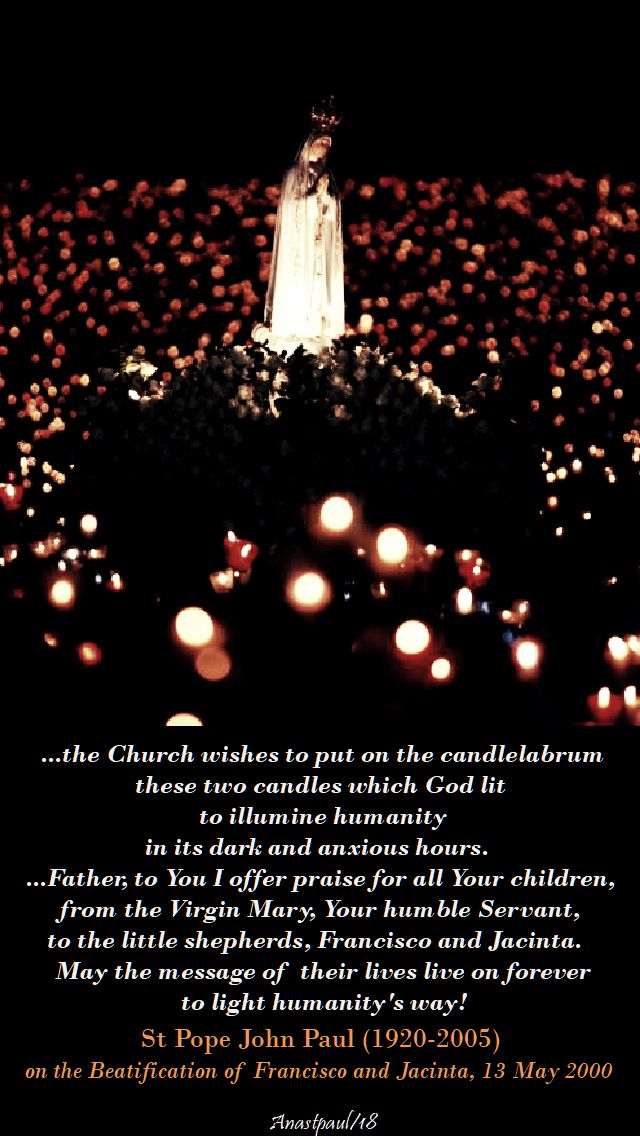
Veneration of the Virgin Mary runs deep in the Hispanic Catholic tradition.   That stream of Marian devotion can trace its roots in part to Ildefonsus.   He loved Mary and honoured her in his landmark book, On the Perpetual Virginity of Holy Mary.   Its themes inspired the Marian “breastplate” songs of Irish monks in Europe and through many centuries copyists placed quotes from it in books of hours.   Ildefonsus’s work influenced the long-standing practice of celebrating Mass on Saturdays in honour of Mary.

It is recounted that on this feast of the Mother of God, Archbishop Ildephonsus, together with some of his clergy, hastened to church before the hour of Matins to honour Our Blessed Lady with their songs.   Arriving close to the church, they found it all ablaze with a heavenly radiance.   This so frightened the little band that all fled, except for Archbishop Ildephonsus and his two faithful deacons.   Deacons, take note!   With wildly beating hearts, these entered the church and made their way to the altar.   A great mystery was about to unfold.

A Chasuble from the Treasury of Heaven

There, seated on the Archbishop’s throne, was the august Queen of Heaven surrounded by choirs of angels and holy virgins.   The chants of paradise filled the air.   Our Blessed Lady beckoned Ildephonsus to approach her.   Looking upon him with tenderness and majesty, she said:  “Thou art my chaplain and faithful notary. Receive from me this chasuble, which my Son sends you from His treasury.”   Having said this, the Immaculate Virgin clothed Ildephonsus in the chasuble, and instructed him to wear it for the Holy Sacrifice on her festivals.

The account of this apparition, and of the miraculous chasuble, was deemed so certain and utterly beyond doubt, that news of it spread through the Church, even reaching the Ethiopians.   The Church of Toledo honoured the event with a special proper Mass and Office.   What was the miraculous chasuble like? Artists through the ages have sought to depict it, more often than not in rich brocades of gold and blue.st ildephonsusG.Reni, Hlg.Ildefons empfaengt Messgewand - Reni / Saint Ildephonsus / c.1611 - Reni, Guido , 1575-1642.XJL86515

Gifts from Heaven

Sceptics may smile condescendingly and dismiss the story as a pious fabrication.  Serious studies of the various gratiae gratis datae — graces freely given — are not without evidence of the phenomenon of material gifts brought from heaven.   One finds examples of it as recently as in the life of Mother Yvonne-Aimée of Malestroit (1901-1951).   A classic example of the phenomenon would be the cincture of the Angelic Warfare with which angels girded Saint Thomas Aquinas after his victory over a temptation of the flesh.

Ildephonsus died after a decade in office and was buried at his (and the city’s) basilica, Toledo’s Church of Santa Leocadia.   Another Council of Toledo decreed that henceforth 18 December would be celebrated as a Marian feast day, to commemorate his vision.  Even during the Muslim occupation, when the basilica was converted into a mosque, the area where the vision occurred remained sacred and dedicated to the Virgin Mary.  Pilgrims travelled to Toledo to see the stone where Mary stepped during Ildephonsus’ vision.   During later wars, the saint’s remains were transferred Zamora, where they remain at the Church of Sts Peter and Ildephonso.123ildephonsus4

Posted in FEASTS and SOLEMNITIES, SAINT of the DAY, The BLESSED VIRGIN MARY

23 January – Feast of the Espousal of the Blessed Virgin Mary and St Joseph and Memorials of the Saints

St Marianne Cope TO.S.F. (1838-1918)

Espousal of the Blessed Virgin Mary:   Feast in honour of the Blessed Virgin’s espousal to Saint Joseph.   It is certain that a real matrimony was contracted by Joseph and Mary. Still Mary is called “espoused” to Joseph (“his mother Mary was espoused to Joseph”, Matthew 1:18) because the matrimony was never consummated.   The term spouse is applied to married people until their marriage is consummated.   It dates from 1517 when it was granted to the nuns of the Annunciation by Pope Leo X with nine other Masses in honor of Our Lady.   Adopted by many religious orders and dioceses, it was observed for a time by nearly the whole Church but is no longer in the Calendar.


St Abel the Patriarch
St Agathangelus
St Amasius of Teano
St Andreas Chong Hwa-Gyong
St Aquila the Martyr
St Asclas of Antinoe
St Clement of Ancyra
St Colman of Lismore
St Dositheus of Gaza
St Emerentiana
St Eusebius of Mount Coryphe
Bl Henry Suso
St Ildephonsus (506-667)
Bl Joan Font Taulat
St John the Almsgiver/the Mericiful
Bl Juan Infante
St Jurmin
St Lufthild
St St Maimbod
Bl Margaret of Ravenna
Martyrius of Valeria
St Messalina of Foligno
St Ormond of Mairé
St Parmenas the Deacon
St Severian the Martyr

Posted in MORNING Prayers, ON the SAINTS, SAINT of the DAY

Second Thoughts for Today – 22 January

Second Thoughts for Today – 22 January – The Memorial of St Vincent of Saragossa (Died 304) – Deacon and Martyr – The Protomartyr of Spain, St Vincent Pallotti (1795-1850) Priest, Missionary, Apostle of Charity and Marian Devotion, Founder and Blessed William Joseph Chaminade S.M. (1761-1850) Priest, Apostle of Mary and Founder of the “Society of Mary or Marianists”

There is a certain genius that comes from the faith and we saw it in our own day in St Mother Teresa.   The saints tend to tackle great and difficult things and accomplish wonders because they did NOT and do NOT depend on their OWN strength and effort. They KNOW that all things are possible ONLY with and in God – they take Him at His word – they ask for miracles and receive them!
They are never disappointed – this is the genius of faith!

St Vincent of Saragossa, pray for us!st vincent of saragossa - pray for us no 2 - 22 jan 2018
St Vincent Pallotti, pray for us!st vincent pallotti - pray for us no 2 - 22 jan 2018
Blessed William Joseph Chaminade S.M., pray for us!bl william pray for us - 22 jan 2018

Posted in DOCTORS of the Church, FATHERS of the Church, MORNING Prayers, PRAYERS of the SAINTS, QUOTES of the SAINTS, QUOTES on LOVE, QUOTES on PERSECUTION, QUOTES on SANCTITY, QUOTES on SUFFERING, SAINT of the DAY

Thought for the Day – 22 January – The Memorial of St Vincent of Saragossa (Died 304) – Deacon and Martyr – The Protomartyr of Spain

Thought for the Day – 22 January – The Memorial of St Vincent of Saragossa (Died 304) – Deacon and Martyr – The Protomartyr of Spain

From a sermon by Saint Augustine  (354-430)

Father & Doctor of the Church

“To you has been granted in Christ’s behalf not only that you should believe in Him but also that you should suffer for Him.   Vincent had received both these gifts and held them as his own.   For how could he have them if he had not received them?   And he displayed his faith in what he said, his endurance in what he suffered.   No one ought to be confident in his own strength when he undergoes temptation.   For whenever we endure evils courageously, our long-suffering comes from Him,Christ.   He once said to His disciples: “In this world you will suffer persecution,” and then, to allay their fears, He added, “but rest assured, I have conquered the world.”

There is no need to wonder then, my dearly beloved brothers, that Vincent conquered in Him who conquered the world.   It offers temptation to lead us astray;  it strikes terror into us to break out spirit.    Hence if our personal pleasures do not hold us captive and if we are not frightened by brutality, then the world is overcome.   At both of these approaches Christ rushes to our aid and the Christian is not conquered.”

St Vincent of Saragossa, pray for us!

Prayer of St Vincent of Saragossa (Died 304)

Everlasting God,
to whom all hidden things
are revealed,
who sent into the world
Your Only Begotten Son,
our Lord Jesus Christ,
conceived through the Holy Spirit,
born of the Virgin Mary,
that He might take on Himself
the punishment of our sins
and by His resurrection,
snatch us from the gates of hell,
grant to our hearts
such steadfastness of faith
that confessing Christ, Your Son,
we may not perish
but may be joined to Him
in the confession
of Your Holy Name.
Amen.everlasting god to whom all hidden things - st vincent of saragossa - 22 jan 2018st vincent of saragossa - pray for us - 22 jan 2018

Posted in MARIAN QUOTES, MORNING Prayers, QUOTES of the SAINTS, QUOTES on the PRIESTHOOD, SAINT of the DAY, The BLESSED VIRGIN MARY, The HOLY EUCHARIST / The HOLY MASS

Quote/s of the Day – 22 January – The Memorial of St Vincent Pallotti (1795-1850) and Blessed William Joseph Chaminade (1761-1850)

Quote/s of the Day – 22 January – The Memorial of St Vincent Pallotti (1795-1850) and Blessed William Joseph Chaminade (1761-1850)

Before his First Holy Mass

“Not the intellect
but God
Not the will
but God
Not the heart
but God
Not taste
but God
Not touch
but God
Not food and drink
but God
Not clothing
but God
Not tranquillity
but God
Not the worldly goods
but God.
Not riches
but God.
Not honours
but God.
Not distinction
but God.
Not dignities
but God.
Not advancement
but God.
God in all
God always.”not the intellect but god - st vincent pallotti - 22 jan 2018

“Remember. that the Christian life.
is one of action;
not of speech and daydreams.
Let there be few words
and many deeds
and let them be done will.”

St Vincent Pallotti (1795-1850)st-vincent-pallotti-remember-that-the-christian-life-2018

“Jesus made Mary
the companion
of His labours,
of His joy,
of His preaching,
of His death.
Mary had a part in all the
glorious, joyous
and sorrowful mysteries of Jesus.”jesus made mary - bl william joseph chaminade - 22 jan 2018

“The deposit of the Faith
is entirely in Mary.
At the foot of the Cross
she held the place of the Church. “

Blessed William Joseph Chaminade (1761-1850)the deposit of the faith = bl william joseph caminade - 22 jan 2018

Posted in MORNING Prayers, QUOTES of the SAINTS, SAINT of the DAY, The WORD

One Minute Reflection – – 22 January – The Memorial of St Vincent Pallotti (1795-1850)

One Minute Reflection – – 22 January – The Memorial of St Vincent Pallotti (1795-1850)

But just as he who called you is holy, so be holy in all you do; for it is written: “Be holy, because I am holy.”…1 Peter 1:15-16

REFLECTION – “You must be holy in the way that God asks you to be holy. God does not ask you to be a Trappist monk or a hermit.   He wills that you sanctify the world and your everyday life.” …St Vincent Pallottiyou must be holy - st vincent pallotti - 22 jan 2018

PRAYER – God of all might, grant that I may place myself in Your hands and never despair.   Let me not shrink from even the hardest of tasks – for with Your help I can do anything.   Grant that I may learn the ways of holiness from Your divine Son, that I may always follow His ways.   St Vincent Pallotti, you who accomplished so much for the Glory of the Kingdom of God, please pray for us, amen!st vincent pallotti - pray for us - 22 jan 2018

Posted in MORNING Prayers, PRAYERS of the SAINTS, SAINT of the DAY

Our Morning Offering – 22 January – The Memorial of St Vincent Pallotti (1795-1850)

Our Morning Offering – 22 January – The Memorial of St Vincent Pallotti (1795-1850)

Prayer of St Vincent Pallotti

My God, in every moment
You nourish me with Your Wisdom
and You destroy my ignorance.
You nourish me
with Your inaccessible Light
and You destroy all my shadows.
You nourish me
with Your infinite Perfection
and you destroy my life
which is a monstrosity of imperfections.
You nourish me with Your infinite Being
and you destroy my brutish life,
my loathsome self, a sinful man
and by a miracle of Your Mercy,
even though I have merited infinite times.
to lose God forever, God Himself,
with all of His Nature,
Person and Attributes
made Himself all mine,
He becomes my nourishment
and He nourishes me always,
so as to transform me into Himself
and make me one with Him.
Therefore, I am all in God
and God is all in me
and with His eternal nature
He brings me to all times
and in His immensity,
He brings me to all places
and I experience myself as eternal
and am immersed in Him.
Oh Wondrous God, oh Infinite Mercy.
Amenprayer of st vincent pallotti - 22 jan 2018

Posted in MORNING Prayers, SAINT of the DAY

Saint of the Day – 22 January – St Vincent Pallotti (1795-1850)

Saint of the Day – 22 January – St Vincent Pallotti (1795-1850) Priest, Missionary, Founder of the Pallottine Fathers and the Pallottine Missionary Sisters, Marian devotee, Apostle of Charity and Evangelisation  – known as “second St. Philip Neri.” (21 April 1795 in Rome, Italy – 22 January 1850 in Rome, Italy from a severe cold (he probably caught the fatal illness on a cold rainy night when he gave his cloak to a beggar who had none).    St Vincent was the founder of the Society of the Catholic Apostolate later to be known as the “Pious Society of Missions” (the Pallottines).   The original name was restored in 1947.   He is buried in the church of San Salvatore in Onda.   He is considered the forerunner of Catholic Action.   Patronages –  the Pallottines and Catholic Action and is the principal patron of the Pontifical Missionary Union of Clergy.header pallottist vincent pallotti - lovely
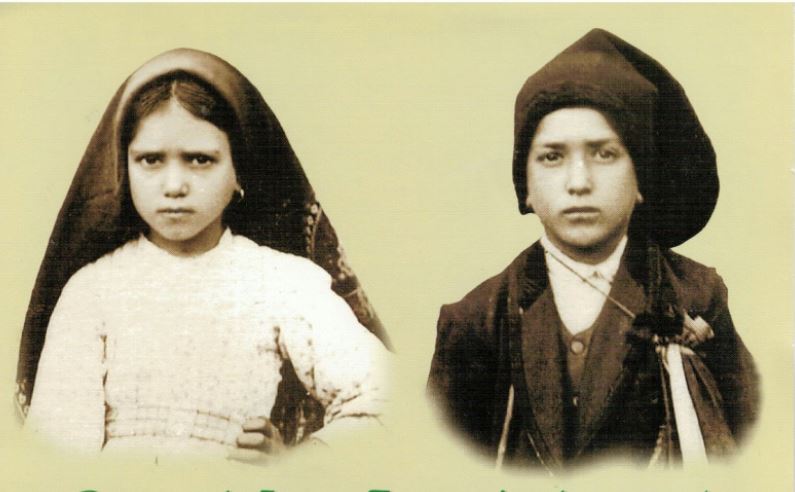
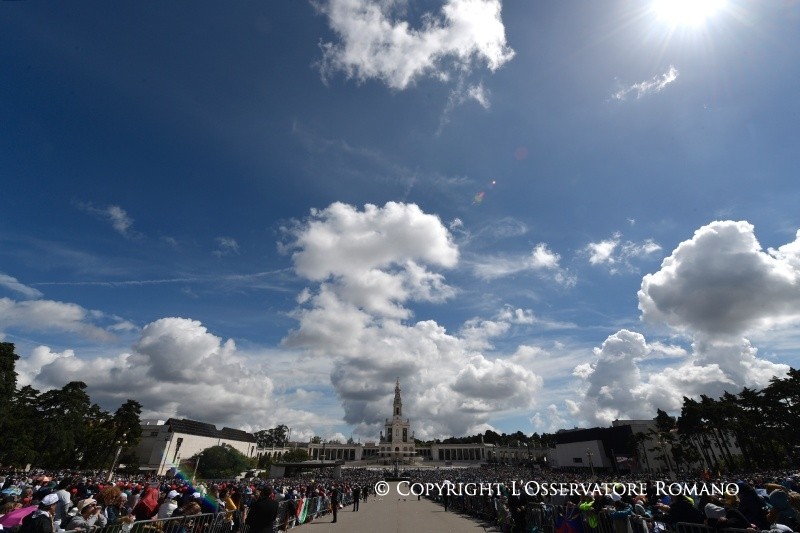
St Vincent  was an Italian ecclesiastic, born in Rome of a noble family.   This unpretentious man, Saint Vincent Pallotti, who out of respect for God omnipresent always went bareheaded, is one of the glories of the Catholic clergy, the pillars of the Church in troublesome times and the successful apostles of the people.

From earliest childhood he evinced tender love for the Blessed Mother of God and the decree on the heroic nature of his virtues emphasises the following facts:  “He possessed an exceptional love for poverty and penance and was therefore especially devoted to St Francis of Assisi.   Because various obstacles were in the way of his entering the First Order, he desired at least to belong to the Third Order.   It was his constant endeavour to imitate and venerate St Francis.”   Vincent became a Tertiary in the Franciscan church of Aracoeli on 29 November 1816. saint-vincent-pallotti-terezia-sedlakova-wutzay

A contemporary of Cardinal Newman’s and the Cure of Ars’, St Vincent Pallotti was a very modern saint who organised so many remarkable pastoral programs that he is considered the forerunner of Catholic Action.   He was a man of great ideas and great vision and was able to inspire others to tackle great things.   He is the founder of the Pallottine Fathers and the Pallottine Missionary Sisters;  however, this was but the tip of the iceberg of his accomplishments.   He left behind schools, guilds and institutes that carried the Catholic mission into the very heart of contemporary society.

He was born in Rome in 1795 and began studies for the priesthood very early.   Although he was very bright, he was not attracted by studies, even though he was ordained a priest at twenty-three and earned a doctorate in theology soon afterward.   He was given an assistant professorship at the Sapienza University but resigned it soon after to devote himself to pastoral work.   With prayer and penance, with his labours in the pulpit and the confessional, with his efforts on behalf of the sick and the endangered and especially on behalf of young clerics in the Roman seminary, he did a measureless amount of good.  During the cholera plague in 1837, Pallotti constantly endangered his life in ministering to the stricken.   In fact, it is well known that the saint often bi-located so as to be able to reach more souls when necessary.pallotti_jub5ast vincent pallotti - large

Before long, his zeal was known all over Rome.   He organised schools for shoemakers, tailors, coachmen, carpenters and gardeners so that they could better work at their trade, as well as evening classes for young farmers and unskilled workers.   He soon became known as a “second St. Philip Neri.”   He gave away his books, his possessions, and even his clothes to the poor and once dressed up as an old woman to hear the confession of a man who threatened “to kill the first priest who came through the door.”

In 1835, he founded his two congregations and was instrumental in the founding of a missionary order in England and several colleges for the training of missionaries.

On 14 January 1840, St Vincent celebrated Mass before the miraculous image of the Mother Most Admirable at the convent of Santa Trinitá dei Monti.   As he was leaving, he told Mother Makrina, a Russian Nun, that this would be the last Mass he said there.   Two days later he took ill at the home of James Salvati.   He was diagnosed with pleurisy. Giving away his cape to a cold pauper during the Octave apparently brought on the illness.   Thin cassocks just aren’t warm enough in January, even in Rome.

St Vincent’s death was the kind of death we should all pray to have.   He received the Last Rites, reciting the words with the priest administering it.   He blessed his little community and encouraged them to perseverance.  “Do you know what a beautiful feast there is tomorrow? It is the wedding feast of the Mother of God, and there will be great joy in heaven tomorrow.”   He was referring to the Feast of the Espousals of our Lady on 23 January of special significance to him because he was mystically wedded to that great Spouse.   His spiritual sons tried to induce him to stay in this life, after all, he had cured so many others. “My God, my God! Please, please, let me go, to wherever God wills!” he said.   He fell further into the bed and repeated, “Please, please, let me go, to wherever God wills!”   Half an hour later, after once again receiving sacramental absolution, he died.

He was only fifty-five but God glorified His humble servant by the gift of miracles both during his lifetime and after his death in 1850.   There was a strange and marvellous scent, a heavenly perfume, that was noted about the saints body and in his room at the time of his death.  That scent lingered in the room in which he had died for a month, even through the window to the room was left open.   St Vincent Pallotti was comparatively young when he was called to eternity, but in that short span he had accumulated a wealth of merits.   He was beatified in 1950 and canonised by St Pope John XXIII in 1963.

The body of Saint Vincent Pallotti was exhumed in 1906 and 1950, and his body was found to be completely incorrupt.   His body is enshrined in the church of San Salvatore in Onda, in Rome, where it can be seen.

During the Christmas Season, a nativity scene that Saint Vincent made himself is put on display at the Vatican, in the Basilica’s square, before the Christmas tree.   Vincent promoted the celebration of the Octave of the Epiphany as an act of unity with his Orthodox brethren who celebrated Christmas on that day.

s. vincent pallotti.incorrupt

san-vincenzo-pallotti-a.2pallotti_jubileuszowy1

Posted in SAINT of the DAY

Memorials of the Saints – 22 January

St Vincent of Saragossa (Died 304) Deacon – Protomartyr of Spain (Optional Memorial)
St Vincent Pallotti (1795-1850) (Optional Memorial)

St Anastasius the Persian
St Antonio della Chiesa
Bl Bernard of Vienne
St Blaesilla of Rome
St Brithwald of Ramsbury
St Caterina Volpicelli
St Dominic of Sora
Bl Esteve Santacana Armengol
St Francis Gil de Frederich de Sans
Bl Giuseppe Nascimbeni
St Guadentius of Novara
Bl Ladislao Batthyany-Strattmann
Bl Laura Vicuna
Bl Maria Mancini
St Mateo Alonso de Leciñana
St Valerius of Saragossa
St Vincent Pallotti
Bl Walter of Himmerode
Bl William Joseph Chaminade (1761-1850)
Bl William Patenson

Martyrs of Puigcerda:
Orontius
Victor
Vincent

Posted in MORNING Prayers, SAINT of the DAY

Thought for the Day – 21 January – The Memorial of St Agnes (c 291- c 304) Virgin and Martyr

Thought for the Day – 21 January – The Memorial of St Agnes (c 291- c 304) Virgin and Martyr

One of the most beloved of female saints, Saint Agnes is renowned for her virginity and for keeping her faith under torture.   A girl of only 12 or 13 at the time of her death, Saint Agnes is one of eight female saints commemorated by name in the Canon of the Mass (the First Eucharistic Prayer).

As Pope John Paul II said to the young people, they should not wait until they are older to become saints.   For the World Youth Day, the Holy Father proposed nine “patron saints” — nine Saints and Blesseds who died at a very young age, like St Thérèse of Lisieux and Blessed Kateri Tekawitha, who died at the age of 24.   One of these nine patrons is St Agnes, who died around 304 at the age of around 13.   She declared that she would never accept any spouse except Jesus Christ.

“I do not think that the world has radically changed since the time that Agnes lived her short life in the world, some nineteen centuries ago.   It is always the same strong and greedy world that we know today.   The same world with three heads, which the martyrs of the first three centuries of Christianity had to face, still hinders the road to Heaven in our twentieth century:  pride, impurity and the thirst for power stand armed against the Kingdom of Christ,

“Times are bad.”   We, Catholics, are living in a time of paganism.   Our governments and society are about as pagan as the governments and society in the times of paganism in Rome.   Many do not adore the true God anymore; they rather adore at the altars of Venus, or of Moloch, or of some other false deity of the human passions, just like the Romans did.” (Bishop William Adrian of Nashville 1970)

St Agnes’ life, heroism and death inspire us to be pure also.   Her name means pure in Greek and lamb in Latin.  She is a symbol that holiness does not depend on length of years, experience, or human effort.   It is a gift God offers to all.

St Agnes pray for us!bernardo-lorente-german-sevilla-1680-sevilla-1759-e2809csaint-agnese2809d-pray-for-us

Posted in MORNING Prayers, QUOTES of the SAINTS, SAINT of the DAY

Quote/s of the Day – 21 January – The Memorial of St Agnes (c 291- c 304) Virgin and Martyr

Quote/s of the Day – 21 January – The Memorial of St Agnes (c 291- c 304) Virgin and Martyr

“Christ made my soul beautiful
with the jewels of grace and virtue.
I belong to Him whom the angels serve.”christ made my soul - st agnes - 21 jan 2018

“You may stain your sword with
my blood but you will never profane
my body that I have consecrated to Christ.”

St Agnes (c 291- c 304) Virgin and Martyryou may stain your sword - st agnes - 21 jan 2018

Posted in DOCTORS of the Church, FATHERS of the Church, QUOTES of the SAINTS, SAINT of the DAY, The WORD

One Minute Reflection – 21 January – The Memorial of St Agnes (c 291- c 304) Virgin and Martyr

One Minute Reflection – 21 January – The Memorial of St Agnes (c 291- c 304) Virgin and Martyr

“For as we share abundantly in Christ’s sufferings, so through Christ we share abundantly in consolation too. If we are afflicted, it is for your consolation and salvation; and if we are comforted, it is for your comfort, which you experience when you patiently endure the same sufferings that we suffer. Our hope for you is unshaken; for we know that as you share in our sufferings, you will also share in his great consolation.”…2 Corinthians 1:3-5

REFLECTION – “Today is the birthday of a virgin; let us imitate her purity. It is the birthday of a martyr; let us offer ourselves in sacrifice. It is the birthday of Saint Agnes, who is said to have suffered martyrdom at the age of twelve. There was little or no room in that small body for a wound. Yet she shows no fear of the blood-stained hands of her executioners. She offers her whole body to be put to the sword by fierce soldiers. She is too young to know of death, yet is ready to face it. Dragged against her will to the altars, she stretches out her hands to the Lord int he midst of the flames, making the triumphant sign of Christ the victor on the altars of sacrilege. She puts her neck and hands in iron chains but no chain can hold fast her tiny limbs. In the midst of tears, she sheds no tears herself. She stood still, she prayed, she offered her neck. You could see fear in the eyes of the executioner, as if he were the one condemned. His right hand trembled, his face grew pale as he saw the girl’s peril, while she had no fear for herself. One victim but a twin martyrdom, to modesty and religion; Agnes preserved her virginity and gained a martyr’s crown. – from an essay On Virgins by Saint Ambrose of Milan (340-397) Doctor of the Churchone victim but a twin martyrdom - st ambrose on st agnes - 21 jan 2018

PRAYER – Almighty, ever-living God, You choose what is weak in the world to shame what is strong. Grant that, as we celebrate the martyrdom of St Agnes, we may follow her example of steadfastness and trust in faith. We pray that through her intercession, we may grow in holiness. Through our Lord Jesus Christ, with the Holy Spirit, one God forever, amenst agnes pray for us - 21 jan 2018