Bl Adalbert of Caramaico St Alanus of Lavaur St Audentius of Milan
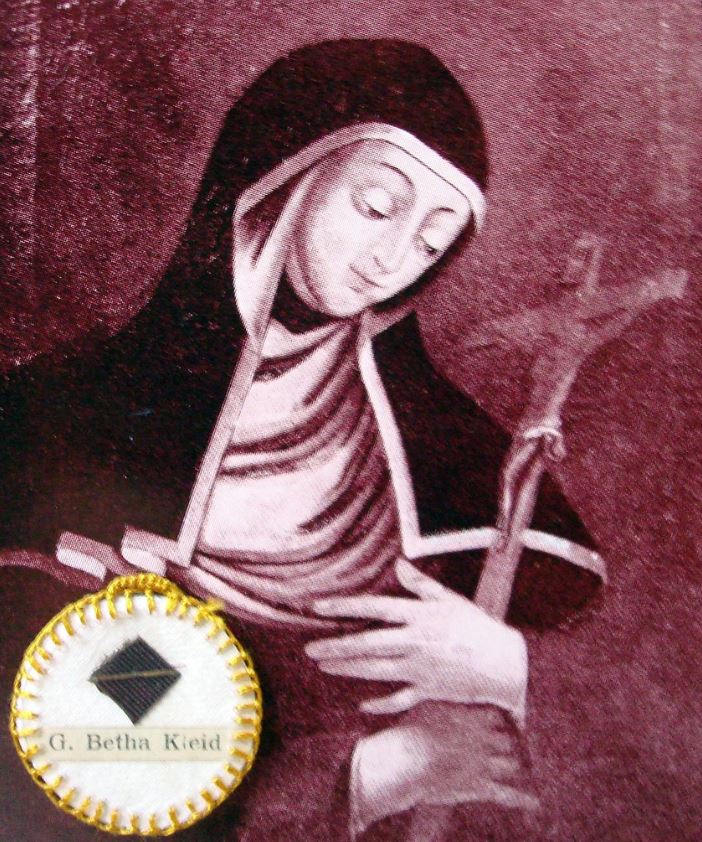
Blessed Beatrice d’Ornacieux O.Cart (c 1260–1303) Virgin, Carthusian Nun, Mystic, Founded a Monastery at Eymeu on France. The Roman Martyrology states: “In the territory of Valence in France, Blessed Beatrice d’Ornacieux, Virgin of the Carthusian Order, who, famous for her love for the Cross, lived and died in extreme poverty in the Monastery of Eymeu which she founded.” A Lover of the Cross: https://anastpaul.com/2021/11/25/saint-of-the-day-25-november-blessed-beatrice-dornacieux-o-cart-c-1260-1303/
St Bernold of Ottobeuren Bl Conrad of Heisterbach Blessed Egbert (c1010-1075) Abbot
St Erasmus of Antioch Bl Garcia of Arlanza Bl Guido of Casauria St Imma of Wurzburg St Jucunda of Reggio Aemilia St Mercurius (3rd Century) Martyr
St Moses of Rome (Died c251) Priest MartyrConfessor. The Roman Martyrology reads today: “At Rome, St Moses, Priest and Martyr, who, with others detained in prison, was often consoled by the letters of St Cyprian (Martyr). After he had withstood, with unbending courage, not only the pagans but, also the Novatian schismatics and heretics, he was finally, in the persecutions of Decius, crowned with a Martyrdom which fills the mind with adminration, according to the words of Pope St Cornelius (Martyr).” His Life and Death: https://anastpaul.com/2023/11/25/saint-of-the-day-25-november-saint-moses-of-rome-died-c251-priest-martyr-confessor/
Martyrs of Africa – 13 Saints: A group of 13 Christians murdered together for their faith in Africa, date unknown. The only details to have survived are their names – Claudian, Cyprian, Donatus, Felix, Januarius, Julian, Lucian, Marcian, Martialis, Peter, Quirianus, Victor and Vitalis.
Saint of the Day – 24 November – Saint Protasius (Died c352) Bishop of Milan, Defender of St Athanasius against the Arians. Also known as – Protasius Algisi, Protasio…
The Roman Martyrology reads today: “At Milan, St Protasius, the Bishop, who defended the cause of Athanasius before the Emperor Constans, in the Council of Sardica. Having sustained many labours for the Church entrusted to him and for religion, he departed this life to go to the Lord.”
Protasius was the 8th Bshop of Milan. He is attributed with twenty-five years of Episcopal service to the Diocese of Milan which however, should be reduced to approximately ten, since the 7th Bishop, Mirocle, was present at the Council of Arles in 314 and the 10th, Dionigi, was deposed in 355.
St Athanasius states that he was received in Milan by the Emperor Constans in the company of the Bishop, Protasius (Apologia ad Constantium): this event would have occurred in 342-343; furthermore, St Athanasius also remembers our Protasius as a participant in the Council of Sardica (343-344; Apologia).
According to the ancient catalogues, Protasius died on 24 November (some records believe he died on 27 November) and was buried in the Milanese Basilica of St Vittore. We are unable to ascertain, with certainty, whether it was during his Episcopate or that of his successor, Eustorgio I, that the two Councils of 345 and 347-348 were held in Milan, which culminated in the condemnation of Photinus, the Bishop of Sirmium, a supporter of Arianism.
St Chrysogonus (Died 304) Priest Martyr. The Roman Martyrology reads: “The birthday of St Chrysogonus, Priest Martyr. After a long imprisonment in chains for the constant confession of Christ, he was, by order of Diocletian, taken to Aquileia, where he terminated his Martyrdom by being beheaded and thrown into the sea.” His Life and Death: https://anastpaul.com/2023/11/24/saint-of-the-day-24-november-saint-chrysogonus-died-304-priest-martyr/
Bl Conrad of Frisach St Crescentian of Rome St Eanfleda of Whitby St Felicissimus of Perugia St Firmina of Amelia St Flora of Cordoba St Hitto of Saint-Gall St Kenan of Damleag St Leopardinus of Vivaris St Marinus of Maurienne St Mary of Cordoba St Portianus St Protasius (Died c352) Bishop St Romanus (Died 385) Priest
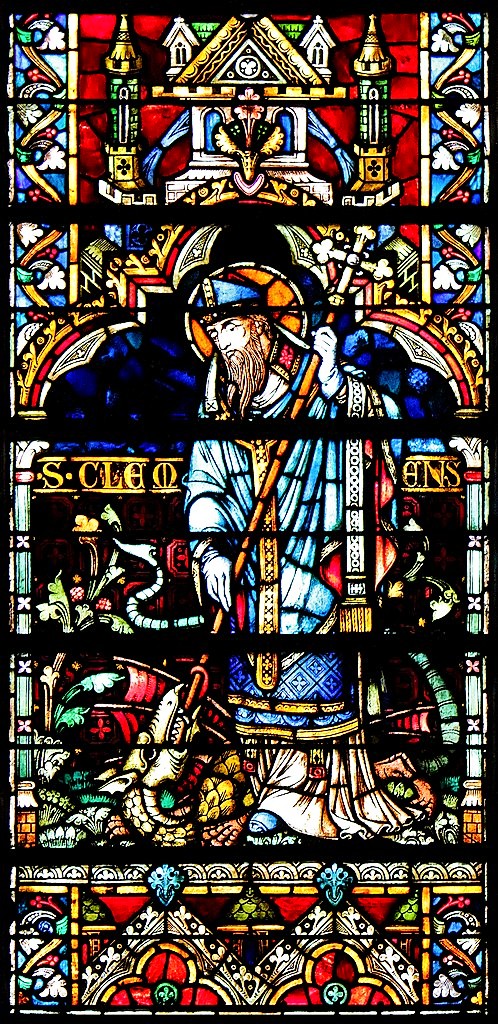
Saint of the Day – 23 November – St Clement of Metz (3rd-4th Centuries) The 1st Bishop of Metz, now in France, Miracle-worker. Also known as Clemens and The Dragon Slayer.
Stained glass at Metz Cathedral
Born around the 3rd or 4th Century, Clement of Metz was the 1st Bishop of Metz, now in France. Medieval accounts tell the fascinating tale of Titus Flavius Clemens, a Roman Senator initially tasked with persecuting Christians under the orders of Emperor Nero. However, he converted to the Christian Faith and was Baptised.
At that time, the Apostle Peter, already established as the Bishop of Rome, encouraged his disciples to spread the Gospel in Gaul. Clement, having been Consecrated Bishop, received the mission of evangelising the City of Metz. owever,, his journey was marked by a tragic event – the death of St Materne of Cologne, his companion, in Alsace.
Returning to Rome, Clement received from the St Peter, a staff with miraculous powers. With this object, he managed to resurrect St Materne, a prodigious act which greatly contributed to the conversion of the local inhabitants.
Clement arrived in Metz accompanied by Celeste, a Priest and Felix, a Deacon, who would later become his successors. During the reign of Orius, the King of Metz, Clement took up residence on the hill of Sainte-Croix, where he preached to the population.
The culmination of his apostolate came, when he resurrected the recently deceased daughter of King Orius. This spectacular miracle led to the Royal couple being Baptised, followed by a mass conversion of the local population.
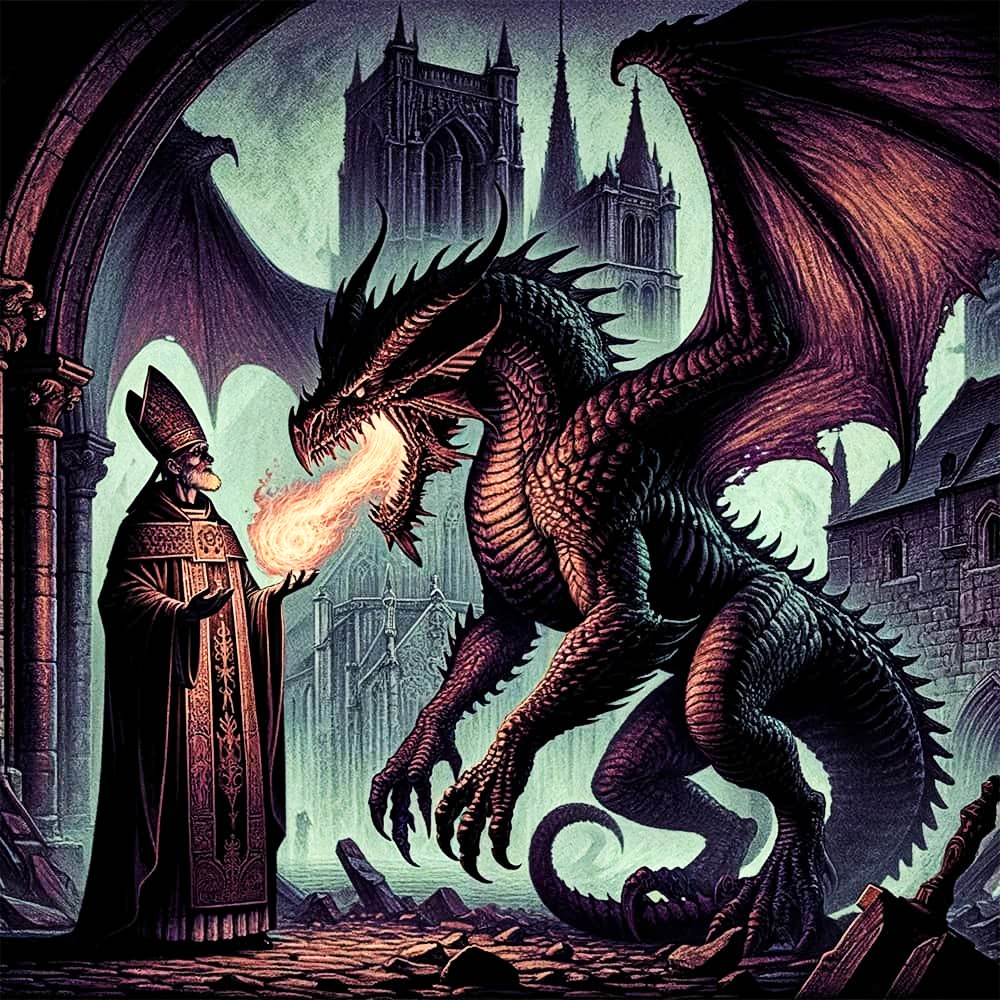
Graoully is a legendary animal which was born in the middle of the Metz amphitheatre. According to legend, this giant dragon spat flames with the smell of sulfur and devastated everything in its path. The residents consequently never dared to venture into the neighbourhood and some even considered leaving the City.
Faced with the distress of the City, Clement prayed for the aid of God in assisting the frightened people. If the people of Metz agreed to be Baptised, the Christian Bishop would find a way to get rid of this hideous animal.
Clement then went to the Graoully habitat (at the amphitheater) passing by the hill of Sainte-Croix and continuing his route in the middle of a crowd whom he silenced with a firm ‘keep quiet’ in a street, named since that day, ‘the Quiet Street’
When he arrived, the brave man put his shawl around the beast’s neck to drag it to the Seille (the river which crosses the City) into which he threw himself with seven little Graoullys. From that day on, the people of Metz never heard of the Graoully again. On the other hand, the Graoully has become a strong symbol of the City and has been found in several events in the City since the 10th Century. To celebrate its disappearance, a monument was built on the site where the monstrous creature once stood – this is a Monument to the Christian Faith, Metz Cathedral, dedicated to our Saint, (listed as a historic monument). and to its courageous Bishop Clement whoc vanquished the enemy of them all.
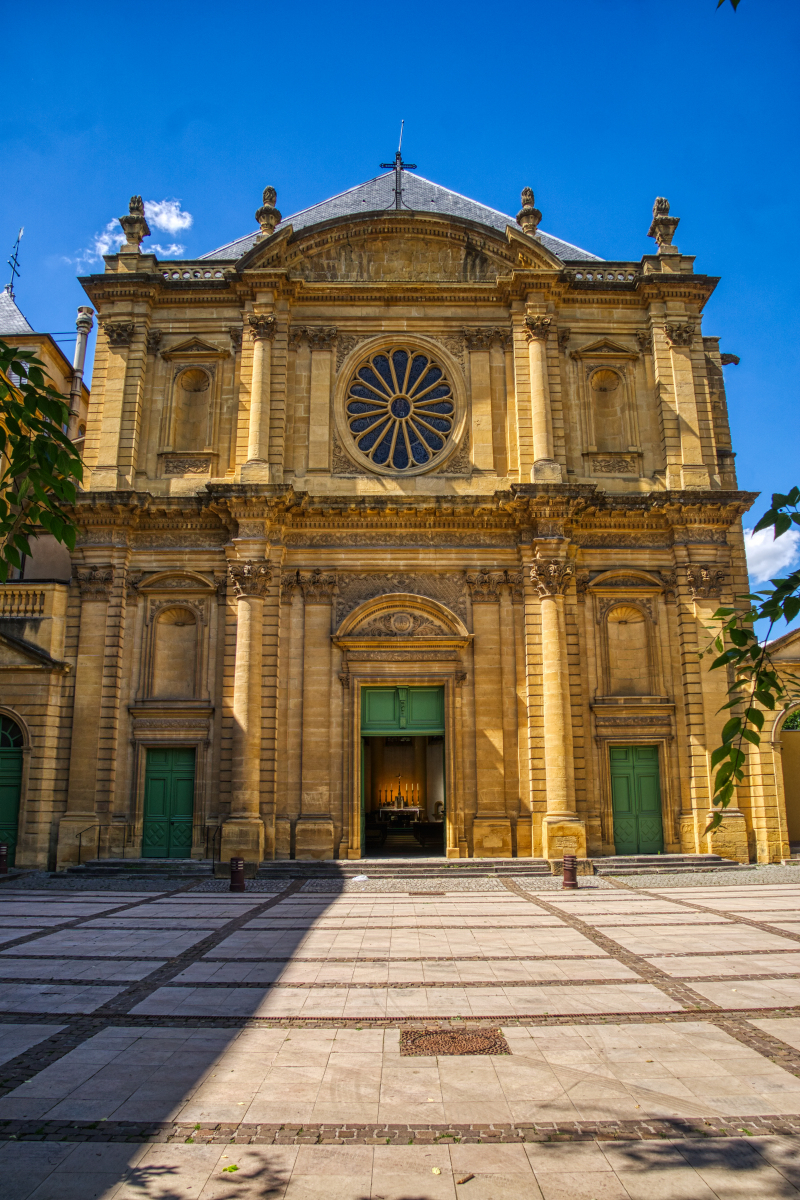
St Clement Cathedral
This dragon is mainly represented in the crypt of the Cathedral. A semi-permanent sculpture of Graoully is also suspended in the air of the Rue Taison.
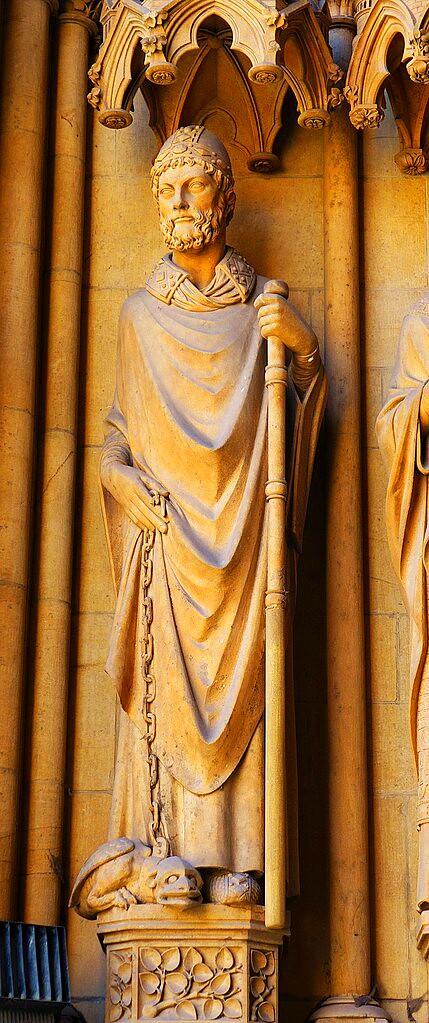
Today, a Statue of Saint Clement holding a chained dragon is also visible on the portal of the Virgin of the Saint-Etienne Cathedral of Metz. Finally, this mythical animal also appears on the coat of arms of Metz City.
St Amphilochius of Iconium (c339-400) Bishop, Lawyer and Rhetorician, Poet, Writer and Theologian, Defender of Orthodoxy against heretics, Miracle-worker. , First Cousin of St Gregory of Nazianzen and his great friend and so too, a close friend and confidante of St Basil the Great. The Roman Martyrology reads today: “At Iconium, in Lycaonia, the holy Bishop, Amphilochius, who was the companion of St Basil the Great and of St Gregory Nazianzen in the desert and their colleague in the Episcopate. After many combats for the Catholic Faith, he rested in peace, with the reputation of a holy and learned Prelate.” The Holy and Learned Amphilovhiud: https://anastpaul.com/2023/11/23/saint-of-the-day-23-november-saint-amphilochius-of-iconium-c339-400-bishop/
St Augusta of Alexandria St Clement of Metz (3rd-4th Centuries) Bishop Bl Detlev of Ratzeburg St Falitrus of Chabris St Faustina of Alexandria St Gregory of Girgenti Bl Guy of Casauria St Loëvan of Brittany St Lucretia of Mérida Bl Margaret of Savoy St Mustiola of Chiusi St Paternian of Fano St Paulinus of Whitland St Rachildis of Saint-Gall St Severin of Paris St Sisinius of Cyzicus St Trudo of Hesbaye St Wilfetrudis of Nivelless
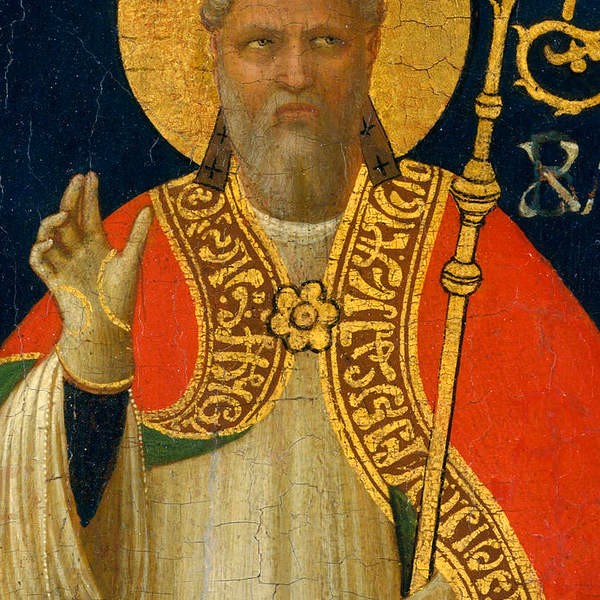
Saint of the Day – 22 November – Saint Christian of Auxerre (Died 871) Bishop of Auxerre, France for 12 years from 859 until his death on 22 November 871 of natural causes. The image below is of an unknown ancient Bishop by Fra Angelico.
Saint Christian was a Bishop of Auxerre who lived in the 9th Century. In some Ecclesiastical records, he appears in 36th place, in others, in the 37th. In the list of the “Liber Episcopalis” in which brief biographical notes and chronological data were noted, he appears after Saint Abbone and before Wala (or Guala).
He also appears in the 1st catalogue of Bishops compiled in the year 875, by the Canons Rainogala and Agaldo, considered quite trustworthy by later historians, even if doubts had been raised about the chronology before the 7th Century.
Historically, Saint Christian is mentioned for the first time among the signatories of the Treaty of Clobenza, on 7 June 860.
Furthermore, his name appears in many documents, including the last at the Council of Douzy in September 871, where he was represented by his Archdeacon.
He died on 22 November 871, after having led the Diocese for twelve years. In Auxerre, the celebration and remembrance of Saint Christian has been set today, the birthday of St Christian into Heaven.
St Agabbas of Syria St Amphilochius of Iconium St Ananias of Arbela
St Appia + (1st Century) Lay Martyr, Disciple of St Paul (see below) St Archippus + (1st Century) Lay Martyr, Disciple of St Paul (see below)
St Eugenia of Matera St Christian of Auxerre (Died 871) Bishop St Dayniolen the Younger St Mark of Antioch St Maurus of North Africa
St Philemon + (1st Century) Lay Martyr, Disciple of St Paul, St Appia + (1st Century) Lay Martyr, Disciple of St Paul, his wife, Saint Appia and their son, Archippus. Many scholars believe that Pilemon was a Bishop or the Archbishop of Colossae. The Roman Martyrology reads: “At Colossae, in Phrygia, during the reign of Nero, Saints Philemon and Apphias, disciples of St Paul. When the Christians ran to the Church for protection on a pagan feast, they were arrested and, by the command of the Governor, Artocles, were scourged, let down into a pit up to their waists and overwhelmed with stones.” St Archippus + (1st Century) Lay Martyr, Disciple of St Paul Their Lives and Deaths: https://anastpaul.com/2023/11/22/saint-of-the-day-22-november-saints-philemon-appia-and-archippus-martyrs/
Saint of the Day – 21 November – Saint Rufus (1st Century) Disciple of the Apostles, most particularly a disciple of St Paul, possibly later a Bishop. It is believed that Rufus was born in Rome and to have died there late in the 1st Century probably after St Peter and Paul.
St Paul preaching
Rufus was the disciple to whom Saint Paul sent a greeting and also to the Rufus’ mother (Romans 16:13). St Mark says in his Gospel (15:21) that Simon of Cyrene was the father of Rufus and as Mark wrote his Gospel most especially for the Roman Christians, this Rufus is probably the same as the one to whom Paul sent a salutation.
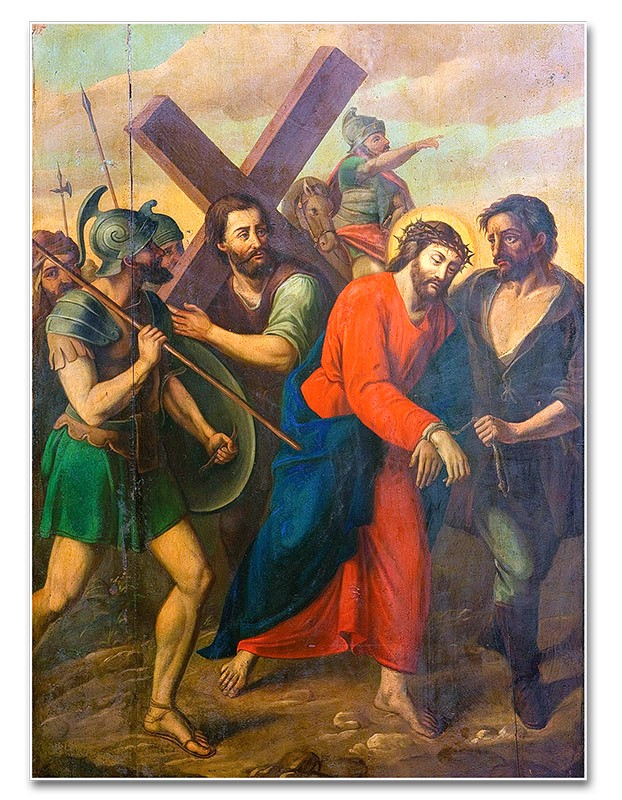
Simon of Cyrene carries the Cross
Tradition believes too that our St Rufus later served the Church as a Bishop.
St Paul says: “Salute Rufus, elect in the Lord and his mother and mine.” (Romans 16:13).
St Mark says: “And they forced one Simon a Cyrene, who passed by, coming out of the country, the father of Alexander and of Rufus, to take up His Cross.” (Mark 15:21).
St Celsus the Martyr St Clement the Martyr St Demetrius of Ostia – Martyr. No other information has survived. St Digain
St Pope Gelasius I (Died 496) Papal Ascension 1 March 492 until his death on 21 November 496 in Rome, Italy.Gelasius was learned Scholar and a prolific Author, Defender of orthodoxy and of the See of Peter. Zealous Apostle of the poor and needy and of the Majesty of the Liturgical Worship, including the discipline of Hymn and Prayer within his scholastic orbit of Author. The Feast of St Gelasius is kept on 21 November which is the anniversary of his Interment, although many writers give this as the day of his death which actually occurred on 19 November as stated above. The Roman Martyrology reads today: “At Rorme, the birthday of St Gelasius, Pope, distinguished for learning and sanctity.” His Zealous Life: https://anastpaul.com/2023/11/21/saint-of-the-day-21-november-st-gelasius-i-died-496-bishop-of-rome/
St Heliodorus of Pamphylia St Hilary of Vulturno St Honorius of Ostia – Martyr. No other information has survived.
St Maurus of Porec St Maurus of Verona St Rufus (1st Century) Disciple of the Apostles especially of St Paul
Martyrs of Asta – 3 Saints: Three Christians Martyred together for their faith during the persecutions of Diocletian. The only details about them to survive are their names – Eutychius, Honorius and Stephen. They were Martyred in c300 at Asta, Andalusia, Spain.
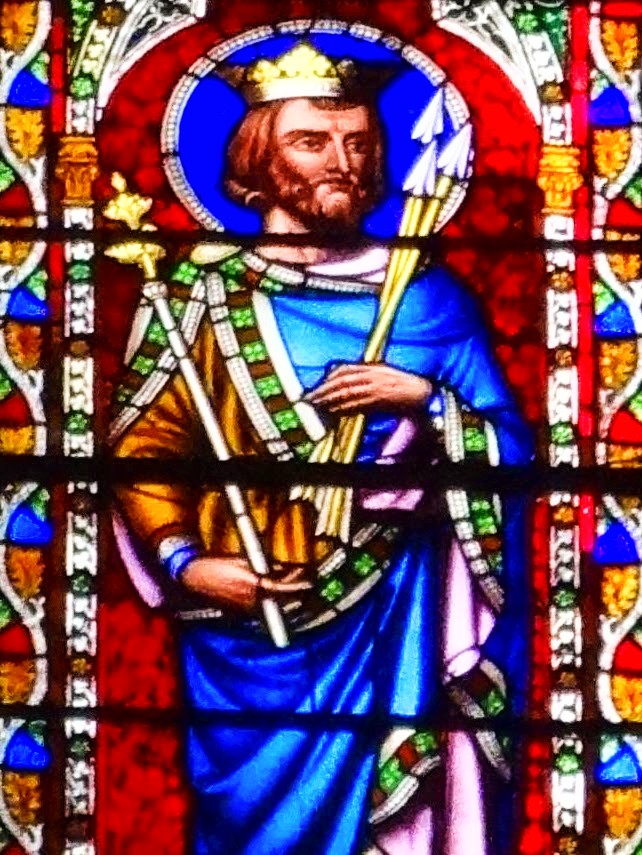
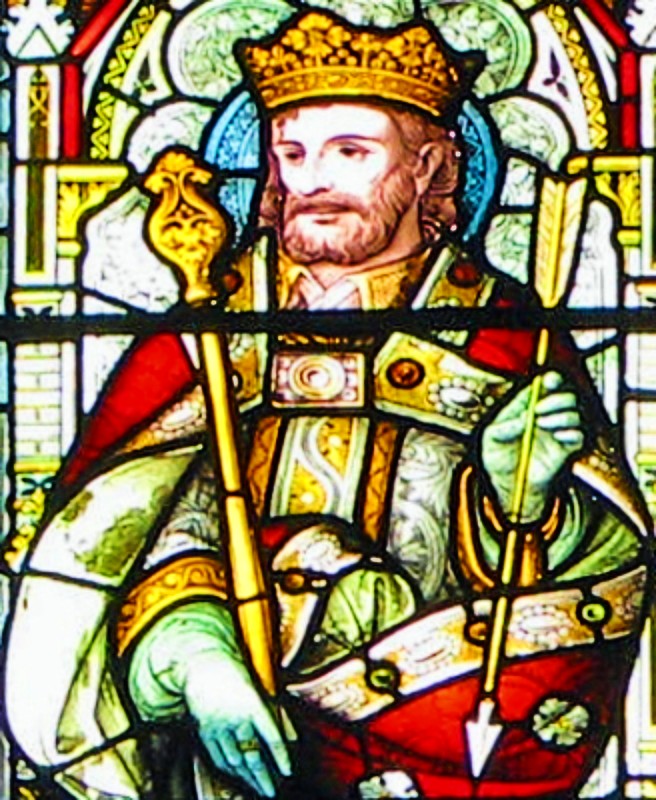
Saint of the Day – 20 November – St Edmund (c841-870) King and Martyr. Born in c841 probably in Nuremburg, Germany and died by being beaten, whipped, pierced with arrows “until he bristled with them like a hedgehog” and then beheaded at Hoxne, Suffolk, England on 20 November 870. Patronages – Co-Patron of England, against the Plague/Epidemics, of Kings, of torture victims, wolves, of the County and Diocese of East Anglia. Also known as – Edmund the Martyr, … of East Anglia. Additional Memorials – 29 April (translation of Relics), 2 November and 25 December on some local calendars.
The Roman Martyrology reads today: “In England, St Edmund, King and Martyr.”
On Christmas Day in the year 855, a remarkable event unfolded as a 14-year-old boy named Edmund was hailed as the rightful King of Norfolk by the influential figures of the County, including ruling men and Clergy. This acclaim was soon followed by a similar declaration from the leaders of Suffolk the following year.
For the next 15 years, Edmund would rule over the East Angles, a region in England, with a reputation for Christian dignity and justice which was universally acknowledged. He appeared to draw inspiration from the piety of King David of the Old Testament, notably excelling in the public recitation of the Psalms during worship.
However, Edmund’s reign was not without its challenges. Starting in 866, his Kingdom faced escalating threats from Danish invasions. For four years, the East Angles managed to maintain an unstable and often broken peace, with the invaders. Nevertheless, the situation took a dire turn, when the Danes set fire to Thetford, prompting King Edmund’s army to confront them. Unfortunately, they were unable to defeat the marauding Danish forces.
As the invaders reached East Anglia, they presented Edmund with an offer of peace but, it came with a condition which Edmund found impossible to accept. The condition required him to rule as a vassal under Danish authority and, most notably, to forbid the practice of the Christian Faith. Edmund unwaveringly refused this ultimatum, choosing to stand firm in defence of Christ.
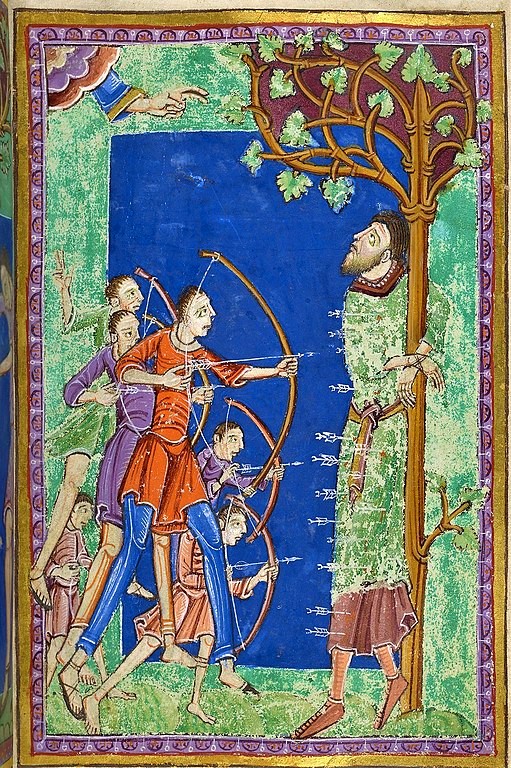
In response to his refusal, Edmund was subjected to a gruesome and torturous fate. He was bound to a tree and made the target of Danish archers, who rained down a hail of arrows upon him. Throughout this agonising ordeal, Edmund displayed remarkable bravery, repeatedly invoking the Name of Jesus. Eventually, he was decapitated, sealing his fate as a Martyr for Christ and His Church.
The Martyrdom of St Edmund, from the 12th Century Passio Sancto Eadmundi
Edmund’s final resting place is the City of Bury St Edmunds, where his memory is cherished to this day. The tree at Hoxne which tradition claimed was the site of his Martyrdom, stood as a symbol of his sacrifice until 1849 when it fell. During the tree’s dismantling, an arrowhead was discovered embedded in its trunk, serving as a poignant reminder and Relic of his Martyrdom.
St Edmund holds a unique place in history as the only English sovereign to die for both his religious beliefs and the defence of his throne, until the time of King Charles I. His Martyrdom quickly earned him reverence and his cultus spread widely throughout the Middle Ages. Together with Saint George, Saint Edmund is celebrated as one of the Patron Saints of England.
‘There was a great wonder, that he was as whole as if he were alive, with an intact body and his neck was healed which had previously been cut; it was as if there were a red silken thread about his neck, to show men how he had been killed. And the wounds which the cruel heathen had made in his body, with many shots, were healed by Heaven’s God and he lies thus incorrupt until this present day, awaiting the resurrection and eternal glory.’
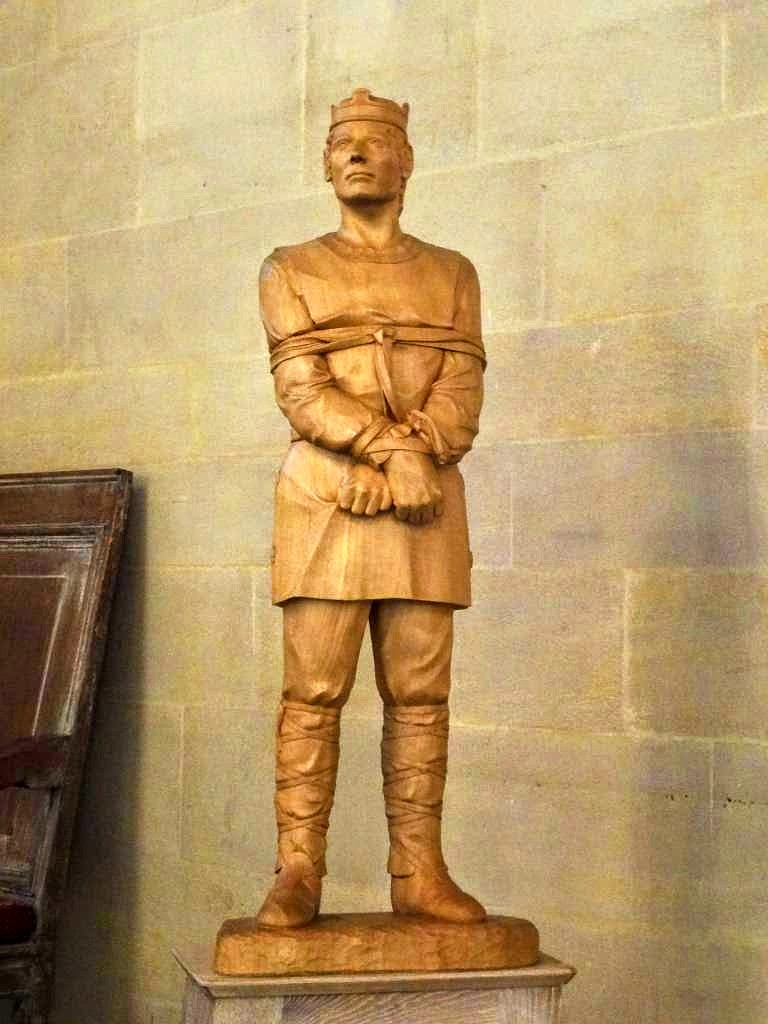
This modern Statue of St Edmund in the Cathedral of Bury St Edmund
St Agapius of Caesarea Bl Ambrose of Camaldoli St Ampelus of Messina St Anatolius of Nicea St Apothemius of Angers St Autbodus of Valcourt St Basil of Antioch St Bernerio of Eboli St Crispin of Ecija
St Dasius of Dorostorum St Dorus of Benevento St Edmund (c841-870) King and Martyr
St Eudo of Carméry St Eustachius of Nicea St Eval of Cornwall St Gaius of Messina St Gregory Decapolites St Hippolytus of Belley St Humbert of Elmham St Leo of Nonantula St Maxentia of Beauvais St Milagros Ortells Gimeno St Nerses of Sahgerd and Companions St Simplicius of Verona St Sylvester of Châlons-sur-Saône St Thespesius of Nicea St Teonesto of Vercelli
Martyrs of Antioch – 3 Saints: Group of three Christians executed together for their faith. No details have survived except their names – Basil, Dionysius and Rusticus. They were martyred in Antioch (Antakya, Turkey).
Martyrs of Heraclea – 3 Saints: A group of 43 Christians Martyred together. The only details about them to survive are three of their names – Agapitus, Bassus and Dionysius. They were martyred in Heraclea, Thrace.
Martyrs of Turin – 3 Saints: Three Christian Martyrs whose original stories were lost and somehow came to be associated with the Theban Legion. They are – Adventor, Octavius and Solutor. They were beheaded in 297 in Turin, Italy. Patronage – Turin, Italy.
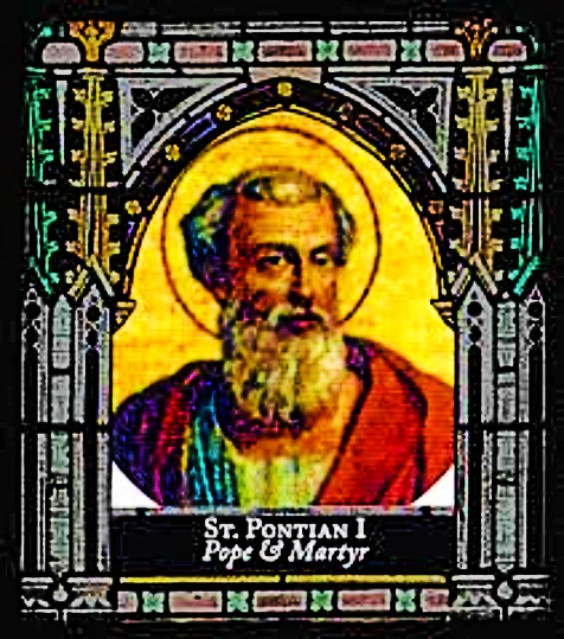
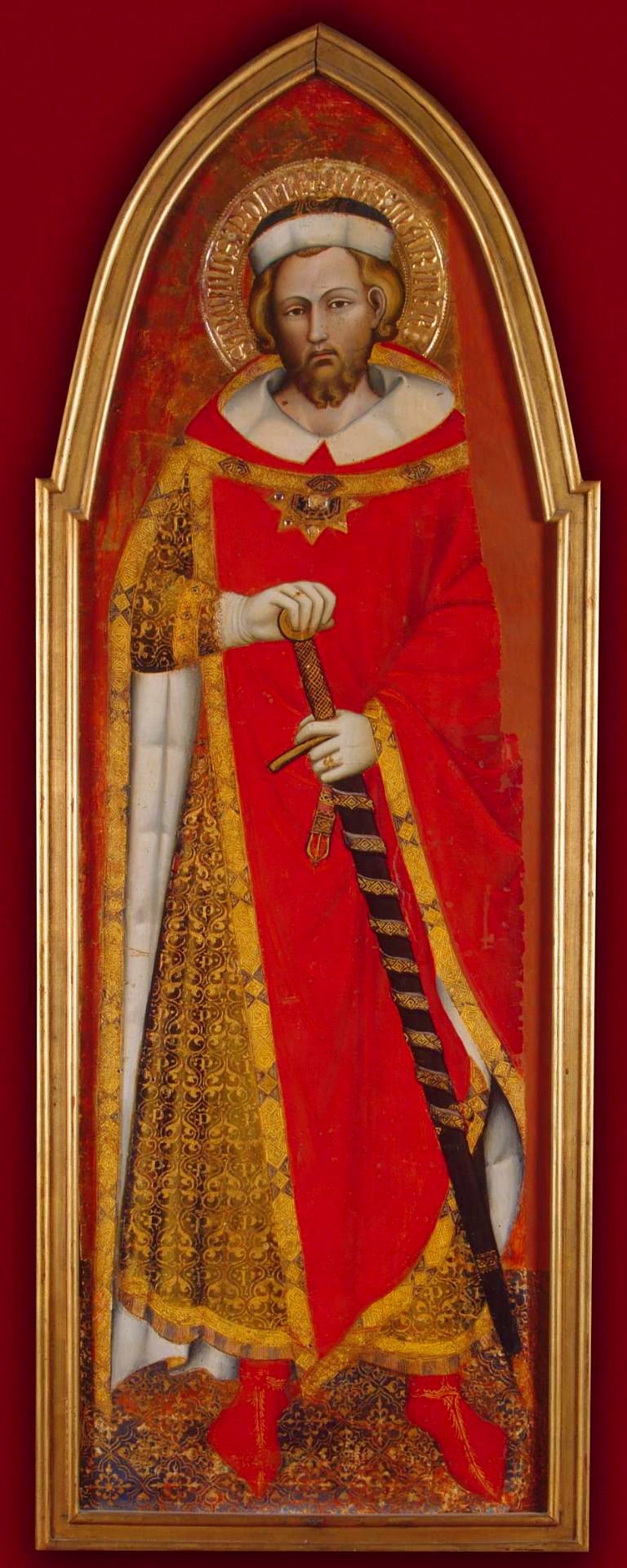
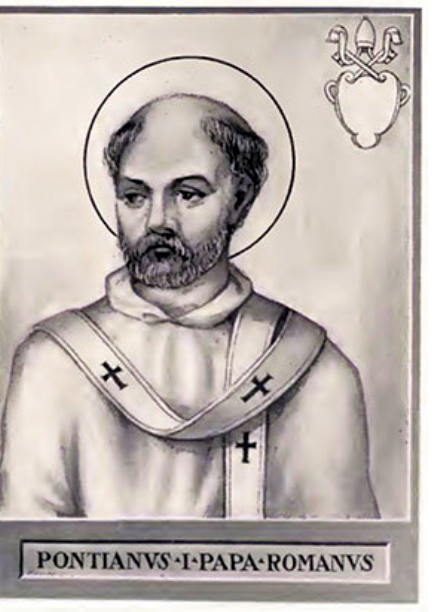
Saint of the Day – 19 November – Saint Pontianus (Died 235) Pope Martyr. Papal Ascension 21 July 230. Born at Rome, Italy and died on 19 November 235 from the horrible violence of the scourgins received in the mines of Sardinia. Patronages – Carbonia and Montaldo Scarampi, both Cities in Italy. Also known as – Pontian, Pontianius, Ponziano. Additional Memorial – 13 August (Depositiones Martyrum, 354).
The Roman Martyrology reads today: “The birthday of St Pontian, Pope and Martyr, who with the Priest, Hippolytus, was transported to Sardinia by the Governor Alexander and there, being scourged to death with rods, consumated his Martyrdom. His body was conveyed to Rome by the blessed Pope Fabian and buried in the Cemetery of Callixtus.”
In the first years of Pontian’s Pontificate, the early Christian Church enjoyed relative peace. But then, according to the well-known Church historian St Eusebius, the next Emperor, Maximinus, began a campaign of active and brutal persecution of the nascent Church. Both Pope Pontian and the Antipope Hippolytus of Rome, were arrested and exiled to laboUr in the mines of Sardinia, generally regarded as a death sentence.
In order to make certain that the Church was not deprived of its leadership, Saint Pontian stepped down, the first Pope ever to do so. Consequently, Pope Anteros was elected in his stead but reigned for less than two months.
Pope Fabian (236-50), successor to Pope Anteros, had the remains of StPontian brought to Rome at a later date and Pontian was buried in the Papal crypt of the Catacomb of Callixtus on the Appian Way. The slab covering his Tomb was discovered in 1909. Thereon the Greek inscribed reads: “Pontianus Bish”). The inscription “MARTUR” had been added in a different hand.
In 235 during the reign of Maximinus, a persecution directed chiefly against the Ecclesiastical hierarchy began. One of its first victims was Pontian, who with Hippolytus, was banished to the mines on the Island of Sardinia. How long Pontian endured the sufferings of exile and harsh treatment in the Sardinian mines is unknown.
Pope Fabian (236-250), successor to Pope Anteros, had the remains of St Pontian and Hippolytus brought to Rome.
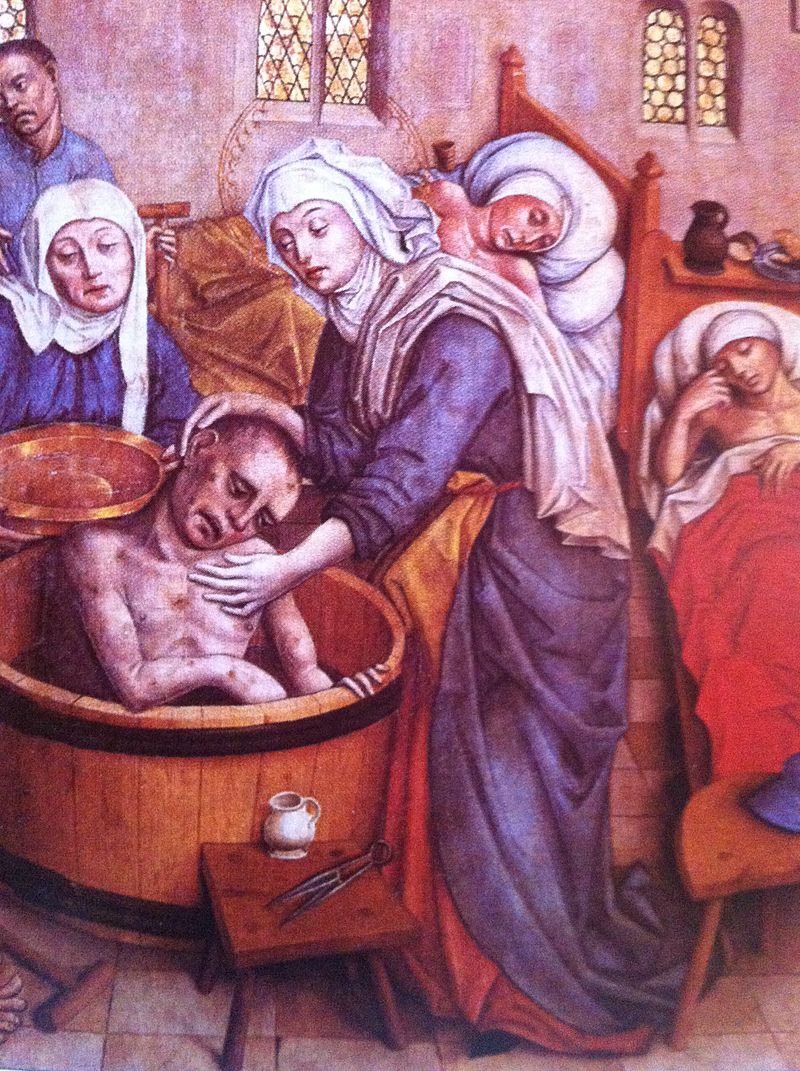
St Elizabeth of Hungary TOSF (1207-1231) Widow, Princess, Third Order Franciscans, Mother, Apostle of the poor, the sick, the needy.. She was Canonised on 27 May 1235 by Pope Gregory IX at Perugia, Italy. Patronages – hospitals, nurses, bakers, brides, countesses, dying children, exiles, homeless people, lace-makers, widows. all Catholic charities and the Third Order of Saint Francis. About St Elizabeth: https://anastpaul.wordpress.com/2017/11/17/saint-of-the-day-st-elizabeth-of-hungary-1207-1231-t-o-s-f/ Her Feast Day is 19 November – movedto the 17 November in 1969
St Atto of Tordino St Azas of Isauria St Barlaam of Caves St Barlaam of Antioch St Corbre of Anglesey St David of Augsburg St Ebbe of Minster-of-Thanet St Egbert of York
St Medana St Nerses the Great St Obadiah the Prophet St Tuto
Martyrs of Heraclea – 40 Saints: Forty women, a mix of Nuns, widows and other lay women, who were Martyred together. No other details have come down to us. They died at Heraclea, Thrace.
Martyrs of Vienne: – 3 Saints St Exuperius St Felicianus St Severinus
Saint of the Day – 18 November – St Thomas of Antioch (Died 782) Hermit, Miracle-worker. He died of natural causes in 782. Patronage – against pestilence.
The Roman Martyrology reads today: “At Antioch, St Thomas, a Monk, honoured with an annual solemnity by the people of Antioch, for having obtained the cessation of a pestilence by his prayers.”
An unknown Hermit
We have no information of this Saint. We know that Thomas spent most of his life as a Hermit in the area near Antioch (modern Syria).
According to tradition, he is a special Saint for relief against pestilence.
Saint of the Day – 17 November – St Gregory of Tours (c538-594) Bishop Confessor, Writer, Historian, Miracle-worker, Born in Auvergne, in Clermont-Ferrand, France on 30 November 538 as George Florentius and died at Tours on 17 November 594. Patronages – Tours and Auvergne, France. Also known as – George Florentius, “The Father of French History.” Saint Gregory of Tours wrote a great deal but his main work, is his Historia Francorum, without which the history and customs of the second half of the 6th Century would be almost unknown to us. He can be considered “The Father of French History.”
George Florentine, who took the name Gregory on the occasion of his Episcopal Consecration, in memory of a great-grandfather who was the Bishop of Langres, was born in Auvergne, in Clermont, on 30 November 538. The year of his birth is known to us from some references contained in his writings. However, historians of Gregory have interpreted these chronological data differently; the majority, however, agree on the date of 538 and it seems that this interpretation is definitive.
Gregory belonged to one of the most spirituallyand materially illustrious families of the Gallo-Roman nobility; it counted a Martyr, 5 Bishops later honoured as Saints and Senators. His father, in poor health, died young without ever having held public office, leaving his widow Armentaria to raise their three sons, George, Peter, who would become a Deacon and be murdered by an envious man and a daughter, whose name is unknown, who would marry a certain Justin.
After her husband’s death, Armentaria left Clermont and came to settle in the kingdom of Burgundy near Cavaillon, where she had a property. Little Gregory was then eight years old, One of his uncles, the future Bishop of Lyons, St Nicetius, took charge of his education. Another uncle, St Gall, had founded a school in Clermont, his Episcopal City, directed by St Avitus, also a future Bishop. Gregory attended this school and developed a great taste for study and a love of books, in fact, when he became the Bishop, one of his first aims was to gather and collect a well-stocked library in the Bishops Palace.
He read a great deal, especially historical volumes. From the quotations and reminiscences found among his own works, it is possible to affirm that he read the Chronicle of St Eusebius, translated by St Jerome and his Ecclesiastical History, translated by St Rufinu. He read many others especially the Passions of the Martyrs and Vitas of Saints, among them most loved, the books of St Sulpicius Severus on St Martin and he also read St Sidonius Apollinaris. He studied long fragments of Virgil’s works by heart allowing him to often quote the Aeneid. He also read Sallust and perhaps Aulus Gellius and Pliny but he did not know Cicero except through St Jerome. He was above all attracted by the Sacred Scriptures as he himself informs us.
At the age of twenty-five, Gregory was Ordained a Deacon of the Church of Auvergne; shortly afterward, he fell seriously ill but made a pilgrimage to the Tomb of St Martin, where he obtained a cure. He remained for some time at Tours with Bishop Euphronius, his cousin.
Gregory then visited Burgundy and then Lyons, where he served as Deacon for his uncle Nicetius. During his stay in Rheims in 578 he received news of the death of his cousin, the Bishop of Tours and of his own election to succeed him which took place eighteen days later. He received Episcopal Consecration in Rheims from the hands of Bishop Giles and then went to his residential City. Among the Bishops of Tours, only five were not from his own family, so it is not surprising that he succeeded his cousin and, in the Frankish Church, he had a reputation as a wise and holy man.
After the division of 567, Tours was in the kingdom of Sigebert, a kingdom which was actually composed of separate territories, with Rheims and Tours as its capitals. When Gregory acceded to the Episcopate, the Church was in a period of adaptation to a new situation. Gaul was losing its Roman aspect and entering the barbarian period. Politically, the country, reunited by Clotaire I, had been divided after his death in December 561 between his four sons, Charibert, Gunter, Sigebert and Chilperic. Charibert was king of the West, from Amiens to the Pyrenees with Paris as its capital (Tours was in this part). But Charibert having died in 567, his three brothers divided the territory again.
Given the instability caused by these frequent divisions, civil war was a constant threat and often a sad reality. Furthermore, the rough customs of the time meant that, even without wars and raids, assassinations and sieges of Cities were frequent. The Church suffered in its clergy, in its lands and possessions and especially, in its buildings, often ruined or burned.
The City of Tours was then of great importance, its geographical position, its wealth made it enviable. It was also a spiritual centre of Gaul. Our Gregory, the Bishop of Tours, was in fact, the successor of the beloved St Martin and guardian of his Tomb, making him one of the great figures of the Frankish Church.
In 594 he went on a pilgrimage to Rome to venerate the Tombs of the holy Apostles. Saint Gregory the Great, who had been newly elected as the Pope, received him with great honours, however, seeing him of very small stature, he admired that God had enclosed such a beautiful soul and so many graces in so small a body. The Bishop knew this thought by revelation and said to him: “The Lord has created us and we have not made ourselves but He is the same in the small, as in the great.” The Pope was astonished to see that he had penetrated the secret of his heart and from then, he honoured him as a Saint, gave him a gold chain, to put in his Church of Tours and, granted in his favour, beautiful privileges to the same Church
Saint Gregory of Tours, during his life, performed a very great number of miracles but, as he was extremely humble, to hide the grace of the cures with which God had favoured him, he always applied to the sick the Relics he carried with him. He also received from the goodness of God, quite extraordinary favours and assistance. Thieves having come to mistreat him, they were forced to flee by a terror which seized them. A storm, accompanied by lightning and thunder, having arisen suddenlywhile he was travelling, he only opposed his Reliquary to it and it dissipated in a moment. On the same occasion, this miracle having given him some vain joy and a sort of complacency, he immediately fell from his horse and learned thereby to stifle in his heart, the smallest feelings of pride. One Christmas Day, in the morning, in a deep sleep after having watched all night, a person appeared to him in a dream and woke him, three times,, saying to him the third time, by allusion to his name, Gregory which means vigilant – ‘Will you always sleep, you who must awaken others?’ Finally, his life was filled with so many wonders, it would take a whole volume to relate them.
Since his return from Rome, he applied himself more than ever to the visitation of his Diocese, to the correction and sanctification of the souls committed to his care, to the preaching of the word of God and to all the other functions of a good Bishop. It was in these exercises that he completed the course of his life, being only fifty-six years old, on 17 November in the year 594 which was the twenty-first of his Episcopate. The humility which he had practiced during his life appeared again after his death, by the choice he made of his burial.
His Clergy could not consent to his Tomb being established on the ground where one could walk, as he had requested, so he was buried next to the Tomb of Saint Martin. He was Canonised a few years after his death.
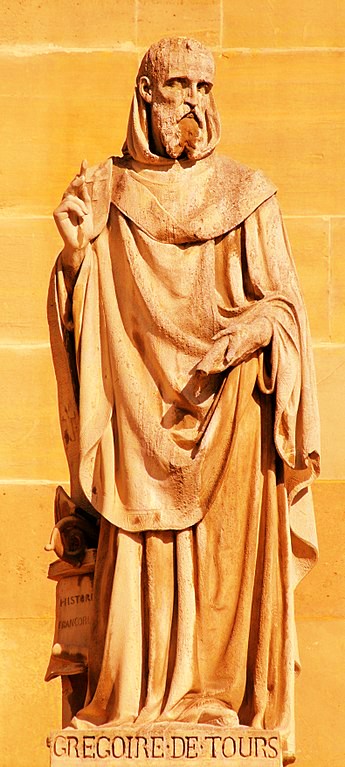
St Gregory of Tours, 19th Century statue by Jean Marcellin, in the Louvre in Paris, France
Saint of the Day – 16 November – Saint Eucherius of Lyons (c380-c449) Bishop and Confessor, a learned Scholar and renowned Poet and Writer, Married but later he and his wife separated to lead ermetical lives of prayer and fasting, father of 2 sons and a daughter, both sons became Bishops.
The Roman Martyrology reads today: “At Lyons, the birthday of St Eucherius, Bishop and Confessor, a man of extraordinary faith and learning. He renounced the Senatorial dignity to embrace the Religious life and, for a long time voluntarily shut himself up in a cavern where he served Christ in prayer and fasting. Afterwards, through the revelationm of an Angel, he was solemnly installed in the Episcopal Chair of the City of Lyons.”
Next to St Ireaneus, no name has done so great honour to the Church of Lyons, as that of the great Eucherius. By birth he was most illustrious in the world but the Saint by despising the empty honours and riches of the world, became far more illustrious in the school of Christ.
Having become a Senator and married Galla, he had two sons, Veranus, who would become the Bishop of Vence and Salonius, later the Bishop of Geneva. Both were educated in the Monastery of Lérins by Hilary, the future Archbishop of Arles. A daughter, Consortia, is also attributed to him.
Statue of St Eucherius of Lyon in Beaumont-de-Pertuis
Around 422 Eucherius, with the consent of his wife, himself retired to the Monastery of Lérins, then, to the nearby Island of Sainte-Marguerite, where he led a Hermit’s life. St Cassian dedicated the prologue of his last seven conferences to him and he himself then showed some literary activity.
Many works are attributed to him. In addition to the letters, the homilies on the Martyrs of Lyon , Sts Epipodius and Alexander and the Passio Acaunensium Martyrum can be considered authentic.
Around 435 he was elected to the Episcopal see of Lyons, where he carried out a great pastoral activity. In 441 he attended the 1st Council of Orange. In 449 Poleminus Silvius dedicated his Laterculus to him. He died that year. He is registered on 16 November in the Martyrology of Hieronymus and in the Roman.
St Elpidius the Martyr St Eucherius of Lyons (c380-c449) Bishop and Confessor St Eustochius the Martyr St Felicita of Capua St Fidentius of Padua St Gobrain of Vannes St Ludre St Marcellus the Martyr
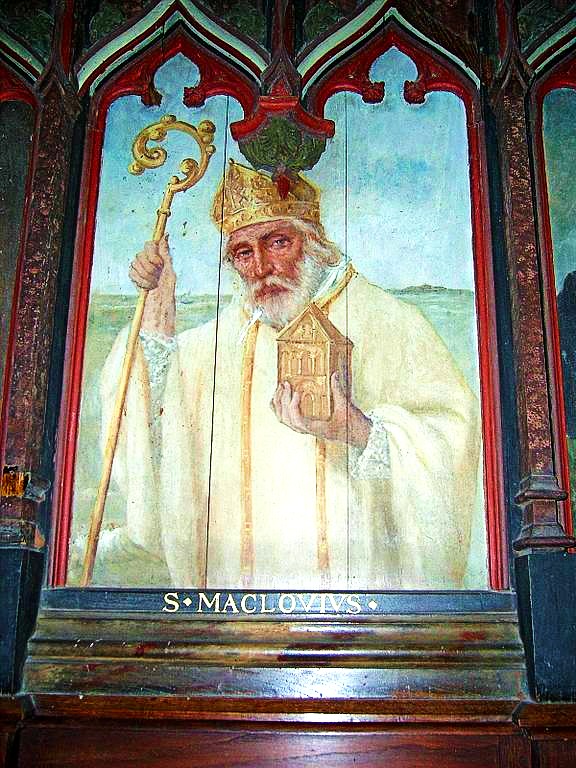
Saint of the Day – 15 November – Saint Malo (c520-621) the 1st Bishop of Aleth in Brittany, France, Missionary, one of the Seven Founding Saints of Brittany, disciple and companion of St Brendan the Navigato on his renowned voyages, Founder of Monateries, Churches and a City names after him, Miracle-worker. Born on 27 March c520 at Llancarfan, Wales and died possibly on 15 November 621 (aged 101) in Archambiac, Aquitaine, France. Patronages – of his hometown of Llancarfan, Wales and of Saint-Malo, the City name for him in Brittany, France. Also known as – Malo of Aleth, Malo de Phily, Malo of Brittan, Mac’h Low… Machutus… Maclou… Maclovio… Maclovius… Macuto…
The Roman Martyrology reads today: “At Bretagne, the birthday of St Malo, Bishop, who was glorious for miracles from his early years.”
Malo was the son of Dervel, sister of Amwn Ddu and, therefore, a cousin to St Samson. He was placed in the Abbot’s care in the Llancarfan Abbey in Wales, at a tender age and grew up at the Abbey, where he was Ordained Priest and assigned the office of preacher.
As a Monk at Llancarfan Abbey, Malo was known for his participation in the voyages of St Brendan the Navigator. Malo became Brendan’s favourite disciple.
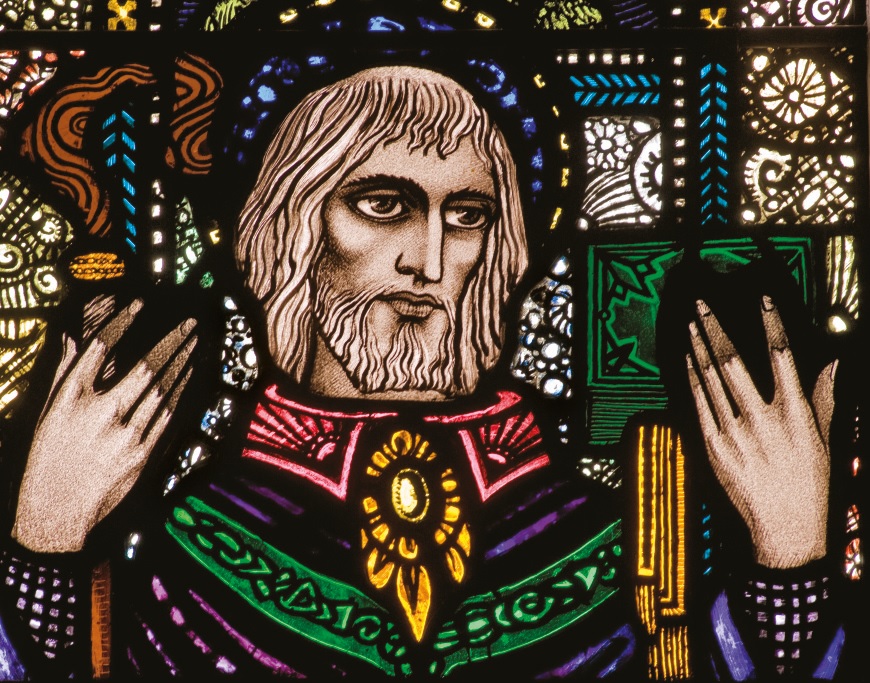
This window of St Malo resides in Réguiny Church in Brittany,
A number of legendary tales of the adventures of Brendan and Malo survive. According to the Voyage of St Brendan the Abbot, they and their companions discovered the ‘Island of the Blest.’ Another tale tells of an encounter with Maclovius, a dead giant whom Brendan temporarily revived and baptised.
On a second voyage, Brendan and Malo visited and evangelised locations including the Orkney Islands and the northern isles of Scotland.
They travelled to the coast of France and landed in Brittany . At Aleth, Malo served under a venerable Hermit named Aaron. Upon Aaron’s death in 544, Malo continued the spiritual rule of the district subsequently known as Saint-Malo and was Consecrated as the 1st Bishop of Aleth (now Saint Servan). Many miracles are related of his missionary work there.
In old age, the disorder on the island compelled Malo to leave but the people soon begged him to return. He obliged his faithful and returned to restore order. Feeling near the end of his life, Malo was determined to spend his last days in solitary penance. He died at an advanced age during a journey from Aleth to a neighbouring Town.
The City of Saint-Malo is one of the Seven stages in the ‘Tour of Brittany’ a pilgrimage celebrating the Seven Founding Saints.
Pontoise Cathedral near Paris, is dedicated to Saint Malo. Lesmahagow Priory in South Lanarkshire is also dedicated to him in the Latin form of his name, Machutus. He is the Patron Saint of the Churches of St Maughans and Llanfaenor in Monmouthshire and Llanfechell in Anglesey.
St Anianus of Wilparting St Arnulf of Toul Bl Caius of Korea St Desiderius of Cahors St Eugene of Toledo St Felix of Nola St Findan St Fintan the Missionary St Gurias of Edessa Bl Hugh Faringdon Bl John Eynon Bl John Rugg Bl John Thorne
Blessed Lucia (Lucy) of Narni OP (1476-1544) Virgin, Tertiary of the Order of Preachers, Mystic, Stigmatist, Her body is incorrupt. So many miracles occurred at her Shrine that Lucia was finally Beatified on 1 March 1710 by Pope Clement XI. It is thought that Lucia was the inspiration for th little girl Lucy, who could see many things that no-one else could, in C S Lewis’ The Chronicles of Narnia. Her Life: https://anastpaul.com/2021/11/15/saint-of-the-day-15-november-blessed-lucia-of-narni-op-1476-1544/
St Luperius of Verona St Machudd of Llanfechell St Malo (c520-621) Bishop St Marinus of Wilparting
St Paduinus of Le Mans Bl Richard Whiting Bl Roger James St Shamuna of Edessa St Sidonius of Saint-Saens
Martyrs of Hippo – 20 Saints: 20 Christians Martyred together and celebrated by Saint Augustine. The only details about them to survive are three of the names – Fidenziano, Valerian and Victoria. Hippo, Numidia (in north Africa).
Martyrs of North Africa – 3 Saints: A group of Christians murdered for their faith in imperial Roman north Africa. The only details that have survived are the names of three of them – Fidentian, Secundus and Varicus.
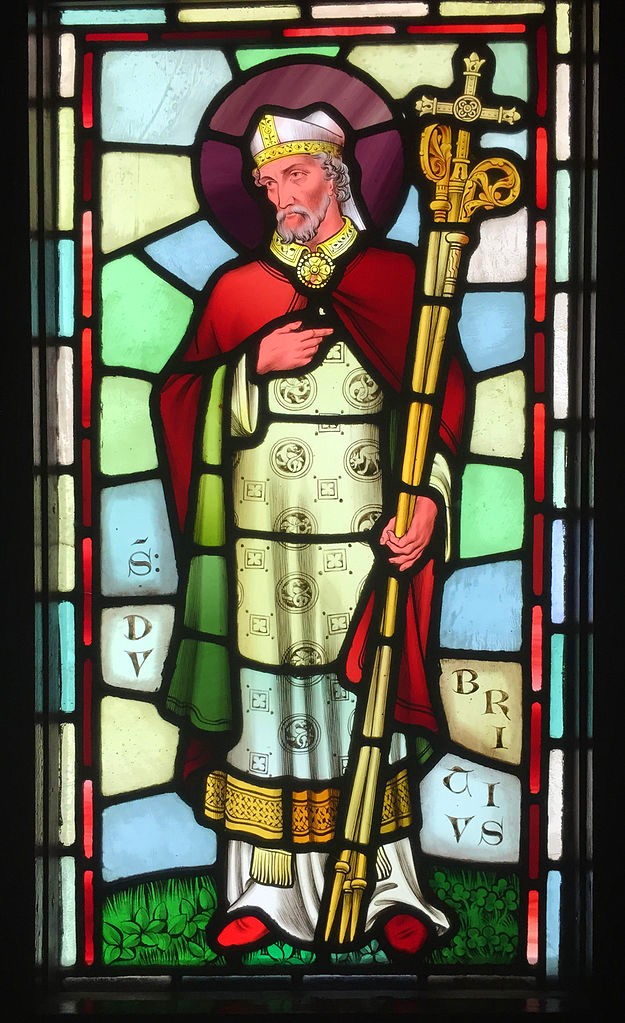
Saint of the Day – 14 November – Saint Dubricius of Wales (c465-c545) Bishop and Confessor, Monk and Founder of Monasteriest, becoming an Abbot, highly renowned and learned Scholar, Hermit, Miracle-worker. Born in Madley (?) near Hereford in England around 465 and died in c545 of natural causes. on Bardsey Island, Wales. Dubricius is one of the greatest of Welsh Saints. He is usually represented holding two Crosiers which signify his jurisdiction over the Sees of Caerleon and Llandaff. Patronages – of Hereford (his birth City in England), of Caldey Island and Monmouth in Wales. Also known as – Dubricius Dubritius, Dubric, Dyfig, Devereux. Additional Memorial – 9 February (on some calendars), 29 May (translation of his Relics).
Dubricius was the illegitimate son of Efrddyl, the daughter of King Peibio Clafrog of Ergyng. His grandfather threw his mother into the River Wye when he discovered she was pregnant, but failed to drown her. Dubricius was born in Madley in Herefordshire, England. He and his mother were reconciled with Peibio when the child Dubricius touched him and cured him of his leprosy.
Noted for his precocious intellect, by the time he attained manhood, Dubricius was already known as a scholar throughout Britain. Dubricius founded a Monastery at Hentland and then one at Moccas, both of these in Herefordshire.
Later moving to Wales, he became the teacher of many well-known Welsh Saints, including Teilo and Samson and also healed the sick of various disorders through the laying on of hands.
Dubricius was Consecrated as the Bishop of Llandaff by Saint Germanus of Auxerre and legend says he later crowned King Arthur. He lalso became the Bishop of Ergyng, possibly with his seat at Weston and probably held sway over all of Glamorgan and Gwent, an area which was then incorporated into the Diocese of Llandaff. Dubricius was a good friend of Saints Illtud and Samson. He attended the Synod of Llanddewi Brefi in 545, where he is said to have resigned his See in favour of Saint David.
Stained glass depiction of St Dubricius, designed by William Burges, at Castell Coch, Cardiff, Wales
It is believed that he died not long after having retired to Bardsey Island to live his last years as a Hermit. This is where he was eventually buried before his body was translated to Llandaff Cathedral in 1120. There are many Churches dedicated to our Saint across England and Wales.
All Saints of the Carmelite Order: On this day, the Carmelite Family celebrates the memory of all its holy men and women, those known and those unknown, those living on Earth and those living in Heaven, who reflect the glory of God.
St Joseph Maria Pignatelli SJ (1737 – 1811) Priest of the Society of Jesus known as “The Restorer of the Society of Jesus” and “The Second Founder of the Society of Jesus” following the suppression of the Society of Jesus by Pope Clement XIV in 1773. He was Beatified on 21 May 1933 by Pope Pius XI and was Canonised on 12 June 1954 by Venerable Pope Pius XII. His Life: https://anastpaul.com/2019/11/14/saint-of-the-day-14-november-saint-joseph-maria-pignatelli-sj-1737-1811/
St Jucundus of Bologna
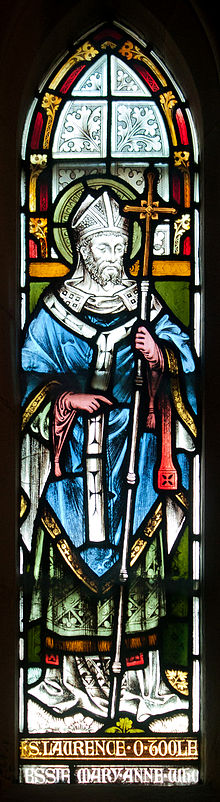
St Laurence O’Toole/Lorcán Ua Tuathail (c 1128 – 1180) Archbishop of Dublin, Abbot, Reformer, Mediator, Preacher, Apostle of Charity, Papal Legate to Ireland, he established new Churches and Monasteries. Due to the great number of miracles that rapidly occurred either at his tomb or through his intercession, Lorcán was canonised only 45 years after his death in 1225 by Pope Honorius III. Biography: https://anastpaul.com/2018/11/14/saint-of-the-day-14-november-st-laurence-otoole-c-1128-1180/
St Modanic St Pierre of Narbonne St Ruf of Avignon St Serapion of Alexandria
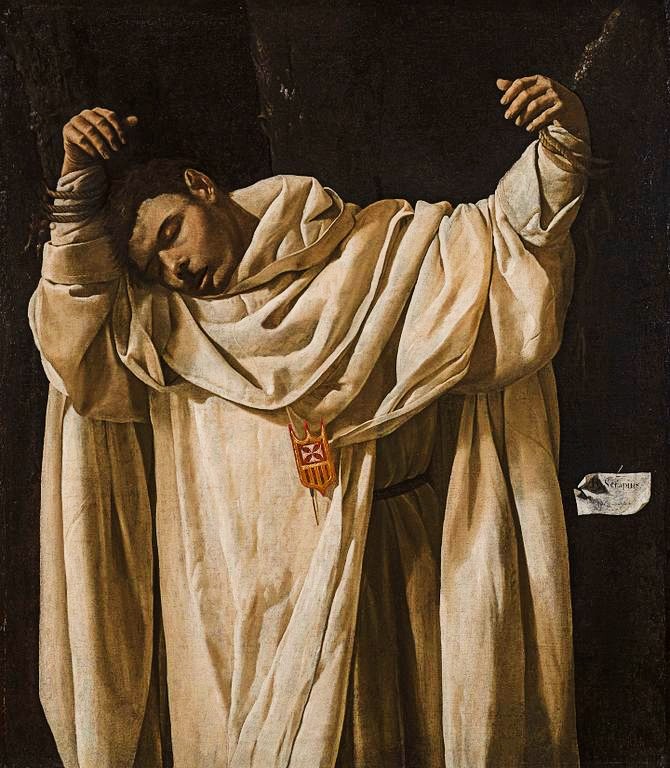
St Serapion of Algiers OdeM (c 1179–1240) Mercedarian Priest and Martyr, Soldier and Crusader. The Roman Martyrology states today: “At Algiers in Africa, the blessed Serapion, of the Order of Our Blessed Lady of Ransom, for the Redemption of the faithful in captivity and the preaching of the Christian Faith. He was the first of his Order to deserve the Palm of Martyrdom by being crucified and cut to pieces.” On 14 July 1728, a decree was issued confirming his immemorial cult. he was Canonised on 14 April 1728 by Pope Benedict XIII and on 24 August 1743, he was included in the Roman Martyrology. His Life and Death: https://anastpaul.com/2021/11/14/saint-of-the-day-14-november-saint-serapion-of-algiers-odem-c-1179-1240-martyr/
St Siard OPraem (Died 1230) Abbot of the Premonstratensian Order or the “Norbertines.”Siard of Friesland in the Netherlands, was a holy Abbot of the Norbertine Abbey in Mariëngaard by Hallum in Friesland. He was a powerful and hardworking Administrator, abiding strictly by the Rule of the Order, Apostle of the poor and needy, a holy Abbot of deep and mystical piety and prayer, on occasion he was seen in ecstasy, Peace-maker. Patronage – against blindness, bodily ailments. His Zealkous and Holy Life: https://anastpaul.com/2022/11/14/saint-of-the-day-14-november-saint-siard-opraem-died-1230/
St Venerando the Centurian St Venerandus of Troyes
Martyrs of Emesa: Group of Christian women tortured and executed for their faith in the persecutions of the Arab chieftain Mady. They died in Emesa (modern Homs, Syria).
Martyrs of Heraclea – (3 Saints): Group of Christians murdered together for their faith. The only details we have are three of their names – Clementinus, Philomenus and Theodotus. They were Martyred in Heraclea, Thrace.
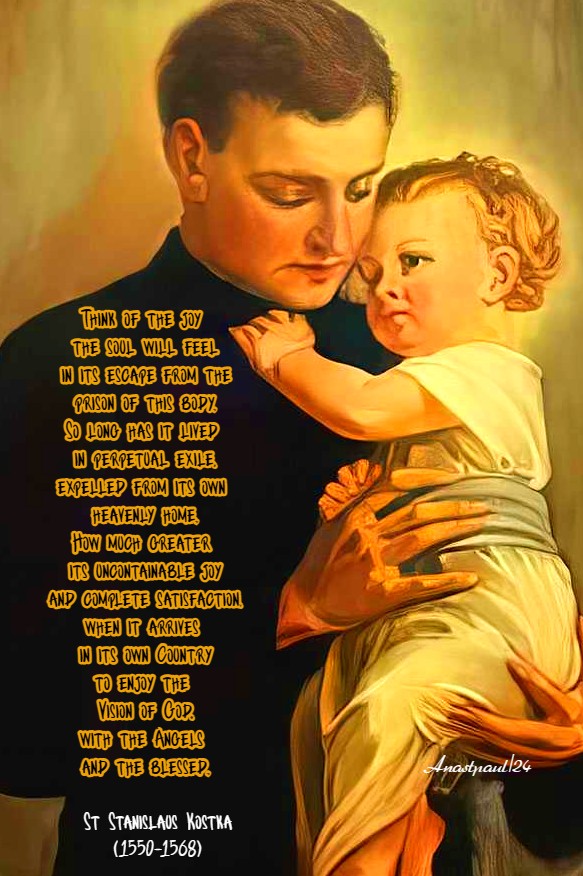
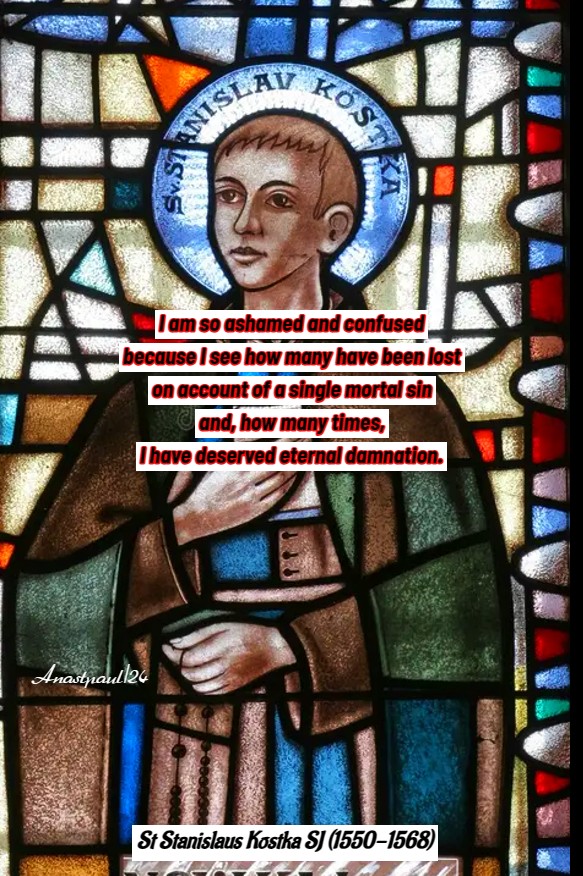
Quote/s of the Day – 13 November – St Stanislaus Kostka SJ (1550-1568) Jesuit Novice
“Think of the joy the soul will feel in its escape from the prison of this body. So long has it lived in perpetual exile, expelled from its own heavenly home. How much greater its uncontainable joy and complete satisfaction, when it arrives in its own Country to enjoy the Vision of God, with the Angels and the blessed.”
“I am so ashamed and confused because I see how many have been lost on account of a single mortal sin and, how many times, I have deserved eternal damnation.”
Saint of the Day – 13 November – Saint Brice of Tours (c370-444) Bishop, disciple of St Martin of Tours, Penitent, Miracle-worker. Born in Gaul, modern France and died in Tours, France of natural causes. Patronages – against colic, against stomach diseases, of Tours, of Calimera and Samperone in Italy. Also known as – Briccius, Brictius, Britius, Brixius, Brizio, Brizo.
The Roman Martyrology reads today: “At Tours, St Brice, Bishop, disciple of the blessed Bishop Martin.”
St Martin, whose Feast we kept two days ago, was succeeded in the See of Tours, as he had predicted, by a Monk named Brice, a singularly unpromising candidate to succeed such a holy Bishop.
Martin had spent as much time as his Episcopal duties permitted among a monastic community at Marmoutier near Tours, into which he himself had taken the orphaned Brice. St Gregory of Tours describes Brice as “proud and vain” and St Martin’s Biographer, St Sulpicius Severus, tells the story in his Dialogues (3.15) of Brice being led by devils to “vomit up a thousand reproaches against Martin” even daring to assert that he, himself, was much holier for being raised from childhood in a Monastery, while Martin was raised in a military camp. Although Brice repented of this (as St Sulpicius believed, due to Martin’s prayers) and asked for the Saint’s forgiveness, he continued to be a very difficult character. Martin refused to remove him from the Priesthood, lest he would be judged to do so, as an act of vengeance but, expressed his tolerance in less than-complimentary terms: “If Christ could put up with Judas, why should I not put up with Brice?”
St Brice and St Martin
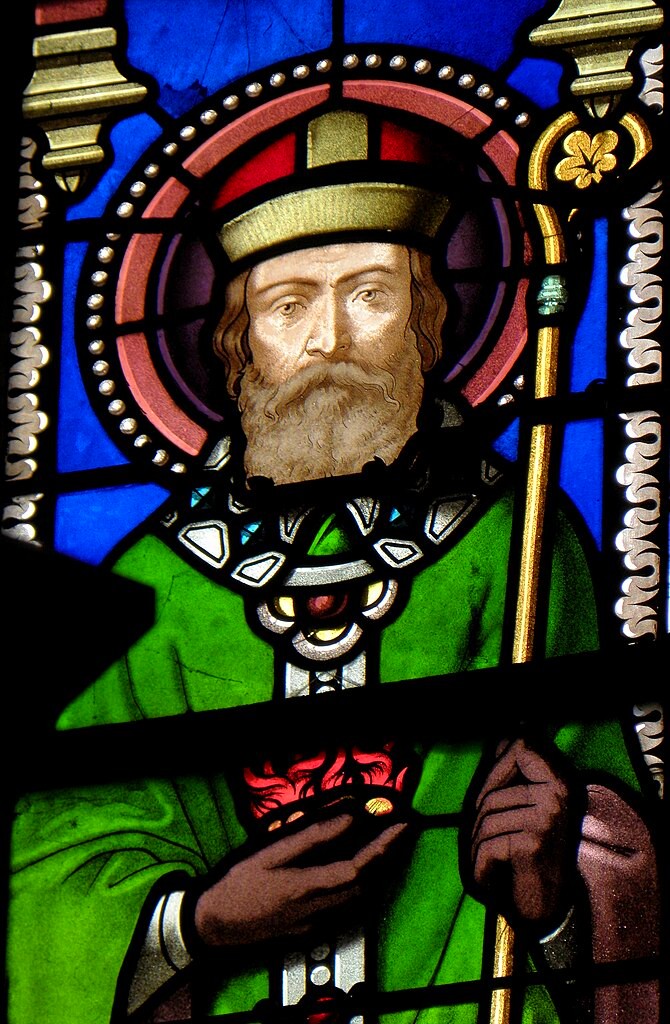
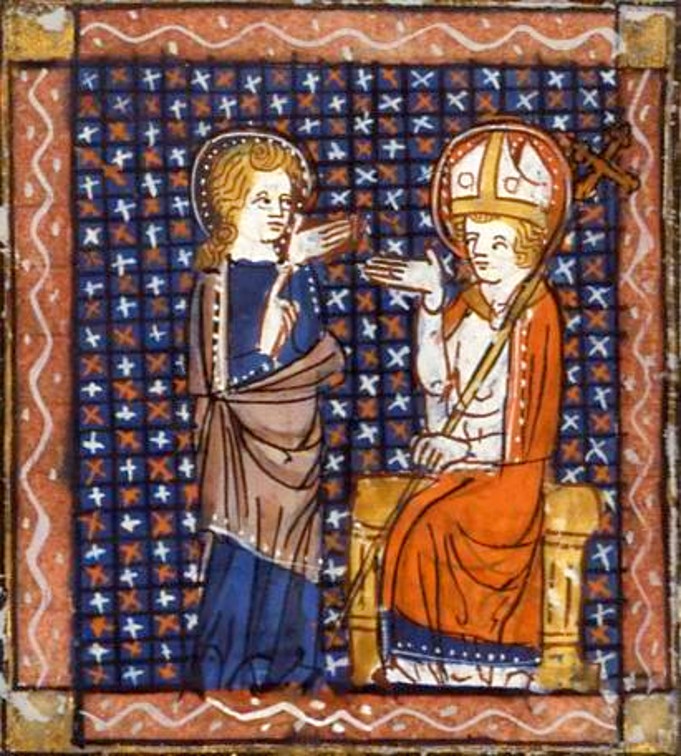
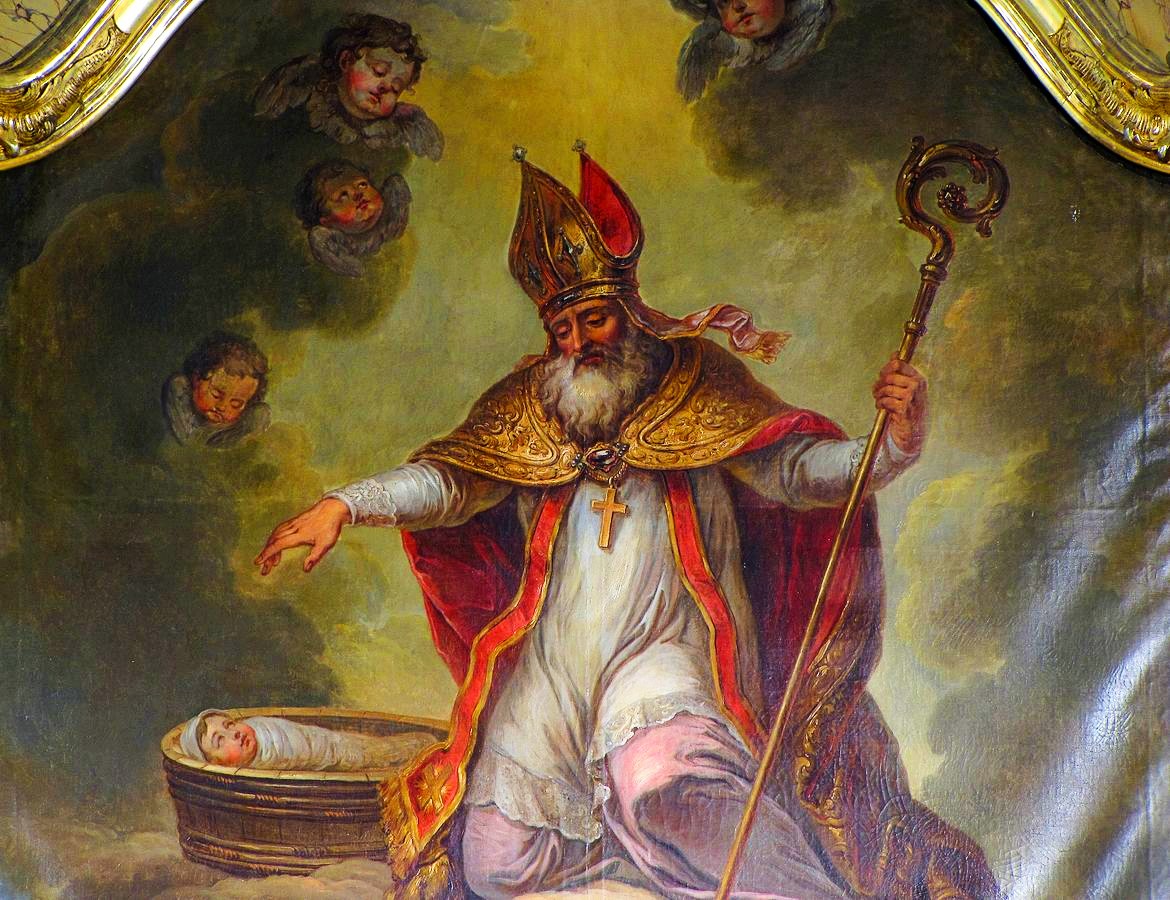
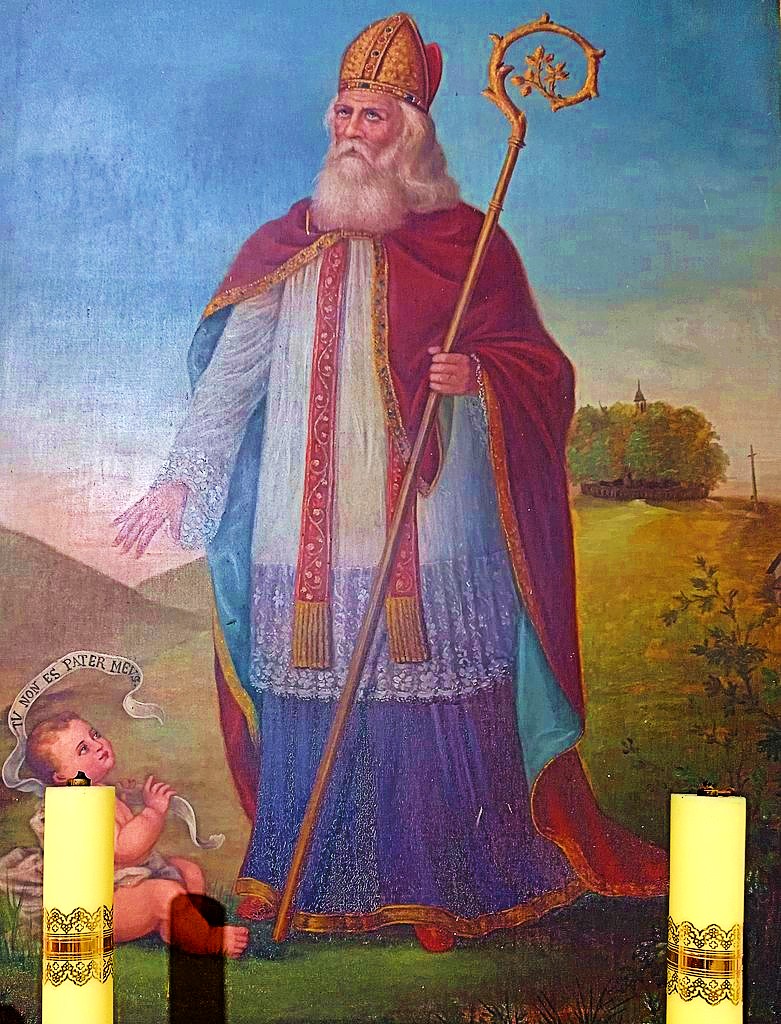
St Martin had predicted, not only that Brice would succeed him as the Bishop, but, that he would suffer much in the Episcopacy, words which Brice dismissed as “ravings.” Both predictions were fulfilled in the following manner. Although Brice was vain and proud, he was “chaste in body” and yet, he was accused of fathering a child. The revised Butler’s Lives of the Saints says, with characteristic reticence that he vindicated himself by “a very astonishing miracle” without saying what the miracle was. St Gregory of Tours tells us that Brice called together the faithful and before them ordered the month-old infant to say whether or not he was the father, at which the child did indeed say, “You are not my father!” The people ask Brice to make the infant say who its father was but Brice replied, “That is not my job. I have taken care of the part of this business which pertains to me; if you can, ask for yourselves.”
St Brice with the Infant, from the Church of St Médard in Boersch in Eastern France.
This miraculous event was attributed, perhaps understandably, to the use of magic, rather than holiness and so Brice attempted to vindicate himself by carrying hot coals in his cloak to the Tomb of St Martin; when he arrived his cloak was not burnt. But this sign was also not accepted and so he was driven from his See, “that the words of the Saint might be fulfilled, ‘Know that, in the Episcopate, you will suffer many adversities.’ …
Then Brice sought out the Pope of Rome, weeping and mourning and saying ‘Rightly do I suffer these things because I sinned against God’s Saint and often called him crazy and deluded and, seeing his virtues, I did not believe.’ ” After staying in Rome for seven years and purging his sins by the celebration of many Masses, he was restored to his See which he governed for a further seven years as a man “of magnificent sanctity,” according to St Gregory, very much changed for the better by the experience.
I believe, a Polish image of St Brice with the Infant
His popularity in the medieval period was very great and his Feast is found on most calendars, although not that of Rome. This is due in part to his association with St Martin but perhaps more, as an example of something which the medievals understood very well and loved to dwell upon – it is never too late for God’s grace to bring us away from sin to sanctity and even to Sainthood. And so we ask St Brice to assist us by his intercession, in our repentance and our growth in holiness. (Adapted from Gregory DiPippo’s articleon NLM).
Fiesta del Patronato de Nuestra Señora / Feast of the Patronage of Our Lady (1679):
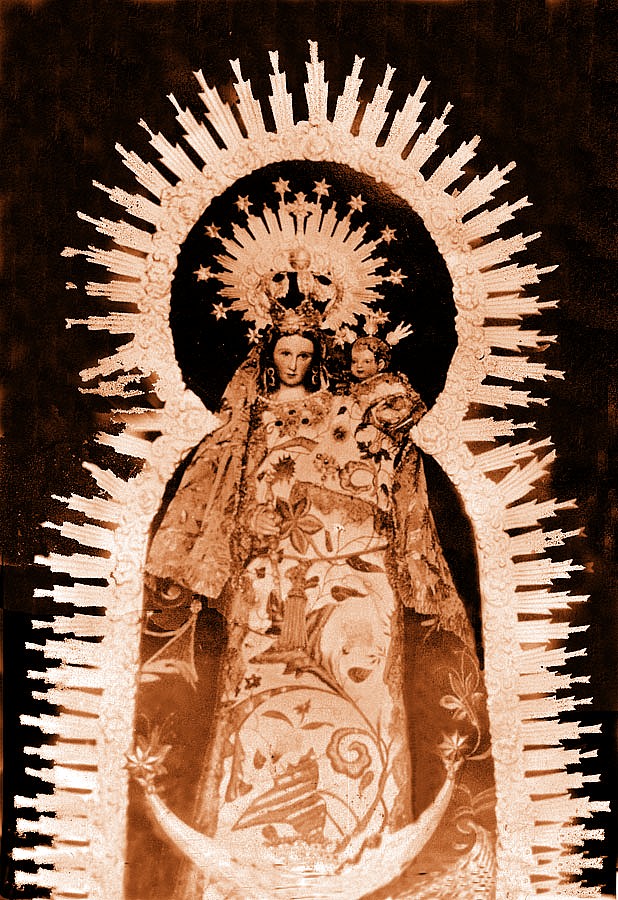
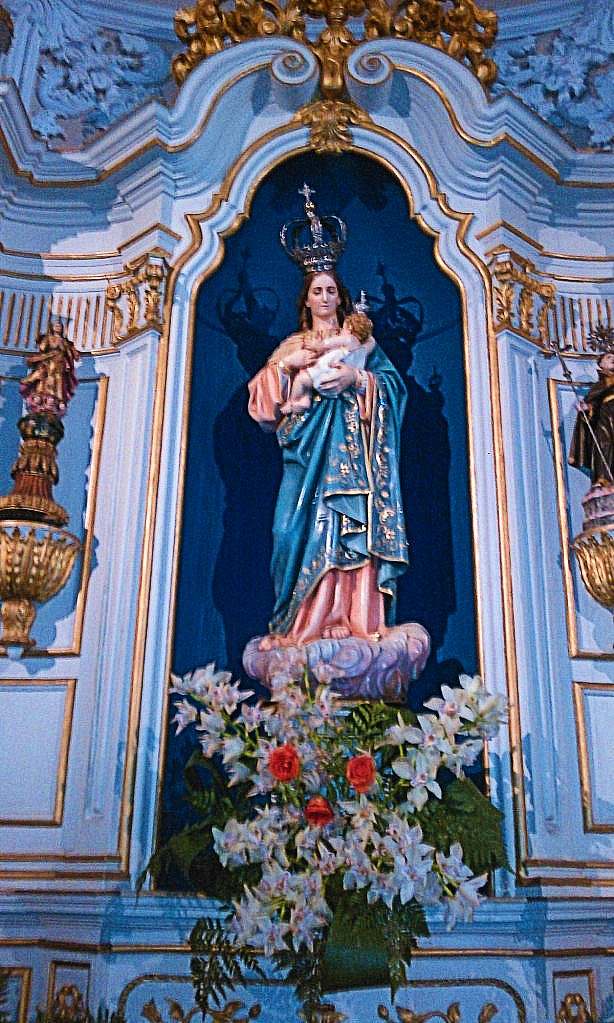
Statue of Our Lady in Barcelona Cathedral
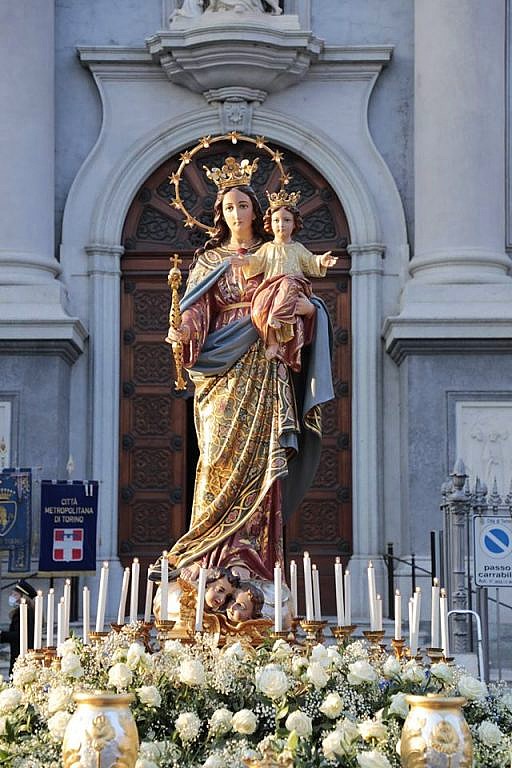
This Feast was first permitted by Decree of the Sacred Congregation of Rites, on 6 May, 1679, for all the Provinces of Spain, in memory of the victories obtained over the Saracens, heretics and other enemies, from the sixth century to the reign of Philip IV. Pope Benedict XII ordered it to be kept in the Papal States on the third Sunday of November. To other places it is granted, on request, for a Sunday in November, to be designated by the ordinary. The Office is taken entirely from the Common of the Blessed Virgin and the Mass is the “Salve sancta parens”. In many places the Feast of the Patronage of Our Lady, is held with an additional title of Queen of All Saints, of Mercy, Mother of Graces.
St Didacus de Alcalá de Henares) OFM (c 1400-1463) Confessor, Lay Brother of the Order of Friars Minor, Hermit, Mystic. Months passed before it was possible to bury Brother Didacus, so great was the number of people who came to venerate his remains. Not only did his body remain incorrupt but it diffused a pleasant odour. After it was laid to rest in the Franciscan Church at Alcalá de Henares, astounding miracles continued to occur at his tomb. Pope Sixtus V, himself a Franciscan, Canonised Brother Didacus in 1588. About this lovely Sainst: https://anastpaul.com/2021/11/13/saint-of-the-day-13-november-saint-didacus-ofm-c-1400-1463/
All Saints of the Augustinian Order: On 13 November – St Augustine’s Birthday, we celebrate the Feast of All Saints of the Augustinian Order. On this day we call to mind the many unsung brothers and sisters of the Augustinian family who have “fought the good fight” and celebrate now, in Heaven. Let us pray for one another that we too may one day join in the “unceasing chorus of praise” with all our Augustinian brethren in Heaven.
All Saints of the Benedictine & Cistercian Orders: Those interested in the Benedictine family may be interested to know that today, within the Benedictine liturgical tradition, is traditionally celebrated the Feast of All Saints of the Benedictine Order – In Festo Omnium Sanctorum Ordinis S.P.N. Benedicti. The Cistercians — who also follow the Rule of St Benedict — likewise observe this day for All Saints of their Order. (On a related note, the Benedictines also traditionally observe 14 November as All Souls of their Order.
All Benedictine Saints
St Benedict and St Bernard -1542
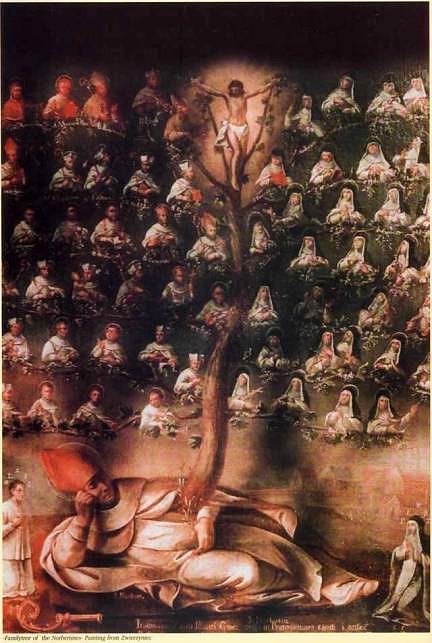
All Saints of the Premonstratensian Order or the “Norbertines.” The Order of Canons Regular of Prémontré, also known as the Premonstratensians, the Norbertines and, in Britain and Ireland, as the White Canons , are a Roman Catholic religious order of canons regular founded in Prémontré near Laon in 1120 by Saint Norbert, who later became Archbishop of Magdeburg. Premonstratensians are designated by O.Praem. following their name. St Norbert was a friend of Saint Bernard of Clairvaux and so was largely influenced by the Cistercian ideals as to both the manner of life and the government of his order. Aside from St Norbert there are at present fifteen saints of the Order who have been Canonised or have had their immemorial cults confirmed by the Holy See. St Norbert (c 1080-1134) “Defender of the Eucharist” and “Apostle of the Eucharist” – Bishop, Confessor, Founder. Patron for peace, invoked during childbirth for safe delivery, of infertile married couples. St Norbert here: https://anastpaul.com/2017/06/06/saint-of-the-day-6-june-st-norbert/
St Norbert
All Saints of the Norbertines
All Deceased Dominican Brothers and Sisters
St Abbo of Fleury St Amandus of Rennes St Amanzio St Beatrix of Bohemia St Brice of Tours (Died 444) Bishop St Caillin St Chillien of Aubigny St Columba of Cornwall St Dalmatius of Rodez St Devinicus St Eugenius of Toledo St Florido of Città di Castello St Gredifael St Himerius St Homobonus of Cremona St Juan Ortega Uribe
St Leoniano of Vienne St Maxellendis St Mitrius St Pope Nicholas I St Paterniano St Quintian of Rodez Bl Robert Scurlock Bl Warmondus of Ivrea
Martyrs of Caesarea – 5 Saints: A group of Christians murdered for their faith in the persecutions of Diocletian, Galerius Maximian and Firmilian. – Antoninus, Ennatha, Germanus, Nicephorus and Zebinas. 297 at Caesarea, Palestine.
Martyrs of Ravenna – 3 Saints: A group of Christians murdered together in the persecutions of Diocletian. The only information about them that has survived are three names – Solutor, Valentine and Victor. c 305 in Ravenna, Italy.
Martyrs of Salamanca – 5 Saints: The first group of Christians exiled, tortured and executed for their adherence to the Nicene Creed during the persecutions of the Arian heretic Genseric. – Arcadius, Eutychianus, Paschasius, Paulillus and Probus. Born in Spain and Martyred in 437. Their relics are at Medina del Campo, Spain.
Saint of the Day – 12 November – St Theodore the Studite (759-826) Abbot of the Stoudios Monastery in Constantinople, Confessor, stern Reformer, zealous Defender of the sanctity of Marriage and of Sacred Images, two of several conflicts which set him at odds with both the Emperor and Bishops. He played a major role in the revivals both of Byzantine monasticism and of classical literary genres in Byzantium. He was a spiritual writer and exegesis and throughout his life, he maintained letter correspondences with many important spiritual, political and cultural figures of the Byzantine Empire. Born in 759 in Constantinople, (modern-day Istanbul, Turkey) and died on 11 November 826 (aged 66/67) whilst in exile in Cape Akritas (modern-day Tuzla, Istanbul, Turkey). Also known as – Theodorus Studita, Theodore of Studium, of Stoudios, of studion.
The Roman Martyrology reads today: “At Constantinople, St Theodore Studita, who became celebrated througout the whole Catholic Chirch by his vigorous defence of the Faith against the Iconoclasts.”
Theodore was born in Constantinople in 759 and from his youth he fought courageously in defence of the Sacred Imagery present in the capital of the Byzantine Empire, threatened by the adverse religious policy of the imperial government.
In 794 he succeeded his uncle Plato, (who ten years earlier had persuaded him to take monastic vows) in the direction of the Monastery of Sakkoudion in Bithynia. Shortly afterwards, however, he was sent into exile in Thessalonica, for having excommunicated the Emperor Constantine VI, later also venerated as a Saint, who had divorced his wife Mary to marry Theodota. This incident was not a simple occurence of one man’s sinful adultery but, under the name of “Synod of Adultery” an assembly of errant Bishops who, in the 9th Century, wished to approve the practice of second marriage after the repudiation of the legitimate wife, entered the history of the Church – (ring any bells – only no-one is being exiled for this now!?) Saint Theodore was the one who most vigorously opposed it and for this reason he was persecuted, imprisoned and exiled three times.
In 797, after the death of the Emperor, Theodore was recalled to his homeland with full honours, left Sakkoudion Monastery which, in the meantime, had been sacked by the Arabs and Theodore moved to the Monastery of Studios in Constantinople, from which he took his nickname. Here he undertook a powerful campaign in favour of asceticism and radical monastic reforms. The key points of his rule, later used in both Byzantine and Eastern Monasteries, were strict seclusion, poverty, discipline, study, religious offices and manual labour.
Abbot Theodore is also remembered for allowing his Monks to sprinkle nutmeg, one of the most expensive spices at the time, ontp their pea soup when they were forced to eat it. This anecdote, the veracity of which is difficult to ascertain, far from ridiculing the Saint, helps us to approach him in aspects of his daily life, as the shepherd of a community, certainly a firm spiritual leader but also, at the same time, a kindly shepherd displaying a generous love.
In 809, Theodore was again banished because of his refusal to receive Communion from Patriarch Nicephorus, who had reinstated the Priest Joseph, guilty of having officiated at the wedding between Constantine and Theodote. Two years later, Emperor Michael I, over whom our Saint had much influence, recalled him from exile but, he was again banished and flogged in 814 because of his strenuous opposition to the iconoclastic edict promulgated by Emperor Leo V which prohibited the veneration of Sacred Images. Released in 821 by Emperor Michael II, in 824 he promoted an insurrection against the latter, whom the Saint judged to be too indulgent towards the iconoclasts. However, when his plans failed, Theodore then thought it appropriate to leave Constantinople.
From that moment he wandered between various Monasteries in Bithynia and died in that of Chalcis on 11 November 826. Initially buried in that Monastery, on 26 January 844, his body was translated to Studios Monastery.
He is celebrated today 12 November, the day after his death. Saint Theodore composed several literary works. First of all, as an intrepid fighter for the defence of the indissolubility of Marriage; he wrote a treatise and a paper ‘On the economy in general’ which were unfortunately lost or more probably destroyed by order of the Patriarch Methodius. His letters the importance of which is constituted by the picture of the life and character of St Theodore which is displayed within them and, which also shed light, on the theological disputes in which he intervened. St Theodore also wrote Catechetical works divided into two collections, addressed to Monks and containing warnings and advice connected with spiritual life and monastic communities; funeral orations for his mother and for his uncle Plato; theological works focused on the use and veneration of Sacred Images; epigrams on various subjects, some of which demonstrate considerable originality and some Sacred Hymns. Furthermore, like all the Monks of the Studios, Saint Theodore was renowned too for his calligraphy and for his skill in copying manuscripts.
St Theodore the Studite, a simple but deeply religious man who dared to challenge the imperial power and the Ecclesiastical hierarchies of the time, should be considered one of the heavenly protectors of those who, even today, faced with the changed Church, have the courage to repeat an inflexible love of the One True Church and a denial of all unlawful practices. St Theodore the Studite, Pray for us!
Byzantine miniature depicting the Stoudios Monastery and the Sea of Marmara.
St Livinus of Alost St Machar of Aberdeen St Namphasius St Nilus the Elder St Paternus of Sens St Publius St Renatus of Angers St Rufus of Avignon St Theodore the Studite (759-826) Abbot St Ymar of Reculver
Five Polish Brothers – Martyrs: They weren’t Polish and they weren’t related but were instead five Italian Benedictine Monks who worked with Saint Adalbert of Prague as missionaries to the Slavs and were Martyred together. They were – Benedict, Christinus, Isaac, John and Matthew. Born in Italy. They were Martyred in 1005 at the Benedictine Monastery near Gnesen, Poland and Canonised by Pope Julius II.
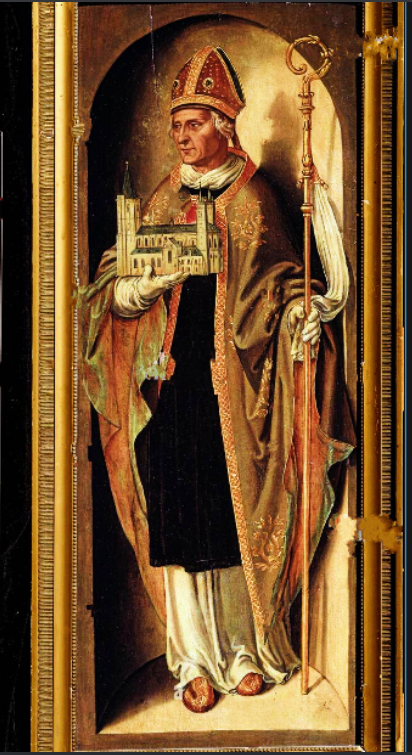
Saint of the Day – 11 November – Saint Bertuinus of Malonne (c634-698) Bishop. Abbot, Missionary, Founder of Churches and Monasteries. Born in England and died at his Monastery dedicated to him since his death in Malonne, Belgium of natural causes. Also known as – Bertuin, Bertwinus, Berthuin, Bertuino.
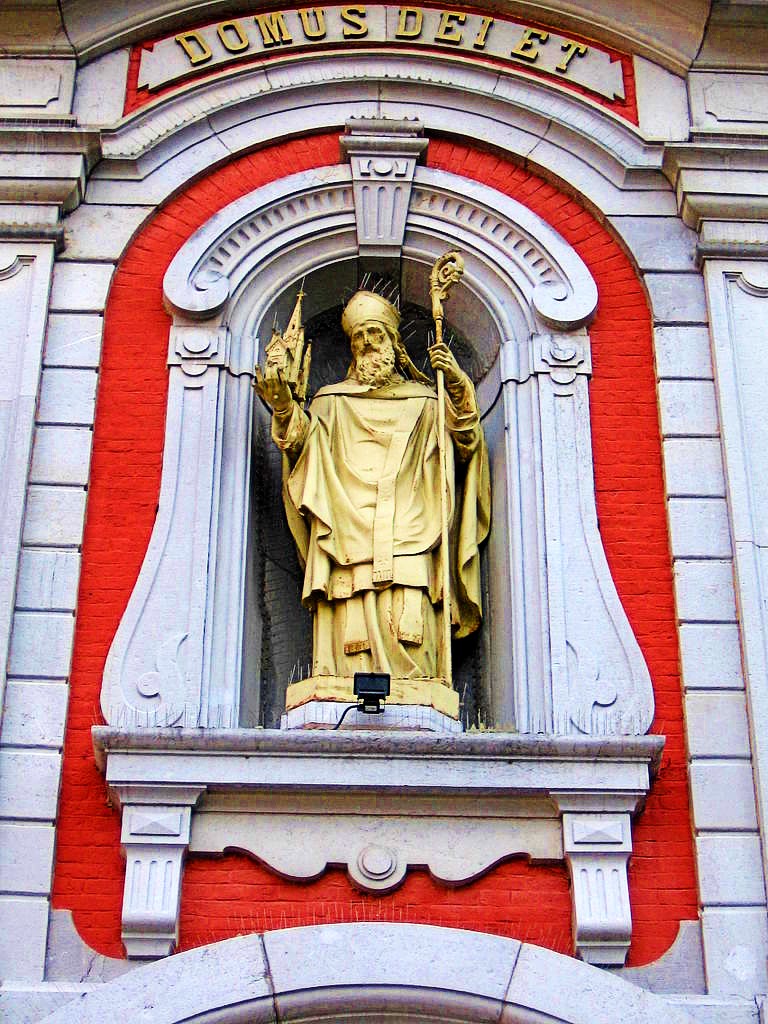
Statue of Bertuinus of Malonne in a niche of a Chapel in Malonne Abbey
Bertuinus was born in England and educated in the Monastery of Obtell (a place perhaps identified with Outwell, in the County of Norfolk) which was part of his family’s property and there, he became a Monk.
When the Bishop of the Diocese died, the people forced Bertuinus to accept the Episcopal dignity. In his high office he distinguished himself for his qualities as a skilled administrator, for the numerous conversions of pagans and for the foundation of several Monasteries.
Reliquary bust of St Bertuinus of Malonne
By Divine inspiration, however, he decided to go to the continent to preach the Gospel there and, faithful to Anglo-Saxon customs, he wanted to go first to Rome to visit the Tombs of the Apostles Peter and Paul. From Rome, through Gaul, he went to Belgium, settling in Malonne (Namur), where he built a Church and founded a Monastery, in which he died and was buried.
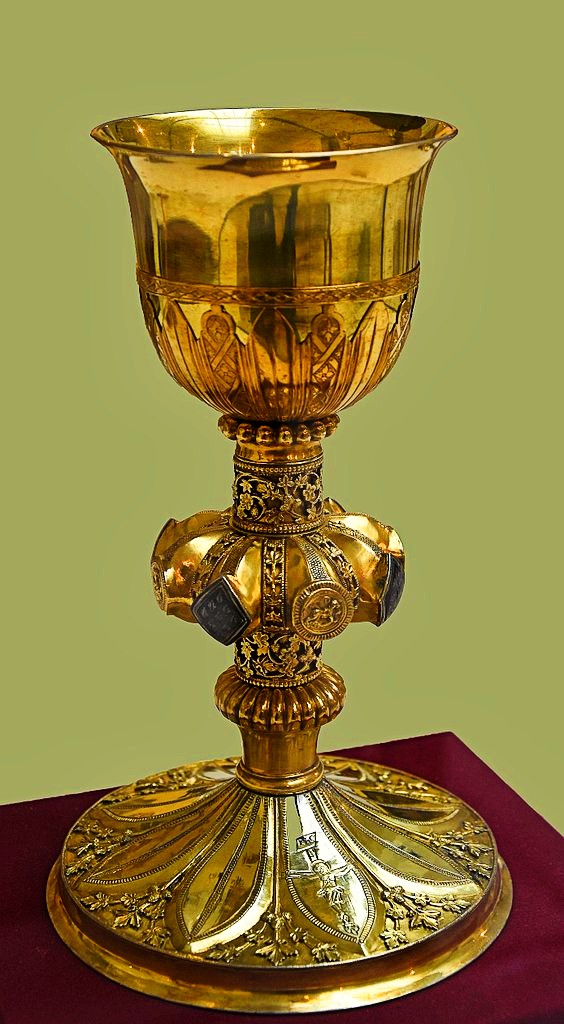
Chalice of Saint Berthuinus part of the protected Art Treasures of the Cathedral of Namur
From the Vita Bertuinus of which there are four editions, the oldest of which could date to the 8th Century. It is not possible to deduce, with certainty, the precise period in which the holy Bishop lived. The most probable opinion attributes it to the 7th Century. His Feast is celebrated on 11 November but in some places, recently, it has been transferred to the 16th and then to the 27th of the same month.
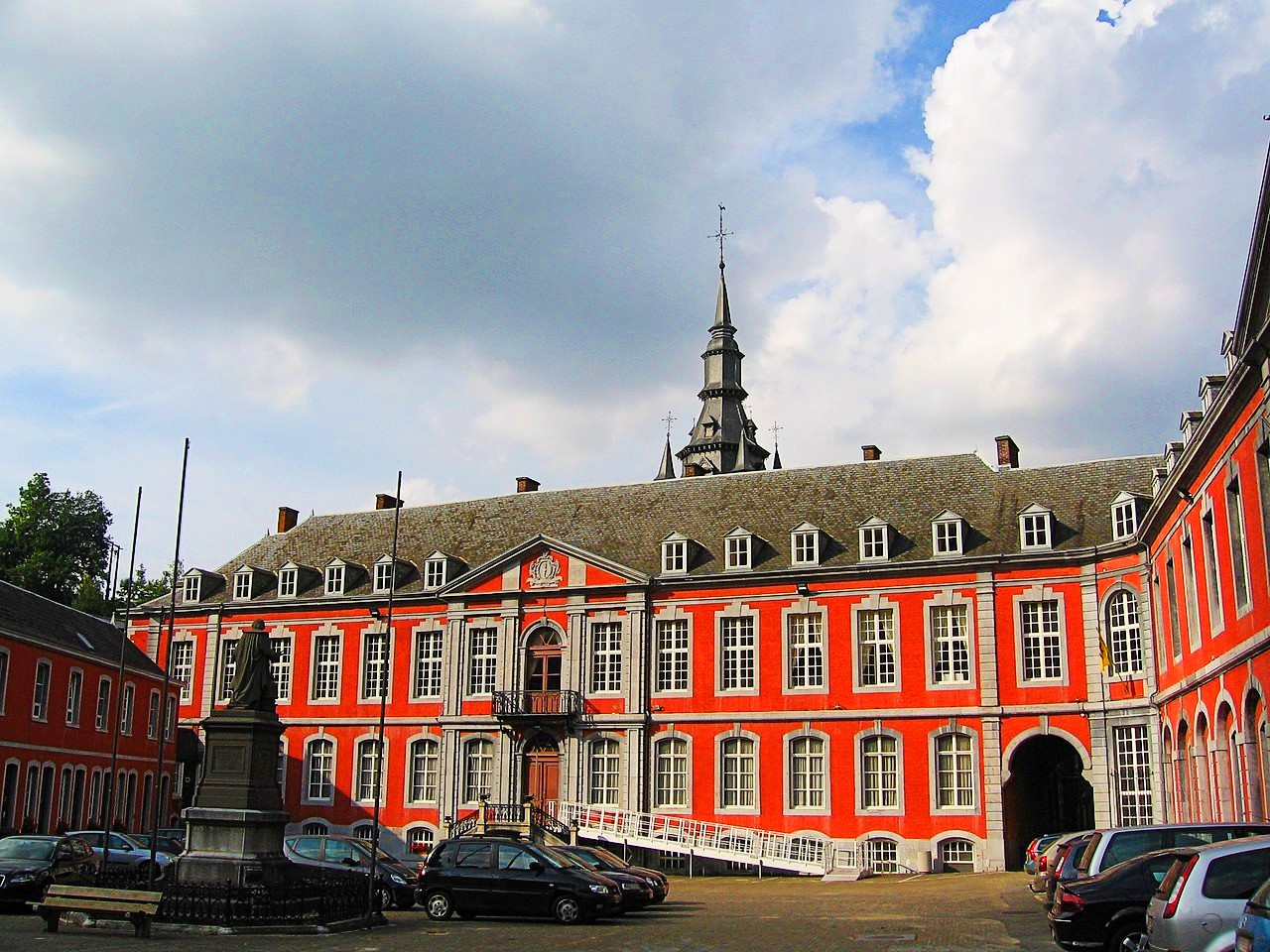
St Bertuinus Abbey of Malonne
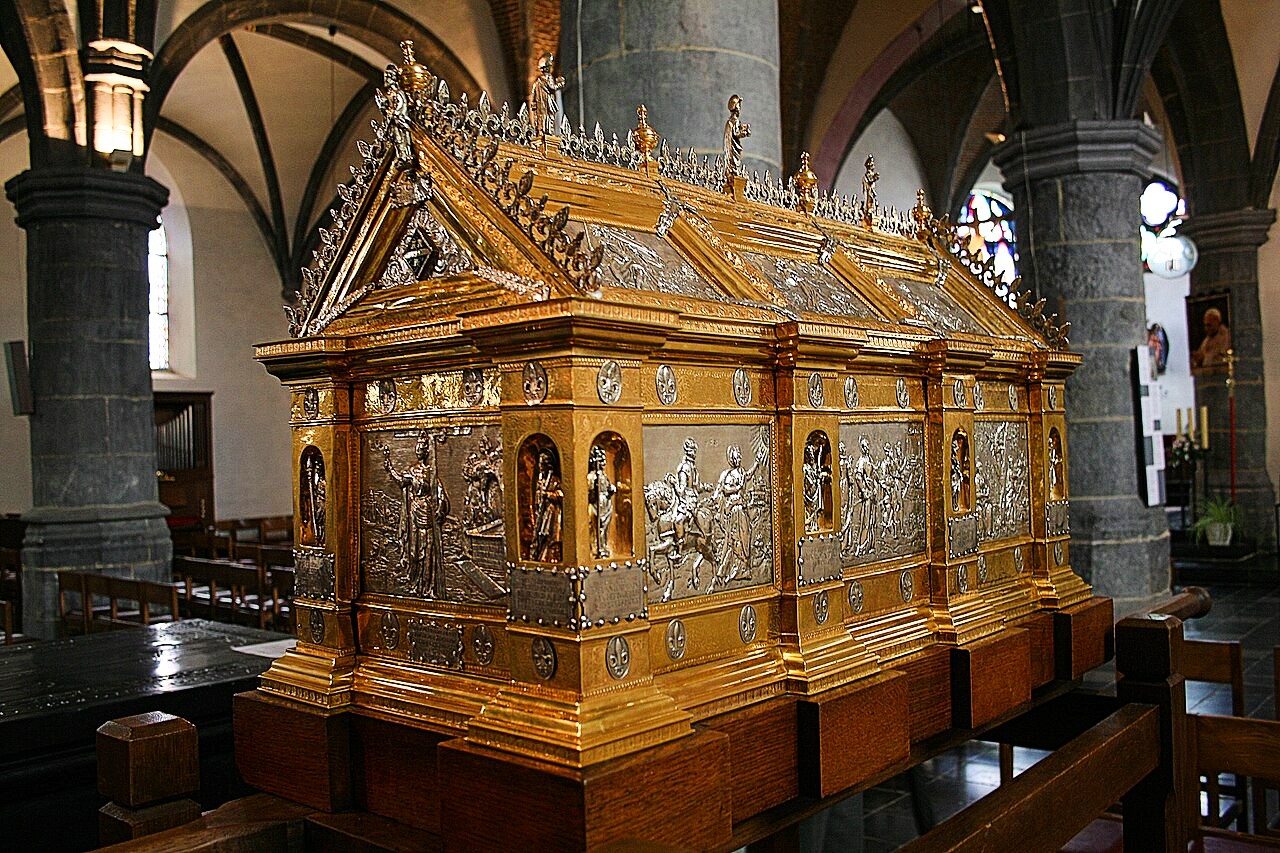
His cult which survived the French Revolution and the suppression of the St Bertuinus Abbey of Malonne, over the centuries has received a notable boost from the recognition and solemn translation of his Relics which took place in 1202 and from the celebrations of the Twelfth Centenary of his death, celebrated in 1898 on the basis of calculations made by hagiographers, who considered 698 to be the year of the Saint’s death. In 1601, the Relics of St Bertuinus were placed in an Urn at Malonne Abbey, which still contains them. The Sepulchre below MIGHT be this Urn mentioned here.
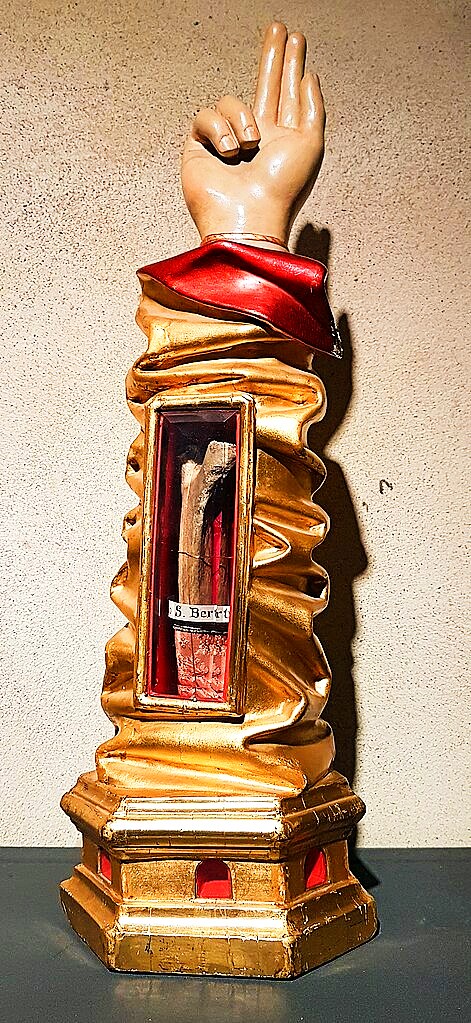
Arm Reliquary of St Bertuinus, in the Treasury of the Basilica of Saint Servatius in Maastricht
St Mennas (Died c 300) Martyr, Layman, Miracle-worker, Soldier, he may have been a camel driver and merchant, Hermit. Born in Egypt and died by beheading in c 300 at Cotyaes, Phrygia, under Emperor Diocletian. He was one of the most popular Saints in the early Eastern Church. Patronages – falsely accused people, physical ailments, peddlers, pilgrims, travelling merchants. His Life and Death: https://anastpaul.com/2022/11/11/saint-of-the-day-11-november-saint-mennas-died-c-300-marty/
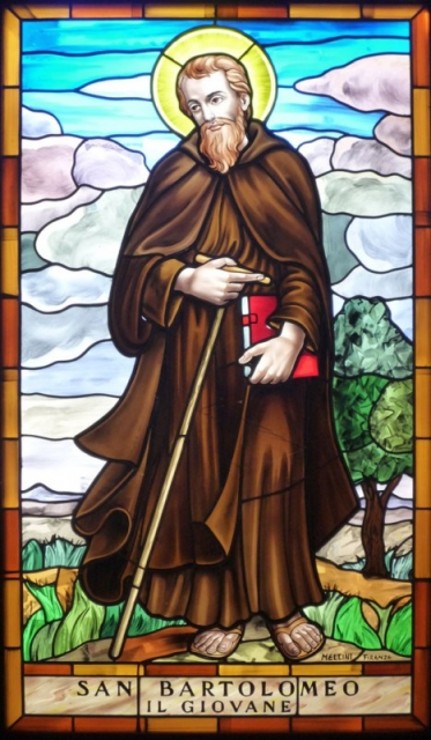
St Bartholomew of Rossano (c970-c 1065) Abbot Confessor, Spiritual disciple and friend of St Nilus (910-1005), Hymnist an highly skilled Calligrapher of sacred manuscripts – the art of calligraphy he had learned from his blessed guide and teacher, He is known as the “Second Founder,” of the Monastery of Grottaferrata founded by St Nilus. A copyist of many codices, Bartholomew is also considered the greatest hymnographer of the 11th century. His Life: https://anastpaul.com/2021/11/11/saint-of-the-day-11-november-saint-bartholomew-of-rossano-c-970-c-1065/
St Bertuinus of Malonne (c634-698) Bishop St Cynfran of Wales St Isidre Costa Hons Bl Josaphat Chichkov St Marina of Omura St Mennas of Santomenna St Mercurius the Soldier Bl Pavel Dzjidzjov St Rhediw St Turibius of Palencia St Veranus of Lyon St Veranus of Vence
Saint of the Day – 10 November – Saint Elaeth the King (6th Century) Monk, Poet, founder of a Church on Anglesea Island which is dedicated to him and a miraculous Holy Well. Born as a Prince in the North of England and died in Anglesea, Wales of natural causes. Patronage – of Llaneleth, Anglesea, Wales. Also known as – Eleth…. “Elaeth Frenhin.”
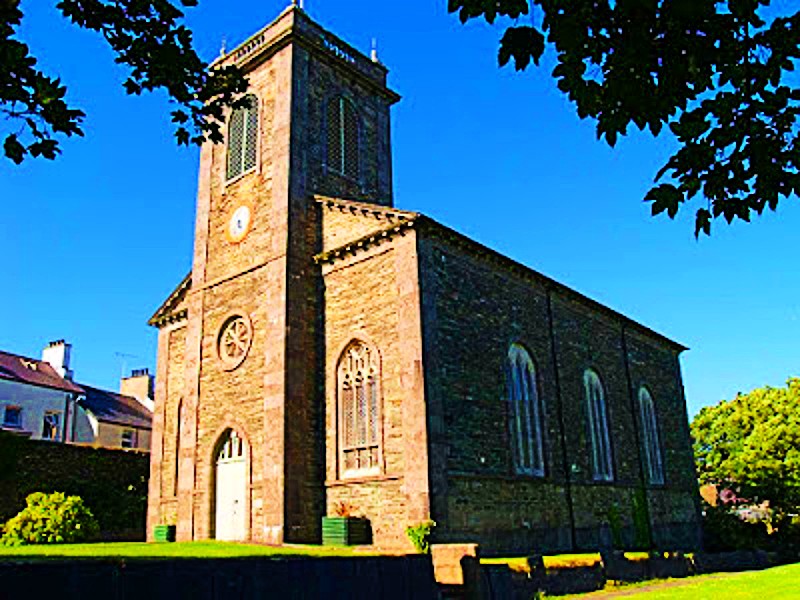
Saint Elaeth Church
Little is known for certain about Elaeth’s life; his date and place of birth and date of death are unknown but we do know that he lived in the 6th Century. He was the son of Meurig and his wife, Onen Greg, the daughter of Gwallog. Elaeth was a King in the North of England and is sometimes referred to as “Elaeth Frenhin” (the Welsh for Elaeth the King).
He was ousted from his land and, thereafter, travelled to Anglesey, an Island off the coast of North Wales and settled there in the Monastery run by St Seiriol at Penmon, at the South Eastern corner of the Island.
Some religious poetry the wrote has been preserved in medieval manuscripts. The Black Book of Carmarthen, from the 12th Century, attributes two poems of seven stanzas to his authorship, one of simple construction and the other more complex. Both “are written in a strain of deepest piety.”
He is the Founder of St Eleath’s Church, Amlwch, in the North of Anglesey. A Holy Well nearby, known as “Ffynnon Elaeth” is regarded as having miraculous qualities.
























 AnaStpaul
You must be logged in to post a comment.