Posted in ADVENT, SAINT of the DAY

Saint of the Day – 19 December – Blessed Pope Urban V (1310-1370)

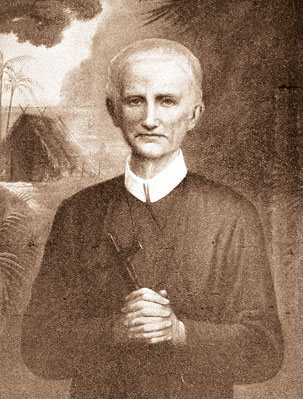
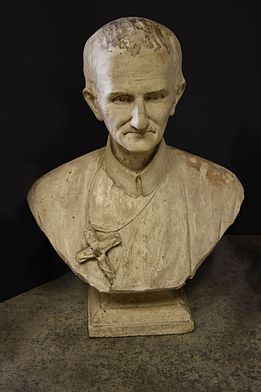
Saint of the Day – 19 December – Blessed Pope Urban V (1310-1370) Priest, Monk, Abbot, Bishop, Canon lawyer, brilliant scholar, teacher –  born Guillaume de Grimoard in  1310 Grizac Castle, Languedoc, France , Bl Urban was Pope from 28 September 1362 to his death in 1370 and was also a member of the Order of Saint Benedict.   Patronages: Architects,Teachers,Benedictines, Missionaries.  He was the sixth Avignon Pope and the only Avignon pope to be beatified.   Even after his election as pontiff, he continued to follow the Benedictine Rule, living simply and modestly.   His habits did not always gain him supporters who were used to lives of affluence.
Urban V pressed for reform throughout his pontificate and also oversaw the restoration and construction of churches and monasteries.   One of the goals he made upon his election to the Papacy was the reunion of the Eastern and Western Churches.   He came as close as some of his predecessors and successors but did not succeed.

Papa_Urbanus_Quintus

Blessed Urban V was born to the nobility, one of four children of Guillaume de Grimoard, Lord of Bellegarde and of Amphélise de Montferrand;   his brother later became a cardinal and papal legate.   Guillaume became a Benedictine monk at the priory of Chirac, France in 1327.   He was ordained a Priest at the Chirac monastery in 1334.   He studied literature and law in Montpellier, France and then law at the University of Toulouse, France.    He received a doctorate in Canon Law on 31 October 1342 and was known as one of the most learned men of his day.

He was appointed prior of Nôtre-Dame du Pré in the diocese of Auxerre, France by Pope Clement VI and then the Abbot of Saint-Germain en Auxerre monastery on 13 February 1352.   He became the Benedictine Procurator-General at the Papal court.   Bl Urban taught canon law in Montpellier, in Paris and in Avignon, France and was appointed Vicar-general of the diocese of Clermont, France c 1350 and then of the diocese of Uzès, France in 1357.

He served as papal legate in Italy several times and became an advisor to Pope Innocent VI and the Apostolic Nuncio in Italy.

In September 1362, then, Bl Urban was Apostolic Nuncio in Italy when Pope Innocent VI died.   The Conclave to elect his successor opened on 22 September.   On 28 September, they elected him as the new Pope.   He was not initially informed of the result, instead he was requested to return immediately to Avignon to “consult” with the Conclave.   The cardinals feared the reaction of the Romans to the election of another French pope and so kept the results of the election secret until Urban’s arrival a month later, at the end of October.   Upon his arrival, Urban accepted his election and took the pontifical name of Urban V.   When asked the reason for the selection of his new name, he was said:  “All the popes who have borne this name were saints”.

Urban was not even a bishop at the time of his election and had to be consecrated before he could be crowned.   This was done on 6 November by Cardinal Andouin Aubert, the Bishop of Ostia.   At the conclusion of the consecration Mass, Urban V was crowned. Urban V was the sixth pope in the Avignon Papacy.

Beato_Urbano_V_B

As pope he eschewed the pomp of the throne and continued to live by the Benedictine Rule, which led to opposition from courtiers who preferred a more regal life in court.   He cut tithes in half, supported students, clerical training, seminaries and colleges, worked to re-unite Latin and Greek Christians, fought the heresies of the day, built churches and monasteries, restored many that had fallen on hard times or fallen away from discipline.   He fought absentee bishops, bishops of multiple dioceses and simony, founded a university in Hungary, restored the medical school in Montpellier and approved the establishment of the University of Krakow.

He preached crusade against the Viscontis in Italy, accusing them of theft of Church property.   He also promoted a crusade against the Turks in 1363 but little came of it as many of the leaders died of natural causes before troops could be put into the field.

Urged by Saint Bridget of Sweden and by Saint Catherine of Siena to return the papacy to Rome, he moved his court back to Rome, entering the city on 16 October 1367, the first pope to do so in 60 years.   He was met by jubilant Romans and clergy. He re-discovered relics of Saint Peter and Saint Paul the Apostle in the papal chapel of the Lateran basilica when he prepared to say Mass there on 1 March 1368;  they were later placed and new reliquaries and enshrined.   However, outbreaks of plague and violence in the city led him to return to France, arriving there on 24 September 1370.   He fell ill soon after and his remaining weeks were ones of physical decline.

His body was interrred in the chapel of John XXII in the cathedral of Sante Marie de Domps in Avignon and his relics were moved to the abbey church of Saint-Victor in Marseille, France on 31 May 1371 where they were interred in a tomb Urban built for himself.   His Beatification Cause was opened by Pope Gregory XI and many miracles were documented through Urban’s intervention but the process ground to a halt when the papacy returned to Rome and the Cause of an Avignon Pope was a low priority
Finally on 10 March 1870 he was Beatified by Pope Pius IX (cultus confirmation).


Posted in ADVENT, SAINT of the DAY

Memorials of the Saints – 19 December

St Anastasius I, Pope
St Augustine Moi Van Nguyen
St Avitus of Micy
Bl Berengar of Banares
Bernard Valeara of Teramo
Bl Bogumila Noiszewska
St Boniface of Cilicia
Bl Cecilia of Ferrara
St Dominic Uy Van Bui
St Fausta of Sirmium
St Gregory of Auxerre
St Jaume Boguñá Casanovas
St Johannes Gogniat
St Jordi Sampé Tarragó
St Josep Albareda Ramoneda
Bl Kazimiera Wolowska
Bl Konrad Liechtenau
St Manirus of Scotland
St Meuris of Alexandria
St Nemesius of Alexandria
St Phanxicô Xaviê Hà Trong Mau
St René Dubroux
Ribert of Saint-Oyend
St Stêphanô Nguyen Van Vinh
St Thea of Alexandria
St Timothy the Deacon
St Tôma Nguyen Van Ðe
Bl Pope Urban V
Bl William of Fenoli

Blessed Mercedarian Fathers – (6 beati): A group of Mercedarian monks noted for their dedication to the Order’s rule, for their continuous prayer life and their personal piety.
• Blessed Bartolomeo of Podio
• Blessed Giovanni of Verdera
• Blessed Guglielmo de Gallinaris
• Blessed Guglielmo of Prunera
• Blessed Pietro of Benevento
• Blessed Pietro of Gualba

Martyrs of Nicaea – (4 saints): A group of Christians martyred together. The only surviving details are four of their names – Darius, Paul, Secundus and Zosimus. They were martyred at Nicaea, Bithynia (modern Izmit, Turkey).

Martyrs of Nicomedia – (5 saints): A group of Christians martyred together in the persecutions of Diocletian. We know little more than the names of five – Anastasius, Cyriacus, Paulillus, Secundus and Syndimius. They were martyred in 303 at Nicomedia, Asia Minor.

Martyred in the Spanish Civil War:
Thousands of people were murdered in the anti-Catholic persecutions of the Spanish Civil War from 1934 to 1939. Virtually each day of the year a Group are celebrated, usually individually but sometimes an entire Monastery or Convent or Lay Movement were martyred together. Today we remember:
• Blessed Jaume Boguñá Casanovas
• Blessed Jordi Sampé Tarragó
• Blessed Josep Albareda Ramoneda


Posted in ADVENT, DOCTORS of the Church, FATHERS of the Church, MORNING Prayers, QUOTES of the SAINTS, QUOTES on CHARITY, QUOTES on LOVE, SAINT of the DAY

Quote/s of the Day – 18 December – The Memorial of Bl Giulia Nemesia Valle (1847-1916) – Called “the Angel of Charity”

Quote/s of the Day – 18 December – The Memorial of Bl Giulia Nemesia Valle (1847-1916) – Called “the Angel of Charity”

“It is better to err by excess of mercy
than by excess of severity. . .
Wilt thou become a Saint?
Be severe to thyself but kind to others.”

“Mercy imitates God and disappoints Satan.”

St John Chrysostom (347-407) Father & Doctor of the Churchmercy-imitates-god-st-john-chrysostom-17-nov-2017

” Love is itself the fulfillment of all our works.
There is the goal;
that is why we run:
we run toward it and once we reach it,
in it we shall find rest.

St Augustine (354-430) Father & Doctor of the Churchlove-is-itself-st-augustine-17-nov-2017

“Lord, I am in this world to show Your mercy to others…
For my part I will glorify You by making known
how good You are to sinners, that Your mercy is boundless.”

St Claude de la Colombiere S.J. (1641-1682)lord-i-am-in-this-world-st-claude-de-la-colombiere-17-nov-2017

Posted in ADVENT, MORNING Prayers, QUOTES of the SAINTS, QUOTES on LOVE, SAINT of the DAY, The WORD

One Minute Reflection – 18 December – The Memorial of Bl Giulia Nemesia Valle (1847-1916)

One Minute Reflection – 18 December – The Memorial of Bl Giulia Nemesia Valle (1847-1916)

Abide in me and I in you.   As the branch cannot bear fruit by itself, unless it abides in the vine, neither can you, unless you abide in me…John 15:4

REFLECTION – “Keep a quick pace, without looking behind and concentrate on the one goal -God Alone!   To Him the glory, to the others joy, for me to pay the price and never make others suffer.   I shall be very strict with myself and full of charity towards the others – love gratuitously offered is the only thing that remains.” – Bl Giulia Nemesia Valle (1847-1916)keep a quick pace - bl giulia - 18 dec 2017

PRAYER – Heavenly Father, grant we pray, that we may always cling with all our strength to You. Teach us to see the face of Your Son in all, to be a vehicle of love to all.   Blessed Giulia, such was your life of charity and love, please pray for us, amenbl giulia valle - pray for us

Posted in ADVENT, PAPAL SERMONS, SAINT of the DAY

Saint of the Day – 18 December – Bl Giulia Nemesia Valle (1847-1916)

Saint of the Day – 18 December – Bl Giulia Nemesia Valle (1847-1916) – Religious – 26 June 1847 at Aosta, Italy – 18 December 1916 at Borgaro Torinese, Turin, Italy of natural causes.   She was beatified on 25 April 2004 by St Pope John Paul II.   Patronage – teachers.   Blessed Giulia was an Italian Roman Catholic nun and a professed member of the Sisters of Charity of Saint Joan Antida Thouret; she later assumed the religious name of “Nemesia” upon becoming a professed nun. Following her profession she became an educator in Turin and the surrounding areas and was known for her careful attention to people’s individual educational needs.
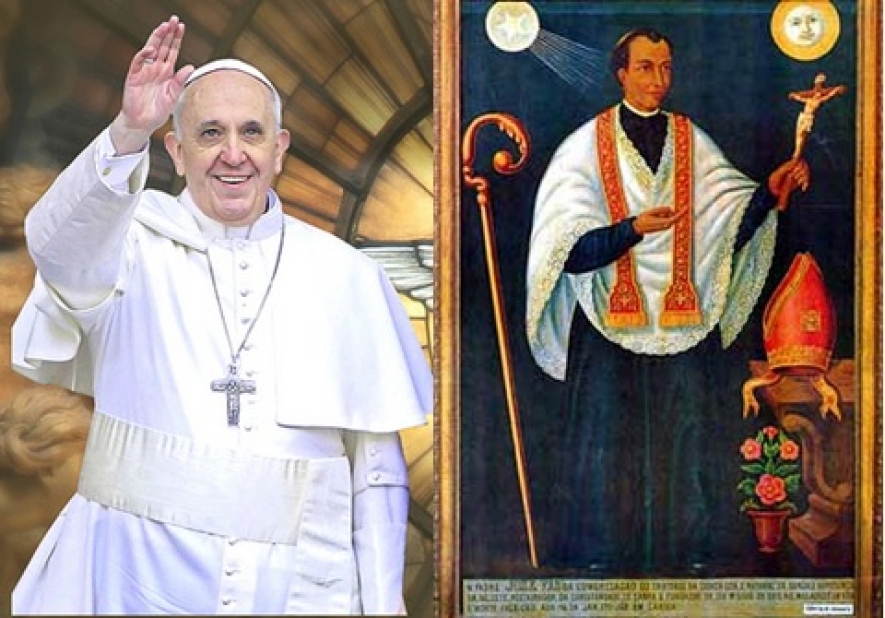
Giulia Nemesia Valle (1847-1916)

(Direct translation from the Vatican Italian – please excuse some ‘strange’ phraseology.)

Giulia is the name chosen by her parents Anselmo Valle and Cristina Dalbar.   She was born in Aosta on the 26th June 1847 and was baptised on the same day in the ancient collegiate church of Saint Orso.

She spends the first years of her life within a happy family who rejoiced at the birth of another child, a sister for Vincent.   But the mother died when Giulia was only four.   The two orphans are thus entrusted first to the care of the paternal relatives in Aosta and later to the maternal ones in Donnas.   Here they find a calm environment.  The school, catechism and the preparation for the sacraments take place at home under the guide of a priest who was a family friend.

When Giulia is eleven, she is sent to France in Besançon, in a boarding school run by the Sisters of Charity where she could continue her schooling.   Her separation from the family caused her a new suffering, a new experience of solitude directing her towards a deep friendship with “the Lord who keeps her mother with Him”.

In Besançon she learned French thoroughly, enriched her culture and becomes skilful in housework.   Her delicate goodness matured and it rendered her loveable and attentive towards the others.   Five years later, Giulia returned to her valley but her house at Donnas is no longer there.   Her father got married again and moved to Pont Saint Martin.   Here the familiar situation is strained and living together is not so easy.   Her brother Vincent cannot stand her:  he goes away….Giulia remains and out of her solitude crops up the stimulus to seek what her family couldn’t provide for her, to look after those who experiment her same sorrowful event and find out ways and means that express friendship, understanding, kindness and goodness for everyone.

In that period, the sisters of Charity came to settle at Pont Saint Martin.   In them, Giulia rediscovered her teachers of Besançon, the daughters of Saint Jeanne-Antide Thouret who give her help and encouragement.   She observes the life-style that they offer to God and to the others and chooses to become one of them.   When her fathers presents her the suggestion of a prosperous marriage, Giulia doesn’t hesitate:  she has promised her life totally to God :  she only desires to become a Sister of Charity.

On the 8th September 1866 her father accompanies her to the Monastery of Santa Margherita in Vercelli where the Sisters of Charity run a noviciate.

A new, peaceful and joyful life starts for her in spite of the suffering separation.   It’s now a matter of building a deeper relationship with God, of knowing herself and the mission of the community in order to accomplish God’s will.   Giulia starts joyfully her new journey.   Every day she discovers what she must lose or acquire: “Jesus strip me of myself, let me be wrapped in you. Jesus I live for you, and I die for you…” is the prayer that already accompanies and will continue to accompany her during her lifetime.

At the end of the noviciate, together with the new habit she receives a new name:  r. Nemesia.   It’s the name of one of the earliest martyrs of the church.   She is happy with the name and makes out of it a life’s program :  to witness at all costs, totally and for ever her love for Jesus.

She is sent to Tortona, in St Vincent’s Institute where she finds several activities:  an elementary school, cultural courses, a boarding school and an orphanage.   She teaches both in the elementary school and French in the higher classes.   That’s the favourable ground where she can sow kindness.  Sr Nemesia is present where humble work is to be done, where there is pain to be relieved, where apprehension hinders good relationships, where fatigue, pain and poverty put limits to life.   A voice immediately spreads within the institute and in the city: “Oh, the heart of Sr. Nemesia!

Everyone is convinced to have a particular place in this heart that knew no boundaries: Sisters, orphans, pupils, families, poor, the clergy of the nearby seminary, young soldiers of the numerous barracks of Tortona turn to her and seek her as if she were the only Sister present in the house.

When she is nominated superior of the community at the age of forty, Sr Nemesia feels perplexed but she remembers that:  to be a superior means “to serve” and therefore she can give herself without any limits.   Thus she humbly faces the ascent.   The traces the main contents of her programme:

Keep a quick pace, without looking behind and concentrate on the one goal:  God Alone ! To Him the glory, to the others joy, for me to pay the price, never make others suffer.   I shall be very strict with myself and full of charity towards the others:  love gratuitously offered is the only thing that remains.”

Her charity knew no limits.   In Tortona she is called “our angel”.

In the morning of the 10th of May 1903,  the orphans and the boarders find a message addressed to them from Sr Nemesia:  “I am leaving happily, I entrust to our Lady… I shall follow you in every moment of the day”.   She left alone at 4 o’clock in the morning, after 36 years… In Borgaro, a small country in the vicinity of Turin, there is a small group of young girls waiting to be accompanied along a new path, towards the total self-gift to God and to serve him later in the poor… They are the novices of the new province of the Sisters of Charity…  The method of her formation remains always the same:  that of kindness, understanding that educates to renouncement out of love, patience that knows how to wait and how to find the correct way that is convenient to everyone.

Her novices recall : “She knew each one of us, she understood our needs, she treated us according to our characters.”

The character of the Provincial Superior which “was perfectly opposite to hers”, disagreed with her method.   She was in favour of a rigid, strong and immediate method. Such a difference in their points of view caused relevant contrasts which found their expression in reproaches and humiliations.   Sister Nemesia accepted everything in silence, smiling as she went ahead, without hurrying and without neglecting her responsibilities:   “From one station to the other, let us continue our way in the desert…and if the desert is deaf, your Creator is always listening…”

Sr Nemesia’s path nears the end.   Already thirteen years have passed since her arrival in Borgaro.   About five hundred novices have learnt from her how to walk on the paths traced by God.   She has given everything   now the Lord asks her to “hand over” to others even “her noviciate”.

The prayer that has become hers since the beginning:  “Jesus strip me of myself, let me be wrapped in You” has accompanied her throughout her life.   Now she can say “I don’t exist any more”.   She has given up everything.   It’s the perfect offering of an existence fully offered to Love.

Sr. Nemesia dies on the 18th December 1916.

Posted in ADVENT, SAINT of the DAY

Memorials of the Saints – 18 December

Our Lady of the Expectation – This Feast originated in Spain. When the feast of the Annunciation (25 March) was transferred to 18 December because of the regulation forbidding feasts in Lent, it remained on this date after the Annunciation was again celebrated on its original date. It impressed on the faithful the sentiments of the Blessed Virgin as the time of her delivery approached.

our-lady-of-expectation (1)the expectation
St Auxentius of Mopsuetia
St Basilian of Laodicea
St Bodagisil of Aquitaine
St Desiderius of Fontenelle
Bl Eugenio Cernuda Febrero
St Flannán of Killaloe
St Gatianus of Tours
Bl Giulia Valle
St Malachi the Prophet
St Mawnan of Cornwall
Bl Miguel San Román Fernández
St Phaolô Nguyen Van My
St Phêrô Truong Van Ðuong
St Phêrô Vu Van Truat
Bl Philip of Ratzeburg
St Rufus of Philippi
St Samthann of Clonbroney
St Theotimus of Laodicea
St Winebald of Heidenheim
St Zosimus of Philippi

Martyrs of Northwest Africa – 42 saints:
Mercedarian Redeemers – 6 beati – These are a group of Mercedarian friars who worked together, under the leadership of Saint Peter de Amer, to ransom (e.g., redeem) prisoners and minister to them after.

Posted in ADVENT, MORNING Prayers, QUOTES of the SAINTS, SAINT of the DAY, THE HOLY FAMILY - FAMILIAE SANCTAE, The WORD

One Minute Reflection – 17 December – The Memorial of St Josep Manyanet (1833-1901)

One Minute Reflection – 17 December – The Memorial of St Josep Manyanet (1833-1901)

“The Holy Spirit, whom the Father will send in my name, will teach you everything and remind you of all that I told you.”…John 14: 26

REFLECTION – “From the beginning, the Holy Spirit has brought forth men and women who have remembered and spread the truth revealed by Jesus.   One of these was St Josep Manyanet, a true apostle of the family.   Inspired by the school of Nazareth, he carried out his plan of personal sanctity and heroically devoted himself to the mission that the Spirit entrusted to him.   He founded two religious congregations.   A visible symbol of his apostolic zeal is also the temple of the Holy Family of Barcelona…St John Paul at the Canonisation Mass, 16 May 2004st john paul on st josep manyanet - 17 dec 2017

PRAYER – Holy God, we pray for all families, most especially our fellow Catholic families, that they may live as their model – the Holy Family of Nazareth.   May St Josep Manyanet bless all families and help them follow the example of the Holy Family in their homes! Grant this we pray, through Jesus Christ, our Lord, with You and the Holy Spirit, one God forever and ever, amen.st josep manyanet pray for us

Posted in ADVENT, SAINT of the DAY

Saint of the Day – 17 December – St Josep Manyanet y Vives (1833-1901)

Saint of the Day – 17 December – St Josep Manyanet y Vives (1833-1901) – Priest and Founder of of the Sons of the Holy Family and the Missionary Daughters of the Holy Family of which orders he is the Patron.

Josep Manyanet was born within a large and Christian family on 7 January 1933 in Northeastern Spain, in the city of Tremp, province of Lleida.   He was baptised on the same day at his parish Church of our Lady of Valldeflors, patroness of the city.   At a very early age, when he was five years old, he was offered to our Lady by his mother.   He had to work to complete his schooling with the Piarist Fathers in Barbastro and at the Seminaries of Lleida and Urgell.   He was ordained priest on April 9, 1859.
After twelve years of hard work in the Diocese of Urgell at the service of his bishop as private secretary, librarian of the seminary, administrator of the chancery and secretary for pastoral Visitations, he felt God’s call to become a religious priest and to found two religious congregations.header - st josep

Founder and Apostle of the Holy Family:
With the approval of his bishop, he founded, in 1864, the religious congregations of the Sons of the Holy Family Jesus, Mary and Joseph and, in 1874, the Missionary Daughters of the Holy Family of Nazareth with the mission to honour, imitate and propagate the example of the Holy Family of Nazareth and the Christian formation of families, especially through the catholic education of children and youth and through priestly ministry.
With constant work and prayer, with and exemplary life full of virtues, with loving dedication and solicitude for the souls, he guided and encouraged for almost forty years, the formation and expansion of his Institutes, opening schools and centres of ministry in several towns in Spain.   Today both Institutes are present in several European countries, in North and South America and in Africa as well.
Specially called by God to present to the world the example of the Holy Family of Nazareth, he wrote several books and booklets to spread the devotion of the Holy Family.   He founded the magazine La Sagrada Familia and promoted the idea of the construction of a Basilica dedicated to the Holy Family.   The Temple, as yet unfinished in Barcelona, (due for completion in 2020) was built by the architectural genius and Servant of God Antonio Gaudí, destined to perpetuate the virtues and examples of the Family of Nazareth and to be the universal spiritual home of all families.

His Train of Thought:
Blessed Josep Manyanet endeavoured to spread the Gospel, both through his preaching and his writings.   He wrote many letters, books and booklets for the formation of the members of his religious Institutes, for families and children and for the management of schools.   One of the highlights is the School of Nazareth and Home of the Holy Family (Barcelona 1895), his spiritual autobiography in which through the dialogues of Jesus, Mary and Joseph, with a literary character called Desideria, describes a process of Christian and religious perfection inspired in the spirituality of the home and school of Nazareth.
His book A Priceless Family Gem (Barcelona 1899) is a guide for marriages and families, which reminds them of the dignity of the sacrament of marriage as a vocation and the important task of the Christian education of their children.
The spirit of the Holy Family is a book of meditations dedicated to the members of his religious Institutes, where he describes their vocation, identity and mission within the society and the church.   There is an edition of his Selected Works (Madrid 1991).   A forthcoming edition of his Complete Works will enrich those already published.   The first volume is already on the way.

Illnesses and Death:
His many endeavours were not free of difficulties.   He also had to endure physical illnesses along his life but his constancy and fortitude, nourished by his humble obedience to the will of God, helped him to overcome all of them.
Because of his poor health, due to open sores on his side, which he labelled God’s mercies for 16 long years, on the 17th of December of 1901, full of virtues and good deeds, was called by God to his eternal home, in his school “Jesús, María y José” of Barcelona, central place of his work, surrounded by children, with the same simplicity that characterised all his life.   His last words were his fervent prayer Jesus, Mary and Joseph, may I breathe forth my soul in peace with you.
His remains are kept in a burial chapel at the same school were he died, accompanied by the prayer and gratitude of his religious sons and daughters as well as the numerous youth, children and families that, because of his example, live their lives close to God and to his teachings.San Josep Manyanet

Witness to Holiness:
His saintly life impressed many people who came in contact with him.   The Process of Canonisation was formally introduced in 1956.   Once the practice of all virtues in a heroic grade was officially recognised by the church in 1982 and proof of a healing miracle attributed to his intercession, Pope John Paul II declared him Blessed in 1984. Now with the approval of another miracle through his intercession, his canonisation is scheduled to take place in Rome, on May 16, 2004.
Pope John Paul II has stated that the sanctity demonstrated by Josep Manyanet stems from the Holy Family.   He was called by God, so that “in his name every family on earth may be blessed”.   The Holy spirit guided him to boldly proclaim the “Gospel of the family”.   His inspiration was that “all families may imitate and bless the Holy Family of Nazareth”. That is: “to build a Nazareth in every home”, and to make of every family a “Holy Family”.
His canonisation brings forth the truth of his sanctity and the unending value of his message from Nazareth.   That makes him a Prophet of the family and the protector of our families.

Posted in ADVENT, SAINT of the DAY

Memorials of the Saints – 17 December

St Briarch of Bourbriac
St John of Matha
St Josep/José Manyanet y Vives
St Judicaël
St Lazarus of Bethany
BL Mariano Alarcón Ruiz
Bl Mathilde Téllez Robles
St Maxentiolus
St Modestus of Jerusalem
St Olympias of Constantinople
Bl Peter of Spain
St Sturmi of Fulda
St Tydecho
St Wivina
St Yolanda

Martyrs of Eleutheropolis – (60+ Martyrs-Beati): Approximately 60 Christian soldiers in the imperial Roman army of emperor Heraclius; they were murdered as a group for their faith by invading Saracen Muslims. We know the names of two of them – Calaoicus and Florian. 638 in Eleutheropolis (Beit Jibrin), Palestine.

Posted in BRIDES and GROOMS, Of PARENTS & FAMILIES of LARGE Families, PATRONAGE - IN-LAW PROBLEMS, PATRONAGE - PRISONERS, PATRONAGE - SPOUSAL ABUSE / DIFFICULT MARRIAGES / VICTIMS OF ABUSE, SAINT of the DAY, WIDOWS and WIDOWERS

Saint of the Day – 16 December – St Adelaide of Italy/Burgundy (c 931-999)

Saint of the Day – 16 December – St Adelaide of Italy/Burgundy – Holy Roman Empress, widow, Foundress of monasteries and Apostle of Charity (c 931-999) (c 931 at Burgundy, France – 999 at the monastery of Selta (Seltz), Alsace of natural causes).   Patronages – • abuse victims• against in-law problems• brides• empresses• exiles• parenthood• parents of large families• princesses• prisoners• second marriages• step-parents• widows.   Attributes – • empress dispensing alms and food to the poor, often beside a ship• escaping from prison in a boat• holding a church• veil.   St Adelaide was a Holy Roman Empress by marriage to Holy Roman Emperor Otto the Great; she was crowned as the Holy Roman Empress with him by Pope John XII in Rome on 2 February 962. She was regent of the Holy Roman Empire as the guardian of her grandson in 991-995.

St Adelaide was possibly the most prominent European woman of the tenth century through her second marriage to Otto the Great of Germany, the Holy Roman Emperor, Adelaide was regent for some time and later became the foundress of many monasteries of monks and nuns.Santa Adelaide, estátua em Seltz, Alsacia

The daughter of Rudulph II of Upper Burgundy, Adelaide was married at the age of sixteen to Lothair, who was then king of Italy.   A daughter, Emma, was born of this marriage.   Lothair was probably poisoned by his successor to the throne, Berengar.   As part of Berengar’s attempt to keep his grip on power, he ordered Adelaide to marry his son;  she refused, and he imprisoned her in a castle.  But soon after the German king, Otto the Great, defeated Berengar and freed Adelaide and proposed marriage, which she accepted.     On Christmas Day 951 she married Otto at Pavia.   The marriage consolidated his authority in northern Italy and in 962 they were crowned emperor and empress by Pope John XII in Rome.   Otto died in 973 and for twenty years Adelaide’s life was a turmoil of family and political troubles.   Her daughter-in-law, the Byzantine princess Theophano turned her son Otto II against her.   Adelaide had to leave the court and live for a time with her brother in Burgundy.   A reconciliation was effected and in 983 just before he died Otto appointed her his viceroy in Italy.

Otto II died the same year and the new emperor, her grandson Otto III, still a minor, was entrusted to the joint regency of his mother and grandmother.   Theophano was able once again to oust Adelaide from power and the court.   When Theophano died in 991 the regency reverted to Adelaide alone.   The bishop of Mainz, St. Willigis, came to her aid.

After Otto came of age in 995, Adelaide was able to devote herself to works of generosity to the poor, to help in evangelising the Slavs and in founding and restoring monasteries and convents.   She was especially friendly with the monastery of Cluny, then the centre of a movement for reform and with its abbots St Majolus and St Odilo.   The latter wrote a memoir of her, calling her ‘a marvel of beauty and goodness’.   When Otto III was old enough, Adelaide retired to the convent of Seltz near Cologne, a house she had built.   She never became a nun but she spent the rest of her days there in prayer.   Her feast is kept especially in many German dioceses.

Posted in ADVENT, SAINT of the DAY

Memorials of the Saints – 16 December

St Adelaide of Burgundy
St Adelard of Cysoing
St Ado of Vienne
Bl Adolphus of Tunis
Bl Arnaldo of Tunis
St Albina of Caesarea
St Ananias
St Azarias
St Bean of Lough Derg
St Beoc
Bl Clemente Marchisio
St Dominic Dosso
Bl Elizabeth of Saint Francis
Bl Filip Siphong Onphithakt
St Irenion
Bl James of Tunis
Bl Jaume Mases Boncompte
St Jean Wauthier
St Macarius of Collesano
Bl Mary Fontanella
St Misael
St Nicholas Chrysoberges
Bl Raynald de Bar
Bl Sebastian Maggi

Martyred Women of North-West Africa: A large group of women martyred in the persecutions of Hunneric, Arian King of the Vandals. 482 in North-West Africa.

Martyrs of Ravenna – (4 saints): A group of Christians martyred together. Four names and no other information has survived – Agricola, Concordius, Navalis and Valentine. c 305 at Ravenna, Italy.

Posted in ADVENT, SAINT of the DAY

Saint of the Day – 15 December – St Virginia Centurione Bracelli (1587-1651)

Saint of the Day – 15 December – St Virginia Centurione Bracelli (1587-1651) Widow, Religious, Founder, Apostle of Charity.   (2 April 1587 in Genoa, Italy – 15 December 1651 in Genoa, Italy of natural causes).   Patronage – Sisters of Our Lady of Refuge in Mount Cavalry.   St Virginia was Cabonised on 18 May 2003 by St Pope John Paul II at Vatican Basilica.   Her body is incorrupt.

Virginia_Centurione_Bracelli3

She was born in 1587 in Genoa to a family of nobles.   She was the daughter of Giorgio Centurione (who was the Doge of Genoa from 1621 to 1623) and Lelia Spinola.   Though she felt a calling to dedicate her life to prayer and service in a religious community, she was given in marriage to a well-known and wealthy young man, Gaspare.

The couple had two daughters, but Gaspare’s attention was divided by pursuits of pleasure.   Living harshly shortened his life and Virginia found herself a widow by the time she was 20.   Her father tried to arrange a second marriage,but she refused and made a vow of chastity.

While she remained obedient to her father in other matters and never disregarded the care of her own children, she began to share her available time and resources with those in need.   She felt called to serve God through the poor and dedicated half of her wealth to those who lacked what they needed for a dignified life.

When her daughters had grown and accepted marriages, Virginia turned her full attention to helping orphans, the elderly and the sick.   War, epidemics and famine all brought many suffering people to her doorstep.   She began to go a step further, traveling to disreputable areas of the city to seek out those in danger, especially women.

An empty convent stood near the town and she was given permission to rent it to care for children who were orphaned and suffering from a plague and famine.   Other women came to join her in service.   Within three years, some 300 were receiving care there and the centre was recognised as a hospital.  She organised the women who came to help her into a community and spent the rest of her life supporting their work to serve God through the poor.

Nobles and government officials called upon her to help mediate differences and she gathered people to find ways to fight systems of inequality in the region.   Despite all of these engagements, she never lost sight of the poor—she always had time and assistance to offer them and continued to seek them out.   She died on this date in 1651 and was canonised by St Pope John Paul II in 2003.

St. Virginia Centurione Bracelli, you served God through the poor, pray for us!

Virgina_Centurione_Pittura

Posted in ADVENT, SAINT of the DAY

Memorials of the Saints – 15 December

St Margaret of Fontana
Bl Maria della Pace
St Mary Crocifissa di Rosa
St Maximinus of Micy
St Offa of Essex
Bl Pau Gracia Sánchez
St Paul of Latros
Bl Ramón Eirin Mayo
St Silvia of Constantinople
St Urbicus
St Valerian of Abbenza
Bl Victoria Strata
St Virginia Centurione Bracelli (1587-1651)

Martyrs of Drina – (5 beati): Also known as
• Daughters of Divine Charity of Drina
• Drina Martyrs
Five members of the Daughters of Divine Charity who were martyred while fighting off Chetnik rapists. They were –
Jozefa Bojanc
Jozefa Fabjan
Karoline Anna Leidenix
Kata Ivanisevic
Terezija Banja
Their martyrdom occured in December 1941 in Gorazde, Bosansko-Podrinjski, Bosnia-Herzegovina
They were Beatified on 24 September 2011 by Pope Benedict XVI.
Martyrs of North Africa – (7 saints): A group of Christians martyred together for their faith in North Africa. The only details about them that survive are their names – Caelian, Candidus, Faustinus, Fortunatus, Januarius, Lucius and Mark.
Martyrs of Rome – (22 saints): A group of 22 Christians martyred together in the persecutions of Valerian. The only details we have are five of their names – Antonius, Irenaeus, Saturnin, Theodorus and Victor. c 258 in Rome, Italy.

Posted in ADVENT, CARMELITES, DOCTORS of the Church, MORNING Prayers, SAINT of the DAY, The HOLY CROSS

Thought for the Day – 14 December – The Memorial of St John of the Cross (1542-1591) Doctor of the Church

Thought for the Day – 14 December – The Memorial of St John of the Cross (1542-1591) Doctor of the Church

In his life and writings, John of the Cross has a crucial word for us today.   We tend to be rich, soft, comfortable.   We shrink even from words like self-denial, mortification, purification, asceticism, discipline.   We run from the cross.   John’s message—like the gospel—is loud and clear:   Don’t—if you really want to live! (Fr Don Miller OFM)

St John of the Cross – pray for us!ST J OF THE CROSS - PRAY FOR US - 14 DEC 2017

Posted in ADVENT, CARMELITES, DOCTORS of the Church, MORNING Prayers, POETRY, PRAYERS of the SAINTS, SAINT of the DAY

‘Song of the soul that is glad to know God by faith’

‘Song of the soul that is glad to know God by faith’

14 December – The Memorial of St John of the Cross (1542-1591) Doctor of the Church

There have been a number of translations into English of the works of St John of the Cross.   One of the translations which has been considered one of the best is that by the Anglo-South African convert poet Roy Campbell (2 October 1901 – 22 April 1957).

In October 2009, Roger Scruton wrote about Roy Campbell in his article “A Dark Horse” published in The American Spectator. He was hated by the English “left establishment” especially because of his position on The Spanish Civil War.

The Wikipedia entry says of Roy Campbell that he “was considered by T. S. Eliot, Edith Sitwell and Dylan Thomas to have been one of the best poets of the period between the First and Second World wars but he is seldom found in anthologies today.”

Campbell’s translations of the poetry by St John of the Cross were lavishly praised by Argentine writer Jorge Luis Borges

For more about Campbell`s work, R J Dent has published an essay on Roy Campbell and his work entitled: Violence and exquisite beauty – the aesthetics of Roy Campbell.

Here is a poem of St John of the Cross with the translations by the late Roy Campbell.

‘Song of the soul that is glad to know God by faith’

How well I know that fountain’s rushing flow
Although by night

Its deathless spring is hidden. Even so
Full well I guess from whence its source flow
Though it be night.

Its origin (since it has none) none knows:
But that all origin from it arose
Although by night.

I know there is no other thing so fair
And earth and heaven drink refreshment there
Although by night.

Full well I know the depth no man can sound
And that no ford to cross it can be found
Though it be night

Its clarity unclouded still shall be:
Out of it comes the light by which we see
Though it be night.

Flush with its banks the stream so proudly swells;
I know it waters nations, heavens, and hells
Though it be night.

The current that is nourished by this source
I know to be omnipotent in force
Although by night.song of the soul that is glad to know god by faith - st j of the cross - 14 dec 2017

After the beatification of St John of the Cross on 25 January 1675, the Carmelite convent of Nuestra Señora de los Remedios near Seville commissioned this life-sized statue from the young Sevillian sculptor, Francisco Antonio Gijón, then only 21.
The figure of the saint holds a quill pen in his right hand and, in the left, a book with a model of a mountain surmounted by a cross, which refers to his mystic commentary, “The Ascent of Mount Carmel.”

Francisco Antonio Gijón (1653–c. 1721) and unknown painter (possibly Domingo Mejías)
Saint John of the Cross
c 1675
Painted and gilded wood
168 cm (66 1/8 in.)


Posted in ADVENT, CARMELITES, DOCTORS of the Church, MORNING Prayers, QUOTES of the SAINTS, QUOTES on LOVE, SAINT of the DAY, The HOLY CROSS

Quotes of the Day – 14 December – The Memorial of St John of the Cross (1542-1591) Doctor of the Church

Quotes of the Day – 14 December – The Memorial of St John of the Cross (1542-1591) Doctor of the Church

“In giving us His Son, His only Word,
He spoke everything to us at once
in this sole Word – and He has no more to say…
because what He spoke before to the prophets in parts,
He has now spoken all at once by giving us
the ALL Who is His Son.”in giving us his son - st john of the cross - 14 dec 2016

“If a man wishes to be sure of the road
he treads on, he must close his eyes
and walk in the dark.”if a man wishes to be sure of the road - st john of the cross - 14 dec 2017

“At the end of your life,
you will be judged by your love.”

St John of the Cross (1542-1591) Doctor of the Churchat the end of your life - st j of the cross = 14 dec 2017


Posted in ADVENT, CARMELITES, DOCTORS of the Church, MORNING Prayers, QUOTES on SUFFERING, SAINT of the DAY, The WORD

One Minute Reflection – 14 December – The Memorial of St John of the Cross (1542-1591) Doctor of the Church

One Minute Reflection – 14 December – The Memorial of St John of the Cross (1542-1591) Doctor of the Church

In all truth I tell you, unless a grain of wheat
falls into the earth and dies,
it remains only a single grain;
but if it dies it yields a rich harvest…John 12:24john 12 - 24

REFLECTION – “O you souls who wish to go on with so much safety and consolation, if you knew how pleasing to God is suffering and how much it helps in acquiring other good things, you would never seek consolation in anything; but you would rather look upon it as a great happiness to bear the Cross of the Lord.”…Saint John of the Crosso you souls - st john of the cross - 14 dec 2017

PRAYER – Lord God, You gave St John of the Cross, the grace of complete self-denial and an ardent love for the Cross of Christ. Grant that by following always in the footsteps of Christ and by the prayers of St John of the Cross on our behalf, we may come to the eternal vision of Your glory. Through our Lord Jesus Christ, in unity with the Holy Spirit, one God forever, amen.st john of the cross pray for us - 14 dec 2017

Posted in ADVENT, CARMELITES, DOCTORS of the Church, MORNING Prayers, PRAYERS of the SAINTS, SAINT of the DAY, Uncategorized

Our Morning Offering – 14 December – The Memorial of St John of the Cross (1542-1591) Doctor of the Church

Our Morning Offering – 14 December – The Memorial of St John of the Cross (1542-1591) Doctor of the Church

O King of Gentleness
By St John of the Cross

O blessed Jesus,
give me stillness of soul in You.
Let Your mighty calmness reign in me.
Rule me, O King of Gentleness,
King of Peace.o king of gentleness - o blessed jesus give me - st john of the cross - 14 dec 2017

Posted in ADVENT, ART DEI, CARMELITES, MORNING Prayers, ON the SAINTS, SAINT of the DAY, The HOLY CROSS

Christ of Saint John of the Cross

Christ of Saint John of the Cross is a painting by Salvador Dalí made in 1951.   maxresdefault

It depicts Jesus Christ on the cross in a darkened sky floating over a body of water complete with a boat and fishermen.   Although it is a depiction of the Crucifixion, it is devoid of nails, blood and a crown of thorns, because, according to Dalí, he was convinced by a dream that these features would mar his depiction of Christ.   Also in a dream, the importance of depicting Christ in the extreme angle evident in the painting was revealed to him.

70ddc4b4dc7e3d28326a32e29d6c4997--dali-paintings-cross-paintings

It is known by it’s Title because its design is based on a drawing by the 16th-century Spanish friar, today’s saint and a Doctor of the Church, St Jon of the Cross.   The composition of Christ is also based on a triangle and circle (the triangle is formed by Christ’s arms;  the circle is formed by Christ’s head).  The triangle, since it has three sides, can be seen as a reference to the Trinity and the  circle represents Unity.    Below is the drawing by St John of the Cross.drawing-by-st-john-of-the-cross

On the bottom of his studies for the painting, Dalí explained its inspiration:   “In the first place, in 1950, I had a ‘cosmic dream’ in which I saw this image in colour and which in my dream represented the ‘nucleus of the atom.’   This nucleus later took on a metaphysical sense;  I considered it ‘the very unity of the universe,’  the Christ!”

In order to create the figure of Christ, Dalí had Hollywood stuntman Russell Saunders suspended from an overhead gantry, so he could see how the body would appear from the desired angle and also envisage the pull of gravity on the human body.   The depicted body of water is the bay of Port Lligat, Dalí’s residence at the time of the painting.Salvador Dalí painting St. John of the Cross

Posted in ADVENT, CARMELITES, CONTEMPLATIVE Prayer, DOCTORS of the Church, SAINT of the DAY

Saint of the Day – 14 December – (1542-1591) Doctor of the Church

Saint of the Day – 14 December – (1542-1591) Doctor of the Church – Carmelite monk and Priest, Religious Founder, Writer, Poet, Mystic, Apostle of Contemplative Prayer.   Also known as • Doctor of Mystical Theology • John della Croce • John de la Croix • John de la Cruz.   Patronages – • contemplative life, contemplatives• mystical theology, mystics• Spanish poets• World Youth Day 2011• Segovia, Spain• Ta’ Xbiex, Malta.   Attributes – eagle, Crucifix, Cross, Carmelite habit.    John of the Cross is known for his writings.   Both his poetry and his studies on the growth of the soul are considered the summit of mystical Spanish literature and one of the peaks of all Spanish literature.   He was canonised as a saint in 1726 by Pope Benedict XIII.   He is one of the thirty-six Doctors of the Church, added by Pope Pius XI in 1926.   His works are • Ascent of Mount Carmel• Dark Night of the Soul, Book 1 • Dark Night of the Soul, Book 2 • A Spiritual Canticle of the Soul and the Bridegroom Christ.st john of the cross - infost john cross LARGE

St John was born Juan de Yepes y Álvarez into a converso family (descendents of Jewish converts to Christianity) in Fontiveros, near Ávila, a town of around 2,000 people.  John’s father had been disowned by his wealthy Spanish family when he married a poor weaver rather than a woman of equal economic status.   Living in poverty proved to be too much for him and he died shortly after John was born.   John spent much of his youth in an orphanage, where he was clothed, fed and given an elementary education.   At the age of 17, he found a job in a hospital and was accepted into a Jesuit college.   In 1563 he entered the Carmelite Order.   Eventually he enrolled in another university, where he did so well that he was asked to teach a class and to help settle disputes.

Ordained a Carmelite priest in 1567 at age 25, John met Teresa of Avila and, like her, vowed himself to the primitive Rule of the Carmelites.   As partner with Teresa and in his own right, John engaged in the work of reform and came to experience the price of reform:  increasing opposition, misunderstanding, persecution, imprisonment.    John was caught up in a misunderstanding and imprisoned at Toledo, Spain.   During those months of darkness in that little cell, John could have become bitter, revengeful, or filled with despair.   But instead, he kept himself open to God’s action, for no prison could separate him from God’s all-embracing love.   During this time he had many beautiful experiences and encounters with God in prayer.   He came to know the cross acutely—to experience the dying of Jesus—as he sat month after month in his dark, damp, narrow cell with only his God.Zurbarán_St._John_of_the_Cross. - large

Yet, the paradox!   In this dying of imprisonment John came to life, uttering poetry.   In the darkness of the dungeon, John’s spirit came into the Light.   There are many mystics, many poets-  John is unique as mystic-poet, expressing in his prison-cross the ecstasy of mystical union with God in the Spiritual Canticle.the blessed St John of the Cross


But as agony leads to ecstasy, so John had his Ascent to Mt Carmel, as he named it in his prose masterpiece.   As man-Christian-Carmelite, he experienced in himself this purifying ascent;  as spiritual director, he sensed it in others;  as psychologist-theologian, he described and analysed it in his prose writings.   His prose works are outstanding in underscoring the cost of discipleship, the path of union with God:  rigorous discipline, abandonment, purification.   Uniquely and strongly John underlines the gospel paradox: The cross leads to resurrection, agony to ecstasy, darkness to light, abandonment to possession, denial to self to union with God.   If you want to save your life, you must lose it.   John is truly “of the Cross.”   He died at 49—a life short, but full.    AND his reforms of the “Discalced” Carmelites revitalised the Order.   He was proclaimed a Doctor of the Church by Pope Pius XI on 24 August 1926.

496px-diego_de_sanabria_-_saint_john_of_the_cross_-_google_art_project
Diego de Sanabria – Saint John of the Cross
535px-el_greco_-_view_of_toledo_-_google_art_project
Image above – El Greco‘s landscape of Toledo depicts the priory in which John was held captive, just below the old Muslim alcázar and perched on the banks of the Tajo on high cliffs
Posted in ADVENT, SAINT of the DAY

Memorials of the Saints – 14 December

St John of the Cross (Memorial) (1542-1591) Doctor of the Church

St Abundius of Spain
St Agnellus of Naples
Bl Buenaventura Bonaccorsi
St Folcuino of Therouanne
Bl Joan Lambertini
St John Pan y Agua (Bread-and-Water)
Bl John Discalceat
St Justus of Spain
Bl Mary Frances Schervier
St Matronianus of Milan
St Pompeius of Pavia
BL Protasi Cubells Minguell
St Venantius Fortunatus
St Viator of Bergamo
St Yusuf Jurj Kassab al-Hardini
bL William de Rovira

Martyrs of Alexandria – 4 saints: A group of Egyptian Christians martyred together in the persecutions of Decius – Arsenius, Dioscurus, Heron and Isidore. They were burned to death in 250 at Alexandria, Egypt.

Martyrs of Apollonia – 7 saints: Martyred in the persecutions of Decius. The only surviving details are three names – Callinicus, Leucio and Tirso. Apollonia, Bithynia (in modern Turkey).

Martyrs of Ashkelon – 3 saints: Several pilgrims from Egypt to Cilicia (in modern Turkey) who planned to minister to fellow Christians suffering in the persecutions of emperor Maximinus. They were arrested, torture, mutilated and then imprisoned in Ashkelon. Some were ordered to forced labour in the mines, but we have the names of three who were martyred by order of governor Firmilian – Ares, Elijah and Promo. They were burned at the stake or beheaded at the gates of Ashkelon c 308.

Martyrs of Hayle – 2+ saints: Several Christians, including a brother and sister, who were martyred together by pagans. The only other information to survive are the names of the two siblings – Fingar and Phiala. 5th century at Hayle, Cornwall, England.

Martyrs of Syria – 3 saints: Three Christians who were martyred together. Known to Saint John Chrysostom who preached on their feast day, and left us the only details we have – their names – Drusus, Theodore and Zosimus. The date and precise location of their martyrdom is unknown, but it was in Syria, possibly in Antioch.

Posted in ADVENT, MORNING Prayers, QUOTES on SUFFERING, SAINT of the DAY, The WORD

Thought for the Day – 13 December – Wednesday of the Second Week of Advent and the Memorial of St Lucy (c 283-304)

Thought for the Day – 13 December – Wednesday of the Second Week of Advent  and the Memorial of St Lucy (c 283-304)

Gospel for today : Matthew 11:28-30

Jesus exclaimed, Come to me, all you that are weary
and are carrying heavy burdens
and I will give you rest.
Take my yoke upon you and learn from me;
for I am gentle and humble in heart
and you will find rest for your souls.
For my yoke is easy, and my burden is light.matthew 11 29-30

The symbol of “yoke” used by Jesus in the Gospel has a special significance.
Two bulls are required to carry a yoke.
When Jesus says, “Take my yoke upon you” means He is already on one side of the yoke.
He is inviting us to put our shoulder on the other side!
When we take Jesus’ yoke upon ourselves, we experience that the burden is light
and the yoke is easy to carry because of the presence of Jesus.

The ones who walk in the way of the Lord, will never be tired
because the Lord Himself will be their peace and their rest.
The peace and rest that come from the Lord are the signs which assures us
that we are carrying the burden with Jesus, whereas, disturbance and
restlessness, are signs which suggest that we are trying to do things
our own way and are burdened with our own agenda!

So how do we “see” our Lord there, right next to us?
Touch the hem of Christ’s garment! Celebrate the Eucharist – for it is here
that we are given peace and strength – in this mystery, God holds us to His Heart
and we can find Him on the other side of the yoke and we become whole.

Lord Jesus, our Christ, may we always accept Your invitation just as St Lucy did, whose Memorial we celebrate today and whose prayers we implore!st lucy pray for us 2

Posted in DOCTORS of the Church, MORNING Prayers, QUOTES of the SAINTS, QUOTES on SUFFERING, SAINT of the DAY

Quote/s of the Day – 13 December

Quote/s of the Day – 13 December

“If you want to honour the body of Christ,
do not scorn it when it is naked;
do not honour the Eucharistic Christ
with silk vestments and then,
leaving the church, neglect the other Christ
suffering from cold and nakedness”

St John Chrysostom (347-407)

Father and Doctor of the Church – (Hom. in Matthaeum, 50.3: PG 58)if-you-want-to-honour-the-body-of-christ-st-john-chrysostom-19-nov-2017

“The more we are afflicted in this world,
the greater is our assurance in the next;
the more we sorrow in the present,
the greater will be our joy in the future.”

St Isidore of Seville (560-636) Doctor of the Churchthe more we are afflicted - st isidore of seville - 13 dec 2017

“When it is all over, you will not regret having suffered;
rather, you will regret, having suffered so little
and suffered that little so badly.”

Bl Sebastian Valfre (1629-1710)when it is all over - bl sebastian valfre - 13 dec 2017

Posted in ADVENT, JESUIT SJ, MORNING Prayers, QUOTES of the SAINTS, SAINT of the DAY, The HOLY GHOST, The WORD

One Minute Reflection – 13 December – The Memorial of St Lucy (c 283-304)

One Minute Reflection – 13 December – The Memorial of St Lucy (c 283-304)

Cast me not our of your presence and your Holy Spirit, take not from me….Psalm 51:13psalm 51 13

REFLECTION – “When the Holy Spirit is in a soul, He communicates Himself in one way or another.
We can say that He makes virtue contagious and turns a simple faithful into an apostle.”…St Claude de la Colombiere S.J. (1641-1682)when the holy spirit - st claude de la colombiere 1641-1682 - 13 dec 2017

PRAYER – Heavenly Father, grant that Your Holy Spirit may inspire me to be a true follower of Your Son.   May He dwell in me always and keep me ever on the path of holiness.   May the prayer of the virgin Martyr Lucy, support us, O Lord, so that with each passing year, we may celebrate her entry into life and finally see You face to face and greet her with joy.   Through our Lord, Jesus Christ, in unity with the Holy Spirit, one God forever and ever amen.st lucy - pray for us - 13 Dec 2017

Posted in ADVENT, SAINT of the DAY

Saint of the Day – 13 December – St Lucy (c 283-304)

Saint of the Day – 13 December – St Lucy/Lucia of Syracuse  (c 283-304) Virgin and Martyr – Patron of the blind, eye disorders, martyrs, Perugia, Italy, Malta; epidemics; salesmen, Syracuse, Italy, throat infections, writers,  against fire, against poverty, against spiritual blindness,  peasants, penitent prostitutes, poor people, sick children, authors, cutlers, farmers, glass blowers, glass makers, glaziers, labourers, lawyer, maid servants, notaries, ophthalmologists, opticians, porters, printers, saddler, sailors, salesmen, seamstresses, stained glass workers, tailors, upholsterers, weavers and 10 further towns and cities.  Attributes – • cord• eyes• eyes on a dish• lamp• swords• woman hitched to a yoke of oxen• woman in the company of Saint Agatha, Saint Agnes of Rome, Barbara, Catherine of Alexandria and Saint Thecla• woman kneeling before the tomb of Saint AgathaSOD-1213-SaintLucy-790x480Niccolò_di_Segna_-_Saint_Lucy_-_Walters_37756

All that is really known for certain of Lucy is that she was a martyr in Syracuse during the Diocletianic Persecution of 304 AD.   Her veneration spread to Rome and by the 6th century to the whole Church.   The oldest archaeological evidence comes from the Greek inscriptions from the catacombs of St. John in Syracuse.

St Lucy was born in Sicily and died during the persecution of Diocletian.   The fact that she is still mentioned in the first Eucharistic Prayer of the Mass shows the great respect that the Church has for her.   One story about Lucy is that she is said to have made a vow to remain unmarried.   When the man to whom she was engaged found out, he turned her in as a Christian.   After torture that included having her eyes torn out, she was surrounded by bundles of wood which were set afire; they went out.   She prophesied against her persecutors and was executed by being stabbed to death with a dagger.   She was executed in Syracuse (Sicily) in the year 304.   Her name is mentioned in the First Eucharistic Prayer, geographical places are named after her, a popular song has her name as its title and down through the centuries many thousands of little girls have been proud of the name Lucy.unknown artist; Saint Lucy

One can easily imagine what a young Christian woman had to contend with in pagan Sicily in the year 300.   If you have trouble imagining, just glance at today’s pleasure-at-all-costs world and the barriers it presents against leading a good Christian life.

Her friends must have wondered aloud about this hero of Lucy’s, an obscure itinerant preacher in a far-off captive nation that had been destroyed more than 200 years before. Once a carpenter, He had been crucified by the Roman soldiers after his own people turned Him over to the Roman authorities.   Lucy believed with her whole soul that this man had risen from the dead.   Heaven had put a stamp on all He said and did.   To give witness to her faith she had made a vow of virginity.

What a hubbub this caused among her pagan friends!   The kindlier ones just thought her a little strange.   To be pure before marriage was an ancient Roman ideal, rarely found but not to be condemned.   To exclude marriage altogether, however, was too much.   She must have something sinister to hide, the tongues wagged.

Lucy knew of the heroism of earlier virgin martyrs in particular St Agatha to whom she prayed for intercession.   She remained faithful to their example and to the example of the carpenter, whom she knew to be the Son of God.

Lucy, whose name means “light” kept the light of her loyal faith burning through the experience of death.   Now she is enjoying the eternal wedding banquet.

Dolci, Carlo, 1616-1686; Head of a young Saint (St Lucy?)Saint_Lucy_by_Cosimo_Rosselli,_Florence,_c._1470,_tempera_on_panel_-_San_Diego_Museum_of_Art_-_DSC06640

Posted in ADVENT, SAINT of the DAY

Memorials of the Saints – 13 December

St Lucy (of Syracuse) (Memorial) – St Lucy/Lucia of Syracuse (c 283-304) Virgin and Martyr

St Antiochus of Sulci
Bl Antonio Grassi
St Aristone
St Arsenius of Latro
St Aubert of Arras
Bl Bartholomew of Tuscany
BL Costanza Starace
St Edburgh of Lyminge
St Einhildis of Hohenburg
Bl Elizabeth Rose
St Jodocus
BL John Marinoni
St Martino de Pomar
St Odilia of Alsace
St Roswinda
St Tassio of Bavaria
St Wifred
Blessed Mercedarian Knights – (7 beati): A group of Mercedarian knights who fought the enemies of the Catholic faith in the first century of the Order.
• Blessed Bernardo de Podio
• Blessed Giacomo de Copons
• Blessed Giovanni de Bruquera
• Blessed Guglielmo de Sa
• Blessed Pietro Boguer
• Blessed Pietro Ricart
• Blessed Raimondo de Frexa

Martyrs of Jeongju – (6 saints): Six Christian laymen who were imprisoned, tortured and martyred together in the persecutions in Korea. They were beheaded on 13 December 1866 in Supjeong-i, Jeongju, Chungcheong-do, South Korea
and Canonised on 6 May 1984 by St Pope John Paul II.
• Bartholomaeus Chong Mun-Ho
• Iosephus Han Won-So
• Peter Cho Hwa-so
• Petrus Son Son-Ji
• Petrus Yi Myong-So
• Petrus Chong Won-Ji

Martyrs of Sebaste – (5 saints): A group of Christians martyred together in the persecutions of Diocletian. We know little more than their names – Auxentius, Eustratius, Eugene, Mardarius and Orestes. They were martyred in c 302 at Sebaste, Armenia (in modern Turkey) and their relics are enshrined at the church of Saint Apollinaris in Rome, Italy.

Posted in ADVENT, MARIAN QUOTES, MARIAN TITLES, MORNING Prayers, SAINT of the DAY, The BLESSED VIRGIN MARY

Thought for the Day – 12 December – The Feast of Our Lady of Guadalupe and Rome’s Response

Thought for the Day – 12 December – The Feast of Our Lady of Guadalupe and Rome’s Response

Over the years the Popes have responded with unparalleled enthusiasm to all the pious demands of the Mexican hierarchy to further the cause of their Benefactress.   In all, fifteen Pontiffs have affixed their signatures to Guadalupan decrees.   She has been canonised the Patroness of Mexico and of all Latin America.   Pope Pius XII extended her reign even further by declaring her Empress of all the Americas, North, South and Central.

We cannot pass by the Popes without mentioning the most devoted of all the Vicars of Christ to Our Lady of Guadalupe, Pope Benedict XIV.   This enigmatic Pontiff, who refused even the Catholic Queen Mary of England a Mass in honour of the then controverted devotion to the Sacred Heart (1750’s) proved incapable of applying his famed over-cautious rigourism to the Mother as he did to her Son.   Toward the Mexican Virgin his heart became soft as wax.   He did everything he could to honour her.   He gave her a Mass, a place in the Divine Office and the first of the above-mentioned titles.   And he once told Fr Lopez, the Mexican Jesuit who had introduced him to the miraculous Image, that, if his duties did not prevent him, he would make a pilgrimage to the New World shrine and approach the Holy Virgin as the other poor pilgrims did, “barefoot and on his knees”.   In 1754, when none of his predecessors in the chair of Peter had as yet officially approved the apparition, that was a courageous and beautiful thing for a Pope to say.

However, the privilege was left to Holy Father John Paul II [1981] to be the first Pope to visit Guadalupe in person.   That was in January, 1979.   Though it is true that wherever he went in his world-wide tours he drew record-breaking crowds of welcomers, nowhere did he receive the overwhelming turnout that he did in Mexico.   God alone knows where they came from or how they got there but an estimated nine million people lined this poor country’s thoroughfares to greet the Holy Father, waving their bandettas and shouting thunderously,

“Long live the Pope!  Long live Our Lady of Guadalupe! Long live Christ the King!”

(*excerpt from BR. MICHAEL, M.I.C.M.)

Mary’s appearance to St Juan Diego as one of his people, is a powerful reminder that Mary–and the God who sent her–accept and love all peoples.
While a number of (the indigenous peoples) had converted before this incident, they now came in droves.   According to a contemporary chronicler, nine million Indians became Catholic in a very short time.   In these days when we hear so much about God’s preferential option for the poor, Our Lady of Guadalupe cries out to us that God’s love for and identification with the poor is an age-old truth that stems from the Gospel itself.

Our Lady of Guadalupe, protect us, guide us, teach us, pray for us!our lady of guadalupe pray for us no 2 - 12 dec 2017

Posted in ADVENT, MARIAN PRAYERS, MARIAN QUOTES, MARIAN TITLES, MORNING Prayers, QUOTES of the SAINTS, SAINT of the DAY, The BLESSED VIRGIN MARY, The WORD

One Minute Reflection – 12 December – The Feast of Our Lady of Guadalupe

One Minute Reflection – 12 December – The Feast of Our Lady of Guadalupe

Who is this that comes like the dawn ….. as awe-inspiring as bannered troops?…..Song 6:10SONG 6 10.-recoloured 12 dec 2017

REFLECTION – “Mary is an arsenal of graces and she comes to the aid of her clients.   She sustains, strengthens and revives us by the heavenly favours that she heaps on us.”…..St Paulinus of York (died 644)mary is an arsenal of graces - st paulinus - 12 dec 2017

PRAYER – Lord Jesus Christ my Lord, help me to become a devoted client of Your holy Mother Mary.   Through Your grace, may I receive the spiritual strength she has promised to all her clients.  May I, in simplicity, like St Juan Diego, become her vessel to share Your Light of Love throughout my world.   Our Lady of Guadalupe Pray for us! Amenour lady of guadalupe pray for us - 12 dec 2017

Posted in ADVENT, FEASTS and SOLEMNITIES, MARIAN TITLES, SAINT of the DAY

Saint of the Day – The Feast of Our Lady of Guadalupe – 12 December

Saint of the Day – The Feast of Our Lady of Guadalupe – 12 December – Our Mother of Guadalupe, The Madonna of Tepeyac, Tonantzin – The First Apparition was on 12 December 1531 and was approved by the Holy See on 12 October 1895, during the Canonical coronation granted by Pope Leo XIII – Patronages:  of Americas; New World, Central America, Mexico, New Mexico, Pojoaque Indian Pueblo, 12 dioceses, 3 cities.guadalupe - HEADER

Guadalupe is, strictly speaking, the name of a picture but the name was extended to the church containing the picture and to the town that grew up around the church.   It makes the shrine, it occasions the devotion, it illustrates Our Lady.   It is taken as representing the Immaculate Conception, being the lone figure of a woman with the sun, moon and star accompaniments of the great apocalyptic sign with a supporting angel under the crescent.   The word is Spanish Arabic but in Mexico it may represent certain Aztec sounds.

Its tradition is long-standing and constant and in sources both oral and written, Indian and Spanish, the account is unwavering.   The Blessed Virgin appeared on Saturday 9 December 1531 to a 55 year old neophyte named Juan Diego, who was hurrying down Tepeyac hill to hear Mass in Mexico City.   She sent him to Bishop Zumárraga to have a temple built where she stood.   She was at the same place that evening and Sunday evening to get the bishop’s answer.   The bishop did not immediately believe the messenger, had him cross-examined and watched and he finally told him to ask the lady who said she was the mother of the true God for a sign.   The neophyte agreed readily to ask for sign desired and the bishop released him.OurLadyofGuadalupe_St.PeterVolo-copy-1024x790

Juan was occupied all Monday with Bernardino, an uncle, who was dying of fever. Indian medicine had failed and Bernardino seemed at death’s door.  At daybreak on Tuesday 12 December 1531, Juan ran to nearby the Saint James convent for a priest.   To avoid the apparition and the untimely message to the bishop, he slipped round where the well chapel now stands.   But the Blessed Virgin crossed down to meet him and said, “What road is this thou takest son?”   A tender dialogue ensued.   She reassured Juan about his uncle, to whom she also briefly appeared and instantly cured.   Calling herself Holy Mary of Guadalupe she told Juan to return to the bishop.   He asked Mary for the sign he required.   She told him to go to the rocks and gather roses.   Juan knew it was neither the time nor the place for roses but he went and found them.   Gathering many into the lap of his tilma, a long cloak or wrapper used by Mexican Indians, he came back. The Holy Mother rearranged the roses and told him to keep them untouched and unseen until he reached the bishop.   When he met with Zumárraga, Juan offered the sign to the bishop.   As he unfolded his cloak the roses, fresh and wet with dew, fell out.   Juan was startled to see the bishop and his attendants kneeling before him.   The life size figure of the Virgin Mother, just as Juan had described her, was glowing on the tilma.   The picture was venerated, guarded in the bishop’s chapel and soon after carried in procession to the preliminary shrine.Our lady heals Juan Bernardinoguadalupe and the roses

The coarsely woven material of the tilma which bears the picture is as thin and open as poor sacking.   It is made of vegetable fibre, probably maguey.   It consists of two strips, about seventy inches long by eighteen wide, held together by weak stitching.   The seam is visible up the middle of the figure, turning aside from the face.   Painters have not understood the laying on of the colours.   They have deposed that the “canvas” was not only unfit but unprepared and they have marvelled at apparent oil, water, tempera, etc. colouring in the same figure.   They are left in equal admiration by the flower-like tints and the abundant gold.   They and other artists find the proportions perfect for a maiden of fifteen.   The figure and the attitude are of one advancing.   There is flight and rest in the eager supporting angel.   The chief colours are deep gold in the rays and stars, blue-green in the mantle and rose in the flowered tunic.guadalupe ino

Sworn evidence was given at various commissions of inquiry corroborating the traditional account of the miraculous origin and influence of the picture.   Some wills connected with Juan Diego and his contemporaries were accepted as documentary evidence.   Vouchers were given for the existence of Bishop Zumárraga’s letter to his Franciscan brothers in Spain concerning the apparitions.   His successor, Montufar, instituted a canonical inquiry, in 1556, on a sermon in which the pastors and people were abused for crowding to the new shrine.   In 1568 the renowned historian Bernal Díaz, a companion of Cortez, refers incidentally to Guadalupe and its daily miracles.   The lay viceroy, Enríquez, while not opposing the devotion, wrote in 1575 to Philip II asking him to prevent the third archbishop from erecting a parish or monastery at the shrine. Inaugural pilgrimages were usually made to it by viceroys and other chief magistrates. Processes, national and ecclesiastical, were laboriously formulated and attested for presentation at Rome, Italy in 1663, 1666, 1723, and 1750.

The clergy, secular and regular, has been remarkably faithful to the devotion towards Our Lady of Guadalupe, the bishops especially fostering it, even to the extent of making a protestation of faith in the miracle a matter of occasional obligation.   Pope Benedict XIV decreed that Our Lady of Guadalupe should be the national patron of Mexico and made 12 December a holiday of obligation with an octave and ordered a special Mass and Office.   Pope Leo XIII approved a complete historical second Nocturne, ordered the picture to be crowned in his name and composed a poetical inscription for it. Pope Pius X permitted Mexican priests to say the Mass of Holy Mary of Guadalupe on the twelfth day of every month and granted indulgences which may be gained in any part of the world for prayer before a copy of the picture.

eternal_father_painting_guadalupe
An 18th-century hagiographicpainting of God the Father fashioning the image.
pintura-de-nuestra-sec3b1ora-virgen-de-guadalupe
Allegory of the papal declaration in 1754 by pope Benedict XIV of Our Lady of Guadalupe patronage over the New Spain in the presence of the viceroyal authorities. Anonymous (Mexican) author, 18th century.

The place, called Guadalupe Hidalgo since 1822, is three miles northeast of Mexico City. Pilgrimages have been made to this shrine almost without interruption since 1531-1532. A shrine at the foot of Tepeyac Hill served for ninety years and still forms part of the parochial sacristy.   In 1622 a magnificent shrine was erected and in 1709 a newer, even more beautiful one.   There are also a parish church, a convent and church for Capuchin nuns, a well chapel and a hill chapel all constructed in the 18th century.   About 1750 the shrine got the title of collegiate, a canonry and choir service being established.   It was aggregated to Saint John Lateran in 1754.   In 1904 it was created a basilica, with the presiding ecclesiastic being called abbot.   The shrine has been renovated in Byzantine style which presents an illustration of Guadalupan history.450px-our_lady_of_guadalupe

guadalupano
The revolutionary banner carried by Miguel Hidalgo and his insurgent army during the Mexican War of Independence.

apparitions-of-our-lady-of-guadalupeOur-Lady-of-Guadalupe- BEAUTIFULgaudulupe

Posted in ADVENT, FEASTS and SOLEMNITIES, MARIAN TITLES, SAINT of the DAY

Feast of Our Lady of Guadalupe and Memorials of the Saints – 12 December

Our Lady of Guadalupe (Feast)
St Abra
St Agatha of Wimborne
Bl Bartholomew Buonpedoni
St Pope Callistus II
St Colman of Clonard
St Columba of Terryglass
St Conrad of Offida
St Corentius of Quimper
St Cormac
St Cury
St Donatus the Martyr
St Edburga of Thanet
St Finnian of Clonard
St Gregory of Terracina
St Hermogenes
Bl Ida of Nivelles
Bl James of Viterbo
Bl Ludwik Bartosik
Bl Martin Sanz
St Simon Phan Ðac Hòa
St Spyridon of Cyprus
St Synesius
St Vicelin of Oldenburg

Martyrs of Alexandria – (6 saints): A group of six Christians martyred for their faith during the persecutions of Decius. We know little more than five of their names – Alexander, Ammonaria, Dionysia, Epimachus and Mercuria. They were burned to death c 250 in Alexandria, Egypt.

Martyrs of Trier – (4 saints): A group of six Christians martyred for their faith during the persecutions of Decius. We know little more than five of their names – Alexander, Ammonaria, Dionysia, Epimachus and Mercuria. They were burned to death c 250 in Alexandria, Egypt.