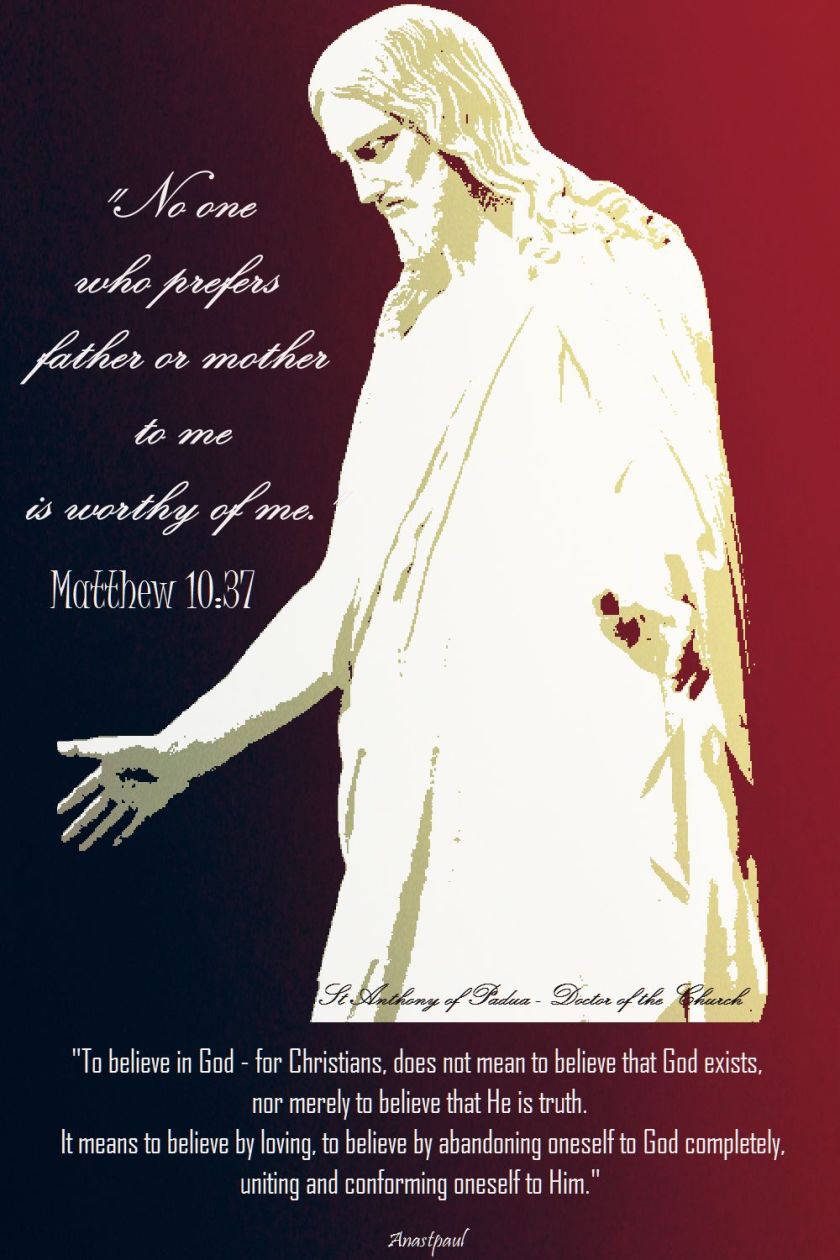
The words I spoke to you are spirit and life………John 6:64
REFLECTION – “Make sure that you never spurn the Saviour’s words.
They have in themselves such tremendous majesty that they can instil fear into those who have wandered from the path of righteousness, whereas they ever remain a great solace to those who heed them.”……..St Justin
PRAYER – Lord Jesus, my Saviour, let me daily take to my heart and my soul Your words. Grant that they may lead me to penance and also provide needed consolation amid the troubles of live St Justin, when you discovered the words of the Lord Jesus Christ, your life was completely changed and given to Him so that you could heed His command to go forth and spread the good news to all. Please pray for us, that we may be inspired with your courage and zeal, amen.
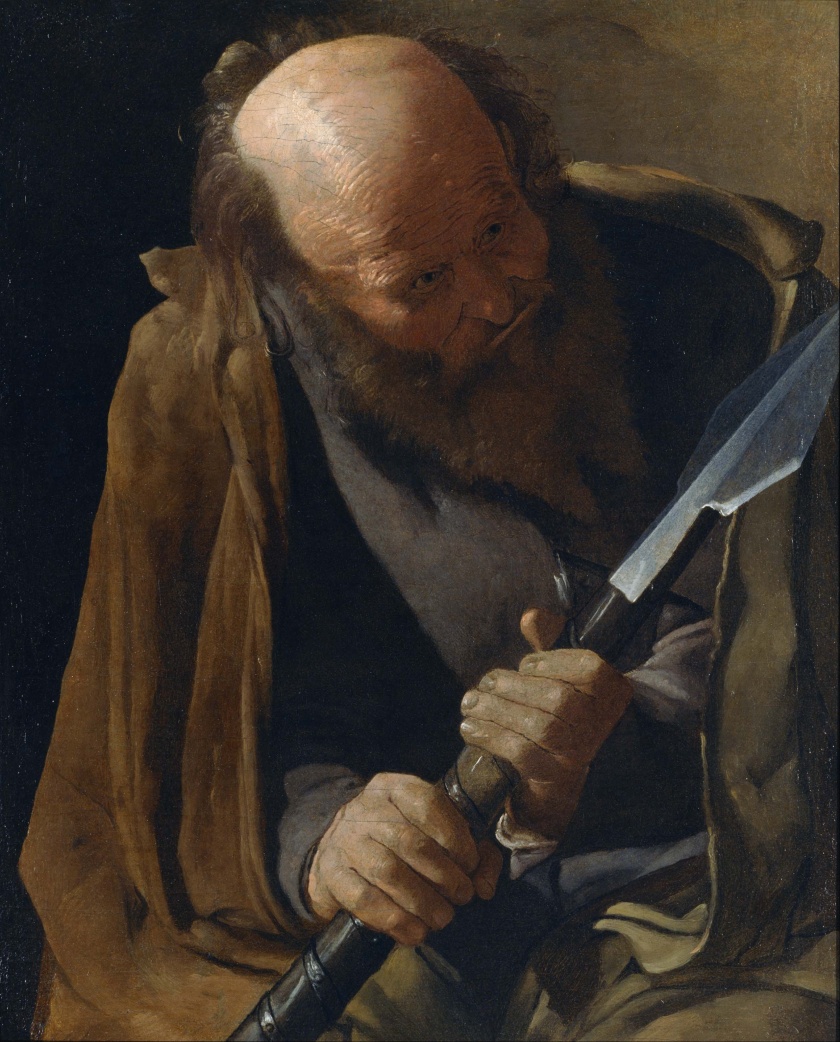
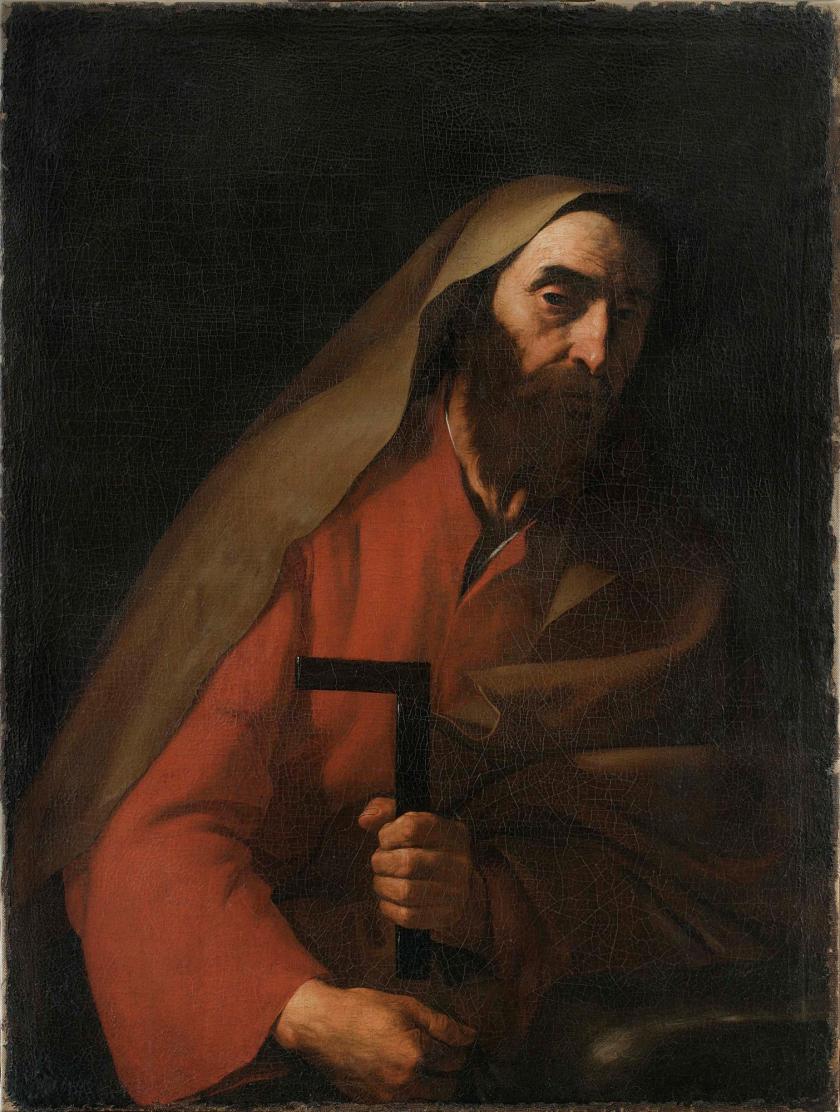
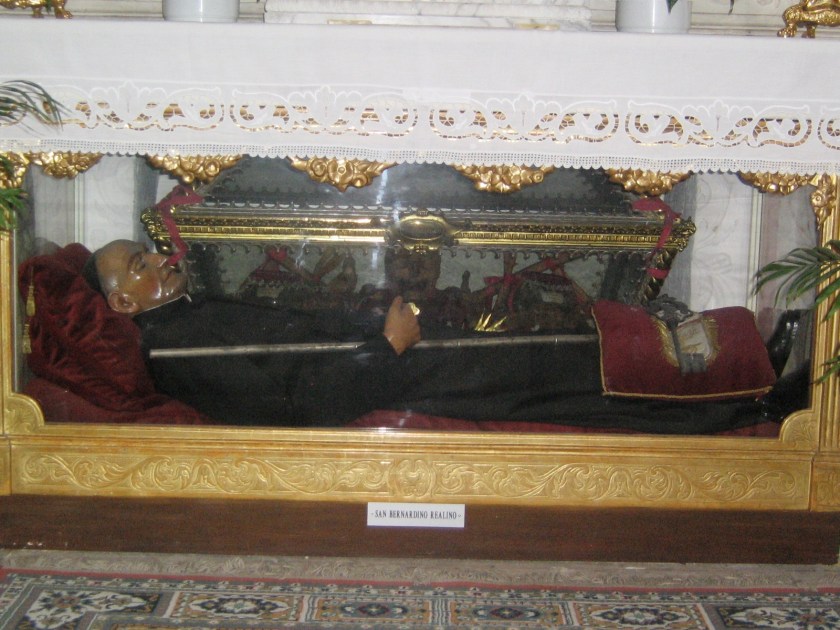
Saint of the Day – 1 June – St Justin Martyr – Martyr, first Christian Philosopher, Apologist, Orator, Teacher, Writer, Missionary (c100 – beheaded in 165 at Rome, Italy. His relics in the Capuchin Church, Romeat Nablus Palestine) – Patronages – of Apologists, Lecturers, Orators, Philosophers.
Born at the turn of the second century, Justin grew up under pagan parents and early on began to seek after knowledge. According to Justin himself, he studied under several of the most important philosophical systems of the day but found them all wanting.
Around the age of 30, however, he went out into a field near the sea to be be alone with his thoughts and had an encounter that would change his life. An older man began to follow him at a distance. Justin turned to speak to him and before he really knew what was happening, the man was presenting the gospel. Finally, Justin had found the true philosophy for which he had been searching. Of that moment, he wrote:
“A fire was suddenly kindled in my soul. I fell in love with the prophets and these men who had loved Christ; I reflected on all their words and found that this philosophy alone was true and profitable. That is how and why I became a philosopher. And I wish that everyone felt the same way that I do.”
Justin spent the rest of his life defending this true and profitable philosophy. He even went to Rome itself to found a school at which he taught Christian philosophy. He wrote several defenses of the Christian faith, even writing apologetic works directed to the Roman emperor and the Roman senate. His books give us insight into the early Church. In one of them he described the ceremony of Baptism around the year 160. It was similar to the ceremony today. In another place, he wrote that the Sunday meetings of the Christian community included readings from Scripture, a homily, offering of bread and wine and giving Holy Communion. Two of his so-called apologies have come down to us; they are addressed to the Roman emperor and to the Senate.
After contending for Christianity with a cynic philosopher, he was turned in to the government as a heretic and false teacher. They arrested him and six of his disciples. When asked to reject Christ and make a sacrifice to the Roman gods, Justin boldly replied:
“No one who is rightly minded turns from true belief to false.”
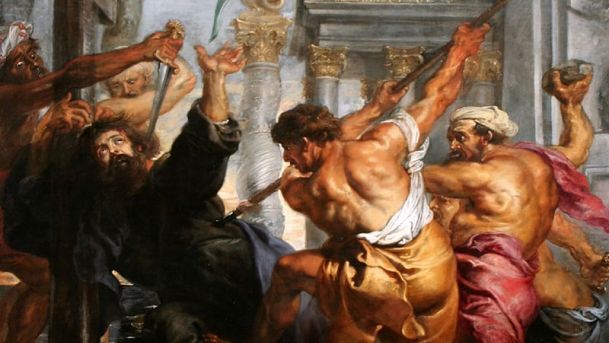
The Trial of St Justin
In his new found faith, not only did he find truth but Justin found a truth worth living and dying for –– as he was beheaded for his refusal to denounce Jesus. In his life, Justin sought to demonstrate how the Christian faith was consistent with reason and logic. In his death, he earned the surname Martyr.
St Justin Martyr (Memorial)
Comforter of the Afflicted
Notre-Dame du Laus
Our Lady of Grace
—
St Agapetus of Ruthenia
Bl Alfonso Navarrete Benito
Bl Arnald Arench
Bl Arnold of Geertruidenberg
St Atto of Oca
St Candida of Whitchurch
St Caprasius of Lérins
St Clarus of Aquitaine
St Claudius of Vienne
Bl Conrad of Hesse
St Conrad of Trier
St Crescentinus
St Cronan of Lismore
St Damian of Scotland
St Dionysius of Ruthenia
St Donatus of Lucania
St Felinus of Perugia
Bl Ferdinand Ayala
St Firmus
St Fortunatus of Spoleto
Bl Gaius Xeymon
St Gaudentius of Ossero
St Giuse Túc
St Gratian of Perugia
St Hannibal Mary di Francia
Bl Herculanus of Piegare
St Iñigo of Oña
St Ischryrion and Companions
Bl James of Strepar
St Jean-Baptiste-Ignace-Pierre Vernoy de Montjournal
Bl John Baptist Scalabrini
Bl John Pelingotto
Bl John Storey
St Juventius
Bl Leo Tanaka
St Melosa
St Pamphilus of Alexandria
St Peter of Pisa
St Porphyrius of Alexandria
St Proculus of Bologna
St Proculus the Soldier
St Ronan
St Secundus of Amelia
St Seleucus of Alexandria
St Simeon of Syracuse
St Telga of Denbighshire
St Thecla of Antioch
Bl Theobald Roggeri
St Thespesius of Cappadocia
St Wistan of Evesham
St Zosimus of Antioch
—
Martyrs of Alexandria – 5 saints: A group five of imperial Roman soldiers assigned to guard a group of Egyptian Christians who were imprisoned for their faith in the persecutions of Decius. During their trial, they encouraged the prisoners not to apostatize. This exposed them as Christians, were promptly arrested and executed. Martyrs. Their names are – Ammon, Ingen, Ptolomy, Theophilis and Zeno. They were beheaded in 249 at Alexandria, Egypt.
Martyrs of Caesarea – 3 saints: Three Christians martyred together in the persecutions of Galerius. We know little more about them than the name – Paul, Valens and Valerius. They diedf in 309 at Caesarea, Palestine.
Martyrs of Lycopolis – 6 saints: Five foot soldiers and their commander who were martyred for their faith by order of the imperial Roman prefect Arriano during the persecutions of Decius. In Lycopolis, Egypt.
Martyrs of Rome – 6 saints: A group of spiritual students of Saint Justin Martyr who died with him and about whom we know nothing else but their names – Carito, Caritone, Evelpisto, Ierace, Liberiano and Peone. In Rome, Italy.
Mary, Mother of God, your love is strikingly shown forth in this beautiful Feast of the Visitation. When you learned from the angel that your cousin Elizabeth was with child and needed your help, you set out to care for her. Neither the long absence from home, nor the inconvenience of a difficult and dangerous journey to the mountain country, kept you from making this mission of love. You thought only of Elizabeth and the assistance you could bring to her. You hastened to be of service. You lovingly served her until you saw her happily delivered of the child of promise with which God had blessed her.
Help me to strive to imitate your wonderful charity by aiding those who are in need, by sympathising with those who are afflicted, by opening my heart and applying my hands to relieve every form of distress.
Give me love like yours!
Teach me that the test of my following of your Divine Son is practical charity!
One of the invocations in Mary’s litany is “Ark of the Covenant.”
Like the Ark of the Covenant of old, Mary brings God’s presence into the lives of other people.
As David danced before the Ark, John the Baptist leaps for joy.
As the Ark helped to unite the 12 tribes of Israel by being placed in David’s capital,
so Mary has the power to unite all Christians in her son.
Like you, teach me too acclaim and seek the glory of God and sing with you:
My soul proclaims the greatness of the Lord,
my spirit rejoices in God my Saviour
for He has looked with favour on His lowly servant.
From this day all generations will call me blessed:
the Almighty has done great things for me,
and holy is His Name.
He has mercy on those who fear Him
in every generation.
He has shown the strength of His arm,
He has scattered the proud in their conceit.
He has cast down the mighty from their thrones,
and has lifted up the lowly.
He has filled the hungry with good things,
and the rich He has sent away empty.
He has come to the help of His servant Israel
for He remembered His promise of mercy,
the promise He made to our fathers,
to Abraham and his children forever.
Feast of the Visitation of the Blessed Virgin Mary – 31 May
The feast of the Visitation recalls to us the following great truths and events: The visit of the Blessed Virgin Mary to her cousin Elizabeth shortly after the Annunciation; the cleansing of John the Baptist from original sin in the womb of his mother at the words of Our Lady’s greeting; Elizabeth’s proclaiming of Mary—under the inspiration of the Holy Ghost—as Mother of God and “blessed among women”; Mary’s singing of the sublime hymn, Magnificat (“My soul doth magnify the Lord”) which has become a part of the daily official prayer of the Church. The Visitation is frequently depicted in art and was the central mystery of St. Francis de Sales’ devotions.
The Mass of today salutes her who in her womb bore the King of heaven and earth, the Creator of the world, the Son of the Eternal Father, the Sun of Justice. It narrates the cleansing of John from original sin in his mother’s womb. Hearing herself addressed by the most lofty title of “Mother of the Lord” and realizing what grace her visit had conferred on John, Mary broke out in that sublime canticle of praise proclaiming prophetically that henceforth she would be venerated down through the centuries:
“My soul doth magnify the Lord, and my spirit hath rejoiced in God my Savior. Because he that is mighty, hath done great things to me, and holy is His name” (Lk. 1:46).
This feast is of medieval origin, it was kept by the Franciscan Order before 1263 and soon its observance spread throughout the entire Church. Previously it was celebrated on July 2. Now it is celebrated between the solemnity of the Annunciation of the Lord and the birth of St. John the Baptist, in conformity with the Gospel accounts. Some places appropriately observe a celebration of the reality and sanctity of human life in the womb. The liturgical colour is white.
The Visitation And Mary rising up in those days went into the hill country with haste, into a city of Juda. [Lk. 1:39]
How lyrical that is, the opening sentence of St. Luke’s description of the Visitation. We can feel the rush of warmth and kindness, the sudden urgency of love that sent that girl hurrying over the hills. “Those days” in which she rose on that impulse were the days in which Christ was being formed in her, the impulse was His impulse. Many women, if they were expecting a child, would refuse to hurry over the hills on a visit of pure kindness. They would say they had a duty to themselves and to their unborn child which came before anything or anyone else.
The Mother of God considered no such thing. Elizabeth was going to have a child, too and although Mary’s own child was God, she could not forget Elizabeth’s need—almost incredible to us, but characteristic of her. She greeted her cousin Elizabeth and at the sound of her voice, John quickened in his mother’s womb and leapt for joy.
I am come, said Christ, that they may have life and may have it more abundantly. [Jn. 10, 10] Even before He was born His presence gave life.
With what piercing shoots of joy does this story of Christ unfold! First the conception of a child in a child’s heart and then this first salutation, an infant leaping for joy in his mother’s womb, knowing the hidden Christ and leaping into life.
How did Elizabeth herself know what had happened to Our Lady? What made her realize that this little cousin who was so familiar to her was the mother of her God? She knew it by the child within herself, by the quickening into life which was a leap of joy.
If we practice this contemplation taught and shown to us by Our Lady, we will find that our experience is like hers. If Christ is growing in us, if we are at peace, recollected, because we know that however insignificant our life seems to be, from it He is forming Himself; if we go with eager wills, “in haste,” to wherever our circumstances compel us because we believe that He desires to be in that place, we shall find that we are driven more and more to act on the impulse of His love.
And the answer we shall get from others to those impulses will be an awakening into life or the leap into joy of the already wakened life within them. Excerpted from The Reed of God, Caryll Houselander
Visitation of the Blessed Virgin Mary (Feast)
Mary, Mediatrix of All Graces
—
Alexander of Auvergne
Camilla Battista Varano
Crescentian of Sassari
Donatian of Cirta
Felice of Nicosia
Galla of Auvergne
Hermias of Comana
Bl Jacob Chu Mun-mo
Bl James Salomone
Juan Moya Collado
Bl Kasper Gerarz
Lupicinus of Verona
Mancus of Cornwall
Bl Mariano of Roccacasale
Mechtildis of Edelstetten
Myrbad of Cornwall
Bl Nicolas Barré
Bl Nicholaus of Vangadizza
Bl Nicholaus of Vaucelles
Nowa Mawaggali
Paschasius of Rome
Petronilla of Rome
Bl Robert Thorpe
Silvio of Toulouse
Bl Thomas Watkinson
Bl Vitalis of Assisi
Winnow of Cornwall
—
Martyrs of Aquileia – 3 saints: Three young members of the imperial Roman nobility and who were raised in a palace and had Saint Protus of Aquileia as tutor and catechist. To escape the persecutions of Diocletian, the family sold their property and moved to Aquileia, Italy. However, the authorities there quickly ordered them to sacrifice to idols; they refused. Martyrs all – Cantianilla, Cantian and Cantius. They were beheaded in 304 at Aquae-Gradatae (modern San-Cantiano) just outside Aquileia, Italy
Martyrs of Gerona – 29 saints: A group of Christians martyred together in Gerona, Catalonia, Spain, date unknown. No details about them have survived but the names –
• Agapia
• Amelia
• Castula
• Cicilia
• Donatus
• Firmus
• Fortunata
• Gaullenus
• Germanus
• Honorius
• Istialus
• Justus
• Lautica
• Lupus
• Maxima
• Paulica
• Rogate
• Rogatus
• Silvanus
• Tecla
• Teleforus
• Tertula
• Tertus
• Victoria
• Victurinus
• Victurus
Martyrs of the Via Aurelia – 4 saints: Four Christians martyred together. No information about them has survived except their names – Justa, Lupus, Tertulla and Thecla. The martyrdom occurred in 69 on the Via Aurelia near Rome, Italy
Like Jesus’ life, Joan of Arc’s life seemed to end in failure. But like Jesus, to love God means to always obey His will. She said with total confidence and abandonment: “I entrust myself to my Creator God, I love Him with my whole heart”. One of the best known texts of the first trial has to do with this: “Asked if she knew that she was in God’s grace, she replied: ‘If I am not, may it please God to put me in it; if I am, may it please God to keep me there’” It is this fidelity we should seek – this mission which Joan seemed to know would destroy her, still for her it was to carry out God’s work, regardless of the effects on her life. May we too seek this total fidelity and self-giving to God for this life of ours, it is not ours but has been given to us by grace of His love.
The spirit of the Lord shall rest upon him:
a spirit of wisdom and understanding……..Is 11:2
REFLECTION – “Those who are led by the Holy Spirit have a right concept of everything.
Hence, many unlettered people enjoy such knowledge more than the wise.”…………St John Vianney
“(St Joan of Arc) our saint lived prayer as a form of continuous dialogue with the Lord, who also enlightened her answers to the judges, giving her peace and security. She prayed with faith: “Sweetest God, in honour of your holy Passion, I ask You, if You love me, to reveal to me how I must answer these men of the Church”. Joan saw Jesus as the “King of Heaven and Earth.” Thus, on her standard, Joan had the image painted of “Our Lord who sustains the world”………..Pope Benedict XVI (2010)
PRAYER – Father if every good gift, send forth Your Spirit upon me with His sevenfold gifts. Grant that through my love for Your Son, I too may like St Joan of Arc, achieve the heights of the Christian life, make prayer the guiding thread of my days; fulfilling the will of God, whatever it is; to live in charity without favouritisms, without limits and have, as she had, in the love of Jesus, a profound love for the Church. St Joan of Arc, pray for us all, amen.
Saint of the Day – 30 May – St Joan of Arc (1412-1431) – Virgin (6 January 1412 at Greux-Domremy, Lorraine, France – burned alive on 30 May 1431 at Rouen, France) – Beatified 11 April 1905 by Pope Saint Pius X, Canonised on 16 May 1920 by Pope Benedict XV. Patron of France; martyrs; captives; military personnel; people ridiculed for their piety; prisoners; soldiers; opposition of Church authorities; WACs (Women’s Army Corps); WAVES (Women Appointed for Voluntary Emergency Service). Attributes – bareheaded girl in armour with sword, lance or banner.
The Church officially remembers Joan of Arc not as a Martyr but as a virgin—the Maid of Orleans. Of course, Joan was a Martyr, but not in the technical sense. Yes, she died because she did what she thought God wanted her to do. But she was killed for her politics, not for her faith. Pagans did not execute her for refusing to worship their gods. Infidels did not slay her for defying them. Political enemies burned her at the stake for defeating them at war.
Paradoxically, Christian people, good and bad alike, cheered at her demise. Other Christians wept. This incongruity may trouble us but Joan would have expected it. The war she fought embroiled French Christians against English Christians. We too have waged wars like that, pitting Christian against Christian. Just as we may have felt that God was on our side, Joan believed that God was with the French. When the judges who condemned her asked if the heavenly voices she followed to war spoke in English, she replied tartly, “Why should they speak English when they were not on the English side?”
Joan of Arc was born into the violent times of the fifteenth century. During her childhood, King Henry V of England invaded France and seized Normandy. He laid claim to the crown of the French king, Charles VI, who was mentally ill. Paralysed by civil war between the duke of Burgundy and the duke of Orleans, the French could not put up much of a defense. Things worsened when agents of the duke of Orleans murdered the duke of Burgundy. The Burgundians reacted by becoming England’s allies. Eventually, Burgundian mercenaries brought the war home to Joan’s family. The raiders sacked the little village of Domrémy-la-Pucelle, forcing them to flee. Thus, the indiscriminate brutality of war disrupted Joan of Arc’s pleasant childhood to acquaint her with fear.
Born of a fairly well-to-do peasant couple in Domremy-Greux southeast of Paris, Joan was only 12 when she experienced a vision and heard voices that she later identified as Saints Michael the Archangel, Catherine of Alexandria, and Margaret of Antioch.
By May 1428, Joan’s voices had become relentless and specific. They directed her to go at once to a town nearby and to offer her services to Robert de Baudricourt, the commander of the royal forces. Reluctantly, she obeyed. De Baudricourt, however, greeted her with laughter, telling her that her father should give her a good spanking.
At that time, conditions were deteriorating for the French. The English had put Orleans under siege, and the stronghold was in grave danger. Joan’s voices became more insistent. “But I am merely a girl! I cannot ride a horse or wield a weapon!”she protested.
“It is God who commands it!” came the reply.
Unable to resist any longer, Joan secretly made her way back to de Baudricourt. When she arrived she told the commander a fact she could have known only by revelation. She said the French army—on that very day—had suffered a defeat near Orleans. Joan urged him to send her to Orleans so that she might fulfill her mission. When official reports confirmed Joan’s word, de Baudricourt finally took her seriously and sent her to Charles VII.
She was outfitted with white armour and provided a special standard bearing the names Jesus and Mary. The banner depicted two kneeling angels offering a fleur-de-lis to God. On April 29, 1429, Joan led her army into Orleans. Miraculously, she rallied the town. By May 8, the French had captured the English forts and had lifted the siege. An arrow had penetrated the armour over Joan’s breast but the injury was not serious enough to keep her out of the battle. Everything, including the wound, occurred exactly as Joan had prophesied before the campaign. A peasant maiden had defeated the army of a mighty kingdom, a humiliation that demanded revenge.
The way to Reims was now open. Joan urged the immediate coronation of the king but the French leaders dragged their feet. Finally, however, at Reims on July 17, 1429, Charles VII was anointed king of France. The Maid of Orleans stood triumphantly at his side. Joan had accomplished her mission.
During the battles at Orleans, the voices had told Joan she had only a little time left. Her shameful end lurked ominously in the shadows. Later, she sustained a serious arrow wound in the thigh during an unsuccessful attack on Paris. In May 1430, after spending the winter in court, she led a force to relieve Compiègne, which the Burgundians had under siege. Her effort failed, and the Burgundians captured her.
Through the summer and fall, the duke of Burgundy held Joan captive. The French, apparently ungrateful, made no effort to rescue her or obtain her release. On November 21, 1430, the Burgundians sold Joan to the English for a large sum. The English were quite eager to punish the maiden who had bested them. They could not execute Joan for winning but they could impose capital punishment for sorcery or heresy. For several months she was chained in a cell in the castle at Rouen, where five coarse guards constantly taunted her. In February 1431, Joan appeared before a tribunal headed by Peter Cauchon, the avaricious and wicked bishop of Beauvais.
Joan had no chance for a fair trial. She stood alone before devious judges, an uneducated girl conducting her own defense. The panel interrogated her six times in public, nine times in private. They questioned her closely about her visions, voices, male dress, faith and submissiveness to the church. Giving good, sometimes even unexpectedly clever answers, Joan handled herself courageously. However, the judges took advantage of her lack of education and tripped her up on a few slippery theological points. The panel packed its summary with her damaging replies and condemned her with that unfair report. They declared that demons inspired her revelations. The tribunal decided that unless Joan recanted, she was to die as a heretic. At first she refused. But later, when she was taken before a huge throng, she seems to have made some sort of retraction.
Cauchon visited her, observed her dress,and determined that she had fallen back into error. Joan, her strength renewed, then repudiated her earlier retraction. She declared that God had truly commissioned her and that her voices had come from him. Having condemned Joan of Arc as a relapsed heretic, the judges remanded her to the state for execution. The next morning she was taken into Rouen’s public square and burned at the stake.
Twenty-three years later, however, Joan’s mother and brothers asked that her case be reopened. Pope Callistus III appointed a commission to review the matter. In 1456, the new panel repudiated the trial and verdict and completely restored Joan’s reputation. Once again her piety and exemplary conduct had triumphed.
St Anastasius II of Pavia
St Basil the Elder
Bl Carlo Liviero
St Crispulus of Sardinia
Bl Elisabeth Stagel
St Emmelia
St Euplius
St Exuperantius of Ravenna
St Pope Felix ISt
Ferdinand III of Castille
St Gamo of Brittany
St Gavino of Sardinia
St Issac of Constantinople
St Joan of Arc
St Joseph Marello
Bl Lawrence Richardson
St Luke Kirby
St Madelgisilus
Bl Marie-Céline of the Presentation
Bl Otto Neururer
St Reinhildis of Riesenbeck
St Restitutus of Cagliari
Bl Richard Newport
Bl Thomas Cottam
St Venantius of Lérins
St Walstan of Bawburgh
Bl William Filby
Bl Willilam Scott
—
Martyrs of Aquileia – 3 saints: Three Christians martyr together. We have no other details than their names – Cantianus, Euthymius and Eutychius. Aquileia, Italy
Celebrating the Memorial of BL JOSEPH GéRARD O.M.I. – 29 May Priest and Missionary, Apostle to Lesotho (12 March 1831-29 May 1914 aged 83) – Patron of Missionaries.
Joseph Gerard was born in 1831 in Bouxieres-aux-Chenes in the Diocese of Nancy, France. He joined the Missionary Oblates of Mary Immaculate at the age of 20 and at the age of 22 was sent by St Eugene de Mazenod (https://anastpaul.wordpress.com/?s=St+Eugene+de+Mazenod) as a missionary to Southern Africa, never to see his family or homeland again. He was ordained a priest in 1854 in Pietermaritzburg and at first served the Oblate mission to the Zulu people, later joining Bishop Allard, the Bishop of Natal, in setting up the first Catholic mission in Lesotho. With the permission of the great Chief Moshoeshoe they founded Motse-oa-Ma-Jesu (the Village of the Mother of Jesus) thirty two kilometres south of Moshoeshoe’s stronghold of Thaba Bosiu. (The village which they founded later became Roma, site of the Catholic University College and now the University of Lesotho.)
Joseph Gerard was well respected by Chief Moshoeshoe, particulaly because he remained with the Basotho during the three wars between the Basotho and the Orange Free State. It is said that it was through Joseph Gerard’s efforts that Chief Moshoeshoe sought the protection of the British at the end of the wars, a decision which resulted in Lesotho becoming a British Protectorate and an Independent country today.
Joseph Gerard’s mission grew slowly and by the end of 1879, when he was already 48 years of age, there were only 700 Catholics in Lesotho. He persevered, however in prayer, faith and work, remaining in Lesotho as a missionary for the rest of his life.
Early beginnings at the
Village of the Mother Of Jesus
The Oblate mission to the Basotho grew and flourished. He died on 29th May 1914 at the age of 83, a man greatly revered by the people of Lesotho. The fact that Lesotho is very largely a Catholic country today can be traced back to those early beginnings at the Village of the Mother of Jesus.
The beatification process commenced under Pope Pius XII on 1 March 1955 and he became titled as a Servant of God while the confirmation of his life of heroic virtue allowed for Pope Paul VI to name him as Venerable on 13 November 1976. The miracle required for his beatification was investigated and later received validation from the Congregation for the Causes of Saints on 14 March 1986; a medical board approved it on 3 December 1986 as did theologians on 13 March 1987 and the C.C.S. members on 19 May 1987. Pope John Paul II approved this miracle on 1 June 1987 and beatified the late priest while on his visit to Lesotho on 15 September 1988. The current postulator for this cause is the O.M.I. priest Thomas Klosterkamp
Today, the congregation founded by Mother Ursula continues its work around the world, numbering at approximately 900 nuns and 100 communities in 12 countries including Poland, Italy, France, Germany, Finland, Belarus, Ukraine, Canada, Brazil, Argentina and Tanzania. St Ursula educated her sisters to love God above all things and to see God in every human person and all creation. As a shining example of faith and complete trust in the Lord, she demonstrated her confidence through tireless work, constant smile, serenity of spirit, humility and the desire to live an ordinary life as a privileged path to holiness. Throughout her life, during a difficult political period, including the First World War, Julia maintained a constant focus on helping the poor, displaced and forgotten. When questioned about her political views, often at risk to her own life, she simply and repeatedly replied, “My policy is love.”
And there we have it – so often told us, most importantly by our Lord, the answer is clear – to be saints, our policy has to be LOVE!
Well done, you are an industrious and reliable servant…..come share your master’s joy……..Matthew 25:21
REFLECTION – “It is not enough to pray: “Thy kingdom come” but to work, so that the Kingdom of God will exist among us today.”…………St Ursula Ledóchowska
PRAYER – Heavenly Father, help me to accept the tasks you have given me to do in life. Let me be faithful all my days and be able to attain Your eternal reward in heaven. St Ursula Ledóchowska, you accepted all work given you, no matter the circumstances and undergoing immense hardships to fulfil your mission and do the work of God, please pray for us, that we too, may be faithful at all times and in all circumstances, amen.
Saint of the Day – 29 May – St Ursula Ledóchowska (1865-1939) religious name – Maria Ursula of Jesus – Religous and Foundress of the Institute of Ursuline Sisters of the Sacred Heart of Jesus in Agony (17 April 1865 at Loosdoor, Austria as Julia Ledóchowska – 29 May 1939 in the Gray Ursuline convent, Via del Casalet, Rome, Italy of natural causes) . Canonised 18 May 2003 by Pope John Paul II at Vatican Basilica. Her body is incorrupt, it was transferred to the Gray Ursuline motherhouse in Pniewy, Poland on 29 May 1989.
Born in Austria, Julia was born into a privileged family, the daughter of a Polish count and a Swiss noblewoman. She was one of five children born into the family. Her elder sister, Blessed Maria Teresa Ledóchowska, founded the Missionary Sisters of Saint Peter Claver and is affectionately known as the “Mother of Africa.”
Julia (at left), her mother, and sisters
Julia’s uncle, the Cardinal Mieczyslaw Ledóchowski, the Primate of Poland, was persecuted and imprisoned for his opposition to the policies of the Prussian “culture war.” For this reason and for reasons of finances, Julia’s father moved the family back to his native Poland, where he fell ill. Before his death, he gave his daughter his blessing to enter the Convent of Ursuline Sisters in Krakow. Taking the name of Maria Ursula of Jesus, she dedicated herself to service of those in need. Sister Maria Ursula was especially drawn to youth, specifically young women who were in need of education. She founded the first Polish residence for female university students and both watched over them and assisted them in their spiritual and academic studies.
Sister Maria Ursula became prioress of the convent in which she lived and later received a request from Monsignor Constantine Budkiewicz, a Polish nobleman living and priest of Saint Catherine’s Church. His wish was for Mother Maria Ursula to found a boarding school in Russia, for Polish girls wishing to study in Saint Petersburg. Having received approval from Pope Saint Pius X, she traveled to Russia and founded a convent there to work among Catholic immigrants. Given the state of Russian politics at that time, the nuns wore lay clothing and conducted themselves appropriately, but were under constant threat and surveillance by the Russian secret police.
As World War I dawned, Mother Ursula was expelled from Russia, given her Austrian birth. Monsignor Budkiewicz was eventually martyred for the faith, during the fall and renaming of Saint Petersburg as Leningrad. Having been expelled from Russia, Mother Ursula fled to Sweden. There, she organised relief efforts for war victims, charitable enterprises for those (like herself) living in exile from Poland. She further founded a monthly Catholic newspaper.
In 1920, Mother Ursula and her growing community made its way back into Poland, bringing with her dozens of orphaned youth. Upon their return, Mother Ursula found that her community had developed a separate and unique identity, mission and charism from the Ursuline community, given their exile and separation and as a result, she founded her own congregation: The Institute of Ursuline Sisters of the Sacred Heart of Jesus in Agony. Having obtained Vatican approval, she dedicated herself and her congregation to “the education and training of children and youth and service to the poorest and the oppressed among our brethren.”
From that time on, the Ursulines founded congregations in working class towns, organizing a “Eucharistic Crusade” by which to educate the factory workers and their families in the ways of the faith. With tireless energy and faith, Mother Ursula continued to lead her community until 1939, when she passed away quietly at the general house of her community in Rome. Her incorrupt body was translated to the Gray Ursuline motherhouse in Pniewy, Poland in 1989. She was canonised in 2003 by Pope John Paul II. At her canonization, the pontiff proclaimed:
“Mother Ursula Ledóchowska made her life a mission of mercy for the most deprived. Wherever Providence took her, she found young people in need of instruction and spiritual formation, poor, sick or lonely people, battered by life in various ways, who expected of her understanding and concrete help. In accordance with her means, she never refused help to anyone. Her work of mercy will remain engraved forever in the message of holiness, which yesterday became part of the whole Church.”
Miracles
The first miracle that led to her beatification involved the cure of Jan Kołodziejski on 26 March 1946 while the second miracle leading to beatification involved the cure of the nun (from Ledóchowska’s own order) Magdalene Pawlak (in religious “Maria Danuta”) on 16 April 1946. The decisive miracle that led to her canonisation was the cure of Daniel Gajewski (b. 1982) who avoided electrocution in circumstances where he would otherwise would have been killed had it not been for the late nun whom he saw moments before fading into unconsciousness on 2 August 1996.
St Bona of Pisa
St Conon the Elder
St Conon the Younger
St Daganus
St Eleutherius of Rocca d’Arce
St Felix of Atares
St Gerald of Mâcon
Bl Gerardesca of Pisa
Bl Giles Dalmasia
St Hesychius of Antioch
St John de Atarés
BL Joseph Gerard
St Maximinus of Trier
St Maximus of Verona
St Restitutus of Rome
Bl Richard Thirkeld
St Theodosia of Caesarea and Companions
St Ursula Ledochowska
St Votus of Atares
St William of Cellone
—
Martyrs of Toulouse: A group of eleven Dominicans, Franciscans, Benedictines, clergy and lay brothers who worked with the Inquisition in southern France to oppose the Albigensian heresy. Basing their operations in a farmhouse outside Avignonet, France, he and his brother missioners worked against heresy. Murdered by Albigensian heretics while singing the Te Deum on the eve of Ascension. They werebeaten to death on the night of 28 to 29 May 1242 in the church of Avignonet, Toulouse, France and Beatified on 1 September 1866 by Pope Pius IX (cultus confirmation).
• Adhemar
• Bernard of Roquefort
• Bernard of Toulouse
• Fortanerio
• Garcia d’Aure
• Pietro d’Arnaud
• Raymond Carbonius
• Raymond di Cortisan
• Stephen Saint-Thibery
• William Arnaud
• the prior of Avignonet whose name unfortunately has not come down to us.
The church in which they died was placed under interdict as punishment to the locals for the offense. Shortly after the interdict was finally lifted, a large statue of the Blessed Virgin Mary was found on the door step of church. Neither the sculptor nor the patron was ever discovered, nor who delivered it or how. The people took it as a sign that they were forgiven, but that they should never forget, and should renew their devotion to Our Lady. They referred to the image as “Our Lady of Miracles”.
Until recently there was a ceremony in the church on the night of the 28th to 29th of May, the anniversary of the martyrdom. Called “The Ceremony of the Vow”, parishioners would gather in the church, kneel with lit candles, and process across the church on their knees, all the while praying for the souls of the heretics who had murdered the martyrs.
Martyrs of Trentino: Three missionaries to the Tyrol region of Austria, sent by Saint Ambrose of Milan and welcomed by Saint Vigilius of Trent. All were martyred – Alexander, Martyrius and Sisinius. They were born in Cappadocia and died in 397 in Austria.
Saint of the Day – 28 May – Blessed Maria Bartolomea Bagnesi OP (1514-1577) Virgin, Third Order Dominican, Mystic, Ecstatic, with the gift of levitation – born as Maria Bagnesi but always called “Marietta” because of her tiny frame, on 15 August 1514 at Florence, Italy and died on 28 May 1577 at Florence, Italy of natural causes, agd 62. Patronages – abuse victims, ill people, against the death of parents, Dominican tertiaries. Her body is incorrupt.
Maria Bagnesi was born in Florence on 15 August 1514 – the Feast of the Assumption – to Carlo Bagnesi and Alessandra Orlandini. Bagnesi was a neglected child and her mother often left her in the care of others which included one of Bagnesi’s sisters who was a nun from the Order of Preachers so she spent most of her childhood in her sister’s convent. Four of her sisters would end up in the religious life.
Her father organised a marriage for her when she turned seventeen and she fainted in horror upon learning this. The thought made Bagnesi so ill she could not walk and was thus confined to her bed. Her father turned to con men and charlatans – for he could be manipulated with ease – and put his daughter through over three decades of non-stop “treatment”. Being bedridden meant that she could not follow her sisters into the religious life but she nevertheless became a member of the Third Order of Saint Dominic in 1544 and made her profession in 1545. She made her profession into the hands of and received the habit from Vittorio di Mattheo who allowed for this to take place in Bagnesi’s room. Bl Maria developed a deep devotion to Saint Bartholomew the Apostle and she assumed the name of “Bartolomea” as part of her actual name as a sort of middle name when she made her profession. After she professed she found that she could get out of her bed for brief periods of time. The combination of asthma and these quack treatments immobilised her just as she began to heal and she started to have visions and converse with angels and demons alike. Neighbours began to believe she was under demonic possession and summoned a local priest – who became her spiritual advisor who assured the locals she was not possessed or in need of an exorcism. People also claim to have seen her levitate. She was also granted the special privilege of having Mass celebrated in her room at times.
Her room soon became a place for pilgrims to go to in order to seek her wisdom and counsel and her room became a place for cats to roam – some remained with her and even slept on her bed while guarding her pet songbirds. She also came to know Saint Maria Maddalena de’ Pazzi and shared her visions with her; the saint would herself be cured due to Bagnesi’s intercession on 16 June 1584. Bagnesi received the Eucharist three to six times a week and prepared beforehand with docile care and spent the time following her reception of it in deep reflection. Her confessors were the Priests Alessandro Capocchi and Agostino Campi.
Bagnesi died in Florence in 1577 and at the end of her life, five Priests were present at her deathbed and one of them read to her one of the Gospel accounts of the Passion of Jesus Christ. Her remains were taken in procession for her funeral from Santa Maria Novella to Santa Maria degli Angeli where she was interred.
Painting depicting her funeral.
Let us Pray: O God, the lover of souls, who in Blessed Mary Bartholomew, Thy Virgin, didst unite wonderful endurance of illness with equal innocence of mind, grant , that we who are afflicted according to our deserts may be refreshed with the comfort of Thy grace. Through Christ our Lord. Amen.
7th Sunday of Easter (2017) or ASCENSION Sunday in many parts of the world where the Solemnity is transferred
—
St Accidia
Bl Albert of Csanád
Bl Antoni Julian Nowowiejski
St Bernard of Menthon
St Caraunus of Chartres
St Caraunus the Deacon
St Crescens of Rome
St Dioscorides of Rome
Eoghan the Sage
Gemiliano of Cagliari
Germanus of Paris
Bl Heliconis of Thessalonica
Helladius of Rome
Herculaneum of Piegaro
Bl John Shert
Justus of Urgell
Bl Lanfranc of Canterbury
Luciano of Cagliari
Bl Luigi Biraghi
Bl Margaret Plantagenet Pole
Bl Maria Bagnesi
Bl Mary of the Nativity
Moel-Odhran of Iona
Paulus of Rome
Phaolô Hanh
Podius of Florence
Bl Robert Johnson
Senator of Milan
Bl Thomas Ford
Ubaldesca Taccini
William of Gellone
Bl Wladyslaw Demski
—
Martyrs of Palestine: A group of early 5th century monks in Palestine who were martyred by invading Arabs.
Martyrs of Sardinia – 6 saints: A group of early Christians for whom a church on Sardinia is dedicated; they were probably martyrs, but no information about them has survived except the names Aemilian, Aemilius, Emilius, Felix, Lucian and Priamus. Patrons of the diocese of Alghero-Bosa, Italy.
Martyred in the Spanish Civil War: Lluís Berenguer Moratona
St Augustine of Canterbury comes across today as a very human saint, one who could suffer like many of us from a failure of nerve. For example, his first venture to England ended in a big U-turn back to Rome. He made mistakes and met failure in his peacemaking attempts with the Briton Christians. He often wrote to Rome for decisions on matters he could have decided on his own had he been more self-assured. He even received mild warnings against pride from Pope Gregory, who cautioned him to “fear lest, amidst the wonders that are done, the weak mind be puffed up by self-esteem.” Augustine’s perseverance amidst obstacles and only partial success teaches today’s apostles and pioneers to struggle on despite frustrations and be satisfied with gradual advances. by Fr. Don Miller, OFM
May Christ dwell in your hearts through faith……Ephesians 3:17
REFLECTION – “Bear Christ in heart, mind and will.
Bear Him in your mind by His teaching.
Bear Him in your will by your observance of the Law.
Bear Him in your heart by the Holy Eucharist.”…………Venerable Servant of God Pope Pius XII
PRAYER – Heavenly Father, let me be true bearer of Christ, Your Son, by doing always the things that are in imitation of and pleasing to Him. Help me to bear witness to Him in the world, one just as pagan as that approached by St Augustine of Canterbury in trepidation. But in Your light and by Your Holy Spirit, he succeeded and pleased You, help me too I beg, to work for the salvation of souls. St Augustine of Canterbury, pray for us all, amen.
Saint of the Day – 27 May – St Augustine of Canterbury (Died c 605) – ArchBishop, Benedictine Monk, “The Apostle to the English” who became the first Archbishop of Canterbury, Father of the Church, Missionary – born in Rome first third of the 6th century – died probably 26 May 605 in Canterbury, England of natural causes. His relics interred outside the Church of Saints Peter and Paul, Canterbury, a building project he had started. He is considered “The Apostle to the English” and the founder of the English Church.
Augustine was the Prior of a Monastery in Rome when Pope Gregory the Great chose him in 595, to lead a mission, usually known as the Gregorian Mission, to Britain to Christianize King Æthelberht and his Kingdom of Kent from Anglo-Saxon paganism.
St Pope Gregory the Great and St Augustine of Canterbury
Kent was probably chosen because Æthelberht had married a Christian princess, Bertha, daughter of Charibert I the King of Paris, who was expected to exert some influence over her husband. Before reaching Kent, the missionaries had considered turning back, but Gregory urged them on and in 597, Augustine landed on the Isle of Thanet and proceeded to Æthelberht’s main town of Canterbury.
Augustine before Ethelbert and Bertha
King Æthelberht converted to Christianity and allowed the missionaries to preach freely, giving them land to found a monastery outside the city walls. Augustine was Coonsecrated as a Bishop and converted many of the king’s subjects, including thousands during a mass baptism on Christmas Day in 597.
Pope Gregory sent more Missionaries in 601, along with encouraging letters and gifts for the churches, although attempts to persuade the native Celtic bishops to submit to Augustine’s authority failed. Roman Bishops were established at London and Rochester in 604 and a school was founded to train Anglo-Saxon Priests and Missionaries. Augustine also arranged the consecration of his successor, Laurence of Canterbury. The Archbishop probably died in 604 and was soon revered as a saint.
St Augustine of Canterbury (Optional Memorial)
—
St Acculus of Alexandria
St Antanansio Bazzekuketta
St Barbara Kim
St Barbara Yi
St Bruno of Würzburg
Bl Dionysius of Semur
Bl Edmund Duke
St Eutropius of Orange
St Evangelius of Alexandria
St Frederick of Liège
Bl Gausberto of Montsalvy
St Gonzaga Gonza
St James of Nocera
Bl John Hogg
St Julius the Veteran and Companions
St Liberius of Ancona
St Matiya Mulumba
Bl Matthias of Nagasaki
St Melangell
St Ranulphus of Arras
St Restituta of Sora and Companions
Bl Richard Hill
Bl Richard Holiday
St Secundus of Troia
St Philip Neri was one of those rare religious geniuses who leave the familiar paths and create something entirely new. He is the kind of saint that you simply cannot put into a category, for what he did was completely unique and totally unprecedented. His personality and “heart brimming with love” were most attractive to all – his friends were saints and highly creative men but the people of the streets loved him just as much as he loved them, from beggars to cardinals, he was a friend.
He too is the patron saint of joy countered with great humility and with this in mind, he could become a powerful intercessor for people who have periods of depression. We pray to St Valentine and St Raphael – so that these saints may find us romantic partners who will love us. But we might do well to pray to St Philip Neri that he inspires us with the ability to cherish others and to be filled with the joy of love… Perhaps most acutely for our selfie age, he could become an intercessor for people who agonise over how they look, who spend all their free time finding flattering selfies to post on Facebook and find that narcissism is beginning to rule their lives and indeed, is this not exactly true of the age of relativism, when it is only “I’ that count?
It is your special privilege to take Christ’s part – not only to believe in him but also to suffer for him……..Phil 1:29
REFLECTION – “The greatness of God must be tested by the desire we have to suffer for His sake …..
Bear the cross and do not make the cross bear you!”……………………..St Philip Neri
PRAYER – Lord Jesus Christ, let me be closely united with You in all things. Grant that I may carry my cross willingly and seek to carry Yours! Because of You and in union with You. St Philip Neri, pray for us all, amen.
Mary, I love you.
Mary, make me live in God,
with God and for God.
Draw me after you, holy mother.
O Mary, may your children persevere in loving you.
Mary, Mother of God and mother of mercy,
pray for me and for the departed.
Mary, holy Mother of God,
be our helper.
In every difficulty and distress,
come to our aid, O Mary.
O Queen of Heaven,
lead us to eternal life with God.
Mother of God,
remember me,
and help me always to remember you.
O Mary, conceived without sin,
pray for us who have recourse to you.
Pray for us,
O holy Mother of God,
that we may be made worthy of the promises of Christ.
Holy Mary, Mother of God,
pray to Jesus for me.
Amen
Saint of the Day – 26 May – St Philip Neri Cong. Orat. Priest and Founder, Mystic, Missionary of Charity, also known as: “The Third Apostle of Rome,” after Saints Peter and Paul, Philip Romolo Neri. Born on 22 July 1515 at Florence, Italy -and died on 27 May 1595 at the Church of San Maria in Vallicella, Italy of natural causes). Canonised: 12 March 1622 by Pope Gregory XV . Patronages – of Gravina, Italy, Rome, Italy, laughter, humour, Archdiocese of Manfredonia-Vieste-San Giovanni Rotondo, Italy, United States Army Special Forces. When summoned to hear confessions or to see someone who had called, Neri came down instantly with the words “We must leave Christ for Christ”. Philip was a mystic of the highest order, a man of ecstasies and visions, whose greatest happiness was to be alone with God. Yet at the call of charity he gave up the delight of prayer and, instead, sought God by helping his neighbour. His whole life is that of the contemplative in action.
He was the son of Francesco di Neri, a lawyer and his wife Lucrezia da Mosciano, whose family were nobility in the service of the Italian state. He was carefully brought up and received his early teaching from the friars at San Marco, the famous Dominican monastery in Florence. He was accustomed in later life to ascribe most of his progress to the teaching of two of them, Zenobio de’ Medici and Servanzio Mini. At the age of 18, Philip was sent to his uncle, Romolo, a wealthy merchant at San Germano, a Neapolitan town near the base of Monte Cassino, to assist him in his business and with the hope that he might inherit his uncle’s fortune. He gained Romolo’s confidence and affection but soon after coming to San Germano Philip had a religious conversion – he no longer cared for things of the world and chose to relocate to Rome in 1533.
After arriving in Rome, Neri became a tutor in the house of a Florentine aristocrat named Galeotto Caccia. After two years he began to pursue his own studies (for a period of three years) under the guidance of the Augustinians. Following this, he began those labours amongst the sick and poor which, in later life, gained him the title of “Apostle of Rome”. He also ministered to the prostitutes of the city. In 1538 he entered into the home mission work for which he became famous; traveling throughout the city, seeking opportunities of entering into conversation with people and of leading them to consider the topics he set before them. For seventeen years Philip lived as a layman in Rome, probably without thinking of becoming a priest. Around 1544, he made the acquaintance of Ignatius of Loyola. Many of Neri’s disciples found their vocations in the infant Society of Jesus.
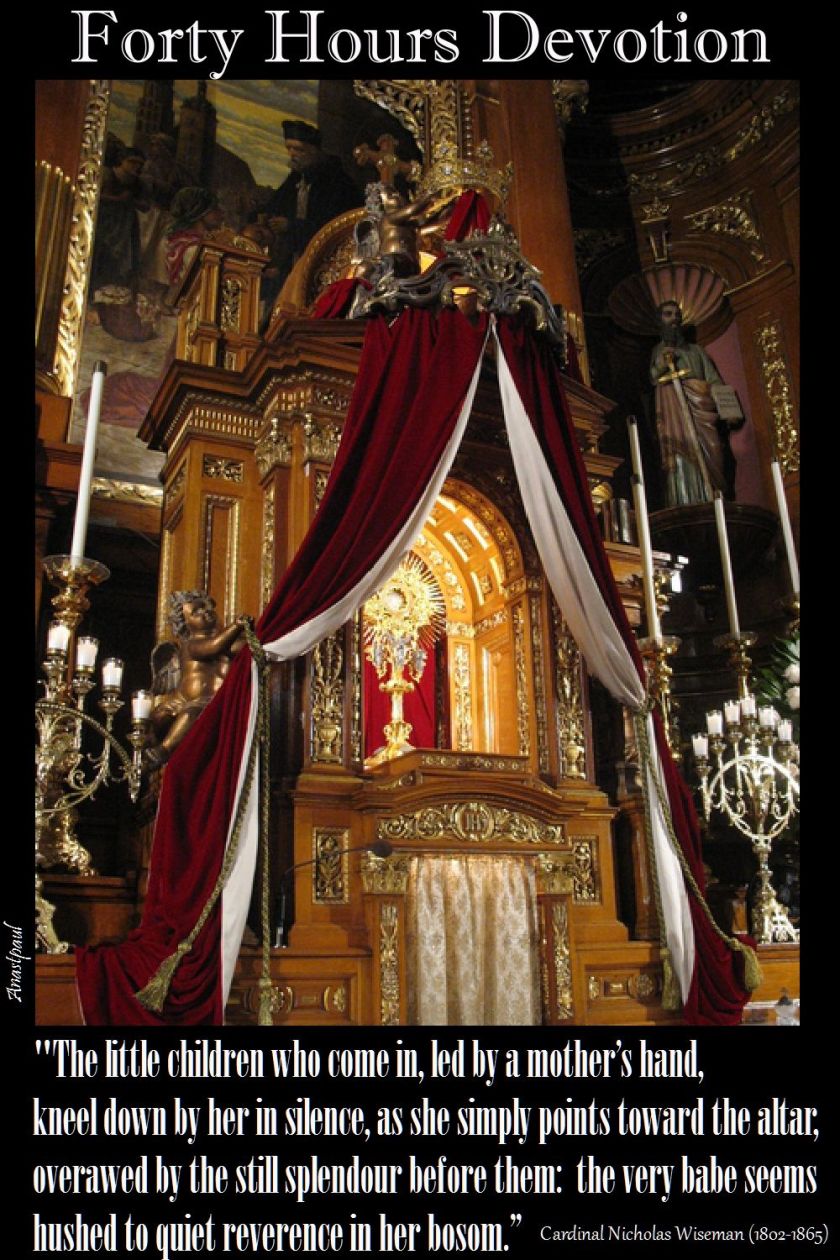
In 1548, together with his confessor, Persiano Rossa, Neri founded the Confraternity of the Most Holy Trinity of Pilgrims and Convalescents whose primary object was to minister to the needs of the thousands of poor pilgrims who flocked to Rome, especially in jubilee years and also to relieve the patients discharged from hospitals but who were still too weak for labour. Members met for prayer at the church of San Salvatore in Campo where the devotion of the Forty Hours of Exposition of the Blessed Sacrament was first introduced into Rome
In 1551 Neri received all the minor orders and was ordained deacon and finally priest (on 23 May). He thought of going to India as a missionary but was dissuaded by his friends who saw that there was abundant work to be done in Rome. Accordingly, he settled down, with some companions, at the Hospital of San Girolamo della Carità, and while there tentatively began, in 1556, the institute with which his name is more especially connected, that of the Oratory. The scheme at first was no more than a series of evening meetings in a hall (the Oratory), at which there were prayers, hymns, and readings from Scripture, the church fathers and the Martyrology, followed by a lecture, or by discussion of some religious question proposed for consideration. The musical selections (settings of scenes from sacred history) were called oratorios. Giovanni Palestrina was one of Philip’s followers and composed music for the services. The scheme was developed and the members of the society undertook various kinds of mission work throughout Rome, notably the preaching of sermons in different churches every evening, a completely new idea at that time. He also spent much of his time hearing confessions, and effected many conversions in this way. Neri sometimes led “excursions” to other churches, often with music and a picnic on the way.
St Philip Neri Hearing Confessions
In 1564 the Florentines requested that Neri leave San Girolamo to oversee their newly built church in Rome, San Giovanni dei Fiorentini. He was at first reluctant but by consent of Pope Pius IV he accepted, while remaining in charge of San Girolamo, where the exercises of the Oratory were kept up. At this time the new society included among its members Caesar Baronius, the ecclesiastical historian, Francesco Maria Tarugi, afterwards Archbishop of Avignon and Ottavio Paravicini, all three of whom were subsequently cardinals, and also Gallonius (Antonio Gallonio), author of a well-known work on the Sufferings of the Martyrs, Ancina, Bordoni, and other men of ability and distinction. In 1574, the Florentines built a large oratory or mission-room for the society, next to San Giovanni, in order to save them the fatigue of the daily journey to and from San Girolamo and to provide a more convenient place of assembly and the headquarters were transferred there.
San Giovanni dei Fiorentini Rome – the home of the First Oratory
As the community grew and its mission work extended, the need for a church entirely its own made itself felt and the offer of the small parish church of Santa Maria in Vallicella, conveniently situated in the middle of Rome, was made and accepted. The building, however, not large enough for their purpose, was pulled down and a splendid church erected on the site. It was immediately after taking possession of their new quarters that Neri formally organized, under permission of a papal bull dated 15 July 1575, a community of secular priests, called the Congregation of the Oratory. The new church was consecrated early in 1577 and the clergy of the new society at once resigned the charge of San Giovanni dei Fiorentini; Neri himself did not leave San Girolamo until 1583 and then only by virtue of an injunction of the pope that he, as the superior, should reside at the chief house of his congregation. He was at first elected for a term of three years (as is usual in modern societies) but in 1587 was nominated superior for life. He was, however, entirely free from personal ambition and had no desire to be superior general over a number of dependent houses, so he desired that all congregations formed on his model outside Rome should be autonomous, governing themselves and without endeavouring for Neri to retain control over any new colonies they might themselves send out—a regulation afterwards formally confirmed by a brief of Gregory XV in 1622.
Santa Maria in Vallicella after being rebuilt for the Oratory
Philip Neri embodied a number of contradictions, combining popular venerations with intensely individual piety. He became embedded in the church hierarchy while seeking to reform a corrupt Rome and an uninterested clergy. He possessed a playful humour, combined with a shrewd wit. He considered a cheerful temper to be more Christian than a melancholy one and carried this spirit into his whole life: “A joyful heart is more easily made perfect than a downcast one.” This was the secret of Neri’s popularity and of his place in the folklore of the Roman poor. Many miracles were attributed to him. When his body was autopsied it was found that two of his ribs had been broken, an event attributed to the expansion of his heart while fervently praying in the catacombs about the year 1545. ] Benedict XIV, who reorganised the rules for canonisation, decided that Philip’s enlarged heart was caused by an aneurism. Ponnelle and Bordet, in their 1932 biography St. Philip Neri and the Roman Society of His Times (1515-1595), conclude that it was partly natural and partly supernatural. What is certain is that Philip himself and his penitents associated it with divine love.
“Practical commonplaceness,” says Frederick William Faber in his panegyric of Neri, “was the special mark which distinguishes his form of ascetic piety from the types accredited before his day. He looked like other men … he was emphatically a modern gentleman, of scrupulous courtesy, sportive gaiety, acquainted with what was going on in the world, taking a real interest in it, giving and getting information, very neatly dressed, with a shrewd common sense always alive about him, in a modern room with modern furniture, plain, it is true but with no marks of poverty about it—In a word, with all the ease, the gracefulness, the polish of a modern gentleman of good birth, considerable accomplishments, and a very various information.”
Accordingly, Neri was ready to meet the needs of his day to an extent and in a manner which even the versatile Jesuits, who much desired to enlist him in their company, did not rival; and, though an Italian priest and head of a new religious order, his genius was entirely unmonastic and unmedieval, frequent and popular preaching, unconventional prayer and unsystematized, albeit fervent, private devotion.
Neri prayed, “Let me get through today and I shall not fear tomorrow.”
When summoned to hear confessions or to see someone who had called, Neri came down instantly with the words “We must leave Christ for Christ”. Philip was a mystic of the highest order, a man of ecstasies and visions, whose greatest happiness was to be alone with God. Yet at the call of charity he gave up the delight of prayer and, instead, sought God by helping his neighbour. His whole life is that of the contemplative in action.
Neri died around the end of the day on 25 May 1595, the Feast of Corpus Christi that year, after having spent the day hearing confessions and receiving visitors. ] About midnight he began hemorrhaging and Baronius read the commendatory prayers over him. Baronius asked that he would bless his spiritual sons before dying and though he could no longer speak, he blessed them with the sign of the cross and died.
Neri was beatified by Paul V in 1615, and canonized by Pope Gregory XV in 1622. His memorial is celebrated on 26 May. His body is in the Chiesa Nuova (“New Church”) in Rome.
Neri is one of the influential figures of the Counter-Reformation, mainly for converting to personal holiness many of the influential people within the Church itself.
A modern image of St. Philip Neri by Salvo Russo is one of 550 color images in a new book, “The Catholic Priest — Image of Christ through Fifteen Centuries of Art.” In gratitude to God for his conversion to Catholicism, Danish author Steen Heidemann spent seven years traveling the world to collect images for the book. (CNS photo/courtesy of Edizioni Cantagalli, publisher) (March 23, 2010) See PRIESTHOOD-ART March 23, 2010.
Oratory
The congregation Neri founded is of the least conventional nature, rather resembling a residential clerical club than a monastery of the older type and its rules (never written by Neri, but approved by Pope Paul V in 1612) would have appeared incredibly lax. In fact its religious character would seem almost doubtful to men such as Bruno, Stephen Harding, Francis of Assisi or Saint Dominic. It admits only priests aged at least 36, or seminarians who have completed their studies and are ready for ordination, supported by lay brothers. The members live in community and each pays his own expenses, having the usufruct of his private means—a startling innovation on the monastic vow of poverty. They have indeed a common table but it is kept up precisely as a regimental mess, by monthly payments from each member. Nothing is provided by the society except the bare lodging and the fees of a visiting physician. Everything else—clothing, books, furniture, medicines—must be defrayed at the private charges of each member. There are no vows and every member of the society is at liberty to withdraw when he pleases and to take his property with him. The government, strikingly unlike the Jesuit autocracy, is of a republican form; and the superior, though first in honour, has to take his turn in discharging all the duties which come to each priest of the society in the order of his seniority, including that of waiting at table, which is not entrusted in the Oratory to lay brothers, according to the practice in most other communities. Four deputies assist the superior in the government and all public acts are decided by a majority of votes of the whole congregation, in which the superior has no casting voice. To be chosen superior, 15 years of membership are requisite as a qualification, and the office is tenable, as all the others, for but 3 years at a time. No one can vote until he has been three years in the society; the deliberative voice is not obtained before the eleventh year.
There are thus three classes of members: novices, triennials and decennials. Each house can call its superior to account, can depose and can restore him, without appeal to any external authority, although the bishop of the diocese in which any house of the Oratory is established is its ordinary and immediate superior, though without power to interfere with the rule. Their churches are non-parochial and they can perform such rites as baptisms, marriages, etc., only by permission of the parish priest, who is entitled to receive all fees due in respect of these ministrations.
The Oratory chiefly spread in Italy and in France, where in 1760 there were 58 houses all under the government of a superior-general. Nicolas Malebranche, Louis Thomassin, Jules Mascaron and Jean Baptiste Massillon were members of the famous branch established in Paris in 1611 by Bérulle (later cardinal), which had a great success and a distinguished history. It fell in the crash of the French Revolution but was revived by Père Pététot, curé of St Roch, in 1852, as the “Oratory of Jesus and the Immaculate Mary”; the Church of the Oratory near the Louvre belongs to the Reformed Church.
Neri encouraged the singing of the lauda spirituale (laude) in his oratory services. The prominent composers Tomás Luis de Victoria and Giovanni Pierluigi da Palestrina probably participated in this music. His unique and varied aesthetic experience has been highlighted in a study by the Italian historian Francesco Danieli.
Our Lady of Caravaggio/Nostra Signora di Caravaggio: Title given to the Blessed Virgin Mary who appeared in an apparition on 26 May 1432 in the countryside outside Caravaggio, Lombardy, Italy. Giannetta de’ Vacchi: Varoli was cutting hay in a field when the Virgin appeared. Mary requested penance from and a chapel built by the locals. A new spring of healing water appeared in the hay field. The apparition anniversary became a day of pilgrimage to the shrine of Santa Maria del Fonte built at the site and devotion to the Madonna of Caravaggio spread through the region and eventually around the world. In 1879, Italians from Lombardy built a chapel for their settlement in southern Brazil. As it was the only sacred art that any of them possessed, they dedicated the chapel to the Madonna di Caravaggio. Today the shrine hosts over a million pilgrims annually. Patronage – diocese of Cremona, Italy
—
St Alphaeus
St Anderea Kaggwa
Bl Andrea Franchi
St Becan of Cork
Bl Berengar of Saint-Papoul
St Damian the Missionary
St Desiderius of Vienne
St Pope Eleuterus
St Felicissimus of Todi
St Fugatius the Missionary
St Gioan Ðoàn Trinh Hoan
St Guinizo of Monte Cassino
St Heraclius of Todi
Bl Lambert Péloguin of Vence
St Mariana de Paredes y Flores of Quito
St Odulvald of Melrose
St Paulinus of Todi
St Peter Sanz
St Ponsiano Ngondwe
St Priscus of Auxerre and Companions
St Quadratus of Africa
St Quadratus the Apologist
St Regintrudis of Nonnberg
St Simitrius of Rome and Companions
St Zachary of Vienne
This St Bede, this is a life of total self-giving in love!
It sounds to our ears to be a boring, closed, narrow existence –
ever occupied with learning, writing and teaching.
Almost from the time of his entry to study in the monastery as a young child,
until he died, he managed to remain in his own monastery,
although eagerly sought by kings and other notables, even Pope Sergius
Only once did he leave for a few months in order to teach in the school
of the Archbishop of York.
And amazingly, here was a saint who worked no miracles,
saw no visions and found no new way to God BUT
he is one of the few saints honoured as such even during his lifetime.
His writings were filled with such faith and learning
that even while he was still alive, a Church council
ordered them to be read publicly in the churches.
And he said of his life, “I have spent the whole of my life . . . devoting all of my pains to the study of the Scriptures and amid the observances of monastic discipline and the daily task of singing in church, it has ever been my delight to learn or teach or write.”
St Bede died in 735 praying his favourite prayer: “Glory be to the Father and to the Son and to the Holy Spirit. As in the beginning, so now, and forever.”
We remember and honour him as a Doctor of the Church,
so many centuries have gone by, the world in which we live is such a different place and still he teaches us from his eternal monastery in heaven!
You must be logged in to post a comment.