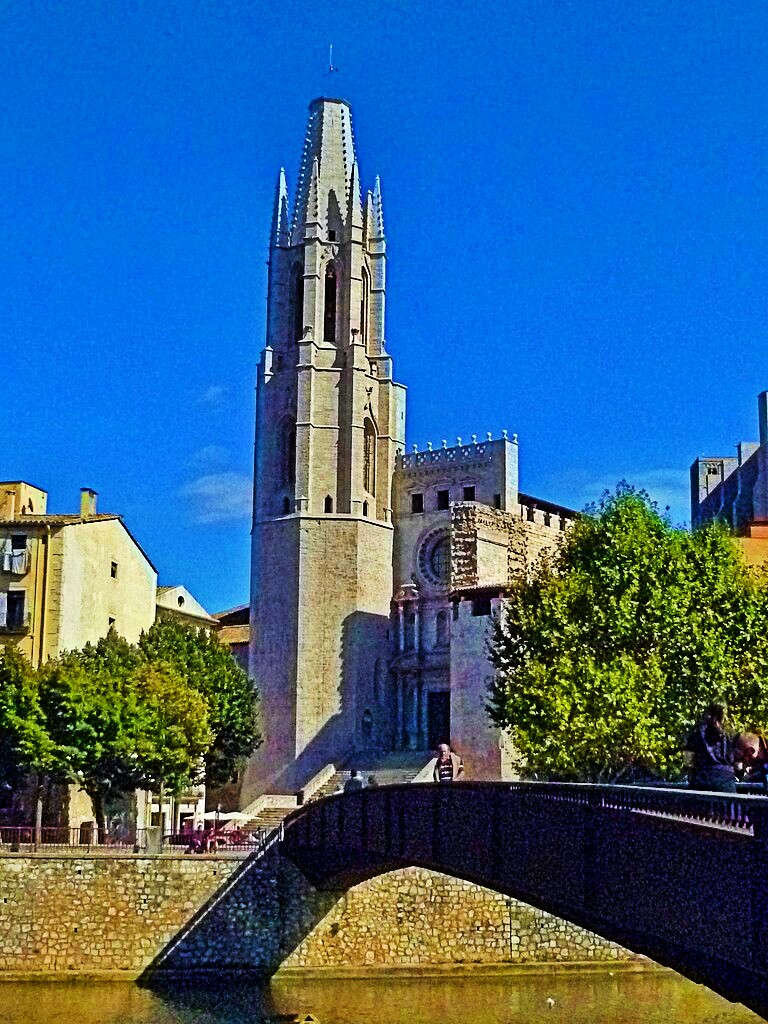
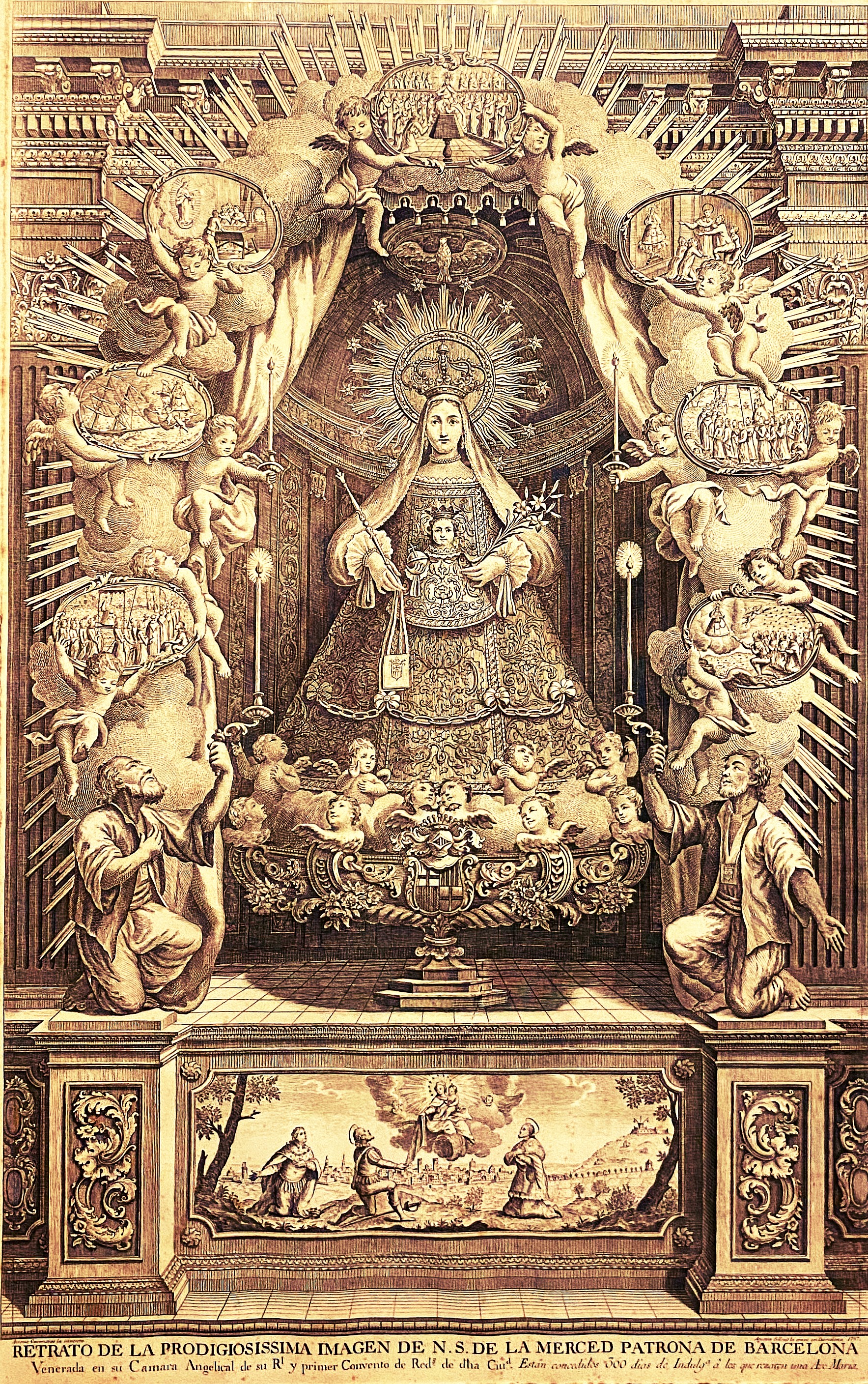
Posted in MARIAN TITLES, SAINT of the DAY, The APOSTLES & EVANGELISTS

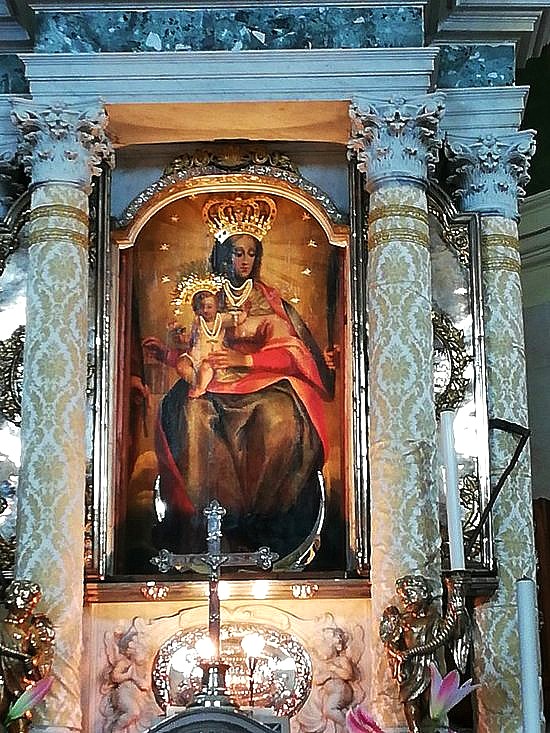
Feast of St Barnabas the Apostle, Our Lady of Mantara / Our Lady of ‘Awaiting’, Lebanon (1721) and the Saints for 11 June

St Blitharius of Seganne
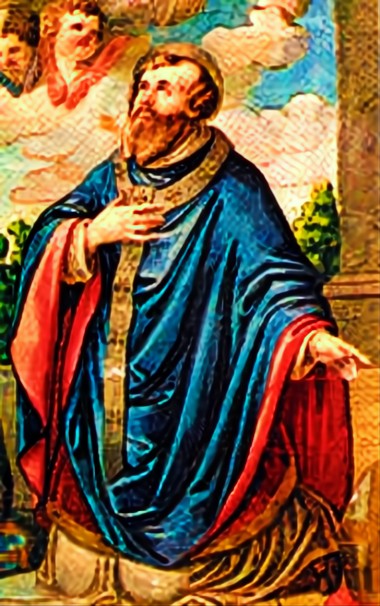
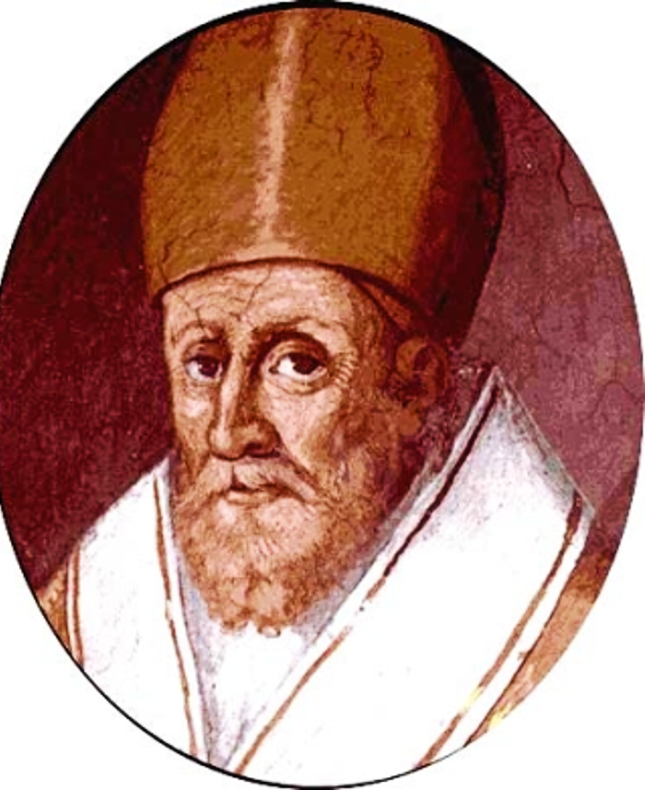
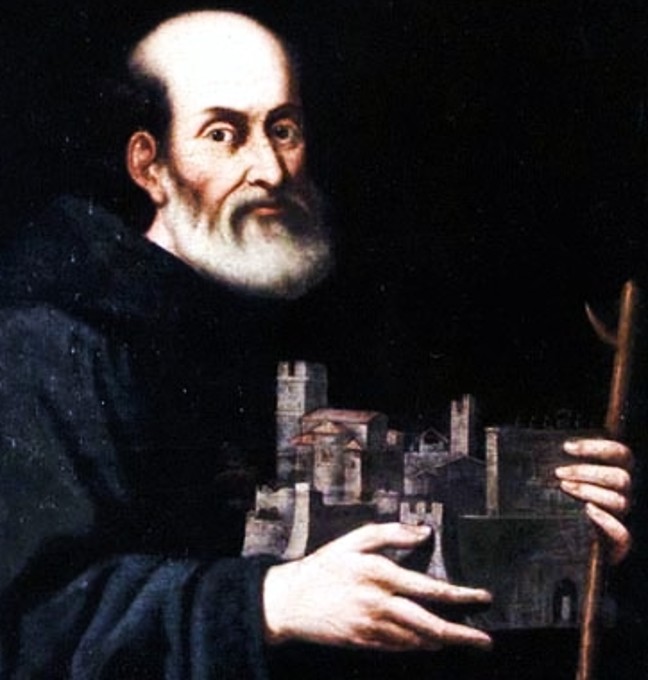
St Bardo of Mainz (c981-c1053) Bishop, Abbot

St Herebald of Bretagne
Bl Hugh of Marchiennes
Bl Jean de Bracq

Bl Kasper of Grimbergen
St Maximus of Naples

St Riagail of Bangor
Bl Stephen Bandelli OP
St Tochumra of Kilmore
St Tochumra of Tuam

Posted in SAINT of the DAY

Saint of the Day – 10 June – Saint Maurinus of Cologne (9th Century) Abbot, Martyr

Saint of the Day – 10 June – Saint Maurinus of Cologne (9th Century) Abbot, Martyr. Died in the 9th Century in Cologne. Also known as – Maurino.

The Roman Martyrology reads today: “At Cologne, St Maurinus, Abbot and Martyr.

St Maurinus Shrine in Cologne

On 13 October 966, during the reconstruction of the Church of St Pantaleone in Cologne, at the time of Archbishop Folcmarus, successor of St Brunone, the Relics of our Saint were found with an epitaph indicating the his identity.

This epitaph recalled that he was an Abbot and that he was killed in the atrium of the same Church of St Pantaleone. The epitaph does not indicate a date but only the month of June.

For this reason, it is not possible to specify the era in which he lived, especially since there is no mention of him in any document prior to the discovery in 966. Even the title of Abbot is not sufficient to indicate a Monastery but he could have been Abbot of a Collegiate Chapter founded in the same Church. as they existed at that time. Nor is there any further explanation as to his Martyrdom, why and how.

His Relics are kept in a Romanesque casket, a true masterpiece of goldsmith’s craft, dated around 1180. In 1922, it was brought back to the Church of St Pantaleone, from the Chapel of St Maria alla Schnurgasse. Since the 12th Century the Feast of St Maurinud is celebrated throughout the Diocese of Cologne on 10 June and in the Universal Church.

Posted in SAINT of the DAY

Within the Octave of the Sacred Heart, St Margaret of Scotland and the Saints for 10 June

Within the Octave of the Sacred Heart

Bl Amata of San Sisto
St Amantius of Tivoli
St Asterius of Petra
St Bardo of Mainz

St Caerealis of Tivoli
St Censurius of Auxerre (Died 486) Bishop
St Crispulus of Rome

Bl Elisabeth Hernden
Bl Elizabeth Guillen
St Evermund of Fontenay
St Faustina of Cyzicus
Bl Gerlac of Obermarchtal
St Getulius of Tivoli

St Illadan of Rathlihen
St Ithamar of Rochester

St Landericus of Novalese
St Landericus of Paris
St Maurinus of Cologne (9th Century) Abbot, Martyr
St Primitivus of Tivoli
St Restitutus of Rome
Bl Thomas Green
St Timothy of Prusa
Bl Walter Pierson
St Zachary of Nicomedia

Posted in SAINT of the DAY

Saint of the Day – 9 June – Saint Maximian of Syracuse (Died 594) Bishop

Saint of the Day – 9 June – Saint Maximian of Syracuse (Died 594) Bishop, Monk at St Gregory the Great’s Monastery in Rome and a close friend and collaborator with St Gregory in many instances and on many projects. Born in Sicily and died in 594 of natural causes at Syracuse, Sicily. Also known as – Massimiano.

The Roman Martyrology states: “In Syracuse, Saint Maximian, Bishop, of whom Saint Pope Gregory the Great often makes mention.

Master of Portillo The Mass of Saint Gregory the Great (possibly the Bishop is our St Maximian)

Originally from Sicily (John the Deacon calls him Siculus), he became a Monk in Rome and after the death of Valenzione he was the second Abbot of the Monastery of St Andrew, Coelian Hill,, built before 583, by the noble Gregory (I believe it was built from St Gregory’s own ancestral home).

When St Gregory was sent by Pope Pelagius II as Papal Delegate to Constantinople to the Emperor Tiberius, Maximian joined him with some of his Monks. St Maximian seems to have prolonged St Gregory’s stay so much that the Pontiff wrote to Gregory to urge his return to Rome, as he was necessary to his Monastery and to the Apostolic See for an important matter. Upon returning, the following year, 585, after eight days of adventurous navigation in the Adriatic, the ship was shipwrecked in Crotone and Maximian, who had shown trust in God, was saved with all his companions.

When Gregory ascended to the Pontificate on 3 September 590, he chose some of his Monks, among them Maximian, to lead a monastic life in his palace which, according to John the Deacon, became “an ascetery of perfect virtue, a school of Ecclesiastical discipline, a Council of very wise government, so venerated in Rome and throughout the Church that anyone who did not have their papers in order, did not even dare appear, deeming it more appropriate to remain absent.”

In December 591, Maximian was already the Bishop of Syracuse. The Pope granted him the use of the Pallium and renewed the privileges of the ancient Bishopric; he also entrusted his representation over the entire Sicilian Church.

Vicar of the Pope and responding to his hopes, Maximian exercised a general supervision over Ecclesiastical discipline and affairs; he resolved the causes of lesser importance, referring the most difficult ones or those which he did not believe he could judge for himself, to the Pope.

Saint Gregory who, in entrusting him with these very broad powers, had minutely established the directives of Ecclesiastical politics in Sicily, addressed several letters to him and, in the end, showed himself pleased with what Maximian had done in just under three years in the vast territory of the Sicilian Island.

Even if the titles of “venerable, bishop of venerable memory” and “most holy” which often occur in the Epistolary of Saint Gregory, can obviously only be attributed a meaning of honour and respect, nevertheless the esteem which the Pope had for Maximian is evident from the expressions written in November 594 upon his death.

To the Deacon Cyprian, his rector in Sicily, the Pontiff wrote, expressing his great sorrow:
“It is not Maximian who must mourn, having already flown to that eternal prize he so desired but these unhappy people of Syracuse ”.
He let the Syracusans know that they
“should keep in mind that another Maximian was not easy to find.”

An interesting aspect of Maximian’s activity was his collaboration with the St Gregory on the Memoirs relating to the Saints of Italy. Saint Gregory mentions it repeatedly; indeed, in 594, he would have liked to see him again, to know more distinctly, some edifying facts learned from St Maximian in the past, in order to insert them into the Dialogues. Our Saint Maximian, who was no longer able to travel to Rome, briefly and in writing, reported to Saint Gregory what he knew about Saint Nonnosus (c500-560) and some other Saints. Sadly for St Gregory, St Maximian was about to leave this earth and travel home.

Syracuse Cathedral
Posted in MARIAN TITLES, SAINT of the DAY

Within the Octave of the Sacred Heart, Pentecost III, Madonna, Madre delle Grazie / Our Lady, Mother of Grace (1610), Madonna della Fontenuova / Our Lady of the Plain , (1573), St Felicianus and St Primus Brother Martyrs and the Saints for 9 June

Within the Octave of the Sacred Heart

Pentecost III

St Alexander of Prusa
St Arnulf of Velseca

St Comus of Scotland
St Cumian of Bobbio
St Cyrus
Bl Diana d’Andalo OP
St Diomedes of Tarsus
St Julian of Mesopotamia
St Luciano Verdejo Acuña
St Maximian of Syracuse (Died 594) Bishop
St Pelagia of Antioch
St Primus *
St Richard of Andria
Bl Robert Salt
Bl Sylvester Ventura
St Valerius of Milan
St Vincent of Agen

Posted in SAINT of the DAY

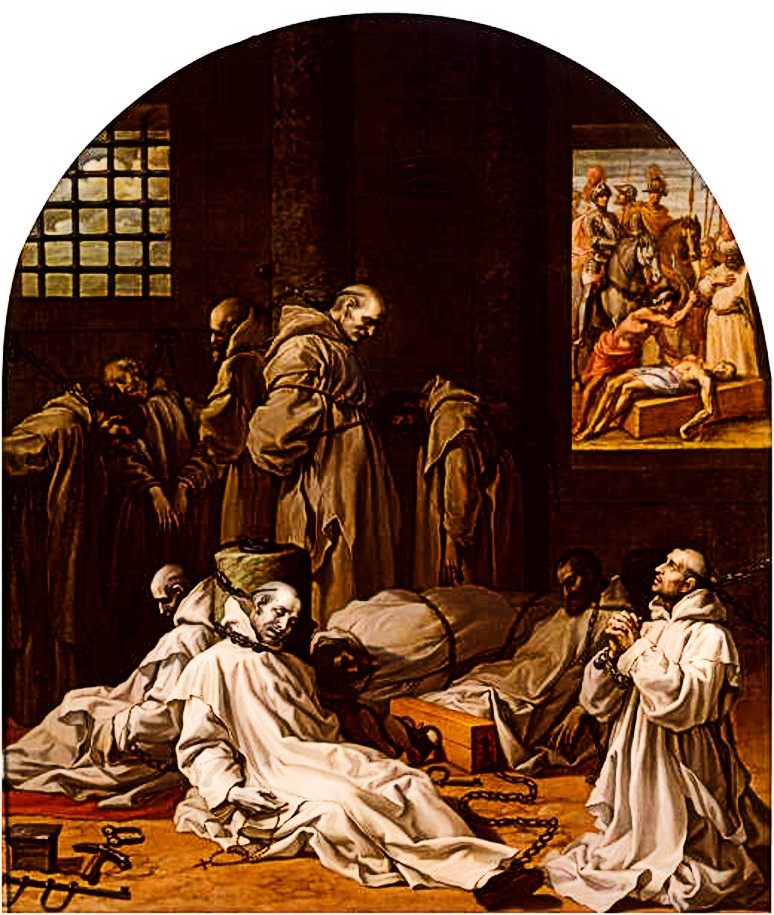
Saint of the Day – 8 June – Blessed John Davy O.Cart. (c1490-1535) Deacon, Martyr

Saint of the Day – 8 June – Blessed John Davy O.Cart. (c1490-1535) Deacon of the Carthusian Order, Martyr, Born in York in c1490 and died by being chained to a wall in the Tower prison, London and starved, until his death on 8 June 1535. Also known as – John Davies. Additional Memorial – 4 May as one of the Carthusian Martyrs of London. Blessed John was Beatified on 20 December 1886 by Pope Leo XIII.

Vicente Carducho c 1626 – The Martyrdom of the Carthusians Friars

The figure of Blessed John Davy is located in the stormy landscape of 16th Century England. A Carthusian Deacon, John faced the persecutions of Henry VIII with stoic firmness, remaining faithful to the Church and the Roman Pontiff until his last breath. His story, steeped in heroism and sacrifice, makes him a shining example for all those who find themselves facing similar trials. You might think we are not facing such trials today but think again, they are mounting and growing in intensity, all over the world, by dedicated persecution.

Information on John Davy’s birth and youth is fragmentary. He is presumed to have been born in York, England, around 1490. Attracted to the contemplative life and strict discipline of the Charterhouse, he joined the Carthusian community of London in 1514. There, he distinguished himself by his piety, his zeal and his profound knowledge of tSacred Scripture and heology.

The reign of Henry VIII marked a period of profound and diabolical upheaval for the Catholic Church in England. The Sovereign, animated by political and personal aims, separated from the Holy See and proclaimed the Church of England as the sole state religion. Catholics, who did not bend to his will were persecuted ferociously.
John Davy, as a Carthusian Deacon and fervent supporter of the Catholic Church, could not remain indifferent to this dramatic scenario. Together with his Brothers, he firmly opposed royal supremacy and the new doctrine imposed by the Sovereign. Their intransigence exposed them to harsh reprisals.

In 1534, Davy was arrested and imprisoned in the Tower of London. Subjected to cruel torture and a regime of extreme deprivation, he was firm to the end, never breaking under extreme torments. His will and his Faith remained fixed on Christ and His Church, Blessed John never renounced his Faith. His unwavering resistance and unswerving loyalty to the Church, further irritated his captors.
On 8 June 1535, after months of torment, John Davy died in prison, exhausted by hunger and mistreatment. His death was a silent but eloquent Martyrdom, a tangible testimony of his unshakable Faith and his unshakable attachment to the his Lord and His Catholic Church.

Vicente Carducho c 1626 – The Martyrdom of the Carthusians Friars

John Davy’s reputation for sanctity quickly spread among English Catholics, who venerated him as a Martyr of the Faith. In 1888, Pope Leo XIII Beatified him, confirming his status as a heroic example for the faithful.

Posted in MARIAN TITLES, QUEENSHIP of MARY, SAINT of the DAY

The Queenship of the Blessed Virgin Mary, Notre-Dame du Dimanche/ Our Lady of Sunday, France (1873) and the Saints for 8 June

Blessed Armand of Zierikzee OFM (Died c1524) Friar of the Order of the Friars Minor, renowned Scriptural Scholar.
St Bron of Cassel Bishop, Spiritual student of Saint Patrick.
St Calliope
St Clodulf of Metz
Bl Engelbert of Schäftlarn
St Eustadiola of Moyen-Moutier
St Fortunatus of Fano Bishop

Bl Giorgio Porta
Bl Giselbert of Cappenberg
St Heraclius of Sens
Blessed John Davy O.Cart. (c1490-1535) Deacon of the Carthusian Order, Martyr
Bl essedJohn Rainuzzi
Bl Maddallena of the Conception

St Melania the Elder
St Muirchu
St Pacificus of Cerano
Bl Peter de Amer
Bl Robert of Frassinoro
St Sallustian
St Syra of Troyes
St Victorinus of Camerino

Posted in SAINT of the DAY

Saint of the Day – 7 June – Saint Gottschalk and his Companions (Died 1066) Lay Missionary Martyr

Saint of the Day – 7 June – Saint Gottschalk and his Companions (Died 1066) Lay Missionary Martyr, Prince of the Wends (Wends is a historical name for Slavs who inhabited present-day northeast Germany). Died by being murdered at the Altar with 29 fellow missionaries on 7 June 1066 in Lenzen, Pomerania, by pagan assassins. Patronages – of linguists, lost vocations, princes, translators. Also known as – Godescalcus, Godeschalc, Gotteschalk,
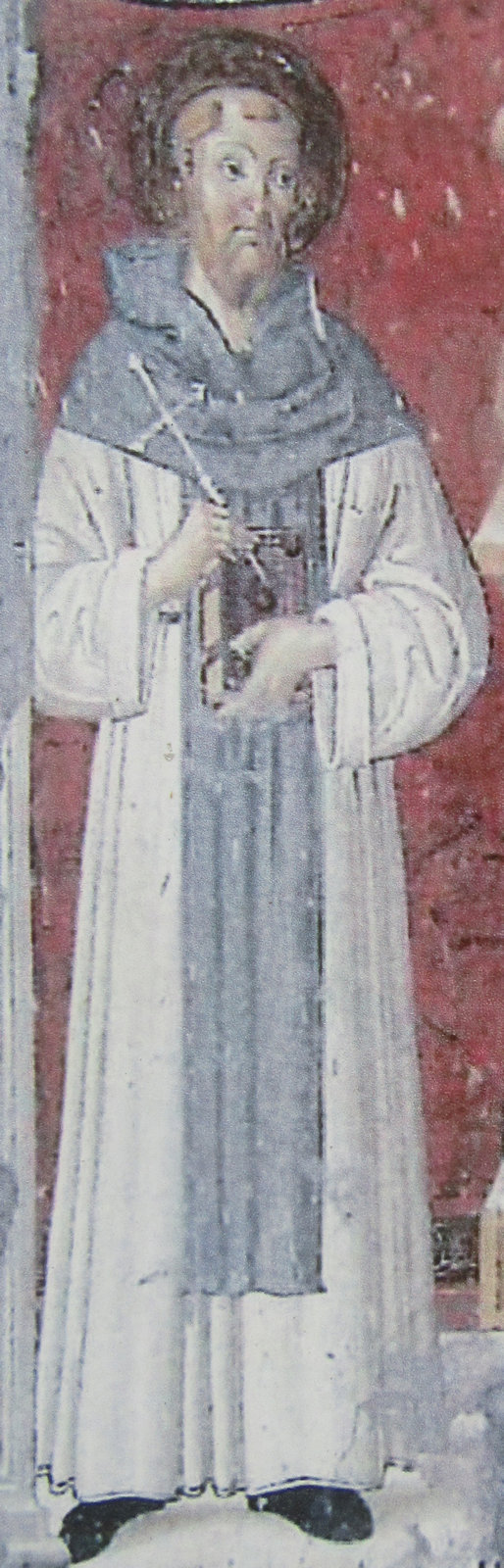
Gotteschalc.

Son of Duke Udo, who still governed the Obodrites and the Vagris, in the early years of Emperor Conrad II, Gottschalk was educated in the Christian religion from birth, first in his family, then in the Monastery of St Michael in Liineburg. Upon the death of his father, murdered at the hands of a Saxon, who wanted to take revenge on the tyranny and cruelty of Udo, described by the chronicler Adam of Bremen, Godescalco, sacrificing his Faith to revenge, renounced Christianity and, at the head of his people, he joined other pagan Princes to go against the Saxons.

He fought against them for a long time, bringing destruction and death to their land, until, succumbing to remorse for so much pain and ruin he had caused, he surrendered to the Duke of Saxony, Bernard II, who, after holding him prisoner for some time, sent him to Denmark.

Having placed himself there in the service of King Cnut II the Great, he went with him to fight in England (c1030), where he behaved bravely, also being admired for his excellent qualities, so as to win all the esteem and consideration of the King , whose great-grand-daughter, Syritha, Gottschalk later married.

After the death of Cnut in 1035 and his son, Harold Hanfoot in 1040, Gottschalk returned to his native land and, raising an army with his people, undertook the conquest of the other Slavic populations who soon subjected them all to his dominion. At the same time, Gottschalk made himself recognised as their Lord also by a large section of the Saxon community.

By 1043, with this conquests, Gottschalk managed to form a vast and well-organised Kingdom . There was then, no ruler among the Slavs more powerful than himself, as the aforementioned Adam of Bremen wrote.

Returning again to his lapsed Faith, since the time of his first residence in Denmark, Gottschalk greatly favoured the evangelisation of the people, having many Churches built in his dominions and Ordaining Priests, always working tirelessly for the conversion of his still idolatrous subjects. To then preserve the fervour of the Christian Faith among them, he founded the Bishoprics of Oldenburg, Mecklenburg and Ratzenburg, established numerous Monasteries in various other Cities and sent armies of Missionaries to the most distant regions of his vast state., among whom John the Scot stood out for his apostolic zeal, who alone baptised thousands of pagans!

Gottschalk himself often travelled with these Missionaries, sometimes even acting as an interpreter during their preaching.
Such ardent zeal in favour of the spread of the Christian Faith could not obtain a better reward than the crown of Martyrdom, hich Gottschalk, the pious King, in fact wore on 7 June 1066, when he fell victim to a violent pagan reaction and was killed out of hatred for the Catholic Faith in Lenzen on the Elbe, while he was attending Mass. With him the Priest Ebbo (or Eppone) suffered the same glorious fate, who was even murdered on the Altar, and many other Ecclesiastics and lay faithful.

Immediately venerated as a Saint, Gottschalk had a strong public cult in many Churches in northern Europe. His Feast is celebrated on 7 June, the commemorative day of his Martyrdom.

Posted in FEASTS and SOLEMNITIES, JUNE-THE SACRED HEART, MARIAN TITLES, SAINT of the DAY, St JOSEPH

The Solemnity of the Most Sacred Heart of Jesus, First Friday, Madonna della Quercia / Our Lady of the Oak, Italy (1578), Apparition de St José / Apparition of St Joseph at Cotignac – (1660) and the Saints for 5 June

First Friday

Apparition de St José / Apparition of St Joseph at Cotignac – (1660): 7 June:
Oh Wonderful St Joseph, Pray for Us!:

https://anastpaul.com/2023/06/07/apparition-of-st-joseph-at-cotignac-france-1660-7-june/

St Aventinus of Larboust
Bl Basilissa Fernandez
St Colman of Dromore
Bl Demosthenes Ranzi

St Gottschalk and Companions (Died 1066) Lay Missionary Martyr
St Justus of Condat
St Landulf of Yariglia
St Lycarion of Egypt

St Meriadoc I of Vannes
St Meriadoc II of Vannes
St Odo of Massay
St Potamiaena of Alexandria the Younger
St Quirinus of Cluny Martyr. No other information has survived.

St Sergius of Cluny
St Vulflagius of Abbeville

Posted in QUOTES on PATIENCE, SAINT of the DAY, The HOLY GHOST

Quote/s of the Day – 6 June – St Norbert

Quote/s of the Day – 6 June – St Norbert O. Praem. (c 1080-1134) Bishop, Confessor, Founder of the Premonstratensians

Calumny,
is the test of a patient
and generous heart
which bears with it,
rather than to give up
working for God.

The Word of God
is enflamed with the fire
of the Holy Ghost.
It consumes lives
and promotes virtue.

MORE
And a Prayer to St Nporbert
for a Safe Childbirth:

https://anastpaul.com/2023/06/06/quote-s-of-the-day-6-june-st-norbert/

St Norbert (c1080-1134)

Posted in SAINT of the DAY

Saint of the Day – 6 June – Saint Gilbert of Neufontaines O.Praem. (c1076-1152) Abbo

Saint of the Day – 6 June – Saint Gilbert of Neufontaines O.Praem. (c1076-1152) Abbot, a French Knight and Military Leader, Crusader in the 2nd Crusade , Founder of Neufontaines Monastery and Hospital for the poor ( which he populated with Canons from the Premonstratensian Abbey of Notre-Dame de Dilo), Apostle of the sick especially of ill children, Miracle-worker. Born in c1076 and died on 6 June 1152 at Neufontaines of natural causes. Patronages – of Neuffons and of Auvergne. Also known as – Gilbert of Auvergne, Gilbert of Neuffers. Additional Memorial – 26 October (in Neufontaines and Aubeterre, France).

The Knight Gilbert belonged to the high nobility of Auvergne. Following the advice of Ornifius, the Norbertine Abbot of Dilo, he participated in the Second Crusade (1147-1149) which was preached by St Bernard at Vezelay and led by the French King, Louis VII. This Crusade ended in military disaster.

Having survived this dangerous endeavour, Gilbert decided, together with his wife, Petronilla and his daughter, Ponzia, to dedicate himself to God and enter the monastic life. He distributed a portion of his considerable wealth to the poor and also founded a Convent which his wife and daughter entered. At first, Gilbert himself lived as a Hermit. After completing his novitiate in the Norbertine Abbey of Dilo, in around 1150, he founded the Abbey of Neuffontaines and became its first Abbot. Following the example of St Norbert, he also built a hospital attached to the Abbey which soon became famous because of the many miracles which occurred there.

Penitent and filled with compassion, he cared for a great number of sick and sinful people, whom he wished to cure both spiritually and physically. Children with severe illnesses were brought to him from all over , his compassion so overwhelmed him that he was able to heal with his tears. He laid his hands upon them and gave them back to their parents cured This gave rise to the later custom of parents bringing their sick children to Neuffontaines, clothed in white, seeking the intercession of St Gilbert for cures and miracles..

Gilbert died on 6 June 1152, consumed by penance and hard toil. He had expressed his desire to be buried in the cemetery of the poor who died at the Abbey. But because of the many miracles which God worked through his intercession, his earthly remains were eventually transferred to the Abbey Church of Neuffontaines and, after being lost for a time, were later rediscovered in the Abbey in October 1645. In 1791, the Relics were transferred, for greater safety, to St Didier and, nevertheless, were lost during the tumult and desecration of the French Revolution. St. Gilbert’s Feast Day (26 October) falls on the anniversary of his translation of the 17th Century. Pope Benedict XIII confirmed the veneration of St Gilbert on 22 January and 8 March 1728.

O God, who called Thy Abbot St Gilbert away from the riches of the world that he might enter into the way of poverty, grant, we beseech Thee, that entering into the way of humility, we may strive to serve our brothers. We ask this through our Lord Jesus Christ, Thy Son, Who lives and reigns with Thee in the unity of the Holy Ghost, One God forever and ever. Amen.

St Gilbert Abbey

Posted in MARIAN TITLES, SAINT of the DAY

The Octave Day of Corpus Christi, Panna Mária,/ Blessed Virgin Mary, Slovakia (1512 ), St Norbert and all the Saints for 6 June

The Octave Day of Corpus Christi

St Agobard of Lyon
St Alexander of Fiesole
St Alexander of Noyon
St Amantius of Noyon
St Anoub of Skete
St Artemius of Rome
St Bazalota of Abyssinia

St Candida of Rome
St Ceratius of Grenoble
St Claudius of Besançon
St Cocca
St Colmán of Orkney
Bl Daniel of Bergamo
St Euphemia of Abyssinia
St Eustorgius II of Milan
Bl Falco of La Cava
St Gilbert of Neufontaines O.Praem. (c1076-1152) Abbot
St Grazia of Germagno
St Gudwall (6th Century) Bishop
Bl Gundisalvus of Azebeyro
St Hilarion the Younger

St John of Verona
Bl Lorenzo de Masculis

St Paulina of Rome

Posted in GOD ALONE!, QUOTES on ETERNAL LIFE, QUOTES on PERSECUTION, SAINT of the DAY, The SECOND COMING

Quote/s of the Day – 5 June – St Boniface

Quote/s of the Day – 5 June – St Boniface (672-754) Bishop, Martyr “The Apostle of Germany,” Confessor, Bishop

Let us continue the fight on the Day of the Lord.
The days of anguish and of tribulation
have overtaken us; if God so wills,
let us die for the holy laws of our fathers,
so that we may deserve to obtain
an eternal inheritance with them.

Let us be neither dogs which do not bark,
nor silent onlookers,
nor paid servants who run away before the wolf!

Eternal God, Our Refuge
By St Boniface (672-754)
Martyr

Eternal God,
the refuge and help of all Thy children,
we praise Thee for all Thou hast given us,
for all Thou hast done for us,
for all that Thou art to us.
In our weakness, Thou art strength,
in our darkness, Thou art light,
in our sorrow, Thou art comfort and peace.
We cannot number Thy blessings,
we cannot declare Thy love –
for all Thy graces, we bless Thee.
May we live as in Thy presence,
and love the things that Thou loves
and serve Thee in our daily lives,
through Jesus Christ our Lord.
Amen

MORE:
https://anastpaul.com/2023/06/05/quote-s-of-the-day-5-june-st-boniface-3/

St Boniface (c672-754)
Martyr, Confessor, Bishop
The Apostle of Germany

Posted in SAINT of the DAY

Saint of the Day – 5 June – St Eoban of Utrecht (Died 754) Bishop Martyr

Saint of the Day – 5 June – St Eoban of Utrecht (Died 754) Bishop Martyr, Missionary as a Disciple of St Boniface, who also shared in the Martyrdom of his master. Born in England or Ireland and died on 5 June 754 at Dokkum, Freisland (modern Netherlands). Also known as – Eobáno, Eobánus. Additional Memorial – 7 July in Fulda, Germany and 19 December, the date of St Eoban’s arrival in Germany.

St Boniface and Companions attacked

We know almost nothing about Eoban’s early life except that he was a Monk and Priest in either Ireland or England and was selected by St Boniface to accompany him on his mission to Gerrmany.

Eoban was also chosen by St Boniface to be his assistant Bishop for Frisia and installed in 753 in Utrecht, according to the Life of Saint Boniface, written in 765 by Willibaldus.

According to the Vita Bonifatii auctore Willibaldo, on the morning of 5 June 754, Boniface and 50 others, presumably including Eoban (none of the companions are mentioned by name in the Vita), were killed at Dokkum (The Netherlands) by pagan Frisians.

The Martyrdom of St Boniface. After the fresco by Carl Hesse.

After his Martyrdom, St Eoban was buried in Utrecht, whilst the many other companions were buring in Dokkum and various places. After 756, the Relics of the Bishops of Utrecht, Eoban and Adalar, were transferred to Fulda and buried next to St Boniface.

St Boniface and his disciples cutting down the pagan tree

Their Feast was initially celebrated in Mainz, Erfurt and Fulda on 26 July then, since 1915, on 7 July with the title Sts Eoban and Companion Martyrs. Eoban seems to have always had a special cult in Fulda, where an ancient calendar commemorates his arrival on 19 December. Adalar, however, is particularly honoured in Erfurt, where his own festival has been celebrated on 20 April since 1250.

The memory of Eobao’s other companions is remembered by all Martyrologists together with that of Saint Boniface on 5 June.
A large Statue of St Eoban dominates the crypt of Saint Boniface’s Church in Fulda. The Sarcophagus containing some Relics of the Saints Eoban and Adalat in the Erfurt Cathedral is dated about 1350.

St Boniface Cathedral in Fulda
Posted in MARIAN TITLES, SAINT of the DAY

Within the Corpus Christi Octave, Beata Vergine dell’Aiuto, / Our Lady of Help, Bobbio, Italy 15th Century, St Boniface and the Saints for 5 June

Within the Corpus Christi Octave

St Adalar of Erfurt
Bl Adalbert Radiouski
Bl Adam Arakawa
St Austrebertus of Vienne
St Claudius of Egypt and Companions
St Ðaminh Huyen
St Ðaminh Toai
St Dorotheus of Tyre
St Elleher
St Eoban of Utrecht (Died 754) Bishop Martyr, Disciple of St Boniface
St Eutichius of Como
St Evasius of Africa
St Felix of Fritzlar

St Franco of Assergi

St Gregory of Lilybaeum
St Gundekar
St Hadulph
St Luke Loan
Bl Meinwerk of Paderborn
St Privatus of Africa
St Sanctius of Córdoba
St Tudno of Caernarvon
St Waccar

Posted in FATHERS of the Church, QUOTES on HERESY, QUOTES on the CHURCH, SAINT of the DAY, St PETER!

Quote of the Day – 4 June – Saint Optatus

Quote of the Day – 4 June – Saint Optatus of Milevis (4th Century) Bishop, Father of the Church

You cannot deny that you know
that in the City of Rome, upon Peter first,
the Chair of the Bishop was conferred,
in which sat the Head of all the Apostles, Peter,
whence also, he was called Cephas,
in which One Chair unity should be preserved by all,
lest the other Apostles should each stand up
for his own chair, so that now,
he should be a schismatic and a sinner
who should, against this One Chair,
set up another!”

St Optatus (4th Century)
Bishop of Milevis
Father of the Church

Posted in FATHERS of the Church, SAINT of the DAY

Saint of the Day – 4 June – Saint Optatus of Milevis (4th Century) Bishop

Saint of the Day – 4 June – Saint Optatus of Milevis (4th Century) Bishop of Milevis, Numidia, in Africa, Father of the Church, the first fierce opponent of Donatism, Writer against heresy, Scholar. Also known as – Optate, Ottato.

The Roman Martyrology reads today: “At Milevis, in Numidia, in Africa, Saint Optatus, Bishop of that place, celebrated for learning and holiness.

Optatus was a convert, as we learn from St Augustine. He is perhaps the least known of all the Fathers of the Church. He was learned with a solid cultural preparation which ranged from Scriptural exegesis to Theology, without disdaining the profane disciplines, such as rhetoric and jurisprudence. All this must have supported Optatus as he ventured into his literary and pastoral activity.

He is best known for his opposition to the heresy of Donatism and his six treatises composed against them. One of these, “Against Parmenian”, is still extant and was mentioned by St Jerome in his “De Viris Illustrius” as having been composed in six books.

The treatise stresses the need for unity and is conciliatory in tone but it criticises Donatist teachings on Baptism and stresses that the Church cannot be limited to Africa but is ‘Catholic.’

Optatus was much praised by such contemporaries as St Augustine and St Fulgentius of Ruspe.

His treatise against the Donatists was translated into French in 1564. It is extremely improbable that, but for this exception, it has, until now, ever appeared in any language save Latin. It is quite certain that it has never yet been clothed in an English dress.

Indeed it is not too much to say that the very name of Optatus is barely known, even to many students of Theology and Ecclesiastical history. Yet his is no mean name and he cannot be ignored with safety, for he has bequeathed to the Church, material of no small value.”

The above excerpt was written by Fr O R Vassali-Phililips CSSR in his Introduction to his translation of our Saints works. His translation was published in 1917. Here is a link to the Treatise: https://www.tertullian.org/fathers/optatus_00_intro.htm

Posted in MARIAN TITLES, SAINT of the DAY

Within the Corpus Christi Octave, Virgen María Sembradora / Virgin Mary the Planter, Argentina, St Francis Caracciola and the Saints for 4 June

Within the Corpus Christi Octave

St Quirinus of Croatia
St Quirinus of Tivoli
St Rutilus of Sabaria
St Saturnina of Arras
St Trano of Sardinia
St Walter of Fontenelle
St Walter of Serviliano

Posted in SAINT of the DAY

Saint of the Day – 3 June – Saint Albert of Como (Died c1092) Bishop

Saint of the Day – 3 June – Saint Albert of Como (Died c1092) Bishop, the 15th Bishop of Como. Also known as – Aribert, Ariberto, Adalbert, Adelbert.

Various Saints on the facade of Como Cathedral

The scant historical information describes Albert as a zealous Bishop, dedicated to the care of his people, while legend exalts his heroic virtues and miraculous powers.

Legend has it that, accused by the Pope of incontinence, Albert managed to triumph over such slander with the evidence of his holy life, his apostolic zeal and his thaumaturgical powers. On this occasion, he actually went personally to Rome, where he performed various miracles in the presence of the Pope, announcing among other things, that his death would follow the recovery of full visual faculties of the same Pontiff, who had a monocle. The Pontiff, then, when he recovered, went to Como, where he assisted the holy Bishop on his deathbed and participated in his funeral.

The actual date of Albert’s death cannot be determined. He was buried in the Church of the Apostles which, from 818 was called St Abbondius. His Relics were later placed together with those of St Rubiano,his predeccessor, under an Altar dedicated to them. In 1580 there was a further transfer of the Relics of the two holy Bishops, placed partly in the Cathedral under the Altar of the Crucifix, partly in the Dominican Church of St John. St Albert’s Feast was celebrated on 7 July and on that date he was also remembered in the Breviary of 1519-1523. His Feast was later moved to 3 June.

Como Cathedral
Posted in MARIAN TITLES, SAINT of the DAY

Within the Octave of Corpus Christi, Madonna della Lettera / Our Lady of the Letter (Messina, Sicily, Italy) 1693 and the Saints for 3 June

Within the Octave of Corpus Christi

St Albert of Como (Died c 1092) Bishop
St Athanasius of Traiannos
St Auditus of Braga
Bl Beatrice Bicchieri
St Caecilius of Carthage

St Conus of Lucania
St Cronan the Tanner
St Davinus of Lucca
Bl Diego Oddi
St Gausmarus of Savigny
St Genesius of Clermont
St Glunshallaich
St Hilary of Carcassone
St Isaac of Córdoba

St Laurentinus of Arezzo
St Liphardus of Orléans
St Morand of Cluny
St Moses of Arabia
St Oliva of Anagni
St Paula of Nicomedia
St Pergentinus of Arezzo
Bl Phaolô Vu Van Duong
St Urbicius

Martyrs of Rome – 8 Saints: A group of Christians Martyred together. We know nothing else about them but the names –
Amasius, Emerita, Erasmus, Lucianus, Orasus, Satuaucnus, Septiminus• Servulus.
They were Martyred in Rome, Italy, date unknown.

Posted in SAINT of the DAY

Saint of the Day – 2 June – Saint Photinus of Lyons (c87-177) & Companions, Bishop and Martyr

Saint of the Day – 2 June – Saint Photinus of Lyons (c87-177) & Companions the First Bishop of Lyons, Martyr . Name means: the sweet one / the lovely one (Greek). Patronages – of the Archdiocese of Lyons and of the City of Lyons. Also known as – Pothin, Pothinus, Potino, Potinus.

The Roman Martyrology reads today: “At Lyons, many holy Martyrs (Photinus, the Bishop, Sanctus, the Deacond, Vetius, Epagathus, Maturus, Pontictus, Biblis, Attalus, Alexander and Blandina, with many others, whose many valiant combats in the time of Marcus Aurelius are recorded in a letter from the Church at Lyons to the Churches of Asia and Phrygia. …”

According to St Irenaeus, Photinus was born around the year 87, probably at Smyrna. He was a disciple of St Polycarp, the Apostolic Father and Martyr Bishop of Smyrna and accompanied him to Rome in 158.

St Pope Anicletus sent him to evangelise the Gauls. Photinus established himself at Lyons and founded there a flourishing Church, over which he presided for almost twenty years. In asserting his own authority as bishop of Lyons, St Irenaeus says that Pothinus had been his predecessor in the position and the first Bishop of that City.

By 177, a large number of the Christians in the area of Vienne and Lyons were Greeks from Asia. A violent persecution began against them while Photinus was the Bishop of Lyons and St Irenæus, who had been sent there by St Polycarp, was a Priest of that City.

Photinus died at the age of ninety, in 177, Martyred along with Alexander, Attalus, Espagathus, Maturus and Sanctius, during the tenure of Emperor Marcus Aurelius. Pothinus and several companions were seized by a mob and taken to the magistrate. Pothinus is believed to have died from the abuse he suffered in prison, while the others were killed by wild beasts in the local amphitheatre.

St Eusebius of Caesarea also reports on the number and nature of the battles for the Faith in Gaul. The Martyrology of St Jerome reports a total of 48 Martyrs.

St Photinus Church in Lyons
Posted in FEASTS and SOLEMNITIES, MARIAN TITLES, SAINT of the DAY

The Solemnity of Corpus Christi Sunday within the Octave, Pentecost II, Madonna delle Lacrime / Madonna of the Tears, Bergamo, Italy (1511), St Marcellinus and Companions and all the Saints for 2 June

The Solemnity of Corpus Christi
Sunday within the Octave

Pentecost II

St Honorata
St Humatus
St John de Ortega

St Photinus of Lyons (c87-177) 7 Companions Bishop Martyr
St Rogate
Bl Sadoc of Sandomierz
St Stephen of Sweden

Posted in PATRONAGE - HEADACHES, SAINT of the DAY

Saint of the Day – 1 June – Saint Crescentinus (Died 303) Martyr, Soldier.

Saint of the Day – 1 June – Saint Crescentinus (Died 303) Martyr, Soldier. Died by being beheaded on 1 June 303 at Saldo, Italy. His
Relics translated to Urbino, Italy in 1068 by Blessed Mainard of Urbino. Patronages – against headache (In Urbino the Saint’s Relics are used to touch the sufferer’s head, accompanied by prayers for the cure of the pain), of Città-di-Castello, Italy, Urbino, Italy. Also known as – Crescentian, Crescentino, Crescenziano, Crescentianus.

The Roman Martyrology reads today: “At Città-di-Castello, in Umbria, Italy, St Crescentian, a Roman Soldier, crowned with Martyrdom under the Emperior Diocletian.”

The annual procession on 1 June in Urbino

There are no documents, nor tombstones, nor epigraphs, prior to the 7th Century which remember our Saint. According to a ‘passio’ considered by scholars to be fictitious and fabulous, dating to the 7th Century, Crescentinus, was a Roman Soldier who fled to the countryside, killed a dragon which had been terrorising the district.

After this feat of courage, Crescentinus was captured by the his pursuers and was then killed by them on 1 June during the persecution of Diocletian and buried in the place called ‘Gaddi’ or ‘Saddi’.

A Church was built on the spot in which the Bishop of the City lived, St Floridus and the Priest St Amanzius, who were also buried in the Church.

Crescentinus Relics were donated to Mainard, Bishop of Urbino or it is also thought that they were stolen. The body of the Martyr Crescentinus was found on 18 December 1360 and, as in other cases, he was considered as the Bishop of Città-di-Castello.

But the most favourable hypothesis indicates that the Relics of the Roman Soldier Martyr Crescentinus, were buried on the Via Ostiense and were sent to Città -di-Castello in an unspecified period and placed under the Altar of the Basilica.

Subsequently, as has often happened, St Crescentinud was considered a local Martyr. In 1500, he was included on 1 June in the Roman Martyrology, taking into account the ancient cult which the holy Martyr enjoyed in the area.

The Relics of St Crescentinus at Urbino
Posted in MARIAN TITLES, SAINT of the DAY

The Month of the Sacred Heart of Jesus, First Saturday, Within the Octave of Corpus Christi, Madonna delle Grazie / Our Lady of Grace, Italy (1630), St Angelica de Merici and the Saints for 1 June

1 June – Devotion for June – THE MONTH OF THE MOST SACRED HEART of JESUS

First Saturday

Within the Octave of Corpus Christi

St Agapetus of Ruthenia
Bl Alfonso Navarrete Benito
Bl Arnald Arench
Bl Arnold of Geertruidenberg
St Atto of Oca
St Candida of Whitchurch
St Caprasius of Lérins (Died 430) Hermit
St Clarus of Aquitaine
St Claudius of Vienne
Bl Conrad of Hesse
St Conrad of Trier Bishop, Martyr
St Crescentinus (Died 303) Martyr, Soldier
St Cronan of Lismore
St Damian of Scotland
St Dionysius of Ruthenia
St Donatus of Lucania
St Felinus of Perugia
Bl Ferdinand Ayala
St Firmus
St Fortunatus of Spoleto
Bl Gaius Xeymon
St Gaudentius of Ossero
St Giuse Túc
St Gratian of Perugia
Bl Herculanus of Piegare
St Iñigo of Oña
St Ischryrion and Companions
Bl James of Strepar
Bl John Pelingotto
Bl John Storey
St Juventius
Bl Leo Tanaka
St Melosa
St Pamphilus of Alexandria

St Porphyrius of Alexandria
St Proculus of Bologna
St Proculus the Soldier
St Ronan
St Secundus of Amelia
St Seleucus of Alexandria
St Simeon of Syracuse
St Telga of Denbighshire
St Thecla of Antioch

St Thespesius of Cappadocia
St Wistan of Evesham
St Zosimus of Antioch

Posted in SAINT of the DAY

Saint of the Day – 31 May – Blessed Hermann of Marienstatt O.Cist. (1150-c1225) Abbot

Saint of the Day – 31 May – Blessed Hermann of Marienstatt O.Cist. (1150-c1225) Cistercian Monk and Abbot of the Himmerod Abbey; founding Abbot of Heisterbach and Marienstatt Monasteries, Hermann was a zealous and powerful administrator, blessed with the gifts of prophecy, visions and miracles, Born in 1150 in the Rhineland (in modern Germany) and died in c1225 in Himmerod, Germany of natural causes.

Hermann is mentioned as Abbot for the last time in 1225. Soon after, he seems to have lived as a simple Monk in Himmerod, where he died around that time. In the Cistercian Order’s calendar, the commemoration (memoria) of “the Blessed Abbot Hermann, who laid the foundations of Marienstatt and who was famous for his gift of prophecy and also for many other miraculous signs” is recorded on 31 May.

Hermann von Marienstatt , depiction from the Baroque period, Marienstatt Abbey

Hermann von Marienstatt was born in 1150 into a noble Rhenish family (Rhenish meaning ‘of the Rhine’). He was initially a Canon at the St Cassius and Florentius Monastery in Bonn but , in around 1175, he joined the Cistercian Abbey of Himmerod.

When, in 1177, the Archbishop of Cologne, Philipp von Heinsberg, offered the Cistercians the property of a defunct Augustinian Canonry on the Stromberg – today’s Petersberg in the Siebengebirge – as a donation, Monks from Himmerod, led by Hermann as founding Abbot, more than 10 years later, in 1189, finally complied and took over the former Monastery.

Due to the unfavourable mountain location, the Convent soon moved to the nearby valley of the Heisterbach (1192-1199), from which the new Abbey took the name Heisterbach. From 1195, Abbot Hermann worked in Himmerod again. Endowments by Cologne Burgrave Eberhard von Aremberg and his wife Adelheid von Molsberg prompted Himmerod, together with its daughter Monastery, Heisterbach, to undertake one last founding action. In 1212, under the proven leadership of our Blessed Hermann, twelve Monks settled near Neunkhausen ‘at the place of St Maria’ – since then known as Marienstatt. Disputes over inheritance law within the founding family soon forced the abandonment of this site. Thanks to a new foundation by the Counts of Sayn the Cistercians were able to gain a foothold in the Westerwald again. In this context, Hermann is now also attested in Marienstatt documents.

A Cistercian Monk in front of the Heisterbach Monastery, depicted according to a reconstructed drawing around 1930, in the new Heisterbach Monastery Church

These events were later given legend on 27 December 1324.and recorded in writing, in the “Marienstatter Tafeln” the document for the Consecration of the Church. This iconographically valuable document is now in the Rheinisches Landes Museum in Bonn. Its border is decorated with fictitious portraits of the Abbots, beginning with Hermann.

The Cistercian Marienstatt Monastery in 2016

The text tells us that the Mother of God appeared to the worried Abbot in a dream and showed him an alternative building site, where a “hawthorn bush” blooms in the middle of winter. Its branch still adorns the Abbey’s Coat of Arms today, see below.

Hermann had to manage the founding of two Monasteries which were made difficult by geographical disadvantage, inheritance disputes and, in the case of Heisterbach, resistance from the population. When this happened, the Cistercian movement had already passed its peak in the area and was facing competition from new religious movements. Perhaps this is one of the reasons for Hermann’s resignation and retirement.

Pilgrims visiting Marienstatt
Posted in DOMINICAN OP, SAINT of the DAY

Within the Corpus Christi Octave and the Saints for 31 May

Within the Corpus Christi Octave

St Alexander of Auvergne

St Crescentian of Sassari
St Donatian of Cirta
St Felice of Nicosia
St Galla of Auvergne
Blessed Hermann of Marienstatt O.Cist. (1150-c1225) Abbot
St Hermias of Comana

St Juan Moya Collado
Bl Kasper Gerarz
St Lupicinus of Verona
St Mancus of Cornwall
Bl Mariano of Roccacasale
St Mechtildis of Edelstetten
St Myrbad of Cornwall
Bl Nicholaus of Vangadizza
Bl Nicholaus of Vaucelles
St Nowa Mawaggali
St Paschasius of Rome

St Silvio of Toulouse
Bl Vitalis of Assisi
St Winnow of Cornwall

Posted in DOMINICAN OP, SAINT of the DAY

Saint of the Day – 30 May – Blessed Elisabeth Stagel OP (c1300-1360) Virgin

Saint of the Day – 30 May – Blessed Elisabeth Stagel OP (c1300-1360) Virgin, Prioress of the Order of Preachers, writer, friend and spiritual student of Blessed Henry Suso OP (1290-1365). Born in c1300 in Zurich, Switzerland and died in c1360 of natural causes at Töss Convent in Winterthur in Switzerland, where she was the Prioress. Also known as – Elisabeth Staglin, Elisabeth Steiglin, Elsbeth

Bl Elisabeth Stagel depicted in a copy of Lives of the Nuns of Töss.

Elisabeth was born into a noble family of Zurich, the daughter of a City Councilor, Rudolf Stagel.

In 1336 she came into contact with the Blessed mystic Henry Suso and from that moment she was his pupil and soulmate. She developed a deep friendship with him and the two remained in active correspondence for the remainder of their lives. Bl Henry considered Elisabeth as his spiritual daughter.

de Zurbaran, Francisco; The Blessed Henry Suso

During their conversations, Elisabeth asked Bl Henry to help her understand the pathway to God by sharing with her his own experiences. However, Suso did not know that the well-educated nun was keeping the letters he sent her and recording all that Suso told her, concerning both theological matters and his extreme practices of personal penance. When he learned of her undertaking, he requested the texts and proceeded to burn them, saving only the second installment of manuscripts for the sake of educating other religious. Bl Henry thereafter forbade Elisabeth to imitate him by engaging in extreme asceticism, fearing for her health.

Elisabeth then authored the Lives of the Nuns of Töss, a work containing biographies of 39 nuns and providing a comprehensive picture of mysticism in the Töss Convent. Blessed Elisabeth of Hungary may have been one of the Nuns whose life Elisabeth described.

Elisabeth died in Töss in 1360 and was probsbly buried there.

Blessed Elisabeth’s book is integral to understanding mysticism and monastic life in medieval Germany.

The former Töss Monastery in a drawing by the Historian, Heinrich Murer (17th Century)
Posted in DOMINICAN OP, FEASTS and SOLEMNITIES, MARIAN TITLES, SAINT of the DAY

The Solemnity of Corpus Christi, The Most Holy Body and Blood of Our Lord Jesus Christ, Dedication of the Church of MonteVergine, near Naples, Italy (1126) and the Saints for 30 May

The Solemnity of Corpus Christi, The Most Holy Body and Blood of Our Lord Jesus Christ:
Corpus Christi

The Feast is liturgically celebrated on the Thursday after Trinity Sunday
https://anastpaul.com/2022/06/16/the-festival-of-corpus-christi/

St Anastasius II of Pavia
St Basil the Elder
St Crispulus of Sardinia
Blessed Elisabeth Stagel OP (c1300-1360) Virgin, Prioress of the Order of Preachers
St Emmelia
St Euplius
St Exuperantius of Ravenna
St Gamo of Brittany
St Gavino of Sardinia
St Isaac of Constantinople
Bl Lawrence Richardson
St Luke Kirby
St Madelgisilus
St Reinhildis of Riesenbeck
St Restitutus of Cagliari
Bl Richard Newport

St Venantius of Lérins
St Walstan of Bawburgh
Bl William Filby
Bl Willilam Scott

Posted in CARMELITES, GOD ALONE!, QUOTES on DEATH, QUOTES on LOVE of GOD, QUOTES on PRIDE, QUOTES on SELF-DENIAL, QUOTES on SUFFERING, SAINT of the DAY, SELF-DISTRUST

Quote/s of the Day – 29 May – St Maria Magdalena de’ Pazzi

Quote/s of the Day – 29 May – St Maria Magdalena de’ Pazzi O.Carm (1566-1607) Virgin

Self-love is like the worm which gnaws at the root
and destroys, not only the fruit but even,
the very life of the plant.
The traitor whom we have to fear most, is self-love, f
or self-love betrays us as Judas
betrayed our Lord with a kiss.
He who conquers self-love, conquers all!

I do not desire to die soon
because, in Heaven, there is no suffering.
I desire to live a long time
because, I yearn to suffer much
for the love of my Spouse.

MORE:
https://anastpaul.com/2022/05/29/quote-s-of-the-day-29-may-st-maria-magdalena-de-pazzi/

St Maria Magdalena de’ Pazzi (1566-1607)

Posted in SAINT of the DAY

Saint of the Day – 29 May – Saint Gerard of Mâcon (Died 926) Bishop

Saint of the Day – 29 May – Saint Gerard of Mâcon (Died 926) Bishop of Mâcon, France for 40 years, ruling from 886 until his death in 926. Uncertainty surrounds his place and date of birth, some indicate it in Belgium, others in Flanders but we do know that he died in a hermitage at Brou near Bourg-en-Bresse in France. Patronages – of Bourg-en-Bresse, Brou and several other French Towns. Also known as – Gerardo, Gérard, Gérald, Girard or Gérard, Gerard of Brou,

The Old Cathedral of Mâcon

Whilst biographical information on Saint Gerard is conflicting. The oldest sources, such as the Episcopal records and catalogues of Mâcon, place our Saint in the 9th Century, other scholars hypothesise an earlier era. However, less debated is his monastic training at the Abbey of Ainay, a renowned centre of culture and religious piety. The experience within the monastic community undoubtedly shaped his spirit and prepared him for his future Episcopal role.

Around the year 886, Gerard was Consecrated Bishop of Mâcon, a Diocese located in the turbulent region of Burgundy. His Episcopate, which lasted for forty years, coincided with a complex historical period, marked by feudal struggles and Norman incursions. In this stormy context, Gerard stood out as a tenacious and wise leader, capable of defending the rights of the Church and its people.

His participation in the Council of Chalon-sur-Saône in 886 testifies to his commitment to re-establishing ecclesiastical order and discipline, countering the interference of lay people in religious matters.

Despite his dedication to his flock, Gerard was not immune to hardship and disillusionment. Tired of the constant battles with the local lords and wanting a more contemplative life, he decided to retire to Brou, a Town near Bourg-en-Bresse. Here he founded a Monastery and a Church, dedicating himself to prayer and meditation. The hermit choice did not mean an abandonment of his pastoral commitment, for Gerard continued to receive visitors and dispense spiritual advice. His reputation for sanctity spread rapidly, attracting numerous pilgrims to Brou.

Saint Gerard died in 926. His remains were initially buried in the Church he had founded in Brou. Subsequently, after 958, they were transferred to the Church of Saint-Pierre in Mâcon, where they are still venerated today. His memory is still celebrated today on 29 May. Saint Gerard is considered the Patron Saint of Bourg-en-Bresse, Brou and several other French Towns.