Saint of the Day – 16 March – Blessed Robert Dalby (Died 1589) Priest Martyr Born at Hemingborough near Wakefield in North Yorkshire, England and died on 16 March 1589 at York, England by being hanged, drawn, and quartered during the persecutions of Elizabeth I. Also known as – Robert Drury. Additional Memorial – 29 October as one of the Martyrs of Douai. Blessed Robert was Beatified on 15 December 1929 by Pope Pius XI. A point of interest is that Yorkshire, as you will have noticed, was particularly strong in the Catholic Faith, regardless of the rampant and violent persecutions. Having lived in Yorkshire for 10 years, I have lots to tell you sometime soon.
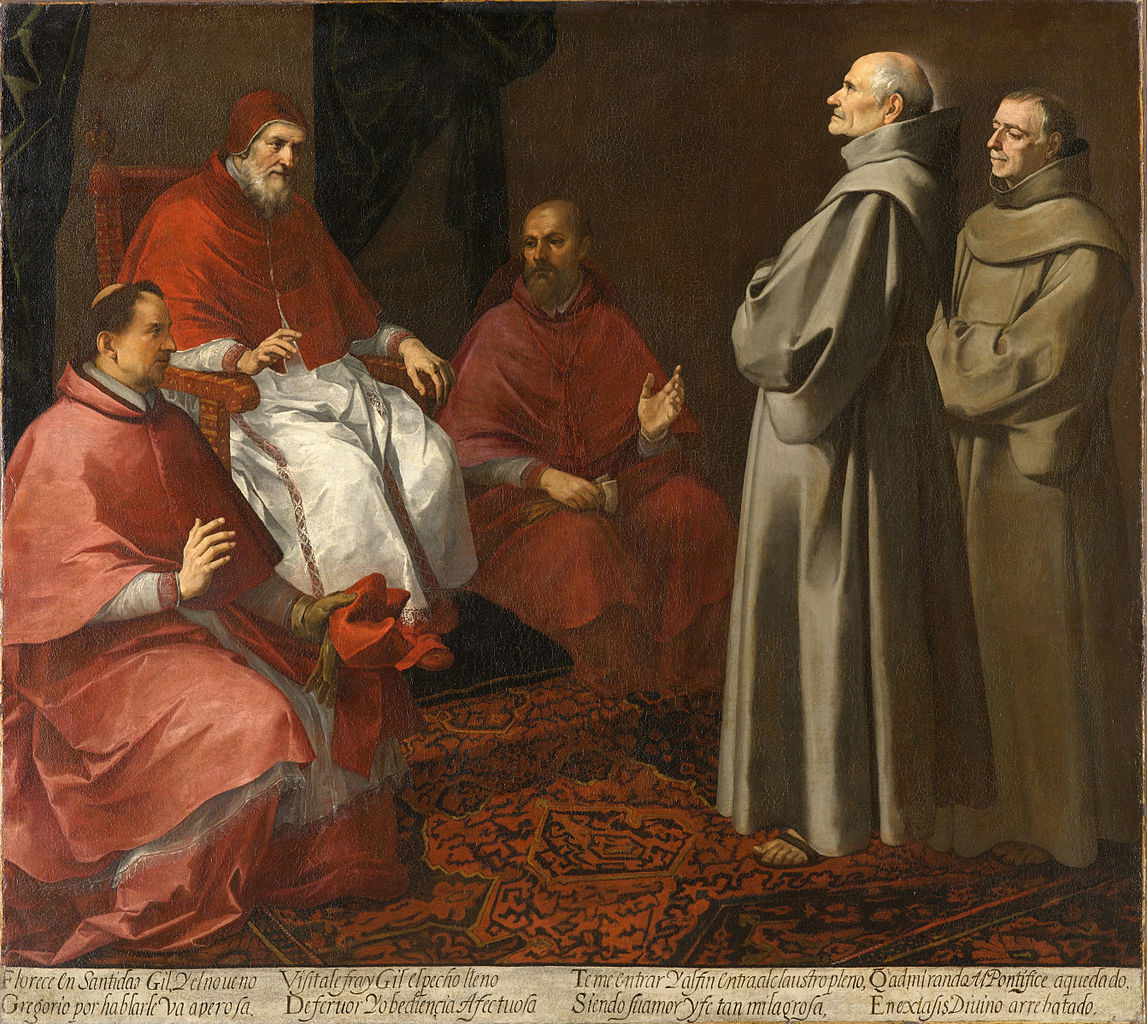
The Blesseds John Amias and Robert Dalby, “At the Place of Execution” Illustration for Memoirs of Missionary Priests by Bishop Challoner (Jack, 1878)
Robert was born a Protestant and became a minister. But he became intrigued with Catholicism and after studying the Faith Robert became a Catholic. In September 1586, he went to study the subjects of the Priesthood, at the English College at Rheims. He was Ordained a Priest at Chalons on 16 April 1588.
On 25 August of that same year, he set out for England. He was arrested almost immediately upon landing at Scarborough on the Yorkshire coast and was imprisoned in York Castle. He was in contravention of English Law which made it a capital oiffence to be a Catholic Priest and which Law carried the penalty of Death by means of hanging, drawing and quartering.
A fellow Priest, Fr John Amias, accompanied him. They remained imprisoned from 25 August until 16 March 1589. The Court Sentencing was proclaimed for both Priests. Upon the arrival at the place of execution, the two Priests prostrated themselves in prayer. Fr John was chosen to be executed first, so Robert Dalby had to watch his fellow Priest being hanged and quartered before his own turn came but he displayed no hesitation in going to his death for the Faith of the Church of his Christ.
Those who venerated these young Priests, shortly after their deaths, reported many miracles. Both Priests were declared Blessed by Pope Pius XI on 15 December 1929.
St Julian of Anazarbus St Largus of Aquileia St Malcoldia of Asti St Megingaud of Wurzburg St Papas St Patrick of Clermont Blessed Robert Dalby (Died 1589) Priest Martyr
Saint of the Day – 15 March – Saint Eusebius II of Vercelli (Died c520) Bishop of Vercelli, Italy. Also known as – Eusebio II.
Neither the volume printed in 1581, edited by the Eusebian Chapter which contained the ancient litanies and the Offices of the Cathedral of Vercelli, nor the Eusebian Calendar, published in 1676, mention him.
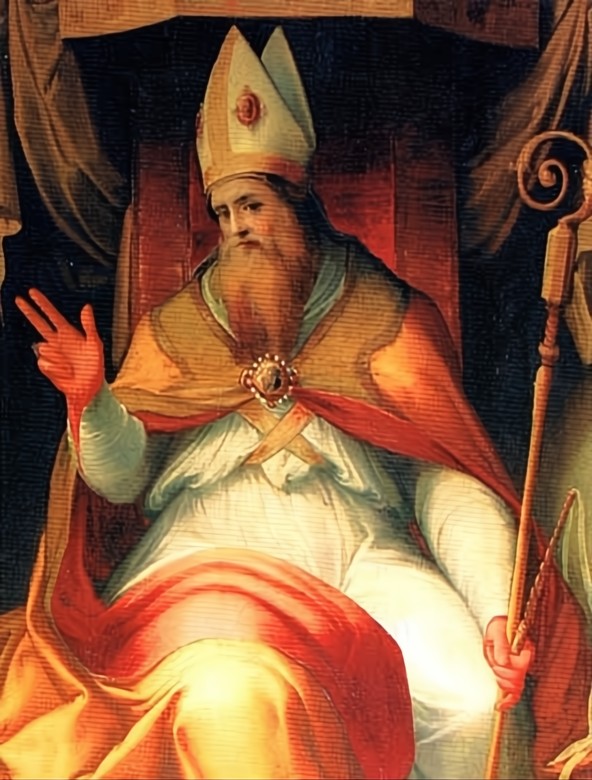
What is certain, is that under this portrait, part of the ancient series of the first 40 Bishops of Vercelli, painted in the Cathedral, one could read his name, with the ranking of “the Second.”
Now let us frame the historical period of his Episcopate — to the left, i.e. a predecessor, is the Bishop Emilian, who ruled the Diocese of Vercelli at the end of the 5th Century (Died 501), was succeeded by a Bishop whose name is unknown. Then immediately after came our Eusebius II, who, in fact was the 12th Bishop of the See. Some local historians believe his Episcopacy to have occurred from 515 to 534 but without proof of this supposition.
The Bollandist hagiographers, who placed his memory on 15 March, established the date of his death around 520 and expressed themselves with his praise, saying that, following the example of the Diocesan Protobishop, St Eusebius I of Vercelli (Died 1 August 371), his namesake, fulfilled his pastoral duties with the utmost diligence and charity.
And Bishop Ferrero also expressed himself in these terms, in his work on the Bishops of Vercelli,which he published in the second edition, in 1609.
Bl Anthony of Milan St Aristobulos of Britannia St Bodian of Hanvec St Eoghan of Concullen St Eusebius II of Vercelli (Died c520) Bishop Bl Francis of Fermo St Longinus the Centurian Bl Ludovico de la Pena St Mancius of Evora St Matrona of Capua St Matrona of Thessaloniki St Menignus of Parium Bl Monaldus of Ancona St Nicander of Alexandria St Peter Pasquale St Sisebuto St Speciosus St Vicenta of Coria Bl Walter of Quesnoy
Saint of the Day – 14 March – Saint Pauline of Thuringia (Died 1107) Widow, Mother, Nun. Died on 14 March 1107 in Fulda, Germany of natural causes. Also known as – Pauline of Fulda, Pauline of Hirsau, Pauline of Münsterschwarzach, Pauline of Zell, Paolina, Paulina.
Born to the Saxon nobility, Pauline was married, after the early death of her first husband to Ulric de Scharaplan. The couple were blessed with children, although we do not know anything about them.
After the death of Ulric and the sole upbringing of her children, she decided to enter religious life and asked the Pope for advice. He directed her to Udone, the Abbot of St Blasien Monastery. Unfortunately, however, in that period both the Abbot and Pauline’s father died.
Pauline then decided to retire with some companions to a forest in Thuringia, where she founded a double Monastery. The direction was entrusted to a Monk while Werner, Pauline’s son, took care of material things as a Lay Brother and Administrator.
In 1107 Pauline and her Nuns decided to separate from the Monks at Thuringia. She undertook to lead them to a Monastery at Hirsau but while travelling Pauline fell ill and was admitted to the Hospice at Munsterchwarzach. Here she received a visit from the Superior of Thuringia Monastery, who blessed her with the administration of the last Rites and Sacraments. She died on 14 March 1107.
St Maximilian St Pauline of Thuringia (Died 1107) Widow St Peter of Africa St Philip of Turin St Talmach Bl Thomas Vives
47 Martyrs of Rome – Forty-sevenpeople who were Baptised into the Faith in Rome, Italy by Saint Peter the Apostle and were later Martyred together during the persecutions of Nero. Martyred c67 in Rome, Italy
Martyrs of Valeria – Two Monks Martyred by Lombards in Valeria, Italy who were never identified. After the monks were dead, their killers could still hear them singing Psalms. They were hanged on a tree in Valeria, Italy.
Saint of the Day – 13 March – Saint Nicephorus (c758-829) Bishop and Confessor, Defender of Sacred images. Nicephorus was the Bishop of Constantinople from 806-815, Scholar and Writer. Born in c758 in Constantinople (modern-day Istanbul, Turkey) and died at the Monastery he had founded on the Black Sea coast on 5 April 828 or 2 June 829 (sources vary). Both these dates are variously celebrated in his honour.
The Roman Martyrology reads today: “At Constantinople, the Bishop St Nicephorus. In defence of the traditions of his forefathers and of the Churrch, the worship of Sacred images, he opposed the Iconoclast Emperor, by whom he was sent into exile, where he underwent a long martyrdom of fourteen years and departed for the Kingdom of God.”
This champion of the orthodox view in the second contest over the veneration of images belonged to a noted family of Constantinople. He was the son of the Imperial Secretary Theodore and his pious wife ,Eudoxia. Eudoxia was a strict adherent of the Church and Theodore had been banished by the Emperor Constantine Copronymus (741-75) on account of his steadfast support of the teaching of the Church concerning images.
While still young Nicephorus was brought to the Court, where he too became an Imperial Secretary. In 787, with two other officials of high rank, he represented the Empress Irene in 787 at the Second Council of Nicaea (the Seventh Ecumenical Council) which declared the Doctrine of the Church regarding images. Shortly after this Nicephorus sought solitude on the Thracian Bosporus, where he had founded a Monastery. There he devoted himself to ascetic practices and to the study both of secular learning, as grammar, mathematics and philosophy as well as to the that of the Sacred sciences especially the Scriptures.
Later he was recalled to the capital and given charge of the great hospital for the destitute, possibly that founded by St Basil the Great. Upon the death of Bishop Tarasius (25 February, 806), there was great division among the Clergy and higher Court officials, as to the choice of his successor. Finally, with the assent of the Bishops and Emperor, Nicephorus was appointed. Although still a layman, he was known by all to be very religious and highly educated. He received Holy Orders and was Consecrated Bishop on Easter Sunday, 12 April 806. He was opposed for a time by St Theodore the Studite after Nicephorus forgave a Priest who married Emperor Constantine VI toTheodota, despite the fact the Constantine’s wife, Mary, still lived. He seems to have been a gentle and forgiving man, devoted to reconciliation.
But in regard to Sacred images, Nicephorus challenged the Iconoclast policies of Emperor Leo V the Armenian without fear and was deposed by a Synod of Iconoclast Bishops at the conniving of the Emperor. Nearly assassinated on several occasions, Nicephorus was finally exiled to the Monastery he had founded on the Black Sea, spending his remaining years there in prayer.
He died in 829, never having been able to return to his See. While Bishop, he brought various reforms to his large Diocese and inspired zealous shepherded his faithful flock. He was also the Author of anti-Iconoclast writings and two historical works, a Chronographia and Brevianim.
In 847, St Nicephorus’ remains were solemnly brought back to Constantinople by Bishop Methodius I and interred in the Church of the Holy Apostles, where they were the object of an annual festival celebrated with much devotion.
NOVENA for the INTERCESSION of ST JOSEPH DAY FOUR:Clink Link here:DAY FOUR
St Leander of Seville (c534-c 600) BIshop, Confessor of the Faith, Teacher, Writer, Apostle of Spain and Evangelisation, Father of the Church – Patron of Episcopal attire and Liturgical garments. Saint Leander, as Bishop, instituted the practice of praying the Nicene Creed during Mass—a practice which continues today. Biography: https://anastpaul.wordpress.com/2017/03/13/saint-of-the-day-13-march-st-leander-of-seville/
Bl Judith of Ringelheim St Kevoca of Kyle St Mochoemoc St Nicephorus (c758-829) Bishop and Confessor, Defender of Icons Bl Peter II of La Cava St Pientius of Poitiers St Ramirus of Leon
Quote/s of the Day – 12 March – St Gregory the Great (540-604) Pope, Confessor, Father & Doctor of the Church, “Father of the Fathers” “The Apostle of England”
Anglorum Iam Apostolus The Apostle of England By St Peter Damian (1007-1072) Bishop, Confesssor, Father and Doctor A Tribute to his fellow Monk St Gregory the Great (540-604) Pope, Confessor, Father & Doctor of the Church
Apostle to the English lands Now with the Angel hosts he stands. Make haste, St Gregory, relieve And help the people who believe.
From riches and from wealth you turned. The glory of the world you spurned That you might follow, being poor, Prince Jesus, Who was poor before.
This Christ, High Pontifex, decreed That you would take His Church’s lead And learn St Peter’s steps to tread, The rule of all called in his stead.
You wondrously solved, riddles deep The mystic secrets Scriptures keep, For Truth Himself, has taught you these: The lofty sacred Mysteries.
O Pontifex, our leader bright, The Church’s honour and its light, Through dangers let them all be brought, The ones you carefully have taught.
The unborn Father, let us praise And to His Son like glory raise And to their Equal, Majesty. All glory to the Trinity. Amen
Our Lenten Journey with the Angels and the Saints – 12 March – Tuesday of the Fourth Week in Lent – St Gregory the Great (540-604), Pope, Confessor, Father & Doctor of the Church, “Father of the Fathers” “The Apostle of England”
Pride, Strength, That I May See!
St Gregory the Great (540-604), Pope, Confessor, Father & Doctor of the Church
“Whenever something is to be done needing great power, Michael is sent forth, so that from his action and from his name, we can understand that no-one can do what God can do. Hence that old enemy, who through pride, desired to be like God, saying, “I will scale the heavens, I will set up my throne, I will be like the Most High,” is shown at the end of the world, left to his own strength and about to undergo the final punishment, as destined to fight with Michael the Archangel. Similarly, Gabriel was sent to Mary; he who is called “strength of God” came to announce Him, Who deigned to appear in humility to conquer the powers of the air. And Raphael is interpreted, as we said, “Medicine of God,” for when he touched the eyes of Tobias to do the work of healing, he dispelled the night of his blindness.”
Practice: If I am tempted to pride today I will ask St Michael to help me conquer my pride. I will have great confidence in his prayers for this intention since it was he who brought down Lucifer, the very spirit of pride. “Who is like unto God!” And to St Gabriel, in my weakness, I may ask prayers for strength and of St Raphael, his prayers to cure my many hurts, both physical and spiritual.
One Minute Reflection – 12 March – “Tuesday of the Fourth Week in Lent – St Gregory the Great (540-604), Pope, Confessor, Father & Doctor of the Church, “Father of the Fathers” – 1 Peter 5:1-4; 5:10-11; Matthew 16:13-19 – Scripture search here: https://www.drbo.org/
“And I say to thee: That thou art Peter and upon this rock, I will build My Church and the gates of hell shall not prevail against it.” – Matthew 16:18
REFLECTION – “When the twelve holy Apostles had received from the Holy Ghost the power to speak all languages, they divided the regions of the earth amongst themselves, as fields for their Gospel labours. Then was Peter, the Prince of the Apostles, sent to the Capital City of the Roman Empire that he might make the Light to shine, from the head, to the whole body of the civilised nations. At that time, what nation was there which had no representative in Rome? What nations would be ignorant of what Rome had learned?
Here were to be refuted the theories of philosophers, here dissolved the vanities of earthly wisdom, here overthrown the worship of devils, here destroyed the impiety of every sacrilege; here, where superstitious zeal had collected all the error and vanity of the world. Therefore, to this City, O most blessed Peter, thou dost not fear to come and, while thy companion in glory, the Apostle Paul, is still occupied with the government of other Churches, thou dost enter this forest of savage beasts, this deep and turbulent ocean, with more boldness than when thou didst walk upon the water!
Thou hadst already taught those, of the circumcision who had been converted, thou hadst founded the Church of Antioch, the first that bore the noble name of Christian; thou hadst published the law of the Gospel throughout Pontus, Galatia, Cappadocia, Asia and Bithynia and, thou didst not fear for the difficulty of thy work, nor turn back because of thine old age but didst boldly set up the trophy of the Cross of Christ, upon those Roman walls, where the Providence of God had appointed the throne of thine honour and the glorious scene of thy passion.” – St Leo the Great (400-461) Pope, Father and Doctor of the Church (Sermon on the Feast of St Peter’s Chair at Rome).
PRAYER – O God, Who granted the rewards of everlasting happiness to the soul of Thy servant Gregory, mercifully grant that we, who are weighed down with the burden of our sins, may be raised up by his prayers to Thee. Through Jesus Christ, Thy Son our Lord, Who lives and reigns with Thee, in the unity of the Holy Ghost, God, world without end. Amen (Collect).
Saint of the Day – 12 March – Saint Theophanes (c758-817) Abbot, Confessor, Founder of Monasteries, Defender of Sacred images, Writer and Historian. Born in Samothrace, Thrace, Greece and died there on 12 March 817 of natural causes (aged 57–59). Also known as – Theophanus of Isaurius, Teofane…
The Roman Martyrology reads today: “At Constantinople, St Theophanes, who gave up great wealth to embrace poverty in the monastic state. By Leo the Armenian, he was kept in prison for two years for the worship of holy images, then, being exiled in Samothracia, where, overwhelmed with afflictions, he breathed his last and wrought many miracles.”
Theophanes was born in Constantinople of wealthy and noble iconodule parents, being Isaac, the Governor of the Islands of the Aegean Sea and Theodora, of whose family nothing is known. His father died when Theophanes was three years old and the Byzantine Emperor, Constantine V (740–775) subsequently saw to the boy’s education and upbringing, at the Imperial Court. Theophanes would later hold several offices under Leo IV.
He was married at the age of eighteen but convinced his wife to lead a life of virginity. In 779, after the death of his father-in-law, they separated with mutual consent, to embrace the religious life. She chose a Convent on an Island near Constantinople, while he entered the Polychronius Monastery, located in the district of Sigiane on the Asian side of the Sea of Marmara. Later, he built a Monastery on his own lands, on the Island of Calonymus (now Calomio), where he acquired a high degree of skill in transcribing manuscripts.
After six years there, Theophanes returned to Sigriano, where he founded an Abbey known by the name ‘of the big settlement’ and governed it as the Abbot. In this position of leadership, he was present at the Second Council of Nicaea in 787 and signed its decrees in defence of the veneration of Icons.
During the years 810-815, Theophanes undertook, at the urgent request of his friend, the Monk and Historian, George Syncellus, who died shortly after Theophanes acceptance, the continuation of Syncellus’ Christian History. The language used occupies a place midway between the stiff Ecclesiastical and the vernacular Greek. Theophanes’ part of the History covered events from the accession of Diocletian in 284 to 813. This part of the History is valuable for having preserved the accounts of Byzantine Ecclesiatical history, for the 7th and 8th Centuries which would otherwise have been lost.
When Emperor Leo V the Armenian (813–820) resumed his iconoclastic warfare, he ordered Theophanes brought to Constantinople. The Emperor tried in vain to induce him to condemn the veneration of icons which had been sanctioned by the second Council of Nicaea. Theophanes was cast into prison and for two years suffered cruel treatment. After his release in 817, he was banished to Samothrace, where overwhelmed with afflictions, he lived only seventeen days in his home country.
He is credited with many miracles which occurred after his death, on 12 March, the day he is commemorated in the Roman Martyrology.
Blessed Jerome of Recanati OSA (Died 1350) Priest, Friar of the Hermits of Saint Augustine, Peacemaker. He was Beatified in 1804 by Pope Pius VII. The Roman Martyrology reads : “In Recanati in the Marche, Blessed Girolamo Gherarducci, Priest of the Order of the Hermits of St Agustine, who worked for peace and harmony between peoples.” About Bl Jerome: https://anastpaul.com/2022/03/12/saint-of-the-day-12-march-blessed-jerome-of-recanati-osa-died-1350/
St Theophanes (c758-817) Abbot, Confessor, Defender of Icons
Martyrs of Nicomedia – 8 Beati: Christians who were Martyred in succession in a single incident during the persecutions of Diocletian. First there were the eight imprisoned Christians, Domna, Esmaragdus, Eugene, Hilary, Mardonius, Maximus, Mígdonus and Peter, about whom we know little more than their names. Each day for eight days one of them would be strangled to death in view of the others so that they would spend the night in dread, not knowing if they were next. Peter was the Chamberlain or Butler in the Palace of Diocletian. When he was overheard complaining about this cruelty, he was exposed as a Christian, arrested, tortured and executed by having the flesh torn from his bones, salt and vinegar poured on the wounds and then being roasted to death over a slow fire. Gorgonio was an army officer and member of the staff in the house of emperor Diocletian, Doroteo was a staff clerk. They were each exposed as Christians when they were overhead objecting to the torture and murder of Peter. This led to their own arrest, torture and executions. Died in 303 in Nicomedia, Bithynia (in modern Turkey) Additional Memorial – 28 December as part of the 20,000 Martyrs of Nicomedia. Beatified on 14 January 1891 by Pope Leo XIII (cultus confirmation).
Saint of the Day – 11 March – Saint Sophronius of Jerusalem (c550-c638) Bishop of Jerusalem from 634 until his death, Father of the Church. Before rising to the primacy of the See of Jerusalem, he was a Monk, Theologian and Philosopher, who was the chief protagonist for orthodox teaching in the doctrinal controversy on the essential nature of Jesus. He was a well-travelled and honoured Teacher of Rhetoric, living for several years in Alexandria, Egypt near St John the Almoner. Ecclesiastical and Liturgical Writer, Poet and exercised an extensive correspondence, some of which has survived and some of which we still use within the Liturgy. He is also renowned in history for his peace negotiations with the invading Saracens, thus ensuring a level of protection to the City’s Christians Born in Damascus, Syria in the 6th Century and died in c638; sources disagree on cause and location. Also known as – Sophronius of Damascus, “Sophronius the Sophist” Sofronio…
Sophronius the Sophist, was one of the most rivetting personalities of the time, cultured, open-minded and a passionate defender of orthodoxy, was born in Damascus around 550. He abandoned his hometown as a young man to undertake numerous journeys but always remained proud of his place of origin: “where Paul arrived blind and left healed, where a fleeing persecutor became a preacher; the City which gave refuge to the Apostle and from which he fled in a basket lowered from the window, thus earning the graces of the saints and acquiring great fame […] ”
Sophronius completed his studies mainly in Damascus, where he was educated in Greek and Syriac culture. Eager to become a Monk, he visited the Monastery of San Theodosius, near Bethlehem in Judea and here he met the Monk ascetical Writer John Moschus (c550 – 619), with whom he formed a lasting bond of friendship.
It is difficult to evaluate the influence which each exerted on the other — Sophronius was decidedly more cultured but, he considered his friend his spiritual guide and advisor. Their main bond was perhaps their common Chalcedonian faith but they also began a collaboration in passing on the lives of the Desert Fathers to future generations. The conflicts already present at that time in the Middle Eastern world, caused the two friends to move around a lot, being hosted by different Monasteries. Between 578 and 584, they were in Egypt, where Sophronius was a pupil of the Aristotelian Stephen of Alexandria and both became friends of Theodore, the Philosopher and Zoilus, the latter an erudite Calligrapher. In this period, Sofronio began to lose his sight but he was miraculous cured of his ailment by visiting the Tombs of Saints Cyrus and John near Menuti and, in thanksgiving, he wrote an account of seventy miracles attributed to their intercession.
From 584 onwards it becomes difficult to reconstruct their movements exactly. For a certain time it seems they took different paths — Sophronius became a Monk in the Monastery of Saint Theodosius, while John Moschus wandered between Sinai, Cilicia and Syria. The two friends finally found themselves in the service of the Bishop of Alexandria, Saint John the Almoner, appointed in 610. A few years later the Persians occupied the holy places and headed towards Egypt, so the Bishop with Sophronius and John, left through Cyprus, moving onto other islands and finally arrived in Rome. In 619, in the Eternal City St John the Almoner, handing over his last wishes to Sophronius. Here too, sadly, our Saint lost another great friend and staunch advocate of orthodoxy, John Moschus, who also died in Rome in 619. Sophronius accompanied the body of his friend and spiritual advisor, back to Jerusalem for monastic burial.
Sophronius made great efforts to counteract the rampant heresies, in particular the Monothelitism which the Emperor Heraclius had imposed on the entire Empire with the approval of the Patriarch, Sergius of Constantinople. From 634 Sophronius was the new Bishop of Jerusalem, a rolewhich allowed him to continue his battle against heresy, with greater authority. As the heresies into which Sergius was falling, were increasingly evident and in fear that Pope Honorius might fall into the trap, he commissioned Bishop Stephen of Dora, to go to Rome in his stead, as he was unable to do so due to an imminent Saracen invasion and made him swear on Calvary, to remain faithful to the One True Faith taught our Saint so deeply by the Chalcedonian Fathers (remember we clebrated one of them recently – St Gregory of Nyssa).
The envoy, Bishop Stephen of Dora, reported Sophronius’ will to the Lateran Council of 649 (the image below shows St Sophronius on the left, St Michael the Archangel in the middler and St? Stephen of Dora on the right): “There he made me promise with a solemn oath: “If you forget or despise the Faith which is now threatened, you will have to give an account to Him Who, although God, was Crucified in this saintly place, when in His Next Coming, He will judge the living and the dead. As you know, I cannot make this journey, due to the invasion of the Saracens […]. Go without delay to the other end of the earth, to the Apostolic See, the Foundation of Orthodox teaching and tell the holy men who are there, not once, not twice but many times, what is happening — tell them the whole truth and nothing more. Do not hesitate, ask them and insistently pray to them, to use their inspired wisdom to pass a final judgement and destroy this new teaching which has been inflicted on us.” Impressed by the solemn appeal which Sophronius had pronounced in that holy and venerable place and, considering the Episcopal power which had been conferred on me, by the grace of God, I immediately left for Rome. I am here before you for the third time, bending before the Apostolic See imploring, as Sophronius and many others did, “come to the aid of the threatened Catholic faith!”.
St Sophronius on the left, St Michael the Archangel in the middler and St? Stephen of Dora on the right
It took a good ten years before Pope Saint Martin I condemned the heresy at the same Council. Sophronius came to terms with the Saracens, to avoid massacres of the people in Jerusalem but, he died a few months later. He left several sermons and writings to posterity, a splendid prayer (which we still use) to bless the water on the Feast of the Baptism of the Lord, as well as Hymns and Canticles of extraordinary beauty! His Antiphons for Holy Week constituted the source of the “Improperia” — lso known as the Reproaches, they are sung in the Liturgy as part of the observance of the Passion, usually on the afternoon of Good Friday.
St Benedict Crispus of Milan (Died 725) Archbishop of Milan from c 685 until his death. A poem written about ten years after his death, De laudibus Mediolani- In Praise of Milan, praises him and remembers his veneration by the entire land and informs us that he was buried in the Basilica of Saint Ambrose. His Life: https://anastpaul.com/2020/03/11/saint-of-the-day-11-march-saint-benedict-crispus-of-milan-died-725/
St Candidus the Martyr St Constantine II St Constantine of Carthage
St Peter the Spaniard St Pionius St Piperion the Martyr St Rosina of Wenglingen St Sophronius of Jerusalem (c550-c638) Bishop of Jerusalem from 634 until his death, Father of the Church. St Thalus the Martyr St Trophimus the Martyr St Vigilius of Auxerre St Vincent of Leon
Saint of the Day – 10 March – St Attalas of Bobbio (Died c627) Abbot, Disciple of, Assistant and Successor to St Columban (543-615). A legendary leader of great wisdom and scholarly abilities, a loving father to his Monks and a generous and kindly Apostle to the poor and the ill, Miracle-worker. His Monks included Saint Valery, Saint Blitmund and St Bertulf, all Abbots at various times. Born in Burgundy, France and died in c627 of natural causes in Bobbio, Italy. Patronages – of Bobbio and of Luxeuil-les-Bains, France. Also known as – Attal, Attala, Attale.
The Roman Martyrology reads today: “In the Monastery of Bobbio, the Abbot, St Attalas, renowned for miracles.”
Attalas was originally from Burgundy, where he was born into a noble family. For his suitable education he was entrusted to Aredius, the Bishop of Gap, City of the Dauphiné.
However, desiring a more rigid lifestyle, Attalas fled and took refuge for some time in the Monastery of Lérins. But even this renowned Monastery did not satisfy him and he decided to move to Luxeuil, the Monastery founded by Saint Columban. Here he was finally able to find the austerity he desired and place himself under the guidance of the great Irish Saint.
When Colomban was banished from France for having accused the vices of King Theodoric of Austrasia, he took some companions with him to Lombardy, including Attalas. They settled in Bobbio, on land donated by the Lombard King.
Colomban was now in his seventies, a venerable age and he survived only a year after the foundation of the new Monastery. Much of the credit for the foundation of this Monastery of Bobbio is, in fact, due toour Saint, who succeeded him as Abbot in 615.
When charismatic authority of the holy founder died and his place was taken by Attalas, various objections to the austerity of community life were raised by the Monks but Attalas did not allow himself to be influenced and let those who were dissatisfied leave. However, some of these later returned and he welcomed them with affection and benevolence.
Jonah of Susa, his Hagiographer, remembers him as “a man loved by all, of great fervour and charity for the poor and pilgrims. He knew how to resist the proud but he was humble with the humblest, he did not allow himself to be silenced in conversations with intelligent people but with simple people, he knew how to talk about the secrets of God. Wise when he came across thorny problems, firm when challenged by heretics, he was strong in adversity, disciplined in favourable times, always temperate and discreet. He showed love and respect towards his subordinates and wisdom towards his disciples. In his presence, no-one could be excessively sad or display undisciplined gaiety.”
Like St Colomban, Attalas also found himself having to fight Arianism which was widespread in the surroundings of Milan.
Bobbio Monastery
Having become seriously ill, Attalas asked to be laid outside his cell, near which there was a Crucifix which he touched everytime he entered or left his cell and to be left alone there on the ground. As a Monk, who remained nearby testified, the now dying Saint prayed fervently and had a vision of Paradise for several hours. Finally taken back to his cell, he died the following day. It was the year c627. Saint Attalas was buried next to Saint Colomban and a few years later Saint Bertulf, their successor, also joined them in the same tomb and shared the cult with them.
Forty Martyrs of Sebaste, Armenia (Died 320) – Forty Christian soldiers of the Thunderstruck Legion of the Imperial Roman army who were tortured and murdered for their faith during the persecutions of Emperor Licinius. They were exposed naked on a frozen pond to freeze to death at Sebaste, Armenia in 320 and their bodies afterward were burned. THE FULL STORY HERE: https://anastpaul.com/2021/03/10/saints-of-the-day-10-march-the-forty-martyrs-of-sebaste-armenia-died-320/
NOVENA FOR THE INTERCESSION OF SAINT JOSEPH DAY ONE – Link: NOVENA FOR THE INTERCESSION OF SAINT JOSEPH (Remember last year St Joseph’s Feast was moved to 20 March due to Laetare Sunday falling on his Feast Day, 19 March. Hence the Novena began a day later than usual.)
St Alexander of Apema St Anastasia the Patrician St Andrew of Strumi St Attalas of Bobbio (Died c627) Abbot St Blanchard of Nesle-la-Réposte St Caius of Apema St Cordratus of Nicomedië
St Emilian of Lagny St Failbhe the Little St Gustav the Hermit St Himelin Bl John of Vallombrosa St Kessog
St Macarius of Jerusalem (Died c335) Bishop of Jerusalem for over twenty years. Defender of the Faith against Arianism, founder of the True Cross with St Helena, organiser and manager of the building of the Sacred Basilicas, including the Church of the Holy Sepuchre in Jerusalem, paid for by St Constantine the Great, St Helena’s son. Also of great import is the fact that Bishop Macarius was one of the two main authors of the Nicene Creed, that is, of the Creed that we still pronounce in Mass today The Life os St Macarius: https://anastpaul.com/2022/03/10/saint-of-the-day-10-march-saint-macarius-died-c-335/
St Peter of Veroli St Rufinus of Nicomedië St Sannudius of Bagensena St Saturninus of Nicomedië St Sedna of Ossory St Silvester of Ireland
Saint of the Day – 9 March – St Gregory of Nyssa (c335–c395) Bishop, Father of the Church, Brother of St Basil the Great. Another of Gregory’s brothers, called Naucratius, was a Monk. He was the Bishop of Nyssa in Cappadocia from 372 to 376 and from 378 until his death in 395. Born in c335 at Caesarea, Cappadocia and died there in c395 of natural causes. St Gregory was an erudite Theologian, Philosopher. Writer , Defender of orthodoxy against heresy but he possible lacked the administrative ability of his brother, Basil or the contemporary influence of Gregory of Nazianzen but, he was an erudite Theologian who made significant contributions to the Doctrines of the Church, in particular, of the Trinity and the Nicene Creed. St Gregory, together with his elder brother, St Basil the Great (Doctor of the Church) and their great and lifelong friend, St Gregory of Nazianzen (also a Doctor of the Church) are collectively known as the “Cappadocian Fathers.”
The Roman Martyrology reads today: “At Nyssa, the demise of St Gregory, Bishop, brother of the blessed Basil the Great, whose life and erudition have rendered him illustrious. He was expelled from his own City for having defended the Catholic Faith during the reign of the Arian Emperor, Valens.”
Gregory’s eldest sister, St Macrina the Younger, had a great influence on him. A discussion he had with her, as he attended at her deathbed and she looked forward to what lay ahead, was later expanded by Gregory, into a Treatise entitled On the Soul and the Resurrection.
Gregory was born at Caesarea in Cappadocia (south-eastern Turkey), the third son and one of five brothers and five sisters. His father was a Rhetorician and his mother, Emelia an earnest Christian and woman of great personal charm. His elder brother, Basil becamethe Bishop of Caesarea. Gregory had an excellent education as a Rhetorician at Athens. He may have married a lady called Theosebeia, possibly the sister of his friend Gregory of Nazianzen. After some years he became disillusioned with his career as a Professor of Rhetoric.
St Gregory of Nazianzen prevailed on Gregory to devote himself to the service of the Church. He was Ordained in 362. It is not known whether his wife died or accompanied him to Nyssa. He gave himself to studying the Scriptures and the works of the Christian writer Origen.
In 371 Gregory was installed as the Bishop of Nyssa, a small town in Lower Armenia, by his brother Basil. However, a financial scandal, where he appeared perhaps too gentle, caused him to be excluded from his See for two years but he was re-instated in 378. It was only after Basil’s death in 379 that his gifts as a Theologian and Writer developed. He became the mainstay of orthodoxy against the Arians throughout Cappadocia and was one of the champions of orthodoxy at the Council of Constantinople (381). And by the time he died he was a greatly respected figure in the Church. He was also in favour with the Emperor Theodosius, who asked him to preach at the funeral of his daughter Pulcheria. He died in the same year as Theodosius, 395.
Many of Gregory’s writings are extant. In theme, they resemble the writings of the other Cappadocian Fathers – Basil and Gregory Naziazen – asserting the Divinity of Jesus and the Holy Ghost against different forms of Arianism (denying the Divinity of Jesus) and Macedonianism (denying the Divinity of the Holy Ghost) – but probably have a greater clarity and depth. Below is an image of his work ‘On Virginity.’ Among the Greeks he was nick-named ‘The Theologian’ and ‘The Father of the Fathers’.
Quote/s of the Day – 8 March – St John of God OH (1495-1550) Confessor, Founder of the Brothers Hospitallers of Saint John of God
Lord be Blessed! (A Prayer of Thanksgiving and Self-oblation) By St John of God (1495-1550)
Lord be blessed! for in Thy great kindness to me, who art such a great sinner, having performed so many wicked things, yet Thou seest fit to set me free, from such a tremendous temptation and deception into which I fell, through my own sinfulness. Thou hast brought me into a safe harbour, where I shall endeavour to serve Thee with all my strength. My Lord, I beg Thee, with all my might, give me the strength of Thine grace and always let me see Thine clemency. I wish to be Thy slave, so kindly show me what I should do. Give peace and quiet to my soul which greatly desires this. O most worthy Lord, may this creature of Thine, serve and praise Thee. May I give my whole heart and mind, to Thee. Amen
Saint of the Day – 8 March – Saint Julian of Toledo(642-690) Bishop and Confessor, Monk and Abbot, Scholar and prolific Writer. Born in c642 in Toledo, Spain and died there in 690.
The Roman Martyrology reads: “At Toledo, in Spain, the demise of the blessed Saint Julian, Bishop and Confessor, most celebrated for his sanctity and learning.”
Julian was well educated at the Cathedral school, was a Monk and later Abbot at Agali, a spiritual student of Saint Eugene II his predeccesor as the Archbishop of Toledo.
Julian was the first Bishop to have primacy over the entire Iberian Peninsula and he helped centralise the Iberian Church in Toledo.
He presided over several Councils and Synods and revised the Mozarabic Liturgy.
A voluminous writer, his works include Prognostics, a volume on death (and his most influential work); a history of King Wamba’s war with dux Paul in Septimania (a Sallustian work, and one of the few examples of historical writing from the late Visigothic Kingdom) and, a book on the future life in Heaven (687). A lost work, apparently dedicated to King Erwig, dealt with the issue of Jews owning Christian slaves.
St Apollonius of Antinoë St Arianus of Alexandri St Arnulf of Chartres Abbot St Beoadh of Ardcarne St Duthus of Ross
St Felix of Burgundy (Died 647) Bishop, “The Apostle of East Anglia” Missionary in East Anglia and particularly in the Port Town now known as Felixstowe, in Suffolk, England. Amongst being the Founder of countless Churches. a famouse Monastery of Bury Saint Edmunds, he is also the Founder of what is now the University of Cambridge. This wonderful “Apostle of East Anglia” https://anastpaul.com/2023/03/08/saint-of-the-day-8-march-st-felix-of-burgundy-died-647-bishop-the-apostle-of-east-anglia/
St Humphrey of Prüm St Julian of Toledo (c642-690) Bishop and Confessor St Litifredus of Pavia St Philemon of Antinoë St Pontius of Carthage St Provinus of Como St Quintilis of Nicomedia St Rhian
Martyrs of North Africa – 9 Saints: A Bishop and some of his flock who were Martyred together in North Africa. The only details that have survived are nine of the names – Beata, Cyril, Felicitas, Felix, Herenia, Mamillus, Rogatus, Silvanus, Urban.
Quote/s of the Day – 7 March – St Thomas Aquinas OP (1225-1274) Confessor, Doctor
“We are like children, who stand in need of masters, to enlighten us and direct us and God has provided for this, by appointing His Angels, to be our teachers and guides.”
“To one who has faith, no explanation is necessary. To one without faith, no explanations is possible.”
“Love takes up, where knowledge leaves off.”
“If the highest aim of a Captain were to preserve his ship, he would keep it in Port, forever!”
“If then, you are looking for the way by which you should go, take Christ, for He, Himself, is the Way.”
“Happiness is secured through virtue; it is a good attained by man’s own will.”
Grant Me Grace, O Merciful God Prayer of St Thomas Aquinas (1225-1274) Doctor Angelicus & Doctor Communis which he was accustomed to recite everyday before the image of Christ.
Grant me grace, O merciful God, to desire ardently all that is pleasing to Thee, to examine it prudently, to acknowledge it truthfully and to accomplish it perfectly, for the praise and glory of Thy Name. Amen
Our Morning Offering – 7 March – Thursday of the Third Week in Lent – St Thomas Aquinas OP (1225-1274) Confessor, Doctor
O Merciful God By St Thomas Aquinas (1225-1274) Doctor Angelicus Doctor Communis
O merciful God, grant that I may ever perfectly do Thy Will in all things. Let it be my ambition to work only for Thy honour and glory. Let me rejoice in nothing but that which leads to Thee, nor grieve for anything, which leads away from Thee. May all passing things be as nothing in my eyes and may all which is Thine be dear to me and Thou, my God, dear above them all. May all joy be meaningless without Thee and may I desire nothing apart from Thee. May all labour and toil delight me, when it is for Thee. Make me, O Lord, obedient without complaint, poor without regret, patient without murmur, humble without pretence, joyous without frivolity, and truthful without disguise. Amen
Saint of the Day – 7 March – Blessed John Larke (Died 1544) Priest Martyr. He was a notable personal friend of St Thomas More (1478-1535) Martyr, the Lord High Chancellor of England. Died on 7 March 1544 (aged in his late forties) at Tyburn, London, England. He was Beatified on 29 December 1886 by Pope Leo XIII.
John studied at Cambridge University prior to 26 years of serving as the Parish Priest of St Ethelburga’s in Bishopsgate in the City of London. In 1526, he transferred to a prosperous Parish at Woodford, in Essex. In 1530, 4 years later, he returned to London when St Thomas More appointed him as the Vicar of Chelsea.
There is evidence that John swore the Oath of Supremacy in 1534 but, as Cresacre More (1572–1649), Great-grandson and Biographer of St Thomas More expressed it: “the example of St Thomas More’s death so wrought on his mind that afterwards, he followed his own sheep and suffered a famous Martyrdom.”
He was formally charged on 15 February 1544, together with John Ireland, Parish Priest at Eltham, German Gardiner and Thomas Heywood. All were condemned but Heywood recanted on the hurdle and lived to give testimony against Cranmer – one of the original apostates. The other three, along with another Priest from Lancashire, Robert Singleton, whose arrest was never explained, were executed on 7 March 1544 for the crime of being Catholic Priests.
St Ardo of Aniane Bl Daniel of Wichterich St Deifer of Bodfari St Drausinus of Soissons Bishop St Enodoch St Esterwine of Wearmouth Abbot St Eubulus of Caesarea Bl German Gardiner Bl Henry of Austria Bl Jermyn Gardiner Bl John Ireland BlessedJohn Larke (Died 1544) Priest Martyr. He was a notable personal friend of St Thomas More (1478-1535) , Martyr the Lord High Chancellor of England. St Paul of Prusa
Bl Volker of Segeberg OSA (Died c1135) Priest Martyr Bl William of Assisi
Martyrs of Carthage – 4 Saints: A catechist and three students Martyred together for teaching and learning the faith. We know little more than their names – Revocatus, Saturninus, Saturus and Secundulus. Mauled by wild beasts and beheaded 7 March 203 at Carthage, North Africa
Saint of the Day – 6 March – St Ollegarius Bonestruga OSA (1060-1137) Bishop, Canon Regular of the Augustinians, Reformer, in both the religious sphere and the social one, Abbot, Diplomat, Peacemaker and Proptector of his people from possible violent incursions. Born in 1060 at Barcelona, Spain and died in Tarragona in 1137 of natural causes. Ollegarius was the Bishop of Barcelona from 1116 and at the same time, the Archbishop of Tarragona from 1118 until his death. He was an intimate friend and Counsellor-Confessor of Count Ramon Berenguer III of Barcelona and often accompanied the Count, on military ventures. Also known as – Ollegarius of Tarragona, Ollegarius of Barcelona, Olaguerand, Oldegar, Olegari, Olegarius, Oligarius, Oleguer, Olegario. Ollegarius was Canonised in 1675 and his major Shrine and Sepulchre is in the side Chapel of Christ of Lepanto, in the Cathedral of Barcelona (see image at the end of the page). His Feast is celebrated the date of his death, today 6 March.
The Roman Martyrology reads: “At Barcelona in Spain, the blessed St Ollegarius, who was first a Canon and afterwards the Bishop of Barcelona and Archbishop of Tarragona.”
This Statue resides in the Interior of Barcelona Cathedral
Ollegarius was born in 1060 into a wealthy family in Barcelona. At the age of 10, he was included in the Cathedral Chapter in his hometown. He was Ordained a Priest in 1094. Over time, he became the Superior of Canons in Barcelona and Sant Adria de Besós (1095-1108) and the Abbot of the Augustinian Monastery of St Rufus in Avignon (1113-1118). He also joined the confraternity of San Pedro de la Portella.
Raymon Berenguer III, Count of Barcelona, appointed him Bishop of that City in 1116. Ollegarius was Consecrated by Cardinal Boso in the Cathedral of Maguelone in Provence, during the Pontificate of Paschal II. In 1117 he went to Rome to pay homage to Pope Gelasius II.
Saint Ollegarius, Sculpture by Pere Villar in the Choir of the Barcelona Cathedral, 16th Century
Ollegarius was a zealous reformer. He participated in the Synods of Toulouse (1119), Reims (1120), the First Lateran Council (1123), Narbonne (1129), Clermont (1130) and again in Reims (1131). He was also involved in implementing the Augustinian Reform of Monasteries in Catalonia – in the 1220s he transformed the Monastery of St Eulalia (then outside Barcelona) into the community of Augustinian Canons. On 8 March 1118, Olegarius, then still the Bishop of Barcelona, was also appointed the Bishop of Tarragona. He had the difficult task of rebuilding the Church in this region, after regaining the region from the Moors.
After 1124 he went on a pilgrimage to the Holy Land but due to his concern for his new Diocese, he shortened his stay in Antioch and returned before 1127. Between 1126 and 1130, he was very active in rebuilding the City, especially the Churches. He brought in new inhabitants and knights who would defend the City in the future. The years 1126-1127 were a time of efforts to organise the Second Crusade. Olegarius compensated William V for sending his knights to Barcelona in 1124-1125 and brought about an agreement between William and his son, Bernard IV, thus strengthening the alliance against the Almoravida pirates.
In March 1129, Ollegarius transferred his secular powers to Robert Bordet, making him Duke of Tarragona. He himself returned to caring for the renewal of his Diocese. The Synod of Narbonne (1129) approved the existence of the Archfraternity, which Ollegarius had founded a year earlier — its aim was to rebuild the Church in Tarragona. Members of the Archfraternity, clergy and laity, wealthy and poor, made monetary donations which were allocated to the Archdiocese of Tarragona.
A Life of St Ollegarius 1617
Ollegarius died on 6 March 1137. He was Canonis ed on 18 May 1675 by Pope Clement X. The Tomb of the Bishop of Barcelona and Tarragona, is located in the Cathedral of Barcelona.
The Sepulchre of St Ollegarius in the Cathedral of Barcelona
St Aetius St Bairfhion St Baldred of Strathclyde St Baldred the Hermit St Balther of Lindisfarne St Basil of Bologna St Cadroë
St Chrodegang of Metz (c714-776) The First Bishop of Metz, Protector and Father of the poor and orphans, Reformer of the Clergy, a relative of King Pepin and of Prince Charles Martel, both of whom he was Court Chancellor, Royal Diplomat, Saint Opportuna of Montreuil was his brother. The Roman Martyrology states: “In Metz in Austrasia, in today’s France, St Crodegango, Bishop, who arranged for the Clergy to live as if within the walls of a cloister under an exemplary rule of life and greatly promoted liturgical chant.” Biography: https://anastpaul.com/2022/03/06/saint-of-the-day-6-march-saint-chrodegang-of-metz/
St Colette PCC (1381-1447) Abbess and Foundress of the Colettine Poor Clares, a reform branch of the Order of Saint Clare. Patronages – against eye disorders, against fever, against headaches, against infertility, against the death of parents, of women seeking to conceive, expectant mothers and sick children, craftsmen, Poor Clares, servants, Corbie, France, Ghent, Belgium. St Colette was Canonised on 24 May 1807 by Pope Pius VII. Biography: https://anastpaul.com/2017/03/06/saint-of-the-day-6-march-st-colette/ AND: https://anastpaul.com/2019/03/06/saint-of-the-day-6-march-st-colette-2/
St Cyriacus of Trier St Cyril of Constantinople St Evagrius of Constantinople
Bl Guillermo Giraldi St Heliodorus the Martyr Bl Jordan of Pisa St Julian of Toledo St Kyneburga of Castor St Kyneswide of Castor St Marcian of Tortona St Ollegarius Bonestruga OSA (1060-1137) Bishop St Patrick of Malaga St Sananus
Martyrs of Amorium – 42 Saints – Also known as Martyrs of Syria and Martyrs of Samarra; A group of 42 Christian senior officials in the Byzantine Empire who were captured by forces of the Abbasid Caliphate when the Muslim forces overran the City of Amorium, Phrygia in 838 and massacred or enslaved its population. The men were imprisoned in Samarra, the seat of the Caliphate, for seven years. Initially thought to be held for ransom due to their high position in the empire, all attempts to buy their freedom were declined. The Caliph repeatedly ordered them to convert to Islam and sent Islamic scholars to the prison to convince them; they refused until the Muslims finally gave up and killed them. Martyrs. We know the names and a little about seven of them: Aetios Bassoes Constantine Constantine Baboutzikos Kallistos Theodore Krateros Theophilos but details about the rest have disappeared over time. However, a lack of information did not stop several legendary and increasingly over-blown “Acts” to be written for years afterward. One of the first biographers, a monk name Euodios, presented the entire affair as a judgement by God on the empire for its official policy of Iconoclasm. Deaths: beheaded on 6 March 845 in Samarra (in modern Iraq) on the banks of the Euphrates river by Ethiopian slaves the bodies were thrown into the river, but later recovered by local Christians and given proper burial.
Saint of the Day – 5 March – Saint Theophilus of Caesarea (Died c217) Bishop, Theologian, Writer , Apologist and Defender of the Faith. Born in Caesarea, Palestine and died c195 of natural causes. Also known as – Theophilus of Palestine.
The Roman Martyrology reads: “At Caesarea, in Palestine, in the time of the Emperor, Severus, St Theophilus, Bishop, who was conspicuous for his wisdom and the purity of his life.”
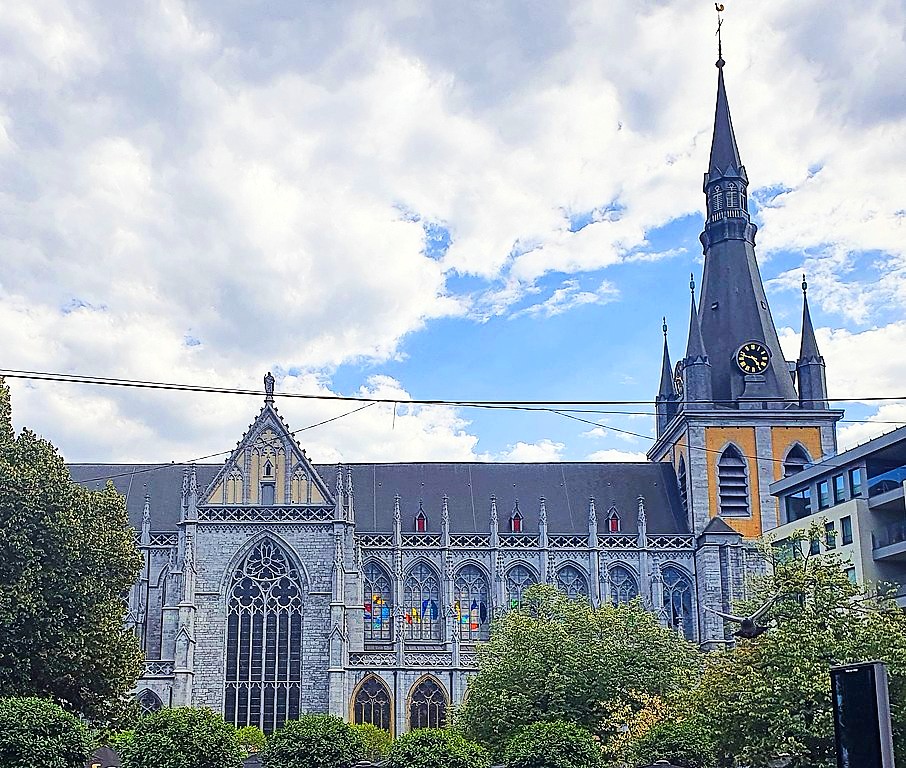
St Theophilus at Notre-Dame Basilica, Geneva (Switzerland)
Saint Theophilus was born in Caesarea in Palestine around 110. He was educated in a Christian environment and soon became a leader of the local Church. In 189 he was appointed as the Bishop of Caesarea.
He was a prolific Theologian and wrote several works, including the “Letter to Autolycus” an apologetic work defending Christianity against pagan accusations. In this work, Theophilus argues that Christianity is the true religion and that Jesus Christ is the Son of God.
Theophilus was an important leader of the Church. He was one of the main supporters of celebrating Easter on Sunday, according to Western tradition. In 190, he attended a Synod in Caesarea, in which it was decided that Easter would be celebrated on Sunday.
He died in Caesarea of Palestine around 217. He was officially Canonised in the 16th Century with a Feast today, 5 March.
St Adrian of Caesarea St Caron St Carthach the Elder Bl Christopher Macassoli of Vigevano St Clement of Santa Lucia St Colman of Armagh St Conon of Pamphylia Bl Conrad Scheuber Bl Dietmar von Minden St Eusebius of Cremona St Eusebius the Martyr St Gerasimus of Palestine (Died c475) Monk, Hermit Bl Giovanna Irrizaldi
Martyrs of Africa – A group of 304 Christians Martyred together for their faith. We know nothing else about them but five of their names Eusebius, Evolus, Hadrian, Julian and Octavian. They Died in 254 in Africa, exact location and date unknown.
You must be logged in to post a comment.