Saint of the Day – 24 August – St Sandratus (Died 986) Abbot, Reformer, Official legate of the Emperor, Co-founder of Gladbach Monastery. Died in 986 at his one of his Monasteries. Also known as – Sandradus.
We know little of our St Sandratus except that he became a Monk in the monastery of St Maximinus, in Trier, Germany, where he must have excelled in both devotion and leadership qualiyties, in order to attract the attention of the Emperior.
In 972, Emperor Otto I appointed him to attend at the Monastery of St Gall in modern Switzerland, in order to effect much needed reforms there.
In 974, after the successful completion of his mission at St Gall, Sandratus was requested to assist Archbishop Gero of Cologne to found a Monastery at Gladbach which was named after the Gladbach, a narrow brook which now runs underground. The Abbey and its adjoining Villages grew into the Town of Gladbac, incorporated in the 1360s, the origin of the present City of Mönchengladbach in North Rhine-Westphalia.
gLADBACH aBBEY
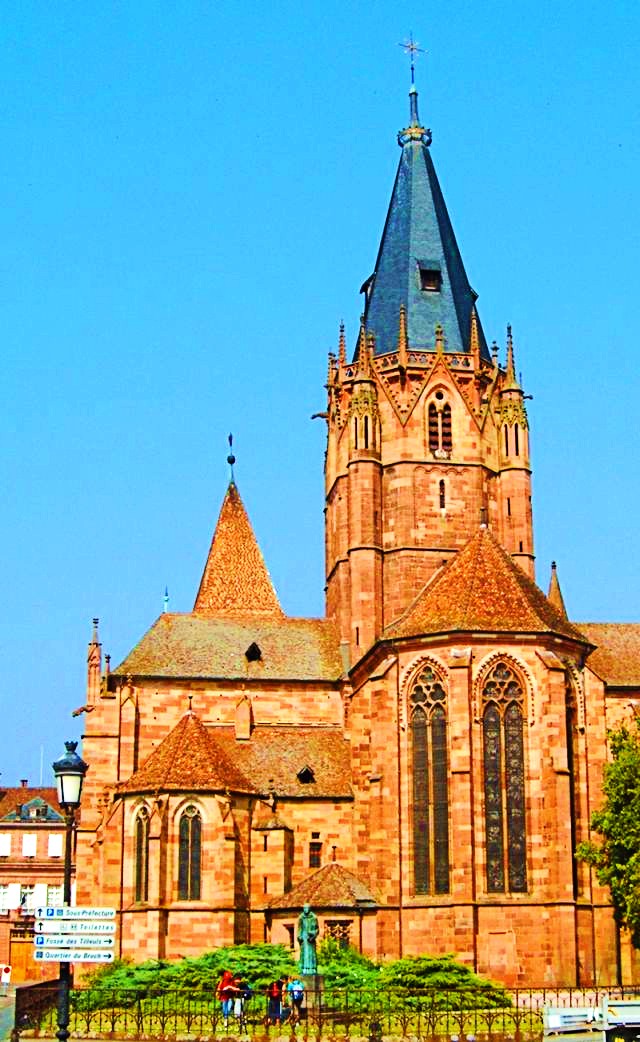
At the same time, in the Alsace region, Sandratus was also appointed to the responsibility of governing the Weissenburg Monastery dedicated to Sts Peter and Paul, below is the Abbey Church today.
Saint of the Day – 23 August – St Flavian of Autun (5th Century) Bishop of Autun in France. Also known as – Flavichonus, Flavinian, Flavius, Flaviano, Flavio.
Flavian was a Bishop of Autum who presumably lived in the 5th Century. In the chronology of the Bishops of the Diocese recorded in the 6rd Century, he was believed to be placed in the twelfth place, while recent studies places him in the twenty-second place after Saint Euphronius, historically attested in 475 and before Saint Pragmatius, documented in 517.
We know nothing about Saint Flavian, since the existence of this Bishop is attested only through his name. Most historians identify him with the Bishop of Autun, Flavichonus, remembered in the Life of Heptadius of Cervon, a contemporary of King Clovis.
In many texts he is believed to have governed the Diocese after the death of Saint Euphronius which occurred in the year 490.
The memory of Saint Flavian is remembered and celebrated, both in the Hieronymian Martyrology and in the Roman Martyrology on 23 August.
St Philip Benizi OSM (1233-1285) Confessor, Co-Founder (one of the Seven Holy Founders of the Order of Servants of Mary) OSM, Servite Priest Genera\Superior, Reformer, Preacher, Medical Doctor. St Philip was Beatified on 8 October 1645 by Pope Innocent X and Canonised on 12 April 1671 by Pope Clement X – he was the first Servite to be Canonised. Born on15 August (Feast of the Assumption and the day that the Blessed Virgin appeared to the first of the Founders of the Servite Order) 1233 at district of Oltrarno, Florence, Italy -and died on 22 August (Octave of the Assumption i.e. the Feast of the Immaculate Heart of Mary) 1285 at Todi, Italy). This Amazing Life: https://anastpaul.wordpress.com/2017/08/23/saint-of-the-day-23-august-st-philip-benezi/ AND: https://anastpaul.com/2022/08/23/saint-of-the-day-23-august-st-philip-benizi-osm-1233-1285-confessor/
St Abbondius of Rome St Altigianus St Apollinaris of Rheims St Archelaus of Ostia St Asterius of Aegea St Claudius of Aegea St Domnina of Aegea St Eleazar of Lyons St Eonagh St Flavian of Autun (5th Century) Bishop Bl Giacomo Bianconi of Mevania St Hilarinus St Ireneus of Rome St Lupo of Novi St Luppus
St Marcian of Saignon, France – Priest, Founder and the first Abbot of the Benedictine Abbaye Saint Eusebe, the Abbey of St Eusebius. Unfortunately we do not even know the year of his birth or of his death but we do know the day of death was 23 August. The Little We Know of His Life: https://anastpaul.com/2023/08/23/saint-of-the-day-23-august-st-marcian-of-saignon-abbot/
St Maximus of Ostia St Minervius of Lyons St Neon of Aegea St Quiriacus of Ostia St Theonilla of Aegea St Timothy of Rheims
Martyrs of Agea – 4 Saints: A group of Christian brothers, Asterius, Claudius and Neon, denounced by their step-mother who were then tortured and Martyred in the persecutions of Pro-consul Lysias. They were crucified in 285 outside the walls of Aegea, Cilicia (in Asia Minor) and their bodies left for scavengers.
Saints of the Day – 22 August – St Timothy and Companions – they were + St Hippolytus of Porto and + St Symphorian of Autun. The three died at different times in different places but all on the same date, that is, 22 August – Martyrs.
The Roman Martyrology reads of these three today: St Timothy – “At Rome, on the Ostian road, the birthday of the holy Martyr, Timothy. After he had been arrested by Tarquinius, Prefect of the City and kept for a long time in prison, as he refused to sacrifice to the idols, he was scourged three times, subjected to the most severe torments and finally beheaded.”
St Hippolytus – “At Porto, St Hippolytus, Bishop, most renowned for learning. Having gloriously confessed the Faith, in the time of the Emperor Alexander, he was bound hand and foot, precipitated into a deep ditch filled with water and thus received the Palm of Martyrdom. His body was buried by the Christians at that place.”
St Symphorian – “At Autun, St Symphorian, a Martyr in the time of the Emperor, Aurelian. Refusing to offer sacrifices to the idols, he was first scourged then confined in prison and finally ended his Martyrdom by being beheaded.”
The Martyrdom of Saint Symphorian, by Jean-Auguste-Dominique Ingres
Timothy (Timotheus), Hippolytus of Rome and Symphorian (Symphorianus, Symphorien), are three Martyrs who, although they were unrelated and were Martyred in different places and at different times, shared a common Feast day in the General Roman Calendar from at least the 1568 Tridentine calendar to the Mysterii Paschali (i.e. Paul VI – Vatican II).
Timothy of Antioch came to Rome in 310 and was Martyred in 311. He was cruelly beaten and quicklime was sprinkled over his torn flesh. At last he was beheaded.
On the same date at Ostia, Hippolytus, Bishop of Porto, was thrown into a hole filled with water and received the Crown of Martyrdom about 225.
Again on the same day, about 180, under the reign of Aurelian, Symphorian, who was still a young man, was beheaded at Autun. While he went to execution his mother said to him: “My son, my son, remember eternal life; look up to Heaven and see the One Who reigns there; life is not taken from thee, it is exchanged for a better one.”
Collect: Deny us not, Thy aid, O merciful Lord but listening to the prayers of Thy blessed Martyrs Timothy, Hippolytus and Symphorian, stretch forth over us, the Right Hand of Thy merciful forgiveness. Through Jesus Christ, Thy Son our Lord, Who lives and reigns with Thee, in the unity of the Holy Ghost, God, world without end. Amen (Collect).
St Timothy and Companions – they were + St Hippolytus of Porto and + St Symphorian of Autun. The three died at different times in different places – Martyrs
St Anthusa of Seleucia St Antoninus of Rome St Arnulf of Eynesbury St Athanasius of Tarsus Bl Bernard Perani St Dalmau Llebaría Torné St Epictetus of Ostia St Ethelgitha of Northumbria St Fabrician of Toledo St Felix of Ostia
St John Kemble (1599 – 1679) Martyr, Priest. Ordained in 1625, he returned to Monmouthshire and served more than 50 years as an itinerant Priest, winning admirers even among Protestants. After being dragged on a hurdle to Widemarsh Common, Kemble declared on the scaffold that he died for the religion that had made this country Christian and that he forgave all his enemies. He was then obliged to encourage the executioner, who had no stomach for his task. Life and Death: https://anastpaul.com/2018/08/22/saint-of-the-day-22-august-st-john-kemble-1599-1679-martyr/
St John Wall St Josep Roselló Sans St Julio Melgar Salgado St Maprilis of Ostia St Martial of Ostia St Maurus of Rheims St Philibert of Toledo Bl Richard Kirkman St Saturninus of Ostia Bl Simeon Lukach St Sigfrid of Wearmouth + St Symphorian of Autun
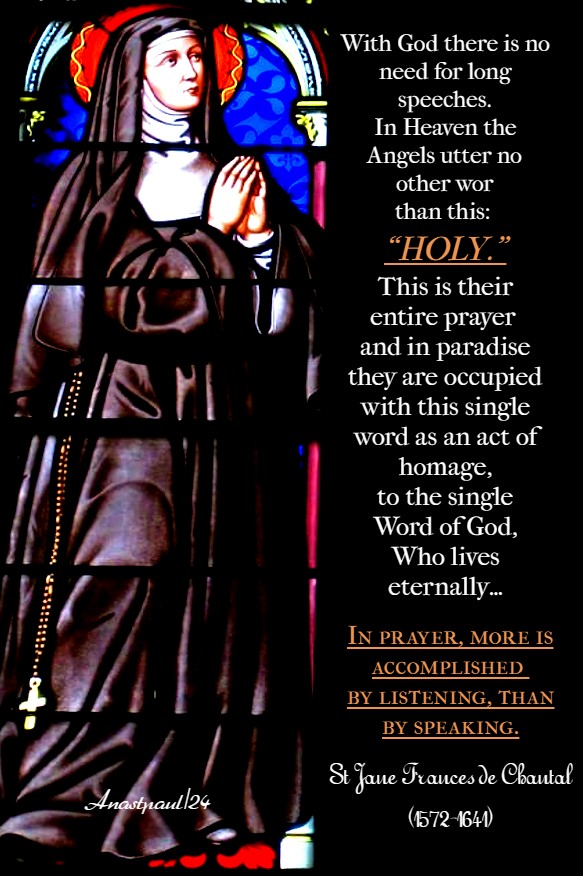
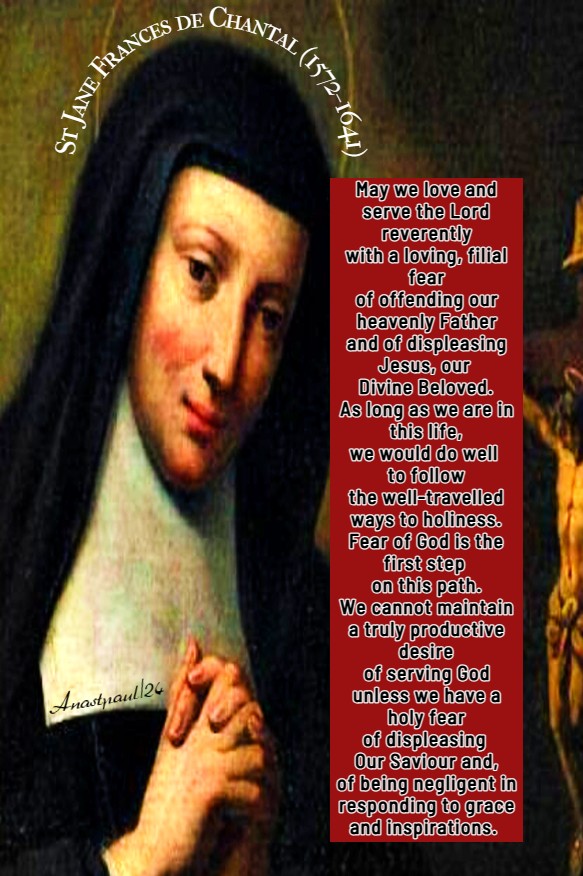
Quote/s of the Day – 21 August – “The Month of the Immaculate Heart of Mary” – St Jane Frances de Chantal VHM (1572-1641) Widow
“With God there is no need for long speeches. In Heaven the Angels utter no other wor than this: “HOLY.” This is their entire prayer and in paradise they are occupied with this single word as an act of homage, to the single Word of God, Who lives eternally…. In prayer, more is accomplished by listening, than by speaking.”
“May we love and serve the Lord reverently with a loving, filial fear of offending our heavenly Father and of displeasing Jesus, our Divine Beloved. As long as we are in this life, we would do well to follow the well-travelled ways to holiness. Fear of God is the first step on this path. We cannot maintain a truly productive desire of serving God unless we have a holy fear of displeasing Our Saviour and, of being negligent in responding to grace and inspirations. ”
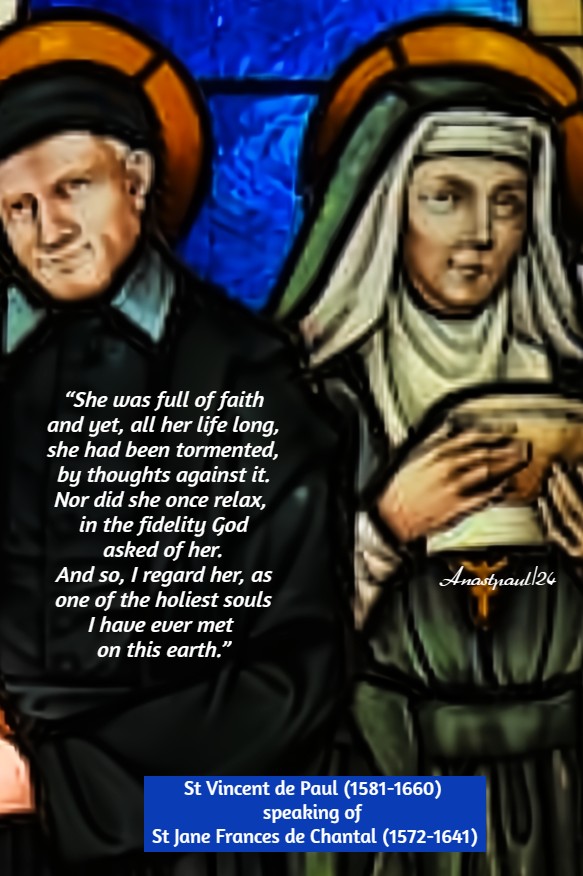
“She was full of faith and yet, all her life long, she had been tormented, by thoughts against it. Nor did she once relax, in the fidelity God asked of her. And so, I regard her, as one of the holiest souls I have ever met on this earth.”
St Vincent de Paul (1581-1660)
(St Jane was a close friend of St Francis de Sales and St Vincent de Paul, both of whom guided and assisted her and her foundation, as Spiritual Advisors and Confessors.)
Saint of the Day – 21 August – Blessed Conrad Probus of Toul OFM (c1220-1297) Bishop of Toul, Papal Legate, Defender of the Church against secular interference. Born in c1220 in Tübingen, Wurttemberg (in modern Germany) and died on 2 May 1297 in onstanz, Germany of natural causes. Also known as – Konrad, Probus, … of Tübingen, Conrad Probus.
Conrad, later called Probus, was a Bishop of Toul in France, between 1269 AND 1279.
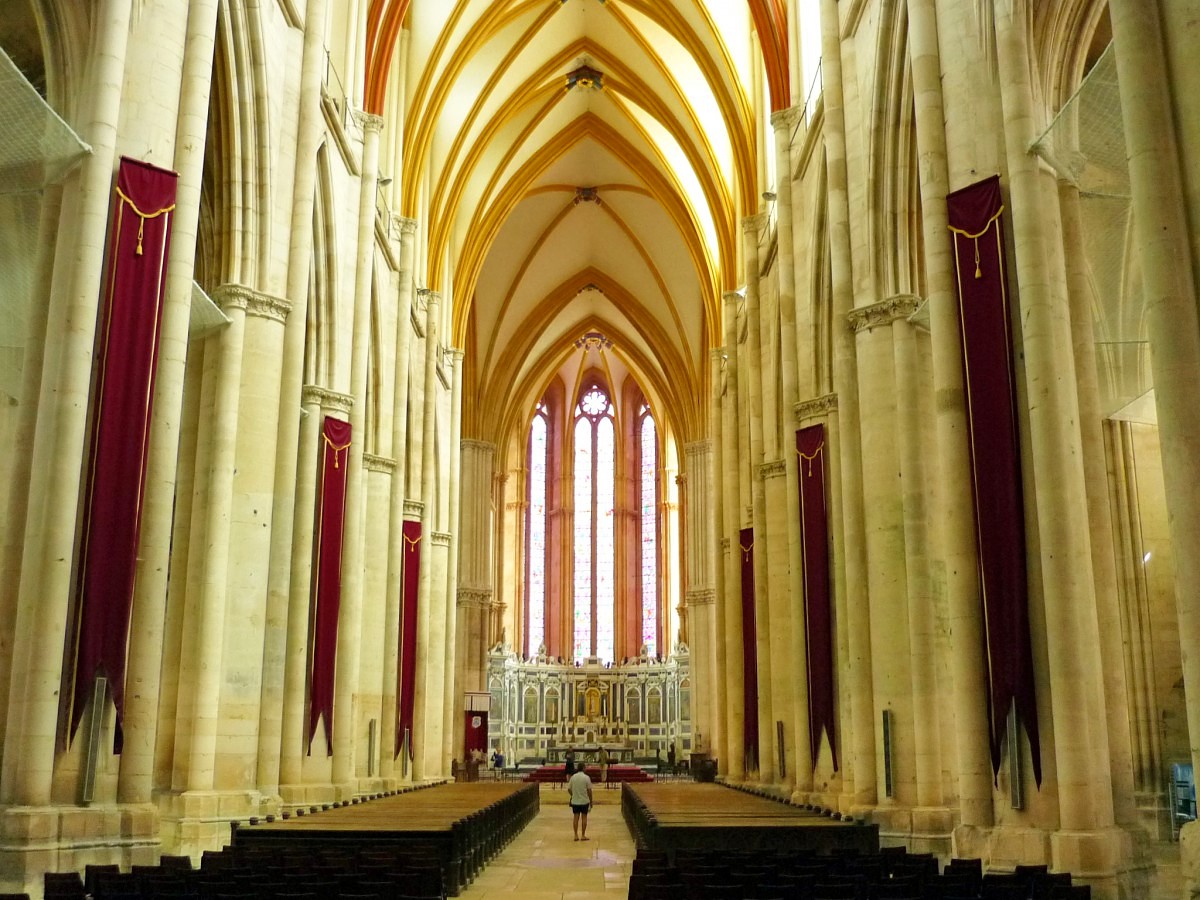
The central nave completed by Blessed Conrad
In 1245. although his qualities and his life of piety earned him the attention of his Bishop, he decided to become a Religious in the congregation of the Friars Minor.
We know that Pope Nicholas III, his fellow Friar of the Minors and friend, entrusted him with numerous missions, appointing him the Bishop of Toul in Lorraine, on 4 October 1279.
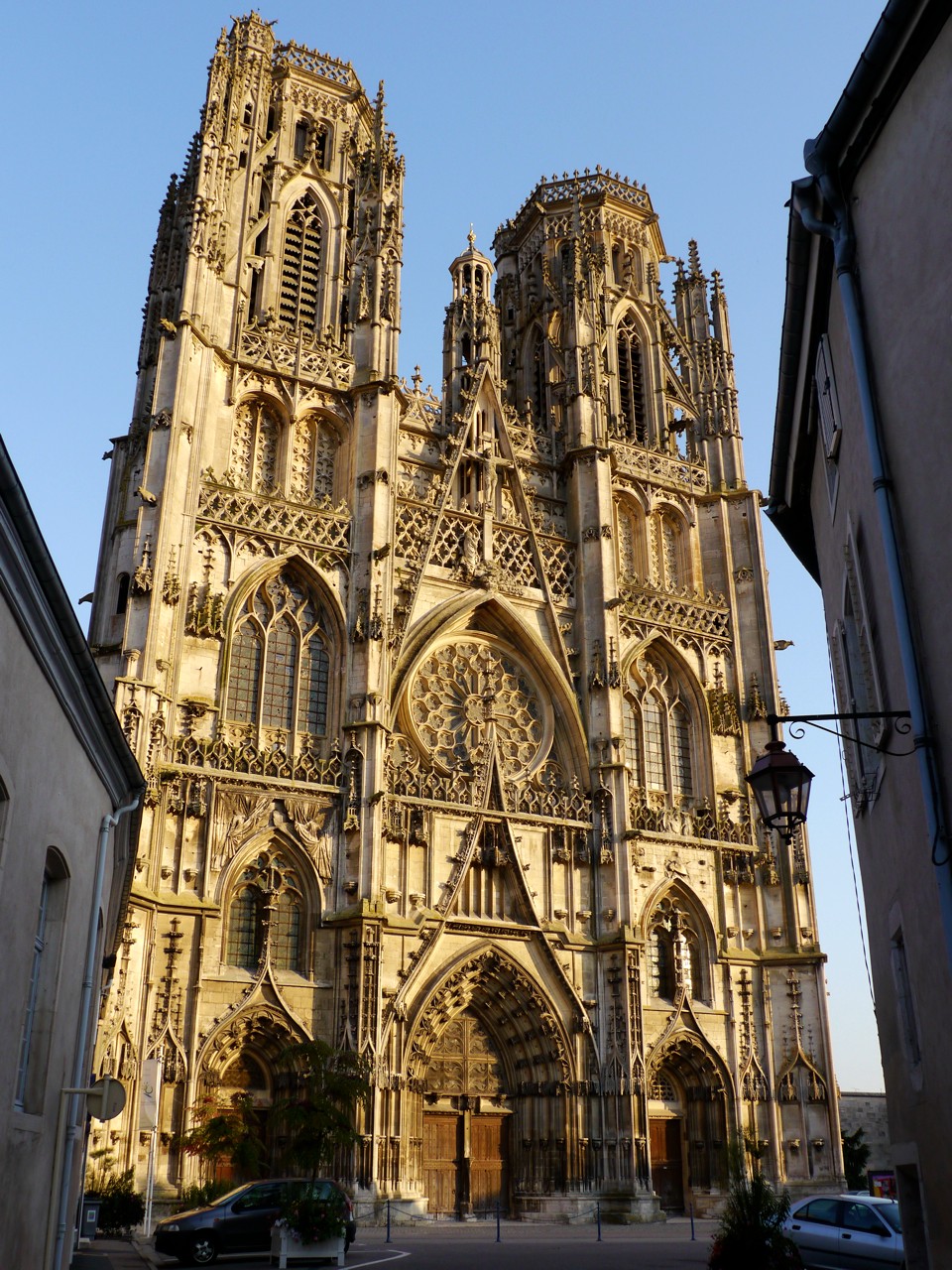
In the list of Bishops of Toul, his name is listed when the Diocese was vacant between the years 1269-1279. Conrad had to defend the rights of the Church against the City Officials. In 1285, having emerged victorious in various disputes, he built the central nave and the smaller ones of the Cathedral of Toul.
St Bonosus St Camerinus of Sardinia St Cameron St Cisellus of Sardinia St Cyriaca
Blessed Conrad Probus of Toul OFM (c1220-1297) Bishop St Euprepius of Verona St Fidelis of Edessa St Theogonius of Edessa St Gracia of Lérida St Hardulph St Joseph Nien Vien St Leontius the Elder St Luxorius of Sardinia St Maria of Lérida St Maximianus the Soldier St Maximilian of Antioch St Natale of Casale Monferrato St Paternus of Fondi St Privatus of Mende St Quadratus of Utica
Saint of the Day – 20 August – St Maximus of Chinon (5th Century) Priest, Abbot, Confessor, Founder of a Monastery on the river Vienne, later dedicated to him, today the Collegiate Church of Saint-Mexme , Miracle-worker. He was buried in this Monastery.Maximus had been a disciple of Saint Martin of Tours (315-397), he would, therefore, have died in the first half of the 5th Century. Also known as – Massimo, Mexme.
The Roman Martyrology reads today: “At Chinon, St Maximus, Confessor, disciple of the the blessed Bishop, Martin.”
The little we know of our Saint today comes from St Gregory of Tours(538-594) who, in his “De Gloria Confessorum” dedicated a Chapter to this disciple of St Martin of Tours, who, in order to keep his sanctity hidden, left Touraine, where he was born and lived, to go as a simple Monk to the Monastery of Ile-Barbe in Lyons.
But even here the sanctity and wisdom of his person attracted the attention of the inhabitants of the area, who did not leave him alone in his prayers and deliberately hidden and contemplative life, therefore, he decided to return to his own region.
Crossing the river his boat sank but Maximus was able to reach the shore without difficulty, also saving the book of the Gospels, the Chalice and the Paten which he had with him.
Returning to Touraine in Aquitaine (a historical region of central France, largely in the Loire basin), he founded a Monastery in Chinon on the Vienne which later took his name. It was destroyed by the Normans and rebuilt in the 10th Century.
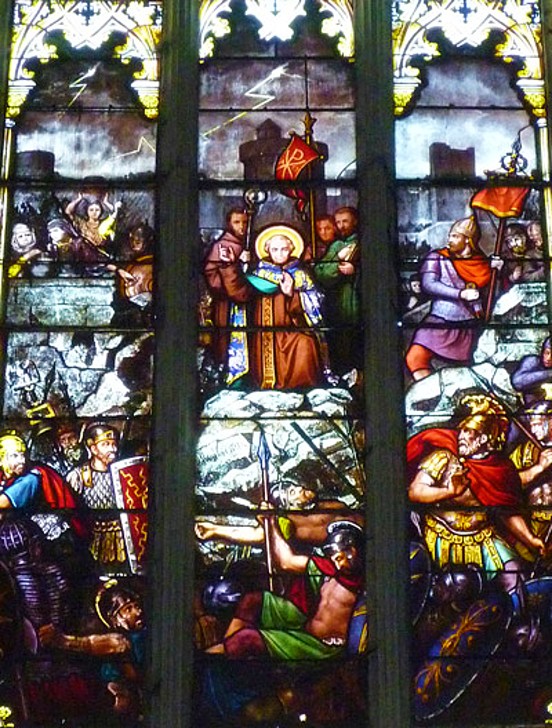
St Gregory of Tours tells us that while the Castle of Chinon was besieged by the Visigoth enemies, around 446, the holy Abbot obtained, with his intense prayers, torrents of rain to fall, thus aiding the population of Chinon, who had been isolated from the main water supplies. The rain allowed cisterns and containers to be filled. Thus the siege of Chinon was lifted.
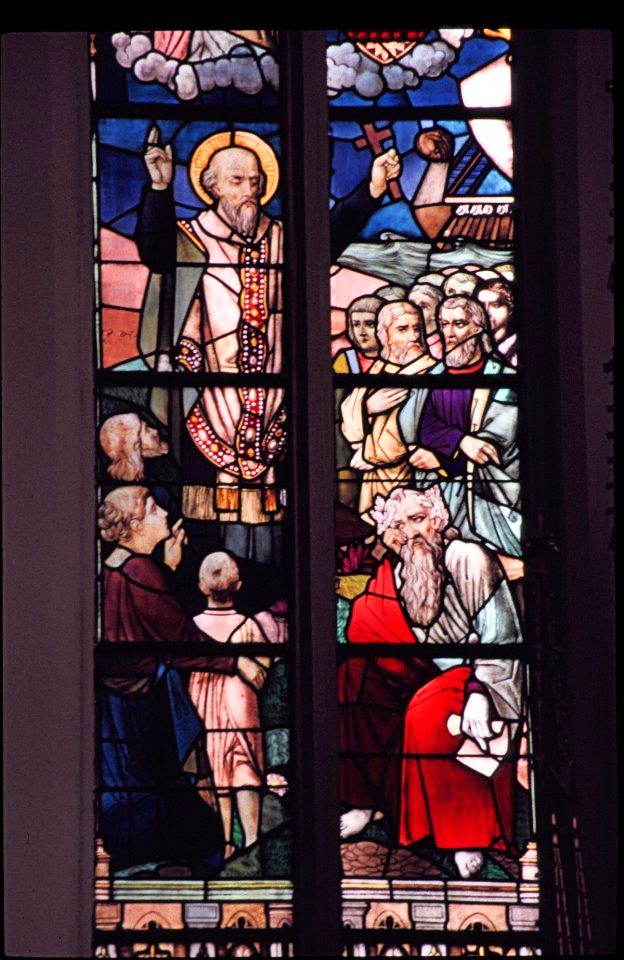
This episode is illustrated in the Saint-Etienne Church in Chinon by a stained glass window by master glassmaker Lobin, see below.
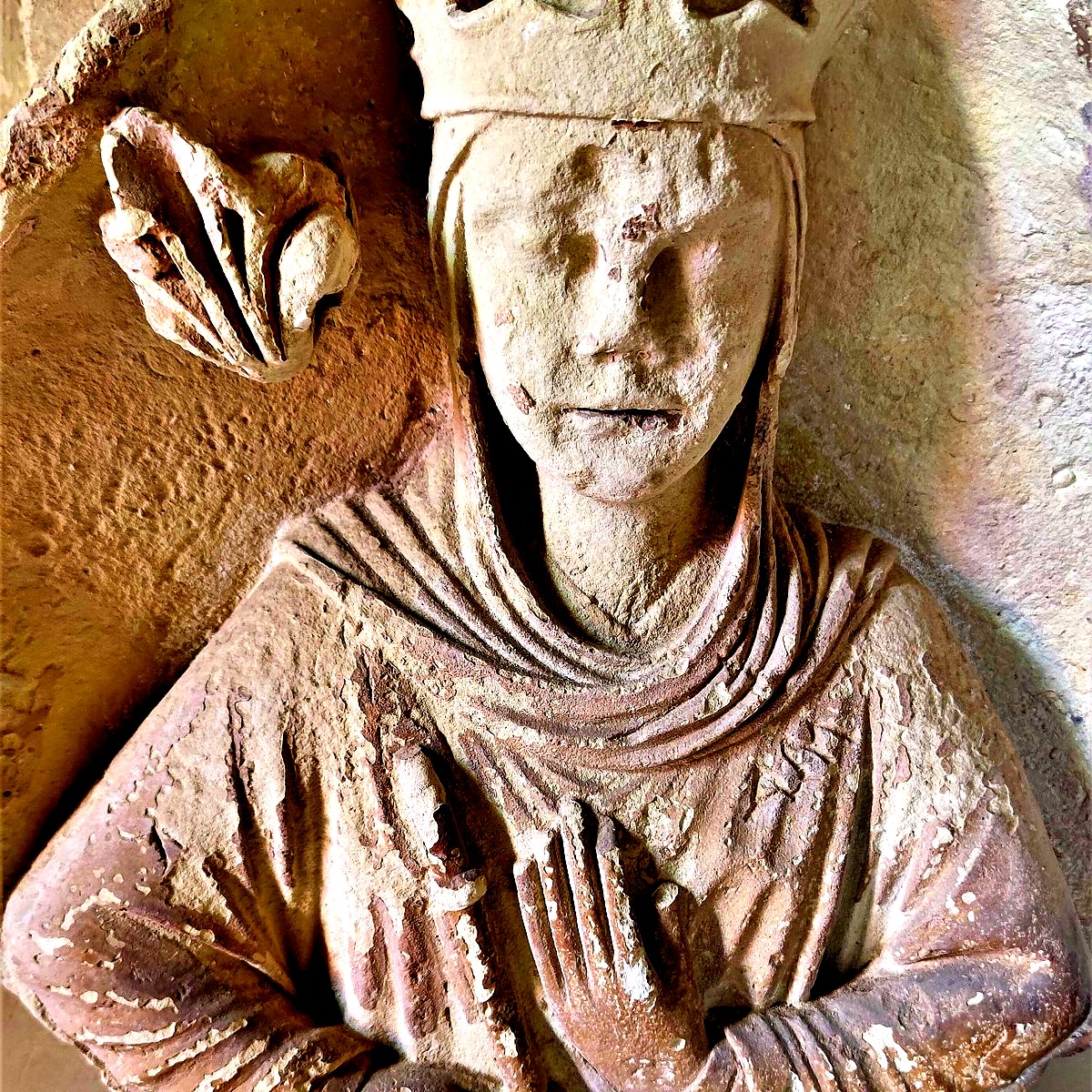
Saint Maximus, in this window, is covered with the famous Cope – the Cope called “of Saint Mexme ” – which was offered to the head of the Canons of the Collegiate Church of Saint-Maximus in the 12th Century by Queen Eleanor of Aquitaine, who is said to have brought it back from the second Crusade.
St Mexme liberator of Chinon in 446 Church of St. Stephen of Chinon
Kept at the Musée des Amis du Vieux Chinon, this Cope is made of silk and gold and dates from the end of the 11th Cr beginning of the 12th.
Chained cheetahs, trees of life stylised according to a Byzantine motif, falcons, jackals, representation of the sacred fire, it is surmounted by an inscription woven in the Kufic language indicating: “Happiness to its owner.”
Maximus is believed to have died shortly after the siege of Chinon at the age of over 85. His liturgical celebration on 20 August in the Roman Martyrology. In Chinon, where he was a tireless Abbot and shepherd he is especially venerated. He died in an unspecified year.
Maximus is also mentioned in the ‘Vita’ and the ‘Miracula’ written in the 9th Century but they add nothing historical to the that which St Gregory of Tours has given us.
Monastery of St Maximus now the Collegiate Church of Chinon
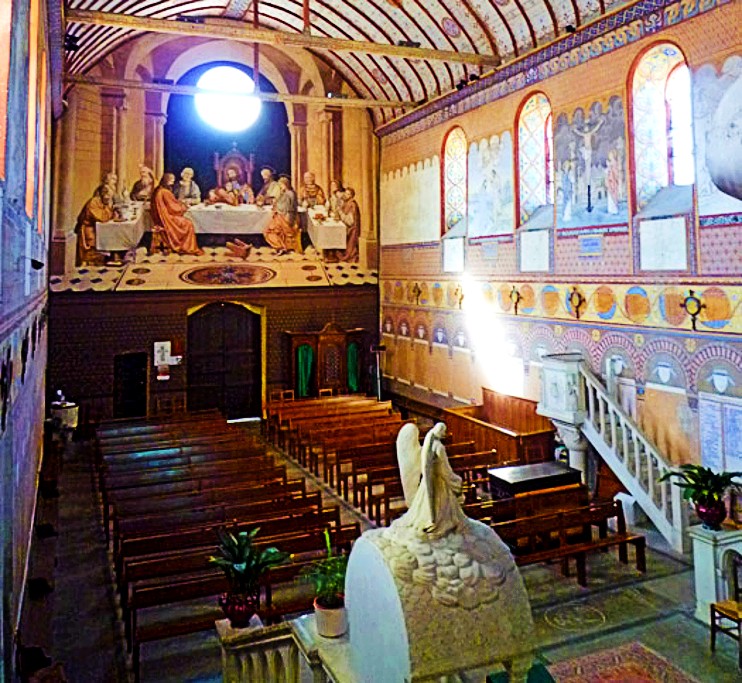
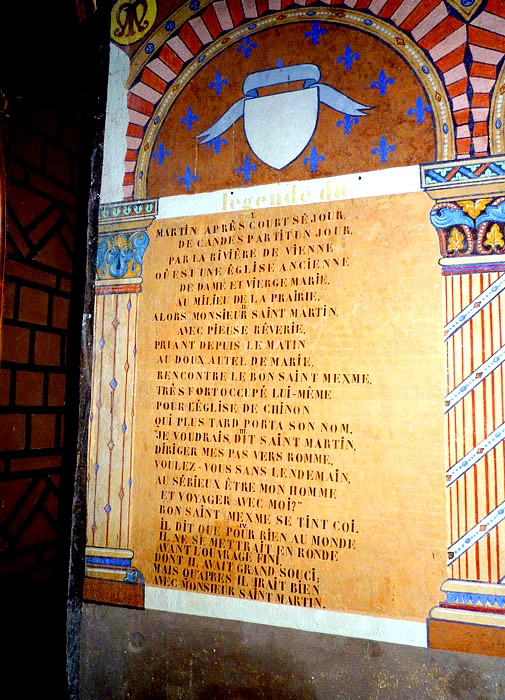
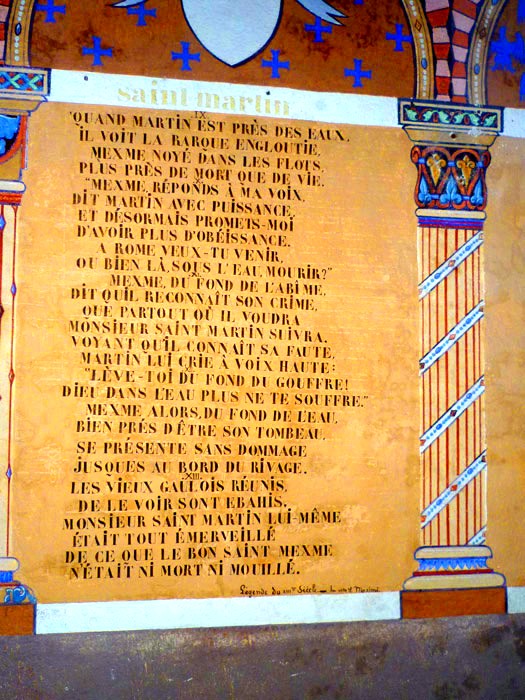
In the Church of Rivière, the legend of Saint Maximus is transcribed on three panels which are located at the Entrance to the Church, on the wall of the Pulpit, near the Confessional.
A legend dating from the 13th Century tells of an conversation between the great St Martin of Tours and our St Maximus which took place here in this “ancient Church of the Lady and Virgin Mary, in the middle of the meadow.” A site which the ‘old Gauls’ called the ‘Rives‘ (Rivière).
St Brogan St Burchard of Worms St Christopher of Cordoba St Cristòfol Baqués Almirall St Gobert of Apremont St Haduin of Le Mans St Heliodorus of Persia St Herbert Hoscam St Leovigild of Cordoba St Lucius of Cyprus St Maximus of Chinon (5th Century) Priest, Abbot, Confessor,
Saint of the Day – 19 August – St Donatus of Sisteron (Died 535) Priest, Confessor, Hermit, Miracle-worker. Born in Orleans, France and died in c535 of natural causes in Provence at the foot of Mount Lure. Also known as – Donatus of Mount Lure, Donato of… Additional Memorial – 18 August on some calendars.
The Roman Martyrology reads: “In the neighbourhood of Sisteron in France, the blessed St Donatus, Priest and Confessor. Being from his very infancy endowed with the grace of God in an extraordinary manner, he lived the life of an Anchorite for many years and after having been renowned for glorious miracles, he went to Christ.”
Donatus was originally from Orléans in France. After completing his sacred studies, he was Ordained a Deacon and then he was raised to the sacred Priesthood.
After undertaking a pilgrimage to the Shrine of St Martin of Tours, seeking a more perfect imitation of a life of sanctity, he decided to settle alone in the vicinity of Sisteron, at the foot of Mount Lure.
Wonderful miracles surround his life. One of these involves a pagan called Celsus, who had persecuted the holy Hermit, converted because his daughter was miraculously cured by our Saint.
Donatus died around 535, assisted by his friend Marius, the Abbot of Val Benoit. The anniversary falls on 19 August.
A Benedictine Monastery was erected in the 12th Century on Mount Lure, near the Tomb of Saint-Donatus.
St Andrew the Tribune St Badulf of Ainay St Bertulf of Luxeuil St Calminius St Credan of Evesham St Donatus of Sisteron (Died 535) Priest, Hermit St Elaphius of Châlons St Guenninus Bl Guerricus
Blessed Jordan of Pisa OP (c 1255–1311) Dominican Friar, Theologian, Professor, renowned Preacher, Founder of the Confraternity of the Holy Redeemer at Pisa, Visionary, Marian devotee, promoter and daring innovator of the vernacular Italian language as a ‘church’ language and a tool for evangelisation. On 23 August 1833, Blessed Jordan’s cultus was confirmed by Pope Gregory XVI and in 1838 he was Beatified by Pope Gregory XVI. His Life: https://anastpaul.com/2019/08/19/saint-of-the-day-blessed-jordan-of-pisa-op-c-1255-1311/ St Julius of Rome
St Louis of Toulouse OFM (1274-1297) Prince and Bishop, Neapolitan Prince of the Capetian House of Anjou, Franciscan Friar and Priest, Apostle of Prayer, of Penance and of the poor and the sick. He had received the last sacraments on the Feast of the Assumption of Our Lady and on the 19th of August, 1297, while pronouncing the holy name of Mary, he yielded his soul to God. Because of the many miracles that were wrought at his tomb, he was Canonised as early as 1317, during the lifetime of his mother. Lovely St Louis: https://anastpaul.com/2020/08/19/saint-of-the-day-19-august-saint-louis-of-toulouse-ofm-1274-1297-prince-and-bishop/St
St Magnus of Anagni St Magnus of Avignon St Magnus of Cuneo St Marianus of Entreaigues St Marinus of Besalu St Magino of Tarragona St Mochta St Namadia of Marsat St Rufinus of Mantua St Sarah the Matriarch St Sebaldus St Thecla of Caesarea St Timothy of Gaza
Blessed Urban II (1042–1099) Bishop of Rome, Abbot, Confessor – after 1969 his Feast was moved to 29 July. The Roman Martyrology reads today: “At Rome, Blessed Urban II, Pope, who followed in the footsteps of St Gregory VII, in his zeal for learning and religion and fired the Crusaders with enthusiasm for the recovery of the holy places in Palestine, from the power of the infidels. The veneration paid to him from time immemorial Pope Leo XIII, approved and confirmed.” Biography: https://anastpaul.com/2019/07/29/saint-of-the-day-29-july-blessed-pope-urban-ii-c-1035-1099-bishop/
Martyrs of Nagasaki – 15 Beati: A group of missionaries and their laymen supporters who were executed for spreading Christianity in Japan. They are: Antonius Yamada, Bartholomaeus Mohyoe, Iacobus Matsuo Denji, Ioachim Díaz Hirayama, Ioannes Miyazaki Soemon, Ioannes Nagata Matashichi, Ioannes Yago, Laurentius Ikegami Rokusuke, Leo Sukeemon, Ludovic Frarijn, Marcus , kenoshita Shin’emon, Michaël Díaz Hori, Paulus Sankichi, Pedro de Zúñiga, Thomas Koyanag., They were beheaded on 19 August 1622 at Nagasaki, Japan and Beatified , 7 May 1867 by Pope Pius IX.
Saint of the Day – 18 August – Saint Firminus of Metz (Died c496) Bishop and Conmfessor.
The Roman Martyrology reads: “At Metz, Firminus, Bishop and Confessor.”
Firminus was the 11th Bishop of Metz. In the official chronology of the Bishops of the Diocese, he succeeds Adelphus and precedes Leontius. His position was assigned by the oldest catalogue of the Bishops of the City, compiled around 776 and which has come down to us in the “Sacramentary” of Drogo,the Bishop of Metz between the years 823 and 855.
We know very little about our Saint today. Firminus is presumed to have been Greek in origin and that he governed the Diocese at the end of the 4th and the beginning of the 5th Centuries.
He seems to have been the Bishop for fifteen years and to have died on 18 August, in an unspecified year. but is was probably just before the assent of the new Bishop, Leontius, hence we place his death in c496.
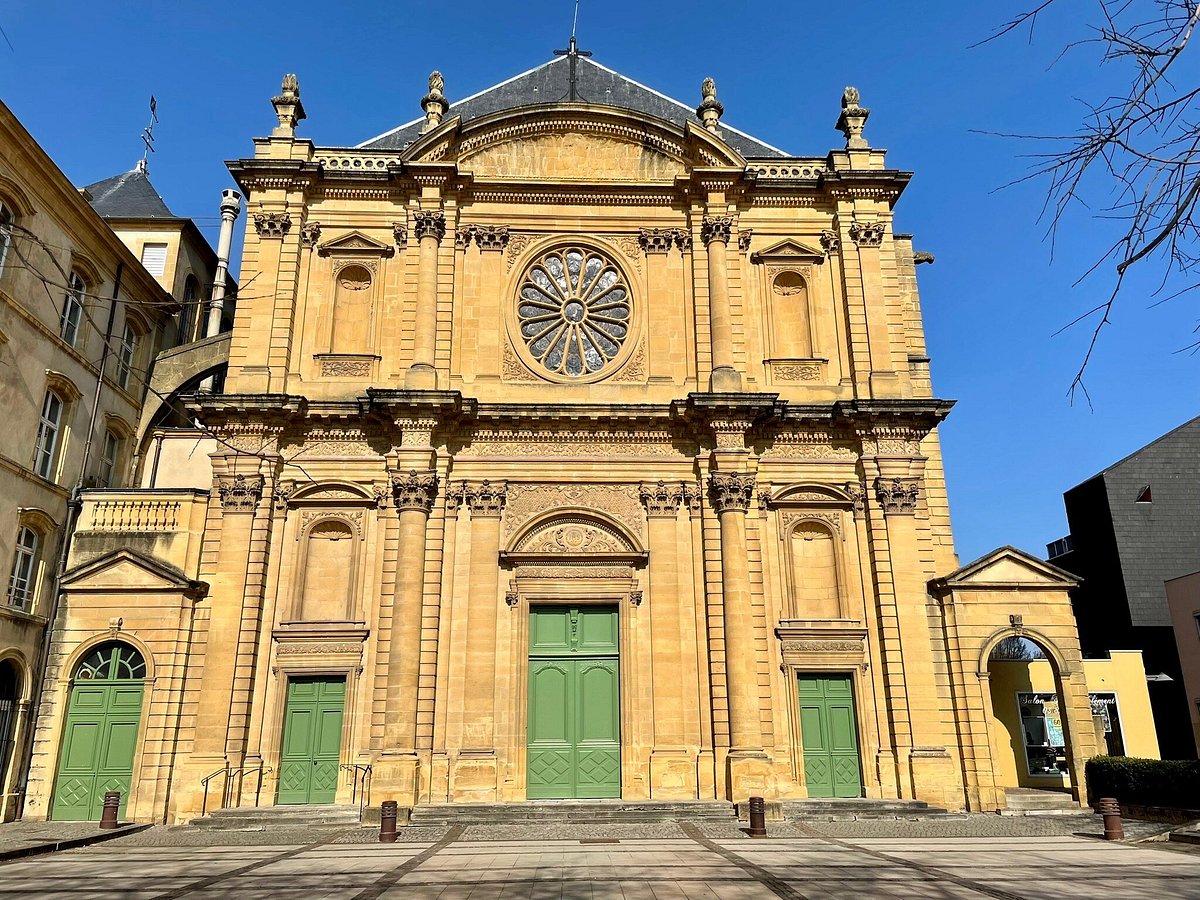
St Clements Church in Metz
His body was buried in the crypt of the Church of Saint Clement, the first Bishop of Metz. The stained glass window above resides in this Church too. His remains were transferred to the upper part of theChurch, where they were venerated until the end of the 18th Century. His Relics, after that time, as in many other cases, were destroyed by the satanic horrors and violent excesses of the French Revolutionaries.
The Feast of Saint Firminus, in the Proper of Metz is fixed on the 18 August.
St Crispus of Rome St Daig Maccairaill Bl Domenico de Molinar St Eonus of Arles St Ernan St Evan of Ayrshire St Firminus of Metz (Died c496) Bishop and Conmfessor. St Florus of Illyria Bl Francis of Francavilla Bl Gaspar di Salamanca St Hermas of Rome St John of Rome St Juliana of Myra St Juliana of Stobylum St Laurus of Illyria St Leo of Myra
St Maximus of Illyria Bl Milo of Fontenelle St Polyaenus of Rome St Proculus of Illyria
Blessed Rinaldo of Concorezzo (c1245 – 1321) Bishop of Vicenza from 1296 until his 1303 appointment as the Archbishop of Ravenna-Cervia holding that until his death, Doctor of Canon Law, Papal envoy, Arbitrator and Peace-maker. Archbishop Rinaldo was also a close friend of Dante Alighieri. His Courageous Life: https://anastpaul.com/2020/08/18/saint-of-the-day-18-august-blessed-rinaldo-of-concorezzo-c-1245-1321/
St Ronan of Iona St Serapion of Rome
Massa Candida: Also known as Martyrs of Utica and the White Company: Three hundred 3rd Century Christians at Carthage, who were ordered to burn incense to Jupiter or face death by fire. Martyrs. Saint Augustine of Hippo and the poet Prudentius wrote about them. They were forced to cast themselves into a pit of burning lime c 253 at Carthage, North Africa.
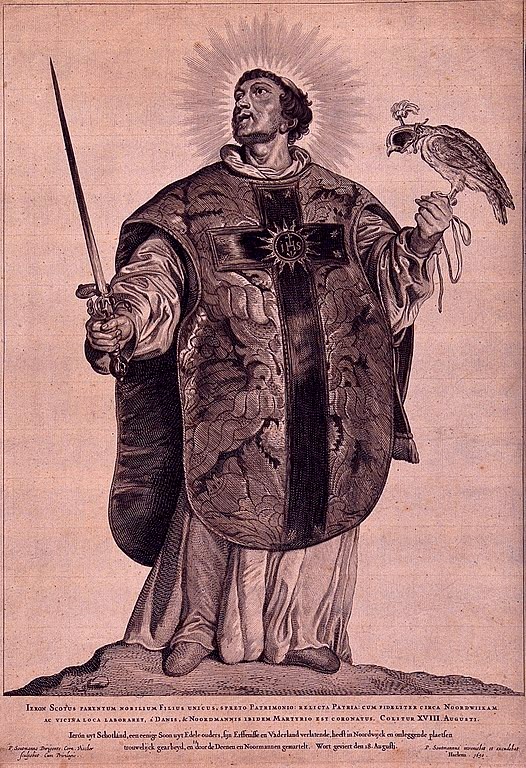
Saint of the Day – 17 August – St Jeroen of Noordwijk (c800- 856) Priest Martyr, Missionary. Born around 800 in Scotland or Ireland and died on 17 August 856 in Noordwijk, Holland by being beheaded by pagan Vikings. Patronage – the finding of lost articles, of Noordwijk. Also known as – Gerone, Hiero, Hieron, Iero, Ieron, Jeroen van Noordwijk, Jéron Noordwijk. Additional Memorial – 3rd Sunday in August in Noordwijk a St Jeroen celebration known as the ‘St Jeroen Sleep Walk’ and on the 1st Sunday in September, his Patronage of Noordwijk (and of lost articles) is celebrated there.
Jeroen was born around 800 as the son of a prominent nobleman in Scotland (or Ireland). As a young man, however, he chose a life as a Priest and Monk. Together with other Benedictine Monks, he crossed the North Sea to preach Christianity on the mainland. In 851, Jeroen settled as a shephjerd of souls in Noordwijk, Holland.
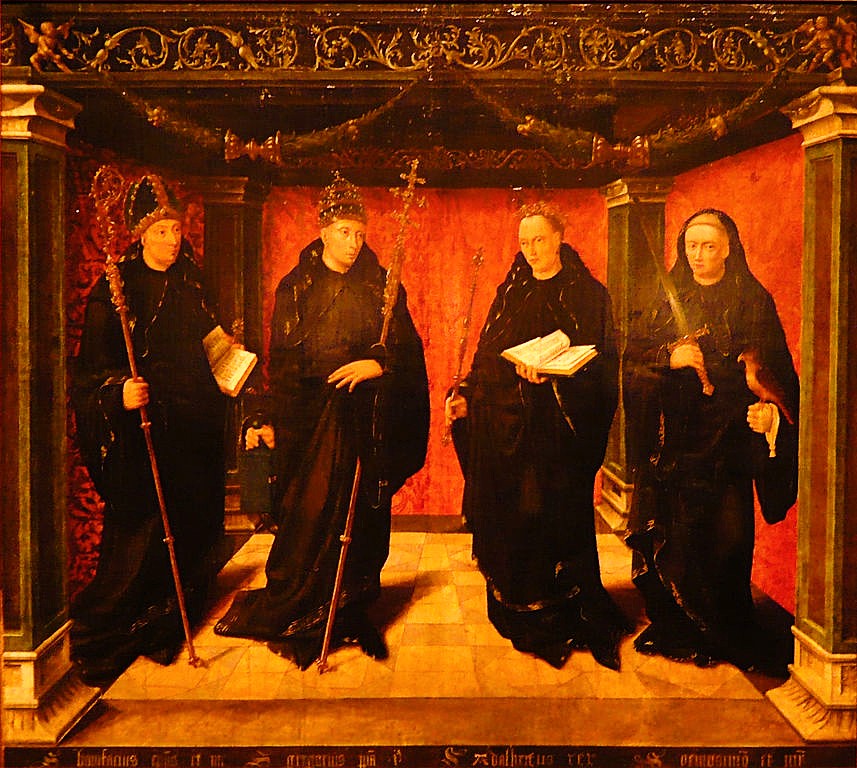
St Jeroen (far right) included amongs the great Benedictine Saints, St Bonficafe, St Gregory the Great, St Adalbert and St Jeroen
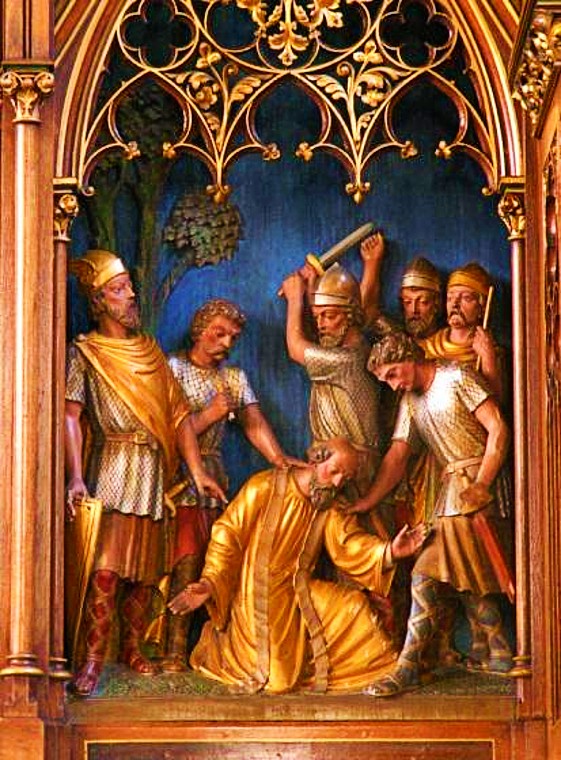
In August 856, Noordwijk was attacked by the Norsemen during one of their raids. Jeroen was captured and tortured. The next day, a chieftain of the Norsemen demanded that Jeroen renounce his faith and sacrifice to the Germanic gods. When Jeroen refused, he was sentenced to death and beheaded.
The Martyrdom of St Jeroen
After the Normans had disappeared, his body was buried in the utmost secrecy by his followers.
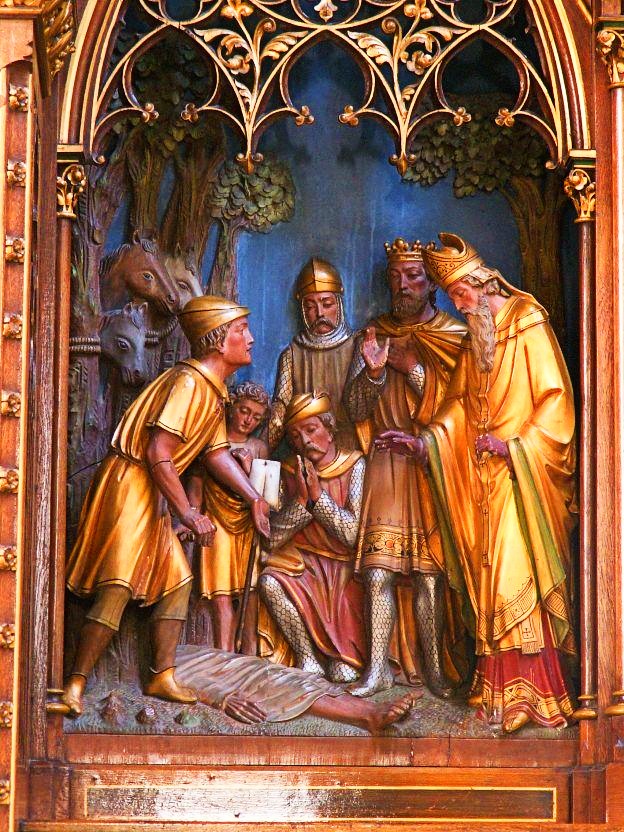
St Jeroen’s Funeral
A Church was built above the spot where Jeroen’s decapitated body was found. Around 1300, a skull was found in this building during an excavation. The skull was immediately attributed to St Jeroen. The Church bells began to ring spontaneously at the moment of the discovery, what further proof was needed! A man who suffered from epilepsy was immediately cured after touching the skull.
The original Church since claimed by the protestants
Jeroen’s head was placed in the Church and became an object of great veneration. In 1429, the Bishop of Utrecht elevated the village of Noordwijk to a place of pilgrimage for those seeking the intercession of Saint Jeroen in all their troubles and ailments.
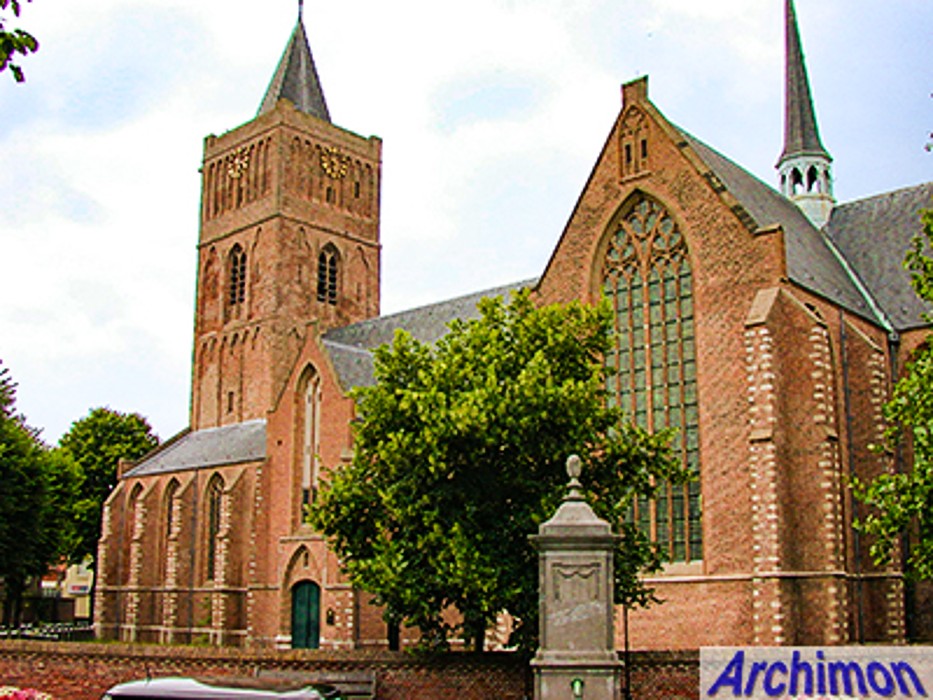
St window is in St Jeroen’s Catholic Church in Noordwijk (I cannot find an image of the Church itself)
As a result of the Reformation, Noordwijk’s existence as a place of pilgrimage for Saint Jerome came to an end in the 16th Century. The Saint’s skull – possibly brought to safety somewhere – has been missing since then.
In 1892, Pope Leo XIII elevated Noordwijk to a place of pilgrimage of Saint Jerome for the second time in its history. The Relics, originating from the Abbey of Egmond, were transferred from Haarlem to the Parish Church in Noordwijk. Since then, they have been kept in a Shrine in the Saint Jerome Altar. The Shrine also contains a silver arm Relic. From then on, pilgrims received special favours in the form of Indulgences when visiting this Church. A marble plaque on the wall of the central portal is a reminder of this.
The discovery of St Jeroen’s Relics
Since the 1960s, pilgrimages to Noordwijk have no longer been organised (surprised?!). However, every year on the 3rd Sunday in August, the St Jeroen Sleep Way’ (Jeroensommegang) is walked through the centre of Noordwijk-Binnen. On the same day, the annual Jeroenvespers are sung in the Church in the afternoon. The Patron Saint’s day of Saint Jerome is also celebrated every year on the first Sunday in September.
St Amor of Amorbach St Anastasius of Terni St Benedicta of Lorraine St Carloman St Cecilia of Lorraine
St Clare of the Cross of Montefalco (c1269-1308) Augustinian Nun and Abbess, before becoming a nun, St Clare was a member of the Third Order of St Francis (Secular), Mystic, Penitent, Spiritual adviser. Beatified by Pope Clement XII. On 8 December 1881, the Feast of the Immaculate Conception, Pope Leo XIII Canonised Clare. Her Life: https://anastpaul.com/2019/08/17/saint-of-the-day-17-august-saint-clare-of-the-cross-of-montefalco-c-1269-1308/
St Drithelm St Elias the Younger St Eusebius of Sicily St James the Deacon St Jeroen of Noordwijk (c800-856) Priest Martyr St Juliana of Ptolemais St Mamas St Myron of Cyzicus
St Nicolò Politi (1117-1167) Basilian Monk and Hermit. He was known for his miracles even during his childhood and was Venerated as a saint even before his death. St Nicolò was Canonised on 7SJune 1507, at Saint Peter’s Basilica, Rome, by Pope Julius II. About St Nicolò: https://anastpaul.com/2020/08/17/saint-of-the-day-17-august-st-nicolo-politi-1117-1167/
Saint of the Day – 16 August – Blessed Laurence “Loricatus” (Died 1243) Hermit, Pilgrim, Penitent, previously a Soldier. Born in Facciolo, Apulio, Italy and died in 1243 at Subiaco, Italy. “Loricatus” (Latin) meaning wearing Chain Mail.
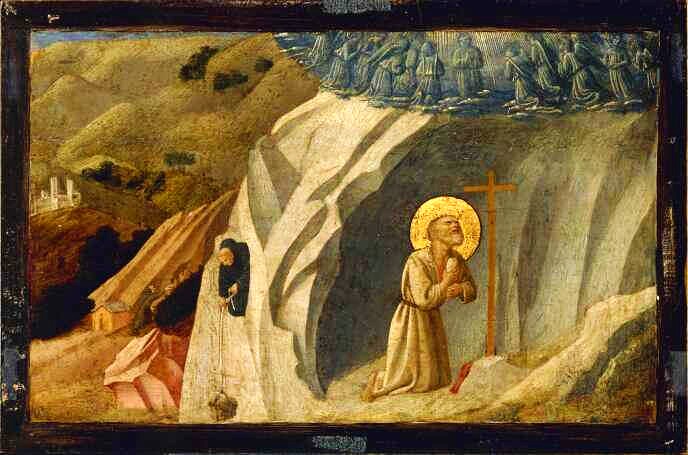
Laurence served as a Solider as a young man. After accidentally killing a man, perhaps in the course of duty, he was so overcome with remorse that he dedicated himself to a life of penance. The image below by Fra Angelico depicts St Benedict finding a new disciple in his ‘cave.’
After travelling as a pilgrim to the great Shrine of Saint James in Compostella, he became a Hermit at Subiaco, hallowed by St Benedict long before.
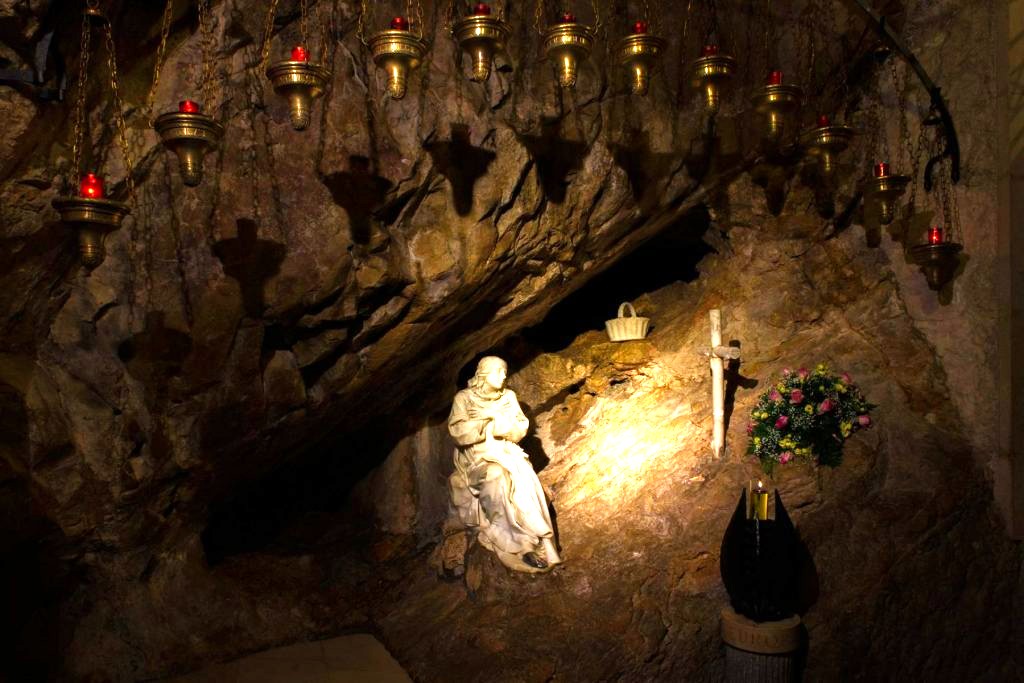
Laurence lived as a Hermit in the ruins of the cave where Saint Benedict himself had lived. When pilgrims would leave gifts and offerings for him, he would give these to the poor.
A spiritual master, he began to train a small community of disciples and later wrote a book of prayers. In 1224, his fame attracted a visit from Cardinal Hugolino (later Pope Gregory IX) who persuaded him to abandon his chain mail breastplate.
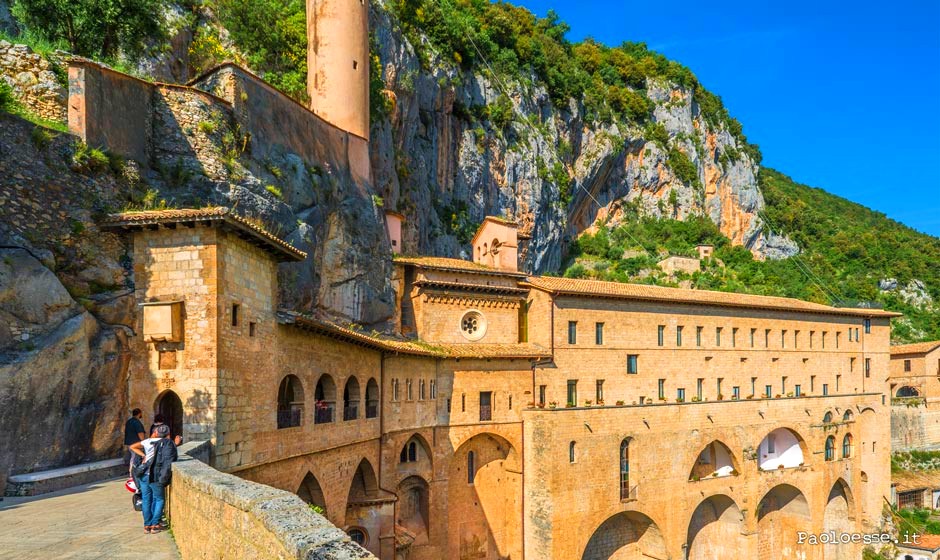
He died in 1243 after 34 years of eremitical life. He was succeeded by his disciple Amico de Canterano, who had shared his way of life for 24 years. Below is St Benedict’s Monastery at Subiaca beneath which lies the Shrin of our Blessed Laurence.
In 1244, an enquiry into his life and miracles initiated by Pope Innocent IV did not lead to an immediate formal Canonisation but a popular cult flourished which was approved by Pope Pius VI in 1778.
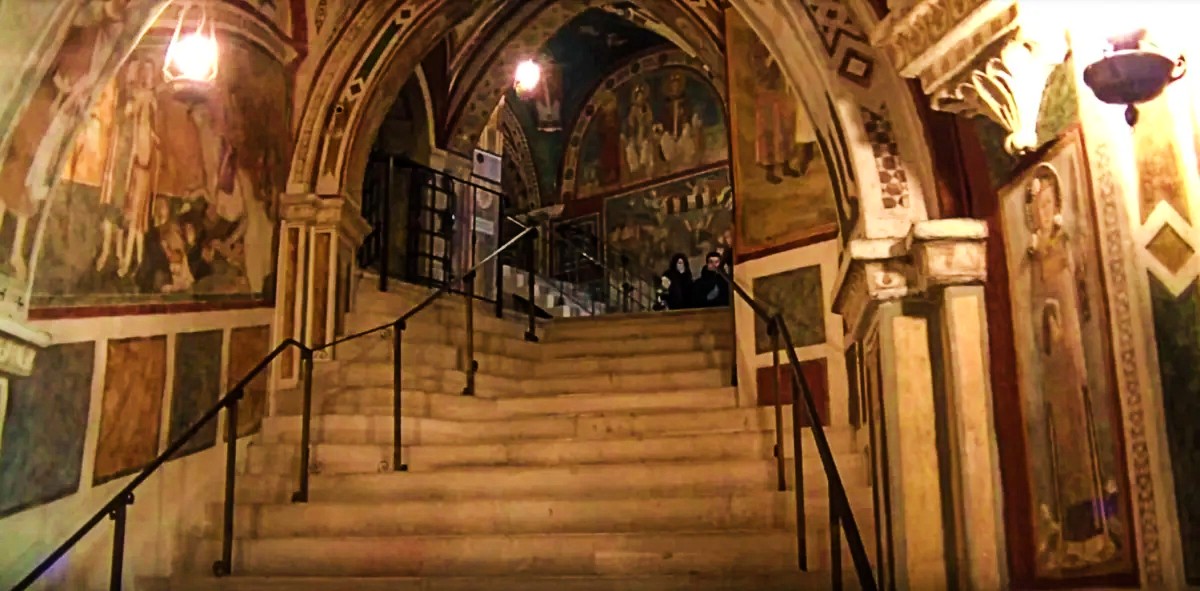
Blessed Laurence’s Relics, including the Manuscript in his own hand and his “Loricatus” Breastplate, are enshrined in St Benedict’s Cave at Subiaco.
Blessed Angelo Agostini Mazzinghi O.Carm. (1385-1438) was an Italian Priest and a professed member of the Carmelite Order. He was a noted Preacher, Prior and Reformer, Teacher of theology and was known for his pious devotion to the Holy Eucharist, the Blessed Virgin Mary and the Carmelite Rule of Life and to the profession of the Gospel. Holy Angelus: https://anastpaul.com/2019/08/16/saint-of-the-day-16-august-blessed-angelo-agostini-mazzinghi-o-carm-1385-1438/
St Arsacius of Nicomedia St Frambaldo Bl Iacobus Bunzo Gengoro Bl Jean-Baptiste Menestrel Bl John of Saint Martha
Blessed Laurence Loricatus (Died 1243) Hermit, Pilgrim, Penitent Bl Magdalena Kiyota Bokusai Bl Maria Gengoro Bl Ralph de la Futaye St Serena Bl Simon Kiyota Bokusai
St Ugolina of Vercelli (c 1239-c 1300) Anchorite, Recluse, Penitent, Spiritual advisor. The very strange story that of this Blessed Ugolina who shut herself in a hermitage, representing herself as a man and remained there for forty-seven years! The aim of her subterfuge was to escape the aims of her father, who wished her to marry. In order not to reveal her secret, she called herself Ugo without revealing her identity to anyone. for nearly fifty years Her Life: https://anastpaul.com/2021/08/16/saint-of-the-day-16-august-saint-ugolina-of-vercelli-c-1239-c-1300/
Martyrs of Palestine – 33 Saints: Thirty-three Christians Martyred in Palestine; they are commemorated in old martyrologies but the date and exact location have been lost.
Saint of the Day – 15 August – Saint Arduinus of Rimini (Died 1009) Priest, Hermit, Monk, Apostle of the needy, a shining light of the imitation of his Lord. Born around the middle of the 10th Century in Rimini, in the district of Romagna in Italy and died at the Monastery of St Gaudenzio in the Town of San Godenzo in 1009 of natural causes. Also known as – Arduino.
St Peter Damian OSB (1007-1072) Cardinal Bishop of Ostia, Father and Doctor of the Church, when he found himself having to demonstrate the validity and efficacy of the Sacraments – even when administered by unworthy Priests and Prelates, – used to cite the example of our Saint Arduinus of Rimini, who had died several decades before but whose memory was still very much alive throughout Romagna.
Arduinus, in fact, had received Priestly Ordination from the Bishop of Rimini, Uberto, a well-known simoniac, who had purchased his Office in exchange for gold. Yet, Ordination by this unworthy Prelate did not prevent Arduinus from living in an exemplary manner and dying in the odour of sanctity.
St Peter Damian, a great opponent of simony, could, therefore, draw arguments from this case in favour of his thesis – that is, that the efficacy of the Sacraments does not depend upon the merits of those who actually administer them – but rather, derives from the Infinite Merits of Christ.
Arduinus was born in Rimini towards the middle of the 10th Century and had been a disciple of the Venerius, the Rector of the Church of St Gregory.
Driven by the desire to reach a greater degree of perfection and sanctity, the master and disciple moved to the plain of Ravenna, finding refuge in the solitary Church of St Apollinarus in Classe, today famous for its luminous architecture and even more so for the precious Byzantine mosaics it houses.
The memory of Arduinus which has been handed down depicts him as a zealous Priest, a rare case in that time of daily celebration of the most Sacred and Holy Mass. His wonderful example could thus prove edifying for the clergy and the faithful. He used to teach, admonish and fight corruption, without fear of arousing the wrath of the powerful. He regularly donated alms to the neediest, contenting himself with surviving on the few remaining scraps. Being a man himself, he often found himself in the grip of temptations and, to overcome them, he used to roll in the nettles.
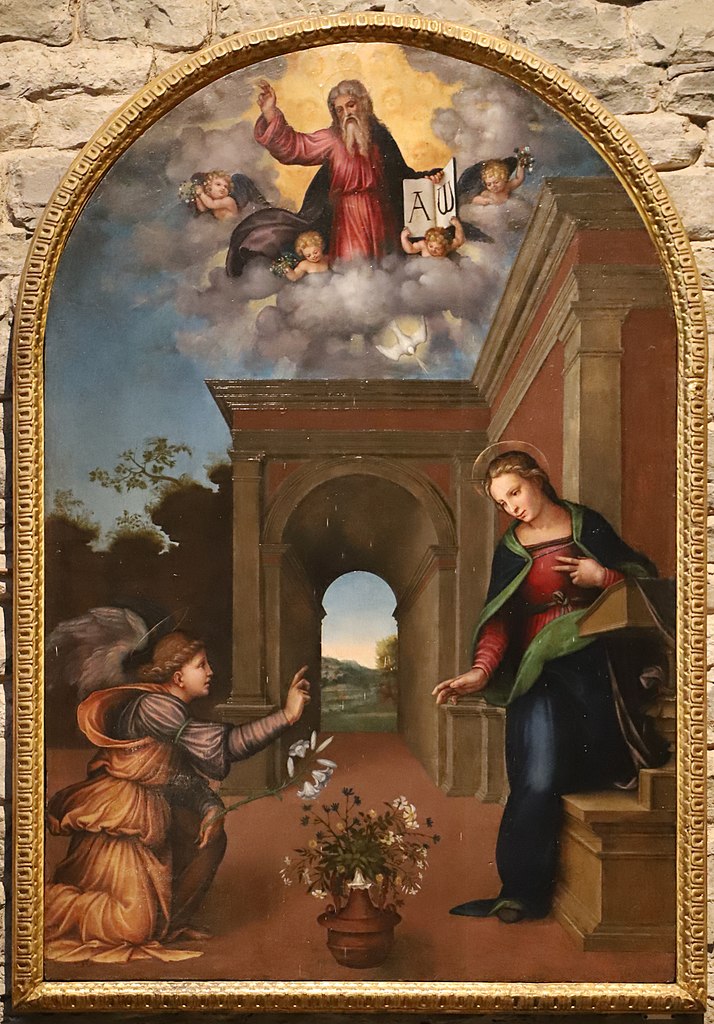
When Venerius was already old, Arduinus advised him to accept the position of Abbot of St Gaudenzio Monastery in the Town of San Godenzo and he, as an inhabitant Monk, thus became a useful and faithful assistant to his teacher. Below is one of the paintings in the Abbey of San Gaudenzio: The Annunciation attributed to in the Franciabigio, 1500s.
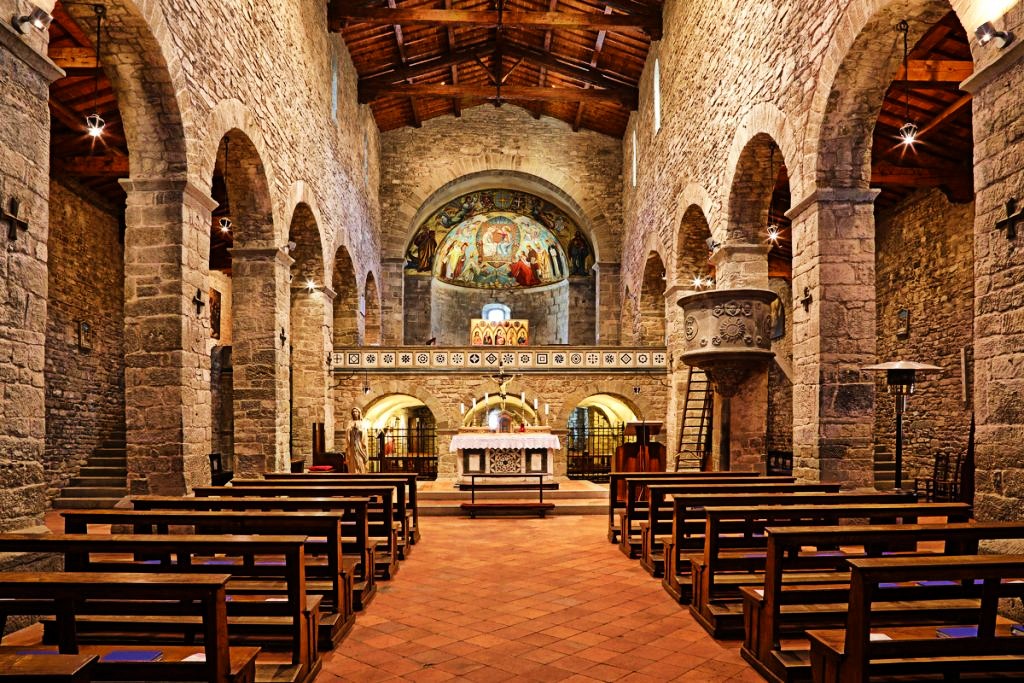
This Abbey had been built in 1028 in honour of Saint Gaudentius, the Hermit Saint who, around the 6th Century, retired to the surrounding mountains to live a life of silence and prayer. Today it is famous for its beautiful Romanesque Church containing wonderful artworks and for Dante’s memories of the first years of his exile.
But, already a thousand years ago, the Abbey of St Gaudentius was an important centre of Benedictine spirituality, active in the manual, spiritual, intellectual and social fields, true to their motto ‘Ora et Labora.’
In this context, in 1009, Saint Arduinus of Rimini died, immediately venerated as a Benedictine Saint, even if it seems he never officially wore the Habit of this Order. (From Italian by Author: Fabio Arduino).
St Alypius of Thagaste (Died 430) Bishop Bishop of the See of Thagaste (in what is now Algeria) in 394, Confessor, Reformer, Defender of the Faith against heresy, Lawyer, teacher, spiritual advisor. He was a lifelong disciple and friend of Saint Augustine of Hippo and joined him in his conversion (in 386; Confessions 8.12.28) and life in Christianity. He is credited with helping establish Augustine’s Monastery in Africa. Most of what is known about him comes from Augustine’s autobiographical Confessions. Biography: https://anastpaul.com/2021/08/15/saint-of-the-dy-saint-alypius-of-thagaste-died-430/
Blessed Alfred of Hildesheim OSB (Died 874) Bishop, Benedictine Monk, Confessor, Founder of Essen Abbey, Hildesheim Cathedral, many Convents, Schools and Seminaries, Royal Spiritual Adviser to the East Frankish King Louis the German, Diplomatic Peacemaker, he was know for his great devotion to the Blessed Virgin Mary. His Lifestory: https://anastpaul.com/2020/08/15/saint-of-the-day-15-august-blessed-alfred-of-hildesheim-osb-died-874-bishop/
Blessed Aimo Taparelli OP (c 1395-1495) Priest and Friar of the Order of Preachers, widower and father, Reformer, spiritual writer. He served as an Inquisitor-General for his Order in the Lombard and Liguria regions of Italy and became a travelling preacher in Northern Italian Cities. His name means “defends the house with the sword.” Aimo was Beatified on 29 May 1856 by Pope Pius IX. Blessed Aimo’s zealous Life: https://anastpaul.com/2022/08/15/saint-of-the-day-15-august-blessed-aimo-taparelli-op-c-1395-1495/
Blessed Alberto Berdini OFM Conv. (1385– 1450) Priest and Friaer of the Friars Minor Conventual, known as the “King of Preachers – Rex Praedicatorum” Disciple and companion of St Bernardine of Siena in his Missionary work in Italy., often called upon to assist in peace discussions between warring Cities. Born in 1385 in Sarteano, Tuscany, Italy and died on 15 August 1450 in Milan, Italy of natural causes. Blessed Albert’s Life: https://anastpaul.com/2023/08/15/saint-of-the-day-14august-blessed-alberto-berdini-ofm-conv-1385-1450/
St Simplician (c320-c401) Archbishop of Milan and Successor of St Ambrose (340-397) Doctor of the Church in the Archdiocese of Milan, Teacher, Catechist, Writer, Mystic. St Ambrose used to call Simplician father, as a sign of spiritual relationship but they were also great friends. Simplician took also an active part in the conversions of both Alypius of Thagaste and Augustine of Hippo. The meeting between Augustine and Simplican occurred in Milan in 386 and it is recorded in Augustine’s Confessions. After his conversion, Augustine also called Simplician father and in 397 he dedicated to Simplician two books on the issue of predestination, known as De Diversis Quaestionibus ad Simplicianum. St Augustine, remembered and referred to him with deep gratitude, calling him the “spiritual father of my soul” and would submit his own writings to him to review and comment. Details of the life of St Simplician here: https://anastpaul.wordpress.com/2017/08/15/saint-of-the-day-15-august-st-simplician-of-milan/
Martyrs of Nicomedia – 3 Saints: Three Christians Martyred together. No details survive but the names – Eutychian, Philip and Straton. They were martyred in Nicomedia, Bithynia (in modern Turkey).
Saint of the Day – 14 August – Blessed Alberto Pandoni OSA (c1200-1274) “The Good Bishop” Bishop of Piacenza (Italy) (1243–1257), Bishop of Ferrara (Italy) (1257–1274), Religious of the Order of the Hermits of St Augustine, Reformer, political crusader and writer. The name Albert means “brilliant nobility.” Born in c1200 in Brescia, Italy and died on 14 August 1274 in Ferrara, Italy of natural causes. Also known as – “The Good Bishop”Alberto of Piacenza, Alberto of Ferrara, Albert… Additional Memorial – 27 July (on some calendars), 2 September (the date of the enshrinement of Blessed Alberto’s Relics
Alberto was born into the Brescia nobility. After his studies, he entered the secular clergy of his City and later became an Religious of the Augustinians. In 1244, Pope Innocent had chosen him for the Episcopal chair of Piacenza, at the time of the greatest splendour of the star of Frederick II, whose Court was in Puglia, in Lucera.
The Bishop of Piacenza’s love for culture is demonstrated by the fact that in 1248 he organised a university-type school in his City to promote good education, called the “Studio Pubblico.” Piacenza thus followed the example of nearby Bologna, a university cenrer of European importance. By educating themselves, the faithful could become aware of their rights and responsibilities, therefore, also of what threatened them, on the level of faith and politics.
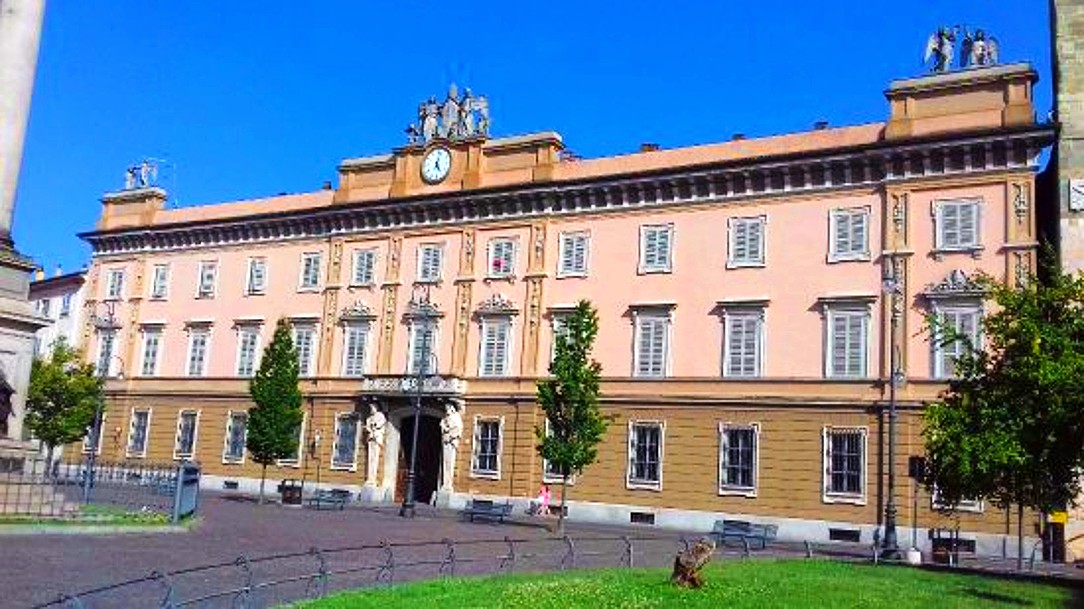
The Bishop’s Palace, Piacenza
During his time in Piacenza, apart from his political struggle with the Ghibellines and his attendance at the first Council of Lyons, Alberto also improved the training of Clergy. But his political involvements forced his exile in Rome. His writings which have been lost were aimed at defending the Church’s rights against the invasion of secular interference especially those of Frederucj II the Holy Roman Enperor, hence the reason for his exile to Rome.
In around 1258, Pope Alexander IV Consecrated him as the Bishop of Ferrara, where Alberto remained for 17 yearsuntil his death in 1274.
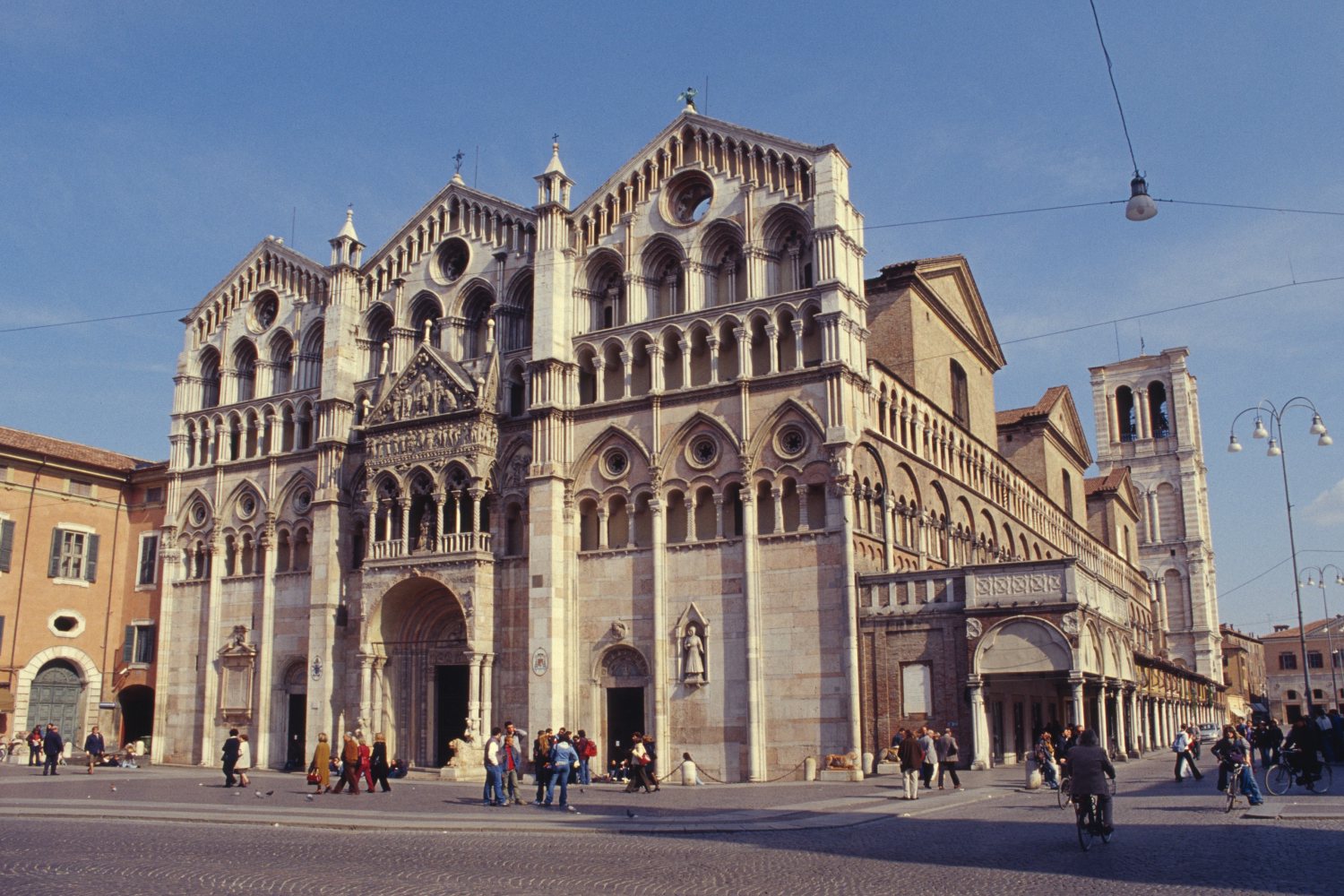
His pastoral work was such that the people of Ferrara immediately took him to their hearts and gave him their fond love in the title, “The Good Bishop.” It is to Pandoni that Ferrara owes the construction of the Bishop’s Palace in Via Gorgadello and the completion of the Cathedral. In 1270 he gave official approval to the cult of the Blessed Beatrice II d’Este, the daughter of Azzo VII and shortly before his death, he blessed the foundation stone of the Church of St Domenic.
fERRARA cATHEDRAL
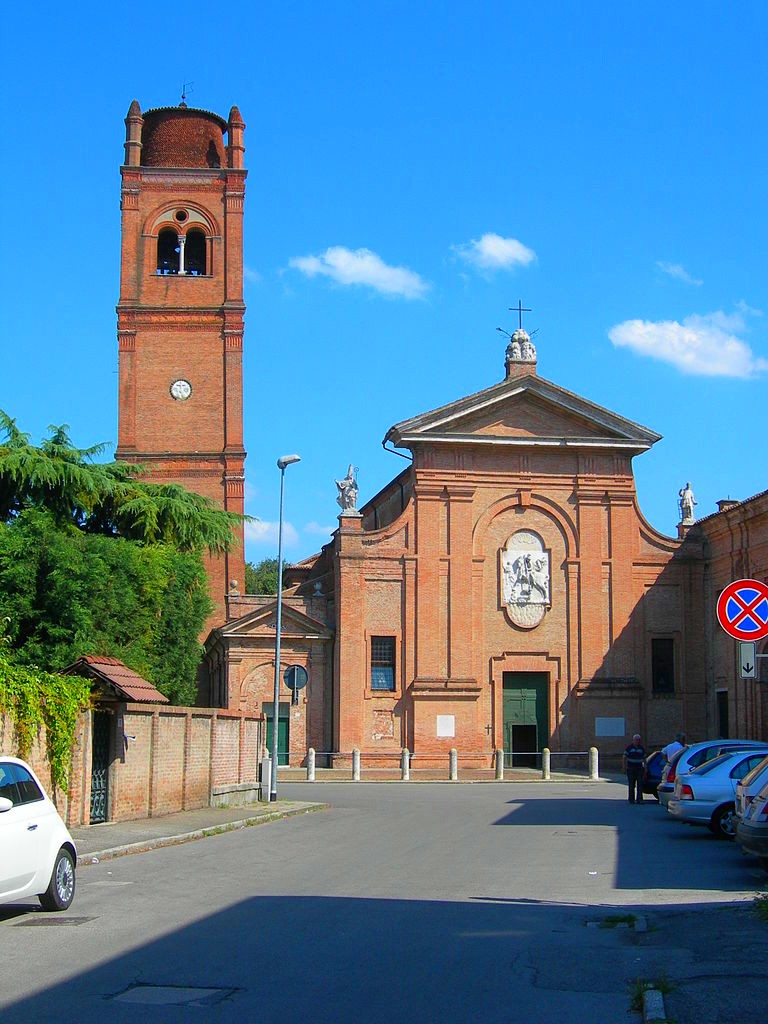
Albertoe was buried, according to his wishes, in the Abbey of St George Outside the Walls. In 1419 his remains were transferred to a 15th Century Sarcophagus which serves as an Altar in St Benedict’s Church.
The veneration of the Blessed Alberto Pandoni, along with that of Saint Maurelio, was revived after the arrival of the Olivetans at the Church of St George (c1415) and after the approval of the cultus “ab immemorabili tempore” (from time immemorial) in the Papal Decree issued by Pope Urban VIII in 1625.
Cardinal Tommaso Ruffo was the Bishop of Ferrara from 1717 to 1738. Ruffo’s time as the Bishop stands out by virtue of his strong personality. He was a Bishop of great determination, a politician and a lover of the arts. Ruffo, who had a liking for celebrations and processions and was well aware of the importance of local and popular devotions, encouraged the cult of our Blessed Alberto by organising and celebrating solemn festivals keeping Blessed Alberto’s cult very much alive and still so it remains.
The Monastery Church of St George Outsdie the Walls in Ferrara
St Eusebius of Rome (Died 357) Priest, Confessor. “At Rome, the birthday of the blessed Priest Eusebius, who for the defence of the Catholic Faith, was shut up in a room of his own house by the Arian Emperor, Constantius, where constantly persevering in prayer for seven months, he rested in peace. His body was removed by the Priests, Gregory and Orosius and buried in the cemetery of Cllistus on the Appian Way.” – Roman Martyrology. His Life: https://anastpaul.com/2020/08/14/saint-of-the-day-14-august-saint-eusebius-of-rome-died-357-priest-confessor/
Bl Aimo Taparelli Blessed Alberto Pandoni OSA (c1200-1274) Bishop
Saint/s of the Day – 13 August – Saints Hippolytus and Cassian (Died c235) Martyrs. St Hippolytus is the Patron Saint of – horses, prison guards, officers and workers’ In Austria: Sankt Pölten, Zell am See. In Italy: Bardonecchia, Bibbiena, Cassano Valcuvia, Fogliano di Cascia, Laterina, Rogeno. St Cassian is the Patron Saint of – parish clerks and secretaries, of stenographers (proclaimed on 23 December 1952 by Pope Pius XII), students, teachers, typists. In Italy – Bibbiena, Cassano Valcuvia, Comacchio, Imola, La Salle, Laterina, Macherio, Rogeno, San Casciano dei Bagni, San Casciano in Val di Pesa, San Cassiano a Vico, San Cassiano di Controne, San Cassiano di Moriano, Trecate, the Diocese of Bolzano-Bressanone, the Diocese of Brixenand Imola. Of Mexico City, Mexico, Of Las Galletas, Tenerife, Spain.
The Roman Martyrology reads today: “At Rome, blessed Hippolytus, Martyr, who gloriously confessed the Faith, under the Emperor Decius {mpt Valerian}. After enduring other torments, he was tied by the feet to the necks of wild horses and being cruelly dragged through briars and brambles and having all his body lacerated, he yielded his spirit.” AND: “At Imola, the birthday of St Cassian, Martyr. As he refused to worship idols, the persecutor called the boys whom the Saint taught and who hated him, giving them leave to kill him. The torment suffered by the Martyr was the more grievious, as the hand which inflicted it by reason of its weakness, rendered death more tardy.”
St Hippolytus and St Cassian, (Died c235) Martyrs By Fr Francis Xavier Weninger SJ (1805-1888)
St Hippolytus, an Officer of the body-guard of the Emperor Decius, had been born in the darkness of idolatry but he had become a Christian, with all his household, in consequence of witnessing the many miracles which St Lawrence performedwhile in the prison under his charge.
The Martyrdom of St Hippolytus
He had also been present when the Saint, lying on the red-hot gridiron, endured the most terrible tortures. At the sight of the heroism of St Lawrence, he was filled with the desire to announce himself a Christian but he was prevented by St Lawrence. But when this Martyr had gloriously ended his combat, Hippolytus, with the assistance of a Priest, named Justinus, buried the sacred remains with great devotion and veneration. The Emperor on being informed of it, had Hippolytus seized and brought before him. He asked him if it was true that he had become a Christian? Hippolytus answered firmly: “Yes, I am a Christian and, moreover, resolved to die such.” The emperor, who had always highly esteemed him, endeavoured, first by promises and then by menaces, to induce him to forsake Christ. As, however, all was unavailing, he caused him to be tortured.
He was accordingly stretched on the ground, whipped with scourges and beaten with clubs so fearfully that it was believed he could not survive. But God, by a visible miracle, prolonged his life. Keeping his eyes fixed upon Heaven, he frequently repeated: “I am a Christian, I suffer for Christ’s sake.”
After having been tormented for a long time, he was cast into prison and the Prefect received the order to behead him. Before executing this order, however, he went to the house of Hippolytus to secure his property. Finding the entire household had become Christians, he took them beyond the gates of the City and had them beheaded. Concordia, an old and holy matron, who had been Hippolytus’ nurse, was scourged until she expired because she encouraged the others to remain firm in their faith.
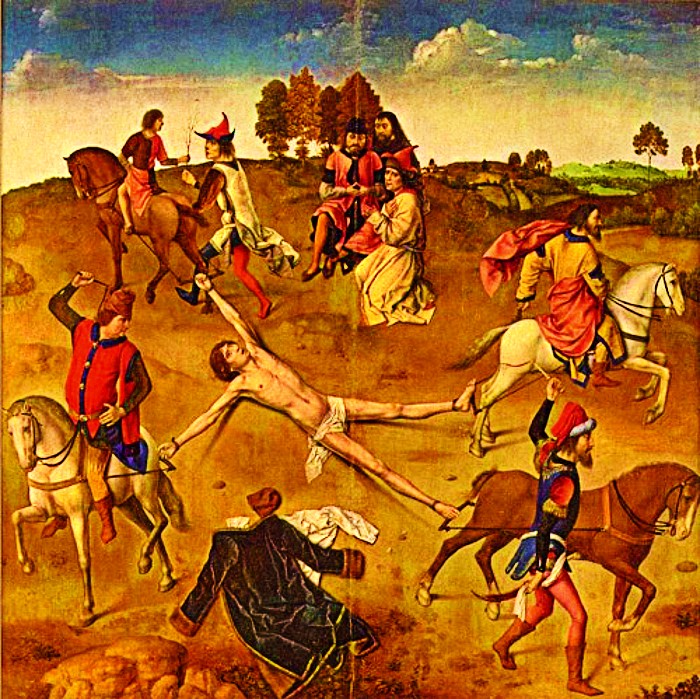
At last, Hippolytus was taken out of prison and fastened to the necks of two horses and dragged by them until he was torn to pieces and his heroic soul was received into the Presence of Him Whom he had so fearlessly confessed.
On the same day, although at another place, St Cassian suffered a Martyrdom of unprecedented cruelty. This Saint, was the Bishop of Brescia but had been banished from his See on account of his faith.
St Cassian
He intended to go to Rome and offer the Pope his services for the salvation of souls in some other place. On his way, he changed his mind and taking up his residence at Imola, a Town in Italy, he resolved to teach children to read and write, hoping that occasion would not be wanting to do good. In this apparently humble position, he was no less zealous than he had been in the administration of his Diocese. He taught the children with love and gentleness and endeavoured to inspire them with respect for the Christian faith, fear and horror of sin and love of virtue and piety.
He continued in this occupation with great zeal for some years, to the great benefit of young and old. Suddenly a terrible persecution of the Christians arose. Cassian was one of the first who were taken prisoners. The tyrant commanded him to sacrifice to the gods. The holy Bishop and teacher refused, as might have been expected and tried to convince the Judge of his fearful blindness in worshipping dumb idols or making gods of godless men.
The tyrant, furious at his arguments, ordered the executioners to strip him of his clothes and tie his hands behind his back and leave him exposed to the mercy of the children whom he had taken such pains to teach. The children, who had been taught that Cassian was a magician and consequently must die, a most painful death, took their sharp iron pencils with which, in those days, they wrote upon their wax tablets and pierced him with them till the blood ran profusely from his veins. This torture lasted long and was extremely painful. The Saint, however, never complained of the ingratitude of his pupils, nor gave a sign of impatience but praised and thanked the Lord until his soul went to Heaven to receive the Crown of Martyrdom.
St John Berchmans SJ (1599-1621) Jesuit Novice – born Jan Berchmans on 13 March 1599 at Driest, Brabant, Belgium and died on 13 August 1621 at Rome, Italy of natural causes. Patronages – Altar Servers, Jesuit novices and students. He had a special devotion to God’s Mother and to him is owed the Little Rosary of the Immaculate Conception. Biography: https://anastpaul.com/2019/08/13/saint-of-the-day-13-august-saint-john-berchmans-sj-1599-1621/
St Anastasius the Monk St Anastasius the Priest
St Benildus Romançon FSC (1805-1862) Teacher of the Brothers of Christian Schools
St Cassian of Todi St Concordia Bl Gertrude of Altenberg St Helen of Burgos St Herulph of Langres Bl John of Alvernia St Junian of Mairé St Ludolph
St Maximus the Confessor (c580-662) Father of the Church, Monk, Abbot, Theologian, Confessor, Scholar, Writer. Also known as St Maximus of Constantinople and St Maximus the Theologian. St Maximus, a man of fearless courage in witnessing to – “confessing” – even while suffering, the integrity of his faith in Jesus Christ, true God and true man, Saviour of the world and of His Holy Catholic Church. His Life: https://anastpaul.com/2020/08/13/saint-of-the-day-13-august-saint-maximus-the-confessor-c-580-662-father-of-the-church/
St Wigbert of Fritzlar (c675-c 746) Born in England, a learned Scholar and Abbot, Missionary, Miracle-worker, gifted with a penetrating understanding of Sacred Scripture as well as the gift of prophecy, companion of St Boniface, the Apostle of Germany. Wigbert was known as a quiet and gentle man and a great teacher. Both St Alcuin and St Bede knew and mentioned him in their historical writings of the times and of the Church. St Bede admired his contempt of this world and his learning. A fascinating and much-admired Saint: https://anastpaul.com/2022/08/13/saint-of-the-day-13-august-st-wigbert-of-fritzlar-c-675-c-746/
Saint of the Day – 12 August – Saint Simplicius of Vercelli (Died c470) the 8th Bishop of Vercelli, Italy. Also called – Simplicio.
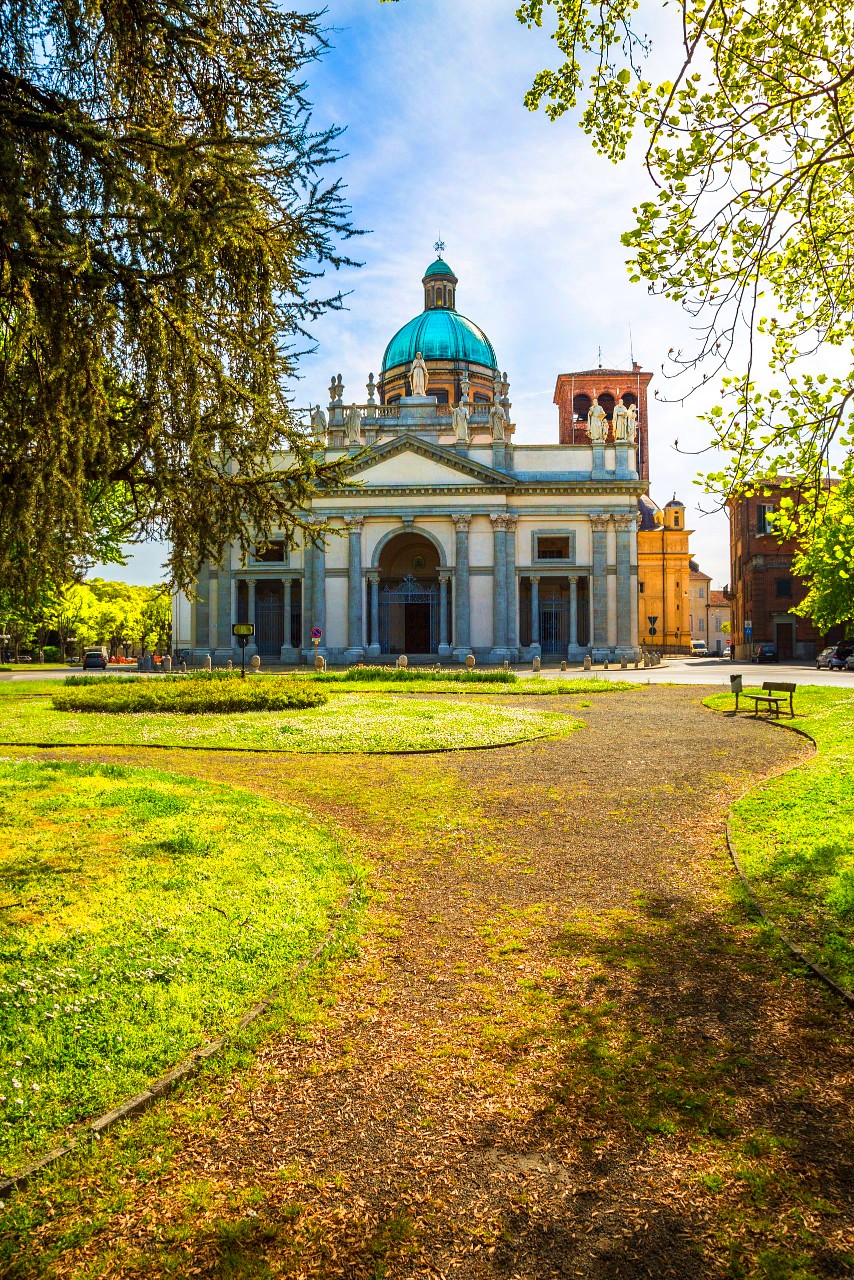
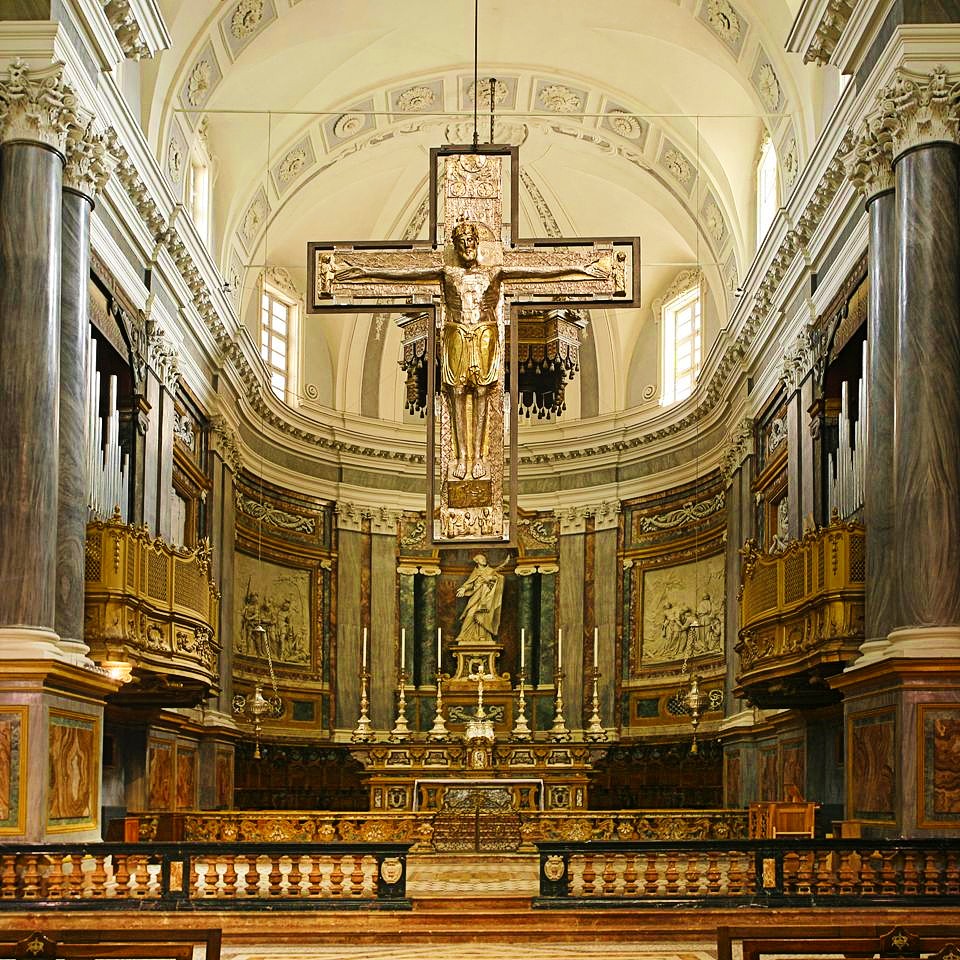
In the ancient Eusebian Basilica, now disappeared and replaced by the current Cathedral, the series of the first 40 Bishops of Vercelli could be seen painted in the central nave, starting from St. Eusebius up to Nottingo, who lived from the middle of the 6th Century to around 830. Under each portrait the name of the Bishop represented was written in large letters. The dating of this series of portraits is still being studied.
Of course, the portraits were an authoritative document for the history of the ancient Bishops but due to neglect or old age, they disappeared over the centuries and only 25 names could be read, when the Bishops Bonomius and Ferrerus, at the end of the 16th Century and the beginning of the 17th, wanted to transcribe them, to compose the Episcopal catalogue of the Diocese.
Added to this is the dispersion of the archive documents which occurred during the barbarian invasions, particularly in the Lombard era.
The little which is known about the Bishops of Vercelli, who lived from the middle of the 5th Century to the beginning of the 9th, comes from sepulchral inscriptions, from some local liturgical books, from documents of other Churches and from news of civil history.
Vercelli Cathedral dedicated to St Eusebius
Therefore, even of St Simplicius very little is known, he was the 8th Bishop of Vercelli, as reported by the Episcopal catalogue compiled by the historian F Savio (1898) which corrects the previous ones. Our Saint is one of the Bishops whose name was not clearly legible under the faded effigy.
His Episcopate can be dated around 470, in the difficult period of the barbarian invasions. The historian, Cusano, reported that at the beginning of the 17th Century, his Tomb was discovered with the following inscription: “Simplicius, the 8th Bishop, extraordinarily endowed with the grace of God, shone brightly with the greatest splendour of sanctity.” (“Simplicius Episcopus octavus, mira Dei gratia praeditus, maximo sanctitatis splendeur praeluxit”).
The authoritative “Bibliotheca Sanctorum” catalogues him together with St Discolius, the 4th Bishop of Vercelli because they were probably celebrated on the same day, 12 August, in the local liturgical calendar. (Adapted from the Italian by Author: Antonio Borrelli).
St Eusebius of Milan (Died 462) Archbishop of Milan. Born in Greece (although some sources regard him as Milanese) and died on 12 August 462. He was the Archbishop from 449 until his death. The Roman Martyrology reads: “In Milan, Saint Eusebius, Bishop, who worked diligently for the True Faith and rebuilt the Cathedral destroyed by the Huns.” His Zealous Life of Grace: https://anastpaul.com/2023/08/12/saint-of-the-day-12-august-st-eusebius-of-milan-died-462-bishop/
St Felicissima the Blind St Gracilian St Herculanus of Brescia St Jambert of Canterbury St Julian of Syria
St Macarius of Syria St Merewenna St Micae Nguyen Huy My St Murtagh of Killala St Photinus of Marmora
St Porcarius of Lerins St Simplicius of Vercelli (Died c470) Bishop St Ust
Martyrs of Augsburg – 4 Saints: The mother, Hilaria,and three friends of of Saint Afra ofAugsburg. While visiting the tomb of Saint Afra who were seized by the authorities and Martyred when they visited Afra’s tomb – Digna, Eunomia, Euprepia and Hilaria. They were burned alive c 304.
Martyrs of Rome – 5 Saints: A group of Christians Martyred together in the persecutions of Diocletian. We know little more than their names – Crescentian, Juliana, Largio, Nimmia and Quiriacus. They died in c304 in Rome, Italy and were buried on the Ostian Way outside Rome.
Saint of the Day – 11 August – St Equitius (Died c570) Abbot, Miracle-worker, a renowned Preacher and Evangeliser spreading the tenets and glory of monasticism, Founder of a Monastery. Equitius was born between 480 and 490 in the region of Valeria Suburbicaria (present-day L’Aquila-Rieti-Tivoli. Italy). He died at the Monastery of San Lorenzo di Pizzoli of natural causes. Also known as – Equizio.
The Roman Martyrology reads today: “In the Province of Valeria, St Equitius, Abbot, whose sanctity is attested to by the blessed Pope Gregory.”
St Gregory the Great refers to Equitius in his Dialogues and states that Equitius was a follower of St Benedict of Nursia.
Equitius worked to spread monasticism in Italy and the West but remained a Friar and through humility was never Ordained as a Priest.
Pope Gregory writes that Equitius’ reputation for sanctity was such that the Saint by his own example drew many disciples to embrace the religious life as Monks. According to ancient testimonies, the Monks of Equitius gave two Pontiffs to the Church and numerous Bishops and Cardinals.
Extraordinary events are related regarding Equitius, such as the liberation from temptations by the work of an Angel and the prophetic unmasking of a certain ‘Basil the Magician.’
The Saint died in his Monastery of San Lorenzo di Pizzoli. After his death his unapproved order was absorbed by the Benedictines with which he had such affinity. His Feast is celebrated on 11 August and his remains rest in the Church of San Margherita all’Aquila, now of the Jesuits and known as San Margherita deL Gesu all’Aquila,
St Tiburtius (Died c286) Martyr, Layman, the son of Saint Chromatius the Prefect of Rome, also a Martyr. St Damasus (c305-384), the Pope, wrote about Tiburtius. He died by being beheaded in c286 in Rome, Italy and his remains are entombed in the Ad Duas Lauros Cemetery at the three mile marker on the Via Lavicana in Rome. The Roman Martyrology reads today: “At Rome, between the two laurels situate about three miles from the City, the birthday of St Tiburtius, Martyr, under the Judge Fabian, in the persecution of Diocletian. After he had walked barefoot on burning coals and confessed Christ with increased constancy. he was put to the sword.” His Life and Death: https://anastpaul.com/2023/08/11/saint-of-the-day-11-august-saint-tiburtius-died-c286-martyr/
St Cassian of Benevento St Chromatius the Prefect Martyr, the Father of St Tiburtius also celebrated today and also a Martyr St Digna of Todi St Equitius (Died c570) Abbot
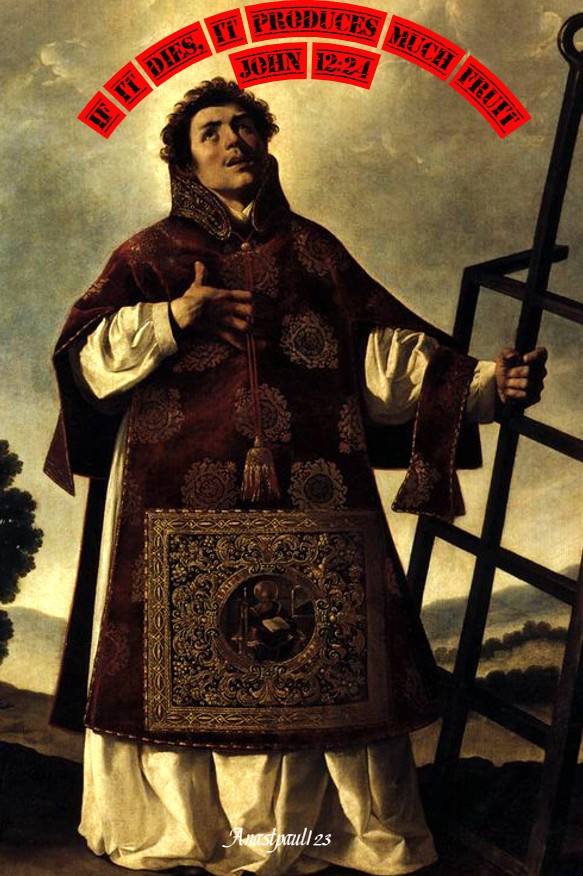
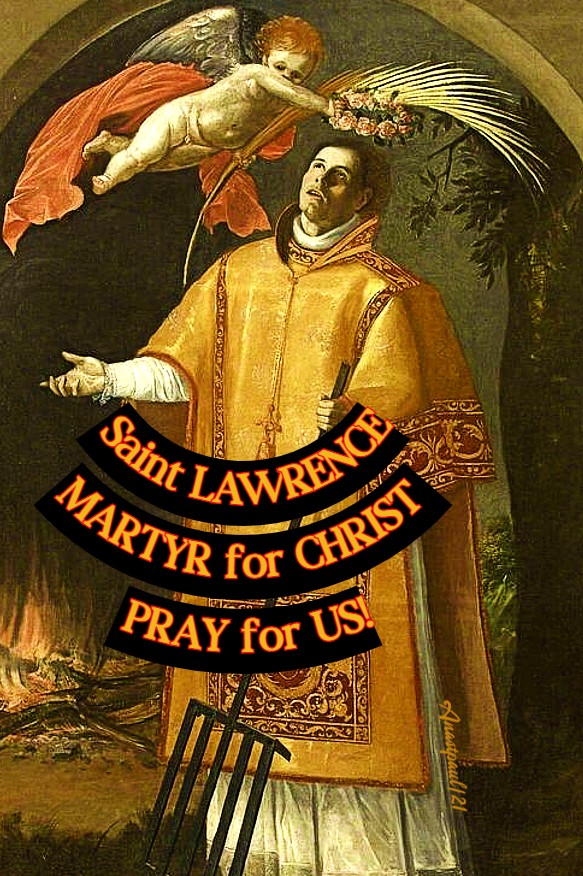
One Minute Reflection – 10 August – “The Month of the Immaculate Heart of Mary” – St Lawrence (Died 258) Martyr, “Keeper of the Treasures of he Church” – 2 Corinthians 9:6-10; John 12:24-26 – – – Scripture search here: https://www.drbo.org/
“If it dies, it produces much fruit” – John 12:24
REFLECTION – “Saint Lawrence was a Deacon in Rome. The Church’s persecutors ordered him to hand over the treasures of the Church. It was to win a real treasure in Heaven that he underwent the torments which we cannot listen to, without horror, for he was stretched out on a gridiron over a fire … Nevertheless, he triumphed over all his bodily sufferings by means of the extraordinary strength he drew from his charity and, with the help of Him, Who made him resolute. “For we are His handiwork, created in Christ Jesus for the good works which God has prepared in advance that we should live in them” (Eph 2:10).
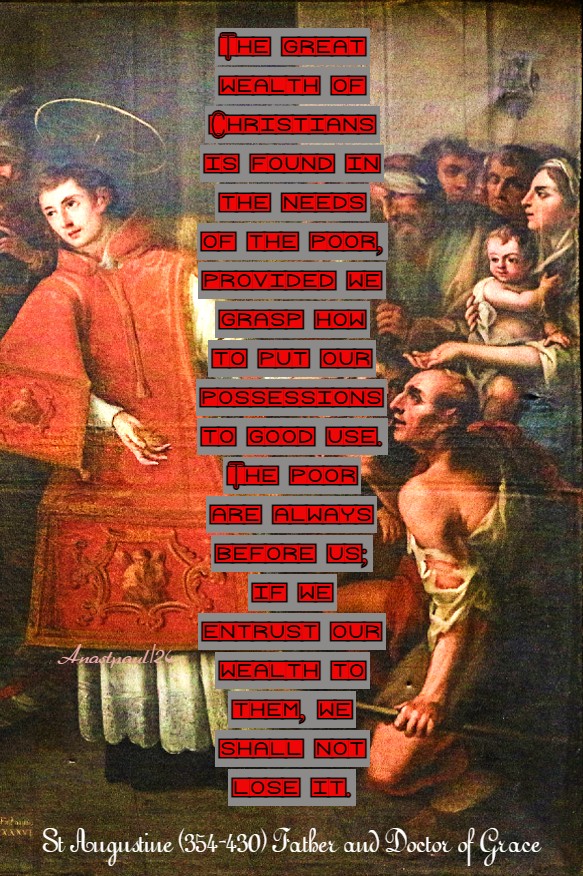
Now this is what stirred up his persecutors’ wrath … Lawrence said: “Order chariots to come along with me, on which I can bring you the treasures of the Church.” When he was given some chariots, he filled them with the poor and brought them back, saying: “These are the Church’s treasures.”
Nothing is truer, my brethren. The great wealth of Christians is found in the needs of the poor, provided we grasp how to put our possessions to good use. The poor are always before us; if we entrust our wealth to them, we shall not lose it.” – St Augustine (354-430) Father and Doctor of Grace (Sermon 302, for the Feast of Saint Lawrence).
PRAYER – Grant us, we beseech Thee, Almighty God, to extinguish the flames of our sins, as Thou granted St Lawrence to overcome the fires of his tortures. Through Jesus Christ, Thy Son our Lord, Who lives and reigns with Thee, in the unity of the Holy Ghost, God, world without end. Amen (Collect).
Saint of the Day – 10 August – Saint Asteria of Bergamo (Died c307) Virgin Martyr. Died by beheading. Asteria is the sister of St Grata of Bergamo, Martyr, who is celebrated on 4 September. The 2 sisters are Co-Patron Saints of Bergamo in Northern Italy. Also called – Hesteria.
The Roman Martyrology reads: “At Bergamo, St Asteria, Virgin and Martyr, in the persecutions of Diocletian and Maximian,”
Asteria and Grata, at the time of Diocletian and Maximian, buried Alexander of Rome. Grata was put to death; Asteria buried her and then she too was arrested, and tortured.
An ancient Epitaph describes her as having been beheaded as a Christian under Diocletian, when she had already reached her sixtieth year.
She was Martyred for refusing to worship the pagan god Jupiter and for constantly confessing Christ. She has been celebrated on 10 August, most especially in Bergamo for centuries.

















You must be logged in to post a comment.