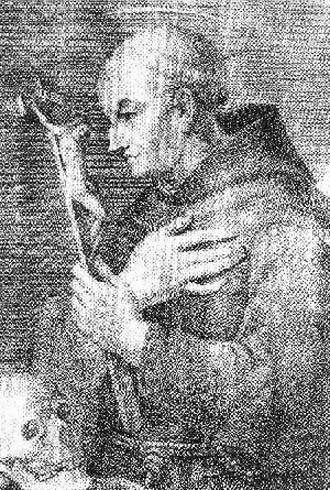
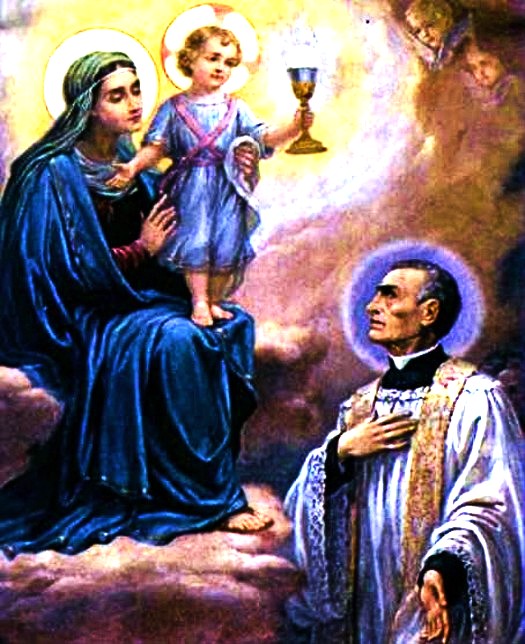
Quote/s of the Day – 8 March – St John of God OH (1495-1550) Confessor, Founder of the Brothers Hospitallers of Saint John of God
Lord be Blessed! (A Prayer of Thanksgiving and Self-oblation) By St John of God (1495-1550)
Lord be blessed! for in Thy great kindness to me, who art such a great sinner, having performed so many wicked things, yet Thou seest fit to set me free, from such a tremendous temptation and deception into which I fell, through my own sinfulness. Thou hast brought me into a safe harbour, where I shall endeavour to serve Thee with all my strength. My Lord, I beg Thee, with all my might, give me the strength of Thine grace and always let me see Thine clemency. I wish to be Thy slave, so kindly show me what I should do. Give peace and quiet to my soul which greatly desires this. O most worthy Lord, may this creature of Thine, serve and praise Thee. May I give my whole heart and mind, to Thee. Amen
Saint of the Day – 8 March – Saint Julian of Toledo(642-690) Bishop and Confessor, Monk and Abbot, Scholar and prolific Writer. Born in c642 in Toledo, Spain and died there in 690.
The Roman Martyrology reads: “At Toledo, in Spain, the demise of the blessed Saint Julian, Bishop and Confessor, most celebrated for his sanctity and learning.”
Julian was well educated at the Cathedral school, was a Monk and later Abbot at Agali, a spiritual student of Saint Eugene II his predeccesor as the Archbishop of Toledo.
Julian was the first Bishop to have primacy over the entire Iberian Peninsula and he helped centralise the Iberian Church in Toledo.
He presided over several Councils and Synods and revised the Mozarabic Liturgy.
A voluminous writer, his works include Prognostics, a volume on death (and his most influential work); a history of King Wamba’s war with dux Paul in Septimania (a Sallustian work, and one of the few examples of historical writing from the late Visigothic Kingdom) and, a book on the future life in Heaven (687). A lost work, apparently dedicated to King Erwig, dealt with the issue of Jews owning Christian slaves.
St Apollonius of Antinoë St Arianus of Alexandri St Arnulf of Chartres Abbot St Beoadh of Ardcarne St Duthus of Ross
St Felix of Burgundy (Died 647) Bishop, “The Apostle of East Anglia” Missionary in East Anglia and particularly in the Port Town now known as Felixstowe, in Suffolk, England. Amongst being the Founder of countless Churches. a famouse Monastery of Bury Saint Edmunds, he is also the Founder of what is now the University of Cambridge. This wonderful “Apostle of East Anglia” https://anastpaul.com/2023/03/08/saint-of-the-day-8-march-st-felix-of-burgundy-died-647-bishop-the-apostle-of-east-anglia/
St Humphrey of Prüm St Julian of Toledo (c642-690) Bishop and Confessor St Litifredus of Pavia St Philemon of Antinoë St Pontius of Carthage St Provinus of Como St Quintilis of Nicomedia St Rhian
Martyrs of North Africa – 9 Saints: A Bishop and some of his flock who were Martyred together in North Africa. The only details that have survived are nine of the names – Beata, Cyril, Felicitas, Felix, Herenia, Mamillus, Rogatus, Silvanus, Urban.
Quote/s of the Day – 7 March – St Thomas Aquinas OP (1225-1274) Confessor, Doctor
“We are like children, who stand in need of masters, to enlighten us and direct us and God has provided for this, by appointing His Angels, to be our teachers and guides.”
“To one who has faith, no explanation is necessary. To one without faith, no explanations is possible.”
“Love takes up, where knowledge leaves off.”
“If the highest aim of a Captain were to preserve his ship, he would keep it in Port, forever!”
“If then, you are looking for the way by which you should go, take Christ, for He, Himself, is the Way.”
“Happiness is secured through virtue; it is a good attained by man’s own will.”
Grant Me Grace, O Merciful God Prayer of St Thomas Aquinas (1225-1274) Doctor Angelicus & Doctor Communis which he was accustomed to recite everyday before the image of Christ.
Grant me grace, O merciful God, to desire ardently all that is pleasing to Thee, to examine it prudently, to acknowledge it truthfully and to accomplish it perfectly, for the praise and glory of Thy Name. Amen
Our Morning Offering – 7 March – Thursday of the Third Week in Lent – St Thomas Aquinas OP (1225-1274) Confessor, Doctor
O Merciful God By St Thomas Aquinas (1225-1274) Doctor Angelicus Doctor Communis
O merciful God, grant that I may ever perfectly do Thy Will in all things. Let it be my ambition to work only for Thy honour and glory. Let me rejoice in nothing but that which leads to Thee, nor grieve for anything, which leads away from Thee. May all passing things be as nothing in my eyes and may all which is Thine be dear to me and Thou, my God, dear above them all. May all joy be meaningless without Thee and may I desire nothing apart from Thee. May all labour and toil delight me, when it is for Thee. Make me, O Lord, obedient without complaint, poor without regret, patient without murmur, humble without pretence, joyous without frivolity, and truthful without disguise. Amen
Saint of the Day – 7 March – Blessed John Larke (Died 1544) Priest Martyr. He was a notable personal friend of St Thomas More (1478-1535) Martyr, the Lord High Chancellor of England. Died on 7 March 1544 (aged in his late forties) at Tyburn, London, England. He was Beatified on 29 December 1886 by Pope Leo XIII.
John studied at Cambridge University prior to 26 years of serving as the Parish Priest of St Ethelburga’s in Bishopsgate in the City of London. In 1526, he transferred to a prosperous Parish at Woodford, in Essex. In 1530, 4 years later, he returned to London when St Thomas More appointed him as the Vicar of Chelsea.
There is evidence that John swore the Oath of Supremacy in 1534 but, as Cresacre More (1572–1649), Great-grandson and Biographer of St Thomas More expressed it: “the example of St Thomas More’s death so wrought on his mind that afterwards, he followed his own sheep and suffered a famous Martyrdom.”
He was formally charged on 15 February 1544, together with John Ireland, Parish Priest at Eltham, German Gardiner and Thomas Heywood. All were condemned but Heywood recanted on the hurdle and lived to give testimony against Cranmer – one of the original apostates. The other three, along with another Priest from Lancashire, Robert Singleton, whose arrest was never explained, were executed on 7 March 1544 for the crime of being Catholic Priests.
St Ardo of Aniane Bl Daniel of Wichterich St Deifer of Bodfari St Drausinus of Soissons Bishop St Enodoch St Esterwine of Wearmouth Abbot St Eubulus of Caesarea Bl German Gardiner Bl Henry of Austria Bl Jermyn Gardiner Bl John Ireland BlessedJohn Larke (Died 1544) Priest Martyr. He was a notable personal friend of St Thomas More (1478-1535) , Martyr the Lord High Chancellor of England. St Paul of Prusa
Bl Volker of Segeberg OSA (Died c1135) Priest Martyr Bl William of Assisi
Martyrs of Carthage – 4 Saints: A catechist and three students Martyred together for teaching and learning the faith. We know little more than their names – Revocatus, Saturninus, Saturus and Secundulus. Mauled by wild beasts and beheaded 7 March 203 at Carthage, North Africa
Saint of the Day – 6 March – St Ollegarius Bonestruga OSA (1060-1137) Bishop, Canon Regular of the Augustinians, Reformer, in both the religious sphere and the social one, Abbot, Diplomat, Peacemaker and Proptector of his people from possible violent incursions. Born in 1060 at Barcelona, Spain and died in Tarragona in 1137 of natural causes. Ollegarius was the Bishop of Barcelona from 1116 and at the same time, the Archbishop of Tarragona from 1118 until his death. He was an intimate friend and Counsellor-Confessor of Count Ramon Berenguer III of Barcelona and often accompanied the Count, on military ventures. Also known as – Ollegarius of Tarragona, Ollegarius of Barcelona, Olaguerand, Oldegar, Olegari, Olegarius, Oligarius, Oleguer, Olegario. Ollegarius was Canonised in 1675 and his major Shrine and Sepulchre is in the side Chapel of Christ of Lepanto, in the Cathedral of Barcelona (see image at the end of the page). His Feast is celebrated the date of his death, today 6 March.
The Roman Martyrology reads: “At Barcelona in Spain, the blessed St Ollegarius, who was first a Canon and afterwards the Bishop of Barcelona and Archbishop of Tarragona.”
This Statue resides in the Interior of Barcelona Cathedral
Ollegarius was born in 1060 into a wealthy family in Barcelona. At the age of 10, he was included in the Cathedral Chapter in his hometown. He was Ordained a Priest in 1094. Over time, he became the Superior of Canons in Barcelona and Sant Adria de Besós (1095-1108) and the Abbot of the Augustinian Monastery of St Rufus in Avignon (1113-1118). He also joined the confraternity of San Pedro de la Portella.
Raymon Berenguer III, Count of Barcelona, appointed him Bishop of that City in 1116. Ollegarius was Consecrated by Cardinal Boso in the Cathedral of Maguelone in Provence, during the Pontificate of Paschal II. In 1117 he went to Rome to pay homage to Pope Gelasius II.
Saint Ollegarius, Sculpture by Pere Villar in the Choir of the Barcelona Cathedral, 16th Century
Ollegarius was a zealous reformer. He participated in the Synods of Toulouse (1119), Reims (1120), the First Lateran Council (1123), Narbonne (1129), Clermont (1130) and again in Reims (1131). He was also involved in implementing the Augustinian Reform of Monasteries in Catalonia – in the 1220s he transformed the Monastery of St Eulalia (then outside Barcelona) into the community of Augustinian Canons. On 8 March 1118, Olegarius, then still the Bishop of Barcelona, was also appointed the Bishop of Tarragona. He had the difficult task of rebuilding the Church in this region, after regaining the region from the Moors.
After 1124 he went on a pilgrimage to the Holy Land but due to his concern for his new Diocese, he shortened his stay in Antioch and returned before 1127. Between 1126 and 1130, he was very active in rebuilding the City, especially the Churches. He brought in new inhabitants and knights who would defend the City in the future. The years 1126-1127 were a time of efforts to organise the Second Crusade. Olegarius compensated William V for sending his knights to Barcelona in 1124-1125 and brought about an agreement between William and his son, Bernard IV, thus strengthening the alliance against the Almoravida pirates.
In March 1129, Ollegarius transferred his secular powers to Robert Bordet, making him Duke of Tarragona. He himself returned to caring for the renewal of his Diocese. The Synod of Narbonne (1129) approved the existence of the Archfraternity, which Ollegarius had founded a year earlier — its aim was to rebuild the Church in Tarragona. Members of the Archfraternity, clergy and laity, wealthy and poor, made monetary donations which were allocated to the Archdiocese of Tarragona.
A Life of St Ollegarius 1617
Ollegarius died on 6 March 1137. He was Canonis ed on 18 May 1675 by Pope Clement X. The Tomb of the Bishop of Barcelona and Tarragona, is located in the Cathedral of Barcelona.
The Sepulchre of St Ollegarius in the Cathedral of Barcelona
St Aetius St Bairfhion St Baldred of Strathclyde St Baldred the Hermit St Balther of Lindisfarne St Basil of Bologna St Cadroë
St Chrodegang of Metz (c714-776) The First Bishop of Metz, Protector and Father of the poor and orphans, Reformer of the Clergy, a relative of King Pepin and of Prince Charles Martel, both of whom he was Court Chancellor, Royal Diplomat, Saint Opportuna of Montreuil was his brother. The Roman Martyrology states: “In Metz in Austrasia, in today’s France, St Crodegango, Bishop, who arranged for the Clergy to live as if within the walls of a cloister under an exemplary rule of life and greatly promoted liturgical chant.” Biography: https://anastpaul.com/2022/03/06/saint-of-the-day-6-march-saint-chrodegang-of-metz/
St Colette PCC (1381-1447) Abbess and Foundress of the Colettine Poor Clares, a reform branch of the Order of Saint Clare. Patronages – against eye disorders, against fever, against headaches, against infertility, against the death of parents, of women seeking to conceive, expectant mothers and sick children, craftsmen, Poor Clares, servants, Corbie, France, Ghent, Belgium. St Colette was Canonised on 24 May 1807 by Pope Pius VII. Biography: https://anastpaul.com/2017/03/06/saint-of-the-day-6-march-st-colette/ AND: https://anastpaul.com/2019/03/06/saint-of-the-day-6-march-st-colette-2/
St Cyriacus of Trier St Cyril of Constantinople St Evagrius of Constantinople
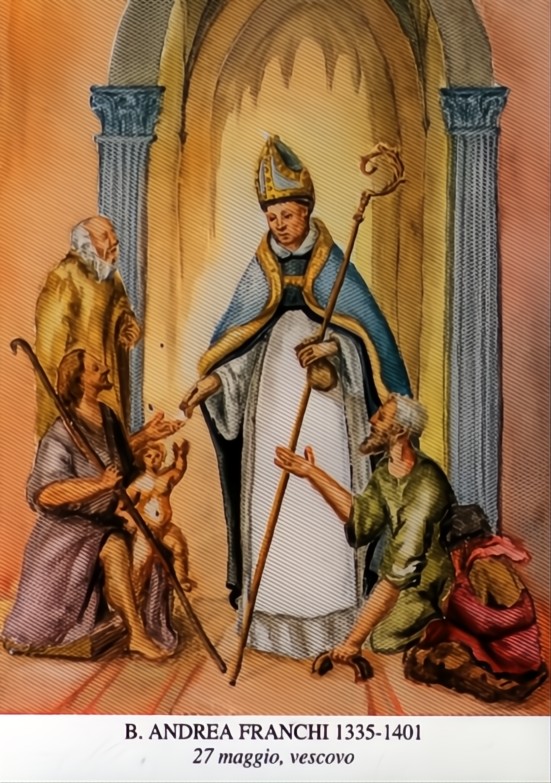
Bl Guillermo Giraldi St Heliodorus the Martyr Bl Jordan of Pisa St Julian of Toledo St Kyneburga of Castor St Kyneswide of Castor St Marcian of Tortona St Ollegarius Bonestruga OSA (1060-1137) Bishop St Patrick of Malaga St Sananus
Martyrs of Amorium – 42 Saints – Also known as Martyrs of Syria and Martyrs of Samarra; A group of 42 Christian senior officials in the Byzantine Empire who were captured by forces of the Abbasid Caliphate when the Muslim forces overran the City of Amorium, Phrygia in 838 and massacred or enslaved its population. The men were imprisoned in Samarra, the seat of the Caliphate, for seven years. Initially thought to be held for ransom due to their high position in the empire, all attempts to buy their freedom were declined. The Caliph repeatedly ordered them to convert to Islam and sent Islamic scholars to the prison to convince them; they refused until the Muslims finally gave up and killed them. Martyrs. We know the names and a little about seven of them: Aetios Bassoes Constantine Constantine Baboutzikos Kallistos Theodore Krateros Theophilos but details about the rest have disappeared over time. However, a lack of information did not stop several legendary and increasingly over-blown “Acts” to be written for years afterward. One of the first biographers, a monk name Euodios, presented the entire affair as a judgement by God on the empire for its official policy of Iconoclasm. Deaths: beheaded on 6 March 845 in Samarra (in modern Iraq) on the banks of the Euphrates river by Ethiopian slaves the bodies were thrown into the river, but later recovered by local Christians and given proper burial.
Saint of the Day – 5 March – Saint Theophilus of Caesarea (Died c217) Bishop, Theologian, Writer , Apologist and Defender of the Faith. Born in Caesarea, Palestine and died c195 of natural causes. Also known as – Theophilus of Palestine.
The Roman Martyrology reads: “At Caesarea, in Palestine, in the time of the Emperor, Severus, St Theophilus, Bishop, who was conspicuous for his wisdom and the purity of his life.”
St Theophilus at Notre-Dame Basilica, Geneva (Switzerland)
Saint Theophilus was born in Caesarea in Palestine around 110. He was educated in a Christian environment and soon became a leader of the local Church. In 189 he was appointed as the Bishop of Caesarea.
He was a prolific Theologian and wrote several works, including the “Letter to Autolycus” an apologetic work defending Christianity against pagan accusations. In this work, Theophilus argues that Christianity is the true religion and that Jesus Christ is the Son of God.
Theophilus was an important leader of the Church. He was one of the main supporters of celebrating Easter on Sunday, according to Western tradition. In 190, he attended a Synod in Caesarea, in which it was decided that Easter would be celebrated on Sunday.
He died in Caesarea of Palestine around 217. He was officially Canonised in the 16th Century with a Feast today, 5 March.
St Adrian of Caesarea St Caron St Carthach the Elder Bl Christopher Macassoli of Vigevano St Clement of Santa Lucia St Colman of Armagh St Conon of Pamphylia Bl Conrad Scheuber Bl Dietmar von Minden St Eusebius of Cremona St Eusebius the Martyr St Gerasimus of Palestine (Died c475) Monk, Hermit Bl Giovanna Irrizaldi
Martyrs of Africa – A group of 304 Christians Martyred together for their faith. We know nothing else about them but five of their names Eusebius, Evolus, Hadrian, Julian and Octavian. They Died in 254 in Africa, exact location and date unknown.
Saint of the Day – 4 March – Blessed Humbert III, Count of Savoy (1136–1189) Layman Prince. It is recorded of Humberto “who, forced to leave the cloister to deal with public affairs, practiced the monastic life with greater dedication, to which he later returned.” Born in 1136 in Avigliana, Italy and died on 4 March 1189 in Chambéry, France of natural causes. Beatified in 1838 by Pope Gregory XVI.
Humbert III was born around 1136 in the Castle of Avigliana, Piedmont, near Turin, to Count Amadeus III of Savoy and Mahaut (Mathilde), Countess of Albon and Vienne. Humbert III is an important figure in medieval society, as attested in the history of House of Savoy. His life was characterised by certain key features, including mysticism, borne of a vocation and tradition of the contemplative life . But he events of his time and of his place by birth, forced instead that he become a warrior and politician which he undertook exclusively for Dynastic reasons., having inherited the dream of his father and grandfather of unifying the kingdoms of Burgundy.
Humbert’s education was entrusted to Saint Amadeus of Lausanne, the former Abbot of Hautecombe and, under his guidance, little Humbert made great progress in his studies and spiritual formation, despising the apparent splendour of worldly things and wishing to devote himself to prayer, meditation and penance. To better achieve his lofty goals, he often retreated to the Abbey of Hautecombe, on the banks of Lake Bourget in Savoy, founded by his father. He always left this holy place with regret, each time the family and the Savoyard nobility, called him back to deal with political issues.
In 1122, Humbert’s much older brother, Amadeus III, who had inherited the Dynastic leadership from their father, went on pilgrimage to the Holy Land out of gratitude towards Pope Callixtus II and from 1146, he participated in the Second Crusade. However, in 1148, he died on the island of Cyprus, where he was buried, leaving young Humbert as heir – Humbert III was then just twelve years old.
At the age of 15 Humbert married Fedica, daughter of Count Alfonsus-Giordanus of Toulouse, who soon died without children. Later he married a cousin, Gertrude, daughter of Count Theodoric of Flanders and Clemenza of Burgundy. Unfortunately, this second marriage was annulled, due to sterility. In 1164 he married Clementina of Zharinghen, who however gave him only two daughters, Alice and Sofia. Widowed again in 1173, Humbert decided to retire to Hautecombe Monastery, until, in 1177, the nobility managed to convince him to marry for the fourth time, hoping for a male heir,. Finally, his fourth wife, Beatrice, daughter of Count Gerard of Macon bore a son, Thomas, who would continue the Dynasty and another daughter, who however died at the age of seven.
The long reign of Humbert III which lasted aaround forty years, was characterised by particular conflicts with the Emperor, the various Lords and Bishop-Counts. In 1187, he was in fact, banished from the Empire by Henry VI, as he supported the Emperor’s opponents. Humbert retreated to his Alpine domains, dedicating himself to the practice of personal virtues and fraternal charity and the promotion of Monastic foundations.
Humbert ‘s spirituality undoubtedly blossomed in an environment of ancient Christian traditions, favoured in particular by the example of his father, a pilgrim and Crusader in the Holy Land and of the holy Bishop St Amadeus of Lausanne, his spiritual father. The life of thisPrince passed almost entirely under the sign of contradictions – a lover of peace, he had to encounter frequent hostilities and wars; penitent, contemplative ascetic –the care of the government imposed on him a life of action, finding himself almost forced into marriage to leave an heir. However, he gave undoubted signs of great moral balance, of severity with himself and of indulgence and charity towards others. He was very generous towards Churches, Monasteries and above all, towards the poor.
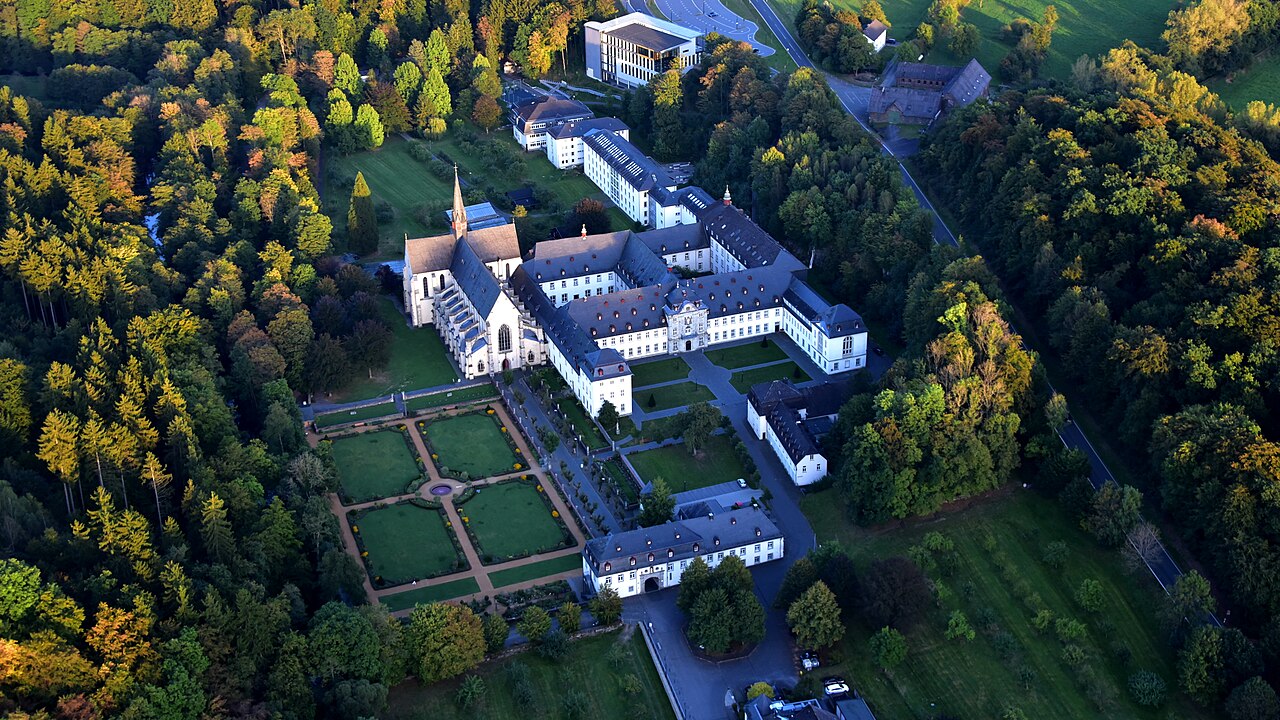
The death of Humbert III, on 4 March 1189 in Chambéry, at the age of fifty-two, was mourned with sincerity by all the people. He was the first Savoy Prince to be buried in the Hautecombe Abbey,which, since then, became a necropolis for the dynasty, so much so, that Humbert II and Maria José, the last Italian Empress, still rest there today. The deceased Count immediately received great veneration, also supported by many miracles, until in 1838 King Charles Albert of Sardinia managed to obtain from Pope Gregory XVI the official approval of the title of “Blessed” for his ancestor, as well as for nephew of these, Blessed Boniface, Carthusian Monk and later Archbishop of Canterbury. The two Blessed of the House of Savoy, rest today in two valuable Sarcophagi behind the High Altar of the Abbey Church in Hautecombe.
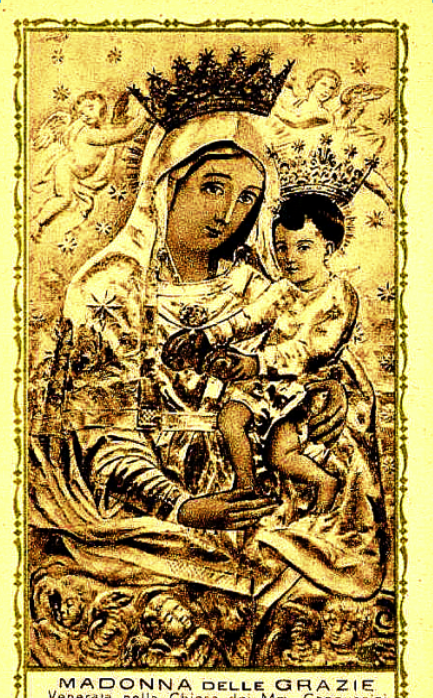
In Italy, Blessed Humbert III is still remembered today, in particular in Racconigi, where a painting of the Blessed donated by Queen Elena and restored by King Humbert II, is kept in the Royal Sanctuary of the Madonna delle Grazie. Furthermore he is venerated in Aosta, where he is depicted on the facade of the Cathedral and in the Castle of Sarre, also in the Aosta Valley.
St Lucius I (Died 254) Pope and Martyr. The 22nd Bishop of Rome from 25 June 253 to his death on 5 March 254. He was banished soon after his consecration but gained permission to return. Patronage – Copenhagen, Denmark. Lucius I’s Tombstone is still extant in the Catacomb of Callixtus. His Relics were later brought to the Church of Santa Cecilia in Trastevere, along with the Relics of St Cecilia and others. His head is preserved in a reliquary in St. Ansgar’s Cathedral in Copenhagen, Denmark. This Relic was brought to Roskilde around the year 1100, after Lucius had been declared Patron Saint of the Danish region Zeeland. The Roman Martyrology reads today: “At Rome, on the Appian Way. during the persecution of Valerian, the birthday of St Lucius, Pope and Martyr, who was first exiled for the Faith of Christ but, being permitted by Divine Providence to return to his Church, he suffered Martyrdom by decapitation, after having combated the Novatians. His praises have been published by the blesseed Saint Cyprian, Bishop of Carthage(200-258).” His Life and Death: https://anastpaul.com/2023/03/04/saint-of-the-day-4-march-st-lucius-i-died-254-pope-and-martyr/
St Adrian of May St Adrian of Nicomedia Bl Alexander Blake St Appian of Comacchio St Arcadius of Cyprus St Basinus of Trier Bl Christopher Bales St Felix of Rhuys St Gaius of Nicomedia Blessed Humbert III Count of Savoy (1136–1189) Layman Prince St Leonard of Avranches Bl Nicholas Horner St Nestor the Martyr St Owen Bl Paolo of Brescia
Martyrs on the Appian Way – 900 Saints: Group of 900 Martyrs buried in the Catacombs of Saint Callixtus on the Appian Way, Rome.
Martyrs of Nicomedia – 20 Saints: A group of 20 Christians murdered together for their faith. The only details about them to survive are three of their names – Archelaus, Cyrillos and Photius. Nicomedia, Bithynia (in modern Turkey)
Martyrs of the Crimea – 7 Saints: A group of 4th century missionary Bishops who evangelised in the Crimea and southern Russia and were Martyred for their work. We know little else beyond the names – Aetherius, Agathodorus, Basil, Elpidius, Ephrem, Eugene and Gapito.
Saint of the Day – 3 March – Blessed Innocento of Berzo OFM Cap. (1844-1890) Priest, Friar of the Friars Minor of the Capuchins, Born on 19 March 1844 at Niardo, Brescia, Italy as Giovanni Scalvinoni and died on 3 March 1890 at Bergamo, Italy from influenza. Patronages – of children, Berzo Inferiore, Italy. Also known as – Giovanni Scalvinoni, Innocent, Innocenzo. Additional Memorial – 28 September (Capuchins), the Sunday after the Pardon of Assisi , that is the Sunday after 2 August at his Annunziata Convent.
Among the votive offerings preserved in the humble birthplace of Blessed Innocento in Berzo, now transformed into a Museum, there is a fragment of rope in memory of a miracle which occurred in the 1920s. A mountaineer, during a climb, fell into a crevice and, having no-one to help him, asked for the intervention of the humble Capuchin Friar, to whom he was devoted. A rope came from above while the movements to climb the cliff were suggested to him but, once he reached the top, he was astonished to see that no-one was waiting for him.
Giovanni Scalvinoni was born in Niardo (Brescia), his mother’s hometown, on 19 March 1844. A few months later a terrible disaster suddenly struck the young family. His father, in just two days, died of pneumonia. Giovannino spent his childhood simply — making the strong faith of the mountain people his own. From an early age he had great pity for the poor, generously giving what little he had to those who knocked on his door. He woulf retain this deeply experienced compassion throughout his life — when, as a Capuchin, he went around collecting alms, he was extremely satisfied to return to the Convent with an empty bag. That which he had received as an offering, he had immediately distributed to those in even more need than the Friars of the Convent.
He studied with excellent results in the Municipal College of Lovere (Bergamo) and from there, he moved onto the Seminary of Brescia, where he imposed a demanding spiritual disciplineupon himself. Giovanni was Ordained a Priest in 1867. Thereafter, he held various positions, including that of Vice Rector of the Seminary but each time he was removed because he absolutely lacked authority. His innate shyness led him to desire to live in solitude, between prayers and penances. On 16 April 1874 he finally began his Novitiate among the Capuchins, taking the name Innocento, at the Annunziata Convent. Four years later he made his Solemn Profession and was appointed Assistant Master of Novices.
Except for brief assignments and the preaching of spiritual exercises in some Lombard Convents, it was in the Annunziata Convent where he intensely experienced total abandonment to the Lord. Despite his excellent knowledge of theology, also passed onto his brothers, he always appeared humble and modest, with the desire to disappear and never be noticed. In love with the Eucharist (his Masses were of exceptional intensity), he stopped as much as he could in front of the Tabernacle. He loved the Crucifix very much too and the exercise of theWay of the Cross which he always recommended to his penitents.
On 3 March 1890, at the age of forty-six, he fell seriously ill and died in the Infirmary of the Convent in Bergamo. A few months later his mortal remains were solemnly transferred to Berzo. A reputation for sanctity had already surrounded him in life. On 21 March 1943 Innocento was venerated by Pope Pius XII by a Decree of Heroic Virtue and on 12 November 1961, John XXIII proclaimed him Blessed and Patron of children, protagonists of the two miracles of the recorded for his Beatification process.
Private Chapel of Innocento da Berzo in Piancogno
His writings (a few letters, diary fragments, notes for sermons), collected in a thousand pages, reveal the disarming secret of his sanctity — the unconditional abandonment in the arms of the Father. “Jesus is offended by everyone in the world — it is up to me not to leave Him alone in His affliction. The love of God does not consist in great feelings but in great nakedness and patience, for the beloved God. There is no other better means to guard the spirit, than to suffer, do and remain silent. I will have a great desire to be subject to everyone and I will have a horror of being preferred to the least.”
A path which leads to the Annunziata Convent, which he followed many times to reach various locations in Valcamonica, where he was sought as a Confessor and Preacher, is today named after him. From his cell, a destination for continuous pilgrimages, a small window allows you to contemplate the enchanting landscape of the lower valley, Lake Iseo and his native town of Berzo.
The Order of Friars Minor Capuchin commemorates his Feast on 28 September, while in the Sanctuary of the Santissima Annunziata, the Convent where the Blessed lived, the Feast is on the Sunday after the Pardon of Assisi (after 2 August).
Blessed Benedetto Sinigardi da Arezzo OFM (1190-1282) Friar of the Order of Friars Minor, who received the Habit directly from St Francis of Assisi. Although rarely mentioned, Blessed Benedetto is the Author of the Angelus! Furthermore, the beautiful custom of reciting the Marian Antiphon “The Angelus Domini” is attributed to Blessed Benedetto, meditating on the saving Mystery of the Incarnation of the Son of God in Mary’s virginal womb. The Angelus Domini became a pious practice firstly to the entire Franciscan Order, then to the whole Church, as it still is today. Biography: https://anastpaul.com/2023/03/03/saint-of-the-day-3-march-blessed-benedetto-sinigardi-da-arezzo-ofm-c1190-1282-the-author-of-the-angelus/
St Anselm of Nonantola St Arthelais of Benevento St Calupan St Camilla St Cele-Christ
St Cunegundes (c975-1040) Empress of the Holy Roman Empire, Nun, she took a vow of Virginity before her marriage, which, after a miracle was upheld by her husband, the King (also a Saint). Founder of Monasteries and Churches, Nun in one of her Convents, Apostle of Charity. Born in c 975 and died in 1040 of natural causes. Biography: https://anastpaul.com/2022/03/03/saint-of-the-day-3-march-st-cunegundes-c-975-1040/
St Foila Bl Frederick of Hallum St Gervinus Blessed Innocento of Berzo OFM Cap. (1844-1890) Priest Bl Jacobinus de’ Canepaci St Lamalisse St Non
Bl Pierre-René Rogue St Sacer St Teresa Eustochio Verzeri St Titian of Brescia Bishop and Confessor St Winwallus of Landévennec
40 Martyrs in North Africa – A group of Christians Martyred together in North Africa, date unknown. No details have survived, but we know these names – Antonius, Artilaus, Asclipius, Astexius, Basil, Bosimus, Carissimus, Castus, Celedonius, Claudianus, Cyricus, Donata, Emeritus, Emeterius, Euticus, Felix, Fortunatus, Frunumius, Gajola, Georgius, Gorgonius, Hemeterus, Isicus, Janula, Julius, Luciola, Luciolus, Marcia, Marinus, Meterus, Nicephorus, Papias, Photius, Risinnius, Sabianus, Savinianus and Solus
Martyrs of Pontus – 3+ Saints – A large group of Christians Martyred together in the persecutions of Emperor Maximian Galerius and governor Ascleopiodato. We have some details on three of them – Basiliscus, Cleonicus and Eutropius. 308 in Pontus (in modern Turkey) Martyrs of Caesarea; Asterius Marinus
Martyrs of Calahorra: Cheledonius Emeterius
Martyrs of Gondar, Ethiopia: Bl Antonio Francesco Marzorati Bl Johannes Laurentius Weiss Bl Michele Pío Fasol
Saint of the Day – 2 March – Saint Joavan of Brittany (Died c576) Bishop. Born in Britain, probably in Wales and died at Plougen, in Brittany, France of natural causes. Patronages – against cancer, Plouvien, France. Also known as – … of Leon, Jaoua, Joevin, Joévin, Jouva, Jaouen, Yaouen, Joavan, Joavan Aurelian.
Joavan followed his uncle to Brittany to become his disciple and spiritual student. St Paul Aurelian of Léon (Died c575) (known in Breton as Paol Aorelian or Saint Pol de Léon) the first Bishop of the See of Léon and one of the seven Founder Saints of Brittany.
That great Saint chose Joavan to be his assistant in his Bishopric, when he retired a little before his death. Saint Joavan survived him only a short time, perhaps just a year.
Joavan is the titular Saint of two Parish Churches in the Diocess of Léon.
Blessed Charles the Good (c1083-1127) Martyr, Duke, Apostle, protector and defender of the poor, selling his and his kingdom’s riches to help those in need, wherever he could, a fair and just Ruler who made laws to accommodate the poor rather than the rich (the eventual cause of his Martyrdom), Knight who assisted in Secomd Crusade. Blessed Charles cultus was officially confirmed by his Beatification in 1883 by Pope Leo XIII. His Life and Death: https://anastpaul.com/2023/03/02/saint-of-the-day-2-march-blessed-charles-the-good-c1083-1127-martyr/
St Cynibild of Laestingaeu St Felix of Treves St Fergna the White St Girolamo Carmelo di Savoia St Gistilian St Joavan of Brittany (Died c576) Bishop St Jovinus the Martyr St Lorgius of Caesarea St Lucius of Caesarea
Martyrs of Campania – Approximately 400 northern Italian Christians Martyred for their faith by pagan Lombards. Their story was recorded by Pope Saint Gregory the Great, who reports that they people spent their final days supporting each other with prayer. c 579 in Camnpania, Italy.
Martyrs of Porto Romano – 4 Saints – Group of Christians Martyred in the persecution of Diocletian. The only other information that survives are the names of four of them – Heraclius, Januaria, Paul and Secondilla. c305 at Porto Romano at the mouth of the River Tiber, Rome.
The beloved Foster-Father and Guardian of Jesus and Protector of the Holy Family, is celebrated for this whole month and his Feast Day falls on 19 March .
“Quamquam Pluries” On the Devotion to St Joseph Pope Leo XIII
“On 10 March, [11 MARCH THIS YEAR], we begin the Novena to St Joseph, entrusting so many of our woes and cares to his holy and fatherly care and intercession. His Patronages are numerous, as we know, one of them will fit our needs perfectly and if not, then we should all ask him to intercede on our behalf for our families and for a Happy and Holy Death. On the 19thFEAST we pray the Consecration to St Joseph.”
Indulgenced Prayer to St Joseph O St Joseph! Pray for Us Daily O Joseph! virgin father of Jesus, pure Spouse of the Virgin Mother, pray for us daily to the Son of God, that, armed with the weapons of His grace, we may fight as we ought in life and be crowned by Him in death. Amen (Indulgence of 100 days, twice a day St Pius X 26 November 1906)
Patronages in Alphabetical Order:
of Accountants • Bursars • Cabinetmakers • Carpenters • Catholic Church • Cemetery Workers • Children • Civil Engineers • against Communism • Confectioners • Craftsmen • against Doubt and Hesitation • the Dying • Emigrants • Exiles • Expectant Mothers • Families • Fathers • Furniture Makers • Grave diggers • Happy Death • Holy Death • House Hunters • House Sellers • Immigrants • Joiners • Labourers • all the Legal Profession • Married Couples • Oblates of Saint Joseph • Orphans • Pioneers • Social Justice • Teachers • Travellers • the Unborn • Wheelwrights • Workers • Americas • Austria • Belgium • Bohemia • Canada • China • Croatian people • Korea • Mexico • New France • New World • Peru • Philippines • Vatican City • VietNam • Canadian Armed Forces • Papal States • 46 Diocese • 26 Cities,States and Regions.
St David of Wales (c542-c601) Bishop, Prince, Monk, Confessor, Missionary, Founder of Monasteries. Uncle of King Arthur. David studied under Saint Paul Aurelian. Worked with Saint Columbanus, Saint Gildas the Wise and Saint Finnigan. He was officially Canonised in 1120 by Pope Callistus II. Biography: https://anastpaul.com/2017/03/01/saint-of-the-day-1-march-st-david-of-wales/
St Abdalong of Marseilles St Adrian of Numidia St Agapios of Vatopedi St Agnes Cao Guiying
St Albinus of Vercelli St Amandus of Boixe St Antonina of Bithynia Bl Aurelia of Wirberg Bl Bonavita of Lugo St Bono of Cagliari Bl Christopher of Milan Bl Claudius Gabriel Faber St Domnina of Syria St Domnina of Syria St Donatus of Carthage St Eudocia of Heliopolis St Felix III, Pope Bl George Biandrate Bl Giovanna Maria Bonomo Bl Gonzalo de Ubeda St Hermes of Numidia St Jared the Patriarch St Leo of Rouen
St Leolucas of Corleone OBas (c815-c915) Abbot of the Basilian Order, Mystic, Ascetic, Miracle-worker. He lived as a Monk for more than 80 years. The Roman Martyrology reads: “In the Monastery of Avena between the slopes of Mount Mercurio in Calabria, St Leone Luca, Abbot of Monte Mula, who shone in the hermitic life, as in the cenobitic life, following the rules of the oriental Monks.” His Biography: https://anastpaul.com/2023/03/01/saint-of-the-day-1-march-saint-leolucas-of-corleone-obas-c815-c915-abbot/
St Lupercus St Marnock St Monan Bl Pietro Ernandez Bl Roger Lefort St Rudesind St Seth the Patriarch St Simplicius of Bourges St Siviard St Swithbert St Venerius of Eichstätt
Martyrs of Africa – A group of 13 Christians executed together for their faith in Africa. The only details about them to survive are ten names – Abundantius, Adrastus, Agapius, Charisius, Donatilla, Donatus, Fortunus, Leo, Nicephorus and Polocronius. c290
Martyrs of Antwerp – A group of 14 Christians Martyred together, buried together and whose Relics were transferred and enshrined together. We know nothing else but their names – Benignus, Donatus, Felician, Fidelis, Filemon, Herculanus, Julius, Justus, Maximus, Pelagius, Pius, Primus, Procopius and Silvius. Died in the 2nd Century in Rome. They are buried in the St Callixtus Catacombs and their Relics were enshrined in the Jesuit Church in Antwerp on 28 February 1600.
Martyrs of the Salarian Way – A group of 260 Christians who, for their faith, were condemned to road work on the Salarian Way in Rome, Italy during the persecutions of Claudius II. When they were no longer needed for work, they were publicly murdered in the amphitheatre. Martyrs. c269 in Rome.
Martyrs Under Alexander – A large but unspecified number of Christians Martyred in the persecutions of Emperor Alexander Severus and the praefect Ulpian who saw any non-state religion to be a dangerous treason. c 19.
Saint of the Day – 29 February – Blessed Antonia of Florence OSC (1401-1472) Widow, Abbess of the Monastery of Corpus Christi in L’Aquila. Born in 1401 in Florence, Italy and died on 29 February 1472 in her Convent at Aquila, Italy of natural causes, her Feast Day is, therefore, celebrated on 28 February in non-Leap years. Her body is incorrupt. Antonia was Beatified in 1847 by Pope Pius IX.
Blessed Antonia of Florence was born of a noble family in Florence, Italy, in 1401. She entered the married state at a very early age, in compliance with the wish of her parents. She and her husband had one child, a son. When her husband died in 1428, she allowed nothing to induce her to contract a second marriage but resolved to withdraw from the world and live only for God and the salvation of her soul.
These were the years in which Saint Bernardino of Siena, with some companions, spread the Observance movement and the return of an original “Franciscanism” in many Italian cities. Most of the sermons were given in the square, the churches were unable to contain the crowds that punctually flocked. Brother Bernardino preached in Santa Croce in Florence from 8 March to 3 May 1425. Antonia, listening to him, responded yes, without conditions, to God’s call. She had known the experience of married life, she was a mother, but the Lord gave a turning point to her life. Four years later, once family matters were settled, she entered
In 1429, after ensuring the comfort and care of her son, she entered the Convent of Tertiaries which Blessed Angelina had ounded at Florence. Here she so distinguished herself by virtue and wisdom that after a few years, the Superiors called her to Foligno to preside as Superior of the Convent there.
A fresco of Blessed Antonia – c1500
Although, in her humility, she found it difficult to accept the advancement, she was happy to carry out the appointment under the guidance of Blessed Angelina, who, as Superior General of the several Convents she had founded, dwelt at Foligno. Antonia so availed herself of the opportunity to profit by the holy example and the good counsel of the Foundress that she could be honoured as an example of how a Superior. should conduct herself and her responsibilities.
In consequence, after a few years, Blessed Antonia of Florence was sent to establish a Convent in Aquila. There, under her maternal direction, a veritable sanctuary of holiness budded forth, the fame of which brought joy to that City and the entire vicinity.
Although the religious community zealously served God according to the rule of the Third Order, it did not satisfy Blessed Antonia in her yearning for personal perfection. She felt strongly drawn to a stricter life, to more perfect poverty and to more complete renunciation of the world, as practiced in the Order of St Clare.
At a visitation she communicated her desire to her spiritual Coinfessor, St John of Capistrano OFM (1386-1456). He approved it and, at his suggestion and with the sanction of the Holy Father, in 1447, a new Convent of the Poor Clares was founded at Aquila which ,Antonia with twelve consecrated virgins, entered. She was appointed Superior and Abbess but, while she occupied the highest place, she always strove to find the last. The lowliest tasks, worn clothes, the most disagreeable occupations she assigned to herself, while she shunned all honour and distinction. In all she did and said, there shone forth the most sincere humility.
Just as pronounced was the patience with which she bore the burdens of her position, the weakness of all her subjects, the many importunities of her relatives and finally, the sufferings of a lingering illness.
While she was extraordinarily severe with herself, she possessed truly motherly concern for her Sisters. They, in turn, clung to her with filial love and, when after seven years of administration, she was relieved of the burden, she was still considered, by the sisters, as their mother and model.
God distinguished His faithful servant with special graces. Her prayer amounted to perfect contemplation of heavenly things, the ardour of her devotion sometimes causing her to be raised aloft bodily. Once a glowing sphere was seen suspended over her head.
Blessed Antonia of Florence reached the age of seventy-one years and died on 29 February 1472, addressing words of comfort and holy exhortation to her sorrowing fellow Sister, who were gathered around her.
Numerous miracles occurred at her tomb and her body is a constant miracle, for, up to the present time, it is preserved wholly incorrupt and is of an extraordinary freshness and beauty which is emphasised by the open eyes. The uninterrupted veneration which began with the day of her death received the sanction of Pope Pius IX.
St Oswald of Worcester (Died 992) Monk, Archbishop of York from 972-992, as well as simultaneously being the Bishop of Worcester and a leading figure in the reform of the Anglo-Saxon Church which took place in the second half of the tenth Century. He died on 29 February in 992 of natural causes, a leap year, therefore, his Feast is celebrated on the 28th. (Feast Day 29 February in a Leap Year) St Oswald’s Life: https://anastpaul.com/2023/02/28/saint-of-the-day-28-february-saint-oswald-of-worcester-c912-992-bishop/
Saint of the Day – 28 February – Blessed Villana de’Botti OP (1332-1361) Widow, Mother, Penitent, Mystic, Lay Religious of the Order of Preachers. She was gifted with visions of Our Lady and of the Saints and was granted the gift of prophecy. Born in 1332 in Florence, Italy and died on 29 January 1361 of natural causes. Patronage – of Florence.
Villana de’Botti was born in 1332 in Florence in the Tuscany region of central Italy. She was the daughter of the rich Florentine merchant Andrea di Lapo de’Botti. As a child she was exceptionally pious and, at the age of thirteen, she ran away from home to enter a Convent. But her father objected to this and had her brought back. Not long after, in July 1351 he had her married to Rosso di Piero Benintendi.
After she married, she seemed completely transformed. She indulged herself completely in worldliness and vanity and even debauchery. But it is said that one day she was going out dressed in a beautiful dress adorned with pearls and precious stones. She looked in the mirror, but instead of her own reflection, she saw a demon (another version says she saw her stained soul). The same image appeared in a second and a third mirror. Immediately Villana repented of her sins, her vices and evil habits. She tore off her dress and put on the simplest outfit she could find. She then went to the Dominican Church of Santa Maria Novella and made a general Confession. Not long after, she joined the Dominican Tertiaries.
Her conversion was complete but she remained faithful to her marital duties. However, she spent all her free time in prayer and reading spiritual literature, studying — especially the biographies of Saints and St Paul ‘s letters and, she made great progress in the spiritual life. She tried to beg for the poor in the streets but was prevented from doing so by her horrified family. She appears to have had visions and ecstasies, and despite opposition in certain camps, she was locally venerated as a saint even before she died. After she became a widow, she had to endure slander from some of her companions.
She died on 29 January 1361 in Florence while the words from the Passion of Christ: “He bowed his head and gave up His spirit” were read to her at her request. (The painting below depicts Bl Villana and companions mourning the Death of our Saviour). Her body was carried to the Church of Santa Maria Novella, where it was besieged for a month by large crowds who fought to get hold of pieces of her clothing and made it impossible for any burial to take place.
Mastro dell’Annunciazione di Fiesole, compianto della Beata Villana
She is buried there in a marble tomb made by Bernardo Rossellino. She was Beatified on 27 March 1824 when her cult was confirmed by Pope Leo XII (1823-1829). Her Feast Day is 28 February.
St Justus the Potter St Llibio St Macarius the Potter St Maidoc St Marana of Beroea
St Oswald of Worcester (Died 992) Monk, Archbishop of York from 972-992, as well as simultaneously being the Bishop of Worcester and a leading figure in the reform of the Anglo-Saxon Church which took place in the second half of the tenth Century. He died on 29 February in 992 of natural causes, a leap year, therefore, his Feast is celebrated on the 28th. (Feast Day 29 February in a Leap Year) St Oswald’s Life: https://anastpaul.com/2023/02/28/saint-of-the-day-28-february-saint-oswald-of-worcester-c912-992-bishop/
St Proterius of Alexandria St Pupulus of Alexandria
St Ruellinus of Treguier St Rufinus the Potter St Serapion of Alexandria St Sillan of Bangor St Theophilus the Potter Blessed Villana de’Botti OP (1332-1361) Widow, Mother, Penitent, Mystic.
Martyrs of Alexandria – A number of clerics and layman who died as Martyrs of charity for ministering to the sick during a plague that ravaged Alexandria, Egypt in 261.
Martyrs of Antwerp – 14 Christians who were Martyred together. We know nothing about them but the names Alexander, Anicetus, Cyriacus, Eulalia, Faustus, Genesius, Hirena, Macarius, Mauritius, Modestus, Placidus, Rochus, Symforian and Victorinus. Died in Rome, Italy, date unknown. Their Relics were transferred and enshrined in Antwerp, Belgium.
Martyrs of Corinth – A group of Christians Martyred together in Corinth, Greece. The only information we have about them are the names Basilia, Betha, Caius, Claudius, Diodorus, Donatus, Enuclus, Felix, Hermes, Januaria, Januarius, Maccaris, Maninlia, Mansuetus, Nicophorus, Papias, Quinquianus, Rufunia, Serapion, Servilia, Silvana, Stercola, Tella, Veneria, Victor and Victorinus.
Saint of the Day – 27 February – Saint Baldomerus of Saint Just (Died c650) SubDeacon, Lay Brother, Blacksmith. Born in Ouvacou Auditiac, near Lyon in France and died in Lyon in c650. Patronages – of Blacksmiths, Lyon, France and Nuremberg, Germany. Also known as – Baldomerus of Lyons, Baldimerus… Baldomer… Baldomero… Baudemer… Galmier…Garmier… Germier… Gaumier… Geaumier… Waldimer… Waldimerus…
Baldomerus was born in the village of Ouvacou Auditiac, near Lugdunum , now Lyon which was then part of the County of Forez . Already as a young man he practiced the trade of a Blacksmith.
He lived poorly himself, nevertheless, his care and attention was always concerned with the poor, whom he continually assisted as much as he could. In the absence of anything else, sometimes he even gave them his work tools.
He was devoted to prayer, meditation and reading the Holy Scriptures and his favourite phrase was: “Always thanks be to God.” He had a very cheerful and lively character. One day he met the Abbot Viventius (who later became the Bishop of Lyon), who, in fact, had visited the village particularly to meet our Saint as he had been attracted by the fame of sanctity that had already spread around Baldomerus. The Abbot wanted him to become a Monk in his Monastery of Saint Just in Lyon. Baldomerus immediately left his forge and followed him.
Bishop Gaudry (Ganderic) consecrated him as SubDeacon, overriding Baldomerus’ objections based on his feeling of unworthiness. He wanted to remain a lowly Lay Brother but he was able to continue to practice his craft – a much-needed art, even today but especially in the days of horses and wagons.
Statue in the Church of Montanay near Lyon
After a life of prayers, fasting and sacrifices, he died around the middle of the 7th Century, between 642 and 660
He was buried by the Bishop of Lyon, Viventius II in the Church of the Monastery of Saint-Just. His Relics were immediately the object of great veneration by the people, until the 16th Century, when they were dispersed and burned by the Huguenots. Of them, only one arm was saved which had previously been detached from the body and taken to the Church of Saint-Galmier (Baldomerus), a Town in the Loire which bears his name and is famous for its Badoit table water. ..
St Abundius of Rome St Alexander of Rome St Alnoth St Antigonus of Rome St Baldomerus of Saint Just (Died c650) SubDeacon, Monk St Basilios of Constantinople St Comgan Bl Emmanuel of Cremona Bishop St Fortunatus of Rome St Herefrith of Lindsey St Honorina St John of Gorze St Luke of Messina
Blessed William Richardson (1572–1603) English Priest, Martyr. He was Beatified on 15 December 1929 by Pope Pius XI. Born in Yorkshire and died by being hanged, drawn and quartered on 27 February 1603 at Tyburn, London, aged just 31. William owns the dubious honour of being the last Martyr under Elizabeth I’s barbaric policy of murdering Catholics and especially Priests, in this manner. His Life and Death: https://anastpaul.com/2023/02/27/saint-of-the-day-27-february-blessed-william-richardson-1572-1603-english-priest-martyr/
Saint of the Day – 26 February – Blessed Ulrik of Obermarchtal O.Praem. (Died 1187) Priest, Prior. Born in the early 12th Century Germany and died on 26 February 1187 in Swabia, Germany of natural causes. Also known as – Ulric, Ulrich.
All the Saints and Blesseds of the Norbertines
Ulrik was born at the beginning of the 12th Century in Germany. He joined the Premonstratensians – the Norbertines. He became a Canon in their Monastery, Mönchsrot in Rot on the river Rot in Upper Swabia in Baden-Württemberg, modern Germany.
This Monastery was founded in 1126 by the Founder of the Order, St Norbert of Xanten, the later Bishop of Magdeburg, on land he had received from Hemma of Wildenburg. The Monastery’s first Prior or Provost was Saint Burchard (1126-1140). Burchard was succeeded by the Blessed Odino (1140-1182). At the same time, the Monastery was upgraded from a Priory to an Abbey and he became the Monastery’s first Abbot.
In 1171, our Blessed Ulrik was sent by Abbot Odino to the new foundation of Obermarchtal in Swabia (now in the state of Baden-Württemberg, Germany) where, in 1179, he succeeded the Blessed Eberhard (1171-1179) as pthe Prior. He was a good shepherd who was concerned with the spiritual life of his Monastery and who carefully followed the Rules of the Order. Under a picture where Ulrik is portrayed as blissful, it says:
“In virtute silentii ita emicuit, ut sese / supra se levarit; ita mortificatus vixit ut ne minimam offenseis ansam alicui / umquam videatur praebuisse; / Divino Angelorumque colloquio / intentus saepius.”
A very rough translation: “In the power of silence he flashed, so that he lifted himself above himself. He lived in such a mortified way that he should not have given the slightest offence as a snare to anyone … The divine conversation of the Angels was often his to attend to.”
Ulrik died on 26 February 1187 and was buried in the same grave as his predecessor Eberhard. He is honoured as Blessed by the Premonstratensians with a memorial day on the day of his death, 26 February.
St Alexander of Alexandria (Died c 326) Bishop of Alexandria, Confessor, Defender of the True Faith against heresies, in particular the Arians. The Roman Martyrology states of him today: “At Alexandria, the Bishop St Alexander, an aged man held in great honour who was a successor of the blessed Peter as Bishop of the City. He expelled from the Church, Arius, one of his Priests, tainted with heretical impiety and convicted by Divine Truth and, subsequently, was one of the three hundred and eighteen Fathers, who condemned him at the Council of Nicea.” Biography: https://anastpaul.com/2022/02/26/saint-of-the-day-26-february-st-alexander-of-alexandria-died-c-326/
St Andrew of Florence St Dionysius of Augsburg St Faustinian of Bologna Bishop St Felix St Fortunatus St Irene Bl Ottokar of Tegernsee
Saint of the Day – 25 February – Saint Caesarius of Nazianzen (c329-369) Single Celibate Layman, a prominent Physician and Politician, Son of Saint Gregory of Nazianzen the Elder and Saint Nonna, Brother of Saint Gorgonia and Saint Gregory of Nazianzen. Born in c329 in Arianzus, near Nazianzen in modern day Turkey and died in c369 in Constantinople of natural causes. Patronages – of Physicians and bachelors.
It is maintained by historical writers that, while Caesarius and his brother Gregory were very close, they were very different characters. As Gregory pursued a devout religious life, his vivacious, outgoing brother was at home in the world of Byzantine politics. The two were complementary figures; Caesarius relied on his brother to guide him through troubles, while he encouraged Gregory’s literary and rhetorical talents.
The younger son of Gregory the Elder, the Bishop of Nazianzen and his wife, Nonna, Caesarius was born at the family villa of Arianzus, near Nazianzen. He probably studied at Caesarea Mazaca in Cappadocia in preparation for the elite school of Alexandria in Egypt. His favourite studies there were geometry, astronomy and especially medicine. In the last-named science, he surpassed all his fellow students.[
His fame as a Physician spread quickly and in 355 he travelled to the Imperial Capital of Constantinople. About 3 years later, in 358, Caesarius had already acquired a great reputation for his medical skill in Constantinople, when his brother Gregory, homeward bound from Athens, arrived ther. Caesarius sacrificed a remunerative and honourable post to return with Gregory to their home near Nazianzen.
The Capital, however, soon proved to be too great an attraction for him and he returned there to eventually become an eminent Physician at the Byzantine Court of Emperor Constantius II and then, much to the regret of his family, at that of Julian the Apostate. But Julian failed in his efforts to win him over to briefly restored Paganism. Caesarius, more appreciative of his Faith than of imperial favour, ultimately left the Court but returned to Constantinople after Julian’s death in 363.
Under the Emperor Valens, Caesarius became Quaestor of Bithynia, a position which included the treasury and tax collection responsibilities. After escaping from the earthquake which shook Nicaea (11 October, 368), his brother wrote to him, pleading with him to leave his political position and withdraw to a religious life. However, Caesarius was suddenly killed by the widespread Plague which followed the earthquake, shortly after having received Baptism which he, like many others at the period, had deferred until late in life.
After his death, his very considerable estate was rapidly pillaged by servants and creditors. His brother Gregory insisted that what remained of the estate be distributed to the poor and to surviving relatives. His remains were interred at Nazianzen, where his brother delivered the funeral Sermon in the presence of his parents. In the Sermon, “On His Brother: St Caesarius” St Gregory portrays Caesarius as a model Christian devotion and asceticism, providing the main source for the details of his life and setting the groundwork for his elevation to the honour of Sainthood.
You must be logged in to post a comment.