St Angela of Foligno TOSF (1248-1309) known as the “Mistress of Theologians” – Wife, Mother, Widow, Religious, Mystic, Writer, Third Order Franciscan, Foundress of a religious community, which refused to become an enclosed religious order, so that it might continue her vision of caring for those in need. It is still active today. About St Angela: https://anastpaul.com/2020/01/04/saint-of-the-day-4-january-saint-angela-of-foligno-tosf-1248-1309/
St Celsus of Trier Bl Chiara de Ugarte St Chroman St Dafrosa of Acquapendente
St Ferreolus of Uzès St Gaius of Moesia St Gregory of Langres (Died 539) Bishop St Hermes of Moesia St Libentius of Hamburg Bl Louis de Halles St Mavilus of Adrumetum St Neophytos St Neopista of Rome St Oringa of the Cross Bl Palumbus of Subiaco
Martyrs of Africa – 7 Saints: A group of Christians Martyred together in the persecutions of the Arian Vandal king Hunneric. Saint Bede wrote about them. – Aquilinus, Eugene, Geminus, Marcian, Quintus, Theodotus and Tryphon. In 484 in North Africa.
Martyrs of Rome – 3 Saints: Three Christians Martyred together in the persecutions of Julian the Apostate for refusing to renounce Christianity as ordered. – Benedicta, Priscillianus and Priscus. In 362 in Rome, Italy.
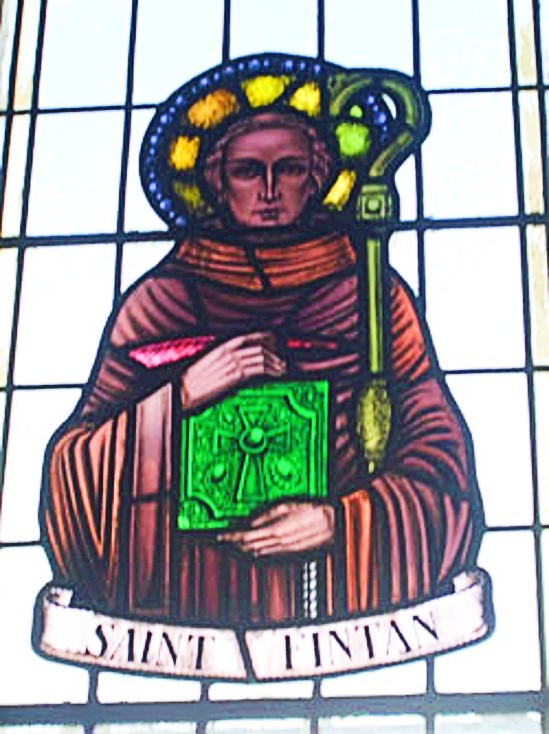
Saint of the Day – 3 January – St Fintan of Doon (Died 6th Century) Abbot, Founder of a Monastery, Miracle-worker. Born in Ireland and died in the 6th Century in Ireland of natural causes. Also known as – Fiontan, Fintanus. Patronage – eye diseases, against blindness, all ailments.
Fintan was a brother to St Finlug, son to Diman who was descended from Mured Manderig, King of Ulster. Alinna, of a noble Limerick family, was his mother.
St Comgall, Abbot of Bangor had founded a school at Bangor in the middle of the 6th Century and it was here that Fintan studied. At this time pirates raided these Monasteries frequently. Fintan, once, asked Finian of Maghbile to lend him a Gospel for his studies but was refused. The next night Fintan and his companions were on guard at the port, fearing an invasion. The pirates, however, firstly raided Magh Bile – the Monastery of St Finian and among the treasures they stole was the Gospel. Later they approached Bangor where Fintan was on guard. When they were about to attack the City, a storm suddenly arose and all the ships were sunk except that which carried the Gospel. The Gospel, along with other artefacts were recovered.
One Spring, a leper came to Fintan and requested some bread, made from newly ripened corn. Fintan instructed the leper to plant a seed in the newly ploughed field. The seed immediately grew and ripened and thus the leper was satisfied.
At this time a pagon king lived in a district called Calathmagh. On hearing of Fintan’s approach, the king instructed his servants to prevent the further progress of Fintan. On reaching a field where the king’s workers were, the Saint and his followers were obstructed from continuing. On requesting permission, they were insulted. Presently a storm arose and the crops were set on fire from which the smoke almost blinded the kings servants. With some Holy Water, Fintan restored their vision and they were deeply grateful to him and many converted.
After these occurrences, Fintan settled at Doon, whose name is derived from the earthen dun and from Blesc who was a vassal to the king at that time. The presence of Fintan’s well and the fact that this is the only place in the area with a name of origin “Dun” verifies that Doon is the place where Fintan settled.
Fintan’s settlement at Doon had been prophesised by St Comgall in the Leabhar Breac which has been translated thus:
“My little foster son shall obtain the fortress, Fintan, by whom the dun will be obtained His city of sacred protection shall be That which is called Doon (Dun Bleisce).”
At Doon, Fintan was welcomed with much hospitality from Columbanus, son to Kynchadhe. A feast, which consisted of a cow and calf and milk had been prepared for Fintan and his seven followers.
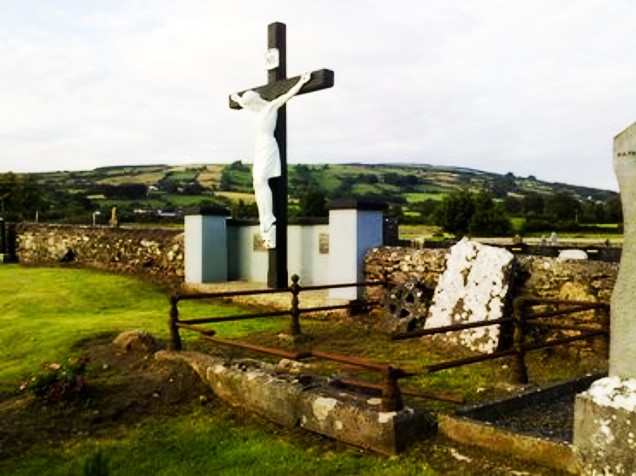
St Fintan’s well is situated in a grove of trees in the east corner of lower Kilmoylan townl. The well’s water is reputed to have great healing powers and previously many pilgrims journeyed there to be cured of diverse ailments but most especially of blindness and eye diseases..
“They have left their cot for the holy well Near the Cross in the valley flowing, its bright blude hide haith a spell Light and joy to the blind bestowing.”
St Fintan is believed to have lived to a very old age. The exact site of St Fintan’s Monastery in Doon is uncertain but we presume it is near the ancient graves of St Fintan’s cemetery in Doon. From St Engus’ comments and other sources, it has been learned that St Fintan’s death fell on the 3rd of January. His Feast-day is celebrated in the Parish. There is no information, however, regarding the year or place of his death.
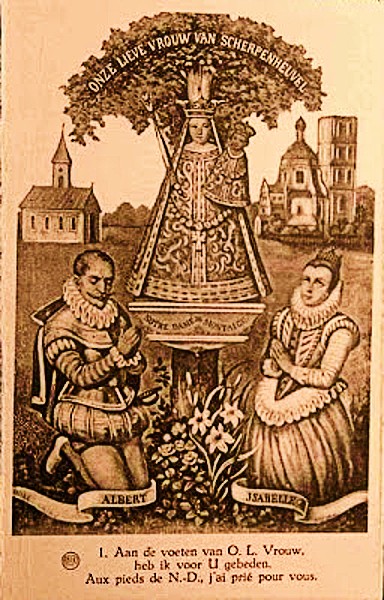
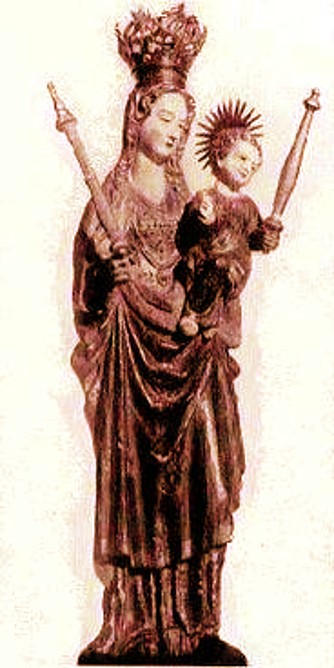
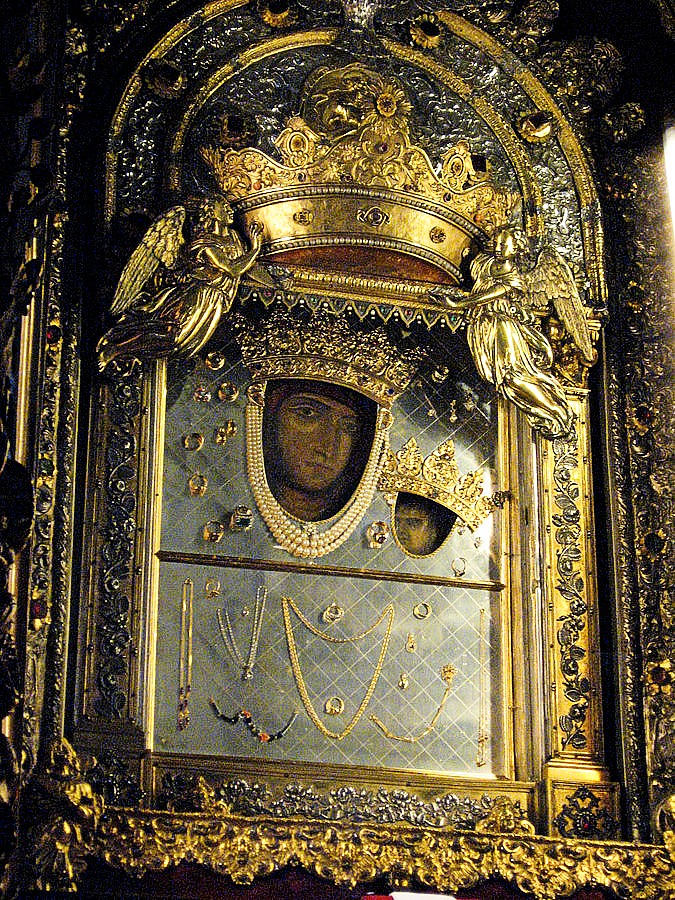
Notre-dame de Montaigu-Zichem / Our Lady of Sichem / Our Lady of Montaigu (474) – 3 January:
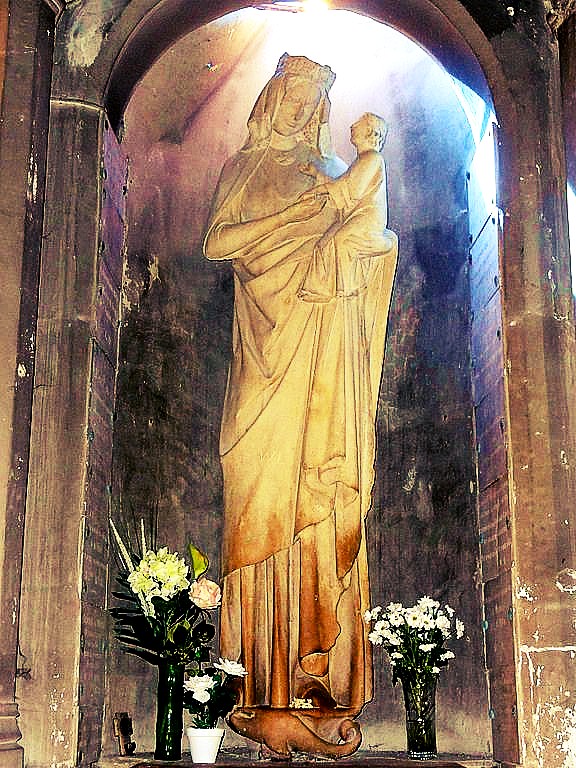
The Shrine in Brabant in the Duchy of Louvain, is a replacement of the one below Mount Garizim, Israel. Hadrian restored the temple on Mount Garizim and dedicated it to Jupiter. A small Christian community settled there and on several occasions they suffered greatly at the hands of the pagans. In 474 the Emperor, to avenge an unjust attack on the community, gave Mount Garizim to the Christians, who built on it a Church dedicated to the Blessed Virgin. After the Mohammedan conquest, Christianity practically disappeared from the district. The French made amends by erecting a Shrine to Mary in the Duchy of Louvain. The ancient Statue of Our Lady of Sichem, or as Our Lady of Montaigu-Zichem, which is the title more commonly used today, has been venerated in Belgium from very early times. The Mother of God rewarded the faithful magnanimously for their pious attention. According to legend, a shepherd boy originally found the Statue of Our Lady after it had apparently fallen from a niche cut in an old oak tree. The Statue was mysteriously too heavy for him to lift alone, so he ran to find his master, and have him return to help him replace the statue in its place in the old oak. It is said that in 1306 the Blessed Virgin Mary moved the hearts of the people by causing four drops of blood to flow from the eyes of the Statue. This revived the faith of the people and increased their fervour. A small Chapel was built beneath the tree, which was rebuilt in 1602 and the dedication of Our Lady of Sichem took place in the year 1604 by the Archbishop of Mechlin, Mathias Hovius. From that time forward, there were many miracles as Our Lady seemed to demonstrate her appreciation by granting many favours. The Statue was soon venerated as miraculous, and there have been many pilgrimages to the site during the centuries, continuing even until this day.
St Constant of Gap St Cyrinus of Cyzicus St Daniel Himmerod the Younger Bl Daniel of Padua St Eustadius St Finlugh St Fintan of Doon (Died 6th Century) Abbot St Florentius of Vienne St Florentius of Vienne the Martyr Bl Gerard Cagnoli St Gordius of Cappadocia St Imbenia St Lucian of Lentini St Melorius St Peter of Palestine St Primus of Cyzicus St Salvator of Belluno St Theogenes of Cyzicus St Theonas St Theopemptus of Nicomedia St Wenog Bl William Vives St Zosimus of Cilicia
Martyrs of Africa – 12 Saints: A group of Christians Martyred together in Africa, date unknown, exact location unknown. We know nothing more than their names – Acuta, Candidus, Constantius, Eugenia, Firmus, Hilarinus, Lucida, Martial, Poenica, Possessor, Rogatianus and Statutianus.
Martyrs of Tomi – 7 Saints: A group of Christians Martyred together, date unknown. We know nothing more than their names – Claudon, Diogenius, Eugene, Eugentus, Pinna, Rhodes and Rhodo. They were martyred at Tomi, Exinius Pontus, Moesia (modern Constanta, Romania).
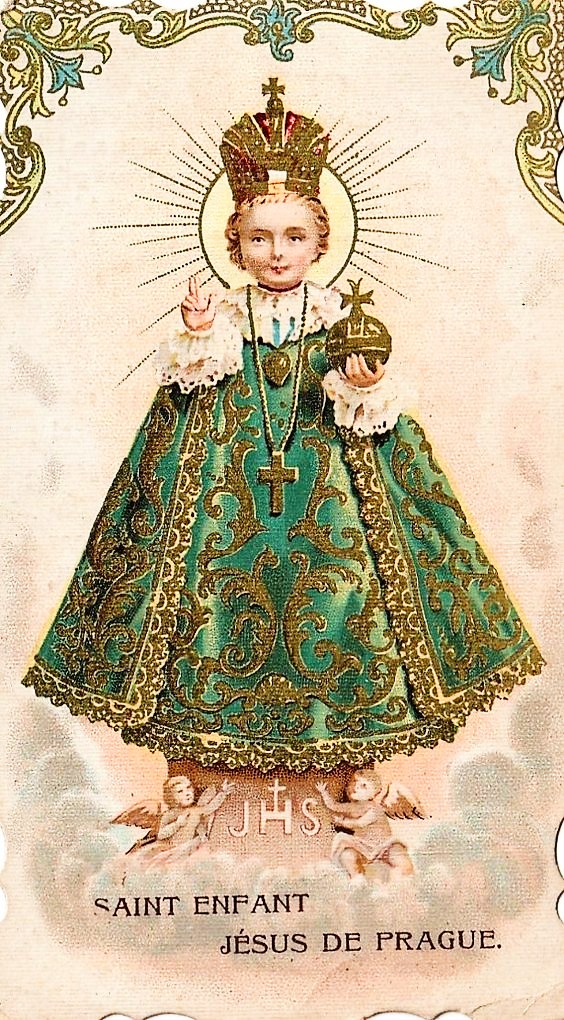
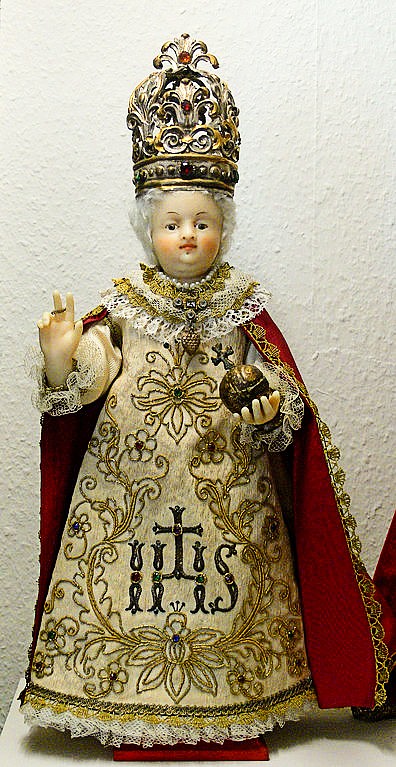
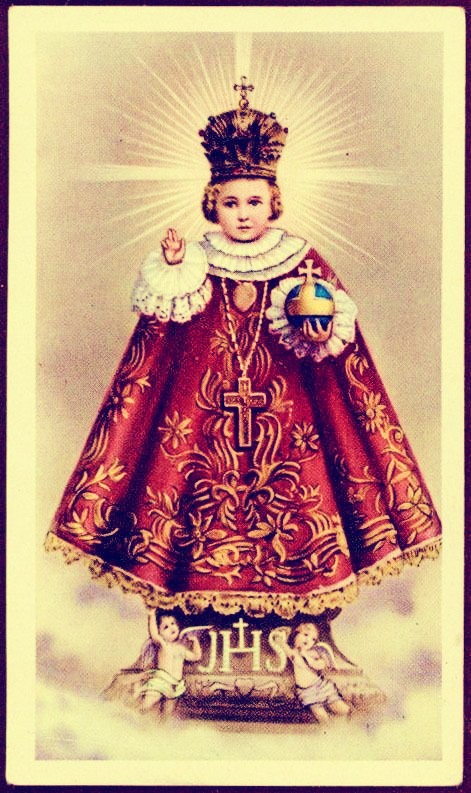
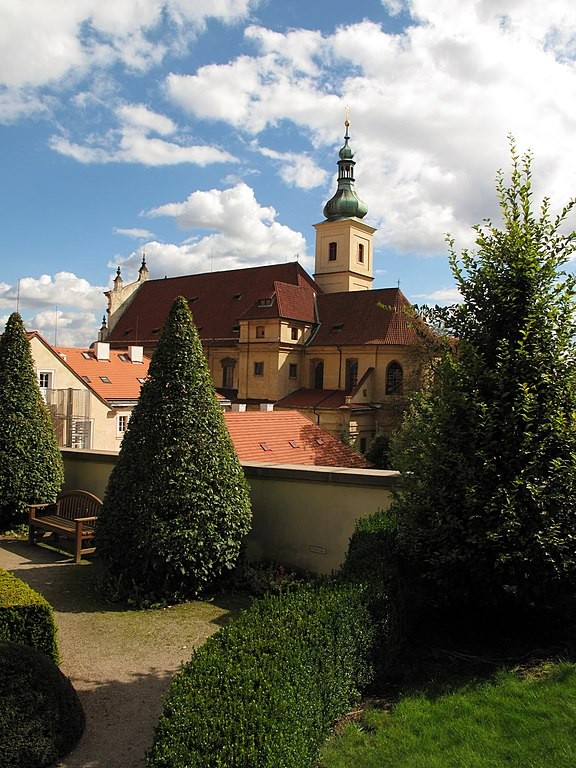
Saint of the Day – 2 January – Feast of the Infant Jesus of Prague – the 16th Century wax-coated wooden Statue of the Child Jesus, holding a globus cruciger (the Orb and Cross) with the right hand being raised in benediction, is of Spanish origin and is just under half a metre in height. It is now located in the Discalced Carmelite Church of Our Lady of Victories in Malá Strana, Prague, Czech Republic, see the Church at the bottom (one where I have been immensely blessed to attend Holy Mass before the Infant each day for a week some years ago). The Statue is venerated on 2 January, on 14 January and on the first Sunday of May.
The Infant above the Altar at Our Lady of Victories in Malá Strana, Prague
In 1556, pious legends claim that the Statue once belonged to St Teresa of Ávila and was donated to the Carmelite Friars by Princess Polyxena of Lobkowicz in 1628 upon her marriage to Czech nobleman.
The image is routinely clothed by the Carmelite Nuns in luxurious fabrics often in the Liturgical Vestment colours relevant to the Seasons and with imperial regalia and a golden crown. In thanksgiving for the numerous graces and cures received, the miraculous Statue at Prague , was solemnly crowned when Pope Leo XII signed and granted its first Pontifical Decree of Canonical Coronation on 24 September 1824. St Pius X granted authorisation via the Decree “Significat Nobis” to erect a namesake Confraternity.
Disturbances in Bohemia due to the Thirty Years’ War brought an end to the special devotions and on 15 November 1631 the army of King Gustavus Adolphus of Sweden took possession of Bohemia’s Capital City. The Carmelite Friary was plundered and the image of the Infant of Prague was thrown into a pile of rubbish behind the Altar. Here it lay forgotten for seven years, its hands broken off, until in 1637, it was found again by Father Cyrillus and placed in the Church’s oratory. One day, while praying before the Statue, Cyrillus heard a voice say, “Have pity on Me and I will have pity on you. Give Me my hands and I will give you peace. The more you honour Me, the more I will bless you.”
A German copy of the Statue, with a white wig instead of the traditional blonde hair, circa. 1870
Copies of the Infant Jesus arrived in Poland in 1680 and it has been popular in Polish homes and Bohemia in general, where the copies are typically placed in glass-enclosed cases. After the start of the Counter-Reformation era of the 17th Century, the Statue spread among Catholics all over the world, with particular devotion developing in South Africa, Australia, Caribbean, Thailand and Sri Lanka.
So many graces have been received by those who invoke the Divine Child before the original Statue that it has been called “The Miraculous Infant Jesus of Prague.” We read the following in an old book printed in Kempt: “All who approach the miraculous Statue and pray there with confidence, receive assistance in danger, consolation in sorrows, aid in poverty, comfort in anxiety, light in spiritual darkness, streams of grace in dryness of soul, health in sickness and hope in despair.”
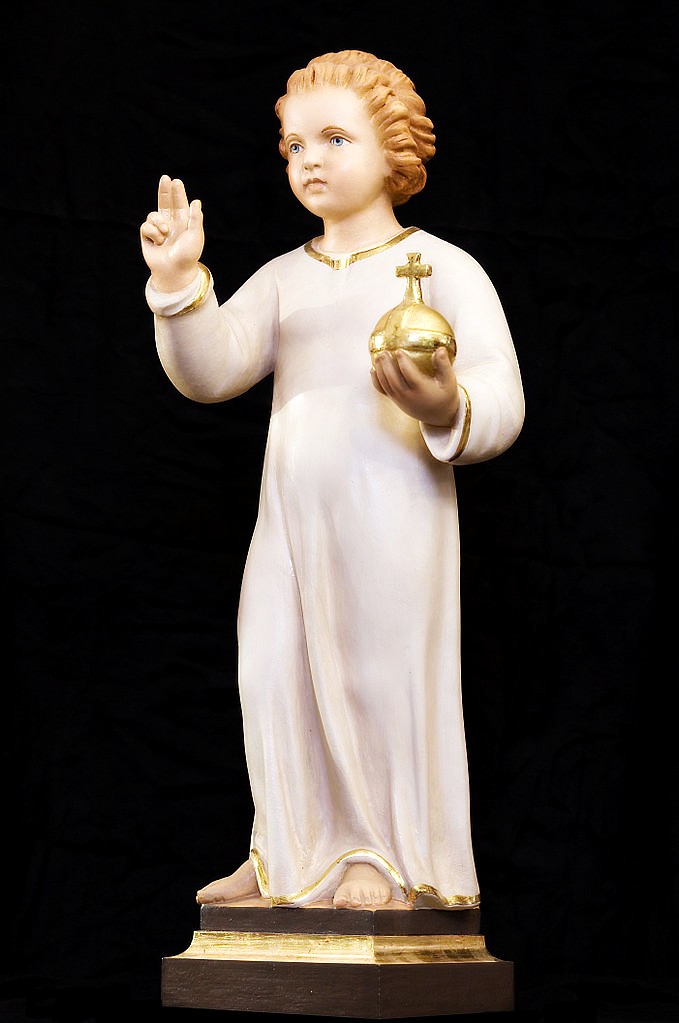
The Infant in it’s bare format
From small beginnings, this devotion has grown to great proportions. The Divine Child attracts an ever increasing number of clients, who appeal to Him in every need.
The Church of Our Lady Victorious, in Malá Strana, Prague, Czech Republic.
Bl Airaldus of Maurienne St Alverius of Agaunum St Asclepius of Limoges St Aspasius of Auch St Baudimius of Auvergne St Blidulf of Bobbio St Dietmar of Prague Bl Guillaume Répin Bl Guillermo de Loarte St Hortulana of Assisi St Isidore of Antioch St Isidore of Nitri St John Camillus the Good St Macarius of Rome
St Mark the Mute St Maximus of Vienne St Munchin of Limerick Bl Odino of Rot St Paracodius of Vienne St Sebastian of Agaunum St Seiriol Bl Stephana de Quinzanis Bl Sylvester of Troina St Telesphorus, Pope St Theodota St Theopistus St Vincentian of Tulle St Viance of Anjou
Many Martyrs Who Suffered in Rome: There were many Martyrs who suffered in the persecutions of Diocletian for refusing to surrender the holy books. Though we know these atrocities occurred, we do not know the names of the Saints and we honour them as a group. c 303 in Rome, Italy.
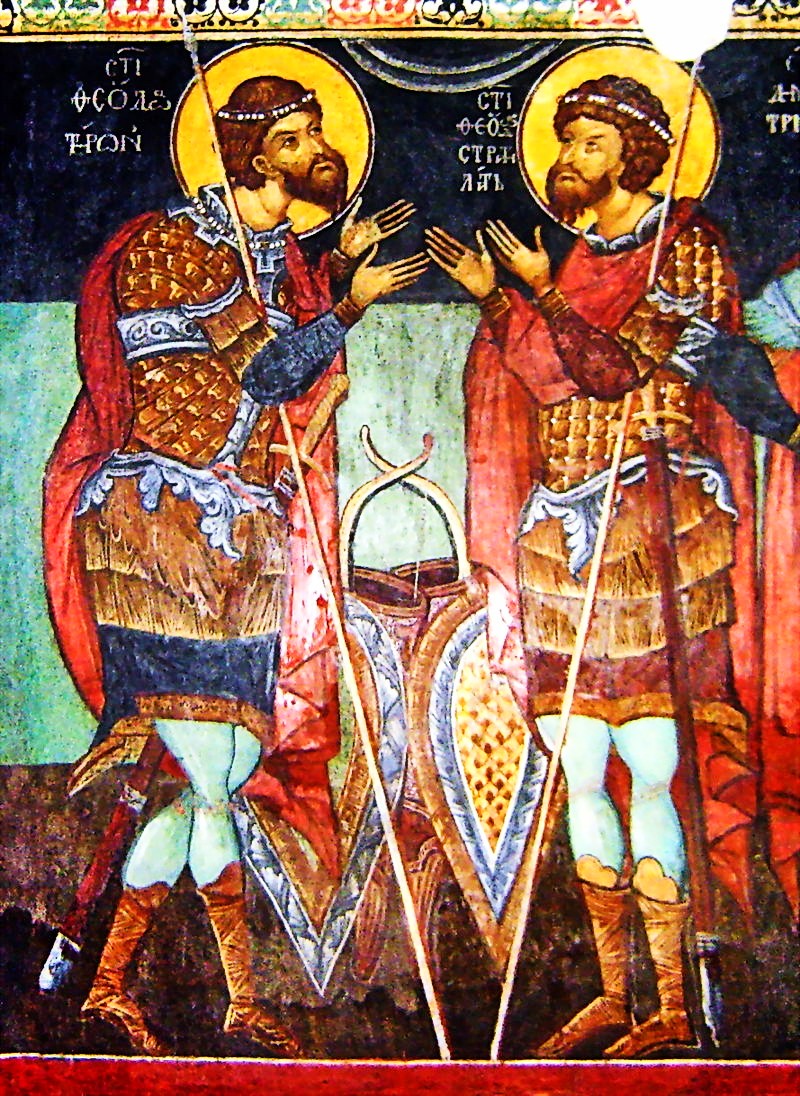
Martyrs of Antioch – 5 Saints: A group of Christian soldiers Martyred together for their faith. We know the names of five – Albanus, Macarius, Possessor, Starus and Stratonicus. They were born in Greece and were Martyred in Antioch (modern Antakya, Turkey).
Many Martyrs of Britain: The Christians of Britain appear to have escaped unharmed in the earlier persecutions which afflicted the Church but the cruel edicts of Diocletian were enforced in every corner of the Roman Empire and the faithful inhabitants of this land, whether native Britons or Roman colonists, were called upon to furnish their full number of holy Martyrs and Confessors. The names of few are on record but the British historian, Saint Gildas, after relating the Martyrdom of Saint Alban, tells us, that many others were seized, some put to the most unheard-of tortures and others immediately executed, while not a few hid themselves in forests and the caves of the earth, where they endured a prolonged death until God called them to their reward. The same writer attributes it to the subsequent invasion of the English, then a pagan people, that the recollection of the places, sanctified by these Martyrdoms, has been lost and so little honour paid to their memory. It may be added, that, according to one tradition, a thousand of these Christians were overtaken in their flight near Lichfield and cruelly massacred and that the name of Lichfield, or Field of the Dead, is derived from them.
Martyrs of Ethiopia – 3 Saints: A group of Christians Martyred together for their faith. We know the names of three – Auriga, Claudia and Rutile.
Martyrs of Jerusalem – 2 Saints: A group of Christians Martyred together for their faith. We know the names of two – Stephen and Vitalis.
Martyrs of Lichfield: Many Christians suffered at Lichfield (aka Lyke-field, meaning field of dead bodies), England in the persecutions of Diocletian. Though we know these atrocities occurred, we do not know the names of the Saints and we honour them as a group. Their Martyrdom occurred in 304 at Lichfield, England.
Martyrs of Piacenza: A group of Christians who died together for their faith in the persecutions of Diocletian. No details about them have survived. They were Martyred on the site of Church of Madonna di Campagna, Piacenza, Italy.
Martyrs of Puy – 4 Saints: Missionaries, sent by Saint Fronto of Périgueux to the area of Puy, France. Tortured and Martyred by local pagans. We know the names – Frontasius, Severinus, Severian and Silanus. They were beheaded in Puy (modern Puy-en-Velay), France and buried together in the Church of Notre Dame, Puy-en-Velay by Saint Fronto, their bodies laid out to form a cross.
Martyrs of Syrmium – 7 Saints: Group of Christians Martyred together, date unknown. We know the names of seven – Acutus, Artaxus, Eugenda, Maximianus, Timothy, Tobias and Vitus – but very little else. This occurred in the 3rd or 4th century at Syrmium, Pannonia (modern Sremska Mitrovica, Serbia).
Martyrs of Tomi – 3 Saints: Three brothers, all Christian soldiers, in the Imperial Roman army and all three Martyred in the persecutions of Emperor Licinius Licinianus. We know their names – Argeus, Marcellinus and Narcissus – but little else. They were Martyred in 320 at Tomi, Exinius Pontus, Moesia (modern Constanta, Romania).
Titular Feast of the Society of Jesus – But now celebrated on the Feast of the Holy Name of Jesus
Bl Adalbero of Liege St Baglan of Wales St Basil of Aix Bl Bonannus of Roio St Brogan St Buonfiglio Monaldi Bl Catherine de Solaguti St Clarus of Vallis Regia St Clarus of Vienne St Colman mac Rónán St Colman Muillin of Derrykeighan St Concordius of Arles St Connat St Cuan St Demet of Plozévet St Elvan St Eugendus of Condat St Euphrosyne of Alexandria St Fanchea of Rossory St Felix of Bourges St Frodobert of Troyes
St Gisela of Rosstreppe St Gregory Nazianzen the Elder Bl Hugolinus of Gualdo Cattaneo Bl Jean-Baptiste Lego Bl Jean of Saint-Just-en-Chaussée St Justin of Chieti St Maelrhys St Magnus the Martyr St Mydwyn
St Odilo of Cluny OSB (962-1049) “Archangel of the Monks,” Priest, Monk, 5th Abbot of Clun, Reformer, Apostle of the poor and needy, Marian devotee and promoter of prayer for the Souls in Purgatory. He established All Souls’ Day (on 2 November) in Cluny and its Monasteries as the annual commemoration to pray for all the faithful departed. The practice was soon adopted throughout the whole Church. St Odilo’s Life: https://anastpaul.com/2021/01/01/saint-of-the-day-1-january-saint-odilo-of-cluny-osb-962-1049-the-archangel-of-the-monks/
St Odilo of Stavelot St Peter of Atroa (773–837) Abbpt St Peter of Temissis St Sciath of Ardskeagh St Severino Gallo St Telemachus St Thaumastus of Mainz St Theodotus St Tyfrydog Bl Valentin Paquay St William of Dijon St Zedislava Berka OP (c 1220-1252) Married Laywoman and Mother, Tertiary of the Order of Preachers. Canonised by St Pius X on 28 August 1907.
Breton Missionaries to Britain: Martyred Soldiers of Rome: Thirty soldiers martyred in Rome as a group during the persecutions of Diocletian. We do not even known their names. They were Martyred c 304 at Rome, Italy.
Martyrs of Africa – 8 Saints: Eight Christians Martyred together in Africa, date unknown. The only details we have are four of their names – Argyrus, Felix, Narcissus and Victor.
Saint of the Day – 31 December – Saint Marius Aventicus (c 530-594) Bishop of Avenches in Switzerland, a Chronicler (or Historian), Scholar and a skilled Goldsmith, in fact he crafted all the Sacred Vessels for his See. Born in c 530 in the Diocese of Autun, Burgundy (in modern France) and died on 31 December 594 at Lausanne, Switzerland of natural causes. Also known as – Marius Aventicensis, Marco.
Maurius is extolled as an ideal Bishop; as a skilled Goldsmith who made the Sacred Vessels with his own hands; as a protector and benefactor of the poor; as a man of prayer and as a scholar full of enthusiasm for serious intellectual studies. He is also remembered for the Chronicle he compiled of the historical dates and events of the time.
Of the events of his life, little is known. From an inscription on his tomb in the Church of St Thyrsius in Lausanne , we learn that he came of a distinguished, rich and probably Roman family and, at an early age embraced the Ecclesiastical state.
In 574 he was Consecrated as the Bishop of Avenches, took part in the Council of Mâcon in 585 and shortly thereafter, transferred his Episcopal See from Avenches, which was rapidly declining, to Lausanne.
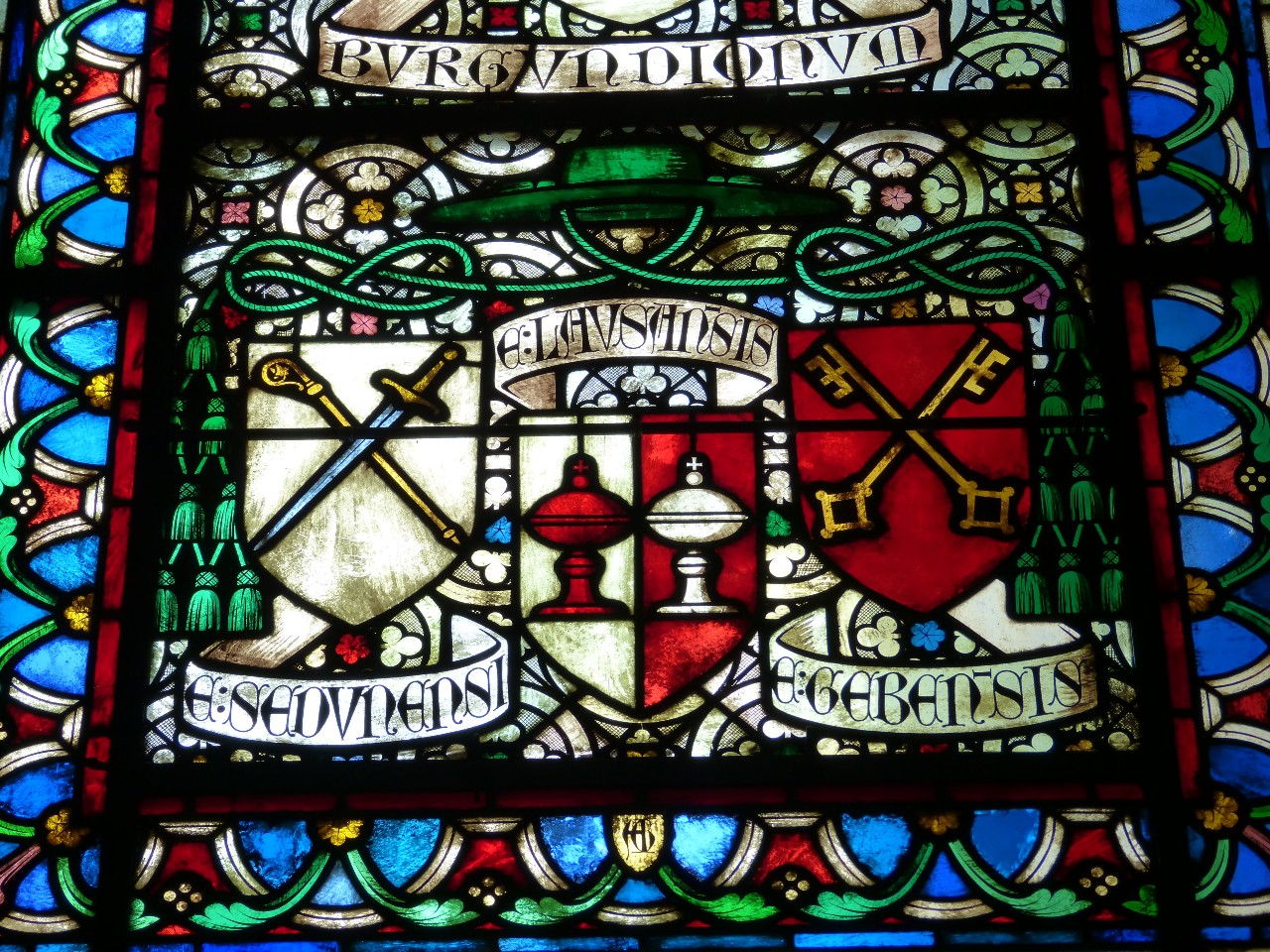
The Coat of Arms of Lausanne Diocese
In 587 he Consecrated St Mary’s Church at Payerne, which had been built at his expense and through his efforts.
After his death he was venerated in the Diocese of Lausanne as a Saint and his Feast was celebrated there on 9 or 12 February. The Church of St Thyrsius received, at an early date the name of St Marius.
A chronicle of his is still preserved and purports to be a continuation of the chronicle of Prosper Tiro, or rather of the “Chronicon Imperiale.” It extends from 455 to 581 and, although consisting only of dry, annalistic notes, it is valuable for Burgundian and Franconian history, especially for the second half of the sixth Century. This explains the fact that, notwithstanding its brevity, it has been frequently published.
Saint of the Day –30 December – St Rainerius of Aquila (Died c 1077) Bishop of Forconium (modern Aquila), Abruzzi region, Italy. Also known as – Raynerius, Rainier, Raineri, Rainieri, Ranieri, Raniero, or Regnier.
Unfortunately no details of Rainerius have survived but he was noted for his excellent administrative skills and was Canonised by Pope Honorius III.
He is not to be confused with the pilgrim Saint of the same name, who is Patron Saint of Pisa, in Italy (Feast day 17 June).
The Roman Martyrology reads: “At Aquila, Abruzzi, St Rainerius, Bishop.”
St Anysia of Thessalonica St Anysius of Thessalonica
St Egwin of Worcester OSB (Died 717) Bishop of Worcester, England, Benedictine Monk, Reformer and Penitent, miracle-worker. Egwin was devout and lived for God from his youth. His biographers say, that king, clergy and the faithful, all united in demanding Egwin’s elevation to Bishop. About St Egwin: https://anastpaul.com/2020/12/30/saint-of-the-day-30-december-saint-egwin-of-worcester-osb-died-717/
St Elias of Conques St Eugene of Milan St Geremarus
St Hermes of Moesia St Jucundus of Aosta St Liberius of Ravenna
Blessed Margherita Colonna (c 1255-1284) Virgin, Nun, Mystic, Apostle of the poor. Beatified on 17 September 1847 by Pope Pius IX. The Roman Martyrology states: “At Palestrina in Lazio, Blessed Margherita Colonna, Virgin, who preferred poverty for Christ to the riches and pleasures of the world, which she served by professing the Rule of St Clare.” Her Life: https://anastpaul.com/2021/12/30/saint-of-the-day-30-december-blessed-margherita-colonna-c-1255-1284/
St Perpetuus of Tours Bl Raoul of Vaucelles St Rainerius of Aquila (Died c 1077) Bishop Bl Richard of Wedinghausen St Ruggero of Canne St Sebastian of Esztergom
Martyrs of Alexandria – 5 Saints: A group of Christians Martyred in the unrest caused by Monophysite heretics. We know the names for five of them – Appian, Donatus, Honorius, Mansuetus and Severus. They were martyred in c 483 at Alexandria, Egypt.
Martyrs of Oia – 6 Saints: A group of Christians Martyred together, date unknown. The only details to have survived are the names – Cletus, Florentius, Papinianus, Paul, Serenusa and Stephen. They were martyred in Oia, Greece.
Martyrs of Spoleto – 4 Saints: A group of Christians Martyred in the persecutions of DioSletian – Exuperantius, Marcellus, Sabinus and Venustian. They were martyred in 303 in Spoleto, Italy.
Saint of the Day – 29 December – Blessed Gérard Cagnoli OFM (c 1267-1342) Confessor, Hermit, Lay Brother of the Friars Minor, graced with the gift of visions and prophecy. He was known for miracles, in addition to his humble, simple childlike nature which people believed was one of the signs of his holiness. Born in c 1267 at Valencia, Italy and died in c 1342 of natural causes. Also known as – Gerardo, Gerardus. Beatified on 13 May 1908 by Pope Saint Pius X.
Gerard was born in Valencia near the River Po and belonged to the noble family of the Cagnoli. For fourteen years his mother lay ill and during all this time, Gerard waited on her with the tender devotion of a loving son. After her death, he distributed his inheritance among the poor and, impelled by motives of piety, he set out to visit the more notable Shrines of Italy.
Then going onto Sicily, he chose for himself a cell at the foot of Mt Etna, where he planned to live in perfect seclusion and to devote himself entirely to God and to the salvation of his soul. It was Christian prudence on the part of Blessed Gerard, to renounce all his possessions, all honours and pleasures, to live apart from the world and devote himself to those matters which pertain to Heaven and to eternity.
In 1307, moved, by the fame of the virtue and miracles of St Louis the Bishop of Toulouse (1274-,1297)* who was a Franciscan, he hastened to obtain admission into the Franciscan Order. From Randazzo, where he had been invested, he was transferred to Palermo. Here he took great delight in performing the humblest duties. As a cook and later on, as porter, he gained the esteem of his confreres, as well as of the people, by his conscientiousness, his spirit of prayer and his charity towards others, especially towards the poor and needy.
God Almighty favoured Blessed Gerard with the gift of prophecy and other graces. After the Blessed Virgin acquainted him with the time of his death, he peacefully surrendered his soul to Him to Whom he had dedicated all his thoughts and affections. Gerard died in the year 1342 at the age of seventy-five. His body rests in the Church of St Francis at Palermo.
The Sicilian people revered Cagnoli as a saint after his death and the fame of his holiness and miracles, spread throughout Italian regions, as far north as Liguria.
Pope Pius X ratified the veneration paid to Blessed Gerard Cagnoli from time immemorial, placing his name among the Blessed of the Church.
Prayer of the Church: Grant, we beseech Thee, O Almighty God, that spurred on to a better life by the example of Blessed Gerard, Thy Confessor, we may be led to imitate the life of him whose festival we commemorate. Through the same Christ our Lord, Who livest and reignest with Thee and the Holy Ghost, forever and ever.. Amen.
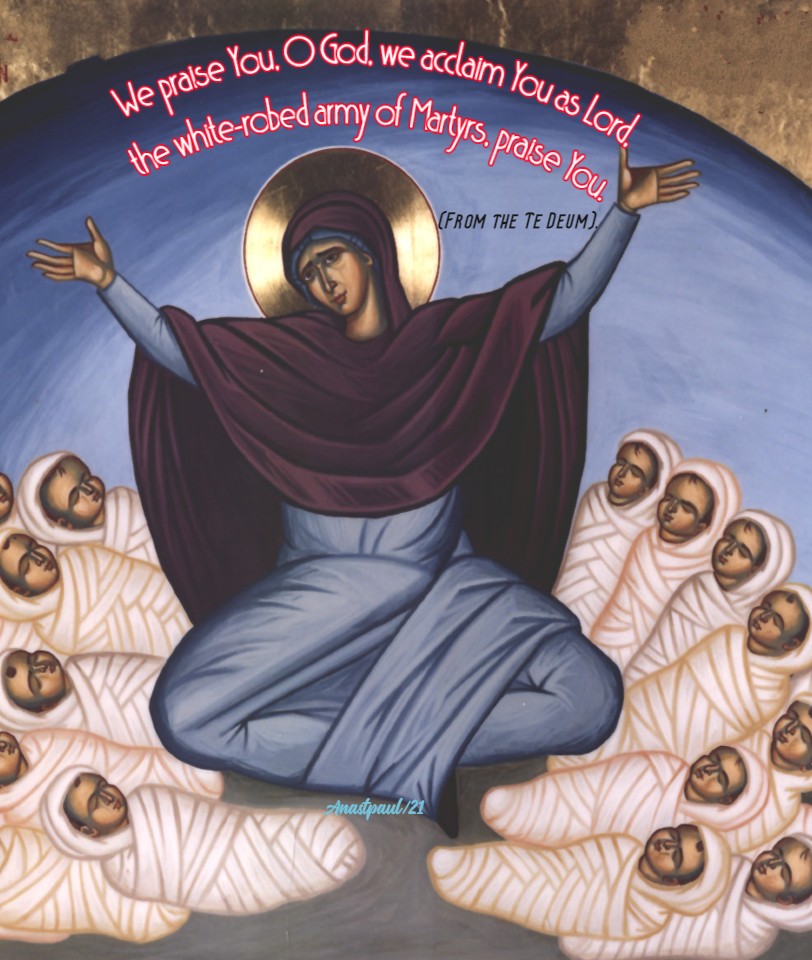
One Minute Reflection – 28 December – “The Month of the Divine Infant and the Immaculate Conception” – The Holy Innocents, Martyrs – Apocalypse 14:1-5, Matthew 2:13-18 – Scripture search here: https://www.drbo.org/
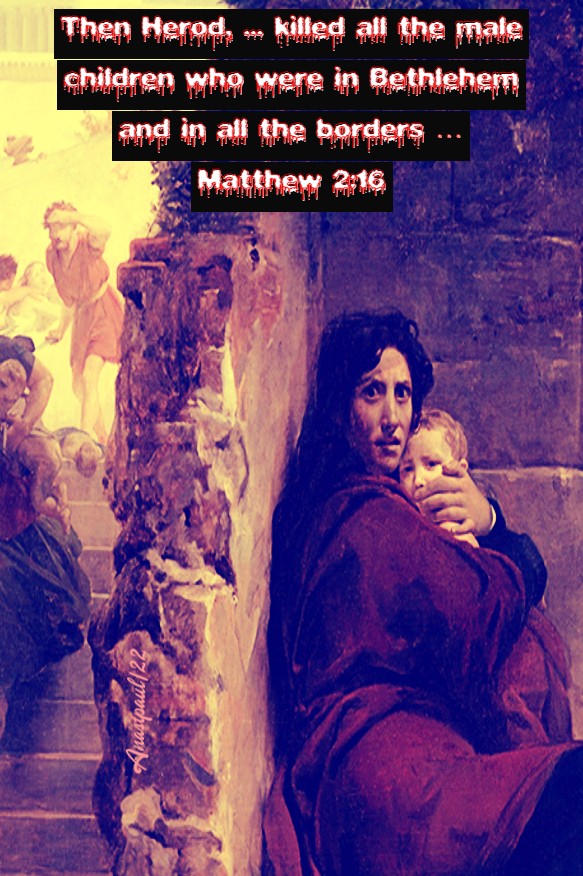
“Then Herod, perceiving that he was deluded by the wise men, was exceeding angry and sending, killed all the male children who were in Bethlehem and in all the borders …” – Matthew 2:16
REFLECTION – “Where does this jealousy lead?… The crime committed today shows us. Fear of a rival to his earthly kingdom fills Herod with anxiety, he plots to suppress “the newborn King” (Mt 2:2), the Eternal King; he fights against his Creator and puts innocent children to death… As for those children, what fault had they committed? Their tongues were dumb, their eyes had seen nothing, their ears heard nothing, their hands done nothing. They accepted death who had not known life. … Christ reads the future and knows the secrets of the heart, He weighs our thoughts and probes our intentions (cf. Ps 138[139]): why did He forsake them? … Why did the newborn heavenly King abandon these companions in innocence, forget the sentinels watching around His crib, to such an extent that the foe, who wanted to get at the King, ravaged His whole army?
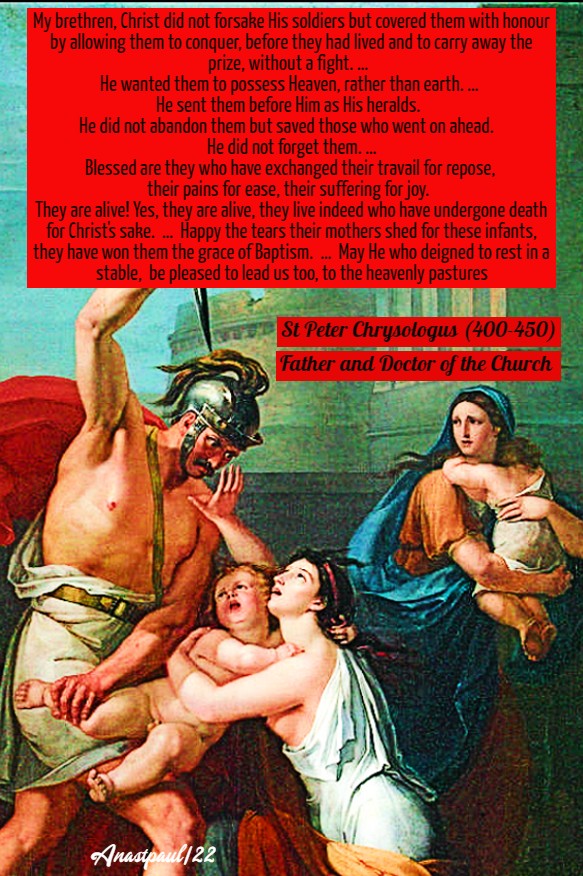
My brethren, Christ did not forsake His soldiers but covered them with honour, by allowing them to conquer, before they had lived and to carry away the prize, without a fight. … He wanted them to possess Heaven, rather than earth. … He sent them before Him as His heralds. He did not abandon them but saved those who went on ahead. He did not forget them. …
Blessed are they who have exchanged their travail for repose, their pains for ease, their suffering for joy. They are alive! Yes, they are alive, they live indeed who have undergone death for Christ’s sake. … Happy the tears their mothers shed for these infants, they have won them the grace of Baptism. … May He who deigned to rest in a stable, be pleased to lead us too, to the heavenly pastures.”– St Peter Chrysologus (400-450) Bishop of Ravenna, Father and Doctor of the Church (Sermon 152 PL 52, 604).
PRAYER – O God, Whose praise the Innocents, Thy Martyrs, this day proclaimed, not by speaking but by dying, put to death in us all the wickedness of sin, so that the faith which our tongue professes, may be proclaimed also by our life. Through Jesus Christ, Thy Son our Lord, Who lives and reigns with Thee, in the unity of the Holy Ghost, God, world without end. Amen (Collect).
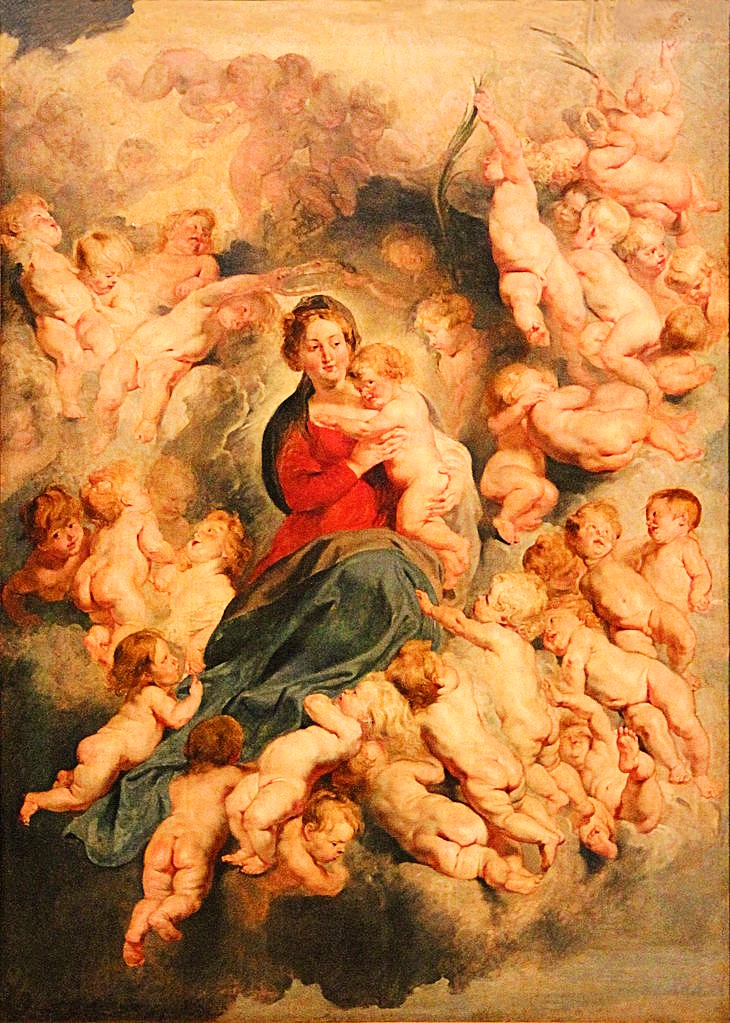
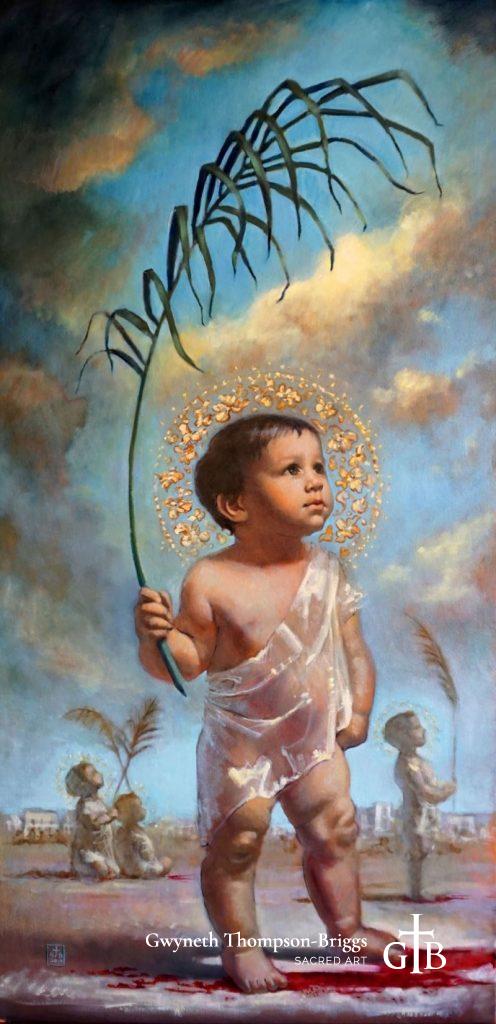
Saint of the Day – 28 December – The Holy Innocents. Patronages – • against ambition•against jealousy• altar servers•babies•children• children’s choir• choir boys• orphans• students.
The Feast of the Holy Innocents By Father Francis Xavier Weninger SJ (1805-1888)
By the Holy Innocents, who are honoured as Martyrs today by the Catholic Church, we understand those happy infants, who, by the command of King Herod, were put to death, for no other cause, than that the new-born King of the Jews might be deprived of life.
When Christ was born, Herod, well known for his cruelty, reigned at Jerusalem. He was not of the Jewish nation but a foreigner and was, therefore, hated by the Jews. Herod knew this well; hence, he feared that they would dethrone him and he had several illustrious persons executed, whom he suspected of aspiring to the throne.
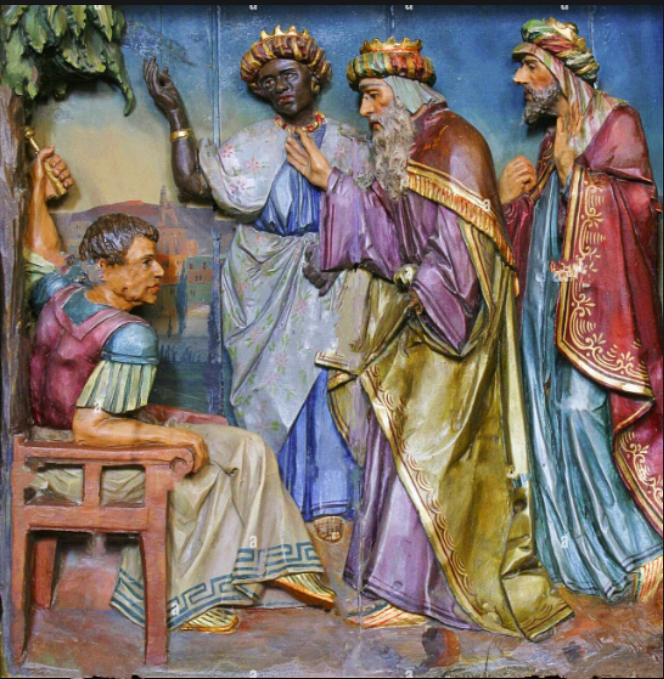
Meanwhile, it happened, that the three Magi or Kings from the East came to Jerusalem, to find and adore the new-born King, Who had been announced to them by a star. They doubted not that they would learn more of Him in the capital of Judea and they, therefore, asked without hesitation: “Where is He that is born King of the Jews? For we have seen His star in the East and have come to adore Him.”
This question seemed very strange to the Jews and the news of it spread through the whole City, until it reached the King. His fear can hardly be described, for he already believed his crown and sceptre lost. To escape the danger in which he supposed himself, he called the chief priests and scribes together,and inquired of them, where the Messiah should be born. They answered: “In Bethlehem, according to the Prophets.” Satisfied with this answer, Herod had the three wise men brought to court and speaking very confidentially with them, he asked diligently when and where the star had appeared to them. After this, he advised them to go to Bethlehem and inquire after the new-born Child and when they had found and adored Him, to return and inform Herod, as he wished to go and adore the Child too. These words of the king, who was not less cunning than cruel, were only a deceit, as he had already resolved to kill the new-born Babe.
Meanwhile, the Magi followed the advice of the king and, guided by the star, which again appeared to them when they had left Jerusalem, went to Bethlehem, found and adored the Divine Child and offered gold, frankincense and myrrh, as we read in Holy Writ. Having finished their devotion, they intended, in accordance with king Herod’s wish, to bring him word that they had happily found the Child. An Angel, however, appeared to them in their sleep and admonished them not to return to Jerusalem but to go into their own country by another way which they accordingly did.
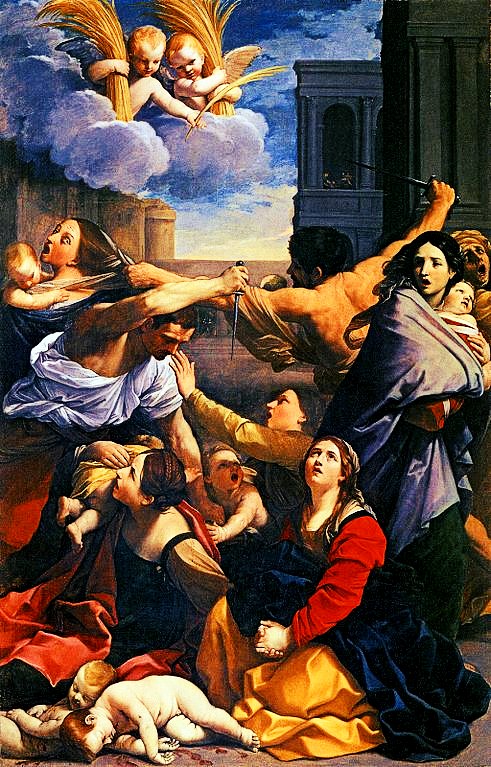
The Massacre of the Innocents / Angelo Visconti
When Herod perceived that they had deluded him, it was too late and his rage was boundless. Hearing of what had taken place in the temple, at the Purification of Mary that the venerable Simeon had pronounced a Child which he had taken into his arms, the true Messiah, the Herod’s heart was filled with inexpressible fear and anxiety. The danger in which he was, as he imagined, of losing his crown, left him no peace day or night. He secretly gave orders to search for this Child but all was of no avail, He could not be found.
After long pondering how he might escape the danger, his unbounded ambition led him to an act of cruelty unprecedented in history. He determined to murder all the male children, in and around Bethlehem, who were not over two years of age, as he thought that thus, he could not fail to take the life of the Child so dangerous to him. This fearful design was executed amidst the despairing shrieks of the parents, especially the mothers.
How many children were thus inhumanly slaughtered is not known but the number must have been very large. Yet, the tyrant gained not his end for, the Divine Child was already in security. The Gospel tells us that an Angel appeared during the night to St Joseph, saying to him: “Arise, take the Child and His Mother and fly into Egypt and remain there until I tell thee. For, it will come to pass that Herod will seek the Child to destroy Him.” St Joseph delayed not to obey, and fled, the same night, with the Child and His Mother, into the land indicated to the Angel.
Guido Reni: Massacre of the Innocents
As this had happened before Herod executed his cruel determination, God thus frustrated the plot. Herod soon after, received his just punishment. Several terrible maladies suddenly seized him, as Josephus, the Jewish historian, relates. An internal fever consumed him and all his limbs were covered with abominable ulcers, breeding vermin. His feet were swollen, his neck, shoulders and arms drawn together, and his breast so burdened, that the unfortunate man could hardly breathe, while his whole body exhaled, so offensive an odour, that neither he nor others, could endure it. Hence, in despair, he frequently cried for a knife or a sword that he might end his own life. In this miserable condition, he ceased not his cruelties and only five days before his death, he had his son, Antipater, put to death.
As he had good reason to believe that the entire people would rejoice at his death, he wished at least, to take to the grave, the thought that many should grieve, if not for him, at least for their friends and relatives. Hence, he had the chief men of the nobility imprisoned and gave orders to his sister Salome that, as soon as he had closed his eyes, they were all to be murdered. This order, however, was not executed by Salome, who justly loathed its cruelty. In this lamentable condition, the cruel tyrant ended his life but began one in eternity, whose pains and torments were still more unendurable and from which he cannot hope ever to be released!
While the innocent children massacred by him, rejoice for all eternity in the glories of Heaven, giving humble thanks to God for having thus admitted them into His presence. The Catholic Church has always honoured them as Martyrs; because, although not confessing Christ with their lips, as many thousands of others have done, yet, they confessed Him with their death, by losing their lives for His sake. Amen.
St Anthony of Lérins (c 428-c 520) Monk, Hermit, Miracle-worker. The Roman Martyrology states: “Commemoration of Saint Anthony, a Monk, who, a man distinguished by grace and preparation, after having led a solitary life, retired, by now an old man in the Monastery of Lérins in Provence, where he piously fell asleep in the Lord.” Biography: https://anastpaul.com/2021/12/28/saint-of-the-day-28-december-saint-anthony-of-lerins-c-428-c-520/
BL Claudia Weinhardt St Conindrus St Domitian the Deacon St Domnio of Rome St Eutychius Bl Gregory of Cahors St Iolande of Rome Bl Johannes Riedgasse
Bl Nicolas Mello Bl Otto of Heidelberg St Romulus St Simon the Myroblite St Theonas of Alexandria St Theodore of Tabenna St Troadius of Pontus
Martyrs of Africa – 3 Saints: Three Christians murdered together in Africa for their faith. The only details to survive are their names – Castor, Rogatian and Victor.
Saint of the Day – 27 December – St Theodore of Apamea (c 775-c 831) Confessor, Martyr, Monk, Brother of Saint Theophanes of Nicaea, ex-soldier, Born in c 775 at Kerak, Moab (Trans-Jordan) and died in c 831 at Apamea, Bithynia from the many tortures and the privations of prison life. Also known as = • one of the Grapti, from the Greek graptoi = “written upon”• Theodorus the Branded• Theodorus the “Lettered-Upon”.• Theodore.
The Roman Martyrology states today: “At Constantinople, the holy Confessors, Theodore and Theophanes, brothers who were brought up from their childhood in the Monastery of St Sabbas. Afterwards, combating bravely, for the worship of holy images, against Leo the Armenian, they were scourged by his command an banished. After his death, they again firmly opposed the Emperor Theophilus, who was imbued with the same impiety and were scourged a second time and driven into exile, where Theodore expired in prison. Theophanes, after peace had at length been restored to the Church, was made the Bishop of Nicaea and rested in the Lord.”
THIS saint was of the country of the Moabites but his parents, who were rich and virtuous, went and settled at Jerusalem, in order to procure for him and his sibling, the advantages of a holy education. He was placed by them, when he was very young, in the Monastery of Sabas and by his progress in learning, the extraordinary purity of his manners and the habitual mortification of his senses, attained in a short time, to an eminent degree of virtue and acquired a high reputation in the world.
The Bishop of Jerusalem obliged him to receive Priestly Orders, and when Leo, the Armenian, waged a cruel war against holy images, sent the Saint to that Emperor to exhort him not to disturb the peace of the Church. The tyrant, instead of relenting, caused St. Theodore to be scourged and banished him, with his brother Theophanes, a Monk of the same Monastery and his companion, into an island in the mouth of the Euxine sea, where they suffered much, by hunger and cold.
But they had not staid long there before the emperor died, in 882, when they returned to Constantinople and St Theodore published some writings in defence of the truth. Michael the Stutterer, who succeeded in the imperial throne and is thought either to have had no religion, or to have leaned most of that of the Manichees or Paulicians, was for steering a middle cours, between the Catholics and the Iconoclasts.
But his successor Theophilus, a violent Iconoclast and barbarous persecutor, who ascended the throne in 829, caused the two brothers to be whipped, then banished them into the island of Aphusia. Two years after, they were brought back to Constantinopl and buffeted in the presence of the Emperor, till they fell down quite stunned at his feet, then stripped and publicly scourged.
When they had lain some days in prison and still persisted in their refusal to communicate with the Iconoclasts, the Emperor commanded twelve Iambic verses, composed for that purpose by an Iconoclast courtier, to be inscribed on their foreheads. The sense of the verses was as follows: “These men have appeared at Jerusalem as vessels of iniquity, full of superstitious, error and were driven thence for their crimes and having fled to Constantinople, they forsook not their impiety. Wherefore, they have been again banished from thence and are stigmatised on their faces.”
Although the wounds which they had received were yet much inflamed and very painful, they were laid upon benches, whilst the letters which composed those verses were cut or pricked upon their faces. The operation was long and tedious and interrupted by the coming on of the night and the Confessors were sent back to prison, their faces being still bloody. They were soon after banished to Apamea, in Syria, whereTheodore died of his sufferings.
From the inscription cut in his forehead he is surnamed Grapti, which signifies in Greek, marked or engraved. Theophilus died about the same time and the Empress Theodora, a zealous Catholic, becoming Regent for her son Michael, St Methodius was made Bishop and restored holy images in 842.
Theophanes was then honoured for his glorious confession of the Faith and Consecrated Bishop of Nicaea that he might more effectually concur in overthrowing a heresy, over which he had already triumphed.
St Theodore is named in the Roman Martyrology with his brother Theophanes, on this day. The twelve iambic verses, which were written on their foreheads, with a red-hot steel pencil, are recited in the Greek liturgy on this day.
Bl Francesco Spoto Bl Hesso of Beinwil St José María Corbin-Ferrer St Maximus of Alexandria St Nicarete of Constantinople Bl Raymond de Barellis Bl Roger of Verdun St Theodore of Apamea (c 775-c 831) Confessor, Martyr, Monk, Brother of Saint Theophanes of Nicaea. St Theophanes of Nicaea Bl Walto of Wessobrünn
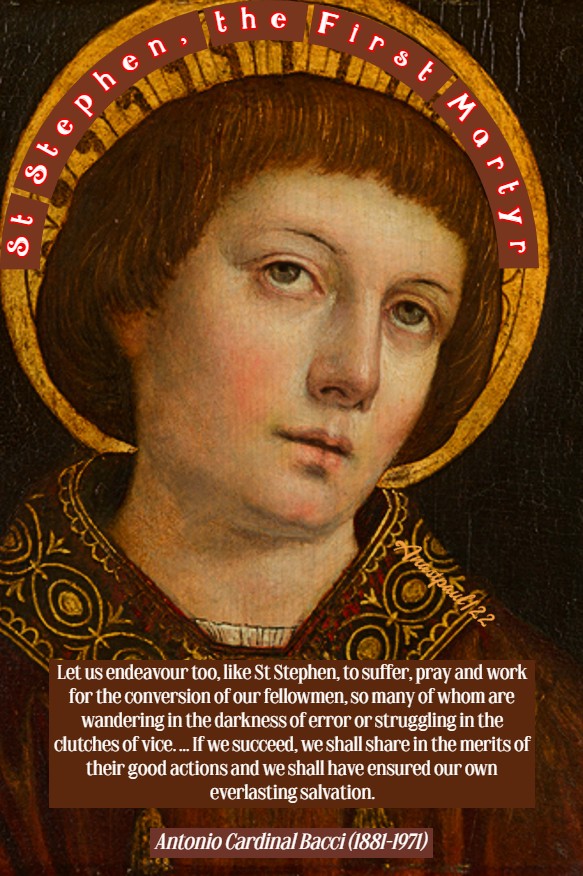
Thought for the Day – 26 December – Meditations with Antonio Cardinal Bacci (1881-1971)
St Stephen, the First Martyr
“Let us endeavour too, like St Stephen, to suffer, pray and work for the conversion of our fellowmen, so many of whom are wandering in the darkness of error or struggling in the clutches of vice. Let us try, by our sufferings, prayers and good example, to draw down God;s grace on our unhappy brothers. If we succeed, we shall share in the merits of their good actions and we shall have ensured our own everlasting salvation.”
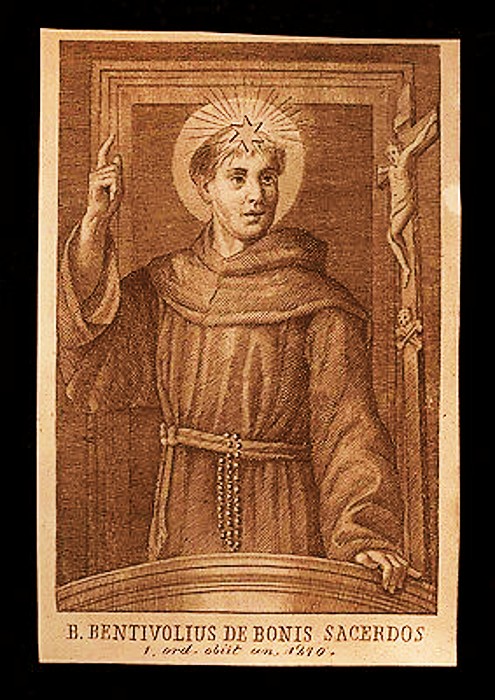
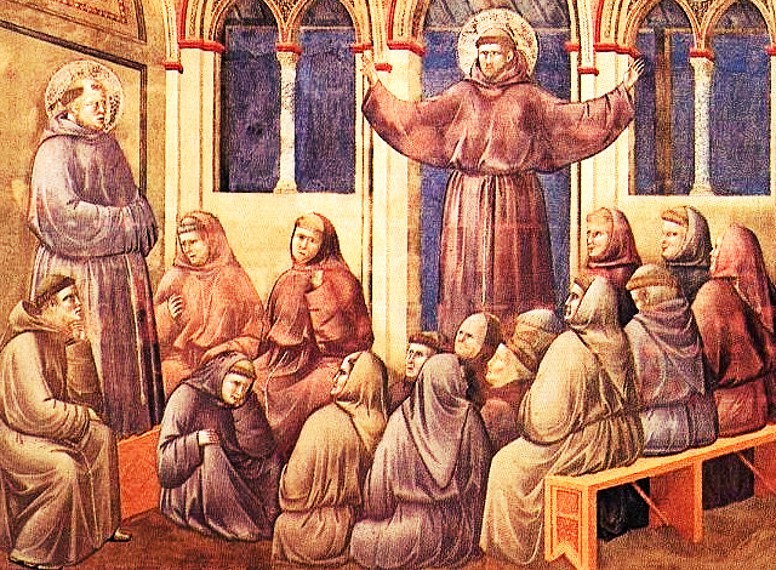
Saint of the Day – 25 December – Blessed Bentivoglio de Bonis OFM (1188-1232) Confessor, Priest and Friar of the Friars’ Minor of St Francis, Noted preachers, Miracle worker , Ecstatic and visionary. One of Saint Francis of Assisi’s earliest disciples and one of first Franciscans. Born in 1188 at San Severino, Italy and died in 25 December 1232 at San Severino, Italy of natural causes. Also known as – Bentivolius Buoni, Bentivoglio de Bonis of San Severino Marche. He was Beatified on 30 December 1852 by Pope Pius IX.
Bentivoglio was born at San Severino in the March of Ancona, toward the close of the twelfth Century and belonged to the distinguished family of the Buoni or Bonis. About the time that he grew into young manhood, reports of St Francis and his newly founded Order reached his native town and shortly after, a Franciscan preached at San Severino. Bentivoglio was so impressed by his words and his whole appearance that he became eager to join the new Order.
Triumphing over the first objections of his father, Blessed Bentivoglio went to Assisi and received the holy Habit from the hands of St Francis himself. Soon, he distinguished himself among the brethren, by exceptional virtue. Especially noteworthy were his humility, his patience, his obedience and his childlike simplicity.
He possessed the rare gift of affording, both pleasure and edification, by his pious conversation about heavenly things. Although he seemed to say it all in an offhand manner, nevertheless, everyone felt that it came from a holy heart, some invisible power seemed to move them to strive for perfection. Once a bright star was seen shining on his forehead, it was a sign that he was filled with the fire of the Holy Ghost.
The piety and holiness of Blessed Bentivoglio was evident in his devout conversation. Just as one can tell by the ticking of a clock, whether everything is in proper working order within, so, as a rule, one can detect in a person’s conversation, how matters stand interiorly with him. He who thinks only of profits and gain, speaks continually of trade and business. He who is filled with self-love, speaks continually of himself and considers others unimportant. He who is vain speaks of clothes and beauty. He whose heart is not pure and clean, takes pleasure in indecent speech. He who has God in his heart, converses with pleasure about God and religious matters.
After he had become a Priest and confessor, Bentivoglio laboured with the blessed success in the holy tribunal of the Confessional. At prayer, to which he was most devoted, he was often seen in ecstasy, sometimes he was even raised high above the earth.
God glorified Blessed Bentivoglio by many other miracles before and after his death, so that, the veneration that was paid to him at his grave, in the Franciscan Church at San Severino, constantly increased. Pope Pius IX gave the Church’s approval to this veneration, thus declaring him Blessed.
Prayer of the Church: O God, who didst reveal Thy glory through the words and miracles of Thy blessed Confessor Bentivoglio, mercifully grant that through his intercession and merits, we may be directed to behold Thy sublime Majesty. Through Christ our Lord Who livest and reignest with Thee, in the unity of the Holy Ghost, God, world without end. Amen.
The Nativity of Our Lord, Christmas Day! Celebration of the Anniversary of the Birth of Our Lord. In the earliest days of the Church there was no such Feast, the Saviour’s Birth was commemorated with the Epiphany by the Greek and other Eastern Churches. First mention of the Feast, then kept on 20 May, was made by Clement of Alexandria c 200. The Latin Church began in c 300 to observe it on 25 December, though there is no certainty that Our Lord was born on that day. Today, Priests have the privilege of saying three Masses, at midnight, daybreak and morning. This was originally reserved to the Holy Father alone – beginning about the 4th century he celebrated a midnight Mass in the Lateran Basilica (in which according to tradition, the manger of Bethlehem is preserved), a second in the Church of Saint Anastasia, whose Feast comes on 25 December and a third at the Vatican Basilica. Many peculiar customs of the day are the outcome of the pagan celebrations of the January calendar. The Christmas tree, of which the first known mention was made in 1605 at Strasbourg, was introduced into France and England in 1840. The Feast is a Holy Day of Obligation, preceded by the preparatory season of Advent and by a special Vigil – should it fall on a Friday it abrogates the law of abstinence. Of course, Christmas attracts an Octave, when this wonderful Mystery and Miracle is celebrated for eight days. https://anastpaul.com/2019/12/25/the-solemnity-of-the-nativity-of-our-lord-jesus-christ-25-december-2/ AND: https://anastpaul.com/2018/12/25/the-solemnity-of-the-nativity-of-our-lord-jesus-christ-25-december/ AND: https://anastpaul.wordpress.com/2017/12/25/25-december-the-solemnity-of-the-birth-of-our-lord-jesus-christ-2/
St Adalsindis of Hamay St Alburga of Wilton St Anastasia of Sirmium
Bl Artale St Basilée of the Via Latina Blessed Bentivoglio de Bonis OFM (1188-1232) Confessor, Priest and Friar of the Friars’ Minor of St Francis, Noted preachers, Miracle worker and visionary. One of Saint Francis of Assisi’s earliest disciples and one of first Franciscans. Bl Diego de Aro St Eugenia of Rome St Fulk of Toulouse
Martyrs of Nicomedia: 20,000 Christians Martyred by order of Diocletian. They were reported to have all been in the single Basilica to celebrate Christmas. As the Christmas holy day was not celebrated in the East in 303, they were probably gathered for another feast. They were burned alive in 303 in the Basilica of Nicomedia.
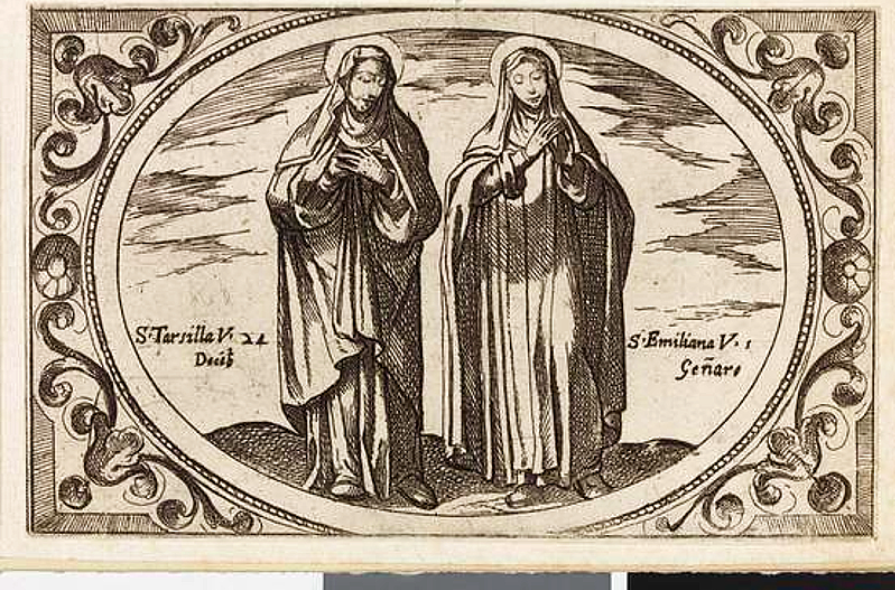
Saint of the Day – 24 December – St Trasilla (Sixth Century) Virgin, Aunt of Saint Pope Gregory the Great (540-604). Born as a Roman citizen and died on 24 December, in the 6th Century, year unknown. St Trasilla is usually mentioned with St Emiliana, her sister and, therefore, also St Gregory’s Aunt but her Feast day is celebrated on 5 January. Also known as – Tarsilla, Tharsilla, Thrasilla.
The Roman Martyrology reads today: “At Rome, the birthday of the holy Virgin, Trasilla, Aunt of St Gregory, Pope, who writs of her that at the hour of her death, she saw Jesus coming to her.”
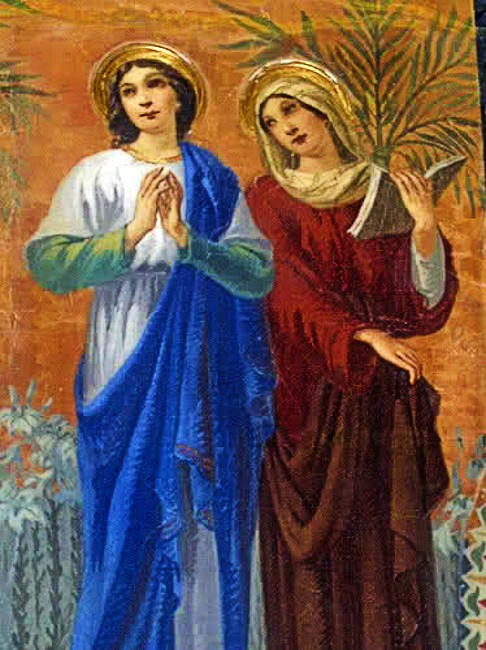
Sts Trasilla and Emiliana
What we know of her life was recorded by the holy Pope, who was deeply moved by her model of Christian life and virtue.
Born in Rome, Trasilla and Emiliana were the daughters of Senator Gordian and Saint Silvia. Nieces of Pope Saint Felix III, the young women were destined for lives of holiness and together, while quite young, renounced the world. As young women, they together consecrated themselves to the Lord, desiring to stay pure. Their house was as a convent and the two spent so much time kneeling in prayer that their knees and elbows arthritically locked in the position of prayer. Living as hermits, they encouraged one another in the ways of the faith, drawing deeper and deeper into the spiritual life.
Trasilla had a third sister, Gordiana, who had initially made the same vows and consecrated herself to the Lord. Gradually, however, she withdrew from her sisters, returning to the world. Their reproaches fell on deaf ears and caused them significant sadness and grief.
Saint Trasilla died prior to Saint Emiliana but not before she received a vision of her Uncle, Saint Pope Felix. In her vision, the late Pope appeared to her, showing her a place of great beauty. He said, “Come, I will receive you into this habitation of light.” Immediately, she fell ill with fever. Her sister ministered to her but to no avail. By the following day, her illness had grown worse. Saint Trasilla, in agonising pain, called out to those around her; “Make way! Jesus is coming!” With her eyes fixed firmly on Heaven, she died soon thereafter and a heavenly fragrance filled the room, confirming her visions.
And just as she had been visited by a vision of St Felix, so she too visited her sister, Emiliana from Heaven.
St Gregory the Great recounted the tale of his Aunts throughout his lifetime. He used it to illustrate the point that we must work constantly to save our souls, repenting for our actions. To Saint Gregory, there is no point in beginning the work of salvation, if we do not plan to see it through to the end. As we prepare for the birth of Our Lord, we look to our own commitments. Are we ready to greet the Infant Christ, come to redeem and save us?
Tonight, we echo the sentiment of Saint Trasilla: “Make way! Jesus is coming!” How might we use this dark night—lit by the choirs of angels—to prepare for the coming of the Lord?
The Vigil of the Nativity of Our Lord Midnight Mass is the first liturgy of Christmastide which is celebrated on the night of Christmas Eve, traditionally beginning at midnight when Christmas Eve gives way to Christmas Day. This popular Christmas custom is a jubilant celebration of the Mass in honour of the Nativity of Jesus Christ.
Saint Thomas Aquinas wrote a commentary on these words and explained in his Summa Theologiae, “And from this ,the Mass derives its name … the deacon on festival days ‘dismisses’ the people at the end of the Mass, by saying: ‘Ite, missa est,’ that is, the Victim [Jesus] has been sent to God through the Angel, so that it may be accepted by God.”
St Adam the Patriarch St Adela of Pfalzel Bl Alberic of Gladbach Bl Brocard of Strasbourg St Bruno of Ottobeuren St Caran of Scotland St Delphinus of Bordeaux
St Euthymius of Nicomedia St Eve the Matriarch Bl Francesco dei Maleficii St Gregory of Spoleto
St Irmina of Oehren (Died c 716) Virgin Princess, Nun, Abbess, Founder and Co-founder of 2 Monasteries, benefactress of St Willibrord, the great Missionary Saint of Germany. The Roman Martyrology states: “In Trier in Austrasia, in Germany, Saint Irmina, Abbess of the Monastery of Öhren, who, a virgin consecrated to God, gave Saint Willibrord a small Monastery she founded in her villa in Echternach and was a generous giver of her goods.” Her Life: https://anastpaul.com/2021/12/24/saint-of-the-day-24-december-saint-irmina-of-oehren-died-c-716/
St Mochua of Timahoe
Bl Peter de Solanes St Trasilla (Sixth Century) Virgin, Aunt of Saint Pope Gregory the Great (540-604) Bl Venerandus of Clermont
Blessed Mercedarian Brothers:
Blessed Dionysius Roneo
Blessed Philip Claro
Blessed Giulio Pons
Blessed Peter of Valladolid
Blessed Mercedarian Sisters:
Blessed Anna Maria Prieto
Blessed Anna de Arrano
Blessed Orsola de Larisgoizia
Blessed Maguna Mary
Blessed Margaret
Blessed Mary of the Assumption Sarria
Martyred Maidens of Antioch – 40 Saints: A group of forty Virgins Martyred in the persecutions of Decius. None of their names have come down to us. They were martyred in 250 in Antioch, Syria.
Martyrs of Tripoli – 6 Saints: A group of Christians Martyred together, date unknown. The only details that have survived are six of the names – Drusus, Lucian, Metrobius, Paul, Theotimus and Zenobius. They were martyred in Tripoli, Libya.
Saint of the Day – 23 December – Bl essed Hartmann OSA (c 1090-1164) Bishop of Brixen, in South Tyrol, Italy, from his appointment in 1140 until his death, Monk of the Hermits of St Augustine, Reformer of the Clergy, Advisor and Confessor to the Holy Roman Emperor, Leopold I, Miracle-worker. Blessed Hartmann’s name means: “the strong man.” Born in c 1090 at Oberpolling, Bavaria, Germany and died in 1164 of natural causes. Patronages – the City and Diocese of Brixen, in Italy, the Diocese of Bolzano-Bressanone, Italy, of Pregnant women, for a good yield of the vineyards. Also known as – Armand, Artmanno, Althochdt, Harmannu. Hartmann was Beatified on 11 February 1784 by Pope Pius VI.
Hartmann came from the Bavarian nobility. He was educated by Augustinian Canons in the St Nikola Monastery in Passau. He entered the Order , was Ordained to the Priesthood. iN 1122, it was Salzburg’s Archbishop Conrad, who decided to reform his Priests and chose Hartmann to lead a group of Priests under the Rule of Saint Augustine. In 1128, Hartmann was appointed as the Prior of an Augustinian Monastery at Herren-Chiemsee, which position he held until 1133.
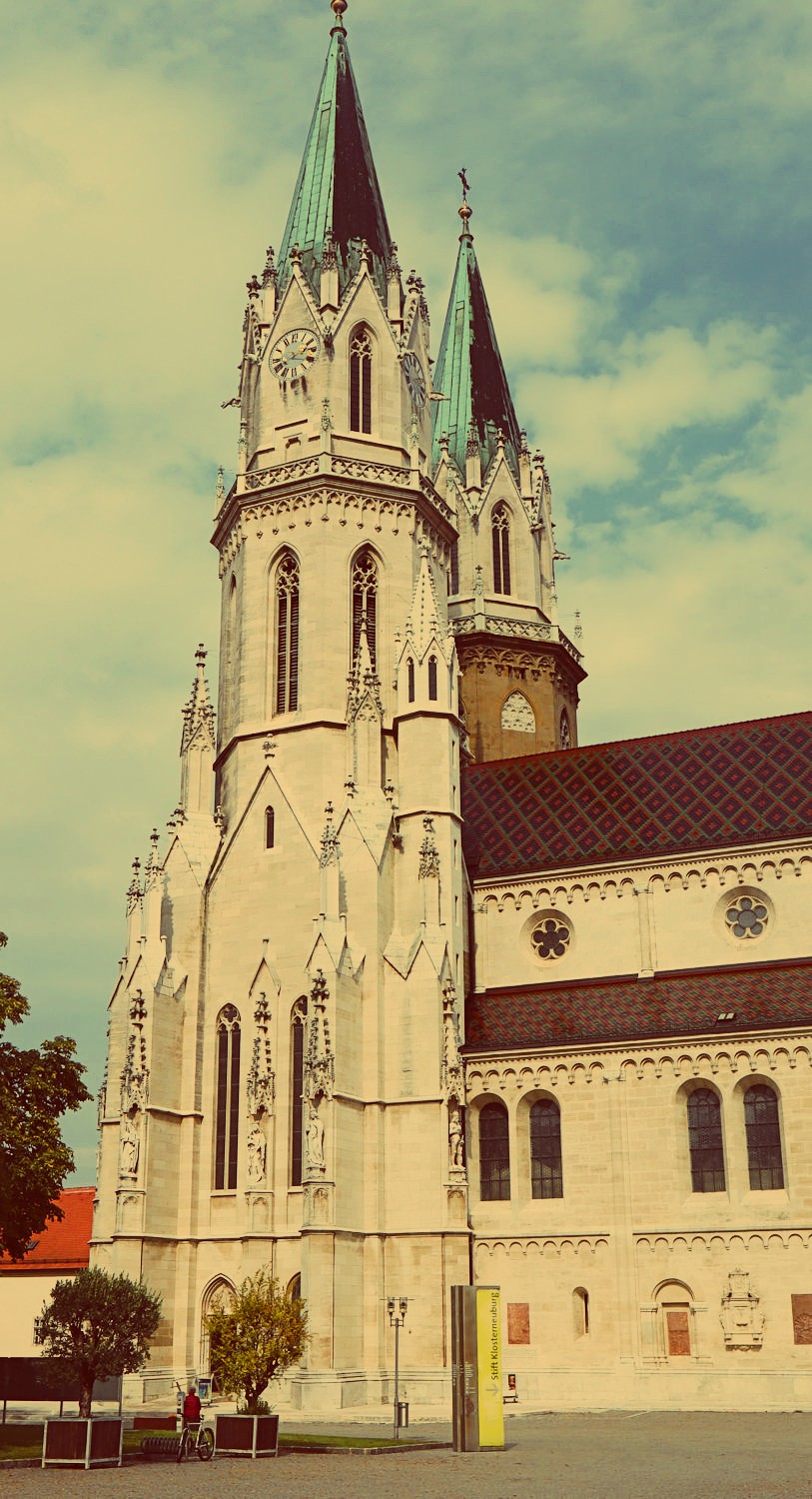
The Monasteries flourished under Hartmann’s direction and, in 1136, the collegiate Church in Klosterneuburg was completed and Consecrated. Hartmann was Advisor and Confessor to Emperor Frederick I, whom he tried to serve without betraying his loyalty to the Pope.
Church of the Klosterneuburg Nonastery
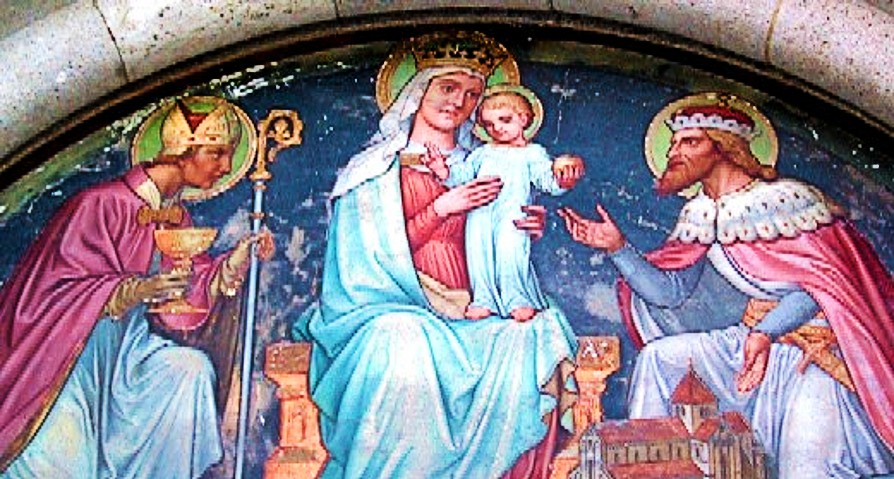
Blessed Hartmann (left) and Margrave Leopold III in front of the Blessed Virgin Mary and the Christ Child, on the main gate of the Klosterneuburg collegiate Church
In 1140 he was appointed as the Bishop of Brixen, by Pope Innocent II and, as such, received his Episcopal Consecration a short while after. He was installed shortly thereafter and dedicated himself to the reform of Priests in the Diocese, as well as acting as a benefactor to Religious Orders, with a particular emphasis on the introduction of the Order of Saint Benedict into the Diocese.
For Hartmann, a flourishing monastic life was the basis for the restoration of Ecclesiastical discipline and thus, for a religious growth in sanctity. In the conflicts surrounding the Papal election of 1159, Hartmann sided with Pope Alexander III against Emperor Frederick I.
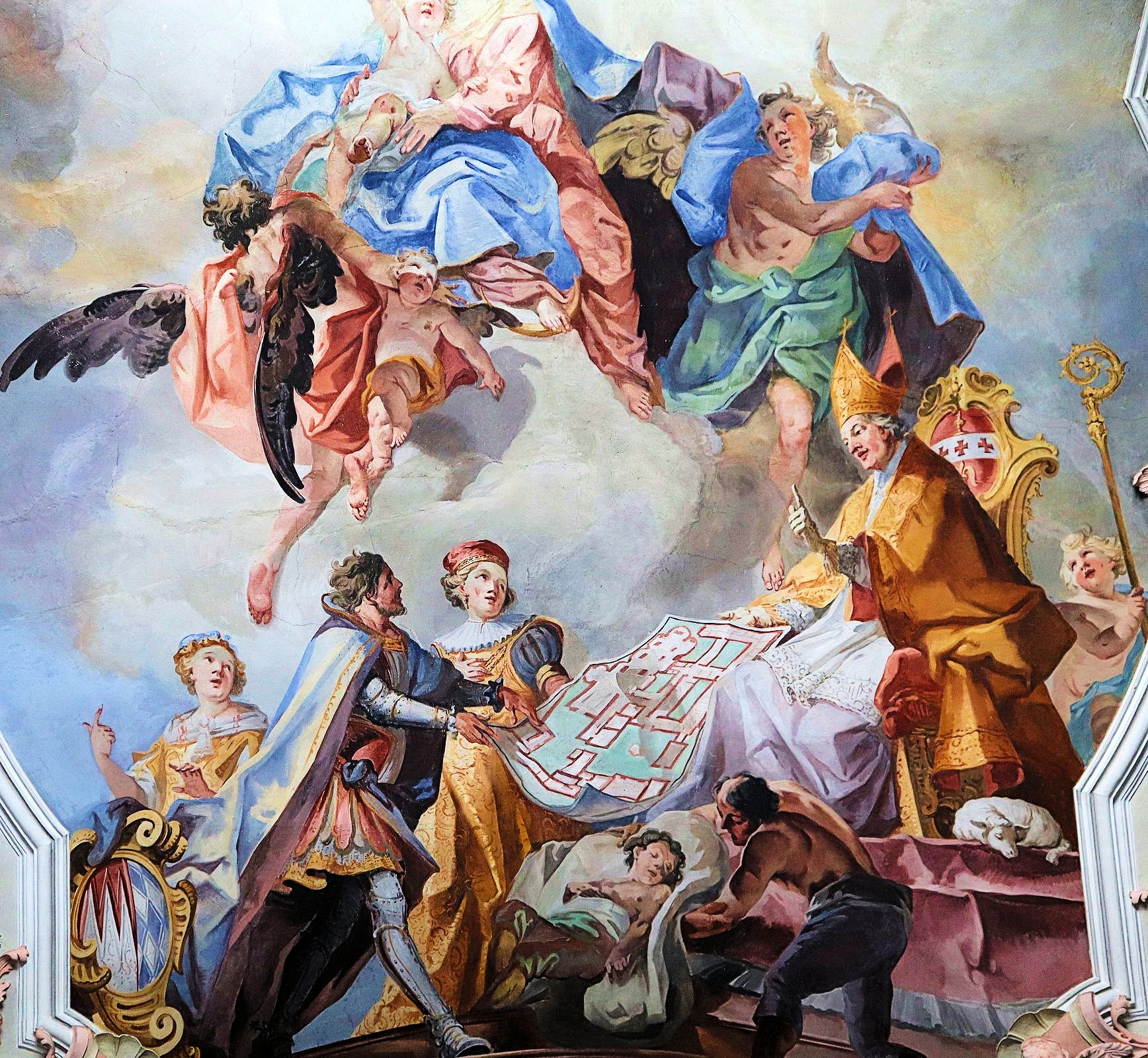
Blessed Hartmann explains the construction plan, to the two co-founders of the Neustift Monastery, Count Reginbert von Säben and his wife Christina. This is the ceiling fresco, n the Neustift collegiate Church, Painted by Matthäus Günther. in 1735-36.
Hartmann himself led an exemplary ascetic life, wearing sackcloth under a plain robe, instead of fullEepiscopal garments. He encouraging discipline in the Clergy and helped the poor and needy. With the assistance of the wealthy Canon Richer, he built the hospice for travellers and pilgrims, on the “Insula Sanctae Crucis” – “the Island of the Holy Cross” – on the site of today’s Seminary – and in 1157, he Consecrated the hospital Chapel.
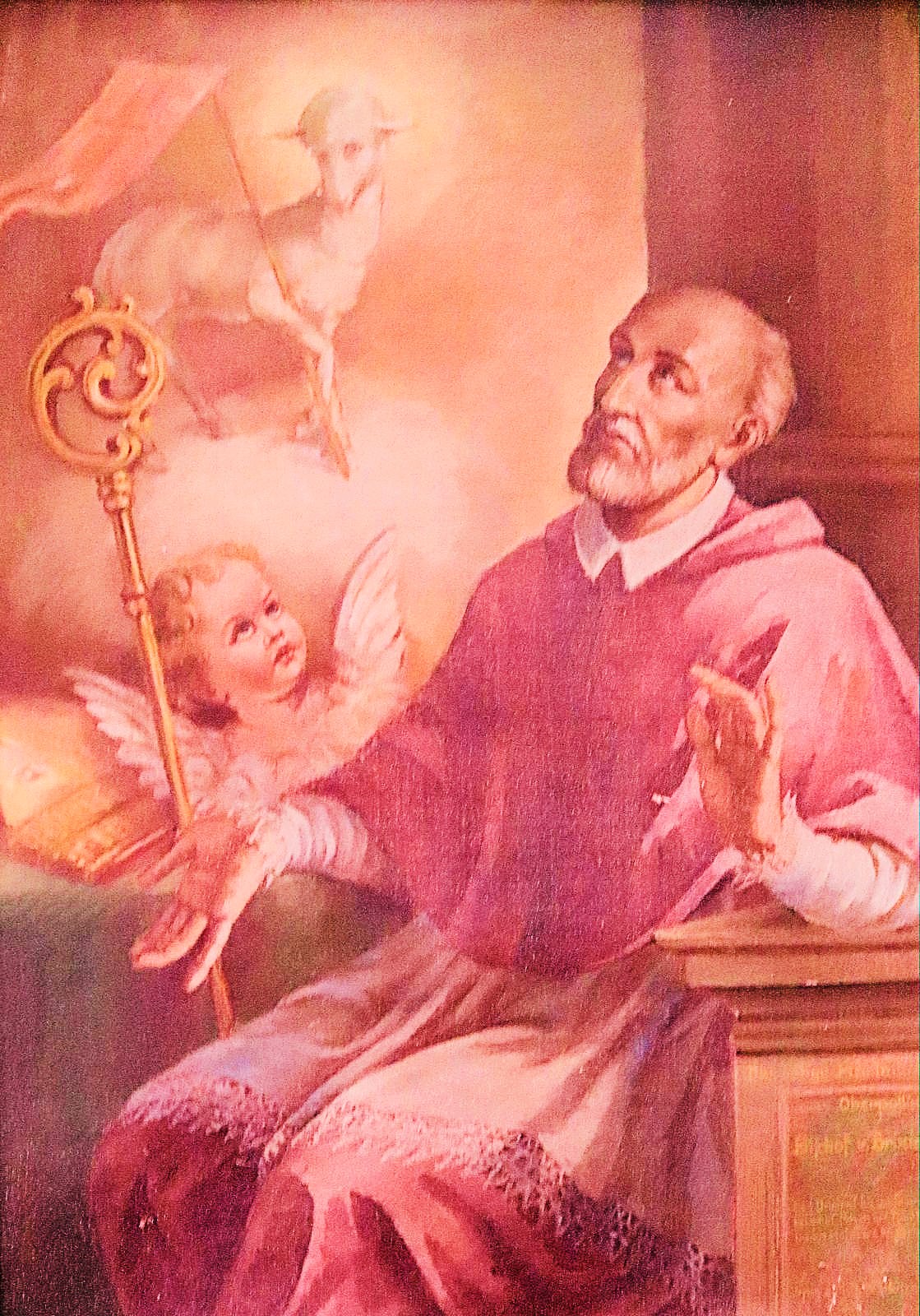
Painting in the Church in Oberpolling near Passau
We have some information on Hartmann’s miracles but I have found nothing regarding his Patronage of pregnant women. A legend tells how Hartmann stopped on a journey in Longostagno – a district of Ritten near Bozen and refreshed his overheated face in a bowl of water. A woman whose face was badly swollen and bruised, also washed in this water and was instantly relieved of her ailment. Another legend tells that Hartmann hid from robbers in the tower of the Church in Antholz in Pustertal and lost the iron chain with which he flogged himself everyday. When the chain was later found, it unfolded miraculous powers and a fountain sprang up next to the tower,which still flows today and bears his name. The fountain on the Alm near Nova Levante on the Catinaccio Mountains which offered undrinkable water,, he made pure.
Hartmann was already venerated as a Saint during his lifetime. He died of a stroke after taking a too hot bath the day before Christmas Eve .
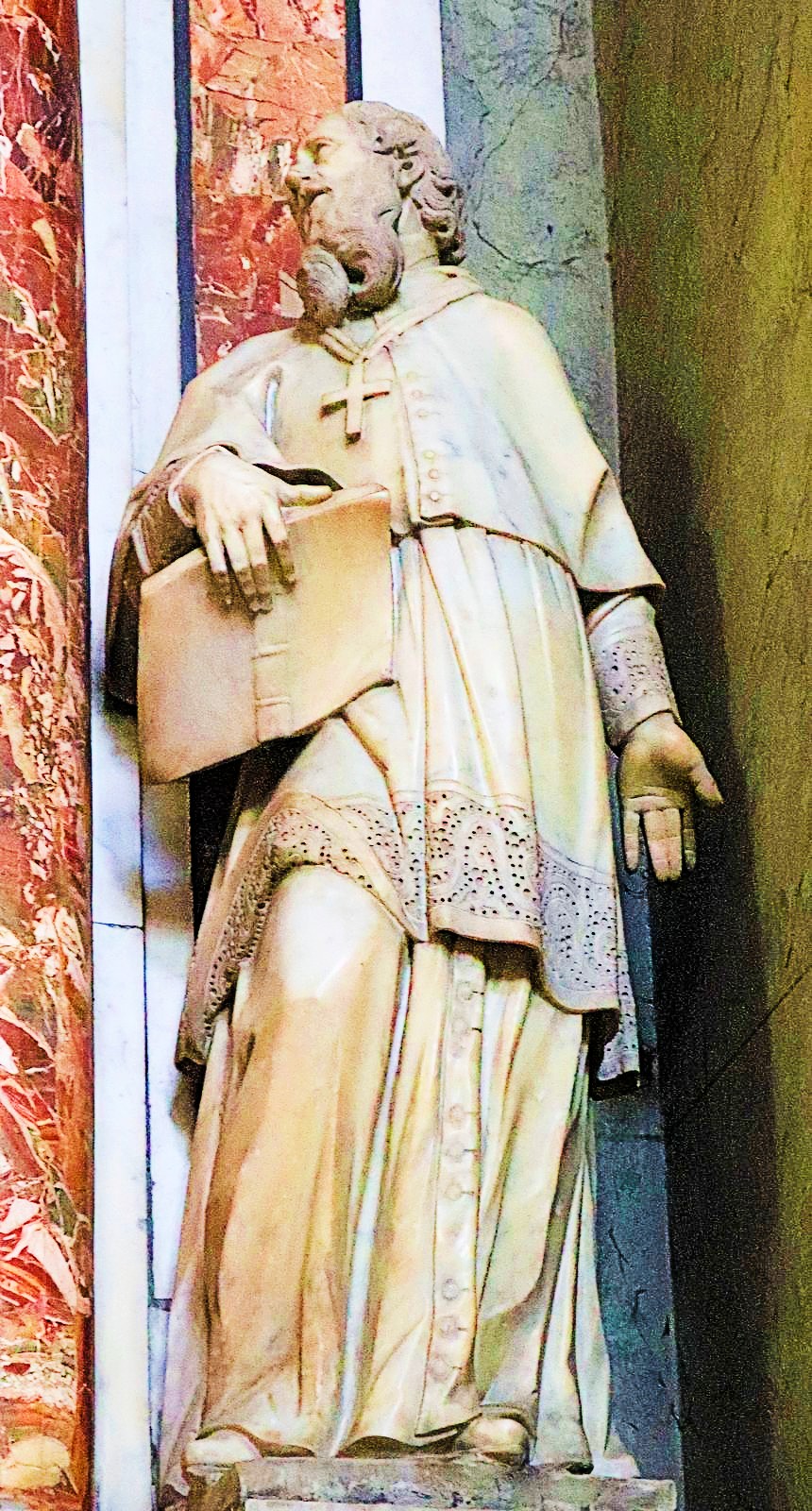
Statue in the Cathedral in Brixen
Hartmann’s grave was in the Chapel of the hospice he founded on the Island of the Holy Cross in Brixen. It was a popular place of pilgrimage, today the tomb is in the Chapel of the Seminary. Before 1200 a Canon from Neustift wrote his Vita There are also Relics in the collegiate Church in Novacella near Brixen.
St Besa of Egypt Bl Bincema St Dagobert II of Austrasia Bl Epifanio Gómez Alvaro St Frithbert of Hexham Blessed Hartmann OSA (c 1090-1164) Bishop of Brixen, Italy and Friar of the Hermits of St Augustine. Bl Herman of Scheda Bl James Aymerich
St Ivo of Chartres (c 1040-1115) Bishop of Chartres, France from 1090 until his death, Confessor, Reformer, Defender of the Faith, Lawyer, Canon Lawyer, Teacher and Theologian, Writer. The Roman Martyrology states: “In Chartres in France, Saint Ivo, Bishop, who re-established the Order of the Canons and did much work and wrote to promote harmony between the clergy and the civil powers and for the good of the Church.” Biography: https://anastpaul.com/2021/12/23/saint-of-the-day-23-december-saint-ivo-of-chartres-c-1040-1115/
St John Cirita St John Stone St Mardonius of Rome St Mazota of Abernethy St Migdonius of Rome
St Servulus (Died c 590) Layman, Beggar, paralysed by Palsy from birth. Saint Servulus was a perfect model of submission to the divine Will; it would be difficult to offer a more consoling example to persons afflicted by poverty, illnesses and the other miseries of life. It is Saint Gregory the Great who narrates for us his edifying story. St Servulus’ Life of devotion: https://anastpaul.com/2020/12/23/saint-of-the-day-23-december-saint-servulus-died-c-590/
Martyrs of Crete – 10 Saints: A group of ten Christians who died in the persecutions of Decius. They were – Agathopus • Basilides • Cleomenes • Eunician • Euporus • Evaristus • Gelasius • Saturninus • Theodulus • Zeticus They were martyred in 250 on the island of Crete.
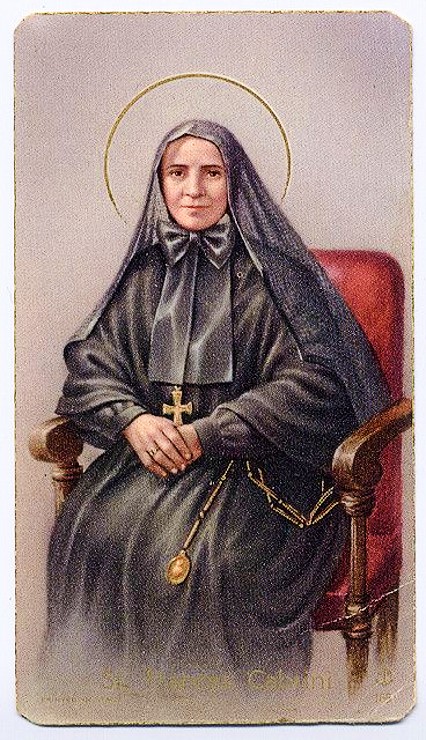
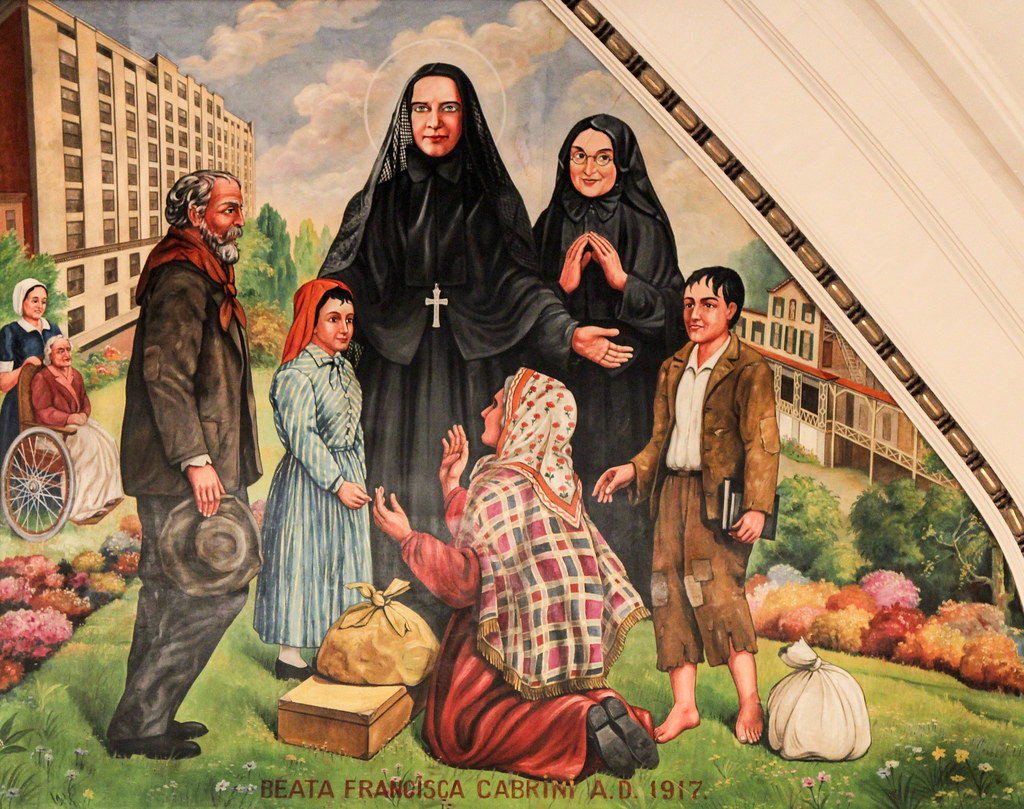
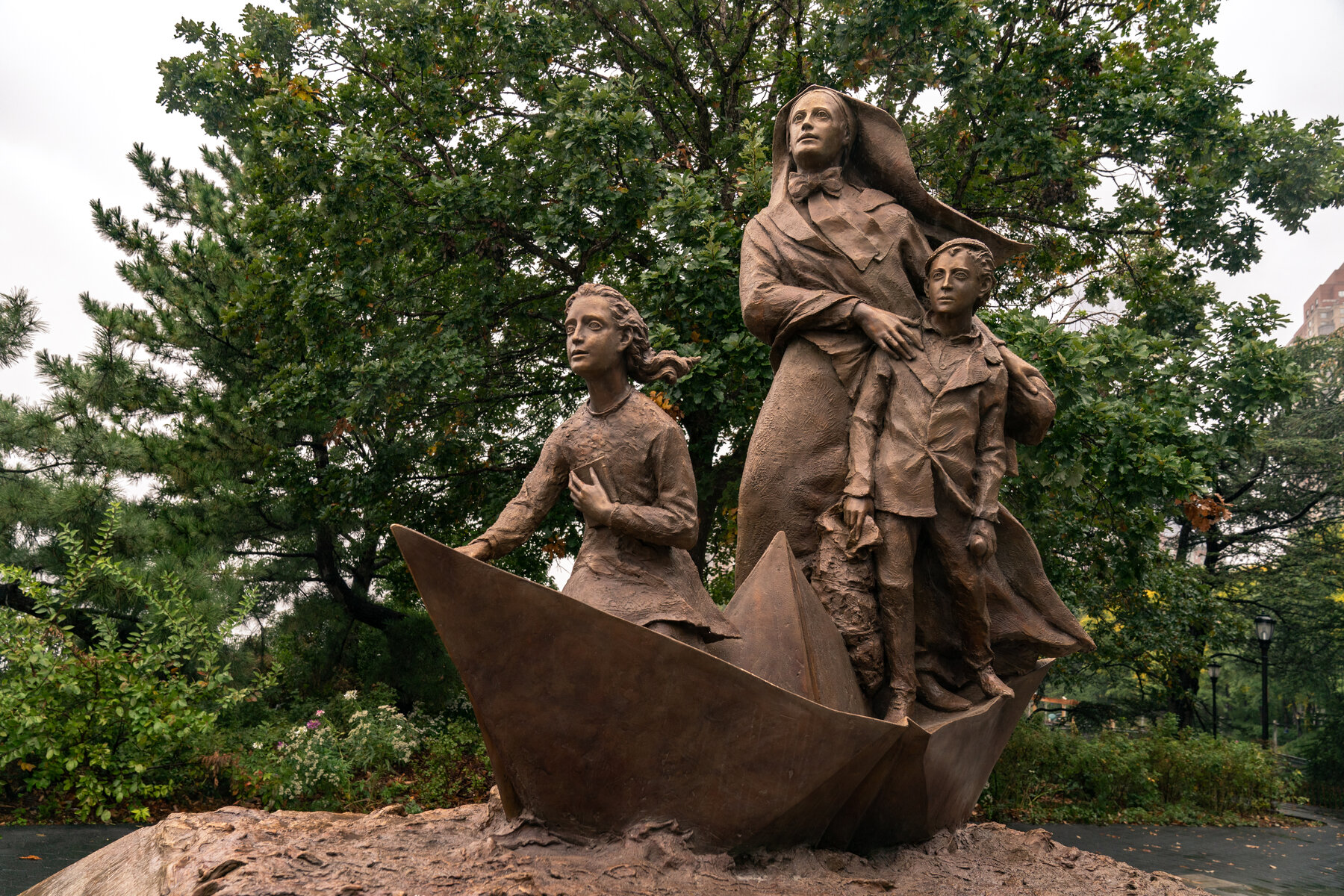
Saint of the Day – 22 December – St Frances Xavier Cabrini (1850-1917) Virgin, Religious Sister, Missionary, Founder. Patronages – against malaria, emigrants, immigrants (given on 8 September 1950 by Pope Pius XII) hospital administrators, orphans.
St Frances Xavier Cabrini From the Roman Breviary
Frances Cabrini, who later took the name of Xavier because of her desire to imitate the Apostle of the Indies, was born in the Town of Sant’ Angelo in the Diocese of Lodi in 1850. Her parents were holy and respectable people. Aided by divine grace, she had attained, even as a child, to a very high degree of union with God and was already given to the practice of austerities. When she was seven years old, the custom of listening before evening prayers, to readings from a magazine concerning missionary work in China, filled her with an ardent desire to go there, in order to win souls for God. She was hardly thirteen years old, when she took a vow of perpetual Virginity. From that time, the all-absorbing thought of her soul was how to return love, for love ,to the Sacred Heart of Jesus and thus bring some consolation to Him, in His sufferings and distress.
After the successful completion of her studies she resolved to embrace the religious life. Twice she applied for admission and each time was refused, on the ground of poor health. She then taught for some years in the public school, with a considerable measure of success. Thereafter, she was appointed by the Bishop of Lodi, as the directress of an orphanage, in which position, she displayed such prudence and zeal, especially in the Christian education of girls that the same Bishop urged her to found a new religious congregation which would principally be devoted, to the missions.
She undertook this difficult assignment with great courage and in 1880, in the Chapel of our Lady of Grace at Codogno, laid the foundation of the Institute of the Missionary Sisters of the Sacred Heart. She then sought from the Holy See, the approval of the Rules and Constitutions of the new Institute. This having been achieved, she laboured with all zeal, to imbue the new sisterhood with the same spirit of love of God and neighboir ,which she, herself had drawn, in copious draughts ,from the fountain of the Sacred Heart.
The expansion of this new religious family to include sixty-seven foundations in Europe and America, testifies to the extraordinary character and skill of its wise and saintly ruler. She had, moreover ,a mind to establish missions in more remote lands and being in doubt, concerning God’s will in the matter, she followed the advice of Pope Leo XIII and turned to the West.
It was to these western shores of both Americas, that large multitudes of Italians had emigrated, in order to find employment because they were unable to exist in their own land. The condition of the Italian immigrants was then very poor and Frances sought to alleviate it. It was the love of Christ that urged her to take up this work, so wholeheartedly and so courageously. No labour could overcome her, no danger could frighten her. Her intrepid and undaunted spirit braved the rough and dangerous voyages across the ocean, twenty-four times!
She travelled over the length and breadth of America, establishing everywhere, hospitals, schools, houses of rest, nurseries, orphanges and other institutions, in order to promote the material livelihood but above all the spiritual well-being of the working class. By such charitable endeavours, she won the hearts of her fellow-countrymen and so, came to be called the Mother of the Italians.
She exerted every effort to accomplish the work she had in mind and her zeal could brook no delay. Placing her complete confidence in Divine Providence, she took as her motto that saying of Paul: “I can do all things in Him Who strengtheneth me.”
Her heart was consecrated to God by a perpetual union with Him, so that even amid the most absorbing occupations, her mind never lost track of heavenly things. All she met with, on her various journeys, were like so many stepping-stones, by which her soul ascended to God.
She had the greatest veneration for the Roman Pontiff and the Apostolic See and saw in the laws of the Church, norms of conduct that give one the greatest sense of security. She cultivated a childlike love for the Blessed Virgin Mary and often used to say, that Mary was the Mother and Foundress of her Institute.
Finally her life, extraordinary by reason of its integrity and labours for God, came to an end at Chicago, on 22 December 1917. Later her body was translated to New York. She was solemnly Beatified by Pope Pius XI, whereas Pope Pius XII, after new miracles were performed, solemnly added her name to the list of holy Virgins.
“Inspired by the grace of God, we join the Saints in honouring the holy Virgin Frances Xavier Cabrini. She was a humble woman who became outstanding, not because she was famous or rich or powerful but because, she lived a virtuous life. From the tender years of her youth, she kept her innocence as white as a lily and preserved it carefully, with the thorns of penitence. As the years progressed, she was moved by a certain instinct and supernatural zeal, to dedicate her whole life to the service and greater glory of God. She welcomed delinquent youths into safe homes and taught them to live upright and holy lives. She consoled those who were in prison and recalled to them, the hope of eternal life. She encouraged prisoners to reform themselves and to live honest lives. She comforted the sick and the infirm in the hospitals and diligently cared for them. She extended a friendly and helping hand especially to immigrants and offered them necessary shelter and relief, for having left their homeland behind, they were wandering about in a foreign land with no place to turn for help. Because of their condition, she saw that they were in danger of deserting the practice of Christian virtues and their Catholic faith. Undoubtedly she accomplished all this through the faith which was always so vibrant and alive in her heart, through the divine love which burned within her and finally, through constant prayer, by which she was so closely united with God, from Whom she humbly asked and obtained, whatever her human weakness could not obtain. Although her constitution was very frail, her spirit was endowed with such singular strength that, knowing the will of God in her regard, she permitted nothing to impede her from accomplishing what seemed beyond her strength.”– From his sermon at the Canonisation of Saint Frances Xavier Cabrini by Pope Pius XII.
Saint of the Day – 20 December – Blessed Peter Massalenus (1375-1453) Monk, Mystic. Born in 1375 in Othoca, Sardinia and died in 1453 in Venice, Italy of natural causes. Also known as Pietro.
Before entering religious life, Peter Massalenus made several pilgrimages to the Holy Land, visiting the Holy sites and following the footsteps of the Lord.
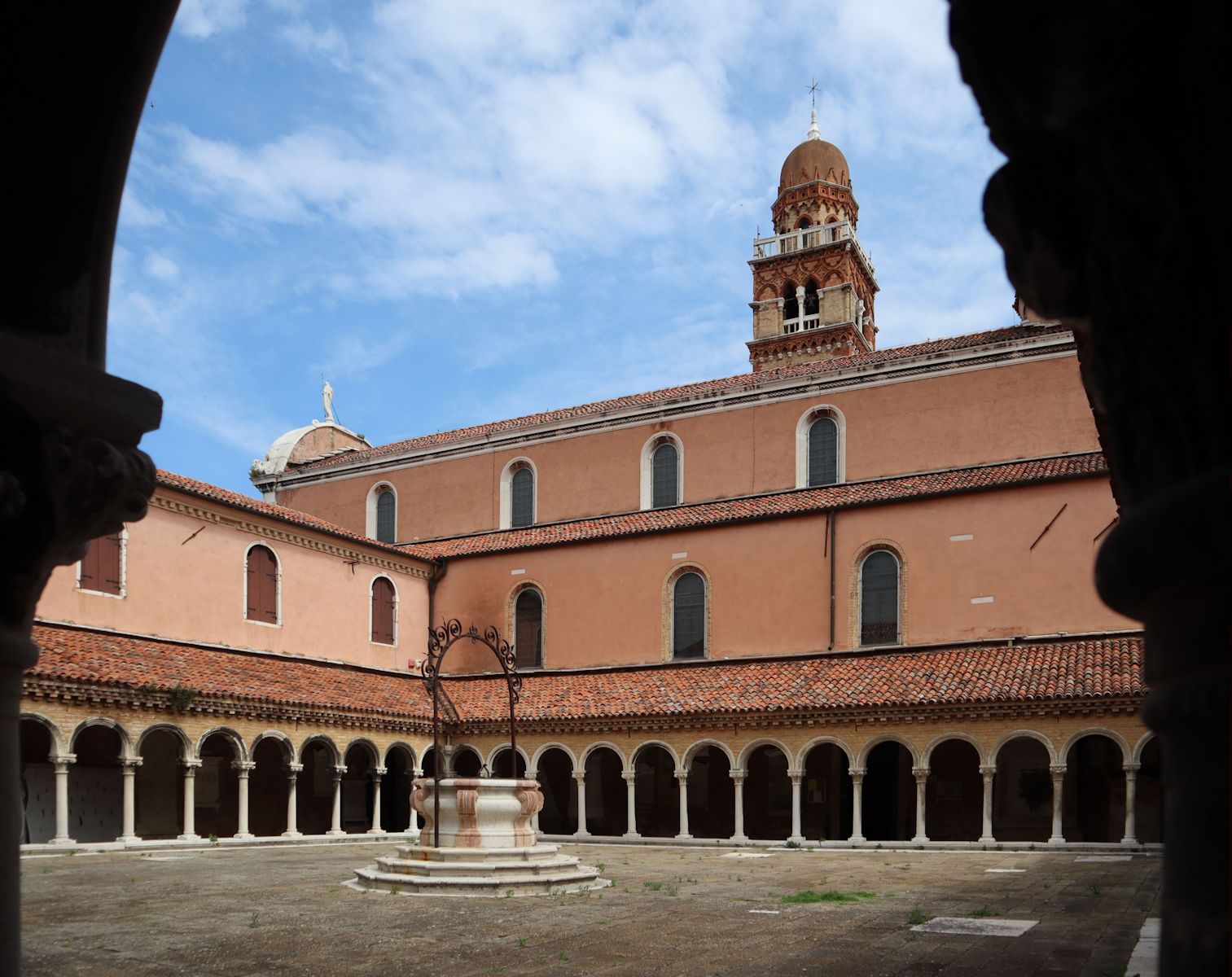
In 1410 he became a Camaldolese Monk in the Monastery of San Michele on the island of the same name in Venice.
Cloister on San Michele
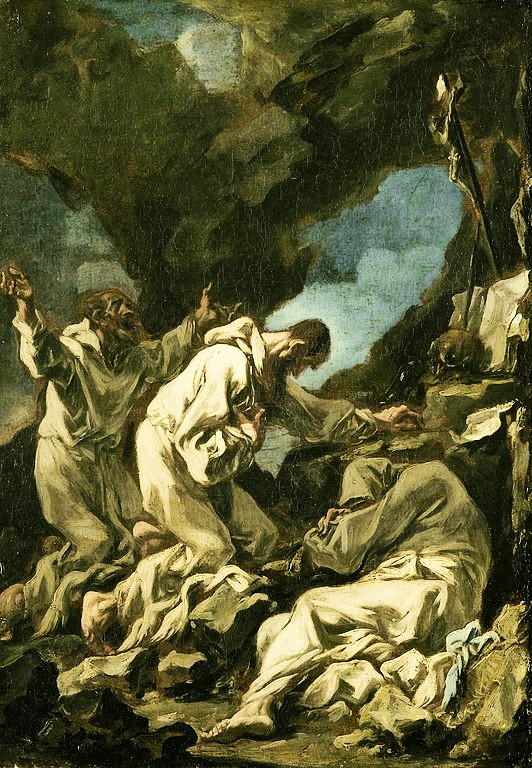
Here he became known for his gifts of mystical contemplation and prayer, assisting others in their desire to seek the heights of contemplation and unity with Christ.
Alessandro Magnasco – Three Camaldolese Monks in Ecstatic Prayer
Peter spent the rest of his life within the cloister of San Michele and was buried there.
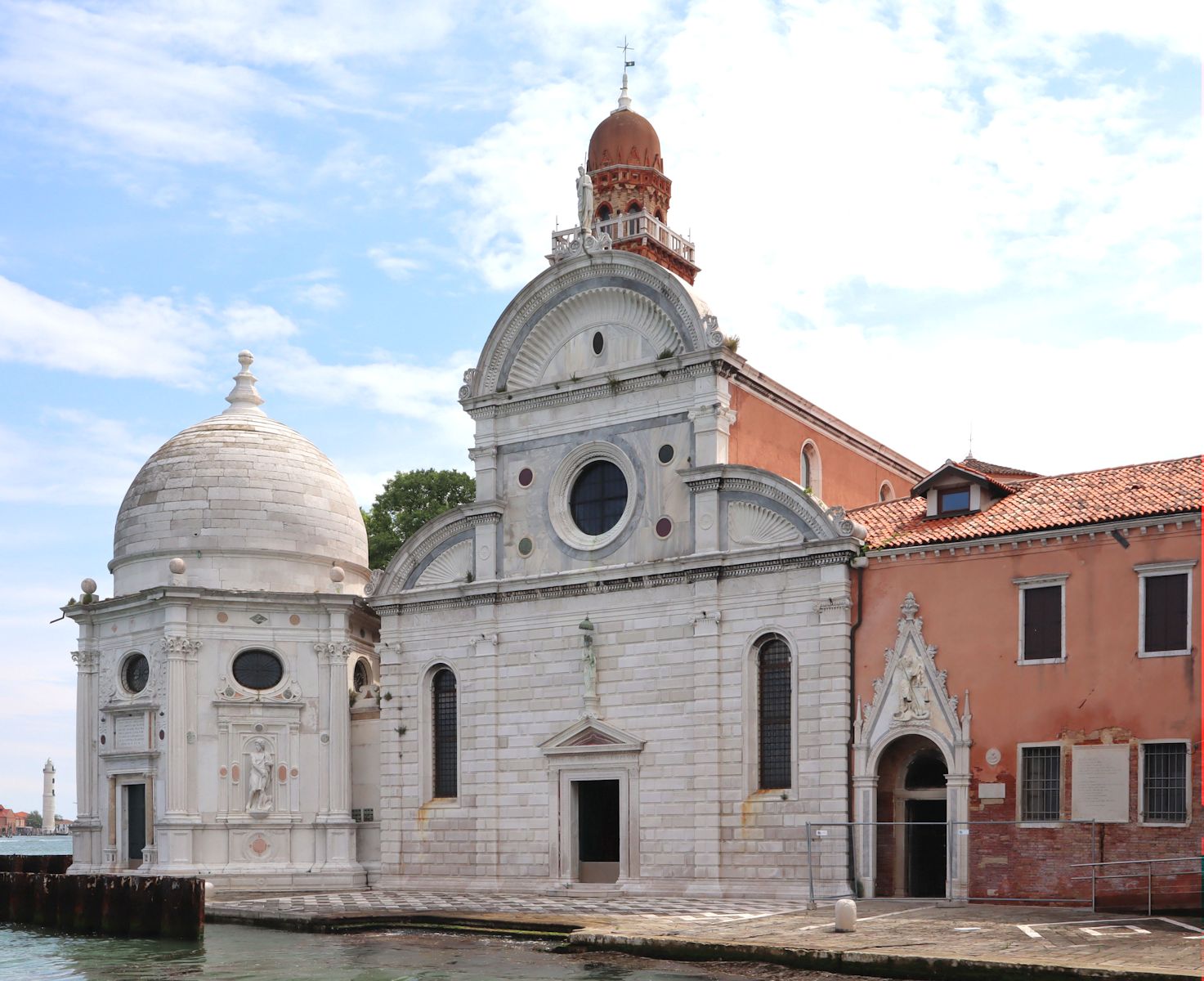
The Camaldolese Monastery of San Michele was closed by Napoleon’s decree in 1810. Today, the island is the vast cemetery of Venice.
Church of San Michele on the island of San Michele – today’s Cemetery Island – near the island of Murano in Venice
St Attala of Strasbourg St Bajulus of Rome St Crescentius of Africa St Damian of Padua St Dominic of Brescia
St Dominic de Silos OSB (1000-1073) Monk, Abbot. He was a Spanish Monk, to whom the Abbey of Santo Domingo de Silos, where he served as the Abbot, is dedicated. The mother of the better-known Saint Dominic de Guzmán, the Blessed Joan of Aza, is said to have prayed at his shrine before she was able to conceive the son she named for him. That son would grow up to found the Dominican Order. Dominic’s special patronage thus became connected with pregnancy and until the establishment of the Second Spanish Republic in 1931, his abbatial crozier was used to bless the queens of Spain and was placed by their beds when they were in labour. Biography: https://anastpaul.wordpress.com/2017/12/20/saint-of-the-day-20-december-st-dominic-de-silos-o-s-b-c1000-1073/
St Eugene of Arabia St Gabriel Olivares Roda St Hoger of Hamburg-Bremen Bl John de Molina St Julius of Gelduba Bl Lorenzo Company St Liberatus of Rome St Macarius of Arabia St Malou of Hautvillers St Paul of Latra Blessed Peter de la Cadireta Blessed Peter Massalenus (1375-1453) Monk, Mystic
Saint of the Day – 19 December – Saint Manirus of Scotland (c 700-824) Confessor, Bishop, Missionary. … Manirus is venerated as one of the Apostles of northern Scotland. His work seems to have concentrated on encouraging the newly converted Highlanders in their faith. Born in c 700 in Scotland and died in 824 in Scotland of natural causes. Also known as – Manire, Monire, Miniar, Niniar.
The last of the Celtic Apostles to bring the Gospel to Deeside, were St Devenick and St Manirus. Both were active in the valley during the 9th century but their Sees were widely separated.
St Manirus’ main sphere of activity was on upper Deeside, in the Crathie district, where he established his Church. The site of Manirus’ foundation is at Rhynabaich, a knoll to the north of the North Deeside Road.
A solitary standing-stone is all that remains of Manirus’ establishment but local place-names such as “Alt Eaglais, the burn of the Church,” “Ereag Eaglais, the hill of the Church,” “Pollmanire, the pool of Manire” – a deep salmon pool on the river Dee almost opposite Balmoral Castle – recall the activities of this almost forgotten Saint. The ancient Church site at Crathie south of the present Crathie-Kirk, is under his invocation.
Some might have forgotten our Saint but he has long been honoured on this day, 19 December, in Church calendars of the area where he evangelised.
He is said to have suffered persecution but did not receive the crown of martyrdom. Hence he appears in the Calendars as a Confessor,
Manire is believed to have died in 824 and to have been buried in his Church at Crathie.
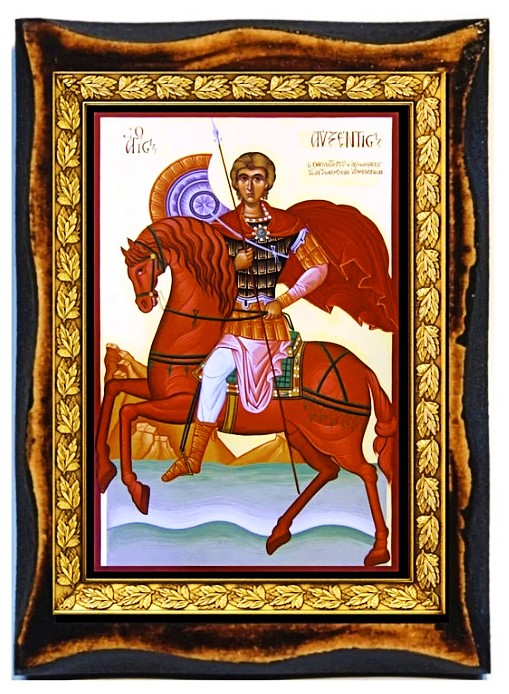
Saint of the Day – 18 December – Saint Auxentius of Mopsuetia (Died c 321) Bishop of Mopsuestia, Southern Turkey, ex-Officer in the Roman army.
The Roman Martyrology reads: “At Mopsuestia in Cilicia, Turkey, St Auxentius, Bishop, who while he was still a soldier under Licinius, preferred to surrender his military insignia, rather than to offer grapes to the pagan god Bacchus. Having been made the Bishop, he was renowned for merit and rested in peace.”
Auxentius had been an Officer in the personal guard of the Emperor Augustus Licintus. But for refusing to sacrifice at the feet of the statue of the pagan god Bacchus, he was dismissed from his post.
He was then Ordained as Priest and appointed and Consecrated as the Bishop of Mopsuestia in Cilicia, Turkey.
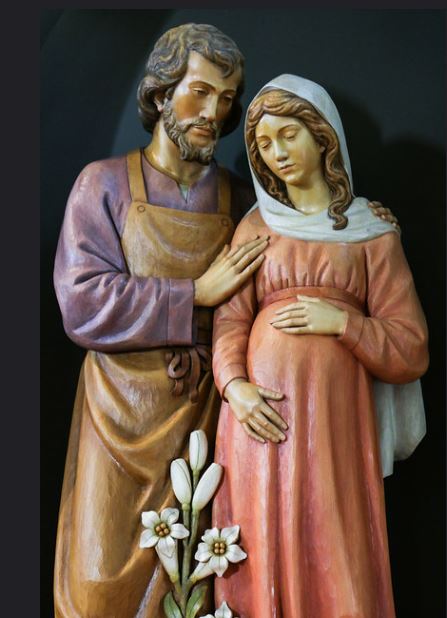
Our Lady of the Expectation – This Feast originated in Spain. When the Feast of the Annunciation (25 March) was transferred to 18 December because of the regulation forbidding Feasts in Lent, it remained on this date after the Annunciation was again celebrated on its original date. It impressed on the faithful, the sentiments of the Blessed Virgin as the time of her delivery approached.
Mercedarians Redeemers – Also known as “Blessed Redentori.” A group of Mercedarian friars who worked together, under the leadership of Saint Peter de Amer, to ransom prisoners and minister to them after.
Blessed Bernardo de Pratis
Blessed Giacomo de Lara
Blessed Louis Gasco
Blessed Peter de Quesada
Blessed Peter of Barcelona
Blessed William de Quadres
Martyrs of Northwest Africa – 42 Saints: Mercedarian Redeemers – 6 beati – These are a group of Mercedarian Friars who worked together, under the leadership of Saint Peter de Amer, to ransom (e.g., redeem) prisoners and minister to them after.
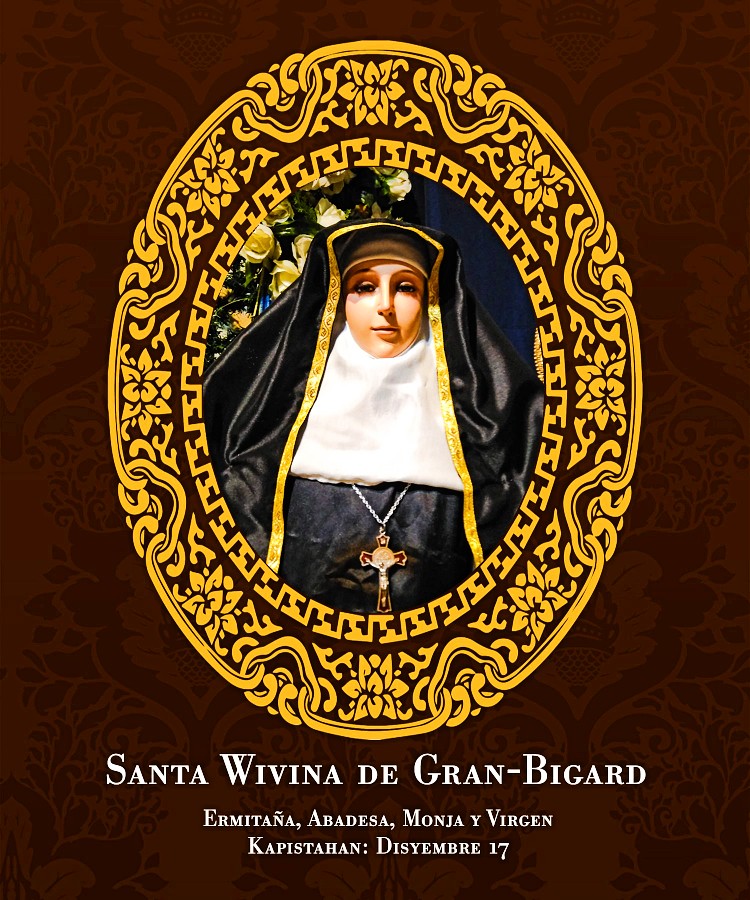
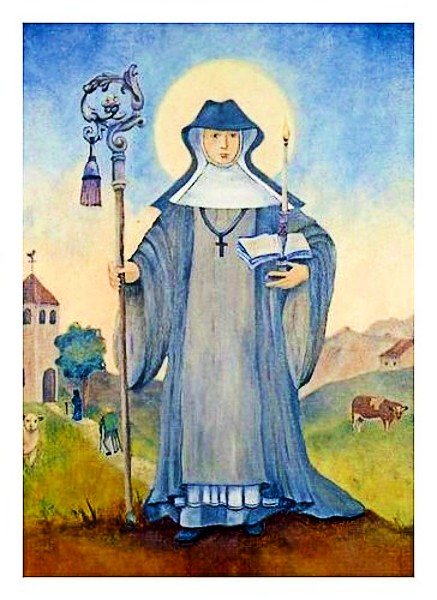
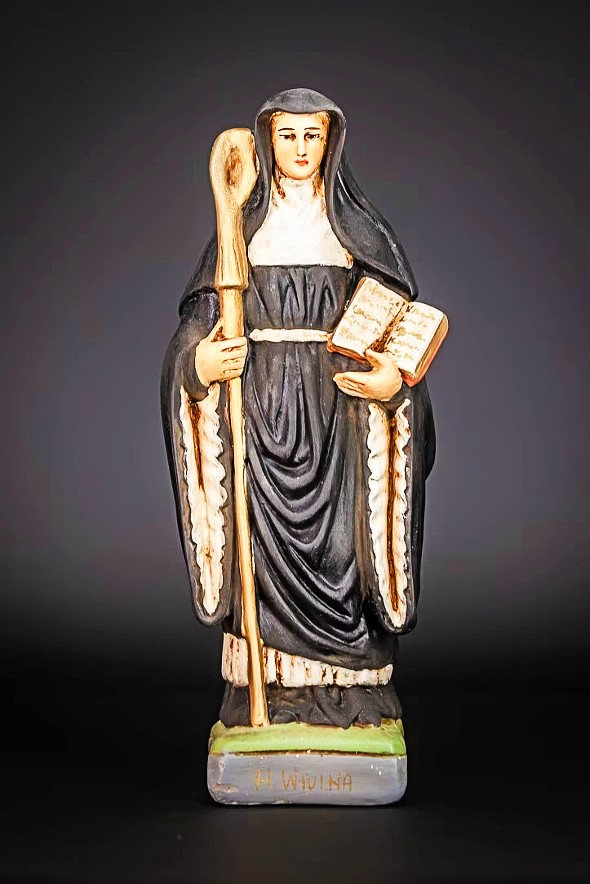
Saint of the Day – 17 December – Saint Wivina (1103-c 1170) Virgin, Abbess. Born in 1103 in Oisy, Flanders, Belgium and died in c 1170 at Grand-Brigard Abbey, Brabant, Belgium of natural causes. Also known as – Vivina, Wiwina. Additional Memorials – 16 December in the Benedictine Order and 25 September (translation of Relics).
We have little knowledge of her childhood and early life but at the age of 15, she had already determined to forsake the world.
However, she was renowned for her beauty and sought in marriage by a young nobleman named Richard, who found favour in the eyes of her parents. When rejected by her, he became ill to the point of death. Whereupon Wiwina prayed and fasted for him ,until he was miraculously restored to health.
At the age of 23, she went to live a hermit’s life in a wood near Brussels. Here, in 1120, Count Godfrey of Brabant established the Convent of Le Grand Bigard for her and her disciples.
Acting as Abbess, she put it under the direction of the Abbot of the nearby Monastery of Affligem and laboured diligently to maintain the true religious life there.
After her death she was glorified by many miracles. Her Relics are now in Notre Dame du Sablon at Brussels. Her cultus was confirmed by Pope Urban VII in 1625 and a Mass and Office was approved in 1903.
Saint of the Day – 16 December – Saint Beanus (Died c 1012) the first Bishop of Murlach, Scotland this area being the forerunner of the Diocese of Aberdeen.. Born in Scotland and died in 1012 of natural causes. Also known as Bean, Beóán, Beoanus, Beyn, of Murlach, Beóánof Scotland. His name means “lively one.” Additional Memorial – 26 October in local Scottish calendars.
Various historical writers tell us that the Kishopric was founded by King Máel Coluim II of Scotland in the seventh year of his reign (1012) as thankgiving to God, for victories over the Scandinavians.
We learn too that “the first Bishop was Beyn, a saintly man, worthy of the Episcopal Office, elevated to this See by the Lord Pope Benedict VIII at the King’s request.”
The Aberdeen Registrum records a charter granted to Bishop Beóán by King Máel Coluim at Forfar, granting the Bishop the Churches and lands of Clova and the unidentified Dulmech.
The Aberdeen Breviary commemorated “Bishop Beóán” as a saint on 26 October. Another Beóán, perhaps the one mentioned in the Life of St. Cathróe of Metz, was commemorated on 16 December and the two were often confused. This latter Saint is the Irish St Bean, a hermit Saint of Wexford, Lough Derg or Galway. However, as the Roman Martyrology records our Saint Beanus today, we will too keep his Feast!

















 AnaStpaul
You must be logged in to post a comment.