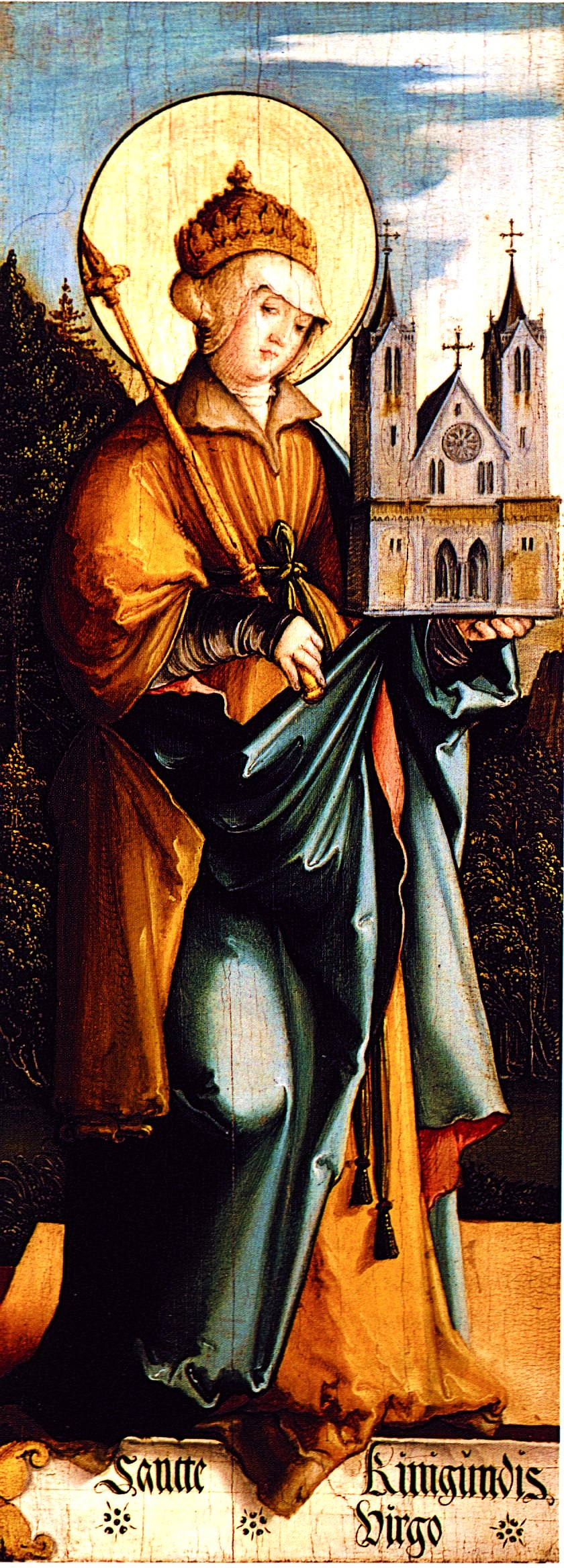
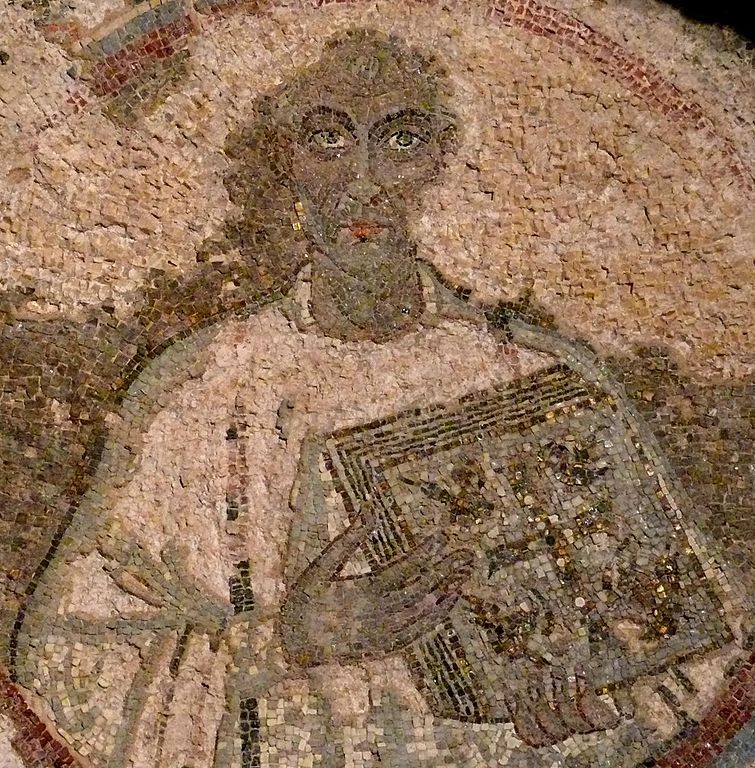
Saint of the Day – 23 January – St Emerentiana (Died c 301) Virgin, Martyr, Foster Sister pf St Agnes, Catechumen. Also known as – Emerentia. Died by being stoned to death in c 304 at Rome, Italy. Patronages – against abdominal pains, stomach ailments, against colic.
The Roman Martyrology states: “At Rome, the holy Virgin and Martyr, Emerentiana. Being only a Catechumen, she was stoned to death by the pagans, whilst praying t the tomb of St Agnes, her Foster Sister.”
An unknown author of the 5th century. added to the Latin Passio of St Agnes, a third chapter that dwells on the funeral of the Saint, on her appearance to her parents, eight days after her death and on the foundation of the Basilica built in her honour by St Costanza, daughter of Constantine.
Among the faithful who flocked to St Agnes’ funeral is also remembered “Emerentiana.”
A sudden attack by fanatical pagans scattered the Christians. Emerenziana, instead of fleeing, courageously addressed the assailants but ended up being stoned to death. The parents of St Agnes buried her body nearby on the limits of their property. There is no doubt, the author concludes, enunciating the doctrine on the Baptism of blood, that Emerenziana was Baptised in her blood, having died for the defence of justice, confessing the Lord.
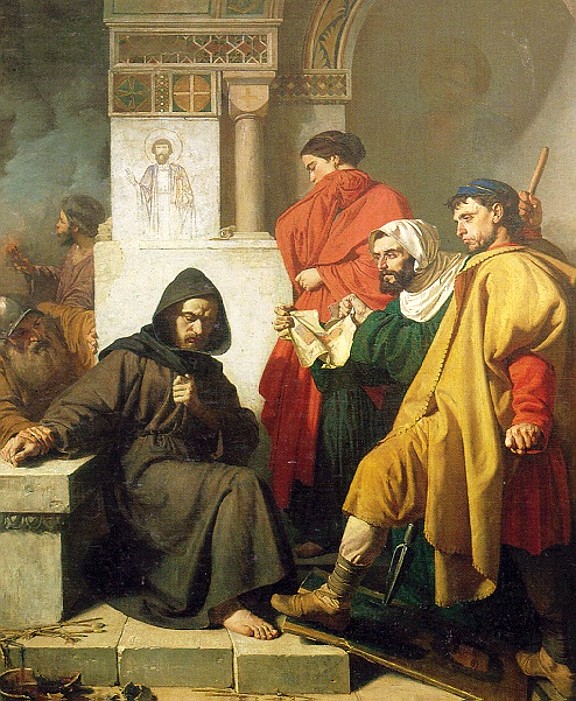
Emerentiana is represented as a young girl who either has stones in her lap and lilies in her hand, or as being stoned to death by a mob. Her tomb is inow n the Church of St Agnes outside the walls, in Rome. An Altar dedicated to her with a marble relief by Ercole Ferrata depicting her Martyrdom is in St Agnes in Agone.
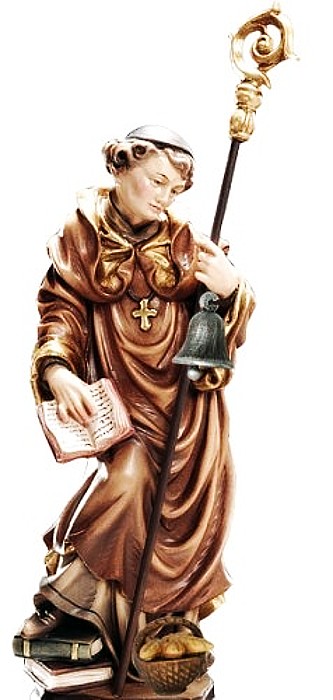
There is another Chapel dedicated to St Emerentiana at the Marian Shrine of Notre Dame de Vie. Venasque, France, as a special Patron of the Secular Institute of Our Lady of Life. The Statue below resides in this Chapel.
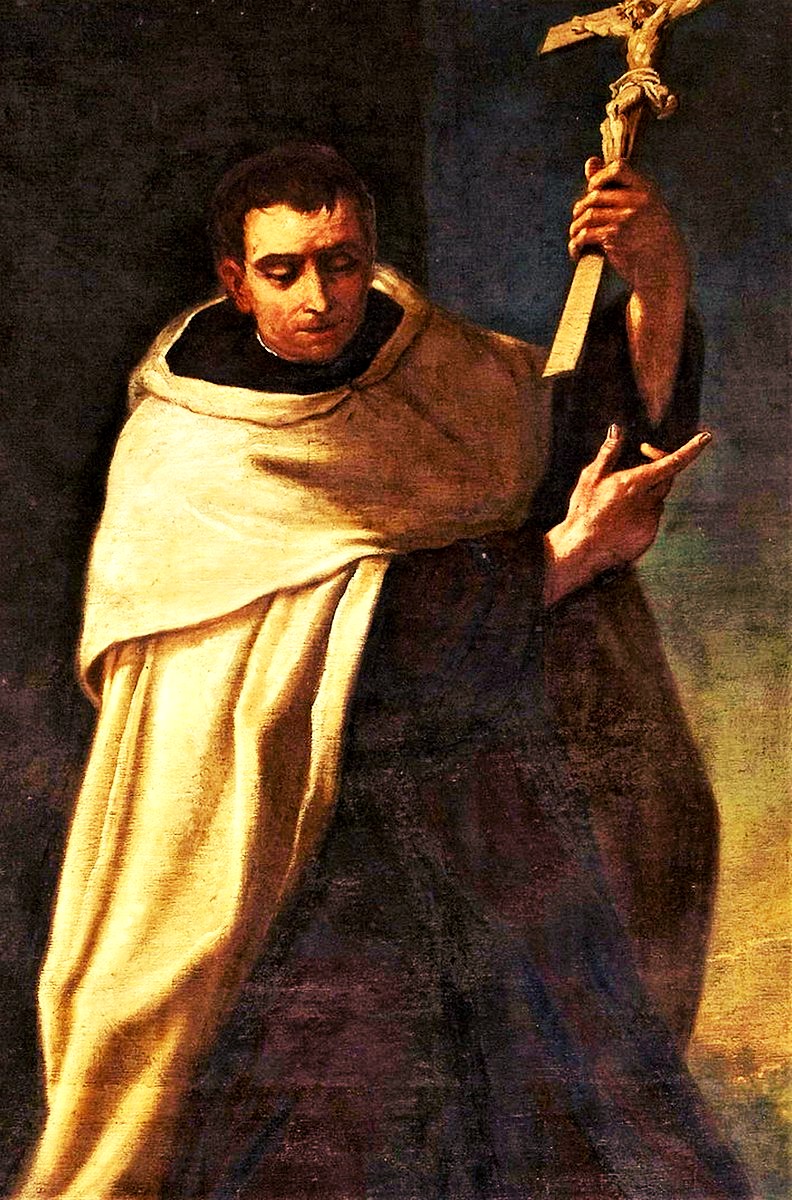
St Raymond of Peñafort OP (1175-1275) “Father of Canon Law” Dominican Priest, Doctor of Canon Law, the Third Master of the Order of Preachers, Founder of the Mercedarian friars, Writer, Teacher, Miracle-Worker. St Raymond of Peñafort’s Feast day was inserted in the General Roman Calendar in 1671 for celebration on 23 January. In 1969 it was moved to 7 January, the day after that of his death. He is the Patron Saint of canon lawyers, specifically and lawyers, in general. Biography: https://anastpaul.com/?s=st+raymond+penafort
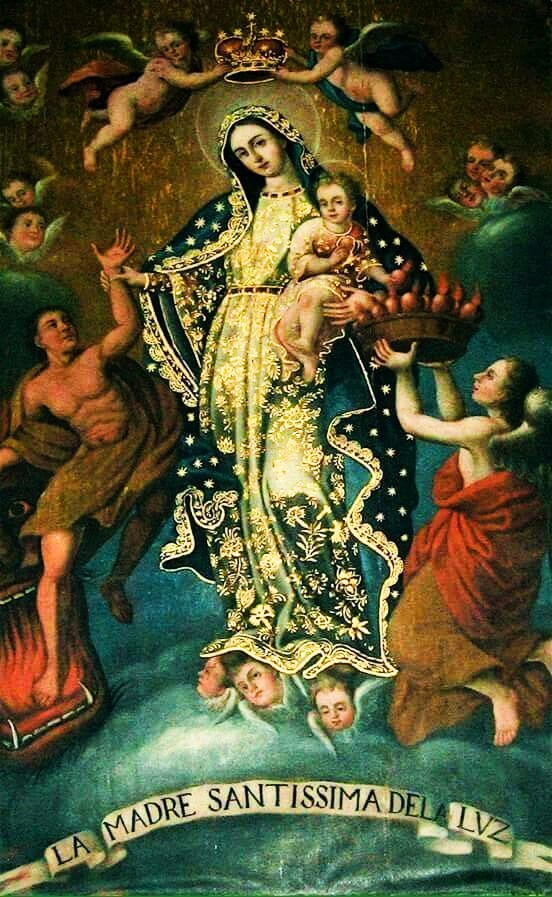
St Ildephonsus (506-667) Archbishop of Toledo. Theologian, Scholar, Marian devotee, Writer, Evangeliser. Abbot Dom Guéranger calls him the Doctor of the Virginity of Mary. Saint Ildephonsus established the feast of the Expectation of the Blessed Virgin Mary, which is still kept in some places on 18 December. Biography: https://anastpaul.wordpress.com/2018/01/23/saint-of-the-day-23-january-st-ildephonsus-607-667/
Bl Juan Infante St Jurmin St Lufthild St Maimbod Bl Margaret of Ravenna Martyrius of Valeria St Messalina of Foligno St Ormond of Mairé St Parmenas the Deacon St Severian the Martyr
One Minute Reflection – 22 January – The Memorial of Saints Vincent of Saragossa (Died 304) Martyr – Wisdom 3:1-8, Luke 21:9-19
“Before all this happens, however, they will seize and persecute you, they will hand you over to the synagogues and to prisons and they will have you led, before kings and governors because of my name …” – Luke 21:12
REFLECTION – “Jesus gives them clear and evident signs of the time when the consummation of the world draws near. He says that there will be wars, turmoil, famines and epidemics everywhere. There will be terrors from heaven and great signs. As another Evangelist says, “All the stars shall fall and the heaven be rolled up like a scroll and its powers will be shaken.”
In the middle of this, the Saviour places what refers to the capture of Jerusalem. He mixes the accounts together in both parts of the narrative. Before all these things, He says, “They will lay their hands on you and persecute you, delivering you up to synagogues and to prisons and bringing you before kings and rulers for my name’s sake. This will be a witness to you.” Before the times of consummation, the land of the Jews was taken captive and the Roman armies overran it. They burned the temple, overthrew their national government and stopped the means for legal worship. They no longer had sacrifices, now that the temple was destroyed. The country of the Jews together with Jerusalem itself was totally laid waste. Before these things happened, they persecuted the blessed disciples. They imprisoned them and had a part in unendurable trials. They brought the disciples before judges and sent them to kings. Paul was sent to Rome to Caesar.
Christ promises, however, that He will deliver them certainly and completely. He says that a hair of your head will not perish!” – St Cyril of Alexandria (376-444) Bishop of Alexandria, Father and Doctor of the Incarnation the Church (Commentary on Luke, Homily 139)
PRAYER – True Light of the world, Lord Jesus Christ, as You enlighten all men for their salvation, give us the grace, we pray, to herald Your coming by preparing the ways of justice and of peace. We walk in faith and by Your Light as St Vincent, fearless of men to the end and trusting only in Your grace, inspires us to follow. Grant that his prayers may assist us on our path. Who live and reign with the Father and the Holy Spirit, God forever, amen.
Saint of the Day – 22 January – Blessed Maria Mancini of Pisa OP (1356-1431) Widow, Second Order Nun of the Order of Preachers, spiritual disciple of St Catherine of Siena, Prioress, Mystic, Reformer, Apostle of the poor and the sick. Born as Caterina Mancini in 1356 in Pisa, Italy and died on 22 January 1431 in Pisa, Italy of natural causes. Additional Memorial – 30 January (Dominicans). Twice widowed, she saw all her seven children die. On the advice of St Catherine of Siena, Caterina first took the habit of the Third Order before entering the Monastery founded by the Blessed Chiara Gambacorti (1362-1420) in Pisa. Here she lived as a Nun, completely devoted to contemplation and penance.
The Roman Martyrology states: “In Pisa, Blessed Maria Mancini, who, twice widowed and all her children lost, under the exhortation of St Catherine of Siena, began community life in the Monastery of St Domenic, which she led for ten years.”
Caterina was born in Pisa, of noble parentage and almost in babyhood began enjoying the miraculous favours with which her life was filled. At the age of three, she was warned by some heavenly agency ,that the porch on which she had been placed by a nurse,was unsafe. Her cries attracted the nurse’s attention and they had barely left the porch, when it collapsed. When she was five, she beheld, in an ecstasy, the dungeon of a place in Pisa, in which Peter Gambacorti, one of the leading citizens, was being tortured. At Caterina’s prayer, the rope broke and the man was released. Our Lady told the little girl to say prayers everyday for this man because he would one day be her benefactor.
Caterina would have much preferred the religious life to marriage but she obeyed her parents and was married at the age of twelve. Widowed at sixteen, she was compelled to marry again. Of her seven children, only one survived the death of her second husband and Caterina learned, through a vision, that this child, too, was soon to be taken from her. Thus she found herself, at the age of twenty five, twice widowed and bereft of all her children. Refusing a third marriage, she devoted herself to prayers and works of charity.
She soon worked out for herself a severe schedule of prayers and good works, fasting and mortifications. She tended the sick and the poor, bringing them into her own home and regarding them as Our Lord Himself. She gave her goods to the poor and laboured for them, with her own hands. Our Lord was pleased to show her that He approved of her works by appearing to her in the guise of a poor young man, sick and in need of both food and medicine. She carefully dressed His wounds and she was rewarded by the revelation that He was, in reality her Redeemer ,Whom she had served.
St Catherine of Siena visited Pisa at about this time and the two saintly women were drawn together into a holy friendship. As they prayed together in the Dominican Church one day, they were surrounded by a bright cloud, out of which flew a white dove. They conversed joyfully on spiritual matters and were mutually strengthened by the meeting.
On the advice of St Catherine of Siena, Caterina retired to an enclosed Convent of the Second Order. In religion, she was given the name Maria by which she is usually known. She embraced the religious life in all its austerity and, with Blessed Clare GambarcotI and a few other members of the Convent, she founded a new and much more austere house, which had been built by Peter GambacortI. Our Lady’s prophecy of his benefactions was thus fulfilled.
Blessed Maria was favoured with many visions and was in almost constant prayer. She became Prioress of the house on the death of her friend Blessed Clare Gambacorti and ruled it with justice and holiness, until her death.
O God, who didst enrich Blessed Maria, with the abundance of the gift of contemplation and of singular charity towards her neighbour, grant us that, in imitation of her, by meditation on heavenly things and showing mercy to others, we may merit to attain, with her, everlasting glory. Through Christ our Lord. Amen.
St Anastasius the Persian St Antonio della Chiesa St Blaesilla of Rome St Brithwald of Ramsbury St Caterina Volpicelli St Dominic of Sora Bl Esteve Santacana Armengol St Francis Gil de Frederich de Sans
Blessed Giuseppe Giaccardo SSP (1896-1948) Bl Giuseppe Nascimbeni St Guadentius of Novara Bl Ladislao Batthyany-Strattmann Bl Laura Vicuna Blessed Maria Mancini of Pisa OP (1356-1431) Widow, Thjrd Order Sister of the Order of Preachers St Mateo Alonso de Leciñana
Saint of the Day – 21 January – Saint Epiphanius of Pavia (439–496) Bishop of Pavia, Italy from from 466 until his death. Papal and Secular Mediator and Peacemaker, Known as – “Epiphanius the Peacemaker,” “The Glory of Italy,” “The Light of Bishops.” Born in c 439 at Pavia, Italy and died in 496 at Burgundy, France of a fever.
The Roman Martyrology for 21 January reads : “In Pavia, Saint Epifanio, Bishop , who, at the time of the barbarian invasions, worked zealously for the reconciliation of the peoples, for the liberation of prisoners and for the reconstruction of the destroyed City.”
Our primary source for Epiphanius’ life is the Vita Epifanius written by St Magnus Felix Ennodius (c 473-521) , who knew him personally, travelling with the Bishop on his mission to King Gundobad of the Burgundians in 494–6. According to St Ennodius, Epiphanius’ father was Maurus and his mother Focaria, who was related to Mirocle, Bishop of Milan (304-326). Epiphanius was the brother of Saint Honorata and Saint Liberata.
He joined the household of Bishop Crispinus at the age of eight for his education and became a lector, learning to read and write, as well as stenography. At the age of 18 he was Ordained Subdeacon and Deacon at 20. Bishop Crispinus, as he lay dying, appointed Epiphanius as his successor in the presence of the ex-consul Flavius Rusticus. Although he resisted the appointment, Epiphanius was made Bishop in Milan in his 28th year.
Shortly after becoming Bishop, Epiphanius was asked to intervene between Anthemius and the barbarian leader Ricimer, appealing to both parties for peace. More peacemaking and diplomatic missions followed and most of these to high-ranking figures proved to be successful endeavours. Religious dignitaries such as Epiphanius had wide-ranging influence on the rulers and aristocrats during this period. In the eighth year of his episcopate (spring 475), the Emperor Julius Nepos, sent him on a diplomatic mission to Euric about Visigothic incursions.
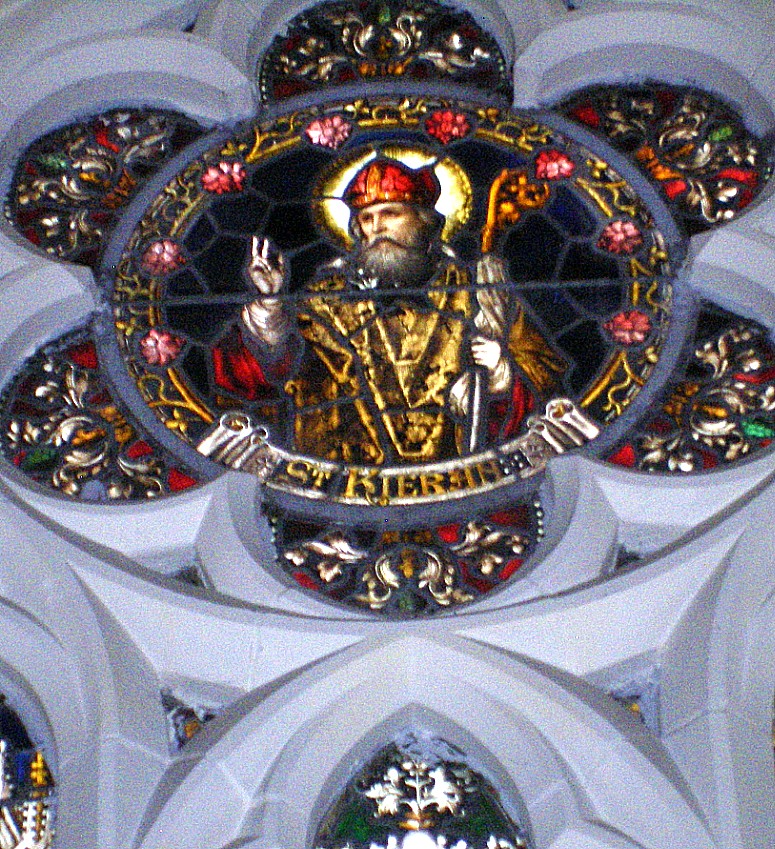
I presume St Epiphanius is the Bishop on the right
Another success was Epiphanius’ negotiations over the ransom of his sister, St Honorata, who had been abducted from the Monastery of St Vincent in Pavia, during the war between Theodoric the Great and Odoacer.
Epiphanius actively worked on the reconstruction of Pavia which, in 476, had been sacked and destroyed by rival armies. Epiphanius visited the victors several times, to implore clemency for the vanquished. In particular, he successfully implored the clemency of Odoacer, of Theodoric and of the King of Burgundians, Gundobaldo, from whom he obtained the release of six thousand prisoners.
In 496 , returning from Ravenna , where he had gone for yet another legation to King Theodoric in favour of Pavia and the entire Province, he fell ill in Parma with pneumonia, was transported to his home in Pavia, where he died at the age of fifty-eight years, after thirty years as Bishop.
Shortly after his death , Epiphanius was revered as a saint and numerous miracles were attributed to him . In 962 most of his relics were moved to Hildesheim to give this region more prestige and heavenly help. The relics of Epiphanius are still contained in a golden casket placed under the central Altar of the Cathedral of Hildesheim.
Tympanon depicting Christ, Saint Godehard and Saint Epiphanius, on the StGodehard Basilica in Hildesheim, Germany.
St Agnes of Aislinger St Alban Bartholomew Roe St Anastasius of Constantinople St Aquila of Trebizond St Brigid of Kilbride St Candidus of Trebizond Bl Edward Stransham St Epiphanius of Pavia (c 439–496) Bishop St Eugenius of Trebizond Bl Franciscus Bang St Gunthildis of Biblisheim
Blessed Josefa María Inés de Benigánim OAD (1625–1696) Nun of the Discalced Augustinian Nuns with the religious name of “Josefa María of Saint Agnes,” Virgin, Mystic, gifted with the charism of prophecy and counsel. She became known for her profound spiritual and theological insight as well as for her severe austerities she practised during her life. Her body is incorrupt. Biography: https://anastpaul.com/2020/01/21/saint-of-the-day-21-january-blessed-josefa-maria-ines-de-beniganim-oad-1625-1696/
St John Yi Yun-on St Lawdog St Maccallin of Waulsort
St Nicholas Woodfen St Patroclus of Troyes St Publius of Malta Bl Thomas Reynolds St Valerian of Trebizond St Vimin of Holywood St Zacharias the Angelic
Blessed Martyrs of Laval – 19 Beati: Fifteen men and four women who were martyred in Laval, France by anti-Catholic French Revolutionaries. • Blessed André Duliou • Blessed Augustin-Emmanuel Philippot • Blessed François Duchesne • Blessed François Migoret-Lamberdière • Blessed Françoise Mézière • Blessed Françoise Tréhet • Blessed Jacques André • Blessed Jacques Burin • Blessed Jean-Baptiste Triquerie • Blessed Jean-Marie Gallot • Blessed Jeanne Veron • Blessed John Baptist Turpin du Cormier • Blessed Joseph Pellé • Blessed Julien Moulé • Blessed Julien-François Morin • Blessed Louis Gastineau • Blessed Marie Lhuilier • Blessed Pierre Thomas • Blessed René-Louis Ambroise The were born in France and they were martyred on several dates in 1794 in Laval, Mayenne, France. They were Beatified on 19 June 1955 by Pope Pius XII at Rome, Italy.
Martyrs of Rome – 30 Saints: Thirty Christian soldiers executed together in the persecutions of Diocletian. They were martyred in 304 in Rome, Italy.
Martyrs of Tarragona: Augurius, Eulogius, Fructuosus.
Saint of the Day – 20 January – Saint Henry of Uppsala (Died c 1156) Martyr, Bishop of Uppsala, (then in eastern Sweden), Missionary. Born in England and died struck with an axe in c 1156 at Nousis, Finland. Patronages – against storms, of Finland. Also known as – Henry of Finland. Henry of Sweden, Heikki, Henrik. Additional Memorial – 18 June (translation of his relics).
According to his Vita (the legend of his life), which was written nearly one hundred years after his death, Henry was born in the early twelfth century and reigned in the See of Uppsala during the time when King Saint Eric of Sweden (also a Martyr) ruled the country. Apparently, Bishop, Henry and the Monarch were good friends and brothers in the Faith and Henry’s biographer blissfully describes this period in Sweden, as Christendom at its finest.
Turning his attention eastward, King Eric, decided to do battle with the pagan Finns, who were separated from Uppsala by the Gulf of Bothnia. Some legends attribute Eric’s campaign against the Finns as retaliatory measures for their plundering activities in Sweden. Other sources say that Eric and Henry worked in tandem and their motivations were largely evangelical. By conquering the Finns, the Bishop and the King hoped to win them over the Christianity.
Whatever their true motivations, King Eric and Bishop Henry conquered Finland and subsequently baptiSed the locals and built Churches. The Catholic Cathedral in Helsinki, Finland’s Capital City, is named in Henry’s honour, to recognise the credit that Finnish Christians give to this saintly Bishop for giving them their faith.
Bishop Henry Baptises the Finns at the spring of Kuppis.
King Eric returned to his home in Swede, but Henry stayed in Finland, as he loved serving as a Missionary in Finland, evangelising and converting numerous numbers.
Henry was murdered by a soldier named Lalli. Lalli was a Baptised Christian who had murdered another soldier. After examining the case, Henry excommunicated Lalli, who flew into a rage and struck Henry with an axe. The murder of Henry is believed to have occurred in the year 1156. Immediately after Henry’s death, his legend records, many miracles began to occur around his tomb and in the surrounding towns – children were raised from the dead, a blind woman’s eyesight was restored, fishermen survived terrible storms at sea.
St Henry is an important figure in the medieval history of Finland and there are a plethora of colourful poems and legends written about his life.
Devotion to St Henry, which spread throughout Finland over subsequent centuries, is a beautiful testament to the pride that countries throughout the globe have taken in their origin stories of the brave men and women who have brought the Good News of Christ to their homeland.
Henry was buried at buried at Nousis in Finland and on 18 June 1300 his relics were translated to Totku but they were stolen by the Russian troops in 1720.
He was Canonised and declared Patron of Finland in 1158 by Pope Adrian IV, who had also been a Missionary in the area.
St Ascla of Antinoe Bl Basil Anthony Marie Moreau St Basilides the Senator St Bassus the Senator Bl Benedict Ricasoli Bl Bernardo of Poncelli Bl Cyprian Michael Iwene Tansi St Daniel of Cambron Bl Didier of Thérouanne St Eusebius the Senator St Eustochia Calafato
St Eutyches the Senator St Fechin of Fobhar Bl Francesco Paoli Saint Henry of Uppsala (Died c 1156) Bishop, Martyr Bl Jeroni Fábregas Camí St Maria Cristina dell’Immacolata Concezione St Molagga of Fermoy St Neophytus of Nicaea St Stephen Min Kuk-ka St Wulfsin
Saint of the Day – 18 January – Saint Prisca (1st Century) Child Virgin Martyr. Born to the imperial Roman hristian nobility and died by being stabbed with a sword in 275 in Rome, Italy. Also known as – Priscilla, Prisque.
The Roman Martyrology reads: “In the City of Rome, the holy Virgin and Martyr Prisca; after many tortures she gained the Crown of Martyrdom under Emperor Claudius II (about 270).”
Born to Christian parents of a noble family, Prisca was raised during the reign of the Roman Emperor Claudius II. While Claudius did not persecute Christians with the same fervour as other Roman Emperors, Christians still did not practice their faith openly. In fact, Prisca’s parents went to great lengths to conceal their faith and thus they were not suspected of being Christians.
Prisca, however, did not feel the need to take precaution. The young girl openly professed her dedication to Christ and eventually, she was reported to the Emperor. Claudius had her arrested and commanded her to make a sacrifice to Apollo, the pagan god of the sun.
According to the legend, Prisca refused and was tortured for disobeying. Then, suddenly, a bright, yellow light shone about her and she appeared to be a little star.
Claudius ordered that Prisca be taken away to prison, in the hopes that she would abandon Christ. When all efforts to change her mind were unsuccessful, she was taken to an amphitheatre and thrown in with a lion.
As the crowd watched, Prisca stood fearless. According to legend, the lion walked toward the barefoot girl and then gently licked her feet. Disgusted by his thwarted efforts to dissuade Prisca, Claudius had her stabbed to death with a sword.
Seventh-century accounts of the grave sites of Roman Martyrs refer to the discovery of an epitaph of a Roman Christian named Priscilla in a large catacomb and identifies her place of interment on the Via Salaria as the Catacomb of Priscilla.
Feast of the Chair of St Peter: In 1960, Pope John XXIII removed from the General Roman Calendar, the 18 January Feast of the Chair of Peter, Two Liturgical Feasts were celebrated in Rome, in Honour of Chairs of Saint Peter, one of which was kept in the Baptismal Chapel of St Peter’s Basilica, the other at the Catacomb of Priscilla. The dates of these celebrations are 18 January and 22 February. The two Feasts were included in the Tridentine Calendar with the rank of Double, which, in 1604, Pope Clement VIII raised to the rank of Greater Double. Those traditional Catholics. who do not accept the changes made by Pope John XXIII, continue to celebrate both Feast days: “Saint Peter’s Chair at Rome” on 18 January and the “Chair of Saint Peter at Antioch” on 22 February. https://anastpaul.com/2017/02/22/feast-of-the-chair-of-st-peter-22-february/
St Archelais the Martyr Bl Beatrix of Este the Younger Bl Charlotte Lucas St Catus
Blessed Cristina Ciccarelli OSA (1481–1543) Religious of the Order of Saint Augustine, Mystic, Stigmatist, Apostle of the poor, Reformer, she had a had a particular devotion to the Eucharist and to the Passion and Death of Christ, she was granted the gift of Prophecy, visions and levitation. About Bl Cristina: https://anastpaul.com/2020/01/18/saint-of-the-day-18-january-blessed-cristina-ciccarelli-osa-1481-1543/
St Day/Dye St Deicola of Lure Bl Fazzio of Verona Bl Félicité Pricet St Leobard of Tours
Bl Monique Pichery St Moseus of Astas St Prisca of Rome (1st Century) Child Virgin Martyr St Susanna the Martyr St Thecla the Martyr St Ulfrid of Sverige Bl Victoire Gusteau St Volusian of Tours
Martyrs of Carthage – 3 saints Martyrs of Egypt -37 saints Martyrs of Nicaea – 3 saints
Quote/s of the Day – 17 January – The Memorial of St Anthony Abbot (251-356)
“The days are coming when men will go mad and, when they meet a man. who has kept his senses, they will rise up against him, saying, “You are mad because you are not like us!”
“I saw the snares that the enemy spreads out over the world and I said, groaning, “What can get through from such snares?” Then I heard a voice saying to me, “Humility.”
“Reject pride and consider everyone more righteous than yourself.”
Saint of the Day – 17 January – Blessed Gamelbert of Michaelsbuch (c 720-c 802) Priest, Monk, Hermit. Born in c 720 in Bavaria (in modern Germany) and died in c 802 of natural causes.
“Such was his kindness of heart, that he used to buy the little birds caught by the peasants, in order to set them free. He never allowed his servants to work in the fields or woods, if bad weather threatened. He valued, above everything, peace and concord and kept the peace among his parishioners, as far as he possibly could.” – from “The Little Bollandists” by Monsignor Paul Guérin, 1882
Gamelbert was of noble descent and a Lord of Michaelsbuch. After a pilgrimage to Rome, Gamelbert became a Priest and then the Parish Priest in Michaelsbuch, Germany for over 50 years.
In the mid-8th Century he acquired from Duke Tassilo III a piece of woodland on the opposite bank of the Danube between Mariaposching and Deggendorf, for which he had to pay a tax known as the Medema. From this was derived the name of Metten both for the place itself and for the Monastery which he established there, Metten Abbey..
The first Abbot was Gamelbert’s Godson Blessed Utto (Feast day 3 October), who directed the construction of the Monastery from his hermitage (the present Uttobrunn). In 766 twelve monks arrived from Reichenau Abbey as the first official occupants, although the place was well settled by then
In art, Gamelbert is represented as a Priest or as a pilgrim surrounded by birds.
Blessed Gamelbert was Beatified on 25 August 1909 by Pope Saint Pius X (cultus confirmed).
St Achillas of Sketis St Amoes of Sketis St Antony of Rome Bl Euphemia Domitilla Blessed Gamelbert of Michaelsbuch (c 720-c 802) Priest St Genitus St Genulfus St Jenaro Sánchez Delgadillo St John of Rome Bl Joseph of Freising St Julian Sabas the Elder St Marcellus of Die St Merulus of Rome St Mildgytha St Nennius St Neosnadia St Pior St Richimir
Saint of the Day – 16 January – Saint Pope Marcellus I (Died 309) Papal Ascension May-June 308. Also known as – Marcel, Marcelo. Patronage – Stablemen.
Nothing of Marcellus’ life before his papacy has survived the centuries. He became Pope at the end of the persecutions of Diocletian in aound 3089. The persecutions had disrupted the Church so much, that there had been a gap of over a year without a Pope.
Once he was elected, he faced several challenges, including reconsituting the clergy, which had been decimated and whose remnant had practiced their vocation only covertly and with the expectation of martyrdom. He worked hard to recover and welcome back all who had denied the faith in order to keep from being murdered.
When a group of the apostatised, known as the Lapsi, refused to do penance, Marcellus refused to allow their return to the Church. Some of these caused such civil disruption that Emperor Maxentius exiled the Pope in order to settle the matter.
Legend says that Marcellus was forced to work as a stable slave as punishment, however we do know that he died of the terrible conditions he suffered in exile and is considered a Martyr because of that.
The account in the Liber Pontificalis continues: “But although he served many days in the stable, he did not cease his service to the Lord with prayers and fastings. Moreover, in the ninth month, all his clergy came by night and removed him by night from the stable. A certain matron and widow whose name was Lucina, who had lived with her husband Marcus for 15 years and had been 19 years a widow, received the blessed man. And she dedicated her house as a Church in the name of the blessed Marcellus and there day and night the Lord Jesus Christ was confessed with hymns and prayers.”
This is the Church known in modern times as San Lorenzo in Lucina where a Basilica was subsequently built in the mid-4th century, restored and embellished numerous times throughout the centuries. Traces of the original Roman structure may be seen amidst the foundations even to this day.
The Liber Pontificalis continues: “But Maxentius heard of it and sent and seized the blessed Marcellus a second time and gave orders that in that very Church, boards should be laid down and the animals of the stable should be collected and kept there and the blessed Marcellus should tend them. And he died in the service of the animals, clad only in a hair shirt.
And the blessed Lucina took is body and he was buried in the cemetery of Priscilla on the Via Salaria, 16 January.
And the Bishopric was empty 20 days.
Lucina herself was condemned by proscription.”
The remains of the Martyred Pope were later transferred to the Basilica of San Marcello al Corso in Rome. An epitaph of Pope Saint Marcellus, written by Pope Damasus about 80 years after Marcellus’s Martyrdom, was found in the cemetery of Priscilla.
St Juana Maria Condesa Lluch Bl Konrad II of Mondsee St Leobazio St Liberata of Pavia St Pope Marcellus I (Died 309) Martyr, Papal Ascension May-June 308 St Melas of Rhinocolura St Priscilla of Rome St Sigeberht of East Anglia St Titian of Oderzo St Triverius St Valerius of Sorrento
Saint of the Day – 15 January – Saint Romedius of Nonsberg/theologians Hermit, Penitent., Pilgrim. Born in Thaur, Tyrol, Austria and died in the 4th Century in Salzburg, Austria of natural causes. Also known as – Romedio of Hohenwart, Romedio of Salzburg, Romedio of Sanzeno, Romedio of Thaur. Romedio. Additional Memorial – 1st Sunday in October (translation of relics). Patronages – against accidents, against bone diseases, against danger at sea, against fever, against fire, against floods, against hail, against headaches, against toothaches, of prisoners, theology students/theologians, travellers/pilgrims. Canonised on 24 July 1907 by Pope Pius X (cultus confirmation).
The Roman Martyrology states: “In the Val di Non in Trentino, St Romedius, an anchorite, who, having given his possessions to the Church, led a life of penance in the hermitage that still bears his name today.”
Romedius was the son and heir of the wealthy Count of Thaur, the lord of a castle near Innsbruck and owner of salt pans in the valley of the River Inn. After a pilgrimage to Rome, Romedius gave all his possessions to the Church, withdrawing into a hermitage in grottoes in the Val di Non. he was accompanied by two companions, Abraham and David.
A later date emerges from the history of his works and extensive research. It is most likely that Romedius came from the family of the Counts of Andechs , lived in the 11th century, gave up his fortune in Thaur and joined the then spreading mendicant movement. After a visit to the Bishop of Trento , he visited the Martyrs’ graves of Alexander , Martyrius and Sisinniusin Sanzeno. It is believed that he died at the age of 74.
Romedius is often depicted alongside or astride a bear. According to his hagiography he wanted to visit the friend of his youth, St Vigilius, Bishop of Trento (who died in 405) but his horse was torn to pieces by a wild bear. Romedius, however, had the bear bridled by his disciple David. The bear became docile and carried Romedius on its back to Trento.
Upon Romedius’ death, his body was laid to rest in a small tomb above his cave in the mountains, a site that was soon visited by pilgrims. The Sanctuary of San Romedio grew from the little Church that was built to venerate him, to a popular pilgrimage site. The Santuario di San Romedio is across the lake from Cles at the head of the Val di Non, above the village of Sanzeno. The Sanctuary where Romedius lived with his bear companion, is now a complex of several Churches, from the Romanesque period to the 20th century beyond a gateway on the forested slopes. Votive offerings of crutches line the walls of the narrow stone stairwell up to the highest chapel, said to mark the site of the Saint’s retreat.
Staircase with votive offerings in the Hermitage at Tavon, 1706
His local cult, which consolidated itself in the course of the 11th century, was officially recognised in the twelfth by the Bishop of Trento. In 1795, permission was given for special offices in his name in the Diocese of Brixen, which at that time, included the Northern Tyrol. His cult remains popular in Trentino, Bavaria, and the Tyrol.
Romedius’ Bear In remembrance of this legend, in 1958 Italian Senator G. G. Gallarati Scotti, honorary member of the committee for the foundation of the World Wildlife Fund in Italy, purchased Charlie, a bear intended to be killed and donated it to the Sanctuary of San Romedius, in the Valle di Non.
Today, the Province of Trentino protects the last brown bears of the Alps in the Adamello-Brenta National Park and, near the Sanctuary, takes care of young bears born in captivity in Trentino.
Relief at the pilgrimage church near Thaur
In the work known as Illustrissimi, a collection of letters written by Pope John Paul I when he was Patriarch of Venice, Romedius’ bear is one of the “recipients” of the letters.
St Arnold Janssen SVD (1837-1909) Priest, Founder, Missionary, Teacher, advocate of the Sacred Heart, Director of the Apostleship of Prayer, He founded the Society of the Divine Word, a Catholic missionary religious congregation, also known as the Divine Word Missionaries, as well as two congregations for women. Biography: https://anastpaul.com/2020/01/15/saint-of-the-day-15-january-st-arnold-janssen-svd-1837-1909/
St Blaithmaic of Iona St Bonitus of Clermont St Britta St Ceolwulf of Northumbria St Emebert of Cambrai St Ephysius of Sardinia St Eugyppius St Francis Ferdinand de Capillas Bl Geoffrey of Peronne Bl Giacomo Villa St Gwrnerth St Habakkuk the Prophet St Isidore of Scété St Isidore the Egyptian St Ita of Killeedy St John Calabytes St Liewellyn St Lleudadd of Bardsey St Macarius of Egypt St Malard of Chartres
St Maurus OSB (c 512-584) Benedictine Monk, Abbot and Deacon, miracle-worker. Maurus was the first disciple of Saint Benedict of Nursia (512–584). He is mentioned in Saint Gregory the Great’s biography of the latter as the first oblate, offered to the Monastery by his noble Roman parents as a young boy, to be brought up in the monastic life. The formula and blessing of St Maurus were universally adopted and approved for use in the Blessing of the Sick. His Life and Miracles: https://anastpaul.com/2021/01/15/saint-of-the-day-15-january-saint-maurus-osb-c-512-584/
Bl Peter of Castelnau St Placid St Probus of Rieti St Romedio of Nonsberg St Sawl St Secondina of Anagni St Secundina of Rome St Tarsicia of Rodez St Teath
Martyrs of Suances – 5 Beati: A Priest and four laymen in the Archdiocese of Burgos, Spain who were Martyred together in the Spanish Civil War. • Blessed Donato Rodríguez García • Blessed Emilio Huidobro Corrales • Blessed Germán García y García • Blessed Valentín Palencia Marquina • Blessed Zacarías Cuesta Campo They were martyred on 15 January 1937 near Suances, Cantabria, Spain The Beatification was celebrated in Burgos, Spain, presided by Cardinal Angelo Amato.
One Minute Reflection – 14 January – “Month of the Most Holy Name of Jesus” – 2 Timothy 4:1-8; Matthew 5:13-19 and the Memorial of St Hilary of Poitiers (315-368) Father & Doctor of the Church
“I have come, not to abolish but to fulfil.” … Matthew 5:17
REFLECTION – “In Him, the promise made through the shadows of prophecy, stands revealed, along with the full meaning of the precepts of the law. He is the One Who teaches the truth of prophecy, through His presence and makes obedience to the commandments possible, through grace. In the preaching of the holy Gospel all should receive a strengthening of their faith. No-one should be ashamed of the Cross of Christ, through which the world has been redeemed. No-one should fear to suffer for the sake of justice, no-one should lose confidence in the reward that has been promised. The way to rest is through toil, the way to life is through death. Christ has taken on Himself the whole weakness of our lowly human nature. If then, we are steadfast in our faith in Him and in our love for Him, we win the victory that He has won, we receive what He has promised. When it comes to obeying the commandments or enduring adversity, the words uttered by the Father should always echo in our ears – “This is my Son, the beloved, in whom I am well pleased, listen to Him.” … St Pope Leo the Great (400-461) Father and Doctor of the Church (An excerpt from Sermo 51).
PRAYER – God our Saviour, through the grace of Baptism, You made us children of light. You lead us by the hand and guide and protect us by Your commandments. Fill us with joy at Your nearness and the light of Your Son, by whose beam we see You and follow. St Hilary was a shining examples to us all, grant, we pray, that his prayers may aid us. Through Jesus our Lord and Christ, with the Holy Spirit, God forever, amen.
Saint of the Day – 14 January – St Godfrey of Cappenberg (c 1097-1127) Friar of the Order of St Norbert (the Premonstratensians or Norbertines), Husband and Father, Monk and Founder of Monasteries, Apostle of the Sick and the poor. Born in c 1097 at Cappenberg Castle, Westphalia, Germany and died on 13 January 1127 at the Abbey of Ilbenstadt, Germany of natural causes. Also known as – Godfrey of Ilbenstadt, Godfrey of Kappenberg. Gaufrid, Geoffrey, Geoffroy, Geofroi, Gioffredo, Godefrid, Godefridus, Godefroid, Godfrey, Goffredo, Goffrey, Gofrido, Gotfrid, Gothofred, Gottfrid, Gottfried, Jeffrey.
Godfrey was born into the wealth and prestige of the Counts of Cappenberg. In his early adulthood he played an active role in supporting the cause of the Roman Pontiff against Emperor Henry IV. In 1121 he encountered St. Norbert at Cologne and was so struck by his lifestyle and preaching that he immediately made plans to give away all his possessions and enter the infant Norbertine Order.
Together with his brother Otto and his wife Judith, he handed over Cappenberg Castle to St Norbert on 31 May 1122, thus establishing the first foundation of the Order in Germany. Both Otto and Judith followed Godfrey’s example and embraced the religious life of the new Order. The further donation of his estates at Varlar and Ilbenstadt to St. Norbert caused an uproar among the local nobility who viewed it as a threat to their established aristocracy. Under the leadership of Godfrey’s hostile father-in-law, Frederick of Arnsberg, an unsuccessful military assault was made upon the new Monastery at Cappenberg.
Through all of these trials Godfrey remained steadfast in his desire to be a Norbertine. When things calmed down, Godfrey received the Habit from the hand of St Norbert, himself.
Godfrey especially loved to care for the poor and sick in the hospital attached to the Abbey. St Norbert wanted to have him by his side at Magdeburg but Godfrey felt out of place in the noisy northern metropolis and was granted permission to return to Cappenberg. It was on his way back to Mount. Cappenberg that Godfrey fell ill at Ilbenstadt. Surrounded by his brethren and his brother Otto, he made peace with them all: “My brothers, through love for the Order, through zeal for the glory of God, I have occasionally reprimanded some of you a bit too harshly. I beg pardon from you now.” Moments later, seeing a vision of Angels, Godfrey exclaimed, “How beautiful! How beautiful! The Messengers of my Creator and God have finally come!” With that he fell asleep in the Lord. It was 13 January 1127.
Godfrey is pictured with the crown of nobility which he rejected for the sake of Christ’s Kingdom, with the skull of penitence recalling his severe trials and with one of the poorest of the poor, whom he loved to serve so much. St Godfrey’s relics are enshrined in the Churches in Ilbenstadt and Cappenberg, Germany.
Generous God, You raise up in the Church, men and women who out of love for You, are willing to follow in poverty the poverty of the poor Christ. Out of their abundance, others are cared for in their need. We honour in prayer and praise, he example of Godfrey of Cappenberg who, in spite of even violent opposition, gave to Saint Norbert his home as a new community and who himself, became a faithful disciple of that man of God. Inspired by his openness of heart and hands, lead us to build up the Body of Christ by our generous response to the Gospel. We ask this in the name of Jesus Christ in the communion of the Holy Spirit this day and forever and ever. Amen
Bl Amadeus of Clermont St Barbasymas St Caldeoldus of Vienne St Datius of Milan Bl Devasahayam Pillai St Engelmaro St Eufrasio of Clermont St Euphrasius the Martyr
St Felix of Rome St Fermin of Mende St Glycerius of Antioch St Godfrey of Cappenberg (c 1097-1127) Monk St Isaias the Martyr St Jesaja of Sinai St Macrina the Elder St Nino of Georgia Bl Odoric of Pordenone
St Potitus Bl Rainer of Arnsberg St Sabas of Sinai St Sava of Serbia St Successus of Africa St Theodolus of Sinai Bl William de Sanjulia
Martyrs of Mount Sinai: A group of Monks on Mount Sinai who were Martyred by desert Bedouins. Their names and exact number have not come down to us. Martyred by Bedouins.
Martyrs of Raithu – 43 saints: A group of 43 Monks in the Raithu Desert near Mount Sinai, Palestine, near the Red Sea. They were Martyred for their faith by desert Bedouins. Their names have not come down to us. Martyred by Bedouins.
Saint of the Day – 13 January – Saint Remigius of Rheims (c 438-533) “Apostle of the Franks,” Bishop of Rheims, Lord Chancellor of France, renowned Scholar and Rhetorician, Missionary and zealous Preacher of the Gospel for the glory of the Kingdom of God, miracle-worker. Born at Cerny-en-Laonnois, near Laon, Picardy, in c 438 and died on 13 January 533 of natural causes. Patronages – against epidemics, against fever, against plague, against religious indifference, against snakes, against throat pain, of France, Dhuy, Belgium, Rheims, France, Archdiocese and City, Arignano, Italy. Also known as – Remigius of Reims, emi…, Remigio…, Remigiusz…, Romieg…, Rémi…, Rémy… Additional Memorials – 1 October (translation of relics), 15 January (France, General Calendar), 3rd Sunday in September (Arignano, Italy).
The Roman Martyrology states: “In Rheims, still in Belgian Gaul, now in France, deposition of St Remigius, Bishop – after King Clovis was initiated into the Sacred Baptismal font and the Sacraments of faith, he converted the Franks to Christ and, after more than sixty ‘ years of Episcopate, he left this life remarkable for holiness.”
Remigius was born, into the highest levels of Gallo-Roman society. He was the son of Emilius,Ccount of Laon and of Celina, daughter of the Bishop of Soissons, which Clovis had conquered in 486. From a very early age his intelligence and aptitude for oratory garnered the admiration of teachers and classmates. He studied at RHeims and soon became so noted for his learning and sanctity and his high status, that he was elected Bishop of Rheims at age 21, although still a layman . He was both Lord Chancellor of France and Référendaire of France.
The story of the return of the sacred vessels (most notably the Vase of Soissons), which had been stolen from the Church of Soissons, testifies to the friendly relations existing between him and Clovis, King of the Franks, whom he converted to Christianity with the assistance of Saint Vedast (Vedastus, Vaast, Waast) and Saint Clotilde, the Burgundian Princess who was wife to Clovis. Even before he embraced Christianity, Clovis had showered benefits upon Remigius and the Christians of Rheims and after his victory over the Alamanni in the battle of Tolbiac (probably 496), he requested Remigius to baptise him at Rheims (25 December 496) in the presence of a large company of Franks and Alamanni; according to Saint Gregory of Tours, 3,000 Franks were baptised with Clovis.
St Remigius baptises Clovis I, by the Master of Saint Gilles, c 1500
The work of this man of only twenty-one years of age, in heading such an important Episcopal See, soon revealed the wisdom of this choice. In his famous Historia Francorum, St. Gregory of Tours writes: “St. Remigius was a Bishop of considerable knowledge who, at first, had been steeped in the study of rhetoric but who, so distinguished himself by his holiness that he equalled Sylvester in miracles.”
King Clovis granted Remigius stretches of territory, in which Remigius established and endowed many Churches. He erected Bishoprics at Tournai; Cambrai; Thérouanne, where he personally Consecrated the first Bishop in 499; Arras, where he installed St Vedast and Laon, which he gave to his niece’s husband Gunband. In 530, he Consecrated Medardus, Bishop of Noyon. Remigius’ brother Principius, was Bishop of Soissons and also corresponded with Sidonius Apollinaris, whose letters give a sense of the highly cultivated courtly literary style all three men shared.
The chroniclers of “Gallia Christiana” record that numerous donations were made to Remigius by the Frankish nobles, which he presented to the Cathedral at Rheims.
The charity and kindness of the young prelate soon won over the hearts of the faithful, whom he served devotedly—comforting all those who sought his help with material alms or with consolation and guidance for the soul. However, without neglecting the care of those belonging to the flock of Christ, through Baptism, St. Remigius burned with the desire to conquer new souls.
Although Remigius did not attend any of the Church Councils, in 517 he held a Synod at Rheims, at which after a heated discussion he converted a Bishop of Arian views.
His work in the missionary field of present day Belgium was not always successful, especially in regard to the nobles of the area. Many missionaries would have become discouraged in face of this apparent failure but not the Bishop of Rheims. Steeled by virtue, his soul possessed the mettle of a hero and the confidence of a prophet. Far from disheartening him, the death of the King of the region of Belgium, emboldened the strong-willed prelate.
Childeric left his son Clovis as successor—a 15 year-old adolescent, whom the Franks promptly proclaimed King. It became indispensable to win his friendship from the start and to instil in the youth a holy respect for the Church and its representatives.
Accordingly, Remigius sent him a letter that combined the affection of a father and the authority of a teacher: “In the first place, you must take care that the discernment of the Lord does not abandon you and that your merit remains at the height to which your humility has led you, since, according to the proverb, the actions of men are judged by their end. You should surround yourself with councillors of whom you can be proud. Do good, be chaste and honest. Show yourself to be filled with deference toward your Bishops and always have recourse to their advice. […] Divert yourself with the youths but deliberate with the elders and if you desire to reign, show yourself worthy to do so.”
This letter was the first step of a long journey that led the young King to the Baptismal font in the Cathedral of Rheims.
Many years followed for our Saint of zealous missionary work to announce the Gospel to those who are neither king nor prince, as well as diplomatic guidance of the King and his kingdom. In the final years of his life, God willed that the venerable brow of the Bishop that had been encircled by a halo of glory, be crowned with suffering – his body was bent under numerous illnesses that did not, however, dampen his enthusiasm or lessen his charity. Finally, in 533, Remigius surrendered his soul to God at the age of 96, after seventy years of Episcopal ministry.
Few authentic works of Remigius remain: his “Declamations” were elaborately admired by Sidonius Apollinaris, in a finely turned letter to Remigius, but are now lost. Four letters survive in the collection known as the Epistulae Austrasicae: one containing his defence in the matter of Claudius, two written to Clovis and a fourth to Bishop Falco of Tongres. A brief “Vita” was formerly ascribed to St Venantius Fortunatus. Another, was written by Ignatius, Bishop of Reims. A Commentary on the Pauline Epistles (edited Villalpandus, 1699) is not his work but that of St Remigius.
Remigius’ relics were kept in the Cathedral of Rheims, whence Hincmar had them translated to Épernay during the Viking invasions and thence, in 1099 to the Abbey of Saint-Rémy.
List of Churches dedicated to Saint Remigius:
Saint Remigius Church – a Roman Catholic church in Simpelveld, The Netherlands. Long Clawson – an Anglican church in the village of Long Clawson, Leicestershire. Stoke Holy Cross – an Anglican church in the village of Stoke Holy Cross in South Norfolk Seething Norfolk. Church of England round tower church dedicated to St Margaret and St Remigius. Saint Remigius Church, a Roman Catholic church in Haacht, Belgium.
St Agrecius of Trier St Andrew of Trier St Berno of Cluny St Ðaminh Pham Trong Kham St Designatus of Maastricht St Elian of Brittany St Emil Szramek St Enogatus of Aleth St Erbin of Cornwall
Blessed Francesco Maria Greco (1857-1931) Priest and Founder with Servant of God Raffaela De Vincentis (Sr Maria Teresa De Vincenti (1872-1936) of the Little Workers of the Sacred Hearts, Professor of Dogmatic Theology and Sacred Scripture, Apostle of Charity, devotee of Eucharistic Adoration, the Blessed Virgin and the Sacred and Immaculate Hearts. Blessed Francesco’s Life: https://anastpaul.com/2019/01/13/saint-of-the-day-13-january-blessed-francesco-maria-greco-1857-1931/
Bl Francisca Inés Valverde González St Giuse Pham Trong Ta St Glaphyra St Gumesindus of Córdoba St Hermylus Bl Hildemar of Arrouaise Bl Ida of Argensolles Bl Ivetta of Huy
St Leontius of Caesarea St Luca Pham Trong Thìn Bl María Francisca Espejo y Martos Bl Matteo de Lana St Peter of Capitolíade St Remigius of Rheims (c 438-533) Bishop “Apostle of the Franks” St Servusdei of Córdoba St Stephen of Liège St Stratonicus
Our Morning Offering – 12 January – Seventh day in the Octave of Epiphany, “Month of the Most Holy Name of Jesus” and the Memorial of St Aelred of Rievaulx (1110-1167) “St Bernard of the North”
Behold Me, O Sweet Lord, Behold Me! By St Aelred of Rievaulx O.Cist. (1110-1167)
Behold me, O Sweet Lord, behold me! For I hope. that in Your Loving Kindness, O Most Merciful One, You will behold me, either as a loving Physician to heal, a kind Teacher to correct, or an indulgent Father to pardon… confident in Your Sweet Powerful Mercy and most Merciful Power, I ask, in virtue of Your Sweet Name and of the Mystery of Your Sacred Humanity that, mindful of Your Kindness and unmindful of my ingratitude, You forgive me my sins and heal the languors of my soul. Amen
Saint of the Day – 12 January – Saint Arcadius of Mauretania (Died c 302) Martyr, Hermit. Died by being slowly hacked to death one joint, appendage and limb at a time in c302 at Caesarea, Mauritania (near modern Algiers).
Tradition states that he was a prominent citizen of Caesarea in Mauretania Caesariensis (present-day Cherchell),. He was also a devout Christian and desiring to avoid the forced veneration of the pagan gods, retired to the countryside as a Hermit.
But his absence at the public sacrifices being noted, soldiers were dispatched to find and arrest him. But, instead of Arcadius, they found a relative and there, despite his protests, that he did not know where Arcadius was, they arrested him in place of Arcadius.
Hearing of his relative’s arrest, Arcadius returned to the City and immediately presented himself before the Governor.
He was arrested and suffered a grisly death. His limbs were cut off, joint by joint, until all that remained were his trunk and head. According to his legend, as Arcadius looked around at all the pieces of himself, hacked off and lying on the ground, he could still speak and cried out, “You are happy, my members. Now you truly belong to God. You have all been sacrificed to Him.”
St Bernard of Corleone St Caesaria of Arles St Caroticus Bl Emmanuel d’Abreu St Eutropius St Ferreolus of Grenoble Bl John Gaspard Cratz St John of Ravenna Bl Lucia of Valcaldara
St Probus of Verona St Quinctus the Soldier St Satyrus St Tatiana of Rome St Tigrius St Victorian of Asana Bl Vincent da Cunha
Martyrs of Africa – 44 Saints: A group of 44 Christian soldiers murdered together for their faith in Africa. The only details that survive are four of their names – Castulus, Modestus, Rogatus and Zoticus.
Martyrs of Ephesus – 42 Saints: Forty-two monks martyred at a monastery in Ephesus (modern Turkey) during the persecutions of the Iconoclast Byzantine Emperor Constantine V. Their names have not come down to us. Martyred c 762.
Martyrs of Iona – 38 Saints: Thirty-eight monks martyred in Iona, Ireland. Their names have not come down to us. They were Martyred in 750 at Iona, Ireland.
Saint of the Day – 11 January – Saint Pope Hyginus (Died 142) Papal Ascension c 138. Born in Athens, Greece and died in 142 in Rome, Italy. Also known as – Hygin, Igino.
Tradition holds that during his Papacy he determined the various prerogatives of the clergy and defined the grades of the ecclesiastical hierarchy. Hyginus also instituted Godparents at Baptism to assist the baptised during their Christian life. In addition, he decreed, that all Churches be Consecrated.
Not much is recorded in historical documents about Hyginus’ biographical details, other than, that he was born in Greece. The City of Rome, as the centre of the Empire, drew many different people from the corners of the Empire and was subsequently a very diverse place. Many of these earliest Popes reflected this diversity—a sharp distinction from the medieval Popes who were nearly uniformly of Italian descent.
St Irenaeus says, that the gnostic Valentinus came to Rome in Hyginus’ time, remaining there until St Anicetus became Pontiff
Cerdo, another Gnostic and predecessor of Marcion of Sinope, also lived at Rome in the reign of Hyginus but, by confessing his errors and recanting, he succeeded in obtaining re-admission into the Church. However, he eventually degenerated back into heresy and was expelled from the Church. The Liber Pontificalis also relates, that Pope Hyginus organised the hierarchy and established the order of ecclesiastical precedence.
The ancient sources contain no information as to his having died a martyr. At his death he was buried on the Vatican Hill, near Saint Peter’s Tomb.
Madonna della Vetrana / Our Lady of the Vetrana(Castellana Grotte, Bari, Puglia, Italy (1691) – 11 January:
In Castellana from time immemorial, there was a small Chapel dedicated to the Mother of God which contained a miraculous Fresco which was greatly revered ,after the Madonna had rid the region of the plague in the seventeenth century. Since then, the Shrine became a destination for faithful pilgrims reaping countless miracles, which the Virgin Mother obtained from her Divine Son.
In late 1690 the Church was almost ruined when a serious incident came to disturb the Castellana and the surrounding area. A serious disease spread, carrying death and mourning. Casimiro wrote in 1726. “This evil that made a great slaughter among the people, once attacked, all six children of Hadrian (Count of Conversano) and his wife Isabel Caracciolo. He who loved his wife and children, seeing this danger, resorted to the intercession of the Virgin … All his family was spared from evil. “ Two good priests’ recourse to the intercession of Saint Mary of the Vetrana and on 11 January 1691 one of them heard a voice that ordering the scourge to cease. “The Lady also expressed her desire to expand the Church.“ “So – continues Casimiro – “the Castellana people in recognition of the benefits received from the Virgin, immediately agreed to rebuild and expand the Church of St Maria della Vetrana.” The work lasted only a year and all the citizens of the Castellana took part.
Castellana, began to be known around the world after 23 January 1938, when Prof. Franco Anelli, a Caver, discovered a karst cave system. In 1959 because of this fascinating underground world, Castellana changed its name to ‘Castellana Grotte.‘
The festivities and celebrations on 11 January
St Alexander of Fermo St Anastasius of Suppentonia
St Boadin of Ireland St Breandan of Ireland (the name is not an error) St Eithne St Fedelemia Bl Francis Rogaczewski St Francisca Salesia Aviat St Honorata of Pavia St Pope Hyginus (Died 142) Papal Ascension c 138 St Leucius of Alexandria St Leucius of Brindisi St Liberata of Pavia St Lucius the Soldier St Luminosa of Pavia St Mark the Soldier St Michael of Klopsk St Palaemon St Paldo St Peter Balsam St Peter of Alexandria St Peter of Anea St Peter the Soldier
Saint of the Day – 10 January – Blessed Pope Gregory X TOSF (1210-1276) Bishop of Rome 1272 and Ruler of the Papal States until his death. He was elected on 1 September 1271 following the longest election in the history of the Church and ascended the throne on 27 March. He was a Third Order Franciscan. Born Teobaldo Visconti, in 1210 in Piacenza, Italy and died on 10 January 1276 at Arezzo, Italy of a fever. He was Beatified on 8 July 1713 by Pope Clement XI.
Teobaldo Visconti, a member of the illustrious Visconti family of Piacenza, was born in the City in 1210. In his youth, he was distinguished for his extraordinary virtue and his progress in his studies, especially of the Canon Law, which he began in Italy and pursued at Paris and lastly, at Liege. He was Archdeacon of this last Church, when he received an order from the Pope to preach the Crusade for the recovery of the Holy Land. Incredible were the pains which he took in executing this commission and in reconciling the Christian Princes, who were at variance.
When the Crusade faltered, a tender compassion for the distressed situation of the servants of Christ in those parts, moved the holy Archdeacon of Liege to undertake a dangerous pilgrimage to Palestine, in order to comfort them, and at the same time to satisfy his devotion by visiting the holy places.
In the interim, the See of Rome had been vacant for almost three years, from the death of Clement IV, in November 1268, the Cardinals, who were assembled at Viterbo, could not reach an agreement in the choice of a Pope. By common consent, they referred the election to six amongst them, who, on 1 September in 1271, nominated Teobald, the Archdeacon of Liege. Upon the news of his election, he prepared himself to return to Italy. Nothing could be more tender and moving than his last farewell to the disconsolate Christians of Palestine, whom he promised, in a most solemn manner, never to forget.
He arrived at Rome in March 1272 and was first Ordained Priest, then Consecrated Bishop and Crowned. He took the name of Gregory X and, to procure the most effectual succour to the Holy Land, called a General Council to meet at Lyons, where Pope Innocent IV had held the last in 1245. The fourteenth General Council, the second of Lyons, was opened in that City in May, 1274, in which were assembled five hundred Bishops and seventy Abbots.
The Council was closed by the fifth and last session, on 17 July. The more our holy Pope was overwhelmed with public affairs, the more watchful he was over his own soul and the more earnest in the interior duties of self-examination, contemplation and prayer. He spoke little, conversing assiduously in his heart with God; he was very abstemious in his diet and most rigorous to himself in all things. By this crucified life, his soul was prepared to taste the hidden manna which is concealed in the divine word, with which he continually nourished it, in holy meditation.
After the Council, he was taken up in measures for carrying out its decrees, particularly those relating to the Crusade in the East. By his unwearied application to business and the fatigues of his journey, in passing the Alps on his return to Rome, he contracted a distemper, of which he died at Arezzo, on 10 January, in 1276, three years and nine months after his Consecration and four years, four months, and ten days after his election. His name was inserted in the Roman Martyrology, published by Benedict XIV and he was Beatified on 8 July 1713, by Pope Clement XI.
Madonna del Pianto / Madonna of the Lament or the Weeping Madonna, Rome, Italy (1546) – 10 January:
On 10 January1546, two men quarreled violently near the street Shrine of the Madonna del Portico d’Ottavia, on via Arco dei Cenci near the Roman Ghetto. One begged the other to spare him for love of the Virgin Mary, then stabbed that man in the back when he hugged him in forgiveness. The image of the Virgin wept three days. The 15th-century fresco was then moved into the nearby Church of San Salvatore de Cacabariis.
The old entrance to the church at Via Santa Maria del Pianto.
In 1612 the Church reconstruction began and in 1616 the image was re-installed and the Church re-dedicated to the Weeping Madonna. The event is commemorated in a fresco, the Madonna of the Lament, over the high Altar. There is also the painting of the Miracle of the Weeping Madonna opposite the organ on one of the two sides of the Altarpiece. Mother and Child were crowned on 20 May 1643. The ancient image is a representation of Mary nursing the Child.
St Aldo of Carbonari St Pope Agatho Bl Anna of the Angels Monteagudo St Arcontius of Viviers Bl Benincasa of Cava St Dermot of Inis Clothrann St Domitian of Melitene Blessed Pope Gregory X TOSF (1210-1276) Bishop of Rome 1272-1276 Bl Giles of Lorenzana
St Maurilius of Cahors St Nicanor of Cyprus St Paul the Hermit (c 230-342) The First Desert Hermit “In Thebais, the birthday of St Paul, the first Hermit, who lived alone in the desert from the sixteenth to the one hundred and thirteenth year of his age. His soul was seen by St Anthony Abbot, carried by Angels among the choirs of Apostles and Prophets. His Feast is celebrated on the 15th day of this Month. (Roman Martyrology)”
You must be logged in to post a comment.