Quote/s of the Day – 21 September – The Feast of St Matthew, Apostle and Evangelist – Readings: Ephesians 4: 1-7, 11-13; Psalm 19: 2-5; Matthew 9: 9-13
“He said to him, “Follow me.” And he got up and followed him.”
Matthew 9:9
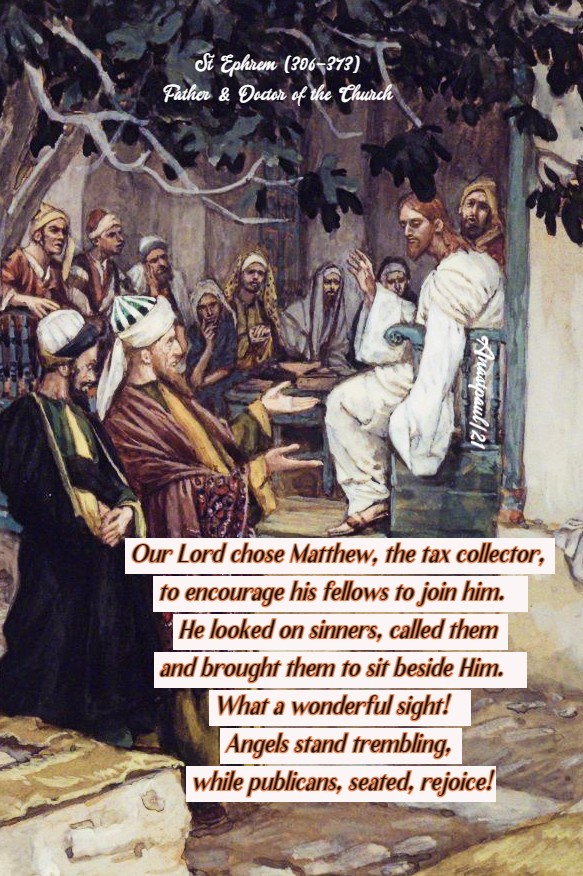
“Our Lord chose Matthew, the tax collector, to encourage his fellows to join him. He looked on sinners, called them and brought them to sit beside Him. What a wonderful sight! Angels stand trembling, while publicans, seated, rejoice!”
St Ephrem (306-373) Father & Doctor of the Church
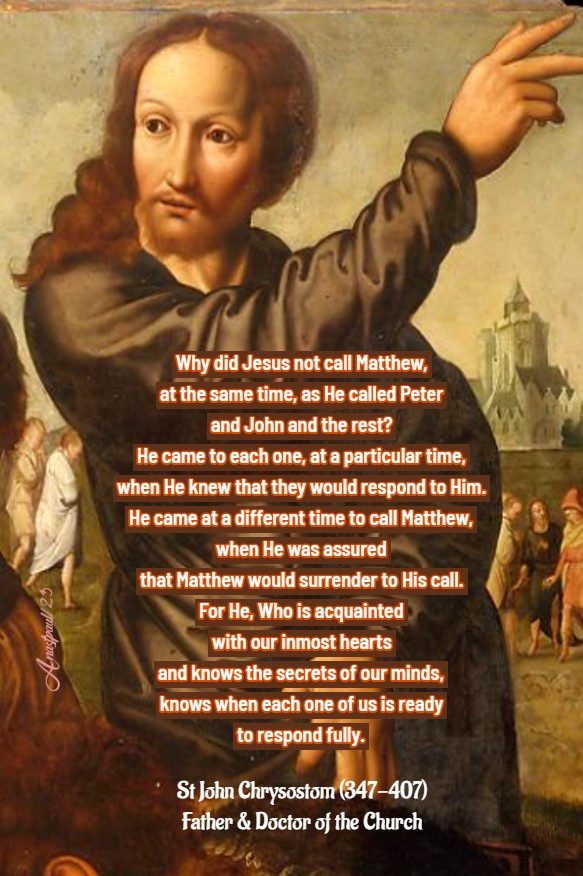
“Why did Jesus not call Matthew at the same time as He called Peter and John and the rest? He came to each one at a particular time when He knew that they would respond to Him. He came at a different time to call Matthew when He was assured that Matthew would surrender to His call. For He Who is acquainted with our inmost hearts and knows the secrets of our minds, knows when each one of us is ready to respond fully.”
St John Chrysostom (347-407) Father & Doctor of the Church
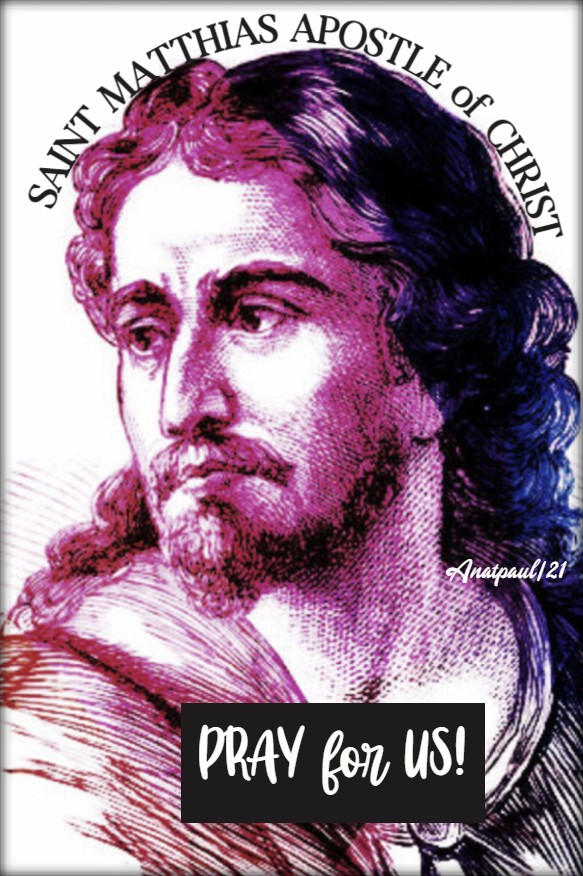
One Minute Reflection – 21 September – The Feast of St Matthew, Apostle and Evangelist- Readings: Ephesians 4: 1-7, 11-13; Psalm 19: 2-5; Matthew 9: 9-13
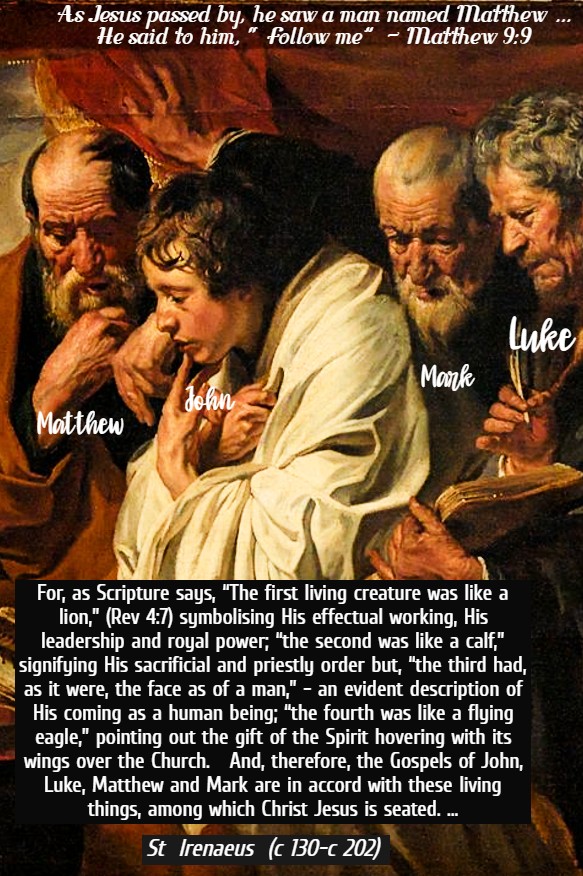
“As Jesus passed by, he saw a man named Matthew sitting at the customs post. He said to him, “Follow me.”And he got up and followed him.” – Matthew 9:9
REFLECTION – “It is not possible that the Gospels can be either more or fewer in number than they are. There are four zones of the world in which we live and four principal winds and the Church is scattered throughout all the world and her “pillar and ground” (1 Tm 3:15) is the Gospel and the Spirit of life; therefore, it is fitting that she should have four pillars, breathing out immortality on every side and vivifying us afresh. The Word, the Shaper of all things, Who sits upon the cherubim and upholds all things (Ps 79:2; Heb 1:3), Who was manifested to men, has given us the Gospel under four aspects but bound together by One Spirit. David says, when entreating this manifestation, “You that sit between the cherubim, shine forth.”(Ps 79:2) For the cherubim, too, were four-faced (Ez 1:6) and their faces were images of the dispensation of the Son of God.
For, as Scripture says, “The first living creature was like a lion,” (Rev 4:7) symbolising His effectual working, His leadership and royal power; “the second was like a calf,” signifying His sacrificial and priestly order but, “the third had, as it were, the face as of a man,” – an evident description of His coming as a human being; “the fourth was like a flying eagle,” pointing out the gift of the Spirit hovering with its wings over the Church. And, therefore, the Gospels of Mark, Luke, Matthew and John, are in accord with these living things, among which Christ Jesus is seated. …
Such was the form of the living creatures, so was also the character of the Word of God Himself – the Word of God Himself conversed with the patriarchs before Moses, in accordance with His divinity and glory but, for those under the law, He instituted a priestly and liturgical service. Afterwards, being made Man for us, He sent the gift of the Spirit over all the earth, protecting us with His Wings (Ps 16:8). … These things being so, all who reject the form the Gospel has taken – that is, those who say the Gospels should be more or fewer in number – are futile, ignorant, and presumptuous.” – St Irenaeus of Lyons (c 130-c 202) Bishop, Theologian and Martyr – (Against Heresies c. Book III, 11, 8-9).
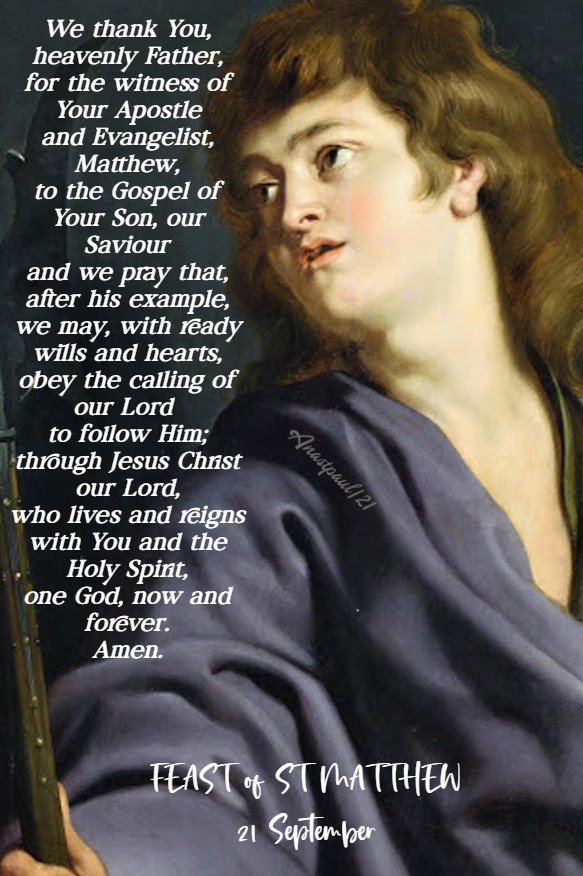
PRAYER – We thank You, heavenly Father, for the witness of Your Apostle and Evangelist, Matthew, to the Gospel of Your Son, our Saviour and we pray that, after his example, we may with ready wills and hearts, obey the calling of our Lord, to follow Him; through Jesus Christ our Lord, who lives and reigns with You and the Holy Spirit, one God, now and forever. Amen.
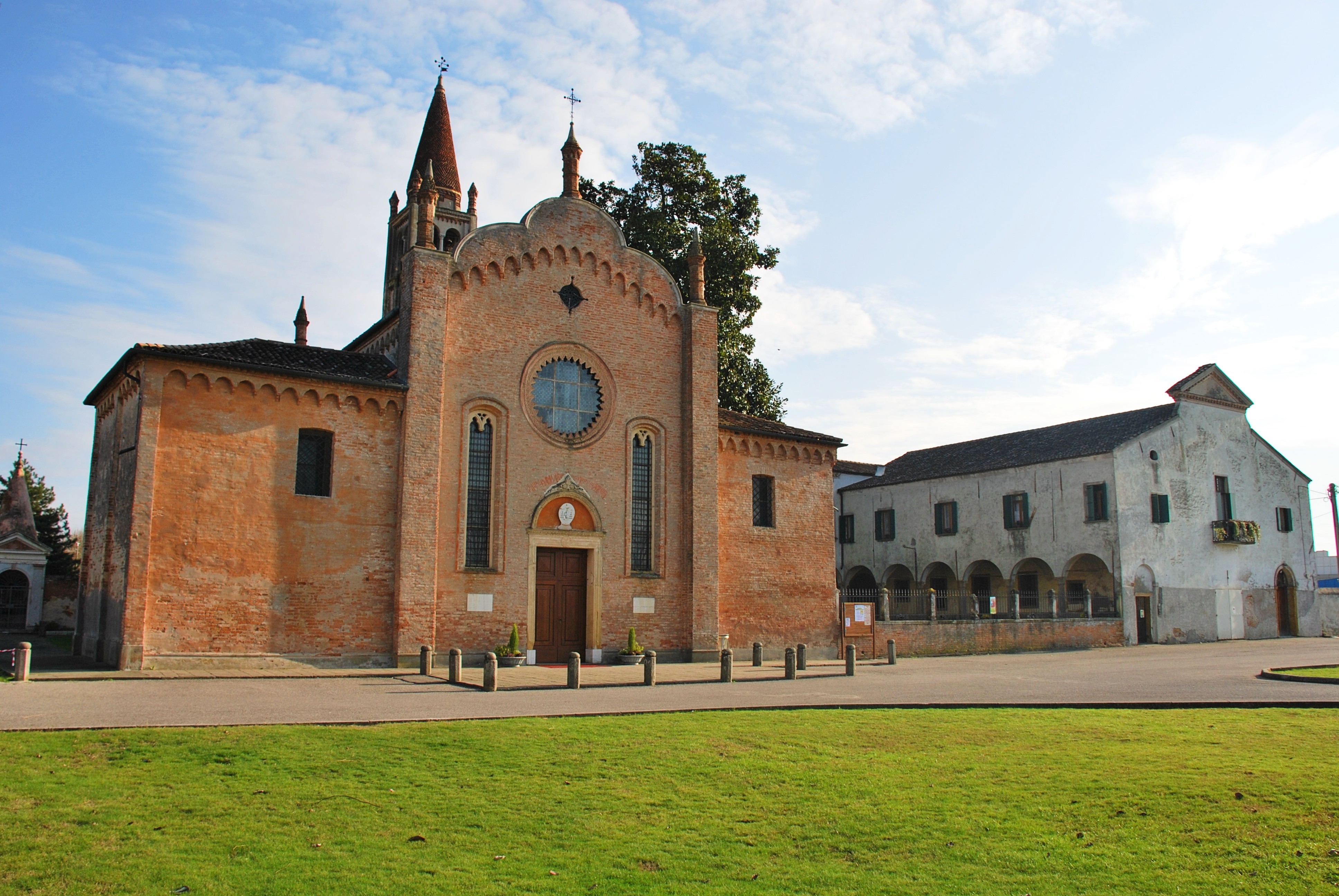
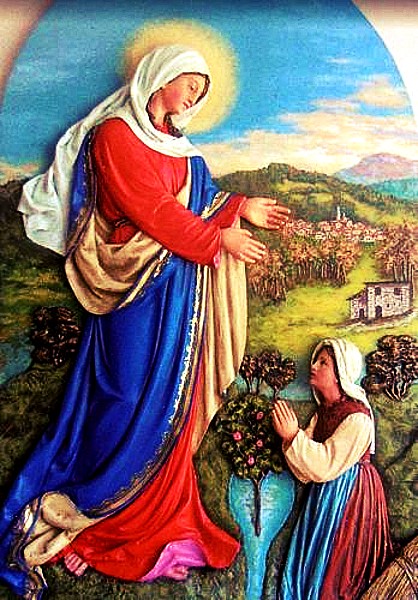
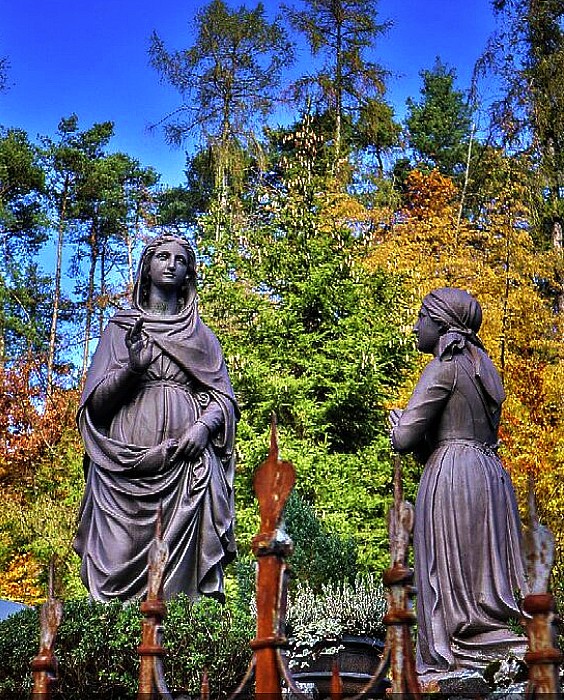
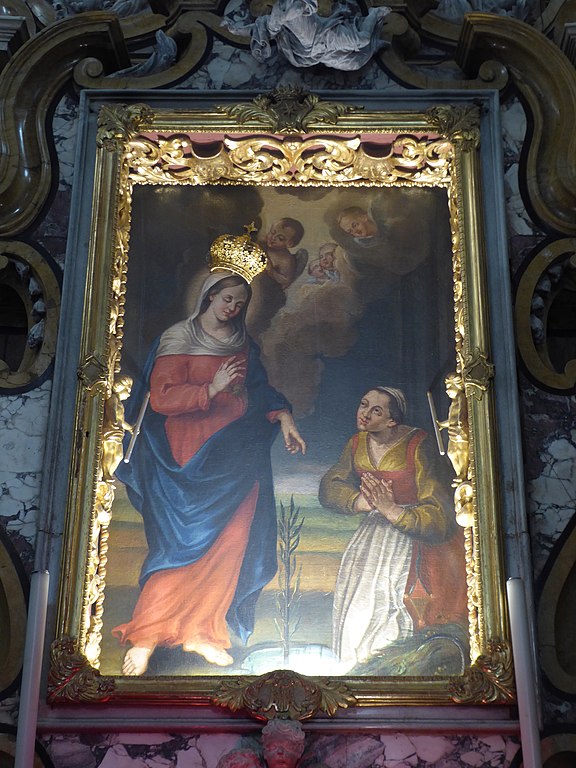
Beata Vergine del Tresto / The Blessed Virgin of Tresto, Ospedaletto Euganeo, Italy (1468) – 21September:
The complex of the Sanctuary of Tresto was built in the place of the miraculous Marian apparition to the boatman Giovanni di Bartolomeo Zielo da Ponso on the night of 21 September 1468, in the locality of Tresto, current fraction of the Municipality of Ospedaletto Euganeo near Padua, from where he was returning. Reaching Este in the evening, the man had stopped to sleep in the boat under the Borini bridge. Around midnight he was awakened by a female voice who called him three times. The man saw two beautiful ladies who enjoined him to follow them. Strangely finding the drawbridge of the City lowered, they walked towards the countryside where, in the locality of Tresto, one of the two ladies sat on the bank of a ditch and told the other to fetch her a bunch of grapes. Then she asked Giovanni if he knew her. To his negative answer she said that she was Mary, the Mother of God. She then enjoined him not to amend his life and to do his best to have a Church built on that place according to the plan and the measures she illustrated to him. But Giovanni objected saying that because of his poverty and ignorance, he would not be believed. Then Mary gave him a knife, instructing him to stick it into the ground and then to remove it. Giovanni obeyed and when he removed the blade from the ground, blood gushed. After having blessed him, the Madonna disappeared with her companion. T he next day Giovanni, afraid of not being believed, did not carry out the commands he had received but only confided in three friends. Losing his peace of mind, he eventually went with some people to the site of the apparition, where he tried to stick the knife into the ground, pulling it back wet with blood. Others wanted to try: the incredulous could not move the blade from the ground, while the others withdrew it bloody.
The miraculous event, renewed several times, convinced everyone to work together to erect the required Church. At the halfway point, due to the exceptional drought that had hit the area, there was no water. Everyone then invoked the help of Mary, who caused a spring appear next to the construction site. This spring since then, over the centuries, has been a source of miraculous cures just like the one at Lourdes. The custody of the Church, built in 9 months, was entrusted by the Paduan clergy to a Congregation of Mendicants of whom Giovanni wore the habit in a lay state.
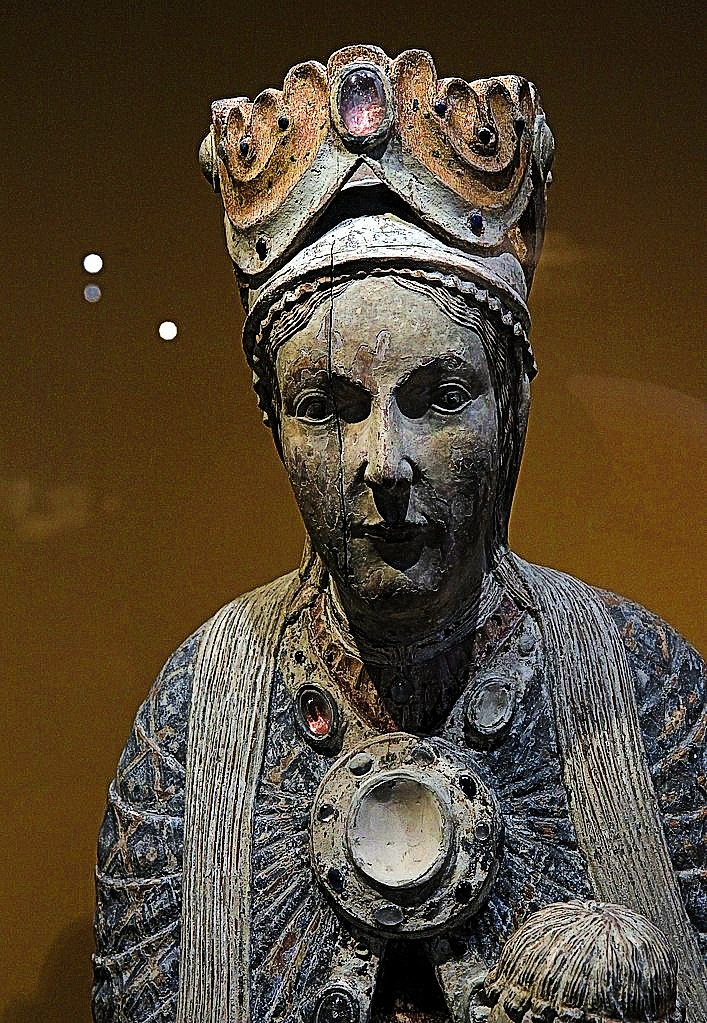
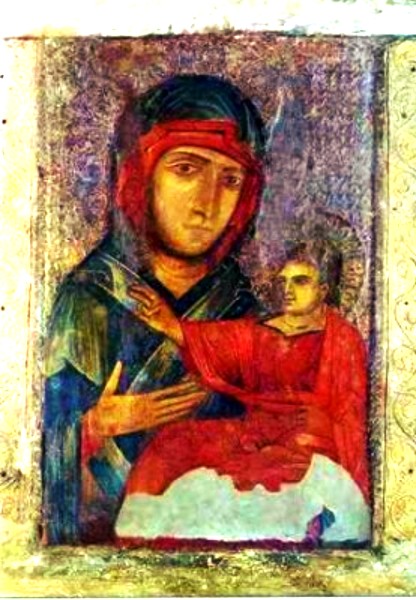
The Sanctuary of Tresto became and remains a site of devotion and pilgrimage with the powerful and healing waters of the miraculous Spring, bringing many sick seeking cures. The Sanctuary preserves several works of art among which the painting on wood depicting the Virgin and Child shown above, stands out, a masterpiece attributed to Jacopo da Montagnana who created it between 1475 and 1480.
St Alexander of the Via Claudia Bl Diego Hompanera París St Eusebius of Phoenicia St Francisco Pastor Garrido St François Jaccard St Gerulph St Herminio García Pampliega St Iphigenia St Isaac of Cyprus Bl Jacinto Martínez Ayuela St Jacques Honoré Chastán St Johannes Ri St Jonah the Prophet Bl José María Azurmendi Mugarza Bl Josep Vila Barri St Landelino of Ettenheim Bl Manuel Torró García Blessed Mark Scalabrini of Modena OP (c 1420-1498) St Maura of Troyes St Meletius of Cyprus Bl Nicolás de Mier Francisco St Pamphilus of Rome St Pierre Philibert Maubant St Tôma Tran Van Thien Bl Vicente Galbis Gironés Bl Vicente Pelufo Orts — Martyrs of Gaza – 3 saints: Three brothers, Eusebius, Nestulus and Zeno, who were seized, dragged through the street, beaten and murdered by a pagan mob celebrating the renunciation of Christianity by Julian the Apostate. They were burned to death in 362 on a village garbage heap in Gaza, Palestine.
Martyred in the Spanish Civil War: • Blessed Diego Hompanera París • Blessed Jacinto Martínez Ayuela • Blessed José María Azurmendi Mugarza • Blessed Josep Vila Barri • Blessed Manuel Torró García • Blessed Nicolás de Mier Francisco • Blessed Vicente Galbis Gironés • Blessed Vicente Pelufo Orts
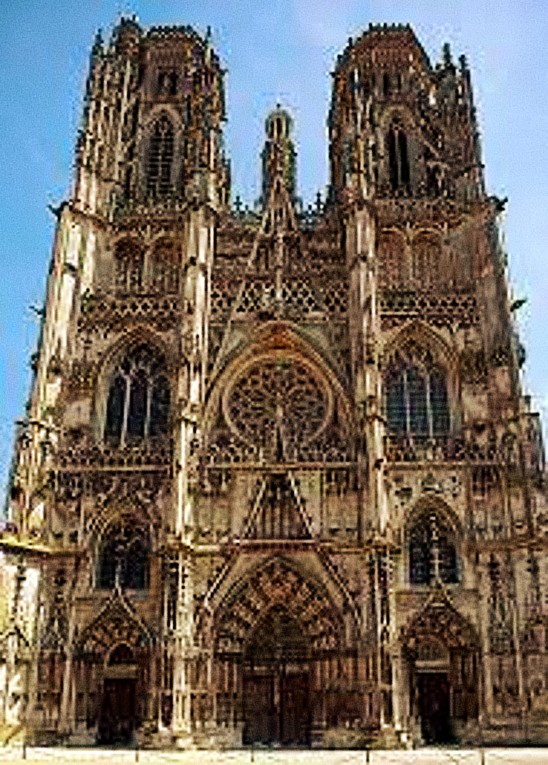
Notre-Dame-au-Pied-d’Argent / Our Lady with the Silver Foot), Toul, Meurthe-et-Moselle, Lorraine, France (1284) – 20 September:
At Toul, in Lorraine, there was a Statue, which, according to an ancient tradition, informed a woman on 20 September in the year 1284, of an act of treachery which was being planned against the City.
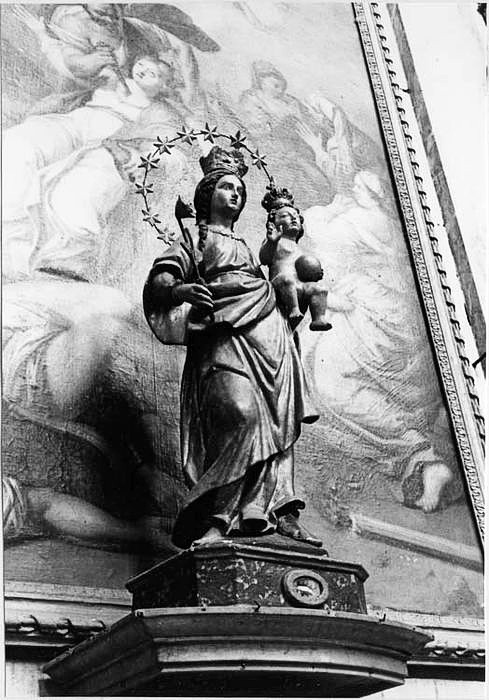
The Statue was called Our Lady with the Silver Foot, or Notre-Dame au pied d’argenth. The faithful keep the memory of this stone Statue of the Blessed Virgin Mary, which was located just inside the entrance of the Church and placed over a sculpted clam. In those days there would be a lamp burning before it on feast days and almost every day, the faithful offered small candles which they lit and rested on a circular iron candlestick that was placed before the Statue. It was well known that several people who prayed before this Statue were cured of various diseases but the devotion and respect of the people toward this image, grew more than ever at the time of the Bishop Conrad because of the miracle that occurred in the following manner:
A woman named Helwide was in the Cathedral Saint-Etienne de Toul praying to the Blessed Virgin for consolation and the repose of the souls of her husband and daughter who had recently died. It was about midnight, when the Canons were praying Matins, that the Blessed Virgin Mary suddenly appeared to her. The Virgin Mary ordered Helwide to go immediately to find a man named Rimbert, who was the guardian of “The Door to the Chair.” The Door to the Chair gave access to the Castrum, a little entrance to the City near Tanner Street. Helwide was urged to go quickly, for an enemy proposed to enter the City by the door to set their homes on fire and fill the streets with blood. Regaining her senses after the vision, Helwide got up feeling very puzzled. She was hesitant about what she should do, though as Rimbert’s home was not far distant and was on her way home anyway, she decided she would indeed go there. No sooner had Helwide stepped out of the Church, than she met the night-watch on patrol. She told them the tale of her vision and they responded by mocking her and making derogatory jokes. Despite this, two of them still decided to follow and actually see what would happen if Helwide could find the porter she sought. The pair arrived with Helwide at the house and simply thrust the door open. Rimbert sat on his bunk, seeming startled, yet as if expecting the visit. Helwide briefly stated the purpose of her visit and Rimbert exclaimed, “I had precisely the same vision and the same warning! I do not know if it occurred in my sleep or in the state of wakefulness but I have been told that the Statue will move her foot in testimony of the truth!” At these words, all those present were seized with a great desire to see such a prodigy. With a rush they ran to the Cathedral and removed the candles and all that stood before the image. To their disappointment they found that the Virgin’s feet remained mostly hidden beneath the folds of the clothing of the Statue as before. In the interim, several scholars and some laymen who were called to see the wonder, arrived on the scene. Seeing that nothing was apparently going to happen, they began cursing all the rest as senseless interpreters of dreams. As they stood not far from the Statue, many of them fell silent as they saw the Statue suddenly move as an entire foot of the Blessed Virgin Mary appeared from beneath the folds of her garment. Terrified, but convinced, this time they all agreed to announce the peril which they now knew actually threatened them. Quickly rendering their thanks to Mary, they agreed to defend the City and call for reinforcements. They arrived just in time to take up their positions to defend the entrance to the City with the assistance of the Episcopal palace guards. A tremendous struggle occurred when the invaders broke down the door and entered the courtyard, but the defenders were committed to the fight and held their own. When reinforcements arrived, the invaders fell to the last man.
To perpetuate the memory and recognize the protection granted to them by the Blessed Virgin Mary, the people of Toul had a shoe of pure silver made to cover the foot on the Blessed Virgin’s Statue. From that time on the Statue was known as Our Lady with the Silver Foot. They also hung on the wall of the cathedral a picture which represented the heavenly vision and Mary was declared Patroness of the City.
The image of Our Lady with the Silver Foot was venerated in the City and the surrounding areas and in case of the threat of any public calamity, the Blessed Virgin was invoked and ,henceforth, the Statue would be carried in procession throughout the streets of the City. The Governors themselves considered it an honour to take the Statue upon their own shoulders. Pilgrimages were made to Our Lady of the Silver Foot; prayers answered, graces bestowed and miracles wrought.
The original Statue of Our Lady with the Silver Foot was destroyed during the ravages of the French Revolution and was replaced later by a modern statue that was stolen in the 1980’s. The Gothic Cathedral was repaired after being damaged during the French Revolution but still awaits repair after the damage caused when it was struck during an aerial bombardment in the Second World War. There was once also a Monastery at Toul,but no trace of it remains.
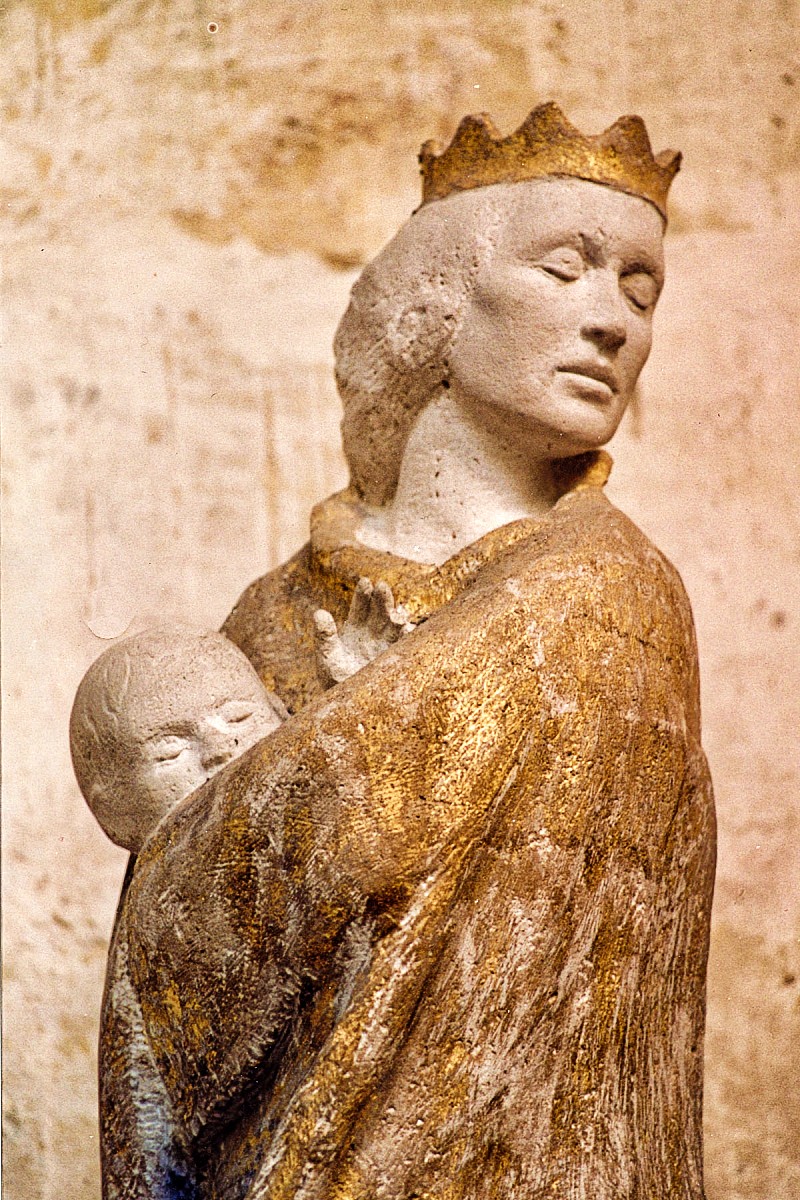
A photography of the stolen Statue
Vigil of St Matthew, Apostle and Evangelist St Agapitus of Rome St Candida of Carthage St Dionysius of Phrygia St Dorimedonte of Synnada St Eusebia of Marseilles
Martyrs of Constantinople – 3 saints: A priest and two bishops who were imprisoned, tortured and martyred for the defense of icons in the iconoclast persecutions of emperor Leo the Isaurian. – Andrea, Asiano and Hypatius. They were martyred in 735 in Constantinople (modern Istanbul, Turkey) and their bodies were thrown to the dogs.
Martyrs of Pergen – 6 saints: A group of lay people martyred in the persecutions of Emperor Elagabalus. The names that have come down to us are Dionysius, Dioscorus, Philippa, Privatus, Socrates and Theodore. They were crucified c 220 at Pergen, Pamphylia, Asia Minor (in modern Turkey).
Martyred in the Spanish Civil War: • Blessed Cristobal Iturriaga-Echevarría Irazola • Blessed Santiago Vega Ponce • Blessed Juan Antonio López Pérez
One Minute Reflection – 5 August – “Month of the Immaculate Heart of Mary” – Readings: Numbers 20: 1-13; Psalm 95: 1-2, 6-9; Matthew 16: 13-23 – The Memorial of the Dedication of Mary Major, Our Lady of the Snows
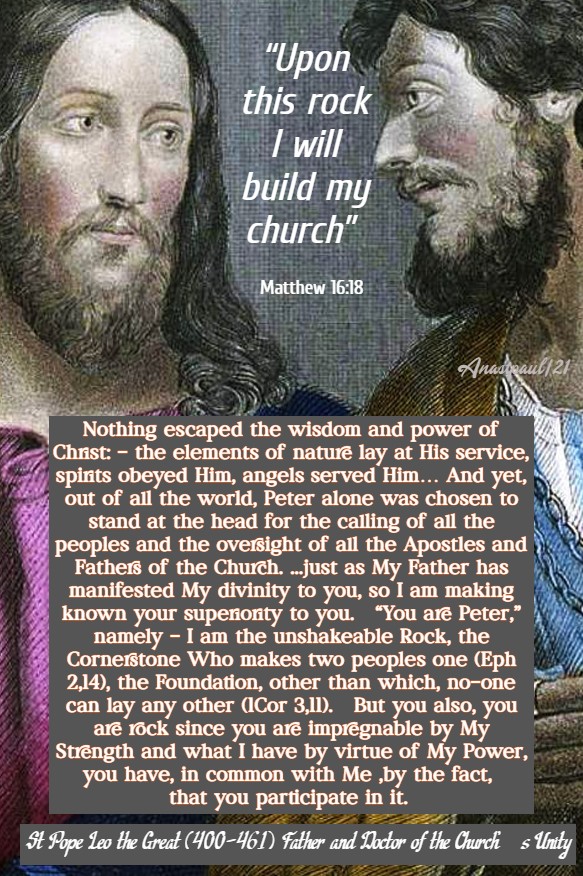
“Upon this rock I will build my church” – Matthew 16:18
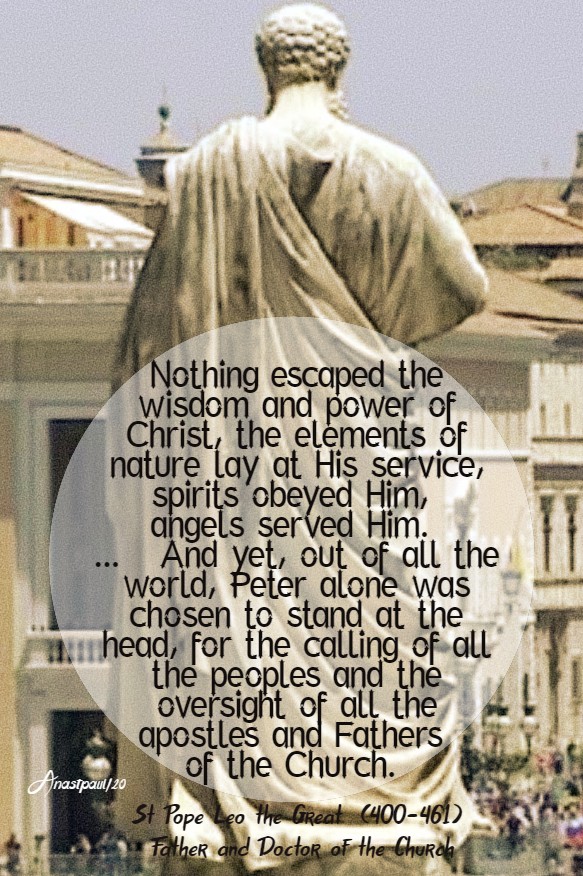
REFLECTION – “Nothing escaped the wisdom and power of Christ: – the elements of nature lay at His service, spirits obeyed Him, angels served Him… And yet, out of all the world, Peter alone was chosen to stand at the head for the calling of all the peoples and the oversight of all the Apostles and Fathers of the Church. Thus, even though there are many priests and shepherds among the people of God, Peter governed them all in person while Christ also governs them in the capacity of Head…
The Lord asks all the Apostles what people think of Him and they all say the same thing so long as they are making known the doubts deriving from human ignorance. But when the Lord demands to know what the disciples themselves think, the first to confess the Lord is he who is the first in dignity of the Apostles. As he had said: “You are the Christ, the Son of the Living God”, Jesus answers him: “Blessed are you, Simon son of Jonah. For flesh and blood has not revealed this to you but my heavenly Father.” That is to say: blessed are you because my Father taught this to you. Earthly opinion has not led you astray but it is heavenly inspiration that has instructed you. It is not flesh and blood that enabled you to discover me but He whose only Son I am.
“And so I say to you”, that is to say: – just as My Father has manifested My divinity to you, so I am making known your superiority to you. “You are Peter,” namely – I am the unshakeable Rock, the Cornerstone Who makes two peoples one (Eph 2,14), the Foundation, other than which, no-one can lay any other (1Cor 3,11). But you also, you are rock since you are impregnable by My Strength and what I have by virtue of My Power, you have, in common with Me by the fact, that you participate in it. “On this rock I will build my Church”… On the firmness of this foundation, He says, will I build an everlasting temple and My Church, whose summit is to reach to heaven, will be raised on the strength of that faith.” – St Pope Leo the Great (400-461) Father and Doctor of the Church’s Unity 4th Sermon for the Anniversary of his Ordination ; PL 54, 14a ; SC 200
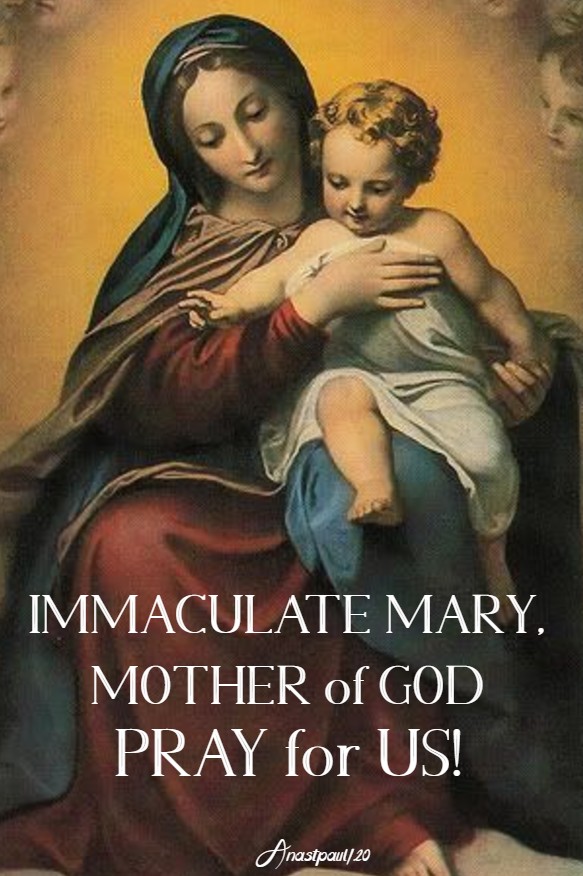
PRAYER – Forgive the sins of Your people Lord and since of ourselves, we are unable to do what pleases You, lead us on the way of salvation by the prayers of Mary, the Immaculate Mother of Your Son, Our Lord Jesus Christ, Who lives and reigns with You and the Holy Spirit, God forever and ever, amen.
One Minute Reflection – 25 July – “Month of the Most Precious Blood” – Feast of St James the Greater – Reaqdings: Second Kings 4: 42-44; Psalms 145: 10-11, 15-16, 17-18; Ephesians 4: 1-6; John 6: 1-15
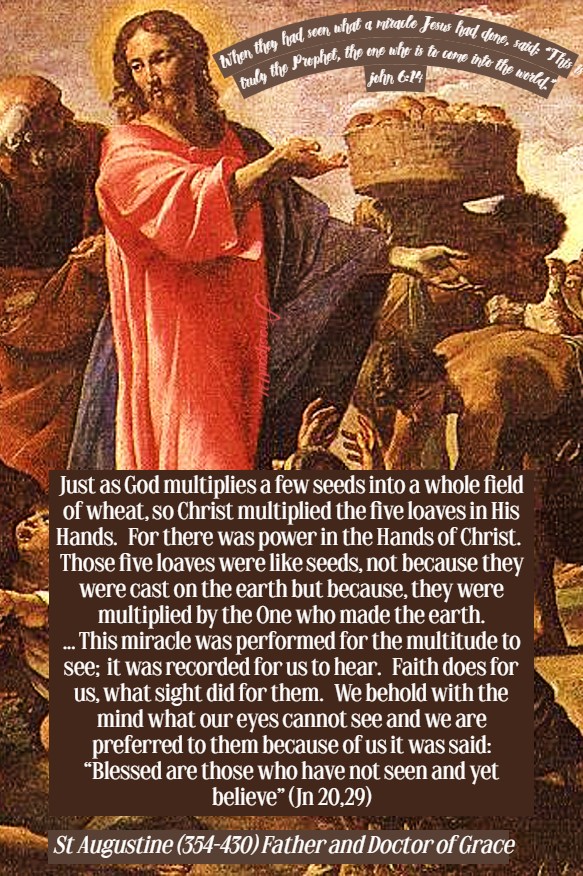
When they had seen what a miracle Jesus had done, said: , “This is truly the Prophet, the one who is to come into the world.” – John 6:14
REFLECTION – “Governing the entire universe is a greater miracle than feeding five thousand people with five loaves of bread, yet no-one marvels at it. People marvel at the feeding of the five thousand not because this miracle is greater but because, it is out of the ordinary. Who is even now providing nourishment for the whole world if not the God Who creates a field of wheat from a few seeds? Christ did what God does. Just as God multiplies a few seeds into a whole field of wheat, so Christ multiplied the five loaves in His Hands. For there was power in the Hands of Christ. Those five loaves were like seeds, not because they were cast on the earth but because, they were multiplied by the One who made the earth.
This miracle was presented to our senses, in order to stimulate our minds… and so make us marvel at “the God we do not see because of his works, which we do see” (Rom 1,20). For then, when we have been raised to the level of faith and purified by faith, we shall long to behold, though not with our eyes, the invisible God Whom we recognise through what is visible. This miracle was performed for the multitude to see; it was recorded for us to hear. Faith does for us, what sight did for them. We behold with the mind what our eyes cannot see and we are preferred to them because of us, it was said: “Blessed are those who have not seen and yet believe” (Jn 20,29). – St Augustine (354-430) Father and Doctor of Grace – Homilies on Saint John’s gospel, 24, 1.6.7.
PRAYER – Lord our God, You accepted the sacrifice of St James, the first of Your Apostles to give his life for Your sake. May Your Church find strength in his martyrdom and support in his constant prayer. Through our Lord Jesus Christ, your Son, who lives and reigns with you in the unity of the Holy Spirit, one God, for ever and ever. St James the Greater, Apostle of Christ, Pray for us! Amen
Our Morning Offering – 25 July – “Month of the Most Precious Blood” – Feast of St James the Greater and the Memorial of St Christopher (died c 251)
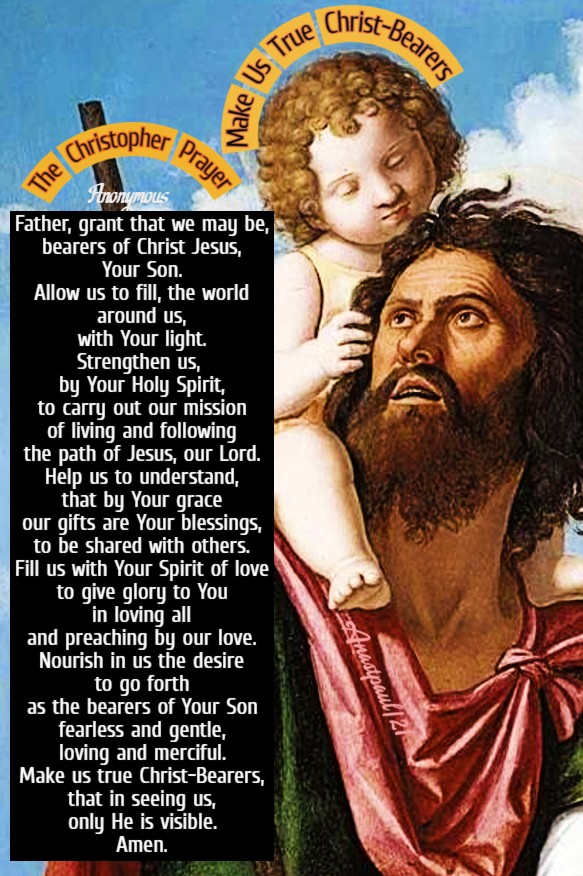
The Christopher Prayer, Make Us True Christ-Bearers Anonymous
Father, grant that we may be, bearers of Christ Jesus, Your Son. Allow us to fill, the world around us, with Your light. Strengthen us, by Your Holy Spirit, to carry out our mission of living and following the path of Jesus, our Lord. Help us to understand, that by Your grace our gifts are Your blessings, to be shared with others. Fill us with Your Spirit of love to give glory to You in loving all and preaching by our love. Nourish in us the desire to go forth as the bearers of Your Son fearless and gentle, loving and merciful. Make us true Christ-Bearers, that in seeing us, only He is visible. Amen.
Notre-Dame du Saguenay / Our Lady of Lac Bouchet, Quebec (1920) – 25 July:
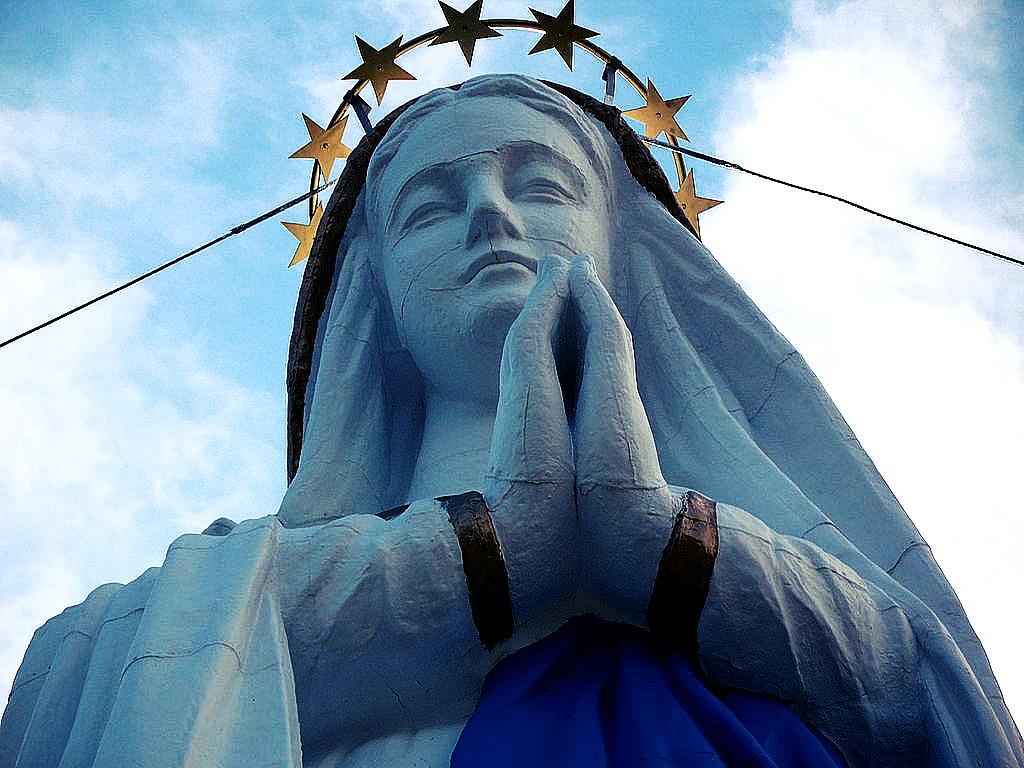
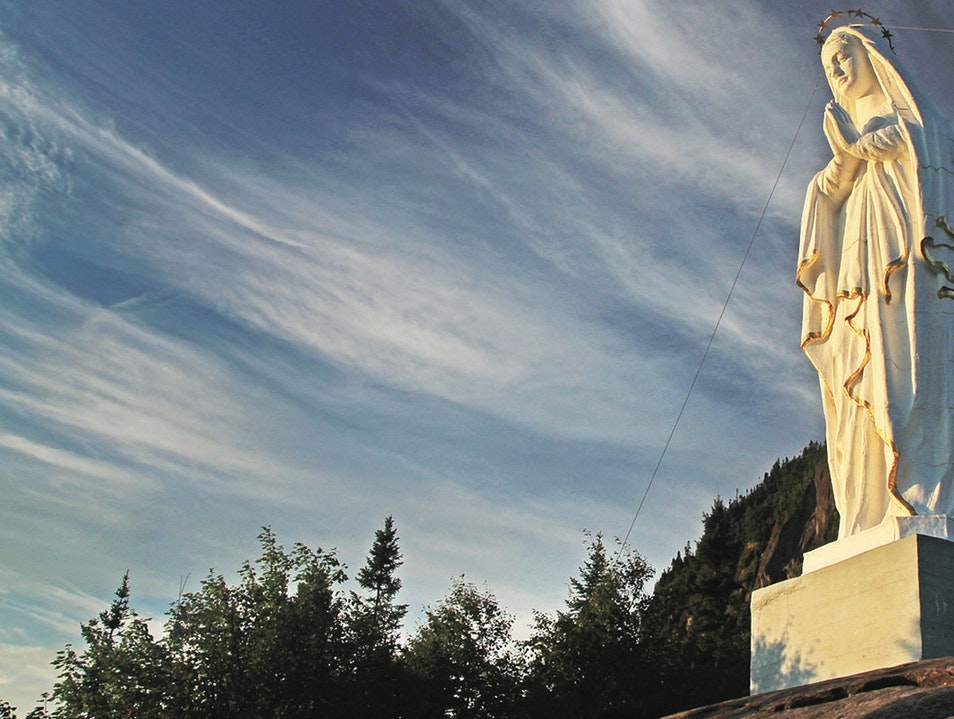
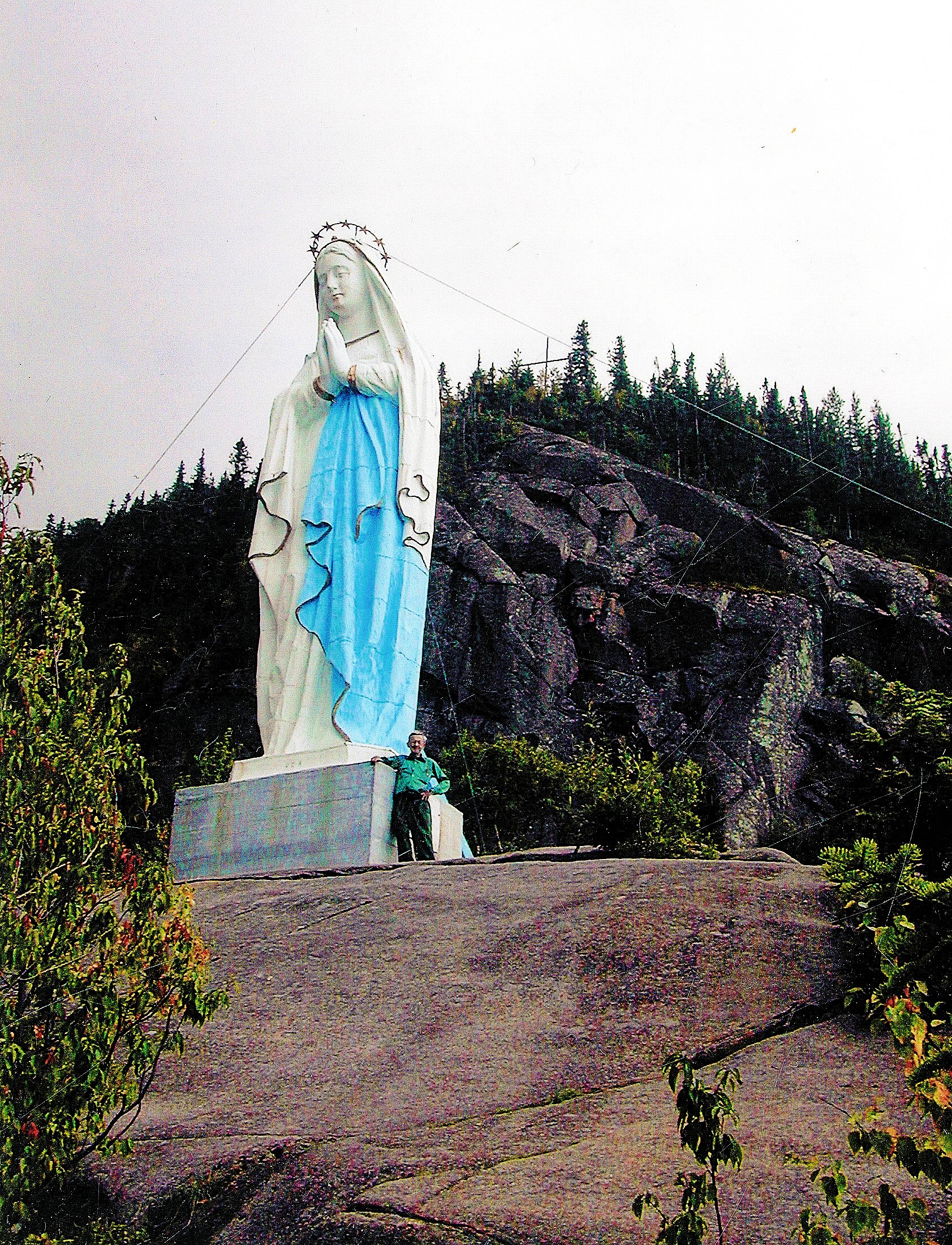
The Saguenay Fjord is an ancient glacial valley that has been overrun with sea water. In the year 1828 a surveyor, Joseph Bouchette, ventured into the region for the purpose of collecting data for topographical maps. It was during this expedition that he found a suitable site for a future village, which Pascal Dumais and his family later settled. This marked the founding of the village of Lac-Bouchette, with more and more people coming to settle in the area until the village had 300 inhabitants by 1888. Our story actually begins with a man named Charles Napoleon Robitaille, a salesman who travelled the roads in and around Quebec. During the winters he would have to cross frozen rivers and it was in the winter of 1878 while trying to cross the Saguenay River that the ice broke under the weight of his horse and sleigh. Pulled beneath the surface of the icy waters, Charles was alone and completely helpless. Knowing he was dying, he implored the Blessed Virgin Mary to save him. Charles miraculously survived, and managed to escape from the river with his life. He knew the Virgin had assisted him and so to honour Mary and her recent apparition at Lourdes, he asked Louis Jobin to create a huge Statue of the Blessed Virgin sculpted in the image of Our Lady of Lourdes, the Immaculate Conception. He envisioned the Statue in the heights overlooking the mouth of the river. The Statue Jobin sculpted became known as Notre-Dame du Saguenay.
The finished Statue is an impressive more than 10,5 metres high and weighs 3 tons. Sculpted of solid white pine, it was then sheathed in lead to protect it from the harsh weather. Hauling such a huge Statue into place was a difficult task in the late nineteenth century. After being constructed, it was broken down into 14 separate pieces and then hoisted into place and rebuilt. The Statue made Louis Jobin the most famous sculptor of the time,and it has become a regional landmark, with visitors from all over the world assembling at her feet to sing the Ave Maria.
In 1889 the mission Church of Saint Thomas Aquinas was built and the next year Father Joseph Ironwood became the first Priest there A second Church was soon built, in 1898, as the population increased dramatically. Now, on the north shore of Lake Bouchet, in the Province of Quebec, there stand the buildings of a Friary and the Sanctuary of Our Lady of the Saguenay. In 1920, Father Elzear Delamarre built a house and a private Chapel dedicated to Saint Anthony of Padua on the site, which later became known as the hermitage of Saint Anthony and is one of the national Shrines in Quebec. So began the pilgrimage-shrine that has since grown steadily in popularity. After Father de Lamarre’s death in 1925, the Capuchin Franciscans took over the property, built their house and Church there and minister to the thousands of pilgrims who visit the Blessed Mother at her Sanctuary.
St Cugat del Valles Bl Darío Acosta Zurita St Ebrulfus St Fagildo of Santiago St Felix of Furcona St Florentius of Furcona St Glodesind of Metz St Magnericus of Trier (c 520-596) Bishop and Confessor Bl Michel-Louis Brulard Bl Mieczyslawa Kowalska St Mordeyren St Nissen of Wexford St Olympiad of Constantinople St Paul of Palestine
St Theodemir of Cordoba — Martyrs of Caesarea – 3 saints: Three Christians martyred together in the pesecutions of emperor Maximilian and governor Firmilian – Paul, Tea and Valentina. 309 in Caesarea, Palestine.
Martyrs of Cuncolim – 20 saints: On 15 July 1583 the group met at the church of Orlim, and hiked to Cuncolim to erect a cross and choose land for a new church. Local anti-Christian pagans, seeing the unarmed Christians, gathered their weapons and marched on them. One of the parishioners, a Portuguese emigre named Gonçalo Rodrigues, carried a firearm, but Father Alphonsus Pacheco stopped him from using it. The pagans then fell upon them, and killed them all without mercy. They were – • Alphonsus Pacheco • Alphonsus the altar boy • Anthony Francis • Dominic of Cuncolim • Francis Aranha • Francis Rodrigues • Gonçalo Rodrigues • Paul da Costa • Peter Berno • Rudolph Acquaviva • ten other native Christian converts whose names have not come down to us They were martyred on Monday 25 July 1583 at the village of Cuncolim, district of Salcete, territory of Goa, India. Beatified on 30 April 1893 by Pope Leo XIII.
Saint of the Day – 20 July – Saint Joseph Barsabbas the Just (1st Century) Disciple of Jesus, Martyr Bishop. Also known as – Justus, Barsabbas, Joseph Basassas, Joseph of Barsabas, Joseph the Just.
The Roman Martyrology states today: “The birthday of the blessed Joseph, surnamed the Just, whom the Apostles selected with the blessed Matthias, for the Apostleshop in the place of the traitor, Judas. The lot having fallen upon Matthias, Joseph, notwithstanding, continued to preach and advance in virtue and after having sustained from the Jews, many persecutions for the Faith of Christ, happoily ended his life in Judea.”
“Wherefore, of these men who have companied with us all the time that the Lord Jesus came in and went out among us; beginning from the baptism of John, until the day wherein he was taken up from us, one of these must be made a witness with us of his resurrection. And they appointed two, Joseph, called Barsabas, who was surnamed Justus,and Matthias. And praying, they said: Thou, Lord, who knowest the heart of all men, shew whether of these two thou hast chosen, to take the place of this ministry and apostleship, from which Judas hath, by transgression fallen, that he might go to his own place. And they gave them lots and the lot fell upon Matthias and he was numbered with the eleven apostles.” ― Acts 1:21 – 26 D-R
St John Chrysostom writes, “The other candidate (Joseph) was not annoyed, for the apostolic writers would not have concealed failings of their own, seeing they have told of the very chief Apostles, that on other occasions had indignation and not only once but again and again.”
It clear that Joseph Barsabbas (also called “Justus”) must have spent much time with the Apostles and witnessed many of the wondrous events in the life of Jesus. Further identification of Joseph is uncertain. In Christian tradition he is numbered among the Seventy disciples mentioned in Luke 10:1–24, although the biblical text mentions no names. “After these things the Lord appointed other seventy also and sent them two and two before his face into every city and place, whither he himself would come.” (10:1)
Very little is known about Joseph Barsabbas outside of the apostle selection by lots. Tradition believes that he went to Eleutheropolis (about 25 miles from Jerusalem) where he became Bishop Justus of Eleutheropolis. The town was renamed over the centuries. Its original Aramaic name Beth Gabra, translates as the “house of the mighty one.” The Romans gave it the Greek name, Eleutheropolis, meaning “City of the Free.”
Rev Alban Butler says – “After the dispersion of the disciples he preached the gospel to many nations and among other miracles, drank poison without receiving any hurt, as Papias and from him ,Eusebius, testify. This saint, from his extraordinary piety, was surnamed the Just.“
One Minute Reflection – 8 July – “Month of the Most Precious Blood” – Readings: Genesis 44, 18-21, 23b-29, 45: 1-5; Psalms 105: 16-17, 18-19, 20-21; Matthew 10: 7-15.
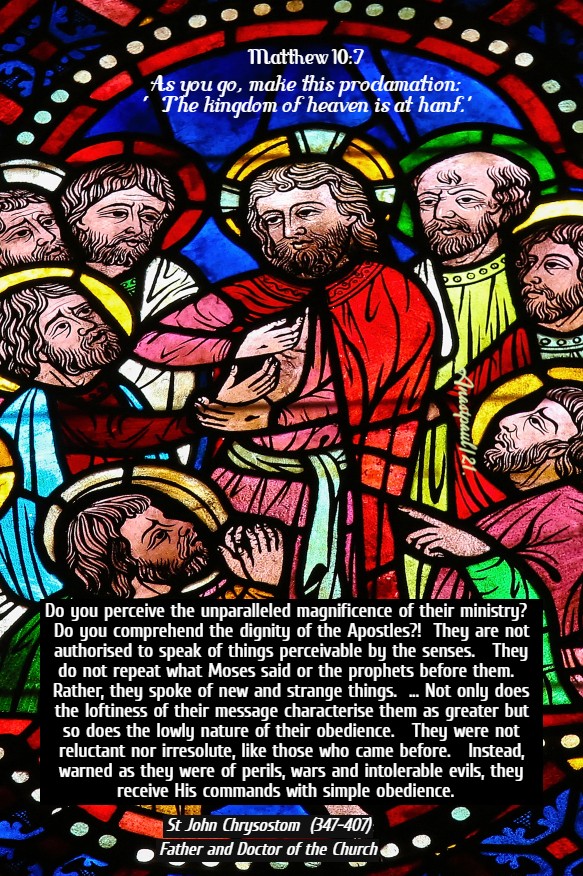
“As you go, make this proclamation: ‘The kingdom of heaven is at hand.’” – Matthew 10:7
REFLECTION – “Do you perceive the unparalleled magnificence of their ministry? Do you comprehend the dignity of the Apostles?! They are not authorised to speak of things perceivable by the senses. They do not repeat what Moses said or the prophets before them. Rather, they spoke of new and strange things. Moses and the prophets spoke of temporal promises of an earthly land. The Apostles proclaimed the Kingdom of Heaven and all that this implies.
Not only does the loftiness of their message characterise them as greater but so does the lowly nature of their obedience. They were not reluctant nor irresolute, like those who came before. Instead, warned as they were of perils, wars and intolerable evils, they receive His commands with simple obedience. They immediately became heralds of the coming Kingdom.” – St John Chrysostom (347-407) Bishop, Father, Doctor – The Gospel of Matthew: Homily, 32.
PRAYER – Holy God and Almighty Father, we are the disciples of Your Son as we follow Him home to You. As He taught His Apostles, so they have passed their learning onto us and we reach out in love and obedience for the Kingdom of Heaven. Grant us we pray, the strength and love to imitate Jesus Our Lord in all things and to daily, pick up our cross with joy and commitment. May the Blessed Virgin, be a constant protection and assistance in our times of struggle and may all your Angels and Saints and Martyrs, pray for us, through our Lord Jesus Christ, with the Holy Spirit, God for always and forever, amen.
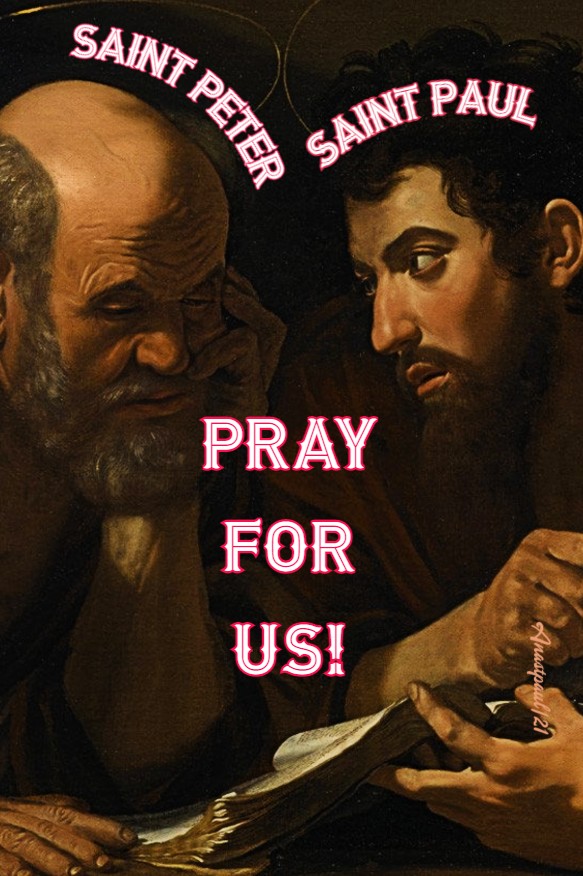
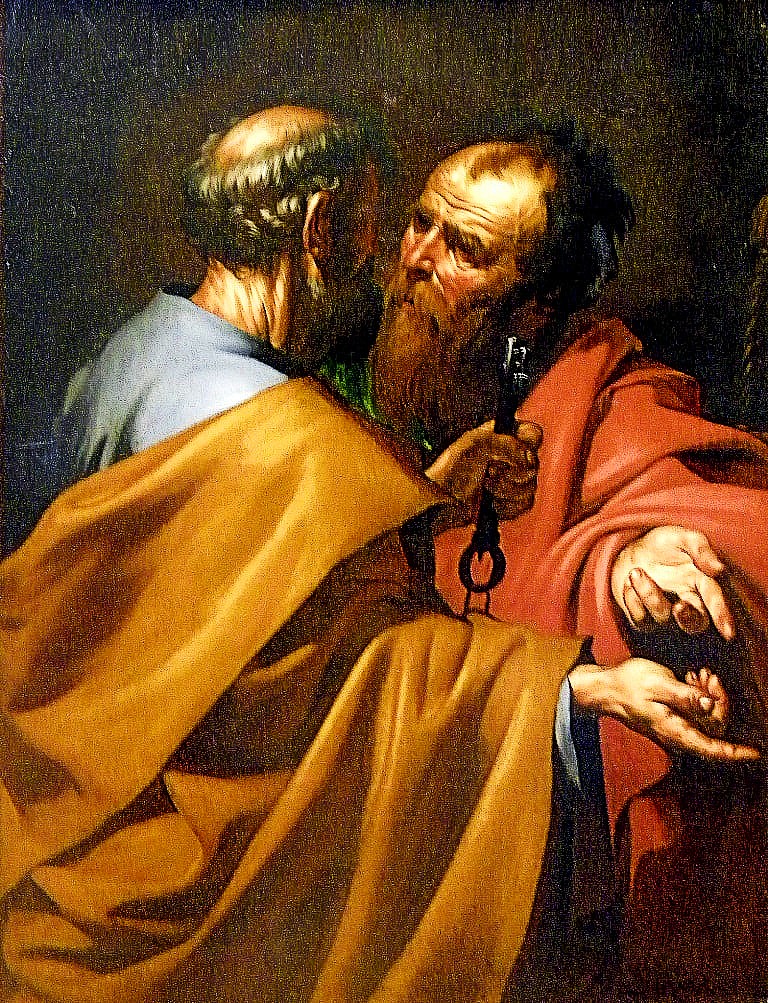
Solemnity of Saints Peter and Paul (29 June) +2021
Nuestra Señora del Refugio / Our Lady of Refuge, Matamoros, Tamaulipas, Mexico (1720) – 4 July:
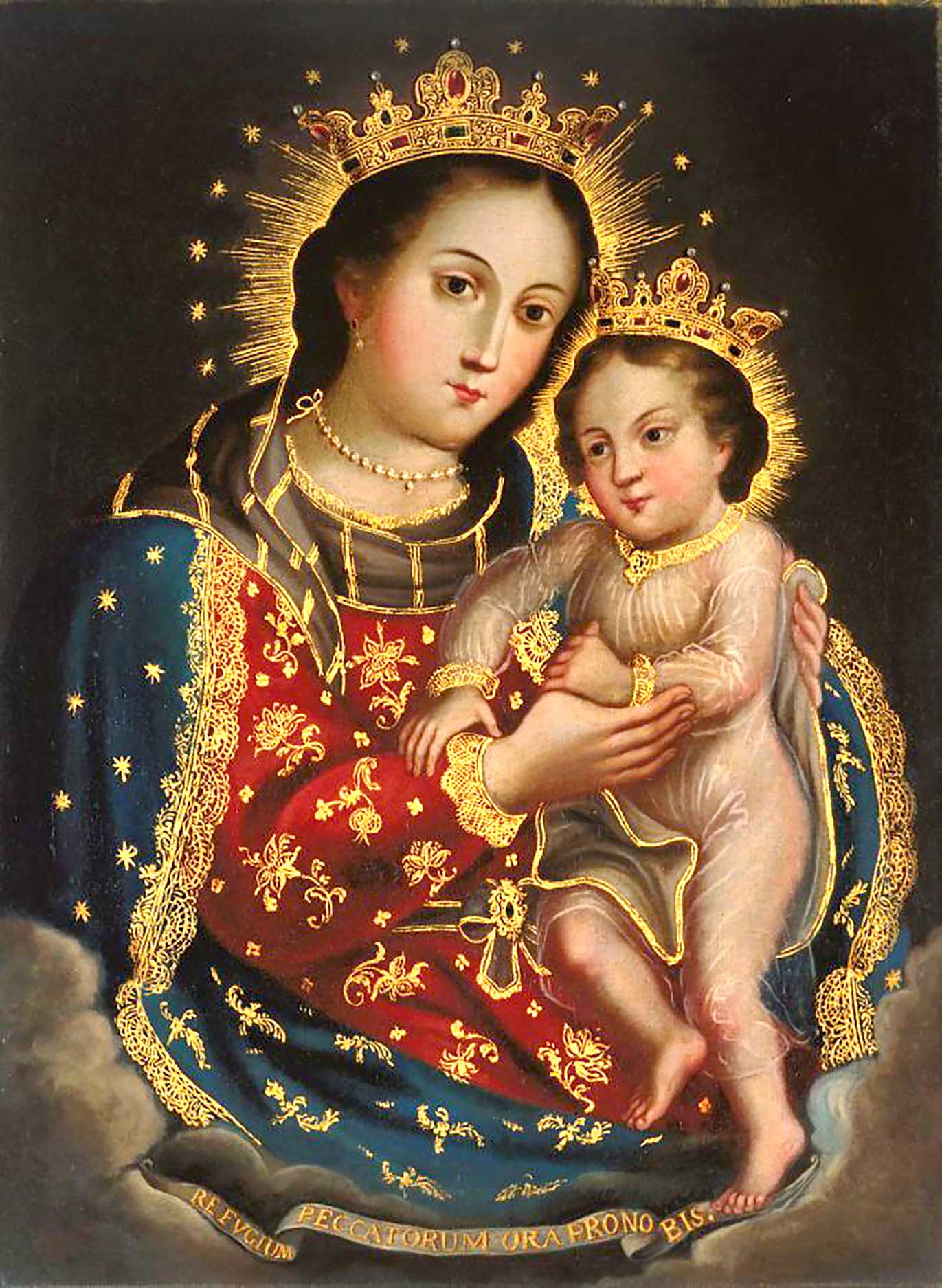
Jesuit Missionary Father Juan José Güica brought a painting of Our Lady, Refuge of Sinners from Italy to Mexico in 1720. In a dream, the Virgin told Padre Güica to ask the Franciscans of Zacatecas to use and promote the image; – they distributed over 150 copies, making this one of the most widespread Marian devotions in Mexico.
In 1793 Franciscan Friars came to the new settlement which would become Matamoros, renaming the area “Nuestra Señora del Refugio de los Esteros Hermosos” (Our Lady of the Refuge of the Lovely Marshes).
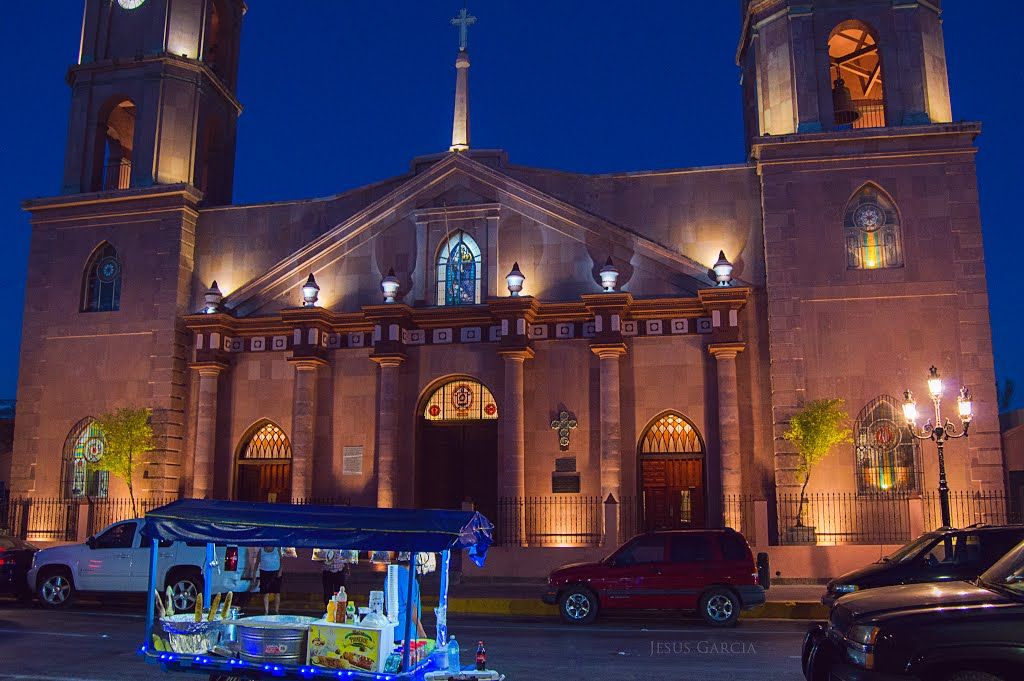
The Cathedral of Our Lady of Refuge, built in 1832, displays an 1886 painting of her. Her fiesta, celebrated in many Mexican Towns, commemorates the coronation of the original “Refugium Peccatori” in the Jesuit Church of Frascati, Italy, on 4 July 1717.
Bl Agatha Yun Jeom-Hye St Albert Quadrelli St Andrew of Crete St Anthony Daniel St Aurelian of Lyons St Bertha of Blangy St Carileffo of Anille Bl Catherine Jarrige St Cesidio Giacomantonio Bl Damiano Grassi of Rivoli St Donatus of Libya St Edward Fulthrop St Elias of Jerusalem St Finbar of Wexford St Fiorenzo of Cahors St Flavian of Antioch St Giocondiano Bl Giovanni of Vespignano St Haggai the Prophet Bl Hatto of Ottobeuren Bl Henry Abbot St Henry of Albano St Hosea the Prophet St Innocent of Sirmium Bl John Carey Blessed John Cornelius SJ (1557– 1594) Martyr, English Priest of the Society of Jesus, Missionary. Bl Jozef Kowalski St Jucundian St Laurian of Seville St Lauriano of Vistin Bl Maria Crocifissa Curcio St Namphanion the Archmartyr Bl Natalia of Toulouse St Odo the Good Bl Odolric of Lyon Bl Patrick Salmon Bl Pedro Romero Espejo
Quote/s of the Day – 3 July – Feast of St Thomas Apostle – Readings: Ephesians 2: 19-22, Psalms 117: 1bc, 2, John 20: 24-29
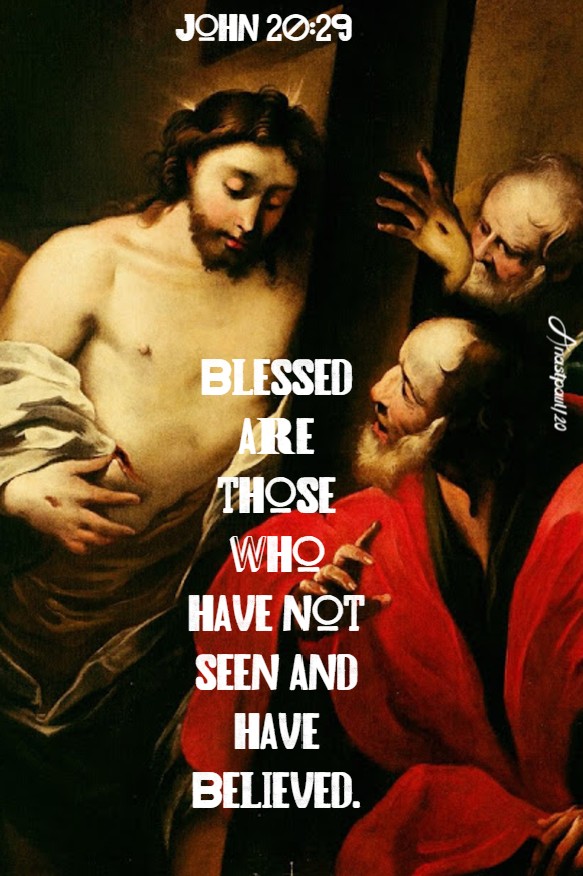
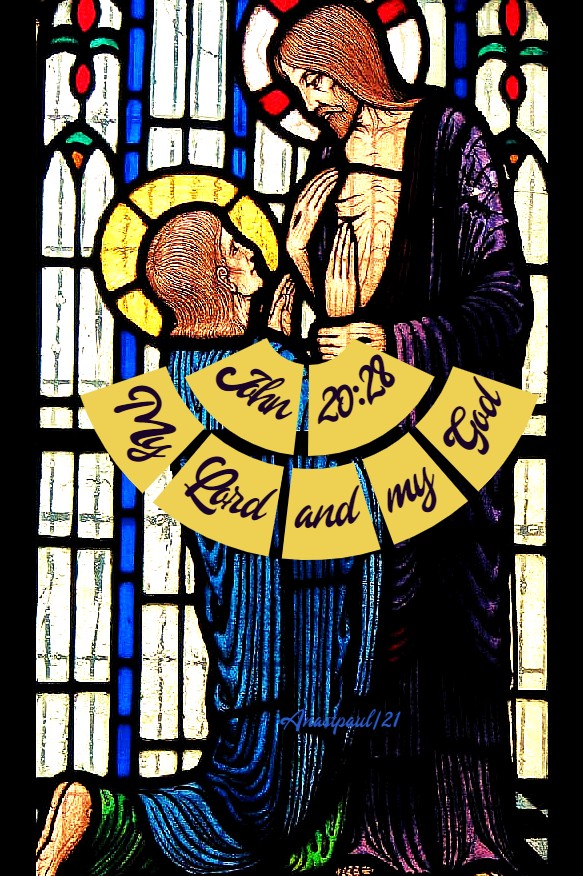
Jesus said to him, “Have you come to believe because you have seen me? Blessed are those who have not seen and have believed.”
John 20:28-29
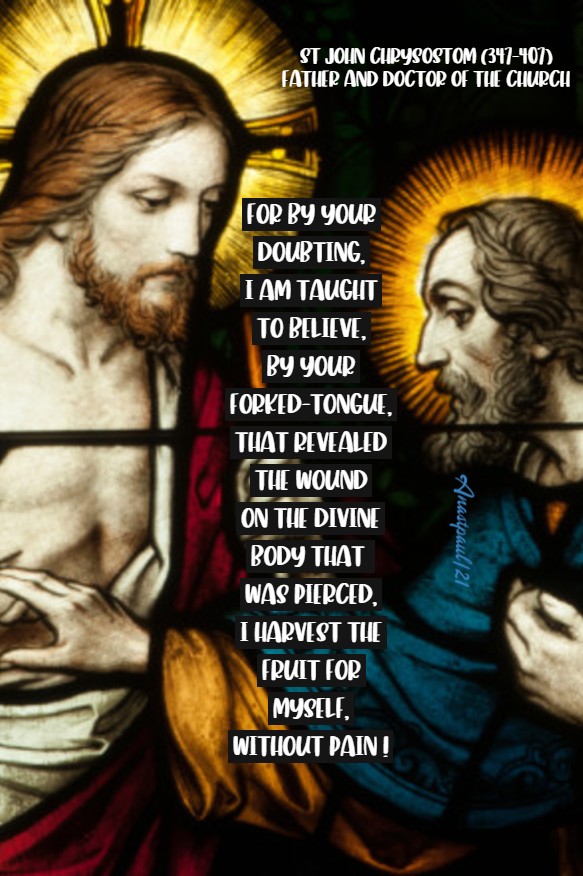
“For by your doubting, I am taught to believe, by your forked-tongue, that revealed the Wound on the Divine Body that was pierced, I harvest the fruit for myself, without pain!”
St John Chrysostom (347-407) Father and Doctor
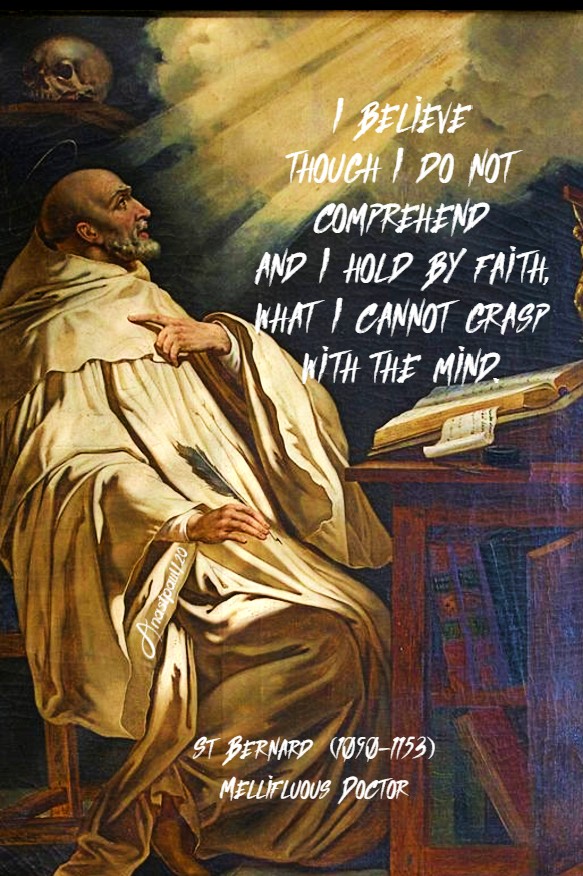
“I believe though I do not comprehend and I hold by faith, what I cannot grasp with the mind.”
St Bernard (1090-1153) Mellifluous Doctor
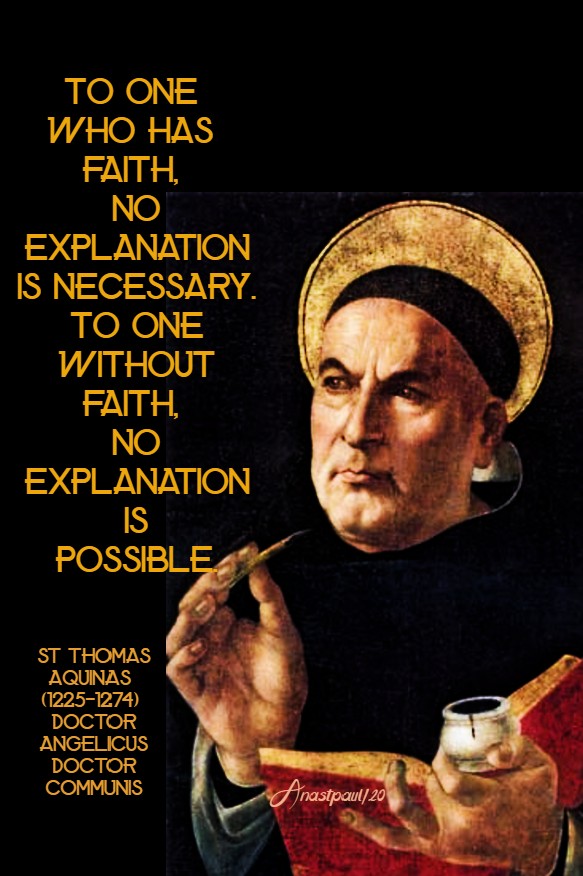
“To one who has faith, no explanation is necessary. To one without faith, no explanation is possible.”
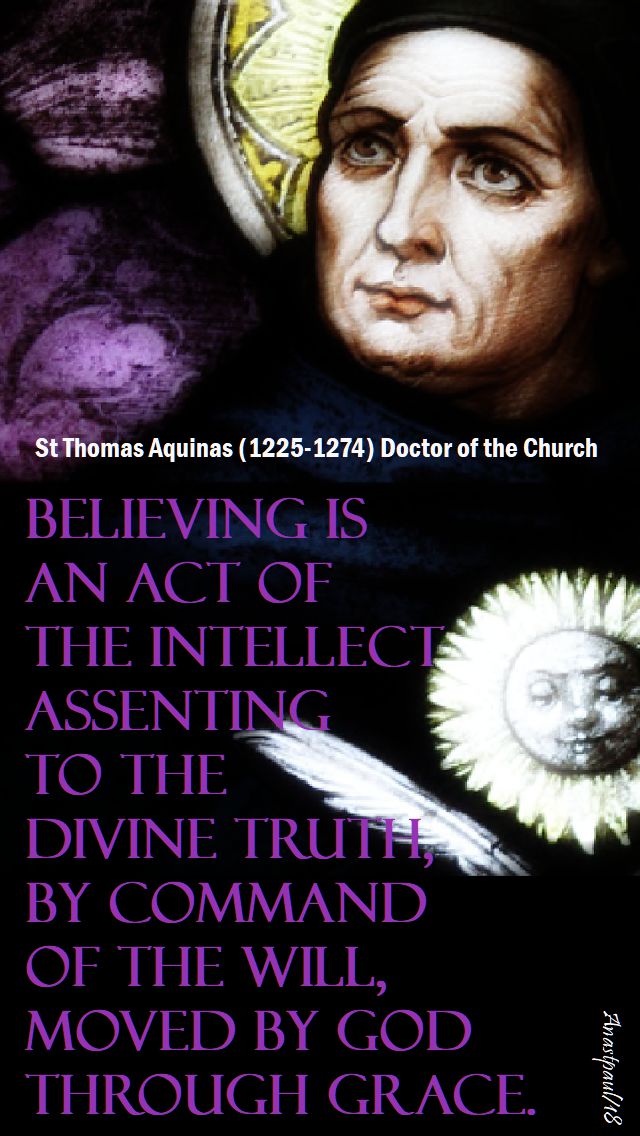
“Believing is an act of the intellect assenting to the divine truth, by command of the will, moved by God through grace.”
St Thomas Aquinas (1225-1274) Doctor Angelicus/Doctor Communis
One Minute Reflection – 3 July – Feast of St Thomas Apostle – Readings: Ephesians 2: 19-22, Psalms 117: 1bc, 2, John 20: 24-29
“Blessed are those who have not seen and have believed.” – John 20:29
REFLECTION – “There was a wonderful providence behind these words of the Saviour and they can be of very great help to us. They show, once again, how much He cares for our souls, for He is good and| as Scripture says: “He wants everyone to be saved and to come to knowledge of the truth” (1Tm 2,4).
Even so, this saying of His may surprise us. As always, Christ had to be patient with Thomas, when he said he would not believe and, with the other disciples too, when they thought they were seeing a ghost! Because of His desire to convince the whole world, He most willingly showed them the marks of the nails and the wound in His side; – because He wished those, who sought this evidence, as a support for their faith, to have no possible reason for doubt – He even took food, although He had no need for it (Lk 24,41)…
But when anyone accepts what he has not seen, believing on the word of his teacher, the faith, by which he honours the One his teacher proclaims to him, is worthy of great praise. Blessed, therefore, is everyone who believes the message of the holy Apostles who, as Saint Luke says, were eyewitnesses of Christ’s actions and “ministers of the word” (Lk 1,2). If we desire eternal life and long for a dwelling place in heaven, we must listen to them.” – St Cyril of Alexandria (380-444), Bishop, Father and Doctor of the Church – Commentary on Saint John’s gospel, 12, 22
PRAYER – Father, let our celebration on the feast of Saint Thomas the Apostle, be the source of his unfailing help and protection. Fill us with Your life-giving grace through our faith in Your Son, Jesus the Christ, whom Thomas acknowledged to be his Lord and his God. We make our prayer, through our Lord Jesus in union with the Holy Spirit, one God with You, forever and ever, amen.
Notre-Dame-de-la-Carole / Our Lady of la Carole, Paris (1418) – 3 July:
Roadside Shrines can still be seen in places all over Europe, though it is nothing like it used to be in the Middle Ages when these Shrines were extremely prevalent. They were public reminders of God and His Saints and were meant for the good of the general public, who would come upon the Shrine and pause for a moment to pray. They could be simple or somewhat elaborate, ranging from unadorned crosses to free standing towers or even small Chapels. On 3 July in the year 1418, a Swiss soldier committed a sacrilege upon a Statue of the Blessed Virgin known as Our Lady of la Carole, or Our Lady of Carole. It was located at the corner of the Rue aux Ours, which was built in the 13th century and terminated at the hospital of Saint John, which is no longer in existence. The Rue aux Ours is now a short street that begins at Rue Saint-Martin and ends at the Boulevard Sebastopol in Paris, France. The soldier of the Duke of Burgandy’s troops, said to be a Swiss soldier, came upon the Shrine of the Blessed Virgin after having left a tavern where he had gambled away his money. He was probably intoxicated when he drew his sword and repeatedly struck the Statue of the Blessed Virgin with the weapon. The Statue of Our Lady of Carole then began to bleed profusely, as if made of flesh and blood and WAS wounded by the blows. The citizens who had observed the sacrilege were outraged and followed the soldier as he fled from the scene of his crime. The man was eventually caught and apprehended and then brought before the Chancellor where he was sentenced to death for the outrage.
In remembrance of this incident and in expiation for the crime, there was a popular feAST that took place on the Rue aux Ours every year. There were fireworks and a wax figure representing the sacrilegious wretch who had struck the image of the Blessed Virgin was set ablaze. This festival continued until the French Revolution brought an end to the traditional observance.
St Anatolius of Constantinople (Diedc 458) Bishop Bl Andreas Ebersbach Bl Barbara Jeong Sun-mae St Bladus St Byblig St Cillene St Dathus of Ravenna St Eusebius of Laodicea St Firminus St Firmus Bl Gelduin St Giuse Nguyen Ðình Uyen St Gunthiern St Guthagon St Heliodorus of Altinum St Hyacinth of Caesarea St Ioannes Baptista Zhao Mingxi St Irenaeus of Chiusi
St Maelmuire O’Gorman St Mark of Mesia St Mennone the Centurian St Mucian of Mesia St Paul of Mesia St Petrus Zhao Mingzhen St Philiphê Phan Van Minh St Raymond of Toulouse (Died 1118) Layman — Martyrs of Alexandria – 13 saints: Thirteen Christian companions marytred together. No details about them have survived but the names – Apricus, Cyrion (2 of), Eulogius, Hemerion, Julian, Julius, Justus, Menelaus, Orestes, Porfyrios and Tryphon (2 of). They martyred in Alexandria, Egypt, date unknown.
Martyrs of Constantinople – 24 saints: A group of 24 Christians martyred in the persecutions of Arian emperor Valens. We know little more than their names – Acacios, Amedinos, Ammonius, Ammus, Cerealis, Cionia, Cionius, Cyrianus, Demetrius, Eulogius (2), Euphemia, Heliodoros, Heraclios, Horestes, Jocundus, Julian, Martyrios, Menelaeus, Sestratus, Strategos, Thomas, Timotheos and Tryphon. They were martyred in c367 in Constantintinople.
Theodotus and Companions – 6 saints: Six Christians who were imprisoned, tortured and martyred together in the persecutions of Trajan. Saint Hyacinth ministered to them in prison. We know nothing else about them but their names – Asclepiodotus, Diomedes, Eulampius, Golinduchus, Theodota and Theodotus. They were beheaded in c110, location unknown.
Thought for the Day – 29 June – Meditations with Antonio Cardinal Bacci (1881-1971)
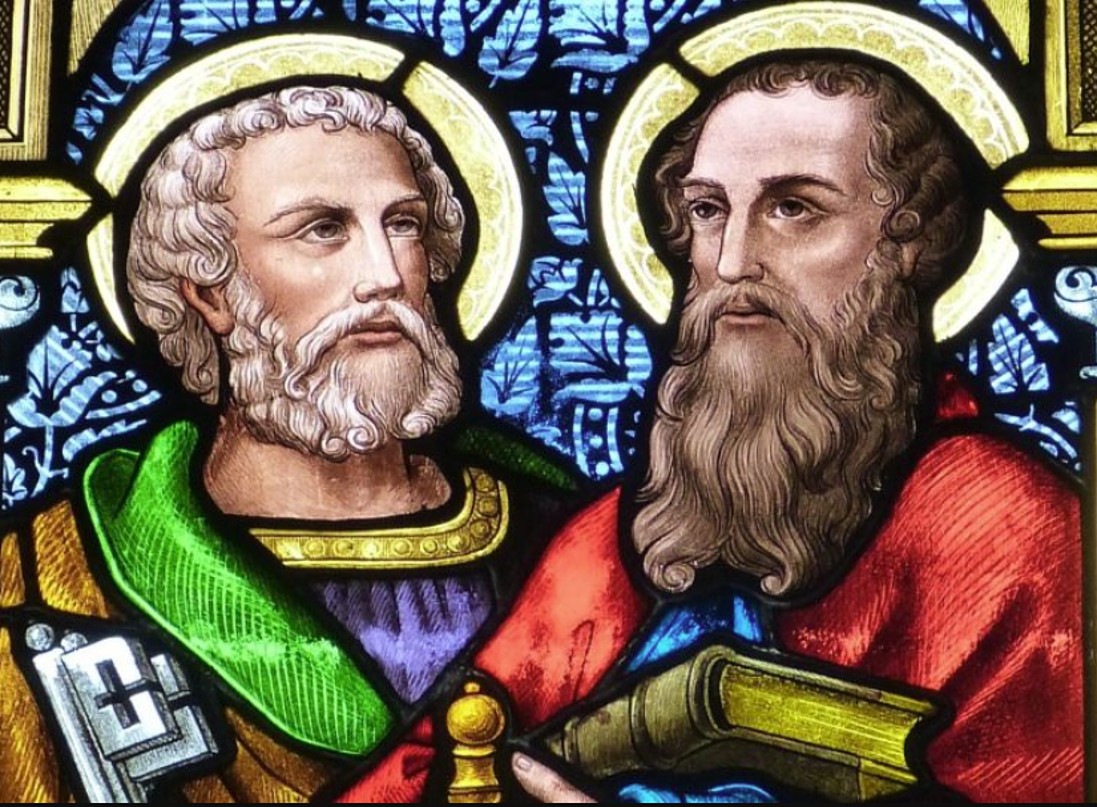
St Peter, Prince of the Apostles St Paul, the Apostle to the Gentiles
“Jesus was walking one day along the shoe of the Sea of Galilee, when He saw two fishermen casting their nets into the water. He approached them and said: “Come, follow me and I will make you fishers of men” (Mk 1:17). These two fishermen were brothers named, Simon and Andrew. The divine Master won their hearts immediately, so that they left their boat and their nets and followed Jesus. Simon was later called Peter and became the leader of the Apostles.
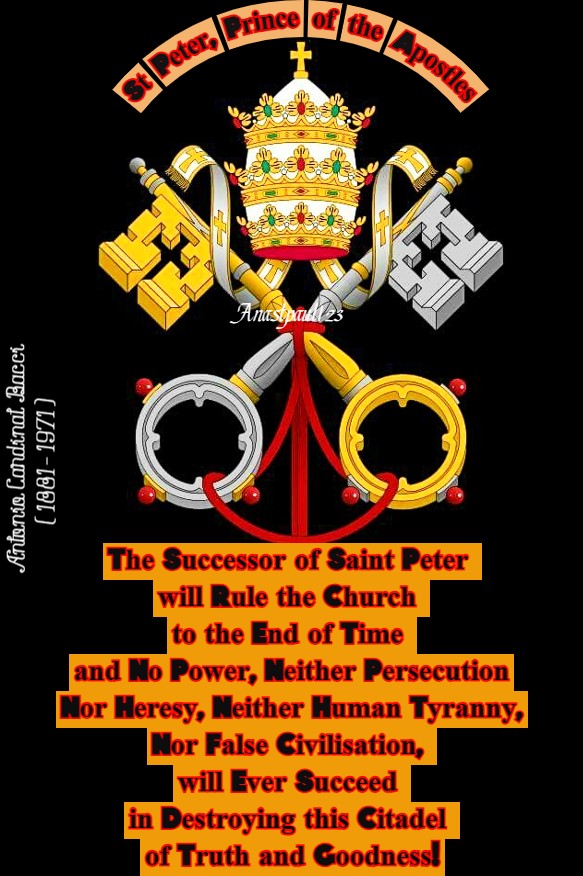
Peter’s generosity and great love for Jesus are evident in the pages of the Gospel. When Our Lord foretold the institution of the Blessed Eucharist, many of His disciples were scandalised and left Him. “Do you also wish to go away?” Jesus asked His Apostles. St Peter answered Him without delay. “Lord, to whom shall we go? Thou has the words of everlasting life and we have come to believe and to know, that Thou are the Christ, the Son of God” (Jn 6:69). On another occasion, Jesus asked His disciples – “Who do men say the Son of Man is?” The Apostles hesitated and began to suggest the names of various Prophets. But St Peter was inspired to make the reply: “Thou are the Christ, the Son of the living God.” Then Our Lord appointed him Head of the Church. “Blessed are thou, Simon Bar-Jona … thou are Peter and upon this rock I will build my Church and the gates of hell, shall not prevail against it. And I will give thee the keys of the kingdom of heaven and whatever you shall bind on earth shall be bound in heaven” (Mt 16:15-19). By these words there was instituted the loftiest and most ancient of the dynasties, the Papacy. The successor of St Peter will rule the Church to the end of time and no power, neither persecution nor heresy, neither human tyranny nor false civilisation, will ever succeed in destroying this citadel of truth and goodness!”
St Paul, the Apostle to the Gentiles
“St Paul was by nature, fiery and zealous. Once he discovered the truth, he was ready to die for it. Originally he was convinced that Judaism contained the whole truth and, for this reason he hated the Christians, whom he regarded as a sect which had corrupted the sacred Hebrew tradition. The deacon Stephen was the first victim of his persecuting zeal. As he was being stoned and beaten to death this saintly young man prayed for his persecutors. It may be that in this moment his eyes, shining with faith and love, encountered those of the man who hated him. Soon afterwards, Saul (this was Paul’s real name), left Jerusalem for Damascus, carrying letters investing him with new powers for the persecution of the infant Church. On the way, this headstrong but sincere enemy of Christianity was suddenly dazzled by a light from Heaven. He fell to the ground and heard a mysterious voice saying: “Saul, Saul, why do thou persecute me?” Terrified he answered: “Who are thou, Lord?” “I am Jesus,” the voice said, “whom thou are persecuting” (Acts 9:1-15). From that day, Saul was changed completely. Under the influence of divine grace, he became the Apostle to the Gentiles.
Before he set out on his missionary journeys, Paul wet apart into the desert of Arabia (Cf Gal 1:17), where, he remained sometime in prayer and recollection. Then he went to Jerusalem to pay homage to the Prince of the Apostles, St Peter (Gal 1:18). After this, he began his apostolic travels, in the course of which, he encountered all kinds of hardships and dangers. The Jews frequently hunted him, in order to put him to death. He was often cruelly scourged and flung into prison and, several times, he was shipwrecked and had miraculous escapes from death (CF 2 Cor 11:23-27). He bore everything joyfully however, in order to prove his liove for Jesus Christ. Charity was always his main incentive. “The love of Christ impels us” (2 Cor 5:14). Charity, he said himself, “Believes all things, hopes all things,edues all things” (Cf 1 Cor 13:4-13). His charity was so great, that he could truthfully say: “Who is weak and I am not weak? Who is made to stumble and I am not inflamed?” (2 Cor 11:29).
St Paul could make this claim because his heart had become identified with the Heart of Jesus. Therefore, he could say: “It is now no longer I that live but Christ lives in me,” (Gal 2:20) and: “For me to live is Christ and to die is gain,” (Phil 1:21) and: “I am hard pressed from both sides, desiring to depart and to be with Christ, a lot by far the better; yet, to stay on in the flesh is necessary, for your sake” (Phil 1:23-24).
Let us meditate on this ardent love of God. Let us cast aside our coldness and indifference and ask St Paul, to set us on fire with divine charity.” Amen
Quote/s of the Day – 29 June – “Month of the Sacred Heart” – The Solemnity of Saints Peter and Paul
“Look at the holy Apostles. It was by sinful jealousy that Peter was subjected to tribulation, not once or twice but many times; it was in that way, that he bore his witness before leaving us for his well-earned place in glory. And Paul, because of jealousy and contention, has become the very type of endurance rewarded. … In him we have one of the greatest of all examples of endurance. … [And] we too, are in the same arena and have the same conflict before us.”
St Pope Clement I of Rome (c 35-99)
Letter to the Corinthians, 5-7
“Nothing escaped the wisdom and power of Christ, the elements of nature lay at His service, spirits obeyed Him, angels served Him. … And yet, out of all the world, Peter alone was chosen to stand at the head, for the calling of all the peoples and the oversight of all the apostles and Fathers of the Church. .”
St Pope Leo the Great (400-461) Father and Doctor of the Church
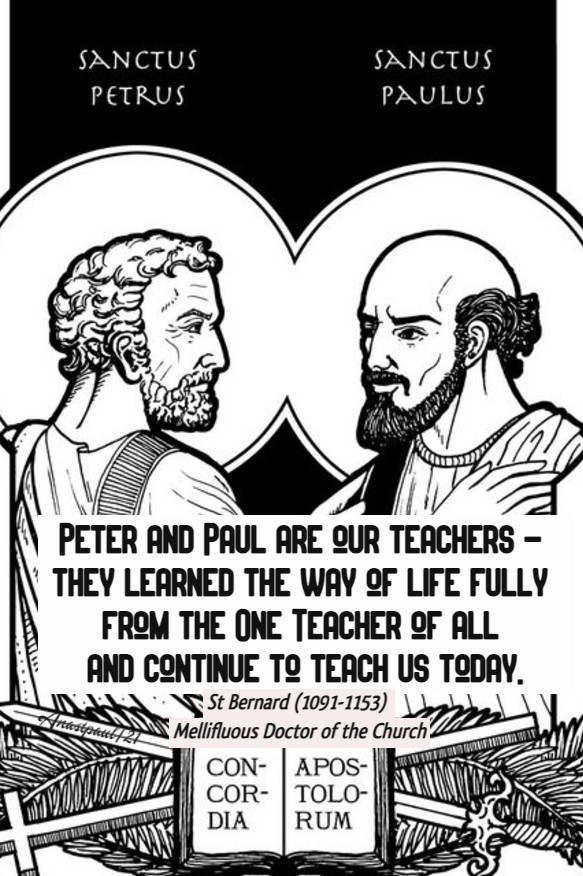
“Peter and Paul are our teachers – they learned the way of life fully from the One Teacher of all and continue to teach us today.”
St Bernard (1091-1153) Mellifluous Doctor of the Church
One Minute Reflection – 29 June – “Month of the Sacred Heart” – The Solemnity of Saints Peter and Paul, Readings: Acts 12:1-11, Psalm 34:2-9, 2 Timothy 4:6-8, 17-18, Matthew 16:13-19
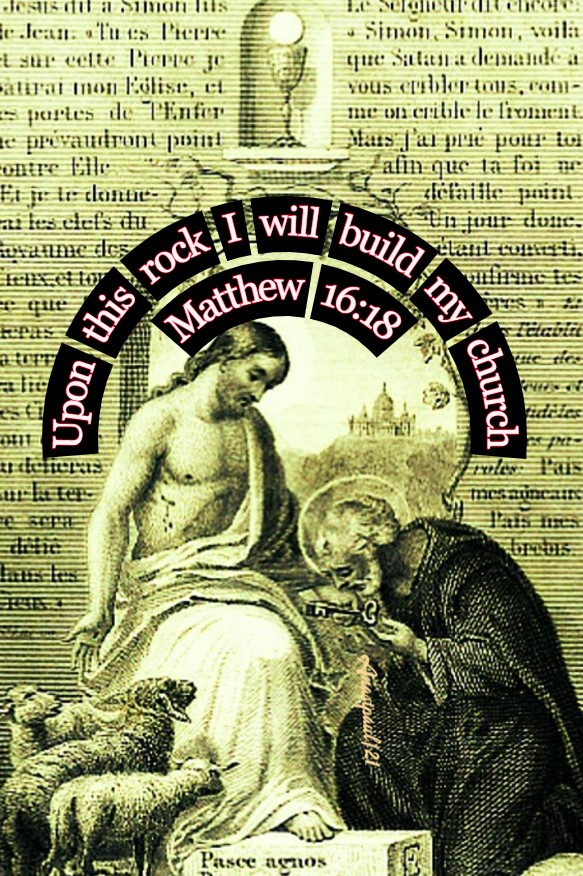
“Upon this rock I will build my church” – Matthew 16:18
REFLECTION –“Though the earth and all who dwell in it quake, I have set firm its pillars” (Ps 74[75],40). All the Apostles are pillars of the earth but, at their head, the two whose feast we are celebrating. They are the two pillars who support the Church with their teaching, their prayer and the example of their steadfastness. The Lord Himself strengthened these pillars. For at first they were weak, completely incapable of supporting either themselves or others. And in this, the Lord’s great design appears – if they had always been strong, people could have thought their strength came from themselves. That is why the Lord wanted to show, what they were capable of, before strengthening them, so that all might know their strength came from God… Peter was thrown to the ground by the voice of a mere servant… and the other pillar was very weak too: “I was once a blasphemer and persecutor and an arrogant man” (1Tm 1,13)…
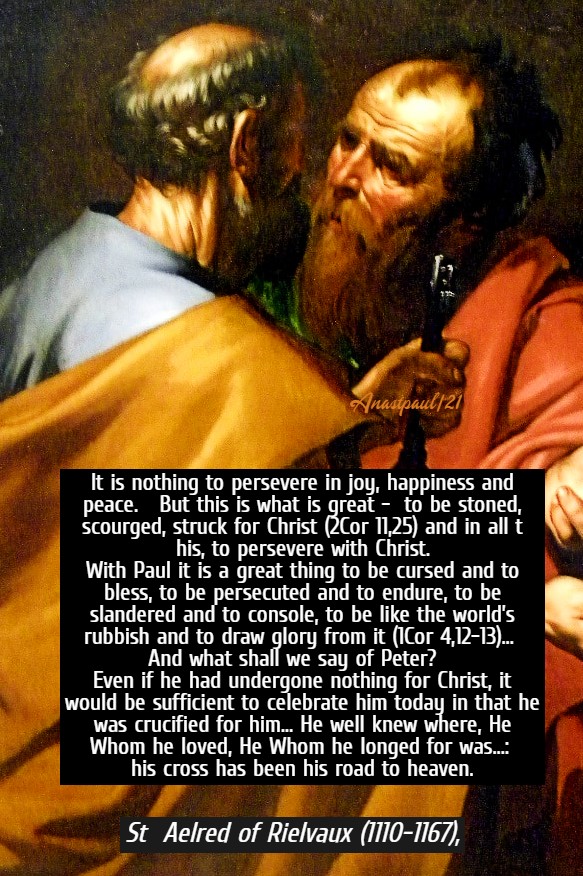
Hence, we ought to praise these Saints with all our heart – our fathers who bore such trials for the Lord’s sake and who persevered with such determination. It is nothing to persevere in joy, happiness and peace. But this is what is great – to be stoned, scourged, struck for Christ (2Cor 11,25) and in all this, to persevere with Christ. With Paul it is a great thing to be cursed and to bless, to be persecuted and to endure, to be slandered and to console, to be like the world’s rubbish and to draw glory from it (1Cor 4,12-13)… And what shall we say of Peter? Even if he had undergone nothing for Christ, it would be sufficient to celebrate him today in that he was crucified for him… He well knew where, He Whom he loved, He whom he longed for was…: his cross has been his road to heaven.” – St Aelred of Rielvaux (1110-1167), Cistercian Monk – Sermon 18, for the Feast of Saints Peter and Paul – PL 195, 298
PRAYER – Almighty ever-living God, You give us the great joy of devoting this day to the honour of the great Apostles Peter and Paul. Grant Your Church may follow their teachings fully because these are the men who first taught us to worship You in Christ, Your Son, Who lives and reigns with You and the Holy Spirit, God forever and ever, amen.
Our Morning Offering – 29 June – The Solemnity of Saints Peter and Paul
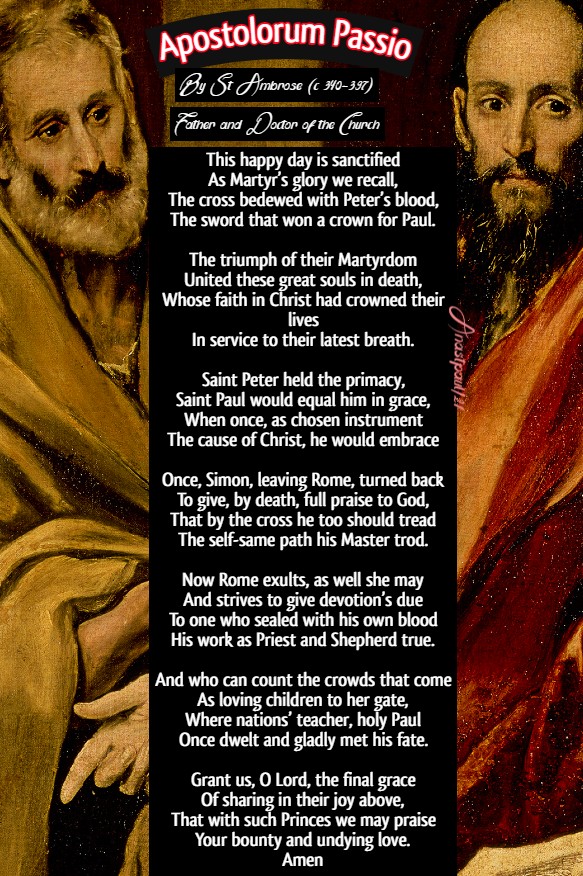
Apostolorum Passio By St Ambrose (c 340-397) Father and Doctor of the Church
This happy day is sanctified As Martyr’s glory we recall, The cross bedewed with Peter’s blood, The sword that won a crown for Paul.
The triumph of their Martyrdom United these great souls in death, Whose faith in Christ had crowned their lives In service to their latest breath.
Saint Peter held the primacy, Saint Paul would equal him in grace, When once, as chosen instrument The cause of Christ, he would embrace
Once, Simon, leaving Rome, turned back To give, by death, full praise to God, That by the cross he too should tread The self-same path his Master trod.
Now Rome exults, as well she may And strives to give devotion’s due To one who sealed with his own blood His work as Priest and Shepherd true.
And who can count the crowds that come As loving children to her gate, Where nations’ teacher, holy Paul Once dwelt and gladly met his fate.
Grant us, O Lord, the final grace Of sharing in their joy above, That with such Princes we may praise Your bounty and undying love. Amen
Translation: The Benedictines of Saint Cecilia’s Abbey, Ryde, UK
Solemnity of Saints Peter and Paul Apostles and Martyrs – 29 June
After the great Solemnities of the movable cycle, and the Feast of St John the Baptist, none is more ancient, nor more universal in the Church, than that of the two Princes of the Apostles. From the beginning, Rome celebrated their triumph on the very day itself which saw them go up from earth to heaven, 29 June. Her practice prevailed, at a very early date, over the custom of several other countries, which put the Apostles’ feast towards the close of December. It was, no doubt, a fair thought which inspired the placing of these Fathers of the Christian people in the cortege of Emmanuel at His entry into this world. But, as we have already seen, today’s teachings have intrinsically an important preponderance in the economy of Christian dogma; – they are the completion of the whole Work of the Son of God – the cross of Peter fixes the Church in her stability and marks out for the Divine Spirit, the immutable centre of His operations. Rome, therefore, was well inspired when, leaving to the Beloved Disciple the honour of presiding over his brethren at the Crib of the Infant God, she maintained the solemn memory of the Princes of the Apostles upon the day chosen by God Himself to consummate their labours and to crown, at once, both their life and the whole cycle of mysteries.
Fully today, do the heavens declare the glory of God, as David expresses it, today do they show us the course of the Spouse completed on the eternal hills (Ps. xviii. 2-6). Day unto day uttereth speech and night unto night revealeth the deep secret (Ibid. 3). From north and south of the new Sion, from either side of her stream, Peter and Paul waft one to other, as a farewell song, as a sacred Epithalamium, the good Word (Ps. xliv. 2); sublime that echo, sonorous its power, vocal still throughout the whole earth (Ibid. xviii. 4, 5), and yet, to resound as long as the world lasts. These two torches of salvation blend their flames above the palaces of ancient Rome; the passing darkness of their death, that night of which the Psalmist sings, now concentrates light, forever, in the midst of the Queen City. Beside the throne of the Bridegroom fixed forever and ever, on yonder seven hills (Ps. xliv. 7-10), the Gentile world, now become the Bride, is resplendent in glory (Eph. v. 27), all fair in that peerless purity which she derives from their blood united, as it is, to that of the Son of God.
But seemly is it, not to forget, on so great a day, those other messengers sent forth by the divine householder and who watered earth’s highways with their sweat and with their blood, the while they hastened the triumph and the gathering in of the guests invited to the Marriage feast (St.Matth. xxii. 8-10). To them is it due, if now the law of grace is definitively promulgated throughout all nations and if, in every language and upon every shore, the good tidings have been sounded (Ps. xviii. 4, 5). Thus the festival of St Peter, completed by the more special memory of St Paul his comrade in death, has been from earliest times regarded as the festival likewise of the whole Apostolic college. In those primitive times it seemed impossible to dream of separating from their glorious leader any of those whom Our Lord had so intimately joined together in the responsibility of one common work. But in course of time, however, particular solemnities were successively consecrated to each one of the Apostles and so, the feast of 29 June was more exclusively attributed to the two Princes whose Martyrdom rendered this day illustrious. (from the Liturgical Year, 1904).
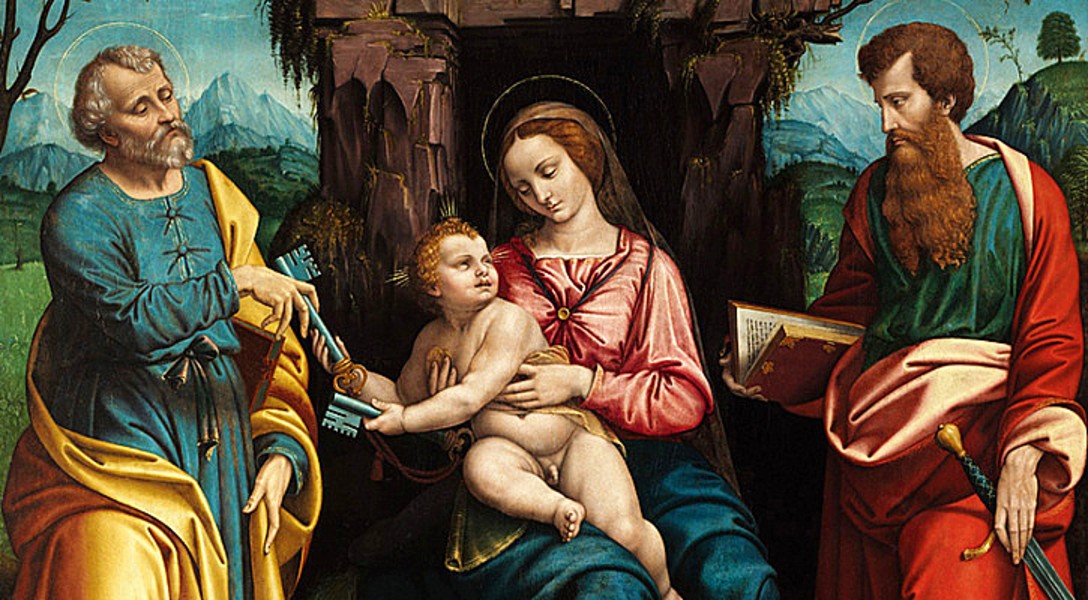
the Virgin and Child with Saints Peter and Paul by Girolamo Figino
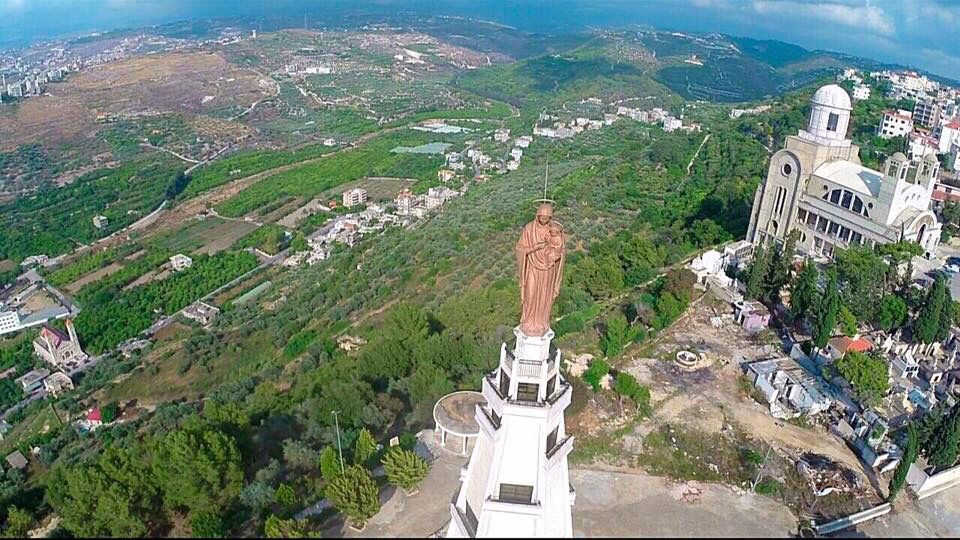
Our Lady of Mantara / Our Lady of ‘Awaiting’, Maghdouché, Sidon, South Governorate, Lebanon (1721) – 11 June, 8 September:
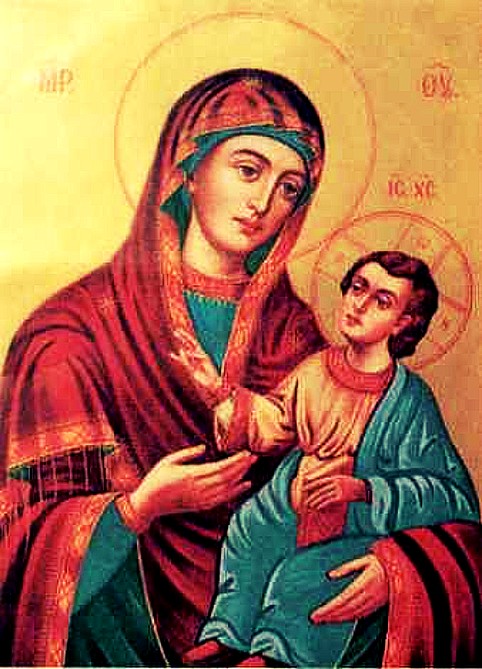
While Jesus preached in Sidon, Mary is said to have waited here in the cave of Mantara (“awaiting” in Arabic). Emperor Constantine’s wife Helena replaced a pagan shrine with one to the Holy Mother, donating to it an Icon and Altar furnishings. Three centuries later, after takeover by an intolerant Arab ruler, Christians sealed the cave and fled Maghdouché. In 1683, descendants of the exiles returned to their homeland under the inclusive Prince Fakhreddin II. On 8 September 1721, when a goat fell through a gap in the porous limestone, its young herder made a rope from vine twigs, tied it to a tree and followed the animal into the hole but the rope broke. The boy fell into the darkness, where eventually he made out the golden glimmer of an Icon of the Madonna and Child. On seeing the image, the Melkite Catholic clergy recognised it as St Helen’s Icon.
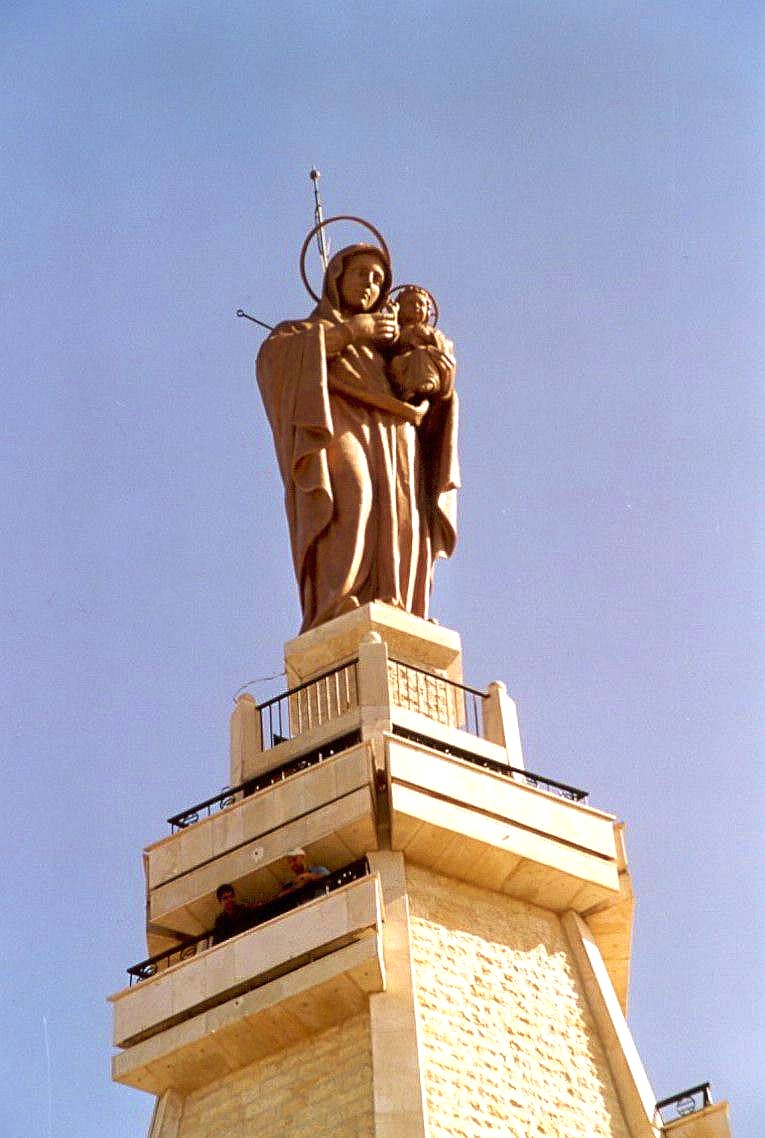
Christians now celebrate its rediscovery annually on 8 September, Feast of the Virgin’s Birth. A Cathedral was added to the site in 1860 and a modern tower topped with a bronze Statue in the 1960s.
On 11 June 1911, some 400 people saw a silent, luminous apparition of the Madonna and Child near the cave. Our Lady of Mantara is invoked for the healing of eye diseases and the protection of children, so the Shrine is a popular site for infant Baptisms.
Bl Kasper of Grimbergen St Maximus of Naples St Parisius St Paula Frasinetti St Riagail of Bangor St Tochumra of Kilmore St Tochumra of Tuam — Martyrs of Tavira – 7 beati: Members of the Knights of Santiago de Castilla. During the re-conquest of the Iberian peninsula from the Muslims by Christian forces, in a period of truce between the armies, the group was allowed to leave the Portuguese camp to hunt. Near Tavira, Portugal, he and his companions were ambushed and killed by a Muslim force. Making a reprisal attack, the Portuguese army took the city of Tavira. The murdered knights were considered to be martyrs as they died in an action defending the faith. They were – • Blessed Alvarus Garcia • Blessed Beltrão de Caia • Blessed Damião Vaz • Blessed Estêvão Vasques • Blessed Garcia Roiz • Blessed Mendus Valle • Blessed Pedro Rodrigues They were martyred in 1242 outside Tavira, Faro, Portugal. Their relics are enshrined under the altar of Saint Barnabas in the Church of Our Lady, Queen of the Angels (modern Santa Maria do Castelo) in Tavria
Mercedarian Martyrs of Damietta: Three Mercedarian lay knights who worked to ransom Christians enslaved by Muslims. During the 7th Crusade, a plague swept through the Christian army and these knights volunteered to work with the sick. During this work they were captured by Muslims and ordered to convert to Islam; they refused. They were tortured, taken to Damietta, Egypt where they were murdered for their faith. They were thrown from a tower in the mid-13th century in Damietta, Egypt.
Thought for the Day – 1 June – “Month of the Sacred Heart” – Meditations with Antonio Cardinal Bacci (1881-1971)
Devotion to the Sacred Heart
“When we consider it under it’s fundamental aspect as the cult of the love of God, rather than of the Incarnate Word, devotion to the Sacred Heart of Jesus, is as old as Christianity, even though it is only in recent centuries, that it has assumed it’s present symbolism. “He who does not love, does not know God,” says St John, “for God is love” (1 Jn 4:8). “And we have come to know,” he continues “and have believed, the love that God has in our behalf. God is love and he who abides in love, abides in God and God in him” (1 Jn 4:16). This cult of the love of God, particularly of the love of God made man, vibrates throughout the pages of the Gospel and of the writings of the Apostles, especially of St John and of St Paul.
In the works of the Fathers, there are references to the Heart of Jesus, pierced with a lance, from which flowed all the infinite graces of the Church for our redemption. We are reminded of this in the Encylical, Haurietis Aquas, published by Pope Pius XII in the year 1956. But the specific cult of the love of God, as symbolised by the Heart of Jesus, was explicitly approved by the Church after Jesus Himself appeared in the year 1674 to St Margaret Mary Alacoque and showed her His Heart on fire with love for men.”
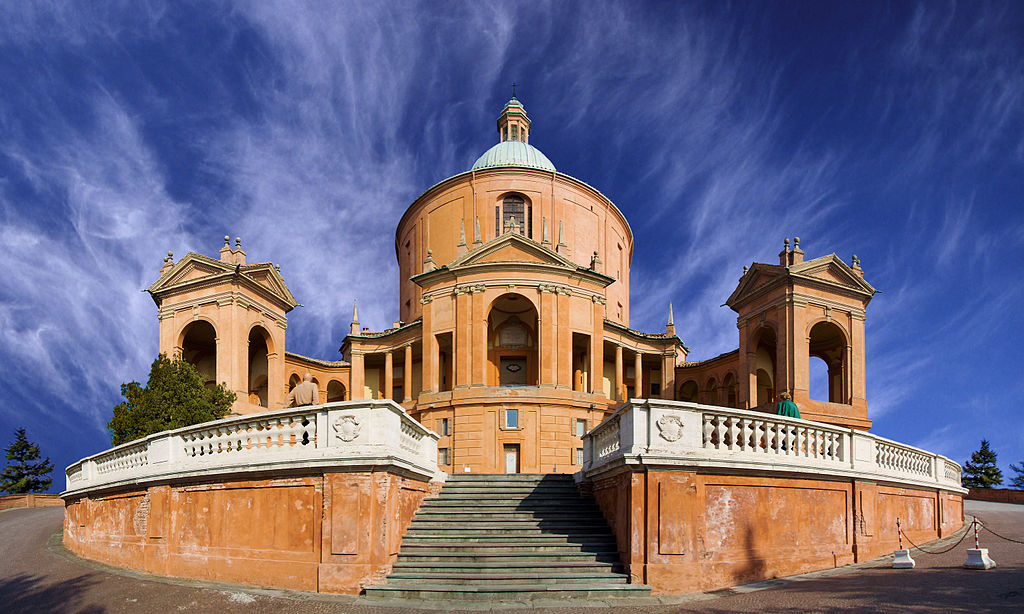
Beata Vergine di San Luca, Bologna, Italy / The Blessed Virgin of Saint Luke, Bologna – 22 May, Saturday before the Feast of the Ascension of our Lord:. The Blessed Virgin of St Luke is the Patron Saint of Bologna.
A Greek holy man named Theocles Kmnia, praying before this icon in the Church of St Sophia in Constantinople, saw an inscription on it: “This work made by St Luke, Chancellor of Christ, must be taken to the Church of St Luke on Guardia Mountain and installed on its Altar.”
Without knowing the mountain’s location, he pleaded with the clergy of St Sophia until they agreed to let him take the image there. For some time he travelled without finding anyone who knew of such a place. Finally, in Rome, he met the Bolognese Ambassador, who knew that two sisters, Azzolina and Beatrice Guezi, had retired to a life of prayer on Lookout Mountain, Monte della Guardia, outside Bologna and, had built a Chapel on the hill dedicated to St Luke. Supplied by the Ambassador with a horse, a servant and letters of recommendation to the leaders of Bologna, Theocles carried the icon there. On 8 May 1160, the Bishop of Bologna led it in procession to the sisters’ hermitage on Monte della Guardia. At this point, the story moves from legend to documented history. In 1192, another holy woman, Angelica di Caicle, retired to the mountain with the intention of building a bigger Church there. On 15 May 1194, the Bishop of Bologna ,laid the first stone. In 1249, Dominican sisters settled there. The image was carried in procession to Bologna on 4 April, 1302, during Charles de Valois’ invasion and again on 5 July 1433, after months of damaging rain. The rain’s end is commemorated in an annual procession from the Sanctuary to Bologna, which since 1476 has taken place on the Saturday before the Feast of Christ’s Ascension (always a Thursday).
The holy icon remains in Bologna for a week, returning to the Basilica Sanctuary on Ascension Sunday. It was ceremonially Crowned 5 April 1653 by the Archbishop and in 1857 by Blessed Pope Pius IX. Today the procession continues when pilgrims remove their shoes and begin the 3,796 meter (about 2 1/2 miles) climb up the longest uninterrupted portico in the world. to reach the Sanctuary and beg of our Holy Mother, intercession to her Son, for all their needs. Today, the highly veerated image is protected by a glass cover, see below.
St Boethian of Pierrepont St Castus the Martyr St Conall of Inniscoel Bl Diego de Baja Bl Dionisio Senmartin St Emilius the Martyr St Faustinus the Martyr St Francisco Salinas Sánchez St Fulgencio of Otricoli Bl Fulk of Castrofurli Bl Giacomo Soler Bl Giusto Samper St Helen of Auxerre
St Humility of Faenza (c 1226–1310) Wife, Mother, Nun – a founder of Vallumbrosan convents, and is considered the Founder of the Vallumbrosan Nuns
St Lupo of Limoges St Marcian of Ravenna St Margaret of Hulme Bl Pedro of the Assumption St Quiteria St Romanus of Subiaco St Timothy the Martyr St Venustus the Martyr — Martyred in the Spanish Civil War: • Blessed Francisco Salinas Sánchez • Blessed José Quintas Durán
Quote/s of the Day – 14 May – “Mary’s Month” – Feast of St Matthias Apostle, Readings: Acts 1:15-17, 20-26, Psalm 113:1-8, John 15:9-17
“The lot fell upon Matthias, and he was numbered with the eleven apostles.”
Acts 1:26
“He needed to be a witness not of the times before or after that event and not of the signs and wonders but only of the Resurrection itself. For the rest happened by general admission, openly but the Resurrection took place secretly and was known to these men only.”
St John Chrysosthom (347-407) Father & Doctor of the Church
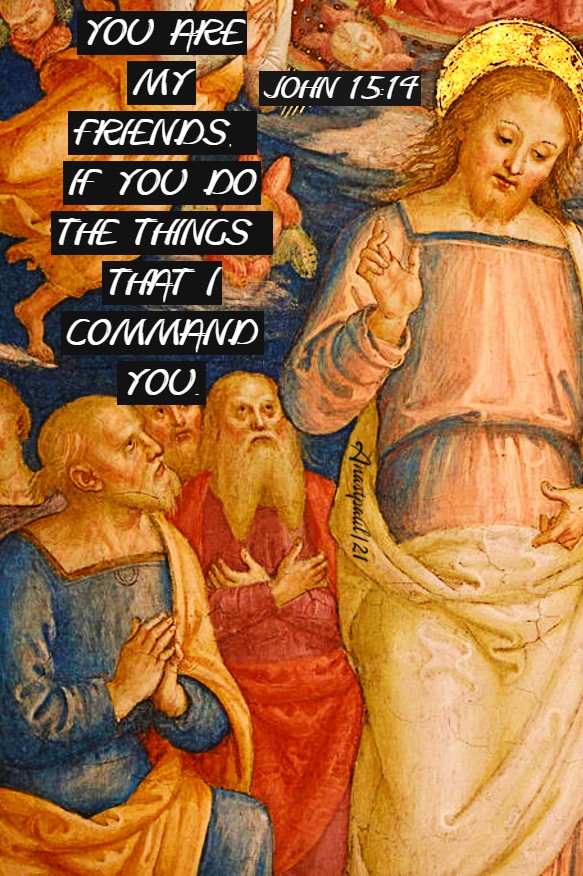
“You are my friends, if you do the things that I command you.”
John 15:14
“I have chosen you and have appointed you, that you should go and should bring forth fruit and your fruit should remain, says the Lord.”
One Minute Reflection – 14 May – “Mary’s Month” – Feast of St Matthias Apostle, Readings: Acts 1:15-17, 20-26, Psalm 113:1-8, John 15:9-17
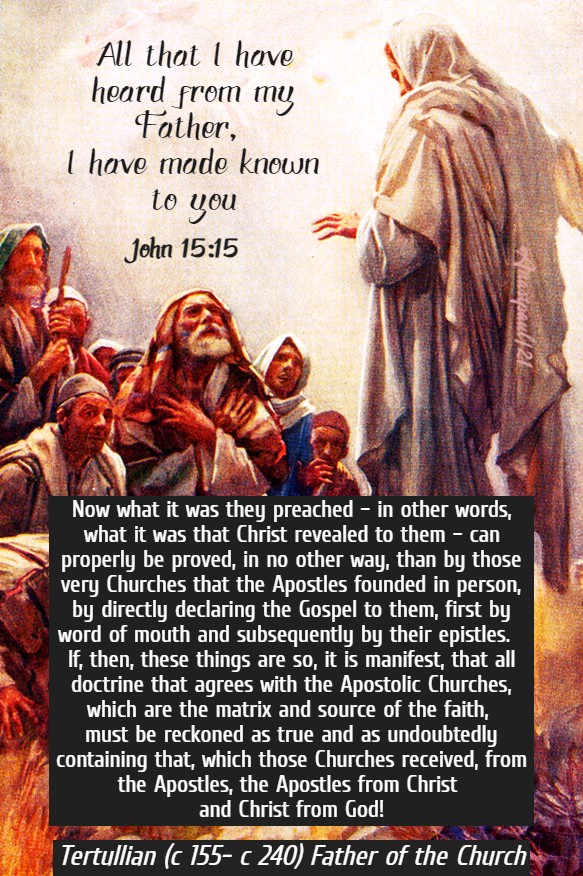
“…All that I have heard from my Father, I have made known to you.” … John 15:15
REFLECTION – “Among His disciples Christ chose twelve chief ones whom He destined to be the teachers of the nations. Accordingly, after one of these had been struck off, He commanded the eleven others, on His departure to the Father, to “go and teach all nations” who were to be “baptised into the Father, the Son and the Holy Spirit” (Mt 28,19).
So the Apostles – whom this designation indicates as ‘the sent’ – on the authority of a prophecy which occurs in a psalm of David, immediately chose Matthias by lot in place of Judas. They obtained the promised power of the Holy Spirit for the gift of miracles and tongues and, after first bearing witness to faith in Jesus Christ, throughout Judaea and founding Churches there, they next went out into the world and preached the same teaching of faith to the nations. …
Now what it was they preached – in other words, what it was that Christ revealed to them – can properly be proved, in no other way, than by those very Churches that the Apostles founded in person, by directly declaring the Gospel to them, first by word of mouth and subsequently by their epistles. If, then, these things are so, it is manifest, that all doctrine that agrees with the Apostolic Churches, which are the matrix and source of the faith, must be reckoned as true and as undoubtedly containing that, which those Churches received, from the Apostles, the Apostles from Christ and Christ from God.” … Tertullian, full name Quintus Septimius Florens Tertullianus (c 155- c 240) Father of the Church
PRAYER – Lord God, You chose St Matthias to complete the number of the twelve. By his prayer, include us among Your chosen ones, since we rejoice to see that the lot marked out for us, is in Your Love. May the Mother of Jesus, the Apostles and our Mother, ever intercede for us all. Through Jesus the Christ, our Lord, with the Holy Spirit, God now and forever, amen.
Madonna di Pinè, Montagnaga, Trento, Italy / Our Lady of Pinè, Montagnaga (1729) – Commemorated 14 May:
Domenica Targa of Guardia, thirty years old, was busy supervising the cattle grazing,which suddenly, with no apparent visible reason, started running in all directions as if she were crazy. The shepherdess then began to cry out: “Mary, Jesus, help me.” As soon as she uttered these words, the Virgin Mary appeared before her with a white veil on her head and thus addressed her: “You called Jesus and Mary for help and they will help you … Do you promised once again to visit Our Lady of Caravaggio? But do not go to Caravaggio! Go rather to the Feast of the Ascension of Christ in the Chapel of St Anne in Montagnaga. There you will find a portrait of the Blessed Virgin by Caravaggio. Kneel down and address your prayers with a sincere heart to Jesus and Mary, then you will see miraculous things. “
On Sunday Domenica went to the Chapel of St Anne in Montagnaga, while praying fervently, she again had an apparition of Mary. The robe of the Blessed Virgin radiated a golden light. She was crowned with a diadem and rays of clear light shone all around her, as did the Child Jesus, who was in her arms. He was dressed all in gold. In the right hand of the Madonna held a crown. She said: “I am Mary, the Mother of the Lord. Please tell this apparition to the local priest. Do not be afraid! Nothing bad will happen to you. I will be with you. In my name you must announce, that every year on this day,a feast must be celebrated.“
Only a few believed the story and especially the Priest showed himself very skeptical.
The Virgin appeared again the next on Sunday and said: “I chose this place as the throne of my Mercy. Those who care to pray here with living faith will not return home empty-handed. Take care that a Church be built for large numbers of my devotees.”
In 1730, an ecclesiastical investigation was ordered which resulted in a positive outcome and approval was granted to the apparitions. A Sanctuary was built and Consecrated in 1750. to which large crowds have flocked on pilgrimage and continue to do so to this day. Today, 14 May, special Masses and processions are held.
Domenica Targa led a life of deep Christian devotion and died in 1764.
St Ampelio (Died c 428) St Boniface of Ferentino St Boniface of Tarsus St Corona the Martyr St Costanzo of Capri St Costanzo of Vercelli Bl Diego of Narbonne St Dyfan St Engelmer St Erembert of Toulouse St Felice of Aquileia St Fortunatus of Aquileia St Gal of Clermont-Ferrand
St Pons of Pradleves St Pontius of Cimiez St Tuto of Regensburg St Victor the Martyr — Martyrs of Seoul – 5 Beata: A group of lay people martyred together in the apostolic vicariate of Korea. • Petrus Choe Pil-je • Lucia Yun Un-hye • Candida Jeong Bok-hye • Thaddeus Jeong In-hyeok • Carolus Jeong Cheol-sang 14 May 1801 at the Small West Gate, Seoul, South Korea – Beatified: 15 August 2014 by Pope Francis
Saint of the Day – 6 May – St John the Evangelist before the Latin Gate. St John the Apostle and Evangelist – “The Disciple whom Jesus Loved” – (died c 101).
The Roman Martyrology States of this feast today: “At Rome, the feast of St John before the Latin Gate. Being bound and brought to Rome from Ephesus by the order of Domitian, he was condemned by the Senate to be cast, near the said gate, into a vessel of boiling oil, from which he came out more healthy nd vigorous than before!
“The seething oil was changed for him into an invigorating bath and the Saint came out more refreshed than when he had entered the cauldron.”
Abbot Dom Prosper Gueranger (1805-1875) relates the story for us.
“The Beloved Disciple John, whom we saw standing near the crib of the Babe of Bethlehem, comes before us again today and this time, he is paying his delighted homage to the glorious Conqueror of death and hell. Like Philip and James, he too is clad in the scarlet robe of martyrdom. The month of May, so rich in saints, was to be graced with the Palm of St John.
Salome one day presented her two sons to Jesus,and, with a mother’s ambition, had asked Him to grant them the highest places in His kingdom. The Saviour, in His reply, spoke of the Chalice which He Himself had to drink,and foretold ,that these two Disciples would also drink of it. The elder, James the Greater, was the first to give His Master this proof of his love; we shall celebrate his victory when the sun is in Leo; it was today that John, the younger Brother, offered his life in testimony of Jesus’ Divinity.
But the Martyrdom of such an Apostle, called for a scene worthy of the event. Asia Minor, which his zeal had evangelised, was not a sufficiently glorious land for such a combat. Rome, whither Peter had transferred his Chair and where he died on his cross and where Paul had bowed down his venerable head beneath the sword, Rome alone deserved the honour of seeing the Beloved Disciple march onto Martyrdom, with that dignity and sweetness which are the characteristics of this veteran of the Apostolic College.
Domitian was then Emperor, the tyrant over Rome and the world. Whether it were that John undertook this journey of his own free choice and from a wish to visit the Mother-Church, or .that he was led thither bound with chains, in obedience to an imperial edict, John, the august founder of the Seven Churches of Asia Minor, appeared before the Tribunal of pagan Rome. He was convicted of having propagated, in a vast province of the Empire, the worship of a Jew that had been Crucified under Pontius Pilate. He was a superstitious and rebellious man and it was time to rid Asia of his presence. He was, therefore, sentenced to an ignominious and cruel death. He had somehow escaped Nero’s power but he should not elude the vengeance of Caesar Domitian!
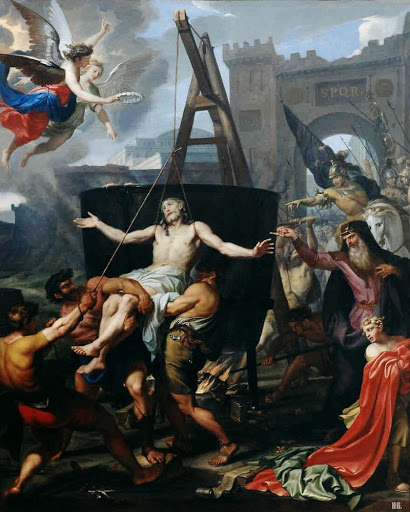
A huge cauldron of boiling oil was prepared in front of the Latin Gate. The sentence ordered that the preacher of Christ be plunged into this bath. The hour was come for the second son of Salome ,to partake of his Master’s Chalice. John’s heart leaped with joy, at the thought that he, the most dear to Jesus and yet, the only Apostle that had not suffered death for Him, was, at last, permitted to give Him this earnest of his love.
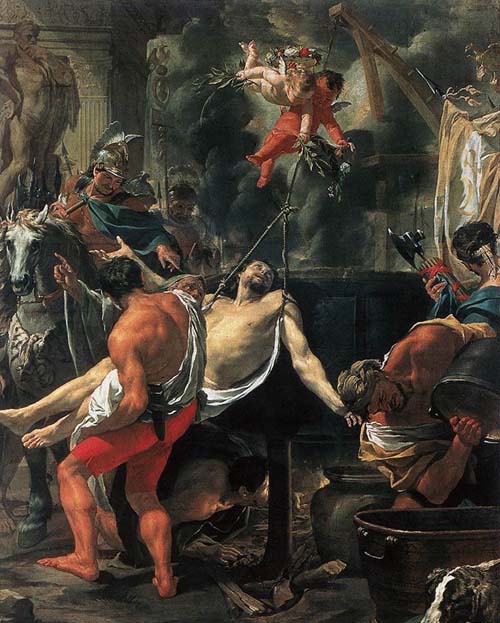
LeBrun, Martyrdom of St John Evangelist at Porta Latina
After cruelly scourging him, the executioners seize dthe old man and threw him into the cauldron but, lo! the boiling liquid had lost all its heat, the Apostle felt no scalding, on the contrary,, when they took him out again, he felt all the vigour of his youthful years restored to him. The Praetor’s cruelty was foiled,and John, the Martyr in desire, was to be left to the Church for some few years longer.
An imperial decree banished him to the rugged Isle of Patmos, where God revealed to him, the future of the Church, even to the end of time.
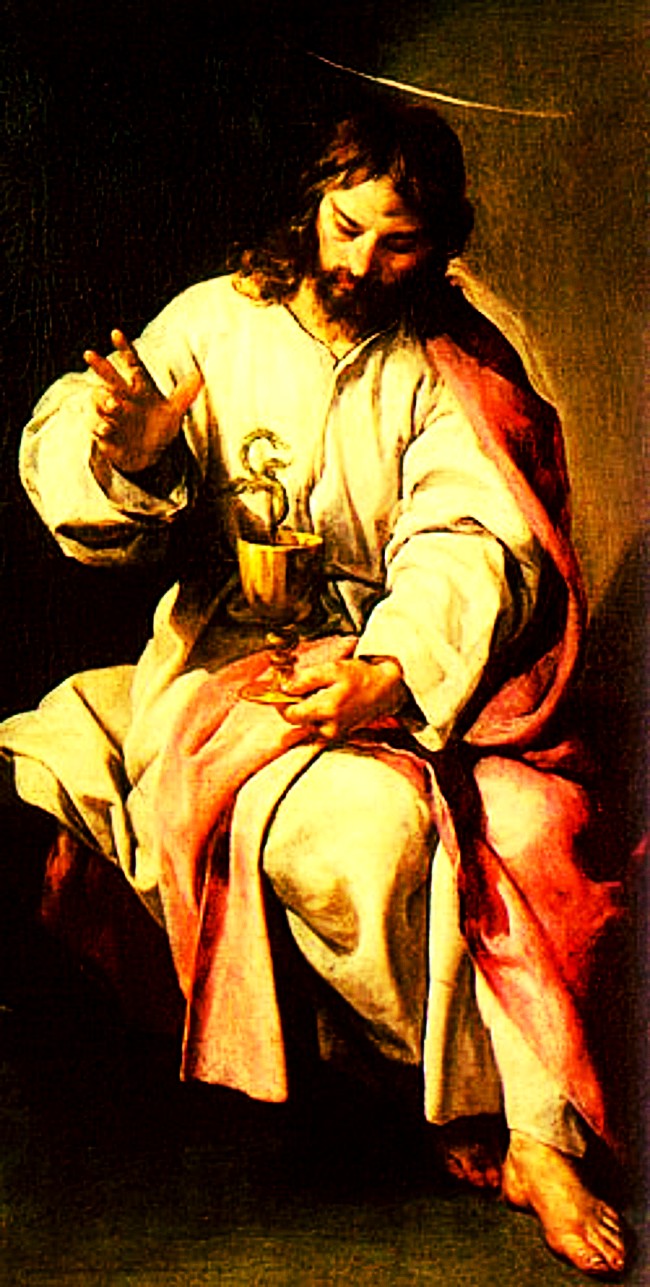
St John on Patmos
The Church of Rome, which counts the abode and Martyrdom of St John as one of her most glorious memories, has marked, with a Basilica, the spot where the Apostle bore his noble testimony to the Christian Faith. This Basilica stands near the Latin Gate and gives a title to one of the Cardinals.”
O singular happiness of St John to have stood under the Cross of Christ, so near His divine person, when the other disciples had all forsaken Him! O extraordinary privilege, to have suffered Martyrdom in the person of Jesus and been eye-witness of all He did or endured and of all that happened to Him, in that great sacrifice and mystery. Here he drank of his cup; this was truly a Martyrdom and our Saviour exempted all those who had assisted at the Martyrdom of His Cross, from suffering death by the hands of persecutors. St John, nevertheless, received also the crown of this second Martyrdom, to which the sacrifice of his will, was not wanting but only the execution.
One Minute Reflection – 3 May – “Mary’s Month” – Monday of the Fifth Week of Easter, Readings: First: First Corinthians 15: 1-8; Psalm: Psalms 19: 2-3, 4-5; Gospel: John 14: 6-14 and the Feast of Sts Philip and James Apostles and Martyrs
“Jesus said to him, “Have I been with you for so long a time and you still do not know me, Philip? Whoever has seen me has seen the Father. How can you say, ‘Show us the Father’? …” -John 14:9
REFLECTION – “In the Church, I know of only one image, that is, the image of the unseen God. God has said about this image, “Let us make man [humankind] in our image.” Of this image it is written that Christ is the “effulgence of the glory and impress of His hypostasis.” In that image, I perceive the Father, as the Lord Jesus Himself has said, “The one who has seen me has seen the Father.” For this image is not separated from the Father, which indeed, has taught me the unity of the Trinity, saying, “I and the Father are one” and again, “All things whatever the Father has are mine.” [In this image, also perceive] the Holy Spirit, seeing that the Spirit is Christ’s and has received of Christ, as it is written, “He shall receive of mine and shall announce it to you.” – St Ambrose (340-397) Bishop of Milan, Father and one of the original four Doctors of the Latin Church( – Sermon Against Auxentius, 32)
PRAYER – Lord God, each year You grant us the blessing of celebrating with joy, the feast day of Your Apostles and Martyrs Saints Philip and James. Make us partners with them by their prayers, in the Passion and Resurrection of Your only-begotten Son, so that we may come, with them, to the eternal vision of Your glory. We make our prayer through Jesus Christ, our Lord in the unity of the Holy Spirit, one God now and forever, amen.
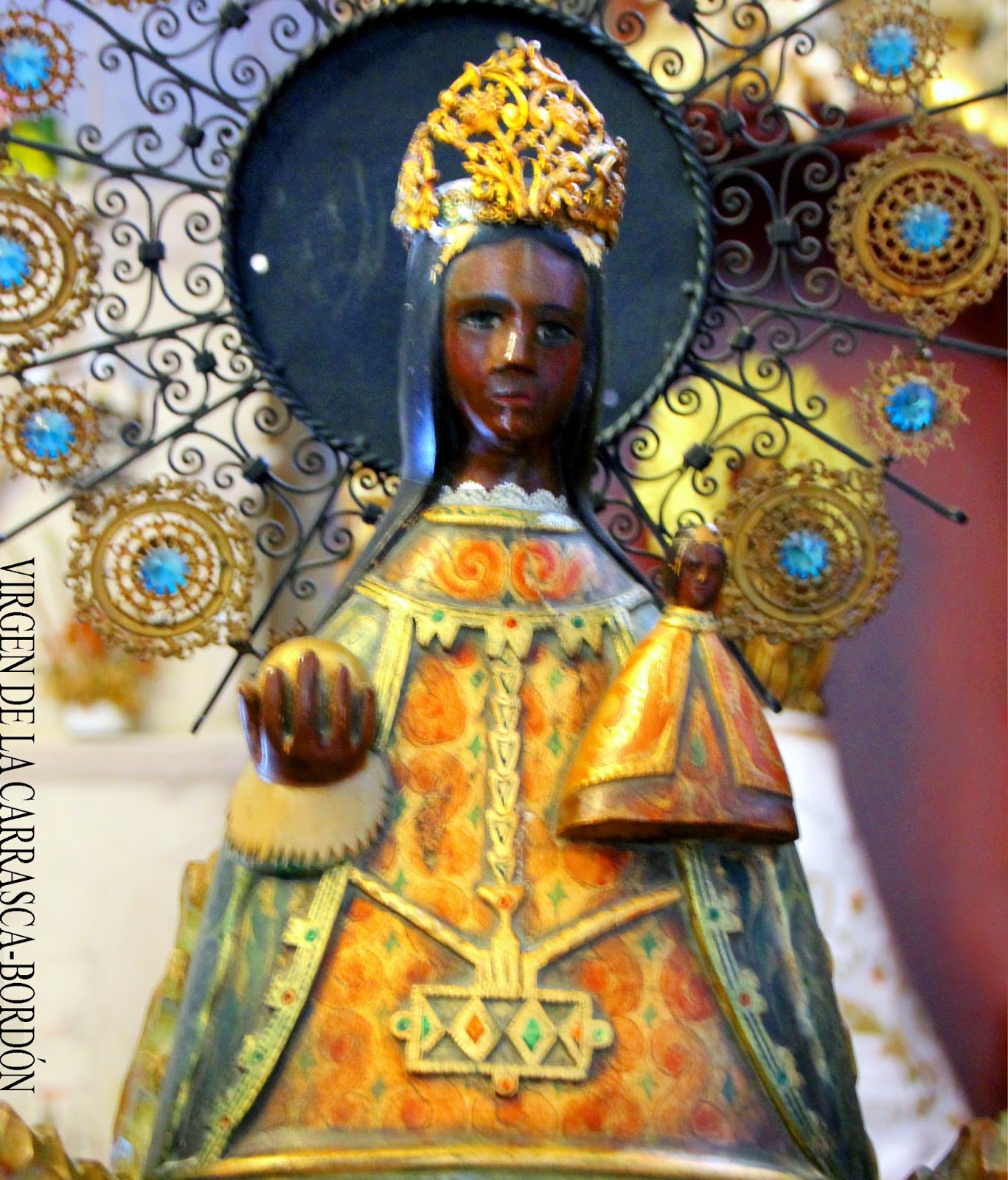
Virgen de la Carrasca, Bordón, Teruel, Aragón, Spain (1212) – 3 May:
Commemorated on First Monday of May
In 1212, a herder found an image of the Virgin in a holm oak (carrasca) in the rocky countryside of Aragón in Spaon. There are several stories about what happened then, all of them ending with a Shrine in Bordón. Templars carried the Statue to Castellote, 12 miles north but the next day the image was back in the oak, the Virgin made those carrying her to Castellote keep turning toward Bordón and springs arose at each turn.
Original Statue
In the place where it was found, a hermitage was built to house it, which would later be replaced by the building that today is the Parish Church of Bordón, built in 1306 by the Templar Order (The Order was dissolved by Pope Clement V in 1312 ).
Although its exterior hardly stands out, its interior is magical and fascinating, a place full of mystery. In one of the Chapels inside, the Templar novices who previously made a pilgrimage on foot from Castellote, capital of the Templar Commandery, performed initiation rites to become Knights of the Order.
In the 18th century, the interior of the Church was covered with marvellous frescoes, which have been recently restored. Unfortunately, the venerated carving of the Black Virgin of the Carrasca was lost during the Civil War, along with another very famous Romanesque carving with a reputation for miraculously calming storms, the Virgin of the Spider, only a series of photographs being preserved, which allowed the making a replica.
Replica Statue
On the first Monday in May, the faithful from the three towns to the south—Tronchón, Olocau del Rey and Mirambel—conduct a processional pilgrimage to the Virgin de la Carrasca. They have done this “from time immemorial,” according to a document of 1390 in the Parish archives of Tronchón.
St Adalsindis of Bèze Bl Adam of Cantalupo in Sabina St Ahmed the Calligrapher St Aldwine of Peartney St Pope Alexander I St Alexander of Constantinople Bl Alexander of Foigny St Alexander of Rome Bl Alexander Vincioli St Ansfrid of Utrecht (c 940-1010) Bishop St Antonina of Constantinople St Diodorus the Deacon
St Ethelwin of Lindsey St Eventius of Rome St Fumac St Gabriel Gowdel St Juvenal of Narni Bl Maria Leonia Paradis St Maura of Antinoe St Peter of Argos St Philip of Zell Bl Ramon Oromí Sullà St Rhodopianus the Deacon St Scannal of Cell-Coleraine Bl Sostenaeus
Saint of the Day – 25 April – St Anianus of Alexandria (Died c 86) 2nd Bishop of Alexandria, Consecrated by St Mark the Evangelist and succeeding him, disciple of St Mark. He was Ordained by Saint Mark and was also the first convert Mark won for Christ in the region, in c 48. Also known as – Anian, Annianus. Patronage – cobblers.
The Roman Martyrology states of him today: “At Alexandria, the Bishop St Anianus, disciple of the blessed Mark and his successor in the episcopate. With a great renown for virtue, he rested in the Lord.”
Relief of St. Mark and Anianus by Pietro Lombardo, 1478
As St Mark was entering Rakotis, a suburb of Alexandria, the strap of his sandal broke. He found a cobbler, St Anianus, to repair it. While he was working on the sandal, the awl slipped in Anianus’ hand, piercing it. Anianus cried ‘“Heis ho Theos” (“God is one”) in response to the pain. Mark took the opportunity to preach the Gospel of Christ to him, at the same time, miraculously healing Anianus of his wound.
St Mark heals St Anianus’ hand
The Healing of Anianus by Cima da Conegliano
St Mark was invited to Anianus’s house, where he taught Anianus’ family the Gospel and baptised them all. A large number of natives of the area were quickly converted by St Mark and his followers, causing those citizens, who did not convert, to feel obliged to defend their local gods against the new faith
The Baptism of Anianus (along with two others, probably his sons) by St Mark
St Mark, the outsider, decided it might be best if he were to leave the area for a while. He Ordained Anianus and Consecrated hm as Bishop in his absence. He also Ordained three Presbyters and seven Deacons at the same time, charging the group with zealously watching over the Church.
St Mark Ordains St Anianus
St Mark was gone for a period of two years, during which time, he is said to have gone to Rome, Aquileia and the Pentapolis, preaching, performing miracles,and winning converts to Christianity at each location.
On St Mark’s return, he found that the Church in Alexandria had grown significantly and, that they were able to build a Shurch for themselves at Bucolia, on the shore of the eastern harbour of Alexandria.
Following the Martyrdom of Mark, Anianus became the Bishop of the Church in Alexandria. He would remain in that capacity for over seventeen years. During that time, the number of Christians in the area grew immensely and Anianus Ordained new Priests and Deacons for the growing Church. The extent of the evangelisation they performed is unknown, although it has been thought by some, that it was done at least somewhat covertly, given the hostility the pagan population demonstrated to the new faith.
Anianus died in bed of natural causes and was buried next to St Mark at the Church in Baucalis.





























 AnaStpaul
You must be logged in to post a comment.