Our Morning Offering – 4 July – “The Month of the Most Precious Blood of Jesus”
July Morning Offering
Eternal Father, I offer Thee the Precious Blood of Jesus, in satisfaction for my sins and for the wants of Holy Church. Blessed be the Precious Blood of Jesus, which renders bearable the thorns of earth, redeems our souls, purifies them from their iniquities and prepares for them, an eternal crown. Amen.
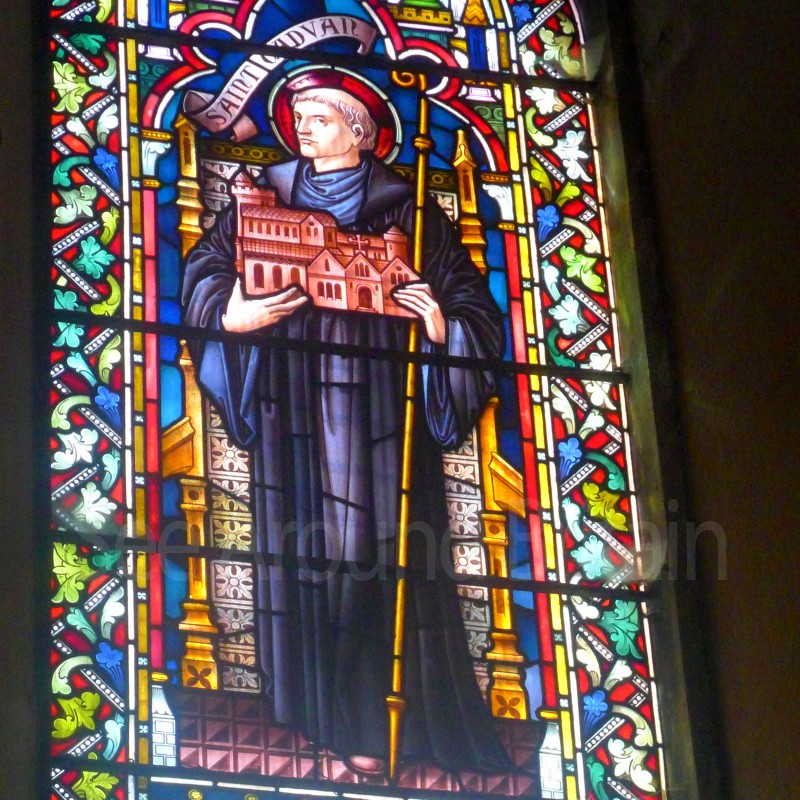
Saint of the Day – 4 July – Saint Bertha of Blangy (c644-c723) Widow, Abbess, Mother, Founder of a Monastery at Blangy, Artois and 3 Churches in the region. Born in c644 in France and died in c723 at her Convent in Blangy, France of natural causes. Patronage of Blangy. Also known as – Bertha of Artois, Berthe…
Bertha, born in France around the year 644, was the daughter of Count Rigobert, who served in the Court of King Clovis II and Princess Ursanna, the daughter of the King of Kent in England.
In the twentieth year of her age this beautiful and pious maiden was married to the cousin of the King, the noble Sigfried, who determined to advance with his spouse, along the paths of Christian perfection. They were blessed with five daughters, of whom two died in infancy; two others, Gertrude and Deotila, are Canonised Saints like their mother.
After several years of the most harmonious union, Sigfried died in 672 and Saint Bertha took the veil in a Monastery which by Divine instructions she built, at Blangy in the district of Artois. The Monastery was solemnly Consecrated in January of the year 682 and the holy widow endowed it with her terrains. Her daughters Gertrude and Deotila, greatly impressed by their mother’s act, soon followed her example.
Bertha was persecuted by Roger, or Rotgar, a young Lord of the Court of King Thierry III, who was furious over her refusal to give him her dauther, Gertrude’s hand in marriage, she already being a professed religious. He endeavoured to slander her mother as being opposed to the succession of Thierry and involved with the English Royalty in a conspiracy. The King sent for the Abbess to defend her cause, not sure that such conduct could be attributed to this holy woman. He was so impressed by Bertha’s demeanour and testimony that he took her under his protection and the persecution was immediately halted.
On her return to Blangy, Bertha had three Churches built, to honour Saint Omer, Saint Vaast and Saint Martin of Tours and completed the construction of her Convent. And then, after establishing the Rule of Saint Benedict and a regular observance in her community, she named Saint Deotila to replace her as the Abbess and retired to a solitary cell within the Convent, to spend the remainder of her days in prayer.
At the age of 79, having already buried her two daughters Deotila and Emma, she left Gertrude as Abbess in the Monastery of Blangy and died peacefully in the year 723 where she was buried and where her Relics (I believe) are still intact.
St Anthony Daniel St Aurelian of Lyons St Bertha of Blangy (c644-c723) Widow, Abbess St Carileffo of Anille Bl Catherine Jarrige St Cesidio Giacomantonio Bl Damiano Grassi of Rivoli St Donatus of Libya St Edward Fulthrop St Elias of Jerusalem St Finbar of Wexford St Fiorenzo of Cahors St Flavian of Antioch St Giocondiano Bl Giovanni of Vespignano St Haggai the Prophet Bl Hatto of Ottobeuren Bl Henry Abbot St Henry of Albano St Hosea the Prophet St Innocent of Sirmium Bl John Carey
Blessed John Cornelius SJ (1557– 1594) Martyr, English Priest of the Society of Jesus, Missionary. Additional Memorials – 29 October as one of the Martyrs of Douai, 1 December as one of the Martyrs of Oxford University. Fr Cornelius and his three companions, the Martyrs of England, were Beatified by Pope Pius XI on 15 December 1929. All their bodies were retrieved and given proper burial by Lady Arundell. His Life and Death: https://anastpaul.com/2021/07/04/saint-of-the-day-4-july-blessed-john-cornelius-sj-1557-1594-martyr/
St Jucundian St Laurian of Seville St Lauriano of Vistin St Namphanion the Archmartyr Bl Natalia of Toulouse St Odo the Good Bl Odolric of Lyon Bl Patrick Salmon St Sebastia of Sirmium St Theodore of Cyrene St Theodotus of Libya Bl Thomas Bosgrave Bl Thomas Warcop
Thought for the Day – 3 July – Meditations with Fr Richard Frederick Clarke SJ (1839-1900)
HUMILITY Meditations for a Month
Humiliation!
Humiliation is a very painful thing and our pride shrinks from it. Yet, it is a necessary step to humility. We must be humbled in order that we may be humble. We must learn, not to shun dishonour, if we are to learn not to crave honour from men. When some slight is shown us, when we are ignored or distrusted, or judged unfairly, we have an excellent opportunity of advancing in humility, by accepting, with patience and resignation, the contempt and dishonour and, not attempting to defend ourselves or assert our rights and our claim to be treated with consideration and respect.
When we commit some fault which causes others to think less of us, we should be full of sorrow at the thought of having offended God and given bad example to our neighbour but we must not seek to shun the just contempt we have deserved, or allow ourselves to be miserable at the thought of being despised. On the contrary, we must be content to be esteemed according to our merits and must thank God for teaching us this lesson and giving us a greater insight into ourselves.
It is a sure sign of pride, if we seek to shirk the consequences of our fault, as Saul did when he begged Samuel still to honour him before the ancients of Israel (1 Kings 15:30). Such conduct only brings fresh humiliations. God, who resists the proud, always brings down those who refuse to humble themselves. The devils, who would not willingly bow the knee before Christ made Man, were forced to do so. God, sooner or later, will force all the proud, willingly or unwillingly, to bow before Him.
Quote/s of the Day – 3 July– “The Month of the Most Precious Blood” – St Leo II (611–683) Pope, Confessor – 1 Peter 5:1-4; 5:10-11, Matthew 16:13-19 – Scripture search here: https://www.drbo.org/
“Thou art the Christ, the Son of the living God.”
Matthew 16:16
“Blessed art thou, Simon Bar-Jona because flesh and blood hath not revealed it to thee but My Father Who is in Heaven.”
Matthew 16:17
“Thomas answered and said to Him: My Lord and my God.”
John 20:28
“Blessed are they who have not seen and have believed.”
John 20:29
“Our hearts were made for Thee, O God And restless must they be Until, O God, this grace accord, Until they rest in Thee!”
St Augustine (354-430) Father and Doctor of the Church
“Each one of us has a thirst for all that is infinite, eternal and perfect. God alone can satisfy this thirst. Just as we are created by God, so we are created for Him. Just as we came from God, so we are gradually travelling back towards Him, for He is the final goal of our earthly journey. We should meditate on this great truth which we were first taught in the Catechism, namely, that we were created to know, love and serve God on this earth and to be happy with Him forever in Heaven. God alone is the eternal beauty which will satisfy our hearts.”
One Minute Reflection – 3 July– “The Month of the Most Precious Blood” – St Leo II (611–683) Pope, Confessor – 1 Peter 5:1-4; 5:10-11, Matthew 16:13-19 – Scripture search here: https://www.drbo.org/
“Thou art the Christ, the Son of the living God.” – Matthew 16:16
REFLECTION – “Peter did not say “Thou are a Christ” or “a son of God” but “the Christ,the Son of God.” For there are many christs by grace, who have attained the rank of adoption [as sons] but [there is] only One Who is by nature the Son of God. Thus, using the definite article, he said, THE Christ, THE Son of God. And in calling Him, Son of the LIVING God, Peter indicates that Christ Himself is Life and that death has no authority over Him. And even if the flesh, for a short while, was weak and died, nevertheless, it rose again, since the Word, Who dwelled in it, could not be held under the bonds of death.” – St Cyril of Alexandria (376-444) Known as “The Pillar of Faith” Archbishop of Alexandria, Father and Doctor Incarnationis (Doctor of the Incarnation) (Fragment 190).
PRAYER – Look forgivingly on Thy flock, Eternal Shepherd and keep it in Thy constant protection, by the intercession of blessed Leo Thy Sovereign Pontiff, whom Thou didst constitute Shepherd of the whole Church. Through Jesus Christ, Thy Son our Lord, Who lives and reigns with Thee, in the unity of the Holy Ghost, God, world without end. Amen (Collect).
Our Morning Offering – 3 July– “The Month of the Most Precious Blood”
Eternal Father, I Offer unto Thee By St Margaret Mary Alacogue (1647-1690) Visionary and Apostle of the Sacred Heart of Jesus
Eternal Father, I offer unto Thee the infinite satisfaction which Jesus rendered to Thy Justice, on behalf of sinners, upon the tree of the Cross and I pray that, Thou wouldst make the merits of His Precious Blood available to all guilty souls to whom sin has brought death. May they rise again to the life of grace and glorify Thee forever.
Eternal Father, I offer Thee the fervent devotion of the Sacred Heart of Jesus, in satisfaction for the lukewarmness and cowardice of Thy chosen people, imploring Thee, by the burning Love which made Him suffer death that it may please Thee, to rekindle their hearts, now so lukewarm in Thy service and to set them on fire with Thine Love that they may love Thee forever.
Eternal Father, I offer Thee the submission of Jesus to Thy Will and I ask of Thee, through His merits, the fullness of all grace and the accomplishment of all Thine Holy Will. Blessed be God! Amen.
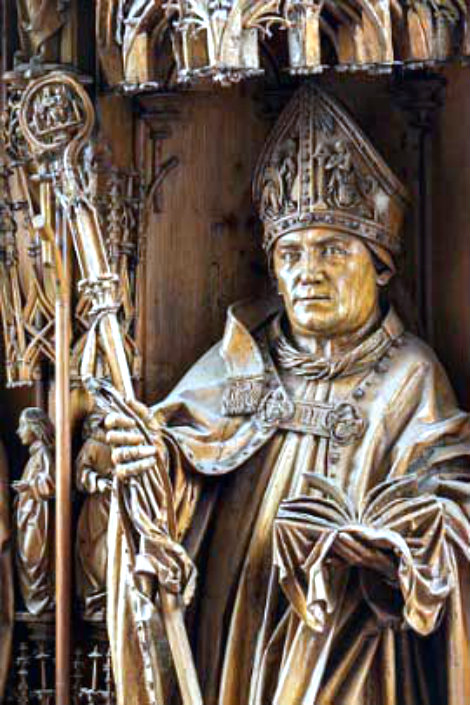
Saint of the Day – 3 July – St Heliodorus (332-390) the first Bishop of Altino in Italy, disciple, close friend and assistant of St Jerome. Scholar, ex-soldier, Born in332 at Dalmatia (present-day Albania, much of Croatia, Bosnia and Herzegovina) and died in 390 at Altino, Italy of natural causes. Patronage – of Torcello, Italy. Also known as – Heliodorus of Altino. of Altinum, Eliodoro.
The Roman Martyrology reads: “At Altino, St Heliodorus, a Bishop, distinguished for holiness and learning.”
Heliodorus was born at Dalmatia, a Roman Province north-east of the Adriatic Sea which was also the native land of St Jerome. He soon sought out that great Doctor, not only to follow his teachings in matters relating to Christian perfection but also, to profit by his deep learning.
The life of a recluse held great attractions for him but, to enter a Monastery, it would have been necessary to leave his spiritual master and director, a sacrifice he was not prepared to make. He, therefore, remained in the world, although not part of it and following the example of the holy Hermits, passed his time in prayer and devout reading.
He accompanied St Jerome on his voyage to the Holy Land, visiting the various Churches of the Orient,and remained with him for a time but a desire to revisit his native land and to see his parents once more drew him back to Dalmatia. St Jerome tried to persuade him to remain but Heliodorus’ intention was to return to St Jerome, as soon as he had fulfilled the duties he owed his parents.
Finding his absence had grown prolonged and fearing that love for his family and attachment to worldly things might lure him from his vocation, St Jerome wrote him an earnest letter. He exhorted his good disciple to break entirely with the world and to consecrate himself to the service of God. But the Lord, who disposes all things, had a mission of activity reserved for His servant. After the death of his mother, Heliodorus went to Italy and soon was remarked for his eminent piety. He was made Bishop of Altino and became one of the most distinguished Prelates of an age fruitful in great men. He sustained the Catholic Faith against the Arian heresy and in 381 assisted at the Council of Aquilea in north-eastern Italy, called for that purpose.
Neither Heliodorus, the disciple, nor his former spirtual advisor, St Jerome, ever forgot their great friendship and bond. St Jerome, in one of his letters, testifies that he was a Bishop who lived in his Episcopal dignity with as much fervour and regular pious devotion, as in a Monastery.
St Heliodorus’ Sepulchre beneath his Altar at Torcello Cathedral
Saint Heliodorus died in 390. Heliodorus’ Relics were carried to Altino during the barbarian invasions and then to Torcello, where they rest in a Sepulchre in the Cathedral of Santa Maria Assunta, see below.
Bl Andreas Ebersbach Bl Barbara Jeong Sun-mae St Bladus St Byblig St Cillene St Dathus of Ravenna St Eusebius of Laodicea St Firminus St Firmus Bl Gelduin St Giuse Nguyen Ðình Uyen St Gunthiern St Guthagon St Heliodorus (c332-c390) Bishop, close friend and assistant of St Jerome. St Hyacinth of Caesarea St Irenaeus of Chiusi St Maelmuire O’Gorman St Mark of Mesia St Mennone the Centurian St Mucian of Mesia St Paul of Mesia
St Raymond of Toulouse (Died 1118) ArchDeacon, Canon of the Lateran Canons Regular at St Sernin Basilica in Toulouse, France. The Roman Martyrology reads: “In Toulouse on the Garonne in France, Saint Raymond Gayrard, who, as a teacher, remained a widower, passionately devoted himself to works of charity, founded a hospice and was finally admitted among the Canons of the Basilica of San Saturnin.” https://anastpaul.com/2023/07/03/saint-of-the-day-3-july-saint-raymond-of-toulouse-died-1118/
Martyrs of Alexandria – 13 Saints: Thirteen Christian companions Marytred together. No details about them have survived but the names – Apricus, Cyrion (2 of), Eulogius, Hemerion, Julian, Julius, Justus, Menelaus, Orestes, Porfyrios and Tryphon (2 of). They martyred in Alexandria, Egypt, date unknown.
Martyrs of Constantinople – 24 Saints: A group of 24 Christians Martyred in the persecutions of Arian Emperor Valens. We know little more than their names – Acacios, Amedinos, Ammonius, Ammus, Cerealis, Cionia, Cionius, Cyrianus, Demetrius, Eulogius (2), Euphemia, Heliodoros, Heraclios, Horestes, Jocundus, Julian, Martyrios, Menelaeus, Sestratus, Strategos, Thomas, Timotheos and Tryphon. They were martyred in c367 in Constantintinople.
Theodotus and Companions – 6 Saints: Six Christians who were imprisoned, tortured and Martyred together in the persecutions of Trajan. Saint Hyacinth ministered to them in prison. We know nothing else about them but their names – Asclepiodotus, Diomedes, Eulampius, Golinduchus, Theodota and Theodotus. They were beheaded in c110, location unknown.
Thought for the Day – 2 July – Meditations with Fr Richard Frederick Clarke SJ (1839-1900)
HUMILITY Meditations for a Month
Humility under Trials
When God lays His heavy Hand upon us, we have an excellent opportunity of exercising the virtue of humility and of making great progress in it. There is nothing like a good knockdown blow, for teaching us our own nothingness and for schooling us in submission to God. If we take the chastisement well and do not allow ourselves to rebel against the Will of God but rather make it an occasion for humbling ourselves the more in His sight, we shall acquire more grace from God and advance more in perfection in a day, than in months of prosperity and spiritual consolation. How do I bear the trials God sends — well, or ill?
When the time of darkness is upon us and the gloom seems almost intolerable, there is no harm in praying for release from our misery or that God may avert some threatened blow but, the petition must always be accompanied by an act of humility, “Not my will, but Thine be done!” If we are patient, God will certainly send us speedy relief; just when we least expect it, peace will be restored to our souls.
Those trials are intended by God to cleanse our souls and to root out the pride which still lurks there, unnoticed by us. The best prayer for us to offer under them and indeed, at all times and at all seasons, is to cry out to God, “Humble me, O God and I shall be humbled. Burn out of me now, in this life, all that displeases Thee that I may not have to endure the burning of the life to come!” Happy are those who in all trouble can offer this prayer!
Quote/s of the Day – 2 July – The Visitation of the Blessed Virgin Mary
Hail, O Mary, Mother of God By St Cyril of Alexandria (376-444) Father & Doctor of the Church
Hail, O Mary, Mother of God, Virgin and Mother! Morning Star, perfect vessel. Hail, O Mary, Mother of God, Holy Temple in which God Himself was conceived. Hail, O Mary, Mother of God, Chaste and pure dove. Hail, O Mary, Mother of God, who enclosed the One Who cannot be encompassed in your sacred womb. Hail, O Mary, Mother of God, From you flowed the true light, Jesus Christ, our Lord. Hail, O Mary, Mother of God, Through you the Conqueror and triumphant Vanquisher of hell, came to us. Hail, O Mary, Mother of God, Through you, the glory of the Resurrection blossoms. Hail, O Mary, Mother of God, You have saved every faithful Christian. Hail, O Mary, Mother of God, Pray for us sinners now and at the hour of our death. Amen
Blessed Shall be Her Name Anonymous Author
Praise we the Lord this day, This day so long foretold, Whose promise shone with cheering ray On waiting saints of old.
The prophet gave the sign That those with faith might read; A Virgin, born of David’s line Shall bear the promised Seed.
Ask not how this should be, But worship and adore; Like her whom Heaven’s majesty Came down to shadow o’er.
She meekly bowed her head To hear the gracious word, Mary, the pure and lowly maid, The favoured of the Lord.
Blessed shall be her name In all the Church on earth, Through whom that wondrous Mercy came, The Incarnate Saviour’s Birth.
Jesus, the Virgin’s Son, We praise You and adore, Who are with God the Father One And Spirit evermore. Amen
One Minute Reflection – 2 July– “The Month of the Most Precious Blood” – The Visitation of the Blessed Virgin Mary – Song 2:8-14; Luke 1:39-47 – – Scripture search here: https://www.drbo.org/
“ And how have I deserved that the Mother of my Lord should come to me?” – Luke 1:43
REFLECTION – “Most blessed are thou among women and blessed is the fruit of thy womb” … For all ages will call thee blessed, as thou said (Lk 1:48). The daughters of Jerusalem, that is to say, the Church, saw thee and proclaimed thy happiness … For thou art the royal throne near which the Angels stood contemplating their Master and Creator, Who was seated on it (Dan 7:9). Thou hast become the spiritual Eden, more sacred and more divine than the former one. The earthly Adam lived in the former, in thou lives the Lord Who came from Heaven (1 Cor 15:47). Noah’s ark was a prefiguration of thee, it saved the seed of the second creation, for thou gave birth to Christ, the world’s Salvation, Who submerged sin and pacified the floods.
It was thou whom the burning bush described ahead of time, whom the tables depicted, on which God wrote (Ex 31:18) which the Ark of the Covenant told about; it is thou whom the golden urn, the candelabra, … and Aaron’s staff which blossomed (Num 17:23) clearly prefigured. … I almost left out Jacob’s ladder. Just as Jacob saw Heaven united with the earth by means of the two ends of the ladder and the Angels descending and ascending and as the One who is really the strong and invincible One engaged in a symbolic struggle with him, thus thou, thyself, became the mediator and ladder, by which God came down to us and took upon Himself the weakness of our substance, embracing it and closely uniting it to Himself.” – St John Damascene (675-749) Monk, Theologian, Father and Doctor of the Church – Added by Pope Leo XIII in 1883 (1st Sermon on the Death and Assumption).
PRAYER – Bestow upon Thy servants, we beseech Thee, O Lord, the gift of heavenly grace that as the child-bearing of the Blessed Virgin marked the beginning of our salvation, so may the solemn Feast of her Visitation bring us an increase of peace.Through Jesus Christ, Thy Son our Lord, Who lives and reigns with Thee, in the unity of the Holy Ghost, God, world without end. Amen (Collect).
Our Morning Offering – 2 July– “The Month of the Most Precious Blood”
The Magnificat The Canticle of the Blessed Virgin Mary Luke 1:46-55 Indulgence 100 days
My soul doth magnify the Lord. And my spirit hath rejoiced in God my Saviour. For He hath regarded the humility of His handmaid, for behold, from henceforth, all generations shall call me blessed. For He Who is mighty hath done great things unto me: and holy is His Name. And His mercy is from generation to generation unto thos who fear Him. He hath shown strength with His Arm, He hath scattered the proud in the imagination of their heart. He hath put down the mighty from their seat and hath exalted the humble. He hath filled the hungry with good things and the rich He hath sent empty away. He hath upheld His servant Israel, being mindful of His Mercy. As He spoke unto our fathers, to Abraham and his seed forever.
Glory be to the Father and to the Son and to the Holy Ghost as it was in the beginning, is now and ever shall be, world without end! Amen
Saint of the Day – 2 July – St Lidanus of Sezze (1026-1118) Abbot, Miracle-worker, Founder of the Monastery of Sezze dedicated to St Cecilia, Virgin Martyr and in memory of his own mother named for St Cecilia. Born in 1026 in Antena, today Civita d’Antino near Avezzano, Italy and died on 2 July 1118 (aged 91–92) at Murillo, today part of Sezze near Terracina in Italy. Patronage – of the City and Diocese of Sezze. Also known as – Lidanus of Antena, Lidan… Lidano…
Ruins of the St Lidanus’ birth-home in Civita d’Antino
Lidanus was the only son of Gentilis, from the noble House of Avellarum and of Cecilia. At the very young age of nine, he joined the Benedictine Order at Monte Cassino . In 1043 when Lidanus was 17 years old, his parents died and left him a large fortune part of which he donated to be used, to drain the Pontine Marshes in order to improve the living conditions of all in the area and, with the consent of Abbot Richerio I (1038-1055) of Montecassino, the remainder was used for the construction of a Monastery with an adjoining Church, at the foot of Mount Antoniano, in the heart of the Pontine Marshes, in the Diocese of Sezze.
The area still retains the name of St Lidanus, in fact, he lived for seventy-two years in this Monastery there, of which he had become the Abbot. Lidanus ran the Monastery and lived with his brothers in strict penance, praying, fasting and mortification. His miraculous powers were praised – for example, when the frogs in the swamp were making too much noise, he silenced them with his staff.
Lidanus died in 1118 and was buried in the Church of his Monastery, he remained there until the destruction of that Church which occurred during the struggle between Emperor Frederick II (1194-1250) and the Papacy. His Relics were translated to the Cathedral of Sezze, by will of the Bishop Drusino.
The Cathedral of Sezze
Other official documents remind us of the cult paid to him in the Pontine area – in 1312 the largest of the Cathedral Bells, was dedicated to St Lidanus and, in 1473, the City Magistrate, with a Notarial Deed, committed himself to offering, in honour of the Saint, a new silver Chalice every two years.
Pope Leo X (1475-1521) confirmed the cult and regulated the Feast established by the Statutes of the City of Sezze. In 1606, there was the recognition of the Relics, with the construction of a new Altar, completed in 1672, with a gilded wooden reliquary. Many miracles o occurr at this resting place.
St Charles of Sezze (image below), always carried with him, a Relic of our Saint and with it, blessed the sick. Pope Pius VI Canonised St Lidanus on 9 April 1791, granted the proper Office and the solemn Feast of 2. A 14th Century document, preserved in the Capitular Archive of Sezze, contains the oldest image of Lidanus with the narration of his life, he is depicted with Benedictine monastic habits, with the book of the Rule and the Abbot’s pastoral staff in his hands.
Bl Giovanni da Fabriano Becchetti St Jacques Fermin Bl Jarich of Mariengaarde St Jéroche St Lidanus of Sezze (1026-1118) Abbot St Monegundis St Oudoceus
Martyred Soldiers of Rome – 3 Saints: Three soldiers who were converted at the Martyrdom of Saint Paul the Apostle. Then they were martyred, as well. We known nothing else about them but their names – Acestes, Longinus and Megistus. Martyred c68 in Rome, Italy
Martyrs in Carthage by Hunneric – 7 Saints: A group of seven Christians tortured and murdered in the persecutions of the Arian Vandal king Hunneric for remaining loyal to the teachings of orthodox Christianity. They were some of the many who died for the faith during a period of active Arian heresy. – Boniface, Liberatus, Maximus, Rogatus, Rusticus, Septimus and Servus.
Martyrs of Campania – 10 Saints: A group of ten Christians Marytred together in the persecutions of Diocletian. The only details about them to have survived are their names – Ariston, Crescention, Eutychian, Felicissimus, Felix, Justus, Marcia, Symphorosa, Urban and Vitalis. Martyred in 284 in Campania, Italy.
July “The Month of the Most Precious Blood of Our Lord Jesus Christ”
On this day, the Church celebrates the Feast of the Most Precious Blood of Jesus Christ. This Feast which had been celebrated in some Diocese since the 15th Century, on the Monday after Trinity Sunday, was extended by Pope Pius IX. over the whole Christian world and its celebration prescribed for the 1st Sunday of July. On the tenth day of August 1849, he instituted the Feast of the Precious Blood.
That most Sacred blood is the price of our Redemption and is poured out daily in the Holy Sacrifice of the Mass, whence it flows into the channels of the seven Sacraments, as an atonement for our sins and for our sanctification. For, as in Egypt, God was propitiated by the blood of the paschal lamb, the Type and Figure of the true Lamb of God, so He is propitiated by the Blood of His Son, the true Paschal Lamb which speaketh better than Abel’s. Herein is the strongest evidence of the Infinite Love of Jesus Christ, Who not only once but seven times, shed His Precious Blood amidst the most cruel sufferings, for our salvation. Let this seven-fold shedding of the Precious Blood be the subject of our present meditation. Amen – Cardinal Johann Evalgelist Zollner (1825-1900) Archbishop of Salzburg from 1890 until his death on 5 May 1900
Thought for the Day – 1 July – Meditations with Fr Richard Frederick Clarke SJ (1839-1900)
HUMILITY Meditations for a Month
The Beauty of Humility
Humility is not only sweet and pleasant to others; it is beautiful in itself. Humility is the primary means to attain a likeness to God, since His image in us, cannot be perfect, as long as there is any vestige of pride present in our hearts. When humility has driven out the opposing vice, we then become indeed, like to God. We share the Divine beauty and are the object of the admiration of the holy Angels and even of God Himself, Who then speaks to the soul in the words of the Divine Lover in the Canticles, “Thou art all fair, my beloved and there is no spot in thee.”
Humility is also beautiful because, it is the root whence all other virtues spring. We may say of it that it has, in itself, the combined beauty of all. If we find a man humble, we know that he must, needs be patient, Charitable, unselfish, generous, obedient and, we cannot help admiring and loving him. Might not my deficiency in these virtues be due to my lack of humility? O my God, plant this most indispensable and most attractive virtue firmly in my heart!
Nothing will so quickly render us conformed to the Divine Beauty of the Son of God, as humility. “Learn of Me, for I am meek and humble of heart.” If we desire to draw men to ourselves and to attract them, to be efficient in moving their hearts and influencing them for good, we must first learn this lesson of humility from Him, Whose Soul was beautiful beyond that of all the sons of men because none had humility like His.
Quote/s of the Day – 1 July– “The Feast and Month of the Most Precious Blood”
“Carry me, O Christ, on Thy Cross which is salvation to the wanderer, rest for the wearied and, in which alone, is Life for those who die.”
St Ambrose (340-397) Father and Doctor of the Church
Excerpt from the Prayer to the Five Wounds of Jesus By St Clare of Assisi (1194-1253)
I pray Thee, O most gentle Jesus, that having redeemed me by Baptism from original sin, so now, by Thy Precious Blood, which is offered and received, throughout the world, deliver me from all evils, past, present and to come. And by Thy most bitter Death, give me a lively faith, a firm hope and perfect charity, so that I may love Thee with all my heart and all my soul and all my strength. Make me firm and steadfast in good works and grant me perseverance in Thy service, so that I may be able to please Thee always. Amen.
“Jesus Nazarenus, Rex Judeaorum – Jesus the Nazarene, the King of the Jews.” John 19:19
“HE DIED, THEN But although He died for us and was lifted up on the Cross, those who refuse to look upon Him, will surely die, for there is no other redemption but in this Cross.
O God, how spiritually beneficial and profitable is a consideration of Thy Cross and Passion! Can we contemplate our Saviour’s humility on the Cross, without becoming humble and, having some affection for humiliations? Can we see His obedience, without being obedient? Certainly not! No-one has ever looked upon Our Lord Crucified and remained dead or sick. On the other hand, all who have died, have done so because. they were unwilling to gaze upon Him, just as the Israelites died. who were unwilling to gaze upon the serpent which Moses had raised upon the pole.”
One Minute Reflection – 1 July – “The Feast and Month of the Most Precious Blood” – Hebrews 9:11-15,; John 19:30-35 – Scripture search here: https://www.drbo.org/
“But one of the soldiers opened His side with a lance and immediately there came forth, Blood and water.” – John 19:34
REFLECTION – “Today the Cross is advancing, creation exults. The Cross, path for those who have gone astray, hope of Christians, the Apostles’ preaching, security of the universe, foundation of the Church, fountain for those who are thirsty… In great gentleness, Jesus is led to the Passion – He is brought to Pilate’s judgement seat; at the sixth hour, people mock Him; until the ninth hour, He bears the pain of the nails, then His Death ends His Passion. At the twelfth hour, He is taken down from the Cross. You could say, He is a sleeping lion …
While He is judged, Wisdom remains silent and the Word says nothing. His enemies despise and Crucify Him … Those, to whom yesterday, He gave His Body as food, watch from a distance as He dies. Peter, the first of the Apostles, is the first to flee. Andrew also took flight and John, who rested at His side, did not prevent the soldier from piercing that side with a lance. The Twelve fled – they did not say one word in His favour, they, for whom He is giving His Life. Lazarus is not there, he, whom He called back to life. The blind man did not weep for Him Who opened his eyes to the light and the crippled man, who could walk thanks to Him, did not run to Him.
Only a bandit who was crucified next to Him confessed Him and called Him his King! O thief, precocious blossom from the tree of the Cross, first fruit of the wood from Golgotha! … The Lord reigns, creation rejoices. The Cross triumphs and all nations, tribes, languages and peoples (Apoc 7:9) come to adore Him … The Cross gives Light to the whole universe, it chases away the darkness and gathers the nations … into one single Church, one single Faith, one single Baptism in charity. It stands at the centre of the world and is made firm on Calvary.” – St Ephrem (306-373) Father and Doctor of the Church (Homily attributed to St Ephrem from the Lectionary).
PRAYER – Almighty, eternal God, Who made Thine Only-begotten Son the Redeemer of the world and, willed to be reconciled by His Blood, grant us, we beseech Thee, so to worship in this Sacred rite the price of our salvation and to be so protected, by its power against the evils of the present life on earth, that we may enjoy its everlasting fruit in Heaven. Through the same Jesus Christ, Thy Son our Lord, Who lives and reigns with Thee, in the unity of the Holy Ghost, God, world without end. Amen (Collect).
Aspiration:Precious Blood, ocean of Divine Mercy, Flow upon us.
Saint of the Day – 1 July – St Domitian (c347-440) Abbot, who had been the first Hermit of the surrounding region in France, Founder of a Monastery which became the foundation of the spiritual, cultural and social teachings of its region and day. Born in c347 in Rome and died in 440 at the Saint Rambert de Joux Abbey in the Diocese of Lyons in France of natural causes. Also known as – Domitian of Bebron, Domitian of Lerins, Domiziano… Additional Memorial – 1 September in the Diocese of Belley
The Roman Martyrology reads: “In the Diocese of Lyons, the decease of St Domitian, Abbot, who was the first to lead there, an eremitical life. After having assembled, in that place, many servants of God and gained great renown for virtues and miracles, he was gathered to his fathers at an advanced age.”
Information about the life of Saint Domitian comes mainly from an anonymous ‘Vita’ written many centuries after Domitian’s had died. According to this source, Domitian lived in the 5th Century, initially dedicating himself to the life of a Hermit in Gallia Lugdunensis, a region which today includes part of south-eastern France. His vocation as a Hermit led him to settle in the area of Bebron, in the Alps, where he led a life of prayer and asceticism.
However, Domitian’s fame for sanctity soon attracted disciples eager to follow his example. A community gathered around him, giving life to a monastery which became a centre of spiritual reference for the region. Domitian became the Abbot of this community, leading his brothers with wisdom and compassion.
The Monastery founded by him in Bebron played a significant role in the spread of monasticism in the region. Known as the Monastery of Bebron or theAbbey of Saint-Rambert-de-Joux, it became a place of intense spiritual and cultural activity. The Monks, under the guidance of Domitian, devoted themselves to prayer, study and manual labour, contributing to the economic and social development of the area.
The fame of the sanctity of Saint Domitian spread rapidly beyond the confines of his Monastery. His death, which occurred at an advanced age, was marked by deep mourning on the part of his community and the faithful of the region. His body was buried inside the Monastery C hurch, becoming an object of veneration for pilgrims, who came from all over to ask for his intercession. The cult of Saint Domitian consolidated, over the centuries, as attested by several mentions in calendars and martyrologies. The Roman Martyrology commemorates him on 1 July, while the Diocese of Belley celebrates him on 1 September. His memory is particularly alive in the Bugey region, where the Monasterywhich he had founded prospered for centuries, taking the name of Abbey of Saint-Rambert-en-Bugey, see below.
St Aaron of Caerleon St Aaron the Patriarch St Arnulf of Mainz St Calais of Anisole St Carilephus St Castus of Sinuessa St Cewydd St Concordius of Toledo St Cuimmein of Nendrum St Domitian (c347-440) Abbot Bl Elisabeth de Vans St Eparchius of Perigord St Eutychius of Umbria St Esther the Queen
St Gall of Clermont St Golvinus of Leon St Gwenyth of Cornwall Bl Huailu Zhang St Julius of Caerleon St Justino Orona Madrigal St Juthware St Leonorious of Brittany St Leontius of Autun St Martin of Vienne St Nicasius of Jerusalem
St Secundinus of Sinuessa St Servan of Culross St Theobald of Vicenza St Theodoric of Mont d’Or St Veep
Martyrs of Rome – 6 Saints: Six Christians who were Martyred together. No details have survived except their names – Esicius, Antonius, Processus, Marina, Serenus and Victor. They were martyred in Rome, Italy, date unknown.
Thought for the Day – 30 June – Meditations with Fr Richard Frederick Clarke SJ (1839-1900)
The Adorable Heart of Jesus Meditations for a Month
EXERCISES OF DEVOTION.
Act of Reparation to the Sacred Heart of Jesus to make amends for the outrages He suffers in the Blessed Sacrament
O Heart of Jesus, ever on fire with love for men and ever outraged by their ingratitude! Thou hast done everything on earth, during Thy mortal life, to show Thy Love to men, even so far, as to wear Thyself out and to consume Thyself for them. Thy Love was repaid then, by nothing but contempt and the most disgraceful insult. And now that Thou burnest with the self-same love in the Holy Eucharist, where Thou art still dwelling in Thy Sacrament of Love in the midst of us, Thou dost suffer at the hands of ungrateful men the most cruel outrages, although they have no longer the excuse of ignorance and know now, what Thou art.
I see Thee on our Altars expose, during the lapse of so many hundred years, to numberless irreverences, sacrileges and insults, the memory of which fills me with horror and which, are going on now, even amongst those who believe in the True Faith!
Moved by these outrages, I prostrate myself before Thee, O Adorable Heart and weep for Thine outraged Love. I beg Thy pardon for the ingratitude of which I myself am guilty. I detest the sins which I have committed in Thy Presence by irreverence, coldness, and negligence. I would make reparation for them, as also, for the abominations committed against Thee by so many heretics and bad Catholics.
Would that by my homage and my grief, I could make amends to Thy injured honour. Would that by my tears and my blood, I could wash out the insults I deplore. Would that by some new kind of homage, I could atone for so many irreverences, insults and sacrileges. My life would not be too much to sacrifice for so worthy an object. Grant me, O Sacred Heart, by Thine own sweetness and boundless mercy, the pardon which I ask for, and give me grace to keep the resolution, which I now make, to do all I can in the future , to pay Thee, in the Sacrament of Thy Love, the profound adoration which I owe Thee and to show Thee that gratitude and love which are justly due to Thee. I resolve to repair my past faults by the modesty of my deportment in Thy churches, by my constancy in visiting Thee, my devotion and fervo.r in receiving Thee and, in fulfilment of Thy desire, I impose upon myself the duty of often repeating Acts of Reparation in Thy Presence, as Thou hast deigned to direct, in order, as far as I can, to atone for the injuries done Thee by others and of which Thy very love makes Thee the Victim in this Divine Sacrament.
Bless, I beseech Thee, this resolve and give me grace to keep it faithfully. Amen.
Quote/s of the Day – 30 June – “The Last Day of Month of the Sacred Heart of Jesus”
The Nine First Friday of the Month Dedicated to the Devotion of Love and Reparation the Sacred Heart of Jesus:
“I promise you, in the excessive mercy of My Heart, that My all-powerful Love will grant to all those who receive Holy Communion on the First Friday for Nine Consecutive Months the grace of final repentance. They shall not die in My disgrace, nor without receiving the Sacraments. My Divine Heart shall be their safe refuge in that last moment.” — Our Lord to St. Margaret Mary
How to complete the First Friday’s Devotion:
Attend Holy Mass and Receive Holy Communion on each First Friday; The Nine Fridays must be consecutive; They must be made in honour and in reparation to His Sacred Heart.
Act of Love to the Sacred Heart of Jesus By Servant of God Cardinal Rafael Merry del Val (1865-1930)
Reveal Thy Sacred Heart to me, O Jesus and show me Its attractions. Unite me to It forever. Grant that all my aspirations and all the beats of my heart, which cease, not even while I sleep, may be a testimonial to Thee, of my love for Thee and may it say to Thee – “Yes, Lord, I am all Thine” the pledge of my allegiance to Thee, rests forever in my heart and will never cease to be there. May Thou accept, the slight amount of good that I do and be graciously pleased, to repair all my wrong-doing – so that I may be able, to bless Thee, in time and in eternity. Amen
Act of Consecration and Reparation to the Sacred Heart By Pope Leo XIII (1810-1903) Most sweet Jesus, Redeemer of the human race, look down upon us humbly prostrate before Thine Altar. We are Thine and Thine we wish to be but, to be more surely united with Thee, behold each one of us, freely consecrates himself today to Thy Most Sacred Heart. Many indeed have never known Thee, many too, despising Thy precepts, have rejected Thee. Have mercy on them all, most merciful Jesus and draw them to Thine Sacred Heart. Be Thou King, O Lord, not only of the faithful, who have never forsaken Thee but also of the prodigal children, who have abandoned Thee, grant that they, may quickly return to Thy Father’s House lest they die of wretchedness and hunger. Be Thou King of those who are deceived by erroneous opinions, or whom discord keeps aloof and call them back to the harbour of truth and unity of faith, so that there may be but one flock and one Shepherd. Be Thou, King of all those. who are still involved in the darkness of idolatry or of Islamism and refuse not, to draw them into the Light and Kingdom of God. Turn Thine Eyes of Mercy towards the children of the race, once Thy chosen people – of old they called down upon themselves the Blood of the Saviour; may it now descend upon them, a laver of redemption and of life. Grant, O Lord, to Thy Church, assurance of freedom and immunity from harm; give peace and order to all nations and make the earth resound from pole to pole, with one cry: “Praise be to the Divine Heart which wrought our salvation; to It be glory and honour forever!” Amen
The above prayer, composed by Pope Leo XIII was included in the 1899 Encyclical, Annum Sacrum, issued by Leo XIII as he Consecrated the entire world to the Sacred Heart of Jesus. The Consecration was influenced by two letters written to the Holy Father by Blessed Sister Mary of the Divine Heart, who stated that in visions of Jesus Christ, she had been told to request the Consecration.
One Minute Reflection – 30 June – “The Month of the Sacred Heart of Jesus” – Saints Peter and Paul, Apostles – Pentecpst VI – Romans 6:3-11; Mark 8:1-9 – Scripture search here: https://www.drbo.org/
“… Giving thanks, He broke and gave to His disciples to set before them …” – Marl 8:6
REFLECTION – “Our Lord multiplied bread in the wilderness and changed water into wine at Cana. Thus, He accustomed His disciples’ mouths to His Bread and Wine, until the time when He would give them His Own Body and Blood. He gave them a taste of transitory bread and wine, to stir up in them, a desire for His Own life-giving Body and Blood. He gave them generously of those insignificant things that they might know that His more important gift would be free. He gave these things freely, even though, they might have bought them that they might know they would not be asked to pay for something beyond price – …. for, if they were able to pay the price of some bread and wine, yet they would not be able to pay for His Body and Blood.
Not only did He freely fill us with His gifts but He treated us yet more lovingly. For He gave us those little things freely, to draw us, so that we would come to Him and freely receive that great good of the Eucharist. Those fragments of bread and wine which He gave, were sweet to the mouth but the gift of His Body and Blood, is of value to the spirit. He attracted us by these tasty foods ,to draw us to that which gives life to our souls …
The Lord’s Work achieves all things – in the blink of an eye, He multiplied a morsel of bread! What people effect and transform after ten months of labour, His Ten Fingers carried out in an instant … From a handful of bread, a quantity of loaves comes to be – it was for them, as it was at the time of the first blessing – “Be fruitful and multiply and fill the earth” (Gn 1:28).” – St Ephrem (306-373) Deacon in Syria, Father and Doctor of the Church added by Pope Benedict XV in 1920. (Commentary on the Diatessaron 12:1-4).
PRAYER – O God, Who made this day holy by the Martyrdom of Thy Apostles Peter and Paul, grant Thy Church to follow in all things the teaching of those from whom she first received the faith.Through Jesus Christ, Thy Son our Lord, Who lives and reigns with Thee, in the unity of the Holy Ghost, God, world without end. Amen (Collect).
EUCHARISTIC Heart of JESUS, model of the Priestly heart, have mercy on us. COR JESU Eucharisticum, cordis sacerdotalis exemplar, miserere nobis. – Indulgence 300 Days, Everytime – Raccolta 177St Pius X, 11 September 1907.
Our Morning Offering – 30 June – “The Last Day of the Month of the Sacred Heart of Jesus” – Pentecost VI
A Magnificat By St John Eudes (1601-1680) A Hymn of Praise and Thanksgiving to the Sacred Heart of Jesus and to the Holy Heart of Mary
My soul doth magnify the admirable Heart of Jesus and Mary And my spirit rejoices in Thou great Heart. Jesus and Mary have given me their Heart, This immense Heart, in order that all in me May be performed in its love.
Infinite praise to them, for their ineffable gift. This Heart infinitely merciful, has done great things for me. It has possessed me from the womb of my mother. Infinite thanksgiving for Thou ineffable gifts.
The abyss of my misery has called on the abyss of His Mercy. Infinite thanksgiving for His ineffable gifts. This Heart infinitely meek has presented me With blessings of its sweetness. Infinite thanksgiving for His ineffable gifts. Amen
Saint of the Day – 30 June – Saint Adele of Orp-le-Grand (Died c670) Abbess, Founder, Born in the early 7th Century in modern Belgium and died in c670 of natural causes at her Monastery. Patronage – agaomst eye diseases, ailmnts and vision disorders. Also known as – Adel, Adèlais. Additional Memorial – on the 1st Sunday in October (procession of her Relics through the streets of Orp-le-Grand) and 25 May on some calendars.
Adele of the Merovingian Dynasty noble family, decided to take the veil by entering the Monastery of Nivelles which had been founded by Itte Idoberge, widow of King Pepin the Elder and her daughter ,Saint Gertrude.
Around the year 640, she founded a Monastery at Orp-le-Grand, of which she became the first Abbess. While Childeric II governed, this new Monastery flourished, so much so, that it led her to construct a larger building which she had dedicated to Saint Martin, into which she moved her entire community.
There are two local traditions regarding St Adele’s life. The first tells how Saint Adele became blind and then miraculously recovered her sight, the second reports that the Saint was born blind and received her sight during her Baptism.
We know little more about her and it is said that Saint Adele of Orp-le-Grand died around the year 670 and was buried in the Crypt of Saint Martin’s Abbey.
Chapelle Sainte-Adele Orp-le-Grand Orp-Jauche
Every year on the 1st Sunday of October her Relics are carried in procession, with great participation of the faithful through the streets of Orp-le-Grand.
St Adele’s Church at Orp-le-Grand Abbey
She is popularly invoked for curing vision disorders and is traditionally represented in religious dress. There is a terracotta statue depicting her in the Church of St Omer. In homage to Saint Adele, many Churches have been dedicated to her in Saint-Géry, Fromiée and Hemptinne. In Brye, in Hainaut, next to the Chapel which bears her name, there is a well built in the 18th Century, where pilgrims draw miraculous water to bathe their eyes. The celebration and remembrance for Saint Adele of Orp-le-Grand is generally held on 30 June.
St Adele of Orp-le-Grand (Died c670) Abbess, Founder
St Adolphus of Osnabrück O.Cist. (1185-1224) Bishop St Alpinian of Limoges St Alrick the Hermit Bl Ambrose de Feis Bl Anthony de Tremoulières Bl Arnulf of Villers St Austriclinian of Limoges St Basilides of Alexandria St Bertrand of Le Mans St Clotsindis of Marchiennes
Bl Elisabeth Heimburg St Emiliana of Rome St Erentrude St Eurgain St Gaius Bl Jacob Clou St Leo the Deacon St Lucina of Rome St Lucina of the Callistus Catacombs St Marcian of Pampeluna St Martial of Limoges St Ostianus St Otto of Bamberg St Peter of Asti St Petrus Li Quanhui
Blessed Raymond Lull TOSF (c 1232 – c 1315) Martyr – known as “Doctor Illuminatus,” Raymond was a Philosopher, Logician, Writer, Poet, Pioneer in computation theory, Franciscan tertiary. Within the Franciscan Order he is honoured as a Martyr. He was Beatified on 25 February 1750 by Pope Benedict XIV (cultus confirmed) and reaffirmed in 1847 by Pope Pius IX. His Life and Death: https://anastpaul.com/2018/06/30/saint-of-the-day-30-june-blessed-raymond-lull-t-o-s-f-c-1232-c1315-martyr/
St Vihn Son Ðo Yen
Martyrs of Africa – 7 Saints: Seven Christians Martyred together. No detail about them have surived but the names – Cursicus, Gelatus, Italica, Leo, Timotheus, Zoilus, and Zoticus. Date and precise location in Africa unknown.
Thought for the Day – 29 June – Meditations with Fr Richard Frederick Clarke SJ (1839-1900)
PATIENCE Meditations for a Month
The Patience of Mary
As Jesus came to suffer, it was necessary that Mary should suffer with Him. This was her greatest privilege and she knew it to be such. She knew it even when her human love broke forth, in the words of expostulation: ‘Son, why hast Thou so dealt with us?‘ She knew it when she stood broken-hearted beneath the Cross. She knew it when she received, in her arms, the Body of he Son, after He had been taken down from the Cross. She knew from first to last that the best proof of our Lord’s Love is to give us a share in His sufferings! This was Mary’s consolation; is it mine when I have to suffer?
+++ 2. We do not read much in Sacred Scripture respecting the patience of Mary,but enough to know that Jesus purposely tried her patience. Why did He prompt holy Simeon to pierce her heart with the prediction of her coming sufferings? Why did He compel her to start in the dark night on the journey to Egypt, when He could, so easily, have defeated Herod’s projects? Why did He not let her know where He was, when He remained behind in Jerusalem? Why did He apparently rebuke her at the marriage of Cana? Why did He allow her heart to be torn by the sight of His Crucifixion? It was all that she might have a more glorious reward and share His triumph, in a greater degree!
+++ 3 If we could have seen Mary upon earth, we would have been especially struck by her undisturbed peace. This was owing to her perfect patience and readiness to accept everything at God’s Hand. ‘Behold the handmaid of the Lord; let it be done to me according to thy word.’ If I desire peace, this must be the motto of my life.
Quote/s of the Day – 29 June – Saints Peter and Paul, Apostles – Acts 12:1-11; Matthew 16:13-19 – – Scripture search here: https://www.drbo.org/
“Thou art the Christ, the Son of the living God.”
Matthew 16:16
“… Now you must be, for a little time, made sorrowful in divers temptations. That the trial of your faith, (much more precious than gold which is tried by the fire) may be found unto praise and glory and honour at the appearing of Jesus Christ.”
1 Peter 1:6-7
“And all who wish to live piously in Christ Jesus, will suffer persecution.”
2 Timothy 3:12
“What is the surest kind of witness? “Anyone who acknowledges that Jesus Christ came among us in the flesh” (cf 1 Jn 4:2) and who keeps the commands of the Gospel… How many there are, each day, of these hidden martyrs of Christ who confess the Lord Jesus! … So be faithful and courageous in interior persecutions, so that you may also win the victory in exterior persecutions.”
St Ambrose (340-397) Father & Doctor of the Church
“It is an old custom with the servants of God, always to have some little prayers ready and to be darting them up to Heaven frequently during the day, lifting their minds to God out of the filth of this world. He who adopts this plan, will get great fruit, with little pains.”
St Philip Neri (1515-1595)
“He who most loves, will be most loved.”
St Francis de Sales (1567-1622) Doctor of the Church
You must be logged in to post a comment.