Saint Zacharius the Prophet, also known as Zaccaria, Zechariah (“Yahweh remembers”), was the son of Barachias, son of Addo, and a prophet who rose in Israel in the eighth month of the seventh year of the reign of King Darius, 520 B.C. He began to prophesy just two months after Haggai. The urgings of the two Prophets brought about the building of the second temple. He is the the author of the Book of Zechariah, the eleventh of the Twelve Minor Prophets.
Zechariah on the ceiling of the Sistine Chapel
The Book of Zechariah introduces him as the son of Berechiah, the son of Iddo. The Book of Nehemiah identifies him as a Levitical priest. His work has both an allegorical history of his people, and prophecies of the Messiah to come.
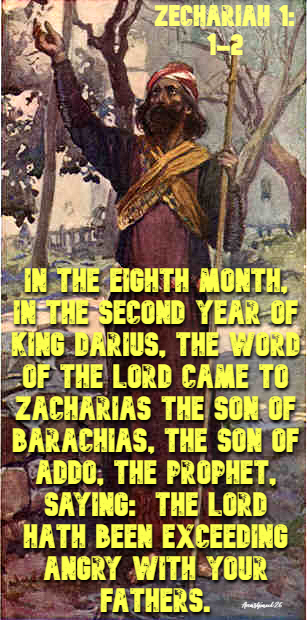
In the eighth month, in the second year of king Darius, the word of the Lord came to Zacharias the son of Barachias, the son of Addo, the prophet, saying: The Lord hath been exceeding angry with your fathers.
Notre-Dame de la Fontaine / Our Lady of the Fountain, Valenciennes, France (1008) – 6 September:
Valenciennes is a City in northern France on the Scheldt River and Our Lady of the Fountain was located half a league from the City in the year 1008. According to tradition, there was a terrible famine that preceded the Plague in that fateful year of 1008. It is recorded that the City of Valenciennes was so ravaged by the plague that nearly 8,000 people died in only a few days, so that the chronicles of the time tell us that it seemed “the dead outnumber the living.” The people grieved profoundly at the spectacle of death which constantly surrounded them,and having no other recourse, went in great crowds to their Churches to take refuge at the feet of Our Mother of Mercy and beg for her intercession.
A holy hermit named Bertholin, who lived nearby Our Lady of the Fountain, was touched by the misfortune of his brothers and redoubled his austerities and prayers. He prayed for the people of Valenciennes, saying, “O Mary! Rescue these afflicted who have cried out to you! Will you let this people die who have called upon you for rescue and who confide their cares to you? Will you be invoked in vain?”
The Blessed Virgin appeared to the hermit Bertholin while he was fervently praying on the night of the 5th of September. The pious hermit was suddenly dazzled by the brilliance of a light purer than the sun, while at the same time the Mother of Mercy appeared to him with an air of kindness. She commanded Bertholin to tell the inhabitants to fast on the following day and then pass the night in prayer to bring an end to the Plague. “Go to my people of Valenciennes. On the eve of my nativity they will see the guarantee of protection that I want to give them.”
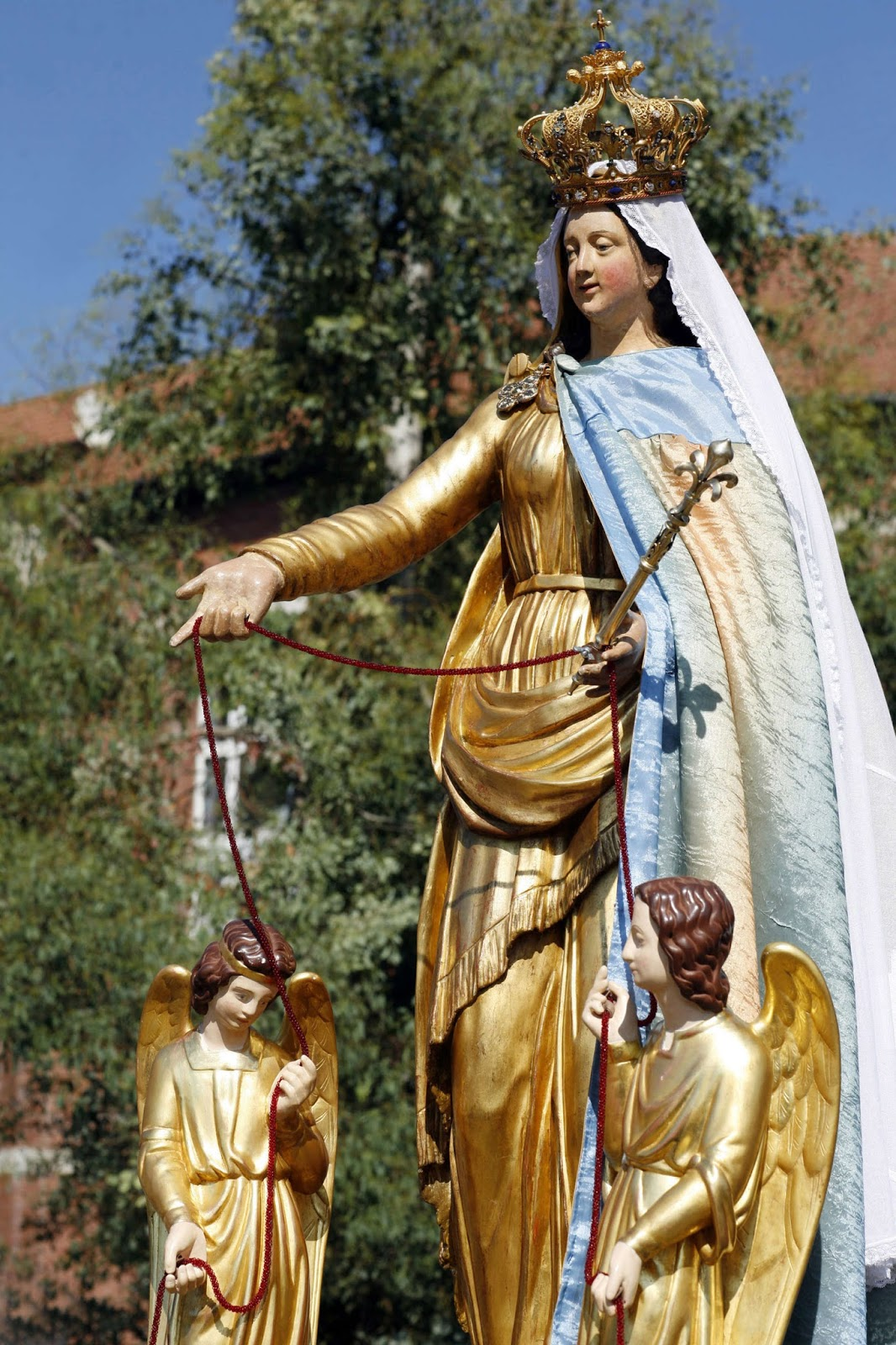
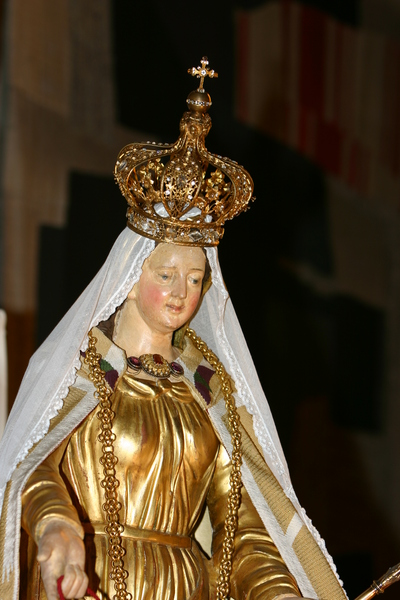
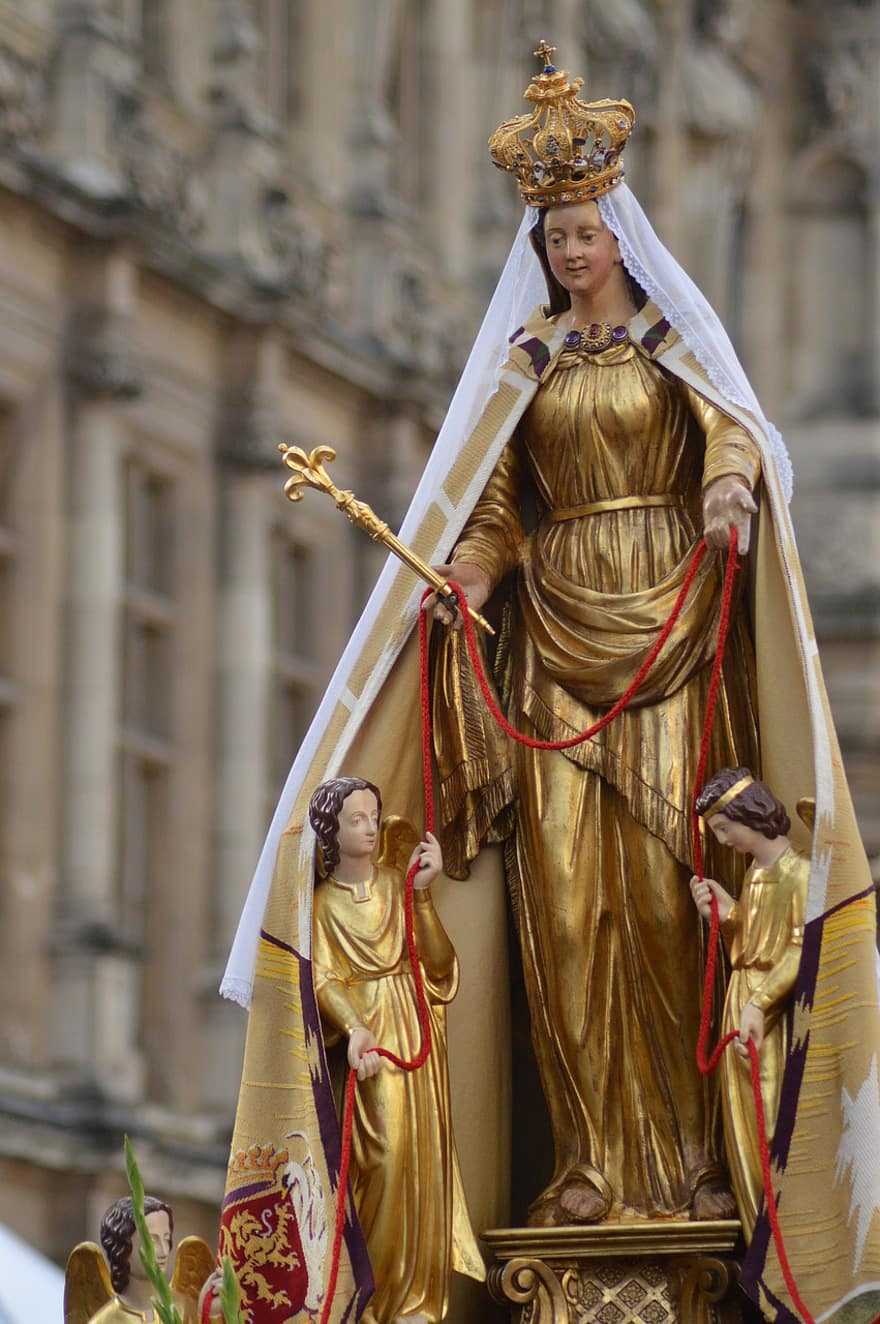
The response was overwhelming. The people of Valenciennes did as they were told,and on the eve of the Nativity, the 7th of September, the people of Valenciennes stood upon the ramparts and towers of the City excitedly awaiting the fulfilment of the heavenly promise. Their confidence was not in vain, for suddenly the night seemed to turn into day and they witnessed the Queen of Heaven descending to earth in majesty, sparkling like a light of heaven, brighter than the sun. Accompanied by a host of Angels, Our Lady seemed to gird the town all round with a cord.
Nothing can convey the feelings of joy and devotion with which the people of Valenciennes were seized at this sight. At one point they all bowed and asked the Blessed Virgin’s blessing. Their Heavenly Mother did indeed bless them and those who were sick recovered their health and the inhabitants of Valenciennes have been forever freed from the plague.
The Blessed Virgin instructed the hermit to tell the people that they were to make a solemn procession, and then to do so every year. The people were eager to fulfill this desire of their Heavenly Mother and left the City singing praises to the Blessed Virgin Mary.
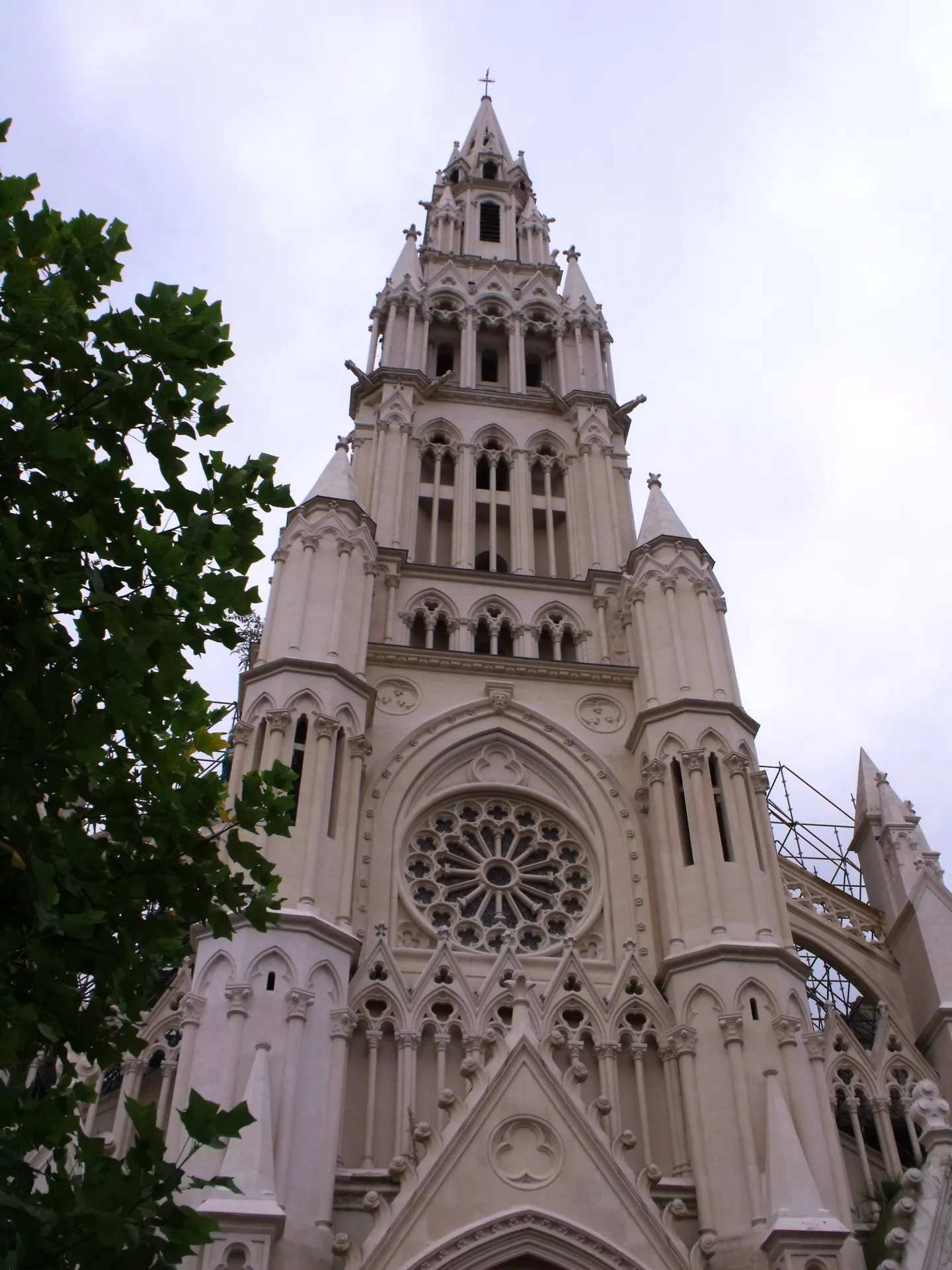
Since that time the procession of Our Lady of Saint-Cordon, or the Tour of the Holy Cordon, takes place every year, always along the same route where the holy cord had been placed. The cord of the Blessed Virgin was locked up in a Shrine at a beautiful Gothic Church, Notre-Dame-la-Grande.
This cord, the Abbot Orsini related, was still preserved at Valenciennes while he was alive. That is no longer the case, as it disappeared during the Terror that was the French Revolution. The Church was sold at auction and then razed to the ground, and the reliquary sent to the mint. Of the Holy Cord nothing is now known, although no one witnessed its destruction when it disappeared in the year 1793.
St Arator of Verdun St Augebert of Champagne St Augustine of Sens St Beata of Sens St Bega
St Cagnoald St Consolata of Reggio Emilia St Cottidus of Cappadocia
St Eleutherius the Abbot (Died c 585) Monk and Abbot. A wonderful simplicity and spirit of compunction were the distinguishing virtues of this holy sixth century Abbot.
St Eugene of Cappadocia St Eve of Dreux St Faustus of Alexandria St Faustus of Syracuse St Felix of Champagne St Frontiniano of Alba (Died 311) Deacon Martyr St Gondulphus of Metz St Imperia St Liberato of Loro Piceno St Macarius of Alexandria St Maccallin of Lusk
St Magnus of Füssen (Died c 666) Religious Priest, Monk, Abbot, Missionary, Spiritual student of Saint Columban and Saint Gall.
St Mansuetus of Toul St Onesiphorus St Petronius of Verona St Sanctian of Sens St Zacharius the Prophet — Martyrs of Africa – 6 saints: There were thousands of Christians exiled, tortured and martyred in the late 5th century by the Arian King Hunneric. Six of them, all bishops, are remembered today; however, we really know nothing about them except their names and their deaths for the faith – Donatian, Fusculus, Germanus, Laetus, Mansuetus and Praesidius.
Martyred in the Spanish Civil War: • Blessed Diego Llorca Llopis • Blessed Felipe Llamas Barrero • Blessed Pascual Torres Lloret • Blessed Vidal Ruiz Vallejo
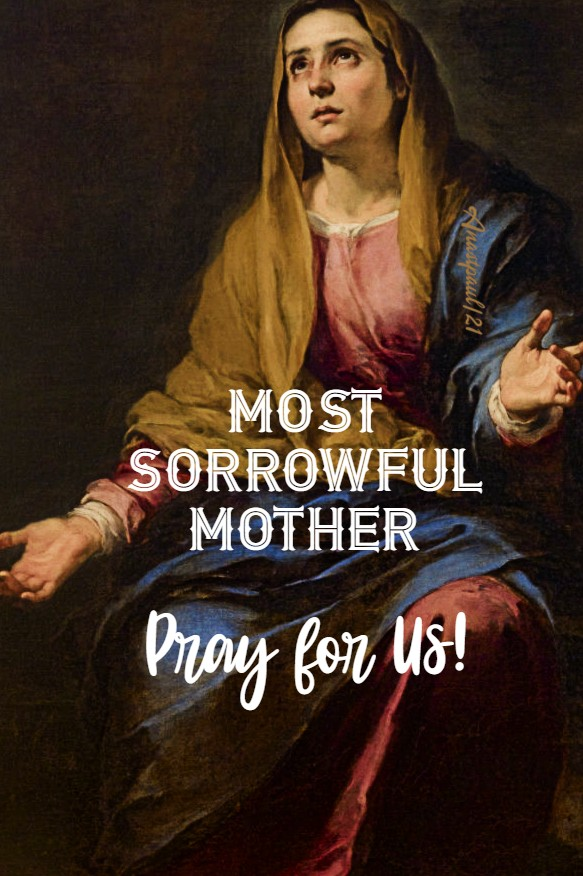
Our Morning Offering – 6 September – “Month of the Seven Sorrows of the Blessed Virgin Mary”
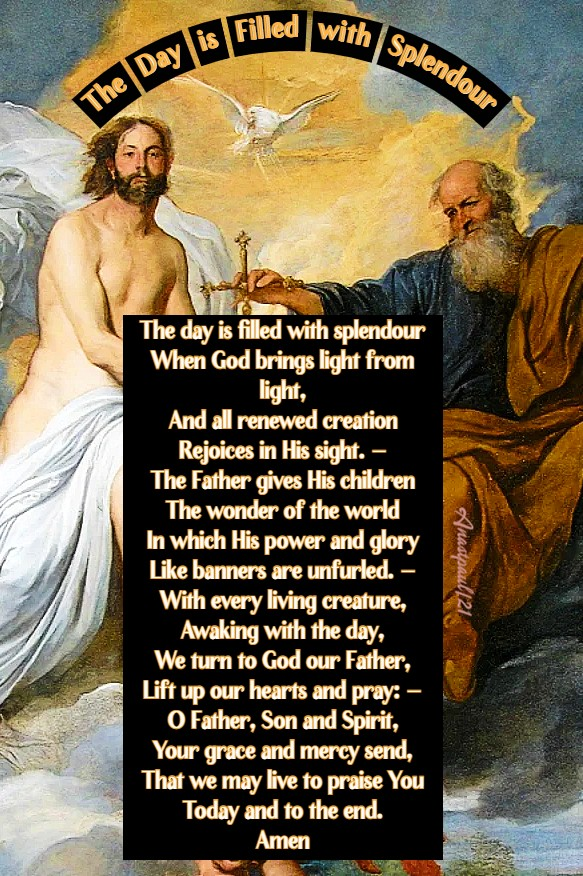
The Day is Filled with Splendour Benedictine Nuns of Stanbrook Abbey
The day is filled with splendour When God brings light from light, And all renewed creation Rejoices in His sight. — The Father gives His children The wonder of the world In which His power and glory Like banners are unfurled. — With every living creature, Awaking with the day, We turn to God our Father, Lift up our hearts and pray: — O Father, Son and Spirit, Your grace and mercy send, That we may live to praise You Today and to the end. Amen
The Day is Filled with Splendour, is a hymn written by the Benedictine Nuns of Stanbrook Abbey. It is sung during Morning Prayer in the Divine Office. It is set to the hymn tune: Paderborn, first published in the Katholische Kirchengesänge of 1616. Psalter Week 3
One Minute Reflection – 6 September – “Month of the Seven Sorrows of the Blessed Virgin Mary” – Readings: Ps 85:1-3, Ps 85:4, Gal 5:25-26; 6:1-10, Luke 7:11-16
And the Lord, seeing her, had compassion on her, and said to her, Do not weep. And He went up and touched the stretcher; and the bearers stood still. And He said, Young man, I say to you, arise. And he who was dead, sat up, and began to speak.
Luke 7:11-16
REFLECTION – He rose again on the third day, what then is to come after in His body, i.e. in the Church, He makes appear; for He shewed in example, what He promised in reward, that as believers knew and owned that He had Himself risen again, so they might hope for the rewards of the resurrection in themselves at the end of the world. Lo, we, through the death of the flesh, remain in the dust until the end of the world, but He on the third day budded into life from the dryness of death, that by the very renewal of His flesh by itself He might shew the power of His Divine Nature…. Already indeed the body of the Lord lives after death, but our bodies are kept back from the glory of the resurrection until the end of the world. Whence he carefully introduced this same delay, by saying, And that I shall rise at the last [novissimo] day from the earth.
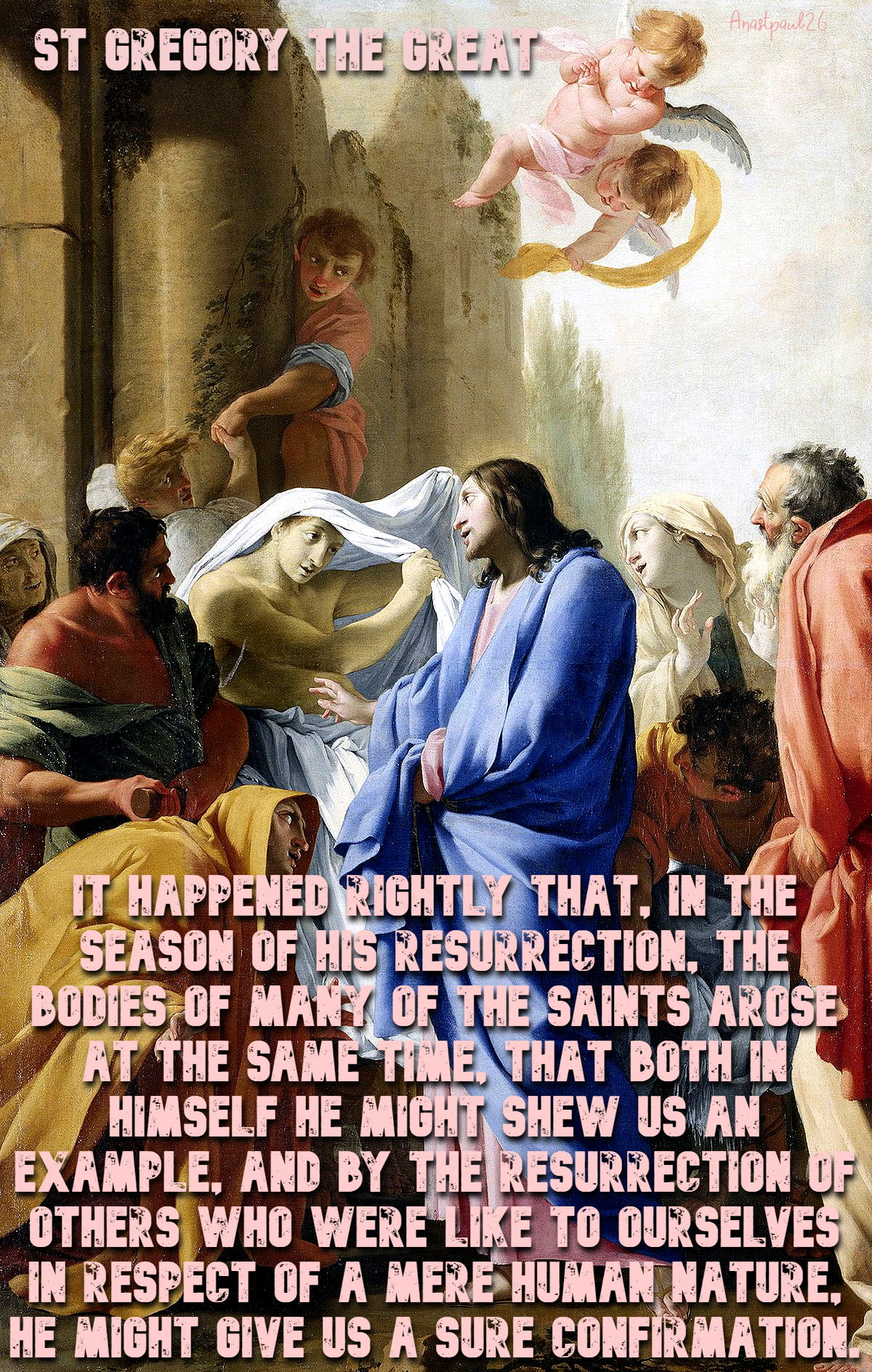
Therefore we have a hope of our own resurrection, by considering the glory of our Head. But lest anyone say perhaps merely in the secret thought of his heart, that it was in this way that He rose again from the dead, viz. that being God and Man in one and the same Person, the death, which He underwent in His Human Nature, He overcame by His Divine Nature, while we, who are mere men, are not able to rise from the curse of death; it happened rightly that, in the season of His resurrection, the bodies of many of the Saints arose at the same time, that both in Himself He might shew us an example, and by the resurrection of others who were like to ourselves in respect of a mere human nature, He might give us a sure confirmation.
St Gregory the Great
PRAYER – God of mercy and love, You offer all peoples the dignity of sharing in your life. Rule over our hearts and bodies this day. Sanctify us and guide our every thought, word and deed, my our hands be held out to our neighbour in imitation of Your love and mercy. By the intercession of Mary the Sorrowful Mother of Our Lord Jesus Christ and our Mother, strengthen us to love each other as brothers and sisters. We ask this through our Lord Jesus Christ, your Son, who lives and reigns with you and the Holy Spirit, one God, forever and ever amen.
There is nothing so bold, nothing more secure, than the fear of God. He who fears God, fears naught else, and he who has a dread of displeasing Him, or a fear of forfeiting His love, does not shrink from suffering – cares not if he lose all, provided he be in a state of grace.
Pere Nouet, SJ(17th century)
The continued prosperity of sinners, is the greatest of all misfortunes for them. The less our Lord disturbs their torpor, the more He punishes them after. It is at that time that vicious habits increase in power day by day, it is then that they indulge themselves the more, that they delude themselves, that they are blinded more and more, to the important interests of their salvation. But the mad multitude do not reason thus.
St Augustine
It is now that sinners try, as far as they can, to drive away the memory and the thought of death, and thus to find peace, although they never will do so, by leading a life of sin; but when in the agonies of death, they must enter into eternity when “destruction cometh and they shall seek peace, and there shall be none” then they will try to fly from the stings of their troubled consciences; they will seek peace, but what peace can a soul find which is laden with sin, which bites it like so many vipers ? What peace, knowing that in so short a time it will have to appear before Jesus Christ the Judge, whose law and friendship, until that moment, it has esteemed of so little worth?
St Alphonsus Liguori
Alas, my brethren, how many seem to be good Christians in the eyes of the world who are really tepid souls in the eyes of God, Who knows our inmost hearts….
St John Vianney
Do not fall into the fatal error of believing that worldly prosperity may be a favour which God grants to His favoured ones. God often, in His anger, gives riches and honours which are prayed for, and He grants them by punishing. He would have destined you to live a retired life in humility and lowliness, in order to lead you, by those means, to the height of glory, but you have obstinately rejected His merciful intentions, you have mapped your own way of life, and, intoxicated with success, you have tried to subject His will to your own, you have made your own choice, He grants what you ask for, and He hears you in His anger. Riches, honours, dignities, fortune, grandeur, success, and robust health are yours for a time…all these, however, are given to you as a punishment.
Letter to the Friends of the Cross by St Louis de Montfort
[1. Nothing is so necessary]
Dear Friends of the Cross, we are all sinners; there is not one of us who has not deserved hell, and I more than anyone. Our offences have to be punished either in this world or in the next. If we suffer for them now, we shall not suffer for them after death. If we willingly accept punishment for them, this punishment will be an act of God’s love; for it is mercy which holds sway and chastises in this world, and not strict justice. This punishment will be light and temporary, accompanied by consolation and merit, and followed by rewards both here and in eternity.
But if the punishment due for our sins is put off till the next world, then it will be God’s avenging justice, which puts everything to fire and sword, which will inflict the punishment, a dreadful, indescribable punishment: “Who understands the power of your anger?” Judgement without mercy, without relief, without merit, without limit and without end. Yes, without end. That serious sin you committed in a few brief moments, that deliberate evil thought which now escapes your memory, that word carried away by the wind, that brief action against the law of God – they shall all be punished for eternity, in the company of the devils in hell, so long as God is God. And this avenging God will have no pity on your torments, on your cries and tears, violent enough to cleave the rocks. To suffer forever, without merit, without mercy, and without end.
Do we think of this, my dear brothers and sisters, when we have to suffer some trial in this world? How fortunate we are to be able to exchange a never-ending and unprofitable punishment for a temporary and rewarding one just by bearing our cross with patience! How many of our debts are still unpaid! How many sins have we committed which, despite a sincere confession and heartfelt contrition, will have to be atoned for in purgatory for many years, simply because in this world we contented ourselves with a few slight penances!
Ah, let us settle our debts with good grace in this life by cheerfully carrying our cross. In the next, a strict account is demanded down to the last penny, to the last idle word. If we were able to snatch from the devil the book of death in which he has entered all our sins and the punishment due to them, what a heavy debt we should find, and how delighted we should be to suffer for long years on earth rather than a single day in the world to come!
Friends of the Cross, do you not flatter yourselves that you are, or desire to become, the friends of God? Well then, resolve to drink the cup that you must drink in order to become his friends: “They drank the cup of the Lord and became the friends of God.” Benjamin, the beloved son of Jacob, was given the cup, while his other brothers received nothing but wheat. The beloved disciple of Christ, so dear to his Master’s heart, went up to Calvary and drank of his cup. “Can you drink the cup that I am going to drink?” To desire God’s glory is excellent, but to desire and pray for it without resolving to suffer all things is both foolish and extravagant: “You do not know what you are asking…” “We must experience many hardships before we enter the kingdom of heaven.” To enter this kingdom you must suffer many crosses and tribulations.
Rightly you glory in being God’s children. You should glory, then, in the correction your heavenly Father has given you and will give you in the future, for he chastises all his children. If you are not included among his beloved children, you are, alas, included among those who are lost, as St. Augustine points out. He also tells us, “The one who does not mourn in this world like a stranger and a pilgrim will not rejoice in the world to come as a citizen of heaven.” If your heavenly Father does not send you some worthwhile crosses from time to time, it is because he no longer cares about you and is angry with you; he is treating you as an outsider, no longer belonging to his family and deserving his protection, or as an illegitimate child, who, having no claim to a share of the inheritance, deserves neither care nor correction.
Friends of the Cross, disciples of a crucified God, the mystery of the Cross is a mystery unknown to the Gentiles, rejected by the Jews, and despised by heretics and bad Catholics. But it is the great mystery you must learn to practice in the school of Christ, and which can only be learnt from him. You will look in vain in all the schools of ancient times for a philosopher who taught it; in vain you will appeal to the senses or to reason to throw some light on it. It is only Jesus, through his all-powerful grace, who can teach you this mystery and give you the ability to appreciate it. Strive then to become proficient in this all-important science under your great Master, and you will understand all other sciences, for it contains them all in an eminent degree. It is our natural and supernatural philosophy, our divine and mystic theology, our philosopher’s stone, which by patience transforms the basest metals into precious ones, the bitterest pains into delight, poverty into riches, the most profound humiliations into glory. The one among you who knows best how to carry his cross, even though in other things he does not know A from B, is the most learned of all.
You are the members of Christ, a wonderful honour indeed, but one which entails suffering. If the Head is crowned with thorns, can the members expect to be crowned with roses? If the Head is jeered at and covered with dust on the road to Calvary, can the members expect to be sprinkled with perfumes on a throne? If the Head has no pillow on which to rest, can the members expect to recline on feathers and down? That would be unthinkable! No, no, my dear Companions of the Cross, do not deceive yourselves. Those Christians you see everywhere, fashionably dressed, fastidious in manner, full of importance and dignity, are not real disciples, real members of Christ crucified. To think they are would be an insult to our thorn-crowned Head and to the truth of the Gospel. How many so-called Christians imagine they are members of our Saviour when in reality they are his treacherous persecutors, for while they make the sign of the cross with their hand, in their hearts they are its enemies!
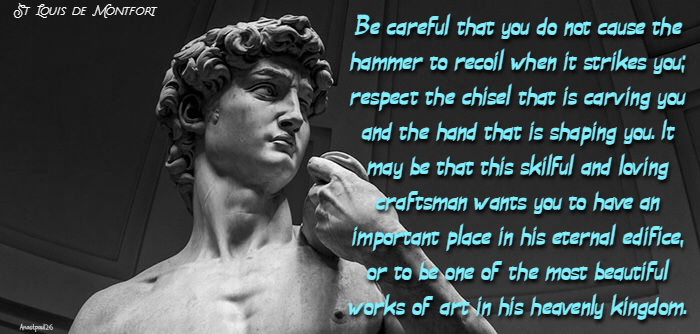
You know that you are living temples of the Holy Spirit and that, like living stones, you are to be set by the God of love into the building of the heavenly Jerusalem. And so you must expect to be shaped, cut and chiselled under the hammer of the cross; otherwise, you would remain rough stones, good for nothing but to be cast aside. Be careful that you do not cause the hammer to recoil when it strikes you; respect the chisel that is carving you and the hand that is shaping you.It may be that this skilful and loving craftsman wants you to have an important place in his eternal edifice, or to be one of the most beautiful works of art in his heavenly kingdom. So let him do what he pleases; he loves you, he knows what he is doing, he has had experience. His strokes are skilful and directed by love; not one will miscarry unless your impatience makes it do so.
Who, then, would dare claim to be exempt from the cross? Which of us would not hasten to the place where he knows the cross awaits him? Who would refuse to say with St. Ignatius of Antioch, “Come, fire and gibbet, wild beast and all the torments of hell, that I may delight in the possession of Christ.”
No, this accursed earth on which we live is not destined to make us happy; in this land of darkness we cannot expect to see clearly; there is no perfect calm on this stormy sea; we can never avoid conflicts on this field of trial and battle; we cannot escape being scratched on this thorn-covered earth. Willingly or unwillingly, all must carry their cross, both those who serve God and those who do not. Keep in mind the words of the hymn:
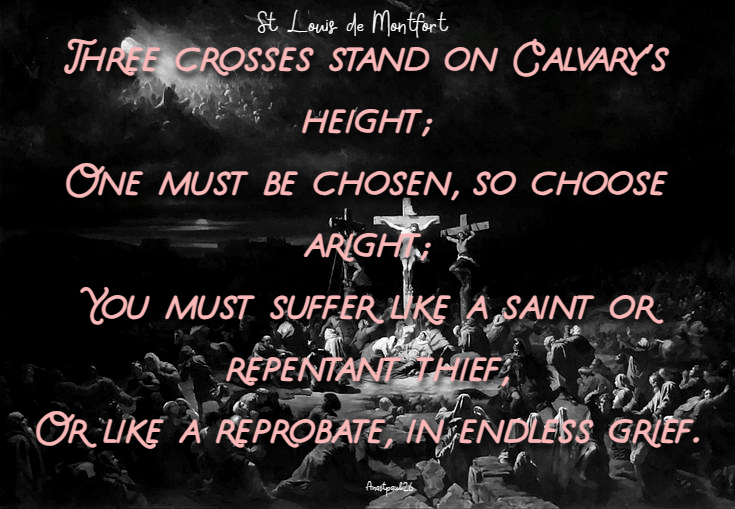
Three crosses stand on Calvary’s height; One must be chosen, so choose aright; You must suffer like a saint or repentant thief, Or like a reprobate, in endless grief.
That is to say, if you are not willing to suffer gladly like Jesus, or patiently like the penitent thief, then you will have to suffer like the unrepentant thief. You will have to drink the cup of bitterness to the dregs without the consoling help of grace, and you will have to bear the whole weight of your cross, deprived of the powerful support of Christ. You will even have to carry the deadly weight which the devil will add to it by means of the impatience it will cause you. And after sharing the unhappiness of the impenitent thief on earth, you will share his misery in eternity.




You must be logged in to post a comment.