Posted in MARIAN TITLES

Nuestra Señora de las Lajas / Our Lady of the Flagstones, Potosí, Caldas, Colombia (1754) and Memorials of the Saints – 16 September

Nuestra Señora de las Lajas / Our Lady of the Flagstones, Potosí, Caldas, Colombia (1754) – 16 September:
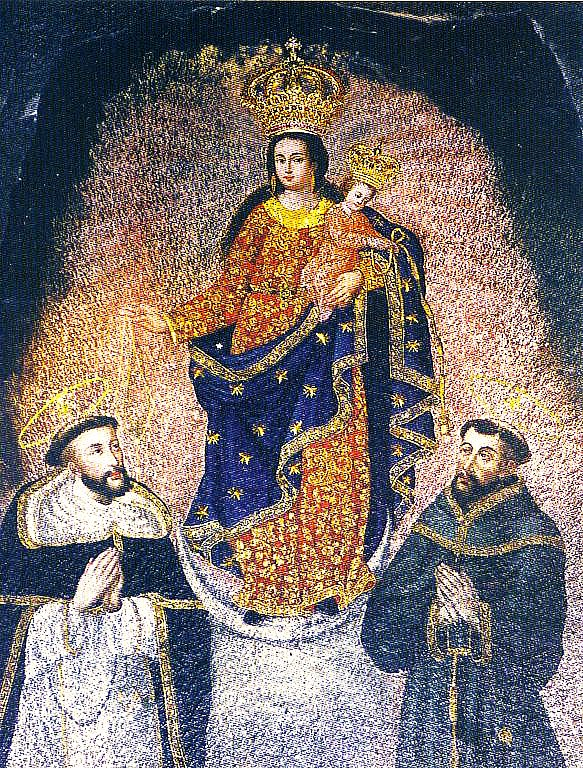
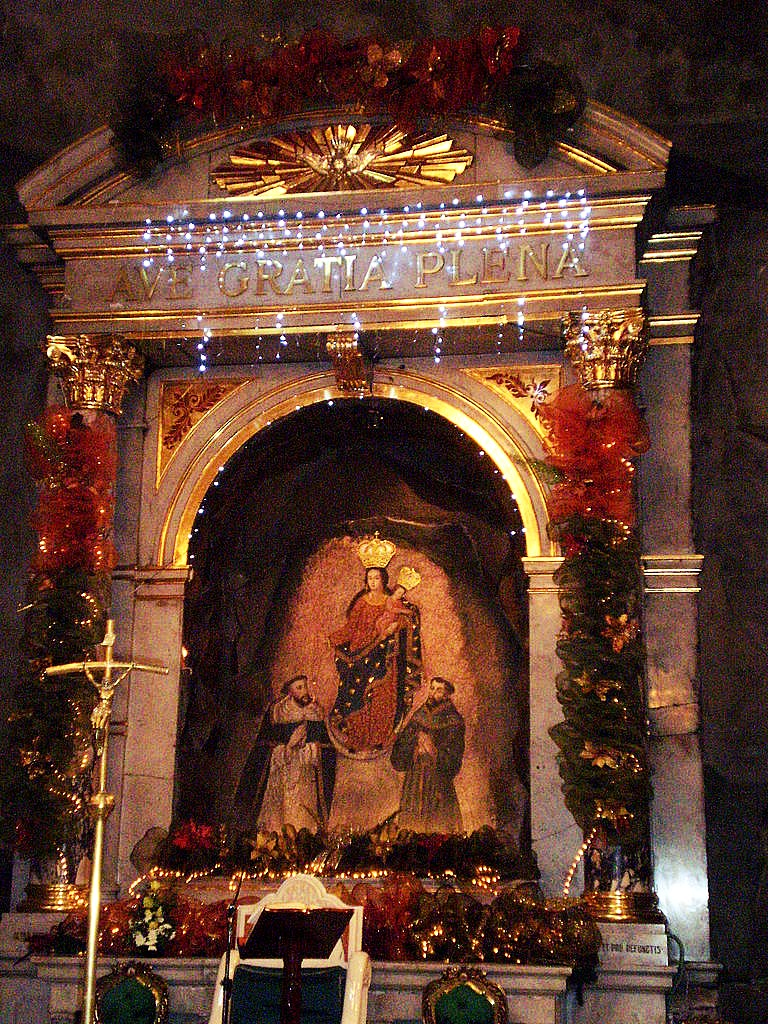
In 1754, Maria Mueses de Quinones, an Indian woman from the village of Potosi, Colombia and her deaf-mute daughter, Rosa, were caught in a very strong storm. They sought refuge in a cave in the gigantic Lajas mountains. To Maria’s surprise, her mute daughter, Rosa exclaimed with her first words “the mestiza is calling me…” Maria did not see the figures of a woman and child that the girl described and fearfully ran back with her daughter to Ipiales and told the townspeople. After later returning to the spot, the woman saw an apparition of Our Lady and Child. Some months later, Rosa died and was returned to life when her mother prayed again at the cave. The townspeople came to see this place and encountered the miraculous image burned into the rocks!

The congregation celebrated the first Mass in the Pastarán river cave – it was 16 September 1754 and they built a straw grotto. With the endorsement of the ecclesiastical authorities, who declared the event as a miracle on 15 September 1754. Very soon, the image began to be venerated with great fervour and many miraculous events occurred there.

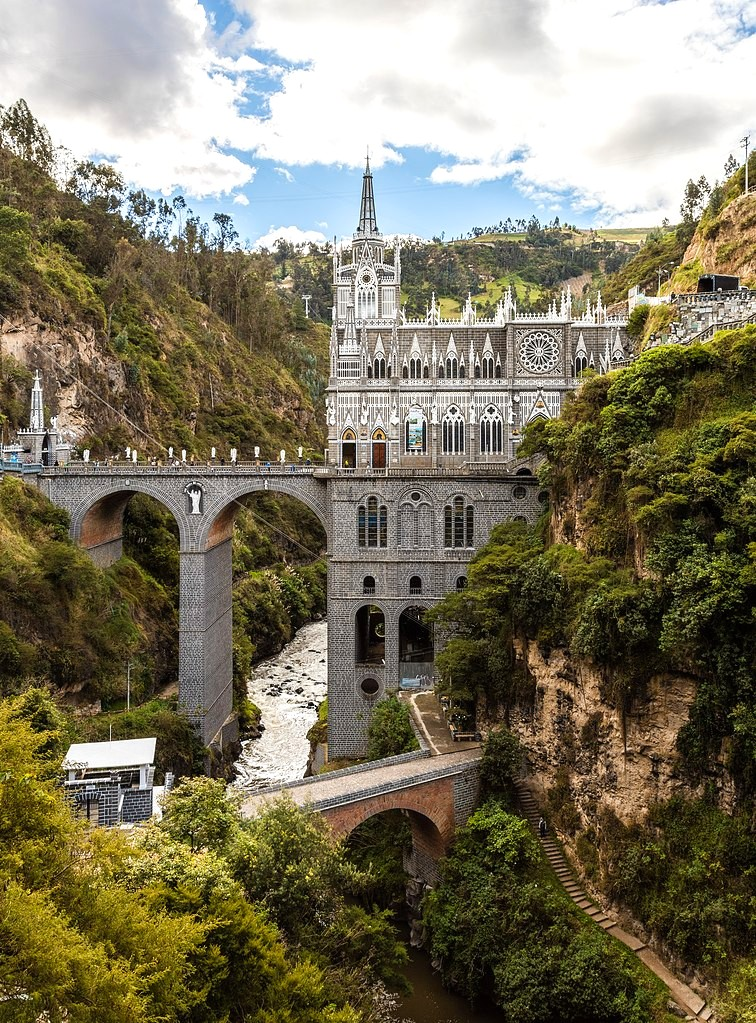
Around the image the faithful devotees have erected four successively larger Churches, until culminating in the current Sanctuary whose construction lasted 30 years and was completed in 1949. In 1952 , Pope Pius XII granted the image the canonical coronation and in 1954 he granted the Sanctuary, the title of Minor Basilica.
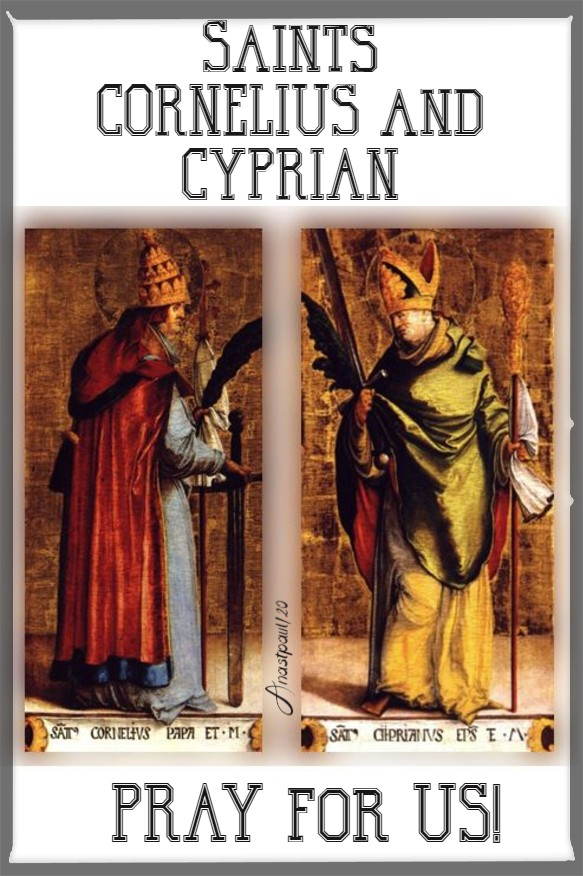
St Pope Cornelius (Martyred in 253) (Memorial)
St Cyprian of Carthage (190-Martyred in 258) (Memorial)

St Abundantius of Rome
St Abundius of Rome
St Andrew Kim Taegon
St Cunibert of Maroilles
St Curcodomus
Bl Dominic Shobyoye
St Dulcissima of Sutri
St Edith of Wilton
St Eugenia of Hohenburg
St Euphemia (c 290-c 305) Virgin Martyr
St Geminianus of Rome
St John of Rome

Blessed Luigi Ludovico Allemandi (c 1390-1450) Bishop and Cardinal, called “The Cardinal of Arles.” Blessed Luigi was a Priest driven by immense love for the Holy Mother of God and for the Church. His involvement in various Councils and Papal dissentions, were the result of his great desire to maintain the purity of the Chair of Peter. He was Beatified in 1527 by Pope Clement VII.

St Lucy of Rome
St Ludmila
St Marcian the Senator
Bl Martin of Huerta
Bl Michael Himonaya

St Ninian (Died 432) “Apostle to the Southern Picts,” Bishop, Missionary, Monastic Founder, Wonderworker.

Bl Paul Fimonaya
St Priscus of Nocera
St Rogellus of Cordoba
St Sebastiana
St Servus Dei
St Stephen of Perugia

Blessed Pope Victor III OSB (1027-1087) Known as “the Gentle Pope,” Prince, Benedictine Abbot, Monk, Advisor, diplomat, reformer – Papal ascension – elected 24 May 1086 and enthroned on 9 May 1087 – until his death. Few have been more reluctant to accept the Papacy than the humble Monk and Hermit, who became Victor III.

St Vitalis of Savigny

Martyrs of the Via Nomentana: Four Christian men martyred together, date unknown – Alexander, Felix, Papias and Victor. They were martyred on the Via Nomentana outside Rome, Italy.

Martyred in the Spanish Civil War:
• Blessed Antonio Martínez García
• Blessed Ignasi Casanovas Perramón
• Blessed Manuel Ferrer Jordá
• Blessed Pablo Martínez Robles
• Blessed Salvador Ferrer Cardet
Posted in SAINT of the DAY

Saints of the Day – 16 September – Saints Abundius and Abundantius of Rome

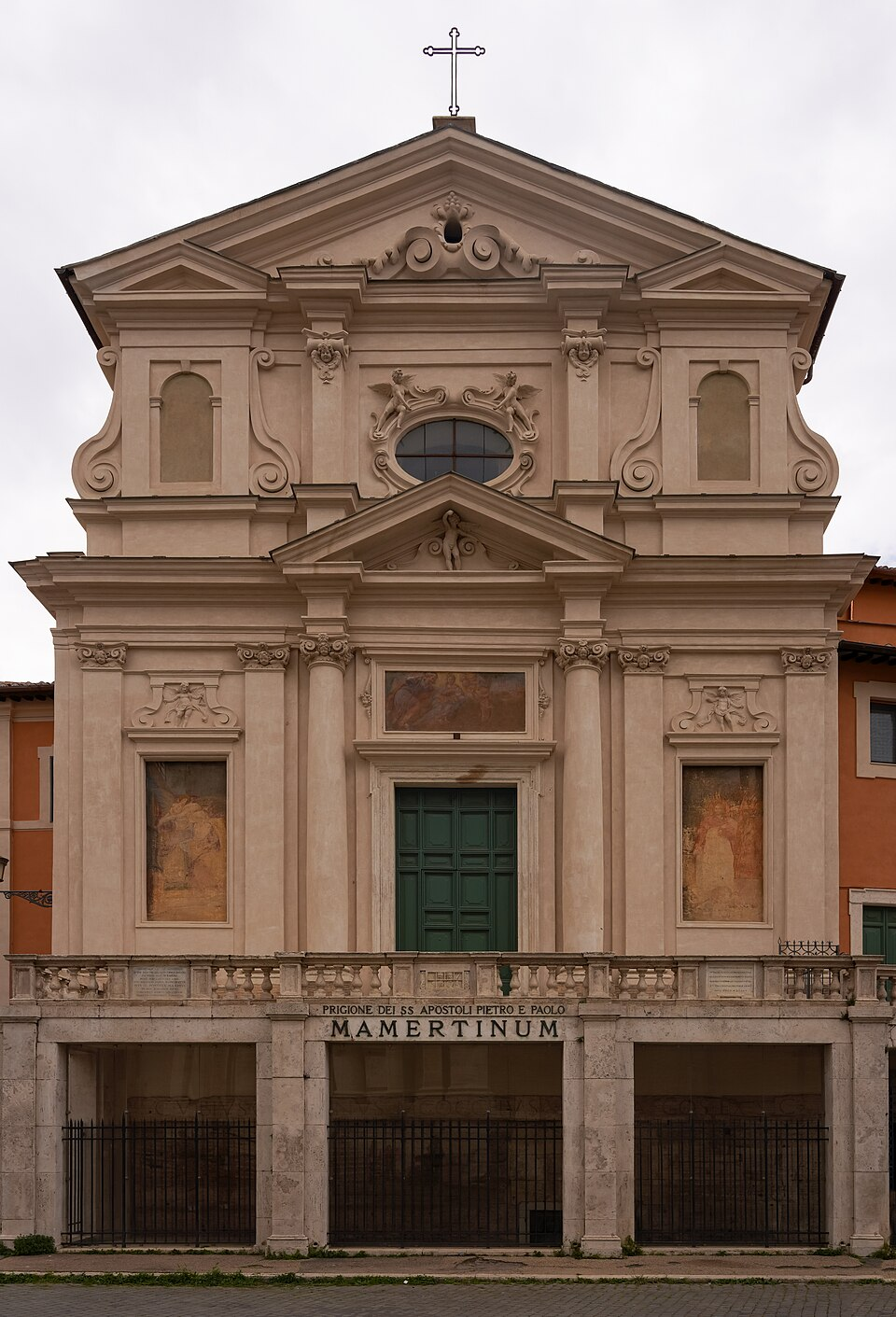
Saints Abundius and Abundantius of Rome were martyrs who killed during the Diocletian persecution in the year 304. Abundius was a priest and Abundantius a deacon. The emperor ordered them to be arrested on suspicion of Christianity. When they refused to sacrifice to Hercules, they were tortured at Mamertine prison, and condemned to be beheaded. On the way to execution the two passed Senator Marcian who was grieving over his son John who had just died. Abundius prayed over John, and the boy returned to life; Marcian and John converted to Christianity on the spot. 

Prison of the Holy Apostles Peter & Paul (Mamertinum)

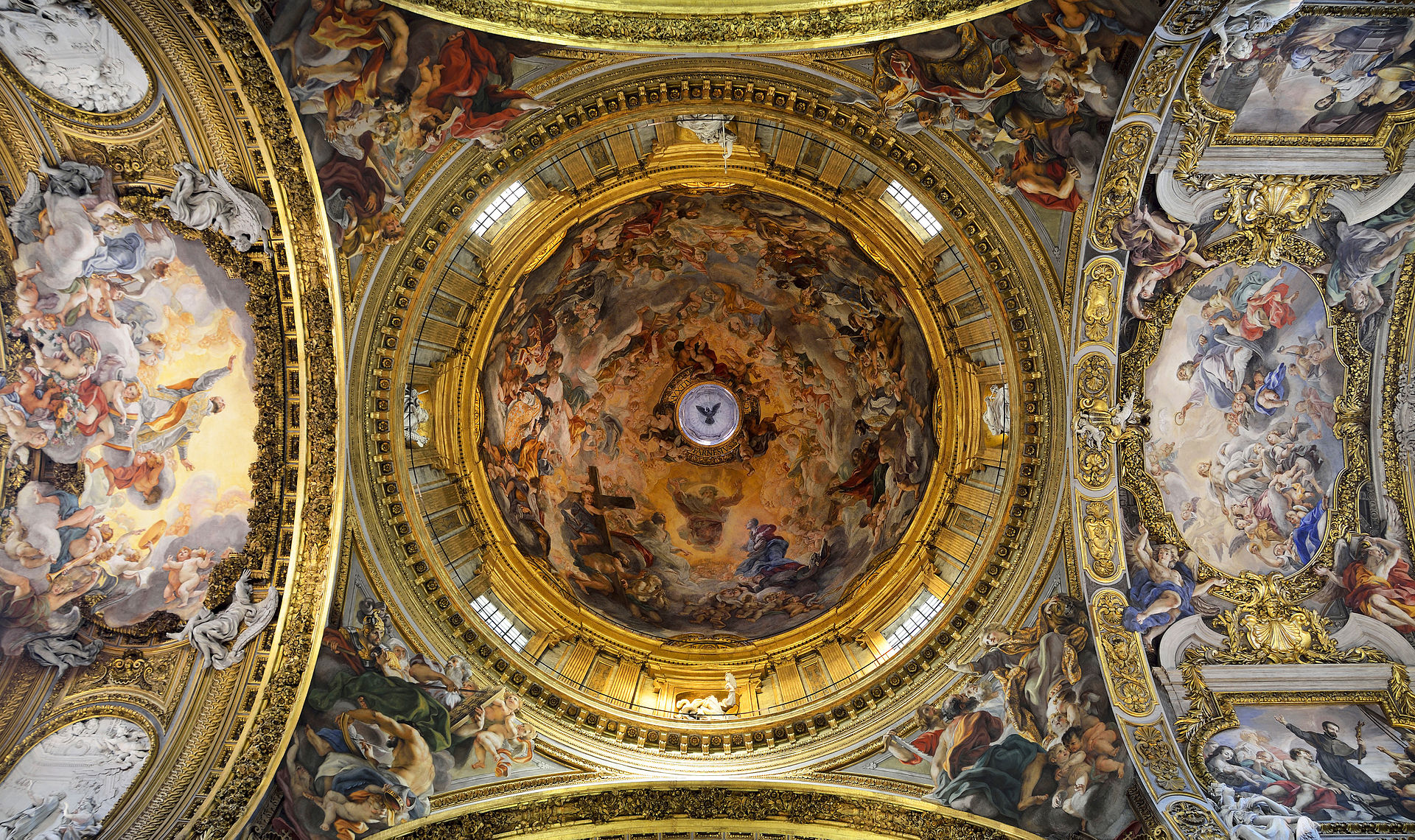
The executions were carried out at the 26th milestone of the Via Flaminia. Their bodies were later transferred to the church of Cosmas and Damian in Rome. The bodies of Marcianus and John were found around 1001 and transferred to Civita Castellana. In 1583, the relics of Abundius and Abundantius were transferred to the SS. Nome di Gesu, where they were placed under the church’s high altar. Aloysius Gonzaga heard mass there before becoming a Jesuit.

Church of the Gesù

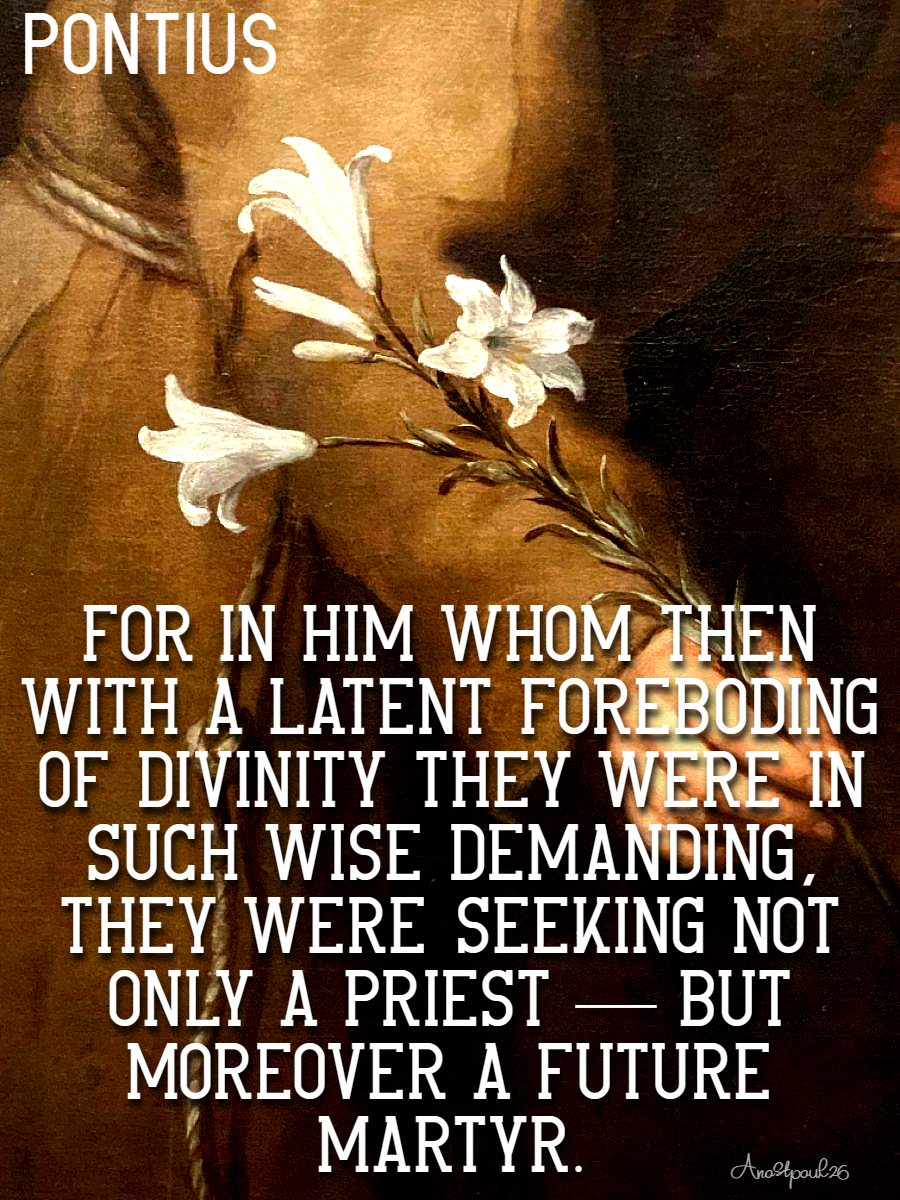
For in him whom then with a latent foreboding of divinity they were in such wise demanding, they were seeking not only a priest — but moreover a future martyr.

The Life and Passion of St Cyprian (Pontius)

Posted in Our MORNING Offering

Our Morning Offering – 16 September – Indulgenced Prayers to the Blessed Virgin

O Mary, make me live in God, with God, and for God.

(300 days every time said)

Mary, mother of grace, mother of mercy, protect us from the enemy and receive us at the hour of death.

(300 days every time said)

Remember, O Virgin Mother of God, when thou standest in the sight of the Lord, to speak good things in our behalf, and thus He may avert His indignation from us.

(300 days every time said)

May the Virgin Mary with her loving Child bless us.

(300 days every time said)

Thou art my mother, O Virgin Mary; defend me lest I should ever provoke thy most beloved Son, and grant that I may always and in everything please Him.

(300 days every time said)

O Virgin Mary, thou hast been blessed by the Lord God on high before all women on earth.

(300 days every time said)

Most worthy queen of the world, Mary ever Virgin, intercede for our peace and salvation, thou who didst bring forth Christ the Lord, the Saviour of all.

(300 days every time said)

Holy Mother of God, pray for me. Hail Mary, etc.

(300 days every time said thrice before a representation of the Blessed Virgin Mary)

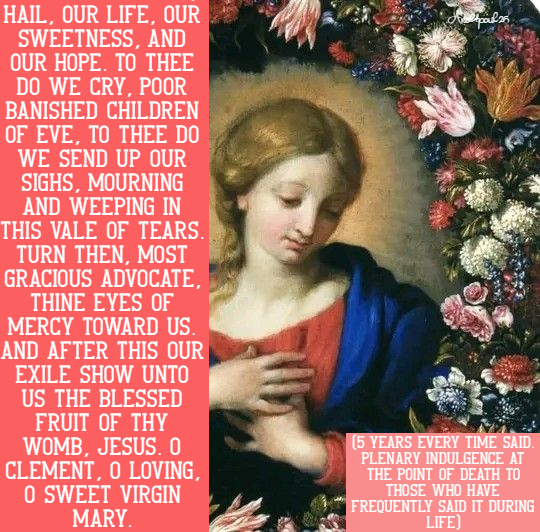
Hail, O queen, mother of mercy, hail, our life, our sweetness, and our hope. To thee do we cry, poor banished children of Eve, to thee do we send up our sighs, mourning and weeping in this vale of tears. Turn then, most gracious advocate, thine eyes of mercy toward us. And after this our exile show unto us the blessed fruit of thy womb, Jesus. O clement, O loving, O sweet Virgin Mary.

(5 years every time said. Plenary indulgence at the point of death to those who have frequently said it during life)

Posted in ONE Minute REFLECTION

One Minute Reflection – 16 September – “By your perseverance you will secure your lives”

One Minute Reflection – 16 September – “Month of the Seven Sorrows of the Blessed Virgin Mary ” – Readings: Ps 78:11; 78:12; 78:10, Ps 78:1, Wis 3:1-8, Luke 21:9-19

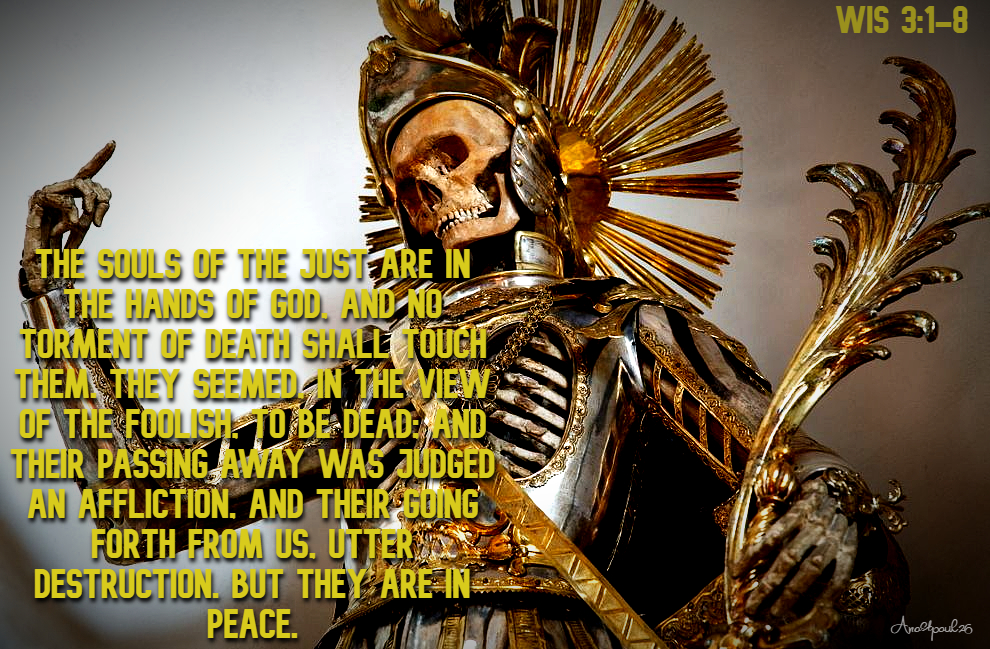
The souls of the just are in the hands of God, and no torment of death shall touch them. They seemed, in the view of the foolish, to be dead; and their passing away was judged an affliction, and their going forth from us, utter destruction. But they are in peace.

Wis 3:1-8

REFLECTION – Do you want to come to that life where you will be sheltered from error forever? Who does not want this? We all desire life and truth but how are we to attain it? What path are we to follow? Certainly, we have not reached the end of the journey yet we can already see it, we yearn for life and truth. Christ is both one and the other. What is the way to it? “I am the way,” he says. To what will we come? “I am the truth and the life”.

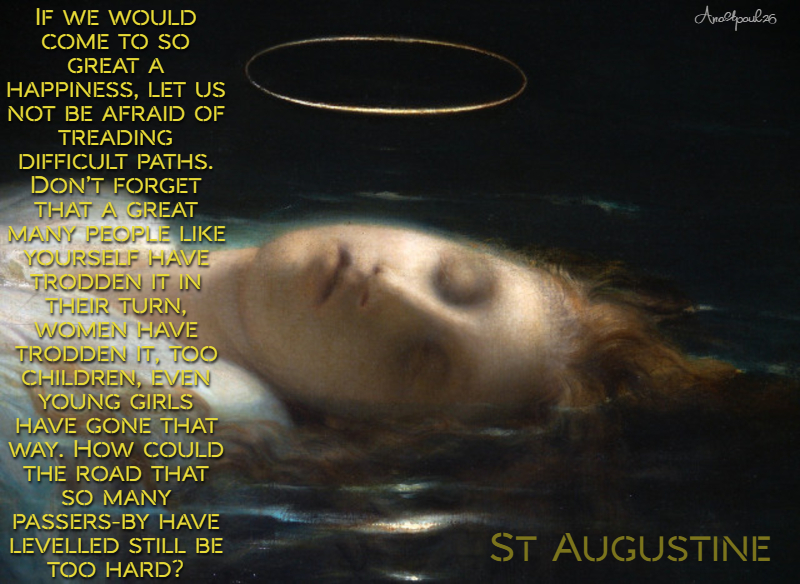
This is what the martyrs loved; this is why they looked beyond the love of present goods that pass away. Don’t be astonished at their bravery: in them love overcame suffering. Let us walk in their footsteps, our eyes fixed on him who is both their Leader and ours. If we would come to so great a happiness, let us not be afraid of treading difficult paths. He who has promised is true; he is faithful; he could not deceive us. Why fear the hard road of suffering and tribulation? Our Saviour in person has trodden it.

You answer: “But that was him, the Saviour!” Know that the apostles passed that way too. Now you’re going to say: “But they were apostles!” Yes, I know. But don’t forget that a great many people like yourself have trodden it in their turn, women have trodden it, too children, even young girls have gone that way. How could the road that so many passers-by have levelled still be too hard?

Saint Augustine

PRAYER – Look upon us Lord, Creator and Ruler of the whole world, give us the grace to serve You with all our hearts, to take up our cross and follow You, that we may come to know the power of Your love and the forgiveness which You give and You teach. Grant that by the intercession of Sts Cornelius and Cyprian, we may attain the glory of Your kingdom and see You face to face. We make our prayer through Christ our Lord with the Holy Spirit, one God forever, amen.

Posted in CATHOLIC Quotes

Quote/s of the Day – 16 September – St Cyprian

Look at the havoc which hail and storm spread around our gardens and orchard, look at the rot fast spreading amongst the cattle, look at the winds and hurricane which toss the ships at sea. This is only but a feeble image of the ravages of sin in a soul. Mortal sin destroys the merits of good works, corrupts every faculty of the mind, and leads the sinner on to certain death.

Manna suited everyone’s taste, in like manner the Word of God, which is preached to all throughout the world, supplies the wants of all kinds of persons, and according as it is listened to by those of ordinary intelligence it will be found – as did the manna of old – to be suitable to everyone’s taste.

The evangelical precepts are no other than divine lessons, they are the foundation of hope, the stregthening of faith, the food of charity, the Gospel isa a rudder to steer our way through life, and helps us to reach the harbour of salvation. The law commands but few things, but those few should be willingly and lovingly performed.

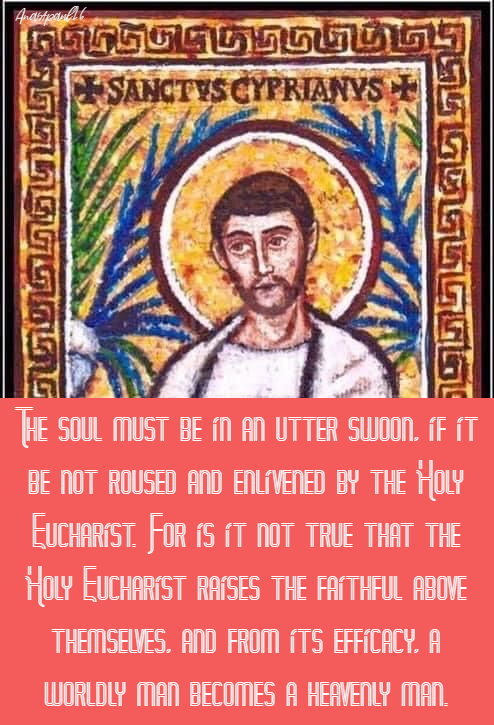
The soul must be in an utter swoon, if it be not roused and enlivened by the Holy Eucharist. For is it not true that the Holy Eucharist raises the faithful above themselves, and from its efficacy, a worldly man becomes a heavenly man.

Envy is as prolific as it is hurtful, it is the root of all evil, the source of endless disorder and misery, the cause of most sins that are comitted.

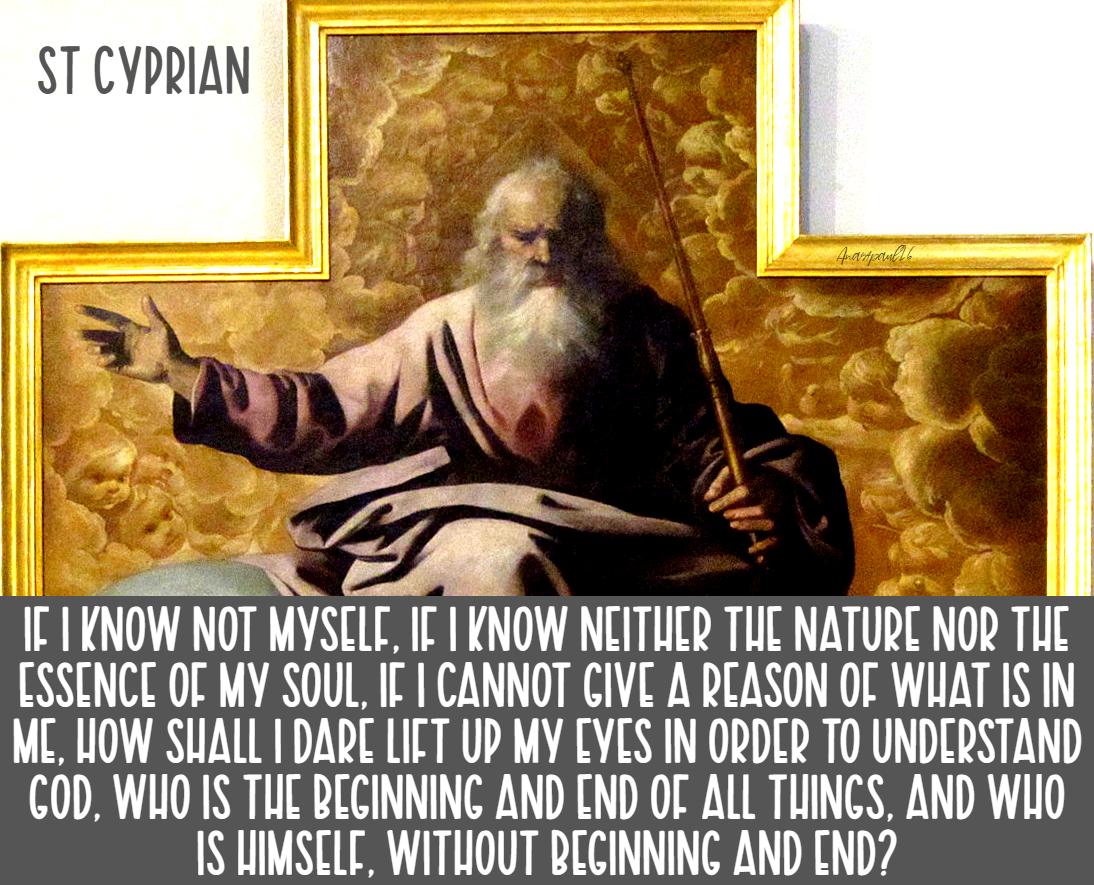
If I know not myself, if I know neither the nature nor the essence of my soul, if I cannot give a reason of what is in me, how shall I dare lift up my eyes in order to understand God, who is the beginning and end of all things, and who is Himself, without beginning and end?

Posted in SEPTEMBER-The SEVEN SORROWS of MARY and The HOLY CROSS

Thought for the Day – 16 September – The Fifth Dolor

Reflections on each of the Seven Dolors of Mary by St Alphonsus Liguori

The Death of Jesus

And now we have to admire a new sort of martyrdom, a mother condemned to see an innocent son, whom she loved with all the affection of her heart, put to death before her eyes, by the most barbarous tortures. There stood by the cross of Jesus his mother: “Stabat autem juxta crucem mater ejus.” There is nothing more to be said, says St. John, of the martyrdom of Mary: behold her at the foot of the cross, looking on her dying Son, and then see if there is grief like her grief.

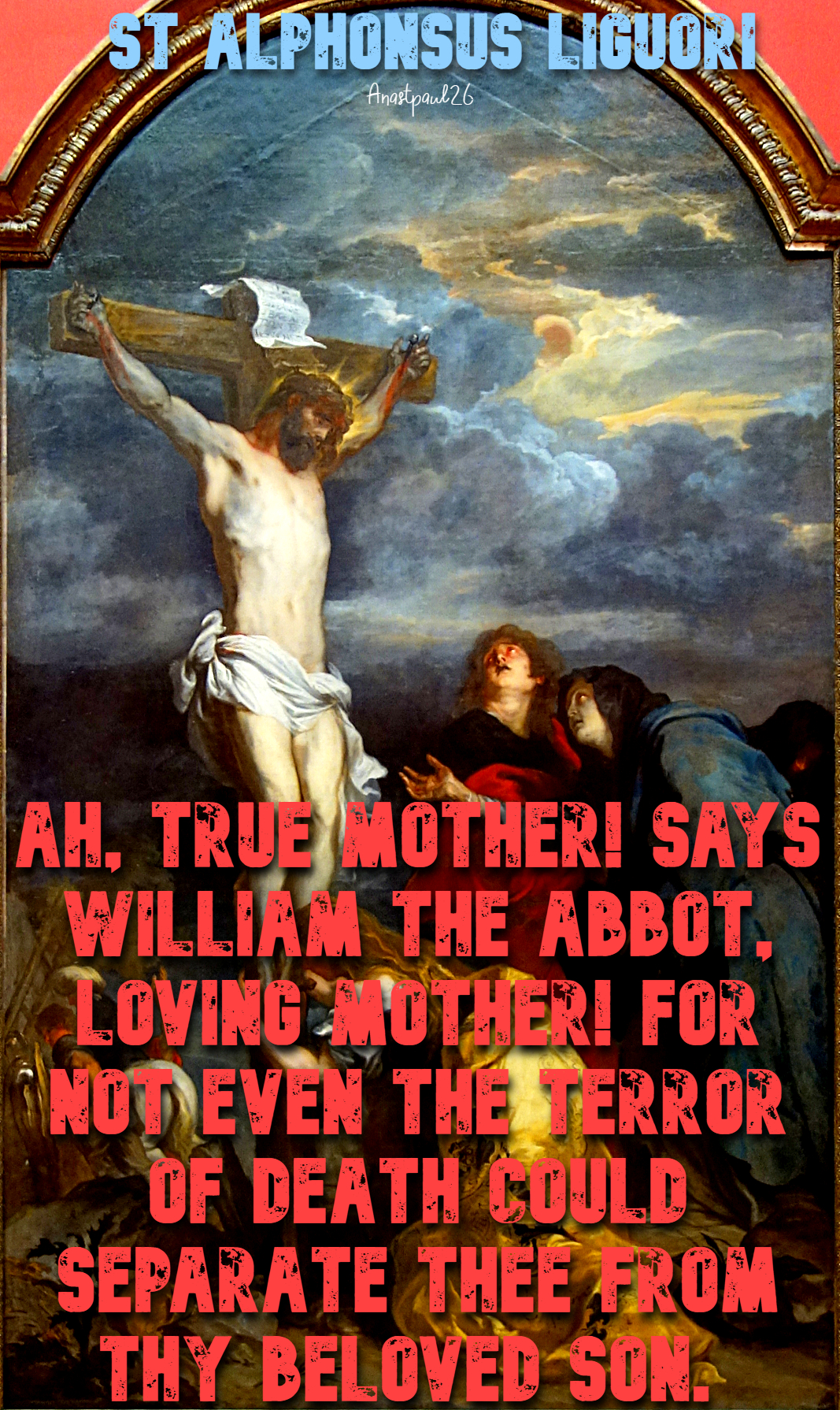
As soon as our afflicted Redeemer had ascended the hill of Calvary, the executioners stripped him of his garments, and piercing his sacred hands and feet with nails, not sharp, but blunt: “Non acutis, sed obtusis;” as St. Bernard says, and to torture him more, they fastened him to the cross. When they had crucified him, they planted the cross, and thus left him to die. The executioners abandon him, but Mary does not abandon him. She then draws nearer to the cross, in order to assist at his death. But what did it avail, oh Lady, says St. Bonaventure, to go to Calvary to witness there the death of this Son? Shame should have prevented thee, for his disgrace was also thine, because thou wast his mother; or, at least, the horror of such a crime as that of seeing a God crucified by his own creatures, should have prevented thee. But the saint himself answers: Thy heart did not consider the horror, but the suffering: “Non considerabat cor tuum horrorem, sed dolorem.” Ah, thy heart did not then care for its own sorrow, but for the suffering and death of thy dear Son; and therefore thou thyself didst wish to be near him, at least to compassionate him. Ah, true mother! says William the Abbot, loving mother! for not even the terror of death could separate thee from thy beloved Son. But, oh God, what a spectacle of sorrow, to see this Son then in agony upon the cross, and under the cross this mother in agony, who was suffering all the pain that her Son was suffering!

Mary also suffered all these pains of Jesus. Every torture inflicted on the body of Jesus, says St. Jerome, was a wound in the heart of the mother. Any one of us who should then have been on Mount Calvary, would have seen two altars, says St. John Chrysostom, on which two great sacrifices were consummating, one in the body of Jesus, the other in the heart of Mary. But rather would I see there, with St. Bonaventure, one altar only, namely, the cross alone of the Son, on which, with the victim, this divine Lamb, the mother also was sacrificed. 

Mothers fly from the presence of their dying children; but if a mother is ever obliged to witness the death of a child, she procures for him all possible relief; she arranges the bed, that his posture may be more easy; she administers refreshments to him; and thus the poor mother relieves her own sorrows. Ah, mother, the most afflicted of all mothers! oh Mary, it was decreed that thou shouldst be present at the death of Jesus, but it was not given to thee to afford him any relief. 

And what caused her the greatest sorrow was to see that, by her presence and her grief, she increased the sufferings of her Son. The sorrow itself, says St. Bernard, that filled the heart of Mary, in creased the bitterness of sorrow in the heart of Jesus. St. Bernard also says, that Jesus on the cross suffered more from compassion for his mother than from his own pains: he thus speaks in the name of the Virgin: I stood and looked upon him, and he looked upon me; and he suffered more for me than for himself. Passino writes that Jesus Christ himself, speaking one day to the blessed Baptista Varana, of Camerino, said to her, that he was so afflicted on the cross at the sight of his mother in such anguish at his feet, that compassion for his mother caused him to die without consolation. So that the blessed Baptista, being enlightened to know this suffering of Jesus, exclaimed: Oh my Lord, tell me no more of this thy sorrow, for I can not bear it.

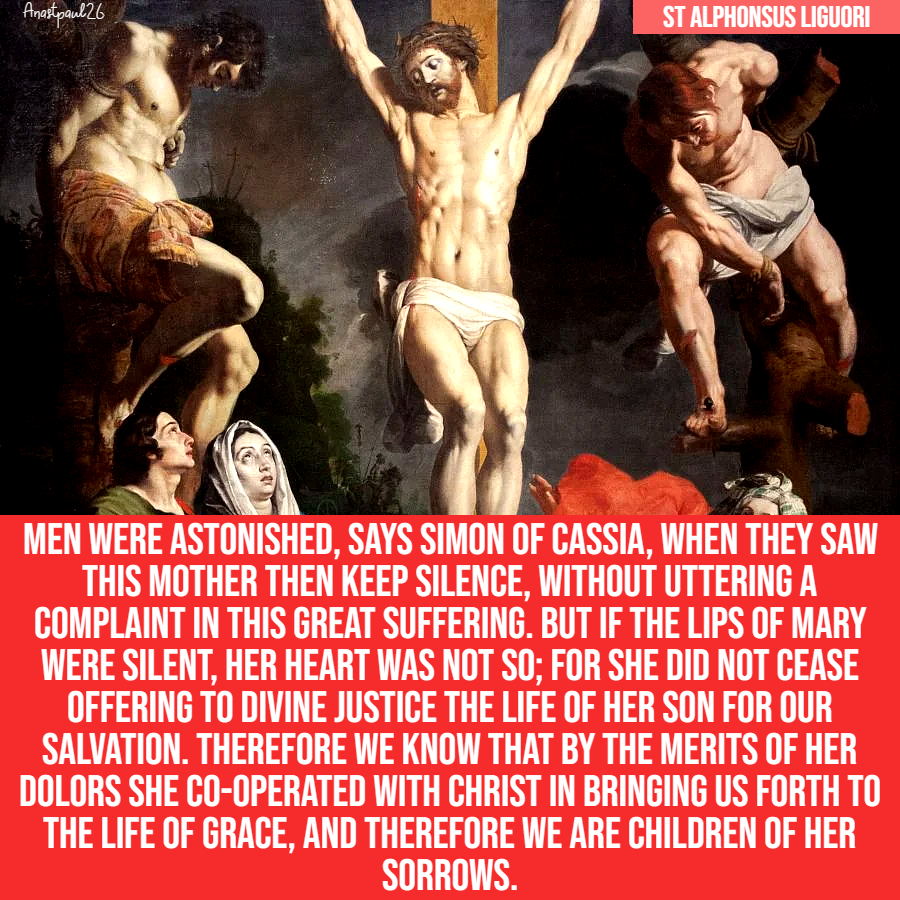
Men were astonished, says Simon of Cassia, when they saw this mother then keep silence, without uttering a complaint in this great suffering. But if the lips of Mary were silent, her heart was not so; for she did not cease offering to divine justice the life of her Son for our salvation. Therefore we know that by the merits of her dolors she co-operated with Christ in bringing us forth to the life of grace, and therefore we are children of her sorrows. And from that time Mary began to perform for us this office of a good mother; for, as St. Peter Damian declares, the penitent thief, through the prayers of Mary, was then converted and saved: Therefore the good thief repented, because the blessed Virgin, standing between the cross of her Son and that of the thief, prayed her Son for him; thus rewarding, by this favor, his former service. For as other authors also relate, this thief, in the journey to Egypt with the infant Jesus, showed them kindness; and this same office the blessed Virgin has ever continued, and still continues to perform.