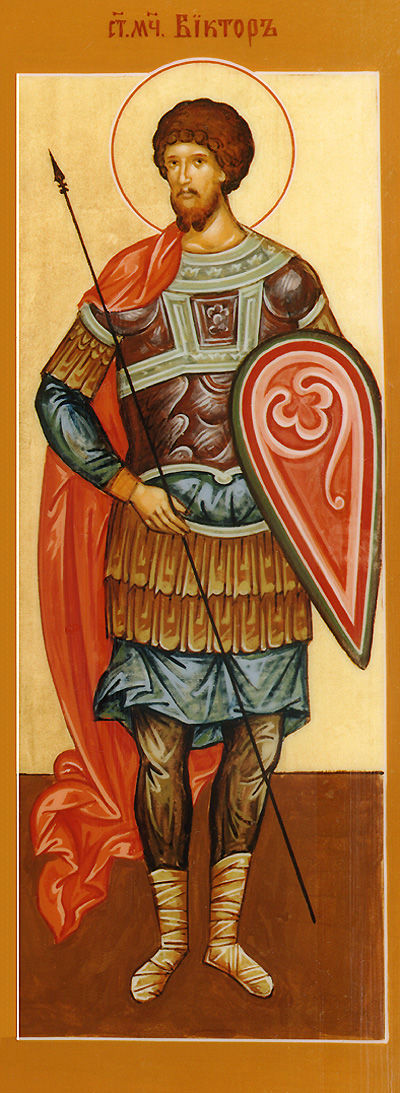
Saints Victor and Sosthenes of Chalcedon were soldiers and the executioners assigned to torture Saint Euphemia. However her faith and prayers converted them to Christianity. The Proconsul Priscus ordered Victor and Sosthenes to throw the saint into a red-hot furnace. In the flames, however, they saw angels who prevented them from touching the saint. When they refused to carry out the order, they were placed in shackles. Other soldiers, who threw Saint Euphēmia into the fire, were burnt by the flames, but inside the furnace the martyr remained unharmed.
St Victor of Chalcedon
They were subsequently martyred in the persecutions of Diocletian. The Proconsul tried to make them bow down to the idols, but they replied that they had come to know the true God and would not offer homage to demons. As they were led to the wild beasts, they begged the Lord to forgive the sins they had committed as pagans. Then a divine voice came from Heaven, calling them to their rest. The animals did not touch their bodies. Later, the two martyrs were buried secretly by some Christians.
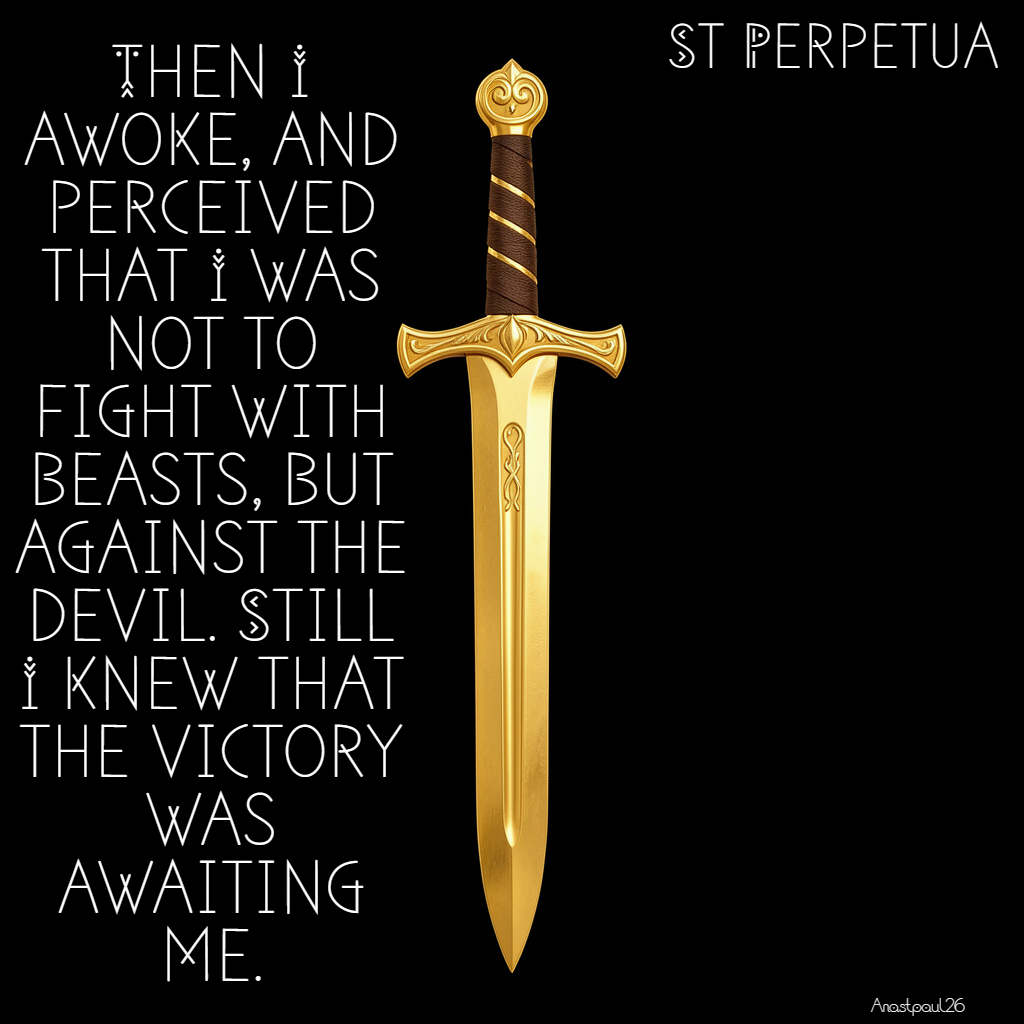
Then I awoke, and perceived that I was not to fight with beasts, but against the devil. Still I knew that the victory was awaiting me.
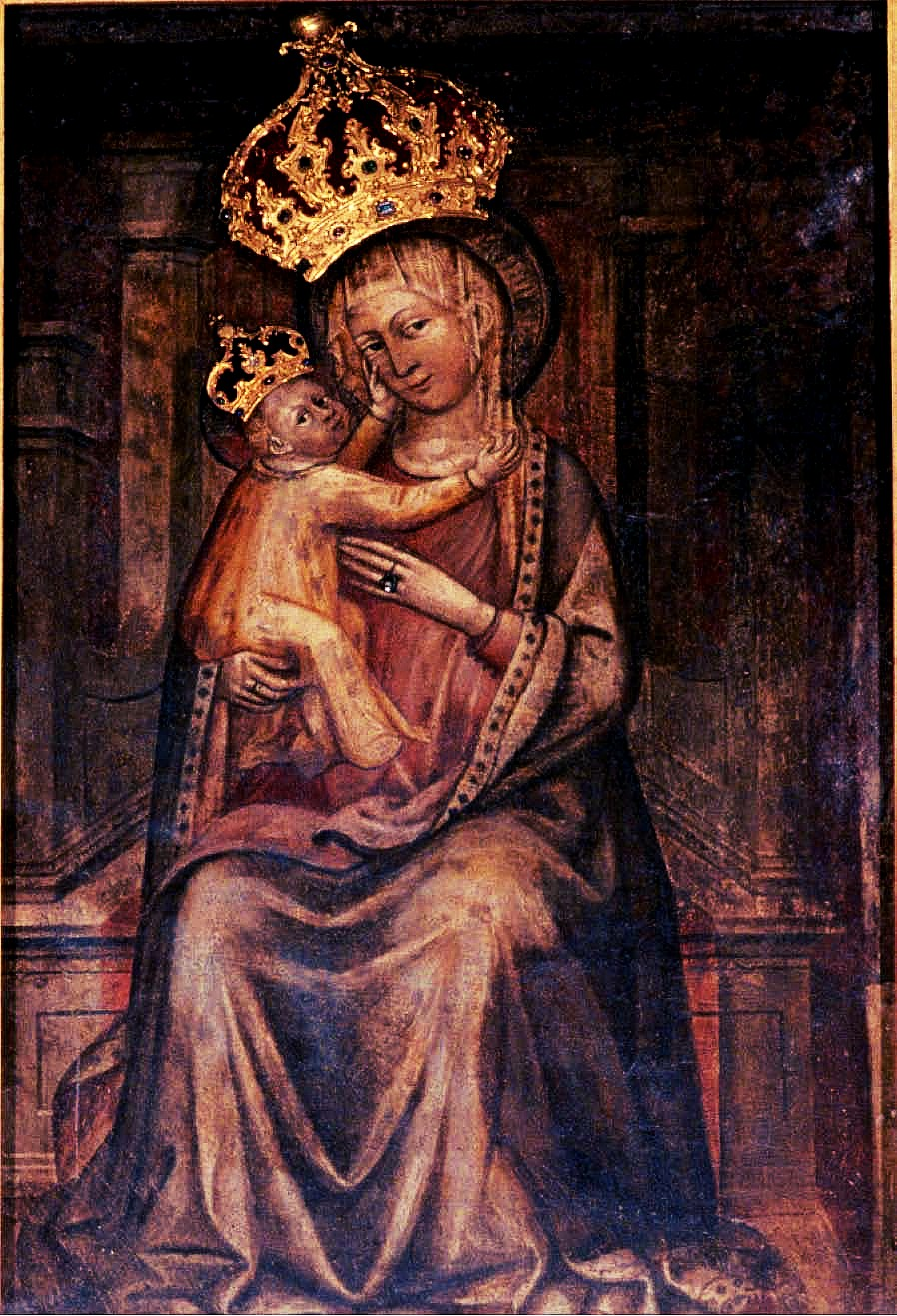
Beata Vergine Maria della Vita / Our Lady of Life (1289) 10 September: Patronage – hospitals in the Diocese of Bologna, Italy.
The cult of the Madonna della Vita is connected with the hospital of the same name founded in 1289 by the Compagnia dei Battuti, present in Bologna since 1261. In the Sanctuary dedicated to her, between 1370 and 1380, Simone dei Crocefissi frescoed the image of the Blessed Virgin, which remained covered during the renovations in the years 1454-1502 and accidentally found among the exultation of the Bolognese people on 10 September 1614. It depicts Mary Mother and Queen as she rests her face to the cheek of Jesus, according to the iconography of the Mother of Tenderness. The close link between the original hospital activity and the devotion of the brothers, was also expressed by the motto inscribed under the double Cross: “Vitam dat nobis crux tua, Christe Jesu” “Your Cross gives us life, Christ Jesus.”
St Peter Martinez St Pulcheria (399-453) Empress, Widow St Salvius of Albi St Sosthenes of Chalcedon St Theodard of Maastricht St Victor of Chalcedon — Martyrs of Bithynia – 3 sister saints: Three young Christian sisters martyred in the persecutions of emperor Maximian and governor Fronto: Menodora, Metrodora, Nymphodora. They were martyred in 306 in Bithynia, Asia Minor (in modern Turkey).
Martyrs of Japan – 205 beati: A unified feast to memorialise 205 missionaries and native Japanese known to have been murdered for their faith between 1617 and 1637.
Martyrs of Sigum – 8 saints: A group of Nicomedian martyrs, condemned for their faith to be worked to death in the marble quarries of Sigum. There were priests, bishops and laity in the group but only a few names have come down to us: Dativus, Felix, Jader, Litteus, Lucius, Nemesian, Polyanus, Victor. They were worked to death c 257 in Sigum.
Martyred in the Spanish Civil War: • Blessed Félix España Ortiz • Blessed Leoncio Arce Urrutia • Blessed Tomàs Cubells Miguel
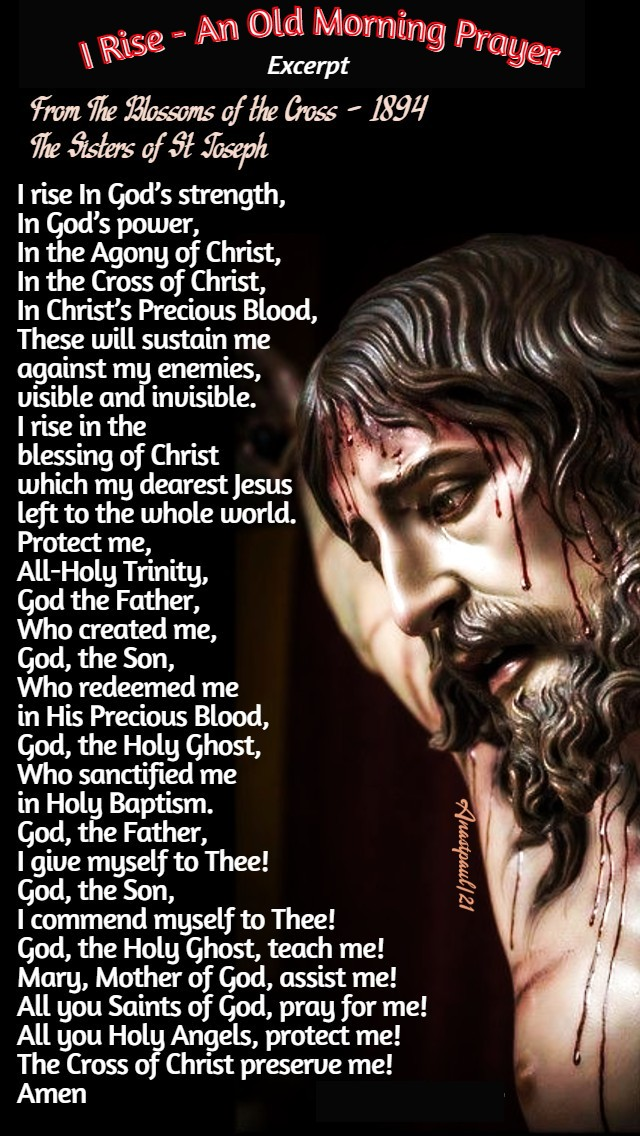
I Rise – An Old Morning Prayer – Excerpt From The Blossoms of the Cross — 1894 The Sisters of St Joseph
I rise In God’s strength, In God’s power, In the Agony of Christ, In the Cross of Christ, In Christ’s Precious Blood, These will sustain me against my enemies, visible and invisible. I rise in the blessing of Christ which my dearest Jesus left to the whole world. Protect me, All-Holy Trinity, God the Father, Who created me, God, the Son, Who redeemed me in His Precious Blood, God, the Holy Ghost, Who sanctified me in Holy Baptism. God, the Father, I give myself to Thee! God, the Son, I commend myself to Thee! God, the Holy Ghost, teach me! Mary, Mother of God, assist me! All you Saints of God, pray for me! All you Holy Angels, protect me! The Cross of Christ preserve me! Amen
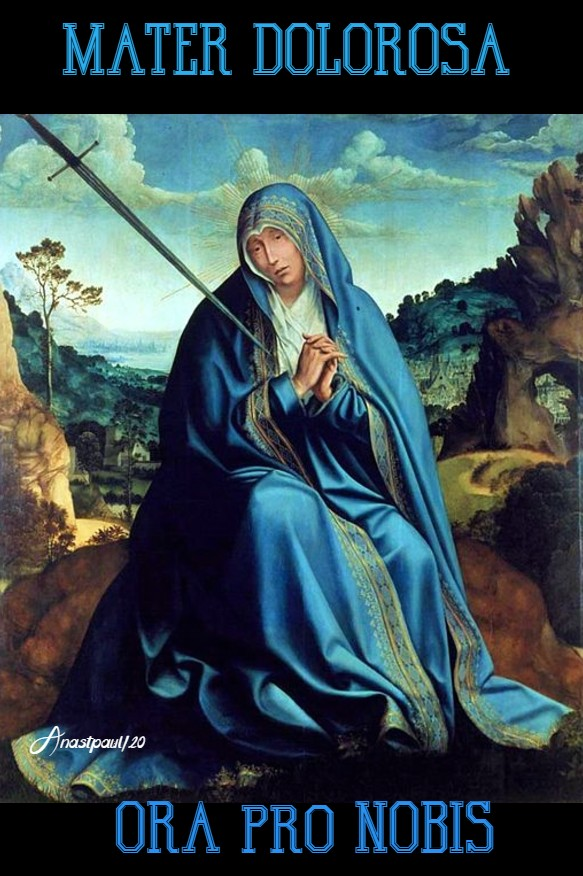
One Minute Reflection – 10 September – “Month of the Seven Sorrows of the Blessed Virgin Mary” – Readings: Ps 91:13-14, Ps 91:2, 1 Cor. 4:9-14, Luke 12:32-34
For where your treasure is, there also will your heart be.
Luke 12:32-34
REFLECTION – “Blessed are the poor in spirit for theirs is the kingdom of heaven”. The beginning of the New Testament is altogether joyful and full of fresh grace. It even nudges the unbeliever and sluggish to pay heed and, more to the point, to act by promising happiness to the unfortunate and the Kingdom of heaven to those in exile, those in any kind of distress. The beginning of the new Law is pleasant to hear and starts off under happy auspices since the Legislator follows on from this beginning by giving so many assurances of beatitude. In this way those who have been attracted by them will go from one virtue to the next, climbing the eight steps that this Gospel has set up and placed within our hearts. For it is clear that what it is all about is the ascent of the heart and of the progress of merit through eight steps of virtue, leading men gradually from the lowest to the highest levels of evangelical perfection. In this way they will at last enter and see the God of gods in Zion, in his Temple, of which the prophet has said: “It had a stairway of eight steps,”.
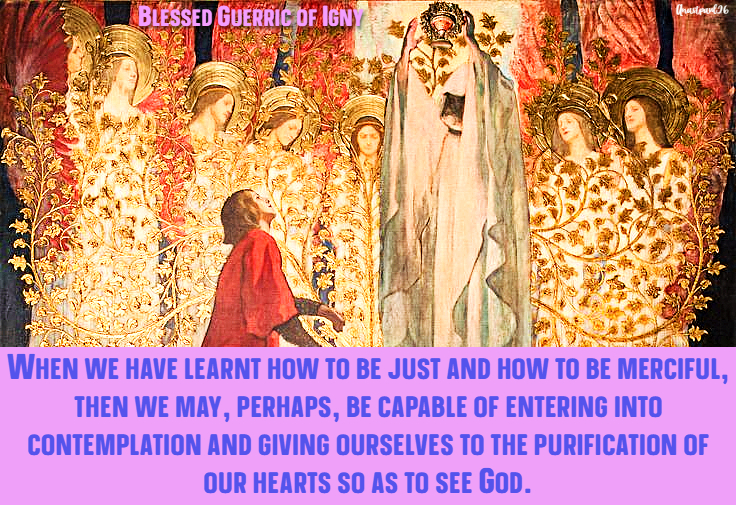
The first virtue of the beginner is torenounce the world, through which we become poor in spirit; the second is gentleness, by which we submit ourselves and become accustomed to obedience; then the grief with which we lament our sins or with weeping beg for the virtues. These we certainly enjoy wherever we have the greatest hunger and thirst for justice, as much for ourselves as for others, and begin to be stirred by zeal against sinners. Yet, lest immoderate fervour turn into fault, the mercy by which it is tempered follows after. Through putting this into practice and training ourselves, when we have learnt how to be just and how to be merciful, then we may, perhaps, be capable of entering into contemplation and giving ourselves to the purification of our hearts so as to see God.
Blessed Guerric of Igny
PRAYER – Lord God, in Your wisdom, You created us, in love. By Your providence, You rule us, in love. Penetrate our inmost being with the holy light of Your Son. Penetrate our hearts with the overwhelming love for Your love, so that we may weep in consolation. May the Light that is Jesus Christ our Lord, enlighten our hearts that we may see clearly the way we should tread. May the prayers of Your holy Angels, Martyrs, Saints and our Sorrowful Martyr Mother, the Blessed Virgin Mary, be our guiding inspiration. Through Christ our Lord, with the Holy Spirit, God forever amen.
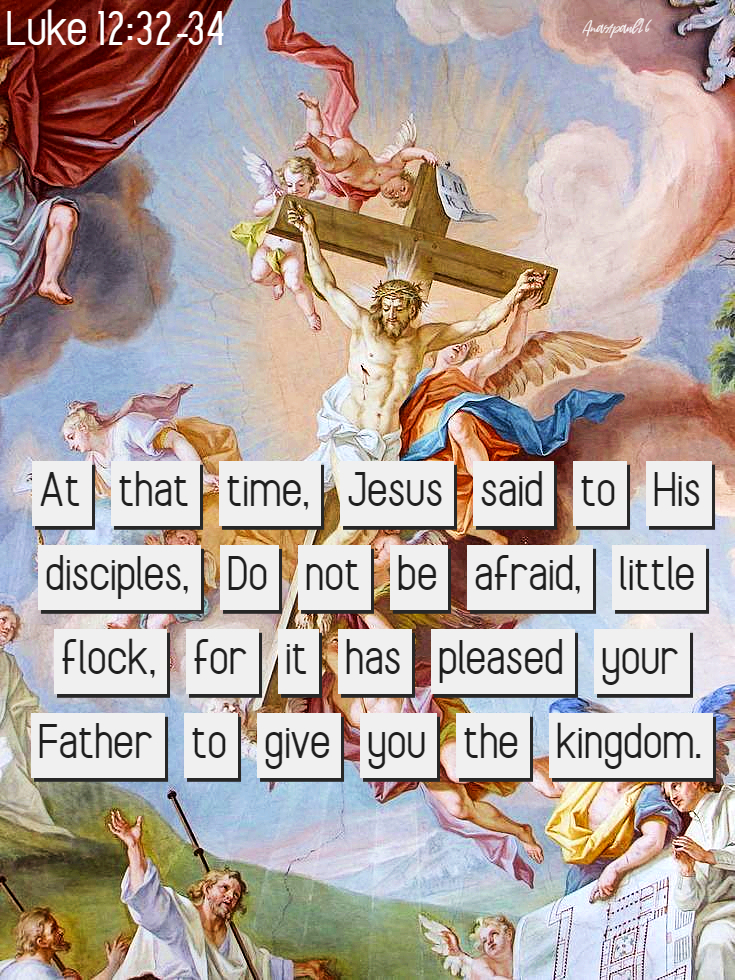
At that time, Jesus said to His disciples, Do not be afraid, little flock, for it has pleased your Father to give you the kingdom.
Luke 12:32-34
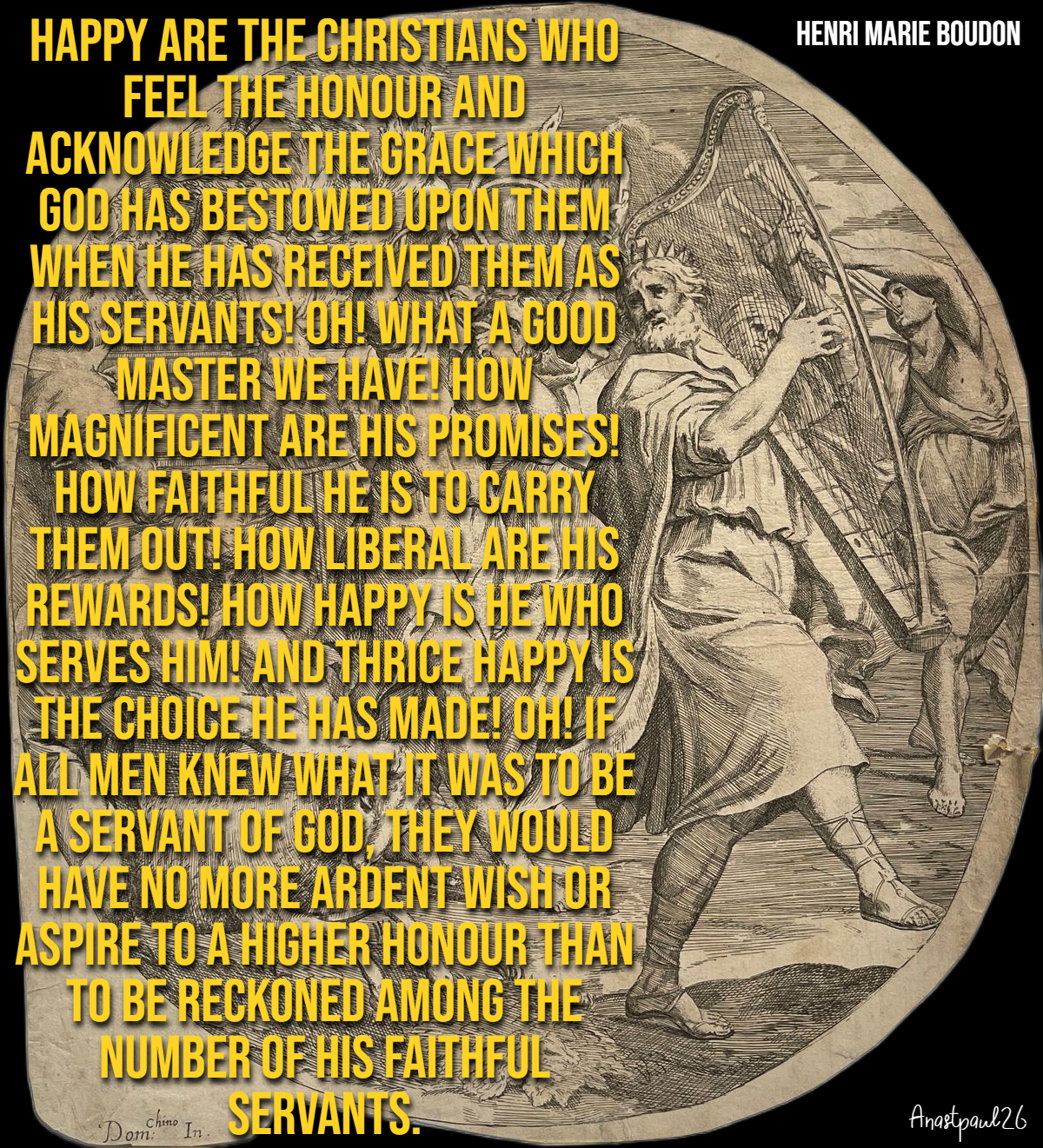
Happy are the Christians who feel the honour and acknowledge the grace which God has bestowed upon them when He has received them as His servants! Oh! what a good Master we have! how magnificent are His promises! how faithful He is to carry them out! how liberal are His rewards! How happy is he who serves Him! and thrice happy is the choice he has made! Oh! If all men knew what it was to be a servant of God, they would have no more ardent wish or aspire to a higher honour than to be reckoned among the number of His faithful servants.
Henri Marie Boudon
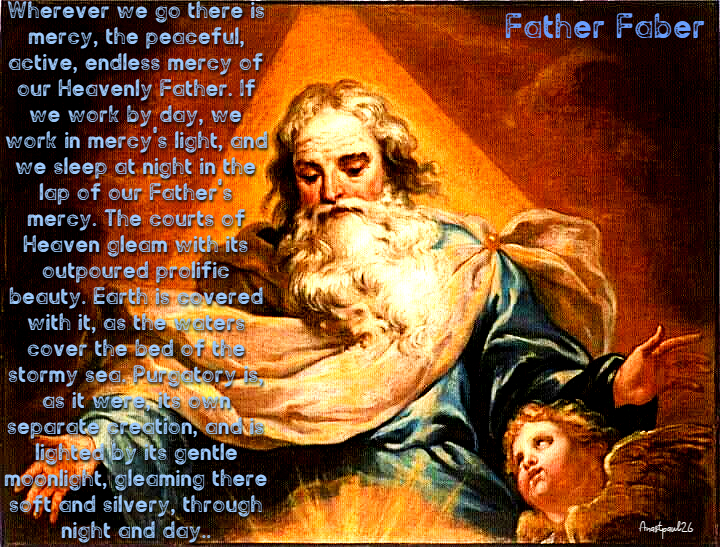
Wherever we go there is mercy, the peaceful, active, endless mercy of our Heavenly Father. If we work by day, we work in mercy’s light, and we sleep at night in the lap of our Father’s mercy. The courts of Heaven gleam with its outpoured prolific beauty. Earth is covered with it, as the waters cover the bed of the stormy sea. Purgatory is, as it were, its own separate creation, and is lighted by its gentle moonlight, gleaming there soft and silvery, through night and day.
Father Faber
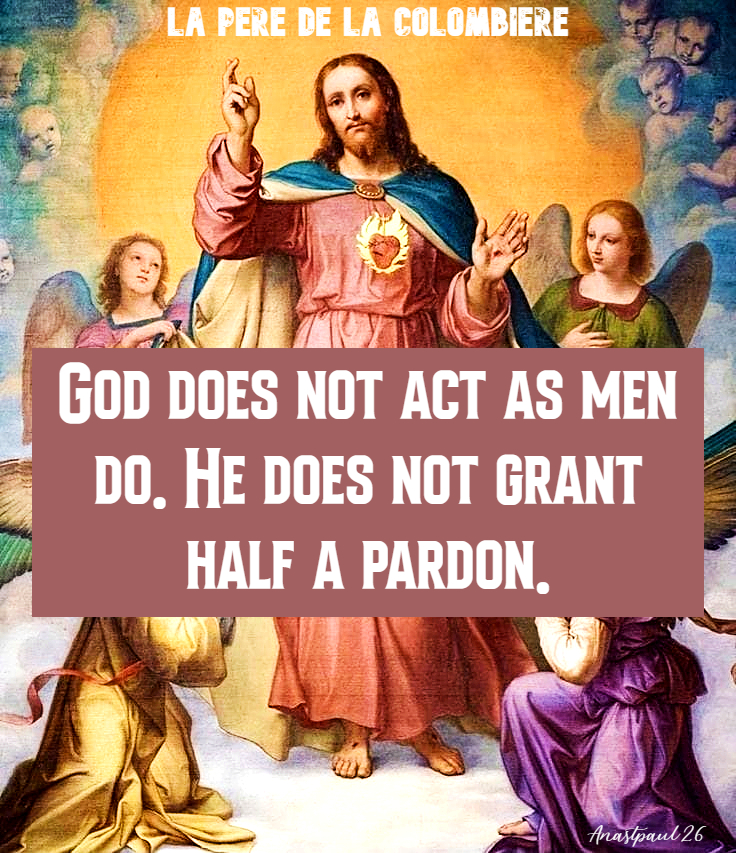
God does not act as men do. He does not grant half a pardon.
La Pere De La Colombiere
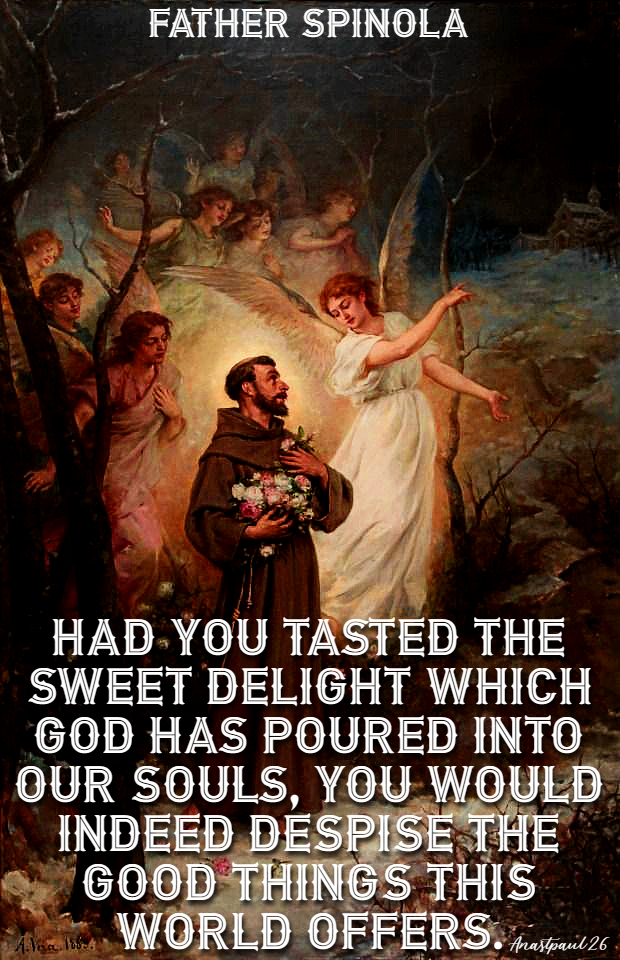
Had you tasted the sweet delight which God has poured into our souls, you would indeed despise the good things this world offers.
Father Spinola
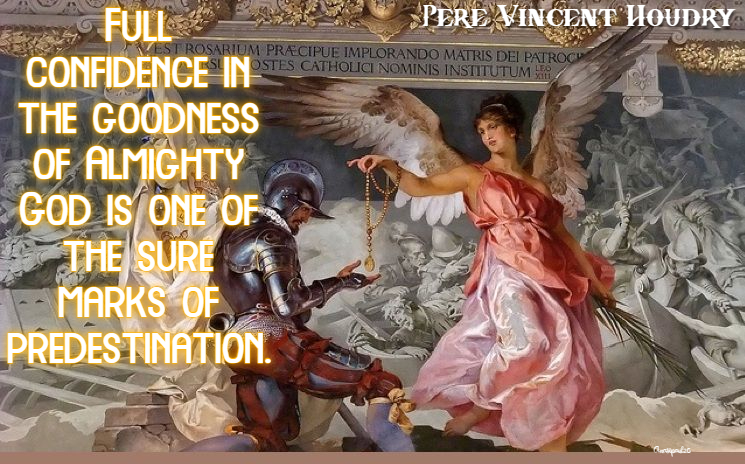
Full confidence in the goodness of Almighty God is one of the sure marks of predestination.
Letter to the Friends of the Cross by St Louis de Montfort
[Humble oneself for one’s faults, without worrying]
5) If you make a blunder which brings a cross upon you, whether it be inadvertently or even through your own fault, bow down under the mighty hand of God without delay, and as far as possible do not worry over it. You might say within yourself, “Lord, here is a sample of my handiwork.” If there is anything wrong in what you have done, accept the humiliation as a punishment for it; if it was not sinful, accept it as a means of humbling your pride. Frequently, even very frequently, God allows his greatest servants, those far advanced in holiness, to fall into the most humiliating faults so as to humble them in their own eyes and in the eyes of others. He thus keeps them from thoughts of pride in which they might indulge because of the graces they have received, or the good they are doing, so that “no-one can boast in God’s presence.”
[God humbles us to purify us]
6) You must realise that through the sin of Adam and through the sins we ourselves have committed, everything in us has become debased, not only our bodily senses, but also the powers of our soul. And so the moment our corrupt minds reflect with self-complacency on any of God’s gifts within us, that gift, that action, that grace becomes tarnished and spoilt, and God no longer looks on it with favour. If the thoughts and reflections of the mind can so spoil man’s best actions and God’s greatest gifts, how much worse will be the evil effects of man’s self-will, which are even more corrupt than those of the mind?
So we need not be surprised that God is pleased to hide his friends in the shelter of his presence, that they may not be defiled by the scrutiny of men or by their own self- awareness. And to keep them hidden, what does this jealous God not permit and even bring about! How often he humiliates them! How many faults he allows them to fall into! By what temptations he permits them to be attacked, as St. Paul was! In what uncertainty, darkness and perplexity he leaves them! Oh, how wonderful is God in his saints, and in the means he adopts to lead them to humility and holiness!
[Avoid the trap of pride in one’s crosses]
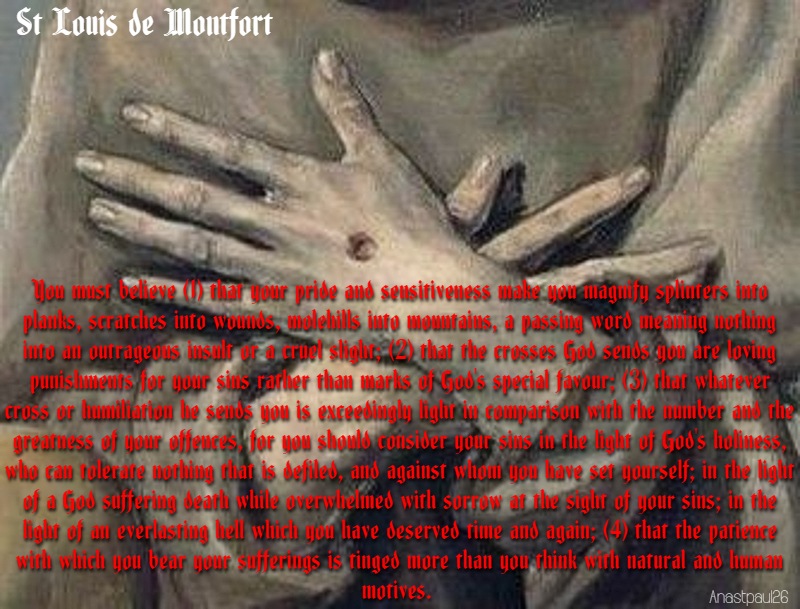
7) Do not be like those proud and self-conceited church-goers, imagining that your crosses are heavy, that they are proofs of your fidelity and marks of God’s exceptional love for you. This temptation, arising from spiritual pride, is most deceptive, subtle and full of poison. You must believe (1) that your pride and sensitiveness make you magnify splinters into planks, scratches into wounds, molehills into mountains, a passing word meaning nothing into an outrageous insult or a cruel slight; (2) that the crosses God sends you are loving punishments for your sins rather than marks of God’s special favour; (3) that whatever cross or humiliation he sends you is exceedingly light in comparison with the number and the greatness of your offences, for you should consider your sins in the light of God’s holiness, who can tolerate nothing that is defiled, and against whom you have set yourself; in the light of a God suffering death while overwhelmed with sorrow at the sight of your sins; in the light of an everlasting hell which you have deserved time and again; (4) that the patience with which you bear your sufferings is tinged more than you think with natural and human motives. Witness those little ways of looking after yourself, that unobtrusive seeking for sympathy, those confidences you make in such a natural way to your friends, and perhaps to your spiritual director, those specious excuses you are so ready with, those complaints, or rather criticisms of those who have done you an injury, expressed in such pleasant words and charitable manner, that keen satisfaction you feel on considering your troubles, that self-complacency of Lucifer which makes you imagine you are somebody, and so on. I should never finish if I were to describe here all the twists and turns of human nature, even in suffering.
[Profit by little sufferings rather than great ones]
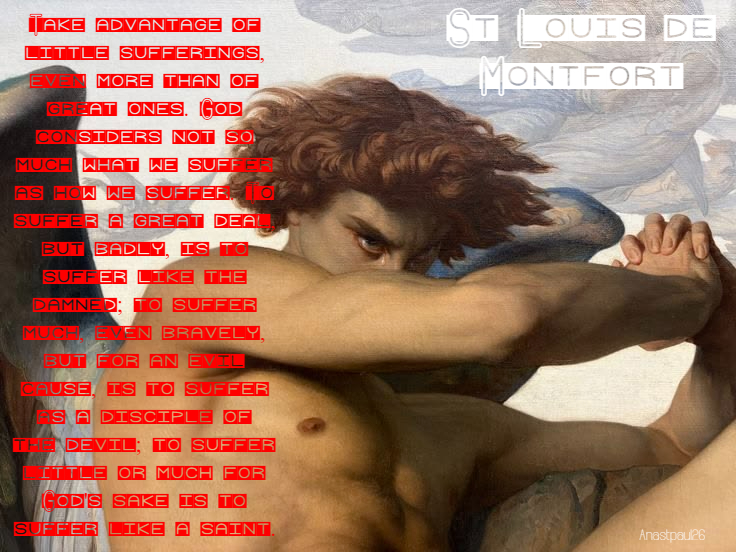
8) Take advantage of little sufferings, even more than of great ones. God considers not so much what we suffer as how we suffer. To suffer a great deal, but badly, is to suffer like the damned; to suffer much, even bravely, but for an evil cause, is to suffer as a disciple of the devil; to suffer little or much for God’s sake is to suffer like a saint.
If it is true to say that we may have a preference for certain crosses, let it be particularly for small, obscure ones when they come to us at the same time as great and spectacular ones. To seek and ask for great and dazzling crosses, and even to choose and welcome them, may be the result of our natural pride; but to choose small and insignificant ones and bear them cheerfully can only come from a special grace and a great fidelity to God. So do what a shopkeeper does in regard to his business: turn everything to profit. Do not allow the tiniest piece of the true Cross to be lost, even though it be only an insect-sting or a pin- prick, a little eccentricity of your neighbour or some unintentional slight, the loss of some money, some little anxiety, a little bodily weariness, or a slight pain in your limbs. Turn everything to profit, as the grocer does in his shop, and you will soon become rich before God, just as the grocer becomes rich in money by adding penny to penny in his till. At the least annoyance say, “Thank you, Lord. Your will be done.” Then store up in God’s memory-bank, so to speak, the profitable cross you have just gained, and think no more about except to repeat your thanks.
[Love crosses, not with an emotional love, but with rational and supernatural love]
9) When we are told to love the cross, that does not refer to an emotional love, impossible to our human nature. There are three kinds of love: emotional love, rational love, and the supernatural love of faith. In other words, the love that resides in the lower part of man, in his body; the love in the higher part, his reason; and the love in the highest part of man, in the summit of the soul, that is, the intelligence enlightened by faith.
God does not ask you to love the cross with the will of the flesh. Since the flesh is subject to sin and corruption, all that proceeds from it is perverted and, of itself, cannot be submissive to the will of God and his crucifying law. It was this human will our Lord referred to in the Garden of Olives when he cried out, “Father, let your will be done, not mine.” If the lower part of Christ’s human nature, although so holy, could not love the cross continuously, then with still greater reason will our tainted nature reject it. It is true that we may sometimes experience even a sensible joy in our sufferings, as many of the saints have done; but that joy does not come from the body, even though it is experienced in the body. It comes from the soul, which is so overwhelmed with the divine joy of the Holy Spirit that it overflows into the body. In that way, someone who is suffering greatly can say with the psalmist, “My heart and my flesh ring out their joy to God, the living God.”
There is another love of the cross which I have called rational love and which is in the higher part of man, the mind. This love is entirely spiritual; it springs from the knowledge of how happy we can be in suffering for God, and so it can be experienced by the soul, to which it gives interior joy and strength. But although this rational and perceptible joy is good, in fact, excellent, it is not always necessary in order to suffer joyfully for God’s sake.
And so there is a third kind of love, which is called by the masters of the spiritual life the love of the summit of the soul, and which is known to philosophers as the love of the intellect. In this, without any feeling of joy in the senses or pleasure in the mind, we love the cross we are carrying, by the light of pure faith, and take delight in it, even though the lower part of our nature may be in a state of conflict and disturbance, groaning and complaining, weeping and longing for relief. In this case, we can say with our Lord, “Father, let your will be done, not mine;” or with our Lady, “I am the slave of the Lord: let what you have said be done to me.” It is with one of these two higher loves that we should love and accept the cross.



You must be logged in to post a comment.