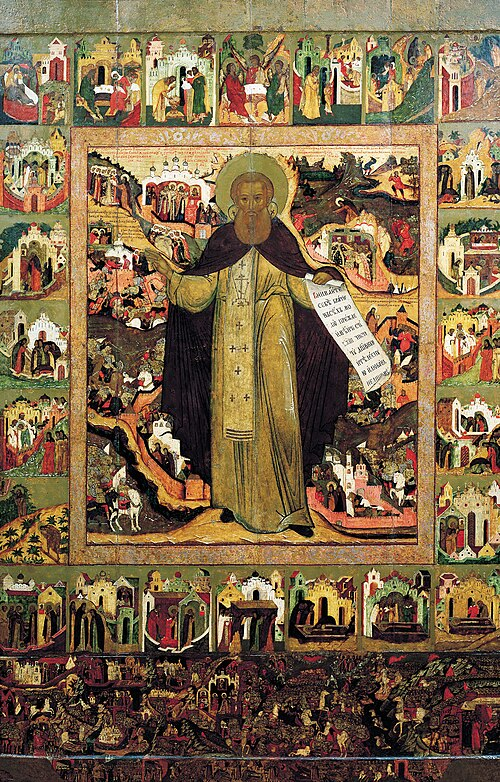
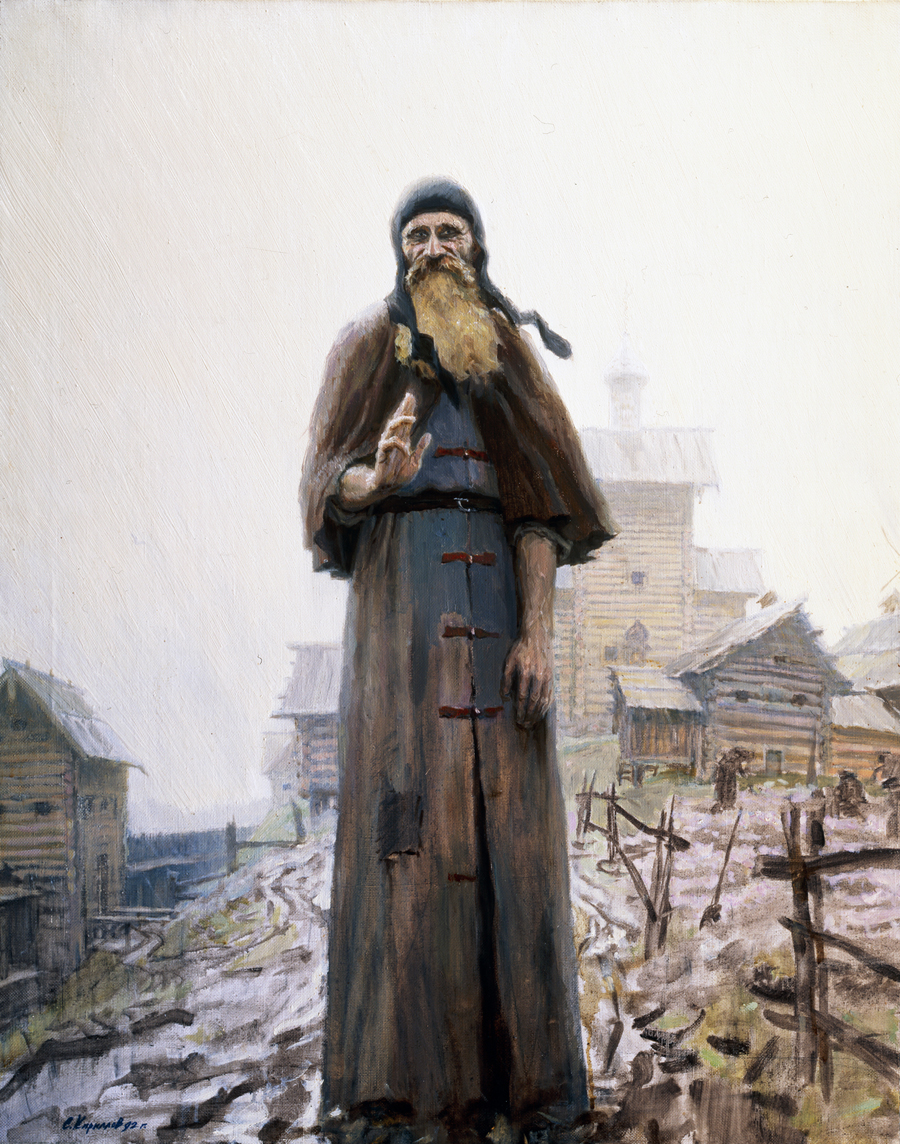
Saint Sergius of Moscow, also known as Sergius of Radonezh and Bartholomew of Radonezh, was a Russian (Eastern Catholic) monk. Born to nobility in 1314, Bartholomew, although intelligent, had great difficulty learning to read. This affliction was only removed from him when an angel disguised as a holy man gave him a piece of holy bread. When the Rostov principality fell into the hands of Ivan I of Moscow, his parents Kirill and Maria became impoverished and moved to the village of Radonezh together with their three sons, Stefan, Bartholomew and Peter.
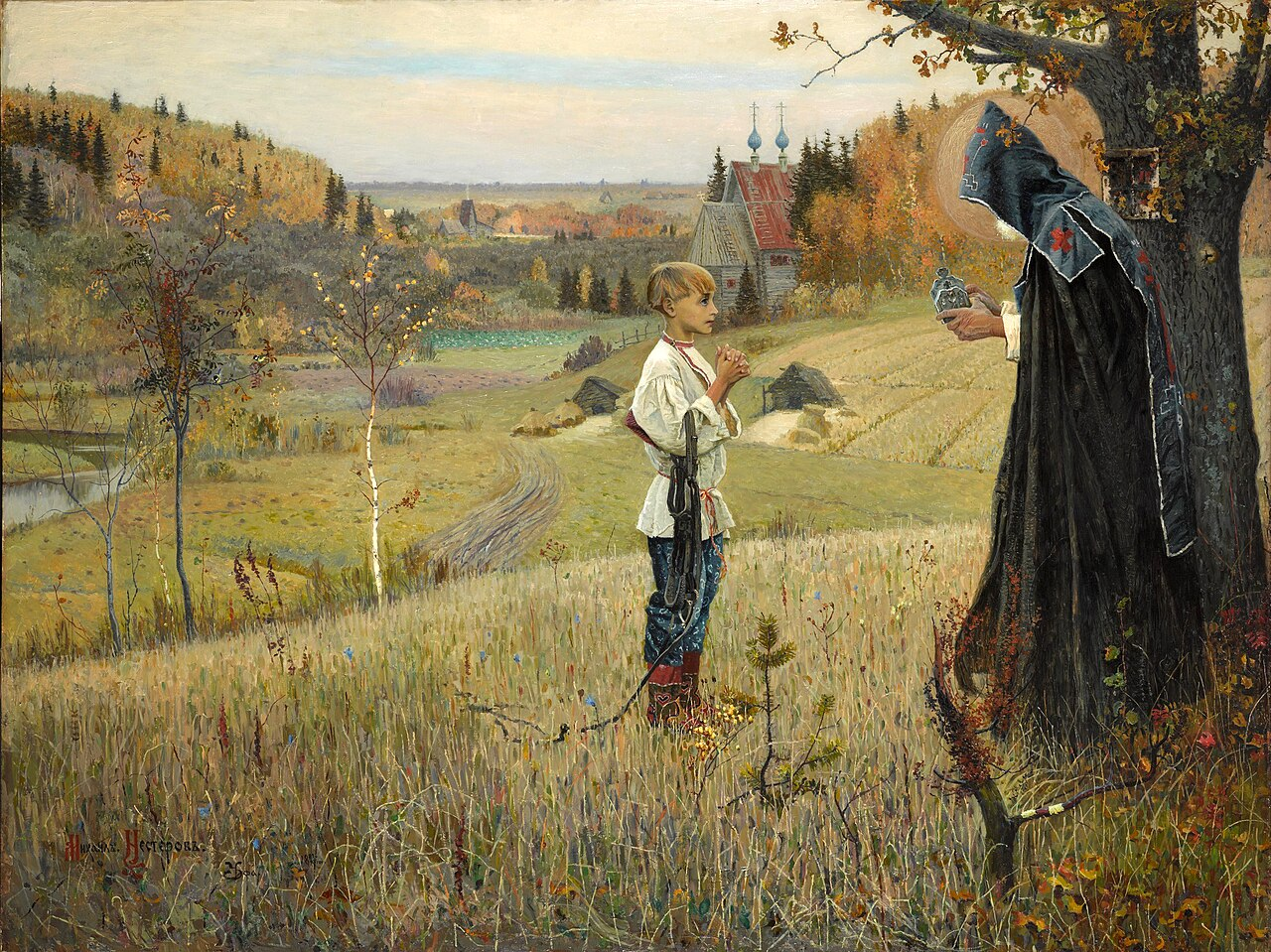
Vison of St Bartholomew
Upon his parents’ death, Bartholomew went to Khotkovo near Moscow, where his older brother Stefan was a monk. He persuaded Stefan to find a more secluded place to live the ascetic life. In the deep forest at Makovets Hill they decided to build a small monastic cell and a church dedicated in honor of the Trinity.
As Sergius’s reputation for holiness spread, he attracted so many students that he founded the Holy Trinity monastery for them; following his ordination at Pereyaslav Zalesky, he served as its first abbot. His brother joined the monastery, but when he opposed Sergius’s strict rule, Sergius left the community to live again as a hermit. However, the monastery began to decline, causing the metropolitan of Moscow to order Sergius to return as abbot. Advisor to the Prince of Moscow, he encouraged the campaign that ended with the Battle of Kulikovo in 1380 which ended the Mongol domination of Russia. In the Russia that followed he founded forty monasteries. Metropolitan Alexius, Metropolitan of Moscow asked Sergius to become his successor but Sergius declined, preferring to remain a simple monk rather than be a bishop
Late in life he resigned his position and retired to live his last few months as a prayerful monk. He died on 25 September 1392 at the Trinity Lavra of Saint Sergius of natural causes. He is venerated as the foremost saint of Russia.
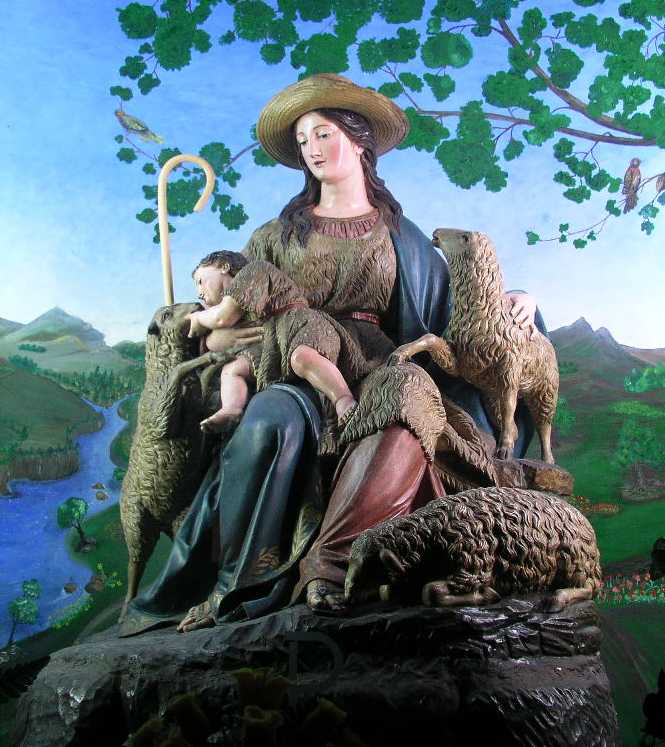
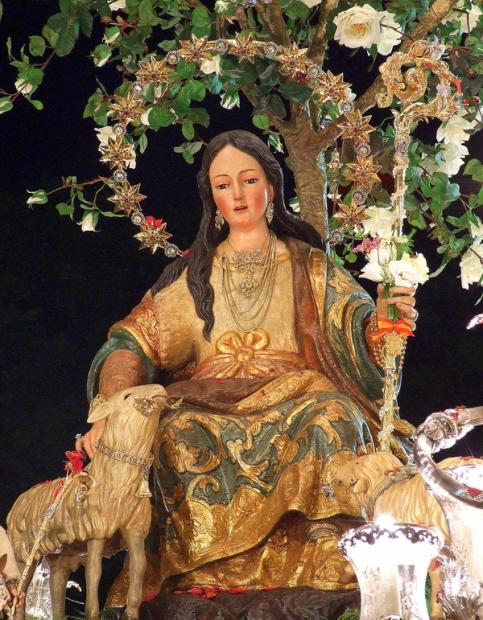
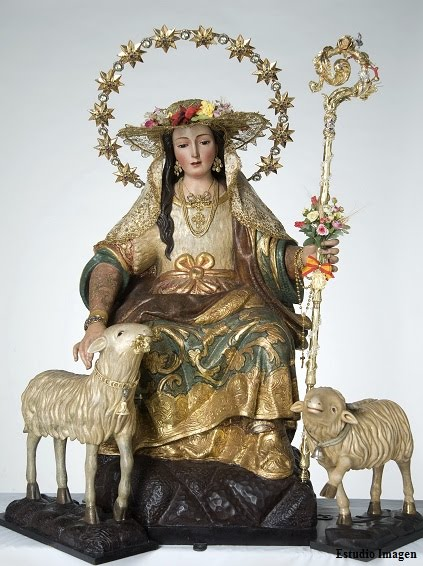
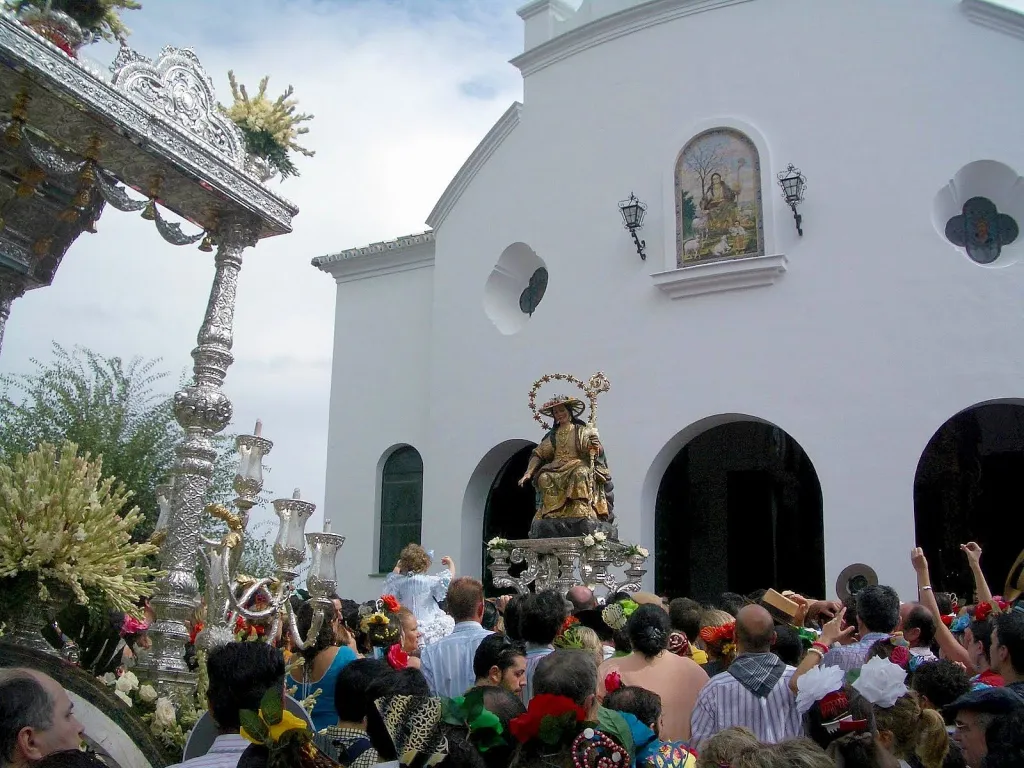
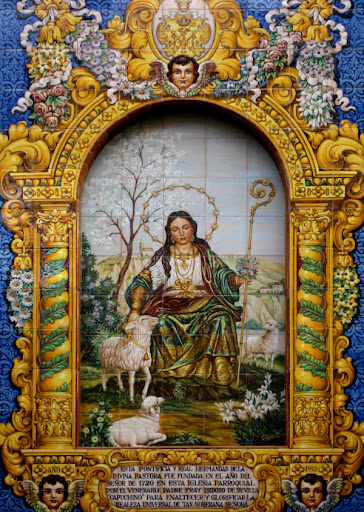
Divina Pastora de las Almas ‘ The Divine Shepherdess of Souls, Cantillana, Sevilla, Andalucía, Spain (1703)
St. Isidore of Seville (560-636) Bishop of Seville, Father and Doctor of the Church, spread devotion to the Divine Shepherdess of Souls. The first image of the Divina Pastora in Cantillana was a banner, attributed to the painter Germán Llorente, carried in Rosary.
In 1800 a yellow fever epidemic ravaged the area,but Cantillana was largely spared, for which people thanked the Divine Shepherdess of Souls. Soon thereafter, the Hermandad de la Divina Pastora was chartered, a Rosary apostolate or brotherhood. The Brotherhood’s processional image is a seated statue, attributed to Francisco Antonio Ruiz Gijón (1653-1705).
For special occasions, of which there are many, she wears a large sombrero. On 31 August, a grand procession fetches the Statue from its Sanctuary into the Town, for celebrations leading up to the fiesta from 8 September. On the last weekend in September, with equal splendour and devotion, the Divine Shepherdess returns to her Shrine. A procession accompanies her canopied float on Saturday. On Sunday, there is Mass and music and then an all-night exposition of the Statue with devotions lasting into Monday morning.
St Anacharius of Auxerre St Aurelia of Macerata St Caian of Tregaian St Ceolfrid St Cleopas St Egelred of Crowland St Ermenfridus of Luxeuil
St Firminus of Amiens St Fymbert St Herculanus the Soldier
Blessed Herman of Reichenau/the Cripple (1013–1054) Benedictine Monk, Confessor, Scholar, Scientist, Writer, Hymnist, Poet, Musical Composer, Teacher. In his own day, the heroic cripple who achieved learning and holiness was called ‘The Wonder of His Age.’. Composer of the “Salve Regina” Hail Holy Queen, “Veni Sancte Spiritus” Come Holy Spirit and “Alma Redemptoris Mater” amongst many others.
Bl Marco Criado St Mewrog St Neomisia of Mecerata St Paphnutius of Alexandria St Principius of Soissons St Sergius of Moscow St Solemnis of Chartres
Martyrs of Damascus: A Christian family of six who were tortured to death in a persecution by Roman authorities. They were: Eugenia, Maximus, Paul, Rufus, Sabinian and Tatta. They were tortured to death in Damascus, Syria, date unknown.
Martyred in the Spanish Civil War: • Blessed Jose María Bengoa Aranguren • Blessed Josep Maria Vidal Segú • Blessed Juan Agustín Codera Marqués • Blessed Julio Esteve Flors • Blessed Pedro Leoz Portillo • Blessed Rafael Pardo Molina • Blessed Tomás Gil de La Cal
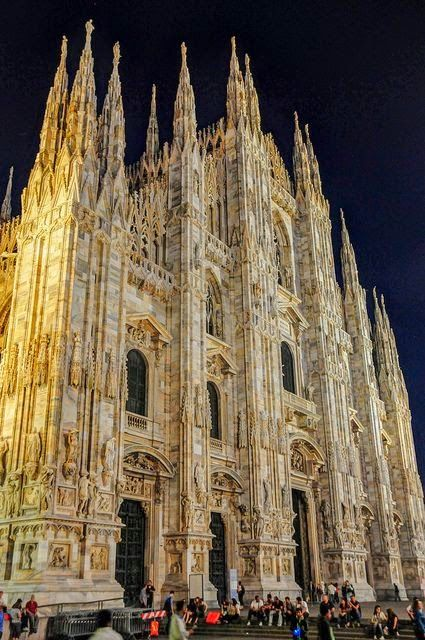
Feast of the Holy Bishops of Milan – a 1st Century Diocese!
Imagine being part of a Diocese in which 36 of your past Bishops are saints and some are also Doctors of the Church and Popes (and others being considered for sanctity)! The latest addition to this illustrious role-call, is Pope Paul VI. Today, the Church in Milan commemorates these holy Bishops. They are: • Blessed Alfredo Ildefonso Schuster • Blessed Andrea Carlo Ferrari • Pope Pius XI • Saint Ambrose of Milan • Saint Ampelius of Milan • Saint Anathalon of Milan • Saint Antoninus of Milan • Saint Auxanus of Milan • Saint Benedict Crispus of Milan • Saint Benignus of Milan • Saint Calimerius of Milan • Saint Castritian of Milan • Saint Charles Borromeo • Saint Datius of Milan • Saint Dionysius of Milan • Saint Eugene of Milan • Saint Eusebius of Milan • Saint Eustorgius II of Milan • Saint Eustorgius of Milan • Saint Gaius of Milan • Saint Galdinus of Milan • Saint Geruntius of Milan • Saint Glycerius of Milan • Saint Honoratus of Milan • Saint John Camillus the Good • Saint Lazarus of Milan • Saint Magnus of Milan • Saint Mansuetus of Milan • Saint Marolus of Milan • Saint Martinian of Milan • Saint Mirocles of Milan • Saint Mona of Milan • Saint Natalis of Milan
• Saint Protasius of Milan • Saint Senator of Milan • Saint Simplician of Milan • Saint Venerius of Milan
And the original stain is not in thee. Thou art the glory of Jerusalem.
Thou art the joy of Israel.
Thou art the honour of our people.
Thou art the advocate of sinners.
O Mary,
O Mary,
Virgin most prudent,
Mother most clement,
Pray for us;
Intercede for us with the Lord Jesus Christ.
(500 days every time said)
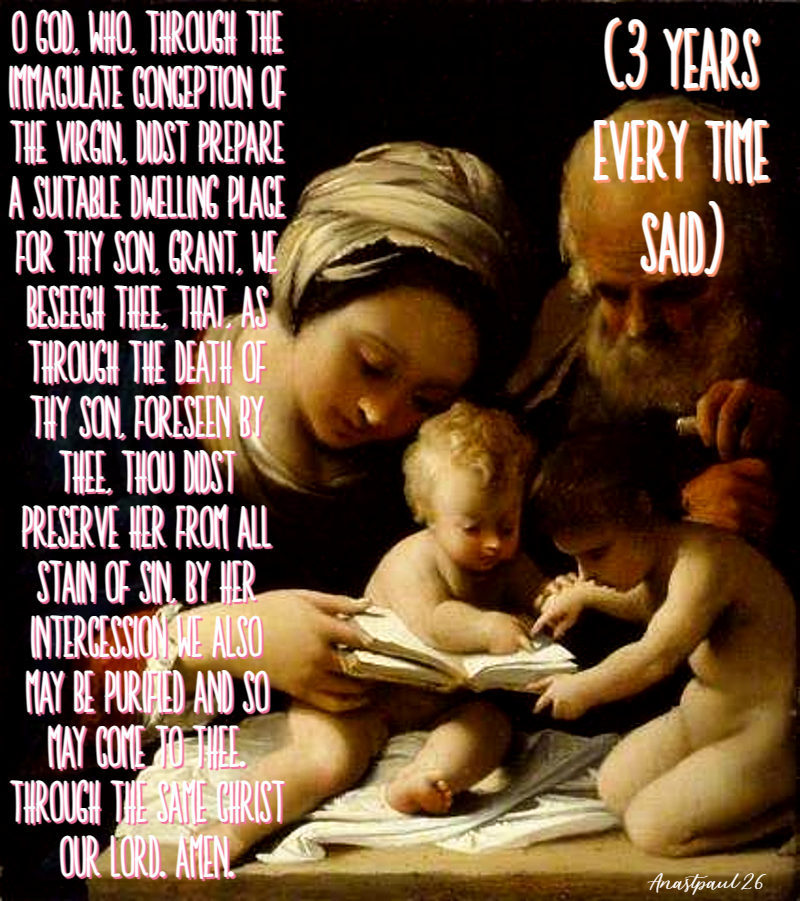
O God, Who, through the Immaculate Conception of the Virgin, didst prepare a suitable dwelling place for Thy Son, grant, we beseech Thee, that, as through the death of Thy Son, foreseen by Thee, Thou didst preserve her from all stain of sin, by her intercession we also may be purified and so may come to Thee. Through the same Christ Our lord. Amen.
(3 years every time said)
Bid me bear, O Mother blessed, On my heart the wounds impressed, Suffered by the Crucified.
(500 days every time said)
Mary sorrowing, Mother of Christians, pray for us.
(300 days every time said)
Virgin most sorrowful. pray for us.
(300 days every time said. 5 years if this prayer, along with a Hail Mary, is said seven times in honour of the most sorrowful Mother)
Sweet heart of Mary, be my salvation.
(300 days every time said)
O purest heart of Mary, Virgin most holy, obtain for me from Jesus purity and humility of heart.
One Minute Reflection – 25 September – Readings: Ps 104:3-4, Ps 104:1, Osee 14:2-10, Luke 7:36-50
And He said to her, “Your sins are forgiven.” And they who were at table with Him began to say within themselves, “Who is this man, who even forgives sins?” But He said to the woman, “Your faith has saved you; go in peace.”
Luke 7:36-50
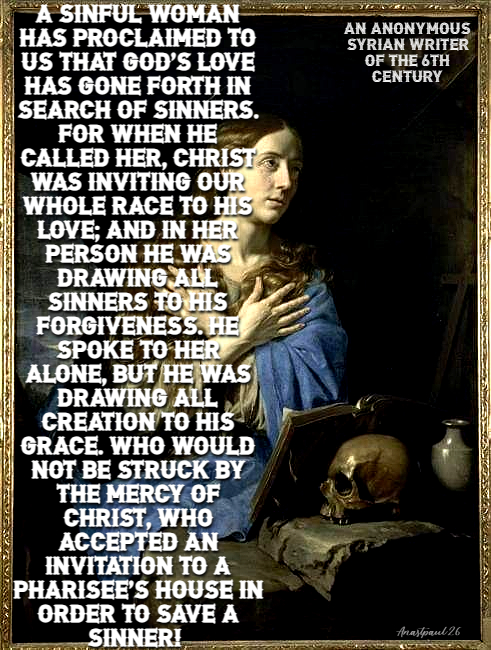
REFLECTION –A sinful woman has proclaimed to us that God’s love has gone forth in search of sinners. For when he called her, Christ was inviting our whole race to his love; and in her person he was drawing all sinners to his forgiveness. He spoke to her alone, but he was drawing all creation to his grace. Who would not be struck by the mercy of Christ, who accepted an invitation to a Pharisee’s house in order to save a sinner! For the sake of the woman who hungered for forgiveness, he himself felt hunger for the table of Simon the Pharisee; and all the while, under the guise of a meal of bread he had prepared for the sinner a meal of repentance!
In order that you may have the same experience, reflect within yourself that your sin is great but that it is blasphemy against God, and an injury to yourself, to despair of his forgiveness because your sin seems to you to be too great. He has promised to forgive your sins, however many they are; will you tell him you cannot believe this and dispute with him, saying that your sin is too great and he cannot heal your sickness? Stop at that point, and cry out with the prophet: “Lord, I have sinned against you”. At once he will reply, "As for me, I have overlooked your fault: you shall not die." Glory to him from us all through all ages. Amen.
An anonymous Syrian writer of the 6th century
PRAYER – Holy God, help me to amend my life constantly and be sincerely converted to You. Let me seek Your interests rather than my own and be ever more closely united with You. Send Your Spirit of understanding to enkindle our minds but most of all, fill us with Your grace of faith, that whether we understand or not, our love and obedience, is our only guide. Blessed Virgin Mother teach us to carry our crosses as you did in love and patience. We make our prayer through Christ our Lord, in the unity of the Holy Spirit, God for all eternity, amen.
He said to Simon, “Do you see this woman? I came into your house; you gave Me no water for My feet; but she has bathed My feet with her tears, and has wiped them with her hair. You gave Me no kiss; but she, from the moment she entered, has not ceased to kiss My feet. You did not anoint My head with oil; but she has anointed My feet with ointment. Wherefore I say to you, her sins, many as they are, shall be forgiven her, because she has loved much.
Luke 7:36-50
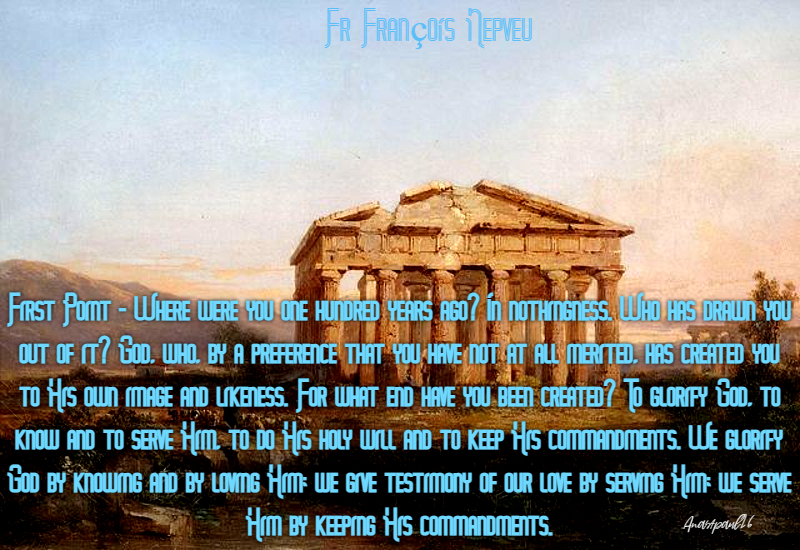
First Point – Where were you one hundred years ago? In nothingness. Who has drawn you out of it? God, who, by a preference that you have not at all merited, has created you to His own image and likeness. For what end have you been created? To glorify God, to know and to serve Him, to do His holy will and to keep His commandments. We glorify God by knowing and by loving Him; we give testimony of our love by serving Him; we serve Him by keeping His commandments.
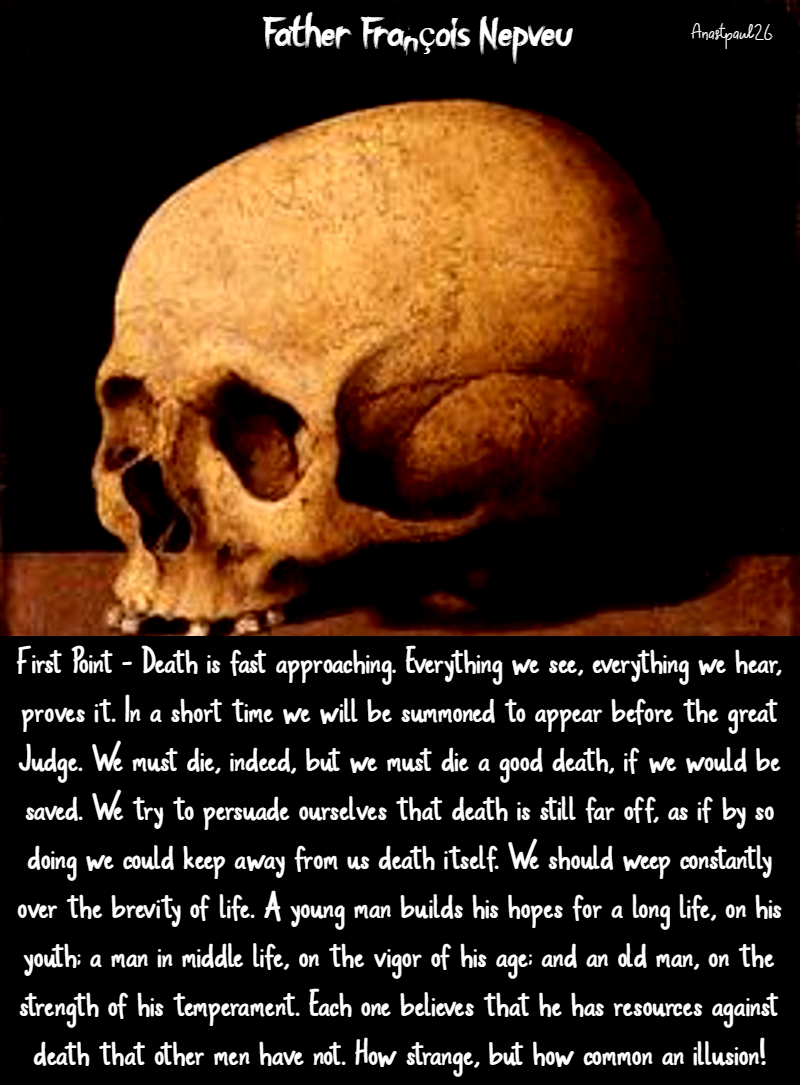
Father François Nepveu
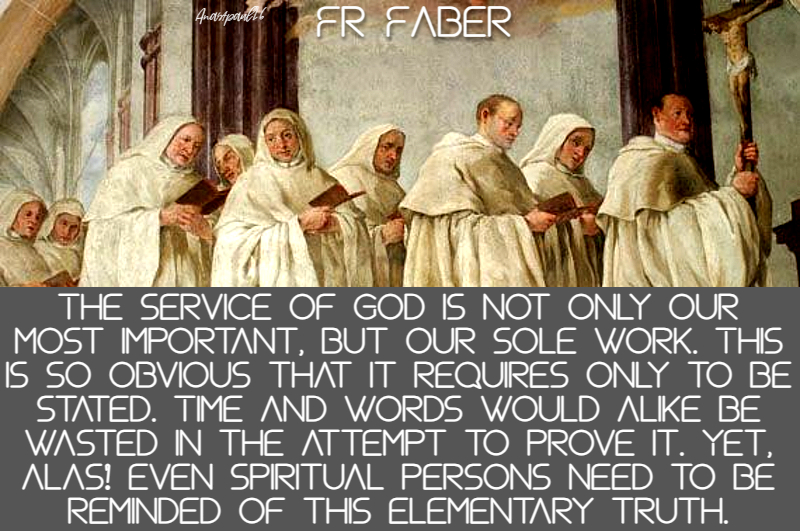
The service of God is not only our most important, but our sole work. This is so obvious that it requires only to be stated. Time and words would alike be wasted in the attempt to prove it. Yet, alas! even spiritual persons need to be reminded of this elementary truth.
Fr Faber
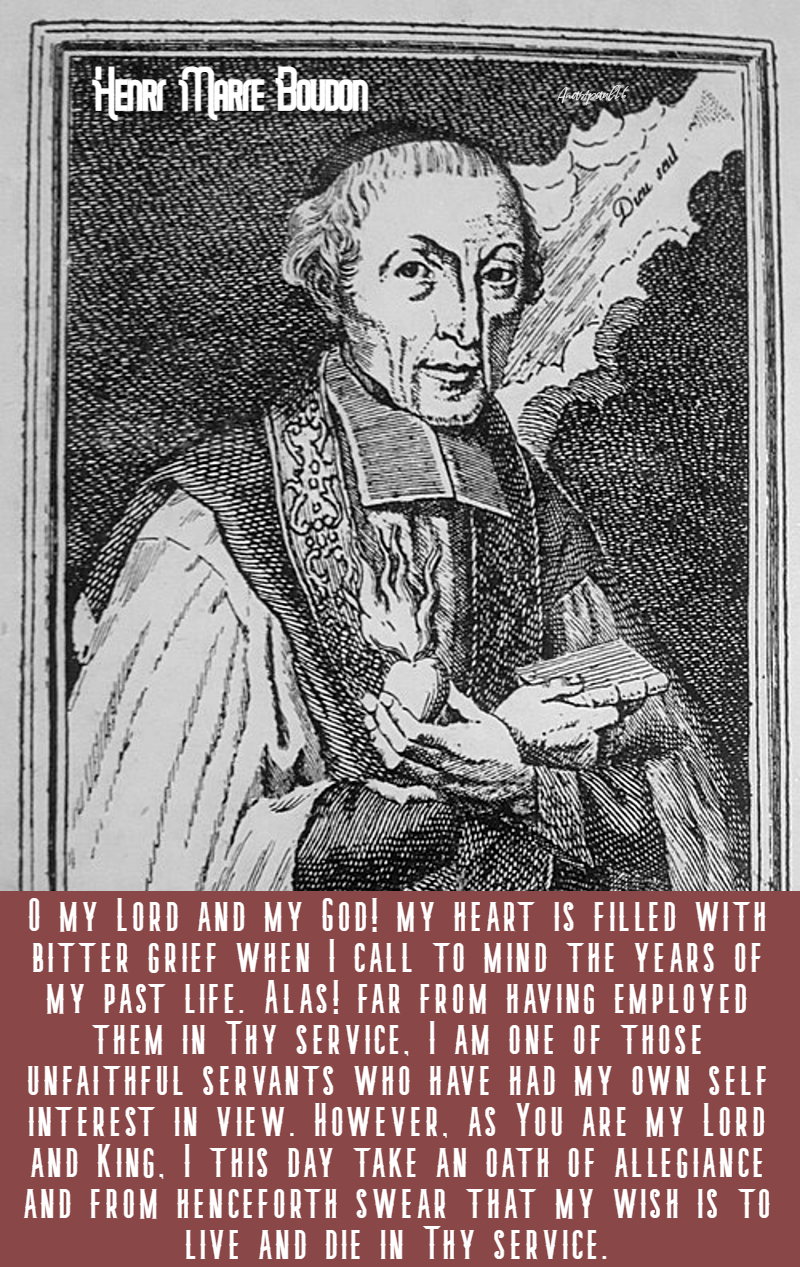
O my Lord and my God! my heart is filled with bitter grief when I call to mind the years of my past life. Alas! far from having employed them in Thy service, I am one of those unfaithful servants who have had my own self interest in view. However, as You are my Lord and King, I this day take an oath of allegiance and from henceforth swear that my wish is to live and die in Thy service.
Henri Marie Boudon
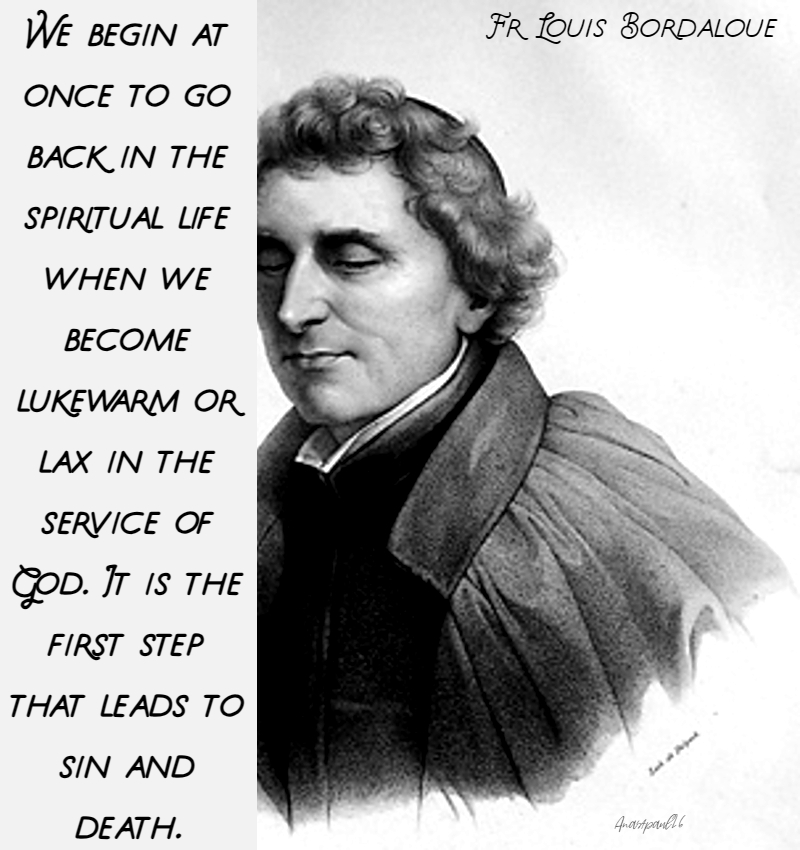
We begin at once to go back in the spiritual life when we become lukewarm or lax in the service of God. It is the first step that leads to sin and death.
Fr Louis Bordaloue
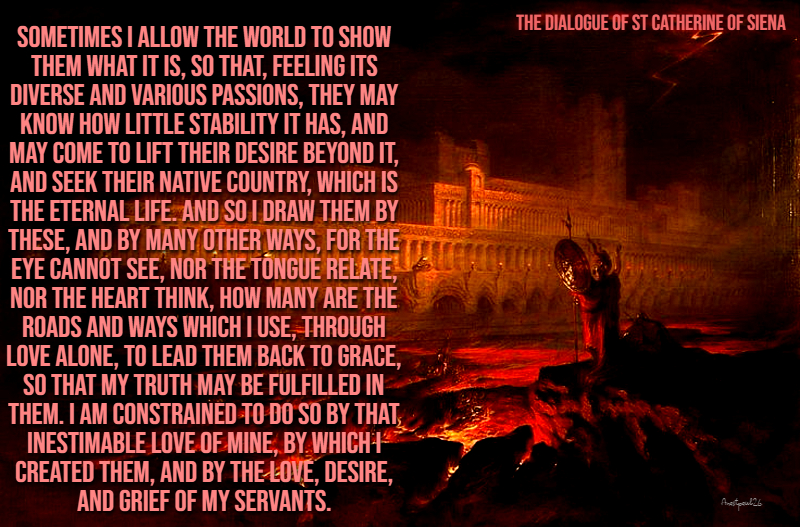
Sometimes I allow the world to show them what it is, so that, feeling its diverse and various passions, they may know how little stability it has, and may come to lift their desire beyond it, and seek their native country, which is the Eternal Life. And so I draw them by these, and by many other ways, for the eye cannot see, nor the tongue relate, nor the heart think, how many are the roads and ways which I use, through love alone, to lead them back to grace, so that My truth may be fulfilled in them. I am constrained to do so by that inestimable love of Mine, by which I created them, and by the love, desire, and grief of My servants.
The Dialogue of St Catherine of Siena
First Point – Death is fast approaching. Everything we see, everything we hear, proves it. In a short time we will be summoned to appear before the great Judge. We must die, indeed, but we must die a good death, if we would be saved. We try to persuade ourselves that death is still far off, as if by so doing we could keep away from us death itself. We should weep constantly over the brevity of life. A young man builds his hopes for a long life, on his youth; a man in middle life, on the vigor of his age; and an old man, on the strength of his temperament. Each one believes that he has resources against death that other men have not. How strange, but how common an illusion!
Manual of Devotions in Honour of The Seven Dolors of the Blessed Virgin Mary by Father Sebastian
OF THE SCAPULAR AND THE ROSARY OF OUR LADY OF SEVEN DOLOURS.
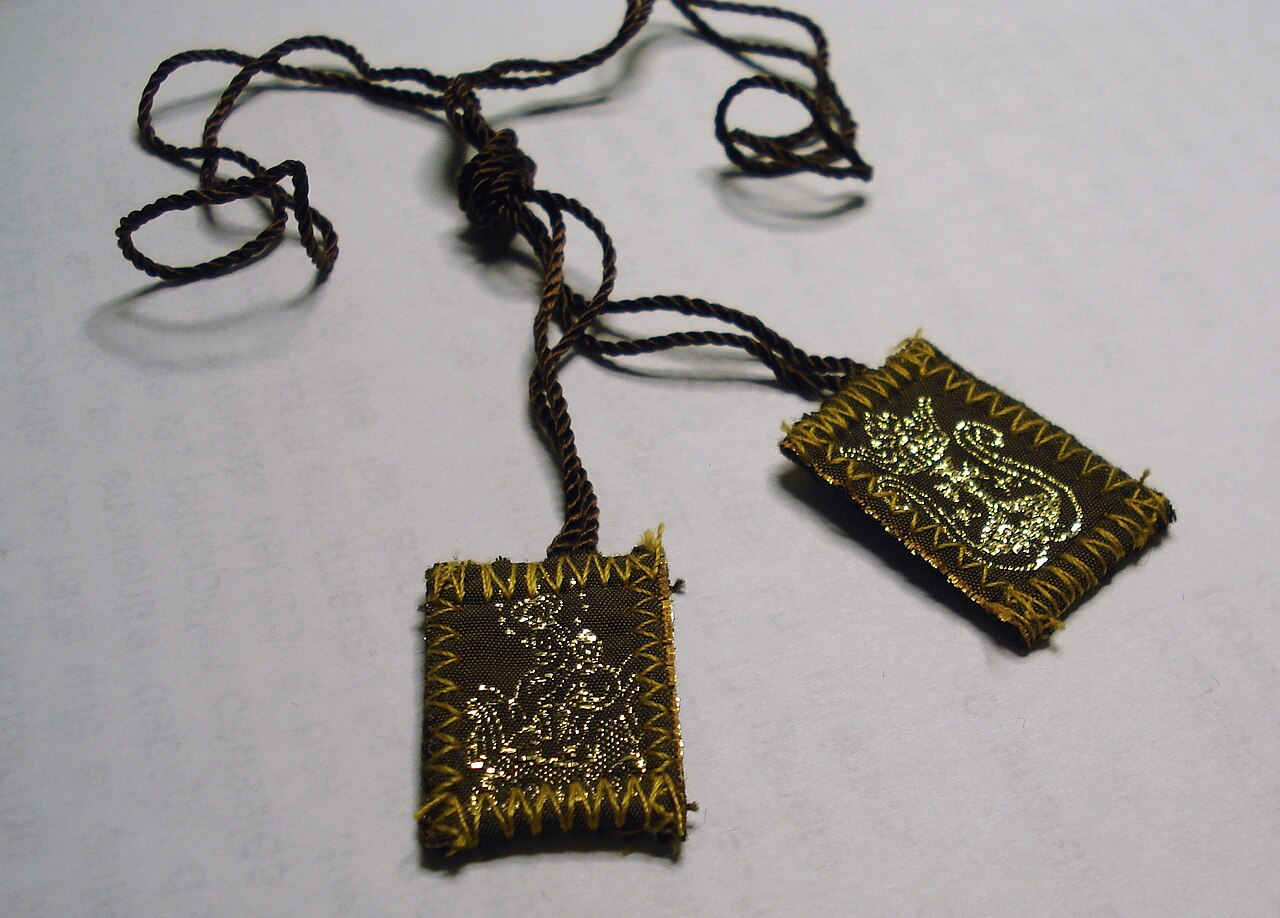
Devotion to our Blessed Lady is as ancient as the Church herself. But the long wars and dissensions which had desolated Europe, the ignorance, neglect of duties, and the consequent brutality of manners which ensued from this state of things, had greatly diminished it. However, an immense number of miracles which took place in the early part of the thirteenth century, communicated to it a new vigour and a wider extension. The instruments of mercy which the Blessed Virgin made use of to produce this effect were the Rosary, which was revealed to St. Dominic, in the year 1206, and the Scapulars of the Seven Dolours and of Mount Carmel, the first of which she herself gave to the seven Founders of the Order of Servites, and the second to St. Simon Stock.
Scapular of the Seven Sorrows of Mary
In the year 1233 seven noblemen of the city of Florence, whose names were Buonfiglio Monaldi, Buonagiunta Manetti, Manetto dell’ Antella, Amedeo degli Amidei, Ugiccione Uguccioni, Tostegno de’ Tostegni, and Alexis Falconieri, members of a pious Confraternity for honouring the Blessed Virgin, had assembled on the festival of the Assumption, to pay their homage and celebrate her triumph. At one and the same time the Mother of God appeared to each, and told them that they were to quit the world, and embrace a more perfect state of life. They did not hesitate to obey this heavenly voice, and having consulted with the blessed Ardingo, Bishop of Florence, as to the mode of life which they should adopt, they renounced their dignities, distributed their goods to the poor, and clothed themselves in grey habits, and retired to a small house outside the town, on the feast of the Nativity of their holy Patroness (8th September, 1233).
If, at any time, they were obliged to enter the city of Florence, in order to consult the Bishop, the people assembled about them in crowds, and the little children used to exclaim, “Here are the servants of Mary! Here are the servants of Mary!” Amongst these children was St. Philip Benizzi, who was then hardly five months old, and who, in after years, was called by our Blessed Lady to assume the habit of her servants. This humble retreat of the seven Solitaries soon became so besieged by visitors, that they were obliged to look out for a more retired place.
Their good Mother indicated to them the summit of Mount Jenario, where they removed and passed six years, principally occupied about their own sanctification, in the practice of the most austere penance, and assiduous meditation on the Passion of our Lord, and on the Dolours of his Blessed Mother. The venerable Bishop Ardingo had more than once exhorted them to establish an Order devoted to the Blessed Virgin, but in vain. The co operation of heaven became necessary to overcome the diffidence of these holy men, and triumph over their humility. On the evening of one Good Friday, whilst they were absorbed in profound meditation, they saw their august patroness descending from heaven, surrounded by a number of heavenly spirits, some of whom carried the instruments of the Passion; another, the rules of St. Augustine; one amongst them had in his hand a palm; another a scroll,on which the following words were engraven in golden letters, “Servants of Mary.” Finally there was one who carried in his hands a black habit of a new form.
The seven anchorites, filled with astonishment at this glorious apparition, waited respectfully for the Blessed Virgin to make known her will. Mary, in the attitude of a Mother overwhelmed with affliction, and, at the same time, full of maternal tenderness, approached them, and, pointing to the objects placed before their eyes, said : “Receive this habit which I present to you, and receive also the rule of St. Augustine, which you are to follow, so that, being designated by the name of my servants, you may one day obtain the palm of eternal life offered to you.” The holy Solitaries immediately adopted the habit of their new Institute, by the spirit of which they, and so many of the faithful, were to be sanctified, through the continual meditation on the Passion of Jesus Christ, and on the bitter sorrows of his Holy Mother.
In order that all the world might be able to clothe themselves in the livery of the Servants of Mary, they instituted a smaller habit of the same form, material, and colour, with that of the religious of the Order, and desiring also to give to the faithful an easy method of honouring the principal Dolours of Mary, they instituted a Rosary divided into seven parts, each of which is composed of one Pater and seven Aves. Mary promised to the seven holy founders, and more particularly to the Blessed Alexis, to protect in a special manner, on all occasions, but particularly at the hour of death, those who honour her Dolours.
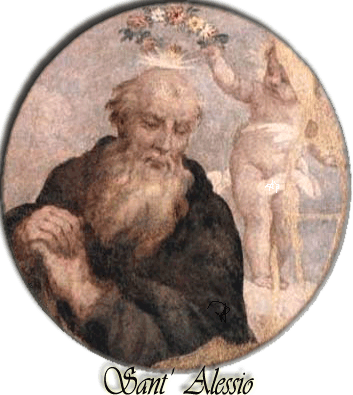
St Alexis, last to die
But if we desire to secure this precious protection of the Blessed Virgin Mary, we must not be satisfied with meditating at long intervals on her Dolours, and with wearing the habit of mourning which reminds us of them. Our compassion, if it be a true one, ought to cause us to avoid that which is the true cause of her sorrow-that is to say, everything that offends God.
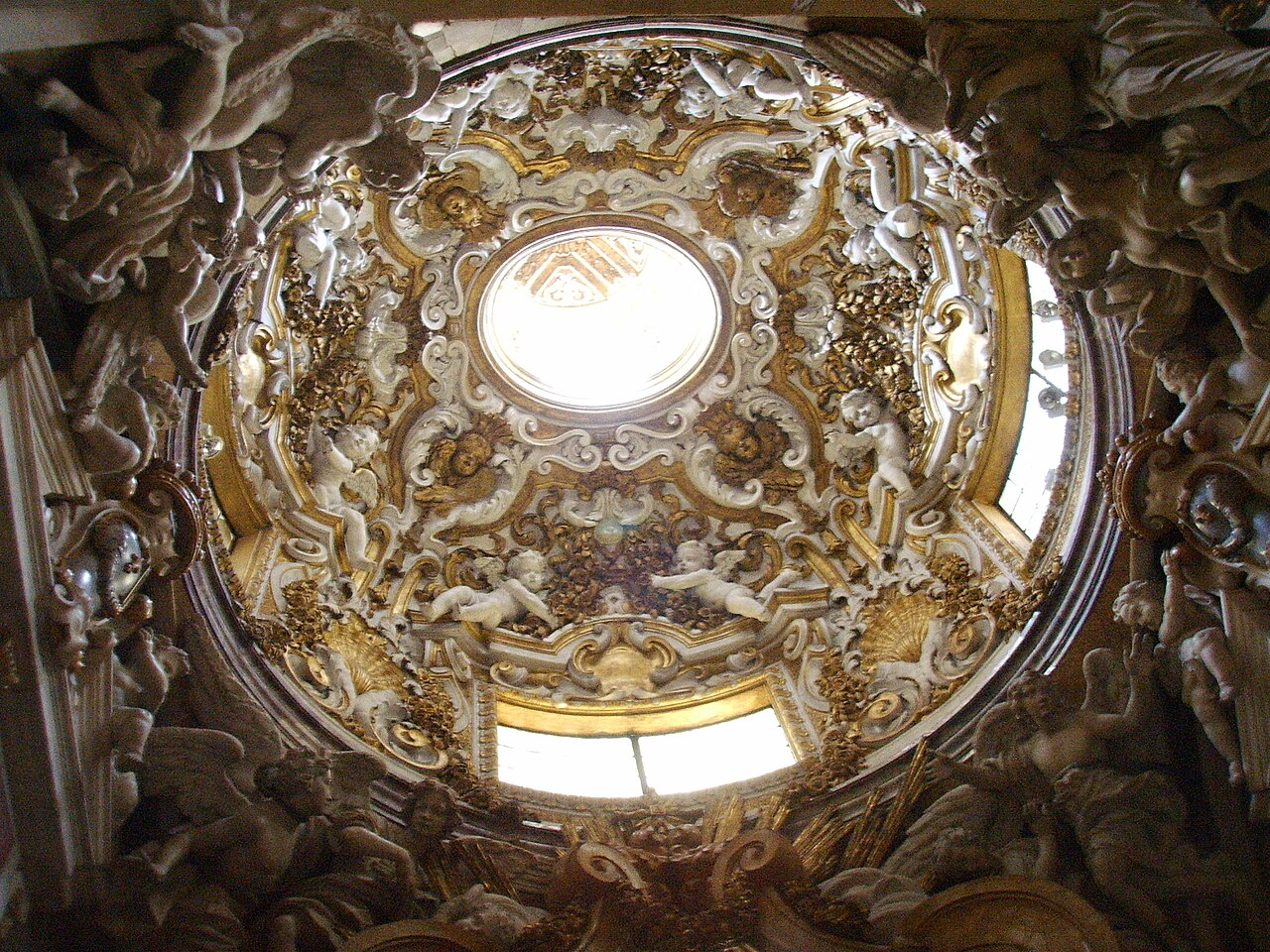
Ceiling in the Servite mother church, Santissima Annunziata, Florence





You must be logged in to post a comment.