Posted in SAINT of the DAY

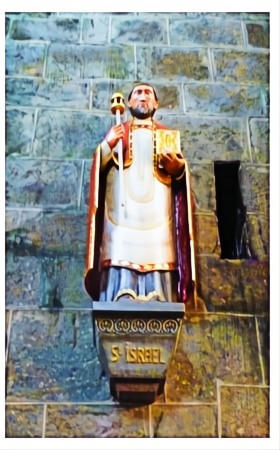
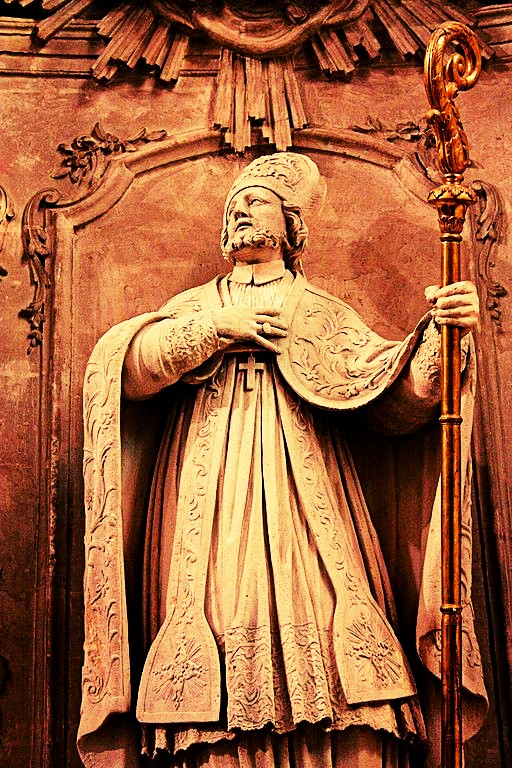
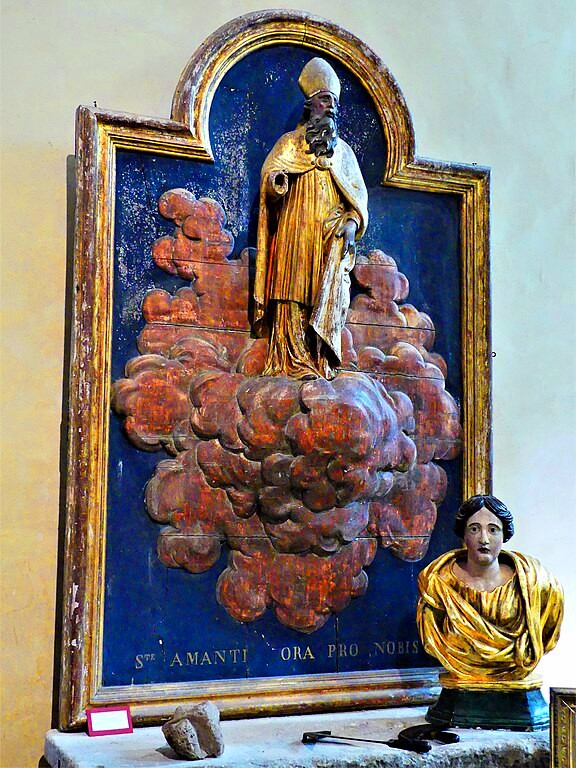
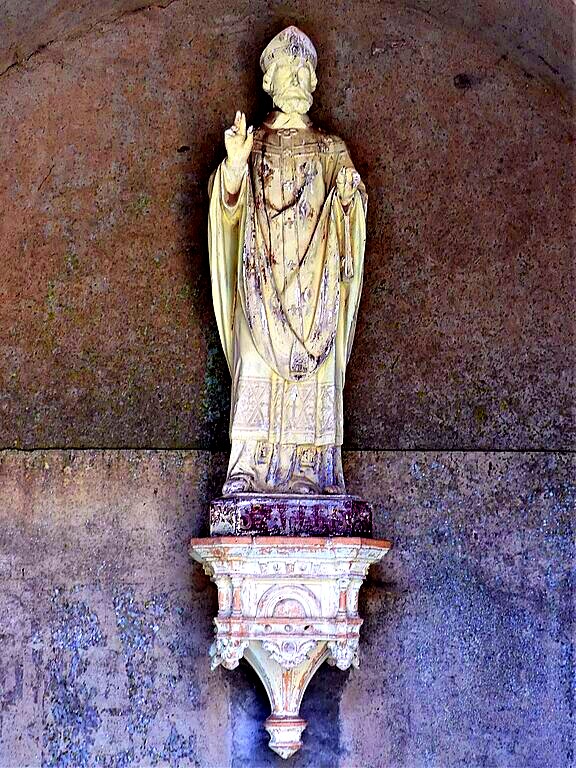
Saint of the Day – 3 June – Saint Albert of Como (Died c1092) Bishop

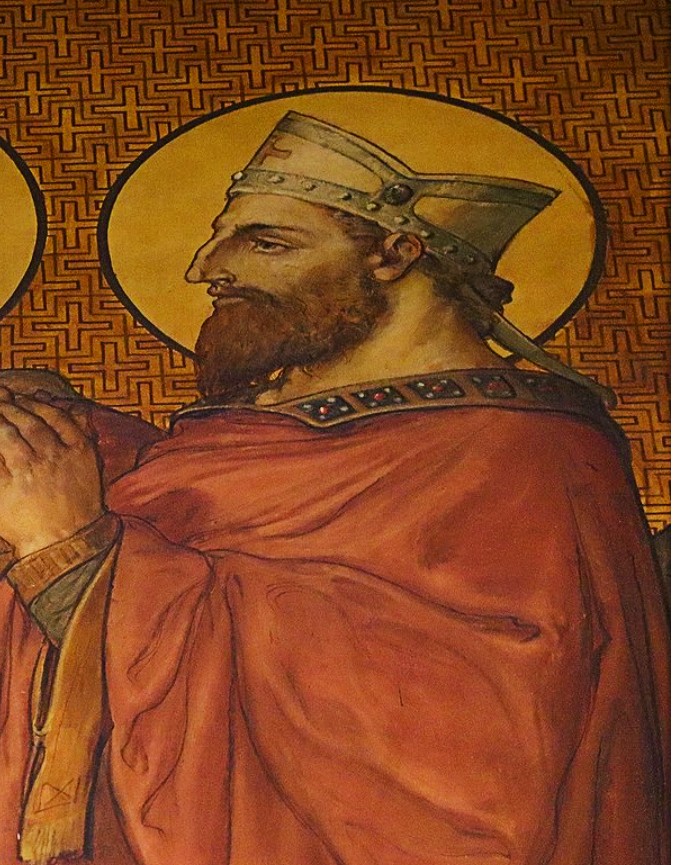
Saint of the Day – 3 June – Saint Albert of Como (Died c1092) Bishop, the 15th Bishop of Como. Also known as – Aribert, Ariberto, Adalbert, Adelbert.

Various Saints on the facade of Como Cathedral

The scant historical information describes Albert as a zealous Bishop, dedicated to the care of his people, while legend exalts his heroic virtues and miraculous powers.

Legend has it that, accused by the Pope of incontinence, Albert managed to triumph over such slander with the evidence of his holy life, his apostolic zeal and his thaumaturgical powers. On this occasion, he actually went personally to Rome, where he performed various miracles in the presence of the Pope, announcing among other things, that his death would follow the recovery of full visual faculties of the same Pontiff, who had a monocle. The Pontiff, then, when he recovered, went to Como, where he assisted the holy Bishop on his deathbed and participated in his funeral.

The actual date of Albert’s death cannot be determined. He was buried in the Church of the Apostles which, from 818 was called St Abbondius. His Relics were later placed together with those of St Rubiano,his predeccessor, under an Altar dedicated to them. In 1580 there was a further transfer of the Relics of the two holy Bishops, placed partly in the Cathedral under the Altar of the Crucifix, partly in the Dominican Church of St John. St Albert’s Feast was celebrated on 7 July and on that date he was also remembered in the Breviary of 1519-1523. His Feast was later moved to 3 June.

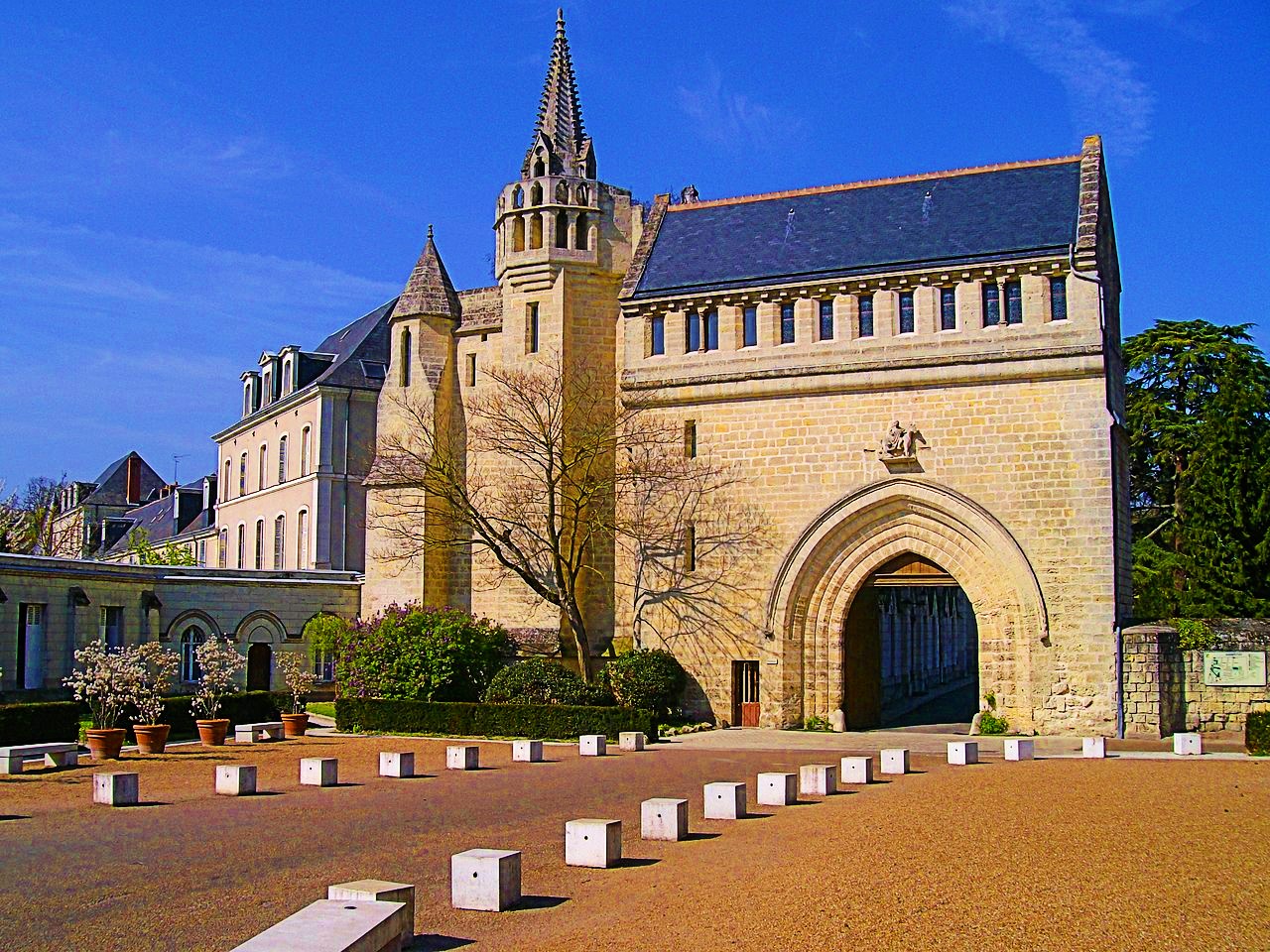
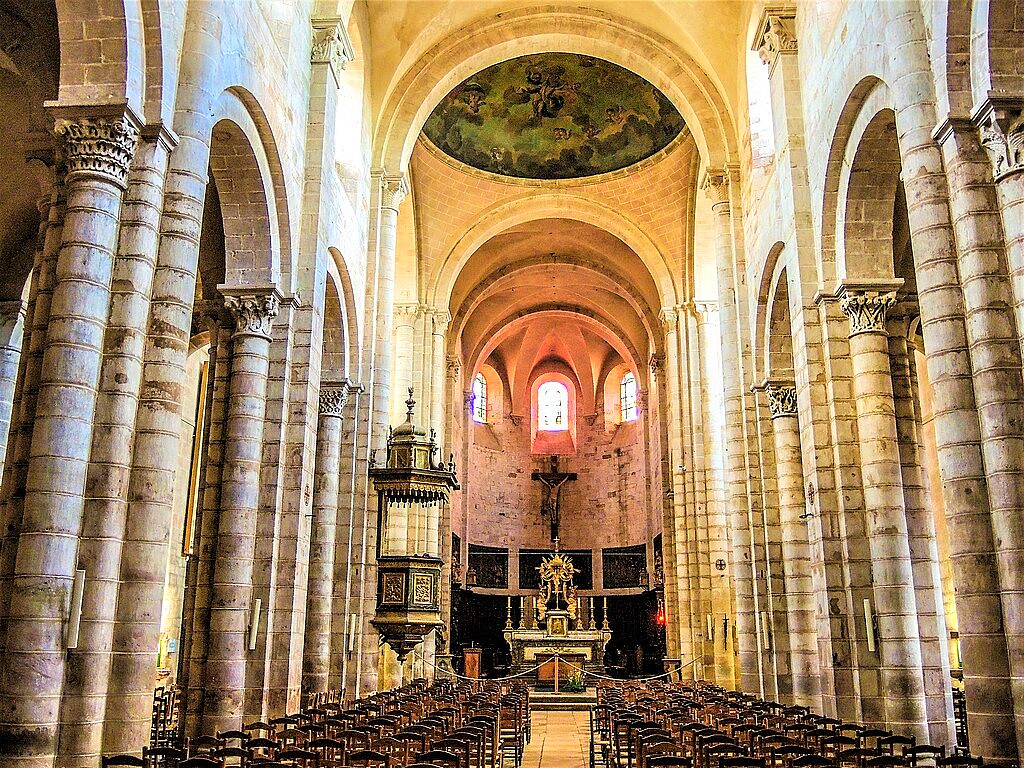
Como Cathedral
Posted in MARIAN TITLES, SAINT of the DAY

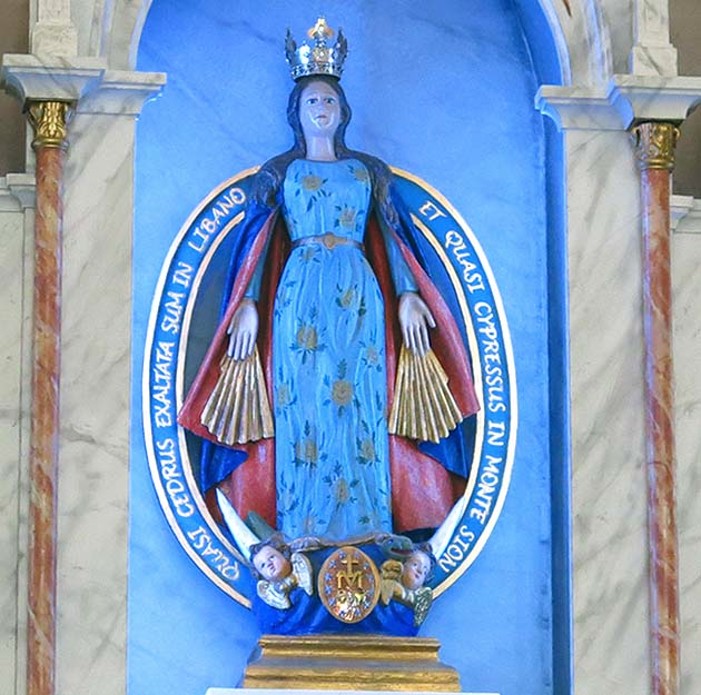
Within the Octave of Corpus Christi, Madonna della Lettera / Our Lady of the Letter (Messina, Sicily, Italy) 1693 and the Saints for 3 June

Within the Octave of Corpus Christi

St Albert of Como (Died c 1092) Bishop
St Athanasius of Traiannos
St Auditus of Braga
Bl Beatrice Bicchieri
St Caecilius of Carthage

St Conus of Lucania
St Cronan the Tanner
St Davinus of Lucca
Bl Diego Oddi
St Gausmarus of Savigny
St Genesius of Clermont
St Glunshallaich
St Hilary of Carcassone
St Isaac of Córdoba

St Laurentinus of Arezzo
St Liphardus of Orléans
St Morand of Cluny
St Moses of Arabia
St Oliva of Anagni
St Paula of Nicomedia
St Pergentinus of Arezzo
Bl Phaolô Vu Van Duong
St Urbicius

Martyrs of Rome – 8 Saints: A group of Christians Martyred together. We know nothing else about them but the names –
Amasius, Emerita, Erasmus, Lucianus, Orasus, Satuaucnus, Septiminus• Servulus.
They were Martyred in Rome, Italy, date unknown.

Posted in DEVOTIO, GOD ALONE!, JUNE-THE SACRED HEART, QUOTES on LOVE of GOD, QUOTES on REPARATION/EXPIATION, SACRED HEART QUOTES, SACRED HEART REFLECTIONS, The ADORABLE HEART of JESUS

Thought for the Day – 2 June – On the Nature of the Devotion

Thought for the Day – 2 June – Meditations with Fr Richard Frederick Clarke SJ (1839-1900)

Little Extracts from The Adorable Heart of Jesus

On the Nature of the Devotion

If we desire to enter into the designs of Jesus Christ, we must not seek this idea of the Devotion to the Sacred Heart, outside the revelation itself, from which it derived its origin and, since it has pleased this amiable Saviour to give an explanation Himself on this subject, it is from His own words that we must gather the real idea which we seek.
It will not be difficult, since Jesus Christ has spoken very clearly.
… But , we must here also allude to a circumstance which is essential to the nature of our Devotion and, that is, that the Love with which the Divine Heart of Jesus is inflamed, must be considered as a Love despised and wounded by the ingratitude of men.
This circumstance is expressed in these words which our Lord
adds :
And in return, I receive, for the most part, only ingratitude, contempt, irreverence, sacrileges, in the indifference which they manifest towards Me in the Sacrament of Love.”

The Heart of Jesus must, therefore, here be considered under two aspects – on the one hand, as burning with Love for men and, on the other, as cruelly wounded by the ingratitude of these same men.
These two motives united, must excite in us two feelings, both of which are equally essential to Devotion to the Sacred Heart, that is love which corresponds to Its Love and grief , which would leads us to make reparation for the insults it endures through the hard-heartedness of men!

Finally, the practices prescribed by Jesus Christ in fulfilment of this double duty, are laid down in these last words :
I ask of thee that the first Friday after the Octave of the Blessed Sacrament, should be dedicated as a special festival to do honour to My Heart, by devout acts of reparation and satisfaction, by communicating, on that day, to expiate the indignities it received whilst exposed on the Altar.
Jesus Christ contents Himself with explaining here the principal exercise of the devotion which He desires to establish but, it is
not the only practice which must be employed, to do honour to the Divine Heart. There are many others which will be mentioned further on.

Posted in Act of SPIRITUAL COMMUNION, GOD ALONE!, MEDITATIONS - ANTONIO CARD BACCI, QUOTES on LOVE of GOD, QUOTES on OBEDIENCE

Quote/s of the Day – 2 June – Spiritual Communion

Quote/s of the Day – 2 June – “The Month of the Sacred Heart of Jesus” – The Solemnity of Corpus Christi

“It is enough for us to love Him
and to be ready to keep His commandments.
Such an act of sincere
and effective love for Jesus,
will cause Him to enter
and to remain in our hearts,
even after the Sacramental Species
has been consumed.
This is Spiritual Communion,
which consists mainly in the yearning for Jesus.
“I have come to cast fire upon the earth
and what will I but, that it be kindled”
(Lk 12:49)
.”

Antonio Cardinal Bacci (1881-1971)

Act of Spiritual Communion
By St Alphonsus Maria de Liguori (1696-1787)
Most Zealous Doctor

I desire, good Jesus,
to receive Thee in Holy Communion
and since I cannot now receive Thee
in the Blessed Sacrament,
I beseech Thee to come to me spiritually
and to refresh my soul with Thy sweetness.
Come, my Lord, my God and my All!
Come to me
and never let me ever again
be separated from Thee by sin.
Teach me Thy blessed ways,
help me with Thy grace to imitate Thy example,
to practise meekness, humility,
charity and all the virtues of Thy Sacred Heart.
My divine Master, my one desire is to do Thy will
and to love Thee, more and more.
Help me, that I may be faithful to the end, in Thy service.
Bless me in life and in death,
that I may praise Thee, forever in heaven,
Amen

Posted in "Follow Me", ASPIRATIONS and EJACULATIONS, CHRIST the WORD and WISDOM, DOCTORS of the Church, EUCHARISTIC Adoration, FATHERS of the Church, HOLY COMMUNION, INDULGENCES, ONE Minute REFLECTION, QUOTES on WISDOM, SACRED HEART ASPIRATIONS, The HOLY EUCHARIST / The HOLY MASS, The WORD

One Minute Reflection – 2 June – Go out quickly into the streets and alleys of the city …’ Luke 14:21

One Minute Reflection – 2 June – “The Month of the Sacred Heart of Jesus” – The Solemnity of Corpus Christi The Second Sunday after Pentecost – 1 John 3:13-18; Luke 14:16-24.– Scripture search here: https://www.drbo.org/

The servant went and reported this to his Master. Then the Master of the house was angry and commanded His servant, ‘Go out quickly into the streets and alleys of the city and bring in here, the poor and the crippled, the blind and the lame…” – Luke 14:21

REFLECTION – “He turned to the Gentiles from the careless scorn of the rich. He invites both good and evil to enter, in order to strengthen the good and change the disposition of the wicked for the better. The saying that was read today is fulfilled, “Then wolves and lambs will feed together.” He summons the poor, the maimed and the blind. By this, He shows us, either that handicaps do not exclude us from the Kingdom of Heaven that the Lord’s mercy forgives the weakness of sinners. Whoever glories in the Lord, glories as one redeemed from reproach, not by works but by faith.

He sends them into the highways because Wisdom sings aloud in passages. He sends them to the streets because He sent them to sinners, so that they should come from the broad paths, to the narrow way which leads to life. He sends them to the highways and hedges . They, who are not busied with any desires for present things, hurry to the future on the path of goodwill. Like a hedge, which separates the wild from the cultivated and wards off the attacks of wild beasts, they can distinguish between good and evil and extend a rampart of faith against the temptations of spiritual wickedness.” – St Ambrose (340-397) Bishop of Milan, Father and Doctor of the Church (Exposition on the Gospel of Luke, 7).

PRAYER – O God, Thou Who in this wondrous sacrament have left us a memorial of Thy Passion, grant us, we beseech Thee, so to venerate the Sacred Mysteries of Thy Body and Blood, that we may ever experience, within us, the effect of Thy Redemption. Through Jesus Christ, Thy Son our Lord, Who lives and reigns with Thee, in the unity of the Holy Ghost, God, world without end. Amen (Collect).
EUCHARISTIC Heart of JESUS, model of the priestly heart, have mercy on us.
COR JESU Eucharisticum, cordis sacerdotalis exemplar, miserere nobis. – Indulgence 300 Days, Everytime – Raccolta 177 St Pius X, 11 September 1907.

Posted in CATHOLIC-PRAYERS OF THE CHURCH, DOCTORS of the Church, DOMINICAN OP, EUCHARISTIC, EUCHARISTIC Adoration, FEASTS and SOLEMNITIES, HOLY COMMUNION, HYMNS, Our MORNING Offering, PRAYERS of the CHURCH, PRAYERS of the SAINTS, The HOLY EUCHARIST / The HOLY MASS

Our Morning Offering – 2 June – Lauda Sion Salvatorem

Our Morning Offering – 2 June – The Solemnity of Corpus Christ, The Most Holy Body and Blood of our Lord Jesus Christ

Lauda Sion Salvatorem
Sion, Lift Up thy Voice and Sing

(Excerpt)
By St Thomas Aquinas (1225-1274)
Doctor Angelicus / Doctor Communis

Sion, lift thy voice and sing,
Praise thy Saviour and thy King,
Praise with hymns thy Shepherd true,
Dare thy most to praise Him well,
For He doth all praise excel,
None can ever reach His due.

Special theme of praise is Thine,
That true living Bread divine,
That life-giving flesh adored,
Which the brethren twelve received,
As most faithfully believed,
At the Supper of the Lord.

Let the chant be loud and high,
Sweet and tranquil be the joy
Felt to-day in every breast;
On this festival divine
Which recounts the origin
Of the glorious Eucharist.

St Thomas Aquinas wrote the Liturgy for Corpus Christi when Pope Urban IV added the Solemnity to the universal Church’s Liturgical calendar in 1264. He provided a great sequence, one of the great poems chanted or recited before the proclamation of the Gospel.
Lauda Sion is one of only four medieval sequences which were preserved in the Roman Missal published in 1570 following the Council of Trent (1545–1563)—the others being Victimae Paschali Laudes (Easter), Veni Sancte Spiritus (Pentecost) and Dies irae (requiem masses).
(A fifth, Stabat Mater, would later be added in 1727.)
Before Trent, many feasts had their own sequences. The existing versions were unified in the Roman Missal promulgated in 1570.
The Lauda Sion is still sung today as solemn Eucharistic hymn, though its use is optional in the post-Vatican II Ordinary form.
As with St Thomas’s other three Eucharistic Hymns, the last few stanzas of the Lauda Sion are often used alone, in this case, to form the “Ecce Panis Angelorum”.

Posted in SAINT of the DAY

Saint of the Day – 2 June – Saint Photinus of Lyons (c87-177) & Companions, Bishop and Martyr

Saint of the Day – 2 June – Saint Photinus of Lyons (c87-177) & Companions the First Bishop of Lyons, Martyr . Name means: the sweet one / the lovely one (Greek). Patronages – of the Archdiocese of Lyons and of the City of Lyons. Also known as – Pothin, Pothinus, Potino, Potinus.

The Roman Martyrology reads today: “At Lyons, many holy Martyrs (Photinus, the Bishop, Sanctus, the Deacond, Vetius, Epagathus, Maturus, Pontictus, Biblis, Attalus, Alexander and Blandina, with many others, whose many valiant combats in the time of Marcus Aurelius are recorded in a letter from the Church at Lyons to the Churches of Asia and Phrygia. …”

According to St Irenaeus, Photinus was born around the year 87, probably at Smyrna. He was a disciple of St Polycarp, the Apostolic Father and Martyr Bishop of Smyrna and accompanied him to Rome in 158.

St Pope Anicletus sent him to evangelise the Gauls. Photinus established himself at Lyons and founded there a flourishing Church, over which he presided for almost twenty years. In asserting his own authority as bishop of Lyons, St Irenaeus says that Pothinus had been his predecessor in the position and the first Bishop of that City.

By 177, a large number of the Christians in the area of Vienne and Lyons were Greeks from Asia. A violent persecution began against them while Photinus was the Bishop of Lyons and St Irenæus, who had been sent there by St Polycarp, was a Priest of that City.

Photinus died at the age of ninety, in 177, Martyred along with Alexander, Attalus, Espagathus, Maturus and Sanctius, during the tenure of Emperor Marcus Aurelius. Pothinus and several companions were seized by a mob and taken to the magistrate. Pothinus is believed to have died from the abuse he suffered in prison, while the others were killed by wild beasts in the local amphitheatre.

St Eusebius of Caesarea also reports on the number and nature of the battles for the Faith in Gaul. The Martyrology of St Jerome reports a total of 48 Martyrs.

St Photinus Church in Lyons
Posted in FEASTS and SOLEMNITIES, MARIAN TITLES, SAINT of the DAY

The Solemnity of Corpus Christi Sunday within the Octave, Pentecost II, Madonna delle Lacrime / Madonna of the Tears, Bergamo, Italy (1511), St Marcellinus and Companions and all the Saints for 2 June

The Solemnity of Corpus Christi
Sunday within the Octave

Pentecost II

St Honorata
St Humatus
St John de Ortega

St Photinus of Lyons (c87-177) 7 Companions Bishop Martyr
St Rogate
Bl Sadoc of Sandomierz
St Stephen of Sweden

Posted in DEVOTIO, INDULGENCES, JUNE-THE SACRED HEART, PAPAL ENCYLICALS, PARTIAL Indulgence, PLENARY Indulgences, SACRED and IMMACULATE HEARTS, SACRED HEART ASPIRATIONS, SACRED HEART QUOTES, St Francis de Sales

Devotion for June – THE MONTH OF THE MOST SACRED HEART of JESUS

1 June – Devotion for June – THE MONTH OF THE MOST SACRED HEART of JESUS

In 1899, Pope Leo XIII Consecrated the world to the Sacred Heart of Jesus. Since then, his successors have exhorted the faithful to turn to the Sacred Heart and make Acts of personal Consecration. They have also begged the faithful to offer prayers and penances to the Sacred Heart in reparation for the many sins of the world.

In his Encyclical on the Sacred Heart entitled Haurietis Aquas (“You Will Draw Waters”) Pope Pius XII notes that the genesis of the devotion to the Sacred Heart lies in the Covenant of Love from the Old Testament. He writes that “in the New Testament, the love which breathes from the Gospel, from the letters of the Apostles and the pages of the Apocalypse, all portray the Love of the Heart of Jesus.” He is linking this devotion to the Old Testament which was brought to life in Christ in the New Testament.

In the early 17th Century, Devotion to the Sacred Heart was given considerable attention in the preaching and writings of St John Eudes, known as “The Apostle of the Two Holy Hearts.”

St Francis (1567-1622) in his “Treatise on the Love of God,” lays out the foundation of the Devotion to the Sacred Heart. St Francis would greatly influence St Jane Frances de Chantal who was the Foundress of the Sisters of the Visitation of the Blessed Virgin Mary, the very Order which St Margaret Mary Alacoque VHM. (1647-1690), the Visionary of the Sacred Heart, would later join.

Our Lord appeared to St Margaret Mary, perhaps close to forty times. The first apparition occurred in the Visitation Chapel at Paray-le-Monial on 27 December 1673. The last apparition occurred less than two years later in June 1675. She saw His heart engulfed in flames and surrounded by thorns and heard His gentle voice:

“Behold this Heart which has so loved men that It spares nothing…to prove to them It’s love.   And, in return, I receive from the greater part of men, nothing but ingratitude, by the contempt, irreverence, sacrileges and coldness with which they treat Me in this Sacrament of Love.

I thirst, I burn with a consuming desire for men’s love and I find none to quench this thirst, according to My wish, by making any return of love.”

From her cloister, St Margaret Mary promoted the Feast of the Sacred Heart of Jesus, First Friday Devotion, The Twelve Promises and the Holy Hour of Reparation.

The Sacred Heart Enthronement desires to follow in the footsteps of Saints who came before and hold true to the basic request of Jesus to St.Margaret Mary, “I will bless the home in which the Image of My Sacred Heart shall be exposed and honoured.

Sweet Heart of my JESUS, Make me love Thee ever more and more! – 300 Days Indulgence Once a day, Plenary Once a month – Blessed Pope Pius IX – 26 November 1876

Posted in DIVINE Mercy, Goodness, Patience, PATIENCE - Fr Richard CLARKE, QUOTES on PATIENCE, Quotes on SALVATION

Thought for the Day – 1 June – The Praises of Patience

Thought for the Day – 1 June – Meditations with Fr Richard Frederick Clarke SJ (1839-1900)

PATIENCE
Meditations for a Month

The Praises of Patience

  1. Patience is a virtue which receives, in Holy Scripture and especially in the writings of St Paul, praise almost without end. ‘He that is patient,’ says the Wise Man, ‘is governed with much wisdom.’ (Prov 14 : 29) ‘Patience has a perfect work,‘ says St James (ch. 1 : 4). ‘Patience is necessary to you,‘ says St Paul, ‘that by doing the will of God you may receive the promise. ‘ (Hebrews 10 : 36.) Think over these passages one by one and question yourself whether you fulfil this necessary condition of eternal salvation.
  2. Our Blessed Lord has Himself a special benediction for patience. ‘In your patience,‘ He says, ‘you shall possess your souls.‘ (St Luke 2 : 19.) That is, by patience, we shall save our souls. What higher praise could our Lord bestow upon patience than this? If it is to be the instrument of salvation, it is an inestimable treasure. Instead of dreading it, we ought to court it and welcome every occasion for its exercise. Every act of patience brings us nearer to Heaven and the test of our fitness for the Kingdom of God is, have we learned to suffer with perfect patience?
  3. St John does but echo the words of his Divine Master when he says (Apoc 7 : 14) of the redeemed around the throne, ‘These are they who came out of great tribulation.’ Not that the mere passing through suffering is sufficient, for he adds ‘And have washed their robes and made them white in the Blood of the Lamb that is, have obtained forgiveness by uniting their sufferings with the sufferings of the Son of God.’
    Do I find in myself this description realised? Have I suffered and suffered willingly for Christ’s sake? Or do I seek to avoid all suffering and fight against it,and bear it impatiently when it comes?
Posted in QUOTES on ALMS, QUOTES on CHARITY, QUOTES on TEMPTATION, QUOTES on the DEVIL/EVIL, The WILL of GOD

Quote/s of the Day – 1 June – St Angelica de Merici

Quote/s of the Day – 1 June – St Angelica de Merici (1474-1540)

Reflect that in reality
you have a greater need to serve [the poor],
than they have of your service
.”

Strive to be faithful
to that which God has called you.

Consider that, the devil does not sleep
but seeks our ruin, in a thousand ways.

MORE:
https://anastpaul.com/2023/06/01/quote-s-of-the-day-1-june-st-angelica-de-merici/

St Angelica de Merici (1474-1540) Virgin

Posted in CATECHESIS, EUCHARISTIC, FATHERS of the Church, FEASTS and SOLEMNITIES, HOLY COMMUNION, ONE Minute REFLECTION, The HOLY EUCHARIST / The HOLY MASS, The WORD

One Minute Reflection – 1 June – ‘ … Who will dare … to dispute it? …’

One Minute Reflection – 1 June – “The Month of the Sacred Heart of Jesus” – Within the Octave of Corpus Christi – St Angelica de Merici (1474-1540) Virgin – 1 Corinthians 23-29; John 6:56-59 – Scripture search here: https://www.drbo.org/

For My flesh is food indeed and My Blood is drink indeed.”- John 6:56

REFLECTION – “Take and eat; this is My Body… Take and drink; this is My Blood.” (Mt 26:26.) Since then, Christ Himself clearly described the Bread to us in the words “This is My Body” who will dare henceforward, to dispute it? And since He has emphatically said, “This is My Blood” who will waver?… So let us partake with the fullest confidence that it is the Body and Blood of Christ. For His Body has been bestowed on you in the form of bread and His Blood in the form of wine, so that by partaking of Christ’s Body and Blood, you may share with Him, the same Body and Blood… This is how, in the blessed Peter’s words: “we become partakers of the divine nature” (2 Pt 1:4).

Christ once said in conversation with the Jews: “Unless you eat My Flesh and drink My Blood, you have no life in you” They were scandalised because they did not interpret His words spiritually… Even in the Old Testament, there were “Loaves of the Presence” but since they belonged to the old dispensation, they have come to fulfilment. But in the New Testament, the Bread is of Heaven and the Chalice brings salvation, (Jn 6:41; Ps 115:4) and they sanctify the soul and the body; for, as the bread relates to the body, so the word harmonises with the soul…

The Blessed David will inform you of the meaning of the Eucharist when he says: “Thou hast laid a table before me against those who oppress me” (Ps 22:5)… The only thing he can mean is that sacramental, spiritual table which God has made ready for us against the evil spirit… “And the chalice which inebriates me, how godly it is” (Ps 22), here he mentions the chalice which Jesus took in His Hand and giving thanks said: “This is the Blood which is poured out for many, for the remission of sins” (Mt 26:28)… David was speaking of this long ago when he sang: “Bread strengthens the heart of man, that he may make his face glad with oil” (Ps 103:15). So strengthen your heart by partaking of that spiritual bread and gladden the face of your soul.” – Catechesis to the Newly Baptised of the Church in Jerusalem (4th Century) No 4.

PRAYER – O God, Who willed that through blessed Angela a new family of holy Virgins should flower in Thy Church, grant us through her intercession, to lead angelic lives, so that, foregoing all worldly pleasures, we may be found worthy to enjoy eternal appiness.Through Jesus Christ, Thy Son our Lord, Who lives and reigns with Thee, in the unity of the Holy Ghost, God, world without end. Amen (Collect).

Posted in EUCHARISTIC, EUCHARISTIC Adoration, HOLY COMMUNION, JUNE-THE SACRED HEART, SACRED HEART PRAYERS, The HOLY EUCHARIST / The HOLY MASS

Our Morning Offering – 1 June – O Heart of Jesus in the Blessed Sacrament

Our Morning Offering – 1 June – “The Month of the Sacred Heart of Jesus” – Within the Octave oif Corpus Christi

O Heart of Jesus in the Blessed Sacrament
By The League of the Sacred Heart
1929 (Ireland)

O Heart of Jesus in the Blessed Sacrament,
overflowing with gentleness,
tenderness and charity,
I bury in the abyss of Thy Mercy,
all my iniquities and all my negligence.
I offer Thee
my labours and my sufferings,
my sorrows and my miseries,
I recommend to Thee
my life and my death.
Solace my doubts Sweet Jesus,
calm my fears
and grant, that day-by-day,
I may become more united to Thy Sacred Heart,
learning Thy love and Thy holiness.
Amen

Posted in PATRONAGE - HEADACHES, SAINT of the DAY

Saint of the Day – 1 June – Saint Crescentinus (Died 303) Martyr, Soldier.

Saint of the Day – 1 June – Saint Crescentinus (Died 303) Martyr, Soldier. Died by being beheaded on 1 June 303 at Saldo, Italy. His
Relics translated to Urbino, Italy in 1068 by Blessed Mainard of Urbino. Patronages – against headache (In Urbino the Saint’s Relics are used to touch the sufferer’s head, accompanied by prayers for the cure of the pain), of Città-di-Castello, Italy, Urbino, Italy. Also known as – Crescentian, Crescentino, Crescenziano, Crescentianus.

The Roman Martyrology reads today: “At Città-di-Castello, in Umbria, Italy, St Crescentian, a Roman Soldier, crowned with Martyrdom under the Emperior Diocletian.”

The annual procession on 1 June in Urbino

There are no documents, nor tombstones, nor epigraphs, prior to the 7th Century which remember our Saint. According to a ‘passio’ considered by scholars to be fictitious and fabulous, dating to the 7th Century, Crescentinus, was a Roman Soldier who fled to the countryside, killed a dragon which had been terrorising the district.

After this feat of courage, Crescentinus was captured by the his pursuers and was then killed by them on 1 June during the persecution of Diocletian and buried in the place called ‘Gaddi’ or ‘Saddi’.

A Church was built on the spot in which the Bishop of the City lived, St Floridus and the Priest St Amanzius, who were also buried in the Church.

Crescentinus Relics were donated to Mainard, Bishop of Urbino or it is also thought that they were stolen. The body of the Martyr Crescentinus was found on 18 December 1360 and, as in other cases, he was considered as the Bishop of Città-di-Castello.

But the most favourable hypothesis indicates that the Relics of the Roman Soldier Martyr Crescentinus, were buried on the Via Ostiense and were sent to Città -di-Castello in an unspecified period and placed under the Altar of the Basilica.

Subsequently, as has often happened, St Crescentinud was considered a local Martyr. In 1500, he was included on 1 June in the Roman Martyrology, taking into account the ancient cult which the holy Martyr enjoyed in the area.

The Relics of St Crescentinus at Urbino
Posted in MARIAN TITLES, SAINT of the DAY

The Month of the Sacred Heart of Jesus, First Saturday, Within the Octave of Corpus Christi, Madonna delle Grazie / Our Lady of Grace, Italy (1630), St Angelica de Merici and the Saints for 1 June

1 June – Devotion for June – THE MONTH OF THE MOST SACRED HEART of JESUS

First Saturday

Within the Octave of Corpus Christi

St Agapetus of Ruthenia
Bl Alfonso Navarrete Benito
Bl Arnald Arench
Bl Arnold of Geertruidenberg
St Atto of Oca
St Candida of Whitchurch
St Caprasius of Lérins (Died 430) Hermit
St Clarus of Aquitaine
St Claudius of Vienne
Bl Conrad of Hesse
St Conrad of Trier Bishop, Martyr
St Crescentinus (Died 303) Martyr, Soldier
St Cronan of Lismore
St Damian of Scotland
St Dionysius of Ruthenia
St Donatus of Lucania
St Felinus of Perugia
Bl Ferdinand Ayala
St Firmus
St Fortunatus of Spoleto
Bl Gaius Xeymon
St Gaudentius of Ossero
St Giuse Túc
St Gratian of Perugia
Bl Herculanus of Piegare
St Iñigo of Oña
St Ischryrion and Companions
Bl James of Strepar
Bl John Pelingotto
Bl John Storey
St Juventius
Bl Leo Tanaka
St Melosa
St Pamphilus of Alexandria

St Porphyrius of Alexandria
St Proculus of Bologna
St Proculus the Soldier
St Ronan
St Secundus of Amelia
St Seleucus of Alexandria
St Simeon of Syracuse
St Telga of Denbighshire
St Thecla of Antioch

St Thespesius of Cappadocia
St Wistan of Evesham
St Zosimus of Antioch

Posted in GOD ALONE!, HUMILITY-Fr Richard Clarke, JESUIT SJ, QUOTES on HUMILITY

Thought for the Day – 31 May – What Humility is Not!

Thought for the Day – 31 May – Meditations with Fr Richard Frederick Clarke SJ (1839-1900)

HUMILITY
Meditations for a Month

Chapter Five
What Humility is Not!

We are inclined, sometimes, to aim at a false humility and so to be hindered in our attainment of true humility. We must be on our guard against errors in this regard.

Humility does NOT consist in shutting our eyes to the talents, ability, graces and accomplishments which we possess. To do so is to refuse to acknowledge the good gifts which God has given us. If we have skill in music, in conversation, in painting, in languages, it is no humility to deny the fact. We ought to thank God for His goodness in bestowing upon us this talent. What is contrary to humility is to take the credit to ourselves and to plume ourselves on what we have received from God.

Humility does NOT consist in self-depreciation and in running ourselves down before others. This is often a cloak for pride. Sometimes its object is to obtain, from others, the praise we deny to
ourselves; sometimes it is a marked expression of discontent. The continual song, “What a poor worm I am!” is very much opposed to the spirit of the Catholic Church and to the cheerfulness which every Christian ought to show in his words.

Nor does humility consist in, or even admit of discouragement. If we are discouraged, it generally means that we think more about our own success than about the glory of God. It means that we are not perfectly resigned; it means that our pride is wounded and our self-will thwarted, or that we have worldly motives in what we do and seek honour from men and not from God. True humility is willing to fail in its projects, if God so wills it.
Examine yourself on these particulars and see whether yours is true or false humility!?

Posted in DOCTORS of the Church, EUCHARISTIC Adoration, HOLY COMMUNION, QUOTES on ETERNAL LIFE, QUOTES on UNITY/with GOD, St Francis de Sales, The HOLY EUCHARIST / The HOLY MASS, The WORD

Quote/s of the Day – 31 May – Corpus Christi

Quote/s of the Day – 31 May – Within the Octave of Corpus Christi

He who eats My Flesh
and drinks My Blood,
abides in Me and I in him.

John 6:57

The Saviour has instituted
the most glorious Sacrament
of the Eucharist,
which truly contains His Body and His Blood,
so that, whoever eats it will live forever.
Therefore, those who receive it frequently,
with devotion, strengthen their spiritual life
and well-being, to such an extent,
that it is almost impossible for them
to be poisoned by any kind of evil attachment.

(Introduction to the Devout Life, Part II, Chapter 20)

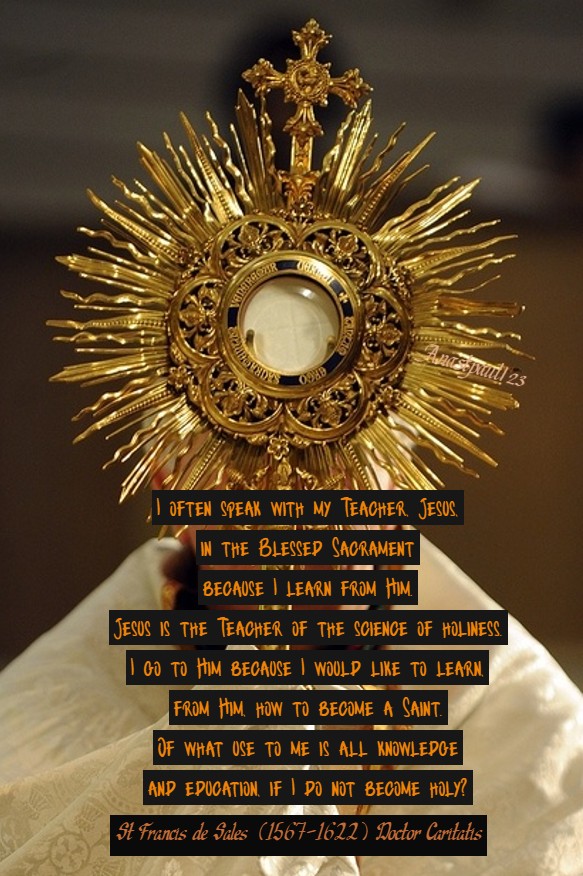
I often speak with my Teacher, Jesus,
in the Blessed Sacrament
because I learn from Him.
Jesus is the Teacher of the science of holiness.
I go to Him because I would like to learn,
from Him, how to become a Saint.
Of what use to me is all knowledge
and education, if I do not become holy?

St Francis de Sales (1567-1622)
Doctor of the Church

Posted in AUGUSTINIANS OSA, CHRIST the JUDGE, DOCTORS of the Church, FATHERS of the Church, FEASTS and SOLEMNITIES, HOLY COMMUNION, JANUARY month of THE MOST HOLY NAME of JESUS, ONE Minute REFLECTION, QUOTES on ENEMIES, QUOTES on JUSTICE, The HOLY EUCHARIST / The HOLY MASS, The HOLY NAME, The LAST THINGS, The WORD

One Minute Reflection – 31 May – Christ has hidden enemies.

One Minute Reflection – 31 May – Within the Octave of Corpus Christi – Mamorial of St Petronilla of Rome (1st Century) Virgin Martyr – 1 Corinthians 23-29; John 6:56-59 – Scripture search here: https://www.drbo.org/

“ … For he who eats and drinks unworthily, … eats and drinks judgement upon himself.”- 1 Corinthians 29

REFLECTION – “Christ has hidden enemies. All those who live unjust and irreligious lives are Christ’s enemies, even if they are signed with His Name and are called ‘Christians’ – I mean the ones to whom he is going to say, “I do not know you and they say to Him, “Lord, in Thy Name we ate and drank. In Thy Name, we performed many deeds of power. What did we eat and drink in Thy Name?”

You see that they did not value their food very highly and yet, it was with reference to It that they said they belonged to Christ. Christ is the Food that is eaten and drunk. Even Christ’s enemies eat and drink Him! The faithful know the Lamb without spot on which they feed, if only they fed on It in such a way that they are not liable to punishment! The Apostle says, “Whoever eats and drinks unworthily, is eating and drinking judgement upon himself.” – St Augustine (354-430) Father and Doctor of Grace (Sermon 308).

PRAYER – Graciously hear us, O God our Saviour, that as we rejoice in the festival of blessed Petronilla, Thy Virgin, so may we be nourished by the food of her heavenly teaching that we may be enlightened by the fervour of her dedicated holiness.Through the same Jesus Christ, Thy Son our Lord, Who lives and reigns with Thee, in the unity of the Holy Ghost, God, world without end. Amen (Collect).

Posted in DOCTORS of the Church, FATHERS of the Church, MARIAN PRAYERS, MATER DOLOROSA - Mother of SORROWS, MAY - The Blessed Virgin MARY'S MONTH, Our MORNING Offering, PRAYERS of the SAINTS, SEPTEMBER-The SEVEN SORROWS of MARY and The HOLY CROSS

Our Morning Offering – 31 May – My Most Sorrowful LadyBy St Anselm (

Our Morning Offering – 31 May – “The Month of the Most Blessed Virgin Mother” and as it is Friday, we remember the Passion of Our Lord

My Most Sorrowful Lady
By St Anselm (1033-1109)
Marian Doctor
Magnificent Doctor

My most sorrowful Lady,
what can I say about the fountains,
that flowed from your most pure eyes,
when you saw your only Son before you,
bound, beaten and suffering?
What do I know of the flood,
that drenched your matchless face,
when you beheld your Son,
your Lord and your God,
stretched on the Cross without guilt,
when the flesh of your flesh,
was cruelly butchered by wicked me?
How can I judge
what sobs troubled your most pure breast
when you heard,
Woman, behold your son,”
and the disciple,
Behold, your Mother,”
when you received, as a son,
the disciple, in place of the Master,
the servant, for the Lord?
Amen

Posted in SAINT of the DAY

Saint of the Day – 31 May – Blessed Hermann of Marienstatt O.Cist. (1150-c1225) Abbot

Saint of the Day – 31 May – Blessed Hermann of Marienstatt O.Cist. (1150-c1225) Cistercian Monk and Abbot of the Himmerod Abbey; founding Abbot of Heisterbach and Marienstatt Monasteries, Hermann was a zealous and powerful administrator, blessed with the gifts of prophecy, visions and miracles, Born in 1150 in the Rhineland (in modern Germany) and died in c1225 in Himmerod, Germany of natural causes.

Hermann is mentioned as Abbot for the last time in 1225. Soon after, he seems to have lived as a simple Monk in Himmerod, where he died around that time. In the Cistercian Order’s calendar, the commemoration (memoria) of “the Blessed Abbot Hermann, who laid the foundations of Marienstatt and who was famous for his gift of prophecy and also for many other miraculous signs” is recorded on 31 May.

Hermann von Marienstatt , depiction from the Baroque period, Marienstatt Abbey

Hermann von Marienstatt was born in 1150 into a noble Rhenish family (Rhenish meaning ‘of the Rhine’). He was initially a Canon at the St Cassius and Florentius Monastery in Bonn but , in around 1175, he joined the Cistercian Abbey of Himmerod.

When, in 1177, the Archbishop of Cologne, Philipp von Heinsberg, offered the Cistercians the property of a defunct Augustinian Canonry on the Stromberg – today’s Petersberg in the Siebengebirge – as a donation, Monks from Himmerod, led by Hermann as founding Abbot, more than 10 years later, in 1189, finally complied and took over the former Monastery.

Due to the unfavourable mountain location, the Convent soon moved to the nearby valley of the Heisterbach (1192-1199), from which the new Abbey took the name Heisterbach. From 1195, Abbot Hermann worked in Himmerod again. Endowments by Cologne Burgrave Eberhard von Aremberg and his wife Adelheid von Molsberg prompted Himmerod, together with its daughter Monastery, Heisterbach, to undertake one last founding action. In 1212, under the proven leadership of our Blessed Hermann, twelve Monks settled near Neunkhausen ‘at the place of St Maria’ – since then known as Marienstatt. Disputes over inheritance law within the founding family soon forced the abandonment of this site. Thanks to a new foundation by the Counts of Sayn the Cistercians were able to gain a foothold in the Westerwald again. In this context, Hermann is now also attested in Marienstatt documents.

A Cistercian Monk in front of the Heisterbach Monastery, depicted according to a reconstructed drawing around 1930, in the new Heisterbach Monastery Church

These events were later given legend on 27 December 1324.and recorded in writing, in the “Marienstatter Tafeln” the document for the Consecration of the Church. This iconographically valuable document is now in the Rheinisches Landes Museum in Bonn. Its border is decorated with fictitious portraits of the Abbots, beginning with Hermann.

The Cistercian Marienstatt Monastery in 2016

The text tells us that the Mother of God appeared to the worried Abbot in a dream and showed him an alternative building site, where a “hawthorn bush” blooms in the middle of winter. Its branch still adorns the Abbey’s Coat of Arms today, see below.

Hermann had to manage the founding of two Monasteries which were made difficult by geographical disadvantage, inheritance disputes and, in the case of Heisterbach, resistance from the population. When this happened, the Cistercian movement had already passed its peak in the area and was facing competition from new religious movements. Perhaps this is one of the reasons for Hermann’s resignation and retirement.

Pilgrims visiting Marienstatt
Posted in DOMINICAN OP, SAINT of the DAY

Within the Corpus Christi Octave and the Saints for 31 May

Within the Corpus Christi Octave

St Alexander of Auvergne

St Crescentian of Sassari
St Donatian of Cirta
St Felice of Nicosia
St Galla of Auvergne
Blessed Hermann of Marienstatt O.Cist. (1150-c1225) Abbot
St Hermias of Comana

St Juan Moya Collado
Bl Kasper Gerarz
St Lupicinus of Verona
St Mancus of Cornwall
Bl Mariano of Roccacasale
St Mechtildis of Edelstetten
St Myrbad of Cornwall
Bl Nicholaus of Vangadizza
Bl Nicholaus of Vaucelles
St Nowa Mawaggali
St Paschasius of Rome

St Silvio of Toulouse
Bl Vitalis of Assisi
St Winnow of Cornwall

Posted in GOD ALONE!, HUMILITY-Fr Richard Clarke, QUOTES on HUMILITY, QUOTES on PRIDE

Thought for the Day – 30 May – The Deeper Foundations of Humility

Thought for the Day – 30 May – Meditations with Fr Richard Frederick Clarke SJ (1839-1900)

HUMILITY
Meditations for a Month

Chapter Four
The Deeper Foundations of Humility

The consciousness of past sin will not, of itself, give us the perfection of humility. It necessarily fixes the eye of the soul upon ourselves and our own doings, whereas perfect humility means the annihilation of self. We have a deeper and more solid foundation for this virtue in our own nothingness and the absence of any sort of good, save that which God has given us. Every gift of nature is simply a free gift from Him. All that is from ourselves is the marring and injuring of what we have received; the misuse of talents, money, position, influence. What folly, then, to pride ourselves on what belongs to God!

Regarding supernatural gifts, we are still mere nothing and less than nothing. Our natural gifts are put into our hands, they remain with us and are in some sense ours but, a supernatural gift requires a fresh giving immediately from the hand of God each time it is given us! We
cannot begin any supernatural work without His preventing grace; we cannot move a step in it without fresh grace to carry on; we cannot bring it to a successful issue, without the grace necessary to complete it. Do I realise, as I ought, this nothingness of myself and my absolute
and continual dependence upon God, for each thought or act, pleasing to Him?

If this is so, how can I be anything but humble? To pride myself on that which God does in me, would be ridiculous; to pride myself on what I can do of myself, would be to pride myself on all which mars and spoils the work of God.
What hast thou that thou hast not received?” asks St Paul.
Yes, O Lord, I have only one thing that I have not received and that is my vileness, misery, sin.
Can I boast of these!?

Posted in DOCTORS of the Church, DOMINICAN OP, EUCHARISTIC, EUCHARISTIC Adoration, FEASTS and SOLEMNITIES, HOLY COMMUNION, PRAYERS of the SAINTS

Quote/s of the Day – 30 May – The Solemnity of Corpus Christi

Quote/s of the Day – 30 May – The Solemnity of Corpus Christi, The Most Holy Body and Blood of Our Lord Jesus Christ

Receive the Body and Blood of Christ
very frequently. The sight of a Christian’s lips
red with the Blood of Christ terrifies the enemy.
He immediately recognises the sign of his own ruin.
He cannot stand the Instrument of Divine Victory,
by which he was taken captive and cast down.

St Peter Damian (1007-1072)
Doctor of the Church

Everything in us which is strong, steadfast,
firm, happy and joyful to carry out God’s commands,
bear with misfortune, act obediently, stand up for justice –
all these things come from this Bread’s strength,
this Wine’s gladness.
Happy are they whose deeds are strong and joyful!
And since no-one can do it of themselves,
happy are they who have an eager desire
to cleave to what is just and right
and to be strengthened in everything
and rejoice through Him
… ”

Baldwin of Canterbury (c1125-1190)
Cistercian Abbot of Forde Monastery and
Archbishop of Canterbury

Pange Lingua Gloriosi Corporis Mysterium
Sing, My Tongue
By St Thomas Aquinas (1225-1274)

Eng trans – Fr Edward Caswell CO (1814-1878)
(Excerpt on the image – the 4 last stanzas)

Sing, my tongue, the Saviour’s glory,
Of His Flesh, the Mystery sing;
Of the Blood, all price exceeding,
Shed by our Immortal King,
Destined, for the world’s redemption,
From a noble Womb to spring.

Of a pure and spotless Virgin
Born for us on earth below,
He, as Man, with man conversing,
Stayed, the seeds of truth to sow;
Then He closed in solemn order
Wondrously His Life of woe.

On the night of that Last Supper,
Seated with His chosen band,
He, the Paschal Victim eating,
First fulfils the Law’s command;
Then as Food to all His brethren
Gives Himself with His own Hand.

Word-made-Flesh, the bread of nature
By His Word to Flesh He turns;
Wine into His Blood He changes,
What though sense no change discerns.
Only be the heart in earnest,
Faith her lesson quickly learns.

Down in adoration falling,
Lo, the Sacred Host we hail,
Lo, o’er ancient forms departing
Newer rites of grace prevail,
Faith for all defects supplying,
When the feeble senses fail.

To the Everlasting Father
And the Son Who comes on high
With the Holy Ghost proceeding
Forth from each eternally,
Be salvation, honour, blessing,
Might and endless majesty.
Amen. Alleluia.

Written by St Thomas Aquinas (1225-1274) the Angelic and Common Doctor of the Church, for the very first Solemnity of Corpus Christi, this Hymn is considered the most beautiful of Aquinas’ Hymns and one of the seven great Hymns of the Church.

The last two stanzas make up the Tantum Ergo (Down in Adoration Falling) which is used at Benediction of the Blessed Sacrament. The Hymn is also used on Maundy Thursday during the procession from the Sanctuary to the Altar of Repose, where the Blessed Sacrament is kept until Good Friday.

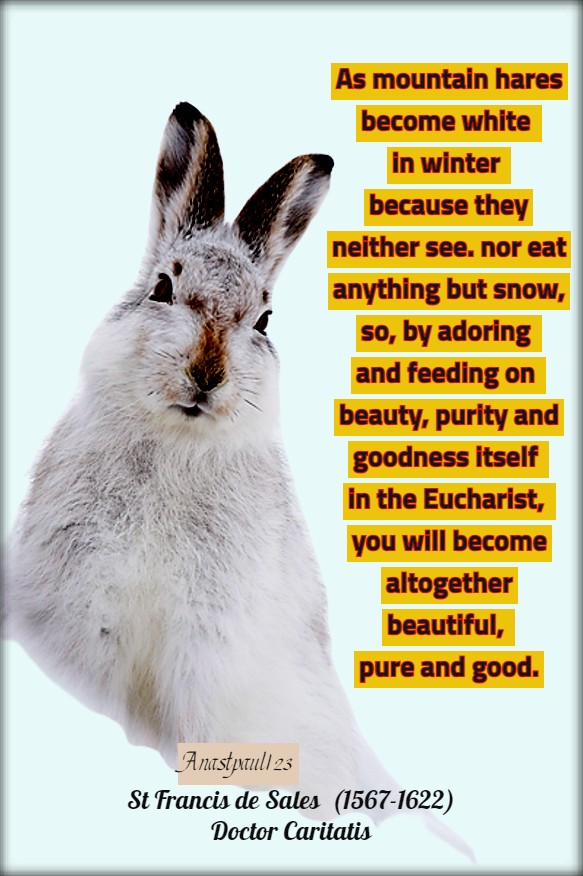
“As mountain hares become white in winter
because they neither see. nor eat
anything but snow,
so, by adoring and feeding on
beauty, purity and goodness itself
in the Eucharist,
you will become altogether
beautiful, pure and good.”

Nowhere do we find our Saviour
more tender or more loving,
than here [in Adoration]
where He, so to speak,
annihilates Himself and reduces Himself
to Food, in order to penetrate our souls
and to unite Himself
to the hearts of His friends.”

St Francis de Sales (1567-1622)
Doctor Caritatis

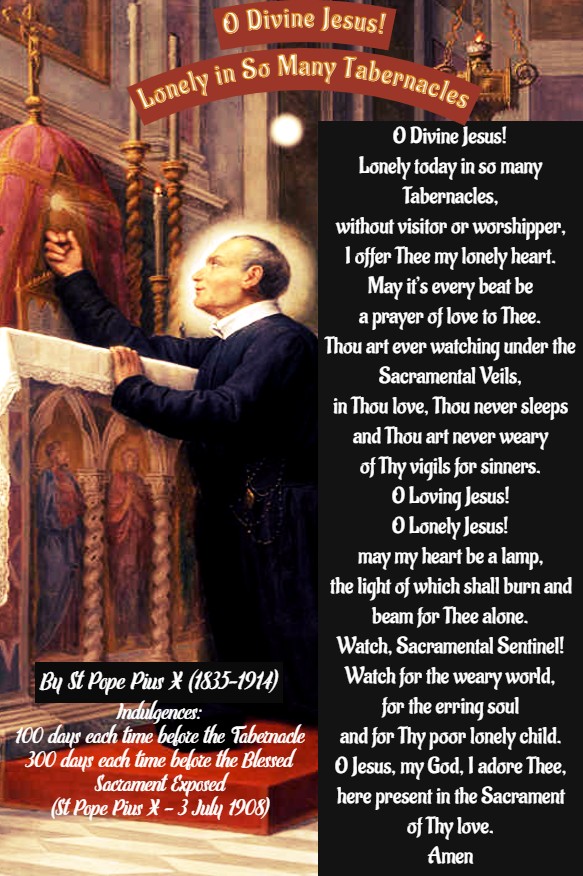
O Divine Jesus!
Lonely in So Many Tabernacles

By St Pope Pius X (1835-1914)
Pope of the Blessed Sacrament

O Divine Jesus!
Lonely today in so many Tabernacles,
without visitor or worshipper,
I offer Thee my lonely heart.
May it’s every beat be a prayer of love to Thee.
Thou are ever watching under the Sacramental Veils,
in Thou love, Thou never sleeps
and Thou are never weary of Thy vigils for sinners.
O Loving Jesus!
O Lonely Jesus!
may my heart be a lamp,
the light of which shall burn and beam
for Thee alone.
Watch, Sacramental Sentinel!
Watch for the weary world,
for the erring soul
and for Thy poor lonely child.

O Jesus, my God, I adore Thee,
here present in the Sacrament of Thy love.
Amen

Indulgences:
100 days each time before the Tabernacle
300 days each time before the Blessed Sacrament Exposed
(St Pope Pius X – 3 July 1908)
Prayers to the Sacred Heart

15th Ed 1936

MORE:
https://anastpaul.com/2023/06/11/quote-s-of-the-day-11-june-he-left-his-body-and-his-blood/

Posted in EUCHARISTIC Adoration, FEASTS and SOLEMNITIES, HOLY COMMUNION, ONE Minute REFLECTION, The HOLY EUCHARIST / The HOLY MASS

One Minute Reflection – 30 May – ‘ …Christ the Lord, for Whom we should ceaselessly hunger! …’St Columban

One Minute Reflection – 30 May – The Solemnity of Corpus Christi, The Most Holy Body and Blood of Our Lord Jesus Christ – 1 Corinthians 23-29; John 6:56-59– Scripture search here: https://www.drbo.org/

For My Flesh is food indeed and My Blood is drink indeed.” – John 6:56

REFLECTION – “Beloved brethren, quench your thirst at the waters of that Divine Spring we want to tell you about – quench it but do not extinguish it; drink but do not become satisfied. The Living Spring, the Source of Life, calls us and says: “Let anyone who thirsts come to Me and drink” (Jn 7:37). Understand what it is you are drinking. Let the Prophet tell you and let the Source Itself tell you: “Listen to the word of the Lord, they have forsaken Me the Source of Living Water” (Jer 2:13). So the Lord our God Himself, Jesus Christ, is He Who is that Source of Life and that is why He invites us to come to Him so that we might drink Him. Whoever loves Him, drinks Him; whoever feeds on the Word of God, drinks Him. … Drink, therefore, from this Source that others have forsaken!

That we might eat of this Bread and drink from this Spring … He refers to Himself as “the Living Bread which gives life to the world” (cf. Jn 6:51) which we are to eat. … See from where this Spring flows! see from where this Bread comes down! For one and the same person is both Bread and Spring, the Only-begotten Son, our God, Christ the Lord, for Whom we should ceaselessly hunger!

It is our love which gives Him as food to us, our desire which makes us eat Him and when we have been satisfied, we desire Him still. Let us go to Him as to a fountain and drink of Him in our overflowing love, let us drink Him always with ever-new desire, finding our joy in the sweetness of His Love. The Lord is gentle and good. We eat and drink Him without ceasing to hunger and thirst for Him, for we cannot exhaust this Food and Drink. We eat of this Bread yet do not run out of it; we drink at this Spring, yet it does not run dry. This Bread is eternal; this Stream flows without end!” – St Columban (543-615) Father of the Church, Monk, Irish Missionary, Abbot, Writer, Reformer, Teacher, Miracle-worker, Founder of numerous Nonateries. (Spiritual instructions 12, 2, 3).

PRAYER – O God, Thou Who in this wondrous Sacrament has left us a memorial of Thy Passion, grant us, we beseech Thee, so to venerate the Sacred Mysteries of Thine Body and Blood that we may ever experience within ourselves, the effect of Thy redemption. Who lives and reignest with God the Father, in the unity of the Holy Ghost, God, world without end. Amen (Collect).

Posted in CONSECRATION Prayers, EUCHARISTIC, HOLY COMMUNION, MARIAN PRAYERS, Our MORNING Offering

Our Morning Offering – 30 May – On the Feast of Corpus Christi – Consecration to Our Lady of the Eucharist After Holy Communion

Our Morning Offering – 30 May – “The Month of the Blessed Virgin Mother” – Corpus Christi!

Consecration to Our Lady of the Eucharist
After Holy Communion

By the Claretian Fathers Teaching Ministry
Order founded by St Anthony Mary Claret (1807-1870)

Mary is called Our Lady of the Eucharist, because
without her, there would be no physical Body of Jesus
to be present in the Eucharist.
 (See John 6:51)

Most kind Mother,
we consecrate to thee, our bodies,
which have just been
honoured and sanctified,
by the presence of thy Divine Son,
our souls which have
conversed with Him
and our hearts which have loved Him.
O dearest Mother,
may the words which we have spoken, be made
acceptable to Him. through thy intercession.

Tell Him the things which we should have said
but were unable to express.
Love Him and beseech Him for us,
thy poor children.
Receive and keep us in thine heart.
Warn us, protect us
and guide us during this day
that we may faithfully serve thy Divine Son
and please Him
in all our thoughts, desires and actions.
Amen

Posted in DOMINICAN OP, SAINT of the DAY

Saint of the Day – 30 May – Blessed Elisabeth Stagel OP (c1300-1360) Virgin

Saint of the Day – 30 May – Blessed Elisabeth Stagel OP (c1300-1360) Virgin, Prioress of the Order of Preachers, writer, friend and spiritual student of Blessed Henry Suso OP (1290-1365). Born in c1300 in Zurich, Switzerland and died in c1360 of natural causes at Töss Convent in Winterthur in Switzerland, where she was the Prioress. Also known as – Elisabeth Staglin, Elisabeth Steiglin, Elsbeth

Bl Elisabeth Stagel depicted in a copy of Lives of the Nuns of Töss.

Elisabeth was born into a noble family of Zurich, the daughter of a City Councilor, Rudolf Stagel.

In 1336 she came into contact with the Blessed mystic Henry Suso and from that moment she was his pupil and soulmate. She developed a deep friendship with him and the two remained in active correspondence for the remainder of their lives. Bl Henry considered Elisabeth as his spiritual daughter.

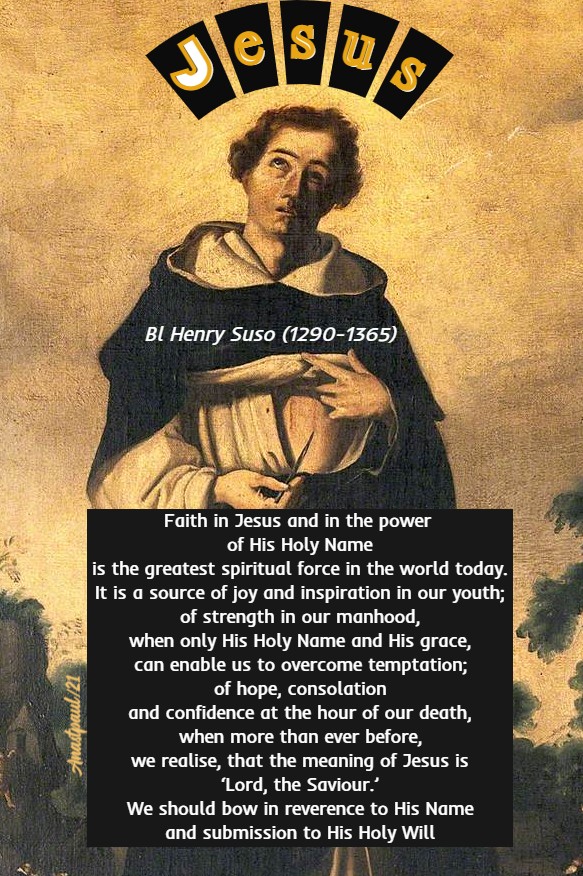
de Zurbaran, Francisco; The Blessed Henry Suso

During their conversations, Elisabeth asked Bl Henry to help her understand the pathway to God by sharing with her his own experiences. However, Suso did not know that the well-educated nun was keeping the letters he sent her and recording all that Suso told her, concerning both theological matters and his extreme practices of personal penance. When he learned of her undertaking, he requested the texts and proceeded to burn them, saving only the second installment of manuscripts for the sake of educating other religious. Bl Henry thereafter forbade Elisabeth to imitate him by engaging in extreme asceticism, fearing for her health.

Elisabeth then authored the Lives of the Nuns of Töss, a work containing biographies of 39 nuns and providing a comprehensive picture of mysticism in the Töss Convent. Blessed Elisabeth of Hungary may have been one of the Nuns whose life Elisabeth described.

Elisabeth died in Töss in 1360 and was probsbly buried there.

Blessed Elisabeth’s book is integral to understanding mysticism and monastic life in medieval Germany.

The former Töss Monastery in a drawing by the Historian, Heinrich Murer (17th Century)
Posted in DOMINICAN OP, FEASTS and SOLEMNITIES, MARIAN TITLES, SAINT of the DAY

The Solemnity of Corpus Christi, The Most Holy Body and Blood of Our Lord Jesus Christ, Dedication of the Church of MonteVergine, near Naples, Italy (1126) and the Saints for 30 May

The Solemnity of Corpus Christi, The Most Holy Body and Blood of Our Lord Jesus Christ:
Corpus Christi

The Feast is liturgically celebrated on the Thursday after Trinity Sunday
https://anastpaul.com/2022/06/16/the-festival-of-corpus-christi/

St Anastasius II of Pavia
St Basil the Elder
St Crispulus of Sardinia
Blessed Elisabeth Stagel OP (c1300-1360) Virgin, Prioress of the Order of Preachers
St Emmelia
St Euplius
St Exuperantius of Ravenna
St Gamo of Brittany
St Gavino of Sardinia
St Isaac of Constantinople
Bl Lawrence Richardson
St Luke Kirby
St Madelgisilus
St Reinhildis of Riesenbeck
St Restitutus of Cagliari
Bl Richard Newport

St Venantius of Lérins
St Walstan of Bawburgh
Bl William Filby
Bl Willilam Scott

Posted in DIVINE Mercy, Goodness, Patience, HUMILITY-Fr Richard Clarke, QUOTES on GRACE, QUOTES on HUMILITY, QUOTES on REPENTANCE, QUOTES on SIN

Thought for the Day – 29 May – The Foundation of Humility

Thought for the Day – 29 May – Meditations with Fr Richard Frederick Clarke SJ (1839-1900) SJ

HUMILITY
Meditations for a Month

Chapter Three
The Foundation of Humility

No-one can review his past life without finding therein, motives enough and to spare, for humbling himself before Almighty God. “We have sinned, we have committed iniquity, we have done
wickedly, we have revolted; to us belongeth shame and confusion of face
” (Dan 9: 5, 7). If ever we are inclined to think much of ourselves, we have only to look back on our past years. Look upon the deliberate sins against charity, against truthfulness, against purity. Look upon the pride, the selfishness, the self-will, the neglect of God. Look upon the sins which have stained our lives!

Besides actual sins, how many infidelities to grace have we committed! God has been so liberal with His graces and I have been so negligent in availing myself of them. How many I might have earned if I had been faithful and had not willfully turned aside from what God asked of me,
to follow my own will and pleasure. What cause for humiliation of myself! If others who have perhaps lived and died in sin had had my graces, would they not have made a far better use of them than I have made? To me, O God, shame and confusion of face! I must throw myself on Thy mercy and humbly beg forgiveness.

When, moreover, I look at what I now am, I find fresh cause for humbling myself. I might have been a Saint if I had been more faithful and now I am one of the vilest of sinners. My soul in the sight of God is disfigured by sin, as a body is by the ulcers and sores that spoil its natural beauty and comeliness. I abound with faults innumerable. I am unworthy to appear in the presence of God.
“O hide Thy face from my sins, blot out all my iniquities!”

Posted in CARMELITES, GOD ALONE!, QUOTES on DEATH, QUOTES on LOVE of GOD, QUOTES on PRIDE, QUOTES on SELF-DENIAL, QUOTES on SUFFERING, SAINT of the DAY, SELF-DISTRUST

Quote/s of the Day – 29 May – St Maria Magdalena de’ Pazzi

Quote/s of the Day – 29 May – St Maria Magdalena de’ Pazzi O.Carm (1566-1607) Virgin

Self-love is like the worm which gnaws at the root
and destroys, not only the fruit but even,
the very life of the plant.
The traitor whom we have to fear most, is self-love, f
or self-love betrays us as Judas
betrayed our Lord with a kiss.
He who conquers self-love, conquers all!

I do not desire to die soon
because, in Heaven, there is no suffering.
I desire to live a long time
because, I yearn to suffer much
for the love of my Spouse.

MORE:
https://anastpaul.com/2022/05/29/quote-s-of-the-day-29-may-st-maria-magdalena-de-pazzi/

St Maria Magdalena de’ Pazzi (1566-1607)

Posted in CHRIST the WORD and WISDOM, FATHERS of the Church, GOD ALONE!, ONE Minute REFLECTION, PRACTISING CATHOLIC, QUOTES on SACRED SCRIPTURE, QUOTES on THE VOICE OF GOD, The WORD

One Minute Reflection – 29 May – ‘… Those who want to be favourably listened to by God, must begin by listening to God. …’

One Minute Reflection – 29 May – “The Month of the Blessed Virgin Mother of God” – St Maria Magdalena de’ Pazzi O.Carm (1566-1607) Virgin – 2 Corinthians 10:17-18; 11:1-2; Matthew 25:1-13 – Scripture search here: https://www.drbo.org/

Amen I say to you, I know you not.” – Matthew 25:12

REFLECTION – “Pay attention, dear brothers – the holy Scriptures were passed onto us, so to speak, like letters come from our homeland. Our homeland, indeed, is paradise; our forebears are the Patriarchs, the Prophets, the Apostles and the Martyrs; our fellow countrymen, the Angels; our King, Christ. When Adam sinned, we were thrown into the exile, as it were, of this world. But because our King is faithful and merciful, more than we can imagine or express, He deigned to send us the holy Scriptures through the Patriarchs and the Prophets, as the letters of invitation, with which He invites us to our eternal and original homeland. … Because of His unspeakable Kindness, He has invited us to reign with Him.

In these conditions, what idea do they have of themselves, these servants who do not deign to read the letters which invite us to the happiness of the Kingdom? … “If anyone does not acknowledge this, he is not acknowledged” (1 Cor 14:38). Certainly, the one who neglects to look for God in this world, by reading the Sacred texts, God, in His turn, will refuse to admit him to eternal happiness. He should fear that he may find the doors locked, leaving him outside with the foolish virgins (Mt 25:10) and that he might hear: “ I do not know who you are, I do not know you, depart from me, all you evildoers. ” … Those who want to be favourably listened to by God, must begin by listening to God. How could we have the effrontery to want God to listen to us favourably, if we attach so little importance to Him that we neglect to read His precepts!?” – St Caesarius of Arles (470-543) Bishop, Father of the Church (Sermons – 7).

PRAYER – O God, lover of chastity, Who endowed with heavenly gifts, blessed Mary Magdalena, a virgin on fire with love for You, grant that we, who keep this feast-day in her honour, may imitate her by purity and love. Through Jesus Christ, Thy Son our Lord, Who lives and reigns with Thee, in the unity of the Holy Ghost, God, world without end. Amen (Collect).