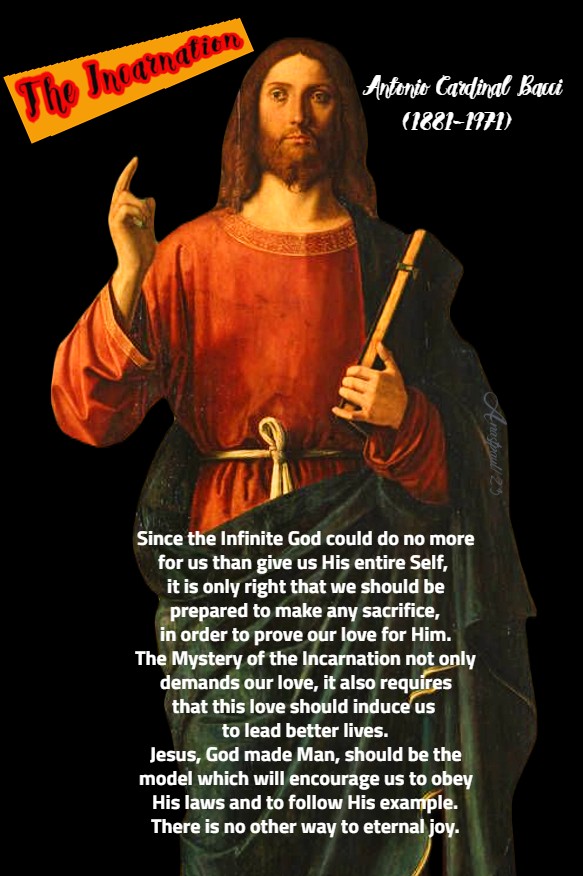
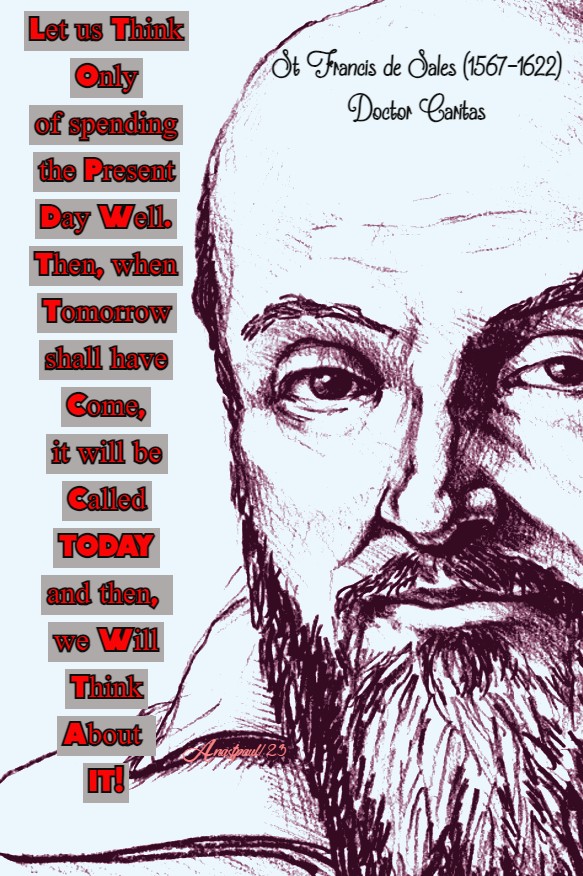
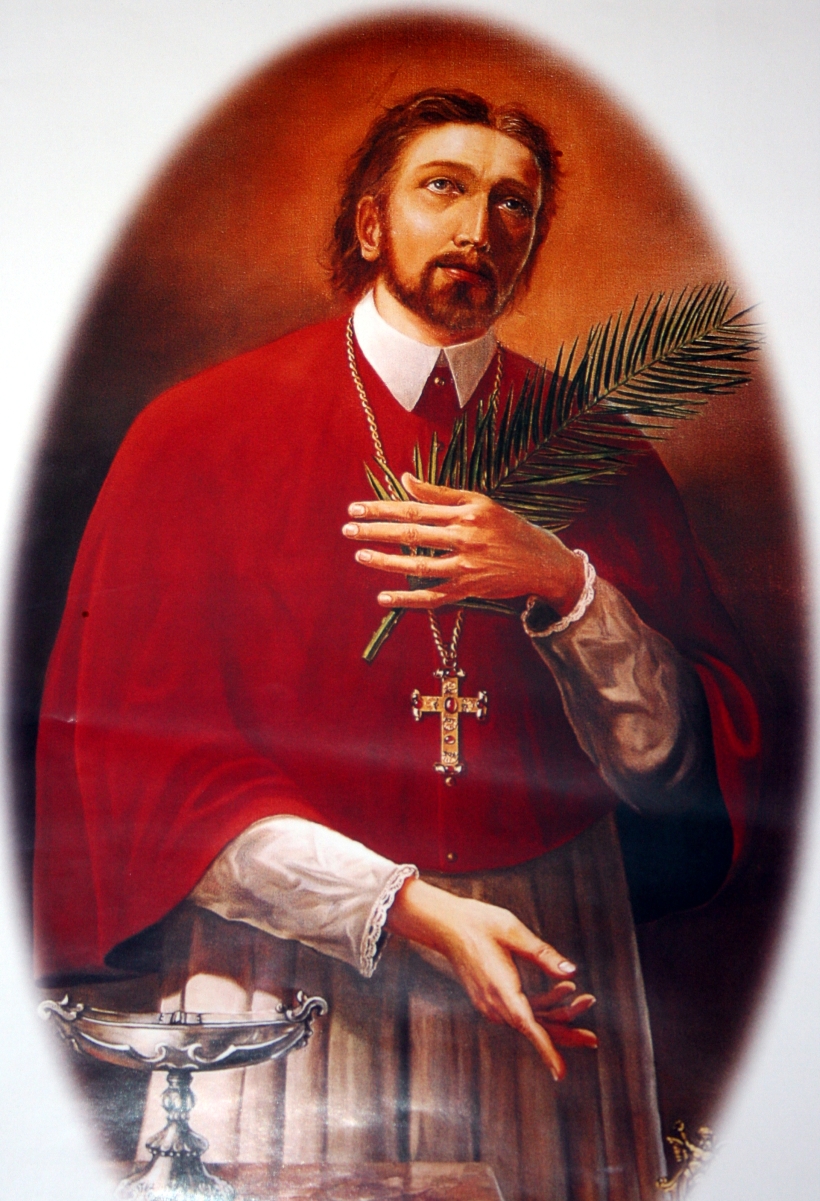
Thought for the Day – 27 April – Meditations with Antonio Cardinal Bacci (1881-1971)
The Word of God
“The Word of God should be for us a summons to turn completely from vice towards virtue. It should be the lamp which illuminates the darkness of our minds and helps us to see the ugliness of sin. It should revive our faith and set our hearts on fire with the love of God and the desire for Heaven.
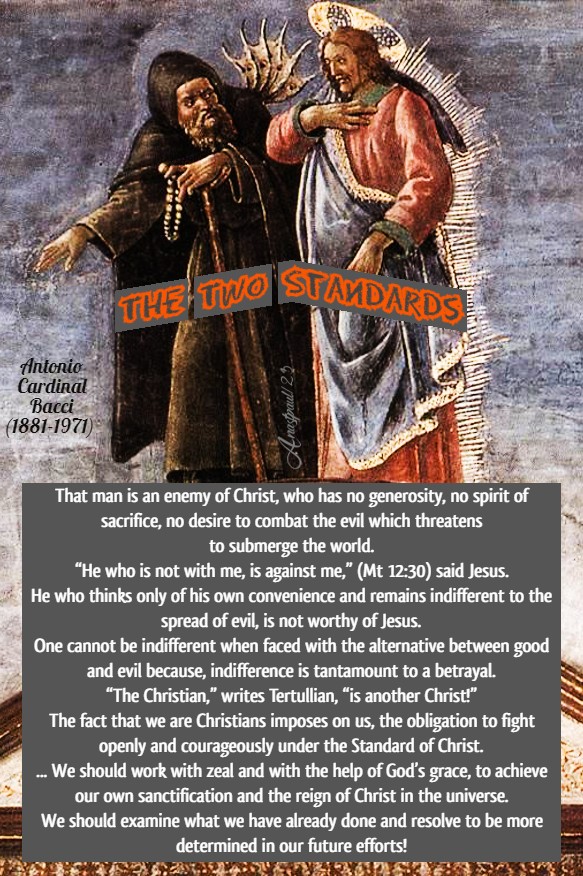
Every sermon which we hear and every prayer of Sacred Scripture which we read, should incite us to further progress in the way of Christian perfection. This should be our main goal in life. If we try hard to reach it, we shall, by the grace of God, become the good ground in which the Divine Seed will bear abundant fruit for eternal life.”
Quote/s of the Day – 27 April – St Peter Canisius (1521-1597) Confessor, Doctor of the Church
This 16th Century Saint, known as the second Apostle of Germany, followed in the giant footsteps of St Boniface, who evangelised Germany a thousand years earlier. He was also active at the Council of Trent and wrote much on the Blessed Virgin Mary.
The first half of the Hail Mary, of course, comes from Scripture. What many Catholics do not know, is that the second half of this Catholic prayer is due to the intervention of St Peter Canisius at the Council of Trent. St Peter began adding onto the scriptural part of the Hail Mary the second half of this familiar prayer: “Holy Mary Mother of God, pray for us sinners, now, and at the hour of our death.” It was the Fathers of Trent who officially accepted this addition and included it in their famous Catechism of the Council of Trent in 1566.
“For the sake of obtaining that eternal life, no works of piety, ought to seem too difficult to a true believer, no toil too heavy, no pain too bitter, no time spent in labour and suffering, too long or too wearisome. For, if nothing is sweeter, or more desirable, than this present life which is so full of calamities, how much more desirable, must that other life be deemed which is so far removed from all sense of evil, or fear of it, which will, in every conceivable way, always abound in the unspeakable and unending joys, delight and happiness of Heaven.”
One Minute Reflection – 27 April – “The Month of the Resurrection” – St Peter Canisius (1521-1597) Confessor, Doctor of the Church – 2 Timothy 4:1-8, Matthew 5:13-19 – Scripture search here: https://www.drbo.org/
“You are the light of the world.” – Matthew 5:14
REFLECTION – “In his epistle, Saint John rightly states: ‘God is Light‘ and “whoever remains in God” is “in the Light, just as God Himself is in the Light” (1 Jn 1:5,7; 3:24). Because we have had the good fortune to be freed from the darkness of error, we should always “walk in the Light” like “children of the Light” (Eph 5:8)… And so the Apostle Paul says: “Among them you shine as Lights in the world, holding fast the Word of Life” (Phil 2:15-16). But if we do not do this, it will be clear that we are, so to speak, covering up and shading this essential Light by our lack of faith…
Therefore, that shining Light which has been lit, for our salvation must always shine in us. For we possess the lamp of the heavenly commandments and of the spirit of grace, of which David said: “Thy law is a lamp to my feet and a light to my path” (Ps 118:105)… We must not, then, hide this lamp of the law and of faith but should always set it up on the Church, as on a lampstand, for the salvation of many. In this way, we too may enjoy the Light of Truth itself and all who believe. may be enlightened.” – St Chromatius of Aquilaea (Died c407) Bishop, Father of the Church (Homilies on Saint Matthew’s Gospel No 5).
PRAYER – O God, Who didst give strength and learning to blessed Peter Thy Confessor for the defence of the Catholic Faith, mercifully grant that by his example and teaching, the erring may be saved and the faithful remain constant, in the confession of Truth. Through Jesus Christ, Thy Son our Lord, Who lives and reigns with Thee, in the unity of the Holy Ghost, God, world without end. Amen (Collect).
Our Morning Offering – 27 April – St Peter Canisius (1521-1597) – Confessor, Doctor of the Church, Dutch Priest of the Society of Jesus, Reformer, Teacher, Writer, Apostle of Charity.
The Universal Prayer By St Peter Canisius (1521-1597) Doctor of the Church
Almighty, Eternal God, Lord, heavenly Father, look with Thine eyes of undeserved compassion on our sorrow, misery and need. Have mercy on all the Christian faithful, for whom Thine Only-begotten Son, our Lord and Saviour, Jesus Christ, was content to give Himself into the hand of sinners and shed His Precious Blood on the wood of the Holy Cross. For the sake of the Lord Jesus, most gracious Father, avert our well-deserved punishments, present danger and future threats, harm and outrage, arms and warfare, dearth and misfortune, sickness and sorrowful, miserable times. Enlighten and strengthen, in all goodness, our spiritual leaders and earthly rulers that they may do everything to further Thine honour as God, our salvation, the common peace, and the welfare of all Thy people. Grant us, O God of peace, a true unity in faith, free of all division and separation. Convert our hearts to true repentance and amendment of life. Kindle in us the fire of Thy love; give us hunger and zeal for justice in all things, so that we, as obedient children through life unto death, may be pleasing to Thee and find favour in Thy sight. We pray too, O God, as Thou willed that we should pray, for our friends and enemies, for the healthy and the sick, for all Christians in sadness and distress, for the living and the dead. To Thee, O Lord, be entrusted, whatever we do, whatever our path, our work and our dealings, our living and dying. Let us delight in Thy grace, here in this world and attain the next, with all Thy chosen ones, to praise, honour and extol Thee, in unending joy and blessedness. Grant us this, O Lord, heavenly Father, through Jesus Christ, Thy Beloved Son, Who lives and reigns with Thee and the Holy Ghost, One God, forever and ever. Amen
The abrove prayer, with spaces for responses after each petition, was a sixteenth Century form of the Prayer of the Faithful within the classic Latin Roman rite, (with Priestly orations and litanies in Latin), popular for 450 years in the French, English, Irish and German-speaking Church.
Saint of the Day – 27 April – Saint John of Kathara (c770-c835) Priest, Abbot, Defender of Sacred Images. Born in c770 at Irenopolis, Isaurian Decapolis (modern Greece) and died in c835 on the prison island of Aphousia (modern Avsa, Balikesir, Turkey) of natural causes. Also known as – John di Catari, John of Cathare, John of Constantinople.
The Roman Martyrology states [somewhat erroneously * see below]: “At Constantinople, the Abbot St John, who combated vigorously, for the worship of holy images, under Leo the Isaurian.”
At the age of nine John embraced the monastic life. His master became attached to him and took him with him to the second Council of Nicaea (787) and then again when he left for Constantinople, where he became Superior of the Monastery known as the Dalmatian. Here John was Ordained to the Priesthood.
In Lent of 805, the Emperor Nicephorus (802-811) sent John to govern the Cathar Monastery in Bithynia and in the summer of 808, his convent separated from St. Theodore the Studite, probably because John had accepted the re-establishment of the Priest Giuseppe, made famous in the ‘Mechian’ controversy.
He had been Abbot for just over ten years when the iconoclast persecution, unleashed by Leo the Armenian (813-820), removed him from his Convent (April – May 815). Taken to Constantinople before the Emperor, he was scourged, then relegated to his residence where he remained for three months. He was finally exiled and imprisoned in the fortress of Pentadactylos in the region of Lampe, near Apamea.
During this confinement, he joined, together with other iconodule Abbots and Monks, the appeals addressed to Rome, in 816 and 817, by Saint Theodore the Studila. After ten months of detention, he had to appear again, in the capital (around April 817), before the Emperor and the usurping Bishop Theodotus.
John resisted magnificently and was exiled again (June 819) to the fort of Criautoros. Early in the reign of Michael the Stutterer, Leo’s successor, John was freed (after 25 December 820) and returned to Chalcedon but was not allowed to enter the capital. Perhaps he reached his Monastery. But when the Emperor Theophilos unleashed a new offensive against the cult of images (after October 832), John tried to rally the iconophile Monks around him. Therefore, he was again exiled to the island of Afusia,, where he died on 27 April 835.
* On 27 April, the Roman Martyrology contains a praise of the Saint which needs rectification – it speaks of Leo the Isaurian instead of Leo the Armenian; moreover, in fixing the place of John’s death at Constantinople, leading many to believe that the Saint had been the Abbot of the Cathar Monastery existing in the capital of the Byzantine Empire.
St Peter Canisius SJ (1521-1597) – The Known as “The Hammer of Protestantism,” “Second Apostle of Germany” – Confessor, Doctor of the Church, Dutch Priest of the Society of Jesus, Reformer, Teacher, Writer, Apostle of Charity. Patronages – Catholic Press, Germany, Catechists. The restoration of the Catholic Church in Germany after the Protestant Reformation is largely attributed to the work there of the Society of Jesus, which he led. “Peter Canisius was the first publisher, the first author, the first editor of the Society of Jesus. By now, Jesuits have followed in his footsteps to the tune of having published in 400 years, thousands of books. From the time of Canisius, and his name is first in the bibliography of Jesuit writers, from Peter Canisius to the end of the l9th century, that is to 1900, there are about twenty volumes of bibliography, each volume about two inches thick, stands about eighteen inches high, filled just with authors and titles, thousands and thousands and thousands, no other religious institute in the Church publishes as much as members of the Society. It was all started by Peter Canisius.” (Ven Servan of God Fr John A Hardon SJ) His Feast day is 27 April (General Roman Calendar, 1926–1969. Biography: https://anastpaul.com/2017/12/21/saint-of-the-day-21-december-st-peter-canisius-s-j-1521-1397-doctor-of-the-church/ AND: https://anastpaul.com/2018/12/21/saint-of-the-day-21-december-st-peter-canisius-s-j-1521-1397-the-second-apostle-of-germany-doctor-of-the-church/
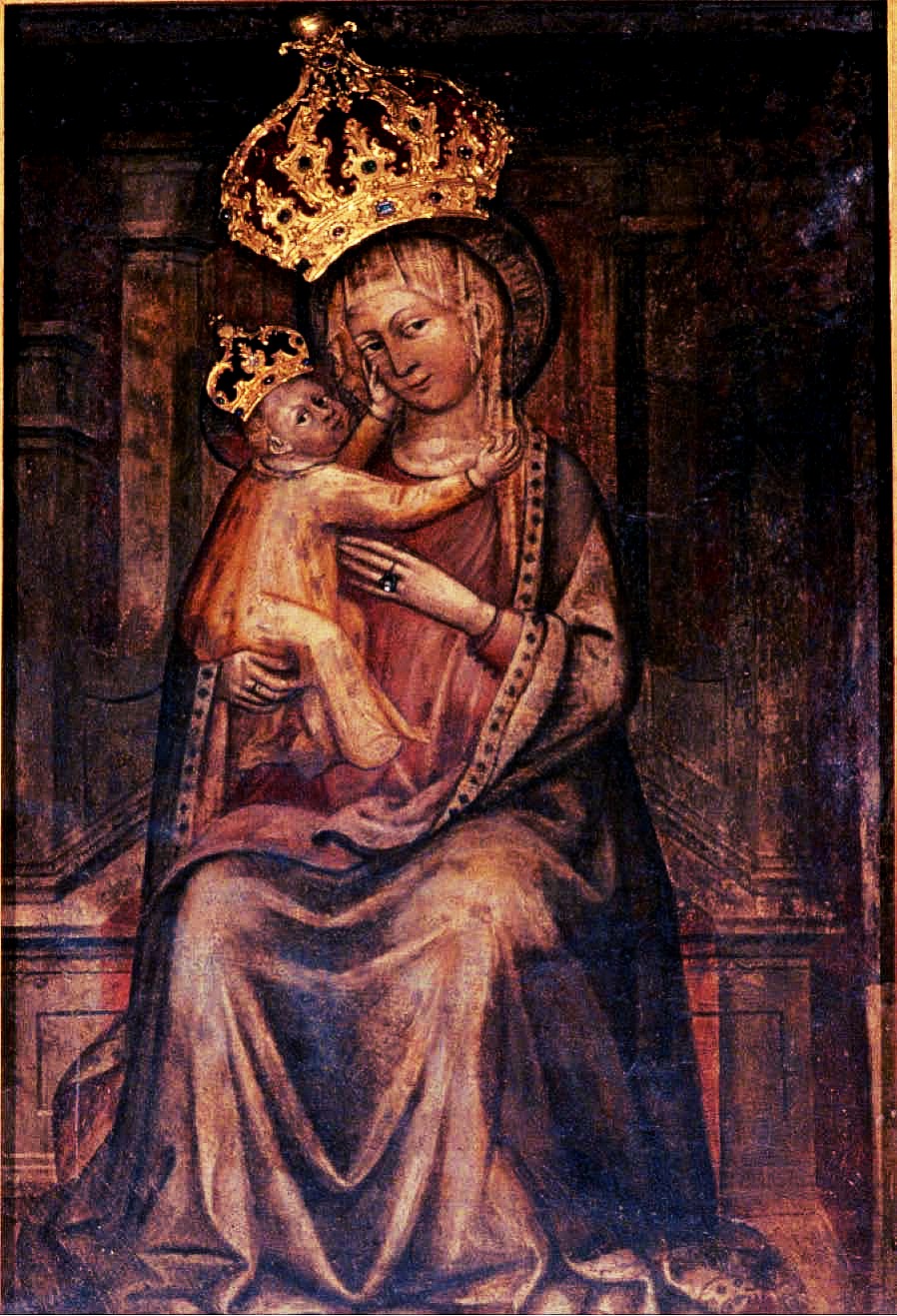
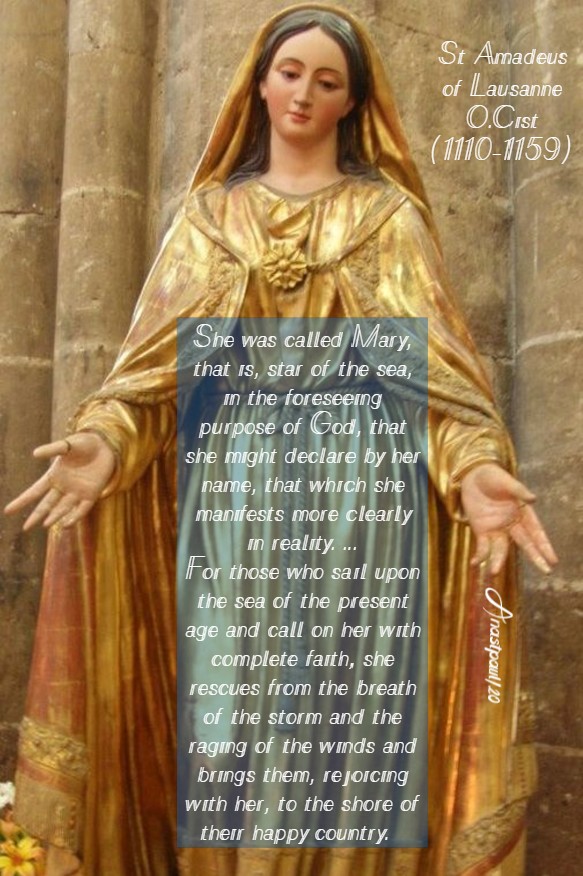
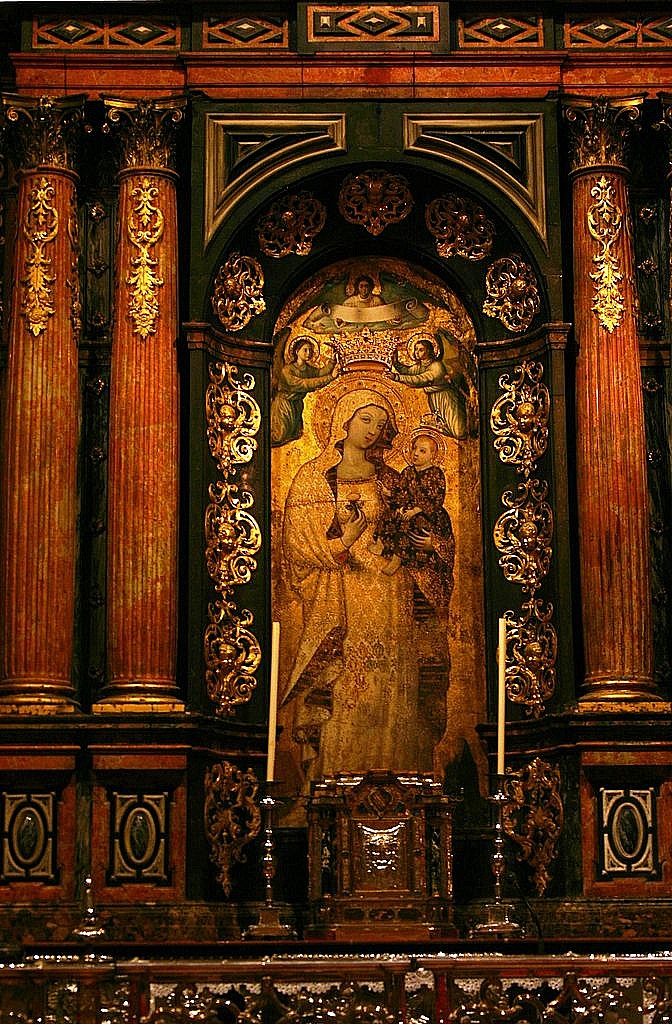
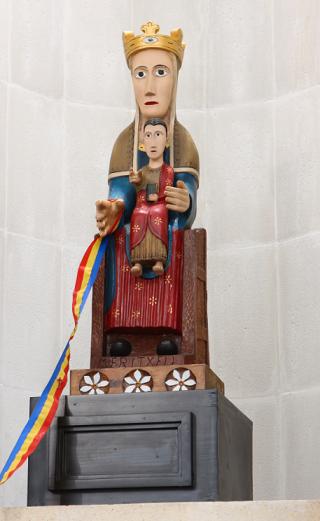
Our lady of Montserrat, patroness of Catalonia. The statue of the black Madonna is in the Church of Santa Maria de Montserrat Abbey, Catalonia, Spain. Photographed from 21.07.2015.
St Adelelmus of Le Mans St Asicus of Elphin St Castor of Tarsus St Enoder St Floribert of Liege
Blessed Jakov Varingez OFM (c 1400–1496) Croatian professed religious of the Order of Friars Minor, Apostle of charity, Mystic with a great devotion to the Cross of Christ, Marian devotee, he was noted as a miracle worker and levitated. He was Beatified on 29 December 1700 by Pope Clement XIH. His body is incorrupt. His Life: https://anastpaul.com/2019/04/27/saint-of-the-day-27-april-blessed-jakov-varingez-ofm-c-1400-1496/
St John of Kathara (c770-c835) Priest, Abbot St Liberalis of Treviso St Maughold
St Peter Armengol OdeM (c 1238-1304) “The Martyr who Wasn’t,” “The Unconquerable Martyr of Jesus Christ,” “The Gangster Saint,”Spanish Priest of the Mercedarian Friars, Penitent, Mystic. Beatified on 28 March 1686, by Pope Innocent XI and Canonised on 8 April 1687, by the same Pope. His body was incorrupt until it was destroyed during the horrors of the Spanish Civil War. A Miraculous Life: https://anastpaul.com/2022/04/27/saint-of-the-day-27-april-saint-peter-armengol-odem-c-1238-1304-the-martyr-who-wasnt/
St Pollio of Cybalae St Simeon of Jerusalem St Stephen of Tarsus St Tertullian of Bologna St Theophilus of Brescia St Winewald of Beverley
St Zita of Lucca (1212-1272) Virgin, Laywoman, Apostle of the Poor. – Her reputation was such that Dante in the Inferno referred to the City of Luccam, her birthplace and home, as “Santa Zita.” P atronages – housewives, butlers, housemaid, domestic servants (proclaimed by Pope Pius XII), housemaid, lost keys, maids, manservants, people ridiculed for their piety, rape victims, servants, servers, single laywomen, waiters, Lucca, Italy. Her body is incorrupt. Biography:. https://anastpaul.wordpress.com/2017/04/27/saint-of-the-day-27-april-st-zita-of-lucca/
Martyrs of Nicomedia: A group of Christians murdered together for their faith. In most cases all we have are their names – Dioscurus, Evanthia, Felicia, Felix, Germana, Germelina, Johannes, Julius, Laetissima, Nikeforus, Papias, Serapion and Victorinus. They died at Nicomedia, Bithynia, Asia Minor (modern Izmit, Turkey).
Thought for the Day – 26 April – Meditations with Antonio Cardinal Bacci (1881-1971)
The Only Remedy for All Our Ills
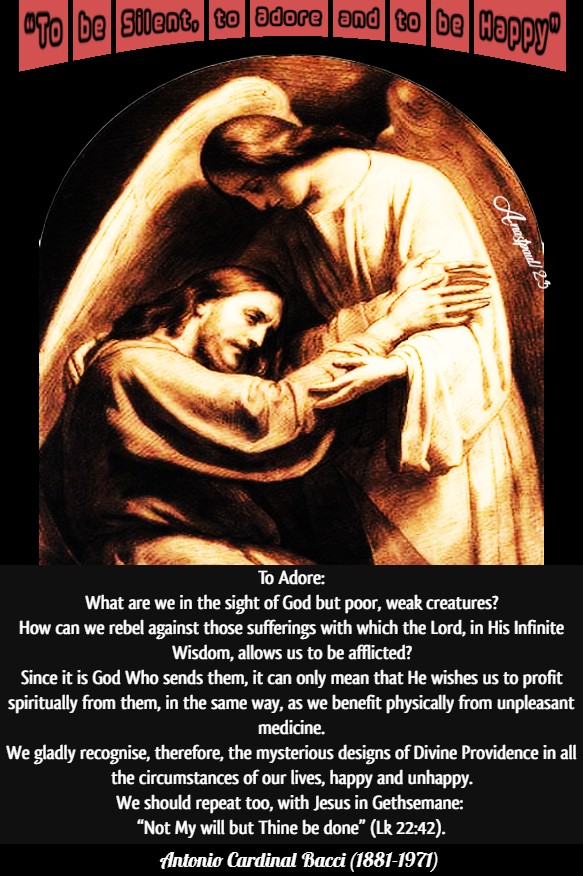
“We should not stop short at doing the will of God with resignation but should aim at doing it from the motive of love. We should perform all our most ordinary actions and accept physical and moral suffering, purely for the love of God. Then we shall have peace, both in joy and in sorrow and we shall be happy.
Only the Saints fully understood this great principle of doing and enduring everything for the love of God alone. They made it their basic rule of life. If Jesus granted them consolation and favours, they thanked Him. If He sent them severe suffering and spiritual desolation, they were equally grateful. “To me to live, is Christ” (Phil 1:21) said St Paul. Jesus Christ must reign supreme in my will and in my heart and in all my actions. Then sorrow and suffering will be all the same to me and I shall possess the peace and happiness of the Saints.”
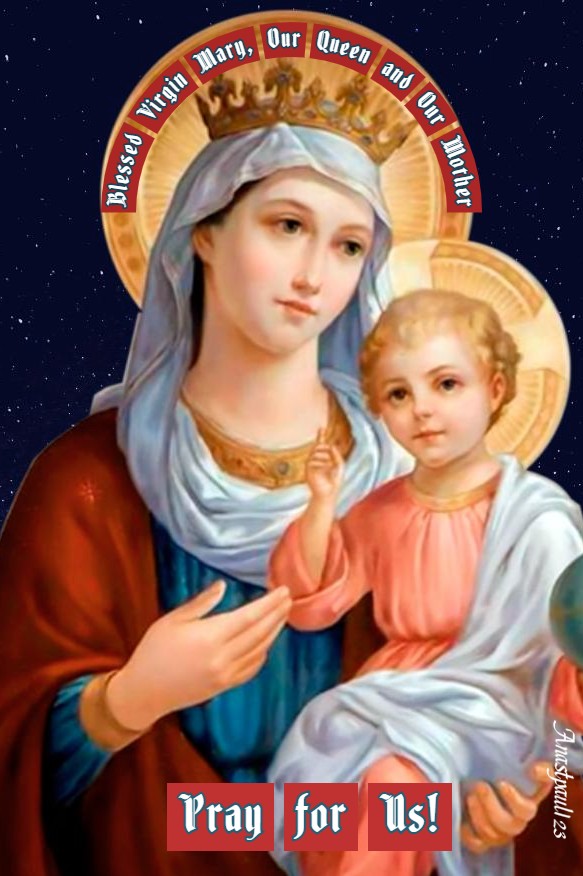
Quote/s of the Day – 26 April – Feast of Our Lady of Good Counsel
This prayer to our Lady of Good Counsel, like many other Marian prayers, asks for Our Blessed Mother’s help in obtaining our salvation. Note the reference to our earthly existence as being a “vale of tears,” an expression we find too in the Salve Regina, the Hail Holy Queen.
Prayer to Our Mother of Good Counsel
Most Glorious Virgin chosen by the Eternal Counsel to be the Mother of the Eternal Word made flesh, thou, who art the Treasurer of Divine Graces and the Advocate of Sinners, I, thy most unworthy servant, have recourse to thee; be thou pleased to be my Guide and Counsellor in this vale of tears. Obtain for me, through the Most Precious Blood of thy Divine Son, the forgiveness of my sins, the salvation of my soul and the means necessary to obtain it. In like manner, obtain for Holy Mother the Church, victory over her enemies and the spread of the Kingdom of Jesus Christ upon the whole earth. Amen
Pope Paul II sent two Bishops to investigate the image of Our Lady of Good Counsel and the numerous miracles that took place, following its appearance at this Church (by one account 171 alone in the period from 27 April to 14 August 1467)!
The fresco is still there to this day, having survived earthquakes over the Centuries and even aerial bombardment during World War II which destroyed much of the Church.
Many Popes have been great champions of Our Lady of Good Counsel and her image. Pope Paul II first approved devotion to her. Popes Urban VIII and Pius IX made visits to the Church in Genazzano to honour her. In 1753 Pope Benedict XIV established the Pious Union of Our Lady of Good Counsel which has included, among its members, the Popes Pius VIII, Pius IX, Leo XIII and Pius XII,the last, who placed his Papacy under her maternal care. He later composed this prayer to Our Lady of Good Counsel which can be used as a novena:
O Mother of Good Counsel By Pope Pius XII (1876-1958)
O Holy Virgin, to whose feet we are led by our anxious uncertainty in our search for and attainment of, what is true and good, invoking thee by the sweet title of Mother of Good Counsel, we beseech thee to come to our assistance, when, along the road of this life, the darkness of error and of evil conspire towards our ruin, by leading our minds and our hearts astray. O Seat of Wisdom and Star of the Sea, enlighten the doubtful and the erring that they, be not seduced, by the false appearances of good; render them steadfast in the face of the hostile and corrupting influences, of passion and of sin. O Mother of Good Counsel, obtain for us from thy Divine Son, a great love of virtue and, in the hour of uncertainty and trial, the strength to embrace the way which leads to our salvation. If thy hand sustains us, we shall walk unmolested, along the path indicated to us, by the Life and Words of Jesus, our Redeemer and, having followed freely and securely, even in the midst of this world’s strife, the Sun of Truth and Justice, under thy maternal Star, we shall come to the enjoyment of full and eternal peace, with thee, in the Haven of Salvation. Amen
It is also worth noting, especially in these uncertain times for the Church as for the world (and in many ways, the two may be said to be linked together!) that Our Blessed Mother is ready, willing and more than able, to help us i“in the midst of this world’s strife.” We need only to approach her for assistance, in drawing closer to Jesus with fervent, humble prayer and devotion.
Keep in mind too, regarding the line in the first of our prayers above about our Church’s “victory over her enemies” that, in 1571, St Pius V credited Our Lady of Good Counsel with having assisted the Holy League of forces from Catholic maritime states, to defeat the Muslim Ottoman Empire in the famous Battle of Lepanto. This was a decisive victory which kept Italy from being overrun by the Muslims. Let us also pray to Mary for help, as Pope Pius V did, in the midst of our own battles! Amen.
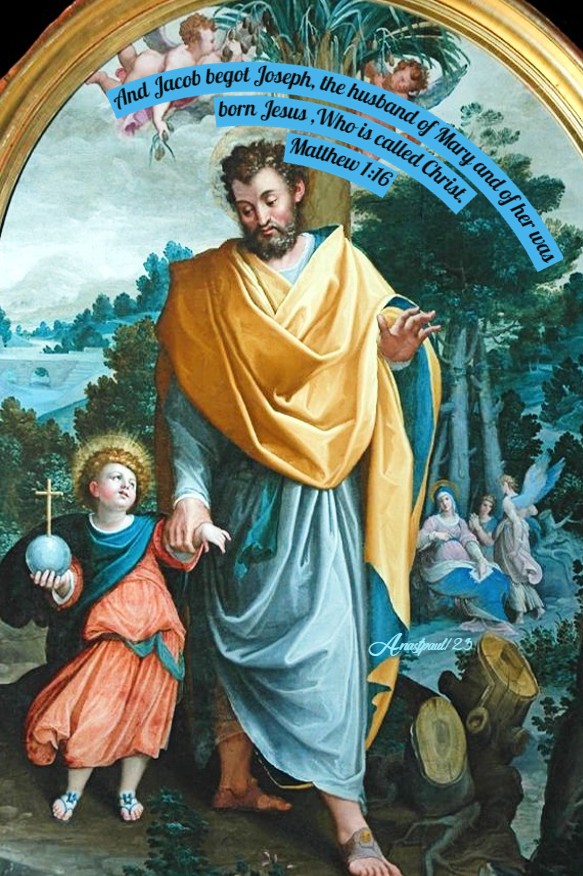
One Minute Reflection – 26 April – Solemnity of St Joseph – Genesis 9:22-26, Luke 3:21-23 – – Scripture search here: https://www.drbo.org/
“And Jesus, Himself, was beginning about the age of thirty years, being – (as it was supposed) – the son of Joseph … ” – Luke 3:23
REFLECTION – “There is a general rule, concerning all special graces granted to any human being. Whenever the divine favour chooses someone to receive a special grace, or to accept a lofty vocation, God adorns the person chosen, with all the gifts of the Spirit, needed to fulfil the task at hand.
This general rule is especially verified in the case of Saint Joseph, the Foster-Father of our Lord and the husband of the Queen of our world, enthroned above the Angels. He was chosen by the eternal Father as the trustworthy Guardian and Protector of his greatest treasures, namely, his Divine Son and Mary, Joseph’s wife. He carried out this vocation with complete fidelity until at last God called him, saying: Good and faithful servant, enter into the joy of your Lord.
What then is Joseph’s position in the whole Church of Christ? Is he not a man chosen and set apart? Through him and, yes, under him, Christ was fittingly and honourably introduced into the world. Holy Church, in its entirety, is indebted to the Virgin Mother because through her, it was judged worthy to receive Christ. But after her, we undoubtedly owe special gratitude and reverence to Saint Joseph.
In him the Old Testament finds its fitting close. He brought the noble line of patriarchs and prophets to its promised fulfilment. What the Divine Goodness had offered as a promise to them, he held in his arms. Obviously, Christ does not now deny to Joseph that intimacy, reverence and very high honour which He gave him on earth, as a son to his father. Rather, we must say that in Heaven, Christ completes and perfects, all that He gave at Nazareth.
Now, we can see ,how the last summoning words of the Lord appropriately apply to Saint Joseph – Enter into the joy of your Lord. In fact, although the joy of eternal happiness enters into the soul of a man, the Lord preferred to say to Joseph – Enter into joy. His intention was, that the words should have a hidden spiritual meaning for us. They convey, not only that this holy man possesses an inward joy but also, that it surrounds him and engulfs him, like an infinite abyss.
Remember us, Saint Joseph and plead for us to your Foster-Child. Ask your most holy bride, the Virgin Mary, to look kindly upon us, since she is the Mother of Him Who, with the Father and the Holy Spirit, lives and reigns eternally. Amen.” – St Bernardine of Siena (1380-1444) (An excerpt on his Sermon 2 of St Joseph).
PRAYER – God, Who in thine unspeakable foreknowledge didst choose Thy blessed servant Joseph, to be the husband of Thine Own most holy Mother; mercifully grant that now that he is in Heaven with Thee, we who on earth do reverence him for our Defender, may worthily be helped by the succour of his prayers to Thee on our behalf. Through the same Jesus Christ, Thy Son our Lord, Who lives and reigns with Thee, in the unity of the Holy Ghost, God, world without end. Amen (Collect).
Our Morning Offering – 26 April – “The Month of the Resurrection”
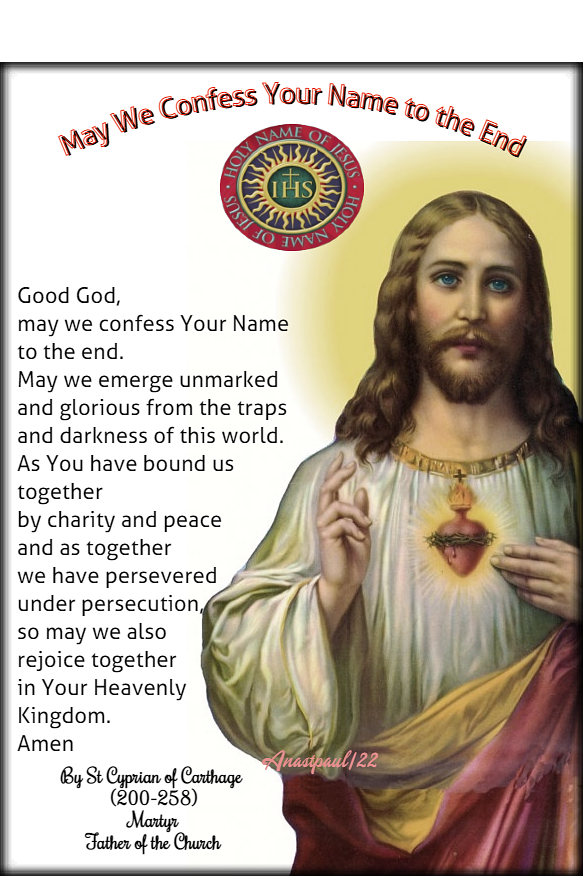
May We Confess Your Name to the End By St Cyprian of Carthage (200-258) Bishop and Martyr Apostolic Father of the Church
Good God, may we confess Your Name to the end. May we emerge unmarked and glorious from the traps and darkness of this world. As You have bound us together, by charity and peace and as together, we have persevered under persecution, so may we also rejoice together in Your Heavenly Kingdom. Amen
Saint of the Day – 26 April – Saint Pope Marcellinus (Died 304) Martyr, Bishop of Rome from 30 June 296 to his death in 304.
The Roman Martyrology reads: “In the same City [Rome], in the time of Maximian, St Marcellinus, Pope and Martyr, who was beheaded for the Faith of Christ, with Claudius, Cyrinus and Antoninus. So great was the persecution at this time that, within a month, seventeen thousand Christians were crowned with Martyrdom.”
Marcellinus was a Roman, the son of Projectus. He succeeded Caius as Bishop of Rome. We know little about his Pontificate except that a certain heretic of the 6th Century accused Marcellinus of having apostised but almost immediately repenting. St Augustine refutes and denies this allegation.
Marcellinus was beheaded with three others and their bodies remained without burial in the forum for thirty six days, to strike fear into the hearts of their fellow-Christians.
It was on the 26th of April in the year 304 that a Priest named Marcel, came at night, with other Priests and Deacons of Rome, to gather up their Relics which they laid to rest in the Priscilla Catacomb.
After a considerable interval, he was succeeded by Marcellus, with whom he has sometimes been confused
Bl Alda of Siena St Antoninus of Rome St Basileus of Amasea St Clarence of Venice St Claudius of Rome St Cyrinus of Rome St Exuerantia of Troyes Bl Gregory of Besians Bl Juli Junyer Padern St Lucidius of Verona
Thought for the Day – 25 April – Meditations with Antonio Cardinal Bacci (1881-1971)
Gospel Reading
“Finally, we should practice what we learn in the Gospel. If this were not the result of our reading, our efforts would be worth very little. When reading, we should apply to our lives the spirit and the precepts of Jesus. This was the practice of the Saints, whose lives were a continual implementation of the Gospel message. So, St Aloysius and others, understood and applied to their own lives, the maxim: “Blessed are pure of heart.” St Francis and his followers, applied another maxim: “Blessed are the poor in spirit.” St Francis de Sales applied to himself, in a special way, the words: “Blessed are the meek.” As a result, he was noted for his gentleness of character, this man, known as “The Gentleman Saint” and “The Gentle Christ of Geneva!”
We should read the Gospel everyday. It should be for us, a school of practical spirituality, esspecially adapted to the needs of our own soul, which will finally lead us to sanctity.”
Quote/s of the Day – 25 April – Feast of St Mark Evangelist
The Gospel of Saint Mark was written in Greek around the 60s. He was Martyred in 68 and his Relics are preserved in the St Mark Cathedral of Venice. He is represented by a Winged Lion, one of the four living creatures of the Apocalypse, for he begins his Gospel by narrating St John the Baptist crying out in the wilderness, like a roaring lion.
By Alexander Sytov 1995
“To what shall we compare the Kingdom of God, or what parable can we use for it? It is like a mustard seed …”
Mark 4:30-31
“And the wind ceased and there was a great calm. He said to them: “Why are you so afraid? Have you still no faith?”
Mark 4:39-40
“Take courage: It is I, do not be afraid. And He got into the boat with them and the wind fell”
Mark 6:50-51
“Anyone who gives you a cup of water to drink because you belong to Christ …, will surely not lose his reward.”
Mark 9:41
“Whoever does not accept the Kingdom of God, like a little child, shall not enter it.”
Mark 10:15
“For the Son of Man came not to be served but to serve and to give His Life as a ransom for many …”
One Minute Reflection – 25 April – “The Month of the Resurrection” – Feast of St Mark Evangelist – Ezekiel 1:10-14, Luke 10:1-9 – Scripture search here: https://www.drbo.org/
“The harvest indeed, is great …” – Luke 10:2
REFLECTION – “Christ, filled with enthusiasm for His work, prepared to send out labourers… And so He has sent out reapers. “For here the saying is verified that ‘One sows and another reaps’. I sent you to reap what you have not worked for, others have done the work and you are sharing the fruits of their work” (Jn 4:37-38). Now what is this? Has He sent reapers without sending sowers? Where has He sent the reapers? Where others had already laboured… Where the prophets had already preached, since they themselves were the sowers…
Who were the ones who thus laboured? Abraham, Isaac, Jacob. Read the account of their labours – in all their works, a Prophecy of Christ is to be found; in this sense, then, they were sowers. As for Moses, the other Patriarchs and all the Prophets, how much they had to put up with in the cold, while they were sowing! It follows that the harvest was already ready in Judah. And we understand that the harvest was ripe at the moment, when so many thousands of people brought along the value of their possessions, placed it at the feet of the Apostles and, setting down the burdens of this world, began to follow Christ the Lord (Acts 4:35; Ps 81:7). The harvest had indeed, come to maturity.
What was the outcome? Out of this harvest a few seeds were set aside, these sowed the whole world and now, see how another harvest rises up that is to be harvested at the end of the ages… It will not be the Apostles but the Angels who will be sent to gather this harvest.” – St Augustine (354-430) Bishop, Father and Doctor of Grace (Sermons on Saint John’s Gospel, no 15).
PRAYER – O God, Who didst exalt Thy blessed Evangelist Mark, by giving him grace to preach Thine Evangel, grant unto us, we beseech Thee, ever to follow more and more what he teaches and ever to be shielded from all evil by his prayers. Through Jesus Christ, Thy Son our Lord, Who lives and reigns with Thee, in the unity of the Holy Ghost, God, world without end. Amen (Collect).
Our Morning Offering – 25 April – Feast of St Mark Evangelist
Behold the Messengers of Christ By Fr Jean-Baptiste Santeul (1630-1697) Priest, Monk, Hymnist, Poet, Writer
Behold the Messengers of Christ, Who sow in every place, The unveiled Mysteries of God, The Gospel of His Grace.
The things through mists and shadows dim By holy prophets seen, In the full Light of Day, they saw With not a cloud between.
What Christ, true Man, Divinely wrought, What God in Manhood bore, They wrote, as God inspired, in words Which live forevermore.
Although in space and time apart, One Spirit ruled them all And in their Sacred pages still We hear that Spirit’s Call.
To God, the blessèd Three in One, Be glory, praise and might, Who called us from the shades of death To His Own glorious Light. Amen.
Trans. Compilers of Hymns Ancient and Modern, 1861. This Hymn was used for Vespers I & II and Nocturns on the Feasts of St Mark and St Luke in the Paris Breviary (1736). Cardinal Newman’s Hymni Ecclesiae has it listed for the same hours, as the Common of Evangelists in the Paris Breviary (presumably a later edition). Tune: “Tiverton“ Rev J Grigg, c1791.
Saint of the Day – 25 April – Blessed Boniface of Valperga (Died 1243) Bishop, distinguished by his love for the poor and his great humility -his spiritual depth and holiness of life, made him very popular, even among the simplest people. Born in the latter 12th Century in Turin, Italy and died on 25 April 1243 in Aosta, Italy of natural causes.
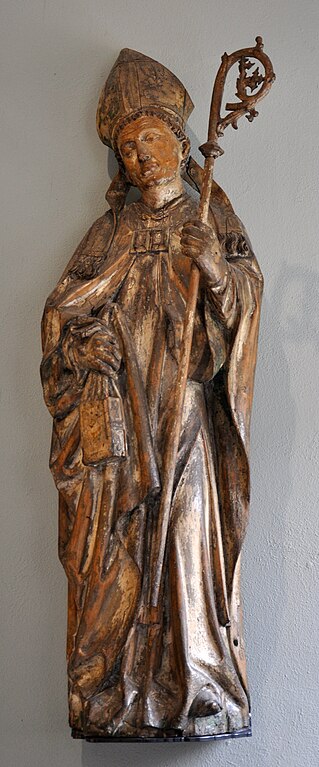
Boniface was born into a noble family of the Canavese, the Counts of Valperga, which claimed descent from the King of Italy, Arduino d’Ivrea. Having received a first basic Christian education in the family, he was, therefore, sent to his paternal uncle Arduino, Bishop of Turin, who provided for his wider education, as well as the growth of Christian virtues.
Having reached a certain age, Bonifacio decided to undertake religious life, wearing the monastic Habit in the Benedictine Abbey of Fruttuaria, today’s San Benigno Canavese. He then moved to the Monastery-Collegiate Church of Sant’Orso of the Regular Canons of Aosta, shining here too for his doctrine and the sanctity of his life.
Soon, around 1210, he was made Prior. In this capacity he undertook a vigorous spiritual and temporal direction of the community, attracting popular admiration and esteem upon himself. This also meant that the faithful took the fate of the Convent more to heart, intervening more and more frequently, with substantial donations.
When Bishop Giacomo was transferred to Asti, on 17 July 1219, Boniface was elected Bishop of Aosta, an office which he retained until his death nearly 24 years later, on 25 April 1243.
The numerous donations in favour of the Bishop’s canteen testify to the good administration of Diocesan assets which he was able to implement and the trust he inspired in his faithful. He poured out all his strength as Shepherd of the flock entrusted to him for twenty-four years, always distinguishing himself by his humility, his love for the poor, for his concern and zeal in the care of souls.
Bonifacio died on 25 April 1243 and was buried at first in the Collegiate Church of Sant’Orso. His body was then transferred to the Cathedral Church of Aosta, to the Chapel of St Antonio.
Around 1302, a marble Statue of Boniface was erected and finally, there was a triple recognition of his mortal remains in 1551, in 1783 and in 1817. On this last occasion the Urn of Relics was placed in a niche between the main Altar and the right aisle of the Aosta Cathedral, where they are still exposed to public veneration today, alongside those of the Blessed Emeric of Quart.
On 28 April 1890 Pope Leo XIII Confirmed his Beatification which had taken place in 1885 by an Ecclesiastical Court in Aosta, Iwhich was specifically called to consider the matter.
St Anianus of Alexandria (Died c 86) 2nd Bishop of Alexandria, after St Mark and succeeding him. Consecrated by St Mark and disciple of St Mark. He was Ordained by Saint Mark and was also the first convert Mark won for Christ in the region, in c 48. As St Mark was entering Rakotis, a suburb of Alexandria, the strap of his sandal broke. He found a cobbler, St Anianus, to repair it. While he was working on the sandal, the awl slipped in Anianus’ hand, piercing it. Anianus cried ‘“Heis ho Theos” (“God is one”) in response to the pain. Mark took the opportunity to preach the Gospel of Christ to him, at the same time. https://anastpaul.com/2021/04/25/saint-of-the-day-25-april-st-anianus-of-alexandria-died-c-86-sucessor-and-disciple-of-st-mark-the-evangelist/
The Healing of Anianus by Cima da Conegliano
Blessed Boniface of Valperga (Died 1243) Bishop St Callista of Syracuse St Clarentius of Vienne St Ermin of Lobbes St Evodius of Syracuse St Heribaldus of Auxerre St Hermogenes of Syracuse St Kebius St Macaille St Macedonius St Mario Borzaga St Pasicrate of Mesia St Phaebadius of Agen St Philo of Antioch St Robert of Syracuse Bl Robert Anderton Stefano of Antioch St Valenzio of Mesia Bl William Marsden
Thought for the Day – 24 April – Meditations with Antonio Cardinal Bacci (1881-1971)
Conversation with God and with Men
“Let us recall again the sentence in which The Imitation of Christ paraphrases – an idea of Seneca (Epistulae morales ad Lucilium 7). “As often as I have been amongst men, I have returned less a man” (Bk 1 c XX,2). The writer goes onto explain what he means by this. “It is easier to keep silence altogether, than not to fall into excess in speaking … No man can safely speak but he who loves silence!” (Ibid).
We have all experienced how true it is that when we are frequently in the company of others, we become easily absorbed in matters which are spiritually advantageous neither to ourselves nor to our neighbour. If the people with whom we associate were holy, this would not happen. It is always edifying to hold confersation with a Saint. After such a conversation we go away better Christians than we were beforehand. “Nobody,” writes Tertullian, “is wiser, more faithful and nobler, than the Christian” (De Praeseriptione haereticorum, 3).
Unfortunately, Saints are rare, whereas evil men are common and idle and foolish men more common still. “Walk with wise men and you will become wise but the companion of fools, will fare badly” (Prov 13:20).
This does not mean that we should all become hermits, for that is a lofty vocation wqo which only a few are called. But it remains true that constant chatter with other men, is both a waste of time and harmful. So-called society life is dissipating and disedifying.
Converse with men when it is necessary, when it is useful and when it is polite to do so. At such times, let your speech be simple and good and your behaviour edifying.”
Quote/s of the Day –24 April – Wisdom 5:1-5, John 15:1-7 – Scripture search here: https://www.drbo.org/
“I am the Vine, you the branches; whoever remains in Me and I in him, the same bears much fruit; for without Me you can do nothing.”
John 15:5
“For patience is necessary for you that, doing the Will of God, you may receive the promise. For yet a little and a very little while and He that is to come, will come and will not delay.”
Hebrews 10:36-37
“The way to rest is through toil, the way to life is through death. Christ has taken on Himself the whole weakness of our lowly human nature. If then we are steadfast in our faith in Him and in our love for Him, we win the victory that He has won, we receive what He has promised.”
St Pope Leo the Great (400-461) Father and Doctor of the Church
“Perfection consists in one thing alone, which is doing the will of God. For, according to Our Lord’s words, it suffices for perfection to deny self, to take up the cross and to follow Him. Now who denies himself and takes up his cross and follows Christ better, than he who seeks not to do his own will but always that of God? Behold, now, how little is needed to become a Saint? Nothing more than to acquire the habit of willing, on every occasion, what God wills.”
St Vincent de Paul (1581-1660)
“It might even be said that we are fortunate to have temptations, for these are the times of spiritual harvest when we gather up for Heaven. … If we were thoroughly saturated with God’s Holy Presence, it would be easy for us to resist the enemy. With the thought ‘God sees you!’ we would never sin!
There was a saint who complained to our Lord after being tempted and said to Him: “Where were Thou, my most loveable Jesus, during that awful storm?” Our Lord answered: “I was in the centre of thou heart …”
St John-Marie Baptiste Vianney (1786-1859) The Curé of Ars
One Minute Reflection – 24 April – “The Month of the Resurrection” – St Fidelis of Sigmaringen OFM Cap (1577-1622) Martyr – Wisdom 5:1-5, John 15:1-7 – Scripture search here: https://www.drbo.org/
“I Am the vine, you the branches; he who abides in Me and I in him, the same bears much fruit; for without Me you can do nothing.” – John 15:5
REFLECTION – “I have all due respect for the opinion which faithfully and fittingly interprets this vineyard of our text, as the whole Church, Christ being the Vine, Christians the branches, the Father,the Gardener and the Rich Man, the daylight, the whole of time or the life of man, the hours, the ages of the world or of individuals, the market-place, this world’s grasping and insatiable business.
But, for my part, I view my whole self, soul and body both and, not just my soul, as the one vine which I may not neglect but must dig about it and cultivate it, to prevent it being overrun by unwelcome weeds and by the roots of other plants, or be smothered by its own offshoots. Pruned, it must be or it will grow wild: trimmed so that it may yield more fruit. It must be altogether enclosed. fenced-in, or every passer-by will freely plunder it; the greatest danger of all, being that the wild boar from the thickets. … may ravage it (cf. Ps 79:14). To sum all this up briefly – it must be cultivated with the greatest care, otherwise the noble shoots of this choice vine, will go to seed, will turn into a worthless vine and, far from delighting both God and man (cf. Ps 103:15), may only succeed in saddening both of them. It must also be guarded with the utmost watchfulness that all the exertion spent on it and hopes placed in it, may not be extinguished, either by stealthy stealing, of those who devour the poor in secret (Hab 3:14) or by sudden and unprepared disasters, It was in this sense, as though referring to a vine in his keeping that the First Man was given Paradise that, as Scripture says, “he should cultivate it and keep it” (Gn 2:15).” – Bl Isaac of Stella O.Cist. (c1100 – c1170) Cistercian Monk, Abbot, Theologian, Philosopher (Sermon 16 – First for Septuagesima Sunday).
PRAYER – God, Who didst vouchsafe to enkindle in blessed Fidelis, the fire of Thy Seraphim and to glorify his toil, to give men a true knowledge of Thee, didst by the Palm-branch of Martyrdom and by great signs and wonders, be entreated, we beseech Thee, for his sake and by his prayers and so, establish us in the knowledge and love of thee, that we also, like him, may be found faithful even unto death, in serving of Thee.Through Jesus Christ, Thy Son our Lord, Who lives and reigns with Thee, in the unity of the Holy Ghost, God, world without end. Amen (Collect).
Our Morning Offering – 24 April – “The Month of the Resurrection”
Daily Morning Prayer Of St Francis de Sales (1567-1622) Doctor Caritas
Lord, I lay before Thee my weak heart, which Thou fills with good desires. Thou knows that I am unable to bring the same to good effect, unless Thou bless and prosper them and, therefore, O Loving Father, I entreat Thee to help me by the merits and Passion of Thy dear Son, to Whose honour I would devote this day and my whole life. Amen
Saint of the Day – 24 April – St Egbert (c639-c729) Confessor, Priest, Monk, Reformer, Missionary, Teacher. Born in c639 in Northumbria, England and died on 24 April 729 on the Island of Iona, Scotland of natural causes. After studying at Lindisfarne and Rath Melsigi, (in Ireland) he spent his life travelling around the Monasteries in northern Britain and around the Irish Sea on his mission of Reform. He was instrumental in the establishment of St Wigbert’s mission, in the footsteps of St Boniface, to the Teutonic lands of Holland and Germany. Also known as – Egbert of Iona, Egbert of Northumbria, Egbert of Ripon, Egbert of Rath Migisi, Ecgberht.
The Roman Martyrology reads: “On the Island of Iona in Scotland, Saint Egbert, Priest and Monk, who worked with dedication for the evangelisation of many regions of Europe and, now, advanced in years, reconciled the Monks of Iona, with the use Roman of the Paschal Rectum, celebrating his eternal Easter, immediately after having officiated its Solemnity.”
Egbert was born in Northumbria, England in around 639 of a noble family. After some years of study at the Monastery of Lindisfarne, he travelled to Ireland to study. One of his fellow Friars at this time was St Chad of Mercia. He settled at the Monastery of Rath Melsigi, in modern-day County Carlow.
By 664, most of his Northumbrian brethren, died of the plague and he contracted it too. Egbert vowed that if he recovered, he would live in exile, on perpetual pilgrimage from his homeland of England and would lead a life of penitential prayer and fasting. At this time he was twenty five years old and upon his recovery, he kept his vow until his death at age 90.
According to tradition, Egbert was one of the most renowned ‘pilgrims’ of the early Middle Ages and occupied a prominent position in a political and religious culture which spanned northern Britain and the Irish Sea.
Egbert was Ordained a Priest and began to organise Monks in Ireland to evangelise in Frisia. Many other high-born notables were associated with his work, including Saint Adalbert, Saint Swithbert and Saint Chad. He, however, was dissuaded from accompanying them himself by a vision in which a Monk, who had been the Prior of Melrose Monastery. Egbnert instead dispatched St Wigbert, another Englishman living at Rath Melsigi, to Frisia.
While in Ireland, Egbert was one of those present at the Synod of Birr in 697, when the Lex Innocentium (Law of Innocents) was guaranteed. This is regarded as Europe’s first human rights treaty, for its protection of women and non-combatants, extending the Law of Patrick, which protected Monks, to civilians.
Egbert had influential contacts with the Kings of Northumbria and of the Picts, as well as with Iona, to which he moved in around 716. He persuaded the Monks there to adopt the Roman Easter dating. He died on Iona at the age of ninety, on the first day in which the Easter Feast was observed in the Roman dating in the Monastery, on 24 April 729.
His feast day 24 April, is found in both the Roman and Irish Martyrologies, and in the Metrical Calendar of York. Although he is now honoured as a Confessor, it is probable that St Ecgberht was a Bishop.
Our Saint Egbert ought not to be confused with the later Egbert. the Archbishop of York, or Egbert of Lindisfarne.
St Fidelis of Sigmaringen OFM Cap (1577-1622) Priest of the Capuchins of the Friar’s Minor and Martyr, Lawyer, Philosopher, Teacher, Apostle of Eucharistic Adoration and charity Known as “The Poor Man’s Lawyer” St Fidelis was Beatified on 24 March 1729 by Pope Benedict XIII and Canonised on 29 June 1746, Rome by Pope Benedict XIV His Life and Death: https://anastpaul.wordpress.com/2017/04/24/saint-of-the-day-24-april-st-fidelis-of-sigmaringen/
St Alexander of Lyon St Anthimos of Nicomedia St Authairius of La Ferté St Bova of Rheims St Deodatus of Blois St Diarmaid of Armagh St Doda of Rheims St Dyfnan of Anglesey St Egbert (c639-c729) Confessor, Priest, Monk, Reformer. St Eusebius of Lydda St Gregory of Elvira St Honorius of Brescia St Ivo of Huntingdonshire St Leontius of Lydda St Longinus of Lydda
St Mary Euphrasia Pelletier (1796-1868) Nun, Foundress of the Congregation of Our Lady of Charity of the Good Shepherd. Patronages – Good Shepherd Sisters, travellers. On 11 December 1897, Pope Leo XIII declared her “Venerable.” She was Beatified on 30 April 1933 and Canonised on 2 May 1940 by Venerable Pope Pius XII. About St Mary Euphrasia: https://anastpaul.wordpress.com/2018/04/24/saint-of-the-day-24-april-st-mary-euphrasia-pelletier-1796-1868/
Thought for the Day – 23 April – Meditations with Antonio Cardinal Bacci (1881-1971)
Daily Progress
“The second way in which we should make daily spiritual progress is by adorning our soul with virtues. When we have cleansed our soul of the scars of sin,. there still remains the positive task of adorning it with Christian virtues.
We should begin by acquiring the virtue of humility which is the foundation of the entire spiritual life. One can never be too humble. It is difficult to become humble and it involves lifelong renunciation and sacrifice.
Once we have acquired this virtue, however, the sunshine and dew of Divine Grace cause others to spring up beside it. It will be easier then to advance, day-by-day nearer to perfection.”
Quote/s of the Day –23 April –The Second Sunday after Easter – 1 Peter 2:21-25, John 10:11-16 – Scripture search here: https://www.drbo.org/
“Those who are My sheep hear My Voice and follow Me”
John 10:27
“I am like the sick sheep which strays from the rest of the flock. Unless the Good Shepherd takes me on His shoulders and carries me back to His fold, my steps will falter and, in the very effort of rising, my feet will give way!”
St Jerome (343-420) Father and Doctor of the Church
“With good reason Christ declares: I am the Good Shepherd, I seek out the lost sheep, the strayed I will bring back, the injured I will bind up, the sick I will heal (Ez 34:16). I have seen the flock of mankind struck down by sickness; I have witnessed my lambs wander about where demons dwell; I have seen my flock ravaged by wolves. All this I have seen and have not witnessed it from on high. That is why I took hold of the withered hand, gripped by pain, as if by a wolf; I have unbound those whom fever had bound; I taught him to see, whose eyes had been shut from his mother’s womb; I brought Lazarus out from the tomb where he had lain for four days (Mk 3:5; 1:31; Jn 9; 11). For I am the Good Shepherd and the good shepherd lays down His life for His sheep.”
Basil of Seleucia (Died 448) Bishop of Seleucia, Writer Oratio 26
“Christ said that the shepherd enters through the gate and that He is Himself the Gate, as well as the Shepherd. Then, it is necessary, that He enter through Himself. By so doing, He reveals Himself and through Himself, He knows the Father. But we enter through Him because through Him. we find happiness.”
St Thomas Aquinas (1225-1274) Doctor Angelicus Doctor Communis
“Those with pride are not Christ’s sheep but the devil’s goats!”
One Minute Reflection – 23 April – “The Month of the Resurrection” –The Second Sunday after Easter and the Memorial of St George (Died c 303) Martyr – 1 Peter 2:21-25, John 10:11-16 – Scripture search here: https://www.drbo.org/
“I am the Good Shepherd and I know Mine and Mine know Me.”- John 10:14
REFLECTION – “I am the good shepherd. I know My Own—by which I mean, I love them—and My Own know Me. In plain words – those who love Me are willing to follow Me, for anyone who does not love the Truth, has not yet come to know it.
My dear brethren, you have heard the test we shepherds have to undergo. Turn now to consider, how these words of our Lord, imply a test for yourselves also. Ask yourselves whether you belong to His flock, whether you know Him, whether the Light of His Truth shines in your minds. I assure you that it is not by faith that you will come to know Him but, by love, not by mere conviction but, by action. John the Evangelist is my authority, for this statement. He tells us that anyone who claims to know God, without keeping His commandments, is a liar.
Consequently, the Lord immediately adds: ‘As the Father knows Me and I know the Father and I lay down My life for My sheep.‘ Clearly, He means that laying down His life for His sheep, gives evidence of His knowledge of the Father and the Father’s knowledge of Him. In other words, by the love with which He dies for His sheep, He shows, how greatly He loves His Father.
Again He says: ‘My sheep hear My voice and I know them; they follow Me,and I give them eternal life.’ Shortly before this He had declared – ‘If anyone enters the sheepfold through Me, he shall be saved, he shall go freely in and out and shall find good pasture.‘ He will enter into a life of faith; from faith, he will go out to vision, from belief to contemplation and will graze in the good pastures of everlasting life.
So our Lord’s sheep will finally reach their grazing ground, where all who follow Him in simplicity of heart, will feed on the green pastures of eternity. These pastures are the spiritual joys of Heaven. There, the elect look upon the Face of God with unclouded vision and feast at the banquet of life, forever more.
Beloved brothers, let us set out for these pastures ,where we shall keep joyful festival with so many of our fellow citizens. May the thought of their happiness urge us on! Let us stir up our hearts, rekindle our faith and long eagerly for what Heaven has in store for us. To love thus, is to be already on our way. No matter what obstacles we encounter, we must not allow them to turn us aside from the joy of that heavenly feast. Anyone who is determined to reach his destination, is not deterred by the roughness of the road that leads to it. Nor must we allow the charm of success to seduce us, or we shall be like a foolish traveller who is so distracted by the pleasant meadows through which he is passing that he forgets where he is going.” – St Gregory the Great (540-604) Bishop of Rome and Great Western Father and Doctor of the Church (An excerpt from his Sermon 14).
PRAYER – O God, Who dost gladden us through the worthy deeds and prayers of thy blessed Martyr George, mercifully grant that all they, who seek Thy mercy through him, may effectually obtain the gift of Thy grace. Through Jesus Christ, Thy Son our Lord, Who lives and reigns with Thee, in the unity of the Holy Ghost, God, world without end. Amen (Collect).
Our Morning Offering – 23 April – The Second Sunday after Easter
Prayer Before Holy Communion By St Anselm (1033-1109) Doctor of the Church
O Lord Jesus Christ, Son of the living God, Who according to the Will of the Father and with the co-operation of the Holy Ghost, has, by Thy Death. given life to the world, I adore and revere thi, Thy Holy Body and this, Thy Holy Blood which was given up and poured forth, for the many, unto remission of sins. O merciful Lord, I beg of Thee mercy, that through the power of this Sacrament, Thou will make me one of that many. Through faith and love, make me feel the power of these Sacraments, so I may experience their saving power. Absolve and free from all sin and punishment of sin, Thy servants, Thy handmaidens, myself, all who confessed their sins to me, those whom I have promised, or am obliged, to pray for and so too, those who themselves hope or beg, to be helped, by my prayers to Thee. Make our Church rejoice in Thy constant protection and consolation. Amen
Saint of the Day – 23 April – Blessed Helen del Cavalanti OSA (1396-1458) Widow, Mother, Third Order Augustinian, Mystic, Miracle-worker. Helen was known for her spirit of penance, obedience, humility, devotion to the Passion of Christ and to the Eucharist and for her love of neighbour. Born in 1396 at Udine, Italy and died om 23 April 1458, at Udine of natural causes. Patronages – against temptations, of widows. Also known as – Helen Valentini. Helen of Udine, Helena Valentini of Udine, Elena…
Helen was born in Udine in 1396 to the nobleman Count Valentinis – a Lord of Maniago. We know of only one sibling, a sister: named Perfetta.
In 1411 at the age of 15, she married the Florentine Knight, Antonio del Cavalcanti, an Official of the City of Udine and the pair had six children – three males and three females, living happily as a loving family.
After 30 years together, raising their 6 children, Antonio died. Helen cut off her hair and placed it with her jewels in his coffin, saying: “These I wore for love of you – take them to the grave with you.”
A short while later, still within 1441, Helen heard a sermon in the Augustinian Church of Santa Lucia and decided then and there to join the Order. She became a professed Third Order member of the Order of Saint Augustine (the first for the Third Order in Udine).
A Statue of Blessed Helen in Udine
She soon became known for her several austerities and her life of dedication to her fellowman. One of her mortifications was to take a vow of silence, speaking on Christmas alone. Helen placed 33 pebbles in jer shoes walking with pain for the rest of her days and slept on a stone pallet in place of a bed. She continued to live at home, in 1446 she moved in with her sister who was also a Third Order Augustinian, residing there until her death. She dedicated herself completely to God. She devoted long hours to prayer and meditation on the Gospels. She provided personal service and material contributions, to works of mercy. Helen developed a reputation as a Miracle worker with the power of curing the sick.
Helen became bedridden in 1455 after fracturing both her femurs in a fall. Even now, in this painful time, Helen preferred a pallet of stones and straw to a bed. Her declining health led to her death on the Saturday evening of 23 April 1458. Mass was celebrated in her room and Friars from a nearby Convent came to chant the Psalms.
Her remains were interred in Santa Lucia but in 1845. they were moved to the Udine Cathedral. On 27 September 1848, Pope Pius IX confirmed her cultus and Beatified her.
There is a wonderful procession in her honour each year.
St Giorgio di Suelli (Died 1117) Italian Bishop of Suelli, Apostle of the poor, Miracle-worker. For the Diocese he was a true shepherd, a lover of the poor whom he helped and of whom he had a list. He was devoted to prayer and fasting and lived a life of penitence and poverty. Biography: https://anastpaul.com/2021/04/23/saint-of-the-day-23-april-saint-giorgio-di-suelli-died-1117/
Blessed Helen del Cavalanti (Died 1458) Widow, Mother, Third Order Augustinian. St Ibar of Meath St Marolus of Milan St Pusinna of Champagne
Martyrs of Africa: A group of Christians murdered for their faith in northern Africa. Little information has survived but their names. The ones we know are – Catulinus, Chorus, Faustinus, Felicis, Felix, Nabors, Plenus, Salunus, Saturninus, Silvius, Solutus, Theodora, Theodorus, Theon, Ursus, Valerius, Venustus, Victorinus, Victurus, Vitalis.
You must be logged in to post a comment.