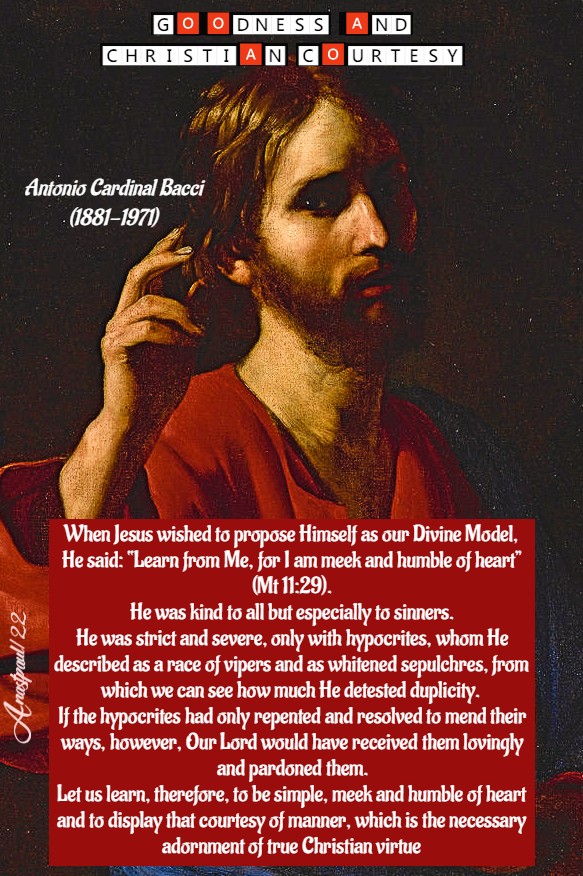
Our Morning Offering – 3 May – “The Month of the Blessed Virgin Mary”
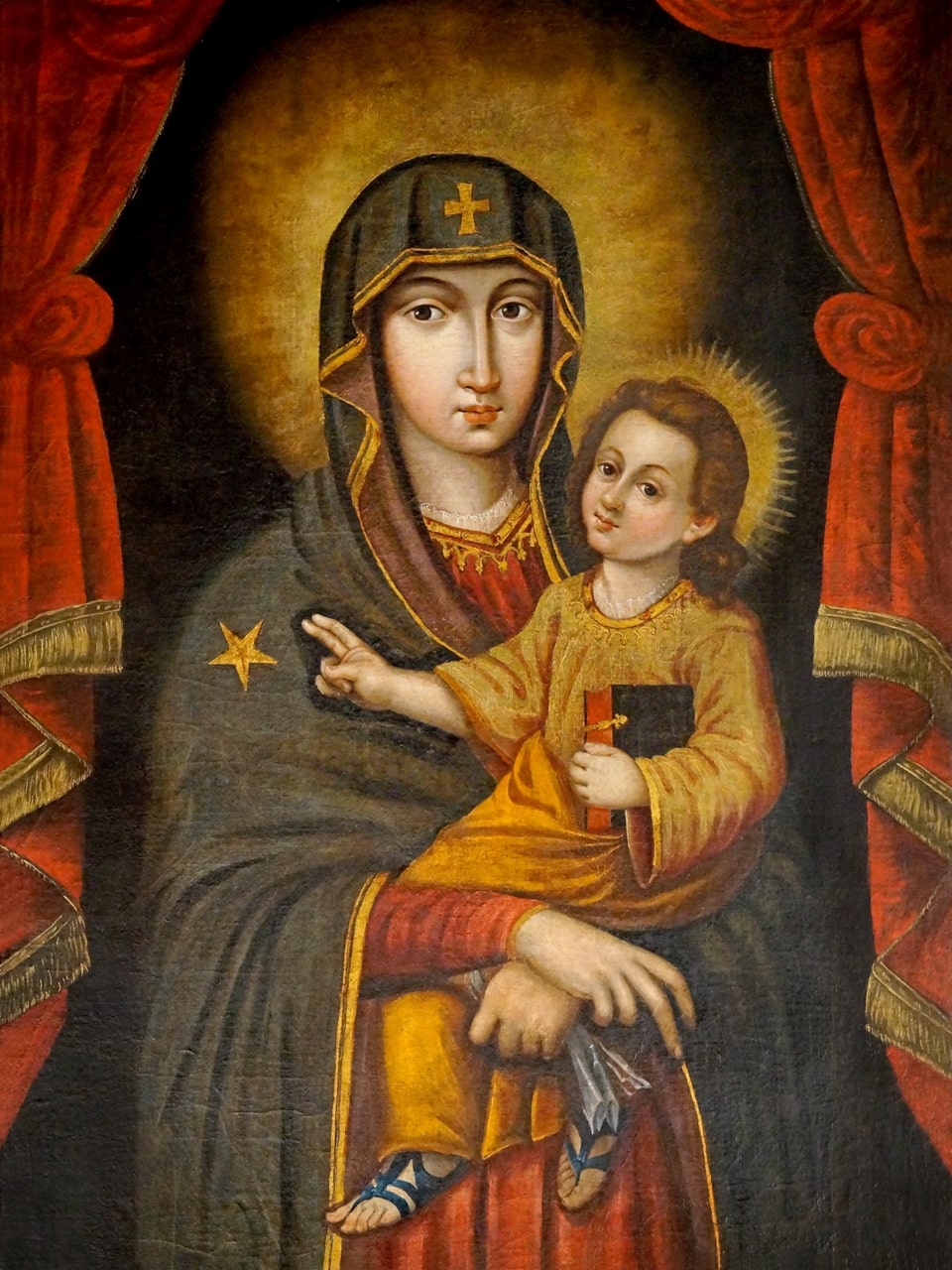
Hail, O Mary, Mother of God By St Cyril of Alexandria (376-444) Father & Doctor of the Church
Hail, O Mary, Mother of God, Virgin and Mother! Morning Star, perfect vessel. Hail, O Mary, Mother of God, Holy Temple in which god Himself was conceived. Hail, O Mary, Mother of God, Chaste and pure dove. Hail, O Mary, Mother of God, Who enclosed the One who cannot be encompassed in your sacred womb. Hail, O Mary, Mother of God, From you flowed the true light, Jesus Christ, our Lord. Hail, O Mary, Mother of God, Through you the Conqueror and triumphant Vanquisher of hell came to us. Hail, O Mary, Mother of God, Through you, the glory of the Resurrection blossoms. Hail, O Mary, Mother of God, You have saved every faithful Christian. Hail, O Mary, Mother of God, Pray for us sinners now and at the hour of our death. Amen
The Liturgical Year by Abbot Prosper Guéranger OSB (1805-1875)
“It was most just that our Divine King should show Himself to us with the sceptre of His power, to the end, that nothing might be wanting to the majesty of His empire. This sceptre is the Cross; and Paschal Time was to be the Season, for its being offered to Him in glad homage. A few weeks back and the Cross was shown to us, as the instrument of our Emmanuel’s humiliation and as the bed of suffering, whereon He died but, has He not, since then, conquered Death? and what is His Cross now but a trophy of His victory? Let it then be brought forth to our gaze and let every knee bend before this Sacred Wood, whereby our Jesus won the honour and praise we now give Him!
On the day of His Birth at Bethlehem, we sang these words of the Prophet Isaias: A Child is born unto us and a Son is given unto us and His government is upon His Shoulder (Is. ix. 6. The Introit of the Third Mass for Christmas Day). We have seen Him carrying this Cross upon His Shoulder, as Isaac carried the wood for his own immolation but now, it is no longer a heavy burthen. It is shining with a brightness that ravishes the eyes of the Angels and, after having received the veneration of man, as long as the world lasts, it will suddenly appear in the clouds of heaven, near the Judge of the living and the dead, a consolation to them that have loved it but a reproach to such as have treated it with contempt or forgetfulness.
St Helena and St Macarius and the discovery of the True Cross
Our Saviour did not think the time between His Resurrection and Ascensio,n a fitting one for glorifying the Instrument of His Victory. The Cross was not to be brought into notice, until it had subjected the world to Him, Whose glory it so eloquently proclaimed. Jesus was three days in the tomb; His Cross is to lie buried unknown to men, for three centuries but it is to have its Resurrection and the Church celebrates this Resurrection today. Jesus would, in His own good time, add to the joy of Easter by miraculously revealing to us, this Sacred Monument of His love for mankind. He entrusts it to our keeping, it is to be our consolation, as long as this world lasts – is it not just, that we should love and venerate it?
Never had Satan’s pride met with a humiliation like that of his seeing the instrument of our perdition, made the instrument of our salvation. As the Church expresses it in her Preface for Passiontide: “he that overcame mankind by a Tree, was overcome by a Tree.” Thus foiled, he vented his fury upon this saving Wood, which so bitterly reminded him, both of the irresistible power of his Conqueror and of the dignity of man, who had been redeemed at so great a price. He would fain have annihilated the Cross but knowing that this was beyond his power, he endeavoured to profane it and hide it from view. He, therefore, instigated the Jews to bury it. At the foot of Calvary, not far from the Sepulchre, was a deep hole. Into this was the Cross thrown, together with those of the two Thieves, the Nails, the Crown of Thorns and the Inscription, or Title, written by Pilate . The hole was then filled up with rubbish and earth and the Sanhedrim exulted in the thought of its having effaced the memory of the Nazarene, Who could not save Himself from the ignominious death of the Cross.
Forty years after this, Jerusalem was destroyed by the Romans, the instruments of God’s vengeance. The Holy Places were desecrated by the idolaters. A small temple to Venus was erected on Calvary and another to Jupiter over the Holy Sepulchre. By this, the pagans intended derision; whereas, they were perpetuating the knowledge of two spots of most sacred interest. When peace was restored under Constantine, the Christians had but to remove these pagan monuments and their eyes beheld the holy ground that had been bedewed with the Blood of Jesus and the glorious Sepulchre.
As to the Cross, it was not so easily found. The sceptre of our Divine King was to be raised up from its tomb by a royal hand. The saintly Empress Helena, Constantine’s Mother, was chosen by heaven to pay to Jesu, and that, too, on the very spot where He had received His greatest humiliations, the honours which are due to Him as the King of the world. Before laying the foundations of the Basilica of the Resurrection, this worthy follower of Magdalene and the other holy women of the Sepulchre, was anxious to discover the Instrument of our Salvation. The Jews had kept up the tradition of the site where it had been buried, the Empress had the excavations made accordingly. With what holy impatience must she not have watched the works! and with what ecstasy of joy did she not behold the Redeeming Wood, which, though not, at first, distinguishable, was certainly one of the three Crosses that were found! She addressed a fervent prayer to the Saviour, Who alone could reveal to her which was the trophy of His Victory – the Bishop, St Macarius, united his prayers with hers and their faith was rewarded by a miracle, that left them no doubt as to which was the true Cross.
The Finding of the True Cross (Giandomenico Tiepolo), where Bishop Macarius blesses the sick with the True Cross
The glorious work was accomplished and the Church was put in possession of the instrument of the world’s Redemption. Both East and West were filled with joy at the news of this precious discovery, which Heaven had set on foot and which gave the last finish to the triumph of Christianity. Christ completed His Victory over the Pagan world, by raising thus His Standard, not a figurative one but His own real Standard, His Cross, which, up to that time, had been a stumbling-block to the Jews and foolishness to the Gentiles;but before which every Christian is, henceforth, to bend his knee.
Helena placed the Holy Cross in the Basilica that had been built by her orders and which the same St Macarius, Bishop of Jerusalem oversaw and which covered both the glorious Sepulchre and the hill of the Crucifixion. Another Church was erected on the site, where the Cross had lain concealed for three hundred years and the faithful are enabled, by long flights of steps, to go down into the deep grotto, which had been its tomb. Pilgrims came, from every part of the world, to visit the hallowed places, where our Redemption had been wrought and to venerate the Sacred Wood of the Cross. But God’s merciful providence willed, not that the precious pledge of Jesus’ love for mankind should be confined to one only Sanctuary, however venerable it might be. Immediately after its discovery, Helena had a very large piece cut from the Cross and this fragment she destined for Rome, the new Jerusalem. The precious gift was enshrined in the Basilica built by her son Constantine in the Sessorian garden,and which was afterwards called the Basilica of Holy Cross in Jerusalem.
By degrees, other places were honoured by the presence of the Wood of the Holy Cross. As far back as the 4th Century, we have St Cyril of Jerusalem attesting that many of the Pilgrims used to obtain small pieces of it, and thus carried the precious Treasure into their respective countries and St. Paulinus of Nola, who lived in the same century, assures us that these many gifts lessened not the size of the original Relic. In the 6th century, the holy Queen, St Radegonde, obtained from the Emperor Justin 2nd a large piece from the fragment that was in the imperial treasury of Constantinople . It was for the reception of this piece of the True Cross into France, that St Venantius Fortunatus composed the , that beautiful Hymn which the Church uses in her Liturgy, as often as she celebrates the praises of the Holy Cross.
After several times losing and regaining it, Jerusalem was, at length, forever deprived of the precious Relic. Constantinople was a gainer by Jerusalem’s loss. From Constantinople, especially during the Crusades, many Churches of the West procured large pieces. These again supplied other places; until, at length the Wood of the Cross was to be found in almost every town of any importance.
There is scarcely to be found a Catholic, who, some time or other in his life, has not had the happiness of seeing and venerating a portion of this sacred object. How many acts of love and gratitude have not been occasioned by this? And who could fail to recognise, in this successive profusion of our Jesus’s Cross, a plan of divine providence for exciting us to an appreciation of our Redemption, on which rest all our hopes of eternal happiness?
How dear, then, to us should not this day be, which blends together the recollection of the Holy Cross and the joys of the Resurrection of that Jesus, Who, by the Cross, has won the throne to which we shall soon see Him ascend|! Let us thank our Heavenly Father for His having restored to mankind a treasure so immensely precious as is the Cross. Until the day comes for its appearing, with Himself, in the clouds of heaven, Jesus has intrusted it to His Spouse, as a pledge of His Second Coming. On that day, He, by His divine power, will collect together all the fragments and the Tree of Life will, then, gladden the Elect with its dazzling beauty and invite them to eternal rest beneath its refreshing shade”. – Abbot Prosper Guéranger OSB (1805-1875)
“On whose dear arms, so widely flung, The weight of this world’s ransom hung, The price of humankind to pay And spoil the spoiler of his prey All hail, O Cross, our only hope!” [From the Hymn Vexilla Regis by St Venantius Fortunatus (c 530 – c 609)]
Virgen de la Carrasca / Our Lady of Carrasca, Bordón, Teruel, Aragón, Spain (1212) – 3 May, Commemorated on First Monday of May:
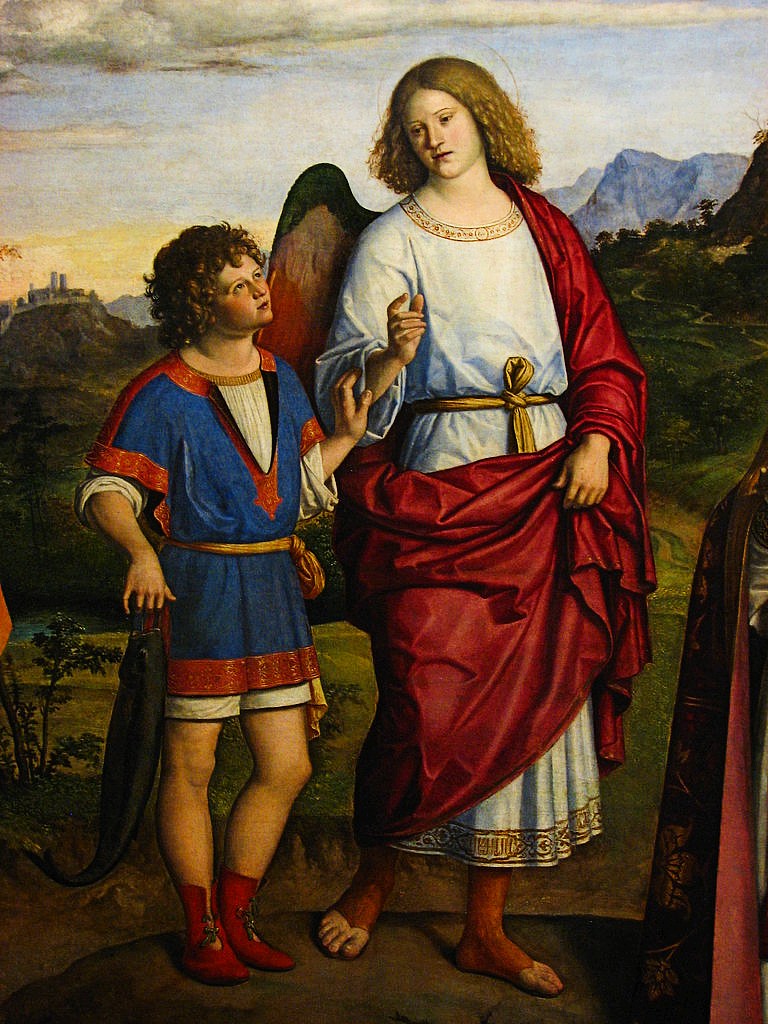
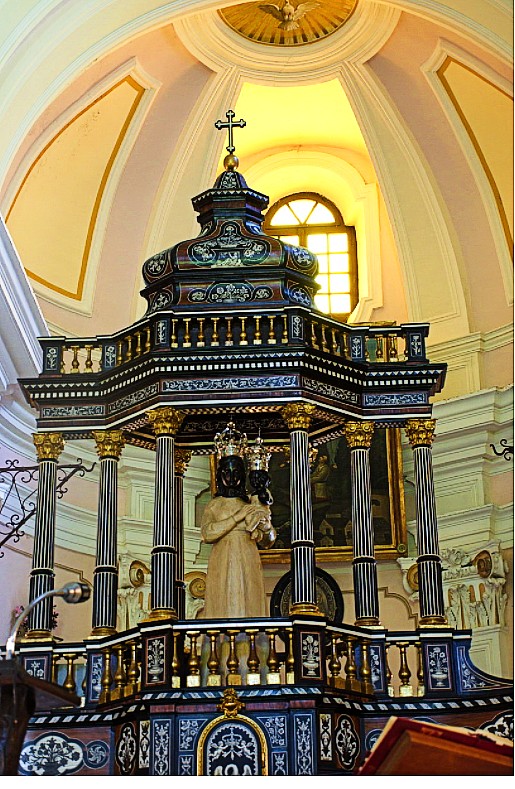
In 1212, a herder found an image of the Virgin in a holm oak (carrasca) in the rocky countryside of Aragón in Spaon. There are several stories about what happened then, all of them ending with a Shrine in Bordón. Templars carried the Statue to Castellote, 12 miles north but the next day the image was back in the oak, the Virgin made those carrying her to Castellote keep turning toward Bordón and springs arose at each turn.
The original Statue
In the place where it was found, a hermitage was built to house it, which would later be replaced by the building that today is the Parish Church of Bordón, built in 1306 by the Templar Order (The Order was dissolved by Pope Clement V in 1312 ).
Although its exterior hardly stands out, its interior is magical and fascinating, a place full of mystery. In one of the Chapels inside, the Templar novices who previously made a pilgrimage on foot from Castellote, capital of the Templar Commandery, performed initiation rites to become Knights of the Order.
In the 18th century, the interior of the Church was covered with marvellous frescoes, which have been recently restored. Unfortunately, the venerated carving of the Black Virgin of the Carrasca was lost during the Civil War, along with another very famous Romanesque carving with a reputation for miraculously calming storms, the Virgin of the Spider, only a series of photographs being preserved, which allowed the making a replica.
Replica Statue
On the first Monday in May, the faithful from the three towns to the south—Tronchón, Olocau del Rey and Mirambel—conduct a processional pilgrimage to the Virgin de la Carrasca. They have done this “from time immemorial,” according to a document of 1390 in the Parish archives of Tronchón.
St Adalsindis of Bèze Bl Adam of Cantalupo in Sabina St Ahmed the Calligrapher St Aldwine of Peartney St Pope Alexander I St Alexander of Constantinople Bl Alexander of Foigny St Alexander of Rome Bl Alexander Vincioli
St Ethelwin of Lindsey St Eventius of Rome St Fumac St Gabriel Gowdel St Juvenal of Narni Bl Maria Leonia Paradis St Maura of Antinoe St Peter of Argos St Philip of Zell Bl Ramon Oromí Sullà St Rhodopianus the Deacon St Scannal of Cell-Coleraine Bl Sostenaeus
Thought for the Day – 2 May – Meditations with Antonio Cardinal Bacci (1881-1971)
The Intercession of Our Lady
“Holy Mary, my loving Mother, hear my supplications and obtain for me, from your Divine Son, all the graces of which I am in need. Obtain for me, more of all the grace to become holy. Grant that I may do always and in all circumstances, whatever Jesus tells me to do. Grant that my will may be in harmony with His most Holy Will and, that my actions may be in accordance with His Divine Commandments, Amen”
Quote/s of the Day – 2 May – The Memorial of St Athanasius (297-373) Confessor, Father & Doctor of the Church
“You will not see anyone, who is really striving after his advancement, who is not given to spiritual reading. And as to him who neglects it, the fact will soon be observed by his progress.”
“Similarly, anyone who wishes to understand the minds of the sacred writers must first cleanse his own life and approach the Saints, by imitating their deeds.”
“Let us remember the poor and not forget kindness to strangers; above all, let us love God with all our soul and might and strength and our neighbour as ourselves.”
One Minute Reflection – 2 May – The Memorial of St Athanasius (297-373) Bishop, Confessor, Father & Doctor of the Church – 2 Corinthians 4:5-14, Matthew 10:23-28
“What you hear whispered, proclaim on the housetops.” … Matthew 10:27
REFLECTION – “It is not I who undertook this work but, it is Christ the Lord Who commanded me to come to be with these Irish pagans for the rest of my life, if the Lord shall Will it and shield me from every evil … But I do not trust myself “as long as I am in this mortal body” (2 Pt 1:13; Rm 7:24) … I did not lead a perfect life like other believers but I confess to my Lord and do not blush in His sight because I am not lying, from the time when I came to know Him in my youth, the love of God and fear of Him increased in me and right up until now, by God’s favour, “I have kept the faith” (2 Tm 4:7).
What is more, let anyone laugh and taunt if he so wishes. I am not keeping silent, nor am I hiding “the signs and wonders” (Dn 6:27) that were shown to me by the Lord many years before they happened, He who knew everything, even before the beginning of time. Thus, I should give thanks unceasingly to God, who has frequently forgiven my folly and my negligence, in more than one instance and has never been angry with me, who am placed as His helper, though I did not easily assent to what had been revealed to me, as the Spirit was urging. The Lord “took pity” on me “thousands upon thousands” of times, (Ex 20:6) because He saw within me, that I was prepared to serve Him. … Many were trying to prevent this mission, they were talking among themselves behind my back and saying, “Why is this fellow throwing himself into danger among enemies who do not know God?” Not from malice did they say this, as I myself can testify, they perceived my rusticity. And I was not quick to recognise the grace that was then in me, I now know, that I should have done so earlier.
Now I have put it frankly to my brothers and co-workers, who have believed me because of what “I have proclaimed and still proclaim” (2 Co 13:2) to strengthen and reinforce your faith. I wish only, that you too, would make greater and better efforts. This will be my pride, for “a wise son makes a proud father.” (Pr 10:1)” … St Patrick (c 385-461) (The Confessions,# 43-47)
PRAYER – Hear, we beseech You, O Lord, our prayers which we offer You on the feast of blessed Athanasius, Your Bishop and Confessor and absolve us from all our sins by the merits and prayers of him, who had the grace to serve You worthily. Through Jesus Christ, Thy Son our Lord, Who lives and reigns with Thee, in the unity of the Holy Ghost, God, world without end. Amen (Collect).
Our Morning Offering – 2 May – “The Month of The Blessed Virgin Mary” – The Memorial of St Athanasius (297-373) Bishop, Confessor, Father & Doctor of the Church
Mary, Mother of Grace St Athanasius (297-373) Father & Doctor of the Church
It becomes you to be mindful of us, as you stand near Him Who granted you all graces, for you are the Mother of God and our Queen. Help us for the sake of the King, the Lord God and Master, Who was born of you. For this reason, you are called full of grace. Remember us, most holy Virgin, and bestow on us gifts from the riches of your graces, Virgin full of graces. Amen
Saint of the Day – 2 May – St Florentius of Algeria (Died c 485) Bishop, Confessor. Also known as – Fiorenzo.
Florentius was a fifth Century North African Bishop. He was Bishop of Simminensis, 30 km east of Carthage in Roman North Africa.
Florentius suffered persecution at the hand of the Arian Vandal King Huneric for his leading role in the Council of Carthage of 484 where he supported, the Catholic position, rejecting Arianism. He was appointed as envoy from the Council, to Emperor Honorius and Emperor Theodosius but, for this important role, he was exiled to Corsica and forced to hard labour.
In Corsica, he continued his apostolic work until his death, evangelising and defending the True Faith. Some records now report his death by beheading and others that he died of natural causes induced by hard labour.
According to tradition, he was initially buried in the Town in Corsica, which bears his name – San Fiorenzo.
In 760 the Bishop of Treviso, Titian, through a vision, discovered his relics and translated them to his City, placing them in the Church of St John the Baptist in Treviso, Italy.
Currently his remains are on display to the public veneration in the Cathedral of Treviso.
St Athanasius (c 295-373) – Confessor, Father and Doctor of the Church, “Father of Orthodoxy,” Bishop of Alexandria, Defender of the true faith, throughout his life he opposed the Arian heresy. By denying the Godhead of the Word, the Arians turned Christ into a mere man, only higher in grace than others in the eyes of God. St Athanasius took part in the Council of Nicea in 325 and until the end remained a champion of the faith, as it was defined by the Council. In him, the Church venerates one of her Great Fathers and Doctors. He was subjected to persecutions for upholding the true teaching concerning the person of Christ and was sent into exile from his See no less than five times. He died at Alexandria in 373 after an Episcopate of forty-six years. Biography: https://anastpaul.wordpress.com/2018/05/02/saint-of-the-day-2-may-st-athanasius-c295-373-father-and-doctor-of-the-church-father-of-orthodoxy/
Bl Bernard of Seville St Bertinus the Younger Bl Boleslas Strzelecki Bl Conrad of Seldenbüren St Cyriacus of Pamphylia St Eugenius of Africa St Exsuperius of Pamphylia St Felix of Seville St Florentius of Algeria (Died c 485) Bishop St Gennys of Cornwall St Germanus of Normandy (Died c 460) St Gluvias St Guistano of Sardinia
St Joseph Luu Bl Juan de Verdegallo St Longinus of Africa St Neachtain of Cill-Uinche St Theodulus of Pamphylia St Ultan of Péronne St Vindemialis of Africa St Waldebert of Luxeuil
Martyrs of Alexandria – 4 Saints: A group of Christians Marytred together in the persecutions of Diocletian. We know little more than their names – Celestine, Germanus, Neopolus and Saturninus. 304 in Alexandria, Egyp
Thought for the Day – 1 May – Meditations with Antonio Cardinal Bacci (1881-1971)
The Month of Mary
“Holy Mary, my most tender Mother, I love you and desire to love you more and more. I realise that I am spiritually poor and imperfect. You are close to the all-powerful God, please help me by your favour and intercession. I know that Jesus will grant everything you ask of Him. Obtain for me, therefore, during this month, the grace to eradicate all my vices and cause to flourish in my aoul, all the virtues of which I stand in need. Set my heart on fire with the love of God and help me to grow more and more, like you and like your Divine Son, Amen.”
It’s 1 May The Month of the Blessed Virgin Mary The Month of our Loving Mother!
“The name of Mary is a tower of strength, which saves sinners from punishment and defends the just from the assaults of hell.” St Lawrence Justinian (1381-1455)
Mary Pondered All These Things in Her Heart (Cf Luke 2:19)
“While Mary contemplated all she had come to know through reading, listening and observing, she grew in faith,increased in merits and was more illuminated by Wisdom and more consumed by the fire of charity. The Heavenly Mysteries were opened to her and she was filled with joy; she became fruitful by the Spirit, was being directed toward God and watched over protectively, while on earth. So remarkable are the divine graces, that they elevate one from the lowest depths to the highest summit and transform one to a greater holiness. How entirely blessed was the mind of the Virgin which, through the indwelling and guidance of the Spirit, was always and in every way, open to the power of the Word of God. She was not led by her own senses, nor by her own will, thus, she accomplished outwardly, through her body. what Wisdom, from within, gave to her faith. It was fitting for Divine Wisdom, which created itself a home in the Church, to use the intervention of the most Blessed Mary, in guarding the law, purifying the mind, giving an example of humility and providing a spiritual sacrifice. Imitate her, O faithful soul! Enter into the deep recesses of your heart, so that you may be purified spiritually and cleansed from your sins. God places more value on goodwill in all we do, than on the works themselves. Therefore, whether we give ourselves to God in the work of contemplation or whether we serve the needs of our neighbour by good works, we accomplish these things because, the love of Christ urges us on. The acceptable offering of the spiritual purification, is accomplished, not in a man-made temple but, in the recesses of the heart where the Lord Jesus freely enters!”
Mary! How Sweetly Falls That Word Anonymous, 19th Century
Mary! How sweetly falls that word On my enraptured ear! Oft do I breathe in accents low, That sound when none are near. Chorus: Sing, O my lips and loudly proclaim: O Mary, O Mary, how sweet is thy name! Sing, O my lip, and loudly proclaim; O Mary, O Mary, how sweet is thy name!
Sweet as the warbling of a bird, Sweet as a mother’s voice; So sweet to me is that dear name, It makes my soul rejoice. Chorus.
Bright as the glittering stars appear, Bright as the moonbeams shine, So bright in my mind’s eye is seen Thy loveliness divine! Chorus.
Through thee I offer my requests, And when my prayer is done, In ecstasy sublime I see Thee seated near thy Son. Chorus.
Quote/s of the Day – 1 May – “The Month of The Blessed Virgin Mary”
“Mary seeks for those who approach her devoutly and with reverence, for such she loves, nourishes, and adopts as her children. ”
St Bonaventure (1221-1274) Seraphic Doctor of the Church
“We may seek graces but shall never find them without the intercession of Mary.”
St Cajetan (1480-1547)
“Truly we are passing through disastrous times, when we may well make our own, the lamentation of the Prophet: “There is no truth and there is no mercy and there is no knowledge of God in the land” (Hosea 4:1). Yet in the midst of this tide of evil, the Virgin Most Merciful rises before our eyes like a rainbow, as the arbiter of peace between God and man.”
One Minute Reflection – 1 May – The Second Sunday after Easter – St Joseph the Worker, Spouse of the Blessed Virgin Mary – Colossians 3:14-15, 17, 23-24, Matthew 13:54-58
“Is not this the carpenter’s son? ” – Matthew 13:55
REFLECTION – “For if I do not understand the nature placed at my service, I discern Your goodness from the mere fact that it is there to serve me. I perceive that I do not even understand myself but I wonder at You all the more… You have given me intellect, life and human feeling, the source of so many joys, yet I do not begin to understand how I began to be… So it is through failing to understand what surrounds me, that I grasp what You are and, it is through perceiving what You are, that I come to adore You. That is why, in what concerns Your mysteries, my incomprehension lessens not a bit my faith in Your omnipotence… Your eternal Son’s birth exceeds even the idea of eternity – it is prior to the times everlasting. Before any other thing that exists, He was Son proceeding from You, O God and Father. He is true God… You have never existed without Him… Before ever time was, You are the eternal Father of Your Sole Begotten One.”… St Hilary (315-368) Bishop of Poitiers, Father and Doctor of the Divinity of Christ of the Church
PRAYER – O God, Creator of all things, Who dost impose on man the law of work, grant in Thy goodness, that, by the example and patronage of blessed Joseph, we may both accomplish the work Thou dost command and attain the reward Thou hast promised. Through Jesus Christ, Thy Son our Lord, Who lives and reigns with Thee, in the unity of the Holy Ghost, God, world without end. Amen (Collect).
Our Morning Offering – 1 May – The Second Sunday after Easter
You are Holy, Lord, All-Powerful God Prayer known as “Of Peter and the Other Apostles” (Papyrus of the early Church)
You are Holy, Lord, All-Powerful God, Father of our Lord Jesus Christ, Paradise of happiness, Royal sceptre, Infinite love, Assurance of hope… You are Holy, Lord God, You are “the King of kings and the Lord of lords: You alone have immortality, You live in the inaccessible light, that no-one has ever seen” (1 Tm 6:15-16). You walk on the wings of the winds (Ps 103:3); You created the sky, the earth and the sea and all they contain (Acts 4:24). You make the winds Your messengers and burning fire Your servant (Ps 103:4); You made man in Your image and likeness (Gen 1:26), You measured out the span of the sky and the whole earth with the Fingers of Your Hand. Yes, in Your Presence, Your works are altogether lovely. Amen
Saint of the Day – 1 May or the Second Sunday of Easter – St Brieuc of Brittany (c 420-c 510) Welsh Bishop, Monk, Abbot and Missionary to Brittany, Miracle-worker, Apostle of the poor. Brieuc was the Founder and first Abbot of a Monastery near Treguier, Brittany, which grew into the town called Saint-Brieuc. He is also one of the Seven Founder Saints of Brittany. Born in c 420 at Dyfed, Cardiganshire, Wales and died in c 510 at Saint-Brieuc-des-Vaux, France of natural causes. Patronages – purse makers (from the legendary size of his alms-giving), Saint-Brieuc-des-Vaux, France. Also known as – Breock, Briach, Brieg, Brigomalos, Brimael, Brioc, Brioch, Briock, Brioco, Briocus, Briog, Briomaglus, Bru, Bryan. Additional Memorials – 30 April (Scotland), 18 October (translation of relics).
Brieuc is called a Bishop in an inscription in marble at his Shrine built in 1210,but it is not certain that he was a Bishop; more likely he was an Abbot because no evidence is recorded in the See, which dates only to 844. Still, it is possible that he had been a Bishop and an Abbot before records were properly kept in Brittany.
Very little is known about Brieuc’s early life. His 9th century Acta states that he came from Ceredigion in Wales, where the Church at Llandyfriog was originally dedicated to him. He received his education in Ireland and then studied under St Germanus of Auxerre. He is believed to have spent time at Rothesay on the Isle of Bute in Scotland, where a Church was dedicated to him and his name was commemorated in the annual St Bruix Fair. He most likely returned to France early in 431, accompanied by Saint Illtud.
In 480, he settled in Armorica, France and founded a Monastery at Landebaeron. He then travelled to Upper Brittany where he established an Oratory at St Brieuc-des-Vaux, where he became the Abbot of a Monastery which he had founded.
The first Oratory built by St Brieuc
Brieuc died in his own Monastery at St. Brieuc-des-Vaux and was interred in his Cathedral Church, dedicated to Saint Stephen.
His Acta cites numerous miracles, especially his cure of Count Riguel, who gave the Saint his own Palace of Champ-du-Rouvre, as also the entire attached manorial estates. He is represented as treading on a dragon or presented with a column of fire as seen at his Ordination.
In old age, St Brieuc is said to have been travelling in a cart, singing hymns together with a group of Monks walking alongside, when suddenly they were surrounded by a pack of wolves. His companions fled but Brieuc confronted the beasts fearlessly with the Sign of the Cross offered in benediction and they knelt before him humbly and seemed to pray with him. The Statue below depicts this scene and is kept in the Cathedral.
Statue of Saint-Brieuc by Elie le Goff dated 1891.
Saint Brieuc’s relics were moved to the Church of Saints Sergius and Bacchus of Angers in 865, and again, in a more solemn manner, on 31 July 1166. However, in 1210, a portion of the relics were restored to St Brieuc Cathedral, where the saint’s ring is also preserved.
In honour of Saint Brieuc’s link between Ceredigion and Brittany, the Town of St Brieuc has been twinned with Aberystwyth and a road, Boulevard St Brieuc, is located in the Town.
Note:The Seven Founder Saints of Brittany are: Paol Aoreliann in Saint-Pol-de-Léon, Tudwal in Tréguier, Brieuc in Saint-Brieuc, Maloù in Saint-Malo, Samsun of Dol in Dol-de-Bretagne, Padarn in Vannes, Kaourintin in Quimper.
St Aceolus of Amiens St Acius of Amiens St Aldebrandus of Fossombrone St Amator of Auxerre St Ambrose of Ferentino St Andeolus of Smyrna Bl Arigius of Gap St Arnold of Hiltensweiler St Asaph of Llanelwy St Augustine Schöffler
St Benedict of Szkalka OSB (Died 1012) Monk and Hermit
St Bertha of Avenay St Bertha of Kent St Brieuc of Brittany (c 420-c 510)Welsh Bishop Monk and Missionary to Brittany. St Ceallach of Killala St Cominus of Catania Evermarus of Rousson Bl Felim O’Hara St Grata of Bergamo St Isidora of Egypt St Jeremiah the Prophet St John-Louis Bonnard Bl Klymentii Sheptytskyi St Marculf St Orentius of Auch St Orentius of Loret St Patientia of Loret
St Peregrine Laziosi OSM (1260-1345) The “Angel of Good Counsel,” Priest of the Servite Order (The Order of Servants of Mary), Apostle of the poor and the sick, Miracle-worker, Spiritual Advisor. Patronages – against cancer, against breast cancer, against open sores, against skin diseases, AIDS patients, sick people, Diocese of Forli-Bertinoro, Italy, City of Forli, Italy. St Peregrine’s body is Incorrupt. Beautiful St Peregrine: https://anastpaul.com/2020/05/01/saint-of-the-day-1-may-saint-peregrine-laziosi-osm-1260-1345-today-is-the-675th-anniversary-of-his-death/
Bl Petronilla of Moncel
St Richard Pampuri OH (1897-1930) aged 33 – Italian Religious of the Hospitallers of St John of God, Medical Doctor, Founder of the Band of Pius X (a Youth movement) which he dedicated to the medical care of poor people, Third Order Franciscan. He was an outstanding lover of the Holy Eucharist in Adoration and an avid Marian devotee, as well as living out his short but faith-filled life in total charity to all the needy and poor. Biography: https://anastpaul.com/2019/05/01/saint-of-the-day-1-may-saint-richard-pampuri-oh-1897-1930/
Thought for the Day – 30 April – Meditations with Antonio Cardinal Bacci (1881-1971)
The Three Grades of Perfection – The Third Grade
“The Third Grade of perfection consists in preferring suffering to pleasure, humiliation to honours and the cross, to an easy life. By these means, we imitate Christ better and show our love for Him. The way of the cross, is the way of Jesus and is the only path to holiness. It is easier for those who walk this path to be detached from sin and from the world and to remain close to Jesus. This is the way which the Saints chose.
In which grade of perfection are we? Even if we are still far from the peak of the third grade of perfection, we should, nevertheless, work hard to reach it, It is particularly essential that we should stand firm in the first grade of being faithful to the motto of St Dominic Savio: “Death rather than sin!”
Quote/s of the Day – 30 April – The Memorial of St Catherine of Siena (1347-1380) Virgin, Doctor of the Church
“Enrich your soul in the great goodness of God – The Father is your Table, the Son is your Food and the Holy Spirit waits on you and then makes His Dwelling in you.”
“Charity is the sweet and holy bond which links the soul with its Creator; it binds God with man and man with God.”
“It is only through shadows that one comes to know the light.”
“Start being brave about everything! Drive out darkness and spread light. Do not look at your weaknesses. Realise instead, that in Christ Crucified, you can do all things.”
“He will provide the way and the means, such as you could never have imagined. Leave it all to Him, let go of yourself, lose yourself on the Cross and you will find yourself entirely.”
St Catherine of Siena (1347-1380) Doctor of the Church
One Minute Reflection – 30 April – The Memorial of St Catherine of Siena (1347-1380) Virgin, Doctor of the Church – 2 Corinthians 10:17-18; 11:1-2, Matthew 25:1-13
“But at midnight there was a cry, ‘Behold, the bridegroom! Come out to meet him.” – Matthew 25:6
REFLECTION – “The souls’ husband is the Holy Spirit, by His grace. When His interior inspiration calls the soul to repentance, then every enticement of vice is in vain. The pride that wants command, the greed and lust that consumes everything: this was the master that used to control and ravage the soul. Their very names have been removed from the repentant sinner’s mouth… When grace is poured into the soul and gives it light, God makes a covenant with sinners. He is reconciled with them… Then is celebrated the wedding of the Bridegroom with His bride, in the peace of a pure conscience.” – St Anthony of Padua (1195-1231) Doctor of the Church
PRAYER – Grant, we beseech Thee, O Almighty God, that we which do keep the birthday of Thy blessed Virgin Catherine and do year by year renew her memorial with solemn gladness in Thy presence, may likewise be conformed to the pattern of her saintly walk with Thee. Through Jesus Christ, Thy Son our Lord, Who lives and reigns with Thee, in the unity of the Holy Ghost, God, world without end. Amen (Collect).
Our Morning Offering – 30 April – The Memorial of St Catherine of Siena (1347-1380) Doctor of the Church
Holy Trinity, Holy Love By St Catherine of Siena (1347-1380) Doctor of the Church
Holy Spirit, come into my heart; draw it to Thee by Thy power, O my God, and grant me charity with filial fear. Preserve me, O beautiful love, from every evil thought, warm me, inflame me with Thy dear love and every pain will seem light to me. My Father, my sweet Lord, help me in all my actions. Jesus, love, Jesus, love. Amen.
Saint of the Day – 30 April – Saint Gualfardus of Augsburg (1070-1127) Hermit, Monk, Miracle-worker. Born in 1070 at Augsburg, Germany and died on 30 April 1127 at San Salvatore Priory, Verona, Italy of natural causes. Patronages – harness makers, saddlers. Also known as – Gualfardus of Verona, Gualfardo of … Wolfhard of… (Germanic version of his name). Additional Memorials – 1 May in Verona and 27 October (translation of relics).
The Roman Martyrology states today: “In Verona, Saint Gualfardo, who, a saddler from Germany, after many years spent in solitude, was welcomed in this City by the Monks of San Salvatore.”
St Gualfardus by I Brint (1620)
A saddle-maker by trade, Gualfardus, obeying his inner desire for a life entirely dedicated to God, after spending some time in Verona, withdrew into solitude, in a nearby place. known as all’Adige.
Following the example of St Romuald, Founder of the Camaldolese Order of Hermits, at Mount Corona, Gualfardus spent twenty years in hiding in this solitary place, in prayer to God. Then some boatmen, who were sailing on the river discovered him and it wasn’t long before others sought him out, thus forcing him to move to Verona to the Church of St Peter.
After a while, he passed to the Church of the Blessed Trinity outside the city walls and was finally received with great joy as an oblate by the Camaldolese Monks of St Salvatore di Corteregia in Verona. There, Gualfardus remained for ten years until his death.
Gualfardus reached the highest degrees of contemplation and holiness, with incessant prayer, night vigils, fasts, penances; all interwoven with serenity, modesty and prudence, which reflected peace and intimate union with God.
A contemporary Monk, who was the author of his first ‘Vita,’ described the fervour with which Gualfardus conversed with the faithful and with the Camaldolese Monks and the many miracles obtained by Gualfardus both in life and after his death.
He died in the Convent of Verona on 30 April 1127. The Veronese celebrate his feast on 1 May, as protector of saddlers, while the Camaldolese Order and the Roman Martyrology remember him on 30 April, the anniversary of his birth into heaven.
St Lawrence of Novara St Louis of Córdoba St Mariano of Acerenza St Maximus of Ephesus St Mercurialis of Forlì St Peter of Córdoba St Pomponius of Naples St Quirinus of Rome St Rodopiano of Aphrodisias St Sophia of Fermo St Swithbert the Younger Bl Ventura of Spello Bl William Southerne
Martyrs of Montpellier: A group of 70 Mercedarian Friars, led by Blessed Luigi Puell, who were Martyred by Huguenots for trying to bring people back to the Catholic Church. They were Martyred in 1567 in Montpellier, France.
Thought for the Day – 29 April – Meditations with Antonio Cardinal Bacci (1881-1971)
Faith and Charity
“Our faith should be suffused by love of our neighbour , as well as, by the love of God. We should love our neighbour as ourselves. Does anybody really practise this fundamental Christian precept? Once again, let us contrast the magnificent mansions and places of entertainment of the rich, with the slums and hovels where thousands are living, in conditions which are not fit for rational human beings. Is this Christianity? Is this the teaching of the Gospel?
What would Jesus say about such aspects of modern life? It would seem, that the Gospel is still a closed book for many Christians.
Let us examine ourselves on this commandment, which is so generally ignored that the consequences are likely to be disastrous for everybody. Let us investigate how much responsibility we bear for this sad and dangerous state of affairs. Let us make appropriate resolutions, which will save us from the peril of God’s final and fearful condemnation – “Depart from me, accursed ones, into the everlasting fire… As long as you did not do it for one of these least ones, you did not do it for me!” (Cf Mt 25:41-46).”
Quote/s of the Day – 29 April – 2 Timothy 2:8-10; 3:10-12, John 15:1-7
“I am the vine, you the branches; whoever remains in me and I in him, the same bears much fruit; for without Me you can do nothing.”
John 15:5
“My sheep hear My Voice; and I know them and they follow Me.”
John 10:27
“He [Christ], protects their faith and gives strength to believers, in proportion to the TRUST, that each man, who receives that strength, is willing to place in Him.”
St Cyprian of Carthage (c 200- c 258) Martyr, Father of the Church
“The way to rest is through toil, the way to life is through death. Christ has taken on Himself the whole weakness of our lowly human nature. If then we are steadfast in our faith in Him and in our love for Him, we win the victory that He has won, we receive what He has promised.”
St Pope Leo the Great (400-461) Father and Doctor of the Church
“Place all your trust in God, let Him be your fear and your love. He will answer for you, He will do what is best for you. You have here no lasting home. You are a stranger and a pilgrim wherever you may be and you shall have no rest, until you are wholly united with Christ. Why do you look about here when this is not the place of your repose?”
Thomas à Kempis (1380-1471)
“For the branch,” says St Augustine, “there can be no half-measures. Either it remains united with the vine, or it is thrown into the fire.” The same holds true for each one of us. We must choose, either close union with Jesus, or separation and spiritual death. We must decide between a life of fervour in Christ, or a life of tepidity and sin.”
One Minute Reflection – 29 April – The Memorial of St Peter Martyr of Verona OP (1205–1252) Martyr, Priest – 2 Timothy 2:8-10; 3:10-12, John 15:1-7
“I am the vine, you the branches; he who abides in me and I in him, the same bears much fruit; for without me you can do nothing.” – John 15:5
REFLECTION –“The Lord calls Himself, the vine and those united to Him, branches, in order to teach us how much we shall benefit from our union with Him and how important it is for us to remain in His love. By receiving the Holy Spirit, Who is the bond of union between us and Christ our Saviour, those who are joined to Him, as branches are to a vine, share in His own nature.
On the part of those who come to the vine, their union with Him depends upon a deliberate act of the will; on His part, the union is effected by grace. Because we had goodwill, we made the act of faith that brought us to Christ,and received from Him, the dignity of adoptive sonship which made us His own kinsmen, according to the words of Saint Paul: – He who is joined to the Lord is one spirit with Him.
The prophet Isaiah calls Christ the foundation because, it is upon Him that we as living and spiritual stone, are built into a holy priesthood to be a dwelling place for God in the Spirit. Upon no other foundation than Christ, can this temple be built. Here Christ is teaching the same truth by calling Himself the vine, since the vine is the parent of its branches and provides their nourishment.
From Christ and in Christ, we have been reborn through the Spirit, in order to bear the fruit of life; not the fruit of our old, sinful life but the fruit of a new life, founded upon our faith in Him and our love for Him. Like branches growing from a vine, we now draw our life from Christ and we cling to His holy commandment in order to preserve this life. Eager to safeguard the blessing of our noble birth, we are careful not to grieve the Holy Spirit Who dwells in us and Who makes us aware of God’s presence in us.
Let the wisdom of John teach us how we live in Christ and Christ lives in us – The proof that we are living in Him and He is living in us, is that He has given us a share in His Spirit. Just as the trunk of the vine gives its own natural properties to each of its branches, so, by bestowing on them the Holy Spirit, the Word of God, the Only-Begotten Son of the Father, gives Christians a certain kinship with Himself and with God the Father because they have been united to Him by faith and determination to do His will in all things. He helps them to grow in love and reverence for God and teaches them to discern right from wrong and to act with integrity.” – St Cyril of Alexandria (376-444) Archbishop of Alexandria, Father and Doctor of the Church (An excerpt from: Commentary on the Gospel of John).
PRAYER – Saint Thomas Aquinas in Eulogy for Saint Peter the Martyr Here silent is Christ’s Herald; Here quenched, the People’s Light; Here lies the Martyred Champion Who fought Faith’s holy fight.
The voice the sheep heard gladly, The light they loved to see He fell beneath the weapons Of graceless Cathari.
The Saviour crowns His Soldier; His praise the people psalm. The Faith he kept adorns him With Martyr’s fadeless palm.
His praise new marvels utter, New light he spreads abroad And now the whole wide city Knows well the path to God.
Morning Offering By St Louis Marie Grignion de Montfort (1673-1716)
My God, just as I wish to love nothing more than You, so I wish to live, only for You. I offer You all my thoughts, all my words, all my actions and all my sufferings of this day; please bestow Your holy blessing, upon them all. Amen
Saint of the Day – 29 April – Saint Severus of Naples (Died 409) Bishop of Naples for 46 years, Confessor, friend of St Ambrose, constructor of four Basilicas and the first Baptistry in the West. Died in 409 of natural causes. Patronages – Naples and St Severus in Foggis, Italy.
The Roman Martyrology reads: “In Naples, St Severus, Bishop, loved by St Ambrose, as a brother and, by his Church ,as a father.”
In the catalogue of the Neapolitan Bishops, Severus is shown in twelfth place. Practically nothing is known of his life prior to his Episcopal appointment. Severus completed his Episcopate from February 363 to 29 April 409, therefore, a few decades after the freedom of worship decreed by Emperor St Constantine to Christians (313). It was certainly a period in which the two religions, pagan and Christian, were forced to coexist and the regurgitation of paganism was frequent.
His work took place after these pagan returns and the violent attacks of the Arian heretics. The Church of Naples, with its enlightened guide, flourished in the True Faith of Christianity – Severus brought back to the City , the remains of his predecessor, St Maximus (4th century), who had died in exile in the East, during the Arian persecution. It must be said,that St Maximus was the tenth Bishop of Naples and Severus ,the twelfth, therefore, between the two, there was the Arian usurper Zosimus, who probably returned, during his six years as Bishop, to the True Faith and was, therefore, considered the 11th legitimate Bishop.
Several ancient documents confirm, that he won esteem and affection, not only of Christians,but also of pagans. He was a friend of St Ambrose (340-397) Bishop of Milan, who had the opportunity to meet him during the Plenary Council of Campania, held in 392 in Capua.
The foundations of four Basilicas are attributed to him, one of which, adorned with marble and precious mosaics, was dedicated to the Saviour. Of this ancient Basilica later called St George Major, only the apse remains. The construction of the famous Baptistery of Naples is unanimously also attributed to Severus, about thirty years earlier than that erected at the Lateran by Sixtus III (432-440) and, therefore, is the oldest in the West. The Baptistery is currently leaning against the Basilica of Santa Restituta in the Cathedral of Naples. It is inspired by eastern canons, with mosaics considered to be the most precious among those that have come down to us.
Statues of Saint Severinus and Saint Severus (right), carried during a procession at San Severo.
Outside the City walls, Severus had a cemetery Basilica built a short distance from the Basilica of St Fortunato, where he had the relics of Bishop St Maximus interred and those of St Januarius. From this Basilica, the relics of both Saints were translated, towards the middle of the 9th Century, to an oratory of the urban Basilica of St Severus. St Severus himself too was buried in this Basilica outside the walls and in 1310 translated to the High Altar of the Cathedral of Naples
The Saint is also the Patron Saint of the City and Diocese of St Severus, in the Province of Foggia.
Fascinating fact: The City of Naples has more than 50 official Patron Saints, although its principal Patron is the Martyr Bishop Saint Januarius.(Died c 304). His life here: https://anastpaul.com/2017/09/19/saint-of-the-day-19-september-st-januarius/ Co-patrons of Naples and years of designation: Saint Januarius (305) Saint Thomas Aquinas (1605) Saint Andrew Avellino (1622) Saint Patricia (1625) Saint Francis of Paola (1625) Saint Dominic (1641) Saint James of the Marches (1647) Saint Anthony of Padua (1650) Saint Francis Xavier (1654) Saint Theresa of Avila (1664) Saint Philip Neri (1668) Saint Cajetan (1671) Saint Agnellus of Naples (1671) Saint Severus of Naples (1673) Saint Agrippinus of Naples (1673) Saint Aspren (1673) Saint Euphebius (1673) Saint Athanasius of Naples (1673) Saint Nicholas of Bari (1675) Saint Gregory the Illuminator (1676) Saint Claire of Assisi (1689) Saint Blaise (1690) Saint Peter of Verona (1690) Saint Joseph (1690) Saint Michael (1691) Saint Francis of Assisi (1691) Saint Maria Maddalena de’ Pazzi (1692) Saint John the Baptist (1695) Saint Francis Borgia (1695) Saint Candida the Elder (1699) Saint Mary of Egypt (1699) Saint Anthony Abbot (1707) Saint Ignatius Loyola (1751) Saint Mary Magdalene (1757) Saint Irene (1760) Saint Emidius (1760) Archangel Raphael (1797) Saint Anne (1805) Saint Aloysius Gonzaga (1835) Saint Augustine (1835) Saint Vincent Ferrer (1838) Saint Alphonsus Liguori (1840) Saint Francis Caracciolo (1843) Saint John Joseph of the Cross (1845) Saint Pascal Baylon (1845) Saint Francis Jerome (1845) Saint Roch (1856) Saint Joachim (1895) Saint Mary Frances of the Five Wounds of Jesus (1901) Saint Lucy (1903) Saint Gertrude the Great (1927) Saint Rita of Cascia (1928)
Madonna del Sangue / The Bleeding Madonna in Re, Piedmont, Italy (1494) – 29 April:
Without doubt this is one of the most important places of worship in the whole of Piedmont – the Sanctuary of the Madonna del Sangue in Re stands imposing and majestic on the skyline of the Vigezzo Valley. It owes its origin to the blood shed from a fresco of the Madonna del Latte (the Nursing Madonna) originally painted on the façade of the small Church of San Maurizio.
On 29 April 1494, a group of young people met in front of the Church to play a traditional village game, piodella, which consisted of throwing a flat stone against a wooden cylinder on which a coin was placed. One of them, particularly unlucky in the game, became angry and threw his stone at the Church, striking the portrait of Our Lady. The following morning the fresco of the Madonna began to bleed from her forehead. The blood continued to flow abundantly for about 20 days and many sick and infirm inhabitants of the valley, after strengthening their devotion to the Madonna were healed, thanks to miracles, which were officially recognised by the civil and religious authorities of the time.
In 1606 the construction of a larger Church began, completed in 1628 but the influx of pilgrims from all over Italy and neighbouring Switzerland, required an even larger structure. In 1894, four hundred years after the miracle, it was thus decided to build a new Sanctuary. Work on the Sanctuary began only in 1922 and the Consecration took place on 5 August 1958.
The celebration of the miracle takes place every year from 29 April to 1sMay, with a heart-felt and well-attended pilgrimage on foot.
St Peter Martyr/ of Verona OP (1205–1252) Martyr, Priest and Friar of the Order of Preachers, , a celebrated Preacher, miracle-worker, Marian devotee. He served as Inquisitor in Lombardy, was killed by an assassin and was Canonised 11 months after his death, making his the fastest Canonisation in history. His Life: https://anastpaul.com/2019/04/29/saint-of-the-day-29-april-st-peter-of-verona-op-1205-1252/
Abbots of Cluny: A feast that recognises the great and saintly early abbots of Cluny Abbey: • Saint Aymardus of Cluny • Saint Berno of Cluny • Saint Hugh of Cluny • Saint Mayeul • Saint Odilo of Cluny • Saint Odo of Cluny • Saint Peter the Venerable
St Antonius Kim Song-u St Ava of Denain St Daniel of Gerona St Dichu St Endellion of Tregony St Fiachan of Lismore
St Hugh of Cluny (1024-1109) St Hugh the Great, Priest, Abbot of Cluny from 1049 until his death., founder-builder of numerous Monasteries, Convents , Hospitals and the biggest Church in Europe prior to the building of St Peter’s, apostle of the poor, the sick, the marginalised by the feudal system, ecclesiastical Reformer, holy father to his Monks and servant to all who needed him,. He was one of the most influential leaders of the monastic orders from the Middle Ages. St Hugh the Great: https://anastpaul.com/2021/04/29/saint-of-the-day-29-april-st-hugh-of-cluny-1024-1109-st-hugh-the-great/
Bl Robert Gruthuysen St Senan of Wales St Severus of Naples (Died 409) Bishop St Theoger St Torpes of Pisa St Tychicus St Wilfrid the Younger
Martyrs of Cirta: A group of clergy and laity Martyred together in Cirta, Numidia (in modern Tunisia) in the persecutions of Valerian. They were – Agapius, Antonia, Emilian, Secundinus and Tertula, along with a woman and her twin children whose names have not come down to us.
Martyrs of Corfu: A gang of thieves who converted while in prison, brought to the faith by Saint Jason and Saint Sosipater who had been imprisoned for evangelising. When the gang announced their new faith, they were Martyred together. They were – Euphrasius, Faustianus, Insischolus, Januarius, Mammius, Marsalius and Saturninus. They were boiled in oil and pitch in the 2nd century on the Island of Corcyra (modern Corfu, Greece. Also known as: • Martyrs of Corcyra • Seven Holy Thieves • Seven Holy Robbers • Seven Robber Saints
Thought for the Day – 28 April – Meditations with Antonio Cardinal Bacci (1881-1971)
The Mercy of God
“Let us meditate, in particular, on certain passages in the Gospel in which God’s Mercy stands out most vividly and appealingly. There is the incident of the adulteress who is brought before Our Lord by the hypocritical Pharisees. According to the law, she should have been stoned to death. Jesus looks at her accusers, who harbour, in the secrecy of their own hearts, God knows how many abominations but strut about in public with the mien of stern and impeccable judges. Then He rivets His gaze upon the shamefaced woman, who is looking like a soiled rag thrown away on a dust-heap. When Jesus addresses her relentless judges, His voice is steady: “Let him who is without sin among you, be the first to cast a stone at her.” When they all drift away with lowered heads, Jesus says pityingly to the woman: “Has no-one condemned thee? … Neither do I condemn thee. Go thy way and from now on, sin no more” (Cf Jn 8:3-11).
Elsewhere, Jesus is called “the good shepherd” Who knows His sheep and calls them to Himself one by one. If a poor sheep is lost, He leaves the other ninety-nine of His flock and searches for it, nor does He rest until it has been found. When He sees that it has been injured, He carries it back to the fold upon His shoulders.
Who could forget the touching parable of the prodigal son? He had left the home of his aging father and had gone to a distant country where he had squandered his inheritance in the course of a low and worldly life of pleasure. When all his money had been spent, he was very much alone and was reduced to such circumstances, that he took a job looking after unclean animals. One day, when he was weeping over his fare, he made a sudden resolution, “I will get up and go to my father and say to him, Father, I have sinned against heaven and before thee. I am no longer worthy to be called thy son.” His father had been waiting for him for many years. He met and embraced him and gave him the kiss of pardon. Then he held a great feast because his son had repented and come home. He “was dead and has come to life, he was lost and is found” (Cf Lk 15:11-32).
No matter how great our faults may be, let us trust in the infinite Mercy of God and when we go to Him repenting and sorrowful, He will grant us forgiveness and peace.”
Quote/s of the Day – 28 April – The Memorial of St Paul of the Cross CP (1604-1775), St Louis Marie Grignion de Montfort (1673-1716) and St Peter Chanel SM (1803-1841)
“The world lives, unmindful of the sufferings of Jesus, which are the Miracle of Miracles, of the Love of God!”
“The Passion of Jesus, is a sea of sorrows but, it is also, an ocean of love. Ask the Lord to teach you to fish in this ocean. Dive into its depths. No matter how deep you go, you will never reach the bottom.”
“Entrust yourself entirely to God. He is a Father and a most loving Father at that, Who would rather let Heaven and earth collapse, than abandon anyone who trusted in Him.”
St Paul of the Cross (1604-1775)
“The ‘Our Father’ contains, all the duties we owe to God, the acts of all the virtues and the petitions for all our spiritual and corporal needs.”
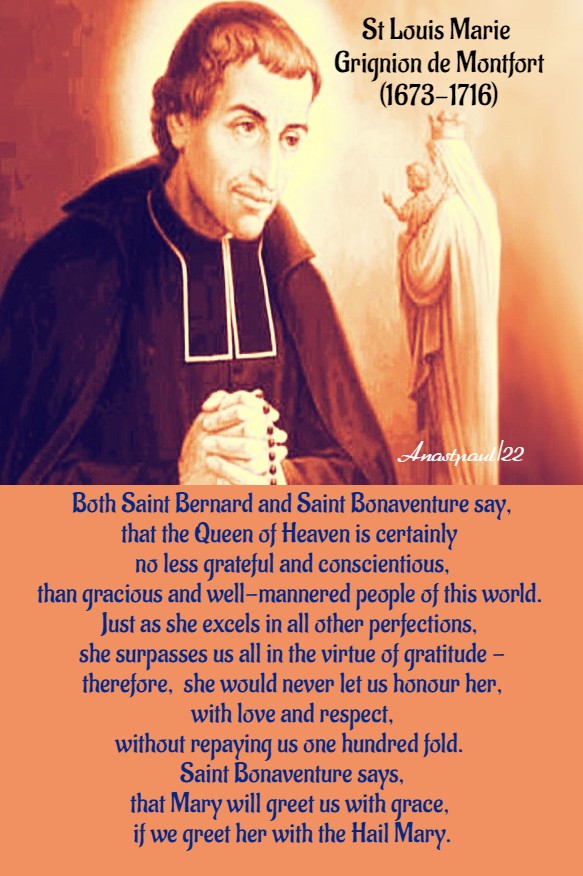
“Both Saint Bernard and Saint Bonaventure say, that the Queen of Heaven is certainly no less grateful and conscientious, than gracious and well-mannered people of this world. Just as she excels in all other perfections, she surpasses us all in the virtue of gratitude – therefore, she would never let us honour her, with love and respect, without repaying us one hundred fold. Saint Bonaventure says, that Mary will greet us with grace, if we greet her with the Hail Mary.”
You must be logged in to post a comment.