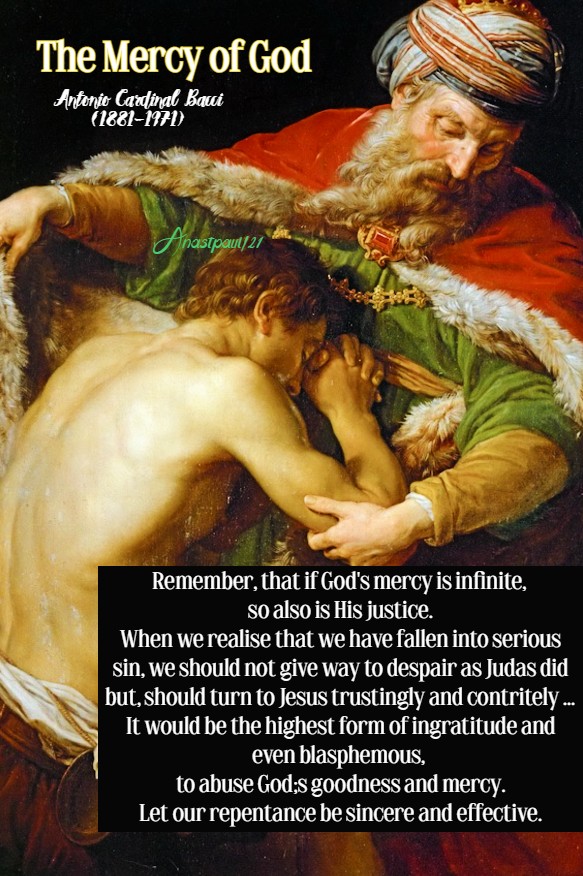
Thought for the Day – 23 October – Meditations with Antonio Cardinal Bacci (1881-1971)
“Month of the Holy Rosary” “As We Also Forgive Our Debtors”
“When we ask God to forgive us, we promise to forgive those who have offended us. Unless we are to be guilty of deception, therefore, we must pardon them. If we refuse to forgive, God will not forgive us. Jesus tells us in the Gospel, to pardon offences not seven times but, seventy times seven (Cf Mt 18:22). In other words, we must always be prepared to forgive. He tells us to return good for evil and to turn the other cheek when someone strikes us.
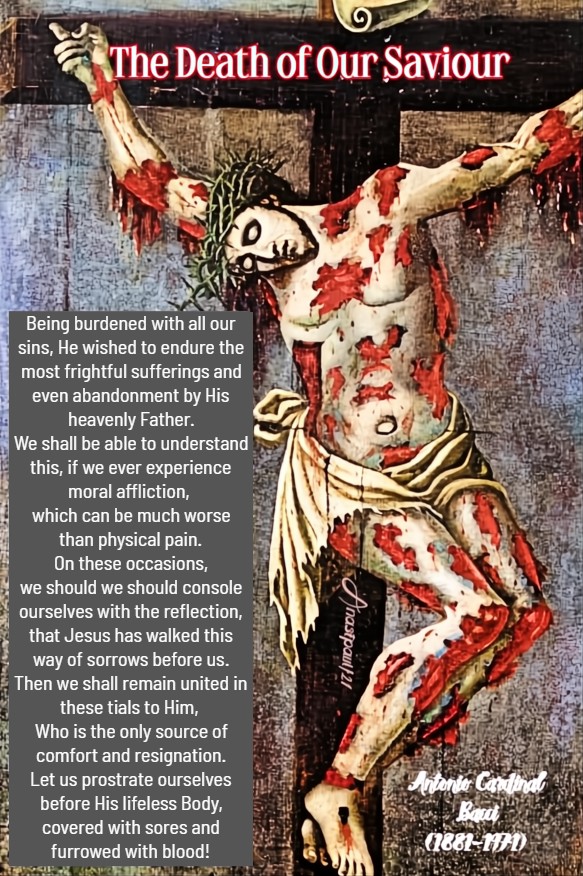
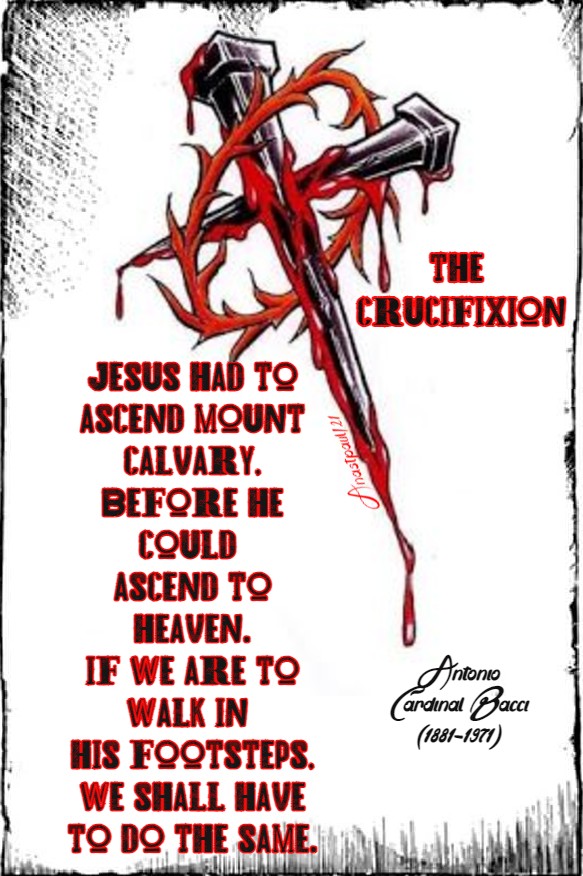
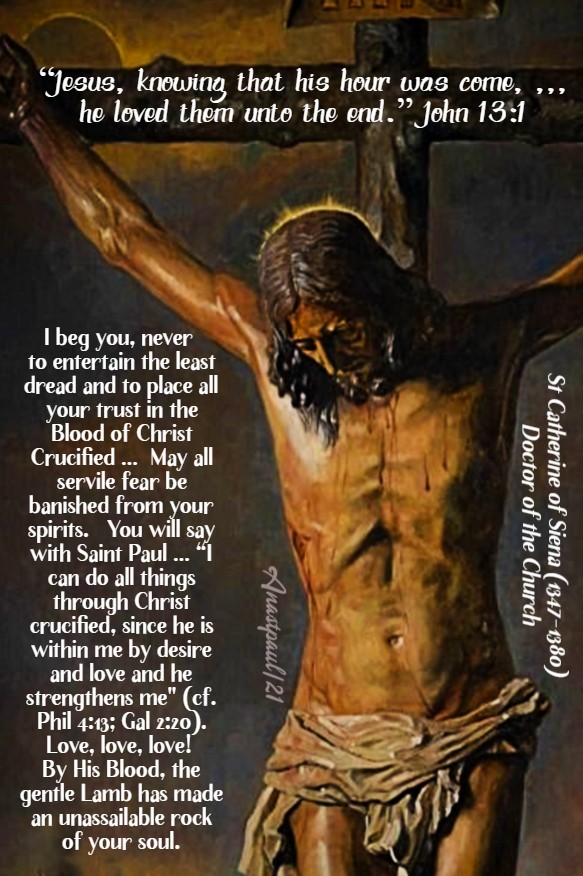
Not alone did Jesus command us to do this but, He also set us an example. While He was suffering fearful torments on the Cross and was surrounded by jeering enemies, He turned to His heavenly Father and uttered those sublime words: “Father, forgive them, for they do not know what they are doing” (Lk 23:24).
How could we gaze at the Crucifix and dare to refuse forgiveness to anyone? No matter how grave may seem the injuries done to us by our neighbour, let us remember, that they are insignificant in comparison with the insults which we have dared to offer to the infinite majesty of our Creator. They are as the hundred denarii compared with the ten thousand talents of Christ’s parable (Mt 18:24-28).
If we wish to receive God’s pardon, therefore, let us be prepared to forgive. Let our forgiveness be sincere, however and, not a mere formal token. The forgiveness freely granted by a heart scourged by the injuries of others, is a pleasing sacrifice offered to God.”
Quote/s of the Day – 23 October – Feast of the Most Holy Redeemer
“I did not come to condemn the world but to save the world.”
John 12:47
“Come along then, every human family, full of sin as you are and receive the forgiveness of your sins. For I Myself, am your forgiveness, I am the Passover of salvation, the Lamb slain for your sakes, your redemption, life and resurrection; I am your Light, your Salvation and your King. It is I, who lead you to the heights of heaven, I, who will raise you up; it is I, who will bring you to see the Father who is from all eternity; it is I, who will raise you up by My all-powerful Hand.”
St Melito of Sardis (Died c 180) Bishop, Apologist
Paschal Homily
“Many indeed are the wondrous happenings of that time: God hanging from a Cross, the sun made dark and again flaming out; for it was fitting, that creation should mourn with its Creator. The temple veil rent, Blood and Water flowing from His Side – the one as from a Man, the other as from what was above man; the earth shaken, the rocks shattered because of the Rock; the dead risen to bear witness to the final and universal resurrection of the dead. The happenings at the sepulchre and after the sepulchre, who can fittingly recount them? Yet not one of them, can be compared, to the Miracle of my Salvation. A few drops of Blood renews the whole world and do, for all men, what the rennet does for the milk – joining us and binding us together!”
St Gregory of Nazianzen (330-390) Father and Doctor of the Church
“The light of Christ is an endless day that knows no night.”
“Our Saviour’s passion raises men and women from the depths, lifts them up from the earth and sets them in the heights.”
St Maximus of Turin (? – c 420)
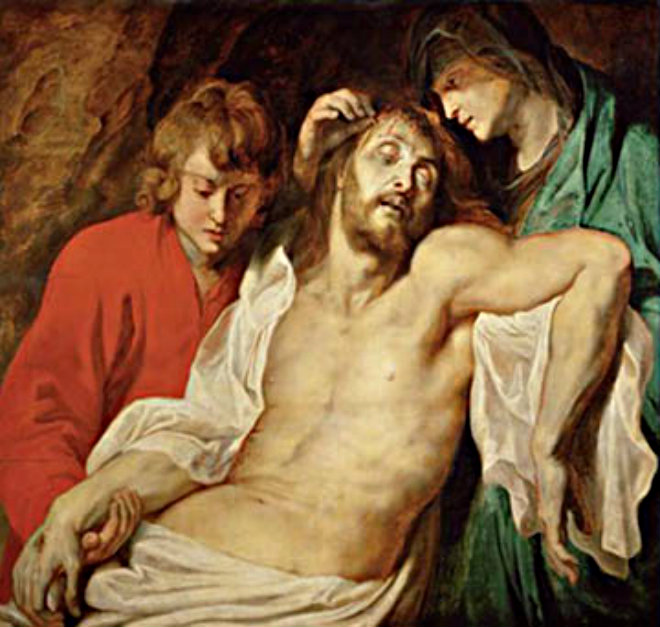
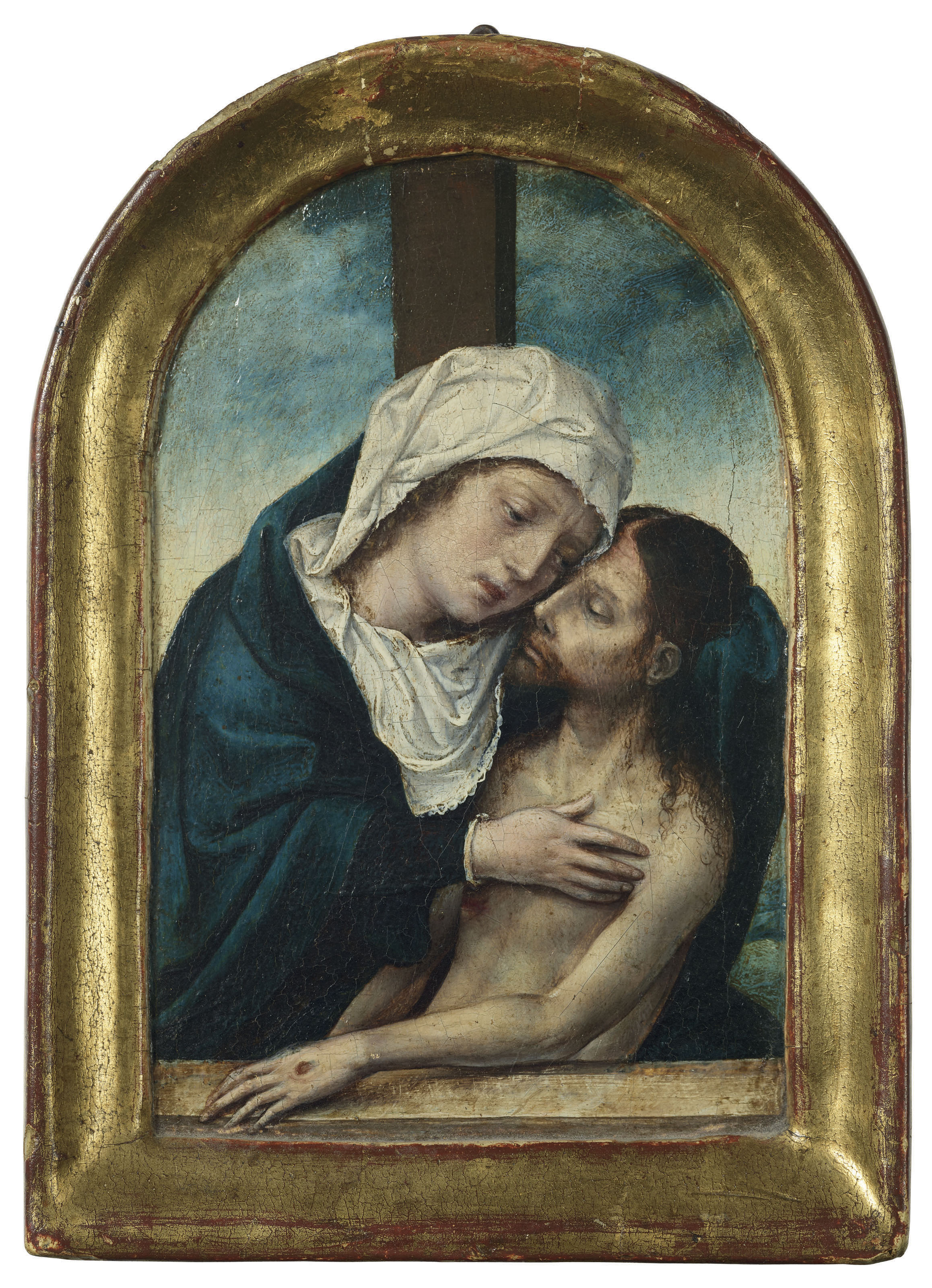
“As they were looking on, so we too gaze on His wounds as He hangs. We see His blood as He dies. We see the price offered by the Redeemer, touch the scars of His Resurrection. He bows His head, as if to kiss you. His heart is made bare open, as it were, in love to you. His arms are extended, that He may embrace you. His whole body is displayed for your redemption. Ponder how great these things are. Let all this be rightly weighed in your mind – as He was once fixed to the cross, in every part of His body for you, so He may now be fixed in every part of your soul.”
St Augustine (354-430) Father and Doctor of Grace
“Mount Calvary is the mount of lovers. All love that takes not it’s beginning from Our Saviour’s Passion is frivolous and dangerous. Unhappy is death without the love of the Saviour, unhappy is love without the death of the Saviour! Love and death are so mingled in the Passion of Our Saviour that we cannot have the one in our heart without the other. Upon Calvary one cannot have life without love, nor love without the death of Our Redeemer.”
St Francis de Sales (1567-1622) Doctor of Charity
“Yes, my gentle Redeemer, let me say it, You are crazy with love! Is it not foolish for You to have wanted to die for me? But if You, my God, have become crazy with love for me, how can I not become crazy with love for You?”
St Alphonsus Liguori (1696-1787) Most Zealous Doctor
Prayer Before The Crucifix – The Holy Sacrifice of the Mass By St Vincent Strambi (1745-1824)
Jesus, by this Saving Sign, bless this listless soul of mine. Jesus, by Your feet nailed fast, mend the missteps of my past. Jesus, with Your riven hands, bend my will to love’s demands. Jesus, in Your Heart laid bare, warm my inner coldness there. Jesus, by Your thorn-crowned head, still my pride till it is dead. Jesus, by Your muted tongue, stay my words that hurt someone. Jesus, by Your tired eyes, open mine to faith’s surprise. Jesus, by Your fading breath, keep me faithful until death. Yes, Lord, by this Saving Sign, save this wayward soul of mine. Amen
“He perspired blood in the Garden of Gethsemane, He was betrayed by Judas, denied by Peter and, abandoned by the Apostles, He was bound like a criminal, insulted, scourged, crowned with thorns, condemned to death and burdened with a cross; finally, when He arrived at Calvary, He was nailed to the gibbet, where He shed His Precious Blood and gave His life for our redemption. Such was the extent of Jesus’ infinite love for us. “Calvary” writes St Francis de Sales,“is the school of love.” The Saints were moved to tears by the strange spectacle of God-made-man, dying on the Cross for men. What is our reaction?”
One Minute Reflection – 23 October – Friday of the Twenty Ninth week in Ordinary Time, Readings: Ephesians 4:1-6, Psalms 24:1-2, 3-4, 5-6, Luke 12:54-59 and the Memorial of Blessed John Angelo Porro OSM (1451-1505)
“You hypocrites! You know how to interpret the appearance of earth and sky but why do you not know how to interpret the present time?”… Luke 12:56
REFLECTION – “The gospel tells us that some people were rebuked by the Lord because, clever as they were at reading the face of the sky, they could not recognise the time for faith when the kingdom of heaven was at hand. It was the Jews who received this reprimand but it has also come down to us. The Lord Jesus began His preaching of the gospel with the admonition: “Repent, for the kingdom of heaven is at hand” (Mt 4:17). His forerunner, John the Baptist, began his in the same way: “Repent,” he said, “for the kingdom of heaven is at hand” (Mt 3:2). Today, for those who will not repent at the approach of the kingdom of heaven, the reproof of the Lord Jesus is the same… As for when the end of the world will be, that is God’s concern… Even so, the time is very near for each of us, for we are mortal. There are hazards all around us. We should be in less danger from them were we made of glass. What more fragile than a vessel of glass? And yet it can be kept safe and last indefinitely. Of course it is exposed to accidents but it is not liable to old age and the suffering it brings. We, therefore, are the more frail and infirm. In our weakness we are haunted by fears of all the calamities that regularly befall the human race and if no such calamity overtakes us, still, time marches on. We may evade the blows of fortune but shall we evade death? We may escape perils from without but shall we escape what comes from within us? Now, suddenly, we may be attacked by any malady. And if we are spared? Even so, old age comes at last and nothing will delay it.”… St Augustine (354-430) – Father & Doctor of the Church – Sermon 109
PRAYER – Lord God, You fill us with Your grace and teach us true faith. Strengthen in our hearts that faith that no trials may quench the fire, that we may seek Your face in every moment and accept AND LIVE all of Your will. Send us Your Spirit to keep the fire blazing. By the inspiration and prayers of Blessed John Angelo Porro, may we grow in sanctity and may the humble love and intercession of Mary Mother of our faith, be our succour. Through Jesus Your Son our Lord, with the Holy Spirit, God forever, amen.
Our Morning Offering – 23 October – Feast of the Most Holy Redeemer and Friday of the Twenty Ninth week in Ordinary Time
Anima Christi
Soul of Christ, sanctify me. Body of Christ, save me. Blood of Christ, inebriate me. Water from the side of Christ, wash me. Passion of Christ, strengthen me. O Good Jesus, hear me. Within Your wounds hide me. Permit me not to be separated from You. From the wicked foe, defend me. At the hour of my death, call me and bid me come to You That with Your saints, I may praise You Forever and ever. Amen
For many years the prayer was popularly believed to have been composed by Saint Ignatius Loyola, as he puts it at the beginning of his Spiritual Exercises and often refers to it. In the first edition of the Spiritual Exercises Ignatius merely mentions it, evidently supposing that the reader would know it. In later editions, it was printed in full. It was by assuming that everything in the book was written by Ignatius that it came to be looked upon as his composition. On this account the prayer is sometimes referred to as the Aspirations of St Ignatius Loyola.
However, the prayer actually dates to the early fourteenth century and was possibly written by Pope John XXII but its authorship remains uncertain. It has been found in a number of prayer books printed during the youth of Ignatius and is in manuscripts which were written a hundred years before his birth.
The English hymnologist James Mearns found it in a manuscript of the British Museum which dates back to about 1370. In the library of Avignon there is preserved a prayer book of Cardinal Pierre de Luxembourg (died 1387), which contains the prayer in practically the same form as we have it today. It has also been found inscribed on one of the gates of the Alcázar of Seville, which dates back to the time of Pedro the Cruel (1350–1369).
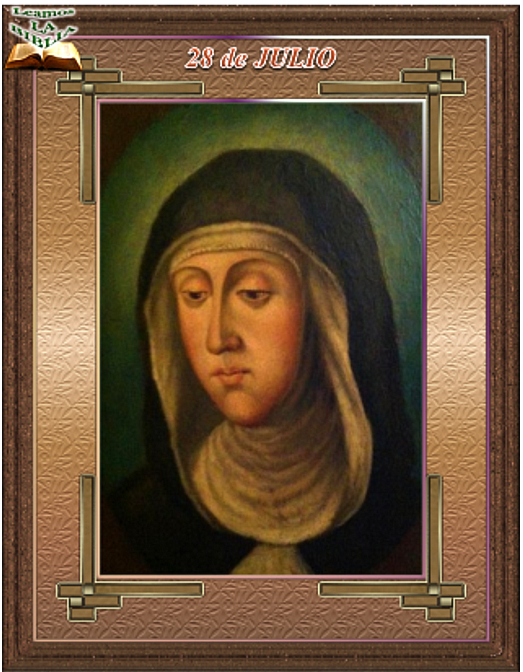
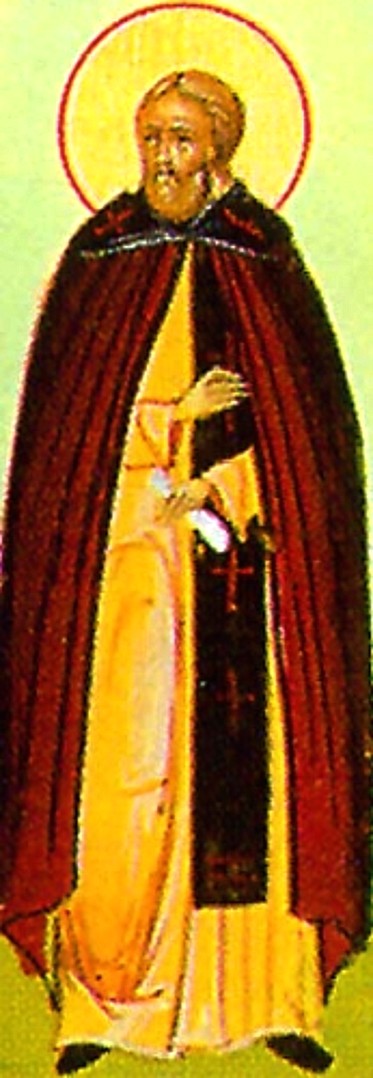
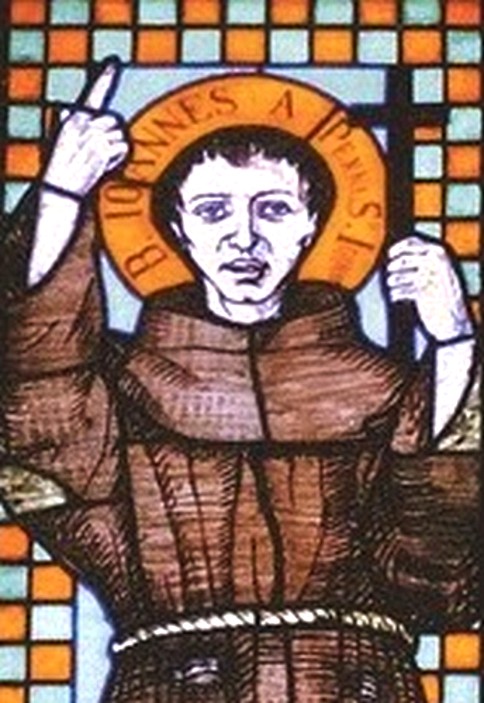
Saint of the Day – 23 October – Blessed John Angelo Porro OSM (1451-1505) Priest, Religious of the Order of Servants of Mary, Penitent, Catechist, Hermit – born in 1451 in Seveso, Duchy of Milan and died on 23 October 1505 (aged 54) Milan, Italy. Patronage – Sick children. Blessed John’s tomb became a place of pilgrimage where miracles were said to have occurred. One mother bought her ill son, Charles Borromeo, for a cure to his illness and he was cured. Borromeo removed a small bone from Porro’s foot – he was incorrupt – and St Charles always carried it as a reminder of that miracle.
John Angelo was born in 1451 in the Duchy of Milan of Protasio Porro and Franceschina de Guanzate, good Christians from Barlassina near Seveso. In 1468 he received the habit of the Servants and lived for five years in the Priory of Saint Mary in Milan. According to some of the Order’ s writers, he then retired to the solitude of Cavacurta on the right bank of the River Adda to lead a life of contemplation and penance.
In 1474 John Angelo was sent to the Annunziata in Florence where he was noted for his regular observance. During this period he completed his studies and was Ordained to the Priesthood. He continued to consider the possibility of a hermit’s life and eventually went to Monte Senario which had been restored at the beginning of the fifteenth century by a group of friars who had desired the solitary life.
Blessed John Angelo’s stay on Monte Senario was of such particular importance in his life and spiritual development, he even came to be known as “John of the Mountain.” Whenever he had to leave Senario for reasons of health or obedience he would always return to its solitude with great personal joy.
In 1484 Antonio Alabanti, the Prior of the Annunziata, called John Angelo to Florence to instruct the novices for whom he seems to have written some “useful instructions.” Three years later, Alabanti, who was now Prior General, named John Angelo Rector of the hermitage of Monte Senario, a position which he filled with responsibility, competence and holy wisdom. The Prior General greatly esteemed his prudence and religious spirit and often sought his help in directing the hermitage in Chianti as well.
After Alabanti’s death, John Angelo returned to Milan about 1495 and it seems that he was elected Prior. Even in the centre of that famous city, he managed to preserve something of the solitary life which he so loved. His biographer Fra Filippo Ferrari tells us that “he lived in a room a little removed from the others.”
It was during this period that another important aspect of John Angelo’s apostolate developed – the education of children in Christian doctrine. Ippolito Porro writes that “even though he was Prior, every feast day he would stand at the church doors or wander through the streets attracting the children to himself that he might teach them Christian doctrine.”
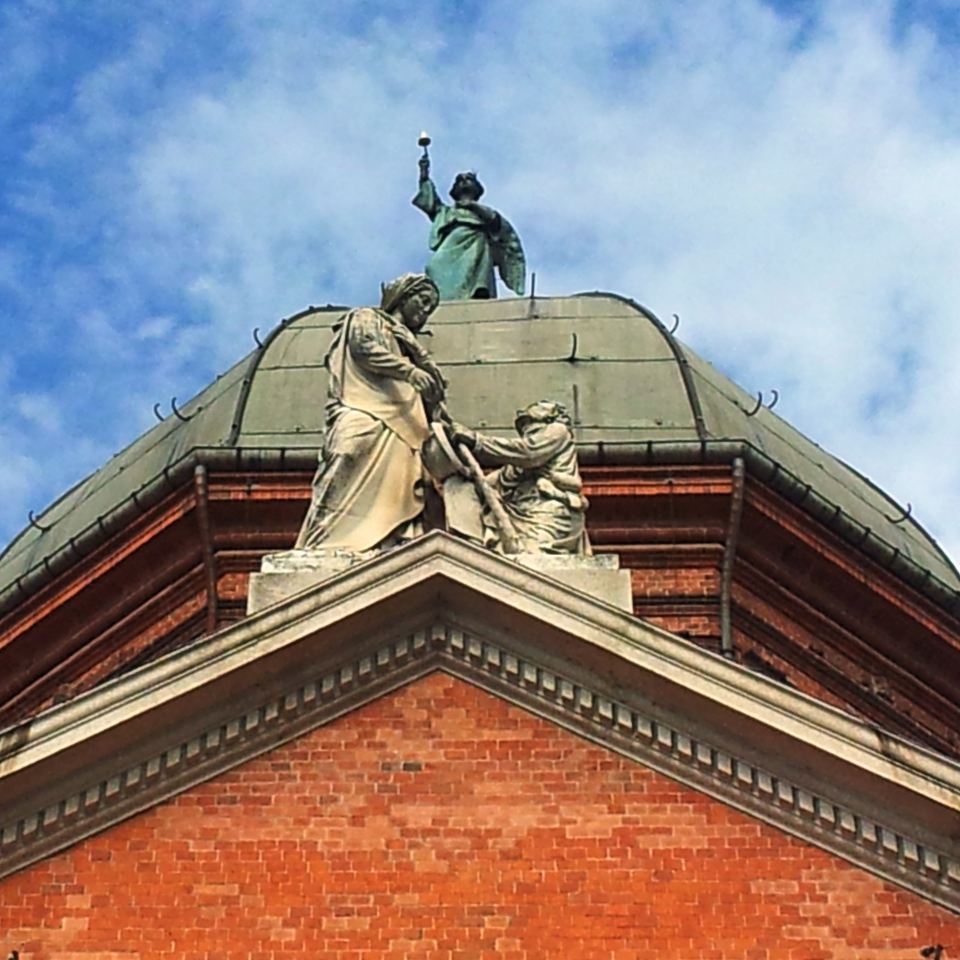
Corroboration for this comes from the marble bas-relief of the mid-sixteenth century which shows the Blessed in church teaching children.
John Angelo died on 23 October 1505, in the priory of Milan and was mourned by both friars and laity.
In Blessed John Angelo we see the image and model of a life centred on contemplation and the knowledge of God, which has found a way to express itself throughout the Order’s history. John Angelo had a special love for prayer and silence. He sought an ever deepening intimacy with God in prayer and was, therefore, drawn to solitude and away from associations which “wasted time.”
Not infrequently, though, his fraternal charity won out over his love for solitude. He loved the Order and was always concerned for it’s individual members. Though somewhat frail physically, he gained control over his body through constant renunciation. Poverty and simplicity of life were especially important for him. He had great reverence for Our Lady and composed a prayer in her honour, which he recited daily.
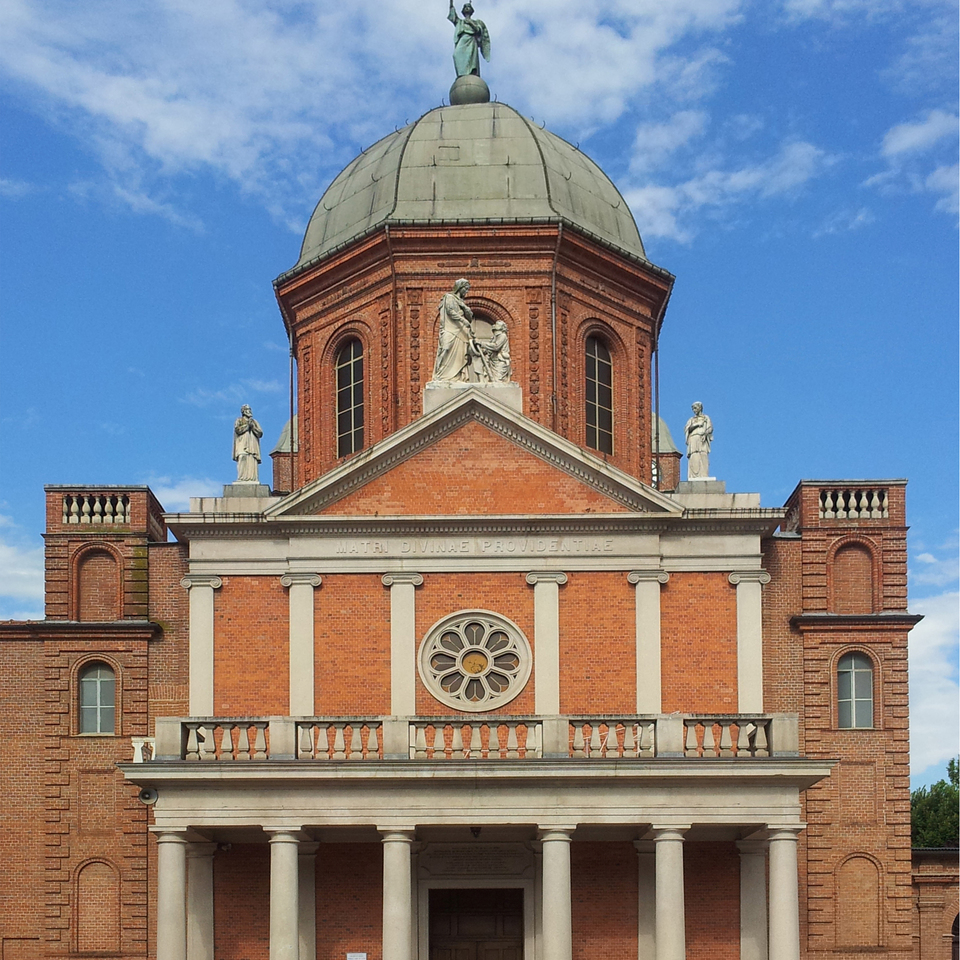
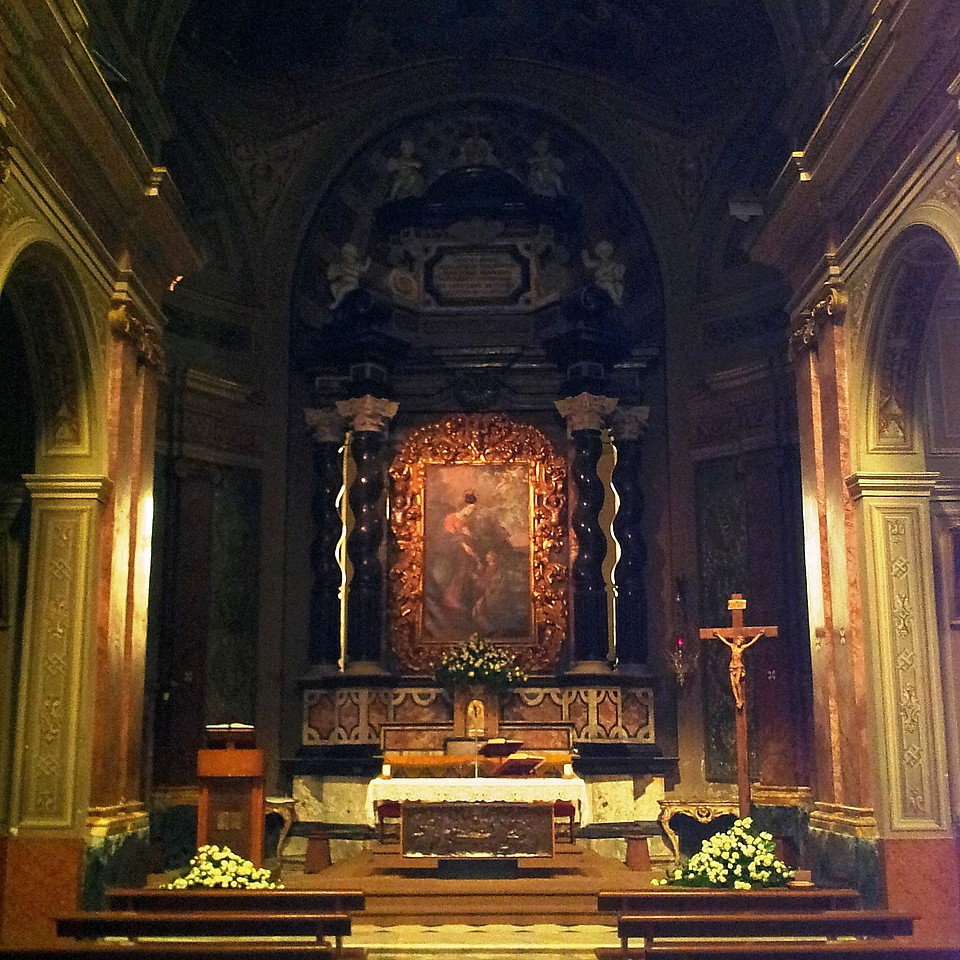
On 15 July 1737 Pope Clement XII proc1aimed John Angelo blessed. His incorrupt body is venerated in Milan in the Church of San Carlo, formerly known as the Church of Saint Mary of the Servants. Following a very old custom, sick children are still brought to his tomb to ask his intercession for their cure.
Prayer O Lord, John Angelo was faithful in his religious life and zealous in teaching Christian doctrine. May he pray for us, that we may always be close to You, observe the counsels of the gospel and be fervent in apostolic work. We ask this through our Lord Jesus Christ. Amen
St Benedict of Sebaste St Clether St Domitius St Elfleda St Ethelfleda St Gratien of Amiens St Henry of Cologne St Ignatius of Constantinople Blessed John Angelo Porro OSM (1451-1505) Bl John Buoni St John of Syracuse St Oda of Aquitaine St Phaolô Tong Viet Buong St Romanus of Rouen Bl Severinus Boethius St Severinus of Cologne Syra of Faremoutiers St Theodoret of Antioch Bl Thomas Thwing St Verus of Salerno — Martyrs of Cadiz – 2 saints Germanus Servandus Martyrs of Hadrianopolis – 2 saints Dorotheus Severus Martyrs of Nicaea – 3 saints Euerotas Socrates Theodota
Martyrs of Valenciennes – 6 beati: A group of Urusuline and Briggittine nuns murdered together in the anti-Christian excesses of the French Revolution. They were guillotined on 23 October 1794 in Valenciennes, Nord, France and Beatified on 13 June 1920 by Pope Benedict XV. • Anne-Joseph Leroux • Clotilde-Joseph Paillot • Jeanne-Louise Barré • Marie-Augustine Erraux • Marie-Liévine Lacroix • Marie-Marguerite-Joseph Leroux
Martyred in the Spanish Civil War including Martyrs of Manzanares (7 beati): • Agapit Gorgues Manresa • Agustín Nogal Tobar • Andrés Navarro Sierra • César Elexgaray Otazua • Cristóbal González Carcedo • Dorinda Sotelo Rodríguez • Eduardo Valverde Rodríguez • Felipe Basauri Altube • José María Fernández Sánchez • Juan Nuñez Orcajo • Leonardo Olivera Buera • Manuel Navarro Martínez • Roque Guillén Garcés • Toribia Marticorena Sola
Thought for the Day – 22 October – Meditations with Antonio Cardinal Bacci (1881-1971)
“Month of the Holy Rosary” “Forgive Us Our Debts”
“When we have asked God for nourishment for soul and body, we go on to implore forgiveness for our debts, whether they have been contracted in the course of nature, or of grace, or of sin. We owe everything to God. There was a time when we did not exist and, in His divine omnipotence He created us from nothing. Our bodily powers and spiritual faculties are His gifts to us. If we enjoy health, it is He Who has given it to us. If we have any ability, it comes from Him. Anything which we have been able to achieve as the result of mental or manual labour, has been made possible by His help.
Who is it but God Who rescues us from the many perils which surround us? Who but He enables us to overcome so many difficulties? How many times we should have died, if He had not sustained us!
Let us think back over our past lives. How much reason we have to be grateful to God, Who has watched over us continually like a loving Father. The conservation of life, is a continuous act of creation. When we recite the Pater Noster, therefore, we should express our filial gratitude to God and ask for His continued protection. Every moment of life is a new gift of God and an act of His infinite love in our regard. Let us be grateful and love Him generously in return.”
Quote/s of the Day – 22 October – Thursday of the Twent Ninth week in Ordinary Time, Readings: Ephesians 3:14-21, Psalms 33: 1-2, 4-5,11-12, 18-19, Luke 12:49-53
“I have come to set the earth on fire!”
Luke 12:49
“And I will ask the Father and he will give you another Advocate to be with you always, the Spirit of truth, which the world cannot accept, because it neither sees nor knows it. But you know it, because it remains with you and will be in you.”
John 14:16-17
“His action is preceded by the beaming rays of His light and knowledge. He comes with the truth of the real Protector; for He comes to save, to lead, to teach, to counsel, to strengthen, to console, to illumine in the first place the mind of the person who receives Him and through that person‘s works, the minds of others.”
St Cyril of Jerusalem (315-387) Father and Doctor of the Church
“Go Forth, Set the World on Fire”
St Ignatius Loyola (1491-1556)
“A Son of the Immaculate Heart of Mary is a man on fire with love, who spreads it’s flames wherever he goes. He desires mightily and strives by all means possible, to set the whole world on fire with God’s love. Nothing daunts him, he delights in privations, welcomes work, embraces sacrifices, smiles at slander and rejoices in suffering. His only concern is how he can best follow Jesus Christ and imitate Him in working, suffering and striving constantly and single-mindedly, for the greater glory of God and the salvation of souls.”
“I have come to set the earth on fire and how I wish it were already blazing!” – Luke 12:49
REFLECTION – “Everything we are about to do, even if it were a supremely heroic action destroying the foundations of all evil on earth, that act will have no value, except to the extent, with which our will accords with the will of the Immaculate and, through her, with the will of God … It is love in all it’s profundity (beyond feelings, even though that is also beautiful) that must transform us … It should consume us and, through us, set fire to the world and destroy and burn all the evil it finds there. This is the fire of which the Saviour said: “I have come to cast fire on the earth and what how I wish that it were already burning!” (Lk 12:49). Consumed by this fire of divine love (I repeat, it is not a question here of sweet tears or of feelings but of the will, even in the midst of disgust and antipathy), we will set the whole world ablaze! Love never rests but spreads like fire that burns everything. And all of us human beings should tend towards being set alight by this fire of love and that it may burn all souls that are and will be in the world. This is the ideal towards which we should tend. We must remember the words of Jesus: “I have come to set the earth on fire” (Lk 12:49). On our part we should do all we can to make this fire light up more and more everyday.” – St Maximilian Kolbe OFM (1894-1941) Priest, Martyr – Conferences
PRAYER – Father, grant that we may be, bearers of Christ Jesus, Your Son. Allow us to fill with Your light the world around us. Strengthen us by Your Holy Spirit to carry out our mission of living and following the path of Jesus, our Lord. Help us to understand, that by Your grace our gifts are Your blessings, to be shared with others. Fill us with Your Spirit of love to give glory to You in loving all and preaching by our love. Nourish in us the desire to go forth as the bearers of Your Son fearless and gentle, loving and merciful. Make us true Christ bearers, that in seeing us only He is visible. Amen (The Christopher Prayer)
Our Morning Offering – 22 October – Thursday of the Twent Ninth week in Ordinary Time
O Holy Spirit of God By Cardinal Henry Edward Manning (1806-1892)
O Holy Spirit of God, take me as Your disciple; guide me, illuminate me, sanctify me. Bind my hands, that they may do no evil; cover my eyes, that they may see it no more; sanctify my heart, that evil may not dwell within me. Be You my God; be You my guide. Wherever You lead me, I will go; whatever You forbid me, I will renounce; whatever You command me, in Your strength, I will do. Lead me, then, unto the fullness of Your truth. Amen
Saint of the Day – 22 October – St Donatus of Fiesole (Died 874) Bishop – 9th century Irish Nobleman, Monk, Priest, Poet, Confessor, Writer, Scholar, Professor, Bishop of Fiesole, Adviser to Emperors Louis the Pious and Lothair I, Founder of San Martino a Mensola Abbey and leader of two military expeditions against the Saracens. Born in Ireland and died in Fiesole, Italy. St Donatus is also known as Donat, Donato, Donagh. Patronage – Fiesole.
Donatus was born in Ireland of noble parents towards the end of the eighth century. There is good reason to believe that he was educated in the monastic school of Inishcaltra, a little island in Lough Derg, near the Galway shore, now better known as Holy Island: so he was probably a native of that part of the country. Here he studied with great industry and success. He became a Priest and, in course of time, a Bishop. He was greatly distinguished as a professor. Having spent a number of years teaching, he resolved to make a pilgrimage, visiting many holy shrines and then to arrive at his final destination, in Rome, to venerate the great Apostles who are buried there.
In 816 he achieved his goal and visited the tombs of the Apostles in Rome with his friend, St Andrew Scotus, the brother of St Brigid, both siblings had studied under our Saint. They remained in Rome for a considerable time and then having obtained the Pope’s blessing, set out once more, directing their steps now towards Tuscany, till at length they reached Fiesole, where they entered the hospice of the monastery, intending to rest there for a week or two and then to resume their journey.
He was led by Divine Providence to the Cathedral of Fiesole, which he entered at the moment when the people were grouped around their altars praying for a Bishop to deliver them from temporal and spiritual evils. When Donatus entered, the bells spontaneously began ringing and the candles lit themselves. The people believed God meant this stranger to be their Bishop! They elected him, although some said it’s possible no local wanted the position because the feudal lords had drowned the previous bishop. Raised by popular acclaim to the See of Fiesole, Donatus instituted a revival of piety and learning in the church over which he was placed. Donatus made Andrew his Deacon. This was in or about the year 824.
He founded the Abbey of San Martino di Mensola. He was a teacher in service to the Frankish kings; there is a record, from 850, of his giving a church and hospice, St Brigid’s at Piacenza, to the abbey founded by St Columban at Bobbio. Donatus not only battled sin, he was also a military leader, organising armies to lead two expeditions against the Saracens. He was an adviser to Emperor Louis and Frankish King Lothair I. He judged a disagreement between the Bishops of Arezzo and Siena. He also attended the Roman synod of Pope Nicholas I on 18 November 861.
During the last years of his life he built a church at his own expense in Piacenza and dedicated it to St Brigid. This church he left in his will to the Abbey of Bobbio, with the obligation of maintaining a hospice for Irish pilgrims. The work and constructive ability of St Donatus have always remained an example to members of the Church. He is still remembered in Tuscany and many boys are christened with his name in the provinces of Florence, Pisa, Leghorn and Lucca.
According to St Donatus, St Brigid visited his deathbed to give him spiritual strength and comfort. His story, preserved in manuscript in the Laurentian Library in Florence, tells of this miracle – the great saint flew to his deathbed and before she touched him, she hung her cloak on a sunbeam to dry. He was buried in the Cathedral of Fiesole, where his epitaph, dictated by himself, may still be seen. And here it is:
“Here I, Donatus, sprung from Scottish blood, Alone in this tomb, among the worms and dust dissolve. For many years I served the kings of Italy, Lothair the Great and Louis the Good.’ For more than eight lustrums and seven years I was ruler in the city of Fiesole; I dictated exercises in grammar to my pupils, Metrical schemes and the lives of the blessed saints. You traveller, whoever you are, for Christ’s sake Be not unwilling to behold my tomb. And pray to God, who rules in highest heaven, That He may grant to me His blessed kingdom.”
The old biographer of Donatus, at the conclusion of his history, adds this prayer : — ” Let us, therefore, all unite and say. Oh, Saint of God and beloved confessor. Father and pontiff. Educator and nourisher, ruler and shepherd. Help with thy prayers the destitute and fallen. Have pity on the widow and the captive. Help the orphan and the weak. Help those who live today and those who will come after, Give aid to those who live and those who die; Refuse not, we beseech thee, to listen to our prayers, Who, though imprisoned in the bonds of iniquity, Yet so far as their ignoble nature may permi,. Make offering of these things to their superiors. Them we implore with all our might To amend that which is faulty and to be indulgent to All that, which is worthless, and to pity our presumption, And since we cannot of ourselves mount to the pastures of Paradise, Help us to pray that so we may entreat the aid of Jesus Christ, To whom, with the Holy Trinity, are all things, world without end.”
The numerous locations and churches incorporating his name, St Donatus, provide evidence of his influence and popularity throughout Tuscany.
St Abericus Marcellus St Alodia of Huesca St Apollo of Bawit St Benedict of Macerac St Bertharius of Monte Cassino St Cordula St Donatus of Fiesole (Died 874) Bishop Bl Esclaramunda of Majorca St Hermes of Adrianople St Ingbert St Leothade of Auch St Lupenzius St Mark of Jerusalem St Mary Salome (First Century) Mother of Sts James and John, Apostles of Christ: https://anastpaul.com/2019/10/22/saint-of-the-day-22-october-saint-mary-salome-first-century-disciple-of-jesus/ St Maroveus of Precipiano St Mellon St Moderan of Rennes St Nepotian of Clermont St Nunctus of Mérida St Nunilo of Huesca St Philip of Adrianople St Philip of Fermo St Rufus of Egypt St Symmachus of Capua St Valerius of Langres St Verecundus of Verona — Martyrs of Heraclea – 4 saints: A group of four clerics in Heraclea (modern Marmara Ereglisi, Turkey) who were arrested in the persecutions of Diocletian. They were imprisoned, abused and ordered to turn over all the scriptures that they had hidden from authorities; they refused and were executed together. Martyrs. – Eusebius, Hermes, Philip and Severus. They were burned at the stake in 304 in Adrianople (modern Edirne, Turkey).
Martyrs of Adianople: • Blessed Alexander • Blessed Anna • Blessed Elisabeth • Blessed Glyceria • Blessed Heraclius • Blessed Theodota
Martyred in the Spanish Civil War: • Blessed Álvaro Ibáñez Lázaro • Blessed Andrés Zarraquino Herrero • Blessed Estanislao García Obeso • Blessed Germán Caballero Atienza • Blessed José Menéndez García • Blessed Josep Casas Lluch • Blessed Luis Minguel Ferrer • Blessed Pedro Lorente Vicente • Blessed Victoriano Ibañez Alonso
Thought for the Day – 21 October – Meditations with Antonio Cardinal Bacci (1881-1971)
“Month of the Holy Rosary” Our Daily Bread
“In the Pater Noster, Jesus instructs us to ask for our daily bread – that is, for sufficient bread for today, not for tomorrow. In this way, He warns us not to be too preoccupied with the future but, to trust in Providence and accept, from God’s hands, from day to day, whatever is necessary for us. God is our Father and loves us as His children. Knowing this, why should we worry about the future?
We are in the hands of God, Who looks after all His children. Let us entrust ourselves completely to His care. This does not mean that we should indulge in any kind of fatalism, expecting everything from God and doing nothing ourselves. We cannot and should not expect unnecessary miracles. We are under an obligation to work because work, is the result of and the punishment for, sin. It enable us to co-operate with God in His work of creation and has ben ennobled and sanctified by Jesus Christ, Who chose to be “the carpenter’s son,” (Mt 13:55) and a carpenter Himself (Cf Mk 6:3). We should work, therefore but, should not worry!
When we have done everything of which we ae capable, we should leave the rest to Divine Providence.”
Quote/s of the Day – 21 October – Wednesday of the Twenty Ninth week in Ordinary Time, Readings: Ephesians 3:2-12, Responsorial Psalm: Isaiah 12:2-3, 4,5-6, Luke 12:39-48
“Therefore, stay awake, for you know neither the day nor the hour.”
Matthew 24:13
“Be vigilant at all times and pray that you have the strength to escape the tribulations that are imminent and to stand before the Son of Man.”
Luke 21:36
“Life is short, Death is certain and the world to come is everlasting.”
“If we would God discern The world we must despise, His love and hate must learn, See all things with His eyes. And we must self forgo If God we would attain, His grace must in us grow And ease us from all pain. So shall we sing His praise And be at one with Him, In peace our voices raise In the celestial hymn, That with quadruple harmony And all mellifluous melody, In Heaven resounds eternally.”
(The Seven Steps of the Ladder of Spiritual Love)
Bl John van Ruysbroeck (c 1293-1382)
“This then is to watch – to be detached from what is present and to live in what is unseen, to live in the thought of Christ as He came once and as He will come again, to desire His second coming, from our affectionate and grateful remembrance, of His first. ”
“He watches with Christ, whoever commemorates and renews, in his own person, Christ’s Cross and Agony and gladly takes up that mantle of affliction which Christ wore here and left behind Him, when He ascended.”
St John Henry Newman (1801-1890)
Watch over your thoughts because they become words.
Watch over your words because they become actions.
Watch over your actions because they become habits.
Watch over your habits because they become your character.
Watch over your character because it becomes your destiny.
One Minute Reflection – 21 October – Wednesday of the Twenty Ninth week in Ordinary Time, Readings: Ephesians 3:2-12, Responsorial Psalm: Isaiah 12:2-3, 4,5-6, Luke 12:39-48 and the Memorial of Blessed Karl of Austria (1887 – 1922)
“You also must be ready, for the Son of Man is coming at an hour you do not expect.” – Luke 12:40
REFLECTION – “Watch!” Our Saviour gave this warning when He was leaving this world—leaving it, that is, as far as His visible presence is concerned. He looked forward to the many hundred years which were to pass before He came again. He knew His own purpose and His Father’s purpose gradually to leave the world to itself, gradually to withdraw from it the tokens of His gracious presence. He contemplated, as contemplating all things, the neglect of Him, which would spread, even among his professed followers … He foresaw the state of the world and the Church, as we see it this day, when His prolonged absence has made it practically thought, that He never will come back in visible presence.
Today, He mercifully whispers into our ears, not to trust in what we see, not to share in that general unbelief, not to be carried away by the world but to “take heed, watch and pray,” (Lk 21:34.36) and look out for His coming. Surely this gracious warning should be ever in our thoughts, being so precise, so solemn, so earnest.
Our Saviour foretold His first coming, yet He took His Church by surprise when He came; much more will He come suddenly the second time and overtake men, now that He has not measured out the interval before it, as then He did but left our watchfulness to the keeping of faith and love … We are not simply to believe but to watch; not simply to love but to watch; not simply to obey but to watch; to watch for what? for that great event, Christ’s coming … we seem to see a special duty enjoined on us … – most of us have a general idea what is meant by believing, fearing, loving and obeying but, perhaps we do not contemplate or apprehend what is meant by “watching.” – St John Henry Newman (1801-1890) Cardinal, Founder of the Oratory in England, Theologian – Sermon “ Watching ” PPS, t. 4, n° 22
PRAYER – Holy Father, grant me an operative faith, a faith that will move mountains. Enlighten my soul with Your Light, Goodness, Power and Wisdom. Let my faith be an image of You by lively deeds and love and by conforming myself to Your Will in all things. Blessed Karl of Austria, amidst the fineries of your earthly kingship, you longed only to serve the God of all and searched for complete closeness and abandonment to Him, teach us by your prayer, to serve God alone with upright hearts and thus manifest a true faith, through Christ our Lord, with the Holy Spirit, God forever, amen.
Our Morning Offering – 21 October – Wednesday of the Twenty Ninth week in Ordinary Time
Write Your Blessed Name, Upon My Heart By Thomas à Kempis (1380-1471)
Write Your blessed name, O Lord, upon my heart, there to remain so indelibly engraved, that no prosperity, no adversity shall ever move me from Your love. Be to me a strong tower of defence, a comforter in tribulation, a deliverer in distress, a very present help in trouble and a guide to heaven through the many temptations and dangers of this life. Amen
Saint of the Day – 21 October – Blessed Peter Capucci OP (1390-1445) Priest, Domincan Friar, Confessor, Penitent, Wonderworker, he was called“the Preacher of Death,”– born as Pedro Capucci in 1390 at Città di Castello, Tiferno, Italy and died on 21 October 1445 of natural causes. He is also known as Pedro de Tiferno, Peter of Tiferno and of Città di Castello. Patronage – Città di Castello.
After an uneventful childhood, Peter Capucci applied for admission to the Dominicans. He and the frail, youthful Saint Antoninus (1389–1459) were both received into the order on the Vigil of the Feast of the Assumption 1405. Their novice master was Blessed Lawrence of Ripafratta. Peter counted the artist-brothers, Blessed Fra Angelico and Fra Benedetto as his friends. Peter spent his novitiate at Cortona, remained there when some of his community moved to Fiesole, was Ordained and began his apostolate all in Cortona.
Not much about Peter is truly remarkable when he is viewed in the light of his neighboring luminaries but he glittered enough to have gained the attention of the Church. He was noted for regularity, patience and humility–virtues not terribly common in any age. He took upon himself the job of begging for alms as a means of atoning for his noble birth. Of course, just as we might treat the homeless, some treated Peter rudely but that did not disturb him. He quietly persisted in his humble work to ensure that his brothers had food and that there were alms for the poor. We are told that one rich wine merchant refused Peter, saying that the barrels in the cellar were all empty. A little later he found to his horror that they were indeed all empty. He immediately sent for the friar, apologised and begged him to bless the barrels and restore the wine–which Peter did without hesitation.
Other miracles were attributed to Peter, too. A woman’s withered hand was restored. Two unjustly condemned men were miraculously preserved from execution. Once, walking through the cloister, Peter came upon a disreputable man. Peter prophesied that the man would die within a day. The man laughed but died in the middle of the night after having sent for Peter to give him the sacraments. Peter Capucci became known as “the Preacher of Death,” because he used to preach with a skull in his hands. He apparently had the ability to read hearts and could expertly point out uncomfortable truths to unwilling listeners.
When Peter died, he was buried in a humble grave. Miracles began to occur there; thus, his fame grew. A prominent man who had been paralysed for three years, received the use of his limbs at the grave, after he had promised to pay the expenses for an annual celebration in Peter’s honour. In 1597, Peter’s relics were moved to a more suitable place (Benedictines, Dorcy).
Blessed Peter’s cultus was confirmed by Pope Pius VII with an official Beatification on 11 May 1816.
O God, who hast declared that Thy faithful, by continually remembering their latter end, shall never sin, grant, through the prayers and example of Blessed Peter, Thy Confessor, that we may so bear in mind our temporal death, that, by continually weeping over the sins we have committed, we may avoid eternal death. Through Christ our Lord. Amen
Bl Gundisalvus of Lagos St Hilarion of Gaza (c 291-371) Biography here: https://anastpaul.wordpress.com/2017/10/21/saint-of-the-day-21-october-st-hilarion-of-gaza-c-291-371/ Bl Hilarion of Moglena St Hugh of Ambronay Bl Imana of Loss Bl Iulianus Nakaura St John of Bridlington St Laura of Saint Catherine of Siena St Letizia St Maurontus of Marseilles St Malchus of Syria Blessed Peter Capucci OP (1390-1445) Priest St Petrus Yu Tae-Ch’ol St Pontius de Clariana St Raymond of Granada Bl Sancho of Aragon Bl Severinus of Bordeaux Bl Tuda of Lindisfarne Bl Viator of Lyons St Wendelin St William of Granada St William of Montreal St Zaira St Zoticus of Nicomedia — Martyrs of Nicaea – 279 saints:
Martyrs of Nicomedia – 3 saints: Caius of Nicomedia Dasius of Nicomedia Zoticus of Nicomedia
Martyred in the Spanish Civil War: • Blessed Genaro Fueyo Castañon • Blessed Isidro Fernández Cordero • Blessed Segundo Alonso González
Saint Ursula and Companions: (238) Legendary princess, the daughter of a Christian British king and Saint Daria. She travelled Europe in company of either 11 or 11,000 fellow maidens; the 11,000 number probably resulted from a misreading of the term “11M” which indicated 11 Martyrs, but which a copyist took for a Roman numeral. Ursula and her company were tortured to death to get them to renounce their faith, and old paintings of them show many of the women being killed in various painful ways. Namesake for the Ursuline Order, founded for the education of young Catholic girls and women. There are other saints closely associated with Ursula and her story – travelling companions who were martyred with her
Antonia of Cologne Cesarius of Cologne Cyriacus of Cologne Daria Fiolanus of Lucca Ignatius of Cologne James of Antioch Mauritius of Cologne Pontius of Cologne Sulpitius of Ravenna Vincent of Cologne
Travelling companion, but escaped the massacre: • Cunera led by a dove to the lost tomb of Ursula: • Cunibert of Cologne
Thought for the Day – 20 October – Meditations with Antonio Cardinal Bacci (1881-1971)
“Month of the Holy Rosary” “Give Us this Day Our Daily Bread”
“In the second part of the Lord’s Prayer, we ask the universal Father, on behalf of ourselves and of our brethren, for all things necessary for soul and body. Since we have already paid homage to God, our Creator and our Redeemer and, have prayed for the triumph of His kingdom and for the accomplishment of His will in Heaven and on earth, Our Lord does not forbid us to think now of ourselves and to pray for our own needs. “Give us this day our daily bread,” we ask, intending to pray, both for our spiritual and material requirements.
We should not delude ourselves into imagining that it is we who produce the fruits of the earth. A grain of wheat dies beneath the soil but God has infused into it, a mysterious force as a result of which, in dying, it generates new life.
The moisture of the soil, the warmth of the air and the light of the sun combine to develop this mysterious life-force, which produces the green stalk and then the flaxen ear of corn which provides us with bread. It is God Who has given this vital power to this tiny seed, as well as to all the other seeds of the soil. It is He Who has endowed the soil with the nutritive elements from which the seeds draw life and it is He, Who sends the dew, the rain and the sunshine, which cause the flowers to blossom and the plants to bear fruit.
We should ask God humbly, therefore, to “give us this day our daily bread.” Our own labours would be futile without the intervention of the all-powerful Creator. We are capable, neither of producing, nor of destroying a single atom nor a single seedling. Without God, we are incapable of achieving anything, either inthe natural or in the supernatural order. Therefore, we must ask Him to provide us with what we need. He is supremely good and loves us very much. His Providence will not leave us in want, even if we are often obliged to work hard in co-operation with Him to procure the necessaries of life. The birds have no granary, yet they manage to find enough seed to keep them alive because God is watching over them. How could we suppose, that He will not look after us, if we turn to Him with trust and perseverance?”
Quote/s of the Day – 20 October – Tuesday of the Twenty Ninth week in Ordinary Time, Readings: Ephesians 2:12-22,Psalms 85:9-10,11-12, 13-14, Luke 12:35-38
“Open the door to him at once when he comes and knocks.”
Luke 12:36
“Behold, I stand at the door and knock. If anyone hears my voice and opens the door, [then] I will enter his house and dine with him and he with me.”
Revelations 3:20
“Find Jesus at the door of your heart and you will discover paradise.”
St John Chrysostom (347-407) Father and Doctor of the Church
“Let your door stand open to receive Him, unlock your soul to Him, offer Him a welcome in your mind and then you will see the riches of simplicity, the treasures of peace, the joy of grace. Throw wide the gate of your heart, stand before the sun of the everlasting light.”
St Ambrose (c 340-397) Father and Doctor of the Church
“Christ is both the way and the door. Christ is the staircase and the vehicle …”
One Minute Reflection – 20 October – Tuesday of the Twenty Ninth week in Ordinary Time, Readings: Ephesians 2:12-22,Psalms 85:9-10,11-12, 13-14, Luke 12:35-38 and the Memorial of Blessed James Strepar OFM (c 1340-1409)
“Stay dressed for action and keep your lamps burning and be like men who are waiting for their master to come home from the wedding feast, so that they may open the door to him at once when he comes and knocks.” – Luke 12:35-36
REFLECTION – “God, the Word, stirs up the lazy and arouses the sleeper. For indeed, someone who comes knocking at the door is always wanting to come in. But it depends on us if He does not always enter or always remain. May your door be open to Him who comes; open your soul, enlarge your spiritual capacities that you may discover the riches of simplicity, the treasures of peace and sweetness of grace. Expand your heart; run to meet the Sun of that Eternal Light which “enlightens everyone” (Jn 1:9). It is certain that this true Light shines for all but, if anyone shuts their windows, then they themselves shut themselves off from this Eternal Light.
So even Christ remains outside, if you shut the door of your soul. It is true that He could enter but He does not want to use force, He does not put those who refuse under pressure. Descended from the Virgin, born from her womb, He shines throughout the universe to give Light to all. Those who long to receive the Light which shines with an everlasting brightness, open to Him. No night comes to intervene. Indeed, the sun we see each day gives way to night’s darkness but the Sun of Justice (Mal 3:20) knows no setting for Wisdom is not overcome by evil.” – St Ambrose (340-397) Bishop of Milan and Father and Doctor of the Church – 12th Sermon on Psalm 118
PRAYER – All-powerful, eternal God and Father, grant us the grace of Your Spirit and fill us with the light of understanding and love. May we learn to truly pray and by our prayers to entreat You to bless us in Your goodness and lead us to true faith in Your eternal light and Word sent to redeem us. May we always be waiting and prepared to open the door of our hearts to Jesus Christ our Lord, who comes in light, love and peace. Grant that by the prayers of Blessed James Strepar we may be strengthened. Holy Mother, be our protection and our guide. We make our prayer through Jesus Christ, our Lord with the Holy Spirit, God now and forever, amen.
Our Morning Offering – 20 October – Tuesday of the Twenty Ninth week in Ordinary Time
Only What You Will or Will Not By Thomas à Kempis (1380-1471)
Grant me Your grace, most merciful Jesus, so that it may be with me and work with me and persevere with me to the end. Grant that I may always want and desire that which is most acceptable and pleasing to You. Let Your will be mine and let my will always follow Yours and be in perfect accord with it. Let me always will or not will, the same with You and may I not be able to will or not will anything, except what You will or will not. Amen
Saint of the Day – 20 October – Blessed James Strepar OFM (c 1340-1409) Archbishop, Religious Priest of the Order of Friars Minor, Missionary, Apostle of the Holy Eucharist, Eucharistic Adoration, the Blessed Virgin and the Holy Rosary. He founded Churches, Monateries, Schools, Hospitals, apostolates of Eucharistic Adoration and promoted the prayer of the Holy Rosary, apostle of the poor and needy. He was given the title of “Protector of the Kingdom, Defender and Guardian of the Homeland” – born as Jakub Strzemię in c 1350 in Galacia, Poland and died on 1 June 1411 (aged 69) at Lviv, Poland (in modern Ukraine) of natural causes. Patronages – Archdiocese of Lviv, Diocese of Zamość-Lubaczów, against headaches and on 16 March 1910, St Pius X proclaimed Blessed James, along with St Anthony of Padua, the Patrons of the Conventual Franciscan Order of Krakow Province. He is also known as Jakob/James Strepa or Strzemie. He served as the Archbishop of Halicz from 1392 until his death, when the Archdiocese was incorporated into that of the Archdiocese of Lviv. He was an indefatigable Apostle of Poland and Russia during the fourteenth century, who, rich by birth, put into practice, the invitation addressed by Jesus to the rich young man of the Gospels – to leave all his possessions and follow Him. His body is incorrupt.
James was born in the Diocese of Krakow, to a Polish noble family, around the year 1340. He was very young when, fascinated by and, devoted to Saint Francis of Assisi and by the Franciscan ideal, he entered a convent of Friars Minor.
He joined the Society of Pilgrim Friars, made up of both Franciscans and Dominicans and, with a strong missionary yearning, set Ukraine as his goal. He was elected Superior of the convent of Lviv (a city founded around 1250) in a troubled moment in the ecclesiastical history of that city. There were in fact, contrasts between the Diocesan clergy and the religious and between Catholics and Orthodox. Furthermore, holding the position of inquisitor of the faith in Ruthenia, for ten years his apostolate was tireless.
At the height of his maturity, a new great mission appeared to him – to preach the Word of Christ in Russia. Such was his success, that he was appointed Vicar General and then Bishop of Halicz, a bishopric that was later transferred to Leopoli. Fr James was fifty-two years old.
Tirelessly, the new Bishop employed all his strength, with an extraordinary commitment, for the good of the Diocese. He built Churches in the most remote places and erected Parishes, entrusting them to Priests of proven virtues, who sometimes came especially from Poland.
Attentive to the needs of the poor and places of worship, he donated the income of the Bishopric to these purposes. He engaged in the construction of Monasteries, schools and hospitals.
On foot, without any honour, in the simple Franciscan habit, he visited every community. He was an example of humility, accompanying the active apostolate with personal penances. In every action he was driven by a great interior faith, transmitting his devotions to the Blessed Sacrament and to Our Lady. He instituted Perpetual Adoration and depicted the Virgin in the bishop’s coat of arms, inviting people to recite the Rosary everyday. So much zeal bore the fruits of a widespread religious awakening of the people. The Friar Bishop maintained unchanged, his missionary character towards atheists and towards the Orthodox, strongly desiring the unity of Christians while, due to his high moral authority, he was appointed senator of the Council of the Fatherland. In this capacity he gave practical suggestions for the administration of the city, one day finding himself facing even the incursions of the barbarians.
He died on 20 October 1409, receiving the title of “Protector of the Kingdom, Defender and Guardian of the Homeland” for his exceptional merits, including civil ones. Such was he considered by all.
His body, with the Habit and the Bishop’s insignia, was buried in the Church of the Franciscans. The fame of holiness was vast, pilgrimages to his tomb continued endlessly, while miracles occurred through his intercession. Ten years after his death, the body was exhumed and appeared uncorrupted. The cult, widespread in Poland, Lithuania and Russia, was confirmed by Pope Pius VI on 11 September 1791.
Today his relics are venerated in the Cathedral of Lviv (L’viv), the important Ukrainian city rich in history and culture, which has among it’s fathers the noble Friar who came from Poland.
Blessed James encouraged the faithful to donate books, liturgical garments, kitchenware to Monasteries. In everyday life, Bishop James was noted for his simplicity and Franciscan poverty – King Władysław II Jagiełło donated to James an estate in the centre of Lviv but he decided to live in a modest wooden house wearing a Franciscan habit. Bl James was sensitive to the needs of the poor and sick – he donated his episcopal income to the hospital of the Holy Spirit and to a shelter for the poor, sick and pilgrims. In his will he asked to give a mitre, silver ecclesiatical vessels, a Franciscan habit, books and all his belongings to the poor and use them for acts of mercy and for the celebration of Masses for his soul.
PRAYER O God, that with the apostolic labours of Bishop Blessed James Strepar you have placed the seeds of faith in the Church of Poland and Russia, through his intercession grant us to live our Christian vocation in an authentic way . Through Christ our Lord. Amen
Thought for the Day – 19 October – Meditations with Antonio Cardinal Bacci (1881-1971)
“Month of the Holy Rosary” The First Part of the “Our Father”
“The Pater Noster, being God’s own composition, is the most perfect of prayers. It covers, moreover, all our obligations and all our needs. It may be divided into two parts, the first of which refers to God, the second to ourselves. We should ask, first of all for whatever is important to God and then, for whatever concerns ourselves. This is the command of Jesus. “Seek first the kingdom of God and His justice and all these things shall be given you besides” (Mt 6:33).
When we have invoked our Father in Heaven, we go onto pray: “Hallowed be Thy name.”
Let us think about this. What do we look for first of all when we pray? Is it the glory of God, or, is it our own self-interest? Which occupies the principal place in our thoughts, God, or our own ego? Let us remember that we have been created for the glory of God. We shall not find happiness, unless, we seek God’s glory alone, for God is our true welfare.
We must not allow ourselves to become absorbed in insignificant worldly objects, which can never completely satisfy us. Rather, must we keep our minds on God. “God alone is sufficient,” said St Teresa. Without Him, there is nothing good within us or around us.
When we say “Hallowed be Thy name,” moreover, we should not only give God’s glory precedence over all our desires but, we should also make an act of reparation for the countless blasphemies by which His name has been injured. How can we remain passive and inert, while our Creator and our Redeemer is being continually blasphemed and offended? At the very least, we can set against the diabolical insults of many of our fellow-men, our own humble and loving prayer: “May Thy name, my God, be blessed and glorified.“
Quote/s of the Day – 19 October – The Memorial of St Paul of the Cross CP (1604-1775)
“We ought to glory in nothing other than, the Cross of our Lord Jesus Christ. You are blessed and don’t know it. You have Jesus Crucified, with you!”
“Your crosses dear God, are the joy of my heart. How beautiful to suffer with Jesus.”
“Oh cherished cross! Through thee my most bitter trials are replete with graces!”
“The passion of Jesus is a sea of sorrows but it is also an ocean of love. Ask the Lord to teach you to fish in this ocean. Dive into its depths. No matter how deep you go, you will never reach the bottom.”
“Do not live any longer in yourself but let Jesus Christ live in you in such a way that the virtue of this Divine Saviour may be resplendent in all your actions, in order that all may see in you a true portrait of the Crucified and sense, the sweetest fragrance of the holy virtues of the Lord, in interior and exterior modesty, in patience, in gentleness, suffering, charity, humility and in all others that follow.”
“Look upon the face of the Crucified, who invites you to follow Him. He will be a Father, Mother–everything to you.”
One Minute Reflection – 19 October – Monday of the Twenty Ninth week in Ordinary Time, Readings: Ephesians 2:1-10, Psalms 100:1-2, 3,4, 4-5, Luke 12:13-21 and the Memorial of St Paul of the Cross CP (1604-1775)
“What shall I do? For I do not have space to store my harvest ” – Luke 12:17
REFLECTION – “What shall I do?” There was a ready response to this: “I will satisfy hungry souls, open up my barns, call in everyone in need… I will speak out words of generosity – all you, who are short of bread, come to me; each according to your needs, take your share of God’s gifts flowing like a public fountain.” Yet you, you foolish rich man, are very far from doing this! And why? Jealous of seeing others enjoy their wealth you give yourself up to wretched calculations – you are not anxious about how to distribute to each according to their need but how to take everything and deprive everyone else, of the profit they might have drawn from it…
So then, my brethren, take care you don’t experience the same fate as that man! If Scripture gives us this example, it is so, that we can avoid behaving in the same way. Imitate the earth! – bear fruit and don’t prove yourself worse than it, soulless as it is. It yields crops, not for it’s own pleasure but to serve you. To the contrary, all the fruit of the kindnesses you show, will be gathered for yourself, since the graces that arise from good works, return to those who bestow them. You have given to the hungry and what you gave, remains with you and even comes back to you, with increase. As the grain of wheat that fell into the earth brings profit to the sower, so the bread given to the hungry, will bring you superabundant profit later on. May the end of all your labours, be for you, the commencement of your sowing in heaven.” – St Basil The Great (329-379) Monk and Bishop of Caesarea in Cappadocia, Father and Doctor of the Church – Sermon 6, on Wealth
PRAYER – Almighty God, Your Priest Saint Paul, loved only the cross. May he obtain Your grace for us, so that, inspired with a new courage and the virtue of obedience and sacrifice, by his example, we may take up our cross without flinching. We make our prayer through Jesus Christ our Saviour, who lives and reigns with You and the Holy Spirit, God now and for all eternity, amen.
Our Morning Offering – 19 October – Monday of the Twenty Ninth week in Ordinary Time and the Memorial of St Paul of the Cross CP (1604-1775)
Oh Jesus, My Love By St Paul of the Cross (1604-1775)
Oh Jesus, my Love, may my heart be consumed in loving Thee. Make me humble and holy; giving me childlike simplicity; transform me into Thy holy Love. O Jesus, life of my life, joy of my soul, God of my heart, accept my heart as an altar, on which I will sacrifice to Thee, the gold of ardent charity, the incense of continual, humble and fervent prayer and the myrrh of constant sacrifices! Amen
Saint of the Day – 19 October – Blessed Thomas Hélye (c 1180-1257) Priest, Penitent, Teacher, Missionary and renowned Preacher. Patronage – Biville, France.
Thomas Hélye was born between 1180 and 1187 in the hamlet of Gardin in the Parish of Saint-Pierre de Biville, France. Thomas’s parents, Hélye and Mathilde, were of modest means.
After having studied with the Benedictine monks of the priories of Vauville and Héauville and with the Augustinian canons of the Abbey of Notre-Dame du Vœu. In 1206, he became the Principal of the School of Cherbourg. He excelled in his talents as a teacher and was promoted to Governor of the schools of the region.
Following a serious illness which led him to the gates of death, he experienced a true conversion. Retiring to his brother, a Priest Fr Guillaume, in the hamlet of Gardin in his native parish of Biville, he led a life of penance. He neglected his person and concentrated solely on prayer, fasting and mortification.
In 1226, having learnt of his conduct, the Bishop of Coutances – Hugues de Morville – summoned him and encouraged him to consider his future. He made pilgrimages to Rome and Santiago de Compostella and thereafter, studied theology in Paris for four years. There his Professor and Confessor, both future cardinals, were impressed by his piety.
In 1235 he was Ordained a Priest by the Bishop of Morville. The Bishops of Coutances and Avranches who had noted his preaching abilities and his great desire to envanglise and teach the faithful, then entrusted him with a missionary ministry as an itinerant preacher. For twenty-two years, Thomas visited all the parishes of these diocese. He was greeted with fervour by the crowds with cries of “Here is the saint!” Here is the man of God! ”
At the end of his life, weakened by his privations and tireless missionary travels, Thomas Hélye retired to the manor of his friend Gauvain, Lord of Vauville . He died there on 19 October 1257. The next day, his body was taken to his native parish in neighbouring Biville supported by a huge crowd of mourners.
the Church of St Peter in Biville
In 1794, his relics were hidden to prevent their destruction during the persecutions of the French Revolution. In 1910 his glass coffin was enclosed in a marble sarcophagus. If you look carefully at the photograph below, you will see a marble slab with a relief of Blessed Thomas. This slab covered the original tomb and has now been reset into the wall. The sarcophagus resides in the choir of the St Peters in Biville where he is venerated by many pilgrims and where many miracles have been reported. During the annual festivals of his feast day, pilgrims come from all over the region.
North American Martyrs (Optional Memorial) – 8 saints: Two priests and six lay-brothers, all Jesuits, who were sent as missionaries to the area of modern Canada and New York and who were murdered by the locals for their work. • Saint Antoine Daniel • Saint Charles Garnier • Saint Gabriel Lalemant • Saint Isaac Jogues • Saint Jean de Brébeuf • Saint Jean de la Lande • Saint Noel Chabanel • Saint Rene Goupil Canonised – 29 June 1930 by Pope Pius XI
St Philip Howard St Potenzianus of Sens St Ptolemy of Rome St Sabiniano of Sens St Theofrid Blessed Thomas Hélye (c 1180-1257) Priest St Varus of Kemet St Verano of Cavaillon — Martyred in the Spanish Civil War: 18 Beati • Blessed Antonio Elizalde Garvisu • Blessed Constantino Miguel Moncalvillo • Blessed Dionisio Arizaleta Salvador • Blessed Emiliano Pascual Abad • Blessed Eusebio de Las Heras Izquierdo • Blessed Ferran Castán Messeguer • Blessed Francesc Solá Peix • Blessed Francisco Marco Martínez • Blessed Francisco Milagro Mesa • Blessed Francisco Simón Pérez • Blessed Josep Ferrer Escolà • Blessed Josep Ribé Coma • Blessed Julio Leache Labiano • Blessed Juan Senosiaín Zugasti • Blessed Manuel Font y Font • Blessed Narcís Simón Sala • Blessed Nicolas Campo Giménez • Blessed Pere Vives Coll
You must be logged in to post a comment.