Posted in CHRIST, the WAY,TRUTH,LIFE, PRACTISING CATHOLIC, QUOTES of the SAINTS, QUOTES on FAITH, QUOTES on SANCTITY, QUOTES on UNITY/with GOD, SACRED and IMMACULATE HEARTS, SAINT of the DAY, The HOLY EUCHARIST / The HOLY MASS, The HOLY FACE

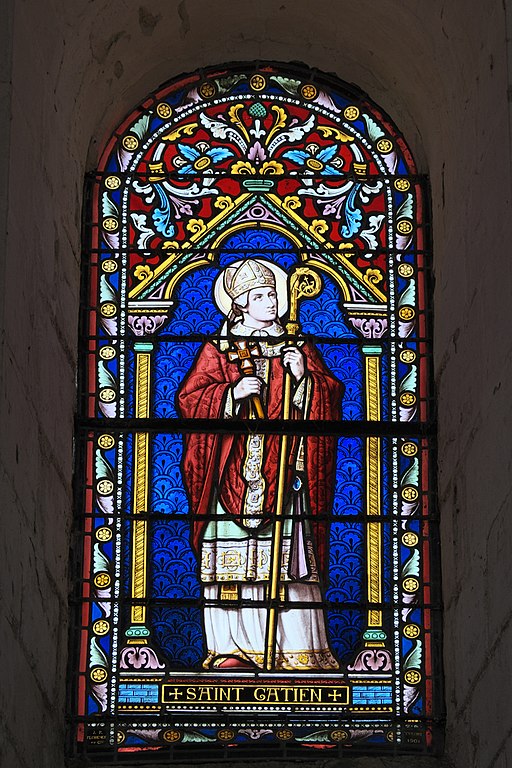
Quote/s of the Day – 19 August – St John Eudes

Quote/s of the Day – 19 August – The Memorial of St John Eudes Orat. (1601-1680) “Apostle of Two Hearts”

“A Christian has
a union with Jesus Christ –
more noble,
more intimate
and more perfect
than the members of a human body
have with their head!”a christian has a union with jesus chist - st eudes - 19 aug 2019.jpg

“The Christian life is a continuation
and completion of the life of Christ in us.
We should be so many Christs here on earth,
continuing His life and His works,
labouring and suffering in a holy
and divine manner in the spirit of Jesus.”the christian life is a continuation and completion - st john eudes 19 aug 2019.jpg

“Our wish, our object,
our chief preoccupation
must be to form Jesus in ourselves,
to make His spirit,
His devotion,
His affections,
His desires
and His disposition,
live and reign there.
All our religious exercises
should be directed to this end.
It is the work which God
has given us to do unceasingly. “our wish our object - st john eudes - 19 aug 2019.jpg

“Faith is a beam,
radiating from
the face of God.”

St John Eudes (1601-1680)faith is a beam radiating from the face of god st john eudes 19 aug 2019.jpg

Posted in DOCTORS of the Church, MORNING Prayers, QUOTES of the SAINTS, QUOTES on HUMILITY, SAINT of the DAY, The WORD

One Minute Reflection – 19 August – “If you would be perfect…”

One Minute Reflection – 19 August – Monday of the Twentieth week in Ordinary Time, Year C – Gospel: Matthew 19:16–22 and The Memorial of St John Eudes Orat. (1601-1680) “Apostle of Two Hearts”

Jesus said to him, “If you would be perfect, go, sell what you possess and give to the poor and you will have treasure in heaven and come, follow me.” … Matthew 19:21

REFLECTION – “O Jesus! can anyone declare that he does not desire this great blessing, especially after he has passed through the chief difficulties?   No, no-one can!   We all say we desire it but there is need of more than that, for the Lord to possess entire dominion over the soul.   It is not enough to say so, any more than it was enough for the young man when our Lord told him what he must do if he desired to be perfect…

Enter then, enter, my daughters, into your interior, pass beyond the thought of your own petty works, which are no more, nor even as much, as Christians are bound to perform, let it suffice, that you are God’s servants, do not pursue so much as to catch nothing. Think of the saints, who have entered the Divine Presence and you will see the difference between them and ourselves.   Do not ask for what you do not deserve, nor should we ever think, however much we may have done for God, that we merit the reward of the saints, for we have offended Him.   Oh, humility, humility!   I know not why but I am always tempted to think, that persons who complain so much of aridity in prayer, must be a little wanting in this virtue…  Let us try ourselves, my sisters, or let our Lord try us, He knows well how to do so, although we often pretend to misunderstand Him…

If we turn our backs on Him and go away sorrowfully, like the youth in the Gospel, when He tells us what to do to be perfect, what can God do? for He must proportion the reward to our love for Him.   This love, my daughters, must not be the fabric of our imagination, we must prove it by our works.   Yet do not suppose that our Lord has need of any works of ours, He only expects us to manifest our goodwill… if we continue in it…  doubtless, by persevering in this poverty and detachment of soul, we shall obtain all for which we strive.   But, mark this – it must be on one condition – that we `hold ourselves for unprofitable servants.’ (Lk 12:48) … St Teresa of Avila (1515-1582) Doctor of the Church – Interior Castle, Mansion 3, Chapter 1matthew 19 21 if you would e perfect - oh humility humilty - st teresa of avila 19 aug 2019.jpg

PRAYER – Father of mercies and God of all consolation, You gave us the loving Heart of Your own beloved Son, because of the boundless love by which You have loved us, which no tongue can describe.   May we render You a love that is perfect with hearts made one with His.   Grant, we pray, that our hearts may be brought to perfect unity, each heart with the other and all hearts with the Heart of Jesus….and may the rightful yearnings of our hearts find fulfilment through Him, Our Lord Jesus Christ, Your Son, who lives and reigns with You, in the unity of the Holy Spirit, one God, forever and ever. – Collect from Saint John Eudes’ Mass, Gaudeamus, 1668 St John Eudes, Pray for us! amen.st john eudes pray for us 19 aug 2019.jpg

Posted in Our MORNING Offering, PRAYERS of the SAINTS, SACRED and IMMACULATE HEARTS, SAINT of the DAY

Our Morning Offering – 19 August – O Jesus, Living in Mary

Our Morning Offering – 19 August – Monday of the Twentieth week in Ordinary Time and The Memorial of St John Eudes Orat. (1601-1680) “Apostle of Two Hearts”

O Jesus, Living in Mary
By St John Eudes (1601-1680)

O Jesus, living in Mary,
Come and live in Your servants
in the holiness of Your Spirit,
in the fullness of Your Strength,
in the perfection of Your Ways,
in the truth of Your Virtues,
in communion with Your Mysteries.
Come and master the enemy
in Your Holy Spirit
for the glory of the Father.
Ameno jesus living in mary by st john eudes 19 august 2019.jpg

Posted in DOMINICAN OP, SAINT of the DAY

Saint of the Day – Blessed Jordan of Pisa OP (c 1255–1311)

Saint of the Day – Blessed Jordan of Pisa OP (c 1255–1311) – Dominican Friar, Theologian, Professor, renowned Preacher, Founder of the Confraternity of the Holy Redeemer at Pisa, Visionary, Marian devotee, promoter and daring innovator of the vernacular Italian language as a ‘church’ language and a tool for evangelisation – born c 1255 at Pisa, Italy and died on 19 August 1311 at Piacenza of natural causes.   At a time when scholars believed that no colloquial tongue could ever replace Latin as a ‘gentleman’s’ language, Jordan worked to make Italian the beautiful tongue that it is today.

used for blessed jordan of pisa - dominican Constavez.png
See the Note at the bottom

Jordan attended the University of Paris where he first encountered the Dominican friars in 1276.   Four years later, probably after obtaining his degrees, he returned to Italy and took the habit.   He began a long teaching career there as soon as he was qualified to do so.

He preached and taught variously at Siena, Viterbo and Perugia before eventually moving to Florence, in which area he was a widely respected preacher, eventually being appointed by the provincial chapter at Rieti as a lector in the church of Santa Maria Novella in 1305.   He held that post for the next three years and contributed greatly to its esteem.   In 1301, he attended a general meeting of the order held in Cologne, Germany..

He seems to have been fascinated with the whole question of preaching as an apostolic tool and to have been one of the first to make a scientific study of it.   He pointed out that the Greek church was “invaded by a multitude of errors,” because the Greeks had no preachers, he could never say enough in praise of Saint Dominic’s farsightedness in establishing an order specifically for preaching.

Jordan studied methods of making sermons more effective, both by using examples that would reach the people and by the use of the vernacular.   This latter was a much-disputed subject in his day, Jordan was considered a daring innovator.   Because it was controversial, he strove to make Italian a beautiful instrument on which he could play the melodies of the Lord.

bl jordan of pisa 800px-Pantheologia,_ms_van_Kruisherenklooster_Maastricht_1470_(UB_Groningen,_ms._18)_-_1
Bl Jordan’s Pantheologia (written early 14th century, this manuscript from 1470)

Blessed with an extraordinary memory, Jordan was renowned for his knowledge in general and knew the Breviary by heart, as well as the Missal, most of the Bible (with its marginal commentary), plus the second part of the Summa.   This faculty of memory he used in his sermons but he was quick to point out to young preachers that learning alone can never make a preacher.   By the holiness of his own life he made this plain and continually preached it to those he was training to preach.

Jordan of Pisa had two great devotions–to Our Blessed Mother and to Saint Dominic.   He was favoured with a vision of Our Lady, she came into the fathers’ refectory and served at table.   Jordan, who was the only one who could see her, could barely eat for excitement.   He spoke often of her in his sermons and also of Saint Dominic. dominican saints and the blessed virgin

In 1311 the Master General,  Aymericus Giliani, appointed him professor of theology at the friary of Saint James in Paris, to deliver his reading of the Lombard’s Sentences and obtain his master’s degree but Jordan died on his way to Paris.   His body was returned from Piacenza, where death overtook him, to rest in the church of Santa Caterina in Pisa.
On 23 August 1833, Blessed Jordan’s cultus was confirmed by Pope Gregory XVI and in 1838 he was Beatified by Pope Gregory XVI.

santa catarina pisa bl jordan of pisa relics
Santa Caterina in Pisa

Jordan studied the use of preaching for evangelisation.   He pioneered the use of the Tuscan language for preaching and lecturing, which helped establish it as the foremost among the vernaculars of Italy.   His Tuscan was reputedly versatile and musical but never elaborate or ornate.   At Florence he would reportedly preach five times a day, walking about, both indoors and out, followed by a crowd of listeners as he developed his topic.   During his lengthy sermons his friend and disciple, Silvester of Valdiseve (1278–1348), sometimes sat near the pulpit with wine to refresh him.   Some of his listeners took notes that have survived.   His preaching was said to have a positive effect on Florentine public life and morality by its emphasis on sound (i.e. Thomistic) doctrine, Christian living and perseverance.   What he had to say would have sounded dry in Latin but significantly, no Latin sermons by Jordan have survived.

God of holiness,
by the integrity of his life and gentle manner
You made Blessed Jordan
a fitting minister to preach the gospel.
By following his example,
may we generously strive to serve You
through service to our neighbour
and so gain the fruit of an everlasting reward.
We ask this through our Lord Jesus Christ,
Your Son, who lives and reigns with You
and the Holy Spirit, one God, forever and ever.
Amen

General Calendar of the Order of Preachersdominican our_saints_and_blesseds

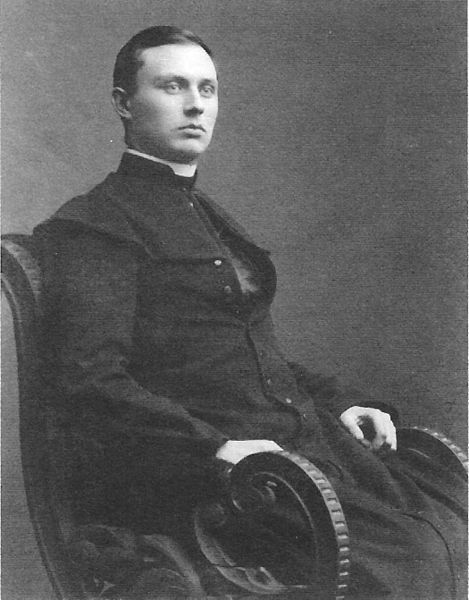
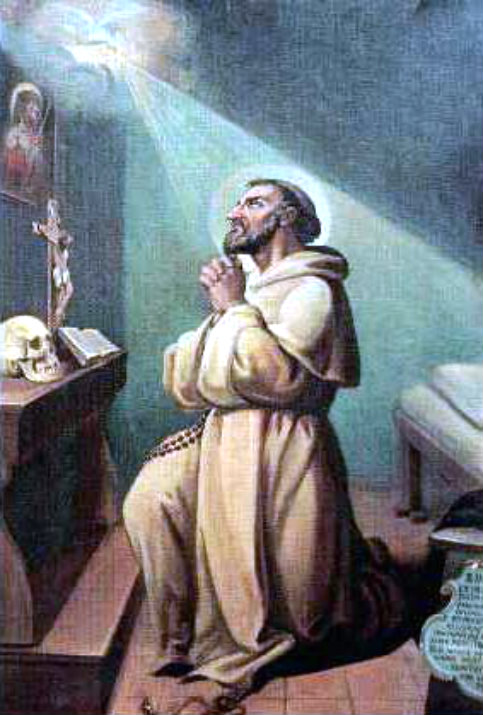
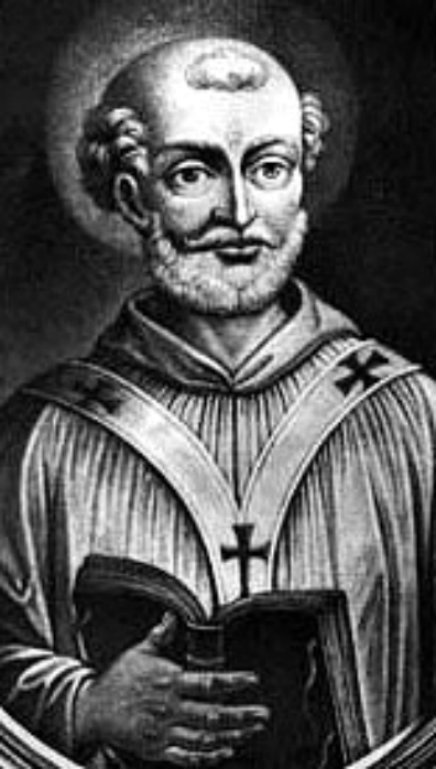
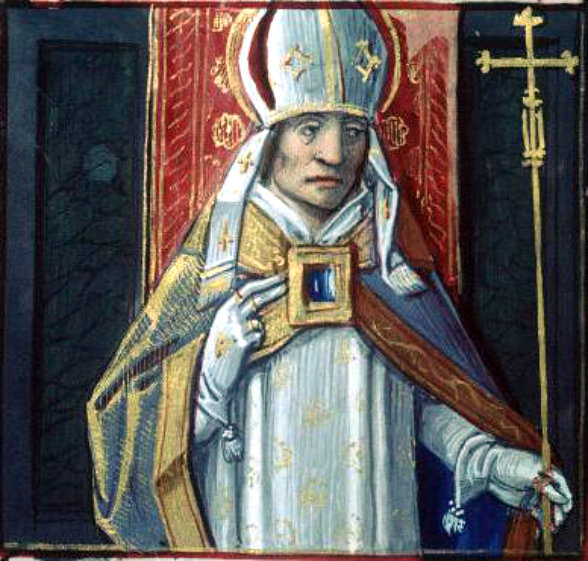
Note:  The first image above is probably NOT Blessed Jordan but the image found online for him, is actually Blessed Jordan of Saxony.   I used this unknown friar above as there seem to be no known images available of Blessed Jordan of Pisa.

Posted in DOMINICAN OP, SAINT of the DAY

Memorials of the Saints -19 August

St John Eudes (Optional Memorial)
Biography here:
https://anastpaul.wordpress.com/2017/08/19/saint-of-the-day-19-august-st-john-eudes-apostle-of-two-hearts/

St Andrew the Tribune
St Badulf of Ainay
St Bertulf of Luxeuil
St Calminius
St Credan of Evesham
St Donatus of Mount Jura
St Elaphius of Châlons
St Ezekiel Moreno Y Diaz
St Guenninus
Bl Guerricus
Bl Hugh Green
Bl Jordan of Pisa OP (c 1255–1311)
St Julius of Rome
St Louis of Toulouse
St Magnus of Anagni
St Magnus of Avignon
St Magnus of Cuneo
St Marianus of Entreaigues
St Marinus of Besalu
St Magino of Tarragona
St Mochta
St Namadia of Marsat
St Rufinus of Mantua
St Sarah the Matriarch
St Sebaldus
St Thecla of Caesarea
St Timothy of Gaza

Martyrs of Nagasaki – 15 beati: A group of missionaries and their laymen supporters who were executed for spreading Christianity in Japan.
• Antonius Yamada
• Bartholomaeus Mohyoe
• Iacobus Matsuo Denji
• Ioachim Díaz Hirayama
• Ioannes Miyazaki Soemon
• Ioannes Nagata Matashichi
• Ioannes Yago
• Laurentius Ikegami Rokusuke
• Leo Sukeemon
• Ludovic Frarijn
• Marcus Takenoshita Shin’emon
• Michaël Díaz Hori
• Paulus Sankichi
• Pedro de Zúñiga
• Thomas Koyanagi
Theywere beheaded on 19 August 1622 at Nagasaki, Japan and Beatified on 7 May 1867 by Pope Pius IX.

Martyred in the Spanish Civil War
Martyred Carmelite Sisters of Charity – 9 beati
Martyred Salesians of Ciudad Real – 8 beati
Martyred Subiaco Benedictines of Barcelona – 7 beati
• Blessed Agueda Hernández Amorós
• Blessed Agustí Busquets Creixell
• Blessed Andrés Pradas Lahoz
• Blessed Antolín Martínez y Martínez
• Blessed Antoni Pedró Minguella
• Blessed Càndid Feliu Soler
• Blessed Cipriano González Millán
• Blessed Damián Gómez Jiménez
• Blessed Elvira Torrentallé Paraire
• Blessed Félix González Bustos
• Blessed Francisca de Amézua Ibaibarriaga
• Blessed Francisco de Paula Ibáñez y Ibáñez
• Blessed Ignasi Guilà Ximenes
• Blessed Isidro Muñoz Antolín
• Blessed Joan Roca Bosch

Posted in JESUIT SJ, PRACTISING CATHOLIC, SAINT of the DAY

Thought for the Day – 18 August – Let us too ‘build a home for Christ’!

Thought for the Day – 18 August – The Memorial of St Alberto Hurtado SJ (1901-1952)

” Hogar de Christo”

Hogar means “hearth” or “home.”   

Hurtado wanted to welcome the poor into “Christ’s home.”

In October 1944, while giving a retreat, he felt impelled to appeal to his audience to consider the many poor people of the city, especially the numerous homeless children who were roaming the streets of Santiago. This request evoked a ready and generous response.   This was the beginning of the initiative for which Father Hurtado is especially well-known – a form of charitable activity which provided not only housing but a home-like milieu for the homeless: “El Hogar de Cristo”.

By means of contributions from benefactors and with the active collaboration of committed laity, Father Hurtado opened the first house for children, this was followed by a house for women and then one for men.   The poor found a warm home in “El Hogar de Crist  o.” The houses multiplied and took on new dimensions, in some houses there were rehabilitation centres, in others trade-schools and so on.   All were inspired and permeated by Christian values.

From all accounts Hurtado was an intensely busy man.   In 1946, he bought a green pickup truck to better bring at-risk children living on the street back to the shelters.   He called them his patroncitos, his “little bosses.”   In addition to his work with Hogar, his retreats and outreach to youth, he wrote several books and found the journal Mensaje, a Catholic magazine designed to highlight the social teachings of the church and which is still proudly published by the Chilean Jesuits.

Pancreatic cancer brought him, within a few months, to the end of his life.   In the midst of terrible pain, he was often heard to say, “I am content, Lord.”

After having spent his life manifesting Christ’s love for the poor, Father Hurtado was called to the Lord on 18 August 1952.

From his return to Chile after his Tertianship to his death, a matter of only fifteen years, Father Hurtado lived and accomplished all the works described above.   His apostolate was the expression of a personal love for Christ the Lord – it was characterised by a great love for poor and abandoned children, an enlightened zeal for the formation of the laity and a lively sense of Christian social justice.

Alberto understood the need for the balance between prayer and work, striving to be a “contemplative in action.”   On the one hand, the activist is the one who at every moment recognises “the divine impulse.”   On the other, prayer should not encourage a “sleepy sort of laziness under the pretext of keeping ourselves united with God.”   I like to think of him as the patron saint of multitaskers.

In Santiago, near the original Hogar, is a shrine to Alberto, where many come to pray. Inside is his beat-up green pickup.

Let us too ‘build a home for Christ’!

St Alberto, Pray for us!st-alberto-pray-for-us-18-aug-2017 2018 2019.jpg

Posted in JESUIT SJ, QUOTES of the SAINTS, QUOTES on CHARITY, QUOTES on SUFFERING, QUOTES on the CROSS of CHRIST, SAINT of the DAY

Quote of the Day – 18 August – “Christ roams the streets …”

Quote of the Day – 18 August – The Memorial of St Alberto Hurtado SJ (1901-1952)

“I hold that every poor man,
every vagrant,
every beggar,
is Christ carrying His cross.
And as Christ,
we must love
and help him.”

St Alberto Hurtadoi-hold-that-every-poor-man-st-alberto-hurtado-no-2-18-aug-2018 and 2019.jpg

Posted in CATHOLIC-PRAYERS OF THE CHURCH, PRAYERS of the CHURCH, SUNDAY REFLECTIONS, The HOLY EUCHARIST / The HOLY MASS

Sunday Reflection – 18 August – The ‘Secret’ Prayers

Sunday Reflection – 18 August – Twentieth Sunday in Ordinary Time, Year C,

The ‘Secret’ Prayers (Offertory)

If you watch very closely, you’ll notice that the priest is moving his lips and praying some prayers very, very quietly during the preparation of the Gifts.   The rubrics indicate that the priest should pray them ‘sub secreto’, which is translated as ‘inaudibly’ or ‘secret.’

But there’s really no secret, because the prayers are printed in the Roman Missal or other worship resources for the whole world to see.   And even though the rubrics indicate that the priest is to pray these prayers, there is absolutely no reason why you can’t do that too!

As the priest pours wine and a little water into the chalice, he prays quietly:  “By the mystery of this water and wine may we come to share in the divinity of Christ, who humbled himself to share in our humanity.”

Then the priest bows profoundly and says quietly:  “With humble spirit and contrite heart may we be accepted by you, O Lord and may our sacrifice in your sight this day be pleasing to you, Lord God.”

Finally, as he washes his hands he prays, “Wash me, O Lord, from my iniquity, and cleanse me from my sin.”holy mass the secret prayers - with humble spirit and contrite hearts 18 aug 2019.jpg

Posted in MORNING Prayers, The WORD

One Minute Reflection – 18 August –  Injustice and error lead to division and war. 

One Minute Reflection – 18 August – Twentieth Sunday in Ordinary Time, Year C, Gospel: Luke 12:49-53

“Do you think that I have come to establish peace on the earth?   No, I tell you but rather division.” … Luke 12:51

REFLECTION – “God has come into the world with a message of peace (cf Lk 2:14) and reconciliation (cf Rom 5:11).   By resisting, through sin, the redeeming work of Christ, we become His opponents.   Injustice and error lead to division and war.   “Insofar as men are sinners, the threat of war hangs over them and will so continue until the coming of Christ but, insofar, as they can vanquish sin by coming together in charity, violence itself will be vanquished and make these words come true – “They shall turn their swords into plough-shares and their spears into sickles.   Nation shall not lift up sword against nation, neither shall they learn war any more” (Is 2,4).” … Vatican II – Gaudium et spes #78 – Constitution on the Church in the modern worldluke 12 51 - do you think i have come to estalibsh peach - god has come into the world - 18 aug 2019 gaudium et spes 78.jpg

PRAYER – Father of might and power, every good and perfect gift comes to us from You. Implant in our hearts the love of Your name and Your creatures.   Increase our zeal for Your service and Your peace.   Nourish in us what good and tend it with watchful care. Grant that the prayers and caring love of the Blessed Virgin, our Mother, may help us to spread peace in our world.   We make our prayer through Christ, our Lord in the union of the Holy Spirit, one God for all eternity, amen.blessed virgin holy mother pray for us

Posted in Our MORNING Offering, PRAYERS of the SAINTS, SAINT of the DAY

Our Morning Offering – 18 August – To You, O Master

Our Morning Offering – 18 August – Twentieth Sunday in Ordinary Time, Year C

To You, O Master
By St Macarius the Wonder-Worker (Died 850)

To You, O Master,
who loves all mankind
I hasten on rising from sleep.
By Your mercy,
I go out to do Your work
and I make my prayer to You.
Help me at all times and in all things.
Deliver me from every evil thing of this world
and from pursuit by the devil.
Save me and bring me to Your eternal kingdom,
For You are my Creator,
You inspire all good thoughts in me.
In You is all my hope
and to You I give glory,
now and forever.
Amento you o master by st macarius the wonder worker 18 aug 2019.jpg

Posted in SAINT of the DAY

Saint of the Day – 18 August – Saint Macarius the Wonder-Worker (Died 850)-

Saint of the Day – 18 August – Saint Macarius the Wonder-Worker (Died 850) Monk, Abbot, Defender of Icons, miracle worker – Born in the 9th century Constantinople as Christopher and died on 18 August 850 on the island of Aphusia, Bithynia of natural causes.  St Macarius is also known as Christopher and St Macarius of Constantinople.

St Macarius’ legacy is one of working miracles and standing for truth even in the face of torture.

Macarius was born in the ninth century in Constantinople, originally named Christopher.   He took the name Macarius when he became a monk.monks.JPG

Eventually, he was selected as abbot of his monastery and became well-known for healing miracles, which is how he earned his title – St Macarius the Wonder-Worker. Crowds would flock to the monastery to seek cures.

St Macarius opposed the emperor’s orders to suppress icons in one of the great iconoclasm controversies.   The controversy over icons was a dispute that arose when some misinterpreted the Second Commandment, which forbids the worship of images. The Church has consistently insisted upon the orthodoxy of icons and other religious imagery as a consequence of the Incarnation – Jesus proved that God redeems all of creation and that all of creation can help mediate God’s presence to us.   Icons and religious imagery point our hearts and minds to God and remind us of holy figures, they are not themselves objects of veneration.

Macarius was imprisoned and tortured for defending the use of icons.   When the emperor died, the successor released him from prison and tried to win him over  . He rejected the new emperor as well and was exiled.   He died during this banishment.

The relics of St Macarius rest in the reliquary chapel in the Basilica of the Sacred Heart on Notre Dame’s campus.

St Macarius, who suffered torture and exile for your defence of religious images—pray for us!

Posted in SAINT of the DAY

Twentieth Sunday in Ordinary Time, Year C *2019 and Memorials of the Saints – 18 August

Twentieth Sunday in Ordinary Time, Year C *2019

St Agapitus the Martyr
St Alberto Hurtado Cruchaga SJ (1901-1952) Martyr
His life story here:
https://anastpaul.wordpress.com/2017/08/18/saint-of-the-day-18-august-2017-alberto-hurtado-cruchaga-s-j-1901-1952/

Bl Antoine Bannassat
St Crispus of Rome
St Daig Maccairaill
Bl Domenico de Molinar
St Eonus of Arles
St Ernan
St Evan of Ayrshire
St Firminus of Metz
St Florus of Illyria
Bl Francus of Francavilla
Bl Gaspar di Salamanca
St Helena (c 250 – c 330) Mother of Constantine the Great
St Helena’s Story:
https://anastpaul.com/2018/08/18/saint-of-the-day-18-august-st-helena-c%e2%80%89250-c-%e2%80%89330/

St Hermas of Rome
St John of Rome
St Juliana of Myra
St Juliana of Stobylum
St Laurus of Illyria
St Leo of Myra
Bl Leonard of Cava
St Macarius the Wonder-Worker (Died 850)
Bl Martín Martínez Pascual (1910-1936) Martyr
St Maximus of Illyria
Bl Milo of Fontenelle
St Polyaenus of Rome
St Proculus of Illyria
Bl Raynald of Ravenna
St Ronan of Iona
St Serapion of Rome

Massa Candida: Also known as –
• Martyrs of Utica
• White Company
Three hundred 3rd century Christians at Carthage who were ordered to burn incense to Jupiter or face death by fire. Martyrs. Saint Augustine of Hippo and the poet Prudentius wrote about them. They jumped into a pit of burning lime c 253 at Carthage, North Africa.

Martyred in the Spanish Civil War:
Martyred Carmelites of Carabanchel Bajo – 8 beati:
Martyrs of La Tejera – 4 beati:
• Blessed Adalberto Vicente y Vicente
• Blessed Agustín Pedro Calvo
• Blessed Angelo Reguilón Lobato
• Blessed Atanasio Vidaurreta Labra
• Blessed Aurelio García Anton
• Blessed Celestino José Alonso Villar
• Blessed Daniel García Antón
• Blessed Eliseo María Camargo Montes
• Blessed Eudald Rodas Saurina
• Blessed Fermín Gellida Cornelles
• Blessed Francisco Arias Martín
• Blessed Francisco Pérez y Pérez
• Blessed Gregorio Díez Pérez
• Blessed Jaume Falgarona Vilanova
• Blessed José María Ruiz Cardeñosa
• Blessed José Sánchez Rodríguez
• Blessed Joseph Chamayoux Auclés
• Blessed Liberio González Nombela
• Blessed María Luisa Bermúdez Ruiz
• Blessed Micaela Hernán Martínez
• Blessed Nicomedes Andrés Vecilla
• Blessed Patricio Gellida Llorach
• Blessed Rosario Ciércoles Gascón
• Blessed Santiago Franco Mayo
• Blessed Silvano Villanueva González
• Blessed Vicente María Izquierdo Alcón

Posted in DOMINICAN OP, SAINT of the DAY

Thought for the Day – 17 August – To be full of God

Thought for the Day – 17 August – The Memorial of St Hyacinth OP (1185-1257) – “Apostle of Poland” “Apostle of the North”

The life of this thirteenth century “Apostle of the North,” known for his zeal for souls, makes him a great patron for our modern times, so much in need of young hearts fearlessly leaving all to proclaim the Gospel.   Zeal such as that of S. Hyacinth is the driving force of the Order of Preachers.

If we consider the Greek etymology of the word “enthusiasm,” which means “to be full of God,” Hyacinth comes across as a figure unconditional in his enthusiasm for preaching the Good News.   Born of noble parents in Poland around 1185, he was educated in Cracow.   On a trip to Rome in 1218, he met St Dominic, from whom both Hyacinth and his cousin, Ceslaus, received the habit of the Friars Preachers.   A painting at the Dominican Church of Santa Sabina in Rome depicts this event with Ceslaus lying prostrate on the floor and Hyacinth being clothed by St Dominic in the white robe of “the athletes of the faith.”   Within a few months of his reception of the habit, Hyacinth embarked on his first mission, sent by St Dominic to preach and establish the Order in Poland.

After unceasing labours and vast journeys, Hyacinth spent his last few months of life in a monastery he had founded in Cracow.   Although worn out and weakened by illness and fever, he kept watch in the service of God until his death by celebrating Mass on the Feast of the Assumption.   He was anointed at the foot of the altar on 15 August 1257 and died the same day.   Canonised over 300 years later, he was the seventh Dominican to be raised to sainthood.

How can we relate to this saint today and call on him to watch over re-evangelisation efforts carried out by the followers of Christ around the world?   The answer lies in Hyacinth’s fidelity to the charism of St Dominic.   This Polish Dominican responded without hesitation to the personal call of Christ, re-echoed centuries later by St John Paul II in the words, duc in altum (cast out into the deep).   Hyacinth followed Christ with all the idealism and fervour of his youth  . With trust, Hyacinth put the little he had into the hands of the Lord, who blessed and multiplied his offering, feeding the thousands who were converted, baptised, re-evangelised or inspired to join the Order of Preachers.

The flame that set the heart of this “Polish St Dominic” on fire to preach the Truth is still burning. T  hat flame is the Person of Jesus Christ, searching for those who will give their lives for the Gospel in this “springtime of evangelisation.”   In 1957 the Polish Dominican Provincial remarked that strong devotion to St Hyacinth was always followed by renewed activity and spiritual fervour among the Polish Dominicans, while a weakening in this filial dependence on his intercession invariably resulted in a far less energetic spirit among the brethren.   From his place on the Bernini colonnade at St Peter’s, Hyacinth urges us to assume our place in the glorious mission to spread the Kingdom of God.

St Hyacinth of Poland pray for Poland, the Church and for us all!st hyacinth of poland pray for us

Posted in ON the SAINTS, QUOTES of the SAINTS, QUOTES on SANCTITY

Quote of the Day – 17 August – Become a Saint!

Quote of the Day – 17 August – Saturday of the Nineteenth week in Ordinary Time, Year C

“Follow the saints,
because those who follow them
will become saints!”

Saint Pope Clement I (c 35-99)follow the saints - 17 august 2019 st pope clement I.jpg

Posted in MORNING Prayers, QUOTES of the SAINTS, QUOTES on PRAYER, SAINT of the DAY, The WORD

One Minute Reflection – 18 August – “Let the children come to me”

One Minute Reflection – 18 August – Saturday of the Nineteenth week in Ordinary Time, Year C, Gospel: Matthew 19:13–15 and the Memorial of St Clare of the Cross of Montefalco (c 1269-1308)

“Let the children come to me and do not hinder them, for to such belongs the kingdom of heaven.”…Matthew 19:14

REFLECTION – “Begin and end the day with prayer. Go to God as a child turns to its mother.  If words don’t come spontaneously to you then say, for example: “Come, Holy Spirit, guide me, protect me, enlighten my thoughts so I can pray.”   Or even better, if you speak to the Virgin Mary, say – “Mary, Mother of Jesus, be a mother to me now and help me to pray.” … Saint Teresa of Calcutta (1910-1997)matthew-19-14-let-the-children-come-to-me-begin and end your day with prayer-18-aug-2019(1)

PRAYER – God almighty Father, grant that we may be instruments of welcome and of that love with which Jesus, Your Son, embraces the littlest ones.   May we be a society of love and of holy parenting of all children, especially those most in need.   Holy Mother, teach us and guide us in prayer and love of God and neighbour.   St Clare of the Cross, pray for us.   We make our prayer through Christ, with the Holy Spirit, one God forever, amen.st clare of the cross of montefalco pray for us 17 aug 2019

Posted in DOCTORS of the Church, franciscan OFM, MARIAN PRAYERS, MARIAN Saturdays, Our MORNING Offering, POETRY, PRAYERS of the SAINTS, THE ASSUMPTION

Our Morning Offering – 17 August – The Praises of Mary “Assumption” Poem by Saint Anthony

Our Morning Offering – 17 August – Saturday of the Nineteenth week in Ordinary Time, Year C and a Marian Saturday

The Praises of Mary
“Assumption”
Poem by Saint Anthony of Padua (1195-1231)
Doctor of the Church

O how wondrous is the dignity of the glorious Virgin!
She merited to become the mother of Him
who is the strength and beauty of the angels
and the grandeur of all the saints.

Mary was the seat of our sanctification,
that is to say,
the dwelling place of the Son
who sacrificed Himself for us.

“And I shall glorify the place where my feet have stood.”
The feet of the Saviour signify His human nature.
The place where the feet of the Saviour stood
was the Blessed Mary,
who gave Him His human nature.

Today the Lord glorifies that place,
since He has exalted Mary
above the choirs of the angels.
That is to say,
the Blessed Virgin,
who was the dwelling of the Saviour,
has been assumed bodily into heaven.the praises of mary assumption by st anthony of padua 17 aug 2019.jpg

Posted in INCORRUPTIBLES

Saint of the Day – 17 August – Saint Clare of the Cross of Montefalco (c 1269-1308)

Saint of the Day – 17 August – Saint Clare of the Cross of Montefalco (c 1269-1308) Augustinian Nun and Abbess, before becoming a nun, St Clare was a member of the Third Order of St Francis (Secular), Mystic, Penitent, Spiritual adviser – born in c 1268 at Montefalco, diocese of Spoleto, Italy and died on 18 August 1308 at Montefalco, diocese of Spoleto, Italy.   Patronage – Montefalco.st clare of montefalco portrait

Clare was born in Montefalco, Italy, in 1268, the second daughter of Damiano and Iacopo Vengente, a well-to-do couple.   From a very early age she lived an eremitical life with her older sister Giovanna and another young woman in a small dwelling which Damiano, their father, had built for them.   Clare was a lively and intelligent young girl but equally prayerful and penitential.   The small community of hermits grew and in 1290 was established as a formal convent of nuns under the Rule of Saint Augustine.

Upon the death of Giovanna, Clare at 23 years of age was elected abbess and became mother, teacher and spiritual director of the convent.   A young woman of deep spiritual perception, though with almost no formal education, she was much sought after for advice and counsel from people of all walks of life and from within the walls of the cloister became a director of many souls.

1294 was a decisive year in Clare’s spiritual life.   During the celebration of the Epiphany, after making a general confession in front of all her fellow nuns, she fell into ecstasy and remained in that state for several weeks.   Since she was unable even to eat during this period, the other nuns sustained Clare’s life by feeding her sugar water.   During this time, Clare reported having a vision in which she saw herself being judged in front of God.img-Saint-Clare-of-Montefalco1

Clare also reported having a vision of Jesus dressed as a poor traveller.   She described His countenance as being overwhelmed by the weight of the cross and His body as showing signs of fatigue.   During the vision, Clare knelt in front of Him and whilst trying to stop Him, she asked, “My Lord, where art Thou going?”   Jesus answered her:  “I have looked all over the world for a strong place where to plant this Cross firmly, and I have not found any.”   After she reached for the cross, making known her desire to help Him carry it, He said to her:  “Clare, I have found a place for My cross here.   I have finally found someone to whom I can trust Mine cross,” and He implanted it in her heart.   Clare took her belief in this vision seriously.   The rest of her years were spent in pain and suffering, yet she continued to joyfully serve as abbess, teacher, mother and spiritual directress of her nuns.st clare of montefalco

For many years she received no consolation in her interior life except that of her own fidelity to prayer and acts of penance.

In 1303, Clare was able to build a church in Montefalco which would not only serve as a chapel for the nuns but also as a church for the town.   The first stone was blessed by the Bishop of Spoleto on 24 June and that day the church was dedicated to the Holy Cross (Santa Croce in Italian), it is now renamed of St Clare ‘the Church of St Chiara of the Holy Cross.’   Below is the painting of the Exaltation of the Holy Cross in the Church.santacroce_montefalco.jpg

During her final illness she repeated to her sisters that she bore the cross of Christ in her heart.   By August 1308, she had become so ill that she was bedridden.   On 15 August she asked to receive Extreme Unction and on the next day she sent for her brother to come to the monastery.   Clare made her last confession on 17 August and died at about 40 years of age in the convent on 18 August.

Immediately following Clare’s death her heart was removed from her body and upon inspection it was reported that symbols of Christ’s passion, a crucifix and a scourge, were found within her heart.    Upon hearing the news of these signs, the vicar of the Bishop of Spoleto travelled to Montefalco “burning with indignation” suspecting that the nuns of the convent had planted the symbols.   A commission consisting of physicians, jurists and theologians was assembled to conduct an investigation, which subsequently “ruled out the possibility of fabrication or artifice.”   However, doubts as to the veracity of the findings persisted even at the Canonisation proceedings, which were fraught with conflicts including a challenge from the Franciscans that Clare should not be Canonised as a saint of the Order of Saint Augustine because she had been a Franciscan tertiary.  St Clare of Montefalco, circa 1670, from the Iglesia del Convento de Nuestra Señora del Pópulo de Agustinos Descalzos. Sevilla, [Public Domain] via Creative Commons

The crucifix reportedly found within Clare’s heart is about the size of a thumb.   Christ’s head leans slightly towards the right arm of the crucifix and his body is white, except for the “tiny aperture in the right side which is a livid reddish color.   The scourge and crown of thorns are apparently formed by whitish nerve fibers and the three nails are formed of a dark fibrous tissue.

The body of Saint Clare is now reduced to bones.   A statue of her body is on display to pilgrims in the crypt of the Basilica of St Clare in Montefalco in a glass sarcophagus, the bones are on display in the rear of the sarcophagus but can only be seen by nuns who have access to the rear of the crypt.   Her heart is displayed for veneration at the same church.

The Canonisation process was initiated in 1328 but it was not until 13 April 1737, that Clare was Beatified by Pope Clement XII.   On 8 December 1881, the feast of the Immaculate Conception, Pope Leo XIII Canonised Clare as Saint Clare of the Cross of Montefalco at Saint Peter’s Basilica in Rome.   She was recognised as an Augustinian rather than a Franciscan.st clare of montefalco statue

Posted in DOMINICAN OP, SAINT of the DAY

Memorials of the Saints – 17 August

St Amor of Amorbach
St Anastasius of Terni
St Beatrice da Silva Meneses
St Benedicta of Lorraine
St Carloman
St Cecilia of Lorraine
St Clare of the Cross of Montefalco (c 1269-1308) 

St Donatus of Ripacandida
St Drithelm
St Elias the Younger
Bl Enric Canadell Quintana
Bl Eugenio Sanz-Orozco Mortera
St Pope Eusebius
St Eusebius of Sicily
St Hyacinth OP (1185-1257)
A complete biography here:   https://anastpaul.wordpress.com/2017/08/17/saint-of-the-day-17-august-st-hyacinth-o-p-apostle-of-poland-and-apostle-of-the-north/

St Jacobo Kyushei Gorobioye Tomonaga
St James the Deacon
St Jeanne of the Cross Delanoue (1666-1736)
Biography:
https://anastpaul.com/2018/08/17/saint-of-the-day-17-august-st-jeanne-delanoue-1666-1736/
St Jeroen of Noordwijk
St Juliana of Ptolemais
St Leopoldina Naudet
St Mamas
Bl Marie-Élisabeth Turgeon
St Michaël Kurobyoie
St Myron of Cyzicus
Bl Nicholas Politi
Bl Noël-Hilaire Le Conte
St Paul of Ptolemais
St Theodore of Grammont

Martyred in the Spanish Civil War: Bl Antoni Carmaniú Mercarder, Bl Facundo Escanciano Tejerina, Bl Eugenio Sanz-Orozco Mortera, Bl Enric Canadell Quintana, Florencio López Egea and see below –
Martyrs of Malaga – 8 beati: A priest and seven brothers, all members of the Hospitallers of Saint John of God, all martyred together in the Spanish Civil War:
• Antonio del Charco Horques
• Eusebio Ballesteros Rodríguez
• Florentino Alonso Antonio
• Isidro Valentín Peña Ojea
• Juan Antonio García Moreno
• Manuel Sanz y Sanz
• Pedro Pastor García
• Silvestre Perez Laguna
17 August 1936 in Málaga, Spain – they were Beatified on 13 October 2013 by Pope Francis.
Martyrs of Maspujols – 3 beati: Three priests in the archdiocese of Tarragona, Spain.
Martyred together in the Spanish Civil War:
• Josep Mañé March
• Magí Civit Roca
• Miquel Rué Gené
17 August 1936 in Maspujols, Tarragona, Spain. They were Beatified on 13 October 2013 by Pope Francis. The beatification ceremony was celebrated in Tarragona, Spain.

Posted in MARIAN PRAYERS, PRACTISING CATHOLIC, PRAYERS of the SAINTS, QUOTES of the SAINTS, SAINT of the DAY

Thought for the Day – 16 August – St Stephen’s letter to St Emeric

Thought for the Day – 16 August – Friday of the Nineteenth week in Ordinary Time, Year C and The Memorial of St Step  hen of Hungary (c 975- 1038)

At the turn of the second millenniu  m, St Stephen succeeded his father as leader of the Magyars in Hungary.   Looking to strengthen his authority, he determined to consolidate the state and extend Christianity throughout the land.   In 1001 he arranged to have Pope Sylvester II name him king of Hungary.   The pope obliged.   As an additional sign of support, Sylvester had a special crown fashioned for Stephen that has become world famous.

Stephen extended his control over Hungary by restricting the power of the nobles. By creating dioceses and establishing monasteries, Stephen strengthened the church and positioned it for expansion. Politically, he aggressively used his power to establish Christianity as Hungary’s religion. He ruthlessly abolished pagan customs, outlawing adultery and blasphemy.   Stephen ordered everyone to marry, except religiou, and forbade marriages between Christians and pagans.

But Stephen had a kinder, gentler side.   Like St Louis IX, he made himself accessible to his people.   He also took personal concern for the poor  . He used to walk the streets in disguise so he could give alms to needy people.   Once he barely escaped when some beggars beat and robbed him.   But he refused to stop the practice.   Stephen was a family man.   In 1015 he had married Gisela, the sister of emperor St Henry II. The couple had one son, Emeric, whom Stephen groomed as his successor.   In the following letter to his son, Stephen lays out his vision of what a Christian monarch must be.  His counsel remains a letter to us all.   For this and your intercession, we bless and thank you St Stephen!

“My dearest son, if you desire to honour the royal crown, I advise, I counsel, I urge you above all things to maintain the Catholic and apostolic faith with such diligence and care that you may be an example for all those placed under you by God and that all the clergy may rightly call you a man of true Christian profession.   Failing to do this, you may be sure that you will not be called a Christian or a son of the Church.   Indeed, in the royal palace – after the faith itself – the Church holds second place, first propagated as she was by our head, Christ, then transplanted, firmly constituted and spread through the whole world by His members, the apostles and holy fathers.   And though she always produced fresh offspring, nevertheless in certain places she is regarded as ancient.

However, dearest son, even now in our kingdom, the Church is proclaimed as young and newly planted and for that reason, she needs more prudent and trustworthy guardians, lest a benefit which the divine mercy bestowed on us undeservedly, should be destroyed and annihilated, through your idleness, indolence or neglect.

My beloved son, delight of my heart, hope of your posterity, I pray, I command, that at every time and in everything, strengthened by your devotion to me, you may show favour not only to relations and kin, or to the most eminent, be they leaders or rich men or neighbours or fellow-countrymen but also to foreigners and to all who come to you. By fulfilling your duty in this way you will reach the highest state of happiness.   Be merciful to all who are suffering violence, keeping always in your heart the example of the Lord who said:  “I desire mercy and not sacrifice.”   Be patient with everyone, not only with the powerful but also with the weak.be-merciful-to-all-st-stephen-of-hungary-16-aug-2018.jpg

Finally be strong, lest prosperity lift you up too much or adversity cast you down.   Be humble in this life, that God may raise you up in the next.   Be truly moderate and do not punish or condemn anyone immoderately.   Be gentle so that you may never oppose justice.   Be honourable so that you may never voluntarily, bring disgrace upon anyone. Be chaste so that you may avoid all the foulness of lust, like the pangs of death.be-humble-in-this-life-st-stephen-of-hungary-16-aug-2019.jpg

All these virtues I have noted above make up the royal crown and without them no one is fit to rule here on earth or attain to the heavenly kingdom.”

Sadly, Emeric died in a hunting accident, leaving Stephen no successor.

In 1038, on the feast of the Assumption of the Virgin Mary, Stephen delivered his final words to leaders of the Church and state, telling them to protect and spread the Catholic faith.

To the Virgin Mary, the king directed one of his final prayers:
“To thee, O Queen of heaven
and to thy guardianship,
I commend the holy Church,
all the bishops and the clergy,
the whole kingdom, its rulers and inhabitants
but before all, I commend my soul to thy care.”

St Stephen of Hungary died on Aug. 15, 1038. He was buried alongside his son St Emeric and the two were Canonised together in 1083.

St Stephen the Great, King of Hungary, Pray for us!st-stephen-of-hungary-with prayer to mary pray-for-us-16-aug-2019.jpg

Posted in DIVINE Mercy, Goodness, Patience, GOD is LOVE, PRACTISING CATHOLIC, QUOTES of the SAINTS, QUOTES on CONVERSION, QUOTES on FORGIVENESS, QUOTES on HUMILITY, QUOTES on OBEDIENCE, QUOTES on PRIESTS, the PRIESTHOOD and CONSECRATED LIFE, QUOTES on REPENTANCE, QUOTES on SANCTITY, QUOTES on SIN

Quote of the Day – 16 August – “We are ever but beginning…”

Quote of the Day – 16 August – Friday of the Nineteenth week in Ordinary Time, Year C and The Memorial of St Stephen of Hungary (c 975- 1038)

“We are ever but beginning,
the most perfect Christian,
is to himself but a beginner,
a penitent prodigal
who has squandered God’s gifts
and comes to Him,
to be tried over again,
not as a son
but as a hired servant.”

Bl John Henry Newman (1801-1890)we are ever but beginning - bl john henry newman 16 aug 2019.jpg

Posted in CATHOLIC Quotes, CATHOLIC-PRAYERS OF THE CHURCH, MORNING Prayers, PRAYERS for VARIOUS NEEDS, PRAYERS of the CHURCH, QUOTES on MARRIAGE, MARRIED LOVE, SAINT of the DAY, The WORD

One Minute Reflection – 16 August – ‘And the two shall become one flesh’

One Minute Reflection – 16 August – Friday of the Nineteenth week in Ordinary Time, Year C, Gospel: Matthew 19:3–12 and The Memorial of St Stephen of Hungary (c 975- 1038)

‘And the two shall become one flesh’ … Matthew 19:5

REFLECTION – “Lord our God,
look with kindness on N. and N.,
whom You have united in marriage,
and pour out Your blessings upon them,
may they be united in one love
as they progress together
towards one holiness of life.
May they rejoice to share in Your creative love
and bring up their children together.
May they live in justice and charity,
showing Your light to all who seek You.
May their household be ever open to the service of their brothers and sisters
and may they be always ready to answer to their needs.
May they be strengthened by the joys and sacrifices of their life together
and bear witness to the Gospel.
May they have a long life together, without misfortune or sickness
and may the work of both be blessed.
May they see their children grow up in peace
and enjoy the support of a happy family.
May they come at last, with all those who have gone before them,
to the dwelling where their love will last eternally.

N. and N. and all you who are present here,
may God the all-powerful bless you,
the Father, the Son and the Holy Spirit.” … The Roman Missal – Ritual of Marriage : Solemn blessingmatthew 19 5 and the two shall become one flesh - lord our god - roman missal ritual of marriage blessing 16 aug 2019.jpg

PRAYER – Almighty Father, let Your light so penetrate our hearts and minds, that walking by Your commandments, we may always follow You, our teacher and our guide. Grant that the prayers of St Stephen of Hungary may continue to defend us, as he did in the world. Through Jesus our Lord, with the Holy Spirit, one God forever, amen.st stephen of hungary pray for us 16 aug 2019

Posted in Our MORNING Offering, PRAYERS of the SAINTS

Our Morning Offering – 16 August – May All I Do Today

Our Morning Offering – 16 August – Friday of the Nineteenth week in Ordinary Time, Year C

May All I Do Today
By Bl John Henry Newman (1801-1890)

May all I do today begin with You, O Lord.
Plant dreams and hopes within my soul,
revive my tired spirit – be with me today.
May all I do today, continue with Your help, O Lord.
Be at my side and walk with me – be my support today.
May all I do today, reach far and wide, O Lord.
My thoughts , my work, my life –
make them blessings for Your Kingdom,
let them go beyond today.
O God, today is new unlike any other day,
for God makes each day different.
Today, God’s everyday grace falls on my soul
like abundant seed, though I may hardly see it.
Today is one of those days, Jesus promised to be with me,
a companion on my journey
and my life today,
if I trust Him, has consequences unseen.
My life has a purpose.
I have a mission.
I am a link in a chain,
a bond of connection between persons.
God has not created me for naught.
Therefore, I will trust Him.
Whatever, wherever I am,
I can never be thrown away.
God does nothing in vain.
He knows what He is about.
Amen.may all i do today o lord - bl john henry newman 16 aug 2019.jpg

Posted in CARMELITES, SAINT of the DAY

Saint of the Day – 16 August – Blessed Angelo Agostini Mazzinghi O. Carm (1385-1438)

Saint of the Day – 16 August – Blessed Angelo Agostini Mazzinghi O. Carm (1385-1438) was an Italian Priest and a professed member of the Carmelite order.   He was a noted preacher, prior and reformer, teacher of theology and was known for his pious devotion to the Holy Eucharist, the Blessed Virgin Mary and the Carmelite Rule of Life and to the profession of the Gospel.  Patronage – Preachers.

Angelo Agostini Mazzinghi was born in Florence in 1385 to Augustin Mazzinghi.

He entered the Carmelite order in 1413 and after he made his solemn profession was ordained to the priesthood.   He began to teach theological studies in both Florence and Frascati (in Rome) and was also a preacher in the former.   He was the first member of the reformed observance of Our Lady of the Wood and was made as the prior of several of the Carmelite houses.   He launched the reform of the convent of Santa Maria delle Salve and was appointed as the convent’s Prior from 1419 until 1430 and then once again in 1437.Bl angelo mazzinghi

Mazzinghi preached a series of Lenten retreats in Florence from 1431 and was to preach his final retreat in 1436 before he retired to a Carmelite convent.   On one particular occasion of preaching – according to fellow Carmelite Nicholas Calciuri – who was a witness of the miracle, roses and lilies poured from Angelo’s mouth, which two angels wove into a crown for the latter.

Angelo was known for his humble and pious demeanour as well as for his ardent devotion to both the Holy Eucharist and to the Blessed Virgin Mary.

Before his death he retired to a Carmelite house where he spent the remainder of his life in contemplation and meditation.   Bl Angelo died on 17 August 1438 in Florence at the age of 53.    He was buried in Santa Maria del Carmine but his relics were moved to the Banacacci Chapel in 1739 and moved to the main altar in 1930 in what was the final transferral of his remains.

Pope Clement XIII approved his cultus and Beatified Blessed Angelo on 7 March 1761.

Posted in CARMELITES, SAINT of the DAY

Memorials of the Saints – 16 August

St Stephen of Hungary (c 975- 1038) King of Hungary (Optional Memorial)
Biography:

Saint of the Day – 16 August – St Stephen of Hungary (c 975- 1038) Apostle of Hungary

Bl Angelo Agostini Mazzinghi O.Carm. (1385-1438)
St Armagillus of Brittany
St Arsacius of Nicomedia
St Frambaldo
Bl Iacobus Bunzo Gengoro
Bl Jean-Baptiste Menestrel
Bl John of Saint Martha
Bl Laurence Loricatus
Bl Magdalena Kiyota Bokusai
Bl Maria Gengoro
Bl Ralph de la Futaye
St Roch (1295-1327) “Pilgrim”
The story of St Roch here: https://anastpaul.wordpress.com/2017/08/16/saint-of-the-day-16-august-st-roch/

St Serena
Bl Simon Kiyota Bokusai
Bl Thomas Gengoro
St Titus the Deacon

Martyrs of Palestine – 33 saints: Thirty-three Christians martyred in Palestine; they are commemorated in old martyrologies, but the date and exact location have been lost.

Martyred in the Spanish Civil War:
Bl Amadeu Monje Altés
Bl Antonio María Rodríguez Blanco
Bl José María Sanchís Mompó
Bl Laurentí Basil Matas
Bl Plácido García Gilabert

Posted in DOCTORS of the Church, FATHERS of the Church, FEASTS and SOLEMNITIES, MARIAN QUOTES, MARIAN REFLECTIONS, QUOTES of the SAINTS, THE ASSUMPTION

Thought for the Day – 15 August -You have Borne for us the Clothing of Immortality

Thought for the Day – 15 August – Solemnity of the Assumption of the Blessed Virgin Mary into Heaven

You have Borne for us the Clothing of Immortality

Saint John Damascene (675-749)
Priest and Father and Doctor of the Church

An excerpt from his Homily 9 – On the Dormition of the Blessed Virgin Mary

“Once indeed God ejected the mortals and first parents of the human race from the paradise of Eden, when they had drunk deeply, from the wine of disobedience and had become so affected by the hangover of sin, through the intoxication of that transgression, which led to the sleepiness of the mind’s eye.   Now, however, shall not paradise receive her who repelled the onslaught of all sin, producing the seed of obedience to God and Father and bringing forth life, for all races of mortal men?   How can death devour this truly blessed woman, who gave birth to the whole person of the Word of God through union with God?   How can hell receive her?   When Christ, who is the way and the truth, said Where I am, there will my servant be also, why would there not be a dwelling for His own mother with Him with an even greater justification?   It is well said that precious in the sight of the Lord God of Hosts, is the death of His saints but even more precious, is the passing of the Mother of God from this life.

Then Adam and Eve, the founders of our race, exclaimed with a loud voice in great rejoicing: “Blessed are you, O daughter, who bore for us the penalties of the commands that had been broken.   When you had gained a mortal body from us, you gave birth to a covering of immortality for us.   You repaid us so that it might be well with us, since you received birth from our loins.   From beyond the grave you have called us back to our ancient seat, we closed paradise for ourselves but you made open the way of the tree of life.   Through our actions, sadness came forth from happiness, through you even more joyful things have returned from sorrow.   In what possible way could you be acceptable to death, O Immaculate one?   You are the bridge of life and the ladder to heaven, you are a boat over the sea of death reaching to immortality.

But the woman herself, as she did not shrink from the truth, said: “Into Your hands, my Son, I commend my spirit.   Receive this soul which is dear to You, which You have preserved free from any sin.   I hand over my body, not to the earth but to You.   Take me to Yourself, that where You are, You, the child of my womb, so there I also may be Your companion.   I am hastening to You, who have often come to me on this side of that long distance.”

When she had said this, she heard in reply:   “Come to my rest, my blessed Mother, arise, come, my beloved, most blessed among all women.   Behold, the winter is ended.   You are all fair, my beloved and there is no spot of stain found in you, the odour of your ointments are more precious than all other aromas.”you are the bridge of life and the ladder to heaven 15 aug 2019 assumption.jpg

++++++++++

There is an invocation in a Litany to Our Lord in which we ask: ut ad celestia desideria erigas, te rogamus, audi nos – that our souls be raised to the desire for celestial things, we pray Thee, hear us.   This invocation should be the conclusion of our meditation on the Assumption of Our Lady.   We should ask, that we may love the celestial happiness of Our Lady, to give her glory and that we may one day be with her in Paradise.   We should also love and meditate on her joys, as a way to accept with peace and resignation the sorrows and sufferings God sends us, so that we might prove our love for Him.

Our Lady Assumed into Heaven, Pray for Us!our lady assumed into heaven pray for us 15 aug 2019.jpg

Posted in FEASTS and SOLEMNITIES, MARIAN QUOTES, MARIAN REFLECTIONS, THE ASSUMPTION

Quote of the Day – 15 August – On the Assumption

Quote of the Day – 15 August – Solemnity of the Assumption of the Blessed Virgin Mary into Heaven

“In the bodily and spiritual glory
which she possesses in heaven,
the Mother of Jesus,
continues in this present world
as the image and first flowering of the Church,
as she is to be perfected in the world to come.
Likewise, Mary shines forth on earth,
until the day of the Lord shall come (cf 2 Peter 3:10),
as a sign of certain hope
and comfort for the pilgrim People of God.”

Lumen Gentiumlumen gentium no 68 on the assumption in the bodily and spiritual glory 15 aug 2019.jpg

Dogmatic Constitution on the Church #68.

“While she lived on this earth
she could only be close to a few people.
Being in God, who is close to us,
actually, “within” all of us,
Mary shares in this closeness of God.
Being in God and with God,
she is close to each one of us,
knows our hearts, can hear our prayers,
can help us with her motherly kindness
and has been given to us,
as the Lord said, precisely as a “mother”
to whom we can turn at every moment.”

Pope Benedict XVIwhile she lived on earth - pope benedict assumption 15 aug 2019.jpg

“As soon as we apprehend by faith,
the great fundamental truth, that Mary is the Mother of God,
other wonderful truths follow in its train and one of these, is that,
she was exempt from the ordinary lot of mortals,
which is not only to die but to become earth to earth,
ashes to ashes, dust to dust.”

Bl John Henry Cardinal Newman (1801-1890)as-soon-as-we-apprehend-by-faith-bl-john-henry-19-aug-2018 and 2019.jpg

Posted in FEASTS and SOLEMNITIES, MARIAN QUOTES, MARIAN REFLECTIONS, MORNING Prayers, THE ASSUMPTION, The WORD

One Minute Reflection – 15 August – My soul glorifies the Lord!

One Minute Reflection – 15 August – Solemnity of the Assumption of the Blessed Virgin Mary into Heaven, Gospel:  Luke 1:39–56

My soul glorifies the Lord ... Luke 1:46luke 1 46 my soul glorifies the lord - assumption 15 aug 2019

REFLECTION – “We heard the Song of Mary, the Magnificat – it is the song of hope, it is the song of the People of God walking through history.   It is the song many saints, men and women, some famous and very many others unknown to us but known to God, mums, dads, catechists, missionaries, priests, sisters, young people, even children and grandparents – these have faced the struggle of life while carrying in their heart the hope of the little and the humble. Mary says, “My souls glorifies the Lord” – today, the Church too sings this in every part of the world.” … Pope Francis (Holy Mass on the Solemnity of the Assumption of the Blessed Virgin Mary, 15 August 2013)we hard the song of mary - pope francis - assumption 15 aug 2019.jpg

PRAYER – My soul glorifies the Lord,
my spirit rejoices in God my Saviour!
For He has blessed me lavishly
and makes me ready to respond.
He shatters my little world
and lets me be poor before Him.
He takes from me all my plans
and gives me more than I can hope for or ask.
He gives me opportunities
and the ability to become free
and to burst through my boundaries.
He gives the strength to be doing,
to build on Him alone,
for He shows Himself
as the ever greater One in my life.
He has made known to me this!
It is in my being servant that it becomes possible.
For God’s kingdom to break through
here and now.
Amen.
A Magnificat
Translated from the German by Olga Warnke of the Institute of the Blessed Virgin Marya magnificat - 9 feb 2018

Posted in BREVIARY Prayers, FEASTS and SOLEMNITIES, HYMNS, MARIAN DEVOTIONS, MARIAN PRAYERS, Our MORNING Offering, PRAYERS of the CHURCH, THE ASSUMPTION, The BLESSED VIRGIN MARY

Our Morning Offering – 15 August – The Ark Which God Has Sanctified

Our Morning Offering – 15 August – Solemnity of the Assumption of the Blessed Virgin Mary into Heaven

The Ark Which God Has Sanctified

The ark which God has sanctified,
Which He has filled with grace,
Within the temple of the Lord
Has found a resting-place.

More glorious than the seraphim,
This ark of love divine,
Corruption could not blemish her
Whom death could not confine.

God-bearing Mother, Virgin chaste,
Who shines in heaven’s sight;
She wears a royal crown of stars
Who is the door of Light.

To Father, Son and Spirit blest
may we give endless praise
With Mary, who is Queen of heaven,
Through everlasting days.
Amen.

The Ark Which God Has Sanctified is written by the Benedictine Nuns of Stanbrook Abbey.   In the Divine Office (1974) it is sung with Morning Prayer on 15 August, the Solemnity of the Assumption of the Blessed Virgin Mary.   It is set to the 1836 tune – St Peter (Reinagle) by Alexander Robert Reinagle (1799-1877).the ark which god has sanctified - lauds hymn assumption 15 aug 2019.jpg

Posted in SAINT of the DAY

Saint of the Day – 15 August – Blessed Isidore Bakanja (c 1887-1909) Martyr

Saint of the Day – 15 August – Blessed Isidore Bakanja (c 1887-1909) Martyr, Layman, Evangelist, Marian devotee especially of the Holy Rosary and Our Lady of Mount Carmel. Born in c 1887 at northeast Republic of the Congo and died on 15 August 1909 in Busira, équateur, Democratic Republic of Congo.bl isidore bakanja

Isidore Bakanja was born around 1887 in Bokendela in Belgian Congo and was evangelised by Belgian Trappist missionaries, receiving the Sacrament of Baptism at 18. He was a mild and honest young man who faithfully adhered to everything the missionaries taught him.   He carried a Rosary with him wherever he went and always wore “Mary’s Habit” (the Brown Scapular) underneath his clothing.

He was zealous in his faith and shared it with whomever would listen.   While he was not an official catechist, this did not stop his desire to spread the Gospel to all of creation.

He eventually left his village and moved to a larger city where there were more Catholics.   Bakanja sought work from a Belgian company and quickly discovered that they hated Catholicism as much as they despised the native African people.   He asked permission to go home and was immediately refused.

One of the agents especially did not like that Bakanja always tried to preach to his fellow workers.   He said, “You’ll have the whole village praying and no one will want to work.” The agent demanded that Bakanja throw away his scapular and when he refused to do so, the agent had him flogged.

The agent flogged him not once but twice and during the second flogging used a whip with nails at the end of it.   Bakanja received over 100 blows and it left him nearly dead. However, since an inspector was due to arrive the agent sent Bakanja away.   He was barely able to walk and hid himself by the side of the road until he saw the inspector.bl isidore martyrofthescapular

Horrified, the inspector later wrote about what he saw that day, “I saw a man come from the forest with his back torn apart by deep, festering, malodorous wounds, covered with filth, assaulted by flies.”   The inspector prevented the agent from killing Bakanja but it was too late.

He survived for another six months but in total agony, praying each day and offering his suffering to God.   Bakanja told the missionaries who came to give him the Last Rites that he already forgave his attacker, promising prayers for his soul, “Certainly I shall pray for him.   When I am in heaven, I shall pray for him very much.”

He died on 15 August 1909 with a rosary in his hand and wearing the Brown Scapular.

St Pope John Paul II Beatified him on 24 April 1994 and during his Beatification homily, he said:

“In an Africa that is sorely tried by ethnic strife, your shining example is an encouragement to harmony and reconciliation among the children of the same heavenly Father.   You showed brotherly love to all, without distinction of race or social class, you earned the esteem and respect of your companions, many of whom were not Christians. Thus you show us the necessary way of dialogue among men.”

Blessed Isidore, Martyr of the Holy Rosary and the Brown Scapular, Pray for Africa, pray for us all!bl isidore bakanja icon lg.JPG

Posted in DOGMA, FEASTS and SOLEMNITIES, SAINT of the DAY, THE ASSUMPTION, The BLESSED VIRGIN MARY

Solemnity of the Assumption of the Blessed Virgin Mary and Memorials of the Saints – 15 August

Solemnity of the Assumption of the Blessed Virgin Mary (in the US, however, in most countries of Africa, the Solemnity will celebrated on the Sunday following the 15th).   The feast celebrates the assumption of the body of the Blessed Virgin Mary into heaven upon her death.   According to Pope Benedict XIV, it is a probable opinion, which it is impious to deny, though not an article of faith but has since in 1950 has been raised to a DOGMA of the Faith.   The origin of the feast day is not known but it was celebrated in Palestine before the year 500.   It is a holy day of obligation, its vigil being a fast day, in many English-speaking countries.   Among the many masters who have painted the subject of the Assumption are Fra Angelico, Ghirlandajo, Rubens, Del Sarto and Titian.
Patronages:  Acadians, Cajuns, Cistercian Order, Cistercians, fish dealers, fish-mongers, French air crews, harness makers, France, Guatemala, India, Jamaica, Malta, Paraguay, Slovakia, east Africa (region of east Africa which includes diverse countries, proclaimed on 15 March 1952 by Pope Pius XII) South Africa (this is not a region but a country) and the Assumption is, therefore, the Patronal Feast of the Country of South Africa – proclaimed on 15 March 1952 by Pope Pius XII), 24 dioceses, 38 cities.

The Assumption of the Blessed Virgin:

The Solemnity of the Assumption of the Blessed Virgin Mary – 19 August

St Alipius of Tagaste
Bl Alfred of Hildesheim
Bl Agustín Hurtado Soler
St Arduinus of Rimini
Bl Claudio Granzotto
Bl George Halley
Bl Isidore Bakanja (c 1887-1909) Martyr
St Napoleon of Alexandria
Bl Pio Alberto del Corona
St Simplician (c 320-c 401) Bishop and Successor of St Ambrose (340-397) Doctor of the Church in the Archdiocese of Milan.
Details of the life of St Simplician here: https://anastpaul.wordpress.com/2017/08/15/saint-of-the-day-15-august-st-simplician-of-milan/
St Tarcisius (3rd century) Martyr
About St Tarcisius:

Saint of the Day – 15 August – St Tarcisius (3rd century) Martyr of the Eucharist

Martyrs of Nicomedia – 3 saints: Three Christians martyred together. No details survive but the names – Eutychian, Philip and Straton. They were martyred in Nicomedia, Bithynia (in modern Turkey).

Martyred in the Mexican Revolution: 4 Saints –
St David Roldán Lara
St Luis Batiz Sainz
St Manuel Moralez
St Salvador Lara Puente

Martyred in the Spanish Civil War: Thousands of people were murdered in the anti-Catholic persecutions of the Spanish Civil War from 1934 to 1939.
• Blessed Agustì Ibarra Angüela
• Blessed Carmelo Sastre y Sastre
• Blessed Clemente Vea Balaguer
• Blessed Francisco Míguez Fernández
• Blessed Ildefonso Alberto Flos
• Blessed Jaume Bonet Nadal
• Blessed Joan Ceró Cedó
• Blessed Josep Santonja Pinsach
• Blessed Juan Francisco Barahona Martín
• Blessed Juan Mesonero Huerta
• Blessed Luis Ros Ezcurra
• Blessed Manuel Formigo Giráldez
• Blessed Miguel Alberto Flos
• Blessed Sebastià Balcells Tonijuan
• Blessed Severiano Montes Fernández