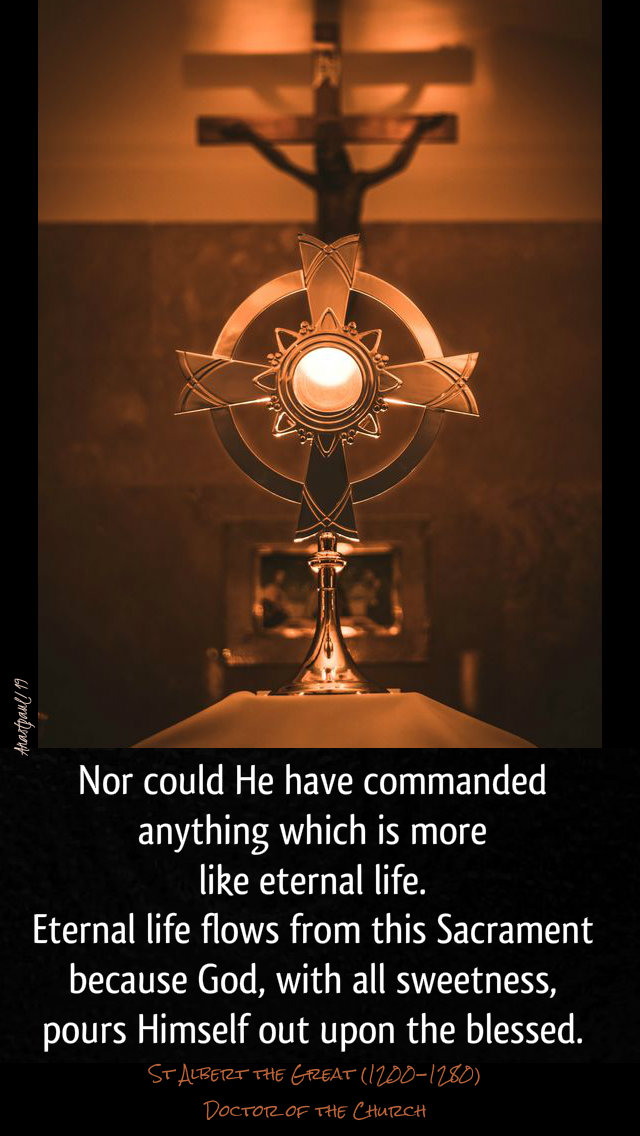
Thought for the Day – 23 June – The Solemnity of the Most Holy Body and Blood of Christ
Through Our Gazing in Adoration
Pope Benedict XVI General Audience, 17 November 2010
Dear friends, fidelity to the encounter with the Eucharistic Christ in Sunday’s Holy Mass is essential for the journey of faith but let us try as well to frequently go to visit the Lord present in the Tabernacle! Gazing in adoration at the consecrated Host, we discover the gift of the love of God, we discover the passion and the cross of Jesus and also His Resurrection. Precisely through our gazing in adoration, the Lord draws us to Himself, into His mystery, to transform us as He transforms the bread and wine.
The saints always found strength, consolation and joy in the Eucharistic encounter. With the words of the Eucharistic hymn “Adoro te devote,” let us repeat before the Lord, present in the Most Blessed Sacrament: “Make me believe ever more in You, that in You I may have hope, that I may love You!”
Thank you.
Adoro te Devote By St Thomas Aquinas (1225-1274) Doctor of the Church Trans. Fr Gerard Manley Hopkins SJ (1844-1889)
Godhead here in hiding, whom I do adore,
Masked by these bare shadows,
shape and nothing more,
See, Lord, at Thy service low lies here a heart
Lost, all lost in wonder at the God Thou art.
Seeing, touching, tasting are in Thee deceived –
How says trusty hearing? that shall be believed,
What God’s Son has told me, take for truth I do,
Truth Himself speaks truly or there’s nothing true.
On the cross Thy godhead made no sign to men,
Here Thy very manhood steals from human ken –
Both are my confession, both are my belief,
And I pray the prayer of the dying thief.
I am not like Thomas, wounds I cannot see,
But can plainly call Thee Lord and God as he,
Let me to a deeper faith daily nearer move,
Daily make me harder hope and dearer love.
O Thou our reminder of Christ crucified,
Living Bread, the life of us for whom He died,
Lend this life to me then – feed and feast my mind,
There be Thou the sweetness man was meant to find.
Bring the tender tale true of the Pelican,
Bathe me, Jesu Lord, in what Thy bosom ran—
Blood whereof a single drop has power to win
All the world forgiveness of its world of sin.
Jesu, whom I look at shrouded here below,
I beseech Thee send me what I thirst for so,
Some day to gaze on Thee face to face in light
And be blest forever with Thy glory’s sight.
Amen
Quote of the Day – 23 June – The Solemnity of the Most Holy Body and Blood of Christ
“When you have received Him, stir up your heart to do Him homage, speak to Him about your spiritual life, gazing upon Him in your soul where He is present for your happiness. Welcome Him as warmly as possible, and behave outwardly in such a way, that your actions may give proof to all, of His Presence.”
St Francis de Sales (1567-1622)
Doctor of the Church
One Minute Reflection – 23 June – The Solemnity of The Most Holy Body and Blood of Christ 2019, Gospel: Luke 9:11–17
“…he looked up to heaven and blessed and broke them and gave them to the disciples to set before the crowd.”…Luke 9:16
REFLECTION – “The mystery of today’s feast has three aspects, as is the case with all the great feasts after Pentecost and Trinity Sunday.
First, the Gospel portrays it through the image of the multiplication of the loaves. This is no bit of magic on Jesus’ part – to accomplish it He looks toward heaven, toward His Father, with both petition and thanksgiving (eucharistia): “Father, I thank you for hearing me.” (Jn 11:42) His lavish giving away of Himself in the loaves, will be a sign of the way the Father’s love utterly lavishes His Son on the world.
Then He blesses the bread, for the Father has left everything to the Son, including the bestowal of heaven’s blessing.
He breaks it, which points both to His own brokenness in the Passion and to the way His gifts will be limitlessly multiplied by the work of the Holy Spirit in every Eucharistic celebration. Thus, through this visible image, we realise that truine Love itself, becomes present in the Eucharistic self-giving of Jesus.”… Cardinal Hans Urs von Balthasar (1905-1988)
PRAYER – Lord Jesus Christ, You gave Your Church an admirable Sacrament as the abiding memorial of Your Passion. Teach us so to worship the sacred Mystery of Your Body and Blood, that it’s redeeming power, may sanctify us always. Who live and reign with the Father and the Holy Spirit, God forever and every, amen.
Sunday Reflection – 23 June – The Solemnity of the Most Holy Body and Blood of Christ
O precious and wonderful banquet!
Saint Thomas Aquinas (1225-1274)
Priest and Doctor of the Church
An excerpt from On the Feast of the Body of Christ
Since it was the will of God’s only-begotten Son that men should share in His divinity, He assumed our nature, in order that by becoming man He might make men gods. Moreover, when He took our flesh He dedicated the whole of its substance to our salvation. He offered His body to God the Father, on the altar of the cross, as a sacrifice for our reconciliation. He shed His blood for our ransom and purification, so that we, might be redeemed, from our wretched state of bondage and cleansed from all sin. But to ensure that the memory of so great a gift would abide with us forever, He left His body as food and His blood as drink, for the faithful to consume, in the form of bread and wine.
O precious and wonderful banquet that brings us salvation and contains all sweetness! Could anything be of more intrinsic value? Under the old law it was the flesh of calves and goats that was offered but here Christ Himself, the true God, is set before us as our food. What could be more wonderful than this? No other sacrament has greater healing power, through it, sins are purged away, virtues are increased and the soul is enriched with an abundance of every spiritual gift. It is offered in the Church for the living and the dead, so that what was instituted for the salvation of all, may be for the benefit of all. Yet, in the end, no one can fully express the sweetness of this sacrament, in which spiritual delight is tasted at its very source and in which we renew the memory of that surpassing love for us, which Christ revealed in His passion.
It was to impress the vastness of this love more firmly upon the hearts of the faithful, that our Lord instituted this sacrament at the Last Supper. As He was on the point of leaving the world to go to the Father, after celebrating the Passover with His disciples, He left it as a perpetual memorial of His passion. It was the fulfilment of ancient figures and the greatest of all His miracles, while for those who were to experience the sorrow of His departure, it was destined to be a unique and abiding consolation.
Our Morning Offering – 23 June – The Solemnity of The Most Holy Body and Blood of Christ 2019
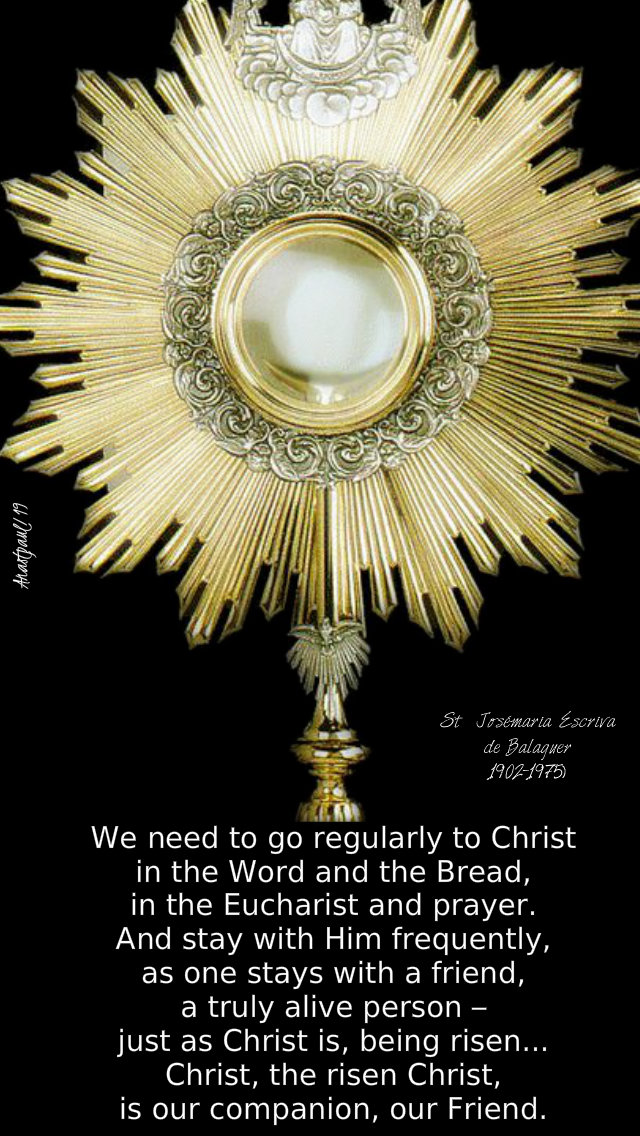
“MAY WE ALL BE LIVING MONSTRANCES.” By St Josemaria Escrivá (1902-1975)
May we be monstrances
wrought of pure gold,
free from all worldly influence,
studded with rubies,
which are like the stains of blood
from our sorrow and our sacrifice;
monstrances adorned with emeralds,
which signify,
our unshakeable hope
and embedded with
many other small stones –
that are barely noticed
but that You behold always,
delighting in their brilliance—
and which are our small mortifications,
our self-denial at every moment.
May these living monstrances
illumine those around them
by their apostolic charity.
Deign, my God,
living in each one of them,
to vivify with the rays of Your Love
all those who come
into contact with us.
Mother of ours,
Mother of Eucharistic Love:
this is our petition today.
Present it, we beseech you,
at your Son’s feet.
Obtain for us a life
imbued with a Eucharistic spirit,
so that love for the Holy Eucharist
fills our heart.
Amen
The Feast of Corpus Christi also known in Liturgical Latin as Dies Sanctissimi Corporis et Sanguinis Domini Iesu Christi – Latin for “Day of the Most Holy Body and Blood of Jesus Christ the Lord” and as Solemnity of the Corpus Christi “Body of Christ” is a Christian liturgical solemnity celebrating the Real Presence of the Body and Blood, Soul and Divinity of Jesus Christ in the elements of the Eucharist. Two months earlier, the institution of the Eucharist at the Last Supper is observed on Maundy Thursday in a sombre atmosphere leading to Good Friday. The liturgy on that day also commemorates Christ’s washing of the disciples’ feet, the institution of the priesthood.
The feast of Corpus Christi was proposed by St Thomas Aquinas (1225-1274) , Doctor of the Church to Pope Urban IV, in order to create a feast focused solely on the Holy Eucharist emphasising the joy of the Eucharist being the Body and Blood, Soul and Divinity of Jesus Christ. Recognised the authenticity of the Eucharistic Miracle of Bolsena on input of St Thomas, in 1264 the pontiff, established the feast of Corpus Christi as a Solemnity and extended it to the universal Catholic Church.
The feast is liturgically celebrated on the Thursday after Trinity Sunday or, “where the Solemnity of The Most Holy Body and Blood of Christ is not a holy day of obligation, it is assigned to the Sunday after the Most Holy Trinity as its proper day”, which is now the case in most countries. In the liturgical reforms of 1969, under Pope Paul VI, the bishops of each nation have the option to transfer it to the following Sunday.
At the end of Holy Mass, there is a procession of the Blessed Sacrament, generally displayed in a monstrance. A notable Eucharistic procession is that presided over by the Pope each year in Rome, where it begins at the Archbasilica of St John Lateran and passes to the Basilica of Saint Mary Major, where it concludes with Benediction of the Blessed Sacrament.
The feast of Corpus Christi is one of five occasions in the year on which a diocesan bishop is not to be away from his diocese unless for a grave and urgent reason.
By tradition, Catholics hear Mass then go in procession through the streets of their parish church’s neighbourhood, all whilst praying and singing. The Eucharist, known as the Blessed Sacrament, is placed in a monstrance and is held aloft by a member of the clergy during the procession. Usually, there are anything from 3 – 5 stops, where altars have been erected and Benediction takes place. The final Benediction usually takes place back in the Church.
Let us be transported to the same climate of expectation and joyful hope as we feel in the Adoro Te Devote with these last words of the Lauda Sion, the Eucharistic hymn/sequence also written by St Thomas Aquinas. (Fr Raneiro Cantalamessa O.F.M. “This is My Body”)
Source of all we have or know, feed and lead us here below. Grant that with Your saints above, Sitting at the feast of love, We may see You face to face.
Saint of the Day – 23 June – St Etheldreda (c 636-679) Abbess and widow, an East Anglian princess, a Fenland and Northumbrian queen and Abbess of Ely – born in c 636 probably n Exning, near Newmarket in Suffolk, England. She died on 23 June 679 of natural causes. When her body was re-interred in 694 it was found to be incorrupt and again in 1106 when her relics were transferred to Ely Cathedral where her shrine now remains, her body was incorrupt. Patronage – throat ailments, widows, neck ailments, th University of Cambridge.
She was one of the four saintly daughters of Anna of East Anglia, including Wendreda and Seaxburh of Ely, all of whom eventually retired from secular life and founded abbeys.
Born and brought up in the fear of God-her mother and three sisters are numbered among the Saints – Etheldreda had but one aim in life, to devote herself to His service in the religious state. Her parents, however, had other views for her and, in spite of her tears and prayers, she was compelled to become the wife of Tonbercht, a tributary of the Mercian king. She lived with him as a virgin for three years and at his death retired to the Isle of Ely, that she might apply herself wholly to heavenly things.
This happiness was but short-live,; for Egfrid, the powerful King of Northumbria, pressed his suit upon her with such eagerness that she was forced into a second marriage. Her life at his court was that of an ascetic rather than a queen – she lived with him not as a wife but as a sister and, observing a scrupulous regularity of discipline, devoted her time to works of mercy and love.
After twelve years, she retired with her husband’s consent to Coldingham Abbey, which was then under the rule of St Ebba, and received the veil from the hands of St Wilfrid. As soon as Etheldreda had left the court of her husband, he repented of having consented to her departure and followed her, meaning to bring her back by force. She took refuge on a headland on the coast near Coldingham and here a miracle took place, for the waters forced themselves a passage round the hill, barring the further advance of Egfrid.
The Saint remained on this island refuge for seven days, till the king, recognising the divine will, agreed to leave her in peace. God, who by a miracle confirmed the Saint’s vocation, will not fail us if, with a single heart, we elect for him.
In 672 she returned to Ely, and founded there a double monastery. The nunnery she governed herself and was by her example a living rule of perfection to her sisters.
This slideshow requires JavaScript.
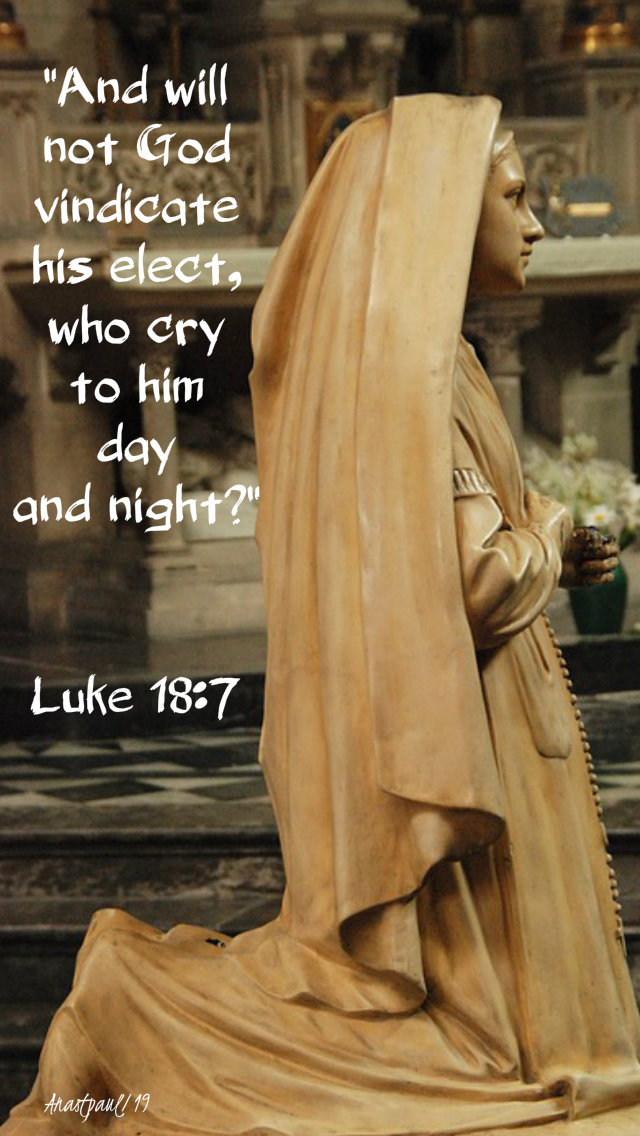
St Bede the Venerable records many miracles worked by her relics at her Shrine. Below is her Statue and resting place in Ely Cathedral.
St Agrippina of Rome
St Bilio of Vannes St Etheldreda (c 636-679)
Bl Félix of Cîteaux
St Felix of Sutri
Bl Frances Martel
Bl Francis O’Sullivan
St Hidulphus of Hainault
St James of Toul
St John of Rome St Joseph Cafasso (1811-1860) St Joseph Cafasso’s Biography: https://anastpaul.com/2018/06/23/saint-of-the-day-23-june-st-joseph-cafasso-1811-1860-priest-of-the-gallows/
Bl Lanfranco Beccari
St Lietbert
Bl Lupo de Paredes
Bl Mary of Oignies
St Moeliai of Nendrum
Bl Peter of Juilly
Bl Thomas Corsini of Orvieto
St Thomas Garnet
Bl Walhere of Dinant
St Zenas of Philadelphia
St Zeno of Philadelphia
—
Martyrs of Ancyra: A family of converts who were arrested, tortured and sent in chains to Ancyra, Galatia (modern Ankara, Turkey) where he was tortured more by order of governor Agrippinus during the persecutions of Diocletian. Martyr. They were – Eustochius, Gaius, Lollia, Probus, Urban. They were roasted over a fire and finally beheaded c 300 in Ancyra, Galatia (modern Ankara, Turkey).
Martyrs of Nicomedia: During the persecutions of Diocletian, many Christians fled their homes to live in caves in the area of Nicomedia. In 303 troops descended on the area, systematically hunted them down and murdered all they could find.
Today’s Scripture
Jesus, looking at him, loved him and said, ‘You lack one thing; go, sell what you own, and give the money to the poor, and you will have treasure in heaven; then come, follow me.’ When he heard this, he was shocked and went away grieving, for he had many possessions….Mark 10: 21-22
Reflection for the Fourth Day
A Dominican theologian once wrote, ‘A person is enlightened not when they get an idea but when someone looks at them’. How we look at another has tremendous consequences for self-esteem. The Sacred Heart looks at each one of us with deep love, understanding and compassion. We are called to look at others in the same way.
Today’s Prayer
Jesus, You looked at the rich young man with love
and yet he could not respond to Your call.
Help our prayer
to become our looking at You
looking at us
and smiling with love
so that we will not run
from the love that You offer.
Daily Invocation Sacred Heart of Jesus, I place all my trust in you.
Novena Prayer
Lord Jesus, the needs of Your people,
open Your Sacred Heart in love for each of us.
You care for us when we are lost,
sympathise with us in loneliness
and comfort us in mourning.
You are closest to us when we are weakest.
You love us most, when we love ourselves least,
You forgive us most, when we forgive ourselves least
and You call us to spread Your love
in whatever way we can.
Lord Jesus, Your Sacred Heart
is moved with compassion
when we are suffering,
when we need Your help
and when we pray for each other.
I ask You to listen to my prayer during this Novena
and grant what I ask.
—————————-
(Mention your intention silently.)
If what I ask is not for my own good
and the good of others,
grant me what is best,
that I may build up Your kingdom
of love in our world.
Amen
Thought for the Day – 22 June – The Memorial of St Thomas More (1478-1535) Martyr
His belief that no lay ruler has jurisdiction over the Church of Christ cost Thomas More his life.
Beheaded on Tower Hill, London, on 6 July 1535, More steadfastly refused to approve King Henry VIII’s divorce and remarriage and establishment of the Church of England.
Described as “a man for all seasons,” which title is drawn from what Robert Whittington, an English man of letters, in 1520 wrote of More:
“More is a man of an angel’s wit and singular learning. I know not his fellow. For where is the man of that gentleness, lowliness and affability? And, as time requires, a man of marvellous mirth and pastimes and sometime of as sad gravity. A man for all seasons.”
More was a literary scholar, eminent lawyer, gentleman, father of four children and chancellor of England. An intensely spiritual man, he would not support the king’s divorce from Catherine of Aragon in order to marry Anne Boleyn. Nor would he acknowledge Henry as supreme head of the Church in England, breaking with Rome, and denying the pope as head.
More was committed to the Tower of London to await trial for treason, not swearing to the Act of Succession and the Oath of Supremacy. Upon conviction, More declared he had all the councils of Christendom and not just the council of one realm to support him in the decision of his conscience.
Four hundred years later in 1935, Thomas More was Canonised a saint of God. Few saints are more relevant to our time. In the year 2000, in fact, St Pope John Paul II named him patron of political leaders. The supreme diplomat and counsellor, he did not compromise his own moral values in order to please the king, knowing that true allegiance to authority is not blind acceptance of everything that authority wants. King Henry himself realised this and tried desperately to win his chancellor to his side because he knew More was a man whose approval counted, a man whose personal integrity no one questioned. But when Thomas More resigned as chancellor, unable to approve the two matters that meant most to Henry, the king had to get rid of him. Before being executed he said, “I die the king’s faithful servant, but God’s first.” The question is, would we too?
Quote/s of the Day – 22 June – Saturday of the Eleventh week in Ordinary Time, Year C and The Memorial of St Paulinus of Nola (c 354-431) and St Thomas More (1478-1535) Martyr
“To my mind the only art, is the faith and Christ is my poetry.”
St Paulinus of Nola (c 354-431)
“We cannot go to Heaven in featherbeds.”
“One of the greatest problems of our time, is that many are schooled but few are educated.”
One Minute Reflection – 22 June – Saturday of the Eleventh week in Ordinary Time, Year C, Gospel: Matthew 6:24–34 and the Memorial of St Thomas More (1478-1535) Martyr
Look at the birds in the sky,they do not sow or reap, they gather nothing into barns, yet your heavenly Father feeds them. Are not you more important than they? ..Matthew 6:26
REFLECTION – “I will not mistrust Him, Meg, though I shall feel myself weakening and on the verge of being overcome with fear. I shall remember, how Saint Peter at a blast of wind, began to sink because of his lack of faith and I shall do as he did, call upon Christ and pray to Him for help. And then I trust He shall place His holy hand on me and in the stormy seas, hold me up from drowning.”…St Thomas More (1478-1535)
“In the face of the situations of so many people, near and far, who live in wretchedness, Jesus’ discourse might appear hardly realistic, if not evasive . In fact, the Lord wants to make people understand clearly, that it is impossible to serve two masters – God and mammon [riches]. Whoever believes in God, the Father, full of love for His children, puts first the search for His Kingdom and His will. And this is precisely the opposite of fatalism or ingenuous irenics. Faith in Providence does not, in fact, dispense us from the difficult struggle, for a dignified life but frees us, from the yearning for things and from fear of the future.
It is clear that although Jesus’ teaching remains ever true and applicable for all it is practised in different ways according to the different vocations – a Franciscan friar will be able to follow it more radically, while a father of a family must bear in mind his proper duties to his wife and children. In every case, however, Christians are distinguished by their absolute trust in the heavenly Father, as was Jesus. It was precisely Christ’s relationship with God the Father that gave meaning to the whole of His life, to His words, to His acts of salvation until His Passion, death and Resurrection. Jesus showed us what it means to live with our feet firmly planted on the ground, attentive to the concrete situations of our neighbour, yet, at the same time keeping our heart in Heaven, immersed in God’s mercy.” … Pope Benedict XVI (Sunday, 27 February 2011).
PRAYER – Heavenly Father, we trust in You and abide in You. Grant us we pray, that by the prayers of our heavenly Mother, our Mother of divine Providence and St Thomas More, who said “I will trust Him”, that we too may ever know that You are with us and guide, help and feed us everyday. Through Christ our Lord with the Holy Spirit, one God forever, amen.
Saint of the Day – 22 June – St Thomas More (1478-1535) Martyr an English lawyer, Social Philosopher, Author, Statesman and noted Renaissance Humanist. He was born on 7 February 1478 at London, England and was beheaded on 6 July 1535 on Tower Hill, London, England. Patronages – adopted children, civil servants, court clerks, difficult marriages, large families, lawyers, statesmen and politicians, stepparents, widowers, Ateneo de Manila Law School, Diocese of Arlington, Diocese of Pensacola-Tallahassee; Kerala Catholic Youth Movement, University of Malta, University of Santo Tomas Faculty of Arts and Letters.
He was also a councillor to Henry VIII and Lord High Chancellor of England from October 1529 to 16 May 1532. He wrote Utopia, published in 1516, about the political system of an imaginary, ideal island nation.
St Thomas opposed the Protestant Reformation, in particular the theology of Martin Luther, Henry VIII, John Calvin and William Tyndale. He also opposed the king’s separation from the Catholic Church, refusing to acknowledge Henry as Supreme Head of the Church of England and the annulment of his marriage to Catherine of Aragon. After refusing to take the Oath of Supremacy, he was convicted of treason and executed. Of his execution, he was said: “I die the King’s good servant but God’s first”.
Pope Pius XI Canonised More in 1935 as a martyr. St Pope John Paul II in 2000 declared him the patron saint “of Statesmen and Politicians”.
St Pope John Paul II Excerpt from the Apostolic letter issued Motu Proprio proclaiming Saint Thomas More Patron of Statesmen and Politicians 31 October 2000
“The life and martyrdom of Saint Thomas More have been the source of a message which spans the centuries and which speaks to people everywhere of the inalienable dignity of the human conscience, which (…) is “the most intimate centre and sanctuary of a person, in which he or she is alone with God, whose voice echoes within them” (Gaudium et Spes, 16). Whenever men or women heed the call of truth, their conscience then guides their actions reliably towards good. Precisely because of the witness which he bore, even at the price of his life, to the primacy of truth over power, Saint Thomas More is venerated as an imperishable example of moral integrity. And even outside the Church, particularly among those with responsibility for the destinies of peoples, he is acknowledged as a source of inspiration for a political system which has as its supreme goal the service of the human person.
(…) Thomas More had a remarkable political career in his native land. Born in London in 1478 of a respectable family, as a young boy he was placed in the service of the Archbishop of Canterbury, John Morton, Lord Chancellor of the Realm. He then studied law at Oxford and London, while broadening his interests in the spheres of culture, theology and classical literature. He mastered Greek and enjoyed the company and friendship of important figures of Renaissance culture, including Desiderius Erasmus of Rotterdam.
His sincere religious sentiment led him to pursue virtue through the assiduous practice of asceticism – he cultivated friendly relations with the Observant Franciscans of the Friary at Greenwich and for a time he lived at the London Charterhouse, these being two of the main centres of religious fervour in the Kingdom. Feeling himself called to marriage, family life and dedication as a layman, in 1505 he married Jane Colt, who bore him four children. Jane died in 1511 and Thomas then married Alice Middleton, a widow with one daughter. Throughout his life he was an affectionate and faithful husband and father, deeply involved in his children’s religious, moral and intellectual education. His house offered a welcome to his children’s spouses and his grandchildren, and was always open to his many young friends in search of the truth or of their own calling in life. Family life also gave him ample opportunity for prayer in common and lectio divina, as well as for happy and wholesome relaxation. Thomas attended daily Mass in the parish church but the austere penances which he practised were known only to his immediate family.
St Thomas More and his family by Hans Holbein
He was elected to Parliament for the first time in 1504 under King Henry VII. The latter’s successor Henry VIII renewed his mandate in 1510 and even made him the Crown’s representative in the capital. This launched him on a prominent career in public administration. During the following decade the King sent him on several diplomatic and commercial missions to Flanders and the territory of present-day France. Having been made a member of the King’s Council, presiding judge of an important tribunal, deputy treasurer and a knight, in 1523 he became Speaker of the House of Commons.
St Thomas More in Hans Holbein’s Studio
Highly esteemed by everyone for his unfailing moral integrity, sharpness of mind, his open and humorous character and his extraordinary learning, in 1529 at a time of political and economic crisis in the country he was appointed by the King to the post of Lord Chancellor. The first layman to occupy this position, Thomas faced an extremely difficult period, as he sought to serve King and country. In fidelity to his principles, he concentrated on promoting justice and restraining the harmful influence of those who advanced their own interests at the expense of the weak . In 1532, not wishing to support Henry VIII’s intention to take control of the Church in England, he resigned. He withdrew from public life, resigning himself to suffering poverty with his family and being deserted by many people who, in the moment of trial, proved to be false friends.
Given his inflexible firmness in rejecting any compromise with his own conscience, in 1534 the King had him imprisoned in the Tower of London, where he was subjected to various kinds of psychological pressure. Thomas More did not allow himself to waver, and he refused to take the oath requested of him, since this would have involved accepting a political and ecclesiastical arrangement that prepared the way for uncontrolled despotism. At his trial, he made an impassioned defence of his own convictions on the indissolubility of marriage, the respect due to the juridical patrimony of Christian civilisation and the freedom of the Church in her relations with the State. Condemned by the Court, he was beheaded.
St Thomas More’s Farewell to Meg, his daughter
Hans Holbein St Thomas More’s Farewell
(…) Thomas More, together with 53 other martyrs, including Bishop John Fisher, was beatified by Pope Leo XIII in 1886. And with John Fisher, he was Canonised by Pius XI in 1935, on the fourth centenary of his martyrdom.
(…) The life of Saint Thomas More clearly illustrates a fundamental truth of political ethics. The defence of the Church’s freedom from unwarranted interference by the State is at the same time a defence, in the name of the primacy of conscience, of the individual’s freedom vis-à-vis political power. Here we find the basic principle of every civil order consonant with human nature.
(…) Therefore, after due consideration and willingly acceding to the petitions addressed to me, I establish and declare Saint Thomas More the heavenly Patron of Statesmen and Politicians and I decree, that he be ascribed all the liturgical honours and privileges which, according to law, belong to the Patrons of categories of people.”
Our Morning Offering – 22 June – Saturday of the Eleventh week in Ordinary Time, Year C and the Memorial of St Thomas More (1478-1535) Martyr
Father in heaven Be with Us Today By St Thomas More (1478-1535)
Father in heaven,
You have given us a mind to know You,
a will to serve You
and a heart to love You.
Be with us today in all that we do,
so that Your light may shine out in our lives.
We pray that we may be today,
what You created us to be
and may praise Your name in all that we do.
We pray for Your Church,
may it be a true light to all nations.
May the Spirit of Your Son Jesus,
guide the words and actions of all Christians today.
We pray for all who are searching for truth,
bring them Your light and Your love.
“Give us, Lord,
a humble, quiet, peaceable,
patient, tender and charitable mind
and in all our thoughts,
words and deeds
a taste of the Holy Spirit.
Give us, Lord,
a lively faith,
a firm hope,
a fervent charity,
a love of You.
Take from us all lukewarmness in meditation,
dullness in prayer.
Give us fervour and delight in thinking of You
and Your grace, Your tender compassion towards us.
The things that we pray for, good Lord,
give us grace to labour for,
through Jesus Christ our Lord.
Amen
St Paulinus of Nola (c 354-431) (Optional Memorial) About St Paulinus: https://anastpaul.com/2018/06/22/saint-of-the-day-22-june-st-paulinus-of-nola-c-354-431/
St John Fisher (1469-1535) Martyr (Optional Memorial)
St Thomas More (1478-1535) Martyr (Optional Memorial
St Aaron of Brettany
St Aaron of Pais-de-Laon
St Alban of Britain
Bl Altrude of Rome
St Consortia
St Cronan of Ferns
St Eberhard of Salzburg
St Eusebius of Samosata
St Exuperantius of Como
St Flavius Clemens
St Gregory of Agrigento
St Heraclius the Soldier
St Hespérius of Metz
Bl Pope Innocent V
St John IV of Naples
St Julius of Pais-de-Laon
Bl Kristina Hamm
Bl Marie Lhuilier
St Nicetas of Remesiana
St Precia of Epinal
St Rotrudis of Saint-Omer
St Rufinus of Alexandria
—
Martyrs of Samaria – 1480 saints: 1480 Christians massacred in and near Samaria during the war between the Greek Emperor Heraclius and the pagan Chosroas of Persia. c 614 in the vicinity of Samaria, Palestine.
Today’s Scripture Likewise the Spirit helps us in our weakness, for we do not know how to pray as we ought but that very Spirit intercedes with sighs too deep for words. And God, who searches the heart, knows what is the mind of the Spirit, because the Spirit intercedes for the saints according to the will of God. We know that all things work together for good for those who love God, who are called according to his purpose….Romans 8: 26-28
Reflection for the Third Day
St Thérèse of Lisieux (1873-1897) once said, that love was her vocation in life. Never was this vocation tested more than in the last nine months of her life as she lay dying with tuberculosis. She wrote a note to her sister Céline: ‘Here is great love, to love Jesus without feeling the sweetness of His love – that is love pushed to the point of heroism.’
Today’s Prayer
Jesus, I believe. Help my unbelief!
Jesus, You are the real bedrock of my hope.
Help me always to rely on You,
especially in times of doubt and trouble.
Daily Invocation
Sacred Heart of Jesus, I place all my trust in you.
Novena Prayer
Lord Jesus, the needs of Your people,
open Your Sacred Heart in love for each of us.
You care for us when we are lost,
sympathise with us in loneliness
and comfort us in mourning.
You are closest to us when we are weakest.
You love us most, when we love ourselves least,
You forgive us most, when we forgive ourselves least
and You call us to spread Your love
in whatever way we can.
Lord Jesus, Your Sacred Heart
is moved with compassion
when we are suffering,
when we need Your help
and when we pray for each other.
I ask You to listen to my prayer during this Novena
and grant what I ask.
—————————-
(Mention your intention silently.)
If what I ask, is not for my own good
and the good of others,
grant me what is best,
that I may build up Your kingdom
of love in our world.
Amen
Thought for the Day – 21 June – The Memorial of St Aloysius de Gonzaga SJ (1568-1591)
Excerpt from Ven Servant of God John A Hardon’s SJ (1914-2000)
‘Life of St Aloysius’
“To the one virtue which the Church has chosen and on account of which has chosen him ‘the universal patron of youth,’ was his chastity. All the evidence we have, indicates that he had very strong sexual passions. We know that from his own writing, we know that from people who knew him and we know that from what is called penance from one view-point, what is really, you might say, ‘preventive austerity’ from another. He simply believed that unless he mortified his body and I didn’t tell you one tenth of what he did, he just would not get that passion under control.
The lesson for us in a sex-mad world is obvious. You do not control that passion without mortification, you just don’t. As a result, the Church has held him up as a model of what even the most passionate personality can achieve, always with God’s grace. We may not be able to, given our temperament of the circumstances in which we are living, be able to cope with temptation–we need grace. Very well, how do you get the grace? –through prayer and mortification. And Christ’s words about a certain demon not being able to be driven out except through penance. Well, it’s a non-title to give the devil but, he is the demon of lust, though being without a body himself, he knows how, by stirring this passion, he can lead people into any kind of sin. That’s the first and towering lesson of the life of St Aloysius.
As we look at the short life of Aloysius, depending on the person’s view point, it may seem oppressive. It shouldn’t be but, in modern jargon, it has so much (pardon the expression) of the negative, you know, penance, mortification, sin–and a world that has gone mad, drunk with sin, doesn’t realise, that already this side of eternity, we are to be what Aloysius was literally, we are to be, if it is God’s will, ecstatically happy of that. We are not to be sad. We are not, God forbid, to be unhappy.
The secret and what an open secret it is in the life of Aloysius, is to find the happiness in the right place. That’s all, yes but that’s everything.
In other words, as a closing observation, Aloysius showed that’s why the Church Canonised him, that when Christ gave us the eight Beatitudes, which are eight promises of happiness, He meant it.
The condition for being happy, well, that’s part of the Covenant, that’s what we do but if we do our part, God comes through.
St Robert Bellarmine who knew him well, observed he was sure that Aloysius had never committed a mortal sin.
Saint Aloysius, pray for us.
In the name of the Father and of the Son and of the Holy Spirit. Amen.”
Quote/s of the Day – 21 June – The Memorial of St Aloysius de Gonzaga SJ (1568-1591)
“I am a piece of twisted iron, I entered the religious life to get twisted straight.”
“He who wishes to love God does not truly love Him, if he has not an ardent and constant desire to suffer for His sake.”
“Take care above all things, most honoured lady, not to insult God’s boundless loving kindness, you would certainly do this, if you mourned as dead, one living face-to-face with God, one whose prayers, can bring you in your troubles, more powerful aid, than they ever could on earth.”
“When He takes away what He once lent us, His purpose is to store our treasure elsewhere, more safely and bestow on us, those very blessings, that we ourselves would most choose to have.”
(From A Letter to His Mother)
More of this letter here: https://anastpaul.com/2018/06/21/quote-of-the-day-21-june-the-memorial-of-st-aloysius-de-gonzaga-s-j-1568-1591/
One Minute Reflection – 21 June – Friday Eleventh week in Ordinary Time, Year C, Gospel: Matthew 6:19–23 and the Memorial of St Aloysius de Gonzaga SJ (1568-1591)
“Do not store up for yourselves treasures on earth, where moth and decay destroy and thieves break in and steal. But store up treasures in heaven, where neither moth nor decay destroys, nor thieves break in and steal. For where your treasure is, there also will your heart be.”….Matthew 6:19-21
REFLECTION – “This is really Jesus’ message – have a free heart. Otherwise, if your treasure is in wealth, in vanity, in power or in pride, your heart will be chained there, your heart will be a slave to wealth, to vanity, to pride. On this line of reasoning, have a free heart, precisely because Jesus speaks to us about freedom of the heart. And one can only have a free heart with the treasures of heaven – love, patience, service to others, worshipping God. These are the true riches that cannot be stolen. The other types of treasures — money, vanity, power — weigh down the heart, chain it, don’t allow it freedom.”…Pope Francis (Santa Marta, 20 June 2014)
PRAYER – Father almighty, as we wait and work and pray and fast in joyful hope of our eternal life with You, grant we pray that we may always remain steadfast in Your love. Let your light so penetrate our minds, that walking by Your commandments, we may always follow You, our leader and our guide. St Aloysius Gonzaga, pray for us that we will fully utilise the many gifts our Almighty God has bestowed on us as we journey home. We make our prayer through Jesus Christ our Lord, in union with You and the Holy Spirit, one God forever, amen.
Our Morning Offering – 21 June – Friday Eleventh week in Ordinary Time, Year C
Steer the Ship of my Life, Lord By St Basil the Great (329-379)
Steer the ship of my life, Lord,
to Your quiet harbour,
where I can be safe from
the storms of sin and conflict.
Show me the course I should take.
Renew in me the gift of discernment,
so that I can see the right direction
in which I should go.
And give me the strength
and the courage to choose the right course,
even when the sea is rough
and the waves are high,
knowing that through enduring
hardship and danger in Your name
we shall find comfort and peace.
Amen
Saint of the Day – 21 June – St Aloysius de Gonzaga SJ (1568-1591) Jesuit Seminarian, Mystic, Marian devotee, Apostle of Charity. Patronages – Catholic youth, Jesuit scholastics, the blind, eye ailments, AIDS patients, care-givers, Jesuit students, for relief from pestilence, young people, Castiglione delle Stiviere, Italy, Valmonte, Italy.
The Lord can make saints anywhere, even amid the brutality and license of Renaissance life. Florence was the “mother of piety” for Aloysius Gonzaga despite his exposure to a “society of fraud, dagger, poison and lust.” As a son of a princely family, he grew up in royal courts and army camps. His father wanted Aloysius to be a military hero.
At age 7 Aloysius experienced a profound spiritual quickening. His prayers included the Office of Mary, the psalms and other devotions. At age 9 he came from his hometown of Castiglione to Florence to be educated, by age 11 he was teaching catechism to poor children, fasting three days a week and practising great austerities. When he was 13 years old, he travelled with his parents and the Empress of Austria to Spain and acted as a page in the court of Philip II. The more Aloysius saw of court life, the more disillusioned he became, seeking relief in learning about the lives of saints.
A book about the experience of Jesuit missionaries in India suggested to him the idea of entering the Society of Jesus and in Spain his decision became final. Now began a four-year contest with his father. Eminent churchmen and laypeople were pressed into service to persuade Aloysius to remain in his “normal” vocation. Finally he prevailed, was allowed to renounce his right to succession and was received into the Jesuit novitiate.
This is a detail of a painting by Guercino, titled the Vocation of St Aloysius. St Aloysius is shown renouncing the crown for the Cross.
Like other seminarians, Aloysius was faced with a new kind of penance—that of accepting different ideas about the exact nature of penance. He was obliged to eat more and to take recreation with the other students. He was forbidden to pray except at stated times. He spent four years in the study of philosophy and had Saint Robert Bellarmine (1542-1621), Doctor of the Church, as his spiritual adviser.
In 1591, a plague struck Rome. The Jesuits opened a hospital of their own . The superior general himself and many other Jesuits rendered personal service. Because he nursed patients, washing them and making their beds, Aloysius caught the disease. A fever persisted after his recovery and he was so weak he could scarcely rise from bed. Yet, he maintained his great discipline of prayer, knowing that he would die within the octave of Corpus Christi, three months later, at the age of 23.
As a saint who fasted, scourged himself, sought solitude and prayer and did not look on the faces of women, Aloysius seems an unlikely patron of youth in a society where asceticism is confined to training camps of football teams and boxers and sexual permissiveness has little left to permit. Can an overweight and air-conditioned society deprive itself of anything? It will, when it discovers a reason, as Aloysius did. The motivation for letting God purify us is the experience of God loving us in prayer.
Feast of Our Lady of Miracles – 21 June – the patron of the town of Alcamo, Sicily. About this Title of Our Lady: https://anastpaul.com/2018/06/21/feast-of-our-lady-of-miracles-21-june/
St Agofredus of La-Croix
St Alban of Mainz
St Apollinaris of Africa
Bl Colagia
St Corbmac
St Cyriacus of Africa
St Demetria of Rome
St Dominic of Comacchio
St Engelmund
Bl Jacques-Morelle Dupas
St John Rigby
St José Isabel Flores Varela
Bl Juan of Jesus
St Lazarus
St Leutfridus
St Martia of Syracuse
St Martin of Tongres
Bl Melchiorre della Pace
St Mewan of Bretagne
Bl Nicholas Plutzer
St Ralph of Bourges
St Raymond of Barbastro
St Rufinus of Syracuse
St Suibhne the Sage
St Terence
St Ursicenus of Pavia
—
Martyrs of Taw – 3+ saints: Three Christians of different backgrounds who were martyred together – Moses, Paphnutius, Thomas. They were beheaded in Taw, Egypt, date unknown.
Today’s Scripture ‘So I say to you, ask and it will be given to you; search, and you will find; knock, and the door will be opened for you. For everyone who asks, receives and everyone who searches, finds and for everyone who knocks, the door will be opened.’…Luke 11:9-10
Reflection for the Second Day
St Augustine said, ‘For yourself you have made us, O Lord and our hearts are restless until they rest in you’. I love a change a modern theologian has made in those lines – he writes, ‘Your heart is restless until we rest in You’. Our God is vulnerable to our free response. He cannot resist our call to Him and He wants us to call Him, constantly!
Today’s Prayer
Lord, I come to You full of needs. But my deepest need, is to become more convinced of Your love for me. Help me to believe that You are with me today, tomorrow and always, that You are listening to my voice, as long as I work hard to keep Your commandments and to follow Your will and not my own. Amen.
Daily Invocation Sacred Heart of Jesus, I place all my trust in You.
Novena Prayer
Lord Jesus, the needs of Your people,
open Your Sacred Heart in love for each of us.
You care for us when we are lost,
sympathise with us in loneliness
and comfort us in mourning.
You are closest to us when we are weakest.
You love us most, when we love ourselves least,
You forgive us most, when we forgive ourselves least
and You call us to spread Your love,
in whatever way we can.
Lord Jesus, Your Sacred Heart
is moved with compassion
when we are suffering,
when we need Your help
and when we pray for each other.
I ask You to listen to my prayer during this Novena
and grant what I ask.
—————————-
(Mention your intention silently.)
If what I ask is not for my own good
and the good of others,
grant me what is best,
that I may build up Your kingdom
of love in our world.
Amen
Thought for the Day – 20 June – Thursday Eleventh Week of Ord Time Year C – Today’s Gospel Matthew 6:7-15 – Part One “Treatise on the Lord’s Prayer” St Cyprian of Carthage (c 200- c 258)
Our prayer is communal
Saint Cyprian of Carthage (c 200-258)
Bishop, Father of the Church and Martyr
An excerpt from his Treatise On the Lord’s Prayer
Above all, he who preaches peace and unity, did not want us to pray by ourselves in private or for ourselves alone. We do not say “My Father, who art in heaven,” nor “Give me this day my daily bread.” It is not for himself alone, that each person asks to be forgiven, not to be led into temptation or to be delivered from evil. Rather, we pray in public as a community and not for one individual but for all. For the people of God are all one.
God is then the teacher of harmony, peace and unity and desires each of us to pray for all men, even as he bore all men in Himself alone. The three young men shut up in the furnace of fire observed this rule of prayer. United in the bond of the Spirit, they uttered together the same prayer. The witness of holy Scripture describes this incident for us, so that we might imitate them in our prayer. Then all three began to sing in unison, blessing God. Even though Christ had not yet taught them to pray, nevertheless, they spoke as with one voice.
It is for this reason, that their prayer was persuasive and efficacious. For their simple and spiritual prayer of peace merited the presence of the Lord . So too, after the ascension we find the apostles and the disciples praying together in this way. Scripture relates – They all joined together in continuous prayer, with the women including Mary, the mother of Jesus and his brothers. They all joined together in continuous prayer. The urgency and the unity of their prayer declares that God, who fashions a bond of unity among those who live in His home, will admit into His divine home, for all eternity, only those who pray in unity.
My dear friends, the Lord’s Prayer contains many great mysteries of our faith. In these few words there is great spiritual strength, for this summary of divine teaching contains all of our prayers and petitions. And so, the Lord commands us, Pray then like this: Our Father, who art in heaven.
We are new men, we have been reborn and restored to God by His grace. We have already begun to be His sons and we can say “Father.” John reminds us of this – He came to His own home and His own people did not receive Him. But to all who received Him, who believe in His name, He gave the power to become children of God. Profess your belief that you are sons of God by giving thanks. Call upon God who is your Father in heaven.
Quote of the Day – 20 June – Thursday Eleventh Week of Ord Time Year C – Today’s Gospel Matthew 6:7-15
“So, my brothers, let us pray as God our master has taught us. To ask the Father in words His Son has given us, to let Him hear the prayer of Christ ringing in His ears, is to make our prayer one of friendship, a family prayer. Let the Father recognise the words of His Son. Let the Son who lives in our hearts, be also on our lips. We have Him as an Advocate for sinners, before the Father, when we ask for forgiveness for ours sins, let us use the words given by our Advocate. He tells us – Whatever you ask the Father in my name, He will give you. What more effective prayer could we then make, in the name of Christ, than in the words of His own prayer?”
Saint Cyprian of Carthage (c 200- c 258)
Bishop, Father of the Church and Martyr
One Minute Reflection – 20 June – Thursday Eleventh Week of Ord Time Year C – Today’s Gospel Matthew 6:7-15
“Do not be like them, for your Father knows what you need before you ask him.”…Matthew 6:7
REFLECTION – Prayer is a petition for what God gives – “The Lord’s prayer, as I have said, contains a petition for each of these things. First, it speaks of the Father, His name and His kingdom. Second, it shows us that the person who prays, is by grace the Son of this Father. It asks that those in heaven and those on earth may be united in one will. It tells us to ask for our daily bread. It lays down that people should be reconciled with one another and it unites our nature with itself when we forgive and are forgiven, for then it is not split asunder by differences of will and purpose. It teaches us to pray against entering into temptation, since this is the law of sin. And it exhorts us to ask for deliverance from the evil one.
For the author and giver of divine blessings could not but be our teacher as well, providing the words of this prayer, as precepts of life, for those disciples who believe in Him and follow the way He taught in the flesh. Through these words, He has revealed the hidden treasures of wisdom and knowledge (Col 2:3) that exist in Him as pure form. And in all who offer this prayer, He kindles the desire to enjoy such treasures.
It is for this reason, I think, that Scripture calls this teaching “prayer”, since it contains petitions for the gifts that God gives to us by grace. Our divinely inspired Fathers have explained prayer in a similar way, saying that prayer is petition for that which God naturally gives us, in the manner that is appropriate.”…St Maximus the Confessor (c 580-662) Monk and Theologian – Interpretation of the Lord’s Prayer (Philokalia, Volume Two)
PRAYER – Our Father who art in heaven,
Hallowed be Thy name.
Thy kingdom come.
Thy will be done,
On earth as it is in heaven.
Give us this day our daily bread;
And forgive us our trespasses
As we forgive those who trespass against us,
And lead us not into temptation
but deliver us from evil.
Amen
Our Morning Offering – 20 June – Thursday Eleventh Week in Ordinary Time, Year C
Excerpt from Jesus, My Friend By St Claude de la Colombiere (1641-1682)
O Jesus!
You are my true Friend,
my only Friend.
You take a part in all my misfortunes;
You take them on Yourself;
You know how to change them into blessings.
You listen to me with the greatest kindness
when I relate my troubles to You,
and You have always balm to pour on my wounds.
I find You at all times;
I find You everywhere;
You never go away;
if I have to change my dwelling,
I find You wherever I go.
You are never weary of listening to me;
You are never tired of doing me good.
O Jesus!
Grant that I may die praising You,
that I may die loving You,
that I may die for the love of You.
Amen
Saint of the Day – 20 June – St Pope Silverius (Died 538) Martyr – ruled the Holy See from 8 June 536 to his deposition in 538, a few months before his death. His rapid rise to prominence from a deacon to the papacy coincided the efforts of King Theodahad (nephew to Theodoric the Great), who intended to install a pro-Gothic candidate just before the Gothic War. Later deposed by Byzantine general Belisarius, he was tried and sent to exile on the desolated island of Palmarola, where he starved to death in 538. Patronage – Ponza, Italy.
Silverius was a legitimate son of Pope Hormisdas, born in Frosinone, Lazio, some time before his father entered the priesthood. Upon the death of St Pope Agapetas I, after a vacancy of forty-seven days, Silverius, then sub-deacon, was chosen Pope and ordained on the 8th of June, 536.
Theodora, the empress of Justinian, resolved to promote the sect of the Acephali. She endeavoured to win Silverius over to her interest and wrote to him, ordering that he should acknowledge Anthimus as a lawful bishop, or repair in person to Constantinople and re-ëxamine his cause on the spot. Without the least hesitation or delay, Silverius returned her a short answer, by which he peremptorily gave her to understand that he neither could nor would obey her unjust demands and betray the cause of the Catholic faith. The empress, finding that she could expect nothing from him, resolved to have him deposed. Vigilius, archdeacon of the Roman Church, was then at Constantinople. To him the empress made her application and finding him a man of great ambition, promised to make him Pope and to bestow on him seven hundred pieces of gold, provided he would engage himself to condemn the Council of Chalcedon and receive to Communion, the three deposed Eutychian patriarchs, Anthimus of Constantinople, Severus of Antioch and Theodosius of Alexandria. The unhappy Vigilius having assented to these conditions, the empress sent him to Rome, charged with a letter to the general Belisarius, commanding him to drive out Silverius and to contrive the election of Vigilius to the pontificate. Vigilius urged the general to execute the project. The more easily to carry out this project the Pope was accused of corresponding with the enemy and a letter was produced which was forged to have been written by him to the king of the Goths, inviting him into the city and promising to open the gates to him.
Silverius was banished to Patara in Lycia. The bishop of that city received the illustrious exile with all possible marks of honour and respect and thinking himself bound to undertake his defence, repaired to Constantinople and spoke boldly to the emperor, terrifying him with the threats of the divine judgements for the expulsion of a bishop of so great a see, telling him, “There are many kings in the world but there is only one Pope over the Church of the whole world.” It must be observed that these were the words of an Oriental bishop and a clear confession of the supremacy of the Roman See. Justinian appeared startled at the atrocity of the proceedings, and gave orders that Silverius should be sent back to Rome but the enemies of the Pope contrived to prevent it and he was intercepted on his road toward Rome and carried to a desert island, Palmarola,where he died on the 20th of June, 538 of starvation.
Pope Silverius was recognised as a saint by popular acclamation and is now the patron saint of the island of Ponza, Italy near to the island of Palmarola where he died. The first mention of his name is in a list of saints which dates to the 11th century. He is also called Saint Silverius (San Silverio). While Pope Silverius perished without fanfare and largely unlamented during the 6th century, the people from the neighbouring island of Ponza have honoured the virtuous St Silverio, a heritage that has reached the United States of America from the island, where many settlers have settled in the Morisania section of the Bronx. From there, they celebrate the Festival of San Silverio at Our Lady of Pity Church on 151st Street and Morris Avenue, just as they have for centuries, calling on him for help. According to Ponza Islands legend, fishermen were in a small boat in a storm off Palmarola and they called on Saint Silverius for help. An apparition of Saint Silverius called them to Palmarola, where they survived.
St Bagne of Thérouanne
St Edburga of Caistor
St Gemma of Saintonge
St Goban of Picardie
St Helen of Öehren
St John of Pulsano
St Macarius of Petra
Bl Margareta Ebner
St Methodius of Olympus
Bl Michelina of Pesaro
St Novatus of Rome St Pope Silverius (Died 538) Martyr
—
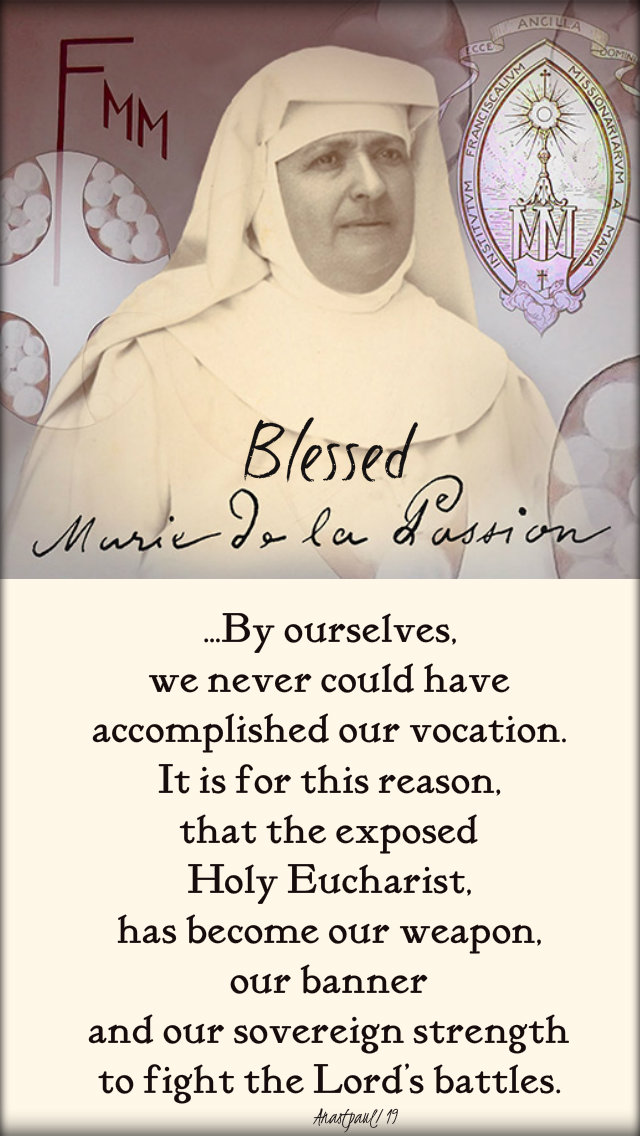
Irish Martyrs – 17 beati – This is the collective title given to the 260 or more persons who are credited with dying for the faith in Ireland between 1537 and 1714. Seventeen of them were beatified together on 27 September 1992 by St Pope John Paul II.
• Blessed Conn O’Rourke
• Blessed Conor O’Devany
• Blessed Dermot O’Hurley
• Blessed Dominic Collins
• Blessed Edward Cheevers
• Blessed Francis Taylor
• Blessed George Halley
• Blessed John Kearney
• Blessed Matthew Lambert
• Blessed Maurice Eustace
• Blessed Patrick Cavanagh
• Blessed Patrick O’Healy
• Blessed Patrick O’Loughran
• Blessed Peter Higgins
• Blessed Robert Meyler
• Blessed Terrence Albert O’Brien
• Blessed William Tirry
Martyrs of Lower Moesia: Martyred on the Black Sea at Lower Moesia (in modern Bulgaria), date unknown.
St Cyriacus
St Paul
Martyred in Nagasaki: 9 Beati : burned alive on 20 June 1626 in Nagasaki, Japan. Their ashes were thrown into the sea and no relics remain. They were Beatified on 7 May 1867 by Pope Pius IX.
• Blessed Baltasar de Torres Arias
• Blessed Francisco Pacheco
• Blessed Gaspar Sadamatsu
• Blessed Giovanni Battista Zola
• Blessed Ioannes Kisaku
• Blessed Michaël Tozo
• Blessed Paulus Shinsuke
• Blessed Petrus Rinsei
• Blessed Vincentius Kaun
Today’s Scripture
The next day John again was standing with two of his disciples and as he watched Jesus walk by, he exclaimed, ‘Look, here is the Lamb of God!’ The two disciples heard him say this and they followed Jesus. Jesus turned and saw them following him and said to them, “What are you looking for?” …John 1: 35-38
Reflection for the First Day
Jesus addresses the same question to you at the beginning of this novena
‘What do you want?’ St Augustine said that all our desires are really a longing for God in disguise – where there is real desire, there is prayer. So, be at peace in your desire, you are already praying!
Today’s Prayer
Lord, I come to You at the start of this Novena with a muddle of desires. Give me courage, to listen to what You want to say to me about these desires and give me the strength to accept Your loving desires for me and for my loved ones.
Daily Invocation
Sacred Heart of Jesus, I place all my trust in you.
Novena Prayer
Lord Jesus, the needs of Your people,
open Your Sacred Heart in love for each of us.
You care for us when we are lost,
sympathise with us in loneliness
and comfort us in mourning.
You are closest to us when we are weakest.
You love us most, when we love ourselves least,
You forgive us most, when we forgive ourselves least
and You call us to spread Your love
in whatever way we can.
Lord Jesus, Your Sacred Heart
is moved with compassion
when we are suffering,
when we need Your help
and when we pray for each other.
I ask You to listen to my prayer during this Novena
and grant what I ask.
—————————-
(Mention your intention silently.)
If what I ask is not for my own good
and the good of others,
grant me what is best,
that I may build up Your kingdom
of love in our world.
Amen
You must be logged in to post a comment.