Thought for the Day – 19 June – Wednesday of the Eleventh Week in Ordinary Time, Year C, Gospel: Matthew 6:1–6 and the Memorial of St Romuald (c 951-1027)
“But when you pray, go into your room and shut the door and pray to your Father who is in secret and your Father, who sees in secret, will reward you.”...Matthew 6:6
“When you pray, go to your inner room”
Saint Teresa Benedicta of the Cross [Edith Stein OCD (1891-1942)
Martyr, co-patron of Europe
The Prayer of the Church (trans. Darlington Carmel)
In those who have entered into the unity of the divine inner life, everything is one – rest and activity, contemplation and action, silence and speech, listening and communicating, loving receptiveness, and loving gift of self in thanksgiving and praise… We need hours of silent listening, when we allow the divine Word to work in us, until it craves to become fruitful in the sacrifice of praise and of action.
We need the traditional forms and participation in the set forms of acts of regular worship, so that the inner life can be awakened and guided and find a suitable expression. The solemn divine praise must have its homes on earth, where it is developed, to the greatest perfection possible, to human beings. From these, it ascends to heaven, for the whole Church and becomes effective in the members of the Church, quickening their interior life, inviting their participation. But, it must itself be quickened from within, even in these places, by leaving space for silence and depth. Otherwise it would degenerate into mere lip-service. Contemplative houses where souls stand in solitude and silence before the face of God, are a protection against this danger. They wish to be, in the heart of the Church, the love that vivifies all.
One Minute Reflection – 19 June – Wednesday of the Eleventh Week in Ordinary Time, Year C, Gospel: Matthew 6:1–6 and the Memorial of St Romuald (c 951-1027) and St Juliana Falconieri OSM (1270 – 1341)
“Beware of practising your piety before men, in order to be seen by them, for then you will have no reward from your Father who is in heaven..”... Matthew 6:1
REFLECTION – ”Vainglory can find a place, not only, in the splendour and pomp of worldly wealth but even in the sordid garment of sackcloth as well. It is then all the more dangerous, because it is a deception, under the pretence of service to God.
When one dazzles by immoderate adornment of the body and its raiment, or by the splendour of whatever else one may possess, by that very fact, one is easily shown to desire ostentatious display. This person deceives nobody by a crafty semblance of holiness. But if, through extraordinary squalor and shabbiness, one is attracting others’ attention to one’s manner of professing Christianity and if, one is doing this of choice and not merely enduring it through necessity, then one may determine by one’s other works whether one is doing it through an indifference toward needless adornment, or through ambition of some kind. Indeed, the Lord has forewarned us to beware of wolves in sheep’s clothing: “By their fruits you shall know them.”
Trials of one kind or another, that cause these people to lose the very advantages they have gained, through their dress or claimed to deny, what they sought to gain by it, will inevitably reveal, whether it is a case of a wolf under a sheep’s skin or a sheep under its own. But just as sheep ought not to change their skin even though wolves sometimes hide themselves beneath it, so a Christian ought not try to delight the eyes of others by needless adornment, just because pretenders very often assume that scanty garb, which necessity demands and assume it, for the purpose of deceiving those, who are less aware.” … St Augustine (354-430) (Sermon on the Mount, 2)
PRAYER – Lord God, in Your wisdom You created us. By Your providence You rule us. Penetrate our inmost being with Your holy light, so that we may shine only by our service and imitation of Your Son and never seek to shine by our own efforts. May we be mirrors of His meek and humble Heart. Grant that the prayers of St Romuald and St Juliana Falconieri may be help on our way. Through Christ our Lord, in union with the Holy Spirit, God forever, amen.
Our Morning Offering – 19 June – Wednesday of the Eleventh week in Ordinary Time, Year C and the Month of the Sacred Heart
Most Sacred, Most Loving Heart By Blessed Cardinal John Henry Newman (1801-1890)
Most Sacred, most loving Heart of Jesus,
You are concealed in the Holy Eucharist,
And You beat for us still.
Now, as then, You say:
“With desire I have desired.”
I worship You with all my best love and awe,
With fervent affection,
With my most subdued, most resolved will.
For a while You take up Your abode within me.
O make my heart beat with Your Heart!
Purify it of all that is earthly,
All that is proud and sensual,
All that is hard and cruel,
Of all perversity,
Of all disorder,
Of all deadness.
So fill it with You,
That neither the events of the day,
Nor the circumstances of the time,
May have the power to ruffle it
But that, in Your love and Your fear,
It may have peace.
Amen
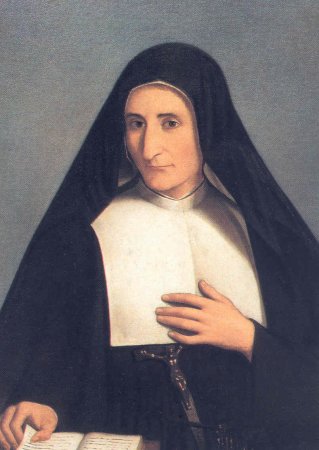
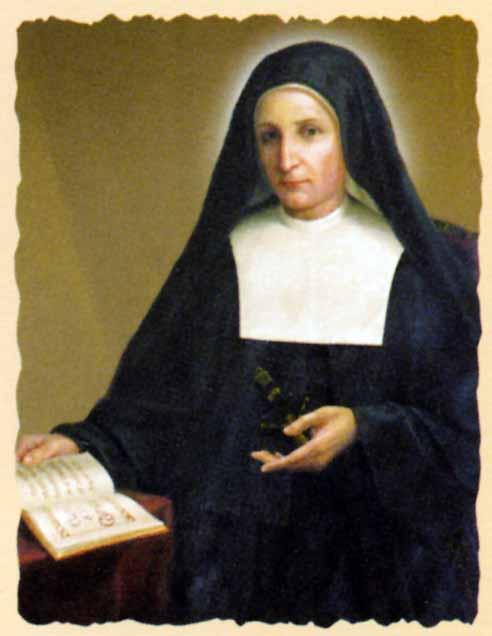
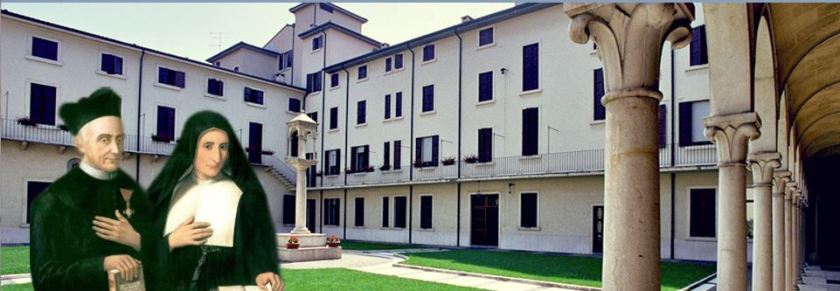
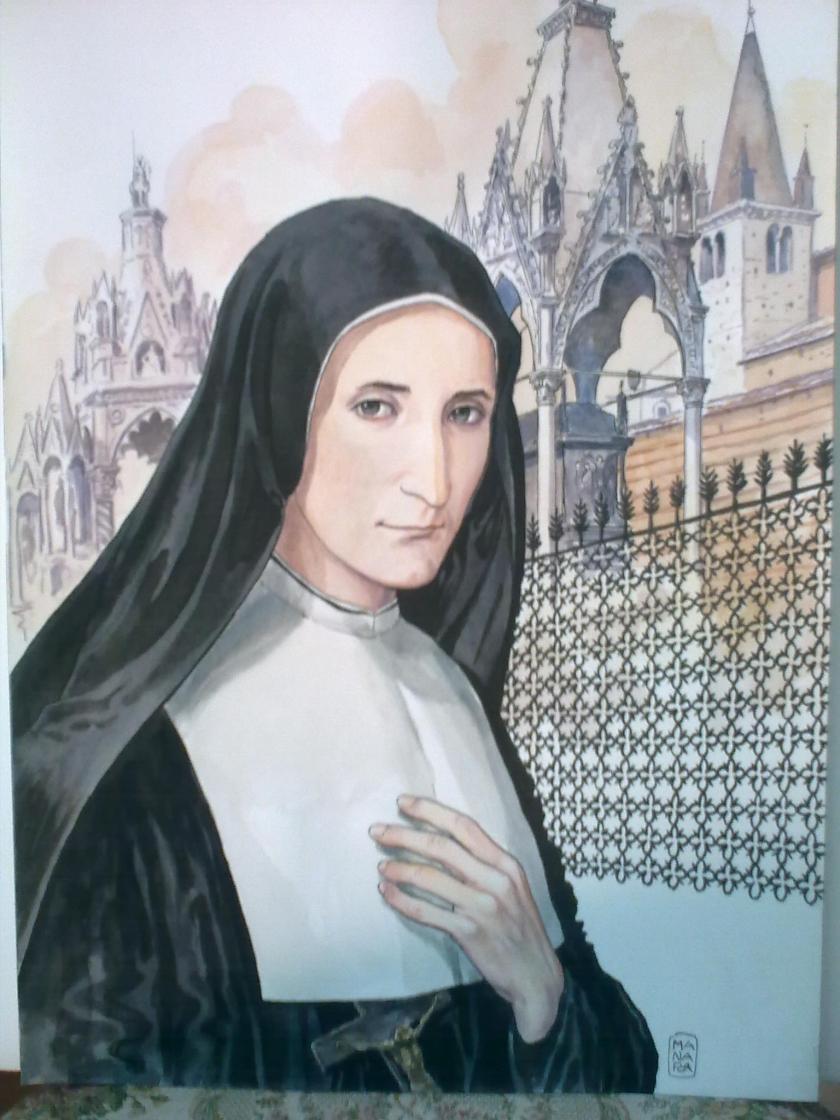
Saint of the Day – 19 June – St Juliana Falconieri OSM (1270 – 1341) Virgin and Foundress of the Religious Sisters of the Order of Servites, Mystic, apostle of charity – born in 1270 at Florence, Italy and died on 12 June 1341 at Florence, Italy of natural causes. Patronages – sick people, sickness. Her relics lie at the church of San Annunziata in Florence which was built by her father.
Juliana Falconieri was born in answer to prayer, in 1270. Her father built the splendid church of the Annunziata in Florence, while her uncle, Blessed Alexius, became one of the founders of the Servite Order. Under his care Juliana grew up, as he said, more like an angel than a human being. Such was her modesty that she never used a mirror or gazed upon the face of a man during her whole life. The mere mention of sin made her shudder and tremble and once hearing a scandal related she fell into a dead swoon.
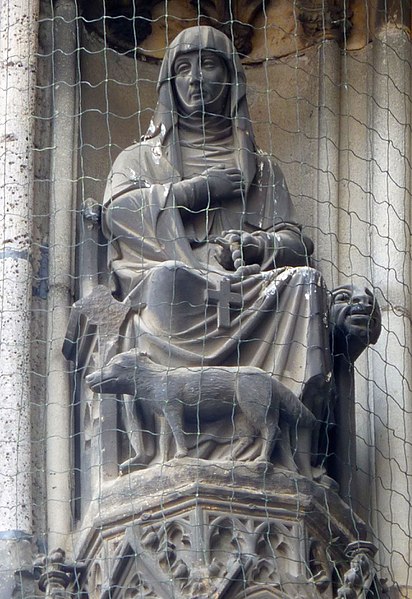
Statue of St Julia at the Annunziata Church in Florence
Her devotion to the sorrows of Our Lady drew her to the Servants of Mary and, at the age of fourteen, she refused an offer of marriage and received the habit from St Philip Benizi de Damaini (1233-1285) himself, one of the seven holy founders.
Her sanctity attracted many novices, for whose direction she was bidden to draw up a rule and thus with reluctance she became foundress of the “Mantellate”. The Servites’ dress consisted of a black gown, secured by a leather girdle and a white veil. Because the gown had short sleeves to facilitate work, people called the sisters of the new Order “Mantellate.” The sisters devoted themselves especially to the care of the sick and other works of mercy.She was with her children as their servant rather than their mistress, while outside her convent she led a life of apostolic charity, converting sinners, reconciling enemies and healing the sick by sucking with her own lips their ulcerous sores.
She was sometimes rapt for whole days in ecstasy and her prayers saved the Servite Order when it was in danger of being suppressed. She was visited in her last hour by angels in the form of white doves and Jesus Himself, as a beautiful child, crowned her with a garland of flowers. She wasted away through a disease of the stomach, which prevented her taking food. She bore her silent agony with constant cheerfulness, grieving only for the privation of Holy Communion.
At last, when, in her seventieth year, she had sunk to the point of death, she begged to be allowed once more to see and adore the Blessed Sacrament. It was brought to her cell, and reverently laid on a corporal, which was placed over her heart. At this moment she expired and the Sacred Host disappeared. After her death the form of the Host was found stamped upon her heart in the exact spot over which the Blessed Sacrament had been laid. Immediately after her death she was honoured as a saint.
The Servite Order was approved by Pope Martin V in the year 1420. Pope Benedict XIII recognised the devotion long paid to her and granted the Servites permission to celebrate the feast of the Blessed Juliana. Pope Clement XII Canonised her in the year 1737 and extended the celebration of her feast day to the entire Church. Juliana is usually represented in the habit of her Order with a host upon her breast.
St Adleida of Bergamo
Bl Arnaldo of Liniberio
St Culmatius of Arezzo
St Deodatus of Jointures
St Deodatus of Nevers
St Gaudentius of Arezzo
St Gervase
St Hildegrin of Châlons-sur-Marne
Bl Humphrey Middlemore
St Innocent of Le Mans St Juliana Falconieri OSM (1270 – 1341)
St Lambert of Saragossa
St Lupo of Bergamo
St Modeste Andlauer
St Nazario of Koper
Bl Odo of Cambrai
St Protase
St Rémi Isoré
Bl Sebastian Newdigate
Bl Thomas Woodhouse
Bl William Exmew
St Zosimus of Umbria
Art Dei – 18 June – The Memorial of Blessed Osanna Andreasi OP (1449-1505) – Her House in Mantua, Italy
This beautiful painting was donated to the Andreasi House in 2002 by private collectors, it is a replica of a painting made in the late 16th century, the original is also part of a private collection, attributed to Luigi Costa the Elder. This versions differs from the original in that it lacks the plate at the bottom and also because in the background we can see a large writing in gold letters and the figure of a swan, the symbol of the Andreasi family. Though the original is more intense, this version also is very interesting, with the large cross and the lily around it, indicating the woman’s condition of virgin. The crown of thorns she is holding evidently creates a direct relationship with the suffering of Jesus Christ. In the course of time, a specific physical type representing the Blessed took shape – she is both severe and beautiful, conveying a sense of quiet prayer but also the charisma of a benefactor.
This painting below, is another portrait of the Blessed, evidently from a series beginning with the work that is part of the private collection attributed to Costa the Elder. The low quality of this canvas does not, however, prevent the viewer from recognising her typical features, here particularly severe and lacking many of the usual symbols. Here, in fact, we see only the cross, long and slender, that the Blessed holds as usual in her right hand, showing it to the worshippers.
Blessed Osanna and the Mysteries of the Rosary
In this devotional composition, the Blessed Osanna is painted standing on the left, while invoking the Virgin Mary who appears above, surrounded by clouds, carrying Baby Jesus in her arms. Next to Osanna we see Saint Dominic, who is in turn admiring the celestial vision. The peculiarity of this painting is, however, the presence of a total of fifteen tondos on the two sides and in the upper part of the painting, depicting the Mysteries of the Rosary. On the right we have the Joyful Mysteries – Annunciation, the Visitation of Mary to saint Elizabeth, the Nativity, the Presentation of Jesus at the Temple, the Finding of Jesus in the Temple. On the left the Sorrowful Mysteries – the Agony in the Garden, the Scourging at the Pillar, the Crowning with Thorns, the Carrying of the Cross and the Crucifixion. Above the Glorious Mysteries – the Resurrection, the Ascension, the Descent of the Holy Spirit, the Assumption of Mary and the Coronation of the Virgin. Finally, it must be noted that between the Blessed and Saint Dominic, we can make out the outline of the city of Mantua seen from San Giorgio. This detail allows to identify with certainty the female figure as being the Blessed Osanna.
The home of the Blessed Osanna Andreasi
In between two floors is a small consecrated chapel and a study with painted cupboards. On the main floor are four rooms of which one is entirely fresh with trompe l’oeil architecture depicting columns, balustrades and Latin proverbs recorded on scrolls. The room of relics of the Blessed Osanna Andreasi (1449-1505) – Set among hydrangeas, roses and officinal plants in the courtyard is a delightful porch with 15th century pink marble columns bearing the Andreasi coat of arms. The interior frescoes date from the 15th, 16th and, above a fireplace, 17th centuries – the decoration on the wooden coffered ceilings is still visible in parts, while the floors and stairs are made of terracotta and the doors of wood. It was purchased by nobleman Niccolò Andreasi in the mid 15th century as his family home. The house underwent minor changes in the early 16th century when Andreasi’s daughter Osanna was beatified.
Property of the Andreasi family for centuries, the house passed in 1780 into the hands of the Magnaguti family by marriage. Conte Alessandro Magnaguti (1887 – 1966) bequeathed it to the Dominican Province Utriusque Lombardiae to perpetuate the memory and cult of Blessed Osanna, who was a Tertiary of the Order and whose home it was.
Since 1935 it has been home to the Dominican Fraternity, who restored it and created a cultural centre for the circulation of Dominican spirituality and for the study of Thomistic philosophy. They established the Association for Dominican Monuments in 1993. The house, which still preserves its vocation for philosophy, culture and mysticism, hosts courses on philosophy and art, comparative religion, conferences, book launches and exhibitions and is the home to countless amazing holy artworks, mostly depicting Dominican Saints but not exclusively.
Thought for the Day – 18 June – Tuesday of the Eleventh week in Ordinary Time, Year C, Gospel: Matthew 5:43–48
But I say to you, love your enemies and pray for those who persecute you…
Matthew 5:44
“Love your enemies”
Saint Caesarius of Arles (470-543)
Monk and Bishop
Sermons addressed to the people, no. 23, 3; SC 243
In all these works of true and perfect charity I am telling you about, nothing is to be done with hand or foot – in other words, no-one can say they are incapable of them or too weak. (…) No-one can plausibly raise any kind of excuse against them, saying, that they are unable to put these counsels into practice. For you are not being told: “Fast more than you are able, stay awake all night more than you have the strength to do!” (…); no-one is obliging you to sell all your goods and give everything to the poor or to remain a virgin. (…) Let someone who can do all these things give thanks to God. And let someone who cannot, maintain true charity and they will possess everything in this. For love suffices, even without all those good works but those good works, without love, are wholly useless. That is why I am saying and repeating these things to you, dearest brethren, so that you may evermore fully understand, that no-one can claim, they are incapable of, carrying out God’s commandments.
So hold fast to the sweet and salutary bond of love, without which, the rich are poor and with which the poor are rich. What do the rich possess if not charity? (…) And since “God is love,” (1 Jn 4:8) as John the evangelist says, what can the poor lack, if they merit to possess God by means of charity? (…) So love, dearest brethren and hold fast to charity without which no-one will ever see God.
Quote of the Day – 18 June – Tuesday of the Eleventh week in Ordinary Time, Year C, Gospel: Matthew 5:43–48
“All our religion is but a false religion and all our virtues are mere illusions and we ourselves are only hypocrites in the sight of God, if we have not that universal charity for everyone – for the good and for the bad, for the poor and for the rich and for all those who do us harm, as much as those who do us good.”
One Minute Reflection – 18 June – Tuesday of the Eleventh week in Ordinary Time, Year C, Gospel: Matthew 5:43–48 and the Memorial of Blessed Osanna Andreasi OP (1449-1505)
“But I say to you, love your enemies and pray for those who persecute you”…Matthew 5:44
REFLECTION – “You have often heard it said that we are living through a marvellous time, a time of great men… It is easy to understand why people long for a strong and capable leader to arise… This kind of neo-paganism [Nazism] believes all nature to be an emanation of the divine…; it admires a race that is nobler and purer than any other… From this comes the cult of race and blood, the cult of its own people’s heroes.
By starting out from so mistaken an idea, this view of things can lead to capital errors. It is tragic to see how much enthusiasm, how many efforts are placed at the service of such an erroneous and baseless ideal! However, we can learn from our enemy. We can learn from his deceitful philosophy how to purify and improve our own ideal, we can learn how to develop great love for this ideal, how to arouse immense enthusiasm and even a readiness to live and die for it, how to strengthen our hearts to incarnate it in ourselves and in others…
When we talk about the coming of the Kingdom and pray for its coming, we are not thinking of a discrimination according to race or blood but of the brotherhood of all, for all men are our brothers – not excluding even those who hate and attack us – in a close bond with the One, who causes the sun to rise on the good and the bad alike (Mt 5:45).”…Blessed Titus Brandsma (1881-1942) Martyr
PRAYER – Almighty God, to whom this world, with all it’s goodness and beauty belongs, give us grace joyfully, to begin this day for Christ Your Son, in Him and with Him and to fill it, with an active love for all Your children, even those who may not like or who do us harm. Help us to love as You do so that we may become like You. Blessed Osanna Andreasi, you who spread your charity far and wide, pray for us. Through Christ our Lord, with the Holy Spirit, one God, forever, amen.
Our Morning Offering – 18 June – Tuesday of the Eleventh week in Ordinary Time, Year C, Month of the Sacred Heart
May the Heart of Jesus be the King of my Heart! By St Francis De Sales (1567-1622) Doctor of Charity
May Your heart
dwell always in our hearts!
May Your blood
ever flow in the veins of our souls!
O sun of our hearts,
You give life to all things
by the rays of Your goodness!
I will not go,
until Your heart has strengthened me,
O Lord Jesus!
May the heart of Jesus
be the King of my heart!
Blessed be God.
Amen
Saint of the Day – 18 June – Blessed Osanna Andreasi OP (1449-1505) Virgin, Mystic with a gift of prophecy and Stigmatist, Spiritual Director, reformer, apostle of charity – born on 17 January 1449 at Mantua, Italy and died in 1505 of natural causes. Patronages – Mantua, school girls.
Osanna was the daughter of the nobles Niccolò Andreasi, whose family had originated in Hungary and of Agnese Gonzaga. She was reported to have had a vision of angels at age six. Feeling called to consecrated life, she rejected a marriage arranged by her father. Unable to explain her attraction to religious life to her father, in 1463, at the age of 14, she secretly received the religious habit of the Third Order of St Dominic. She had been drawn to this Order from her admiration of two members of the Order, the holy tertiary, Saint Catherine of Siena and her contemporary, Friar Girolamo Savonarola, who both represented to her lives of strict self-denial.
Returning home, Osanna explained that she had made a religious vow and had to wear it until she had fulfilled her promise, which is an ancient custom. She waited 37 years to complete her vows so she could care for her brothers and sisters after the death of her parents.
A legend states that Osanna, like St Catherine of Siena, miraculously learned to read and write. One day she saw a piece of paper with two words and said, “Those words are ‘Jesus’ and ‘Mary.'” From that time on, anything relating to the spiritual was within her grasp to read.
When Osanna was thirty years old, she received the stigmata on her head, her side and her feet. She also had a vision in which her heart was transformed and divided into four parts. For the rest of her life, she actively experienced the Passion of Jesus but especially intensely on Wednesdays and Fridays. Osanna confided these things in her biographer and “spiritual son,” the Olivetan monk, Dom Jerome of Mount Olivet, as well as the fact that for years, she subsisted on practically no food at all.
Osanna was a mystic who would fall into ecstasies whenever she spoke of God, and a visionary who saw images of Christ bearing His cross. She bore the stigmata along with red marks but there was no bleeding. She helped the poor and sick and served as spiritual director for many, spending much of her family’s considerable fortune to help the unfortunate. She spoke out against decadence and criticised the aristocracy for a lack of morality. She was a friend of another holy member of her Order, the Blessed Columba of Rieti and is recorded to have sought counsel from another, the Blessed Stephana de Quinzanis.
These phenomena brought Ossana to the attention of Mantua’s ruling family. Most notably, she was sought by Francesco II Gonzaga and his wife, Isabella d’Este, as both a spiritual guide and a counsellor on matters of state. She frequently foretold correctly events which later came to pass and gained the reputation of a seer. When she died in Mantua on 18 June 1505, all the members of the nobility and clergy attended her funeral, as her body was taken in procession to the Church of St Dominic, where it was enshrined. Later, her remains were transferred to the Cathedral of St Peter in Mantua, where they are still venerated.
Her confidant, Dom Jerome (Italian: Girolamo de Monte Oliveto), wrote a vita (biography) of her life in 1507, very shortly after her death. Although Jerome noted that Osanna was not quick to discuss her spiritual experiences, in the last years of her life she adopted Jerome as a “spiritual son,” “conceived in the Blood of Christ.”
Jerome’s account is especially unique due to his intimate relationship with his subject. The biography takes the form of a detailed report of his conversations with Osanna. Jerome appended to his account Latin translations of twenty-four letters from Osanna, accompanied by documents certifying their authenticity.
According to Father Benedict Ashley, OP, these letters express an “intense and constant physical and inner suffering” made bearable only by “sublime experiences of union with God which [Osanna] cannot describe except in broken and inadequate language.” A special source of misery for Osanna was the degradation of the Church under the abusive pontificate of Alexander VI.
In a response to a request by the Marchesa Isabella d’Este while on a visit to Rome, through a papal brief of 8 January 1515, Leo X authorised the celebration of her feast day in the City of Mantua. Her local cultus was confirmed by Pope Innocent XII with a Papal bull of 24 November 1694 and extended to the whole of the Dominican Order two months later.
The Blessed Virgin Mary in glory appearing to the Blessed Osanna Andreasi by Ippolito Andreasi (c 1575)
St Abraham of Clermont
St Alena of Dilbeek
St Amandus of Bordeaux
St Arcontius of Brioude
St Athenogenes of Pontus
St Calogero of Sicily
St Calogerus of Fragalata
St Calogerus the Anchorite
St Colman mac Mici
St Cyriacus of Malaga
St Demetrius of Fragalata
St Edith of Aylesbury
St Elizabeth of Schonau
St Elpidius of Brioude
St Equizio of Telese
St Erasmo
St Etherius of Nicomedia
Bl Euphemia of Altenmünster
St Fortunatus the Philosopher
St Gerland of Caltagirone St Gregory Barbarigo (1625-1697) About St Gregory: https://anastpaul.com/2018/06/18/saint-of-the-day-18-june-2018-st-gregory-barbarigo-1625-1697/
St Gregory of Fragalata
St Guy of Baume
St Jerome of Vallumbrosa
St Marcellian
St Marina of Alexandria
St Marina of Bithynia
Bl Marina of Spoleto
St Mark Bl Osanna Andreasi OP (1449-1505)
St Osanna of Northumberland
St Osmanna of Jouarre
St Paula of Malaga
Bl Peter Sanchez
—
Hermits of Karden: A father (Felicio) and his two sons (Simplicio and Potentino)who became pilgrim to various European holy places and then hermits at Karden (modern Treis-Karden, Germany). (Born in Aquitaine (in modern France) Their relics transferred to places in the Eifel region of western Germany at some point prior to 930. They were canonised on 12 August 1908 by Pope Pius X (cultus confirmation).
Martyrs of Ravenna – 4 sai nts: A group of four Christians martyred together. We have no details but their names – Crispin, Cruciatus, Emilius and Felix. They were martyred in Ravenna, Italy, date unknown.
Martyrs of Rome – 3 saints: Three Christians martyred together . We have no details but their names – Cyriacus, Paul and Thomas. In Rome, Italy, date unknown.
Martyrs of Tripoli – 3 saints: Three imperial Roman soldiers, at last two of them recent converts, who were imprisoned, tortured and executed for their faith. Martyrs – Hypatius, Leontius and Theodulus. They were Greek born and they died c135 at Tripoli, Phoenicia (in modern Lebanon).
Announcing the NOVENA to the SACRED HEART BEGINS Wednesday, 19 June
Devotion to the Sacred Heart
By Ven Servant of God John A Hardon SJ (1914-2000)
Devotion to the Sacred Heart of Jesus is as old as Christianity. When the side of Christ was pierced on Calvary, there immediately flowed out blood and water. The Church has interpreted this to mean, the outpouring of grace through the Church, which began the moment that Christ expired on the Cross.
Over the centuries, the gratitude of the faithful for this manifestation of divine love has centred on the physical Heart of Jesus as the symbol of God’s love for man. We may, therefore, say, that devotion to the Sacred Heart is really devotion to the love of God as revealed in the person of Jesus Christ.
When God became man, it was God – who is love – who became man. In the languages of all nations, the heart is identified with love. Consequently, our devotion to the Heart of Jesus is directed to the love of Jesus in different ways. We love Him as our God, who has loved us from all eternity and out of selfless love brought us into existence and destined us to possess Him for all eternity. We love Him as our God Incarnate, who loved us so much that He assumed our human nature and by His bodily death redeemed us from the eternal death we deserved for our sins. We love Him as our Redeemer who rose from the dead and ascended into heaven where He is preparing a place for us. Where He is, our God united with His human body and soul, we hope to be in His blessed company. We love Him as our Eucharistic Lord who is on earth in His humanity, in the Blessed Sacrament. He offers Himself in the Mass through which He now communicates the graces He won for us on the Cross. By His Real Presence, He invites us to offer Him our adoring love and ask Him to work the miracles He performed during His visible stay in Palestine. To be emphasised is the unique character of devotion to the Sacred Heart. It is nothing less than a synthesis of Catholic Christianity in its loving response to the unspeakable love of God for the sons and daughters of the human family.
For the sake of convenience, we may divide the terms “Sacred Heart” and “Devotion” into two parts: Sacred Heart stands for the love of God, which means the love that is God, the love that God has shown for us from the dawn of creation until now and the love that God will continue to pour out on us into the endless reaches of eternity. Devotion stands for our grateful return of love for love, which is shown in loving sacrifice by the total surrender of our wills to the mysterious and demanding will of God, in loving imitation of Jesus Christ, whose virtues as man, are so many manifestations of His divine attributes as God, in loving worship of Mary’s Son, who is present with His living, pulsating human Heart in the Blessed Sacrament, in loving petition for the graces that we and others, need to serve Him faithfully, here on earth and enjoy Him in the life that will never end.
A simple but very effective way of growing in devotion to the Sacred Heart, is to recite daily the very old morning offering, used for centuries within the Catholic heart:
O Jesus, through the Most Pure Heart of Mary and in union with the Holy Sacrifice of the Mass throughout the world today, I offer You all my prayers, works, joys and sufferings of this day, for all the intentions of Your Sacred Heart, I offer them for the salvation of souls, the reparation of sins, the intentions of all our bishops, priests, apostles of prayer and our Holy Father, the Pope. Amen
Among the promises made by our Lord to St Margaret Mary, was the assurance that, “Those who shall promote this devotion shall have their names written in my Heart, never to be blotted out.”
Thought for the Day – 17 June – The Memorial of Blessed Joseph-Marie Cassant OCSO (1878-1903)
Fr Joseph-Marie always put his trust in God, in contemplation of the mystery of the Passion and in communion with Christ present in the Eucharist.
Thus, he was imbued with love for God and abandoned himself to Him, “the only true happiness on earth”, detaching himself from worldly goods in the silence of the Trappist monastery. In the midst of trials, his eyes fixed on Christ, he offered up his sufferings for the Lord and for the Church.
May our contemporaries, especially contemplatives and the sick, discover, following his example, the mystery of prayer, which raises the world to God and gives strength in trial!”…St John Paul II (1920-2005) Beatification Homily, Sunday, 3 October 2004
‘The Eucharist is the Saviour Himself, wholly giving Himself to men, His Heart is pierced on the Cross and then tenderly gathers in all those who trust in Him.’
Quote/s of the Day – 17 June – Monday of the Eleventh week in Ordinary Time, Year C, Gospel: Matthew 5:38–42, First Reading: 2 Corinthians 6:1–10
“We are treated as deceivers and yet, are truthful, as unrecognised and yet, acknowledged, as dying and behold we live, as chastised and yet, not put to death, as sorrowful yet, always rejoicing, as poor yet, enriching many, as having nothing and yet, possessing all things.”
2 Corinthians 8-10
“But I say to you, offer no resistance to one who is evil. When someone strikes you on your right cheek, turn the other one to him as well.”
Matthew 5:39
“Love of one’s enemy constitutes the nucleus of the ‘Christian revolution,’ a revolution not based on strategies of economic, political or media power – the revolution of love, a love that does not rely ultimately on human resources but, is a gift of God which is obtained, by trusting solely and unreservedly in His merciful goodness. Here is the newness of the Gospel which silently changes the world! Here is the heroism, of the ‘lowly,’ who believe in God’s love and spread it, even at the cost of their lives”
One Minute Reflection – 17 June – Monday of the Eleventh week in Ordinary Time, Year C, Gospel : Matthew 5:38–42 and the Memorial of Blessed Joseph-Marie Cassant OCSO (1878-1903)
“Should anyone press you into service for one mile, go with him for two miles.”… Matthew 5:41
REFLECTION – “Do you grasp the excellence of a Christian disposition? After you give your coat and your cloak, even if your enemy should wish to subject your naked body to hardships and labours, not even then, Jesus says, must you forbid him. For He would have us possess all things in common, both our bodies and our goods, as with them that are in need, so with them that insult us. For the latter response comes from a courageous spirit, the former from mercy. Because of this, Jesus said, “If any one shall compel you to go one mile, go with him two.” Again He leads you to higher ground and commands you to manifest the same type of aspiration. For if the lesser things He spoke of at the beginning receive such great blessings, consider what sort of reward awaits those who duly perform these and what they become even before we hear of receiving rewards. You are winning full freedom from unworthy passions in a human and passible body.” … Saint John Chrysostom (347-407) Bishop, Father & Doctor (The Gospel of Matthew: Homily 18)
PRAYER – King of heaven and earth, Lord God, rule over or hearts and bodies this day. Sanctify us and guide our every thought, word and deed according to the commandments of Your law, so that now and forever, Your grace may free and save us. Teach us Lord to walk in the ways of the Cross of Your Son, our Saviour, as Blessed Joseph-Marie Cassant so lovingly and willingly inspires us to do. Through Christ our Lord, with the Holy Spirit, God, forever, amen.
Our Morning Offering – 17 June – Monday of the Eleventh week in Ordinary Time, Year C
Jesus, Reveal Your Sacred Heart to me By Servant of God Cardinal Rafael Merry del Val (1865-1930)
Jesus,
reveal Your Sacred Heart to me
and show me Its attractions.
Unite me to It forever.
Grant that all my desires
and every beat of my heart,
which does not cease,
even while I sleep,
may be a witness to You
of my love for You
and tell You –
Yes Lord, I am Yours!
The pledge of my loyalty to You
rests ever in my heart
and shall never cease to be there.
Accept the little good that I do
and be pleased to make up
for all my wrong-doing
so that I may be able to praise You
in time and in eternity.
Amen
Saint of the Day – 17 June – Blessed Joseph-Marie Cassant OCSO (1878-1903) aged 25 – Priest, Trappist Monk – born as Pierre-Joseph Cassant on 6 March 1878 in Casseneuil, Lot-et-Garonne, France as Pierre-Joseph Cassant and died on 17 June 1903 in Abbey of Sainte-Marie-du-Désert, Lévignac, Haute Garonne, France of tuberculosis.
Joseph-Marie Cassant was born on the 6th of March, 1878, at Casseneuil, Lot-et-Garonne, in the diocese of Agen, France, into a family of orchard-keepers. The second child born to the family, he had an elder brother already nine years of age. He was a lodger at the boarding school of the La Salle Brothers in Casseneuil itself and it was there that his poor memory began to cause him difficulty in studying.
He received a solid Christian education at home and at school and, little by little the deep desire to become a priest grew within him. Father Filhol, the parish priest, thought well enough of the boy to help him with his studies but his weak memory kept him from entering the minor seminary. When it became clear that he was drawn towards silence, recollection and prayer, Fr Filhol suggested that he would think of the Trappists and the young sixteen-year-old unhesitatingly agreed. After a trial period, Joseph entered the Cistercian Abbey of Sainte-Marie du Désert, in the diocese of Toulouse, France, on 5 December 1894.
The Novice Master at the time was Fr André Mallet, a man skilled at understanding the needs of souls and responding in love. From their very first meeting he showed this when he said to the young man, “Only trust and I will help you to love Jesus!” Nor were the other monks of the monastery slow to appreciate the newcomer – he neither argued nor grumbled but was ever happy, ever smiling.
The young monk would often meditate upon Jesus in his Passion and on the Cross and so became deeply imbued with love for Christ. The “way of Jesus’ heart” which Fr André taught him, is an unceasing call to live the present moment with patience, hope and love. Brother Joseph-Marie was well aware of his lacks and weaknesses and so was led to depend more and more on Jesus, His strength. He had no interest in half measures but wished to give himself completely to Christ. His personal motto bears witness to this: “All for Jesus, all through Mary”. On Ascension Thursday, 24 May 1900, he was admitted to final vows.
Then came his preparation for the priesthood. This he viewed primarily in relation to the Eucharist, which was truly to him the living presence of Jesus among us. The Eucharist is the Saviour Himself, wholly giving Himself to men, His Heart is pierced on the Cross and then tenderly gathers in all those who trust in Him. There were times during his theological studies when, because of his great sensitivity, he suffered much from the lack of understanding of the monk teaching the course. But, as in all his contradictions, he relied upon Christ present in the Eucharist as his “only good upon this earth”and confided his suffering to Fr André who would cheer him up and help him better to understand. In the end, he did well enough to pass his examinations and had the great joy of being ordained a priest on 12 October 1902.
At that point, it became clear that he had contracted tuberculosis and that the disease was already well advanced. The young priest spoke of his pains only when it was impossible to hide them further. How could he complain, he who meditated so lovingly on the Lord’s Way of the Cross? In spite of a seven weeks’ stay with his family which he undertook at his abbot’s request, his health continued to deteriorate. He then returned to the monastery, where he was soon sent to stay in the infirmary. Here was one more opportunity to offer up his sufferings for Christ and the Church – his physical pain became more and more unbearable and was even worsened by the infirmarian’s neglect. Fr André continued to accompany him and became more than ever his constant aid and support. He had said, “When I can no longer say Mass, Jesus can take me from this world.”Early in the morning of 17 June 1903, Father Joseph-Marie received communion and left this world to be with Christ Jesus forever.
On the 9th of June 1984, the Holy Father, John Paul II, acknowledged his heroic virtues.
The sheer ordinariness of his life has been noted by some – 16 quiet years at Casseneuil and 9 years of monastic enclosure spent in doing the simplest of things: prayer, studies, work. They are indeed simple things but lived in an extraordinary way. They were the slightest of deeds but performed with limitless generosity. Christ imbued his mind, clear as the water that leaps from a spring, with the conviction, that God alone is our true and highest happiness and that His kingdom is like a hidden treasure or a pearl of great price.
The message of Fr Joseph-Marie has great meaning for us today. In a world filled with distrust and often with despair but thirsting for love and kindness, his life can provide an answer and in a special way to today’s young who seek meaning in their lives. Joseph-Marie was a youth without any standing or worth in the eyes of men. He owed the success of his life to a meeting with Jesus that redefined his very existence. He showed himself a follower of the Lord in the midst of a community of brothers, with the guidance of a spiritual father, who was to him a witness of Christ, as well as one, who knew to receive and to understand him.
For the meek and humble he is a superb example. Watching Joseph-Marie, we learn how to live each day for Christ with love, zeal and fidelity, accepting at the same time the help of an experienced brother or sister who can lead us in the footsteps of Jesus. His life shows us the path to sainthood.
Maria in the Forest: Also known as:
• Holy Mary in the Forest
• Maria im Walde
The Apparitions occurred in a wooded area near Dolina, Grafenstein, Carinthia, Austria on the 17, 18 and 19 June 1849 to three young shepherdesses.
St Antidius of Besançon
Bl Arnold of Foligno
St Avitus of Perche
St Blasto of Rome
St Botolph of Ikanhoe
St Briavel of Gloucestershire
St David of Bourges
St Dignamerita of Brescia
St Diogenes of Rome
St Emily de Vialar
St Gundulphus of Bourges
St Herveus of Bretagne
St Himerius of Amelia
St Hypatius of Chalcedon Bl Joseph-Marie Cassant OCSO (1878-1903)
St Molling of Wexford
St Montanus of Gaeta
St Nectan of Hartland
Bl Paul Burali d’Arezzo
Bl Peter Gambacorta
St Phêrô Ða
Bl Philippe Papon
St Prior
St Rambold of Ratisbon
Bl Ranieri Scaccero
St Theresa of Portugal
—
Martyrs of Apollonia – 7 saints: A group of Christians who fled to a cave near Apollonia, Macedonia to escape persecution for his faith, but were caught and executed. The names we know are – Basil, Ermia, Felix, Innocent, Isaurus, Jeremias and Peregrinus. They were beheaded at Apollonia, Macedonia.
Martyrs of Aquileia – 4 saints: Four Christian martyrs memorialised together. No details about them have survived, not even if they died together – Ciria, Maria, Musca and Valerian. c.100 in Aquileia, Italy.
Martyrs of Chalcedon – 3 saints: Three well-educated Christian men who were sent as ambassadors from King Baltan of Persia to the court of emperor Julian the Apostate to negotiate peace between the two states, and an end of Julian’s persecutions of Christians. Instead of negotiating, Julian imprisoned them, ordered them to make a sacrifice to pagan idols and when they refused, had them executed. Their names were Manuel, Sabel and Ismael. They were beheaded in 362 in Chalcedon (part of modern Istanbul, Turkey) and their bodies burned and no relics survive.
Martyrs of Fez – 4 beati: A group of Mercedarians sent to Fez, Morocco to ransom Christians imprisoned and enslaved by Muslims. For being openly Christian they were imprisoned, tortured, mutilated and executed. Martyrs – Egidio, John, Louis and Paul. They were martyred in Fez, Morocco.
Martyrs of Rome – 262 saints: A group of 262 Christians martyred in the persecutions of Diocletian. In c303 in Rome, Italy. They were buried on the old Via Salaria in Rome.
Martyrs of Venafro – 3 saints: Three Christian lay people, two of them imperial Roman soldiers, who were converts to Christianity and were martyred together in the persecutions of Maximian and Diocletian – Daria, Marcian and Nicander. They were beheaded c.303 in Venafro, Italy. By 313 a basilica had been built over their graves which were re-discovered in 1930. They are patrons of Venafro, Italy.
Thought for the Day – The Memorial of Saint Anthony of Padua OFM (1195-1231) Doctor of the Church, 13 June
Actions Speak Louder than Words
Saint Anthony of Padua
Priest and Doctor of the Church
An excerpt from Sermon, I #226
The man who is filled with the Holy Spirit speaks in different languages. These different languages are different ways of witnessing to Christ, such as humility, poverty, patience and obedience, we speak in those languages, when we reveal in ourselves, these virtues to others. Actions speak louder than words, let your words teach and your actions speak. We are full of words but empty of actions and, therefore, are cursed by the Lord, since He Himself cursed the fig tree when He found no fruit but only leaves. Gregory says: “A law is laid upon the preacher to practice what he preaches.” It is useless for a man to flaunt his knowledge of the law, if he undermines its teaching by his actions.
But the apostles spoke as the Spirit gave them the gift of speech. Happy the man, whose words issue from the Holy Spirit and not from himself! ,,For some men speak as their own character dictates but steal the words of others and present them as their own and claim the credit for them. The Lord refers to such men and others like them in Jeremiah – So, then, I have a quarrel with the prophets that steal my words from each other. I have a quarrel with the prophets, says the Lord, who have only to move their tongues to utter oracles. I have a quarrel with the prophets who make prophecies out of lying dreams, who recount them and lead my people astray with their lies and their pretensions. I certainly never sent them or commissioned them and they serve no good purpose for this people, says the Lord.
We should speak, then, as the Holy Spirit gives us the gift of speech. Our humble and sincere request to the Spirit for ourselves, should be that we may bring the day of Pentecost to fulfilment, insofar, as He infuses us with His grace, by using our bodily senses in a perfect manner and by keeping the commandments. Likewise, we shall request, that we may be filled with a keen sense of sorrow and with fiery tongues for confessing the faith, so that our deserved reward may be to stand in the blazing splendour of the saints and to look upon the triune God.
Saint of the Day – 13 June – St Anthony of Padua OFM (1195-1231) Doctor of the Church
The gospel call, to leave everything and follow Christ, was the rule of Saint Anthony of Padua’s life. Over and over again, God called him to something new in his plan. Every time, Anthony responded with renewed zeal and self-sacrificing to serve his Lord Jesus more completely.
His journey as the servant of God began as a very young man when he decided to join the Augustinians in Lisbon, giving up a future of wealth and power, to be a servant of God. Later, when the bodies of the first Franciscan martyrs went through the Portuguese city where he was stationed, he was again filled with an intense longing to be one of those closest to Jesus Himself: those who die for the Good News.
So Anthony entered the Franciscan Order and set out to preach to the Moors. But an illness prevented him from achieving that goal. He went to Italy and was stationed in a small hermitage where he spent most of his time praying, reading the Scriptures and doing menial tasks.
The call of God came again at an general chapter where no one was prepared to speak. The humble and obedient Anthon,y hesitantly accepted the task. The years of searching for Jesus in prayer, of reading sacred Scripture and of serving Him in poverty, chastity and obedience, had prepared Anthony to allow the Spirit to use his talents. Anthony’s sermon was astounding to those who expected an unprepared speech and knew not the Spirit’s power to give people words.
Recognised as a great man of prayer and a great Scripture and theology scholar, Anthony became the first friar to teach theology to the other friars. Soon he was called from that post to preach to the Albigensians in France, using his profound knowledge of Scripture and theology, to convert and reassure those, who had been misled by their denial of Christ’s divinity and of the sacraments..
After he led the friars in northern Italy for three years, he made his headquarters in the city of Padua. He resumed his preaching and began writing sermon notes to help other preachers. In the spring of 1231, Anthony withdrew to a friary at Camposampiero, where he had a sort of treehouse built as a hermitage. There he prayed and prepared for death.
On 13 June, he became very ill and asked to be taken back to Padua, where he died after receiving the last sacraments. Anthony was Canonised less than a year later and named a Doctor of the Church in 1946.
Anthony should be the patron of those, who find their lives completely uprooted and set in a new and unexpected direction. Like all saints, he is a perfect example of turning one’s life completely over to Christ. God did with Anthony as God pleased—and what God pleased was a life of spiritual power and brilliance that still attracts admiration today heaping miracle upon miracle during Anthony’s lifetime. He whom popular devotion has nominated as finder of lost objects, found himself by losing himself totally, to the providence of God.
St Anthony writes: “Christ, who is your life, is hanging before you, so that you may look at the Cross, as in a mirror. There you will be able to know, how mortal were your wounds, that no medicine other, than the Blood of the Son of God, could heal. If you look closely, you will be able to realise, how great your human dignity and your value are…. Nowhere other than looking at himself, in the mirror of the Cross, can man better understand how much he is worth”(Sermones Dominicales et Festivi III, pp. 213-214).
In meditating on these words we are better able to understand the importance of the image of the Crucified One for our culture, for our humanity that is born from the Christian faith. Precisely by looking at the Crucified One we see, as St Anthony says, how great are the dignity and worth of the human being. At no other point can we understand how much the human person is worth, precisely because, God makes us so important, considers us so important that, in His opinion, we are worthy of His suffering, thus, all human dignity appears in the mirror of the Crucified One and our gazing upon Him is ever a source of acknowledgement of human dignity…..Pope Benedict XVI (General Audience – February 10, 2010)
St Anthony of Padua, pray for us!
Wonderful St Anthony the miracle worker: https://anastpaul.com/2018/06/13/saint-of-the-day-13-june-st-anthony-of-padua-o-f-m-evangelical-doctor-hammer-of-heretics-professor-of-miracles-wonder-worker-ark-of-the-tes/
Celebrating St Anthony: https://anastpaul.com/2017/06/13/celebrating-the-life-and-miracles-of-st-anthony-of-padua-on-his-memorial-today-13-june/
O God, send forth Your Holy Spirit By St Anthony of Padua (1195-1231) Doctor of the Church
O God,
send forth Your Holy Spirit
into my heart
that I may perceive,
into my mind,
that I may remember,
and into my soul,
that I may meditate.
Inspire me to speak
with piety,
holiness,
tenderness
and mercy.
Teach, guide and direct my thoughts
and senses, from beginning to end.
May Your grace,
ever help and correct me,
and may I be strengthened now
with wisdom from on high,
for the sake of Your infinite mercy.
Amen
News of this came to the ears of the church in Jerusalem and they sent Barnabas to Antioch. When he came and saw the grace of God, he was glad and he exhorted them all, to remain faithful to the Lord, with steadfast purpose; for he was a good man, full of the Holy Spirit and of faith. And a large company was added to the Lord...Acts 11:22-24
“While we cannot see God, there is something we can do, to open a way, for the eye of our understanding to come to Him. It is certain that we can see now in His servants, one whom we can in no way see in Himself. When we see them doing astonishing things, we can be sure that God dwells in their hearts… None of us can look directly at the rising sun by gazing at its orb. Our eyes are repelled as they strain to see its rays. But we look at mountains bathed in sunlight and see that it has risen. Because we cannot see the Sun of righteousness (Mal 3,20) Himself, let us see the mountains bathed in His brightness, I mean the holy apostles. They shine with virtues and gleam with miracles… The power of His divinity, is in itself, like the sun in the sky; in human beings it is like the sun shining on earth…”
St Pope Gregory the Great (c 540-604), Father & Doctor of the Church
Memorial of the Blessed Virgin Mary, Mother of the Church (The First Monday after Pentecost – today 10 June 2019, is the Second Universal Memorial of Mary, Mater Ecclesiae)
Mary’s Motherhood in the Order of Grace
Second Vatican Council
An excerpt from Lumen Gentium, #61-62
Predestined from eternity by that decree of divine providence which determined the incarnation of the Word to be the Mother of God, the Blessed Virgin was on this earth the virgin Mother of the Redeemer and, above all others and in a singular way, the generous associate and humble handmaid of the Lord. She conceived, brought forth and nourished Christ. She presented Him to the Father in the temple and was united with Him by compassion as He died on the Cross. In this singular way, she cooperated by her obedience, faith, hope and burning charity, in the work of the Saviour in giving back supernatural life to souls. Wherefore, she is our mother in the order of grace.
This maternity of Mary in the order of grace, began with the consent which she gave in faith at the Annunciation and which she sustained without wavering beneath the cross and lasts, until the eternal fulfilment of all the elect. Taken up to heaven she did not lay aside this salvific duty bu,t by her constant intercession, continued to bring us the gifts of eternal salvation. By her maternal charity, she cares for the brethren of her Son, who still journey on earth, surrounded by dangers and cultics, until they are led into the happiness of their true home. Therefore, the Blessed Virgin is invoked by the Church under the titles of Advocate, Auxiliatrix, Adjutrix and Mediatrix. This, however, is to be so understood, that it neither takes away from, nor adds anything to, the dignity and efficaciousness of Christ the one Mediator.
For no creature could ever be counted as equal with the Incarnate Word and Redeemer. Just as the priesthood of Christ, is shared in various ways, both by the ministers and by the faithful and as the one goodness of God, is really communicated in different ways to His creatures, so also, the unique mediation of the Redeemer, does not exclude but rather, gives rise to a manifold cooperation, which is but a sharing in this one source.
The Church does not hesitate to profess this subordinate role of Mary. It knows it through unfailing experience of it and commends it, to the hearts of the faithful, so that, encouraged by this maternal help, they may the more intimately adhere to the Mediator and Redeemer.
Maria, Mater Ecclesiae, Pray for Us!
O Blessed Lady, Mediatrix and Advocate By St Bernard (1090-1153)
Our Mediatrix and Advocate
O blessed Lady,
you found grace,
brought forth the Life,
and became the Mother of Salvation.
May you obtain the grace for us to go to the Son.
By your mediation,
may we be received by the One
who through you, gave Himself to us.
May your integrity compensate with Him
for the fault of our corruption;
and may your humility,
which is pleasing to God,
implore pardon for our vanity.
May your great charity
cover the multitude of our sins;
and may your glorious fecundity
confer on us a fecundity of merits.
Dear Lady,
our Mediatrix and Advocate,
reconcile us to your Son,
recommend us to Him,
and present us to your Son.
By the grace you found,
by the privilege you merited,
by the mercy you brought forth,
obtain for us the following favour,
O blessed Lady.
Amen
“As a caring guide to the emerging Church, Mary had already begun her mission in the Upper Room, praying with the Apostles, while awaiting the coming of the Holy Spirit.”
Cardinal Robert Sarah
Congregation of Divine Worship and the Discipline of the Sacraments, 11 February 2018, the memorial of the Blessed Virgin Mary of Lourdes. DECREE ON THE CELEBRATION OF THE BLESSED VIRGIN MARY, MOTHER OF THE CHURCH IN THE GENERAL ROMAN CALENDAR
“…She is clearly the Mother of his members; that is, of ourselves, because she cooperated by her charity, so that faithful Christians, members of the Head, might be born in the Church. As for the body, she is the Mother of its Head… Mary gave birth to our Head; the Church gave birth to you. Indeed, the Church also, is both virgin and mother, mother, because of her womb of charity, virgin, because of the integrity of her faith and piety.”
St Augustine (354-430) Doctor of Grace
“Who, more than Mary, could be, a star of hope for us? With her “yes”, she opened the door of our world, to God Himself; she became the living Ark of the Covenant, in whom God took flesh, became one of us and pitched His tent among us.”
Spe Salvi 49 – Pope Benedict XVI
Prayer to Mary, Mother of the Church and Mother of our Faith
By our Holy Father, Pope Francis
Mother, help our faith!
Open our ears to hear God’s word
and to recognise His voice and call.
Awaken in us a desire, to follow in His footsteps,
to go forth from our own land
and to receive His promise.
Help us to be touched by His love,
that we may touch Him in faith.
Help us to entrust ourselves fully to Him
and to believe in His love,
especially at times of trial,
beneath the shadow of the cross,
when our faith is called to mature.
Sow in our faith the joy of the Risen One.
Remind us that those who believe are never alone.
Teach us to see all things with the eyes of Jesus,
that He may be light for our path.
And may this light of faith,
always increase in us,
until the dawn of that undying day,
which is Christ Himself, your Son, our Lord!
Amen
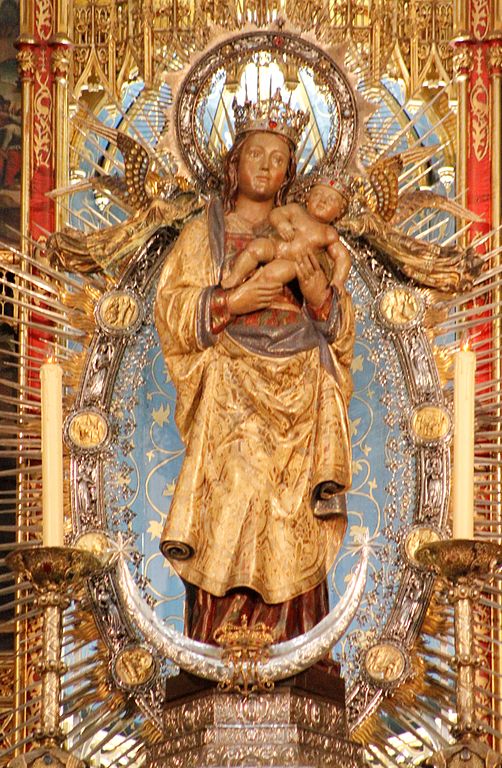
Prayer to Mary at the conclusion of the Encyclical Lumen Fidei (29 June 2013) Image of Mary – Our Lady of the Column in St Peter’s Basilica
St Augustine(354-430)
The Image of the Holy Church
Gracious Lady,
you are a mother and virgin,
you are the mother
of the body and soul
of our Head and Redeemer,
you are also truly mother
of all the members of Christ’s Mystical Body.
For through your love,
you have co-operated
in the begetting of the faithful in the Church.
Unique among women,
you are mother and virgin,
mother of Christ and virgin of Christ.
You are the beauty and charm of earth, O Virgin.
You are, forever, the image of the holy Church.
Through a woman came death,
through a woman came life,
yes, through you, O Mother of God.
Come, Holy Spirit, fill the heart of Your servant and enkindle in us the fire of Your gifts! Be with us, in us and lead us to the light, amen.
“…We have only to say “yes” to let Him take us there.“
St John Vianney (1786-1859)
“If the damned were asked – Why are you in Hell? they would answer: ‘For having resisted the Holy Spirit.’
And if the saints were asked – Why are you in Heaven? they would answer: ‘For having listened to the Holy Spirit.’
When good thoughts come into our minds, it is the Holy Spirit who is visiting us.
The Holy Spirit is a power.
The Holy Spirit …. sustained the martyrs. Without the Holy Spirit, the martyrs would have fallen like the leaves from the trees. When the fires were lighted under them, the Holy Spirit extinguished the heat of the fire by the heat of divine love.
The good God, in sending us the Holy Spirit, has treated us like a great king who should send his minister to guide one of his subjects, saying, “You will accompany this man everywhere and you will bring him back to me safe and sound.”
How beautiful it is, my children, to be accompanied by the Holy Spirit!
He is indeed a good Guide; and to think that there are some who will not follow Him!
The Holy Spirit is like a man with a carriage and horse, who should want to take us to Pans. We should only have to say “yes,” and to get into it. It is indeed an easy matter to say “yes”!… Well, the Holy Spirit wants to take us to Heaven, we have only to say “yes,” and to let Him take us there.“
“O Divine Spirit, draw us to the highest heaven where Jesus lives forever, interceding for us. Come, fill our hearts with Your fire, show us the way to the Lord, that we may find Him shining with beauty and love. Amen”
“Accordingly, in the Church, one God is preached, one God who is above all things and through all things and in all things. God is above all things as Father, for He is principle and source; He is through all things through the Word; and He is in all things in the Holy Spirit.”
St Athanasius (c295-373)
Father and Doctor of the Church
The Church, a communion living in the faith of the apostles
which she transmits, is the place where we know the Holy Spirit:
– in the Scriptures He inspired;
– in the Tradition, to which the Church Fathers are always timely witnesses;
– in the Church’s Magisterium, which He assists;
– in the sacramental liturgy, through its words and symbols,
in which the Holy Spirit puts us into communion with Christ;
– in prayer, wherein He intercedes for us;
– in the charisms and ministries, by which the Church is built up;
– in the signs of apostolic and missionary life;
– in the witness of saints, through whom
He manifests His holiness
and continues the work of salvation.
Catechism of the Catholic Church
Section Two – Article 8 “I believe in the Holy Spirit” #688
++++++++++++++++++++
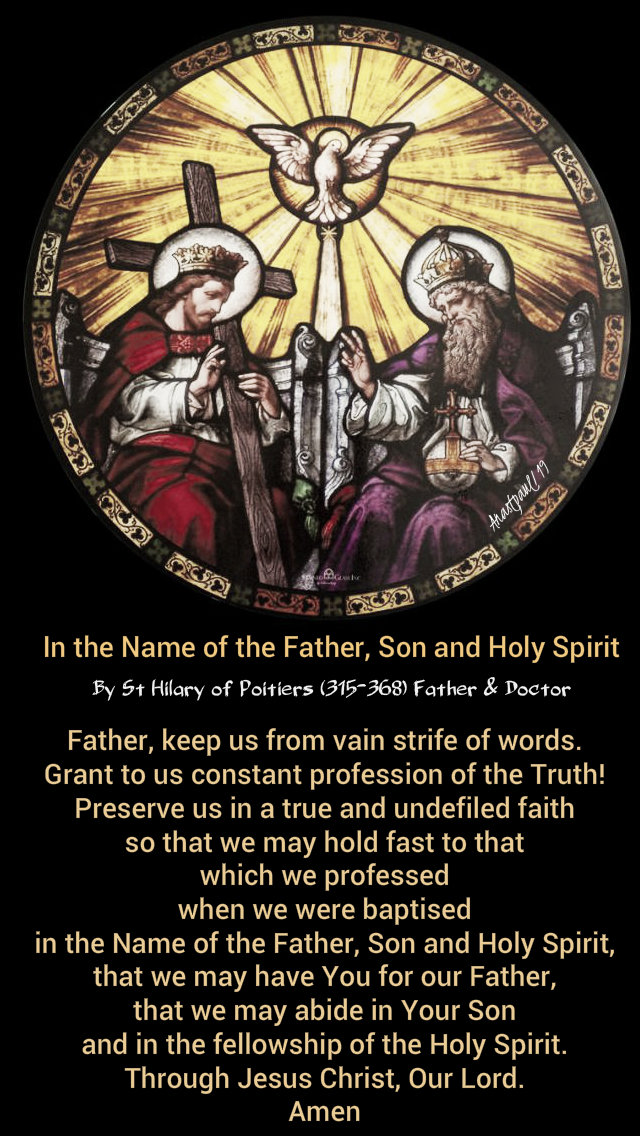
“We receive the Spirit of truth so that we can know the things of God. In order to grasp this, consider how useless the faculties of the human body would becom, if they were denied their exercise. Our eyes cannot fulfil their task without light, either natural or artificial, our ears cannot react without sound vibrations and in the absence of any odour, our nostrils are ignorant of their function. Not that these senses would lose their own nature, if they were not used. rather, they demand objects of experience in order to function. It is the same with the human soul. Unless it absorbs the gift of the Spirit through faith, the mind has the ability to know God but lacks the light necessary for that knowledge.”
St Hilary of Poitiers (315-368)
Father & Doctor of the Church
O Holy Spirit, Divine Consoler!
I adore You as my True God.
I offer You my whole heart
and I render You heartfelt thanks
for all the benefits You have bestowed upon the world.
You are the author of all supernatural gifts
and enriched the Blessed Virgin Mary,
the Mother of God,
with all favours,
I ask You to visit me by Your grace and Your love,
and grant me the favour
I so earnestly seek…
…………………………………. State your request here…
O Holy Spirit,
spirit of truth, come into our hearts.
Let us Pray:
O Lord, Holy Spirit,
grant me sight to see the wondrous promise of divine love,
insight to see my own weakness,
delight in Your divine presence in my soul
which You have made Your temple, through sanctifying grace.
I pray, O Holy Spirit,
that I may be not doubting;
that I be spared the pain of being alone
without trust or hope in Christ,
that my prayer may always be “My Lord and my God!”
I pray that I may acquire a sense of retreat
to prayer and recollection at various times in my daily life,
for prayer is the bond that joins us to Christ.
I pray that I may be aware of the physical needs of the poor
and that I may share what I can with them
in the charitable works of the Church.
I pray, O Holy Spirit,
that You will, in Your mercy
grant me the favour, I have sought in this novena.
Come, O Holy Spirit,
fill the hearts of Your faithful,
and kindle in them the fire of Your love.
“We can study the whole history of salvation, we can study the whole of Theology but without the Spirit we cannot understand. It is the Spirit that makes us realise the truth or – in the words of Our Lord – it is the Spirit that makes us know the voice of Jesus.”
O Holy Spirit, Divine Consoler!
I adore You as my True God.
I offer You my whole heart,
and I render You heartfelt thanks
for all the benefits You have bestowed upon the world.
You are the author of all supernatural gifts
and enriched the Blessed Virgin Mary,
the Mother of God,
with all favours,
I ask You to visit me by Your grace and Your love,
and grant me the favour
I so earnestly seek…
…………………………………. State your request here…
O Holy Spirit,
spirit of truth, come into our hearts.
Let us Pray:
O Holy Spirit,
life and light of the Church,
give us thoughts,
higher than our own thoughts
and prayers,
better than our own prayers
and powers,
beyond our own powers,
that we may love and live,
imitating Jesus Christ,
our Lord and Saviour.
Come to us, Holy Spirit,
come with the Father
and the Son
and grant me the favour I so earnestly request in this novena…
Vouchsafe to dwell within our souls
and quickly make our hearts Your own.
Quench in us the fires of hate and strife,
the wasting fever of the heart.
From perils guard our feeble life
and to our souls Your peace impart.
Let voice and mind and heart
and strength confess
and glorify Your name
and let the fire of charity burn bright
and other hearts inflame.
Come, O Holy Spirit,
fill the hearts of Your faithful,
and kindle in them the fire of Your love.
Amen
O Holy Spirit, Divine Consoler!
I adore You as my True God.
I offer You my whole heart,
and I render You heartfelt thanks
for all the benefits You have bestowed upon the world.
You are the author of all supernatural gifts
and enriched the Blessed Virgin Mary,
the Mother of God,
with all favours,
I ask You to visit me by Your grace and Your love,
and grant me the favour
I so earnestly seek…
…………………………………. State your request here…
O Holy Spirit,
spirit of truth, come into our hearts.
Let us Pray:
Come, Holy Spirit,
creator of all things:
come visit our hearts with Your power.
Fill with grace, friendly guest,
the hearts which You have created.
You are called the Consoler,
gift from the hand of God,
source of life,
light, love and flame, highest good.
You are the pledge of sevenfold grace,
finger of the Father’s hand,
promised us by Him,
and You make our tongues speak the truth.
Cast light on our senses,
pour love into our hearts.
Grant our weak bodies strength
that they may never grow weary of doing good
and grant me the favour I so earnestly seek in this novena…
Keep the enemy far from us,
give us peace always,
let us willingly follow in Your footsteps
that we may be far removed from sin.
Grant that through You
we may grow in knowledge
of the Father and of the Son
and that we may ever strongly believe in You,
the Spirit of both.
Praise and honour be forever
to the Father on the highest throne,
in the risen Son of God,
in the Consoler.
Come, O Holy Spirit,
fill the hearts of Your faithful,
and kindle in them the fire of Your love.
Amen
You must be logged in to post a comment.