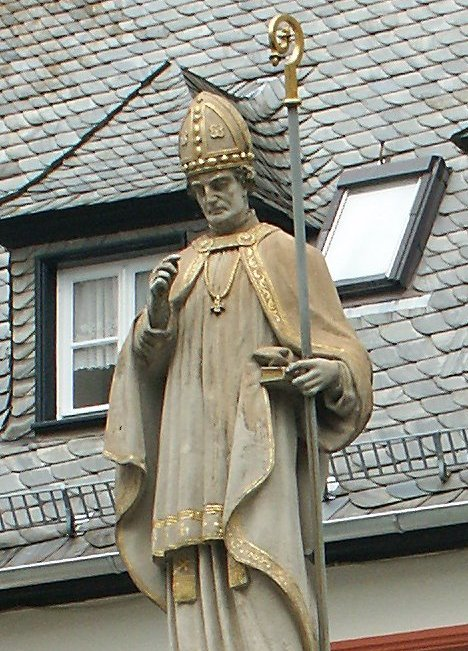
Saint Lull, also known as Lul, Lullon, Lullus, Lulo, was an 8th century Wessex monk at Malmesbury Abbey in England, and missionary to Germany with St Boniface. During a pilgrimage to Rome in 737, he met Boniface and decided to join him in his missionary work in northern Germany. In 738, Lullus joined the Benedictine monastery of Fritzlar, founded by Boniface in 732. There, his teacher was abbot Saint Wigbert, who had also come from England.
St Boniface ordained him a priest with a mission of training new priests. He was bishop of Mainz, Germany, succeeding Boniface, and first abbot of the Benedictine Hersfeld Abbey. He is historiographically considered the first official sovereign of the Electorate of Mainz.
And after the death of Boniface, Lull took charge of missionary work. He founded several monasteries in the region and died on 16 October 786 in Hersfeld Abbey at Bad Hersfeld, and is buried in the church.
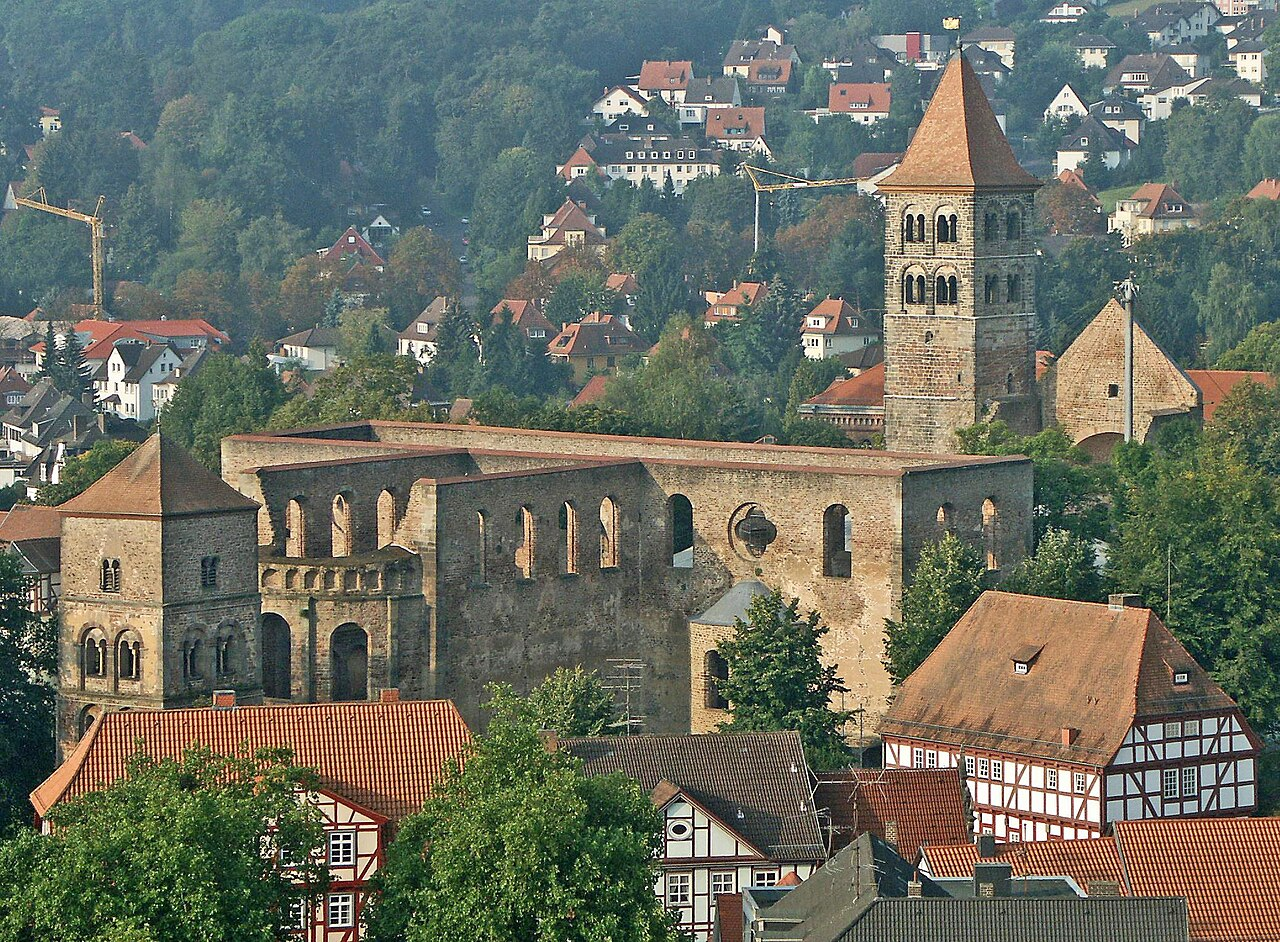
View of the monastery ruins from the tower of the town church
Dedication of the Church of Our Lady of Milan (1417) by Pope Martin V – 16 October:
The Abbot Orsini wrote: “Dedication of Our Lady of Milan, by Pope Martin V, in the year 1417. This Church was built in 1388 by John Galleas, Duke of Milan.”
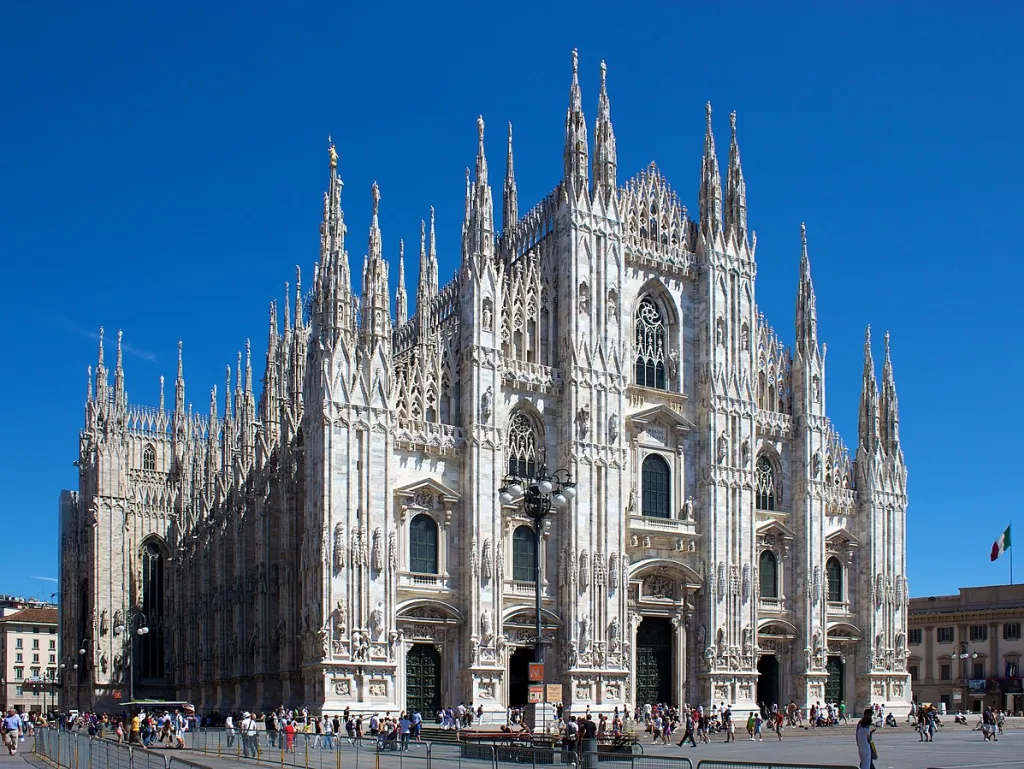
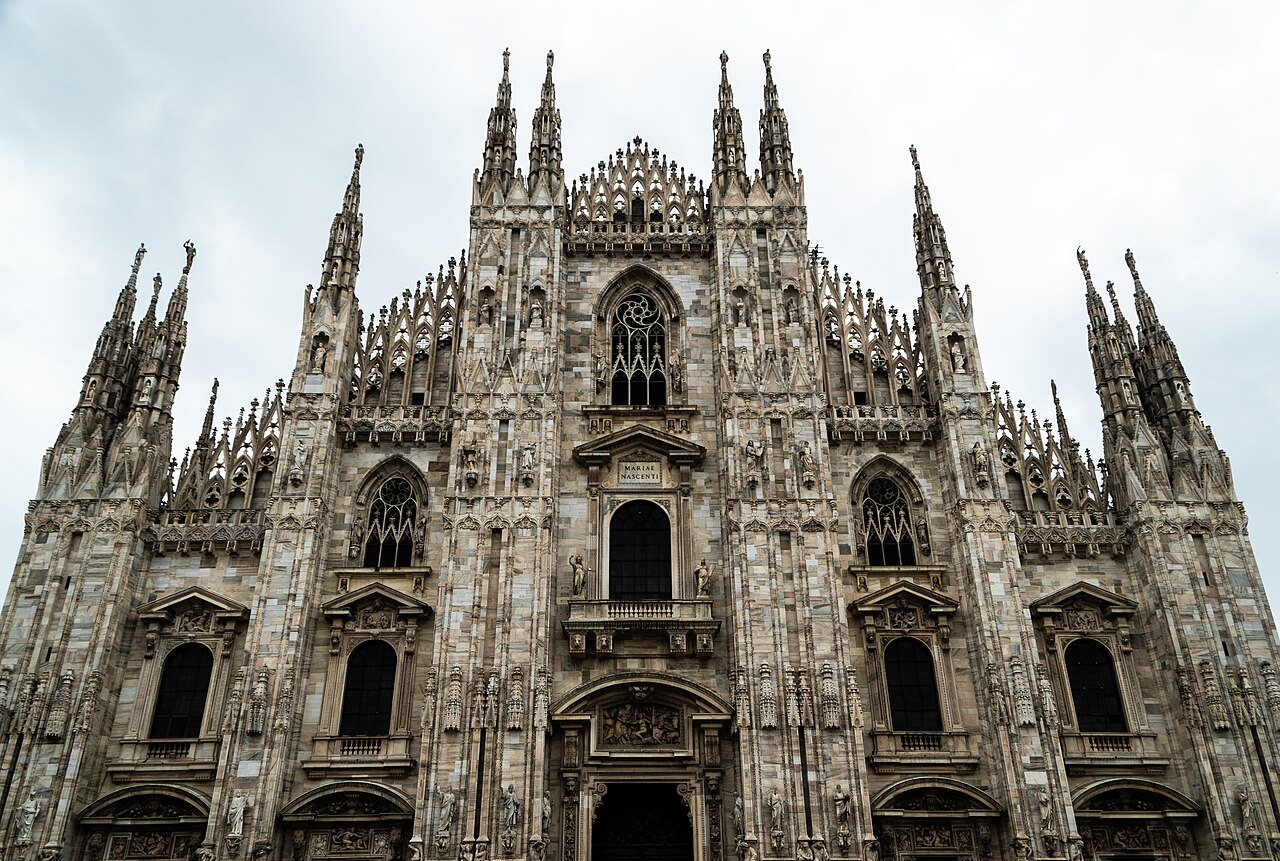
The magnificent Milan Cathedral is a Gothic Cathedral that has its roots in the fourth centurY. Today it is one of the most famous and celebrated structures in all of Europe. It is the second largest Church in Italy after St Peter’s Basilica in Rome and the third largest Catholic Church in the world.
Dedicated to the Mother of God, the present Cathedral was begun in the 14th century but was not completed until the 20th century when the last gate was finally installed in 1965. Emperor Napoleon Bonaparte himself ordered that the façade be finished in the year 1805, as he desired to see the beautiful structure completed. He guaranteed that the French would pay for the work, although they never actually did. Even so, it took seven years to complete the work. There were other additions that followed, including stained glass windows and various arches and lace-like spires. In the end it can be said, that the Cathedral required 6 centuries to complete and is one of the largest Cathedrals in the entire world.
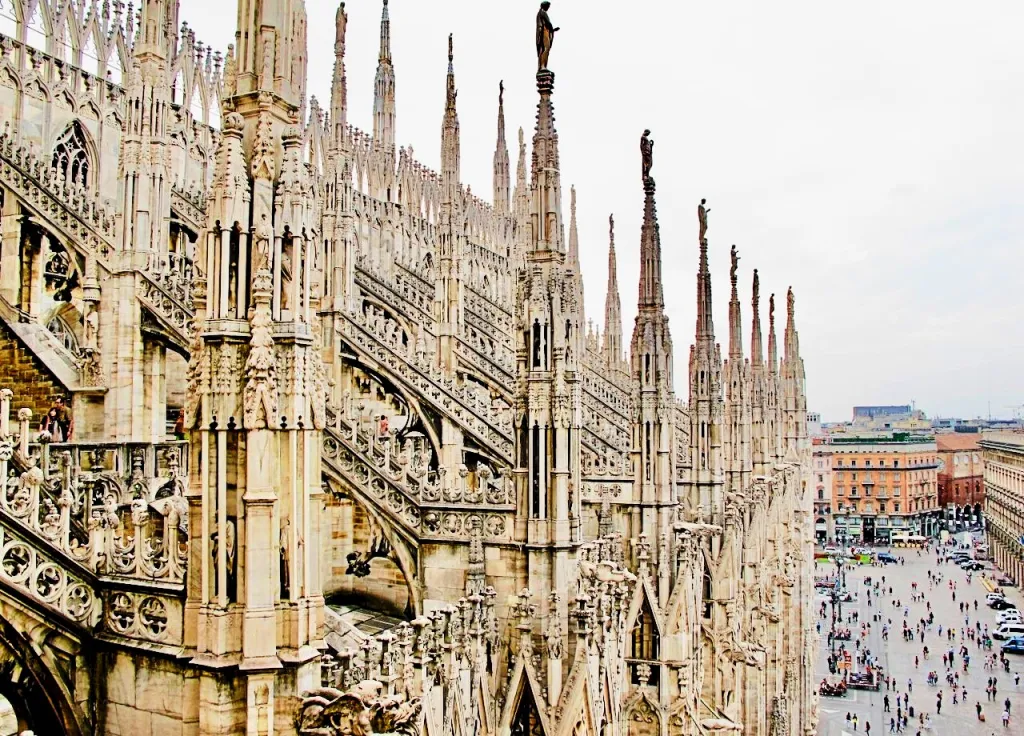
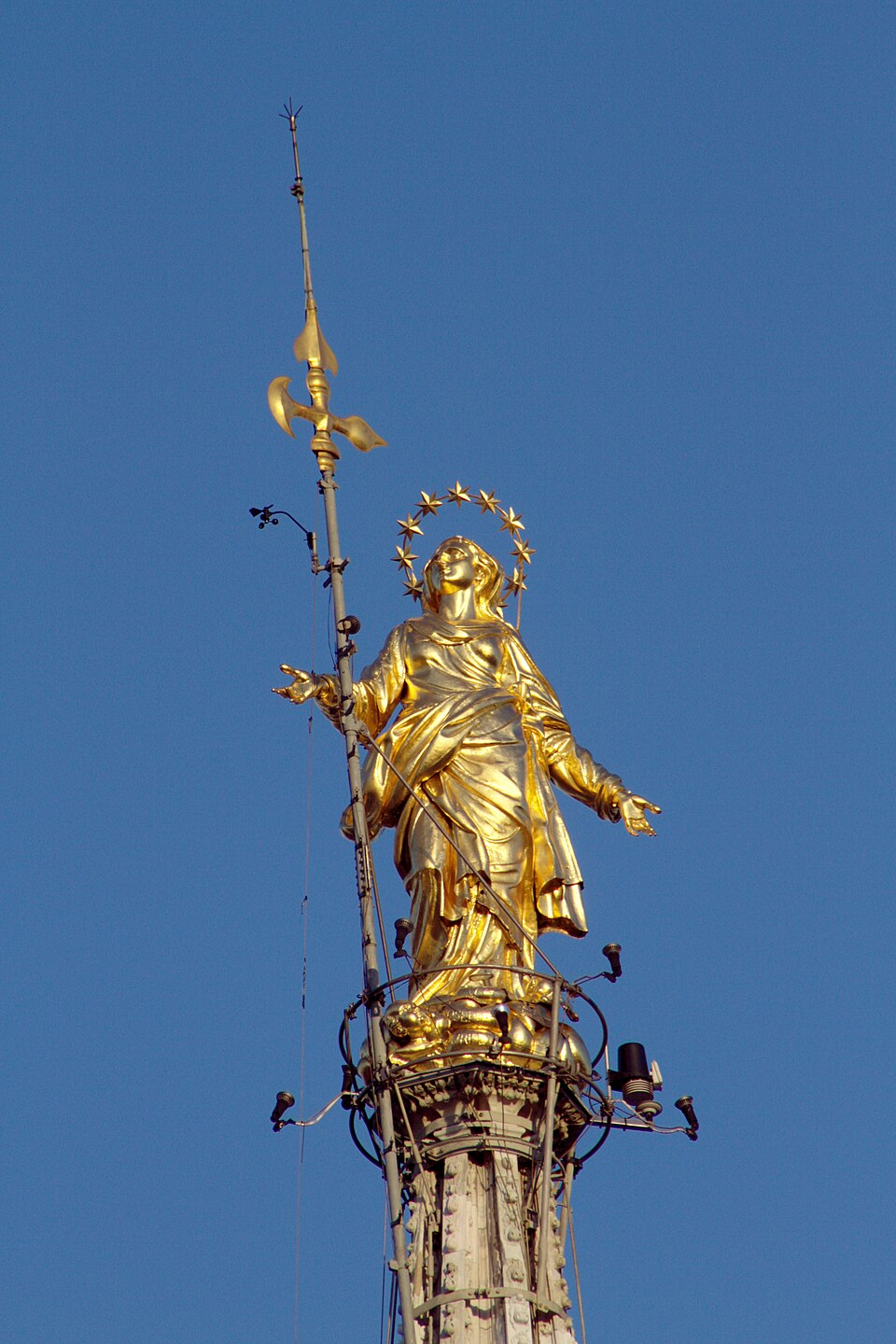
The Madonnina Spire or guglia del tiburio (“lantern spire“), one of the main features of the Cathedral, was erected in 1762 at the height of 108.5 m (356 ft), as designed by Francesco Croce. At the top of the spire is the polychrome Madonnina Statue, designed and built by Carlo Pellicani in 1774, during the episcopacy of Bishop Giuseppe Pozzobonelli who supported the idea to place the Madonnina at the top of the Cathedral, By tradition, no building in Milan may be higher than the Madonnina.
The first Church thought to occupy the location was built by Saint Ambrose, although there is an old baptistery which was constructed in about 335. The good Abbot appears to have been incorrect in dating the Cathedral from 1388, as there is a plate attached to a stone on the Church which states: “El Principio del Duomo di Milano Nel Anno 1386.”
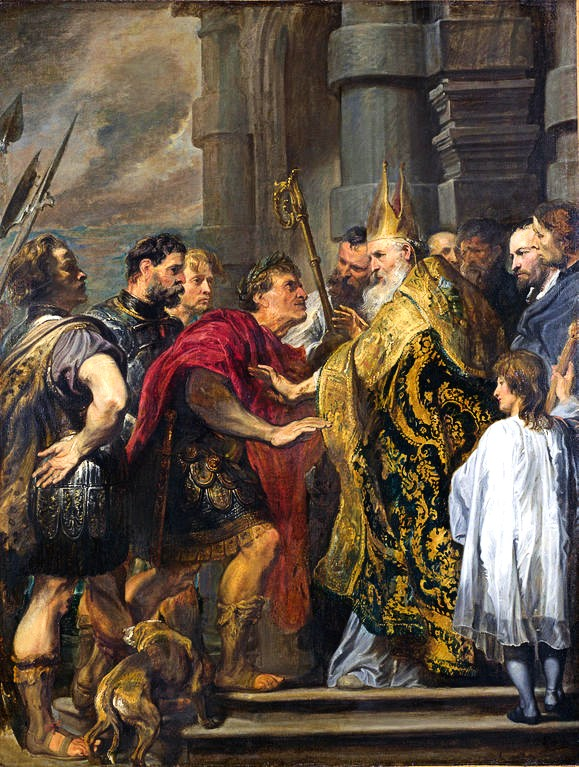
St Ambrose barring Theodocius from Milan Cathedral
The Milan Cathedral houses a Holy Nail which was used to Crucify Christ. It is marked by a tiny red light located in the dome above the apse. There are more Statues on this Cathedral than any other in the world, 3159 in total. 2245 of these are on the exterior together with 96 gargoyles and 135 spires. It is said that if the Statues were placed on top of each other, they would reach a height of about 5,300 meters (3.3 miles).
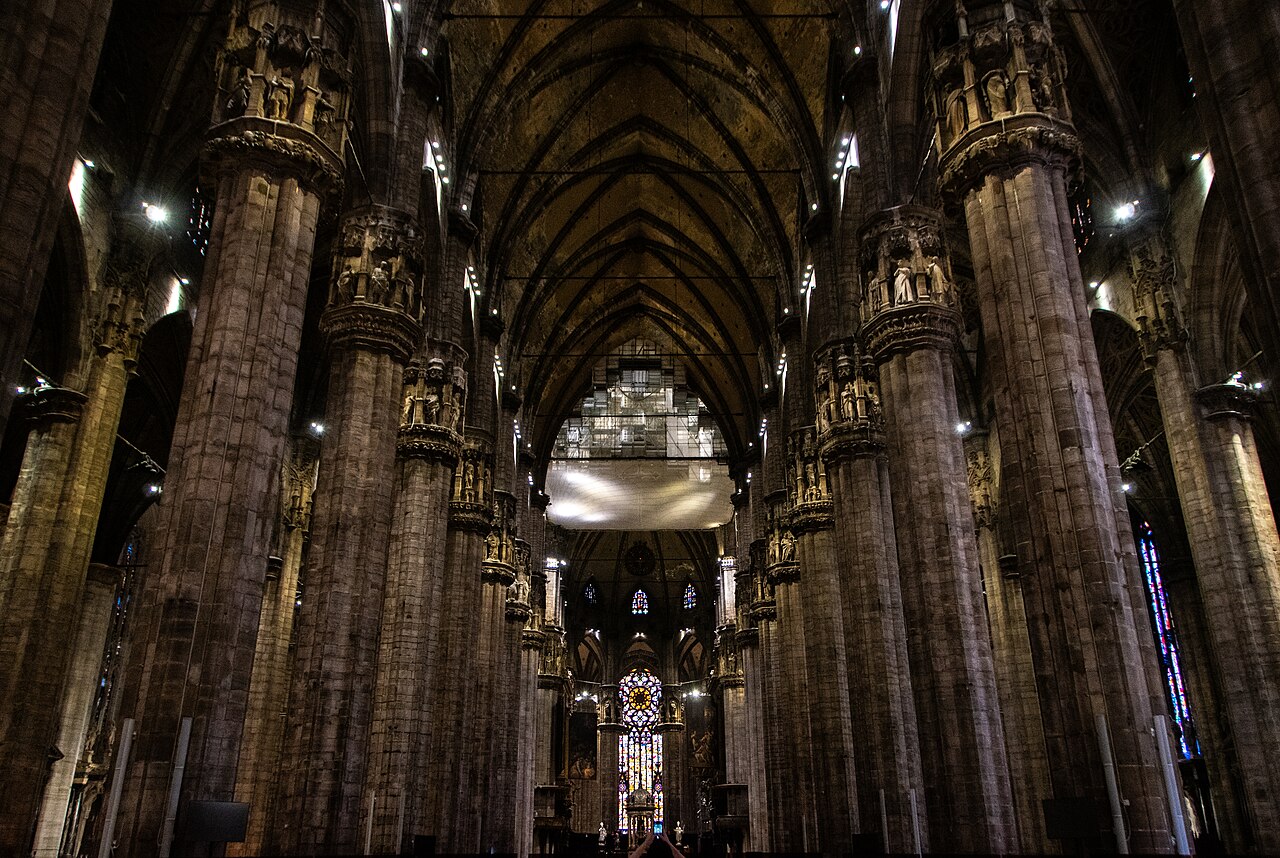
The Cathedral is 158.5 meters (520 feet) long, 92 meters (302 feet) wide. It has a cruciform plan in the form of a Latin cross that covers nearly 12,000 square meters. 40,000 people can fit comfortably within. Its construction was up five naves, a central and two lateral on each side, resting on 40 columns of 24.50 meters (80 feet) each.
St Margaret Mary Alacoque VHM (1647-1690) Virgin, Nun of the Order of the Visitation of Holy Mary, Mystic, Saint and Apostle of the Sacred Heart
St Gall (c 550–c 646) “Apostle of Switzerland,” Monk, Missionary, Hermit – he was a disciple and one of the traditional twelve companions of Saint Columbanus on his mission from Ireland to the continent.
St Gerard Majella CSsR (1726-1755) Religious Lay Brother of the Congregation of the Holy Redeemer, better known as the Redemptorists, Apostle of the Holy Eucharist, Apostle of Charity, known as a Thaumaturge.
Bl Gerald of Fossanuova St Hedwig of Andechs (1174-1243) Mother, Widow, High Duchess of Poland Bl Jesús Villaverde Andrés Bl Józef Jankowski St Junian St Lull St Magnobodus of Angers
St Martinian of Mauretania St Mummolinus St Saturian of Mauretania St Silvanus of Ahun St Victor of Cologne St Vitalis of Noirmoutier — Martyrs in Africa – 220 saints: A group of 220 Christians martyrs about whom we know nothing but that they died for their faith.
Martyrs of North Africa – 365 saints: A group of 365 Christians who were martyred together in the persecutions of the Vandal king Genseric. The only details that have survived are the names of two of the martyrs – Nereus and Saturninus. 450 in North Africa.
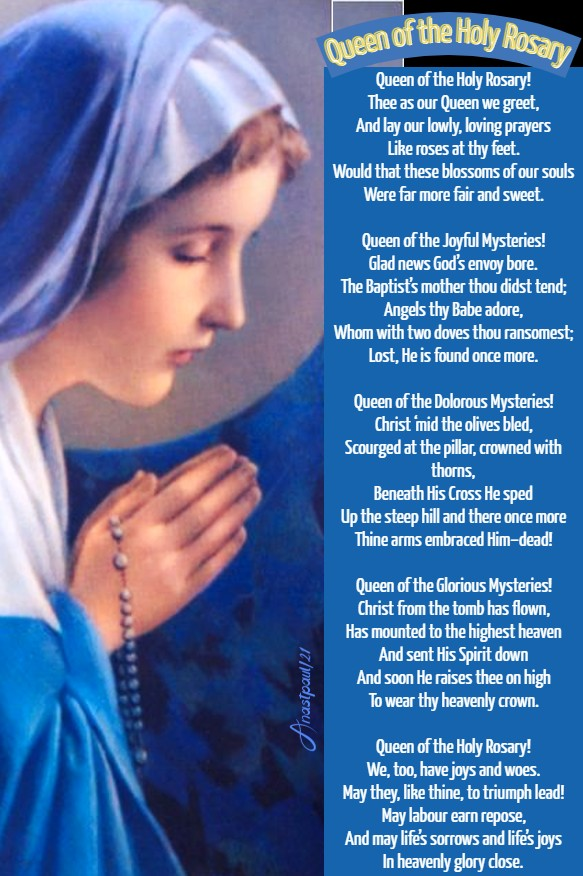
Queen of the Holy Rosary! Thee as our Queen we greet, And lay our lowly, loving prayers Like roses at thy feet. Would that these blossoms of our souls Were far more fair and sweet.
Queen of the Joyful Mysteries! Glad news God’s envoy bore. The Baptist’s mother thou didst tend; Angels thy Babe adore, Whom with two doves thou ransomest; Lost, He is found once more.
Queen of the Dolorous Mysteries! Christ ‘mid the olives bled, Scourged at the pillar, crowned with thorns, Beneath His Cross He sped Up the steep hill and there once more Thine arms embraced Him–dead!
Queen of the Glorious Mysteries! Christ from the tomb has flown, Has mounted to the highest heaven And sent His Spirit down And soon He raises thee on high To wear thy heavenly crown.
Queen of the Holy Rosary! We, too, have joys and woes. May they, like thine, to triumph lead! May labour earn repose, And may life’s sorrows and life’s joys In heavenly glory close.
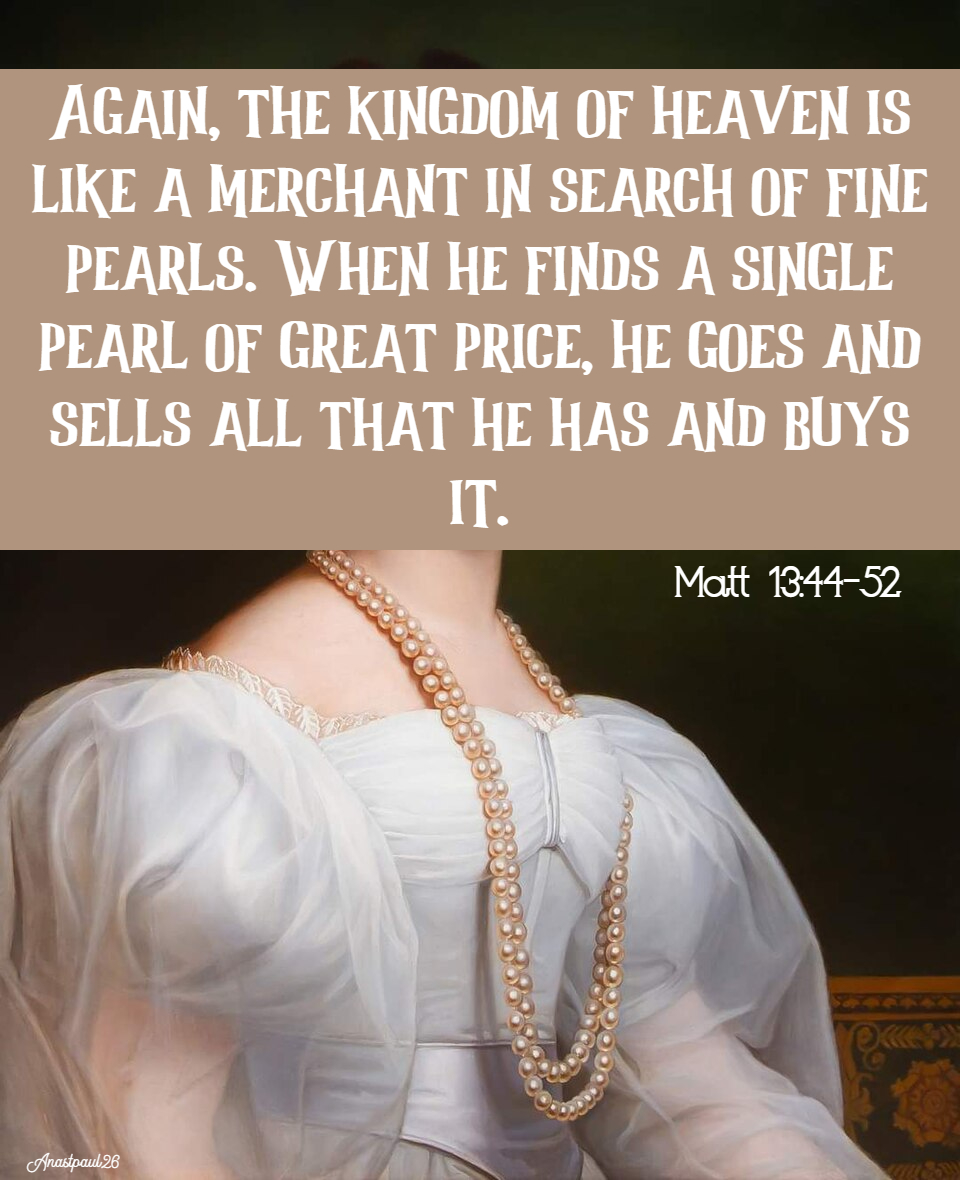
Again, the kingdom of heaven is like a merchant in search of fine pearls. When he finds a single pearl of great price, he goes and sells all that he has and buys it. So will it be at the end of the world. The angels will go out and separate the wicked from among the just, and will cast them into the furnace of fire, where there will be the weeping, and the gnashing of teeth.
Matt 13:44-52
REFLECTION – And if you be willing to produce in the midst a miser’s soul; like a garment eaten by innumerable worms, and not having any sound part, even so will you find it, perforated on all sides by cares; rotted, cankered by sins.
But not such the poor man’s soul, the soul of him, I mean, that is voluntarily poor; but it is resplendent as gold, it shines like a pearl, and it blooms like a rose. For no moth is there, no thief is there, no worldly care, but as angels converse, so do they.
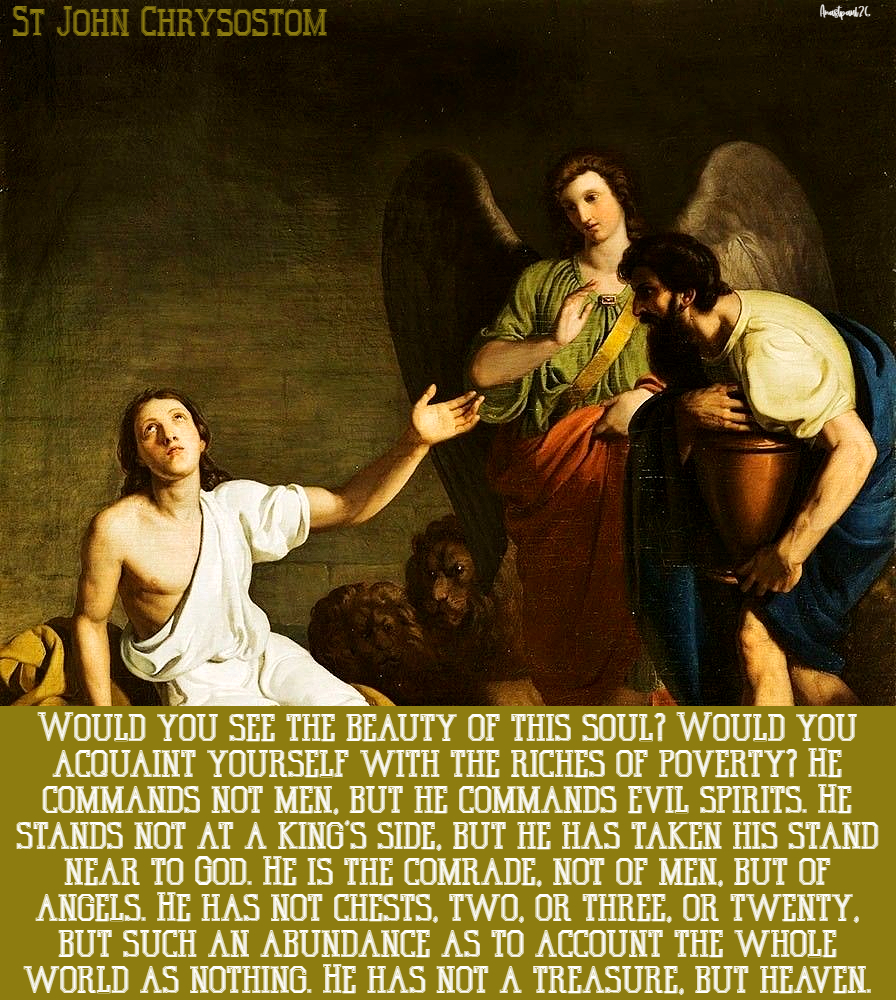
Would you see the beauty of this soul? Would you acquaint yourself with the riches of poverty? He commands not men, but he commands evil spirits. He stands not at a king’s side, but he has taken his stand near to God. He is the comrade, not of men, but of angels. He has not chests, two, or three, or twenty, but such an abundance as to account the whole world as nothing. He has not a treasure, but heaven. He needs not slaves, or rather has his passions for slaves, has for slaves the motives that rule over kings. For that which commands him who wears the purple, that motive shrinks before him. And royalty, and gold, and all such things, he laughs at, as at children’s toys; and like hoops, and dice, and heads, and balls, so does he count all these to be contemptible. For he has an adorning, which they who play with these things cannot even see.
What then can be superior to this poor man? He has at least heaven for his pavement; but if the pavement be like this, imagine the roof!
St John Chrysostom
PRAYER – All-powerful, eternal God, grant us the grace of Your Spirit and fill us with the light of understanding and love. Grant that by the prayers of your Saints we may be strengthened and depend only on You. Holy Queen of the Holy Rosary, our Mother Mary and St Hedwig, pray for us. We make our prayer through Jesus, our Lord with the Holy Spirit, God forever, amen.
Again, the kingdom of heaven is like a merchant in search of fine pearls. When he finds a single pearl of great price, he goes and sells all that he has and buys it.
Matt 13:44-52
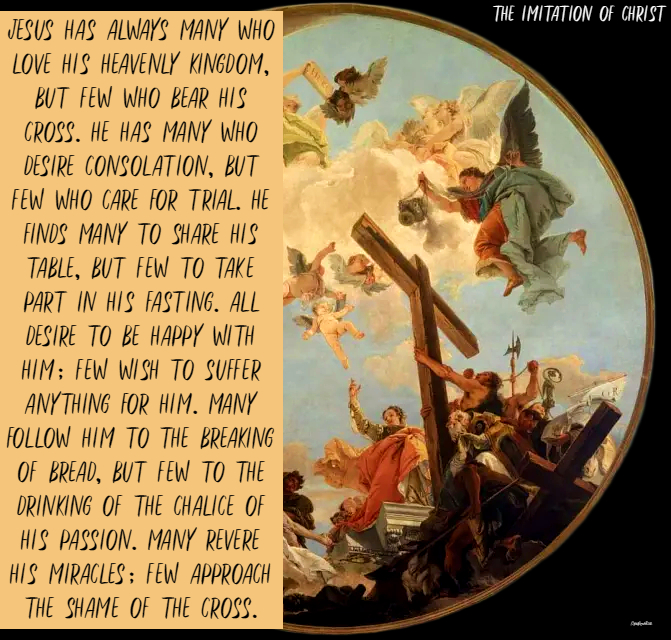
Jesus has always many who love His heavenly kingdom, but few who bear His cross. He has many who desire consolation, but few who care for trial. He finds many to share His table, but few to take part in His fasting. All desire to be happy with Him; few wish to suffer anything for Him. Many follow Him to the breaking of bread, but few to the drinking of the chalice of His passion. Many revere His miracles; few approach the shame of the Cross.
The Imitation of Christ
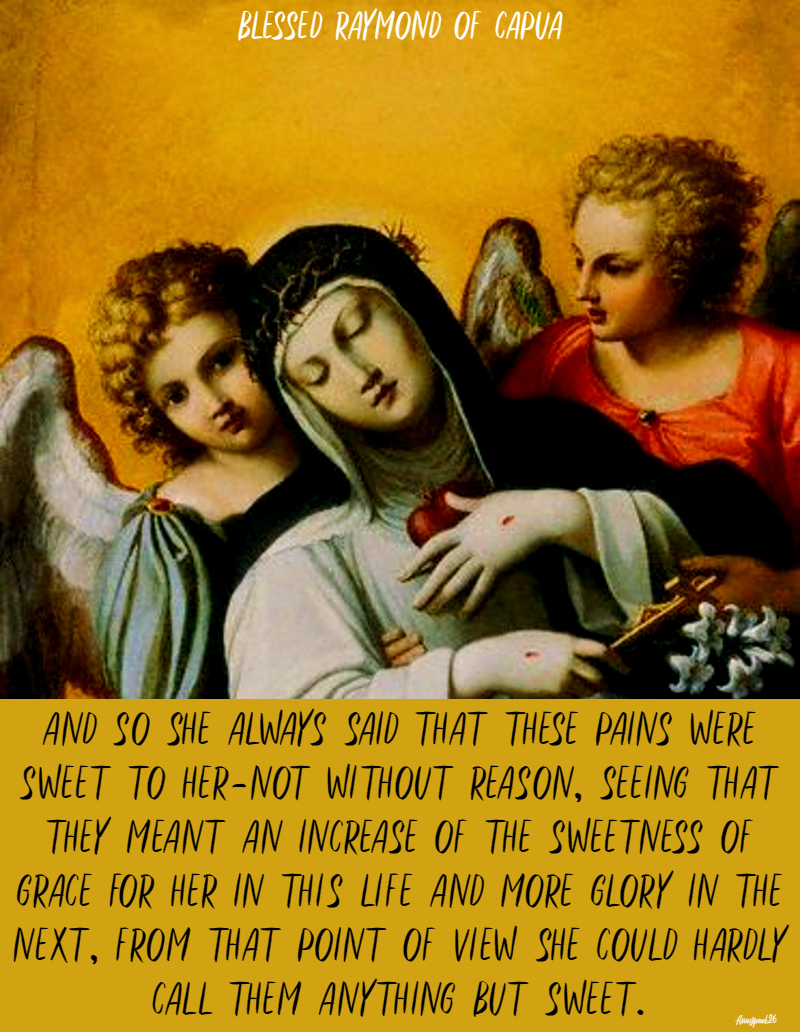
And so she always said that these pains were sweet to her-not without reason, seeing that they meant an increase of the sweetness of grace for her in this life and more glory in the next, from that point of view she could hardly call them anything but sweet.
Blessed Raymond of Capua
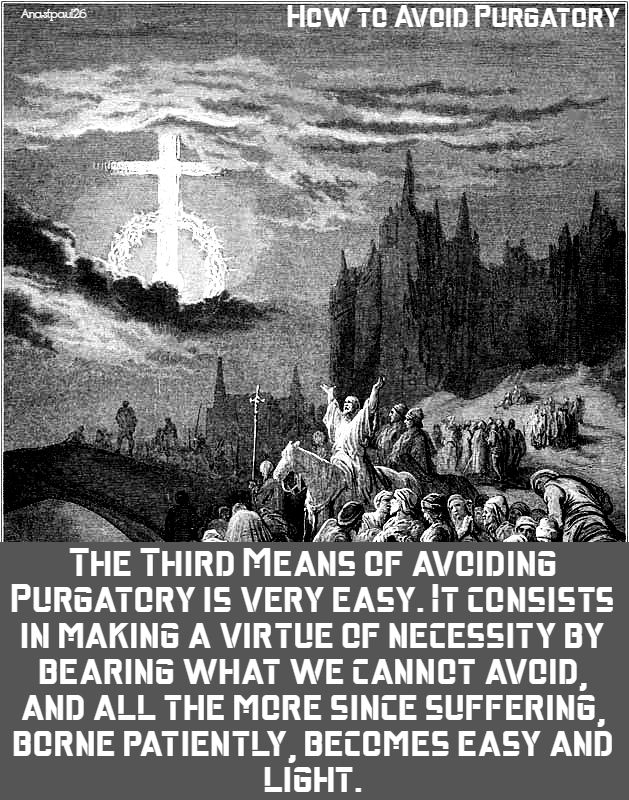
The Third Means of avoiding Purgatory is very easy. It consists in making a virtue of necessity by bearing what we cannot avoid, and all the more since suffering, borne patiently, becomes easy and light.
How to Avoid Purgatory
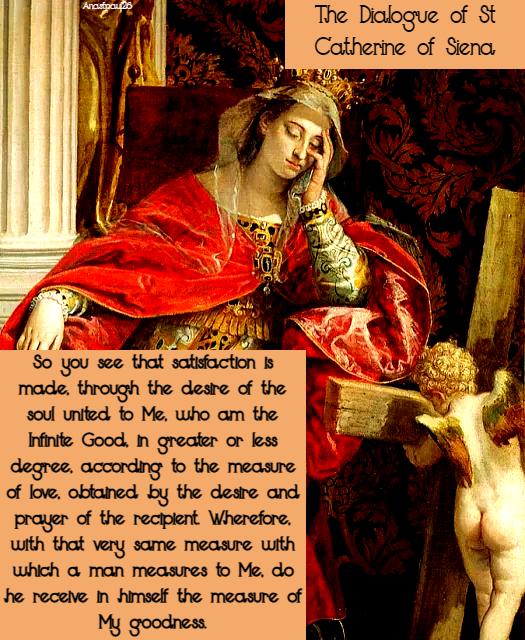
So you see that satisfaction is made, through the desire of the soul united to Me, who am the Infinite Good, in greater or less degree, according to the measure of love, obtained by the desire and prayer of the recipient. Wherefore, with that very same measure with which a man measures to Me, do he receive in himself the measure of My goodness.
The Dialogue of St Catherine of Siena
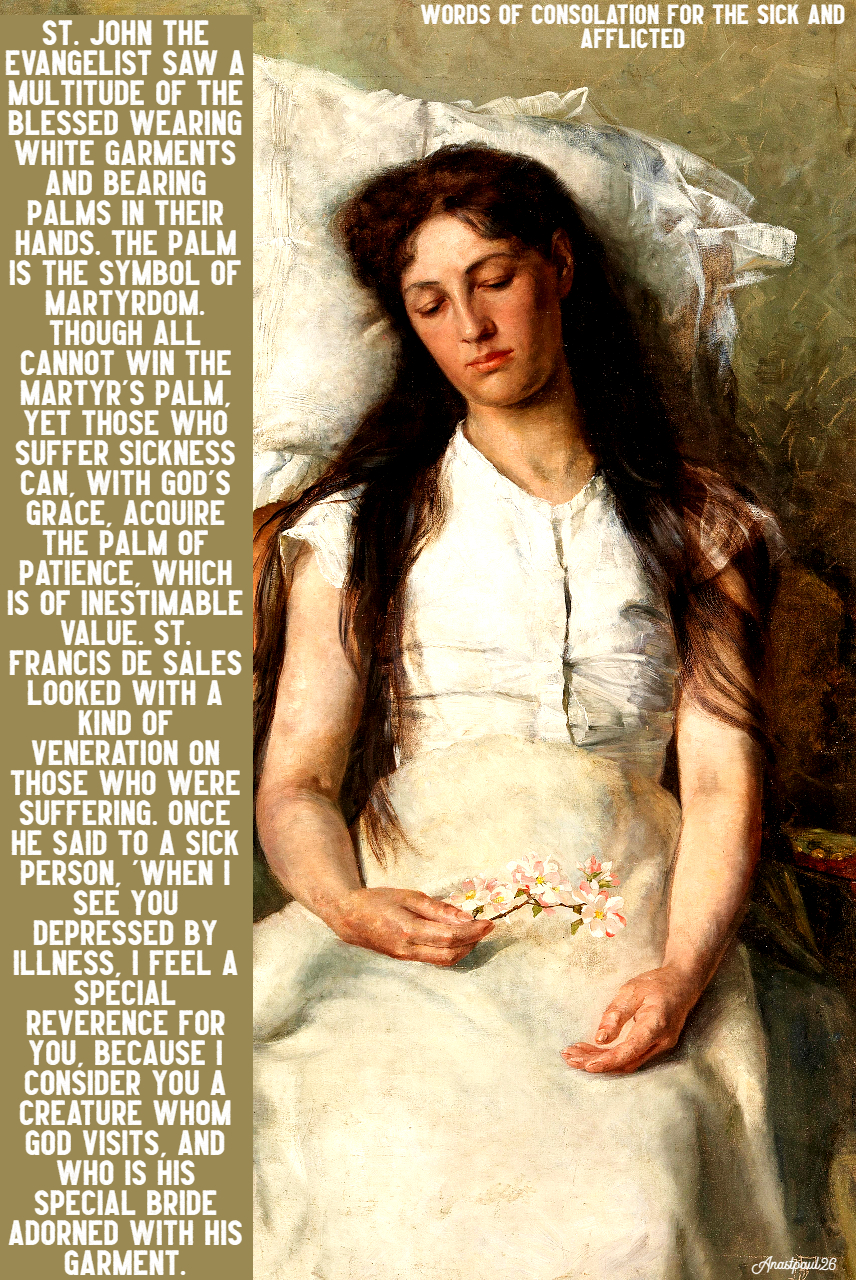
St. John the Evangelist saw a multitude of the blessed wearing white garments and bearing palms in their hands. The palm is the symbol of martyrdom. Though all cannot win the martyr’s palm, yet those who suffer sickness can, with God’s grace, acquire the palm of patience, which is of inestimable value. St. Francis de Sales looked with a kind of veneration on those who were suffering. Once he said to a sick person, ‘When I see you depressed by illness, I feel a special reverence for you, because I consider you a creature whom God visits, and who is His special bride adorned with His garment.
To entertain a profound respect and extraordinary love for the Thrones, the Cherubim and Seraphim.
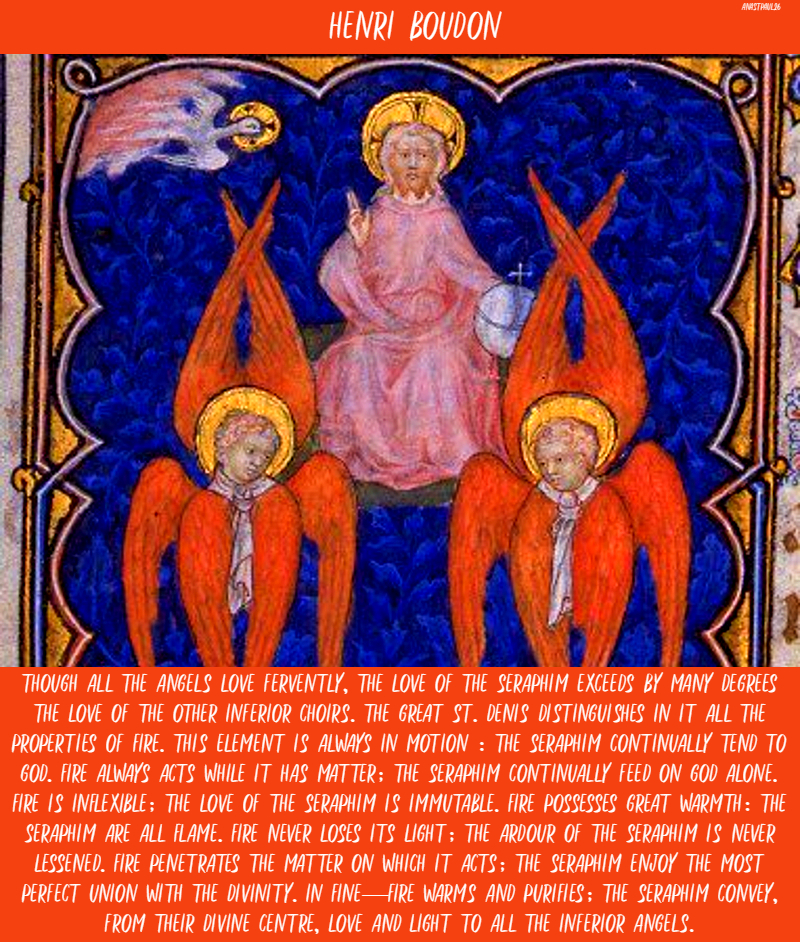
The first Hierarchy of the Angels is composed of the Thrones, the Cherubim and Seraphim. The latter excel in love—hence their name, Seraphim, which signifies ardour. Though all the Angels love fervently, the love of the Seraphim exceeds by many degrees the love of the other inferior choirs. The great St. Denis distinguishes in it all the properties of fire. This element is always in motion : the Seraphim continually tend to God. Fire always acts while it has matter; the Seraphim continually feed on God alone. Fire is inflexible; the love of the Seraphim is immutable. Fire possesses great warmth: the Seraphim are all flame. Fire never loses its light; the ardour of the Seraphim is never lessened. Fire penetrates the matter on which it acts; the Seraphim enjoy the most perfect union with the Divinity. In fine—fire warms and purifies; the Seraphim convey, from their divine centre, love and light to all the inferior Angels.
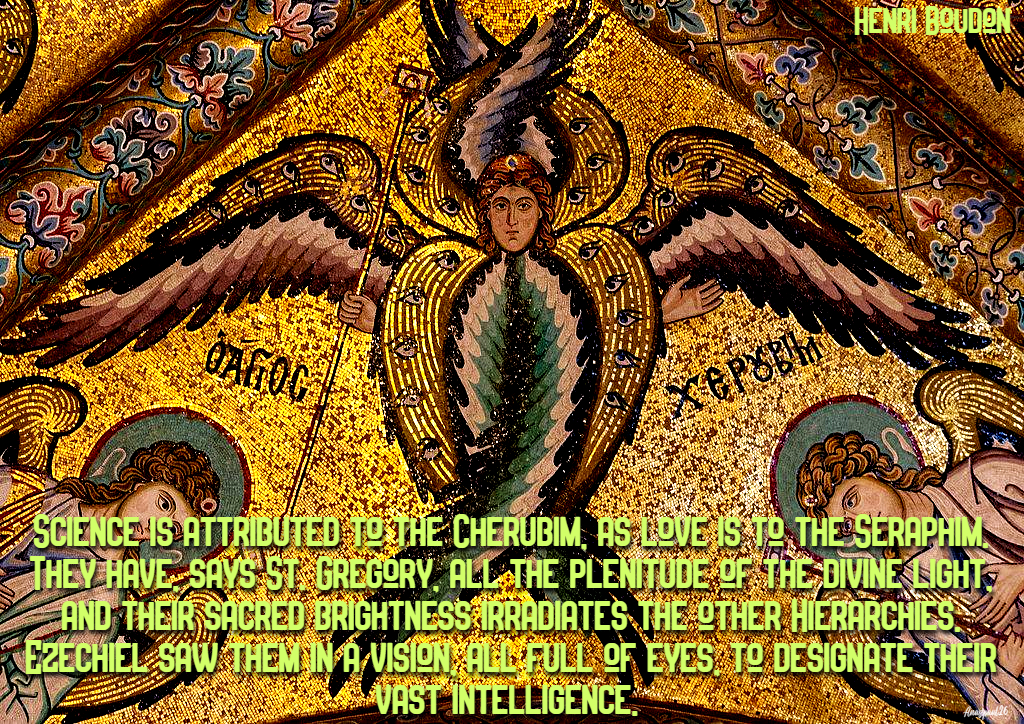
Science is attributed to the Cherubim, as love is to the Seraphim. They have, says St. Gregory, all the plenitude of the divine light, and their sacred brightness irradiates the other Hierarchies. Ezechiel saw them in a vision, all full of eyes, to designate their vast intelligence.
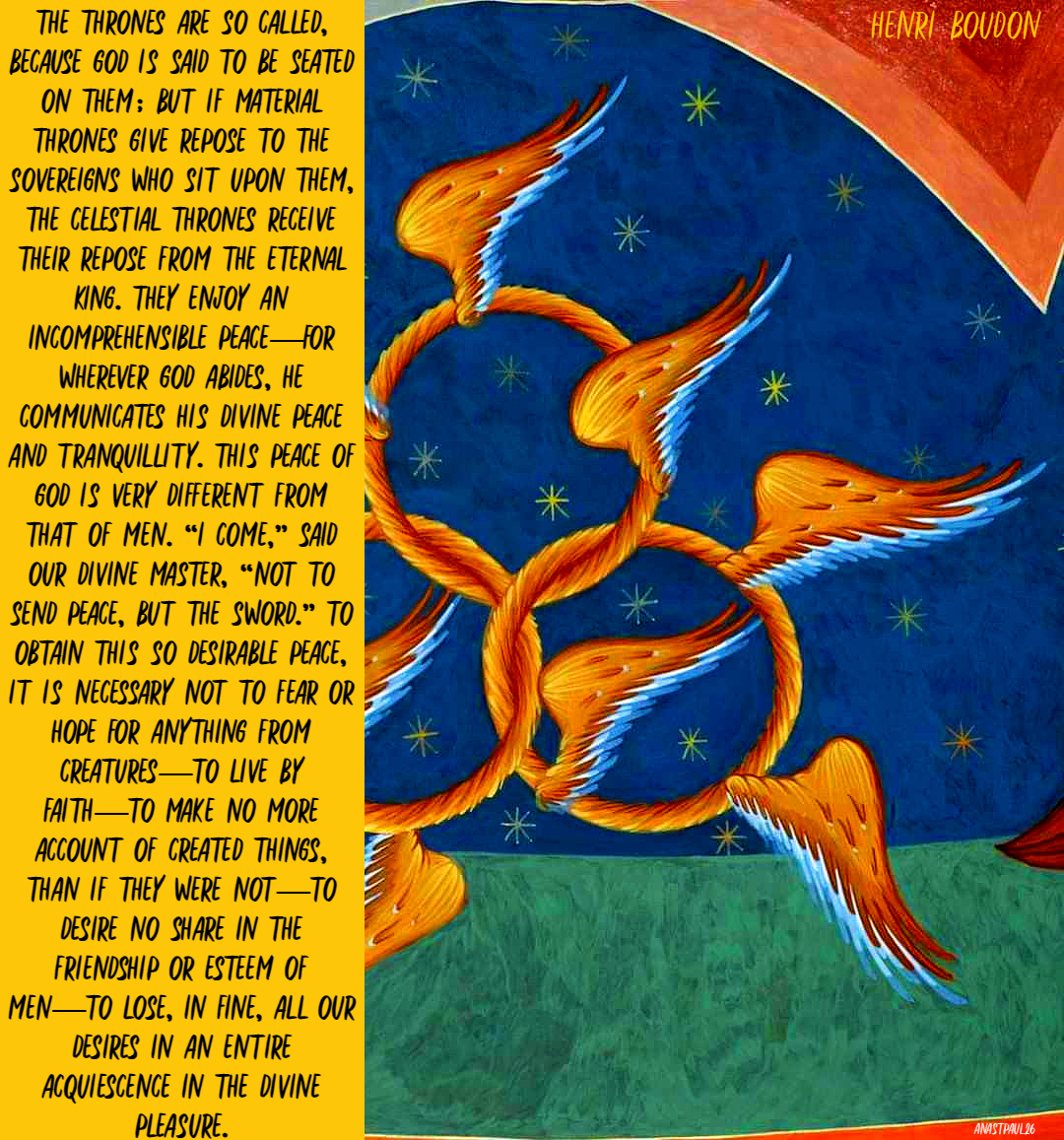
The Thrones are so called, because God is said to be seated on them; but if material thrones give repose to the Sovereigns who sit upon them, the celestial Thrones receive their repose from the Eternal King. They enjoy an incomprehensible peace—for wherever God abides, he communicates his divine peace and tranquillity. This peace of God is very different from that of men. “I come,” said our divine Master, “not to send peace, but the sword.” To obtain this so desirable peace, it is necessary not to fear or hope for anything from creatures—to live by faith—to make no more account of created things, than if they were not—to desire no share in the friendship or esteem of men—to lose, in fine, all our desires in an entire acquiescence in the divine pleasure. Be devout to the Thrones, and they will exert themselves in obtaining for you this greatest of all blessings. In like manner with the Cherubim.
It is said, that in the way of virtue we know more than we do but it is certain that perfect knowledge is rare. We speak of that of the saints. Few persons are practically convinced of the excellence of poverty and humiliation—of the advantages of the hidden and suffering life. It is in the school of a God, and at the feet of the crucifix, that this divine lesson is to be learned. Let us frequent it under the auspices of the Cherubim, the spirits of light, and we shall soon be illumined, and walk in the brightness of the children of God.
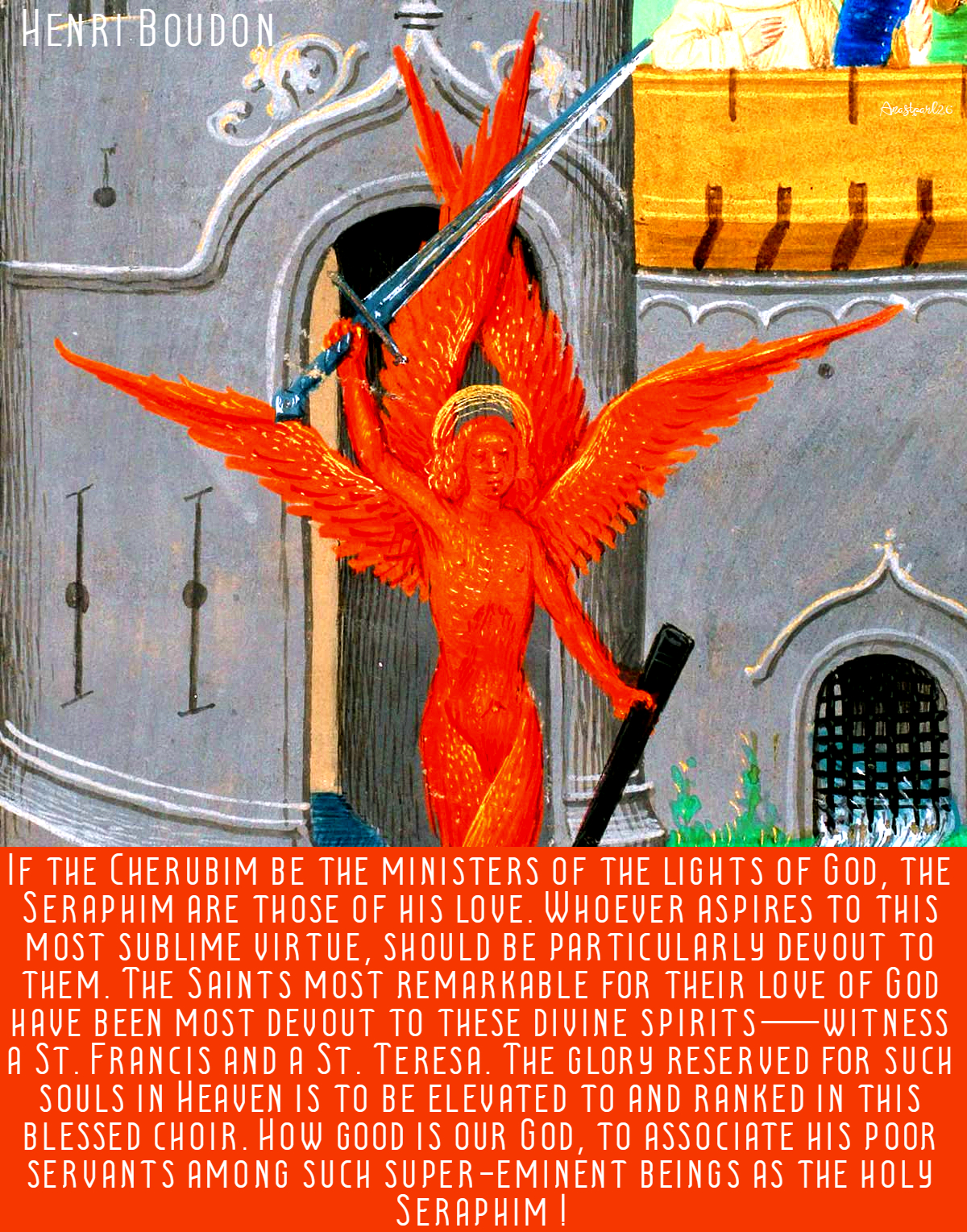
If the Cherubim be the ministers of the lights of God, the Seraphim are those of his love. Whoever aspires to this most sublime virtue, should be particularly devout to them. The Saints most remarkable for their love of God have been most devout to these divine spirits—witness a St. Francis and a St. Teresa. The glory reserved for such souls in Heaven is to be elevated to and ranked in this blessed choir. How good is our God, to associate his poor servants among such super-eminent beings as the holy Seraphim !



You must be logged in to post a comment.