Posted in CATHOLIC-PRAYERS OF THE CHURCH, DOMINICAN OP, MARIAN DEVOTIONS, MARIAN PRAYERS, PRAYERS of the CHURCH, SAINT of the DAY, The BLESSED VIRGIN MARY

Thought for the Day – 13 February – Friendship with Christ

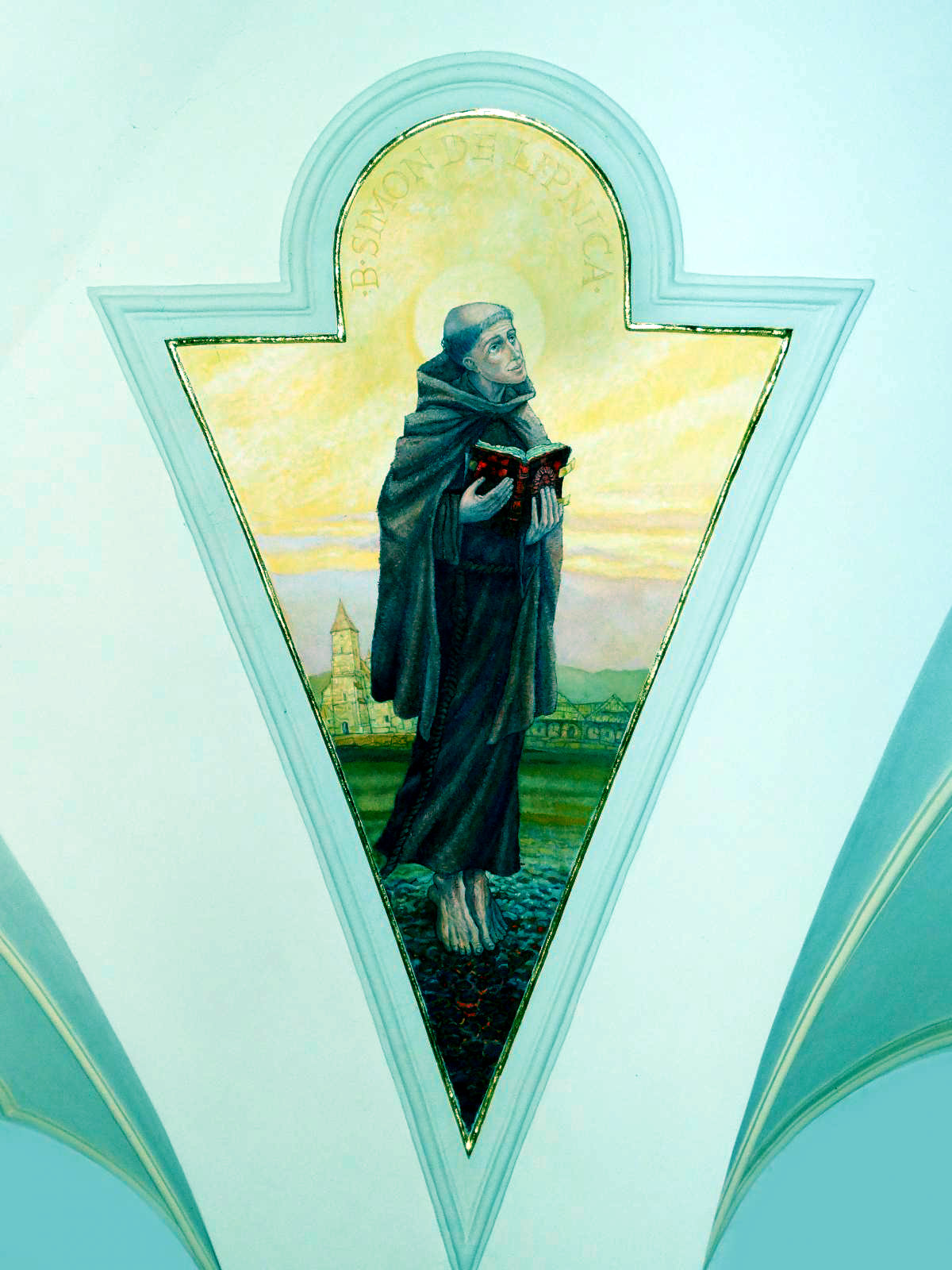
Thought for the Day – 13 February – the Memorial of Blessed Jordan of Saxony OP (1190-1237)

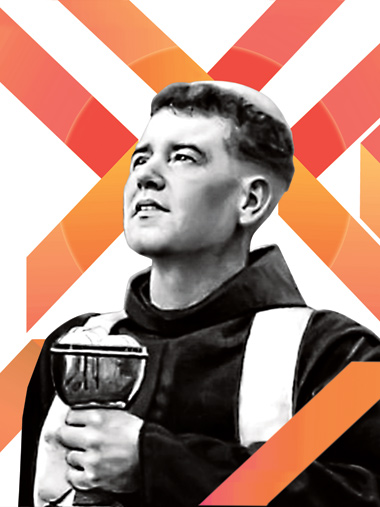
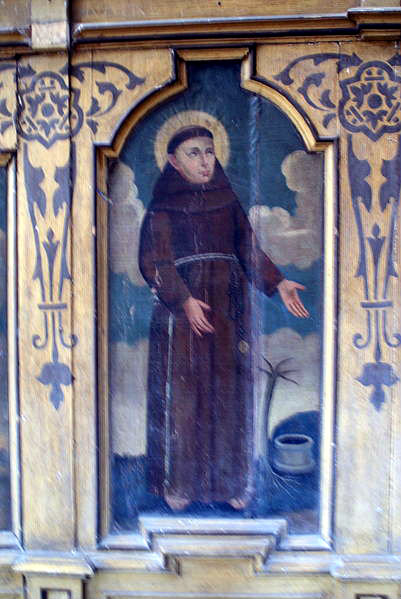
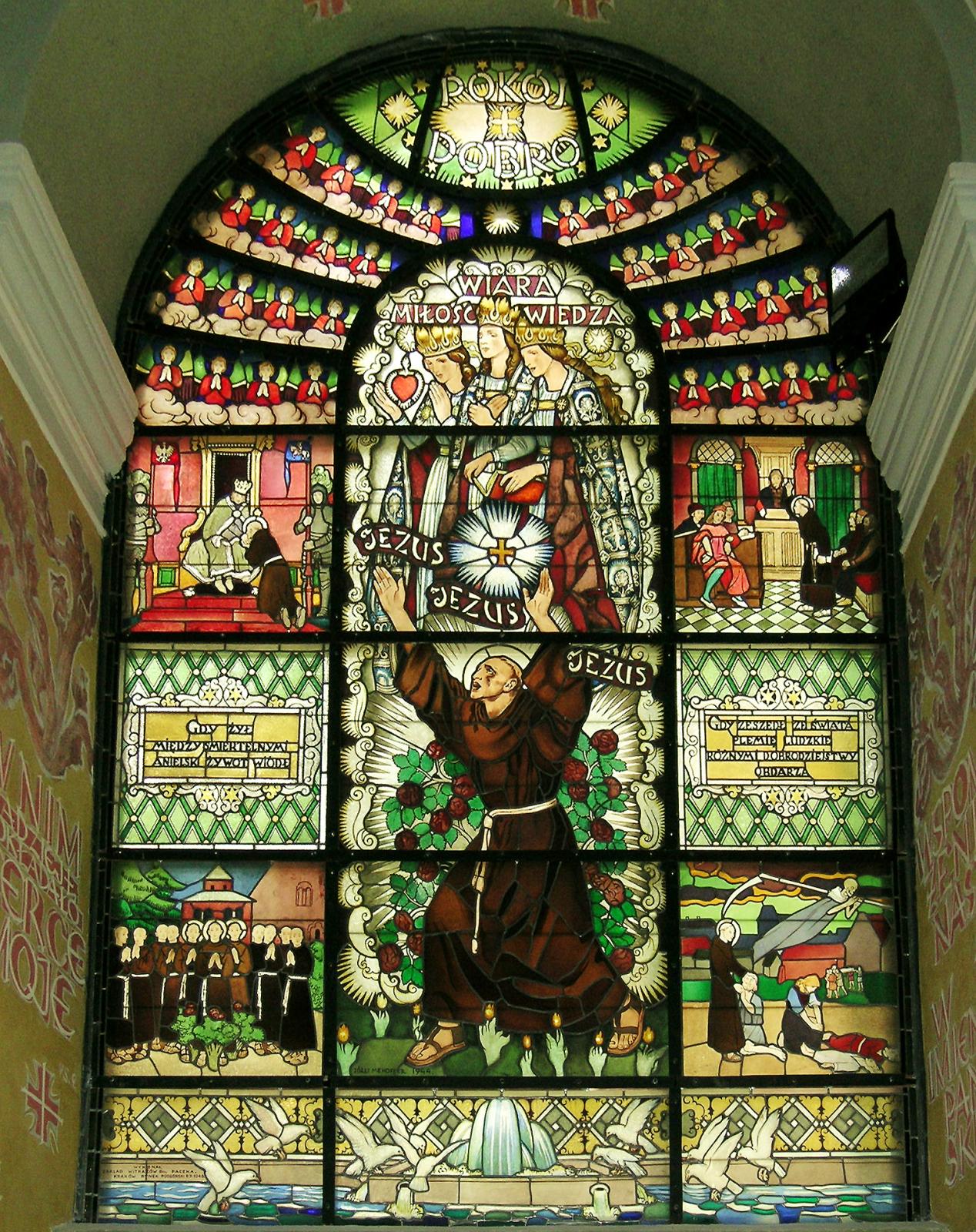
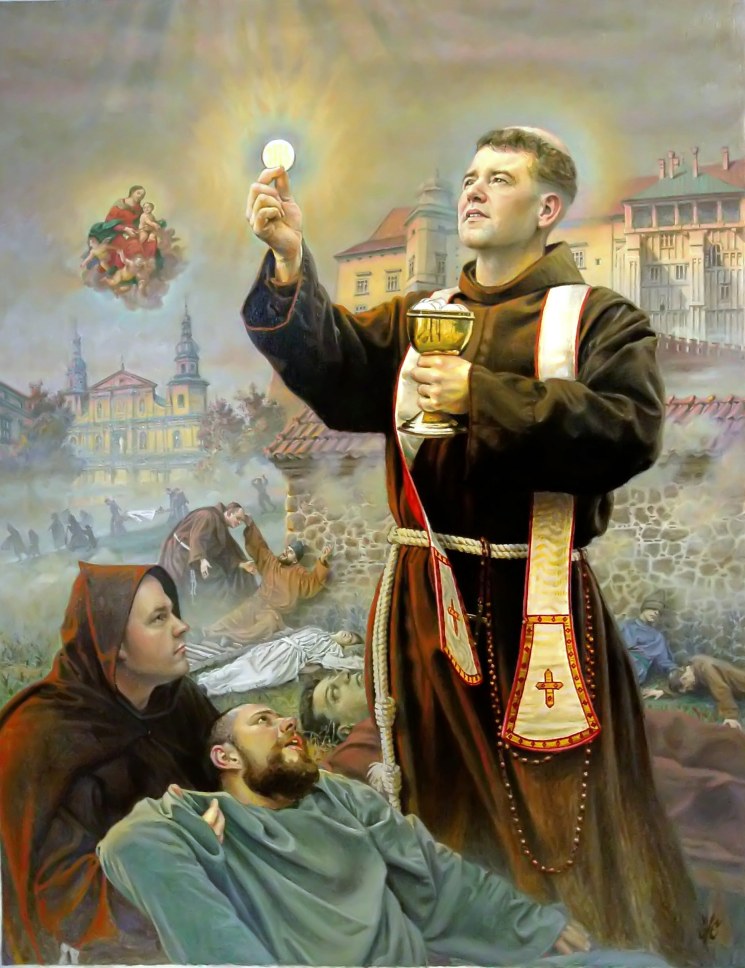
We know little of Jordan’s life before he came into contact with the famous Dominican Reginald of Orleans, a contemporary of St Dominic himself.   Jordan was a successful young student at the University of Paris, already known for the unembarrassed witness of his holy life, when he first heard Reginald preach and met the Dominicans in Paris. God used this contact with the friars to enable Jordan to discern his own call to the Order and once he entered, he gave all he had.   Jordan’s spiritual and practical gifts were recognised immediately and when he had worn the habit only two months he was chosen as a delegate to the Dominican general chapter in Bologna, Italy.   The following year Jordan was elected a provincial superior and when St Dominic died, Jordan succeeded him as the master general of the entire Order.   The Order was only six years old!   It developed rapidly under his leadership, however, growing both in membership and influence throughout Europe.   Jordan was able to carry out the dream which St Dominic had only begun before his death.

Even this brief sketch could make us suspicious, that perhaps Jordan was simply a brilliant young man with leadership skills, that enabled him to rise quickly in his chosen career, at the same time winning success for the Order.   Closer consideration, however, gives us deeper insight into Jordan’s success.   Youthful himself, he had a tremendous respect for the young and their desire to give themselves to something great.   In his own restlessness to give himself, he had obviously come face to face with the restless love of Christ Himself and he had surrendered to it.   Jesus was real to Jordan, a Friend whom he’d come to know and love deeply in his life of prayer.   Jordan understood the restless hunger of the world around him and he couldn’t rest, until that world would come to know this same Friend.   It was this selfless love for Jesus Christ (the kind which St Thomas calls the love of friendship) which gave Jordan the drive to preach, to spend his time with the young, to pour himself out in the building tasks required in a growing religious order.   We are told that he added four new provinces, gained teaching positions for the friars at the University of Paris and established the first general house of studies of the Order.   Jordan also served as spiritual director to many, among them a young Italian noblewoman named Blessed Diana d’Andalo (1201–1236) (who became a Dominican nun).   In the midst of all of this, he found time to write a number of books, including a life of St Dominic (whom he knew personally and loved deeply).

Men of his day responded by the hundreds, to Jordan’s zeal for Christ, some of them mere youths and others established professionals who felt the call of God through Jordan’s words and example.   They were drawn to a life of holiness by this Dominican with a gift of preaching, who lived what he preached with such obvious joy.   It was Jordan who initiated the custom of singing the Salve Regina in procession each night after Compline, to ask Our Lady’s protection of the brothers against temptations from the devil.   This is a custom still practised by Dominicans throughout the world and by our community each night.

Hail, holy Queen, Mother of Mercy,
Hail our life, our sweetness and our hope.
To thee do we cry,
Poor banished children of Eve;
To thee do we send up our sighs,
Mourning and weeping in this valley of tears.
Turn then, most gracious advocate,
Thine eyes of mercy toward us;
And after this our exile,
Show unto us the blessed fruit of thy womb, Jesus.
O clement, O loving,
O sweet Virgin Mary.

℣ Pray for us, O holy Mother of God,
℟ that we may be made worthy
of the promises of Christ.

Let us pray:
Almighty, everlasting God,
who by the co-operation of the Holy Spirit
didst prepare the body and soul
of the glorious Virgin-Mother Mary
to become a dwelling-place fit for Thy Son,
grant that as we rejoice in her commemoration,
so by her fervent intercession,
we may be delivered from present evils
and from everlasting death.
Through the same Christ our Lord.
Amensalve regina - hail holy queen 13 feb 2019.jpg

Jordan of Saxony met an untimely death at the age of 47, drowning in an accident which occurred on his return from a pilgrimage to the Holy Land in 1237.   In his vigorous life, Jordan extended what Father Dominic had begun so carefully and he opened avenues on which the Order would continue to struggle and to flourish.

The secret that makes his message so relevant today?   It is the secret of deep and personal friendship with Christ, a friendship which cannot be contained but sets the world on fire.

Blessed Jordan of Saxony, Pray for Us!bl jordan of saxony pray for us 13 feb 2019.jpg

Posted in DOMINICAN OP, QUOTES of the SAINTS, QUOTES on CHARITY, QUOTES on SANCTITY, SAINT of the DAY, The WORD

Quote/s of the Day – 13 February – Blessed Jordan of Saxony OP (1190-1237)

Quote/s of the Day – 13 February – the Memorial of Blessed Jordan of Saxony OP (1190-1237)

“There are two ways of keeping God’s word,
namely, one, whereby we store in our memory
what we hear and the other,
whereby we put into practice, what we have heard
(and none will deny that the latter, is more commendable,
inasmuch, as it is better to sow grain,
than to store it in the barn).”there-are-two-ways-bl-jordan-of-saxony-13-feb-2018.jpg

Meeting a vagabond upon the road who feigned sickness and poverty, Blessed Jordan gave him one of his tunics, which the fellow at once carried straight to a tavern for drink. The brethren, seeing this done, taunted him with his simplicity:

‘There now, Master, see how wisely you have bestowed your tunic.’

‘I did so,’ said he,
‘because I believed him to be in want,
through sickness and poverty
and it seemed, at the moment,
to be a charity to help him. 
Still, I reckon it better, to have parted
with my tunic than with charity.’

Blessed Jordan of Saxony (1190-1237)

Posted in DOMINICAN OP, MORNING Prayers, SAINT of the DAY, The WORD

One Minute Reflection – 13 February – “All these evil things come from within and they defile a man.”

One Minute Reflection – 13 February – Wednesday of the Fifth week in Ordinary Time, Year C. Gospel: Mark 7:14-23 and the Memorial of Blessed Jordan of Saxony OP (1190-1237)

And he said, “What comes out of a man is what defiles a man.   For from within, out of the heart of man, come evil thoughts, fornication, theft, murder, adultery, coveting, wickedness, deceit, licentiousness, envy, slander, pride, foolishness.   All these evil things come from within and they defile a man.” Mark 7:20-23

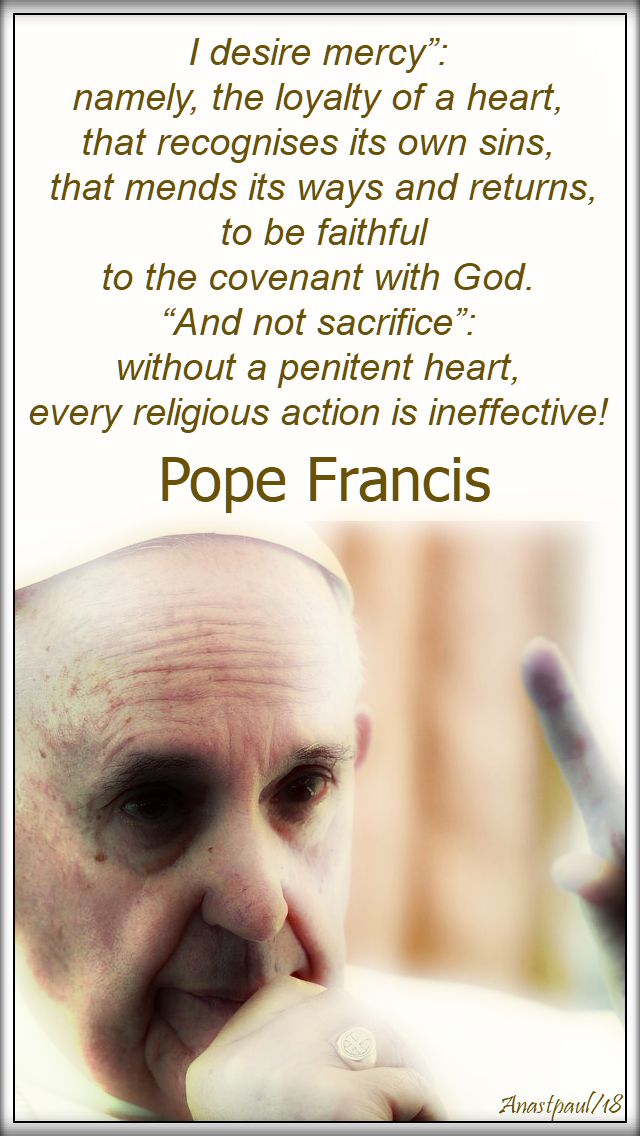
REFLECTION – “The boundary between good and evil does not pass outside of us but rather within us.   We could ask ourselves: where is my heart?   Jesus said:  “Where your treasure is, there will your heart be also”.   What is my treasure?   Is it Jesus, is it His teaching?   If so, then the heart is good.   Or is my treasure something else?   Thus it is a heart which needs purification and conversion.   Without a purified heart, one cannot have truly clean hands and lips which speak sincere words of love — it is all duplicitous, a double life — lips which speak words of mercy, of forgiveness but only a sincere and purified heart can do this.”…Pope Francis – Angelus, 30 August 2015mark 7 20 what comes out of a man - the boundary between good and evil - pope francis 13feb2019.jpg

PRAYER – God our Saviour, through the grace of Baptism, You made us children of light. Hear our prayer, that we may always walk in that light and work for truth, as Your witnesses before men.   May our hearts be purified by You grace and may our hands and lips speak with sincere words of love. Blessed Jordan, you worked and walked with zeal and passion in the light of the Lord, please pray for us.   We make our prayer, through Christ our Lord with the Holy Spirit, God forever, amen.bl-jordanofsaxony-prayforus-13-feb-2017-2.jpg

Posted in DOCTORS of the Church, FATHERS of the Church, Our MORNING Offering, PRAYERS of the SAINTS

Our Morning Offering – 13 February – Wednesday of the Fifth week in Ordinary Time, Year C

Our Morning Offering – 13 February – Wednesday of the Fifth week in Ordinary Time, Year C

Only For You, In You, By You.
By St Augustine (354-430) Father & Doctor of the Church

Lord Jesus,
let me know myself and know You
and desire nothing save only You.
Let me hate myself and love You.
Let me do everything, for the sake of You.
Let me humble myself and exalt You.
Let me think of nothing, except You.
Let me die to myself and live in You.
Let me accept whatever happens, as from You.
Let me banish self and follow You
and ever desire to follow You.
Let me fly from myself and take refuge in You,
That I may deserve, to be defended by You.
Let me fear for myself.
Let me fear You
and let me be among those, who are chosen by You.
Let me distrust myself and put my trust in You.
Let me be willing to obey, for the sake of You.
Let me cling to nothing, save only to You,
And let me be poor, because of You.
Look upon me, that I may love You.
Call me, that I may see You
and for ever enjoy You.
Amenonly fo you in you by you - st augustine 13 feb 2019.jpg

Posted in SAINT of the DAY

Saint of the Day – 13 February – Blessed Christine of Spoleto OSA (1435-1458)

Saint of the Day – 13 February – Blessed Christine of Spoleto OSA (1435-1458) – Widow, mother, religious nun of the Order of Saint Augustine – born Agostina Camozzi in 1435 at Lake Lugano, Italy and died on 13 February 1458 in Spoleto, Italy of natural causes. Blessed Christine led a dissolute life as a widow and a soldier’s mistress before she became a nun and adopted a life of total repentance.

Agostina Camozzi was the daughter of a well-known doctor in Ostenso in the Italian province of Como.   A graceful and attractive young woman, she married at an early age but within a short time was left widowed.   In a second unmarried relationship she suffered the loss of her only child, a son.   A subsequent marriage left her widowed again, this time at the hands of a jealous rival.

In about 1450 Agostina underwent a serious conversion, became an Augustinian Tertiary and changed her name to that of Christine.   Her time in the order became noted for the severe austerities that she imposed upon herself as penance for her earlier life and she lived in a number of convents where she became known as a miracle-worker until settling in Spoleto.   She clothed herself in a habit that was made from sown-together rags and meditated with great remorse, on the passion of Jesus Christ

In 1457 she undertook a pilgrimage with the intention of visiting Assisi, Rome and Jerusalem.   Together with another tertiary she arrived in Spoleto in the province of Perugia where she devoted herself to the care of the sick and where she died on 13 February 1458, not yet 30 years of age.   Her body was interred in the Church of Saint Nicholas in Spoleto, which at the time belonged to the Augustinians.

Her reputation as a woman of holiness and a worker of numerous miracles caused devotion to Christine to spread quickly and widely.   Pope Gregory XVI confirmed her cult in 1834, proclaiming her blessed.bl christine of spoleto.jpg

Posted in SAINT of the DAY

Memorials of the Saints – 13 February

St Adolphus of Osnabruk
St Aimo of Meda
Bl Beatrix of Ornacieux
St Benignus of Todi
Bl Berengar of Assisi
St Castor of Karden
St Christine of Spoleto OSA (1435-1458) 
St Dyfnog
St Ermenilda of Ely
Bl Eustochium of Padua
St Fulcran of Lodève
St Fusca of Ravenna
St Gilbert of Meaux
St Gosbert of Osnabruck
St Guimérra of Carcassone
St Huno
Blessed Jordan of Saxony OP (1190-1237)
Biography: https://anastpaul.wordpress.com/2018/02/13/saint-of-the-day-13-february-blessed-jordan-of-saxony-o-p-1190-1237/

St Julian of Lyon
St Lucinus of Angers
St Marice
St Martinian the Hermit
St Maura of Ravenna
St Modomnoc
St Paulus Lio Hanzuo
St Peter I of Vercelli
St Phaolô Lê Van Loc
St Stephen of Lyons
St Stephen of Rieti

Posted in DOCTORS of the Church, FATHERS of the Church, QUOTES of the SAINTS, QUOTES on PRAYER, SAINT of the DAY

Thought for the Day – 12 February – The Prayer of St Ethelwald (Died c 740)

Thought for the Day – 12 February – the Memorial of St Ethelwald (Died c 740)

How Ethelwald, successor to Cuthbert, leading a hermit’s life, calmed a tempest by his prayers when the brethren were in danger at sea. [687-699]
The venerable Ethewald succeeded the man of God, Cuthbert, in the exercise of a solitary life, which he spent in the isle of Fame before he became a bishop.   After he had received the priesthood, he consecrated his office by deeds worthy of that degree for many years in the monastery which is called Inhrypum.

To the end that his merit and manner of life may be the more certainly made known, I will relate one miracle of his, which was told me by one of the brothers for and on whom the same was wrought; to wit, Guthfrid, the venerable servant and priest of Christ, who also, afterwards, as abbot, presided over the brethren of the same church of Lindisfarne, in which he was educated.

“I came,” says he, “to the island of Fame, with two others of the brethren, desiring to speak with the most reverend father, Ethelwald.   Having been refreshed with his discourse and asked for his blessing, as we were returning home, behold on a sudden, when we were in the midst of the sea, the fair weather in which we were sailing, was broken and there arose so great and terrible a tempest, that neither sails nor oars were of any use to us, nor had we anything to expect but death.   After long struggling with the wind and waves to no effect, at last we looked back to see whether it was possible by any means at least to return to the island whence we came but we found that we were on all sides alike cut off by the storm, and that there was no hope of escape by our own efforts. But looking further, we perceived, on the island of Fame, our father Ethelwald, beloved of God, come out of his retreat to watch our course, for, hearing the noise of the tempest and raging sea, he had come forth to see what would become of us.   When he beheld us in distress and despair, he bowed his knees to the Father of our Lord Jesus Christ, in prayer for our life and safety and, as he finished his prayer, he calmed the swelling water, in such sort that the fierceness of the storm ceased on all sides and fair winds attended us over a smooth sea to the very shore.   When we had landed and had pulled up our small vessel from the waves, the storm, which had ceased a short time for our sake, presently returned and raged furiously during the whole day, so that it plainly appeared, that the brief interval of calm had been granted by Heaven, in answer to the prayers of the man of God, to the end that we might escape.”

The man of God remained in the isle of Fame twelve years,and died there but was buried in the church of the blessed Apostle Peter, in the isle of Lindisfarne, beside the bodies of the aforesaid bishops.’

These things happened in the days of King Aldfrid, who, after his brother Egfrid, ruled the nation of the Northumbrians for nineteen years.

From Bede’s Ecclesiastical History of England
By The Venerable Bede (673-735)
Father & Doctor of the Church

We beseech Thee, Lord,
open Thy heavens, open our eyes,
may Thy gifts descend to us,
may our hearts look back to Thee.
May Thy throne be laid open to us,
while we receive the benefits which we implore,
may our mind be laid open to Thee,
while we render the service which is enjoined to us.
Look down from Heaven, O Lord,
behold and visit this vine
which Thy right hand hath planted.
Strengthen the weak,
relieve the contrite,
confirm the strong.
Build them up in love,
cleanse them with purity,
enlighten them with wisdom,
keep them with mercy.
Lord Jesus, Good Shepherd,
who laid down Thy life for the sheep,
defend the purchase of Thy blood.
Feed the hungry, give drink to the thirsty,
seek for the lost, convert the wandering,
bind up that which is broken.
Put forth Thine own hand from Heaven
and touch the head of each one here.
May they feel the touch of Thy hand
and receive the joy of the Holy Spirit,
that they may remain blessed for evermore.
Amen

Saint Ethelwald (Died c 740)the prayer of st ethelwald 12 feb 2019

When we pray,
let it be our whole being
that turns towards God –
our thoughts,
our heart…
The Lord will be moved
to incline towards us
and come to our help…

St Pio of Pietralcina “Padre Pio” (1887-1968)when we pray - st padre pio 12 feb 2019

Posted in QUOTES of the SAINTS, QUOTES on CONVERSION, QUOTES on SANCTITY, The WORD, Thomas a Kempis

Quote/s of the Day – 12 February – Gospel: Mark 7:1–13

Quote/s of the Day – 12 February – Tuesday of the Fifth week in Ordinary Time, Year C – Gospel: Mark 7:1–13

And he said to them,

“You have a fine way of rejecting the commandment of God,

in order to keep your tradition!”…Mark 7:9mark 7 0 - you have a fine way of rejecting the commandment of god in order to keep your tradition 12 feb 2109

“If you wish to enter into life,
keep My commandments.
If you will know the truth,
believe in Me.
If you will be perfect,
sell all.
If you will be My disciple,
deny yourself.
If you will possess the blessed life,
despise this present life.
If you will be exalted in heaven,
humble yourself on earth.
If you wish to reign with Me,
carry the Cross with Me.
For only the servants of the Cross
find the life of blessedness
and of true light.”if-you-wish-to-enter-into-life-imitation-chapeter-56-12-feb-2018.jpg

“MY CHILD,
the more you depart from yourself,
the more you will be able to enter into Me.
As the giving up of exterior things,
brings interior peace,
so the forsaking of self,
unites you to God.
I will have you learn perfect surrender to My will,
without contradiction or complaint.”

The Imitation of Christ Chapter 56
Thomas à Kempis (1380-1471)my child the more you depart = imitation - thomas a kempis chap 56 12 feb 2019

Posted in DIVINE Mercy, Goodness, Patience, MORNING Prayers, QUOTES of the SAINTS, QUOTES on HOPE, QUOTES on PRAYER, The BLESSED VIRGIN MARY, The WORD

One Minute Reflection – 12 February – Gospel: Mark 7:1–13

One Minute Reflection – 12 February – Tuesday of the Fifth week in Ordinary Time, Year C – Gospel:  Mark 7:1–13

And he said to them, “Well did Isaiah prophesy of you hypocrites, as it is written,
‘This people honours me with their lips but their heart is far from me..”...Mark 7:6

REFLECTION – “Prayer is a heart to heart with God… Prayer that has been carried out well, touches God’s heart and prompts Him to answer us.   When we pray, let it be our whole being that turns towards God – our thoughts, our heart… The Lord will be moved to incline towards us and come to our help…mark 7 6 well did isaiah prophesy of you people - prayer is a heart to heart with god - st padre pio 12 feb 2019.jpg
Pray and hope.   Do not get upset, worrying doesn’t help.   God is merciful and will hear your prayer.   Prayer is our best weapon, it is the key that opens God’s heart.   You need to speak to Jesus less with your lips than with your heart.”…St Pio of Pietralcina “Padre Pio” (1887-1968)pray and hope - st padre pio 12 feb 2019.jpg

PRAYER – Look with favour on our morning prayer, Lord and in Your saving love let Your light penetrate the hidden places of our hearts.   May no sordid desires darken our minds, renewed and enlightened as we are, by Your heavenly grace.   May we live by the Light of Your divine Son and follow His precepts.   May the Mother of perpetual succour, pray for us.   We make our prayer through Christ our Lord with the Holy Spirit, God forever, amen.mother of perpetual succour pray for us 12 feb 2019.jpg

Posted in Our MORNING Offering, PRAYERS of the SAINTS, Thomas a Kempis

Our Morning Offering – 12 February – Remember Your Mercies, Lord

Our Morning Offering – 12 February – Tuesday of the Fifth week in Ordinary Time, Year C

Remember Your Mercies, Lord
By Thomas à Kempis (1380-1471)

O Lord, my God,
You are my all and every good.
And what am I,
that I should presume to address You?
I am the poorest of Your servants
and a wretched worm,
far more poor and worthless
than I can ever realise or express.
Yet, Lord, remember that I am nothing,
I have nothing and can do nothing.
You alone are good, just and holy,
You can do all things,
fill all things,
bestow all things,
leaving only the wicked empty-handed.
Remember Your mercies, Lord
and fill my heart with Your grace,
since it is Your will
that none of Your works should be worthless.
How can I endure this life of sorrows,
unless You strengthen me
with Your mercy and grace?
Do not turn Your face from me,
do not delay Your coming,
nor withdraw Your consolation from me,
lest my soul become like a waterless desert.
Teach me, O Lord, to do Your will,
teach me to live worthily and humbly in Your sight,
for You are my wisdom,
who know me truly
and who knew me before the world was made
and before I had my being.
Amenremember your mercies lord - by thomas a kmepis 12 feb 2019.jpg

Posted in MARIAN TITLES, SAINT of the DAY

Feast of Our Lady of Argenteuil and the Seamless Tunic (c 500) – 12 February

Feast of Notre-Dame-de-Argenteuil / Our Lady of Argenteuil and the Seamless Tunic (c 500) – 12 February

Our Lady of Argenteuil, Paris, built by King Clovis I containing a portion of the Seamless Garment.xOurLadyofArgenteuil.jpg

The Abbot Orsini wrote: “This priory preserves a portion of the seamless garment of Our Lord.

In about the year 500, Clovis was the King of the Franks but he was not yet a Catholic.   Years passed as his wife Clotilda prayed for her husband to convert, yet always King Clovis demurred.   Then one fateful day Clovis was engaged in a desperate battle, finding himself sorely bested.   At the point of ruin he cried aloud to the Christian God to assist him, promising to forsake his pagan gods if he were granted a miraculous victory.

Looking up to heaven, Clovis cried:

“Jesus Christ, whom Clotilda declares to be the Son of the Living God, who it is said gives aid to the oppressed and victory to those who put their hope in Thee, I beseech the glory of Thy aid!   If Thou shalt grant me victory over these enemies and I test that power which people consecrated to Thy name say they have proved concerning Thee, I will believe in Thee and be baptised in Thy name.   For I have called upon my gods but, as I have proved, they are far removed from my aid.   So I believe that they have no power, for they do not succour those who serve them.   Now I call upon Thee and I long to believe in Thee – all the more that I may escape my enemies!”

God was pleased to answer Clovis’ petition immediately, for no sooner had he prayed than his enemies fled the field.   Clovis won the battle and he was a man of his word. Hating his former error, Clovis converted to the True Faith.

It is related in the Gospels that Christ’s executioners played dice over this tunic. According to legend, that tunic was found in the fourth century by Saint Helena, the mother of Emperor Constantine.   It was then kept at Constantinople until the eighth century.

In the year 800, the Empress Irene of Byzantium offered Charlemagne the Holy Tunic at his coronation as Emperor of the West.   The emperor then gave the relic to the priory of Argenteuil when his daughter, Theodrade, became abbess.holy-tunic-close-up-marc-antoine_mouterde_argenteuil_2016-03-25-3-e1459629490824.jpg

In the year 850 the Normans plundered the village of Argenteuil, including the Basilica of Saint Dennis but the tunic was hidden in a wall before their arrival.   When the abbey was rebuilt in 1003, the relic was restored.   It is venerated until the 16th century when it was partially burned by Huguenots in 1567.

During the French Revolution the Benedictine priory was destroyed and the relic then given to a parish church for safekeeping.   In 1793, a priest found it necessary to cut it into pieces and bury them in his garden to protect them from profanation.   In 1795, after the priests imprisonment had ended, the Holy Tunic appeared again and the different fragments were sewn back together.

The Holy Tunic was displayed again in the nineteenth century and pilgrimages resumed. On the 13 of December in 1983, the parish priest of Saint Dennis discovered the tunic had been stolen.   On 2 February 1984, Father Guyard received a phone call from a stranger promising to return the treasure to the condition that their names would be kept secret. That same evening the tunic, with its case, was found in the Basilica of Saint Dennis.

The last solemn exposition of the tunic took place during the Easter holiday in 2016.   In six days, approximately 80,000 people came to see the tunic.knight-guards-marc-antoine_mouterde_argenteuil_2016-03-25-7-e1459628517884

The Holy Tunic measures nearly 5’ by 3’ in size.   The fibres are wool and of a very regular size.   It is a soft, lightweight fabric and the weaving is uniform and regular with a twisted “Z,” made on a primitive loom.   The tunic is remarkable for a tunic woven manually, as it is made without any seam, including the sleeves.   The dark brown fabric is typical of the clothing in the early centuries of the Christian era.   The fabric was dyed brown, using a method widely in practice at the time by people of modest means.   The construction and dyeing show the tunic to date from the time of Christ.   It is the garment worn by Christ after the Flagellation and along the road to Calvary as He carried His cross.   Christ’s blood and sweat thus impregnate the fabric.    In 1985 a test was done showing the blood was type AB.   Pollen common to Palestine have also been found in the fabric.marc-antoine_mouterde_argenteuil_2016-03-25-2

Posted in MARIAN TITLES, SAINT of the DAY

Feasts of Our Lady and Memorials of the Saints – 12 February

Madonna del Pilerio: is the patron of the city of Cosenza and of the archdiocese of Cosenza-Bisignano.   The Madonna del Pilerio is depicted in an icon dating back to the twelfth century that is found since 1607 in the chapel built specifically within the cathedral of Cosenza , commissioned by Mgr. Giovani Battista Costanzo ( 1591 – 1617 ).   On 10 May 1981, the cathedral of Cosenza was raised to the shrine of Our Lady of Pilerio by the Archbishop Mons. Dino Trabalzini.   The patronal feast of Cosenza is not celebrated on 8 September the feast of Our Lady of Pilerio and date to which the Nativity of the Virgin is recognised but 12 February to remember the devastating earthquake that hit Calabria on that date in 1854.

Official Prayer to the Madonna del Pilerio

Virgin of Pilerio, Mother of the Church,
You are for us Support, Help and Hope.
We thank you and bless you
but above all we love you.
You are our tender Mother,
given to us by Christ on the Cross.
Listen to your children’s prayer.
Do not let us ever turn away from you.
Strengthen our faith in us,
sustain hope, revive charity.
May you praise the Father, the Son and the Holy Spirit forever and ever.
Amen
O Madonna del Pilerio, our glorious Patron, pray for usIconamadonnadelpilerio.jpg

Our Lady of Argenteuil, Paris, France:   Cathedral of Our Lady of Argenteuil, Paris, built by King Clovis I (101) containing a portion of the Seamless Garment of Christ.
See today’s main post.

St Alexius of Kiev
St Ammonius of Alexandria
Bl Anthony of Saxony
St Anthony Kauleas
St Benedict of Aniane OSB (747-821)
About St Benedict – https://anastpaul.wordpress.com/2018/02/12/saint-of-the-day-12-february-st-benedict-of-aniane-747-821-the-second-benedict/

Bl Benedict Revelli
St Damian of Africa
St Damian of Rome
St Ethelwald of Lindisfarne
St Eulalia of Barcelona
St Gaudentius of Verona
St Goscelinus of Turin
Bl Gregory of Tragurio
Bl Humbeline of Jully
St Jak Bushati
St Julian of Alexandria
St Julian the Hospitaller
About St Julian: https://anastpaul.wordpress.com/2017/02/12/saint-of-the-day-12-february-st-julian-the-hospitaller/
Bl Ladislaus of Hungary
Bl Ludan
St Meletius of Antioch
St Modestus of Alexandria
St Modestus of Carthage
St Modestus the Deacon
Bl Nicholas of Hungary
St Sedulius
Bl Thomas of Foligno

Martyrs of Albitina – 46 saints:
During the persecutions of Diocletian, troops were sent to the churches of Abitina, North Africa on a Sunday morning; they rounded up everyone who had arrived for Mass and took them all to Carthage for interrogation by pro-consul Anulinus. The 46 who proclaimed their Christianity were executed. We know some of their names and stories. They were tortured to death in 304 in prison at Albitina, North Africa.

Martyred in England:
Bl George Haydock
Bl James Fenn
Bl John Nutter
Bl John Munden
Bl Thomas Hemeford

Martyred in the Spanish Civil War:
Josep Gassol Montseny

Posted in MARIAN PRAYERS, MARIAN QUOTES, MARIAN TITLES, PAPAL MESSAGES, The BLESSED VIRGIN MARY

Message of the Holy Father for the 27th World Day of the Sick – 11 February 2019

Message of the Holy Father

“You received without payment, give without payment” (Mt 10:8)

Dear Brothers and Sisters,

“You received without payment; give without payment” (Mt 10:8).   These are the words spoken by Jesus when sending forth his apostles to spread the Gospel, so that his Kingdom might grow through acts of gratuitous love.

On the XXVII World Day of the Sick, to be solemnly celebrated on 11 February 2019 in Calcutta, India, the Church – as a Mother to all her children, especially the infirm – reminds us that generous gestures like that of the Good Samaritan are the most credible means of evangelisation.   Caring for the sick requires professionalism, tenderness, straightforward and simple gestures freely given, like a caress that makes others feel loved.

Life is a gift from God.   Saint Paul asks: “What do you have that you did not receive?” (1 Cor 4:7).   Precisely because it is a gift, human life cannot be reduced to a personal possession or private property, especially in the light of medical and biotechnological advances that could tempt us to manipulate the “tree of life” (cf. Gen 3:24).

Amid today’s culture of waste and indifference, I would point out that “gift” is the category best suited to challenging today’s individualism and social fragmentation, while at the same time promoting new relationships and means of cooperation between peoples and cultures.   Dialogue – the premise of gift – creates possibilities for human growth and development capable of breaking through established ways of exercising power in society.   “Gift” means more than simply giving presents – it involves the giving of oneself and not simply a transfer of property or objects.   “Gift” differs from gift-giving because it entails the free gift of self and the desire to build a relationship.   It is the acknowledgement of others, which is the basis of society.   “Gift” is a reflection of God’s love, which culminates in the incarnation of the Son and the outpouring of the Holy Spirit.

Each of us is poor, needy and destitute.   When we are born, we require the care of our parents to survive and at every stage of life we remain in some way dependent on the help of others.   We will always be conscious of our limitations, as “creatures”, before other individuals and situations.   A frank acknowledgement of this truth keeps us humble and spurs us to practice solidarity as an essential virtue in life.

Such an acknowledgement leads us to act responsibly to promote a good that is both personal and communal.   Only if we see ourselves, not as a world apart but in a fraternal relationship with others, can we develop a social practice of solidarity aimed at the common good.   We should not be afraid to regard ourselves as needy or reliant on others, because individually and by our own efforts, we cannot overcome our limitations.   So we should not fear, then, to acknowledge those limitations, for God himself, in Jesus, has humbly stooped down to us (cf. Phil 2:8) and continues to do so, in our poverty, He comes to our aid and grants us gifts beyond our imagining.

In light of the solemn celebration in India, I would like to recall, with joy and admiration, the figure of Saint Mother Teresa of Calcutta – a model of charity who made visible God’s love for the poor and sick.   As I noted at her canonisation, “Mother Teresa, in all aspects of her life, was a generous dispenser of divine mercy, making herself available for everyone through her welcome and defence of human life, of those unborn and those abandoned and discarded… She bowed down before those who were spent, left to die on the side of the road, seeing in them their God-given dignity; she made her voice heard before the powers of this world, so that they might recognise their guilt for the crime – the crimes! – of poverty they created.   For Mother Teresa, mercy was the ‘salt’ which gave flavour to her work, it was the ‘light’ that shone in the darkness of the many who no longer had tears to shed for their poverty and suffering.   Her mission to the urban and existential peripheries remains for us today an eloquent witness to God’s closeness to the poorest of the poor” (Homily, 4 September 2016).

Saint Mother Teresa helps us understand that our only criterion of action must be selfless love for every human being, without distinction of language, culture, ethnicity or religion.   Her example continues to guide us by opening up horizons of joy and hope for all those in need of understanding and tender love, and especially for those who suffer.

Generosity inspires and sustains the work of the many volunteers who are so important in health care and who eloquently embody the spirituality of the Good Samaritan.   I express my gratitude and offer my encouragement to all those associations of volunteers committed to the transport and assistance of patients, and all those that organise the donation of blood, tissues and organs.   One particular area in which your presence expresses the Church’s care and concern is that of advocacy for the rights of the sick, especially those affected by pathologies requiring special assistance.   I would also mention the many efforts made to raise awareness and encourage prevention.   Your volunteer work in medical facilities and in homes, which ranges from providing health care to offering spiritual support, is of primary importance.   Countless persons who are ill, alone, elderly or frail in mind or body benefit from these services.   I urge you to continue to be a sign of the Church’s presence in a secularised world.   A volunteer is a good friend with whom one can share personal thoughts and emotions, by their patient listening, volunteers make it possible for the sick to pass from being passive recipients of care to being active participants in a relationship that can restore hope and inspire openness to further treatment.   Volunteer work passes on values, behaviours and ways of living born of a deep desire to be generous.   It is also a means of making health care more humane.

A spirit of generosity ought especially to inspire Catholic healthcare institutions, whether in the more developed or the poorer areas of our world, since they carry out their activity in the light of the Gospel.   Catholic facilities are called to give an example of self-giving, generosity and solidarity in response to the mentality of profit at any price, of giving for the sake of getting and of exploitation over concern for people.

I urge everyone, at every level, to promote the culture of generosity and of gift, which is indispensable for overcoming the culture of profit and waste.   Catholic healthcare institutions must not fall into the trap of simply running a business, they must be concerned with personal care more than profit.   We know that health is relational, dependent on interaction with others and requiring trust, friendship and solidarity.   It is a treasure that can be enjoyed fully, only when it is shared.   The joy of generous giving is a barometer of the health of a Christian.

I entrust all of you to Mary, Salus Infirmorum.   May she help us to share the gifts we have received in the spirit of dialogue and mutual acceptance, to live as brothers and sisters attentive to each other’s needs, to give from a generous heart and to learn the joy of selfless service to others.   With great affection, I assure you of my closeness in prayer, and to all I cordially impart my Apostolic Blessing.

Vatican City, 25 November 2018
Solemnity of our Lord Jesus Christ, King of the Universe.
Francis27th world day of prayer 11 feb 2019 pope francis message.jpg

Posted in MARIAN PRAYERS, MARIAN TITLES, PRACTISING CATHOLIC, PRAYERS of the SAINTS, SAINT of the DAY, The BLESSED VIRGIN MARY

Thought for the Day – 11 February – Memorial of Our Lady of Lourdes and the 27th World Day of Prayer for the Sick

Thought for the Day – 11 February – Memorial of Our Lady of Lourdes and the 27th World Day of Prayer for the Sick

Each year over 2 million people make their way through the mountainous country of southeastern France to Lourdes.   They come seeking cures, hoping to find answers, believing, and praying.   At Lourdes, people recall the Lady dressed in white, with a blue sash, yellow roses at her feet and a Rosary on her arm—the Blessed Virgin Mary.

On 11 February 1858, Mary appeared to 14-year-old Bernadette Soubirous.   This was the first of 18 visits, many of them with 20,000 people present.   When Bernadette asked the Lady’s identity, she replied, “I am the Immaculate Conception.”   Just four years earlier, the pope had proclaimed it a dogma that Mary was conceived immaculate without original sin.   The Blessed Virgin, through Bernadette, had come to call sinners to a change of heart.   Her message was a request for prayer and penance.   She also instructed Bernadette to tell the priests that a chapel was to be built on the site and processions held.

On 25 February 1858, the Lady told Bernadette to dig in the dirt and drink of the stream. Bernadette began to dig and after several attempts, she was able to find the water to drink.   The water continued to flow from where she had dug with her hands until it was producing over 32,000 gallons of water a day—as it still does.   There have been over 5,000 cures recorded but less than 100 of them have been declared miraculous by the Church.   Most of these have taken place during the blessing with the Blessed Sacrament.

Today we celebrate the feast of Our Lady of Lourdes.   We may never travel to Lourdes and join in the processions but we can know always that we have a Mother to help us and lead us to her Son, Jesus.   And so we pray to her:

Prayer to Our Lady of Lourdes
By St Pope John Paul II (1920-2005)

To Mary, Mother of tender love,
we wish to entrust all those
who are ill in body and soul,
that she may sustain them in hope.
We ask her also to help us to be welcoming
to our sick brothers and sisters.

Hail Mary, poor and humble Woman,
Blessed by the Most High!
Virgin of hope, dawn of a new era,
We join in your song of praise,
to celebrate the Lord’s mercy,
to proclaim the coming of the Kingdom
and the full liberation of humanity.

Hail Mary, lowly handmaid of the Lord,
Glorious Mother of Christ!
Faithful Virgin, holy dwelling-place of the Word,
Teach us to persevere in listening to the Word,
and to be docile to the voice of the Spirit,
attentive to His promptings in the depths of our conscience
and to His manifestations in the events of history.

Hail Mary, Woman of sorrows,
Mother of the living!
Virgin spouse beneath the Cross, the new Eve,
Be our guide along the paths of the world.
Teach us to experience and to spread the love of Christ,
to stand with you before the innumerable crosses
on which your Son is still crucified.

Hail Mary, woman of faith,
First of the disciples!
Virgin Mother of the Church, help us always
to account for the hope that is in us,
with trust in human goodness and the Father’s love.
Teach us to build up the world beginning from within:
in the depths of silence and prayer,
in the joy of fraternal love,
in the unique fruitfulness of the Cross.

Holy Mary, Mother of believers,
Our Lady of Lourdes,
pray for us.
Amenprayer-to-our-lady-of-lourdes-by-st-john-paul-no-2-11-feb-2018 (1).jpg

Our Lady of Lourdes, Pray for Us!ou lady of lourdes pray for us 11 feb 2019.jpg

St Bernadette, Pray for Us!st-bernadette-pray-for-us-11-feb-2018.jpg

Posted in MARIAN QUOTES, MARIAN TITLES, PRAYERS of the SAINTS, QUOTES of the SAINTS, SAINT of the DAY, The BLESSED VIRGIN MARY

Quote/s of the Day – 11 February

Quote/s of the Day – 11 February – Memorial of Our Lady of Lourdes and the 27th World Day of Prayer for the Sick and the Memorial of St Caedmon (Died c 680)

“I am the Immaculate Conception.”

Our Lady of Lourdes to St Bernadette
25 March 1858i am the imm conception 11 feb 2019.jpg

Let us now praise
the Guardian of the Kingdom of Heaven
and the might of the Creator
and the thought of His Mind,
glorious Father of men,
for He, Lord Eternal,
did frame the beginning
of every marvellous thing.
He first made the heavens
as a roof for the children of men,
God, the Creator!
Then the mid-earth did the eternal Lord,
the Guardian of men,
therewith provide and earth for men,
the Lord God Almighty!

Saint Caedmon

“Hymn of Creation” by St Caedmon, the hymn he learned in his visionhymn of creation by st caedmon 11 feb 2019.jpg

Posted in MARIAN TITLES, MORNING Prayers, PAPAL MESSAGES, SAINT of the DAY, The BLESSED VIRGIN MARY, The WORD

One Minute Reflection – 11 February – 27th World Day of Prayer for the Sick

One Minute Reflection – 11 February – Memorial of Our Lady of Lourdes and the 27th World Day of Prayer for the Sick

And wherever he came, in villages, cities, or country,
they laid the sick in the market places
and besought him that they might touch
even the fringe of his garment
and as many as touched it were made well...Mark 6:56and wherever he came - mark 6 56 11 feb 2019 world day of the sick.jpg

REFLECTION – “Only if we see ourselves, not as a world apart but in a fraternal relationship with others, can we develop a social practice of solidarity aimed at the common good.   We should not be afraid to regard ourselves as needy or reliant on others, because individually and by our own efforts, we cannot overcome our limitations.   So we should not fear, then, to acknowledge those limitations, for God himself, in Jesus, has humbly stooped down to us (cf. Phil 2:8) and continues to do so, in our poverty, He comes to our aid and grants us gifts beyond our imagining.”…Pope Francis, Message for the 27th World Day of the Sick27th world day of the sick - only if we see ourselves - pope francis 11 feb 2019.jpg

PRAYER – Grant us, O merciful God, protection in our weakness, that we, who keep the Memorial of the Immaculate Mother of God, may, with the help of her intercession, rise up from our iniquities. Grant, we pray that our lives may be gifts to all those who cry out in pain. Through our Lord Jesus Christ, your Son, Who lives and reigns with you in the unity of the Holy Spirit, One God, forever and ever, amen.our-lady-of-lourdes-pray-for-us-11-feb-2018.jpg

Posted in Our MORNING Offering, PRACTISING CATHOLIC, PRAYERS of the SAINTS

Our Morning Offering – 11 February – Monday of the Fifth week in Ordinary Time, Year C

Our Morning Offering – 11 February – Monday of the Fifth week in Ordinary Time, Year C

Help Us This Day, O Lord
By St Sulpicius Severus (c 363–c 425)
[St Supicius was a disciple of St Martin of Tours (c 316-307) and great friend of St Paulinus of Nola (c354- 431).   He was a writer and one of his most remembered works is his life of St Martin.]

Help us this day,
O Lord,
to serve You devoutly
and the world busily.
May we do our work wisely,
give help secretly,
go to our meal
with appetite
and dine moderately.
May we please
our friends duly,
go to bed merrily
and sleep soundly.
in the joy
of Jesus Christ
our Lord.
Amenhelp us this day o lord - 11 feb 2019 by st sulpicius severus

Posted in DOCTORS of the Church, FATHERS of the Church, POETRY, SAINT of the DAY

Saint of the Day – 11 February – St Caedmon (Died c 680)

Saint of the Day – 11 February – St Caedmon (Died c 680) is the earliest English (Northumbrian) poet whose name is known.   An Anglo-Saxon who cared for the animals at the double monastery of Streonæshalch (Whitby Abbey, in Yorkshire, England) during the abbacy (657–680) of the Founder, St Hilda (614–680), he was originally ignorant of “the art of song” but learned to compose one night in the course of a dream, according to the 8th-century historian and Saint, The Venerable St Bede (673-735) Father & Doctor of the Church.   He later became a zealous monk and an accomplished and inspirational Christian poet.caed4.jpg

The sole source of original information about Cædmon’s life and work is St Bede’s Historia ecclesiastica.    According to Bede, Cædmon was a lay brother who cared for the animals at the monastery Streonæshalch, now known as Whitby Abbey.   One evening, while the monks were feasting, singing and playing a harp, Cædmon left early to sleep with the animals because he knew no songs.   The impression clearly given by St Bede is that he lacked the knowledge of how to compose the lyrics to songs.   While asleep, he had a dream in which “someone” approached him and asked him to sing principium creaturarum, “the beginning of created things.”   After first refusing to sing, Cædmon subsequently produced a short eulogistic poem praising God, the Creator of heaven and earth.

Upon awakening the next morning, Cædmon remembered everything he had sung and added additional lines to his poem.   He told his foreman about his dream and gift and was taken immediately to see the abbess, St Hilda of Whitby.   The abbess and her counsellors asked Cædmon about his vision and, satisfied that it was a gift from God, gave him a new commission, this time for a poem based on “a passage of sacred history or doctrine”, by way of a test.   When Cædmon returned the next morning with the requested poem, he was invited to take monastic vows.   The abbess ordered her scholars to teach Cædmon sacred history and doctrine, which after a night of thought, Bede records, Cædmon would turn into the most beautiful verse.   According to Bede, Cædmon was responsible for a large number of splendid vernacular poetic texts on a variety of Christian topics.saint-hilda-of-whitby-anglo-saxon-abbess-receiving-a-visit-from-caedmon_u-l-otenj0st-hilda-whitby-abbey

After a long and zealously pious life, Cædmon died like a saint – receiving a premonition of death, he asked to be moved to the abbey’s hospice for the terminally ill where, having gathered his friends around him, he died after receiving the Holy Eucharist, just before nocturns.st caedmon.jpg

Bede’s narrative shows that Bede, an educated and intelligent man, believed Cædmon to be an important figure in the history of English intellectual and religious life.   He, however, gives no specific dates in his story.   Cædmon is said to have taken holy orders at an advanced age and it is implied that he lived at Whitby, at least in part, during Hilda’s abbacy (657–680).  caedmon and hilda.JPG

Cædmon is one of twelve Anglo-Saxon poets identified in medieval sources and one of only three of these for whom both roughly contemporary biographical information and examples of literary output have survived.   St Bede wrote, “there was in the Monastery of this Abbess a certain brother particularly remarkable for the Grace of God, who was wont to make religious verses, so that whatever was interpreted to him out of scripture, he soon after put the same into poetical expressions of much sweetness and humility in Old English, which was his native language.   By his verse the minds of many were often excited to despise the world and to aspire to heaven.”

Cædmon’s only known surviving work is Cædmon’s Hymn, the nine-line alliterative vernacular praise poem in honour of God which he learned to sing in his initial dream. The poem is one of the earliest attested examples of Old English and is one of the earliest recorded examples of sustained poetry in a Germanic language.   In 1898, St Cædmon’s Cross was erected in his honour in the graveyard of St Mary’s Church in Whitby.

caedmons-cross-1x1.jpg
St Caedmon’s Cross

St Bede’s Latin version of St Caedmon’s poem runs as follows:

Nunc laudare debemus auctorem regni caelestis,
potentiam creatoris,
et consilium illius facta Patris gloriae –
quomodo ille,
cum sit aeternus Deus,
omnium miraculorum auctor exstitit,
qui primo filiis hominum caelum
pro culmine tecti dehinc terram
custos humani generis
omnipotens creavit.

Now we must praise the author
of the heavenly realm,
the might of the creator
and His purpose,
the work of the Father of glory –
as He, who, the almighty guardian
of the human race,
is the eternal God,
is the author of all miracles,
who first created the heavens
as highest roof
For the children of men,
then the earth.

caedmon_caedmon_cross

Posted in MARIAN TITLES, SAINT of the DAY

Our Lady of Lourdes (11 February and 16 July of 1858) – (Optional Memorial)
Our Lady of Lourdes: https://anastpaul.wordpress.com/2018/02/11/the-memorial-of-the-apparitions-of-our-lady-of-lourdes-our-lady-of-the-immaculate-conception-and-the-26th-world-day-of-prayer-for-the-sick/

27th World Day of the Sick *2019
and the 6th Anniversary of the Resignation of Pope Benedict XVI (his health was the major cause of his resignation)

St Ampelius of Africa
St Ardanus of Tournus
Bl Bartholomew of Olmedo
St Caedmon (Died c 680)

St Calocerus of Ravenna
St Castrensis of Capua
St Dativus the Senator
Bl Elizabeth Salviati
St Etchen of Clonfad
St Eutropius of Adrianopolis
St Felix the Senator
St Gobnata
St Pope Gregory II
Bl Gaudencia Benavides Herrero
St Helwisa
St Jonas of Muchon
St Lucius of Adrianople
St Pope Paschal I
St Pedro de Jesús Maldonado-Lucero
St Saturninus of Africa
St Secundus of Puglia
St Severinus of Agaunum
St Soter of Rome
St Theodora the Empress
Bl Tobias Francisco Borrás Román

Guardians of the Holy Scriptures: Also known as –
• Anonymous Martyrs in Africa
• Martyrs of Africa
• Martyrs of Numidia
• Martyrs of the Holy Books
A large number of Christians tortured and murdered in Numidia (part of modern Algeria) during the persecutions of Diocletian, but whose names and individual stories have not survived. They were ordered to surrender their sacred books to be burned. They refused. Martyrs. c 303 in Numidia.

Martyrs of Africa – 5 saints: A group of five Christians who were martyred together; we know nothing else but the names of four of them – Cyriacus, Oecominius, Peleonicus and Zoticus.

Posted in SUNDAY REFLECTIONS, The HOLY EUCHARIST / The HOLY MASS, VATICAN Documents

Sunday Reflection – 10 February – On the use of this admirable Sacrament

Sunday Reflection – 10 February – Fifth Sunday in Ordinary Time, Year C

Canons and Decrees of the Council of Trent
Session the Thirteenth

Being the third under the Sovereign Pontiff Julius III., celebrated on the eleventh day of October, 1551.

CONCERNING THE MOST HOLY SACRAMENT OF THE EUCHARIST
Chapter VIII

On the use of this admirable Sacrament

…Finally this holy Synod with true fatherly affection admonishes, exhorts, begs and beseeches, through the bowels of the mercy of our God, that all and each of those who bear the Christian name would now at length agree and be of one mind in this sign of unity, in this bond of charity, in this symbol of concord and that, mindful of the so great majesty and the so exceeding love of our Lord Jesus Christ, who gave His own beloved soul as the price of our salvation and gave us His own flesh to eat, they would believe and venerate these sacred mysteries of His body and blood with such constancy and firmness of faith, with such devotion of soul, with such piety and worship as to be able frequently to receive that supersubstantial bread and that it may be to them truly the life of the soul and the perpetual health of their mind, that being invigorated by the strength thereof, they may, after the journeying of this miserable pilgrimage, be able to arrive at their heavenly country, there to eat, without any veil, that same bread of angels which they now eat under the sacred veils.the so exceeding love - council of trent - sun refl 10 feb 2019 sun 5C

Posted in PAPAL SERMONS, SAINT of the DAY

Thought for the Day – 10 February – The Memorial of Blessed Aloysius Stepinac (1898–1960) Martyr

Thought for the Day – 10 February – The Memorial of Blessed Aloysius Stepinac (1898–1960) Martyr

Excerpt from the Beatification Homily of
THE HOLY FATHER AT MARIJA BISTRICA
FOR THE BEATIFICATION OF THE
VENERABLE SERVANT OF GOD
CARDINAL ALOJZIJE STEPINAC
3 October 1998

For all of us, a particular cause for comfort is today’s Beatification.   This solemn act takes place in the Croatian national shrine of Marija Bistrica on the first Saturday of the month of October.   Beneath the gaze of the Most Blessed Virgin, an illustrious son of this blessed land is raised to the glory of the altars, on the hundredth anniversary of his birth.   It is an historic moment in the life of the Church and of your nation.   The Cardinal Archbishop of Zagreb, one of the outstanding figures of the Catholic Church, having endured in his own body and his own spirit the atrocities of the Communist system, is now entrusted to the memory of his fellow countrymen with the radiant badge of martyrdom.

The Episcopate of your country asked that the Beatification of Cardinal Stepinac take place here, in the Shrine of Marija Bistrica.   I know from personal experience the significance that the Shrine of Jasna Gora had for the Polish people at the time of Communist rule, a Shrine closely linked to the pastoral ministry of the Servant of God Cardinal Stefan Wyszynski.   I am not surprised that this Shrine, or that of Solona which I shall visit tomorrow, have had a similar importance for you.   For some time I have wanted to visit the Shrine of Marija Bistrica.   And so I gladly accepted the proposal of the Croatian Episcopate and today celebrate the solemn beatification ceremony in this significant place.682px-Marija_Bistrica.jpg

“If anyone serves me, he must follow me” (Jn 12:26).   Blessed Alojzije Stepinac took the Good Shepherd as his sole Teacher, following His example to the end and offering his life for the flock entrusted to him at a particularly difficult period of history.

The person of the new Beatus sums up, so to speak, the whole tragedy which befell the Croatian people and Europe in the course of this century marked by the three great evils of fascism, national socialism and communism.   He is now in the joy of heaven, surrounded by all those who, like him, fought the good fight, purifying their faith in the crucible of suffering.   Today we look to him with trust and invoke his intercession.

Significant in this regard are the words spoken by the new Beatus in 1943, during the Second World War, when Europe was in the grip of unheard-of violence:   “What system does the Catholic Church support today, while the whole world is fighting for a new world order?   We, in condemning the injustices, all the killing of innocent people, the burning of peaceful villages, the destruction of the labour of the poor, … give this answer: the Church supports that system which is as old as the Ten Commandments of God.   We are for the system which is not written on impermanent tables but which has been written by the hand of the living God on the consciences of men” (Homilies, Addresses, Messages, Zagreb, 1996, 179-180).

“Father, glorify your name!” (Jn 12:28).   In his human and spiritual journey Blessed Alojzije Stepinac gave his people a sort of compass to serve as an orientation.   And these were its cardinal points – faith in God, respect for man, love towards all even to the offer of forgiveness and unity with the Church guided by the Successor of Peter.   He knew well that no bargains can be made with truth, because truth is not negotiable.   Thus he faced suffering rather than betray his conscience and not abide by the promise given to Christ and the Church.

In this courageous witness he was not alone.   He had at his side other courageous souls who, in order to preserve the unity of the Church and defend her freedom, agreed to pay with him a heavy price in imprisonment, mistreatment and even bloodshed  . To these generous souls – Bishops, priests, men and women religious and lay faithful – we offer today our admiration and gratitude.   Let us listen to their urgent call for forgiveness and reconciliation.   To forgive and to be reconciled, means to purify one’s memory of hatred, rancour, the desire for revenge, it means acknowledging as a brother even those who have wronged us, it means not being overcome by evil but overcoming evil with good (cf. Rom 12:21).
May you be blessed, “Father of our Lord Jesus Christ, Father of mercies and God of all comfort” (2 Cor 1:3), for this new gift of your grace.

May you be blessed, Unbegotten Son of God and Saviour of the world, for your glorious Cross, which in the Archbishop of Zagreb, Cardinal Alojzije Stepinac, has won a splendid victory.

May you be blessed, Spirit of the Father and the Son, Paraclete Spirit, who continue to manifest your holiness among men and unceasingly carry on the work of salvation.

Triune God, today I wish to thank you for the strong faith of this your people, despite the many trials encountered through the centuries.   I wish to thank you for the countless martyrs and confessors, men and women in every age, who have arisen in this blessed land.

“Father, glorify your name!” (Jn 12:28).

Blessed be Jesus and Mary!

HIS HOLINESS JOHN PAUL II

Blessed Aloysius Stepinac, Pray for Us!blessed sloysius stepinac pray for us 10 feb 2019 .jpg

Posted in QUOTES of the SAINTS, QUOTES on CONSCIENCE, QUOTES on COURAGE, QUOTES on DEATH, QUOTES on FAITH, QUOTES on FEAR, QUOTES on FREEDOM, QUOTES on GRATITUDE, QUOTES on HUMAN DIGNITY, QUOTES on JUSTICE, QUOTES on PEACE, QUOTES on PERSECUTION, QUOTES on PERSEVERANCE, QUOTES on the CHURCH, QUOTES on TRUTH, QUOTES on UNITY/with GOD, SAINT of the DAY

Quote/s of the Day – 10 February – St “Joselito”(1913-1928) and Blessed Aloysius Stepinac (1898–1960) Martyrs

Quote/s of the Day – 10 February – the Memorial of St José Sánchez del Río “Joselito”(1913-1928) and Blessed Aloysius Stepinac (1898–1960) Martyrs

“My faith is not for sale.”

St José Sánchez del Río “Joselito”(1913-1928)my-faith-is-not-for-sale-joselito-10-feb-2018

“Blessed be Your name, Lord!
May Your will be done!”

Blessed Alojzije Stepinac’s last wordsblessed be your name lord - bl aloysius stepinac 10 feb 2019

“We affirm then that all peoples and races descend from God.
In fact, there exists but one race. The members can be white or black.
They can be separated by oceans or live on the opposing poles
but they remain first and foremost, the race created by God,
according to the precepts of natural law
and positive Divine law as it is written,
in the hearts and minds of human, or revealed by Jesus Christ,
the son of God, the sovereign of all peoples.”

25 October 1942we affirm that all peopls and races - bl aloysius stepinac 10 feb 2019.jpg

“We always stressed in public life,
the principles of God’s eternal law,
regardless of whether we spoke
about Croats, Serbs, Jews, Gypsies,
Catholics, Muslims, Orthodox or whoever else….
The Catholic Church
does not recognise,
races that rule
and races
that are enslaved.”

Blessed Alojzije Stepinac, 1943the catholic church does not recognise - bl aloysius stepinac 10 feb 2019.jpg

“I know what my duty is.
With the grace of God,
I will carry it out to the end,
without hatred towards anyone
and without fear from anyone.”

Blessed Aloysius Stepinac (1898–1960) Martyri know what my duty is - bl aloysius stepinac - 10 feb 2019.jpg

Posted in CATHOLIC-PRAYERS OF THE CHURCH, CONSECRATION Prayers, MARIAN PRAYERS, Our MORNING Offering, PRACTISING CATHOLIC, PRAYERS of the CHURCH, The BLESSED VIRGIN MARY, The HOLY EUCHARIST / The HOLY MASS

Our Morning Offering – 10 February – Consecration to Our Lady of the Eucharist After Holy Communion

Our Morning Offering – 10 February – Fifth Sunday in Ordinary Time, Year C

Consecration to Our Lady of the Eucharist
After Holy Communion

Mary is called Our Lady of the Eucharist, because
without her, there would be no physical Body of Jesus
to be present in the Eucharist. (See John 6:51)

Prayer by the Claretian Fathers Teaching Ministry

Most kind Mother,
we consecrate to you our bodies,
which have just been
honoured and sanctified
by the presence of your Divine Son,
our souls which have
conversed with Him
and our hearts which have loved Him.
O dearest Mother,
may the words which we have spoken, be made
acceptable to Him. through your intercession.
Tell Him the things which we should have said
but were unable to express.
Love Him and beseech Him for us,
your poor children.
Receive and keep us in your heart.
Warn us, protect us
and guide us during this day,
that we may faithfully serve your Divine Son
and please him
in all our thoughts, desires and actions.
Amenconsecration to our lady of the eucharist after holy comm - 10 feb 2019 sun 5C.jpg

Posted in SAINT of the DAY

Saint of the Day – 10 February – Blessed Aloysius Stepinac (1898–1960)

Saint of the Day – 10 February – Blessed Aloysius Stepinac (1898–1960) – Cardinal, Archbishop of Zagreb, Martyr – born on 8 May 1898 at Brezaric, Krasic, Croatia as Alojzije Viktor Stepinac and died on 10 February 1960 at Krasic, Croatia.   Blessed Aloysius suffered from polycythemia rubra vera, thrombosis of the leg and bronchial catarrh but was without doubt poisoned, as arsenic was found in his bones during the beatification examination.   He has been declared a Martyr.   Patronages – Croatia, Archdiocese of Zagreb, Patients, Prisoners, Priests, Students, Farmers.oil-painting-blessed-aloysius-stepinac-croatian-church-chicago.jpg

Aloysius Stepinac was the cardinal of Croatia who was imprisoned by the communists, held under accusations of being pro-Nazi and poisoned.   He was born on 8 May 1898 in the village of Krasic, Croatia, near Zagreb.   Since it was then part of Austria-Hungary, he was drafted into the Hungarian army in WW I.   There he was wounded and by 1919 he had earned several medals for valour.   In 1924, he enrolled in the Gregorian University in Rome to prepare for the priesthood.   He earned doctorates in philosophy and theology and was considered a brilliant student.   He was ordained in 1930 and rose rapidly in the church due to his reputation for piety, administrative ability and friendship with the Papal Secretary of State, Eugenio Cardinal Pacelli, later Pope Pius XII.   In 1937, at the age of thirty-eight, after several appointments, he became the Archbishop of Zagreb, the youngest archbishop in Roman Catholic history.bl aloysius stepinac.jpg

In 1941, Croatia declared itself an independent state.   In reality they were considered a puppet ally of Germany under the fascist (Ustasa) regime of Ante Pavelic.   Stepinac was a Croatian patriot and he accepted the government and exhorted his clergy and the laity to do the same.   There is controversy surrounding this government and some of the Archbishop’s actions connected to it.   However, his defenders insist that at great personal risk to himself he denounced the barbarous Nazi practices.   They insist that he never condoned any forced conversions of Orthodox Christians or the massacres of Serbs, Jews and Slovenes.

When a Communist state was set up in Yugoslavia, Stepinac openly denounced Communism.   He was arrested, imprisoned and later released.   He continued to denounce Communist practices and was then arrested again, accused of war crimes and sentenced to hard labour, a sentence that was not enforced.   Upon his release from prison, he was restricted to Krasic and he served as a parish priest to about 400 people.1281719246_stepinac-image.jpg

In 1952, Pope Pius XII elevated Stepinac to the Cardinalate.   He did not go to Rome for the investiture ceremony, knowing he would not be permitted to return home.   He died on 10 February 1960, and his tomb in Zagreb is a place of pilgrimage.   A Museum has also been created to honour his memory.    See here:  https://www.visitzagreb.hr/zagreb/alojzije-stepinac-museum/STEPINAC_PROFIL.jpg

Cardinal Aloysius Stepinac was declared a martyr, having been slowly poisoned while in prison.   St Pope John Paul II beatified him on 3 October 1998.
For his full biography go here: http://www.zg-nadbiskupija.hr/saints-and-martyrs/blessed-alojzije-stepinacCardinal_Stepinac_CNA_size_credit_dennis_jarvis_flickr_cc_by_sa_2_0_

Tuesday, June 7, 2011

BLESSED STEPINAC, VALIANT PASTOR, EXAMPLE OF CHRISTIAN FORTITUDE

VATICAN CITY, 5 JUN 2011 (VIS) – After taking his leave of the apostolic nunciature, the Pope travelled to Zagreb’s Cathedral, dedicated to the Assumption of the Blessed Virgin Mary and to St Stephen I of Hungary, where he celebrated vespers with the bishops, priests, religious, and seminarians.

This evening, the Holy Father said in his address, we gather for a devoted and prayerful remembrance of Blessed Aloysius Viktor Stepinac, a fearless pastor and an example of apostolic zeal and Christian fortitude, whose heroic life continues today to illuminate the faithful of the Dioceses of Croatia, sustaining the faith and life of the Church in this land. The merits of this unforgettable bishop are derived essentially from his faith – in his life, he always had his gaze fixed on Jesus, to whom he was always conformed, to the point of becoming a living image of Christ and of Christ suffering.   Precisely because of his strong Christian conscience, he knew how to resist every form of totalitarianism, becoming, in a time of Nazi and Fascist dictatorship, a defender of the Jews, the Orthodox and of all the persecuted and then, in the age of communism, an advocate for his own faithful, especially for the many persecuted and murdered priests.   Yes, he became an advocate for God on this earth, since he tenaciously defended the truth and man’s right to live with God.
Blessed Aloysius Viktor Stepinac responded with his priesthood, with the episcopate, with the sacrifice of his life – a unique ‘yes’ united to that of Christ.   His martyrdom signals the culmination of the violence perpetrated against the Church during the terrible period of communist persecution.   Croatian Catholics and in particular the clergy, were objects of oppression and systematic abuse, aimed at destroying the Catholic Church, beginning with its highest Authority in this place.   That particularly difficult period was characterised by a generation of bishops, priests and religious who were ready to die rather than to betray Christ, the Church and the Pope.   The people saw that the priests never lost faith, hope and charity and thus they remained always united.   This unity explains what is humanly inexplicable – that such a hardened regime could not make the Church bow down.
At the end of the celebration, Benedict XVI prayed at the tomb of Blessed Stepinac.Benedict-XVI-at-grave-of-Blessed-Stepinac-in-Zagreb-Cathedral-Croatia

A second miracle has been validated due to the intercession of Blessed Aloysius BUT there are problems – read here: https://www.catholicnewsagency.com/news/vatican-commission-agrees-to-disagree-on-cardinal-stepinac-44160

Posted in SAINT of the DAY

Memorials of the Saints – 10 February

Fifth Sunday in Ordinary Time, Year C *2019

St Scholastica (c482-547) (Memorial)
About this twin of St Benedict: https://anastpaul.wordpress.com/2017/02/10/saint-of-the-day-10-february-st-scholastica/

Bl Alexander of Lugo
Bl Alojzije/Aloysius Cardinal Stepinac (1898–1960) Martyr

St Andrew of Bethlehem
St Aponius of Bethlehem
St Austrebertha of Pavilly
St St Baldegundis
St Baptus of Magnesia
Bl Catherine du Verdier de la Sorinière
St Charalampias
Bl Clare Agolanti of Rimini
St Desideratus of Clermont
St Erluph of Werden
Bl Eusebia Palomino Yenes
Bl Hugh of Fosse
Bl José Sánchez del Río “Joselito” (1913-1928) Martyr
Biography: https://anastpaul.wordpress.com/2018/02/10/saint-of-the-day-10-february-st-jose-sanchez-del-rio-joselito-1913-1928-boy-martyr/

Bl Louise Bessay de la Voûte
Bl Louise Poirier épouse Barré
Bl Marie-Anne Hacher du Bois
Bl Marie-Louise du Verdier de la Sorinière
Bl Mikel Beltoja
Bl Paganus
Bl Paul of Wallachia
Bl Pierre Frémond
St Porfirio
St Prothadius of Besançon
St Salvius of Albelda
St Silvanus of Terracina
St Soteris the Martyr
St Troiano of Saintes
St Trumwin of Whitby
Bl William of Maleval

Martyred Soldiers in Rome: A group of ten Christian soldiers who were martyred together for their faith. We know little more about them but four of their names – Amantius, Hyacinth, Irenaeus and Zoticus. • 120 at Rome, Italy. They were buried on the Via Lavicana outside RomeAmantius, Hyacinth, Irenaeus, Zoticus.

Posted in DOCTORS of the Church, FATHERS of the Church, QUOTES of the SAINTS, QUOTES on GRATITUDE, The WORD

Thought for the Day – 9 February – Let us give thanks…

Thought for the Day – 9 February – Saturday of the Fourth week in Ordinary Time, Year C – First Reading: Hebrews 13:15–17

Through him then let us continually offer up a sacrifice of praise to God, that is, the fruit of lips that acknowledge his name. …Hebrews 13:15

“Let us bear all things thankfully, be it poverty, be it disease, be it anything else whatever, for God alone knows the things expedient for us, “for we do not know how to pray as we ought.”

We, then, who do not know even how to ask for what is fitting unless we have received of the Spirit, let us take care to offer up thanksgiving for all things and let us bear all things nobly.

Are we in poverty? Let us give thanks.   Are we in sickness? Let us give thanks.   Are we falsely accused? Let us give thanks.   When we suffer affliction, let us give thanks. This brings us near to God.”

St John Chrysostom (347-407) Father & Doctor
(On the Epistle to the Hebrews, 33)are we in poverrty - st john chrysostom - giving thanks - 9 feb 2019.jpg

Posted in QUOTES of the SAINTS, QUOTES on JOY, QUOTES on the CHURCH, SAINT of the DAY

Quote/s of the Day – 9 February Blessed Anne Catherine Emmerich & St Miguel Febres Cordero

Quote’s of the Day – 9 February – The Memorial of Blessed Anne Catherine Emmerich (1774-1824) & St Miguel Febres Cordero Muñoz FSC (1854-1910)

The Church is the only one, the Roman Catholic!
And if there were left upon earth but one Catholic,
he would be the one, universal Church,
the Catholic Church,
the Church of Jesus Christ
against which the gates of Hell shall never prevail.”…

Bl Anne Catherine Emmerich (1774-1824)the-church-is-the-only-one-bl-a-c-emmerich-9-feb-2018.jpg

“The heart is rich
when it is content
and it is always content
when its desires
are fixed
on God.”

St Miguel Febres Cordero Muñoz (1854-1910)the heart is rich - st miguel febres cordero 9 feb 2019.jpg

Posted in MORNING Prayers, The GOOD SHEPHERD, The WORD

One Minute Reflection -9 February -Gospel: Mark 6:30–34 “To see, to have compassion, to teach.”

One Minute Reflection -9 February – Saturday of the Fourth week in Ordinary Time, Year C , Gospel: Mark 6:30–34

As he went ashore he saw a great throng and he had compassion on them...Mark 6:34as he went ashore he saw a great multitude mark 6 34 - 9 feb 2019.jpg

REFLECTION – “To see, to have compassion, to teach.   The first and second, to see and to have compassion, are always found together in the attitude of Jesus – in fact His gaze is not the gaze of a sociologist or a photojournalist, for He always gazes with “the eyes of the heart”.   These two verbs, to see and to have compassion, configure Jesus as the Good Shepherd.   His compassion too, is not merely a human feeling but is the deep emotion of the Messiah in whom God’s tenderness is made flesh.”...Pope Francis – Angelus, 19 July 2015mark 6 34 - to see to have compassion to teach - pope francis 9 feb 2019.jpg

PRAYER – All-powerful, eternal God, splendour of true light and never-ending day, let our striving for Your kingdom not fall short through selfishness or fear, may the universe be alive with the Spirit and our homes be the pledge of the world redeemed.   May our eyes see and our hearts have compassion, to all those who need us.   May the intercession of our Holy Mother, St Apollonia and all the saints, be a strength and a comfort.   Through Jesus, our compassionate and loving Redeemer, with the Holy Spirit, one God with You forever, amen.holy mary mother of god - pray for us - 13 may 2018st apollonia pray for us 9 feb 2019


Posted in CATHOLIC DEVOTIONS of the Month, Our MORNING Offering, PRAYERS for VARIOUS NEEDS, PRAYERS of the CHURCH, THE HOLY FAMILY - FAMILIAE SANCTAE

Our Morning Offering – 9 February – A Daily Holy Family Prayer

Our Morning Offering – 9 February – Saturday of the Fourth week in Ordinary Time, Year C – The Month of the Holy Family

Daily Holy Family Prayer

Holy Family of Nazareth,
keep our family safe from all dangers and evil.
May Jesus always be the centre of our life
and of our home.
Grant us peace in this life and in the next.
Jesus, Mary and Joseph,
to you we entrust
the well-being
and salvation of our family.
Amendaily prayer to the holy family - 9 feb 2019.jpg

Posted in PATRONAGE - TOOTHACHE and Diseases of the TEETH,, of DENTISTS, SAINT of the DAY

Saint of the Day – 9 February – St Apollonia of Alexandria (Died c 249)

Saint of the Day – 9 February – St Apollonia of Alexandria (Died c 249) Consecrated Virgin Martyr, Deaconess – who was one of a group of virgin martyrs who suffered in Alexandria during a local uprising against the Christians prior to the persecution of Decius.   According to church tradition, her torture included having all of her teeth violently pulled out or shattered.   For this reason, she is popularly regarded as the patroness of dentistry and those suffering from toothache or other dental problems. French court painter Jehan Fouquet painted the scene of St Apollonia’s torture in The Martyrdom of St Apollonia.   Patronages – against tooth disease and toothache, of dental technicians, dentists, 3 Cities.

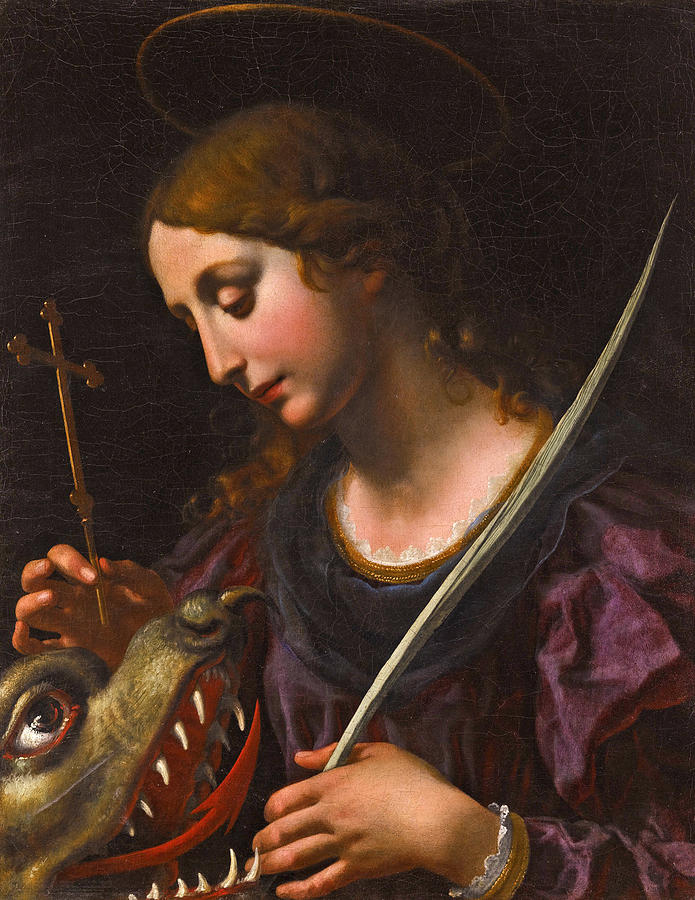
apollonia - carlo dolci.JPG
St Apollonia by Carlo Dolci

At Alexandria, in 249, the mob rose in savage fury against the Christians.   Metras, an old man, perished first.   His eyes were pierced with reeds and he was stoned to death.   A woman named Quinta was the next victim.   She was led to a heathen temple and bidden worship.   She replied by cursing the false god again and again and she too was stoned to death.   After this the houses of the Christians were sacked and plundered.   They took the spoiling of their goods with all joy.

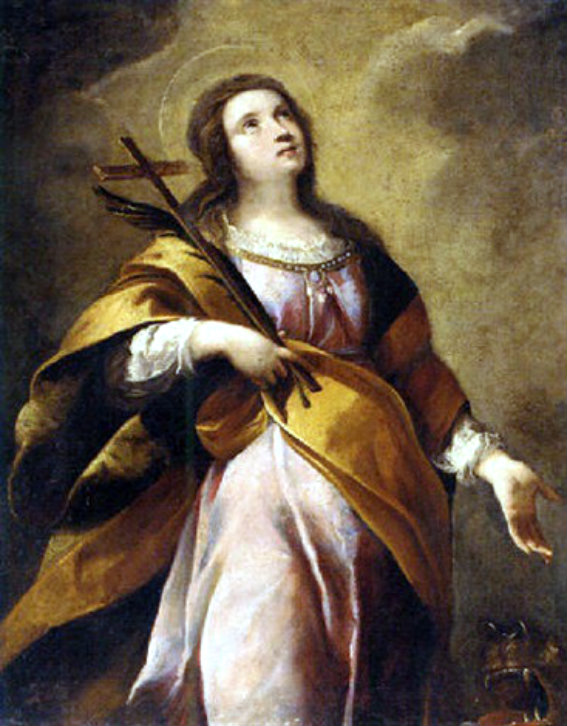
St Apollonia, an consecrated virgin and Deaconess, was the most famous among the martyrs.   Her teeth were beaten out, she was led outside the city, a huge fire was kindled and she was told she must deny Christ, or else be burned alive.   She was silent for a while and then, moved by a special inspiration of the Holy Spirit, she leapt into the fire and died in its flames.saint_apollonia_by_artemisia_gentileschi_ca-_1642-1644

st apollonia wiki

There were indeed many Christians who came, pale and trembling, to offer the heathen sacrifices.   But the judges themselves were struck with horror at the multitudes who rushed to martyrdom.   Women triumphed over torture, till at last the judges were glad to execute them at once and put an end to the ignominy of their own defeat.