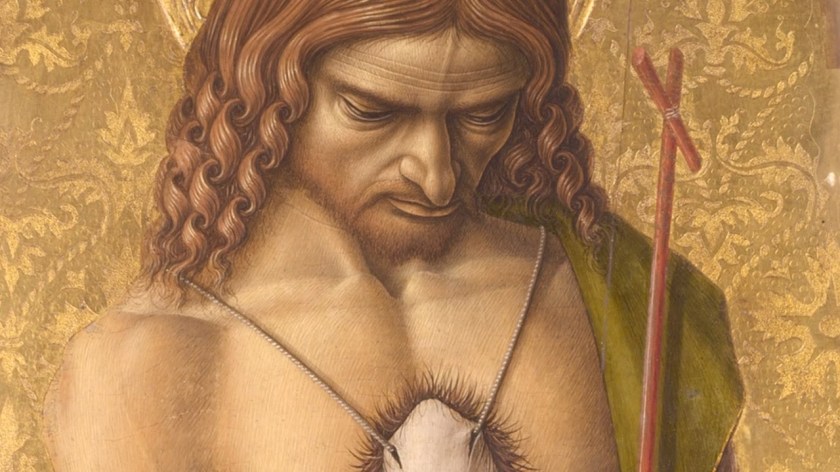
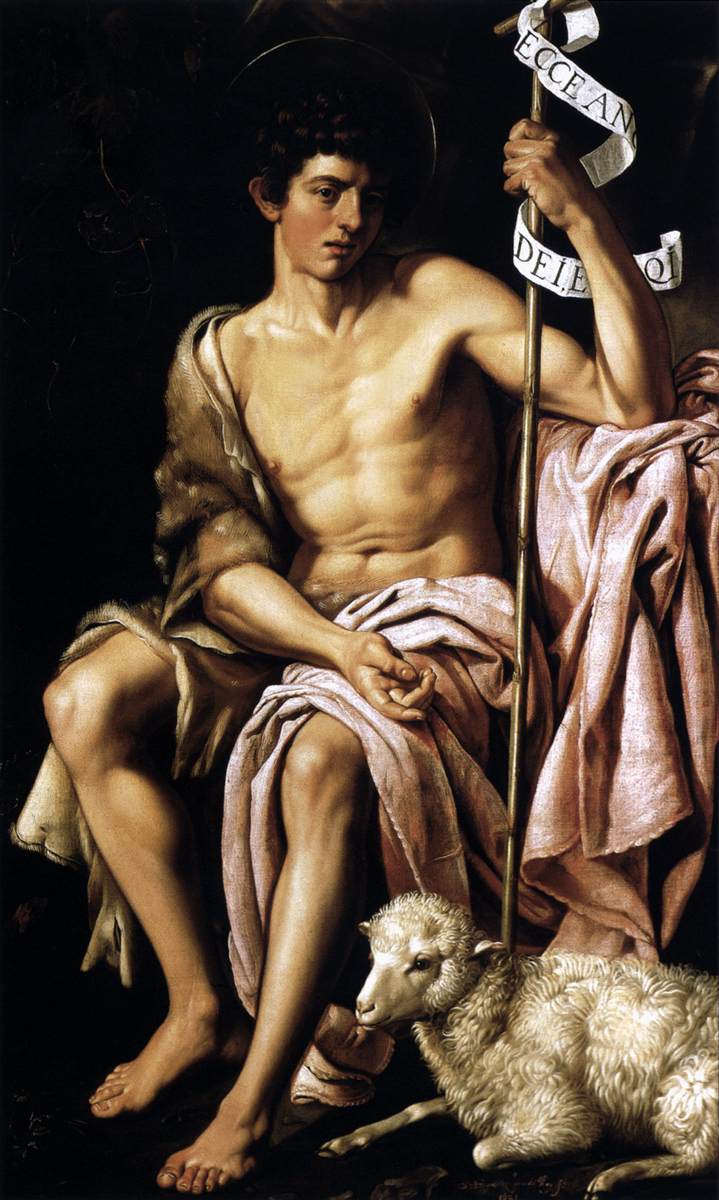
Posted in EUCHARISTIC Adoration, Our MORNING Offering, PRAYERS of the SAINTS, SAINT of the DAY, The HOLY EUCHARIST / The HOLY MASS

Our Morning Offering – 2 September – Twenty-second Sunday in Ordinary Time, Year B

Our Morning Offering – 2 September – Twenty-second Sunday in Ordinary Time, Year B

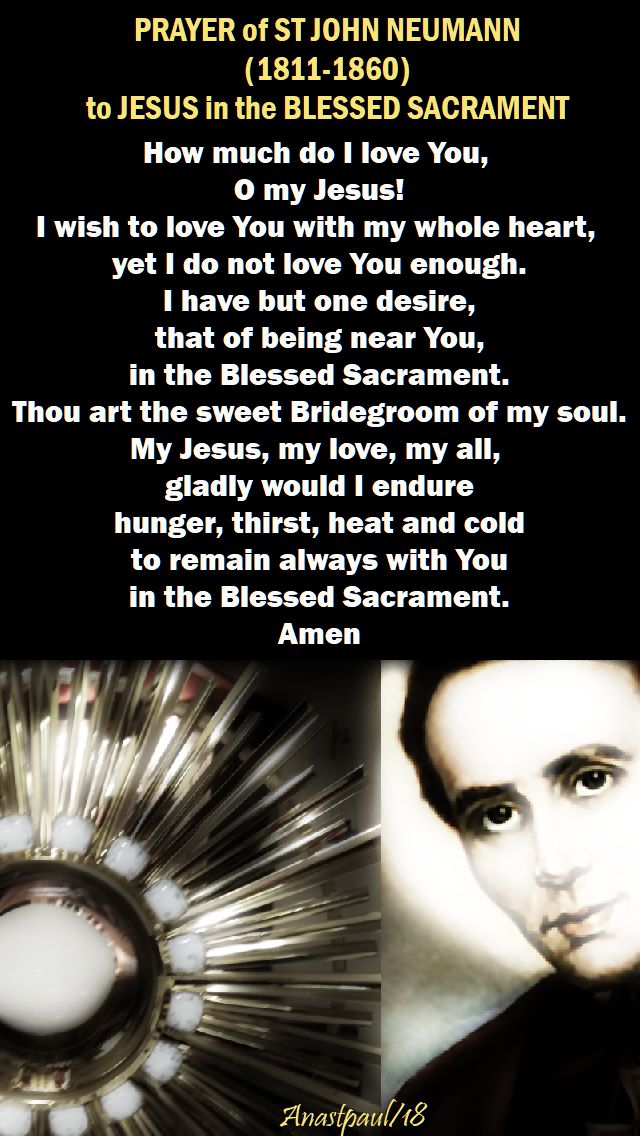
To Jesus in the Blessed Sacrament
By St John Neumann (1811-1860)

How much do I love You,
O my Jesus!
I wish to love You
with my whole heart,
yet I do not love You enough.
I have but one desire,
that of being near You,
in the Blessed Sacrament.
You are the sweet Bridegroom of my soul.
My Jesus, my love, my all,
gladly would I endure
hunger, thirst, heat and cold
to remain always with You
in the Blessed Sacrament.
Amenhow much do I love You O my Jesus - st john neumann - prayer to jesus in the holy eucharist - 5 jan 2018- NO 2

Posted in DOMINICAN OP, SAINT of the DAY

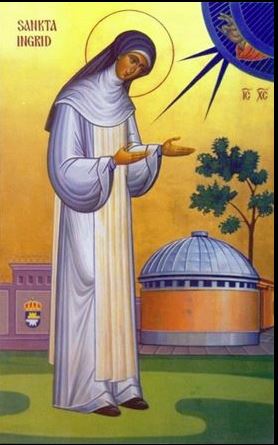
Saint of the Day – 2 September – St Ingrid of Sweden O.P. (Died 1292)

Saint of the Day – 2 September – St Ingrid of Sweden O.P. (Died 1292) – also known as St Ingrid of Skänninge – Dominican Religious and Mystic.9_2_St_Ingrid_of_Sweden best

Ingrid Elovsdotter was born in Skänninge, Sweden, in the 13th century.   Following the death of her husband, she resolved to consecrate the rest of her life to God.   She placed herself under the spiritual direction of Peter of Dacia, a Dominican priest.   In one of his letters, Petrus de Dacia has left a description of the ascetic life style and mystic revelations of one of his “spiritual daughters” in this circle of women, which likely refers to Ingrid.

She was the first Dominican nun in Sweden and in 1281 after making a pilgrimage to Rome she founded the first Dominican cloister, called St Martin’s in Skänning, which was formally recognised in 1281, 1 year prior to her death.   Ingrid made pilgrimages to Santiago de Compostela, Jerusalem and Rome.

She died in 1282 surrounded by an aura of sanctity.   After her death in 1282, Ingrid became object of veneration and pilgrimages to her convent.   She was, however, not formally recognised by the Pope as such.   When her relative, Bridget of Sweden, was formally recognised by the Pope in 1391, it caused a need to have Ingrid to be granted a similar status as well.   At the Council of Costance, an application was made for her canonisation.   In 1499, Pope Alexander VI agreed to a Translation (relic), which took place in her convent in 1507.

The remains of Ingrid was removed to the Vadstena Abbey after the Swedish Reformation.   In 1645, the skull was stolen from the Vadstena church by Antoine de Beaulieu, who believed it to be the skull of Bridget of Sweden.   Antoine de Beaulieu gave the skull to the French ambassador Gaspard Coignet de la Thullerie, who in turn placed it in the church of Courson-les-Carrières in France.   In 1959, it was given to the Brigitinesse abbey of Mary’s Refuge in Uden in the Netherlands, where it is exhibited as the skull of Bridget of Sweden.

st ingrid of sweden


Posted in SAINT of the DAY

Memorials of the Saints – 2 September

Bl Albert of Pontida
St Antoninus of Pamiers
St Antoninus of Syria
Bl Antonio Franco
St Brocard
St Castor of Apt
St Comus of Crete
St Eleazar the Patriarch
St Elpidius of Lyon
St Elpidius the Cappadocian
St Hieu
St Ingrid of Sweden (died 1282)
St Justus of Lyons
St Lanfranco of Vercelli
St Lolanus
St Margaret of Louvain
St Maxima
St Nonnossus
St Prospero of Tarragona
St Solomon le Clerq FSC (1745-1792) Martyr

About St Solomon here:  https://anastpaul.wordpress.com/2017/09/02/saint-of-the-day-2-september-st-solomon-le-clercq-fsc/

St Theodota of Bithynia
St Valentine of Strasbourg
St William of Roeskilde

Marytrs of Nicomedia – 3 saints: Three Christians who were martyred together in the persecutions of Diocletian. No details about them but their names have survived – Concordius, Theodore and Zenone. They were martyrd in
Nicomedia, Bithynia (in modern Turkey).

Martyrs of September – 191 beati: Also known as – • Martyrs of Paris,• Martyrs of Carmes.
A group of 191 martyrs who died in the French Revolution. They were imprisoned in the Abbey of St-Germain-des-Prés, Hôtel des Carmes in the rue de Rennes, Prison de la Force and Seminaire de Saint-Firmin in Paris, France by the Legislative Assembly for refusing to take the oath to support the civil constitution of the clergy. This act placed priests under the control of the state, and had been condemned by the Vatican.
They were massacred by a mob on 2 September and 3 September 1792 and Beatified on 17 October 1926 by Pope Pius XI.

Martyrs of 2 September – 10 saints: A group of ten Christian martyrs; their names are on old martyrologies but we have lost all record of their lives and deaths. They were canonised.
• Antoninus
• Diomedes
• Eutychian
• Hesychius
• Julian
• Leonides
• Menalippus
• Pantagapes
• Philadelphus
• Philip

Martyred in the Spanish Civil War:
• Blessed Baldomer Margenat Puigmitja
• Blessed Fortunato Barrón Nanclares
• Blessed Joan Franquesa Costa
• Blessed José María Laguía Puerto
• Blessed Lorenzo Insa Celma

Posted in MORNING Prayers, PAPAL ENCYLICALS, PAPAL MESSAGES, PAPAL PRAYERS

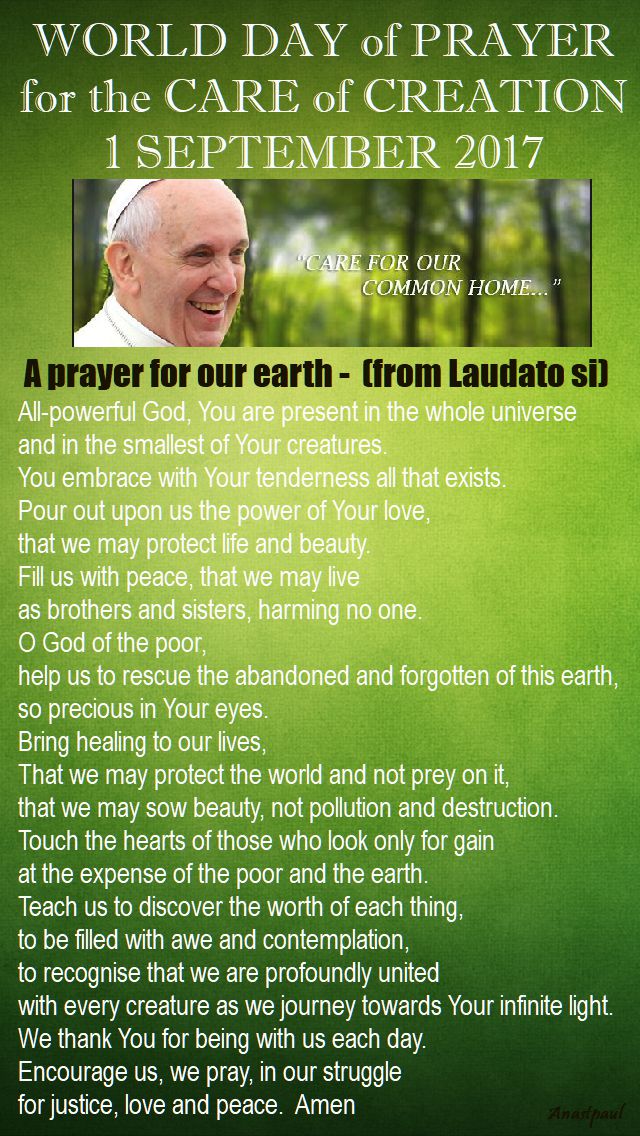
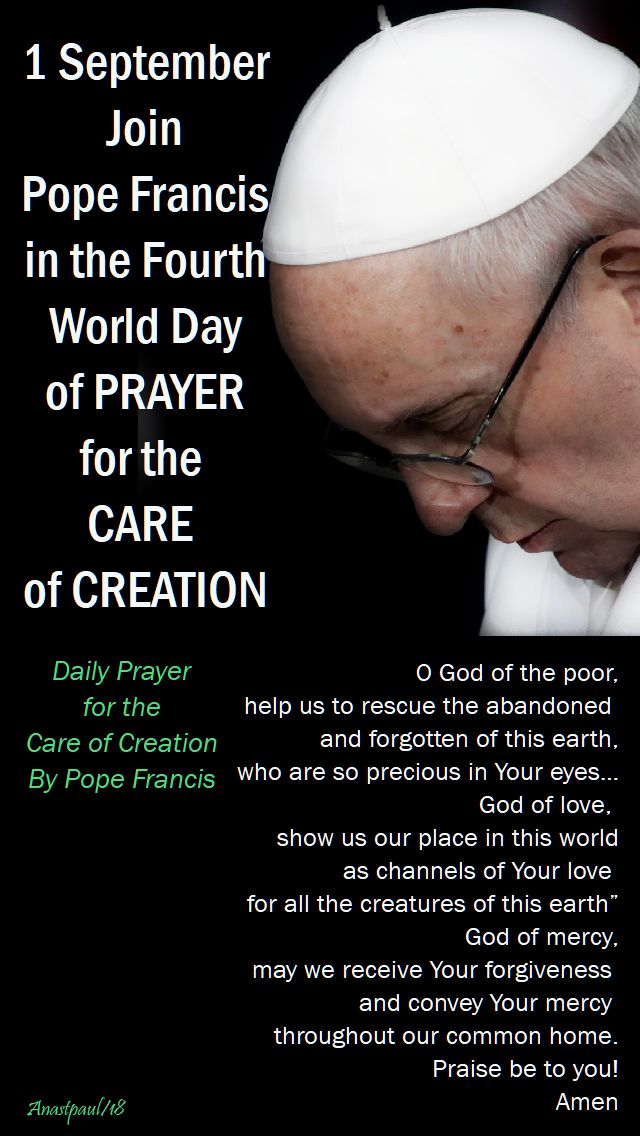
World Day of Prayer for the Care of Creation – 1 September

World Day of Prayer for the Care of Creation – 1 September

Pope Francis has designated 1 September as the annual World Day of Prayer for the Care of Creation.   He hopes this day will be a time for individuals and communities to “reaffirm their personal vocation to be stewards of creation, to thank God for the wonderful handiwork which He has entrusted to our care and to implore His help for the protection of creation as well as His pardon for the sins committed against the world in which we live.”

For this the 4th Annual World Day of Prayer, Pope Francis said:
“In this year’s message,I wish to draw attention to the issue of water, the primary good to be protected and made available to all.”
His full message will be published later today.

The Ecology Encyclical:   Care for Our Common Home:

A prayer for our earth
(from Laudato si’)

All-powerful God, You are present in the whole universe
and in the smallest of Your creatures.
You embrace with Your tenderness all that exists.
Pour out upon us the power of Your love,
that we may protect life and beauty.
Fill us with peace, that we may live
as brothers and sisters, harming no one.
O God of the poor,
help us to rescue the abandoned and forgotten of this earth,
so precious in Your eyes.
Bring healing to our lives,
That we may protect the world and not prey on it,
that we may sow beauty, not pollution and destruction.
Touch the hearts of those who look only for gain
at the expense of the poor and the earth.
Teach us to discover the worth of each thing,
to be filled with awe and contemplation,
to recognise that we are profoundly united
with every creature as we journey towards Your infinite light.
We thank You for being with us each day.
Encourage us, we pray, in our struggle
for justice, love and peace.
Amenworld-day-of-prayer-for-the-care-of-creation-1-sept-20171

Posted in CATHOLIC-PRAYERS OF THE CHURCH, MORNING Prayers, PAPAL MESSAGES, PAPAL PRAYERS, PRACTISING CATHOLIC, PRAYERS of the CHURCH

The Holy Father’s Prayer Intention for September

The Holy Father’s
Prayer Intention for September

Universal:
Young People in Africa

That young people in Africa may have access
to education and work in their own countries.

the holy father's prayer intention sept 2018 = 1 sept 2018

Posted in CATHOLIC DEVOTIONS of the Month, DOCTORS of the Church, MARIAN DEVOTIONS, MARIAN PRAYERS, MARIAN TITLES, MORNING Prayers, PRAYERS of the SAINTS, The BLESSED VIRGIN MARY

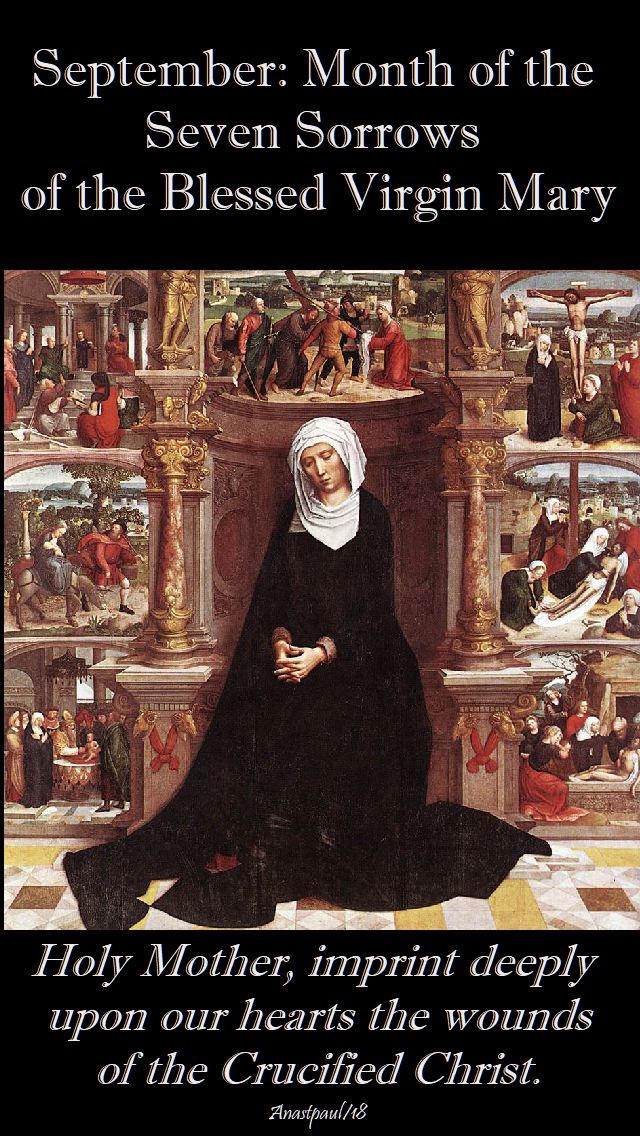
Devotion for September: The Seven Sorrows of the Blessed Virgin Mary

Devotion for September:
The Seven Sorrows of the Blessed Virgin Mary

The Seven Sorrows of
the Blessed Virgin Mary

1. The prophecy of Simeon
2. The Flight to Egypt
3. Loss of Child Jesus for 3 days
4. Meeting Jesus carrying His Cross
5. The Crucifixion of Jesus
6. The Pieta – receiving Jesus’ Body
7. The Burial of Jesus

Each month of the liturgical year is devoted to a particular Catholic tradition, usually centered on a Feast during that month. As August is the Month of the Immaculate Heart of Mary, September follows as the Month of Our Lady of Sorrows.
We see this theme of joy followed by affliction mirrored in the liturgical calendar in two September Feasts – the Exaltation of the Holy Cross on September 14 and the Feast of Our Lady of Sorrows on 15 September. Happy the heart of the blessed Virgin Mary! She, without dying, earned the treasure of martyrdom beneath the Cross of our Lord for her anguish.
The name of Our Lady of Sorrows centres on the extraordinary and bittersweet suffering the Blessed Mother experienced during Christ’s Passion. As seen in the artwork below, her agony is composed of “The Seven Dolors,” that pierced the Heart of Mary.
During this month of September, we are drawn into the spiritual martyrdom that the Blessed Mother experienced during the physical martyrdom of Jesus. The evils of sin are manifest but conquered through intense suffering. The Blessed Mother’s tears of anguish reflect God’s washing away of sin. If you haven’t ever prayed the Seven Sorrows chaplet, you might want to consider exploring this devotion.

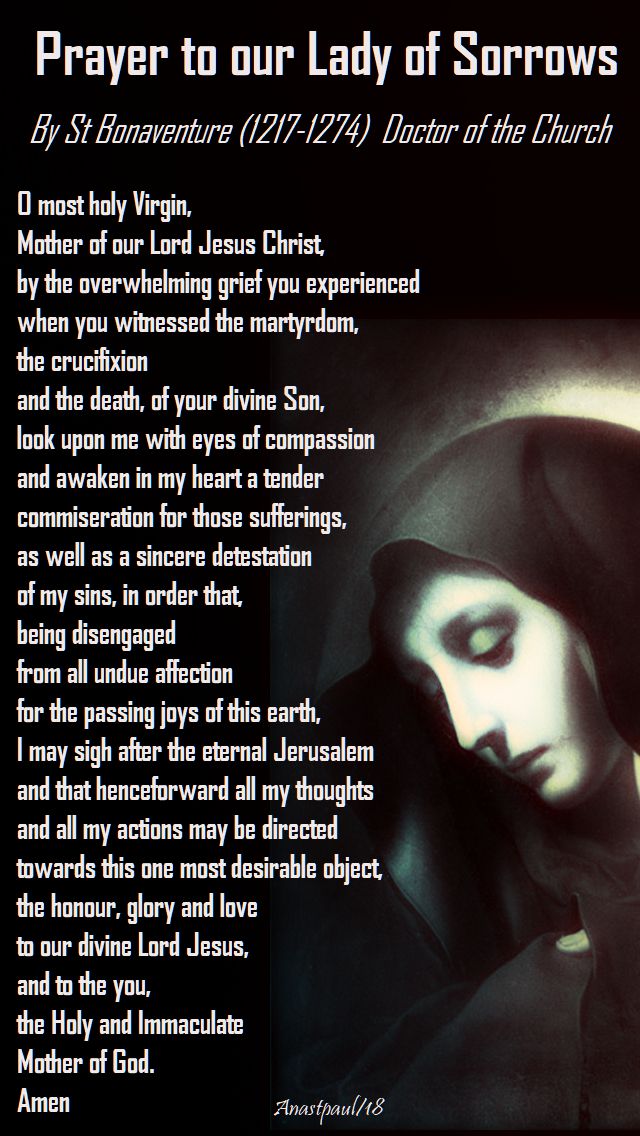
Prayer to our Lady of Sorrows
By St Bonaventure (1217-1274) Doctor of the Church

O most holy Virgin,
Mother of our Lord Jesus Christ,
by the overwhelming grief you experienced
when you witnessed the martyrdom,
the crucifixion
and the death, of your divine Son,
look upon me with eyes of compassion
and awaken in my heart a tender
commiseration for those sufferings,
as well as a sincere detestation
of my sins, in order that,
being disengaged from all undue affection
for the passing joys of this earth,
I may sigh after the eternal Jerusalem
and that henceforward all my thoughts
and all my actions may be directed
towards this one most desirable object,
the honour, glory and love
to our divine Lord Jesus,
and to the you,
the Holy and Immaculate
Mother of God.
Amenprayer to our lady of sorrows - st bonaventure - 1 sept 2018

Holy Mother, imprint deeply upon our hearts

the wounds of the Crucified Christ.sept month of the seven sorrows - 1 sept 2018

Posted in MORNING Prayers, papal ENCYCLICALS, PAPAL MESSAGES, PAPAL PRAYERS

Thought for the Day – 1 September – The 4th World Day of Prayer for the Care of Creation

Thought for the Day – 1 September – The 4th World Day of Prayer for the Care of Creation

Excerpt – Message of His Holiness, Pope Francis, 1 SEPTEMBER 2016

Show Mercy to our Common Home

Examining our consciences, repentance and confession to our Father who is rich in mercy lead to a firm purpose of amendment.   This in turn must translate into concrete ways of thinking and acting that are more respectful of creation.   For example: “avoiding the use of plastic and paper, reducing water consumption, separating refuse, cooking only what can reasonably be consumed, showing care for other living beings, using public transport or car-pooling, planting trees, turning off unnecessary lights, or any number of other practices” (Laudato Si’, 211).   We must not think that these efforts are too small to improve our world.   They “call forth a goodness which, albeit unseen, inevitably tends to spread” and encourage “a prophetic and contemplative lifestyle, one capable of deep enjoyment free of the obsession with consumption” (ibid., 212, 222).

In the same way, the resolve to live differently should affect our various contributions to shaping the culture and society in which we live.   Indeed, “care for nature is part of a lifestyle which includes the capacity for living together and communion” (Laudato Si’, 228).   Economics and politics, society and culture cannot be dominated by thinking only of the short-term and immediate financial or electoral gains.   Instead, they urgently need to be redirected to the common good, which includes sustainability and care for creation.

Despite our sins and the daunting challenges before us, we never lose heart.   “The Creator does not abandon us; He never forsakes His loving plan or repents of having created us… for He has united himself definitively to our earth and His love constantly impels us to find new ways forward” (Laudato Si’, 13; 245).   In a particular way, let us pray on 1 September and indeed throughout the year:

“O God of the poor,
help us to rescue the abandoned
and forgotten of this earth,
who are so precious in your eyes…

God of love, show us our place in this world
as channels of Your love
for all the creatures of this earth
God of mercy, may we receive Your forgiveness
and convey Your mercy throughout our common home.

Praise be to you!
Amen.”

(Pope Francis 2016)1 sept join pope francis - daily prayer for the care of creation - 1 sept 2018

Posted in Uncategorized

Quote of the Day – 1 September – The 4th World Day of Prayer for the Care of Creation

Quote of the Day – 1 September

 The 4th World Day of Prayer for the Care of Creation

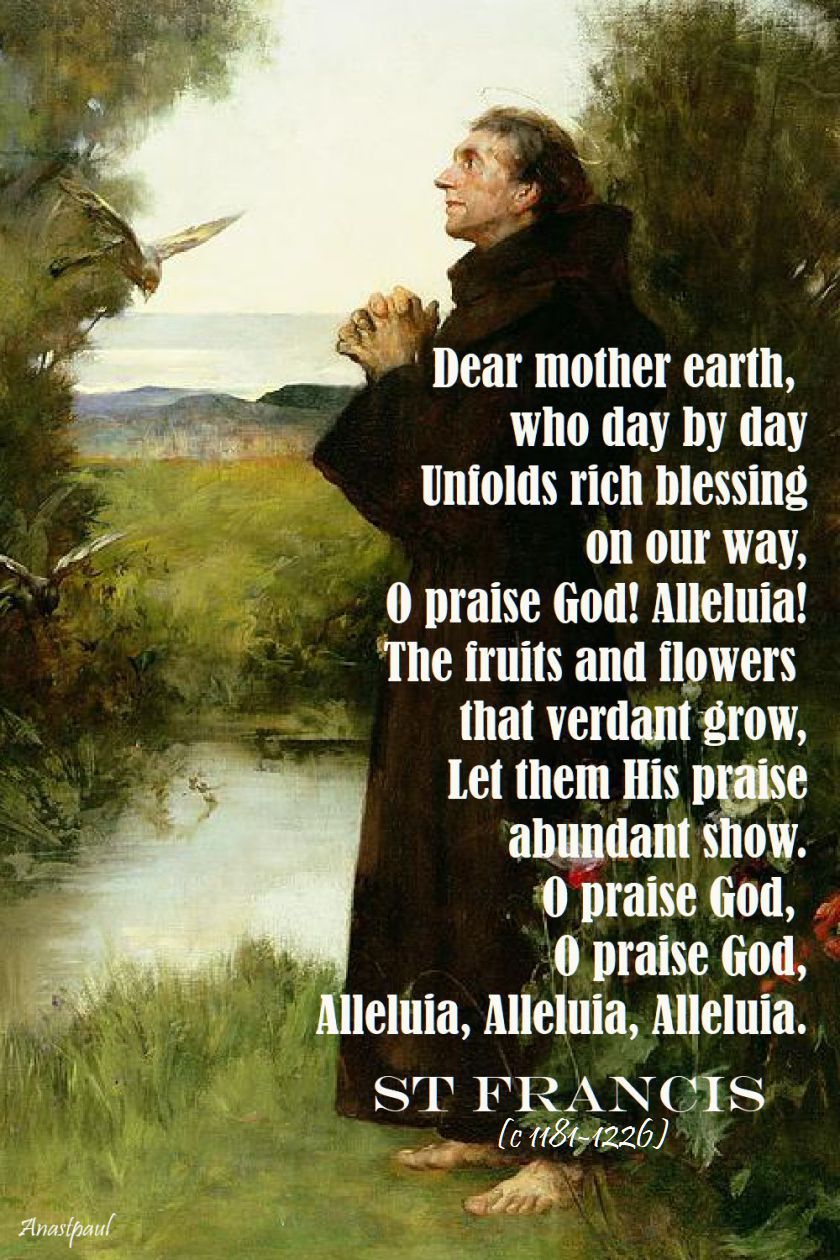
Dear mother earth, who day by day
Unfolds rich blessing on our way,
O praise God!   Alleluia!
The fruits and flowers that verdant grow,
Let them His praise abundant show.
O praise God, O praise God,
Alleluia, Alleluia, Alleluia.

St Francis of Assisi (c 1181-1226)

(Translated by William H Draper) (Image by St Francis by Albert Chevallier Tayler)dear-mother-earth-st-francis-prayer - 1 sept 2017

Posted in MORNING Prayers, The WORD

One Minute Reflection – 1 September – Today’s Gospel: Matthew 25:14–30 and The 4th World Day of Prayer for the Care of Creation

One Minute Reflection – 1 September – Today’s Gospel: Matthew 25:14–30 – Saturday of the Twenty-first week in Ordinary Time, Year B and The 4th World Day of Prayer for the Care of Creation

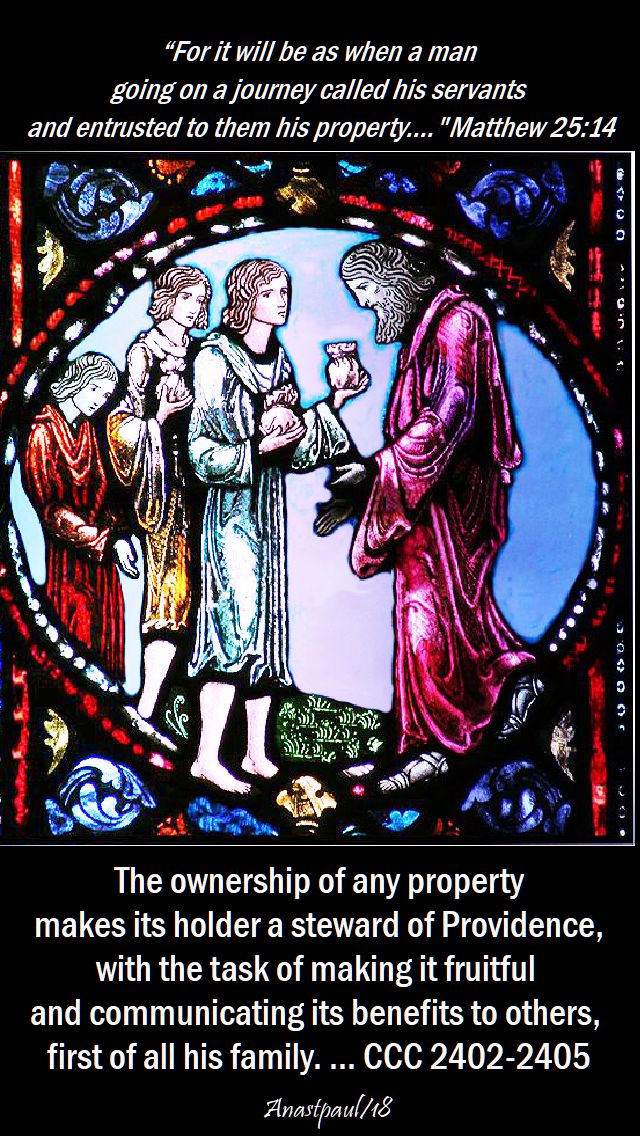
“For it will be as when a man going on a journey called his servants and entrusted to them his property….”…Matthew 25:14

REFLECTION – “The universal destination and the private ownership of goods – In the beginning God entrusted the earth and its resources to the common stewardship of mankind to take care of them, master them by labour and enjoy their fruits (Gn 1:26-29). The goods of creation are destined for the whole human race.   However, the earth is divided up among men to assure the security of their lives, endangered by poverty and threatened by violence. the appropriation of property is legitimate for guaranteeing the freedom and dignity of persons and for helping each of them to meet his basic needs and the needs of those in his charge.   It should allow for a natural solidarity to develop between men.   The right to private property… does not do away with the original gift of the earth to the whole of mankind, the universal destination of goods remains primordial, even if the promotion of the common good requires respect for the right to private property and its exercise.
In his use of things man should regard the external goods he legitimately owns not merely as exclusive to himself but common to others also, in the sense that they can benefit others as well as himself” (Vatican II, GS 69).   The ownership of any property makes its holder a steward of Providence, with the task of making it fruitful and communicating its benefits to others, first of all his family.   Goods of production… oblige their possessors to employ them in ways that will benefit the greatest number.   Those who hold goods for use and consumption should use them with moderation, reserving the better part for guests, for the sick and the poor.”…Catechism of the Catholic Church § 2402-2405matthew 24 14 - for it will be as when a man going on a journey-the ownership of property ccc2402-2405 1 sept 2018

PRAYER – Holy God and Father, help us by Your grace, to remain “good and faithful servants” so that we may use all You have bestowed upon us and left to our care, in the loving care of our neighbour and of Your gifts.   May Mary, the Mother of Your divine Son and our Mother, walk at our side and teach us to be true children and users of our talents and Your creation.   May we guard Your world with great wisdom.   Holy Mother of Montevergine, pray for us, that we may one day enter “into the joy of our Lord”.   We make our prayer, through Christ, our Lord, with the Holy Spirit, one God forever, amen.our lady of montevergine pray for us - 1 sept 2018

Posted in franciscan OFM, Our MORNING Offering, PRAYERS of the SAINTS

Our Morning Offering – 1 September

Our Morning Offering – 1 September

Prayer to do the Will of God
By St Francis of Assisi (c 1181-1226)

Almighty, eternal, just and merciful God,
grant us in our misery, the grace to do for You alone
what we know You want us to do
and always to desire, what pleases You.
Thus, inwardly cleansed, interiorly enlightened
and inflamed by the fire of the Holy Spirit,
may we be able to follow in the footprints of
Your beloved Son, our Lord Jesus Christ.
And, by Your grace alone,
may we make our way to You,
Most High, Who live and rule in perfect Trinity and simple Unity
and are glorified God all-powerful, forever and ever.
Amen.
(From “A Letter to the Entire Order”)almighty eternal just and merciful god - st francis - 19 sept 2017

Posted in MARIAN DEVOTIONS, MARIAN TITLES, SAINT of the DAY, The BLESSED VIRGIN MARY

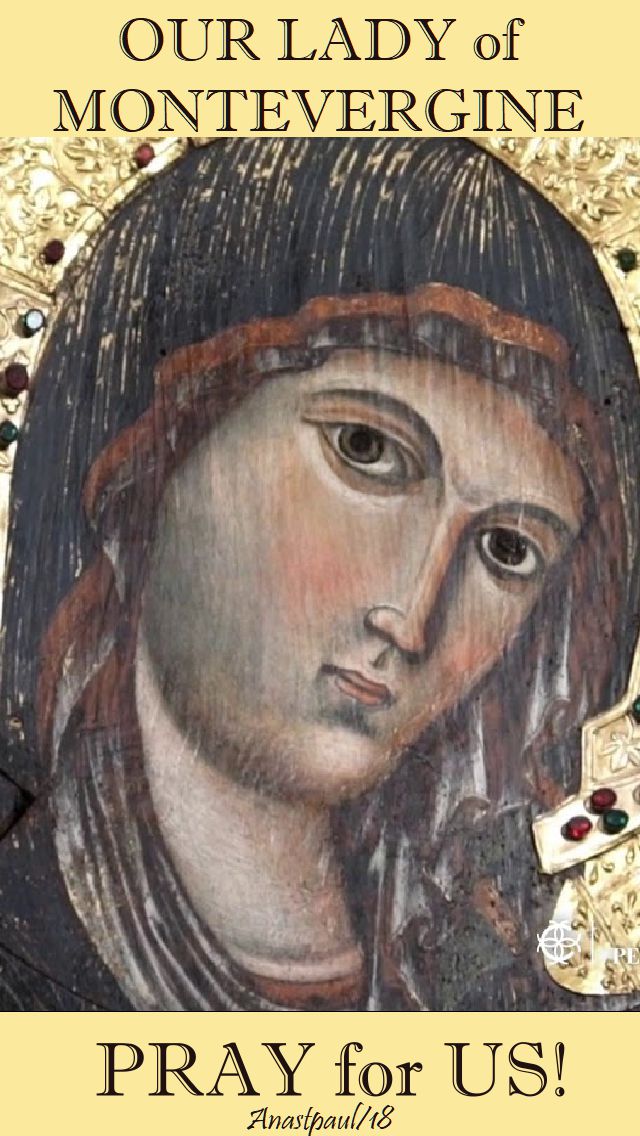
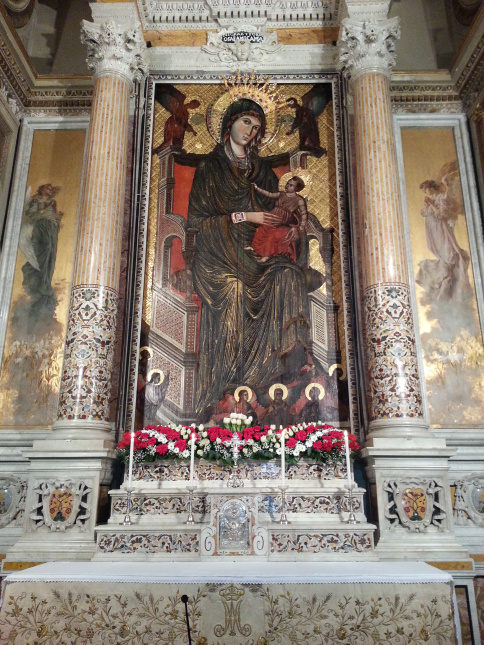
1 September – The Memorial of Our Lady of Montevergine

1 September – The Memorial of Our Lady of Montevergine (c 401-460) – Patroness of Catalonia.   This painting of Our Lady in her sanctuary, a Benedictine abbey, on Mount Partenio, 56 km East of Naples.   In the charming medieval town of Mercogliano you catch the “funicular” or “cob train” that climbs a breath-taking slope in 7 minutes. (Or you can drive a winding road all the way up.)  Open 6 a.m. to 8 p.m., the painting is on wood 460 x 230 cm and some say dates probably from around 1290 though according to local legend, the face was painted by St Luke the Evangelist and seems to actually stem from the 5th century.Our Lady of Montevergine - maxresdefault

This is one of quite a few Black Madonnas that are attributed to Luke the Evangelist. Tradition says he painted only the head of Mary, which was later fitted into the larger icon.   The whole is considered a “Hodegetria” type of Madonna, i.e. “she who points/shows the way” or “the guide”, so called because her right hand points at Jesus as the way to salvation.   While the Virgin of Montevergine isn’t actually in the classical Hodegetria pose, she is nonetheless known as the Hodegetria of Constantinople.

Tradition recounts that Eudocia (c. 401-460), the wife of the Byzantine Emperor Theodosius II, brought Saint Luke’s original portrait of the Virgin from Palestine to Constantinople.   There it was fitted into a very large icon of Mary and Jesus and greatly revered with weekly ceremonies described thus:

“Every Tuesday twenty men come to the church of Maria Hodegetria;  they wear long red linen garments, covering up their heads like stalking clothes … there is a great procession and the men clad in red go one by one up to the icon;  the one with whom the icon is pleased is able to take it up as if it weighed almost nothing.   He places it on his shoulder and they go chanting out of the church to a great square, where the bearer of the icon walks with it from one side to the other, going fifty times around the square.   When he sets it down others take it up in turn.”   Another account says, as the bearers staggered around the crowd, the icon seemed to lurch towards onlookers, who were then considered blessed by the Virgin.   Clergy touched pieces of cotton-wool to the icon and handed them out to the crowd.   The image was double-sided, with the crucifixion of Jesus on the other side.   This makes sense if it was painted for processions.”   Madonna_di_Montevergine-2

While the Polish people claim the Hodegetria of Constantinople ended up at Czestochowa and the Russians believe it to be their “Hodegetria of Smolensk”, destroyed during the German occupation in 1941, the Italians maintain that their Mama of Montevergine is the original first Black Madonna painted by St Luke.

As it turns out they may almost be right.   The original sacred image disappeared during the fall of Constantinople in 1453 but this one may actually be the oldest, still extant Western copy of it.   At least that’s what Margherita Guarducci, an illustrious scholar of art history and archaeology claims.   She investigated the famous “Slave Mama” of Montevergine in the 1990’s using newest technology.   It turns out that the bust was painted over several times and previous analyses could only reach down to the layer that was created in the 13th century.   But now Guarducci discovered another, deeper layer painted on linen burlap with a type of paint that was used in the 5th century.

But back to the capital of the East-Roman Empire, Italian traditions say that as the last Latin Emperor of Constantinople, Baldwin II, was escaping the besieged city in 1261, he took the head of the icon (the part attributed to Luke) with him.   Later it came into the possession of the Angevin dynasty, the House of Anjou, who had it inserted again into a much larger image of Mary and the Christ child.   Around the year 1300 they gave the icon to the sanctuary on Montevergine.madonna-di-montevergine-aka-our-lady-of-montevergine-avellino-italy

As so many Black Madonna sanctuaries, so this one too started out as a Pagan holy site dedicated to the goddess Cybele.   Tradition says that in the early 11th century, when Paganism was still practised in remote parts of Europe, St William of Vercelli (1085-1142) Founder of the Congregation of Montevergine or “Willliamites”, the patron saint of Irpinia, decided to turn this mountain shrine to Cybele the Great Mother of the Gods, into a sanctuary of Mary the Most Holy Mother of God.   He gathered a little band of monks around him and occupied the place for Christianity. The first real church was consecrated in 1124.   It was destroyed and rebuilt several times.   The current monastery, guest house and sanctuary date from between the 18th and 20th centuries.   Architecturally they are not very interesting but the basilica is richly decorated and the whole place lies in breathtaking scenery.   From the images it is difficult to grasp that the icon is quite large, with a height of over 3,65 meters and width of over 1,80 meters.

Why “Slave Mama”?
Why is this Black Madonna, along with some of her other Italian sisters, called Slave Mama?   Because in the mind of old time Italians her dark complexion marked her as one of the serving class, the Mother of all Slaves.   An old folk song recounts how the Madonna of Montevergine was ashamed that her dark skin made her look like a slave.   It made her the ugliest of the “six sisters” (six famous Madonnas in the Campania region).   So she hid her face on this mountain.   But lo and behold, the song concludes, this Brown Mama turned out to be the most miraculous and hence the most beautiful of them all.
The local peasants love their Slave Mama more than any other Madonna because she is the mother of all those who are chained to hard work.   She understands their plight.   As another folk song says:  “You alone lighten our chains, the chains to hard work, a thousand years of hard work and thousands of sweats”.
To the more politically minded (and there are many of those in Italy) the divine Slave Mama is also the mother of all who are oppressed or outcast.

Today, it is reported that over one-and-one-half million pilgrims yearly pay homage to Our Lady of Montevergine.   The most popular day is Pentecost.   There have been numerous miracles attributed to this portrait of the Mother of God and her Divine Son.

Posted in MARIAN DEVOTIONS, MARIAN TITLES, SAINT of the DAY, The BLESSED VIRGIN MARY

Memorial of Our Lady of Montevergine and of the Saints 1 September

Our Lady of Montevergine:
Also known as –
• Madonna di Montevergine
• Madonna Bruna
• Mamma Schiavona
One of the so-called Black Madonnas, image of the Blessed Virgin Mary, normally holding the Christ Child, who have been “inculturated”, that is, made the little Jewish girl Mary look more like the people in the area of the artist, or which are actually black in color. This one serves as part of the altar piece of the Sanctuary on Montevergine.   This site is the goal of thousands of pilgrims each year.

Abigail the Matriarch
St Aegidius
St Agia
St Anea
St Arcanus
St Arealdo of Brescia
Bl Colomba of Mount Brancastello
St Constantius the Bishop
St Donatus of Sentianum
St Felix of Sentianum
St Gideon the Judge

St Giles (c 650 – c 710) One of the 14 Holy Helpers
About St Giles here: https://anastpaul.wordpress.com/2017/09/01/saint-of-the-day-1-september-st-giles/
About the 14 Holy Helpers here: https://anastpaul.wordpress.com/2018/07/25/thought-for-the-day-25-july-the-memorial-of-st-christopher-died-c-251-one-of-the-fourteen-holy-helpers/

Bl Giustino of Paris
Bl Giovanna Soderini
St Jane Soderini
St Joshua the Patriarch
Bl Juliana of Collalto
St Laetus of Dax
St Lupus of Sens
St Lythan
St Nivard of Rheims
St Priscus
St Regulus
St Sixtus of Rheims
St Terentian
St Verena
St Victorious
St Vincent of Xaintes

Exiles of Campania
Twelve Holy Brothers: Martyrs of the South –
A group of martyrs who died c 303 at various places in southern Italy. In 760 their relics were brought together and enshrined in Benevento, Italy as a group.
• Saint Arontius of Potenza
• Saint Donatus of Sentianum
• Saint Felix of Sentianum
• Saint Felix of Venosa
• Saint Fortunatus of Potenza
• Saint Honoratus of Potenza
• Saint Januarius of Venosa
• Saint Repositus of Velleianum
• Saint Sabinian of Potenza
• Saint Sator of Velleianum
• Saint Septiminus of Venosa
• Saint Vitalis of Velleianum
One tradition describes Saint Boniface of Hadrumetum and Saint Thecla of Hadrumetum as their parents.
Martyred in the Spanish Civil War:
Martyred Hospitallers of Saint John of God – (12 beati)
• Blessed Alejandro Cobos Celada
• Blessed Alfonso Sebastiá Viñals
• Blessed Amparo Carbonell Muñoz
• Blessed Antonio Villanueva Igual
• Blessed Carmen Moreno Benítez
• Blessed Crescencio Lasheras Aizcorbe
• Blessed Enrique López y López
• Blessed Francesc Trullen Gilisbarts
• Blessed Guillermo Rubio Alonso
• Blessed Isidro Gil Arano
• Blessed Joaquim Pallerola Feu
• Blessed Joaquín Ruiz Cascales
• Blessed José Franco Gómez
• Blessed José Prats Sanjuán
• Blessed Josep Samsó y Elias
• Blessed Manuel Mateo Calvo
• Blessed Mariano Niño Pérez
• Blessed Maximiano Fierro Pérez
• Blessed Miquel Roca Huguet
• Blessed Nicolás Aramendía García
• Blessed Pedro Rivera
• Blessed Pio Ruiz De La Torre
• Blessed Simó Isidre Joaquím Brun Ararà

Posted in MORNING Prayers, SAINT of the DAY

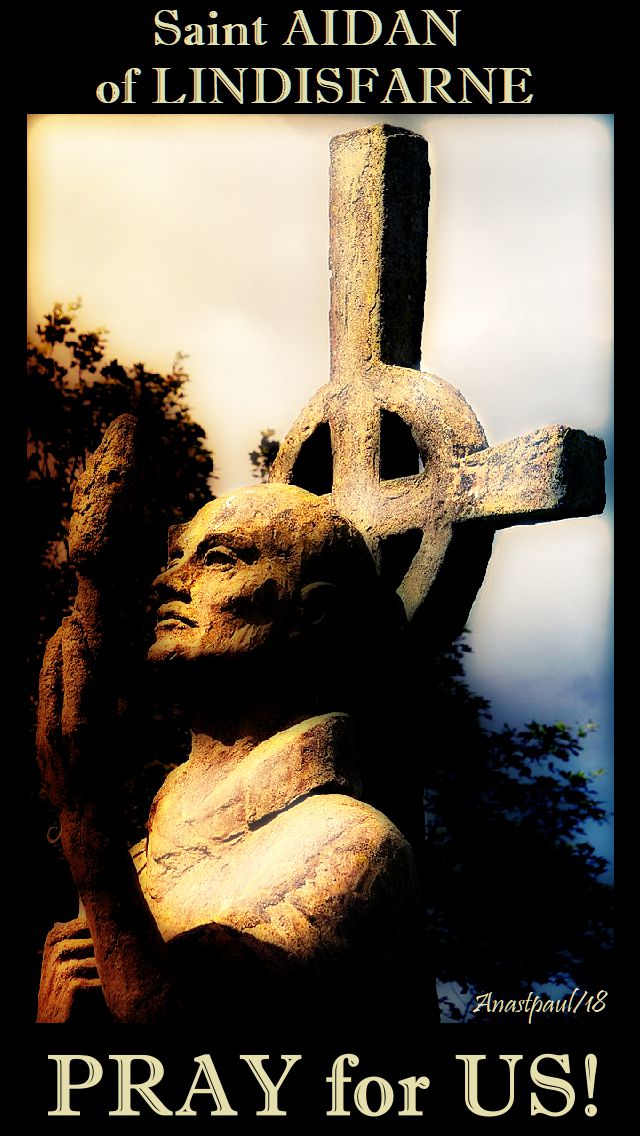
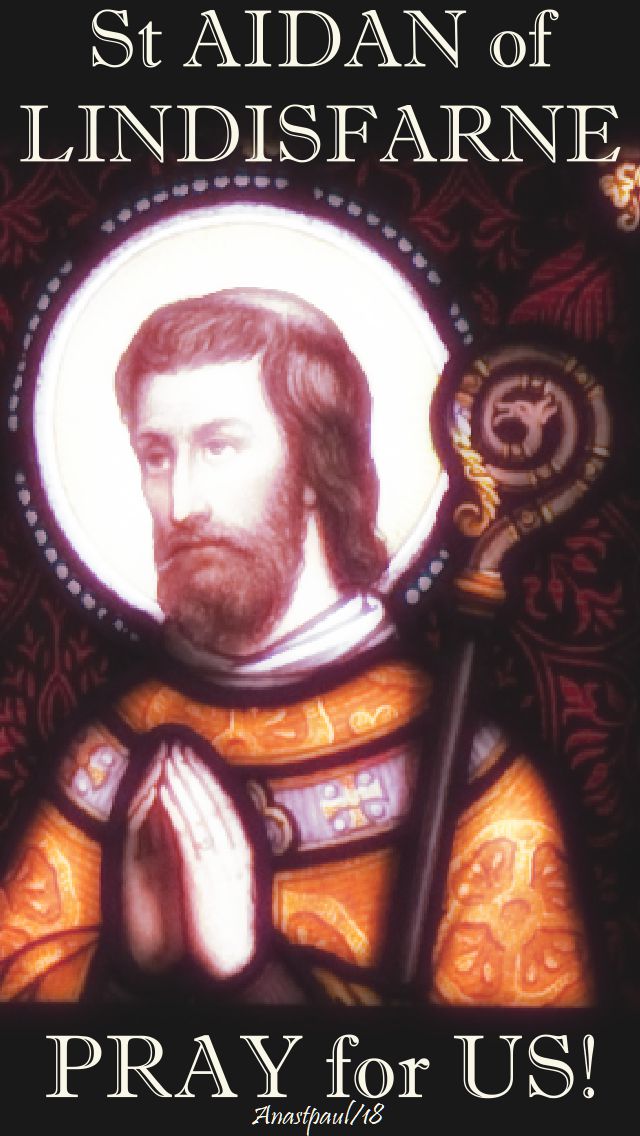
Thought for the Day – 31 August – The Memorial of St Aidan of Lindisfarne (died 651)

Thought for the Day – 31 August – The Memorial of St Aidan of Lindisfarne (died 651)

Aidan was gentle.   Aidan was personal.   Aidan was humble.   Aidan was compassionate. Aidan listened well.   Aidan prayed constantly.   Aidan cared for people’s lives, body, mind and spirit.   Aidan set people free from slavery.   He revealed a deep, quiet, almost easily overlooked way of evangelism and missionary life.   There is not much fanfare or miraculous flashy stuff in Aidan’s way of life and faith.   But where Aidan’s predecessor, Corman failed to reach into the hard hearts of the Anglo-Saxon people of Northumbria due to his harshness and austerity, the people loved Aidan and were deeply transformed by his brief 17 years among them, mainly because they were met face to face, heart to heart by a prayerful, gentle, holy man who brought the light of Christ through his actions and way of living.   The name Aidan means “fire, aflame”.   Aidan was aflame with Christ’s love.

The life of St Aidan of Lindisfarne, reminds us of the living Word of God in our lives.   St Aidan, following the teachings of Christ, was literally ready to expend every second of his life for Christ and his neighbour, with love, much as Christ did.   Today, how might we bring the Word of God to life—in our lives and in the lives of those we encounter?   It is this one word, “love”.

St Aidan of Lindisfarne, pray for us!st aidan of lindisfarne pray for us 31 aug 2018-no 2

Posted in MORNING Prayers, PRAYERS of the SAINTS, QUOTES of the SAINTS, QUOTES on DEATH, QUOTES on ETERNAL LIFE, QUOTES on GRACE, The WORD

Quote of the Day – 31 August – Today’s Gospel: Matthew 25:1–13

Quote of the Day – 31 August – Friday of the Twenty-first week in Ordinary Time, Year B – Today’s Gospel: Matthew 25:1–13

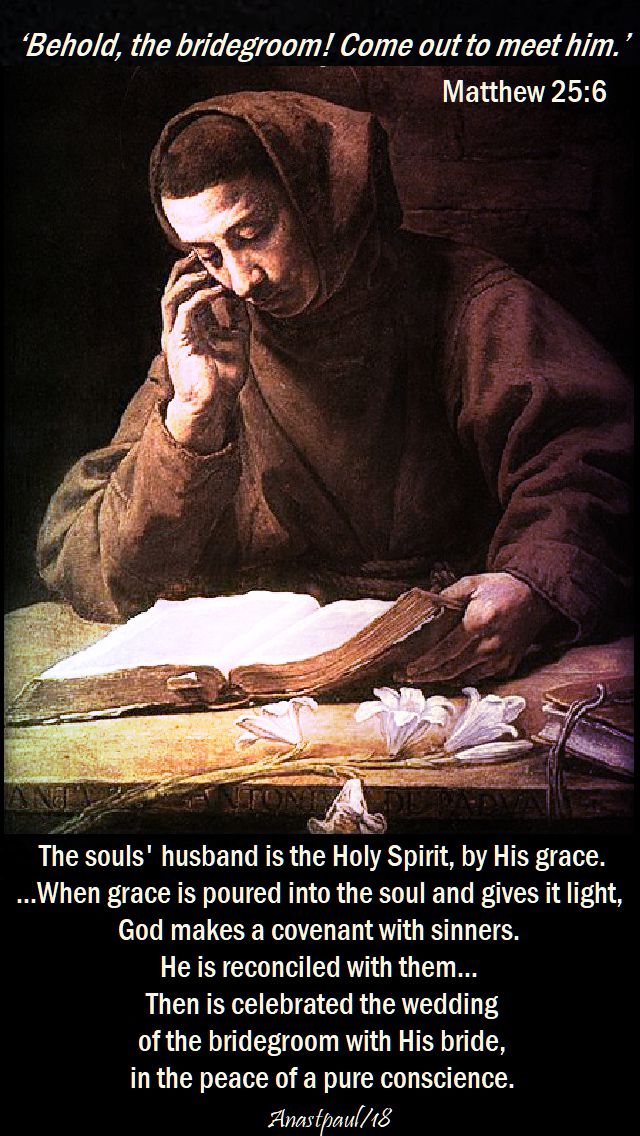
‘Behold, the bridegroom! Come out to meet him.’ …Matthew 25:6

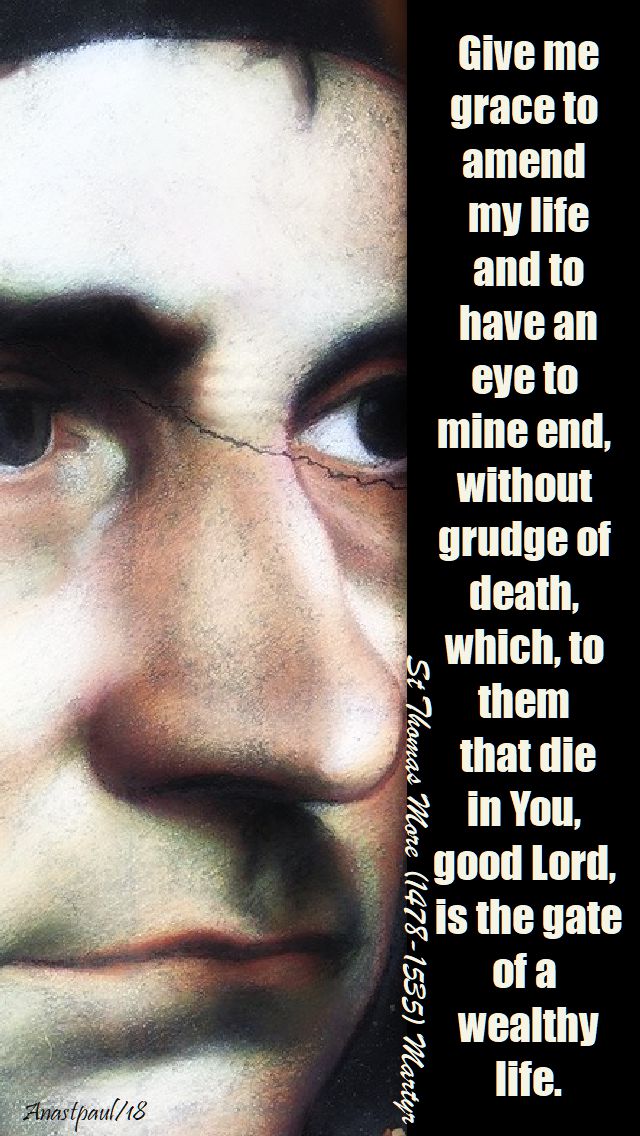
“Give me grace to amend my life
and to have an eye to mine end,
without grudge of death,
which to them that die in You,
good Lord,
is the gate of a wealthy life.”

St Thomas More (1478-1535) Martyrgive me grace good lord - st thomas more - 31 aug 2018

Posted in DOCTORS of the Church, MORNING Prayers, QUOTES of the SAINTS, QUOTES on DEATH, QUOTES on REPENTANCE, SAINT of the DAY, The WORD

One Minute Reflection – 31 August – Today’s Gospel: Matthew 25:1–13

One Minute Reflection – 31 August – Friday of the Twenty-first week in Ordinary Time, Year B – Today’s Gospel: Matthew 25:1–13 and the memorial of St Aidan of Lindisfarne

But at midnight there was a cry, ‘Behold, the bridegroom! Come out to meet him.’ … Matthew 25:6

REFLECTION – “The souls’ husband is the Holy Spirit, by His grace.   When His interior inspiration calls the soul to repentance, then every enticement of vice is in vain.  The pride that wants command, the greed and lust that consumes everything:  this was the master that used to control and ravage the soul.   Their very names have been removed from the repentant sinner’s mouth…   When grace is poured into the soul and gives it light, God makes a covenant with sinners.   He is reconciled with them…   Then is celebrated the wedding of the bridegroom with His bride in the peace of a pure conscience.”…St Anthony of Padua (1195-1231) Doctor of the Churchbehold the bridegroom - matthew 25 6 - the souls' husband - st anthony of padua 31 aug 2018

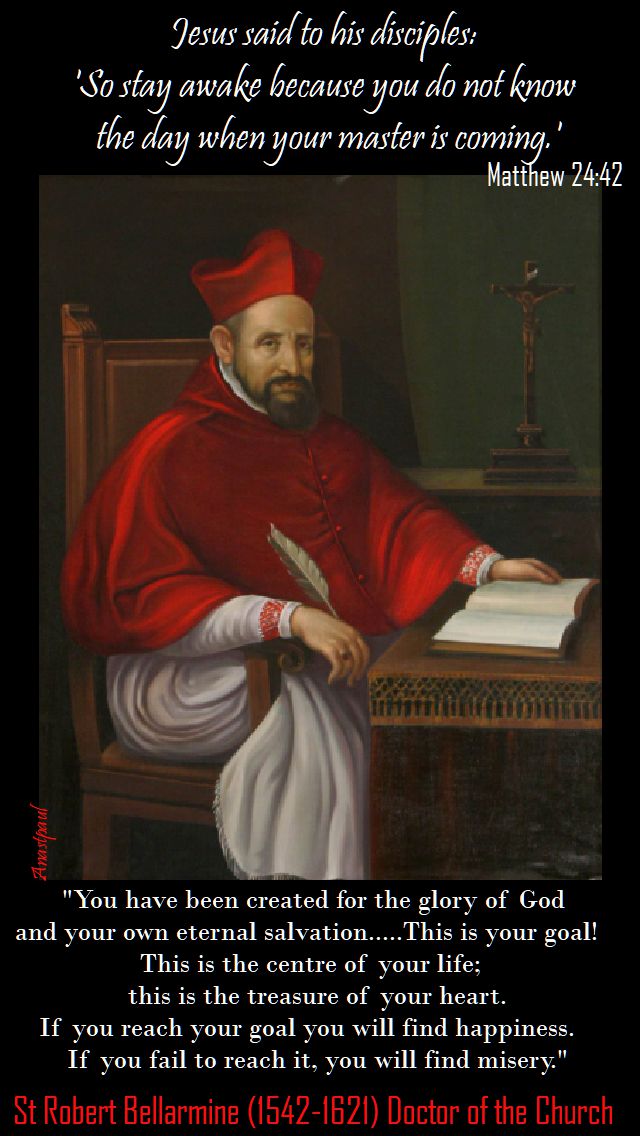
“You have been created for the glory of God and your own eternal salvation…..This is your goal!   This is the centre of your life;  this is the treasure of your heart.   If you reach your goal you will find happiness.   If you fail to reach it, you will find misery.”……St Robert Bellarmine (1542-1621) Doctor of the Churchyou-have-been-created-for-the-glory-of-god-st-robert-bellarmine-31 aug 2017

PRAYER – My Lord and my God, help me eternal Father, to stay awake! Teach me to be constantly on guard against my own weakness, to constantly keep watch for temptation and to live constantly in prayer, that Your Son will lead me to safety.   Grant that by the prayers of your holy servant, St Aidan of Lindisfarne, who always remained prayerful and awake, waiting for the Lord, we may be ready to meet the bridegroom.    Through Jesus our Lord, with the Holy Spirit, one God forever,amen.st aidan of lindisfarne pray for us 31 aug 2018

Posted in Our MORNING Offering, PRAYERS of the SAINTS, The HOLY NAME, Thomas a Kempis

Our Morning Offering – 31 August

Our Morning Offering – 31 August

O Sweet Name of Jesus
By Thomas à Kempis (1380-1471)

O sweet Name of Jesus,
holy above all names
in heaven and on earth
and to which every knee,
both of men
and of angels in heaven,
on earth and in hell bends.
You are the the Way of the just,
the Glory of the saints,
the Hope of those in need,
the Balm of the sick,
the Love of the devout
and the Consolation
of those that suffer.
O, Jesus be to me a help
and a protector
so that Your Name
may be blessed for all times.
Amen

Thomas à Kempis (1380-1471) CRSA …(Manualis Parvulorum XIII)o sweet name of jesus - thomas a kempis - 6 jan 2018

Posted in DOCTORS of the Church, SAINT of the DAY

Saint of the Day – 31 August -St Aidan of Lindisfarne (died 651) Apostle of Northumbria

Saint of the Day – 31 August -St Aidan of Lindisfarne (died 651) Apostle of Northumbria – Bishop, Monk, Missionary, Abbot, Ascetic, Apostle of Charity  – born as (Irish: Naomh Aodhán) in Ireland and died on  31 August 651 at Bamburg, England of natural causes.   Patronages – Northumbria and firefighters.   St Aidan was an Irish monk and missionary credited with restoring Christianity to Northumbria.   He founded a monastic cathedral on the island of Lindisfarne, known as Lindisfarne Priory, served as its first bishop and travelled ceaselessly throughout the countryside, spreading the gospel to both the Anglo-Saxon nobility and to the socially disenfranchised (including children and slaves).DSC04111 Aidan
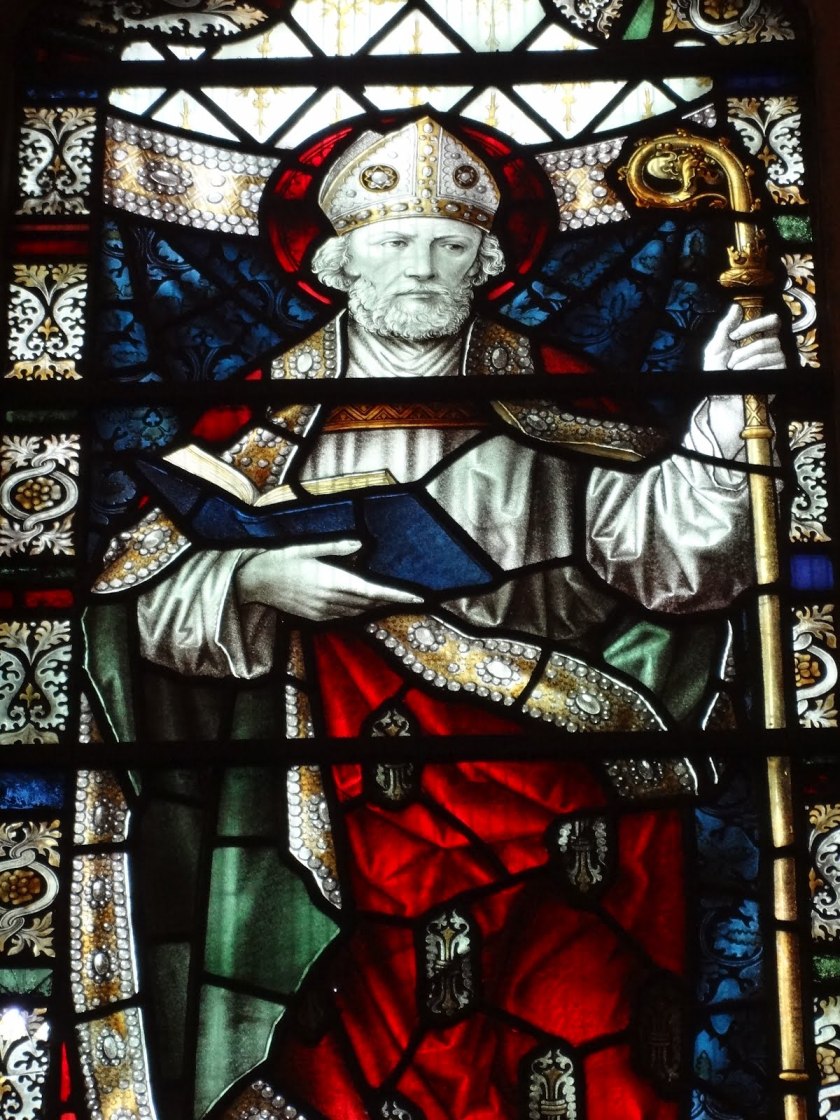
St Bede’s (673-735 Father & Doctor of the Church) meticulous and detailed account of Aidan’s life provides the basis for most biographical sketches (both classical and modern).   One notable lacuna, which (somewhat paradoxically) reinforces the notion of Bede’s reliability, is that virtually nothing is known of the monk’s early life, save that he was a monk at the ancient monastery on the island of Iona from a relatively young age and that he was of Irish descent.

In the years prior to Aidan’s mission, Christianity, which had been propagated throughout Britain but not Ireland by the Roman Empire, was being largely displaced by Anglo-Saxon paganism.   In the monastery of Iona (founded by Columba of the Irish Church), the religion soon found one of its principal exponents in Oswald of Northumbria, a noble youth who had been raised there as a king in exile since 616. Baptised as a Christian, the young king vowed to bring Christianity back to his people—an opportunity that presented itself in 634, when he gained the crown of Northumbria.

Owing to his historical connection to Iona’s monastic community, King Oswald requested that missionaries be sent from that monastery instead of the Roman-sponsored monasteries of Southern England.   At first, they sent him a bishop named Cormán, but he alienated many people by his harshness and returned in failure to Iona reporting that the Northumbrians were too stubborn to be converted.   Aidan criticised Cormán’s methods and was soon sent as his replacement.   He became bishop in 635.st aidan icon
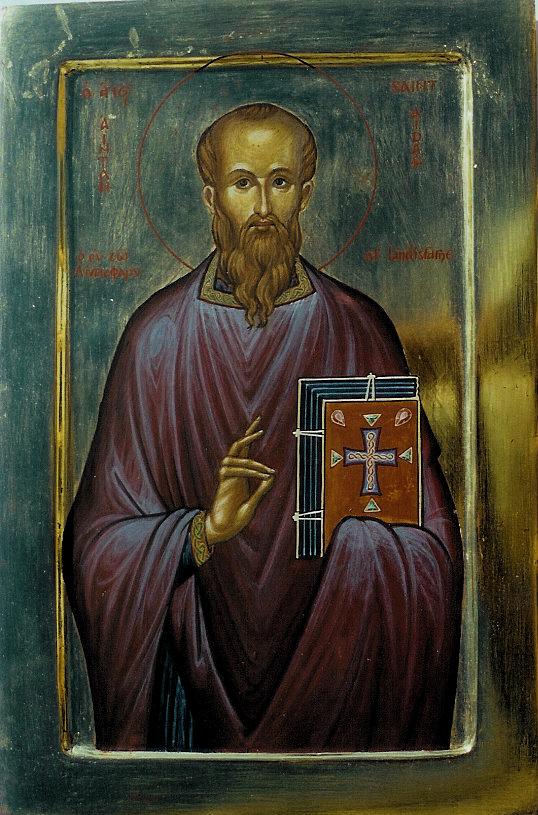
Allying himself with the pious king, Aidan chose the island of Lindisfarne, which was close to the royal castle at Bamburgh, as the seat of his diocese.   An inspired missionary, Aidan would walk from one village to another, politely conversing with the people he saw and slowly interesting them in Christianity –  in this, he followed the early apostolic model of conversion, by offering “them first the milk of gentle doctrine, to bring them by degrees, while nourishing them with the Divine Word, to the true understanding and practice of the more advanced precepts.”   By patiently talking to the people on their own level (and by taking an active interest in their lives and communities), Aidan and his monks slowly restored Christianity to the Northumbrian countryside.   King Oswald, who after his years of exile had a perfect command of Irish, often had to translate for Aidan and his monks, who did not speak English at first.Enniscorthy_St._Aidan's_Cathedral_East_Aisle_Fifth_Window_Saint_Aidan_Detail_2009_09_28
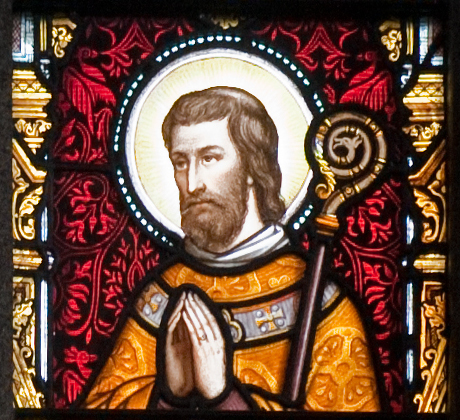
In his years of evangelism, Aidan was responsible for the construction of churches, monasteries and schools throughout Northumbria.   At the same time, he earned a tremendous reputation for his pious charity and dedication to the less fortunate—such as his tendency to provide room, board and education to orphans and his use of contributions to pay for the freedom of slaves.

“He was one to traverse both town and country on foot, never on horseback, unless compelled by some urgent necessity and wherever in his way, he saw any, either rich or poor, he invited them, if infidels, to embrace the mystery of the faith or if they were believers, to strengthen them in the faith, and to stir them up by words and actions to alms and good works. … This [the reading of scriptures and psalms and meditation upon holy truths] was the daily employment of himself and all that were with him, wheresoever they went and if it happened, which was but seldom, that he was invited to eat with the king, he went with one or two clerks, and having taken a small repast, made haste to be gone with them, either to read or write.

At that time, many religious men and women, stirred up by his example, adopted the custom of fasting on Wednesdays and Fridays, till the ninth hour, throughout the year, except during the fifty days after Easter.

He never gave money to the powerful men of the world but only meat, if he happened to entertain them and, on the contrary, whatsoever gifts of money he received from the rich, he either distributed them, as has been said, to the use of the poor, or bestowed them in ransoming such as had been wrong fully sold for slaves.   Moreover, he afterwards made many of those he had ransomed his disciples, and after having taught and instructed them, advanced them to the order of priesthood.” (St Bede)

The monastery he founded grew and helped found churches and other religious institutions throughout the area.   It also served as centre of learning and a storehouse of scholarly knowledge, training many of Aidan’s young charges for a career in the priesthood.   Though Aidan was a member of the Irish branch of Christianity (instead of the Roman branch), his character and energy in missionary work won him the respect of Pope Honorius I and Felix of Dunwich.Saint_Aidan-glass lg
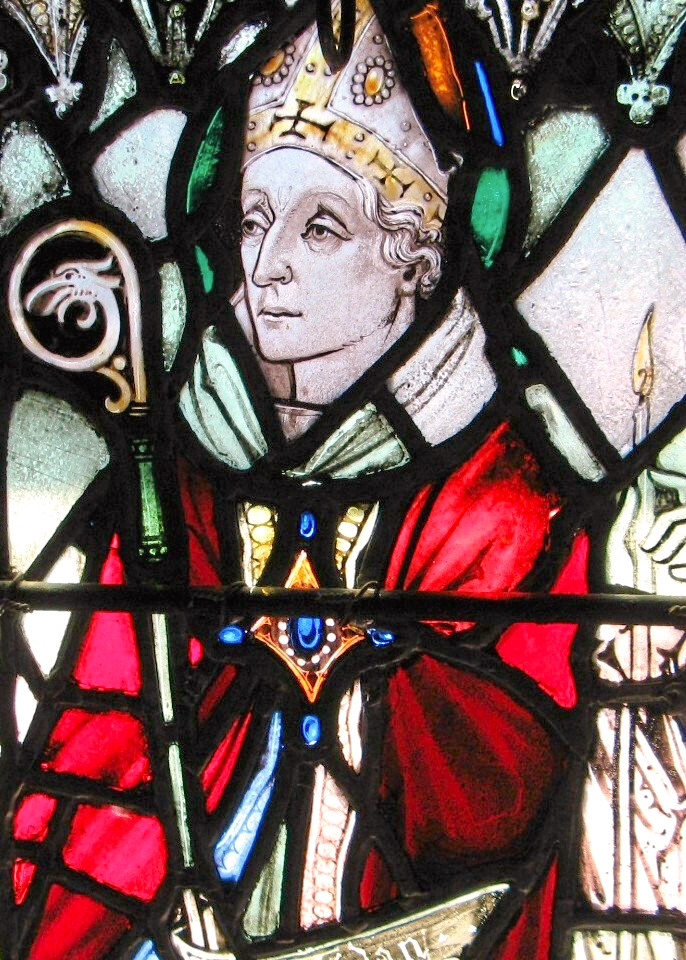
When Oswald died in 642, Aidan received continued support from King Oswine of Deira and the two became close friends.  As such, the monk’s ministry continued relatively unchanged until the rise of pagan hostilities in 651.   At that time, a pagan army attacked Bamburgh and attempted to set its walls ablaze.   According to legend, Aidan saw the black smoke from his cell at Lindisfarne Abbey, immediately recognised its cause and knelt in prayer for the fate of the city.   Miraculously, the winds abruptly reversed their course, blowing the conflagration towards the enemy, which convinced them that the capital city was defended by potent spiritual forces.   Around this time, Oswine was betrayed and murdered.   Two weeks later Aidan died, on 31 August 651.   He had become ill while on one of his incessant missionary tours and died leaning against the wall of the local church.   As Baring-Gould poetically summarises: “It was a death which became a soldier of the faith upon his own fit field of battle.”

After his death, Aidan’s body was buried at Lindisfarne, beneath the abbey that he had helped found.   Though his popularity waned in the coming years, “in the 11th century Glastonbury monks obtained some supposed relics of Aidan through their influence Aidan’s feast appears in the early Wessex calendars, which provide the main evidence for his cult after the age of Bede.”st aidan of lindisfarne - header
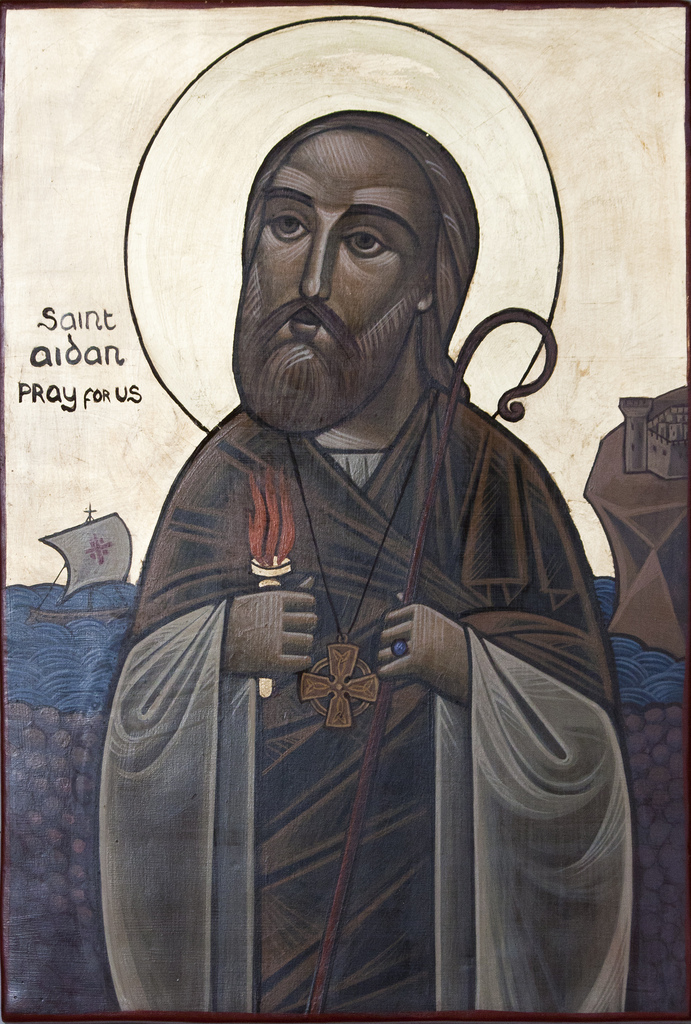
His feast is celebrated on the anniversary of his death, 31 August.   Reflecting his Irish origins, his Scottish monasticism and his ministry to the English, Aidan has been proposed as a possible patron saint of the United Kingdom.

Today, Aidan’s significance is still recognised in the following saying by Joseph Lightfoot, Bishop of Durham:

“Augustine was the Apostle of Kent but Aidan was the Apostle of the English.”
… Bishop Lightfoot
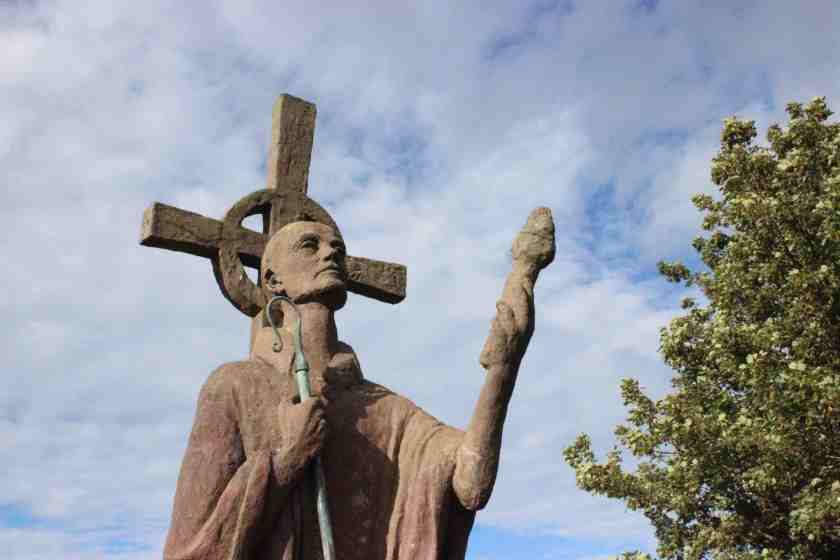
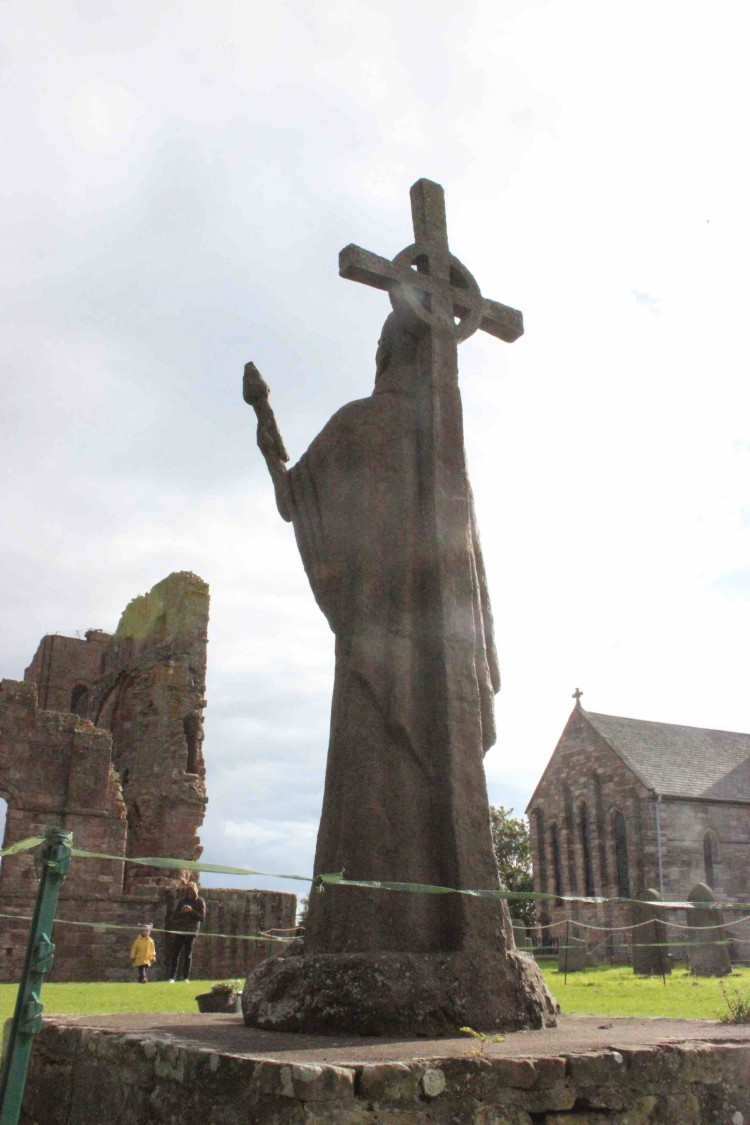
St Aidan’s College of the University of Durham was named after Aidan of Lindisfarne.   Below is the Statue of St Aidan on Holy Island of Lindisfarne carrying the Flame of the Gospel of Christ.st aidan statuest aidan carrying the flame
Posted in SAINT of the DAY

Memorials of the Saints – 31 August

St Aidan of Lindisfarne (died 651) Apostle of Northumbria
St Ammi of Caesarea
St Aristides the Philosopher
St Barbolenus of Bobbio
St Caesidius
St Cuthburgh of Wimborne
St Cwenburgh of Wimborne
St Mark of Milan
St Optatus of Auxerre
St Paulinus of Trier
Bl Pere Tarrés i Claret
St Raymond Nonnatus O.deM. (1204-1240)
Biography here: https://anastpaul.wordpress.com/2017/08/31/saint-of-the-day-31-august-st-raymond-nonnatus-o-dem/

St Raymond Nonnatus Robustian of Milan
St Raymond Nonnatus Rufina of Caesarea
St Raymond Nonnatus Theodotus of Caesarea

Martyrs of Prague – 64 beati

Martyred in the Spanish Civil War:
Martyrs of Pozo de la Lagarta – 18 beati:
• Blessed Bernardo Cembranos Nistal
• Blessed Dionisio Ullivarri Barajuán
• Blessed Enrique Vidaurreta Palma
• Blessed Félix Paco Escartín
• Blessed Germán Martín y Martín
• Blessed Isidro Ordóñez Díez
• Blessed José María Palacio Montes
• Blessed Justo Zariquiegui Mendoza
• Blessed Marciano Herrero Martínez
• Blessed Miguel Menéndez García
• Blessed Tomás Alonso Sanjuán
• Blessed Ventureta Sauleda Paulís

Posted in MORNING Prayers, OPEN HOUSE...Conversations with..., QUOTES of the SAINTS, QUOTES on CHARITY, QUOTES on HUMILITY, QUOTES on LOVE, Uncategorized

Open House….Conversations with …. 30 August

Open House….Conversations with …. 30 August

Little weekly reflections from those ‘minds alive’, our friends and intercessors waiting on our arrival.

Mother, how do we live by example?

Thomas Malcolm Muggeridge was a British journalist and media celebrity who did not care much about God and religion.   But…he saw compassion actualised before his very eyes through the person of Mother Teresa and that made him do something he had sworn he would never do – he became a Catholic!
Muggeridge had an assignment to write about Mother Teresa.   Travelling to India, he thought the trip was just the usual work but the amazing thing was, in the course of his talks and days of observation of the little nun, he experienced a complete conversion of his heart, his mind, his soul, his very being.
He confessed:  “Words cannot express how much I owe her, she showed me Christianity in action.   She showed me the power of love.   She showed me how one loving person can start a tidal wave of love that can spread to the entire world!”

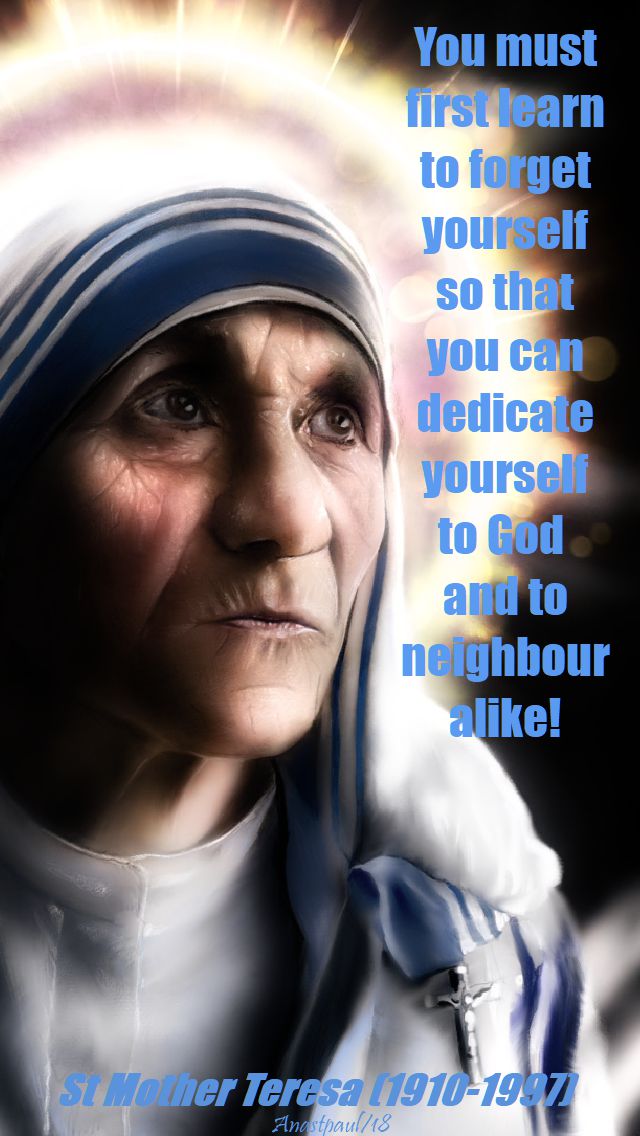
“You must first learn to forget yourself

so that you can dedicate yourself to God and to neighbour alike!”

St Mother Teresa (1910-1997)

you must first learn to forget yourself - st mother terea - 30 aug 2018 - conversations with 2

Posted in MARIAN PRAYERS, MORNING Prayers, PAPAL SERMONS, QUOTES - J R R Tolkien and MORE, QUOTES of the SAINTS, QUOTES on DIVINE PROVIDENCE, SAINT of the DAY

Thought for the Day – 30 August – The Memorial of St Jeanne Jugan L.S.P. (Mary of the Cross) (1792 – 1879)

Thought for the Day – 30 August – The Memorial of St Jeanne Jugan L.S.P. (Mary of the Cross) (1792 – 1879)

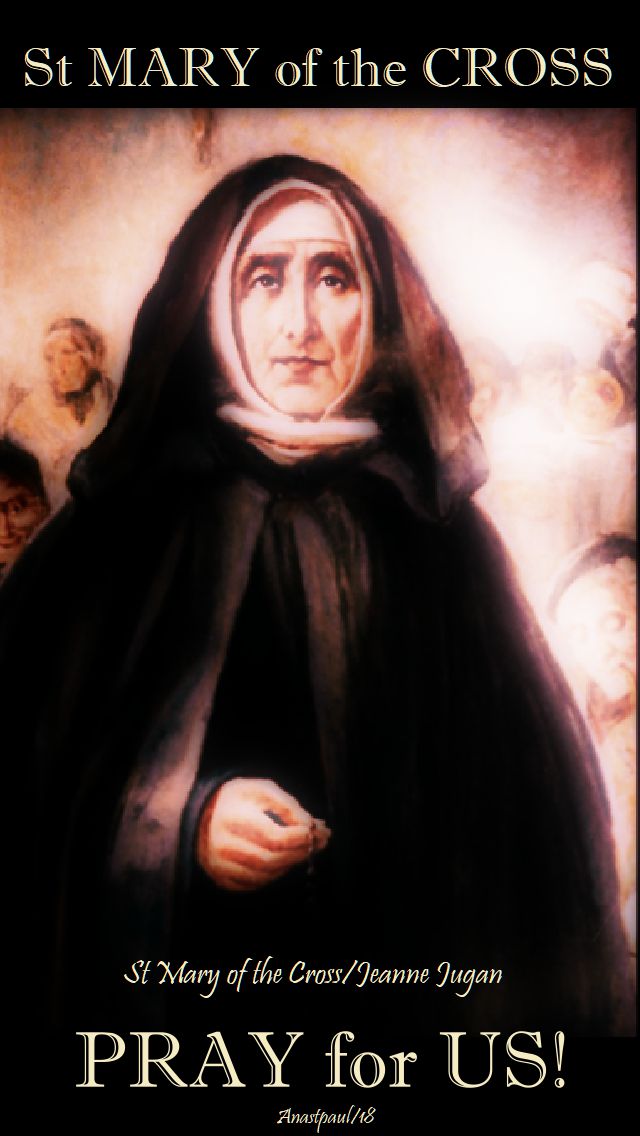
By her admirable work at the service of the most deprived elderly, St Mary of the Cross is also like a beacon to guide our societies which must always rediscover the place and the unique contribution of this period of life.
Born in 1792 at Cancale in Brittany, Jeanne Jugan was concerned with the dignity of her brothers and sisters in humanity whom age had made more vulnerable, recognising in them the Person of Christ himself.   “Look upon the poor with compassion”, she would say, “and Jesus will look kindly upon you on your last day”.
Jeanne Jugan focused upon the elderly a compassionate gaze drawn from her profound communion with God in her joyful, disinterested service, which she carried out with gentleness and humility of heart, desiring herself to be poor among the poor.   Jeanne lived the mystery of love, peacefully accepting obscurity and self-emptying until her death.   Her charism is ever timely while so many elderly people are suffering from numerous forms of poverty and solitude and are sometimes also abandoned by their families.
In the Beatitudes Jeanne Jugan found the source of the spirit of hospitality and fraternal love, founded on unlimited trust in Providence, which illuminated her whole life.  This evangelical dynamism is continued today across the world in the Congregation of Little Sisters of the Poor, which she founded and which testifies, after her example, to the mercy of God and the compassionate love of the Heart of Jesus for the lowliest.
May St Jeanne Jugan be for elderly people a living source of hope and for those who generously commit themselves to serving them, a powerful incentive to pursue and develop her work!

I would like to address to all the invitation to let yourselves be attracted by the luminous examples of these Saints, to let yourselves be guided by their teaching so that our entire life may become a song of praise to God’s love.   May their heavenly intercession obtain for us this grace and, especially, the motherly protection of Mary, Queen and Mother of humanity. Amen

Pope Benedict XVI – Homily at the Canonisation of St Mary of the Cross/Jeanne Jugan – Vatican Basilica Sunday, 11 October 2009

Once after meeting Jeanne Jugan, Charles Dickens said, “there is in this woman something so calm and so holy, that in seeing her I know myself to be in the presence of a superior being.

Her words went straight to my heart, so that my eyes, I know not how, filled with tears.”

St Mary of the Cross, Pray for us!st mary of the cross - jeanne jugan - pray for us - 30 aug 2018

Posted in EUCHARISTIC Adoration, MORNING Prayers, QUOTES of the SAINTS, QUOTES on CHARITY, QUOTES on DIVINE PROVIDENCE, QUOTES on FAITH, QUOTES on HOPE, QUOTES on HUMILITY, QUOTES on PEACE, QUOTES on PERSEVERANCE, QUOTES on SUFFERING, QUOTES on TRUST and complete CONFIDENCE in GOD, SAINT of the DAY, The BLESSED VIRGIN MARY, The HOLY CROSS

Quote/s of the Day – 30 August – The Memorial of St Jeanne Jugan /Mary of the Cross (1792 – 1879)

Quote/s of the Day – 30 August – The Memorial of St Jeanne Jugan /Mary of the Cross (1792 – 1879)

“Jesus is waiting
for you
in the chapel.
Go and find Him.”jesus is waiting for you in the chapel - st jeanne jugan - 19 june 2018

“Little,
very little,
be very little
before God.”little,be very little - st jeanne jugan - 30 aug 2018

“God is with us,
it will be accomplished …
God will help us,
the work is His.”god is with us - st jeanne jugan - 30 aug 2018

“In our troubles,
we must always say,
“Blessed be God,
thank You my God,
or glory to God!”in our troubles, we must always say - st jeanne jugan 30 aug 2018

“The Hail Mary
will take us
to Heaven.”the hail mary will take us to heaven - st jeanne jugan - 30 aug 2018

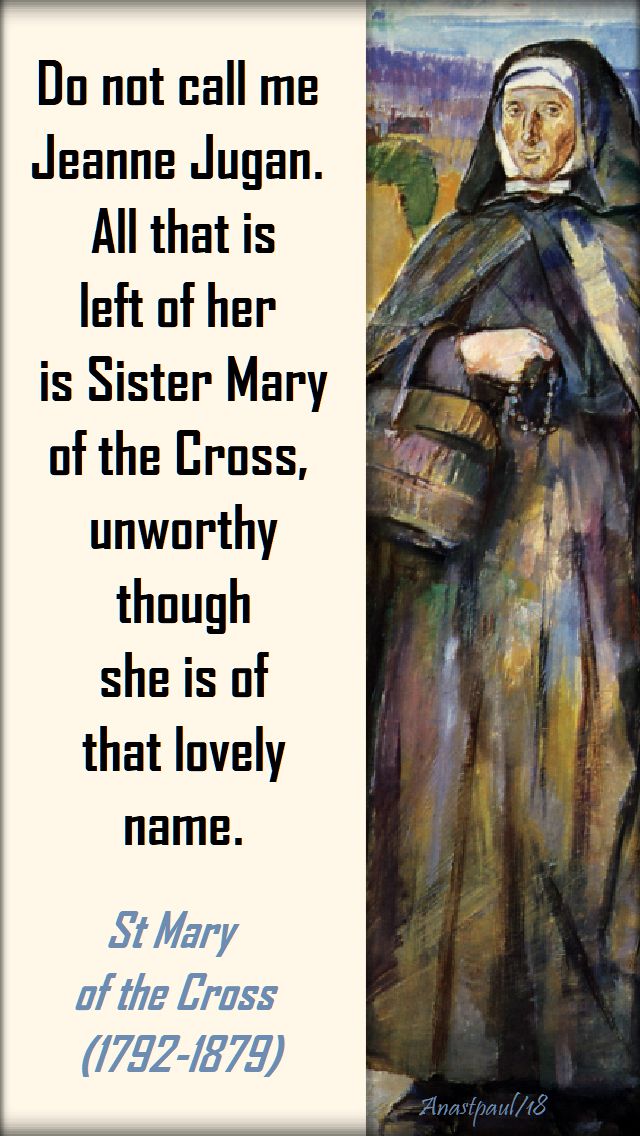
“Do not call me Jeanne Jugan.
All that is left of her
is Sister Mary of the Cross,
unworthy though she is
of that lovely name.”

St Jeanne Jugan/Mary of the Cross (1792-1879)do not call me jeanne jugan - st mary of the cross - 30 april 2018

Posted in FATHERS of the Church, MORNING Prayers, QUOTES of the SAINTS, SAINT of the DAY, The WORD

One Minute Reflection – 30 August – Today’s Gospel: Matthew 24:42–51

One Minute Reflection – 30 August – Thursday of the Twenty-first week in Ordinary Time, Year B – Today’s Gospel:  Matthew 24:42–51

Watch therefore, for you do not know on what day your Lord is coming...Matthew 24:42

REFLECTION – “We must sleep in such a way as to be easily awakened.   For Scripture says, “Gird your loins and light your lamps and be like servants who await their master’s return from a wedding, ready to open immediately when he comes and knocks.” (Lk 12:35-36).   For a sleeping man is of no more use than a dead man.   Therefore we ought often to get up at night and bless God.
Blessed are those who watch for Him and so make themselves like the angels, whom we call “watchers”.   A man asleep is worth nothing, no more than if he were dead.   But whoever has the light keeps watch and “darkness does not overcome him” (Jn 1:5) neither sleep.   Whoever has been illumined is therefore wakened to God and such a person is alive, “for what came to be in him was life.” (Jn 1:4)   “Happy the man,” says Wisdom,”who obeys me and happy those who keep my ways, happy the man watching daily at my gates, waiting at my doorposts” (Pr 8:34)…St Clement of Alexandria (150-215) Father of the Churchwatch theefore - matthew 24 42 - for a sleeping man - st clemtn of alexandria - 30 aug 2018

PRAYER – God our Saviour, through the grace of Baptism you made us children of light. Hear our prayer, that we may always walk in that light and work for truth, love and charity, as Your witnesses before men.   Dispel from our hearts the darkness of sin and keep us ever watchful for the true light, Christ Your Son, who lives and reigns with You and the Holy Spirit, God forever.   St Jeanne Jugan, you lived a life of total charity ever watchful to the needs of your neighbour, please pray for us, amen.st jeanne jugan pray for us 30 aug 2018

Posted in Our MORNING Offering, PRAYERS of the SAINTS, SAINT of the DAY

Our Morning Offering – 30 August – The Memorial of St Jeanne Jugan L.S.P. (Mary of the Cross) (1792 – 1879)

Our Morning Offering – 30 August – The Memorial of St Jeanne Jugan L.S.P. (Mary of the Cross) (1792 – 1879)

Radiating Christ
St Mother Teresa (1910-1997)

Dear Jesus, help us to spread Your fragrance
everywhere we go.
Flood our souls with Your spirit and life.
Penetrate and possess our whole being so utterly
that our lives may only be a radiance of Yours.
Shine through us and be so in us
that every soul we come in contact with
may feel Your presence in our soul.
Let them look up and see no longer us
but only Jesus.
Stay with us
and then we shall begin to shine as You shine,
so to shine as to be light to others.
The light, O Jesus, will be all from You.
None of it will be ours.
It will be You shining on others through us.
Let us thus praise You in the way You love best
by shining on those around us.
Let us preach You without preaching,
not by words but by our example;
by the catching force –
the sympathetic influence of what we do,
the evident fullness of the love
our hearts bear to You.
Amen.radiating-christ-by-st-mother-teresa-6-april-2018 - no 2 30 aug 2018

Posted in SAINT of the DAY

Saint of the Day – 30 August – St Mary of the Cross (1792 – 1879) Jeanne Jugan

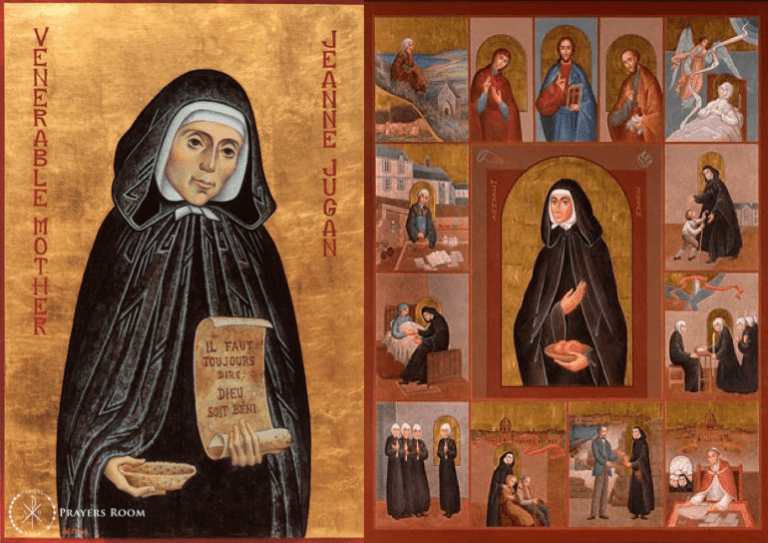
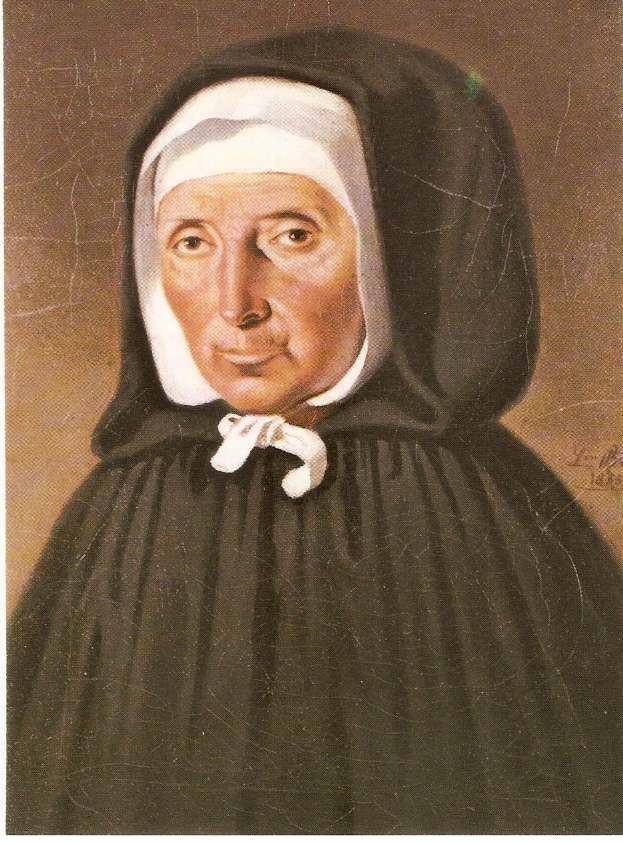
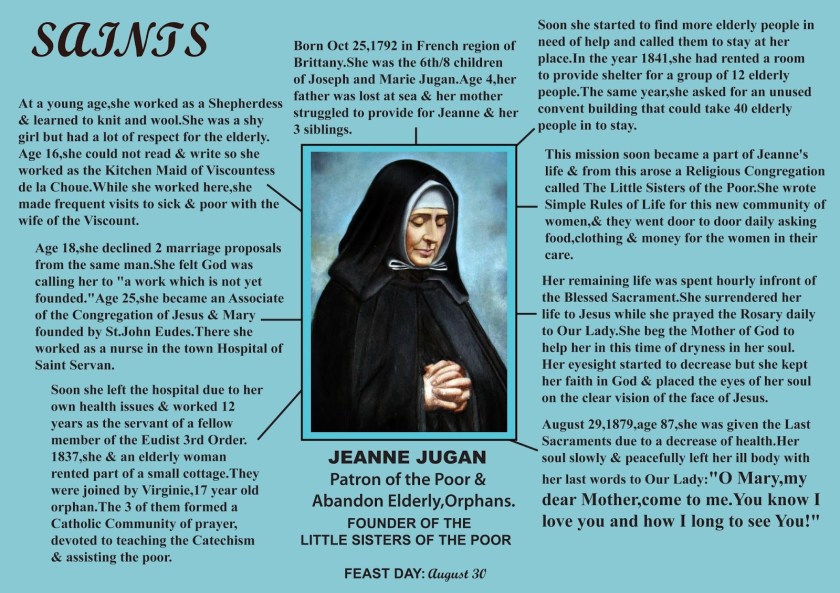
Saint of the Day – 30 August – St Mary of the Cross L.SP.(1792 – 1879) Jeanne Jugan – Founder – born on 25 October 1792 at Les Petites-Croix, Cancale, d’Ille-et-Vilaine, Brittany, France and died on 29 August 1879 at Saint-Pern, d’Ille-et-Vilaine, Bretagne, France of natural causes.   Patronages – the destitute elderly, poor and abandoned.   St Jeanne Jugan was a French woman who became known for the dedication of her life to the neediest of the elderly poor.   Her service resulted in the establishment of the Little Sisters of the Poor, who care for the elderly who have no other resources throughout the world. SAINT Jeanne juganiSt-Jeanne-Jugan-Little-Sisters-of-the-Poor-768x543

Jeanne was born 25 October 1792, in the port city of Cancale in Brittany, the sixth of the eight children of Joseph and Marie Jugan.   She grew up during the political and religious upheavals of the French Revolution.   Four years after she was born, her father, a fisherman, was lost at sea.   Her mother struggled to provide for the young Jeanne and her siblings, while also providing them secretly with religious instruction amid the anti-Catholic persecutions of the day.

Jugan worked as a shepherdess while still very young and learned to knit and spin wool. She could barely read and write.   When she was 16, she took a job as the kitchen maid of the Viscountess de la Choue.  The viscountess, a devout Catholic, had Jugan accompany her when she visited the sick and the poor.   At age 18 and again six years later, she declined marriage proposals from the same man.   She told her mother that God had otherplans, and was calling her to “a work which is not yet founded”.   At age 25, the young woman became an Associate of the Congregation of Jesus and Mary founded by St John Eudes (1501-1680) (Eudists).   Jugan also worked as a nurse in the town hospital of Saint-Servan.   She worked hard at this physically demanding job but after six years, she left the hospital due to her own health issues.   She then worked for 12 years as the servant of a fellow member of the Eudist Third Order, until the woman’s death in 1835. In the course of Jugan’s duties, the two women recognised a similar Catholic spirituality and began to teach catechism to the children of the town and to care for the poor and other unfortunates.

In 1837, Jugan and a 72-year-old woman (Françoise Aubert) rented part of a small cottage and were joined by Virginie Tredaniel, a 17-year-old orphan.   These three women then formed a Catholic community of prayer, devoted to teaching the catechism and assisting the poor.

In the winter of 1839, Jugan encountered Anne Chauvin, an elderly woman who was blind, partially paralysed and had no one to care for her.   Jugan carried her home to her apartment and took her in from that day forward, letting the woman have her bed while she slept in the attic.   She soon took in two more old women in need of help and by 1841 she had rented a room to provide housing for a dozen elderly people.   The following year, she acquired an unused convent building that could house 40 of them.   From this act of charity, with the approval of her colleagues, Jeanne then focused her attention upon the mission of assisting abandoned elderly women and from this beginning arose a religious congregation called The Little Sisters of the Poor.   Jugan wrote a simple Rule of Life for this new community of women and they went door-to-door daily requesting food, clothing and money for the women in their care.   This became Jugan’s life work, and she performed this mission for the next four decades.

During the 1840s, many other young women joined Jugan in her mission of service to the elderly poor.   By begging in the streets, the foundress was able to establish four more homes for their beneficiaries by the end of the decade.   In 1847 based on the request of Leo Dupont (known as the Holy Man of Tours) she established a house in that city.   She was much sought after whenever problems arose and worked with religious and civil authorities to seek help for the poor.   By 1850, over 100 women had joined the congregation.

St.-Jeanne-Jugan

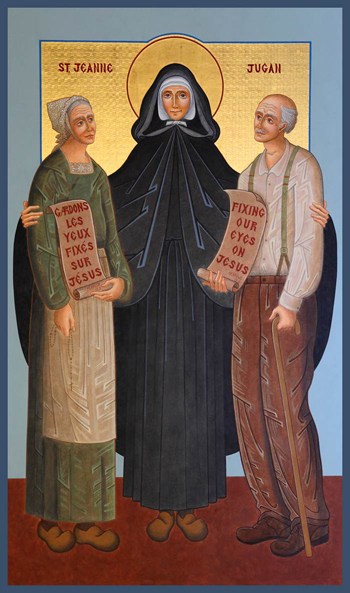
Jugan, however, was forced out of her leadership role by the Abbé Auguste Le Pailleur, the priest who had been appointed Superior General of the congregation by the local bishop.   In an apparent effort to suppress her true role as foundress, he assigned her to do nothing but begging on the street until she was sent into retirement and a life of obscurity for 27 years.   Her eyesight was impaired in her final years.st jeanne jugan with the elderly icon

After communities of Little Sisters had begun to spread throughout France, the work spread to England in 1851.   From 1866-1871 five communities of Little Sisters were founded across the United States.   By 1879, the community Jeanne founded had 2,400 Little Sisters and had spread across Europe and to North America.   On 1 March that year, Pope Leo XIII approved the Constitutions for the Little Sisters of the Poor for an initial period of seven years.   At the time of her death on 29 August 1879, many of the Little Sisters did not know that she was the one to have founded the congregation.   Le Pailleur, however, was investigated and dismissed in 1890 and Jugan came to be acknowledged as their foundress.

In September 1885, the congregation arrived in South America and made a first foundation in Valparaíso, Chile, from which it expanded later on.st Jeanne_Jugan-lg

Jugan died in 1879 at the age of 86 and was buried in the graveyard of the General Motherhouse at Saint-Pern.   She was Beatified in Rome by Pope John Paul II on 3 October 1982 and Canonised on 11 October 2009, by Pope Benedict XVI, who said, “In the Beatitudes, Jeanne Jugan found the source of the spirit of hospitality and fraternal love, founded on unlimited trust in Providence, which illuminated her whole life.”

Today, pilgrims can visit the house where she was born, the House of the Cross at Saint-Servan and the Motherhouse where she lived her last 23 years at La Tour Saint Joseph in Saint-Pern.

st jeanne jugan statue

Posted in SAINT of the DAY

Memorials of the Saints -30 August

St Adauctus of Rome
St Agilus
Bl Alfredo Ildefonso Schuster
St Arsenius the Hermit
St Boniface of Hadrumetum
St Bononius of Lucedio
Bl Bronislava of Poland
Bl Edward Shelley
Bl Ero di Armenteira
Bl Eustáquio van Lieshout
St Fantinus of San Mercurius
St Felix of Rome
St Fiacre
St Gaudentia of Rome
Bl Giovanni Giovenale Ancina
St Jeanne Jugan L.S.P. (Mary of the Cross) (1792 – 1879)

Bl John Roche
St Loarn
St Margaret Ward
Bl María Rafols-Bruna
St Narcisa de Jesus Martillo Moran
St Pammachius
St Pelagius the Hermit
St Peter of Trevi
Bl Riccardo of Lotaringia
Bl Richard Flower
Bl Richard Leigh
Bl Richard Martin
St Rumon of Tavistock
Sylvanus the Hermit
St Thecla of Hadrumetum
St Theodosius of Oria
Bl Yusuf Nehme

Martyrs of Colonia Suffetulana – 60 saints: A group of 60 Christians martyred for destroying a statue of Hermes.
They were martyred in Colonia Suffetulana, Africa.

Martyred in the Spanish Civil War:
• Blessed José Ferrer Adell
• Blessed Manuel Medina Olmos
• Blessed Vicente Cabanes Badenas
Martyrs of Barranco del Chisme (Spanish Civil War) – 10 beati:
• Blessed Alberto José Larrazábal Michelena
• Blessed Antonio María Arriaga Anduiza
• Carles Canyes Santacana
• Blessed Caterina Margenat Roura
• Diego Ventaja Milán
• Blessed Eleuterio Angulo Ayala
• Blessed Josefa Monrabal Montaner
• Manuel Medina Olmos
• Blessed Maria Dolores Oller Angelats
• Blessed Nicasio Romo Rubio

Posted in franciscan OFM, MORNING Prayers, SAINT of the DAY

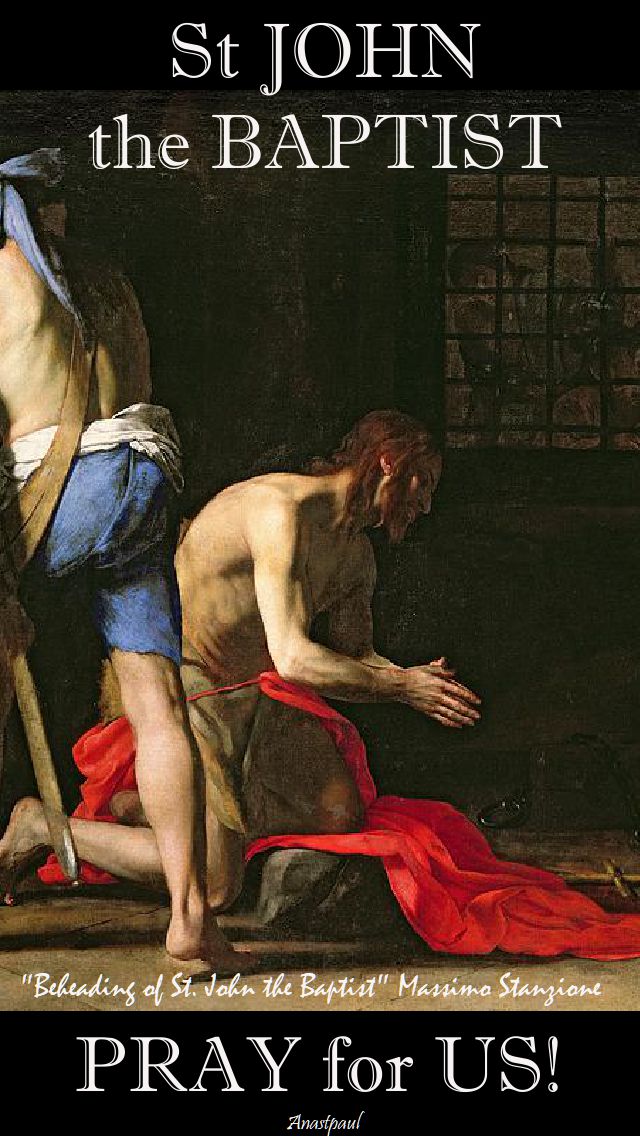
Thought for the Day – 29 August – The Memorial of the Beheading of St John the Baptist

Thought for the Day – 29 August – The Memorial of the Beheading of St John the Baptist

The drunken oath of a king with a shallow sense of honour, a seductive dance and the hateful heart of a queen combined to bring about the martyrdom of John the Baptist.  The greatest of prophets suffered the fate of so many Old Testament prophets before him:  rejection and martyrdom.   The “voice crying in the desert” did not hesitate to accuse the guilty, did not hesitate to speak the truth.   But why? What possesses a man that he would give up his very life?

This great religious reformer was sent by God to prepare the people for the Messiah.   His vocation was one of selfless giving.   The only power that he claimed was the Spirit of yjr Lord.   “I am baptizing you with water, for repentance but the one who is coming after me is mightier than I.   I am not worthy to carry His sandals.   He will baptise you with the Holy Spirit and fire” (Matthew 3:11).

Scripture tells us that many people followed John looking to him for hope, perhaps in anticipation of some great messianic power.   John never allowed himself the false honour of receiving these people for his own glory.   He knew his calling was one of preparation.   When the time came, he led his disciples to Jesus:   “The next day John was there again with two of his disciples and as he watched Jesus walk by, he said, ‘Behold, the Lamb of God.’   The two disciples heard what he said and followed Jesus” (John 1:35-37).

It is John the Baptist who has pointed the way to Christ.   John’s life and death were a giving over of self for God and other people.   His simple style of life was one of complete detachment from earthly possessions  . His heart was lifted on God and the call that he heard from the Spirit of God speaking to his heart.   Confident of God’s grace, he had the courage to speak words of condemnation, repentance, and salvation.

Each of us has a calling to which we must listen.   No-one will ever repeat the mission of John and yet all of us are called to that very mission.   It is the role of the Christian to witness to Jesus.   Whatever our position in this world, we are called to be disciples of Christ.   By our words and deeds, others should realise that we live in the joy of knowing that Jesus is Lord.   We do not have to depend upon our own limited resources but can draw strength from the vastness of Christ’s saving grace.
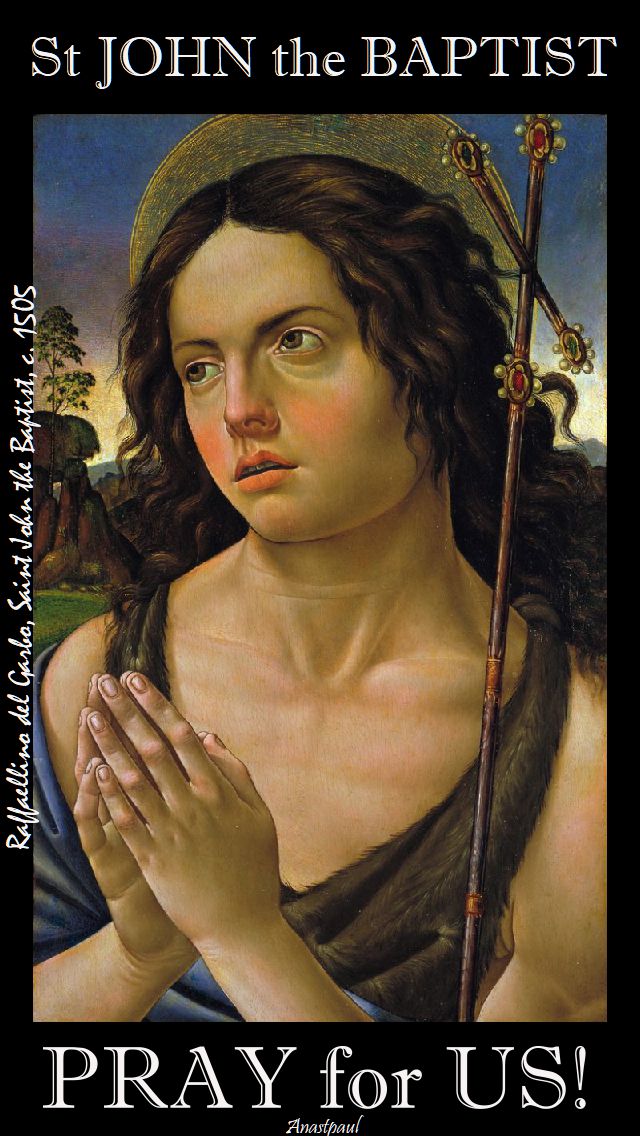
St John the Baptist, Pray for us!st-john-the-baptist-pray-for-us-2-29 aug 2017

Posted in DOCTORS of the Church, FATHERS of the Church, MORNING Prayers, ON the SAINTS, PAPAL SERMONS, QUOTES - J R R Tolkien and MORE, QUOTES of the SAINTS, SAINT of the DAY

Quote/s of the Day – 29 August – The Memorial of the Beheading of St John the Baptist

Quote/s of the Day – 29 August – The Memorial of the Beheading of St John the Baptist

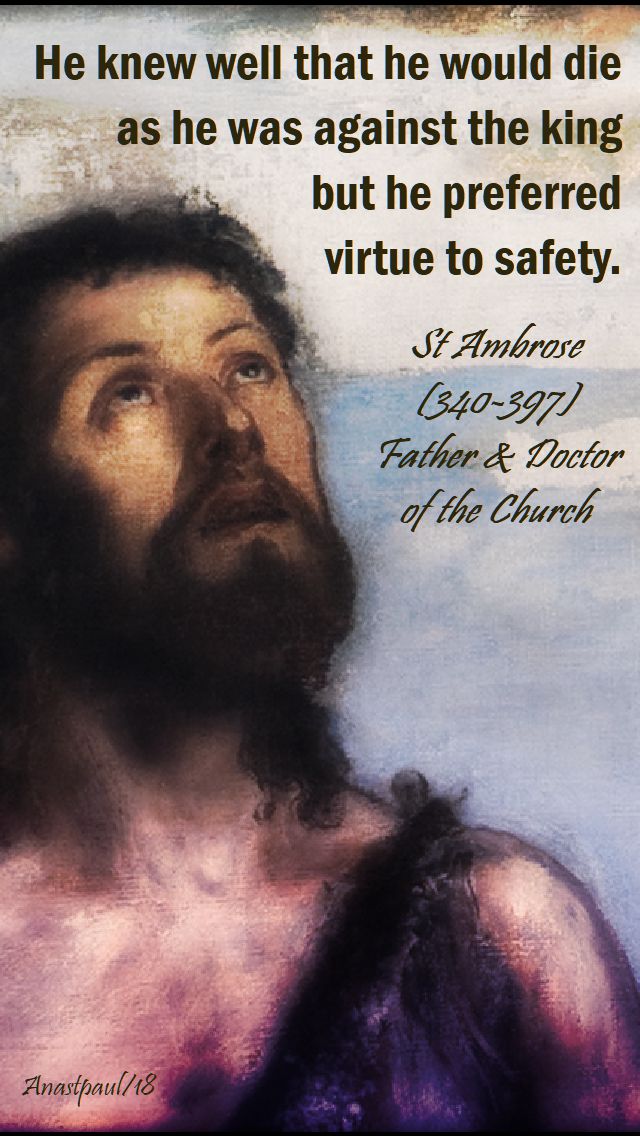
“And what else did John have in mind but what is virtuous,
so that he could not endure a wicked union even in the king’s case, saying:
“It is not lawful for thee to have her to wife.”
He could have been silent, had he not thought it unseemly for himself
not to speak the truth for fear of death,
or to make the prophetic office yield to the king,
or to indulge in flattery.
He knew well that he would die as he was against the king
but he preferred virtue to safety.
Yet what is more expedient than the suffering
which brought glory to the saint.”

St Ambrose (340-397) Father & Doctor of the Churchhe knew well that he would die - st ambrose - beheading st john the baptist - 29 aug 2018

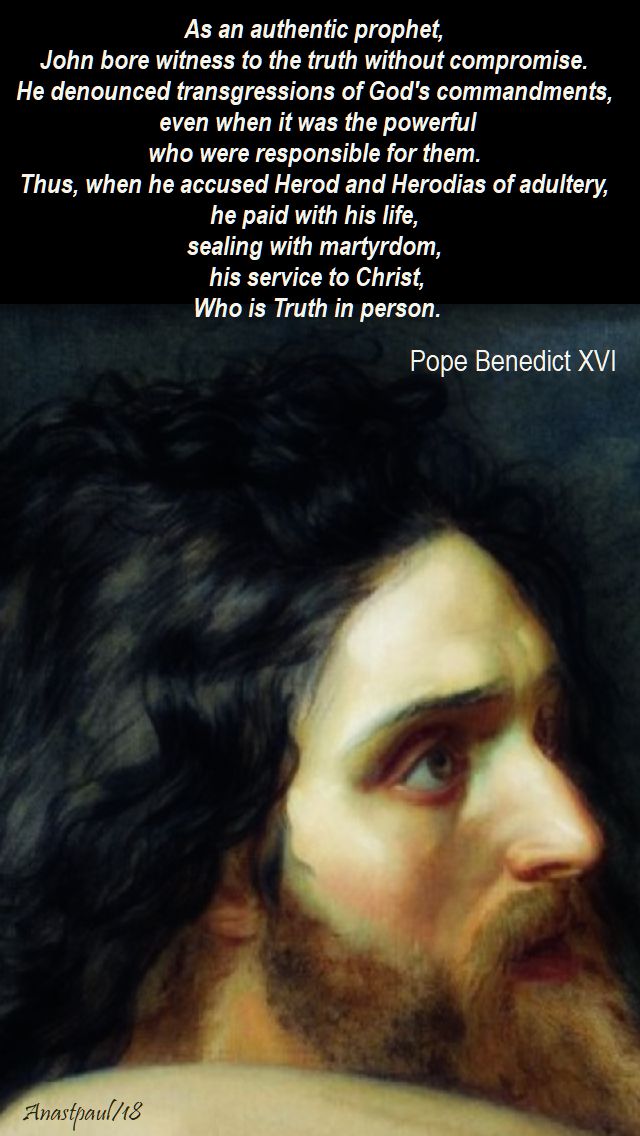
“As an authentic prophet,
John bore witness to the truth without compromise.
He denounced transgressions of God’s commandments,
even when it was the powerful who were responsible for them.
Thus, when he accused Herod and Herodias of adultery,
he paid with his life,
sealing with martyrdom,
his service to Christ who is Truth in person.”

Pope Benedict XVI (24 June 2007)as an authentic prophet - pope benedict - mem of beheading of st john the baptist - 29 aug 2018

Posted in DOCTORS of the Church, FATHERS of the Church, MORNING Prayers, ON the SAINTS, QUOTES of the SAINTS, SAINT of the DAY

One Minute Reflection – 29 August – The Memorial of the Beheading of St John the Baptist – Today’s Gospel: Mark 6:17–29

One Minute Reflection – 29 August – The Memorial of the Beheading of St John the Baptist – Today’s Gospel: Mark 6:17–29

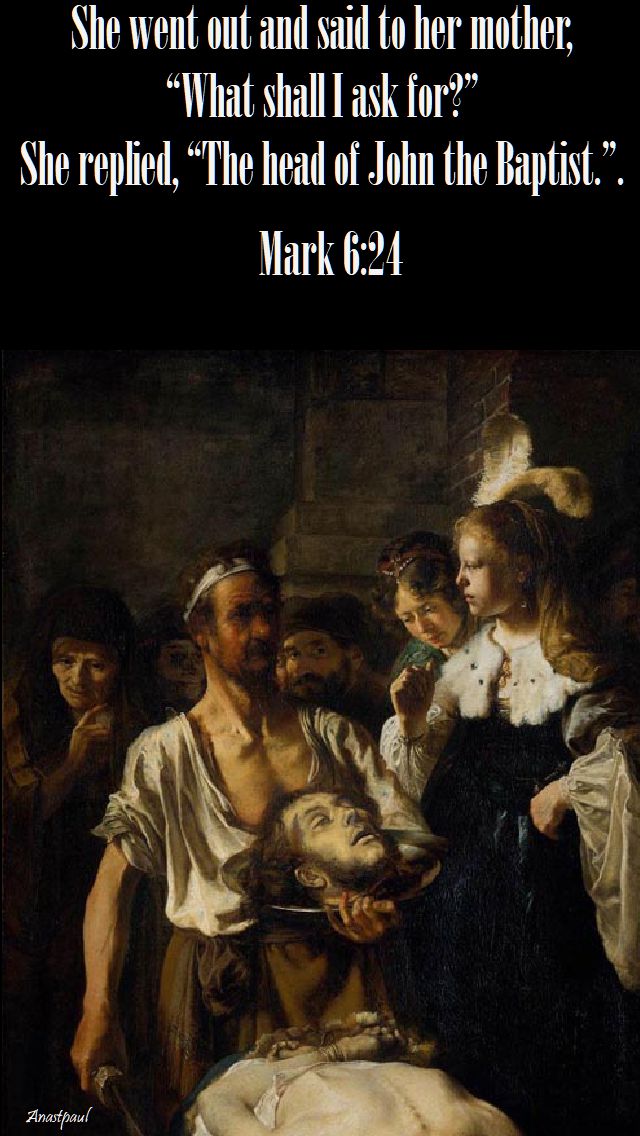
She went out and said to her mother, “What shall I ask for?” She replied, “The head of John the Baptist.”…Mark 6:24mark-6-24.she went out and asked her mother - 29 aug 2017

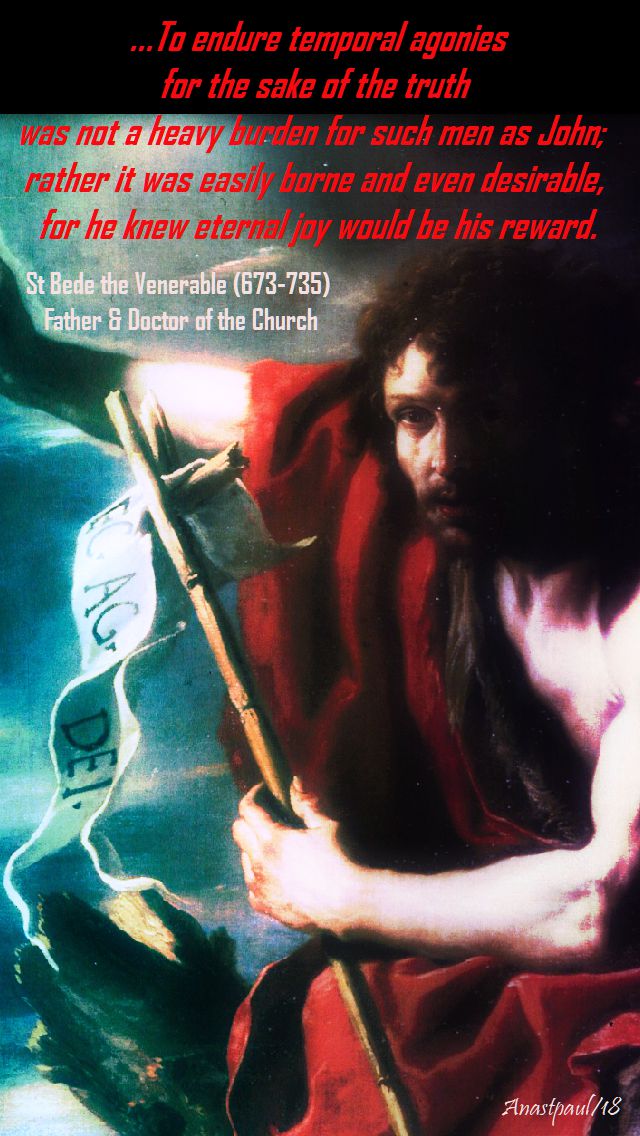
REFLECTION – “John was baptised in his own blood, though he had been privileged to baptise the Redeemer of the world, to hear the voice of the Father above him and to see the grace of the Holy Spirit descending upon him.   But to endure temporal agonies for the sake of the truth was not a heavy burden for such men as John;  rather it was easily borne and even desirable, for he knew eternal joy would be his reward.”…St Bede the Venerable (673-735) Father & Doctor of the Churchto endure temporal agonies - ven bede - 29 august 2018 st john the baptist

PRAYER – God our Father, You appointed St John the Baptist to be the herald of the birth and death of Christ Your Son. Grant that as he died a martyr for justice and truth, so we may also courageously bear witness to Your Word.   We make our prayer, through Jesus Christ our Lord with the Holy Spirit, one God forever. St John the Baptist, pray for us, amen.st-john-the-baptist-pray-for-us1-29 aug 2017

Posted in BREVIARY Prayers, HYMNS, Our MORNING Offering, SAINT of the DAY

Our Morning Offering – 29 August – The Memorial of the Beheading of St John the Baptist

Our Morning Offering – 29 August – The Memorial of the Beheading of St John the Baptist

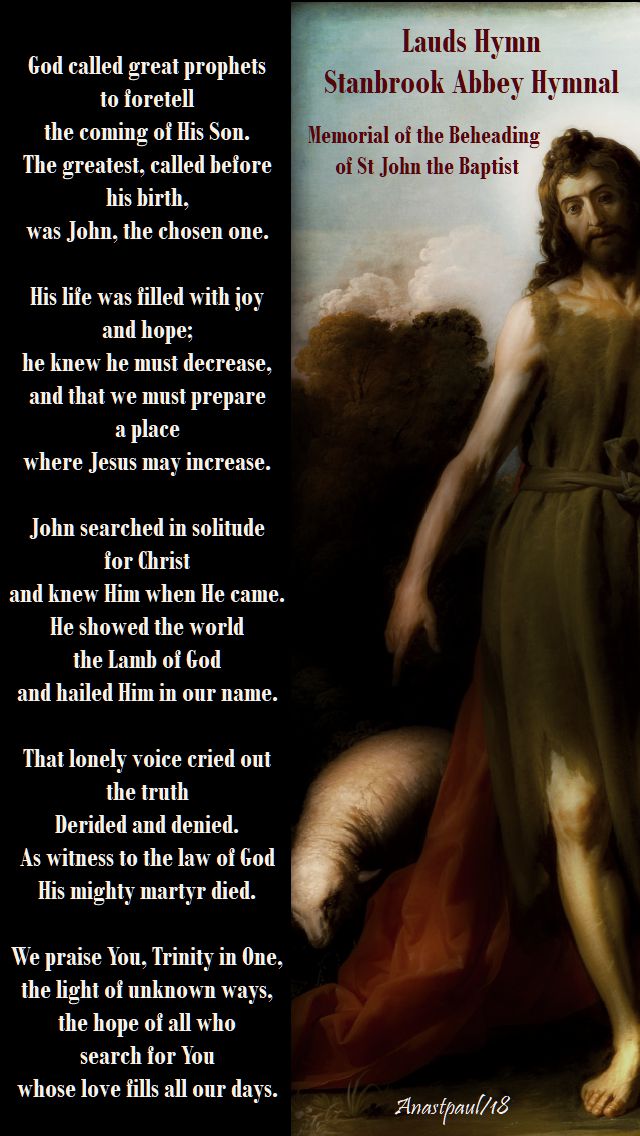
Lauds Hymn
Stanbrook Abbey Hymnal

God called great prophets to foretell
the coming of His Son.
The greatest, called before his birth,
was John, the chosen one.

His life was filled with joy and hope;
he knew he must decrease,
and that we must prepare a place
where Jesus may increase.

John searched in solitude for Christ
and knew Him when He came.
He showed the world the Lamb of God
and hailed Him in our name.

That lonely voice cried out the truth
Derided and denied.
As witness to the law of God
His mighty martyr died.

We praise You, Trinity in One,
the light of unknown ways,
the hope of all who search for You
whose love fills all our days.lauds hymn - memorial of st john the baptist - 29 aug 2018

Posted in SAINT of the DAY

Saint of the Day – 29 August – The Martyrdom of St John the Baptist

Saint of the Day – 29 August – The Martyrdom of St John the Baptist

Catechism of the Catholic Church
IV. The Spirit of Christ in the Fullness of Time
John, Precursor, Prophet and Baptist

719    John the Baptist is “more than a prophet.”   In him, the Holy Spirit concludes his speaking through the prophets.   John completes the cycle of prophets begun by Elijah. He proclaims the imminence of the consolation of Israel;  he is the “voice” of the Consoler who is coming.   As the Spirit of truth will also do, John “came to bear witness to the light.”   In John’s sight, the Spirit thus brings to completion the careful search of the prophets and fulfills the longing of the angels.   “He on whom you see the Spirit descend and remain, this is he who baptises with the Holy Spirit and I have seen and have borne witness that this is the Son of God…. Behold, the Lamb of God.”john-the-Baptist-carvilli

BENEDICT XVI
GENERAL AUDIENCE
Castel Gandolfo
Wednesday, 29 August 2012

This last Wednesday of the month of August is the liturgical Memorial of the martyrdom of St John the Baptist, the Precursor of Jesus.   In the Roman Calendar, he is the only saint whose birth and death, through martyrdom, are celebrated on the same day (in his case, 24 June).   Today’s Memorial commemoration dates back to the dedication of a crypt in Sebaste, Samaria, where his head had already been venerated since the middle of the fourth century.   The devotion later extended to Jerusalem, both in the Churches of the East and in Rome, with the title of the Beheading of St John the Baptist.   In the Roman Martyrology reference is made to a second discovery of the precious relic, translated for the occasion to the Church of San Silvestro in Campo Marzio, Rome.beheading Salome-with-the-head-of-St-john-the-Baptist

These small historical references help us to understand how ancient and deeply-rooted is the veneration of John the Baptist.   His role in relation to Jesus stands out clearly in the Gospels.   St Luke in particular recounts his birth, his life in the wilderness and his preaching, while in today’s Gospel St Mark tells us of his dramatic death.   John the Baptist began his preaching under the Emperor Tiberius in about 27-28 A.D. and the unambiguous invitation he addressed to the people, who flocked to listen to him, was to prepare the way to welcome the Lord, to straighten the crooked paths of their lives through a radical conversion of heart (cf. Lk 3:4).
However, John the Baptist did not limit himself to teaching repentance or conversion. Instead, in recognising Jesus as the “Lamb of God” who came to take away the sin of the world (Jn 1:29), he had the profound humility to hold up Jesus as the One sent by God, drawing back so that he might take the lead and be heard and followed.   As his last act the Baptist witnessed with his blood to faithfulness to God’s commandments, without giving in or withdrawing, carrying out his mission to the very end.   In the 9th century the Venerable Bede says in one of his Homilies:  “St John gave his life for [Christ].   He was not ordered to deny Jesus Christ but was ordered to keep silent about the truth” (cf. Homily 23: CCL 122, 354).   And he did not keep silent about the truth and thus died for Christ who is the Truth.   Precisely for love of the truth he did not stoop to compromises and did not fear to address strong words to anyone who had strayed from God’s path.st_john

We see this great figure, this force in the Passion, in resistance to the powerful.   We wonder, what gave birth to this life, to this interiority so strong, so upright, so consistent, spent so totally for God in preparing the way for Jesus?   The answer is simple – it was born from the relationship with God, from prayer, which was the thread that guided him throughout his existence.   John was the divine gift for which his parents Zechariah and Elizabeth had been praying for so many years (cf. Lk 1:13), a great gift, humanly impossible to hope for, because they were both advanced in years and Elizabeth was barren (cf. Lk 1:7), yet nothing is impossible to God (cf. Lk 1:36).   The announcement of this birth happened precisely in the place of prayer, in the temple of Jerusalem, indeed it happened when Zechariah had the great privilege of entering the holiest place in the temple to offer incense to the Lord (cf. Lk 1:8-20).   John the Baptist’s birth was also marked by prayer, the Benedictus, the hymn of joy, praise and thanksgiving which Zechariah raises to the Lord and which we recite every morning in Lauds, exalts God’s action in history and prophetically indicates the mission of their son John – to go before the Son of God made flesh to prepare His ways (cf. Lk 1:67-79).

The entire existence of the Forerunner of Jesus was nourished by his relationship with God, particularly the period he spent in desert regions (cf. Lk 1:80).   The desert regions are places of temptation but also where man acquires a sense of his own poverty because once deprived of material support and security, he understands that the only steadfast reference point is God Himself.   John the Baptist, however, is not only a man of prayer, in permanent contact with God but also a guide in this relationship.   The Evangelist Luke, recalling the prayer that Jesus taught His disciples, the Our Father, notes that the request was formulated by the disciples in these words:  “Lord, teach us to pray, just as John taught his own disciples” (cf. Lk 11:1).

Dear brothers and sisters, celebrating the martyrdom of St John the Baptist reminds us too, Christians of this time, that with love for Christ, for His words and for the Truth, we cannot stoop to compromises.   The Truth is Truth; there are no compromises.   Christian life demands, so to speak, the “martyrdom” of daily fidelity to the Gospel, the courage, that is, to let Christ grow within us and let Him be the One who guides our thought and our actions.   However, this can happen in our life only if we have a solid relationship with God.   Prayer is not time wasted, it does not take away time from our activities, even apostolic activities but exactly the opposite is true only if we are able to have a faithful, constant and trusting life of prayer will God Himself give us the ability and strength to live happily and serenely, to surmount difficulties and to witness courageously to Him.   St John the Baptist, intercede for us, that we may be ever able to preserve the primacy of God in our life.   Thank you.