Posted in JESUIT SJ, MORNING Prayers, PRAYERS of the SAINTS, SAINT of the DAY

Our Morning Offering – 2 August – The Memorial of St Peter Faber S.J. (1506-1546)

Our Morning Offering – 2 August – The Memorial of St Peter Faber S.J. (1506-1546)

I Beg of You, My Lord
By St Peter Faber (1506-1546)

I beg of You, my Lord,
to remove anything which separates
me from You
and You from me.
Remove anything
that makes me unworthy
of Your sight,
Your control,
Your reprehension;
of Your speech and conversation,
of Your benevolence and love.
Cast from me every evil
that stands in the way of my seeing You,
hearing, tasting, savouring and touching You,
fearing and being mindful of You,
knowing, trusting, loving and possessing You;
being conscious of Your presence
and, as far as may be,
enjoying You.
This is what I ask for myself
and earnestly desire from You.
Ameni beg of you my lord - st peter faber - 2 august 2018

Posted in JESUIT SJ, SAINT of the DAY

Saint of the Day – 2 August – St Peter Faber S.J. (1506-1546) the “Second Jesuit”

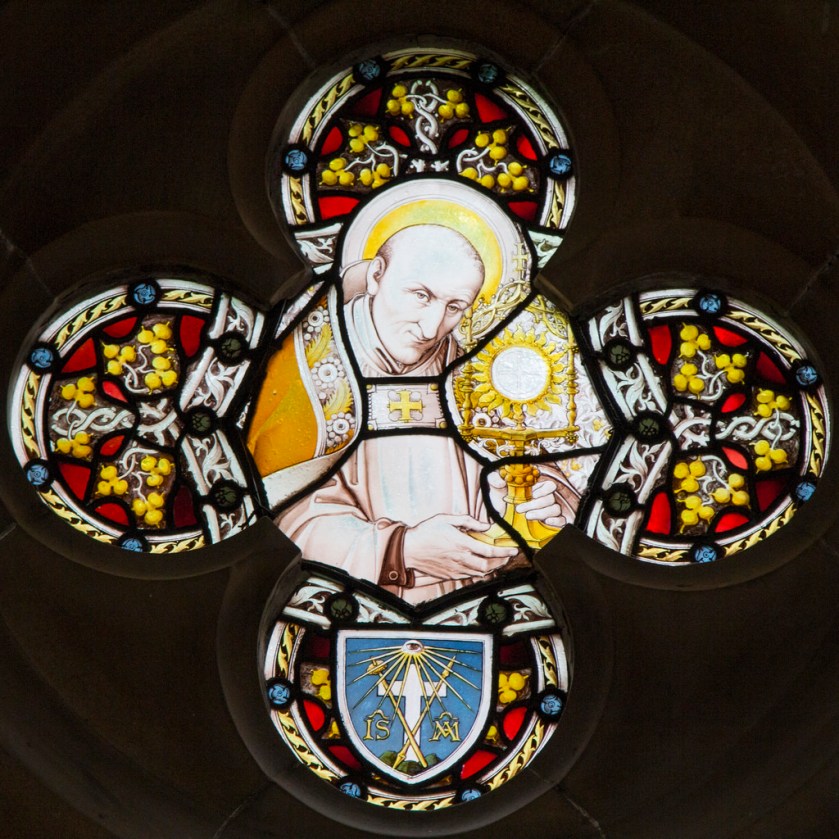
St Peter Faber S.J. (1506-1546) the “Second Jesuit”, was the first Jesuit priest and theologian, who was also a co-founder of the Society of Jesus.   Born on 13 April 1506, in Villaret, Duchy of Savoy, Holy Roman Empire and died on 1 August 1546 (aged 40)
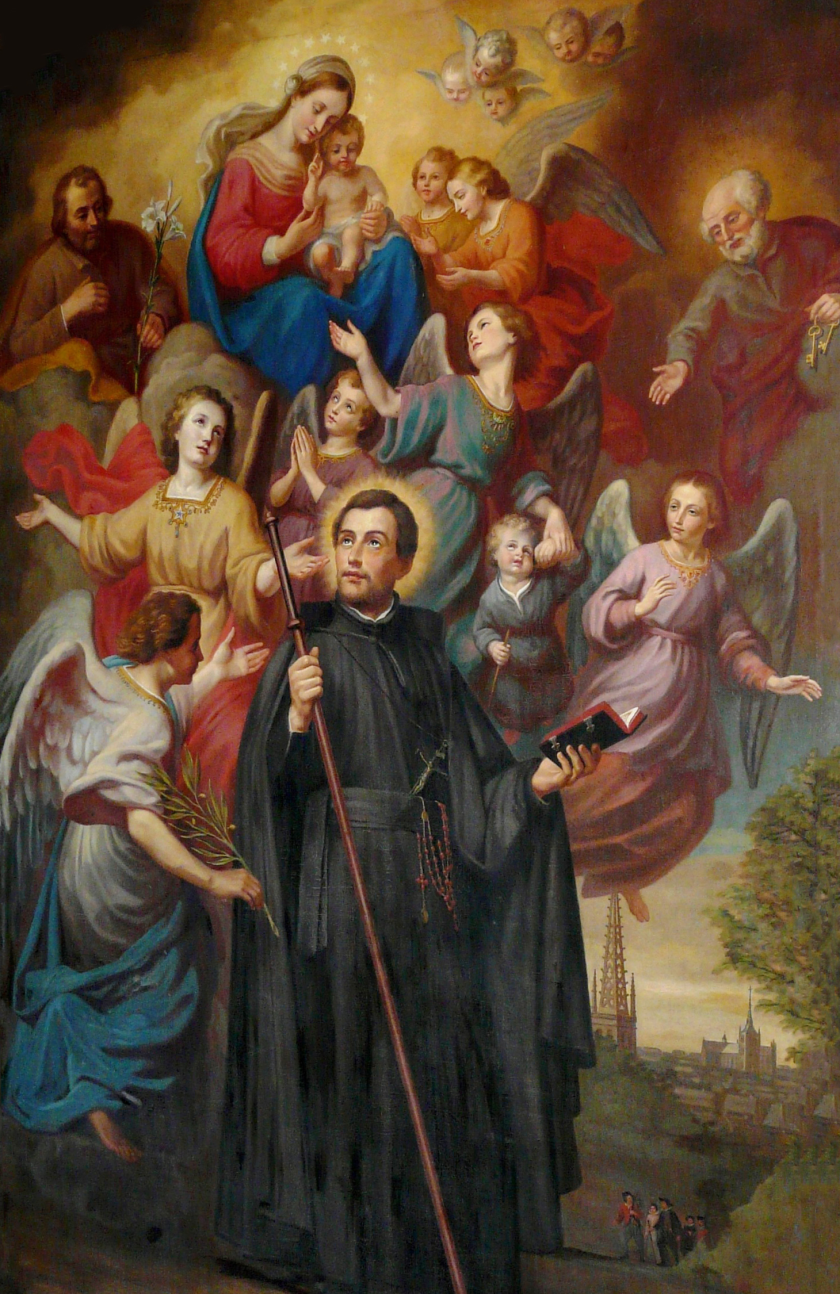
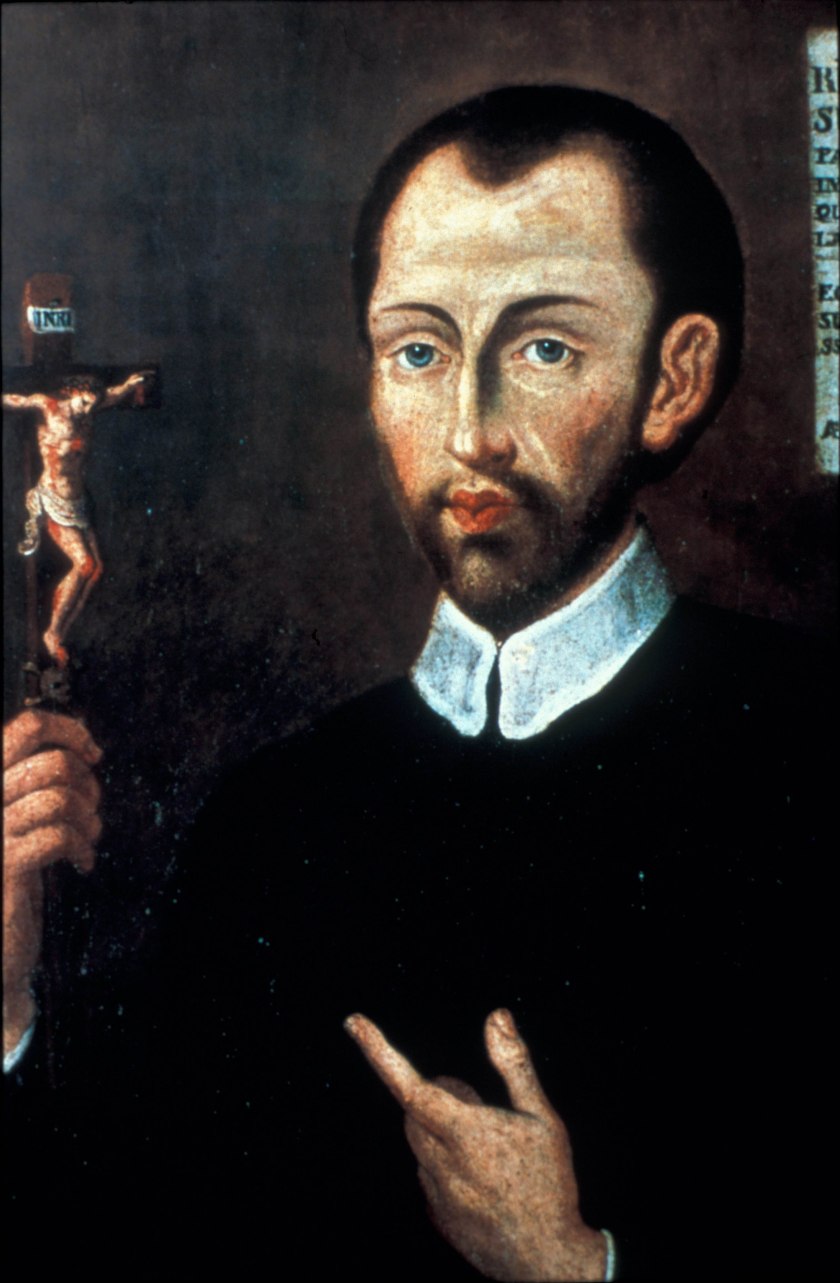
Rome, Papal States. Patronage – The Spiritual Excercises and co-patron of the Jesuits.st peter faber headerFaber was born in 1506 to a peasant family in the village of Villaret, in the Duchy of Savoy (now Saint-Jean-de-Sixt in the French Department of Haute-Savoie).   As a boy, he was a shepherd in the high pastures of the French Alps.   He had little education but a remarkable memory; he could hear a sermon in the morning and then repeat it verbatim in the afternoon for his friends.   Two of his uncles were Carthusian priors.   At first, he was entrusted to the care of a priest at Thônes and later to a school in the neighbouring village of La Roche-sur-Foron.st peter faber - young - my edit
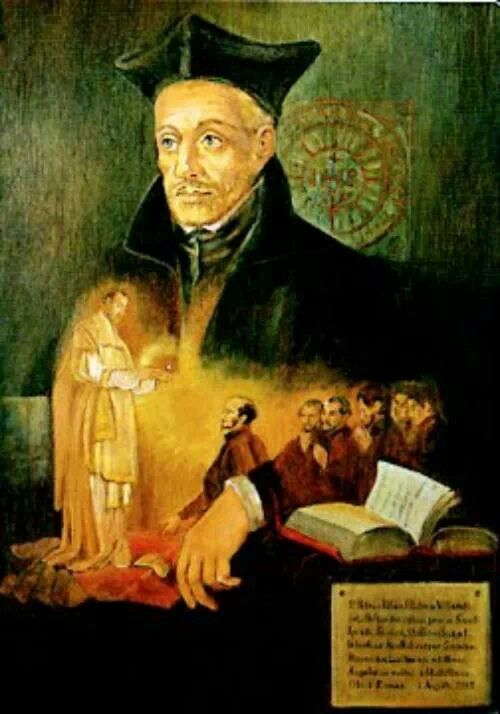
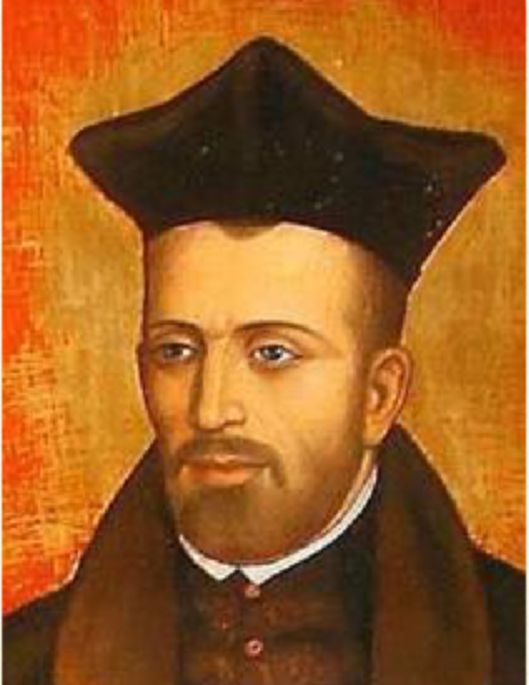
 

In 1525, Faber went to Paris to pursue his studies.   He was admitted to the Collège Sainte-Barbe, the oldest school in the University of Paris, where he shared his lodgings with St Francis Xavier SJ (1506-1552).   There Faber’s spiritual views began to develop, influenced by a combination of popular devotion, Christian humanism and late medieval scholasticism.   Faber and Xavier became close friends and both received the degree of Master of Arts on the same day in 1530.   At the university, Faber also met Ignatius of Loyola and became one of his associates.   He tutored Loyola in the philosophy of Aristotle, while Loyola tutored Faber in spiritual matters.   Faber wrote of Loyola’s counsel:  “He gave me an understanding of my conscience and of the temptations and scruples I had had for so long without either understanding them or seeing the way by which I would be able to obtain peace…”   Xavier, Faber and Loyola all became roommates at the University of Paris and are all recognised by the Jesuits as co-founders of the Society of Jesus.st peter faber - lg
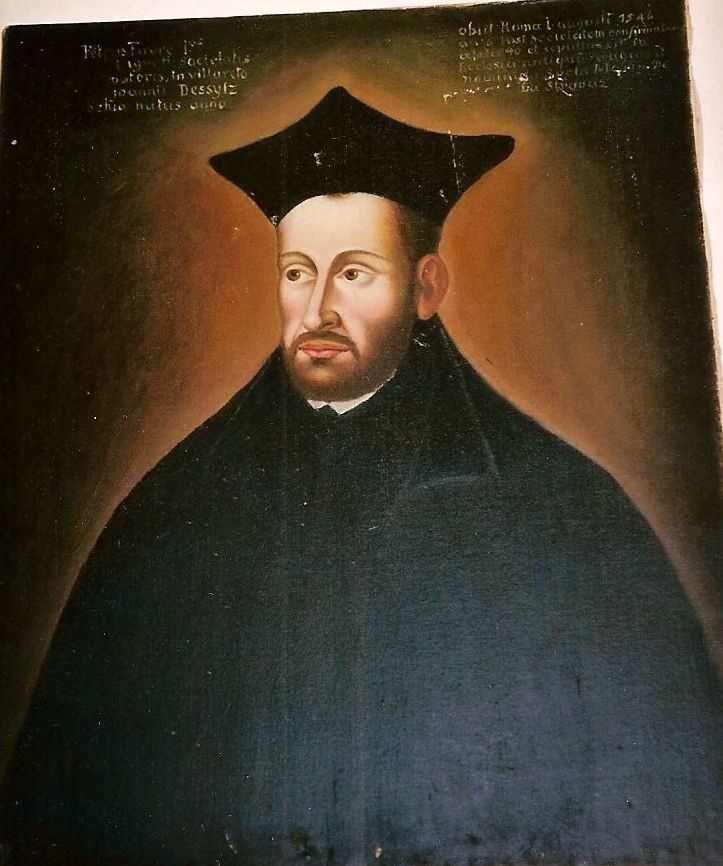
Faber was the first among the small circle of men who formed the Society of Jesus to be ordained.   Having become a priest on 30 May 1534, he received the religious vows of Ignatius and his five companions at Montmartre on 15 August.peter_faber3
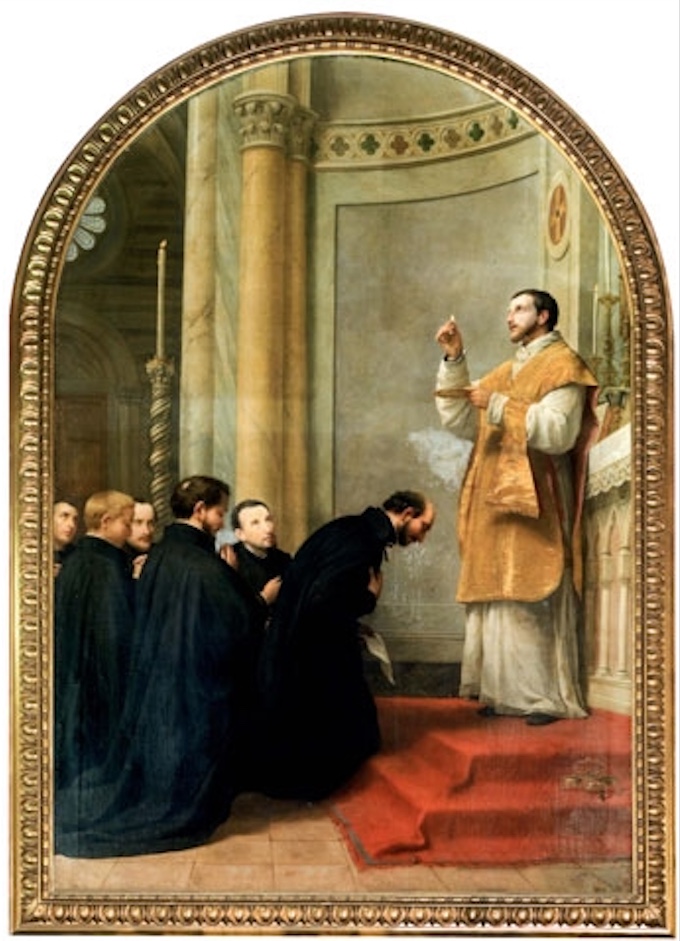
After graduation, Loyola returned to Spain for a period of convalescence, after instructing his companions to meet in Venice and charging Faber with conducting them there.   After Loyola himself, Faber was the one whom Xavier and his companions esteemed the most.   Leaving Paris on 15 November 1536, Faber and his companions rejoined Loyola at Venice in January 1537.   When war between Venice and the Turks prevented them from evangelising the Holy Land as they planned, they decided to form the community that became the Society of Jesus, also known as the Jesuit Order.   The group then travelled to Rome where they put themselves at the disposal of Pope Paul III. After Faber spent some months preaching and teaching, the Pope sent him to Parma and Piacenza, where he brought about a revival of Christian piety.

Recalled to Rome in 1540, Faber was sent to Germany to uphold the position of the Catholic Church at the Diet of Worms and then at the Diet of Ratisbon in 1541.   Another Catholic theologian Johann Cochlaeus reported that Faber avoided theological debate and emphasised personal reformation, calling him “a master of the life of the affections”.   Faber was startled by the unrest that the Protestant movement had stirred up in Germany and by the decadence he found in the Catholic hierarchy.   He decided that the remedy did not lie in discussions with the Protestants but in the reform of the Roman Catholic, especially of the clergy.   For ten months, at Speyer, at Ratisbon and at Mainz, he conducted himself with gentleness with all those with whom he dealt.   He influenced princes, prelates and priests who opened themselves to him and amazed people by the effectiveness of his outreach.   Faber possessed the gift of friendship to a remarkable degree.   He was famous not for his preaching, but for his engaging conversations and his guidance of souls.   He crisscrossed Europe on foot, guiding bishops, priests, nobles and common people alike in the Spiritual Exercises.7061_Petrus-Faber_1000-e1460375034950
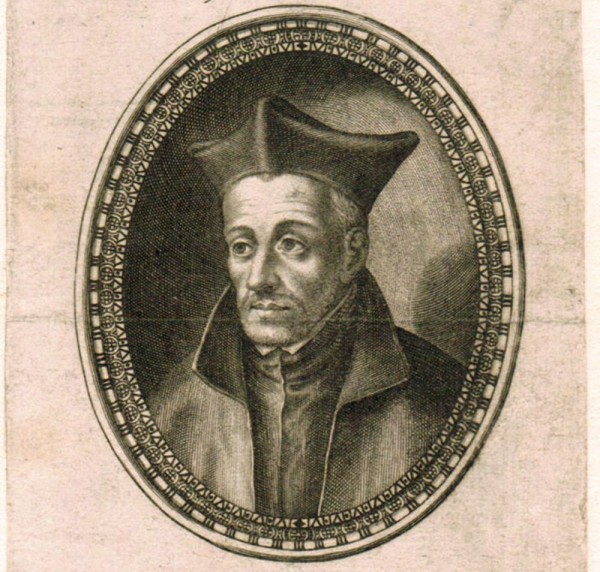
As a lone Jesuit often on the move, Faber never felt alone because he walked in a world whose denizens included saints and angels.   He would ask the saint of the day and all the saints “to obtain for us not only virtues and salvation for our spirits but in particular whatever can strengthen, heal and preserve the body and each of its parts”.   His guardian angel, above all, became his chief ally.   He sought support from the saints and angels both for his personal sanctification and in his evangelisation of communities.   Whenever he entered a new town or region, Faber implored the aid of the particular angels and saints associated with that place.   Through the intercession of his allies, Faber could enter even a potentially hostile region assured of a spiritual army at his side.   As he desired to bring each person he met to a closer relationship through spiritual friendship and conversation, he would invoke the intercession of the person’s guardian angel.
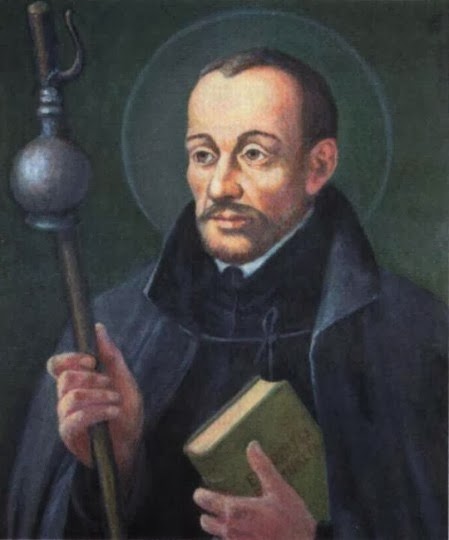
San Pedro Fabro sj

Called to Spain by Loyola, he visited Barcelona, Zaragoza, Medinaceli, Madrid and Toledo.   In January 1542, the pope ordered him to Germany again.  For the next nineteen months, Faber worked for the reform of Speyer, Mainz and Cologne.   The Archbishop of Cologne, Hermann of Wied, favored Lutheranism, which he later publicly embraced. Faber gradually gained the confidence of the clergy and recruited many young men to the Jesuits, among them Peter Canisius.   After spending some months at Leuven in 1543, where he implanted the seeds of numerous vocations among the young, he returned to Cologne.   Between 1544 and 1546, Faber continued his work in Portugal and Spain.  Through his influence while at the royal court of Lisbon, Faber was instrumental in establishing the Society of Jesus in Portugal.   There and in Spain, he was a fervent and effective preacher.   He was called to preach in the principal cities of Spain, where he aroused fervour among the local populations and fostered vocations to the clergy. Among them there was Francis Borgia, another significant future Jesuit.   King John III of Portugal wanted Faber made Patriarch of Ethiopia.   Simon Rodrigues (1510-1579), founder of the Jesuit province in Portugal, wrote that Faber was “endowed with charming grace in dealing with people, which up to now I must confess I have not seen in anyone else.   Somehow he entered into friendship in such a way, bit by bit coming to influence others in such a manner, that his very way of living and gracious conversation powerfully drew to the love of God, all those with whom he dealt.”   He then worked in several Spanish cities, including Valladolid, Salamanca, Toledo, Galapagar, Alcalá and Madrid.

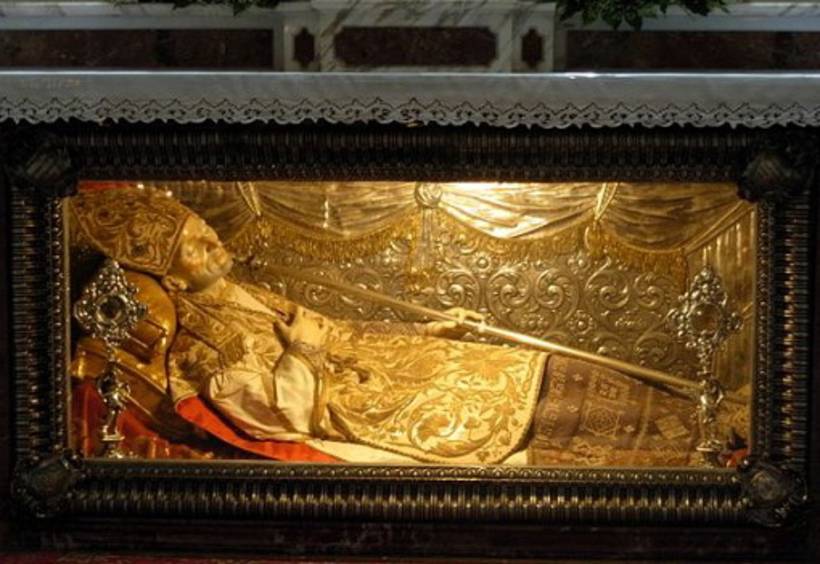
In 1546 Faber was appointed by Pope Paul III to act as a peritus (expert) on behalf of the Holy See at the Council of Trent.   Faber, at age 40, was exhausted by his incessant efforts and his unceasing journeys, always made on foot.   In April 1546 he left Spain to attend the Council and reached Rome, weakened by fever, on 17 July 1546.   He died in the arms of Loyola, on 1 August 1546.   Faber’s body was initially buried at the Church of Our Lady of the Way, which served as a centre for the Jesuit community.   When that church was demolished to allow for the construction of the Church of the Gesù, his remains and those of others among the first Jesuits were exhumed. His are now in the crypt near the entrance to the Gesù.   Church of Gesus, St Ignatius Altar, Nave, Chapel of Madonna della Strada and Triumph of the Name of Jesus – by Giovanni Battista Gaulli.


Those who had known Faber in life already invoked him as a saint.   Saint Francis de Sales (1567-1622), whose character recalled that of Faber’s, never spoke of him except as a saint.   He is remembered for his travels through Europe promoting Catholic renewal and his great skill in directing the Spiritual Exercises.   Faber was beatified on 5 September 1872.      Faber was honoured as part of the 2006 Jesuit Jubilee Year which celebrated the 500th anniversary of the birth of Francis Xavier, the 500th anniversary of the birth of Peter Faber and the 450th anniversary of the death of Ignatius Loyola.

Pope Francis, on his own 77th birthday, 17 December 2013, announced Faber’s Canonisation.   He used a process known as equipollent canonisation that dispenses with the standard judicial procedures and ceremonies in the case of someone long venerated. Faber is regarded as one of Pope Francis’ favourite saints.   A few weeks earlier, Francis had praised Faber’s “dialogue with all, even the most remote and even with his opponents; his simple piety, a certain naïveté perhaps, his being available straightaway, his careful interior discernment, the fact that he was a man capable of great and strong decisions but also capable of being so gentle and loving.”    Pope Francis also gave thanks for Faber’s Canonisation when he celebrated Mass on 3 January 2014, at the Church of the Gesù.st peter faber-st peter fabre - beautiful
Posted in SAINT of the DAY, Uncategorized

Memorials of the Saints – 2 August

St Eusebius of Vercelli (283-371) Bishop (Optional Memorial)
St Peter Julian Eymard SSS (1811-1868) (Optional Memorial)

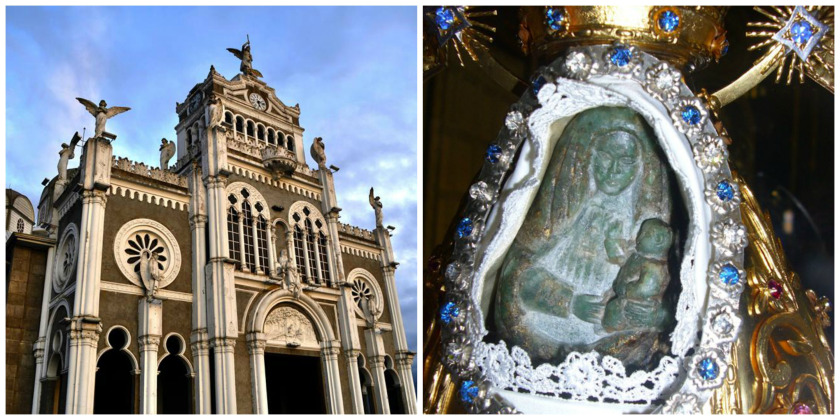
Our Lady of the Angels:   The image of Our Lady of the Angels is only about 10 cms high and is carved in a simple fashion on dark stone.   She has a round, sweet face, slanted eyes and a delicate mouth.   Her colouring is leaden, with scattered golden sparkles.   She carries the Christ Child on her left arm.   Only the faces of Mary and the Child are visible; the rest is covered by a cloak that is gathered in pleats.   The statuette is displayed in a large gold monstrance that surrounds it and enlarges its appearance.   While searching for firewood on 2 August 1635, the feast of the Holy Angels, a poor mestizo woman named Juana Pereira discovered this small image of the Virgin sitting beside the footpath near Cartago, Costa Rica.   Juana took it home with her but it soon disappeared only to be re-discovered at the same place beside the same path.   The statue repeated this behaviour five more times – taken to homes and then the parish church – and returning on its own to the site where Juan  a found it. The locals finally took this to mean that Our Lady wanted a shrine built there, and so it was.
The shrine soon became a point of pilgrimage, especially for the poor and outcast.   The image was solemnly crowned in 1926.   In 1935 Pope Pius XI declared the shrine of the Queen of Angels a basilica (see below).   The stone on which the statue was originally sitting is in the basilica and is being slowly worn away by the touch of the hands of the pilgrims.   A spring of water appeared from beneath the stone and its waters carried away to heal the sick.   Patronage – Costa Rica, diocese of Getafe, Spain.our-ldy-of-the-angels (1)

St Auspicius of Apt
St Betharius of Chartres
St Centolla of Burgos
St Etheldritha of Croyland
Bl Frederic Campisani
Bl Giustino Maria Russolillo
Bl Gundekar of Eichstätt
Bl Joanna of Aza
Bl John of Rieti
St Maximus of Padua
St Pedro de Osma
St Peter Faber S.J. (1506-1546)

St Plegmund
St Rutilius
St Serenus of Marseille
St Sidwell
St Pope Stephen I

Martyred in the Spanish Civil War:
Bl Ceferino Jimenez Malla
Bl Felipe de Jesús Munárriz Azcona
Bl Fernando Olmedo Reguera
Bl Francesc Company Torrelles
Bl Francisca Pons Sarda
Bl Francisco Calvo Burillo
Bl Francisco Manzano Cruz
Bl Francisco Tomás Serer
Bl José Peris Ramos
Bl Juan Díaz Nosti
Bl Leoncio Pérez Nebreda
Bl Leoncio Pérez Ramos
Bl Martí Anglés Oliveras
Bl Miguel Amaro Rodríguez

Posted in CATHOLIC-PRAYERS OF THE CHURCH, DOCTORS of the Church, MORNING Prayers, PRACTISING CATHOLIC, PRAYERS of the CHURCH, PRAYERS of the SAINTS, SAINT of the DAY, STATIONS of the CROSS

Thought for the Day – 1 August – The Memorial of (1696-1787) Doctor of the Church ST ALPHONSUS DE LIGUORI – REACHING THE PEOPLE

Thought for the Day – 1 August – The Memorial of (1696-1787) Doctor of the Church
ST ALPHONSUS DE LIGUORI – REACHING THE PEOPLE

With thanks to the C.Ss.R. Baltimore Province

St Alphonsus was a brilliant, articulate, pragmatic preacher.   He knew how to reach ordinary people who had limited education and very real needs.   They followed this gifted preacher from church to church and town to town to hear him preach the message of hope in Christ for all people.

Three great images, basic to the Christian faith, formed the heart of Alphonsus’ preaching and teaching — Jesus an infant in the crib, Jesus crucified on the Cross, and Jesus vibrantly alive and filled with love for all in the Eucharist.   To this he added the image of Mary, the Mother of the Redeemer.   When other theologians were opposed to devotion to Mary, Alphonsus invoked her:  “Hail Holy Queen, Mother of Mercy, our life, our sweetness, and our hope.”

Alphonsus appreciated how the poor and working class people expressed their realities through song.   A gifted musician and composer, he wrote many popular hymns and taught them to the people in parish missions.   His compositions continue to be sung around the world and have never lost their charm and popularity.   Redemptorists today still follow the cue of their founder.   Their message, announcing the abundance of God’s love, is enriched by the spiritual songs they sing in their community and with the people of God.

Alphonsus wrote for the people.   Many turned to his spiritual writing, for he wrote in a way that was understandable to anyone with a basic education.   On winter evenings in his time, the people in the villages often gathered around a fire in someone’s home. Someone read stories about the Gospels or the lives of the saints, things that nourished their faith and helped them to pray.   Alphonsus’ works were frequent choices and they remain so still, his works are a fountain of holiness.  Which of us has not, in our home poarishes all over the world, prayed his Stations of the Cross?   They will always be one of the treasures of the Church.    http://immaculateheartbalornock.co.uk/wp-content/uploads/2017/04/Stations-of-the-Cross-Booklet.pdf

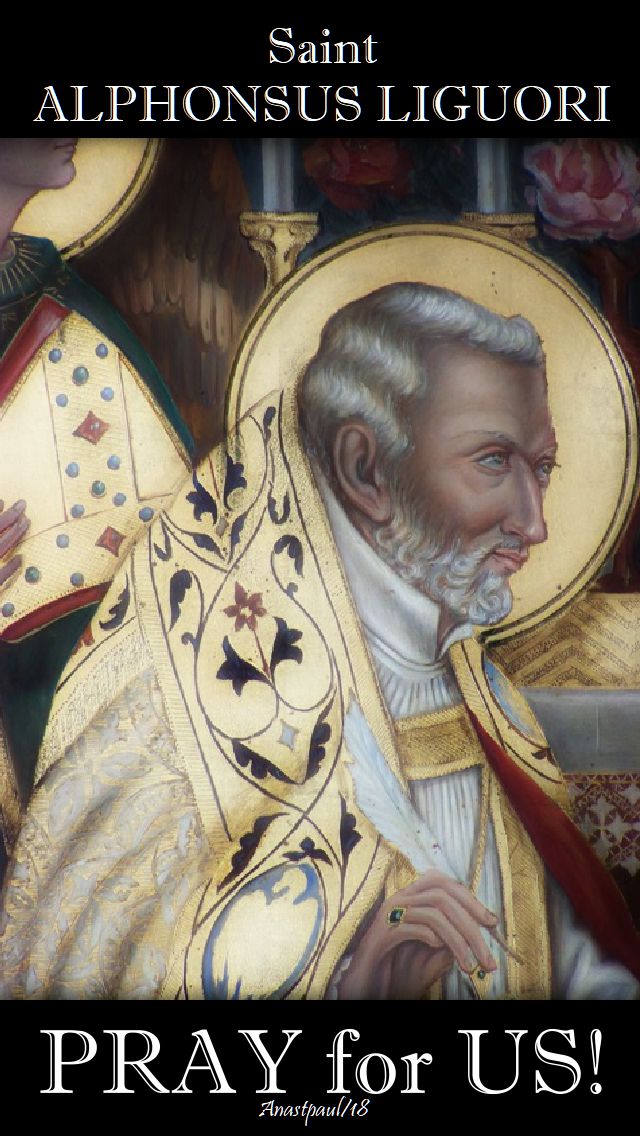
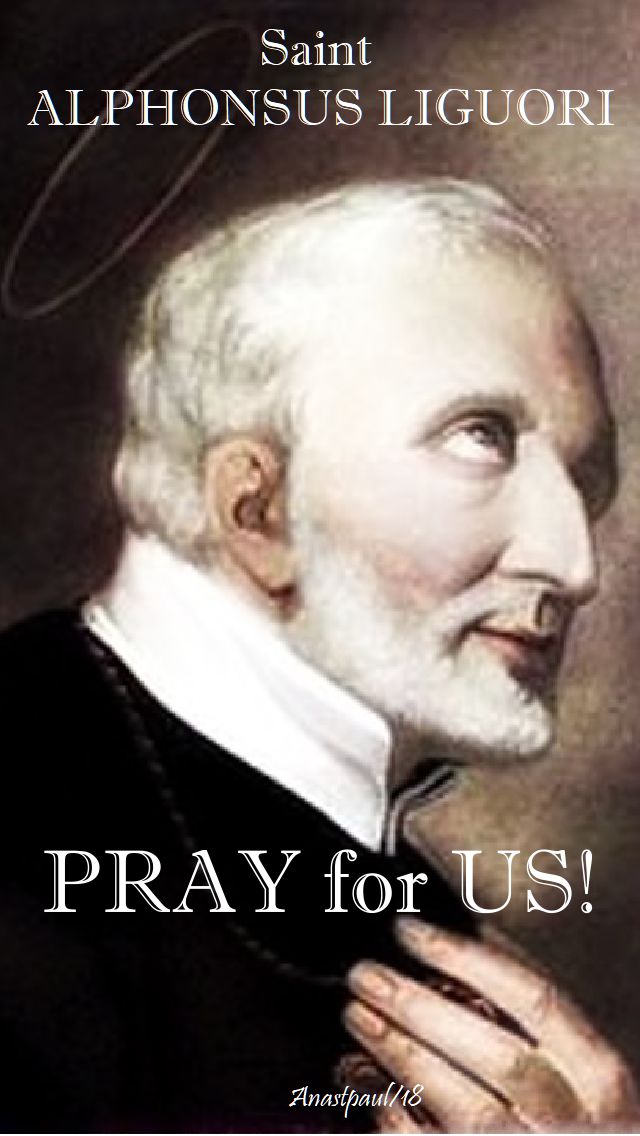
St Alphonsus, Pray for us!st alphonsus liguori pray for us 1 august 2018

Posted in CATHOLIC DEVOTIONS of the Month, CATHOLIC-PRAYERS OF THE CHURCH, MORNING Prayers, PAPAL MESSAGES, PAPAL PRAYERS, PRACTISING CATHOLIC, THE HOLY FAMILY - FAMILIAE SANCTAE

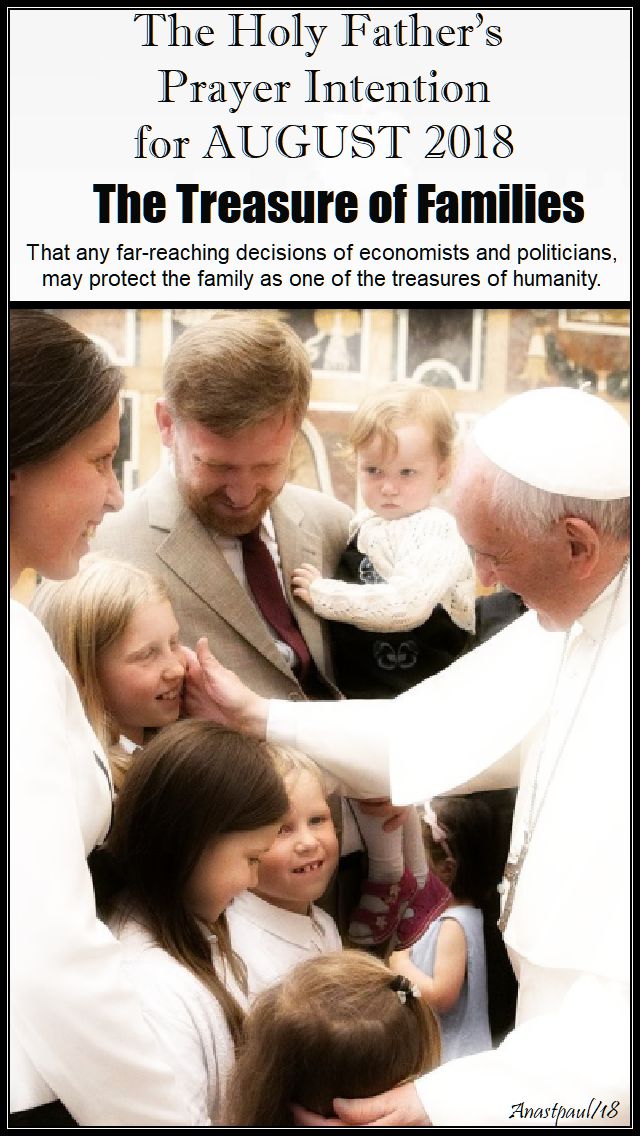
The Holy Father’s Prayer Intention for AUGUST 2018

The Holy Father’s Prayer Intention
for AUGUST 2018

Universal:  The Treasure of Families

That any far-reaching decisions

of economists and politicians

may protect the family as one

of the treasures of humanity.the holy father's prayer intention for august 2018 - the treasure of families - 1 aug 2018.jpg

“The family is the foundation of co-existence
and a remedy against social fragmentation.
Children have a right to grow up in a family,
with a father and a mother,
capable of creating a suitable environment,
for the child’s development and emotional maturity.”

Pope Francis, Humanum Conference, November 17, 2014

Pope Francis Prayer for the Family

Jesus, Mary and Joseph,
in you we contemplate
the splendour of true love,
to you we turn with trust.
Holy Family of Nazareth,
grant that our families too
may be places of communion and prayer,
authentic schools of the Gospel
and small domestic Churches.
Holy Family of Nazareth,
may families never again
experience violence, rejection and division.
May all who have been hurt or scandalised
find ready comfort and healing.
Holy Family of Nazareth,
make us once more mindful
of the sacredness
and inviolability of the family,
and its beauty in God’s plan.
Jesus, true God and true man,
graciously hear our prayer.
Mary and Joseph,
co-operators with God’s plan,
pray for us.
Amen!

(composed for the Synod on the Family and therefore, slightly adapted)prayer for the family by pope francis - 1 aug 2018

Posted in CATHOLIC DEVOTIONS of the Month, CATHOLIC-PRAYERS OF THE CHURCH, DEVOTIO, MARIAN DEVOTIONS, MARIAN PRAYERS, MARIAN QUOTES, MARIAN TITLES, MORNING Prayers, PRACTISING CATHOLIC, PRAYERS of the CHURCH, The BLESSED VIRGIN MARY

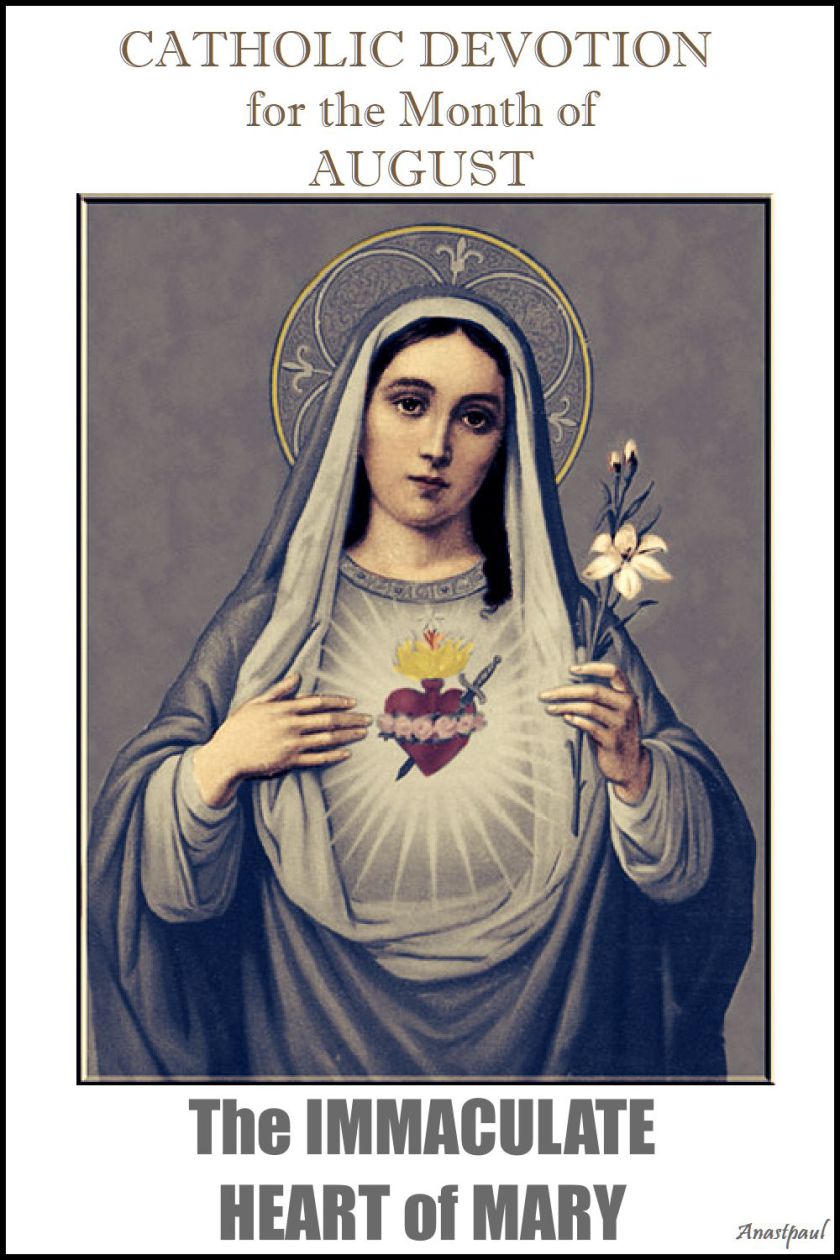
Devotion for August – The Immaculate Heart of Mary

Devotion for August

The Immaculate Heart of Mary

The history of the devotion to the Heart of Mary is connected on many points with that to the Heart of Jesus;  nevertheless, it has its own history which, although very simple, is not devoid of interest.   The attention of Christians was early attracted by the love and virtues of the Heart of Mary.   The Gospel itself invited this attention with exquisite discretion and delicacy.   What was first excited was compassion for the Virgin Mother. It was, so to speak, at the foot of the Cross that the Christian heart first made the acquaintance of the Heart of Mary.   Simeon’s prophecy paved the way and furnished the devotion with one of its favourite formulae and most popular representations: the heart pierced with a sword.   But Mary was not merely passive at the foot of the Cross;  “she cooperated through charity”, as St Augustine says, “in the work of our redemption”.

Another Scriptural passage to help in bringing out the devotion was the twice-repeated saying of St Luke, that Mary kept all the sayings and doings of Jesus in her heart, that there she might ponder over them and live by them.   Some of the Fathers also throw light upon the psychology of the Virgin, for instance, S. Ambrose, when in his commentary on St Luke, he holds Mary up as the ideal of virginity and St Ephrem, when he so poetically sings of the coming of the Magi and the welcome accorded them by the humble Mother.

In the New Testament Elizabeth proclaims Mary blessed because she has believed the words of the angel ,the Magnificat is an expression of her humility and in answering the woman of the people, who in order to exalt the Son proclaimed the Mother blessed, did not Jesus himself say:  “Blessed rather are they that hear the word of God and keep it”, thus in a manner inviting us to seek in Mary that which had so endeared her to God and caused her to be selected as the Mother of Jesus?   The Fathers understood His meaning and found in these words a new reason for praising Mary.   St Leo says that through faith and love, she conceived her Son spiritually, even before receiving Him into her womb and St Augustine tells us, that she was more blessed in having borne Christ in her heart, than in having conceived Him in the flesh.

August has 2 Marian Feast Days, 15 August, The Assumption and 22 August, The Queenship of Mary.   The Feast of the Immaculate or Most Pure Heart of Mary is celebrated throughout the Church, in different countries and religious communities on different days. (http://www.traditionalcatholicpriest.com/2015/08/21/feast-of-the-immaculate-heart-of-mary-august-22nd/)devotion-for-august-the-immaculate-heart-of-mary-1 august 2017.jpg

Daily Prayer for August
for the Intercession of
the Immaculate Heart of Mary

O Most Blessed Mother,
heart of love, heart of mercy,
ever listening, caring, consoling, hear our prayer.
As your children, we implore your intercession,
with Jesus your Son.
Receive with understanding and compassion,
the petitions we place before you today,
especially those so deep in our heart.
We are comforted in knowing your heart is ever open
to those who ask for your prayer.
We trust to your gentle care and intercession,
those whom we love
and who are sick or lonely or hurting.
Help all of us, Holy Mother,
to bear our burdens in this life,
until we may share eternal life and peace
with God, our Father forever.
Amendaily prayer for august for the intercession of the imm heart of mary - o most blessed mother, heart of love, heart of mercy - 1 august 2018

Posted in DOCTORS of the Church, EUCHARISTIC Adoration, MARIAN QUOTES, MORNING Prayers, QUOTES of the SAINTS, QUOTES on CONVERSION, QUOTES on FAITH, QUOTES on LOVE, QUOTES on PERSEVERANCE, QUOTES on PRAYER, QUOTES on REPENTANCE, QUOTES on SANCTITY, QUOTES on SIN, QUOTES on TEMPTATION, QUOTES on the CHURCH, SAINT of the DAY, The BLESSED VIRGIN MARY

Quote/s of the Day – 1 August – The Memorial of St Alphonsus Liquori (1696-1787) Doctor of the Church

Quote/s of the Day – 1 August – The Memorial of St Alphonsus Liquori (1696-1787) Doctor of the Church

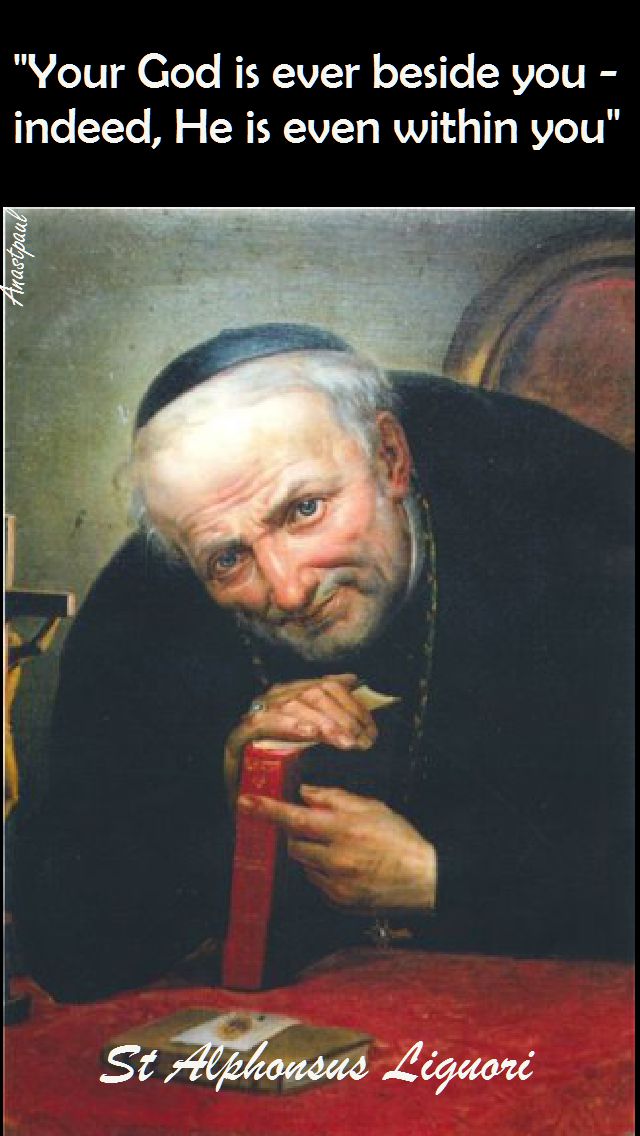
“Your God is ever beside you –
indeed, He is even within you.”your god is ever beside you - 1 aug 2017 st-alphonsus-quote

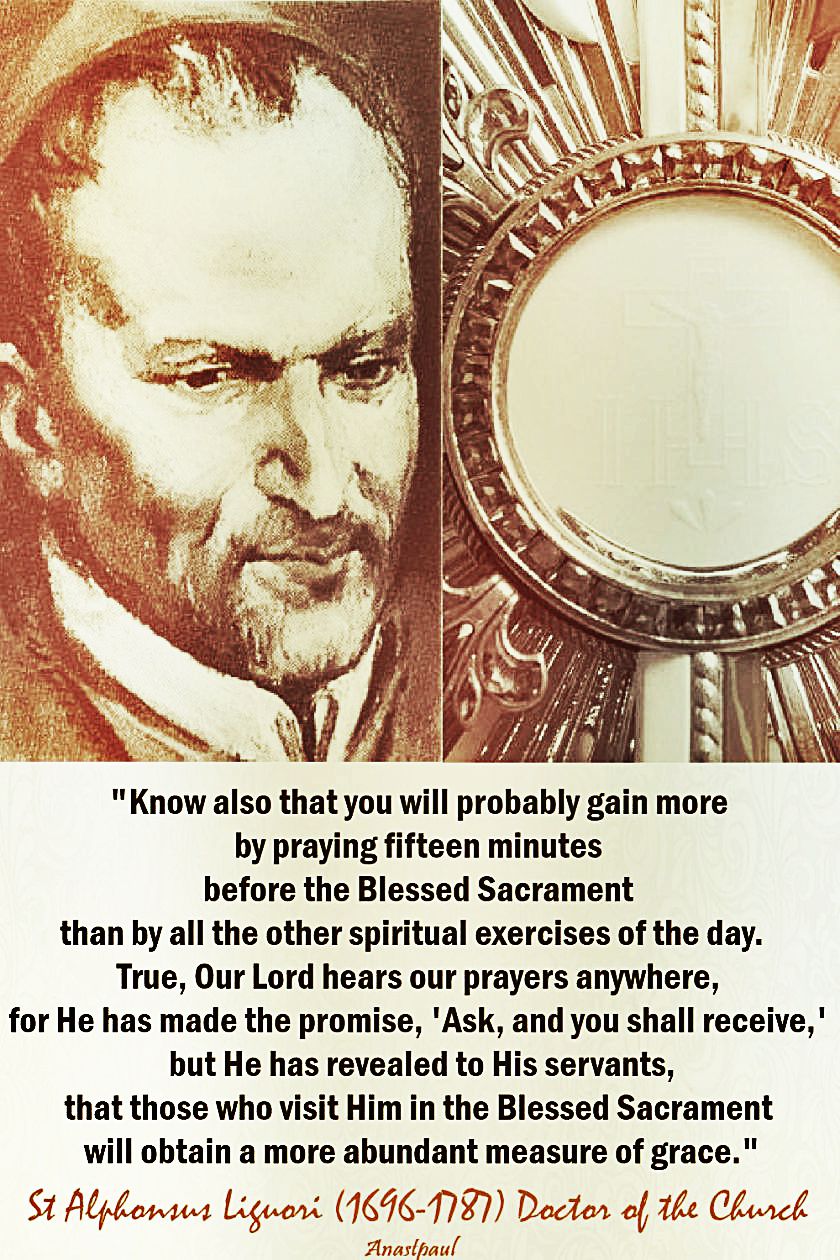
“Know also that you will probably gain more
by praying fifteen minutes
before the Blessed Sacrament
than by all the other spiritual exercises of the day.
True, Our Lord hears our prayers anywhere,
for He has made the promise, ‘Ask, and you shall receive,’
but He has revealed to His servants,
that those who visit Him in the Blessed Sacrament
will obtain a more abundant measure of grace.”know-also-that-you-will-probably-gain-more-st-alphonsus-1 aug 2017- no 2

“St Augustine and St Thomas
define mortal sin
to be a turning away from God:
that is, the turning of one’s back upon God,
leaving the Creator for the sake of the creature.
What punishment would that subject deserve who,
while his king was giving him a command,
contemptuously turned his back upon him to go
and transgress his orders?
This is what the sinner does;
and this is punished in hell with the pain of loss,
that is, the loss of God,
a punishment richly deserved by him
who in this life turns his back upon his sovereign good.”st-augustine-and-st-thomas-define-mortal-sin-st-alphonsus - 1 aug 2017

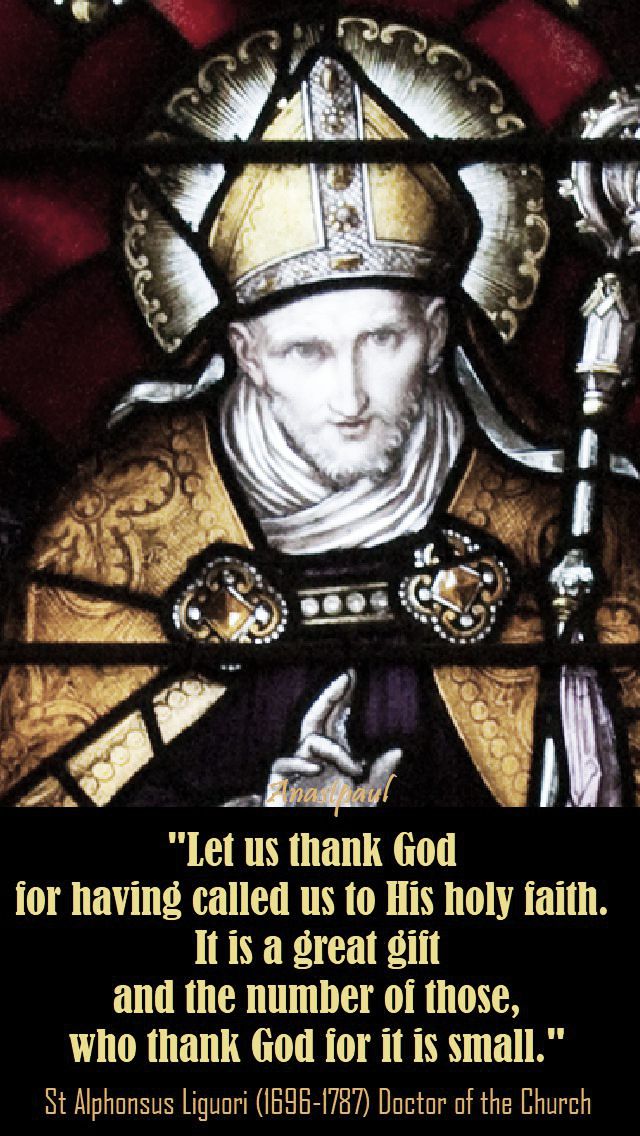
“Let us thank God
for having called us to His holy faith.
It is a great gift
and the number of those,
who thank God for it is small.”

let-us-thank-god-for-having-called-us-st-alphonsus- 1 aug 2017- no 2

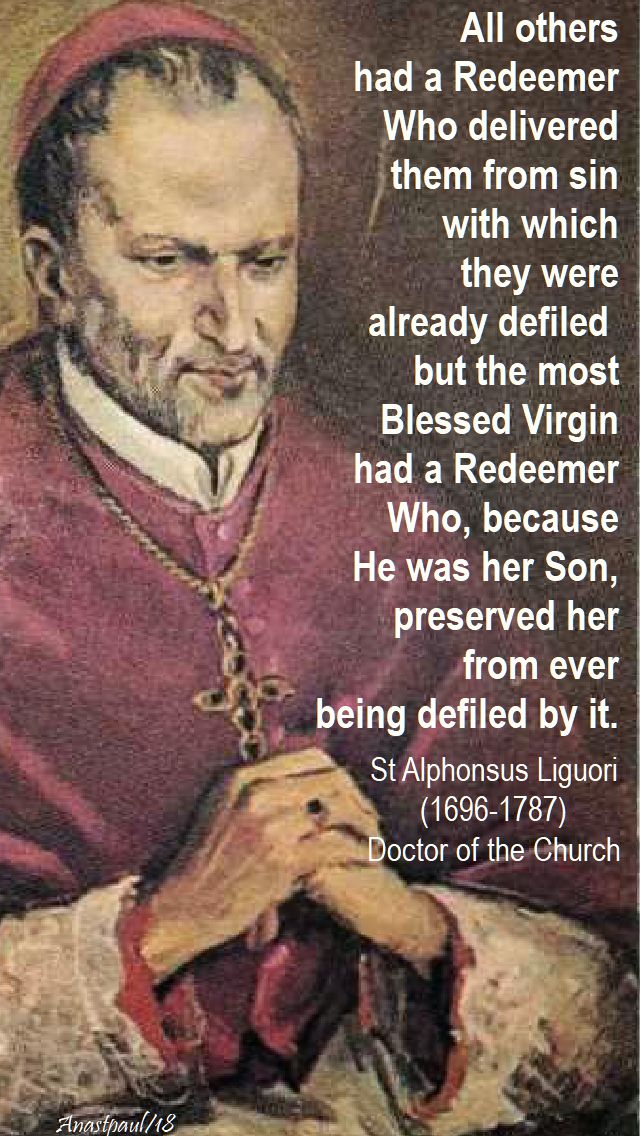
“All others had a Redeemer Who delivered them
from sin with which they were already defiled
but that the most Blessed Virgin had a Redeemer Who,
because He was her Son,
preserved her from ever being defiled by it. “all others had a redeemer - st alphonsus - 15 jan 2018

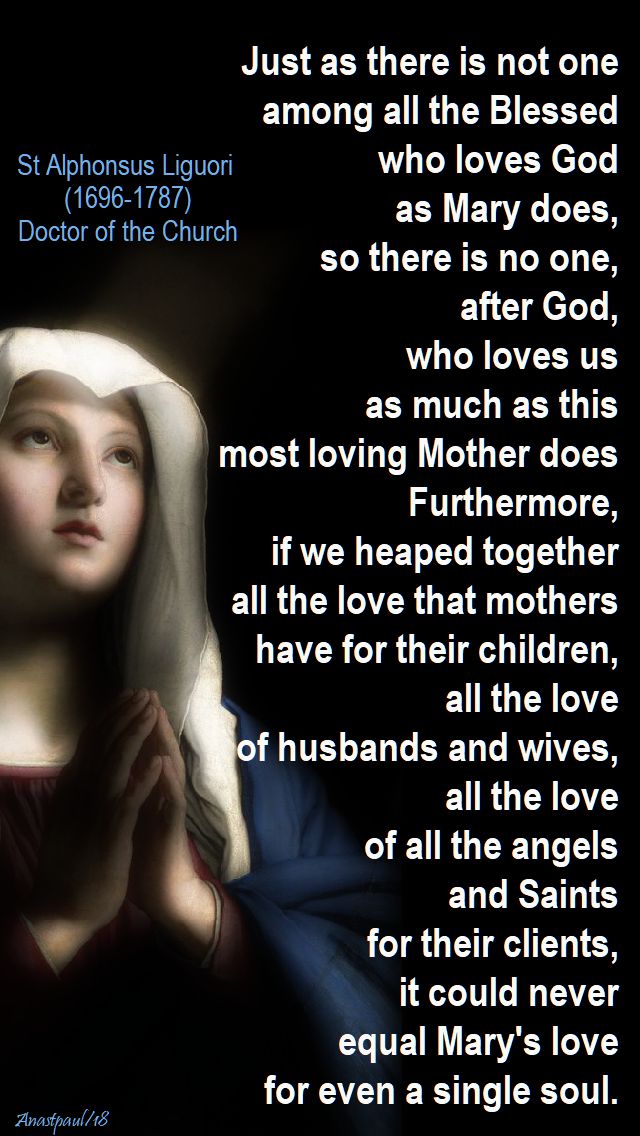
“Just as there is not one among all the Blessed
who loves God as Mary does, so there is no one,
after God, who loves us as much as this most loving Mother does.
Furthermore, if we heaped together
all the love that mothers have for their children,
all the love of husbands and wives,
all the love of all the angels and Saints for their clients,
it could never equal Mary’s love for even a single soul.”just as there is not one - 15 jan 2018 - st alphonsus liguori

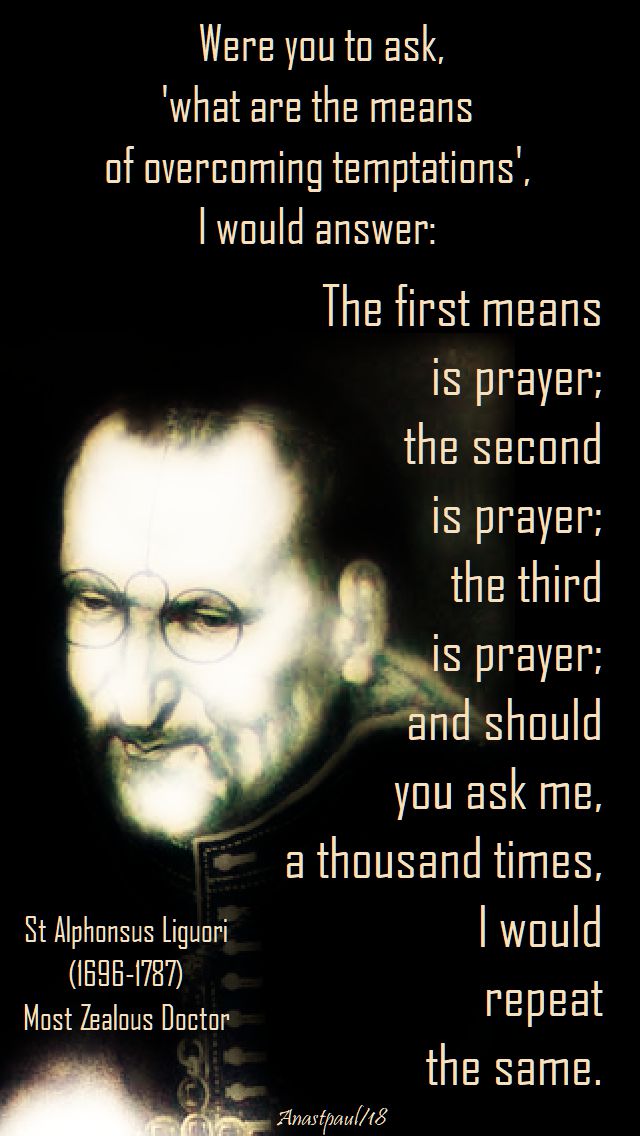
“Were you to ask, ‘what are the mans of overcoming temptations’, I would answer:

the first means is prayer;  the second is prayer;  the third is prayer and should you ask me a thousand times, I would repeat the same.”

were you to ask - st alphonsus - 18 june 2018

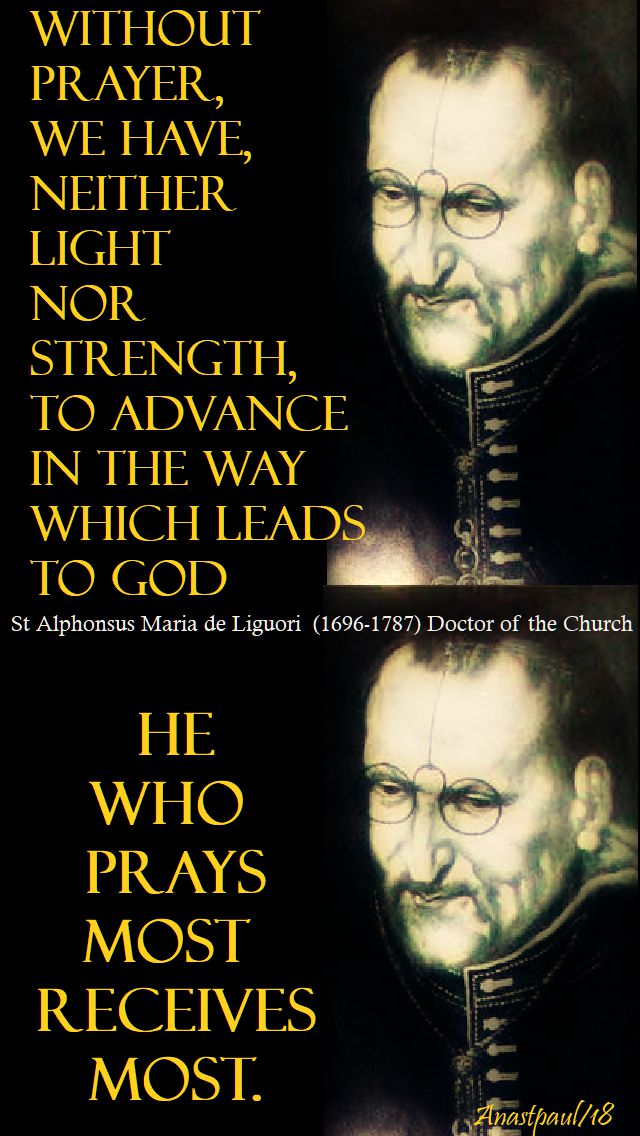
“Without prayer, we have neither light nor strength, to advance in the way which leads to God.”

He who prays most receives most.”

St Alphonsus Liguori (1696-1787) Doctor of the Church

without prayer - st alphonsus - 30 jan 2018


Posted in DOCTORS of the Church, MORNING Prayers, QUOTES of the SAINTS, QUOTES on LOVE, SAINT of the DAY, The WORD

One Minute Reflection – 1 August – The Memorial of St Alphonsus Liguori (1696-1787) Doctor of the Church

One Minute Reflection – 1 August – The Memorial of St Alphonsus Liguori (1696-1787) Doctor of the Church

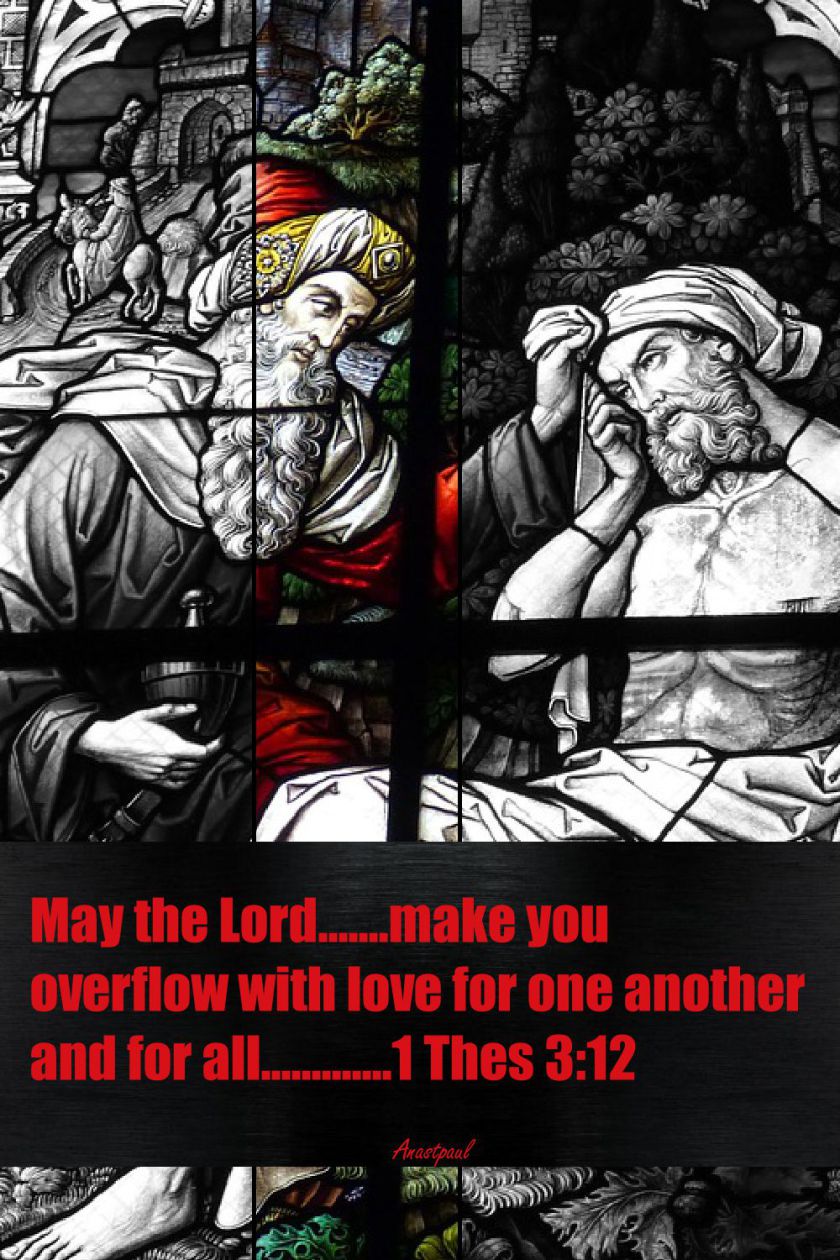
May the Lord…make you overflow with love for one another and for all.…1 Thessalonians 3:121-thes-3-12-2-1 august 2017

REFLECTION – “The means for attaining perfect love is to accomplish frequent acts of love.   Fire is kindled by the wood that we cast into it and love is enkindled by acts of love.”….St Alphonsus Liguori (1696-1787) Doctor of the Churchthe-means-for-attaining-perfect-love-st-alphonsus-liguori - 1 august 2017

PRAYER – Loving Father, grant me the grace to strive after perfect love.   Help me to bring forth frequent acts of love, to all and sundry, to each of my neighbours, so that I may grow in this greatest of virtues… St Alphonsus Liguori pray for us, amen.st alphonsus liguori pray for us - 1 august 2018

Posted in DOCTORS of the Church, MORNING Prayers, PRAYERS for VARIOUS NEEDS, PRAYERS of the SAINTS, SAINT of the DAY

Our Morning Offering – 1 August – The Memorial of (1696-1787) Doctor of the Church

Our Morning Offering – 1 August – The Memorial of (1696-1787) Doctor of the Church

The One Thing Necessary
By St Alphonsus Liguori (1696-1787) Doctor of the Church

0 my God, help me to remember
That time is short, eternity is long.
What good is all the greatness of this world at the hour of death?
To love You, my God
and save my soul is the one thing necessary.
Without You, there is no peace, no joy.
My God, I need fear nothing but sin.
For to lose You, my God, is to lose all.
0 my God, help me to remember –
That to gain all I must leave all,
That in loving You
I have all good things,
the infinite riches of Christ
and His Church,
the motherly protection of Mary,
peace beyond understanding,
joy unspeakable!
Eternal Father, Your Son has promised,
that whatever we ask in His Name will be given to us.
In His Name I pray:
give me a burning faith,
a joyful hope,
a holy love for Jesus Christ.
Give me the grace of perseverance
in doing Your will in all things.
Do with me what You will.
I repent of having offended You.
Grant, O Lord, that I may love You always
and never let me be separated from You.
O my God and my All,
make me a saint!
Amen

the one thing necessary - st alphonsus liguori - 24 feb 2018

Posted in Against SCRUPELOSITY, for Scrupulous people, All THEOLOGIANS, Moral Theologians, CONFESSORS, DOCTORS of the Church, GOUT, KNEE PROBLEMS, ARTHRITIS, etc, Of a Holy DEATH & AGAINST A SUDDEN DEATH, of the DYING, FINAL PERSEVERANCE, DEATH of CHILDREN, DEATH of PARENTS, REDEMPTORISTS CSSR, SAINT of the DAY, Uncategorized

Saint of the Day – 1 August – St Alphonsus Maria de Liguori C.Ss.R. (1696-1787) – Doctor of the Church

Saint of the Day – 1 August – St Alphonsus Maria de Liguori C.Ss.R. (1696-1787) – Confessor, Bishop, Doctor of the Church, Founder of the Redemptorists, Spiritual Writer, Composer, Musician, Artist, Poet, Lawyer, Scholastic Philosopher and Theologian.    Patronages – against arthritis, against scrupulosity, of Confessors (given on 26 February 1950 by Pope Pius XII), final perseverance, moral theologians, moralists (1950 by Pope Pius XII), scrupulous people, vocations, Diocese of Acerra, Italy, Diocese of Agrigento, Italy,l Pagani, Italy, Sant’Agata de’ Goti, Italy.

The Roman Martyrology states of St Alphonsus today: “At Nocera-de-Pagani, Saint Alphonsus Maria de Liguori, Bishop of St Agatha of the Goths and Founder of the Congregation of the Most Holy Redeemer (the Redemptorists), distinguished by his zeal for the salvation of souls, by his writings, his preaching and his example.
He was inscribed on the Calendar of the Saints by Pope Gregory XVI in the year 1839, the 52nd after his happy death and , in 1871, was declared Doctor of the Universal Church by Pius IX, according to a decree of the Sacred Congregation of Rites.
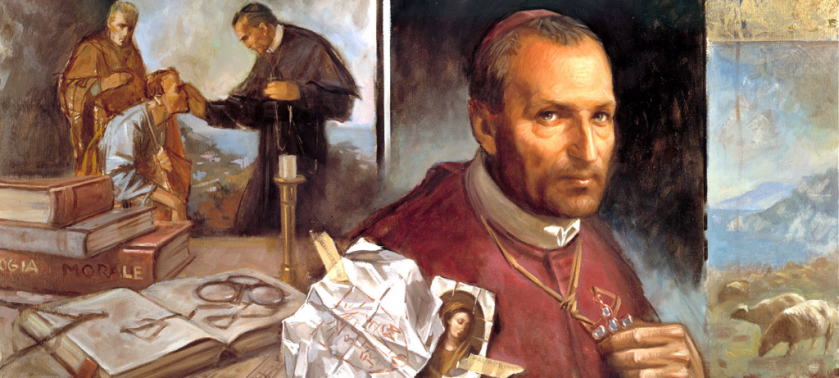
header image - alphonsus

St Alphonsus was born of noble parents, near Naples, in 1696.   His spiritual training was entrusted to the Fathers of the Oratory in that city and from his boyhood Alphonsus was known as a most devout Brother of the Little Oratory.   At the early age of sixteen he was made doctor in law and he threw himself into this career with ardour and success.

A mistake, by which he lost an important cause, showed him the vanity of human fame and determined him to labour only for the glory of God.   He entered the priesthood, devoting himself to the most neglected souls and to carry on this work he founded later the missionary Congregation of the Most Holy Redeemer,   The Redemptorists.alphonsus - youngalphonsus - very young - magnificent

At the age of sixty-six he became Bishop of St Agatha and undertook the reform of his diocese with the zeal of a Saint.   He made a vow never to lose time and, though his life was spent in prayer and work, he composed a vast number of books, filled with such science, unction and wisdom that he has been declared one of the Doctors of the Church.st alphonsus - BEAUTIFUL image!

St Alphonsus wrote his first book at the age of forty-nine and in his eighty-third year had published about 100 volumes, when his director forbade him to write more.   Very many of these books were written in the half-hours snatched from his labours as missionary, religious superior and Bishop, or in the midst of continual bodily and mental sufferings.   With his left hand he would hold a piece of marble against his aching head while his right hand wrote.

alphonsus

Yet he counted no time wasted which was spent in charity.   He did not refuse to hold a long correspondence with a simple soldier who asked his advice, or to play the harpsichord while he taught his novices to sing spiritual canticles.   He lived in evil times, and met with many persecutions and disappointments.

For his last seven years he was prevented by constant sickness from offering the Adorable Sacrifice but he received Holy Communion daily and his love for Jesus Christ and his trust in Mary’s prayers sustained him to the end.

He died in 1787, in his ninety-first year.alphonsus 2

For lots more details on St Alphonsus here:   https://anastpaul.wordpress.com/2017/08/01/saint-of-the-day-1-august-st-alphonsus-maria-de-liguori-c-ss-r-doctor-of-the-church/ alphonsus relics

alphonsus by lawrence op

Posted in DOCTORS of the Church, JESUIT SJ, SAINT of the DAY

Memorials of the Saints – 1 August

St Alphonsus Maria de Liguori (1696-1787) Doctor of the Church (Memorial)

Posted here:  https://anastpaul.wordpress.com/2017/08/01/saint-of-the-day-1-august-st-alphonsus-maria-de-liguori-c-ss-r-doctor-of-the-church/


Portiuncula Indulgence: An indulgence which may be gained in any church so designated by the bishop, by all the faithful who after Confession and Holy Communion, visit such churches between noon of 1 August and midnight of 2 August, or on the Sunday following.   The indulgence is toties quoties and is applicable to the souls in Purgatory.

Feast Saint Peter in Chains:   The feast was originally kept in Rome, Italy to commemorate the dedication of the Church of Saint Peter on the Esquiline Hill built by Eudoxia Licinia in 442 and rebuilt by Adrian I in the 8th century.   When the chains which Saint Peter had worn in prison and from which he was freed by angelic intervention were later venerated there, the feast received its present name.
The date when these chains were brought from Jerusalem is disputed;  some claim they were brought in 116 by travellers sent in search of them by Saint Balbina and her father Saint Quirinus, while others think Saint Eudoxia brought them in 439.   St Pope Leo the Great united them to the chains with which Saint Peter had been fettered in the Mamertine Prison, forming a chain about two yards long which is preserved in a bronze safe and guarded by a special confraternity.
Patronage
• diocese of Annecy, France
• Donnas, Italy

St Adela Mardosewicz
Bl Aleksy Sobaszek
St Alexander of Perga
St Almedha
St Arcadius
St Attius of Perga
St Buono
St Brogan
St Charity
St Ethelwold of Winchester
St Exuperius of Bayeux
St Faith
St Faustus
St Felix of Gerona
St Friard
Bl Gerhard Hirschfelder
Bl Giovanni Bufalari
St Hope
St Jadwiga Karolina Zak
St Jonatus
St Justin of Paris
St Kenneth of Wales
St Leontius of Perga
St Maur
St Nemesius of Lisieux
Bl Orlando of Vallombrosa
St Peregrinus of Modena

Bl Pierre-Lucien Claverie – Martyr
St Rioch
Bl Rudolph
St Secundel
St Secundus of Palestrina
St Sophia
St Verus of Vienne

Holy Maccabees:  Jewish dynasty which began with the rebellion of Mathathias and his five sons against the Syrian king, Antiochus IV (168 BC) and ruled the fortunes of Israel until the advent of Herod the Great.   Syrian attempts to force Greek paganism on the Jews, the profanation of the Temple at Jerusalem and the massacre which followed, brought the nation to arms under Mathathias, a priest of the sons of Joarib.   At the death of Mathathias, Judas Machabeus, his third son, drove the Syrians and Hellenists out of Jerusalem, rededicated the Temple and began an offensive and defensive alliance with the Romans.   Before the treaty was concluded, however, Judas, with 800 men, risked battle at Laisa with an overwhelming army of Syrians under Bacchides, and was slain. He was succeeded in command by his youngest brother, Jonathan (161 BC).   Jonathan defeated Bacchides, revenged the death of his brother and made peace with Alexander who had usurped the throne of Demetrius, the successor to Antiochus.   A period of peace followed in which Jonathan ruled as high priest in Jerusalem but Tryphon, who was plotting for the throne of Asia, treacherously captured him at ptolemais and later put him to death.   The captaincy of the armies of Israel then fell to Simon, the second son of Mathathias.   Under him the land of Juda flourished exceedingly.   He obtained the complete independence of the country and a grateful people bestowed upon him the hereditary kingship of the nation.   His rule marked five years of uninterrupted peace. He was treacherously slain by his son-in-law, Ptolemy, about the year 135 BC After Simon the race of the Machabees quickly degenerated.   In 63 BC the Romans thought it necessary to interfere in the fratricidal war between Hyrcanus II and Aristobulus II. With this interference and the advent of Herod the Great the sceptre passed forever from the land of Juda.   The story of the Machabees is written in the two books of the Old Testament which bear that name.

Saints Faith, Hope and Charity:   The daughters of Saint Sophia.   While still children, they were tortured and martyred for their faith in the persecutions of Hadrian.   They were scourged, thrown into a fire, and then beheaded.

Martyrs of Nowogrodek – 11 beati: A group of eleven Holy Family of Nazareth nuns who were murdered by the Nazi Gestapo in exchange for 120 condemned citizens of Nowogrodek, Belarus who were scheduled for revenge killings. They are –
• Adela Mardosewicz
• Anna Kukolowicz
• Eleonora Aniela Józwik
• Eugenia Mackiewicz
• Helena Cierpka
• Jadwiga Karolina Zak
• Józefa Chrobot
• Julia Rapiej
• Leokadia Matuszewska
• Paulina Borowik
• Weronika Narmontowicz
They were machine-gunned by firing squad on 1 August 1943 by the Gestapo about three miles outside Novogrudok (Nowogródek), Hrodzyenskaya voblasts’, in Nazi occupied Belarus and buried on the site of the execution in a common grave. One of their surviving sisters, Maria Malgorzata Banas, located the grave on 19 March 1945 and tended to it until her death in 1966. Their relics have since been re-interred in a common sarcophagus in the chapel of the Novograd Farny Church (the Church of the Transfiguration, also known as Biala Fara or the White Church). They were Beatified on
5 March 2000 by St Pope John Paul II in Rome, Italy.

Martyrs of Philadelphia – 6 saints
Martyrs of Vietnam
Benado Vo Van Due
Ðaminh Nguyen Van Hanh
Martyred in the Spanish Civil War
Benito Iñiguez de Heredia Alzola
Francesc de Paula Soteras Culla
Joan Bonavida Dellá
José de Miguel Arahal
Justino Alarcón Vera
Sebastià Tarragó Cabré
Vicente Montserrat Millán
Nicholas de la Torre Merino

Posted in JESUIT SJ, MORNING Prayers, ON the SAINTS, PAPAL SERMONS, QUOTES of the SAINTS, QUOTES on CHARITY, QUOTES on CONVERSION, QUOTES on COURAGE, QUOTES on FAITH, QUOTES on MERCY, QUOTES on OBEDIENCE, QUOTES on PRAYER, QUOTES on REPENTANCE, QUOTES on SIN, QUOTES on the CHURCH, QUOTES on the CROSS of CHRIST, SAINT of the DAY, The BLESSED VIRGIN MARY

Pope Francis’ Homily on the feast of St Ignatius 2013 – Wednesday, 31 July 2013

Pope Francis honours Ignatius, calls us to more faithful life in Christ
Pope Francis’ Homily on the feast of St Ignatius 2013 – Wednesday, 31 July 2013

“In this Eucharist in which we celebrate our Father Ignatius of Loyola, in light of the Readings we have heard, I would like to propose three simple thoughts guided by three expressions: to put Christ and the Church in the centre; to allow ourselves to be conquered by Him in order to serve; to feel the shame of our limitations and our sins, in order to be humble before Him and before the brothers.

The emblem of us Jesuits is a monogram, the acronym of “Jesus, the Saviour of Mankind” (IHS).   Every one of you can tell me – we know that very well!   But this crest continually reminds us of a reality that we must never forget –  the centrality of Christ for each one of us and for the whole Company, the Company that Saint Ignatius wanted to name “of Jesus” to indicate the point of reference.

Moreover, even at the beginning of the Spiritual Exercises he places our Lord Jesus Christ, our Creator and Saviour (Spiritual Exercises, 6) in front of us.   And this leads all of us Jesuits and the whole Company, to be “decentred,” to have “Christ more and more” before us, the “Deus semper maior”, the “intimior intimo meo”, that leads us continually outside ourselves, that brings us to a certain kenosis, a “going beyond our own loves, desires, and interests” (Sp. Ex., 189).
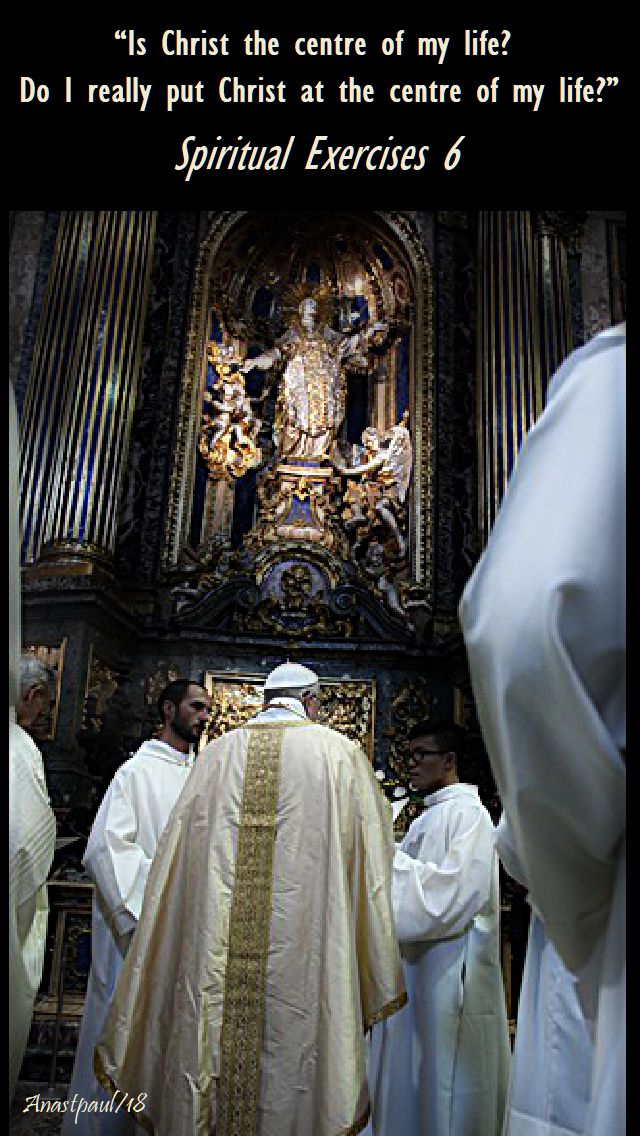
Isn’t it obvious, the question for us?   For all of us? “Is Christ the centre of my life? Do I really put Christ at the centre of my life?”   Because there is always the temptation to want to put ourselves in the centre.   And when a Jesuit puts himself and not Christ in the centre, he goes astray.is christ the centre of my life - pope francis - 31 july 2013

In the first Reading, Moses forcefully calls upon the people to love the Lord, to walk in His ways, “because He is your life” (cf. Deut. 30, 16-20).   Christ is our life!   The centrality of Christ corresponds also to the centrality of the Church:  they are two flames that cannot be separated:  I cannot follow Christ except in and with the Church.   And even in this case we Jesuits and the whole Company, are not at the centre, we are, so to speak, “displaced”, we are at the service of Christ and of the Church, the Bride of Christ our Lord, who is our Holy Mother Hierarchical Church (cf. Sp. Ex. 353).

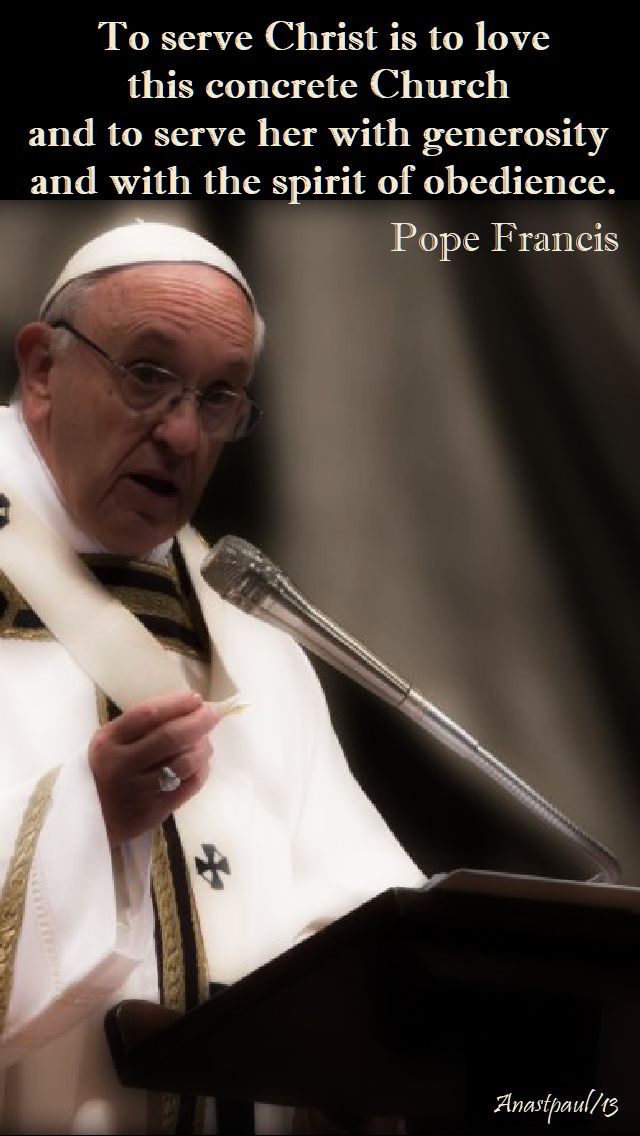
To be men routed and grounded in the Church, that is what Jesus desires of us.   There cannot be parallel or isolated paths for us.   Yes, paths of searching, creative paths, yes, this is important: to go to the peripheries, so many peripheries.   This takes creativity but always in community, in the Church, with this membership that give us the courage to go forward.   To serve Christ is to love this concrete Church and to serve her with generosity and with the spirit of obedience.to serve christ is to love this concrete church - pope francis - 31 july 2018

“Whoever would save his life will lose it, but whoever loses his life for my sake will save it . . . If anyone is ashamed of me . . .” (Lk 9:23).   And so on.   The shame of the Jesuit.   The invitation that Jesus makes is for us to never be ashamed of Him but to always follow Him with total dedication, trusting Him and entrusting ourselves to Him.   But looking at Jesus, as Saint Ignatius teaches us in the First Week, above all looking at Christ crucified, we have that very human and noble feeling that is the shame of not reaching the highest point;  we look at the wisdom of Christ and at our ignorance;  at His omnipotence and our weakness;  at His justice and our iniquity;  at His goodness and our wickedness (cf. Sp. Ex. 59).

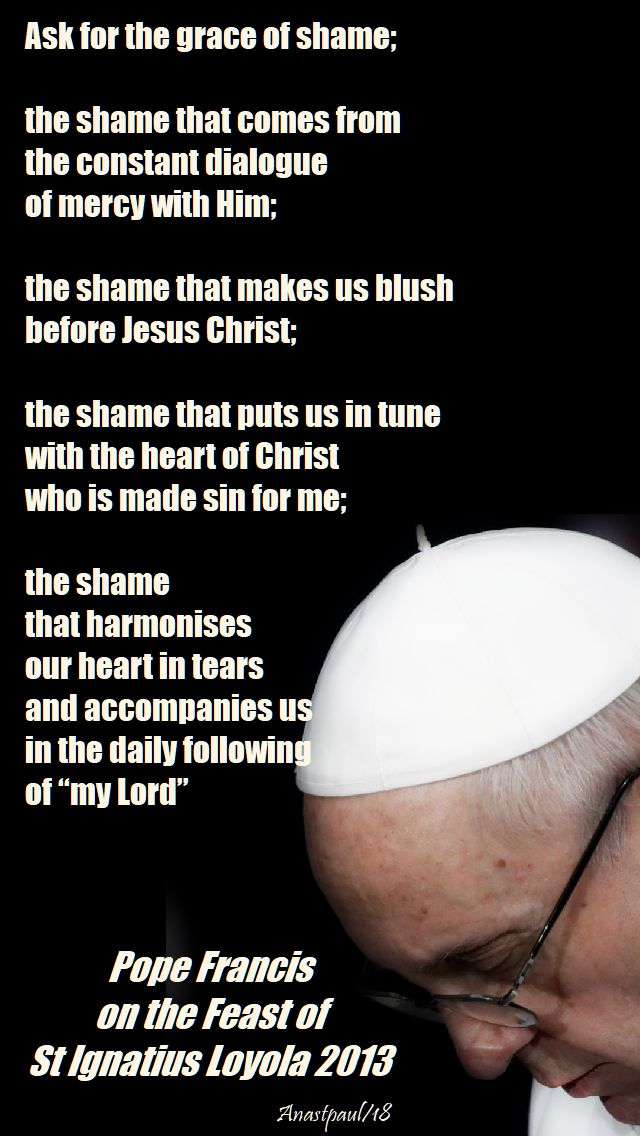
Ask for the grace of shame;  the shame that comes from the constant dialogue of mercy with Him;  the shame that makes us blush before Jesus Christ;  the shame that puts us in tune with the heart of Christ who is made sin for me;  the shame that harmonises our heart in tears and accompanies us in the daily following of “my Lord”.   And this always brings us, as individuals and as a Company, to humility, to living this great virtue.   Humility that makes us understand, each day, that it is not for us to build the Kingdom of God but it is always the grace of God working within us;  humility that pushes us to put our whole being not at the service of ourselves and our own ideas but at the service of Christ and of the Church, like clay pots, fragile, inadequate, insufficient but having within them an immense treasure that we carry and that we communicate (2 Cor. 4:7).ask for the grace of shame - pope francis - 31 july 2018

It is always pleasant for me to think of the sunset of the Jesuit, when a Jesuit finishes his life, when the sun goes down.   And two icons of the sunset of the Jesuit always come to me:  one classical, that of Saint Francis Xavier, looking at China.   Art has painted this sunset so many times, this ‘end’ of Xavier.   Even in literature, in that beautiful peace by Pemàn.   At the end, having nothing but in the sight of the Lord; it does me good to thing about this.   The other sunset, the other icon that comes to me as an example, is that of Padre Arrupe in the last interview in the refugee camp, when he told us – something he himself said – “I say this as if it were my swan song: pray.”   Prayer, the union with Jesus. And, after having said this, he caught the plane and arrived at Rome with the stroke that was the beginning of so long and so exemplary a sunset.   Two sunsets, two icons that all of us would do well to look at, and to go back to these two.   And to ask for the grace that our sunset will be like theirs.

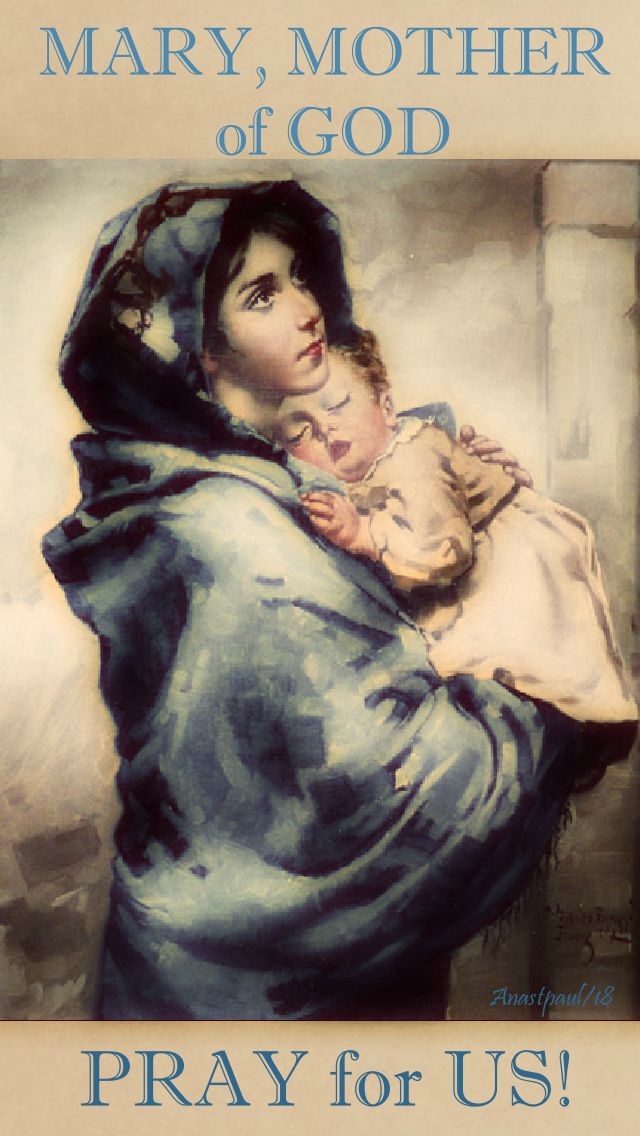
Dear brothers, let us turn again to Our Lady, to her who bore Christ in her womb and accompanied the first steps of the Church.   May she help us to always put Christ and His Church at the centre of our lives and of our ministry.   May she, who was the first and most perfect disciple of her Son help us to allow ourselves to be conquered by Christ in order to follow Him and to serve Him in every situation.   May she that answered the announcement of the Angel with the most profound humility:  “Behold the handmaid of the Lord, be it done unto me according to thy word” (Lk 1:38), make us feel the shame for our inadequacy before the treasure that has been entrusted to us, in order to live the virtue of humility before God.   mary mother of god - pray for us - 10 may 2018

May our journey be accompanied by the paternal intercession of Saint Ignatius and of all the Jesuit saints, who continue to teach us to do all things “ad majorem Dei gloriam.”st ignatius and all jesuit saints pray for us 31 july 2018

Posted in JESUIT SJ, MORNING Prayers, QUOTES of the SAINTS, QUOTES on EVANGELISATION, QUOTES on OBEDIENCE, QUOTES on PERSECUTION, QUOTES on VIOLENCE, SAINT of the DAY

Thought for the Day – 31 July – The Memorial of St Ignatius Loyola (1491-1556)

Thought for the Day – 31 July – The Memorial of St Ignatius Loyola (1491-1556)

Ignatius was a true mystic.   He centered his spiritual life on the essential foundations of Christianity—the Trinity, Christ, the Eucharist.   His spirituality is expressed in the Jesuit motto, Ad majorem Dei gloriam—“for the greater glory of God.”   In his concept, obedience was to be the prominent virtue, to assure the effectiveness and mobility of his men.   All activity was to be guided by a true love of the Church and unconditional obedience to the Holy Father, for which reason all professed members took a fourth vow to go wherever the pope should send them for the salvation of souls.

Luther nailed his theses to the church door at Wittenberg in 1517.   Seventeen years later, Ignatius of Loyola founded the Society that was to play so prominent a part in the Catholic Reformation.   He was an implacable foe of Protestantism.   Yet the seeds of ecumenism may be found in his words:  “Great care must be taken to show forth orthodox truth in such a way that if any heretics happen to be present they may have an example of charity and Christian moderation.   No hard words should be used nor any sort of contempt for their errors be shown.”  ( Fr Don Miller, OFM)

St Ignatius pray for us!st-ignatius-pray-for-us-31 july 2017 LOVE

Posted in JESUIT SJ, MORNING Prayers, QUOTES of the SAINTS, QUOTES on CHARITY, QUOTES on ETERNAL LIFE, QUOTES on JOY, QUOTES on LOVE, QUOTES on MERCY, QUOTES on PEACE, QUOTES on PRAYER, QUOTES on SANCTITY, QUOTES on SUFFERING, SAINT of the DAY

Quote/s of the Day – 31 July – The Memorial of St Ignatius Loyola (1491-1556)

Quote/s of the Day – 31 July – The Memorial of St Ignatius Loyola (1491-1556)

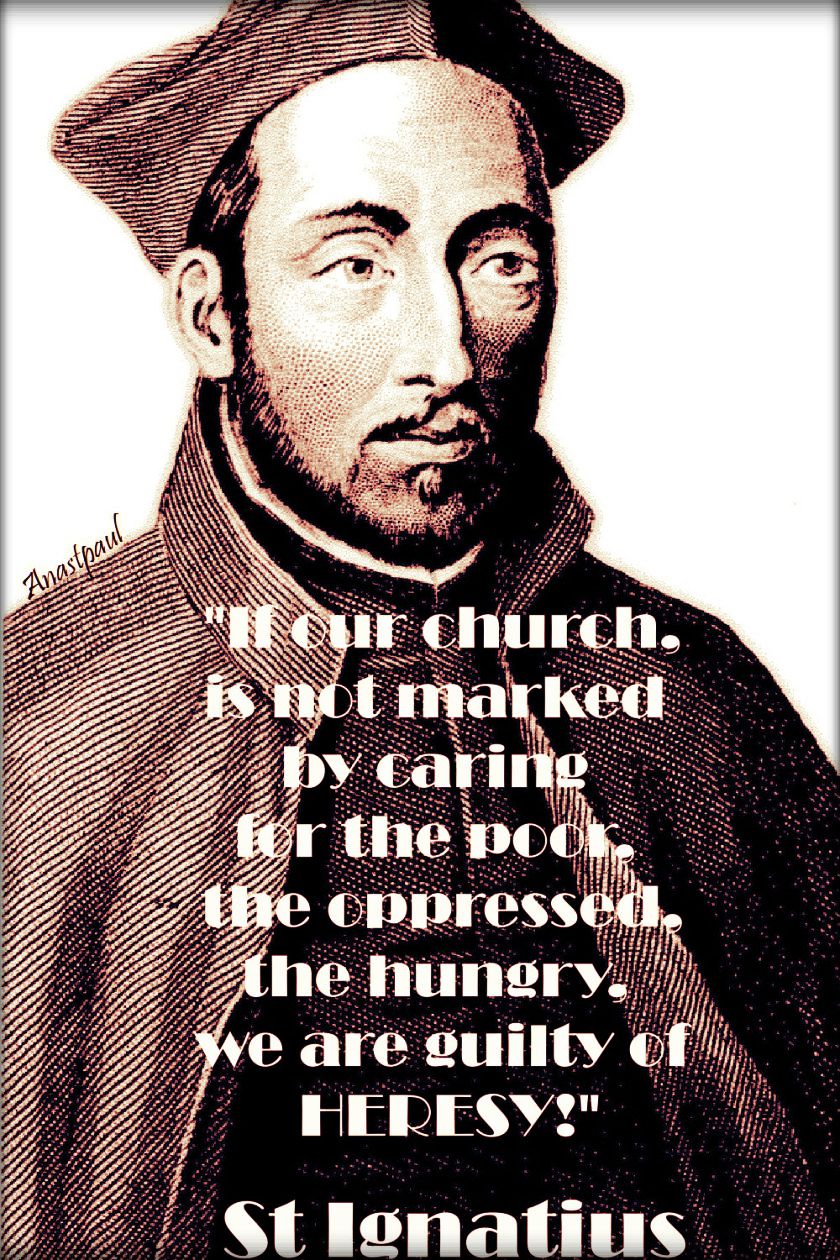
“If our church is not marked by caring for the poor,
the oppressed, the hungry, we are guilty of heresy.”if-our-church-st-iggy-31 july 2018

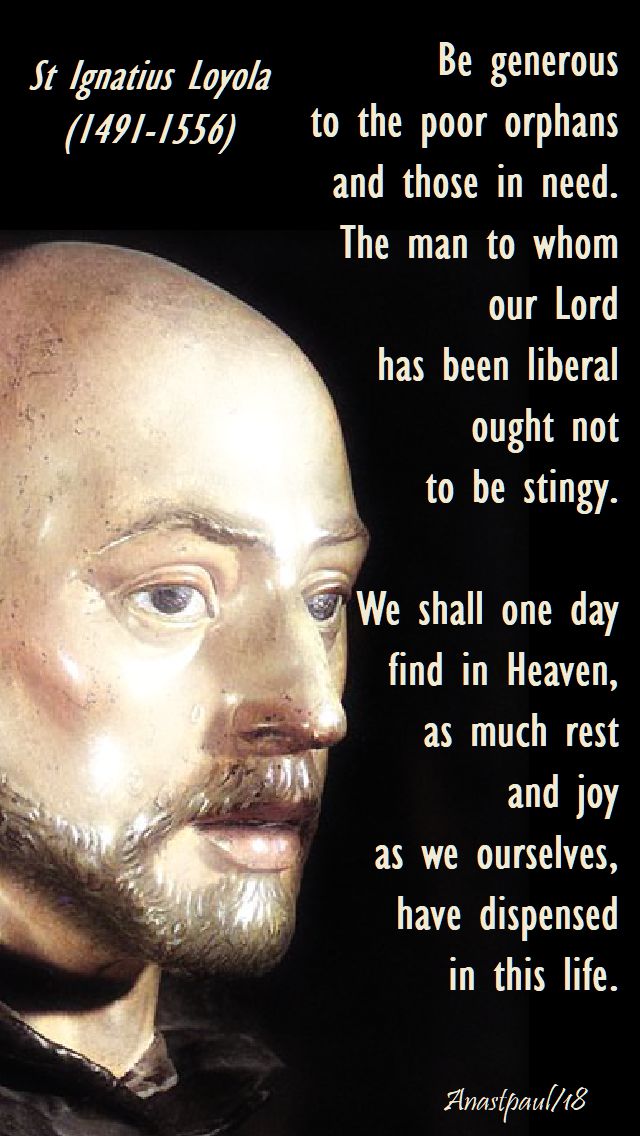
“Be generous to the poor orphans and those in need.
The man to whom our Lord has been liberal
ought not to be stingy.
We shall one day find in Heaven as much rest and joy
as we ourselves have dispensed in this life.”be generous to the poor orphans - 31 july 2018

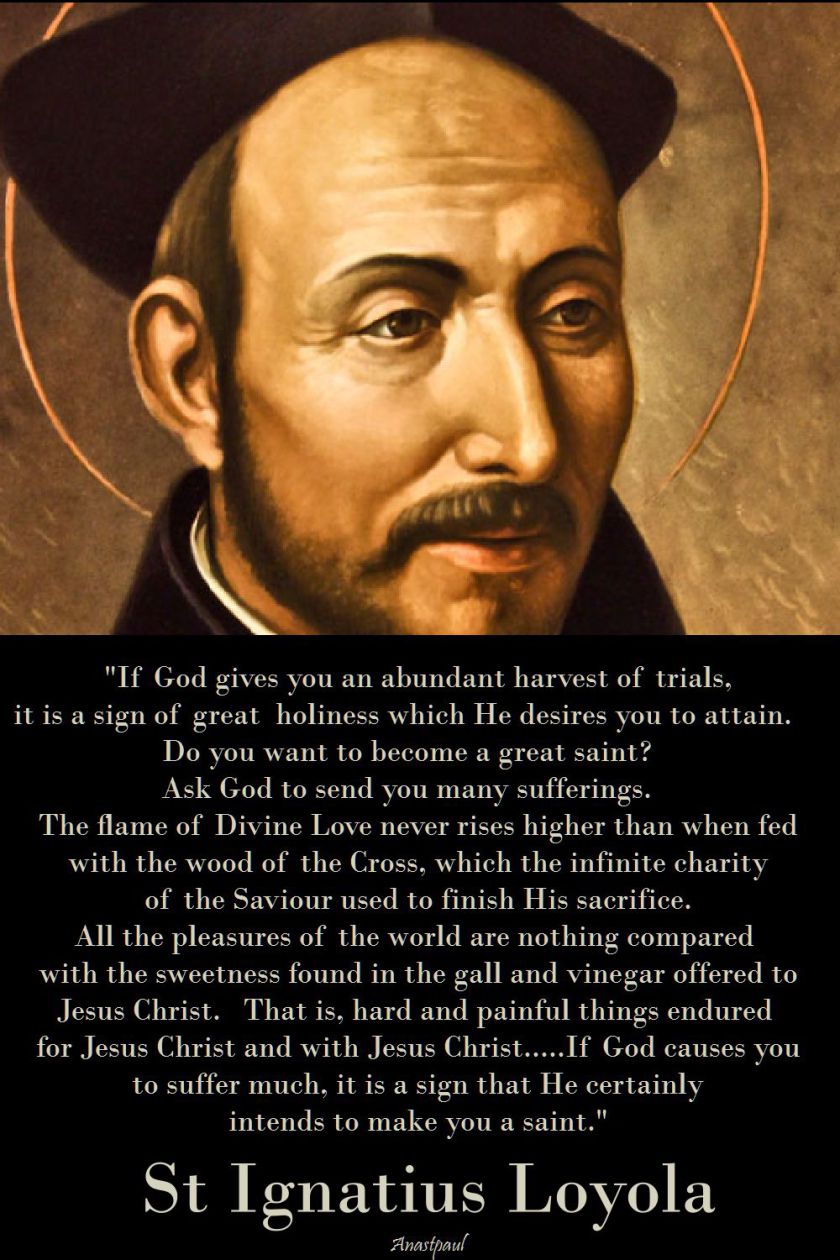
“If God gives you an abundant harvest of trials,
it is a sign of great holiness which He desires you to attain.
Do you want to become a great saint?
Ask God to send you many sufferings.
The flame of Divine Love never rises higher than when fed
with the wood of the Cross, which the infinite charity
of the Saviour used to finish His sacrifice.
All the pleasures of the world are nothing compared
with the sweetness found in the gall and vinegar offered to
Jesus Christ. That is, hard and painful things endured
for Jesus Christ and with Jesus Christ…..If God causes you
to suffer much, it is a sign that He certainly
intends to make you a saint.”

St Ignatius Loyola (1491-1556)if-god gives-you-st-iggy - 31 july 2017

Posted in JESUIT SJ, MORNING Prayers, QUOTES of the SAINTS, QUOTES on PRAYER, SAINT of the DAY

One Minute Reflection – 31 July – The Memorial of St Ignatius Loyola (1491-1556)

One Minute Reflection – 31 July – The Memorial of St Ignatius Loyola (1491-1556)

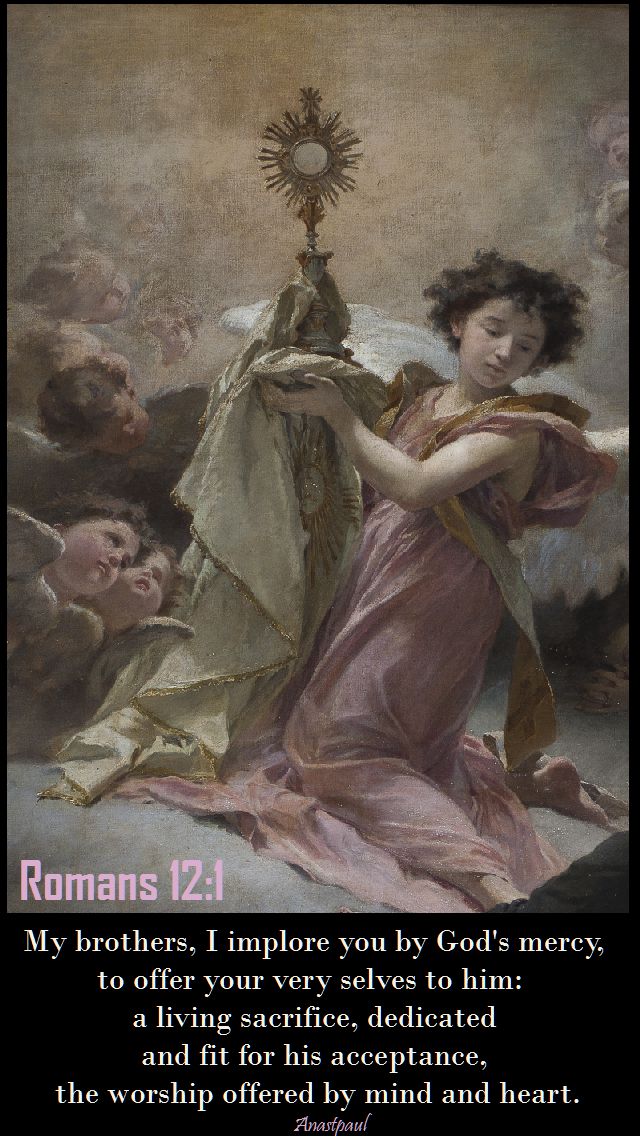
My brothers, I implore you by God’s mercy, to offer your very selves to him: a living sacrifice, dedicated and fit for his acceptance, the worship offered by mind and heart………Romans 12:1romans-12-1 - my brothers I implore you by God's mercy - 31 july 2017

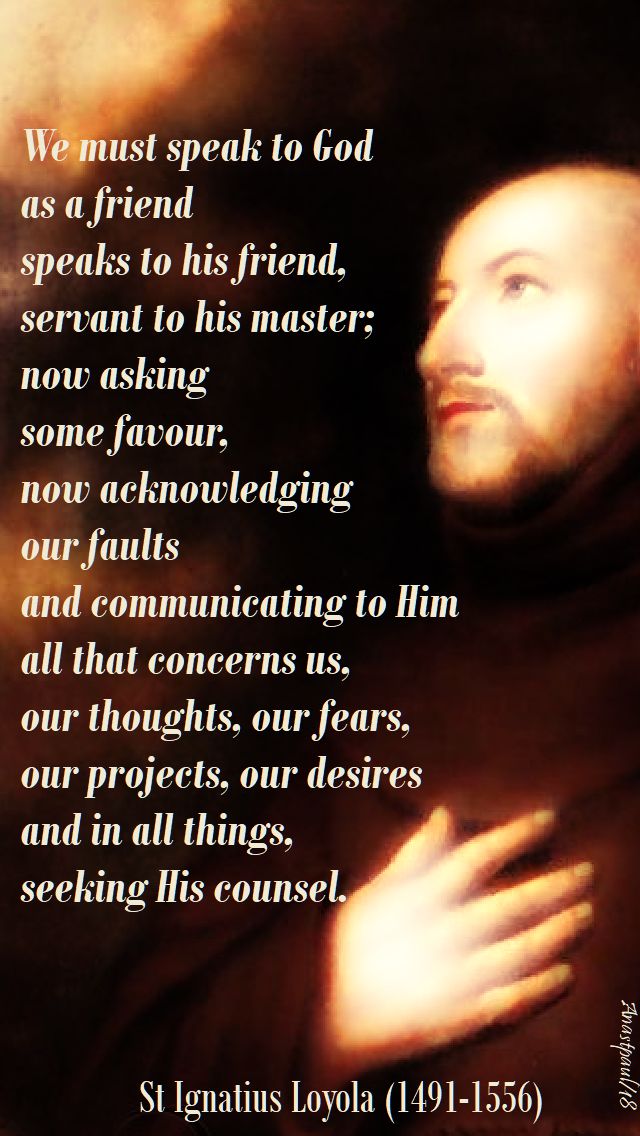
REFLECTION – “We must speak to God as a friend speaks to his friend, servant to his master – now asking some favour, now acknowledging our faults and communicating to Him all that concerns us, our thoughts, our fears, our projects, our desires and in all things seeking His counsel.”…St Ignatius of Loyola (1491-1556)we must speak to god - st ignatius - 31 july 2018

PRAYER – Almighty God, grant that the example of Your saints may spur us on to perfection, so that we who are celebrating the feast of St Ignatius, may follow him step by step in his way of life to reach You in heaven. St Ignatius, pray for us, amen.st-iggy-pray-for-us-2-31 july 2017

Posted in JESUIT SJ, MORNING Prayers, PRAYERS to the SAINTS, SAINT of the DAY

Our Morning Offering – 31 July – The Memorial of St Ignatius Loyola (1491-1556)

Our Morning Offering – 31 July – The Memorial of St Ignatius Loyola (1491-1556)

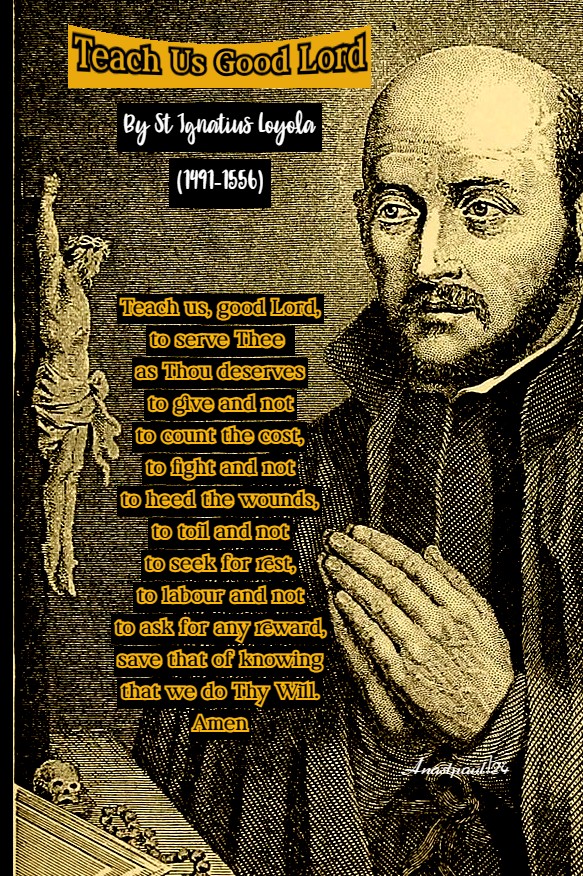
Teach Us Good Lord
By St Ignatius Loyola (1491-1556)

Teach us, good Lord,
to serve Thee as Thou deserves
to give and not
to count the cost,
to fight and not
to heed the wounds,
to toil and not
to seek for rest,
to labour and not
to ask for any reward,
save that of knowing
that we do Thy Will.
Amen

Posted in JESUIT SJ, SAINT of the DAY

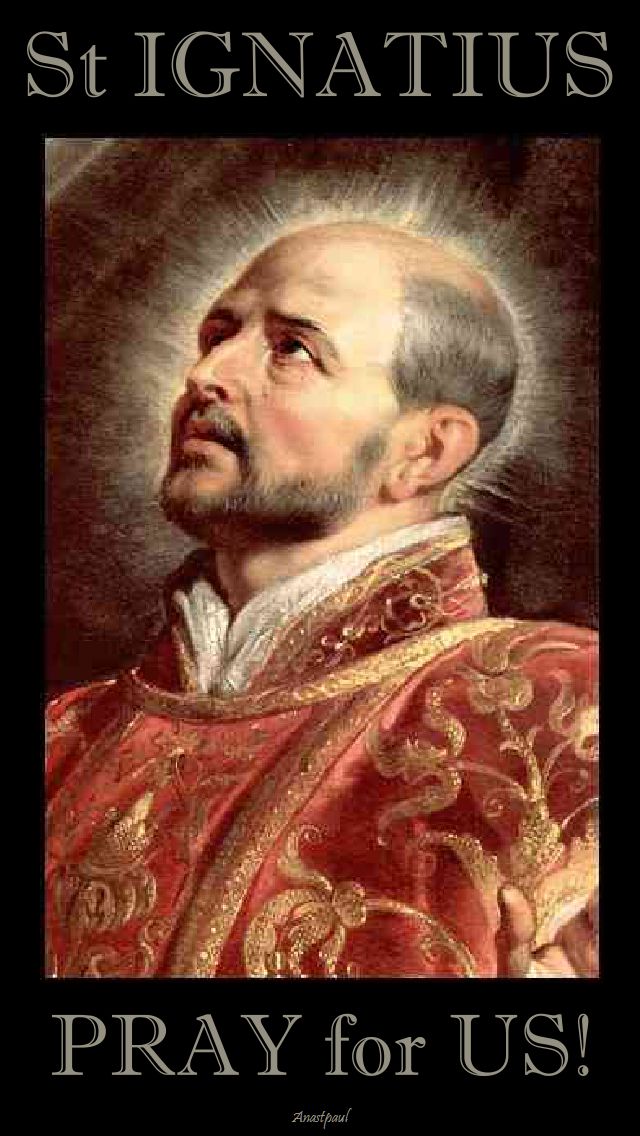
31 July – St Ignatius Loyola (1491-1556)!

Today, 31 July, the Church liturgically recalls for us, one of the Master’s of the spiritual life, Saint Ignatius of Loyola (1491-1556).   The Pilgrim died in 1556 and was the author of the Spiritual Exercises and founder of the Society of Jesus.  Saint Ignatius of Loyola, a man who’s path to be a soldier for Christ and His Church, was started by a cannonball injury.

For the life of St Ignatius here:  https://anastpaul.com/2017/07/31/saint-of-the-day-31-july-st-ignatius-loyola-founder-of-the-society-of-jesusthe-jesuits/

murillo - st Ignatius
Esteban Murillo

From the life of Saint Ignatius from his own words by Luis Gonzalezst-ignatius-best-pic-ever-my-snip.jpg

Ignatius was passionately fond of reading worldly books of fiction and tales of knight-errantry.   When he felt he was getting better, he asked for some of these books to pass the time.   But no book of that sort could be found in the house, instead they gave him a life of Christ and a collection of the lives of saints written in Spanish.

By constantly reading these books he began to be attracted to what he found narrated there.   Sometimes in the midst of his reading, he would reflect on what he had read.   Yet at other times he would dwell on many of the things which he had been accustomed to dwell on previously.   But at this point our Lord came to his assistance, insuring that these thoughts were followed by others which arose from his current reading.

While reading the life of Christ our Lord, or the lives of the saints, he would reflect and reason with himself:  “What if I should do what Saint Francis or Saint Dominic did?” In this way he let his mind dwell on many thoughts, they lasted a while until other things took their place.   Then those vain and worldly images would come into his mind and remain a long time.   This sequence of thoughts persisted with him for a long time.

Sant_Ignazio_di_Loyola_F

But there was a difference.  When Ignatius reflected on worldly thoughts, he felt intense pleasure; but when he gave them up out of weariness, he felt dry and depressed.   Yet when he thought of living the rigourous sort of life he knew the saints had lived, he not only experienced pleasure when he actually thought about i, but even after he dismissed these thoughts, he still experienced great joy.   Yet he did not pay attention to this, nor did he appreciate it until one day, in a moment of insight, he began to marvel at the difference.   Then he understood his experience – thoughts of one kind left him sad, the others full of joy.   And this was the first time he applied a process of reasoning to his religious experience.   Later on, when he began to formulate his spiritual exercises, he used this experience, as an illustration to explain the doctrine he taught his disciples, on the discernment of spirits.

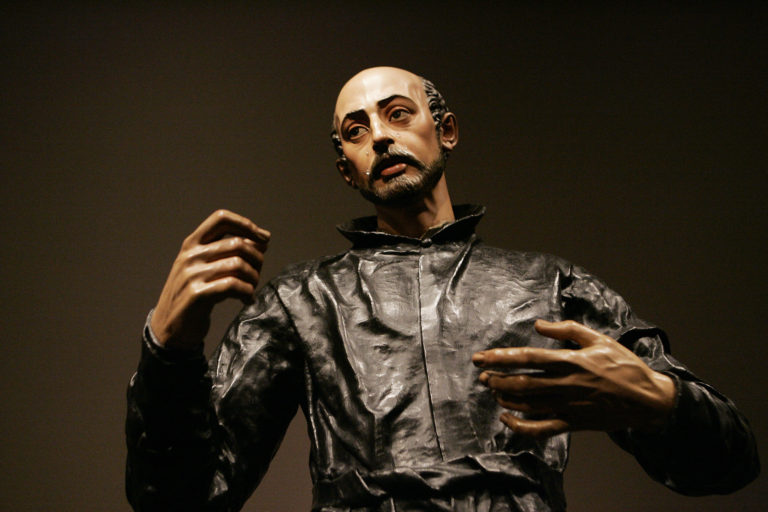
SCULPTURE OF ST. IGNATIUS PART OF EXHIBIT ON SPANISH SACRED ART AT NATIONAL GALLERY
The upper portion of the sculpture “Saint Ignatius Loyola,” by Juan Martinez Montanes and Francisco Pacheco.

“After we experience the great peace of knowing God’s love for us, which quiets our anxieties and insecurities, we find another deep desire stirring within us.   We desire greatness, because we are made for greatness.”

Milanese School, Saint Ignatius Loyola Receiving a Vision of the Crucified Chri
Milanese School – St Ignatius receiving a vision of Christ
Posted in SAINT of the DAY

Saint of the Day – 31 July – St Germanus d’Auxerre (c 378 – c 448)

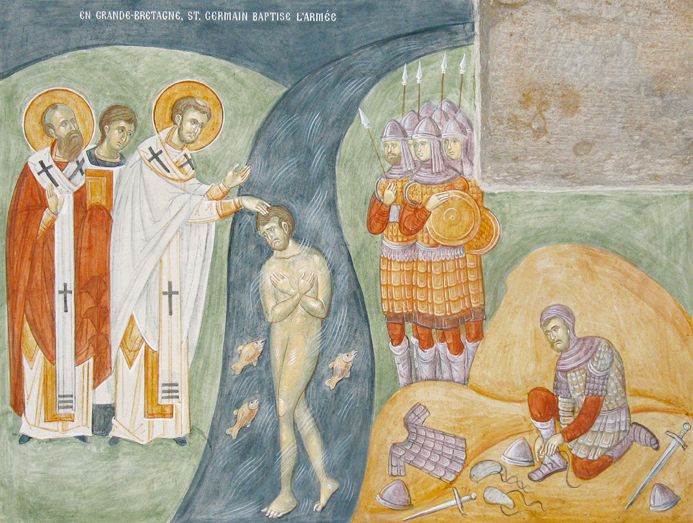
Saint of the Day – 31 July – St Germanus d’Auxerre Bishop of Auxerre (c 378 – c 448) , Lawyer, Missionary, Reformer, Exorcist, Miracle-Worker – born in c 378 at Auxerre, France – died on 31 July 448 at Ravenna, Italy of natural causes.   Patronages:  Patronage – Auxerre, France. st germanus baptising

He abandoned a career as a high-ranking government official to devote his formidable energy towards the promotion of the church and the protection of his ‘flock’ in dangerous times – personally confronting, for instance, the barbarian king, “Goar”.   In Britain he is best remembered for his journey to combat Pelagianism in or around 429 and the records of this visit provide valuable information on the state of post-Roman British society.   He also played an important part in the establishment and promotion of the Cult of Saint Alban.   The saint was said to have revealed the story of his martyrdom to Germanus in a dream or holy vision and Germanus ordered this to be written down for public display.   Germanus is venerated as a saint in both the Roman Catholic and Orthodox churches, which commemorate him today  31 July.

The principal source for the events of his life is the Vita Germani, a hagiography written by Constantius of Lyon around 480 and a brief passage added onto the end of the Passio Albani, which may possibly have been written or commissioned by Germanus. Constantius was a friend of Bishop Lupus of Troyes, who accompanied Germanus to Britain, which provided him with a link to Germanus.StGermanus

Germanus, according to appearances, was not of outstanding piety during his youth, though of noble birth, his forebears were lords of the county of Auxerre in Gaul in the 5th century.   He studied eloquence and civil law in Rome and practised law there with distinction.   He married a Roman noblewoman and became known to the emperor Honorius, who made him general of the imperial troops for his native province.

Returning then to Auxerre, he indulged his passion for hunting and when advised by Saint Amator (344-418 – Memorial 1 May) the bishop of Auxerre, that his habits were not edifying, paid no attention to the admonition.   But God made known to this holy bishop his forthcoming death and that Germanus was destined to succeed him.   Saint Amator, therefore, went to see the Prefect of Gaul and asked his permission to have this soldier as a member of his clergy and the permission was granted.   He then tonsured Germanus and clothed him with the ecclesiastical habit, taking him by surprise during an assembly of the faithful and informing him there that he was destined to be his successor. Germanus dared not resist, fearing to oppose the Will of God.   He was consecrated soon afterwards, in the year 418.

st germanus - snip

He immediately became another man and making over his lands to the Church, he adopted a life of humble penance.   He rapidly attained high perfection and the gift of miracles was given him.   He attempted to conceal it but it became known when he obliged the demon, during a public exorcism, to reveal the place where stolen money was concealed.   Afterwards there was never a time when all the roads leading to his residence were not filled with crowds of sick persons, waiting to address the bishop and beg his assistance.   Many possessed persons were also delivered.   Invariably his modesty caused him to attribute the multiplying prodigies to the relics of Saints which he wore around his neck, or to the sign of the Cross, or to the holy water he sometimes used, or to oil which he blessed.   The furious demons tormented him with temptations and terrifying apparitions but found themselves powerless to disturb his peace.Germanus_von_Auxerre

At that time the Pelagian heresy was laying waste the British Isles and Germanus was chosen by the reigning Pontiff to go and deliver the Britons from the snare of Satan.  With Saint Lupus (383-478) he preached in the fields and highways throughout the land. Eventually he met the heretics face to face in a public conference, where each party was given an opportunity to speak.   When the heretics had defended their position, the two holy bishops answered with such force that their adversaries were reduced to silence and the faithful rejoiced in the triumph of the Catholic faith.   Immediately after the debate with the Pelagians, Germanus gave thanks for his victory at the grave of Saint Alban, which was likely in some sort of tomb or basilica.   That night, Saint Alban came to him in a dream, revealing the details of his martyrdom.   When Germanus awoke, he had the account written down in tituli, possibly to be engraved on the walls or illustrated placards at a church site.  Germanus then deposited some of the bones of continental saints in the basilica and took a sample of the earth at the site of Alban’s martyrdom, which still bore the marks of the martyr’s blood.

He also led the British people to their famous alleluia victory over the Saxons.Illustration of Saint Genevieve with Saint Germain of Auxerregermanus snip

Germanus visited England a second time to combat the Pelagian heresy which was still sowing its errors.   On this visit, he established public schools in Great Britain, which afterwards alleviated the ignorance of the people and preserved them from error.   He ordained priests and established an archbishop and many Saints were formed in the schools which his successors continued to found.   After pursuing his good works on behalf of the peoples of both his adopted and his native land, he died while in Italy, where he had succeeded in appeasing the anger of the emperor against some rebels in Britain.   Miracles had accompanied him all along the route of his journey.   His holy death occurred at Ravenna in the year 450, the 31st of his episcopal office.

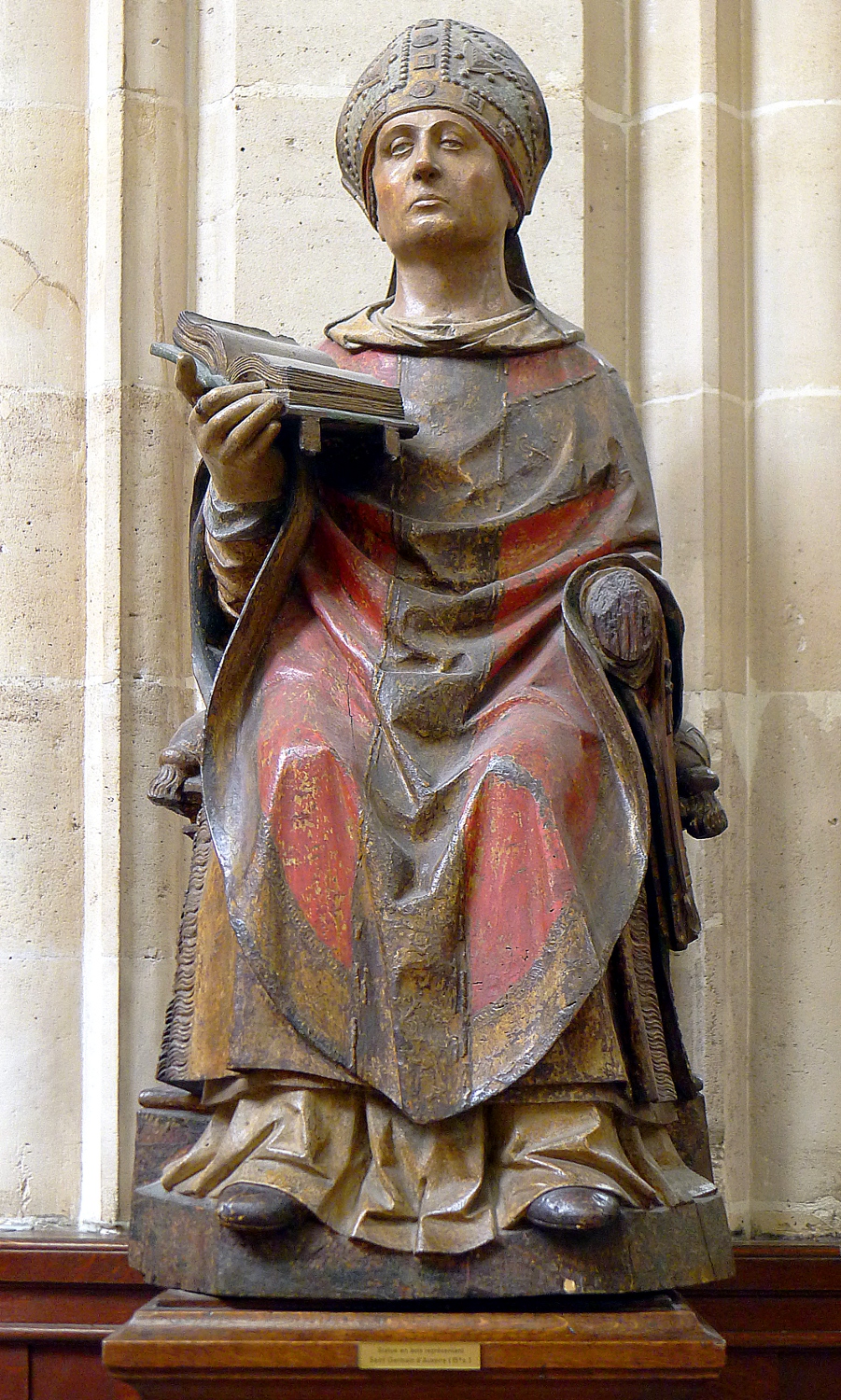
Saint Germanus’s tomb continues to be venerated in the church of the Abbey of Saint-Germain d’Auxerre.  There is a tradition of a panegyric on the Sunday nearest to or preceding his festival in July.   His  body was interred in the Oratory of Saint Maurice, Auxerre, France but later re-interred in the church of Saint Germain that was built by Queen Clotilda on the site of the Oratory.  His body was found incorrupt when it re-located in the church several centuries later.   In 1567, the Huguenots desecrated the shrine and threw out the relics.   There are relics in Saint Marion abbey which are reported to be Saint Germain’s but this cannot be proven.Saint Germain of Auxerre in Paris, Francegermanus and genevieveP1010345_Paris_Ier_Eglise_Saint-Germain_l'Auxerrois_statue_Saint-Germain_reductwk

Posted in JESUIT SJ, MARIAN TITLES, SAINT of the DAY

Memorials of the Saints and Feast of Our Lady of Consolation – 31 July

St Ignatius of Loyola (1491-1556) (Memorial)
Lots of Info here: https://anastpaul.wordpress.com/2017/07/31/saint-of-the-day-31-july-st-ignatius-loyola-founder-of-the-society-of-jesusthe-jesuits/

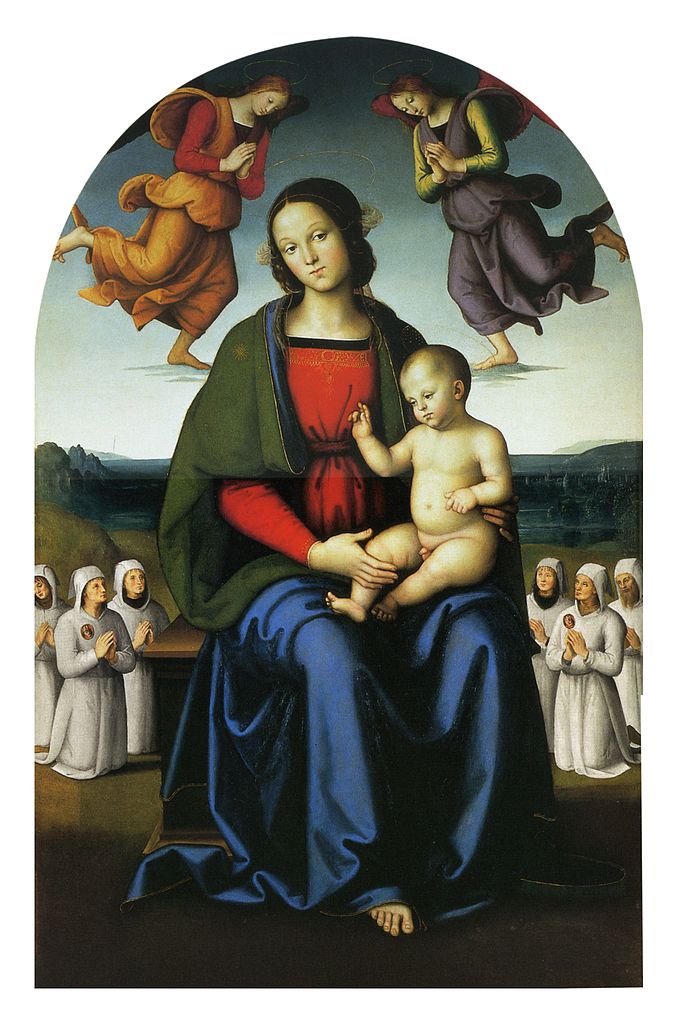
Our Lady of Consolation:   Starting in the 2nd century, Catholics venerated Mary as Our Lady of Consolation, one of her earliest titles of honour.   The title of Our Lady of Consolation, or Mary, Consoler of the Afflicted, comes from the Latin Consolatrix Afflictorum.   The origin of this invocation is derived from the Augustinian monks who propagated this particular devotion.   In 1436 the Confraternity of the Holy Cincture of Our Lady of Consolation was founded in Bologna, Italy.   It was based on an Augustinian tradition which hold that Saint Monica in the fourth century, was distraught with anxiety for her wayward son, Augustine and that Mary gave her a sash which the Virgin wore, with the assurance that whoever wore this belt would receive her special consolation and protection.   Along with Augustine and Monica, Our Lady of Consolation is one of the three patrons of the Augustinians.   The “Augustinian Rosary” is sometimes called the “Corona (or Crown) of Our Mother of Consolation”.

678px-Pietro_Perugino_cat50
Madonna della Consolazione, Perugino c.1497


St Calimerius of Milan
Bl Cecilia Schelingov
Bl Everard Hanse
St Fabius of Caesarea
St Firmus of Tagaste
St Germanus of Auxerre (c 378 – c 448)
St Giustino de Jacobis
St Helen of Skofde
Bl Jean-François Jarrige de La Morelie de Breuil
Bl John Colombini
St Marcel Denis
St Neot

Matyrs of Syria – 350 saints: 350 monks massacred by heretics for their adherence to orthodox Christianity and the decrees of the Council of Chalcedon. 517 in Syria.

Martyrs of Synnada: 3 Saints
Democritus
Dionysius the Martyr
Secundus

Martyred in the Spanish Civil War: Thousands of people were murdered in the anti-Catholic persecutions of the Spanish Civil War from 1934 to 1939.
• Blessed Ciriaco Olarte Pérez de Mendiguren
• Blessed Dionisio Vicente Ramos
• Blessed Francisco Remón Játiva
• Blessed Miguel Goñi Ariz
• Blessed Miguel Francisco González-Díez González-Núñez
• Blessed Agapito Alcalde Garrido
• Blessed Ciriaco Olarte Pérez de Mendiguren
• Blessed Dionisio Vicente Ramos
• Blessed Francisco Remón Játiva
• Blessed Jaume Buch Canals
• Blessed Maria Roqueta Serra
• Blessed Miguel Goñi Ariz
• Blessed Miguel Francisco González-Díez González-Núñez
• Blessed Prudencio Gueréquiz y Guezuraga
• Blessed Segundo de Santa Teresa
• Blessed Teresa Subirà Sanjaume
• Blessed Vicenta Achurra Gogenola
• Blessed Francisca Pons Sardá

Posted in DOCTORS of the Church, FATHERS of the Church, MORNING Prayers, SAINT of the DAY

Thought for the Day -30 July – Gold constantly increases in value. 

Thought for the Day -30 July – The Memorial of St Peter Chrysologus “Golden Words” (c 400-450) Father & Doctor

Saint Peter’s great gift to the Church are the words he left behind and the impact those words have upon those who hear them—both while he was alive and in the present day.
His name, meaning “Golden Words” in Greek, comes not from long and intricate homilies given on complex theological issues but rather his humility and the hope that he would not “bore” the faithful.
His teachings on the Annunciation, Prayer, Fasting and Mercy, the Holy Eucharist, the Incarnation and Human Dignity, the Priesthood of All Catholic Believers, the Epiphany, the Love of God and more—as well as around 180 other sermons—survive today, inspiring us and reminding us of the core tenets of our faith.
He is credited as the first to deliver the “short sermon”—morally rich, Gospel-driven, doctrinally sound brief reflections on the Catholic way of being in the world, of living what Christ taught us.
St Peter was called “Golden Words” because his eloquence ‘enriched’ those who listened, though the words themselves have immense value.

The wonder of Gold is that it does not tarnish or lose its value, in fact gold constantly increases in value.   Reading today his golden words, we can certainly agree with his nickname, for they are even more valuable in our time possibly, than in his.   And, let us not forget that ‘good listening’ is as important as good preaching.

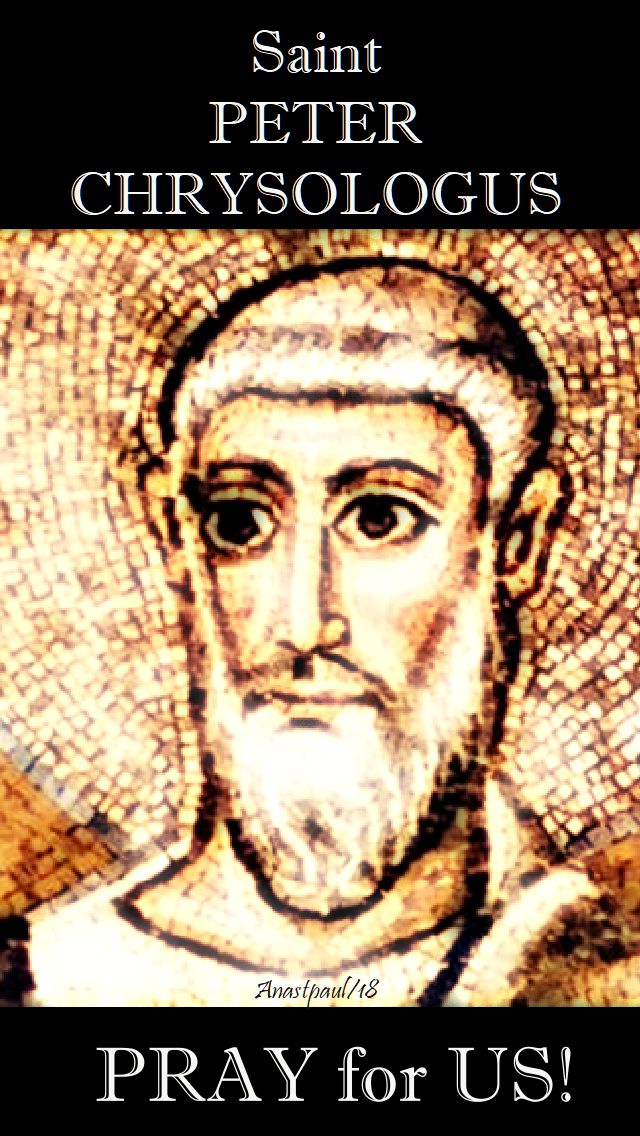
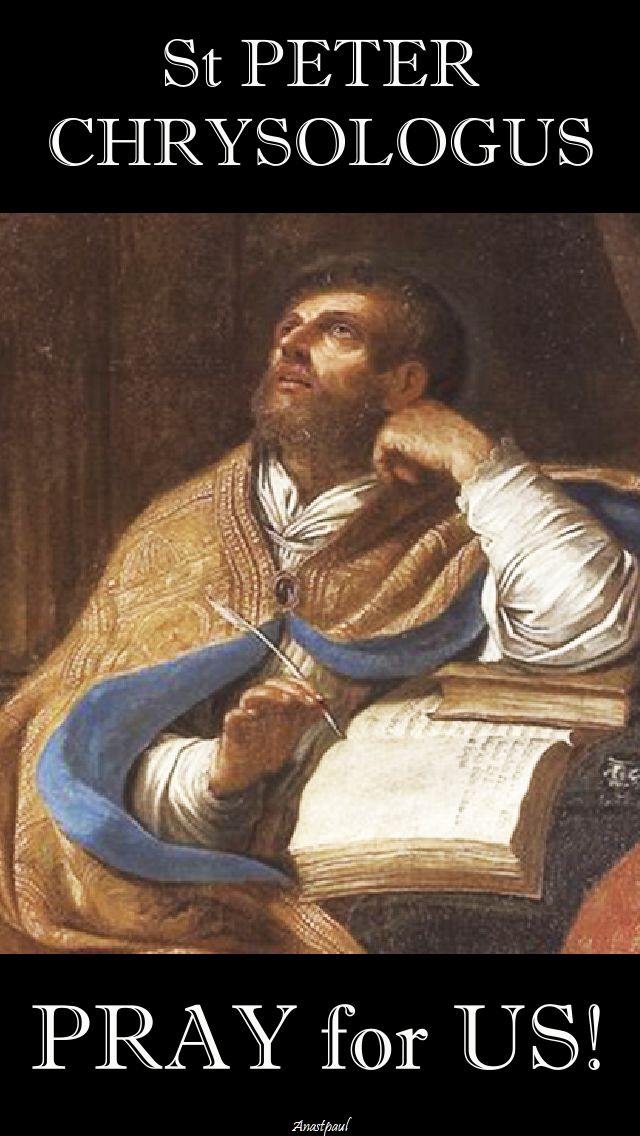
St Peter Chrysologus, Pray for us!st peter chrysologus pray for us - 30 july 2018

Posted in DOCTORS of the Church, EUCHARISTIC Adoration, FATHERS of the Church, MORNING Prayers, QUOTES of the SAINTS, QUOTES on CHARITY, QUOTES on CHASTITY, QUOTES on CONVERSION, QUOTES on FAITH, QUOTES on LOVE, QUOTES on MERCY, QUOTES on PRAYER, QUOTES on REPENTANCE, QUOTES on SANCTITY, QUOTES on the CROSS of CHRIST, SAINT of the DAY, The BLESSED VIRGIN MARY, The HOLY CROSS, The HOLY EUCHARIST / The HOLY MASS, The WORD

Quote/s of the Day 30 July – The Memorial of St Peter Chrysologus “Golden Words” (c 400-450) Father & Doctor

Quote/s of the Day 30 July – The Memorial of St Peter Chrysologus “Golden Words”

(c 400-450) Father & Doctor

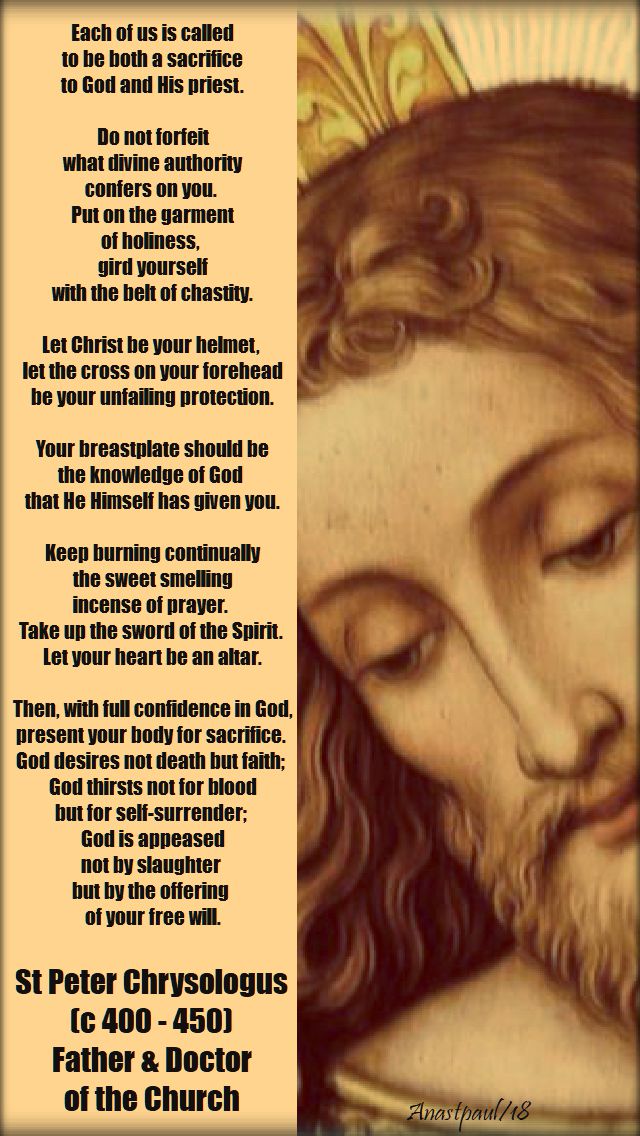
“Each of us is called to be both a sacrifice to God and His priest.
Do not forfeit what divine authority confers on you.
Put on the garment of holiness,
gird yourself with the belt of chastity.
Let Christ be your helmet,
let the cross on your forehead be your unfailing protection.
Your breastplate should be the knowledge of God
that He Himself has given you.
Keep burning continually the sweet smelling incense of prayer.
Take up the sword of the Spirit.
Let your heart be an altar.
Then, with full confidence in God, present your body for sacrifice.
God desires not death but faith;
God thirsts not for blood but for self-surrender;
God is appeased not by slaughter but by the offering of your free will.”each of us is called - st peter chrysologus - 30 july 2018

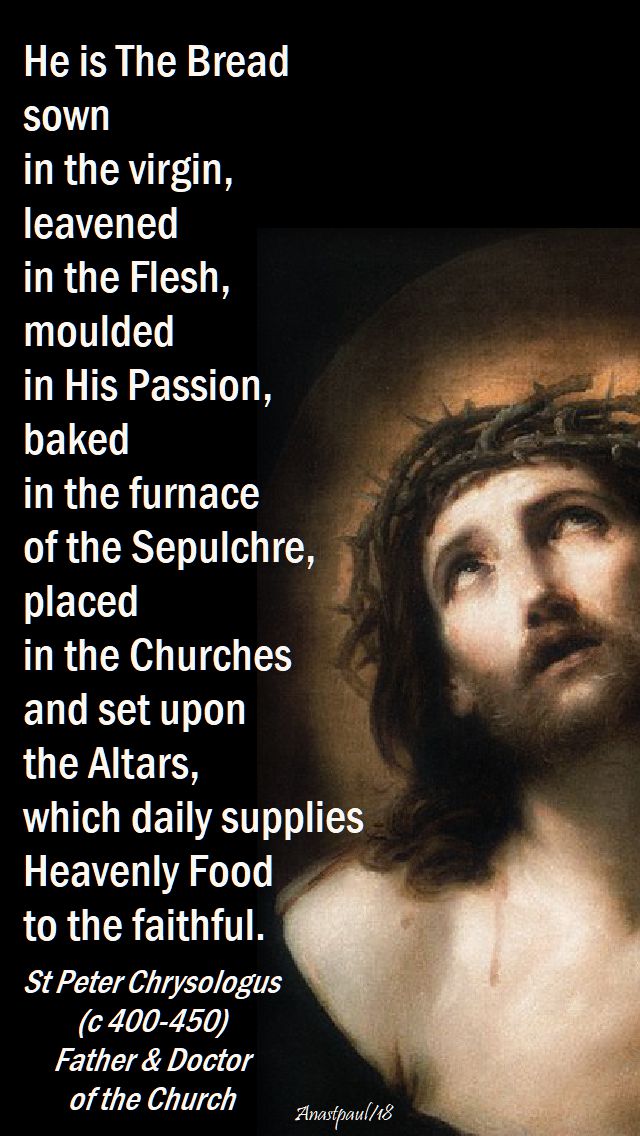
“He is The Bread sown in the virgin,
leavened in the Flesh,
moulded in His Passion,
baked in the furnace of the Sepulchre,
placed in the Churches
and set upon the Altars,
which daily supplies Heavenly Food to the faithful.”he is the bread - st peter chrysologus - 30 july 2018

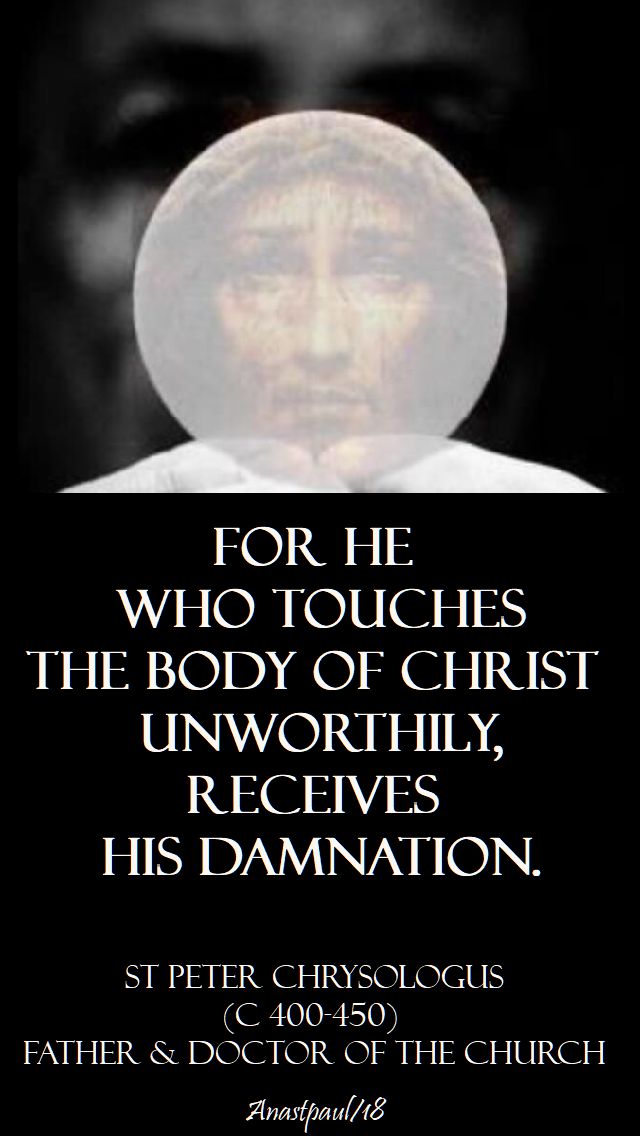
“For he who touches
the Body of Christ unworthily,
receives his damnation.”for he who touches the body of christ - st peter chrysologus - 30 july 2018

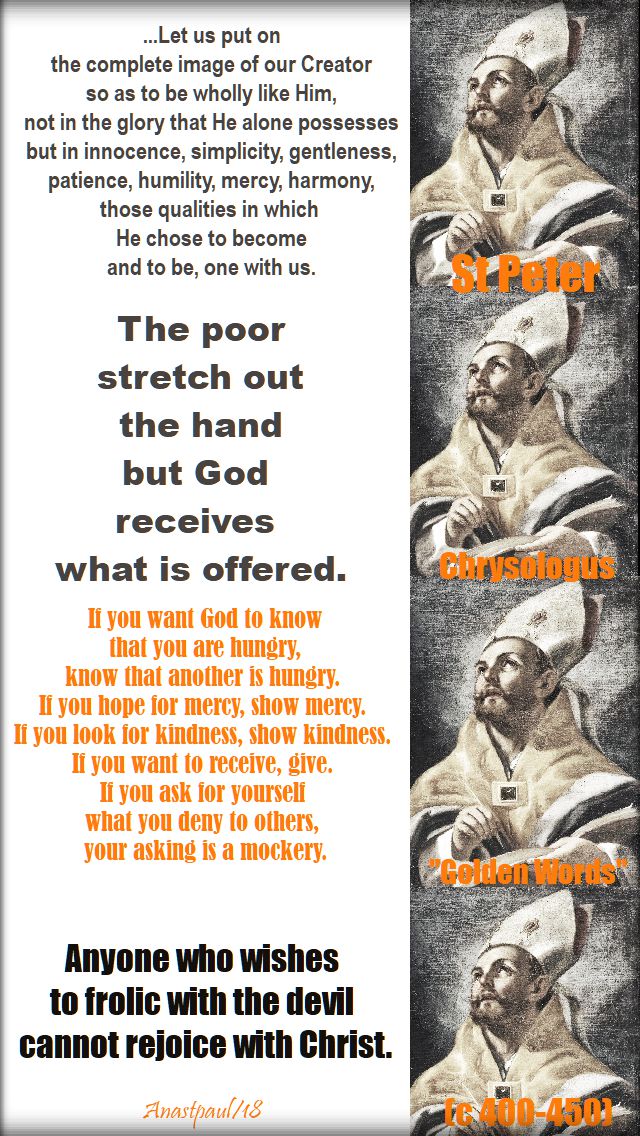
“Now that we are reborn,…
in the likeness of our Lord
and have indeed been adopted
by God as his children,
let us put on the complete image
of our Creator
so as to be wholly like Him,
not in the glory that He alone possesses
but in innocence, simplicity, gentleness,
patience, humility, mercy, harmony,
those qualities in which He chose to become
and to be, one with us.”

“The poor stretch out the hand
but God receives what is offered.”

” If you want God to know that you are hungry,
know that another is hungry.
If you hope for mercy, show mercy.
If you look for kindness, show kindness.
If you want to receive, give.
If you ask for yourself what you deny to others,
your asking is a mockery.”

“Anyone who wishes
to frolic with the devil
cannot rejoice with Christ.”let us put on - the poor stretch out their hands - if you want god to know - anyone who wishes - st peter chrysologus - 30 july 2018

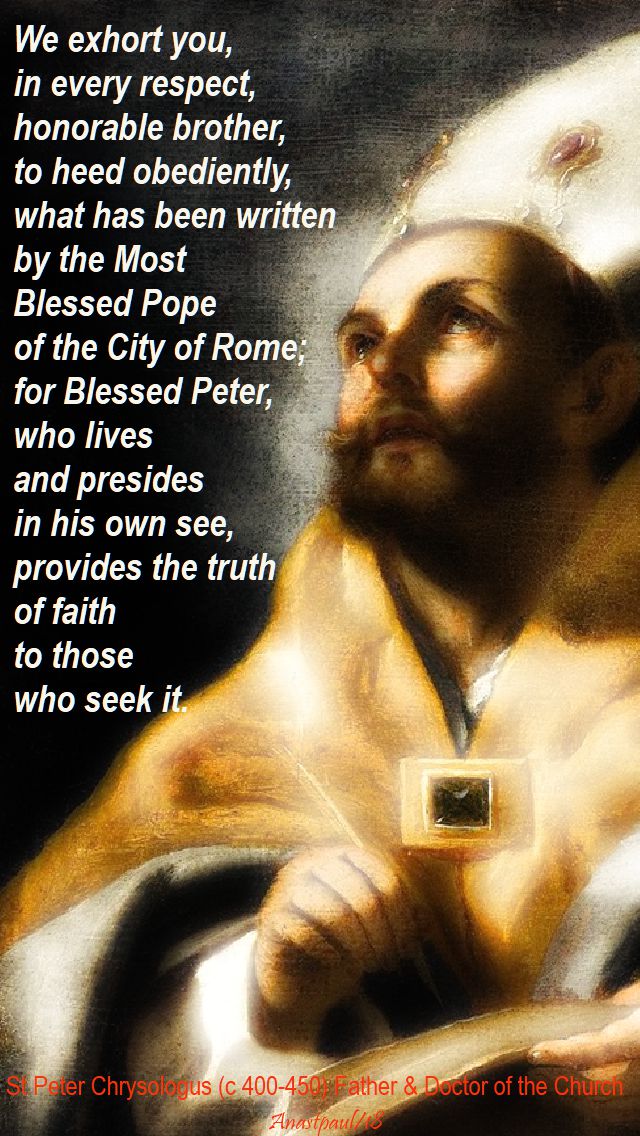
“We exhort you, in every respect, honourable brother,
to heed obediently what has been written
by the Most Blessed Pope of the City of Rome;
for Blessed Peter, who lives and presides in his own see,
provides the truth of faith to those who seek it.”

St Peter Chrysologus “Golden Words”we exhort you - st peter chrysologus - 30 july 2018

Posted in DOCTORS of the Church, FATHERS of the Church, MORNING Prayers, QUOTES of the SAINTS, SAINT of the DAY, The WORD

One Minute Reflection – 30 July

One Minute Reflection – 30 July – Monday of the Seventeenth week in Ordinary Time, Year B and The Memorial of St Peter Chrysologus “Golden Words” (c 400-450) Father & Doctor

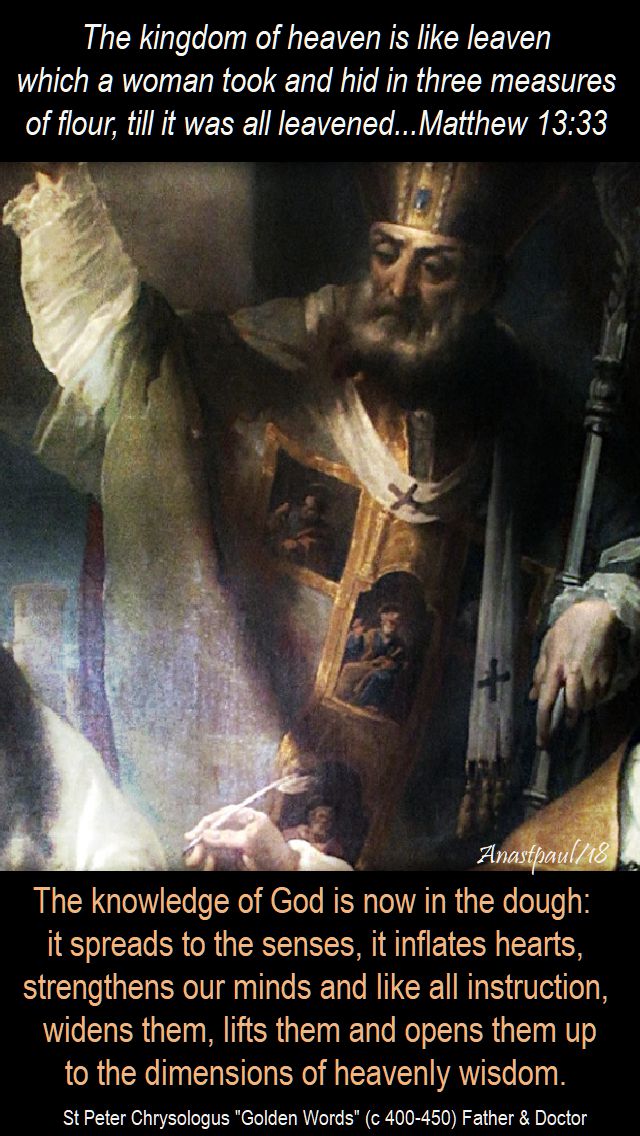
“The kingdom of heaven is like leaven which a woman took and hid in three measures of flour, till it was all leavened.”..Matthew 13:33

REFLECTION – “Let us give the deep meaning of this parable.   The woman who took some yeast is the Church;  the yeast which she took is the revelation of heavenly doctrine;  the three measures with which she mixed the yeast are the Law, the Prophets and the Gospels, where the divine meaning mixes itself and hides itself under symbolic terms, to be understood by the believer but escape those who do not believe.   As for these words “until the whole batch was leavened”, they relate to what the apostle Paul says:  “Now we know partially and we prophesy partially, but when the perfect comes, the partial will pass away” (1Co 13:9).   The knowledge of God is now in the dough:  it spreads to the senses, it inflates hearts, strengthens our minds and like all instruction, widens them, lifts them and opens them up to the dimensions of heavenly wisdom.   Everything will soon be leavened.   When? at the advent of Christ.”...St Peter Chrysologusthe knowledge of god is now in the doug and the kingdom of heaven is like leaven - matthew 13 33 - 30 july 2018

PRAYER – God our Father, You made St Peter Chrysologus a most eloquent preacher of Christ, Your Word. By his intercession, help us top meditate constantly in our hearts, on the mysteries by which You save us and to manifest them faithfully in our lives.   We make our prayer through Jesus Christ and the Holy Spirit, one God forever, amen.st-peter-chrysologus-pray-for-us.30 july 2017jpg

Posted in DOCTORS of the Church, FATHERS of the Church, MORNING Prayers, PRAYERS of the SAINTS, SAINT of the DAY

Our Morning Offering – 30 July

Our Morning Offering – 30 July

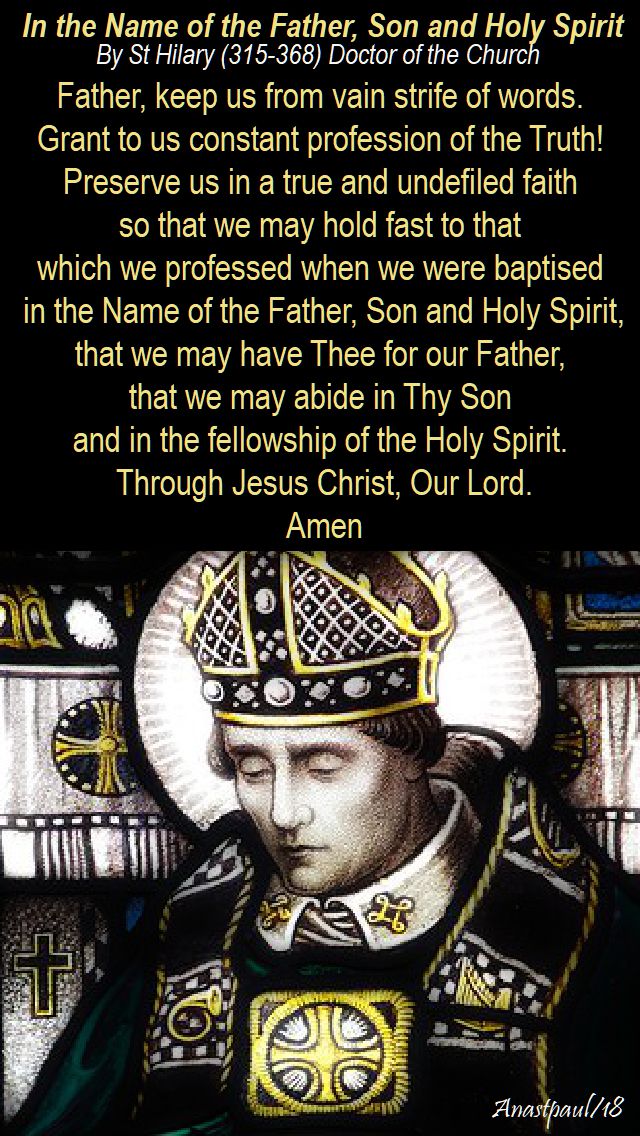
In the Name of the Father, Son and Holy Spirit
By St Hilary (315-368) Father & Doctor of the Church

Father, keep us from vain strife of words.
Grant to us constant profession of the Truth!
Preserve us in a true and undefiled faith
so that we may hold fast to that
which we professed when we were baptised
in the Name of the Father, Son and Holy Spirit,
that we may have Thee for our Father,
that we may abide in Thy Son
and in the fellowship of the Holy Spirit.
Through Jesus Christ, Our Lord.
Amenin the name of the father son and holy spirit - s thilary - father keep us from vain strife of words - 30 july 2018

Posted in DOCTORS of the Church, FATHERS of the Church, Of the SICK, the INFIRM, All ILLNESS, PATRONAGE - OF DOGS and against DOG BITES and/or RABIES, SAINT of the DAY

Saint of the Day – 30 July – St Peter Chrysologus (c 400-450) “Golden Words”

Saint of the Day – 30 July – St Peter Chrysologus (c 400-450) “Golden Words” Father & Doctor of the Church – Bishop of Ravenna, Italy.   Patronages – against fever, against mad dogs, of Imola, Italy.

Today we celebrate the Memorial of Saint Peter Chrysologus, a fifth-century Italian bishop known for testifying courageously to Christ’s full humanity and divinity during a period of the heresy called Monophysite.

The saint’s title, Chrysologus, signifies “golden speech” in Greek.   Named as a Doctor of the Church in 1729, he is distinguished as the “Doctor of Homilies” for the concise but theologically rich reflections he delivered during his time as the Bishop of Ravenna.

His surviving works (176 of sermons), offer eloquent testimony to the Church’s traditional beliefs about Mary’s perpetual virginity, the penitential value of Lent, Christ’s Eucharistic presence, and the primacy of St Peter and his successors in the Church.header - st peter chyrsologus

Few details of St Peter Chrysologus’ early life are known.   He was born in the Italian Town of Imola in either the late fourth or early fifth century but sources differ as to whether this occurred around 380 or as late as 406.

Following his study of theology, Peter was Ordained to the Diaconate by Imola’s local Bishop Cornelius, whom he greatly admired and regarded as his spiritual father. Cornelius not only Ordained Peter but taught him the value of humility and self-denial.  The lessons of his mentor inspired Peter to live as a Monk for many years, embracing a lifestyle of asceticism, simplicity and prayer.   His simple monastic life came to an end, however, after the death of Archbishop John of Ravenna in 430.   After John’s death, the clergy and people of Ravenna chose a successor and asked Cornelius, still the Bishop of Imola, to journey to Rome and obtain Papal approval for the candidate.   Cornelius brought Peter, then still a Deacon, along with him on the visit to Pope Sixtus III.

Tradition relates that the Pope had experienced a vision from God on the night before the meeting, commanding him to overrule Ravenna’s choice of a new Archbishop.   The Pope declared that Peter, instead, was to be Ordained as John’s successor.

In Ravenna, Peter was received warmly by the Western Roman Emperor Valentinian III and his mother Galla Placidia.   She is said to have given him the title of “Chrysologus” because of his preaching skills.  Throughout the Archdiocese, however, he encountered the surviving remnants of paganism, along with various abuses and distortions of the Catholic faith.   Peter exercised zeal and pastoral care in curbing abuses and evangelising non-Christians, during his leadership of the Church in Ravenna.my snip - st peter chrysologus

One of the major heresies of his age, Monophysitism, held that Christ did not possess a distinct human nature in union with His eternal divine nature.   Peter laboured to prevent the westward spread of this error, promoted from Constantinople by the monk Eutyches.

The Archbishop of Ravenna also made improvements to the City’s Cathedral and built several new Churches.   Near the end of his life he addressed a significant letter to Eutyches, stressing the Pope’s authority in the Monophysite controversy.

Having returned to Imola in anticipation of his death, St Peter Chrysologus died in 450, one year before the Church’s official condemnation of Monophysitism.   176 of his sermons have survived;  it is the strength of these beautiful explanations of the Incarnation, the Creed, the place of Mary and John the Baptist in the great plan of salvation, etc., that led to his being proclaimed a Doctor of the Church in 1729 by Pope Benedict XIII.

Posted in DOCTORS of the Church, SAINT of the DAY

Memorials of the Saints – 30 July

St Peter Chrysologus (c 400-450) (Optional Memorial) “Golden Words” Doctor of the Church
https://anastpaul.wordpress.com/2017/07/30/saint-of-the-day-30-july-st-peter-chrysologus-golden-worded-doctor-of-homilies-doctor-of-the-church/

St Abdon
Bl Antonio di San Pietro
Bl Edward Powell
St Ermengyth
St Hatebrand
St Julitta of Caesarea
St Leopold Bogdan Mandic
Bl Manés de Guzmán
St María Natividad Venegas de La Torre
Bl Richard Featherstone
St Rufinus of Assisi
St Senen
St Tatwine of Canterbury
St Terenzio of Imola
Bl Thomas Abel
St Ursus of Auxerre
Bl Vicenta Chavez-Orozco

Martyrs of Castelseras: Three Dominicans, two of them priests, one a novice, who were martyred together in the Spanish Civil War for refusing to renounce Christianity.
• Joaquín Prats Baltueña
• José María Muro-Sanmiguel
• Zosimo Izquierdo Gil
They were shot on 30 July 1936 at a farm house outside Castelserás, Teruel, Spain and Beatified on 11 March 2001 by Pope John Paul II.

Martyrs of Tebourba – 3 saints: Three girls martyred together in the persecutions of Diocletian. We know little else about them but the names – Donatilla, Maxima and Secunda. 304 at Tebourba in North Africa.

Martyred in the Spanish Civil War: Thousands of people were murdered in the anti-Catholic persecutions of the Spanish Civil War from 1934 to 1939. Today’s list includes the following:

The Martyred Hospitallers of Spain and
Bl Alejandro Arraya Caballero
Bl Alejandro González Blanco
Bl Bernabé Núñez Alonso
Bl Eugenio García Tribaldos
Bl Francesc Salla Saltó
Bl Guillermo Álvarez Quemada
Bl Jaume Puig Mirosa
Bl Juan Lanz Palanca
Bl Luis Aguirre Bilbao
Bl Luis Herrero Arnillas
Bl Miguel Solas del Val
Bl Pablo Díaz de Zárate y Ortiz de Zárate
Bl Rafael Martí Fugueras
Bl Ramón Palos Gascón
Bl Ricardo Pla Espí
Bl Sebastià Llorens Telarroja
Bl Sergio Cid Paz

Posted in DOCTORS of the Church, EUCHARISTIC Adoration, MORNING Prayers, QUOTES of the SAINTS, SUNDAY REFLECTIONS, The HOLY EUCHARIST / The HOLY MASS

Sunday Reflection – 29 July – Become the bread of Christ – St Bernard (1090-1153) Doctor of the Church

Sunday Reflection – 29 July

Become the bread of Christ

St Bernard (1090-1153) Doctor of the Church

Saint Bernard teaches that it is not enough for us to take and eat the Bread from Heaven.
We must also offer ourselves to be eaten.
Holy Communion is a wondrous exchange in which we become the bread of Christ.
Listen to Saint Bernard:

“My penitence, my salvation are His food.
I myself am His food.
I am chewed. as I am reproved by Him;
I am swallowed by Him. as I am taught;
I am digested by Him. as I am changed;
I am assimilated. as I am transformed;
I am made one with Him, as I am conformed to Him.
He feeds upon us and is fed by us
that we may be the more loosely bound to Him.”

Saint Bernard, ever the poet, uses images of eating and assimilation to describe how Christ unites us to Himself.
Our Lord becomes our food that we might become His.
We need the language of poets and preachers in our approach to the Eucharist.

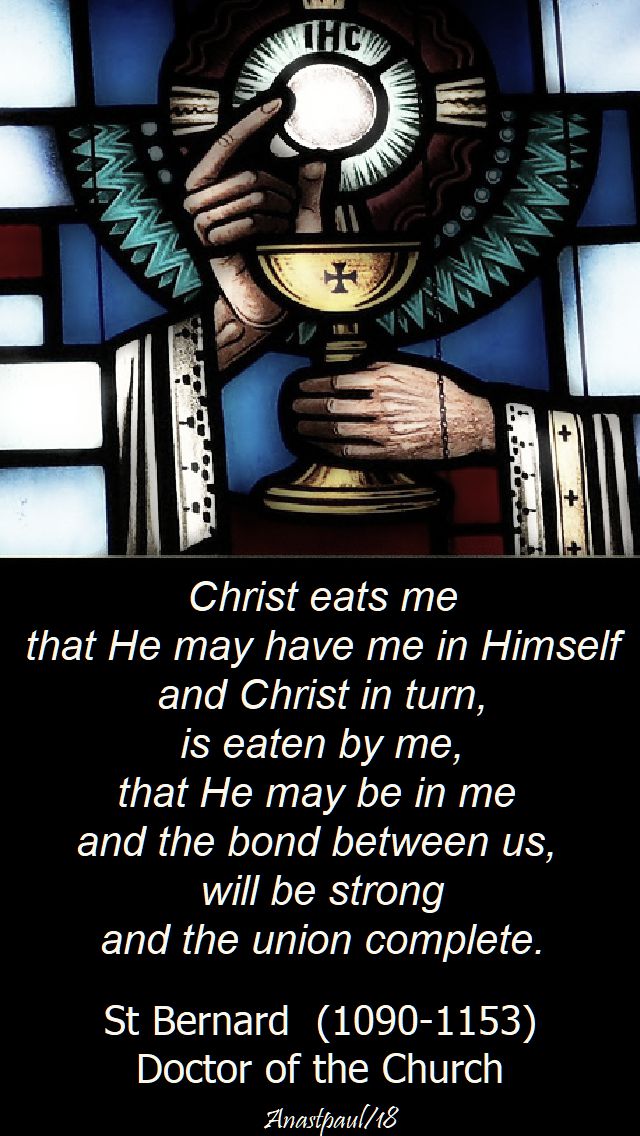
Saint Bernard says, “Christ eats me that He may have me in Himself and Christ in turn is eaten by me that He may be in me and the bond between us, will be strong and the union complete.”   

What awaits you in Holy Communion exceeds all that you can desire.   Eat, then and offer yourself to be eaten.   Receive the Bread of God and become the bread of God.christ eats me - st bernard - 29 july 2018

“I am in you and you are in me!”

i am in you and you are in me - 29 july 2018

Posted in MORNING Prayers, SAINT of the DAY, The WORD

Thought for the Day – 29 July – Today’s Gospel: John 6:1–15 and the Memorial of St Martha

Thought for the Day – 29 July – The Memorial of St Martha

One of the most precious things in life is to have a home where you can go at any time and find people who accept, love and understand you.   Jesus found such a home in Bethany, at the house of a woman named Martha.   She welcomed Him and served Him, and they developed a special bond of friendship.

Martha lived with her sister Mary.   Like all other pairs of sisters, these two women were different in personality.   Martha was energetic and outspoken, while Mary was quiet and reflective.   Jesus loved both of them and appreciated the gifts that each one had.

The Gospels record that once, when Jesus was visiting, Martha prepared the meal while Mary sat talking to their visitor.   Martha complained that Jesus should tell Mary to help her.   Jesus said that because Martha was worrying so much about the work, she did not have time to enjoy being with Him and listening to His words.

Another time recorded in John’s Gospel, the sisters sent a message to Jesus that their brother, Lazarus, was ill.   They knew Jesus would come and cure him;  they trusted in His loving care for them.   When Jesus finally came, Lazarus had already been dead for four days  . As soon as she heard that Jesus was nearby, Martha, a woman of action, went out to meet Him, while Mary stayed in the house.   In her grief, Martha told Jesus honestly what she had expected from Him.   Jesus asked her to believe that He was the resurrection and that He had power to give eternal life to all who believe in Him. Without really understanding this mystery, Martha trusted Jesus totally and said, “I believe that you are the Christ, the Son of God, the one who was to come into this world” (John 11:27).   That day Jesus raised her brother Lazarus from the dead, showing that He has power over life and death and power to give eternal life.i believe that you athe christ - st martha - john 11 27 - 29 july 2018

The home Jesus found in Bethany was not only in the house but in the faithful heart of a woman named Martha.

St Martha, Pray for us!st-martha-pray-for-us-2-29 july 2017

Posted in DOCTORS of the Church, FATHERS of the Church, MORNING Prayers, PAPAL SERMONS, QUOTES of the SAINTS, QUOTES on CHARITY, QUOTES on ETERNAL LIFE, QUOTES on FAITH, QUOTES on JOY, QUOTES on PERSEVERANCE, QUOTES on SANCTITY, SAINT of the DAY, The WORD

Quote/s of the Day – 29 July – Today’s Gospel: John 6:1–15 and the Memorial of St Martha

Quote/s of the Day – 29 July – Seventeenth Sunday in Ordinary Time – Today’s Gospel: John 6:1–15 and the Memorial of St Martha

“Martha, Martha, you are anxious and worried about many things.
There is need of only one thing.
Mary has chosen the better part and it will not be taken from her.” – Luke 10:42

“Our Lord’s words teach us that though we labour
among the many distractions of this world,
we should have but one goal.
For we are but travelers
on a journey without as yet a fixed abode;
we are on our way, not yet in our native land;
we are in a state of longing, not yet of enjoyment.
But let us continue on our way
and continue without sloth or respite,
so that we may ultimately arrive at our destination.”

St Augustine (354-430) Father and Doctor
(Sermo 103, 1-2, 6: PL 38, 613, 615)our-lords-words-teach-us-st-augustine.29 july 2017

One of his disciples, Andrew, Simon Peter’s brother, said to him,
“There is a lad here who has five barley loaves and two fish; but what are they among so many?”…John 6:8-9

“Before the suffering, loneliness, poverty
and difficulties of so many people,
what can we ourselves do?
Complaining doesn’t resolve anything
but we can offer the little that we have,
like the lad in the Gospel.
We surely have a few hours of time, certain talents, some skills….
Who among us doesn’t have “five loaves and two fish” of his own?
We all have them!
If we are willing to place them in the Lord’s hands,
they will be enough to bring about a little more love,
peace, justice and especially joy in the world.”

Pope Francis – Angelus, 26 July 2015before the suffering loneliness poverty ....pope francis - 29 july 2018

Posted in DOCTORS of the Church, FATHERS of the Church, MORNING Prayers, QUOTES of the SAINTS, SAINT of the DAY, The WORD

One Minute Reflection – 29 July – Seventeenth Sunday in Ordinary Time – Today’s Gospel: John 6:1–15

One Minute Reflection – 29 July – Seventeenth Sunday in Ordinary Time – Today’s Gospel: John 6:1–15

“This is indeed the Prophet, the one who is to come into the world!”…John 6:14

REFLECTION – “The disciples say that they have only five loaves and two fish.   The five loaves signified that they were still subject to the five books of the Law and the two fish that they were fed by the teachings of the prophets and John the Baptist… This was what the apostles had to offer to begin with since this was the point they were at and it was from this point, that the preaching of the Gospel began…
Our Lord took the loaves and the fish.   He raised his eyes to heaven, said the blessing and broke them.   He gave thanks to the Father because the Good News was being changed into food after centuries of the Law and the prophets…  The loaves were then given to the apostles, it was at their hands, that the gifts of divine grace were to be handed out.   Then the people were fed with the five loaves and two fish and, when those who were invited were satisfied, the leftovers of bread and fish were so plentiful that twelve baskets were filled with them.   What this means is that the crowd was filled with God’s word coming from the teaching of the Law and the prophets.   But it is an abundance of divine power, kept aside for the gentiles, that overflows after the provision of the food that lasts forever.   It comes to its full complement, that of the number twelve, the same as the number of the apostles.   Now, it happens that the number of those who ate is the same as that of those who would come to believe:  five thousand men (Mt 14:21; Acts 4:4).”…St Hilary (c 315-367) Bishop of Poitiers, Doctor of the Churchthis is indeed the prophet - john 6-14 - the loaves were then given to the apostles - st hilary - 29 july 2018

PRAYER – Lord God, protector of those who hope in You, without whom nothing is strong, nothing holy, support us always with Your love.   Help us to offer our own ‘loaves and fishes’ our own talents and possessions, to feed all who need our care.   May the prayers of St Martha grant us Your grace to serve Christ faithfully in our brethren and guide us so to use the good things of this world, that even now, we may hold fast to what endures forever, through Jesus Christ, our Lord. Amenst-martha-pray-for-us-29 july 2017

Posted in CATHOLIC DEVOTIONS of the Month, DOCTORS of the Church, MORNING Prayers, PRAYERS of the SAINTS, The MOST PRECIOUS BLOOD

Our Morning Offering – 28 July – Seventeenth Sunday in Ordinary Time, Year B

Our Morning Offering – 28 July – Seventeenth Sunday in Ordinary Time, Year B (and still in the Month of Precious Blood)

Wash Me With Your Precious Blood
By St Peter Canisius (1521-1597) Doctor of the Church

See, O merciful God,
what return
I, Your thankless servant,
have made for the innumerable favours
and the wonderful love
You have shown me!
What wrongs I have done,
what good left undone!
Wash away, I beg You,
these faults and stains
with Your precious blood,
most kind Redeemer,
and make up for my poverty
by applying Your merits.
Give me the protection I need,
to amend my life.
I give and surrender myself wholly to You,
and offer You all I possess,
with the prayer,
that You bestow Your grace on me,
so that I may be able to devote and employ
all the thinking power of my mind
and the strength of my body,
in Your holy service,
who are God blessed
forever and ever.
Amensee o merciful lord - wash me with your precious blood - st peter canisius - 28 july 2018