Posted in MARIAN TITLES

The Nineteenth Sunday after Pentecost, The Miracle of Ocotlán, Notre-Dame de Bonne Nouvelle / Our Lady of Good News (Rennes, Ille-et-Vilaine, Brittany, France) 1720 and Memorials of the Saints – 3 October

The Miracle of Ocotlán – 3 October
Our Lord of Mercy
“The Prodigy of Ocotlán ”

This is a major miracle that you’ve probably never heard of, the appearance of Christ in the clouds, in Ocotlan, Mexico, in 1847.

Notre-Dame de Bonne Nouvelle / Our Lady of Good News (Rennes, Ille-et-Vilaine, Brittany, France) 1720 – First Sunday of October, 23 December:
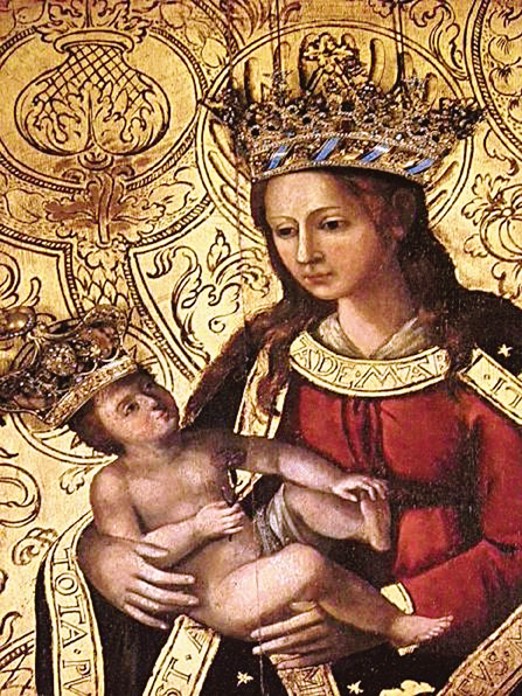
Jean de Montfort founded the Dominican Convent of Our Lady of Good News in Rennes to pay a vow taken during the battle of Auray in 1364, where his victory settled him as Duke of Brittany. In the following century, a panel painting in the Convent’s cloister gained a reputation for miracles, resulting in the building of a separate Chapel to give due veneration to Our Lady and to accommodate the pilgrims.

Another vow was paid after the plague of 1632, which spared Rennes the serious devastation which the surrounding regions suffered. In thanks,giving to the Madonna, the City gave Our Lady of Good News a solid silver model of the town and, from 1634, observed a votive celebration every year on 8 September, the Feast of Mary’s Birth. Another miracle occurred during the great fire of 23 December 1720, when, as their wooden houses burned, the people of Rennes saw Our Lady of Good News look down in compassion from the sky.

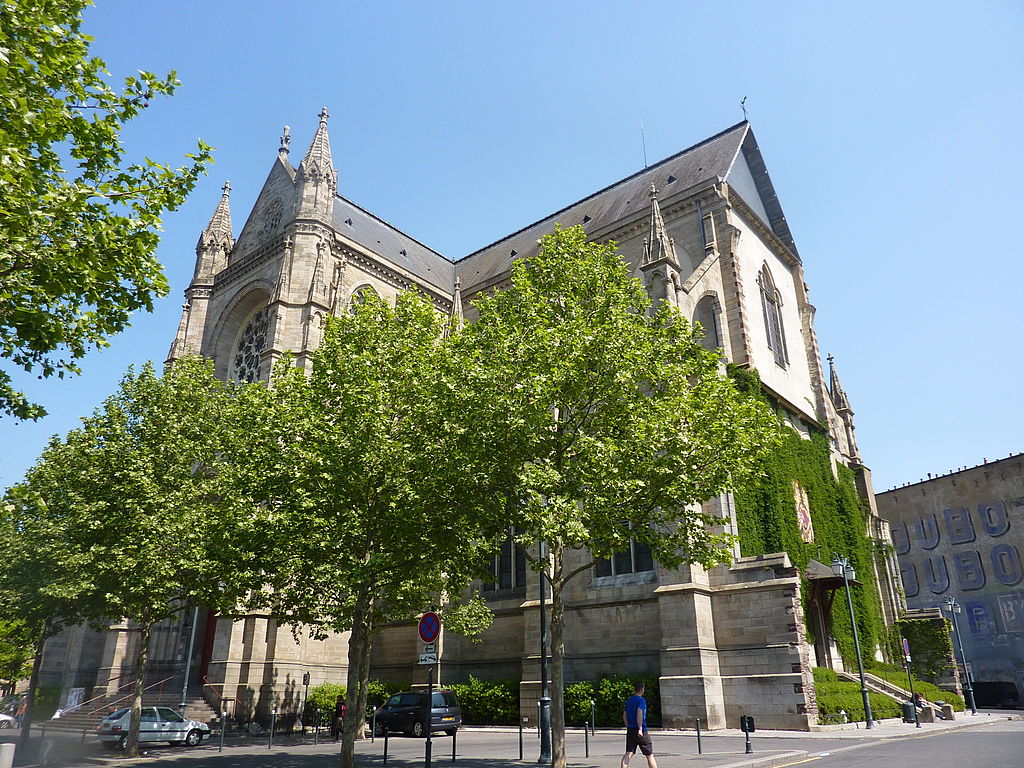
During the French Revolution, the silver model, was melted down. The Chapel was destroyed and the Convent used to store fodder. A gardener saved the holy image, which he gave to the neighbouring Church of St Aubin. In 1849, a cholera epidemic inspired a new vow. A new silver-plated model city was commissioned from Napoleon III’s goldsmith and the September votive feast reinstated. When St Aubin’s became too small for all the pilgrims, a new Church was built, dedicated in 1904 to St Aubin and Notre-Dame de Bonne Nouvelle.
The painting was canonically crowned in 1908. In recent years the votive feast has been held on the first Sunday in October rather than 8 September.

St Adalgott of Chur
Bl Agostina of the Assumption
St Candidus the Martyr
St Cyprian of Toulon
Bl Damian de Portu
St Dionysius the Aeropagite
Bl Dominic Spadafora
St Ewald the Black
St Ewald the Fair
St Froilan

St Gerard of Brogne (c 895 – 959) Priest, Abbot of Brogne, Reformer.

St Hesychius
Bl Juan Tapia
Bl Maddalena the Greater
St Maximian of Bagaia
St Menna

St Theodore Guerin SP (1798 – 1856) Religious, Foundress of the Sisters of Providence of Saint Mary-of-the-Woods and numberous schools, Educator.

Bl Utto of Metten
St Virila OSB (Died c 950) Abbot
St Widradus
—
Martyrs of Alexandria – 9 saints: A number of Christian martyrs remembered together. We know the names Caius, Cheremone, Dionysius, Eusebio, Fausto, Lucio, Maximus, Paul, Peter and that there were at least two more whose names have not come down to us, and that’s about all we know.

Martyrs of Brazil – 30 beati: On 25 December 1597 an expedition of colonists, with two Jesuit and two Franciscan evangelists, arrived at Natal, Rio Grande do Norte, Brazil. The region was colonized by Portuguese Catholics but was invaded by Dutch Calvinists who soon took over the whole territory. They immediately made a policy of the persecution of Catholics. On Sunday 16 July 1645 at Cunhau, Brazil, 69 people were gathered in the Chapel of Our Lady of the Candles for Mass celebrated by Father Andre de Soveral. At the moment of the elevation a group of Dutch soldiers attack the Chapel, murdering many of the faithful including Father Andre; the parishioners died professing their faith and asking pardon for their sins. On 3 October 1645, 200 armed Indians and a band of Flemish troops, led by a fanatical Calvinist convert, hacked to death an unknown number of people of Rio Grande including:
• Blessed Ambrosio Francisco Ferro
• Blessed André de Soveral
• Blessed Antônio Baracho
• Blessed Antônio Vilela
• Blessed Antônio Vilela Cid
• Blessed Diogo Pereira
• Blessed Domingos Carvalho
• Blessed Estêvão Machado de Miranda
• Blessed Francisco de Bastos
• Blessed Francisco Mendes Pereira
• Blessed João da Silveira
• Blessed João Lostau Navarro
• Blessed João Martins
• Blessed José do Porto
• Blessed Manuel Rodrigues de Moura
• Blessed Mateus Moreira
• Blessed Simão Correia
• Blessed Vicente de Souza Pereira
and other lay people whose names have not come down to us.
Posted in MARIAN TITLES

Notre-Dame, Folgoët / Our Lady of Folgoët Finistère, Brittany, France (1650) and Memorials of the Saints – 5 September

Notre-Dame, Folgoët / Our Lady of Folgoët Finistère, Brittany, France (1650) – First Sunday or the First Week of September:

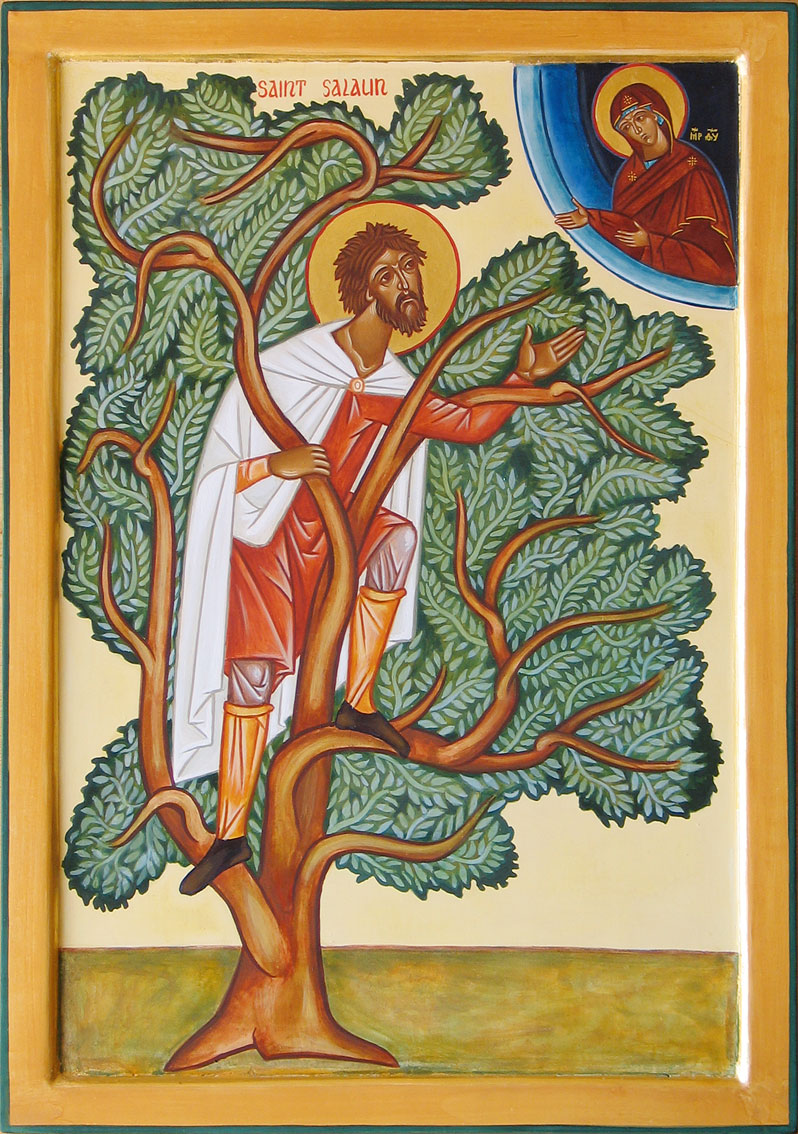
Known as the “the fool of the woods,” St Salaün (Died1358 – Memorial on1 November) lived in a forest clearing near a spring, over which he enjoyed hanging from an oak branch, immersed to his shoulders, singing “O Maria.” He lived by begging: “Ave Maria! Salaün could eat some bread!” After he died in 1358, aged 48, in the woods near the spring, people found a white lily with “Ave Maria” in gold lettering on its petals — growing from the mouth of the dead fool buried beneath.

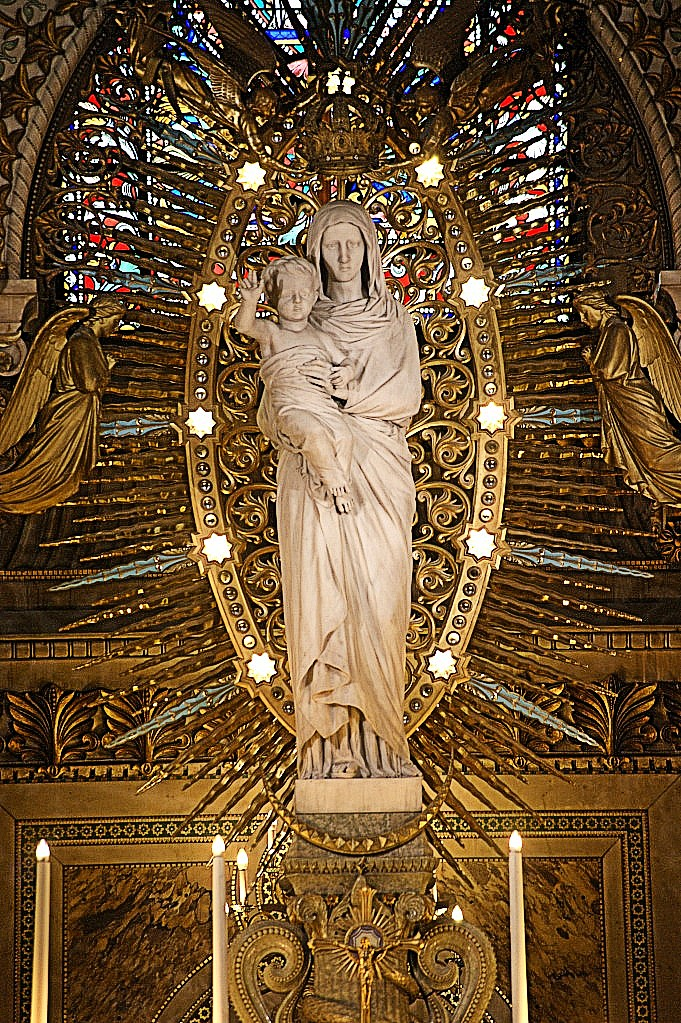
The Basilica of Notre-Dame du Folgoët was begun on the spot in 1365, completed in 1419 and consecrated in 1423. Its main Altar is over the spring, channeled into a basin behind the Church. In 1888, a dark stone Virgin was crowned Our Lady of Folgoët, replacing a polychrome wooden Statue which was moved to a side Altar. The Black Virgin is standing, holding the Child with her left arm; both wear large crowns. Her back is flat; the statue may have been on the exterior of the Church before the Revolution, when some Statues were damaged and removed for safekeeping from the marauding mobs of the French Revolution.

In the late 1500s, the big pilgrimage date was 15 August Feast of the Assumption. Three hundred years later, the celebration moved to 8 September, Nativity of the Virgin. Since 1970 the Grand Pardon has been held the first weekend in September, with a succession of processions and Masses in the Breton language.

St Albert of Butrio

St Alvito de León (Died 1063) Bishop. Alvito was the Confessor to King Fernando I of León, a Monk and the Benedictine Abbot of the Sahagún Monastery.

Bl Anselm of Anchin
St Anseric of Soissons

St Bertin the Great (c 615-c 709) Benedictine Monk and Abbot, Missionary.

Bl Florent Dumontet de Cardaillac
St Genebald of Laon
Bl Gendtilis
Bl Gerbrand of Dokkum
St Guise Hoang Luong Canh
Blessed John the Good OSA (c 1168-1249) Bishop
Bl Jordan of Pulsano
St Lawrence Justinian (1381-1455) Bishop
St Obdulia
St Phêrô Nguyen Van Tu
St Romulus of Rome

St Victorinus of Amiterme
St Victorinus of Como
Bl William Browne
—
Martyrs of Armenia – 1,000 saints: A group of up to 1,000 Christian soldiers in the 2nd century imperial Roman army of Trajan, stationed in Gaul. Ordered to sacrifice to pagan gods, they refused and were transferred to Armenia. Ordered again to sacrifice to pagan gods, they refused again. Martyrs. We know the names of three of them, but nothing else – Eudoxius, Macarius and Zeno.

Martyrs of Capua – 3 saints: Three Christians who were martyred together. Long venerated in Capua, Italy. We know their names, but little else – Arcontius, Donatus and Quintius. They were martyred in Capua, Italy.

Martyrs of Nicomedia – 80 saints: A group of 80 Christians, lay and clergy, martyred together in the persecutions of Valens. We know little more than the names of three of them – Menedemo, Teodoro and Urbano. They were locked on a boat which was then set on fire on the shore of Nicomedia, Bithynia (in modern Turkey) c 370.

Martyrs of Porto Romano – 4+ saints: A group of Christians martyred together in the persecutions of Marcus Aurelius. We know little more than their names – Aconto, Herculanus, Nonno and Taurino. c180 at Porto Romano, Italy.

Posted in SAINT of the DAY

Saint of the Day – 4 August – Saint Sithney

Saint Sithney (or Setna) was one of a group of Irish monks who travelled to western Cornwall, and from there he moved to Guic-Sezni in Brittany, where he founded a monastery. He was a native of Munster, the son of Erc and Magna – a sister of St. David. Sithney had two brothers, Saint Govan and Multos. He may be the Setna, a deaf and mute boy who kept cows on Slieve-Bloom. Saint Columba of Terryglass pitied the child and blessed him. He not only recovered hearing and speech, but also acquired the gift of prophecy.

When God chose Sithney to be the patron of girls seeking husbands; the saint recoiled, saying he would never get to rest in that case, and that he would rather take care of mad dogs than women. Ever since, sick or mad dogs have been given water from Sithney’s well as a tonic.

He died in 529, of natural causes. William Worcester recorded in 1478 that the body of the saint lay within the church of Saint Sithney.

Saint Sithney church

Patronages: Against hydrophobia, against rabies, against mad dogs, Sithney, Cornwall, England