Saint Afra, martyr and penitent, listed in some records as the daughter of the king of Cyprus. In the late 3rd century, her pagan family journeyed from Cyprus to Augsburg. Afra was dedicated to the service of the goddess Venus by her mother, Hilaria, a service which involved ritual prostitution.
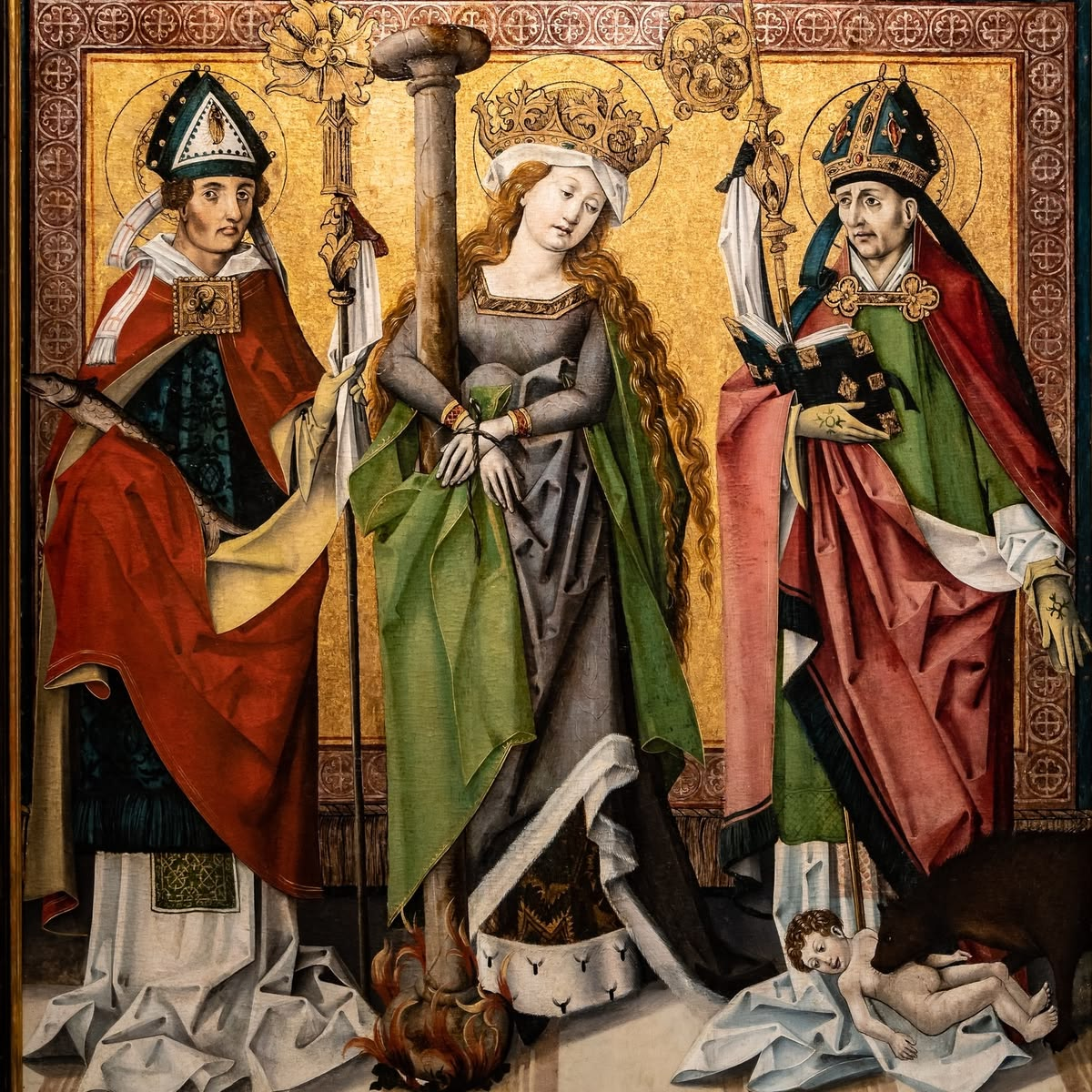
When the persecutions started in Augsburg, Bishop Narcissus of Gerona, Spain, arrived in the city and took lodging with Afra and her mother, not knowing their profession. His holiness and the doctrine of redemption he brought converted the women, who were baptised, and Afra’s uncle Dionysius was ordained as a bishop. She immediately began to give liberally to the poor. When officials came looking for the bishop, Afra hid him under a pile of flax.
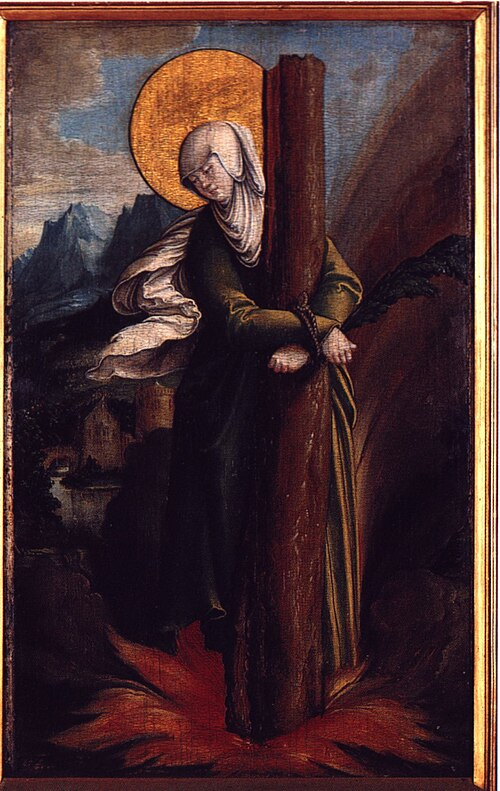
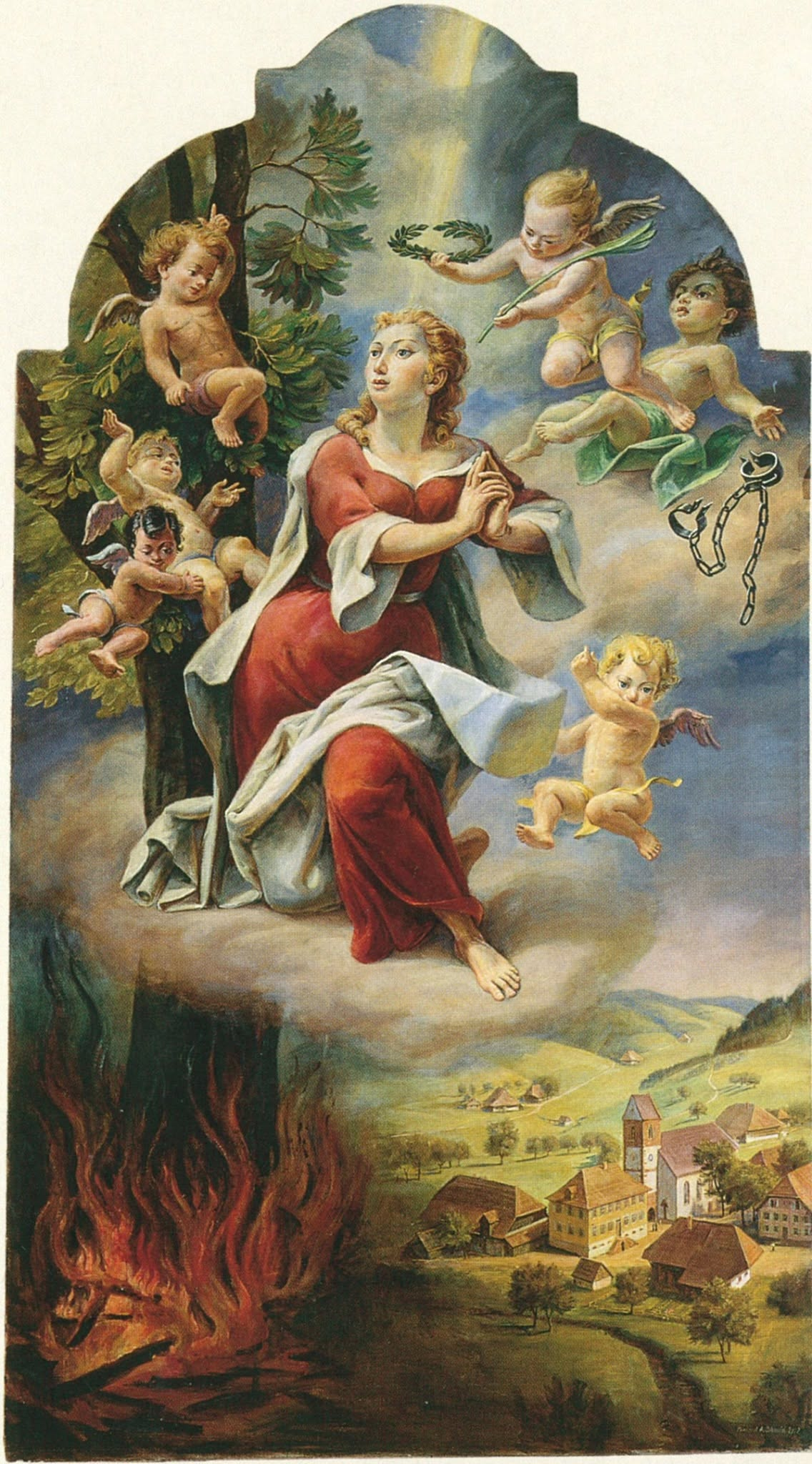
Arrested for being a Christian and refusing to participate in pagan rites, she was burned to death, tied to a tree on the small island of Lech. She was buried in Augsburg and her mother erected a chapel for her tomb. Soon after, Hilaria and her serving women were also martyred, burned alive in their house. Afra’s remains were buried in a church named after her. Pilgrims visited her shrine as early as 565. In 1012, the Benedictine monastery of St. Ulrich and St. Afra displayed her sarcophagus. The Acts of Afra give an account of her martyrdom.
The judge, Gaius, said to her: “Come now, sacrifice to the gods; it is better to live than to die amid torments.”
The saint replied: “The sins which I have committed before I knew the true God are sufficient; wherefore I cannot now do that which thou commandest. I never will do so: it would be adding a new insult to my God.”
The judge having ordered her to repair to the temple, she answered with great courage: “My temple is Jesus Christ, whom I have continually before mine eyes, and to whom I every day confess my sins. Since I am unworthy to offer him any other sacrifice, I am anxious to sacrifice myself, in order that this body, with which I have offended him, may be purified by torments; this reflection shall make me suffer most willingly.”
“Since, therefore,” said Gaius, “by reason of thy wicked life thou hast nothing to expect from the God of the Christians, thou hadst better sacrifice to our gods.”
The saint replied: “My Lord Jesus Christ has said that he descended from heaven to save sinners. We read in the Gospel that a sinful woman, having washed his feet with her tears, obtained from him the forgiveness of all her offences; and, moreover, that he never rejected sinful creatures nor publicans; but, on the contrary, condescended to converse and even to eat with them.”
The iniquitous judge was not ashamed to counsel her to return to her infamous practices, in order that she might gain the favor of the gallants, and enrich herself.
“I renounce,” said the penitent Saint Afra, “that execrable gain, and look upon it with horror. That which I had, I have cast from me and given to the poor, imploring them to accept it; how, then, can I consent to earn it again?”
Afra’s martyrdom deeply influenced the Christian community in Augsburg. A church was built over her burial site, and she became the patron saint of the city. Over the centuries, her veneration grew beyond Germany, and she became known in other parts of Europe. During the Middle Ages, pilgrims visited her shrine, and her cult was promoted by the Benedictine monks who cared for the church bearing her name—St. Ulrich and Afra Abbey. Her remains are still there.






You must be logged in to post a comment.