St John Eudes – The Admirable Heart of Mary
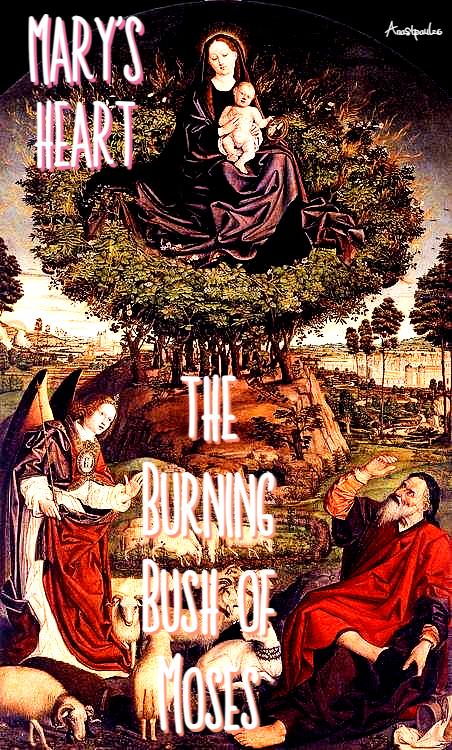
Mary’s Heart, the Burning Bush of Moses
John Gerson, very learned and devout chancellor of the famous University of Paris, when commenting on the Magnificat, says that Mary’s incomparable Heart was prefigured by the burning bush seen by Moses on Mount Horeb.! Gerson does not speak thus without good reason. The extraordinary spectacle of a bush burning in the midst of a blazing fire without being consumed is a beautiful representation of the Heart of Mary, which it excellently portrays in several ways.
First, we should consider that the mountain on whose slopes the bush grew is called in Sacred Scripture “the mountain of God,” mons Dei? It is also spoken of as “a holy mountain,” for Moses heard a voice saying to him: “The place whereon thou standest is holy ground.” We shall easily be convinced, therefore, that it represents the most Blessed Virgin Mary, who is the true mountain of God, a mountain of holiness of whom we can well say with St. Gregory the Great that she is the mountain foretold by the Prophet Isaias as the peak towering above all other heights: “A mountain . . . on the top of mountains,” because God has raised her in dignity, in sanctity and power above the chief Seraphim and the greatest saints.
Secondly, we ought not to despise this insignificant bush, a lowly shrub, the least of all plants. On the contrary, we should regard it with respect, since God so honored this bush as to choose it in preference to the tallest cedars of Lebanon for this manifestation of His glory, amid the fire and flames of its miraculous blaze. Would you know the reason of this? Listen to the Holy Ghost: “The Lord is high and looketh on the low: and the high he knoweth afar off.” Though God is most high and infinitely above His creatures, nevertheless it delights His divine Providence to look with a kind and loving eye at that which is small and lowly. While He draws near to the humble, He surveys the great and mighty from afar, as though He disregarded and despised them. Thus was He attracted by the humility of Mary, His handmaid. Respexit humilitatem ancillae suae.” St. Bernard speaks as follows of the profound humility of Mary’s Heart: “She who in her own mind and heart was the least of all creatures, has rightly been made the first, because, even though she was in fact the first, she considered herself as being the last.” This humility of the Heart of Heaven’s Queen is represented by the lowliness of the mysterious bush of Mount Horeb.
Thirdly, we must not be frightened or horrified by the sharp thorns which guard this bush on all sides, both outside and inside. This should, on the contrary, make us love it more, because God Himself loves it for this reason. It is obvious that God loves all His creatures and hates none of the works of His hands, for it is written: “Thou lovest all things that are, and hatest none of the things which thou hast made.” It is also obvious that God cherished a specially tender love for this little bush, that His Heart was there and that He took pleasure in it. He chose it to be His throne, the place where He would manifest His glory to His servant Moses, where He would speak to His prophet, disclose divine secrets and reveal His providential designs to deliver the Chosen People from Egyptian bondage.
God loved the burning bush because the fire that encompassed without consuming it represented the fire of divine love which filled the Heart of Mary, a love far greater than that of all the hearts of men and angels. The thorns symbolized the bitter sorrow and unspeakable anguish which pierced the Heart of the Mother of God, suffering that she accepted for the love of God and the salvation of mankind.
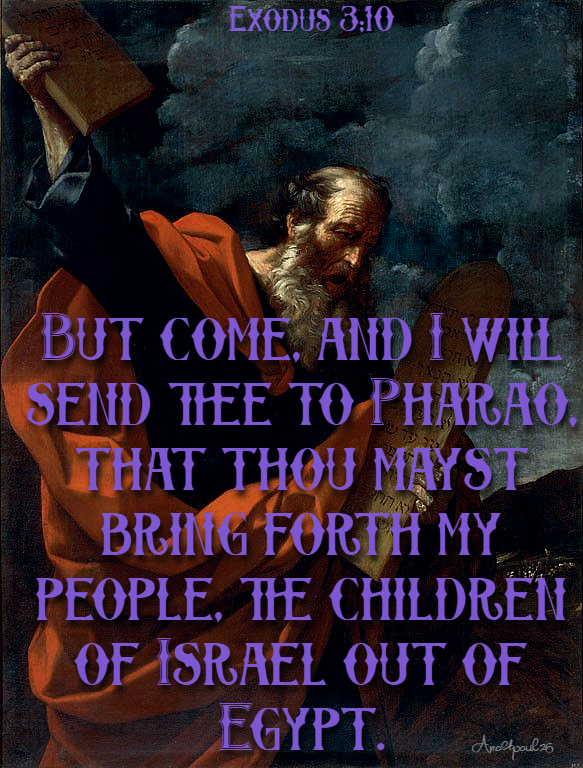
Moreover, God descended from Heaven into the bush on Mount Horeb and manifested Himself to Moses, “in the flame of fire,” to show His love and charity towards his people, and spoke “from the midst of the bush,” or according to another version “from the heart of the bush,” to declare His intention of delivering the children of Israel from the captivity of Pharaoh through the instrumentality of Moses. In like manner the Son of God, in the excess of His love, descended from the bosom of the Eternal Father into His Mother’s Heart, ablaze as it was with love for God and charity towards men, in order to bring about our redemption and to associate her with Himself as the instrument of this great work.
Likewise, dear reader, do not forget that your heart must burn with the loving fire that enkindled the virginal Heart of Mary, the fire that the Son of God came to spread upon earth, or else it must burn forever in the dreadful conflagration prepared for the devil and his cohorts. Oh, what a difference between these two kinds of fire! The devouring flames that torment eternally without consuming, and the delightful, joyous flames that constantly ravish the hearts of the ardent seraphim! Rejoice, each one of you who reads or listens to these words! Give thanks to God that you are still alive, that yours is still the power to choose which of these fires shall enkindle your heart. Strive earnestly to extinguish the flame of self-love, of worldliness, the burning of anger, lust, envy and ambition. Give your heart entirely to Jesus Christ, asking Him to set it on fire with His love. For this purpose there is no better prayer than the words of St. Augustine:
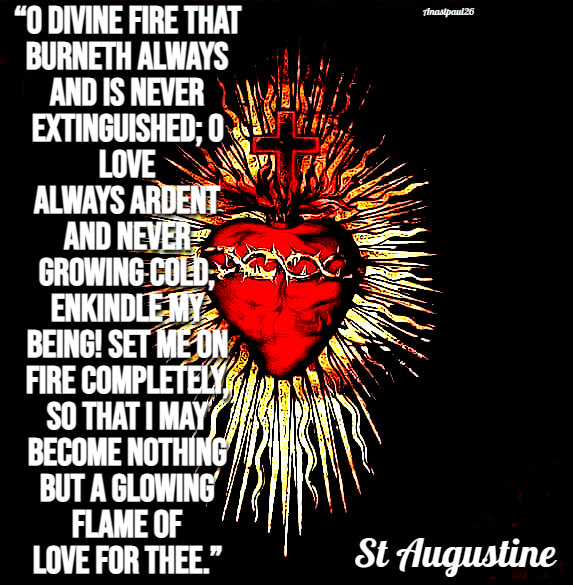
“O divine fire that burneth always and is never extinguished; O love always ardent and never growing cold, enkindle my being! Set me on fire completely, so that I may become nothing but a glowing flame of love for Thee.”




You must be logged in to post a comment.