
Saint of the Day – 14 December – St John of the Cross (1542-1591 aged 49) Priest, Founder, Doctor of the Church – Patron of Contemplative life; contemplatives; mystical theology; mystics; Spanish poets, various cities and towns
John’s father had been disowned by his wealthy Spanish family when he married a poor weaver rather than a woman of equal economic status. Living in poverty proved to be too much for him, and he died shortly after John was born. John spent much of his youth in an orphanage, where he was clothed, fed and given an elementary education. At the age of 17, he found a job in a hospital and was accepted into a Jesuit college. In 1563 he entered the Carmelite Order. Eventually he enrolled in another university, where he did so well that he was asked to teach a class and to help settle disputes.
Ordained a Carmelite priest in 1567 at age 25, John met Teresa of Avila and, like her, vowed himself to the primitive Rule of the Carmelites. As partner with Teresa and in his own right, John engaged in the work of reform and came to experience the price of reform: increasing opposition, misunderstanding, persecution, imprisonment. John was caught up in a misunderstanding and imprisoned at Toledo, Spain. During those months of darkness in that little cell, John could have become bitter, revengeful, or filled with despair. But instead, he kept himself open to God’s action, for no prison could separate him from God’s all-embracing love. During this time he had many beautiful experiences and encounters with God in prayer. He came to know the cross acutely—to experience the dying of Jesus—as he sat month after month in his dark, damp, narrow cell with only his God.
Yet, the paradox! In this dying of imprisonment John came to life, uttering poetry. In the darkness of the dungeon, John’s spirit came into the Light. There are many mystics, many poets; John is unique as mystic-poet, expressing in his prison-cross the ecstasy of mystical union with God in the Spiritual Canticle.
But as agony leads to ecstasy, so John had his Ascent to Mt. Carmel, as he named it in his prose masterpiece. As man-Christian-Carmelite, he experienced in himself this purifying ascent; as spiritual director, he sensed it in others; as psychologist-theologian, he described and analyzed it in his prose writings. His prose works are outstanding in underscoring the cost of discipleship, the path of union with God: rigorous discipline, abandonment, purification. Uniquely and strongly John underlines the gospel paradox: The cross leads to resurrection, agony to ecstasy, darkness to light, abandonment to possession, denial to self to union with God. If you want to save your life, you must lose it. John is truly “of the Cross.” He died at 49—a life short, but full. AND his reforms of the “Discalced” Carmelites revitalized the Order. He was proclaimed a Doctor of the Church by Pope Pius XI on 24 August 1926.
Video – https://www.youtube.com/watch?v=yvKzLCYrEfE
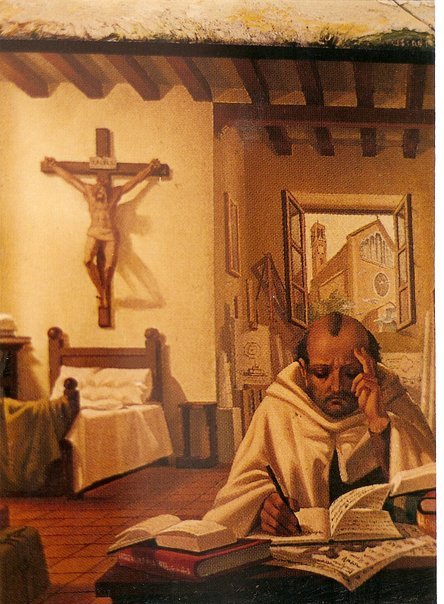


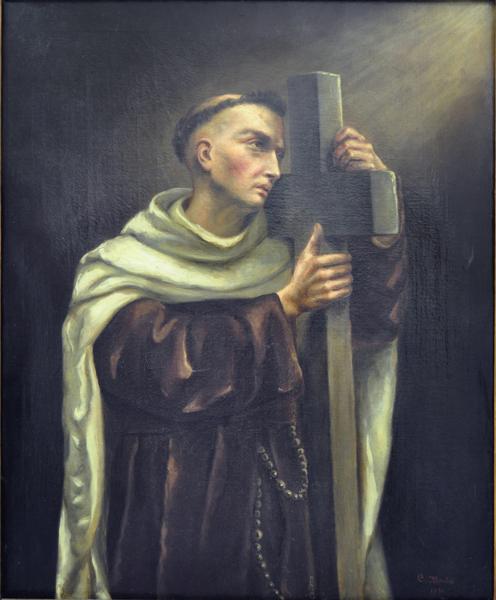
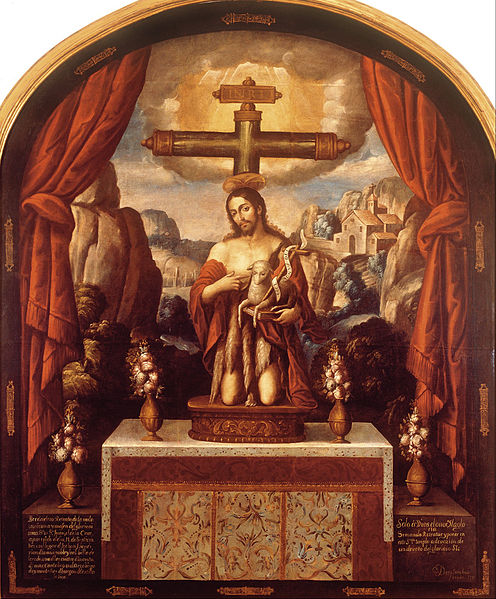
Diego de Sanabria – Saint John of the Cross
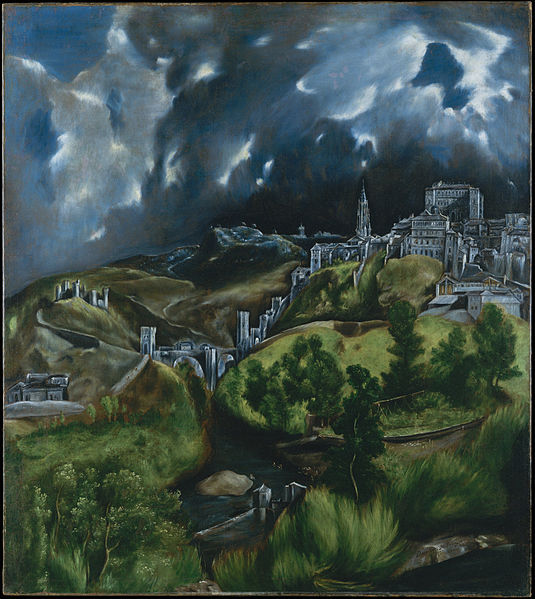
Image above – El Greco‘s landscape of Toledo depicts the priory in which John was held captive, just below the old Muslim alcázar and perched on the banks of the Tajo on high cliffs

 AnaStpaul