Vigil of All Saints Day or All Hallow’s Eve: Eve of the Feast of All Hallows, that is, All Saints Day. Halloween is a day on which many quaint customs are revived. It is popular in the United States and Scotland and in the US has become the second largest secular holiday of the year.
St Ampliatus St Antoninus of Milan St Apelles of Eraclea Sintica St Arnulf of Novalesa St Begu of Hackness Blessed Christopher of Romagna OFM (Died 1272) Priest St Epimachus of Melusio St Erth of Cornwall
Bl Irene Stefani St Jesús Miquel Girbau St Lucilla of Rome Bl Maria de Requesens St Narcissus St Notburga of Cologne St Quentin St Stachys of Constantinople
St Wolfgang of Regensburg (c 934 –994) “The Great Almoner,” Bishop, Monk, Missionary, Ascetic, Apostle of Charity. He is regarded as one of the three great German saints of the 10th century, the other two being Saint Ulrich and Saint Conrad of Constance. He was Canonised in 1052 by Pope Leo IX. St Wolfgang’s life: https://anastpaul.com/2019/10/31/saint-of-the-day-31-october-saint-wolfgang-of-regensburg-c-934-994/
St Germanus of Capua (Died c 541) Bishop of Capua, Italy, Confessor, Papal Legate. St Germanus was a close friend of St Benedict of Nursia. The Roman Martyrology states: St Germanus, Bishop and Confessor, a man of great sanctity, whose soul, at the hour of death, was seen by St Benedict taken to heaven by angels. His Life: https://anastpaul.com/2020/10/30/saint-of-the-day-30-october-saint-germanus-of-capua-died-c-541/
St Herbert of Tours Bl Jean-Michel Langevin Bl John Slade St Lucanus of Lagny St Marcellus the Centurion St Marcian of Syracuse St Maximus of Cumae St Nanterius of Saint-Mihiel Bl Raymond of Cardona St Saturninus of Cagliari St Serapion of Antioch St Talarica of Scotland Bl Terrence Albert O’Brien St Theonestus of Philippi (Died 425) Bishop, Martyr St Zenobia of Aegea St Zenobius of Aegea
Martyrs in Africa: A group of 100 to 200 Christians murdered in the early persecutions and about whom we know nothing except that they died for their faith.
Thought for the Day – 28 October – Meditations with Antonio Cardinal Bacci (1881-1971)
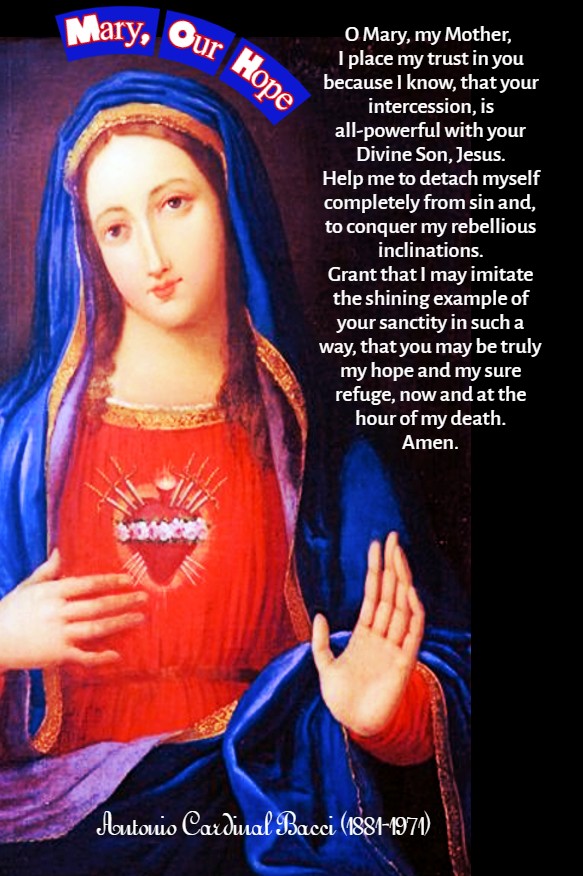
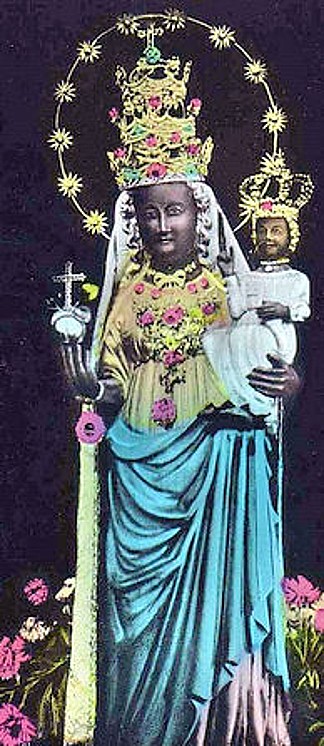
“Month of the Holy Rosary” “Mary, Our Hope”
“O Mary, my Mother, I place my trust in you because I know, that your intercession, is all-powerful with your Divine Son, Jesus. Help me to detach myself completely from sin and, to conquer my rebellious inclinations. Grant that I may imitate the shining example of your sanctity in such a way, that you may be truly my hope and my sure refuge, now and at the hour of my death. Amen.”
St Colman of Kilmacduagh St Dodone of Wallers-en-Fagne St Donatus of Corfu St Ermelinda of Meldaert St Eusebia of Bergamo St Felician of Carthage St Abraham of Rostov St Achahildis of Wendelstein (Died c 970) Married Laywoman. and mother. St Anne of Mount Olympus St Honoratus of Vercelli St John of Autun St Kennera St Mary of Edessa St Narcissus of Gerona
St Sigolinus of Stavelot St Stephen of Cajazzo St Terence of Metz St Theodore of Vienne St Zenobius of Sidon
Martyrs of Douai – (160 Saints and Beati): 160 Priests, Laymen and Religious who studied at the English College in Douai, France, then returned to minister to covert Catholics in England during a period of government persecution of the Church and were murdered for their work.
Martyrs of Lucania – (4 Saints): A group of Christians executed together for their faith. Only their names have survived – Felician, Hyacinth, Lucius and Quintus. Their Martyrdom occurred in Lucania, southern Italy.
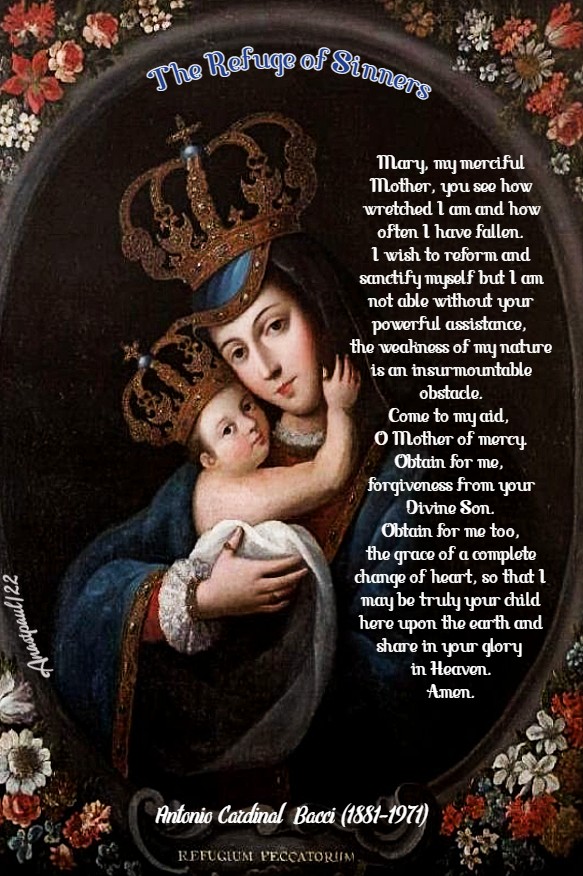
Thought for the Day – 28 October – Meditations with Antonio Cardinal Bacci (1881-1971)
“Month of the Holy Rosary” “The Refuge of Sinners”
“Mary, my merciful Mother, you see how wretched I am and how often I have fallen. I wish to reform and sanctify myself but I am not able without your powerful assistance, the weakness of my nature is an insurmountable obstacle. Come to my aid, O Mother of mercy. Obtain for me, forgiveness from your Divine Son. Obtain for me too, the grace of a complete change of heart, so that I may be truly your child here upon the earth and share in your glory in Heaven. Amen.”
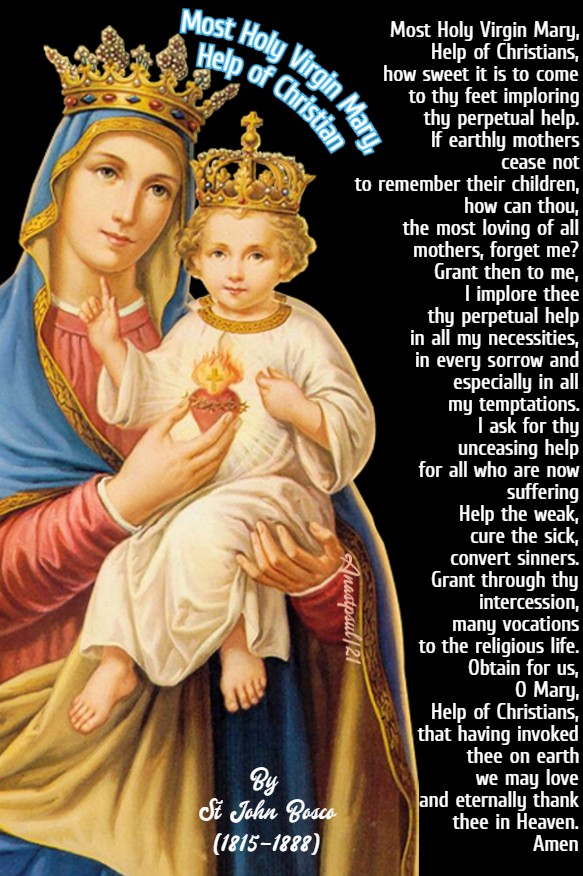
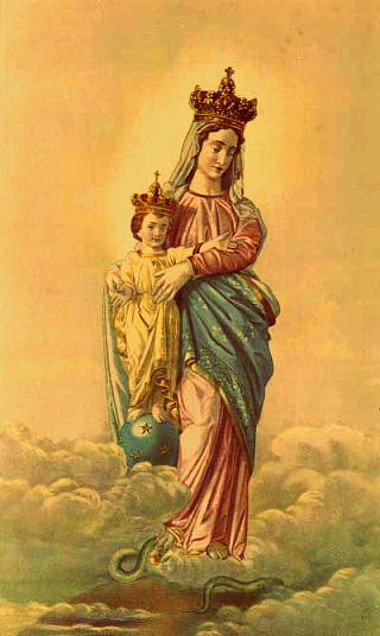
Our Morning Offering – 27 October – “The Month of the Most Holy Rosary and of the Angels” – Dedication of the Basilica of Auxilium Christianorum / Our Lady Help of Christians, Turin, Italy, built by St John Bosco (1868)
She, who stands at the Altar of the Eucharistic Sacrifice, without many of us today, will always be our help, most especially in these times of increasing persecution
Most Holy Virgin Mary, Help of Christian By St John Bosco (1815-1888)
Most Holy Virgin Mary, Help of Christians, how sweet it is to come to thy feet imploring thy perpetual help. If earthly mothers cease not to remember their children, how can thou, the most loving of all mothers, forget me? Grant then to me, I implore thee thy perpetual help in all my necessities, in every sorrow and especially in all my temptations. I ask for thy unceasing help for all who are now suffering. Help the weak, cure the sick, convert sinners. Grant through thy intercession, many vocations to the religious life. Obtain for us, O Mary, Help of Christians, that having invoked thee on earth we may love and eternally thank thee in Heaven. Amen
St Adalgott of Einsiedeln St St Alanus of Quimper St Albinus of Buraburg
St Alfred the Great (849-899) King of Wessex, Confessor, Scholar, Writer and Translator, negotiator. He administered justice with insight and fairness, protected the poor, and encouraged art and the crafts. He tried in all that he did, to rule as a model Christian King. For all this, he alone among the rulers of England is called “the Great.” This Great Saint’s Life: https://anastpaul.com/2021/10/26/saint-of-the-day-26-october-saint-alfred-the-great-849-899/
St Alorus of Quimper St Amandus of Strasburg St Amandus of Worms St Aneurin St Aptonius of Angouleme St Arnold of Queralt St Bean of Mortlach St Bernard de Figuerols
St Eadfrid St Eata of Hexham St Felicissimus of Carthage St Fulk of Piacenza St Gaudiosus of Salerno St Gibitrudis St Gwinoc St Humbert St Lucian St Marcian St Quadragesimus of Policastro St Rogatian of Carthage St Rusticus of Narbonne St Sigibald of Metz
St Cyrinus of Rome St Dulcardus St Fronto of Périgueux St Fructus of Segovia
St Gaudentius of Brescia (Died 410) Bishop, renowned Preacher, Theologian, Diplomatic Mediator, The Roman Martyrology states today: “In Brescia, Saint Gaudentius, Bishop, who, Ordained by Saint Ambrose, shone among the prelates of his time for doctrine and virtue, instructed his people with words and writings and founded a Basilica which he called the ‘Council of Saints.‘” Biography: https://anastpaul.com/2021/10/25/saint-of-the-day-25-october-st-gaudentius-of-brescia-died-410/
St George of Périgueux St Goeznoveus of Leon St Guesnoveus Bl Henry of Segusio St Hilary of Javols St Hilary of Mende St Hildemarca of Fecamp St Januarius of Sassari St Lucius of Rome St Lupus of Bayeux St Mark of Rome
Saint Raphael the Archangel The Feast day of Saint Raphael was included for the first time in the General Roman Calendar in 1921, for celebration on 24 October. With the 1969 revision of the General Roman Calendar, the Feast was transferred to September 29 for celebration together with Archangels Saints Michael and Gabriel. St Raphael: https://anastpaul.com/2021/10/24/saint-of-the-day-24-october-st-raphael-the-archangel/
Beata Vergine delle Grazie / The Blessed Virgin of Grace, Udine, Friuli-Venezia Giulia, Italy (1479) – Fourth Sunday of October:
Bl Amado García Sánchez St Audactus of Thibiuca St Cadfarch St Ciriacus of Hierapolis St Claudian of Hierapolis St Ebregislus of Cologne St Felix of Thibiuca St Fortunatus of Thibiuca St Fromundus of Coutances St Maglorius of Wales St Marcius of Monte Cassino St Martin of Vertou (527–601) Abbot, Hermit
St Senoch St Senócus of Tours St Septimus of Thibiuca
Martyrs of Ephesus – 3 Saints: Three Christians Martyred together. All we know about them are the names Mark, Sotericus and Valentina. They were stoned to death near Ephesus, Asia Minor (in modern Turkey). Their relics are enshrined on the island of Tasos.
Our Morning Offering – 22 October – “The Month of the Most Holy Rosary and of the Angels” – Mary’s Saturday
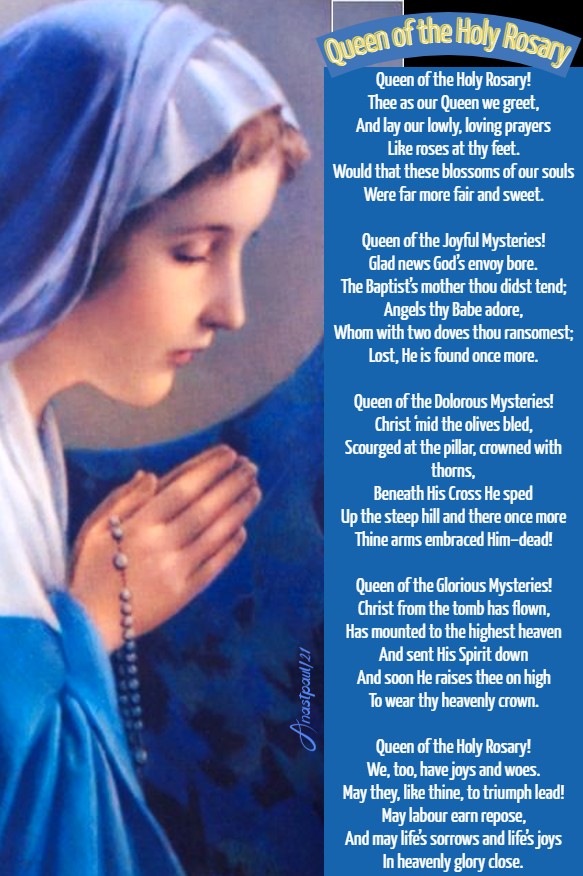
Queen of the Holy Rosary
Queen of the Holy Rosary! Thee as our Queen we greet, And lay our lowly, loving prayers Like roses at thy feet. Would that these blossoms of our souls Were far more fair and sweet.
Queen of the Joyful Mysteries! Glad news God’s envoy bore. The Baptist’s mother thou didst tend; Angels thy Babe adore, Whom with two doves thou ransomest; Lost, He is found once more.
Queen of the Dolorous Mysteries! Christ ‘mid the olives bled, Scourged at the pillar, crowned with thorns, Beneath His Cross He sped Up the steep hill and there once more Thine arms embraced Him–dead!
Queen of the Glorious Mysteries! Christ from the tomb has flown, Has mounted to the highest heaven And sent His Spirit down And soon He raises thee on high To wear thy heavenly crown.
Queen of the Holy Rosary! We, too, have joys and woes. May they, like thine, to triumph lead! May labour earn repose, And may life’s sorrows and life’s joys In heavenly glory close.
Taken from: Cyril Robert – Mary Immaculate: God’s Mother and Mine. 1946
Saint Ursula and Companions: (Died c 238) Legendary Princess, the daughter of a Christian British King and Saint Daria. She travelled Europe in company of either 11 or 11,000 fellow maidens; the 11,000 number probably resulted from a misreading of the term “11M” which indicated 11 Martyrs, but which a copyist took for a Roman numeral. Ursula and her company were tortured to death to get them to renounce their faith, and old paintings of them show many of the women being killed in various painful ways. Namesake for the Ursuline Order, founded for the education of young Catholic girls and women. There are other Saints closely associated with Ursula and her story – travelling companions who were Martyred with her. They are: Antonia of Cologne Cesarius of Cologne Cyriacus of Cologne Daria Fiolanus of Lucca Ignatius of Cologne James of Antioch Mauritius of Cologne Pontius of Cologne Sulpitius of Ravenna Vincent of Cologne Travelling companion, but escaped the massacre: • Cunera led by a dove to the lost tomb of Ursula: • Cunibert of Cologne.
St Agatho the Hermit St Asterius of Périgord St Asterius of Rome St Berthold of Parma St Celina of Meaux St Cilinia St Condedus St Domnolus of Pouilly St Finian Munnu St Gebizo Bl Hilarion of Moglena St Hugh of Ambronay Bl Imana of Loss Bl Iulianus Nakaura St John of Bridlington St Letizia St Maurontus of Marseilles St Malchus of Syria
Mater Admirabilis / Mother Most Admirable (1844) – 20 October:
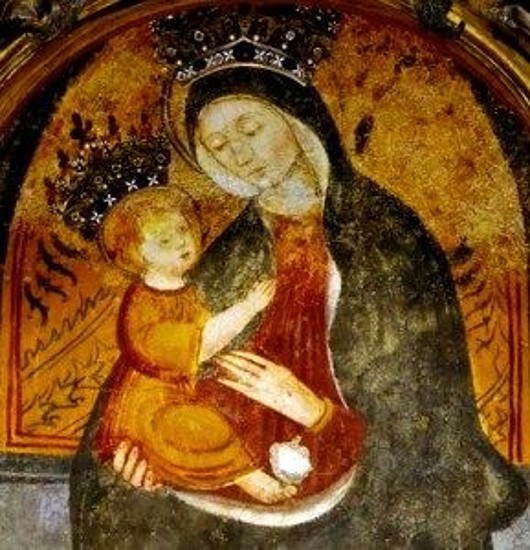
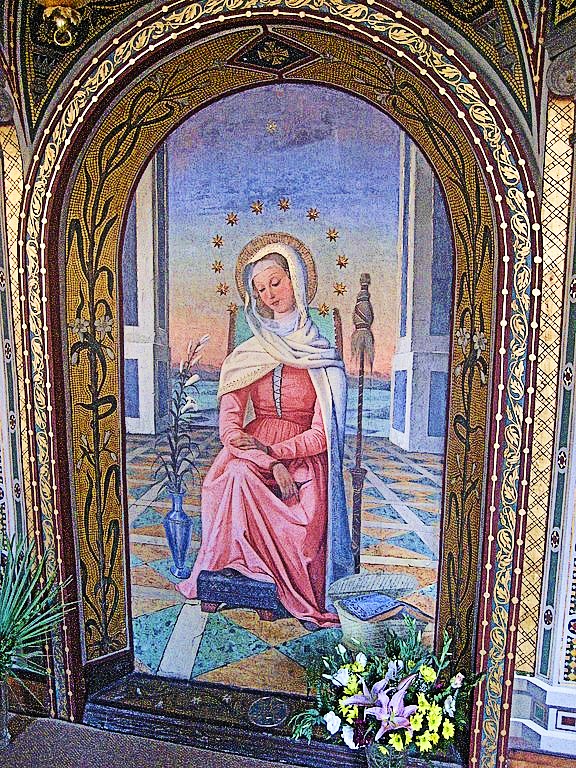
Mater Admirabilis is a fresco depicting the Virgin Mary, in the Monastery of the Trinità dei Monti, in Rome. It was painted by a young French artist, Pauline Perdrau and has been associated with several miracles.
In 1844, a generation after the Society of the Sacred Heart was founded, Pauline Perdrau, a young novice, took it upon herself to produce a fresco of the Virgin Mary on a wall in a recreational area of the convent, Trinità dei Monti in Rome. As a child, Pauline had had a favourite pink dress, so she chose to paint Mary as a young woman in a rose-coloured dress rather than a matronly Madonna in blue. The lily at Mary’s side represented her purity; the distaff and spindle, her love of work; a book, her dedication to study. Unfortunately, although Pauline put herself wholeheartedly into her task, her inexperience with the technique of fresco did not produce the beautiful soft painting for which she had hoped. The too vivid colours, had to be hidden behind a drape. Pope Pius IX, upon visiting the Convent on 20 October 1846, requested that the curtain be removed. Seeing the fresco of our Lady, its colours inexplicably softened, he exclaimed, “Mater Admirabilis!” Miracles soon began with the cure of a missionary Priest who had completely lost the power of speech. Permission was given to offer Mass before the miraculous picture and to celebrate the Feast of Mater Admirabilis on 20 October.
Blessed James Strepar OFM (c 1340-1409) Archbishop of Halicz, Poland from 1392 until his death Religious Priest of the Order of Friars Minor, Missionary. St Pius X proclaimed Blessed James, along with St Anthony of Padua, the Patrons of the Conventual Franciscan Order of Krakow Province. He was given the title of “Protector of the Kingdom, Defender and Guardian of the Homeland,” for his exceptional merits, including civil ones. Such was he considered by all. He was Canonised by by Pope Pius VI on 11 September 1791. His body is incorrupt. His Life: https://anastpaul.com/2020/10/20/saint-of-the-day-20-october-blessed-james-strepar-ofm-c-1340-1409/
St Leopardo of Osimo St Lucas Alonso Gorda St Martha of Cologne St Maximus of Aquila St Orora St Saula of Cologne St Sindulphus of Rheims St Usthazanes St Vitalis of Salzburg
St Altinus St Aquilinus of Evreux St Asterius of Ostia St Beronicus of Antioch St Desiderius of Longoret St Ednoth St Ethbin St Eusterius of Salerno St Frideswide St Laura of Cordoba St Lucius of Rome St Lupus of Soissons St Pelagia of Antioch
St Asclepiades of Antioch St Athenodorus St Brothen Bl Burchard I St Cadwaladr of Brittany Bl Domenico of Perpignano St Eutychius of Pozzuoli St Gwen St Gwen of Tagarth St Gwendoline
Bl Margherita Tornielli St Monon of Nassogne St Proculus of Pozzuoli Bl Theobald of Narbonna St Tryphonia of Rome
Martyrs of Africa – 9 Saints: A group of Christians Martryed together in Africa. The only details that have survived are the names – Beresus, Dasius, Faustinus, Leucius, Lucius, Martialis, Victoricus, Victrix and Viktor. They were martyred in c.300 in Africa.
St Margaret Mary Alacoque VHM (1647-1690) Virgin, Nun of the Order of the Visitation of Holy Mary, Mystic, Visionary and Saint and Apostle of the Sacred Heart. Her feast day was moved to after Vatican II and prior to that was 17 October the date of her death. Beatified on 18 September 1864 by Pope Blessed Pius IX and Canonised on 13 May 1920 by Pope Benedict XV. Biography here: https://anastpaul.wordpress.com/2017/10/16/saint-of-the-day-16-october-st-margaret-mary-alacoque-1647-1690-v-h-m/
St Ethelbert of Eastry St Ethelred of Eastry St Florentius of Orange Bl Gilbert the Theologian St Heron of Antioch Bl Jacques Burin St John the Short/Dwarf St Louthiern St Mamelta of Persia St Nothelm of Canterbury St Richard Gwyn St Rudolph of Gubbio St Rufus of Rome St Serafino of Montegranaro St Solina of Chartres St Zosimus of Rome
Martyrs of Nicomedia – 3 Saints: A group of Christians Martyred in the persecutions of Diocletian. The only details about them that have survived are their names – Alexander, Marianus and Victor. 303 in Nicomedia (in modern Turkey).
Martyrs of Valenciennes -5 Beati: A group of Ursuline nuns Martyred in the persecutions of the French Revolution. • Hyacinthe-Augustine-Gabrielle Bourla • Jeanne-Reine Prin • Louise-Joseph Vanot • Marie-Geneviève-Joseph Ducrez • Marie-Madeleine-Joseph Déjardins
Martyrs of Volitani: A group of Martyrs who were praised by Saint Augustine of Hippo. In Volitani, proconsular Africa (in modern Tunisia).
Quote/s of the Day – 16 October – Feast of the Purity of the Blessed Virgin Mary
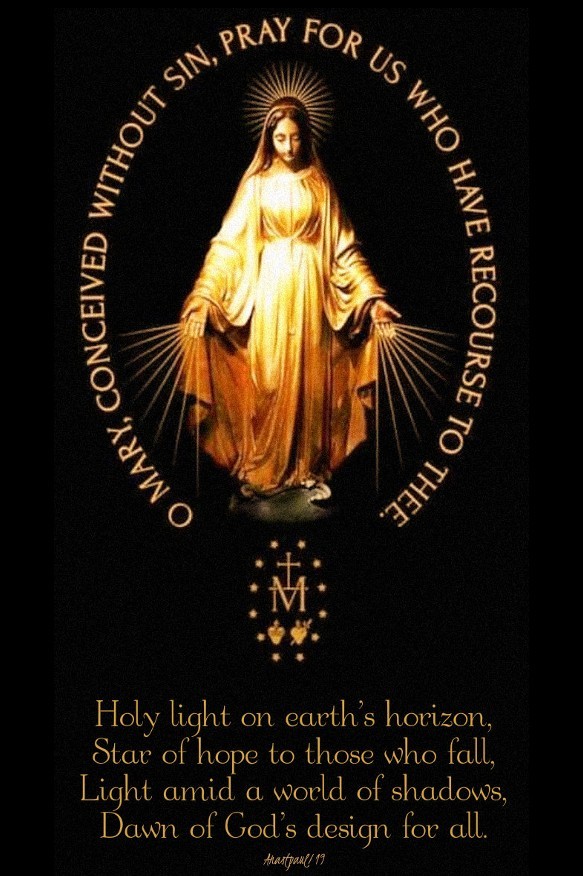
Holy light on earth’s horizon, Star of hope to those who fall, Light amid a world of shadows, Dawn of God’s design for all.
O Mary, conceived without sin, Pray for us who have recourse to thee.
“Thou alone and Thy Mother, are in all things fair, there is no flaw in Thee and no stain in Thy Mother.”
St Ephrem of Syria (306-373) Father and Doctor of the Church
“The very fact that God has elected her, proves, that none was ever holier than Mary; if any stain had disfigured her soul, if any other virgin had been purer and holier, God would have selected her and rejected Mary.”
St Jacob of Sarug (c 451-521) Bishop, Theologian, Poet, Writer
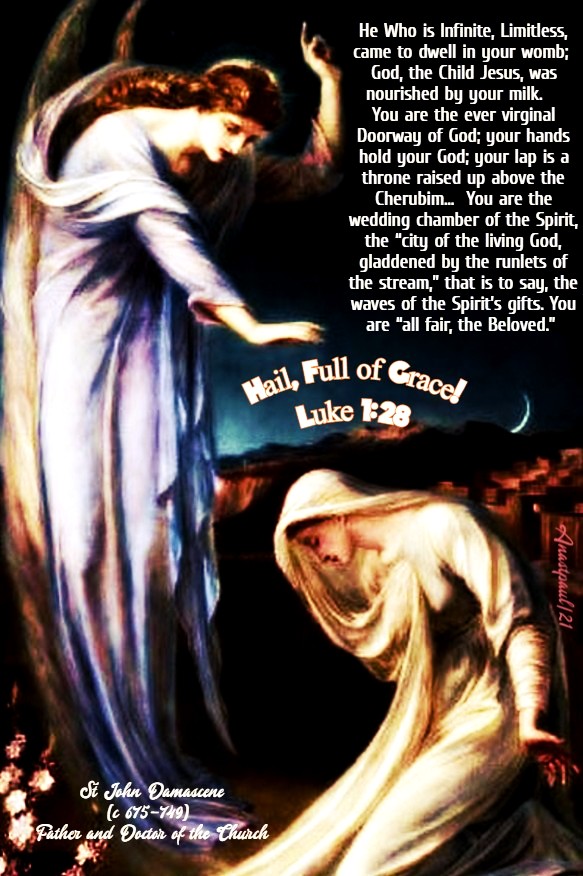
“He Who is Infinite, Limitless, came to dwell in your womb; God, the Child Jesus, was nourished by your milk. You are the ever virginal Doorway of God; your hands hold your God; your lap is a throne raised up above the Cherubim… You are the wedding chamber of the Spirit, the “city of the living God, gladdened by the runlets of the stream,” that is to say, the waves of the Spirit’s gifts. You are “all fair, the Beloved” of God.”
St John Damascene (675-749) Father and Doctor of the Church
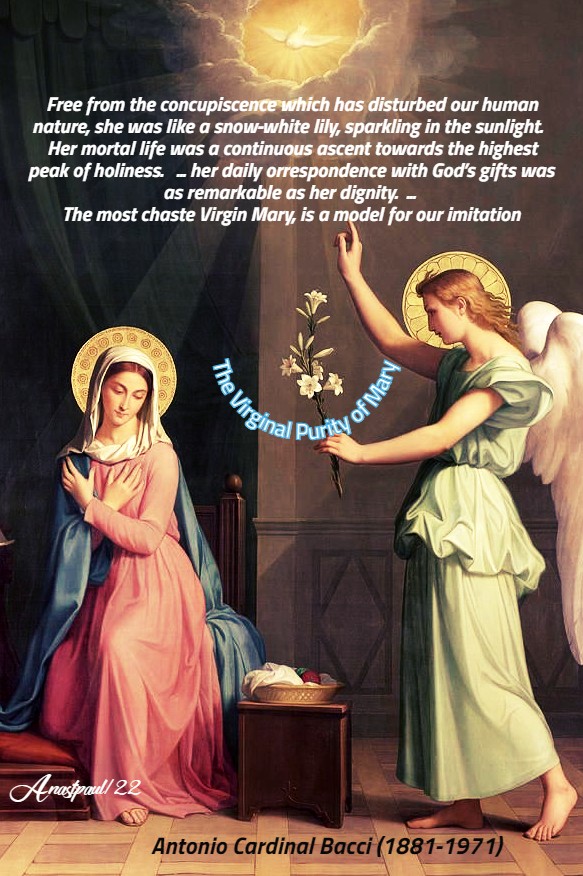
“Free from the concupiscence which has disturbed our human nature, she was like a snow-white lily, sparkling in the sunlight. Her mortal life was a continuous ascent towards the highest peak of holiness. … her daily correspondence with God’s gifts was as remarkable as her dignity. … The most chaste Virgin Mary, is a model for our imitation.”
Antonio Cardinal Bacci (1881-1971)
Tota Pulchra Es, Maria You Are All Beautiful, Mary Unknown Author – 4th Century
You are all beautiful, Mary, and the original stain is not in you. You are the glory of Jerusalem, you are the joy of Israel, you give honour to our people. You are an advocate of sinners. O Mary, O Mary, Virgin most intelligent, Mother most merciful. Pray for us, Plead for us, To the Lord Jesus Christ.
Tota pulchra es, Maria. Et macula originalis non est in Te. Tu gloria Ierusalem. Tu laetitia Israel. Tu honorificentia populi nostri. Tu advocata peccatorum. O Maria, O Maria, Virgo prudentissima. Mater clementissima. Ora pro nobis. Intercede pro nobis. Ad Dominum Iesum Christum.
This prayer used by the Church since the 4th Century for the Feast of the Immaculate Conception and the Purity of the Blessed Virgin. It takes some text from the book of Judith and other text from Song of Songs, specifically 4:7. Many composers have set this prayer to music over the centuries.
Our Morning Offering – 16 October – Feast of the Purity of the Blessed Virgin Mary
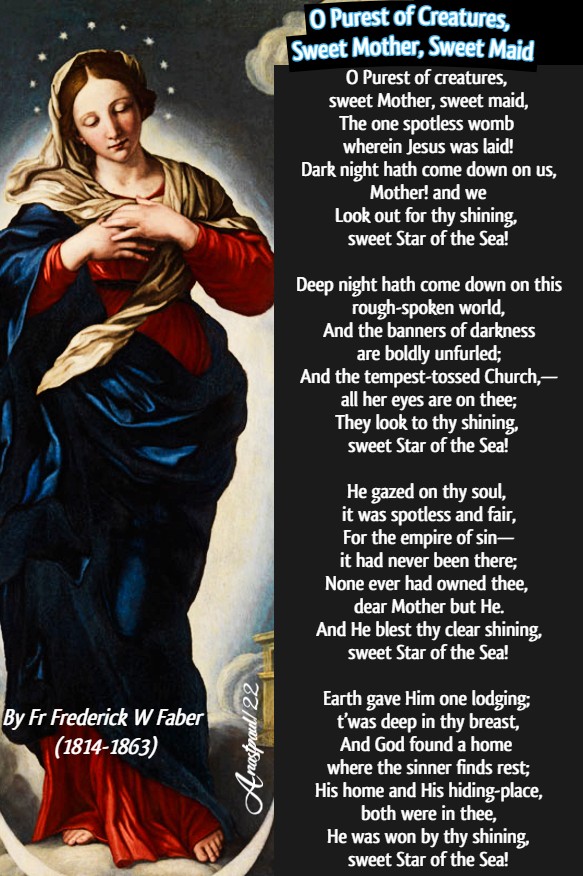
O Purest of Creatures, Sweet Mother, Sweet Maid By Fr Frederick W Faber C.Orat. (1814-1863)
O Purest of creatures, sweet Mother, sweet maid, The one spotless womb wherein Jesus was laid! Dark night hath come down on us, Mother! and we Look out for thy shining, sweet Star of the Sea!
Deep night hath come down on this rough-spoken world, And the banners of darkness are boldly unfurled; And the tempest-tossed Church,— all her eyes are on thee; They look to thy shining, sweet Star of the Sea!
He gazed on thy soul, it was spotless and fair, For the empire of sin—it had never been there; None ever had owned thee, dear Mother but He. And He blest thy clear shining, sweet Star of the Sea!
Earth gave Him one lodging; t’was deep in thy breast, And God found a home where the sinner finds rest; His home and His hiding-place, both were in thee, He was won by thy shining, sweet Star of the Sea!
Saint of the Day – 16 October – Feast of the Purity of the Blessed Virgin Mary. This Feast Day is kept by various Orders and Calendars..
Feast of the Purity Of The Blessed Virgin Mary By Father Lawrence G Lovasik SVD (1913-1986)
Mary, Mother of God, you are the Virgin most pure because you are the Immaculate Conception. The closer a soul is to God, the farther it is from sin. God is Infinite Good; sin, horrible evil. No-one could have had a closer approach to God than you, for it is impossible for any creature to be closer to God’s Son than His own Mother.
From eternity, before anything was, you were united to your Son in the mind of God, as His most pure Mother. When God decreed the Incarnation of the Word, His very own Son, through you alone, you had a place in the same plan, as Jesus. Since the Conception of the Son of God is all holy, all pure, infinitely removed from every appearance of sin, it was supremely fitting that your own conception should be equally far from sin. For that reason, you were conceived by your mother, Saint Anne, without even the shadow of sin. You are the Virgin most pure. Because you were to be the Mother of God, Original Sin which, like all Eve’s daughters you should have contracted, could not touch you. Such a stain would have reflected upon your Son, Who is Holiness itself. Then Satan could boast that he had overcome Jesus in you, His Mother. You are pure and sinless. You expressed this to Saint Bernadette at Lourdes when you said, “I am the Immaculate Conception.”
Mary, My Mother, there is no sin in you; in you there is only God’s grace—His light, His splendour, His love, His unspeakable delight. You are truly His beloved Daughter, the only one in whom there was never a stain. With you all is pure, virginal, immaculate In you, there is no inclination to evil—no impure thoughts or desires. You are God’s purest and holiest creature, the one chosen to conceive and bear the Son of God. Who would not love you and endeavour to imitate you, most beautiful and Immaculate Mother of God?
Mary, Mother of God, you are the Virgin most pure because you are full of grace. You are the most beautiful of creatures, the one in whom there is no spot, God’s masterpiece. You are full of grace, the Lord’s free gift and it overflows in you filling your soul with every virtue and perfection. What marvels of grace possessed your soul! Sanctifying grace made you God’s adopted child and the lawful heir to His Eternal Kingdom, putting you in possession of God’s goods and of God Himself forever. That grace made you holy and most pleasing in God’s eyes, the special object of His love. Sanctifying grace likened you to God as it did no other pure creature. Because you were full of God’s grace and a Virgin most pure, Gabriel could exclaim, “You have found grace with God.” No-one has found or received such grace as you.
But who can describe the matchless purity and beauty of your soul? Jesus is the most beautiful of men; you were His mould, His mirror and He, yours. Your soul contained all the marvels of God’s grace, for which reason, the Church calls you the Singular Vessel of Devotion. Mary, My Mother, you are all beautiful—beautiful in mind, in body, in soul! In you I behold the charm of the purest of Virgins, the majesty of the noblest of mothers. You are beautiful at your presentation in the temple; in prayer before Gabriel as he awaited your answer, in Nazareth’s hidden life and later as you followed Jesus and listened to Wisdom speak. You were beautiful when you stood as the brave Queen of Martyrs beneath the Cross of your dying Son; in the supper room beneath the fiery tongues of the Divine Spirit; beautiful, above all, in the glory in which you reign with Jesus. If a single soul in the state of grace by far excels in beauty all other earthly beauty, what beauty must you possess, Virgin most pure, who surpassed in holiness all other souls in the state of grace!
Mary, Mother of God, you are the Virgin most pure because you are the holiest of God’s creatures. You are the holiest of God’s creatures because you are the Mother of God. The Prophet tells us that God is “wonderful in His saints” (Ps. 67, 36). How wonderful, then, He must be in the Mother of the Saint of Saints! In you, to an eminent degree, all the privileges of other Saints meet. The Church venerates many holy Virgins, Martyrs and other Saints but not one of them has merited, or obtained, your title of Holy Virgin, Virgin most pure. Whatever of sanctity, of dignity, of merit, of grace and of glory, that we can imagine, all is in you.
Holiness is a complete separation from creatures and perfect union with God through love. No-one ever belonged to Jesus as completely as you, for you are His Mother. Jesus belonged entirely to you, the holiest among women. Your womb was so pure, so immaculate that it became the Holy of Holies, in which Jesus Christ our Lord, the Eternal High Priest, alone found entrance. Mary, My Mother, God raised you so high in Himself that He never has created and never will create, a holier person more worthy of Himself, of His greatness, of His love, than you, O Virgin most pure. Having carried within you, Jesus Christ, the Son of God, you share, as no-one else does, in your Divine Son’s holiness and purity. You come nearest to the holiness of God.
You are the holiest of women, the Virgin-Mother thrice holy because you are holy of the Father, holy of the Son, holy of the Holy Spirit of Love. Hence, with Holy Church I repeat, “You are all fair, Mary and the stain of original sin is not in you. You are the Glory of Jerusalem, you are the Joy of Israel, you are the Honour of our people.”
St Amandus of Limoges St Ambrose of Cahors St Balderic St Baldwin St Bertrand of Comminges St Bolonia St Conogon of Quimper St Dulcidius of Agen St Eliphius of Toul St Eremberta of Wierre St Florentinus of Trier
Bl Gerald of Fossanuova St Junian St Lull St Magnobodus of Angers St Martinian of Mauretania St Mummolinus St Saturian of Mauretania St Silvanus of Ahun St Victor of Cologne St Vitalis of Noirmoutier
Martyrs in Africa – 220 Saints: A group of 220 Christians Martyrs about whom we know nothing but that they died for their faith.
Martyrs of North Africa – 365 Saints: A group of 365 Christians who were Martyred together in the persecutions of the Vandal king Genseric. The only details that have survived are the names of two of the Martyrs – Nereus and Saturninus. 450 in North Africa.
St Callistus of Huesca St Cannatus of Marseilles Bl Cipriano Alguacil Torredenaida St Euthymius the Younger St Fortunatus of Rome Bl Josefa Martínez Pérez St Leonard of Vandoeuvre Bl Narcis Basté y Basté Bl Pere Verdaguer Saurina Bl Ramón Esteban Bou Pascual St Sabinus of Catania St Severus of Trier
Martyrs of Cologne: A group of 360 Christian soldiers Martyred together in the persecutions of Diocletian and Maximian. They were Martyred in 303 outside the city walls of Cologne, Germany.
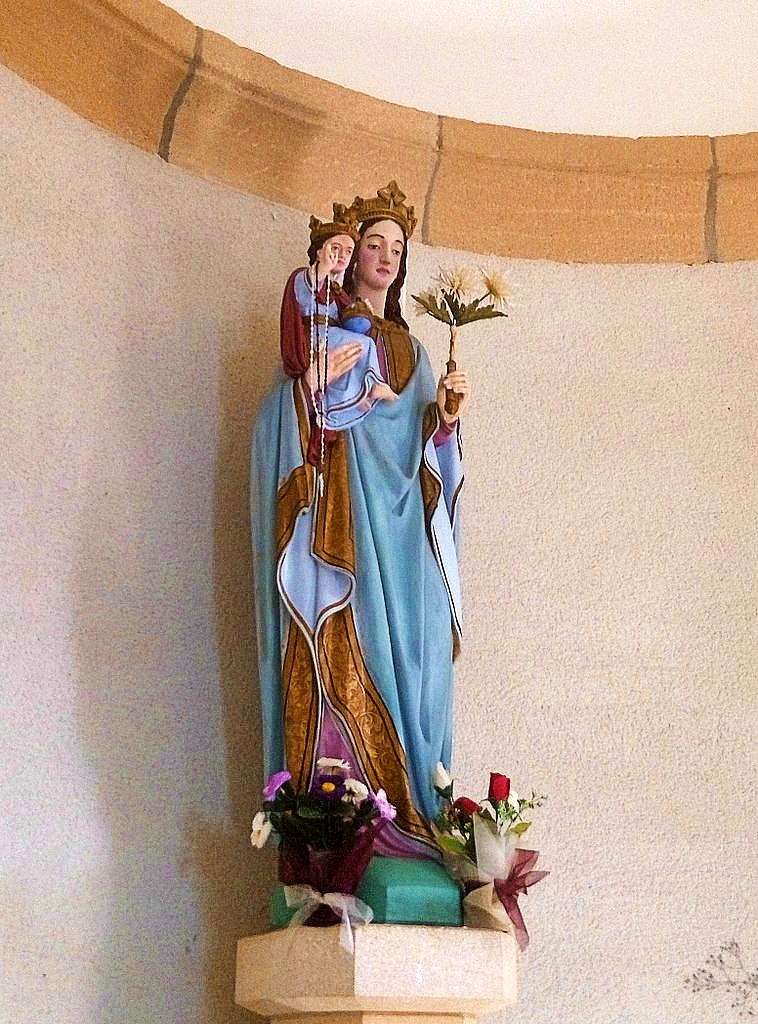
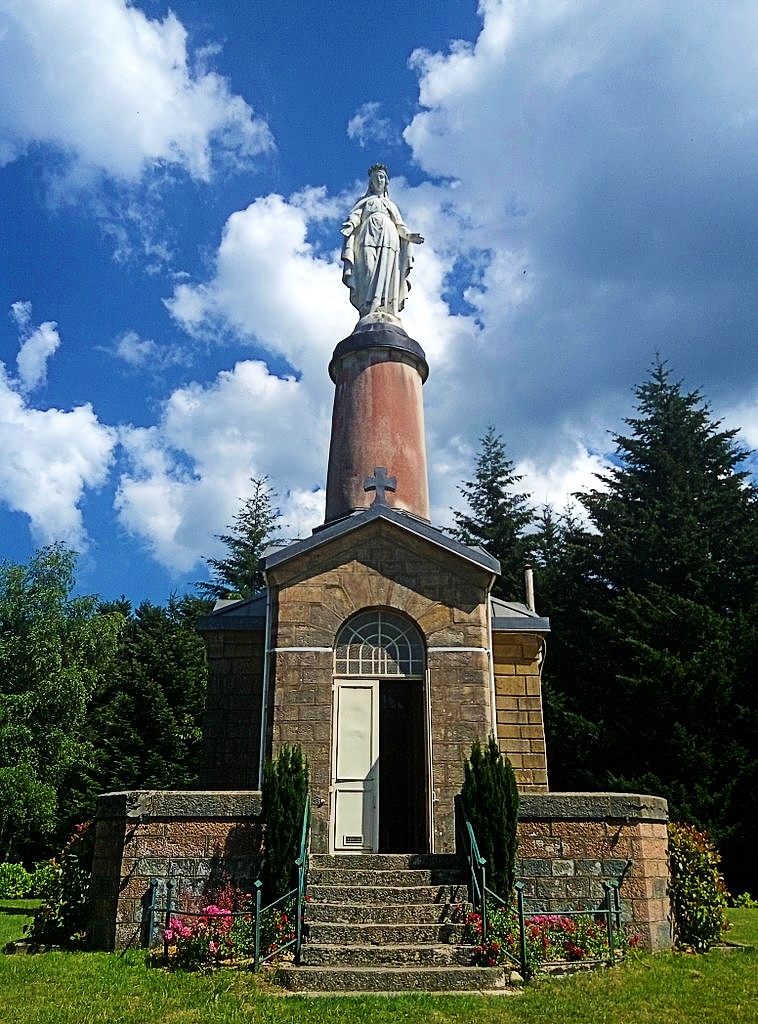
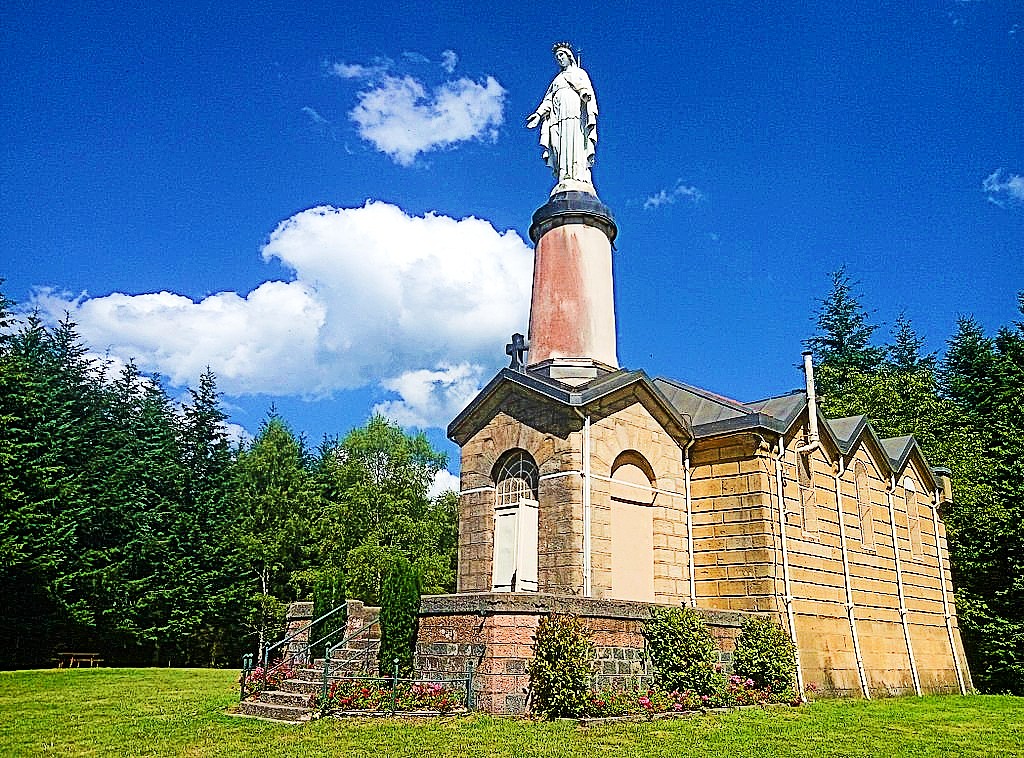
Notre-Dame-de-la-Rochette, Ranchal, France / Our Lady of La Rochette: 14 October
There are no easily translated legends of the above Marian Feast. Hopefully, by next year I will find something somewhere.In the meantime, I have found the beautiful Statues and Church and the little citation by Abbot Orsini:
The Abbot Orsini wrote: “Our Lady of La Rochette near Geneva. A shepherd coming up to a bush, where he heard a plaintive voice, found there an image of the Blessed Virgin, which led to a Church being built there.”
St Bernard of Arce St Burchard of Wurzburg (c 752) Bishop, Confessor, Monk, Missionary, disciple of St Boniface. St Celeste of Metz St Dominic Loricatus
Saint Fortunatus of Todi (Died 537) Bishop, Confessor, miracle-worker. An entry in the Roman Martyrology under 14 October records: “At Todi in Umbria, St Fortunatus, Bishop, who, as is mentioned by blessed Gregory, was endowed with an extraordinary gift for casting out unclean spirits.” About St Fortunatus: https://anastpaul.com/2020/10/14/saint-of-the-day-14-october-saint-fortunatus-of-todi-died-537/
St Gaudentius of Rimini St Gundisalvus of Lagos Bl Jacques Laigneau de Langellerie St Lupulo of Capua St Lupus of Caesarea St Manacca St Manehildis St Modesto of Capua St Rusticus of Trier St Saturninus of Caesarea St Venanzio of Luni
Martyrs of Caesarea – (4 Saints): Three brothers and a sister Martyred together in the persecutions of Diocletian – Carponius, Evaristus, Fortunata and Priscian. In 303 in Caesarea, Cappadocia (in modern Turkey) – their relics enshrined in Naples, Italy.
Quote/s of the Day – 13 October – “The Month of the Most Holy Rosary and of the Angels” and the Memorial of Our Lady of Fatima: The Sixth & Final Apparition
Our Lady’s Words
“Let not your heart be disturbed. Do not fear that sickness, nor any other sickness or anguish. Am I not here, who is your Mother? Are you not under my protection? Am I not your health? Are you not happily within my fold? What else do you wish? Do not grieve nor be disturbed by anything.”
Our Lady of Guadalupe to Juan Diego 9 December 1531
“Penance, penance, penance. Pray for sinners.”
Our Lady to St Bernadette Soubirous at Lourdes, 1858
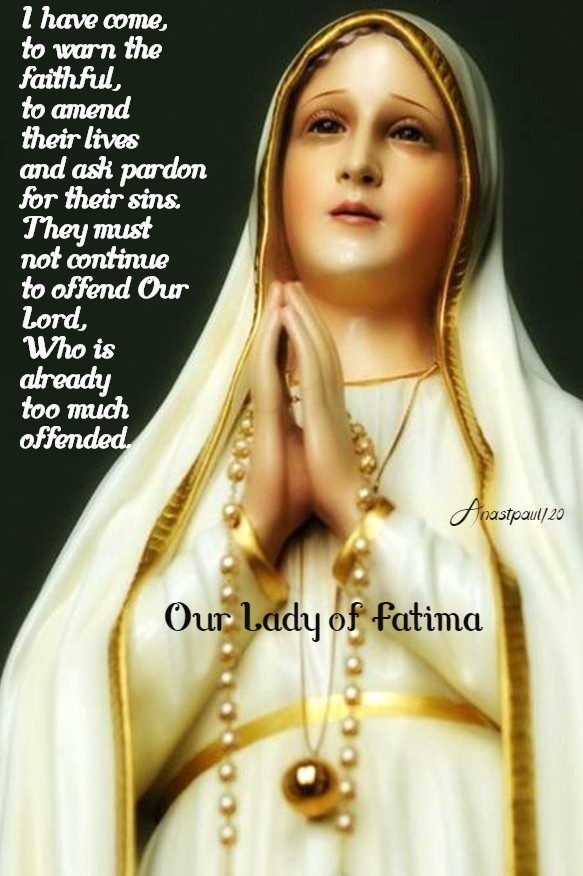
“I have come, to warn the faithful, to amend their lives and ask pardon for their sins. They must not continue to offend Our Lord, Who is already too much offended.”
“Look, my Daughter,” Our Lady said to Lúcia on 10 December 1925, “at my heart, surrounded with thorns, with which ungrateful men pierce me.”
“My child, behold my Heart all pierced with thorns, which the blasphemies and ingratitude of men drive deeper at every moment . . . make known to men that:
I promise to assist. at the hour of death. with the graces necessary for salvation, all those who, on the first Saturdays of five consecutive months, go to Confession, receive Holy Communion, say the Rosary and spend a quarter of an hour with me, in meditation on te fifteen Mysteries of the Rosary, with the object of making reparation to me.”
“Say the Rosary everyday to obtain peace for the world. And after each decade, say the following prayer: ‘O my Jesus, forgive us our sins, save us from the fires of Hell, lead all souls to Heaven, especially those in most need of Thy mercy.’”
Our Morning Offering – 13 October – “The Month of the Most Holy Rosary” and the Memorial of Our Lady of Fatima: The Sixth & Final Apparition
Act of Consecration and Reparation to the Immaculate Heart of Mary
O Immaculate Heart of Mary, Queen of Heaven and Earth and tender Mother of men, in accordance with thy ardent wish made known at Fatima, I consecrate to thee, myself, my brethren, my country and the whole human race. Reign over us and teach us how to make the Heart of Jesus reign and triumph in us and around us, as It has reigned and triumphed in thee. We wish to atone for the many crimes committed against Jesus and thee. We wish to call down upon our country and the whole world, the peace of God in justice and charity. We promise to imitate thy virtues, by the practice of a Christian life without regard to human respect. We resolve to receive Holy Communion on the first Saturday of every month and to offer thee five decades of the Rosary on this day, together with our sacrifices in the spirit of reparation and penance. Amen.
Quote/s of the Day – 11 October – Feast of the Divine Maternity
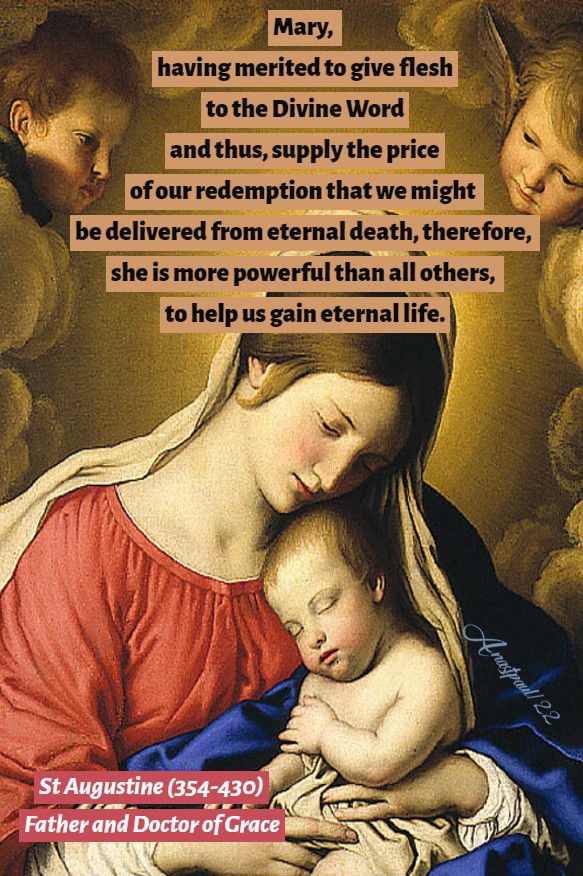
“Mary, having merited to give flesh to the Divine Word and thus, supply the price of our redemption that we might be delivered from eternal death, therefore, she is more powerful than all others, to help us gain eternal life.”
St Augustine (354-430) Father and Doctor of Grace
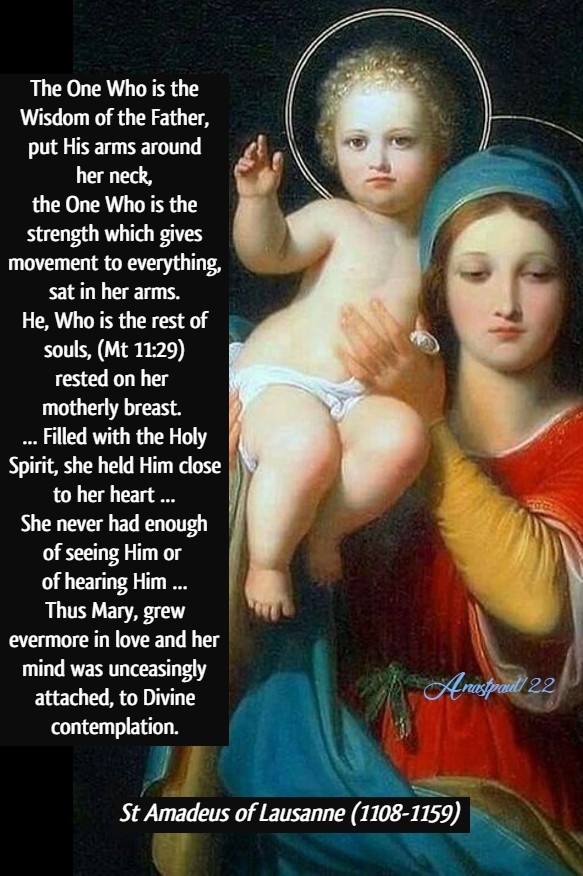
“The One Who is the Wisdom of the Father, put His arms around her neck, the One Who is the strength, which gives movement to everything, sat in her arms. He, Who is the rest of souls, (Mt 11:29) rested on her motherly breast. … Filled with the Holy Spirit, she held Him close to her heart … She never had enough of seeing Him or of hearing Him … Thus Mary, grew evermore in love and her mind was unceasingly attached , to Divine contemplation.”
St Amadeus of Lausanne (1108-1159) Bishop (Homily on the Motherhood of Mary, 4).
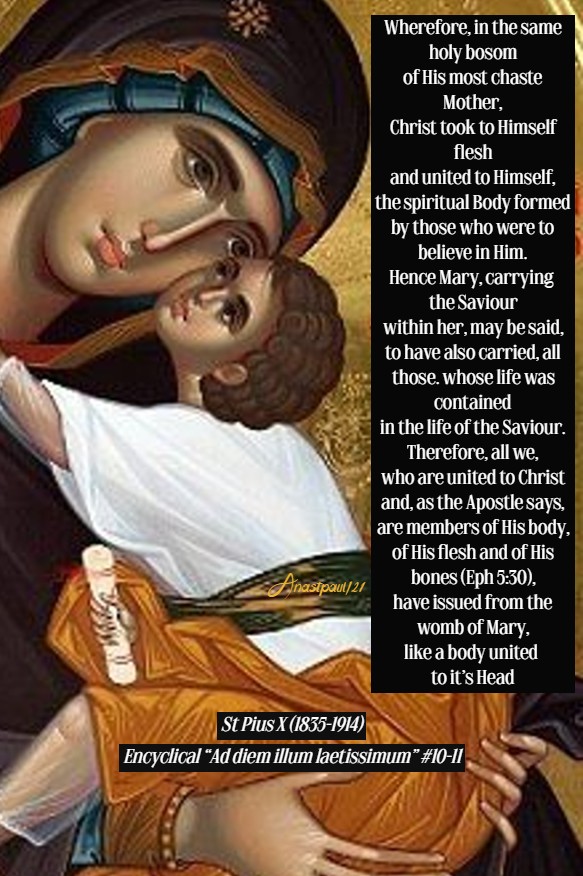
“Wherefore, in the same holy bosom of His most chaste Mother, Christ took to Himself flesh and united to Himself, the spiritual Body formed by those who were to believe in Him. Hence Mary, carrying the Saviour within her, may be said, to have also carried, all those. whose life was contained in the life of the Saviour. Therefore, all we who are united to Christ and, as the Apostle says, are members of His body, of His flesh and of His bones (Eph 5:30), have issued from the womb of Mary, like a body united to it’s head.”
St Pius X (1835-1914) Pope from 1903 to 1914 Encyclical “Ad diem illum laetissimum” #10-11
Alma Redemptoris Mater Loving Mother of the Redeemer By Bl Herman of Reichenau (1013–1054)
Loving Mother of the Redeemer! Hear thou thy people’s cry, Star of the deep and portal of the sky! Mother of Him Who thee from nothing made, Sinking we strive and call to thee for aid; Oh, by that joy which Gabriel brought to thee, Thou Virgin first and last, let us thy mercy see.
One Minute Reflection – 11 October – Feast of the Divine Maternity – Ecclesiasticus 24:23-31, Luke 2:43-51 – Scripture search here: https://www.drbo.org/
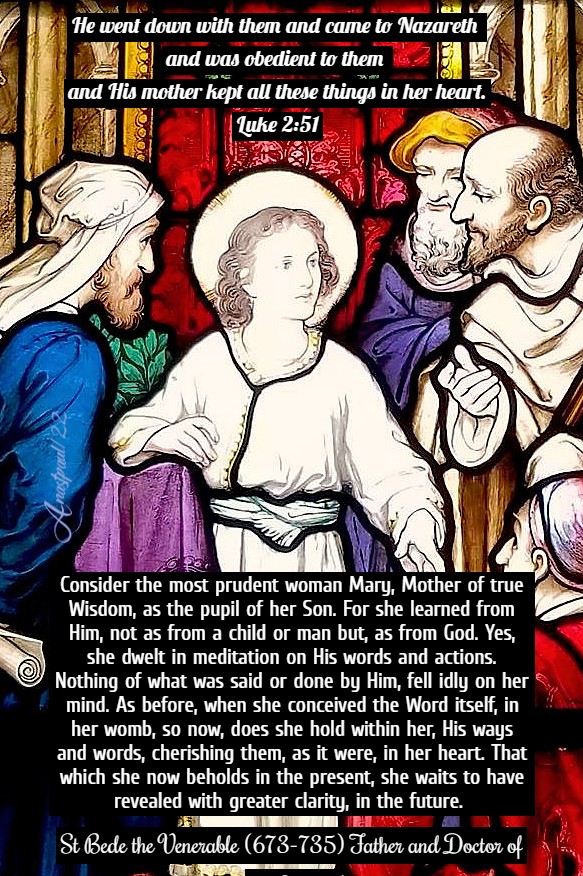
“He went down with them and came to Nazareth and was obedient to them and His mother kept all these things in her heart.” – Luke 2:51
REFLECTION – “Consider the most prudent woman Mary, Mother of true Wisdom, as the pupil of her Son. For she learned from Him, not as from a child or man but, as from God. Yes, she dwelt in meditation on His words and actions. Nothing of what was said or done by Him, fell idly on her mind. As before, when she conceived the Word itself, in her womb, so now, does she hold within her, His ways and words, cherishing them, as it were, in her heart. That which she now beholds in the present, she waits to have revealed with greater clarity, in the future. This practice she followed as a rule and law through all her life.” – St Bede the Venerable(673-735) Father and Doctor of the Church (Exposition of the Gospel of Luke).
PRAYER – O God, Who, by the message of an Angel, willed to take flesh in the womb of the Blessed Virgin Mary, grant that we, Thy suppliants, who believe her to be truly the Mother of God, maybe assisted by her intercession with Thee.Through the same Jesus Christ, Thy Son our Lord, Who lives and reigns with Thee, in the unity of the Holy Ghost, God, world without end. Amen (Collect).
Our Morning Offering – 11 October – Feast of the Divine Maternity
Mother of Salvation, Blessed Lady By Anselm (1033-1109) Magnificent Doctor Marian Doctor
Mother of Salvation, Blessed Lady, you are the Mother of Justification and those who are justified; the Mother of Reconciliation and those who are reconciled; the Mother of Salvation and those who are saved. What a blessed trust and what a secure refuge! The Mother of God is our Mother. The Mother of the One in Whom alone, we hope and Whom alone, we fear, is our Mother! … The One Who partook of our nature and by restoring us to life, made us children of His Mother, invites us by this grace, to proclaim that we are His brothers and sisters. Therefore, our Judge, is also our Brother. The Saviour of the world, is our Brother. Our God has become – through Mary – our Brother! Anen
St Aldericus St Cassius St Cerbonius of Populonia St Cerbonius of Verona St Clarus of Nantes Bl Demestrius of Albania Bl Edward Detkens St Eulampia St Eulampius St Florentius the Martyr St Fulk of Fontenelle St Gereon St Gundisalvus Bl Hugh of Macon
Bl Pedro de Alcantara de Forton de Cascajares St Pinytus of Crete Bl Pontius de Barellis St Tanca St Teodechilde St Victor of Xanten
Martyrs of Ceuta – 7 Beati: A group of seven Franciscan Friars Minor missionaries to Muslims in the Ceuta area of modern Morocco. Initially treated as madmen, within three weeks they were ordered to convert to Islam and when they would not they were first abused in the streets, then arrested, tortured and executed. • Angelo • Daniele di Calabria • Donnolo • Hugolinus • Leone • Nicola • Samuele They were beheaded in 1227 in Mauritania Tingitana (Ceuta, Morocco). Local Christians secreted the bodies away and gave them proper burial in Ceuta. They were Beatified in 1516 by Pope Leo X.
Bl Aaron of Cracow St Abraham the Patriarch St Alfanus of Salerno St Andronicus of Antioch St Athanasia of Antioch Bl Bernard of Rodez St Demetrius of Alexandria St Deusdedit of Montecassino St Domninus St Dorotheus of Alexandria
St Eleutherius St Geminus St Gislenus St Goswin Bl Gunther St Lambert St Publia St Rusticus St Sabinus of the Lavedan St Valerius
Martyrs of Laodicea – Three Christians Martyred together in Laodicea but no other information about them has survived but their names – Didymus, Diodorus and Diomedes. They Died in Laodicea, Syria.
St Felix of Como (Died 390) the first Bishop of Como. Felix was a friend of Saint Ambrose, who praised him for his missionary activity and Ordained him a Priest in 379 and Consecrated him as Bishop in 386. St Ambrose sent him to evangelise the City of Como, as a testimony to the great missionary drive of the Church of Milan. St Felix is honoured as a zealous shepherd of souls. More about St Felix: https://anastpaul.com/2021/10/08/saint-of-the-day-8-october-saint-felix-of-como-died-390/
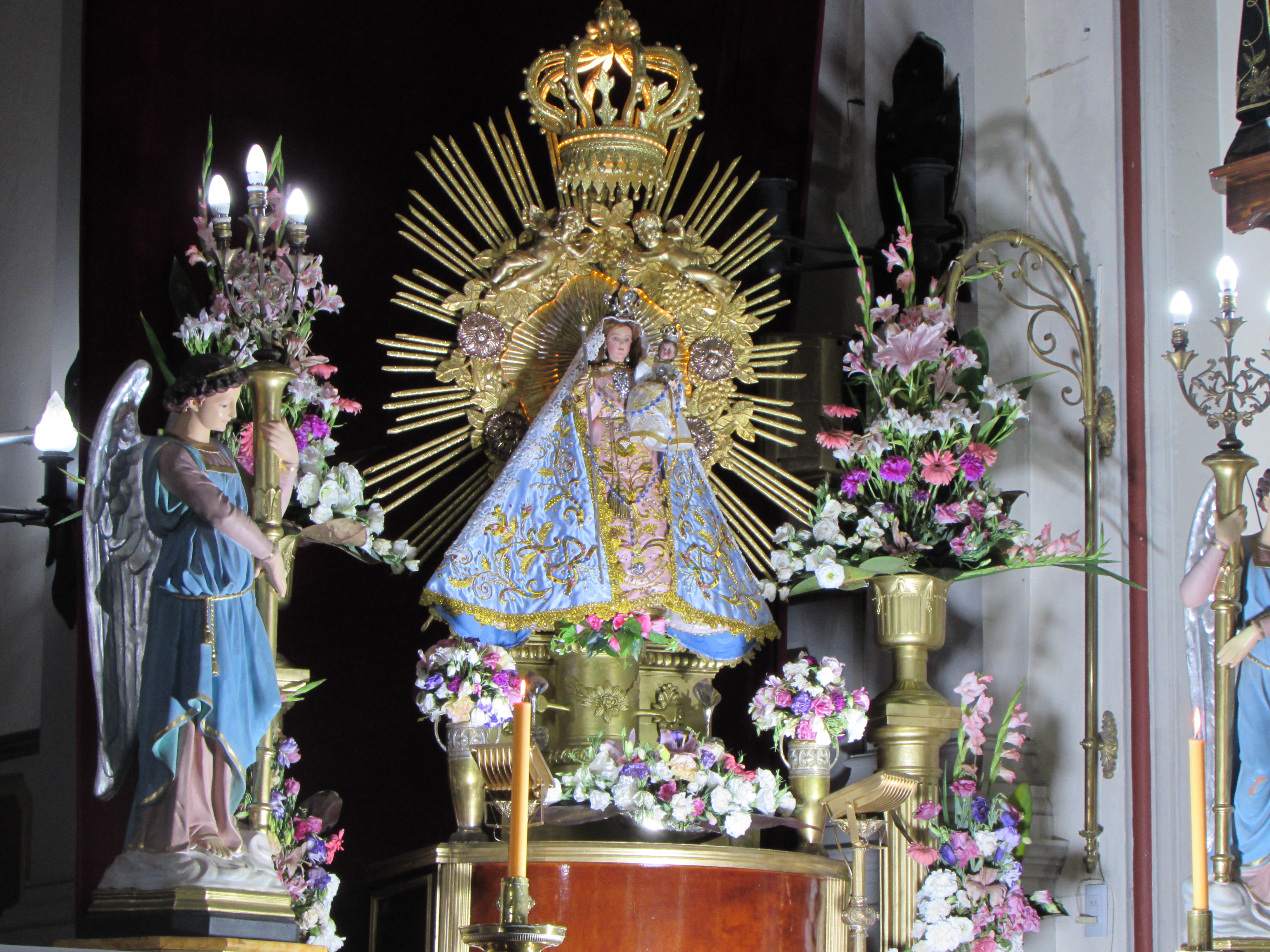
Notre-Dame Arcachon / Our Lady of La Teste-de-Buch, Guienne (1519) – 5 October:
According to the Marian Calendar, Our Lady of Buch is located in the Pine Mountains, in Guienne. The sea cast this image upon the sands, while Saint Thomas, the Cordelier Friar, was praying on behalf of two vessels which he saw in danger of perishing. He respectfully received this image and deposited it in this place, in a small Chapel which he built there.
Guienne, or Guyenne, refers to a loosely defined region of pre-revolutionary, South-Western France. Buch, or La Teste-de-Buch, is a Town in the Gironde region in Aquitaine, located on the south shore of Arcachon Bay. The “Cordeliers,” known also as the Grey Friars for the heavy grey cloth they wore, are Franciscans. Their belt was but a rope with five knots tied at the end, which gave them their name in France. The “Saint Thomas” mentioned is Thomas Illyricus (1484-1528), a Franciscan native of Vrana in the Diocese of Zarian. He was never Canonised. He was a hermit and itinerant preacher and an indefatigable missionary traveller who lived near Arcachon in la Teste-de-Buch. It was he, who built the Chapel of Notre-Dame Arcachon.
“More than his voice, vibrant with emotion,” wrote the Abbe Mauriac, “more than his ascetic appearance, more than his style so direct and so strong, what stirred and attracted thousands of listeners, was his ardent sincerity which overflowed and poured itself out, while his love of God and of souls, accented his words and made him very eloquent.”
It was in the year 1519 that Thomas Illyricus found the famous Statue now known as the Virgin of Advent at the edge of the sea. He built a Shrine of wood that same year for the Statue, and pilgrimages date from 1525 and grew so much in numbers that in 1624, Cardinal Francois de Sourdis authorised the construction of a stone Chapel. This small Chapel was gradually buried by the sands and it was decided to build a new one which was completed in 1723. The Church is known as the Church of L’eglise Notre Dame des Passes, or Notre-Dame Arcachon. Many miracles have been wrought through devotion to Mary at the Shrine and the Church is dedicated to sailors, who face the channels for entry into the Arcachon basin. There is a tall Cross known as the Sailors Cross which stands at the end of the pier of the Chapel. Built at the same time as the construction of the Chapel in 1722, the original was destroyed by a gale in 1855 and was replaced by the one that we see today. It was once customary for sailors to greet the Cross with two blasts from their fog horn, to appeal for divine protection, when they went out on the ocean and faced its dangers. Mary is particularly interested in seafarers and folk living near waters. She who was so familiar with the Sea of Galilee and the profession of the Twelve Pillars of her Divine Son’s Church, she is still is vigilant for their welfare and happiness.
St Alexander of Trier St Anna Schaeffer St Apollinaris of Valence St Attilanus of Zamora St Aymard of Cluny St Boniface of Trier St Charitina of Amasa St Eliano of Cagliari St Firmatus of Auxerre St Flaviana of Auxerre Bl Flora of Beaulieu St Gallo of Aosta St Jerome of Nevers Bl John Hewett St Magdalveus of Verdun St Mamlacha St Marcellinus of Ravenna Blessed Matthew Carreri OP (c 1420-1470) Priest and Friar of the Order of Preachers, Stigmatist, Mystic. St Meinulph St Palmatius of Trier
Blessed Pietro of Imola (c1250-1320) Knight of the Order of St John of Jerusalem and Grand Prior , Lawyer, Jurist, Mediator, Peace-maker. The Roman Martyrology states: “In Florence, blessed Pietro da Imola, who, a Knight of the Order of St John of Jerusalem, took care of the sick with pious charity.” Biography: https://anastpaul.com/2021/10/05/saint-of-the-day-5-october-blessed-pietro-of-imola-c1250-1320/
Blessed Raymond of Capua OP (c 1330-1399) Priest, “The Second Founder” of the Dominican Order of Preachers, Reformer, Spiritual Director, he worked with St Agnes of Montepulciano and St Catherine of Siena, Hagiographer, Teacher. The important Mystic, Reformer, Doctor of the Church, St Catherine of Siena, accepted him as her spiritual director because of his burning passion for the Church and for the revival of religious life, most especially in their own Order. In 1899 Pope Leo XIII Beatified him, on the 500th anniversary of his death. About Blessed Raymond: https://anastpaul.com/2020/10/05/saint-of-the-day-5-october-blessed-raymond-of-capua-op-c-1330-1399/
Bl Robert Sutton Bl Sante of Cori St Thraseas of Eumenia Bl William Hartley
Martyrs of Messina or St Placidus and Companions – 30 Saints: A group of about 30 Benedictine Monks and nuns, some blood relatives, who were sent in the early days of the order to establish Monasteries in the vicinity of Messina, Sicily, Italy and who were martyred. We know the names, and a few details, about seven of them – • Donatus • Eutychius • Faustus • Firmatus • Flavia • Placidus • Victorinus 6th century Messina, Sicily, Italy.























 AnaStpaul
You must be logged in to post a comment.