Madonna del Soccorso / Our Lady of Succour of Sicily (14th Century):
Madonna del Soccorso kept in the Mother Church of Castellammare del Golfo .
Devotion to the Blessed Virgin Mary under this title began in Palermo, Sicily in the 14th century and has since spread throughout the Augustinians. It began when Father Nicola Bruno, who suffered from severe and long-term pains in his side, prayed to Our Lady for a cure while meditating on a painting of Mary in which she used a stick or club to chase away the dragon and protect the Infant Jesus, the artist was making reference to passages in Genesis and Revelations that referred to the eternal enmity between The Woman and the serpent. That night, Father Nicola received a vision of Mary and was cured. The painting received the title “Our Lady of Succour” and the devotion began. Since 1804 the celebration has had its own liturgy.
Our Lady’s Altar
Our Lady of the Most Blessed Sacrament: St Peter Julian Eymard (1811-1868) and Our Lady of the Blessed Sacrament:
The title of Our Lady of the Blessed Sacrament was first given to Mary by St Peter Julian Eymard in May 1868, while speaking to his novices. A few years later he described what her statue should look like: “The Blessed Virgin holds the Infant in her arms and He holds a chalice in one hand and a Host in the other.”
He exhorted them to invoke Mary: “Our Lady of the Blessed Sacrament, pray for us who have recourse to thee!”
St Anno of Verona St Argentea of Cordoba St Euthymius the Illuminator Bl Fortis Gabrielli Bl Gerard of Villamagna Bl Gemma of Goriano St Glyceria of Trajanopolis Blessed Imelda Lambertini (1322-1333) Child Mystic St John the Silent
St Lucius of Constantinople St Mael of Bardsey Bl Magdalen Albrizzi St Merewenna of Rumsey St Mucius of Byzantium St Natalis of Milan St Onesimus of Soissons St Servatus of Tongres St Valerian of Auxerre — Martyrs of Alexandria: A group of Catholic Christians martyred in the church of Theonas, Alexandria, Egypt by order of the Arian Emperor Valens. Their names have not come down to us. 372 in Alexandria, Egypt.
Notre-Dame-des-Vertus / Our Lady of Power, Aubervilliers, France(1336) – 12 May:
The Abbot Orsini wrote: “This image has wrought so many miracles in this Church, that it is called Our Lady of Power, though the Church is dedicated to Saint Christopher.”
Known now as Notre-Dame-des-Vertus, this is the 14th century Church in Aubervilliers that is the very location that experienced so many miracles during the Middle Ages. As noted by the Abbot Orsini, the Church was originally dedicated to Saint Christopher, yet the name soon changed to honour the Mother of God, in recognition of the graces and miracles obtained there due to the intercession of the Blessed Virgin Mary. The Parish had been built around the Saint Christopher Chapel and after whom the road leading to the Church is named. The first miracle occurred on 14 May 1336 and is known locally as the Miracle of Rain. It was during a time of terrible drought when a small girl entered the Church of Saint Christopher with flowers to adorn the Statue of the Blessed Virgin Mary. While praying that Our Lady would send rain to save the crops, the girl suddenly noticed, that the Statue had become covered, with what appeared to be drops of sweat and the sky turned dark, as the weather began to turn.
This, I believe, is a Holy Card of the original Statue which was desecrated during the French Revolution
The inhabitants of the Parish flocked to the Church, alerted by the sound of the Church bell, to see the wonder and give thanks to God for this miracle. This was but the beginning of the pilgrimages to the Church that began almost immediately, especially from the Parishes of Paris. These pilgrimages were encouraged by the authorities of the Church, as well as by the example of the many distinguished visitors and the continued occurrences of many other miracles over the following centuries. These miracles included many cures, as well as the miracles of two children who were brought back to life. Kings and Queens were among the many pilgrims who came during the Middle Ages, including King Louis XIII, who came to pray for the capture of Rochelle. The Archbishop of Paris confirmed the celebration of the festival on the second Tuesday of May, which is the month of Mary. After all these miracles, the Chapel was far too small to contain the influx of pilgrims, in particular the processions coming from Paris to the Basilica that stopped at the miraculous little Chapel on their way.
This is our Blessed Lady on the Facade
The small Sanctuary was later replaced by a more imposing Church whose construction began in the fifteenth century. Particularly remarkable are the stained glass windows that adorn the Church and remind the visitor of the extraordinary history of this place, for they relate to the many different miracles performed by the Blessed Virgin in the Chapel, of which there were many. Virtually every great Saint is depicted in these windows too – if you wish to see them, although they are not professional photographs, go here: https://www.tripadvisor.com/Attraction_Review-g3347617-d10980848-Reviews-Eglise_Notre_Dame_des_Vertus- There are numerous Statues and Altars of the Blessed Virgin in the Sanctuary, all of them highly venerated by pilgrims.
During the French revolution, in 1789, the Statue of the miraculous Virgin was profaned. It was dragged on the road leading to Saint Denis with a rope around its neck; the Sans-Culottes movement burned it singing the French song “Carmagnole et Ah! Ca ira!” proof of the Satanic roots of the French Revolution. One of her hands was saved from the flames and was preserved. The present Statue of the Virgin, located in the left Chapel, was sculpted in wood by Baffet House in 1873. It is a copy of an ancient Statue found that year in the Chapel Saint-Julien-Le-Pauvre at Hotel-Dieu. It was inserted into a Neo Gothic frame, flanked by two angels holding phylacteries, (a coiled-end speech scroll bearing legends) which recall the miracle in 1582 when the Virgin restored a stillborn child to life.
St Pancras of Rome (c 289 – c 303) Martyr Child of 14, Roman Convert (Optional Memorial) Biography: https://anastpaul.com/2017/05/12/saint-of-the-day-st-pancras/ — St Crispoldus St Cyril of Galatz St Dedë Malaj St Diomma of Kildimo St Dionysius of Asia St Dominic de la Calzada St Ejëll Deda St Ephrem of Jerusalem
St Erc Nasca of Tullylish St Ethelhard of Canterbury St Euphrosyna of Terracina Bl Francis Patrizzi of Siena Bl Gemma of Goriano St Germanus of Constantinople (c 640-733) Bishop
Blessed Joanna of Portugal OP (1452-1490) Religious of the Second Order of St Dominic, Virgin, Princess of Portugal of the House of Aviz, daughter of King Afonso V of Portugal and his first wife Isabella of Coimbra, Penitent. About Blessed Joanna whom the Portuguese called “Saint Princess Joanna”: https://anastpaul.com/2020/05/12/saint-of-the-day-12-may-blessed-joanna-of-portugal-1452-1490/
Bl Juan de Segalars St Lucien Galan
St Maria Domenica Mazzarello
St Modoald of Trier St Palladius of Rome St Philip of Agira St Richrudis of Marchiennes St Theodora of Terracina St Thomas Khampheuane Inthirath
Madonna dello Scoglio / Madonna of the Rock, Placanica, Reggio Calabria, Calabria, Italy (mid 1900s) – 11 May:
Fratel Cosimo Fragomeni was born in 1950 in Santa Domenica di Placanica, a village of Calabria, one of the poorest regions in Italy. From an early age he was a committed Roman Catholic and when he was 18, he reported to the village priest, Don Rocco Gregorace, having had four visions in which the Mother of God, standing on a rock (scoglio), appeared to him. The first of these visions took place on the 11th May 1968. The Virgin Mary asked Cosimo to transform the valley into a Shrine in order to bring people closer to God.
For that reason, on the rock of the apparition, Cosimo built a little Chapel,and called the Shrine “Madonna dello Scoglio” (Our Lady of The Rock) because the Virgin Mary appeared to him on the top of the rock. He also placed a marble Statue of Our Lady on the rock of the apparitions. Pilgrims come from all over the world to pray and touch the sacred rock, through the metal fencing that circumscribes it, testifying great miracles and conversions.
Shortly after the apparitions of the Virgin Mary, Cosimo began to lead prayer devotions for pilgrims and many people were cured from diseases. Although he had received little formal education, he was admitted to the lay order of the Franciscan brothers with the name of “Fratel Cosimo.” He led a mystical life, living in solitude in a house near the apparition rock, fasting and praying and avoiding any sense of celebrity.
Fratel Cosimo was a man of God, appreciated by his Bishop for his obedience and humility to the Catholic Church. He emphasised prayer as the primary vehicle for opening oneself to God and for receiving spiritual and physical renewal through the Divine Physician and His Holy Mother. Thanks to the donations of the pilgrims, the Shrine grounds and facilities have been expanded. A foundation and a rosary prayer group have been established and on the 8th December 2007, the local Bishop Mnsgr Morosini, declared the “Scoglio” an official Catholic shrine.
St Anastasius of Lérida St Anthimus of Rome St Bassus of Sabina St Bertilla St Criotan of MacReddin Bl Diego of Saldaña St Evellius of Pisa St Fabius of Sabina St Fremund of Dunstable St Gengulphus of Burgundy
St Maximus of Sabina St Mayeul of Cluny (c 906–994) Priest and Abbot St Mozio of Constantinople St Possessor of Verdun St Principia of Rome St Tudy St Vincent L’Hénoret Bl Vivaldus St Walbert of Hainault — Martyrs of Camerino: An imperial Roman official, his wife, their children and servants, all of whom were converts and martyrs: Anastasius, Aradius, Callisto, Eufemia, Evodius, Felice, Primitiva, Theopista.
Madonna della Rovere, Roble San Bartolomeo al Mare, Italy (1671) – 19 May (Additional Memorial 18 April):
“The Madonna della Rovere is an ancient devotion from an image that was found in a village called Oak. There were two apparitions of the Virgin Mary and several miracles in the seventeenth century. San Bartolomeo al Mare is a Town in the Province of Imperia, Liguria region in northwest Italy. The ancient and vast territory in the medieval village of Oak is located between the Towns of Cervo and Diano. In the pre-Roman era it was called “Lucus Bormani” where “Lucus” means “sacred forest,”,”Bor” to “source” and “man,” whereby the “Lucus Bormani” means “ sacred grove dedicated to the god Borman “the god of springs, cruel and bloodthirsty. The Romans also devoted to the jungle forests, Diana, goddess of the hunt, so the Town of Diano called “Pagus Dianius”. The five oak trees that still surround the Shrine of Robre are the last remnants of the ancient forest. It is said that the Statue was found in an oak but perhaps more true is that the Statue was made of oak timber.
Perato Giacinto di Rollo, aged 50, on the night of 3 April 1671, after working all day in the fields, called his wife, saying his arm was hurt. The left arm was dead, insensible to pinching and medical punctures. After several attempts at restoring his arm, it remained insensitive. A few days later, on 18 April, with his arm in a sling, Perato took his donkey to graze in the area of the Town of Armea. Below is his miraculous tale: “A few hours before noon, a few steps ahead of me, I saw a woman dressed in turquoise shining like the sun … She told me that I should trust the Madonna to help me . “
On 19 April 1671, Giacinto, riding on his donkey, went to the Shrine of Our Lady of the Oak, with his wife and Don Damián Tagliaferro. During the Mass, at the moment of Consecration, his eyes glazed over and he fell to the ground unconscious. When after three quarters of an hour he awoke and with the support of his wife, rose slowly, his arm functioned again. He was completely healed. This miracle has been recorded under oath by seven people, including a doctor, a lawyer and six priests. The documents are stored in the Curia of the Diocese of Albenga.
On 10 May 1671 Our Lady appeared to cure a peasant and asked him to build a Chapel in the place where she had appeared. The Church was built immediately, the faithful and clergy of the surrounding areas all being piously devoted to Our Lady.” (The above has been translated from Italian).
St Joseph de Veuster SS.CC. (1840-1889) – St Damian of Molokai “The Martyr of Molokai,” Priest of the Congregation of the Sacred Hearts of Jesus and Mary, Missionary – known as “Martyr of Molokai”, “Martyr of Charity”, “Apostle to the Lepers” – Patron of lepers. (Optional Memorial) St Damian’s life: https://anastpaul.wordpress.com/2017/05/10/10-may-the-memorial-of-st-damian-de-veuster-de-molokai/
St Alphius of Lentini Bl Amalarius of Metz Bl Antonio of Norcia St Aurelian of Limoges Bl Beatrix d’Este the Elder St Blanda of Rome St Calepodius of Rome St Catald of Taranto (Died c 685) Bishop St Comgall of Bangor St Cyrinus of Lentini St Dioscorides of Smyrna
Bl Nicholas Albergati St Palmatius of Rome St Philadelphus of Lentini St Quartus of Capua St Quintus of Capua St Simplicius of Rome St Solange of Bourges St Thecla Bl William of Pontnoise
Madonna del Bosco / Our Lady of the Woods, Imbersago, Como, Lombardy, Italy (1617) – 9 May:
On 8 May 1617, three shepherds, one named Peter, saw the Madonna near a large tree, a chestnut tree to be exact. They reported that the apparition rose up and disappeared into the sky. They were believed immediately as that particular and only chestnut tree, was found full of fruit out of its normal season. In 1632 at the site, visited by the Virgin, a Chapel was erected, then replaced with a large and most beautiful Church in 1677., which has since been raised to the status of a Minor Basilica. In it we honor what is called the Madonna del Bosco (The Our Lady of the Woods).u Two years before this apparition, some had seen, in the same place, a lady bathed in light hovering on top of those chestnut trees and heard beautiful songs coming from the spot. Many other miracles occured here, the most well-known being that of a mother whose child was being attacked by wolves, which were very prevalent in the area. She called to the Virgin, who appeared and saved the child from the wolf-attack. The Statue within the Sanctuary commemorates these miracle.s
The main Altarpiece is a depiction of the Madonna and Child above a grove of Chestnut trees (1888).
The Sanctuary can be accessed via the 392 steps of the Scala Santa. Most are linear steps until the end with a scenic sweep of two accesses.
St Banban the Wise St Beatus of Laon St Beatus of Lungern St Brynoth of Scara St Dionysius of Vienne Bl Fortis Gabrielli St Gerontius of Cervia
Blessed Thomas Pickering (c 1621-1679) Martyr, Benedictine Lay Brother
St Vincent of Montes
Martyrs of Persia: 310 Christians murdered together for their faith in Persia. No details about them have survived.
20 Mercedarian Martyrs of Riscala: 20 Mercedarian friars who were murdered by Huguenot heretics for refusing to denounce their faith. 16th century at the Santa Maria convent at Riscala, France.
Nuestra Señora de Luján, Argentina / Our Lady of Luján: (1600s) – 8 May:
The Virgin is a two feet tall terracotta Statue of Our Lady. It was made in Brazil and sent to Argentina in May 1630. Its original appearance seemed inspired by Murillo’s Immaculates. In 1887, to preserve and protect it, the image was given a solid silver covering. It is usually clothed with a white robe and sky blue cloak, the colours of the Argentinian flag. Only the dark oval face with big blue eyes and the hands folded in prayer are now visible. Tradition tells us that a settler ordered the image of Mary Immaculate in 1630 because he intended to create a Shrine in her honour to help reinvigorate the Catholic faith in Santiago del Estero, his region. After embarking from the Port of Buenos Aires, the caravan carrying the image stopped at the residence of Don Rosendo Oramas, located in the present town of Zelaya. When the caravan wanted to resume the journey, the oxen refused to move. Once the crate containing the image were removed, the animals started to move again. Given the evidence of a miracle, people believed the Virgin wished to remain there. The image was venerated in a primitive Chapel for 40 years. Then the image was acquired by Ana de Matos and carried to Luján, where it currently resides. A Basilica was built in its honour, where the image now resides above the high Altar.
Among the Popes who have honoured Our Lady of Luján are Clement XI, Clement XIV, Pius VI, Pius IX, Leo XIII, Pius XI, Pius XII, and John Paul II. In 1824, Fr John Mastai Ferretti, visited the Shrine on his way to Chile. He later became Blessed Pope Pius IX and defined the dogma of the Immaculate Conception on 8 December 1854. Cardinal Eugenio Pacelli served as the Papal Legate to the XXXII International Eucharistic Congress ,held in Buenos Aires in October 1934 and visited the Basilica on 15 October. When he became Pope Pius XII, he made a radio address to the pilgrims in Luján on the occasion of the First Marian Congress in Argentina in 1947. In 1982, during the Falklands War, John Paul II became the first Pope to visit Our Lady of Luján. During this visit the Pope celebrated an outdoor Mass in the square of the Basilica of Our Lady of Luján and bestowed upon her the Golden Rose. Both in his homily of 11 June and his Angelus back in Rome reflecting on the trip, he commented on Our Lady’s never failing maternal solicitude for the faithful in times of distress. On 11 June 1982, John Paul II personally bestowed a Papal Golden Rose on Our Lady of Luján.
St Acacius of Byzantium Bl Aloysius Luis Rabata St Amatus Ronconi Bl Angelo of Massaccio St Arsenio of Mount Scete St Benedict II, Pope St Boniface IV, Pope (c 550-615) Bishop of Rome fro 608 until his death
St Ida of Nivelles St Martin of Saujon St Metrone of Verona St Odrian of Waterford St Otger of Utrecht St Peter of Besançon Bl Pietro de Alos Bl Raymond of Toulouse Bl Teresa Demjanovich Bl Ulrika Fransiska Nisch St Victor Maurus St Wiro of Utrecht
Santa Maria Della Pace / Our Lady of Peace in the Church of Our Lady of Peace, Rome (also called Our Lady of Miracles) (1483) – 6 May:
The Abbot Orsini wrote: “It is related ,that in the year 1483, a man who had lost his money by gaming, after blaspheming at this picture, gave it four stabs with a dagger and that it bled so copiously, that the miracle was at once divulged all over the City. This picture is still preserved in the Church of Our Lady of Peace, where it is to be seen at the high Altar, framed in marble.”
The present cCurch of Our Lady of Peace, or Santa Maria Della Pace, in Rome, Italy, is still standing. It was built by Pope Sixtus IV after the City of Rome had been under siege by the Duke of Calabria. The Pope had made a vow ,that he would build a new Church in Rome in honour of Our Lady , if peace would somehow be re-established between his Papal States and the Cities of Florence, Milan and Naples. Construction actually started in 1482 as an act of thanksgiving to the Blessed Virgin but the work was not completed until the time of Pope Innocent VIII (1432-1492) who was Pope from 1484 until his death. According to various traditions, the particular site for the Church was chosen because of an incident, in which a drunken soldier had stabbed a statue of the Madonna in the breast, at which the figure had started bleeding as if it were alive. There is also another legend that perhaps a stone was thrown at the image of Our Lady of Miracles, that currently hangs over the high Altar in the Church of Our Lady of Peace, which subsequently started bleeding. In any event, the Church was in fact built, on the foundations of an earlier Church, known as Saint Andrea de Aquarizariis. The venerated painting of Our Lady of Miracles depicts the Blessed Virgin holding the Divine Child. It currently hangs over the high Altar at the Church, which was specifically designed by Carlo Maderno to display and enshrine the famous painting.
The now famous image was once believed to have been venerated in the portico of St Andrew’s of the Watercarriers. There is also another famous fresco inside the Church known as the Four Sibyls, which was painted by Raphael in the year 1514.
Bl Anthony Middleton Bl Bartolomeo Pucci-Franceschi St Benedicta of Rome St Colman Mac Ui Cluasigh of Cork St Colman of Loch Eichin St Dominic Savio St Edbert of Lindisfarne Bl Edward Jones St Evodius of Antioch
St Marianus of Lambesa Bl Peter de Tornamira St Petronax of Monte Cassino St Protogenes of Syria Bl Prudence Castori St Theodotus of Kyrenia St Venerius of Milan St Venustus of Africa St Venustus of Milan Bl William Tandi
Nuestra Señora de Europa / Our Lady of Europe, Gibraltar (1492) – 5 May:
Together with Saint Bernard of Clairvaux, Our Lady is the Catholic patron Saint of Gibraltar and as such, protector of the whole of Europe.
In thanksgiving for the reconquest of Spain by Christian forces in 1492, the Catholics of Gibraltar converted a mosque into the Shrine of Nuestra Señora de Europa. Beneath a lighthouse tower, Our Lady presided over the Straits, its mariners and the continent of Europe for over two centuries. But in 1704, the British captured Gibraltar and pillaged the Shrine. They mutilated the wooden statue of the Virgin and Child and threw it over the cliff. A fisherman found the floating pieces and took them to Father Juan Romero de Figueroa at the Church on Main Street (now the Catholic Cathedral of St Mary the Crowned), who carried them to Spain for safekeeping, while the Church of Our Lady of Europe served as a British guardroom.
There across the bay in Algeciras, the Capillita de Europa housing the repaired Statue became a focus of devotion. A replica was placed in Gibraltar’s Cathedral.
In 1864, the Bishop attended the First Vatican Council, where he interested Blessed Pope Pius IX in building a new Shrine to Our Lady of Europe. Two years later,, the new Church was completed. The Vicar Apostolic John Baptist Scandella arranged for the original Statue to be returned to Gibraltar from Algeciras, where a replica replaced it.
This is the replica Statue
But military occupation during two World Wars left the Shrine in such disrepair, that in 1960 it was torn down for construction of the Old People’s Home. In 1961, the Government of Gibraltar returned the original Chapel, the former mosque, to the Catholic Church. In 1962, it was renovated and reopened as the Shrine of Our Lady of Europe, where the Statue was reinstalled on 17 October 1961. In 1979 Pope John Paul II proclaimed the Most Blessed Virgin Mary, Principal Patroness of the Diocese of Gibraltar under this title.
The feast of Our Lady of Europe was celebrated on 30 May until 1980, when the Vatican authorised its transfer to 5 May, then celebrated as Europe Day in honour of the Council of Europe’s founding on 5 May 1949.
St Pope Pius V OP (1504-1573) (optional memorial) changed in 1969 this feast which had been celebrated on this day of his birth into Heaven since 1713. Bishop of Rome, Ruler of the Papal States, Pope of the Council of Trent, the Counter-Reformation, the Battle of Lepanto, the Holy Rosary and the Pope who declared St Thomas Aquinas as a Doctor of the Church (Optional Memorial) The Roman Martyrology states of St Pius V today: “At Rome, Pope St Pius V, of the Order of Preachers, who laboured zealously and successfully for the re-establishment of Ecclesiastical discipline, the extirpation of heresies, the destruction of the enemies of the Christian name and, governed the Catholic Church by holy laws and the example of a saintly lfe.” His Life: https://anastpaul.com/2019/04/30/saint-of-the-day-saint-pope-pius-v-1504-1572/ Lepanto by G K Chesterton: https://anastpaul.com/2019/04/30/lepanto-30-april/
St Crescentiana St Echa of Crayke St Eulogius of Edessa St Euthymius of Alexandria St Geruntius of Milan St Godehard of Hildesheim Bl Grzegorz Boleslaw Frackowiak St Hilary of Arles St Hydroc St Irenaeus of Thessalonica St Irenes of Thessalonica Bl John Haile St Jovinian of Auxerre St Jutta Kulmsee St Leo of Africo St Maurontius of Douai St Maximus of Jerusalem St Nectarius of Vienne St Nicetas of Vienne
Notre-Dame de Gray, Gray, Haute-Saône, Franche-Comté, France / Our Lady of Gray (1400s) – 4 May
By the 1200s, a cruciform oak tree had become a place of devotion in the Flemish Town of Scherpenheuvel.(Montaigu in French) In the early 1400s, the Shrine became famous after a Statue of the Virgin placed on the tree, fell down and could not be moved from the spot.
The copy of the orginal Statue, made in 1613
But Protestants destroyed the Sanctuary in 1568 and in 1604 the tree was cut down. In 1613, a poor widow, Jeanne Bonnet, made a pilgrimage to Montaigu at the age of 70. She brought a piece of the sacred oak home to Salins-les-Bains in eastern France, where sculptor Jean Brange, carved a Statue of the Virgin from it, copying the Belgian original from the description.
From 1616 until the French Revolution, this Statue presided over a long series of miracles at the Capuchin Monastery in the Town of Gray, 37 miles away. When the revolutionaries expelled the Monks and pillaged the Monastery, a family hid the holy image until it could be safely installed in the Basilica at Gray.
In thanksgiving for the end of the 1849 cholera epidemic, Cardinal Mathieu, Archbishop of Besançon, gave the Shrine a silver Statue covered in gold and jewels, which he dedicated on 4 May 1851, at a ceremony attended by 92 Priests, throngs of the faithful, artillery salvos and the ringing of all the bells in Town. Afterwards, the Parish celebrated the feast of Our Lady of Gray with a procession every 4 May.
The new Statue dating from 1849
St Albian of Albée Bl Angela Bartolomea dei Ranzi Bl Angela Isabella dei Ranzi St Antonia of Constantinople St Antonina of Nicaea St Antonia of Nicomedia St Antonius of Rocher St Arbeo of Freising St Augustine Webster St Cunegund of Regensburg St Curcodomus of Auxerre St Cyriacus of Ancona St Enéour St Ethelred of Bardney St Florian of Lorch Bl Hilsindis
St Judas Cyriacus Blessed Ladislas of Gielniów OFM Cap (c 1440-1505) Priest St Luca da Toro Bl Margareta Kratz Bl Michal Giedroyc St Nepotian of Altino Bl Paolino Bigazzini St Paulinus of Cologne St Paulinus of Senigallia St Pelagia of Tarsus St Porphyrius of Camerino Rino St Richard Reynolds St Robert Lawrence St Silvanus of Gaza
— Carthusian Martyrs: A group of Carthusian monks who were hanged, drawn and quartered between 19 June 1535 and 20 September 1537 for refusing to acknowledge the English royalty as head of the Church: • Blessed Humphrey Middlemore • Blessed James Walworth • Blessed John Davy • Blessed John Rochester • Blessed Richard Bere • Blessed Robert Salt • Blessed Sebastian Newdigate • Blessed Thomas Green • Blessed Thomas Johnson • Blessed Thomas Redyng • Blessed Thomas Scryven • Blessed Walter Pierson • Blessed William Exmew • Blessed William Greenwood • Blessed William Horne • Saint Augustine Webster • Saint John Houghton • Saint Robert Lawrence
Martyrs of Cirta: Also known as • Martyrs of Cirtha • Martyrs of Tzirta A group of clergy and laity martyred together in Cirta, Numidia (in modern Tunisia) in the persecutions of Valerian. They were – Agapius, Antonia, Emilian, Secundinus and Tertula, along with a woman and her twin children whose names have not come down to us.
Martyrs of England: 85 English, Scottish and Welsh Catholics who were martyred during the persecutions by Protestants in the 16th and 17th centuries. They are commemorated together on 22 November. • Blessed Alexander Blake • Blessed Alexander Crow • Blessed Antony Page • Blessed Arthur Bell • Blessed Charles Meehan • Blessed Christopher Robinson • Blessed Christopher Wharton • Blessed Edmund Duke • Blessed Edmund Sykes • Blessed Edward Bamber • Blessed Edward Burden • Blessed Edward Osbaldeston • Blessed Edward Thwing • Blessed Francis Ingleby • Blessed George Beesley • Blessed George Douglas • Blessed George Errington • Blessed George Haydock • Blessed George Nichols • Blessed Henry Heath • Blessed Henry Webley • Blessed Hugh Taylor • Blessed Humphrey Pritchard • Blessed John Adams • Blessed John Bretton • Blessed John Fingley • Blessed John Hambley • Blessed John Hogg • Blessed John Lowe • Blessed John Norton • Blessed John Sandys • Blessed John Sugar • Blessed John Talbot • Blessed John Thules • Blessed John Woodcock • Blessed Joseph Lambton • Blessed Marmaduke Bowes • Blessed Matthew Flathers • Blessed Montfort Scott • Blessed Nicholas Garlick • Blessed Nicholas Horner • Blessed Nicholas Postgate • Blessed Nicholas Woodfen • Blessed Peter Snow • Blessed Ralph Grimston • Blessed Richard Flower • Blessed Richard Hill • Blessed Richard Holiday • Blessed Richard Sergeant • Blessed Richard Simpson • Blessed Richard Yaxley • Blessed Robert Bickerdike • Blessed Robert Dibdale • Blessed Robert Drury • Blessed Robert Grissold • Blessed Robert Hardesty • Blessed Robert Ludlam • Blessed Robert Middleton • Blessed Robert Nutter • Blessed Robert Sutton • Blessed Robert Sutton • Blessed Robert Thorpe • Blessed Roger Cadwallador • Blessed Roger Filcock • Blessed Roger Wrenno • Blessed Stephen Rowsham • Blessed Thomas Atkinson • Blessed Thomas Belson • Blessed Thomas Bullaker • Blessed Thomas Hunt • Blessed Thomas Palaser • Blessed Thomas Pilcher • Blessed Thomas Pormort • Blessed Thomas Sprott • Blessed Thomas Watkinson • Blessed Thomas Whitaker • Blessed Thurstan Hunt • Blessed William Carter • Blessed William Davies • Blessed William Gibson • Blessed William Knight • Blessed William Lampley • Blessed William Pike • Blessed William Southerne • Blessed William Spenser • Blessed William Thomson • They were Beatified on 22 November 1987 by Pope John Paul II.
Martyrs of Novellara: A bishop and several his flock who were martyred together in the persecutions of Diocletian and whose relics were kept and enshrined together. We know nothing else about them but the names – Apollo, Bono, Cassiano, Castoro, Damiano, Dionisio, Leonida, Lucilla, Poliano, Tecla, Teodora and Vespasiano. They were Martyred on 26 March 303. Their relics were enshrined in the parish of Saint Stephen in Novellara, Italy in 1603.
Virgen de la Carrasca, Bordón, Teruel, Aragón, Spain (1212) – 3 May:
Commemorated on First Monday of May
In 1212, a herder found an image of the Virgin in a holm oak (carrasca) in the rocky countryside of Aragón in Spaon. There are several stories about what happened then, all of them ending with a Shrine in Bordón. Templars carried the Statue to Castellote, 12 miles north but the next day the image was back in the oak, the Virgin made those carrying her to Castellote keep turning toward Bordón and springs arose at each turn.
Original Statue
In the place where it was found, a hermitage was built to house it, which would later be replaced by the building that today is the Parish Church of Bordón, built in 1306 by the Templar Order (The Order was dissolved by Pope Clement V in 1312 ).
Although its exterior hardly stands out, its interior is magical and fascinating, a place full of mystery. In one of the Chapels inside, the Templar novices who previously made a pilgrimage on foot from Castellote, capital of the Templar Commandery, performed initiation rites to become Knights of the Order.
In the 18th century, the interior of the Church was covered with marvellous frescoes, which have been recently restored. Unfortunately, the venerated carving of the Black Virgin of the Carrasca was lost during the Civil War, along with another very famous Romanesque carving with a reputation for miraculously calming storms, the Virgin of the Spider, only a series of photographs being preserved, which allowed the making a replica.
Replica Statue
On the first Monday in May, the faithful from the three towns to the south—Tronchón, Olocau del Rey and Mirambel—conduct a processional pilgrimage to the Virgin de la Carrasca. They have done this “from time immemorial,” according to a document of 1390 in the Parish archives of Tronchón.
St Adalsindis of Bèze Bl Adam of Cantalupo in Sabina St Ahmed the Calligrapher St Aldwine of Peartney St Pope Alexander I St Alexander of Constantinople Bl Alexander of Foigny St Alexander of Rome Bl Alexander Vincioli St Ansfrid of Utrecht (c 940-1010) Bishop St Antonina of Constantinople St Diodorus the Deacon
St Ethelwin of Lindsey St Eventius of Rome St Fumac St Gabriel Gowdel St Juvenal of Narni Bl Maria Leonia Paradis St Maura of Antinoe St Peter of Argos St Philip of Zell Bl Ramon Oromí Sullà St Rhodopianus the Deacon St Scannal of Cell-Coleraine Bl Sostenaeus
Nuestra Señora de Oviedo / Our Lady of Oviedo, Spain (711) – 2 May:
The Abbot Orsini wrote: “Our Lady of Oviedo, Spain, where they possess some of the Blessed Virgin’s hair.”
The Cathedral of Oviedo was founded in 781 AD, and enlarged by Alfonso the Chaste, who made Oviedo the Capital of the Kingdom of Asturias. The Chapel was once called the Sancta Ovetensis, owing to the quantity and quality of relics contained in the Camara Santa (Holy Chamber).
There is in the City of Oviedo a Holy Chest that contains many and varied relics. It rests in the Town where King Alfonso II, the Chaste, built a Shrine to house it and there it can be seen even today as it was well over a millennium ago. Like the Arc of the Covenant, or the Holy Grail, it is a singular thing the like of which is almost utterly unknown in the entire history of mankind.
This Holy Chest is made of oak and was skillfully constructed without the use of any nails. It measures roughly four feet by three feet by two feet and has been venerated, by faithful Catholics, since apostolic times. Indeed, it is believed to have been fashioned by devoted disciples of the twelve Apostles. Many men and woman throughout history have given their entire lives in service to the holy relics contained therein, or to save the chest from pagans who sought its destruction. The chest originated in the Holy City of Jerusalem. When the Persain’s attacked and conquered Jerusalem in 614, many priceless relics from the region were gathered and placed in it for protection, as the Persians sought relics to destroy them. The chest was taken for safekeeping to a small community of Catholiacs in Alexandria, Egypt. A short time later, Alexandria was also sacked by the Muslims and the chest was taken across the Mediterranean Sea to Spain, where St Isidore kept it in Seville. Upon St. Isidore’s death, the chest was transferred to the City of Toledo, which was then becoming an important centre in Spain. When the wave of Muslim aggression reached even Toledo in 711, the Holy Chest was taken to the Asturias and hidden in a well in Pelayo’s mountain. The chest has a lock and key but by the time of the eleventh century it had not been opened for hundreds of years. The last time it was known to have been opened was when it was done by a living saint, St Ildephonsus, for in it he had placed a chasuble that the Mother of God herself had given him during an apparition. By the year 1030, the exact contents of the Holy Chest were no longer known. Bishop Ponce of Oviedo and with him many clerics, determined to examine the chest to unlock its secrets. As soon as the lid was raised only the slightest bit, “there burst forth so stupendous a light that the terrified clerics, some of them stricken blind, dropped the lid and fled, leaving the mystery unsolved.” After Mass, on Friday, 13 March 1075, the key was again placed in the lock. On this occasion, God was pleased to reveal the contents of the Holy Chest. The chest contained the Sudarium, mentioned by St John the Evangelist in his Gospel, as the cloth that covered the face of Christ, after the crucifixion. On it can be seen the bloodstains of Our Lord that evidence his passion and death. It alone is a treasure without reckoning… The chest also contained a piece of the True Cross of Our Lord, a small stone of the sepulcher in which He was buried, some of the cloths in which He was wrapped in the manger, several thorns from the Crucifixion, a piece of the earth of Mount Olivet touched by His feet when He ascended into heaven, one of the thirty coins given to Judas, a lock of the Blessed Mother’s hair, the chasuble given by the Virgin Mary to Saint Ildephonsus, a chest of gold and precious stones containing the forehead of St John the Baptist and his hair and a host of other relics from many saints and prophets, including St Stephen, the first martyr, St Mary Magdalene, St Peter the Apostle, St Vincent and the rod of Moses which parted the Red Sea and the manna supplied from heaven during the Exodus from Egypt, and many other priceless relics.
King Alfonso VI commissioned a silversmith to sheath the Holy Chest in gilded silver, adorning it with figures of Our Lord and His angels and saints. It can still be seen even today.”
Cathedral of Oviedo
There are numerous Marian images, in their different invocations, which can be seen in the Cathedral of Oviedo. The month of May dedicated to the Virgin inspires a tour of different chapels and altarpieces in which the Immaculate, Virgin Asuntas are preserved, also affectionate Mothers with a Child in their arms, without forgetting the suffering Mothers of the Piedades and ,of course ,the Virgin from Covadonga, our Santina. In the Chapel of Santa María del Rey Casto a small Altarpiece houses one of the most precious Marian images of the Cathedral of Oviedo and which, perhaps, due to its modest size, goes unnoticed. The Altarpiece of Our Lady of Light . This Altarpiece was donated in 1552 by Gutierre González de Cienfuegos, magistrate of Medina del Campo and Salamanca and was placed in the retrochoir of the Cathedral, where it served as an Altar.
Bl Bernard of Seville St Bertinus the Younger Bl Boleslas Strzelecki Bl Conrad of Seldenbüren St Cyriacus of Pamphylia St Eugenius of Africa St Exsuperius of Pamphylia St Felix of Seville St Fiorenzo of Algeria St Gennys of Cornwall St Germanus of Normandy (Died c 460) St Gluvias St Guistano of Sardinia
St Joseph Luu Bl Juan de Verdegallo St Longinus of Africa St Neachtain of Cill-Uinche St Theodulus of Pamphylia St Ultan of Péronne St Vindemialis of Africa St Waldebert of Luxeuil
Bl William Tirry St Zoe of Pamphylia (Died 127) Martyr, Laywoman — Martyrs of Alexandria – 4 saints: A group of Christians marytred together in the persecutions of Diocletian. We know little more than their names – Celestine, Germanus, Neopolus and Saturninus. 304 in Alexandria, Egyp
Maria Santissima di Giubino, Siciliy / Madonna of Giubino, Sicily (1655) – 1 May:
The Church of the Madonna of Giubino was built in 1721 to house a miraculous marble-relief icon of the Madonna. (A copy of the relief is housed in the Church of St Joseph in Brooklyn, New York, giving testimony to the large emigrant community of Calatafimesi who lived in Brooklyn in the early 20th century). The Church of Maria Santissima di Giubino is dedicated to the Patroness of the Town. It has a single nave, with an elegant barrel vault decorated with frescoes and ornamental motifs. Inside there are some important works – the painting with the Assumption, Our Lady with Angels and Saints dated 1617, the Altarpiece of All Saints, an 18th-century wooden organ and a 15th-century marble alto-rilievo representing Madonna of Giubino with the Infant Jesus. In 1655 an invasion of grasshoppers was destroying all the crops in the countryside of Calatafimi. The people, assembled in a Church, decided that, after putting all the names of the Saints who had an aAtar in Town inside a ballot box, they would choose as a Patron that one whose name had been drawn. After they invoked the Holy Ghost, it was chosen the name of Maria Santissima di Giubino by lots. The central part of the triptych with the image of the Virgin was soon taken out from the wall in the country Church of Giubino and taken in procession: with prayer and Holy Mass and thereafter, Calatafimi was free from grasshoppers.
Maria Santissima di Giubino was elected Patroness of the Town (25 April 1655) and the bas-relief of the Virgin of Giubino was then placed on the high Altar of the new Church, designed by Giovanni Biagio Amico (the same planner of the Church of Santissimo Crocifisso) in 1721. In 1931 the triptych was recomposed in the Town Sanctuary and restored.
St Aceolus of Amiens St Acius of Amiens St Aldebrandus of Fossombrone St Amator of Auxerre St Ambrose of Ferentino St Andeolus of Smyrna Bl Arigius of Gap St Arnold of Hiltensweiler St Asaph of Llanelwy St Augustine Schöffler St Benedict of Szkalka OSB (Died 1012) Monk and Hermit St Bertha of Avenay St Bertha of Kent St Brieuc of Brittany St Ceallach of Killala St Cominus of Catania Evermarus of Rousson Bl Felim O’Hara St Grata of Bergamo St Isidora of Egypt St Jeremiah the Prophet St John-Louis Bonnard Bl Klymentii Sheptytskyi St Marculf St Orentius of Auch St Orentius of Loret St Patientia of Loret
St Romanus of Baghdad St Sigismund of Burgundy (Died 524) King and Martyr St Theodard of Narbonne St Thorette St Torquatus of Guadix Blessed Vivald of Gimignano
Martyrs of Amiens: Aceolus Acius
Martyrs of Loret: Orentius Patientia
Martyrs of Vietnam: Augustine Schöffler John-Louis Bonnard
Onze Liewe-Vrouw van Afrika / Heilige Maria van Afrika / Notre Dame d’Afrique / Our Lady of Africa , Algiers (1876) (Feast) – 30 April:
North Africa, the land of Saints Monica, Augustine, among others, as part of Roman Empire began to become Christian in the 3rd century under Emperor Constantine. It remained Christian until the Arab invasions in later centuries. The French re-established themselves early in the 19th century. The first Bishop, Bishop Dupuch, found it impossible to build a Church because the local population was hostile to the French. He went back to France for assistance. The Sodality of Our Lady in Lyon offered the Bishop a bronze statue of the Immaculate Conception ,with the understanding, that she would be the Protectress of both the Mohammedans and the natives. It was brought from France in 1840 and was entrusted to the Cistercian Monks of Staueli. Later, Cardinal Lavigiers, Founder of the White Sisters, enshrined it in the new Basilica at Algiers, where in 1876 the image was crowned. This bronze statue, very dark in colour, is known as Onze Liewe-Vrouw van Afrika / Heilige Maria van Afrika / Our Lady of Africa. Pilgrims began to come to venerate the image where the lame, the blind and the crippled were miraculously cured and sailors came also, to beg for protection of their long and perilous voyages.
The Basilica of Our Lady of Africa, or Notre Dame d’Afrique, was eventually built, and is situated on a height overlooking the Bay of Algiers. It took fourteen years to construct in an attractive Neo-Byzantine style and was consecrated in the year 1872.
The Statue venerated in Algiers today, is this same bronze image, very dark in colour but with European features. The walls of the basilica are now covered with votive offerings testifying to the assistance the faithful have received from the Mother of Mercy.
At this and other North African Shrines the veneration given to Mary by Mohammedans is very marked. The full name of Cardinal Lavigiers’ congregation of White Sisters is Missionary Sisters of Our Lady of Africa. There is an indulgenced prayer to Mary under that title for the conversion of the Africans on the apse: Notre Dame d’Afrique priez pour nous et pour les Musulmans (Our Lady of Africa, pray for us and for the Muslims.)
This feast commemorates the crowning of the Algiers statue.
St Pope Pius V (1504-1572) Bishop of Rome, Ruler of the Papal States, Pope of the Council of Trent, the Counter-Reformation, the Battle of Lepanto, the Holy Rosary and the Pope who declared St Thomas Aquinas as a Doctor of the Church (Optional Memorial) Wonderful blessed St Pius V: https://anastpaul.com/2019/04/30/saint-of-the-day-saint-pope-pius-v-1504-1572/
St Adjutor of Vernon St Aimo of Savigny St Amator of Córdoba St Aphrodisius of Alexandria Blessed Benedict Passionei of Urbino OFM Cap (1560– 1625) Priest St Cynwl St Dedë Plani St Diodoro of Aphrodisias St Donatus of Euraea
St Lawrence of Novara St Louis of Córdoba St Mariano of Acerenza St Maximus of Ephesus St Mercurialis of Forlì St Peter of Córdoba St Pomponius of Naples St Quirinus of Rome St Rodopiano of Aphrodisias St Sophia of Fermo St Swithbert the Younger Bl Ventura of Spello Bl William Southerne
Abbots of Cluny: A feast that recognises the great and saintly early abbots of Cluny Abbey: • Saint Aymardus of Cluny • Saint Berno of Cluny • Saint Hugh of Cluny • Saint Mayeul • Saint Odilo of Cluny • Saint Odo of Cluny • Saint Peter the Venerable
— St Antonius Kim Song-u St Ava of Denain St Daniel of Gerona St Dichu St Endellion of Tregony St Fiachan of Lismore St Hugh of Cluny (1024-1109) St Hugh the Great, Priest, Abbot
Bl Robert Gruthuysen St Senan of Wales St Severus of Naples St Theoger St Torpes of Pisa St Tychicus St Wilfrid the Younger — Martyrs of Cirta: A group of clergy and laity martyred together in Cirta, Numidia (in modern Tunisia) in the persecutions of Valerian. They were – Agapius, Antonia, Emilian, Secundinus and Tertula, along with a woman and her twin children whose names have not come down to us.
Martyrs of Corfu: A gang of thieves who converted while in prison, brought to the faith by Saint Jason and Saint Sosipater who were had been imprisoned for evangelizing. When the gang announced their new faith, they were martyred together. They were – Euphrasius, Faustianus, Insischolus, Januarius, Mammius, Marsalius and Saturninus. They were boiled in oil and pitch in the 2nd century on the Island of Corcyra (modern Corfu, Greece. Also known as: • Martyrs of Corcyra • Seven Holy Thieves • Seven Holy Robbers • Seven Robber Saints
Nuestra Señora del / Our Lady of Quito, Ecuador (1534) – 28 April:
This miraculous image of Our Lady of Quito currently in the Capital City of Ecuador ,is said to date from the first Spanish settlement there in the year 1534. At the very least, it has certainly been venerated there for a long time and is popularly called ,by the people of Quito, Our Lady of the Earthquake. The painting represents the Sorrowful Mother and in the early years of the twentieth century, devotion to Mary under the title of Our Lady of Quito was introduced into England ,by the Servite Friars in London. Saint Pius X accorded them an indulgence for those who should pray before her picture, and the devotion was greatly promoted in England by the Sisters of the Holy Child Jesus, Mother Cornelia Connelly’s congregation. The original image at Quito was solemnly crowned in 1918. On 20 April 1906, thirty-six boys attending the boarding school of the Jesuit Fathers at Quito, Ecuador, together with Father Andrew Roesch, witnessed a miracle of this famous picture of Our Lady. While in the refectory they all saw the Blessed Mother slowly open and shut her eyes. The same miracle occurred no less than seven times after that, in favour of the boys at the school but this time, in the Chapel to which the picture had been taken.
Ecclesiastical authorities soon investigated these incidents and finally concluded by ordering the picture to be transferred, in procession from the college to the Church of the Jesuit Fathers. Once at the Church, the miracle was repeated several times before large crowds and many, many conversions took place because of these miracles. At one time, the wonder continued for three consecutive days. At Riobamba, before a faithful reproduction of Our Lady of Quito, the same wonder was seen by more than 20 persons, including the president of the City. In Quito this picture is known as the Dolorosa del Colegio.
A Conceptionist Sister, named Mother Mariana de Jesús Torres received Marian apparitions under this title from 2 February 1594 to 2 February 1634. In 1611, the local Bishop gave his approval to the apparitions.
Mother Mariana de Jesús Torres
Our Lady appeared to Mother Mariana and predicted many things about our own times. This following, is part of what she told her. We can see for ourselves how it relates directly to our own time. “…. I make it known to you, that from the end of the 19th century and shortly after the middle of the 20th century…. the passions will erupt and there will be a total corruption of customs (morals)…. “They will focus principally on the children, in order to sustain this general corruption. Woe to the children of these times! It will be difficult to receive the Sacrament of Baptism and also, that of Confirmation… “As for the Sacrament of Matrimony… it will be attacked and deeply profaned… The Catholic spirit will rapidly decay; the precious light of the Faith will gradually be extinguished… Added to this, will be the effects of secular education, which will be one reason for the dearth of priestly and religious vocations. “The Sacrament of Holy Orders will be ridiculed, oppressed and despised… The Devil will try to persecute the ministers of the Lord in every possible way; he will labour with cruel and subtle astuteness, to deviate them from the spirit of their vocation and will corrupt many of them. These depraved priests, who will scandalise the Christian people, will make the hatred of bad Catholics and the enemies of the Roman Catholic and Apostolic Church ,fall upon all priests… “Further, in these unhappy times, there will be unbridled luxury, which will ensnare the rest ,into sin and conquer innumerable frivolous souls, who will be lost. Innocence will almost no longer be found in children, nor modesty in women. In this supreme moment of need of the Church, the one who should speak will fall silent.” In a subsequent apparition, Our Lady told Mother Mariana that these apparitions were not to become generally known until the twentieth century.
On 8 December 1634, the apparition predicted that Papal Infallibility “will be declared a Dogma of the Faith by the same Pope chosen to proclaim the Dogma of the Mystery of My Immaculate Conception.” In 1854, Blessed Pope Pius IX defined the Dogma of the Immaculate Conception and in 1870, he declared the Dogma of Papal Infallibility as defined by the First Vatican Council.
Mother Mariana died on 16 January 1635, shortly after the last apparition. When her tomb was reopened in 1906, her body was found to be perfectly incorrupt, after nearly 300 years in an ordinary, unprotected, wooden coffin. The Archdiocese of Quito opened her cause for Canonisation in 1986 and finished the Diocesan stage of the process ,in 1997.
La Moreneta / Our Lady of Montserrat, Spain (718) – 27 April:
The one and only “Lady of Spain,” is a black Madonna who reigns from the lofty heights of Montserrat. The Virgin smiles down from her place of honour above the main Altar of the Basilica of Montserrat.
Our lady of Montserrat, patroness of Catalonia. The statue of the black Madonna is in the Church of Santa Maria de Montserrat Abbey, Catalonia, Spain. Photographed from 21.07.2015.
La Moreneta means the “Little Black One.” The Statue is four feet high and made of wood, blackened from the smoke of innumerable candles which have burned before her through the ages. Our Lady of Moreneta is seated upon a chair and holds her Divine Child who has a fir apple in His left hand. Our Queen is clothed in a golden mantle, a tunic and a veil of diverse colours; the Infant wears a simple tunic and He and His Mother wear matching wooden crowns. The miraculous Statue reposes upon a gleaming throne of marble, and over all, the sunlight diffuses a gleaming glow.
The origin of the Statue and the manner in which it first came to a lowly grotto in the mountainside is not known but is told by an uninterrupted folklore describing its descent from heaven. The legends date from the ninth century when it is believed the hermits who dwelt in caves, kept watch over a tiny Chapel known as Santa Maria de Montserrat. Reliable documents have it that a great monastic centre was founded among the same cliffs in the eleventh century and that a small black Statue of the Madonna drew the Kings of Aragon, the Monarchs of Spain, Emperor Charles V, Saints and celebrities, as well as common folks to the difficult mountain. Here arduous pilgrimages terminated, and here wondrous miracles were wrought.
As the fame of La Moreneta spread, her original Chapel underwent many transformations before the Basilica was constructed in the sixteenth century. Now the first Chapel is called the “Holy grotto” and is decorated within with marble, fine tapestries, and two altars; one to Saint Scholastica, the other to Saint Benedict so that Mass can be said on feast-days and other special occasions. Montserrat, or “Saw-tooth Mountain,” which Our Lady chose for her shrine is believed to have an intrinsic holiness. Its highest peak bears the name. Tradition says this is the place the devil took Christ after His forty days fast; there is possibility of this being true. Legend further says it was the sight of the Holy Grail in Wagner’s opera “Parsifal.” The mountain of the shrine is 4,070 feet high, multicolored and interspersed with lush patches of tropic vegetation.
St Adelelmus of Le Mans St Asicus of Elphin St Castor of Tarsus St Enoder St Floribert of Liege
St Noël Tenaud Blessed Osanna of Cattaro OP (1493-1565) Virgin, Mystic and Anchoress Bl Peter Armengol St Pollio of Cybalae St Simeon of Jerusalem St Stephen of Tarsus St Tertullian of Bologna St Theophilus of Brescia St Winewald of Beverley
St Zita of Lucca (1212-1272) Laywoman – Her reputation was such that Dante in the Inferno referred to the city of Luccam her birthplace ad home, as “Santa Zita” Biography:. https://anastpaul.wordpress.com/2017/04/27/saint-of-the-day-27-april-st-zita-of-lucca/ — Martyrs of Nicomedia: A group of Christians murdered together for their faith. In most cases all we have are their names – Dioscurus, Evanthia, Felicia, Felix, Germana, Germelina, Johannes, Julius, Laetissima, Nikeforus, Papias, Serapion and Victorinus. They died at Nicomedia, Bithynia, Asia Minor (modern Izmit, Turkey).
One Minute Reflection – 26 April – Monday of the Fourth Week of Easter, Readings: First: Acts 11: 1-18, Psalm: Psalms 42: 2-3; 43: 3-4, Gospel: John 10: 1-10 and the Memorial of Our Lady of Good Counsel / Our Lady of Genazzano (1467)
“I am the door. Whoever enters through me will be saved….” – John 10:9
REFLECTION – “My solemn word is this: “I am the sheepgate.” Jesus just opened the gate that He had shown us to be closed. He Himself is that gate. Let us recognise Him, let us enter and rejoice to have entered.
“All who came before me were thieves and marauders.” We must understand: “Those who came outside of me.” The prophets came before He arrived; were they thieves and marauders? Not at all, for they did not come outside of Christ; they were with Him. He had sent them as messengers before Him and He held in His hands the heart of these people whom He had sent… He said: “I am the way and the truth and the life.” (Jn 14:6) If He is the truth, those who were in the truth, were with Him. Those who, on the contrary, came outside of Him, are thieves and marauders, for they came only to plunder and kill. Jesus said: “The sheep did not heed them.”…
But the righteous believed that He would come, just as we believe, that He has already come. Times have changed, faith is the same… One single faith unites those who believed that He would come and those, who believe that He has come. We all see Him at different times coming in by the same gate of faith, that is to say, through Christ… Yes, all who believed in the past, at the time of Abraham, of Isaac, of Jacob, or of Moses or the other patriarchs and prophets, who all announced Christ, were already His sheep. They heard Christ Himself through them – they did not hear a strange voice but His own.” – St Augustine (354-430) Bishop of Hippo, Father & Doctor of Grace of the Church – 45th Treatise on the Gospel of Saint John
PRAYER – Almighty God and Father, You have rescued Your faithful from enslavement to sin, by Your Son’s self-abasement. You have raised up the world through His suffering. Fill us now with holy joy at His rising and triumph. Let us hear His voice and follow Him to everlasting life. Our Lady of Good Counsel, pray for us! Through Christ our Lord, with the Holy Spirit, God now and forever, amen.
Acts 11: 1-18 1 And the apostles and brethren, who were in Judea, heard that the Gentiles also had received the word of God. 2 And when Peter was come up to Jerusalem, they that were of the circumcision contended with him, 3 Saying: Why didst thou go in to men uncircumcised and didst eat with them? 4 But Peter began and declared to them the matter in order, saying:
5 I was in the City of Joppe praying and I saw, in an ecstasy of mind, a vision, a certain vessel descending, as it were, a great sheet let down from heaven by four corners and it came even unto me. 6 Into which looking, I considered and saw fourfooted creatures of the earth and beasts and creeping things and fowls of the air:
7 And I heard also a voice saying to me: Arise, Peter – kill and eat.
8 And I said: Not so, Lord = for nothing common or unclean hath ever entered into my mouth. 9 And the voice answered again from heaven: What God hath made clean, do not thou call common. 10 And this was done three times and all were taken up again into heaven. 11 And behold, immediately there were three men come to the house wherein I was, sent to me from Caesarea. 12 And the Spirit said to me, that I should go with them, nothing doubting. And these six brethren went with me also: and we entered into the man’s house. 13 And he told us how he had seen an angel in his house, standing and saying to him: Send to Joppe and call hither Simon, who is surnamed Peter, 14 Who shall speak to thee words, whereby thou shalt be saved and all thy house. 15 And when I had begun to speak, the Holy Ghost fell upon them, as upon us also in the beginning. 16 And I remembered the word of the Lord, how that he said: John indeed baptised with water but you shall be baptised with the Holy Ghost. 17 If then God gave them the same grace, as to us also, who believed in the Lord Jesus Christ; who was I, that could withstand God? 18 Having heard these things, they held their peace and glorified God, saying – God then hath also, to the Gentiles, given repentance unto life.
Gospel: John 10: 1-10 1 Amen, amen I say to you: He that enters not by the door into the sheepfold but climbs up another way, the same is a thief and a robber. 2 But he that enters in, by the door, is the shepherd of the sheep. 3 To him the porter opens and the sheep hear his voice and he calls his own sheep by name and leads them out. 4 And when he has let out his own sheep, he goes before them and the sheep follow him because they know his voice. 5 But a stranger they follow not but fly from him because they know not the voice of strangers. This proverb Jesus spoke to them. But they understood not what he spoke to them. 7 Jesus therefore said to them again: Amen, amen I say to you, I am the door of the sheep. 8 All others, as many as have come, are thieves and robbers and the sheep heard them not. 9 I am the door. By me, if any man enter in, he shall be saved and he shall go in and go out and shall find pastures. 10 The thief comes not but for to steal and to kill and to destroy. I am come, that they may have life and may have it, more abundantly.
Our Lady of Genazzano (1467) / Our Lady of Good Counsel (Memorial) – 26 April:
George Kastrioti Skanderbeg (1405–1467), also known as Iskander, or by his more colourful title, the Dragon of Albania. He was a great warrior and leader of the people of Albania who fought against the expansion of the Ottoman Empire into his Kingdom. An invincible opponent of Islam, the reason for his successes, was no secret – he “loved the sanctuary of Mary with a devoted, enthusiastic love and Mary in return, not only made him a model of Christian perfection but also gave him, an invincible power, which preserved not only Albania but also Christendom during his reign.” There was at this time, a miraculous painting located in the town of Scutari, which was the Capital City of Albania. Our Lady of Scutari, now known as Our Lady of Good Counsel and Our Lady of Genazzano, is an image of Our Lady holding her Divine Son which had been painted on a thin sheet of plaster by an unknown hand. This portrait, reputed to date from the time of the Apostles of Christ, was greatly venerated and beloved by the faithful Albanian people. It was Our Lady of Scutari who had consoled and preserved Iskander through all his trials. After his victories, Iskander went to kneel before the image of Our Lady of Scutari, thanking and publicly praising her for his success. “He was a hero formed in the same school as all those who derive their strength from their devotion to the Blessed Virgin. Like a new Saint Fernando III, King of Castile, Scanderbeg was, under the guidance of Mary, as gentle in peace as he was terrible in war. The good Christian Prince was often seen at her feet to beg the protection of his Lady in his greatest afflictions.” Pope Nicholas V called Iskander “the champion and shield of Christendom,” which was true, although it was the Blessed Virgin Mary who protected her champion and granted him his victories. The Prince and unvanquished warrior, whose strength of soul gave his compatriots fortitude to throw off their lethargy, courage to rise up against the oppressive infidels, daring to despise death and thus expel them from their country, moved his subjects not only by example but also by his unbreakable faith, his ardent charity and his unshakable hope. Scanderbeg was God’s sword against the enemies of the holy Catholic Faith, the impregnable defensive wall protecting His realm. At the end of his life, physically exhausted from his labours, Iskander sensed that his death was near. He went one last time to visit Our Lady of Scutari at her Shrine and then retired to the City of Lesh to die. There he won a final battle against the Turks before he laid down and gave up his soul to God. He had ended his life heroically as a powerful defender of the Catholic faith and of Christendom. Shortly after Iskander’s death, the Ottoman army invaded Albania again. Without their invincible champion, it was only a matter of time before the Capital was taken. The Blessed Virgin revealed to two pious men that her image would not be desecrated and told them to prepare themselves for a long journey to follow the fresco when it left Albania. The picture then moved away from the wall, seemingly of its own accord and floated into the air. As the pair followed the image of Jesus and Mary, it was hidden in a cloud and went out over the waters of the Adriatic sea. Full of confidence in Our Lady, the men stepped upon the water, which miraculously supported them and so they continued to follow the image until they made land along the coast of Italy. At that point they lost sight of the cloud. It was not long before they learned where the image had gone. The cloud was seen again by the people of Genazzano, when they looked up into the sky to find the source of the heavenly music, that suddenly reached their ears. They watched dumbfounded as the little cloud descended and came to rest where it can still be seen today, floating before a wall of the Church of the Mother of Good Counsel in Genazzano. The image indeed floats before the wall, for it is not attached or supported in any way.
A hundred years later Pope Paul III had the picture studied and authenticated; Innocent IX had it crowned; many other Popes have granted favours to the Shrine. As late as 1936 a commission formed to study the picture, reported, if struck a slight blow, it reacts as if it were hollow; if set in motion, it oscillates visibly. Pope Leo XIII raised the Sanctuary to the dignity of a Basilica and had the invocation, “Mother of Good Counsel” added to the Litany of Loretto. Blessed Pope Pius IX had a great devotion to Our Lady under this title – he offered his first Mass before its image; in 1864 he made a pilgrimage to Genazzano to have counsel of her who is “Seat of Wisdom.” He kept her image in his study and fostered a cult to Mary under this title; thus he exemplified the filial confidence of all true sons of Mary.*
Our Lady of Good Counsel by Pasquale Sarullo, 19th century.
The Augustinian Order contributed to the spread of this devotion internationally. In 1753, Pope Benedict XIV established the Pious Union of Our Lady of Good Counsel. Leo XIII, who was himself a member of the pious union, was deeply attached to this devotion.
Among her noted clients have been St Aloysius Gonzaga, St Alphonsus Liguori, St John Bosco and Blessed Stephen Bellesini.
There have been numerous miracles at the shrine where Mary took refuge after the death of her champion in Albania. Through this image of Our Lady of Genazzano and throughout many long ages, she has been caring for her children on earth. As the Mother of God, she has the ability to truly help us. Indeed, it is her ardent desire to support us and counsel us in our need. Pope Leo XIII instructed us to “follow her counsels!” and, like so many saints and Catholic heroes, we would profit greatly if we did so!
Bl Alda of Siena St Antoninus of Rome St Basileus of Amasea St Clarence of Venice St Claudius of Rome
Our Morning Offering – 24 April – Saturday of he Third Week of Easter
Mother of my God, Lady Mary, Queen of Mercy By St Alphonsus Ligouri (1696-1787) Most Zealous Doctor
Mother of my God and my Lady Mary, as a beggar, all wounded and sore, presents himself before a great Queen, so do I present myself before you, who are Queen of heaven and earth. From the lofty throne on which you sit, disdain not, I implore you, to cast your eyes on me, a poor sinner. God has made you so rich that you might assist the poor and has made you Queen of Mercy, that you might relieve the miserable. Behold me then and pity me. Behold me and abandon me not, until you see me changed from a sinner into a saint. Amen
Nostra Signora di Bonaria / Our Lady of Bonaria, Island of Sardinia (1370) – 24 April:
The shrine of Our Lady of Bonaria (Good Air) dates back to the latter years of the fourteenth century, at Cagliari, on the island of Sardinia. According to tradition, on 25 March 1370, a ship ran into a terrific storm at a spot some miles off the coast of Sardinia while enroute from Spain to Italy. Soon the ship seemed in imminent danger of sinking and the sailors in a last desperate effort to save her, began to get rid of the cargo. When they heaved a certain large packing case into the sea, the waves immediately died down and the sea became calm. The sailors knew the ship had been miraculously saved and attempted to regain the last crate, followed it for some time. Unable to retrieve it, the sailors returned to their original course. The case floated away and pushed by the tides, eventually landed on the shore of Sardinia at the foot of a hill called Bonaria. A large crowd ran down to the beach when the crate washed ashore, eager to see what it contained. Some tried to open it, though no-one was able to pry off the lid. Others tried to carry it from the waves, but could not do so, for the crate was too heavy. One of the children suddenly cried out: “Call for the Mercedarian Friars!” The Mercy Fathers came and raised the heavy crate without any difficulty, and took it to their Church, where it was opened in the presence of a large group of people. To the surprise of all, they found it contained a beautiful Statue of the Virgin and Child. In her right hand the Virgin held a candle which was still lit! Thus, a prophecy was fulfilled – the Church, now a Basilica, had been built around 1330 by Father Carlo Catalan, while he was the Ambassador to the Argonese Court. At the dedication, he told the Monks, “A Great Lady will come to live in this place. After her coming, the malaria infecting this area will disappear and her image will be called the Virgin of Bonaria.”
Basilica of Bonaria
So when the Statue floated in from the sea and the Fathers placed it in their Church, remembering what Father Carlo had said, they named it “Our Lady of Good Air,” or “Our Lady of Bonaria.” Due to the miracle, devotion to the Virgin spread quickly, especially among sailors who took the Blessed Virgin for their protector and carried her devotion far and wide. The Statue is in colored wood, probably of Spanish workmanship. In 1908, Pope Pius X, declared Our Lady of Bonaria the Patron of Sardinia. Most recently, on 7 September 2008, Our Lady of Bonaria was visited by Pope Benedict XVI in honour of the first centenary of her announcement as the Patron Saint of Sardinia. He gave Our Lady of Bonaria a Golden Rose.
++++++++++ Nuestra Señora de Luján / Our Lady of Luján in Buenos Aires – 24 April:
Patroness of Argentina, Uruguay and Paraguay. 16th-century Icon of the Virgin Mary. Tradition holds that a settler ordered the terracotta image of the Immaculate Conception in 1630 because he intended to create a Shrine in her honour to help reinvigorate the Catholic faith in Santiago del Estero, his region. After embarking from the Port of Buenos Aires, the caravan carrying the image stopped at the residence of Don Rosendo Oramas, located in the present town of Zelaya. When the caravan wanted to resume the journey, the oxen refused to move. Once the crate containing the image was removed, the animals started to move again. Given the evidence of a miracle, the people believed the Virgin wished to remain there.
The image was venerated in a primitive Chapel for 40 years. Then the image was acquired by Ana de Matos and carried to Luján, where it currently resides inside the Basilica of Luján.
Window of Our Lady of Luján in the Basilica
The Golden Rose is a gift from the Pope to Nations, Cities, Casilicas, Sanctuaries, or Images. It is blessed by him on the fourth Sunday of Lent, anointed with the Holy Chrism, and dusted with incense. This Rose consists of a golden rose stem with flowers, buds and leaves, placed in a silver vase lined, on the inside, with a bronze case bearing the Papal shield. Pope Leo IX is considered as the originator of this tradition in the year 1049.
In the Americas, the Rose has been given to Our Lady of Guadalupe in Mexico, to Our Lady of Aparecida in Brazil, to St. Joseph’s Oratory in Canada, to the Basilica of the National Shrine of the Immaculate Conception in the United States, to the Cathedral Basilica of Nuestra Señora del Valle in Argentina and to the Basílica Santuario Nacional de Nuestra Señora de la Caridad del Cobre in Cuba. On 11 June 1982, John Paul II personally bestowed a Golden Rose on Our Lady of Luján.
Martyrs of Africa: A group of Christians murdered for their faith in northern Africa. Little information has survived but their names. The ones we know are – Catulinus, Chorus, Faustinus, Felicis, Felix, Nabors, Plenus, Salunus, Saturninus, Silvius, Solutus, Theodora, Theodorus, Theon, Ursus, Valerius, Venustus, Victorinus, Victurus, Vitalis.
Notre-Dames de Betharam / Our Lady of Betharam, France (1503) – 22 April:
The Abbot Orsini wrote: “Our Lady of Betharam, in the Diocese of Lescar, in the Province of Bearn. This image was found, in the year 1503, by some shepherds, who, seeing an extraordinary light on the spot where the High Altar of the Chapel now stands, came up to it and found there, an image of Our Lady, for which they had a Chapel built immediately.”
More commonly known as the Sanctuary of Betharram, it is located only 15 kilometers from the more famous Marian Shrine at Lourdes. It used to be a very popular pilgrimage destination, as according to Saint Vincent de Paul, Betharram was once the second most popular place of pilgrimage in France. The river Gave, beside which the Shrine is located, is the same river whose waters flow past Lourdes.
The Shrine of Our Lady of Betharam is famous for may miracles but three have reached international fame. According to tradition, one day in 1503 there were some shepherds leading their flocks along the bank of the river Gave when they suddenly observed an extremely bright light coming from the rocks. When they drew nearer, they found a beautiful Statue of the Blessed Virgin. Learning of the incident, the people in the nearby village of Lestelle, decided to construct a Chapel to house the Statue. Due to space limitations, the Chapel was initially planned for the opposite bank from where the Statue had been found. Once the Statue was placed there, however, they found that it would always return on its own, to the other side of the river ,where it had originally been found. The faithful then understood that the Blessed Virgin desired that the Chapel should be built where the Statue had been found and so it happened. The next miracles occurred in the year 1616 when some peasants from the village of Montaut were returning home from the fields at the end of the day. A storm suddenly developed, with fierce winds that threatened Betharram. In fact, the labourers saw that there was a cyclone in the storm that beat against the great wooden Cross that had been erected on the top of the hill. The Cross fell but then was encircled by a radiant aura of dazzling light before raising itself to its former position. The third miracle is the one after which the Shrine is named. Apparently a young girl fell head first into the Gave when trying to pluck a flower along the bank. The water runs fast and deep in this area and the girl was on the verge of drowning, when she cried aloud to Our Lady of Betharam of the nearby Shrine. The Blessed Virgin appeared standing on the bank holding the Divine Infant, who held a branch which He extended to rescue the girl. She offered a golden branch to the Shrine as an ex-voto offering. A beautiful branch is ‘Betharram’ in the local dialect and has became the name of the Shrine.
There were many other miracles, as at one point between the years 1620 and 1642, there were 82 documented miracles involving the blind who received their sight, the paralysed who regained the use of the limbs and those instantly cured of cancer, among other miracles.
The Chapel of Our Lady at Betharam
Saint Bernadette Soubirous frequently visited the Shrine of Betharram. In fact, the rosary beads that Bernadette used when praying with the Blessed Virgin during the first apparition at Lourdes had come from the Betharram Shrine and the priest to whom she was sent after the apparitions, was Saint Michel Garicoïts (1797-1863) the Priest of Betharram. He it was who alone believed Bernadette’s accounts of the apparitions at Lourdes. He was Canonised in 1947. About St Michel Garicoits here: https://anastpaul.com/2019/05/14/saint-of-the-day-14-may-saint-michel-garicoits-1797-1863/
St Michel Garicoits
The Cross that the winds could not destroy was finally destroyed by the folly of man during the French Revolution. The property was unlawfully confiscated and the Chaplains expelled. Saint Pope Pius X was known to be devoted to Our Lady of Betharam. He offered her two magnificent golden crowns made up of branches woven together. The prayer accompanying the inscription stated: “May the Son and His Mother accept our gifts and by appeasing our hopes and desires, may they keep for us, one day, the crown of glory which none can tarnish.”
Martyrs of Persia: Bishops, priests, deacons and laity who were martyred in Persia and celebrated together. Several of them have their stories related in the Acta of Saints Abdon and Sennen. • Abdiesus the Deacon • Abrosimus • Aceptismas of Hnaita • Aithilahas of Persia • Azadanes the Deacon • Azades the Eunuch • Bicor • Chrysotelus of Persia • Helimenas of Persia • James of Persia • Joseph of Persia • Lucas of Persia • Mareas • Milles of Persia • Mucius of Persia • Parmenius of Persia • Tarbula of Persia
The Abbot Orsini wrote: “This Church was built on the spot where the castle stood, which those of the house of Scheir voluntarily ceded to Our Lady, except Arnaud, who, in punishment of his obstinacy, was accidentally drowned in a neighbouring lake.”
Arnaud Schier is remembered as being the odd son of the Bavarian House of Schier. Sullen and disgruntled, he angrily left the dining hall before the meal was finished. It would prove to be his last meal. His parents had decided to give up their castle, which Arnaud had hoped would be his heritage, for the honour of the Blessed Virgin Mary. He did not favour the idea of giving the castle to the Virgin and no-one had even thought to ask him his opinion. Slamming the door, he wandered into the darkness of night alone, caring little if anyone should overhear his repeated objections. The more he thought about it, the angrier he became. Why did the family wish to give up the ancestral home? And for a Shrine to Our Lady at that! Arnaud wanted no more of this continued discussion on the subject. On he walked, oblivious of where, nursing his grievance against the Mother of God. He was last seen by a servant waiving his hands in the air and bemoaning his loss, wondering what he should do. Arnaud had forgotten that his chief concern should have been to seek after perfection. Children will usually imitate their parents after initially watching them and then conversing with them. Parents who are a fine Christian example, such as Arnaud’s parents, should have had children who would also seek to imitate their Divine Master. The surest route is with the help of God’s grace but also, through the intercession of His Most Holy Mother.
I could find no other information about Our Lady of Schier, Germany. If you have any knowledge of this Church, please forward it to me to have it added to this website. Thank you!
Notre-Dame de Fourvière Basilica / Our Lady of Lyons, France (1643) – 19 April:
In about the year 150 Saint Pothinus, the Apostle of Gaul and first Bishop of Lyon, is said to have enshrined a picture of Our Lady in an underground chapel which is now beneath the Church of Saint Nazaire, or Nizier, in Lyons where many Christians suffered death in the Old Forum on the Hill of Blood. According to tradition, there was once a temple to Attis on the site, whose followers precipitated a persecution against the Christians in about the year 177. Later, in the 5th century, a Basilica was built on the site and the remains of many Christian martyrs from that persecution were buried there, as well as the Bishops of Lyon. The Church takes its name from Nicetius of Lyon, who was the 28th Bishop there in the 6th century, due to the numerous miracles that occurred there after his burial. In 1168 the Canons of the Cathedral started building a larger Church over the Shrine. In thanksgiving for the cure of his son by this Saint, King Louis VII of France made a pilgrimage to Lyons, where he had an ex-veto tablet set up before the Shrine of Our Lady. In 1466 King Louis XI founded a daily Mass in perpetuity, to be followed always by the Salve Regina, solemnly sung. In the year 1638, King Louis XIII consecrated France to the Blessed Virgin Mary. Already, vast pilgrimages came to seek Mary’s aid, especially in time of famine and plague.
In 1643, the bubonic plague swept across Europe. The people of Lyon dedicated their city to Our Lady and consecrated themselves to Our Lady of Fourviere, pledging to make a solemn procession on 8 September of each year in thanksgiving for the end of the epidemic. Instantly, all traces of the plague vanished and, until 1792, twenty-five Masses were said daily in thanksgiving. The annual procession continues even to this day, with the participation of the Mayor of Lyons or one of his representatives. On that day, the people make a present to the Virgin of a seven-pound candle and a gold coin.
During the years of the French Revolution the Sanctuary was profaned and the Church used as a warehouse. Sometimes pilgrims would still come to visit the Shrine at night under peril of their lives. In 1805, Pope Pius VII himself presided at the opening or re-opening of the Shrine. Shortly before the battle of Waterloo, the Shrine was threatened with destruction when Napoleon wanted the hillside fortified. The Marshall was given the order to demolish the Shrine but he refused to do so. Because the City was spared many vicissitudes during the revolutions of 1830 and 1848, the people of Lyons decided to show their gratitude by adding a tall Tower to the Church surmounted by a great bronze figure of Our Lady. The inauguration of the renovated Church and Tower was scheduled for 8 September 1852 but the date was moved to 8 December because of heavy flooding. Even then, the festivities and fireworks planned for the celebration had to be cancelled due to heavy rains. The citizens of Lyons, undismayed, put lanterns on their windowsills as a sign of their devotion. This episode is the origin of the street illuminations now observed on 8 December and has become part of the annual tradition. On this day, the faithful put candles or lanterns in their windows and make the pilgrimage up the hill to the Basilica by candlelight or flashlight, called the Fête des Lumieres, or the “festival of lights.” The Virgin is also credited with saving the City from a Cholera epidemic in 1832 and from Prussian invasion in 1870. During the Franco-Prussian War, Prussian forces, having taken Paris, were progressing south toward Lyon. Their pause and inexplicable retreat were attributed by the Church to the intercession of the Virgin Mary. After the Franco-Prussian war of 1870, a vast Basilica to Our Lady was built next to the old Shrine, which remained almost untouched. The crypt of Saint Pothinus, under the choir of the Church of St. Nazaire, was completely destroyed in 1884.
St Alphege of Winchester (c 953–1012) ArchBishop and Martyr
St Martha of Persia Bl Ramon Llach-Candell St Rufus of Melitene St Vincent of Collioure — Martyrs of Carthage – 17 saints: A group of Christians martyred in the persecutions of Decius. We know little more than the names – Aristo, Basso, Credula, Donato, Ereda, Eremio, Fermo, Fortunata, Fortunio, Frutto, Julia, Mappalicus, Martial, Paul, Venusto, Victorinus and Victor. Died in the year 250 in prison in Carthage, North Africa (modern Tunis, Tunisia).
Basilica della Santa Casa / The Basilica of Our Lady of Loreto erected (1586) – 18 April:
The Basilica of Loreto, one of the finest in Italy, has been adorned, according to their taste, by the Popes, who have often come there on a pilgrimage like the faithful. Three gates of chased bronze give entrance into the holy temple, in the centre of which, arises the Santa Casa in its clothing of white marble, adorned with magnificent bas-reliefs, designed by Bramante and executed by Sansovino, Sangallo and Bandinelli.
Santa Casa – The Holu House
La Sala Del Tesoro no longer displays enough riches to pay the ransom of all Italy but it has still received, in our days, very magnificent gifts of princes and Popes. Among these pious gifts we observe a gold Monstrance, enriched with diamonds, a Chalice and a Thurible, offered by the Emperor Napoleon to the Madonna; an enameled Chalice, set with rubies and aqua marinas, offered, in 1819, by Prince Eugene Beauharnais; another Chalice, adorned with brilliants, by the Princess of Bavaria, his spouse; a large Crucifix of gold and diamonds and a Crown of amethysts, rubies and diamonds, offered in 1816, by the King and Queen of Spain, at the time of their pilgrimage to Loreto; a nosegay of diamonds, offered, in 1815, by Maria Louisa, sister of the King of Spain, Queen of Etruria and Duchess of Lucca; an immense heart of very fine gold, with a precious stone in the centre, suspended from a chain of emeralds and amethysts, the gift of the Emperor of Austria to the Madonna. It would be impossible to enumerate the precious stones and rich offerings of all kinds given by Princes and Kings, under the simple title of dono de una pia persona, in the register containing the names of benefactors to the Santa Casa. Cathedral of Loreto. The miraculous statue of the Madonna is nearly 85 centimetres high; it is carved in cedar wood, covered with magnificent drapery and placed on an Altar glittering with precious stones. We are assured that the niche which it occupies is covered with plates of gold. A number of lamps, of massive silver, burn before it.
The beautiful litany of Our Lady of Loreto was the votive offering with which a celebrated Florentine composer, of the early years of the eighteenth century, repaid a miracle of the Blessed Virgin. This composer, whose name was Barroni, all at once lost his hearing, like Beethoven; after having exhausted the succour of art without success, he invoked that of Mary and set out on a pilgrimage to Our Lady of Loreto. There, he was cured, after praying with faith and, in his gratitude to the Holy Madonna, he composed, by inspiration, in her praise, a chorus, which, under the title of Litanie della Santa Casa, was performed for the first time on 15 August 1737. This litany was repeated every year afterwards for the Feast of the Madonna; Rossini, happening to pass by Our Lady of Loreto, was struck with the charm of this composition and is said to have introduced it into his Tancredi (Gazette Musicale). The front area of the Church was constructed during the pontificate of Pope Sixtus V in 1586 and it was he, who founded the Order of Knights of Loreto, who were a company of Knights especially devoted to defend the shores of the Italian Mediterranean against the incursions of barbarians. The Popes have delighted to testify their respect for Mary, by making her miraculous Sanctuary of Loreto the object of their devout solicitude. Pope Pius V offered to the Santa Casa, two silver Statues of Saints Peter and Paul; he did still better, by diverting from its natural channel, a river, the waters of which, sluggish and in great measure stagnant, sent up the most unwholesome exhalations to the top of the hill, where a small Town has been formed, under the shadow of the magnificent Church of Mary. Pope Benedict XIV, embellished this Sanctuary with truly persevering generosity, where Pius VII, having recovered his liberty, came to kneel, before his entrance into Rome and where he left, as a memorial of his visit, a superb gold Chalice, with this inscription: “Pius VII, Sovereign Pontiff, restored to liberty on the day of the Annunciation of the Blessed Virgin Mary and coming from France to Rome, left at Loretto, this monument of his devotion and gratitude.” His holiness Gregory XVI also made a pilgrimage to Loreto.
Nossa Senhora da Arrábida / Our Lady of Arrábida, Portugal (16th Century) – 17 April:
The Shrine of Our Lady of Arrábida is popular with sailors and with all those who travel by water. It owes its beginnings to a miraculous occurrence during the 16th century. At some time during this century, an English merchant named Hildebrand, was standing off the entrance to the Tague River when a great storm caught his ship and immediately plunged him into the dangerous waters at the mouth of the river. The ship was in great danger and the merchant, being a pious Catholic, knelt before a picture of Our Lady which he always kept on board his ship. Soon after, he began praying a bright light was seen shining through the darkness and the ship came to rest in calm waters. When daylight came, it could be seen, that the vessel was safely anchored at the foot of a very steep wooded mountain. Hildebrand went back below decks to kneel before the illustration of Our Lady in thanksgiving, when he found that the picture was no longer there. Since it had been from that direction of the mountain that he had seen the light, the night before, Hildebrand went on land and climbed the steep trail to the top. There, on the very top of the mountain, amid the dense woods, was his picture of Our Lady, before which he had prayed in his hour of need. Greatly moved, Hildebrand finished his business as soon as possible, in England and returned to Portugal. He gave away his goods to the poor and settled down in a small hermitage at the top of the mountain, where the picture had indicated that Our Lady wished a Shrine to be. The Shrine is there today and still popular with the local peoples and all sailors, fisherman and those who travel by water. Numerous votive tablets surround the picture, testifying to miracles worked by Our Lady of Arrábida for those who come to her in need. Sailors going on a long voyage usually go for a farewell visit on departure and return to give thanks when they come home.
The Chapel and Shrine of Our Lady of Arrábida
The Convent of Our Lady of Arrábida
The Ancient Statue of Nossa Senhora da Arrábida is in the Chapel of the Convent.
The original ancient Statue of Our Lady of Arrábida
It is a replica that is taken in procession and like the original, has a natural head of hair and a silver crown, a blue mantle over an embroidered dress bedecked with silver sequins. In one hand the Blessed Virgin carries the Baby Jesus who wears a similar crown to that of His Mother. In the other hand, Our Lady holds a silver scepter. Only half a meter tall, she has a profound physical and spiritual presence. The procession winds through several City streets, accompanied by a band, banners, and flags. A great crowd processes each year to pay homage to Senhora da Arrábida, or in thanksgiving for answered prayers and many climb the mountain barefoot.
There are fishermen who are going to fulfil vows made in moments when they feared that their vessels were sinking and women, accompanied by their children, who go in thanksgiving for their husbands and fathers, who came back safely through heavy storms. Still others speak of cures from serious illnesses or severe accidents and several miracles which are attributed to Our Lady of Arabida. Ave Maria!
Nostra Signora delle Vittorie / Our Lady of Victories in the Church of St Mark, Vienna (1683) – 16 April:
In the year 1683 a formidable army of well over 100,000 Turks invaded Austria and laid siege to Vienna for the second time. The City was strategically located in Europe and the Ottoman Turks had been pressing further and further into Christendom over the preceding centuries. If they could take Vienna, it would open up all of Europe to them. Unfortunately, all of Europe was not united against the invader. The differing Protestant sects hated their Catholic neighbours more than they feared the Turk, and stood by, doing nothing as the Catholics fought alone to save Europe. In fact, the Ottoman Empire had been supporting the Protestants, and encouraged them to revolt and rebel against their lawful government, which weakened Christendom and obviously played into the hands of the Turks. It went so far that they actually promised their Protestant dupes that they would be given the “Kingdom of Vienna” if they should help defeat them. Suffering under an intense siege, Vienna was on the point of surrendering to the enemy. The people were filled with fear and anxiety, for had this happened, the Turks would easily have invaded the rest of Europe,and filled it with blood and strife. From all parts of the Catholic world prayers were offered to the Queen of Heaven, that she intercede and avert this disaster. Our Lady, Consoler of the Afflicted, did not fail her people. The pious and valiant Catholic King of Poland, John Sobieski, with an army seemingly inadequate to the need, bravely marched against the enemy anyway. Even though his army was tiny in comparison to the multitudes that awaited him, there was no-one else who could come to the aid of Vienna. When John Sobieski came in sight of the Turkish camp, before beginning battle, he ordered Holy Mass to be celebrated, at which he himself served, then he begged the celebrant to bless the whole army.
King John Sobieski leads his army at the Battle of Vienna
Full of confidence in the help of Mary Most Holy, Our Lady of Victories, King John Sobieski manfully threw his forces into the conflict. Initiating what would be the largest cavalry charge in history, King John led his now legendary Winged Hussars into the face of the enemy like a host of avenging angels, disrupting the enemy formations and breaking their lines. The enemy, though far more numerous, turned and fled, while the King’s army were masters of the field. The rejoicing of Christians was great at this news and from all Christendom ,fervent prayers were offered to the Blessed Mother, Our Lady of Victories, in thanksgiving for her protection.
The Battle of Vienna
Pope Innocent XI, reigning at the time, placed all his trust in the Blessed Virgin Mary. He had vowed to institute a feast in her honour, if she would liberate the Church from this terrible danger. In fulfilment of this vow, he extended to the whole Catholic world, the Solemnity of the Holy Name of Mary, which had up to that time, only been observed in particular countries. The famous image of Our Lady of Victories is the one which Emperor John Zimiarnes and John Commenus, carried in a triumphal procession after having besieged the enemy. The image is now borne in procession at Vienna to beg Our Lady’s intercession for various needs.
St Herveus of Tours Blessed Joachim Piccolomini of Siena OSM (1258–1305)Tertiary Servite Lay Friar St Lambert of Saragossa St Lambert of Saragossa St Magnus of Orkney St Turibius of Astorga St Vaise St William Gnoffi — Martyrs of Avrillé – 26 beati: – A group of lay people who were executed together for their faith during the anti-Christian persecutions of the French Revolution. They were martyred on 16 April 1794 at Avrillé, Maine-et-Loire, France. • Blessed Anne Maugrain • Blessed François Micheneau veuve Gillot • Blessed François Suhard veuve Ménard • Blessed Jean Ménard • Blessed Jeanne Gourdon veuve Moreau • Blessed Jeanne Leduc épouse Paquier • Blessed Jeanne Onillon veuve Onillon • Blessed Jeanne Thomas veuve Delaunay • Blessed Madeleine Cady épouse Desvignes • Blessed Madeleine Sallé épouse Havard • Blessed Marguerite Robin • Blessed Marie Forestier • Blessed Marie Gingueneau veuve Coiffard • Blessed Marie Lardeux • Blessed Marie Piou épouse Supiot • Blessed Marie Rechard • Blessed Marie Roger veuve Chartier • Blessed Marie-Genevieve Poulain de la Forestrie • Blessed Marthe Poulain de la Forestrie • Blessed Perrine Bourigault • Blessed Perrine Laurent • Blessed Perrine Pottier épouse Turpault • Blessed Pierre Delépine • Blessed Renée Bourgeais veuve Juret • Blessed Renée Rigault épouse Papin • Blessed Renée Sechet veuve Davy 16 April 1794 at Avrillé, Maine-et-Loire, France – Beatified: 19 February 1984 by Pope John Paul II at Rome, Italy
Martyrs of Corinth – 9 saints: A group of nine Christians who were tortured and martyred together in the persecutions of Decius. We know little more than three of their names – Callistus, Charisius and Leonide. They were thrown into the sea at Corinth, Greece c250.
Martyrs of Saragossa: Group of eighteen martyrs murdered in 304 in Saragossa, Spain in the persecutions of Diocletian and the prefect Dacean. We know little more than the names – Apodemus, Caecilian, Caius, Crementius, Engratia, Eventius, Felix, Fronto, Gaius, Julia, Lambert, Lupercus, Martial, Optatus, Primitivus, Publius, Quintilian, Saturnius (4 men of this name), Succesus and Urban. Their graves re-discovered in 1389 in the crypt under the church of San Encrazia in Saragossa.
Santa Maria de Camarino / Our Lady of Guam, Mariana Islands (1825), Patron of Guam – 14 April:
Our Lady of Guam, the miraculous Statue to which the natives have such deep devotion, is three feet high, all ivory from the delicate classical face of Our Lady to the hem of her exquisite gown. She has a head of long brown hair, adorned with a beautiful crown and golden rings hang from her tiny ears. According to the Jesuit history of the island, Our Lady’s coming was miraculous. A Spanish soldier, in the year 1825, was fishing a distance from the shore between the villages of Mirizo and Umatac, when he saw a strange object floating upon the waves. He moved closer and saw that it was a Statue, supported by giant golden crabs, holding lighted candles in their claws. The soldiers claiming the Statue as their own, installed it as Patroness in their barracks. They made a Shrine for her, a wall recess with doors like a cupboard or camarino, from which Our Lady of the Cupboard takes her name. She is called Santa Maria de Camarino.
She made her home for many years in the barracks but the atmosphere did not always please her. She would be found missing, only to return with the edge of her mantle full of burs. When the soldiers were drunk with coconut brew, she would slam the doors of her cupboard shut against them. No-one remembers how she came to leave the barracks for the Cathedral of Agana but on 14 April, a great earthquake occurred, terrorising the natives and destroying their homes. It is believed that on that day, she deserted the uncouth soldiers and showed herself to be the Patroness of the people and of Guam in particular. Many miracles of protection are attributed to Our Lady of Guam on this day.
The Cathedral of Agana
On the eve of this day, the people place a lighted candle outside their tight-closed shutters, they do this in memory of their Fathers who made the promise to Santa Maria de Camarino. In 1825 and again in 1834, they vowed to celebrate yearly a special feast for her protection from Linao, the earthquake and Pagyo, the typhoon.
On its part the miraculous Statue has seen to it ,that no devout life has since that time been lost. Earthquakes and typhoons have come and left destruction, yet they have never taken one life or harmed the children of Santa Maria de Camarino, Our Lady of Guam. Such is the story of Our Lady of the Cupboard, the miraculous Virgin of Guam; to the eyes of fact simply a beautiful Statue, some three feet height, executed with all the refinement of eighteenth century art, yet to the eye of faith, she is power incarnate. She is all ivory, but where that ivory came from, or what artist fashioned those exquisite hands, she alone can tell, just as she is the only one who knows the truth of her coming to Guam. The Statue has real human hair and two crowns are used to dress the Statue. One of the crowns is made from gold pieces given to the Church by the late Ana Martinez Underwood, who donated the gold pieces (given to her by her husband as a wedding gift) in thanksgiving for the safe return of her husband from prison camp following World War II.
One of the more famous miraclesis that of a great earthquake in 1902, when the Dulce Nombre de Maria Church was severely damaged. Many of the Statues were broken but not that of Our Lady of Camarin, which the Priest, Father José Palomo, found standing intact on the ground.
The Statue also survived fire, when on 8 December 1945, it was rescued from a burning float by Jose D Leon Guerrero.
Because the Statue has suffered discolourations, nicks and other minor defects in the course of time, minor repairs have been made. According to one story, during one occasion when repairs were being made, the scraping of her face was too rough and the face began to bleed.
Other miracles attributed to her include, belief in her powers of intercession, cures of dreadful diseases and safe removal from great danger. She has long been considered, the protectress of the island and its people. Flags of various nations have flown over the royal coconut trees of Agana, admirals and governors have come and gone and each, in his proper time, has departed. Spanish architecture has had its day and the Seabee buildings mushroomed all over the island. Yet, Santa Maria de Camarino abides through all changes to cherish her strangely chosen people. She reigns affectionately in the hearts of the people, the natives, as their Queen and Patroness.
When American Marines and Soldiers during the latter part of July, 1944, captured the island of Guam, the native population was, for the most part, Catholic. The Faith was brought there, no doubt, by Spanish Priests who accompanied Magellan when he sailed around the world. And Mary, Our Lady of Guam, Our Lady of the Cupboard, loves them and protects them.
Santa Maria dei Voti / Our Lady of Mantua, Italy (1640) – 13 April:
This present Shrine to Our Lady of Mantua was built by the Gonzaga family in the year 1460. There is seen a miraculous painting of the Blessed Virgin Mary holding the Baby Jesus, that is known to have been venerated since about the year 1000. Originally known as Saint Mary of the Vows, the painting is crowned today.
According to tradition, the history of the site dates back to Saint Anselm. At that time, the Blessed Virgin had promised her protection to the City. Starting in 1477, word spread that before the image numerous miracles had occurred, so that by then substantial offerings began to pour into the Church (hence the name of Santa Maria dei Voti). After the plague of 1630, which had overwhelmed the City and its territory, the Princess Maria Gonzaga, regent of the duchy, wanted to entrust herself, her dynasty and the region, to the protection of the Blessed Virgin. The Princess was determined to place herself, her son Charles II and the City of Mantua and of Monferrato, under the special protection of Mary. She ordered that the image of Mary should be carried in procession through the streets and desired that the image be solemnly crowned in the Basilica of Saint Andrea, as the Queen of Mantua. The solemn crowning of Our Lady commonly called Santa Maria dei Voti, was strongly urged by the pious Princess Maria Gonzaga in the year 1640, when the dam of the Po River in Italy broke. The coronation took place with great solemnity on 28 November 1640. Since then, the Church and the picture painted of Santa Maria dei Voti were named dell’Incoronata, or ‘Saint Mary the Crowned,’ and the annual festival was fixed on the first Sunday after the Feast of Saint Martin, 11 November. On this occasion but also during the month of May, which is traditionally dedicated to Marian devotion, the dell’Incoronata is exposed in the Cathedral, covered in sumptuous dresses dating from the seventeenth century. The three following centenary years, in particular, saw an unanimous and grateful expression of love on the part of the Mantuans, who still venerate the Madonna “Incoronata,” the Madonna who said, “Mantua is mine and as mine I will always defend it.”
St Agathonica of Pergamus St Agathodorus of Pergamus St Caradoc of Wales (Died 1124) Priest, Hermit St Carpus of Pergamus Bl Edward Catherick Bl Francis Dickenson St Guinoc St Hermengild St Ida of Boulogne Bl Ida of Louvain Bl Isabel Calduch Rovira Bl James of Certaldo Bl John Lockwood Blessed Margaret of Castello OP (1287-1320) About Blessed Margaret: https://anastpaul.wordpress.com/2018/04/13/saint-of-the-day-13-april-blessed-margaret-of-castello-o-p-1287-1320/
St Ursus of Ravenna — Martyrs of Dorostorum – 3 saints: A lector and two students martyred together in the persecutions of Diocletian – Dadas, Maximus and Quinctillianus. Beheaded c303 in Dorostorum, Lower Mysia (modern Sillistria, Bulgaria.
Nuestra Senora de la Caridad / Our Lady of Charity, Cobre, CubaOR Our Lady of Cobre – 12 Apri;:
In the mountains outside Santiago in Cuba, is an old pilgrimage Church, “Nuestra Senora de la Caridad,” which means, “Our Lady of Charity,” also known as “Our Lady of Cobre.” It is the National Shrine of Cuba. Early in the 17th century, three sailors left the Bay of Nipe to collect salt. Their vessel was small, so that when a storm arose, they were drifting and rocked violently on the roaring ocean. One of the men wore a medal stamped with an image of the Blessed Virgin, and the three began to pray for her protection. The storm suddenly cleared and the men saw something they could not immediately identify, coming toward them across the water. We still have the testimony of one of the men, Juan Moreno, regarding this incident. It was taken in 1687: “Having camped in the French Key, which is in the middle of the Bay of Nipe, waiting for a good time to leave for the salt mines, being a morning of calm seas, they left the French Keys, before daybreak. The aforementioned Juan y Rodrigo de Hoyos and myself, embarked in a canoe, headed for the salt mines and far from the French Key, we saw something white above the foam of the water, which we couldn’t distinguish. As we got closer, birds and dry branches appeared. The aforementioned Indians said, “It looks like a girl.” While they were discussing this among themselves, they saw an image of Our Lady, the Holy Virgin, on top of a small wooden plank, holding the baby Jesus in her arms. On this small tablet, was written in large letters, which read, “I am the Virgin of Charity.” Looking at her clothes, they realised that they were not wet.”
Upon returning home, the men revealed what they had seen and told the story of what had happened to them. A government official, Don Francisco Sanchez de Moya, had a small Chapel built in her honor. The Village of Cobre, where the Shrine is, is surrounded by high hills that roll back to the Sierra Maestra Mountains. The village is named Cobre because of the rich deposit of copper. A lamp of copper is kept burning before the Statue of Our Lady. Twice the Statue mysteriously disappeared from the locked Church and then returned, just as unaccountably. In each case ,Our Lady indicated where richer deposits f copper could be found. In 1936 after the completion of a beautiful Church, now a minor Basilica, in honour of Our Lady of Charity, the Statue was solemnly crowned amid great rejoicing and religious festivity.
The Shrine has much of old-time charm and literally hundreds of lights burn before the Shrine’s Statue. Our Lady is dressed richly in silken garments; she is dark like a Cuban girl with a sun-tanned Infant on her arm, smiling down on her Cuban children, who come to her in great numbers and with great confidence. The prayers of centuries seem to hang down from the walls in heavy folds. It is a place where prayer comes easily and its answer, seems to be a matter of course.

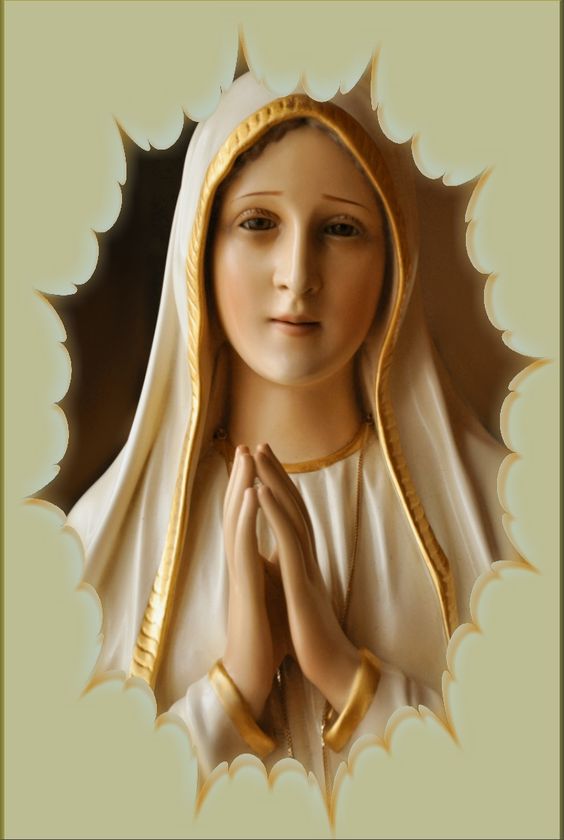

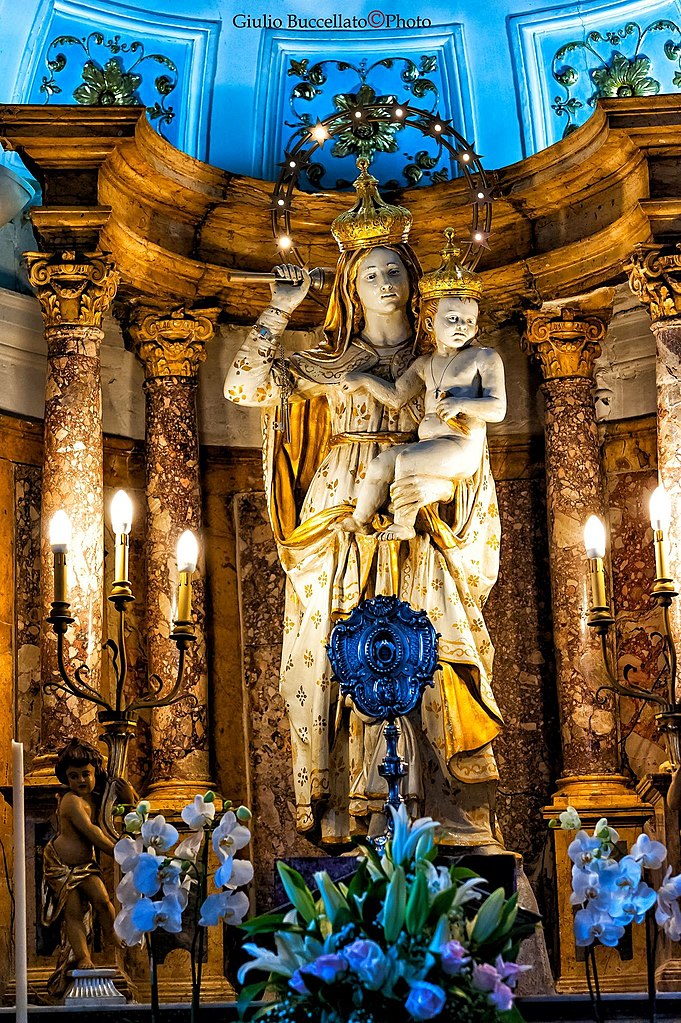
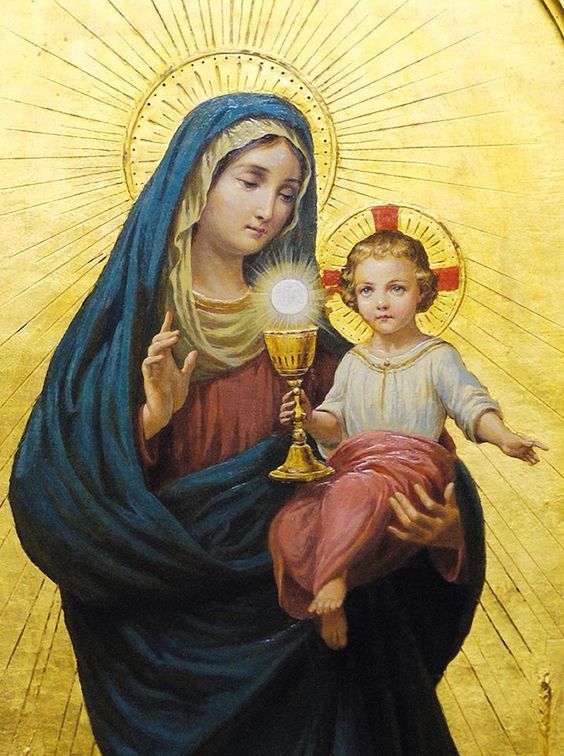
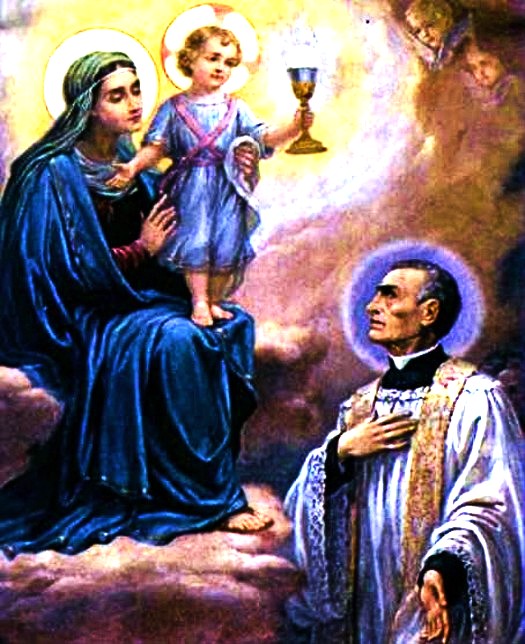
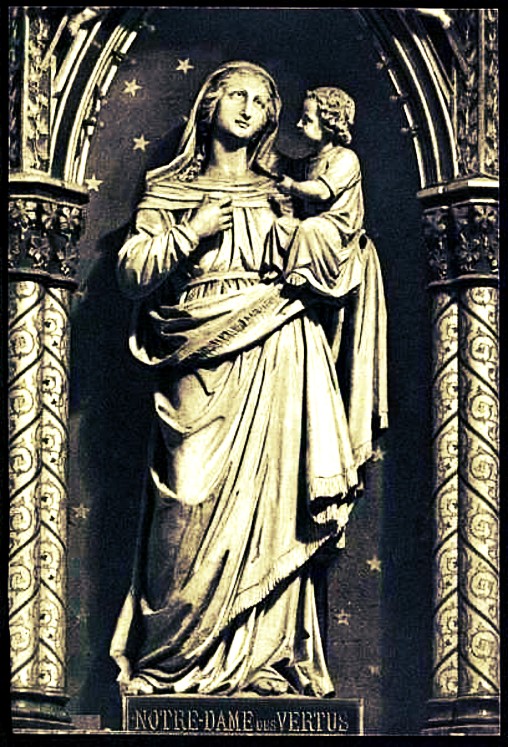
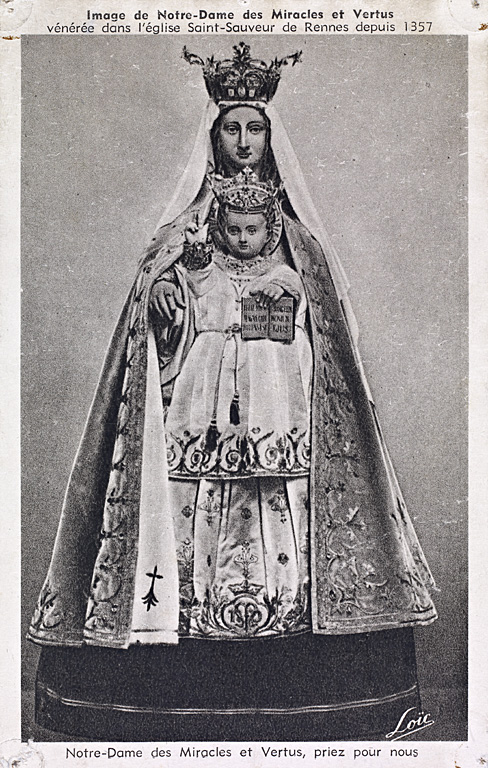
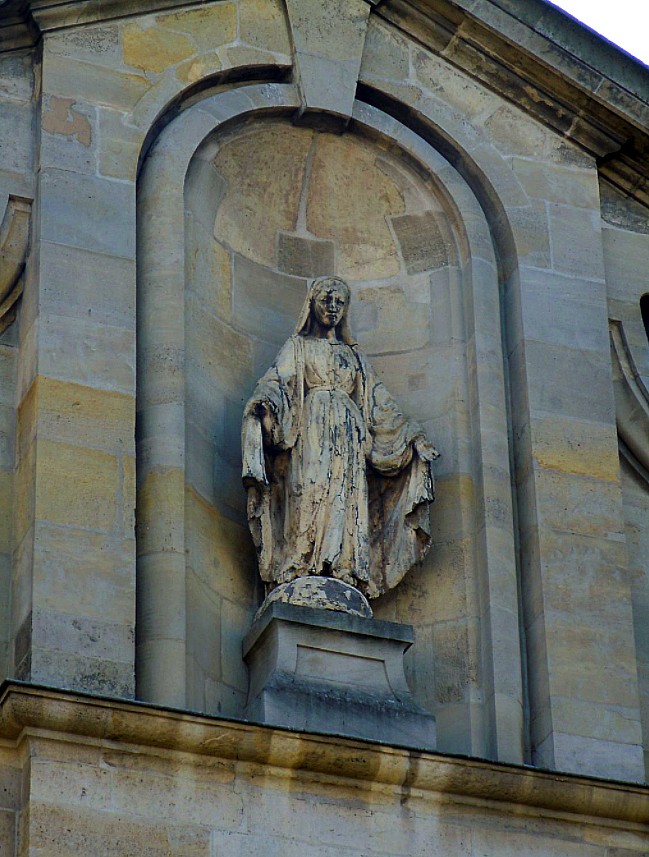
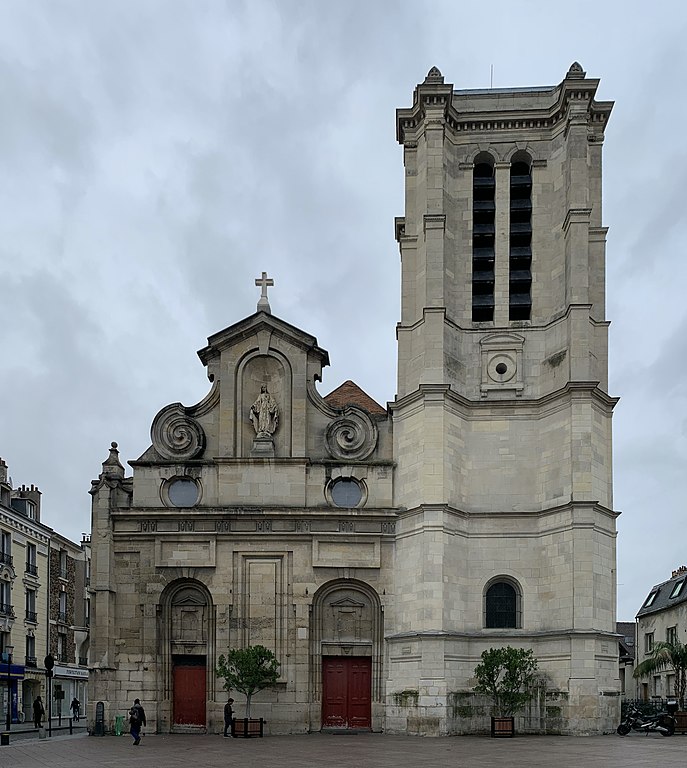

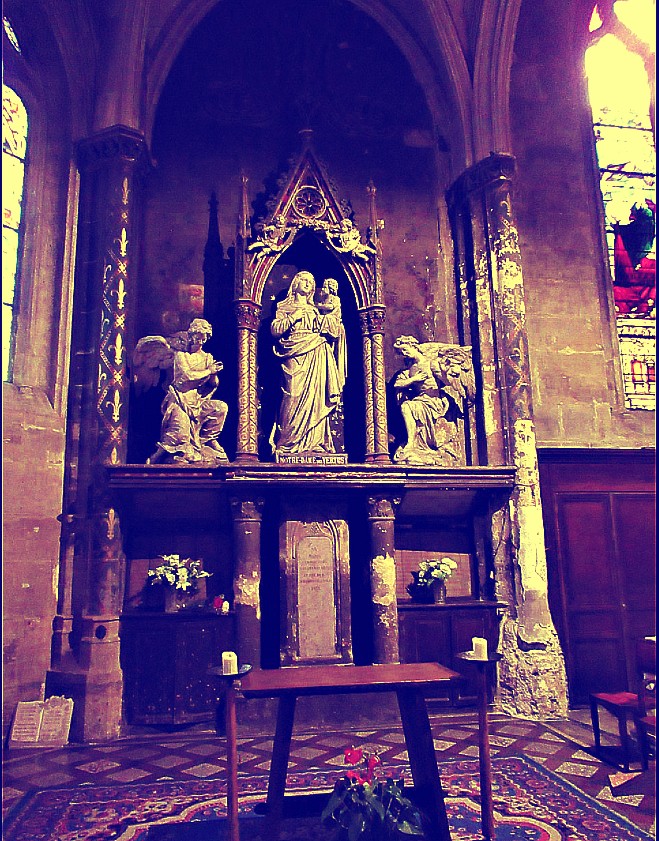


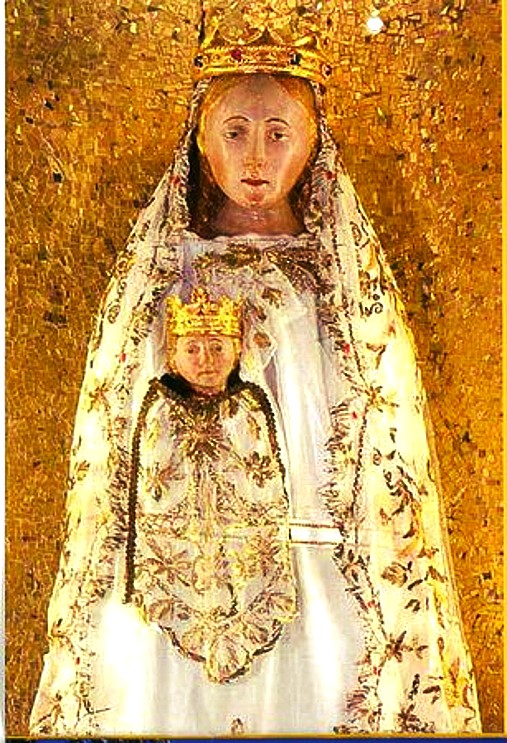
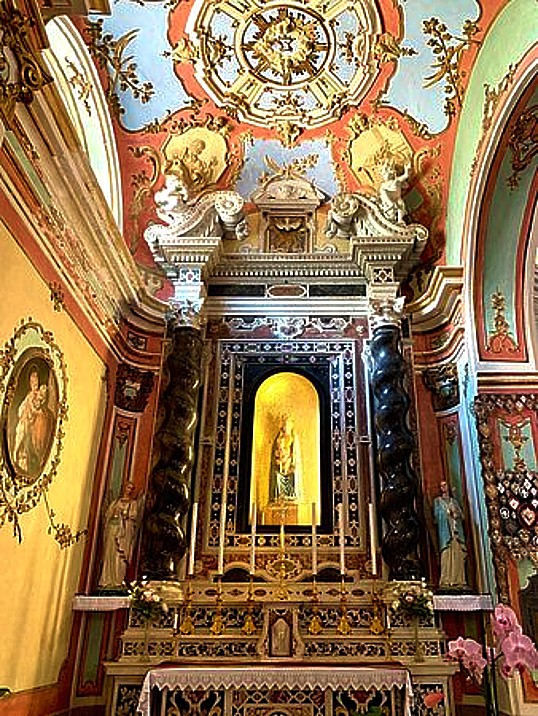
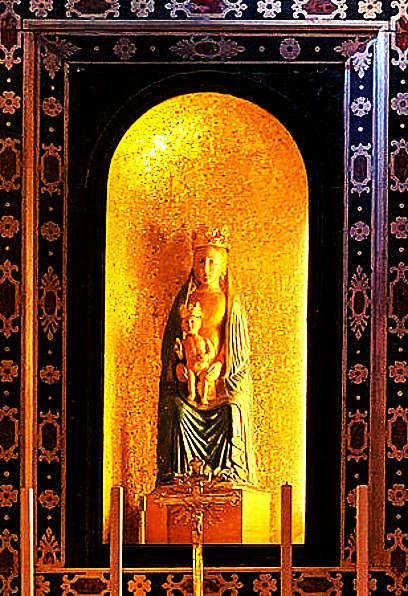

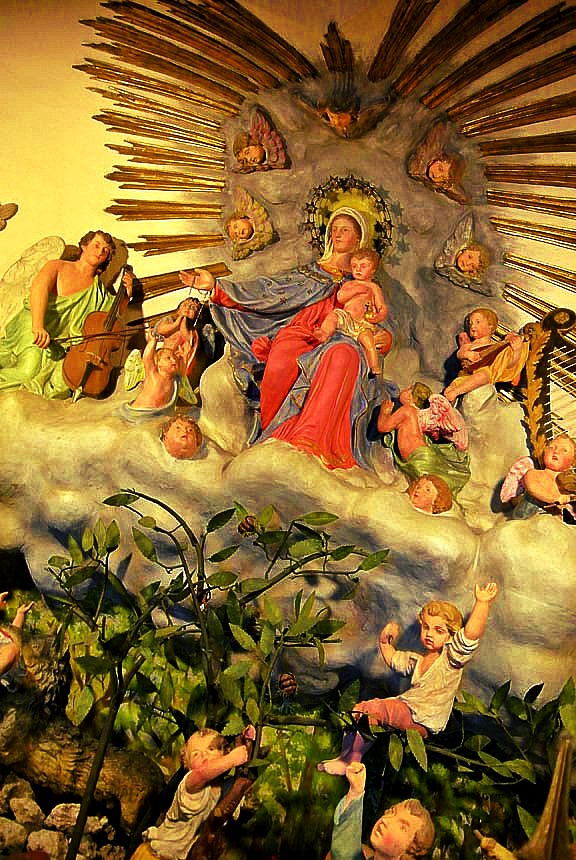
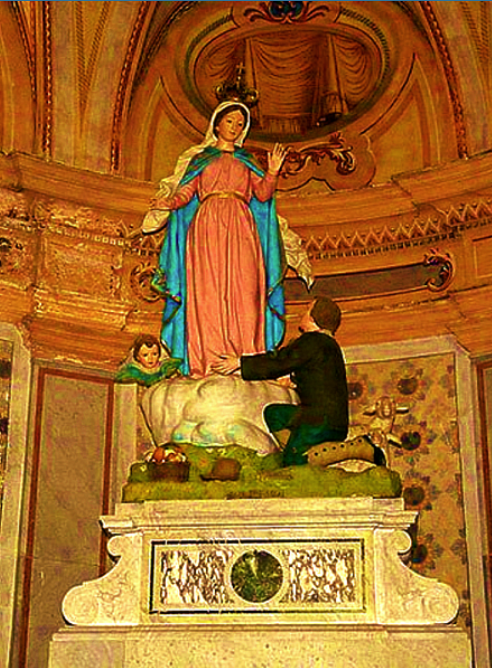
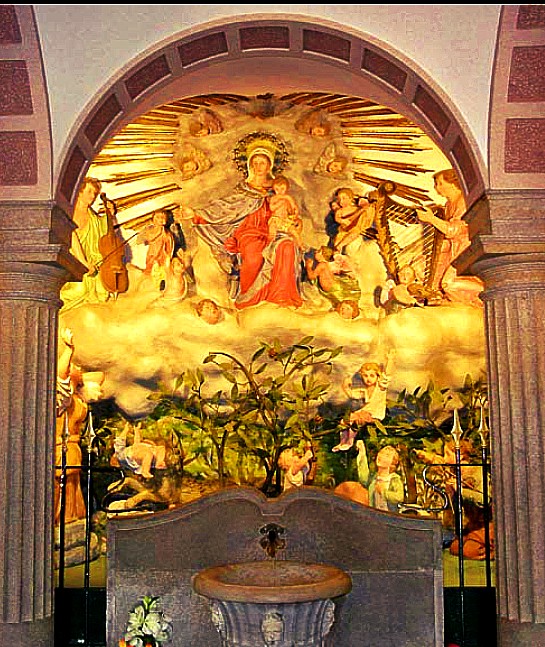
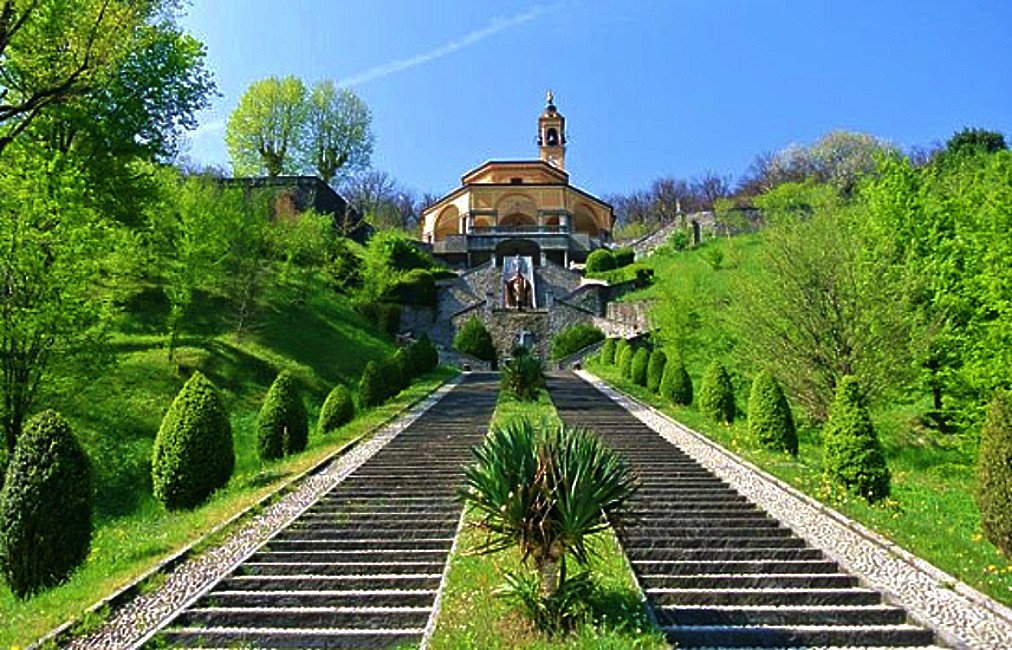

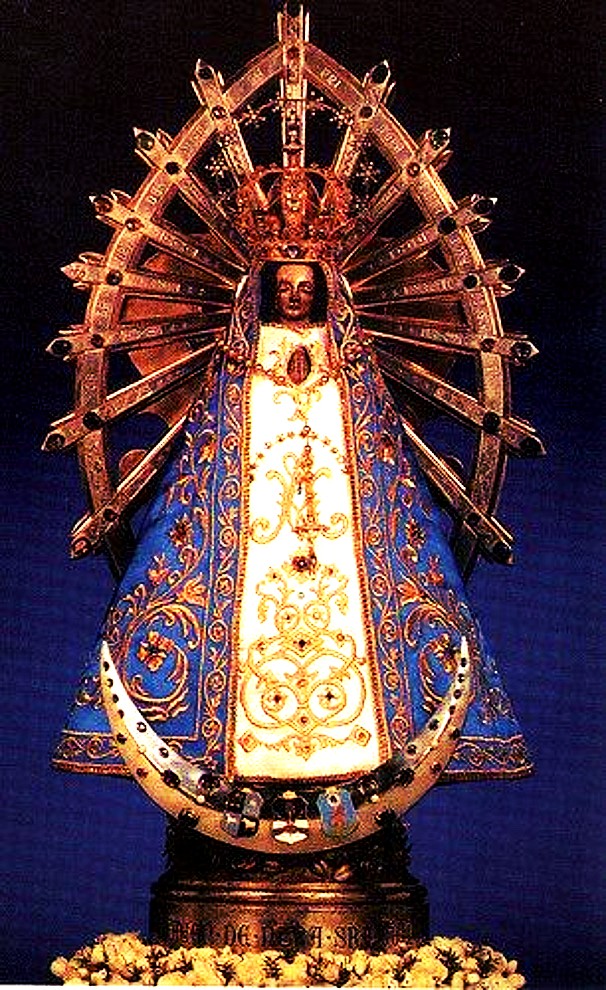

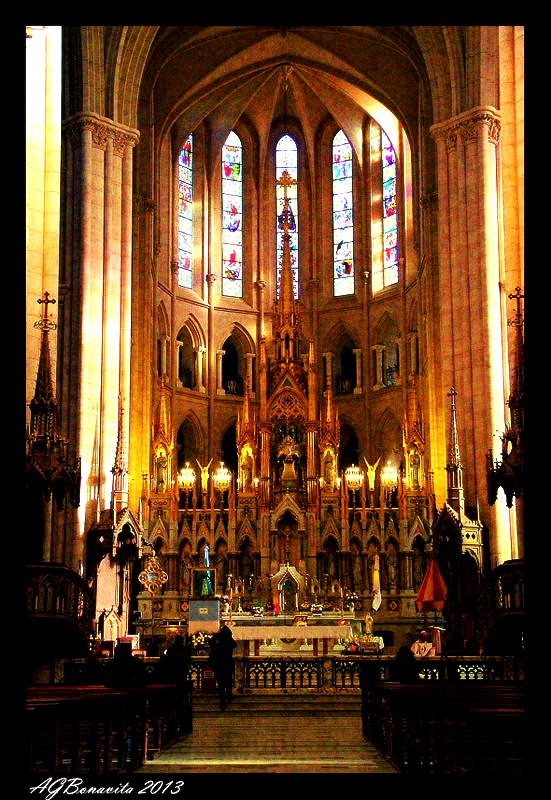
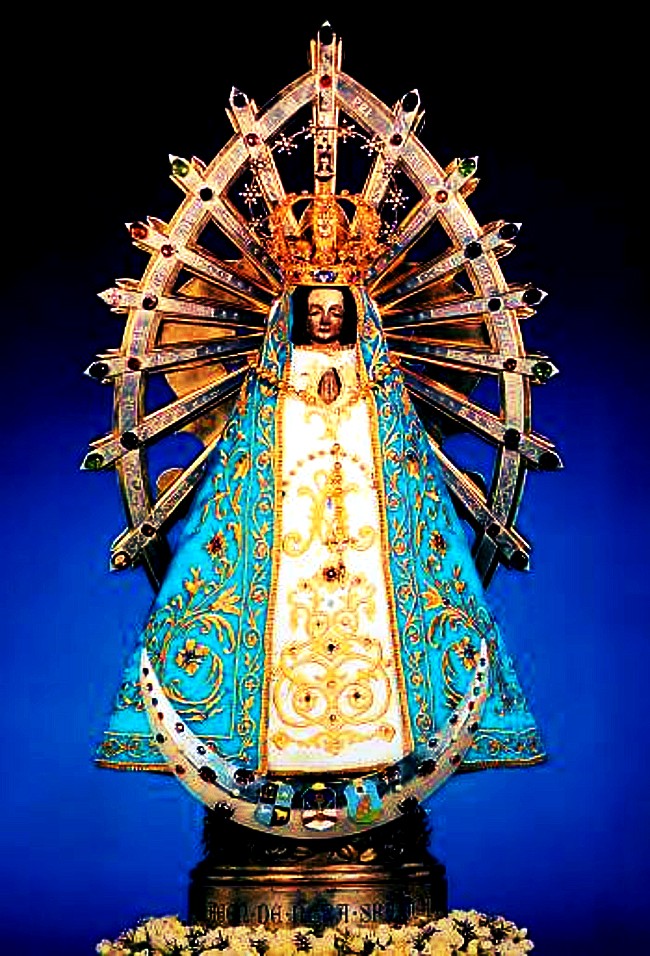
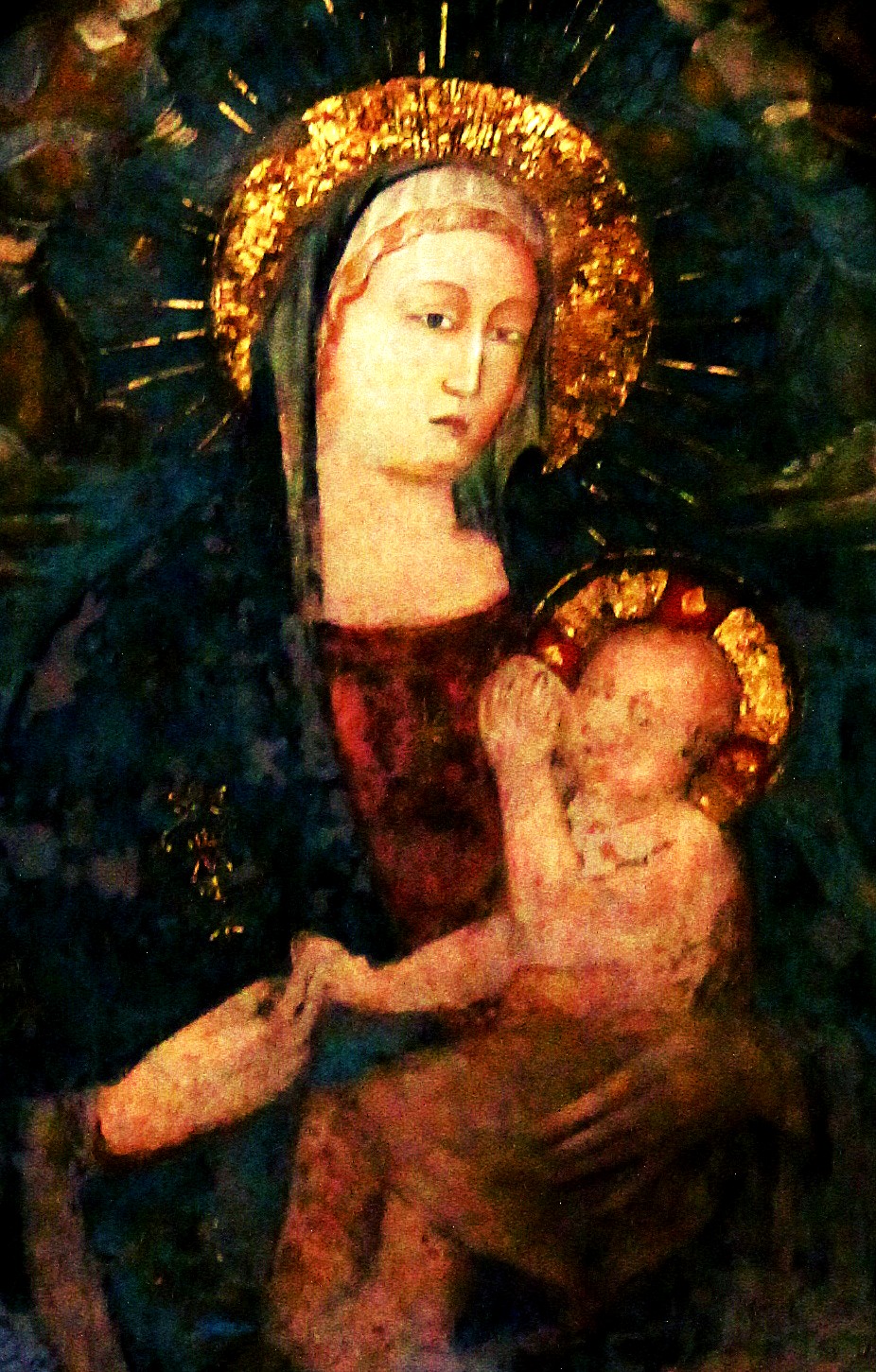

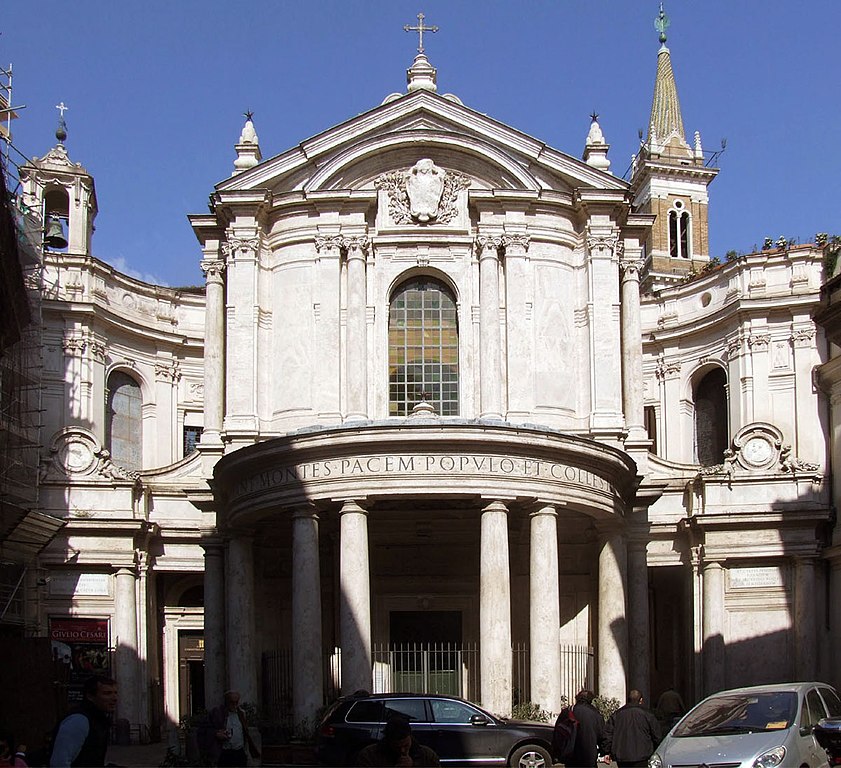
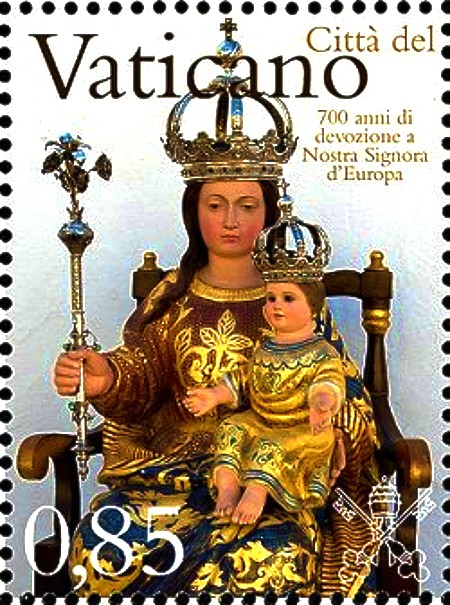

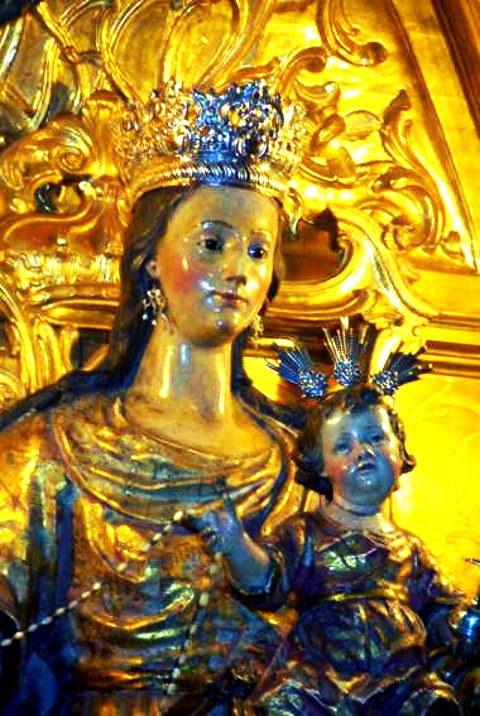

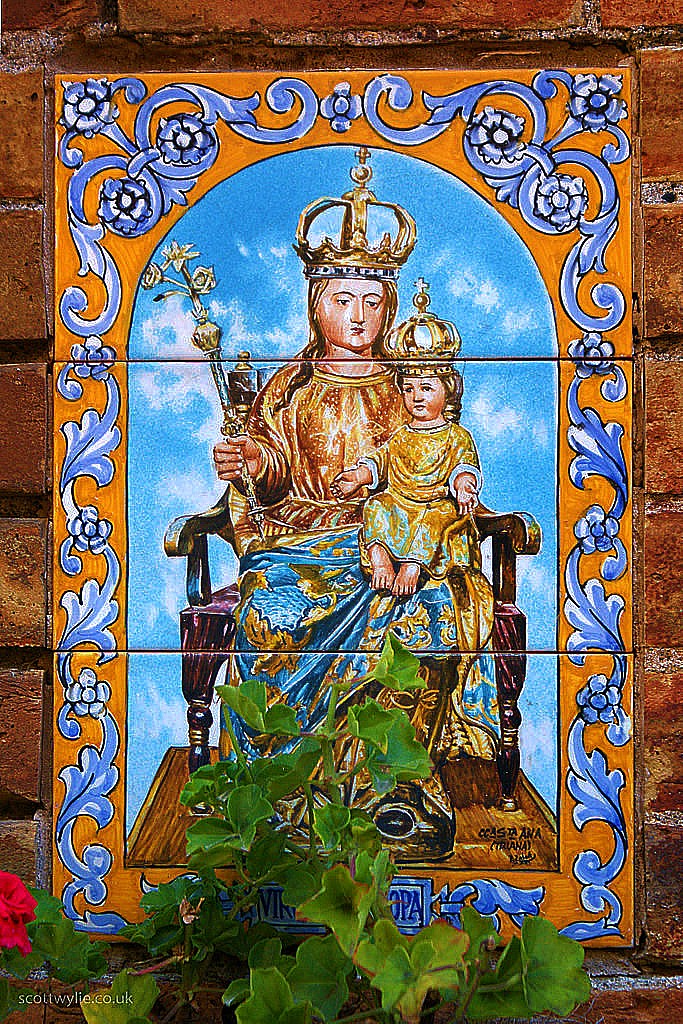
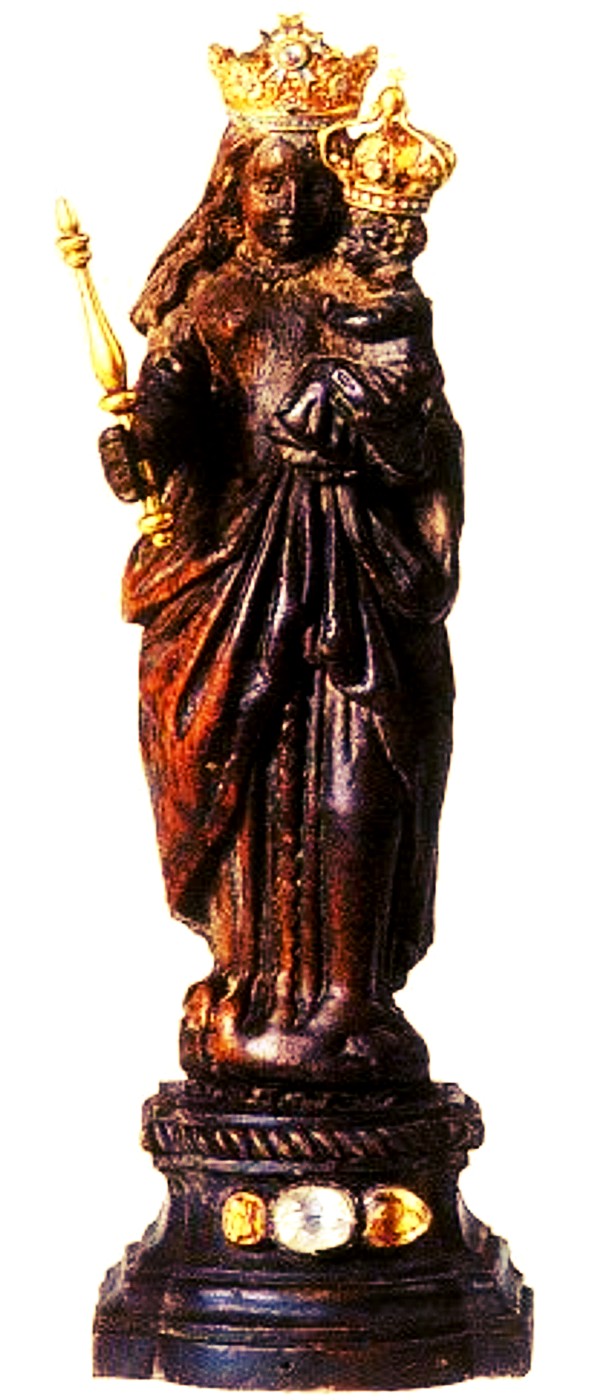

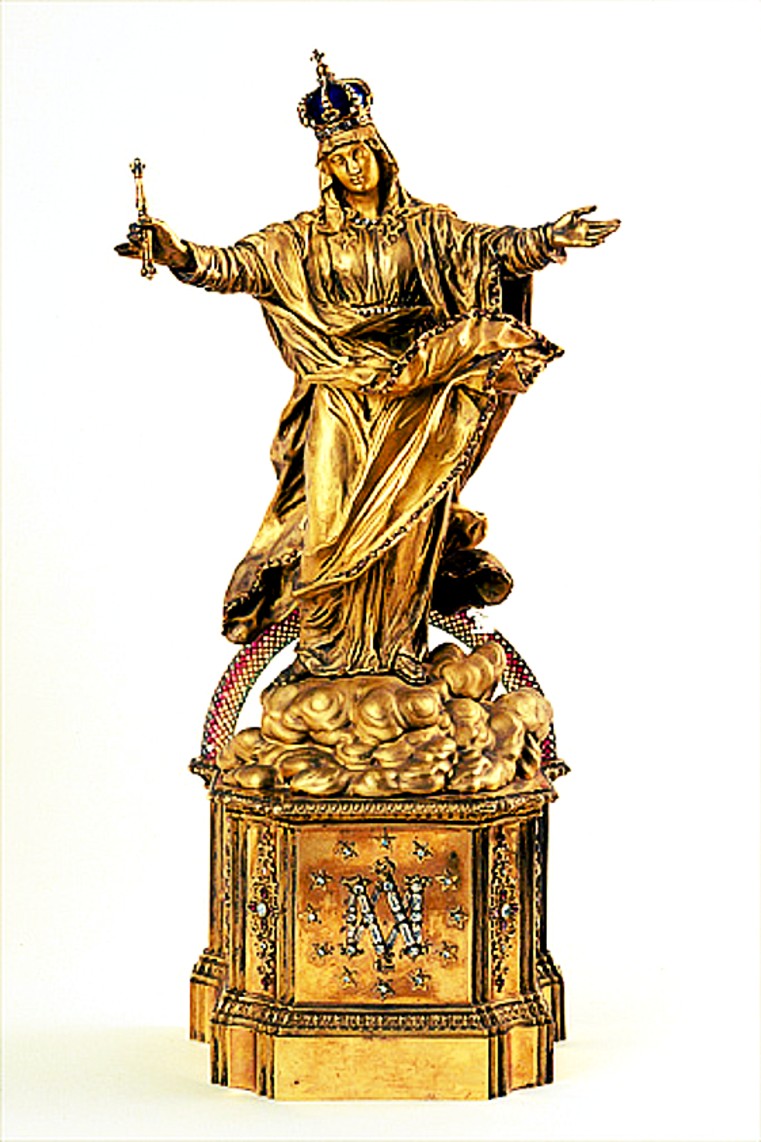
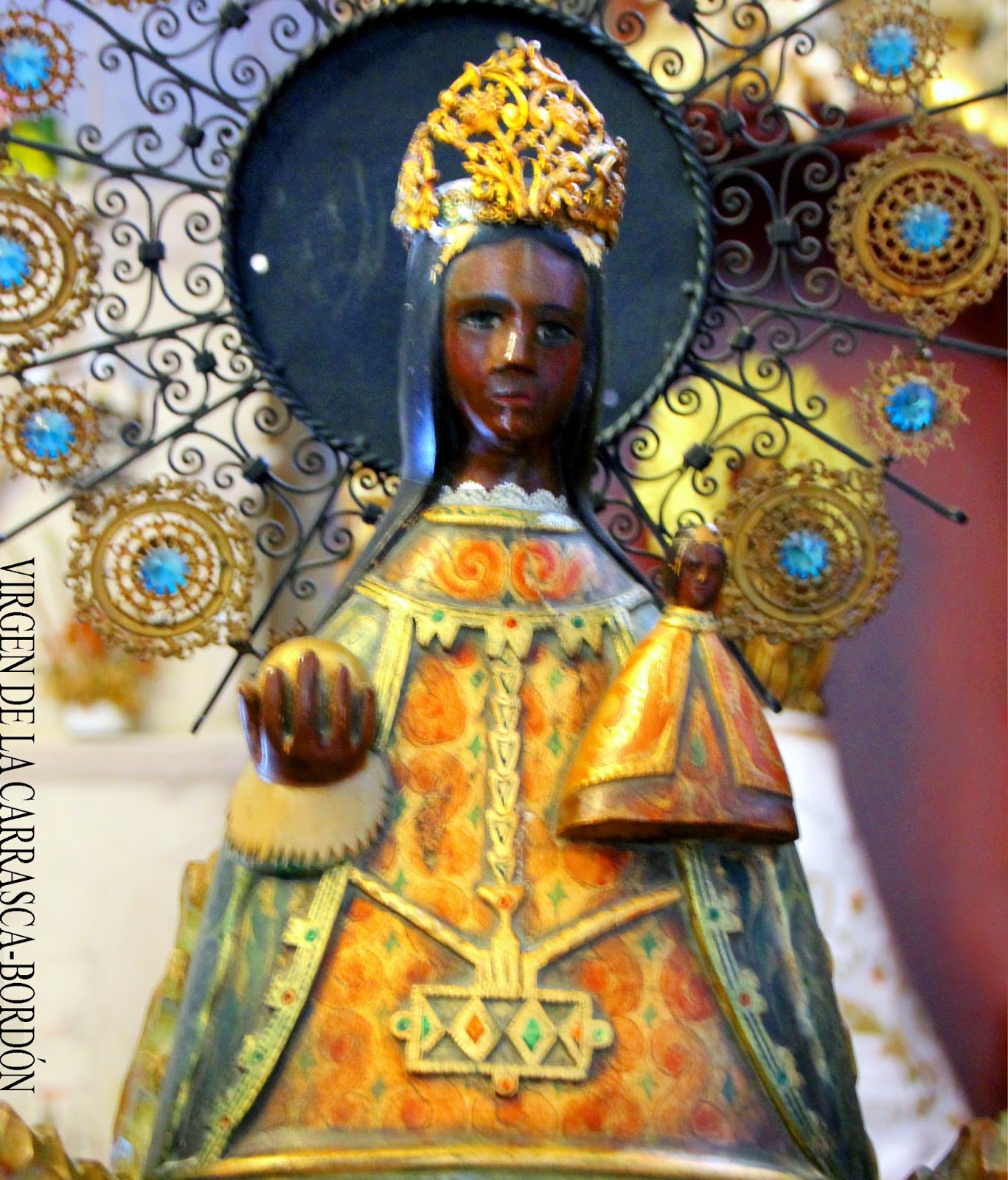
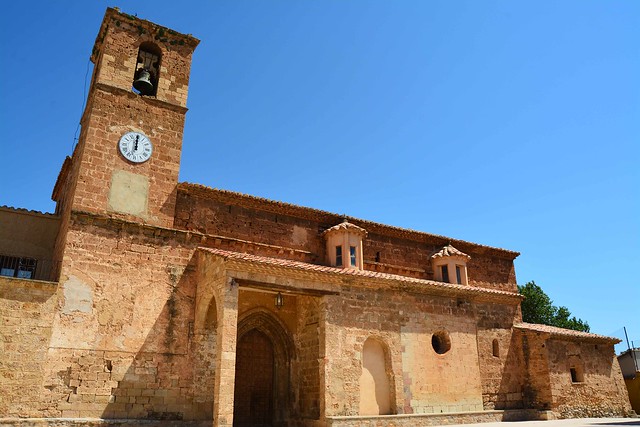


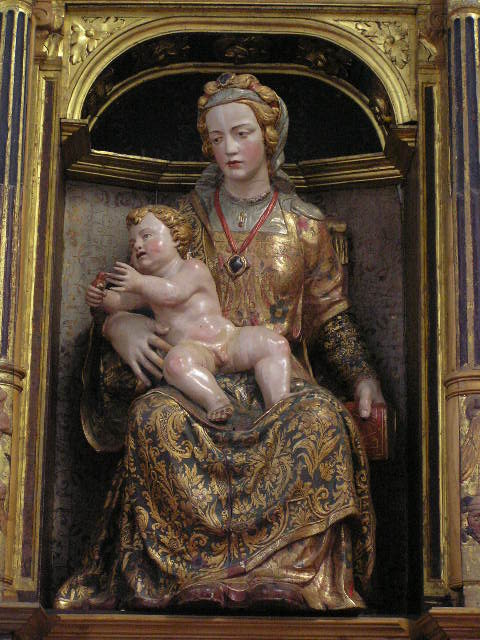
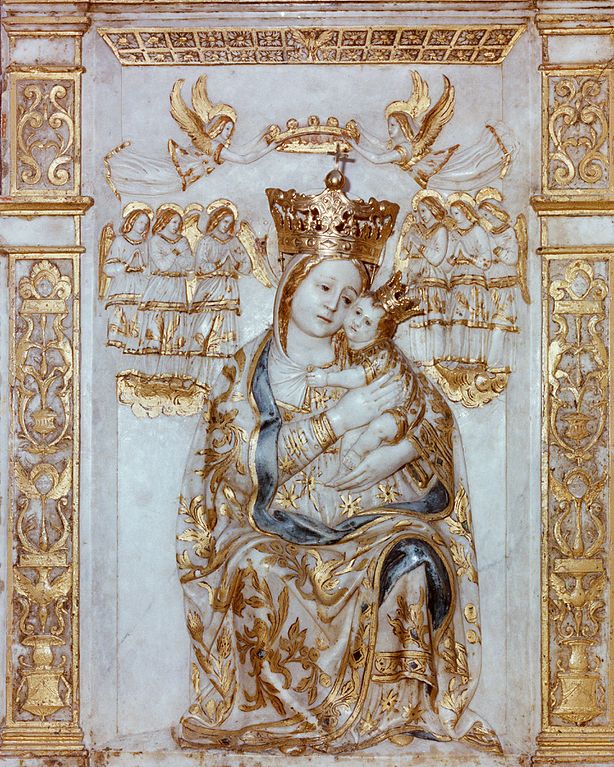
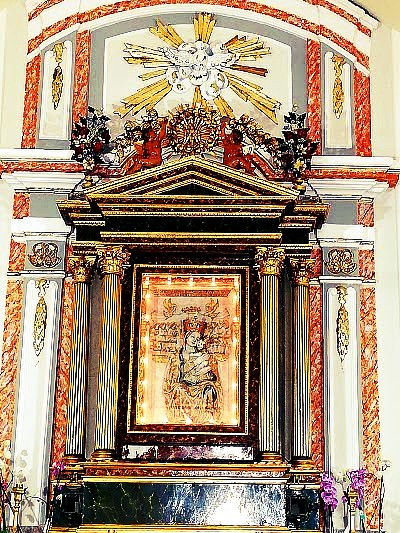
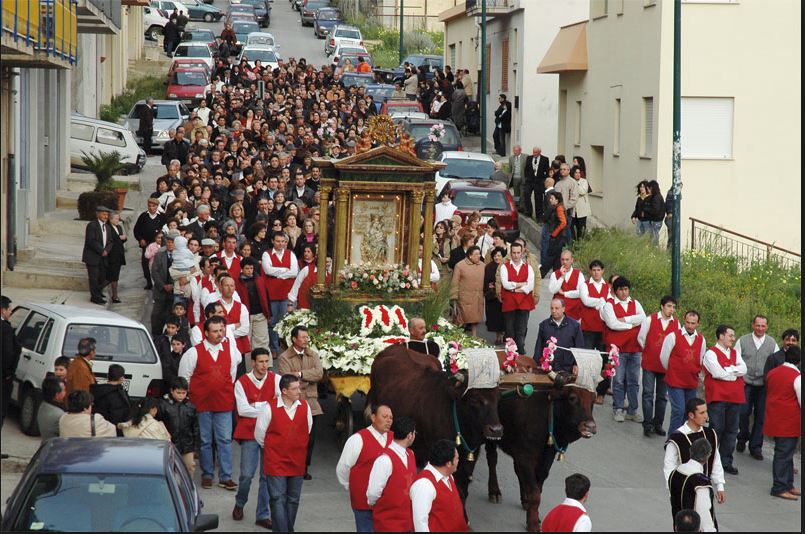
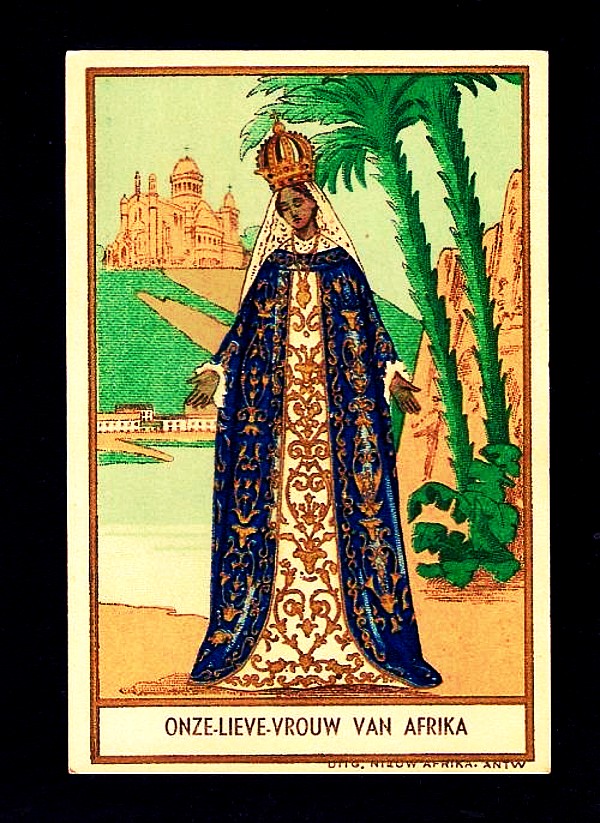
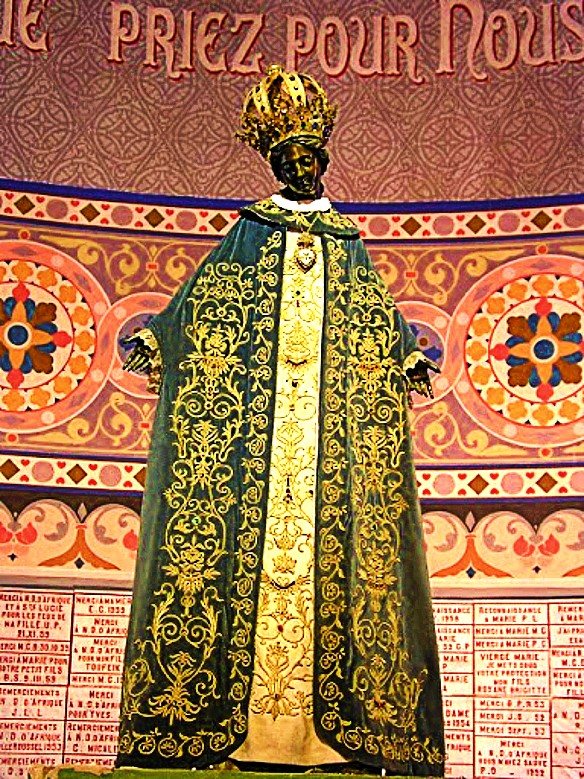


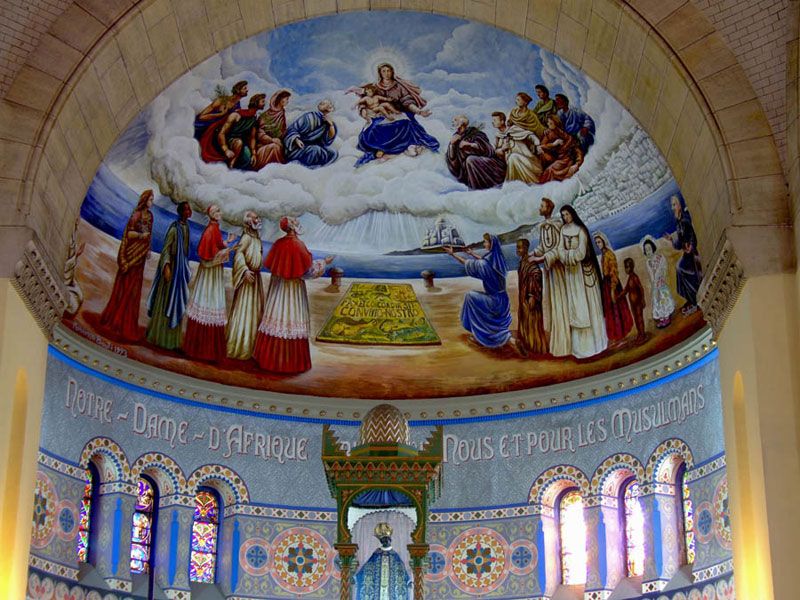


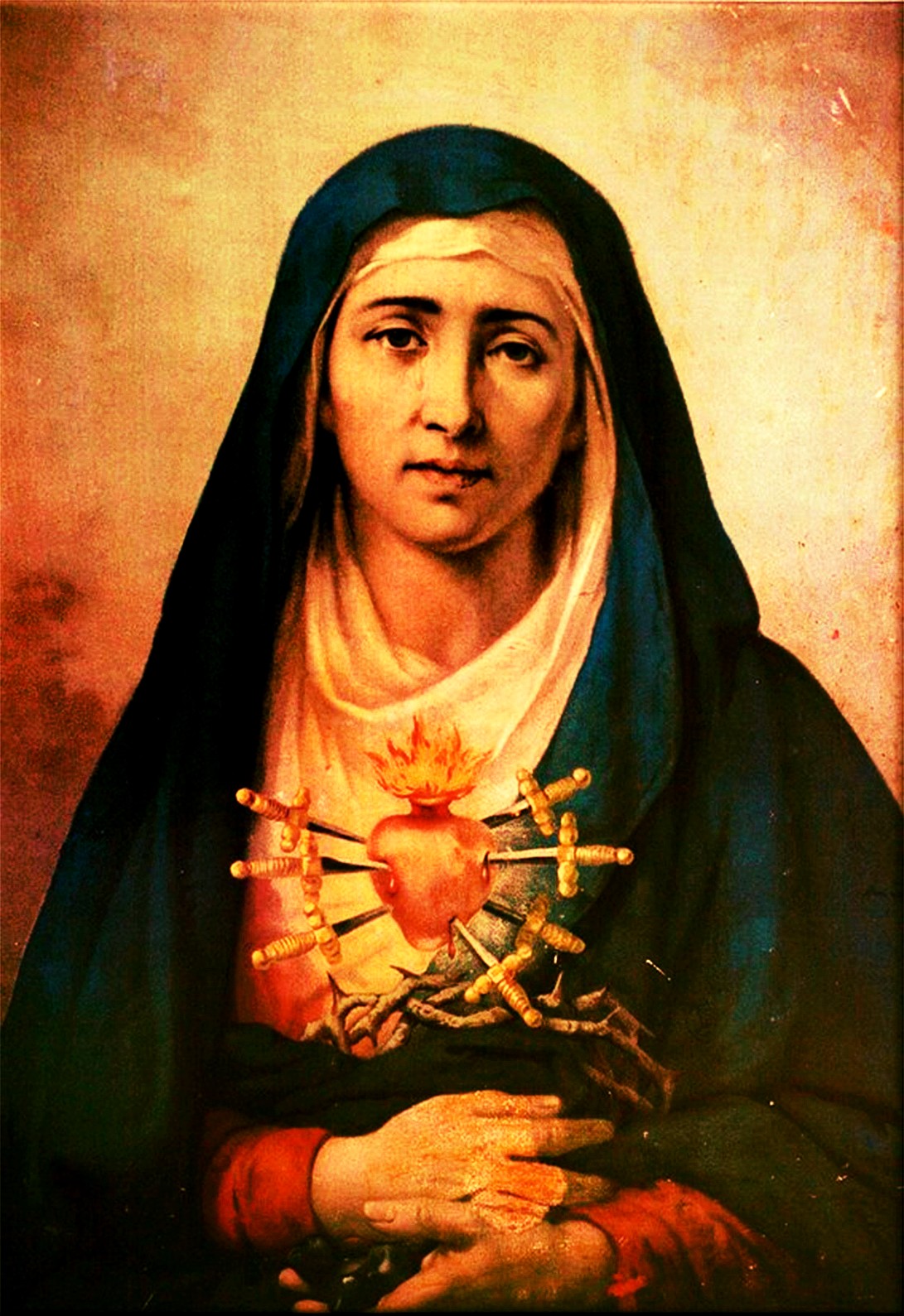
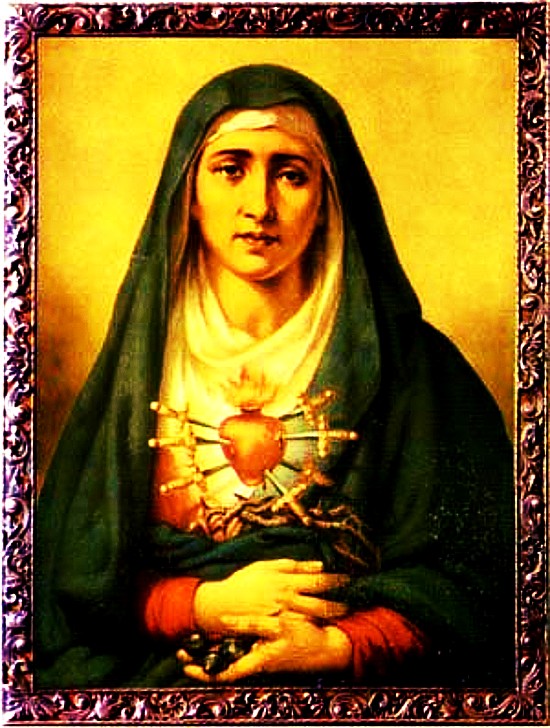
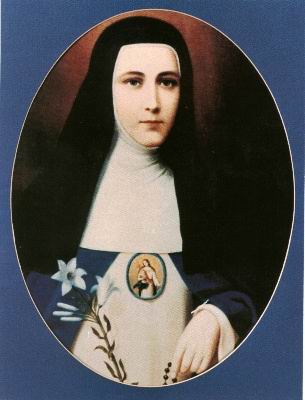
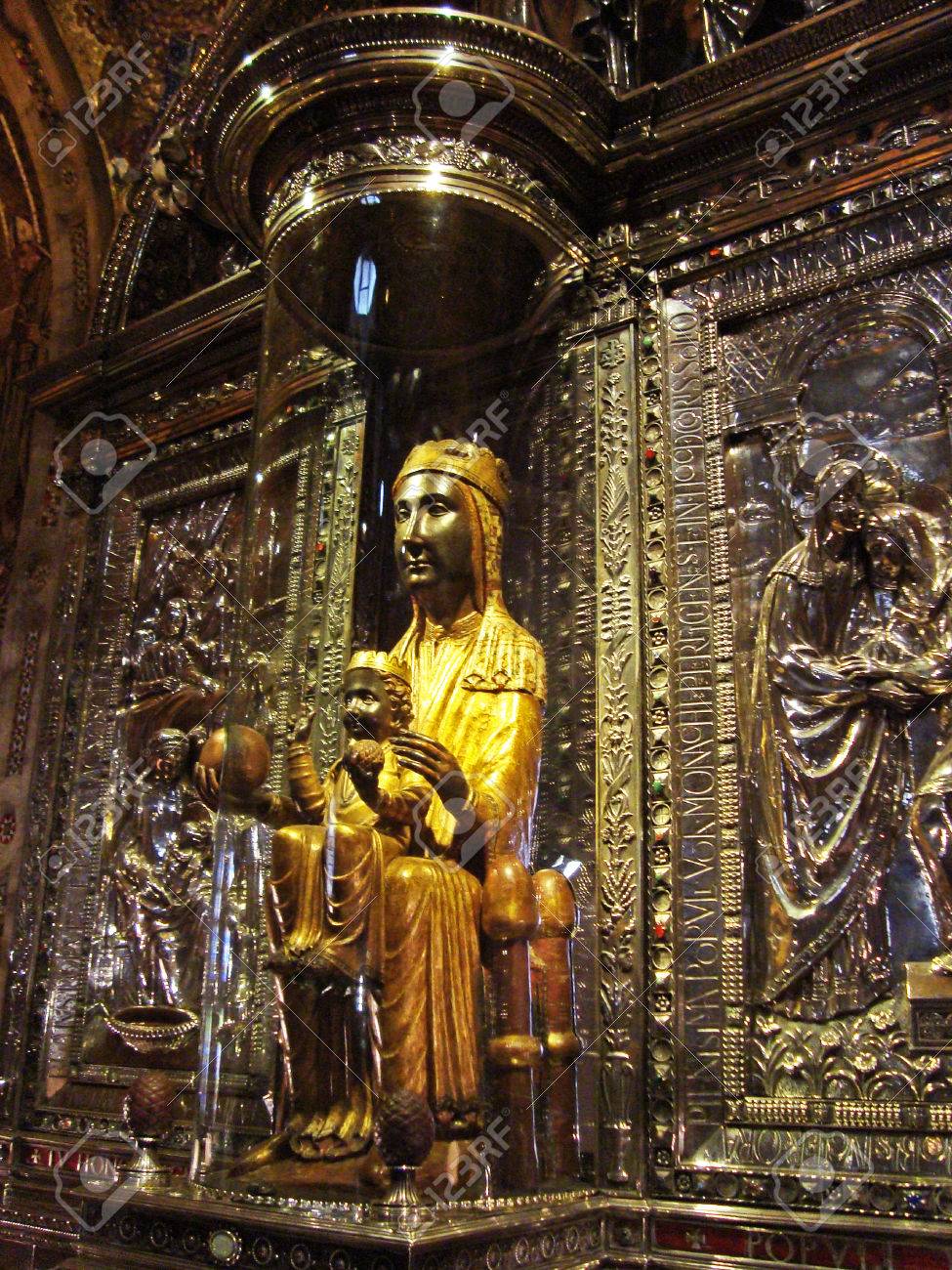




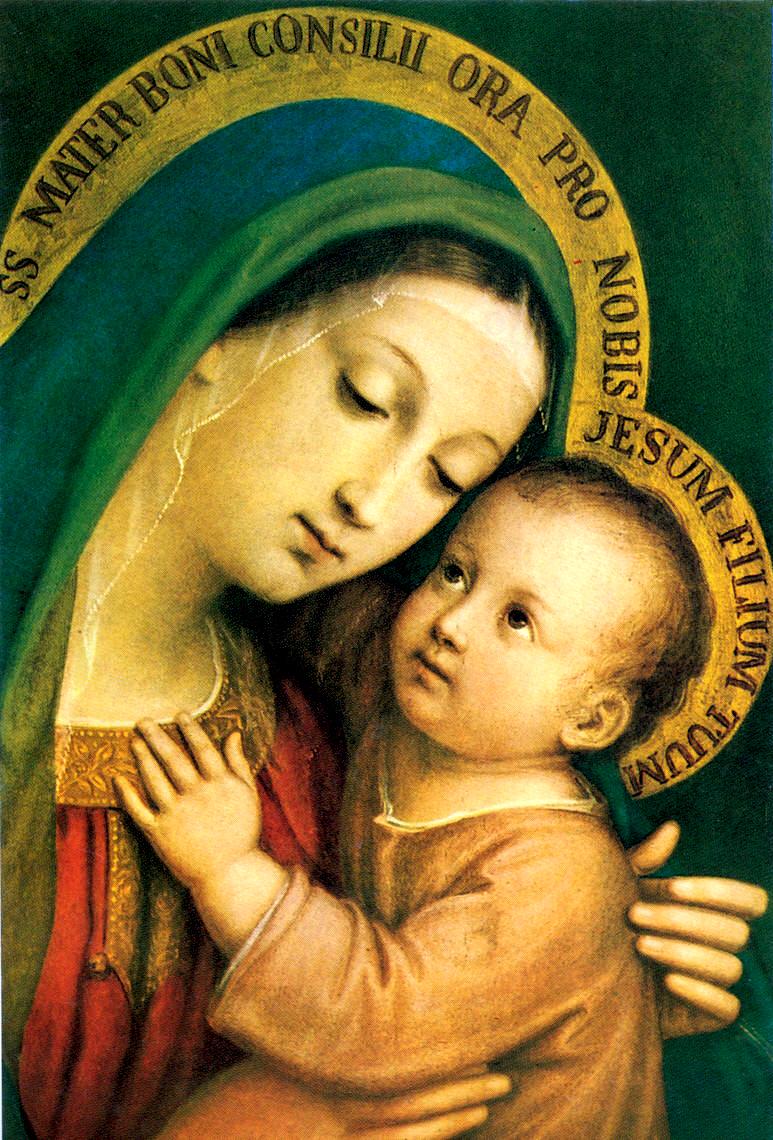

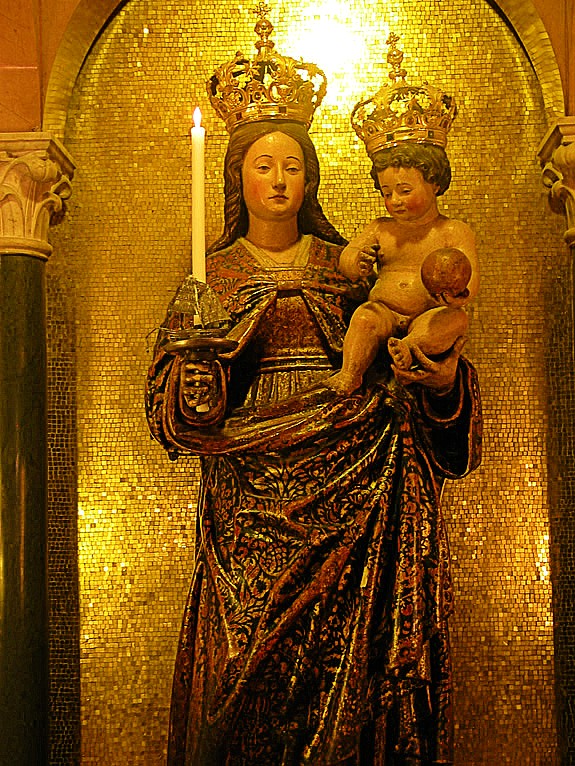
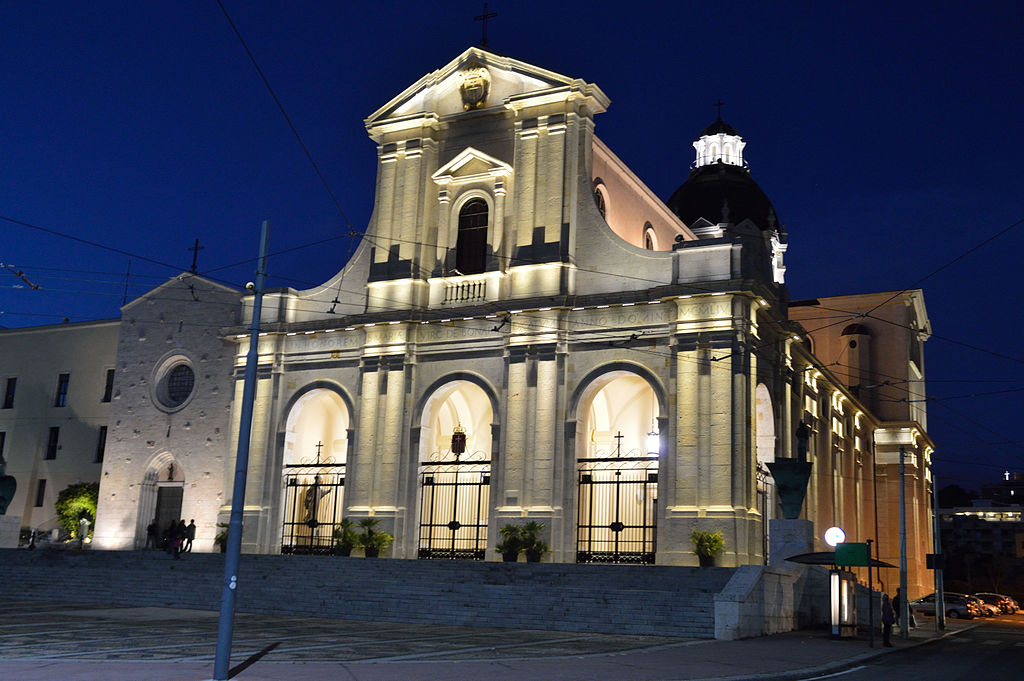
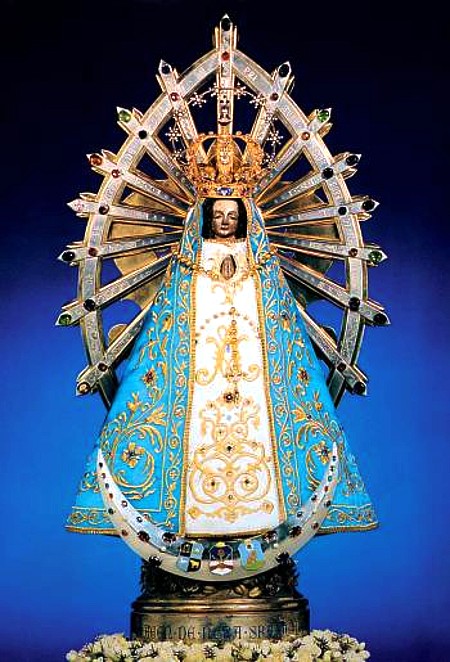


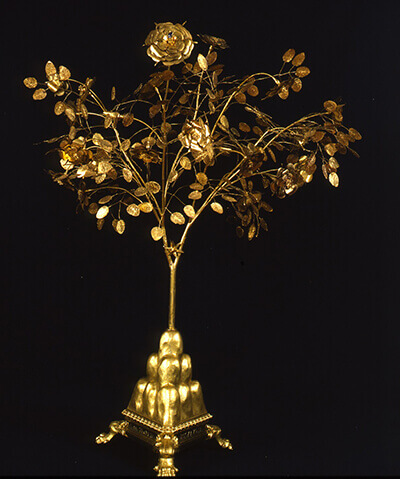
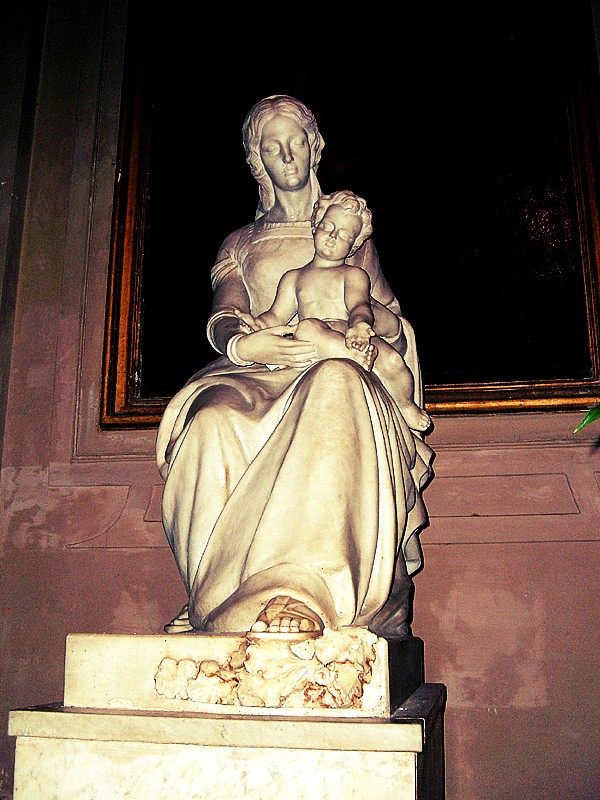

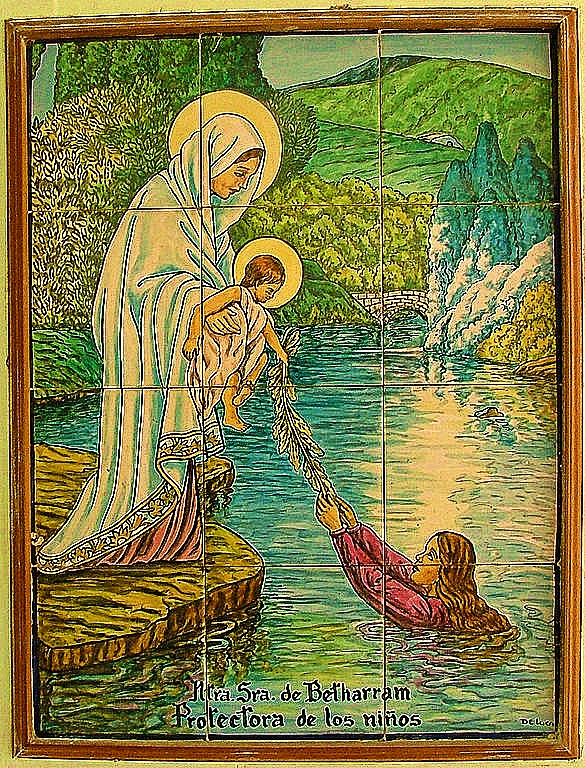

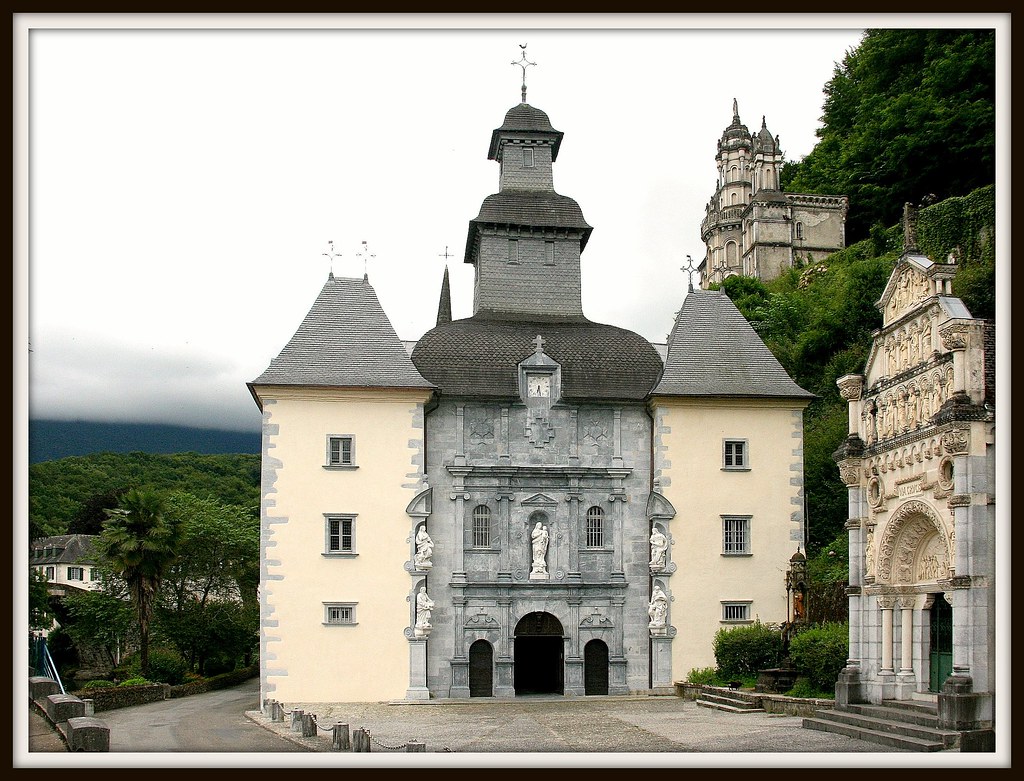
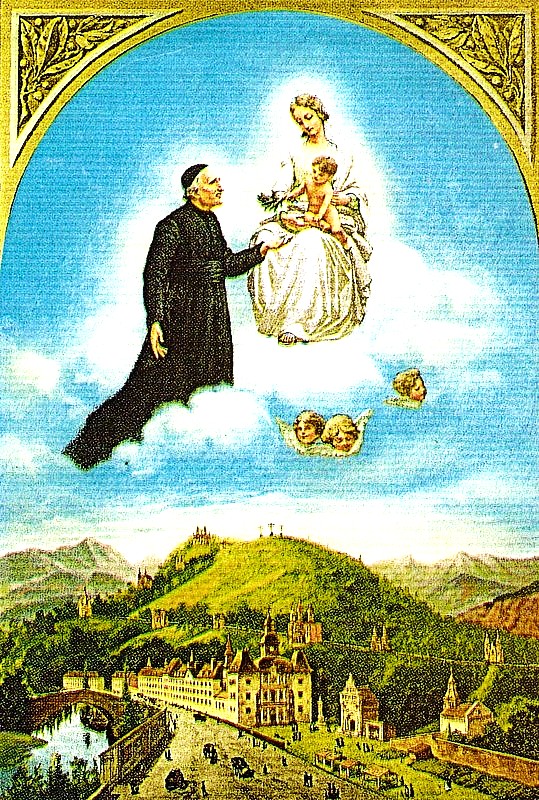
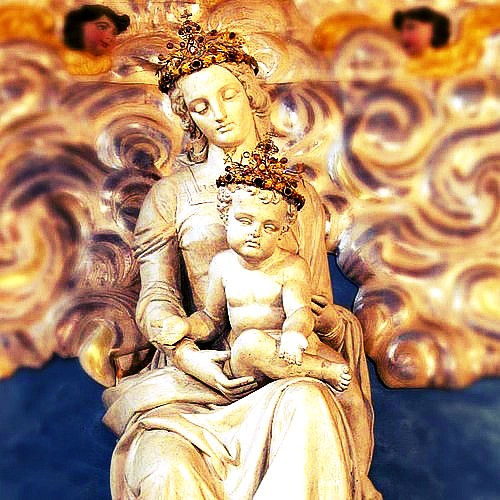
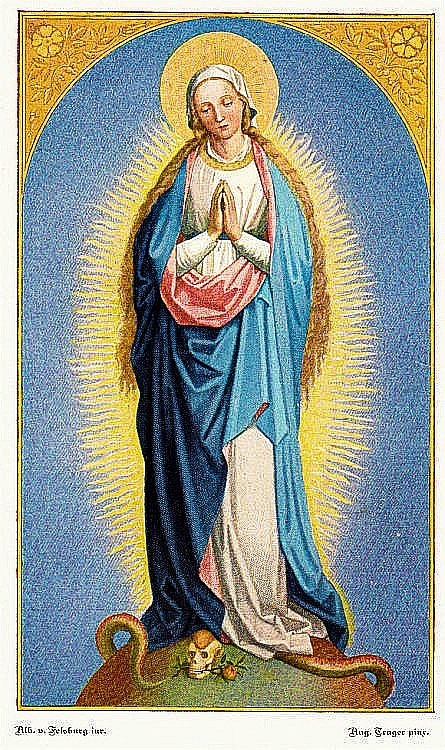
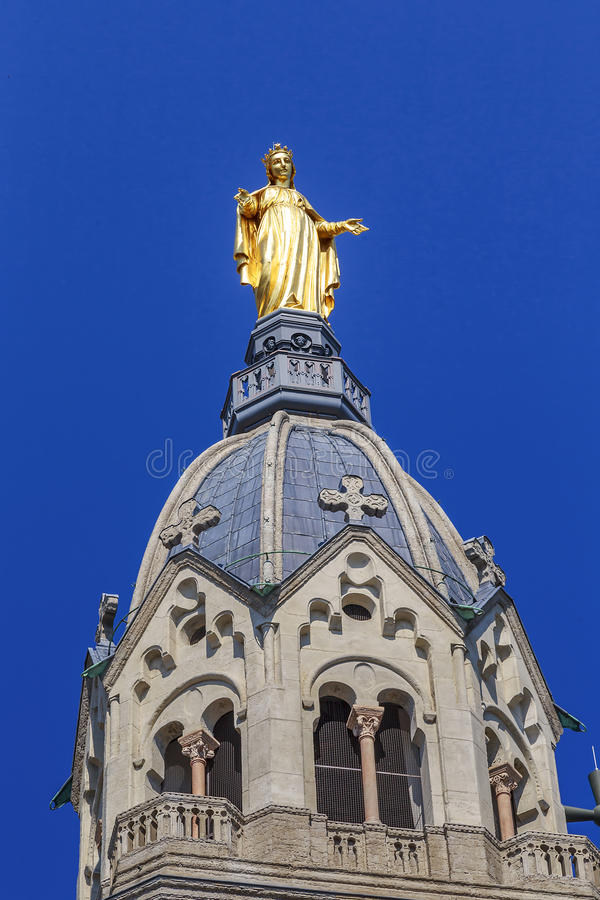
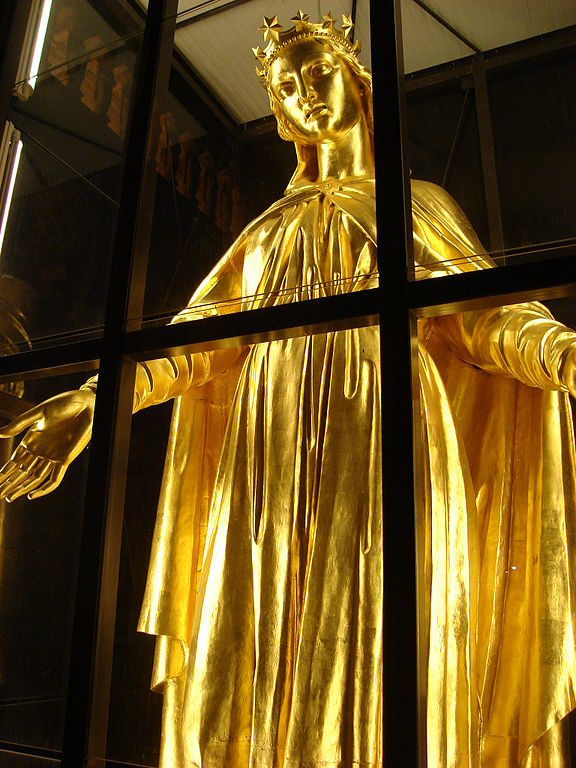
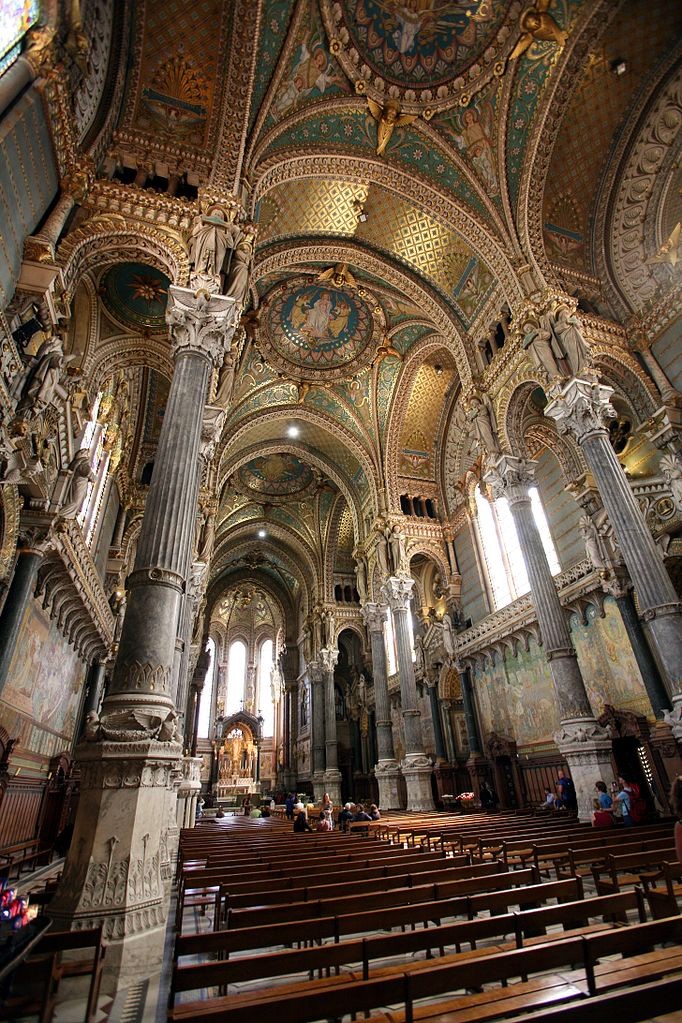
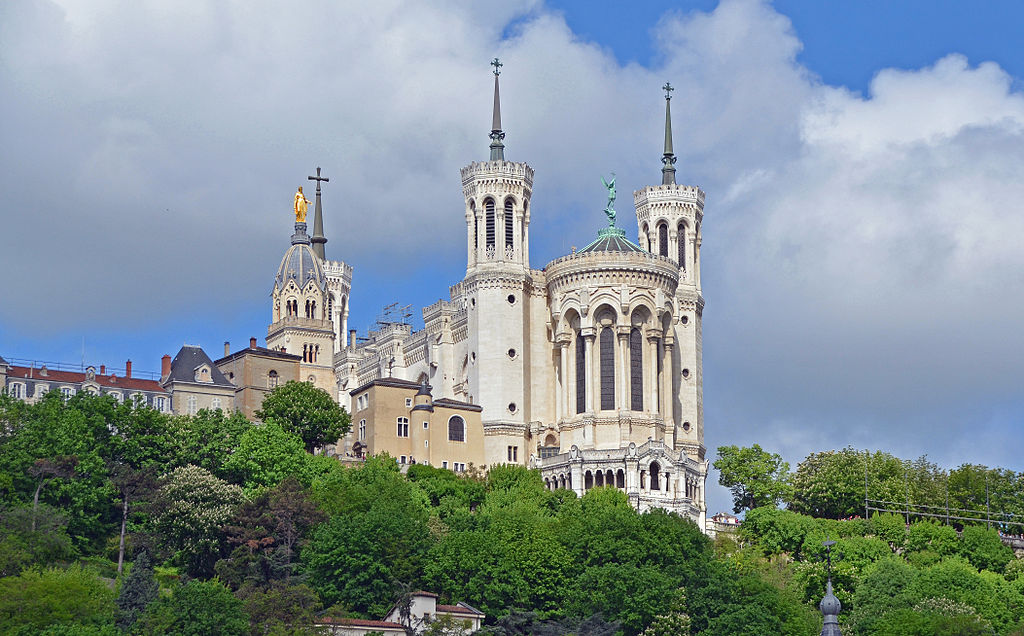


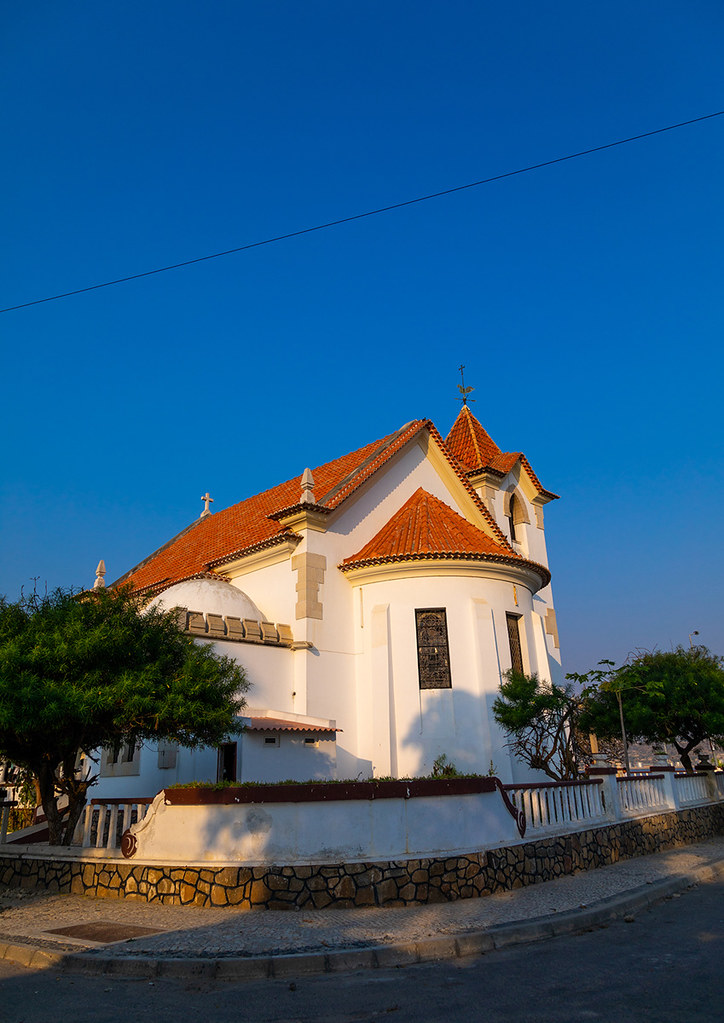
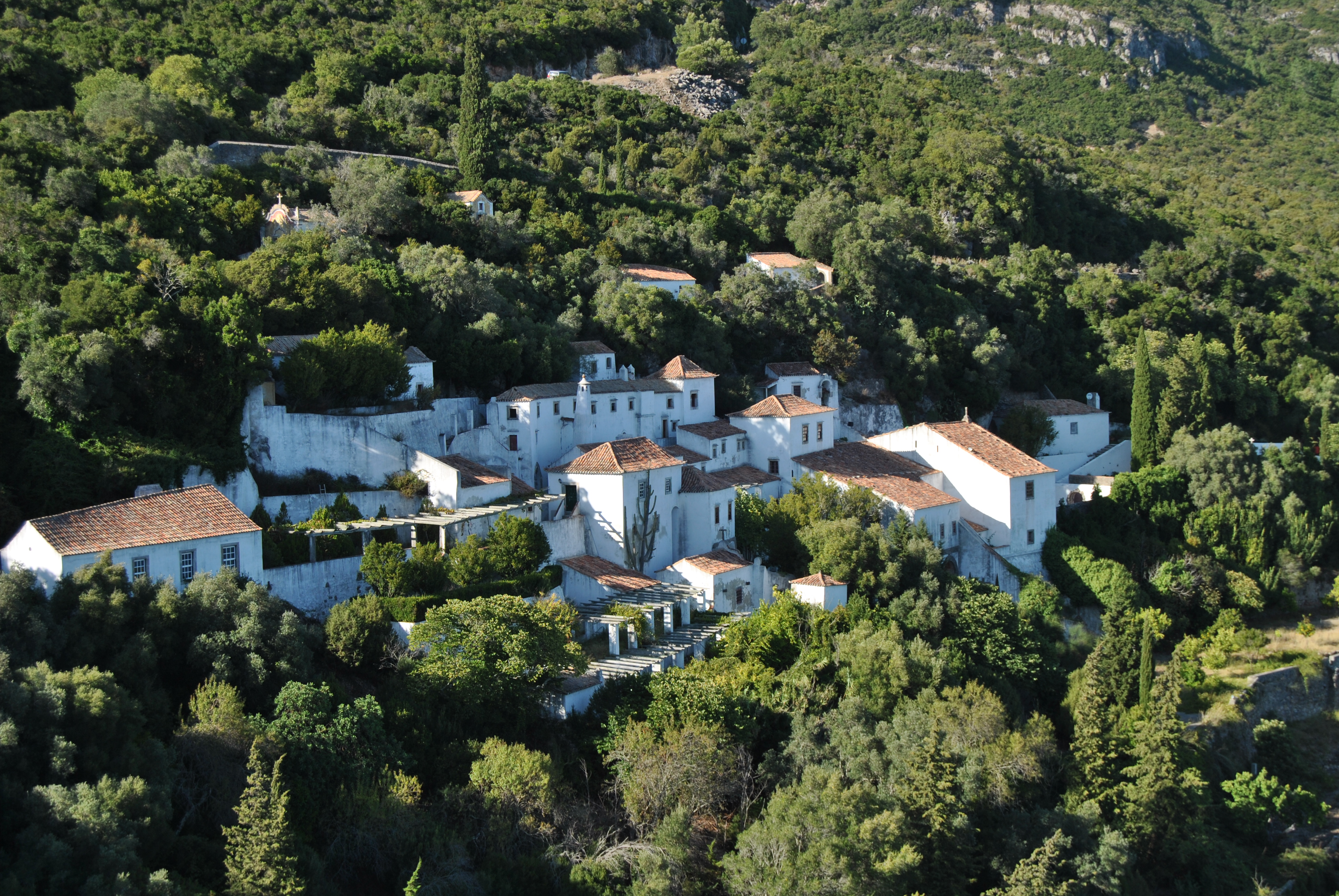
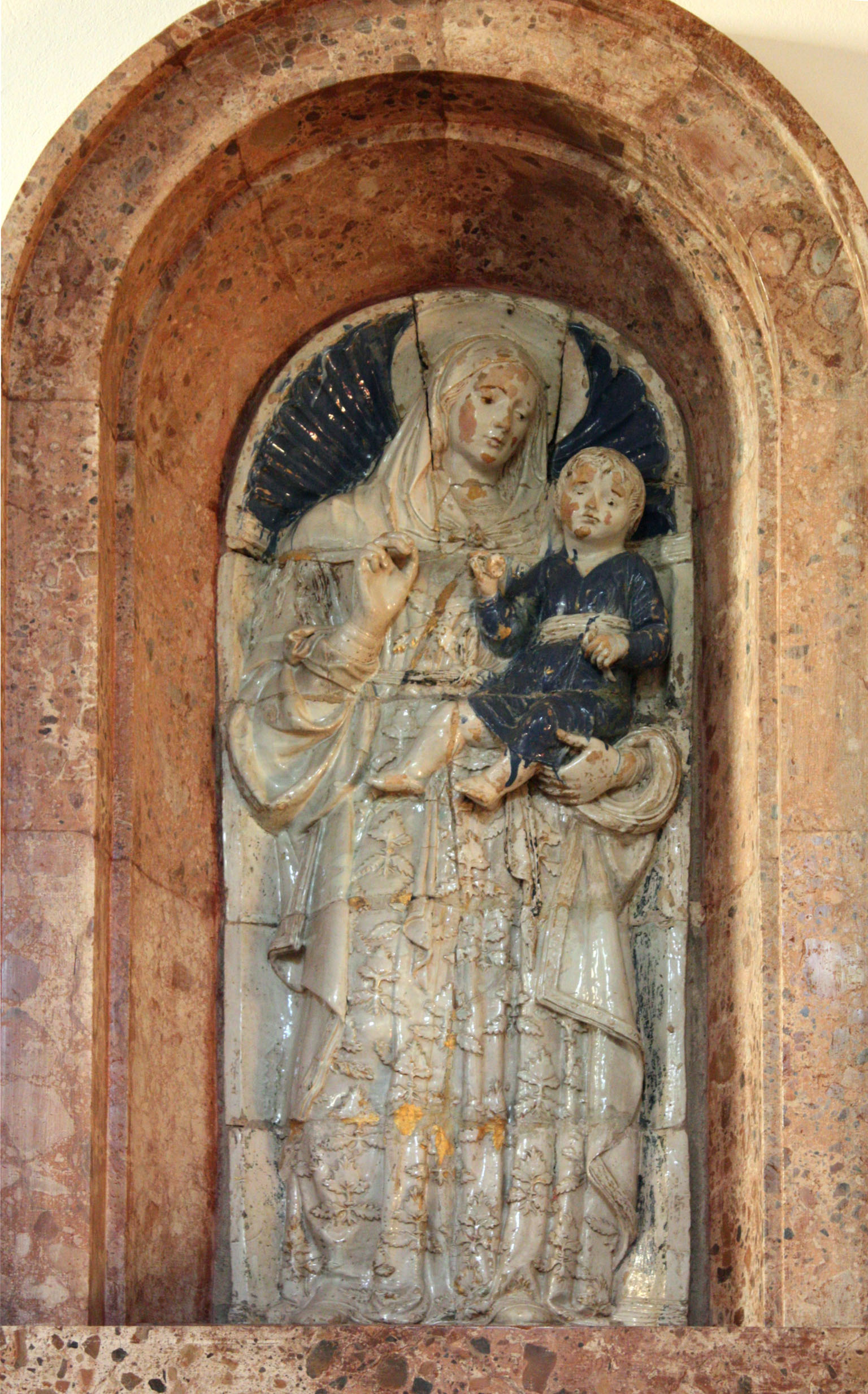
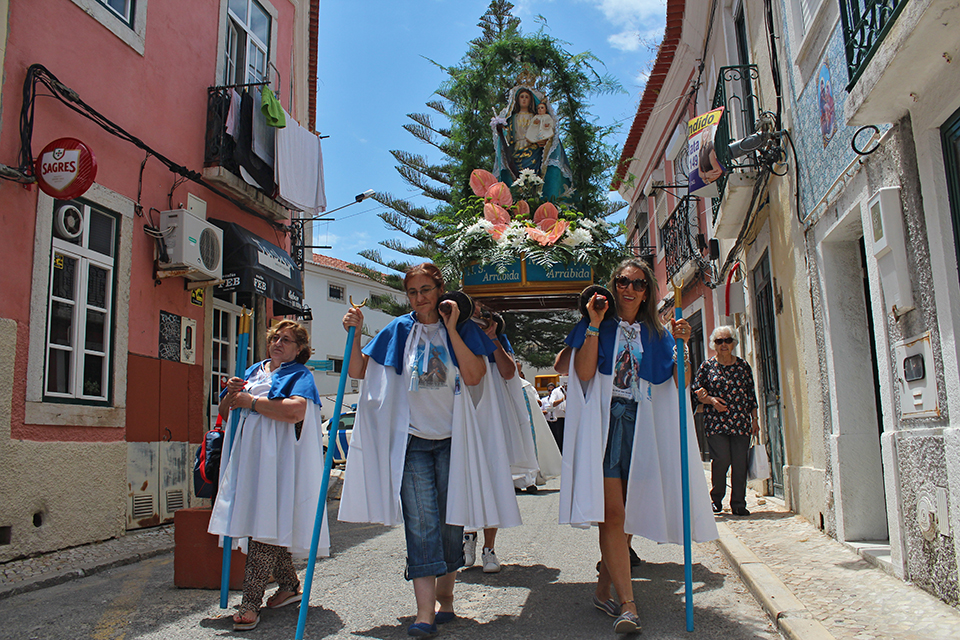
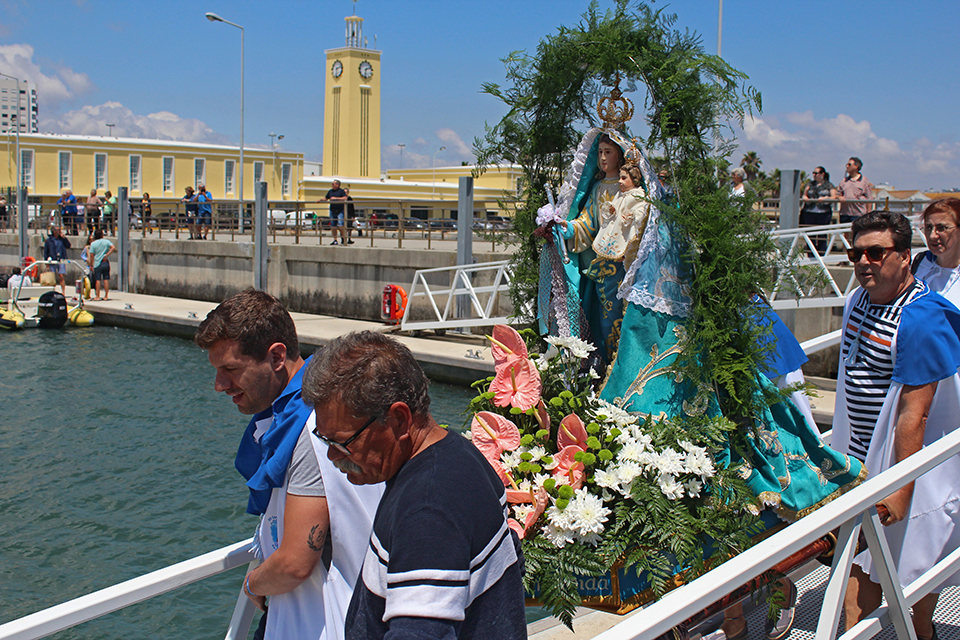
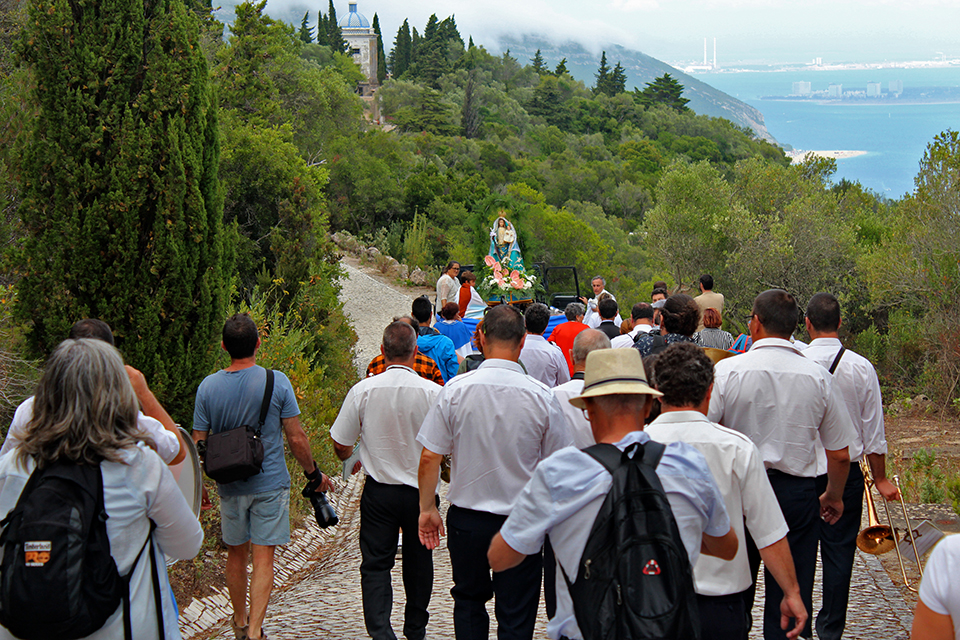
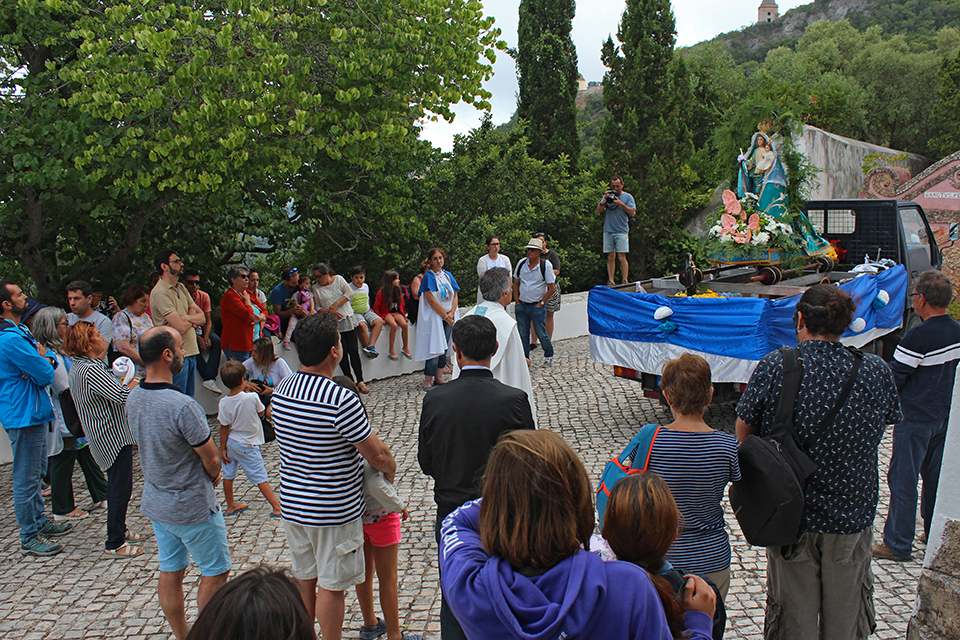
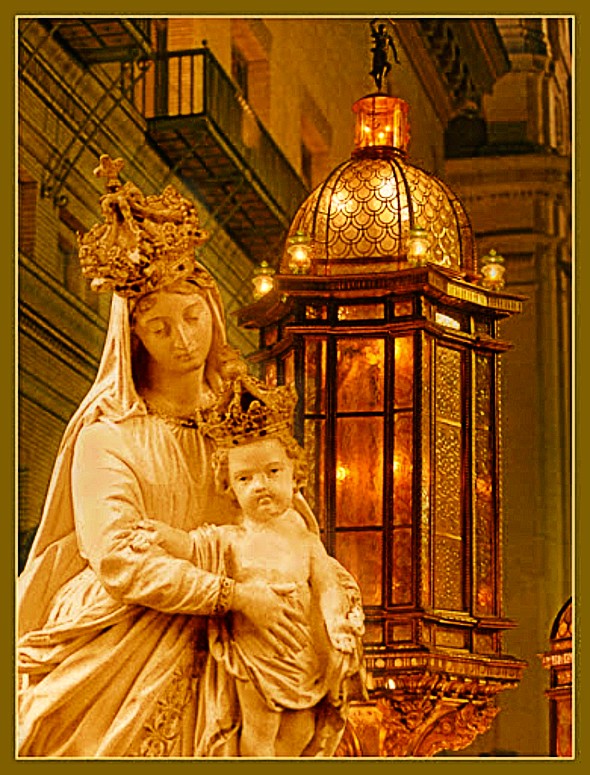
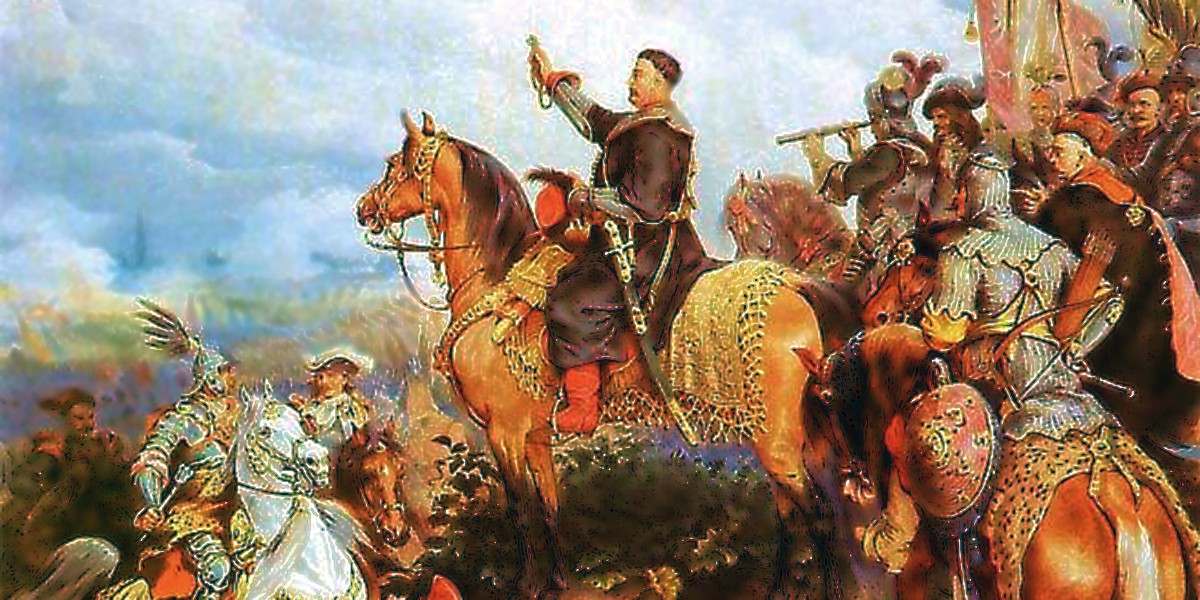
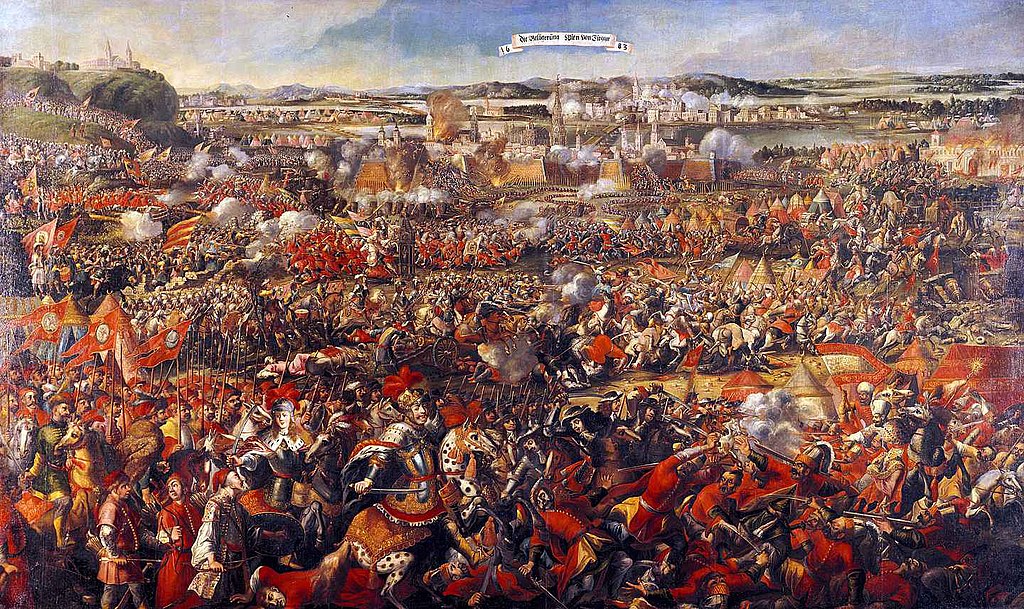

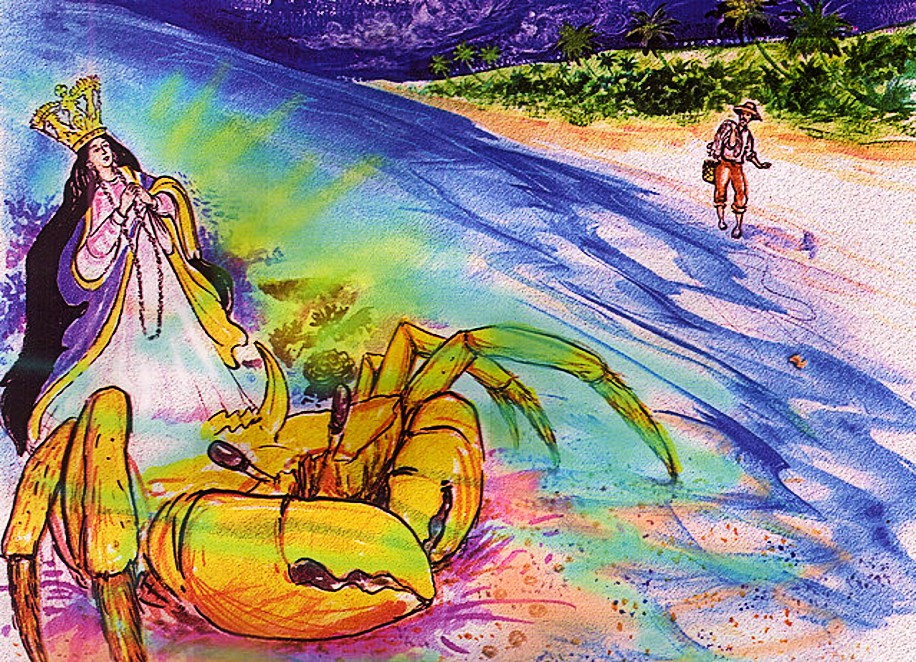
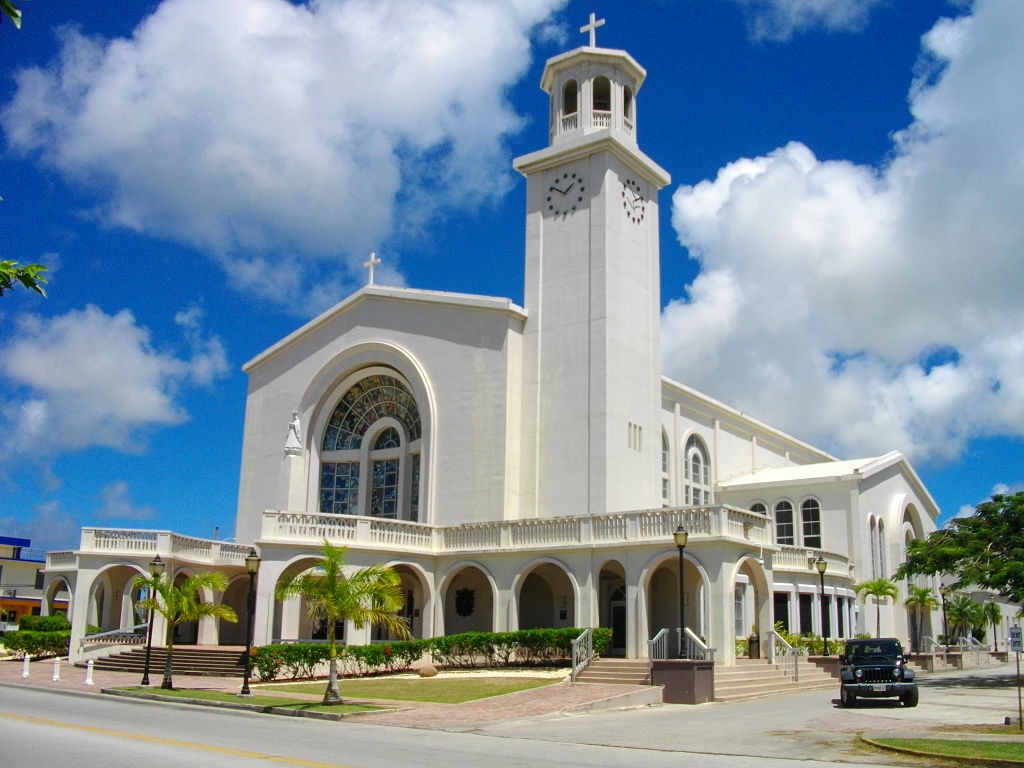
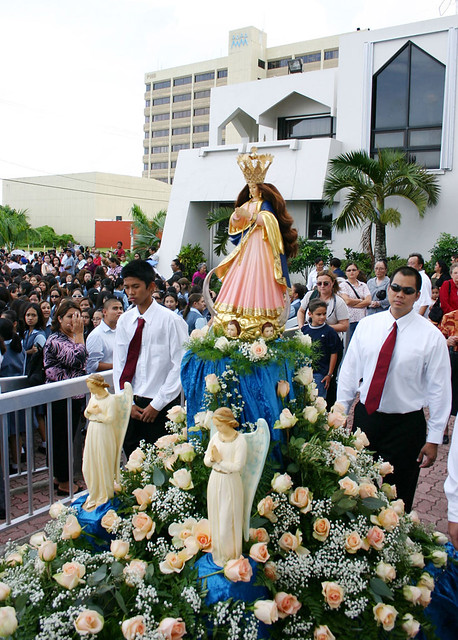
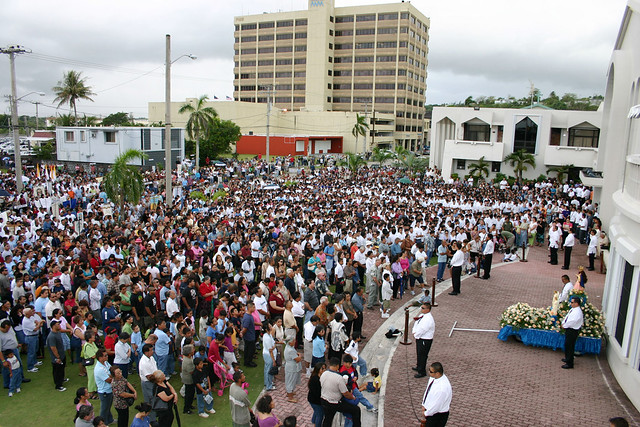
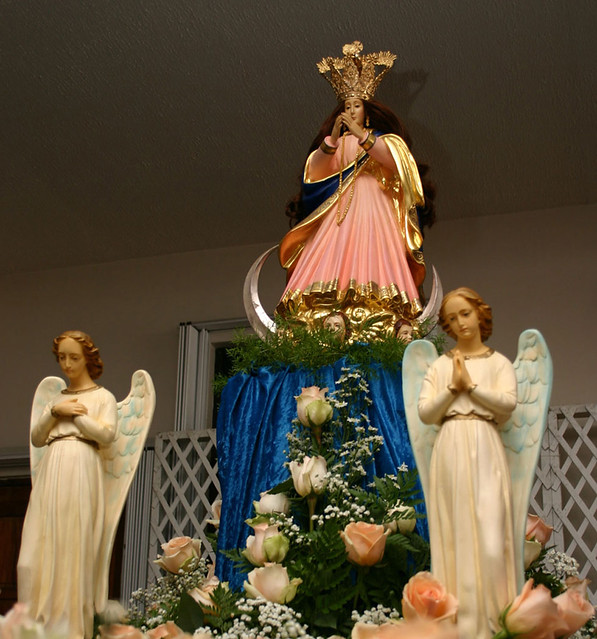
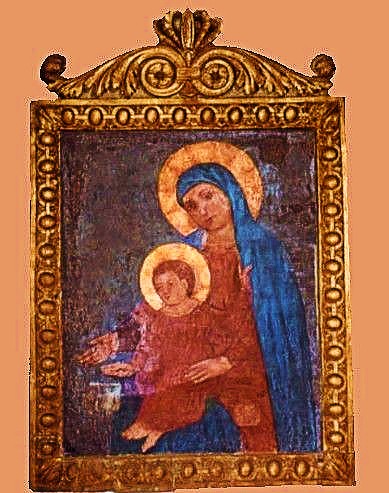

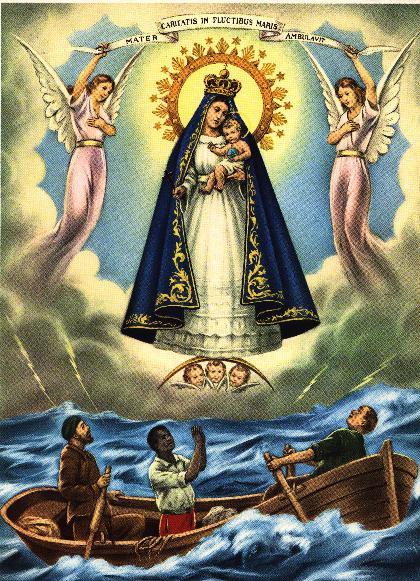
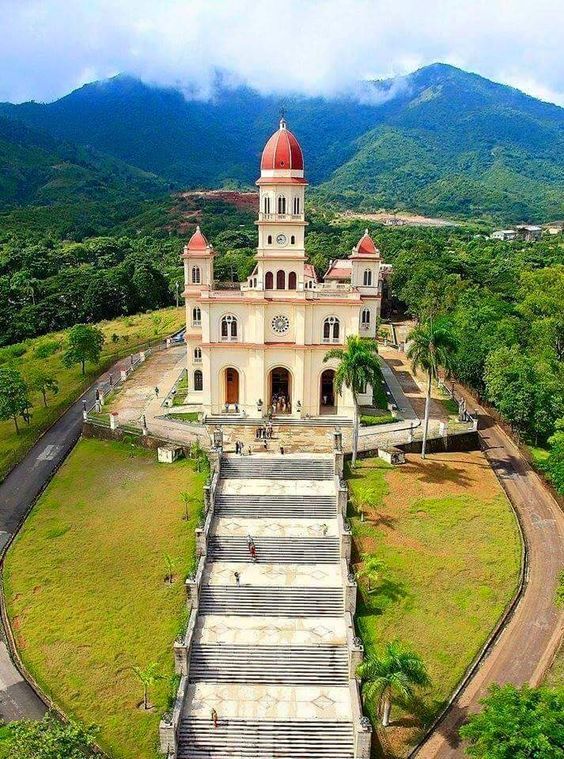

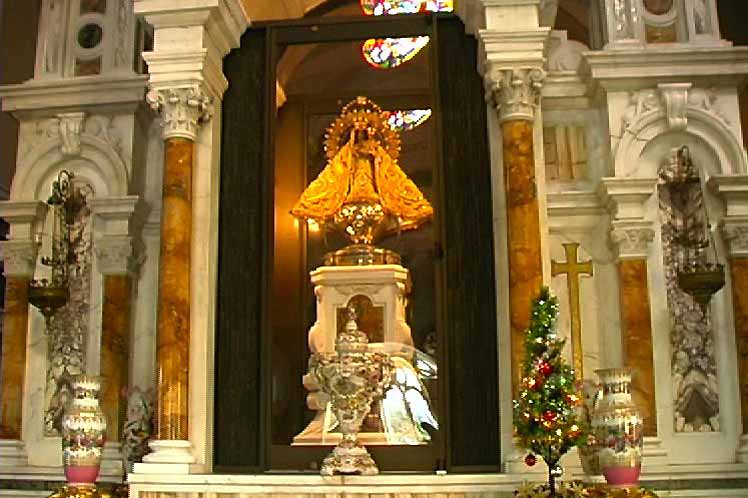
 AnaStpaul
You must be logged in to post a comment.