Quo/ste of the Day – 11 February – The Memorial of Our Lady of Lourdes
“I am the Immaculate Conception.”
Our Lady of Lourdes to St Bernadette 25 March 1858
“Mary is the great mould of God … He who is cast in this divine mould is soon formed and moulded in Jesus Christ and Jesus Christ in him. With little effort and in a short time, he will become divine, since he is cast in the same mould which formed a God.”
St Louis Marie Grignion de Montfort (1673-1716)
O daughter of King David and Mother of God, the universal King. O Divine and living object whose beauty has charmed God the Creator; your whole soul is completely open to God’s action and attentive to God alone. … Your womb will be the abode of the one whom no place can contain. Your milk will provide nourishment for God, in the little Infant Jesus. Your hands will carry God and your knees will serve as a throne for Him that is more noble than the throne of the Cherubim. … You are the temple of the Holy Spirit, the city of the living God, made joyous by abundant flowers, the sacred flowers of Divine grace. You are all-beautiful and very close to God, above the Cherubim and higher than the Seraphim, right near God Himself! Amen
St John Damascene (675-749) Father and Doctor of the Church
One Minute Reflection – 13 February – Readings: Genesis 2:18-25, Psalms 128:1-2, 3,4-5, Mark 7:24-30 and the Feast of Our Lady of Lourdes
“Yes, Lord, yet even the dogs under the table eat the children’s crumbs.” … Mark 7:28
REFLECTION – “O woman, your faith is great. Let it be done to you as you wish” (Mt 15:28). Indeed, she had great enough faith, since she knew neither the ancient miracles, commands and promises of the prophets, nor the more recent ones of the Lord Himself. In addition, as often as she was disregarded by the Lord, she persevered in her entreaties and she did not cease knocking by asking Him, though she knew only by popular opinion that He was the Saviour. On account of this, she secured the great object for which she implored. … If one of us has a conscience polluted by the stain of avarice, conceit, vain-glory, indignation, irascibility, or envy and the other vices, he has “a daughter badly troubled by a demon” like the Canaanite woman. He should hasten to the Lord, making supplication for her healing. … Being submissive with due humility, [such a person] must not judge himself to be worthy of the company of the sheep of Israel, (that is, souls that are pure) but instead, he must be of the opinion, that he is unworthy of heavenly favours. Nevertheless, let him not in despair rest from the earnestness of his entreaty but with his mind free of doubt, let him trust in the goodness of the supreme Benefactor, for the One who could make a confessor from a robber (Lk 23:39f.), an Apostle from a persecutor (Acts 9:1-30, an Evangelist from a publican (Mt 9:9-13) and who could make sons for Abraham out of stones, could turn even the most insignificant dog, into an Israelite sheep.” – St Bede the Venerable (673-735) Father and Doctor of the Church – Homilies on the Gospels
PRAYER – Grant us, O merciful God, protection in our weakness, that we, who keep the Memorial of the Immaculate Mother of God, may, with the help of her intercession, rise up from our iniquities. Grant, we pray that our lives may be gifts to all those who cry out in pain. Through our Lord Jesus Christ, your Son, Who lives and reigns with you in the unity of the Holy Spirit, One God, forever and ever, amen.
Our Morning Offering – 11 February – The Memorial of Our Lady of Lourdes
Queen on Whose Starry Brow Doth Rest St Venantius Fortunatus (c 530-c 609) Translation by Monsignor Ronald A Knox (1888 – 1957)
Queen, on whose starry brow doth rest The crown of perfect maidenhood, The God who made thee, from thy brest Drew, for our sakes, His earthly food.
The grace that sinful Eve denied, With thy Child-bearing, reppears; Heaven’s lingering door, set open wide, Welcomes the children of her tears.
Fate, for such royal progress meet, Beacon, whose rays such light can give, Look, how the ransomed nations greet The virgin-womb that bade them live!
O Jesus, whom the Vrgin bore, Be praise and glory unto Thee. Praise to the Father evermore And His life-givine Spirit be. Amen!
Saint Venantius Fortunatus (c 530 – c 609) Bishop, Poet, Hymnist, Writer – born c 530 at Rreviso, Italy and died c 609 at Poitiers, modern France of natural causes. St Venantius was unique, first a travelling lay poet, he later became a Priest and then a Bishop. But he always remained a professional author of poetry, a “troubadour” of Christ. He is the author of the Ave Maris Stella, amongst many others.
In 1858, there lived in the village of Lourdes, a little peasant girl, Bernadette Soubirous, 14 years old, uneducated, simple, poor, good. On 11 February, she was sent with two more girls to collect wood. They walked to the Rock of Massabielle, where the two companions crossed a mountain stream; while Bernadette was removing her shoes to follow them, she became conscious of a ravishing beautiful Lady, standing in the hollow of the rock, looking at her. Bernadette fell involuntarily upon her knees, gazing enraptured at the lovely Lady, who smiled lovingly at Bernadette and then disappeared. The mysterious Lady from heaven appeared in all, eighteen times to the little girl and among other things told her to drink the water from a mysterious fountain which was not yet observed. Bernadette scratched in the sand at a spot indicated and water began to trickle through the earth; after a few days there gushed forth every day 27,000 gallons of pure, clear spring water and this water flows still.
Bernadette was asked by Our Lady of Lourdes, who always showed her a sweet heavenly courtesy, to request the Priest to have a Church built on the spot, that processions should be made to the grotto, that people should drink of the water. The main emphasis of her message was that the faithful should visit the grotto in order to do penance for their sins and for those of the whole world. In answer to Bernadette’s inquiry, “Who are you?” the Lady answered, “I am the Immaculate Conception.”
The apparitions appeared for the last time on 16 July 1858. Bernadette never again had the supreme privilege of seeing and visiting with Our Lady. Later, Bernadette became a nun at Nevers and there spent the rest of her life. Through her, “Lourdes was destined to become a focus of faith and mercy; thousands of souls were to flock thither to increase their piety, to borrow new energy and resolution. Suffering and charity were to join hands under the eyes of the Divine Mother. Miracles were to be never-ceasing.” Four years after, the Bishop declared, upon an exhaustive and scrupulous investigation, to the faithful, that they are “justified in believing the reality of the apparitions.” In 1873, a Basilica was built on top of the rock and in 1883 another Church was built below and in front of the rock. From 1867 when records began to be kept until 1908, about 5,000,000 pilgrims had visited the grotto; now about 1,000,000 people visit Lourdes every year. Although Our Lady never at any time promised that pilgrims who visited the grotto would be healed of their physical ills, remarkable cures began at once and have continued ever since. Many of them are of such a character that they can be ascribed only to supernatural power.
There is no doubt that the cures are miraculous because every possible natural cause has been proved false. There is no chemical composition in the water to make it have curative properties. It has been claimed that the cures might be due to suggestion but Bernheim, head of the famous school of Nancy, says that although suggestion has a chance of success in certain functional diseases, it requires the co-operation of time. Suggestion cures slowly and progressively, while complete cures at Lourdes are instantaneous, the supreme Life Giver Himself is responsible for the many cures witnessed at this shrine of the Immaculate Conception and He chose a simple peasant to reveal to the world the love He bears all mankind, as the adopted children of His Blessed Mother. Bernadette died in 1879 at the age of 35 and was later Canonised. The body of the blessed Saint can still be seen in its glass coffin, intact and incorrupt, looking as its photographs show, like a young woman asleep. The chair at which she prayed, the altar where she received her First Holy Communion, the bed in which she slept, the room in which she lived – all can be seen at Lourdes. Lourdes is one of the greatest Marian shrines in the world. Here, praying to Our Lady of Lourdes, one may obtain refreshment, courage, energy and inspiration to continue the age-old struggle of the great Catholic Faith against the forces of darkness and disintegration. This great shrine, all its miracles and the streams of grace that are poured into the world through Our Lady of Lourdes, were made possible, through the faithfulness and the sanctity of a little peasant girl. Amen Our Lady of Lourdes, pray for us, St Bernadette, pray for us!
St Calocerus of Ravenna St Castrensis of Capua St Dativus the Senator Bl Elizabeth Salviati St Etchen of Clonfad St Eutropius of Adrianopolis St Felix the Senator St Gobnata St Pope Gregory II (669-731) About “The Defender of Icons” https://anastpaul.com/2020/02/11/saint-of-the-day-11-february-saint-pope-gregory-ii-669-731-defender-of-icons/ Bl Gaudencia Benavides Herrero St Helwisa St Jonas of Muchon St Lazarus of Milan (Died 449) Bishop
St Lucius of Adrianople St Pope Paschal I St Pedro de Jesús Maldonado-Lucero St Saturninus of Africa St Secundus of Puglia St Severinus of Agaunum St Soter of Rome St Theodora the Empress Bl Tobias Francisco Borrás Román — Guardians of the Holy Scriptures: Also known as – • Anonymous Martyrs in Africa • Martyrs of Africa • Martyrs of Numidia • Martyrs of the Holy Books A large number of Christians tortured and murdered in Numidia (part of modern Algeria) during the persecutions of Diocletian, but whose names and individual stories have not survived. They were ordered to surrender their sacred books to be burned. They refused. Martyrs. c 303 in Numidia.
Martyrs of Africa – 5 saints: A group of five Christians who were martyred together; we know nothing else but the names of four of them – Cyriacus, Oecominius, Peleonicus and Zoticus.
Nostra Signora delle Colombe / Our Lady of the Doves (Bologna, Italy) – 10 February:
While the Pilgrim Virgin Statue was touring Europe, three snow-white doves came unexpectedly as the procession passed through a tiny village. No-one could be identified as their owner and they did not seem to be lost. They settled at the feet of the Madonna – soft, white doves, at home with Mary. Day by day, as the pilgrimage drew near its destination of Bologna, Italy, the doves stayed on. They left the Statue only for short flights and never all at once. No minute passed that at least one of them was not at Our Lady’s feet. When the procession neared the Cathedral where the Statue was to be enthroned, conjecture was made about the possible action of the doves. Eager eyes watched them as strong arms carried the Madonna to her pedestal in the Sanctuary. Softly, the doves hovered over, undisturbed by the noisy devotion of the crowd of Latin enthusiasts for Our Lady. When the Statue was finally set firmly and left free to them once more, the doves returned to their resting place, as before, at the feet of Mary. High Mass began at once. Through all the singing and incensing and preaching, the birds remained, watchful but not alarmed. Only as the Mass reached its climax at the Consecration did they stir. Then, as if by instinct, they left the Statue and flew to the Altar. Upon the high Crucifix they perched for the rest of the Mass. Then, at the “Ite Missa est,” with one accord they flew from the Church and vanished. The doves of Mary had escorted her, Our Lady of the Doves, to the palace of the King. Earthly royalty selects eagles for insignia. Mary, Queen of Peace and Mother of the Prince of Peace, selects doves. This type of incident has occurred several times, at a variety of different locations, in recent history.
Bl Louise Bessay de la Voûte Bl Louise Poirier épouse Barré Bl Marie-Anne Hacher du Bois Bl Marie-Louise du Verdier de la Sorinière Bl Mikel Beltoja Bl Paganus Bl Paul of Wallachia Bl Pierre Frémond St Porfirio St Prothadius of Besançon St Salvius of Albelda St Silvanus of Terracina St Soteris the Martyr St Troiano of Saintes St Trumwin of Whitby St William the Hermit (Died 1157) About St William: https://anastpaul.com/2020/02/10/saint-of-the-day-10-february-saint-william-the-hermit-died-1157/
Martyred Soldiers in Rome: A group of ten Christian soldiers who were martyred together for their faith. We know little more about them but four of their names – Amantius, Hyacinth, Irenaeus and Zoticus. • 120 at Rome, Italy. They were buried on the Via Lavicana outside RomeAmantius, Hyacinth, Irenaeus, Zoticus.
Notre-Dame-des-Cloches /Our Lady of the Bells, Cathedral of Saintes, France – 9 February:
“Saintes” is the English translation for the French word meaning female saints. There is a great deal of history to the Poitou-Charentes region of western France where the town of Saintes is located. The town of Saintes was originally a thriving settlement in ancient Gaul located along the Charente River. The town became known as Mediolanum Santonum once conquered by the Romans under Julius Caesar, and the remains of the triumphal arch of Germanicus and a large amphitheatre can still be seen there today. The town takes its name, Saintes, due to a fascinating legend that many still piously believe. According to this tradition, Mary Salome and Mary Jacob, accompanied by other disciples of Jesus Christ, were forced to flee the Holy Land about the year 45. They left, taking a boat with no sail and were miraculously transported across the Mediterranean Sea, making land near the place which became known as Saintes Maries de la Mer. Long before the arrival of the saints, indeed, since prehistoric times, Saintes Maries de la Mer (Saint Mary’s of the Sea) had been considered a holy place. This tradition was carried on by the Celts and then the Romans. It is recorded that St Eutropius was a Bishop there in the 3rd century and, that the first Cathedral was reconstructed by no less a personage than Charlemagne.
Norman invaders twice burned the town during the 9th century. Richard the Lionheart took refuge there against his father and King Saint Louis IX defeated the English on the plains before the town. The Cathedral of Saint Peter, built in the 12th century, was severely damaged by the Huguenots in the year 1568. Its bishopric was ended in 1790 due to the oppression of the French Revolution. The Church is now reduced to being only an historical monument. It is recorded, though, that one year long ago, on the octave day of the Purification, the bells in the Cathedral of Saintes, France, rang out most sweetly of themselves. The sacristans, having run to the Church, saw what appeared to be several unknown men holding lighted tapers and melodiously chanting hymns in honour of the Blessed Virgin, Our Lady of the Bells, who was venerated in a Chapel of this Cathedral. Approaching softly, they – the men who had run to the church – begged the last of these men carrying lighted candles, to give them one in proof of the miracle they had witnessed. The light-bearers graciously complied. This taper, or candle, in remembrance of Our Lady of the Bells, is said to be preserved in that Cathedral up to this day.
St Nebridius of Egara St Nicephorus of Antioch St Poëmus of Membressa St Primus the Deacon St Raynald of Nocera St Romanus the Wonder Worker St Ronan of Lismore St Sabino of Abellinum St Sabinus of Canosa (c 461–566) Bishop St Teilo of Llandaff — Martyrs of Alexandria: An unknown number of Christians who were massacred in church in 4th century Alexandria, Egypt by Arian heretics for adhering to the orthodox faith.
Martyrs of Membressa: A group of 44 Christians martyred together. We know little else about them some names – • Ammon • Didymus • Emilian • Lassa • Poemus They were martyred in Membressa in Africa.
Abbey of Notre-Dame du Lys / Our Lady of the Lily, Melun, France (13th Century) – 8 February:
The Royal Abbey of Notre-Dame du Lys / Our Lady of the Lys – The Abbot Orsini wrote: “This Abbey of Cistercian nuns was founded by Queen Blanche, Mother of King Saint Louis.”
The former Royal Abbey Notre-Dame du Lys, or Our Lady of the Lily, now in ruins, was once a Cistercian Abbey for nuns founded by Queen Blanche of Castile and her son, King Saint Louis IX, in 1244. The ruins are located along the centre of the Town of Dammarie-les-Lys, four kilometers downstream from Melun, in the south of the Seine-et-Marne. The town takes its name from the Chapel, meaning ‘the oratory of the Virgin next to the Abbey of Lys.’ Looted and converted into cattle pens during the French Revolution, the Abbey was then sold as a romantic ruin in 1797. The remains of the Abbey were made an historic monument on 30 December 1930. From 1226 to 1248, during the early years of the reign of St Louis IX, that is to say, the period immediately preceding the foundation of the Abbey of the Lys, many Cistercian Monasteries were founded and several Churches dedicated. The foundation of an Abbey like Our Lady of Lys, is very burdensome financially, requiring a significant capital contribution. Land must be purchased for the Monastery, buildings constructed sufficient for life and maintenance of a number of religious and of course a Church. On24 October 1227, the Consecration and Dedication of the magnificent Abbey Church that the Cistercians built in Longpont took place. The same year saw the creation of the Abbeys of the Treasury of Notre-Dame and Royaumont, as well as, the attachment of the Convent Panthémont to the order of Cîteaux. In 1236, Queen Blanche of Castile, had laid the foundations of Notre-Dame-La-Royale, Maubuisson, near Pontoise, so Saint Louis, therefore, assumed all expenses involved in the foundation of the new Abbey but left his mother in charge of the work. ‘Our Lady of the Lily’ would be the new house for Cistercian nuns outside Melun, a town which Blanche loved. The name was one they had agreed upon for the new Convent, a Convent where there would be prayers perpetually offered to God, for the sake of the Crusade that King Louis would soon embark upon. The Queen of France, Blanche of Castile, wife of King Louis VIII ‘the Lion’ and mother of King Saint Louis IX, died there on 27 November, 1252. There is a list of Abbesses of Our Lady of Lys beginning with Vienna Alix, Countess of Macon and the last Countess of Vienna, who died there on 23 August 1258. She had been widowed, when her husband died fighting in the Holy Land in 1234. The last Abbess was Jeanne Foissy, who was forced to leave by the revolutionaries on 3 March 1791. Blanche of Castile withdrew to Melun towards the end of her life, where she died in 1252, while her son Saint Louis was on a crusade with his wife Marguerite. She was buried at the Abbey of Maubuisson but her heart was later transported to the Abbey of Lys.
St Cointha of Alexandria St St Cuthman St Cyriacus of Rome St Dionysus of Armenia St Elfleda of Whitby St Emilian of Armenia Blessed Maria Esperanza de Jesus (1893-1983) About Bl Maria: https://anastpaul.com/2020/02/08/saint-of-the-day-8-february-blessed-maria-esperanza-de-jesus-1893-1983/ St Giacuto St Gisela St Honoratus of Milan St Invenzio of Pavia St Isaias Boner St Jacoba Bl Josephina Gabriella Bonino St Kigwe St Lucius of Rome St Meingold St Mlada of Prague St Nicetius of Besançon St Oncho of Clonmore St Paul of Rome St Paul of Verdun Blessed Pietro Igneus OSB Vall. (c 1020 – 1089) Cardinal Bishop St Sebastian of Armenia St Stephen of Muret — Martyrs of Constantinople: Community of 5th century monks at the monastery of Saint Dius at Constantinople. Imprisoned and martyred for loyalty to the Vatican during the Acacian Schism. 485 in Constantinople.
Martyrs of Persia: An unknown number of Christians murdered in early 6th-century Persia. Legend says that so many miracles occurred through the intercession of these martyrs that the king decreed an end to the persecution of Christians.
“Simon’s mother-in-law lay sick with a fever. They immediately told him about her. And he came and took her by the hand and lifted her up and the fever left her and she began to serve them.” – Mark 1:30-31
REFLECTION – “Can you imagine Jesus standing before your bed and you continue sleeping? It is absurd that you would remain in bed in His presence. Where is Jesus? He is already here, offering Himself to us. “In the middle,” He says, “among you He stands, whom you do not recognise.” “The kingdom of God is in your midst.” Faith beholds Jesus among us. If we are unable to seize His hand, let us prostrate ourselves at His feet. If we are unable to reach His head, let us wash His feet with our tears. Our repentance is the perfume of the Saviour. See how costly is the compassion of the Saviour. Our sins give off a terrible odour – they are rottenness! Nevertheless, if we repent of our sins, they will be transformed into perfume by the Lord. Therefore, let us ask the Lord to grasp our hand. “And at once,” he says, “the fever left her.” Immediately as her hand is grasped, the fever flees.” – St Jerome (343-420) Father and Doctor of the Church – Tractate on Mark‘s Gospel, 2
PRAYER – All-powerful, eternal God, splendour of true light and never-ending day, let our striving for Your kingdom not fall short through selfishness or fear, may the universe be alive with the Spirit and our homes be the pledge of the world redeemed. May our eyes see and our hearts have compassion, to all those who need us. May the intercession of our Holy Mother and all the saints, be a strength and a comfort. Through Jesus, our compassionate and loving Redeemer, with the Holy Spirit, one God with You forever, amen.
Fifth Sunday in Ordinary Time +2021 Sexagesima Sunday (Traditional Calendar) +2021
Sexagesima Sunday is the second Sunday before the start of Lent, which makes it the eighth Sunday before Easter. Traditionally, it was the second of the three Sundays (Septuagesima is the first and Quinquagesima is the third) of preparation for Lent. Sexagesima literally means “sixtieth,” though it falls only 56 days before Easter.
Nostra Signora delle Grazie, o Nostra Signora del Capo chino / Our Lady of Grace, or Our Lady of the Bowed Head, Rome (1610) – 7 February:
Among the many miraculous images of the Mother of God through which she deigns to grant her favours, there is one in the Monastery Church of the Carmelites in Vienna, entitled the Mother of Grace, or Our Lady of Grace, also known also as Our Lady of the Bowed Head. In 1610 a Carmelite, Dominic of Jesus-Mary, found, among the votaries of an old altar, in the Monastery Church of Maria della Scala in Rome an oil painting of the Mother of God, dust-covered and somewhat torn, which grieved him. Taking it into his hands, he shook the dust off it and kneeling down venerated it with great devotion. He had the picture renovated and placed it on the shelf in his cell, where he made it the object of his love and supplications, in favour of those, who came to him in their necessities and afflictions. One night while he was praying fervently before the picture, he noticed that some dust had settled on it. Having nothing but his course woollen handkerchief, he dusted it with that and apologised, “O pure and holiest Virgin, nothing in the whole world is worthy of touching your holy face but since I have nothing but this coarse handkerchief, deign to accept my goodwill.” To his great surprise, the face of the Mother of God appeared to take on life and smiling sweetly at him, she bowed her head, which, thereafter, remained inclined. Fearing he was under an illusion, Dominic became troubled but Mary assured him that his requests would be heard – he could ask of her with full confidence any favour he might desire. He fell upon his knees and offered himself entirely to the service of Jesus and Mary and asked for the deliverance of one of is benefactor’s souls in purgatory. Mary told him to offer several Masses and other good works – a short time after, when he was again praying before the image, Mary appeared to him bearing the soul of his benefactor to Heaven. Dominic begged that all who venerated Mary in this image of Our Lady of Grace might obtain all they requested. In reply the Virgin gave him this assurance:
“All those who devoutly venerate me in this picture and take refuge to me will have their request granted and I will obtain for them, many graces but especially, will I hear their prayers for the relief and deliverance of the Souls in Purgatory.” Dominic soon after placed the image into the church of Maria Della Scala so that more devotees of Mary could venerate it. Many wonderful favours were and are obtained by those who honoured and invoked Mary here. Reproductions were made of Our Lady of Grace and sent to different parts of the world. After the death of Dominic the original painting was lent to Prince Maximilian of Bavaria. He gave it to the discalced Carmelites in Munich in 1631; they gave it to Emperor Ferdinand II of Austria and his wife Eleanore. After Ferdinand’s death, Eleanore entered the Carmelite convent in Vienna and took the picture with her. During the succeeding years the image was transferred to various places. Today, it is in the Monastery Church of Vienna. On 27 September 1931, it was solemnly crowned by Pope Pius XI – the 300th anniversary of arrival in Vienna.
“Sedes Sapientia” – Heilige Maagd Maria van Leuven /Our Lady of Louvain, Belgium (1444) – 6 February:
The Abbot Orsini wrote: “This Virgin, in high veneration in that country, began to work miracles in the year 1444.”
Nicolaas de Bruyne, 1442, Leuven, Pieterskerk
Saint Peter’s Church, or Sint-Pieterskerk, is the oldest Church in Leuven, Belgium, having been founded in about 986. The first Church burned to the ground but the present Gothic style Church was begun in 1425. The Church suffered severe damage during both world wars, as in 1914 the roof and nave were burned and in 1944 the north aisle suffered bomb damage. The Church of Saint Peter, is the home of Our Lady of Louvain, or the Virgin of Louvain, a Statue of the Blessed Virgin and her Divine Son also called the Sedes Sapientiae, or Seat of Wisdom. The Virgin of Louvain is a wooden statue of the Blessed Virgin Mary carved by Nicolaas De Bruyne in 1442. It was a larger facsimile of an earlier statue dating from the 13th century. That statue was completely destroyed during the Second World War and not by the Fascists or Nazis but instead, by allied bombs. It is a replica of Bruyne’s famous statue that is currently on display in the church.
Sedes Sapientiae is a specific title for the statue of Our Lady of Louvain but it is also a type of Christian iconography of the Blessed Mother, which depicts the Blessed Virgin seated upon a throne with the Christ Child in her lap. This type of representation of the Blessed Mother became, especially popular, early in the 13th century and, the throne she sits upon, usually has some depiction of lions and the Blessed Virgin’s feet are usually shown resting upon a stool and for good reason. The “Seat of Wisdom” is a title of Mary that many Catholics will recognise from the Litany of Loreto. It was no less a luminary than Saint Peter Damian, who in the 11th century said of the Blessed Virgin Mary that she “is herself that wondrous throne referred to in the Book of Kings.” In this, he was alluding to Solomon’s throne, the throne of the King renowned throughout history, for his wisdom. His throne was of ivory overlaid with the finest gold. “It had six steps and the top of the throne was round behind and there were two hands on either side, holding the seat and two lions stood, one at each hand. And twelve little lions stood upon the six steps on the one side and on the other: there was no such work made in any kingdom.” (Third Book of Kings, Chapter 10: 18-20). She is descended from the noble lineage of David. As the Mother of God, the “Seat of Wisdom,” the vessel of the Incarnation, who carried and gave birth to the second person of the Blessed Trinity, she, herself is, in a certain sense, the throne upon which the Son of God reigns. This symbol, the Sedes Sapientiae, has become the seal for the Catholic University of Leuven. It bears the motto: “Universitas Catholica Lovaniensis. Sedes Sapientiae,” which is Latin for Catholic University of Leuven. Seat of Wisdom.”
St Gerald of Ostia St Gonsalo Garcia OFM St Guarinus St Guethenoc St Hildegund St Ina of Wessex St Jacut St Liminius of Auvergne Bl Mary Teresa Bonzel St Mateo Correa-Magallanes St Maximus of Aurvergne St Mel of Ardagh St Melchu of Armagh St Mun of Lough Ree St Relindis of Eyck St Revocata St Saturninus St Tanco of Werden St Theophilus St Theophilus the Lawyer St Vaast of Arras St Victorinus of Auvergne — Martyrs of Emesa: St Luke the Deacon St Mucius the Lector St Silvanus of Emesa
Dedication of the first Church of Our Lady, by St Peter – Tortosa, Italy – 5 February:
The Abbot Orsini wrote: “Dedication of the first Church of Our Lady, by Saint Peter, Tortosa, Italy” The first Church dedicated to Our Lady by Saint Peter the Apostle was not actually in Italy, as the good Abbot stated but in the City of Tartus, Syria. The City of Tartus was known as Tortosa to the Crusaders, who lived in the region during the time of the Crusades. The Cathedral of Our Lady of Tortosa, built in the year 1123 by these Crusaders, still stands on the site of the original Sanctuary of the Blessed Virgin that was dedicated by Saint Peter. It is remembered, that the Emperor Constantine looked favourably upon the City because of his love for the Blessed Virgin Mary and the devotion to her by the faithful at Tortosa. By all appearances, the Church of Our Lady was as much of a fortress as it was a Church and indeed, there were once towers surrounding the structure, two of which have survived the centuries. The façade of the Church, which appears almost Romanesque in style, has five arched window openings that are well above ground level and, there is a centrally located doorway. Once inside, however, the structure looks more like a Church, as there are graceful arches, columns and a vaulted ceiling. It is thought by many historians, to be the best-preserved structure of a religious nature dating from the time of the Crusades. Since the Church doubled as a fortification, the Crusaders were able to hold it, even after Tortosa was taken by Saladin in the year 1188. Saladin, who was able to unify the warring Muslim factions, made them into a robust army and won an important battle at Hattin over the Crusaders, capturing nearly all of their holdings, save for those near the coasts. The Knights Templar continued to use the Church as a kind of headquarters until the year 1291, when it was also taken. Once captured by the Mameluke’s, the Church was turned into a mosque. Later, under the Ottoman Empire, the Church was used as a place of storage. The Church was recently renovated, although now it is used only as a Museum.
St Agatha Hildegard of Carinthia St Agricola of Tongres St Albinus of Brixen St Anthony of Athens St Avitus of Vienne (c 450-c 518) Bishop St Bertulph St Buo of Ireland St Calamanda of Calaf St Dominica of Shapwick St Fingen of Metz Bl Françoise Mézière St Gabriel de Duisco St Genuinus of Sabion St Indract St Isidore of Alexandria St Jesús Méndez-Montoya Bl John Morosini St Kichi Franciscus St Luca di Demenna St Modestus of Carinthia St Philip of Jesus (1572-1597) Martyr His Life and Death: https://anastpaul.com/2020/02/05/saint-of-the-day-5-february-st-philip-of-jesus-1572-1597/ Bl Primo Andrés Lanas St Saba the Younger St Vodoaldus of Soissons — Martyrs of Pontus: An unknown number of Christians who were tortured and martyred in assorted painful ways in the region of Pontus (in modern Turkey) during the persecutions of Maximian.
Nostra Signora del Fuoco /Our Lady of Fire, Forli, Italy (1428) – 4 February:
The best-known print in early times was certainly the miraculous woodcut of Forli in north-eastern Italy, which became famous as Our Lady of Fire, or Nostra Signora del Fuoco /Our Lady of the Fire. It is the subject of the earliest monograph on a printed picture, which also fixes the earliest date that can be attached to a surviving Italian print. This book is Giuliano Bezzi’s “Il Fuoco Trionfante,” printed in 1637 at Forli, between Florence and Ravenna and he speaks of the miracle remembered as Our Lady of Fire. “Around the year of our Lord 1420, in a pleasant house by the Cathedral at Forli, the devout and learned Lombardino Brussi of Ripetrosa imitated Christ among the disciples at Emmaus by breaking the bread of the fear of the Lord and of humane letters with school boys. Their household devotion turned to the Virgin. They ever began and ended their literary exercises by praising and praying to this great sovereign of the universe. They said their prayers before an image of Our Lady rudely printed from a woodblock on a paper about a foot square. Printing was then new and who knows if this may not have been the first print by the first printmaker? The simplicity of the image certainly matched the well-mannered scholar’s simplicity of heart. It showed and still shows, the most Blessed Virgin holding her Holy Infant and surrounded by saints like King Solomon by his guard. Above to the right and left shine the sun and the moon, luminously forecasting that the Virgin was to consecrate this paper with a power like the moon’s over water and the sun’s over fair weather.
The devotion to the Virgin had advanced these happy boys from easy letters to graver studies when, on 4 February 1428, fire broke out in the downstairs classroom. Whether it started by accident or by design, is not known but certain it is, that the outcome so glorified God and His Blessed Mother that fires nowadays cause joy where they burn! When this fire had feasted on the benches and cupboards of the school, it followed its nature to ascend and sprang at the sacred paper. In awe at the sight of the most holy image, the flames stopped and – wonder of wonders – like the blameless fingers of a loving hand, they detached it from the wall to which it was tacked. The fire thought the wall too base a support for so sublime a portrait and longed to uphold the heaven of that likeness, like the other heaven, on a blazing sphere. Above the flames raging in the closed room the unscorched image floated as on a throne. When the fire had consumed the ceiling beams it wafted out the revered leaf, not to burn but to exalt it. With this leaf on its back it flew to the second floor, to the third, to the roof, then through the roof and behold, the Virgin’s image burst above the wondrous pyre like a phoenix, triumphant and unconsumed! The miracle drew the eyes of all the populace and came to the ears of Monsignor Domenico Capranica, the Papal Legate, who carried the paper in a procession, accompanied by all the people, to the Cathedral of Santa Croce, where it was placed in a holy but simple chapel.”
The building burned to the ground but the image of Our Lady of Fire was not forgotten. Copies were made of the image and they could be found in every Christian home in the region. The original print itself, was the focus and centre of religious life in the town of Forli, which had been blessed to witness such a great miracle.
Martyrs of Perga – 4 saints: A group of shepherds martyred in the persecutions of Decius. The only details we have about them are the names – Claudian, Conon, Diodorus and Papias. They were martyred in c 250 in Perga, Asia Minor (in modern Turkey).
Outside of Palestine one of the most famous sanctuaries of the Mother of God in the Levant, is a Convent of Orthodox nuns, – Dair as-Sagura, located within the walls of an ancient fortress on a hill near Damascus. It is thought to be the site where Abel, the murdered brother of Cain, is buried and, is also the site of one of the world’s most ancient Monasteries.
Saidnaya, (or Saydnaya or Sednaya), is a city located in a mountainous region of Syria about 17 miles north of Damascus. The word Saidnaya means “Our Lady” and refers to a famous icon of the Virgin Mother of God that is still kept in the main Church. The origin of the Shrine of Our Lady of Saideneida goes back to a time long before the separation of the Orthodox Church from Old Rome. In fact, there is a tradition, that associates the Shrine to at least the time of the Roman Emperor Justinian I (died 565). According to this tradition, the Roman Emperor Justininian I was leading his army through the desert in modern day Syria. His army was suffering greatly from a lack of water and was near despair, when the Emperor saw a beautiful gazelle in the distance. Justinian chased the animal, which came to a rocky knoll where there was a spring of fresh water. He was preparing to shoot the animal when it suddenly transformed into an icon of the Mother of God which shone with a heavenly light. A voice could be heard to say, “No, thou shalt not kill me, Justinian but thou shalt build a Church for me here on this hill.” The light then faded and the beautiful figure disappeared. The water from the spring saved his army and Justinian told his commanders what he had seen. He ordered them to draw up the plans for the Church Our Lady had requested. The architects complained of insurmountable problems and the Blessed Virgin appeared to the Emperor in a dream and gave him the plan for the Church and convent, of which she herself would be the protectress. The project was completed on the Feast of Our Lady’s nativity.
Mosaic depiction of Mary ordering Justinian not to kill her but to build a church on the rock in the background, after having first appeared to him as a gazelle. The scroll she holds reads: “No, thou shalt not kill me, Justinian but thou shalt build a Church for me, here, on this rock.”
Once constructed, the convent became so renowned that it was second only to Jerusalem as a site of pilgrimage. The icon, called Our Lady of Saideneida and attributed to St Luke, was said to have been brought to its home in the year 870 from Jerusalem. The holy Abbess of the convent, a woman named Marina, spoke to a Greek pilgrim named Theodore who had stopped at the convent for rest on his pilgrimage to the Holy Land. Since he was on his way to Jerusalem, the holy abbess Marina asked Theodore to purchase an icon of the Blessed Virgin in the Holy City and bring it back to the convent. The hermit, once in Jerusalem, forgot about the Abbess’s request and began making his way home, when he was stopped by a voice which asked, “Have you not forgotten something in Jerusalem? What have you done in regard to the commission from the Abbess Marina?” Theodore turned back and purchased a beautiful icon of the Theotokos that he knew would be acceptable to the Abbess. His journey back to the convent was fraught with difficulties, as he and his companions were set upon by bandits and suffered the attack of wild beasts. The hermit turned to the Blessed Virgin in all these dangers, invoking her intercession as he prayed before the icon. Despite all the attacks and violence, all those in the caravan were miraculously saved from every danger through the aid of the Mother of God.
The hermit Theodore, was convinced of the powerful aid of the icon and was tempted to keep it for himself. He decided to return home by another route to avoid the Abbess and Saideneida completely. He paid to take ship but the vessel encountered such a furious storm that they were forced to turn back rather than be lost. Repenting of his error, he returned to the road he had taken and made his way back to Saideneida. Once back at the convent, the days passed and he found that he did not want to part with the icon. He lied to the Abbess, telling her he had not purchased the icon she had requested and planned to depart from the convent in secret rather than face the disappointed abbess again. Moving in the darkness the following morning, the hermit made his way soundlessly to the gate so as to begin his trek back to his homeland. As he attempted to pass through the convent gate, however, there was an invisible power that would not allow him to pass. It was as if he were trying to walk through a wall of solid stone, though nothing could be seen that barred his way. When he realised that he would not be able to leave the convent, he turned back and faced the Abbess, admitting to her that he had lied and had intended to keep the icon for himself. With tears of gratitude, the Abbess Marina gave glory to God and His Holy Mother and the icon found its home. That same icon, known as the Shaghoura, meaning “the illustrious,” is kept in a pilgrimage Shrine that is separate from the rest of the chapel. It is hidden in an ornate niche with silver doors. Childless couples especially and pilgrims seeking miracles of cures, still come seeking the Blessed Virgin’s intercession. The Shrine was formerly well known in the West, where from about 1200 it was popularised by the stories of miracles and miraculous cures. A German chronicler, during the ages of the crusades, wrote of his pilgrimage to the convent and spoke of the special properties of a miraculous, holy oil that was emitted from the icon. It was believed, that the oil could cure the sick and Templar knights, especially, would go to the Shrine to obtain the holy oil for their Churches. Interestingly, not only Catholics but also Moslems go to the Shrine as pilgrims. It is remembered, that a sultan, in thanksgiving for a prayer answered through the icon, set a lamp to burn perpetually before the image of Our Lady. The Middle Ages were certainly a time of faith and there were many images of Our Lord, the Blessed Virgin and various Saints that were produced for the edification of the people. Inflamed with a true zeal for the faith and anxious to give glory to God, there were many Shrines all over Europe, many of which are now long forgotten in our age when the world struggles mightily to extinguish the Light of Christ.
Bl Alois Andritzki St Anatolius of Salins St Ansgar OSB (801-865) “Apostle of the North”, Bishop Biography: https://anastpaul.com/2019/02/03/saint-of-the-day-3-february-saint-ansgar-osb-801-865-apostle-of-the-north/ St Anna the Prophetess St Berlinda of Meerbeke St Blasius of Armentarius St Blasius of Oreto St Caellainn St Celerinus of Carthage St Claudine Thevenet St Clerina of Carthage St Deodatus of Lagny St Eutichio St Evantius of Vienne St Felix of Africa St Felix of Lyons St Hadelin of Chelles Bl Helena Stollenwerk Bl Helinand of Pronleroy St Hippolytus of Africa St Ia of Cornwall St Ignatius of Africa Bl Iustus Takayama Ukon Blessed John Nelson SJ (1535-1578) Priest Martyr Bl John Zakoly St Laurentinus of Carthage St Laurentius of Carthage St Lawrence the Illuminator St Liafdag St Lupicinus of Lyon St Margaret of England Bl Marie Rivier St Oliver of Ancona St Philip of Vienne St Remedius of Gap St Sempronius of Africa St Tigrides St Werburga of Bardney St Werburga of Chester — Benedictine Martyrs: A collective memorial of all members of the Benedictine Order who have died as martyrs for the faith.
Feast of the Purification of Our Lady, the Presentation of Our Lord in the Temple – Candlemas Day – 2 February
Master of Saint Severin c 1490
Besides commemorating the Presentation of Christ in the Temple, this day has another meaning, for it is called Candlemas Day. The candle is one of the most widely used sacramentals in the Church; one blessed in a special Mass.
We use candles at Baptism, at Mass and other church devotions, at the Ordination of a Priest, the Consecration of a Bishop, at Easter, at Christmas to signify the coming of Christ. Two blessed candles should be in every home, to use in times of sickness, death, storms and calamities.
In the blessing of candles, the Church reminds us, that the candles signify light; they are blessed for the service of mankind, for health of body and soul, for those who desire to carry them in their hands with honour. Christ, the true Light and Fire of Charity, is asked to bless these candle,; to dispel the darkness of night, to free us from the blindness of vice and to discern what is pleasing to Him and profitable for our salvation.
On the Feast of Mary’s Purification, we greet her with lighted candles – shining with faith and understanding, burning with love and zeal, as Sion welcomed Christ the King; today we go to Christ through Mary, to Christ, the new Light that gives Faith, Hope and Charity to us all.
The two-fold Jewish rites, to which the Holy Family submitted on this occasion, were the legal purifying of the mother after childbirth and the offering of the first-born male child to the Lord. They showed reverence for the Father’s Law, by fulfilling its obligations and so, the Mother submitted to the Purification in all humility.
Angels beheld in wondering awe, what was the greatest event the Temple had ever witnessed. It was nothing less than the second coming of the Lord to His Temple, which the prophets had foretold. At the Presentation, God the Son made Man, took possession of the Temple built for His Father’s glory and so, ratified the worship which is offered to God in sacred courts, churches.
This simple ceremony is the link between the mystery of the Incarnation and the Redemption; here the Saviour renews the oblation of Himself; “Sacrifice and oblation Thou wouldst not but a body Thou hast fitted to me. Then, I said: “Behold, I come: in the head of the book it is written of me, that I should do Thy will, O God.”
Jesus really begins His Passion in this mystery of the Presentation and so, too, Mary begins her dolors. It is by Mary’s hands, that Jesus makes the oblation, which is the prelude to His Sacrifice. We honour the Presentation among the Joyful Mysteries but it is also, first in place among Mary’s Sorrows.
Simeon enlightened by the Holy Spirit, understood the mystery and so, too, did Mary. After his first transports of joy at seeing the Messiah, he blessed them and said to His Mother, “Behold this Child is set for the fall and the resurrection of many in Israel and for a sign which shall be contradicted and thy own soul, a sword shall pierce, that out of many hearts, thoughts may be revealed.”
This prophecy reminds us, that Mary is always to be associated with the destiny of Jesus, the one solitary partner of His lot, singled out to suffer with Him. Heresies that pierced the Son have trans-pierced the Mother. The early Church guarded the doctrines of Jesus by defining Mary’s titles; today, those who repudiate the honour of Mary, turn from the Son also; in the mind of satan as in the mind of the Church, the honour of Son and Mother go together.
The Church of Jerusalem was the first to celebrate this Feast. On this day, also, a procession was held to the Constantinian basilica. The Armenians still keep the day on 14 February and call it “The Coming of the Son of God into the Temple.” The Greeks called it “Hypapante” the meeting of the Child Jesus and His Mother with Simeon and Anna in to Temple.
This Feast reminds us how intimately Mary is associated with her Son in the work of Redemption. We welcome Her Child to our hearts with love and faith, we bless the Mother, too, for she had “not spared her life by reason of the distress and tribulation of her people but has prevented our ruin, in the presence of our God.”
Feast of the Purification of the Blessed Virgin and the Presentation of the Lord – also known as Candlemas – 2 February: The feast commemorates the purifying of the Blessed Virgin according to the Mosaic Law, 40 days after the birth of Christ and the presentation of the Infant Jesus in the Temple. The feast was introduced into the Eastern Empire by Emperor Justinian I and is mentioned in the Western Church in the Gelasian Sacramentary of the 7th century. Candles are blessed on that day in commemoration of the words of Holy Simeon concerning Christ “a light to the revelation of the Gentiles” (Luke 2) and a procession with lighted candles is held in the church to represent the entry of Christ, the Light of the World, into the Temple of Jerusalem. “Candlemas” is still the name in Scotland for a legal term-day on which interest and rents are payable (2 February). Patronages – Jaro, Philippines, Western Visayas, Philippines.
Our Lady of the Candles – (formally known as Nuestra Señora de la Purificación y la Candelaria) is a Marian title and image venerated by Filipino Catholics. The image, which is enshrined on the balcony of Jaro Cathedral, is known as the patroness of Jaro District of Iloilo City and the whole of the Western Visayas. The feast day of Our Lady of the Candles is on Candlemas (2 February) and is celebrated in Iloilo City with a Solemn Pontifical Mass presided by the Archbishop of Jaro.
St Adalbald of Ostrevant St Adeloga of Kitzingen St Agathodoros of Tyana St Andrea Carlo Ferrari St Apronian the Executioner St Bruno of Ebsdorf St Burchard of Wurzburg St St Candidus the Martyr St Columbanus of Ghent St Cornelius the Centurion St Felician the Martyr St Feock St Firmus of Rome St Flosculus of Orléans St Fortunatus the Martyr St Hilarus the Martyr St Jeanne de Lestonnac St Lawrence of Canterbury Bl Louis Alexander Alphonse Brisson Blessed Maria Domenica Mantovani (1862-1934) Her Life: https://anastpaul.com/2020/02/02/saint-of-the-day-2-february-blessed-maria-domenica-mantovani-1862-1934/ St Marquard of Hildesheim St Mun Blessed Peter Cambiano OP (1320-1365) Priest and Martyr St Rogatus the Martyr St Saturninus the Martyr St Sicharia of Orleans St Simon of Cassia Fidati Bl Stephen Bellesini St Theodoric of Ninden St Victoria the Martyr — Martyrs of Ebsdorf: Members of the army of King Louis III of France under the leadership of Duke Saint Bruno of Ebsdorf. The martyrs died fighting invading pagan Norsemen, and defending the local Christian population. Four bishops, including Saint Marquard of Hildesheim and Saint Theodoric of Ninden, eleven nobles, and countless unnamed foot soldiers died repelling the invaders. They were martyred in the winter of 880 in battle at Luneberg Heath and Ebsdorf, Saxony (modern Germany).
Fourth Sunday in Ordinary Time +2020 Septuagesima Sunday (Traditional Calendar): The word Septuagesima is Latin for “seventieth.” It is both the name of the liturgical season and the name of the Sunday. Septuagesima Sunday marks the beginning of the shortest liturgical season. This season is seventeen (17) days long and includes the three Sundays before Ash Wednesday. The length of the season never changes but the start date is dependent on the movable date of Easter, which can fall between 22 March-25 April. Septuagesima Sunday can be as early as 18 January. The Septuagesima season helps the faithful ease into Lent. It is a gradual preparation for the serious time of penance and sorrow; to remind the sinner of the grievousness of his errors and to exhort him to penance. Liturgically it looks very much like Lent. The Gloria and Alleluia are omitted, the tone becomes penitential with the Priest wearing purple vestments. The main difference is that there are no fasting requirements.
Apparition of Our Lady to Saint Angela de Foligno (1285) – 31 January: Angela of Foligno was born in 1248 of a prominent family in Foligno, three leagues from Assisi. As a young woman and also as a wife and mother, she lived only for the world and its vain pleasures. But the grace of God intended to make of her, a vessel of election, for the comfort and salvation of many. A ray of the divine mercy touched her soul and so strongly affected her, as to bring about a conversion. At the command of her confessor, Angela of Foligno committed to writing the manner of her conversion in eighteen spiritual steps. “Enlightened by grace,” Blessed Angela of Foligno wrote in this account. “I realised my sinfulness; I was seized with a great fear of being damned and I shed a flood of tears. I went to confession to be relieved of my sins but through shame I concealed the most grievous ones but still I went to Communion. Now my conscience tortured me day and night. I called upon St Francis for help and, moved by an inner impulse, I went into a church where a Franciscan Father was then preaching.” (It is reported that in the year 1285 she had a vision of both the Blessed Virgin Mary and Saint Francis of Assisi, who called her to penance.) “I gathered courage to confess all my sins to him and I did this immediately after the sermon. With zeal and perseverance, I performed the penance he imposed but my heart continued to be full of bitterness and shame. I recognised that the divine mercy has saved me from hell, hence I resolved to do rigorous penance; nothing seemed too difficult for me because I felt I belonged in hell. I called upon the saints and especially upon the Blessed Virgin, to intercede with God for me.
It appeared to me now as if they had compassion on me and I felt the fire of divine love enkindled within me, so that I could pray as I never prayed before. I had also received a special grace to contemplate the Cross in which Christ had suffered so much for my sins. Sorrow, love and the desire to sacrifice everything for Him filled my soul.”
About this time God harkened to the earnest desire of the penitent – her mother died, then her husband and soon afterwards, all her children. These tragic events were very painful to her but she made the sacrifice with resignation to the will of God. Being freed from these ties, she dispossessed herself of all her temporal goods with the consent of her confessor, a Franciscan friar named Arnoldo, so that being poor herself, she might walk in the footsteps of her poor Saviour. It was to Arnoldo that she dictated her account of her conversion, now known as the ‘Memoriale,’ or the ‘Book of Visions and Instructions.’ She also entered the Third Order of St Francis and presently found herself the superior and guide of other,s who followed in her path. Many women joined her, even to the point of taking the three vows. She encouraged them in works of charity, in nursing the sick and in going personally from door to door to beg for the needs of the poor. Meanwhile, Angela became still more immersed in the contemplation of the Passion of Christ and she chose the Sorrowful Mother and the faithful disciple John as her patrons. The sight of the wounds which her Lord suffered for her sins, urged her to the practice of still greater austerities. Once Our Lord showed her that His Heart is a safe refuge in all the storms of life. She was soon to be in need of such a refuge. God permitted her to be afflicted with severe temptations. The most horrible and loathsome representations distressed her soul. The fire of concupiscence raged so furiously that she said: “I would rather have beheld myself surrounded with flames and permitted myself to be continually roasted, than to endure such things.” Still, she called out to God, “Glory be to Thee, O Lord! Thy cross is my resting place.” These painful trials lasted over two years but then, the purified and tried servant of the Lord, was filled with great consolation. She obtained a marvellous insight into divine things and was very frequently found in ecstasy. For a time she had the stigmata and for many years Holy Communion was her only food, until at last, completely purified, she entered into the eternal joy of the Supreme Good on 4 January 1310. Pope Innocent XII approved the continual devotion paid to her at her tomb in Foligno, where many miracles were attributed to her. He Beatified her in 1693. Her Canonisation was an equipollent Canonisation in 2013. Blessed Angela of Foligno said, “To know oneself and to know God, that is the perfection of man; without this knowledge, visions and the greatest gifts are of no account.” St Angela’s Biography here: https://anastpaul.com/2020/01/04/saint-of-the-day-4-january-saint-angela-of-foligno-tosf-1248-1309/
The Translation of the Relics of Saint Mark, the Evangelist
St Abraham of Abela Bl Adamnan of Coldingham St Aedan of Ferns St Aiden St Athanasius of Modon St Bobinus of Troyes St Eusebius of Saint Gall St Francesco Saverio Maria Bianchi/Francis Xavier Bianchi CRSP (1743-1815) “Apostle of Naples” About St Francesco: https://anastpaul.com/2020/01/31/saint-of-the-day-31-january-saint-francis-xavier-bianchi-crsp-1743-1815-apostle-of-naples/ St Geminian of Modena Bl John Angelus St Julius of Novara Bl Louise degli Albertoni Bl Luigi Talamoni St Madoes St Marcella Bl Maria Cristina di Savoia St Martin Manuel St Nicetas of Novgorod St Tryphaena of Cyzicus St Tysul St Ulphia of Amiens St Waldo of Evreux St Wilgils —
Martyrs of Corinth – 14 saints: A group of Christians tortured and martyred together in Corinth, Greece in the persecutions of Decius. We know nothing about them except some names – Anectus, Claudius, Codratus, Crescens, Cyprian, Diodorus, Dionysius, Nicephorus, Papias, Paul, Serapion, Theodora, Victor and Victorinus.
Martyrs of Canope: Athanasia Cyrus the Physician Eudoxia John the Physician Theoctista Theodotia Martyred in Alexandria, Egypt Cyriacus Metranus Saturninus Tarskius Thyrsus Victor Zoticus
Martyred in Alexandria, Egypt: Cyriacus Metranus Saturninus Tarskius Thyrsus Victor Zoticus
Martyred in the Spanish Civil War: José Acosta Alemán Juan José Martínez Romero Pedro José Rodríguez Cabrera
Martyrs of Korea: Thousands of people were murdered in the anti-Catholic persecutions in Korea. • Saint Agatha Kwon Chin-i • Saint Agatha Yi Kyong-I • Saint Augustinus Park Chong-Won • Saint Magdalena Son So-Byok • Saint Maria Yi In-Dok • Saint Petrus Hong Pyong-Ju
Nostra Signora della Rosa / Our Lady of the Rose (Lucca, Italy) – 30 January:
History shows, that the rose is the favourite flower of Our Lady herself, the Madonna of the Rose. In her apparition at Guadeloupe, she made use of roses as a sign of her presence and even arranged them, with her own beautiful hands, in the tilma of Juan Diego. At La Salette she wore a profusion of roses in three garlands and had tiny roses around the rim of her slippers. She brought beautiful roses with her at Lourdes, Pontmain, Pellevoisin, Beauraing and Banneaux. To Sister Josefa Menendez she showed her immaculate heart encircled with little white roses. Truly, she could be called the Madonna of the Rose. In the City of Damascus, very familiar to Mary, hundreds of men and women earn their living by working with roses, from which they distil rosewater and extract attar and syrup of rose. These people carry the scent of roses with them, wherever they go. This is a lesson for us – let us become so saturated with the virtues of Mary, the Madonna of the Rose, that we carry their fragrance and attract other souls to our Divine Lord, through His Mother, the Mystical Rose, the Madonna of the Rose. Among the many feasts of Our Lady we find mentioned in an old Latin chronicle: “30 January, Our Lady of the Rose, at Lucca in Italy. Three roses were found in January in the arms of the Statue of Our Lady there.” Cardinal Newman says “Mary is the most beautiful flower ever seen in the spiritual world. It is by the power of God’s grace that from this barren and desolate earth there ever sprung up at all flowers of holiness and glory and Mary is the Queen of them all. She is the Queen of spiritual flowers and, therefore, is called the Rose, for the rose is called, of all flower, the most beautiful. But, moreover, she is the Mystical or Hidden Rose, for mystical means hidden.” In the stately college of King’s Chapel, in Cambridge, England, one of the most renowned universities, built by Henry VIII in memory of his father, there can be discerned, hidden in one of the Tudor rose-bosses on the walls, a small head of Our Lady which somehow escaped observation, at the despoliation of images at the Protestant Deformation. Brother John, a clever carver, was hired to carve all of the roses; knowing of the King’s quarrel with the Pope, he secretly carved a tiny head of Mary, half-hidden within the rose petals in the upper tier of decorations, saying, “There you remain, Our Lady of the Rose, even if wicked men try to drive you and your Son from this Church.” His words came true, when the place was stripped of every trace of Faith, the diminutive head of the Mother of God still remained. But a rose has thorns and so had the Mystical Rose – the sharpest for herself alone; so she could have compassion on our infirmities. Never did the breathE of evil spoil the splendour of this Mystical Rose; never did God’s lovely flower, the Madonna of the Rose, cease to give forth the sweet perfume of love and praise. “Mystical Rose, thou hast been hailed to shed they fragrance sweet, to flood our desert with thy perfume rare. We beg thee, daily kneeling at thy feet, let fall thy petals for our repose, shower upon us thy aroma, O thou Mystical Rose.”
St Felix IV, Pope Bl Francis Taylor Bl Haberilla St Hippolytus of Antioch St Hyacintha of Mariscotti Bl Margaret Ball Bl Maria Bolognesi St Martina of Rome St Matthias of Jerusalem St Mutien Marie Wiaux St Paul Ho Hyob St Philippian of Africa St Savina of Milan Blessed Sebastian Valfrè CO (1629-1710) His Life: https://anastpaul.com/2020/01/30/saint-of-the-day-30-january-blessed-sebastian-valfre-co-1629-1710-apostle-of-turin/ St Theophilus the Younger St Tôma Khuông St Tudclyd Bl Zygmunt Pisarski
Notre-Dame-de-Chatillion / Our Lady of Chatillion-sur- Seine, France (1130) – 29 January:
St Bernard is said, to have had a great devotion to Our Lady of Chatillion-sur-Seine because of a miracle which was wrought by the Blessed Virgin Mary in his favour. Bernard, the third of a family of seven children, was educated with particular care as while yet unborn, a devout man had foretold his great destiny. At the age of nine he was sent to a famous school in France at Chatillion-sur-Seine, kept by the secular priests of Saint Vorles. He was an intelligent student, greatly devoted to the Blessed Virgin. He later wrote several books about the Holy Mother of God and, it is thought by many, that no-one speaks as sublimely of the Queen of Heaven, as he does. Mary appeared to Bernard as he wrote and inspired him with heavenly words and wisdom. The most hardened sinners, heretics and agnostics, Mary brought to him and she proved a bulwark to his efforts to lead men to her and to Christ, her Divine Son.
Early in his adult life Saint Bernard became very ill, so ill, that he was preparing himself for death. Feeling useless and barren, his infirmity and the attendant pains he experienced, increased to such a degree, that Bernard asked two of his brethren to go to the Church and beg for heavenly relief from God. The Blessed Virgin Mary herself soon appeared to St Bernard, entering his cell attended by St Lawrence and St Benedict. All three approached Saint Bernard and touched the parts of his body where the pain was the most severe, bringing immediate relief. St Bernard had also been troubled with an intense flow of saliva, which would not cease and that trouble was also immediately ended.
The Saint was not completely cured, however and, although he did not die, it was yet some time before his health was completely restored to him. St Bernard used the time well, producing his first treatise on humility and pride and “his light began to shine as the morning sun.” The former Abbey of Notre-Dame de Châtillon (Sancta Maria de Castellione) was an Abbey located in Châtillon-sur-Seine, in the north of Burgundy, in the Côte-d’or department. This Abbey of regular canons of Saint Augustine, was founded in 1136 under the inspiration of Bernard of Clairvaux. The Abbey survived until the year 1793 (yes, once again a victim of the enlightenment of the French Revolution). Now, only the conventual buildings and the Abbey Church remain.
Notre-Dame-de-Vie / Our Lady of Life, Provence, France – 27 January:
The town of Mougins is really an ancient village located in the south of France. Only a short drive from Cannes, it is completely surrounded by dense forests and there are a variety of tall pines and other trees growing amidst the town’s buildings. Like so many other places in Europe, the village was once also surrounded by a stone wall set with strong towers, though most of those walls have long since fallen down. Many of the charming older residences, however, are still in use, opposite newer dwellings. It was sometime during the 11th century, when a local nobleman gave the hill, which overlooks the village, to the Monks to Saint Honorat, who cared for the local populace until the time of the French Revolution. The Monks built a Chapel on the hill known as Saint Marie, though very little of that original structure still remains. The Chapel of Our Lady of Life, or Notre Dame de Vie in French, was built in 1646 and stands upon the former site of that much earlier Church.
The Altar of Our Lady of Life in the new Church
If one were to visit the hermitage of Notre Dame de Vie, Our Lady of Life, they would find it situated on a beautiful site still overlooking the village, set in a long meadow bordered by two rows of giant cypresses. There is a natural peace and quietude, that seems to invade the soul at this place, which was once a site of many miracles. The name of the first Chapel was changed from Saint Mary to Notre Dame de Vie, Our Lady of Life, when it was discovered that one could find a heavenly respite there. Notre Dame de Vie soon became famous throughout the area as a special sanctuary of grace, for if still-born babies were brought there, they would be miraculously brought back to life long enough to be Baptised during the Mass. “At the present day, the chapel has fallen to ruin and a stone cross broken in half, rises alone amid the ruins but underneath these ruins there are subterraneous vaults and a stone altar, still tells where they still come to lay those little children whom death had smitten on the threshold of life and, who have been unable to receive the sacred sign which would have made them like unto the angels.” “No sooner are they laid upon this stone, says the mountaineer who serves as a guide to the traveller in this dark crypt, than their eyes open again, a slight breathing escapes from their little lips closed by death, the water of Baptism flows upon their foreheads and then, they fall asleep again, to ascend to heaven.” “By digging a little into the ground, the remains of these poor little flowers of humanity, which withered at the icy breath of death in the first hour of their morning, are found round about the altar dedicated to the Blessed Virgin, who raises up the little children to life, that they may go to Jesus Christ; that ignorant, but exalted tenderness of feeling which came to beg the miracle of Mary, interred them beneath her wing, that she might not forget them!“ “Let incredulity be indignant at this superstition of the heart; tender and pious souls will find in it, only a motive for gentle commiseration. No doubt, more than one mother has been deceived in thinking that she saw the cold lips of her child become reanimated with her kisses to receive the sacred water but. whoever should dare to advance that Mary cannot perform miracles as great when she pleases, would be, to say the truth, a bold mortal.” (*from Life of the Blessed Virgin Mary, with the History of Devotion to Her, by Mathieu Orsini, translated from the French.) The Chapel is home to an ancient statue in polychrome wood of the Virgin and Child. It is piously believed, that through this image, the Blessed Virgin has often restored to life children who had died without Baptism. In 1730 the practice was prohibited for unknown reasons. There is a tomb in an adjacent enclosure that contains the remains of the tiny bodies of those who were Baptised and have passed to paradise.
St Gilduin Bl Gonzalo Diaz di Amarante St Henry de Osso y Cervello St John Maria Muzeyi Bl John of Warneton St Julian of Le Mans St Julian of Sora St Lupus of Châlons Blessed Manfredo Settala (12 Century-1217) Priest and Hermit “The Hermit of Monte San Giorgio” St Marius of Bodon Bl Michael Pini St Natalis of Ulster St Paul Josef Nardini Bl Rosalie du Verdier de la Sorinière St Theodoric of Orléans St Pope Vitalian — Martyrs of North Africa – 30 saints: A group of 30 Christians martyred together by Arian Vandals. The only details to have survived are four of their names – Datius, Julian, Reatrus and Vincent. c 500 in North Africa.
Nuestra Señora de Atocha / Our Lady of Atocha/Our Lady of Long Fields, Madrid, Spain (1261) – 26 January:
For a long time part of Madrid was nothing but a field of matreeds (tules) particularly in the district of Atocha. Here is a Shrine to Our Lady of Atocha, a Spanish contraction for “Theotokos”, meaning “Mother of God,” or a simplification of “Antiocha” which, in the 12th Century under this title, was already ancient and beloved. Today the Statue stands in a business centre, a dark little Madonna with an enigmatic smile on her face. Nobody knows where she came from but everyone, from gold-braided officers, to the ragged street urchins, pay her the most polite respect and give her most unqualified love. Our Lady of Atocha was in Madrid when there was only a field of reeds and a hermitage. The Moor and the Moslem came – they respected her and left her alone. When Toledo was sacked in 1170, she remained there calm and accessible, watching over her children. In 1525 Charles V brought her his bride and asked her blessing upon their marriage; Don Juan of Austria, departing for the Battle of Lepanto, knelt at her feet and pledged his sword to her; after his victory, he sent in thanksgiving, his sword to her along with the captured Moorish banners. Despite all these trappings of the high and wealthy, she still remains Our Lady of all the people, beloved of kings and farmers, such as St Isidore. Our Lady of Atocha is Madrid’s royal shrine: there is not a Spaniard of public importance for a thousand years who would not kneel to ask her help. Her gowns are made from the bridal gowns of queens; yet no shrine better demonstrates how little it matters where we rank in the world, or what we do for a living. One of her supplicants asks her for victory for his armies, one for rain for his thirsty fields; Our Lady of Atocha answers all, impartially and lovingly.
Artist – Juan Antonio Salvador Carmona
In the year 1554 the Spanish Missionaries brought Our Lady of Atocha to Mexico with them. She was brought to a sanctuary called The Santuario De Plateros, which is a Church about 30 minutes from the small town of Fresnillo. There were many miracles that occurred after the arrival of the famous statue. After the first miracle was reported, the Infant of Atocha was separated from the rest of the statue. He was seated instead by Himself in a splendid crystal niche on the main altar, and He can still be seen there today. In His left hand He holds a jug, which for centuries was used by pilgrims to carry their liquids for drinking. In His right hand is a small basket of food. The face of the Infant is dark and bright. He has long curls and wears a small hat trimmed with gold and feathers on the side. His clothing is velvet, with exquisite embroidering and has the initials JHS. Finally, on his feet he wears solid gold sandals. The Holy Infant is so small and attractive He is like a magnet to everyone. He is actually a figure of admiration to the faithful. He grants them the favours they ask for and gives grace instantly. He usually works during the night visiting the sick and the poor, therefore, He is also known as The Night Walking Infant of Atocha. It is not unusual to see HIs little chair empty while He is out on a mission. In the morning when He returns the sisters dust off His sandals after His all night journeys. Pilgrimages are daily occurrences at the Santuario De Plateros. Thousands of pilgrims go to the Santuario on their knees, singing and praying. The pilgrims come for miles away on foot carrying flowers. The children come also and the little infants are carried in the mother’s shawl. It is impossible to count the testimonials that cover the walls. Pictures, wheel chairs, crutches, braids of hair, have been brought in by those who received miraculous cures. All testimonials are framed with a picture of The Little Infant of Atocha, a picture of the moment of the miracle and they also indicate time, date and place.
St Alphonsus of Astorga St Ansurius of Orense St Athanasius of Sorrento St Conan of Iona Bl Eystein Erlandsön Bl José Gabriel del Rosario Brochero Bl Marie de la Dive veuve du Verdier de la Sorinière Bl Michaël Kozal St Paula of Rome (347-404) Widow, Foundress St Theofrid of Corbie St Theogenes of Hippo St Tortgith of Barking — Martyred Family of Constantinople: Saint Mary and Saint Xenophon were married and the parents of Saint John and Saint Arcadius. Theirs was a wealthy family of Senatorial rank in 5th century imperial Constantinople, but were known as a Christians who lived simple lives. To give their sons a good education, Xenophon and Mary sent them to university in Beirut, Phoenicia. However, their ship wrecked, there was no communication from them, and the couple assumed, naturally, that the young men had died at sea. In reality, John and Arcadius had survived and decided that instead of continuing to Beirut, they were going to follow a calling to religious life and became monks, eventually living in a monastery in Jerusalem. Years later, Mary and Xenophon made a pilgrimage to Jerusalem – where they encountered their sons. Grateful to have their family re-united and taking it as a sign, Xenophon and Mary gave up their positions in society in Constantinople, and lived the rest of their lives as a monk and anchoress in Jerusalem. A few years later, the entire family was martyred together. They were martyred in 5th century Jerusalem. St Xenophon St Mary St John St Arcadius
Feast in honour of the Blessed Virgin’s Espousal to Saint Joseph. It is certain that a real Matrimony was contracted by Joseph and Mary. Still Mary is called “espoused” to Joseph (“his mother Mary was espoused to Joseph”, Matthew 1:18) because the matrimony was never consummated. The term, ‘spouse’ is applied to married people until their marriage is consummated.
The first definite knowledge of a Feast in honour or the Espousals of Mary dates from 29 August1517, when it was granted by Pope Leo X to the Nuns of the Annunciation. It was celebrated on 22 October. It appears in the Missal of the Franciscans, to whom it was granted on 21 August 1537, for 7 March, while the Servites obtained the Feast for 8 March. Although the Feast of the Espousal has never been extended to the Universal Church ,it is observed in nearly the entire Latin Church on 23 January and in the Spanish-speaking countries on 26 November.
Bl Joan Font Taulat St John the Almoner (Died c 620) Bishop of Alexandria Bl Juan Infante St Jurmin St Lufthild St Maimbod Bl Margaret of Ravenna Martyrius of Valeria St Messalina of Foligno St Ormond of Mairé St Parmenas the Deacon St Severian the Martyr
Virgen de la Altagracia/ Our Lady of Altagracia, Dominican Republic (c 1502) – 21 January – Also known as: Our Lady of High Grace (Altagracia) – Our Lady of Grace – Protector and Queen of the hearts of the Dominicans – Tatica from Higuey – Virgen de la Altagracia – Virgin of Altagracia. Today is Día de la Altagracia, or Altagracia Day!
A portrait of the Virgin Mary in a Nativity scene. It is 13 inches (33 centimeters) wide by 18 inches (45 centimeters) high and is painted on cloth. It is a primitive work of the Spanish school, painted c 1500. The Spanish brothers Alfonso and Antonio Trejo, two of the first European settlers on Santo Domingo, brought the portrait to the island some time prior to 1502 and eventually donated it to the Parish Church at Higuey. It’s first Shrine was finished in 1572 and in 1971 it was moved to its present Basilica. The image was crowned on 15 August 1922 during the Pontificate of Pius XI. Due to its age, centuries of handling by the faithful and exposure to candle smoke, it was in sad shape, and was restored in 1978. On 25 January 1979 St Pope John Paul II crowned the image with a gold and silver tiara, his gift to the Virgin. It’s frame is made of gold, enamel and precious stones and was constructed by an unknown 18th century artisan. The Dominicans see the image as exemplifying Our Lady watching over the island and the growth of Christianity there. The feast day is marked by services, all-night vigils, singing, dancing and festivals in many of the towns. Legend says that the pious daughter of a rich merchant asked her father to bring her a portrait of Our Lady of Altagracia from Santo Domingo but no-one had heard of that title. The merchant, staying overnight at a friend’s house in Higuey, described his problem as they sat outdoors after dinner. An old man with a long beard, who just happened to be passing by, pulled a rolled up painting from his cloak, gave it to the merchant and said, “This is what you are looking for.” It was the Virgin of Altagracia. They gave the old man a place to stay for the night but by dawn he was gone, not to be seen again. The merchant placed the image on their mantle but it repeatedly disappeared only to be found outside and the family finally returned it to the church.
St Agnes of Aislinger St Alban Bartholomew Roe St Anastasius of Constantinople St Aquila of Trebizond St Brigid of Kilbride St Candidus of Trebizond Bl Edward Stransham St Epiphanius of Pavia St Eugenius of Trebizond Bl Franciscus Bang St Gunthildis of Biblisheim Blessed Josefa María Inés de Benigánim OAD (1625–1696) Biography: https://anastpaul.com/2020/01/21/saint-of-the-day-21-january-blessed-josefa-maria-ines-de-beniganim-oad-1625-1696/ St John Yi Yun-on St Lawdog St Maccallin of Waulsort St Meinrad of Einsiedeln OSB (c 797–861) Martyr, Priest, Monk
St Nicholas Woodfen St Patroclus of Troyes St Publius of Malta Bl Thomas Reynolds St Valerian of Trebizond St Vimin of Holywood St Zacharias the Angelic —
Blessed Martyrs of Laval – 19 beati: Fifteen men and four women who were martyred in Laval, France by anti-Catholic French Revolutionaries. • Blessed André Duliou • Blessed Augustin-Emmanuel Philippot • Blessed François Duchesne • Blessed François Migoret-Lamberdière • Blessed Françoise Mézière • Blessed Françoise Tréhet • Blessed Jacques André • Blessed Jacques Burin • Blessed Jean-Baptiste Triquerie • Blessed Jean-Marie Gallot • Blessed Jeanne Veron • Blessed John Baptist Turpin du Cormier • Blessed Joseph Pellé • Blessed Julien Moulé • Blessed Julien-François Morin • Blessed Louis Gastineau • Blessed Marie Lhuilier • Blessed Pierre Thomas • Blessed René-Louis Ambroise The were born in French and they were martyred on several dates in 1794 in Laval, Mayenne, France. They were beatified on 19 June 1955 by Pope Pius XII at Rome, Italy.
Martyrs of Rome – 30 saints: Thirty Christian soldiers executed together in the persecutions of Diocletian. They were martyred in 304 in Rome, Italy.
Martyrs of Tarragona: Augurius, Eulogius, Fructuosus
Notre-Dame-des-Tables / Our Lady of the Tables, Montpellier, France “Arms of the City of Montpellier” (1198) – 20 January: The Basilica of Our Lady of the Tables is intimately linked to the history of the city of Montpellier. It is located on the outskirts of town at Montpellier, France. The Shrine is said to have taken its name from the many tables of merchants and money changers who stood about the Church in the Middle Ages, for the Church was a stopping point for pilgrims to pray while on their way to Santiago de Compostela in Spain.
There once stood, at this site, a very ancient, renowned Church containing a shrine of Mary – the Blessed Virgin Mary holding her Son in her arms, extended over the City, so to say. She stood upon a byzantine pedestal or table and was fondly called the “Arms of the City of Montpellier.” In 1198, there were a series of miracles connected to devotion to the statue and attributed to Our Lady. The feast dates from the ninth Century and is annually celebrated on 20 January. The final destruction of the ancient Church of Our Lady of the Tables, built in 1230 and known as Arms of the City of Montpelier, occurred during the French Revolution and now only the wreck of the Crypt and burial vaults remain.
The original Church
This Statue housed at the Shrine was a famous Statue of black wood – Notre-Dame-des-Tables. In an attempt to preserve it during the Protestant uprisings the icon was hidden for a long time within a silver Statue of the Blessed Virgin, life-size and screened from the public view. It was stolen by the Calvinists and has since disappeared from history. The original Church was destroyed by the revolutionaries but the current Basilica was begun, after the French Revolution had ended and the cult transferred to a Jesuit chapel. The Jesuit Church of Montpellier, Notre Dame des Tables, was begun in 1707. Although the statue has disappeared, the people of Montpellier believe Mary still extends her arms over the children of the city, as mentioned above. Her arms of love wield miraculous power, for she is the Mother of God.
St Ascla of Antinoe Bl Basil Anthony Marie Moreau St Basilides the Senator St Bassus the Senator Bl Benedict Ricasoli Bl Bernardo of Poncelli Bl Cyprian Michael Iwene Tansi St Daniel of Cambron Bl Didier of Thérouanne St Eusebius the Senator St Eustochia Calafato St Euthymius (c 377–473) Abbot, Hermit St Eustochia Smeraldo Calafato OSC (1434-1485) Her Life: https://anastpaul.com/2020/01/20/saint-of-the-day-20-january-st-eustochia-smeraldo-calafato-osc-1434-1485/ St Eutyches the Senator St Fechin of Fobhar Bl Francesco Paoli Bl Jeroni Fábregas Camí St Maria Cristina dell’Immacolata Concezione St Molagga of Fermoy St Neophytus of Nicaea St Stephen Min Kuk-ka St Wulfsin
Notre-Dame de Dijon / Our Lady of Dijon (1513) – 18 January:
In the fifth century, the Abbey of St Etienne of Dijon had a regular chapter which observed the Rule of St Augustine; it was given over to the secular canons and later, Pope Clement XI made the Church the Cathedral of Dijon. The image of Our Lady of Dijon in Burgundy was formerly named the “Black Virgin” and “Our Lady of Good Hope.” In the year 1513, Mary miraculously delivered the city of Dijon, the ancient city of the Dukes of Burgundy, from the hands of the Swiss. The German and Swiss forces coming against them totalled 45,000 men and although Dijon was well stocked for a siege, they only had perhaps 6,000 defenders. There were plenty of arrows but little gunpowder and most of the French cannon needed repairs. The invading force was so sure of success, that they there were columns of empty wagons pulled behind the army to bring back the loot they expected to take from the French towns and monasteries. The Monastery at Beze was not spared, as even dead Monks were dug up in search of treasure. The army arrived on 8 September the solemnity of Our Lady’s Nativity. There were so many men, that the defenders saw nothing but a vast sea of shining armour, wherever they gazed. The Swiss opened up with heavy cannon fire the next day, yet there were surprisingly few fatalities. When breeches were made in the walls and the enemy attacked, they were repulsed with heavy loss of life. On Sunday, 11 September, a procession was organised after Mass. The “Black Virgin” was carried through the streets as the French prayed to the Mother of God, to spare them from their deadly enemies. The following day a treaty was signed and the conflict ended unexpectedly. In thanksgiving for this favour, she was titled Our Lady of Dijon, and general procession to her shrine is made every year.
During the French Revolution the Church suffered the outrage of being transformed into a forage storage house. Afterward, in atonement to Our Lady for this insult, the faithful of France rebuilt the Shrine and pleaded, that the Holy See grant numerous relics and valuable keepsakes to be placed there. Our Blessed Mother responded to the generosity and love of the people by granting favours and cures and extending her God-given miraculous power over the people. In 1944 the German army occupied the city of Dijon. The people turned to Mary, praying: “Holy Virgin, Compassionate Mother, you who protected our knights of old and who delivered our city from enemy attack, you maintained our ancestors in their times of trouble…Our Lady of Good Hope, pray for us.” On 11 September, the Nazi army unexpectedly left Dijon.
Notre Dame d’Esperance de Pontmain / Our Lady of Hope, Our Lady of Pontmain (1871) – 17 January:
During the Franco-Prussian War, German troops approached the town of Pontmain, France and the villagers there prayed for protection. On the evening of 17 January 1871, Mary appeared in the sky for several minutes over the town. She wore a dark blue dress covered in stars, carried a crucifix and below her were the words – “Pray, my children, God will answer your prayers very soon. He will not allow you to be touched.” That night the German army was ordered to withdraw and an armistice ending the war was signed eleven days later on 28 January. In May 1872, Bishop Wicart authorized the construction of a Sanctuary, which was consecrated in October 1900. In 1905 Pope Pius X elevated the Sanctuary to the status of a Basilica – The Basilica of Our Lady of Hope of Pontmain. Pope Pius XI gave a final decision regarding the mass and office in honour of Our Lady of Hope of Pontmain. A final papal honour was given to Our Lady of Hope on 16 July 1932 by Cardinal Pacelli, who later became Pope Pius XII, by passing a decree from the Chapter of St Peter’s Basilica, that the Statue of the Blessed Lady, Mother of Hope, be solemnly honoured with the crown of gold. The Lady then was crowned in the presence of Archbishop, Bishops, Priests and the laity by Cardinal Verdier, Archbishop of Paris. The coronation took place on 24 July 1934. At Pontmain, it was a matter of a message of prayer, very simple in the dramatic circumstances of war and invasion. At Pontmain, Mary is a sign of hope in the midst of war. A place of pilgrimage, it attracts annually around 200,000 drawn from among the people of the region, with some international pilgrimages, especially from Germany.
It was in the winter of 1871 in the village of Pontmain, France, Eugene Barbedette was busy in his father’s barn helping prepare the animal feed. He stood briefly in the open doorway, admiring the beautiful evening. Suddenly the gaze of the 12 year old was held there, for opposite the barn and in a framework of stars, stood a beautiful lady – motionless – smiling at him. “Do you see anything?” he shouted to the others, “Look, over there!” “Yes,” cried his brother Joseph, “a beautiful lady dressed in a blue robe with golden stars, yes and blue shoes with golden buckles…and, she has a golden crown which is getting bigger and a black veil.” Since the father did not see her, he told the boys to get on with their work; then curiously, he asked, “Eugene, do you still see anything?” “Yes, she’s still there,” the boy answered and ran to fetch his mother; she saw nothing but with a woman’s intuition, she thought it might be the Blessed Virgin and assembling the family gently, all prayed five Paters and Aves in honour of the Mother of God. She called for a nun at the convent next door, who brought her two little charges with her, the latter, Francoise and Jean Marie, reaching the door of the barn, called out, “Oh, look at that lovely lady with the golden stars!” and clapped their hands with delight. The news spread quickly, people gathered, with them the Cure, M Guerin. The Magnificat was intoned and Eugene shouted, “Look what she is doing!” Slowly a great white streamer unfolded and in large letters they read: “Pray, my children, God will answer your prayers very soon. He will not allow you to be touched.”
The Cure then intoned the hymn: “My Sweet Jesus…” At that a red cross with the wounded body of Christ appeared before the Virgin, who held it. At the top in large red letters was written, “Jesus Christ.” The crowd burst into tears, while the Cure ordered night prayers to be said; a white veil hid the vision, while our Lady smiled at the children, a smile which haunted them all through life with its beauty. Something of the sorrow of farewell was depicted on the faces of Eugene and Joseph, for the cure said quickly, “Can you still see anything?” “No, it is quite finished,” they answered.
At the moment the message was being written in the sky, a messenger passing in front of the crowd had shouted, “You may well pray, the Russians are at Laval.” But they never entered it. On the 17th of January, at six o’clock at night, the very hour the Virgin appeared to the children of Pontmain, the division of soldiers, without apparent reason, received the order to retire. On the 28th of January, the armistice was signed at Versailles. After long and searching inquiry, Mgr. Wicart, the Bishop of Laval, proclaimed the authenticity of the vision and at the very spot where Our Lady had appeared, a cHURCH was erected in honour of Our Lady of Hope of Pontmain. There the Queen of Heaven receives her countless children and gives them fresh hope in their trials, as she gave France peace in her hour of need. The Basilica is a magnificent structure in the 13th century style and one may still see the barn where Eugene and Joseph worked when Mary appeared.
St Achillas of Sketis St Amoes of Sketis St Antony of Rome Bl Euphemia Domitilla Bl Gamelbert of Michaelsbuch St Genitus St Genulfus St Jenaro Sánchez Delgadillo St John of Rome Bl Joseph of Freising St Julian Sabas the Elder St Marcellus of Die St Merulus of Rome St Mildgytha St Nennius St Neosnadia St Pior St Richimir
One Minute Reflection – 16 January – Saturday of the First week in Ordinary Time, Readings: Hebrews 4:12-16, Psalms 19:8, 9, 10,15, Mark 2:13-17 and the Feast Our Lady, Refuge of Sinners and Memorial of St Fursey (Died c 648)
“Why does he eat with tax collectors and sinners?” And when Jesus heard it, he said to them, “Those who are well have no need of a physician but those who are sick. I came not to call the righteous, but sinners.” – Mark 16-17
REFLECTION – “He came in humility – He, the Creator, was created amongst us, He made us but He was made for us. God before time began, man in time, He delivered man from time. This great physician has come to heal our cancer… by His example, He has come to heal pride itself.
This is what we must give our attention to, in the Lord – let us consider His humility, drink the cup of His humility, clasp Him, contemplate Him. How easy it is to have elevated thoughts, easy to take pleasure in honours, easy to give one’s ear to flatterers and people who praise us. But to bear with insult, patiently undergo humiliation, pray for those who persecute us (Mt 5,39.44) – that is the Lord’s cup, that is the Lord’s feast.“… St Augustine (354-430) Father & Doctor of the Church – Sermon for the ordination of a bishop, Guelferbytanus no.32
PRAYER – Almighty, ever-living God, You offer the covenant of reconciliation to mankind through Your Son Jesus Christ, the Word made flesh. Lord God, grant Your people constant joy, in the renewed vigour of their souls. They rejoice because You have restored them to the glory of Your adopted children, through Him who saves them. Grant that by the assistance of Mary, His mother and theirs, they may look forward gladly to the certain hope of resurrection. Through Christ, the Lord, in union with the Holy Spirit, one God for all eternity, amen.
Our Morning Offering – 16 January – Saturday of the First week in Ordinary Time and the Feast of Our Lady, Refuge of Sinners (Spain)
Shelter Me Under Your Mantle Refuge of Sinners By St Alphonsus Liguori (1696-1787) Most Zealous Doctor
Most holy Virgin Immaculate, my Mother Mary, to you who are the Mother of my Lord, the Queen of the Universe, the Advocate, the hope, the refuge of sinners, I, who am the most miserable of all sinners, have recourse this day. I venerate you, great Queen and I thank you for the many graces you have bestowed upon me even unto this day, in particular for having delivered me from the hell which I have so often served by my sins. I love you, my dearest Lady and because of that love, I promise to serve you willingly forever and to do what I can, to make you loved by others also. I place in you all my hopes for salvation, accept me as your servant and shelter me under your mantle, you who are the Mother of Mercy. And since you are so powerful with God, deliver me from all temptations, or at least obtain for me the strength to overcome them until death. From you I implore a true love for Jesus Christ. Through you I hope to die a holy death. My dear Mother, by your love for Almighty God, I pray you to assist me always but most of all, at the last moment of my life. Forsake me not then, until you shall see me safe in heaven, there to bless you and sing of your mercies through all eternity. Such is my hope. Amen
Nuestra Señora Refugio de los Pecadores / Our Lady Refuge of Sinners (Spain) – 16 January:
The worst evil that can befall us is unquestionably SIN, which makes us an object of abhorrence in the sight of God. God’s infinite mercy has not only prepared for us a potent remedy against sin, in the merits of Jesus Christ, our Saviour but, He has also given us poor sinners, a secure refuge in the assistance of Mary, Our Lady Refuge of Sinners. In the Old Law there were cities of refuge to which the guilty could flee for safety; in the New Law, Mary’s mantle is, for us, that citadel of refuge for sinful souls. How can the Divine Wrath strike us, if we are covered by the mantle of Mary, the chosen daughter and the honoured Mother of God? Our Lady Refuge of Sinners is thus not merely a pledge of our safety but, by her unrivaled sanctity, she is as earnest of pardon for all sinners who have recourse to her intercession. She not only disarms the just anger of God roused by our sins but also, obtains for her true clients, sincere and heartfelt conversion. All we need do is turn toward her with Faith, to obtain Divine Clemency and the means to rise from the mire of sin.
St Berard and Companions (Peter, Adjute, Accurs, Odo and Vitalis) St Dana of Leuca St Dunchaid O’Braoin St Fulgentius of Ecija St Fursey (Died c 648) Missionary Monk
St Juana Maria Condesa Lluch Bl Konrad II of Mondsee St Leobazio St Liberata of Pavia St Pope Marcellus I St Melas of Rhinocolura St Priscilla of Rome St Sigeberht of East Anglia St Titian of Oderzo St Triverius St Valerius of Sorrento
Quote/s of the Day – 15 January – Feast of Our Lady of Banneux/Our Lady of the Poor (1933)
Our Lady’s Words
“Let not your heart be disturbed. Do not fear that sickness, nor any other sickness or anguish. Am I not here, who is your Mother? Are you not under my protection? Am I not your health? Are you not happily within my fold? What else do you wish? Do not grieve nor be disturbed by anything.”
Our Lady of Guadalupe ourladyofbanto Juan Diego 9 December 1531
“Penance, penance, penance. Pray for sinners.”
Our Lady to St Bernadette Soubirous at Lourdes, 1858
“I have come, to warn the faithful, to amend their lives and ask pardon for their sins. They must not continue to offend Our Lord, Who is already too much offended.”
“Look, my Daughter,” Our Lady said to Lúcia on 10 December 1925, “at my heart, surrounded with thorns, with which ungrateful men pierce me.”
“Say the Rosary everyday to obtain peace for the world. And after each decade, say the following prayer: ‘O my Jesus, forgive us our sins, save us from the fires of Hell, lead all souls to Heaven, especially those in most need of Thy mercy.’”
Our Lady of Fatima 1917
“All who wear it [the Miraculous Medal], will receive great graces. They should wear it around the neck. Graces will abound for persons, who wear it with faith.”
Our Lady of the Miraculous Medal to St Catherine Labouré. 1930
Marietta described the lady: “Her robe was long and white; she wore a blue belt and rays of light shone from her head. She was a little more than five feet tall; her right foot was bare and under it a golden rose. Her hands were raised to her breast on which was a golden heart. A rosary hung from her right arm…”
Mariette Beco, The Visionary, 1933
“I come to alleviate sufferings…. I am the Virgin of the Poor….. I am the Mother of the Saviour, the Mother of God. Pray very much.”
One Minute Reflection – 15 January – Friday of the First week in Ordinary Time, Readings: Hebrews 4:1-5, 11, Psalms 78: 3 and 4, 6-7, 8, Mark 2:1-12and the Feast of Our Lady of Banneux/Our Lady of the Poor (1933) and St Maurus OSB (c 512-584)
And when Jesus saw their faith, he said to the paralytic, “Son, your sins are forgiven.” Now some of the scribes were sitting there, questioning in their hearts, “Why does this man speak like that? He is blaspheming! Who can forgive sins but God alone?”– Mark 2:5-6
REFLECTION – “O God, fullness of goodness, You do not forsake any, except those who forsake you. You never take away Your gifts, except when we take away our hearts. We rob the goodness of God, if we claim the glory of our salvation for ourselves. We dishonour His mercy, if we say He has failed us. We offend His generosity, if we do not acknowledge His blessings. We blaspheme His goodness, if we deny that He has helped and assisted us. In short, O God, cry loud and clear into our ears: “your destruction comes from you, O Israel. In me alone is found your help” (Hos 13:9). – St Francis de Sales (1567-1622) Doctor Caritatis – Treatise on the Love of God, Ch 9
PRAYER – Lord God, You hold out the light of Your Word to those who do not know You. Strengthen in our hearts, the faith You have given us, so that no trials may quench the fire Your Spirit has kindled within us. Grant us the grace of approaching You in sorrow and repentance, so that we may hear Your Word, “your sins are forgiven you, go and sin no more.” May the prayers of Our Blessed Lady of Banneux and St Marus, grant us eyes to see and ears to hear and strength to hear and obey You. Through Christ, our Lord, with the Holy Spirit, God now and forever, amen.



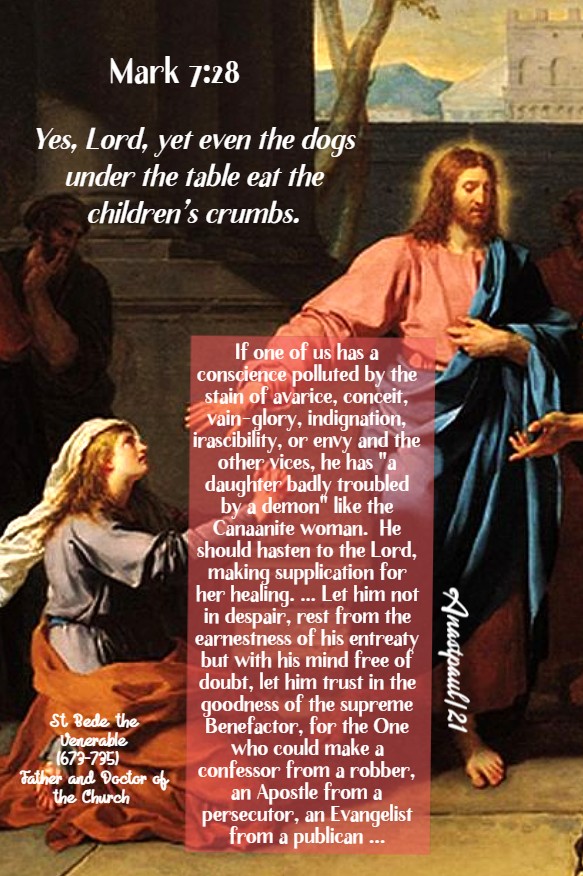
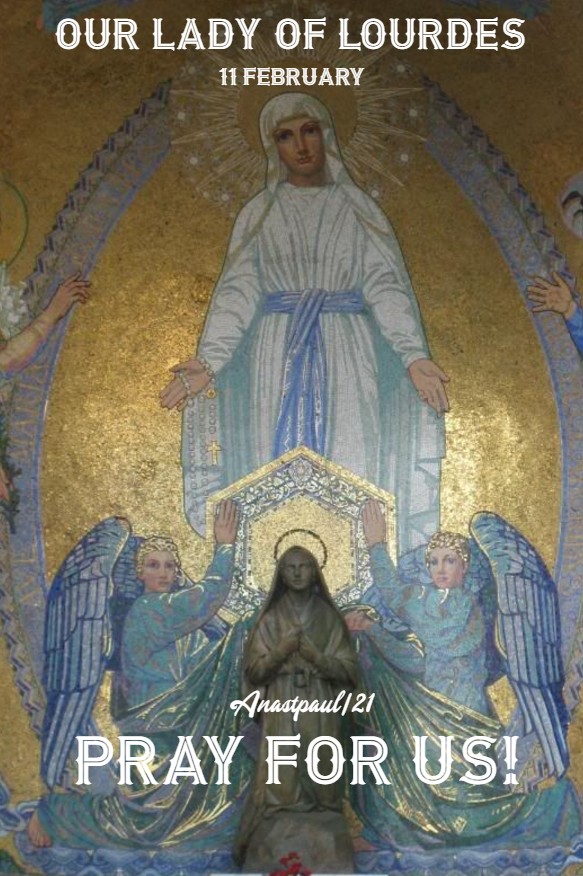
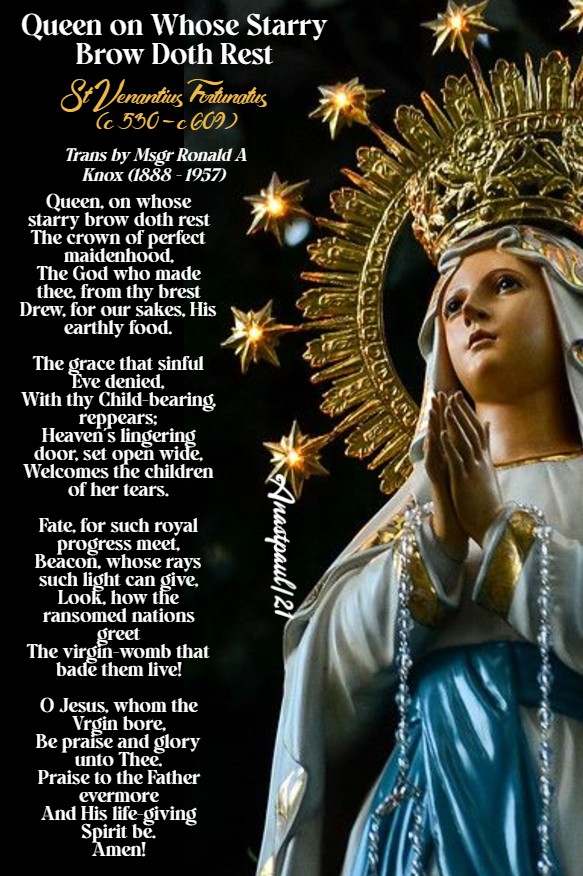

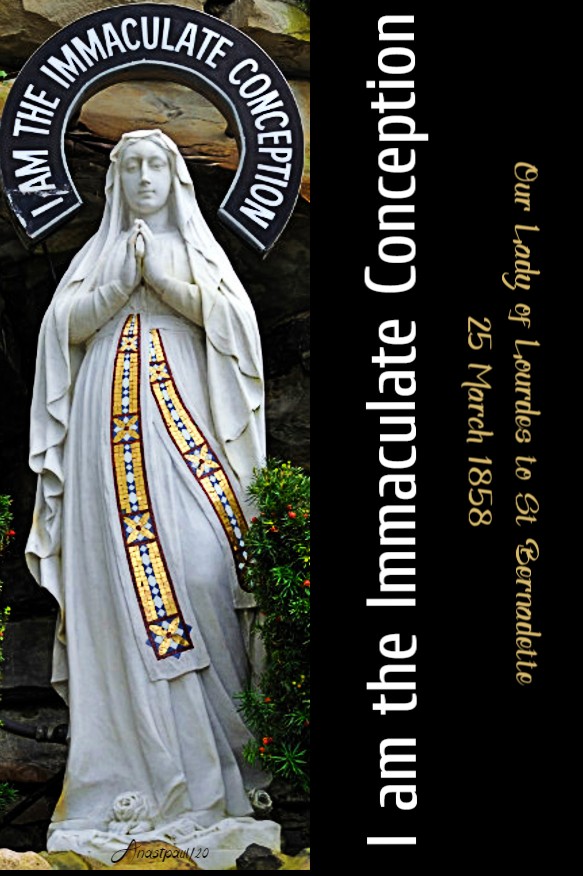
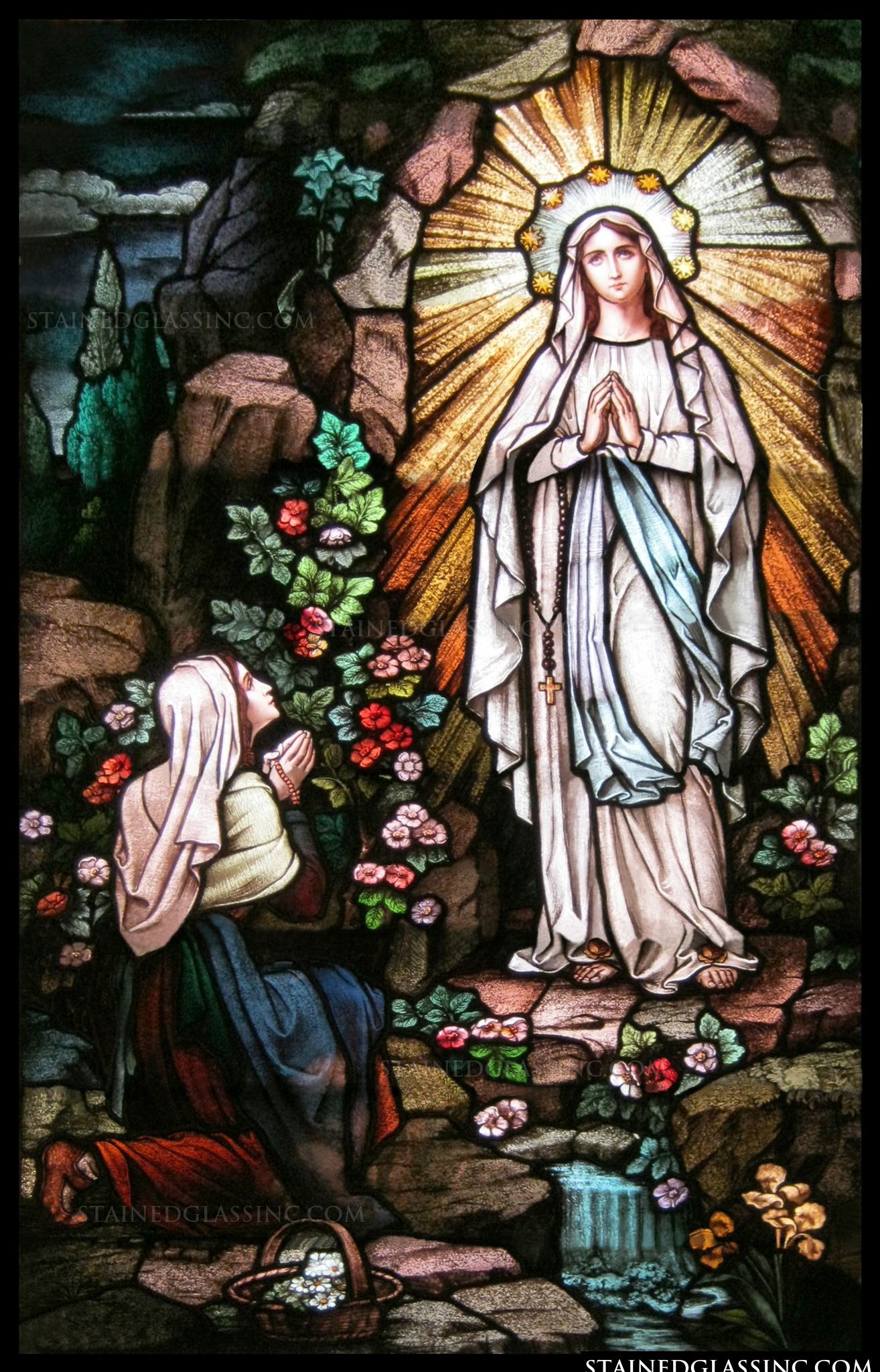
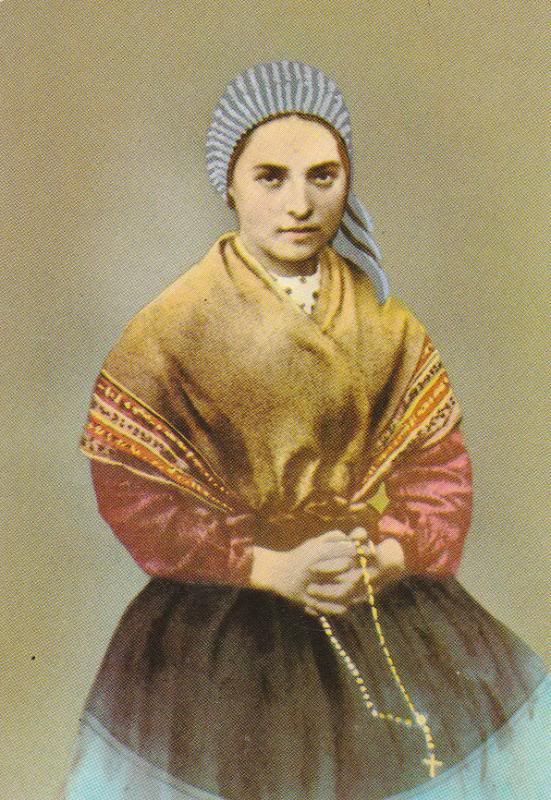
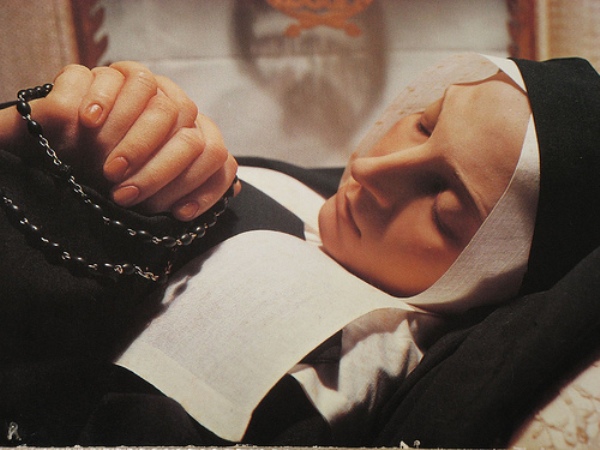
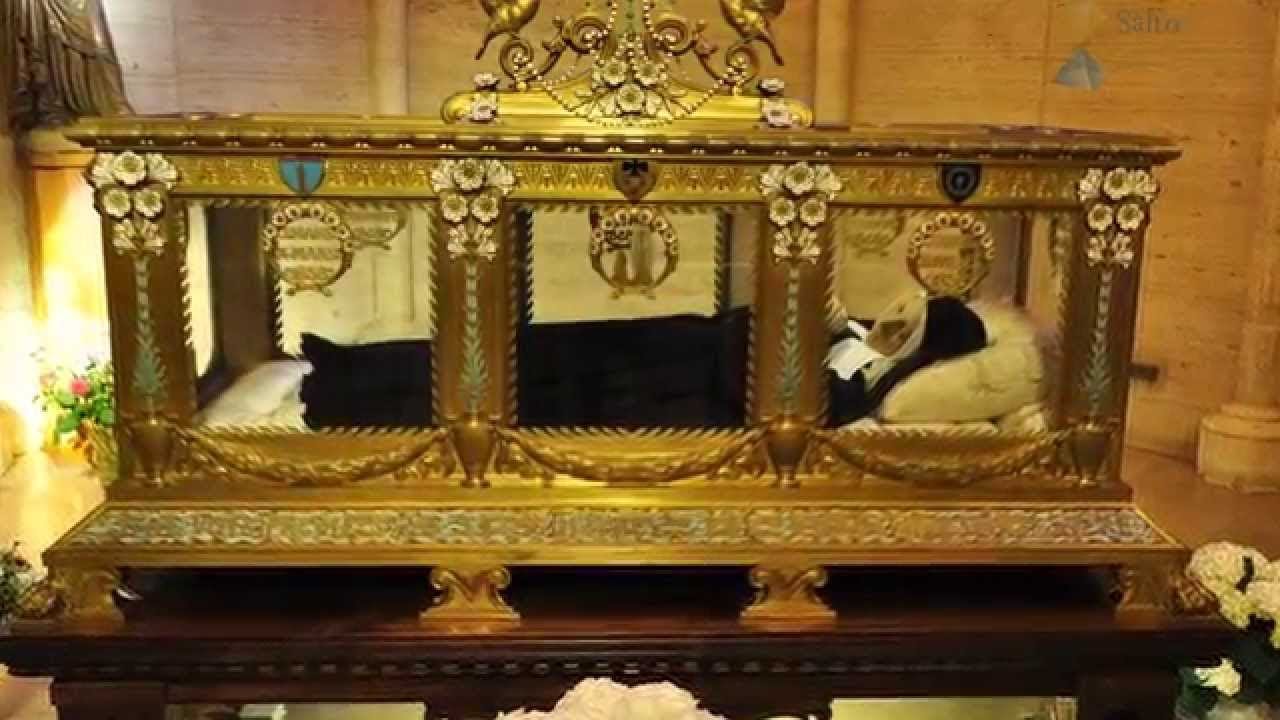


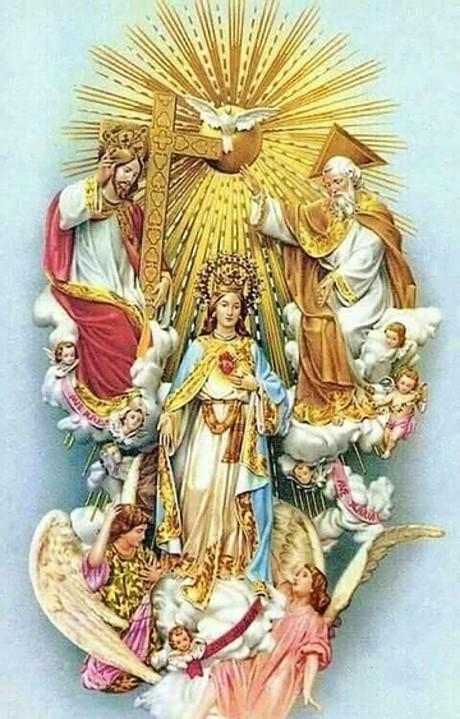
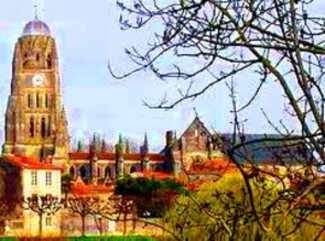
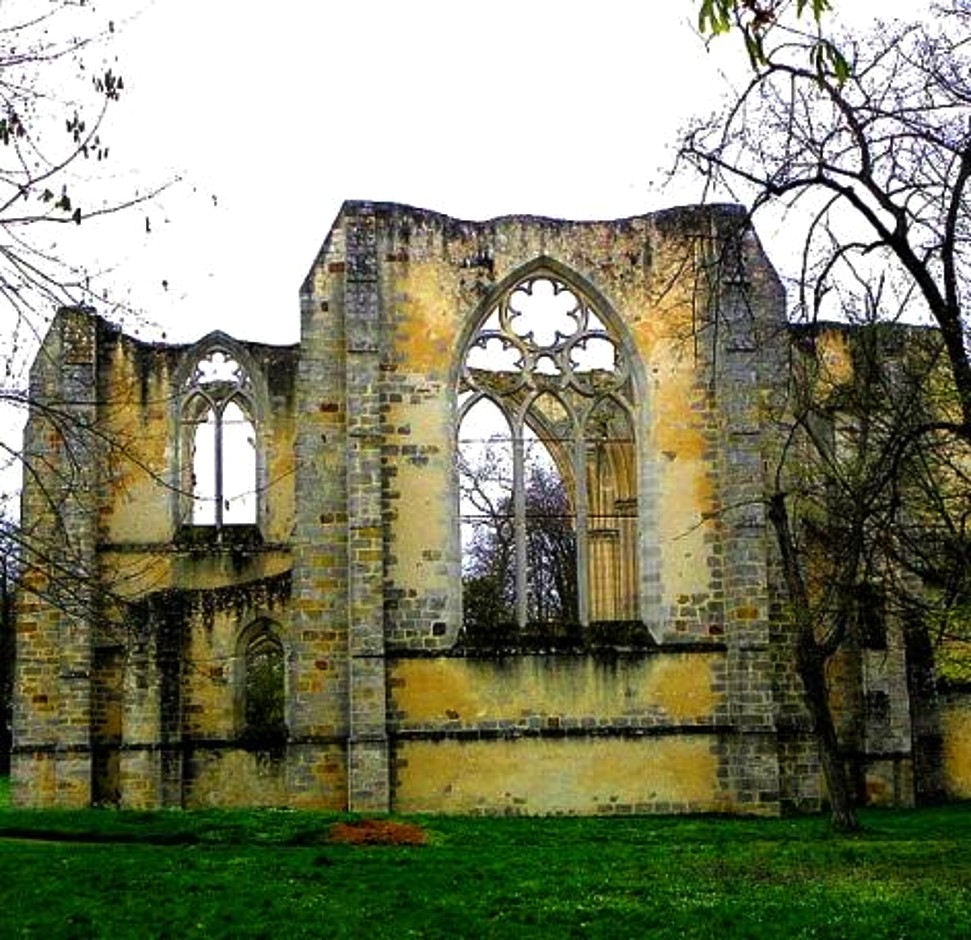
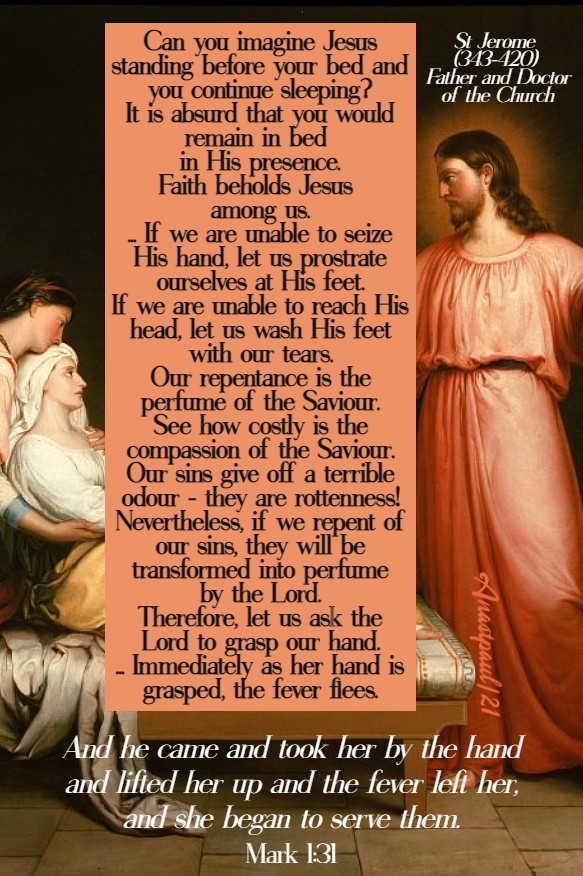


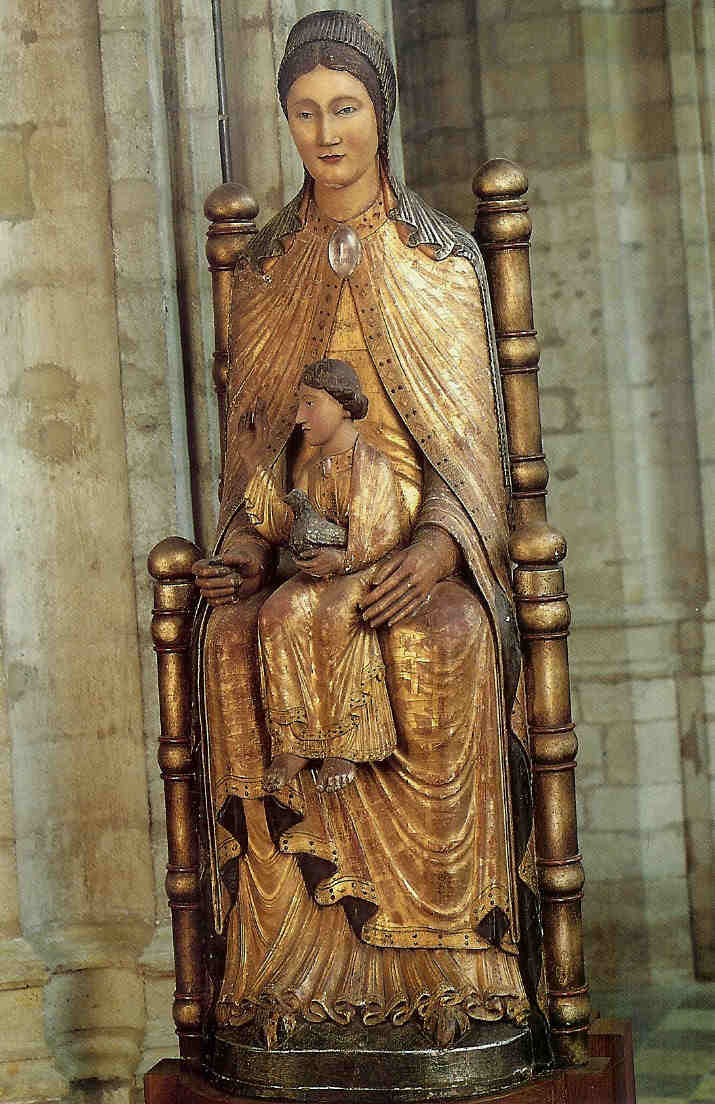

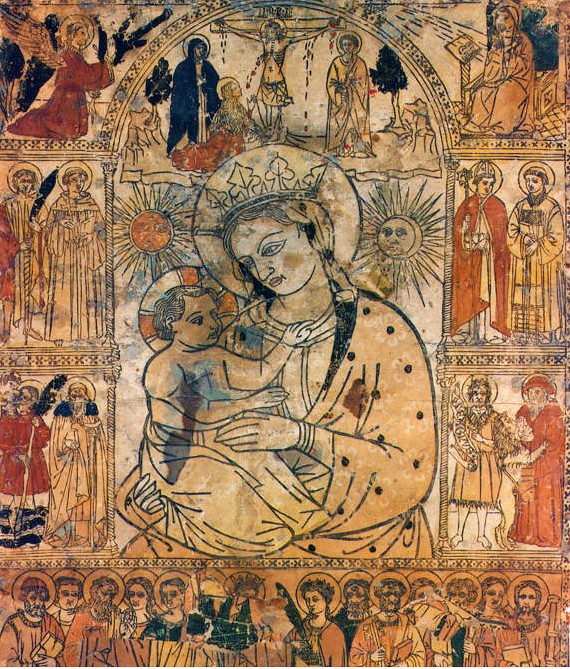


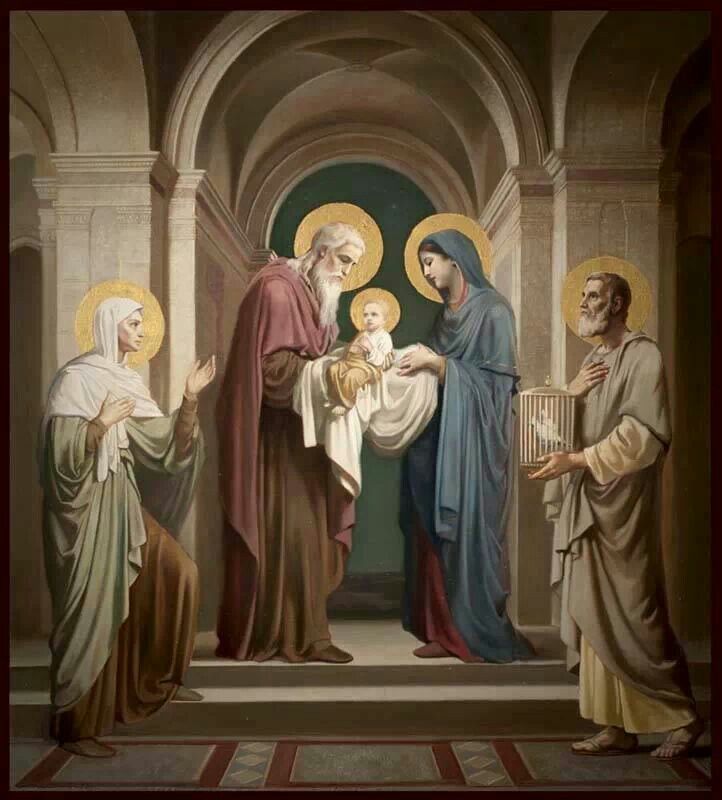


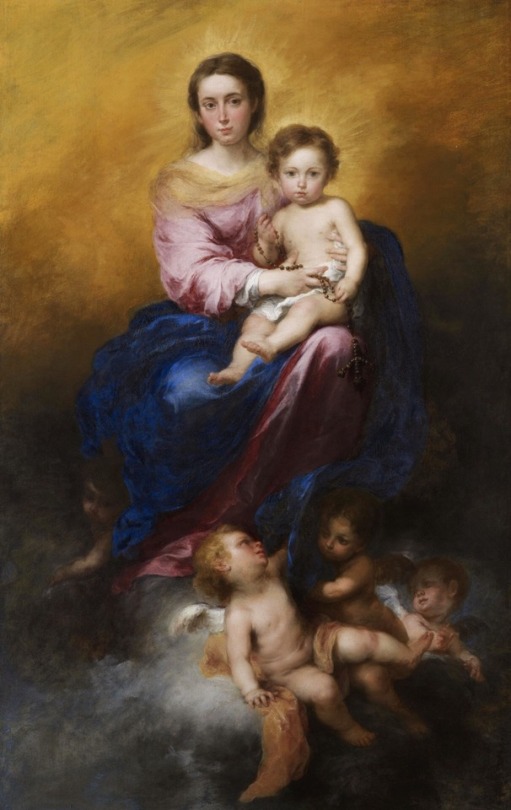
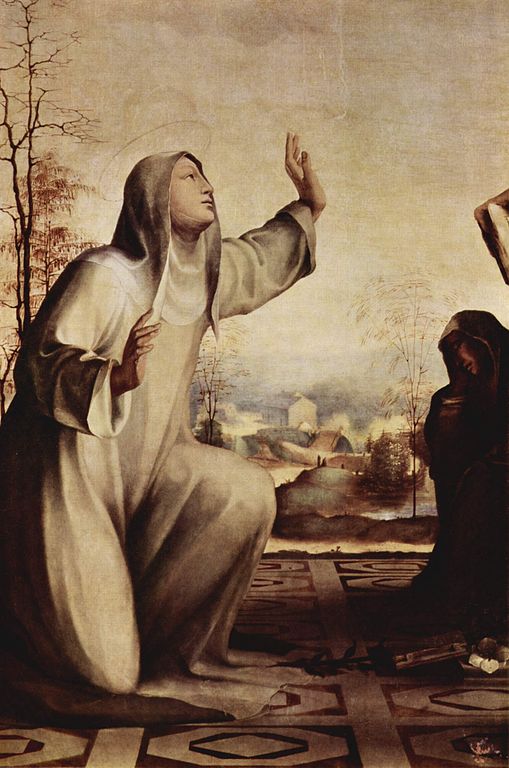
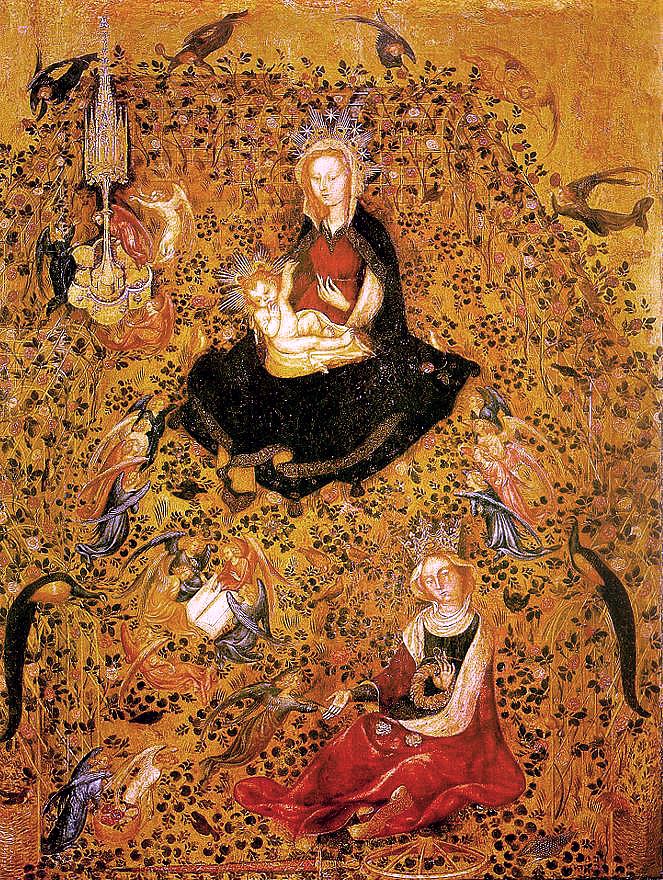


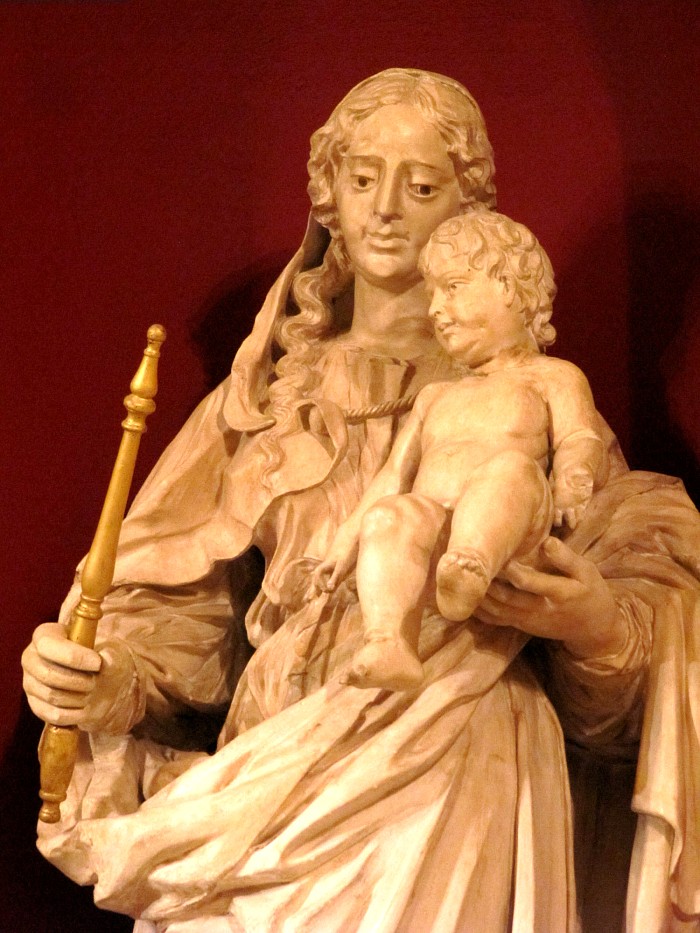


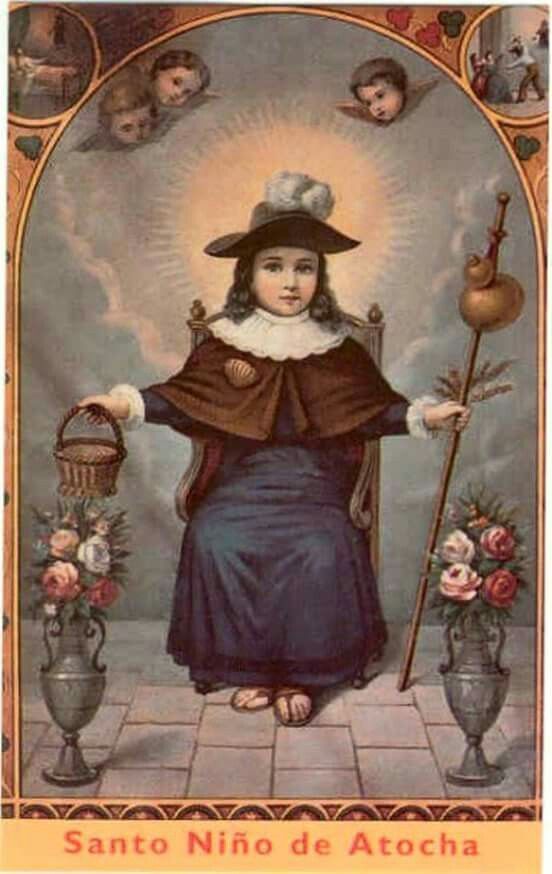
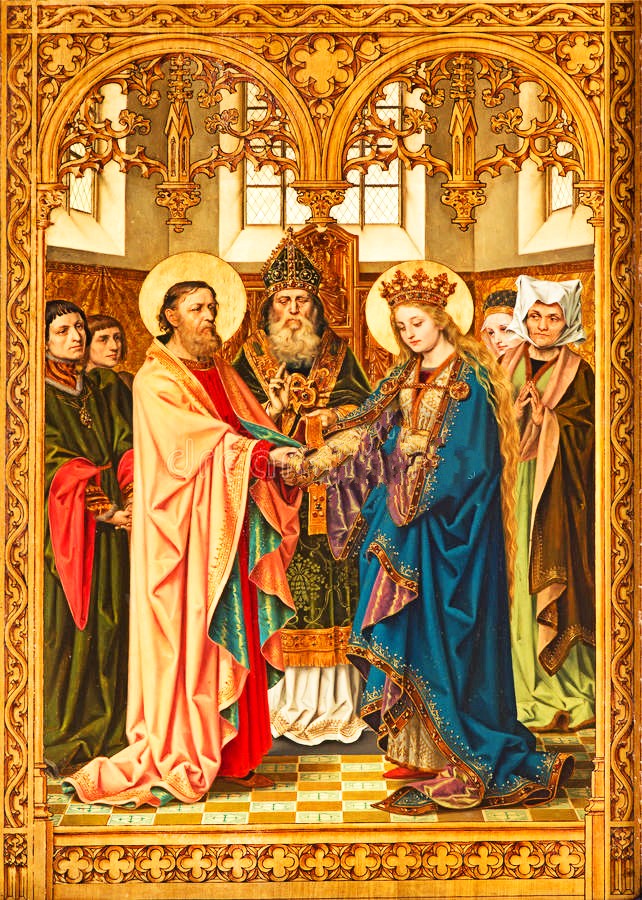
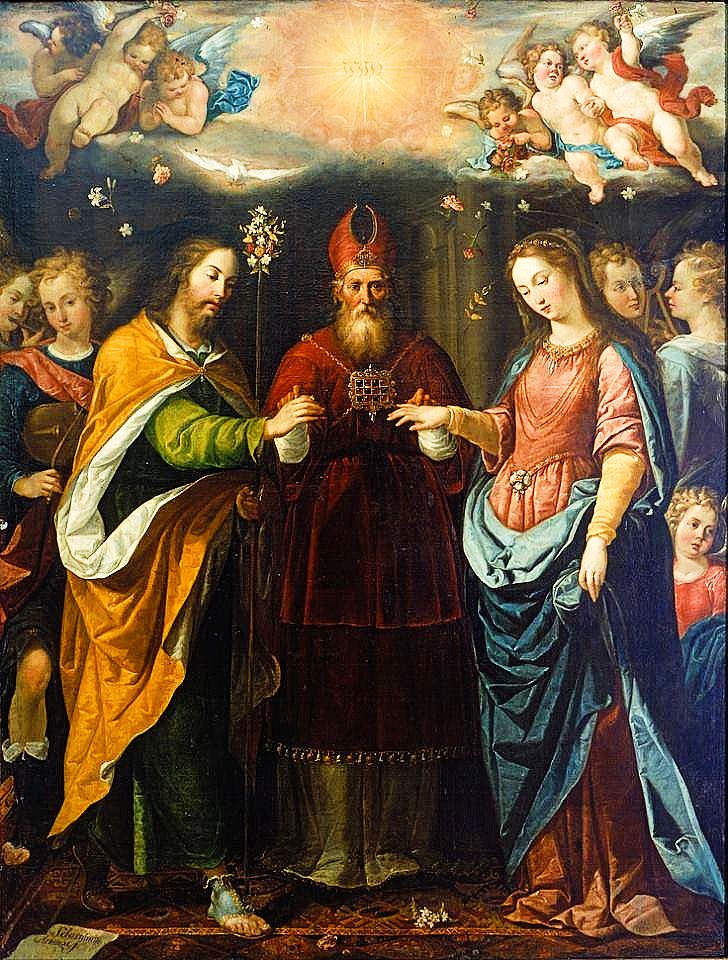
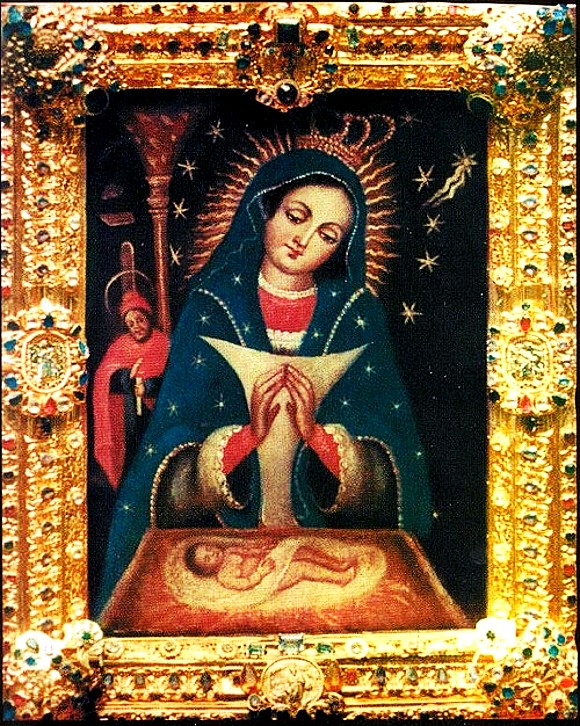

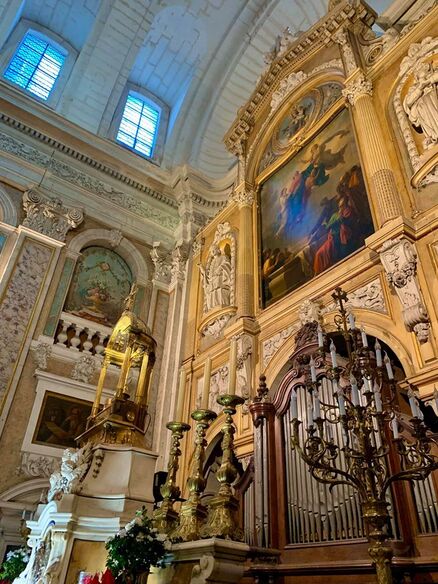
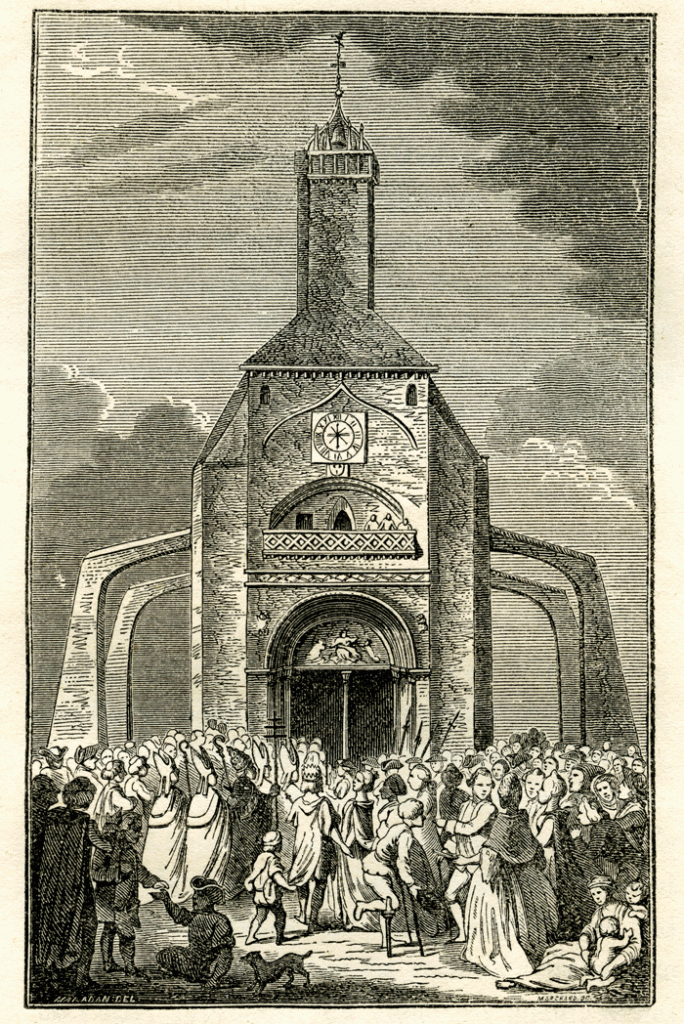
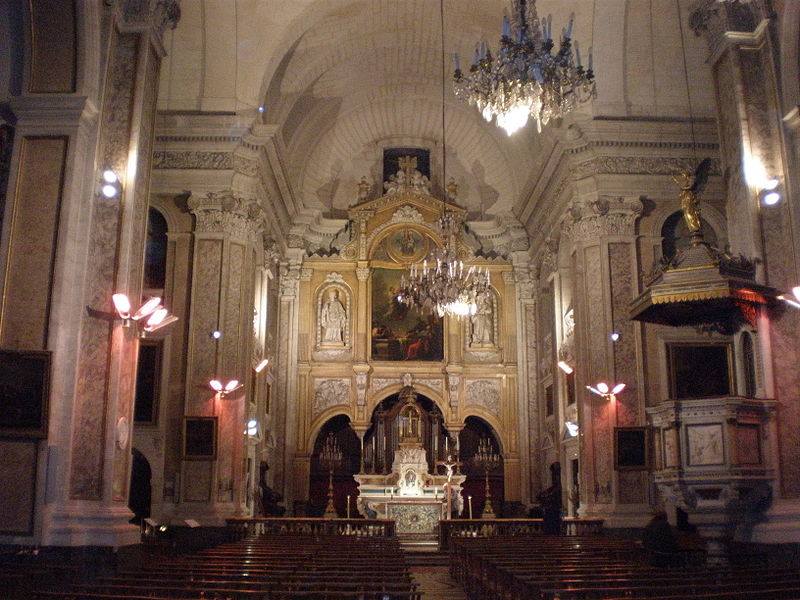
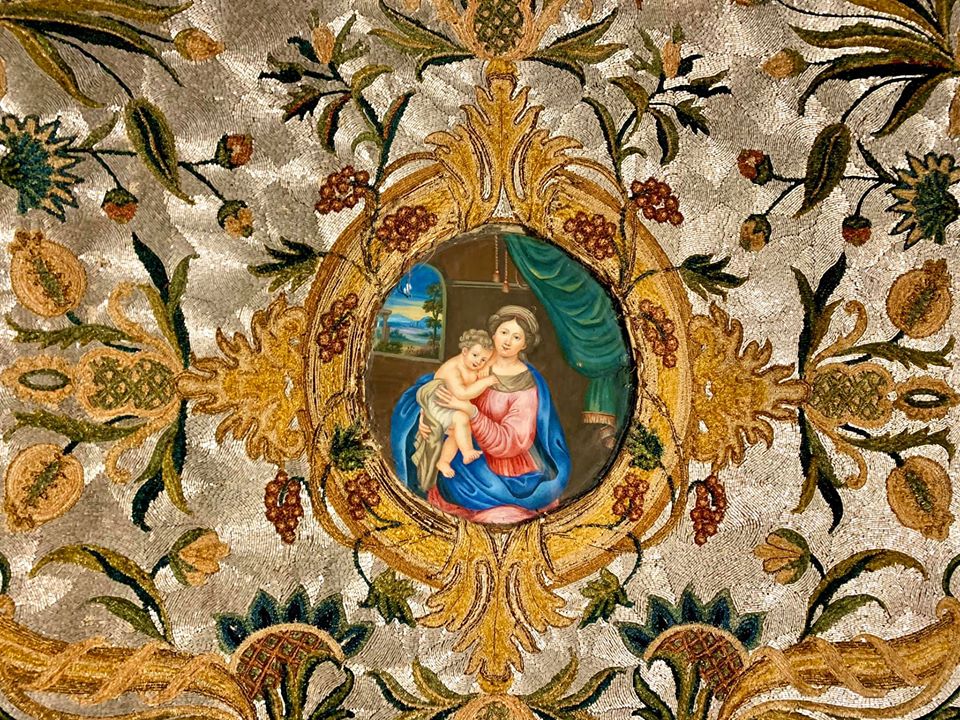
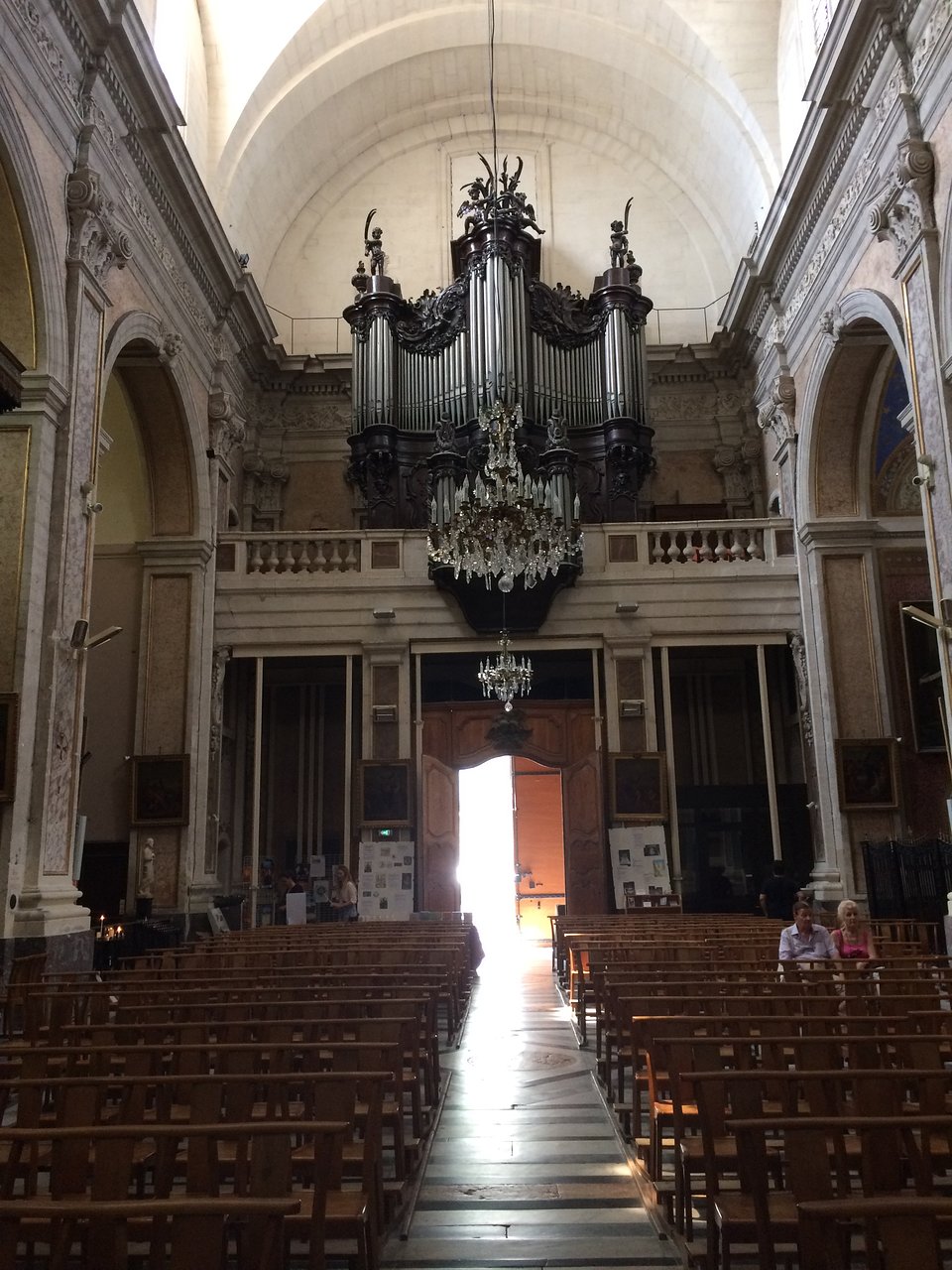


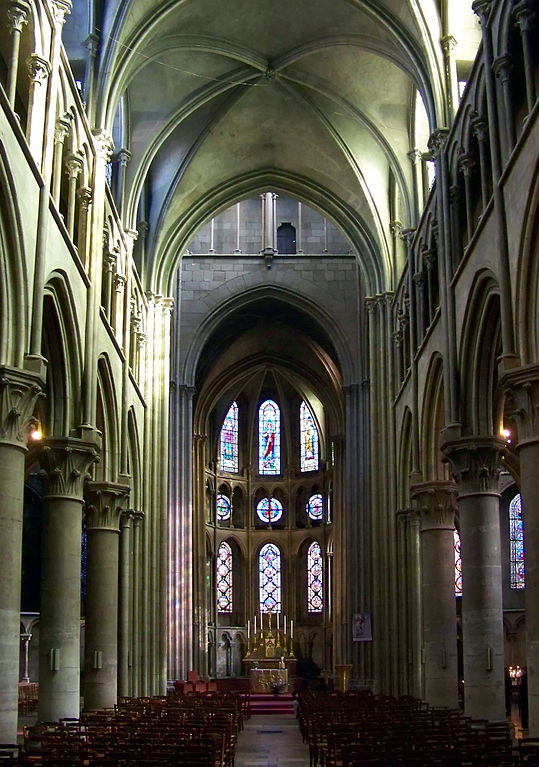
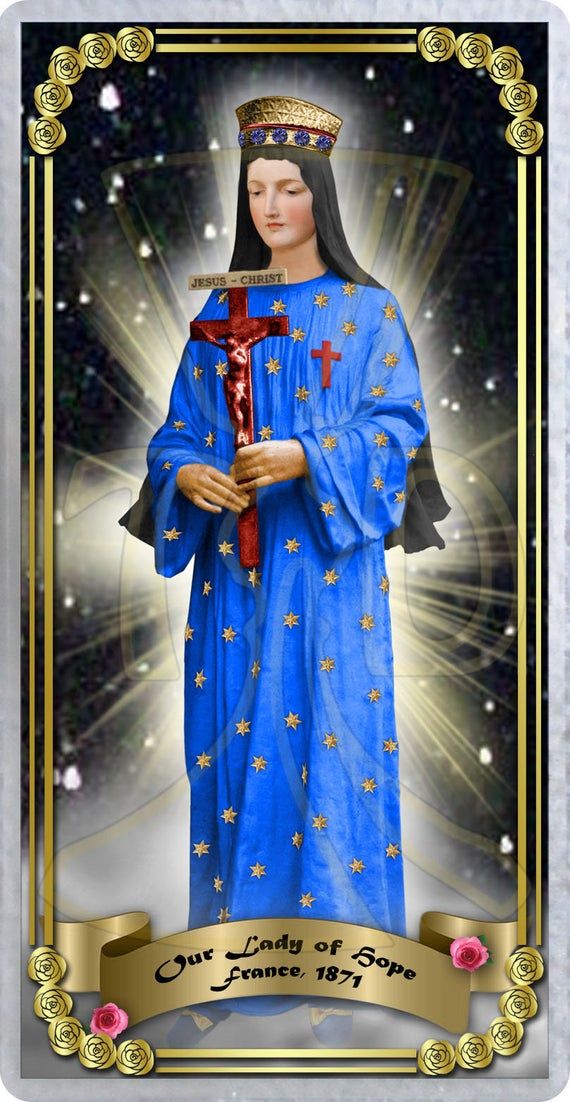
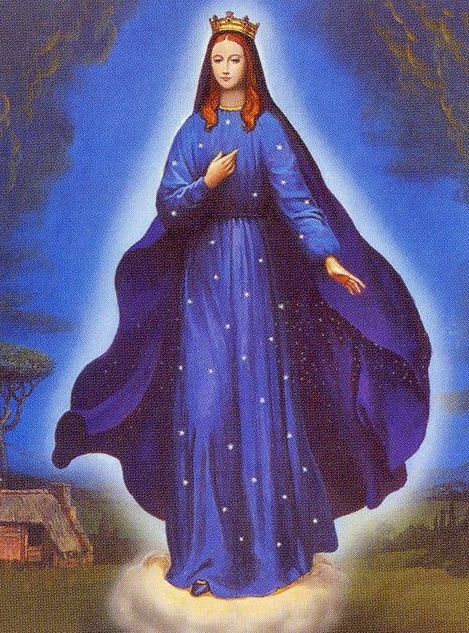
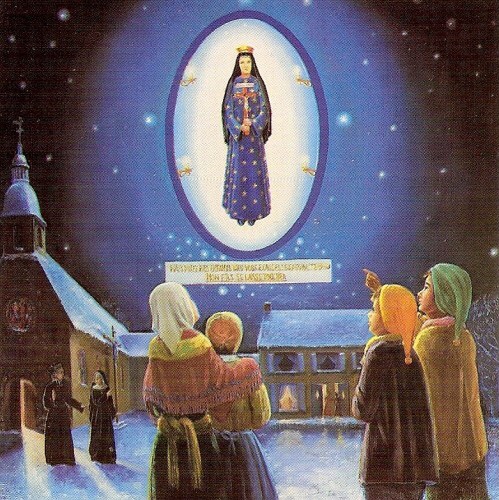
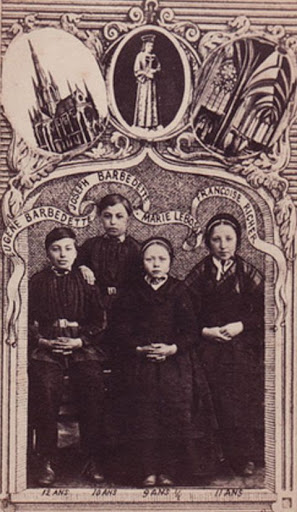

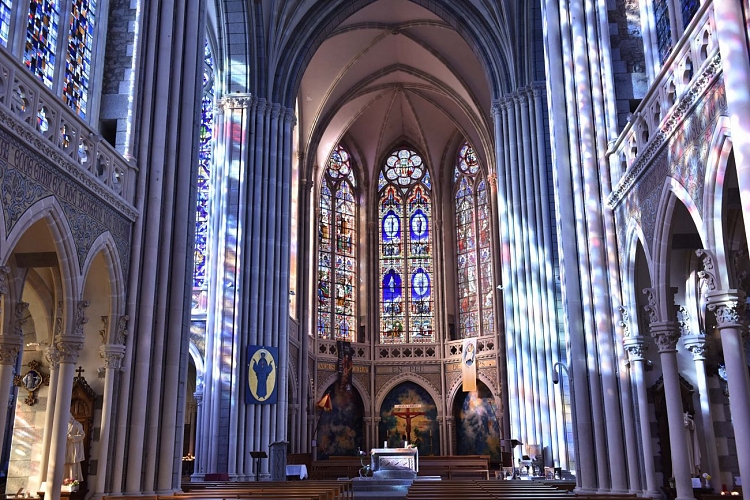
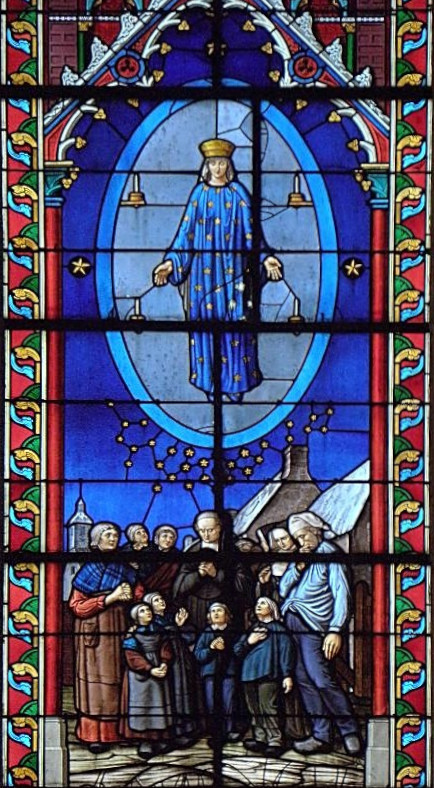






 AnaStpaul
You must be logged in to post a comment.