Posted in CATHOLIC-PRAYERS OF THE CHURCH, ONE Minute REFLECTION, PRAYERS of the CHURCH, QUOTES of the SAINTS, QUOTES on PRAYER, SAINT of the DAY, St PAUL!, The WORD

One Minute Reflection – 26 December –  The prayers of righteous men avail much. 

One Minute Reflection – 26 December – Feast of St Stephen the ProtoMartyr and The Second Day in the Christmas Octave, Readings:  Acts 6:8-10; 7:54-59, Psalm31:3-4, 6, 8, 16-17, Matthew 10:17-22

“… You will be hated by all for my name’s sake.” … Matthew 10:22

REFLECTION – “When the blood of Stephen was shed, Saul, then a young man, was standing by “consenting unto his death” and “kept the raiment of them that slew him” (Acts 22:20).   Two speeches are recorded of the Martyr in his last moments one, in which he prayed that God would pardon his murderers – the other, his witness, that he saw the heavens opened and Jesus on God’s right hand.   His prayer was wonderfully answered. Stephen saw his Saviour, the next vision of that Saviour to mortal man was vouchsafed to that very young man, even Saul, who share in his murder and his intercession.

Strange indeed it was and what would have been St Stephen’s thoughts could he have known it!   The prayers of righteous men avail much.   The first Martyr had power with God to raise up the greatest Apostle.   Such was the honour put upon the first-fruits of those sufferings, upon which the Church was entering.   Thus, from the beginning, the blood of the Martyrs was the seed of the Church.” … St John Henry Newman (1801-1890) Cardinal, Theologian, Apologist – Parochial and Plain Sermons II #9matthew 10 22 you will be hated by all - st stephen - the prayers of righteous men - st john henry newman 26 dec 2019.jpg

PRAYER –
C. By the merits and prayers of blessed Stephen
R. Be merciful, O God, to Your people

Almighty and everlasting God, who consecrated the first-fruits of Your martyrs in the blood of blessed Stephen the deacon, grant, we beg You, that he may pray for us, even as he prayed for his persecutors, to our Lord Jesus Christ Your Son, who lives and reigns, world without end.  AmenPrayer-for-the-feast-of-st-stephen-26-dec-2018 and one min refl 2019.jpg

Posted in BREVIARY Prayers, CATHOLIC-PRAYERS OF THE CHURCH, FEASTS and SOLEMNITIES, HYMNS, Our MORNING Offering, PRAYERS of the CHURCH, PRAYERS to the SAINTS, SAINT of the DAY

Our Morning Offering – 26 December – Help us, Holy Stephen

Our Morning Offering – 26 December – Feast of St Stephen the ProtoMartyr and The Second Day in the Christmas Octave

Help us, Holy Stephen
Breviary Prayer/Hymn
for the Feast of St Stephen

Jesus the Christ-Child brought new life to all men
And in His Manhood, conquered death and evil,
Risen, resplendent, in the Father’s glory
He reigns forever.

Stephen the Deacon was the first to follow
Christ’s great example, done to death by sinners,
Though all his actions and his words were prompted
By the Lord’s Spirit.

Enemies’ anger destined him to perish,
Stoned by his hearers, victim of their fury,
Yet like his Saviour, in his dying moments
Pleading their pardon.

Witness to Jesus, help us, holy Stephen,
Mourning and contrite to attain the Kingdom,
Gain us the graces which we need to bring us
Safely to heaven.

Of the same nature as the blessed martyrs,
Let us sing praises to our God Almighty,
Who honoured Stephen with a martyr’s glory,
First among thousands.
Amenhelp us holy stephen - 26 dec 2019 st stephens feast breviary hymn.jpg

Posted in SAINT of the DAY

Saint of the Day – 26 December – Saint Vincenza Maria Lopez (1847- 1890)

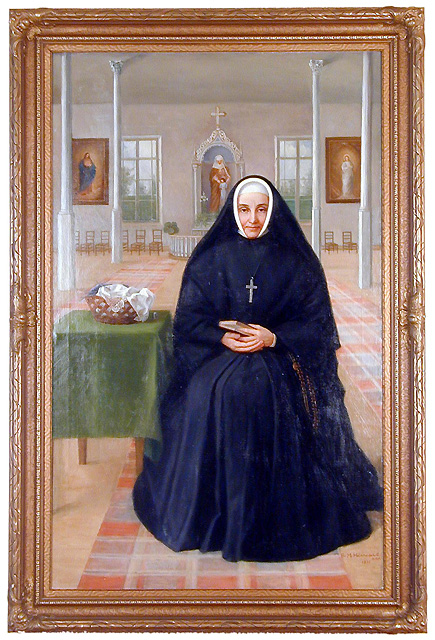
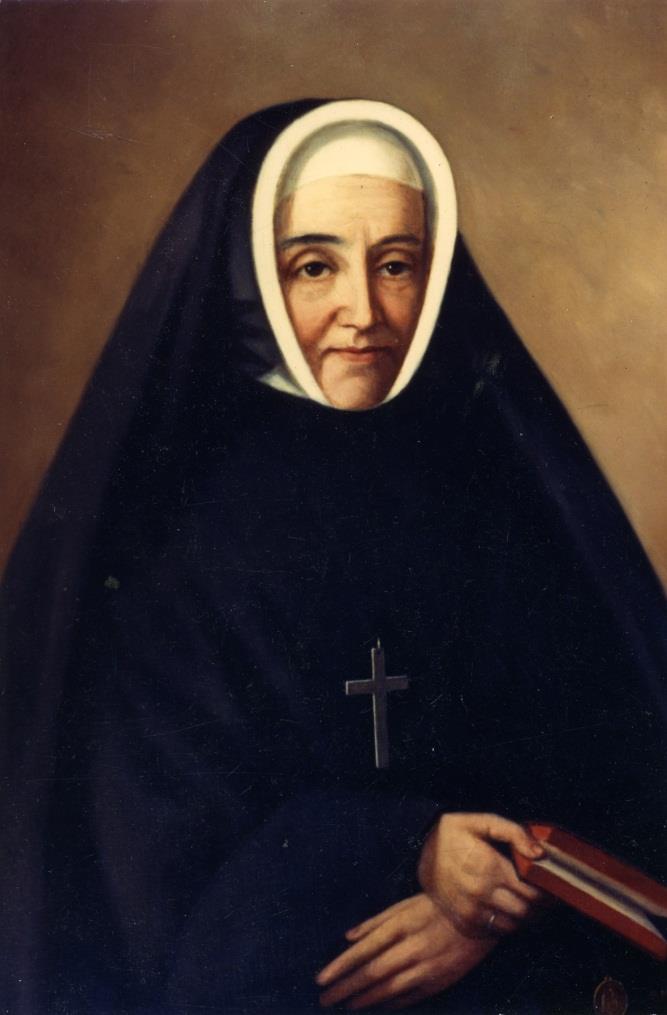
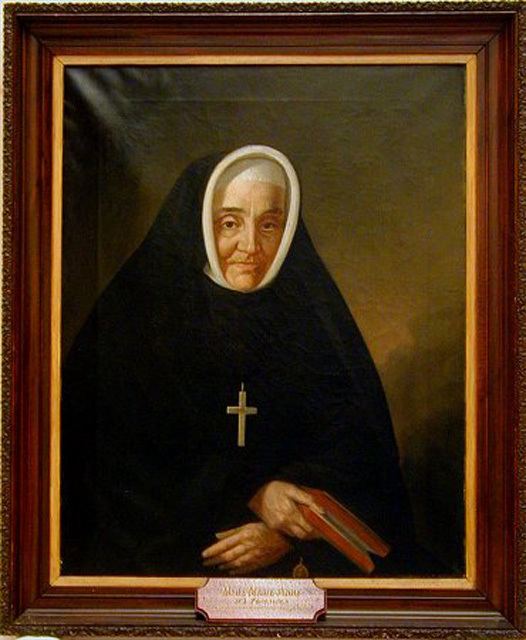
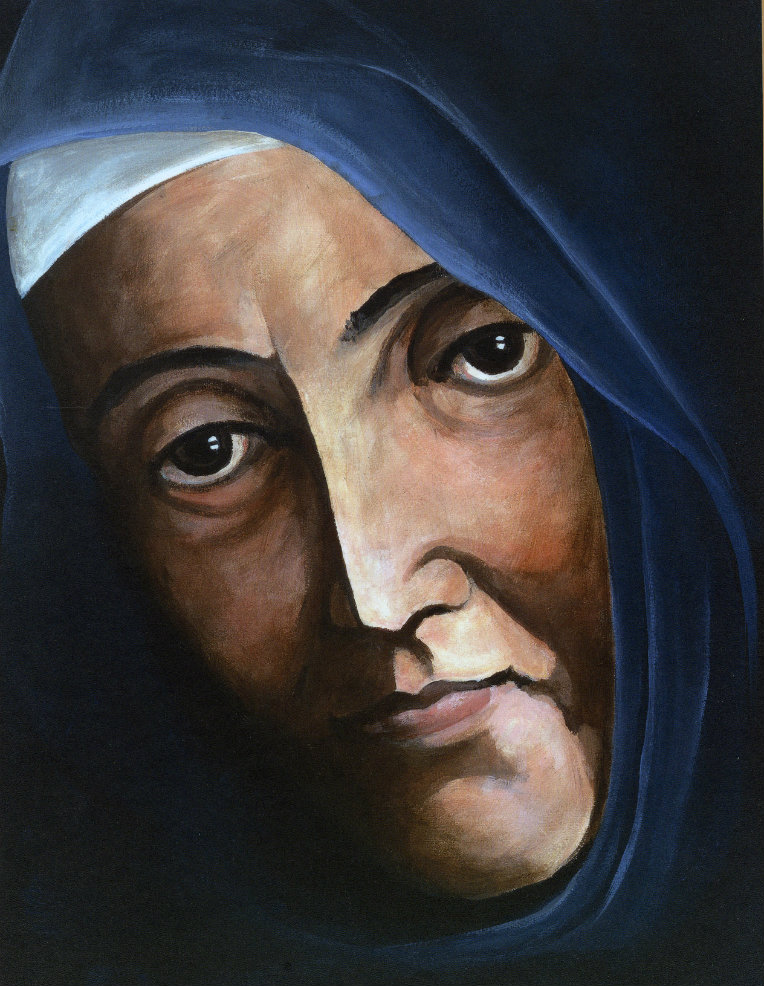
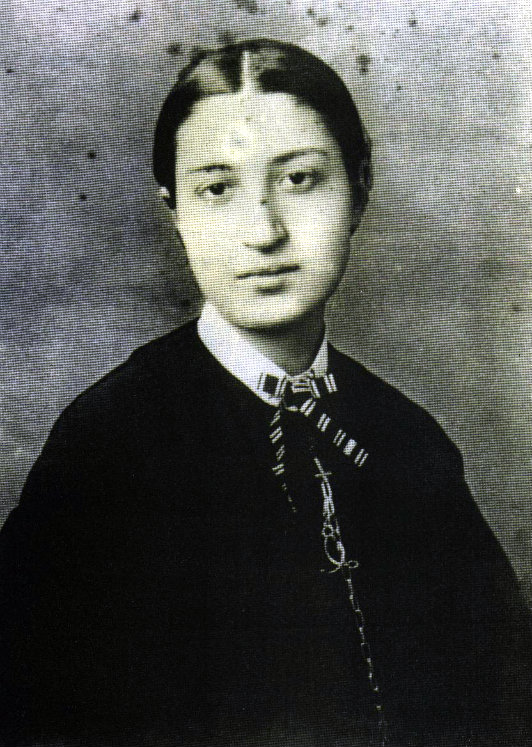
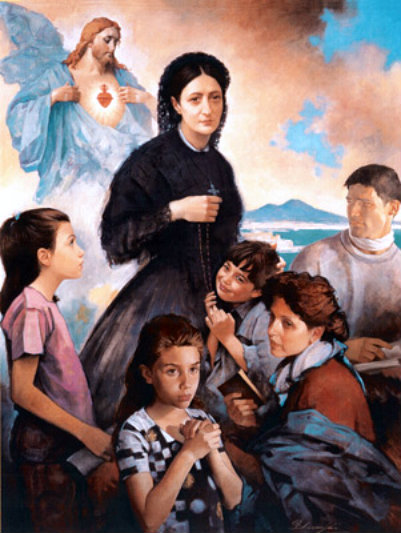
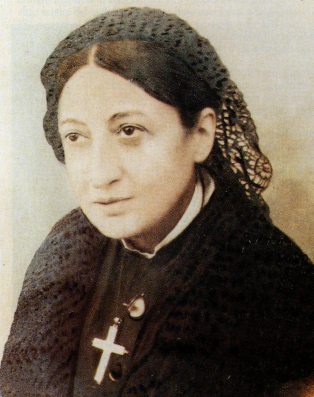
Saint of the Day – 26 December – Saint Vincenza Maria Lopez (1847- 1890) professed religious and the founder of the Daughters of Mary Immaculate.    Born as Vincenza Maria Lopez y Vicuña on 24 March 1847 in Cascante, Navarra, Spaind and died on 26 December 1890 (aged 43) in Madrid, Spain of natural causes.   She is the Patron of the Order she founded.st VicentaLopezVicuña.jpg

Her order was dedicated to administering to “working girls”, or young women in domestic employment and she took the view that these housemaids and other domestic servants needed care, with a particular emphasis on girls who suffered abuse.

Young working women, especially those who earn their living in today’s large cities, are subject to many temptations regarding faith and morals.   Saint Vincenza Maria Lopez dedicated her life to mothering such working girls.   In fact, she found the work a complete delight and declared herself ready to suffer anything, even death, rather than abandon this apostolate.

Vincenza was thus a social activist on behalf of women workers, even as her contemporary, Blessed Adolf Kolping (1813-1865), was a social activist on behalf of working men.   Both dealt with people exposed to those trials of the marketplace that became acute during the Industrial Revolution.

This “foster mother” was a Spaniard, born at Cascante, in Navarre, to devout middle-class parents.   In 1854 the Lopezes sent their daughter to Madrid for schooling, and from that time on she became a Madrilena.   She lived with her aunt, Eulalia y Vicuna and this admirable women set her an example that shaped her whole adult life and her growth in holiness.

Eulalia had already established a hospice for jobless young servant girls.   Vincenza was attracted by this sort of charity.   Realising its necessity, she worried what would become of the hospice if anything happened to her aunt.   At 19, increasingly convinced that she herself was called to the religious life in its “active” rather than contemplative form, she took a private vow not to marry.

Senor and Senora Lopez, despite their piety, were not pleased with their daughter’s decision.   They wanted her either to marry or to join the Visitation nuns, a cloistered order.   When Vincenza refused their proposal, they ordered her to come back to Cascante.   Apparently they thought that the only remaining alternative was for her to live at home as a spinster.

She did return home.   When she fell ill, however, her parents became concerned and rather ashamed of themselves, so they eventually allowed her to go back to Madrid.   Now Vincenza’s plans began to mature.   In 1871 she and her aunt and a few other women on the hospice staff began to lead a community religious life.   Then in 1876, with the assistance of a Jesuit, Father Hidalgo y Soba, they drew up a rule of life that would commit them to conduct homes for working girls and teach them domestic arts.   Thus was founded the Daughters of Mary Immaculate for Domestic Service.   Vincenza and three others received the veil from the bishop of Seville that year.   They pronounced their vows as sisters two years later.st vincza lopez.jpg

Since the hospice was already flourishing, the Daughters had merely to continue and expand their efforts.   Further homes, hostels, technical schools, canteens and other institutes were established as needed and the work spread throughout Spain and to other European countries and even into South America.   After her death, Africa would welcome the Sisters.   Aunt Eulalia continued to contribute her whole time and fortune. But Mother Vincentia’s general plan of financing, positively excluded her sisters’ operating regular schools, in order to earn support for their charitable work.   She chose the harder way – begging.

Vincenza’s Daughters had a motto:  “Steady employment is the safeguard of virtue.” What was true of their working girls is equally true of the thousands of youths who run away each year to the large cities for want of occupations and then fall into vice.   Let us not forget to help such idle youth by helping the good people, who try to do for them today, what Saint Vincenza tried to do in her time.

The task she undertook was not easy.   Not only were finances a problem, her own health was always poor and she was only 43 when she died.   But she would not, for all the world, have chosen any other role.   “I count myself happier in the service of these my sisters, than the great ones of this world, in the service of their lords and kings.”

Venerable Pope Pius XII presided over her Beatification on 19 February 1950 and St Pope Paul VI Canonised this modern woman in 1975.   She is an exemplar of social charity for our times and a wonderful icon of Catholic Social Teaching.st vincenza maria lopez y vicuna

Posted in FEASTS and SOLEMNITIES, SAINT of the DAY

The Second Day in the Christmas Octave, the Feast of St Stephen the ProtoMartyr and Memorials of the Saints – 26 December

St Stephen the ProtoMartyr (c 05-c 34) (Feast) The Second Day in the Christmas Octave
St Stephen’s Story:
https://anastpaul.wordpress.com/2017/12/26/saint-of-the-day-st-stephen-the-first-martyr-26-december-the-second-day-in-the-octave-of-christmas/

St Abadiu of Antinoë
Bl Agata Phutta Bi
Bl Agnès Phila
St Amaethlu of Anglesey
St Archelaus of Mesopotamia
Bl Bibiana Khamphai
Bl Cecilia Butsi
Bl Daniel of Villiers
St Dionysius, Pope
St Euthymius of Sardis
St Evaristo of Constantinople
Bl Giovanni Orsini
Bl Jean of Hainaut
Bl Lucie Khambang
St Margaret of Hohenfels
Bl Maria Phon
Bl Marinus of Rome
Bl Paganus of Lecco
Bl Pierre Boffet
St Tathai of Wales
St Theodore the Sacristan
St Vincenza Maria Lopez (1847- 1890)
St Zeno of Gaza
St Pope Zosimus

Posted in CHRISTMASTIDE!, FEASTS and SOLEMNITIES, SAINT of the DAY

The Nativity of the Lord, Jesus Christ and Memorials of the Saints – 25 December

The Nativity of the Lord, Jesus Christ (Solemnity)
Celebration of the anniversary of the birth of Our Lord.   In the earliest days of the Church there was no such feast, the Saviour’s birth was commemorated with the Epiphany by the Greek and other Eastern Churches.   First mention of the feast, then kept on 20 May, was made by Clement of Alexandria c 200.   The Latin Church began c 300 to observe it on 25 December, though there is no certainty that Our Lord was born on that day.   Priests have the privilege of saying three Masses, at midnight, daybreak and morning.   This was originally reserved to the Holy Father alone – beginning about the 4th century he celebrated a midnight Mass in the Lateran Basilica (in which according to tradition, the manger of Bethlehem is preserved), a second in the church of Saint Anastasia, whose feast comes on 25 December and a third at the Vatican Basilica.   Many peculiar customs of the day are the outcome of the pagan celebrations of the January calender.   The Christmas tree, of which the first known mention was made in 1605 at Strasbourg, was introduced into France and England in 1840.   The feast is a holy day of obligation, preceded by the preparatory season of Advent and by a special vigil – should it fall on a Friday it abrogates the law of abstinence.   Today’s Gospel is the prologue of John (2019/20 Year A).

https://anastpaul.com/2018/12/25/the-solemnity-of-the-nativity-of-our-lord-jesus-christ-25-december/

https://anastpaul.wordpress.com/2017/12/25/25-december-the-solemnity-of-the-birth-of-our-lord-jesus-christ-2/

St Adalsindis of Hamay
St Alburga of Wilton
St Anastasia of Sirmium
Bl Artale
St Basilée of the Via Latina
Bl Bentivoglio de Bonis
Bl Diego de Aro
St Eugenia of Rome
St Fulk of Toulouse
Bl Jacopone da Todi
St Jovin of the Via Latina
Bl Maria Therese von Wüllenweber
Bl Matthew of Albano
Bl Michael Nakashima Saburoemon
Bl Nera
St Romulus of Berry

Martyrs of Nicomedia: 20,000 Christians martyred by order of Diocletian. They were reported to have all been in the single basilica to celebrate Christmas. While there unquestionably was an endless series of martyrs under Diocletian, it’s likely the ancient sources exaggerated the numbers of this incident. And as the Christmas holy day was not celebrated in the East in 303, they were probably gathered for another feast. They were burned alive in 303 in the basilica of Nicomedia.

Posted in SAINT of the DAY, VATICAN Resources

Saint of the Day – 24 December – Saint Paola Elisabetta Cerioli (1816-1865)

Saint of the Day – 24 December – Saint Paola Elisabetta Cerioli (1816-1865) Widow, Founder of the Institute of the Sisters of the Holy Family, the male branch – the Religious of the Holy Family, of which orders she is the Patron, Apostle of Charity – born Costanza Cerioli on 28 January 1816 at Soncino, Cremona, Kingdom of Lombardy-Venetia, Italy and died on 24 December 1865 aged 49, at Bergamo, Italy.

Costanza Cerioli was born on 28 January 1816 in Soncino, Italy, the last of 16 children born into the noble family of Francesco Cerioli and Francesca Corniani.   She was a frail child plagued by a heart condition throughout her life.Santa-Paola-Elisabetta-Ceriol-c.png

Comfort found in God alone:
Costanza lived at home until she was 11 years old, when she was sent off to school in Bergamo;  here she remained for five years, suffering terribly from the loneliness of being away from home.   But this experience helped her grow to depend on God, finding her comfort in Him alone.

At age 19, Costanza returned to Soncino where a planned marriage awaited her to the 59-year-old Gaetano Busecchi, widower of a countess, was set to be her husband.   Seeing it as God’s will, she accepted this proposal and was married on 30 April 1835.

Her marriage lasted 19 years and was marked by suffering on all sides, her husband’s difficult character and poor health weighed on her and three of the four children that Costanza gave birth to, died prematurely;  Carlo, her greatest “consolation”, lived to be 16.

Before his death due to serious illness in January 1854, Carlo spoke these prophetic words to his mother:  “Mama, do not cry… the Lord will give you other children”.   At the end of that same year, on 25 December, Gaetano also died.

This marked a dark period for Costanza, causing a profound existential crisis.   Never had she found herself so alone and abandoned, her life so seemingly senseless.   It was during this time that the words spoken by her son became a constant echo in her soul and sustained her, becoming her “guiding light”.

She sought spiritual direction and entrusted her tragedies and entire life into the hands of God, asking constantly for the grace to live her life with eyes of faith.ST PAOLA ELIZABETTA.jpg

Spiritual maternity:
Costanza continued to feel the need to express her “maternity” and to “give of herself” to others, as she had done with Carlo.   She was now 38 years old and, inspired by the Gospel, understood that charity was the only truly meaningful road.

She thus began to visit and assist the sick and share her belongings with the poor and orphans.   Looking into the searching and frightened eyes of the orphaned children who begged along the streets inspired her to make even more courageous decisions.

She began to give all her wealth and belongings to the poor and opened her home to welcome orphans.   Her family and neighbours would remark:  “The anguish that this devout woman passed through must have driven her crazy…  she does not realise what she is doing”.

The money she received once she sold her jewellery was used to purchase materials for the orphanage.   Even before giving away all her goods, she had made the most important decision – to give her entire self to God, making a perpetual vow of chastity on 25 December 1856.   And with her confessor’s approval, she made vows of poverty and obedience on 8 February 1857.

It was not long before other young women desired to join Costanza and “follow” in her works of charity.   God’s plan was unfolding before her eyes with greater clarity;,in silence, prayer and recollection she began to draw up the Rule for her “work.”st paola elisabetta cerioli.jpg

Sisters of the Holy Family:
On 8 December 1857, Costanza, “mother of many orphans”, founded the Institute of the Sisters of the Holy Family in Comonte, Italy.   She took the name “Sr Paola Elisabetta”, and summarised the charism of the Congregation in this way:

“The humility, simplicity, poverty and love of work found in the Holy Family of Nazareth is what makes up the specific spirituality of this Institute.   The Sisters that belong to it must strive to model themselves on this life, full of the recollection, hiddeness and with the same spirit of humble labour that Jesus, Mary and Joseph lived in this blessed home”.

From that day, Mother Paola dedicated herself to the growth and development of the religious community.   On 4 November 1863, in Villacampagna, a male branch was also founded by her, the Religious of the Holy Family.ST PAOLA CERIOLI.JPG

Under the protection of St Joseph:
With the House of Nazareth as the model of both branches, Mother Paola entrusted her “work” to the special protection of St Joseph and willed that the orphans under their care be known as the “sons and daughters of St Joseph”.

She was very attentive to the education of these parentless children and to the problem of poverty.   Her motherly spirit was limitless and she understood the importance of carefully and properly forming her religious sons and daughters, so that they would be able to love and educate well the children God placed under their care, these “neglected and lost ones”.

Mother Paola Elisabetta died unexpectedly in her home in Comonte on 24 December 1865.   She was 49 years old.

She was Beatified by Pope Pius XII on 19 March 1950, the Solemnity of St Joseph…. Vatican.va

Saint Paola was Canonised by St Pope John Paul II on 16 May 2004.

Posted in CHRISTMASTIDE!, SAINT of the DAY, The NATIVITY of JESUS

Vigil of the Nativity of the Lord and Memorials of the Saints – 24 December

24 December – Vigil of the Nativity of the Lord/Mass at Midnight
In many Western Christian traditions Midnight Mass is the first liturgy of Christmastide that is celebrated on the night of Christmas Eve, traditionally beginning at midnight when Christmas Eve gives way to Christmas Day.   This popular Christmas custom is a jubilant celebration of the Mass in honour of the Nativity of Jesus, even many of those Christian denominations that do not regularly employ the word “Mass” uniquely use the term “Midnight Mass” for their Christmas Eve liturgy.

Saint Thomas Aquinas wrote a commentary on these words and explained in his Summa Theologiae, “And from this the Mass derives its name … the deacon on festival days ‘dismisses’ the people at the end of the Mass, by saying: ‘Ite, missa est,’ that is, the victim [Jesus] has been sent to God through the angel, so that it may be accepted by God.”

St Adam the Patriarch
St Adela of Pfalzel
Bl Alberic of Gladbach
Bl Brocard of Strasbourg
St Bruno of Ottobeuren
St Caran of Scotland
St Delphinus of Bordeaux
St Emiliana and St Trasilla (died sixth Century)
Biography:
https://anastpaul.com/2018/12/24/saints-of-the-day-24-december-saints-tarsilla-and-emiliana-died-sixth-century-virgins/
St Euthymius of Nicomedia
St Eve the Matriarch
Bl Francesco dei Maleficii
St Gregory of Spoleto
St Hanno of Worms
Bl Ignacio Caselles García
St Irmina of Oehren
St Mochua of Timahoe
Bl Pablo Meléndez Gonzalo
St Paola Elisabetta Cerioli (1816-1865)
Bl Peter de Solanes
Bl Venerandus of Clermont

All the Holy Ancestors of Jesus: A commemoration of all the holy ancestors of Jesus Christ.
• Blessed Dionysius Roneo
• Blessed Philip Claro
• Blessed Giulio Pons
• Blessed Peter of Valladolid

Blessed Mercedarian Sisters – (6 beati): Six cloistered Mercedarian nuns at the convent of Vera Cruz in Berriz, Spain. Noted for their devotion to the rules of the Order and for their deep prayer lives.
• Blessed Anna Maria Prieto
• Blessed Anna de Arrano
• Blessed Orsola de Larisgoizia
• Blessed Maguna Mary
• Blessed Margaret
• Blessed Mary of the Assumption Sarria

Martyred Maidens of Antioch – (40 saints): A group of forty virgins martyred in the persecutions of Decius. None of their names have come down to us. They were martyred in 250 in Antioch, Syria.

Martyrs of Tripoli – (6 saints): A group of Christians martyred together, date unknown. The only details that have surived are six of the names – Drusus, Lucian, Metrobius, Paul, Theotimus and Zenobius. They were martyred in Tripoli, Libya.

Posted in CHRISTMASTIDE!, SAINT of the DAY

Thought for the Day – 23 December – Christmas, at least, is a good time to reject self-indulgence.

Thought for the Day – 23 December – The Memorial of St John of Kanty (1390-1473)

John was a country lad who made good in the big city and the big university of Kraków, Poland.   After brilliant studies he was ordained a Priest and became a Professor of Theology.   The inevitable opposition which saints encounter, led to his being ousted by rivals and sent to be a parish priest at Olkusz.   An extremely humble man, he did his best but his best was not to the liking of his parishioners.   Besides, he was afraid of the responsibilities of his position.   But, in the end, he won his people’s hearts.   After some time he returned to Kraków and taught Scripture for the remainder of his life.

John was a serious man and humble but known to all the poor of Kraków for his kindness.   His goods and his money were always at their disposal and time and again, they took advantage of him.   He kept only the money and clothes absolutely needed to support himself.   He slept little, ate sparingly and took no meat.   He made a pilgrimage to Jerusalem, hoping to be martyred by the Turks.   Later, John made four subsequent pilgrimages to Rome, carrying his luggage on his back.   When he was warned to look after his health, he was quick to point out that, for all their austerity, the fathers of the desert lived remarkably long lives.

The Roman Breviary distinguishes him with three hymns, he is the only confessor, not a bishop, who has been given this honour in the Roman Catholic liturgy.

John of Kanty is a typical saint.   He was kind, humble and generous, he suffered opposition and led an austere, penitential life.   Most Christians in an affluent society can understand all the ingredients except the last – for anything more than mild self-discipline seems reserved for athletes and ballet dancers.   Christmas, at least, is a good time to reject self-indulgence.

St John of Kanty, Pray for Us!st john of kanty - pray for us 2 - 23 DEC 2019.jpg

Posted in franciscan OFM, SAINT of the DAY

Saint of the Day – 23 December – Blessed Nicolás Factor-Estaña OFM (1520-1583)

Saint of the Day – 23 December – Blessed Nicolás Factor-Estaña OFM (1520-1583) commonly known as Nicolas Factor – Franciscan Priest, Painter, Preacher, Ascestic, Spiritual Director – born in 1520 in Valencia, Spain and died in 1583 of natural causes. His body is incorrupt.st nicholas FactorNicolau.jpg

Nicolás Factor was born in Valencia in Spain on 29 June 1520 as one of five children to a poor tailor.

In his childhood he fasted three times a week and donated all of his untouched food to the poor and also tended to the ill, including lepers.   His Moorish maid was so affected by this love that she learnt about the faith and converted to Roman Catholicism.

His father wanted him to follow his career as a tailor but Nicolas wanted to become a priest and a religious.

He entered the Order of Friars Minor on 30 November 1537 and was sometime later ordained as a priest, where he developed his talents as a painter via a range of devotional images.

Although Nicolas wanted be sent to missionary lands, he was instead sent to preach across his own region and became much sought-after, his homilies teaching and converting many.   He was known for undergoing rather severe self-mortifications before he gave each sermon.img-st-Nicholas-Factor.jpg

He also served as the spiritual director of the Santa Clara convent in Madrid at the request of the Princess of Portugal, Joan of Habsburg.   In April 1582 he relocated to the Santa Caterina convent in Onda and that November moved to another convent in Barcelona.

Blessed Nicolas died after a period of illness on 23 December 1583 after having just returned to Valencia.  st nicholas Factor sml.jpgIn 1586 his remains were exhumed for King Philip II – who wished to view them and his body was found to be incorrupt.

Pope Pius VI Beatified Blessed Nicolas on 27 August 1786.   The Beatification process saw three friends of Blessed Nicolas summoned to provide witness testimonies and the tribunal called upon Saint Pascal Baylon OFM, Saint Louis Betrand OP and Saint Juan de Ribera (whom Factor served as his Archbishop).

Posted in franciscan OFM, SAINT of the DAY

Memorials of the Saints – 23 December

St John of Kanty/Cantius (1390-1473) (Optional Memorial)
Full Biography:
https://anastpaul.wordpress.com/2017/12/23/saint-of-the-day-23-december-st-john-of-kanty-cantius-1390-1473/

AND more:
https://anastpaul.com/2018/12/23/saint-of-the-day-23-december-st-john-of-kanty-1390-1473-patron-of-poland-and-lithuania/

St Besa of Egypt
Bl Bincema
St Dagobert II of Austrasia
Bl Epifanio Gómez Alvaro
St Frithbert of Hexham
Bl Hartmann of Brixen
Bl Herman of Scheda
Bl James Aymerich
St John Cirita
St John Stone
St Joseph Cho Yun-ho
St Mardonius of Rome
St Mazota of Abernethy
St Migdonius of Rome
Blessed Nicolás Factor-Estaña OFM (1520-1583)
St Servulus of Rome
St Thorlac Thorhallsson
St Victoria
St Vintila of Orensee

Martyred Dominicans of Santander – (9 beati) – Martyred in the Spanish Civil War:
• Blessed Bernardino Irurzun Otermín
• Blessed Eleuterio Marne Mansilla
• Blessed Eliseo Miguel Lagro
• Blessed Enrique Cañal Gómez
• Blessed Enrique Izquierdo Palacios
• Blessed Epifanio Gómez Alvaro
• Blessed José María García Tabar
• Blessed Manuel Gutiérrez Ceballos
• Blessed Miguel Rodríguez González
• Blessed Pedro Luís y Luís

Martyrs of Crete – (10 saints): A group of ten Christians who died in the persecutions of Decius. They were –
• Agathopus
• Basilides
• Cleomenes
• Eunician
• Euporus
• Evaristus
• Gelasius
• Saturninus
• Theodulus
• Zeticus
They were martyred in 250 on the island of Crete

Posted in JESUIT SJ, SAINT of the DAY

Saint of the Day – 22 December – Blessed Thomas Holland SJ (1600-1642) Priest and Martyr – His Faith was his crime

Saint of the Day – 22 December – Blessed Thomas Holland SJ (1600-1642) Jesuit Priest and Martyr – born in 1600 at Sutton, Lancashire and was executed by being hang, drawn and quartered at Tyburn, 12 December 1642 (aged 42).   Also known as Thomas Sanderson, Thomas Hammond.

Thomas Holland suffered from poor health during the whole of the seven years he spent in active ministry in his native England.   Despite his suffering, he fearlessly moved around London to bring the Sacraments to Catholics during this terrible and fearful period of oppression.bl thomas-holland.jpg

He was born in Lancashire and attended the English College at Saint-Omer in Flanders for six years.   He moved to Valladolid, Spain, in August 1621, to attend the English College there and then returned to Flanders in 1624 in order to enter the Jesuits.   He did his novitiate and theological studies in Flanders and was Ordained there, before being assigned to be the spiritual director of the scholastics at Saint-Omer.   In 1635 he was assigned to the English mission, in the hope that his native air would meliorate the poor health he had begun to suffer.

The conditions in which he had to live in England made his health worse, unfortunately. He had to stay indoors all day and travel only at night because of the danger of arrest byPpriest-hunters.   The hardships he endured caused a loss of appetite, which only worsened his condition.   Ill health, however, did not keep him from his mission and he continued until his arrest on 4 October 1642, on suspicion of being a Priest.

He was detained at New Prison in London for two weeks and then taken to Newgate to be tried. No evidence could be put forth proving that he was a Priest.    He had been very careful in prison not to be caught praying but when the court asked him to swear that he was not a Priest, he refused, the jury found him guilty and condemned him to die.   The French ambassador offered to intervene to try to win his freedom but Holland said he preferred martyrdom.

Some Capuchin friends smuggled Mass supplies into prison so he could celebrate the Eucharist one last time.

On the morning of 12 December 1642, he was dragged to Tyburn to be executed.   He prayed for those who had condemned him and for King Charles I, the royal family, parliament and the nation.   He gave the hangman the little money he had, forgave him for what he was about to do and then was hanged until he was dead.   His body was then beheaded and quartered and exposed on London bridge.bl thomas holland.jpg

This Jesuit site provides more details about his execution and his beatification:

Fr Holland was dragged to Tyburn at mid-morning of the 12th and seeing a crowd had gathered in silence, he spoke:

 “I have been brought here to die a traitor, a Priest and a Jesuit but in truth none of these things has been proved.”   Then mounting the cart, he placed the noose about his neck and told the people that he was truly a Priest and a Jesuit and that he pardoned the judge and jury that had condemned him..   He recited his acts of faith, hope, charity and contrition and then prayed for King Charles I and the nation “for whose prosperity and conversion to the Catholic faith, if I had as many lives as there are hairs on my head, drops of water in the ocean, or stars in the firmament, I would most willingly sacrifice them all.”   These words brought cheers from the crowd.   He then forgave his executioner for what he is about to do and gave him the few coins he still had in his pocket.

With eyes closed in prayer, Fr Holland looked at a Priest secretly in the crowd and received absolution.   After he was hanged, his body was beheaded and quartered and exposed on London Bridge.   Fr Holland was only forty-two years of age and a Jesuit for eighteen years.   Pope Pius XI beatified him on December 15, 1929.

Blessed Thomas Holland, your faith was your crime, pray for us!

Posted in SAINT of the DAY

The Fourth Sunday of Advent, Year A +2019 and Memorials of the Saints – 22 December

The Fourth Sunday of Advent, Year A +2019

St Frances Xavier Cabrini (1850-1917) – Universal optional memorial (except in the USA which is on 13 November)
About St Frances:
https://anastpaul.wordpress.com/2017/12/22/saint-of-the-day-22-december-st-frances-xavier-cabrini-m-s-c-1850-1917/

St Abban of New Ross
Bl Adam of Saxony
St Amaswinthus of Málaga
St Athernaise of Fife
St Bertheid of Münster
St Chaeremon of Nilopolis
St Flavian of Acquapendente
St Honoratus of Toulouse
St Hunger of Utrecht
St Ischirione of Alexandria
Bl Jutta of Disibodenberg OSB (c 1084-1136)
Biography:

Saint of the Day – 22 December – Blessed Jutta of Disibodenberg OSB (c 1084-1136)


Bl Ottone of Toulouse
Bl Thomas Holland SJ (1600-1642) Priest and Martyr
St Zeno of Nicomedia

Martyrs of Ostia – (3 saints): A group of Christians martyred together. The only details about them to survive are three names – Demetrius, Florus and Honoratus. They were martyred at Ostia, Italy.

Martyrs of Rhaitu – (43 saints): 43 monks martyred by Blemmyes, in Raíthu, Egypt, date unknown.

Martyrs of Via Lavicana – (30 saints): A group of 30 Christians martyred together in the persecutions of Diocletian.
c 303 in Rome, Italy and were buried between two bay trees on the Via Lavicana outside Rome.

Posted in DOCTORS of the Church, MARIAN QUOTES, QUOTES of the SAINTS, SAINT of the DAY, The BLESSED VIRGIN MARY, The WORD

Quote/s of the Day – Saturday of Advent 21 December – St Peter Canisius

Quote/s of the Day – Saturday of Advent 21 December, Readings:  Isaiah 7:10-14, Psalm 24:1-6, Luke 1:26-38 and The Memorial of St Peter Canisius (1521-1597) Doctor of the Church

God who is mighty,
has done great things for me,
holy is his name…

Luke 1:49luke-1-49.GOD WHO IS MIGHTY HAS DONE GREAT THINGS FOR ME - 21 DEC 2017, 2018 2019jpg.jpg

“While remaining the Mother of our Judge,
Mary is a mother to us, full of mercy.
She constitutes our protection.
She keeps us close to Christ
and she faithfully takes,
the matter of our salvation,
into her charge.”

St Peter Canisius (1521-1597)

More Here:
https://anastpaul.com/2017/12/21/quote-s-of-the-day-21-december-the-memorial-of-st-peter-canisius-1521-1397-doctor-of-the-church/
AND Here:
https://anastpaul.com/2018/12/21/quote-s-of-the-day-21-december-the-memorial-of-st-peter-canisius-1521-1397-doctor-of-the-church-2/while remaining the mothr of our judge - st peter canisius 21 dec 2019.jpg

Posted in DOMINICAN OP, INCORRUPTIBLES, SAINT of the DAY

Saint of the Day – 21 December – Blessed Dominic Spadafora OP (1450-1521)

Saint of the Day – 21 December – Blessed Dominic Spadafora OP (1450-1521) Dominican Priest, renowned Preacher and Evangelist.   He was a noted evangelist and attracted countless to the Dominican fold while also converting the hearts of others who led dissolute lives.   His body is incorrupt.blessed-dominic-spadafora

Dominic was born in Sicily, of an old and noble family.   His father was Baron of Miletto, and members of the family were connected with the nobility of Venice and Palermo.   As a child, Dominic attended school in the Convent of St Rita in Palerno, which had been founded some years before by Blessed Peter Geremia.   He studied in Perugia after moving there in 1477 and was later sent to Padua where he earned his Bachelor’s degree on 23 June 1479 and shortly thereafter, was ordained to the Priesthood.  In Venice on 7 June 1487 he was granted his Master’s degree in theological studies after a public dissertation alongside eleven other candidates.   He joined the Order of Preachers at the convent of Santa Zita in Palermo after returning there, where, for some time he lived quietly conducting classes for the brethren and the secular clergy.

He participated at the General Chapter of the order in Venice in 1487.   He was supposed to be assigned to a convent in Messina in 1487 but the Father General of the order, Gioacchino Torriani, decided to have him as his collaborator in Rome.   Also in 1487 he participated in the General Chapter in Le Mans in the Kingdom of France.
Blessed Dominic became a noted preacher and evangelist and won the hearts of converts that had led dissolute lives – such an example of holiness also prompted countless others to join the Dominican fold as religious themselves.   He was known for his intense devotion to the passion of Jesus Christ.   Amidst this activity he also taught theological studies in the Sicilian area.bl Domenico_Spadafora

He founded the convent of Madonna delle Grazie – that housed a miraculous image of the Madonna – in 1491 in Monte Cerignone and served for the remainder of his life as its first superior.   This came about when the faithful of the area wanted to enhance the small chapel and thus the Master General of the Dominicans sent for Spadaforo to oversee its renovation.   The priest arrived there in the town on 15 September 1491 and set off on foot to Rome in 1492 to receive papal approval for this work.   At this point Pope Innocent VII died and Pope Alexander VI was elected in a chain of events that postponed their meeting until 22 February 1493 when papal permission was granted.   He returned with the decree of approval in 1493 and began construction of the church in 1494.   The work concluded in 1498.   The Bishop Marco Vigerio della Rovere consecrated the new church on 16 July 1498.

What we have considered to be the usual virtues of a Dominican friar were practised faithfully by Dominic Spadafora.   He spent most of his Dominican life in the Convent of Our Lady of Grace, directing societies and confraternities, zealous for regular observance and scrupulously exact in his own behaviour.

Dominic Spadafora died in 1521 aged 71, after the celebration of Mass.   He had revealed earlier to the community that he knew he was about to die.   He attended all religious exercises up to the hour of his death and he died as every Dominican hopes he will – the community was around him, singing the “Salve Regina.”

Blessed Dominic’s remains were exhumed in 1545 and were deemed to be incorrupt.   His remains were relocated on 3 October 1677.  His remains were relocated once more on 4 April 2005 to the Chiesa della Santissima Trinità.   He was Beatified by Pope Benedict XV in 1921 after the pontiff confirmed the late priest’s ‘cultus’.

Posted in DOCTORS of the Church, DOMINICAN OP, JESUIT SJ, SAINT of the DAY

Memorials of the Saints – 21 December

St Peter Canisius SJ (1521-1397) Doctor of the Church (Optional Memorial)
Biography:
https://anastpaul.wordpress.com/2017/12/21/saint-of-the-day-21-december-st-peter-canisius-s-j-1521-1397-doctor-of-the-church/

AND Pope Benedict’s Catechesis on St Peter Canisius:
https://anastpaul.com/2018/12/21/saint-of-the-day-21-december-st-peter-canisius-s-j-1521-1397-the-second-apostle-of-germany-doctor-of-the-church/

Bl Adrian of Dalmatia
St Anastasius II of Antioch
St Anrê Tran An Dung
St Baudacarius of Bobbio
St Beornwald of Bampton
Bl Bezela of Göda
Bl Daniel of the Annunciation
St Dioscorus
Bl Dominic Spadafora OP (1450-1521)
St Festus of Tuscany
St Glycerius of Nicomedia
St James of Valencia
St John of Tuscany
St John Vincent
St Micah the Prophet
St Phêrô Truong Van Thi
St Severinus of Trèves
Bl Sibrand of Marigård
St Themistocles of Lycia

Posted in GOD is LOVE, I BELIEVE!, ON the SAINTS, QUOTES of the SAINTS, QUOTES on FAITH, QUOTES on HOPE, QUOTES on SUFFERING, QUOTES on TRUST and complete CONFIDENCE in GOD, SAINT of the DAY

Quote of the Day – 20 December – ‘Awaken hope!’

Quote of the Day – 20 December – The Memorial of Blessed Michal Piaszczynski (1885-1940) Priest and Martyr

“The blessed martyrs cry to our hearts.
Believe in God who is love!
Believe in Him in good times and bad!
Awaken hope!
May it produce in you,
the fruit of fidelity to God,
in every trial!”

St Pope John Paul II (1920-2005)

At the Beatification of the 108 Martyrs of World War Two in Poland, 13 June 1999the blessed martyrs cry to our hearts believe in god who is love - st john paul 20 dec 2019.jpg

Posted in SAINT of the DAY

Saint of the Day – 20 December – Blessed Michal Piaszczynski (1885-1940) Priest and Martyr

Saint of the Day – 20 December – Blessed Michal Piaszczynski (1885-1940) Priest and Martyr, Poet, Writer, Lecturer, Apostle of the poor – born on 1 November 1885 at Lomza, Podlaskie, Poland and died on 18 December 1940 in the prison camp in Sachsenhausen-Oranienburg, Oberhavel, Germany of starvation and illness related to the concentration camp conditions.   He was Beatified as one of the 108 Martyrs of World War II and thus has a secondary feast on 12 June as part of this group.Bl._Michael_Piaszczynski

Michal Piaszczynski was born in Lomza, Poland, the son of Ferdinand and Anna Zientara.   In 1903 after graduating from high school, he entered the seminary in Sejny. After being ordained a Deacon, he was sent for further specialised studies to the Catholic Clergy Academy in St Petersburg.   The Spiritual Academies – theological colleges – were created as a result of Russian repression after the fall of the November Uprising of 1830-1831 and the liquidation of Polish universities.   Their task was to be to attempt to re-educate the Polish Catholic clergy of the Russian partition.

And there, on 13 June 1911 in the academic chapel, he was Ordained a Priest at the hands the Servant of God, Bishop Jan Feliks Cieplak, a defiant priest, many times punished by the Russian authorities for preaching patriotic sermons and participation in national demonstrations and later – during Soviet Russia – arrested twice and in 1923 sentenced at a demonstration trial to the death penalty for ” inciting a rebellion through superstition .”

In 1912 he graduated with a master’s degree in Holy Theology …bl PIASZCZYNSKImichal01_h900_01

He was briefly the first Parish Priest of St Mary Magdalene in Mikaszówka.   For a short time – but long enough to be remembered by the village as a church and community builder … Michał left Mikaszówka and in 1914, after two years in Freiburg, he obtained doctorates in philosophy and literature.

At the beginning of the First World War, Fr Michal was visiting Italy.   From there, at the request of Polish emigrants he went to France, where for four years he was a chaplain of miners, a priest of the Polish-French parish and a prefect of schools.   At that time, he visited Polish colonies and prisoner-of-war camps of Poles in France (in the mining regions of Nord-Pas-de-Calais with the capital in Lille, Lorraine and Picardy) – they were Poles mainly from the German partition, conscripted into the German army, participating in the trench warfare and taken prisoner by Franco-British troops …

“He was known here in the colony in France and was highly respected by all Poles who today, (in 1946) remember and honour him for his holiness and goodness.   He assisted the poor and visited the sick.   In a word, a holy priest…” (the letter by Jerez-Chojnacka, representatives of the Polish mission in France).bl michal piaszxzynski glass.jpg

After the end of hostilities, he returned in 1919 to the reborn Commonwealth, to his hometown of Łomża.   He threw himself into the teaching work … He became a lecturer and then a vice-director (from 1935), newly opened in 1919 at the Major Seminary in Lomza.   He invited Jewish rabbis to him, thus becoming a promoter of religious dialogue with Jews.   He addressed them with the term “elder brothers in the faith,” which made him a kind of precursor (though not the only one) of the significant movement of St John Paul II.   Blessed Michal was also a teacher in various schools and Chaplain of a Hospital and Confessor of the Benedictine Sisters in the Abbey of Of the Holy Trinity.

When the Second World War broke out and the Germans took possession of Blessed Michal’s area, they immediately proceeded to round up the Catholic Priests.   As part of the planned policy of extermination of the Polish clergy and intelligentsia, about 80% of the clergy from areas directly connected to the German Reich – found themselves in German concentration camps.   Most of them lost their lives, as did 15% of Polish teachers, 30% of technicians, 40% of university professors, 45% of doctors and dentists, and 57% of lawyers …

Fr Michal was arrested on 7 April 1940 and was moved to Sachsenhausen Concentration Camp on 3 May 1940.

During his detention, he comforted everyone.   In the evenings, he prayed with them and gave short homilies and lectures.   His deep love for God was also reflected in his attitude towards his fellow man – he helped the weak in camp work and assisted them on their way to the assembly ground.

One day, when the head of the camp, took their daily ration of bread, from the Jews, Fr Michal, who once said at the table, that he would like to eat his fill at least once more in his life, offered his portion of bread to a Jewish lawyer from Warsaw named Kott.   At that time, the Jew would say: “You Catholics believe that there is a living Christ in your churches.   I believe that there is a living Christ in this bread, He who told you to share it with me,” recalled Fr Kazimierz Aleksander Hamerszmit.bl PIASZCZYNSKImichal07_h900_01

Blessed Michal went to the Lord, emaciated, starved, sick, suffering from numerous complaints related to the conditions under which he lived – deprived of medical care – on 18 December 1940.

He was beatified by St John Paul II in Warsaw, 13 June 1999, in the group of 108 Polish martyrs of World War II.PIASZCZYNSKImichal08statue _h900_01.jpg

Posted in SAINT of the DAY

Memorials of the Saints – 20 December

St Attala of Strasbourg
St Bajulus of Rome
St Crescentius of Africa
St Dominic of Brescia
St Dominic de Silos OSB (1000-1073)
Biography:
https://anastpaul.wordpress.com/2017/12/20/saint-of-the-day-20-december-st-dominic-de-silos-o-s-b-c1000-1073/

St Eugene of Arabia
St Gabriel Olivares Roda
St Hoger of Hamburg-Bremen
Bl John de Molina
St Julius of Gelduba
Bl Lorenzo Company
St Liberatus of Rome
St Macarius of Arabia
St Malou of Hautvillers
Blessed Michal Piaszczynski (1885-1940) Priest and Martyr
St Paul of Latra
Bl Peter de la Cadireta
Bl Peter Massalenus
Philogonius of Antioch
St Thomas of Dover
St Ursicinus of Saint-Ursanne
St Vincenzo Romano (1751-1831)
His story:

Saint of the Day – 20 December – St Vincenzo Romano (1751-1831) “A priest of the people”

St Pope Zephyrinus

Posted in SAINT of the DAY

Saint of the Day – 19 December – St Pope Anastasius I (Died 401)

Saint of the Day – 19 December – St Pope Anastasius I (Died 401) – Widower, Priest and Pope – born in the 4th century in Rome, Italy – Papal Ascension, successor to Pope Siricius on 27 November 399 until his death on 19 December 401 of natural causes.   Among his friends were Augustine, Jerome and Paulinus.   Jerome speaks of him as a man of great holiness who was rich in his poverty.saint-anastasius-i.jpg

Anastasius was known as a pious youth and, apparently, cared nothing for material things as an adult.   He was born about the year 330, a Roman, whose father’s name was Maximus.   When he was a young man, Anastasius must have married and had at least one son.   Relatively early, it would appear, Anastasius was widowed and never remarried.

It was a time of peace and growth for the Catholic Church and, despite wars in far off regions of the empire, it was a time of relative peace in the Western provinces. Anastasius became a cleric and, it would make sense to assume, so did his son.

However, just a few years before Anastasius became Pope, in 395, Emperor Theodosius died, leaving his eleven year old son, Honorius, to govern.   The half-Vandal Stilicho, became regent and power behind the throne.   Within three years, Stilicho declared war on the North African province, when he heard rumours of the province seceding and moving to the Eastern Empire.   Africa was Rome’s bread basket.   The city of Rome panicked and civil turmoil resulted.   The rebellion was quashed within a year and Anastasius was consecrated with the promise of more peace.Pope_Anastasius_I

The Church had converted to Latin as its universal language, due to the expansion of the faith.   It became necessary to have a common language for councils and synods, at this point.   Many of the fathers of the Church and theologians thus wrote in, or had works translated into, Latin.   It often happened that the original authors were long dead at the time of the translation.   Thus was the scenario when Anastasius ascended the Chair of Peter.   The new pope, consecrated 27 November 399, received a letter from Patriarch Theophilus of Alexandria, expressing strong doubt about Origen’s fidelity to the Church. Rufinus of Aquiliea had taken the time to translate Origen’s “First Principles” from the original Greek.   St Jerome, the elderly man who had worked so hard on the “Vulgate Bible”, had attacked Rufinus’ work.   He felt the writings of Origen did not meet his sense of orthodoxy.   Not being familiar with Origen’s work, himself, Anastasius called a council to consider the problem.   The council ultimately agreed with Jerome and claimed that Origen’s work was heterodox, thus eliminating it from acceptable belief.

“If Origen has put forth any other writings, you are to know that they and their author are alike condemned by me.   The Lord have you in safe keeping, my lord and brother deservedly held in honour.”

from his letter to St Simplicianus190px-39-St.jpg

Meanwhile, on the south side of the Mediterranean, the North African Christians were battling another heresy – the Donatists.   Their main argument, in a nutshell, was that sacraments were only valid, depending on the spiritual character of the priests and bishops.   For the better part of one hundred years, the arguments had been continuing, despite the death of Donatus in 355 and several synods trying to straighten it out.   In the late 300s, Augustine of Hippo argued and tried to settle the question.   This was apparently of high interest to Anastasius, who encouraged the fight against this heresy. He did not live to see Emperor Honorius’ secretary of state declare Donatism illegal.   But Augustine did.

St Anastasius instructed priests to stand and bow their head as they read from the gospels.

Anastasius died in Rome on 19 December 401, having ruled just over two years.   He was buried in the Catacomb of Pontian together with his son and immediate successor, Pope Innocent I, which is probably a unique case of a pope being succeeded by his son.Dec+19+st Pope+Anastasius+I+1.jpg

Posted in SAINT of the DAY

Memorials of the Saints – 19 December

St Pope Anastasius I (Died 401)
St Augustine Moi Van Nguyen
St Avitus of Micy
Bl Berengar of Banares
St Berardo Valeara of Teramo OSB (c 1050-1122)
Bl Bogumila Noiszewska
St Boniface of Cilicia
Bl Cecilia of Ferrara
St Dominic Uy Van Bui
St Fausta of Sirmium
St Gregory of Auxerre
St Jaume Boguñá Casanovas
St Johannes Gogniat
St Jordi Sampé Tarragó
St Josep Albareda Ramoneda
Bl Kazimiera Wolowska
Bl Konrad Liechtenau
St Manirus of Scotland
St Meuris of Alexandria
St Nemesius of Alexandria
St Phanxicô Xaviê Hà Trong Mau
St René Dubroux
Ribert of Saint-Oyend
St Stêphanô Nguyen Van Vinh
St Thea of Alexandria
St Timothy the Deacon
St Tôma Nguyen Van Ðe
Bl Pope Urban V (1310-1370)
About Blessed Pope Urban:  https://anastpaul.wordpress.com/2017/12/19/saint-of-the-day-19-december-blessed-pope-urban-v-1310-1370/

Bl William of Fenoli

Blessed Mercedarian Fathers – (6 beati): A group of Mercedarian monks noted for their dedication to the Order’s rule, for their continuous prayer life and their personal piety.
• Blessed Bartolomeo of Podio
• Blessed Giovanni of Verdera
• Blessed Guglielmo de Gallinaris
• Blessed Guglielmo of Prunera
• Blessed Pietro of Benevento
• Blessed Pietro of Gualba

Martyrs of Nicaea – (4 saints): A group of Christians martyred together. The only surviving details are four of their names – Darius, Paul, Secundus and Zosimus. They were martyred at Nicaea, Bithynia (modern Izmit, Turkey).

Martyrs of Nicomedia – (5 saints): A group of Christians martyred together in the persecutions of Diocletian. We know little more than the names of five – Anastasius, Cyriacus, Paulillus, Secundus and Syndimius. They were martyred in 303 at Nicomedia, Asia Minor.

Martyred in the Spanish Civil War:
Thousands of people were murdered in the anti-Catholic persecutions of the Spanish Civil War from 1934 to 1939. Virtually each day of the year a Group are celebrated, usually individually but sometimes an entire Monastery or Convent or Lay Movement were martyred together. Today we remember:
• Blessed Jaume Boguñá Casanovas
• Blessed Jordi Sampé Tarragó
• Blessed Josep Albareda Ramoneda

Posted in ADVENT QUOTES, QUOTES of the SAINTS, SAINT of the DAY

Quote of the Day – The Weekdays of Advent, 18 December – ‘The one goal – God Alone!’

Quote of the Day – The Weekdays of Advent, 18 December – The Memorial of Blessed Giulia Nemesia Valle (1847-1916)

“Keep a quick pace,
without looking behind
and concentrate on the one goal –
God Alone!

Bl Giulia Nemesia Valle (1847-1916)keep a quick pace without looking behind - bl giulia valle 18 dec 2019.jpg

Posted in SAINT of the DAY

Saint of the Day – 18 December – Saint Gatian of Tours (c 251- 301)

Saint of the Day – 18 December – Saint Gatian of Tours (c 251- 301) First Bishop of Tours, Missionary – St Gatian was the founding Bishop of the see of Tours.   He was one of the “Seven apostles of Gaul” commissioned by Pope Fabian to evangelise in the region.   St Gatian is also known as Catianus, Gatianus, Gratianus; French: Cassien, Gatien, Gratien. Patronage – Tours, both the City and the Archdiocese.st gatienus of tours

Pope Fabian sent out seven Bishops from Rome to Gaul to preach the Gospel – Gatian to Tours, Trophimus to Arles, Paul to Narbonne, Saturnin to Toulouse, Denis to Paris, Austromoine to Clermont and Martial to Limoges.  A community of Christians had already existed for many years in Lyon, where Irenaeus had been bishop.

St Gatien arrived with with St Dionysius of Paris, about the middle of the third century and preached the faith principally at Tours in Gaul, where he fixed his episcopal see.

There were few Christians in Tours at that time and in one of the troubled years of his Episcopate, he is said for a time to have lain concealed in a cave on the banks of the Loire, at a spot where later rose the great Abbey of Marmoutier.   Gratian would go into the city only when opportunities of preaching presented themselves.   He devoted half a century to evangelisation, amid innumerable difficulties but with great success too, for at his death, the diocese of Tours was securely established.

Marmoutier_eglise.jpg
Marmoutier Abbey

In a part of the Empire where Mithraism was a dominating force among the legions, the Abbé Jaud reports that Gatian likewise retreated into a grotto and there celebrated the mystical banquet.   Gatian was often portrayed officiating a ceremony in a cavern-like setting.   Two grottos cut into the limestone hill above the Loire, across from Tours at  Marmoutier Abbey, are designated the first sites where Gatian celebrated the liturgy.

Gatianus established a hospice for the poor outside the walls of Tours.   There he lay, overcome with weariness, after five decades of fasting, penances and toil.   And there, the Sbbé Jaud relates, the Saviour appeared to him, saying, “Fear not!   Thy crown is readied and the Saints await thy arrival in Heaven.”   The date was the 18 December 301.st gatien La_Celle-Guenand_Notre-Dame_Vitrail_357.jpg

After his death, the Bishopric of Tours was orphaned for 36 years due to the recent persecution of Christians by the Emperor Diocletian. Only his successor St Litorius (337-371) was able to build the first church in Tours. It replaced a memorial to the martyr Mauritius. Bishop St Martin of Tours found the buriel site of St Gatian and had them transferred to this church, from which today’s cathedral was built. Since then it has been called Saint Gatian.

This slideshow requires JavaScript.


Today many towns, institutions, schools, an airport and even a golf course bear the name of Saint Gatian.

St Gregory of Nazianzen wrote this poem in St Gatian’s honour and it appears in the Roman Martyrology:

“You dissolved darkness
and gave birth to Light
in order to create all things in Light
and to give consistency, to unstable matter,
by shaping it into the shape of a world.
You have, here below,
introduced the image of splendour from above,
so that by the Light man looks at the Light
and becomes entirely Light.”

Posted in MARIAN TITLES, SAINT of the DAY

Feast of Our Lady of Expectation and Memorials of the Saints – 18 December

Our Lady of the Expectation – This Feast originated in Spain.   When the feast of the Annunciation (25 March) was transferred to 18 December because of the regulation forbidding feasts in Lent, it remained on this date after the Annunciation was again celebrated on its original date.   It impressed on the faithful, the sentiments of the Blessed Virgin as the time of her delivery approached.

More about the Feast here:  https://anastpaul.com/2018/12/18/the-feast-of-our-lady-of-expectation-18-december/

St Auxentius of Mopsuetia
St Basilian of Laodicea
St Bodagisil of Aquitaine
St Desiderius of Fontenelle
Bl Eugenio Cernuda Febrero
St Flannán of Killaloe
St Gatian of Tours (c 251-301)
Bl Giulia Valle (1847-1916)
About Blessed Giulia:   https://anastpaul.wordpress.com/2017/12/18/saint-of-the-day-18-december-bl-giulia-nemesia-valle-1847-1916/

St Malachi the Prophet
St Mawnan of Cornwall
Bl Miguel San Román Fernández
St Phaolô Nguyen Van My
St Phêrô Truong Van Ðuong
St Phêrô Vu Van Truat
Bl Philip of Ratzeburg
St Rufus of Philippi
St Samthann of Clonbroney
St Theotimus of Laodicea
St Winebald of Heidenheim
St Zosimus of Philippi

Martyrs of Northwest Africa – 42 saints:
Mercedarian Redeemers – 6 beati – These are a group of Mercedarian friars who worked together, under the leadership of Saint Peter de Amer, to ransom (e.g., redeem) prisoners and minister to them after.

Posted in CATHOLIC-PRAYERS OF THE CHURCH, PRAYERS for VARIOUS NEEDS, PRAYERS of the CHURCH, PRAYERS of the SAINTS, SAINT of the DAY, The MOST HOLY & BLESSED TRINITY

Quote of the Day – 17 December – The Trisagion Chaplet

Quote of the Day – 17 December – The Memorial of St John of Matha O.SS.T (1160-1213) – Founder of the Trinitarians

The Trisagion Chaplet

The Order of the Most Holy Trinity for the Redemption of Captives, more commonly known as The Trinatarians, was founded in France by St John de Matha and St Felix of Valois (1127-1212) in 1198.

meeting-of-saint-john-of-mata-and-saint-felix-de-valois-vincenzo-carducci.jpg
Meeting of St John and St Felix by Vincenzo Carducci

From the very early stages of the of order, the Trinitarians have used a form of prayer based on the Trisagion (sometimes Trisagium or Triagion, from the Greek “three” + ”holy”).
This is a Byzantine prayer still used in the Divine Liturgy in the Eastern Catholic, Oriental Orthodox and Eastern Orthodox churches in praise of the Holy Trinity.
It’s simplest form is “Holy God, Holy Mighty One, Holy Immortal One, have mercy on us.”

The Trisagion Chaplet (also called a rosary) has three sets of nine beads each – of course, a rosary can be used too.
When reciting the Trisagion Chaplet, each set begins with the Trisagion: “Holy God, Holy Mighty One, Holy Immortal One, have mercy on us.” and the Pater Noster.
An invocation is said on each of the nine beads – “To you be praise, glory, and thanksgiving forever, blessed Trinity. Holy, Holy, Holy, Lord God of power and might, heaven and earth are full of your glory.”
Each set of nine prayers is followed by a Gloria Patri (“Glory be to the Father and the Son and the Holy Spirit…”) and the recitation of the chaplet ends with a closing prayer.

Let us Pray!The-Trisagion-Chaplet-17-dec-2018 and quote of the day 17 dec 2019,jpg.jpg

St John here:
https://anastpaul.com/2018/12/17/saint-of-the-day-17-december-st-john-of-matha-o-ss-t-1160-1213/
St Felix here:
https://anastpaul.com/2018/11/04/saint-of-the-day-4-november-st-felix-of-valois-1127-1212/

Posted in DOCTORS of the Church, FATHERS of the Church, SAINT of the DAY

Saint of the Day – 17 December – St Olympias of Constantinople (c 361-365 – 408)

Saint of the Day – 17 December – St Olympias of Constantinople (c 361-365 – 408), childless widow, Diaconess, friend of St John Chrysostom, Apostle of charity and Founder of a Convent, hospital and an orphanage, Defender of the true faith – also known as St Olympias the Younger and St Olympias the Deaconess – born at Constantinople and died in exile on 25 July 408 at Nicomedia following a long illness.

StOlympia-NColonnade-a.jpg
St Olympias is one of the 140 Saints on the Colonnade at St Peter’s

St Olympias was born sometime between 360-365, this pious, charitable and wealthy disciple of St John Chrysostom came from an illustrious family in Constantinople.   Her father (called by the sources Secundus or Selencus) was a “Count” of the empire.   One of her ancestors, Ablabius, filled the consular office in 331 and was also praetorian prefect of the East.

Her parents died when she was quite young and left her an immense fortune.  In either 384 or 385 she married Nebridius, Prefect of Constantinople.   St Gregory of Nazianzus, who had left Constantinople in 381, was invited to the wedding but wrote a letter excusing his absence (Ep. cxciii, in P.G., XXXVI, 315) and sent the bride a poem (P.G., loc. cit., 1542 sqq.).   Within a short time, Nebridius died and Olympias was left a childless widow.   She steadfastly rejected all new proposals of marriage, determining to devote herself to the service of God and to works of charity.   Nectarius, Bishop of Constantinople (381-97), consecrated her Deaconess.st olympias.jpg

On the death of her husband, the emperor had appointed the urban prefect administrator of her property but in 391 (after the war against Maximus) he restored to her the administration of her large fortune.   She built beside the principal church of Constantinople a convent, into which three relatives and a large number of maidens withdrew with her to consecrate themselves to the service of God.  When St John Chrysostom became Bishop of Constantinople in 398, he acted as spiritual guide of Olympias and her companions and, as many undeserving approached the kind-hearted Deaconess for support, he advised her, as to the proper manner of utilising her vast fortune in the service of the poor (Sozomen, “Hist. eccl.”, VIII, ix; P.G., LXVII, 1540). Olympias resigned herself wholly to Chrysostom’s direction and placed at his disposal ample sums for religious and charitable objects.   Even the most distant regions of the empire received her benefactions to churches and the poor.

When St Chrysostom was exiled, at their last interview, Olympias clung to his feet with such desperation that she had to be torn away by force.   But, even in his absence, Olympias supported him in every possible way and remained a faithful disciple, refusing to enter into communion with his unlawfully appointed successor.  St Chrysostom encouraged and guided her through his letters, of which seventeen are extant (P.G., LII, 549 sq.).  These letters are a beautiful memorial of the noble-hearted, spiritual daughter of the great bishop.olympias-the-deaconess-aaec304050.jpeg

Olympias was also exiled and died a few months after Chrysostom on 25 July 408, at Nicomedia.   After her death, she was immediately venerated as a saint.   A biography dating from the second half of the fifth century, which gives particulars concerning her from the “Historia Lausiaca” of Palladius and from the “Dialogus de vita Joh. Chrysostomi”, proves the great veneration she enjoyed.   During he riot of Constantinople in 532, the convent of St Olympias and the adjacent church were destroyed.

Emperor Justinian had it rebuilt and the prioress, Sergia, transferred the remains of the foundress from the ruined church of St Thomas in Brokhthes, where she had been buried.   We possess an account of this translation by Sergia herself.

Another Father and Doctor of the Church, St Gregory Nazianzen, called her “the glory of the widows in the Eastern Church”.st olympias-the-deaconess-7-750.png

Posted in SAINT of the DAY

Memorials of the Saints – 17 December

St Briarch of Bourbriac
St John of Matha O.SS.T (1160-1213)
Biography:

Saint of the Day – 17 December – St John of Matha O.SS.T (1160-1213)

St Josep/José Manyanet y Vives (1833-1901)
Biography:
https://anastpaul.wordpress.com/2017/12/17/saint-of-the-day-17-december-st-josep-manyanet-y-vives-1833-1901/

St Judicaël
St Lazarus of Bethany
BL Mariano Alarcón Ruiz
Bl Mathilde Téllez Robles
St Maxentiolus
St Modestus of Jerusalem
St Olympias of Constantinople (c 361-365 – 408)
Bl Peter of Spain
St Sturmi of Fulda
St Tydecho
St Wivina
St Yolanda

Martyrs of Eleutheropolis – (60+ Martyrs-Beati): Approximately 60 Christian soldiers in the imperial Roman army of emperor Heraclius; they were murdered as a group for their faith by invading Saracen Muslims. We know the names of two of them – Calaoicus and Florian. 638 in Eleutheropolis (Beit Jibrin), Palestine.

Posted in CARMELITES, CONFESSION/PENANCE, QUOTES of the SAINTS, QUOTES on REPENTANCE, SAINT of the DAY

Quote of the Day – 16 December – Blessed Mary of the Angels

Quote of the Day – 16 December – The Memorial of Blessed Mary of the Angels Fontanella OCD (1661-1717) “The Fragrant Rose of Turin”

“When you commit some infidelity,
do not be anxious
but with humility and confidence,
immediately turn to the Lord.
Do not flee from the Offended
but embrace Him as a lover
and ask for forgiveness.”

Blessed Mary of the Angels Fontanella (1661-1717)when you commit some infidelity do not be anxious but turn to the Offended -16 dec 2019 - bl mary of the angels fontanella.jpg

Posted in CARMELITES, MYSTICS, SAINT of the DAY

Saint of the Day – 16 December – Blessed Mary of the Angels Fontanella OCD (1661-1717) “The Fragrant Rose of Turin,”

Saint of the Day – 16 December – Blessed Mary of the Angels Fontanella OCD (1661-1717) “The Fragrant Rose of Turin,” Discalced Carmelite, Mystic, Stigmatist, Marian devotee and client of St Joseph, Prioress, Spiritual director – born as Marianna Fontanella on 7 January 1661 at Balderino, Italy and died on 16 December 1717 of natural causes at Turin, Iraly.   Also known as Maria degli Angeli, Maria Fontanella of the Angels.  Bl Mary studied with the Cistercians as a child and entered the Discalced Carmelites despite the protests of her mother and siblings – she soon became a noted abbess and prioress and in 1703 inaugurated a new convent she herself oversaw the establishment of and later, instigated the building of a beautiful Basilica in honour of the Blessed Virgin. 464px-bl Anna_Maria_Fontanella.jpg

Marianna Fontanella came into the world on January 7, 1661.   She was the youngest of 11 children born to Count Giovanni of Turin and his wife, Lady Maria Tana.   The mother had among her close relatives, the mother of St Aloysius de Gonzaga SJ (1568-1591), a youthful aristocrat who renounced a life of privilege to become a holy Jesuit.   The fact that there was an official Saint counted among her kin was undoubtedly a source of pride for the family but it wasn’t enough to impress Marianna to want to become one too.   It was related that this Blessed initially lived her early years in a manner typical of her high social status – she was well-educated, pampered and exposed to all sorts of social niceties and assemblies … and she enjoyed it all, especially the fancy outfits and the dances.

However, on one particular day, while still a young child, she sat in front of a mirror admiring herself when her own reflection vanished to be replaced by a vision – Christ appeared in the mirror, sadly staring back at her, battered and crowned with thorns.  The experience so shocked Marianna that it had the immediate effect of a lasting conversion.   From that moment on she shunned her elaborate wardrobe and jewellery and began exercising a devout mode of living despite her tender age.   In 1667 she schemed with a little brother to imitate the saints and to run off to live “in the desert” though, at the time they were meant to begin this journey, the two were so fast asleep that their plan was spoiled.

Due to her familial relationship with him, she adopted Saint Luigi Gonzaga as a model for personal holiness and made an effort to imitate the late saint’s example.   In 1673 as a 12-year-old, Marianna accompanied one of her sisters to the Cistercian Monastery in Saluzzo where the latter was entering into religious life.   Somehow, Marianna was able to persuade her parents to allow her to board with the nuns and she remained with them for over a year until her mother recalled her home due to the unexpected death of her father.   Back at the family villa, she resisted her family’s efforts to marry her off and she practised a regimen of prayer and self-mortification.   Apparently, while with the Cistercians, an earlier resolve she made to become a nun had strengthened but she was undecided as to which order to join.

After providentially meeting and speaking with a venerable Carmelite priest during one of the rare public exhibitions of the Holy Shroud of Turin, Marianna applied with the local Discalced Carmelite Monastery of Santa Cristina.   Lady Maria reluctantly consented when it became clear that her daughter could not be dissuaded, so Marianna made her entrance into Carmel on 19 November 1675, she was 14-years-old and took the name Maria of the Angels.BL Maria_degli_Amgeli

The first year in the monastery was not easy for the aspiring nun.   The sweetness of spirit and the divine favours she had started to enjoy before entering, evaporated, leaving Sr Maria with a terrible dryness in her soul.   She clung desperately to her faith and, guided by a meticulous novice mistress, she managed to reach profession on 26 December 1676…  but the sense of separation from God – the “dark night of the soul” – continued to torment her for the next 15 years.   The devil aggravated the situation, via severe temptations and diabolic assaults.

Fortunately, the beleagured nun weathered her personal storm through the consistent practice of virtue, especially humility and obedience towards her superiors.   All that she suffered, served to purify her spirit, as Jesus was leading her on a singular path of extraordinary mystical union with Himself, as was proven later on.

By 1691 Sr Maria was finally free of the darkness and began experiencing supernatural lights with greater intensity.   Sublime visions of Christ and heavenly inhabitants resumed, along with other mystical gifts such as Prophecy, the Stigmata and the Fragrance of Sanctity.   It was reported that the beautiful scent that constantly surrounded her was so obvious, that the other nuns could track her whereabouts by following the aroma she left in her wake.   The Blessed, on her part, took to carrying small bundles of flowers and spices to try to disguise the heavenly scent but to no avail – it increased on feast days and during times when she was ill and unable to take precautions, to disguise the fragrance.   Even things she handled, were imbued with the delightful scent!Blessed-Mary-Fontanella-1.jpg
Noting her many virtues and fine example of Carmelite spirituality, the community elected Sr Maria to the post of novice mistress in 1691 then prioress in 1694.   Word soon spread outside of the monastery about the extraordinary prioress and people began seeking her counsel and prayers, including the reigning king of the region, Vittorio Amadeo II of the royal house of Savoy and other members of the nobility.   Vocations to the Carmel of St Cristina increased, which necessitated the founding of another monastery in nearby Moncalieri in 1703, with the encouragement from Blessed Sebastian Valfrè CO (1629-1710).   Sr Maria had hoped to transfer there, to be away from the centre of the limelight but the king explicitly forbade her to ever leave Turin, due to his dependence on her advice and his devotion to her.

BL MARY OF THE ANGELS WITH CHRIST
A depiction of Bl Maria of the Angels interceding with Christ to spare
Turin from a chastisement of the dreaded plague.
Public esteem for the prioress reached a pinnacle in 1696 when the city was besieged by an invading army.   She publicly announced that the city would be saved if people turned to St Joseph, for help, which they did.   Turin was liberated and, in gratitude, St Joseph was proclaimed the Patron Saint of the city by the king.   Similarly, in 1706 when the French besieged the city, the citizens and royals turned to the intercession of their resident mystic – the nun invoked the Holy Virgin’s protection and the city’s army was again victorious.   At Sr Mary’s urging, a church – the great Basilica of the Superga (Superga is a Hill in Turin) – was built to commemorate the victory and to honour Our Lady.


Basilica of Superga bl mary of the angels.jpg
The beautiful Basilica of the Superga in Turin, dedicated to the Blessed Virgin,
and constructed under the prompting of Bl Maria of the Angels.   Below is a window of Bl Maria in the Basilica.

BL mary_of_the_angels__basilica_window_.jpg

Sr Maria of the Angels died peacefully in her monastery on 16 December 1717, after living a productive life of prayer, self-sacrifice and service to her beloved people.   She was 56-years-old at the time of her death and all of Turin mourned the passing of she, who had saved them from wars and even a plague in 1714.

At the instigation of King Vittorio, the holy nun’s Cause for Canonisation was started just a few years after the death of Sr Maria.   Pope Pius IX declared her a Blessed on 25 April 1865 but a second miracle has yet to be officially recognised for the prioress to reach sainthood.   Let us pray for her speedy Canonisation.BL MARY RELICS of Bl. Maria.jpg

Posted in SAINT of the DAY

Memorials of the Saints – 16 December

St Adelaide of Burgundy (c 931-999) Holy Roman Empress
About St Adelaide:
https://anastpaul.wordpress.com/2017/12/16/saint-of-the-day-16-december-st-adelaide-of-italy-burgundy-c-931-999/

St Adelard of Cysoing
St Ado of Vienne
Bl Adolphus of Tunis
Bl Arnaldo of Tunis
St Albina of Caesarea
St Ananias
St Azarias
St Bean of Lough Derg
St Beoc
Bl Clemente Marchisio
St Dominic Dosso
Bl Elizabeth of Saint Francis
Bl Filip Siphong Onphithakt
St Irenion
Bl James of Tunis
Bl Jaume Mases Boncompte
St Jean Wauthier
St Macarius of Collesano
Blessed Mary of the Angels Fontanella OCD (1661-1717)
St Misael
St Nicholas Chrysoberges
Bl Raynald de Bar
Bl Sebastian Maggi OP (1414–1496)
Biography:
https://anastpaul.com/2018/12/16/saint-of-the-day-16-december-blessed-sebastian-maggi-op-1414-1496/

Martyred Women of North-West Africa: A large group of women martyred in the persecutions of Hunneric, Arian King of the Vandals. 482 in North-West Africa.

Martyrs of Ravenna – (4 saints): A group of Christians martyred together. Four names and no other information has survived – Agricola, Concordius, Navalis and Valentine. c 305 at Ravenna, Italy.

Posted in SAINT of the DAY

Saint of the Day – 15 December – Blessed Maria Vittoria De Fornari (1562–1617)

Saint of the Day – 15 December – Blessed Maria Vittoria De Fornari Strata (1562–1617) Widow, Nun, Foundress of the Order of the Annunciation – or Blue Nuns, of which she is the Patron.   Born in 1562 at Genoa, Italy as Victoria De Fornari and died on 15 December 1617 of natural causes.

Blessed Maria Vittoria was married for just under a decade and decided not to find another spouse after having a vision of the Madonna who instructed her to lead a chaste life of motherhood.   The widow decided to found an order not long after this based on the Carmelite charism.Maria_Vittoria_De_Fornari_Strata.jpg

Maria Vittoria De Fornari was born in 1562 in Genoa as the seventh of nine children to Girolamo Fornari and Barbara Veneroso.   When seventeen she desired to enter the convent but out of respect for her father’s wishes she married Angelo Strata.

It was a happy marriage.   Angelo encouraged his wife in her charitable works and defended her against those who said she should take more part in social events.   Maria Vittoria bore him six children, four boys and two girls – Angela, Barbara, Giuseppe, Leonardo, Alessandro, Angelo (1587–97).   Unfortunately, Signor Strata died after only nine years of married life.   Their eldest daughter Angela became a member of the Canons Regular of the Lateran – as did Barbara not long after – while Giuseppe entered the Minims – OM [the Mendicant Order founded by St Francis of Paola (1416–1507)] with Leonardo and Alessandro following him.

His death was traumatic to Vittoria.   She worried that she could not raise so large a family alone.   When a local nobleman asked her to marry him, she thought at first that it might be wise to accept, for the sake of her boys and girls.   But then she had a vision of Mary (which she wrote up at the request of her confessor) in which Our Lady told her, “My child Vittoria, be brave and confident, for it is my wish to take both the mother and the children under my protection.   I will care for your household.   Live quietly and without worrying.   All I ask is that you trust yourself to me and henceforth devote yourself to the love of God above all things.

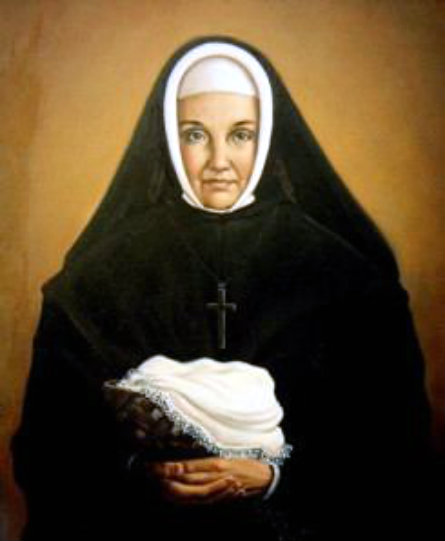
Mary’s words settled Vittoria’s mind completely.  bl maria vittori de fornati strata.jpgShe took a vow of chastity and lived in retirement, giving all her time to prayer, the care of her family and the needs of the poor.

When eventually her children were raised (five of the six entered religious orders), Signora Strata revealed to the archbishop of Genoa a proposal that she had long been considering.   It was to found a strict new religious order of contemplative nuns. Dedicated to Mary’s Annunciation, the sisters would imitate her hidden life at Nazareth, devoting themselves to prayer and making vestments and altar linens for poor churches. Each member would add the names “Maria Annunziata” to her baptismal name.   The archbishop first had his doubts, since the money necessary to make the foundation was not available.   However, when a benefactor named Vincent Lomellini offered to purchase a convent for the widow, the prelate gave his permission.   Pope Clement VIII approved the order’s constitutions in 1604 and Maria Vittoria and ten companions made their solemn vows in the late summer of 1605.Vitrail_Sainte_Fornarie_Saint-Mihiel_271108

Early difficulties threatened the project but Our Lady kept the movement going.   A second house was established in Italy in 1612.   Others followed in Burgundy, France and Germany.   Each house was independent.   Today there are only three houses and 44 nuns.   To distinguish them from the order of the Annunciation established by St Joan of Valois, the Strata “Annunziate” are called “Le Turchine”, i.e. the “Turquoise Annunziate”, or “Blue Nuns” because of their sky-blue scapulars and cloaks.

She served as superior from the order’s founding until ill health saw her not re-elected in 1611 which she accepted with grace and tact. Her order received pontifical approval from Pope Paul V on 6 August 1613.

Blessed Maria Vittoria died on 15 December 1617 due to lung disease after having predicted the date of her own death. She is interred in Genoa.Blessed Maria Vittoria Relics 2 (1).jpg

Many widows like Maria Vittoria have had “second vocations” of this sort, entering religious orders after the death of their husbands.   St Elizabeth Seton, foundress of the American Sisters of Charity, was, of course, a memorable example.   Cloistered, contemplative orders are perhaps even more attractive to widows who are a little older.

The Beatification cause started under Pope Benedict XIV on 10 September 1746 and the late religious was titled as a Servant of God, while Pope Clement XIII confirmed her heroic virtue and named her as Venerable on 1 April 1759.   Pope Leo XII later approved two miracles attributed to her intercession, on 1 April 1828 and later Beatified her in Saint Peter’s Basilica on 21 September 1828.   Below is the Altar of her Relics, with Reverend Mother Maria Angela Borsa, Prioress of the Venerable Monastery of the Most Holy Annunciation and Incarnation in Genoa, Italy, before the relics of the Holy Foundress, Bl Maria Vittoria.

Blessed Maria Vittoria Relics Mother M Angela

Blessed-Maria-Vittoria-Victoria-Fornari-Strata-full-1o-720-418-r-cccccc-6

‘Vittoria Who Overcame the World’, is a play on the words of Holy Scripture, often seen in pictures of the Blessed:  “For whatsoever is born of God, overcomes the world and this is the victory which overcomes the world, our faith.” [1 John 5,4]   It is uplifting to see her spiritual daughters continuing to overcome the spirit of the world, the flesh and the devil.

Our Lady of Protection.jpg
 The altar of Our Lady of Protection, a devotion particular to the order.