Posted in FEASTS and SOLEMNITIES, JESUIT SJ, SAINT of the DAY, The HOLY NAME

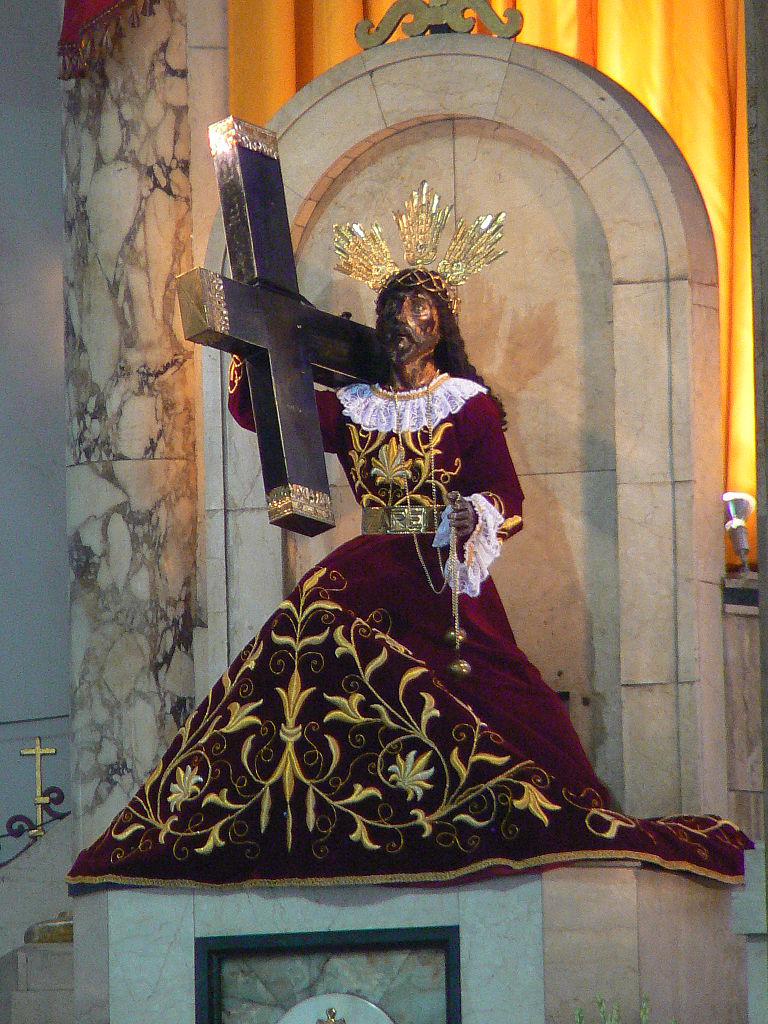
Feast of the Most Holy Name of Jesus, the Titular Feast of the Society of Jesus and Memorials of the Saints – 3 January

Feast of the Most Holy Name of Jesus (Optional Memorial) – moved to 3 January
The Holy Name of Jesus: https://anastpaul.wordpress.com/2018/01/03/3-january-feast-of-the-most-holy-name-of-jesus/
AND:

Feast of the Most Holy Name of Jesus – 3 January

The Titular Feast of the Society of Jesus

THE TITULAR FEAST OF THE JESUITS

St Pope Antherus
Bl Arnold Wala
St Athanasius of Cilicia
St Bertilia of Mareuil
St Bertille of Thuringia
St Blitmund of Bobbio
St Constant of Gap
St Cyrinus of Cyzicus
St Daniel Himmerod the Younger
Bl Daniel of Padua
St Eustadius
St Finlugh
St Fintan of Doon
St Florentius of Vienne
St Florentius of Vienne the Martyr
St Genevieve (c 419-c 502)

Bl Gerard Cagnoli
St Gordius of Cappadocia
St Imbenia
St Kuriakose Elias Chavara
St Lucian of Lentini
St Melorius
St Peter of Palestine
St Primus of Cyzicus
St Salvator of Belluno
St Theogenes of Cyzicus
St Theonas
St Theopemptus of Nicomedia
St Wenog
Bl Bl William Vives
St Zosimus of Cilicia

Martyrs of Africa – 12 saints: A group of Christians martyred together in Africa, date unknown, exact location unknown. We know nothing more than their names – Acuta, Candidus, Constantius, Eugenia, Firmus, Hilarinus, Lucida, Martial, Poenica, Possessor, Rogatianus and Statutianus.

Martyrs of Tomi – 7 saints: A group of Christians martyred together, date unknown. We know nothing more than their names – Claudon, Diogenius, Eugene, Eugentus, Pinna, Rhodes and Rhodo. They were martyred at Tomi, Exinius Pontus, Moesia (modern Constanta, Romania).

Posted in CHRISTMASTIDE!, DOCTORS of the Church, FATHERS of the Church, MARIAN QUOTES, MOTHER of GOD, QUOTES of the SAINTS, QUOTES on ABORTION, QUOTES on FRIENDSHIP, SAINT of the DAY, St JOHN the BAPTIST, The CHRIST CHILD, The WORD

Quote/s of the Day – 2 January – Basil and Gregory

Quote/s of the Day – 2 January – Christmas Weekday and The Memorial of St Basil the Great (329-379) and St Gregory of Nazianzen (330-390), Readings: 1 John 2:22-28, Psalm 98:1-4, John 1:19-2

“The hairsplitting difference between
formed and unformed makes no difference to us.
Whoever deliberately commits abortion
is subject to the penalty for homicide.”

St Basil the Great (329-379)

Father & Doctor of the Churchthe-hairsplitting-difference-st-basil-the-great-2-jan-2019 and 2020.jpg

“Different men have different names,
which they owe to their parents or to themselves,
that is, to their own pursuits and achievements.
But our great pursuit,
the great name we wanted,
was to be Christians,
to be called Christians.”

St Gregory of Nazianzen (330-390)

(from his writings on his friendship with St Basil)different-men-st-gregory-of-nazianzen-2-jan-2018 and 2020.jpg

“If anyone does not believe
that Holy Mary
is the Mother of God,
such a one is a stranger
to the Godhead.”

St Gregory of Nazianzen (330-390)
Father & Doctor of the Church

Posted in DOCTORS of the Church, FATHERS of the Church, ONE Minute REFLECTION, QUOTES of the SAINTS, QUOTES on CONVERSION, QUOTES on DISCIPLESHIP, QUOTES on REPENTANCE, SAINT of the DAY, St JOHN the BAPTIST, The WORD

One Minute Reflection – 2 January – “Now I begin.”

One Minute Reflection – 2 January – Christmas Weekday and The Memorial of St Basil the Great (329-379) and St Gregory of Nazianzen (330-390), Readings: 1 John 2:22-28, Psalm 98:1-4, John 1:19-28

He said, “I am the voice of one crying in the wilderness, ‘Make straight the way of the Lord,’ as the prophet Isaiah said.” … 1 John 2:231 john 2 23 i am the voice of one crying in the wilderness 2 jan 2020.jpg

REFLECTION“Prepare a way for the Lord.”   Brethren, however far you journey along it… from the very nature of goodness, there is no limit to the way along which you travel. And so… the wise and indefatigable traveller… can say to himself each day:  “Now I begin”… And how many “go astray in the wilderness”… None of them can yet say:  “Now I begin.”

For “the beginning of wisdom is the fear of the Lord.”   If the beginning of wisdom, then surely it is also the beginning of the way of goodness…  It is this that encourages praise…; it also moves the proud to penance, so that they hear the voice of him crying in the wilderness,ordering the preparation of the way and thus showing how to begin it:  “Do penance for the kingdom of heaven is close at hand”…

If you are on the way then fear only one thing, lest you leave it, lest you offend the Lord who leads you along it so that He would abandon you to “wander in the way of your own heart”…   If you feel that the way is too narrow look forward to the end to which it leads you.   If you were to see how everything is to be attained, then you would say without hesitation:  “Broad indeed is your command!”   If you cannot see so far, believe Isaiah who could…   “Behold,” he says, “the redeemed shall walk by this way and the ransomed of the Lord shall return and come to Sion with singing, everlasting joy shall be upon their heads  . They shall obtain also joy and gladness and sorrow and sighing shall flee away.”   Those who dwell sufficiently on this end I think will not only make the way easier for himself but also grow wings, so that he no longer walks but flies…   May He, who is the track of the runners and the reward of the winners, lead and guide you along it – He, Christ Jesus.” … Blessed Guerric of Igny (c 1080-1157) Cistercian Abbot – 5th sermon of Advent, SC 166may he who is the track of the runners and the reward of the winnders guide you along it bl guerric of igny 2 jan 2019.jpg

PRAYER – Look with favour on our morning prayer, Lord and in Your saving love, let Your light penetrate the wilderness in our hearts.   May no sordid desires darken our minds, renewed and enlightened as we are, by Your heavenly grace.   God our Father, You enriched Your Church and gave examples for us to follow in the life and teachings of Sts Basil and Gregory. Grant that, learning Your truth with humility, we may practise it in faith and love.   Sts Basil and Gregory, pray for our beloved Church, pray for all Catholic Christians, through Jesus Christ with the Holy Spirit, God forever, amen.sts-basil-and-gregory-pray-for-us-2-jan-2018 AND 2019.jpg

Posted in CHRISTMASTIDE!, DOCTORS of the Church, FATHERS of the Church, Our MORNING Offering, PRAYERS for VARIOUS NEEDS, PRAYERS of the SAINTS, SAINT of the DAY

Our Morning Offering – 2 January – Steer the Ship of my Life, Lord

Our Morning Offering – 2 January – Christmas Weekday and The Memorial of St Basil the Great (329-379) and St Gregory of Nazianzen (330-390)

Steer the Ship of my Life, Lord
By St Basil the Great (329-379)

Steer the ship of my life, Lord,
to Your quiet harbour,
where I can be safe from
the storms of sin and conflict.
Show me the course I should take.
Renew in me the gift of discernment,
so that I can see the right direction
in which I should go.
And give me the strength
and the courage to choose the right course,
even when the sea is rough
and the waves are high,
knowing that through enduring
hardship and danger in Your name
we shall find comfort and peace.
Amensteer-the-ship-of-my-life-lord-st-basil-11-june-2018-no-2-jpg.jpg

Posted in SAINT of the DAY

Saint of the Day – Blessed Marie Anne Blondin SSA (1809-1890)

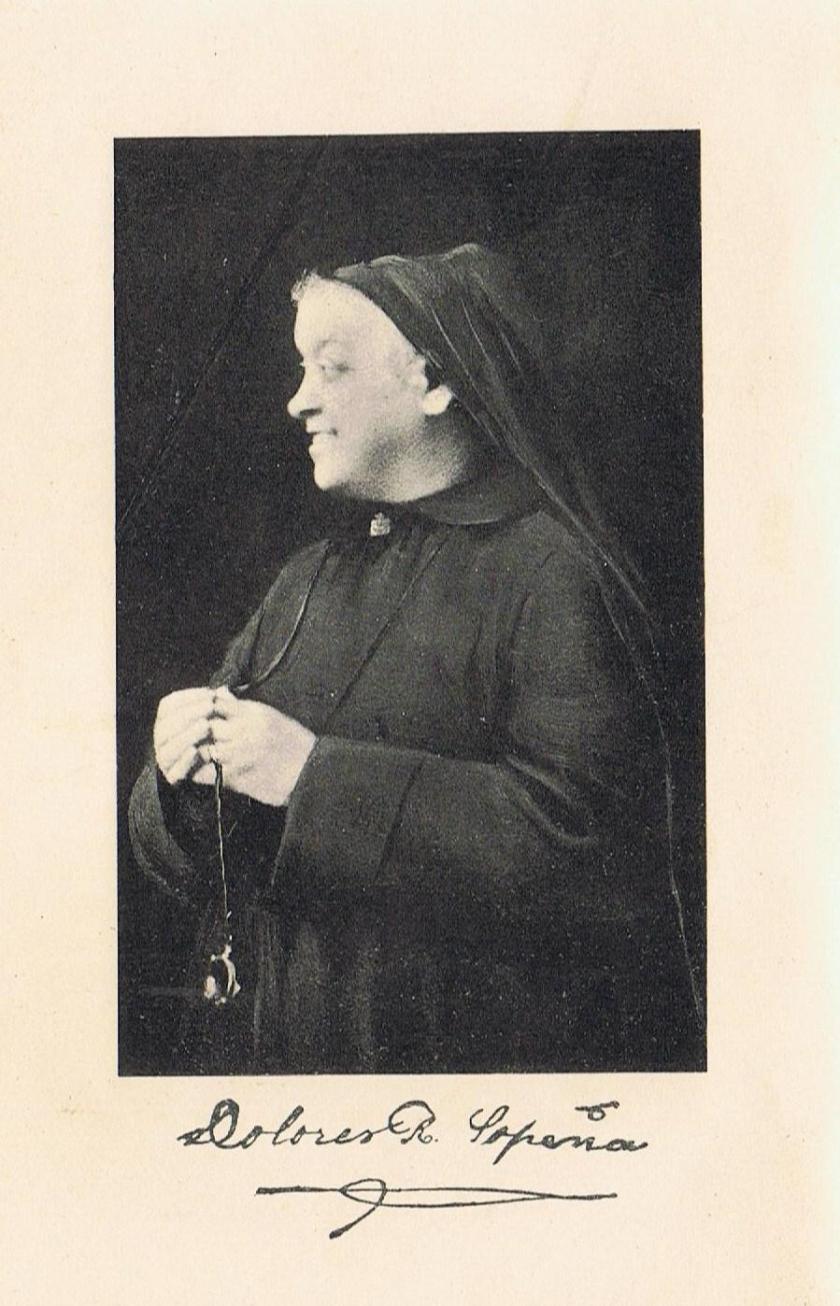
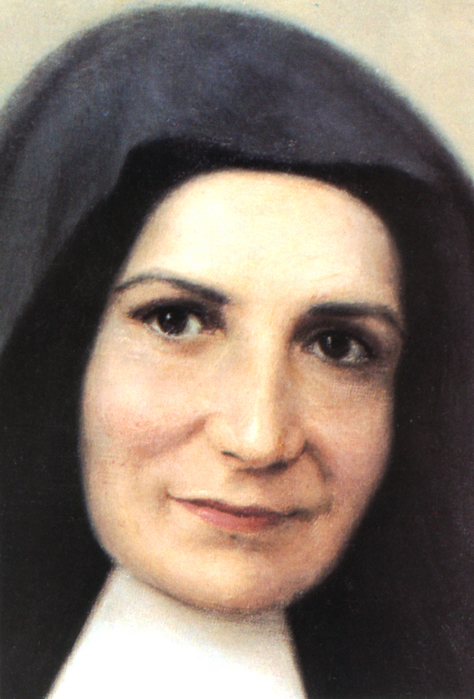
Saint of the Day – Blessed Marie Anne Blondin SSA (1809-1890) Religious and Foundress of the Sisters of Saint Anne, apostle of the Holy Eucharist and Divine Providence, Teacher – born Esther Blondin on 18 April 1809 in Terrebonne, Quebec, Canada and died on 2 January 1890 at Lachine, Quebec, Canada of natural causes.  bl marie-anne-blondin-b1).jpg

Esther Blondin, in religion “Sister Marie Anne”, was born in Terrebonne (Quebec, Canada) on 18 April 1809, in a family of deeply Christian farmers.   From her mother she inherited a piety centred on Divine Providence and the Eucharist and, from her father, a deep faith and a strong patience in suffering.   Esther and her family were victims of illiteracy so common in French Canadian milieu of the nineteenth century.   Still an illiterate at the age of 22, Esther worked as a domestic in the Convent of the Sisters of the Congregation of Notre Dame, that had been recently opened in her own village.   A year later, she registered as a boarder in order to learn to read and write.   She then became a novice in the Congregation but had to leave, due to ill health.

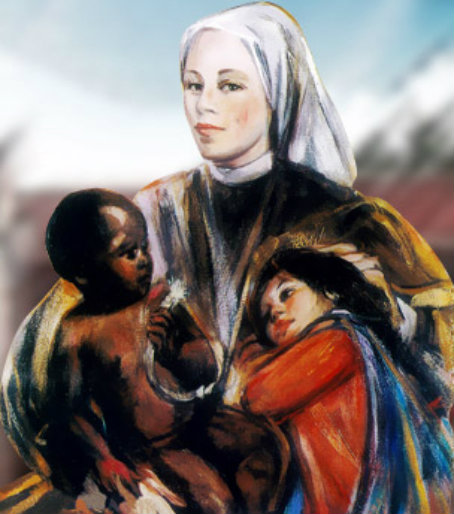
In 1833, Esther became a teacher in the parochial school of Vaudreuil.   Little by little, she found out, that one of the causes of this illiteracy was due to a certain Church ruling, that forbade that girls be taught by men and that boys be taught by women.   Unable to finance two schools, many parish priests chose to have none.   In 1848, under an irresistible call of the Spirit, Esther presented to her Bishop, Ignace Bourget, a plan she long cherished – that of founding a religious congregation “for the education of poor country children, both girls and boys in the same schools”.   A rather new project for the time!   It even seemed quite rash and contrary to the established order.   Since the State was in favour of such schools, Bishop Bourget authorised a modest attempt so as to avoid a greater evil.bl marie anne blondin with children.jpeg

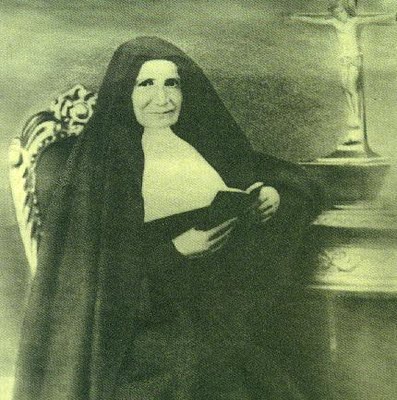
The Congregation of the Sisters of Saint Anne was founded in Vaudreuil on 8 September 1850.   Esther, now named “Mother Marie Anne”, became its first superior.   The rapid growth of this young Community soon required larger quarters.    During the Summer of 1853, Bishop Ignace Bourget transferred the Motherhouse to Saint Jacques de l’Achigan. The new chaplain, Father Louis Adolphe Marechal, interfered in an abusive way in the private life of the Community.   During the Foundress’ absence, Father changed the pupils’ boarding fees.   Should he be away for a while, he asked that the Sisters await his return to go to confession.   After a year of this existing conflict between the chaplain and the Foundress, the latter being anxious to protect the rights of her Community, Bishop Bourget asked Mother Marie Anne, on 18 August 1854, “to resign.”   He called for elections and warned Mother Marie Anne “not to accept the superiorship, even if her sisters wanted to re-elect her.”   Even though she could be re-elected, according to the Rule of the Community, Mother Marie Anne obeyed her Bishop whom she considered God’s instrument.   And she wrote:  “As for me, my Lord, I bless Divine Providence a thousand times for the maternal care he shows me in making me walk the way of tribulations and crosses.”bl marie anne blondin.jpg

Mother Marie Anne, having been named Directress at Saint Genevieve Convent, became the target of attacks from the Motherhouse authorities, influenced by the dictatorship of Father Marechal.   Under the pretext of poor administration, Mother Marie Anne was recalled to the Motherhouse in 1858, with the Bishop’s warning:  “take means so that she will not be a nuisance to anyone.”   From this new destitution and until her death on 2 January 1890, Mother Marie Anne was kept away from administrative responsibilities. She was even kept away from the General Council deliberations when the 1872 and 1878 elections reelected her.   Assigned to mostly hidden work in the laundry and ironing room, she led a life of total self-denial and thus ensured the growth of the Congregation. Behold the paradox of an influence which some wanted to nullify!   In the Motherhouse basement laundry room in Lachine, where she spent her days, many generations of novices received from the Foundress a true example of obedience and humility, imbued with authentic relationships which ensure true fraternal charity.   To a novice who asked her one day why she, the Foundress, was kept aside in such lowly work, she simply replied with kindness :  “The deeper a tree sinks its roots into the soil, the greater are its chances of growing and producing fruit.”

The attitude of Mother Marie Anne, who was a victim of so many injustices, allows us to bring out the evangelical sense she gave to events in her life.   Just as Jesus Christ, who passionately worked for the Glory of His Father, so too Mother Marie Anne sought only God’s Glory in all she did.   “The greater Glory of God” was the aim she herself gave her Community.   “To make God known to the young who have not the happiness of knowing Him” was for her a privileged way of working for the Glory of God.   Deprived of her most legitimate rights and robbed of all her personal letters with her bishop, she offered no resistance and she expected, from the infinite goodness of God, the solution to the matter.   She was convinced that “He will know well, in his Wisdom, how to discern the false from the true and to reward each one according to his deeds.”Blessed_Marie-Anne_Blondin

Prevented from being called “Mother” by those in authority, Mother Marie Anne did not jealously hold on to her title of Foundress, rather she chose annihilation, just like Jesus, “her crucified Love”, so that her Community might live.   However, she did not renounce her mission of spiritual mother of her Community.   She offered herself to God in order “to expiate all the sins which were committed in the Community” and she daily prayed to Saint Anne “to bestow on her spiritual daughters the virtues so necessary for Christian educators.”bl marie-anne-blondin-bbcb7571-43b9-4f58-85eb-03d51ae92c6-resize-750

Like any prophet invested with a mission of salvation, Mother Marie Anne lived persecution by forgiving without restriction, convinced that “there is more happiness in forgiving than in revenge.”   This evangelical forgiveness, the guarantee of “the peace of soul which she held most precious,” was ultimately proven on her death bed when she asked her superior to call for Father Marechal “for the edification of the Sisters.”

As she felt the end approaching, Mother Marie Anne left to her daughters her spiritual testament in these words which are a resume of her whole life :   “May Holy Eucharist and perfect abandonment to God’s Will be your heaven on earth.”   She then peacefully passed away at the Motherhouse of Lachine, on 2 January 1890, “happy to go to the Good God” she had served all her life…. Vatican.vabl Mother-Mary-Anne-by-Doruyter_edited-1.jpg

Posted in DOCTORS of the Church, FATHERS of the Church, SAINT of the DAY

Memorials of the Saints -2 January

St Basil the Great (329-379) Father & Doctor of the Church (Memorial)
St Gregory of Nazianzen (330-390) Father & Doctor of the Church (Memorial)
About these 2 great fathers:

https://anastpaul.wordpress.com/2018/01/02/saint-s-of-the-day-st-basil-the-great-329-379-and-st-gregory-of-nazianzen-330-390-fathers-and-doctors-of-the-church/
AND:
https://anastpaul.com/2019/01/02/saint-s-of-the-day-2-january-st-basil-the-great-329-379-and-st-gregory-of-nazianzen-330-390-two-bodies-one-spirit/

St Adelard of Corbie
Bl Airaldus of Maurienne
St Asclepius of Limoges
St Aspasius of Auch
St Blidulf of Bobbio
Bl Guillaume Répin
St Hortulana of Assisi
St Isidore of Antioch
St Isidore of Nitria
St Laurent Bâtard
St Macarius the Younger
Blessed Marie Anne Blondin SSA (1809-1890)
St Maximus of Vienne
Bl Odino of Rot
St Paracodius of Vienne
St Seraphim of Sarov
St Seiriol
Bl Stephana de Quinzanis
St Telesphorus, Pope
St Theodota
St Theopistus
St Vincentian of Tulle

Many Martyrs Who Suffered in Rome:   There were many martyrs who suffered in the persecutions of Diocletian for refusing to surrender the holy books.   Though we know these atrocities occured, we do not know the names of the saints and we honour them as a group. c 303 in Rome, Italy.

Martyrs of Antioch – 5 saints:   A group of Christian soldiers martyred together for their faith. We know the names of five – Albanus, Macarius, Possessor, Starus and Stratonicus. They were born in Greece and were martyred in Antioch (modern Antakya, Turkey).

Many Martyrs of Britain:   The Christians of Britain appear to have escaped unharmed in the earlier persecutions which afflicted the Church but the cruel edicts of Diocletian were enforced in every corner of the empire and the faithful inhabitants of this land, whether native Britons or Roman colonists, were called upon to furnish their full number of holy Martyrs and Confessors.   The names of few are on record but the British historian, Saint Gildas, after relating the martyrdom of Saint Alban, tells us that many others were seized, some put to the most unheard-of tortures and others immediately executed, while not a few hid themselves in forests and deserts and the caves of the earth, where they endured a prolonged death until God called them to their reward.   The same writer attributes it to the subsequent invasion of the English, then a pagan people, that the recollection of the places, sanctified by these martyrdoms, has been lost and so little honour paid to their memory.   It may be added that, according to one tradition, a thousand of these Christians were overtaken in their flight near Lichfield and cruelly massacred and that the name of Lichfield, or Field of the Dead, is derived from them.

Martyrs of Ethiopia – 3 saints:   A group of Christians martyred together for their faith. We know the names of three – Auriga, Claudia and Rutile.

Martyrs of Jerusalem – 2 saints:   A group of Christians martyred together for their faith. We know the names of two – Stephen and Vitalis.

Martyrs of Lichfield: Many Christians suffered at Lichfield (aka Lyke-field, meaning field of dead bodies), England in the persecutions of Diocletian.   Though we know these atrocities occured, we do not know the names of the saints, and we honour them as a group. Their martyrdom occurred in 304 at Lichfield, England.

Martyrs of Piacenza: A group of Christians who died together for their faith in the persecutions of Diocletian.   No details about them have survived. They were martyred on the site of church of Madonna di Campagna, Piacenza, Italy.

Martyrs of Puy – 4 saints: Missionaries, sent by Saint Fronto of Périgueux to the area of Puy, France. Tortured and martyred by local pagans.   We know the names – Frontasius, Severinus, Severian and Silanus.   They were beheaded in Puy (modern Puy-en-Velay), France and buried together in the church of Notre Dame, Puy-en-Velay by Saint Fronto, their bodies laid out to form a cross.

Martyrs of Syrmium – 7 saints: Group of Christians martyred together, date unknown. We know the names of seven – Acutus, Artaxus, Eugenda, Maximianus, Timothy, Tobias and Vitus – but very little else. This occurred in the 3rd or 4th century at Syrmium, Pannonia (modern Sremska Mitrovica, Serbia).

Martyrs of Tomi – 3 saints: Three brothers, all Christians, all soldiers in the imperial Roman army, and all three martyred in the persecutions of emperor Licinius Licinianus. We know their names – Argeus, Marcellinus and Narcissus – but little else.
They were martyred in 320 at Tomi, Exinius Pontus, Moesia (modern Constanta, Romania).

Posted in CHRISTMASTIDE!, FATHERS of the Church, QUOTES for the NEW YEAR, QUOTES of the SAINTS, QUOTES on DISCIPLESHIP, QUOTES on LOVE, SAINT of the DAY, The WILL of GOD

Quote/s of the Day – 1 January – ‘Love God’

Quote/s of the Day – 1 January – The Solemnity of Mary, Mother of God and the Octave Day of the Nativity of the Lord and the Memorial of St Fulgentius of Ruspe (c 462 – 533)

“My brothers,
Christ made love the stairway
that would enable all Christians
to climb to heaven.
Hold fast to it, therefore,
in all sincerity,
give one another practical proof of it
and by your progress in it,
make your ascent together.”

St Fulgentius of Ruspe (c 462 – 533)

From a sermon on The Feast of Saint Stephenchrist made love the stairway - st fulgentius 1 jan 2020.jpg

“Love God,
serve God,
everything is in that.”

St Clare of Assisi (1194-1253)love-god-serve-god-everything-is-in-that-st-clare-1-jan-2019 and 2020.jpg

“During this new year,
I resolve to begin a new life.
I do not know,
what will happen to me, during this year.
But I abandon myself entirely to You, my God.
And my aspirations and all my affections,
will be for You.
I feel so weak, dear Jesus
but with Your help,
I hope and resolve,
to live a different life,
that is, a life closer to You.”

St Gemma Galgani (1878-1903)during this new year i resolve - st gemma galgani a blessed new year - 1 jan 2020.jpg

Posted in FATHERS of the Church, SAINT of the DAY

Saint of the Day – 1 January – Saint Fulgentius of Ruspe (c 462 – 533) “The Pocket Augustine”

Saint of the Day – 1 January – Saint Fulgentius of Ruspe (c 462 – 533) Abbot, Bishop of the city of Ruspe, Roman province of Africa, North Africa in modern day Tunisia, Theologian, Writer- known as “The Pocket Augustine” – born Fabius Claudius Gordianus Fulgentius in c 462 at Carthage, North Africa (modern Tunis, Tunisia) and died on 1 January 533 in Ruspe of natural causes.   He is venerated today and on 3 January by the Augustinians.st fulgentius engraving.jpg

He was born to a Roman senatorial family, and was well educated.   His father Claudius, died while Fulgentius was still quite young.   His mother, Mariana taught him to speak Greek and Latin.   He became so good at Greek, that he spoke it like a native and committed all of Homer to memory.   He was also well trained in Latin literature.

As he grew older, he managed his house wisely in subjection to his mother and Fulgentius quickly gained wide respect for his conduct of the family affairs.   This reputation helped him to acquire a post as a civil servant in the government of Rome, as a procurator of Byzacena.

He quickly grew tired of the provincial life.   This, together with his studies of religion, particularly a sermon of Saint Augustine of Hippo on Psalm 36, led to his being attracted to a religious life and he entered a monastery, became a monk, then was Ordained and became Abbot.585px-Fulgentius_von_Ruspe_17Jh.jpg

At the time, the Arian persecutions had ceased but the election of Catholic bishops was forbidden.   In 508 it became necessary to defy the law when bishops were consecrated, Fulgentius being chosen for Ruspe (modern Kudiat Rosfa, Tunisia).   He was exiled with 60 other bishops to Sardinia.   There they built a monastery and continued to write, pray, and study.Landscape_with_St.jpg

Fulgentius was invited back to Carthage by the Arian king Thrasimund to hold a debate with his Arian replacement around 515 and so successfully refuted his Arian opponents that he was exiled again in 518.

King Hilderic succeeded Thrasimund in 523 and permitted the exiles to return.   Peace finally being restored to the African church, Fulgentius returned to his Diocese. He would have preferred to return to his monastery and resume his studies but he was such a popular preacher, he was kept busy in the pulpit until his death.st fulgentius

As a Bishop, he followed Augustine’s example in living in community with the clergy of his Diocese.   He founded several other monasteries in Africa.   When he was exiled to Sardinia, not wanting to be away from the monastic community life, he even founded monasteries there.

Various letters and eight sermons survive.   Fulgentius’s work shows his vast knowledge of Greek and a strong influence and agreement with Saint Augustine, so much so, that he is known as “The Pocket Augustine.”   He wrote frequently against Arianism and Pelagianism.E07a-photo-St-Fulgentius-of-Ruspe-1013x1024.jpg

Saint Fulgentius died of natural causes in 533 at Ruspe.   Some of his relics are located at Bourges, France.

St Fulgentius truly aimed to live a life in conformity with St Augustine’s precept:

“Everything outside of us fluctuates with the storms and temptations of this age.   But we need an interior desert, where we gather ourselves and live of our faith.” … (Sermo 47,25)Saint+Fulgentius.jpg

Posted in CHRISTMASTIDE!, FEASTS and SOLEMNITIES, MARIAN TITLES, MOTHER of GOD, SAINT of the DAY, The INCARNATION, The NATIVITY of JESUS

1 January 2020 – The Solemnity of Mary, Mother of God and the Octave Day of the Nativity of the Lord and the 53rd World Day of Prayer for Peace +2019 and Memorials of the Saints

1 January – The Solemnity of Mary, Mother of God and the Octave Day of the Nativity of the Lord and the 53rd World Day of Prayer for Peace +2019

Mary, Mother of God and the Octave Day of the Nativity of the Lord (Solemnity)
1 January 2018:
https://anastpaul.wordpress.com/2018/01/01/1-january-2018-the-solemnity-of-mary-the-mother-of-god/
1 January 2019:
https://anastpaul.com/2019/01/01/1-january-the-solemnity-of-mary-mother-of-god-and-the-octave-day-of-the-nativity-of-the-lord/octave-day-mary-mother-of-god-2016jpg.jpg

53rd Annual World Day of Prayer for Peace:   Feast day dedicated to peace.   It first observed on 1 January 1968, proclaimed by St Pope Paul VI.   It was inspired by the encyclical Pacem in Terris by St Pope John XXIII and with reference to Paul’s encyclical Populorum Progressio.   Our Holy Fathers have used this day to make magisterial declarations relevant to the social doctrine of the Church on such topics as the United Nations, human rights, women’s rights, labour unions, economic development, the right to life, international diplomacy, peace in the Holy Land, globalisation, migrants, refugees and terrorism.

St Pope Paul VI:  https://anastpaul.com/2019/01/01/the-52nd-world-day-of-prayer-for-peace-1-january-2019/

Titular Feast of the Society of Jesus – But now celebrated on 3 January, the Feast of the Holy Name of Jesus

Bl Adalbero of Liege
St Baglan of Wales
St Basil of Aix
Bl Bonannus of Roio
St Brogan
St Buonfiglio Monaldi
Bl Catherine de Solaguti
St Clarus of Vallis Regia
St Clarus of Vienne
St Colman mac Rónán
St Colman Muillin of Derrykeighan
St Concordius of Arles
St Connat
St Cuan
St Demet of Plozévet
St Elvan
St Eugendus of Condat
St Euphrosyne of Alexandria
St Fanchea of Rossory
St Felix of Bourges
St Frodobert of Troyes
St Fulgentius of Ruspe (c 462 – 533)
St Gisela of Rosstreppe
St Gregory Nazianzen the Elder
Bl Hugolinus of Gualdo Cattaneo
Bl Jean-Baptiste Lego
Bl Jean of Saint-Just-en-Chaussée
St Joseph Mary Tomasi
St Justin of Chieti
Bl Lojze Grozde
St Maelrhys
St Magnus the Martyr
Bl Marian Konopinski
St Mydwyn
St Odilo of Cluny
St Odilo of Stavelot
St Peter of Atroa
St Peter of Temissis
Bl René Lego
St Sciath of Ardskeagh
St Severino Gallo
St Telemachus
St Thaumastus of Mainz
St Theodotus
St Tyfrydog
Bl Valentin Paquay
St Vincent Strambi
St William of Dijon
St Zedislava Berka
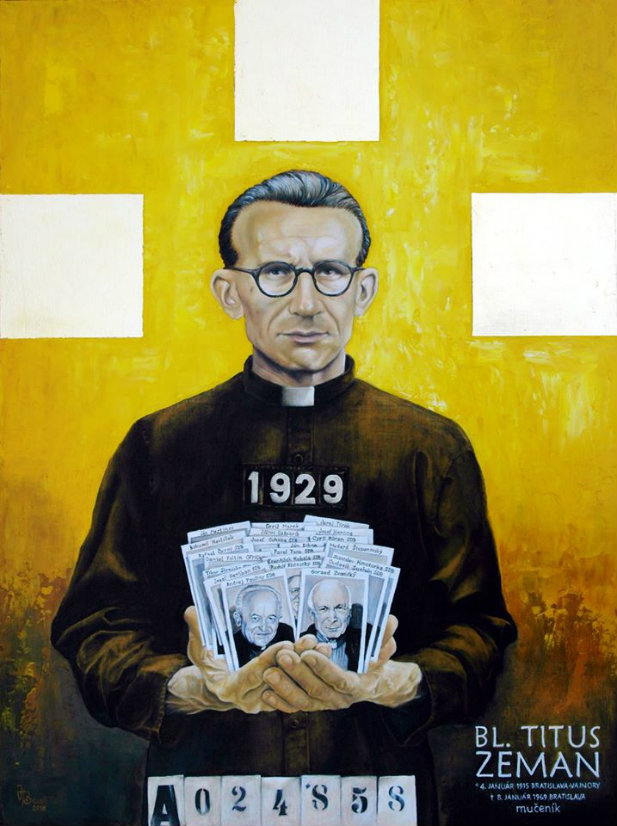
St Zygmunt Gorazdowski

Breton Missionaries to Britain
Martyred Soldiers of Rome: Thirty soldiers martyred in Rome as a group during the persecutions of Diocletian. We don’t even known their names. They were martyred c 304 at Rome, Italy.

Martyrs of Africa – 8 saints: Eight Christians martyred together in Africa, date unknown. The only details we have are four of their names – Argyrus, Felix, Narcissus and Victor.

Martyred in the Spanish Civil War:
• Blessed Andrés Gómez Sáez

Posted in MARIAN QUOTES, QUOTES of the SAINTS, SAINT of the DAY, The BLESSED VIRGIN MARY, The WILL of GOD

Second Thought for the Day – 31 December – Blessed Alain de Solminihac (1593-1659) Bishop of Cahors

Second Thought for the Day – 31 December – The Seventh Day in the Octave of Christmas and the Memorial of Blessed Alain de Solminihac (1593-1659) Bishop of Cahors, France

2018 was the 400th Anniversary the Priestly Ordination of Blessed Alain de Solminihac. His Diocese of Cahors, France launched a Year of Vocations to conincide with this event of their former Bishop. One of their aims, besides promoting vocations, was to make known the life and holiness of Blessed Alain. Bishop Laurent Camiade, the current Bishop of Cahors, wrote:

“It is wonderful to know that you are called to holiness and it is inspiring to answer the call, to give your whole life, for consecration in the Church.   All Christians are concerned with the “universal vocation to holiness.”   Some are specifically called to give their whole life – religious consecration, or in an institute, hermit or order of the virgins, or commitment to celibacy with a view to being ordained a priest.

Providence wanted 2018 to be the 400th anniversary of the Priestly Ordination of Blessed Alain de Solminihac.   He was Ordained Deacon on 25 March 1617 and Priest on 22 September 1618.   In 1636, he was called again to become Bishop of Cahors.   This is why, after having spoken to different councils, I hope that we will take advantage of this Anniversary to return to listening to the teachings of Blessed Alain.   He teaches us with his vigorous and profound words … and by his exemplary life, to strive to be courageous, ardent and sober.

Today, as in Alain de Solminihac’s time, devoting his whole life to God involves difficulties.   Celibacy according to a sober lifestyle has never been obvious.   In the time of Blessed Alain, the choice of becoming a priest, religious or nun, made it possible to ensure material security, thanks to a system of benefits attached to abbeys or dioceses. As a result, in the 17th century, not all consecrated persons had internalised, the spiritual conditions, for living in accordance with their state and the clergy did not always give a good testimony.   It is in this context, that Blessed Alain would become a “reformer”, that is to say, a demanding promoter of coherence between vocation and lifestyle.

Alain de Solminihac put spirituality and fidelity to the duties linked to the received mission first.   “You must follow the good pleasure of God as soon as you know it , he wrote, and accomplish it by immediately turning your eyes to God, remaining in a simple expectation to receive another sign or command, without wasting time delight in the satisfaction of having accomplished this adorable Will of God.”

The requirements of Blessed Alain sometimes provoked reactions of opposition but they also attracted many young people, happy to give themselves, in a way that made sense and above all, pushed by the Holy Spirit who wanted this for the Church.   His motto was Faith and Valour! and he lived up to it!

It is clearly a current need to relaunch the call to specific vocations (priests, religious, nuns, consecrated).   The desire to give all of one’s life to follow Christ, exists in many young people (recent statistics prove it) but this is seldom realised, as we can see.

The priests and seminarians of our Diocese are deeply attached to Our Lady of Rocamadour, who played an often decisive role in their engagement.   Blessed Alain fought with all the vigour of his temper, to keep this sanctuary in the Diocese of Cahors. We are therefore grateful to him for these graces which, by the will of God, reflect from the pierced heart of Christ, to our local Church.   Blessed Alain considered Rocamadour to be the most famous Marian place in the kingdom  . He was very attached to Mary who, he explains, “had more humility than all the other saints, because, holier than the others, she had a more perfect knowledge of the excellence of God and by consequence of her own nothingness. “

relics of bl alain
Relics of Blessed Alain de Solminihac in Cahors

May Blessed Alain de Solminihac help us to share his missionary ardour and his discreet humility.”

Blessed Alain de Solminihac, Pray for Us!bl alain de solminihac pray for us 31 dec 2019

Posted in QUOTES of the SAINTS, QUOTES on OBEDIENCE, SAINT of the DAY, The WILL of GOD

Quote of the Day – 31 December – Blessed Alain de Solminihac (1593-1659)

Quote of the Day – 31 December – The Seventh Day in the Octave of Christmas and the Memorial of Blessed Alain de Solminihac (1593-1659) Bishop of Cahors, France

“You must follow the good pleasure of God
as soon as you know it and accomplish it
by immediately turning your eyes to God,
remaining in a simple expectation,
to receive another sign or command,
without wasting time,
delight in the satisfaction of having accomplished
this adorable Will of God.”

Blessed Alain de Solminihac (1593-1659)you must follow the good pleasure of god - 31 dec 2019 bl alain de solminihac.jpg

Posted in AUGUSTINIANS OSA, SAINT of the DAY

Saint of the Day – 31 December – Blessed Alain de Solminihac OSA (1593-1659)

Saint of the Day – 31 December – Blessed Alain de Solminihac OSA (1593-1659) Bishop of Cahors from 1636 until his death, religious of the Order of the Canons Regular of Saint Augustine of Chancelade in Périgueux (now the Confederation of St Augustine).    Blessed Alain was Abbot, Reformer, Marian devotee most especially to Our Lady of Rocamadour, Apostle of the Holy Eucharist especially by his promotion of Adoration, he was also a member of the Compagnie du Saint-Sacrement.   Born on 25 November 1593 in the family castle at Belet, Dordogne, France and died on 31 December 1659, aged 66, at Mercues, Lot, France of natural causes.   Patronage – the Diocese of Cahors.bl alaino desolminihac.jpg

Alain was born into an aristocratic family in castle Belet near Perigueux in France.

He wanted to become a member of the Knights of Malta in order to serve God but felt a strong call to the Priesthood and to the religious life so joined the Canons Regular of Saint Augustine of Chancelade in 1613 as a postulant.  The completion of his theological studies soon saw him Ordained to the Priesthood on 22 September 1618.  While still a young man he became the Abbot of Chancelade, which had fallen into disrepair as a result of the turmoil of the times.   He strove with great effort and effect to reform his brothers in the Congregation of the Canons Regular of Chancelade.

In 1636 he became Bishop of Cahors.   He was as a zealous shepherd of the flock with which he was entrusted.   As Bishop he visited each of his 800 parishes at least nine times during the course of his episcopate and he held an episcopal consecration on one occasion.bl alain de solminihac icon.jpg

His great devotion to the Holy Eucharist prompted him to promote Eucharistic Adoration as well as restoring a many pastoral devotions within his Diocese.

He attended the Council of Trent and followed the lead of Saint Charles Borromeo in enforcing it’s decrees in his diocese.   During this time, he met Saint Francis de Sales during Lent in 1619 and the two became friends and had many more meetings following this.   Another friendship was his close relationship with Saint Vincent de Paul.bl Alain_de_Solminihac_(1593-1659).jpg

His reform work not only blessed his Diocese but influenced other parts of France.

Moreover, he remained always faithful to the Holy See.   Misconceptions, which surrounded him, were resolved in his favour.   His convincing love of neighbour made him a brilliant light of faith in 17th Century France.   After a long, zealous, faithful and strenuous life he died on 31 December 1659.bl alain sml.jpg

He was declared a Servant of God after Pope Pius VI opened his cause for sainthood on 6 August 1783 and Pope Pius XI declared him to be Venerable on 19 June 1927.   St Pope John Paul II Beatified him on 4 October 1981.   The miracle required for his Beatification involved the cure of Marie Ledoux on 29 June 1661 in France.bl alain de solminihac book.jpg

Posted in SAINT of the DAY

Memorials of the Saints – 31 December

St Pope Sylvester I (Died 335) (Optional Memorial)
Biography:
https://anastpaul.com/2018/12/31/saint-of-the-day-st-pope-sylvester-i-died-335/

Blessed Alain de Solminihac OSA (1593-1659)
St Anton Zogaj
St Barbatian of Ravenna
St Columba of Sens
Bl Dominic de Cubells
St Festus of Valencia
St Gelasius of Palestine
Bl Giuseppina Nicoli
St Hermes the Exorcist
St Marius Aventicus
St Melania the Younger
St Offa of Benevento
Bl Peter of Subiaco
St Pinian
St Potentian of Sens
St Sabinian of Sens
St Theophylact of Ohrid
Bl Walembert of Cambrai
Bl Wisinto of Kremsmünster
St Zoticus of Constantinople

Martyrs of Catania – 10 saints: A group of early Christians martyred together, date unknown. The only other information to survive are ten of their names – Attalus, Cornelius, Fabian, Flos, Minervinus, Pontian, Quintian, Sextus, Simplician and Stephen. They were martyred in Catania, Sicily, Italy.

Martyrs of Rome – 10 saints: A group of Roman women martyred in an early persecution, date unknown. We known the names of ten of them – Dominanda, Donata, Hilaria, Nominanda, Paolina, Paulina, Rogata, Rustica, Saturnina and Serotina.
Their relics were enshrined in the catacombs of Via Salaria, Rome, Italy.

Martyred in the Spanish Civil War:
• Blessed Leandro Gómez Gil
• Blessed Luis Vidaurrázaga González

Posted in CHRIST, the WAY,TRUTH,LIFE, EUCHARISTIC Adoration, QUOTES of the SAINTS, QUOTES on DISCIPLESHIP, QUOTES on MERCY, QUOTES on PRAYER, QUOTES on SILENCE, SAINT of the DAY, The FAITHFUL on PILGRIMAGE

Quote/s of the Day – 30 December – Bl Giovanni Maria Boccardo (1848-1913)

Quote/s of the Day – 30 December – The Sixth Day in the Christmas Octave and the Memorial of Blessed Giovanni Maria Boccardo (1848-1913) “Father of the Poor”

“Do you want to become a saint?
Imitate Jesus Christ,
walk in His footsteps,
think like Jesus,
speak like Jesus,
love like Jesus,
make your life,
a reproduction of His Life.”

do you want to become a saint - bl giovanni maria boccardo 30 dec 2019.jpg

“How many things Jesus tells us in our heart,
when we stand at His feet,
if we are careful to listen to His Voice!”how many things jesus tells us in our heart - bl giovanni boccardo 30 dec 2019.jpg

“In silence, in listening to His Word,
the Lord waits for us
to make His Voice heard.
To take it with us
as we walk the streets …”in silence in listening to his word - bl giovanni boccardo 30 dec 2019.jpg

“When you want to pass judgement
on your neighbour,
act as if it were you,
and you were next!”

Blessed Giovanni Maria Boccardo (1848-1913)when you want to pass judgement - bl giovanni boccardo 30 dec 2019

Posted in SAINT of the DAY

Saint of the Day – 30 December – Blessed Giovanni Maria Boccardo (1848-1913) “Father of the Poor”

Saint of the Day – 30 December – Blessed Giovanni Maria Boccardo (1848-1913) he is remembered as “Father of the Poor” – Priest, Founder of the Poor Daughters of Saint Cajetan.    Born on 20 November 1848 in Ca’Bianca, Moncalieri, Turin, Italy and died on 30 December 1913, aged 65 in Moncalieri, Turin, Italy of natural causes.    Patronages – the Poor Daughters of St Cajetan and against cancer.   Blessed Giovanni is the elder brother of Blessed Luigi Boccardo (1861-1936), whose memorial is on 9 June and who founded a contemplative branch of his brother’s order.bl boccardo.2

Giovanni Maria Boccardo was born in Turin, Italy, in 1848 as the eldest of ten children born to Gaspare Boccardo and Giuseppina Malebra.   He was baptised on 21 November. Three brothers – including Luigi Boccardo – became priests and another three died as infants.

Giovanni was generous to the plight of the poor as a child and adolescent and on one occasion cared for a blind beggar.   He studied with the Barnabites in 1861 and graduated from their school in 1864 and thereafter, commenced his studies for the priesthood.   He was Ordained in Turin in 1871.

After his Ordination, he was appointed assistant and then spiritual director of the Seminaries in Chieri and Turin.  In this office he was a guide and father to his seminarians and gave them the best of his heart and his priestly knowledge.   He became a friend of St John Bosco, whilst at the Seminaries and also met and forged longstanding friendships with Blessed Leonardo Murialdo and Blessed Giuseppe Allamano.    He received a doctorate in his theological studies on 1 February 1877.bl giovanni boccardo young

Fr Giovanni was named as a Canon of the Church of Santa Maria della Scala in Chieri and in 1882 was appointed Parish Priest of Pancalieri.   He obediently accepted this post, which was to be his last on earth.   The separation from his Seminarians must have deeply pained his sensitive heart.   For Fr Boccardo, who maintained and increased his early apostolic enthusiasm despite the stress of daily life, his Parish was a true “mission land.”   On the day set for his solemn entry into the parish, at the sight of the church’s bell tower in the distance, Fr Boccardo offered himself as a victim for the good of his parishioners, so that the Lord would not allow a single one of the souls entrusted to his pastoral care to stray.

He was present for his brother Luigi’s first Mass as a priest on 8 June 1884.bl giovanni and bl luigi boccardo - brothers book

After serving as parish priest in Pancalieri for two years, the village was stricken with cholera.   Bl Boccardo threw himself into caring for the sick, even at the risk of his own life, spending on them all his physical and moral energies and means.   When the epidemic was over, the village was left with abandoned elderly, orphaned children and poor people who no longer had a roof over their heads or any resources.   This situation made a deep impression on his fatherly heart.   He prayed, sought advice and, when he was certain of God’s will, he laid the foundations of the Hospice of Charity and later, of a Congregation of Sisters called the Poor Daughters of St Cajetan, who in a few years spread throughout Piedmont and Italy.bl giovanni maria boccardo

He believed that a Parish Priest’s first duty was the saving of souls, via Catechesis  and evangelisation.   He preached Jesus Christ and His Gospel in its entirety.    He celebrated the Sacraments with zeal and love, he preached to teach and help his parishioners grow in sanctity, he was committed to the ministry of Confession and of visiting the prisons of Saluzzo to provide spiritual comfort to prisoners.   He was the “good father”, the father of all, especially of the sick and the poor.   His life was filled with arduous penances hidden beneath a constant smile.   When it was a question helping others, he never refused.

As a faithful shepherd, he served his Parish with paternal affection until his death on 30 December 1913.   His secret?   He did not seek himself but sacrificed himself to strengthen, in his faithful, the life of the spirit.   And, he never failed to serve the body too of the poor, the sick, the needy.beato-giovanni-maria-boccardo-k-1

His spiritual writings runs to a total of 44 volumes.

As of 2005 there were 132 religious in a total of 20 houses in Europe and Argentina, India, various countries in Africa and Togo.

He was Beatified on 24 May 1998 by St Pope John Paul II.   The beatification miracle involved the complete healing from cancer of 80-year-old Lina Alvez De Oliveira of Sao Paolo, Brazil on 12 February 1968, hence his patronage against cancer.canonisation bl-Giovanni-Maria-Boccardo

Posted in SAINT of the DAY

Memorials of the Saints – 30 December

St Anysia of Thessalonica
St Anysius of Thessalonica
St Egwin of Worcester
St Elias of Conques
St Eugene of Milan
St Pope Felix I
St Geremarus
Blessed Giovanni Maria Boccardo (1848-1913)
St Hermes of Moesia
St Jucundus of Aosta
St Liberius of Ravenna
Bl Margaret Colonna
St Perpetuus of Tours
Bl Raoul of Vaucelles
St Raynerius of Aquila
Bl Richard of Wedinghausen
St Ruggero of Canne
St Sebastian of Esztergom

Martyrs of Alexandria – (5 saints): A group of Christians martyred in the unrest caused by Monophysite heretics. We know the names for five of them – Appian, Donatus, Honorius, Mansuetus and Severus. They were martyred in c 483 at Alexandria, Egypt.

Martyrs of Oia – (6 saints): A group of Christians martyred together, date unknown. The only details to have survived are the names – Cletus, Florentius, Papinianus, Paul, Serenusa and Stephen. They were martyred in Oia, Greece.

Martyrs of Spoleto – (4 saints): A group of Christians martyred in the persecutions of Diocletian – Exuperantius, Marcellus, Sabinus and Venustian. They were martyred in 303 in Spoleto, Italy

Posted in CHRISTMASTIDE!, FEASTS and SOLEMNITIES, SAINT of the DAY, THE HOLY FAMILY - FAMILIAE SANCTAE

Feast of the Holy Family of Jesus, Mary and Joseph, Fifth Day of the Christmas Octave +2019 and Memorials of the Saints – 29 December

Feast of the Holy Family of Jesus, Mary and Joseph, Fifth Day of the Christmas Octave +2019

Scripture tells us practically nothing about the first years and the boyhood of the Child Jesus.   All we know are the facts of the sojourn in Egypt, the return to Nazareth and the incidents that occurred when the twelve-year-old boy accompanied His parents to Jerusalem.   In her liturgy the Church hurries over this period of Christ’s life with equal brevity.   The general breakdown of the family, however, at the end of the past century and at the beginning of our own, prompted the Popes, especially the far-sighted Leo XIII, to promote the observance of this feast with the hope that it might instil into Christian families something of the faithful love and the devoted attachment that characterise the family of Nazareth.   The primary purpose of the Church in instituting and promoting this feast is to present the Holy Family as the model and exemplar of all Christian families. … (Excerpted from With Christ Through the Year, Rev. Bernard Strasser, O.S.B.)

The feast of St Thomas Becket, which is ordinarily celebrated today, is superseded by the Sunday liturgy.

2017:
https://anastpaul.com/2017/12/31/31-december-feast-of-the-holy-family-and-the-seventh-day-of-the-octave/

2018:
https://anastpaul.com/2018/12/30/feast-of-the-holy-family-of-jesus-mary-and-joseph-30-decembe/

St Thomas a Becket (1118-1170) Martyr (Optional Memorial)
Biography:
https://anastpaul.wordpress.com/2017/12/29/saint-of-the-day-29-december-st-thomas-a-becket-1118-1170/
AND:
https://anastpaul.com/2018/12/29/saint-of-the-day-29-december-st-thomas-a-becket-1118-1170-martyr-archbishop-of-canterbury/

St Aileran of Clonard
St Albert of Gambron
St Aproniano de Felipe González
St David the King
St Ebrulf of Ouche
St Enrique Juan Requena
St Florent of Bourges
Bl Francis Ruiz
St Girald of Fontenelle
St Jacinto Gutiérrez Terciado
Bl José Aparicio Sanz
Bl José Perpiñá Nácher
St Juan Bautista Ferreres Boluda
St Libosus of Vaga
St Marcellus the Righteous
St Martinian of Milan
Bl Paul Mary
Bl Peter the Venerable
St Quartillosa of Carthage
St Thaddeus of Scythia
St Trophimus of Arles
St Trophimus of Ephesus
Bl William Howard (1614–1680) Martyr

Martyrs of North Africa – (8 saints): A group of Christians executed together for their faith. The only details to survive are eight names – Crescentius, Dominic, Honoratus, Lybosus, Primian, Saturninus, Secundus and Victor.

Martyrs of Rome – (3 saints): A group of Christians executed together for their faith. The only details to survive are three names – Boniface, Callistus and Felix.

Martyrs of Seoul – (7 saints): Additional Memorial – 20 September as part of the Martyrs of Korea.
A group of seven lay woman in the apostolic vicariate of Korea who were martyred together.
• Barbara Cho Chung-I
• Barbara Ko Sun-I
• Benedicta Hyong Kyong-Nyon
• Elisabeth Chong Chong-Hye
• Magdalena Han Yong-I
• Magdalena Yi Yong-Dok
• Petrus Ch’oe Ch’ang-Hub
They were born in South Korea and were martyred by beheading on 29 December 1839 at the Small West Gate, Seoul, South Korea. They were Canonised on 6 May 1984 by St Pope John Paul II.

Martyred in the Spanish Civil War:
Thousands of people were murdered in the anti-Catholic persecutions of the Spanish Civil War from 1934 to 1939.
• Blessed Aproniano de Felipe González
• Blessed Enrique Juan Requena
• Blessed Jacinto Gutiérrez Terciado
• Blessed Juan Bautista Ferreres Boluda

Posted in CHRISTMASTIDE!, FEASTS and SOLEMNITIES, HYMNS, POETRY, SAINT of the DAY

Thought for the Day – 28 December – Lully, Lullay, thou little tiny child

Thought for the Day – 28 December – The Feast of the Holy Innocents – The Fourth Day of the Christmas Octave

Herod “the Great,” king of Judea, was unpopular with his people because of his connections with the Romans and his religious indifference.   Hence he was insecure and fearful of any threat to his throne.   He was a master politician and a tyrant capable of extreme brutality.   He killed his wife, his brother and his sister’s two husbands, to name only a few.

Matthew 2:1-18 tells this story:  Herod was “greatly troubled” when astrologers from the east came asking the whereabouts of “the newborn king of the Jews,” whose star they had seen.   They were told that the Jewish Scriptures named Bethlehem as the place where the Messiah would be born.   Herod cunningly told them to report back to him so that he could also “do him homage.”   They found Jesus, offered him their gifts, and warned by an angel, avoided Herod on their way home. Jesus escaped to Egypt.

Herod became furious and “ordered the massacre of all the boys in Bethlehem and its vicinity two years old and under.”   The horror of the massacre and the devastation of the mothers and fathers led Matthew to quote Jeremiah:   “A voice was heard in Ramah, sobbing and loud lamentation, Rachel weeping for her children…” (Matthew 2:18). Rachel was the wife of Jacob (Israel).   She is pictured as weeping at the place where the Israelites were herded together by the conquering Assyrians for their march into captivity.

The Holy Innocents are few in comparison to the genocide and abortion of our day.   But even if there had been only one, we recognise the greatest treasure God put on the earth—a human person, destined for eternity and graced by Jesus’ death and resurrection.

The 15th Century English Carol commemorates the slaughter of the Holy Innocents.

Lully, Lullay, thou little tiny child.
Bye, bye, lully, lullay.
Lullay thou little tiny child
Bye, bye, lully, lullay

O sisters, too, how may we do,
For to preserve this day,
This poor Youngling for whom we sing
Bye, bye lully, lullay

Herod the King, in his raging,
Charged he hath this day,
His men of might, in his own sight,
All young children to slay.

Then woe is me, poor child, for thee,
And ever mourn and say;
For thy parting neither say nor sing,
Bye, bye lully, lullay.

Holy Innocents, Pray for Us!holy-innocents-pray-for-us-no-2-28-dec-2017,2018,2019.jpg


Posted in CARMELITES, DOCTORS of the Church, FATHERS of the Church, FEASTS and SOLEMNITIES, QUOTES of the SAINTS, QUOTES on DEATH, QUOTES on DISCIPLESHIP, QUOTES on FAITH, QUOTES on MARTYRDOM, QUOTES on SIN, QUOTES on SUFFERING, QUOTES on the CROSS of CHRIST, SAINT of the DAY, The RESURRECTION

Quote/s of the Day – 28 December – The Feast of the Holy Innocents

Quote/s of the Day – 28 December – The Feast of the Holy Innocents – The Fourth Day of the Christmas Octave

“These then, whom Herod’s cruelty
tore as sucklings from their mothers’ bosom,
are justly hailed as “infant martyr flowers”;
they were the Church’s first blossoms,
matured by the frost of persecution
during the cold winter of unbelief.”

St Augustine (354-430)
Father & Doctor of the Churchthese-then-28-dec-2017 and 2019.jpg

“The star of Bethlehem
shines forth in the dark night of sin.
Upon the radiance
that goes forth from the manger,
there falls the shadow of the cross.
In the dark of Good Friday, the light is extinguished
but it rises more brightly, as the sun of grace.
on the morning of the resurrection.
The road of the incarnate Son of God,
is through the cross and suffering.
to the splendour of the resurrection.
To arrive with the Son of Man,
through suffering and death,
at this splendour of the resurrection,
is the road for each one of us,
for all mankind.”

St Teresa Benedicta of the Cross
[Edith Stein] (1891-1942)the star of bethlehem shines forth - st teresa benedicta - holy innocents 28 dec 2019.jpg

Posted in CATHOLIC-PRAYERS OF THE CHURCH, CHRISTMASTIDE!, DOCTORS of the Church, FATHERS of the Church, FEASTS and SOLEMNITIES, ONE Minute REFLECTION, PRAYERS of the CHURCH, QUOTES of the SAINTS, QUOTES on DEATH, QUOTES on MARTYRDOM, SAINT of the DAY, The WORD

One Minute Reflection – 28 December – They are alive! 

One Minute Reflection – 28 December – The Feast of the Holy Innocents – The Fourth Day of the Christmas Octave, Readings: 1 John 1:5-2:2, Psalm 124:2-5, 7-8, Matthew 2:13-18

“A voice was heard in Ramah, sobbing and loud lamentation; Rachel weeping for her children and she would not be consoled, since they were no more.” … Matthew 2:18matthew 2 18 - a voice was heard in rama - feast of the holy innocents 28 dec 2019.jpg

REFLECTION – “Where does this jealousy lead?…   The crime committed today shows us. Fear of a rival to his earthly kingdom fills Herod with anxiety, he plots to suppress “the newborn King” (Mt 2:2), the eternal Kin, he fights against his Creator and puts innocent children to death…   As for those children, what fault had they committed?   Their tongues were dumb, their eyes had seen nothing, their ears heard nothing, their hands done nothing.   They accepted death who had not known life. ( … )   Christ reads the future and knows the secrets of the heart, He weighs our thoughts and probes our intentions (cf. Ps 138[139]), why did He forsake them? ( … )   Why did the newborn heavenly King abandon these companions in innocence, forget the sentinels watching around His crib to such an extent, that the foe who wanted to get at the King, ravaged His whole army?

My brethren, Christ did not forsake His soldiers but covered them with honour by allowing them to conquer, before they had lived and to carry away the prize, without a fight. ( … )   He wanted them to possess heaven rather than earth. ( … )   He sent them before Him as His heralds.   He did not abandon them but saved those who went on ahead.   He did not forget them. ( … )

Blessed are they who have exchanged their travail for repose, their pains for ease, their suffering for joy.   They are alive!   Yes, they are alive, they live indeed, who have undergone death for Christ’s sake. ( … )   Happy the tears their mothers shed for these infants, they have won them the grace of baptism. ( … )   May He who deigned to rest in a stable be pleased to lead us also, to the heavenly pastures.” … St Peter Chrysologus (400-450) Bishop of Ravenna, Father and Doctor of the Churchthey accepted death who had not known life - st peter chrysologus - holy innocents - 28 dec 2019.jpg

PRAYER – We praise you, O God, we acclaim you as Lord, the white-robed army of martyrs praise you. (from the Te Deum).we-praise-you-o-god-te-deum-28-dec-2017 and 2019.jpg

Posted in SAINT of the DAY

Saint of the Day – 28 December – Saint Caterina Volpicelli (1839-1894)

Saint of the Day – 28 December – Saint Caterina Volpicelli (1839-1894) Religious and Foundress of the Servants of the Sacred Heart of Jesus of which Order she is the Patron., Apostle of the the Holy Eucharist and of Prayer, of the poor and need.    Born on 21 January 1839 in Naples, Italy and died on 28 December 1894 in Naples, Italy of natural causes. st caterina_volpicelli.jpg

Caterina Volpicelli was born into an upper middle-class Neapolitan family on 21 January 1839 from which she received a sound human and religious formation.   She was taught literature, languages and music at the Royal Educational Institute of St Marcellino by Margherita Salatino (the future foundress, with Bl Ludovico da Casoria OFM (1814-1885), of the Franciscan Grey Sisters of St Elizabeth).   Both belong to that array of “apostles of the poor and marginalised” who in 19th-century Naples were a sign of the presence of Christ, the Good Samaritan, who comes close to all who are injured in body and spirit.

Caterina had been trying to outshine her sister in society, frequently going to the theatre and the ballet but prompted by the Lord’s Spirit, who revealed God’s plan to her through the voice of wise and holy spiritual directors, she soon gave up the transient pleasures of an elegant and carefree life, to adhere with generous decision to a vocation of perfection and holiness.st caterina Volpicelli-a-25-anni.jpg

Her chance meeting with Bl Ludovico da Casoria on 19 September 1854 at La Palma, Naples, as she herself says, was “a rare stroke of preventive grace, charity and favour from the Sacred Heart, delighted by the poverty of his servant”.   Bl Ludovico led her to join the Third Order Franciscans and indicated to her the devotion to the Sacred Heart of Jesus as the one goal of her life, inviting her to remain in society to be a “fisher of souls.”   Guided by her confessor, the Barnabite Fr Leonardo Matera, on 28 May 1859 Caterina entered the Perpetual Adorers of the Blessed Sacrament but she soon left, for serious health reasons.   Caterina’s confessor showed her the monthly leaflet of the Apostleship of Prayer in France;  from him she received detailed information about this new association with the diploma of Messenger, the first in Naples   In July 1867, Fr Ramière visited the palace of Largo Petrone in Naples, where Caterina was considering establishing her apostolic activities “to revive love for Jesus Christ in hearts, in families and in society.”   The Apostleship of Prayer would be the cornerstone of Caterina’s whole spiritual edifice and would permit her to cultivate her ardent love of the Eucharist and her outreach to others.st caterina volpicelli framed

With the first messengers, on 1 July 1874, Caterina founded the new institute of “Servants of the Sacred Heart”, at first approved by the Cardinal Archbishop of Naples, the Servant of God Sisto Riario Sforza and later, on 13 June 1890, by Pope Leo XIII who granted the new religious family the “Decree of praise”.

Concerned about the lot of the young, she then opened the orphanage of the Margherites, founded a lending library and set up the Association of the Daughters of Mary, with the wise guidance of Venerable Mother Rosa Carafa Traetto (d. 1890). saint_Caterina_Volpicelli.jpg

She soon opened other houses, in Naples, in the Sansevero Palace and then at the La Sapienza Church in Ponticelli, where the Servants distinguished themselves in nursing cholera victims in 1884 and in Minturno, Meta di Sorrento and Rome.   On 14 May 1884, the new Archbishop of Naples, Cardinal Guglielmo Sanfelice, OSB, consecrated the Shrine dedicated to the Sacred Heart of Jesus which she  had had built, next to the Mother House of her institutions.   She built it specifically for adoration in reparation, as requested by the Pope, to support the Church in difficult times for religious freedom and Gospel proclamation.

Caterina’s participation in the first National Eucharistic Congress celebrated in Naples in 1891 (19-22 November), crowned the Apostolate of the Foundress of the Servants of the Sacred Heart.   Caterina Volpicelli died in Naples on 28 December 1894, offering her life for the Church and for the Holy Father.

She was Beatified on 29 April 2001 at Saint Peter’s Square by St Pope John Paul II and Canonised 26 April 2009 also in Rome by Pope Benedict XVI.CVolpicelli.jpg

At her Canonisation, Pope Benedict said:

“St Caterina Volpicelli was also a witness of divine love.   She strove “to belong to Christ in order to bring to Christ” those whom she met in Naples at the end of the 19th century, in a period of spiritual and social crisis.   For her too the secret was the Eucharist.   She recommended that her first collaborators cultivate an intense spiritual life in prayer and, especially, in vital contact with Jesus in the Eucharist.   Today this is still the condition for continuing the work and mission which she began and which she bequeathed as a legacy to the “Servants of the Sacred Heart”.   In order to be authentic teachers of faith, desirous of passing on to the new generations the values of Christian culture, it is indispensable, as she liked to repeat, to release God from the prisons in which human beings have confined Him.   In fact, only in the Heart of Christ can humanity find its “permanent dwelling place.”   St Caterina shows to her spiritual daughters and to all of us, the demanding journey of a conversion, that radically changes the heart and is expressed in actions consistent with the Gospel.   It is thus possible to lay the foundations for building a society open to justice and solidarity, overcoming that economic and cultural imbalance which continues to exist in a large part of our planet.”

Posted in CHRISTMASTIDE!, FEASTS and SOLEMNITIES, SAINT of the DAY

Feast of the Holy Innocents and Memorials of the Saints – 28 December

Holy Innocents (Feast)
About:
https://anastpaul.wordpress.com/2017/12/28/saints-of-the-day-feast-of-the-holy-innocents-28-december-4th-day-of-the-christmas-octave/
AND:
https://anastpaul.com/2018/12/28/saints-of-the-day-feast-of-the-holy-innocents-martyrs-28-december-4th-day-of-the-christmas-octave/

St Anthony of Lérins
St Caesarius of Armenia
Saint Caterina Volpicelli (1839-1894)

BL Claudia Weinhardt
St Conindrus
St Domitian the Deacon
St Domnio of Rome
St Eutychius
St Gowan of Wales
Bl Gregory of Cahors
Bl Hryhorii Khomyshyn
St Iolande of Rome
Bl Johannes Riedgasser
Bl Nicolas Mello
Bl Otto of Heidelberg
St Romulus
St Simon the Myroblite
St Theonas of Alexandria
St Theodore of Tabenna
St Troadius of Pontus

20,000 Martyrs of Nicomedia: 20,000 Christians who were murdered during in 303 in Nicomedia, Bithynia (modern Izmit, Turkey) during the persecutions of Diocletian. Many of them were killed en masse when they were ordered, during Christmas Mass, to sacrifice to idols; when they refused, they were locked in the churches and the buildings burned around them. We know some details of a few of them, but most are known only to God. The names we have are – Agape, Anthimos, Domna, Domna, Dorotheus, Esmaragdus, Eugene, Euthymius, Glykerios, Gorgonius, Hilary, Indes, Mardonius, Mardonius, Maximus, Migdonius, Migdonus, Peter, Peter, Theophila, Theophilus and Zeno. 303 in Nicomedia, Bithynia (modern Izmit, Turkey).

Martyrs of Africa – (3 saints): Three Christians murdered together in Africa for their faith. The only details to survive are their names – Castor, Rogatian and Victor.

Posted in ON the SAINTS, QUOTES of the SAINTS, QUOTES on LOVE, SAINT of the DAY, The APOSTLES & EVANGELISTS, Thomas a Kempis

Thought for the Day – 27 December – ‘He gives all for all and has all in all’ – St John the Beloved

Thought for the Day – 27 December – Feast of St John the Evangelist and the Third Day of the Christmas Octave

“There are [Saints] … who are so absorbed in the divine life, that they seem, even while they are in the flesh, to have no part in earth or in human nature but, to think, speak and act under views, affections and motives, simply supernatural.
If they love others, it is simply because they love God and because man is the object, either of His compassion , or of His praise.
If they rejoice, it is in what is unseen, if they feel interest, it is in what is unearthly, if they speak, it is almost with the voice of Angels, if they eat or drink, it is almost of Angels’ food alone – for it is recorded in their histories, that for weeks, they have fed on nothing else but that Heavenly Bread, which is the proper sustenance of the soul.

Such we may suppose, to have been St John!”

St John Henry Newman (1801-1890)the love of jesus - st john 27 dec 2019 thomas a kempis.jpg

“The love of Jesus is noble and generous, it spurs us onto do great things and excites us to desire always, that which is most perfect.   Love will tend upwards and is not to be detained by things beneath.   Love will be at liberty and free from all worldly affections… for love proceeds from God and cannot rest but in God above all things created.   The lover flies, runs and rejoices, he is free and not held.   He gives all for all and has all in all, because he rests in one sovereign Good above all, from Whom all good flows and proceeds”

Thomas à Kempis, The Imitation of Christ, Book III, Chapter V, 3-4

St John, Beloved of the Lord, Pray for Us!st john beloved of the lord pray for us 27 dec 2019.jpg

Posted in CHRISTMASTIDE!, DOCTORS of the Church, FEASTS and SOLEMNITIES, MARIAN QUOTES, ON the SAINTS, QUOTES of the SAINTS, SAINT of the DAY, The APOSTLES & EVANGELISTS

Quote/s of the Day – 27 December – Beloved of the Lord

Quote/s of the Day – 27 December – Feast of St John the Evangelist and the Third Day of the Christmas Octave

“John’s God-illumined mind,
conceived the incomparable height of divine wisdom,
when he reclined on the Redeemer’s breast,
during the holy Last Supper meal (Jn 13:25).
And because “all the treasures of wisdom and knowledge” (Col 2:3)
are within the heart of Jesus, it is from there, that he drew
and from there, that he greatly enriched our wretchedness,
as people who are poor and generously distributed these goods,
taken from their source, for the salvation of the whole world.
And because this blessed John speaks about God
in a marvellous way, that cannot be compared to that of anyone else,
it is only right that the Greeks as well as the Latins
have given him the name of “Theologian”.
Mary is “Theotokos” because she has truly given birth to God;
John is “Theologos” because he saw in an indescribable way,
that the Word of God, was with the Father
before the beginning of time and was God (Jn 1:1)
and because, too, he spoke about this, with extraordinary depth.”

St Peter Damian (1007-1072) Doctor of the Churchjohns-god-illumined-mind-st-peter-damian-27-dec-2018 and 2019.jpg

“If Moses, after having conversed
with God in the cloud,
came from the Divine interview
with rays of miraculous light encircling his head,
how radiant must have been the face of St John,
which had rested on the very Heart of Jesus,
in Whom are hid all the treasures of wisdom
and knowledge [Col. ii 3]
how sublime his writings!
how Divine his teaching!”if moses after having conversed with god - abbott gueranger on ST JOHN 27 dec 2019.jpg

“Then too, as Son and Guardian of Mary,
thou hast to present us to thine own and our Mother.
Ask her to give us, somewhat of the tender love,
wherewith she watches over the Crib of her Divine Son,
to see in us, the Brothers of that Child she bore
and to admit us, to a share of the maternal affection,
she had for thee, the favoured confidant
of the secrets of her Jesus.”

Abbot Prosper Guéranger OSB (1805-1875)then too, as son and guardian of mary - st john - by abbott guerange - 27 dec 2019.jpg

Posted in DOCTORS of the Church, FATHERS of the Church, FEASTS and SOLEMNITIES, ONE Minute REFLECTION, PRAYERS of the SAINTS, QUOTES of the SAINTS, QUOTES on LOVE, SAINT of the DAY, The APOSTLES & EVANGELISTS, The INCARNATION, The WORD

One Minute Reflection – 27 December – The Word was made flesh …

One Minute Reflection – 27 December – Feast of St John the Evangelist the Memorial of Blessed Sára Salkaházi (1899–1944) Martyr and the Third Day of the Christmas Octave, Readings: 1 John 1:1-4, Psalm 97:1-2, 5-6, 11-12, John 20:2-8

Beloved:
What was from the beginning, what we have heard, what we have seen with our eyes, what we looked upon and touched with our hands concerns the Word of life (for the life was made visible;  we have seen it and testify to it and proclaim to you the eternal life that was with the Father and was made visible to us.… 1 John 1:1-2beloved-what-was-from-the-beginning-what-we-have-heard-1-john-1-1-to-2-27dec2017, 2018 and 2019.jpg

REFLECTION – ““Life itself was therefore revealed in the flesh.
In this way what was visible to the heart alone, could become visible also to the eye and so heal men’s hearts.   For the Word is visible to the heart alone, while flesh is visible to bodily eyes as well.   We already possessed the means to see the flesh but we had no means of seeing the Word.   The Word was made flesh so that we could see it, to heal the part of us, by which we could see the Word…” … St Augustine (354-430) – Father & Doctor of the Churchlife-itself-was-therefore-revealed-st-augustine-27-dec-2017, 2018 and one min refl 2019-1.jpg

PRAYER – “I am grateful to You for the love You have given me.   My dear Jesus, I place this love into Your hands:  keep it chaste and bless it, so that it may always be rooted in You.   And increase in me my love for You. I know that if I love You, I can never get lost. If I want to be Yours with all my heart, You will never let me stray from You. Amen.    May St John the Evangelist, beloved of the Lord and Blessed Sára Salkaházi, intercede for us that we may love You Lord with all our hearts, minds and souls!if-i-love-you-prayer-of-bl-sara-salkahazi-27-dec-2018 and one min refl 2019

Posted in CATHOLIC-PRAYERS OF THE CHURCH, CHRISTMASTIDE!, FEASTS and SOLEMNITIES, HYMNS, Our MORNING Offering, PRAYERS of the CHURCH, PRAYERS to the SAINTS, SAINT of the DAY, The APOSTLES & EVANGELISTS

Our Morning Offering – 27 December – Oh Teach Me then, Dear Saint! An Invocation of St John, Evangelist

Our Morning Offering – 27 December – Feast of St John the Evangelist and the Third Day of the Christmas Octave

Oh Teach Me then, Dear Saint!

An Invocation of St John, Evangelist

Saint of the Sacred Heart,
Sweet teacher of the Word,
Partner of Mary’s woes
And favourite of thy Lord!

Refrain
Oh teach me then, dear Saint!
The secrets Christ taught thee;
The beatings of His Heart,
And how it beat for me!

We know not all thy gifts
But this Christ bids us see,
That He who so loved all,
Found more to love in thee.
Refrain

When the last evening came,
Thy head was on His breast,
Pillowed on earth, where now
In heaven the Saints find rest.
Refrain

Dear Saint! I stand far off,
With vilest sins opprest,
Oh may I dare, like thee,
To lean upon His breast?
Refrain

His touch could heal the sick,
His voice could raise the dead,
Oh that my soul might be
Where He allows thy head.
Refrain

The gifts He gave to thee
He gave thee to impart
And I, too, claim with thee
His Mother and His Heart!
Refraino teach me then dear saint an invocation of st john evangelist hymn - 27 dec 2019.jpg

Posted in SAINT of the DAY

Saint of the Day – 27 December – St Fabiola (Died 399)

Saint of the Day – 27 December – St Fabiola (Died 399) Physician, divorced and then widowed in her second marriage, apostle of the poor and the sick, Foundress of the first known hospital and hospice, disciple of St Jerome, benefactress of the Church – born during the 4th century in Rome, Italy and died in 399 in Rome, Italy of natural causes.   Patronages – Divorced people, difficult marriages, victims of abuse, adultery; unfaithfulness, widow, Hospice Movement.

Jean-Jacques_Henner_st Fabiola.jpg
The famous portrait of St Fabiola, painted by Jean-Jacques Henner in a classical Roman profile in 1885.

As Isaiah had prophesied, Christ came to preach the gospel to “the poor.”    His church has always given a special option to the penniless.   But sometimes rich people are even poorer than paupers because they are subject to greater temptations.

Fabiola was a member (as her name indicates) of the Fabii, one of ancient Rome’s most aristocratic and wealthy families.   She was a Christian but a socialite and rather headstrong, probably because she had been raised to have her own way.

When Fabiola married, it was also to a man of social prominence.   But, through no fault of hers, he proved to be so dissolute that she was unwilling to continue living with him. She therefore obtained a civil divorce.   This was understandable.  As so often happens today, Fabiola, still young, vigorous and companionable, took another spouse while her separated husband was still alive.   Then as now, this was adultery.   Fabiola remained strong in faith perhaps but proved weak in morals.

Providentially, Fabiola’s second mate did not live long.   His death gave her the long-desired opportunity to seek reconciliation with the Church.   Having performed the long public penance that was demanded in those days of public sinners, this Roman divorcee was re-admitted to the Sacraments by Pope St Siricius.   Thenceforth, she sought to make amends for her waywardness by expending her great wealth on worthy causes.   To churches and congregations in Rome and elsewhere she gave large sums.   She also founded a Roman hospital for the sick poor, whom she gathered in from the streets and alleys and took care of personally, she treated citizens rejected from society due to their “loathsome diseases.”   As far as is known, this was the first great Christian public hospital to be opened in western Europe.portrait-of-the-holy-fabiola-of-rome-jean-jacques-henner.jpg

In those days, St Jerome, the famous monk and scripture scholar, was exercising an influential apostolate among Roman Christian women of high position.   Some of these had become nuns and gone to live near the saint in his chosen locale, Bethlehem.   In 395 Fabiola herself went to the Holy Land to visit and learn from him.   She stayed with two of his spiritual advisees, the nuns Sts Paula and Eustochium, both also Romans by origin. She applied herself, under the St Jerome’s direction, with the greatest zeal to the study and contemplation of the Scriptures and to ascetic exercises.   Fabiola revered St Jerome and would have liked to join his community but the silent monastic life did not appeal to this gregarious and sociable woman.st fabiola

Eventually, the rumour reached St Jerome’s little community that the Asiatic Huns were about to swarm into the area of Jerusalem and Bethlehem.   Jerome and all his associates quickly fled for safety to the seacoast.   The alarm proved to be false, however, so they moved back to Bethlehem – all except Fabiola, who had decided to return to Rome.   She remained, however, in correspondence with St Jerome, who at her request wrote a treatise on the priesthood of Aaron and the priestly dress.

There is some indication that Fabiola was tempted once more to remarry.   At least she did not yield to that temptation.   Once back in Rome she renewed her program of good works.   Co-operating with another prominent Roman Christian, the former senator Saint Pammachius, she set up a large hospice at Porto, the Roman port of entry on the Mediterranean coast.   Intended to serve travellers and paupers arriving by sea, this guest-house, like her hospital in Rome, was both novel and welcome.   As St Jerome tells us, within a year of its foundation, the good news of Fabiola’s hospice had spread across the Roman Empire from Britain to Persia.   Even after the hospice, St Fabiola started to plan still another institution of charity but death now spoiled her plans.

All Rome, it is said, attended the funeral of its benefactress, who had shared her wealth with the needy.   It was a wonderful manifestation of the gratitude and veneration with which she was regarded by the Roman populace.

St Jerome wrote a eulogistic memoir of Fabiola in a letter to her relative Oceanus.

StFabiola-NorthColonnade-a.jpg
St Fabiola’s Statue resides on the Colonnade at St Peter’s Basilica

The story of Fabiola has a curiously modern quality.   This socially gifted woman can serve as a good example to today’s women whose marriages break up.   Woman is endowed by God with talents both as a wife and a mother.   Even when she loses her status as wife, she can still live out her status as mother, not only to her own children but to all who need a mother’s touch and a mother’s love.

The English Cardinal Nicholas Wiseman (1802-1865), wrote a fictional book, called Fabiola of the Church of the Catacombs and includes many saints and martyrs.

Posted in CHRISTMASTIDE!, SAINT of the DAY, The APOSTLES & EVANGELISTS

Feast of St John the Apostle, Third Day of the Christmas Octave and Evangelist and Memorials of the Saints – 27 December

Third Day of the Christmas Octave

St John the Apostle and Evangelist (Feast)
St John the Beloved:

https://anastpaul.wordpress.com/2017/12/27/saint-of-the-day-27-december-st-john-the-apostle-and-evangelist/

Bl Adelheidis of Tennenbach
Bl Alejo Pan López
Bl Alfredo Parte-Saiz
Bl Christina Ebner
St Fabiola (Died 399)
Bl Francesco Spoto
Bl Hesso of Beinwil
St José María Corbin-Ferrer
St Maximus of Alexandria
St Nicarete of Constantinople
Bl Odoardo Focherini
Bl Raymond de Barellis
Bl Roger of Verdun
Blessed Sára Schalkház S.S.S. (1899–1944) Martyr
Biography of Blessed Sára:
https://anastpaul.com/2018/12/27/saint-of-the-day-27-december-blessed-sara-salkahazi-s-s-s-1899-1944-martyr-a-catholic-gem/
St Theodore of Apamea
St Theophanes of Nicaea
Bl Walto of Wessobrünn

Posted in CHRISTMASTIDE!, FATHERS of the Church, FEASTS and SOLEMNITIES, QUOTES of the SAINTS, QUOTES on LOVE, SAINT of the DAY, St PAUL!

Thought for the Day – 26 December – The Armament of Love

Thought for the Day – 26 December – Feast of St Stephen the ProtoMartyr and The Second Day in the Christmas Octave

The Armament of Love

Saint Fulgentius of Ruspe (460-533)
Bishop

An excerpt from his Sermon 3

Yesterday, we celebrated the birth in time of our eternal King.   Today, we celebrate the triumphant suffering of His soldier.   Yesterday, our king, clothed in His robe of flesh, left His place in the virgin’s womb and graciously visited the world.   Today, His soldier, leaves the tabernacle of His body and goes triumphantly to heaven.yesterday we celebrated the birth in time today we - st fulgentius of ruspe - st stephen 26 dec 2019.jpg

Our king, despite His exalted majesty, came in humility for our sake, yet, He did not come empty-handed.   He brought His soldiers a great gift, that not only enriched them but also made them unconquerable in battle, for it was the gift of love, which was to bring men to share in His divinity.   He gave of His bounty, yet without any loss to Himself.   In a marvellous way He changed into wealth, the poverty of His faithful follower,s while remaining in full possession of His own inexhaustible riches.

And so, the love that brought Christ from heaven to earth, raised Stephen from earth to heaven – shown first in the king, it later shone forth in His soldier.   Love was Stephen’s weapon by which he gained every battle and so won the crown signified by his name. His love of God kept him from yielding to the ferocious mob, his love for his neighbour made him pray for those who were stoning him.   Love inspired him to reprove those who erred, to make them amend, love led him to pray for those who stoned him, to save them from punishment.   Strengthened by the power of his love, he overcame the raging cruelty of Saul and won his persecutor on earth as his companion in heaven.   In his holy and tireless love, he longed to gain by prayer, those whom he could not convert by admonition.

Now at last, Paul rejoices with Stephen, with Stephen he delights in the glory of Christ, with Stephen he exalts, with Stephen he reigns.   Stephen went first, slain by the stones thrown by Paul but Paul followed after, helped by the prayer of Stephen.   This, surely, is the true life, my brothers, a life in which Paul feels no shame because of Stephen’s death and Stephen delights in Paul’s companionship, for love fills them both with joy.   It was Stephen’s love that prevailed over the cruelty of the mob and it was Paul’s love, that covered the multitude of his sins, it was love that won for both of them the kingdom of heaven.

Love, indeed, is the source of all good things, it is an impregnable defence and the way that leads to heaven.   He who walks in love can neither go astray, nor be afraid, love guides him, protects him and brings him to his journey’s end.

My brothers, Christ made love the stairway that would enable all Christians to climb to heaven.   Hold fast to it, therefore, in all sincerity, give one another practical proof of it and by your progress in it, make your ascent together.

St Stephen, Pray for Us!st stephen pray for us 26 dec 2019.jpg

Posted in CARMELITES, CHRIST, the WAY,TRUTH,LIFE, CHRISTMASTIDE!, PRACTISING CATHOLIC, QUOTES of the SAINTS, QUOTES on DEATH, QUOTES on DISCIPLESHIP, QUOTES on LOVE, SAINT of the DAY

Quote/s of the Day – 26 December – “See the gold that I expect of you” – St Stephen

Quote/s of the Day – 26 December – Feast of St Stephen the ProtoMartyr and The Second Day in the Christmas Octave

“Love, indeed, is the source
of all good things,
it is an impregnable defence
and the way that leads to heaven.   
He who walks in love
can neither go astray,
nor be afraid,
love guides him,
protects him
and brings him
to his journey’s end.”

St Fulgentius of Ruspe (460-533)love indeed is the source of all good things - st stephen - by st fulgentius 26 dec 2019.jpg

“He [St Stephen],
followed the Lord in what may be,
by nature, the most difficult and even,
apparently, impossible for the human heart.
He fulfilled the command to love one’s enemies,
as did the Saviour Himself.
The Child in the manger,
who has come to fulfill His Father’s will,
even to death on the Cross,
sees before Him in spirit,
all who will follow Him on this way.
His heart goes out to the youth
whom He will one day await with a palm
as the first to reach the Father’s throne.
His little hand points him out to us,
as an example, as if to say,
“See the gold that I expect of you.”

St Teresa Benedicta of the Cross

[Edith Stein] (1891-1942)see the gold that i expect of you - st teresa benedicta of the cross 26 dec 2019 st stephen.jpg

“For believers, the day of death
and even more so,
the day of martyrdom,
is not the end of everything
but rather, the “passage”
to immortal life,
it is the day of the final birth,
the “dies natalis.”
Thus is understood,
the link that exists between
the “dies natalis” of Christ
and the “dies natalis”
of St Stephen.
If Jesus had not been
born on earth,
men would not have been able
to be born for heaven.
Precisely because
Christ was born,
we are able
to be “reborn.”

Pope Benedict XVI

26 December 2006for believers the day of death - st stephen - pope benedict 26 dec 2019.jpg