Posted in DOMINICAN OP, franciscan OFM, SAINT of the DAY

Memorials of the Saints – 18 September

St Ariadne
St Dominic Trach Doai
St Eumenius Thaumaturgus
St Eustorgius of Milan
St Ferreolus the Tribune
St Ferreolus of Limoges
St Hygbald
St Irene of Egypt
St Joseph of Cupertino OFM Conv. (1603-1663)

All about the this holy Flying Saint here: https://anastpaul.wordpress.com/2017/09/18/saint-of-the-day-18-september-st-joseph-of-cupertino-o-f-m-conv-1603-1663/

St Józef Kut
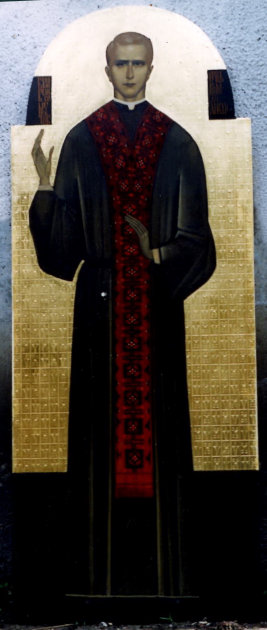
St Juan Macias OP (1585-1645)
About St Juan:
https://anastpaul.com/2018/09/18/saint-of-the-day-18-september-st-juan-macias-o-p-1585-1645/

St Oceano of Nicomedia
Saint Richardis (839-c 895)
St Sophia of Egypt

Martyred in the Spanish Civil War:
• Blessed Carlos Eraña Guruceta
• Blessed Fernando García Sendra
• Blessed Jacinto Hoyuelos Gonzalo
• Blessed Jesus Hita Miranda
• Blessed José García Mas
• Blessed José María Llópez Mora
• Blessed Justo Lerma Martínez
• Blessed Salvador Chuliá Ferrandis
• Blessed Salvador Fernández Pérez
• Blessed Vicente Gay Zarzo
• Blessed Vicente Jaunzarás Gómez

Posted in CHRIST, the WAY,TRUTH,LIFE, DIVINE Mercy, Goodness, Patience, franciscan OFM, GOD is LOVE, PRACTISING CATHOLIC, PRAYERS of the SAINTS, QUOTES of the SAINTS, QUOTES on DIVINE PROVIDENCE, QUOTES on FAITH, QUOTES on HOPE, QUOTES on LOVE, SAINT of the DAY

Thought for the Day – 17 September – ‘Multiply love in our hearts…’

Thought for the Day – 17 September – Tuesday of the Twenty Fourth week in Ordinary Time, Year C and the Memorial of Saint Zygmunt Szcesny Felinski (1822-1895)

From a young age, the life of Zygmunt Szczęsny Feliński was marked by his striving after sanctity.   Christ was for him “the Way, the Truth and the Life.”   He wanted to achieve such a degree of unity with God so as to say after Saint Paul:   I live now not with my own life but with the life of Christ who lives in me.

He was marked by unfaltering faith and utter trust in Providence.   He always placed love of God and Church, devotion to his country and respect for all people in the first place. His great integrity, fortitude and justice were characteristic features of his spirituality. Apart from that, he was full of devotion and mercy marked by Franciscan cheerfulness, humility and straightforwardness – work and poverty.   He was described as “the pride of the Polish episcopate”, “martyr”, “faithful son of the Church”.

Also nowadays, we can take the refreshing spirit and light from the treasury of his life. The Canonisation of the Shepherd-Exile encourages reflection on one’s own way of life, family and its revival, the building of the common house, the homeland, under God’s providential care and that of His Holy Mothe and ours.

During his Canonisation homily, on 11 October 2009, Pope Benedict said:
Archbishop of Warsaw, the Founder of the Congregation of the Franciscan Sisters of the Family of Mary, was a great witness of faith and pastoral charity in very troubled times for the nation and for the Church in Poland.   He zealously concerned himself with the spiritual development of the faithful, he helped the poor and orphans.   At the Ecclesiastical Academy in St Petersburg he saw to the sound formation of priests and as Archbishop of Warsaw he instilled in everyone the desire for inner renewal.   Before the January 1863 Uprising against Russian annexation he put the people on guard against useless bloodshed.   However, when the rebellion broke out and there were repressions he courageously defended the oppressed.   On the Tsar of Russia’s orders he spent 20 years in exile at Jaroslaw on the Volga, without ever being able to return to his diocese. In every situation he retained his steadfast trust in Divine Providence and prayed:   “O God, protect us not from the tribulations and worries of this world… only multiply love in our hearts and obtain that in deepest humility, we may keep our infinite trust in Your help and Your mercy”.

Today his gift of himself to God and to humankind, full of trust and love, becomes a luminous example for the whole Church.

St Zygmunt Felinski, Pray for Us!prayer of st zygmunt felinski and pray for us 17 sept 2019 o god protect us not from.jpg

Posted in MARIAN QUOTES, QUOTES of the SAINTS, QUOTES on DEATH, QUOTES on DIVINE PROVIDENCE, QUOTES on FAITH, QUOTES on GRACE, QUOTES on LOVE, QUOTES on PEACE, QUOTES on PERSEVERANCE, QUOTES on the CHURCH, QUOTES on TRUST and complete CONFIDENCE in GOD, SAINT of the DAY, The TRANSFIGURATION

Quote/s of the Day – 17 September – St Zygmunt Felinski

Quote/s of the Day – 17 September – Tuesday of the Twenty Fourth week in Ordinary Time, Year C and the Memorial of Saint Zygmunt Szcesny Felinski (1822-1895)

“The Church is
the greatest treasure,
the aim in my life,
my only love on the Earth.”

(1855)the church is the greatest treasure, the aim of my life - st zygmunt felinski 17 sept 2019.jpg

“I trust in God
and wish nothing else
but His will.”

(1877)i trust in god - st zygmunt felinski 17 sept 2019.jpg

“Blessed are those who will be found,
in their hour of trial
with Mary, under the cross.”

(1874)blessed are those who will be found foot of the cross - st zygmunt felinski 17 sept 2019.jpg

“Internal peace is the most precious treasure
and the only gift that the Saviour promises
His disciples on the Earth.”

(1879)internal peace - st zygmunt felinski 17 sept 2019

“Let God’s Peace,
His grace and blessing
accompany you
in all places
and at all times.”

(1890)

Saint Zygmunt Szcesny Felinskilet god's peace - st sygmunt felinski 17 sept 2019

Posted in ONE Minute REFLECTION, QUOTES on CONVERSION, SAINT of the DAY, The WORD

One Minute Reflection – 18 September – “Arise! “

One Minute Reflection – 18 September – Today’s Gospel: Luke 7:11–17, Tuesday of the Twenty Fourth week in Ordinary Time, Year C and the Memorial of Saint Zygmunt Szcesny Felinski (1822-1895)

And he said, “Young man, I say to you, arise.”... Luke 7:14band 17 sept 2019.jpg

REFLECTION – “God wants us to stand upright.   He created us to be on our fee,: for this reason, Jesus’ compassion leads to that gesture of healing, to heal us, of which the key phrase is:  “Arise! Stand up, as God created you!”.   Standing up. “But Father, we fall so often” — “Onward, arise!”.   This is Jesus’ word, always.   His word revives us, gives us hope, refreshes weary hearts, opens us to a vision of the world and of life which transcends suffering and death” .…Pope Francis – General audience, 10 August 2016young-man-i-say-to-arise-luke-7-14b-pope-francis-god-wants-us-to-stand-upright-18-sept-2018 and 17 sept 2019

PRAYER – Heavenly Father, help us to be holy in the way that You have laid out for us. Let us stand upright and carry out my duties of our state of life to the full. Only in You may we attain holiness, learning to give ourself, our will, our heart and to You. Keep us ever faithful to Your precepts and bring us to Your home, to look upon Your Face. May the prayers of Your saints assist us on our journey. In your untiring life of trust in God, St Zygmunt Felinksi, you sought to make Him the goal of all and the love of all, please pray that we may imitate your zeal and love. We ask all this through Christ, our Lord with the Holy Spirit, one God forever, amen.st zygmunt felinski 17 sept 2019 pray for us.jpg

Posted in SAINT of the DAY, VATICAN Resources

Saint of the Day – 17 September – Saint Zygmunt Szcesny Felinski (1822-1895)

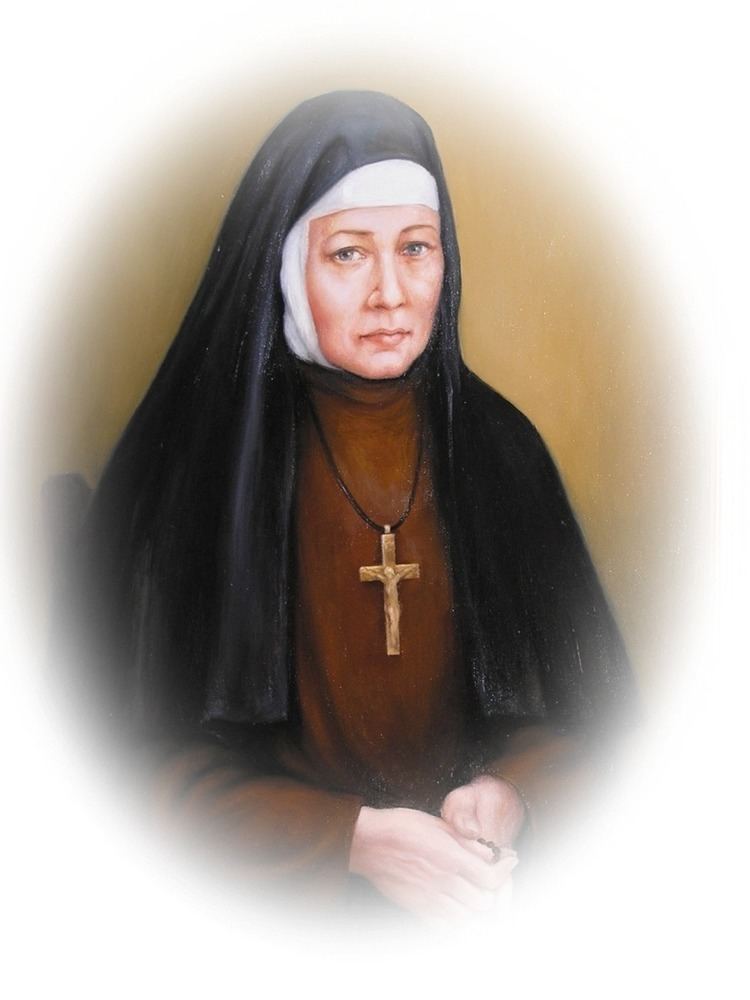
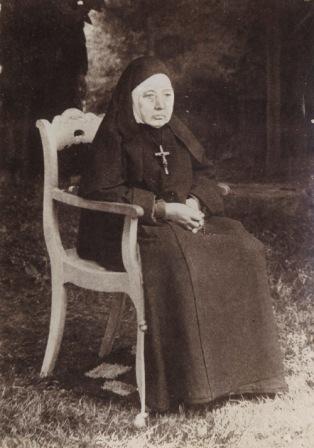
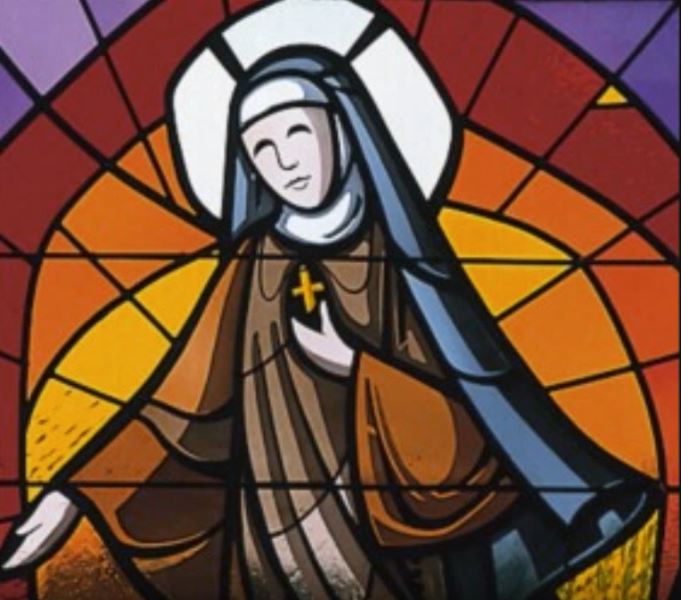
Saint of the Day – 17 September – Saint Zygmunt Szcesny Felinski TOSF (1822-1895) Archbishop of Warsaw and founder of the Franciscan Sisters of the Family of Mary, Apostle of poor, Confessor, Professor, Writer, Reformer.   Patronage – the Franciscan  Sisters of the Family of Mary.zygmunt_szczesny_felinski_03_original

St Zygmunt Szczesny Felinski was born on 1 November 1822 to Gerard Felinski and Eva Wendorff, in Wojutyn, Volinia (present-day Ukraine), then Russian territory.   He was the third of six children, of whom four survived.

Felinski was raised with faith and trust in Divine Providence, love for the Church and for Polish culture.   His father died when he was 11 and in 1838 the Russians exiled his mother to Siberia for “involvement in patriotic activity” that is, working for farmers’ rights.

Felinski studied mathematics at the University of Moscow (1840-44) and in 1847 went to the Sorbonne University and the Collège de France in Paris to study French literature.  He was in touch with all the important Polish emigrants and took part in the unsuccessful Revolt of Poznan.st sigismund young Sala-3-Posługa-duszpasterska-03.jpg

In 1851 he returned to Poland.   He entered the diocesan seminary at Zytomierz and studied at the Catholic Academy of St Petersburg.   He was ordained a priest on 8 September 1855 and assigned to the Dominican Fathers’ Parish of St Catherine of Siena in St Petersburg until 1857, when the Bishop appointed him spiritual director of the Ecclesiastical Academy and professor of philosophy.   In 1856 he founded a charitable organisation for the poor and in 1857, the Congregation of the Franciscan Sisters of the Family of Mary.  On 6 January 1862, Pope Pius ix appointed Fr Felinski, Archbishop of Warsaw and he was consecrated on 26 January 1862 in St Petersburg.   He arrived in Warsaw on 9 February 1862.st sigismund felinski aml.jpg

The Russians had brutally suppressed the Polish uprising in this city in 1861.   On 13 February 1862, the new Archbishop reconsecrated the Cathedral of Warsaw, which had been desecrated by the Russian troops.   Three days later he opened all the churches with the solemn celebration of the “Forty Hours” Devotion.

Zygmunt Felinski was Archbishop of Warsaw in the turbulent period from 9 February 1862 to 14 June 1863.   Unfortunately, he met with distrust on the part of some, even clergy, since the Russian Government had led people to believe that he was collaborating secretly with the Government.   The Archbishop always showed clearly he was at the service of the Church alone and strove to eliminate government interference in the internal affairs of the Church.   In reforming the diocese he regularly visited all the parishes and charitable organisations on order to address their needs better.   He reformed the syllabus of the Ecclesiastical Academy of Warsaw and of the diocesan seminaries, giving a new impetus to the spiritual and intellectual development of the clergy.   He took steps to obtain the release of priests in prison and he encouraged them to proclaim the Gospel publicly, to catechise their parishioners, to open parish schools and to educate a new generation that would be devout and honest.   He also cared for the poor and opened an orphanage in Warsaw that he entrusted to the Sisters of the Family of Mary.st sigismund felinski

Archbishop Felinski strove to prevent the nation from making rash moves and, as a protest against the Russians’ bloody repression of the “January Uprising” in 1863, resigned from the Council of State and wrote to the Emperor Alexander ii, urging him to put an end to the violence.   He likewise protested against the hanging of Fr Agrypin Konarski, a Capuchin and chaplain of the “rebels”.   His courageous actions soon led to his exile to Siberia.


On 14 June 1863, he was deported to Jaroslavl, where he spent the next 20 years, deprived by the Tsar of all contact with Warsaw.   Yet he managed to organise works of mercy for his fellow prisoners, especially the priests and somehow succeeded in collecting enough funds to build a Catholic church.   The people were impressed by his spirituality and nicknamed him the “holy Polish Bishop.”   Archbishop Felinski was released on 15 March 1883 and Leo XIII transferred him from the See of Warsaw to the titular See of Tarsus.   For the last 12 years of his life he lived in semi-exile, serving as parish priest in south-eastern Galizia at Dzwiniaczka, among farmers of Polish and Ukrainian origin.   As chaplain of the public chapel of the local manor, he undertook an intense pastoral work.   He set up the first school and a kindergarten in the village at his own expense.446px-Zygmunt_Szczęsny_Feliński_07_(cropped)

He also built a church and convent for his Franciscan Sisters of the Family of Mar, and found the time to prepare for publication the works he had written in exile.   He died in Kraków on 17 September 1895 and was buried there on 20 September, the following month his mortal remains were translated to Dzwiniaczka and in 1920, to Warsaw.   Here, on 14 April 1921, they were solemnly interred in the crypt of St John’s Cathedral where they are venerated today.  St John Paul II Beatified him in Kraków, Poland, on 18 August 2002. … Vatican.va

He was Canonised on 11 October 2009 by Pope Benedict XVI.

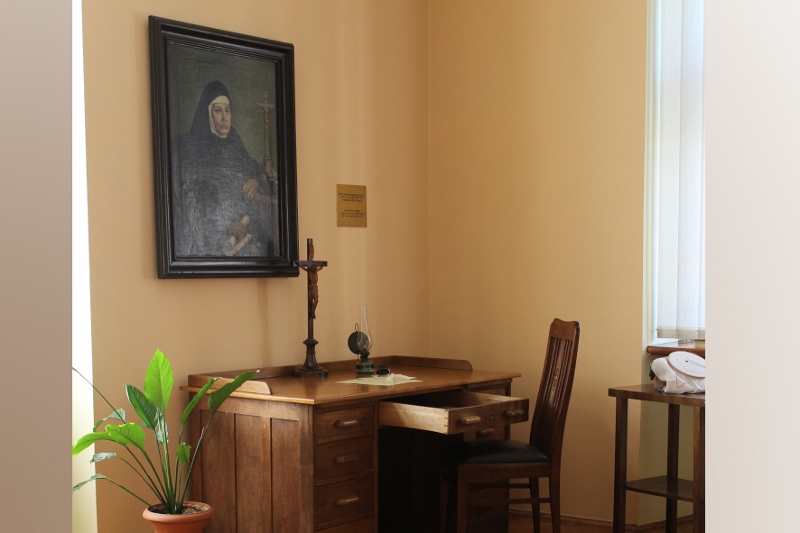
You can visit the Museum of St Zygmunt here :  http://muzeumfelinskiego.pl/en/museum/


This slideshow requires JavaScript.

Posted in DOCTORS of the Church, franciscan OFM, SAINT of the DAY

Memorials of the Saints – 17 September

St Robert Bellarmine SJ (1542-1621) Doctor of the Church (Optional Memorial)

St Robert’s life here:
https://anastpaul.wordpress.com/2017/09/17/saint-of-the-day-17-september-st-robert-bellarmine-s-j-doctor-of-the-church/

Stigmata of St Francis of Assisi
Two years before the great Saint Francis of Assisi died and when he was forty-two years old — one year after he had built the first crib in honour of Our Lord — he went off to a lonely mountain called Mount Alvernia, to prepare himself by forty days of fasting and prayer for the feast of Saint Michael, the greatest of God’s angels, whose feast day is 29 September.   On the feast of the Exaltation of the Holy Cross on 14 September, Saint Francis received in his hands, feet and side the Sacred Wounds from Our Lord’s own body.

Never was a saint more beautifully loved by Jesus than Saint Francis of Assisi.   The wounds Jesus gave him stayed in his hands, feet and side and continually bled for two more years, until he died in 1226.   The day on which Saint Francis received the Five Wounds of Our Lord was 14 September but so, that this beautiful event might have a feast day for itself, the Stigmata of Saint Francis are commemorated today, on 17 September.   The simple liturgy of this holy saint’s life might be put this way – the crib in 122, and the Cross in 1224.

saint-francis-stigmatization-of-st-francis-c-1594-5-ii-baroccioSt Agathoclia
St Brogan of Ross Tuirc
St Columba of Cordova
St Crescentio of Rome
St Emmanuel Nguyen Van Trieu
St Flocellus
St Hildegard von Bingen OSB (1098-1179) Doctor of the Church
Biography:
https://anastpaul.com/2018/09/17/saint-of-the-day-17-september-st-hildegard-von-bingen-osb-1098-1179-doctor-of-the-church/

St Justin of Rome
St Lambert of Maastricht
St Narcissus of Rome
St Peter Arbues
St Rodingus
St Satyrus of Milan
St Socrates
Bl Stanislaus of Jesus and Mary
St Stephen
St Theodora
St Uni of Bremen
St Zygmunt Sajna
St Zygmunt Szcesny Felinski TOSF (1822-1895)

Martyred in the Spanish Civil War
• Blessed Álvaro Santos Cejudo Moreno Chocano
• Blessed Juan Ventura Solsona
• Blessed Timoteo Valero Pérez

Posted in ON the SAINTS, QUOTES of the SAINTS, QUOTES on FAITH, SACRAMENTS, SAINT of the DAY

Thought for the Day – 16 September – A Faith that is Ready and Unshaken – St Cyprian to St Pope Cornelius

Thought for the Day – 16 September – Monday of the Twenty-fourth week in Ordinary Time, Year Cand the Memorial of St Pope Corneliu  s and St Cyprian of Carthage, Martyrs

A Faith that is Ready and Unshaken

Saint Cyprian of Carthage (c 200-258)
Bishop, Father of the Church and Martyr

An excerpt from his Letter 60

Cyprian sends greetings to his brother Cornelius. My very dear brother, we have heard of the glorious witness given by your courageous faith.   On learning of the honour you had won by your witness, we were filled with such joy that we felt ourselves sharers and companions in your praiseworthy achievements.   After all, we have the same Church, the same mind, the same unbroken harmony.   Why then should a priest not take pride in the praise given to a fellow priest as though it were given to him?   What brotherhood fails to rejoice in the happiness of its brothers wherever they are?

Words cannot express how great was the exultation and delight here when we heard of your good fortune and brave deeds, how you stood out as a leader of your brothers in their declaration of their faith.   You led the way to glory but you gained many companions in that glory, being foremost in your readiness to bear witness, on behalf of all, you prevailed on your people to become a single witness.   We cannot decide which we ought to praise, your own ready and unshaken faith, or the love of your brothers who would not leave you.   While the courage of the bishop who thus led the way has been demonstrated, at the same time the unity of the brotherhood who followed, has been manifested.   Since you have one heart and one voice, it is the Roman Church as a whole that has thus borne witness.

Dearest brother, bright and shining is the faith which the blessed Apostle praised in your community.   He foresaw in the spirit the praise your courage deserves and the strength that could not be broken, he was heralding the future when he testified to your achievement, his praise of the fathers was a challenge to the sons.   Your unity, your strength have become shining examples of these virtues to the rest of the brethren.

Divine providence has now prepared us.   God’s merciful design has warned us that the day of our own struggle, our own contest, is at hand.   By that shared love which binds us closely together, we are doing all we can to exhort our congregation, to give ourselves unceasingly to fasting, vigils and prayers in common.   These are the heavenly weapons which give us the strength to stand firm and endure, they are the spiritual defences, the God-given armaments that protect us.

Let us then remember one another, united in mind and heart.   Let us pray without ceasing, you for us, we for you, by the love we share, we shall thus relieve the strain of these great trials.

Sts Cornelius and Cyprian, Pray for Us!STS CORNELIUS AND CYPRIAN PRAY FOR US 16 SEPT 2019 no 2.jpg

Posted in CONFESSION/PENANCE, FATHERS of the Church, LAPSED Catholics, QUOTES of the SAINTS, QUOTES on CONVERSION, QUOTES on DIVINE PROVIDENCE, QUOTES on ETERNAL LIFE, QUOTES on FAITH, QUOTES on HEAVEN, QUOTES on PRAYER, QUOTES on REPENTANCE, SAINT of the DAY, SOLDIERS/ARMOUR of CHRIST, The HOLY EUCHARIST / The HOLY MASS, The LORD'S PRAYER

Quote/s of the Day – 16 September – The wisdom of St Cyprian of Carthage

Quote/s of the Day – 16 September – The Memorial of Sts Cornelius & Cyprian

“Not by words alone but also by deeds, has God taught us to pray.   He Himself prayed frequently and demonstrated what we ought to do, by the testimony of His own example.   As it is written: “But he himself was in retirement in the desert and in prayer” and again, “He went out into the mountain to pray and continued all night in prayer to God.”   But if He who was without sin prayed, how much more ought sinners to pray and if He prayed continually, watching through the whole night with uninterrupted petitions, how much more ought we to lie awake at night in continuing prayer!”luke-5-16-but-he-withdrew-to-the-wilderness-but-if-he-who-was-without-sin-st-cyprian-11-jan-2019

“So, my brothers, let us pray as God our master has taught us.
To ask the Father in words His Son has given us,
to let Him hear the prayer of Christ ringing in His ears,
is to make our prayer one of friendship, a family prayer.
Let the Father recognise the words of His Son.
Let the Son who lives in our hearts, be also on our lips.
We have Him as an Advocate for sinners, before the Father,
when we ask for forgiveness for ours sins,
let us use the words given by our Advocate.
He tells us –
Whatever you ask the Father in my name, He will give you.
What more effective prayer could we then make,
in the name of Christ, than in the words of His own prayer?”

An excerpt from his “On the Lord’s Prayer”

let-us-pray-as-god-our-master-has-taught-us-no 2 used on 16 sept 2019 memorial of st-cyprian-12-march-2019-lenten-thoughts-no-2- used again 20 june 2019

“As we do battle and fight, in the contest of faith,
God, His angels and Christ Himself, watch us.
How exalted is the glory,
how great the joy of engaging in a contest
with God presiding,
of receiving a crown, with Christ as judge.”
An excerpt from his Letter 58as-we-do-battle-and-fight-st-cyoprian-of-carthage-6-may-2019-the-contest-of-faith.jpg

“{Lapsed Christians} will often take Communion before their sin is expiated, before confession has been made of their crime, before their conscience has been purged by sacrifice and by the hand of the priest, before the offence of an angry and threatening Lord has been appeased, [and so] violence is done to His body and blood and they sin now, against their Lord, more with their hand and mouth than when they denied their Lord.”
(The Lapsed 15–16 [written in 251])lapsed christians - st cyprian of carthage - 3 feb 2019 sun reflec

“He not only receives and pardons those adversaries,
those blasphemers, those persistent enemies of His name,
provided they do penance for their offence
and acknowledge the crime committed
but He admits them to the reward of the kingdom of heaven.”he not only receives and pardons  no 2 used on 16 sept 2019 st cyprians memorial- st cyprian - 24 march 2019 3rdsunlentyearc.jpg

“Whatever a man
prefers to God,
that, he makes,
a god to himself.”

St Cyprian of Carthage (c 200-258)
Bishop and Martyr, Father of the Churchwhatever man prefers to god that he makes a god to himself - st cyprian of carthage 16 sept 2019.jpg

Posted in DOCTORS of the Church, FATHERS of the Church, ONE Minute REFLECTION, QUOTES of the SAINTS, QUOTES on FAITH, SAINT of the DAY, The LISTS of the CHURCH, The WORD

One Minute Reflection – 16 September – I am not worthy to have you come under my roof …

One Minute Reflection – 16 September – Monday of the Twenty-fourth week in Ordinary Time, Year C, Gospel: Luke 7:1-10 and the Memorial of St Pope Cornelius and St Cyprian of Carthage, Martyrs

“Lord, do not trouble yourself, for I am not worthy to have you come under my roof, therefore, I did not presume to come to you.   But say the word and let my servant be healed.”…Luke7:6b-7

REFLECTION – “This man was a pagan, for the Jewish people were occupied by the Imperial Roman army at that time.   So it was as a centurion in Judaea that he was commanding his soldiers…
But our Lord, although he was in the midst of the people of Judaea, was already talking about the Church being spread all over the earth wherever His apostles were to be sent (Mt 8:11).   Indeed, the gentiles believed in Him without having see Him…  Our Lord did not physically enter the centurion’s house and, even though absent in body, He was present in majesty and healed both that house and its faith.   Similarly, our Lord stood physically only amongst the people of Judaea – other peoples did not see His being born of a virgin, or suffering, or walking, or subject to the condition of human nature, or carrying out divine miracles.   None of these things were done amongst the gentiles and yet it was amongst them that what was said about Him was fulfilled:  “A people I did not know have served me.”   In what way did they serve Him?   The Psalm continues: “As soon as they heard me, they obeyed me” (Ps 18[17]:44-45).”…St Augustine (354-430) Father and Doctor of the Churchlord-i-am-not-worth-luke-7-6b-7-and-indeed-the-gentiles-believed-st-augustine-17-sept-2018

PRAYER – Lord God and holy Father, guard our faith we pray and grace us with Your mercy.   Keep us every faithful to Your precepts and bring us to Your home, to look upon Your Face.   May the prayers of Your saints assist us on our journey.   In your untiring life of trust in God, Sts Cornelius and Cyprian, you sought to make Him the goal of all and the love of all, please pray that we may imitate your zeal and love.   We ask all this through Christ, our Lord with the Holy Spirit, one God forever, amen.sts-cornelius-and-cyprian-pray-for-us-16-sept-2017

Posted in SAINT of the DAY

Saint of the Day – 16 September – Blessed Pope Victor III (1027-1087)

Saint of the Day – 16 September – Blessed Pope Victor III (1027-1087) “the Gentle Pope” Benedictine Abbot, Monk, Advisor, diplomat, reformer – papal ascension – elected 24 May 1086 and enthroned on 9 May 1087 – until his death.  He was born Dauferio in 1027 in Benevento, Italy and died on 16 September 1087 at the monastery of Monte Cassino of natural causes.   He was buried at Monte Cassino.   He is also known as Desiderius.428px-Pope_Victor_III

Few have been more reluctant to accept the papacy than the Monk who became Victor III.   Blessed Pope Victor III was born a Prince of the dukes of Benevento around the year 1026, the only son of Prince Landulf V.   Victor was always monastically inclined, having skilfully avoided not one but two arranged marriages before opting for life as a hermit and monk.

When his father died fighting the Normans, Dauferio escaped the watch of his relatives and entered a monastery.   But the enraged relatives hunted him down, tore off his religious habit and hustled the would-be monk home.   Dauferio, however, had a mind of his own and soon escaped again.   This time his relatives agreed to let him remain a Monk.   As a Benedictine Monk, he received the name Desiderius.   In spite of his aversion to honour and power, his sweet disposition and pronounced ability caught the attention of the reforming Popes.   St Leo IX and Victor II took a great liking to the young Benedictine.  He succeeded Abbot Frederick when the latter was elected Pope Stephen IX.bl Victor_III._-_Desiderius_of_Montecassino

Desiderio proved to be one of the greatest in the long line of Cassinese Abbots.   He had found the old abbey in a ruinous state and energetically undertook a wide-scale rebuilding program.   Under his leadership there rose a chapter house, an Abbots’ house, a library, a dormitory and a great church.    Pope Alexander II consecrated it in 1071.   As Abbot, Desiderius became renowned as the greatest Abbot the monastery had seen since St Benedict himself.    Desiderius’ reputation brought gifts and exemptions to the Abbey. The money was spent on church ornaments, including a great golden altar front from Constantinople adorned with gems and enamels and “nearly all the church ornaments of Victor II, which had been pawned here and there throughout the city”.   Peter the Deacon gives a list of some seventy books Desiderius had copied at Monte Cassino, including works of Saint Augustine, Saint Ambrose, Saint Bede, Saint Basil, Saint Jerome, Saint Gregory of Nazianzus and Cassian, the histories of Josephus, Paul Warnfrid, Jordanes and Saint Gregory of Tours, the Institutes and Novels of Justinian, the works of Terence, Virgil and Seneca, Cicero’s De natura deorum and Ovid’s Fasti.

Vicente_Carducho.__Visión_del_papa_Víctor_III__(1626-1632),_Cartuja_del_Paular-Museo_del_Prado
Vicente Carducho:   Vision of Pope Victor III.

No mere bricks-and-mortar Abbot, Desiderius took great pains to help his Monks’ advance in the spiritual life.   Nor was he neglectful of the abbey’s intellectual life.   As Abbot of Monte Cassino, Desiderius was a great personage in Southern Italy.   This power he used loyally to back the reform popes.   Nicholas II made him a Cardinal and Papal Legate.   He had great influence with the Normans and it was he who secured their help for St Gregory VII in his time of need.    So great was his reputation with the Holy See that he “…was allowed by the Roman Pontiff to appoint Bishops and Abbots from among his Benedictine brethren in whatever churches or monasteries he desired, of those that had lost their patron”.

It is not surprising that when Gregory VII died, Abbot Desiderius was sought as his successor.   But Desiderius simply would not agree to accept the heavy honour.   At last on Pentecost Sunday, 24 May 1086, the exasperated Cardinals and clergy carried Desiderius to the Church of St Lucy, and forcibly clothED him with the papal mantle, called him Victor III.   But four days later Victor put off the papal insignia and withdrew to Monte Cassino.   It was almost a year later, before he finally consented to serve as Pope.   At a great council held at Capua in 1087 Victor at last surrendered.   When the Normans drove antipope Guibert out of Rome, Victor was solemnly enthroned in St Peter’s on 9 May 1087.bl pope victor III.jpg

Much could be hoped for from such a Pope as Blessed Victor III but his health was failing and his short pontificate was stormy.   Unable or unwilling to maintain himself in Rome against Antipope Guibert, Victor held a council at Benevento, which once more excommunicated the antipope and once more condemned lay investiture.  When the council had lasted three days, Victor became seriously ill and retired to Monte Cassino to die.   He had himself carried into the chapter-house, issued various decrees for the benefit of the abbey, appointed with the consent of the monks the prior, Cardinal Oderisius, to succeed him in the Abbacy, just as he himself had been appointed by Stephen IX and proposed Odo of Ostia to the assembled cardinals and bishops as the next Pope.   He died on 16 September 1087 and was buried in the tomb he had prepared for himself in his beloved  Abbey’s chapter-house.   Odo was duly elected his successor as Pope Urban II

In the sixteenth century his body was removed to the abbey church and again translated in 1890.   The cult of Blessed Victor III seems to have begun not later than the pontificate of Pope Anastasius IV, about six decades after his death.   In 1727 the Abbot of Monte Cassino obtained from Pope Benedict XIII permission to keep his feast.   Pope Leo XIII Beatified Victor I on 23 July 1887.

VICTOR ii.jpg

Posted in SAINT of the DAY

Memorials of the Saints – 16 September

St Pope Cornelius (Martyred in 253) (Memorial)
St Cyprian of Carthage (190-Martyred in 258) (Memorial)
Full story here:
https://anastpaul.wordpress.com/2017/09/16/saints-of-the-day-16-september-st-pope-cornelius-and-st-cyprian-of-carthage-martyrs/

St Abundantius of Rome
St Abundius of Rome
St Andrew Kim Taegon
St Cunibert of Maroilles
St Curcodomus
Bl Dominic Shobyoye
St Dulcissima of Sutri
St Edith of Wilton
St Eugenia of Hohenburg
St Euphemia of Chalcedon
St Geminianus of Rome
St John of Rome
Bl Louis Allemand
St Lucy of Rome
St Ludmila
St Marcian the Senator
Bl Martin of Huerta
Bl Michael Himonaya
St Ninian (Died 432) Apostle to the Southern Picts
Biography:
https://anastpaul.com/2018/09/16/saint-of-the-day-16-september-st-ninian-c-360-died-432-apostle-to-the-southern-picts/

Bl Paul Fimonaya
St Priscus of Nocera
St Rogellus of Cordoba
St Sebastiana
St Servus Dei
St Stephen of Perugia
Blessed Pope Victor III OSB (1027-1087)
St Vitalis of Savigny

Martyrs of the Via Nomentana: Four Christian men martyred together, date unknown – Alexander, Felix, Papias and Victor. They were martyred on the Via Nomentana outside Rome, Italy.

Martyred in the Spanish Civil War:
• Blessed Antonio Martínez García
• Blessed Ignasi Casanovas Perramón
• Blessed Manuel Ferrer Jordá
• Blessed Pablo Martínez Robles
• Blessed Salvador Ferrer Cardet

Posted in PRACTISING CATHOLIC, QUOTES of the SAINTS, QUOTES on LOVE, QUOTES on MISSION, QUOTES on SANCTITY, SAINT of the DAY

Thought for the Day – 15 September – “A Soul on Fire”

Thought for the Day – 15 September – The Memorial of Blessed Paolo Manna PIME (1872-1952) “A Soul on Fire” – Priest, Missionary in Burma (Myanmar), Superior General of the P.I.M.E., Founder of the Pontifical Missionary Union

In Father Paolo Manna we perceive a special reflection of the glory of God.   He spent his entire life promoting the missions.   In every page of his writings there stands out the person of Jesus, centre of his life and reason for the missions.

In one of his letters to the missionaries, he stated:   “In fact the missionary is nothing if he does not put on the person of Jesus Christ…. Only the missionary who copies Jesus Christ faithfully in himself can reproduce his image in the souls of others” (Letter 6).

Indeed, there are no missions without holiness, as the Encyclical Redemptoris Missio pointed out:   “The missionary spirituality of the Church consists in the movement towards holiness.   One must stir up a new zeal for holiness among missionaries and in the whole Christian community” (n. 90).

St Pope John Paul II, Beatification Homily, Sunday 4 November 2001

“We missionaries often wonder why the work of the conversion of the non-Christian world goes so slowly. We usually give various reasons to explain this painful fact and in truth, the problem may be considered from many angles, some of which do not concern our responsibility.   But for the part that does concern us and it is the main part, the problem has a very clear solution. To save the world, God in His infinite wisdom wanted to have co-workers. God does His part well – do the people called to help Him do their part equally well?
Let us work in such a way that the whole Church, all Christian people, led by their bishops and clergy, truly feel the apostolic duty that is incumbent upon them to promote the propagation of the faith with every means.
Let us work in such a way that that missionaries, the most direct instruments for the conversion of souls, are saints and non-Christians will not be slow to be converted.   The missionary problem has been and still is, almost ignored by the Christian people.   Those who were interested in the past were always a minority and it is extremely painful to see today too, although some progress has been made, how the enormous question is far from being understood and faced fully by clergy and people.   It is extremely painful, because Catholic peoples would have more than enough energies to promote the work of evangelisation more worthily if priests taught, organised and above all inflamed them with a greater spirit of faith and zeal.
Missionaries, also from the human viewpoint, have been excellent people…but neither brilliance nor prudence, nor courage have made them great in our eyes and the eyes of God.   They have been great, they have saved many souls, they have founded Churches, mainly because they were holy men, that is, spiritual men.   This is the secret, the soul of their zeal, their perseverance and their success; this is the solemn teaching they have handed down to us and which I love to remind you of, so that our missionaries of today and those of tomorrow may always build upon it the first and essential reason for their own sanctification and the sanctification of the souls that are and will be, entrusted to them.
You, missionaries in active service in the field, are particularly concerned with your part of co=operation.   Therefore, I say to you, be holy missionaries by following the footsteps of those great missionaries who went before you and, for the part that concerns you, your apostolic duty will have been done to the full.   The souls the Lord in His merciful designs has entrusted to each one of you that you may lead them to salvation, will be saved and at the end of your days, you will be able to say with the Divine Redeemer:  “(Father) I kept those you had given me true to you name. I have watched over them and not one is lost” (John 17:12).”

Blessed Paolo

Of Manna, Father Piero Gheddo writes:   He was a great writer, superior general, missionary animator, organiser, a man of revolutionary ideas and initiatives  . He was the first in Italy to encourage the clergy to work for Christian unity.   But it was above all his holiness, that led him to comply with God’s plan with humility, loyalty and a spirit of sacrifice.   He was a man of prayer and in spite of poor health, he achieved much.   His missionary animation was genial.   He was known to be a “soul on fire”, in love with Jesus Christ, the only love of his life.” (S.L.) (Fides Service 16/1/2004

Blessed Paolo Manna, Pray for Us!bl paolo manna pray for us a soul on fire 15 sept 2019.jpg

Posted in QUOTES - J R R Tolkien and MORE, QUOTES of the SAINTS, QUOTES on EVANGELISATION, QUOTES on MISSION, QUOTES on PERSEVERANCE, QUOTES on REPENTANCE, QUOTES on the CHURCH, SAINT of the DAY, The GOOD SHEPHERD, The WORD

Quote/s of the Day – 15 September – Each of us and all of us!

Quote/s of the Day – 15 September – Twenty Fourth Sunday in Ordinary Time, Year C, Gospel: Luke 15:1–32 and the Memorial of Blessed Paolo Manna PIME (1872-1952)

“Just so, I tell you,
there will be more joy in heaven
over one sinner who repents,
than over ninety-nine righteous persons
who need no repentance.”

Luke 15:7luke 15 7 just so i tell there will be more joy in heaven - 15 sept 2019.jpg

“The whole Church for the whole world!”

the whole church for the whole world - bl paolo manna 15 sept 2019

“Go for a divine call,
go where obedience has destined you.
Go for the love of Jesus,
for the interests of Jesus
and Jesus will always be at your side,
always in your heart”

go for a dvivne call bl paolo manna 15 sept 2019

“We are apostles!
We are apostles
and we wander far and wide,
we work generously,
only for the sake of souls,
only for the Church,
only for heaven!”

Blessed Paolo Manna (1872-1952)we are apostles - bl paolo manna 15 sept 2019

Christ only knows
how to count to one and that one,
is each of us!

christ only knows how to count to one fr raniero cantalamessa 15 sept 2019.jpg

Posted in SAINT of the DAY

Saint of the Day – 15 September – Blessed Paolo Manna PIME (1872-1952) “A Burning Soul”

Saint of the Day – 15 September – Blessed Paolo Manna PIME (1872-1952) “A Burning Soul” Priest, Missionary in Burma (Myanmar), Superior General of the P.I.M.E., Founder of the Pontifical Missionary Union, Evangeliser, Founder of various Newspapers and Movements to promote the missions and the evangelic and apostolic zeal that accompany it.   Born on 16 January 1872 at Avellino, Italy and died on 15 September 1952 at Naples, Italy of natural causes.   He is buried at the seminary in Ducenta, Italy. Patronages – Pontifical Missionary Union, Missionaries.bl paolo-manna-7783b5c6-97cd-4f73-9b7e-2df1d1f789b-resize-750.jpeg

Blessed Father Paolo Manna was born in Avellino on 16 January 1872.   After primary and technical education in Avellino and in Naples he went to Rome for higher studies. While studying philosophy at the Gregorian University he followed the call of the Lord and entered the Theology Seminary of the Institute for Foreign Missions in Milan.   On 19 May 1894 he was ordained a priest in the cathedral of Milan.

On 27 September 1895 he departed for the mission of Toungoo in Eastern Burma.   He worked there for a total of ten years with two short repatriations until 1907, when his illness forced him to come back to Italy for good.bl paolo manna young

Beginning in 1909, through writing and a variety of other activities, he dedicated all his energy for the next forty years to fostering missionary zeal among the clergy and the faithful.   In 1916 he founded the Missionary Union of the Clergy on which Pius XII bestowed the title of “Pontifical” in 1956.   He saw the Union as “a radical solution to the problem of involving Catholics in the apostolate.”   His assumption was that a mission-minded clergy would make all Catholics missionaries.   Today, the Union has spread throughout the world and the membership includes seminarians, religious and consecrated laity.

By 1909 he became the director of Le Missioni Cattoliche and in 1914 he launched Propaganda Missionaria – a popular broadsheet with a large circulation, in 1919 he started Italia Missionaria for young people.

In an effort to foster the missionary vocations in Southern Italy, the Sacred Congregation for the Propagation of the Faith asked Father Manna to establish a seminary for foreign missions.   He opened the Sacred Heart Seminary at Ducenta in the province of Caserta – a foundation he had long encouraged and promoted.

In 1924 was elected Superior General of the Institute of Foreign Missions of Milan.   In 1926 at the instigation of Pope Pius XI the Institute united with the Missionary Seminary of Rome to form the Pontifical Institute for the Foreign Missions (P.I.M.E.).bl paolo-manna-ea62aaee-d423-4d57-bb2e-86ed1e1062d-resize-750

The P.I.M.E. General Assembly of 1934 gave him mandate to establish the Society of the Missionary Sisters of the Immaculate.   He played a primary role in the foundation of this institute in 1936.   From 1937 to 1941 Father Manna was in charge of the International Secretariat for the Missionary Union of the Clergy .

The Italian Southern Province of P.I.M.E. was established in 1943 and Father Manna became its first superior and launched the family missionary magazine Venga il tuo regno.bl Manna_superiore_generale-757x1024

Father Manna wrote quite a number of well-known books and booklets.   Several of them had a lasting effect such as: Operarii autem pauci,  I Fratelli separati e noi – The Separated Brethren, Le nostre Chiese e la propagazione del Vangelo, Virtù Apostoliche – Apostolic Virtues (1943).   He envisioned innovative methods of missionary work that foresaw developments at the Second Vatican Council.   But Fr Manna’s greatest legacy is the example he left behind – he was driven by an overwhelming passion for the missions that sickness, suffering and setbacks could never diminish.   Tragella, his first biographer, called him “A burning soul”.   Until his death his motto was: “All the Church for all the World”!

Father Paolo Manna died in Naples on 15 September 1952.   His remains were laid to rest at Ducenta, “his seminary”.   On 13 December 1990 St Pope John Paul II visited his tomb.

His Beatification Cause began in Naples in 1971 and concluded in Rome on 24 April 2001 with a Papal Decree on a miracle attributed to the intercession of the Servant of God. … Vatican.va

St Pope John Paul II Beatified Blessed Paolo on 4 November 2001.bl paolo-manna-eae711fc-01a7-4bde-94bc-f7cd2cde1eb-resize-750bl paolo-manna-0f7e76c9-b58c-484c-9d42-533c2aec199-resize-750

Posted in MARIAN TITLES, MATER DOLOROSA - Mother of SORROWS, SAINT of the DAY

Twenty Fourth Sunday in Ordinary Time, Year C +2019, Memorial of Our Lady of Sorrows and of the Saints – 15 September

Twenty Fourth Sunday in Ordinary Time, Year C +2019

Our Lady of Sorrows (Memorial)
About this Sorrowful Memorial:

https://anastpaul.wordpress.com/2017/09/15/memorial-of-our-lady-of-sorrows-15-september/
AND here:
https://anastpaul.com/2018/09/15/memorial-of-our-lady-of-sorrows-15-september-2/

St Aichardus
St Albinus of Lyon
Bl Anton Maria Schwartz
St Aprus of Toul
St Bond of Sens
St Catherine of Genoa
Bl Camillus Constanzo
St Emilas of Cordoba
St Eutropa of Auvergne
St Hernan
Bl Jacinto de Los Ángeles and Bl Juan Bautista
St Jeremias of Cordoba
St Joseph Abibos
St Mamillian of Palermo
St Melitina
St Mirin of Bangor
St Nicetas the Goth
St Nicomedes of Rome
Blessed Paolo Manna PIME (1872-1952)

St Porphyrius the Martyr
St Ribert
St Ritbert of Varennes
Bl Rolando de Medici
Bl Tommasuccio of Foligno
St Valerian of Châlon-sur-Saône
St Valerian of Noviodunum
St Vitus of Bergamo
Bl Wladyslaw Miegon

Martyrs of Adrianopolis – 3 saints: Three Christian men martyred together in the persecutions of Maximian – Asclepiodotus, Maximus and Theodore. They were martyred in 310 at Adrianopolis (Adrianople), a location in modern Bulgaria.

Martyrs of Noviodunum – 4 saints: Three Christian men martyred together, date unknown – Gordian, Macrinus, Stratone and Valerian.
They were martyred in Noviodunum, Lower Moesia (near modern Isaccea, Romania).

Mercedarian Martyrs of Morocco – 6 beati: A group of six Mercedarians who were captured by Moors near Valencia, Spain and taken to Morocco. Though enslaved, they refused to stop preaching Christianity. Martyrs. – Dionisio, Francis, Ildefonso, James, John and Sancho. They were crucified in 1437 in Morocco.

Martyred in the Spanish Civil War:
Bl Antonio Sierra Leyva
Bl Pascual Penades Jornet

Posted in SAINT of the DAY

Saint of the Day – 14 September – Saint Peter of Tarentaise O.Cist (1102-1174)

Saint of the Day – 14 September – Saint Peter of Tarentaise O.Cist (1102-1174) Cistercian Religious Monk, Archbishop of Tarentaise from 1141 until his death, Abbot, Apostle of Charity, Miracle-worker.   Born 1102 at Saint-Maurice-l’Exil, Kingdom of France and died on 14 September 1174 (aged 72) at Bellevaux Abbey, Cirey, Franche-Comté, Kingdom of France.  Patronage – Tarentaise.   St Peter founded Tamié Abbey as a daughter house of Bonnevaux Abbey.   Abbot Peter tried to refuse an elevation to the episcopate though his superiors, one of them being Saint Bernard of Clairvaux insisted that he accept the position.   As Archbishop, he had special care for the poor, the ill and those who travelled the Alpine passes.st peter of tarentaise holy card

There are two men named Saint Peter of Tarentaise who lived one century apart.   The man we honour today is the younger Peter, born in France in the early part of the 12th century.   The other man with the same name became Pope Innocent the Fifth.

He was born in 1102 on a farm near Saint-Maurice-l’Exil, not far from the Cistercian Bonnevaux Abbey.   His father often offered hospitality to the monks, when they had to leave the monastery on business.   St Peter joined this Cistercian monastery at the age of 20 in 1122.   He lived with such modesty, charity and humility that people were moved and inspired to conversion, by his great holiness.  He was such a great witness of the religious life that many others followed him and joined the abbey as well.   In fact, his whole family followed him and joined communities of their own—his mother, father, and siblings!st peter of tarantaise

He was appointed as Abbot of the new monastery that he was instrumental in  establishing, in the mountains.  This monastery soon became known as a resting place for travellers.   Peter began a hospice there for sick and poor travellers.

In 1142, at the insistence of his superiors including St Bernard of Clairvaux, Abbot Peter reluctantly accepted the position as the Archbishop of Tarentaise.   In his episcopal role he applied the Cistercian principles to restore the diocese and met with a good deal of success, since the diocese’s management had declined and discipline lax.   He removed corrupt priests (and elevated good priests to important pastoral positions) and promoted education for all the faithful.    He visited all parts of his mountainous diocese on a regular basis.  He also frequently visited the Grand Chartreuse, during the tenure of Hugh of Lincoln.

His specific concerns included the welfare of travellers to and from Switzerland and from the Italian cities.   He rebuilt a hospice in poor repair at Little St Bernard Pass.   He also founded a charity which distributed food to farms in the surrounding hills.   This would become known as pain de Mai and became a tradition continued in the region until the French Revolution.  st peter of tarentaise lg

Miracles were attributed to him during this time—healings and the multiplication of food during a famine.   He became widely known as a wonder-worker, which increased his longing for the solitude he found in his life as a monk.   After 13 years as archbishop, in 1155, he one day suddenly vanished without a trace..   He was discovered one year later in a remote Cistercian abbey in Switzerland, where he had joined the community under an assumed name as a lay brother.   He was ordered to return and was warmly greeted when he got back to Tarentaise.   He redoubled his efforts at leading the diocese, and took even greater care of the poor—twice he endangered his own life by giving away his own cloak in severe weather.

Religious and state authorities turned to Peter, a man of great peace, in moments of conflict so that he could effect reconciliation with his words and presence.   He preached outspokenly and fearlessly, in disputes over the papacy and between the kings of France and England and his words were backed by miracles of healings.

Pierre died in 1174 as he attempted to mediate between feuding monarchs after a serious but brief illness.   For his charity and healing powers, Peter was viewed as a saint even in his lifetime.   His Canonisation was formalised under Pope Celestine III in 1191.Peter-of-Tarentaise

Posted in FEASTS and SOLEMNITIES, SAINT of the DAY, The HOLY CROSS

Feast of the Exaltation of the Holy Cross and Memorials of the Saints – 14 September

Exaltation of the Holy Cross (Feast)
About this great Feast:
https://anastpaul.wordpress.com/2017/09/14/feast-of-the-exaltation-of-the-holy-crosstriumph-of-the-holy-cross-14-september/

St Aelia Flaccilla
St Albert of Jerusalem (1149-1215)

Biography:

Saint of the Day – 14 September – St Albert of Jerusalem (1149-1214)


St Caerealis
Bl Claude Laplace
St Cormac of Cashel
St Crescentian of Carthage
St Crescentius of Rome
St Generalis of Carthage
St Giulia Crostarosa
St Jean Gabriel Taurin du Fresse
St Maternus of Cologne
Saint Peter of Tarentaise O.Cist (1102-1174)

Bl Pedro Bruch Cotacáns
St Rosula of Carthage
St Sallustia
St Victor of Carthage

Posted in CHRIST, the WAY,TRUTH,LIFE, DOCTORS of the Church, FATHERS of the Church, QUOTES of the SAINTS, QUOTES on FAITH, QUOTES on FEAR, QUOTES on the CHURCH, SAINT of the DAY

Thought for the Day – 13 September – Life to Me, means Christ and Death, is Gain – St John Chrysostom

Thought for the Day – 13 September – the Memorial of St John Chrysostom (347-407) Father & Doctor of the Church

Life to Me, means Christ
and Death, is Gain

Saint John Chrysostom

An excerpt from his Sermon, Before the Exile

“The waters have risen and severe storms are upon us but we do not fear drowning, for we stand firmly upon a rock.   Let the sea rage, it cannot break the rock.   Let the waves rise, they cannot sink the boat of Jesus.   What are we to fear?   Death?   Life to me means Christ, and death is gain.   Exile?   The earth and its fullness belong to the Lord.   The confiscation of goods?   We brought nothing into this world and we shall surely take nothing from it.   I have only contempt for the world’s threats, I find its blessings laughable.   I have no fear of poverty, no desire for wealth.   I am not afraid of death nor do I long to live, except for your good.   I concentrate, therefore, on the present situation and I urge you, my friends, to have confidence.the waters have risen but they cannot break the rock - st john chrysostom 13 sept 2019

Do you not hear the Lord saying – Where two or three are gathered in my name, there am I in their midst?   Will He be absent, then, when so many people united in love are gathered together?   I have His promise; I am surely not going to rely on my own strength!   I have what He has written – that is my staff, my security, my peaceful harbour.   Let the world be in upheaval.   I hold to His promise and read His message, that is my protecting wall and garrison.   What message?   Know that I am with you always, until the end of the world!

If Christ is with me, whom shall I fear?   Though the waves and the sea and the anger of princes are roused against me, they are less to me than a spider’s web  . Indeed, unless you, my brothers, had detained me, I would have left this very day.   For I always say: Lord, Your will be done; not what this fellow or that would have me do but what You want me to do.   That is my strong tower, my immovable rock, my staff that never gives way.   If God wants something, let it be done!   If He wants me to stay here, I am grateful. But wherever He wants me to be, I am no less grateful.

Yet where I am, there you are too and where you are, I am.   For we are a single body and the body cannot be separated from the head nor the head from the body.   Distance separates u, but love unites us and death itself cannot divide us.   For though my body die, my soul will live and be mindful of my people.

You are my fellow citizens, my fathers, my brothers, my sons, my limbs, my body.   You are my light, sweeter to me than the visible light  . For what can the rays of the sun bestow on me that is comparable to your love?   The sun’s light is useful in my earthly life but your love is fashioning a crown for me in the life to come.

It is evident, then, that if they had not seen Him risen and had proof of His power, they would not have risked so much.”

We have NOTHING to fear!

St John Chrysostom, Pray for Us!st john chrysostom pray for us.3.jpg

Posted in DOCTORS of the Church, EUCHARISTIC Adoration, FATHERS of the Church, QUOTES of the SAINTS, QUOTES on FORGIVENESS, QUOTES on GRATITUDE, QUOTES on MERCY, QUOTES on MOTHERHOOD, QUOTES on PRAYER, QUOTES on the CHURCH, SAINT of the DAY, The HOLY EUCHARIST / The HOLY MASS

Quote/s of the Day – 13 September – Golden Mouth speaks

Quote/s of the Day – 13 September – the Memorial of St John Chrysostom (347-407) Father & Doctor of the Church

“Are we in poverty?   Let us give thanks.
Are we in sickness?   Let us give thanks.
Are we falsely accused?   Let us give thanks.
When we suffer affliction, let us give thanks.
This brings us near to God.
are-we-in-poverrty-st-john-chrysostom-giving-thanks-9-feb-2019

“What prayer, could be more true
before God the Father,
than that which the Son,
who is Truth,
uttered with His own lips?”what prayer could be more true - st john chrysostom his own lips 13 sept 2019

“You can call happy those who saw Him.
But, come to the altar and
you will see Him,
you will touch Him,
you will give to Him holy kisses,
you will wash Him with your tears,
you will carry Him within you
like Mary Most Holy.”you-can-call-happy-st-john-chrysostom-20-april-2018

“Since we are talking about the Body,
know that we, as many of us as partake of the Body,
as many as partake of that Blood,
we partake of something which is in no way different
or separate from that which is enthroned on high,
which is adored by the angels,
which is next to Uncorrupt Power.”sine we are talking about the body - st john chrysostom - corpus christi 3 june 2018.jpg

“Do you understand, then, how Christ
has united His bride to Himself
and what food He gives us all to eat?
By one and the same food,
we are both brought into being and nourished.
As a woman nourishes her child with her own blood and milk,
so does Christ unceasingly nourish
with His own blood those to whom
He himself has given life.’”do-you-understand-then-how-christ-has-united-his-bride-to-himself-st-john-chrysostom-22-april-2018-sunday-reflection1.jpg

” …It is ever thus; the more you envy your brother,
the greater good you confer upon him.
God, who sees all, takes the cause
of the innocent in hand and, irritated
by the injury you inflict,
deigns to raise up him whom you wish to lower
and will punish you to the full extent of your crime.
If God usually punishes those
who rejoice at the misfortunes of their enemies,
how much more will He punish those who,
excited by envy, seek to do an injury
to those who have never injured them?”

More here:
https://anastpaul.com/2018/09/13/quote-s-of-the-day-13-september-the-memorial-of-st-john-chrysostom-347-407-father-doctor-of-the-church/

St John Chrysostom (347-407)it-is-ever-thus-the-more-you-envy-your-brother-st-john-chrysostom-13-sept-2018.jpg

Posted in CHRIST, the WAY,TRUTH,LIFE, DOCTORS of the Church, FATHERS of the Church, ONE Minute REFLECTION, QUOTES of the SAINTS, QUOTES on FAITH, QUOTES on GRACE, QUOTES on SANCTITY, SAINT of the DAY, The WORD

One Minute Reflection – 13 September – “Then you will see clearly”

One Minute Reflection – 13 September – Friday of the Twenty third week in Ordinary Time, Year C, Gospel: Luke 6:39–42 and the Memorial of St John Chrysostom (347-407) Father & Doctor of the Church

“Then you will see clearly” … Luke 6:42

REFLECTION –
“O Lord, drive away the darkness from our minds
with the light of Your wisdom,
so that enlightened in this way
we may serve You with renewed purity.
The beginning of the sun’s passage through the sky
marks the beginning of the working-day for us mortals,
we ask You, Lord, to prepare in our minds
a place where the day that knows no end may give its light.

Grant that we may have within us, this light,
the life of the resurrection,
and that nothing may take away our delight in You.
Mark us with the sign of that day that does not begin
with the movement and the course of the sun,
by keeping our minds fixed on You.

In your sacraments we welcome You every day
and receive You in our bodies.
Make us worthy to experience within us
the resurrection for which we hope.
Be the wings for our thoughts, O Lord,
Drawing us lightly to the heights
And bearing us up to our true home.

By the grace of baptism we conceal within our bodies
the treasure of Your divine life…
Let us appreciate the great beauty that is ours
through the spiritual beauty that Your immortal will
arouses in our mortal nature…
May Your Resurrection, Jesus,
cause the spiritual man to grow in us (cf Eph 3:16)
and may the contemplation of Your mysteries
become the mirror in which we come to recognise you (1Cor 13:12).

Grant, Lord, that we may hasten to our true home,
and, like Moses on the mountain-top
seeing the promised Land, (Dt 34:1)
let us possess it even now through contemplation.”
Saint Ephrem (306-373)
Father & Doctor of the Churchluke 6 42 then you wil see clearly - o lord drive away the darkness - st ephrem 13 sept 2019.jpg

PRAYER – Lord God, strength of those who hope in You, by Your will, St John Chrysostom became renowned in the Church, for his astounding eloquence and his forbearance in persecution.   Grant that we may be enriched by his teaching and thus grow in sanctity, to follow the commandments You set forth in Your Word, Your Son who is our Saviour and Redeemer.  By the prayers of St John Chrysostom, may we attain the place You have prepared for us.   We make our prayer through Jesus Christ with the Holy Spirit, one God, forever amen.st-john-chrysostom-pray-for-us-13-sept-2018.jpg

Posted in SAINT of the DAY

Saint of the Day – Saint Maurilius of Angers (c 336-426)

Saint of the Day – Saint Maurilius of Angers (c 336-426) Bishop of Angers between 423 and 453. Patronages – Angers, fishermen and gardeners.

Saint Maurilius, closely associated with the early history of the church of France, was born near Milan, of an illustrious Christian family, around the year 336.   He was later drawn to Tours by the virtues of Saint Martin (died 397), who had built a monastery in Milan, where he had undertaken to form young men to virtue and sacred studies. Maurilius was among them but when the Arians drove Saint Martin, a stranger in Italy, from the city, he lost his beloved master.   He remained for a time as cantor for Saint Ambrose, bishop of Milan and Father and Doctor of the Church but after the death of his father renounced his patrimony and went to Tours to rejoin Saint Martin, there the Apostle of Gaul ordained him a priest.MAURILIUS-BISHOP-OF-ANGERS.jpg

He devoted himself to the salvation of souls, his zeal led him to a site near Angers where, by his prayers, he brought down fire from heaven on a pagan temple and afterwards built a church of at the same site.   Alongside it, he had a monastery constructed and soon many souls came to dwell in the shadow of the cross, thus forming the city of Chalonne.   When the Bishop of Angers died, Maurilius was chosen by Saint Martin to succeed him.   On the day of his consecration, a dove entered the church and came to rest on his head.

A few years later, a strange episode occurred.   During the consecration of a Mass celebrated by the Bishop, a dying child was brought in great haste to the church, to receive Confirmation.  St Marilius, not thinking that the lad was in danger, continued Mass but during this time the child died.   Maurilius was so grieved by this that he fled without advising anyone and embarked for England, where in great humility he took employment as the gardener of a nobleman.

His community and diocese at Angers were inconsolable and sought him out so diligently that they discovered his retreat.   He refused, however, to return as Bishop, stating that he could not do so because during his voyage he had lost at sea the keys to the Cathedral and had vowed not to return until he found them.   But see, said the messengers, what we have here, during our crossing a fish was cast up by a wave onto the deck of the ship and in its stomach we found these keys!   Maurilius obeyed the Will of Heaven.   When he returned, he asked to be taken to the tomb of the child and with tears streaming from his eyes asked God to restore him to life.   The resurrected child was given the name of René for this reason, which in French means reborn and he eventually became the successor to Maurilius as Bishop of Angers.img-Saint-Maurilio-of-Rouen.jpg
The remainder of his life the Saint passed in his habitual austerity and in great zeal for the salvation of souls.   When he had reached his ninetieth year, God revealed to him the hour of his departure.   Preparing himself with the greatest solicitude, he ordered his grave to be dug and after a short illness, gave up his soul to his Creator.   At his funeral, besides other miracles which took place, two persons who had been blind from birth received their sight and a man who had been paralysed thirty-one years, regained the use of his limbs, on kissing the coffin in which the relics of the Saint reposed.   Well worth considering are the words which the holy man spoke shortly before his death to those around him: “Ponder well,” said he, “that your souls are bought at a great price: the precious blood of Jesus Christ.”

In the seventh century, devotion to St Maurilius grew.   A biography of him was written by Magnobodus and, in 873, his body was transferred to the Cathedral of Angers, which had already been dedicated to St Maurice.   Two hundred years later, St Maurilius was frequently mentioned together with St Maurice as the patron saints of the Cathedral. Nevertheless, on 16 August 1239, the remains of St Maurilius were placed in a new urn but they were scattered in 1791, when the Cathedral was vandalised during the French Revolution.   Only a few small parts were recovered and they are now kept at the Cathedral.
This slideshow requires JavaScript.

In Vouziers, in the Ardennes region of France, the Église Saint-Maurille (Church of St. Maurilius). was dedicated to him in the twelfth century.

In art, he is represented as a bishop with a fish holding a key or a garden spade.   He can be seen in one of the stained glass windows of the south side of the choir of the Cathedral of Angers and also, in the tapestries of Angers from the 15th and 16th Centuries, see below.tapestris st mauriliustapestris fish st maurilius

Posted in DOCTORS of the Church, FATHERS of the Church, SAINT of the DAY

Memorials of the Saints – 13 September

St John Chrysostom (347-407) “Golden Mouthed” Father & Doctor of the Church (Memorial)
Full biography here:
https://anastpaul.wordpress.com/2017/09/13/saint-of-the-day-13-september-st-john-chrysostom-347-407-father-and-doctor-of-the-church-golden-mouthed/
AND – Listening to Pope Benedict XVI’s Catechesis,
General Audience, 19 September 2007
https://anastpaul.com/2018/09/13/saint-of-the-day-13-september-st-john-chrysostom-347-407-father-and-doctor-of-the-church-golden-mouthed-2/

Dedication of the Basilicas of Jerusalem: Commemoration of the dedications of the basilicas built on Mount Calvary and the Church of the Holy Sepulchre in Jerusalem.

St Aigulf
St Amatus
St Amatus of Sion
St Barsenorius
Bl Claude Dumonet
St Columbinus of Lure
St Emiliano of Valence
St Evantius of Autun
St Gordian of Pontus
Bl Hedwig of Hreford
St Julian of Ankyra
St Ligorius
St Litorius of Tours
St Macrobius
St Marcellinus of Carthage
Bl María López de Rivas Martínez
St Maurilius of Angers (c 336 426)
St Nectarius of Autun

St Notburga (c 1265-1313)
St Philip of Rome
St Venerius of Tino

Martyrs of Ireland:
• Blessed Edward Stapleton
• Blessed Elizabeth Kearney
• Blessed James Saul
• Blessed Margaret of Cashel
• Blessed Richard Barry
• Blessed Richard Butler
• Blessed Theobald Stapleton
• Blessed Thomas Morrissey
• Blessed William Boyton

Martyred in the Spanish Civil War including the Martyrs of Pozo de Cantavieja – 11 beati:
• Blessed Bienvenido Villalón Acebrón
• Blessed Emilio Antequera Lupiáñez
• Blessed Florencio Arnáiz Cejudo
• Blessed Francisco Rodríguez Martínez
• Blessed Joaquín Gisbert Aguilera
• Blessed José Álvarez-Benavides de La Torre
• Blessed José Cano García
• Blessed José Román García González
• Blessed Juan Capel Segura
• Blessed Juan Ibáñez Martín
• Blessed Luis Eduardo López Gascón
• Blessed Manuel Alvarez y Alvarez
• Blessed Manuel Martínez Giménez
• Blessed Pío Navarro Moreno
• Blessed Ramiro Argüelles Hevia
• Blessed Sabino Ayastuy Errasti
• Blessed Teófilo Montes Calvo

Posted in SAINT of the DAY

Saint of the Day – 12 September – Saint Guy of Anderlecht (c 950–1012)

Saint of the Day – 12 September – Saint Guy of Anderlecht (c 950–1012) Hermit and Pilgrim known as “the Poor Man of Anderlecht” (also called – Guido, Guidon, Wye of Laken)   Patronages – Anderlecht, Belgium, epileptics, against epilepsy, rabies, rabid animals, animals with horns, bachelors, convulsive children, farmers, labourers, workers, protection of outbuildings, sheds and stables, sacristans, sextons, work horses.st guy

Born in Anderlecht, Belgian, a small village outside of Brussels, Guy was raised and instructed by poor but pious parents.   From an early age, he demonstrated great devotion to the Lord and to Our Blessed Mother Mary.   He proclaimed, while still a child, his wish to count himself among the special flock of Christ—the poor—for his entire life and dedicated himself to a life of poverty and service to those who had nothing. Throughout his childhood, he gave away all he had and spent his days visiting the sick and elderly of the town.   It is said that when he worked the fields of his parents, an angel came and pushed the plough so that he might better pray undisturbed.   Guy came to be recognised as a saint by many!st guy of anderlecht 2

As Guy matured, his devotion only increased.   He spent hours in prayer each day, rarely sleeping but instead contemplating the Lord.   He travelled frequently to the church of Our Lady at Laeken, outside Brussels and demonstrated such devotion to Mary that the priest approached him and asked him to stay and serve the Church.  saint_guy_of_anderlechtIt was with tremendous joy that Saint Guy remained in the church as a Sacristan, constantly cleaning, sweeping, polishing the altars and attending to the most menial needs during the day—stopping only to befriend and serve those who were poor and came on foot to the church looking for assistance.   Each night he spent in prayer, rarely sleeping but instead could be found kneeling at the foot of the cross, praying for the poor.

After many years of service, a savvy merchant from Brussels sought to take advantage of Guy and offered him a share of his business, convinced him that through making more money, he could help more people.   Guy wished nothing more than to remain in the churc, but he saw the benefit in helping others and left his post.   Almost immediately the business failed and Guy, realising his mistake, returned to the church only to find his position filled.   Guy engaged in severe acts of penance for the remainder of his life, offering all he had to the Lord for his inconstancy.   He travelled on pilgrimage—on foot—for seven years, visiting Rome and then the Holy Land, returning to Belgium and serving as a guide at the holy shrines.st guy of anderlecht

Eventually, in his early 60s, Guy returned to Anderlecht and died soon thereafter.   In death, a golden light shone around hi, and a heavenly voice was heard my many, proclaiming his eternal reward in heaven.   He was buried in Anderlecht and many miracles were attributed to his intercession at his grave.

His grave is said to have become a place of pilgrimage for horses too, when a horse stopped at it.   Cabdrivers of Brabant led an annual pilgrimage to Anderlecht until the beginning of World War I in 1914.   They and their horses headed the procession followed by farmers, groom, and stable boys, all leading their animals to be blessed.   The village fair that ended the religious procession was celebrated by various games, music and feasting, followed by a competition to ride the carthorses bareback.   The winner entered the church on bareback to receive a hat made of roses from the parish pastor.san-guido-di-anderlecht-a

Posted in MARIAN TITLES, SAINT of the DAY

The Most Holy Name of Mary and Memorials of the Saints – 12 September

Most Holy Name of Mary (Optional Memorial):   Feast of the entire Latin Church.   It was first observed at Cuenca, Spain in 1513, then extended to the universal Church and assigned to its present place and rank by Pope Innocent XI in 1683 in thanksgiving to God and the Blessed Virgin for the liberation of Vienna, France and the signal victory over the Turks on 12 September 1683.   It is the titular feast of the Society of Mary (Marianists) and of the Congregation of the Oblates of Mary Immaculate.

Blessed Mother:
https://anastpaul.com/2017/09/12/blessed-memorial-of-the-most-holy-name-of-mary-12-september/

St Ailbe
Bl Apolinar Franco
St Autonomous
St Curonotus
St Dominic Magoshichi
St Eanswida
St Francis of Saint Bonaventure
St Franciscus Ch’oe Kyong-Hwan
St Guy of Anderlecht (c 950–1012)
St Juventius of Pavia

Bl Maria Luisa Angelica/Gertrude Prosperi (1799-1847)
St Mancius of Saint Thomas
St Paul of Saint Clare
Bl Pierre-Sulpice-Christophe Faverge
St Sacerdos of Lyon
St Silvinus of Verona
St Tomás de Zumárraga Lazcano

Martyrs of Alexandria – 6 saints: A group of Christians martyred in the persecutions of Diocletian. We know little more than their names – Hieronides, Leontius, Sarapion, Seleusius, Straton and Valerian. They were drowned c 300 at Alexandria, Egypt.

Martyrs of Phrygia – 3 saints: Three Christians who were martyred for destroying pagan idols. We know little more than their names – Macedonius, Tatian and Theodolus. They were burned to death in 362 in Phrygia (modern Turkey).

Martyred in the Spanish Civil War:
• Blessed Fortunato Arias Sánchez
• Blessed Francisco Maqueda López
• Blessed Jaume Puigferrer Mora
• Blessed Josep Plana Rebugent
• Blessed Julián Delgado Díez

Posted in NOTES to Followers, SAINT of the DAY, The BEATITUDES

Thought for the Day – 11 September – “Blessed are you when men hate you”

Thought for the Day – 11 September – – Wednesday of the Twenty-third week in Ordinary Time, Year C, Gospel: Luke 6:20–26 and The Memorial of St John Gabriel Perboyre (1802-1840) Martyr of the Congregation of the Mission

“Blessed are you when men hate you and when they exclude you and revile you and cast out your name as evil, on account of the Son of man!   Rejoice in that day and leap for joy, for behold, your reward is great in heaven, for so their fathers did to the prophets. ... Luke 6:22-23

A sermon he heard at age 15 inspired St John Gabriel to become a missionary in China. There he met a brutal death on a cross for refusing to renounce his faith.

Born in France in 1802, Jean-Gabriel became a Vincentian priest.   He displayed so many gifts and had such fine personal and spiritual qualities that, for a time, his religious order kept him busy closer to home.

He finally received permission to begin his missionary endeavours in 1835.   After a 1,000-mile trip by boat and foot across three provinces, he arrived in central China.   In one early letter, written to his community in Paris, he described himself as a curious sight –  “my head shaved, a long pig-tail, stammering my new languages, eating with chopsticks.”

He soon joined the Vincentians in helping to rescue abandoned Chinese children and in educating them in the Catholic faith.   He was arrested in 1839 under an edict that banned Christianity.   He was tortured and interrogated for months.   Almost one year later he was executed by strangling while hanging on a cross.

Saint Jean-Gabriel was Canonised by St Pope John Paul II in 1996.   Chinese government officials denied permission for any public Mass commemorating the new saint.

So many saints seem to have lived centuries ago.   Jean-Gabriel is far more recent and we can identify better with his life and circumstances.   His life and death speak to us of living the faith in our own times and places, for these are times of great persecution and endurance for the Son of man!

St John Gabriel Perboyre, pray for us!st john gabriel perboyre - pray for us.2.jpg

Posted in CHRIST, the WAY,TRUTH,LIFE, GOD ALONE!, QUOTES for CHRIST, QUOTES of the SAINTS, QUOTES on DISCIPLESHIP, SAINT of the DAY

Quote of the Day – 11 September- Only one thing

Quote of the Day – 11 September – The Memorial of St John Gabriel Perboyre (1802-1840) Martyr

“Only one thing is needful –
Jesus Christ.”

St John Gabriel Perboyre (1802-1840)only one thing is needful - jesus christ - st john gabriel perboyne 11 sept 2019

Posted in franciscan OFM, SAINT of the DAY

Saint of the Day – 11 September – Blessed Bonaventure of Barcelona OFM (1620-1684)

Saint of the Day – 11 September – Blessed Bonaventure of Barcelona OFM (1620-1684) Franciscan Friar, Reformer, Papal Adviser, Founder of Retreat houses – born on 24 November 1620 on Carrer de la Butxaca (Pocket Street) in Riudoms, Tarragona, Catalonia (in modern Spain) as Miguel Baptista Gran Peris (the street where he was born has been re-named in his honour) and died on 11 September 1684 at the friary of Saint Bonaventure on the Palantine Hill in Rome, Italy of natural causes.   Patronage – Riudoms, Spain.Blessed-Bonaventura-of-Barcelona.jpg

He was born in Riudoms, Catalonia, on 24 November 1620 in a modest house in the street known as a Pocket Street and now has his name.   After marrying at the age of 18 as his father wished, he was widowed in a few months.   He entered the Franciscan convent of Sant Miquel d’Escornalbou and made religious profession on 14 July 1641, changing his name to Bonaventura.   In the following years, he was sent to Mora d’Ebre , Figueres, la Bisbal d’Empordà and Terrassa, where another street has been named for him.

Casa_Beat_Bonaventura_Gran.jpg
The Birth Home of Blessed Bonaventure

In 1658 he was sent to Rome where he founded Santo Retiro are four monasteries in the province of Rome, including San Bonaventura al Palatino.   He was an adviser to four popes – Alexander VII, Clement IX, Clement X and Innocent XI.   In Rome in 1662 he founded the Riformella, a reform movement within the Reformed Order of Friars Minor of the Strict Observance, so the monks and Franciscan priests who dedicated themselves to the apostolate could gather in meditation and spiritual retreat, living the founding spirit of the Franciscan order.

In 1679, he sent from Rome the relics of Saint Boniface, Saint Julian and Saint Vincent.  Since then, the second Sunday of May is celebrated in Riudoms as the Feast of the Holy Relics.

In 1775 he was declared venerable and in 1906 he was beatified by the Pope Pius X, after the verification of two miraculous healings.   The first one in 1790 when a woman was in a serious condition after falling from the horse and was inexplicably cured after have invoked him.   The other, in 1818 in which another woman remained unconscious for three days after childbirth and cured instantaneously after applying a relic of Bonaventura.Altar_Beat_Bonaventura_-_Riudoms_2

In Riudoms, his remains are preserved since 1972, when they were moved from Rome. They are currently in the tabernacle chapel in the church of Saint James the Apostle.   In Riudoms, there is a great devotion to Blessed Bonaventura and a feast in his honour is celebrated every 24 November the day he honoured Riudoms by his birth, where his remains are taken in procession through the village.Beat_Bonaventura_Gran_2

Capella_Santíssim_Riudoms
The Altar of Blessed Bonaventure’s Relics
Posted in SAINT of the DAY

Memorials of the Saints – 11 September

Our Lady of Coromoto/Venezuela: Apparition – 8 September 1652 at Guanare, Portuguesa, Venezuela.
Approval – 1950 by Pope Pius XII

St Adelphus of Remiremont
St Almirus
Bl Baldassarre Velasquez
Bl Bonaventure of Barcelona OFM (1620-1684)

Bl Charles Spinola
St Deiniol of Bangor
St Didymus of Laodicea
St Diodorus of Laodicea
Bl Dominic Dillon
St Emilian of Vercelli
St Essuperanzio of Zurich
St Felix of Zurich
Bl Francesco Giovanni Bonifacio
Bl Franciscus Takeya
Bl François Mayaudon
Bl Gaspar Koteda
St Gusmeo of Gravedona sul Lario
St Hyacinth of Rome
St John Gabriel Perboyre/Jean Gabriel Perboyre Martyr
Biography:

Saint of the Day – 11 September – St John Gabriel Perboyre C.M. (1802-1840) Priest, Martyr of the Congregation of the Mission

Bl John Bathe
St Leudinus of Toul
St Matthew of Gravedona sul Lario
St Paphnutius of Thebes
St Patiens of Lyon
Bl Peter Taaffe
Bl Petrus Kawano
St Protus of Rome
St Regula of Zurich
Bl Richard Overton
St Sperandea
St Theodora the Penitent
Bl Thomas Bathe

Martyred in the Spanish Civil War:
• Blessed José María Segura Panadés
• Blessed José Piquer Arnáu
• Blessed Josep Pla Arasa
• Blessed Lorenzo Villanueva Larrayoz

Posted in ON the SAINTS, SAINT of the DAY

Thought for the Day – 10 September – He found so much pleasure in this inward conversation with God

Thought for the Day – 10 September – The Memorial of St Ambrose Edward Barlow OSB (1585-1641) Martyr

Ambrose ministered to the Catholic population in an area between Manchester and Liverpool.

We are fortunate in that the primary sources give us substantial detail about the manner in which Ambrose carried out his work.   Richard Challoner (who wrote Memoirs of Missionary Priests) wrote:-
“such was the fervour of his zeal, that he thought the day lost in which he had not done some notable thing for the salvation of souls…. Night and day he employed in seeking after the lost sheep and correcting sinners…. He found so much pleasure in this inward conversation with God… as much as worldlings would be when going to a feast.
He was always afraid of honours and preferments and had a horror of vainglory, which he used to call the worm or moth of virtues and which he never failed to correct in, others.   He industriously avoided feasts and assemblies and all meetings for merrymaking, as liable to dangers of excess, idle talk and detraction…..He chose to live in a private country house, where the poor, to whom he had chiefly devoted his labours, might have, at all times, free access to him.   He would never have a servant, till forced to it by sickness, never used a horse but made his pastoral visits on foot….He allowed himself no manner of play or pastime and avoided all superfluous talk and conversation, more especially, with those of the fair sex.   His diet was chiefly whitmeats and garden stuff….  He drank only small beer and that very sparingly and always abstained from wine.   He was never idle but was always either praying, studying, preaching, administering the sacraments or painting pictures of Christ or His blessed mother….He feared no dangers, when God’s honour and the salvation of souls called him forth…passed, even at noonday through the midst of his enemies, without apprehension….Yet he was very severe in rebuking sin, so that obstinate and impertinent sinners were afraid of coming near him.”

On the eve of principal festivals, Christmas, Easter and Whitsuntide, Catholics would gather from a wide area.   The night was spent in prayer and hearing confessions.   On the following day, all were fed, the richer members and Ambrose serving the rest and then they had their meal from the leavings.   “Their cheare was boil’d beefe and pottage, minched pies, goose and groates and to every man a gray coate at parting.”

About six months before his arrest in 1641, Ambrose suffered a stroke which affected the use of one side of his body.   A Jesuit priest was sent to help him and may have provided some assistance to him while he was in prison.
Ambrose laboured in south Lancashire between 1617 and 1641.   It appears that he was arrested and imprisoned on at least four occasions.   He ministered to St Edmund Arrowsmith SJ (1585 – 1628) Martyr, in 1628 while the latter was awaiting trial and subsequent execution in Lancaster Prison.   He was said to be as well known in the area in which he served.   Probably local support enabled him to continue in his role for so long.   He had a premonition of what his fate would be since it is reported that St Edmund Arrowsmith appeared to him in a dream and said that he too would become a martyr.

St Ambrose Barlow, Pray for Us!st ambrose barlow pray for us 10 sept 2019 no 2.jpg

Posted in ONE Minute REFLECTION, QUOTES of the SAINTS, QUOTES on PRAYER, QUOTES on SILENCE, SAINT of the DAY

One Minute Reflection – 10 September – In Silence

One Minute Reflection – 10 September – Tuesday of the Twenty third week in Ordinary Time, Year C, Gospel: Luke 6:12-19 and the Memorial of St Ambrose Barlow (1585-1641) Martyr

“Jesus departed to the mountain to pray and he spent the night in prayer to God” … Luke 6:12luke 6 12 jesus departed to the mountain to pray and he spent the night in prayer to god 10 sept 2019

REFLECTION – “Contemplatives and ascetics of every age and every religion have always sought God in the silence and solitude of deserts, forests and mountains.   Jesus Himself lived for forty days in complete solitude, spending long hours in intimate converse with the Father in the silence of the night.
We, too, are called to withdraw into a deeper silence from time to time, alone with God. Being alone with Him – not with our books, our thoughts, our memories but in complete nakedness, remaining in His presence – silent, empty, motionless, waiting.
We cannot find God in noise and restlessness.   Look at nature, the trees, flowers, grasses all grow in silence;  the stars, the moon, the sun all move in silence.   The important thing is, not what we are able say but what God says to us and what He speaks to others through us.   In silence, He listens to us, in silence He speaks to our souls, in silence we are granted the privilege of hearing His voice –

Silence of the eyes,
Silence of the ears,
Silence of our mouths,
Silence of our minds.
In the silence of the heart
God will speak.
Saint Mother Teresa of Calcutta (1910-1997)No Greater Lovein silence - st mother teresa 10 sept 2019

PRAYER – Our Father who art in heaven, almighty and eternal God, teach us to pause often during our active lives and recollect ourselves.   Let us put away the problems of life and commune with You in prayer and meditation.   St Ambrose Barlow, amidst your life of constant threat and charity to all, you renewed your courage and strength in silence.   Pray for us that we may be inspired to turn to our God for strength, in this vale of tears.   Through Jesus Christ our Lord, with the Holy Spirit,God forever, amen.st ambrose barlow pray for us 10 sept 2019