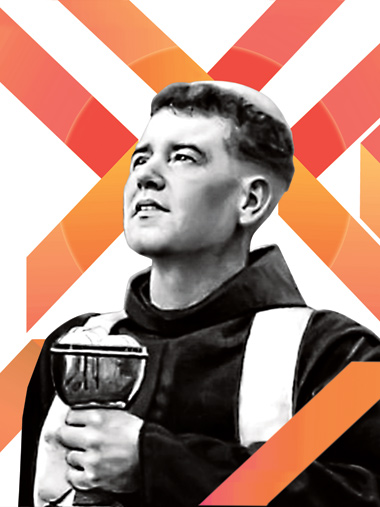
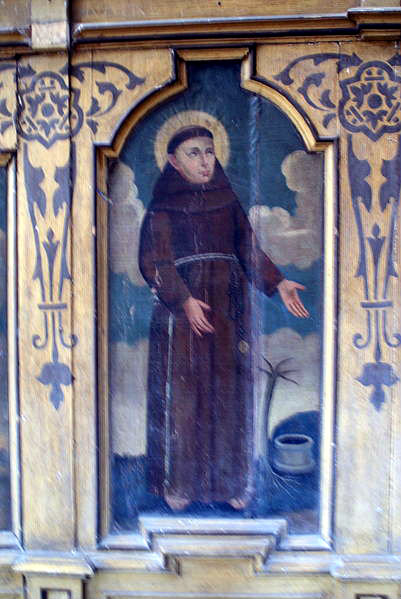
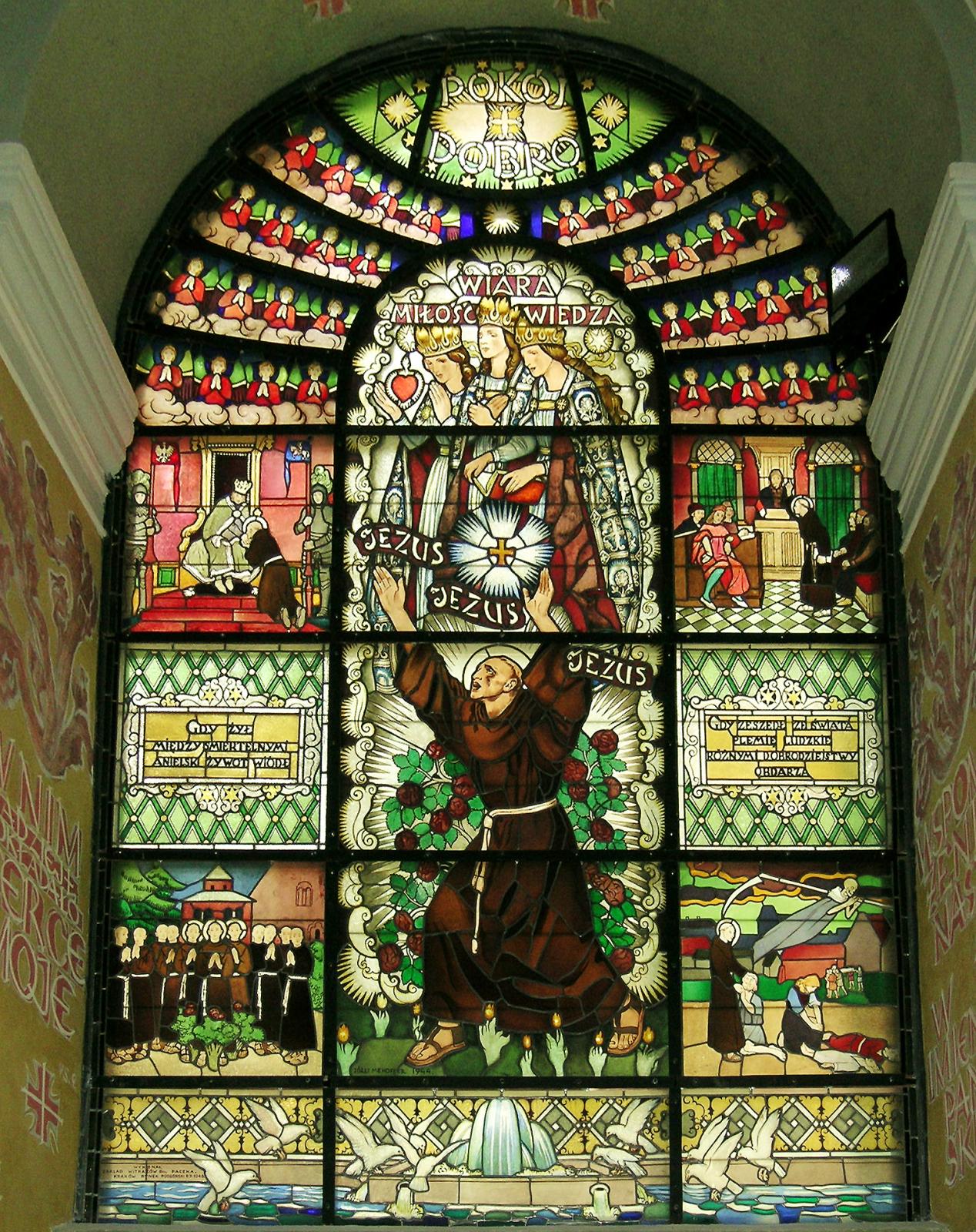
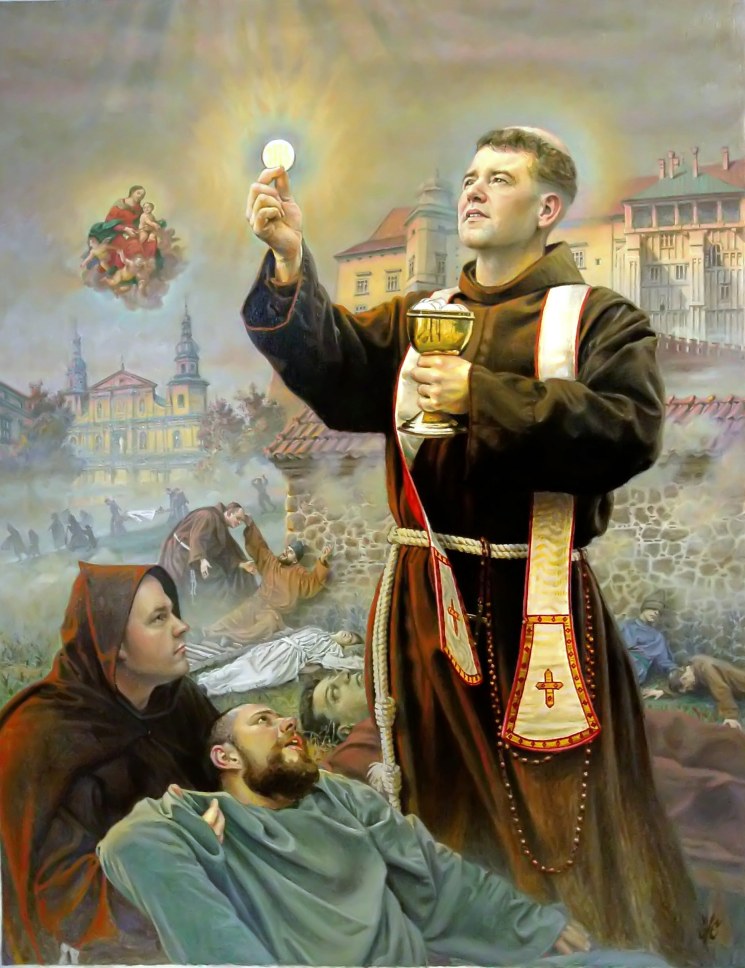
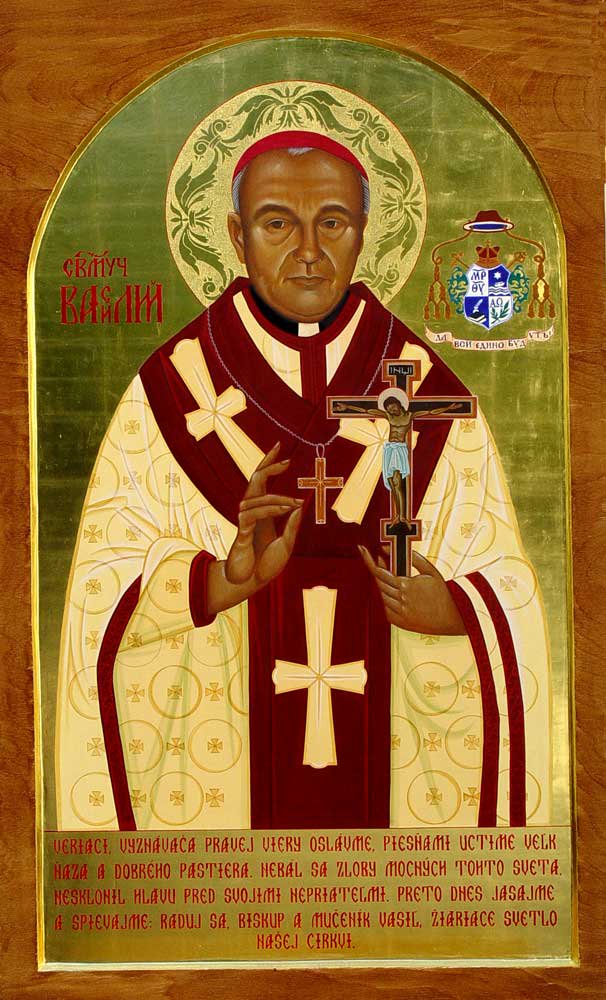
Quote/s of the Day – 26 June – Wednesday of the Twelfth week in Ordinary Time and the Memorial of Blessed Jacques Ghazir Haddad OFM Cap (1875-1954) “The Apostle of Lebanon” “The Apostle of the Cross”
“How I would prefer to take You in procession throughout the streets, rather than closing You up n the tabernacle!”
“One ounce of a Cross is much better than a ton of books of prayer.”
“Anyone who seeks heaven but without suffering, is like someone who wants to buy goods, without paying.”
“Prayer without trust, is like a letter in one’s pocket. It never reaches its destination!”
“Honouring Mary, no matter how sacred, is only the door leading to Jesus. Mary is the means, Jesus is the end. Mary is the road, Jesus is the destination.”
One Minute Reflection – 26 June – Wednesday of the Twelfth week in Ordinary Time, Gospel: Matthew 7:15–20
“Every good tree bears good fruit”...Matthew 7:17
REFLECTION – “In a culture paradoxically suffering from anonymity and at the same time obsessed with the details of other people’s lives, shamelessly given over to morbid curiosity, the Church must look more closely and sympathetically at others whenever necessary. In our world, ordained ministers and other pastoral workers can make present the fragrance of Christ’s closeness and His personal gaze. The Church will have to initiate everyone – priests, religious and laity – into this “art of accompaniment” which teaches us to remove our sandals before the sacred ground of the other (cf. Ex 3:5). The pace of this accompaniment must be steady and reassuring, reflecting our closeness and our compassionate gaze which also heals, liberates and encourages growth in the Christian life…
Today more than ever we need men and women who, on the basis of their experieevangeliigaudium169-171,nce of accompanying others, are familiar with processes which call for prudence, understanding, patience and docility to the Spirit, so that they can protect the sheep from wolves who would scatter the flock. We need to practice the art of listening, which is more than simply hearing. Listening, in communication, is an openness of heart which makes possible that closeness without which genuine spiritual encounter cannot occur. Listening helps us to find the right gesture and word which shows that we are more than simply bystanders. Only through such respectful and compassionate listening, can we enter on the paths of true growth and awaken a yearning for the Christian ideal – the desire to respond fully to God’s love and to bring to fruition what He has sown in our lives.”…Pope Francis – Apostolic Exhortation « Evangelii Gaudium / The Joy of the gospel #169-171
PRAYER – Enable me loving Father, to live a life of purity that will make me live in You. Let me be so united with You that whatever I might ask will be in total accord with Your will for me. Bl Jacques Ghazir Haddad, your tireless work and preaching for the glory of the Kingdom show us the way to sanctification, please intercede for us all. May Mary our Mother of Compassion, be our constant companion. We make our prayer through Christ our Lord, with the Holy Spirit, one God for all eternity, amen.
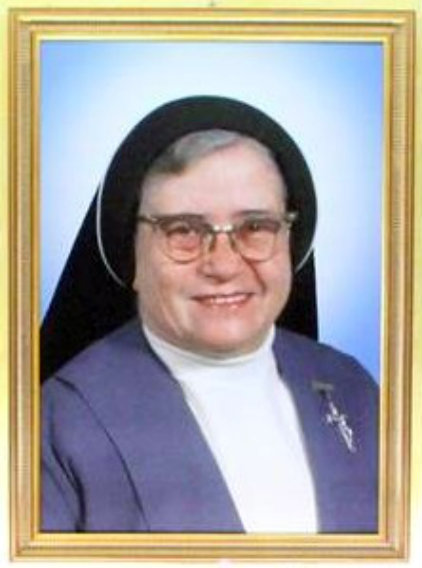
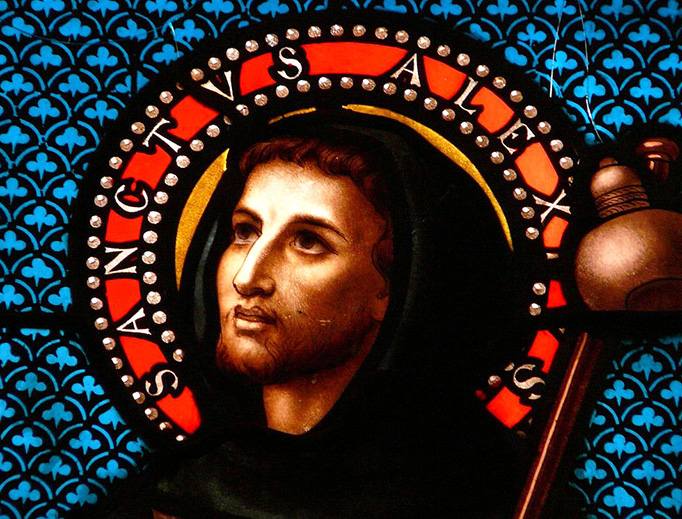
Saint of the Day – 26 June – Blessed Jacques Ghazir Haddad OFM Cap (1875-1954) aged 79 – Priest, Religious of the Order of Friars Minor as a Capuchin Friar, Founder of the Franciscan Sisters of the Holy Cross of which he is the Patron, noted Preacher and founder of many orphanages and schools across Lebanon, Apostle of Charity. Called the “St Vincent de Paul of Lebanon,” “the Apostle of the Cross” and “the Apostle of Lebanon.”
Fr Jacques Ghazir Haddad was born on 1 February 1875, in Ghazir, Lebanon, the third of five children. He attended school in Ghazir and then the College de la Sageese in Beirut, where he studied Arabic, French and Syriac.
In 1892 he went to Alexandria, Egypt, to teach Arabic at the Christian Brothers’ College, and there he felt the call to the priesthood. He entered the Capuchin Convent in Khashbau the next year. He was ordained a priest on 1 November 1901 in Beirut, Lebanon.
As an itinerant preacher from 1903 to 1914 he walked all over Lebanon proclaiming the Word of God and was given the name “the Apostle of Lebanon”. He was also seen preaching in Syria, Palestine, Iraq and Turkey.
In 1919 he bought a piece of land on the hill of Jall-Eddib, north of Beirut, where he built a chapel dedicated to Our Lady of the Sea. Nearby he erected a great Cross.
Fr Jacques was tireless, he would help anyone in need following in the footsteps of St Francis of Assisi. In 1920, to assist him in this mission to help the sick and the poor, he founded the Franciscan Sisters of the Holy Cross of Lebanon. Sister Marie Zougheib was his first collaborator and aided him in setting up his new congregation. He set out in the rule of his order with the insistence, above all else, that the works of mercy never be neglected in the pursuit of the order’s work. He had been titled as the “Vincent de Paul of Lebanon”.
The modest work of Fr Jacques aroused the people’s admiration, many poor and sick people began to go to the “Cross” and Fr Jacques would welcome them all. In 1950 the “Cross” became exclusively a psychiatric hospital, one of the most modern in the Near East. The movement of charity began to spread throughout Lebanon and Fr Jacques and his Sisters multiplied their works of social assistance.
In 1933 he opened the House of the Sacred Heart in Deir el-Kamar, a girls’ orphanage, which later became an asylum for the chronically ill. In 1948 he opened the Hospital of Our Lady for the aged, the chronically ill and the paralysed. In 1949 St Joseph’s Hospital became one of the most important medical centres of the capital. It was followed in 1950 by St Anthony’s House in Beirut for beggars and vagabonds whom the police found on the streets and Providence House for homeless girls.
Even though Fr Jacques was very busy with the hospital mission, he and his Sisters carried on the important work of education and opened several schools as well as an orphanage for 200 girls.
Fr Jacques was worn out by vigils, fatigue and travel. Although he suffered from numerous illnesses, became almost completely blind and was stricken with leukemia, he did not stop blessing God and working. He was lucid to the end, at dawn on the day of his death, he said “Today is my last day!” His last hours were an uninterrupted series of prayers invoking the Cross and the Virgin Mary until he died on 26 June 1954 in Lebanon.
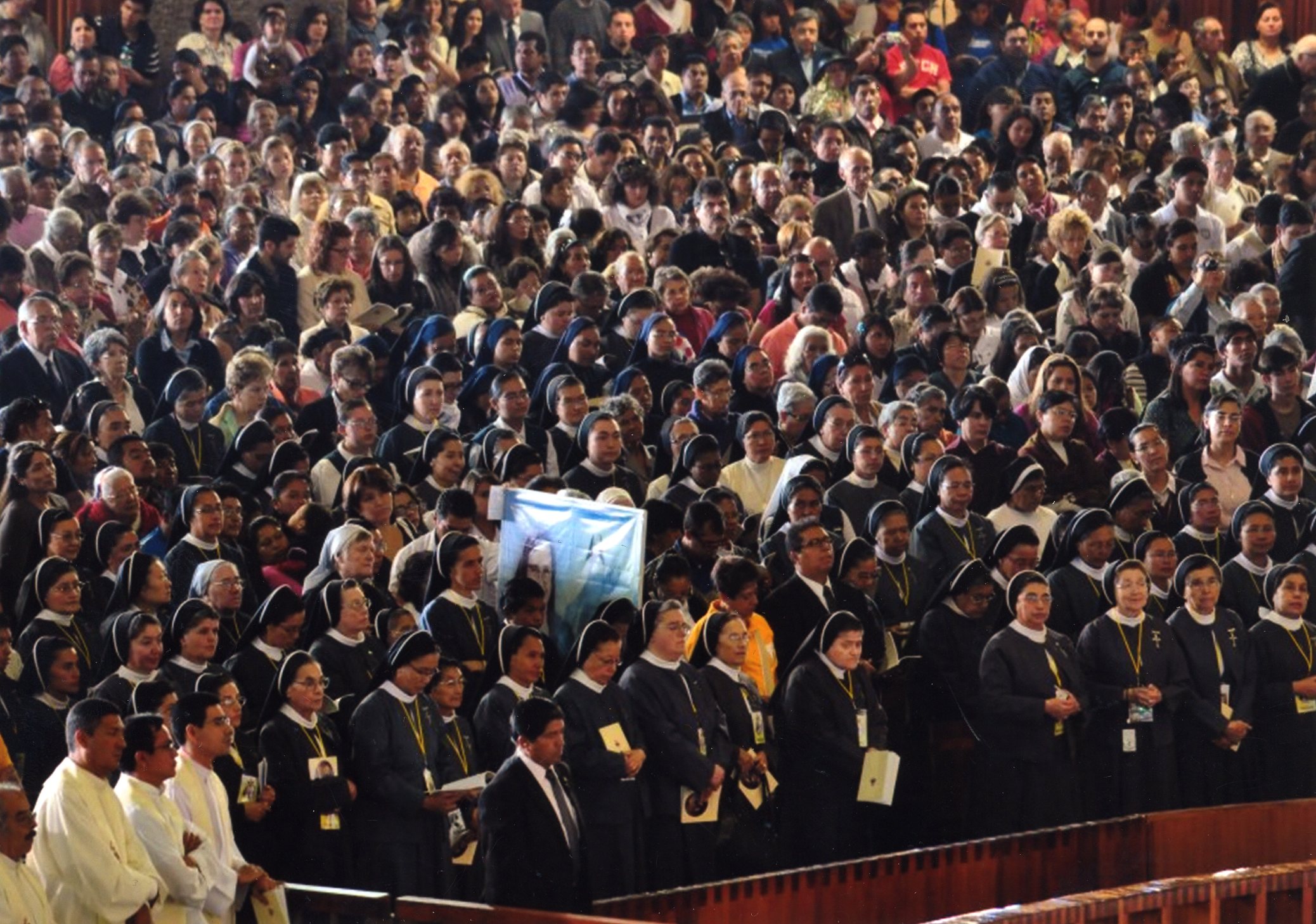
His cause for Beatification was introduced in February 1979, on 24 February 1979, His Holiness St Pope John Paul II signed the Decree of Introduction of the Cause for Beatification. On Sunday, 22 June 2008, he was Beatified during a special Mass in Beirut by Cardinal José Saraiva Martins, C.M.F., Prefect of Congregation for the Causes of Saints.
Since Blessed Haddad’s death, additional hospitals have opened to assist those injured during the war and to assist the Kabr-Chemoun region where medical services were scarce…Vatican.va
Father al-Haddād received from President Émile Eddé the Palm Medal of Lebanese Merit on 5 January 1938 while President Bechara El Khoury awarded him the Golden Medal of Lebanese Merit on 2 June 1949 and then the Officer Degree of the Lebanese Cedars Medal on 26 November 1951.
Blessed Virgin of Potente del Trompone:
Visionary: Domenica di Miglianotto on 26 June 1562
Title: Blessed Virgin of Potente del Trompone
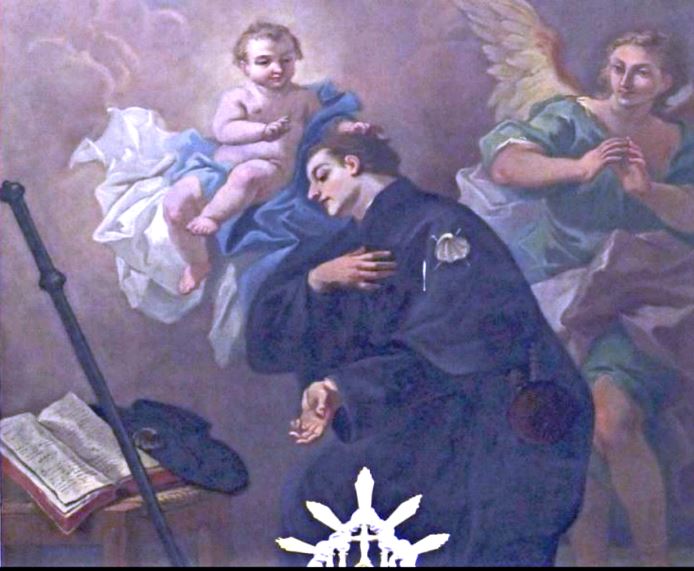
2nd Visionary: Visionary: St Peter of Alcantara (1499-1562) – seen below: Our Lady of Longing:Matka Boża Tęskniąca / Longing Mother of God, Warsaw, Poland – One of the oldest churches in the Archdiocese of Warsaw is St Elizabeth Powsin Located on the main altar is a painting of Our Lady of Longing – artist unknown – from the first half of the seventeenth century. At either side, the image is surrounded by statues of Saints Adalbert and Stanislaus – Polish bishops and martyrs . The testimony of miracles and graces relating to the Our Lady of Longing icon have been collected at least since the mid-seventeenth century. On 28 June 1998, the image became the fourth image of Mary in the Archdiocese of Warsaw to be canonically crowned.
St Acteie of Rome
St Albinus of Rome
Bl Andrea Giacinto Longhin
Bl Andrii Ischak
St Anthelm of Belley
St Babolenus of Stavelot-Malmédy
St Barbolenus of Fossés
Bl Bartholomew of Vir
St Corbican
St David of Thessalonica
St Deodatus of Nola
St Dionysius of Bulgaria
St Edburga of Gloucester
St Hermogius of Tuy
St Iosephus Ma Taishun
St John of Rome
St John of the Goths
St José Maria Robles Hurtado St Josemaria Escriva (1902-1975) Biography: https://anastpaul.com/2018/06/26/saint-of-the-day-26-june-st-josemaria-escriva-de-balaguer-y-albas-1902-1975-the-saint-of-ordinary-life/
Bl Jacques Ghazir Haddad OFM Cap (1875-1954)
St Maxentius of Poitou
St Medico of Otricoli
Bl Mykola Konrad
St Paul of Rome
St Pelagius of Oviedo
St Perseveranda of Poitiers
Bl Raymond Petiniaud de Jourgnac
St Salvius
Bl Sebastian de Burgherre
St Soadbair
St Superius
St Terence of Rome
St Vigilius of Trent
Bl Volodymyr Ivanovych Pryima
—
Martyrs of Africa – 4 saints: Four Christians who were martyred together – Agapitus, Emerita, Felix and Gaudentius at an unknown location in Africa, date unknown.
Martyrs of Alexandria – 3 saints: Three Christians who were martyred together, but we really know little more that the names – Agatho, Diogenes and Luceja. They were martyred in Alexandria, Egypt, date unknown.
Martyrs of Cambrai – 4 beati: Four Daughters of Charity of Saint Vincent de Paul nuns at Arras, France. Imprisoned together in 1792 and executed together two years later in the anti-Catholic excesses of the French Revolution. They were:
• Jeanne Gerard
• Marie-Françoise Lanel
• Marie-Madeleine Fontaine
• Thérèse-Madeleine Fantou
They were guillotined on 26 June 1794 at Cambrai, Nord, France and Beatified in June 1920 by Pope Benedict XV.
Our Morning Offering – 25 June – Tuesday of the Twelfth week in Ordinary Time, Year C – June the Month of the Sacred Heart
Be my Strength, O Sacred Heart! By St Margaret Mary Alacoque (1647-1690)
O Sacred Heart of Jesus,
I fly to You,
I unite myself with You,
I enclose myself in You!
Receive my call for help,
O my Saviour,
as a sign of my horror
of all within me
contrary to Your holy love.
Let me die rather a thousand times,
than consent to sin against You!
Be my strength, O God –
defend me,
protect me.
I am Yours
and desire forever to be Yours!
Amen
Saint of the Day – 25 June – Saint Prosper of Reggio (Died c 466) Bishop. Patronage – Reggio.
Tradition and documents attest that he was indeed the bishop of Reggio for 22 years in the fifth century. He is remembered for his strong sense of charity and to this day – his Feast Day is celebrated in Reggio, Italy with large festivals and celebrations.
This fresco is in a Church in Germany
His strongest following was up until the fourteenth century, before devotion to him has slowed down. He has 31 churches and chapels that are dedicated to him today in Parma, Bologna, Lucca and other cities surrounding Reggio, Italy – most being built in the Middle Ages. He personally built a church in San Prospero and it is dedicated to Saint Apollinaris. To this day in Reggio, they celebrate his feast locally on 24 November but 25 June is his feast day on general liturgical calendars. Giovanni Soncini did a painting of St Prosper and St Bernard, see below.
In the tenth century, Reggio being vunerable to attacks from the sea, Bishop Ermenaldo transported Prosper’s relics to the Cathedral of Santa Maria in the centre of the city while the church dedicated to Prosper was being built. This was completed by his successor Tenzone. Pope Gregory V, consecrated the church in 997. In the 16th century the church was rebuilt and Prosper’s body lies under the great altar. And fittingly enough he is the principal Patron of the city.
Saint Prosper was a very humble and charitable bishop and the people of Reggio celebrate his life, seeking his intercession and having festivals on his Feast Day. St Prosper took Jesus litterally when Jesus said, “Sell all that you own and distribute the money to the poor and you will have treasure in heaven; then come follow me”. Tradition holds that Prosper, a true follower of Jesus, took His command seriously. He distributed his goods to the poor.
St Prosper is a saint that shows us by his life and love for the church, that only by clearing ourselves of material things in this world, can we become Disciples of Christ. He sold his belongings and distributed it to the poor. His overwhelming gift of Charity was so prominent, that 17 centuries later – the faithful celebrate his Feast Day with festivals and celebrations! We too, as faithful, can impact those around us by our Charity of time, talent and treasures – as our means permit.
St Adalbert of Egmond
St Amand of Coly
Bl Burchard of Mallersdorf
St Cyneburga of Gloucester
St Domingo Henares de Zafra Cubero
Bl Dorothy of Montau
St Eurosia of Jaca
St Febronia of Nisibis
Bl Fulgentius de Lara
St Gallicanus of Embrun
St Gallicanus of Ostia
St Gohard of Nantes
Bl Guy Maramaldi
Bl Henry Zdick
Bl John the Spaniard
St Luceias and Companions
St Maximus of Turin (? – c 420)
Biography: https://anastpaul.com/2018/06/25/saint-of-the-day-25-june-st-maximus-of-turin-c-420-father-of-the-church/
Thought for the Day- 24 June – The Solemnity of the Birth of Saint John the Baptist Year C, Gospel: Luke 1:57–66
The Voice of One Crying in the Wilderness
Saint Augustine (354-430)
Bishop and Great Western Father and Doctor of the Church
An excerpt from his Sermon 293
The Church observes the birth of John as a hallowed event. We have no such commemoration for any other fathers but it is significant, that we celebrate the birthdays of John and of Jesus. This day cannot be passed by. And even if my explanation does not match the dignity of the feast, you may still meditate on it with great depth and profit.
John is born of a woman too old for childbirth, Christ was born of a youthful virgin. The news of John’s birth was met with incredulity and his father was struck dumb. Christ’s birth was believed and He was conceived through faith.
Such is the topic, as I have presented it, for our inquiry and discussion. But as I said before, if I lack either the time or the ability to study the implications of so profound a mystery, He who speaks within you, even when I am not here, will teach you better, it is He whom you contemplate with devotion, whom you have welcomed into your hearts, whose temples you have become.
John, then, appears as the boundary between the two testaments, the old and the new. That he is a sort of boundary the Lord himself bears witness, when He speaks of the law and the prophets up until John the Baptist. Thus He represents times past and is the herald of the new era to come. As a representative of the past, he is born of aged parents, as herald of the new, he is declared to be a prophet while still in his mother’s womb. For when yet unborn, he leapt in his mother’s womb at the arrival of blessed Mary. In that womb, he had already been designated a prophet, even before he was born, it was revealed that he was to be Christ’s precursor, before they ever saw one another. These are divine happenings, going beyond the limits of our human frailty. Eventually he is born, he receives his name, his father’s tongue is loosened. See how these events reflect reality.
Zechariah is silent and loses his voice until John, the precursor of the Lord, is born and restores his voice. The silence of Zechariah is nothing but the age of prophecy lying hidden, obscured, as it were and concealed before the preaching of Christ. At John’s arrival, it becomes clear, when the one who was being prophesied is about to come. The release of Zechariah’s voice at the birth of John is a parallel to the rending of the veil at Christ’s crucifixion. If John were announcing his own coming, Zechariah’s lips would not have been opened. The tongue is loosened because a voice is born. For when John was preaching the Lord’s coming he was asked – Who are you? And he replied – I am the voice of one crying in the wilderness.The voice is John but the Lord in the beginning was the Word. John was a voice that lasted only for a time, Christ, the Word in the beginning, is eternal.
Quote/s of the Day- 24 June – The Solemnity of the Birth of Saint John the Baptist Year C, Gospel: Luke 1:57–66 and the Memorial of St Maria Guadalupe García Zavala (1878-1963) “Mother Lupuita”
“The true secret of love consists in this: we must forget self like St John the Baptist and exalt and glorify the Lord Jesus.”
St Peter Julian Eymard (1811-1868)
“Look today to John the Baptist, an enduring model of fidelity to God and His Law. John prepared the way for Christ, by the testimony of his word and his life. Imitate him with docile and trusting generosity.”
St Pope John Paul (1920-2005)
(24 June 2001)
“With deep faith, unlimited hope and great love for Christ, Mother “Lupita” sought her own sanctification, beginning with love for the Heart of Christ and fidelity to the Church. In this way she lived the motto which she left to her daughters: “Charity to the point of sacrifice and perseverance until death”.
St Pope John Paul II (1920-2005)
On the Beatification of St Maria Guadalupe García Zavala (1878-1963) “Mother Lupuita”
One Minute Reflection – 24 June – The Solemnity of the Birth of Saint John the Baptist, Year C, Gospel: Luke 1:57–66
“And immediately his mouth was opened and his tongue loosed and he spoke, blessing God.”…Luke 1:64
REFLECTION – “The Benedictus, is prayed every morning in the Breviary and so, the Church remembers this “forerunner of Jesus” at the beginning of every day. The opening words of this Canticle are the source of its Latin title, “Blessed be the Lord, the God of Israel”.
What does it mean for Catholics, that we sing this song about John the Baptists at the start of every new day? After having been “silenced” by sleep throughout the night, God opens our mouths and one of the first things we do, is to sing this blessing of God, whose dawn breaks forth to shine on us and guide our way to peace.
In the Benedictus, we join ourselves to the mission of St John the Baptist, who came to prepare a way for the Lord by being a witness of God’s salvation, living a simple and penitential life and calling others to do the same. Our work each day, then, is to use our voice – like Zechariah and his son – and the witness of our lives, to make God’s presence known wherever we go and to whom whomever we encounter.”
PRAYER –
The Benedictus – Canticle of Zechariah
Luke 1:68-79
The Messiah and His forerunner
Blessed be the Lord, the God of Israel;
He has visited His people and redeemed them.
He has raised up for us a mighty saviour,
in the house of David, His servant,
as He promised by the lips of holy men,
those who were His prophets of old.
A Saviour who would free us from our foes,
from the hands of all who us.
So His love for our fathers is fulfilled
and His holy covenant remembered.
He swore to Abraham, our father, to grant us,
that free from fear and saved from the hands of our foes.
we might worship Him in justice and holiness
all the days of our lives, in His Presence.
As for you, little child,
you shall be called the prophet of God, the Most High.
You shall go ahead of the Lord
to prepare His ways before Him,
to make known to His people their salvation,
through forgiveness of all their sins,
the loving kindness of the heart of our God,
who visits us like the dawn from on high.
He will give light to those in darkness,
those who dwell in the shadow of death
and to guide us into the way of peace.
Glory to the Father and to the Son,
and to the Holy Spirit:
as it was in the beginning, is now,
and will be for ever.
Amen
Saint of the Day – St Maria Guadalupe García Zavala (1878-1963) – born Anastasia Guadalupe García Zavala on 27 April 1878 in Zapopan, Jalisco, Mexico and died on 24 June 1963 in Guadalajara, Jalisco, Mexico of natural causes – Virgin and co-foundress of the Handmaids of Santa Margherita and the Poor. She is also known as “Mother Lupita”. Patronages – Nurses, Handmaids of Santa Margherita Maria and the Poor.
María Guadalupe García Zavala was born on 27 April 1878 in Zapopan, Jalisco, Mexico, to Fortino García and Refugio Zavala de García. As a child she was known for her piety and made frequent visits to the Basilica of Our Lady of Zapopan, which was located next to the religious goods shop run by her father . Her love for God was particularly demonstrated in her love for the poor.
“No’ to matrimony, “yes’ to Jesus:
With uncommon transparency and simplicity, María treated everyone with equal love and respect. Although as a young woman she planned to marry Gustavo Arreola, she suddenly broke off her engagement when she was 23 years old. The reason: María “understood” that Jesus was calling her to love Him with an undivided heart as part of the religious life and she fully believed, that she was called to do this, by giving assistance to the poor and sick.
Foundress of the “Servants’:
When María confided to her spiritual director, Fr Cipriano Iñiguez, her “sudden change of heart”, he told her that for some time he had the inspiration to found a religious congregation that would provide assistance to the hospitalised. He invited María to join him in this foundation.
The new Congregation, which officially began on 13 October 1901, was known as the “Handmaids of St Margaret Mary (Alacoque) and the Poor”.
“Poor with the poor’:
María worked as a nurse, giving assistance to the first patients that were welcomed into “their hospital”. Regardless of the poverty and lack of material goods of the patients, compassion and care for the physical and spiritual well-being of the sick were the primary concerns and María gave of herself wholeheartedly to carry out this task of love.
Sr María was named Superior General of the quickly-growing Congregation and taught the Sisters entrusted to her, mostly by means of her example, the importance of living a genuine and joyful exterior and interior poverty. She was convinced that it was only through loving and living poverty that one could be truly “poor with the poor”.
Indeed, Mother María was known for her simplicity, humility and willingness to accept all that came from the hand of God.
In times of “dire straits”, Mother María asked her spiritual director for permission to go begging in order to collect money for the hospital. Together with other Sisters, she would seek offerings until the needs of the hospital and patients were me, and would ask no more than was necessary. The Sisters also worked in parishes to assist the priests and to teach catechism.
Risking life to help those hiding:
From 1911 until 1936, the political-religious situation in Mexico became uneasy and the Catholic Church underwent persecution. Mother María put her own life at risk to help the priests and the Archbishop of Guadalajara to “go into hiding” in the hospital.
She did not limit her charity simply to helping the “righteous” but also gave food and care to the persecutors who lived near the hospital, it was not long before they, too, began defending the sick in the hospital run by the Sisters.
The last two years of Mother María’s life were lived in extreme suffering because of a grave illness and on 24 June 1963, she died at the age of 85.
During the lifetime of the foundress, 11 foundations were established in the Republic of Mexico.
Today, the Congregation has 22 foundations and is present in five different Nations: Mexico, Peru, Iceland, Greece and Italy.
Her Beatification cause began in mid-1984 and her formal Beatification was celebrated on 25 April 2004. Pope Francis later Canonised her as a saint on 12 May 2013 in Saint Peter’s Square.
The Nativity of Saint John the Baptist (Solemnity) Biography: https://anastpaul.com/2018/06/24/the-solemnity-of-the-nativity-of-st-john-the-baptist-24-june/
St Aglibert of Créteil
St Agoard of Créteil
St Alena of Brussels
St Amphibalus of Verulam
St Bartholomew of Farne
Bl Christopher de Albarran
St Erembert I of Kremsmünster
St Faustus of Rome and Companions
St Festus of Rome
St Germoc
St Gohardus of Nantes
Bl Henry of Auxerre/the Hagiographer
St Ivan of Bohemia
St John of Rome
St John of Tuy
St Joseph Yuan Zaide
Bl Maksymilian Binkiewicz St Maria Guadalupe García Zavala (1878-1963)
St Rumold
St Simplicio of Autun
Bl Theodgar of Vestervig
St Theodulphus of Lobbes
—
Martyrs of Satala: Seven Christian brothers who were soldiers in the imperial Roman army. They were kicked out of the military, exiled and eventually martyred in the persecutions of Maximian. We know little more about them than their names – Cyriacus, Firminus, Firmus, Longinus, Pharnacius, Heros and Orentius. The martyrdoms occurred in c 311 at assorted locations around the Black Sea.
Saint of the Day – 23 June – St Etheldreda (c 636-679) Abbess and widow, an East Anglian princess, a Fenland and Northumbrian queen and Abbess of Ely – born in c 636 probably n Exning, near Newmarket in Suffolk, England. She died on 23 June 679 of natural causes. When her body was re-interred in 694 it was found to be incorrupt and again in 1106 when her relics were transferred to Ely Cathedral where her shrine now remains, her body was incorrupt. Patronage – throat ailments, widows, neck ailments, th University of Cambridge.
She was one of the four saintly daughters of Anna of East Anglia, including Wendreda and Seaxburh of Ely, all of whom eventually retired from secular life and founded abbeys.
Born and brought up in the fear of God-her mother and three sisters are numbered among the Saints – Etheldreda had but one aim in life, to devote herself to His service in the religious state. Her parents, however, had other views for her and, in spite of her tears and prayers, she was compelled to become the wife of Tonbercht, a tributary of the Mercian king. She lived with him as a virgin for three years and at his death retired to the Isle of Ely, that she might apply herself wholly to heavenly things.
This happiness was but short-live,; for Egfrid, the powerful King of Northumbria, pressed his suit upon her with such eagerness that she was forced into a second marriage. Her life at his court was that of an ascetic rather than a queen – she lived with him not as a wife but as a sister and, observing a scrupulous regularity of discipline, devoted her time to works of mercy and love.
After twelve years, she retired with her husband’s consent to Coldingham Abbey, which was then under the rule of St Ebba, and received the veil from the hands of St Wilfrid. As soon as Etheldreda had left the court of her husband, he repented of having consented to her departure and followed her, meaning to bring her back by force. She took refuge on a headland on the coast near Coldingham and here a miracle took place, for the waters forced themselves a passage round the hill, barring the further advance of Egfrid.
The Saint remained on this island refuge for seven days, till the king, recognising the divine will, agreed to leave her in peace. God, who by a miracle confirmed the Saint’s vocation, will not fail us if, with a single heart, we elect for him.
In 672 she returned to Ely, and founded there a double monastery. The nunnery she governed herself and was by her example a living rule of perfection to her sisters.
This slideshow requires JavaScript.
St Bede the Venerable records many miracles worked by her relics at her Shrine. Below is her Statue and resting place in Ely Cathedral.
St Agrippina of Rome
St Bilio of Vannes St Etheldreda (c 636-679)
Bl Félix of Cîteaux
St Felix of Sutri
Bl Frances Martel
Bl Francis O’Sullivan
St Hidulphus of Hainault
St James of Toul
St John of Rome St Joseph Cafasso (1811-1860) St Joseph Cafasso’s Biography: https://anastpaul.com/2018/06/23/saint-of-the-day-23-june-st-joseph-cafasso-1811-1860-priest-of-the-gallows/
Bl Lanfranco Beccari
St Lietbert
Bl Lupo de Paredes
Bl Mary of Oignies
St Moeliai of Nendrum
Bl Peter of Juilly
Bl Thomas Corsini of Orvieto
St Thomas Garnet
Bl Walhere of Dinant
St Zenas of Philadelphia
St Zeno of Philadelphia
—
Martyrs of Ancyra: A family of converts who were arrested, tortured and sent in chains to Ancyra, Galatia (modern Ankara, Turkey) where he was tortured more by order of governor Agrippinus during the persecutions of Diocletian. Martyr. They were – Eustochius, Gaius, Lollia, Probus, Urban. They were roasted over a fire and finally beheaded c 300 in Ancyra, Galatia (modern Ankara, Turkey).
Martyrs of Nicomedia: During the persecutions of Diocletian, many Christians fled their homes to live in caves in the area of Nicomedia. In 303 troops descended on the area, systematically hunted them down and murdered all they could find.
Thought for the Day – 22 June – The Memorial of St Thomas More (1478-1535) Martyr
His belief that no lay ruler has jurisdiction over the Church of Christ cost Thomas More his life.
Beheaded on Tower Hill, London, on 6 July 1535, More steadfastly refused to approve King Henry VIII’s divorce and remarriage and establishment of the Church of England.
Described as “a man for all seasons,” which title is drawn from what Robert Whittington, an English man of letters, in 1520 wrote of More:
“More is a man of an angel’s wit and singular learning. I know not his fellow. For where is the man of that gentleness, lowliness and affability? And, as time requires, a man of marvellous mirth and pastimes and sometime of as sad gravity. A man for all seasons.”
More was a literary scholar, eminent lawyer, gentleman, father of four children and chancellor of England. An intensely spiritual man, he would not support the king’s divorce from Catherine of Aragon in order to marry Anne Boleyn. Nor would he acknowledge Henry as supreme head of the Church in England, breaking with Rome, and denying the pope as head.
More was committed to the Tower of London to await trial for treason, not swearing to the Act of Succession and the Oath of Supremacy. Upon conviction, More declared he had all the councils of Christendom and not just the council of one realm to support him in the decision of his conscience.
Four hundred years later in 1935, Thomas More was Canonised a saint of God. Few saints are more relevant to our time. In the year 2000, in fact, St Pope John Paul II named him patron of political leaders. The supreme diplomat and counsellor, he did not compromise his own moral values in order to please the king, knowing that true allegiance to authority is not blind acceptance of everything that authority wants. King Henry himself realised this and tried desperately to win his chancellor to his side because he knew More was a man whose approval counted, a man whose personal integrity no one questioned. But when Thomas More resigned as chancellor, unable to approve the two matters that meant most to Henry, the king had to get rid of him. Before being executed he said, “I die the king’s faithful servant, but God’s first.” The question is, would we too?
Quote/s of the Day – 22 June – Saturday of the Eleventh week in Ordinary Time, Year C and The Memorial of St Paulinus of Nola (c 354-431) and St Thomas More (1478-1535) Martyr
“To my mind the only art, is the faith and Christ is my poetry.”
St Paulinus of Nola (c 354-431)
“We cannot go to Heaven in featherbeds.”
“One of the greatest problems of our time, is that many are schooled but few are educated.”
One Minute Reflection – 22 June – Saturday of the Eleventh week in Ordinary Time, Year C, Gospel: Matthew 6:24–34 and the Memorial of St Thomas More (1478-1535) Martyr
Look at the birds in the sky,they do not sow or reap, they gather nothing into barns, yet your heavenly Father feeds them. Are not you more important than they? ..Matthew 6:26
REFLECTION – “I will not mistrust Him, Meg, though I shall feel myself weakening and on the verge of being overcome with fear. I shall remember, how Saint Peter at a blast of wind, began to sink because of his lack of faith and I shall do as he did, call upon Christ and pray to Him for help. And then I trust He shall place His holy hand on me and in the stormy seas, hold me up from drowning.”…St Thomas More (1478-1535)
“In the face of the situations of so many people, near and far, who live in wretchedness, Jesus’ discourse might appear hardly realistic, if not evasive . In fact, the Lord wants to make people understand clearly, that it is impossible to serve two masters – God and mammon [riches]. Whoever believes in God, the Father, full of love for His children, puts first the search for His Kingdom and His will. And this is precisely the opposite of fatalism or ingenuous irenics. Faith in Providence does not, in fact, dispense us from the difficult struggle, for a dignified life but frees us, from the yearning for things and from fear of the future.
It is clear that although Jesus’ teaching remains ever true and applicable for all it is practised in different ways according to the different vocations – a Franciscan friar will be able to follow it more radically, while a father of a family must bear in mind his proper duties to his wife and children. In every case, however, Christians are distinguished by their absolute trust in the heavenly Father, as was Jesus. It was precisely Christ’s relationship with God the Father that gave meaning to the whole of His life, to His words, to His acts of salvation until His Passion, death and Resurrection. Jesus showed us what it means to live with our feet firmly planted on the ground, attentive to the concrete situations of our neighbour, yet, at the same time keeping our heart in Heaven, immersed in God’s mercy.” … Pope Benedict XVI (Sunday, 27 February 2011).
PRAYER – Heavenly Father, we trust in You and abide in You. Grant us we pray, that by the prayers of our heavenly Mother, our Mother of divine Providence and St Thomas More, who said “I will trust Him”, that we too may ever know that You are with us and guide, help and feed us everyday. Through Christ our Lord with the Holy Spirit, one God forever, amen.
Saint of the Day – 22 June – St Thomas More (1478-1535) Martyr an English lawyer, Social Philosopher, Author, Statesman and noted Renaissance Humanist. He was born on 7 February 1478 at London, England and was beheaded on 6 July 1535 on Tower Hill, London, England. Patronages – adopted children, civil servants, court clerks, difficult marriages, large families, lawyers, statesmen and politicians, stepparents, widowers, Ateneo de Manila Law School, Diocese of Arlington, Diocese of Pensacola-Tallahassee; Kerala Catholic Youth Movement, University of Malta, University of Santo Tomas Faculty of Arts and Letters.
He was also a councillor to Henry VIII and Lord High Chancellor of England from October 1529 to 16 May 1532. He wrote Utopia, published in 1516, about the political system of an imaginary, ideal island nation.
St Thomas opposed the Protestant Reformation, in particular the theology of Martin Luther, Henry VIII, John Calvin and William Tyndale. He also opposed the king’s separation from the Catholic Church, refusing to acknowledge Henry as Supreme Head of the Church of England and the annulment of his marriage to Catherine of Aragon. After refusing to take the Oath of Supremacy, he was convicted of treason and executed. Of his execution, he was said: “I die the King’s good servant but God’s first”.
Pope Pius XI Canonised More in 1935 as a martyr. St Pope John Paul II in 2000 declared him the patron saint “of Statesmen and Politicians”.
St Pope John Paul II Excerpt from the Apostolic letter issued Motu Proprio proclaiming Saint Thomas More Patron of Statesmen and Politicians 31 October 2000
“The life and martyrdom of Saint Thomas More have been the source of a message which spans the centuries and which speaks to people everywhere of the inalienable dignity of the human conscience, which (…) is “the most intimate centre and sanctuary of a person, in which he or she is alone with God, whose voice echoes within them” (Gaudium et Spes, 16). Whenever men or women heed the call of truth, their conscience then guides their actions reliably towards good. Precisely because of the witness which he bore, even at the price of his life, to the primacy of truth over power, Saint Thomas More is venerated as an imperishable example of moral integrity. And even outside the Church, particularly among those with responsibility for the destinies of peoples, he is acknowledged as a source of inspiration for a political system which has as its supreme goal the service of the human person.
(…) Thomas More had a remarkable political career in his native land. Born in London in 1478 of a respectable family, as a young boy he was placed in the service of the Archbishop of Canterbury, John Morton, Lord Chancellor of the Realm. He then studied law at Oxford and London, while broadening his interests in the spheres of culture, theology and classical literature. He mastered Greek and enjoyed the company and friendship of important figures of Renaissance culture, including Desiderius Erasmus of Rotterdam.
His sincere religious sentiment led him to pursue virtue through the assiduous practice of asceticism – he cultivated friendly relations with the Observant Franciscans of the Friary at Greenwich and for a time he lived at the London Charterhouse, these being two of the main centres of religious fervour in the Kingdom. Feeling himself called to marriage, family life and dedication as a layman, in 1505 he married Jane Colt, who bore him four children. Jane died in 1511 and Thomas then married Alice Middleton, a widow with one daughter. Throughout his life he was an affectionate and faithful husband and father, deeply involved in his children’s religious, moral and intellectual education. His house offered a welcome to his children’s spouses and his grandchildren, and was always open to his many young friends in search of the truth or of their own calling in life. Family life also gave him ample opportunity for prayer in common and lectio divina, as well as for happy and wholesome relaxation. Thomas attended daily Mass in the parish church but the austere penances which he practised were known only to his immediate family.
St Thomas More and his family by Hans Holbein
He was elected to Parliament for the first time in 1504 under King Henry VII. The latter’s successor Henry VIII renewed his mandate in 1510 and even made him the Crown’s representative in the capital. This launched him on a prominent career in public administration. During the following decade the King sent him on several diplomatic and commercial missions to Flanders and the territory of present-day France. Having been made a member of the King’s Council, presiding judge of an important tribunal, deputy treasurer and a knight, in 1523 he became Speaker of the House of Commons.
St Thomas More in Hans Holbein’s Studio
Highly esteemed by everyone for his unfailing moral integrity, sharpness of mind, his open and humorous character and his extraordinary learning, in 1529 at a time of political and economic crisis in the country he was appointed by the King to the post of Lord Chancellor. The first layman to occupy this position, Thomas faced an extremely difficult period, as he sought to serve King and country. In fidelity to his principles, he concentrated on promoting justice and restraining the harmful influence of those who advanced their own interests at the expense of the weak . In 1532, not wishing to support Henry VIII’s intention to take control of the Church in England, he resigned. He withdrew from public life, resigning himself to suffering poverty with his family and being deserted by many people who, in the moment of trial, proved to be false friends.
Given his inflexible firmness in rejecting any compromise with his own conscience, in 1534 the King had him imprisoned in the Tower of London, where he was subjected to various kinds of psychological pressure. Thomas More did not allow himself to waver, and he refused to take the oath requested of him, since this would have involved accepting a political and ecclesiastical arrangement that prepared the way for uncontrolled despotism. At his trial, he made an impassioned defence of his own convictions on the indissolubility of marriage, the respect due to the juridical patrimony of Christian civilisation and the freedom of the Church in her relations with the State. Condemned by the Court, he was beheaded.
St Thomas More’s Farewell to Meg, his daughter
Hans Holbein St Thomas More’s Farewell
(…) Thomas More, together with 53 other martyrs, including Bishop John Fisher, was beatified by Pope Leo XIII in 1886. And with John Fisher, he was Canonised by Pius XI in 1935, on the fourth centenary of his martyrdom.
(…) The life of Saint Thomas More clearly illustrates a fundamental truth of political ethics. The defence of the Church’s freedom from unwarranted interference by the State is at the same time a defence, in the name of the primacy of conscience, of the individual’s freedom vis-à-vis political power. Here we find the basic principle of every civil order consonant with human nature.
(…) Therefore, after due consideration and willingly acceding to the petitions addressed to me, I establish and declare Saint Thomas More the heavenly Patron of Statesmen and Politicians and I decree, that he be ascribed all the liturgical honours and privileges which, according to law, belong to the Patrons of categories of people.”
Our Morning Offering – 22 June – Saturday of the Eleventh week in Ordinary Time, Year C and the Memorial of St Thomas More (1478-1535) Martyr
Father in heaven Be with Us Today By St Thomas More (1478-1535)
Father in heaven,
You have given us a mind to know You,
a will to serve You
and a heart to love You.
Be with us today in all that we do,
so that Your light may shine out in our lives.
We pray that we may be today,
what You created us to be
and may praise Your name in all that we do.
We pray for Your Church,
may it be a true light to all nations.
May the Spirit of Your Son Jesus,
guide the words and actions of all Christians today.
We pray for all who are searching for truth,
bring them Your light and Your love.
“Give us, Lord,
a humble, quiet, peaceable,
patient, tender and charitable mind
and in all our thoughts,
words and deeds
a taste of the Holy Spirit.
Give us, Lord,
a lively faith,
a firm hope,
a fervent charity,
a love of You.
Take from us all lukewarmness in meditation,
dullness in prayer.
Give us fervour and delight in thinking of You
and Your grace, Your tender compassion towards us.
The things that we pray for, good Lord,
give us grace to labour for,
through Jesus Christ our Lord.
Amen
St Paulinus of Nola (c 354-431) (Optional Memorial) About St Paulinus: https://anastpaul.com/2018/06/22/saint-of-the-day-22-june-st-paulinus-of-nola-c-354-431/
St John Fisher (1469-1535) Martyr (Optional Memorial)
St Thomas More (1478-1535) Martyr (Optional Memorial
St Aaron of Brettany
St Aaron of Pais-de-Laon
St Alban of Britain
Bl Altrude of Rome
St Consortia
St Cronan of Ferns
St Eberhard of Salzburg
St Eusebius of Samosata
St Exuperantius of Como
St Flavius Clemens
St Gregory of Agrigento
St Heraclius the Soldier
St Hespérius of Metz
Bl Pope Innocent V
St John IV of Naples
St Julius of Pais-de-Laon
Bl Kristina Hamm
Bl Marie Lhuilier
St Nicetas of Remesiana
St Precia of Epinal
St Rotrudis of Saint-Omer
St Rufinus of Alexandria
—
Martyrs of Samaria – 1480 saints: 1480 Christians massacred in and near Samaria during the war between the Greek Emperor Heraclius and the pagan Chosroas of Persia. c 614 in the vicinity of Samaria, Palestine.
Thought for the Day – 21 June – The Memorial of St Aloysius de Gonzaga SJ (1568-1591)
Excerpt from Ven Servant of God John A Hardon’s SJ (1914-2000)
‘Life of St Aloysius’
“To the one virtue which the Church has chosen and on account of which has chosen him ‘the universal patron of youth,’ was his chastity. All the evidence we have, indicates that he had very strong sexual passions. We know that from his own writing, we know that from people who knew him and we know that from what is called penance from one view-point, what is really, you might say, ‘preventive austerity’ from another. He simply believed that unless he mortified his body and I didn’t tell you one tenth of what he did, he just would not get that passion under control.
The lesson for us in a sex-mad world is obvious. You do not control that passion without mortification, you just don’t. As a result, the Church has held him up as a model of what even the most passionate personality can achieve, always with God’s grace. We may not be able to, given our temperament of the circumstances in which we are living, be able to cope with temptation–we need grace. Very well, how do you get the grace? –through prayer and mortification. And Christ’s words about a certain demon not being able to be driven out except through penance. Well, it’s a non-title to give the devil but, he is the demon of lust, though being without a body himself, he knows how, by stirring this passion, he can lead people into any kind of sin. That’s the first and towering lesson of the life of St Aloysius.
As we look at the short life of Aloysius, depending on the person’s view point, it may seem oppressive. It shouldn’t be but, in modern jargon, it has so much (pardon the expression) of the negative, you know, penance, mortification, sin–and a world that has gone mad, drunk with sin, doesn’t realise, that already this side of eternity, we are to be what Aloysius was literally, we are to be, if it is God’s will, ecstatically happy of that. We are not to be sad. We are not, God forbid, to be unhappy.
The secret and what an open secret it is in the life of Aloysius, is to find the happiness in the right place. That’s all, yes but that’s everything.
In other words, as a closing observation, Aloysius showed that’s why the Church Canonised him, that when Christ gave us the eight Beatitudes, which are eight promises of happiness, He meant it.
The condition for being happy, well, that’s part of the Covenant, that’s what we do but if we do our part, God comes through.
St Robert Bellarmine who knew him well, observed he was sure that Aloysius had never committed a mortal sin.
Saint Aloysius, pray for us.
In the name of the Father and of the Son and of the Holy Spirit. Amen.”
Quote/s of the Day – 21 June – The Memorial of St Aloysius de Gonzaga SJ (1568-1591)
“I am a piece of twisted iron, I entered the religious life to get twisted straight.”
“He who wishes to love God does not truly love Him, if he has not an ardent and constant desire to suffer for His sake.”
“Take care above all things, most honoured lady, not to insult God’s boundless loving kindness, you would certainly do this, if you mourned as dead, one living face-to-face with God, one whose prayers, can bring you in your troubles, more powerful aid, than they ever could on earth.”
“When He takes away what He once lent us, His purpose is to store our treasure elsewhere, more safely and bestow on us, those very blessings, that we ourselves would most choose to have.”
(From A Letter to His Mother)
More of this letter here: https://anastpaul.com/2018/06/21/quote-of-the-day-21-june-the-memorial-of-st-aloysius-de-gonzaga-s-j-1568-1591/
One Minute Reflection – 21 June – Friday Eleventh week in Ordinary Time, Year C, Gospel: Matthew 6:19–23 and the Memorial of St Aloysius de Gonzaga SJ (1568-1591)
“Do not store up for yourselves treasures on earth, where moth and decay destroy and thieves break in and steal. But store up treasures in heaven, where neither moth nor decay destroys, nor thieves break in and steal. For where your treasure is, there also will your heart be.”….Matthew 6:19-21
REFLECTION – “This is really Jesus’ message – have a free heart. Otherwise, if your treasure is in wealth, in vanity, in power or in pride, your heart will be chained there, your heart will be a slave to wealth, to vanity, to pride. On this line of reasoning, have a free heart, precisely because Jesus speaks to us about freedom of the heart. And one can only have a free heart with the treasures of heaven – love, patience, service to others, worshipping God. These are the true riches that cannot be stolen. The other types of treasures — money, vanity, power — weigh down the heart, chain it, don’t allow it freedom.”…Pope Francis (Santa Marta, 20 June 2014)
PRAYER – Father almighty, as we wait and work and pray and fast in joyful hope of our eternal life with You, grant we pray that we may always remain steadfast in Your love. Let your light so penetrate our minds, that walking by Your commandments, we may always follow You, our leader and our guide. St Aloysius Gonzaga, pray for us that we will fully utilise the many gifts our Almighty God has bestowed on us as we journey home. We make our prayer through Jesus Christ our Lord, in union with You and the Holy Spirit, one God forever, amen.
Saint of the Day – 21 June – St Aloysius de Gonzaga SJ (1568-1591) Jesuit Seminarian, Mystic, Marian devotee, Apostle of Charity. Patronages – Catholic youth, Jesuit scholastics, the blind, eye ailments, AIDS patients, care-givers, Jesuit students, for relief from pestilence, young people, Castiglione delle Stiviere, Italy, Valmonte, Italy.
The Lord can make saints anywhere, even amid the brutality and license of Renaissance life. Florence was the “mother of piety” for Aloysius Gonzaga despite his exposure to a “society of fraud, dagger, poison and lust.” As a son of a princely family, he grew up in royal courts and army camps. His father wanted Aloysius to be a military hero.
At age 7 Aloysius experienced a profound spiritual quickening. His prayers included the Office of Mary, the psalms and other devotions. At age 9 he came from his hometown of Castiglione to Florence to be educated, by age 11 he was teaching catechism to poor children, fasting three days a week and practising great austerities. When he was 13 years old, he travelled with his parents and the Empress of Austria to Spain and acted as a page in the court of Philip II. The more Aloysius saw of court life, the more disillusioned he became, seeking relief in learning about the lives of saints.
A book about the experience of Jesuit missionaries in India suggested to him the idea of entering the Society of Jesus and in Spain his decision became final. Now began a four-year contest with his father. Eminent churchmen and laypeople were pressed into service to persuade Aloysius to remain in his “normal” vocation. Finally he prevailed, was allowed to renounce his right to succession and was received into the Jesuit novitiate.
This is a detail of a painting by Guercino, titled the Vocation of St Aloysius. St Aloysius is shown renouncing the crown for the Cross.
Like other seminarians, Aloysius was faced with a new kind of penance—that of accepting different ideas about the exact nature of penance. He was obliged to eat more and to take recreation with the other students. He was forbidden to pray except at stated times. He spent four years in the study of philosophy and had Saint Robert Bellarmine (1542-1621), Doctor of the Church, as his spiritual adviser.
In 1591, a plague struck Rome. The Jesuits opened a hospital of their own . The superior general himself and many other Jesuits rendered personal service. Because he nursed patients, washing them and making their beds, Aloysius caught the disease. A fever persisted after his recovery and he was so weak he could scarcely rise from bed. Yet, he maintained his great discipline of prayer, knowing that he would die within the octave of Corpus Christi, three months later, at the age of 23.
As a saint who fasted, scourged himself, sought solitude and prayer and did not look on the faces of women, Aloysius seems an unlikely patron of youth in a society where asceticism is confined to training camps of football teams and boxers and sexual permissiveness has little left to permit. Can an overweight and air-conditioned society deprive itself of anything? It will, when it discovers a reason, as Aloysius did. The motivation for letting God purify us is the experience of God loving us in prayer.
Feast of Our Lady of Miracles – 21 June – the patron of the town of Alcamo, Sicily. About this Title of Our Lady: https://anastpaul.com/2018/06/21/feast-of-our-lady-of-miracles-21-june/
St Agofredus of La-Croix
St Alban of Mainz
St Apollinaris of Africa
Bl Colagia
St Corbmac
St Cyriacus of Africa
St Demetria of Rome
St Dominic of Comacchio
St Engelmund
Bl Jacques-Morelle Dupas
St John Rigby
St José Isabel Flores Varela
Bl Juan of Jesus
St Lazarus
St Leutfridus
St Martia of Syracuse
St Martin of Tongres
Bl Melchiorre della Pace
St Mewan of Bretagne
Bl Nicholas Plutzer
St Ralph of Bourges
St Raymond of Barbastro
St Rufinus of Syracuse
St Suibhne the Sage
St Terence
St Ursicenus of Pavia
—
Martyrs of Taw – 3+ saints: Three Christians of different backgrounds who were martyred together – Moses, Paphnutius, Thomas. They were beheaded in Taw, Egypt, date unknown.
Saint of the Day – 20 June – St Pope Silverius (Died 538) Martyr – ruled the Holy See from 8 June 536 to his deposition in 538, a few months before his death. His rapid rise to prominence from a deacon to the papacy coincided the efforts of King Theodahad (nephew to Theodoric the Great), who intended to install a pro-Gothic candidate just before the Gothic War. Later deposed by Byzantine general Belisarius, he was tried and sent to exile on the desolated island of Palmarola, where he starved to death in 538. Patronage – Ponza, Italy.
Silverius was a legitimate son of Pope Hormisdas, born in Frosinone, Lazio, some time before his father entered the priesthood. Upon the death of St Pope Agapetas I, after a vacancy of forty-seven days, Silverius, then sub-deacon, was chosen Pope and ordained on the 8th of June, 536.
Theodora, the empress of Justinian, resolved to promote the sect of the Acephali. She endeavoured to win Silverius over to her interest and wrote to him, ordering that he should acknowledge Anthimus as a lawful bishop, or repair in person to Constantinople and re-ëxamine his cause on the spot. Without the least hesitation or delay, Silverius returned her a short answer, by which he peremptorily gave her to understand that he neither could nor would obey her unjust demands and betray the cause of the Catholic faith. The empress, finding that she could expect nothing from him, resolved to have him deposed. Vigilius, archdeacon of the Roman Church, was then at Constantinople. To him the empress made her application and finding him a man of great ambition, promised to make him Pope and to bestow on him seven hundred pieces of gold, provided he would engage himself to condemn the Council of Chalcedon and receive to Communion, the three deposed Eutychian patriarchs, Anthimus of Constantinople, Severus of Antioch and Theodosius of Alexandria. The unhappy Vigilius having assented to these conditions, the empress sent him to Rome, charged with a letter to the general Belisarius, commanding him to drive out Silverius and to contrive the election of Vigilius to the pontificate. Vigilius urged the general to execute the project. The more easily to carry out this project the Pope was accused of corresponding with the enemy and a letter was produced which was forged to have been written by him to the king of the Goths, inviting him into the city and promising to open the gates to him.
Silverius was banished to Patara in Lycia. The bishop of that city received the illustrious exile with all possible marks of honour and respect and thinking himself bound to undertake his defence, repaired to Constantinople and spoke boldly to the emperor, terrifying him with the threats of the divine judgements for the expulsion of a bishop of so great a see, telling him, “There are many kings in the world but there is only one Pope over the Church of the whole world.” It must be observed that these were the words of an Oriental bishop and a clear confession of the supremacy of the Roman See. Justinian appeared startled at the atrocity of the proceedings, and gave orders that Silverius should be sent back to Rome but the enemies of the Pope contrived to prevent it and he was intercepted on his road toward Rome and carried to a desert island, Palmarola,where he died on the 20th of June, 538 of starvation.
Pope Silverius was recognised as a saint by popular acclamation and is now the patron saint of the island of Ponza, Italy near to the island of Palmarola where he died. The first mention of his name is in a list of saints which dates to the 11th century. He is also called Saint Silverius (San Silverio). While Pope Silverius perished without fanfare and largely unlamented during the 6th century, the people from the neighbouring island of Ponza have honoured the virtuous St Silverio, a heritage that has reached the United States of America from the island, where many settlers have settled in the Morisania section of the Bronx. From there, they celebrate the Festival of San Silverio at Our Lady of Pity Church on 151st Street and Morris Avenue, just as they have for centuries, calling on him for help. According to Ponza Islands legend, fishermen were in a small boat in a storm off Palmarola and they called on Saint Silverius for help. An apparition of Saint Silverius called them to Palmarola, where they survived.
St Bagne of Thérouanne
St Edburga of Caistor
St Gemma of Saintonge
St Goban of Picardie
St Helen of Öehren
St John of Pulsano
St Macarius of Petra
Bl Margareta Ebner
St Methodius of Olympus
Bl Michelina of Pesaro
St Novatus of Rome St Pope Silverius (Died 538) Martyr
—
Irish Martyrs – 17 beati – This is the collective title given to the 260 or more persons who are credited with dying for the faith in Ireland between 1537 and 1714. Seventeen of them were beatified together on 27 September 1992 by St Pope John Paul II.
• Blessed Conn O’Rourke
• Blessed Conor O’Devany
• Blessed Dermot O’Hurley
• Blessed Dominic Collins
• Blessed Edward Cheevers
• Blessed Francis Taylor
• Blessed George Halley
• Blessed John Kearney
• Blessed Matthew Lambert
• Blessed Maurice Eustace
• Blessed Patrick Cavanagh
• Blessed Patrick O’Healy
• Blessed Patrick O’Loughran
• Blessed Peter Higgins
• Blessed Robert Meyler
• Blessed Terrence Albert O’Brien
• Blessed William Tirry
Martyrs of Lower Moesia: Martyred on the Black Sea at Lower Moesia (in modern Bulgaria), date unknown.
St Cyriacus
St Paul
Martyred in Nagasaki: 9 Beati : burned alive on 20 June 1626 in Nagasaki, Japan. Their ashes were thrown into the sea and no relics remain. They were Beatified on 7 May 1867 by Pope Pius IX.
• Blessed Baltasar de Torres Arias
• Blessed Francisco Pacheco
• Blessed Gaspar Sadamatsu
• Blessed Giovanni Battista Zola
• Blessed Ioannes Kisaku
• Blessed Michaël Tozo
• Blessed Paulus Shinsuke
• Blessed Petrus Rinsei
• Blessed Vincentius Kaun
Thought for the Day – 19 June – Wednesday of the Eleventh Week in Ordinary Time, Year C, Gospel: Matthew 6:1–6 and the Memorial of St Romuald (c 951-1027)
“But when you pray, go into your room and shut the door and pray to your Father who is in secret and your Father, who sees in secret, will reward you.”...Matthew 6:6
“When you pray, go to your inner room”
Saint Teresa Benedicta of the Cross [Edith Stein OCD (1891-1942)
Martyr, co-patron of Europe
The Prayer of the Church (trans. Darlington Carmel)
In those who have entered into the unity of the divine inner life, everything is one – rest and activity, contemplation and action, silence and speech, listening and communicating, loving receptiveness, and loving gift of self in thanksgiving and praise… We need hours of silent listening, when we allow the divine Word to work in us, until it craves to become fruitful in the sacrifice of praise and of action.
We need the traditional forms and participation in the set forms of acts of regular worship, so that the inner life can be awakened and guided and find a suitable expression. The solemn divine praise must have its homes on earth, where it is developed, to the greatest perfection possible, to human beings. From these, it ascends to heaven, for the whole Church and becomes effective in the members of the Church, quickening their interior life, inviting their participation. But, it must itself be quickened from within, even in these places, by leaving space for silence and depth. Otherwise it would degenerate into mere lip-service. Contemplative houses where souls stand in solitude and silence before the face of God, are a protection against this danger. They wish to be, in the heart of the Church, the love that vivifies all.
You must be logged in to post a comment.