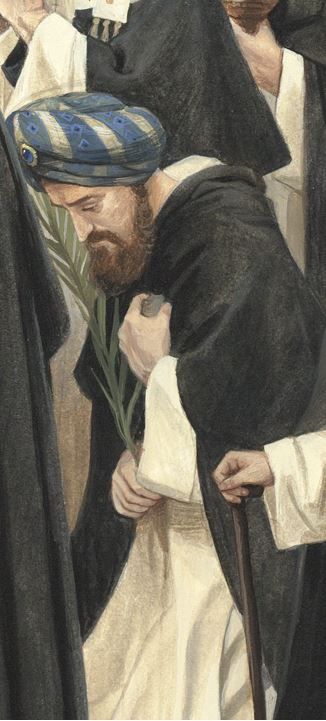
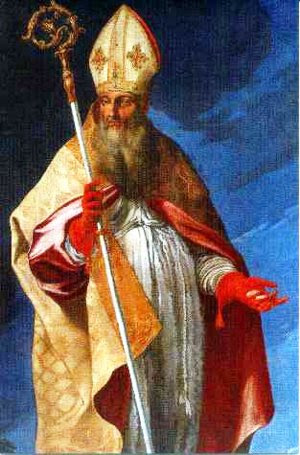
St Adelelmo of Engelberg
St Aldetrudis
St Ananias of Phoenicia
Bl Avertano of Lucca
St Caesarius of Nanzianzen
St Callistus Caravario
Bl Ciriaco Maria Sancha Hervas
Bl Didacus Yuki Ryosetsu
St Domenico Lentini
St Donatus the Martyr
Felix III, Pope
St Gerland the Bishop
St Gothard the Hermit
St Herena the Martyr
St Justus the Martyr
St Laurentius Bai Xiaoman
St Luigi Versiglia
Bl Maria Adeodata Pisani (1806-1855)
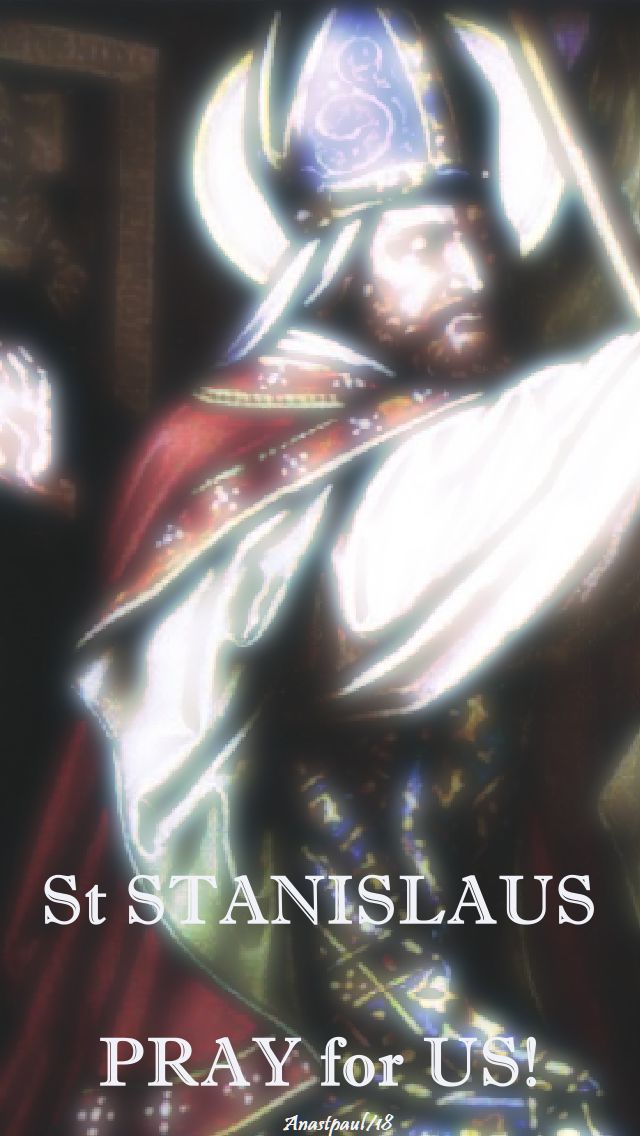
St Nestor of Side
St Riginos
Bl Robert of Arbrissel
Bl Sebastian of Aparicio
St Tharasius
St Toribio Romo González
St Victor of Saint Gall
St Walburga
—
Martyrs of Egypt – A group of Christian men who were exiled to Egypt for their faith and were eventually martyred for their faith in the persecutions of Numerian. We know little more than their names:
Claudianus
Dioscurus
Nicephorus
Papias
Serapion
Victor
Victorinus
Category: SAINT of the DAY
Thought for the Day – 24 February – The Memorial of Blessed Thomas Mary Fusco (1831-1891)
The outstanding vitality of faith, …. emerges in the life and activity of Tommaso Maria Fusco, founder of the Institute of the Daughters of Charity of the Precious Blood. By virtue of the faith he knew how to live in the world the reality of the Kingdom of God in a very special way. Among his aspirations, there was one which was his favourite: “I believe in you, my God, increase my faith”. It is this prayer that the Apostles direct to the Lord in the Gospel reading today (cf. Lk 17,6). Bl Tommaso understood that faith is first of all a gift and a grace. No one can conquer it or obtain it by himself. One can only ask for it, implore it from on high. For that reason, enlightened by the teaching of the new Blessed, we never tire of asking the gift of faith because “the just man will live by faith” (Hb 1,4)
“God is wonderful in his saints!”. With the communities in which the Blessed lived and for which they spent their best human and spiritual energies, we want to thank God, who is “wonderful in his saints”. At the same time, we ask Him through their intercession, to help us respond with renewed eagerness to the universal call to holiness. Amen….St Pope John Paul on the Beatification of Blessed Thomas Mary Fusco – 7 October 2001
Blessed Thomas, pray for us!
One Minute Reflection – 24 February – The Memorial of Blessed Thomas Mary Fusco (1831-1891) and Saturday of the First Week of Lent, Year B
…”for he causes his sun to rise upon the bad as well as the good and sends down rain to fall on the upright and the wicked alike.“…Matthew 5:45 (Today’s Gospel Matthew 5:43-48)
REFLECTION – “May work and suffering for God always be your glory and in your work and suffering, may God be your consolation on this earth and your recompense in heaven.”……………..Bl Thomas Mary Fusco
PRAYER– O Lord my God, give me the strength to endure with patience the sufferings I encounter in my life. Teach me to do my daily work for You alone and to do more than that in every way I can, for your greater glory. Teach me, Holy Father, to obey the words of Your Son, to pray for those who persecute me and to suffer for the glory of the Kingdom. Blessed Thomas Mary Fusco, pray that we may achieve the crown of glory in heaven, amen.
Our Morning Offering – 24 February – The Memorial of Blessed Thomas Mary Fusco
The One Thing Necessary
By St Alphonsus Liguori (1696-1787) Doctor of the Church
O my God,
help me to remember,
that time is short, eternity long.
What good is all the greatness of this world
at the hour of death?
To love You, my God
and save my soul is the one thing necessary.
Without You, there is no peace of mind or soul.
My God, I need fear only sin
and nothing else in this life,
for to lose You, my God, is to lose all.
O my God, help me to remember,
that I came into this world with nothing,
and shall take nothing from it when I die.
To gain You, I must leave all.
But in loving You,
I already have all good things,
the infinite riches of Christ and His Church in life,
Mary’s motherly protection and perpetual help,
and the eternal dwelling place Jesus has prepared for me.
Eternal Father, Jesus has promised
that whatever we ask
in His Name will be granted us.
In His Name, I pray:
give me a burning faith,
a joyful hope,
a holy love for You.
Grant me perseverance in doing Your will
and never let me be separated from You.
My God and my All,
make me a saint.
Amen
Saint of the Day – 24 February – Blessed Thomas Mary Fusco and Tommaso Maria Fusco (1831-1891)
Saint of the Day – 24 February – Blessed Thomas Mary Fusco and Tommaso Maria Fusco (1831-1891). Priest, Founder, Apostle of Charity, Apostolic Missionary, Spiritual Director, Confessor, Preacher, Writer, Blessed Thomas was born on 1 December 1831 at Pagani, Salerno, parish of San Felice e Corpo di Cristo, diocese of Nocera-Sarno, Italy and he died on 24 February 1891 of a chronic liver disease at the age of 59. He was Beatified on 7 October 2001 by St Pope John Paul II. The beatification miracles involved the healing of Mrs Maria Battaglia on 20 August 1964 in Sciacca, Agrigento, Sicily. Patronages – of Daughters of Charity of the Most Precious Blood.
Thomas Mary Fusco, the seventh of eight children, was born on1 December 1831 in Pagani, Salerno, in the Diocese of Nocera-Sarno, Italy, to Dr Antonio, a pharmacist and Stella Giordano, of noble descent. They were known for their upright moral and religious conduct and taught their son Christian piety and charity to the poor. He was baptised on the day he was born in the parish of St Felice e Corpo di Cristo. In 1837, when he was only six years old, his mother died of cholera and a few years later, in 1841, he also lost his father. Fr Giuseppe, an uncle on his father’s side and a primary school teacher, then took charge of his education.
Since 1839, the year of the canonisation of St Alphonsus Mary de’ Liguori, little Tommaso had dreamed of church and the altar; in 1847 he was at last able to enter the same diocesan seminary of Nocera which his brother Raffaele would leave after being ordained a priest in 1849. On 1 April 1851, Tommaso Maria received the sacrament of Confirmation and on 22 December 1855, after completing his seminary formation, he was ordained a priest by Bishop Agnello Giuseppe D’Auria.
In those years, sorrowful because of the loss of his loved ones, including his uncle (1847) as well as his young brother, Raffaele (1852), the devotion to the Patient Christ and to his Blessed Sorrowful Mother, already dear to the entire Fusco family, took root in Tommaso Maria, as in fact his biographers recall: “He had a deep devotion to the crucified Christ which he cherished throughout his life”.
Right from the start he saw to the formation of boys for whom he opened a morning school in his own home, while for young people and adults, bent on increasing their human and Christian formation, he organised evening prayers at the parish church of St Felice e Corpo di Cristo. This was a true place of conversion and prayer, just as it had been for St Alphonsus, revered and honoured in Pagani for his apostolate.
In 1857, he was admitted to the Congregation of the Missionaries of Nocera under the title of St Vincent de Paul and became an itinerant missionary, especially in the regions of Southern Italy. In 1860 he was appointed chaplain at the Shrine of our Lady of Carmel (known as “Our Lady of the Hens”) in Pagani, where he built up the men’s and women’s Catholic associations and set up the altar of the Crucified Christ and the Pious Union for the Adoration of the Most Precious Blood of Jesus.
In 1862 he opened a school of moral theology in his own home to train priests for the ministry of confession, kindling enthusiasm for the love of Christ’s Blood; that same year, he founded the “(Priestly) Society of the Catholic Apostolate” for missions among the common people; in 1874 he received the approval of Pope Pius IX, now blessed.
Deeply moved by the sorry plight of an orphan girl, a victim of the street, after careful preparation in prayer for discernment, Fr Tommaso Maria founded the Congregation of the “Daughters of Charity of the Most Precious Blood” on 6 January, the Solemnity of Epiphany in 1873. This institute was inaugurated at the Church of Our Lady of Mount Carmel, in the presence of Bishop Raffaele Ammirante, who, with the clothing of the first three sisters with the religious habit, blessed the first orphanage for seven poor little orphan girls of the area. It was not long before the newborn religious family and the orphanage also received the Pope’s blessing, in response to their request.
Fr Tommaso Maria continued to dedicate himself to the priestly ministry, preaching spiritual retreats and popular missions; and from his apostolic travels sprang the many foundations of houses and orphanages that were a monument to his heroic charity, which was even more ardent in the last 20 years of his life (1870-1891).
In addition to his commitments as founder and apostolic missionary, he was parish priest (1874-1887) at the principal church of St Felice e Corpo di Cristo in Pagani, extraordinary confessor to the cloistered nuns in Pagani and Nocera and, in the last years of his life, spiritual father of the lay congregation at the Shrine of Our Lady of Mount Carmel.
It was not long before Fr Tommaso Maria, envied for the good he achieved in his ministry and for his life as an exemplary priest, was faced with humiliation and persecution and, in 1880, even a brother priest’s slanderous calumny. However, sustained by the Lord, he lovingly carried that cross which his own Pastor, Bishop Ammirante had foretold at the time of his institute’s foundation: “Have you chosen the title of the Most Precious Blood? Well, may you be prepared to drink the bitter cup”.
During the harshest of trials, which he bore in silence, he would repeat: “May work and suffering for God always be your glory and in your work and suffering, may God be your consolation on this earth and your recompense in heaven. Patience is the safeguard and pillar of all the virtues”.
Wasting away with a liver-disease, Fr Tommaso Maria died a devout death on 24 February 1891, praying with the elderly Simeon: “Lord, now let your servant depart in peace, according to your word” (Lk 2, 29).
He was only 59 years old! In the notice issued by the town council of Pagani on 25 February 1891 the Gospel witness of his life, known to one and all, was summarised in these words: “Tommaso Maria Fusco, Apostolic Missionary, Founder of the Daughters of Charity of the Most Precious Blood, an exemplary priest of indomitable faith and ardent charity, worked tirelessly in the name of the Redeeming Blood for the salvation of souls: in life he loved the poor and in death forgave his enemies”.
His life was directed to the highest devotion of Christian virtues by the priestly life, lived intensely in constant meditation on the mystery of the Father’s love, contemplated in the crucified Son whose Blood is “the expression, measure and pledge” of divine Charity and heroic charity to the poor and needy, in whom Fr Tommaso Maria saw the bleeding Face of Jesus. His writings, preaching and popular missions marked his vast experience of faith and the light of Christian hope that shone from his vocation and actions. He had a vital, burning love for God; it enflamed his words and his apostolate, made fruitful by love for God and neighbour, by union with the crucified Jesus, by trust in Mary, Immaculate and Sorrowful, and above all by the Eucharist.
Fr Tommaso Maria Fusco was an Apostle of Charity of the Most Precious Blood, a friend of boys and girls and young people and attentive to every kind of poverty and human and spiritual misery. For all these reasons he enjoyed the fame of holiness among the diocesan priests, among the people and among his spiritual daughters who received his charism and witness to it today in the various parts of the world where they carry out their apostolate in communion with the Church.
The cause for the beatification of Fr Tommaso Maria Fusco was initiated in 1955 and the decree of his heroic Christian virtues was published on 24 April 2001. The miraculous healing of Mrs Maria Battaglia on 20 August 1964 in Sciacca, Agrigento, Sicily, through the intercession of Fr Tommaso Maria Fusco was recognised on7 July 2001.
With his beatification, St Pope John Paul II presents Fr Tommaso Maria Fusco as an example and a guide to holiness for priests, for the people of God and for his spiritual daughters, the Daughters of Charity of the Most Precious Blood…vatican.va

Memorials of the Saints – 24 February
St Adela of Blois
Bl Antonio Taglia
Bl Arnold of Carcassonne
St Betto of Auxerre
Bl Berta of Busano
Bl Constantius of Fabriano
St Cummian Albus of Iona
St Ethelbert of Kent
Evetius of Nicomedia
Bl Florentina Nicol Goni
Bl Ida of Hohenfels
Bl Josefa Naval Girbes
St Liudhard
Bl Lotario Arnari
Bl Marco De’ Marconi
St Modestus of Trier
St Peter the Librarian
St Praetextatus of Rouen
St Primitiva
St Sergius of Caesarea
Bl Simon of Saint Bertin
Blessed Tommaso Maria Fusco (1831-1891)
Thought for the Day – 23 February – The Memorial of St Polycarp (c 69 – c 155) Martyr and Apostolic Father of the Church
The story of Polycarp’s martyrdom is the earliest recorded account of a Christian martyr.
Polycarp was a disciple of St John the apostle. While still quite young, he became the bishop of Smyrna and was one of the most respected leaders in the first half of the second century. St Ignatius of Antioch and St Irenaeus spoke highly of him and people loved him very much.
Polycarp was seized for being a Christian. Persecution and death would not tear him away from Jesus now. Polycarp was led into the stadium of Smyrna. The crowd demanded that he be left to the lions but instead he was sentenced to death by fire. An eyewitness account claims that the flames didn’t harm him. He was finally killed by the sword and his body was burned.
The community of believers celebrated the anniversary of Polycarp’s death with great joy, for in him they had seen an outstanding example of love and patience. He had held strong and had won the treasure of eternal life. Polycarp is remembered as an Apostolic Father, one who was a disciple of the apostles.
St Polycarp was a Christian leader in a pagan world. He spoke clearly and simply, fearless in love and defense of Christ, even though persecutions raged around him. He sought only to hand on the message he had been given by John. Even as Polycarp prepared for martyrdom, his joy and confident trust were evident to all.
St Polycarp pray for us!
Quote/s of the Day – 23 February – The Memorial of St Polycarp (c 69 – c 155) Martyr and Father of the Church
“Stand fast, therefore, in this conduct
and follow the example of the Lord, firm
and unchangeable in faith, lovers of the brotherhood,
loving each other, united in truth,
helping each other with the mildness of the Lord, despising no man.”
“You threaten me with fire
which burns for an hour
and after a little is extinguished
but are ignorant of the fire
of the coming judgement
and of eternal punishment,
reserved for the ungodly.”
“Let us, therefore, forsake the vanity of the crowd
and their false teachings and turn back to the word
delivered to us from the beginning.”
“Hear me declare with boldness, I am a Christian!”
St Polycarp (c 69 – c 155) Martyr and Father of the Church
One Minute Reflection – 23 February – The Memorial of St Polycarp (c 69 – c 155) Martyr and Father of the Church
One Minute Reflection – 23 February – The Memorial of St Polycarp (c 69 – c 155) Martyr and Father of the Church and Friday of the First Week of Lent 2018
Only, conduct yourselves in a way worthy of the gospel of Christ, so that, whether I come and see you or am absent, I may hear news of you, that you are standing firm in one spirit, with one mind struggling together for the faith of the gospel...Philippians 1:27
REFLECTION – “Eighty and six years have I served Christ, nor has He ever done me any harm. How, then, could I blaspheme my King who saved Me?….I bless Thee for deigning me worthy of this day and this hour that I may be among Thy martyrs and drink the cup of my Lord Jesus Christ.”…St Polycarp
PRAYER – Lord of all creation, You gave St Polycarp, a place in the company of the Martyrs. Grant that, through his intercession, we may, like him, drink from that cup which Christ drank and so rise to eternal life. Through Christ our Lord, in unity with the Holy Spirit, one God forever, amen.
Our Morning Offering – 23 February – The Memorial of St Polycarp (c 69 – c 155) Martyr and Father of the Church
Prayer Before His Martyrdom
St Polycarp
Lord God almighty,
Father of Jesus Christ,
Your dear Son,
through whom we have come to know You,
God of the angels and powers,
God of all creation,
God of those who live in Your presence,
the race of the just, I bless You.
You have considered me worthy
of this day and hour,
worthy to be numbered with the Martyrs
and to drink the cup of Your Anointed One,
and thus to rise and live forever,
body and soul,
in the incorruptibility of the Holy Spirit.
Amen
Saint of the Day – 23 February – St Polycarp (c 69 – c 155) Martyr and Father of the Church
Saint of the Day – 23 February – St Polycarp of Smyrna – (69-155) – Martyr, Apostolic Church Father and Bishop of Smyrna, Writer, Preacher, Theologian – Patron against dysentery and earache. Bishop of Smyrna (Asia Minor), Polycarp was martyred between 155 and 167. His name means “much fruit”.
It is recorded by St Irenaeus, who heard him speak in his youth and by Tertullian, that he had been a disciple of John the Apostle. Saint Jerome wrote that Polycarp was a disciple of John and that John had ordained him bishop of Smyrna.


With Clement of Rome and Ignatius of Antioch, Polycarp is regarded as one of three chief Apostolic Fathers. The sole surviving work attributed to his authorship is his Letter to the Philippians and a letter addressed to him by Ignatius of Antioch, he is known especially for the account of his martyrdom, the first such account to be written after the narrative of Stephen’s martyrdom in the Acts of the Apostles. This extraordinary narrative was composed shortly after Polycarp’s death. Many passages should be quoted here, like this one, where the governor invites Polycarp to curse Christ. Here is the bishop’s response:
“For eighty six years I have been His servant and He has done me no wrong. How can I blaspheme against my king and saviour?”


This text is also the first one where we find a mention of the cult of relics and of the celebration of the anniversary of the martyrdom: “Collecting the remains that were dearer to us than precious stones and finer than gold, we buried them in a fitting spot. Gathering there, so far as we can, in joy and gladness, we will be allowed by the Lord to celebrate the anniversary day of his martyrdom, both as a memorial for those who have already fought the contest and for the training and preparation of those who will do so one day.”


Memorials of the Saints – 23 February
St Polycarp of Smyrna (c 69 – c 155) (Memorial)
—
St Alexander Akimetes
St Boswell
St Dositheus of Egypt
St Felix of Brescia
St Florentius of Seville
St Giovanni Theristi
Bl Giovannina Franchi
Bl John of Hungary
Bl Josephine Vannini
Bl Juan Lucas Manzanares
Bl Ludwik Mzyk
St Martha of Astorga
St Medrald
St Milburga
Bl Nicolas Tabouillot
St Ordonius
St Polycarp of Rome
Bl Rafaela Ybarra de Villalongo
St Romana
St Serenus the Gardener
Bl Stefan Wincenty Frelichowski
St Willigis of Mainz
St Zebinus of Syria
—
Martyrs of Syrmium – 73 Christians who were martyred together in the persecutions of Diocletian. We know no details about them, and only six of their names – Antigonus, Libius, Rogatianus, Rutilus, Senerotas and Syncrotas.
22 February 2018 Thursday of the First Week of Lent and the Feast of the Chair of St Peter
1 Peter 5:1-4, Psalms 23, Matthew 16:13-19
1 Peter 5:1-3 – “So I exhort the elders among you, as a fellow elder and a witness of the sufferings of Christ as well as a partaker in the glory that is to be revealed. Tend the flock of God that is your charge, not by constraint but willingly, not for shameful gain but eagerly, not as domineering over those in your charge but being examples to the flock.”
Matthew 16:14-19 – He said to them, “But who do you say that I am?” Simon Peter replied, “You are the Christ, the Son of the living God.” And Jesus answered him, “Blessed are you, Simon Bar-Jona! For flesh and blood has not revealed this to you but my Father, who is in heaven. And I tell you, you are Peter and on this rock I will build my church and the powers of hell shall not prevail against it. I will give you the keys of the kingdom of heaven and whatever you bind on earth, shall be bound in heaven and whatever you loose on earth, shall be loosed in heaven.”
Organisations develop and thrive under enlightened leadership and through the hard work of dedicated members. The Church is not different. She has rendered amazing service to human society, starting with just twelve members, because at every period of history, she has had committed and perceptive leaders to guide her, always, under the main leader, God, the Holy Spirit.
Today, Peter asks his fellow Church-workers, to fulfil their duty with joy, not out of compulsion or for any material advantage. He himself was entrusted with the mission of guiding and caring for the destinies of the early Christian community, in spite of his limitations. One of his great distinctions was that he was the first to confess, before his brethren, that Jesus was the Christ, the Son of the living God, this is the source and ground of the whole operation. Many others had seen in Jesus a gifted prophet. But God reveals His Son to those whom He chooses.
Those who are open to God’s ways, not only recognise Him for what He really is but become eager to take His message to the ends of the earth. They listen for His voice! And this is the end result of our Lenten penances, to become those lights in our world, to become those Catholics who truly resemble their Founder, those Catholics who pray, who love, who live charity and thus, by their lives, they preach the Good News to all who meet them! ArchBishop Thomas Menamparampil SCB
Hearing the Voice of God: A man practised in woodcraft, out of a babel of sounds in a tropical forest, will recognise any one. He may hear the calls of a hundred, a thousand, different species of birds, squawking, hooting, whistling, singing but he says, “There! Listen to the note of such and such a bird.” The novice strains his ears but cannot catch the particular sound. “I listen,” says he, “but I cannot recognise it. How can you know it?” And the master says, “I could tell that note if every leaf on every tree had a different voice and all were speaking. I could tell that note in the midst of any tumult.”
So, the man who knows the voice of God, hears it anywhere – in the midst of crowded streets, at an entertainment, on a battle field, in his soul, even when temptation is making pandemonium within. He can recognise the voice of God anywhere…– Father James M Gillis – A Thought a Day for Lent, by Father James M Gillis, C.S.P
O Jesus, living in Mary
By Fr Jean-Jacques Olier, S.S. (1608-1657)
O Jesus, living in Mary,
Come and live in Your servants,
In the spirit of Your sanctity,
In the fullness of Your strength.
In the reality of Your virtues.
In the perfection of Your ways.
In the communion of Your mysteries.
Be lord over every opposing power.
In Your own Spirit, to the glory of the Father.
Amen
Fr Jean-Jacques Olier (20 September 1608 – 2 April 1657) was a French priest and the founder of the Sulpicians. (Prayer a Day for Lent, compiled from approved sources by Father Albert A Murray, C.S.P.)
Thought for the Day – 22 February – The Feast of the Chair of Saint Peter
Today’s celebration highlights the role of Peter and his Successors in steering the barque of the Church across this “ocean”…. Let us thank God together for founding His Church on the rock of Peter. As the opening prayer suggests, let us pray intensely that amid the upheavals of the world, she may not be shaken but advance with courage and trust.
By virtue of the transforming experience of the Good Shepherd, Peter described himself, in his Letter to the Churches of Asia Minor, as “a witness of the sufferings of Christ as well as a partaker in the glory that is to be revealed” (1 Pt 5: 1). He urges “the elders” to tend the flock of God and become examples to it (cf. 1 Pt 5: 2-3). Today, dear friends, this exhortation is addressed particularly to you, whom the Good Shepherd has wished to associate in the most eminent way with the ministry of Peter’s Successor. Be faithful to your mission and ready to lay down your lives for the Gospel. The Lord is asking this of you, and the Christian people who have gathered around you today with joy and affection expect it of you.
“I have prayed for you that your faith may not fail” (Lk 22: 32). This is what the Lord said to Simon Peter at the Last Supper. Jesus’ words, fundamental for Peter and his Successors, also spread light and comfort to those who cooperate more closely in their ministry. Today, …Christ is repeating to each of you: “I have prayed for you” that your faith will not fail in the situations in which your fidelity to Christ, to the Church, to the Pope, may be put to the greatest test.
May this prayer, which never ceases to flow from the Good Shepherd’s heart, always be your strength! Have no doubt that just as it was for Christ and for Peter, so it will be for you: your most effective witness will always be one that is marked by the Cross. The Cross is God’s chair in the world. On it Christ has offered humanity the most important lesson, that of loving one another as He has loved us (cf. Jn 13: 34): even to the ultimate gift of oneself.
The Mother of Christ and of the disciples, Mary Most Holy, always stands beneath the Cross. The Lord entrusted us to her when He said: “Woman, behold, your son!” (Jn 19: 26). Since the Blessed Virgin, Mother of the Church, protected Peter and the Apostles in a special way, she will not fail to protect the Successor of Peter and his collaborators. May this consoling certainty encourage you not to be afraid of trials and difficulties. But, reassured by God’s constant protection, let us obey together the command of Christ, who vigorously asked Peter, and with him the Church, to put out into the deep: “Duc in altum” (Lk 5: 4). Yes, dear Brothers, let us put out into the deep, let us cast our nets for the catch and let us “go forward in hope!” (Novo millennio ineunte, n. 58).
Christ, the Son of the living God, is the same yesterday and today and forever. Amen!…Excerpt from the Homily of St John Paul on Thursday, 22 February 2001, Feast of Saint Peter’s Chair
St Peter Pray for Holy Mother Church, Pray for us all!
Quote/s of the Day – 22 February – The Feast of the Chair of Saint Peter
“The universal Church, that is,
the faithful everywhere, must be
in agreement with this Church
because of her outstanding superiority.”
St Irenaeus, Bishop of Lyons (130-202) Father of the Church
“He who deserts the
Chair of Peter, upon whom
the Church was founded,
does he trust himself
to be IN the Church?”
(De Catholicae Ecclesiae Unitate, 251)
St Cyprian, Bishop of Carthage and Martyr (200-258) Father of the Church
One Minute Reflection – 22 February – The Feast of the Chair of Saint Peter
“On this rock I will build my Church”…Matthew 16:18
REFLECTION – “How blessed is the Church of Rome, on which the Apostles poured forth all their doctrine along with their blood!” (De Praescriptione Hereticorum, 36)…….Tertullian
“I decided to consult the Chair of Peter, where that faith is found exalted by the lips of an Apostle; I now come to ask for nourishment for my soul there, where once I received the garment of Christ. I follow no leader save Christ, so I enter into communion with Your beatitude, that is, with the Chair of Peter, for this I know is the rock upon which the Church is built.” (cf. Le lettere I, 15, 1-2)…………..St Jerome (343-420) Father & Doctor
PRAYER – Holy Father, send Your Divine Enlightener into the hearts of all Your faithful, filling us with the strength to fulfil our mission as the followers of the Chair of St Peter. And most of all, we pray Lord Holy God to inspire and light the way of our Holy Father, Francis. Sustain and guide him, keep him in health and strength, to lead Your people by the Light of the Way and the Truth. Holy Father, have mercy on us, Holy Spirit guide and lead us, Lord Jesus Christ be our intercessor and teacher, amen.
Feast of the Chair of St Peter/Cathedra Petri– 22 February
Feast of the Chair of St Peter/Cathedra Petri– 22 February – The Chair is the cathedra of St Peter’s Basilica. Cathedra is Latin for “chair” or “throne” and denominates the chair or seat of a bishop, hence “cathedral” denominates the Bishop’s church in an episcopal see. The Popes formerly used the Chair. It is distinct from the Papal Cathedra in St John Lateran Archbasilica, also in Rome, which is the actual cathedral church of the Pope, because the Cathedra he currently and officially sits upon is in its apse.
When the pope cautions world leaders, pleads for peace, or condemns social injustice, people listen and respond. What makes the world listen to this man? The answer lies in Scripture and in Tradition. Peter is named first among the apostles of Jesus; he was often their spokesman and leader; he was the first to preach after Pentecost; and he was the leader in defending Christ and his message. Peter was at the Transfiguration and in the garden.
He proclaimed to Jesus, “You are the Christ,” and Christ singled him out:
“So I say to you, you are Peter, and upon this rock I will build my church, and the gates of the netherworld shall not prevail against it. I will give you the keys to the kingdom of heaven. Whatever you bind on earth shall be bound in heaven; and whatever you loose on earth shall be loosed in heaven.” (Matthew 16:18–19)
Jesus prayed for Peter that he might strengthen his brothers. (Luke 22:32) And Jesus gave Peter a threefold commission to “feed my sheep.” (John 21:15–17)
From the beginning, the primacy, of Peter has been recognised. On the feast of the Chair of Peter, we celebrate our unity as a Church. We celebrate the love, presence and protection of Christ for us, the Church. The title Chair of Peter refers to the chair from which a bishop presided, a symbol of his authority. When the title refers to Saint Peter, it recalls the supreme teaching power of Peter and his successors. It is from the chair, from the pastoral power given him, that the pope shepherds Christ’s flock.
Last year’s post has a homily from Pope Benedict: https://anastpaul.wordpress.com/2017/02/22/feast-of-the-chair-of-st-peter-22-february/
Feast of the Chair of St Peter and Memorials of the Saints – 22 February
The Chair of Saint Peter (Feast)
St Ailius of Alexandria
St Angelus Portasole
St Aristion of Salamis
St Athanasius of Nicomedia
St Baradates of Cyrrhus
Bl Diego Carvalho
St Elwin
Bl Émilie d’Oultremont d’Hoogvorst
Bl Isabella of France
St John the Saxon
St Limnaeus
St Margaret of Cortona
St Maximian of Ravenna
St Miguel Facerías Garcés
St Mohammed Abdalla
St Papias of Heirapolis
St Paschasius of Vienne
St Raynerius of Beaulieu
St Thalassius
—
Martyrs of Arabia – A memorial for all the unnamed Christians martyred in the desert and mountainous areas south of the Dead Sea during the persecutions of Emperor Valerius Maximianus Galerius.
Thought for the Day – 21 February – The Memorial of St Peter Damian O.S.B. (1007-1072) Doctor of the Church
Born in Ravenna, Italy, in 1007, Peter Damian knew hardship as a child. He became a successful teacher professor but only for a short time. He was ordained to the priesthood and in 1035, he entered a Benedictine monastery. The monks lived in small hermitages, with two monks in each. Peter was known for his fasting, penance and long hours of prayer. In 1043, he was elected abbot. Peter began re-organising the rules of the order to return to the original spirit and purpose of the order. Men were drawn to the monastery and Peter started five other foundations.
In 1057, Peter was made cardinal and bishop of Ostia. Soon he was called upon by the Church to settle disputes, attend synods and fight abuses. He devoted much energy to helping the clergy, as well as the leaders of the empire. With his letters, biographies, sermons, stories and poems, he encouraged others to restore discipline to their lives. He wrote many letters. Some 170 are extant. We also have 53 of his sermons and seven lives, or biographies, that he wrote. He preferred examples and stories rather than theory in his writings. The liturgical offices he wrote are evidence of his talent as a stylist in Latin .Through all his diplomatic missions, Peter Damian remained a monk at heart. He served the Church as he was asked, however and as best he could. He died February 22, 1072, and in 1828, was declared a Doctor of the Church.
Peter was a reformer and if he were alive today, would no doubt encourage the renewal started by Vatican II. He would also applaud the greater emphasis on prayer, that is shown by the growing number of priests, religious and laypersons who gather regularly for prayer, as well as the special houses of prayer recently established by many religious communities.
St Peter Damian, intercede for us that we may learn to pray!
Quote/s of the Day – 21 February – The Memorial of St Peter Damian O.S.B. (1007-1072) and St Robert Southwell S.J. (1561-1595)
“He pours light into our minds,
arouses our desire and gives us strength…
As the soul is the life of the body,
so the Holy Spirit is the life of our souls.”
“Through a woman [Eve]
a curse fell upon the earth;
through a woman [Mary] as well,
there returned to the earth a blessing.”
“When you are scorned by others
and lashed by God, do not despair.
God lashes us in this life,
to shield us from the eternal lash in the next.”
St Peter Damian (1007-1072) Doctor of the Church
“God gave Himself to you:
give yourself to God.”
“Where sin was hatched, let tears now wash the nest.”
“Christianity is warfare
and Christians are spiritual soldiers.”
“Not where I breathe
but where I love,
I live.”
“When Fortune smiles,
I smile to think, how quickly she will frown.”
St Robert Southwell (1561-1595)
One Minute Reflection – 21 February – The Memorial of St Robert Southwell S.J. (1561-1595)
How narrow the gate and constricted the road that leads to life. And those who find it are few...Matthew 7:14
REFLECTION – “The path to Heaven is narrow, rough and full of wearisome and trying ascents, nor can it be trodden without great toil and therefore wrong is their way, gross their error and assured their ruin who, after the testimony of so many thousands of saints, will not learn where to settle their footing.”…St Robert Southwell (1561-1595)
PRAYER – Lord of heaven and earth, You blessed us this day with the grace of the Martyr St Robert Southwell. Grant that, through his intercession, we may, like him, drink from that cup which Christ drank and so rise to eternal life. We make our prayer through our Lord Jesus, in unity with the Holy Spirit, one God forever, amen
Saint of the Day – 21 February – St Robert Southwell S.J. (1561-1595) Martyr
Saint of the Day – 21 February – St Robert Southwell S.J. (1561-1595) Martyr, Religious Priest, Poet, Hymnodist, Writer, clandestine missionary – Additional Memorials: 25 October as one of the Forty Martyrs of England and Wales and 29 October as one of the Martyrs of Douai. He was born in 1561 in Horsham Saint Faith, Norfolk, England and he was martyred by being hanged, drawn and quartered on 21 February 1595 (aged 33) in Tyburn, London, England. St Robert was Canonised on 25 October 1970 by Blessed Pope Paul VI.
The Life of St Robert Southwell below, is written by Servant of God, Fr John A Hardon S.J. (1914-2000) – one of my heroes, so I hope you enjoy his chatty style as much as I do which was, as you can tell, presented live.
Our saint for this evening is St Robert Southwell, the English Jesuit, poet and martyr. He was born in 1561, died in 1595 at the ripe old age of thirty-three. He was canonised – took a long time, in 1970. His family on his mother’s side was related to the Shelleys’, the other English poet. By this time the Catholic faith was proscribed in England – English Catholics, had to go into hiding. If they wanted a catechetic education they had to leave the country. In case you haven’t been told, it’s getting closer and closer to that in the United States. He was therefore sent to Douay, which as you know, is the place where the first and official English translation of the Bible was made, Douay, later on revised, the Douay-Rheims.
It was while studying at Douay that he first met some Jesuits, including the famous Leonard Lessii, a great Jesuit theologian, who’s best known work is on the ‘Attributes of God’. Then he went on to Paris and by this time, he was just seventeen. Incidently, young people matured much earlier in those days. It is thirty-one years that I have been working with the daughters of St Mary of Providence in Chicago. As you know their special apostolate is caring for the handicapped, say, the retarded. I would say this is a very common phenomenon. In other words, that young people nowadays are really young. It takes them a long time to grow up – thirty years old and they behave like young adolescents.
When Southwell applied to enter the Society of Jesus, he was seventeen. They turned him down because he was too young. Well, just before his eighteenth birthday, they figured, he qualifies. He was ordained in 1584 at the age of twenty-three. Two years after his ordination, by that time he had taken his final vows, he was sent back to England to try to reconvert his fellow ex-Catholic, English people. The actual time span of his attempted evangelisation mission work would be about six years, that’s all. He got himself a position as chaplain to a certain Anne who was Countess of Arundel. Her husband suffered a great deal for defending priests who were trying to hide out from those who were trying to root out the Catholic faith. It’s well to know that the hostess who hid Robert, her husband, had since been declared blessed. What is remarkable about St Robert Southwell, is that although he worked quite openly in the sense that it was not a big secret that he was a priest. He did, of course, try to work in disguise but, he was allowed extraordinary freedom. A number of factors were in his favour, he was naturally of a gentle disposition, he was quiet. In other words, he did not make unnecessary noise or create a scene or you might say, irritate those who were out to destroy the Church. He avoided, as much as he could, controversy.
As I re-read a short biography of St Robert Southwell, well, I was reminded how over the years, there are certain of my confreres that have stood out as models for me to try to imitate, Robert Southwell was one. There are not too many of us, Jesuits, who have survived nationally, mainly of course, God’s grac, but one reason I think, is avoiding as far as possible, controversy. Keep proclaiming the truth, keep insisting on what the faith really teaches and avoid either unnecessary exposure as a critic of those who don’t go along with the Church’s teaching – in a word, keeping as much as you can, in the background, so as not to irritate those who are still nominally Catholic, but My Lord, who have lost their faith.
In 1592, Robert Southwell was arrested by an infamous spy by the name of Topcliffe who had to his credit many English martyrs, including Robert Southwell. Significantly, it was a young girl in the household of this Countess of Arundel, one of her daughters that betrayed the priest. Topcliffe brought Southwell to his own home – we have record of nine separate severe, cruel tortures. You may have seen pictures or descriptions of some of the machinery in which the people were tortured. For example, they would be stretched over a barrel, either way, either face down or back down, of course the back down would break your back and the two hands were made to touch the two feet and they would keep twisting and twisting until the one under torture couldn’t stand it any longer and then would confess, as the expression goes, to what his torturers wanted to get out of him. What did they want to get out of Robert Southwell – they wanted him to betray his fellow Catholics, who were in hiding; those who had hidden him, those that helped him escape, those who helped him work in disguise. He refused. We don’t know how many times he was tortured, all we know is many times during three years in prison. One reason they kept torturing him is because they were hoping to break down his resistance and get him to implicate many other Catholics to really root out the faith. Topcliffe was a very successful torturer in the quaint English of those days, remarked, ‘I never did take so wavey a man if he be rightly used.’ In other words, ‘if we could break down Southwell’s resistance, he would be very useful.’
Being three years in prison, he finally insisted that he should be tried or freed. In other words, it was a request he made, ‘either put me on trial or get me out of prison’, so they said, “all right.” They put him on trial and they found him guilty and he was condemned to death because of his priesthood. The opposition didn’t even attempt to disguise his martyrdom on political grounds. He was hanged and drawn – that means cut into pieces and quartered into four pieces on 21 February 1595, which has, over the centuries remained his feast day, 21 February.
The bystanders that watched his being martyred by hanging pleaded with the executioners to let him die on the scaffold and only then, that is, after the body was really dead, to then cut him into pieces, which was as you know, the familiar English form of execution – John Fisher, Thomas More and here Robert Southwell. Just to remind ourselves, I like the date. Thirty-three years old, exactly my age at ordination. In fact, I was ordained on my birthday.
Robert Southwell, on the grounds we have so far seen, was not unlike other martyrs whose lives either we’ve talked about or that we are familiar with. His age of course – he was a young man but what makes Robert Southwell stand out among Jesuit saints and among the Church’s martyrs, is the fact that he has left us so much for a man of thirty-three, has left us so much in writing that has made world literature. Southwell, he is called, is one of the great writers of the English-speaking world. He wrote prose, he wrote poetry.
Just a few statements to I think to be exact from his prose writing touching on the spiritual life. Remember, he was turned down when he applied for the Jesuits because of his age, sixteen is young but once he was admitted, here’s what he said: “How great a perfection is required of a member of the Society of Jesus. He should be ready at a moment’s notice to go to heretics, pagans or barbarians.” That moment’s notice is almost a quotation from St Ignatius. As I think I told the people this afternoon, you may have heard, the priest who was to have conducted the day of recollection, forgot. So somebody else pinch-hitted until I got there. Lucky I took my cassock along, on general principles. But I told the people and I can tell you because that’s what this is all about. All we have to know, that’s all, what is God’s will and in a moment’s notice, with the twinkling of an eye, you do it. As weak human beings our temptation is to hesitate, or in Christ’s words, “We turn around.” and the key is, the moment we know God wants us don’t even put a comma – do it. It is dangerous to speculate, once you know that God wants something, because then human reason, being very shrewd, they’ll find reasons, otherwise known as rationalisation for not doing it.
The second quotation, “we should be prepared for being cast into chains” – I like this – “by the heretics.” The worst persecutors of the Church have not been native born pagans, they have been Christians who have lost their faith. The vicious hatred of the Communists is born of God’s punishment for having rejected Christ. We should be prepared for being cast into chains by the heretics, starved by hunger, seduced and tortured. I like that combination-seduced and tortured. Between the two, I would choose torture to seduction. What Southwell is saying is, that in his day and, of course in ours, you rub your eye, shake your head and we can’t quite be sure we’re seeing right – people we’ve known, whose faith we’ve admired; priests, for example, who may have been instrumental in leading us closer to God, who allow themselves to be seduced or are afraid of being starved by hunger and, my friends, the deepest hunger of the human spirit is not for food but for recognition.
Pray acceptance – take it from a man who knows. Southwell knew and that’s why I thought I picked some choice quotations and I ended up with those two. Almost from the time that he entered the Jesuits, he felt that he would be a martyr. He was getting constant reports from home about one more being put to death for the faith or languishing in prison. Long before he was martyred himself, the account of the first Jesuit English martyr, St Edmund Campion S.J., was already in print. He read it, admired it and hoped to die the same. Among his many letters, I should keep reminding us that he was only 33 when he died, his run to the superior in England, Father Parsons – you couldn’t write an ordinary letter about things religious, so being educated Jesuits they could read between the lines; they have their own crypto-language. Here’s a quotation, see what you make of it: Robert Southwell is writing to Parson, superior in England, he is writing about Edmund Campion who had already been martyred – he doesn’t mention Campion’s name, but he says, I quote: “He has had the start on you” – Parsons later on was also martyred – “he has had the start on you in leading his vessel with English wares (a business letter) and has successfully returned to the desired port. Day by day we are looking for something similar from you.”
In 1586, two years after his ordination, he wrote to the father general, I quote: “I do not much dread the tortures as I look forward to the crown.” 
There are two books, prose writings, that Robert Southwell wrote that are worth reading. They are of course written in 16th century English but, powerful, written to encourage his fellow Catholics to remain firm in their faith. The one is called ‘Mary Magdalene’s Funeral Tears’. And the other one is called ‘Epistle of Comfort‘. We would probably call it a letter of encouragement. His poetry – we don’t know exactly when he began to write but it must have been very young because he wrote a great deal of which we have the record and by now the English speaking world knows Robert Southwell. His two outstanding poems are ‘The Burning Babe’ and ‘The Virgin Mary to Christ On The Cross.’
The Burning Babe, by Saint Robert Southwell
As I in hoary winter’s night stood shivering in the snow,
Surprised I was with sudden heat which made my heart to glow;
And lifting up a fearful eye to view what fire was near,
A pretty babe all burning bright did in the air appear;
Who, scorchëd with excessive heat, such floods of tears did shed
As though his floods should quench his flames which with his tears were fed.
Alas, quoth he, but newly born in fiery heats I fry,
Yet none approach to warm their hearts or feel my fire but I!
My faultless breast the furnace is, the fuel wounding thorns,
Love is the fire, and sighs the smoke, the ashes shame and scorns;
The fuel justice layeth on, and mercy blows the coals,
The metal in this furnace wrought are men’s defiled souls,
For which, as now on fire I am to work them to their good,
So will I melt into a bath to wash them in my blood.
With this he vanished out of sight and swiftly shrunk away,
And straight I called unto mind that it was Christmas day.
It’s not surprising, it’s one of the great poems of the English language.
Now some comments on St. Robert Southwell’s spirituality. I know of no martyred saint who has left us a longer and more detailed record of his desire for martyrdom than Robert Southwell. One reason no doubt because he wrote so much that he died so soon. In any case what he is telling us, is not only not wrong but, quite all right to pray for a martyr’s crown.
There have been 21 general councils of the Church including the Second Vatican. My business is to read these councils because that’s my profession. I know of none that is ever written as clearly and expensively on martyrdom as the peak of Christian perfection as has the Second Vatican Council. I’ve mentioned this, I’m sure, to you before, it’s well worth repeating. The Church has had more martyrs since 1900 than in all the 19 centuries before. We are living in an age of martyrs. You better believe it, because if you don’t, you will not measure up to the kind of loyalty to Christ that today’s world demands. Ordinary Catholics will not survive, not today. I’m not even asking you to believe it; it’s too obvious. So St. Robert Southwell’s desire for martyrdom is something we can legitimately ask God to grant us. And among other things that I think I’ve learned from experience, I’m not sure, not really, which is more demanding – living a martyrs life or dying a martyrs death.
Second feature of his spirituality. Robert Southwell was an Englishman to the tips of his fingers, quiet, gentle, compassionate and consequently, you would expect that naturally speaking he dreaded what supernaturally he desired, am I clear? He proves what God’s grace can do with fallen human nature given strength and courage that is impossible to nature alone.
And finally, Robert Southwell put so many of his prayers into writing, that I recommend that we all, at least, on occasion do the same. It is a wonderful way of praying and a most effective way of remembering the insights that God gives us and even the effort we make to go over and over what we may write in the prayers we compose so they express exactly the sentiments we want to say. With apologies for this late evening conference. We invoke St.Robert Southwell, pray for us. In the name of the Father and of the Son and of the Holy Spirit.
Memorials of the Saints – 21 February
St Peter Damian (1007-1072) Doctor of the Church (Optional Memorial)
St Avitus II of Clermont
Bl Caterina Dominici
Bl Claudio di Portaceli
St Daniel of Persia
Bl Eleanora
St Ercongotha
St Eustathius of Antioch
St Felix of Metz
St George of Amastris
St Germanus of Granfield
St Gundebert of Sens
Bl Noel Pinot
St Paterius of Brescia
St Pepin of Landen
St Peter Mavimenus
St Randoald of Granfield
St Robert Southwell S.J. (1561-1595)
St Severian of Scythopolis
St Severus of Syrmium
Bl Thomas Pormort
St Valerius of San Pedro de Montes
St Verda of Persia
—
Martyrs of Sicily – 79 saints – Seventy-nine Christians martyred together in the persecutions of Diocletian. They were martyred in c 303 on Sicily.
Martyrs of Hadrumetum – A group of 26 Christians martyred together by Vandals. We know little more than eight of their names – Alexander, Felix, Fortunatus, Saturninus, Secundinus, Servulus, Siricius and Verulus. c 434 at Hadrumetum (modern Sousse, Tunisia)
Martyrs Uchibori – Three Japanese laymen, all brothers, all sons of Paulus Uchibori Sakuemon, one a teenager, one only five years old and all martyred for their faith in the persecutions in Japan. 21 February 1627 in Shimabara, Nagasaki, Japan. Beatified 24 November 2008 by Pope Benedict XVI.
Antonius
Balthasar
Ignatius
Quote/s of the Day – 20 February 2018 -The First Memorial of Saints Francisco (1908-1919) and Jacinta (1910-1920) – “The Shepherds of Fatima”
“We were burning in that light
which is God and we were not consumed.
What is God like?
It is impossible to say.
In fact, we will never be able to tell people”
St Francisco Marto of Fatima (1908-1919)
“Speak ill of no-one and avoid the company
of those who talk (ill) about their neighbours.”
St Jacinta Marto of Fatima (1910-1920)
“Father, to You I offer praise, for you have revealed these things to the merest children”. Today Jesus’ praise takes the solemn form of the beatification of the little shepherds, Francisco and Jacinta. With this rite the Church wishes to put on the candlelabrum these two candles which God lit to illumine humanity in its dark and anxious hours. …Father, to You I offer praise for all Your children, from the Virgin Mary, Your humble Servant, to the little shepherds, Francisco and Jacinta. May the message of their lives live on forever to light humanity’s way!”
St Pope John Paul (1920-2005) on the Beatification of Francisco and Jacinta, 13 May 2000
One Minute Reflection – 20 February 2018 – Tuesday of the First Week of Lent and The First Memorial of Saints Francisco (1908-1919) and Jacinta (1910-1920)
“Unless a grain of wheat falls into the earth and dies, it remains just a single grain; but if it dies, it bears much fruit..” …John 12:24
REFLECTION – “In Lucia’s account, the three chosen children found themselves surrounded by God’s light as it radiated from Our Lady. She enveloped them in the mantle of Light that God had given her. According to the belief and experience of many pilgrims, if not of all, Fatima is more than anything this mantle of Light that protects us, here, as in almost no other place on earth. We need but take refuge under the protection of the Virgin Mary and to ask her, as the Salve Regina teaches: “show unto us… Jesus”.
“The Lord, who always goes before us, said this and did this (Jn 12:24). Whenever we experience the cross, He has already experienced it before us. We do not mount the cross to find Jesus. Instead it was He who, in His self-abasement, descended even to the cross, in order to find us, to dispel the darkness of evil within us and to bring us back to the light.”…Pope Francis at the Canonisation of Saints Francisco and Jacinta on 14 May 2017

PRAYER – Heavenly Father, just as the little children, Francisco and Jacinta, were chosen to be bearers of Your message, grant we pray, that by their prayers on our behalf, we too may Your bearers of light. Be with us, holy Mother, during our Lenten journey to the Resurrection of your Son, help us to become like little children and in that new purity, shine with His Light. Through Jesus our Lord, with the Holy Spirit, one God forever, amen.
Saints of the Day – 20 February – Saints Francisco (1908-1919) and Jacinta Marta (1910-1920)
Saints of the Day – 20 February 2018 – Today, is the First Memorial of Saints Francisco (1908-1919) and Jacinta Marta (1910-1920) who were Canonised last year, 13 May 2017 – “The Shepherds of Fatima”
Between 13 May and 13 October 1917, three Portuguese shepherd children from Aljustrel, received apparitions of Our Lady at Cova da Iria, near Fátima, a city 110 miles north of Lisbon. At that time, Europe was involved in an extremely bloody war. Portugal itself was in political turmoil, having overthrown its monarchy in 1910; the government disbanded religious organisations soon after.
At the first appearance, Mary asked the children to return to that spot on the thirteenth of each month for the next six months. She also asked them to learn to read and write and to pray the rosary “to obtain peace for the world and the end of the war.” They were to pray for sinners and for the conversion of Russia, which had recently overthrown Czar Nicholas II and was soon to fall under communism. Up to 90,000 people gathered for Mary’s final apparition on 13 October 1917, when Our Lady of the Rosary asked them to build a chapel on the rocky hillside. This apparition is now known as the Miracle of the Sun. The entire crowd saw a remarkable sight. The sun seemed to dance in the sky. It was spinning like a top and shooting off brilliant colours of the rainbow. Suddenly the sun dropped treacherously close to earth. People dropped to their knees and the sun just as quickly returned to its play in the sky.
Less than two years later, Francisco died of influenza in his family home. He was buried in the parish cemetery and then re-buried in the Fátima basilica in 1952. Jacinta died of influenza in Lisbon in 1920, offering her suffering for the conversion of sinners, peace in the world and the Holy Father. She was re-buried in the Fátima basilica in 1951, when it was discovered that her body is incorrupt. Their cousin Lúcia dos Santos, became a Carmelite nun and was still living when Jacinta and Francisco were beatified in 2000; she died five years later.
Pope Francis canonised the younger children on his visit to Fátima to commemorate the 100th anniversary of the first apparition, last year, 13 May 2017. 


The shrine of Our Lady of Fátima is visited by up to 20 million people a year.


For fuller details and more images here is my post from last year: – https://anastpaul.wordpress.com/2017/02/20/saints-of-the-day-20-february-blessed-francisco-and-jacinta-marto/
Memorials of the Saints – 20 February
St Amata of Assisi
St Bolcan of Derken
St Colgan
St Eleutherius of Tournai
St Eucherius of Orleans
St Falco of Maastricht
St Francisco Marto
St Jacinta Marto
St Leo of Catania
St Nemesius of Cyprus
St Pothamius of Cyprus
St Serapion of Alexandria
St Silvanus of Emesa
St Stanislawa Rodzinska
St Valerius of Courserans
St Wulfric of Haselbury
St Zenobius of Antioch
Thought for the Day – 19 February – The Memorial of Bl John Sullivan SJ (1861-1933)
It was at Clongowes that his life of prayer and penance began to be noticed. He ate the plainest of food. Staff who looked after rooms said his bed was untouched and he slept on the floor. He was always seen in the chapel praying until late and rising early to do so again. At times, he hardly seemed to notice the world around him. But if he was hard on himself, he was never so on others. Despite his brilliant mind and academic achievements it was his holiness that was recognised. Many revered him as a saint. He prayed constantly – he walked with God continually – he listened to Him and he found Him and God worked through him. Many who were in need of spiritual or physical healing flocked to him and asked his prayers – and strange things happened. The power of God seemed to work through him and many were cured.
But there was another dimension. Apart from his work as teacher, spiritual father and retreat director, Father Sullivan was a familiar figure amongst the sick and the needy for miles around Clongowes. He visited them on foot or on an old battered bicycle. On these home visits to the poor, he brought them small luxuries, including a bit of tobacco, tea and sugar, as well as oranges and apples. In time, there was an ever-widening circle of others, whom he visited in hospitals and consoled by letter, or who came to him from almost every county in Ireland to ask the intercession of his prayers in their illness and misfortunes. He constantly heard confessions in the church attached to the college. People came by bicycle, by horse or donkey and cart, or arranged a lift in a car for a sick person. In later years, it was a common sight to see several vehicles waiting outside the door, in which invalids had been brought to receive his blessing.
Neither weather nor distance seemed to be major obstacles. Once Fr Sullivan walked fourteen miles there and fourteen miles back to pray with and to bless a sick person. His bicycle brought him on longer journeys, including visits to Dublin and back. In his threadbare clothes and his aged and patched boots, he was a familiar sight on the roads around Clongowes and further afield.
Fr Sullivan’s prayers restored people to health, cured their pain, relieved them of psychological problems. His compassion and reverence for the person was often observed. He would draw very close to them, when even medical staff found their condition near nauseating. There have been hundreds of testimonies attributing various healings to him during his life and a number of those are seen as miracles and have been verified as such, which has led to his beatification.
Cardinal Amato, at the Beatification ceremony, also referred to an incident when Fr John, on one of his customary visits to the sick, encountered a priest already in the cottage visiting. “The pastor asked him to leave, fearing a dangerous opponent in the ministry. Upon his brusque command, Fr Sullivan knelt down and asked forgiveness. The pastor was profoundly moved.” The profound humility of Bl John reaches out now still to us all. May we constantly pray for his intercession that God may grace us with this greatest of all virtues, humility!
PRAYER for the CANONISATION of Blessed JOHN SULLIVAN (1861-1933)
O God, who honour those who honour You,
make sacred the memory of Your servant,
John Sullivan,
by granting through his intercession
the petition we now make
……………………………………….
[bring to mind your intention]
Hasten the day when his name will be numbered
among those of Your saints.
We make our prayer through Christ our Lord.
Amen.
Bl John, pray for us!
Quote/s of the Day – 19 February – The Memorial of Bl John Sullivan SJ (1861-1933)
“Any friend of the poor, is a friend of God.”
“Take life in instalments.
This one day now.
At least let this be a good day.
Be always beginning.”
Blessed John Sullivan (1861-1933)
One Minute Reflection – 19 February – The Memorial of Bl John Sullivan SJ (1861-1933)
Therefore I tell you, all that you ask for in prayer, believe that you will receive it and it shall be yours...Mark 11:24
REFLECTION – “In prayer,don’t mind the scaffolding. Get at God.”
PRAYER – God of mercy, teach us to live as You have ordained. Help us to follow Your commandments with courage and steadfast devotion. Let our Saviour be our master, help us to learn from Him, the ways of prayer in silence. Fill us with the fire of the Holy Spirit, that we may learn how to pray. Grant blessed Trinity, that by the prayers of Blessed John Sullivan, who so clearly gave himself totally in prayer, we may grow in holiness. Through Jesus our Lord, in unity with the Holy Spirit, one God forever. Amen
You must be logged in to post a comment.