Posted in PURGATORY, SAINT of the DAY, The HOLY SOULS

The Commemoration of All the Holy Souls in Purgatory – 2 November

The Commemoration of All the Holy Souls in Purgatory – 2 NovemberPurgatoryweb

All Souls Day is a solemn celebration in the Roman Catholic Church commemorating all of those who have died and are now in Purgatory, being cleansed of their venial sins and the temporal punishments for the mortal sins that they had confessed and being made pure before entering into the presence of God in Heaven.1074-Souls-in-PurgatoryOLYMPUS DIGITAL CAMERA

THE HISTORY OF ALL SOULS DAY
The importance of All Souls Day was made clear by Pope Benedict XV (1914-1922), when he granted all priests the privilege of celebrating three Masses on All Souls Day:  one for the faithful departed;  one for the priest’s intentions; and one for the intentions of the Holy Father.   On only a handful of other very important feast days are priests allowed to celebrate more than two Masses.

While All Souls Day is now paired with All Saints Day (1 November), which celebrates all of the faithful who are in Heaven, it originally was celebrated in the Easter season, around Pentecost Sunday (and still is in the Eastern Catholic Churches).

By the tenth century, the celebration had been moved to October;  and sometime between 998 and 1030, St Odilo of Cluny decreed that it should be celebrated on 2 November in all of the monasteries of his Benedictine congregation.   Over the next two centuries, other Benedictines and the Carthusians began to celebrate it in their monasteries as well and soon the commemoration of all the Holy Souls in Purgatory spread to the entire Church.

OFFERING OUR EFFORTS ON BEHALF OF THE HOLY SOULS
On All Souls Day, we not only remember the dead but we apply our efforts, through prayer, almsgiving and the Mass, to their release from Purgatory.   There are two plenary indulgences attached to All Souls Day, one for visiting a church and another for visiting a cemetery. (The plenary indulgence for visiting a cemetery can also be obtained every day from November 1-8, and, as a partial indulgence, on any day of the year.)   While the actions are performed by the living, the merits of the indulgences are applicable only to the souls in Purgatory.   Since a plenary indulgence removes all of the temporal punishment for sin, which is the reason why souls are in Purgatory in the first place, applying a plenary indulgence to one of the Holy Souls in Purgatory means that the Holy Soul is released from Purgatory and enters Heaven.

Praying for the dead is a Christian obligation.   In the modern world, when many have come to doubt the Church’s teaching on Purgatory, the need for such prayers has only increased.   The Church devotes the month of November to prayer for the Holy Souls in Purgatory and participation in the Mass of All Souls Day is a good way to begin the month.

slide9_3slide10_4slide11_3slide12_3

Posted in CATHOLIC DEVOTIONS of the Month, SAINT of the DAY

All Souls’ Day and Memorials of the Saints – 2 November

All Souls Day (Commemoration): Feast in commemoration of the faithful departed in Purgatory. Abbot Odilo of Cluny instituted it in the monasteries of his congregation in 998, other religious orders took up the observance and it was adopted by various dioceses and gradually by the whole Church. The Office of the Dead must be recited by the clergy on this day and Pope Benedict XV granted to all priests the privilege of saying three Masses of requiem –
• one for the souls in Purgatory
• one for the intention of the Holy Father
• one for the priest’s
If the feast should fall on Sunday it is kept on 3 November.
Patronage: Monselice, Italy

St Ambrose of Agaune
St Amicus of Fonte Avellana
St Amicus of Rambone
St Baya of Scotland
St Domninus of Grenoble
St Erc of Slane
St Eustochium of Tarsus
St George of Vienne
Bl John Bodey
St Jorandus of Kergrist
St Justus of Trieste
Bl Luigi Campidello
St Marcian of Chalcis
Bl Margaret of Lorraine
St Mateo López y López
St Maura of Scotland
St Theodotus of Laodicea
St Victorinus of Pettau
St Willebald of Bavaria

Martyrs of Isfahan – 5+ saints: Acindynus, Pegasius and Anempodistus were Persian priests who were imprisoned, tortured, interrogated and martyred in the persecutions of king Sapor II of Persia; he considered any Christian to be a Roman spy and anti-Persian. The three were brought back to life, miraculously healed, freed from their chains and began preaching Christianity, miraculously healing Sapor II in the process. This defiance enraged Sapor so much that he ordered them executed again; they were thrown into a cauldron of molten lead, but walked out unharmed. This miracle brought one of the torturers, Aphthonius, to convert; he was immediately martyred. Other attempts were made to kill them, and they emerged each time unharmed. Senator Elpidiphorus led a group speaking in favour of the Christians for their courage and faith; he was immediately executed. In the end the original three Christians were burned to death. Martyrs all – Acindynus, Anempodistus, Aphthonius, Elpidephorus and Pegasius.
They were born ibn Persia and Died:
• c.350 in Isfahan, Persia
• relics transferred to Constantinople and enshrined in a church dedicated to them
• some relics taken to France in 1204 during the 4th Crusade
• relics in France were lost when hidden from anti-Christian forces in the French Revolution
• relics in France re-discovered in 1892 in Grozon.

Martyrs of Sebaste – 10 saints: A group of ten soldiers in the imperial Roman army of Emperor Licinius Licinianus who were executed together for refusing to burn incense as a sacrifice to the emperor. The only details that have survived are five of their names – Agapius, Cartherius, Eudoxius, Styriacus and Tobias. They were burned at the stake in 315 in Sebaste (in modern Turkey).

Posted in MORNING Prayers, ON the SAINTS, QUOTES - J R R Tolkien and MORE, SAINT of the DAY

Thought for the Day – 1 November – The Solemnity of All the Saints: “What is a Saint?”

Thought for the Day – 1 November – The Solemnity of All the Saints:

“What is a Saint?”

Saints are not freaks or exceptions, they are the standard operating model for human beings.   Because, as Charles Péguy put it, “life holds only one tragedy, ultimately: not to have been a saint.” 

Why does the Church include All Saints’ Day (1 Nov) in her calendar of solemn feasts? Why does the Apostles’ Creed include “the communion of saints” as one of the 12 essential articles of our faith?

Because, as Charles Péguy (1873-1914) put it, “life holds only one tragedy, ultimately: not to have been a saint.”

Saints are not freaks or exceptions:  They are the standard operating model for human beings.   In fact, in the biblical sense of the word, all believers are saints.   “Sanctity” means holiness.  All men, women and children, born or unborn, beautiful or ugly, straight or gay, are holy, for they bear the image of God.

Saints are not the opposite of sinners:  There are no opposites of sinners in this world. There are only saved sinners and unsaved sinners.   Thus holy does not mean “sinless” but “set-apart:”  called out of the world to the destiny of eternal ecstasy with God.

What is a saint?   First of all, one who knows he is a sinner.   A saint knows all the news, both the bad news of sin and the good news of salvation.   A saint is a true scientist, a true philosopher:

A saint knows the truth:   A saint is a seer, one who sees what’s there. A saint is a realist.

A saint is also an idealist:  A saint embraces heroic suffering out of heroic love.   A saint also embraces heroic joy.   (This is one of the criteria for canonisation:  Saints must have joy.)

A saint is a servant of Christ:  A saint is also a conqueror greater than Alexander, who only conquered the world.   A saint conquers himself.   What does it profit a man if he conquers the whole world but does not conquer himself?

A saint is so open that he can say, with Paul:   “I have learned, in whatever situation I find myself, to be self-sufficient.   I know how to live in humble circumstances;  I know also how to live with abundance” (Phil. 4:11-12).

A saint marries God:  “for better or for worse, for richer or for poorer, in sickness and in health, till death.”   A saint is also so determined, so stubborn, that he will die before compromising the truth and will write credo in the sand with his own blood as he dies.   (One saint actually did this.)

A saint is a sworn enemy of the world, the flesh and the devil:   He is locked in mortal combat with principalities and powers.   A saint is also a friend and lover of the world. He kisses this sin-cancered world with the tender lips of the God of John 3:16.   A saint declares God’s war on this world, sinking the cross into the enemy occupied earth like a sword, the hilt held by heaven.   At the same time he stretches his arms out on that very cross as if to say,  “See?   This is how wide my love is for you!”

A saint is Christ’s bride, totally attached, faithful, dependent:   A saint is also totally independent, detached from idols and from other husbands.   A saint works among these others money, power, pleasure as a married woman works with other men but will not marry them or even flirt with them.

A saint is higher than anyone else in the world:   A saint is the real mountain climber. A saint is also lower than anyone else in the world:   As with water, he flows to the lowest places like Calcutta.

A saint’s heart is broken by every little sorrow and sin:   A saint’s heart is also so strong that not even death can break it.   It is indestructible because it’s so breakable.

A saint takes his hands off the steering wheel of his life and lets God steer:   That’s scary, for God is invisible.   A saint also has hands that move the world.   He has feet that move through the world with a sure step.

A saint does not let others play God to him:   A saint takes his orders from the General, not from the army.   A saint also does not play God to others.

A saint is a little Christ:   Not only do we see Christ through His saints, as we see a light through a stained glass window but we also understand the saints only through Christ, as we understand eggs only through chickens.

The saints are our family:   We are one Body.   They are our legs and we are theirs. That’s why their feast is our feast.   As Pascal says, “Examples of noble deaths of Spartans and others hardly affect us… but the example of the deaths of martyrs affects us, for they are our members… we do not become rich through seeing a rich stranger, but through seeing a father or husband rich.”

We become saints not by thinking about it, and not (certainly) by writing about it, but simply by doing it.   There comes a time when the “how?” question stops and we just do it.   If the one we love were at our door knocking to come in, would we wonder how the door lock works and how we could move our muscles to open it?

Francis of Assisi once told his monks that if they were in the midst of the Beatific Vision and a tramp knocked at their door asking for a cup of cold water, turning away from the heavenly vision to help the tramp would be the real heaven and turning away from the tramp to keep the blissful vision would be turning from God’s face.

A saint is one who sees who the tramp is:   Jesusa saint is one who sees who the tramp is - jesus - 1 nove 2017

  • PETER KREEFT

All you holy saints in heaven pray for us!holy saints in heaven pray for us no 2 - 1 nov 2017

Posted in CATHOLIC Quotes, FEASTS and SOLEMNITIES, MORNING Prayers, ON the SAINTS, QUOTES - J R R Tolkien and MORE, QUOTES of the SAINTS, SAINT of the DAY

Quote/s of the Day – 1 November – – The Solemnity of All the Saints

Quote/s of the Day – 1 November – – The Solemnity of All the Saints

“If we only got to heaven,
what a sweet and easy thing it will be there,
to be always saying with the angels and the saints,
‘Sanctus, sanctus, sanctus.’”

St Philip Neri (1515-1595) if we only got top heaven - st philip neri - all saints day 2017

...”But do not forget that all the saints
cannot endear you to Christ
as much as you can yourseIf.
It is entirely up to You!”

St Cajetan (1480-1547) Founder of the Theatinesbut do not forget that all the saints cannot endear you to christ - st cajetan

“Remember the sufferings of Christ,
the storms that were weathered…
the crown that came from those sufferings
which gave new radiance to the faith…
All saints give testimony to the truth
that without real effort,
no-one ever wins the crown.”

St Thomas à Becket (1118-1170)remember the sufferings - st thomas a becket - 1 nov 2017

“God creates out of nothing.
Wonderful you say.
Yes, to be sure but He does.
what is still more wonderful,
He makes saints out of sinners.”

Soren Kierkegaardgod creates out of nothing - soren kierkegaard - 1 nov 2017

Posted in DOCTORS of the Church, FEASTS and SOLEMNITIES, MORNING Prayers, QUOTES of the SAINTS, SAINT of the DAY, The WORD

One Minute Reflection – 1 November – The Solemnity of All the Saints

One Minute Reflection – 1 November – The Solemnity of All the Saints

You are fellow citizens of the saints and members of the household of God………Eph 3:19

REFLECTION – “A ray of light enables us to see the dust that is in the air.
In the same way, the lives of the Saints show up our defects.
If we fail to see our faults, it is because we have not looked at the lives of
holy men and women.”…St Anthony of Paduaa ray of light enables us to see - st anthony of padua - 1 nov 2017

PRAYER – Heavenly Father, help me to love and respect Your Saints.   Grant me to obtain an example from their way of life, fellowship in their communion and aid through their intercession.   Holy Saints in Heaven, Pray for us. Amenholy saints in heaven pray for us - 1 nov 2017

Posted in DEVOTIO, FEASTS and SOLEMNITIES, MORNING Prayers, ON the SAINTS, PRAYERS of the SAINTS, SAINT of the DAY, Uncategorized

Our Morning Offering – 1 November – The Solemnity of All the Saints

Our Morning Offering – 1 November – The Solemnity of All the Saints

Prayer of St Gertrude to the Saints in Heaven

I salute you through the Heart of Jesus,
O all you holy angels and saints of God;
I rejoice in your glory and I give thanks to our Lord
for all the benefits which He has showered upon you;
I praise Him and glorify Him
and offer you, for an increase of your joy and honour,
the most gentle heart of Jesus.
Deign therefore, to pray for me
that I may become
according to the heart of God. Amenprayer of st gertrude to the saints in heaven - 1 nov 2017

Posted in FEASTS and SOLEMNITIES, SAINT of the DAY, Uncategorized

1 November – The Feast of All the Saints

1 November – The Feast of All the Saints:

All Saints Day is a special feast day on which Catholics celebrate all the saints, known and unknown.   While most saints have a particular feast day on the Catholic calendar (usually, though not always, the date of their death), not all of those feast days are observed.   And saints who have not been canonised—those who are in Heaven but whose sainthood is known only to God—have no particular feast day.   In a special way, All Saints Day is their feast.

QUICK FACTS ABOUT ALL SAINTS DAY
Date: 1 November
Type of Feast: Solemnity; Holy Day of Obligation
Readings: Revelation 7:2-4, 9-14; Psalm 24:1bc-2, 3-4ab, 5-6; 1 John 3:1-3; Matthew 5:1-12a
Prayers: Litany of the Saints
Other Names for the Feast: All Saints’ Day, Feast of All Saints, Solemnity of All Saints

THE HISTORY OF ALL SAINTS DAY
All Saints Day is a surprisingly old feast.   It arose out of the Christian tradition of celebrating the martyrdom of saints on the anniversary of their martyrdom.   When martyrdoms increased during the persecutions of the late Roman Empire, local dioceses instituted a common feast day in order to ensure that all martyrs, known and unknown, were properly honoured.   By the late fourth century, this common feast was celebrated in Antioch and Saint Ephrem the Syrian mentioned it in a sermon in 373.

In the early centuries, this feast was celebrated in the Easter season and the Eastern Churches, both Catholic and Orthodox, still celebrate it then, tying the celebration of the lives of the saints in with Christ’s Resurrection.

WHY 1 NOVEMBER?
The current date of November 1 was instituted by Pope Gregory III (731-741) when he consecrated a chapel to all the martyrs in Saint Peter’s Basilica in Rome.   Gregory ordered his priests to celebrate the Feast of All Saints annually.   This celebration was originally confined to the diocese of Rome but Pope Gregory IV (827-844) extended the feast to the entire Church and ordered it to be celebrated on November 1.

HALLOWEEN, ALL SAINTS DAY AND ALL SOULS DAY
In English, the traditional name for All Saints Day was All Hallows Day.  (A hallow was a saint or holy person.)   The vigil or eve of the feast, 31 October, is still commonly known as All Hallows Eve, or Halloween.   Despite concerns among some Christians (including some Catholics) in recent years about the “pagan origins” of Halloween the vigil was celebrated from the beginning—long before Irish practices, stripped of their pagan origins (just as the Christmas tree was stripped of similar connotations), were incorporated into popular celebrations of the feast.

In fact, in post-Reformation England, the celebration of Halloween and All Saints Day were outlawed not because they were considered pagan but because they were Catholic. Later, in the Puritan areas of the Northeastern United States, Halloween was outlawed for the same reason, before Irish Catholic immigrants revived the practice as a way of celebrating the vigil of All Saints Day.

allsaints.jpg

Posted in FEASTS and SOLEMNITIES, SAINT of the DAY, Uncategorized

Solemnity of All Saints and Memorials of the Saints – 1 November

All Saints Day (Solemnity):  (a Holy Day of Obligation)  Instituted to honour all the saints, known and unknown.   It owes its origin in the Western Church to the dedication of the Roman Pantheon in honour of the Blessed Virgin Mary and all the martyrs by Pope Saint Boniface IV in 609, the anniversary of which was celebrated at Rome on 13 May.   Pope Saint Gregory III consecrated a chapel in the Vatican basilica in honour of All Saints, designating 1 November as their feast.   Pope Gregory IV extended its observance to the whole Church. It has a vigil and octave and is a holy day of obligation;   the eve is popularly celebrated as Hallowe’en. Patronage – Arzignano, Italy.

St Amabilis of Auvergne
St Austremonius
St Benignus of Dijon
St Cadfan
St Caesarius of Africa
St Caesarius of Damascus
St Ceitho
St Cledwyn of Wales
Bl Clemens Kyuemon
St Cyrenia of Tarsus
St Dacius of Damascus
St Deborah the Prophetess
St Dingad
Bl Dionysius Fugixima
St Floribert of Ghent
St Gal of Clermont
St Genesius of Lyon
St Germanus of Montfort
St Harold the King
St James of Persia
St Jerome Hermosilla
St John of Persia
St Julian of Africa
St Juliana of Tarsus
St Lluís Estruch Vives
St Marcel of Paris
St Mary the Slave
St Mathurin
St Meigan
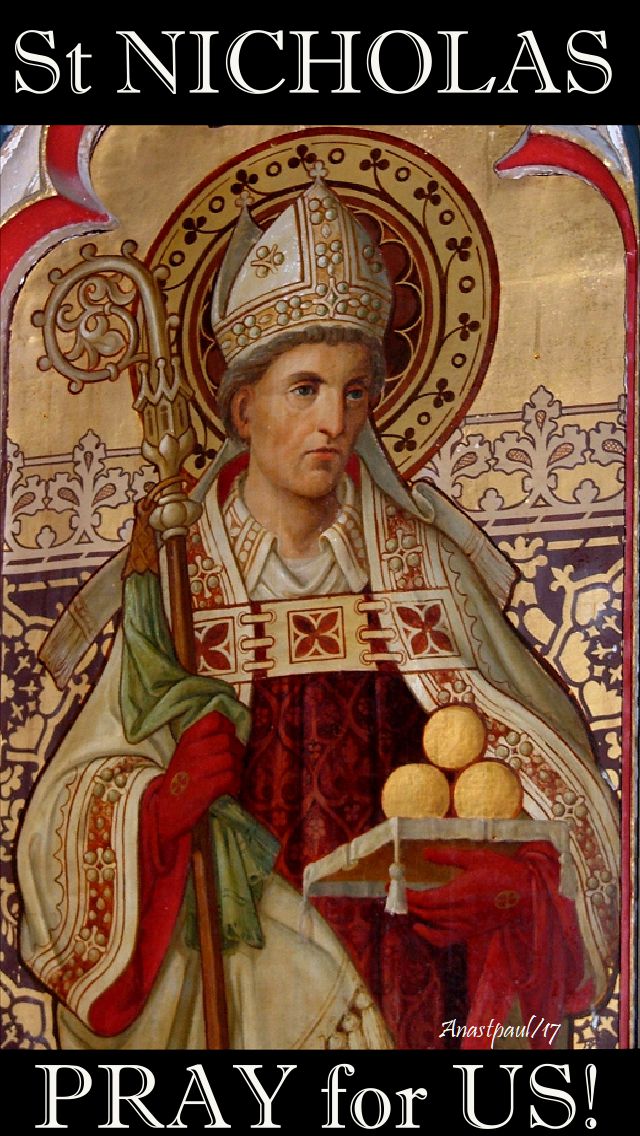
St Nichole
St Nuño de Santa Maria Alvares Pereira
St Pabiali of Wales
St Pere Josep Almató Ribera Auras
St Peter Absalon
Bl Peter Paul Navarra
Bl Petrus Onizuka Sadayu
St Rachel the Matriarch
St Ruth the Matriarch
St Salaun of Leseven
St Severinus of Tivoli
Bl Teodor Jurij Romza
St Valentin Faustino Berri Ochoa
St Vigor of Bayeux

Posted in SAINT of the DAY

Saints of the Day – 25 October – St Crispin & Crispian – Martyrs

Saints of the Day – 25 October – St Crispin & Crispian – Martyrs – tortured and beheaded c 286 at Rome, Italy in the reign of Diocletian.   Patronages – cobblers;  curriers;  glove makers;  lace makers;  lace workers;  leather workers;  saddle makers;  saddlers; shoemakers;  tanners;  weavers, San Crispin, San Pablo City, Philippines.   Attributes -depicted holding shoes.

st-crispin-crispinian

Born to a noble Roman family in the 3rd century AD, Saints Crispin and Crispinian fled persecution for their faith, ending up at Soissons, where they preached Christianity to the Gauls whilst making shoes by night.   While it is stated that they were twin brothers, that has not been positively proved.

They earned enough by their trade to support themselves and also to aid the poor.   Their success attracted the ire of Rictus Varus, governor of Belgic Gaul, who had them tortured and thrown into the river with millstones around their necks.   Though they survived, they were beheaded by the Emperor c 285-286.

An alternative account gives them to be sons of a noble Romano-Briton family who lived in Canterbury, following their father’s murder for displeasing the Roman Emperor.   As they were approaching maturity their mother sent them to London to seek apprenticeship and to avoid coming to the attention of their father’s killer.   Travelling there, the brothers came across a shoemaker’s workshop at Faversham and decided to travel no further and stayed in Faversham.   This account fails to explain how the brothers came to be venerated and martyred.

The feast day of Saints Crispin and Crispinian is 25 October.   Although this feast was removed from the Roman Catholic Church’s universal liturgical calendar following the Second Vatican Council, the two saints are still commemorated on that day in the most recent edition of the Roman Church’s martyrology.

In the sixth century a stately basilica was erected at Soissons over the graves of these saints and St Eligius, a famous goldsmith, made a costly shrine for the head of St. Crispinian.

Saint Crispin is often associated with the Battle of Agincourt since the battle was fought on his feastday.   It has been immortalised by Shakespeare’s St Crispin’s Day Speech from his play Henry V.   Also, for the Midsummer’s Day Festival in the third act of Die Meistersinger, Wagner has the shoemakers’ guild enter singing a song of praise to St Crispin.

A plaque at Faversham commemorates their association with the town.   They are also commemorated in the name of the old pub “Crispin and Crispianus” at Strood.

Posted in SAINT of the DAY

Memorials of the Saints – 25 October

Dedication of all Churches where the Consecration Date is Unknown

St Alfons Arimany Ferrer
St Canna verch Tewdr Marw
St Chrysanthus
St Crispin and Crispian
St Cyrinus of Rome
St Daria
St Dulcardus
Bl Edmund Daniel
St Engratia of Segovia
St Francis Serrano
St Fronto of Périgueux
St Fructus of Segovia
St Gaudentius of Brescia
St George of Périgueux
St Goeznoveus of Leon
St Guesnoveus
Bl Henry of Segusio
St Hilary of Mende
St Hildemarca of Fecamp
St Januarius of Sassari
St Lucius of Rome
St Lupus of Bayeux
St Marciano of Constantinople
St Mark of Rome
St Martirio of Constantinople
St Miniato of Florence
St Peter of Rome
St Protus of Sassari
St Recaredo Centelles Abad
St Tabitha
Bl Thaddeus McCarthy
St Theodosius of Rome
St Valentine of Segovia

Martyrs of Cruz Cubierta – 5 beati: A mother, Blessed María Teresa Ferragud Roig de Masiá, and her four daughters, Blessed María Joaquina Masiá Ferragud, Blessed María Vicenta Masiá Ferragud, Blessed María Felicidad Masiá Ferragud and Blessed Josefa Ramona Masiá Ferragud, all nuns, who were Martyred in the Spanish Civil War. They were martyred on 25 October 1936 in Cruz Cubierta, Alzira, Valencia, Spain and Beatified on 11 March 2001 by St Pope John Paul II.

Martyrs of England and Wales – 40 saints: Following the dispute between the Pope and King Henry VIII in the 16th century, faith questions in the British Isles became entangled with political questions, with both often being settled by torture and murder of loyal Catholics. In 1970, the Vatican selected 40 martyrs, men and women, lay and religious, to represent the full group of perhaps 300 known to have died for their faith and allegiance to the Church between 1535 and 1679. They each have their own day of memorial, but are remembered as a group on 25 October. They were Canonised on 25 October 1970 by Blessed Pope Paul VI.

Martyrs of Rome – 67 saints: A group of 46 soldiers and 21 civilians martyred together in the persecutions of Claudius II. 269 in Rome, Italy.

Martyred in the Spanish Civil War:
• Blessed Alfons Arimany Ferrer
• Blessed Recaredo Centelles Abad

Posted in MORNING Prayers, SAINT of the DAY

Thought for the Day – 24 October – The Memorial of St Luigi Guanella (1842-1915)

Thought for the Day – 24 October – The Memorial of St Luigi Guanella (1842-1915)

The human and spiritual testimony of St Luigi Guanella is a special gift of grace for the whole Church.   During his earthly life he lived with courage and determination the Gospel of Love and the “great commandment”, which today too, the Word of God has recalled.   Thanks to the profound and continuing union with Christ, in the contemplation of his love, Don Guanella, led by Divine Providence, became a companion and teacher, comfort and support to the poorest and weakest.   The love of God aroused in him the desire for the good of the people who were entrusted to him in the routine of daily life.   He paid caring attention to each one and respected the pace of their development.   He cultivated the hope in his heart that every human being, created in the image and likeness of God, by tasting the joy of being loved by him — Father of all — can receive and give to others the best of himself.

Today, let us praise and thank the Lord, who gave us a prophet and an apostle of love in St Luigi Guanella.   In his testimony, so full of humanity and attention to the least, we recognise a bright sign of the presence and charitable action of God, the God — as we heard in the First Reading — who defends the stranger, the widow, the orphan, the poor person obliged to give his garment in pledge… his only covering for the night (cf. Ex 22:20-26).

May this new Saint of love be for everyone, especially for the members of the Congregations founded by him, a model of profound and fruitful synthesis between contemplation and action that he himself lived and put into practice.   We can summarise his whole human and spiritual life in his last words on his death-bed:  “in caritate Christi” “in Christ’s charity.”.   It is Christ’s love that illumines the life of every person, revealing through the gift of himself to others that nothing is lost but is fully realized for our happiness.   May St Luigi Guanella obtain that we may grow in friendship with the Lord to be bearers of the fullness of God’s love in our time, to promote life in all of its forms and conditions and to ensure that human society increasingly become the family of God’s children…… HOMILY OF HIS HOLINESS BENEDICT XVI – Saint Peter’s Square, Canonisation of St Luigi Guanella, Sunday, 23 October 2011

St Luigi Guanella, Pray for us!st luigi guanella - pray for us.2

Posted in MORNING Prayers, QUOTES of the SAINTS, SAINT of the DAY, The BLESSED VIRGIN MARY, The HOLY CROSS, The HOLY EUCHARIST / The HOLY MASS
Quote/s of the Day – 24 October – The Memorials of St Anthony Mary Claret (1807-1870) and St Luigi Guanella (1842-1915)

Quote/s of the Day – 24 October – The Memorials of St Anthony Mary Claret (1807-1870) and St Luigi Guanella (1842-1915)

“Although the sinner does not believe in Hell,
he shall nevertheless go there,
if he has the misfortune to die in mortal sin.”

“Christian perfection
consists in three things:
praying heroically
working heroically
and suffering heroically.”

“The Christian who desires to follow Jesus
carrying His cross must bear in mind,
that the name “Christian” means
“learner or imitator of Christ”
and that if he wishes to bear that noble title worthily,
he must above all do as Christ charges us in the Gospel –
we must oppose or deny ourselves,
take up the cross
and follow Him.”althought the sinner - st anthony mary claret - 24 oct 2017

“When I am before the Blessed Sacrament.
I feel such a lively faith that I can’t describe it.
Christ in the Eucharist is almost tangible to me…
When it is time for me to leave,
I have to tear myself away
from His sacred presence.”when I am before - st anthony mary claret - 24 oct 2017

“Lord, by the words of consecration,
the substance of the bread and wine is converted
into the substance of your Body and Blood.
All powerful Lord, say over me the word
which will change me into You.”

St Anthony Mary Claret (1807-1870) lord by the words - st anthony mary claret 24 oct 2017

“The sun of our lives is the Eucharist.
…Live each day with the Eucharistic Christ.”

“Plant your heart in Jesus Crucified
and all the thorns will seem like roses.”the sun of our lives - st luigi guanella - 24 oct 2017

“Whoever finds Mary,
finds the way to Salvation.”

…Run, run to Mary, our dearest Mother.
Cling to her all-powerful arm.
Take shelter beneath her mantle,
invoke her with all your heart
and she will come full of compassion,
to sustain your wavering strength.”

St Luigi Guanella (1842-1915)whoeverfindsa mary - st luigi guanella - 24 oct 2017

Posted in MORNING Prayers, QUOTES of the SAINTS, SAINT of the DAY, The WORD

One Minute Reflection – 24 October – The Memorial of St Luigi Guanella (1842-1915)

One Minute Reflection – 24 October – The Memorial of St Luigi Guanella (1842-1915)

For the Son of Man will come with his angels in his Father’s glory
and then he will repay everyone according to his conduct...Matthew 16:27

REFLECTION – “There is need of living well but there is even more need of dying well. A good death is everything, especially today where people think only of things and enjoyment here on earth, rejecting eternity.” … St Luigi Guanella (1842-1915)there is need of living well - st luigi guanella - 24 oct 2017

PRAYER – Heavenly Father, help me to keep my death constantly before my eyes, for this is my final account. I pray You for a holy life that my death may be holy and that I may come to You and live for all eternity with You. When my hour is come, bid me come to You, Lord. St Luigi Guanella, you lived each moment of your life for the glory of the Kingdom, please pray for us, amen.st luigi guanella - pray for us

Posted in SAINT of the DAY

Saint of the Day – 24 October – St Anthony Mary Claret (1807-1870) CMF

Saint of the Day – 24 October – St Anthony Mary Claret (1807-1870) CMF – Archbishop, Missionary, Founder, Confessor, Mystic, Social Reformer, Queen’s Chaplain, Spiritual Director, Writer, Publisher, Preacher, Apostle of Charity.  Known as “the Spiritual Father of Cuba”. He founded the Congregation of Missionary Sons of the Immaculate Heart of Mary, commonly called the Claretians.  Born Antonio María Claret y Clarà on 23 December 1807 at Sallent, Catalonia, Spain and Died on 24 October 1870 in a Cistercian monastery at Fontfroide, Narbonne, France.   Patronages – Textile merchants, weavers, savings (taught the poor the importance of savings), Catholic press, Claretians, Dioceses of the Canary Islands, Claretian students, Claretian educators and Claretian educational institutions and foundations.  Attributes – Bishop’s robe, crozier, an open book, catechism, 2 students beside him at his side and having his bent arm pointing to the heavens.

st anthony mary claret

Childhood:  St Anthony Mary Claret was born in Catalonia, the northeastern corner of Spain, in a town called Sallent on 23 December 1807.   He was the fifth son of Juan Claret and Josefa Clará’s eleven children.   His father owned a small textile factory but was not rich. Anthony grew up in a Christian environment and at a very early age had a strong sense of the eternal life that Christ wanted all men and women to enjoy.   He wanted to spare sinners eternal unhappiness and felt moved to work for their salvation.   When he was about eleven years old, a bishop visited his school and asked him what he wanted to be when he grew up. Without hesitation he responded: “A priest.”

Weaver:  As soon as Anthony was old enough, he began working as an apprentice weaver.   When he turned 17, his father sent him to Barcelona to study the latest techniques in textile manufacturing and to work in the large textile mills.   He did so well in the textile design school that he began receiving offers from large textile companies. Even though he had the talent to succeed, he turned down the offers and returned home after experiencing the emptiness of worldly achievements.

Vocation:  The words of the Gospel kept resounding in his heart: “what good is it for man to win the world if he loses his soul?”   He began to study Latin to prepare to enter the Seminary.   He wanted to be a Carthusian Monk.   His father was ready to accept the will of God but preferred to see him become a diocesan priest.   Anthony decided to enter the local diocesan seminary in the city of Vic.   He was 21 years old. After a year of studies, he decided to pursue his monastic vocation and left for a nearby monastery.   On the way there, he was caught in a big storm.   He realised that his health was not the best and withdrew from his decision to go to the monastery.

He was ordained a priest at 27 years of age and was assigned to his hometown parish. The town soon became too small for his missionary zeal and the political situation -hostile to the Church- limited his apostolic activity.   He decided to go to Rome to offer himself to serve in foreign missions.   Things did not work out as expected and he decided to join the Jesuits to pursue his missionary dream.   While in the Jesuit Novitiate, he developed a strange illness, which led his superiors to think that God might have other plans for him.   Once again, he had to return home to keep searching for God’s will in his life.

“Apostolic Missionary” in Catalonia and Canary Islands:  Back in a parish of Catalonia, Claret began preaching popular missions all over.   He traveled on foot, attracting large crowds with his sermons.   Some days he preached up to seven sermons in a day and spent 10 hours listening to confessions.   He dedicated to Mary all his apostolic efforts. He felt forged as an apostle and sent to preach by Mary.claret2-3

The secret of his missionary success was LOVE. In his words: “Love is the most necessary of all virtues.   Love in the person who preaches the word of God is like fire in a musket.   If a person were to throw a bullet with his hands, he would hardly make a dent in anything;  but if the person takes the same bullet and ignites some gunpowder behind it, it can kill.   It is much the same with the word of God.   If it is spoken by someone who is filled with the fire of charity- the fire of love of God and neighbour- it will work wonders.” (Autobiography #438-439).

His popularity spread- people sought him for spiritual and physical help.   By the end of 1842, the Pope gave him the title of “apostolic missionary.”   Aware of the power of the press, in 1847, he organised with other priests a Religious Press.   Claret began writing books and pamphlets, making the message of God accessible to all social groups.   The increasing political restlessness in Spain continued to endanger his life and curtail his apostolic activities.   So, he accepted an offer to preach in the Canary Islands, where he spent 14 months.   In spite of his great success there too, he decided to return to Spain to carry out one of his dreams: the organization of an order of missionaries to share in his work.

Founder and Archbishop of Cuba:  On July 16, 1849, he gathered a group of priests who shared his dream   This is the beginning of the Missionary Sons of the Immaculate Heart of Mary, today also known as Claretian Fathers and Brothers.   Days later, he received a new assignment:  he was named Archbishop of Santiago de Cuba.   He was forced to leave the newly founded community to respond to the call of God in the New World. After two months of travel, he reached the Island of Cuba and began his episcopal ministry by dedicating it to Mary.   He visited the church where the image of Our Lady of Charity, patroness of Cuba was venerated.   Soon he realized the urgent need for human and Christian formation, specially among the poor.  He called Antonia Paris to begin there the religious community they had agreed to found back in Spain.   He was concerned for all aspects of human development and applied his great creativity to improve the conditions of the people under his pastoral care.AA new foundation

st antony in cuba

Among his great initiatives were:  trade or vocational schools for disadvantaged children and credit unions for the use of the poor.   He wrote books about rural spirituality and agricultural methods, which he himself tested first.   He visited jails and hospitals, defended the oppressed and denounced racism.   The expected reaction came soon.   He began to experience persecution and finally when preaching in the city of Holguín, a man stabbed him on the cheek in an attempt to kill him.   For Claret this was a great cause of joy.  He writes in his Autobiography:  “I can´t describe the pleasure, delight, and joy I felt in my soul on realising that I had reached the long desired goal of shedding my blood for the love of Jesus and Mary and of sealing the truths of the gospel with the very blood of my veins.” (Aut. # 577).   During his 6 years in Cuba he visited the extensive Archdiocese three times…town by town.   In the first years, records show, he confirmed 100,000 people and performed 9,000 sacramental marriages.

Confessor to the Queen of Spain:  Claret was called back to Spain in 1857 to serve as confessor to the Queen of Spain, Isabella II.   He had a natural dislike for aristocratic life. He loved poverty and the simplest lifestyle.  He accepted in obedience but requested to be allowed to continue some missionary work.   Whenever he had to travel with the Queen, he used the opportunity to preach in different towns throughout Spain.   In a time where the Queens and Kings chose the bishops for vacant dioceses, Claret played an important role in the selection of holy and dedicated bishops for Spain and its colonies.
The eleven years he spent as confessor to the Queen of Spain were particularly painful, because the enemies of the Church directed toward him all kinds of slanders and personal ridicule.   In 1868 a new revolution dethroned the Queen and sent her with her family into exile.   Claret’s life was also in danger, so he accompanied her to France.   This gave him the opportunity to preach the Gospel in Paris.   He stayed with them for a while, then went to Rome where he was received by Pope Pius IX in a private audience.

First Vatican Council:  On December 8, 1869, seven hundred bishops from all over the world gathered in Rome for the First Vatican Council.   Claret was one of the Council Fathers.   His presence became noticeable when the subject of papal infallibility was discussed, which Claret defended vehemently.   This teaching became a dogma of faith for all Catholics at this Council.   The Italian revolution interrupted the process of the Council, which was never concluded.   Claret’s health deteriorated, so he returned to France accompanied by the Superior General of the Sons of the Immaculate Heart of Mary, his congregation.

Last Days in Exile:  In France, Claret joined his missionaries who were also in exile. Soon he found out, that there was a warrant for his arrest.   He decided to go into hiding in a Cistercian Monastery in the French southern town of Fontfroide.   There he died on 24October 1870 at the age of 62.   As his last request, he dictated to his missionaries the words that are to appear on his tombstone: “I have loved justice and hated iniquity; therefore I die in exile.”   His zealous life and the wonders he wrought, both before and after his death, testified to his sanctity.   Information was sought in 1887 and he was declared venerable by Pope Leo XIII in 1899.   His relics were transferred to the mission house at Vic in 1897, at which time his heart was found incorrupt.   His grave is visited by many pilgrims.  Claret was beatified in 1934 and in 1950 canonised by Pope Pius XII.

 
Posted in franciscan OFM, MORNING Prayers, SAINT of the DAY

Thought for the Day – 23 October – The Memorial of St John of Capistrano (1386-1456)

Thought for the Day – 23 October – The Memorial of St John of Capistrano (1386-1456)

John was a Franciscan friar and priest, but not of the good-natured variety of Franciscans that holds the popular imagination.   To describe John as zealous would be an understatement.   He walked the fine line between zeal and fanaticism, allowing God to write straight with the crooked lines he drew throughout his life.   Some might wonder why such a man is even a saint but he is, and the lesson in that might be that being a saint is about more than just being nice and friendly.   Sanctity is an uncanny quality that can be as off-putting as it is attractive.

We might be “put off” by a saint like John Capistrano.  Perhaps the lesson there is that if he made it, there is hope for us all.

John Hofer, a biographer of John Capistrano, recalls a Brussels organization named after the saint.   Seeking to solve life problems in a fully Christian spirit, its motto was: “Initiative, Organisation, Activity.”   These three words characterised John’s life.   He was not one to sit around.   His deep Christian optimism drove him to battle problems at all levels with the confidence engendered by a deep faith in Christ.

We are not Christians because we build and maintain institutions.   We are Christians because people experience in us an invitation to know Jesus Christ and find in His Church the reality of His divine life and presence.

St John of Capistrano, pray for us!st john of capistrano pray for us 2 - 23 oct 2017

Posted in franciscan OFM, MORNING Prayers, QUOTES of the SAINTS, SAINT of the DAY

Quote of the Day – 23 October – The Memorial of St John of Capistrano (1386-1456)

Quote of the Day – 23 October – The Memorial of St John of Capistrano (1386-1456)

Those who are called to the table of the Lord
must glow with the brightness that comes from
the good example of a praiseworthy and blameless life.
They must learn from the eminent teacher, Jesus Christ. .
“You are the light of the world” (see Matthew 5:14).
Now a light does not illumine itself but instead it diffuses
its rays and shines all around upon everything that comes
into its view..

St John of Capistranothose who are called - st john of capistrano - 23 oct 2017

Posted in franciscan OFM, MORNING Prayers, SAINT of the DAY, The WORD

One Minute Reflection – 23 October – The Memorial of St John of Capistrano (1386-1456)

One Minute Reflection – 23 October – The Memorial of St John of Capistrano (1386-1456)

You are the salt of the earth.……Matthew 5:13

REFLECTION – Remove from your lives the filth and uncleanness of vice.
Your upright lives must make you the salt of the earth for yourselves
and for the rest of humankind…….St John of Capistranoremove from your lives - st john of capistrano - 23 oct 2017

PRAYER – Heavenly Father, enable me both to practice and to preach Your Message to all those I meet.   Grant that – in accord with Your Son’s mandate – I may be the salt of the earth.   St John of Capistrano, you lived a zealous life endlessly becoming “salt” to all.
Please pray for us that we may grow in zeal to glorify the Kingdom by our lives! Amenst john pray for us - 23 oct 2017

Posted in franciscan OFM, Of LAWYERS & CANON Lawyers, Attorneys, Solicitors, Barristers, Notaries, Para-Legals, SAINT of the DAY

Saint of the Day – 23 October – St John Capistrano OFM (1386-1456) – ‘the Soldier Saint’

Saint of the Day – 23 October – St John Capistrano OFM (1386-1456) Priest and Friar of the Friars Minor, Confessor and Preacher.   Famous as a Preacher, Theologian and Inquisitor, trained Lawyer, he earned himself the nickname the Soldier Saint’ when, in 1456 at age 70 he led a Crusade against the invading Ottoman Empire at the Siege of Belgrade with the Hungarian Military Commander, John Hunyadi, called the Athleta Christi (“Christ’s Champion”) by Pope Pius II.   Born in 1386 at Capistrano, Italy – 23 October 1456 at Villach, Hungary of natural causes.   He was Beatified on 19 December 1650 by Pope Innocent X and Canonised on 16 October 1690 by Pope Alexander VIII.   Patronages – judges, jurists
• lawyers • military chaplains • military ordinariate of the Philippines • Hungary and Belgrade, Serbia.     He was buried in Ilok, Croatia.

400px-Ilok_church
St John of Capistrano Church in Ilok, Croatia
ST JOHN OF CAPISTRANO 1.

As was the custom of this time, John is denoted by the village of Capestrano, in the Diocese of Sulmona, in the Abruzzi region, Kingdom of Naples.   He studied law at the University of Perugia. In 1412, King Ladislaus of Naples appointed him Governor of Perugia.   When war broke out between Perugia and the Malatestas in 1416, John was sent as ambassador to broker a peace but Malatesta threw him in prison.   It was during this imprisonment that he began to think more seriously about his soul.   He decided eventually to give up the world and become a Franciscan Friar, owing to a dream he had in which he saw St Francis and was warned by the saint to enter the Franciscan Order. Having never consummated the marriage, he asked and received permission from his wife to annul the marriage and started studying theology with St Bernardine of Siena.

Together with St James of the Marches, John entered the Order of Friars Minor at Perugia on 4 October 1416.   At once he gave himself up to the most rigorous asceticism, violently defending the ideal of strict observance and orthodoxy, following the example set by Bernardine.   From 1420 onwards, he preached with great effect in numerous cities and eventually became well known.capistrano

Unlike most Italian preachers of repentance in the 15th century, John was effective in northern and central Europe – in German states of Holy Roman Empire, Bohemia, Moravia, Austria, Hungary, Croatia and Kingdom of Poland.   The largest churches could not hold the crowds, so he preached in the public squares—at Brescia in Italy, he preached to a crowd of 126,000.

When he was not preaching, John was writing tracts against heresy of every kind.   This facet of his life is covered in great detail by his early biographers, Nicholas of Fara, Christopher of Varese and Girlamo of Udine. While he was thus evangelising, he was actively engaged in assisting Bernardine of Siena in the reform of the Franciscan Order, largely in the interests of a more rigorous discipline in the Franciscan communities. Like Bernardine, he strongly emphasised devotion to the Holy Name of Jesus and, together with that saint, was accused of heresy on this account.   In 1429, these Observant friars were called to Rome to answer charges of heresy and John was chosen by his companions to speak for them.   They were both acquitted by the Commission of Cardinals appointed to judge the accusations.

John, in spite of this restless life, found time to work—both during the lifetime of his mentor, Bernardine and afterwards—on the reform of the Order of Friars Minor.   He also upheld, in his writings, speeches and sermons, theories of papal supremacy rather than the theological wranglings of councils (see Conciliar Movement).   John, together with his teacher, Bernardine, his colleague, James of the Marche, and Blessed Albert Berdini of Sarteano, are considered the four great pillars of the Observant reform among the Friars Minor.

After the Fall of Constantinople in 1453, the Ottoman Empire, under Sultan Mehmed II, threatened Christian Europe.   That following year Pope Callixtus III sent John, who was already aged seventy, to preach a Crusade against the invading Turks at the Imperial Diet of Frankfurt.   Gaining little response in Bavaria and Austria, he decided to concentrate his efforts in Hungary.   John succeeded in gathering together enough troops to march onto Belgrade, which at that time was under siege by Turkish forces.   In the summer of 1456, these troops, together with John Hunyadi, managed to raise the siege of Belgrade; the old and frail friar actually led his own contingent into battle.   This feat earned him the moniker of ‘the Soldier Priest’.

Although he survived the battle, John fell victim to the bubonic plague, which flourished in the unsanitary conditions prevailing among armies of the day.   He died on 23 October 1456 at the nearby town of Ilok, Kingdom of Croatia in personal union with Hungary (now a Croatian border town on the Danube).

Posted in SAINT of the DAY

Memorials of the Saints – 23 October

Feast of the Most Holy Redeemer:  Celebrated in honur of the graces and benefits of the Redemption. It was instituted at Venice, Italy in 1576 in thanksgiving for the cessation of a plague and is now found only in the special calendar of some dioceses and religious orders, the Redemptorists being one of them.

redeemer

St John of Capistrano (1386-1456) (Optional Memorial) – https://www.youtube.com/watch?v=3pkNuVZwB04

St Allucio of Campugliano
Bl Anne-Joseph Leroux
St Amo of Toul
St Arethas of Negran
Bl Arnold Reche
St Benedict of Sebaste
St Clether
St Domitius
St Elfleda
St Ethelfleda
St Gratien of Amiens
St Henry of Cologne
St Ignatius of Constantinople
Bl John Angelo Porro
Bl John Buoni
St John of Syracuse
Oda of Aquitaine
St Phaolô Tong Viet Buong
St Romanus of Rouen
Bl Severinus Boethius
St Severinus of Cologne
Syra of Faremoutiers
St Theodoret of Antioch
Bl Thomas Thwing
St Verus of Salerno

Martyrs of Cadiz – 2 saints
Germanus
Servandus
Martyrs of Hadrianopolis – 2 saints
Dorotheus
Severus
Martyrs of Nicaea – 3 saints
Euerotas
Socrates
Theodota
Martyrs of Valenciennes – 6 beati: A group of Urusuline and Briggittine nuns murdered together in the anti-Christian excesses of the French Revolution. They were guillotined on 23 October 1794 in Valenciennes, Nord, France and Beatified on 13 June 1920 by Pope Benedict XV.
• Anne-Joseph Leroux
• Clotilde-Joseph Paillot
• Jeanne-Louise Barré
• Marie-Augustine Erraux
• Marie-Liévine Lacroix
• Marie-Marguerite-Joseph Leroux

Martyred in the Spanish Civil War including Martyrs of Manzanares (7 beati):
• Agapit Gorgues Manresa
• Agustín Nogal Tobar
• Andrés Navarro Sierra
• César Elexgaray Otazua
• Cristóbal González Carcedo
• Dorinda Sotelo Rodríguez
• Eduardo Valverde Rodríguez
• Felipe Basauri Altube
• José María Fernández Sánchez
• Juan Nuñez Orcajo
• Leonardo Olivera Buera
• Manuel Navarro Martínez
• Roque Guillén Garcés
• Toribia Marticorena Sola

Posted in SAINT of the DAY

Saint of the Day – 22 October – St Pope John Paul II (1920-2005)

Saint of the Day – 22 October – St Pope John Paul II (1920-2005) Pope, Philosopher, Theologian, Writer, Preacher, Professor and Teacher, Apostle of the Holy Eucharist, Eucharistic Adoration, Charity and Mercy.   Patronages – Archdiocese of Kraków, World Youth Day (Co-Patron). World Meeting of Families 2015 (Co-Patron), Young Catholics, Families, Świdnica.   St John Paul was the second longest-serving pope in modern history after Pope Pius IX, who served for nearly 32 years from 1846 to 1878.   Born in Poland, John Paul II was the first non-Italian pope since the Dutch Pope Adrian VI, who served from 1522 to 1523.   John Paul II’s cause for canonisation commenced in 2005 one month after his death with the traditional five-year waiting period waived.   On 19 December 2009, John Paul II was proclaimed Venerable by his successor Pope Benedict XVI and was beatified on 1 May 2011 (Divine Mercy Sunday) after the Congregation for the Causes of Saints attributed one miracle to his intercession, the healing of a French nun from Parkinson’s disease.   A second miracle attributed to John Paul II’s intercession was approved on 2 July 2013 and confirmed by Pope Francis two days later (two miracles must be attributed to a person’s intercession to be declared a saint).   John Paul II was canonised on 27 April 2014 (again Divine Mercy Sunday), together with Pope John XXIII.   On 11 September 2014, Pope Francis added John Paul II’s optional memorial feast day to the worldwide General Roman Calendar of saints, in response to worldwide requests.   It is traditional to celebrate saints’ feast days on the anniversary of their deaths but that of John Paul II (22 October) is celebrated on the anniversary of his papal inauguration.

KAROL JÓZEF WOJTYŁA, elected Pope on 16 October 1978, was
born in Wadowice, Poland, on 18 May 1920.

He was the third of three children born to Karol Wojtyła and Emilia
Kaczorowska, who died in 1929. His elder brother Edmund, a
physician, died in 1932, and his father, Karol, a non-commissioned
officer in the army, died in 1941.

He was nine years old when he received his First Communion and
eighteen when he received the Sacrament of Confirmation.   After
completing high school in Wadowice, he enrolled in the Jagellonian
University of Krakow in 1938.

When the occupying Nazi forces closed the University in 1939,
Karol worked (1940-1944) in a quarry and then in the Solvay
chemical factory to earn a living and to avoid deportation to Germany.

Feeling called to the priesthood, he began his studies in 1942 in
the clandestine major seminary of Krakow, directed by the Archbishop
Adam Stefan Sapieha.   During that time, he was one of the organisers
of the “Rhapsodic Theatre”, which was also clandestine.

After the war, Karol continued his studies in the major seminary,
newly reopened and in the school of theology at the Jagellonian
University, until his priestly ordination in Krakow on 1 November
1946.   Father Wojtyła was then sent by Cardinal Sapieha to Rome,
where he attained a doctorate in theology (1948).   He wrote his
dissertation on faith as understood in the works of Saint John of
the Cross.   While a student in Rome, he spent his vacations
exercising pastoral ministry among Polish emigrants in France,
Belgium and Holland.

In 1948, Father Wojtyła returned to Poland and was appointed a
curate in the parish church of Niegowić, near Krakow, and later at
Saint Florian in the city.   He was a university chaplain until 1951,
when he again undertook studies in philosophy and theology.   In
1953, Father Wojtyła presented a dissertation at the Jagellonian
University of Krakow on the possibility of grounding a Christian
ethic on the ethical system developed by Max Scheler.   Later he
became professor of moral theology and ethics in the major
seminary of Krakow and in the theology faculty of Lublin.

On 4 July 1958, Pope Pius XII appointed Father Wojtyła auxiliary
bishop of Krakow, with the titular see of Ombi.   Archbishop
Eugeniusz Baziak ordained him in Wawel Cathedral (Krakow)
on 28 September 1958.

On 13 January 1964, Pope Paul VI appointed Bishop Wojtyła as
Archbishop of Krakow and subsequently, on 26 June 1967, created
him a Cardinal.

Bishop Wojtyła took part in the Second Vatican Council (1962-
1965) and made a significant contribution to the drafting of the
Constitution Gaudium et Spes.   He also took part in the five assemblies
of the Synod of Bishops prior to the start of his Pontificate.

On 16 October 1978, Cardinal Wojtyła was elected Pope and on 22
October he began his ministry as universal Pastor of the Church.

Pope John Paul II made 146 pastoral visits in Italy and, as the Bishop
of Rome, he visited 317 of the current 322 Roman parishes.   His
international apostolic journeys numbered 104 and were expressions
of the constant pastoral solicitude of the Successor of Peter for
all the Churches.

His principal documents include 14 Encyclicals, 15 Apostolic
Exhortations, 11 Apostolic Constitutions and 45 Apostolic Letters.
He also wrote five books:   Crossing the Threshold of Hope (October
1994); Gift and Mystery:   On the Fiftieth Anniversary of My Priestly
Ordination 
(November 1996);   Roman Triptych, meditations in
poetry 
(March 2003);   Rise, Let Us Be on Our Way (May 2004)
and Memory and Identity (February 2005).

Pope John Paul II celebrated 147 beatifications, during which he
proclaimed 1,338 blesseds and 51 canonisations, for a total of 482
saints.   He called 9 consistories, in which he created 231 Cardinals
(plus one in pectore).   He also presided at 6 plenary meetings of the
College of Cardinals.

From 1978, Pope John Paul II convoked 15 assemblies of the Synod
of Bishops: 6 ordinary general sessions (1980, 1983, 1987, 1990,
1994 and 2001), 1 extraordinary general session (1985) and 8
special sessions (1980, 1991,1994,1995,1997,1998 (2) and 1999).

On 3 May 1981, an attempt was made on Pope John Paul II’s life
in Saint Peter’s Square.   Saved by the maternal hand of the Mother
of God, following a lengthy stay in the hospital, he forgave the
attempted assassin and, aware of having received a great gift,
intensified his pastoral commitments with heroic generosity.

Pope John Paul II also demonstrated his pastoral concern by
erecting numerous dioceses and ecclesiastical circumscriptions,
and by promulgating Codes of Canon Law for the Latin and the
Oriental Churches, as well as the Catechism of the Catholic Church.
He proclaimed the Year of Redemption, the Marian Year and the
Year of the Eucharist as well as the Great Jubilee Year of 2000,
in order to provide the People of God with particularly intense spiritual
experiences. He also attracted young people by beginning the
celebration of World Youth Day.WYD 2YOUTH GATHER IN CZESTOCHOWA FOR WORLD YOUTH DAY

No other Pope met as many people as Pope John Paul II. More
than 17.6 million pilgrims attended his Wednesday General Audiences
(which numbered over 1,160). This does not include any of
the other special audiences and religious ceremonies (more than 8
million pilgrims in the Great Jubilee Year of 2000 alone). He met
millions of the faithful in the course of his pastoral visits in Italy
and throughout the world. He also received numerous government
officials in audience, including 38 official visits and 738 audiences
and meetings with Heads of State, as well as 246 audiences and
meetings with Prime Ministers.

Pope John Paul II died in the Apostolic Palace at 9:37 p.m. on
Saturday, 2 April 2005, the vigil of Sunday in albis or Divine Mercy
Sunday, which he had instituted. On 8 April, his solemn funeral
was celebrated in Saint Peter’s Square and he was buried in the
crypt of Saint Peter’s Basilica.


John Paul II was beatified in Saint Peter’s Square on 1 May 2011 by
Pope Benedict XVI, his immediate successor and for many years
his valued collaborator as Prefect for the Congregation for the
Doctrine of the Faith and canonised on 27 April 2014, together
with Pope John XXIII, by Pope Francis.0005260_tu-es-petrus-le-chiavi-del-regno-da-giovanni-paolo-ii-a-benedetto-xvi-1-x-60-minpope benedict holds a new portraitCanonisation 1.canonisation 2.canonisation 3.

Booklet for the Celebration of the Canonization of Blesseds John XXIII and John Paul II, 27 April 2014 from the Vatican

Posted in MARIAN PRAYERS, MARIAN QUOTES, MORNING Prayers, QUOTES of the SAINTS, SAINT of the DAY

Thought for the Day – 22 October – The Memorial of St Pope John Paul II (1920-2005)

Thought for the Day – 22 October – The Memorial of St Pope John Paul II (1920-2005)

Before John Paul II’s funeral Mass in St Peter’s Square, hundreds of thousands of people had waited patiently for a brief moment to pray before his body, which lay in state inside St Peter’s for several days.   The media coverage of his funeral was unprecedented.

Presiding at the funeral Mass, Cardinal Joseph Ratzinger–then dean of the College of Cardinals and later Pope Benedict XVI–concluded his homily by saying:  “None of us can ever forget how, in that last Easter Sunday of his life, the Holy Father, marked by suffering, came once more to the window of the Apostolic Palace and one last time gave his blessing urbi et orbi (‘to the city and to the world’).

“We can be sure that our beloved pope is standing today at the window of the Father’s house, that sees us and blesses us.   Yes, bless us, Holy Father.   We entrust your dear soul to the Mother of God, your Mother, who guided you each day and who will guide you now to the glory of her Son, our Lord Jesus Christ. Amen.”

Mary, Mother of God, Pray for us!mary mother of god pray for us
St John Paul, ‘Witness to Hope’ – Pray for us!st jp pray for us.2

“Christ is the center of the universe and of human history” was the opening line of John Paul II’s 1979 encyclical, Redeemer of the Human Race. In 1995, he described himself to the United Nations General Assembly as “a witness to hope.”

Posted in MORNING Prayers, QUOTES of the SAINTS, SAINT of the DAY

Quote/s of the Day – 22 October – The Memorial of St Pope John Paul II (1920-2005)

Quote/s of the Day – 22 October – The Memorial of St Pope John Paul II (1920-2005)

“The cemetery of the victims of human cruelty
in our century is extended to include
yet another vast cemetery,
that of the unborn.”the cemetery-st jop - 22 oct 2017

“The ultimate test of your greatness
is the way you treat every human being.”

“Nobody is so poor he has nothing to give
and nobody is so rich he has nothing to receive.”

“It’s better to cry than be angry
because anger hurts others,
while tears flow silently through the soul
and cleans the heart.”the ultimate test - st jp - 22 oct 2017

“If you want peace, work for justice.
If you want justice, defend life.
If you want life, embrace truth.”if you want peace - st jp - 22 oct 2017

“Darkness can only be scattered by light,
hatred can only be conquered by love.”darkness - st jp - 22 oct 2017

“In this silence of the white Host,
carried in the Monstrance, are all His words;
there is His whole life given in offering to the Father
for each of us;
there is also the glory of the glorified body,
which started with the Resurrection
and still continues in Heavenly union.”

St Pope John Paul II (1920-2005)in this silence of the white host - st jp - 22 oct 2017

Posted in PAPAL ENCYLICALS, SAINT of the DAY, The WORD

One Minute Reflection – 22 October – The Memorial of St Pope John Paul II (1920-2005)

One Minute Reflection – 22 October – The Memorial of St Pope John Paul II (1920-2005)

Victory to our God, who sits on the throne and to the Lamb!“…Revelations 7:10

REFLECTION – “Not only the devil is involved in spiritual warfare but the Holy Spirit is equally involved, or more involved in it,
bringing men and women of goodwill the ability to overcome evil in their lives, so that they too can say: “Where evil abounded, grace super-abounded!” (Rom 5:20).” …St John Paul (The Holy Spirit (Dominum Et Vivificantem – 1986)not only the devil - st jp - 22 oct 2017

PRAYER – Holy Father, Holy Son, Holy Spirit! Your light will never fail us! By the intercession of St John Paul, grant us the grace to ever call on You, blessed and Holy Trinity, one God who brings us everlasting light and protection here on earth from the evil one. St John Paul, pray for us, amen.st jp pray for us

Posted in MORNING Prayers, PRAYERS of the SAINTS, SAINT of the DAY, The HOLY EUCHARIST / The HOLY MASS

Our Morning Offering – 22 October – The Memorial of St Pope John Paul II (1920-2005)

Our Morning Offering – 22 October – The Memorial of St Pope John Paul II (1920-2005)

Thanksgiving for the Eucharist
By St Pope John Paul II

For our paschal lamb,
Christ, has been sacrificed.
Therefore, let us celebrate the feast!
O Christ the Saviour,
we give You thanks
for Your redeeming sacrifice,
the only hope of men!
O Christ the Saviour,
we give You thanks
for the Eucharistic breaking of bread,
which You instituted,
in order to really meet, Your brothers,
in the course of the centuries!
O Christ the Saviour,
put into the hearts of the baptised,
the desire to offer themselves with You
and to commit themselves,
for the salvation of their brothers!
You who are really present
in the Blessed Sacrament,
spread Your blessings abundantly
on Your people…Amenprayer of thanksgiving for the eucharist - st john paul - 22 oct 2017

Posted in SAINT of the DAY

Memorials of the Saints – 22 October

St Pope John Paul II (Optional Memorial) – https://www.youtube.com/watch?v=gEQKbB5sKKc

St Abericus Marcellus
St Alodia of Huesca
St Apollo of Bawit
St Benedict of Macerac
St Bertharius of Monte Cassino
St Cordula
St Donatus of Fiesoli
Bl Esclaramunda of Majorca
St Hermes of Adrianople
St Ingbert
St Leothade of Auch
St Lupenzius
St Mark of Jerusalem
St Maroveus of Precipiano
St Mellon
St Moderan of Rennes
St Nepotian of Clermont
St Nunctus of Mérida
St Nunilo of Huesca
St Philip of Adrianople
St Philip of Fermo
St Rufus of Egypt
St Symmachus of Capua
St Valerius of Langres
St Verecundus of Verona

Martyrs of Heraclea – 4 saints: A group of four clerics in Heraclea (modern Marmara Ereglisi, Turkey) who were arrested in the persecutions of Diocletian. They were imprisoned, abused and ordered to turn over all the scriptures that they had hidden from authorities; they refused and were executed together. Martyrs. – Eusebius, Hermes, Philip and Severus. They were burned at the stake in 304 in Adrianople (modern Edirne, Turkey).

Martyrs of Adianople:
• Blessed Alexander
• Blessed Anna
• Blessed Elisabeth
• Blessed Glyceria
• Blessed Heraclius
• Blessed Theodota

Martyred in the Spanish Civil War:
• Blessed Álvaro Ibáñez Lázaro
• Blessed Andrés Zarraquino Herrero
• Blessed Estanislao García Obeso
• Blessed Germán Caballero Atienza
• Blessed José Menéndez García
• Blessed Josep Casas Lluch
• Blessed Luis Minguel Ferrer
• Blessed Pedro Lorente Vicente
• Blessed Victoriano Ibañez Alonso

Posted in MORNING Prayers, SAINT of the DAY

Thought for the Day – 21 October – The Memorial of St Hilarion of Gaza (c 291-371)

Thought for the Day – 21 October – The Memorial of St Hilarion of Gaza (c 291-371)

St Hilarion longed for a solitude that continually escaped him, the price of being a pioneer.   But he persisted and finally found the solitary life he was looking for.   We all have to be alone with God sometimes and although we may have trouble doing it, it is worth the effort, time and trouble.

God seeks after those who seek Him and He comes to them!

St Hilarion, pray for us!st hilarion pray for us 2

Posted in DOCTORS of the Church, MORNING Prayers, QUOTES of the SAINTS, SAINT of the DAY, The WORD

One Minute Reflection – 21 October – The Memorial of St Hilarion of Gaza (c 291-371)

One Minute Reflection – 21 October – The Memorial of St Hilarion of Gaza (c 291-371)

Jesus said to his disciples:
“No one who prefers father or mother to me is worthy of me.”…Matthew 10:37

REFLECTION – To believe in God – for Christians, does not simply mean to believe that God exists, nor merely to believe that He is true.
It means to believe by loving, to believe by abandoning oneself to God, uniting and conforming oneself to Him.”… St Anthony of Padua (1195-1231) Doctor of the Churchto believe in God - st anthony of padua

PRAYER – Holy Father, grant me an operative faith, a faith that will move mountains. Englighten my soul with Your Light, Goodness, Power and Wisdom. Let my faith be an image of You by lively deeds and love and by conforming myself to Your Will in all things. St Hilarion from such a young age you searched for complete closeness and abandonment to God, please pray that we may manifest such a true faith, amen.st hilarion pray for us

Posted in DOCTORS of the Church, FATHERS of the Church, QUOTES of the SAINTS, SAINT of the DAY

Saint of the Day – 21 October – St Hilarion of Gaza (c 291-371)

Saint of the Day – 21 October – St Hilarion of Gaza (c 291-371) Hermit and Miracle-Worker.

St Hilarion spent most of his life in the desert according to the example of Anthony the Great.

Shortly after St Hilarion’s death, St Jerome wrote about the life of this hermit who had introduced monasticism into Palestine.   Jerome told of Hilarion’s lifelong pursuit of solitude, where he could encounter God in prayer.

Hilarion was born in Thabatha, south of Gaza in Syria Palaestina of pagan parents. He successfully studied rhetoric with a Grammarian in Alexandria.   It seems that he was converted to Christianity in Alexandria.   After that, he shunned the pleasures of his day—theatre, circus and arena—and spent his time attending church.   According to St Jerome, he was a thin and delicate youth of fragile health.

After hearing of Saint Anthony, whose name (according to St.erome), “was in the mouth of all the races of Egypt” Hilarion, at the age of fifteen, went to live with him in the desert for two months.   As Anthony’s hermitage was busy with visitors seeking cures for diseases or demonic affliction, Hilarion returned home along with some monks.   At Thabatha, his parents having died in the meantime, he gave his inheritance to his brothers and the poor and left for the wilderness.Hilarion_the_Great_(Menologion_of_Basil_II)

St Jerome wrote about the divine irony of the fame that denied it to him because his miracles attracted so many people. In this brief excerpt, Jerome describes Hilarion’s faith and a typical miracle:

Once . . . when he was eighteen years old, brigands tried to find him at night.   Either they believed that he had something to steal or they thought he would scorn them if they didn’t intimidate him. . . . From evening till dawn, they hunted in every direction but couldn’t find him.   In the broad daylight, however, they came upon him and apparently as a joke asked him:  “What would you do if robbers attacked you?”   He answered:   “A naked person does not fear robbers.”   “You could be killed.”   “I could,” he said.   “But I am not afraid of robbers because I am ready to die.”   Admiring his faith, they confessed their folly of the night before and their blindness and promised to reform their lives…

A woman of Eleutheropolis, despised by her husband of fifteen years because of her sterility, . . . was the first who dared to intrude upon blessed Hilarion’s solitude.   While he was still unaware of her approach, she suddenly threw herself at his knees saying:  “Forgive my boldness. . . ., he asked her why she had come and why she was weeping.   When he learned the cause of her grief, raising his eyes to heaven, he commanded her to have faith and to believe.   He followed her departure with tears.   When a year had gone by, he saw her with her son.

Like Anthony, Hilarion took only a little food once a day at sunset.   When tempted sexually, he ate even less.  “I’ll see to it, you jackass,” he said, “that you shall not kick.”  He never bathed nor changed his tunic until it wore out.   He said, “It is idle to expect cleanliness in a hair shirt.”   Jerome relates that even though Hilarion suffered extreme dryness of spirit, he persevered in prayer and cured many people of sickness and demon possession.   The parade of petitioners and would-be disciples drove Hilarion to retire to more remote locations.   But they followed him everywhere.   First he visited Anthony’s retreat in Egypt.   Then he withdrew to Sicily, later to Dalmatia and finally to Cyprus. He died there in 371.hilarion monastery

Posted in SAINT of the DAY

Memorials of the Saints – 21 October

St Agatho the Hermit
St Asterius of Périgord
St Asterius of Rome
St Berthold of Parma
St Celina of Meaux
Bl Charles of Austria
St Cilinia
St Condedus
St Domnolus of Pouilly
St Finian Munnu
St Gebizo
Bl Giuseppe Puglisi
Bl Gundisalvus of Lagos
St Hilarion of Gaza
Bl Hilarion of Moglena
St Hugh of Ambronay
Bl Imana of Loss
Bl Iulianus Nakaura
St John of Bridlington
St Laura of Saint Catherine of Siena
St Letizia
St Maurontus of Marseilles
St Malchus of Syria
Bl Peter of Città di Castello
St Petrus Yu Tae-Ch’ol
St Pontius de Clariana
St Raymond of Granada
Bl Sancho of Aragon
Bl Severinus of Bordeaux
Bl Tuda of Lindisfarne
Bl Viator of Lyons
St Wendelin
St William of Granada
St William of Montreal
St Zaira
St Zoticus of Nicomedia

Martyrs of Nicaea – 279 saints:

Martyrs of Nicomedia – 3 saints:
Caius of Nicomedia
Dasius of Nicomedia
Zoticus of Nicomedia

Martyred in the Spanish Civil War:
• Blessed Genaro Fueyo Castañon
• Blessed Isidro Fernández Cordero
• Blessed Segundo Alonso González

Saint Ursula and Companions: Legendary princess, the daughter of a Christian British king and Saint Daria. She travelled Europe in company of either 11 or 11,000 fellow maidens; the 11,000 number probably resulted from a misreading of the term “11M” which indicated 11 Martyrs, but which a copyist took for a Roman numeral. Ursula and her company were tortured to death to get them to renounce their faith, and old paintings of them show many of the women being killed in various painful ways. Namesake for the Ursuline Order, founded for the education of young Catholic girls and women.
There are other saints closely associated with Ursula and her story –
travelling companions who were martyred with her

Antonia of Cologne
Cesarius of Cologne
Cyriacus of Cologne
Daria
Fiolanus of Lucca
Ignatius of Cologne
James of Antioch
Mauritius of Cologne
Pontius of Cologne
Sulpitius of Ravenna
Vincent of Cologne

Travelling companion, but escaped the massacre:
• Cunera

led by a dove to the lost tomb of Ursula:
• Cunibert of Cologne

Posted in MORNING Prayers, PRAYERS for VARIOUS NEEDS, QUOTES of the SAINTS, SAINT of the DAY

Thought for the Day – 20 October – The Memorial of Blesseds Daudi Okelo and Jildo Irwa – Ugandan Martyrs

Thought for the Day – 20 October – The Memorial of Blesseds Daudi Okelo and Jildo Irwa – Ugandan Martyrs

“My thoughts turn first of all to the two young catechists from Uganda, Daudi Okelo and Jildo Irwa.   These two courageous witnesses were no more than boys when, with simplicity and faith, they shed their blood for Christ and his Church.   With youthful enthusiasm for their mission of teaching the faith to their fellow countrymen, they set out in 1918 for northern Uganda.   It was there, as evangelisation was just beginning in that region, that they chose to embrace death rather than abandon the area and forsake their duties as catechists.   Truly, in their lives and witness we can see that they were “beloved by God and chosen by him” (cf. I Thes 1,4).

Daudi and Jildo are today raised to the glory of the altar.   They are given to the entire Christian community as examples of holiness and virtue and as models and intercessors for catechists throughout the world, especially in those places where catechists still suffer for the faith, sometimes facing social marginalisation and even personal danger. May the life and witness of these two dedicated servants of the Gospel inspire many men and women – in Uganda, in Africa and elsewhere – to answer with generosity the call to be a catechist, bringing knowledge of Christ to others and strengthening the faith of those communities that have recently received the Gospel of salvation.”

(Pope John Paul II on World Mission Sunday 20 October 2002)

“These two young catechists are a shining example of fidelity to Christ, commitment to Christian living and selfless dedication to the service of neighbour.   With their hope firmly set on God and with a deep faith in Jesus’ promise to be with them always, they set out to bring the Good News of salvation to their fellow countrymen, fully accepting the difficulties and dangers that they knew awaited them.   May their witness serve to strengthen you as you seek to bear true Christian witness in every aspect of your lives. Through their intercession may the Church be an ever more effective instrument of goodness and peace in Africa and in the world. God bless Uganda.”
(Pope John Paul II to Ugandan visitors – 21 October 2002)

Blesseds Daudi Okelo and Jildo Irwa, Pray for Catechists, pray for us all!bls daudi and jildo pray for us - 20 oct 2017.no2

A Prayer for Catechists

Loving God, Creator of all things,

You call us to be in relationship with You and others.

Thank You for calling me to be a catechist,
for the opportunity to share with others
what You have given to me.

May all those with whom I share the gift of faith
discover how You are present in all things.

May they come to know You, the one true God,
and Jesus Christ, whom Uou have sent.
May the grace of the Holy Spirit guide my heart and lips,
so that I may remain constant in loving and praising You.

May I be a witness to the Gospel and a minister of Your truth.
May all my words and actions reflect Your love.

Amen

CatechistsPrayer_520