Posted in DOCTORS of the Church, FATHERS of the Church, JESUIT SJ, MORNING Prayers, QUOTES of the SAINTS, QUOTES on CHARITY, QUOTES on MERCY, SAINT of the DAY

Quote/s of the Day – 17 November – Mercy/Charity/Love on the Memorial of St Elizabeth of Hungary – Apostle of Charity (1207-1231)

Quote/s of the Day – 17 November – Mercy/Charity/Love on the Memorial of St Elizabeth of Hungary – Apostle of Charity (1207-1231)

“It is better to err by excess of mercy
than by excess of severity. . .
Wilt thou become a Saint?
Be severe to thyself but kind to others.”

“Mercy imitates God and disappoints Satan.”

St John Chrysostom (347-407) Father & Doctor of the Churchmercy imitates god - st john chrysostom - 17 nov 2017

“Two works of mercy set a person free:
Forgive and you will be forgiven
and give and you will receive.”two works of mercy - st augustine - 17 nov 2017

” Love is itself the fulfillment of all our works.
There is the goal;
that is why we run:
we run toward it and once we reach it,
in it we shall find rest.

St Augustine (354-430) Father & Doctor of the Churchlove is itself - st augustine - 17 nov 2017

“Lord, I am in this world to show Your mercy to others…
For my part I will glorify You by making known
how good You are to sinners, that Your mercy is boundless.”

St Claude de la Colombiere S.J. (1641-1682)lord, i am in this world - st claude de la colombiere- 17 nov 2017

Posted in franciscan OFM, MORNING Prayers, QUOTES of the SAINTS, QUOTES on CHARITY, SAINT of the DAY, The WORD

One Minute Reflection – 17 November – The Memorial of St Elizabeth of Hungary (1207-1231)

One Minute Reflection – 17 November – The Memorial of St Elizabeth of Hungary (1207-1231)

Adapt yourselves no longer to the pattern of this present world but let your minds be remade and your whole nature thus transformed…Romans 12:2

REFLECTION – “Extend your mercy towards others, so that there can be no one in need whom you meet without helping. For what hope is there for us if God should withdraw His Mercy from us?”…–St Vincent de Paul (1581-1660)extend your mercy towards others - st elizabeth of hungary - 17 nov 2017

PRAYER – Lord God, as You have taught Your Church that all the commandments are summed up in the love of You and of our neighbour, grant that as we follow St Elizabeth of Hungary in doing works of charity, we may be numbered among the blessed in Your Kingdom. May the prayers of St Elizabeth help us to give constant love and service to the afflicted and the needy. Through our Lord Jesus Christ, in union with You and the Holy Spirit, one God for all eternity. Amenst eliz of hungary pray for us 17 nov 2017

Posted in BREVIARY Prayers, franciscan OFM, HYMNS, MORNING Prayers, PRAYERS of the CHURCH, SAINT of the DAY

Our Morning Offering – 17 November – St Elizabeth of Hungary (1207-1231)

Our Morning Offering – 17 November – St Elizabeth of Hungary (1207-1231)

Blest are the Pure in Heart” – From the Breviary
(A perfect hymn/prayer for the Feast of St Elizabeth of Hungary)

Blest are the pure in heart,
for they shall see our God,
the secret of the Lord is theirs,
their soul is Christ’s abode.

The Lord, who left the heavens,
our life and peace to bring,
to dwell in lowliness with men,
their pattern and their King.

Still to the lowly soul,
He does Himself impart
and for His dwelling and His throne,
chooses the pure in heart.

Lord, we Thy presence seek,
May ours this blessing be:
give us a pure and lowly heart,
a temple fit for Theeblest are the pure in heart - on feast of st elizabeth of hungary - 17 nov 2017

Posted in CHARITABLE SOCIETIES, CHEFS and/or BAKERS, CONFECTIONERS, Of BEGGARS, the POOR, against POVERTY, Of HOSPITALS, NURSES, NURSING ASSOCIATIONS, QUOTES on CHARITY, SAINT of the DAY, WIDOWS and WIDOWERS

Saint of the Day – 17 November – St Elizabeth of Hungary (1207-1231)

Saint of the Day – 17 November – St Elizabeth of Hungary TOSF (1207-1231) Princess, Widow member of the Third Order of the Franciscans, Mother, Apostle of the poor, the sick, the needy..  Also known as St Elizabeth of Thuringia.   Born in 1207 at Presburg, Hungary – 1231 at Marburg, Germany of natural causes.   Her relics, including her skull wearing a gold crown she had worn in life, are preserved at the convent of Saint Elizabeth in Vienna, Austria.   Patronages – hospitals, nurses, bakers, brides, countesses, dying children, exiles, homeless people, lace-makers, widows. all Catholic charities and the Third Order of Saint Francis.   She was Canonised on 27 May 1235 by Pope Gregory IX at Perugia, Italy. HEADER - Marcos da Cruz - st elizabeth

Elizabeth was born in 1207.   Her father was Alexander II, the King of Hungary.   Her marriage was arranged when she was just a child and at age four, she was sent to Thuringia for education and eventual marriage.   When she was 14, she married Louis of Thuringia.   They loved each other deeply.elizabeth-of-hungary-spinning-for-poor-marianne-stokes_1895

Elizabeth went out with loaves of bread to feed those who were poor.   Her husband saw her and took hold of her cape to see what she was carrying. What he saw was roses rather than bread!   Because of this, she is also known as the patroness of bakers.   Louis supported her in all she did to relieve the sufferings of those who were poor or sick.   But Louis’s mother, Sophia, his brother and other members of court resented Elizabeth’s generosity.   She was taunted and mocked by the royal family but deeply loved by the common people.   Louis loved her and defended her.   They had three children.

In 1227, after six years of marriage, Louis went to fight in the Crusades.   He died on the way.   Elizabeth was grief stricken.   Her in-laws accused her of mismanaging the finances of the kingdom, forcing her and her children out of the palace.   For a while, they found refuge only in barns.   Finally, they were taken in by her uncle, the bishop of Bamberg.   When her husband’s friends returned from the Crusades, they helped restore her to her rightful place in the palace.   Elizabeth increased her service to others.   She was 24 when she died.

She was canonised only four years later.   Elizabeth is symbolized by a triple crown—for roles as a member of royalty, as a mother, and as a saint, crowned in heaven. Canonization of St Elisabeth of Hungary in 1235

Elisabeth-Kirche Marburg
Posted in SAINT of the DAY

Memorials of the Saints – 17 November

St Elizabeth of Hungary (Memorial) – https://www.youtube.com/watch?v=g4n0Hbse7io

St Acisclus
St Aignan of Orléans
St Alphaeus of Palestine
St Eugene of Florence
St Eusebio Roldán Vielva
St Florinus of Remüs
St Giacinto Ansalone
St Gregory of Tours
St Gregory Thaumaturgus
St Hilda of Whitby
St Hugh of Lincoln
St Hugh of Noara
St Josefa Gironés Arteta
St Juan de Castillo-Rodriguez
St Laverius
St Lazarus Zographos
St Lorenza Díaz Bolaños
St Namasius of Vienne
Bl Salomea of Galicia
Bl Sébastien-Loup Hunot
St Thomas Hioji Nishi Rokuzaemon
St Victoria of Cordoba
Bl Yosafat Kotsylovsky
St Zacchaeus of Palestine

Jesuit Martyrs of Paraguay – 3 saints

Martyred in the Spanish Civil War:
• Blessed Eusebio Roldán Vielva
• Blessed Josefa Gironés Arteta
• Blessed Lorenza Díaz Bolaños

Posted in EUCHARISTIC Adoration, JESUIT SJ, MORNING Prayers, SAINT of the DAY, The HOLY EUCHARIST / The HOLY MASS

Thought for the Day – 16 November – The Memorial of St Gertrude the Great (1256-1302)

Thought for the Day – 16 November – The Memorial of St Gertrude the Great (1256-1302)

The characteristic of St Gertrude’s piety is her devotion to the Sacred Heart, the symbol of that immense charity which urged the Word to take flesh, to institute the Holy Eucharist, to take on Himself our sins and, dying on the Cross, to offer Himself as a victim and a sacrifice to the Eternal Father.

Faithful to the mission entrusted to them, the superiors of Helfta appointed renowned theologians, chosen from the Dominican and Franciscan friars, to examine the works of the saint.   These approved and commented them throughout.   In the sixteenth century Lanspergius and Blosius propagated her writings.   The former, who with his confrere Loher spared no pains in editing her works, also wrote a preface to them.   The writings were warmly received especially in Spain and among the long list of holy and learned authorities who used and recommended her works may be mentioned :
—St. Teresa, who chose her as her model and guide,—Yepez—the illustrious Suare,—the Discalced Carmelite Friars of France—St Francis de Sales—M. Oliver—Fr Faber—Dom Gueranger.
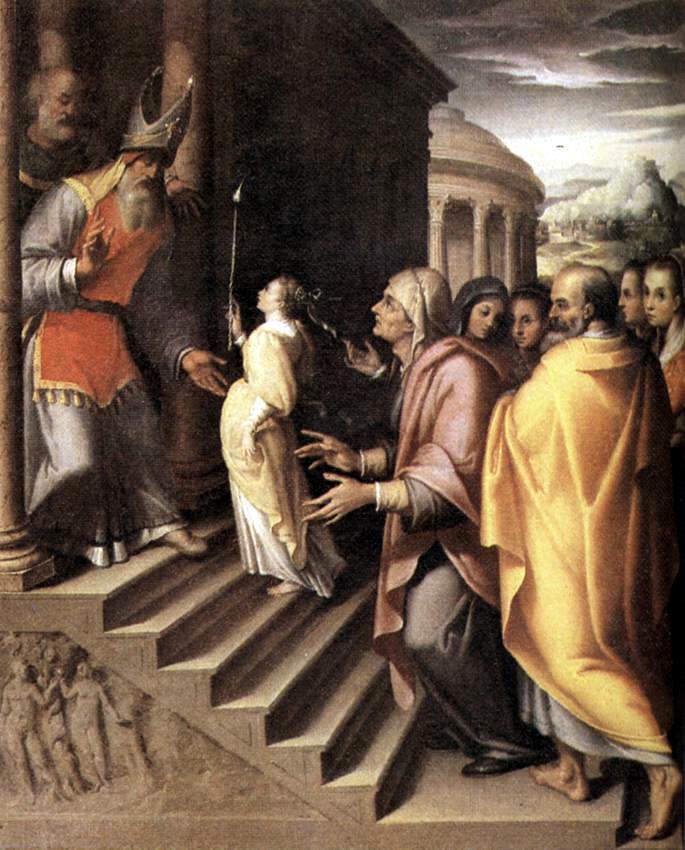
The Church has inserted the name of Gertrude in the Roman Martyrology with this eulogy:  “On the 17th of November, in Germany (the Feast) of St Gertrude Virgin, of the Order of St. Benedict, who was illustrious for the gift of revelations.”

Let us run to the Sacred Heart of Jesus, O Come let us Adore Him!

St Gertrude the Great, Pray for us!st gertrude the great - pray for us no 2 - 16 nov 2017my pic - why is the eucharist the sacred heart - 15 june 2017

Posted in MORNING Prayers, QUOTES of the SAINTS, SACRED and IMMACULATE HEARTS, SAINT of the DAY

Quote/s of the Day – 16 November – The Memorial of St Gertrude the Great (1256-1302)

Quote/s of the Day – 16 November – The Memorial of St Gertrude the Great (1256-1302)


“Let the soul who is desirous
of advancing in perfection
hasten to My Sacred Heart.”

“I understand that, each time
we contemplate with desire
and devotion, the Host in which
is hidden Christ’s Eucharistic Body,
we increase our merits in heaven
and secure special joys to be ours,
later in the beatific vision of God.”

St Gertrude the Great (1256-1302)

i understand that - st gertrude - 16 nov 2017


Posted in MORNING Prayers, QUOTES of the SAINTS, SAINT of the DAY, The WORD

One Minute Reflection – 16 November – The Memorial of St Gertrude the Great (1256-1302)

One Minute Reflection – 16 November – The Memorial of St Gertrude the Great (1256-1302)

My dear friends, do not be taken aback at the testing by fire which is taking place among you, as though something strange were happening to you; but in so far as you share in the sufferings of Christ, be glad, so that you may enjoy a much greater gladness when his glory is revealed….1 Peter 4:12-131 peter 4 - 12-13

REFLECTION – “Bodily and spiritual affliction are the surest sign of Divine predilection. Gratitude for suffering is a precious jewel for our heavenly crown… Man should always firmly believe that God sends just that trial which is most beneficial for him.”…St Gertrude the Greatbodily and spiritual affliction - st gertrude - 16 nov 2017

PRAYER – Lord God, You made the heart of St Gertrude the dwelling-place of Your love. Grant to us that the power of Your protecting hand may keep us unshaken in the face of our ancient enemy and all his hidden snares.    Lighten our way so that, through the prayers of intercession by St Gertrude, we may experience the joy of Your presence in our hearts and courage at times of suffering. Amenst gertrude the great - pray for us - 16 nov 2017

Posted in MORNING Prayers, PRAYERS of the SAINTS, SACRED and IMMACULATE HEARTS, SAINT of the DAY

Our Morning Offering – 16 November – The Memorial of St Gertrude the Great (1256-1302)

Our Morning Offering – 16 November – The Memorial of St Gertrude the Great (1256-1302)

Prayer to the Sacred Heart of Jesus
By St Gertrude the Great

O Sacred Heart of Jesus,
fountain of eternal life,
Your Heart is a glowing furnace of Love.
You are my refuge and my sanctuary.
O my adorable and loving Saviour,
consume my heart with the burning fire
with which Yours is aflamed.
Pour down on my soul those graces
which flow from Your love.
Let my heart be united with Yours.
Let my will be conformed to Yours in all things.
May Your Will be the rule of all my desires and actions.
Amenprayer to the sacred heart by st gertrude - 16 nov 2017

Posted in NAPLES, SAINT of the DAY

Saint of the Day – St Gertrude the Great (1256-1302) – 16 November

Saint of the Day – 16 November – St Gertrude the Great (1256-1302) Virgin, Benedictine Religious, Mystic, Theologian, Writer.  Born – on 6 January 1256 at Eisleben, Thuringia (part of modern Germany) – she died on a Wednesday of Easter season, 17 November 1302 at the convent of Saint Mary’s of Helfta, Saxony (part of modern Germany) of natural causes.   Her relics reside in the old Monastery of Helfta.   Patronages – nuns, Magdeburg, Germany, Diocese of, Naples, Italy, West Indies.   St Gertrude received Equipotent Canonisation and a universal Feast day was declared in 1677 by Pope Clement XII.

St Gertrude the Great, of whom I would like to talk to you today, brings us once again this week to the Monastery of Helfta, where several of the Latin-German masterpieces of religious literature were written by women.   Gertrude belonged to this world.  She is one of the most famous mystics, the only German woman to be called “Great”, because of her cultural and evangelical stature:  her life and her thought had a unique impact on Christian spirituality.   She was an exceptional woman, endowed with special natural talents and extraordinary gifts of grace, the most profound humility and ardent zeal for her neighbour’s salvation.  She was in close communion with God both in contemplation and in her readiness to go to the help of those in need.

At Helfta, she measured herself systematically, so to speak, with her teacher, Matilda of Hackeborn, of whom I spoke at last Wednesday’s Audience.   Gertrude came into contact with Matilda of Magdeburg, another medieval mystic and grew up under the wing of Abbess Gertrude, motherly, gentle and demanding.   From these three sisters she drew precious experience and wisdom;  she worked them into a synthesis of her own, continuing on her religious journey with boundless trust in the Lord.   Gertrude expressed the riches of her spirituality not only in her monastic world but also and above all in the biblical, liturgical, Patristic and Benedictine contexts, with a highly personal hallmark and great skill in communicating.

Gertrude was born on 6 January 1256, on the Feast of the Epiphany but nothing is known of her parents nor of the place of her birth.   Gertrude wrote that the Lord himself revealed to her the meaning of this first uprooting:  “I have chosen you for my abode because I am pleased that all that is lovable in you is my work…. For this very reason I have distanced you from all your relatives, so that no one may love you for reasons of kinship and that I may be the sole cause of the affection you receive”  (The Revelations, I, 16, Siena 1994, pp. 76-77).

When she was five years old, in 1261, she entered the monastery for formation and education, a common practice in that period.   Here she spent her whole life, the most important stages of which she herself points out.   In her memoirs she recalls that the Lord equipped her in advance with forbearing patience and infinite mercy, forgetting the years of her childhood, adolescence and youth, which she spent, she wrote, “in such mental blindness that I would have been capable… of thinking, saying or doing without remorse everything I liked and wherever I could, had you not armed me in advance, with an inherent horror of evil and a natural inclination for good and with the external vigilance of others.   “I would have behaved like a pagan… in spite of desiring you since childhood, that is since my fifth year of age, when I went to live in the Benedictine shrine of religion to be educated among your most devout friends” (ibid., II, 23, p. 140f.).saint-gertrude (1)

Gertrude was an extraordinary student, she learned everything that can be learned of the sciences of the trivium and quadrivium, the education of that time;  she was fascinated by knowledge and threw herself into profane studies with zeal and tenacity, achieving scholastic successes beyond every expectation.   If we know nothing of her origins, she herself tells us about her youthful passions: literature, music and song and the art of miniature painting captivated her.   She had a strong, determined, ready and impulsive temperament.   She often says that she was negligent;  he recognises her shortcomings and humbly asks forgiveness for them.   She also humbly asks for advice and prayers for her conversion.   Some features of her temperament and faults were to accompany her to the end of her life, so as to amaze certain people who wondered why the Lord had favoured her with such a special love.

From being a student she moved on to dedicate herself totally to God in monastic life, and for 20 years nothing exceptional occurred: study and prayer were her main activities.   Because of her gifts she shone out among the sisters;   she was tenacious in consolidating her culture in various fields.
Nevertheless during Advent of 1280 she began to feel disgusted with all this and realised the vanity of it all.   On 27 January 1281, a few days before the Feast of the Purification of the Virgin, towards the hour of Compline in the evening, the Lord with his illumination dispelled her deep anxiety.   With gentle sweetness He calmed the distress that anguished her, a torment that Gertrude saw even as a gift of God, “to pull down that tower of vanity and curiosity which, although I had both the name and habit of a nun alas I had continued to build with my pride, so that at least in this manner I might find the way for you to show me your salvation” (ibid., II, p. 87).   She had a vision of a young man who, in order to guide her through the tangle of thorns that surrounded her soul, took her by the hand.   In that hand Gertrude recognised “the precious traces of the wounds that abrogated all the acts of accusation of our enemies” (ibid., II, 1, p. 89), and thus recognised the One who saved us with His Blood on the Cross:  Jesus.gertrude the great

From that moment her life of intimate communion with the Lord was intensified, especially in the most important liturgical seasons Advent-Christmas, Lent-Easter, the feasts of Our Lady even when illness prevented her from going to the choir.   This was the same liturgical humus as that of Matilda, her teacher;  but Gertrude describes it with simpler, more linear images, symbols and terms that are more realistic and her references to the Bible, to the Fathers and to the Benedictine world are more direct.

Her biographer points out two directions of what we might describe as her own particular “conversion”:  in study, with the radical passage from profane, humanistic studies to the study of theology, and in monastic observance, with the passage from a life that she describes as negligent, to the life of intense, mystical prayer, with exceptional missionary zeal.   The Lord who had chosen her from her mother’s womb and who since her childhood had made her partake of the banquet of monastic life, called her again with his grace “from external things to inner life and from earthly occupations to love for spiritual things”.   Gertrude understood that she was remote from him, in the region of unlikeness, as she said with Augustine;  that she had dedicated herself with excessive greed to liberal studies, to human wisdom, overlooking spiritual knowledge, depriving herself of the taste for true wisdom;  she was then led to the mountain of contemplation where she cast off her former self to be reclothed in the new.   “From a grammarian she became a theologian, with the unflagging and attentive reading of all the sacred books that she could lay her hands on or contrive to obtain. She filled her heart with the most useful and sweet sayings of Sacred Scripture. Thus she was always ready with some inspired and edifying word to satisfy those who came to consult her while having at her fingertips the most suitable scriptural texts to refute any erroneous opinion and silence her opponents” (ibid., I, 1, p. 25).

St Gertrude - Merazhofen_Pfarrkirche_Chorgestühl_links_Gertrud_von_Helfta

Gertrude transformed all this into an apostolate:  she devoted herself to writing and popularising the truth of faith with clarity and simplicity, with grace and persuasion, serving the Church faithfully and lovingly so as to be helpful to and appreciated by theologians and devout people.

Little of her intense activity has come down to us, partly because of the events that led to the destruction of the Monastery of Helfta.   In addition to The Herald of Divine Love and The Revelations, we still have her Spiritual Exercises, a rare jewel of mystical spiritual literature.

In religious observance our Saint was “a firm pillar… a very powerful champion of justice and truth” (ibid., I, 1, p. 26), her biographer says.   By her words and example she kindled great fervour in other people.   She added to the prayers and penances of the monastic rule others with such devotion and such trusting abandonment in God that she inspired in those who met her an awareness of being in the Lord’s presence.   In fact, God made her understand that he had called her to be an instrument of his grace.   Gertrude herself felt unworthy of this immense divine treasure, and confesses that she had not safeguarded it or made enough of it.   She exclaimed: “Alas! If You had given me to remember You, unworthy as I am, by even only a straw, I would have viewed it with greater respect and reverence that I have had for all Your gifts!” (ibid., II, 5, p. 100). Yet, in recognising her poverty and worthlessness she adhered to God’s will, “because”, she said, “I have so little profited from your graces that I cannot resolve to believe that they were lavished upon me solely for my own use, since no one can thwart your eternal wisdom.   Therefore, O Giver of every good thing who has freely lavished upon me gifts so undeserved, in order that, in reading this, the heart of at least one of Your friends may be moved at the thought that zeal for souls has induced you to leave such a priceless gem for so long in the abominable mud of my heart” (ibid., II, 5, p. 100f.).

Two favours in particular were dearer to her than any other, as Gertrude herself writes: “The stigmata of Your salvation-bearing wounds which you impressed upon me, as it were, like a valuable necklaces, in my heart and the profound and salutary wound of love with which you marked it. 
“You flooded me with your gifts, of such beatitude that even were I to live for 1,000 years with no consolation neither interior nor exterior the memory of them would suffice to comfort me, to enlighten me, to fill me with gratitude.   Further, You wished to introduce me into the inestimable intimacy of your friendship by opening to me in various ways that most noble sacrarium of Your Divine Being which is Your Divine Heart…. To this accumulation of benefits you added that of giving me as Advocate the Most Holy Virgin Mary, your Mother and often recommended me to her affection, just as the most faithful of bridegrooms would recommend His beloved bride to His own mother” (ibid., II, 23, p. 145).

Looking forward to never-ending communion, she ended her earthly life on 17 November 1301 or 1302, at the age of about 46.   In the seventh Exercise, that of preparation for death, St Gertrude wrote: “O Jesus, you who are immensely dear to me, be with me always, so that my heart may stay with You and that Your love may endure with me with no possibility of division;  and bless my passing, so that my spirit, freed from the bonds of the flesh, may immediately find rest in you. Amen” (Spiritual Exercises, Milan 2006, p. 148).

It seems obvious to me that these are not only things of the past, of history; rather St Gertrude’s life lives on as a lesson of Christian life, of an upright path and shows us that the heart of a happy life, of a true life, is friendship with the Lord Jesus.   And this friendship is learned in love for Sacred Scripture, in love for the Liturgy, in profound faith, in love for Mary, so as to be ever more truly acquainted with God himself and hence with true happiness, which is the goal of our life.   Many thanks. …..POPE BENEDICT XVI Saint Peter’s Square, Wednesday, 6 October 2010Santa_Giustina_(Padua)_-_Ecstasy_of_St._Gertrude_by_Pietro_Liberi

Posted in FEASTS and SOLEMNITIES, MARIAN TITLES, SAINT of the DAY, The BLESSED VIRGIN MARY

Feasts of the Blessed Virgin and Memorials of the Saints – 16 November

St Gertrude the Great (1256-1302) (Optional Memorial) – https://www.youtube.com/watch?v=0LcMcv-bKDU
St Margaret of Scotland (1045-`1093) (Optional Memorial) – https://www.youtube.com/watch?v=N-xpWepZ8VY

Patronage of Our Lady:  Feast permitted by a 1679 decree of the Sacred Congregation of Rites for all provinces of Spain, in memory of the victories obtained there over infidels. Pope Benedict XIII granted it to the Papal States and it may now be celebrated with due permission by churches throughout the world.

Our Lady of the Gate of Dawn/Our Lady of Ostra Brama:  is the prominent Catholic painting of the Blessed Virgin Mary venerated by the faithful in the Chapel of the Gate of Dawn in Vilnius, Lithuania.   The painting was historically displayed above the Vilnius city gate; city gates of the time often contained religious artifacts intended to ward off attacks and bless passing travelers.
The painting is in the Northern Renaissance style and was completed most likely around 1630.   The Virgin Mary is depicted without the infant Jesus.   The artwork soon became known as miraculous and inspired a following.   A dedicated chapel was built in 1671 by the Discalced Carmelites.   At the same time, possibly borrowing from the Eastern Orthodox tradition, the painting was covered inexpensive and elaborate silver and gold clothes leaving only the face and hands visible.
In 1702, when Vilnius was captured by the Swedish army during the Great Northern War, Our Lady of the Gate of Dawn came to her people’s rescue.   At dawn, the heavy iron city gates of the gate fell crushing and killing four Swedish soldiers.   After this, the Polish-Lithuanian Commonwealth Army successfully counter-attacked near the gate.
In the following centuries, the following grew stronger and Our Lady became an important part of religious life in Vilnius.   The following inspired many copies in Lithuania, Poland and diaspora communities worldwide.   In 5 July 1927, the image was canonically crowned as Mother of Mercy.   The chapel was visited by St Pope John Paul II in 1993.   It is a major site of pilgrimage in Vilnius and attracts many visitors, especially from Poland.

Lady_of_the_Gate_of_Dawn,_Vilnius_Lithuania
Our Lady of the Gate of Dawn

Gate_of_Dawn_Exterior,_Vilnius,_Lithuania_-_Diliff
The Gate of Dawn in Vilnius; the painting can be seen through the glass window

St Afan of Wales
St Africus of Comminges
Bl Agnes of Assisi
St Agostino of Capua
St Alfric of Canterbury
St Anianus of Asti
St Céronne
St Edmund Rich of Abingdon
Bl Edward Osbaldeston
St Elpidius the Martyr
St Eucherius of Lyon
St Eustochius the Martyr
St Felicita of Capua
St Fidentius of Padua
St Gobrain of Vannes
St Ludre
St Marcellus the Martyr
St Othmar of Saint Gal
Bl Simeon of Cava

Martyrs of Africa – (11 saints)

Martyrs of Almeria – (9 saints): Soon after the start of the Spanish Civil War in 1936, the Communist-oriented Popular Front had all clergy and religious arrested and abused as they considered staunch Christians to be enemies of the revolution. Many of these prisoners were executed for having promoted the faith and this memorial remembers several of them killed in the province of Almeria.
• Adrián Saiz y Saiz
• Bienvenido Villalón Acebrón
• Bonifacio Rodríguez González
• Diego Ventaja Milán
• Eusebio Alonso Uyarra
• Isidoro Primo Rodríguez
• Justo Zariquiegui Mendoza
• Manuel Medina Olmos
• Marciano Herrero Martínez
Beatification – 10 October 1993 by St Pope John Paul II

Posted in DOCTORS of the Church, DOMINICAN OP, MORNING Prayers, QUOTES of the SAINTS, SAINT of the DAY

Thought for the Day – 15 November – The Memorial of St Albert the Great (1200-1280) Doctor of the Church: Pope Benedict XVI on St Albert, Faith and Science

Thought for the Day – 15 November – The Memorial of St Albert the Great (1200-1280) Doctor of the Church Pope Benedict XVI on St Albert, Faith and Science (Excerpt)

One of the great masters of medieval theology is St Albert the Great.   The title “Great”, (Magnus), with which he has passed into history indicates the vastness and depth of his teaching, which he combined with holiness of life.   However, his contemporaries did not hesitate to attribute to him titles of excellence even then.   One of his disciples, Ulric of Strasbourg, called him the “wonder and miracle of our epoch”.

He still has a lot to teach us.   Above all, St Albert shows that there is no opposition between faith and science, despite certain episodes of misunderstanding that have been recorded in history.   A man of faith and prayer, as was St Albert the Great, can serenely foster the study of the natural sciences and progress in knowledge of the micro- and macrocosm, discovering the laws proper to the subject, since all this contributes to fostering thirst for and love of God.   The Bible speaks to us of creation as of the first language through which God who is supreme intelligence, who is the Logos reveals to us something of himself.   The Book of Wisdom, for example, says that the phenomena of nature, endowed with greatness and beauty, is like the works of an artist through which, by analogy, we may know the Author of creation (cf. Wis 13: 5).   With a classical similitude in the Middle Ages and in the Renaissance one can compare the natural world to a book written by God that we read according to the different approaches of the sciences (cf. Address to the participants in the Plenary Meeting of the Pontifical Academy of Sciences, 31 October 2008; L’Osservatore Romano English edition, 5 November 2008, p. 6).   How many scientists, in fact, in the wake of St Albert the Great, have carried on their research inspired by wonder at and gratitude for a world which, to their eyes as scholars and believers, appeared and appears as the good work of a wise and loving Creator! Scientific study is then transformed into a hymn of praise.   Enrico Medi, a great astrophysicist of our time, whose cause of beatification has been introduced, wrote:  “O you mysterious galaxies… I see you, I calculate you, I understand you, I study you and I discover you, I penetrate you and I gather you.   From you I take light and make it knowledge, I take movement and make it wisdom, I take sparkling colours and make them poetry;  I take you stars in my hands and, trembling in the oneness of my being, I raise you above yourselves and offer you in prayer to the Creator, that through me alone you stars can worship” (Le Opere. Inno alla creazione).

St Albert the Great reminds us that there is friendship between science and faith and that through their vocation to the study of nature, scientists can take an authentic and fascinating path of holiness.

His extraordinary openmindedness is also revealed in a cultural feat which he carried out successfully, that is, the acceptance and appreciation of Aristotle’s thought.   In St Albert’s time, in fact, knowledge was spreading of numerous works by this great Greek philosopher, who lived a quarter of a century before Christ, especially in the sphere of ethics and metaphysics.   They showed the power of reason, explained lucidly and clearly the meaning and structure of reality, its intelligibility and the value and purpose of human actions.   St Albert the Great opened the door to the complete acceptance in medieval philosophy and theology of Aristotle’s philosophy, which was subsequently given a definitive form by St Thomas.   This reception of a pagan pre-Christian philosophy, let us say, was an authentic cultural revolution in that epoch.   Yet many Christian thinkers feared Aristotle’s philosophy, a non-Christian philosophy, especially because, presented by his Arab commentators, it had been interpreted in such a way, at least in certain points, as to appear completely irreconcilable with the Christian faith. Hence a dilemma arose: are faith and reason in conflict with each other or not?

This is one of the great merits of St Albert:  with scientific rigour he studied Aristotle’s works, convinced that all that is truly rational is compatible with the faith revealed in the Sacred Scriptures.   In other words, St Albert the Great thus contributed to the formation of an autonomous philosophy, distinct from theology and united with it only by the unity of the truth.   So it was that in the 13th century a clear distinction came into being between these two branches of knowledge, philosophy and theology, which, in conversing with each other, cooperate harmoniously in the discovery of the authentic vocation of man, thirsting for truth and happiness:  and it is above all theology, that St Albert defined as “emotional knowledge”, which points out to human beings their vocation to eternal joy, a joy that flows from full adherence to the truth.

St Albert the Great was capable of communicating these concepts in a simple and understandable way.   An authentic son of St Dominic, he willingly preached to the People of God, who were won over by his words and by the example of his life.

Dear brothers and sisters, let us pray the Lord that learned theologians will never be lacking in holy Church, wise and devout like St Albert the Great and that he may help each one of us to make our own the “formula of holiness” that he followed in his life:  “to desire all that I desire for the glory of God, as God desires for His glory all that He desires”, in other words always to be conformed to God’s will, in order to desire and to do everything only and always for His glory.

Pope Benedict XVI – Saint Peter’s Square, Wednesday, 24 March 2010

St Albert the Great, Pray for us!st albert the great - pray for us

Posted in CARMELITES, DOCTORS of the Church, DOMINICAN OP, EUCHARISTIC Adoration, MORNING Prayers, QUOTES of the SAINTS, SAINT of the DAY, The HOLY EUCHARIST / The HOLY MASS

Quote/s of the Day – 15 November – The Memorials of St Albert the Great (1200-1280) Doctor of the Church and St Raphael Kalinowski (1835-1907)

Quote/s of the Day – 15 November – The Memorials of St Albert the Great (1200-1280) Doctor of the Church and St Raphael Kalinowski (1835-1907)

“Nor could He have commanded anything more lovable,
for this sacrament produces love and union.
It is characteristic of the greatest love to give itself as food.
“Had not the men of my text exclaimed:
‘ Who will feed us with his flesh to satisfy our hunger?’
as if to say: ‘I have loved them and they have loved me
so much that I desire to be within them
and they wish to receive me so that the,
may become my members.’
There is no more intimate or more natural means
for them to be united to me and I to them.
Nor could He have commanded anything
which is more like eternal life.
Eternal life flows from this sacrament
because God with all sweetness
pours Himself out upon the blessed.”

St Albert the Great (1200-1280) Doctor of the Church

“Our Redeemer ever present in the most Blessed Sacrament,
extends His hands to everyone.
He opens His heart and says, ‘Come to Me, all of you.'”

St Raphael Kalinowski (1835-1907)our redeemer ever present - st raphael kalinowski - 15 nov 2017

Posted in DOCTORS of the Church, DOMINICAN OP, MORNING Prayers, QUOTES of the SAINTS, SAINT of the DAY, The WORD

One Minute Reflection – 15 November – – The Memorial of St Albert the Great (1200-1280) Doctor of the Church

One Minute Reflection – 15 November – – The Memorials of St Albert the Great (1200-1280) Doctor of the Church and St Raphael Kalinowski (1835-1907)

Blessed are the pure in heart for they shall see God ….Matthew 5:8

REFLECTION – “The surest and quickest way to attain perfection is to strive for purity of heart.   Once the obstacles have been removed, God finds a clear path and does wonders both in and through the soul.”…St Albert the Great (1200-1280) Doctor of the Church

“God refuses only the person who does not admit his own weakness; He sends away only the unhappy proud person. You must “hold him” well and strongly, with a poor spirit, with a poor heart, with a life entirely poor…”St Raphael Kalinowski (1835-1907)

the surest and quickest way - st albert the great - 15 nov 2017god refuses - st raphael kalinowski - 15 nov 2017PRAYER – Lord God, You made St Albert great by his gift for reconciling human wisdom with divine faith. Help us so to follow his teaching that every advance in science may lead us to a deeper knowledge and love of You. May his prayers on our behalf be a succour to us all.   We ask too for the intercession of the blessed Father St Raphael that his zeal and perseverance may be the driving force of our lives.   Through our Lord Jesus Christ with the Holy Spirit, one God for all eternity, amen.st albert the great - pray for us - 14 nov 2017st raphaelk kalinowski - pray for us - 15 nov 2017

Posted in DOCTORS of the Church, DOMINICAN OP, MORNING Prayers, PRAYERS of the SAINTS, SAINT of the DAY

Our Morning Offering – 15 November – The Memorial of St Albert the Great (1200-1280) Doctor of the Church

Our Morning Offering – 15 November – The Memorial of St Albert the Great (1200-1280) Doctor of the Church

Prayer “O Lord, King of all!”
St Albert the Great (1200-1280)

We pray to You, O Lord,
who are the supreme Truth,
and all truth is from You.
We beseech You, O Lord,
who are the highest Wisdom,
and all the wise depend on You for their wisdom.
You are the supreme Joy,
and all who are happy owe it to You.
You are the Light of minds,
and all receive their understanding from You.
We love, we love You above all.
We seek You, we follow You,
and we are ready to serve You.
We desire to dwell under Your power
for You are the King of all. Amenour lord, king of all - st albert the geat op

Posted in DOCTORS of the Church, DOMINICAN OP, Of Catholic Education, Students, Schools, Colleges etc, Of SCIENTISTS, SAINT of the DAY

Saint of the Day – 15 November – St Albert the Great OP (1200-1280) Bishop, Confessor, Doctor of the Church

Saint of the Day – 15 November – St ALBERTUS MAGNUS/Albert the Great OP (1200-1280) Bishop, Confessor, Doctor of the Church – Doctor universalis (Universal Doctor) – Priest and Friar of the Order of Preachers,Theologian, Scientist, Philosopher, Teacher, Writer.   Born in c 1200 at Lauingen an der Donau, Swabia (part of modern Germany) – 15 November 1280 at Cologne, Prussia (part of modern Germany) of natural causes.   Patronages – • Medical Technicians• Natural Sciences• Philosophers• schoolchildren• Scientists (proclaimed on 13 August 1948 by Pope Pius XII) Theology students.   Scholars have referred to him as the greatest German philosopher and theologian of the Middle Ages.H_LITANY-OF-ALBERT-THE-GREATSaint-Albert-the-Great - HEADERSOC0080

Born around 1206 in Launingen, Germany, Albert was educated as a young man at the University of Padua, and joined the Dominican Order in 1223.   He spent the following years engaged in various studies and teaching assignments in several German cities, most prominently Cologne.   He left Cologne for the University of Paris in 1245.

It was there that one of his students, a brilliant if quiet and heavy-set young man was so impressed by him that he later accompanied him back to Cologne and later became his most famous pupil!   Albert said of his student, St Thomas Aquinas, after St. Thomas’ remarkable explanation of a difficult treatise, “We call this young man a dumb ox but one day his bellowing in his teaching will be heard throughout the world.”

ST ALBERT AND ST THOMAS. getty - my snipSt-Albert-and-St-Thomas-Aquinas (1)

Not that St Albert wasn’t an intellectual heavyweight in his own right.   He was known as Albertus Magnus (Albert the Great).   St Albert can truly be called a Renaissance man, a century before the Renaissance actually began!   This Dominican friar and bishop was also known for his scholarly contributions to the sciences and philosophy as well as theology.   The publication of his complete writings in Paris in 1899 came to 38 volumes and covered his extensive knowledge of such diverse subjects as theology, botany, astronomy, mineralogy, alchemy (the forerunner of chemistry), justice and law among others!   He was the first to comment on virtually all of the writings of Aristotle, thus making them accessible to wider academic debate.   The study of Aristotle brought him to study and comment on the teachings of Muslim academics, notably Avicenna and Averroes and this would bring him into the heart of academic debate.

In 1254 Albert was made provincial of the Dominican Order and fulfilled the duties of the office with great care and efficiency.   During his tenure he publicly defended the Dominicans against attacks by the secular and regular faculty of the University of Paris, commented on John the Evangelist and answered what he perceived as errors of the Islamic philosopher Averroes.

In 1259 he took part in the General Chapter of the Dominicans at Valenciennes together with Thomas Aquinas, masters Bonushomo Britto, Florentius, and Peter (later Pope Innocent V) establishing a ratio studiorum or program of studies for the Dominicans that featured the study of philosophy as an innovation for those not sufficiently trained to study theology.   This innovation initiated the tradition of Dominican scholastic philosophy put into practice, for example, in 1265 at the Order’s studium provinciale at the convent of Santa Sabina in Rome, out of which would develop the Pontifical University of Saint Thomas Aquinas, the “Angelicum”

In 1260 Pope Alexander IV made him bishop of Regensburg, an office from which he resigned after three years.   During the exercise of his duties he enhanced his reputation for humility by refusing to ride a horse, in accord with the dictates of the Order, instead traversing his huge diocese on foot.   This earned him the affectionate sobriquet “boots the Bishop” from his parishioners.   In 1263 Pope Urban IV relieved him of the duties of bishop and asked him to preach the eighth Crusade in German-speaking countries.  After this, he was especially known for acting as a mediator between conflicting parties.   In Cologne he is not only known for being the founder of Germany’s oldest university there but also for “the big verdict” (der Große Schied) of 1258, which brought an end to the conflict between the citizens of Cologne and the archbishop.   Among the last of his labours was the defense of the orthodoxy of his former pupil, Thomas Aquinas, whose death in 1274 grieved Albert (the story that he travelled to Paris in person to defend the teachings of Aquinas can not be confirmed).

After suffering a collapse of health in 1278, he died on 15 November 1280, in the Dominican convent in Cologne, Germany.   Since then 15 November 1954, his relics are in a Roman sarcophagus in the crypt of the Dominican St Andreas Church in Cologne. Although his body was discovered to be incorrupt at the first exhumation three years after his death, at the exhumation in 1483 only a skeleton remained.

Pope Pius XI, when he canonised him in 1931, said he had “that rare and divine gift, scientific instinct, in the highest degree.”   Like St Thomas, he was very much influenced by Aristotle in seeing the compatibility of natural sciences and philosophy with theology. Also like his star pupil, he rightly saw God’s hand behind all creation!

Posted in SAINT of the DAY

Memorials of the Saints – 15 November

St Albertus Magnus (Optional Memorial) – https://www.youtube.com/watch?v=tyo_b8sJNgs; https://www.youtube.com/watch?v=d4Z0J_dmsZk

St Alonso Rodriguez
St Anianus of Wilparting
St Arnulf of Toul
Bl Caius of Korea
St Desiderius of Cahors
St Eugene of Toledo
St Felix of Nola
St Findan
St Fintan the Missionary
St Gurias of Edessa
Bl Hélène-Marie-Philippine de Chappotin de Neuville
Bl Hugh Faringdon
Bl John Eynon
Bl John Rugg
Bl John Thorne
St Joseph Mukasa
St Joseph Pignatelli
St Leopold III
Bl Lucy of Narni
St Luperius of Verona
St Machudd of Llanfechell
St Malo of Aleth
St Marinus of Wilparting
Bl Miguel Díaz Sánchez
St Paduinus of Le Mans

Bl Richard Whiting
St Rocco Gonzalez
Bl Roger James
St Shamuna of Edessa
St Sidonius of Saint-Saens

Martyrs of Hippo – 20 saints: 20 Christians martyred together and celebrated by Saint Augustine. The only details about them to survive are three of the names – Fidenziano, Valerian and Victoria. Hippo, Numidia (in north Africa).

Martyrs of North Africa – 3 saints: A group of Christians murdered for their faith in imperial Roman north Africa. The only details that have survived are the names of three of them – Fidentian, Secundus and Varicus.

Posted in DOMINICAN OP, SAINT of the DAY

Saint of the Day – 14 November – Blessed John Licci O.P. (1400-1511)

Saint of the Day – 14 November – Blessed John Licci O.P. (1400-1511) Bl John was born in 1400 at Caccamo, diocese of Palermo, Sicily, Italy and he died on 14 November 1511 of natural causes.   Religious Priest of the Dominican Order, Preacher, Miracle-Worker.  Patronages – • against head injuries• Caccamo, Italy.   He was Beatified on 25 April 1753 by Pope Benedict XIV (cultus confirmed).

John Licci is one of the longest living holy men of the Church.  His 111 years on this earth in a small town near Palermo, Sicily, were filled with many miracles.  Born to a poor farmer, John’s mother died in childbirth.   His life from then on, all 111 years, was a tale of miracles.

John’s father, who fed the baby on crushed pomegranates, had to work the fields and was forced to leave the infant alone.   The baby began crying and a neighbour woman took him to her home to feed him.   She laid the infant on the bed next to her paralysed husband – and the man was instantly cured.   The woman told John’s father of the miracle but he was more concerned that she was meddling and had taken his son without his permission.   He took the child home to feed him more pomegranate pulp.   As soon as the child was removed from the house, the neighbour’s paralysis returned; when John was brought back in, the man was healed.  Even John’s father took this as a sign and allowed the neighbours to care for John.

A precocious and emotional child, John began reciting the Daily Offices before age 10. While on a trip to Palermo, Italy at age 15, John went to Confession in the church of Saint Zita of Lucca where his confession was heard by Blessed Peter Geremia who suggested John consider a religious life.   John considered himself unworthy but Peter pressed the matter, John joined the Dominicans in 1415 and wore the habit for 96 years, the longest period known for anyone.

He founded the convent of Saint Zita in Caccamo, Italy.   Lacking money for the construction, John prayed for guidance.   During his prayer he had a vision of an angel who told him to “build on the foundations that were already built.”   The next day in the nearby woods he found the foundation for a church called Saint Mary of the Angels, a church that had been started many years before but had never been finished.   John assumed this was the place indicated and took over the site.

During the construction, workmen ran out of materials;  the next day at dawn a large ox-drawn wagon arrived at the site.   The driver unloaded a large quantity of stone, lime and sand – then promptly disappeared, leaving the oxen and wagon behind for the use of the convent.   At another point a well got in the way of construction – John blessed it and it immediately dried up.  When construction was finished, he blessed it again and the water began to flow.   When roof beams were cut too short, John would pray over them, and they would stretch.   There were days when John had to miraculously multiply bread and wine to feed the workers.   Once a young boy came to the construction site to watch his uncle set stones;  the boy fell from a wall, and was killed;  John prayed over him and restored him to life and health.

John and two brother Dominicans who were working on the convent were on the road near Caccamo when they were set upon by bandits.   One of the thieves tried to stab John with a dagger, the man’s hand withered and became paralysed.   The gang let the brothers go, then decided to ask for their forgiveness.   John made the Sign of the Cross at them and the thief‘s hand was made whole.

One Christmas a nearby farmer offered to pasture the oxen that had come with the disappearing wagon-driver.   John declined, saying the oxen had come far to be there and there they should stay.   Thinking he was doing good, the layman took them anyway. When he put them in the field with his own oxen, they promptly disappeared, he later found them at the construction site, contentedly munching dry grass near Father John.

While he did plenty of preaching in his 90+ years in the habit, usually on Christ’s Passion, John was not known as a great homilist.   He was known, however, for his miracles and good works.   His blessing caused the breadbox of a nearby widow to stay miraculously full, feeding her and her six children.   His blessing prevented disease from coming to the cattle of his parishioners.   Noted healer, curing at least three people whose heads had been crushed in accidents.   He became the Dominican Provincial of Sicily.

Bl John Licci died peacefully in his hometown on 14 November 1511.


Posted in SAINT of the DAY

Memorials of the Saints – 14 November

St Adeltrude of Aurillac
St Alberic of Utrecht
St Antigius of Langres
St Dubricius of Wales
St Etienne-Théodore Cuenot
St Hypatius of Gangra
Bl Jean of Tufara
Bl John Licci (1400-1511)
St John Osorinus
St Jucundus of Bologna
St Lawrence O’Toole
Bl Maria Louise Merkert
Bl Maria Teresa of Jesus
St Modanic
St Ruf of Avignon
St Serapion of Alexandria
St Serapion of Algiers
St Siard
St Venerando the Centurian
St Venerandus of Troyes

Holy Fathers of Merida

Martyrs of Emesa: Group of Christian women tortured and executed for their faith in the persecutions of the Arab chieftain Mady. They died in Emesa (modern Homs, Syria).

Martyrs of Heraclea – (3 saints): Group of Christians murdered together for their faith. The only details we have are three of their names – Clementinus, Philomenus and Theodotus. They were martyred in Heraclea, Thrace.

Martyrs of the Jaffa Gate:
• Blessed Déodat of Rodez
• Blessed Nikola Tavelic
• Blessed Pierre of Narbonne
• Blessed Stefano of Cuneo

Posted in JESUIT SJ, MORNING Prayers, SAINT of the DAY, Uncategorized

Thought for the Day – 13 November – The Memorial of St Stanislaus Kostka SJ (1550-1568)

Thought for the Day – 13 November – The Memorial of St Stanislaus Kostka SJ (1550-1568)

Although the life of St. Stanislaus was short in years, it contains a simple roadmap for us all.

The Three things all saints possess and these things will make us saints too – great devotion to the Blessed Sacrament, our Holy Mother and Prayer.   Follow him in these points.   Assist daily, if you can, at Holy Mass, attend Our Lord in the Tabernacle or at Eucharistic Adoration, as often as possible, even for just a few minutes and always prepare yourself carefully for holy Communion;  honour the divine Mother and invoke her with filial trust.   To ask her blessing, morning and night, after the example of St Stanislaus, is easily done and is, moreover, a sign of love and confidence.PRAYER BEFORE OUR LORD IN THE HOLY EUCHARIST - ST STANISLAUS MEMORIAL - 13 NOV 2017

And finally, especially during this month of the holy souls, remember to contemplate your own death each day and do not delay your penance until you are lying on your sick-bed.  While you are in the possession of health, examine your conscience, in order to ascertain if there is nothing which might trouble you on your death-bed.   Should you find anything, remove it without delay.   “For it is difficult, it is very difficult,” says Hugo of St. Victor, “to do true penance at that time and to awaken, in a troubled conscience, earnest repentance.”   Perhaps, at that moment, one does not even think of it, or knows, not what to do in the anxiety of his mind.   “At the time of sickness, you can hardly think of anything but what you feel,” says St Jerome; and St Augustine writes:  “It is in accordance with Divine Justice that he who forgets God during his life, forgets himself in the hour of death.”   “Therefore, whoever wishes to die quietly and peacefully, let him do penance while he enjoys health,” says S. Bernard.   While you are in the possession of health, you would daily employ a few minutes to examine your conscience, in order to ascertain if there is nothing which might trouble you on your death-bed.    Should you find anything, remove it without delay!

A practice of worth for us all, is to beg St Stanislaus to be our patrons of a holy and peaceful death.   Therefore, we pray:

Saint Stanislaus, patron most tender and most powerful, angel of purity and of love, I rejoice with you in your happy death, a death rejoiced in, by your longing to see Jesus and Mary. who was taken up bodily into heaven and consummated by a mighty impulse of love toward her.   I give thanks unto Mary, who was pleased to hear and answer your prayers and I implore you, by the glory of your happy death, to be the advocate and patron of my death.   Intercede with Mary our Mother for me that my death, if not so happy as yours, may at least be peaceful under the protection of Mary, my Advocate and of you my special patron of my inevitable.

Our Father, Hail Mary, Glory be.

Pray for us, O holy Stanislaus,
That we may be made worthy of the promises of Christ.

Let us pray:

O God, who amongst the other wonderful works of Your wisdom, has bestowed the grace of holiness on them of tender years:   grant, we beseech You, that we, following in the footsteps of blessed St Stanislaus and redeeming the time by unremitting labour, may hasten without fear, to enter into our eternal rest.   Through Christ our Lord, St Stanislaus, pray for us now and at the hour of our death, amen.st stanislaus - pray for us - 13 nov 2017 no 3

Posted in JESUIT SJ, MORNING Prayers, QUOTES of the SAINTS, SAINT of the DAY

Quote/s of the Day – 13 November – The Memorial of St Stanislaus Kostka SJ (1550-1568)

Quote/s of the Day – 13 November – The Memorial of St Stanislaus Kostka SJ (1550-1568)

“I want eternity. I was born for greater things…”i want eternity - stanislaus - 13 nov 2017

“What have I done for Christ?
What am I doing for Christ?
What ought I do for Christ?”

St Stanislaus Kostka SJ (1550-1568)what have i done for christ - st stanislaus - 13 nov 2017

Posted in JESUIT SJ, MORNING Prayers, QUOTES of the SAINTS, SAINT of the DAY

One Minute Reflection – 13 November – The Memorial of St Stanislaus Kostka SJ (1550-1568)

One Minute Reflection – 13 November – The Memorial of St Stanislaus Kostka SJ (1550-1568)

Let no-one despise your youth but set the believers an example in speech and conduct, in love, in faith, in purity….1 Timothy 4:12

REFLECTION – “The first lesson is that there can be great sanctity even in youth.   In other words, God is not only no respecter of persons, He is no respecter of angels.   The essence of sanctity is in the grace that He confers. … God gives His grace to whom ever He wishes, in what quantity He wishes and ours is to recognise His gift and not miscalculate. …There can be great sanctity in youth.”…Venerable Servant of God Fr John A Hardon S.J. from his writings on St Stanislausthe first lesson is that - fr john a hardon on st stanislaus - 13 nov 2017

PRAYER – Holy Father, I beg Your grace to achieve sanctity.   Grant me the wisdom to follow Your Son, the fortitude to persevere in all trails but most of all Holy Father, grant me Your grace to obtain eternal life.   Precious youth, St Stanislaus, please pray for us all , amen.st stanislaus - pray for us - 13 nov 2017 - no 4

Posted in JESUIT SJ, MORNING Prayers, PRAYERS of the CHURCH, SAINT of the DAY

Our Morning Offering – 13 November – The Memorial of St Stanislaus Kostka SJ (1550-1568)

Our Morning Offering – 13 November – The Memorial of St Stanislaus Kostka SJ (1550-1568)

Wash Me With Your Precious Blood
By St Peter Canisius, S.J.

See, O merciful God, what return
I, Your thankless servant, have made
for the innumerable favours
and the wonderful love You have shown me!
What wrongs I have done, what good left undone!
Wash away, I beg You, these faults and stains
with Your precious blood, most kind Redeemer,
and make up for my poverty by applying Your merits.
Give me the protection I need to amend my life.
I give and surrender myself wholly to You,
and offer You all I possess,
with the prayer that You bestow Your grace on me,
so that I may be able to devote and employ
all the thinking power of my mind
and the strength of my body in Your holy service,
who are God blessed for ever and ever. Amenwash me with your precious blood - st peter canisius - 13 nov 2017

Posted in JESUIT SJ, SAINT of the DAY

Saint of the Day – 13 November – St Stanislaus Kostka SJ (1550-1568)

Saint of the Day – 13 November – St Stanislaus Kostka SJ (1550-1568) Jesuit Novice (28 October 1550 at Rostkovo, Poland – between 3 and 4 am of 15 August, feast of the Assumption of the Blessed Virgin Mary, 1568 at Rome, Italy from a high fever).  Patronages – • against broken bones• aspirants to the Oblates of Saint Joseph • last sacraments• Poland.   Attributes – Lily, Jesuit habit, Jesus, Most Blessed Sacrament.   St Stanislaus was Beatified on 19 October 1605 by Pope Paul V and Canonised on 31 December 1726 by Pope Benedict XIII.

HEADER ST SANISLAUS

His father, Jan Kostka, was a senator of the Kingdom of Poland and Lord of Zakroczym; his mother was Małgorzata Kryska from Drobni).   He was the second of seven children. His older brother Paweł (Paul) survived to be present at beatification ceremony of Stanislaus in 1605.   At home, the two brothers were taught with firmness, even severity; its results were their piety, modesty, temperance, and submission.

“I expect great things of him,” wrote St Peter Canisius of St Stanislaus Kostka. He certainly had in mind accomplishments like those of St Francis Xavier and other early Jesuits.   But young Stanislaus died before he could do anything.   Except live for God and become a saint.
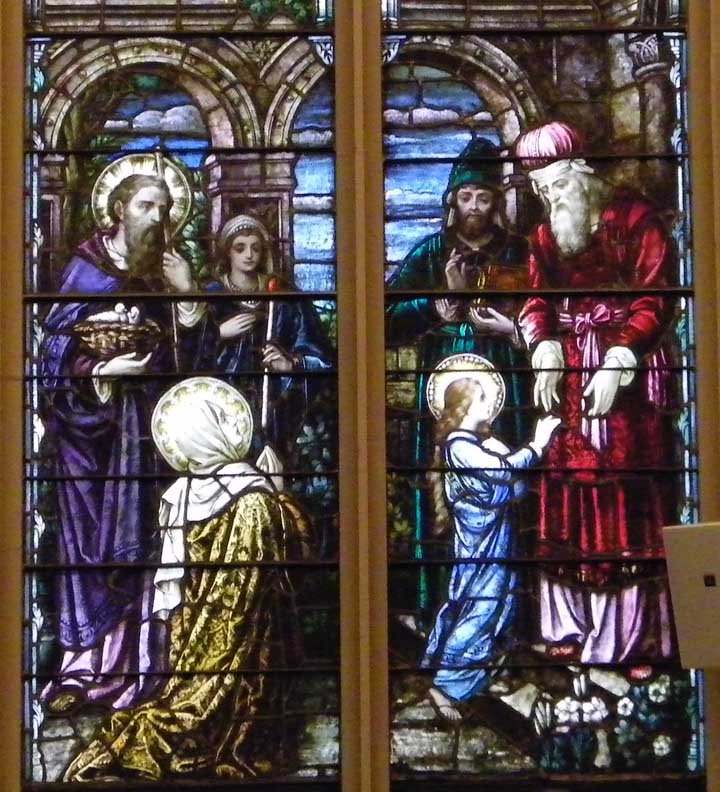
Polish nobleman John Kostka was not pleased with the spiritual inclinations of his second son.   He did all he could to discourage Stanislaus’s desire for Christian service. Paul, a brother two years older than he, bullied him and tried to lure him into more worldly pursuits.

On 25 July 1564, they arrived at Vienna with their tutor to attend the Jesuit college that had been opened four years before.   Stanislaus was soon conspicuous, among his classmates during his 3 years of schooling, not only for his amiability and cheerfulness of expression but also for his growing religious fervour and piety.

His brother Paul said during the process of beatification:  “He devoted himself so completely to spiritual things that he frequently became unconscious, especially in the church of the Jesuit Fathers at Vienna.   It is true,” added the witness, “that this had happened at home to my brother at Easter when he was seated at table with our parents and other persons.”  SAINT STANISLAUS KOSTKA WITH THE VIRGIN

Among other practices of devotion he joined while at Vienna the Congregation of St Barbara, to which many students of the Jesuit college belonged.  The confidences he then made to his tutor and later to a fellow-member of the Society at Rome, he declared that it was Saint Barbara who brought two angels to him during the course of a serious illness, in order to give him the Eucharist.   He also said that the Blessed Mother came to him in a vision, encouraging him to become a Jesuit.   So much piety, however, did not please the older brother Paul;  his exasperation led him to treat the innocent Stanislaus with violence.   Stanislaus suffered the unjust treatment with remarkable stoicism and patience but there came one night when, after having again suffered the harsh comments and blows from his brother, he turned on Paul with the words:  “Your rough treatment will end in my going away never to return and you will have to explain my leaving to our father and mother.”   Paul’s sole reply was to swear violently at him.   St. Stanislaus Kostka

Thus, upon recovering, Stanislaus determined to join the Society of Jesus.   With Paul in hot pursuit, he fled to Dillingen where Peter Canisius welcomed him.   Then to demonstrate his determination, Stanislaus walked the 350 miles to Rome and there Jesuit general St Francis Borgia accepted him.
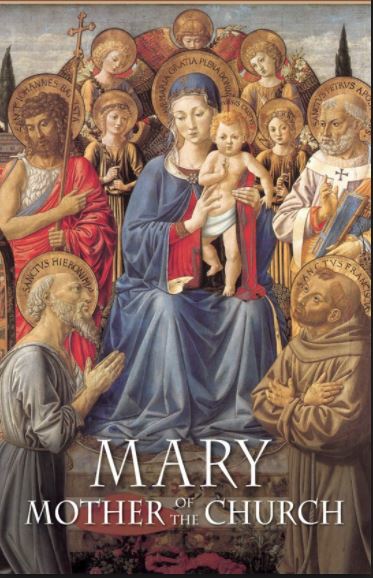
Stanislaus kept a journal during his novitiate.   His notes reflect both a youthful idealism and an adult commitment.   Here are a few excerpts:

“Consider how hard it is for a person to be separated from any place he has loved deeply.   How much harder the soul will find it when the time comes to leave the mortal body, its companion so dear.   And the great fear it will experience in that moment because its salvation is at stake and it must stand in the presence of the one it has so offended.  If the just man will scarcely be saved, what about me a sinner?

But think of the great joy the good will feel at the thought of the service they’ve paid to God.   They will be glad because they’ve suffered something for love of him back there and didn’t fix their hope and attention on the things of this world that we leave so soon.   Think of the joy that the soul will feel in its escape from the prison of this body.   So long has it lived in perpetual exile, expelled from its own heavenly home.  How much greater its uncontainable joy and complete satisfaction when it arrives in its own country to enjoy the vision of God with the angels and the blessed.

I am so ashamed and confused because I see how many have been lost on account of a single mortal sin and how many times I have deserved eternal damnation.

I shall reflect on myself and ask:  “What have I done for Christ?   What am I doing for Christ?   What ought I do for Christ?”

However, Stanislaus did not complete his training.   Nine months into his novitiate he again became very sick.   Saint Stanislaus had drawn as his monthly patron for August the glorious martyr Saint Lawrence and in his honour he performed daily some penance or devotion.   On the eve of his feast, he obtained leave to take the discipline;  in the morning he went to Communion and then laid before the image of the saint a letter addressed to Our Lady, in which he begged that he might die on her Feast of the Assumption and he prayed Saint Lawrence to present to her his petition.   That night he was seized with a slight fever, which, however, rapidly increased and on Assumption Eve, he received the last sacraments.   Then, as he lay dying, he had brought to him a little book containing a litany in his own writing of his monthly patron saints, whom he constantly invoked.   At 3 a.m. on the Feast of the Assumption, he face suddenly lit up with joy and he breathed forth his soul to the Mother of God, who had come to conduct him to heaven.    His confidence in the Blessed Virgin, which had already brought him many signal favours, was this time again rewarded.   And shortly afterward he died.   Stanislaus was only seventeen years old when he “arrived in his own country to enjoy the vision of God.”

The entire city proclaimed him a saint and people hastened from all parts to venerate his remains and to obtain, if possible, some relics.

Posted in SAINT of the DAY

Memorials of the Saints – 13 November

St Frances Xavier Cabrini (Optional Memorial, United States only – her Universal Feast Day is 22 December and this is the Day on which I will honour her on this site.)
All Saints of the Augustinian Order
All Saints of the Benedictine Order
All Saints of the Premonstratensian Order
All Deceased Dominican Brothers and Sisters

St Abbo of Fleury
St Agostina Petrantoni
St Amandus of Rennes
St Amanzio
St Beatrix of Bohemia
St Brice of Tours
St Caillin
Bl Carl Lampert
St Chillien of Aubigny
Bl Christopher Eustace
St Columba of Cornwall
St Dalmatius of Rodez
Bl David Sutton
St Devinicus
St Didacus
St Eugenius of Toledo
St Florido of Città di Castello
St Gredifael
St Himerius
St Homobonus of Cremona
Bl John Sutton
Bl Juan Gonga Martínez
St Juan Ortega Uribe
St Leoniano of Vienne
Bl María Cinta Asunción Giner Gomis
Bl Maurice Eustace
St Maxellendis
St Mitrius
St Pope Nicholas I
St Paterniano
St Quintian of Rodez
Bl Robert Fitzgerald
Bl Robert Montserrat Beliart
Bl Robert Scurlock
St Stanislaus Kostka
Bl Thomas Eustace
Bl Warmondus of Ivrea
Bl William Wogan

Martyrs of Caesarea – 5 saints: A group of Christians murdered for their faith in the persecutions of Diocletian, Galerius Maximian and Firmilian. – Antoninus, Ennatha, Germanus, Nicephorus and Zebinas. 297 at Caesarea, Palestine.

Martyrs of Ravenna – 3 saints: A group of Christians murdered together in the persecutions of Diocletian. The only information about them that has survived are three names – Solutor, Valentine and Victor. c 305 in Ravenna, Italy.

Martyrs of Salamanca – 5 saints: The first group of Christians exiled, tortured and executed for their adherence to the Nicene Creed during the persecutions of the Arian heretic Genseric. – Arcadius, Eutychianus, Paschasius, Paulillus and Probus.
Born in Spain and Martyred in 437. Their relics are at Medina del Campo, Spain.

Posted in MORNING Prayers, QUOTES of the SAINTS, SAINT of the DAY

Thought for the Day – 12 November – The Memorial of St Josaphat Kuncewicz (1584-1623) Martyr of Holy Unity

Thought for the Day – 12 November – The Memorial of St Josaphat Kuncewicz (1584-1623) Martyr of Holy Unity

As deacon, priest and bishop, St Josaphat was distinguished by his extraordinary zeal in performing the Church services and by extraordinary devotion during the Divine Liturgy.   Not only in the church did he preach and hear confessions but likewise in the fields, hospitals, prisons and even on his personal journeys.  This zeal, united with his kindness for the poor, won great numbers of Orthodox Ruthenians for the Catholic faith and Catholic unity.   Among his converts were included many important personages such as Ignatius, former Patriarch of Moscow and Emmanuel Cantacuzenus, who belonged to the imperial family of the Byzantine Emperor Palaeologus.   His favourite devotional exercise was to make prostrations in which the head touches the ground, saying, the Jesus prayer: ‘Lord Jesus Christ, Son of God, have mercy on me, a sinner.the jesus prayer - 12 nov 2017

When Archbishop St Josaphat went to Vitebsk to calm the tumult in 1623, he knew well that his hour had come.   “Grant that I be found worthy, Lord, to shed my blood for the union and obedience to the Apostolic See”, he had prayed and his prayer was answered on 12 November as an enraged mob cruelly butchered him and profaned his body. He was in his 44th year.
After five days his mortal remains were recovered from the waters of a river and taken to Polotsk to be exposed to the veneration of the faithful.   For nine days they constantly emitted a fragrance of roses and lilies and a councillor of the city abandoned the schism merely at the sight of the Saint’s beautiful countenance.   Many of the murderers struck their breasts and did likewise.   The martyr had gone gladly to his death, offering his life that the schism might end;  he had said as much beforehand and amongst the many miracles consequent to his murder was the conversion of his assassins.   Four years later the author of the troubles, the dissident bishop Meletius Smotrytsky, was himself struck with remorse and consecrated his life to penance, prayer and the defence of the Union.   Such changes of heart are indeed the greatest of miracles, won by the sanctity of the true servants of God.

Some years after St Josaphat’s martyrdom his body was found to be incorrupt, though the clothing had rotted away.   Again in 1637 and 1767 it was found to be still white and supple. It was eventually taken to the Basilica of St Peter in Rome where it reposes today.

Today, let us offer our prayers, our devotions, our Sunday Mass for unity between ourselves and most especially our Orthodox brethren, our closest family in Christ.   St Josaphat, please pray with us and for us all!st josaphat pray for us.2.

Posted in MORNING Prayers, QUOTES of the SAINTS, SAINT of the DAY

Quote of the Day – 12 November – The Memorial of St Josaphat Kuncewicz (1584-1623)

Quote of the Day – 12 November – The Memorial of St Josaphat Kuncewicz (1584-1623)

“I am ready to die for the holy union,
for the supremacy of Saint Peter
and of his successor,
the Supreme Pontiff.”

St Josaphat Kuncewicz (1584-1623)i am ready to die - st josaphat - 12 nov 2017

Posted in MORNING Prayers, SAINT of the DAY

One Minute Reflection – 12 November – The Memorial of St Josaphat Kuncewicz (1584-1623)

One Minute Reflection – 12 November – The Memorial of St Josaphat Kuncewicz (1584-1623)

Why, then, does one of you make himself judge over his brother and why does another among you despise his brother? All of us will have to stand in front of the judgement-seat of God…… Let us each stop passing judgement, therefore, on one another and decide instead, that none of us will place obstacles in any brother’s way, or anything that can bring him down…Romans 10,13

REFLECTION – “You people of Vitebsk want to put me to death. You make ambushes for me everywhere, in the streets, on the bridges, on the highways and in the marketplace. I am here among you as a shepherd and you ought to know that I would be happy to give my life for you.”…St Josaphatyou people of bitebsk want to - st josaphat - 12 nov 2017

PRAYER – O Lord our God, grant that we may not so much seek to be consoled as to console, to be understood as to understand,
to be loved as to love. That by our love, our brothers in faith may be one. St Josaphat you fought and struggled to unite the Church and by your efforts achieved the crown of martyrdom, please pray for our world, for a one united faith. Amenst josaphat pray for us

Posted in INCORRUPTIBLES, SAINT of the DAY

Saint of the Day – 12 November – St Josaphat Kuncewicz (1584-1623)

Saint of the Day – 12 November – St Josaphat Kuncewicz O.S.B.M. (1580-1623) Archbishop and Martyr.  Born 1580 at Volodymyr, Lithuania (modern Ukraine) as John Kunsevyc – St Josaphat was  struck in the head with a halberd, shot and beaten with staves on 12 November 1623 at Vitebsk, Belarus.   His body thrown into the Dvina River but later recovered and buried at Biala, Poland.  His body was found incorrupt five years after his death.   He was Beatified on 16 May 1643 by Pope Urban VIII and Canonised on  29 June 1867 by Pope Blessed Pius IX.  St Josaphat, a contemporary of St Francis de Sales and St Vincent de Paul was the first Eastern saint canonised by Rome.   Patronages – Ukraine, Edmonton, Alberta, eparchy of,  Toronto, Ontario, eparchy of.   Attributes – • chalice,• crown,• winged deacon.st Josaphat
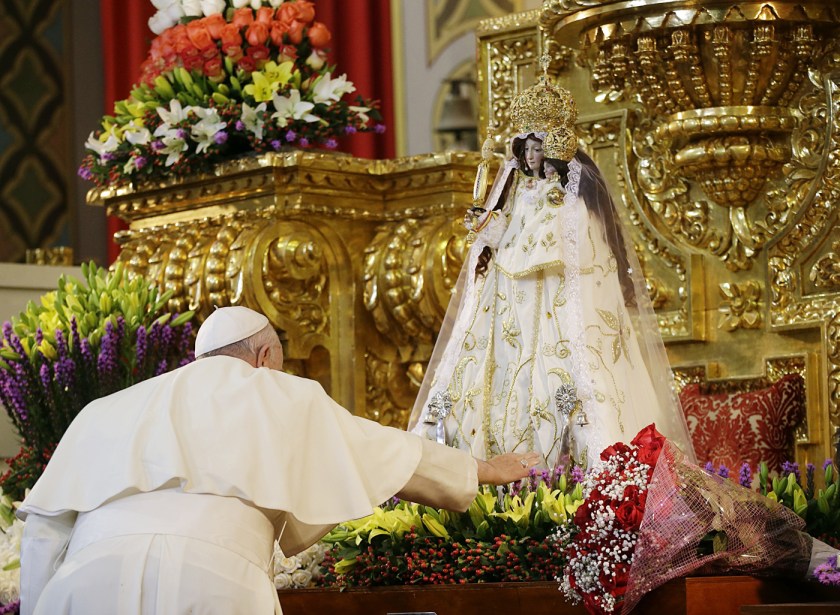
Josaphat Kuncewicz was born of noble Catholic parents at Vladimir in Volhynia.   When a child, as he was listening to his mother telling him about the Passion of Christ, a dart issued from the image of Jesus Crucified and wounded him in the heart.   Set on fire with the love of God, he began to devote himself with such zeal to prayer and other works of piety, that he was the admiration and the model of his older companions.   At the age of twenty he became a monk under the Rule of St. Basil and made wonderful progress in evangelical perfection.   He went barefoot even in the severe winter of that country;  he never ate meat, drank wine only when obliged by obedience and wore a rough hair-shirt until his death.   The flower of his chastity, which he had vowed in early youth to the Virgin Mother of God, he preserved unspotted.   He soon became so renowned for virtue and learning, that in spite of his youth he was made superior of the monastery of Byten; soon afterwards he became Archimandrite of Vilna;   and lastly, much against his will, but to the great joy of Catholics, he was chosen Archbishop of Polotsk.
Although a Bishop, he relaxed nothing of his former manner of life and had nothing so much at heart as the divine service and the salvation of the sheep entrusted to him.   He energetically defended the Catholic Faith and Unity and laboured to bring back schismatics and heretics to communion with the See of Saint Peter.   He never ceased to defend the Sovereign Pontiff, both by preaching and by writings full of piety and learning, against the shameless calumnies and errors of the wicked.   He vindicated episcopal rights and restored ecclesiastical possessions which had been seized by laymen.   Incredible was the number of heretics he won back to the bosom of Holy Mother Church;  and the words of the Popes bear witness how greatly he promoted the union of the Greek schismatic with the true Latin Church.   His revenues were entirely expended in restoring the beauty of God’s house, in building dwellings for consecrated virgins and in other pious works.   So bountiful was he to the poor, that, on one occasion, having nothing wherewith to supply the needs of a certain widow, he ordered his Omophorion, or episcopal pallium, to be pawned.

The great progress made by the Catholic Faith so stirred up the hatred of wicked men against the soldier of Christ, that they determined to put him to death.   He knew what was threatening him and foretold it when preaching to the people.   As he was making his pastoral visitation at Vitebsk, the murderers broke into his house, striking and wounding all whom they found.    St Josaphat meekly went to meet them and accosted them kindly, saying:  “My little children, why do you strike my servants? If you have any complaint against me, here I am.”   Thereupon they rushed at him, overwhelmed him with blows, pierced him with their spears and at length killed him with an axe and threw his body into the river.   This took place on the 12 November 1623, in the 43rd year of his age.   His body, surrounded with a miraculous light, was rescued from the waters.

Martyrdom of Josaphat Kuntsevych (c. 1861) by Józef Simmler, National Museum in Warsaw
Martyrdom of St Josaphat (c. 1861) by Józef Simmler, National Museum in Warsaw

The martyr’s blood won a blessing first of all for his murderers-for being condemned to death, they nearly all abjured their schism and repented of their crime.   As the death of this great Bishop was followed by many miracles, Pope Urban VIII granted him the honour of beatification.   On June 29th, 1867, when celebrating the centenary of the Princes of the Apostles, Pope Pius IX, in the Vatican Basilica, in the presence of the College of Cardinals and of about 500 Patriarchs, Metropolitans and Bishops of every Uniate Rite, assembled from all parts of the world, solemnly enrolled among the Saints this great defender of the Church’s Unity, who was the first of the Oriental Rites to be thus honoured.   Pope Leo XIII extended his Mass and Office to the universal Church.Saint_Josaphat_K

St Josaphat will always be the patron and model of future apostles for the conversion of Russia and the whole Greco-Slavonic world.   By his birth, education and studies, by the beauty of his piety and all his habits of life, he resembled far more the Russian monks of later times than the Latin prelates of his own time.   He always desired the ancient liturgy of his Rite to be preserved entire and even to his last breath he carried it out lovingly, without the least alteration or diminution, just as the first apostles of the Christian Faith had brought it from Constantinople to Kiev.   May prejudices born of ignorance be someday obliterated and then, despised though his name now is in Russia, St Josaphat will soon be known and loved and invoked by the Russians themselves.  Below is the The Basilica of St. Josaphat in Milwaukee.Basilica_of_St._JosaphatSt._Josaphat_Basilica_1Our Lord and Our Lady receive St. Josaphat into Heaven.

(The Bull of Pius IX declaring Josaphat Kuntsevych a Saint: 29/6/1867)

“Pius, Bishop, Servant of the Servants of God . . . For the honoir of the Holy and Undivided Trinity, for the enhancement of the Catholic Faith and for the increase and beauty of the Christian religion, by the power of Our Lord Jesus Christ, the Holy Apostles Peter and Paul and by our own power, after mature deliberation and frequent invocation of God’s help and following the advice of our worthy brothers of the Holy Roman Church, the Cardinals, Patriarchs, Primates, Archbishops and Bishops.  We declare the said Blessed Josaphat, Archbishop of Polotsk, of the Eastern Rite of the Order of Saint Basil the Great, a SAINT and place him on the list of the holy martyrs….”


Posted in SAINT of the DAY

Memorials of the Saints – 12 November

St Josaphat Kuncewicz (Memorial) – https://gloria.tv/video/Q6D1Vsk7HYFm6p8Z8XGDsT1kJ
All Dominican Saints

St Arsatius
St Astricus of Ungarn
St Aurelius
St Cadwallader
St Cummian Fada
St Cunibert of Cologne
St Emilian Cucullatus
St Evodius of Le Puy
St Hesychius of Vienne
Bl John Cini della Pace
Bl José Medes Ferrís
St Lebuin of Deventer
St Livinus of Alost
St Machar of Aberdeen
St Margarito Flores-García
St Namphasius
St Nilus the Elder
St Paternus of Sens
St Publius
St Renatus of Angers
St Rufus of Avignon
Bl Ursula Medes Ferris
St Ymar of Reculver

Five Polish Brothers – martyrs: They weren’t Polish and they wern’t related, but were instead five Italian Benedictine monks who worked with Saint Adalbert of Prague as missionaries to the Slavs and were martyred together. They were – Benedict, Christinus, Isaac, John and Matthew. Born in Italy. They were martyred in 1005 at the Benedictine monastery near Gnesen, Poland and Canonised by Pope Julius II. http://catholicsaints.info/five-polish-brothers/