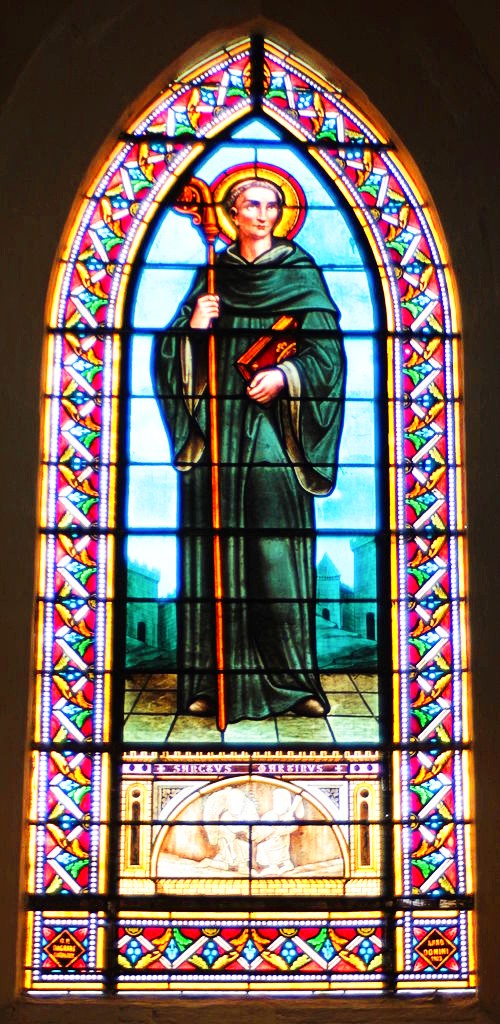
Saint of the Day – 7 December – Saint Martin of Saujon (Died c400) Priest, Founder and the 1st Abbot of Saujon Monastery in Saintonge, France. Born in Saintes and died at his Monastery in Saintonge, France of natural causes.
The Roman Martyrology reads today: “At Saintes, in France, St Martin, Abbot, at whose Tomb, God worked frequent miracles.”
Originally from Saintes, he was a disciple of St Martin of Tours at the Abbey of Marmoutier. After the death of his spiritual father, he returned to his native country to found a Monastery himself in Saujon.
An Internet user writes to us: “living 25 km from Candes, a legend of St Martin still exists: when he died, the inhabitants of Tours came to collect his body and returned on a boat on the Loire. All along the route, the trees and all the vegetatio,n began to flower (remember this is in December in the Northern Hemisphere!) hence, the expression came to be – “the summer of Saint Martin.”
It seems from the above that St Martin was buried in Saintes.
Novena in Honour of the Immaculate Conception of the Blessed Virgin Mary: – LINK to the 9th Day – THE NINTH DAY – 7 December
Vigil of the Immaculate Conception of the Blessed Virgin Mary – A Day of FASTING and ABSTINENCE. On this Vigil day, Catholics stand in the remains of the night as the dawn makes its appearance. This resplendent dawn is that Singular Conception, the Immaculate Conception, who ushers in the Light of Christ. A day of Fast and Abstinence following the Rubrics of Pope Pius X for the Universal Calendar of the Church.
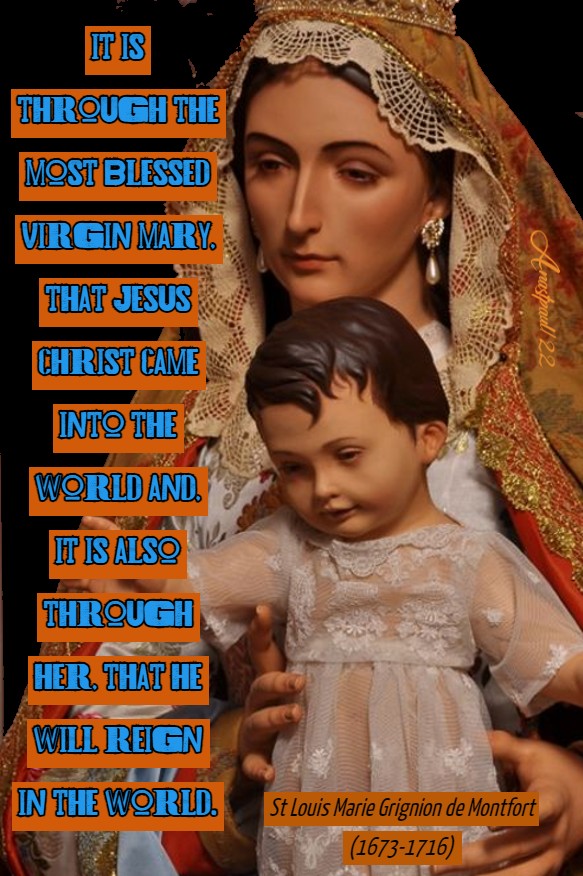
“It is through the most Blessed Virgin Mary, that Jesus Christ came into the world and, it is also through her, that He will reign in the world.” – St Louis Marie Grignion de Montfort (1673-1716)
Quote of the Day – 6 December – St Nicholas (270-343) Confessor, Bishop
St Nicholas had a reputation for secret gift-giving, such as putting coins in the shoes of those who left them out for him and thus became the model for Santa Claus, whose modern name comes from the Dutch Sinterklaas, itself from a series of elisions and corruptions of the adaptation of “Sint Nikolaas.”
Many traditions have evolved during the course of history, including for the children, a supply of St Nicholas Biscuits:
INGREDIENTS 4 cups sifted All-purpose Flour 1/2 teaspoon Bicarinate of Soda (Baking Soda) 1/4 teaspoon Salt 1 cup Butter or Margarine 2 cups Sugar (I prefer Caster Sugar but normal Granulated is fine) 3 Eggs (Large will do) 1 teaspoon Vanilla Essence
METHOD Sift together first 3 ingredients. Cream butter or margarine – slowly stir in sugar; beat until well blended. Add eggs, one at a time; beat well. Stir in Vanilla Essence. Stir in flour mixture, mixing well. Cover dough; chill until firm enough to roll. On a floured board, roll dough, a little at a time, until 1 cm inch thick. Cut out Biscuits with a floured Santa Claus (or St. Nicholas) Biscuit Cutter- if not available make them round or oval and decorate with a appropriate “face” and colours. Place on well greased Oven Biscuit Tray. Bake at 350°F pr 180°C for 8 minutes or until golden. Remove from Trays; – cool on wire racks.
Decorate with Icing Sugar, Smartie or any round shaped sweets, coconut and food colourant to mimic Santa’s Red Hat. Makes about 40 Biscuits.
Saint of the Day – 6 December – Saint Gertrude the Elder (c560-649) Widow, Abbess, Founder and the 1st Abbess of Hamage Abbey in the North of France. It was a Monastery of Nuns, dedicated to Saint Peter and Saint Eusebia. Also known as – Gertrude de Cambrai, Gertrude of Hamage, Gertrude of Hamaye.
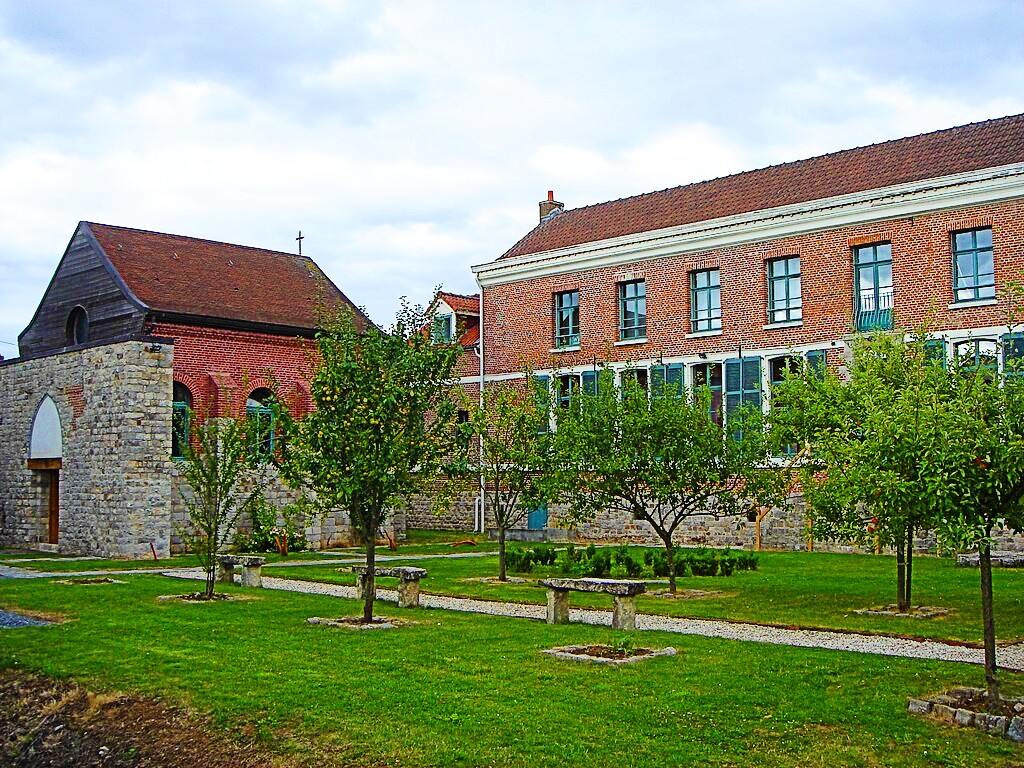
Hamage Abbey
The daughter of a nobleman of Douai, France, Gertrude married the nobleman Rigomer. Widowed at an early age, she devoted herself to the education of her three sons, one of whom was to be venerated as a Saint and Martyr, St Adalbald (Died 652).
Following the settlement of her sons, Gertrude withdrew from the world to live at an Oratory in Hamage, where she devoted herself to religious exercises and acts of charity. Here she was joined in her life of piety by her grand-daughter Eusebia.
Gertrude bravely endured the sorrow of learning that her son Adalbald had been Martyred. Adalbald’s widow, Rictrude (c 614–688) also became a Saint.
At Hamage Gertrude founded and became the 1st Abbess of a Convent, where she trained her grand-daughter for religious life before dying and leaving the government of the Convent to her.
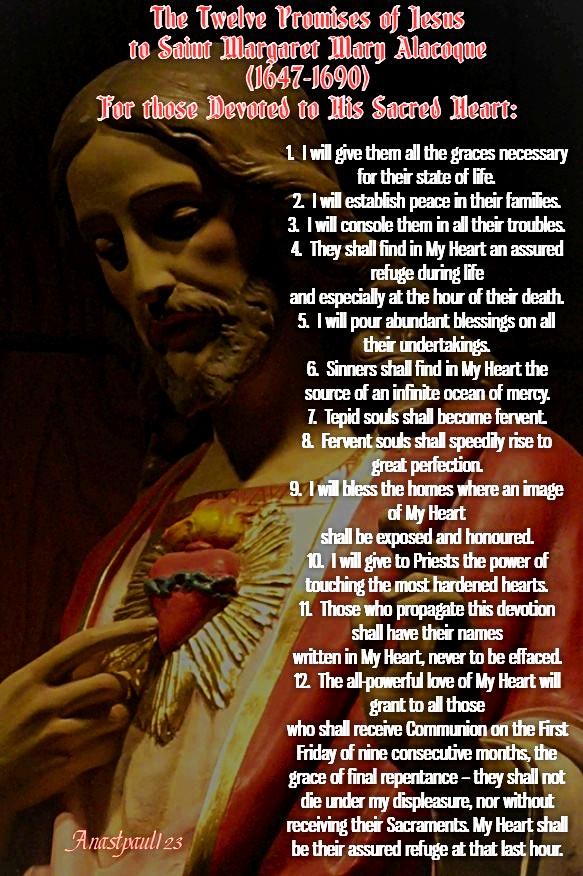
First Friday of the Month: “I promise you, in the excessive mercy of my Heart that my all powerful love, will grant to all those who receive Holy Communion on the First Friday, for Nine Consecutive Months, the grace of final repentance; they shall not die in my disgrace, nor without receiving the Sacraments; my Divine Heart shall be their safe refuge, in that last moment.” — Our Lord to St Margaret Mary
How to complete the Nine First Friday’s Devotion:
Receive Holy Communion on each First Friday;
The Nine Fridays must be consecutive;
They must be made in honour and in reparation to His Sacred Heart.
St Gertrude the Elder the Elder (c560-649) Widow, Abbess St Isserninus of Ireland St Leontia the Martyr St Majoricus the Martyr St Polychronius St Tertus
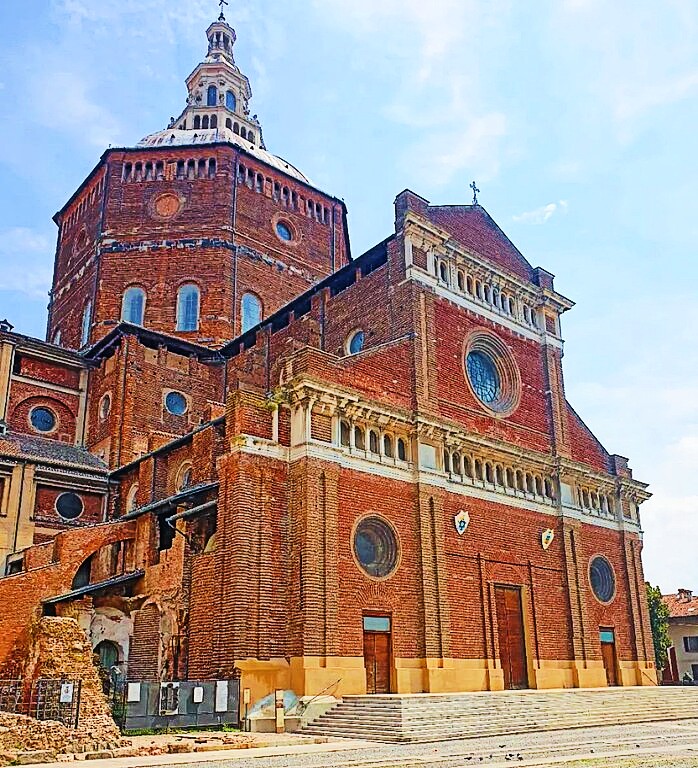
Saint of the Day – 5 December – St Dalmatius of Pavia (Died c304) Bishop Martyr, Missionary and Evangeliser. Patronage of Pedone and Borgo San Dalmazzo in Italy/ Also known as – Dalmatius of Pedona, Dalmazio… Dalmazzo…
The Roman Martyrology reads today: “At Pavia, St Dalmatius, Bidshop and Martyr, who suffered in the persecutions of Maximian.”
The oldest Vita, derives, from an original written between 570 and 650, while, according to another historian, it was composed in the 8th Century. The author, perhaps a Lombard Monk from the Monastery of Pedona, who drew on oral traditions, says he was born in San Damiano Macra in the pre-Constantinian era and presents him as an Ecclesiastic and evangeliser of Pedona.
At the beginning of the 10th Century, when this locality was devastated by the Saracens, the body of the Saint was taken to Quargnento, where the inscription was placed on his Tomb: “ic requiescit corpus sancti Dalmatii repositum ab Audace episcopo Astensi – here rests the body of St Dalmatia, deposited by Audace, Bishop of Astens.”
Since the 9th Century, in France, Dalmatius has been considered a Martyr. More recent sources say he was originally from Germany, a Missionary and Evangeliser of many Cities in Piedmont, Emilia and Gaul, killed for the Faith in 254.
The Roman Martyrology, based on Episcopal records, wrongly remembers him on 5 December as the Bishop of Pavia, where, however, a Church was dedicated to him. What is certain is that in Pedona there was a Basilica erected in his honour and on 5December many pilgrims, even from distant countries, flocked to his Tomb.
Dalmatius was probably a local Evangeliser of Pedona, in an era which is not easily determined and was, therefore, venerated there as a Saint. 5 December would be the anniversary of his death, or of his elevation to the honour of the Altars.
This Statue of St Dalmatius resides in Pornassio, Liguria, Italia
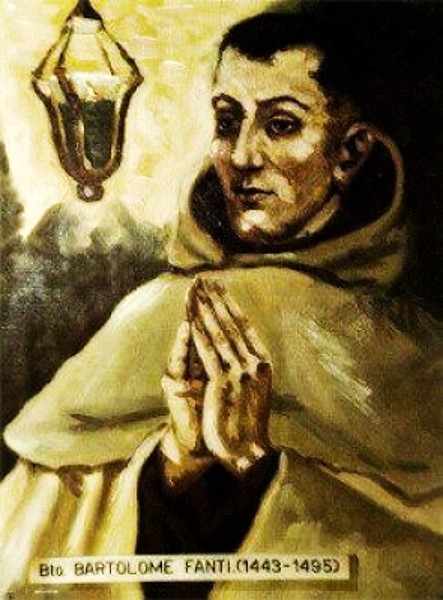
Blessed Bartholomew Fanti of Mantua O.Carm. (c 1428-1495) Carmelite Priest, renowned Preacher. Humble and gentle, Bartholomew gave an example to everyone of a life of prayer, of loving kindness and generosity to all and of faithful service to the Lord. He was remembered and revered, even during his life, for his great love ot the Blessed Sacrament, which was the source and the summit of his apostolic life, together with his love and devotion to the Virgin Mother. His Beatification received the Papal approval of Pope Pius X on 18 March 1909. Biography: https://anastpaul.com/2021/12/05/saint-of-the-day-5-december-blessed-bartholomew-fanti-o-carm-c-1443-1495/
St Basilissa of Øhren St Bassus of Lucera St Bassus of Nice St Cawrdaf of Fferreg St Christina of Markyate St Consolata of Genoa St Crispina St Cyrinus of Salerno – Bishop. Martyr. No other information has surived. St Dalmatius of Pavia (Died c304) Bishop Martyr St Firminus of Verdun
St Gratus Bl Giovanni Gradenigo St Justinian St Martiniano of Pecco St Nicetius of Trier St Pelinus of Confinium
Martyrs of Thagura – 12 Saints: A group of twelve African Christians who were Martyred together in the persecutions of Diocletian. The only details about them that have survived are five of their names – Crispin, Felix, Gratus, Juliua and Potamia. They died in 302 in Thagura, Numidia
Saint of the Day – 4 December – Saint Felix of Bologna (Died 432) Bishop, a disciple and the Deacon of St Ambrose at Milan. Died in Bologna on 4 December 432. Also known as – Felice.
The Roman Martyrology: “At Bologna, Saint Felix, Bishop, who had been the Deacon of the Church of Milan under Saint Ambrose.”
Felix, the 7th Bishop of Bologna (397? – 432), immediately preceded Saint Petronius. Already a Deacon of the Church of Milan, he is remembered by St Paulinus in the Life of Saint Ambrose.
From the Ambrosian Epistolary we learn that Felix was chosen for a delicate mission to the Emperor Theodosius in 394:
“I deservedly sent my son, Deacon Felix, to carry my letter, so that he may also take my place and present a memorial for those who have turned to the Mother Church, asking for the mercy of your piety” (St Ambrose Ep 62:3).
His death is dated 4 December 432 as is his Feast Day. His head is venerated in the Cathedral, where it was placed by Cardinal Gabriele Paleotti in 1586.
St Peter Chrysologus (c 400-450) “Golden Words” Confessor,, Father & Doctor of the Church – Bishop of Ravenna, Italy. Today we celebrate the Memorial of Saint Peter Chrysologus, a fifth-century Italian Bishop known for testifying courageously to Christ’s full humanity and divinity during a period of the heresy called “Monophysite.” The saint’s title, Chrysologus, signifies “golden speech” in Greek. Named as a Doctor of the Church in 1729 by Pope Benedict XIII., he is distinguished as the “Doctor of Homilies” for the concise but theologically rich reflections he delivered during his time as the Bishop of Ravenna. 176 of his sermons have survived – it is the strength of these beautiful explanations of the Incarnation, the Creed, the place of Mary and John the Baptist in the great plan of salvation, Mary’s perpetual Virginity, the penitential value of Lent, Christ’s Eucharistic presence and the Primacy of St Peter and his successors in the Church. FEAST DAY: 4 December (General Roman Calendar 1729-1969) https://anastpaul.com/2018/07/30/saint-of-the-day-30-july-st-peter-chrysologus-c-400-450-golden-words/
St Bertoara of Bourges St Christian O.Cist. (c1180-1245) Bishop St Christianus St Clement of Alexandria St Cyran of Brenne St Eraclius St Ezequiel Álvaro de La Fuente St Felix of Bologna (Died 432) Bishop Bl Francis Galvez St Heraclas of Alexandria Bl Jerome de Angelis St John the Wonder Worker St Maruthas St Melitus of Pontus
Saint of the Day – 3 December – St Abbo of Auxerre (Died c860) Bishop, Monk and Abbot. Died ion 3 December n c860 of natural causes. Also known as – Abbone, Abbon.
In some records Abbo appears as the Bishop of Auzerre in the 35th place, in others in36th. He governed the Diocese in the second half of the 9th Century. In the list of Bishops, of the “Liber Episcopalis” in which brief biographical notes and chronological data have been provided, Abbo appears after Saint Eribaldus, who was his brother and before the blessed Christian.
There is little information about him. Abbo embraced religious life from a young age by entering the Benedictine Monastery of Saint Jerome in Auxerre. In that Monastery he also held the office of Abbot for two years.
In the year 857 he was elected as the Bishop of Auxerre, succeeding his brother Saint Eribaldus. He participated in two Councils – that of Metz on 28 May 859 and that of Savonnièrres on 14 June of the same year.
His government of the Diocese was only around three years long He retired from the Office prior to his death and already in the acts of the Synod of Thusey which took place in October 860, there is the signature of his successor, the blessed Christian.
Saint Abbo died on 3 December 860. At the recognition of his Relics,, made in the 17th Century, his body was found almost intact. At this time it is mentioned that his Feast Day was celebrated on 3 December. (Source: Mauro Bonato, https://www.santiebeati.it).
St Abbo of Auxerre (Died c860) Bishop St Abran St Agapius St Agricola of Pannonia St Anthemius of Poitiers St Attalia of Strasbourg Bl Bernard of Toulouse OP Martyr
St Ethernan St Hilaria the Martyr St Jason the Martyr St John of Africa St Lucius, King St Lucy the Chaste St Magina of Africa St Mamas St Marcos García Rodríguez St Maurus the Martyr
St Seleucus St Stephen of Africa St Theodore of Alexandria St Theodulus of Edessa St Veranus Zephaniah the Prophet
Martyrs of Nicomedia: Christians Martyred together in the persecutions of Diocletian – Ambicus, Julius and Victor. c 303 in Nicomedia, Bithynia (modern Izmit, Turkey).
Saint of the Day – 2 December – Saint Nonnus of Edessa (Died late 5th Century) Bishop, Deacon and Monk. St Nonnus attended the Council of Chalcedon in 451 and tbere his fame and his preaching became renowned most especially due to the conversion of St Pelagis. Also known as – Nennos, Ninos, Nono, Nonnos.
The Roman Martyrology reads today: “At Edessa, St Nonnus, Bishop, by whose prayers the penitent Pelagia, was converted to Christ.”
Pelagia among her courtesans, as Saint Nonnus prays for her
The Vita of St Pelagia states that Nonnus was “a perfect Monk” from Tabenna in Egypt who, “by reason of his virtuous life” became the Bishop of Edessa in Syria, converting “all its nhabitants” and Baptising 30 000 locals. The Monks of Ramsgate place his See at Edessa.
As Nonnus addressed a Church Council in Antioch, the town’s most famous courtesan Margarita (Pearl or Pelaia) passed by. Observing her beauty, Nonnus chastised the members of the assembly for taking less care of their souls than she did of her body. She appeared at his next Sunday sermon and Nonnus’ sermon on hell prompted her to repent.] She wrote him a letter and was permitted to see him with witnesses who were convinced of her sincerity. Nonnus heard her Confession and Baptided her with her birth name Pelagia.
After being pursued by the devil for a few days, she donated the property from her former employment to the Church and lived with the Deaconess Romana, before departing for Jerusalem to disguise herself as a male Hermit under the name Pelagius.
St Robert of Matallana O.Cist. (Died 1185) Abbot St Silvanus
Greek Martyrs of Rome – 9 Saints: Several Greek Christians Martyred in the persecutions of Valerian – Adria, Aurelia, Eusebius, Hippolytus, Marcellus, Mary Martana, Maximus, Neon and Paulina. They were martyred by various means between 254 and 259 in Rome, Italy and are buried in the Callistus catacombs, Rome.
Martyrs of Africa – 4 Saints: Four Christians Martyred in Africa in the persecutions of Arian Vandals – Januarius, Securus, Severus and Victorinus.
Saint of the Day – 1 December – Saint Castritian of Milan (3rd Century) Bishop, constructer of the first and many more Churches in Milan. Also known as – Castritianus, Castritiano.
The Roman Martyrology reads today: “At Milan, St Castritian, the Bishop, who was eminent for virtues and the practice of pious and religious deeds in very troubled times for the Church.”
Castritian He was the third bishop of Milan in the first decades of the 3rd Century. According to the Datiana Historia of the 11th Century, his election, however, would have taken place much earlier, after eleven years of Episcopal vacancy, due to the persecution of Domitian.
Castritian would have governed the Milanese Church for forty-one years. The holy Bishop is attributed with the construction of the first Church of Milan, located in the area of the current St Ambrose Basilica and, furthermore, the construction of the Basilica Porziana, in the area of the current Basilica of St Vittore al Corpo and of the Basilica St Fausta which would be the current Chapel of St Vittore in Ciel d’Oro, near the Basilica of St Ambrose.
From the same 11th Century source, we discover that, having died on 1 December, Castritian was buried in the Cemetery, located along the Via Romana (which corresponds to the current Corso Roma). The ancient Milanese catalogues contrast with this report which, although agreeing on the date of Castritian’s death, says that he was buried in the Basilica of St John within the City walls. From this disagreement, the inference is drawn, according to which, the Relics of our Saint were translated in a later period from the Cemetery along the Via Romana to the Church of St John in Conca. This Church, desecrated in 1810, and was subsequently almost completely demolished. Sadly, all trace of St Castritian’s Relics has been lost.
St Agericus of Verdun St Agnofleta St Alexander Briant St Ambon of Rome St Ananias of Arbela St Ansanus the Baptizer Bl Antony Bonfadini St Candida of Rome St Candres of Maestricht St Cassian of Rome St Castritian of Milan (3rd Century) Bishop Bl Christian of Perugia St Constantine of Javron St Declan St Didorus St Domnolus of Le Mans
St Latinus of Rome St Leontius of Fréjus St Lucius of Rome St Marianus St Marina of Rome St Martinus St Nahum the Prophet St Natalia of Nicomedia St Olympiades St Proculus of Narni St Resignatus of Maastricht Bl Richard Langley St Rogatus of Rome St Simon of Cyrene St Superatus of Rome St Ursicinus of Brescia
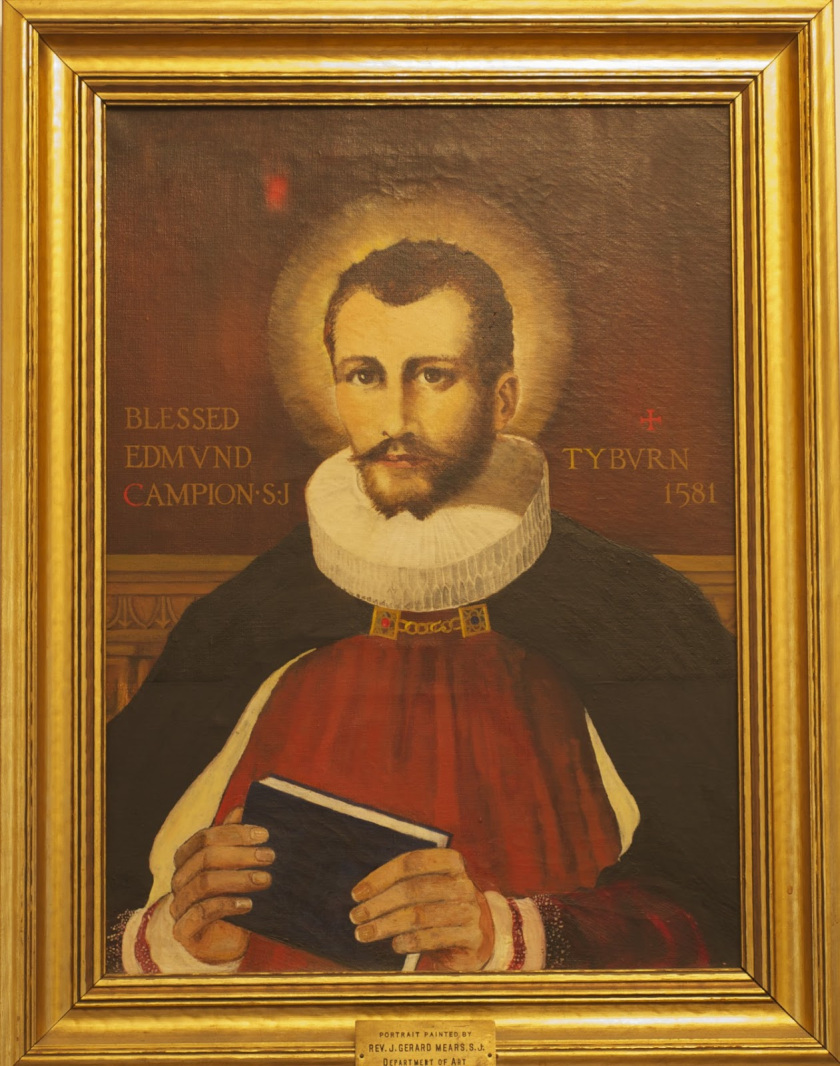
Martyrs of Oxford University: A joint commemoration of all the men who studied at one of the colleges of Oxford University and who were later Martyred for their loyalty to the Catholic Church during the official persecutions in the Protestant Reformation in England under Elizabeth I. They are: Blessed Edward James • Blessed Edward Powell • Blessed Edward Stransham • Blessed George Napper • Blessed George Nichols • Blessed Hugh More • Blessed Humphrey Pritchard • Blessed James Bell • Blessed James Fenn • Blessed John Bodey • Blessed John Cornelius • Blessed John Forest • Blessed John Ingram • Blessed John Mason • Blessed John Munden • Blessed John Shert • Blessed John Slade • Blessed John Storey • Blessed Lawrence Richardson • Blessed Mark Barkworth • Blessed Richard Bere • Blessed Richard Rolle de Hampole • Blessed Richard Sergeant • Blessed Richard Thirkeld • Blessed Richard Yaxley • Blessed Robert Anderton • Blessed Robert Nutter • Blessed Robert Widmerpool • Blessed Stephen Rowsham • Blessed Thomas Belson • Blessed Thomas Cottam • Blessed Thomas Pilcher • Blessed Thomas Plumtree • Blessed Thomas Reynolds • Blessed William Filby • Blessed William Hart • Blessed William Hartley • Saint Alexander Briant • Saint Cuthbert Mayne • Saint Edmund Campion • Saint John Boste • Saint John of Bridlington • Saint John Roberts • Saint Ralph Sherwin • Saint Thomas Garnet • Saint Thomas More.
Saint of the Day – 30 November – St Constantius of Rome (Died c418) Priest Confessor, Defender of the Faith against the heresy of Pelagianism (often called the seed of Calvinism).
The Roman Martyrology reads today: “At Rome, St Constantius, Confessor, who strongly opposed the Pelagian Heretics and by enduring many injuries from them, gained a place among holy Confessors.”
Constantius was a Priest in Rome. In defending the Faith, he suffered greatly under his opponents, the Pelagians but he was not martyred as some believe.
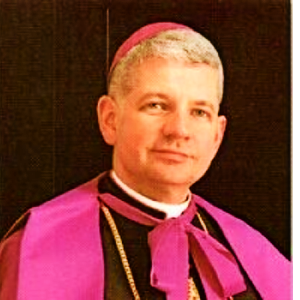
Today, 31 years ago, 30 November 1993, the late Bishop Daniel L Dolan was Consecrated as a Bishop. Remembering this zealous and loving Shepherd and praying for his eternal rest.
St Abraham of Persia St Anders of Slagelse Bl Andrew of Antioch Bl Arnold of Gemblours
St Castulus of Rome (c288) Martyr, married to Saint Irene of Rome (the woman who assisted St Sebastian after he had been wounded by the Imperial archers) and father of 2 children, Military Officer and he was the Chamberlain (or officer, valet) of Emperor Diocletian. His Feast day was moved to 26 March in 1969. His Life and Death: https://anastpaul.com/2021/03/26/saint-of-the-day-26-march-saint-castulus-of-rome-died-c-288-martyr/ St Constantius of Rome St Crider of Cornwall
St Constantius of Rome (Died c418) Priest Confessor,
Bl Joscius Roseus St Justina of Constantinople St Mahanes the Persian St Maura of Constantinople St Merola of Antioch St Mirocles of Milan St Sapor St Simeon of Persia St Trojan St Tudwal of Tréguier Bl William de Paulo Zosimus the Wonder Worker
Martyrs of Saxony – 6 Saints: Missionaries who worked with Saint Willehad of Bremen. Martyrs. – Attroban, Benjamin, Emmingen, Folkard, Gerwald and Grisold. They were martyred on 30 November 782 at River Weser, Lawer Saxony, Germany.
Saint of the Day – 29 November – Saint Saturninus of Toulouse (Died c257) Bishop Martyr. The 1st Bishop of Touylouse, France, Born in Patras, Greece and died by being cast from a high building. Patronage – of Toulouse. Also known as – Cernín, Sadurní, Sadurninho, Sarnin, Satordi, Saturdi, Saturnin, Saturnino, Serenín, Sernin, Zernin. Additional Memorial – 30 October (translation of Relics).
The Roman Martyrology reads today: “At Toulouse, in the time of Decius, the holy Bishop Saturninus, who was confined by the pagans in the capitol of that City and, from the highest part of the building, precipitated down the stairs. By which fall, having his head crushed, his brains dashed and his whole boty mangled, he rendered his worthy soul to our Lord.”
Saturninus was one of the “Apostles to the Gauls” and was sent to Toulouse by Pope Fabian. The Pope sent seven Bishops from Rome to Gaul, to preach the Gospel – St Gatien to Tours, St Trophimus to Arles, St Paul to Narbonne, St Saturninus to Toulouse, St Denis to Paris, St Austromoine to Clermont and St.Martial to Limoges.
Saturninus was the 1st Bishop of Toulouse. St Gregory of Tours chronicled his work as historical records. The Martyrology gave a genealogy for Saturninus; the son of Aegeus, King of Achaea, by his wife Cassandra, who herself, was the daughter of Ptolemy, King of the Ninevites.
Legend associated with Saturninus state, “He was given for his companion Papulus, later to become St Papulus the Martyr,” It also states that besides Papulus, he also had St Honestus (yesterday’s Saint of the Day) as a Disciple, whom he later sent off to evangelise in Spain..
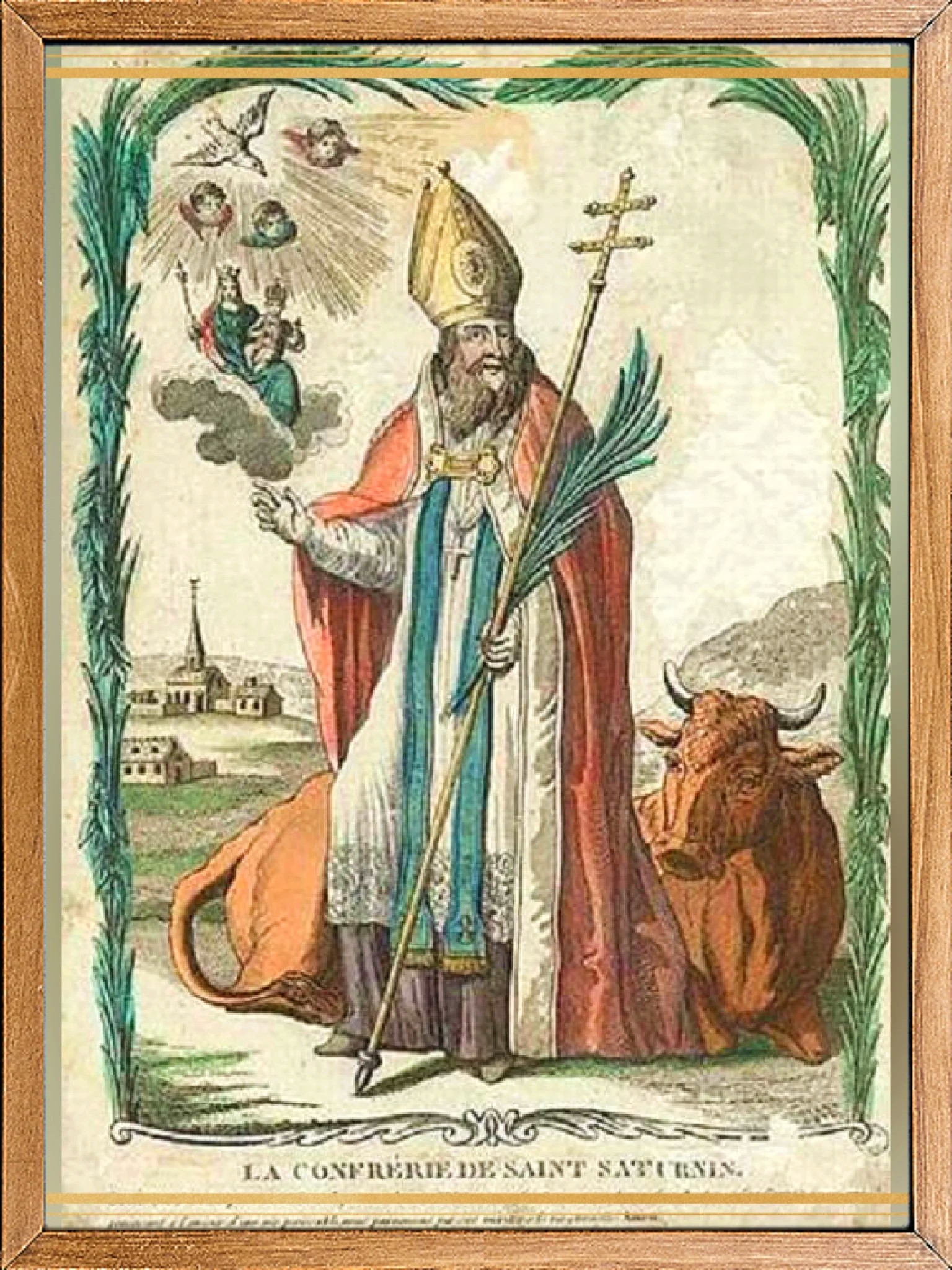
That which we remember today, describes his Martyrdom which differs from that which is stated in the Roman Martyrology (see above 1916). To reach the Christian Church, Saturninus had to pass before the governing capital building of Toulouse, where there was an altar and, according to the Acts, the pagan priests ascribed the silence of their oracles to the frequent presence of Saturninus. One day they seized him and on his unshakeable refusal to sacrifice to the images, they condemned him to be tied by the feet to a bull, which dragged him about the town until the rope broke. Two Christian women piously gathered up the remains and buried them in a deep ditch to prevent porofanation by the pagans.
The Martyrdom of St Saturninus
A Church called the Taur (bull) was built where the bull stopped his rampage. St Saturninus’ Relics are now enshrined at the Toulouse Basilica, seemingly having survived the Revolution.
All Saints of the Seraphic Order (Franciscan): the Church celebrates the many Franciscan Saints who followed in the footsteps of St Francis. It is a special day for all Franciscans to celebrate the Feast of ‘All the Saints of the Seraphic Order.’ Also on this day in 1223, the final Rule of life for Franciscan Friars was approved. To commemorate this and all the saintly examples produced in the Franciscan Order, on this day all the Saints of the Seraphic order are remembered at Franciscan Churches throughout the world.
Bl Frederick of Ratisbon St Hardoin of Brittany St Illuminata of Todi St James of Saroug Bl Jutta of Heiligenthal St Paphnutius of Heracleopolis St Paramon St Philomenus of Ancyra St Radbod of Utrecht
St Saturninus of Rome (Died c304) + Priest and Martyrand St Sisinius of Rome (Died c304) + Deacon and Martyr The Roman Martyrology reads: “At Rome, on the Salarian road, the birthday of the holy Martyr Saturninus, an aged man and the Deacon Sisinius, in the time of the Emperor Maximian. After a long imprisonment, they were, by order of the Prefect of the City, placed on the rack, distended with ropes, scourged with rods and whips garnished with metal, then exposed to the flames, taken down from the rack and beheaded.” Their Lives and Deaths: https://anastpaul.com/2023/11/29/saint-s-of-the-day-29-november-saint-saturninus-of-rome-priest-martyr-and-saint-sisinius-of-rome-deacon-martyr-died-c304/
St Saturninus of Toulouse (Died c257) Bishop Martyr St Walderic of Murrhardt
Saint of the Day – 28 November – Saint Honestus of Nimes (Died 270) Priest Martyr, Missionary. A disciple of St Saturninus of Toulouse (Died c257) Bishop and Martyr and a native of Nîmes. Born at Nimes, France and died in 270 at Pamplona, Spain by Martyrdom. Also known as – Honestus of Pamplona, Honesto, Honest.
Saturninus and Honestus evangelised in Spain and Honestus was Martyred at Pampelona during the persecutions of Aurelian. We believe Honestus was a nobleman of Nimes who was appointed ‘apostle to Navarre and the Basque Country.’
At Pampelona, he converted the Senator Firmus and his family to Christianity, while Firmus’s son, Saint Firminus, was christened by Saint Saturninus. Honestus Baptised Firminus himself.
St Honestus is venerated especially in Pamplona and in Nimes, Probably his Relics were shared between the two Cities.
Bl Calimerius of Montechiaro St Fionnchu of Bangor
St Pope Gregory III (Died 741) Bishop of Rome 11 February 731 until his death on 28 November 741. (His Feast was moved to 10 December in 1969), The Roman Martyrology states: “At Rome, the blessed Pope Gregory III, who departed for Heaven with a reputation for great sanctity and miracles.“ His Life: https://anastpaul.com/2021/11/28/saint-of-the-day-28-november-saint-pope-gregory-iii-died-741/
St Hilary of Dijon St Hippolytus of Saint Claude St Honestus of Nimes (Died 270) Priest Martyr St Irenarcus
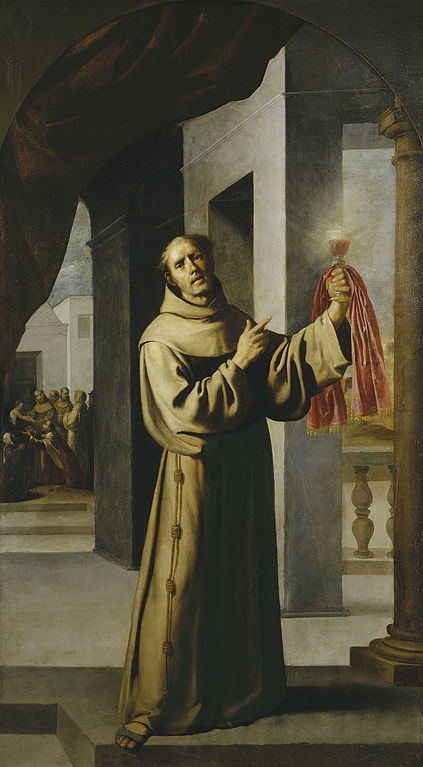
St James of the Marches OFM Conv. (1391-1476) Priest of the Friars Minor Conventional, Confessor, brilliant Preacher, Penitent, Reformer, Writer, Papal legate, Inquisitor, founder of several monasteries in Bohemia, Hungary and Austria. St James was Canonised on 10 December 1726 by Pope Benedict XIII. His body is Incorrupt. About St James: https://anastpaul.com/2019/11/28/saint-of-the-day-28-november-saint-james-of-the-marches-ofm-1391-1476/
St Papius St Quieta of Dijon St Rufus St Simeon the Logothete
St Sosthenes (1st Century) Bishop, Martyr, Jewish Ruler in Corinth, Converted by St Pauland became his disciple, who is mentioned by him in his First Epistle to the Corinthians (1 Corinthians 1:1–2) and by St Luke in Acts 18:12–17. The Roman Martyrology reads: “At Corinth, the birthday of St Sosthenes, fisciple of the blessed Apostle Paul, who is mentioned by that Apostle in his first Epistle to the Corinthians. He was chief of the synagogue when converted to Christ and, as a glorious beginning, consecrated the first fruits of his faith by being scourged in the presence of the Proconsul, Gallio.” His Life and Death: https://anastpaul.com/2023/11/28/saint-of-the-day-28-november-st-sosthenes-1st-century-bishop/
St Stephen the Younger Bl Theodora of Rossano
Martyrs of Constantinople – 8 Saints: A group of over 300 Christians Martyred during the persecutions of the Iconoclast Emperors. We have a lot of information on Saint Stephen the Younger, but for the others we have nothing but seven of their names – Andrew, Auxentius, Basil, Gregor, John, Peter and Stefan. They were scourged, stoned and/or dragged to death through the streets of Constantinople in 764.
Martyrs of North Africa – 13 Saints: A group of thirteen Clerics killed or exiled in the persecutions of Arian Vandals in North Africa – Crescens, Crescentian, Cresconius, Eustace, Felix, Florentian, Habetdeum, Hortulanus, Mansuetus, Papinianus, Quodvultdeus, Urban and Valerian.
Martyrs of Tiberiopolis – 14 Saints: A group of fourteen Christian Laymen, Deacons, Priests and Bishops who were Martyred together in the persecutions of Julian the Apostate – Basil, Chariton, Comasios, Daniel, Etymasius, Hierotheos, John, Nicephorus, Peter, Sergius, Socrates, Theodore, Thomas and Timothy. 361 at Tiberiopolis, Phyrgia (in modern Turkey)
Saint of the Day – 27 November – St John of Pavia (Died c813) Bishop of Pavia between 801-813.
We know very little about John of Pavia except that which we have gleaned from the chronological records which claims that he was the Bishop of Pavia for 12 years.
John was highly regarded for his care of the poor, his insistence on clerical discipline and his work against vice in the general population of his Diocese.
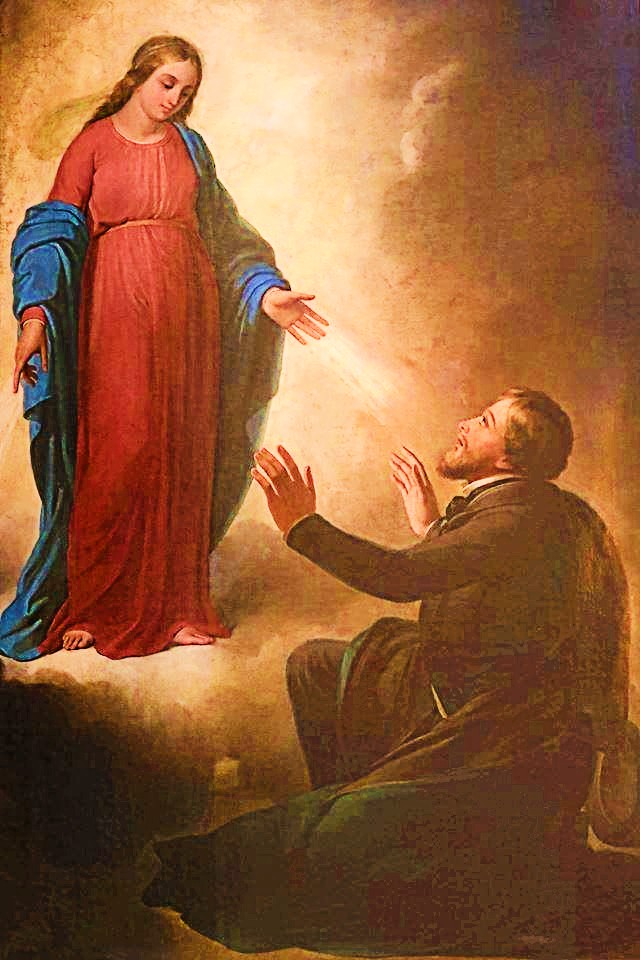
Two of the most famous conversions due to the Miraculous medal was that of Fr Alphonse Ratisbonne NDS (1814-1884), an anti-Catholic Jewish banker and Claude Newman (1923-1944). Fr Alphonse Ratisbonne received a vision of Our Lady of the Miraculous Medal. After his conversion, he became a Priest and worked for the conversion of the Jewish people.
St Acacius of Sebaste St Acharius of Noyon St Apollinaris of Monte Cassino St Barlaam
Blessed Bernardine of Fossa OFM (1420-1503) Priest, Friar of the Friars Minor, Missionary in Italy and a renowned Preacher, noted Historian, Lawyer, Ascetical Writer, rising within the Order to important positions. His cult was later confirmed by the Beatification of Pope Leo XII on 26 March 1828. The Roman Martyrology states: “At L’Aquila, blessed Bernardino da Fossa (Giovanni) Amici, Priest of the Order of Minors, who preached the Catholic Faith in many Provinces of Italy.“ A Faithful Imitator of his Namesake, St Bernardine of Siena: https://anastpaul.com/2021/11/27/saint-of-the-day-27-november-blessed-bernardine-of-fossa-ofm-1420-1503/
St Bilhild of Altmünster St Eusician St Facundus St Fergus the Pict St Gallgo of Wales St Gregory of Sinai St Gulstan St Hirenarchus of Sebaste St James Intercisus St John Angeloptes St John of Pavia (Died c813) Bishop St Laverius
St Maximus of Riez (Died 460) Bishop, Confessor, Abbot, Hermit, zealous and highly efficient leader, Miracle-worker. The Roman Martyrology reads: “At Riez, in France, St Maximus, Bishop and Confessor, who, from his tender years, was endowed with every grace and virtue. Being first the Superior of the Monastery of Lérins and afterwards, Bishop of the Church of Riez, he was celebrated for the working of miracles and prodigies.” His Life of Love: https://anastpaul.com/2023/11/27/saint-of-the-day-27-november-saint-maximus-of-riez-died-460-bishop-confessor/
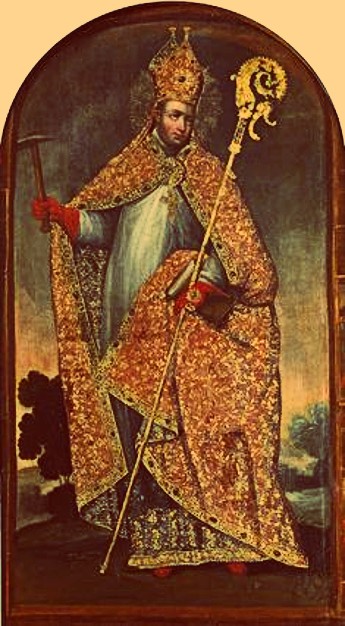
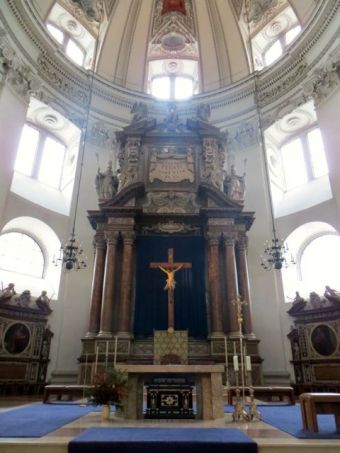
High Altar, Salzburg Cathedral (Salzburger Dom) Salzburg, Austria. Saint Rupert is depicted atop the altar carrying a barrel of salt in his left hand and a bishop’s crozier in his right. Saint Virgil is also represented atop the altar, opposite Saint Rupert.
Martyrs of Antioch – 3 Saints: A group of Christians Martyred together for their faith. Little information has survived except for their names – Auxilius, Basileus and Saturninus.
Martyrs of Nagasaki – 11 Beati: A group of eleven Christians Martyred together for their faith during a period of official persecution in Japan. They are: Blessed Alexius Nakamura Blessed Antonius Kimura Blessed Bartholomaeus Seki Blessed Ioannes Iwanaga Blessed Ioannes Motoyama Blessed Leo Nakanishi Blessed Matthias Kozasa Blessed Matthias Nakano Blessed Michaël Takeshita Blessed Romanus Motoyama Myotaro Blessed Thomas Koteda Kyumi They were Martyred on 27 November 1619 in Nagasaki, Japan and Beatified on 7 May 1867 by Pope Pius IX.
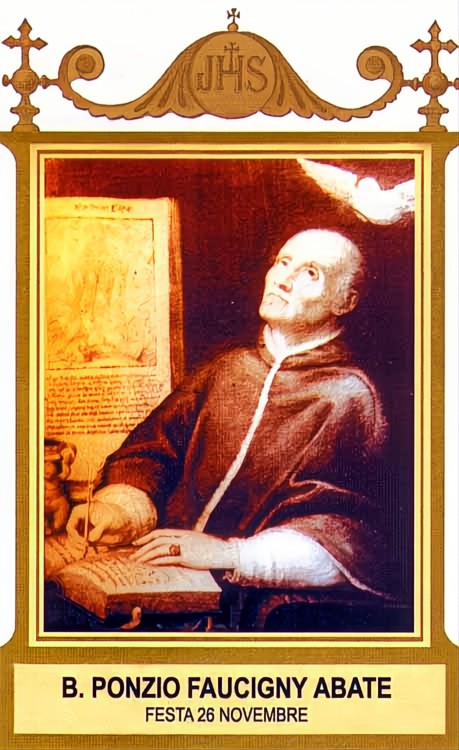
Saint of the Day – 26 November – Blessed Pontius of Faucigny (c1100-c1178) Abbot, Founder and the 1st Abbot of the Monastery of Faucigny. Born in c1100 in Faucigny, Savoy (in modern France) and died on 26 November 1178 or 1179 in Sixt, Savoy, also in modern France, of natural causes.
Pontius was born around the year 1100 to the noble family of Faucigny, lords of the region of Savoy. At a very young age he entered the Abbey of the Canons Regular of Abondance, of which he revised the Constitutions, harmonising them with the original Augustinian Rule.
In 1144 he was commissioned to found a religious house in Sixt region, also in Savoy which was ten year later, in 1155, promoted to an Abbey by Pope Adrian IV. Pontius became its first Abbot, while remaining in constant contact with Abondance.
In 1172 he was called to succeed Burcardius as the Abbot of Abondance and the following year he obtained the dignity of Abbey for the Monastery of Grandval.
However, wishing to be able to prepare himself more effectively for death, he abandoned all his duties to retire to Abondance as a simple Monk He died there on 26 November 1178 or 1179 and was buried in the Abbey Church.
His mortal remains, a few years later, were the object of an elevation and from then on he received a regular cult. On 14 November 1620, Saint Francis de Sales, a great devotee of the holy Abbot, his compatriot from Savoy, opened his tomb to take some of his Relics. Francis’s successor, Charles Augustus de Sales, also had great respect for Pontius.
The “Bollandists” observe that seven centuries passed between Pontius’s death and the appearance of his first biography, a factor which led to great caution regarding the veracity of certain data. Only in 1866, the cause for the official recognition of the cult paid to him from time immemorial was initiated by the Bishop of Annecy, Claude Magnin and was subsequently resumed in 1890 by Monsignor Ernest Isoard. Pope Leo XIII confirmed the cult “ab immemorabili” of Blessed Pontius of Faucigny, with a decree dated 15 December 1896. His Feast is still celebrated today on the anniversary of his death most especially by the Canons of the Lateran and by the Diocese of Annecy.
St Leonard of Port Maurice OFM (1676-1751) Confessor, Priest and Friar of the Friars Minor, Preacher – in particular Parish Mission, Ascetic Writer, Spiritual Director. St Leonard founded many pious apostolates, societies and confraternities and exerted himself to spread devotion to the Sacred Heart of Jesus, the Perpetual Adoration of the Most Blessed Sacrament, the Blessed Virgin Mary and the Passion of Christ. He was among the few to insist that the concept of the Immaculate Conception of Mary be defined as a Dogma of the Faith. He was Beatified on 19 June 1796 by Pope Pius VI and Canonised on 29 June 1867 by Pope Pius IX. Biography: https://anastpaul.com/2018/11/27/saint-of-the-day-27-november-st-leonard-of-port-maurice-ofm-1676-1751/
Bl essed Delphina of Glandèves TOSF (1283-1360) Virgin, Virgin Laywoman, Married in Chastity to St Elzear (below) Widow, Recluse, Apostle of the Poor and needy. Sometimes regarded as ‘Saint’ – the anniversary of her death and birthday into Heaven is today, 28 November. After the Vatican II Council, her Feast day was moved to 27 September: Blessed Delphina’s Chaste Life: https://anastpaul.com/2022/09/27/saint-of-the-day-27-september-saint-delphina-tosf-1283-1360-virgin/
St Egelwine of Athelney St Ida of Cologne St James the Hermit St Magnance of Ste-Magnance St Marcellus of Nicomedia St Martin of Arades St Nicon of Sparta Blessed Pontius of Faucigny (c1100-c1178) Abbot St Sabaudus of Trier
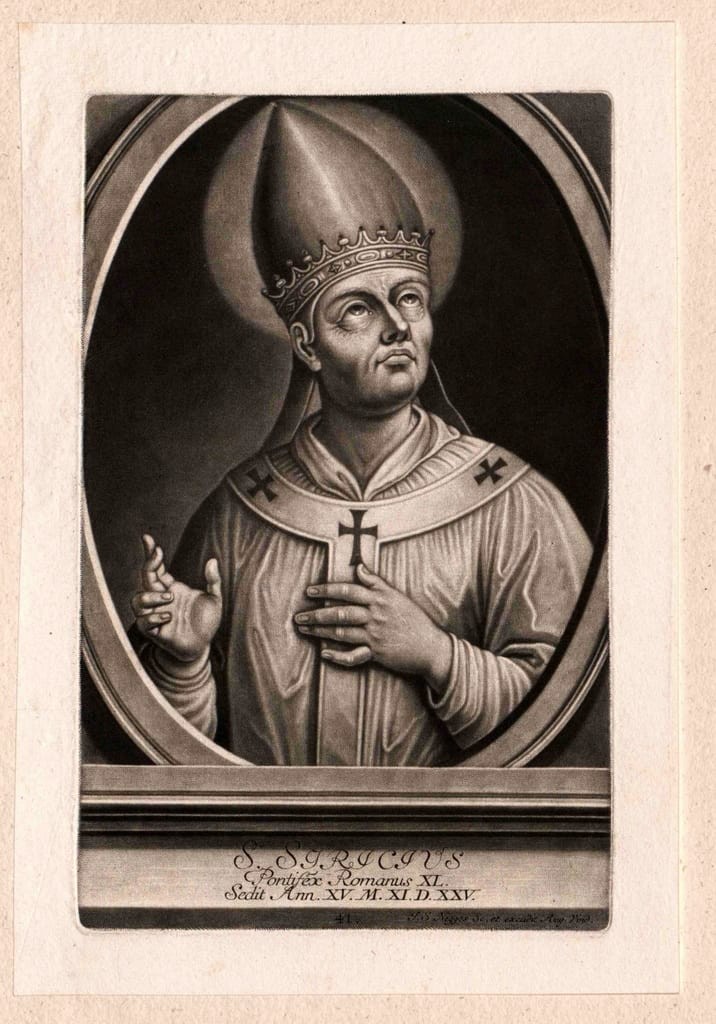
St Siricius, Pope (c334-399) Confessor, Bishop of Rome from December 384, Confessor, Defender of the Faith against heresies, Reformer of clerical discipline, Born in Rome and died there of natural causes aged around 64. In response to inquiries from Bishop Himerius of Tarragona, Siricius issued the Directa Decretal, containing Decrees of Baptism, Church discipline and other matters. His are the oldest completely preserved Papal Decrees. He is sometimes said to have been the first Bishop of Rome to call himself “Pope or Papa” – the word derived from the Greek, Papa, meaning Father. The Roman Martyrology reads today: “At Rome, St Siricius, Pope and Confessor, celebrated for his learning, piety and zeal for religion, who condemned various heretics and published salutary laws concerning Ecclesiastical discipline.” A True Shepherd.: https://anastpaul.com/2023/11/26/saint-of-the-day-26-november-st-pope-siricius-c334-399-confessor/
St Stylinus St Vacz – 11th Century Hermit in Visegrád, Hungary. No further information is available.
Martyrs of Alexandria – 650+- Saints: A group of approximately 650 Christian Priests, Bishops and Laity Martyred together in the persecution of Maximian Galerius. We have the names and a few details only seven of them – Ammonius, Didius, Faustus, Hesychius, Pachomius, Phileas and Theodore. The were born in Egypt and were martyred there in c 311 in Alexandria, Egypt.
Martyrs of Capua – 7 Saints: A group of seven Christians Martyred together. The only details about them to survive are the names – Ammonius, Cassianus, Felicissimus, Nicander, Romana, Saturnin and Serenus. They were martyred in Capua, Campania, Italy, date unknown.
Martyrs of Nicomedia – 6 Saints: A group of six Christians Martyred by Arians. Few details have survived except their names – Marcellus, Melisus, Numerius, Peter, Serenusa and Victorinus. Martyred in 349 in Nicomedia, Bithynia, Asia Minor (modern Izmit, Turkey).
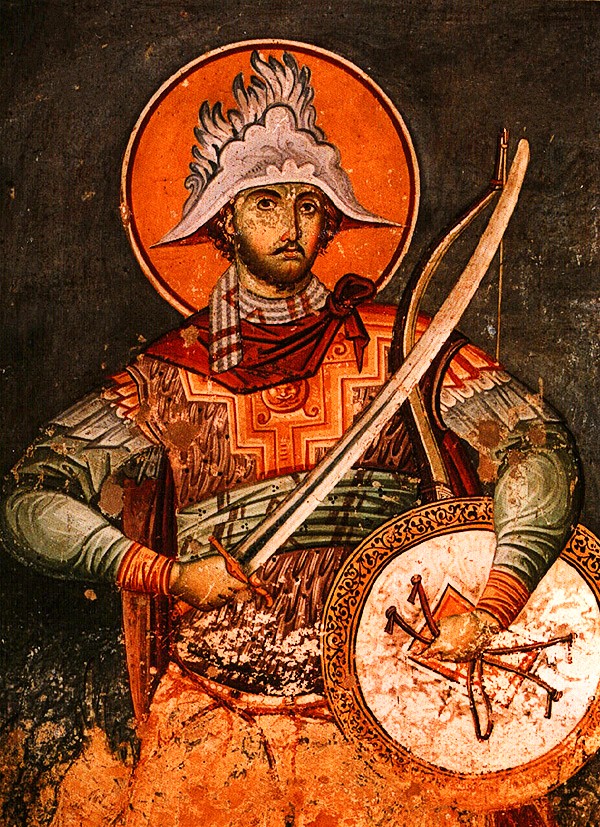
Saint of the Day – 25 November – Saint Mercurius (3rd Century) Martyr, Soldier. Born in the City of Eskentos in Cappadocia, in Eastern Asia Minor (modern-day Turkey) and died by beheading bin c250 in Caesarea, Cappadocia. According to tradition, he was the soldier who killed Julian the Apostate during his campaign in Persia. Also known as – Mercury.
The Roman Martyrology reads today: “At Caesarea in Cappadocia, St Mercury, soldier, who vanquished the barbarians and triumphed over the cruelty of Decius, through the protection of his Guardian Angel. Finally, having acquired great glory from his sufferings, he was crowned with Martyrdom and went toi reigh forever in Heaven.”
Mercury was, for the pagans, the god of commerce and ingenious activities, the winged messenger of the other gods. The corresponding divinity of the Greek Olympus, had the name of Hermes. And this name had and still has, greater fortune among the Baptised. Probably, this is due to the fact that the name had, as intermediaries, seven or eight Saints named Hermes. But not even the name of Mercury remained confined to the pagan world. In the Christian Calendar, in fact, there are two Saints of this name: both Martyrs and both soldiers. Today’s Saint, our Mercurius, then, also had a certain popularity, at least in the East, where his legendary Passion was formed and spread.
According to this Passio, Mercurius would have served with honour under Decius and Valerian, when these two Emperors published their edict of persecution. Mercurius, who had become the Commander-in-Chief of the army, remembered at a good moment that he was the son of a Christian and that he had been Baptised with the symbolic name of Philopatros, that is, “who loves the father.”
Out of love for his father and not only for his earthly father, the one whom his soldiers called Mercurius, thus presented himself to confess his Faith before his friend, the Emperor. There followed the well-known tortures and bloody wounds which were healed three times by an Angel, until Mercurius was taken on the back of a donkey to Cappadocia that is, to his homeland, to be beheaded.
Mosaic of Saint Mercurius inside the Hosios Loukas Monastery, Greece.
His Relics favoured prodigious cures and sudden conversions. But even greater fame came to the warrior Martyr from the miracle, according to which, he was, more than a hundred years later, the killer of the renegade Emperor, Julian the Apostate.
It is known from history that Julian fought against the Persians, on the eastern borders of the Empire and died during those battles. His death was welcomed as a liberation by the countless persecuted Christians, who saw in that tragic event, the just punishment of Heaven.
According to the faithful of Cappadocia, it was Saint Mercurius himself, who in the appeared in the guise of a soldier, who used his spear, by Divine order, against the chest of the Apostate Emperor! In reality, nothing historically certain is known about this event. But, what is certain, is the antiquity of Mercarius’ cult, in Caesarea of Cappadocia, on 25 November.
To the above I would like to add the following:
“God punishes men, for the most part, in kind, i.e. in the same way in which they have sinned. “By what things a man sinneth,” says the Wise Man, “by the same he also is tormented.” Absalom prided himself on his long hair and it caused his death. The rich glutton sinned with his palate and it was his tongue and palate which were tormented in the fire of hell. Antiochus tormented the seven Machabean brethren by tearing and maiming their flesh and his own flesh was eaten by worms (2 Mach ix 6). Aman wished to hang Mardochai and prepared a gallows for him and on the same gallows he was himself hanged. The women of Bethlehem would not shelter the Mother of God and the Divine Son and their children perished at the revengeful and cruel hand of Herod. Napoleon I imprisoned the Holy Father and in his turn was imprisoned first in Elba and then in St Helena. In these and many similar events, the Christian sees the Finger of God.” (The Catechism Explained By Fr Francis Spirago 1899). And so we will add our St Macurius and God’s punishement of Julian the Apostate!
Bl Adalbert of Caramaico St Alanus of Lavaur St Audentius of Milan
Blessed Beatrice d’Ornacieux O.Cart (c 1260–1303) Virgin, Carthusian Nun, Mystic, Founded a Monastery at Eymeu on France. The Roman Martyrology states: “In the territory of Valence in France, Blessed Beatrice d’Ornacieux, Virgin of the Carthusian Order, who, famous for her love for the Cross, lived and died in extreme poverty in the Monastery of Eymeu which she founded.” A Lover of the Cross: https://anastpaul.com/2021/11/25/saint-of-the-day-25-november-blessed-beatrice-dornacieux-o-cart-c-1260-1303/
St Bernold of Ottobeuren Bl Conrad of Heisterbach Blessed Egbert (c1010-1075) Abbot
St Erasmus of Antioch Bl Garcia of Arlanza Bl Guido of Casauria St Imma of Wurzburg St Jucunda of Reggio Aemilia St Mercurius (3rd Century) Martyr
St Moses of Rome (Died c251) Priest MartyrConfessor. The Roman Martyrology reads today: “At Rome, St Moses, Priest and Martyr, who, with others detained in prison, was often consoled by the letters of St Cyprian (Martyr). After he had withstood, with unbending courage, not only the pagans but, also the Novatian schismatics and heretics, he was finally, in the persecutions of Decius, crowned with a Martyrdom which fills the mind with adminration, according to the words of Pope St Cornelius (Martyr).” His Life and Death: https://anastpaul.com/2023/11/25/saint-of-the-day-25-november-saint-moses-of-rome-died-c251-priest-martyr-confessor/
Martyrs of Africa – 13 Saints: A group of 13 Christians murdered together for their faith in Africa, date unknown. The only details to have survived are their names – Claudian, Cyprian, Donatus, Felix, Januarius, Julian, Lucian, Marcian, Martialis, Peter, Quirianus, Victor and Vitalis.
Saint of the Day – 24 November – Saint Protasius (Died c352) Bishop of Milan, Defender of St Athanasius against the Arians. Also known as – Protasius Algisi, Protasio…
The Roman Martyrology reads today: “At Milan, St Protasius, the Bishop, who defended the cause of Athanasius before the Emperor Constans, in the Council of Sardica. Having sustained many labours for the Church entrusted to him and for religion, he departed this life to go to the Lord.”
Protasius was the 8th Bshop of Milan. He is attributed with twenty-five years of Episcopal service to the Diocese of Milan which however, should be reduced to approximately ten, since the 7th Bishop, Mirocle, was present at the Council of Arles in 314 and the 10th, Dionigi, was deposed in 355.
St Athanasius states that he was received in Milan by the Emperor Constans in the company of the Bishop, Protasius (Apologia ad Constantium): this event would have occurred in 342-343; furthermore, St Athanasius also remembers our Protasius as a participant in the Council of Sardica (343-344; Apologia).
According to the ancient catalogues, Protasius died on 24 November (some records believe he died on 27 November) and was buried in the Milanese Basilica of St Vittore. We are unable to ascertain, with certainty, whether it was during his Episcopate or that of his successor, Eustorgio I, that the two Councils of 345 and 347-348 were held in Milan, which culminated in the condemnation of Photinus, the Bishop of Sirmium, a supporter of Arianism.
St Chrysogonus (Died 304) Priest Martyr. The Roman Martyrology reads: “The birthday of St Chrysogonus, Priest Martyr. After a long imprisonment in chains for the constant confession of Christ, he was, by order of Diocletian, taken to Aquileia, where he terminated his Martyrdom by being beheaded and thrown into the sea.” His Life and Death: https://anastpaul.com/2023/11/24/saint-of-the-day-24-november-saint-chrysogonus-died-304-priest-martyr/
Bl Conrad of Frisach St Crescentian of Rome St Eanfleda of Whitby St Felicissimus of Perugia St Firmina of Amelia St Flora of Cordoba St Hitto of Saint-Gall St Kenan of Damleag St Leopardinus of Vivaris St Marinus of Maurienne St Mary of Cordoba St Portianus St Protasius (Died c352) Bishop St Romanus (Died 385) Priest
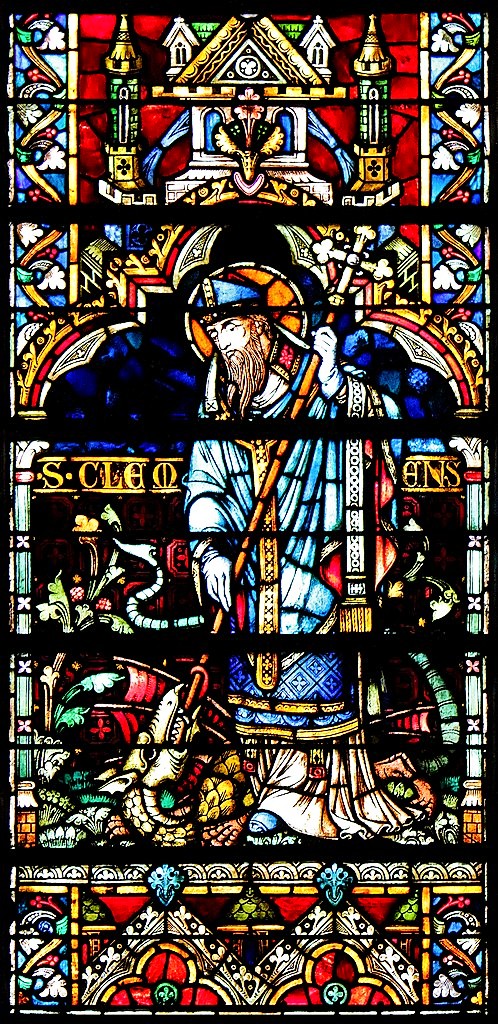
Saint of the Day – 23 November – St Clement of Metz (3rd-4th Centuries) The 1st Bishop of Metz, now in France, Miracle-worker. Also known as Clemens and The Dragon Slayer.
Stained glass at Metz Cathedral
Born around the 3rd or 4th Century, Clement of Metz was the 1st Bishop of Metz, now in France. Medieval accounts tell the fascinating tale of Titus Flavius Clemens, a Roman Senator initially tasked with persecuting Christians under the orders of Emperor Nero. However, he converted to the Christian Faith and was Baptised.
At that time, the Apostle Peter, already established as the Bishop of Rome, encouraged his disciples to spread the Gospel in Gaul. Clement, having been Consecrated Bishop, received the mission of evangelising the City of Metz. owever,, his journey was marked by a tragic event – the death of St Materne of Cologne, his companion, in Alsace.
Returning to Rome, Clement received from the St Peter, a staff with miraculous powers. With this object, he managed to resurrect St Materne, a prodigious act which greatly contributed to the conversion of the local inhabitants.
Clement arrived in Metz accompanied by Celeste, a Priest and Felix, a Deacon, who would later become his successors. During the reign of Orius, the King of Metz, Clement took up residence on the hill of Sainte-Croix, where he preached to the population.
The culmination of his apostolate came, when he resurrected the recently deceased daughter of King Orius. This spectacular miracle led to the Royal couple being Baptised, followed by a mass conversion of the local population.
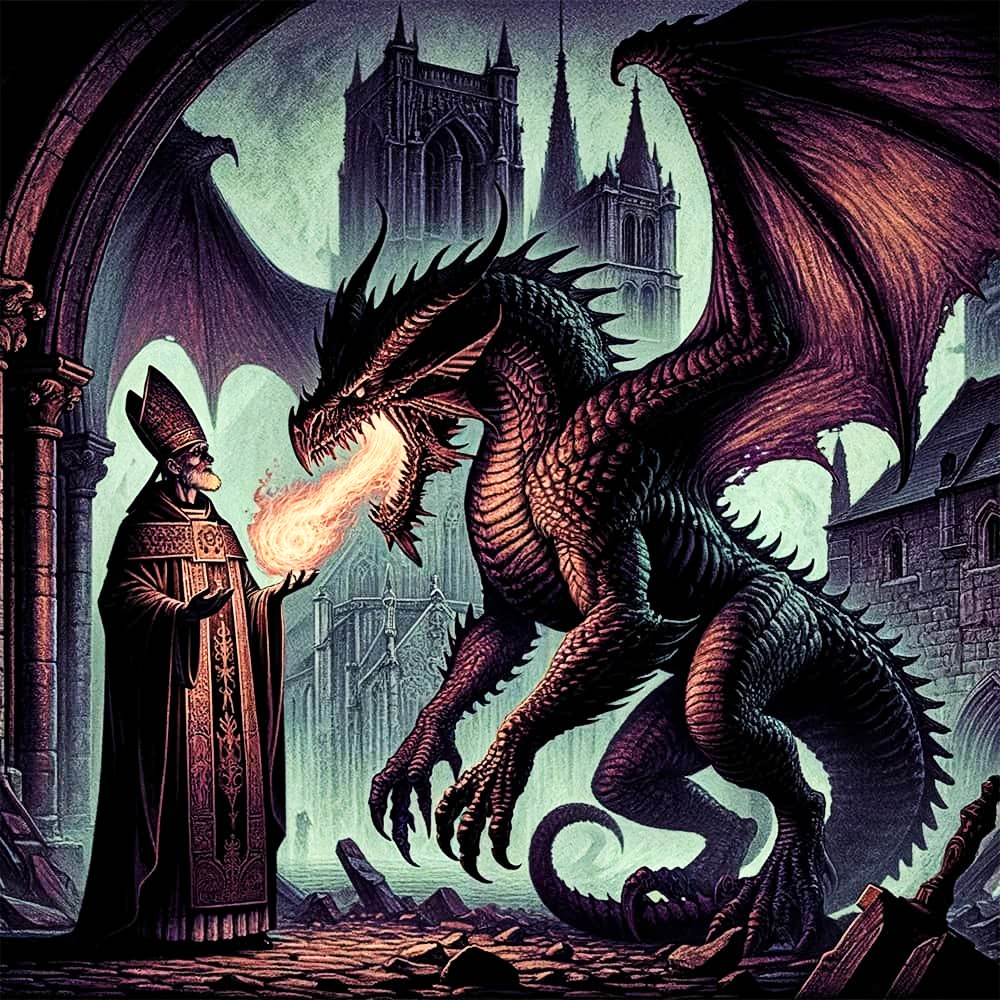
Graoully is a legendary animal which was born in the middle of the Metz amphitheatre. According to legend, this giant dragon spat flames with the smell of sulfur and devastated everything in its path. The residents consequently never dared to venture into the neighbourhood and some even considered leaving the City.
Faced with the distress of the City, Clement prayed for the aid of God in assisting the frightened people. If the people of Metz agreed to be Baptised, the Christian Bishop would find a way to get rid of this hideous animal.
Clement then went to the Graoully habitat (at the amphitheater) passing by the hill of Sainte-Croix and continuing his route in the middle of a crowd whom he silenced with a firm ‘keep quiet’ in a street, named since that day, ‘the Quiet Street’
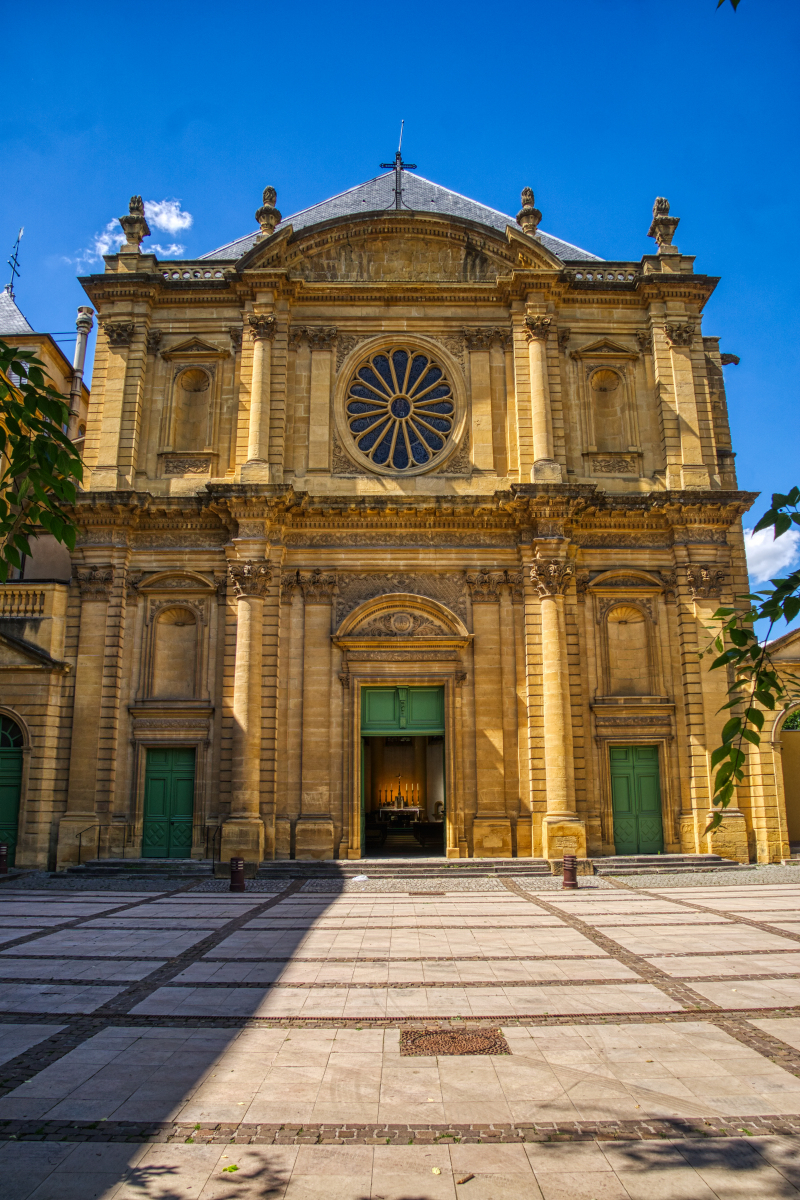
When he arrived, the brave man put his shawl around the beast’s neck to drag it to the Seille (the river which crosses the City) into which he threw himself with seven little Graoullys. From that day on, the people of Metz never heard of the Graoully again. On the other hand, the Graoully has become a strong symbol of the City and has been found in several events in the City since the 10th Century. To celebrate its disappearance, a monument was built on the site where the monstrous creature once stood – this is a Monument to the Christian Faith, Metz Cathedral, dedicated to our Saint, (listed as a historic monument). and to its courageous Bishop Clement whoc vanquished the enemy of them all.
St Clement Cathedral
This dragon is mainly represented in the crypt of the Cathedral. A semi-permanent sculpture of Graoully is also suspended in the air of the Rue Taison.
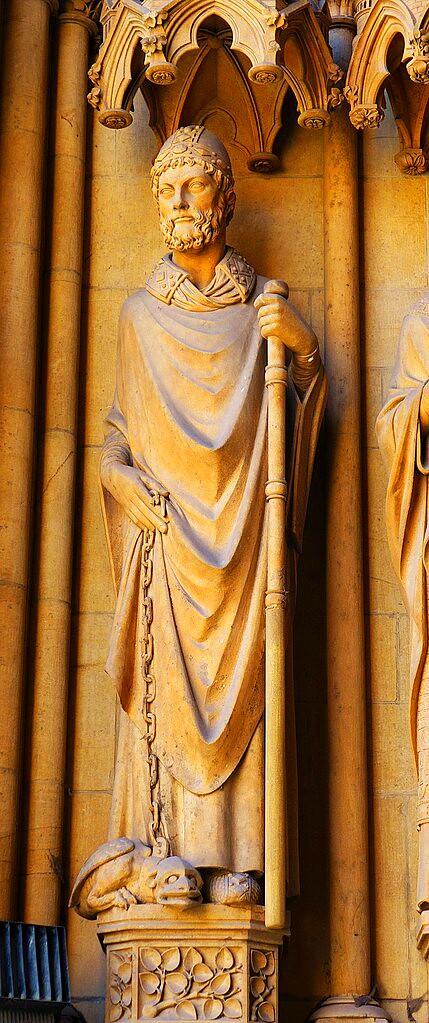
Today, a Statue of Saint Clement holding a chained dragon is also visible on the portal of the Virgin of the Saint-Etienne Cathedral of Metz. Finally, this mythical animal also appears on the coat of arms of Metz City.























 AnaStpaul
You must be logged in to post a comment.