Posted in SAINT of the DAY, St PAUL!, The APOSTLES & EVANGELISTS

Saint of the Day – 6 February – St Titus (Died c96) Bishop, Confessor

Saint of the Day – 6 February – St Titus (Died c96) Bishop, Confessor, Disciple of St Paul, Missionary, Peacemaker, Teacher, Administrator, Friend – Patron of Crete.

Saint Titus, Bishop and Confessor
From the Liturgical Year, 1904
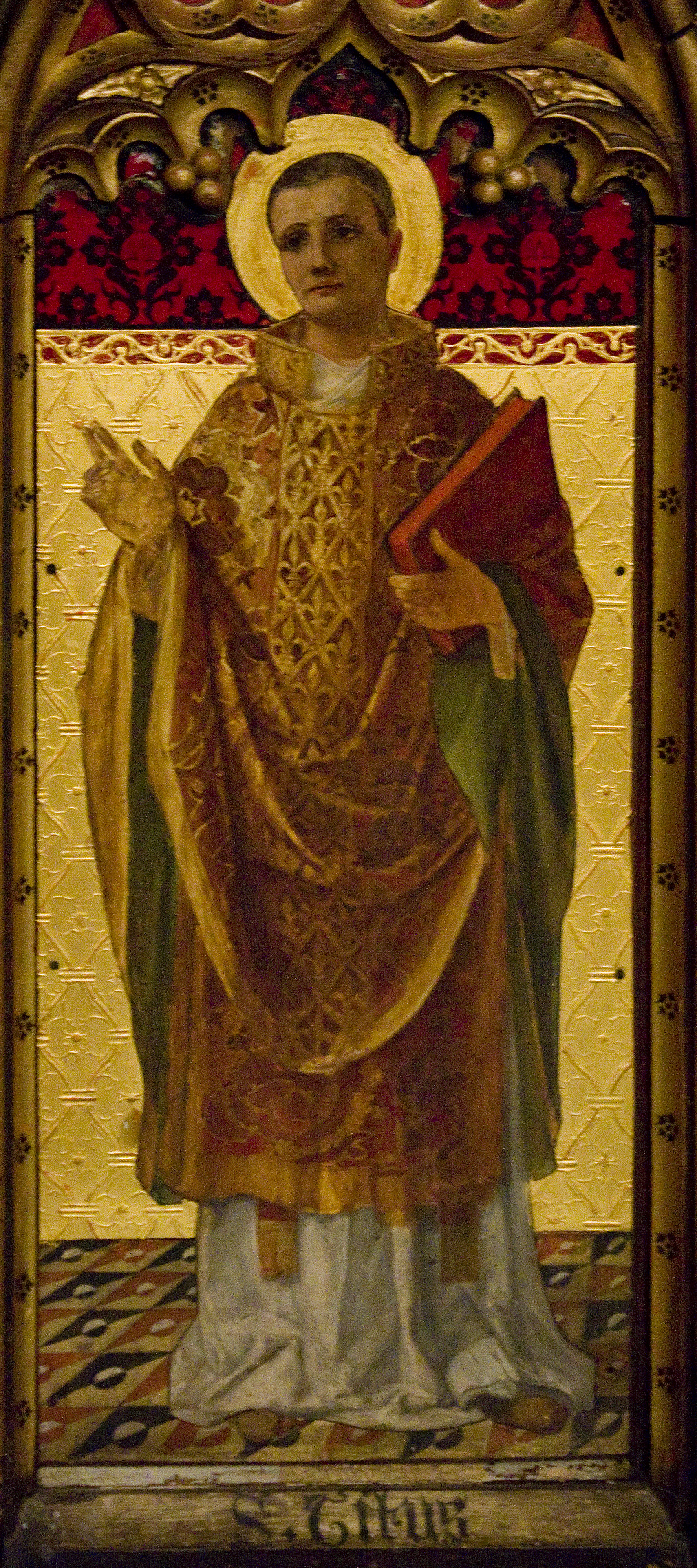
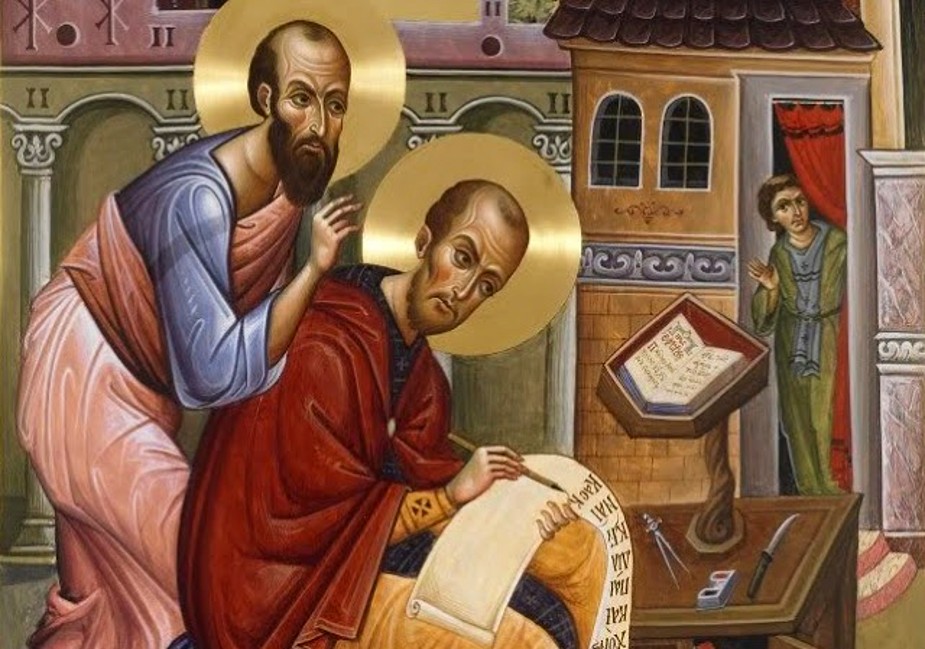
We are to celebrate today, the Feast of a holy Bishop of the Apostolic Age–a Disciple of the Apostle St Paul. Little is known of his life but, by addressing to him, one of his inspired Epistles, the Apostle of the Gentiles has immortalised his memory. Wheresoever the Faith of Christ has been or shall be preached, Titus’ name has been venerated by the Faithful and, as long as the world lasts, the holy Church will read to her children, this Epistle, which was written, indeed, to a simple Bishop of the Isle of Crete but was dictated by the Holy Ghost and, therefore, destined to be a part of those Sacred Scriptures, which contain the Word of God. The counsels and directions given in this admirable Letter, were the rule of the holy Bishop, for whom St Paul entertained a very strong affection. St Titus had the honour of establishing the Christian Religion in that famous Island, which was one of the strongholds of Paganism. He survived his master, who was put to death by Nero. Like St John, he sweetly slept in Christ at a very advanced age, respected and loved by the Church he had founded. As we have already observed, his life left but few traces behind it; but these few are sufficient, to prove him to have been, one of those wonderful men, whom God chose as the directors of His infant Church.

Titus, Bishop of Crete, was initiated into the Christian faith by Paul the Apostle and being prepared by the Sacraments, he shed so bright a light of sanctity on the infant Church that he merited to be chosen as one of the Disciples of the Doctor of the Gentiles. Being called to bear the burden of preaching the Gospel, so ardent and persevering was he, in the discharge of that duty that he endeared himself to St Pau,l so much, as to make the Apostle say in one of his Epistles that being come to Troas, to preach the Faith in that City, he found no rest for his heart because he found not there his brother Titus. And having, a short time after this, gone to Macedonia, he thus expresses his affection for his disciple in these terms -“ But God who comforteth the humble, comforted us by the coming of Titus.”

Being sent to Corinth by the Apostle, he acquitted himself in this mission (which mainly consisted in collecting the alms, given by the piety of the faithful, towards alleviating the distress of the Hebrew Church) with so much prudence and patience that he not only confirmed the Corinthians in the Faith of Christ but made them so desirous of a visit from Paul, who had been their first teacher in the faith that they shed tears of longing affection.
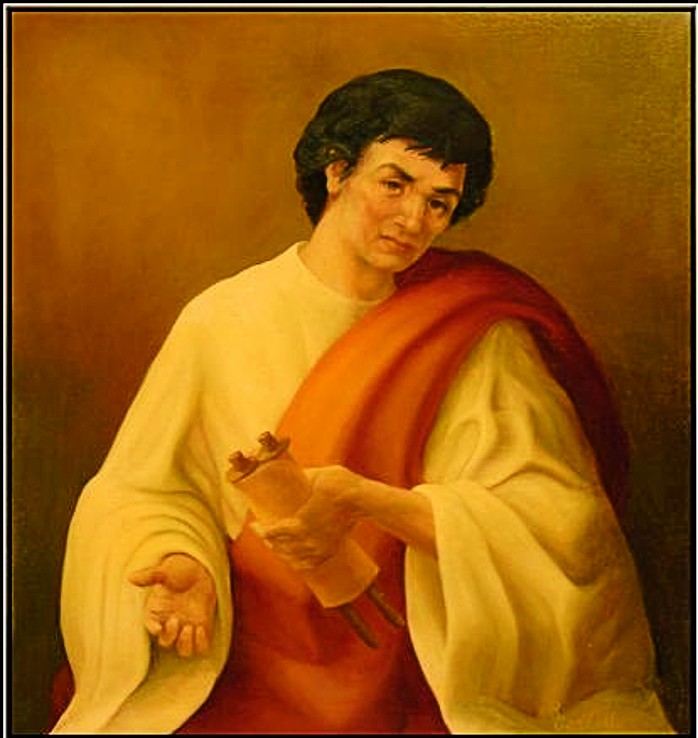
After having undertaken several journeys both by sea and land, in order to sow the seed of the Divine Word among people of various tongues and Countries and, after having supported, with great firmness of soul, countless anxieties and fatigues, in order to plant the standard of the Cross – he landed at the Island of Crete, in company with his master, St Paul. The Apostle made him Bishop of the Church which he had founded in that Island and it is not to be doubted but that Titus so discharged his duty, as that he became a model to the Faithful, according to the advice given to him by his master, in good works, in doctrine, in integrity, in gravity.
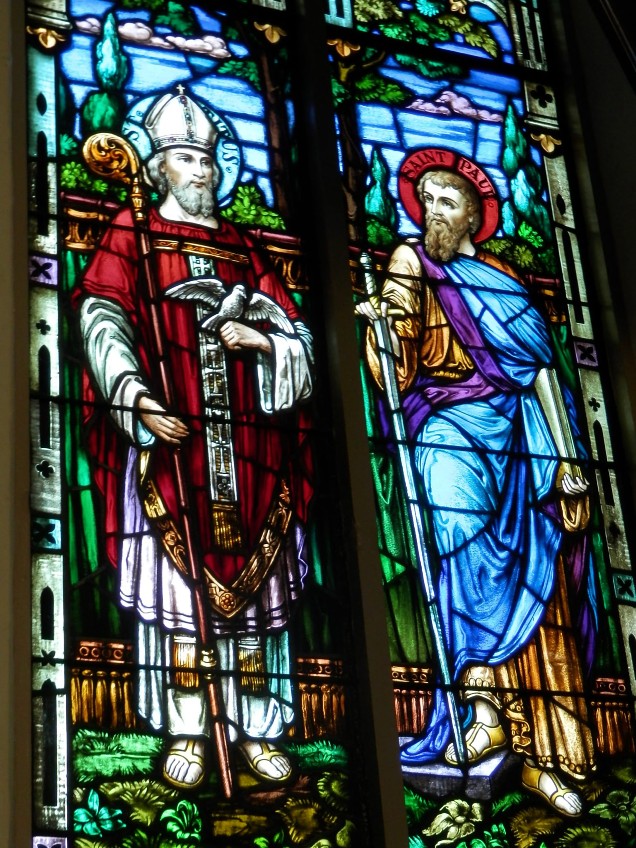
St Titus left with St Paul

Thus did he become a shining light, pouring forth the rays of the Christian Faith on them that were sitting in the darkness of idolatry and lies, as in the shadow of death. Tradition tells us that he passed into Dalmatia, where he laboured with extraordinary zeal to enlist that people under the Banner of the Cross.

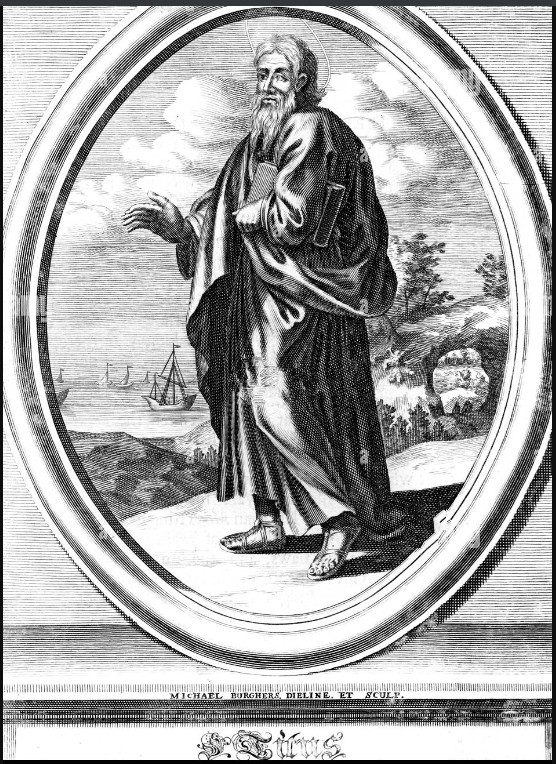
At length, full of days and merit, in the ninety-fourth year of his age, he slept in the Lord, the death of the just, on the vigil of the nones of January (4 January) and was buried in the Church in which the Apostle had appointed him Minister of the Word. St John Chrysostom and St Jerome pass great eulogium upon this holy Bishop and his name is inscribed in the Roman Martyrology on the day abovementioned but in establishing his Feast to be celebrated, with an Office and Mass, throughout the Catholic world, by the Clergy secular and regular, the Sovereign Pontiff Pius the Ninth ordered it to be kept on the first vacant day following the anniversary of the Saint’s death, which is today, 6 February.

Posted in MARIAN TITLES, SAINT of the DAY, St PAUL!, The APOSTLES & EVANGELISTS

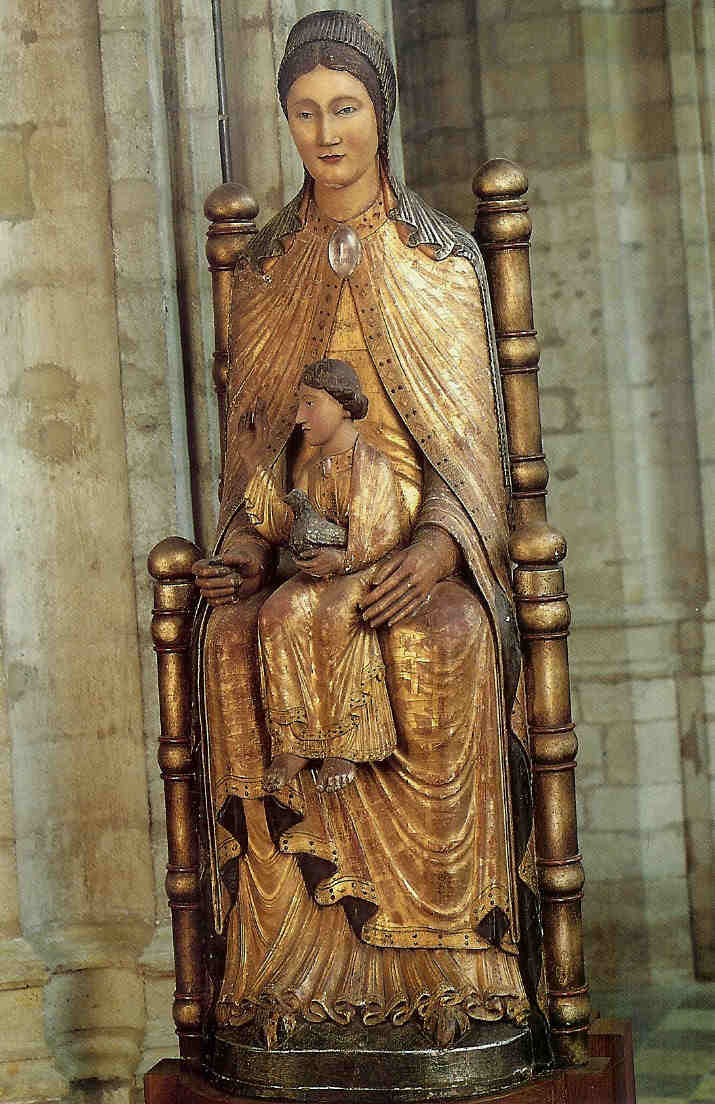
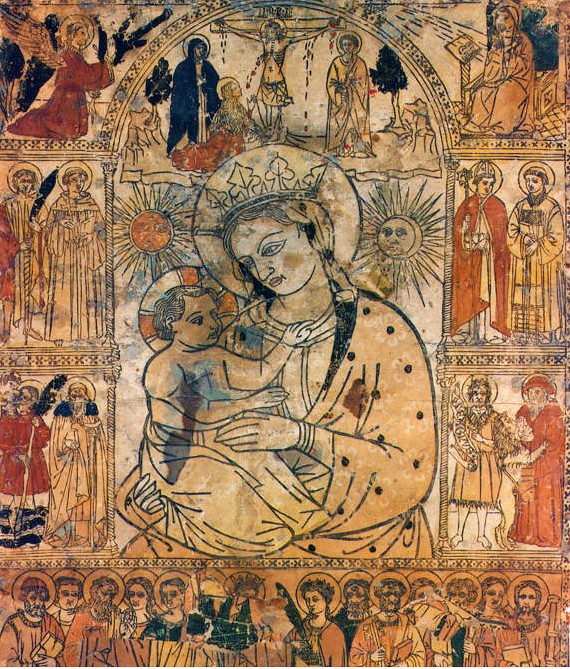
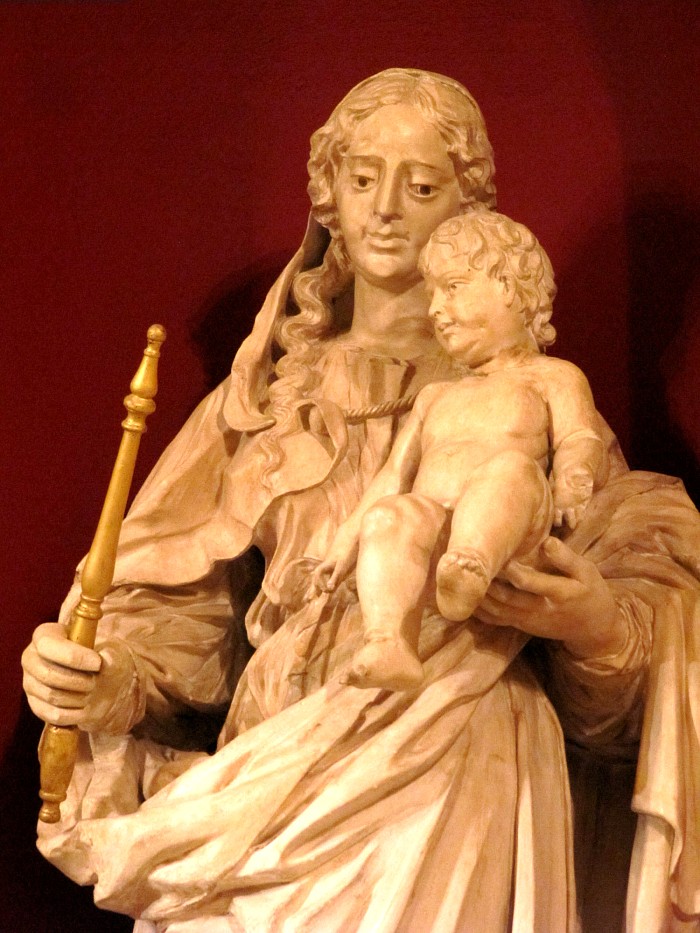
“Sedes Sapientia” – Heilige Maagd Maria van Leuven / Our Lady of Louvain, Belgium (1444), St Titus, St Dorothy, Virgin Martyr and Memorials of the Saints – 6 February

“Sedes Sapientia” – Heilige Maagd Maria van Leuven / Our Lady of Louvain, Belgium (1444) – 6 February:
HERE
:
https://anastpaul.com/2021/02/06/our-lady-of-louvain-belgium-1444-sedes-sapientia-and-memorials-of-the-saints-6-february/

Nicolaas de Bruyne, 1442, Leuven, Pieterskerk

St Titus (First Century-c96) Bishop, Confessor, Disciple of St Paul, Missionary, Peacemaker, Teacher, Administrator, Friend – Patron of Crete. The New Testament does not record his death.

St Dorothy of Caesarea (c279/290-311) Virgin Martyr
The Life and Death of St Dorothy:

https://anastpaul.com/2019/02/06/saint-of-the-day-6-february-st-dorothy-of-caesarea-died-311-virgin-martyr/

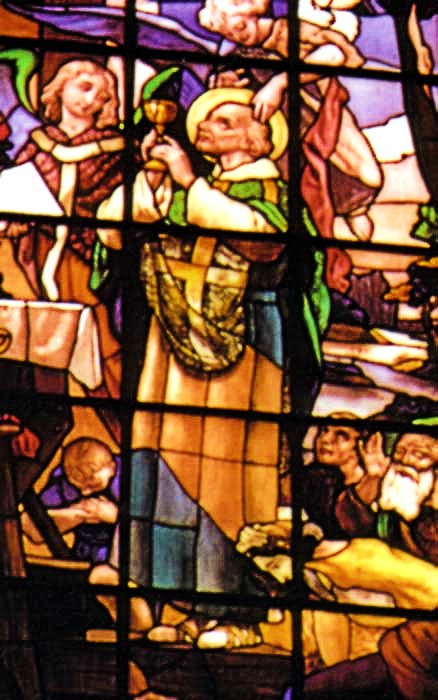
St Amand of Maastricht (c 584-c 679) “The Apostle of Belgium”. Bishop of Tongeren-Maastricht and one of the great Missionaries of Flanders (Belgium), Monk, Abbot, Papal Missionary Bishop and Advisor, Miracle-worker, Founder of numerous Monasteries which became known for their hospitality to pilgrims. And another Saint Patron for eye diseases. amongst many other patronages.
His Life:

https://anastpaul.com/2021/02/06/saint-of-the-day-6-february-saint-amand-of-maastricht-c-584-c-679-bishop-the-apostle-of-belgium/

Saint Pedro Bautista Blásquez y Blásquez OFM (1542-1597) Priest Martyr
and the 26 Martyrs of Japan – Died by Crucifixion on 5 February 1597. Canonised on 8 June 1862 by Pope Pius IX.

St Amand of Moissac
St Amand of Nantes
St Andrew of Elnone
Bl Angelus of Furci
St Antholian of Auvergne
St Brinolfo Algotsson
Cassius of Auvergne
Bl Diego de Azevedo
St Ethelburga of Wessex
Bl Francesca of Gubbio
St Gerald of Ostia
St Gonsalo Garcia OFM
St Guarinus
St Guethenoc
St Hildegund
St Ina of Wessex
St Jacut
St Liminius of Auvergne
St Maximus of Aurvergne
St Mel of Ardagh
St Melchu of Armagh
St Mun of Lough Ree
St Relindis of Eyck
St Revocata
St Saturninus
St Tanco of Werden
St Theophilus
St Theophilus the Lawyer

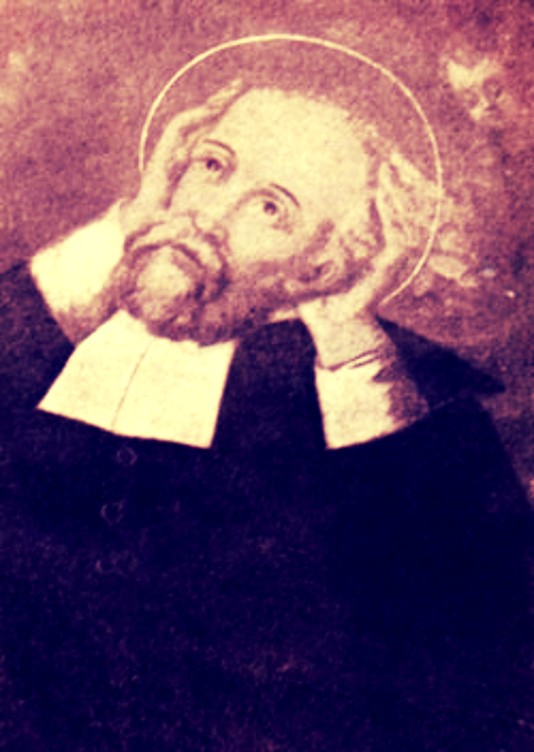
St Vaast of Arras (c 453-539 or 540) Bishop – The First Bishop of Arras, France , Hermit, Ascetic, Miracle-worker, Advisor to King Clovis. The Roman Martyrology reads: “In Arras in Belgian Gaul, today in France, Saint Vedastus, Bishop, who, sent by Saint Remigius Bishop of Rheims to the devastated City, catechised King Clovis, re-established the Church and held it for about forty years and brought to an end, the need of work for evangelisation among the previously still pagan peoples of the region.” St Vaast is another Patron of eye diseases, problems and blindness.
Biography:

https://anastpaul.com/2022/02/06/saint-of-the-day-6-february-saint-vaast-of-arras-c-453-539-or-540/

St Victorinus of Auvergne

Martyrs of Emesa:
St Luke the Deacon
St Mucius the Lector

Posted in Against STORMS, EARTHQUAKES, THUNDER & LIGHTENING, FIRES, DROUGHT / NATURAL DISASTERS, SAINT of the DAY

Saint of the Day – 5 February – Saint Bertulph c640-c705) Priest, Abbot

Saint of the Day – 5 February – Saint Bertulph c640-c705) Priest, Abbot, Miracle-worker, Founder of a Monastery in Renty, France. Born in c640 in eastern Europe and died in c705 of natural causes in Renty near Calais, France. Patronage – against storms. Also known as – Berton, Bertou, Bertoul, Bertulf, Bertulphe, Bertulphus. Name means: the shining wolf (old high German). Additional Memorial – 20 May (transfer of Relics).

Bertulph came to Flanders with his pagan parents . Under the influence of St Audomar of Thérouanne, he converted to Christianity, was Baptised and was Ordained a Priest by St Audomar.

He then became steward of the estates of the pious Earl Wambert in Renty, showing generosity to the poor. Envious people accused him of extravagance; his innocence was miraculously confirmed as cheese and bread turned into roast meat and water into wine. Bertulph persuaded his master to found four Churches in the area. Together they made a pilgrimage to the seven pilgrimage Churches in Rome.

During the journey, while Bertulph was tending the horses at night and reading a book, he and his book remained dry despite the heavy rain. An eagle soaring overhead covered him with its wings and a heavenly torchlight shone for him to read. Overwhelmed by such miracles, Wambert made Bertulph his adoptive son.

After Wambert and his wife died, leaving their inheritance to Bertulph, he established a Monastery dedicated to Dionysius on the inherited estates at Renty, which he presided over as Abbot.

To protect Bertulph’s Relics from being desecrated by the invading Normans, they were transferred to Boulogne-sur-Mer in 898. Then they came to the Saint-Sauveur Collegiate Church in Harelbeke in Flanders, finally in 955 to the Saint-Pierre-au-Mont-Blandin Monastery in Ghent, where they were destroyed in the Reformation in 1578. The Monastery at Renty later became a Cistercian Monastery, demoted to priory in 1168 and dissolved in 1668.

Posted in LENT, MARIAN TITLES, SAINT of the DAY

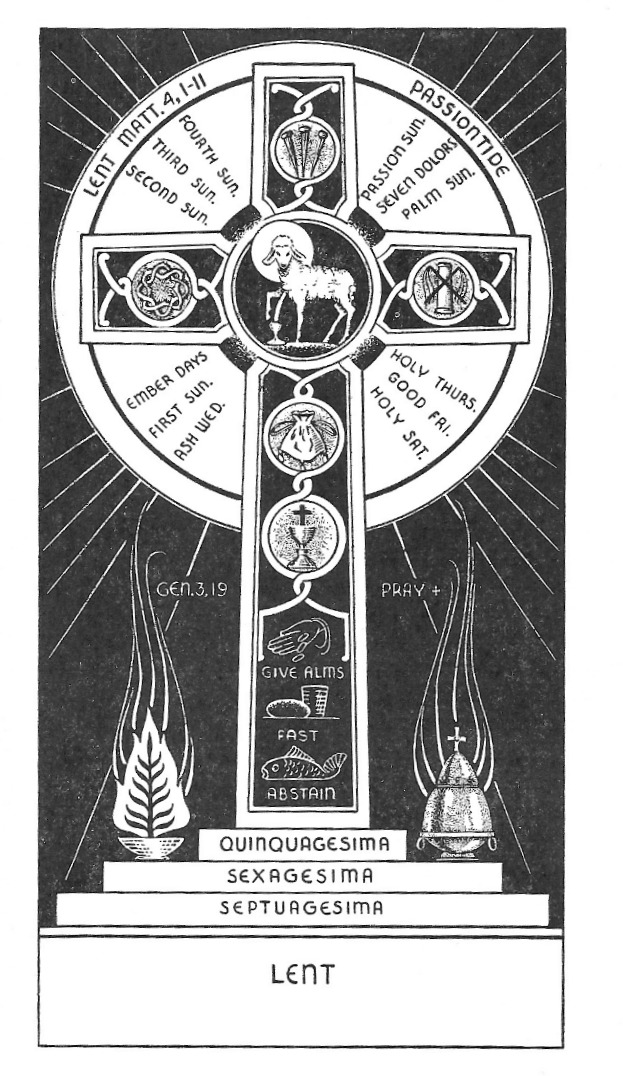
Septuagesima Sunday, Dedication of the first Church of Our Lady, by St Peter – Tortosa, Italy, St Agatha Virgin Martyr and Memorials of the Saints – 5 February

Septuagesima Sunday:
The word “Septuagesima” is Latin for “Seventieth.”
It is both the name of the Liturgical Season and the name of the Sunday.
Septuagesima Sunday marks the beginning of the shortest Liturgical Season.
This Season is seventeen (17) days long and includes the three Sundays before Ash Wednesday.
The length of the Season never changes but the start date is dependent on the movable date of Easter, which can fall between 22 March-25 April.
Septuagesima Sunday can be as early as 18 January.

EPSON MFP image

Dom Prosper Guéranger OSB (1805-1875) Abbot of Solesmes from 1837-1875, devoted a whole volume of his great work – The Liturgical Year, to Septuagesima. In his Preface, Dom Guéranger referred to Septuagesima as a Season of “transition, inasmuch as it includes the period between two important Seasons – Christmas and Lent. … The Church, therefore, has instituted a preparation for the holy time of Lent. She gives us the three weeks of Septuagesima, during which she withdraws us, as much as may be, from the noisy distractions of the world, in order that our hearts may be the more readily impressed by the solemn warning she is to give us, at the commencement of Lent, by marking our foreheads with ashes.”
The Septuagesima Season helps the faithful ease into Lent. It is a gradual preparation for the serious time of penance and sorrow; to remind the sinner of the grievousness of his errors and to exhort him to penance.
Liturgically it looks very much like Lent. The Gloria and Alleluia are omitted, the tone becomes penitential with the Priest wearing Purple Vestments.
The main difference is that there are no fasting requirements.

Dedication of the first Church of Our Lady, by St Peter – Tortosa, Italy – 5 February:
HERE:

https://anastpaul.com/2021/02/05/dedication-of-the-first-church-of-our-lady-by-st-peter-tortosa-and-memorials-of-the-saints-5-february/

St Agatha (c 231- c 251) Virgin Martyr
Her Life and Death:

https://anastpaul.wordpress.com/2018/02/05/saint-of-the-day-st-agatha-c-231-c-251-virgin-and-martyr/

St Philip of Jesus (1572-1597) Martyr
His Life and Death:

https://anastpaul.com/2020/02/05/saint-of-the-day-5-february-st-philip-of-jesus-1572-1597/

St Adelaide of Guelders (c 970–1015) Abbess, Apostle of Charity, Miracle-worker, Reformer, Counsellor to the Archbishop of Cologne.
Biography:

https://anastpaul.com/2019/02/05/saint-of-the-day-5-february-st-adelaide-of-guelders-c-970-1015/

St Agatha Hildegard of Carinthia
St Agricola of Tongres

St Albinus of Brixen (Died 1005) Bishop of Brixen, Advisor to both Emperors of the Holy Roman Empire.
The Roman Martyrology: states: “In Bressanone (Brixen) in South Tyrol, commemoration of St Albuino, Bishop, who transferred the Episcopal Chair from Sabion to this seat.”
Biography:
https://anastpaul.com/2022/02/05/saint-of-the-day-5-february-saint-albinus-of-brixen-died-1005/

St Anthony of Athens

St Avitus of Vienne (c 450-c 518) Bishop of Vienne, Poet, Confessor and Defender of the Mysteries of the Faith against heretics, writer.
Biography:

https://anastpaul.com/2021/02/05/saint-of-the-day-5-february-saint-avitus-of-vienne-c-450-c-518-bishop/

St Bertulph c640-c705) Abbot
St Buo of Ireland
St Calamanda of Calaf
St Dominica of Shapwick
St Fingen of Metz
Bl Françoise Mézière
St Gabriel de Duisco
St Genuinus of Sabion
St Indract
St Isidore of Alexandria
St Jesús Méndez-Montoya
Bl John Morosini
St Kichi Franciscus
St Modestus of Carinthia

Bl Primo Andrés Lanas
St Saba the Younger
St Vodoaldus of Soissons

Martyrs of Pontus: An unknown number of Christians who were tortured and martyred in assorted painful ways in the region of Pontus (in modern Turkey) during the persecutions of Maximian.

The Twenty-Six Martyrs of Japan: 26 Saints – the First Martyrs of Japan. Martyred on 5 February 1597 by Crucifixion, also known as Pedro Bautista Blasquez y Blasquez and 22 companions, along with Paulus Miki and 2 companions, were Beatified on 14 September 1627 by Pope Urban VIII, and Canonised on 8 June 1862 by Pope Pius IX.

Posted in Of ANIMALS / ANIMAL WELFARE, Of the SICK, the INFIRM, All ILLNESS, PATRONAGE - HEADACHES, PRAYERS to the SAINTS, SAINT of the DAY

Saint of the Day – 4 February – Saint Aventinus of Troyes (Died c538) Priest, Hermit

Saint of the Day – 4 February – Saint Aventinus of Troyes (Died c538) Priest, Almoner and Administrator of the funds for the See of Troyes, Hermit, Miracle-worker, gifted with a great affinity with animals, who came to him for help when ill or hurt. Born in Bourges, France and died in c538 of natural causes. Patronages – headaches, nervous disorders, of ill animals, of Saint Aventin sous Verrières and the Town of Creney, France. Also known as – Aventin, Aventine.

In the heart of ancient Gaul (today’s France), in the second half of the fifth century, Saint Aventinus was born, probably in Bourges. From the few documents which have come down to us, we know that his parents belonged to the middle class and were very religious. According to tradition, Christianity in those lands already spread in the third century. The sound moral and Christian principles of the parents would form the basis of his holiness – from an early age, Aventinus was held up as a model.

As a teenager, he began to wonder about the purpose of his life. He wanted to visit the most famous holy manof that region, the Bishop St Lupus of Troyes who, in the year 451 had saved the city from the invasion of Attila the Hun, by offering himself as a hostage. The elderly prelate was not slow to see sincere Christian virtues in the young man and desiring to see them brought to fruition for the glory of the Lord and the Church and so, St Lupo kept him with him as a disciple and assistant. It was the happy meeting of two true men of God.

Aventinus distinguished himself by the humility and zeal with which he carried out the work; constant in the practices of piety, he was growing internally. He had as an example a Saint who continually turned his attentions to him. The virtue that shone most in him was charity towards others. Slavery of foreign prisoners of war was widespread in those days – St Lupus and Aventinus did not remain indifferent to the children of God who were treated like beasts. They ransomed as many as they could, collecting alms for this purpose. Given their freedom, they worried about their spiritual health, often helping them to approach the Sacraments. St Luuso died in 479 and was succeeded by St Camelianus, who, knowing well the virtues of Aventinus, made him Steward, with ample power to manage alms.

God only knows how widespread poverty was and Aventinus’ attention to the poor was never limited to material aid. He aroused amazement at the miraculous way the Bishop’s finances could cope with so many expenses, there was something supernatural at work. Aventinus fame went on spreading but he, keeping faith with his humility and with the deep regret of the Bishop, decided to retire.

He was welcomed into a hermitage with the will to sanctify himself by living in solitude. Although he was not inclined to lead, he was soon elected Superior of the community. Precious was his example and the retreat became a school of perfection. That place was later named after him.

While living withdrawn from the world, he could not help but think about the redemption of slaves. Among others, news reached him of a certain Fidolus, of rare virtues, perhaps already a cleric, originally from Auvergne, who had lost his freedom at the hands of Theodoric I, King of Austrasia. It was about the year 530. Aventinus ransomed him for twelve gold pieces. Fidolus’ happiness and gratitude was immense and he decided to join the holy community, which seemed a most natural development.

Meanwhile, Aventinus’ fame was spreading again among the people who often visited him. The tranquility of the brothers was compromised and Aventinus decided to leave. It was Fidolus himself who took over the position of Superior (he died with fame as a Saint on 16 May 540).

Aventinus withdrew to a solitary place along the Seine, about seven miles distant from Troyes. He had only brought with him some bread, legumes, a hoe and some seeds. He did not want to be a burden to anyone. Finally he had achieved the desired tranquility, dividing his time between prayer, work and penance. He slept little, wore a poor and rough dress, ate only three days a week.

A few years passed but even here he could not escape the admiration of the people, while not even the Bishop St Camelianus had forgotten about him. The latter, who also knew well of his knowledge of the Psalms and Sacred Scripture, conferred upon him Sacred Orders. The maturity of the years was crowned by the Priesthood. He lived peacefully the last period of his life celebrating Mass near his hut, for the benefit of the locals.
Demanding with himself, he looked to the needs of his neighbour with his big heart, also curing those who were sick. His charity became legendary and it is said that even a bear knocked on his door one night. He lay down on the ground and held out a paw in which a thorn was stuck. The hermit assisted him by releasing the thorn and bandaging his wound.

He fell asleep in the peace of the Lord on 4 February of the year 538. Acclaimed Saint and Patron of those places he had lived, a few years later Bishop Vincent had a Church built in his honour, where he placed his precious Relics and in which he then wanted to be buried. Chapels and Churches were erected in his honour, even outside France. From time immemorial he has been particularly invoked against headaches and nervous diseases. Today, near Troyes, a Town has his name (Saint Aventin sous Verrières) and Creney venerates him as Patron.

St Aventinus, Hermit and Priest, is not to be confused with the Aventinus, the Saint Bishop of Chartres, who died in 520, also venerated on today, 4 February.
PRAYER

Among the many graces
which the Lord grants through your intercession,
glorious Saint Aventinus,
frequent are the cures from headaches
and other nervous diseases,
of which you have been a singular protector
since time immemorial.
With all humility and trust
I resort to your patronage
and I ask you to obtain
from the Supreme Giver of all good,
health of mind and body
so that I may serve God with greater fervour
and attend to the duties of my state.
I ask you, not only for freedom from headaches
but also for the grace
to live as a studious emulator of your examples,
that I may one day attain eternal happiness,
where faith guides me
and hope invites me.
Amen

Posted in CARMELITES, franciscan OFM, JESUIT SJ, MARIAN TITLES, SAINT of the DAY

First Saturday, Nostra Signora del Fuoco / Our Lady of the Fire, Forli, Italy (1428), St Andrew Corsini and Memorials of the Saints – 4 February

First Saturday

Nostra Signora del Fuoco / Our Lady of the Fire, Forli, Italy (1428) – 4 February:
HERE:

https://anastpaul.com/2021/02/04/our-lady-of-fire-forli-italy-1428-and-memorials-of-the-saints-4-february/

St Andrew Corsini O.Carm (1302-1373) Bishop of Fiesole from 1349 until his death,Confessor, known as the “Apostle of Florence,” Carmelite Friar, Penitent, Apostle of the poor, Peacemaker, Papal Legate.
Biography:

https://anastpaul.com/2021/02/04/saint-of-the-day-4-february-saint-andrew-corsini-o-carm-1302-1373-bishop/

Saint Aventinus of Troyes (Died c538) Hermit
Bl Dionisio de Vilaregut
St Donatus of Fossombrone
St Eutychius of Rome
St Filoromus of Alexandria
St Firmus of Genoa
Bl Frederick of Hallum
St Gelasius of Fossombrone
St Geminus of Fossombrone
St Gilbert of Limerick (c 1070–1145) Bishop

St Gilbert of Sempringham (c 1083-1189) Priest, Founder of the Gilbertine Order, Founder of 13 Monasteries and Churches, schools, homes and hostels for the sick and orphanages, Miracle-worker. He was Canonised in 1202 by Pope Innocent III.
His Zealous Life:

https://anastpaul.com/2022/02/04/saint-of-the-day-4-february-st-gilbert-of-sempringham-c-1083-1189/

St Isidore of Pelusium

St Jane de Valois O.Ann.M and TOSF (1464-1505) Princess, Queen, Founder, Religious Sister, Mystic, Teacher. Founded the monastic Order of the Sisters of the Annunciation of Mary. From this Order later sprang the religious congregation of the Apostolic Sisters of the Annunciation, founded in 1787 to teach the children of the poor. She was Canonised on 28 May 1950 by Pope Pius XII.
Biography:

https://anastpaul.wordpress.com/2018/02/04/saint-of-the-day-4-february-saint-jane-of-valois-o-ann-m-1464-1505/

St John de Britto SJ (1647-1693) Martyr, Priest, Missionary to India, Confessor, Preacher. Canonised on 22 June 1947 by Pope Pius XII.
His Life and Death:

https://anastpaul.com/2019/02/04/saint-of-the-day-4-february-st-john-de-britto-sj-1647-1693-martyr/

St John of Irenopolis
Bl John Speed

St Joseph of Leonissa OFM (Cap) (1556-1612) Friar of the Capuchin Franciscans, Missionary Preacher, Confessor. He was Canonised on 29 June 1746 by Pope Benedict XIV.
Biography:

https://anastpaul.wordpress.com/2017/02/04/saint-of-the-day-4-february-st-joseph-of-leonissa/

St Liephard of Cambrai
St Magnus of Fossombrone
St Modan
St Nicholas Studites
St Nithard
St Obitius
St Phileas of Alexandria

Blessed Rabanus Maurus OSB (776-856) Archbishop, Monk, Abbot,Theologian, Poet, Writer, Teacher, Encyclopedist, “The Teacher of Germany.”
Blessed Rabanus’ Life:

https://anastpaul.com/2020/02/04/saint-of-the-day-4-february-saint-rabanus-maurus-osb-776-856/

St Rembert
St Themoius
St Theophilus the Penitent
St Vincent of Troyes
St Vulgis of Lobbes

Jesuit Martyrs of Japan: A collective memorial of all members of the Jesuits who have died as Martyrs for the faith in Japan.

Martyrs of Perga – 4 Saints: A group of shepherds Martyred in the persecutions of Decius. The only details we have about them are the names – Claudian, Conon, Diodorus and Papias. They were Martyred in c 250 in Perga, Asia Minor (in modern Turkey).

Posted in Against SORE THROATS, COUGHS, WHOOPING COUGH,, Of the SICK, the INFIRM, All ILLNESS, SAINT of the DAY

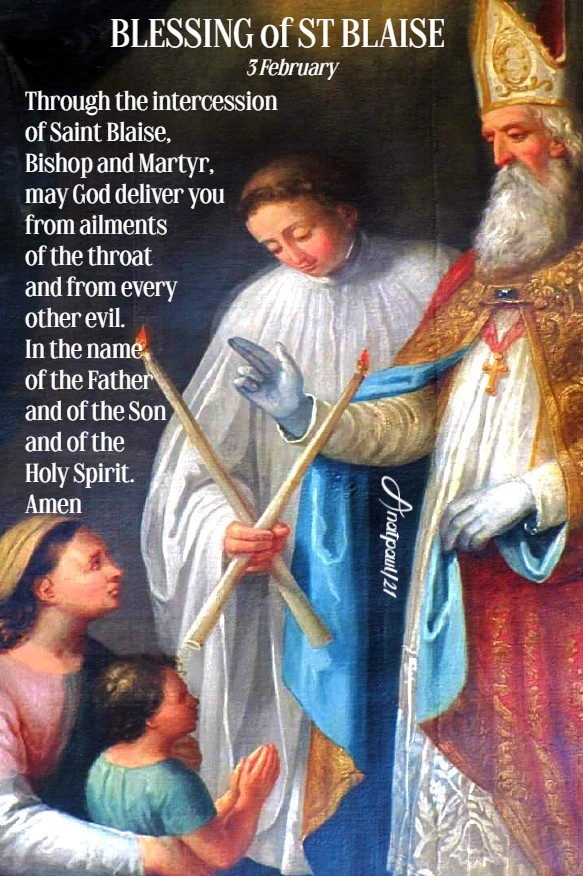
Quote of the Day – 3 February – The Blessing of St Blaise

Quote of the Day – 3 February – St Blaise (Died c316) Martyr Bishop, Physician, Miracle-worker

The Blessing of the Throats is a Sacramental of the Church, ordinarily celebrated today, the Feast day of Saint Blaise.

THE BLESSING of ST BLAISE
Through the intercession
of Saint Blaise,
Bishop and Martyr,
may God deliver you
from ailments of the throat
and from every other evil.
In the name of the Father
and of the Son
and of the Holy Spirit.
Amen

Posted in SAINT of the DAY

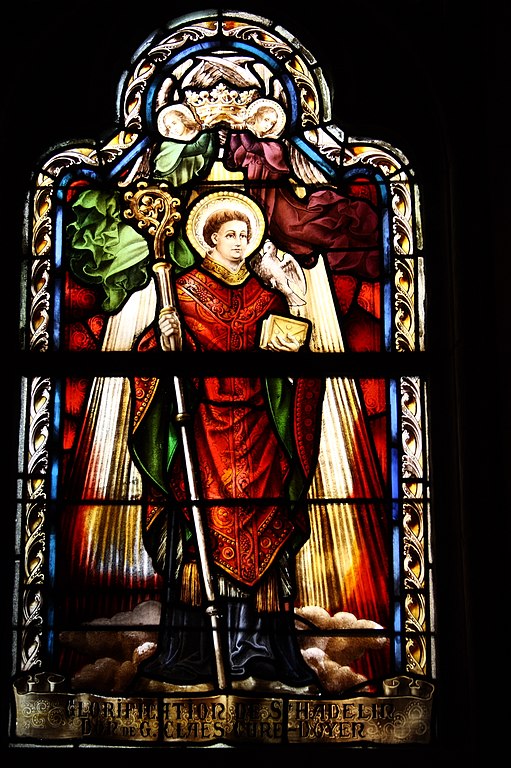
Saint of the Day – 3 February – Saint Hadelin of Chelles (c617-c690)

Saint of the Day – 3 February – Saint Hadelin of Chelles (c617-c690) Priest, Monk, Hermit, Founder of Monasteries, Miracle-worker. Born at Gascony (in modern France) and died in c690 at the Monastery of Celles, Visé, Namour, Belgium of natural causes. Patronages – against children’s illnesses, of Visé, of Celles, Belgium. Also known as – Hadelin of Dinant, Adelino, Adelin, Adelinus. Additional emorial – 11 October (translation of relics), the Sunday following the Nativity of the Blessed Virgin (8 September).

Of noble parentage, Hadelin lived at the Court of Sigebert III of Austrasia. He then became a disciple and student of St Remaclus (Died c673), firstly at Solignac Abbey and then at Cougnon Abbey, in the Duchy of Luxemburg. Later he moved to Stavelot Abbey, founded by St Remaclus in 650.

Around 651, St Remaclus became the Bishop of Tongres and brought Hadelin with him. From this base, St Remaclus with Hadelin and the Monks of Stavelot, evangelised the surrounding regions.

In 669, returning from a trip to Rome, Hadelin settled in the Lesse valley, near Dinant and built the Hermitage of Celles Knowing the benefits of a Monastic establishment, the Lords of the region competed in gifts and benefits. Among these, Pépin de Herstal offered some properties to the Hadelin. Here he founded the Monastery of Celles. He later founded another Monastery at Visé.

Hadelin then gathered the novices in Celles and died among them on 3 February 690.

Sadly we have very little information available online of the life of St Hadelin. But he is especially venerated Belgium and most of all in the Diocese of Namur, as founder of the Monastery of Celles. He is the Patron of Celles, where he is celebrated on the Sunday following the Nativity of the Blessed Virgin (8 September). There are numerous Churches in Belgium dedicated to him.

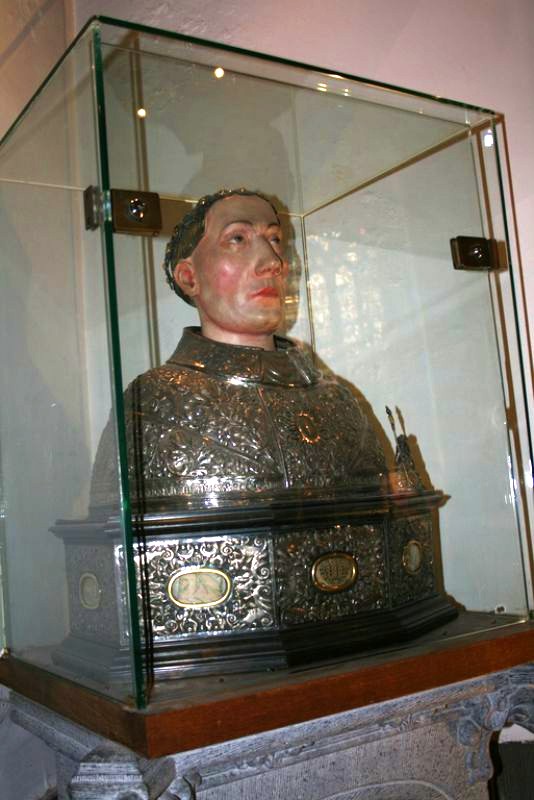
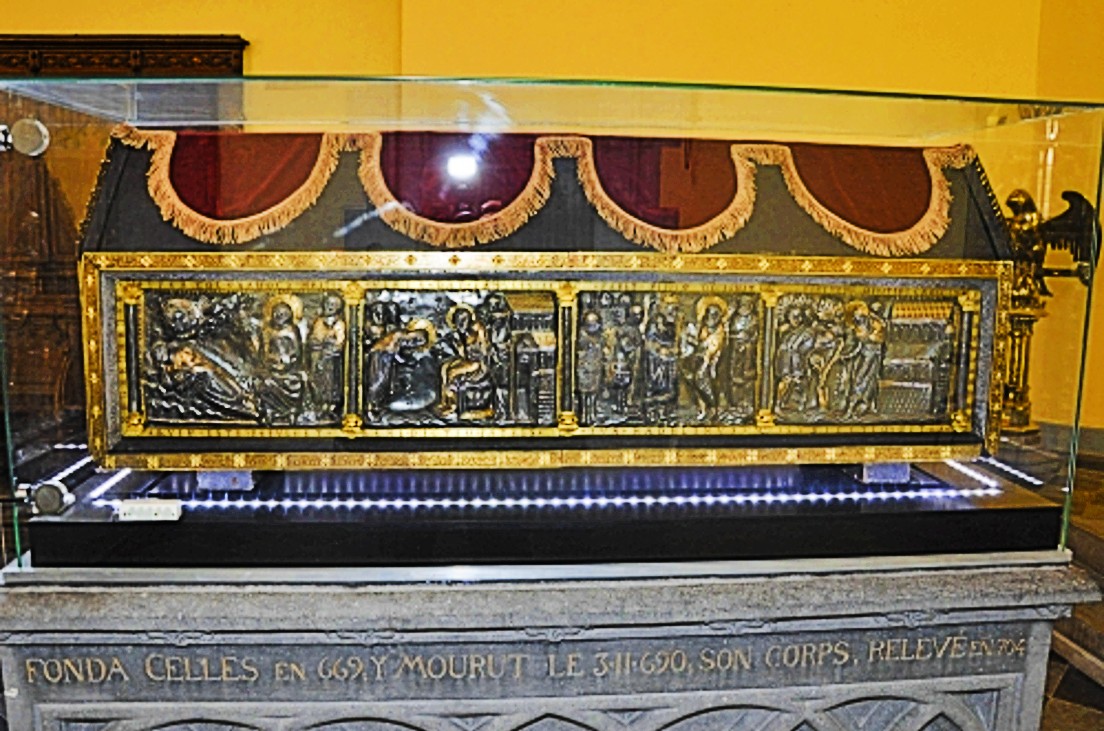
In 1046, Wazon, Prince Bishop of Liège, had the bones of Hadelin, who had become a Saint, placed in a Reliquary and it was not until 1338 that this Reliquary arrived in Visé. This Shrine is now part of the Treasury of Movable and Cultural Heritage of the Federation Wallonia Brussels, it is probably the oldest in Europe.

We can tell from the Reliquary how much of the Life of St Hadelin we do not know. The Reliquary is covered in gold and silver and embossed with eight scenes of the life of St Hadelin depicting the following:
We thus find in the order: Dream of Saint Hadelin and vision of the dove; visit of Saint Hadelin to Saint Remacle; visit of Pepin de Herstal to Celles; Saint Hadelin blesses a group of people in front of his Church; spring miracle; cure of the mute woman; Guiza the dead makes the gesture of donation; funeral of Saint Hadelin.

At the Shrine of St Hadelin, many festivities are celebrated including Jubilee Years receiving special Indulgences from the Pope. There are numerous Churches dedicated to St Hadelin, both in Belgium and France, as well as a Town named after him.

Reliquary of St Hadelin
Posted in MARIAN TITLES, SAINT of the DAY

Our Lady of Saideneida, Damascus, Nuestra Señora de Suyapa / Our Lady of Suyapa, Honduras (c1747), St Blaise (Died c316) Martyr Bishop and Memorials of the Saints – 3 February

Our Lady of Saideneida, Damascus – 3 February:
HERE
:
https://anastpaul.com/2021/02/03/feast-of-our-lady-of-saideneida-damascus-and-memorials-of-the-saints-3-february/

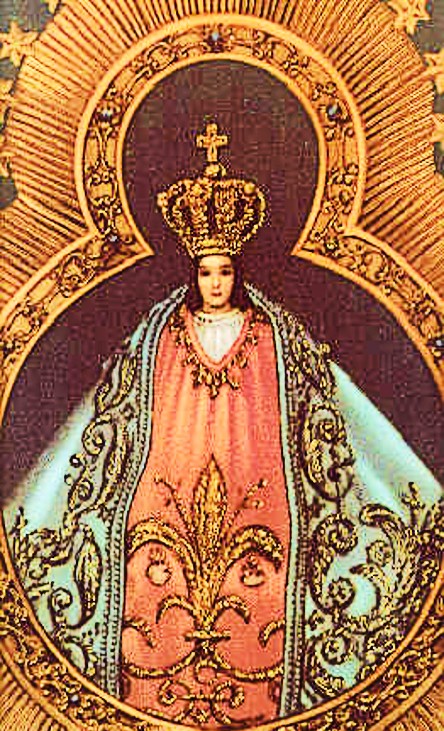
Nuestra Señora de Suyapa / Our Lady of Suyapa OR Virgen de Suyapa / The Virgin of Suyapa, Honduras (c1747) Patron of Honduras, Central America and The Orden de los Caballeros de Suyapa – 3 February:

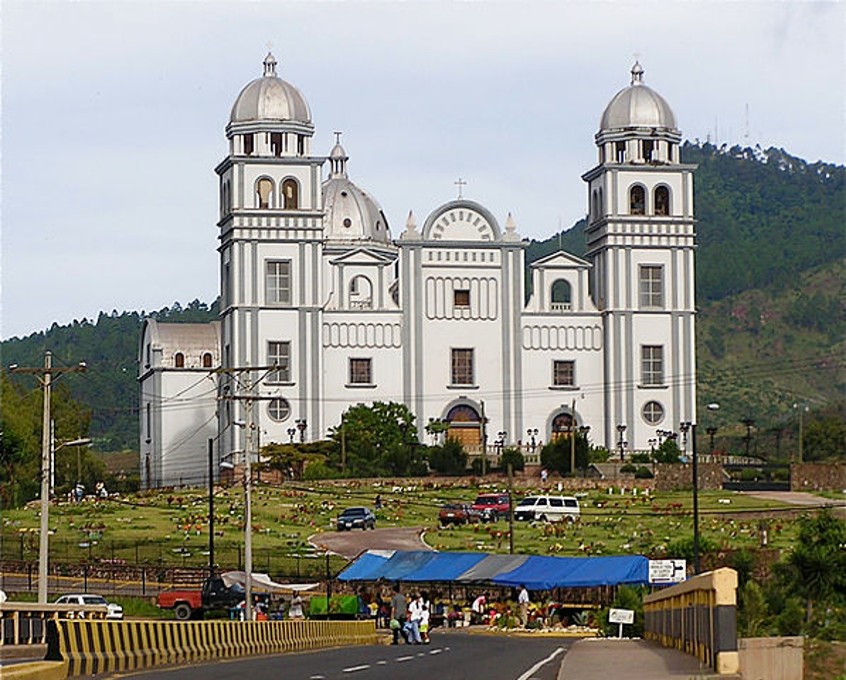
A title and image of the Blessed Virgin Mary popular in Honduras. The Statueis now enshrined in the Basilica of Suyapa, Tegucigalpa, Honduras. The sculptor and date of creation are unknown but the Statue was found by a farm worker on 3 February 1747. His family kept it as a focus for personal devotion. In 1768 a miraculous cure was attributed to Our Lady from this devotion. A Chapel was built for the Statue in 1777 to make public devotion possible.

The Statue was stolen in 1936 by a mentally ill woman who lived close by; it was located at her home and quickly returned. The quick end of the Football War in 1969 between Honduras and El Savador was attributed to the intercession of Mary following the outpouring of prayers to her under this title. The Staute was stolen again on 1 September 1986 – the thief stripped it of its gold, silver and jewels and then abandoned it in a restaurant men’s room in Tegucigalpa. It has since been restored to its former glory.

In 1925, Pope Pius XI declared her Patroness of Honduras under the title Our Lady of Suyapa and selected 3 February s her Feast day. In 1954, a large Basilica was built next to the Chapel. The Statue of the Virgin spends most of her time in the Chapel but every year before the celebration of her festival, the Statue is moved into the large Basilica to accommodate the crowds.

The Statue of the Virgin of Suyapa has a group of lay caretakers, all male, known as The Orden de los Caballeros de Suyapa (Order of the Knights of Suyapa). They care for the Statue and its Chapel and guard it full time when it is sent on pilgrimage around Honduras each February.
St Blaise (Died c316) Martyr Bishop of Sebaste, Armenia, Physician, Miracle-worker.
St Blaise is one of the Fourteen Holy Helpers –
https://anastpaul.com/2018/07/25/thought-for-the-day-25-july-the-memorial-of-st-christopher-died-c-251-one-of-the-fourteen-holy-helpers/
All about St Blaise:
https://anastpaul.wordpress.com/2018/02/03/saint-of-the-day-st-blaise-died-c-316-martyr/

St Anatolius of Salins

St Ansgar OSB (801-865) “Apostle of the North”, Bishop
Biography:

https://anastpaul.com/2019/02/03/saint-of-the-day-3-february-saint-ansgar-osb-801-865-apostle-of-the-north/

St Anna the Prophetess
St Berlinda of Meerbeke
St Blasius of Armentarius
St Blasius of Oreto
St Caellainn
St Celerinus of Carthage
St Clerina of Carthage
St Deodatus of Lagny
St Eutichio
St Evantius of Vienne
St Felix of Africa
St Felix of Lyons
St Hadelin of Chelle (Died c690) Priest, Monk, Hermit
Bl Helinand of Pronleroy
St Hippolytus of Africa
St Ia of Cornwall
St Ignatius of Africa
Bl Iustus Takayama Ukon

Blessed John Nelson SJ (1535-1578) Martyr, Priest of the Society of Jesus. Martyred during the reign of Elizabeth I. He was Beatified on 29 December 1886 by Pope Leo XIII.
His Life and Death:

https://anastpaul.com/2021/02/03/saint-of-the-day-3-february-blessed-john-nelson-sj-1535-1578-priest-martyr/

Bl John Zakoly
St Laurentinus of Carthage
St Laurentius of Carthage
St Lawrence the Illuminator ) Died 576) Bishop
St Leonius of Poitiers
St Liafdag
St Lupicinus of Lyon
St Margaret of England
St Oliver of Ancona
St Philip of Vienne
St Remedius of Gap
St Sempronius of Africa
St Tigrides
St Werburga of Bardney
St Werburga of Chester

Benedictine Martyrs: A collective memorial of all members of the Benedictine Order who have died as Martyrs for the Faith.

Posted in ART DEI, AUGUSTINIANS OSA, SAINT of the DAY

Saint of the Day – 2 February – Blessed Stephen Luigi Giuseppe Bellesini OSA (1774-1840) Priest

Saint of the Day – 2 February – Blessed Stephen Luigi Giuseppe Bellesini OSA (1774-1840) Priest and Friar of the Hermits of St Augustine, teacher, mentor to the youth, Parish Priest, guardian of the poor and sick. Born on 25 November 1774 at Trent, Italy as Aloysius Bellesini and died on 2 February 1840 of Typhus and an infection that developed from a cut on his leg received by an accidental fall while visiting the sick at Genazzano, Italy. Also known as – Aloysius Bellesini, Stefano Bellesini. Additional Memorial – 3 February (Augustinians). Beatified on 27 December 1904 by Pope Pius X.

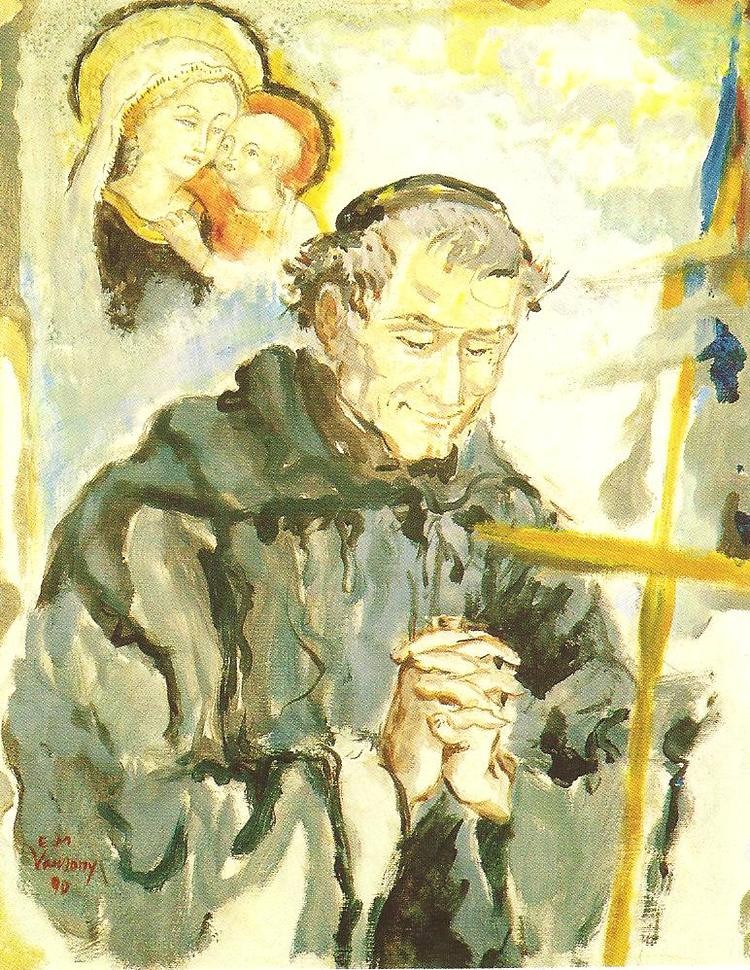
We celebrate today the memory of Blessed Stephen Bellesini, a man who lived during a difficult period of the Church’s history at the turn of 19th Century Italy. His vocation as an Augustinian Religious was severely tried by strong anticlerical government regulations. Nevertheless, he did not withdraw in shame, nor did he become embittered by external challenges and persecutions. Rather, he redoubled his commitment and persevered in his resolve, giving himself generously in the service of others, most especially the poor, the disadvantaged and the infirm.

Luigi Bellesini was born in Trent, Italy, on 25 November 1774. He entered the Order at the Monastery of San Marco in his native City, taking the name Stephen and making his profession on 31 May 1794. Following studies in Rome and Bologna, aged just 22, he was forced to return to Trent during the government suppression of religious houses and there completed his theological education. He was Ordained to the Priesthood in 1797.

After several years of service, principally as a preacher as well as a teacher in the local schools, the Monastery in Trent, after years of tension and uncertainty, Stephen and his community were expelled from their Monastery for good, forbidden to wear any longer the Habit of their religious profession. They would never return. The Monastery would never re-open.

Stephen was forced to return to his family home. He founded, in his home, a free school for the poor children of the area, who otherwise would not have access to education. He gave food and clothing to the poorest of his students and offered encouragement and friendship to all of them. He dedicated his energies with such remarkable results that his work won the respect of the materialistic local authorities, who appointed him Director and Superintendent of all schools of the district.

However, when the opportunity presented itself, he resigned from these offices and secretly made his way to Rome, in order to resume his religious life. He was appointed Novice Master first in Rome, then in Bologna, Umbria and lastly at Genazzano.

Political leaders in Trent begged Stephen to return to his work in the schools there, offering to increase his salary. But Stephen refused, writing to them: “You would surely not ask me (to return to Trent) if you realised the unbreakable bond between a Friar and his God, Who is the King of Kings. Before His Altar, I have solemnly promised to be faithful to those vows.”

The closing years of his life were spent as Parish Priest at the Shrine of Our Mother of Good Counsel,. There his ministry included a special emphasis on the needs of the poor and of children.

In January 1840, while answering a call to care for a sick Parishioner, during the Typhus epidemic which was raging in the area at the time, he tripped and fell. A cut on his leg became infected and he developed a high fever. He tried to remain active for the next two days but the fever remained. It is believed that he had contracted Cholera and in his weakened state, he could not fight the desease. He died, a Martyr of Charity, on 2 February 1840.

At the entrance to the Chapel of the General Curia in Rome, there is a familiar painting of the Augustinian Blessed, Stephen Bellesini. It is a copy of an original artwork created by G Toeschi in 1905, depicting a usual but crowning moment and possibly one of the last, of Stephen’s life.
He stands close to the bedside of an ill man, administering perhaps the last Sacrament or simply offering him some spiritual comfort, while the man’s wife presses her head to the bed, seemingly overcome with grief or exhaustion.
Two young children look on anxiously.
The artist touchingly captured here an important aspect of the ministry which occupied the latter part of Stephen’s life, as he visited the homes of the townspeople, bringing them the comfort of the Sacraments and oftentimes, material assistance as well, during the Typhus epidemic which struck Genazzano in the Spring of 1839. As we know, less than a year later, Stephen, himself, would fall victim to the pestilence and would succumb – a Martyr of Charity – faithful to the end.

Stephen was Beatified by St Pius X on 27 December 1904. His remains are venerated in a special Chapel dedicated to him at the Shrine of Our Mother of Good Counsel, Genazzano.

“Why is Blessed Stephen, who was Beatified in 1904, not yet a saint?

Certainly his sanctity is not at issue. Champion of youth, advocate for justice, comforter of the sick, guardian of the poor, his message is timely, his life is exemplary and his love for and commitment to religious life speaks loudly to Augustinians of today. The Postulator of Causes will tell us that Stephen needs to obtain a miracle!
And so we might be inclined to leave the question at Stephen’s own feet … and wait. But, to borrow an opinion expressed in another context, “how will they call on him if they have not heard of him?”
In Stephen Bellesini we Augustinians have a powerful witness to show forth, a Religious and Priest who has a great deal to say to so many categories of people in need today: the sick, the young, Religious and Priests, to those who fight injustice and religious persecution. This is a small attempt to make him better known. Can you help us in this effort?
” (Augustinian.org)

Posted in AUGUSTINIANS OSA, FEASTS and SOLEMNITIES, MARIAN TITLES, SAINT of the DAY, The BLESSED VIRGIN MARY

Feast of the Purification of Our Lady – Candlemas Day, Our Lady of the Candles and Memorials of the Saints – 2 February

Feast of the Purification of Our Lady – Candlemas Day – 2 February
About:

https://anastpaul.com/2021/02/02/feast-of-the-purification-of-our-lady-the-presentation-of-our-lord-in-the-temple-candlemas-day-2-february/
AND:
https://anastpaul.wordpress.com/2018/02/02/feast-of-the-presentation-of-the-lord-2-february/
AND:
https://anastpaul.com/2019/02/02/feast-of-the-presentation-of-the-lord-in-the-temple-2-february/

Our Lady of the Candles – (formally known as Nuestra Señora de la Purificación y la Candelaria) is a Marian title and image venerated by Filipino Catholics. The image, which is enshrined on the balcony of Jaro Cathedral, is known as the patroness of Jaro District of Iloilo City and the whole of the Western Visayas.
The feast day of Our Lady of the Candles is on Candlemas (2 February) and is celebrated in Iloilo City with a Solemn Pontifical Mass presided by the Archbishop of Jaro.

St Adalbald of Ostrevant
St Adeloga of Kitzingen
St Agathodoros of Tyana
St Apronian the Executioner
Bl Bernard of Corbara
St Bruno of Ebsdorf
St Burchard of Wurzburg
St Candidus the Martyr
St Columbanus of Ghent
St Cornelius the Centurion
St Felician the Martyr
St Feock
St Firmus of Rome
St Flosculus of Orléans
St Fortunatus the Martyr
St Hilarus the Martyr
St Jeanne de Lestonnac (1556-1640) Widow, Mother, Founder

St Lawrence of Canterbury (Died 2 February 619) The Second Archbishop of Canterbury, the successor of St Augustine of Canterbury from 604 until his death in 619, but he was Consecrated as Archbishop by his predecessor, St Augustine, during Augustine’s lifetime, to ensure continuity in the office, Benedictine Monk, Missionary. He was a member of the Gregorian mission sent from Italy to England to Christianise the Anglo-Saxons.
About St Lawrence:

https://anastpaul.com/2022/02/02/saint-of-the-day-2-february-saint-lawrence-of-canterbury-died-619/

Blessed Luigi Giuseppe Bellesini OSA (1774-1840) Priest and Friar of the Hermits of St Augustine
St Marquard of Hildesheim
St Mun

Blessed Peter Cambiano OP (1320-1365) Martyr, Priest and Friar of the Order of Preachers, Confessor, renowned Preacher calling many to conversion by his holy zeal and the power of his words. Martyred by heretics. Beatified on 4 December 1856 by Pope Pius IX.
His Life and Death:
https://anastpaul.com/2021/02/02/saint-of-the-day-2-february-blessed-peter-cambiano-op-1320-1365/

St Rogatus the Martyr
St Saturninus the Martyr
St Sicharia of Orleans
St Simon of Cassia Fidati
St Theodoric of Ninden
St Victoria the Martyr

Martyrs of Ebsdorf: Members of the army of King Louis III of France under the leadership of Duke Saint Bruno of Ebsdorf. The Martyrs died fighting invading pagan Norsemen, and defending the local Christian population. Four bishops, including Saint Marquard of Hildesheim and Saint Theodoric of Ninden, eleven nobles, and countless unnamed foot soldiers died repelling the invaders. They were martyred in the winter of 880 in battle at Luneberg Heath and Ebsdorf, Saxony (modern Germany).

Posted in "Follow Me", CHRIST the WORD and WISDOM, DOCTORS of the Church, FATHERS of the Church, ONE Minute REFLECTION, QUOTES on MYSTERIES of our FAITH, SAINT of the DAY, The KINGDOM of GOD / HEAVEN, The WORD

One Minute Reflection – 1 February – “If it dies, it produces much fruit” – John 12:24

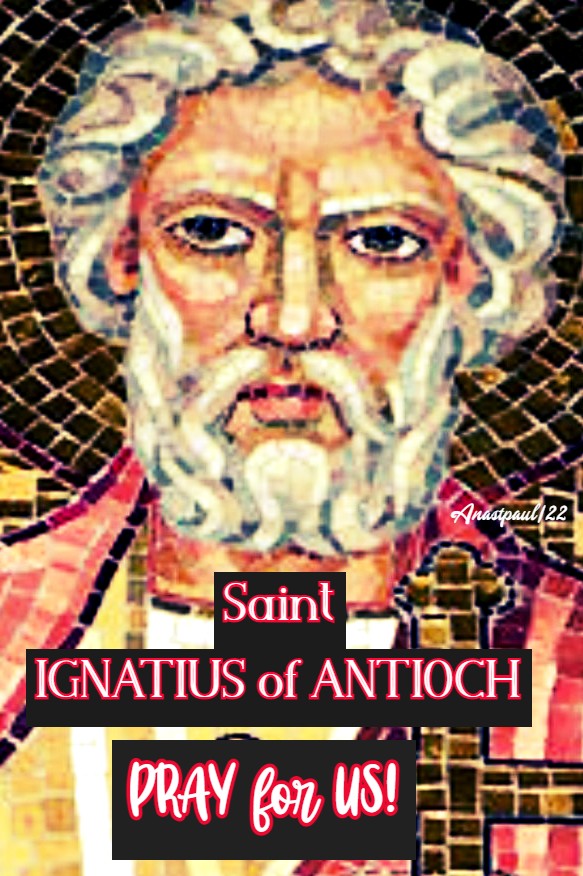
One Minute Reflection – 1 February – “The Month of the Blessed Trinitys” – St Ignatius of Antioch (c 35 – 107) Martyr, Bishop of Antioch, Apostolic Father of the Church. – Romans 8:35-39, John 12:24-26 – Scripture search here: https://www.drbo.org/

“If it dies, it produces much fruit” – John 12:24

REFLECTION – “The Kingdom of Heaven is like a mustard seed which a person took and sowed in a field. It is the smallest of all the seeds, yet, when full-grown it is the largest of plants. It becomes a large bush and the ‘birds of the sky come and dwell in its branches.’” (Mt 13:31). This small seed is for us the symbol of Jesus Christ, Who, sowed into the garden where He was buried, rose from it shortly after, through His Resurrection, as a big tree.

One could say that when He died, He was like a small seed – a small seed because of the humiliation of His flesh but a big tree because of the glorification of His Majesty. He was like a small seed when he appeared completely disfigured before our eyes but like a large tree when He rose again like “the most handsome of men” (Ps 44:3).

The branches of this mysterious tree, are the holy preachers of the Gospel, of whom one of the Psalms indicates the reach: “Their report goes forth throughout all the earth, their message, to the ends of the world “ (Ps 19:5; cf Rom 10:18). The birds rest on these branches while the souls of the just, who have been raised up above earth’s attractions, on the wings of holiness, find in the words of these preachers of the Gospel, the consolation they need in the sorrows and difficulties of this life.” – St Gregory the Great (540-604) Pope, Father and Doctor of the Church (Homilies on Matthew, Ch.13).

PRAYER – Be mindful of our weakness, O aAmighty God and since the burden of our deeds is grievous to us, grant that the glorious intercession of blessed Ignatius Thy Martyr and Bishop, may protect us. Through Jesus Christ, Thy Son our Lord, Who lives and reigns with Thee, in the unity of the Holy Ghost, God, world without end. Amen (Collect).

Posted in SAINT of the DAY

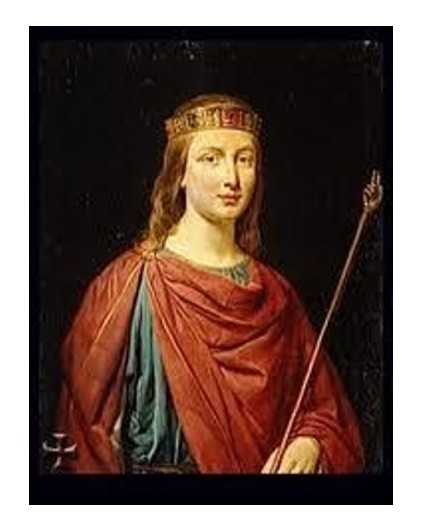
Saint of the Day – 1 February – Saint Sigebert III of Austrasia (c 630-656)

Saint of the Day – 1 February – Saint Sigebert III of Austrasia (c 630-656) King, Married and father of St Dagobert II. Born in c 630 in Metz, Moselle, Lorraine, France and died on 1 February 656 at Metz, France of natural causes, aged 25-26. His body was incorrupt until it was attacked by the marauders during the French Revolution. Patronages – the City and Diocese of Nancy, France. Also known as – Sigebert the Younger, Sigisbert…

Sigebert was the eldest son of King Dagobert I and his concubine Ragnetrude and half-brother of King Clovis. The King recalled and made peace with Saint Amand, who was previously banished for criticising the King’s vices and unholy life and asked him to baptise his new-born son. The ceremony was performed at Orléns and Charibert II, Dagobert’s half-brother who was King of Aquitaine at the time, was the Godfather. Dagobert assigned the education of Sigebert to Pepin of Landen, who was the Mayor of the Palace in Austrasia. Pepin took the baby Sigebert and moved with him to his domains in Aquitane, where they remained for the next three years.

In 633, a revolt of the nobles forced Dagobert to make the three-year old Sigebert King of Austrasia. However, he refused to give the power to Pepin of Landen by making him Mayor of the Palace for the child-king. Instead, he had put Sigebert under the tutelage of Adalgisel as Mayor of the Palace and the Bishop of Cologne, Saint Cunibert, as Regent, while keeping Pepin in Neustria as hostage.

On the death of Dagobert in 639, the two Frankish kingdoms became independent once again under Sigebert III and his little brother, Clovis II. Both kingdoms were under child-kings – Sigebert was around eleven years old and Clovis was five – and were ruled by the respective Regents. It was under Seigbert’s reign that the Mayor of the Palace began to play the most important role in political life and he has been described as the first “roi fainéant”—“do-nothin king”—of the Merovingian dynasty. A most unfair derogatory and insulting title, considering he was a child however, as he grew in age and wisdom, he disregarded worldly affairs as of no value anyway and focused his heart on things above.

In 640 the Duchy of Thuringia rebelled against Austrasia in the only war of Sigebert’s reign.The young King attempted to quell the rebellion but was defeated. The rout left Sigebert weeping in his saddle.

Throughout his youth and adolescencd, Sigebert had grown in personal sanctity and love for God and His Church. He became an extremely holy and devout adult under the tutelage of Pepin and the spiritual direcrion of Saint Cunibert and lived a life of Christian virtue. He used his wealth to establish numerous Monasteries, homes and hospitals especially for the poor and Churches, including the renowned Monastery of Stavelot-Malmedy.

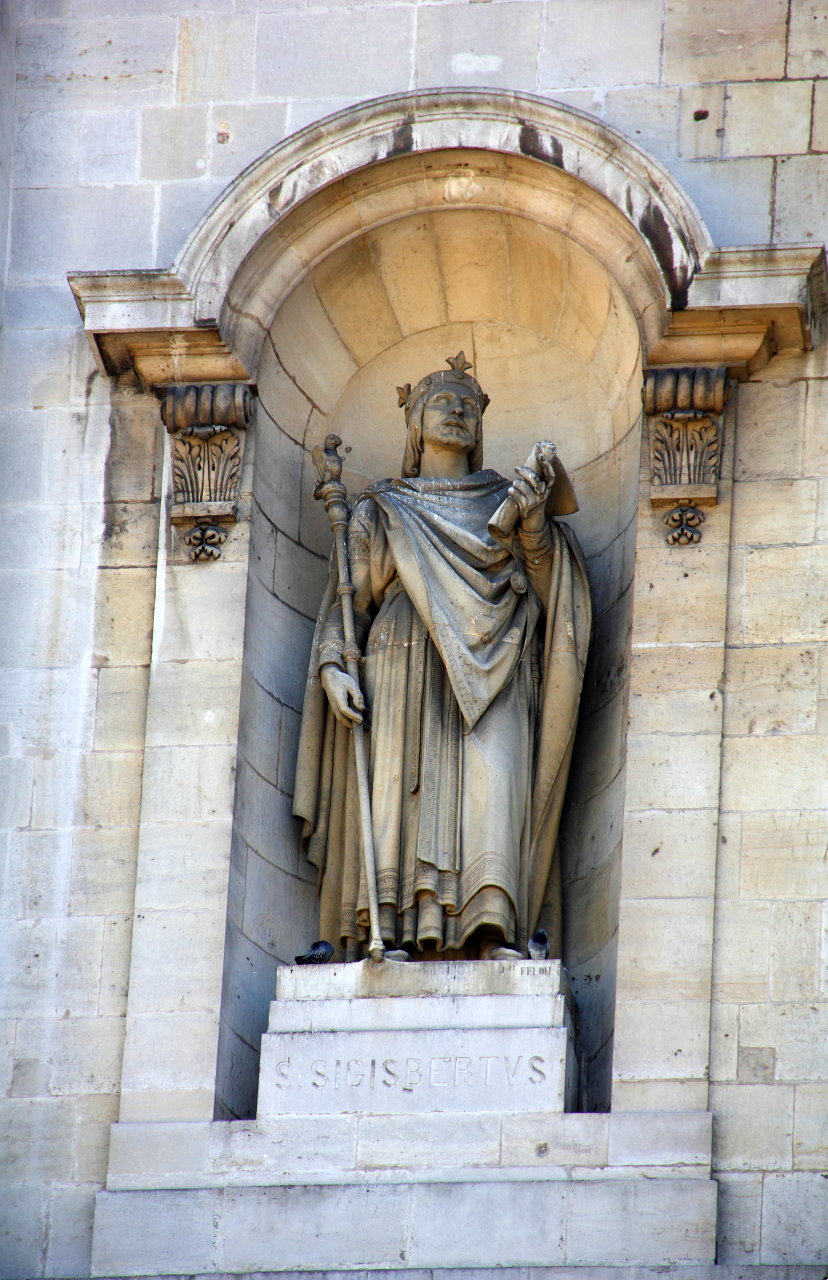
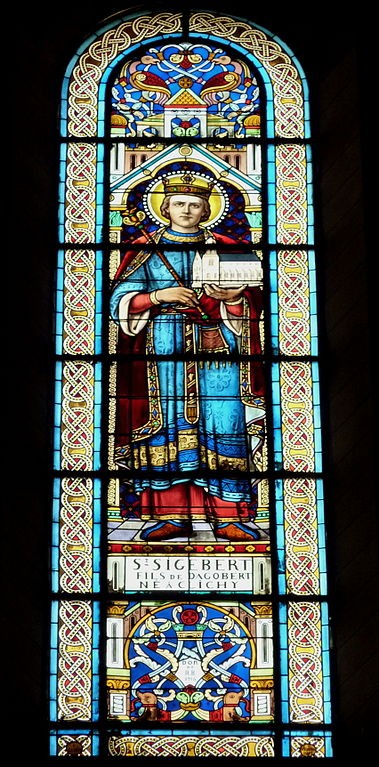
Sigebert III died of natural causes on 1 February 656 at age 25. He was buried in the Abbey of Saint Martin near Metz which he had founded. In 1063 his body, found incorrupt, was taken out of the tomb and moved to the Altar. During the French Revolution the Abbey and tomb were desecrated. What Relics remained were moved to the Nancy Cathedral. The Statue below is situate on the facade of said Cathedral.

Posted in FATHERS of the Church, franciscan OFM, SAINT of the DAY, St Louis-Marie Grignion de MONTFORT

St Ignatius of Antioch (c 35 – 107) Martyr, St Brigid of Ireland, Virgin, The Baptism of St Louis de Montfort / Eve of the Purification of Our Lady, Paris (1673) and Memorials of the Saints – 1 February

“The Month of the Blessed Trinity”

St Ignatius of Antioch (c 35 – 107) Martyr, Bishop of Antioch, Apostolic Father of the Church.
His Feast Day is today (General Roman Calendar, 12th century–1969, when it was moved to 17 October).
His Life and Death:

https://anastpaul.com/2017/10/17/saint-of-the-day-17-october-st-ignatius-of-antioch-c-35-c-108-father-of-the-church/

The Baptism of St Louis de Montfort / Eve of the Purification of Our Lady, Paris (1673): 1 February
HERE:

https://anastpaul.com/2021/02/01/memorials-of-the-saints-1-february-4/

St Brigid of Ireland/Kildare (c 453-523) Virgin, Abbess, Apostle of Charity and foundress of several monasteries of nuns, including that of Kildare in Ireland.
St Brigid’ Story:

https://anastpaul.com/2019/02/01/saint-of-the-day-st-brigid-of-ireland-kildare-c-453-523/

St Agrepe

Blessed Andrew of Segni OFM (1240-1302) Priest and Friar of the the Order of Friars Minor, Hermit, Spiritual teacher, Mystic, Miracle-worker and Exorcist. Patron against demonic possession. Beatified on 11 December 1724 by Pope Innocent XIII.
Blessed Andrew’s Life:

https://anastpaul.com/2021/02/01/saint-of-the-day-1-february-blessed-andrew-of-segni-ofm-1240-1302/

Bl Anthony Manzoni
St Asclepiades
St Autbert of Landevenec
St Brigid of Fiesole
St Cecilius of Granada
St Cinnia of Ulster
St Clarus of Seligenstadt
St Crewenna
St Darlaugdach of Kildare
St Henry Morse
St Jarlath
Bl John of the Grating
St Kinnia
St Paul of Trois-Châteaux
St Raymond of Fitero

Blessed Reginald of Orléans OP (c 1180 – 1220) Priest and Friar of the Order of Preachers, Canon Lawyer, renowned Preacher. He was Beatified in 1875 by Pope Pius IX.
Biography:

https://anastpaul.com/2022/02/01/saint-of-the-day-1-february-blessed-reginald-of-orleans-op-c-1180-1220/

St Sabinus
St Severus of Avranches
St Severus of Ravenna

St Sigebert III of Austrasia (c 630-656) King, Married and father of St Dagobert II. His body was incorrupt until it was attacked by the marauders during the French Revolution.

St Tryphon of Lampsacus
St Ursus of Aosta
St Veridiana

Posted in ArchAngels and Angels, LOVE of NEIGHBOUR, PRACTISING CATHOLIC, QUOTES on ANGER, QUOTES on ENVY, QUOTES on ETERNAL LIFE, QUOTES on LOVE, QUOTES on SUFFERING, QUOTES on TEMPTATION, QUOTES on THE WORLD, SAINT of the DAY, The FAITHFUL on PILGRIMAGE

Quote/s of the Day – 31 January – St John Bosco

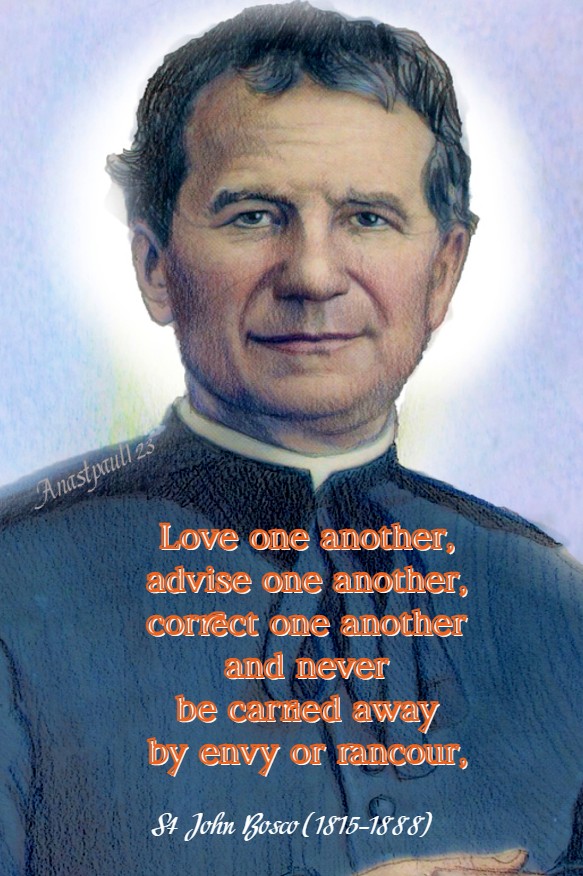
Quote/s of the Day – 31 January – St John Bosco “Don Bosco” SDB (1815-1888) Priest, Confessor, Founder.

“Act today
in such a way,
that you need
not blush
tomorrow.
”

“My life experience has been
that only the practice of religion,
can assure concord in families
and the happiness of those,
who live in this vale of tears
.”

“What do the pleasures
of this world amount to?
What is not eternal,
is worth nothing
!
”

“When tempted,
turn immediately to your
Guardian Angel and ask him,
with all your heart,
“My Guardian Angel help me now.
Do not let me offend my God!
”

“Love one another,
advise one another,
correct one another and never
be carried away
by envy or rancour,
”

MORE:
https://anastpaul.com/2022/01/31/quote-s-of-the-day-31-january-st-john-bosco-2/

St John Bosco (1815-1888)

Posted in DYING / LAST WORDS, franciscan OFM, MYSTICS, SAINT of the DAY

Saint of the Day – 31 January – Blessed Louise degli Albertoni TOSF (1474-1533) Widow

Saint of the Day – 31 January – Blessed Louise degli Albertoni TOSF (1474-1533) Widow, Mother, Mystic, Ecstatic, Apostle of the sick, the poor, the deprived, Miracle-worker. Born in1474 as Ludovica Albertoni in Rome, Italy and died on 31 January 1533 in Rome of natural causes. Beatified on 28 January 1671 by Pope Clement X. Also known as – Ludovica, Louisa Albertoni, Ludovica Albertoni Cetera.

Louise first saw the light of the world at Rome in the year 1474. Her parents belonged to the distinguished families of this City because of their wealth but still more because of their piety. They bestowed great care upon the training of their daughter and she responded fully to their efforts, so that she developed into a model for all young women. She had resolved to remain unmarried but when her parents urged her to be betrothed to an illustrious young man, she believed she recognised the will of God in their desire and agreed to the marriage.

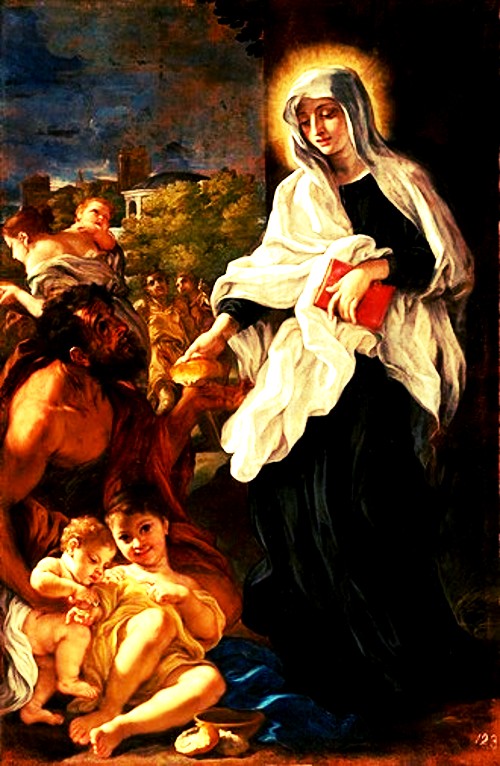
The Blessed Ludovica Albertoni distributing Alms
(Giovanni Battista Gaulli c 1670)

But even in the married state, in which she remained attached to her husband with genuine love, she sought above all things to please God. Her attire was very plain, and even away from home, she avoided frivolous pomp and luxury. God blessed their union with three daughters, whom she was careful to rear, above all, in the love and fear of God.

When Blessed Louise Albertoni was but thirty-three years old, she lost her husband to death. After her daughters were provided for, Louise thought of nothing but to dedicate herself to the service of God. Publicly she took the habit of the Third Order, practiced the severest penances and was so irresistibly drawn to the contemplation of the sufferings of Our Lord and they were so constantly before her mind that she continually wept,and it was feared that she would lose her sight.

Louise lived a pious life, working for the poor of the Trastevere neighbourhood, under the guidance of the Franciscan Friars of San Francesco Church, where she would be buried in 1533. She bore a great love for the poor as special members of Christ. She used the abundant income of her fortune entirely for their support. But she strove to conceal her liberality. With this intention she often hid pieces of money in the bread that was given to the poor at her door and then begged Almighty God that He would let it fall to the lot of such as needed it most. Her benevolence knew no bounds. Sometimes she lacked even the necessaries for herself. But then, she rejoiced to be like Christ, who, being rich, became poor out of love for men.

God repaid her with extraordinary graces. He granted her the gift of miracles and frequent ecstasy. He also told her beforehand of the day of her death.

When her end drew nigh, she received the last Sacraments with great devotion. Then gazing upon the Crucifix with the tenderest pity, she kissed it and said: “Into Thy hands, O Lord, I commend my spirit.” Thereupon she breathed forth her soul on the day that had been announced to her, which was 31 January 1533.

Her body rests in the Church of St Francis on the Tiber and her Feast is celebrated in Rome with great solemnity. Pope Clement X Beatified Blessed Louise Albertoni in 1671.

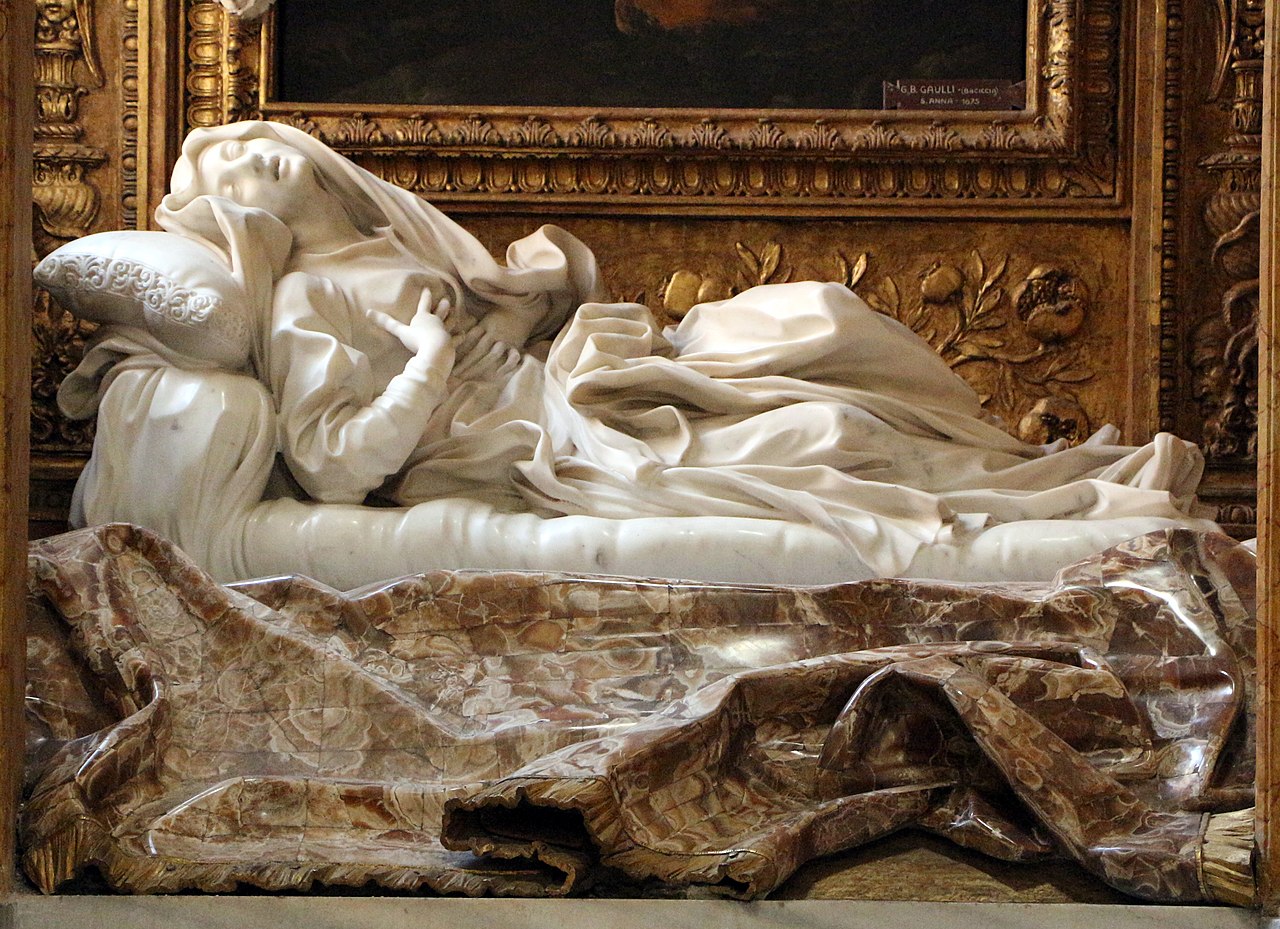
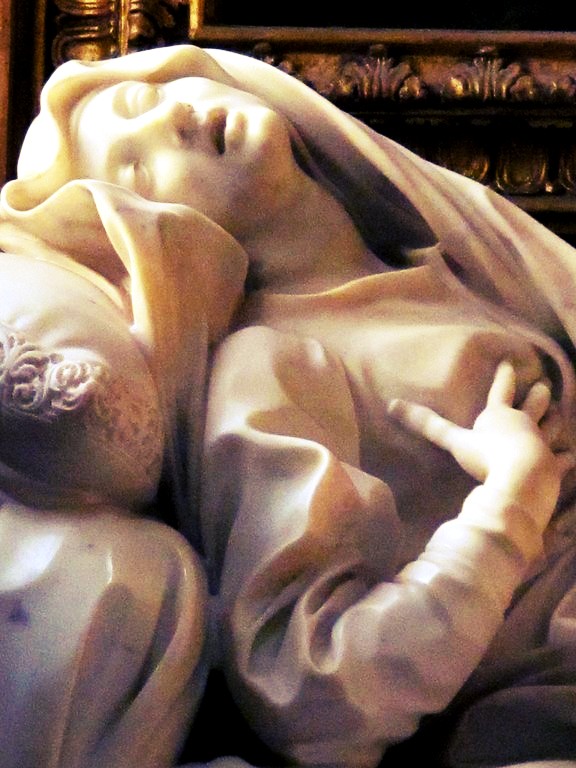
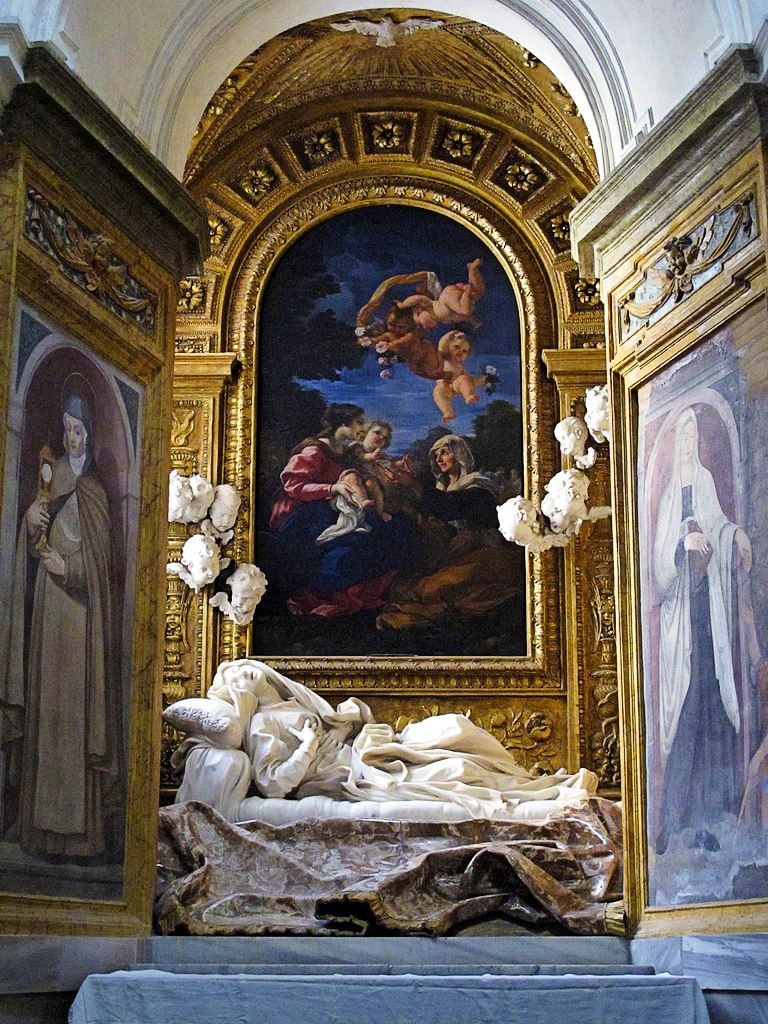
The Bernini figure of Ludovica Albertoni, above,is set above the Altar of the Altieri Chapel on the left side of the Church of San rancesco. Bernini designed an architectural setting that focuses attention on the marble sculpture, framing it within an archway he cut into an existing wall where a painting had previously hung. The main figure is flanked by deep returns set at oblique angles decorated with earlier frescoes of Saint Clare of Assisi and Blessed Ludovica herself providing alms to a beggar. The central figure is lit on both sides by large windows concealed by the returns.

The figure of Ludovica Albertoni is presented on a mattress at the moment of mystical communion with God. The folds of her habit reflect her state of turmoil and her head is thrown back onto an embroidered pillow supported by a headrest. Beneath her figure is a deeply crumpled sculpted cloth above a red-marble Sarcophagus, where Ludovica is interred. The panel behind her is carved with stylized pomegranates, flaming hearts adorn the base of the windows. She is surrounded by putti and waiting to rise to the Light of Heaven.

The painting behind the sculpture is by Baciccio.

Posted in MARIAN TITLES, SAINT of the DAY, The APOSTLES & EVANGELISTS

Apparition of Our Lady to Saint Angela de Foligno (1285), The Translation of the Relics of Saint Mark, the Evangelist, St John Bosco “Don Bosco” and Memorials of the Saints – 31 January

Apparition of Our Lady to Saint Angela de Foligno (1285) – 31 January:
HERE:

https://anastpaul.com/2021/01/31/septuagesima-sunday-apparition-of-our-lady-to-saint-angela-de-foligno-1285-the-translation-of-the-relics-of-saint-mark-the-evangelist-and-memorials-of-the-saints-31-january/

The Translation of the Relics of Saint Mark, the Evangelist:
https://anastpaul.com/2021/01/31/the-translation-of-the-relics-of-saint-mark-the-evangelist-31-december/

St John Bosco “Don Bosco” SDB (1815-1888) Founder of the Society of St Francis de Sales now known as the Salesians, the Daughters of Mary Help of Christians and the Association of Salesian Cooperators. Priest, Confessor, Founder, Teacher, Writer, “Father and Teacher of Youth.” His body is incorrupt.
All about beautiful Don Bosco:

https://anastpaul.wordpress.com/2018/01/31/saint-of-the-day-31-january-st-john-bosco-don-bosco-1815-1888-founder-of-the-salesians-and-the-daughters-of-mary-help-of-christians-and-the-association-of-salesian-cooperators/
AND:
https://anastpaul.com/2019/01/31/saint-of-the-day-st-john-bosco-don-bosco-sdb-1815-1888/

St Abraham of Abela
Bl Adamnan of Coldingham

St Aedan of Ferns (c 550-632) the First Bishop of the Diocese of Ferns, Ireland, Founded 30 Churches and several Monasteries, miracle-worker.
St Aedan’s Life
:
https://anastpaul.com/2022/01/31/saint-of-the-day-31-january-saint-aedan-of-ferns-c-550-632/

St Aiden
St Athanasius of Modon
St Bobinus of Troyes
St Eusebius of Saint Gall

St Francesco Saverio Maria Bianchi/Francis Xavier Bianchi CRSP (1743-1815) “Apostle of Naples,” Priest of the Barnabite Order (The Clerics Regular of St Paul), Confessor. Canonised on 21 October 1951 by Pope Pius XII.
About St Francesco:

https://anastpaul.com/2020/01/31/saint-of-the-day-31-january-saint-francis-xavier-bianchi-crsp-1743-1815-apostle-of-naples/

St Geminian of Modena
Bl John Angelus
St Julius of Novara
Blessed Louise degli Albertoni TOSF (1474-1533) Widow, Mystic, Ecstatic, Apostle of the sick, the poor, the deprived, Miracle-worker.
St Madoes
St Marcella
St Martin Manuel
St Nicetas of Novgorod
St Tryphaena of Cyzicus
St Tysul
St Ulphia of Amiens
St Waldo of Evreux
St Wilgils

Martyrs of Corinth – 14 Saints: A group of Christians tortured and Martyred together in Corinth, Greece in the persecutions of Decius. We know nothing about them except some names – Anectus, Claudius, Codratus, Crescens, Cyprian, Diodorus, Dionysius, Nicephorus, Papias, Paul, Serapion, Theodora, Victor and Victorinus.

Martyrs of Canope: A group of Christians tortured and Martyred together in Corinth, Greece in the persecutions of Decius. We know nothing about them except some names – Anectus, Claudius, Codratus, Crescens, Cyprian, Diodorus, Dionysius, Nicephorus, Papias, Paul, Serapion, Theodora, Victor and Victorinus.

Martyred in Alexandria, Egypt:
Cyriacus
Metranus
Saturninus
Tarskius
Thyrsus
Victor
Zoticus

Posted in SAINT of the DAY, SERVANTS, MAIDS, BUTLERS, CHAMBERMAIDS

Saint of the Day – 30 January – Saint Adelelmus (Died c 1100) Abbot

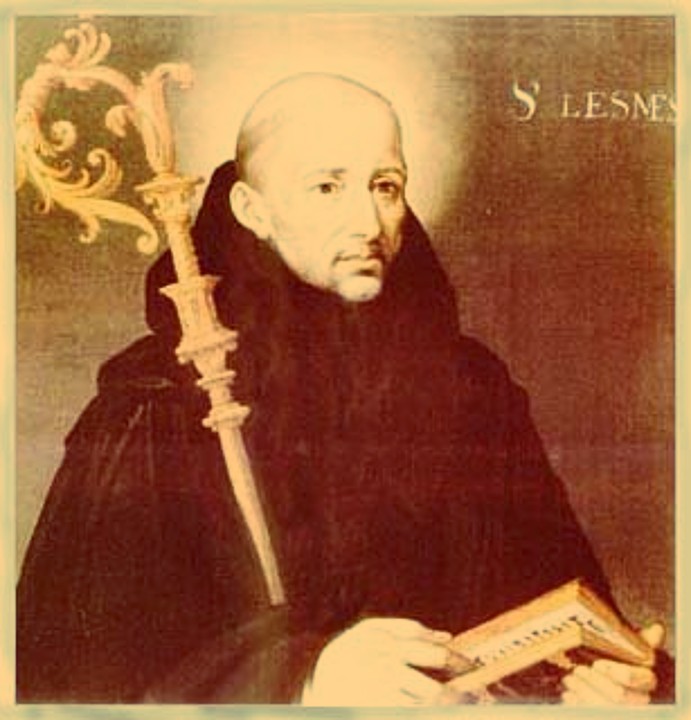
Saint of the Day – 30 January – Saint Adelelmus (Died c 1100) Abbot, Soldier, Miracle-worker. Born in the 11th Century at Laudun, Poitou, France and died in c 1100 at Burgos, Castilla la Vieja, Spain of natural causes. Patronages – Burgos, Spain, butlers, domestic servant, housemaids, manservants, servants. Also known as – Adelunie, Aleaume, Alleaume, Elesmes, Lesmes.

Adelelmus joined the military at a young age. During a pilgrimage to Rome he met St Robert de Turlande (c 1000-1067), Founder of the Abbey of La Chaise-Dieu – “Home of God” and left the military life to become a Monk in the Benedictine Order, under the spiritual direction of Saint Robert.

Soon, Adelelmus was known for miles around because of his miracles. Queen Constance of Burgundy of Castile was so impressed with the reports of Adelelmus’ holiness, she invited him to live in Burgos, Spain. She and King Alfonso VI founded a Monastery in the City in 1079, on the condition that he would be its first Abbot . He added a hospital and a Church to the building soon after. He later used his military training to help King Alfonso against the Moors.

One night, while out on some holy business, Abbot Adelelmus and his aide were caught in a storm. Adelelmus ordered his servany to light a candle in order to complete their journey in the darkness. Not only was he able to light the exposed candle in the rain and wind but it stayed alight throughout their whole wet, windy, stormy travels.

After death, Adelelmus became the Patron Saint of the City of Burgos in Spain. His remains lie in the Iglesia de San Lesmes Abad, dedicated to him.

Adelelmus’ life was written soon after his death by a French Monk named Rodulph, who travelled to Burgos with the sole purpose of writing the Saint Vita. This volume gives a detailed account of the life and miracles of Saint Adelelmus and includes all the liturgical chants for the Mass which celebrate this Saint. As an attestation of the centuries-long veneration of the Patron Saint of Burgos, the Vita Adelelmi represents a unique and indescribably valuable artifact.

Adelelmus’ Feast day is kept on 30 January and celebrated honourably in Burgos but it is no longer observed in the General Roman Calendar.

The Vita of St Adelelmus
Posted in MARIAN TITLES, SAINT of the DAY

Nostra Signora della Rosa / Our Lady of the Rose (Lucca, Italy), St Martha, Virgin Martyr and Memorials of the Saints – 30 January

Nostra Signora della Rosa / Our Lady of the Rose (Lucca, Italy) – 30 January:
HERE:

https://anastpaul.com/2021/01/30/our-lady-of-the-rose-lucca-italy-and-memorials-of-the-saints-30-january/

St Martha (1st Century) Virgin Martyr – Sister of Saint Lazarus and Saint Mary of Bethany. Friend of Jesus and hostess to Him in her house. May have been part of an early mission to France. (Feast day moved after Vatican II).
St Martha:

https://anastpaul.com/2018/07/29/saint-of-the-day-29-july-st-martha-virgin-1st-century/
More on St Martha here:
https://anastpaul.com/2017/07/29/saint-of-the-day-29-july-st-martha/

St Adelelmus (Died c 1100) Abbot
St Aldegundis
St Alexander of Edessa
St Amnichad of Fulda
St Armentarius of Antibes
St Armentarius of Pavia
St Barsen
St Barsimaeus of Edessa

St Bathilde (c 626–680) Queen, Religious, Widow, Mother, Social Reformer, pioneer in the abolition of Slavery, founder of Monasteries. St Bathilde was Canonised by by Pope Nicholas I.
Her Life:

https://anastpaul.com/2021/01/30/saint-of-the-day-30-january-saint-bathilde-c-626-680/

St Felix IV, Pope
Bl Haberilla

Saint Hyacintha of Mariscotti TOR (1585-1646) Virgin, Sister of the Tertiary or Third Order Regular of St Francis (also TOSF). Penitent, Apostle of the poor, the sick, the elderly. She established apostolates to aid the latter as well as another devoted to the Adoration of the Holy Eucharist.
About St Hyacintha:

https://anastpaul.com/2022/01/30/saint-of-the-day-30-january-saint-hyacintha-of-mariscotti-tor-1585-1646/

St Hippolytus of Antioch
Bl Margaret Ball

St Martina of Rome

St Matthias of Jerusalem
St Philippian of Africa
St Savina of Milan

Blessed Sebastian Valfrè CO (1629-1710) known as the “Apostle of Turin” and “St Philip of Turin,” Oratorian Priest, Apostle of the poor, the ill, widows and orphans, prisoners, Confessor with deep insight, Writer. Beatified on 31 August 1834 by Pope Gregory XVI.
His Life:

https://anastpaul.com/2020/01/30/saint-of-the-day-30-january-blessed-sebastian-valfre-co-1629-1710-apostle-of-turin/

St Theophilus the Younger
St Tudclyd

Posted in CHRIST the SUN of JUSTICE, DOCTORS of the Church, PRAYERS for VARIOUS NEEDS, PRAYERS to the SAINTS, QUOTES on ETERNAL LIFE, QUOTES on GRACE, QUOTES on MERCY, Quotes on SALVATION, SAINT of the DAY

Our Prayers to the Saints – 29 January – Prayer to St Francis de Sales

Our Prayers to the Saints – 29 January – St Francis de Sales (1567-1622) Bishop, Confessor – Doctor of the Church: Doctor Caritatis (Doctor of Charity) “The Gentle Christ of Geneva” and the “Gentleman Saint.”

O Glorious St Francis
Prayer to St Francis de Sales

O Glorious St Francis,
model of the interior life
and full of zeal for the salvation of souls!
Obtain for me the grace
to employ all my faculties,
not for my own sanctification alone
but for that of my neighbour too
that continually spreading abroad,
the sweet odour of Jesus Christ,
by my words and works,
I may attain, with thee, the blessedness
promised to the merciful:
“Blessed are the merciful,
for they shall obtain mercy
”
and that I may one day have a share
in the glory which thou dost enjoy
in Paradise with the Angels and Saints,
where those who edify
and instruct to justice,
shall shine as stars

for all eternity (Dan 12:3).
Amen

Posted in ArchAngels and Angels, CHRIST the LIGHT, CONSECRATION Prayers, DOCTORS of the Church, GOD ALONE!, Holy Name PRAYERS, JANUARY month of THE MOST HOLY NAME of JESUS, JULY - The MOST PRECIOUS BLOOD, MARIAN PRAYERS, NOVEMBER - Month of the SOULS in PURGATORY, PRAYERS of the SAINTS, PRECIOUS BLOOD PRAYERS, PURGATORY, QUOTES on COURAGE, QUOTES on ETERNAL LIFE, QUOTES on FRIENDSHIP, QUOTES on HERESY, QUOTES on HOPE, QUOTES on LOVE, QUOTES on LOVE of GOD, QUOTES on MEDITATION, QUOTES on PATIENCE, QUOTES on STRENGTH, QUOTES on SUFFERING, QUOTES on TEMPTATION, QUOTES on the CHURCH, QUOTES on the POPE, QUOTES on TRUST and complete CONFIDENCE in GOD, QUOTES on WORRY/ANXIETY, SAINT of the DAY, St Francis de Sales, The GOOD SHEPHERD, The HOLY NAME, The PASSION

Quote/s of the Day – 29 January – St Francis de Sales

Quote/s of the Day – 29 January – St Francis de Sales, Bishop, Confessor and Doctor of the Church

“The measure of love,
is to love without measure.
”

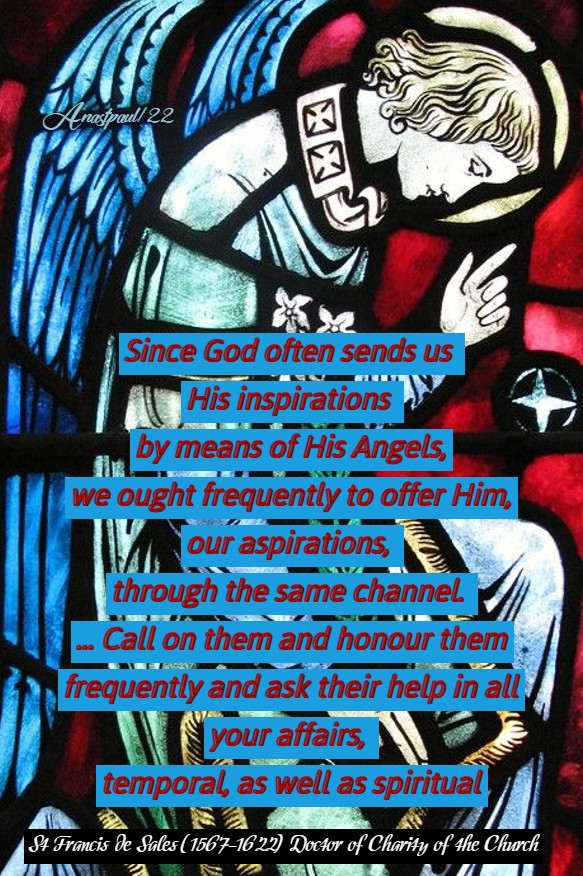
“Since God often sends us His inspirations
by means of His Angels,
we ought frequently to offer Him,
our aspirations, through the same channel.
… Call on them and honour them frequently
and ask their help in all your affairs,
temporal, as well as spiritual.
”

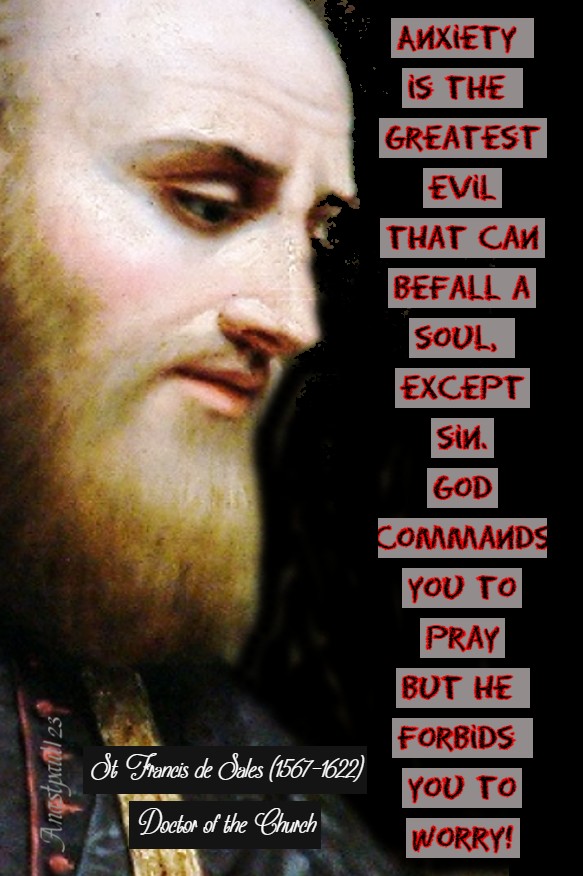
“Anxiety is the greatest evil
that can befall a soul, except sin.
God commands you to pray
but He forbids you to worry
.”

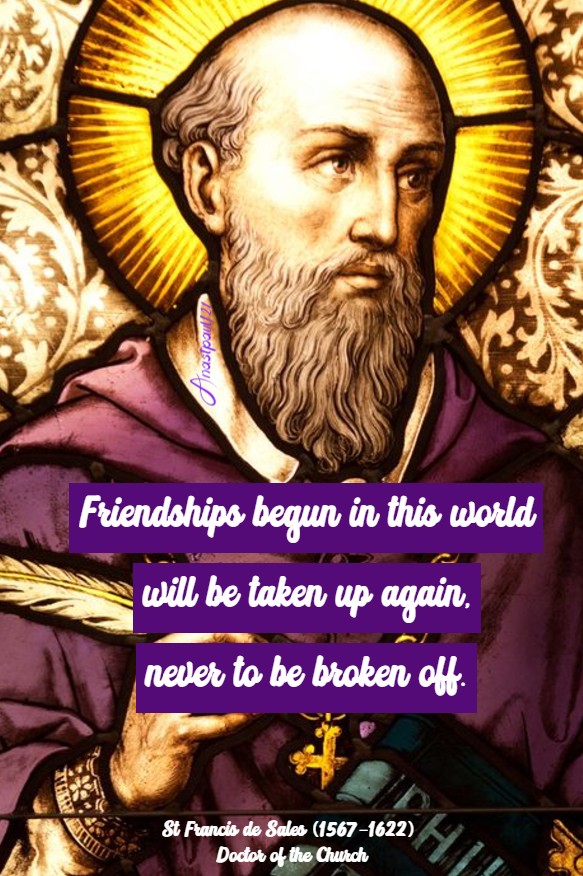
“Friendships begun in this world
will be taken up again,
never to be broken off. ”

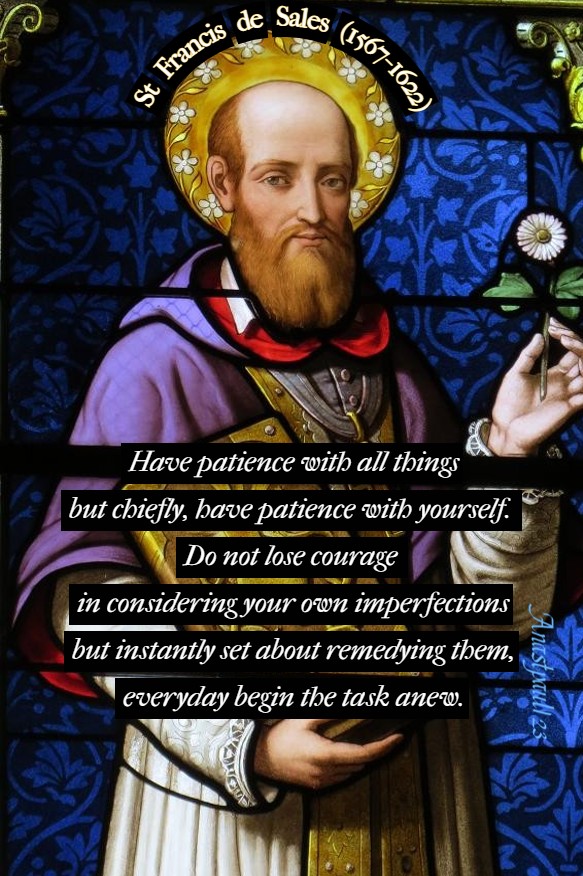
“Have patience with all things
but chiefly, have patience with yourself.
Do not lose courage
in considering your own imperfections
but instantly set about remedying them,
everyday begin the task anew.
”

“Do not look forward
to the changes and chances
of this life in fear –
rather look to them with full hope that,
as they arise, God, whose you are,
will deliver you out of them.
He is your keeper.
He has kept you hitherto.
Do you but hold fast to His dear hand
and He will lead you safely through all things
and, when you cannot stand,
He will bear you in His arms.
Do not look forward to
what may happen tomorrow.
Our Father will either shield you from suffering,
or He will give you strength to bear it.
”

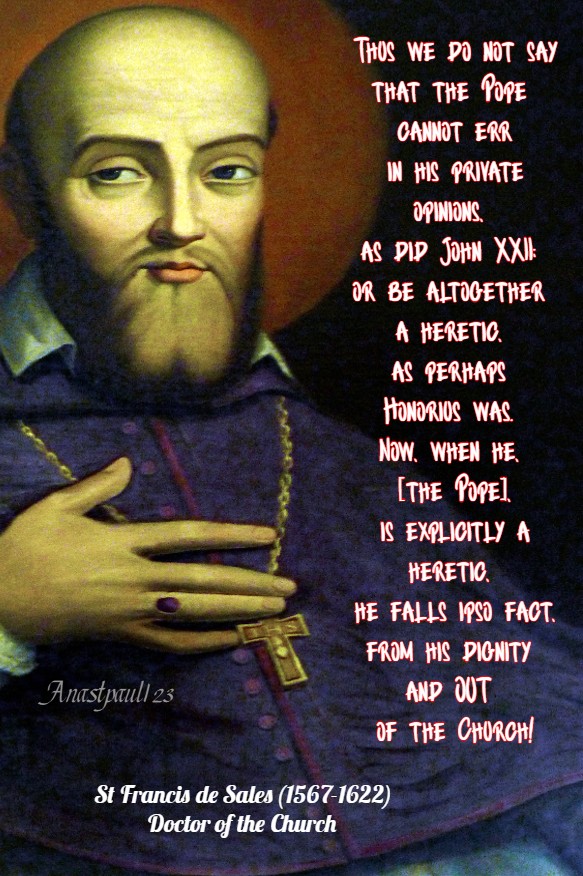
“Thus we do not say that the Pope
cannot err in his private opinions,
as did John XXII;
or be altogether a heretic,
as perhaps Honorius was.
Now, when he, [the Pope],
is explicitly a heretic,
he falls ipso facto, from his dignity
and OUT of the Church!
…”

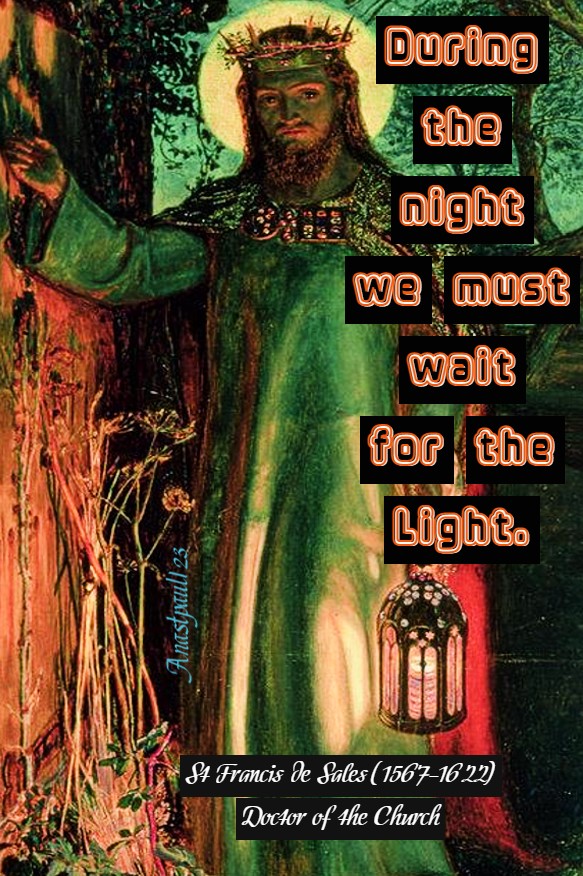
“During the night
we must wait for the Light.
”

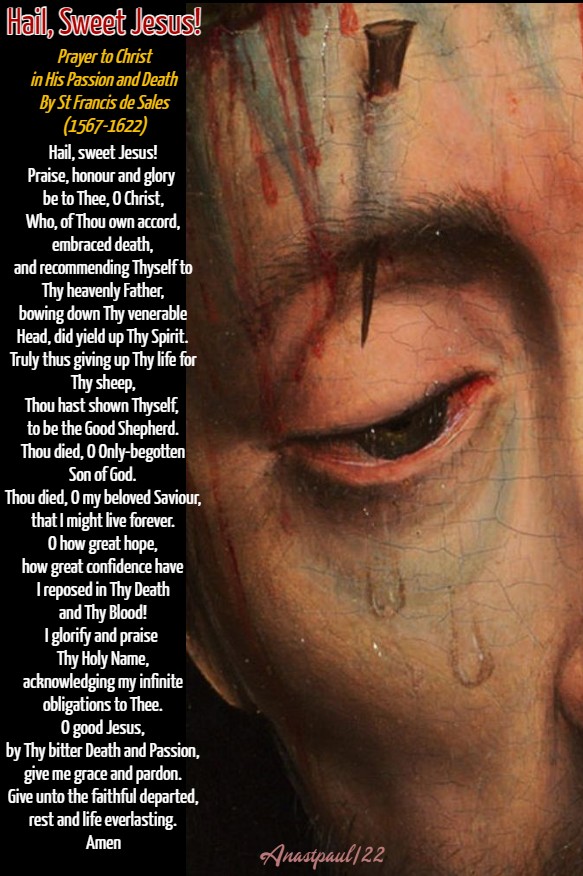
Hail, Sweet Jesus!
Prayer to Christ
in His Passion and Death

By St Francis de Sales (1567-1622)

Doctor of the Church

Hail, sweet Jesus!
Praise, honour and glory be to Thee, O Christ,
Who, of Thou own accord, embraced death,
and recommending Thyself to Thy heavenly Father,
bowing down Thy venerable Head,
did yield up Thy Spirit.
Truly thus giving up Thy life for Thy sheep,
Thou hast shown Thyself, to be the Good Shepherd.
Thou died, O Only-begotten Son of God.
Thou died, O my beloved Saviour,
that I might live forever.
O how great hope,
how great confidence have
I reposed in Thy Death and Thy Blood!
I glorify and praise Thy Holy Name,
acknowledging my infinite obligations to Thee.
O good Jesus,
by Thy bitter Death and Passion,
give me grace and pardon.
Give unto the faithful departed,
rest and life everlasting.
Amen.

Most Holy Mary,
Virgin Mother of God
Act of Consecration
By St Francis de Sales (1567-1622)
Indulgence of 300 days, for each recitation
St Pius X, 17 November 1906

Most Holy Mary,
Virgin Mother of God,
I ………., most unworthy though I am to be thy servant,
yet touched by thy motherly care for me
and longing to serve thee,
do, in the presence of my Guardian Angel
and all the Court of Heaven,
choose thee this day to be my Queen,
my Advocate and my Mother
and I firmly purpose to serve thee evermore myself
and, to do what I can, that all may
render faithful service to thee.
Therefore, most devoted Mother,
through the Precious Blood thy Son poured out for me,
I beg thee and beseech thee,
deign to take me among thy clients
and receive me as thy servant forever.
Aid me in my every action
and beg for me the grace never,
by word or deed or thought,
to be displeasing in thy sight
and that of thy most holy Son.
Think of me, my dearest Mother
and desert me not at the hour of death.
Amen

MORE:
https://anastpaul.com/2022/01/29/quote-s-of-the-day-29-january-st-francis-de-sales/

Posted in All THEOLOGIANS, Moral Theologians, CATHOLIC PRESS, CONFESSORS, DOCTORS of the Church, franciscan OFM, Of the DEAF, against DEAFNESS, PATRONAGE - WRITERS, PRINTERS, PUBLISHERS, EDITORS, etc, SAINT of the DAY, TEACHERS, LECTURERS, INSTRUCTORS

Saint of the Day – 29 January – St Francis de Sales (1567-1622) Bishop, Confessor, Doctor

Saint of the Day – 29 January – St Francis de Sales (1567-1622) Bishop, Confessor, Doctor of the Church – Doctor Caritatis (Doctor of Charity) “The Gentle Christ of Geneva” and the “Gentleman Saint.”

From the Office of the Church
for the Feast, of St Francis de Sales.

Francis was born of pious and noble parents, in the town of Sales, from which the family took their name. From his earliest years, he gave pledge of his future sanctity by the innocence and gravity of his conduct. Having been instructed in the liberal sciences during his youth, he was sent early to Paris that he might study Philosophy and Theology and, in order that his education might be complete, he was sent to Padua, where he took, with much honour, the degree of Doctor in both Civil and Canon Law. He visited the Sanctuary of Loreto, where he renewed the vow he had already taken in Paris, of perpetual virginity, in which holy resolution he continued till death, in spite of all the temptations of the devil and all the allurements of the flesh.

He refused to accept an honourable position in the Senate of Savoy and entered into the Ecclesiastical state. He was Ordained Priest and was made Provost of the Diocese of Geneva, which charge he so laudably fulfilled that Granier, his Bishop, selected him for the arduous undertaking of labouring, by the preaching of God’s Word, for the conversion of the Calvinists of Chablais and the neighbouring country round about Geneva.

This mission he undertook with much joy. He had to suffer the harshest treatment on the part of the heretics, who frequently sought to take away his life, caluminated him and laid all kinds of plots against him. But, he showed heroic courage in the midst of all these dangers and persecutions and by the Divine assistance, converted, as it is stated, seventy-two thousand heretics to the One True Catholic Faith, among whom were many distinguished by the high position they held in the world and by their learning.

After the death of Granier, who had already made him his Co-adjutor, he was made Bishop of Geneva. Then it was that his sanctity showed itself in every direction, by his zeal for Ecclesiastical discipline, his love of peace, his charity to the poor and every virtue.

From a desire to give more honour to God, he founded a new Order of Nuns, which he called the Visitation, taking for their Rule that of St Augustine, to which he added Constitutions of admirable wisdom and sweetness. He enlightened the children of the Church by the works he wrote, which are full of a heavenly wisdom and pointed out a path, which is at once safe and easy, to christian perfection.

In his fifty-fifth year, whilst returning from France to Annecy, he was taken with his last sickness, immediately after having celebrated Mass, on the Feast of St. John the Evangelist. On the following day, his soul departed this life for Heaven, in the year of our Lord 1622. His body was taken to Annecy and was buried, with great demonstration of honour, in the Church of the Nuns of the above mentioned Order. Immediately after his death, miracles began to be wrought through his intercession, which, being officially authenticated, he was Canonised by Pope Alexander the Seventh and his Feast was appointed to be kept on the twenty ninth day of January.

Posted in DOCTORS of the Church, franciscan OFM, MARIAN TITLES, SAINT of the DAY

The Fourth Sunday after Epiphany, Notre-Dame-de-Chatillion / Our Lady of Chatillion-sur- Seine, France (1130), St Francis de Sales (1567-1622) Bishop, Confessor – Doctor of the Church and Memorials of the Saints – 29 January

The Fourth Sunday after Epiphany

Notre-Dame-de-Chatillion / Our Lady of Chatillion-sur- Seine, France (1130) – 29 January:
HERE:

https://anastpaul.com/2021/01/29/our-lady-of-chatillion-sur-seine-france-1130-and-memorials-of-the-saints-29-january/

St Francis de Sales CO, OM, OFM (Cap) (1567-1622) Bishop, Confessor – Doctor of the Church: Doctor caritatis (Doctor of Charity) “The Gentle Christ of Geneva” and the “Gentleman Saint” – Bishop of Geneva, Doctor of Law and Theology, Writer, Theologian, Mystic, Teacher, Preacher, Founder along with St Jane Frances de Chantal, founded the women’s Order of the Visitation of Holy Mary (Visitandines).
Feast Day – 29 January (General Roman Calendar of 1960 and local communities.
Biography:

https://anastpaul.wordpress.com/2018/01/24/saint-of-the-day-24-january-st-francis-de-sales-1567-1622-doctor-of-the-church-doctor-caritatis-doctor-of-charity/

t Abundantia the Martyr
St Aphraates
St Aquilinus of Milan
St Barbea of Edessa
St Blath of Kildare
Bl Boleslawa Maria Lament
St Caesarius of Angoulême
Bl Charles of Sayn

St Constantius of Perugia (Died c 170) Martyr Bishop
His Life and Death:

https://anastpaul.com/2022/01/29/saint-of-the-day-29-january-saint-constantius-of-perugia-died-c-170-martyr/

St Dallan Forgaill (c 530- 598) Martyr, Monk, Reformer, Poet.
St Dallan’s story:

https://anastpaul.wordpress.com/2018/01/29/saint-of-the-day-29-january-st-dallan-forgaill-c-530-598/

St Pope Gelasius II (c 1060–1119) Bishop of Rome from 24 January 1118 to his death in 1119.
About Pope Gelasius II:

https://anastpaul.com/2020/01/29/saint-of-the-day-29-january-st-pope-gelasius-ii-c-1060-1119/
St Gildas the Elder

St Gildas the Wise (c 500-c 570) Priest and Abbot.
Biography:

https://anastpaul.wordpress.com/2017/01/29/saint-of-the-day-29-january-st-gildas-the-wise/

Blessed Juniper OFM (Died 1258) Franciscan Friar. Brother Juniper is called “the renowned jester of the Lord” and was one of the original followers of St Francis of Assisi.
Blessed Juniper’s life:

https://anastpaul.com/2019/01/29/saint-of-the-day-29-january-the-servant-of-god-brother-juniper-ofm-died-1258/

St Maurus of Rome
St Papias of Rome
St Sarbellius
St Serrano

St Sulpicius I (Died 591) Bishop of Bourges.
About St Sulpicius:

https://anastpaul.com/2021/01/29/saint-of-the-day-29-january-saint-sulpicius-i-died-591/

St Valerius of Trier
St Voloc

Posted in For RAIN OR Against RAIN, PATRONAGE - of BASKET-WEAVERS, CRAFTSMEN, SAINT of the DAY

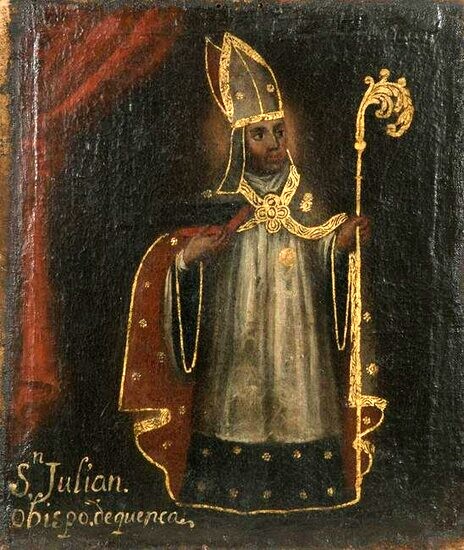
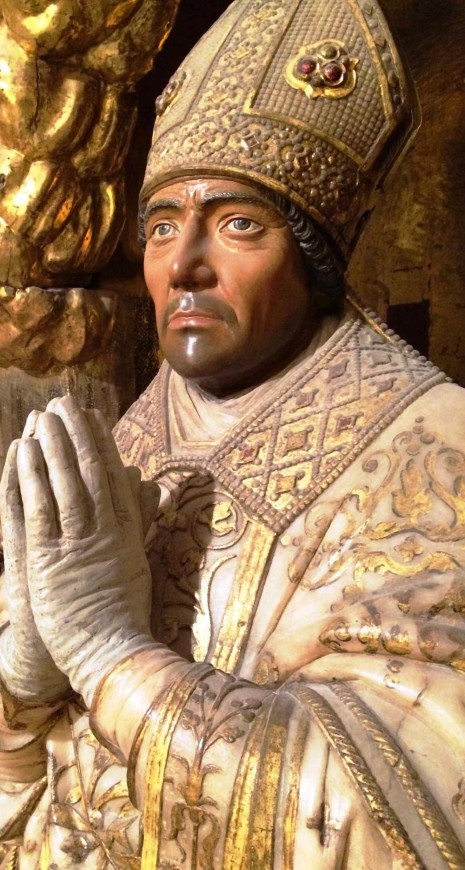
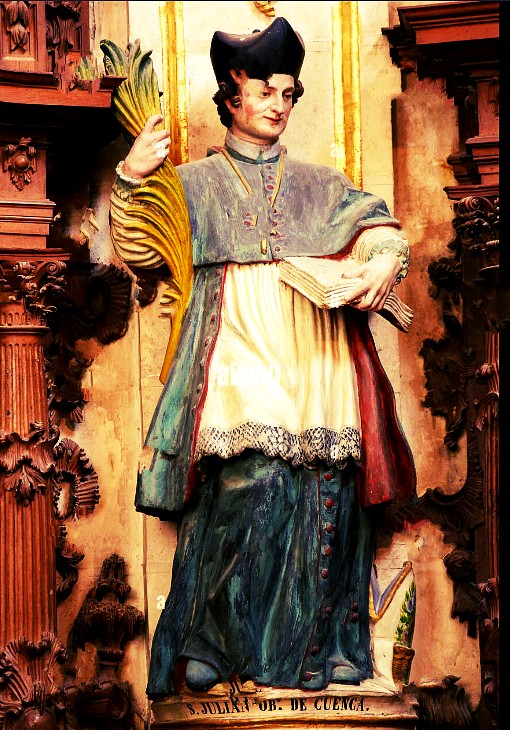
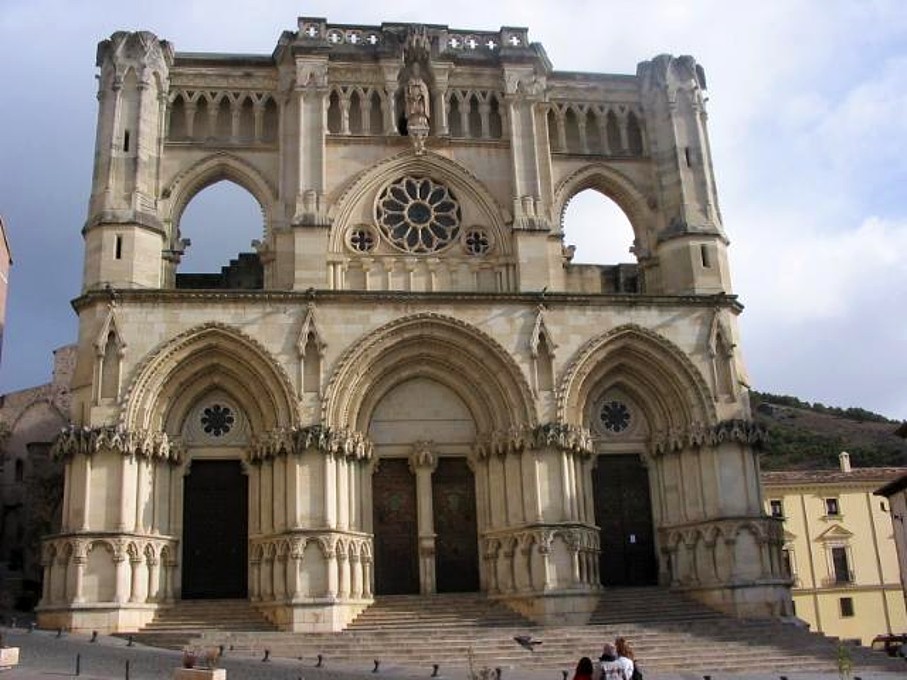
Saint of the Day – 28 January – Saint Julián of Cuenca (1127-1208) Bishop

Saint of the Day – 28 January – Saint Julián of Cuenca (1127-1208) the second Bishop of Cuenca, Spain from c 1196 until his death. Professor, Hermit, Reformer, Miracle-worker, basket-weaver using the money he gained from this trade to support the poor and needy, He was also a regular visitor to prisoners, assisting them spiritually and with material succour. Born as Julián Ben Tauro in c 1127 at Burgos, Spain and died on 28 January 1208 in Cuenca, Spain of natural causes, aged around 80 years. Patronages – basket-weavers, for rain, of the City and Diocese of Cuenca. Also known as – Julian of Burgos. Canonised on 18 October 1594 by Pope Clement VIII.

Saint Julián of Cuenca by Eugenio Cajes.

Most details we have collected about Saint Julián’s life are due to tradition (mixed with “pious” stories), writings that developed, especially from the 16th Century. These writings depict a holy man, chosen by God from the mother’s womb (like the prophets), a man full of humility and apostolic zeal, great benefactor of the poor, with a deep and intense spirit of prayer and great devotion to the Virgin Mary.
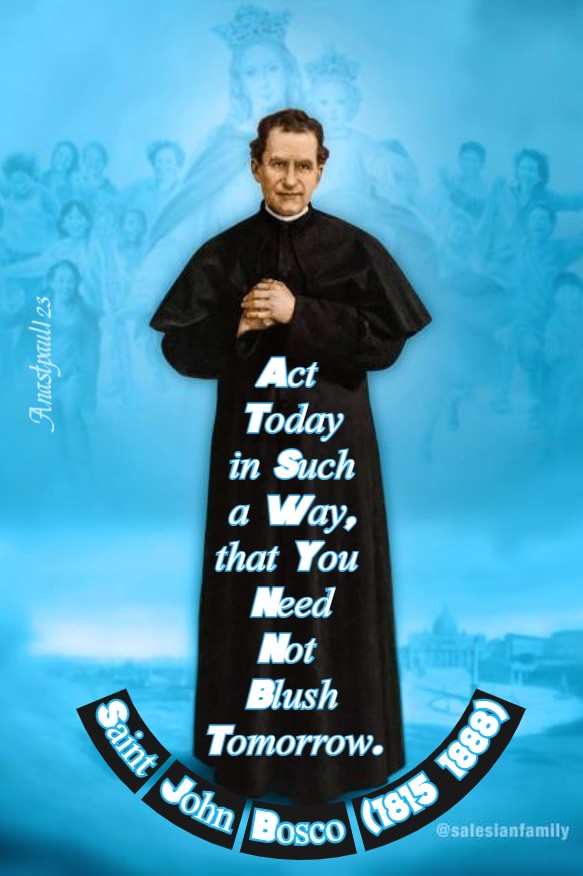
Julián’s name was Julián Ben Tauro (meaning Julián son of Tauro). His surname indicates his Mozarab ancestry – that is, Christians who lived in Muslim kingdoms, thus, in a delicate position. This document leads most historians to state the Toledan Mozarab origins of Julián.

Historical sources do not offer much information on the early life of Julián, except that he was born in Burgos to the nobleman Tauro. He studied at the Cathedral school there before he studied at the University of Palencia where he earned his Doctorate. In 1153, he was appointed a Professor in the philosophical and theological departments in Palencia in 1153. During his time in Palencia he worked as a basket-weaverr in order to earn extra income for the poor, as well to support himself.

Saint Julian of Cuenca and St Adelelmus of Burgos – Spanish School, 17th Century

In 1163 he left Palencia and his teaching duties to live a life of solitude in a modest house outside Burgos, located on the banks of the Arlanzón. He was Ordained to the Priesthood in 1166 after having received the minor orders. He and his servant, Lesmes lived a life of mortification and contemplation. The two then took to the road as itinerant preachers and reached both Córdoba and Toledo in 1191. A note about Lesmes – “the figure of Lesmes, the loyal servant who would not leave the company of Saint Julián until his death.”

Saint Julián with Lesmes, his servant

But this solitude and travelling ended in 1191 when the Archbishop of Toledo, Martín II López de Pisuerga appointed Julián as the Archdeacon at Toledo. He exercised his administrative duties but continued preaching, as well as making baskets in order to generate income for the poor. From 1196, Julián served as the Archdeacon until the Bishop of Cuenca, Juan Yáñez died and Alfonso VIII of Castile chose Julián to succeed him.

The Archbishop of Toledo conferred Episcopal Consecration upon him that June of 1196. Julián was known for his almsgiving and he visited the poor in prisons too. His outreach to all faiths was equally generous and kind, as was his desire to make pastoral visits to care for the faithful in his Diocese. He often offered grain to the poor to alleviate their suffering and also aided the poor peasant farmers in the region.

He continued to preach during his travels to all the areas in his Diocese, as well as reforming the practices of the Diocesan Priests in addition to engaging with charitable organisations to better help the poor. He likewise supported these charities to provide for the needs of his flock, in addition to the Jews and Muslims. On an annual basis, he would retire to live a life of solitude and contemplation and continued his habit of making baskets. There is a wonderful miracle reported that one day Jesus Himself appeared to him in the guise of a beggar, in order to thank him.

Colonial School, Cuzco, Peru. 18th century – Saint Julian Bishop of Cuenca

He died in his Diocese in 1208. His remains were housed in the Cuenca Cathedral but his body was re-interred in 1578 under an Altar built in his honour in a side Chapel at the same Cathedral.

In the Reading V of the Office it is stated that “he was a true father of the poor and used his money and his talents to help the needy, widows and orphans. He used the yield of his Church to help the miserable, as well as to establish and decorate the Churches, using little support for himself, obtaining what he needed personally with his own hands. He was devoted to prayer, through which he achieved from God many and great things for his people. The beautiful miracle is related as follows: Since the whole Diocese suffered shortage of grain and nothing was left in the Episcopal barns, taking pity on the people suffering this great calamity, he prayed fervently to the Lord along with many tears. Then it occurred that a huge quantity of grain was transported to the gates of the Episcopal palace carried by numerous donkeys, which disappeared after leaving their load.

In memory and as a tribute to the charity of Saint Julián, the Chapter established at the beginning of the 15th century the “Chest of Saint Julián” or “of the Alms”, which became a charitable institution to attend the urgent needs of the dispossessed. Essentially it gave daily alms of bread, ensured the upbringing and accommodation of orphan children and provided dowries so orphan ladies could marry, something otherwise impossible given the customs and the way of thinking at the time. (This Chest was perpetuated in Cuenca until recent times).

According to the old obituaries of Cuenca’s Bishopric, the death or departure of Saint Julián took place on 20th January 1208, at the age of 80. However, his celebration was set on the 28th of the same month, probably for the sake of liturgical-pastoral expediency, and during centuries his festivity has been celebrated on that date in Cuenca and in other places where he is greatly venerated.

As the tradition brings to light and is easy to imagine, Saint Julián was a great preacher, going through many places of Spain preaching the Gospel of Salvation. He was an excellent missionary, also within Cuenca’s recently created Diocese, repopulated with peoples from the North, as a result of the re-conquest. Despite the many difficulties of travelling from one place to another, Julián spared no effort to preach the Gospel to everyone, as the Lord commended after His Resurrection.

Saint Julián’s Canonisation was solemnised under Pope Clement VIII on 18 October 1594.

The Cathedral in Cuenca
Posted in SAINT of the DAY

The Second Feast of St Agnes, St Peter Nolasco OdeM (c 1182–c 1256) Confessor and Memorials of the Saints – 28 January

The Second Feast of St Agnes:
28 January is traditionally the day of the “Second Feast of St Agnes,” although this very ancient observance was reduced to a commemoration in 1931 and abolished in the post-Vatican II reform (1969). It is still kept in some Churches dedicated to St Agnes, most prominent among them, the Basilica built over the site of her burial, less than a mile and a half from the gates of Rome.
In liturgical books, the formal name of the feast is “Sanctae Agnetis secundo,” which literally means “the feast of St Agnes for the second time.” This title is found on the calendar of the Tridentine Missal and Breviary, as also seven centuries earlier in the Gregorian Sacramentary. The single Matins lesson in the Breviary of St Pius V tells us, that after her death, Agnes appeared first to her parents to console them and then to the Emperor Constantine’s daughter Constantia, who suffered from an incurable sore, while she was praying at her grave, exhorting Constantia to trust in Christ and receive Baptism. Having done this and been healed, Constantia later built a Basilica in the Saint’s honour.
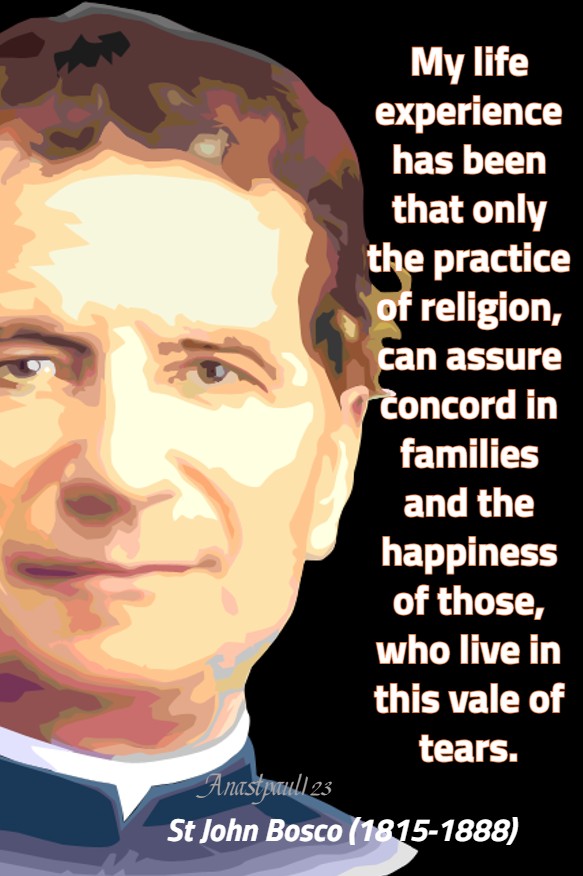
St Peter Nolasco OdeM (c 1182–c 1256) Confessor, Founder of the Congregation of the Royal and Military Order of Our Lady of Mercy of the Redemption of the Captives (Mercadarians).
Biography:

https://anastpaul.com/2022/01/28/saint-of-the-day-28-january-saint-peter-nolasco-odem-c-1182-c-1256/

St Aemilian of Trebi
Bl Amadeus of Lausanne
St Antimus of Brantôme
St Archebran
Bl Bartolomé Aiutamicristo
St Brigid of Picardy
St Callinicus
St Cannera of Inis Cathaig
Bl Charlemagne (a decree of Canonisation was issued by the anti-pope Paschal III but this was never ratified by valid authority.)
St Constantly
St Flavian of Civita Vecchia
St Glastian of Kinglassie
Bl James the Almsgiver
St James the Hermit
St Jean de Réomay

Blessed Julian Maunoir SJ (1606-1683) Priest “The Apostle of Brittany,” “The Good Father of Brittany,” Missionary, Founder of the “Breton Missionaries” Apostolate. On 20 May 1951 the Good Father Julian, Apostle of Brittany, was Beatified by Pope Pius XII.
About Bl Julian:
https://anastpaul.com/2021/01/28/saint-of-the-day-28-january-blessed-julian-maunoir-sj-1606-1683-priest-the-apostle-of-brittany-the-good-father-of-brittany/

St Julian of Cuenca (c 1127-1208) Bishop
St Leucius of Apollonia
St Maura of Picardy
Bl Odo of Beauvais
St Palladius of Antioch
St Paulinus of Aquileia
St Richard of Vaucelles
St Thyrsus of Apollonia

Martyrs of Alexandria: A group of 4th-century lay faithful in Alexandria, Egypt. During the celebration of Mass one day an Arian officer named Syrianus led a troop of soldiers into their church and proceded to murder all the orthodox Christians in the place. 356 in Alexandria, Egypt.

Posted in DOCTORS of the Church, FATHERS of the Church, Our MORNING Offering, PRAYERS of the SAINTS, SAINT of the DAY

Our Morning Offering – 27 January – O Lord and Lover of Men

Our Morning Offering – 27 January – St John Chrysostom (347-407) Bishop, Confessor, Father and Doctor of the Church “Golden Mouthed”

O Lord and Lover of Men
By St John Chrysostom (347-407)
Father and Doctor of the Church

O Lord and Lover of men,
make shine in our hearts
the pure Light of Thy Divine Knowledge
and open the eyes of our mind
to the understanding of Thy Gospel teaching.
Instill in us the fear
of Thy Blessed Commandments
that trampling upon all carnal desires,
we may enter upon a spiritual life,
willing and doing all that is Thy Good Pleasure.
For Thou art the Light of our souls
and of our bodies, Christ O God
and we give glory to Thee
together with Thine Eternal Father
and Thine All-holy, Good and Life-giving Spirit,
now and forever, world without end.
Amen.

Posted in All THEOLOGIANS, Moral Theologians, CONFESSORS, DOCTORS of the Church, EPILEPSY, FATHERS of the Church, PATRONAGE - WRITERS, PRINTERS, PUBLISHERS, EDITORS, etc, PREACHERS, SAINT of the DAY

Saint of the Day – 27 January – St John Chrysostom (347-407) Bishop, Confessor, Father and Doctor of the Church

Saint of the Day – 27 January – St John Chrysostom (347-407) Bishop, Confessor, Father and Doctor of the Church “Golden Mouthed.”

The Church, in the Lessons of today’s Office,
thus speaks the praises of our Saint.

John, surnamed Chrysostom on account of his golden eloquence, was born at Antioch. Having gone through the study of the law and the profane sciences, he applied himself, with extraordinary application and success, to the study of the Sacred Scriptures.
Having been admitted to Holy Orders and made a Priest of the Church at Antioch, he was appointed Bishop of Constantinople, after the death of Nectarius, by the express wish of the Emperor Arcadius. No sooner had he entered upon the pastoral charge, than he began to inveigh against the licentious lives led by the rich. Thus, his courageous preaching procured him many enemies. He likewise gave great offence to the Empress Eudoxia because he had reproved her, for having appropriated to herself, the money belonging to a widow, name, Callitropa and for having taken possession of some land which was the property of another widow.

At the instigation, therefore, of Eudoxia, several Bishops met together at Chalcedon. Chrysostom was cited to appear, which he refused to do because it was not a Council, either lawfully or publicly convened. Whereupon, he was sent into exile. He had not been gone long, before the people rose in sedition on account of the Saint’s banishment and he was recalled, to the immense joy of the whole City.
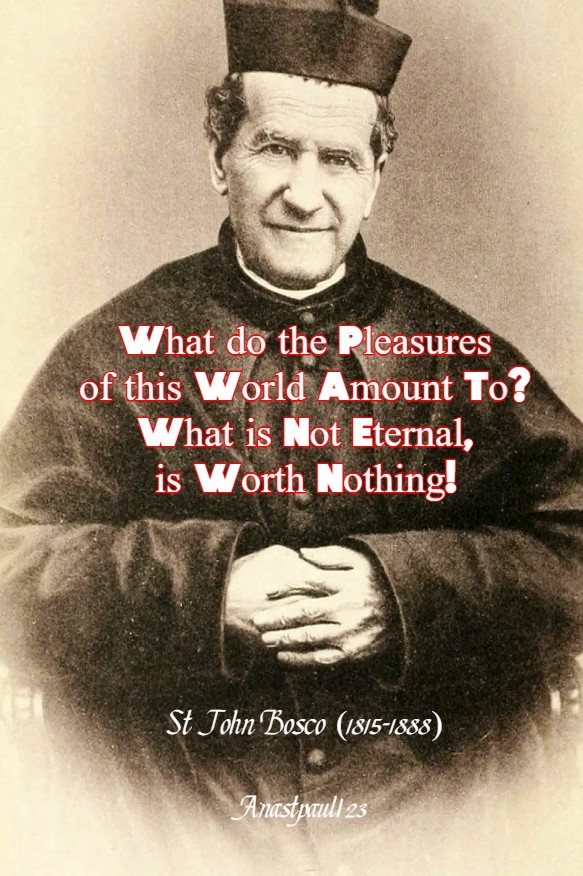
But, his continuing to inveigh against the scandals which existed, and his forbidding the games, held before the silver statue of Eudoxia which was set up in the space opposite Sancta Sophia, were urged by certain Bishops, enemies of the Saint, as motives for a second banishment.

The widows and the poor of the City bewailed his departure as that of a father. It is incredible how much Chrysostom had to suffer in this exile and how many he converted to the Christian Faith by his sufferings!

At the very time that Pope Innocent the First, in a Council held at Rome, was issuing a Decree, ordering that Chrysostom should be set at liberty – he was being treated by the soldiers, who were taking him into exile, with unheard of harshness and cruelty.
Whilst passing through Armenia, the holy Martyr Basiliscus, in whose Church he had offered up a prayer, thus spoke to him during the night:
“Brother John! we shall be united together tomorrow.“ Whereupon, on the following morning, Chrysostom received the Sacrament of the Eucharist and, signing himself with the Sign of the Cross, he breathed forth his soul to his God, on the eighteenth of the Calends of October (14 September).

A fearful hail-storm happened at Constantinople after the Saint’s death and, four days after, the Empress died. Theodosius, the Son of Arcadius, had the Saint’s body brought to Constantinople, with all due honour, where, amidst a large concourse of people, it was buried on the sixth of the Calends of February (27 January). Theodosius, whilst devoutly venerating the Saint’s Relics, interceded for his parents that they might be forgiven. The body was, at a later period, translated to Rome and placed in the Vatican Basilica.

All men agree in admiring the unction and eloquence of his sermons, which are very numerous, as indeed of all his other writings. He is also admirable in his interpretation of the Sacred Scriptures which he explains in their genuine sense. It has always been thought that he was aided, in his writings and sermons, by St Paul the Apostle, to whom he entertained an extraordinary devotion.

St Paul guiding St John Chrysostom
Posted in DOCTORS of the Church, FATHERS of the Church, MARIAN TITLES, SAINT of the DAY

Notre-Dame-de-Vie / Our Lady of Life, Provence, France, St John Chrysostom (347-407) and Memorials of the Saints – 27 January

Notre-Dame-de-Vie / Our Lady of Life, Provence, France – 27 January:
HERE:

https://anastpaul.com/2021/01/27/our-lady-of-life-notre-dame-de-vie-provence-france-and-memorials-of-the-saints-27-january/

St John Chrysostom (347-407) Bishop, Confessor, Father and Doctor of the Church – “Golden Mouthed,” Preacher, Orator, Writer, Theologian, Confessor. Name Meaning – God is gracious; gift of God (John), golden-mouthed (Chrysostom).
Biography:

https://anastpaul.com/2017/09/13/saint-of-the-day-13-september-st-john-chrysostom-347-407-father-and-doctor-of-the-church-golden-mouthed/
(His Feast Day is today (changed in 1969 to 13 September).
The Roman Martyrology states of him today: “At Constantinople, St John, Bishop, who was surnamed Chrysostom on account of his golden flow of eloquence. He greatly promoted the interests of the Christian religion by his preaching and exemplary life and, after many toils, closed his life in banishment. His sacred body was brought to Constantinople on this day in the reign of Theodosius the younger and afterwards taken to Rome and placed in the Basilica of the Prince of the Apostles. This illustrious Preacher of the Word of God, Pope Pius X declared and appointed as the Heavenly Patron of Sacred Orators.”

St Avitus
St Candida of Bañoles

St Devota (Died c 303) Virgin Martyr,.
Her Life and Death:

https://anastpaul.com/2022/01/27/saint-of-the-day-27-january-st-devota-died-c-303-virgin-martyr/

St Domitian of Melitene
St Emerius of Bañoles
St Gilduin
Bl Gonzalo Diaz di Amarante
St Henry de Osso y Cervello
Bl John of Warneton
St Julian of Le Mans
St Julian of Sora
St Lupus of Châlons

Blessed Manfredo Settala (12 Century-1217) Priest and Hermit, “The Hermit of Monte San Giorgio,” Miracle-worker.
His Story:

https://anastpaul.com/2021/01/27/saint-of-the-day-27-january-blessed-manfredo-settala-12th-century-1217/

St Marius of Bodon
Bl Michael Pini
St Natalis of Ulster
St Theodoric of Orléans
St Pope Vitalian

Martyrs of North Africa – 30 Saints: A group of 30 Christians Martyred together by Arian Vandals. The only details to have survived are four of their names – Datius, Julian, Reatrus and Vincent. c 500 in North Africa.

Posted in "Follow Me", CHRIST the HIGH PRIEST, FATHERS of the Church, PRAYERS of the SAINTS, QUOTES on FEAR, QUOTES on MARTYRDOM, QUOTES on PERSECUTION, SAINT of the DAY, The WORD

One Minute Reflection – 26 January – And fear you not them who kill the body and are not able to kill the soul …” – Matthew 10:28

One Minute Reflection – 26 January – St Polycarp (69-155) Martyr, Bishop of Smyrna (Asia Minor), Apostolic Father – 1 John 3:10-16, Matthew 10:26-32 – Scripture search here: https://www.drbo.org/

“And fear you not them who kill the body and are not able to kill the soul …” – Matthew 10:28

REFLECTION – “They did not nail Polycarp but only tied him up. And so, he was bound, putting his arms behind his back, like a noble ram taken from a large flock for sacrifice, a burnt offering acceptable to and made ready for God. Then he gazed up to Heaven and said: “O Lord God Almighty, Father of Your beloved and blessed Son Jesus Christ, through Whom we have received knowledge of You, God of the angels and the powers and of all creation, God of the whole race of the righteous who live in Your sight: I bless You, for You have thought me worthy of this day and hour, to share the cup of Your Christ, as one of Your Martyrs, to rise again to eternal life in body and soul in the immortality of the Holy Ghost. May I be taken up today into Your Presence among Your Martyrs, as a rich and acceptable sacrifice, in the manner You have prepared and have revealed and have now brought to fulfillment, for You are the God of truth… And so also I praise You for all things; I bless and glorify you through our Eternal High Priest in Heaven (Heb 4,14), in Your beloved Child, Jesus Christ, through Whom be glory to You and to Him and to the Holy Ghost, now and for the ages to come. Amen.” – Letter of the Church of Smyrna concerning the Martyrdom of Saint Polycarp (69-155)

PRAYER – O God, Who gave us joy by the annual solemnity of blessed Polycarp, Thy Martyr and Bishop, mercifully grant that we may rejoice in his protection, whose birthday we celebrate. Through Jesus Christ, Thy Son our Lord, Who lives and reigns with Thee, in the unity of the Holy Ghost, God, world without end. Amen (Collect).

Posted in SAINT of the DAY

Saint of the Day – 26 January – Blessed Eystein Erlandssön (Died 1188) Bishop

Saint of the Day – 26 January – Blessed Eystein Erlandssön (Died 1188) Bishop. Born in the 12th century in Norway and died in 1188 in Nidaros, (modern Trondheim), Norway of natural causes. Also known as – Augustine Erlandsön, Augustinus Nidrosiensi, Øystein Erlendsson.

Eystein Erlendsson was from Trøndelag, probably born just before 1130. On his mother’s side he descended from Erling Skjalgsson and he was related to most of the local nobility.

Eystein was educated at Saint-Victor, in Paris, where we presume he was Ordained too. As a Priest he served as sChaplin to King Inge Krokrygg of Norway. When Archbishop Jon Birgersson died on 24 February 1157, the King Inge appointed Eystein as the new Archbishop.

Eysteinn then travelled to Rome, where his appointment was confirmed by Pope Alexander III in 1161. He returned to Norway and attempted to strengthen the ties between Rome and the Norwegian Church. He established the communities of Augustinian Canons regular and consecrated Saint Thorlak as the Bishop of Iceland.

This was a time of tension between Royal power and the Church. During this conflict Eystein sided with Erling Skakke and his son Magnus. When Sverre Sigurdsson eventually gained control over large regions of the realm Eystein was forced into exile. He stayed in Suffolk in England for around three years before returning to Norway in the summer of 1183.

On the political level the Archbishop was forced to agree to several compromises, which included coming to terms with King Sverre (whom he had excommunicated).

From his final years, history knows Eystein best as the grand strategist during the initial great period of building Nidaros Cathedral. He had brought ideas from England about the new Gothic style and he let this style dominate the further plans for the Cathedral.

Eystein also left a lasting mark in the form of Passio Olavi, a hagiographical work written in Latin relating to the life and works of Saint Olaf, with particular emphasis on his missionary work. The title is an abbreviation for Passio Et Miracula Beati Olaui, meaning Holy Olav’s sufferings and miracles.

Eystein died in 1188. He was proclaimed a saint in 1229 but Papal approbation was not forthcoming. Eystein Erlendsson has ,nevertheless, been accepted as a Norwegian Saint – one of four. 1 Blessed Eystein’s cult was finally approved by the Vatican and he is now entered in the register of saints and the beatified. . Blessed Eystein is commemorated on the date of his death, 26 January.