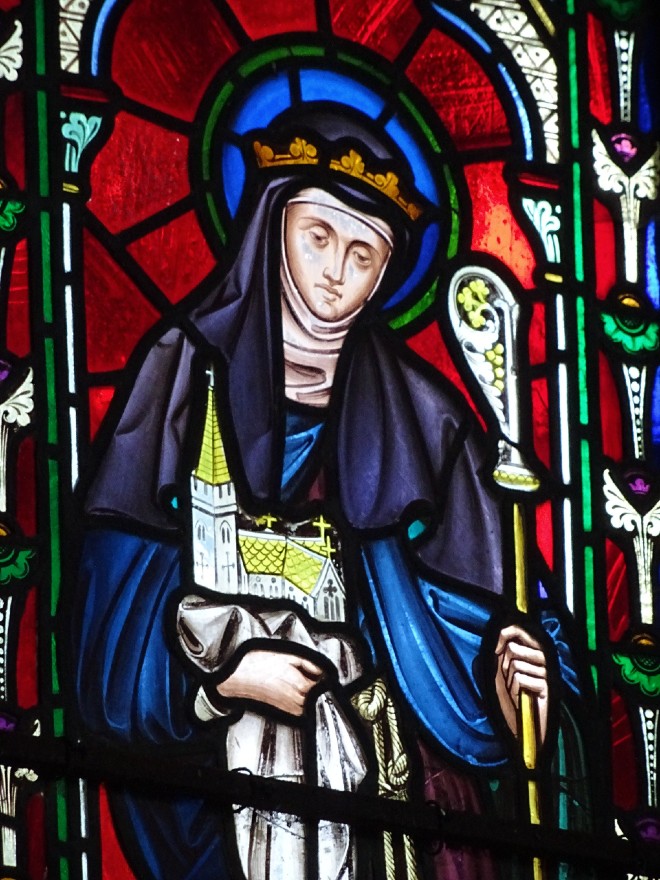
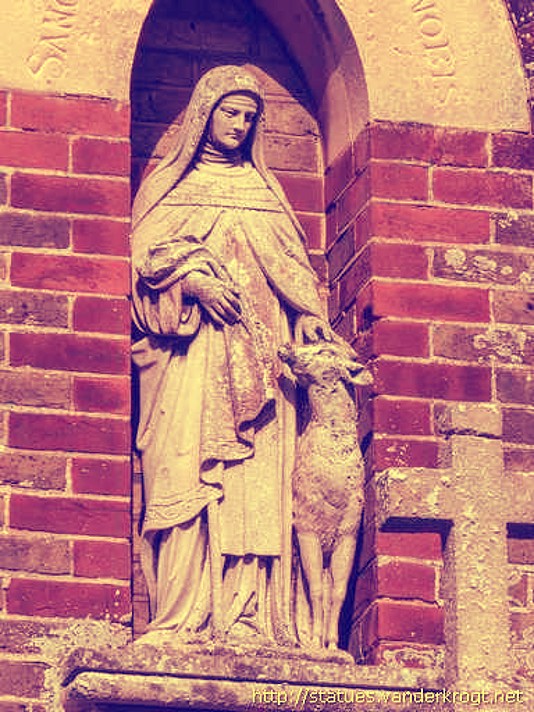
Saint of the Day – 13 July – St Mildred of Thanet OSB (Died c 700) English Benedictine Nun and Abbess, Born as an Anglo-Saxon Princess and died in c.700 of natural causes. Patronage – the Island of Thanet, Kent, England. Also known as – “The Fairest Lily of the English,” Mildred of Minster, Mildryth, Mildthryth. Additional Memorials – 18 May (translation of relics), 20 February (translation of relics).
Mildred was the daughter of King Merewalh of Magonsaete, an area similar to the present day Herefordshire, a sub-kingdom of Mercia. Her mother was Domne Eafe (also sometimes named as Saint Eormenburga), herself a great-granddaughter of Æthelberht of Kent and as such, appears in the Kentish Royal Legend.
Her sisters Milburga of Much Wenlock and Mildgyth, are also Saints and Mildred, along with her extended family, also feature in the Kentish Royal Legend. In the 11th Century, Goscelin wrote a hagiography of Mildred, the Vita Mildrethae. Another work, the Nova Legenda Anglie of 1516, gives an extensive account of her life.
Mildred was educated at the prestigious Merovingian Royal Abbey of Chelles. She entered the Abbey of Minster-in-Thanet, which her mother had established and became Abbess there by 694. A number of dedications to Mildred exist in the Pas-de-Calais, including at Millam, thereby suggesting that ties to Gaul were maintained. Mildred died at Minster-in-Thanet some time after 700 and was buried there in the Abbey Church of St Mary.
Mildrith’s successor as Abbess, Eadburg, also known as Edburga of Minster-in-Thanet, a correspondent of Saint Boniface, built a new Abbey Church, dedicated to Saints Peter and Paul and translated Mildred’s relics there, not later than 748. The Shrine within the Abbey became a popular place of local pilgrimage, with Mildred becoming a much-loved local Patron Saint.
The last Abbess of Minster in Thanet was Leofruna, who was captured by Danes in 1011. The Abbey was abandoned and the Church downgraded to a Parish Church. n 1030, Mildred’s remains, despite fierce local opposition, were translated to St Augustine’s Abbey, Canterbury, an event commemorated on 18 May. St Mildred’s Church, within the town walls at Canterbury, dates back to this time.
In the 11th Century, some of her relics were given, to a Church at Deventer, Netherlands. In 1881 St Mildred’s Feast Day was officially reinstated by Pope Leo XIII.n 1882, following a refounding of the Benedictine Convent at Minster in Thanet, the nuns petitioned the Archbishop of Utrecht, who granted their return to Thanet. In 1937, Minster Abbey was bought by Nuns of the Benedictine Order, and in 1953, a relic of St Mildred was brought there.
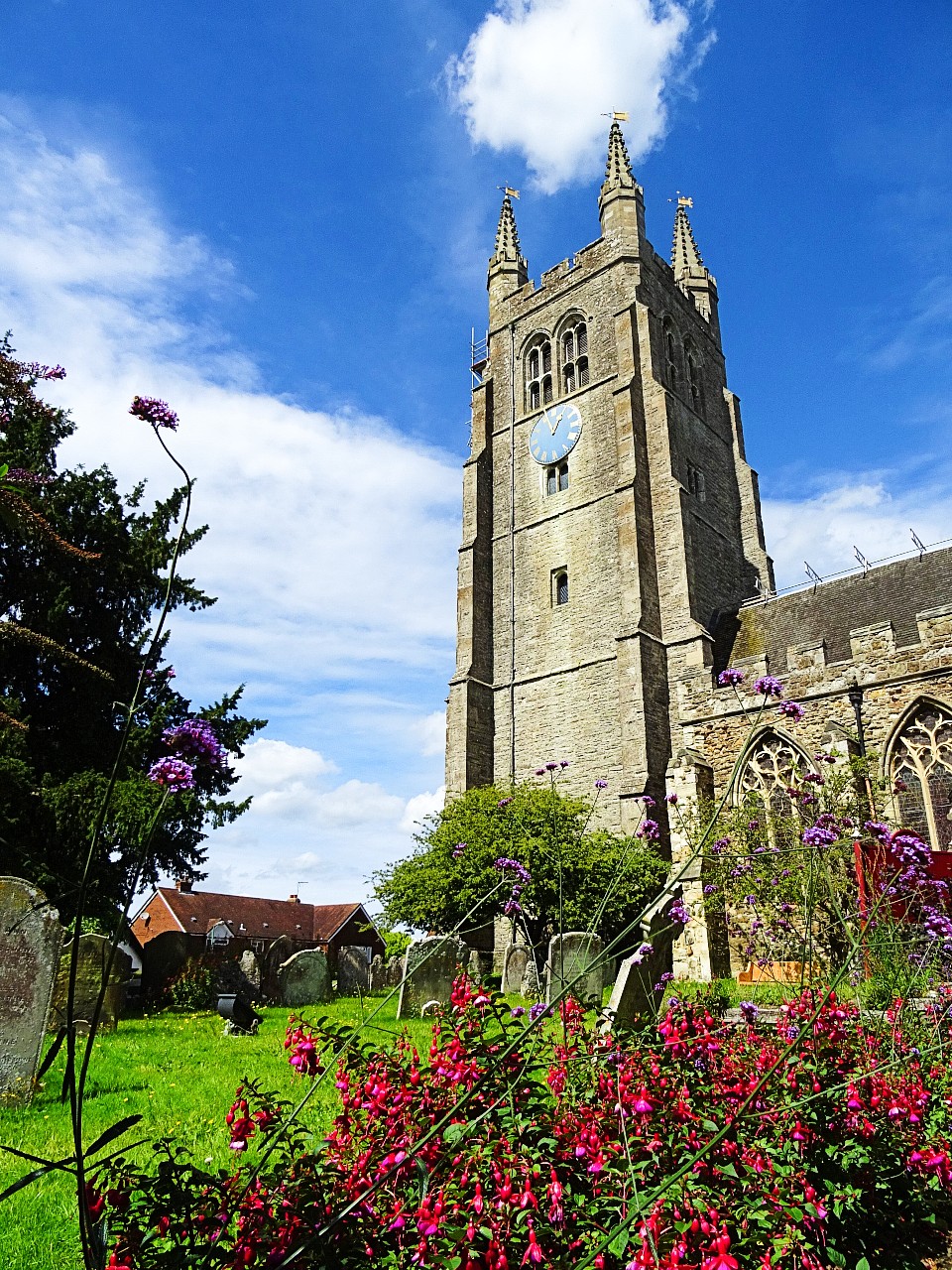
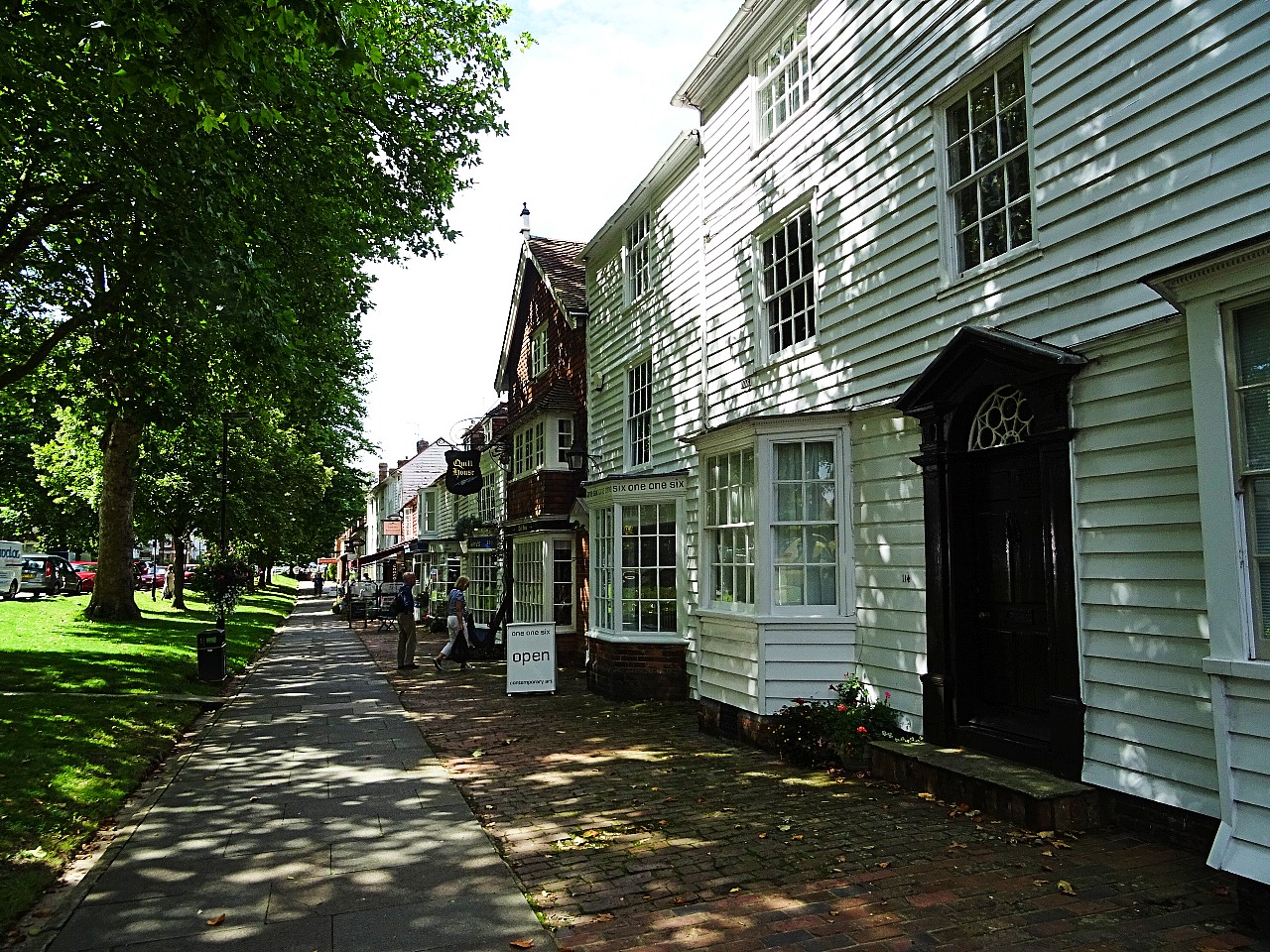
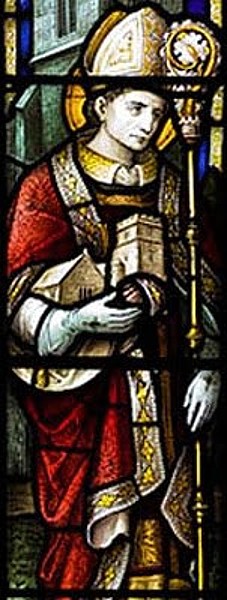
There are numerous medieval Churches dedicated to St Mildred of Thanet, most of them in Kent. This one is in pretty Tenterden (whose name means ‘woodland pasture of the people of Thanet.’ (I have many times visited this Tenterden, a very pretty Town indeed and have visited this Church.)
Bl Anne-Andrée Minutte St Arno of Würzburg Bl Berthold of Scheide St Dogfan Bl Élisabeth Verchière St Esdras the Prophet St Eugene of Carthage St Giustina of Arzano
St Henry (972-1024) Holy Roman Emperor ,Henry was well known for his Missionary spirit and for his protection of the Pope in times of trouble. Henry ruled with a spirit of great humility and always sought to give the glory to God. He used his position to promote the work of the Church and the peace and happiness of the people. Biography: https://anastpaul.wordpress.com/2017/07/13/saint-of-the-day-13-july-st-henry-ii-holy-roman-emperor/
St Iosephus Wang Kuiju
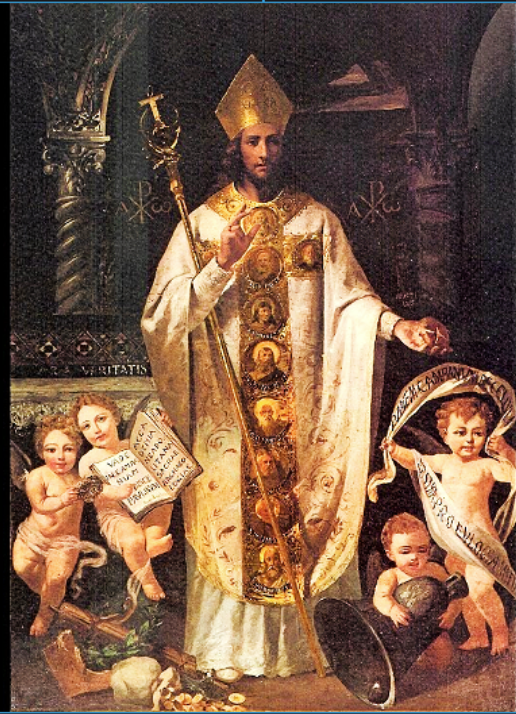
Blessed James of Voragine OP (c 1226 – 3 or 16 July 1298) Italian Archbishop of Genoa, Author of the ‘Golden Legend’ (a collection of lives of Saints and treatises on Christian festivals, one of the most popular religious works of the Middle Ages and is still published and referred to today – completed 1265), Priest and Friar of the Order of Preachers of St Dominic, Writer, Scholar of great genius, Prior and Provincial General of the Order. Blessed James was Beatified on 11 May 1816 by Pope Pius VII. Biography: https://anastpaul.com/2021/07/13/saint-of-the-day-13-july-blessed-james-of-voragine-op-c-1226-1298-author-of-the-golden-legend/
Bl Jean of France St Joel the Prophet Bl Marie-Anastasie de Roquard Bl Marie-Anne Depeyre Bl Marie-Anne Lambert St Mildred of Thanet OSB (Died c 700) English Benedictine Nun and Abbess.
St Muritta of Carthage St Myrope St Salutaris of Carthage St Sarra of Egypt St Serapion of Alexandria Serapion of Macedonia Bl Thérèse-Henriette Faurie Bl Thomas Tunstal St Turian
Martyrs of Cyprus – 300 Saints: 300 Christians who retired to Cyprus to live as cave Hermits, devoting themselves to prayer and an ascetic life devoted to God. Tortured and Martyred for their faith and their bodies thrown into the various caves in which they had lived. We know the names of five of them but no other details even about them – Ammon, Choulélaios, Epaphroditus, Eusthénios and Héliophotos. They were beheaded in the 12th century on Cyprus and their bodies dumped in the cave where they had lived and only rediscovered long afterwards.
Martyrs of Philomelio – 31 Saints: 31 soldiers Martyred for their faith in the persecutions of prefect Magno, date unknown. The only name that has come down to us is Alexander. In Philomelio, Phrygia (in modern Turkey).
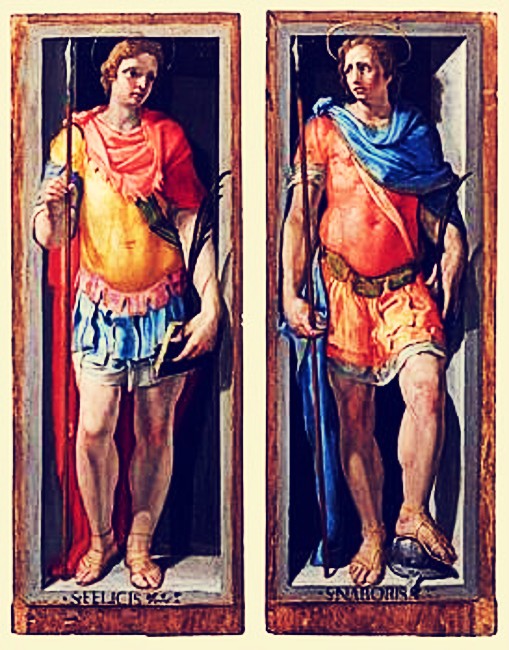
Saints of the Day – 12 July – Saints Nabor and Felix of Milan (Died c 304) Martyrs, Roman Soldiers. lLymen Soldiers Martyred during the Persecution under the Roman emperor Maximian.
12 July is traditionally the Feast day of two early Martyrs of the Church of Milan, Saints Nabor and Felix, who have long occupied a prominent place in the Ambrosian Rite. Together with their fellow Soldier St Victor, they are named in the Communicantes of the Ambrosian Canon. In the Roman Rite, they have been kept as a commemoration on the Feast of St John Gualbert, since the early 17th century.
The Hymn for Vespers of their Feast, which was composed by St Ambrose himself, refers to them as “Mauri genus – Moors by birth,”,since they were from the Roman Province of Mauretania in Africa. It is also sung on the Feast of St Victor on 8 May, as he was also a Moor and Martyred in the same persecution – they may have all belonged to a Berber tribe known as the Gaetuli, a great many of whom served in the Roman armies in the 3rd and 4th centuries. A later tradition associates all three of them with the Theban Legion, partly because they were in Milan in service to the Emperor Maximian, who made his headquarters in that City and was the persecutor of that legion.
Their 5th century Acts recount that they refused to sacrifice to the gods worshipped by the Empire and the army and were, therefore, beheaded at the City of Laus Pompeia (now called Lodi Vecchio). A noblewoman named Savina, a native of Milan married to a Patrician of Laus Pompeia, is said to have comforted them in prison and then to have secretly buried them in her own home after their execution. Once the persecution had ceased, in the year 310, she brought their relics to Milan, where they were laid to rest in the Chapel of her family, the Valerii. This Chapel then came to be known as the Basilica Naboriana.
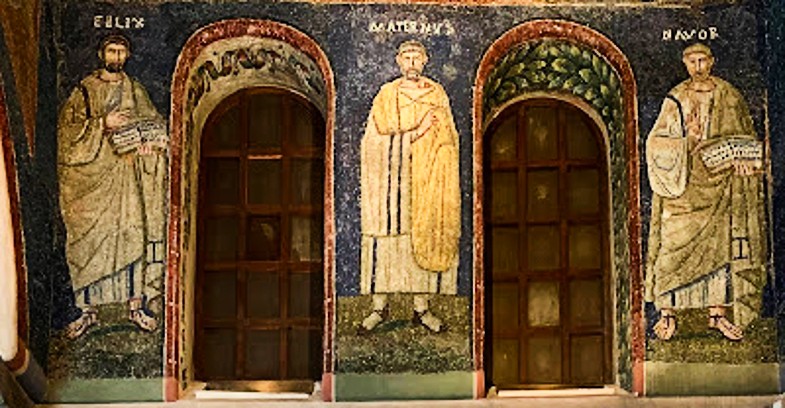
Within the Basilica of St Ambrose in Milan, the Chapel known as “San Vittore in Ciel d’Oro – St Victor in the Heaven of Gold” contains a mosaic portrait of the Bishop of Milan at the time of this translation, St Maternus, with the Mart,yrs to either side of him. On the opposite wall are St Ambrose with Ss Gervasius and Protasius, underlining the parallels between the two Bishops in their devotion to the Martyrs. And in point of fact, the place where St Ambrose discovered the relics of Gervasius and Protasius, was very close to the Basilica Naboriana.
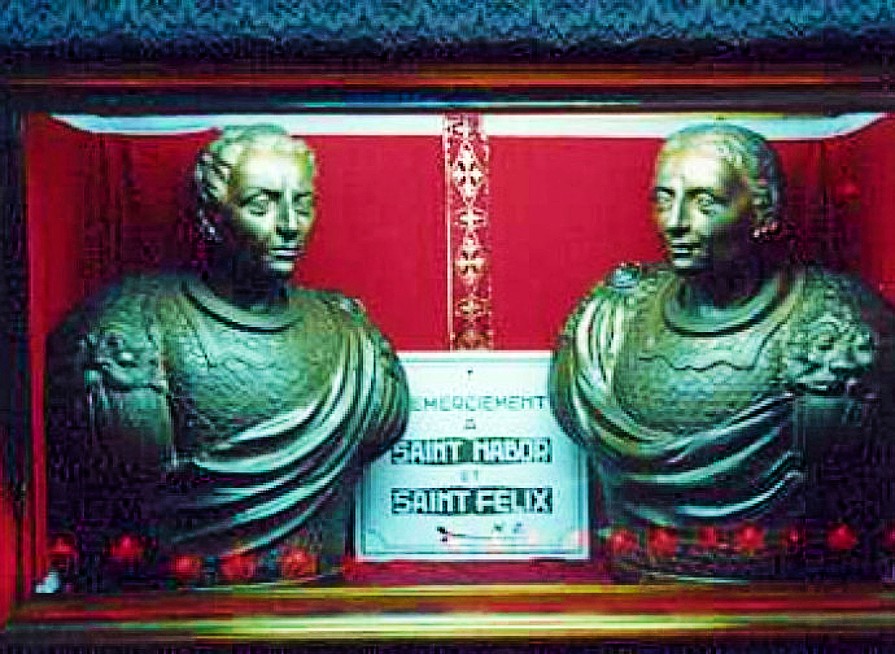
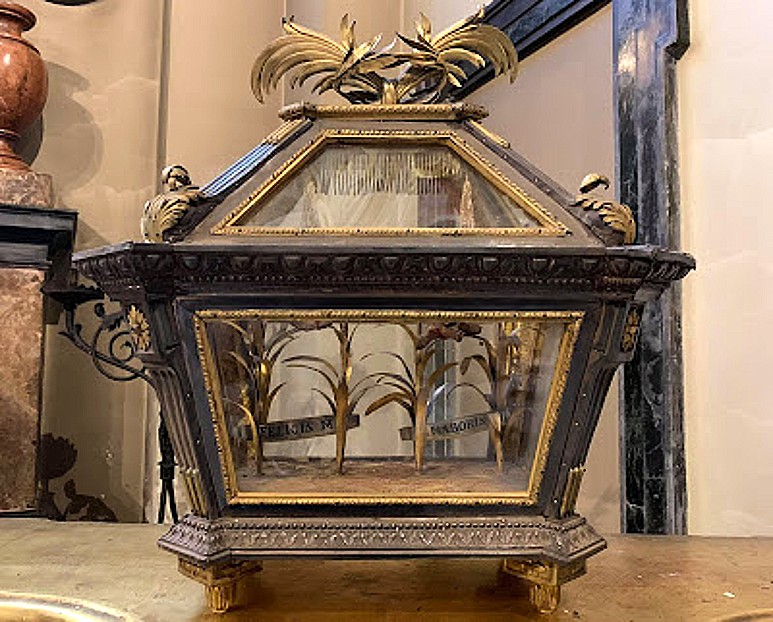
By 1249, the ancient Church was in very poor condition, and it was decided to entrust it to the then very new order of the Franciscans, recently arrived in Milan. A much larger Church was built to replace it, which was long known as San Francesco Grande. Devotion to the Martyrs was renewed, to such an extent, that in 1396, their Feast was declared a public holiday in Milan. In 1472, the relics were moved to be closer to the High Altar – the skulls of the two Martyrs were separated from the other bones and placed in their own bust-shaped Reliquaries, which were traditionally exposed on the Altar on major Feast days.
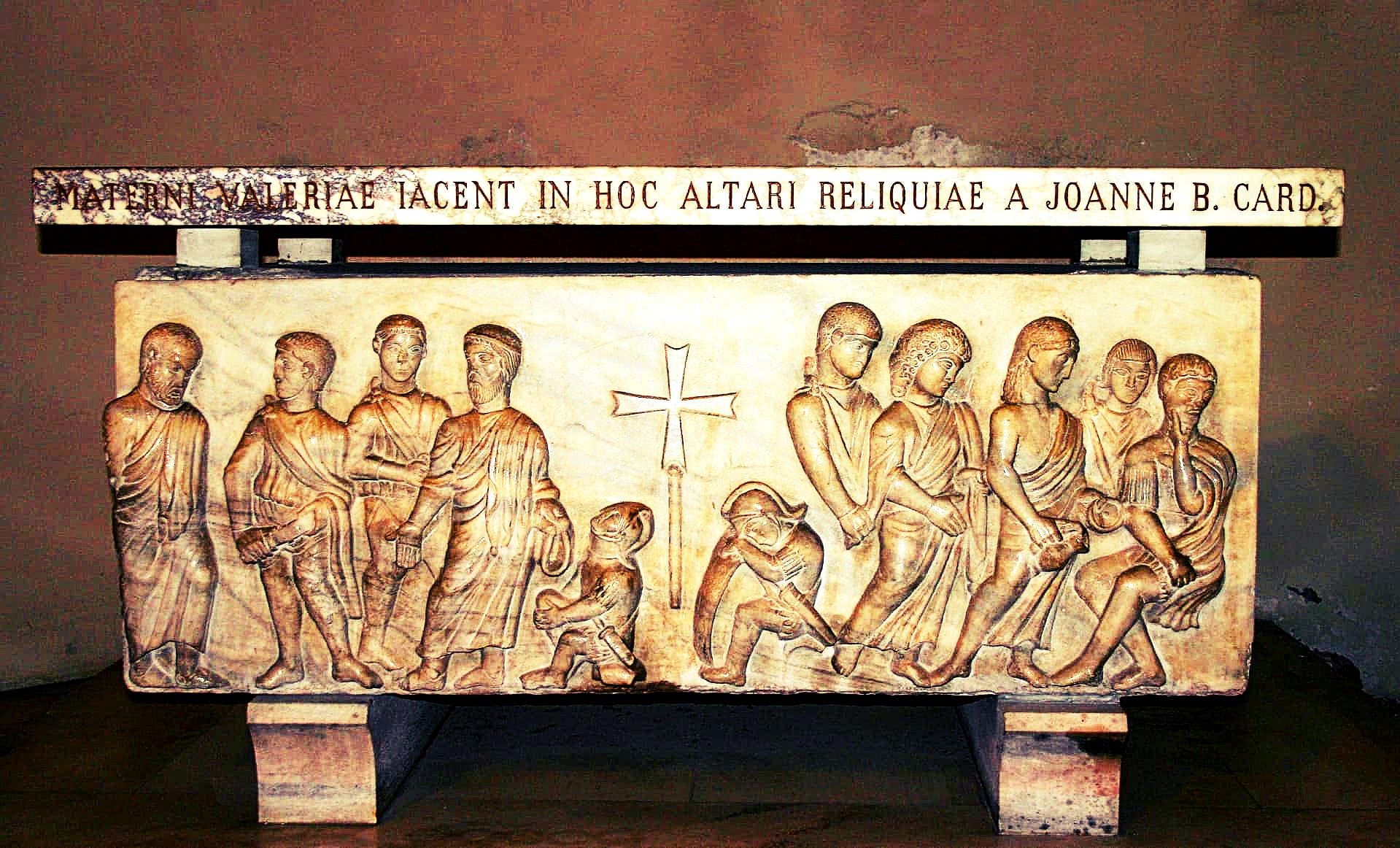
In 1798, when the French armies under Napoleon invaded northern Italy and the religious Orders were suppressed throughout the region, the Church of San Francesco Grande was destroyed. The Martyrs’ relics were fortunately saved and brought to the Basilica of St Ambrose. Since 1960, they have been enclosed within the Sarcophagus below, although some still reside in the Reliquary above.
It was probably at this point that the Reliquaries containing the skulls disappeared, most likely stolen by French soldiers. It was not until 1959 that they were rediscovered, with both the relics and authentication papers sealed and intact, in an antique shop in Namur, Belgium. The Bishop of Namur, André Charue, to whom they had been handed over, then generously returned them to Milan. the Cardinal Archbishop Giovanni Battista Montini, the future Pope Paul VI, had them installed in a new Parish built on the outskirts of the City, where they remain to this day, after solemn expositions at both Milan and Lodi.
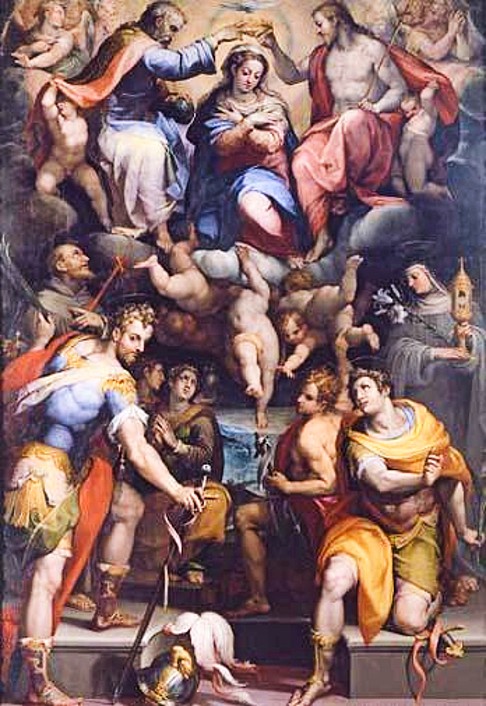
The Virgin Mary Crowned by the Holy Trinity, with Saints Francis, Claire, John the Baptist, Saint Mary Magdalene, Catherine of Alexandria and (in the foreground) Nabor and Felix; painted by Orazio Samacchini ca. 1575 for the Church of San Francesco Grande in Milan, now in the National Painting Gallery in Bologna.
Bl Conrad of Maleville Bl David Gonson St Epiphana St Faustus the Soldier St Felix of Milan * Commemorated with St Nabor St Fortunatus of Aquileia (1st Century – Died c 66) Deacon St Hermagorus of Aquileia (1st Century – Died c 66) Bishop, Disciple of St Mark the Evangelist Bl Guy Vignotelli St Hilarion of Ancyra St Jason of Tarsus Bl Jeanne-Marie de Romillon
St John the Georgian Bl Lambert of Cîteaux Bl Madeleine-Thérèse Talieu Bl Marguerite-Eléonore de Justamond Bl Marie Cluse St Menas the Soldier St Menulphus of Quimper St Nabor of Milan * Commemorated with St Felix St Paternian of Bologna St Paulinus of Antioch St Phêrô Khan St Proclus of Ancyra St Proculus of Bologna St Uguzo of Carvagna St Ultán
St Viventiolus of Lyons
Three Holy Exiles: Three Christian men who became Benedictine Monks at the Saint James Abbey in Regensburg, Germany, then Hermits at Griestatten and whose lives and piety are celebrated together. – Marinus, Vimius and Zimius.
Martyrs of Rome – Four members of the Imperial Roman nobility. They were all soldiers, one or more may have been officers, and all were Martyred in the persecutions of Diocletian – Basilides, Cyrinus, Nabor and Nazarius. Died in c 304 outside Rome, Italy and were buried there along the Aurelian Way.
Martyrs of Nagasaki – 8 Beati: Additional Memorial – 10 September as one of the 205 Martyrs of Japan Eight lay people, many them related to each other, who were martyred together: • Catharina Tanaka • Ioannes Onizuka Naizen • Ioannes Tanaka • Ludovicus Onizuka • Matthias Araki Hyozaemon • Monica Onizuka • Petrus Araki Chobyoe • Susanna Chobyoe 12 July 1626 in Nagasaki, Japan Beatified on 7 May 1867 by Pope Blessed Pius IX.
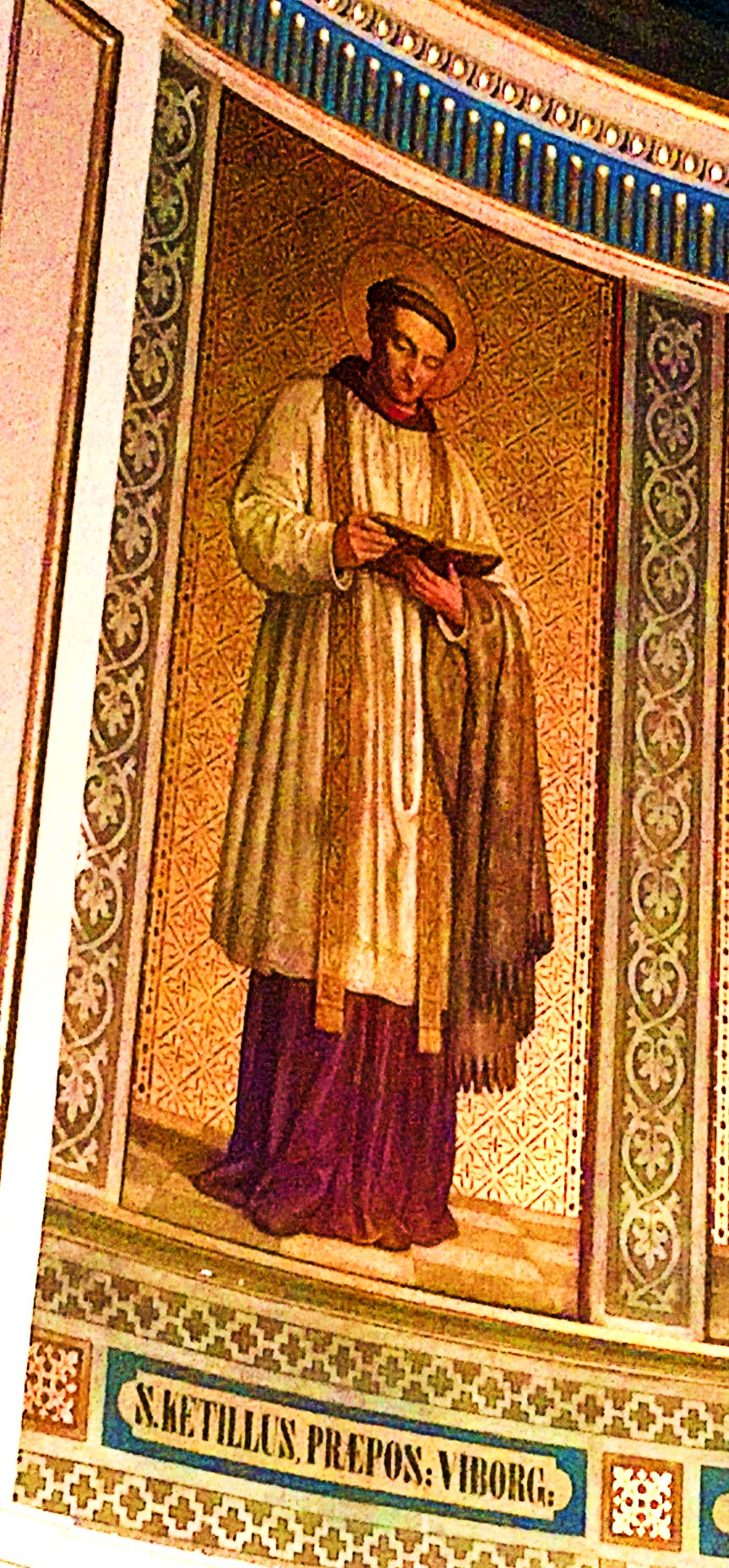
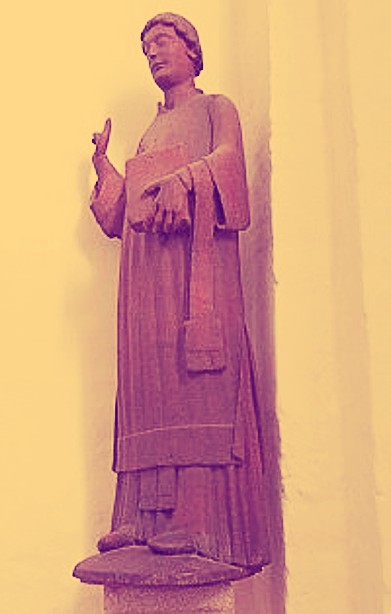
Saint of the Day – 11 July – Saint Kjeld of Viborg OSA (Died c 1150) St Francis of the North,” Priest, Apostle of the poor, needy and sick. Born in Denmark and died in c 1150 in Viborg, Denmark of natural causes. Patronage – Viborg, Denmark, of the blind and those with eye diseases. Also known as – “St Francis of Assisi of the North,” Ketil, Ketille, Kield, Exuperian.
Kjeld was born in the early 12th Century to wealthy parents, who lived on a farm in central Denmark. He was a Godly boy and it was soon decided that he should have a future in the Church. He was sent to Viborg, where he joined the Cathedral College or Chapter. The Cathedral Chapter was the place where Priests were trained and while they lived as Canons at the Cathedral, they assisted the Bishop in his administrative work. The Canons Regular lived in a community following St Augustine’s Rule and they were led by a Prior.
Kjeld thrived in the Cathedral Chapter, where he was elected as head of the Cathedral Chapter College and around 1145 he was elected Prior of the other Canons. Kjeld was a very caring, generous and compassionate man who gave all he could to the sick, poor and needy. It is told in his biography that IN 1145, when Viborg City was threatened by fire, Kjeld ran to the Tower of the Cathedral, where he prayed fervently to God to spare the City and the Church, after which the fire miraculously receded.
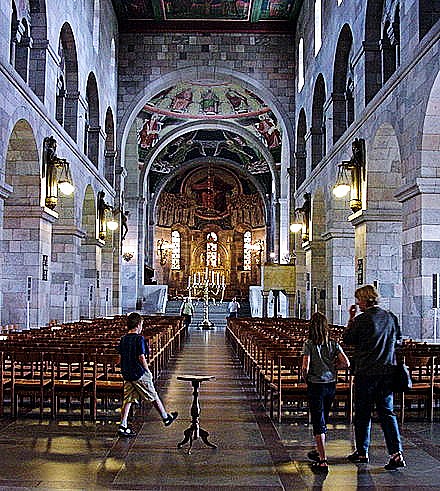
Despite the fact that the Canons had chosen Kjeld as their Prior, there soon came disputes between them and him, apparently because they objected to his generous distribution of the Cathedral Chapter’s funds to the poor. The Canons elected a new Prior and Kjeld moved to Aalborg for a while. Although Kjeld was popular in Aalborg he longed to spread the Christian faith and desired Martyrdom among the Wends. He went on a pilgrimage to Rome, where he visited the Tombs of the Apostles and had an audience with Pope Eugene III (1145-1153). He sought the Pope’s permission to go on a mission among the Wends but, although he received the desired authorisation, the Pope expressed the sentiment that he would rather see Kjeld return to Viborg and continue his work as Prior of the Cathedral College. The Pope wrote to the Cathedral College, who had to bow and take Kjeld back as their leader. But soon after, in 1150, Kjeld died in Viborg and was buried in the Cathedral.
Numerous miracles were granted by God at his grave. The sick became healthy after visits to the tomb and the blind especially, were granted their sight – according to the Saint’s biography, at least twelve people had their sight restored. The Church authorities now sought Kjeld’s Canonisation and they, therefore, sent a request to the Pope in Rome. In 1188 Pope Clement III (1187-1191) consented and the Archbishop Absalon celebrated Kjeld’s Canonisation locally, which occurred on 11 July 1189.
St Pius I, Pope (Died c 154) Martyr The Ninth Successor of St Peter. Papal Ascension c 142. Born at Aquileia, Italy and died in Rome. The Roman Martyrology states of him today: “At Rome, the blessed Pius, Pope and Martyr, who was crowned with Martyrdom in the persecution of Marcus Aurelius.” Biography: https://anastpaul.com/2021/07/11/saint-of-the-day-11-july-saint-pope-pius-i-died-c-154/
St Abundius of Ananelos St Amabilis of Rouen St Anna An Jiaoshi St Anna An Xingshi Bl Antonio Muller St Berthevin of Lisieux St Cindeus St Cowair St Cyprian of Brescia St Cyriacus the Executioner St Hidulf of Moyenmoutier St Januarius St John of Bergamo St Kjeld of Viborg OSA (Died c 1150) Priest St Leontius the Younger St Marcian of Lycaonia St Marciana of Caesarea Bl Maria An Guoshi Bl Maria An Linghua Bl Marie-Clotilde Blanc Bl Marie-Marguerite de Barbégie d’Albrède
St Olga Queen of Kiev (c 890-969) She was known as a ruthless and effective ruler but “when Olga was enlightened, she rejoiced in soul and body. The Bishop, who instructed her in the faith, said to her, ‘Blessed art thou among the women of Rus,’,for thou hast loved the light and quit the darkness. The sons of Rus’ shall bless thee to the last generation of thy descendants.” About St Olga: https://anastpaul.com/2020/07/11/saint-of-the-day-11-july-saint-olga-queen-of-kiev-c-890-969/
St Placid of Dissentis Bl Rosalie-Clotilde Bes St Sabinus of Brescia St Sabinus of Poitiers St Sidronius St Sigisbert of Dissentis Bl Thomas Hunt Bl Thomas Sprott St Thurketyl
St Cuán of Airbhre St Elilantus St Etto Bl Euménios St Lantfrid Bl Marie-Gertrude de Ripert d’Alauzier Bl Parthenios St Pascharius of Nantes St Peter Vincioli St Sylvanus of Pisidia Bl Sylvie-Agnès de Romillon St Waltram
Martyrs of Africa – 4 Saints: A group of Christians Martyred together in Africa. The only information that has survived are four of their names – Felix, Januarius, Marinus and Nabor.
Martyrs of Antioch – 10 Saints: A group of ten Christians Martyred together. We have no details about them but the names – Diogenes, Domnina, Esicius, Macarius, Maxima, Maximus, Rodigus, Timoteus, Veronia and Zacheus. They were martyred in Antioch, date unknown.
Martyrs of Damascus – 11 Beati: A group of Franciscans and laymen ordered by Druz Muslims to convert to Islam. They refused and were hacked to pieces. • ‘Abd Al-Mu’ti Masabki • Carmelo Bolta Bañuls • Engelbert Kolland • Francisco Pinazo Peñalver • Fransis Masabki • Juan Jacobo Fernández y Fernández • Manuel Ruiz López • Nicanor Ascanio de Soria • Nicolás María Alberca Torres • Pedro Soler Méndez • Rufayil Masabki They were cut to pieces on 9-10 July 1860 in Damascus, Syria. Beatified on 10 October 1926 by Pope Pius XI.
Martyrs of Nicopolis – 45 Saints: A group of 45 Christians tortured and Martyred together in the persecutions of emperor Licinius. We know nothing else but six of their names – Anicetus, Anthony, Daniel, Leontius, Mauritius and Sisinno. c 329 in Nicopolis, Armenia (modern Koyulhisar, Turkey).
Martyrs of Nitria – 5 Saints: Fathers of Nitria – Four Monks and the Bishop of Alexandria, Egypt who were Martyred by heretics. Saint John Chrysostom wrote about them but their names have not come down to us. They were martyred in the 4th century in Nitria, Egypt.
St Maria Goretti (1890-1902) Virgin and Martyr, known as “Saint Agnes of the 20th Century.” She was Canonised on 24 June 1950 by Pope Pius XII The ceremony was attended by 250,000 including her mother, the only time a parent has witnessed her child’s Canonisation. Her Life and Death: https://anastpaul.com/2017/07/06/saint-of-the-day-6-july-st-maria-goretti/
Blessed Adrian Fortescue TOSD (1476-1539) Martyr,. A husband and father, a Justice of the Peace, a Knight of the Realm, a Knight of Malta and a Dominican Tertiary (Lay Dominican), he was at once a loyal servant of the Crown so far as he could be but still more, he was a man of unshakeable faith. About Blessed Adrian: https://anastpaul.com/2018/07/09/saint-of-the-day-blessed-adrian-fortescue-1476-1539-martyr/
St Agrippinus of Autun St Alexander of Egypt St Audax of Thora St Brictius of Martola St Copra of Egypt St Cyril of Gortyna Bl Dionysius the Rhetorician St Everild of Everingham St Faustina of Rome St Felician of Sicily Bl Fidelis Chojnacki
Blessed Giovanna Scopelli O.Carm (1428 – 1491) Virgin, Mystic, Italian Religious of the Carmelites and established her own Convent as its first Prioress. She was known, during her lifetime as a Miracle-worker with many coming to her to ask for her assistance and prayers. Her body is incorrupt. About Blessed Giovanna: https://anastpaul.com/2021/07/09/saint-of-the-day-9-july-blessed-giovanna-scopelli-o-carm-1428-1491/
St Floriana of Rome St Hérombert of Minden St Joachim Ho Bl Luigi Caburlotto Bl Marguerite-Marie-Anne de Rocher Bl Marie-Anne-Madeleine de Guilhermier St Patermutius of Egypt St Paulina do Coração Agonizante de Jesus
Four Holy Polish Brothers – 4 Saints: Four brothers who became hermits, Benedictine Monks and Saints – Andrew, Barnabas, Benedict and Justus. They were born in Poland and died in 1008 of natural causes.
Martyrs of Gorkum – 19 Saints: Nineteen Martyrs killed by Calvinists for loyalty to the Pope and for their belief in the Real Presence in the Eucharist. They are – • Adrianus van Hilvarenbeek • Andreas Wouters • Antonius van Hoornaar • Antonius van Weert • Cornelius van Wijk • Francisus de Roye • Godfried van Duynen • Godfried van Melveren • Hieronymus van Weert • Jacobus Lacops • Joannes Lenaerts • John of Cologne • Leonardus van Veghel • Nicasius Janssen van Heeze • Nicolaas Pieck • Nicolaas Poppel • Petrus van Assche • Theodorus van der Eem • Willehad van Deem • They werehanged on 9 July 1572 in Brielle, Zuid-Holland, Netherlands. Beatified on 24 November 1675 by Pope Clement X and Canonised on 29 June 1867 by Pope Pius IX.
Martyrs of Orange – 32 Beati: 32 nuns from several orders who spent up to 18 months in prison and were finally executed for refusing to renounce Christianity during the persecutions of the French Revolution. • Anne Cartier • Anne-Andrée Minutte • Dorothée-Madeleine-Julie de Justamond • élisabeth Verchière • élisabeth-Thérèse de Consolin • Jeanne-Marie de Romillon • Madeleine-Françoise de Justamond • Madeleine-Thérèse Talieu • Marguerite-Eléonore de Justamond • Marguerite-Marie-Anne de Rocher • Marguerite-Rose de Gordon • Marguerite-Thérèse Charensol • Marie Cluse • Marie-Anastasie de Roquard • Marie-Anne Béguin-Royal • Marie-Anne Depeyre • Marie-Anne Doux • Marie-Anne Lambert • Marie-Anne-Madeleine de Guilhermier • Marie-Claire du Bac • Marie-Clotilde Blanc • Marie-Elisabeth Pélissier • Marie-Gabrielle-Françoise-Suzanne de Gaillard de Lavaldène • Marie-Gertrude de Ripert d’Alauzier • Marie-Marguerite Bonnet • Marie-Marguerite de Barbégie d’Albrède • Marie-Rose Laye • Rosalie-Clotilde Bes • Suzanne-Agathe Deloye • Sylvie-Agnès de Romillon • Thérèse-Henriette Faurie They were guillotined between 6 July and 26 July 1794 at Orange, Vaucluse, France. Beatified on 10 May 1925 by Pope Pius XI.
Martyrs of the Baths – 10,204 Saints: A group of Christians enslaved by Diocletian to build the gigantic baths in imperial Rome, Italy. The end of their labours coincided with the beginning of the great persecutions of Diocletian and they were all executed. Ancient records indicated there were 10,204 of them; Zeno of Rome is the only one whose name has come down to us and we know nothing else about any of their individual lives.
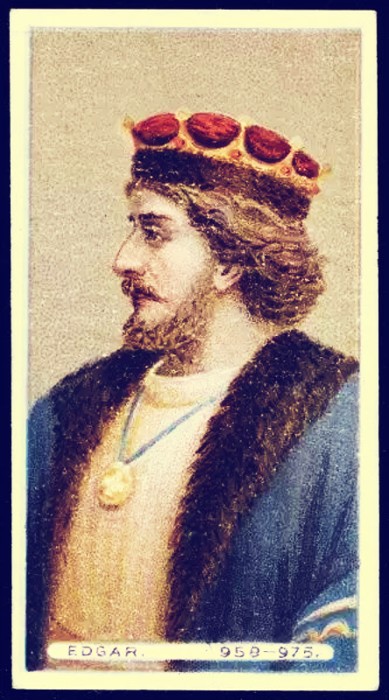
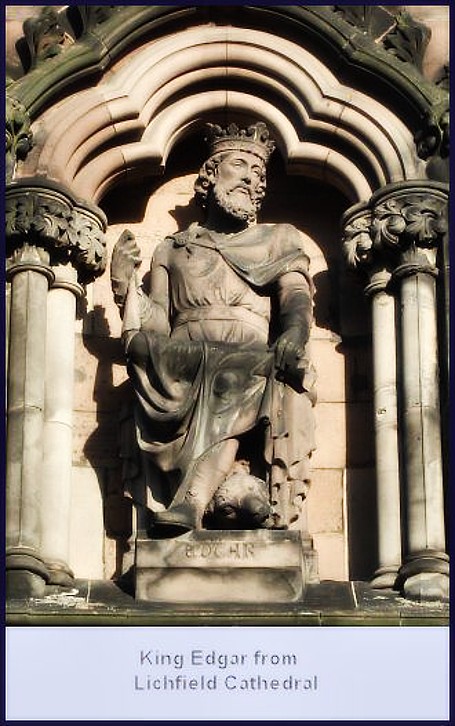
Saint of the Day – 8 July – St Edgar the Peaceful (c 943-975) King of the English, faithful son and Defender of the Church, Protector and Founder of Monasteries and Churches, a fair and wise ruler., always with the support of St Dunstan and the Bishops. Born in 943 or 944 in Wessex, England and died on 8 July 975 in Winchester, Wessex, England of natural causes. Patronage – kings, widowers. Also known as – Eadgar the Peaceful, Edgar the Peaceable, Edgar I, Edgar of England.
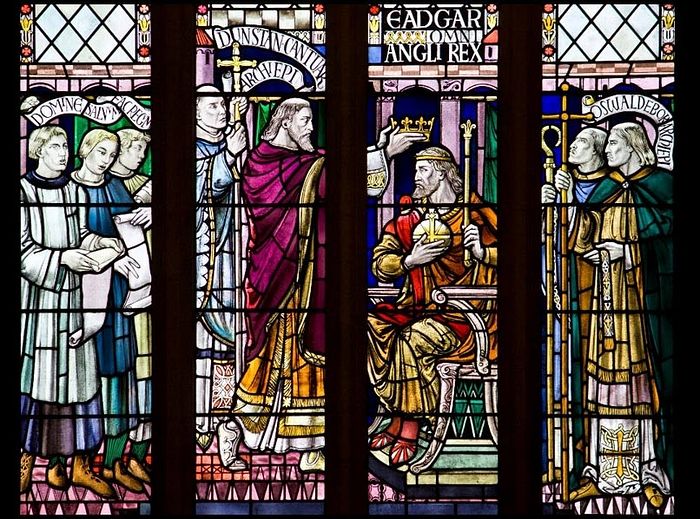
Edgar was King of England from 959 until his death. He was the younger son of Edmund I and St Elgiva of Shaftesbury and came to the throne as a teenager, following the death of his older brother Eadwig. As King, Edgar further consolidated the political unity achieved by his predecessors, with his reign being noted for its relative stability. His most trusted advisor was St Dunstan (909-988, who he recalled from exile and made Archbishop of Canterbury. The pinnacle of Edgar’s reign was his coronation at Bath in 973, which was organised by St Dunstan and forms the pattern for the current coronation ceremony in England. After his death he was succeeded by his son Edward.
One of Edgar’s first actions was to recall St Dunstan from exile and have him made Bishop of Worcester (and subsequently Bishop of London and later, Archbishop of Canterbury). St Dunstan remained Edgar’s advisor throughout his reign, by his advice and support, becoming the virtual Prime Minister. England underwent a religious revival during Edgar’s reign, with the spiritual and secular assistance of his friend, St Dunstan, as well as Archbishop Oswald of York and Bishop Aethelwold of Wincheste. Edgar founded Abbeys, encouraged the Benedictine Monks and their Rule and enacted penalties for nonpayment of tithes and Peter’s Pence, always encouraging faithful adherenceto the Pope.
Edgar was efficient and unusually tolerant of local customs; while he spent much time in military actions, his reign was a peaceful period for civilians. By the end of his reign, England was sufficiently unified, in that it was unlikely to regress back to a state of division among rival kingships. Indeed, an early eleventh century King Cnut the Great states in a letter to his subjects that “it is my will that all the nation, Ecclesiastical and lay, shall steadfastly observe Edgar’s laws, which all men have chosen and sworn at Oxford.”
Edgar was crowned at Bath and along with his wife Ælfthryth was anointed, setting a precedent for a coronation of a Queen in England itself. Edgar’s Coronation did not happen until 973 (just two years before his death), in an imperial ceremony planned, not as the initiation but as the culmination of his reign. This service was devised, written and arranged by St Dunstan himself and celebrated with a poem in the Anglo-Saxon Chronicle, forms the basis of the present-day British Coronation ceremony.
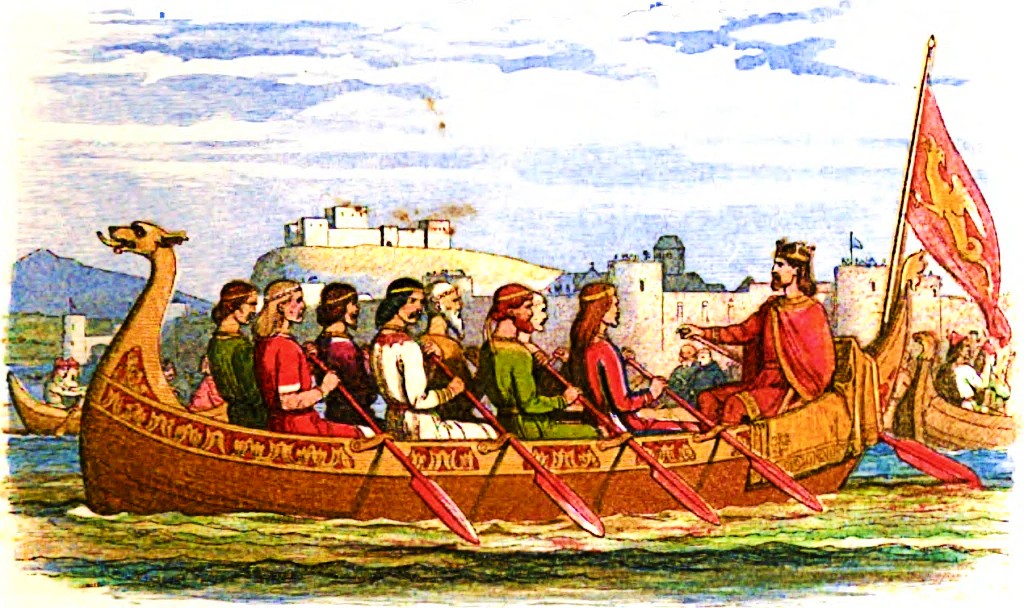
When Peaceful Edgar ruled the land He had eight kings at his command; How did he tame this royal band? Ah, he was knowing! These kings he did not subjugate And make them draw his coach of state Like Tamburlaine; he built an eight And taught them rowing
The symbolic Coronation was an important step – other Kings of Britain came and gave their allegiance to Edgar shortly afterwards, at Chester. Six kings in Britain, including the King of Scots and the King of Strathclyde, pledged their faith that they would be the King’s liege-men on land and sea. Later chroniclers made the kings into eight, all plying the oars of Edgar’s state barge on the River Dee.
Edgar died on 8 July 975 at Winchester, Hampshire. He left behind Edward, who was probably his illegitimate son by Æthelflæd and Æthelred, the younger, the child of his wife Ælfthryth. He was succeeded by Edward. Edgar also had a possibly illegitimate daughter by Wulfthryth, who later became Abbess of Wilton. She was joined there by her daughter, Edith of Wilton, who lived there as a nun until her death. Both women were later regarded as Saints.
St Elizabeth of Portugal TOSF (1271-1336) Queen Consort, Franciscan Tertiary, Apostle of Charity and Peace, Political Negotiator and Mediator. In the year 1694 Pope Innocent XII moved her Feast to 8 July, so that it would not conflict with the celebration of the Octave of Saints Peter and Paul, Apostles. Biography: https://anastpaul.com/2018/07/04/saint-of-the-day-4-july-st-elizabeth-of-portugal-t-o-s-f-1271-1336/
St Abraham the Martyr Bl Adolf IV of Schauenburg St Pope Adrian III St Ampelius of Milan St Apollonius of Benevento
St Arnold St Auspicius of Toul St Auspicius of Trier Brogan of Mothil St Colman of Thuringia St Doucelin St Edgar the Peaceful (c 943-975) King of the English
St Landrada Bl Mancius Araki Kyuzaburo St Morwenna St Pancras of Taormina Bl Peter the Hermit St Procopius of Ceasarea St Sunniva of Bergen St Thibaud de Marly St Totnan of Thuringia
Abrahamite Monks/Martyrs of Constantinople: A group of Monks in a Monastery founded by Saint Abraham of Ephesus. Martyred in the iconoclast persecutions of Emperor Theophilus. In c 835 in Constantinople.
Martyrs of Shanxi – 7 Saints: In 1898 seven sisters of the Franciscan Missionaries of Mary were sent to the Shanxi Diocese in China to serve the poor in hospitals and care for the unwanted or other destitutes in orphanages. They were: • Anne-Catherine Dierks • Anne-Francoise Moreau • Clelia Nanetti • Irma Grivot • Jeanne-Marie Kuergin • Marianna Giuliani • Pauline Jeuris There they all died in one of the periodic persecutions against foreign missionaries. They were beheaded on 9 July 1900 at Taiyuanfu, China- Canonisedon 24 November 1946 by Pope Pius XII.
Martyrs of Syrmium – 5 Saints: Five Christians Martyred together for their faith. We know nothing else about them but the names – Cecilia, Eperentius, Eraclius, Sostratus and Spirus. They were martyred in the 4th century in Syrmium, Pannonia (modern Serbia).
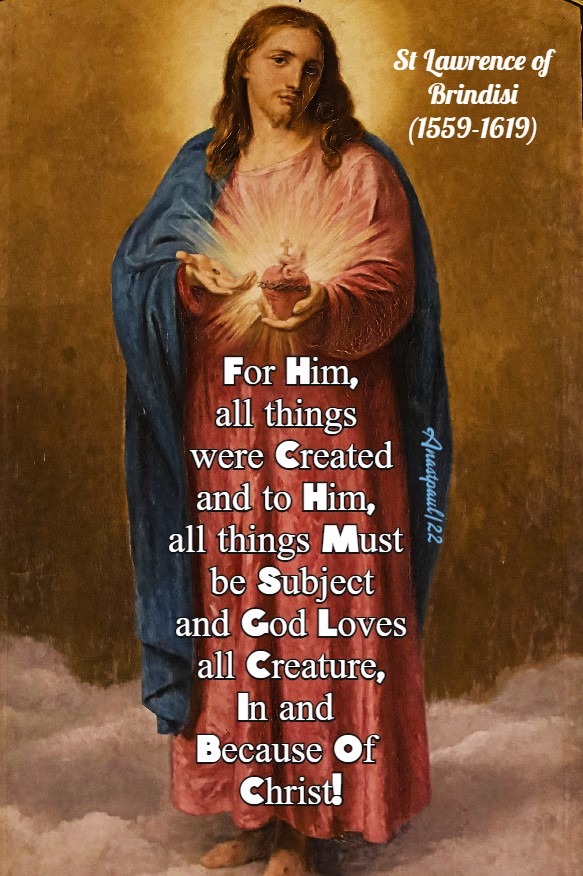
Quote/s of the Day – 7 July – The Memorial of St Lawrence of Brindisi OFM Cap (1559-1619) Confessor, The “Franciscan Renaissance Man,” Priest
“For Him all things were created and to Him, all things must be subject and God loves all creature, in and because of Christ.”
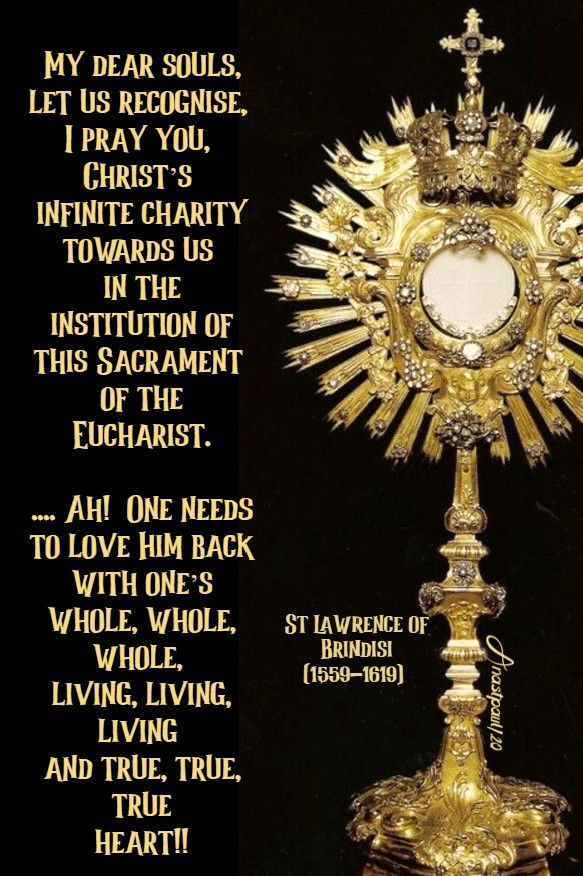
“My dear souls, let us recognise, I pray you, Christ’s infinite charity towards us in the institution of this Sacrament of the Eucharist. In order that our love be a spiritual love, He wills a new heart, a new love, a new spirit for us. It is not with a carnal heart but with a spiritual one, that Christ has loved us with a gratuitous love, a supreme and most ardent love, by way of pure grace and charity. Ah! One needs to love Him back with one’s whole, whole, whole, living, living, living and true, true, true heart!”
One Minute Reflection – 7 July – The Memorial of Saint Cyril (827-869) and Saint Methodius (826-885) “Apostles to the Slavs,” Sibling Brother Bishops, Confessors – Romans 8:18-23, Luke 10:1-9
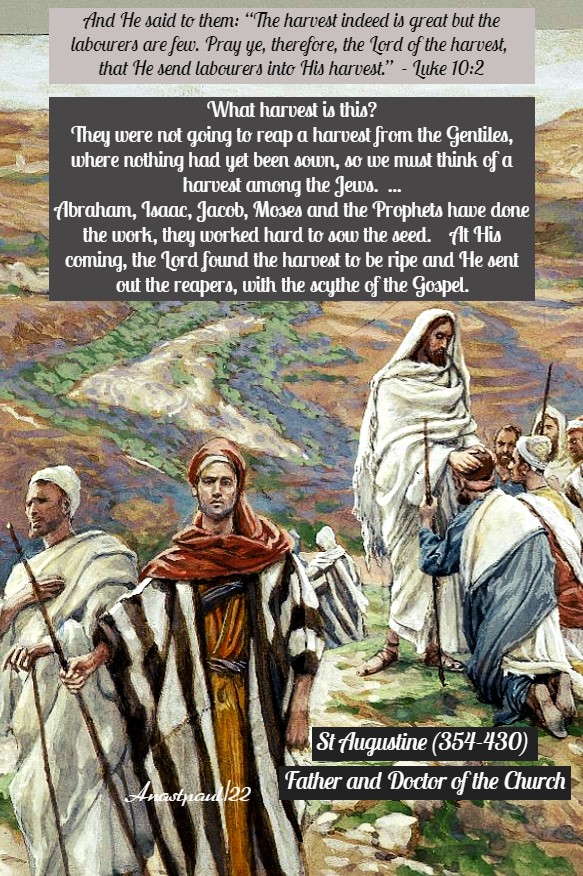
“Pray ye therefore the Lord of the harvest that He send labourers into His harvest.” – Luke 10:2
REFLECTION – “The gospel that has just been read to us invites us to seek out what this harvest might be of which the Lord says to us that: “The harvest is indeed great, the laborers are few, so pray the lord of the harvest that He send labourers into His harvest.” So it was that,, in addition to those twelve disciples whom He called Apostles (those who have been sent), He sent out seventy-two others. All of them, as His own words reveal, were sent to work at a harvest that had already been prepared. What harvest is this? They were not going to reap a harvest from the Gentiles, where nothing had yet been sown, so we must think of a harvest among the Jews. It was in order to reap this harvest that the Lord of the harvest came. But to the other peoples He sent, not reapers but sowers. Among the Jews, then, there was a harvest but elsewhere, the sowing. And it was particularly, while reaping among the Jews, that He chose the Apostles. Harvest time had come, the harvest was ripe, for the prophets had done their sowing among them…
Did not the Lord declare to His disciples: “You say the harvest will be a long time. I tell you, look up and see, the fields ripe for harvest,” (Jn 4,35)? And again, He said: “Others have done the work and you are sharing the fruits of their work,” (ibid v.38). Abraham, Isaac, Jacob, Moses and the prophets, have done the work, they worked hard to sow the seed. At His coming, the Lord found the harvest to be ripe and He sent out the reapers, with the scythe of the Gospel.” – St Augustine (354-430) Bishop of Hippo, Father and Doctor of the Church (Sermon 101).
PRAYER – Look forgivingly on Thy flock, Eternal Shepherd and keep it in Thy constant protection, by the intercession of the blessed brothers, Cyril and Methodius, who, by the power of the Holy Ghost were moved to bring the light of the Gospel to a hostile and divided people. Through Jesus Christ, Thy Son our Lord, Who lives and reigns with Thee, in the unity of the Holy Ghost, God, world without end. Amen (Collect).
Saint of the Day – 7 July – Saint Prosper of Aquitaine (c 390-c 465) Theologian, Married Layman, Writer, disciple and friend of St Augustine (354-430). St Prosper was the first continuator of St Jerome’s Universal Chronicle. Born in c 390 in Aquitaine, France and died in c 465 in Rome, Italy, of natural causes. Also known as – Tiro Prosper or Prosper Tiro.
Prosper was a native of Aquitaine, France and may have been educated at Bordeaux. By 417 he arrived in Marseilles as a refugee from Aquitaine, in the aftermath of the Gothic invasions of Gaul.
We first meet Prosper definitively around 425 as a participant in the Pelagian controversy which rocked the Church in southern France. Pelagian heretics minimised the role of grace in the first steps of becoming a Christian. Many vigorously opposed St Augustine’s strict views that special grace was required for salvation and thus, many were predestined to damnation. Prosper, a lay theologian, championed St Augustine. And in 428, a letter from Prosper prompted Augustine to write a major work on predestination.
Although a layman, Prosper threw himself with ardour into the religious controversies of his day, defending St Augustine and propagating orthodoxy. In his De vocatione omnium gentium – “The Call of all Nations,”, in which the issues of the call to the Gentiles is discussed, in the light of Augustine’s doctrine of Grace, Prosper appears as the first of the medieval Augustinians.
In 431, Prosper went to Rome and obtained a letter from Pope Celestine I that affirmed Augustine and his views and urged the French Bishops to quell the dispute peacefully. But it raged on. For several more years, Prosper wrote extensively, defending and popularising St Augustine’s teaching.
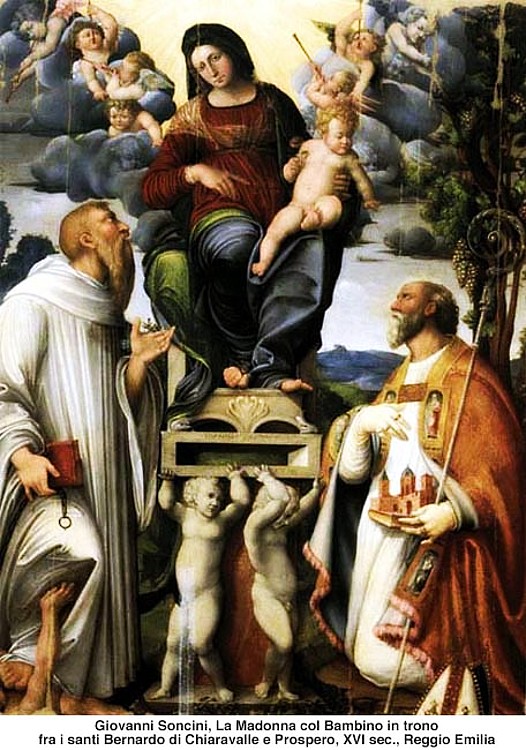
St Prosper on the right with Baby Jesus above him
In The Call to All Nations, Prosper seems to have mellowed somewhat, allowing that God mercifully made the Grace of Salvation available to all human beings. In the following excerpt Prosper describes the interplay of grace and free will:
“When the Word of God enters the ears through the ministry of preachers, the action of the Divine Power fuses with the sound of the human voice. The soul passes from one will to another will. Although the will that is driven out lingers on for a while, the newborn will claims for itself, all that is better in human beings. Thus the law of sin and the law of God do not dwell in the same way and together in the same person. Then the tempter tries to ambush the person through external things but the mind, strong with God’s help, prevails. For there are occasions for struggle and these greatly benefit the faithful. Their weakness is buffeted so that their holiness may not yield to pride. All good things, especially those conducive to eternal life, are obtained, increased and preserved through God’s favour.”
Prosper spent the last part of his life in Rome where he served as secretary to St Pope Leo the Great. During that tim, he wrote the Chronicle, a universal history from Adam’s fall to the Vandal’s conquest of Rome in 455. He died in Rome around 465.
You will remember yesterday’s Saint Palladius of Ireland, knowledge of whose history, was greatly enhanced by his contemporary’s writings, St Prosper, who speaks of St Palladius, in particular in regard to the Pelagian heresy.
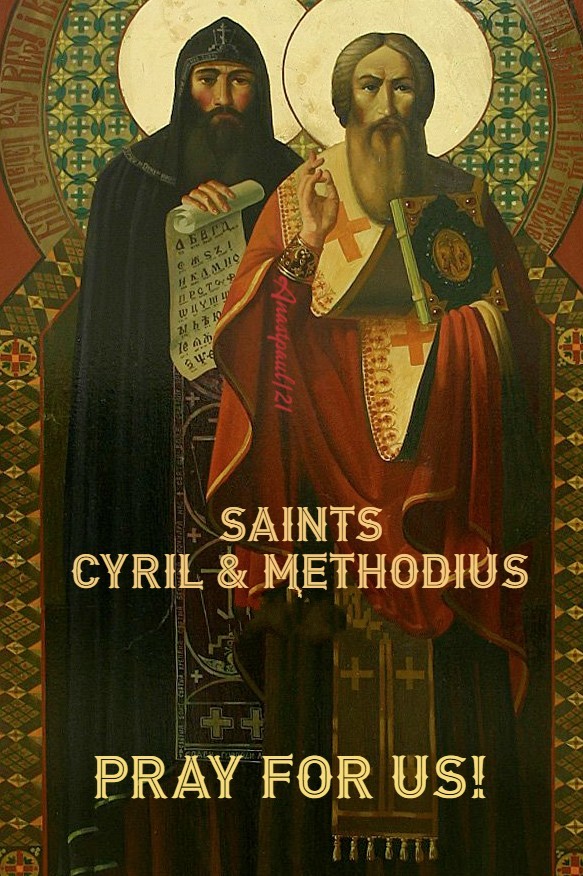
Saint Cyril (827-869) Saint Methodius (826-885) “Apostles to the Slavs,” Sibling Brother Bishops, Confessors, Theologians, Missionaries, Writers, Preachers, Patrons of Europe. Creators of the Glagolitic alphabet, the first alphabet used to transcribe Old Church Slavonic and Cyrillac Alphabet, which was developed from it. Their Feast Day is 7 July (moved in 1969). The great Saints Cyril & Methodius: https://anastpaul.wordpress.com/2018/02/14/saints-of-the-day-14-february-sts-cyril-827-869-methodius-826-885/
St Lawrence of Brindisi OFM Cap (1559-1619) Confessor, The “Franciscan Renaissance Man,” Priest and Friar of the Friars Minor Capuchin, Theologian, Vicar General of the Franciscans, Language scholar, Humanist, Philosopher, Biblicist, Preacher, Missionary, Professor, International Administrator, Confidant of Popes, Emperors, Kings and Princes, Diplomatic envoy, Army Chaplain, Military Strategist and Morale builder, Polemicist, Prolific writer. He was Beatified on 1 June 1783 by Pope Pius VI and Canonised on 8 December 1881 by Pope Leo XIII. His Zealous Life: https://anastpaul.com/2017/07/21/saint-of-the-day-21-july-st-lawrence-of-brindisi-o-f-m-cap-doctor-of-the-church/
St Alexander St Angelelmus of Auxerre St Apollonius of Brescia
Blessed Pope Benedict XI OP (1240-1303) Cardinal-Priest of St Sabina, Bishop of Ostia then of Rome, Dominican Friar, Prior Provincial of Lombardy prior to becoming the Master of the Order in 1296, Apostolic Papal Legate to Hungary and France, Teacher, Preacher, Writer and renowned Scholar with special emphasis on Biblical commentary. His Papacy began on 22 Ocober 1303 and ended at his death on 7 July 1304. His Life: https://anastpaul.com/2020/07/07/saint-of-the-day-7-july-blessed-pope-benedict-xi-1240-1303/
Bl Bodard of Poitiers St Bonitus of Monte Cassino St Carissima of Rauzeille St Eoaldus of Vienne St Ethelburga of Faremoutier St Hedda of Wessex St Maelruan Bl Marie-Gabrielle-Françoise-Suzanne de Gaillard de Lavaldène St Medran St Merryn Bl Oddino Barrotti St Odo of Urgell St Odran St Palladius of Ireland St Pantaenus of Alexandria
St Pantænus (Died c 216) Father of the Church, Theologian, Philosopher, Teacher, Confessor and Defender of the Faith, Writer and interpreter of the Bible, the Trinity and Christology, |Missionary. Convert ofthe disciples of the Apostles. Head of the Alexandrian School of Learning – a famous pupil was St Clement of Alexandria. Biography: https://anastpaul.com/2019/07/07/saint-of-the-day-7-july-st-pantaenus-father-of-the-church-died-c-216/
St Prosper of Aquitaine (c 390-c 436) Theologian, Married Layman, Writer, disciple abd friend of St Augustine. St Syrus of Genoa St They
Martyrs of Durres – 7 Saints: Also known as – Martyrs of Dyrrachium/Martyrs of Durazzo. A group of seven Italian Christians who fled Italy to escape the persecutions of Emperor Hadrian. Arrived in Dyrrachium, Macedonia to find Saint Astius tied to a cross, covered in honey, laid in the sun and left to be tortured by biting and stinging insects. When they expressed sympathy for Astius, they were accused of being Christians, arrested, chained, weighted down, taken off shore and drowned. We know little more about each of them than their names – Germaus, Hesychius, Lucian, Papius, Peregrinus, Pompeius and Saturninus. They were born in Italy and were martyred at sea c117 off the coast of Dyrrachium (Durazzo), Macedonia (modern Durres, Albania).
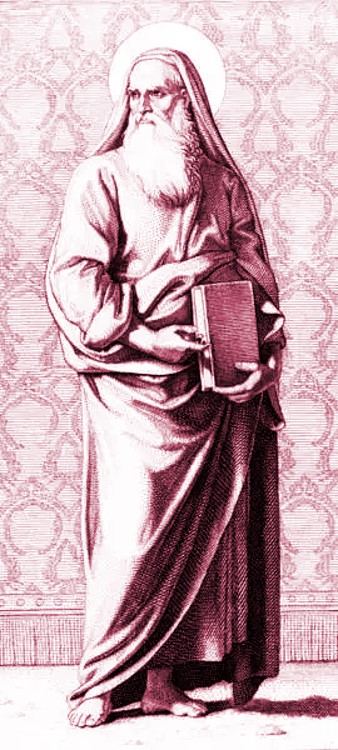
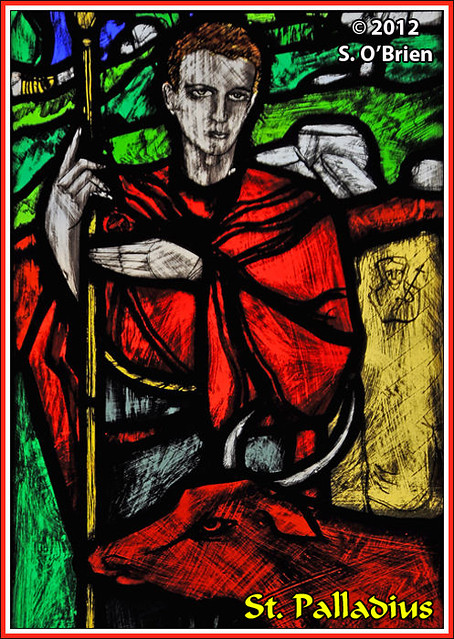
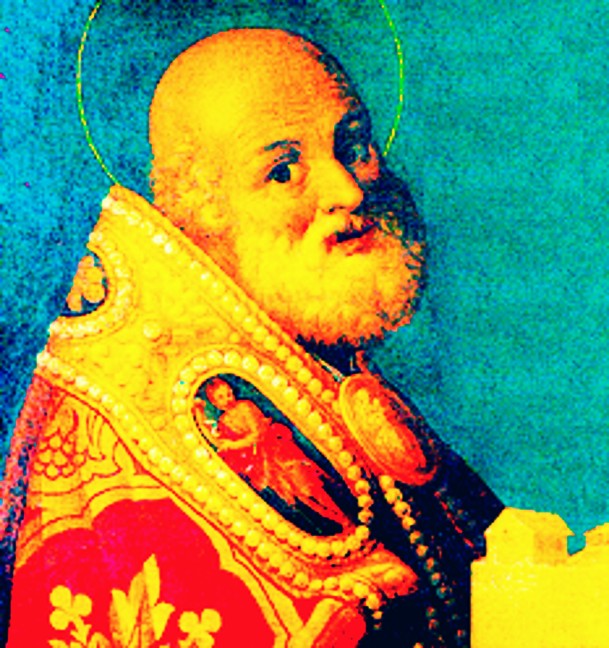
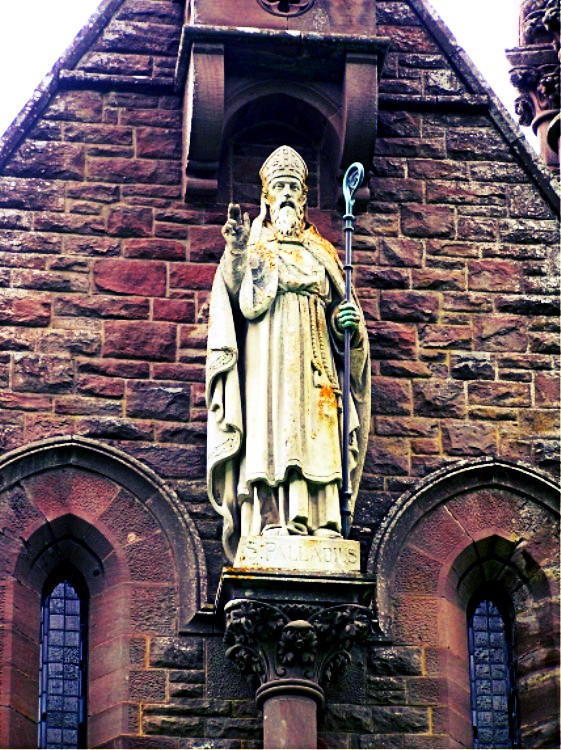
Saint of the Day – 6 July – Saint Palladius of Ireland (Died c 432) The First Bishop sent to Ireland preceding St Patrick and “Apostle of the Scots.” Died 9n c 432 at Fordun, Scotland of natural causes. Patronage – Scotland. Also known as – Palladius of Aberdeen, Palladius of Scotland, Pallade, Palladio, “Apostle of the Scots.”
A seventh century Irish biography of Saint Patrick identifies Palladius as Archdeacon of the Roman Church under Pope Celestine. Saint Prosper of Aquitaine, his contemporary, informs us in his historical chronicle. that when Agricola, a noted Pelagian heretic, had corrupted the Churches of Britain by introducing that pestilential heresy, Pope Celestine, in 429, at the instance of Palladius the Deacon, sent there Saint Germanus, Bishop of Auxerre, as his Legate. He, after having ejected the heretics, brought back the Britons to the Catholic faith.
The same Pope sent Palladius to the Celts. Palladius was accompanied by four companions: Sylvester and Solinus, who remained in Ireland, after he left and Augustinus and Benedictus, who followed him to Britain but returned to their own country after his death.
The Irish writer of the life of Saint Patrick says that Palladius preached in Ireland some time before Saint Patrick but, that he was soon sent away by the King of Leinster and returned to North Britain, where he had opened his mission.
Saint Prosper says that he was consecrated Bishop by the same Pope Celestine and then sent with relics of Saint Peter and Saint Paul, as the first Bishop to the nation of the Scots. Several colonies of these had passed from Ireland into North Britain and taken possession of the part of the country since called Scotland. Later Saint Palladius also founded three Churches in more hospitable regions of Ireland.
He preached to the Scots with great zeal, and formed a considerable Church. The Scottish historians tell us, that the Faith was first planted in North Britain about the year 200, in the time of King Donald, when Saint Victor I was Pope but they all acknowledge, that Palladius was the first Bishop of that Country and they call him their first Apostle. Saint Palladius died at Fordun, fifteen miles from Aberdeen, about the year 432.
Scottish Church tradition holds, that he presided over a Christian community there for about 20 years. A cluster of dedications in the Mearns in Scotland, in the village of Auchenblae, are believed to mark his last resting place. As late as the reign of James V, royal funds were disbursed for the fabrication of a new Reliquary for the Church there, and an annual “Paldy Fair” was held at least until the time of the Reformation.
St Gervais St Giusto of Condat St Goar of Aquitaine St Godelieve St Monenna St Noyala of Brittany St Petrus Wang Zuolung St Palladius of Ireland (Died c 432) The First Bishop sent to Ireland preceding St Patrick and “Apostle of the Scots.”
St Saxburgh of Ely St Sisoes the Great Bl Suzanne Agathe de Loye Bl Thomas Alfield (c 1552-1585) Priest Martyr St Tranquillinus of Rome
Martyrs of Campania – 23 Saints: A group of 23 Christians arrested, tortured and then beheaded together in the later 3rd century by order Gf Governor Rictiovarus during the persecutions of Diocletian. The names that have come down to us are – Antoninus, Arnosus, Capicus, Cutonius, Diodorus, Dion, Isidore, Lucia, Lucian, Rexius, Satyrus and Severinus.
Martyrs of Fiesole – 5 Saints: Five Christians Martyred together during the persecutions of Emperor Domitian – Carissimus, Crescentius, Dulcissimus, Marchisianus and Romulus. c 90 near Fiesole, Italy.
Saint of the Day – 25 June – Saint Gallicanus of Ostia (Died c 363) Martyr, Layman, firstly as a Ranking Officer in the Imperial Army of Constantine the Great, promoted to the position of a Roman Consul, Convert to Christianity. He died in the persecutions under Julian.
The Roman Martyrology states of him today: “At Alexandria, St Gallicnus, ex-Consul and Martyr, who had been honoured with a triumph and was held in affection by Emperor Constantine
Gallicanus had been converted by the disciples of St John and St Paul, after which he withdrew to Ostia with St Hilarinus and devoted himself entirely to the duties of hospitality and to the service of the sick. The report of such an event spread through the whole world and from all sides, many persons came to see a man, who had been a Senator and Consul, washing the feet of the poor, preparing their table, serving them, carefuly waiting on the infirm and performing other works of mercy.
Driven from this place by Julian the Apostate, he repaired to Alexandria, where, for refusing to sacrifice to idols, at the command of the Judge Raucian, he was put to the sword and thus became a Martyr of Christ.”
According to his Acts he was a distinguished General in the war against the Persians. He was also Consul with Symmachus in 330 and perhaps also once before, with Caesonius Bassus in 317. After his conversion to Christianity he retired to Ostia, founded a hospital where he worked with Saint Hilarinus and endowed a Church built by Constantine I.
Under Julian he was banished to Egypt and lived with the hermits in the desert.
A small Church was built in his honour in the Trastevere of Rome. His relics are at Rome in the Church of Sant’Andrea della Valle.
Gallicanus’ conversion was dramatised in the tenth century by the nun Roswitha. St Gallicanus is a Saint of the Colonnade at St Peter’s Basilica, Vatican City, Rome. He is the first Statue on the right (north) colonnade, St. Gallicanus faces toward the front opening of St Peter’s Square. His Statue was carved etween 1670-1673 by Lazzaro Morelli, who was the most prolific of the artists working for Bernini on the colonnade statues, with over 45 of the saints attributed to him.
Amand of Coly Bl Burchard of Mallersdorf St Cyneburga of Gloucester Bl Dorothy of Montau St Eurosia of Jaca St Febronia of Nisibis Bl Fulgentius de Lara St Gallicanus of St Gallicanus of Ostia (Died c 363) Martyr, Layman, Roman Consul St Gohard of Nantes Bl Guy Maramaldi Bl Henry Zdick Bl John the Spaniard St Luceias and Companions
Bl Christopher de Albarran St Erembert I of Kremsmünster St Faustus of Rome and Companions St Festus of Rome St Germoc St Gohardus of Nantes Bl Henry of Auxerre/the Hagiographer St Ivan of Bohemia St John of Rome
St John of Tuy St Joseph Yuan Zaide Bl Maksymilian Binkiewicz St Rumold St Simplicio of Autun Bl Theodgar of Vestervig St Theodulphus of Lobbes
Martyrs of Satala: Seven Christian brothers who were soldiers in the imperial Roman army. They were expelled from the military, exiled and eventually martyred in the persecutions of Maximian. We know little more about them than their names – Cyriacus, Firminus, Firmus, Longinus, Pharnacius, Heros and Orentius. The martyrdoms occurred in c 311 at assorted locations around the Black Sea.
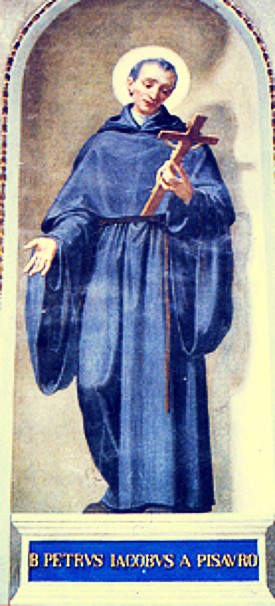
Saint of the Day – 23 June – Blessed Pietro Giacomo of Persaro OSA (c 1445 -1496) Priest of the Order of the Hermits of St Augustine, Professor in Sacred Theology, Novice Master, Born in c 1445 in Pesaro, Italy and died on 23 June 1496 the Hermitage of Valmanente in the Marche, Italy. Also known as – Peter James.
Pietro was born in Pesaro most likely, around the year 1445. Little is known about his family, which some historians call Gaspari. Ar a very young age, he asked and obtained, entrance to the Convent of the Augustinians in Pesaro, who instilled in him the compelling charm which inspired devotion in others, which characterised the Augustinians – with study as a way to wisdom, virtue and apostolic ministry.
At the end of his Novitiate, the young man made his profession and was sent to complete his studies necessary for the Priestly ministry and an academic career according to the rigid and demanding program prescribed for the Augustinian Order.
After his Priestly Ordination, he entered the Convent life with the commitment to continue his studies and to guide the young students of the Order.
In 1472 he was Master of the Novices in Perugia. In 1473 he was sent to teach in the Augustinian College in Florence. In 1482 we find him, already with the title of Professor in Sacred Theology in Rimini with the task of Master of the Novices..
He participated in two General Chapters: in 1482 in Perugia and in 1486 in Siena. He died in his early fifties. His life, therefore, ended not due to the wear and tear of the years but, probably, of the hardships of his mortication and penances. At the end of his life, always in the esteem of his Superiors and confreres, he renounced any office, even a prestigious one, in order to devote himself to the ascetic life and contemplation in the Hermitage of Valmanente, made famous by the holiness of St Nicholas of Tolentino, who in that place, had its famous vision of Purgatory.
Other records which historians have sometimes reported regarding our saint – such as his appointment as General Commissioner for a dispute between the Convents of Pergola and Corinaldo, his election as Prior Provincial of the Picena Province and the office of Prior in the famous Convent and College of St James the Greater in Bologna – should be better verified, also because some may refer to a another Pietro Giacomo da Pesaro, a contemporary of his.
However, we do know for sure, that the Blessed Pietro Giacomo emerged with some unmistakable characteristics – his holiness of life, love for study, commitment to evangelisation and the spiritual and cultural formation of young Augustinians, the search for solitude, asceticism, prayer and penance. ,
He died in 1496 in Valmanente, where his relics are now venerated in the Augustinian Church. Pope Pius IX, of blessed memory, approved his cult in 1848.
St Moeliai of Nendrum Blessed Pietro Giacomo of Persaro OSA (c 1445-1496) Priest of the Order of the Hermits of St Augustine Bl Peter of Juilly Bl Thomas Corsini of Orvieto St Thomas Garnet Bl Walhere of Dinant St Zenas of Philadelphia St Zeno of Philadelphia
Martyrs of Ancyra: A family of converts who were arrested, tortured, and sent in chains to Ancyra, Galatia (modern Ankara, Turkey) where they was tortured again by order of governor Agrippinus during the persecutions of Diocletian. Martyrs. They were – Eustochius, Gaius, Lollia, Probus, Urban. Died by being roasted over a fire and finally beheaded c300 in Ancyra, Galatia (modern Ankara, Turkey).
Martyrs of Nicomedia: During the persecutions of Diocletian, many Christians fled their homes to live in caves in the area of Nicomedia. In 303 troops descended on the area, systematically hunted them down and murdered all they could find.
Quote/s of the Day – 22 June – “Month of the Sacred Heart” – The Memorial of St Paulinus of Nola (c 354-431) Bishop, Confessor, Father.
“To my mind, the only art, is the Faith and Christ is my Poetry.”
“It is not surprising if, despite being far apart, we are present to each other and without being acquainted, know each other because, we are members of One Body, we have One Head, we are steeped in One Grace, we live on One Loaf, we walk on One Road and we dwell in the Same House!”
One Minute Reflection – 22 June – “The Month of the Sacred Heart of Jesus” – Within the Octave of Corpus Christi and the Memorial of St Paulinus of Nola (c 354-431) Bishop, Confessor – 1 Corinthians 23-29, John 6:56-59.
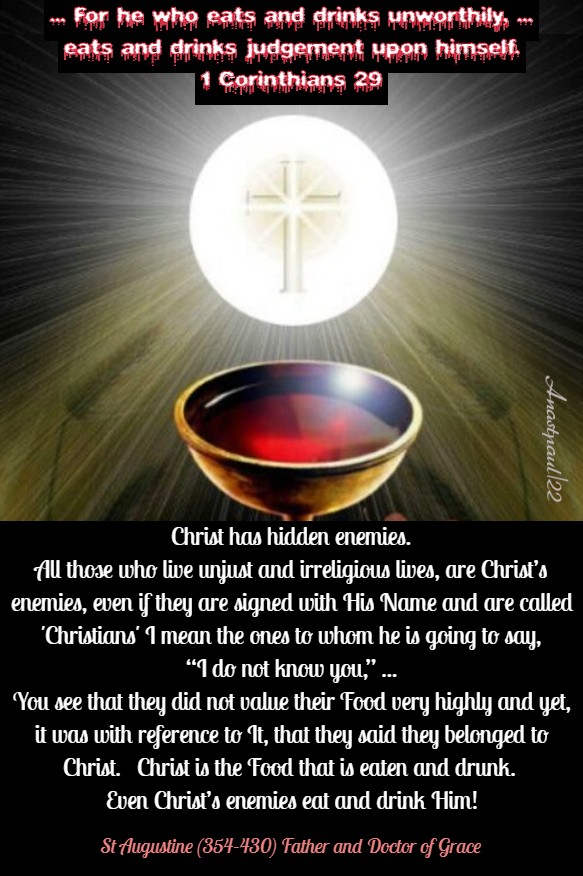
“ … For he who eats and drinks unworthily, … eats and drinks judgement upon himself.”- 1 Corinthians 29
REFLECTION – “Christ has hidden enemies. All those who live unjust and irreligious lives are Christ’s enemies, even if they are signed with His Name and are called ‘Christians’ I mean the ones to whom he is going to say, “I do not know you” and they say to him, “Lord, in your name we ate and drank. In your name, we performed many deeds of power. What did we eat and drink in your name?”
You see that they did not value their food very highly and yet, it was with reference to It, that they said they belonged to Christ. Christ is the Food that is eaten and drunk. Even Christ’s enemies eat and drink Him! The faithful know the Lamb without spot on which they feed, if only they fed on It in such a way that they are not liable to punishment! The Apostle says, “Whoever eats and drinks unworthily is eating and drinking judgment upon himself.” – St Augustine (354-430) Father and Doctor of Grace (Sermon 308).
PRAYER – O God, Who promised to those who forsake all things in this world for Thee, a hundred-fold reward in the world to come and life everlasting, mercifully grant that, following closely in the footsteps of the holy Bishop, Paulinus, we may look upon earthly things as nought and long only for those of Heaven. Who lives and reigns with God the Father, in the unity of the Holy Spirit, God, world without end. Amen (Collect). SWEET HEART of my JESUS, Make me love Thee ever more and more! – Indulgence 300 Days Everytime – Plenary Once a Month – Raccolta 162 – Pope Pius IX 26 November 1876.
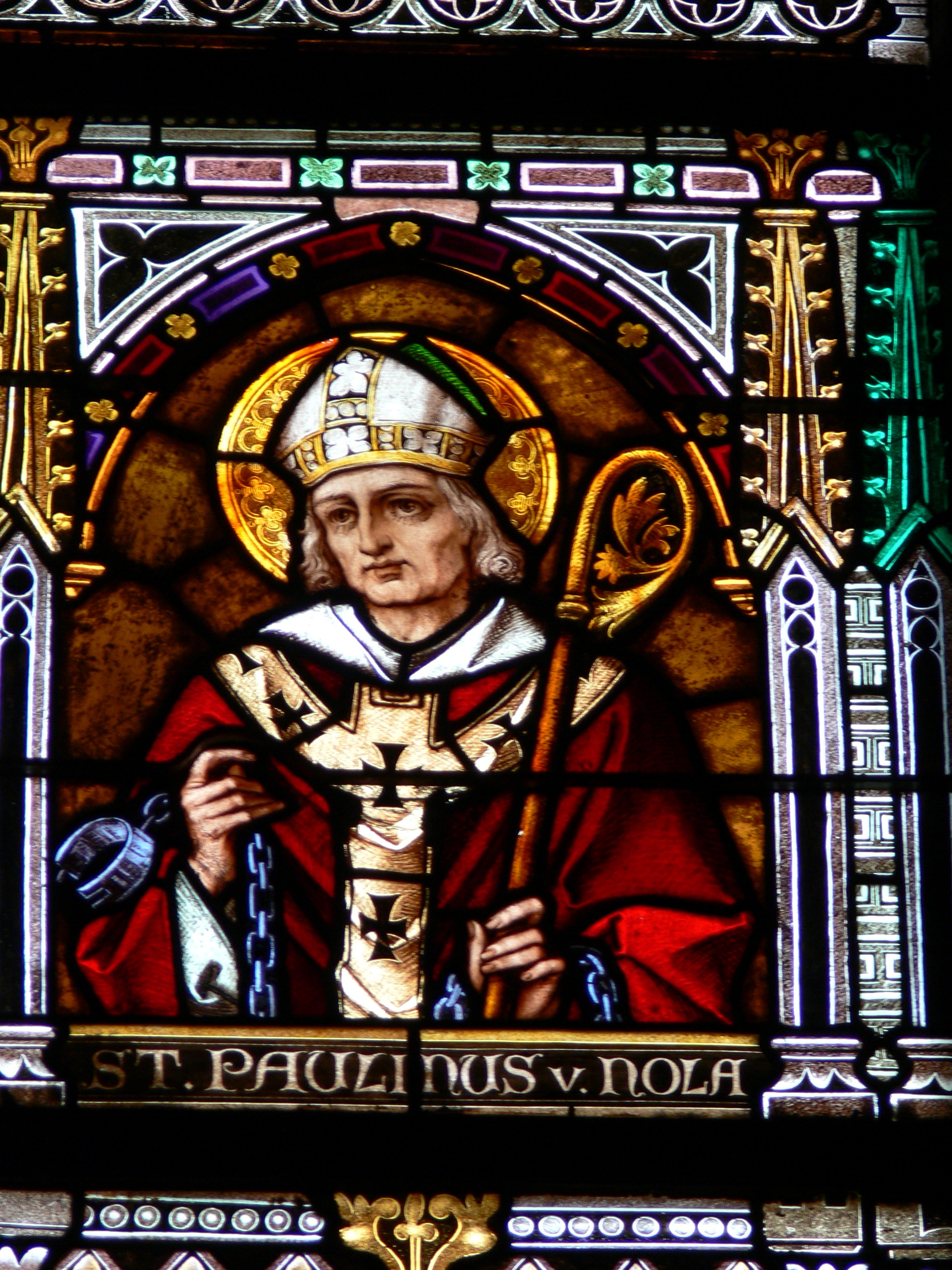
Saint of the Day – 22 June – St Paulinus of Nola (c 354-431) Bishop, Confessor, Poet, Writer, Apostle of Charity, Preacher, distinguished lawyer who hHeld several public offices in the Empire as Orator, Senator and Governor before his retirement from public life and his dedication to the service of God.
The Roman Martyrology reads of him today: “At Nola, in Campania, the birthday of the blessed Paulinus, Bishop and Confessor, who, although a most noble and wealthy man, made himself poor and humble for Christ. And, what is still more admirable, became a slave to liberate a widow’s son, who had been carried to Africa by the Vandals, when they devastated Canpania. He was celebrated, not only for his learning and exceptional holiness of life but, also for his power over the demons. His great merit has been extolled by Saints Ambrose, Jerome, Augustine and Gregory, in their writings. His body, at first transferred to Benevento and thence to Rome, was restored to Nola by Order of Pius X.”
St Paulinus, Bishop of Nola By Fr Francis Xavier Weninger SJ (1805-1888)
St Paulinus, who, on account of his great learning and eloquence but still more, on account of his virtues, is highly praised by St Ambrose, St Augustine, St Jerome and St Gregory, was a native of Bordeaux, in the Province of Gascony. His parents, who were Romans and very rich and of ancient nobility, desired that their son should be as eminent for intelligence and knowledge, as he was on account of his birth and fortune. Their desire was fulfilled, for, when Paulinus had reached the age of manhood, he was not only honoured and admired, by everyone but, was chosen Prefect and Governor of Rome and gained great fame for the wisdom of his administration. The pious Paulinus, however, soon became tired of all worldly honours and pleasures and, having resigned his Office, he went to Barcelona in Spain, to serve God without disturbance.
Having remained there for some time, he returned to Italy. At that time, St Ambrose was the Bishop of Milan and to him, Paulinus applied for advice, with regard to the change he intended to make in his life. Having received the Saint’s directions, he went to Nola, in Campania, as he entertained special reverence towards St Felix, Priest and Martyr, of that City. There, he humbled himself so deeply, that for some time he occupied the office of Sacristan. Afterwards he sold his estates and having used a part of the money in building a Church at Fundi, he gave the remainder to the poor. He then proceeded to a little village in the neighbourhood of Nola, changed his rich garments for humble clothing and commenced to lead the life of a Hermit in a poor little hut, deriving all his sustenance from alms.
But, although Paulinus kept himself secluded, it yet became known who he was and whence he came and not only Nola but all Italy, was astonished, that so great and eminent a man, had chosen for his walk through life, such an humble and, in the eyes of the world, such a despised path. The esteem in which he was then held by both clergy and laity, was so great, that, on the death of the Bishop of Nola, they determined to raise him to the Episcopal chair. It was long before the humble servant of God could be persuaded to accept the dignity but having at last consented, his love, his solicitude for his flock, the zeal he displayed for the honour of God, made him beloved by men and favoured by the Almighty.
Soon after his election to the See, Campania suffered the fate of many other countries and was laid waste by the Goths and many of its inhabitants were taken prisoners. The holy Bishop used all his income to feed the poor and ransom the captives. When all his resources were exhausted, Nola was plundered and the great servant of the Almighty, with several others, was taken prisoner. God, however, so ordained, that he was speedily released. Some years afterwards, the Vandals crossed the ocean and, again plundering the Kingdom of Naples, took away many of the inhabitants as prisoners. Among these were several persons from Nola and although St.Paulinus exerted himself to the utmost to redeem them from prison, he was unable to help all.
This extremity gave the holy Bishop an opportunity for an act of charity which had never before been witnessed in the world. St Gregory himself relates the event as follows: “A poor widow, coming to the Saint, complained with bitter tears, that her only son, who was all the support she had, was taken prisoner and begged him not to refuse her the money she needed for his ransom. The Saint, deeply affected, answered: “My dear daughter, I have not anything left but to ransom your son, I will sell myself. I will go with you and you must say that you give me instead of your son, in order that he may return to you.” The widow, unspeakably surprised at the Saint’s offer, hesitated to accept it but Paulinus knew how to overcome her remonstrances and, at last persuaded her to consent to his plan. He travelled with her to Africa, where her son had already arrived and the Saint, clad in the garment of a slave, was exchanged for the widow’s son, the latter being set at liberty. Paulinus was charged with the care of a garden, as he said that he was able to perform that work and God blessed his endeavours in such a manner, that everything grew most wonderfully under his hands.
A near relative of the King, who was a great lover of horticulture, came frequently into the garden and speaking with the new gardener, soon observed that he was more than an ordinary labourer. Paulinus one day whispered to him in a prophetic spirit: “Have a care for the future. Thy King will soon be a corpse. Act in time and take all proper measures in the affairs of the Crown.” The gentleman, greatly terrified at this speech, informed the King of it, who desired to see Paulinus.
Fear bedewed the King’s face with great drops of sweat when the Saint appeared before him. for, he had had a dream in the night, in which it appeared to him that he stood before the Divine Judgement-seat and heard the sentence: “The scourge given to him shall again be taken from his hands.” Among the judges, the king said, he had seen the man now standing before him. After this, he gave orders to inquire into the history of this gardener. At first, Paulinus would not confess who he was but, as they insisted on knowing and he thought it might promote the honour of God, he revealed his name and also how he had become a slave. The king, admiring his virtue, immediately gave him his liberty and told him he would grant him any favour he might ask. The Saint requested the liberation of all the captives from Nola, which the \King granted without any hesitation. Hence, all the prisoners from Nola were assembled at Court and being liberated, they returned with the holy Bishop, whom they justly regarded and honoured as their deliverer. How the whole City rejoiced, when the Saint arrived there accompanied by so many long lost friends! All the inhabitants went out to meet him,and having given him due thanks for his love and goodness, they led him with great honours and rejoicings to his Episcopal chair, whence he exhorted them to give thanks to the Almighty for the grace bestowed on them and to serve Him fervently and with unwearied zeal in future.”
After this he continued his pastoral functions until sickness confined him to his bed. Two Bishops from the neighbourhood, visited him at this time and having an Altar erected in his room, he for the last time said Holy Mass. When this was accomplished, he lay down again and asked where his brothers were? A servant, supposing that St Paulinus was speaking of the two above-mentioned Bishops, replied: “They are here, dear Father.” The Saint, however, said: “Not so, those, whom I mean, are the two Bishops, Januarius and Martin, who were with me and who promised to come soon again.” Januarius had formerly been Bishop at Naples, Martin at Tours – both were famous on account of their holiness. They appeared to the Saint and cheered him in his suffering and thus he expired happily in the Lord, in the year 431 . The holy Fathers Jerome, Gregory and Ambrose, in their works, bestow high praise on the great learning as well as the virtues of this Saint. St Augustine, in his record of St Paulinus, relates among other events, that when St Paulinus had been taken prisoner, he said to the Almighty: “Lord, release my heart from all anxiety for gold and silver, as Thou knowest best, where I have placed my treasures.” St Augustine remarks that the holy man had already sent all that had been his, according to the admonition of our Lord, to Heaven, through the hands of the poor. Amen! St Paulinus, Pray for us all!
St Paulinus of Nola (c 354-431) Bishop, Confessor, Poet, Writer, Apostle of Charity, Preacher, Orator, Senator and Governor. St Paulinus was an inspiration to many—including six great Saints of the Church, who referenced him in letters of encouragement to others: St Augustine, St Jerome, Melania, St Martin of Tours, St Gregory and St Ambrose. St Augustine wrote, “Go to Campania– there study Paulinus, that choice servant of God. With what generosity, with what still greater humility, he has flung from himself the burden of this world’s grandeurs to take on him the yoke of Christ and in His service how serene and unobtrusive his life!” About St Paulinus: https://anastpaul.com/2018/06/22/saint-of-the-day-22-june-st-paulinus-of-nola-c-354-431/
St Aaron of Brettany St Aaron of Pais-de-Laon St Alban of Britain Bl Altrude of Rome St Consortia St Cronan of Ferns St Eberhard of Salzburg St Eusebius of Samosata St Exuperantius of Como St Flavius Clemens St Gregory of Agrigento St Heraclius the Soldier St Hespérius of Metz
Blessed Pope Innocent V OP (c 1225-1275) Papal Ascesion 21 January 1276 unril 22 June 1276 (the date of his death. Friar of the Order of Preachers, Theologian, renowned Preacher, Scholar, Writer,, Dominican Office bearer, disciple of St Albert the Great and collaborator and friend of St Thomas Aquinas.and St Bonaventure. His Life: https://anastpaul.com/2021/06/22/saint-of-the-day-22-june-blessed-pope-innocent-v-op-c-1225-1275/
St John IV of Naples St Julius of Pais-de-Laon Bl Kristina Hamm Bl Marie Lhuilier St Nicetas of Remesiana St Precia of Epinal St Rotrudis of Saint-Omer St Rufinus of Alexandria
Martyrs of Samaria – 1480 Saints: 1480 Christians massacred in and near Samaria during the war between the Greek Emperor Heraclius and the pagan Chosroas of Persia. c 614 in the vicinity of Samaria, Palestine.
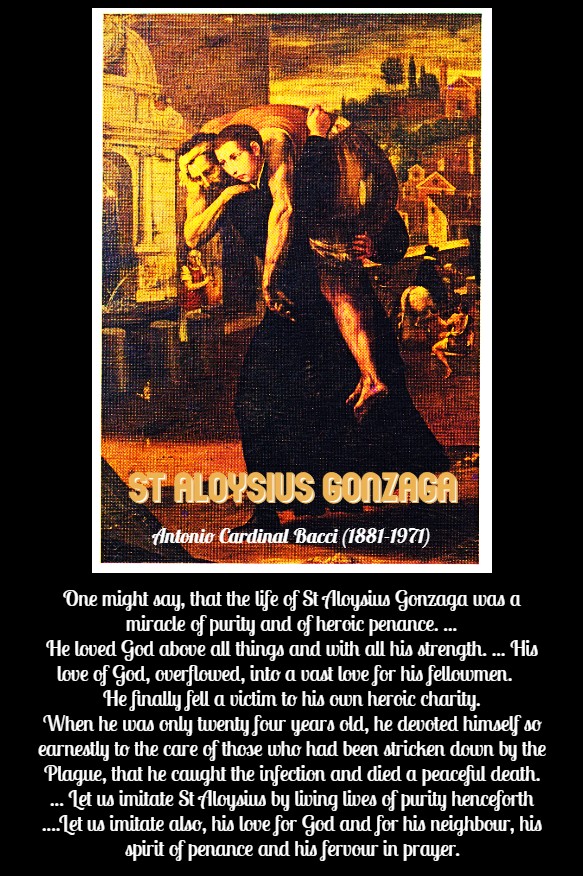
Thought for the Day – 21 June – Meditations with Antonio Cardinal Bacci (1881-1971)
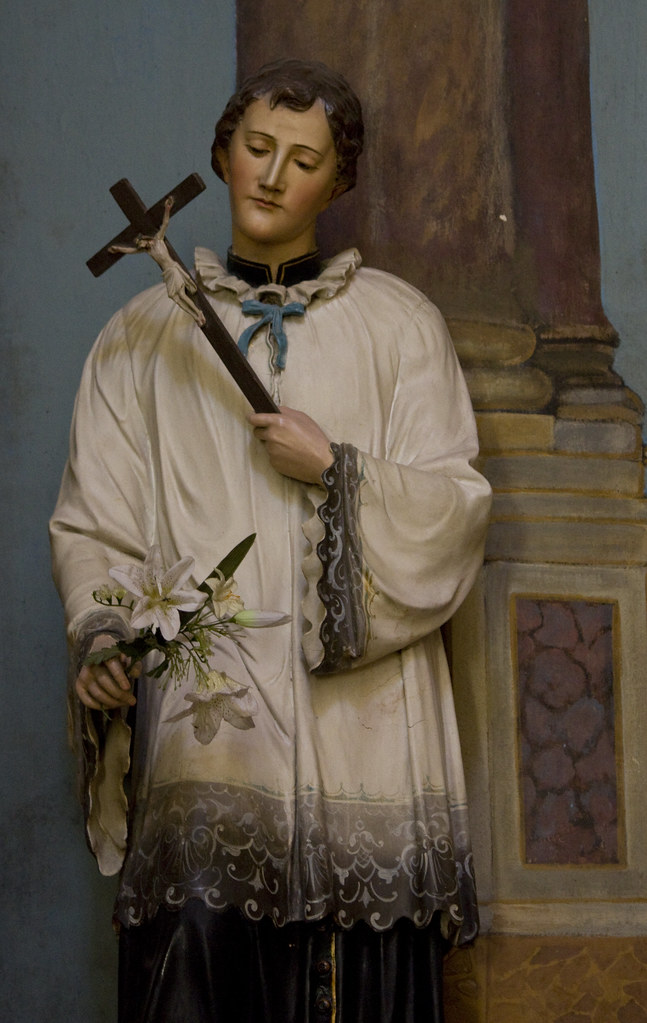
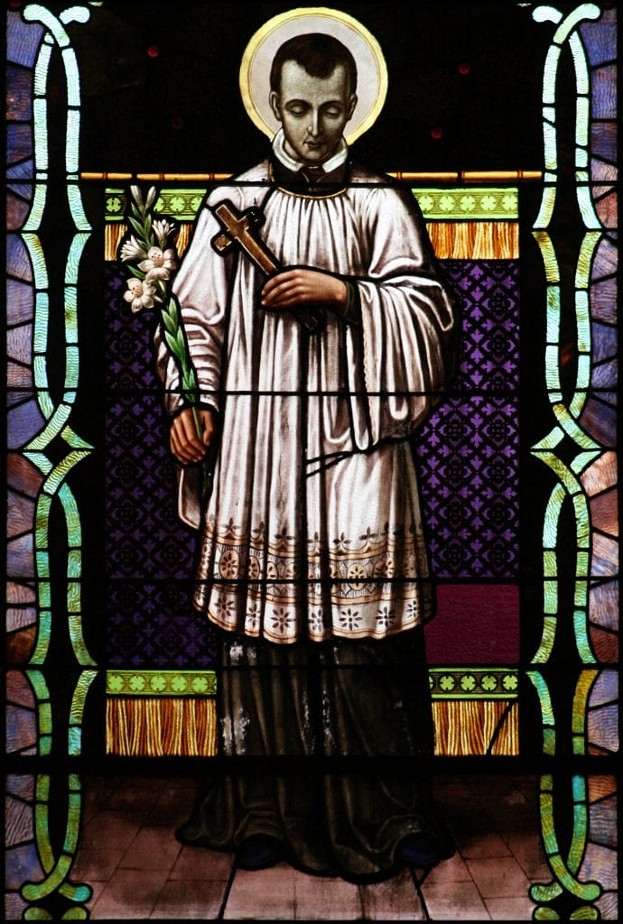
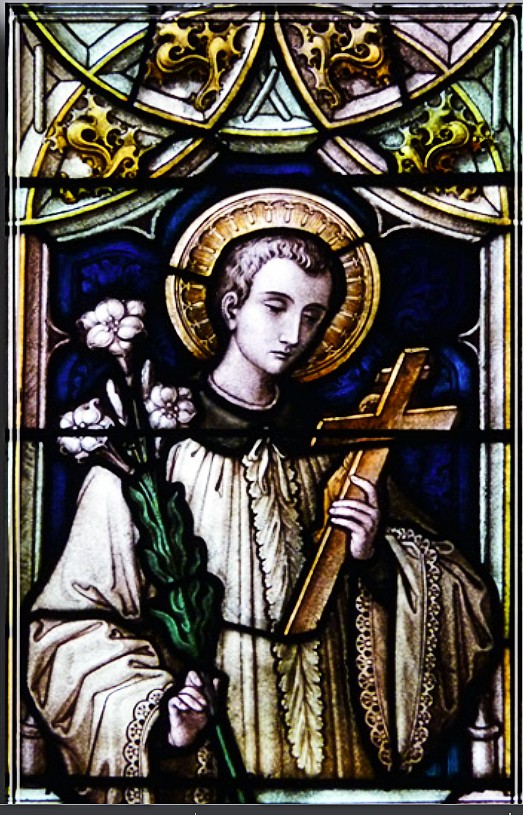
St Aloysius Gonzaga
“One might say, that the life of St Aloysius Gonzaga was a miracle of purity and of heroic penance. The source of his sanctity was the ardent love of God which he cherished from his childhood days. He loved God above all things and with all his strength. Therefore, long hours of prayer were a joy to him, the service of God in the Society of Jesus was his main desire and, mortification, was a loving offering, which he made in expiation of the sins of men.
The heart of St Aloysius, was not closed to men because of its supreme love of God. His love of God, overflowed, into a vast love for his fellowmen. He finally fell a victim to his own heroic charity. When he was only twenty four years old, he devoted himself so earnestly to the care of those who had been stricken down by the Plague, that he caught the infection and died a peaceful death. In his final moments, he smiled and announced that he was happy to be leaving the world.
Do we desire to merit as peaceful and holy a death as this? Let us imitate St Aloysius by living lives of purity henceforth, even if we have not always been as faithful as he was in this regard. Let us imitate also, his love for God and for his neighbour, his spirit of penance and his fervour in prayer.”
Quote of the Day – 21 June – The Memorial of St Aloysius de Gonzaga SJ (1568-1591) “The Angel of Purity”
“Recommend yourself to your Angel Guardian three times a day – in the morning. by the prayer “Angele Dei” in the evening, by the same prayer and during the day, when you visit the Altars in Churches. Remember that you are to be guided by your Angel, like a blind man who cannot see the dangers of the streets and trusts entirely. to the person who leads him.”
St Aloysius de Gonzaga (1568-1591)
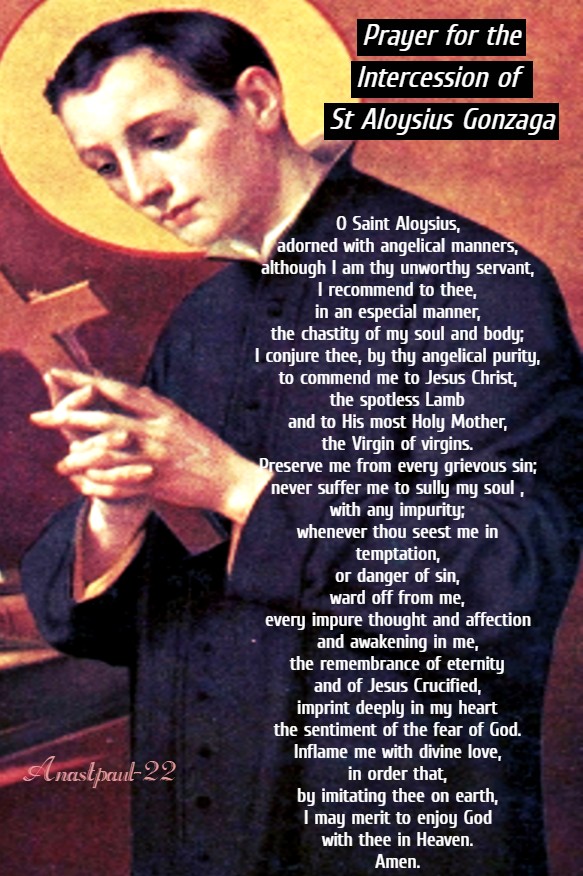
Prayer for the Intercession of St Aloysius Gonzaga, (Can be Prayed as a Novena for Nine Consecutive Days)
O Saint Aloysius, adorned with angelical manners, although I am thy unworthy servant, I recommend to thee, in an especial manner, the chastity of my soul and body; I conjure thee, by thy angelical purity, to commend me to Jesus Christ, the spotless Lamb and to His most Holy Mother, the Virgin of virgins. Preserve me from every grievous sin; never suffer me to sully my soul , with any impurity; whenever thou seest me in temptation, or danger of sin, ward off from me, every impure thought and affection and awakening in me, the remembrance of eternity and of Jesus Crucified, imprint deeply in my heart the sentiment of the fear of God. Inflame me with divine love, in order that, by imitating thee on earth, I may merit to enjoy God with thee in Heaven. Amen. Our Father, Hail Mary
One Minute Reflection – 21 June – “The Month of the Sacred Heart of Jesus” – Tuesday within the Octave of Corpus Christi and the Memorial of St Aloysius de Gonzaga SJ (1568-1591) – 1 Corinthians 23-29, John 6:56-59.
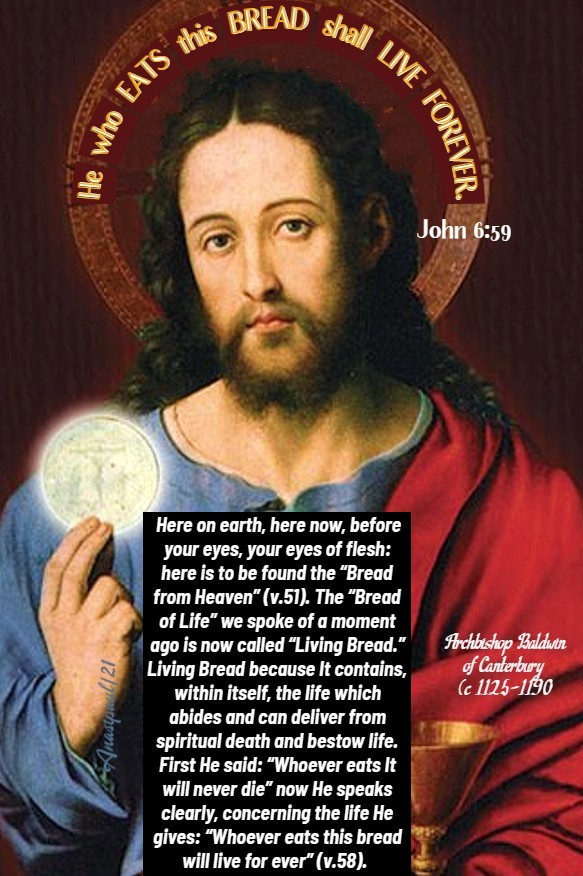
“This is the Bread that has come down from Heaven; not as your fathers ate the manna and died. He who eats this Bread shall live forever.” – John 6:59
REFLECTION – Christ is “the bread of life” for those who believe in Him: to believe in Christ is to eat the bread of life, to possess Christ within one, is to possess eternal life… “I am the bread of life,” He says; “your fathers ate manna in the wilderness and they are dead” (Jn 6,48f). By this is to be understood ,spiritual death. Why are they dead? Because they believed in what they saw and did not understand what they could not see… Moses ate manna, Aaron ate it and many others, too, who pleased God and are not dead. Why are they not dead? Because they understood, in a spiritual fashion, they were spiritually hungry, they tasted the manna spiritually, so that they might be spiritually satisfied. “This is the bread that came down from heaven: whoever eats it will never die” (v.50). This manna – that is to say, Christ, who Himself spoke like this…, was prefigured by the manna but was able to do more than manna could. For manna could not, of itself, prevent dying spiritually… But the righteous saw Christ in the manna, they believed in His coming and Christ, of whom manna was the symbol, grants to all who believe in Him that they should not spiritually die. Hence He says: “This is the bread come down from heaven; whoever eats it will never see death.” Here on earth, here now, before your eyes, your eyes of flesh: here is to be found the “bread from heaven” (v.51). The “bread of life” we spoke of a moment ago is now called “living bread.” Living bread because it contains, within itself, the life that abides and can deliver from spiritual death and bestow life. First He said: “Whoever eats it will never die” now he speaks clearly, concerning the life He gives: “Whoever eats this bread will live for ever” (v.58). Archbishop Baldwin of Canterbury (c 1125-1190) Cistercian – The Sacrament of the Altar II
PRAYER – O God, bestower of heavenly gifts, Who in the angelic youth Aloysius joined wondrous innocence of life to an equally wondrous love of penance; grant, by his merits and prayers, that we who have not followed him in his innocence may imitate him in his penance. Through Jesus Christ, Thy Son our Lord, Who lives and reigns with Thee, in the unity of the Holy Ghost, God, world without end. Amen (Collect). SACRED Heart of JESUS, Thy Kingdom come! Indulgence 300 Days. Everytime Raccolta 178 St Pius X, 4 May 1906.
Saint of the Day – 21 June – St Aloysius Gonzaga SJ (1568-1591) Confessor, Seminarian of the Society of Jesus, Mystic, Marian devotee, born of a noble family as Prince Luigi. Known as “The Angel of Purity.” Patronages – Catholic youth, Jesuit scholastics, the blind, eye ailments, AIDS patients, care-givers, Jesuit students, for relief from pestilence, young people, Castiglione delle Stiviere, Italy, Valmonte, Italy.
The Roman Martyrology reads: “At Rome, St Aloysius de Gonzaga, of the Society of Jesus, most renowned for his contempt of his Princely dignity and the innocence of his life.”
St Aloysius de Gonzaga (Excerpt) By Fr Virgilio Cepari SJ (1564-1631)
St Aloysius, unlike so many of his illustrious family, has not left behind him, the glory of a great Captain, or of a man of letters, or of a ruler or statesman. Perhaps we may gather from this brief life, that thanks to the laws of inheritance, or to the gifts specially bestowed upon him, had longer years and occasion been given to him, he would have made his mark in the world. Talents he had and they were very notable whenever circumstances called them into play. Father Budrioli, a contemporary of our Saint, records in his Memoirs of St Aloysius ,that it was the conviction of all the Fathers in the Roman College and, there were men of European fame amongst them, that young Gonzaga had been given to the Society of Jesus, by a special Providence, to be one day its General, a post for which his prudence, sound judgement and extraordinary ability in matters of business, seemed even then, to have marked him out.
But St Aloysius had a heart too great to be contented with earthly grandeur. Nothing seemed of value to him, except what is prized by God and what, like Him, is everlasting To our Saint, the highest science was the science of Saints, to conquer oneself, the greatest victory, to serve God was to reign.! His motto was: Quid hoc ad aeternitatem? What is this to eternity? Guided by this thought, the young Prince, though living in the midst of a profligate world, with its charms and seductions on every side, took in hand the difficult task of making himself a Saint. And in the short space that he lived, he reached such a height of sanctity, that Holy Church, not content with raising him to her Altars, honoured him with the title of “The Angel of Purity”and gave him as model and Patron to the youth of the future.
What commemoration more fitting or more profitable than, by the faithful picture of his life, to reproduce him, whose whole being, whose every word and deed, whose each joy and sorrow, every aspiration and success were a constant forward march towards that ideal of perfection, which attracted him from childhood!
Fr Virgilio Cepar was a contemporary of the Saint, an ocular witness of most of the facts he narrates; he was his fellow-student and lived with him for several years, during which time, he met him everyday and was honoured with his most entire confidence. And what Cepari himself had not seen and heard, he learned from the lips of those who had witnessed all that he narrates, the mother and brother of St Aloysius, his tutors, servants, his relatives and acquaintances, his masters, superiors in religion, his Confessor. Fr Cepari visited every place, except those in Spain, where the Saint had stayed for any length of time and took down on the spot, the most exact information, as can be learnt from the statements of the sworn witnesses. No other writer of the life of St Aloysius has done the same.
To download “The Life of St Aloysius Gonzaga”, click on the link below.
St Raymond of Barbastro St Rufinus of Syracuse St Suibhne the Sage St Terence St Ursicenus of Pavia
Martyrs of Taw – 3+ Saints: Three Christians of different backgrounds who were martyred together – Moses, Paphnutius, Thomas. They were beheaded in Taw, Egypt, date unknown.























 AnaStpaul
You must be logged in to post a comment.