Posted in SAILORS, MARINERS, NAVIGATORS, SAINT of the DAY

Saint of the Day – 17 February – Saint Constabilis of Cava OSB (c 1070-1124)

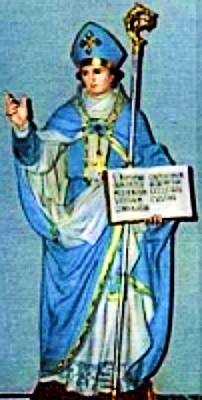
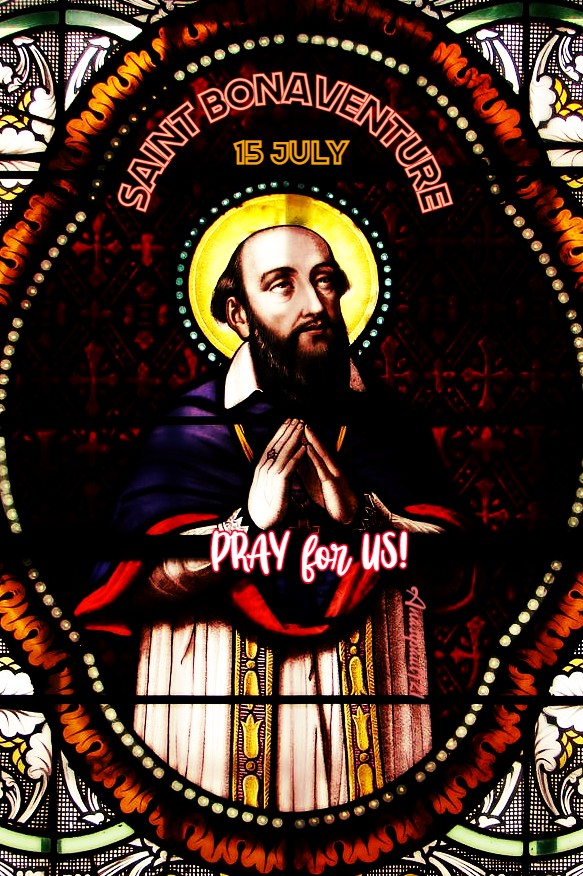
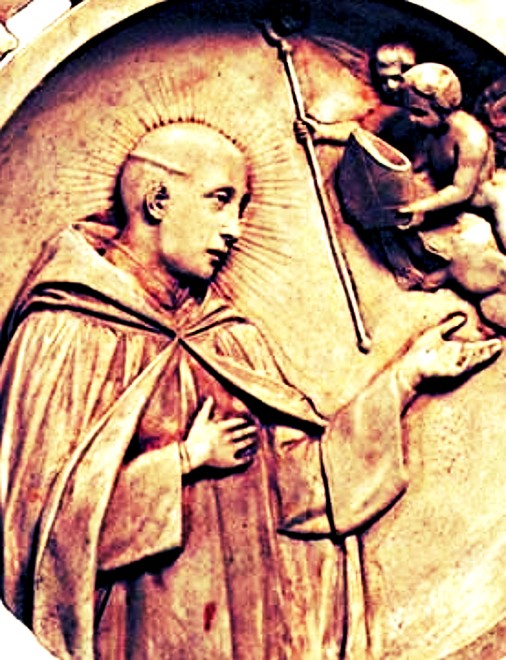
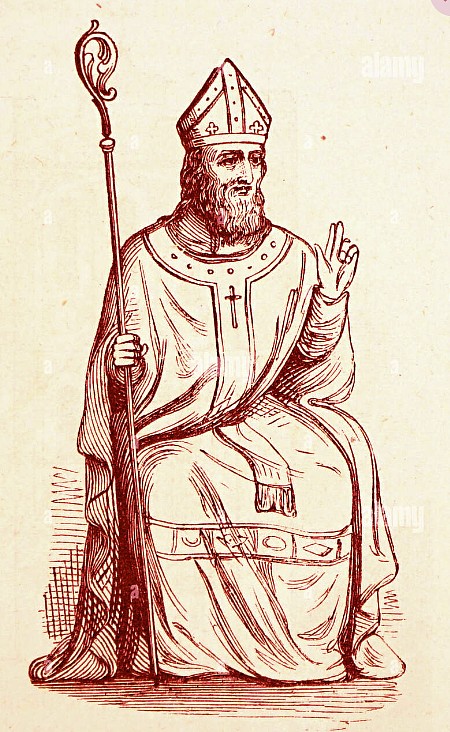
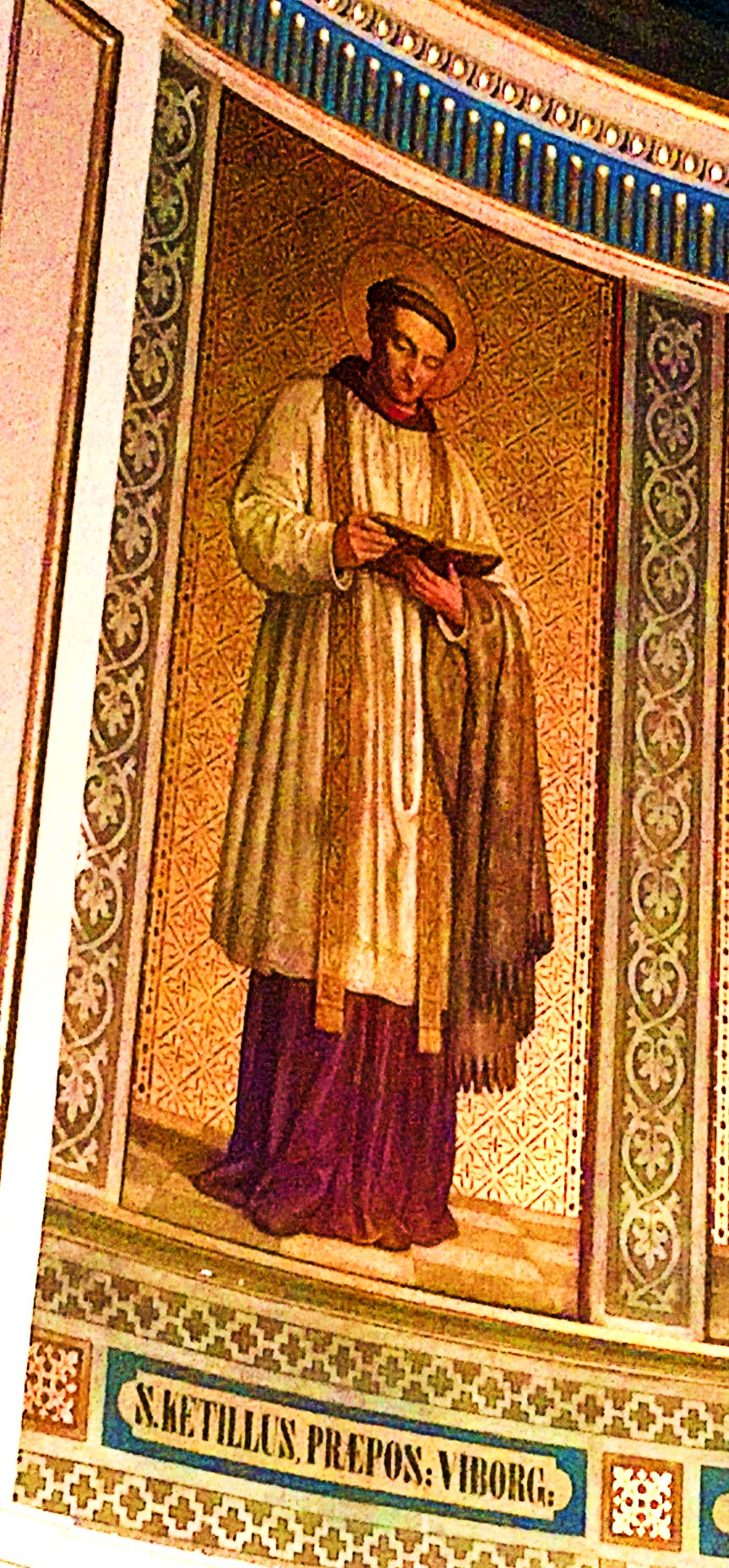
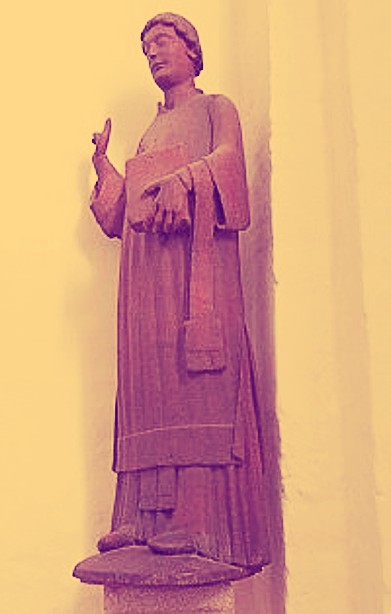
Saint of the Day – 17 February – Saint Constabilis of Cava OSB (c 1070-1124) Abbot, miracle-worker, known as “The Blanket of the Brothers” for his gentle kindness and caring humility for all the Monks in their trials and sorrows. He is the Patron Saint of the Town of Castellabate in Cilento, which he founded in 1123 and whose name clearly indicates it. Born in c1070 at Lucania, Italy and died on 17 February 1124 at Cava de’ Tirreni of natural causes. Patronages – • Castelabbate, Italy, of sailors, since 1979 he has been elevated to Co-Patron of the Diocese of Vallo della Lucania. Also known as – Constabile, Costabile.

Miracle of the ships saved from wreckage

The Roman Martyrology reads today: “In the monastery of Cava de ‘Tirreni in Campania, Saint Constabilis, Abbot: – for his extraordinary meekness and his charity towards everyone, he was commonly called the “Blanket” of the brothers.

Constabilis was born around 1070 at Tresino, in Lucania to the noble Gentilcore family. At the age of seven, he was entrusted to the care of Abbot of Cava, St Leo I.

He became a Monk at the Abbey, which followed the Benedictine Rule . Constabilis zealously lived the Rule to perfection and was entrusted by the Abbot to manage important negotiations and transactions on behalf of the Abbey.

On 10 January 1118, he was promoted by Abbot St Peter of Pappacarbone to the position of Coadjutor. He subsequently succeeded Peter as the Abbot after the latter’s death on 4 March 1122. His work was carried out with kindness, understanding for each of the Monks and their individual problems, without imposing authoritarian superiority over them. He approached each with humility and gentleness in his administration of the Abbey,.

He died on 17 February 1124 at the age of around 53 and was buried in the part of the Church overlooking the ‘Arsicia’ Cave used by St Alferius. After his death he appeared several times to his successor Abbots, coming to their aid in contingencies, there are records of his miraculous interventions for the salvation of the ships, which later belonged to the famous Abbey. These miraculous intercessions granted him widespread veneration as the protector of sailors.

Protector of Sailors

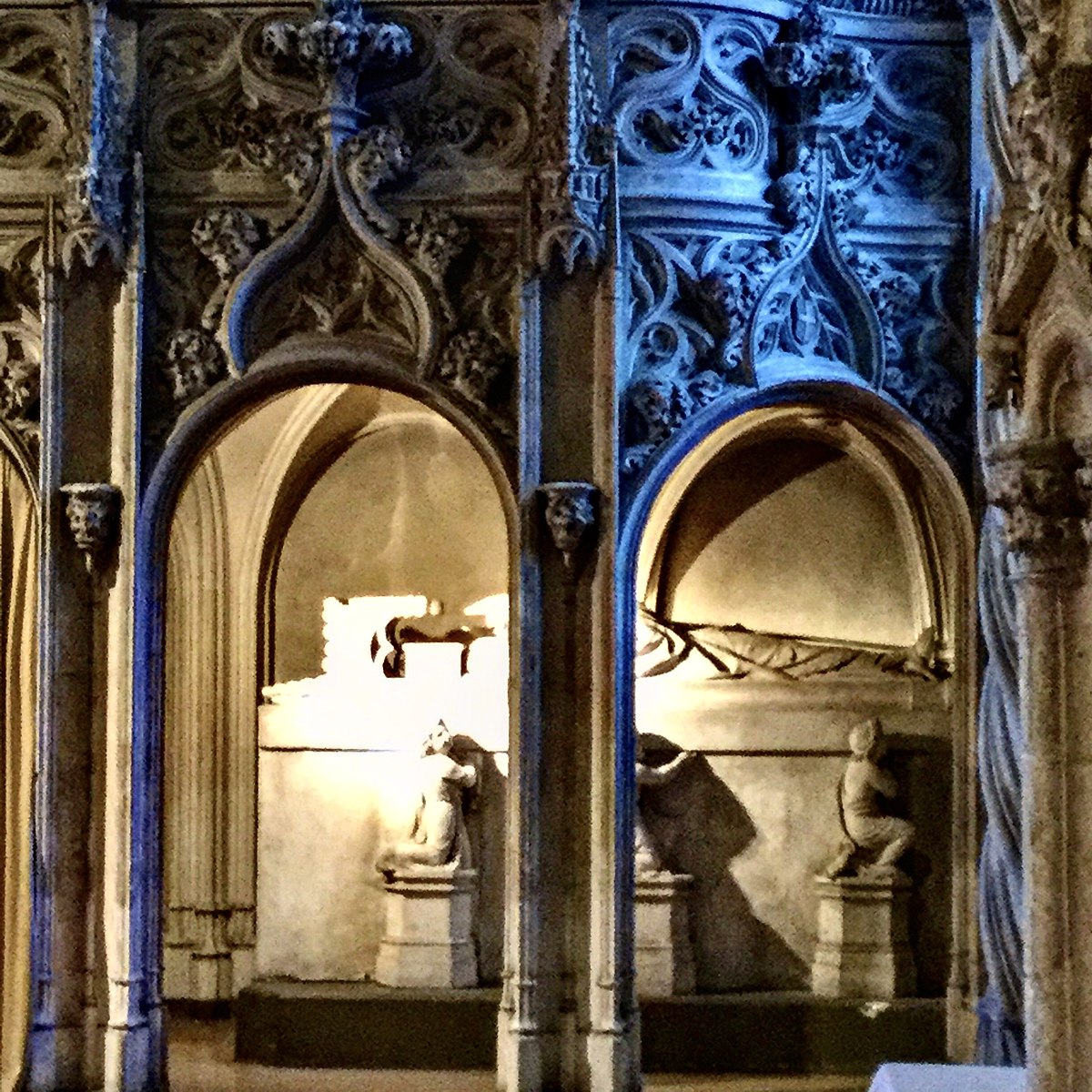
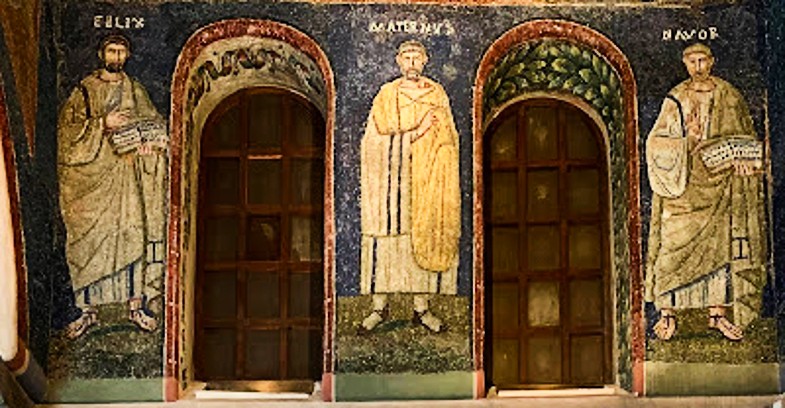
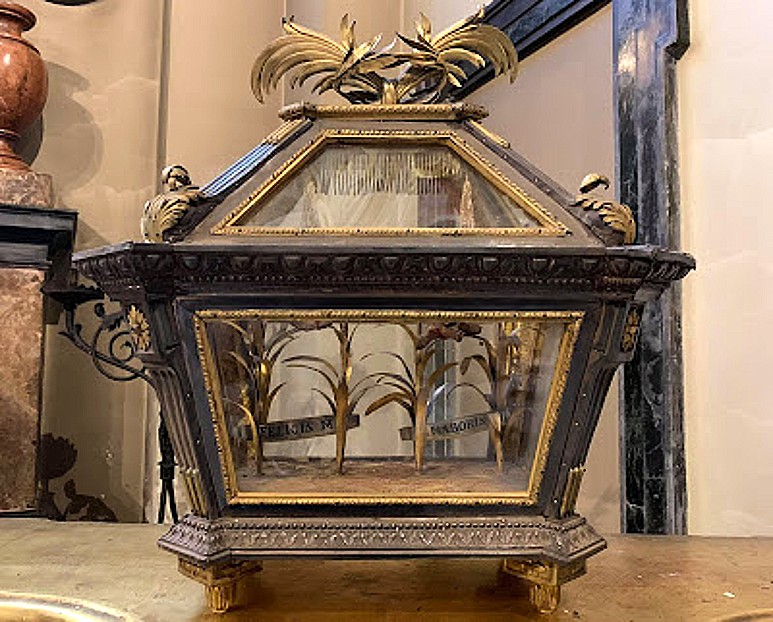
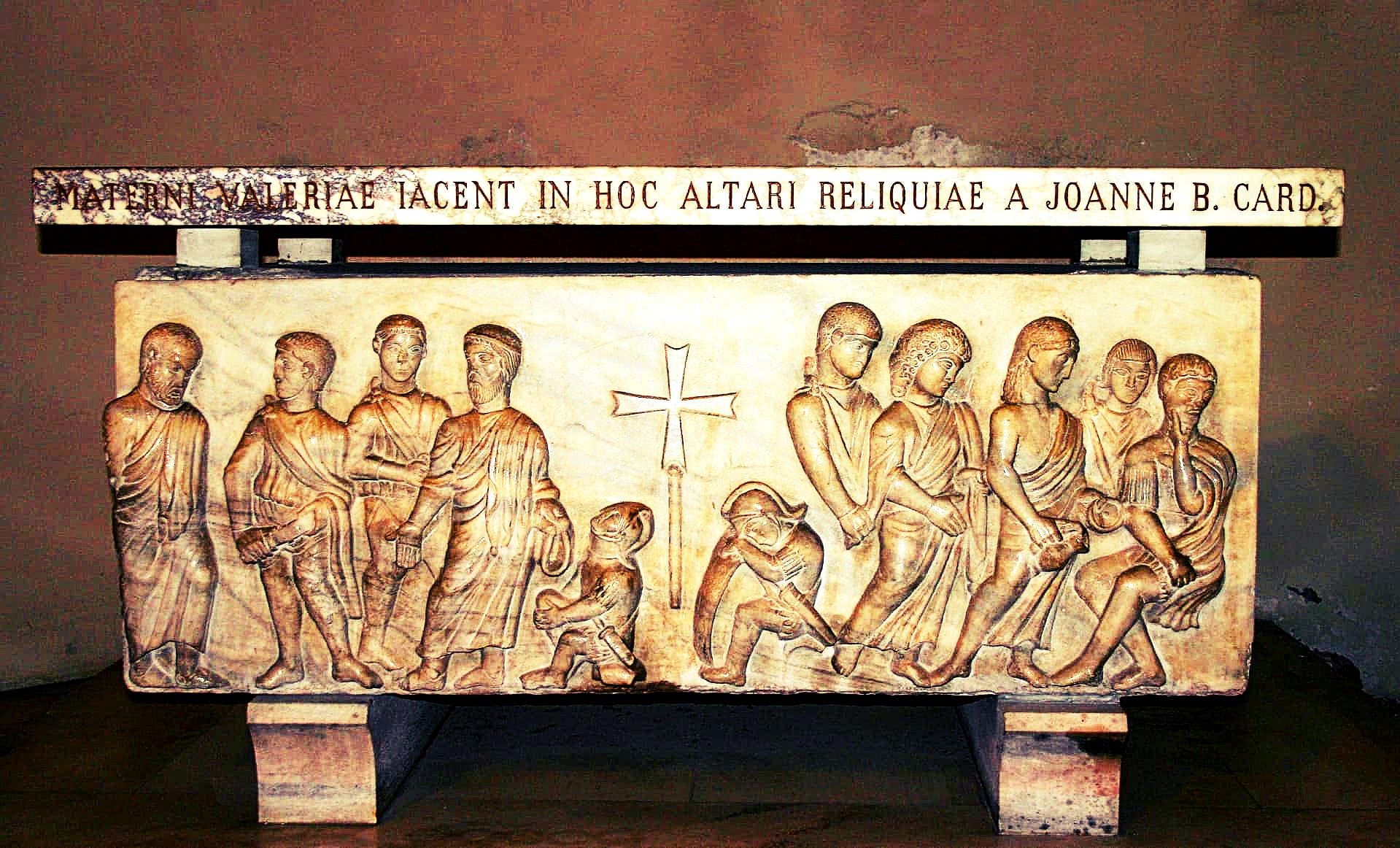
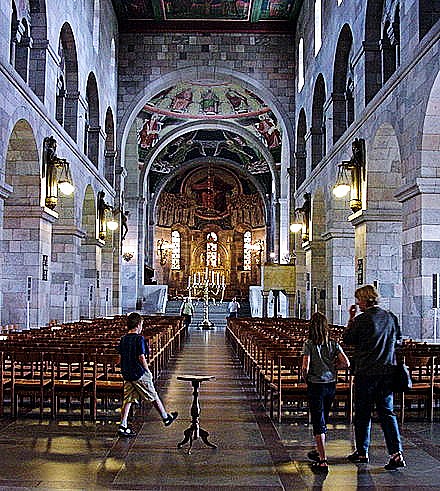
On 21 December 1893, Pope Leo XIII recognised the ancient verneration and the title of Saint, to the first four Abbots, of the famous Abbey of Trinità di Cava dei Tirreni, founded in the 11th century. They are St Alferius the Founder and first Abbot († 1050), St Leo I (1050-1079), St Peter Pappacarbone (1079-1123) and St Constabilis (c 1122-1124). Their relics rest in the Abbey Church in the Chapel of the Saintly Fathers.’

If you would like to discover St Alferius, his Biography is here:
https://anastpaul.com/2021/04/12/saint-of-the-day-12-april-saint-alferius-of-la-cava-930-1050/

La Trinità della Cava
Posted in MARIAN TITLES, SAINT of the DAY, The FLIGHT into EQYPT

The Flight into Egypt, Our Lady of Constantinople, Bari, Turkey (566) and Memorials of the Saints – 17 February

The Flight into Egypt (year 1)- 17 February:

It was on the seventeenth of February, fifty five days after the Nativity of Jesus, when King Herod’s soldiers — sent to slaughter all little boys in Bethlehem and its neighbourhood who were two years old or under, in order to destroy a rival King, Jesus — were getting perilously near the cave at Bethlehem, where at first they little expected Our Lord to be. Saint Joseph received a message from God through an Angel, whereupon he took Our Lady and the Divine Infant and set off leaving the land of the Jews to travel to a land of the Gentiles. They took no-one with them, by way of servants or friends, as Saint Peter Chrysologus tells us.

The Town to which the Holy Family fled was called Fostat. It was three hundred miles from Bethlehem. A Church has been erected there, on the site of the house where the Holy Family lived during their exile. The little Town where the Holy Family lived in Egypt was not far from Heliopolis, a City in which — when Jesus, Mary and Joseph passed through it — statues of pagan gods crashed to the ground. Both Fostat and Heliopolis are not far from Cairo in Egypt.

Our Lady of Constantinople, Bari, Turkey (566) – 17 February:
HERE:

https://anastpaul.com/2021/02/17/our-lady-of-constantinople-bari-turkey-566-and-memorials-of-the-saints-17-february/

St Alexis Falconieri OSM (Died 1310) – One of the Seven Holy Founders of the Servites.
His Life:

https://anastpaul.com/2020/02/17/saint-of-the-day-17-february-saint-alexis-falconieri-13th-century-1310/

St Antoni Leszczewicz
St Bartholomew degli Amidei – One of the Seven Holy Founders of the Servites.
St Benedict dell’Antella – One of the Seven Holy Founders of the Servites.
St Benedict of Cagliari
St Buonfiglio Monaldi – One of the Seven Holy Founders of the Servites.
St Bonosus of Trier
St Constabilis of Cava OSB (c 1070-1124) Abbot
St Donatus the Martyr
Bl Elisabetta Sanna
St Evermod of Ratzeburg
St Faustinus the Martyr
St Finan of Iona

St Fintan of Clonenagh (c 524 – 603) Abbot, “Father of the Irish Monks,” disciple of St Columba of Iona. Fintan was granted the gifts of prophecy and miracles.
St Fintan’s Life:

https://anastpaul.com/2021/02/17/saint-of-the-day-17-february-saint-fintan-of-clonenagh-c-524-603-father-of-the-irish-monks/

St Flavian of Constantinople
St Fortchern of Trim
St Gherardino Sostegni – One of the Seven Holy Founders of the Servites.
St Guevrock
St Habet-Deus
St Hugh dei Lippi-Uguccioni – One of the Seven Holy Founders of the Servites.
St John Buonagiunta Monetti – One of the Seven Holy Founders of the Servites.
St Julian of Caesarea
St Loman of Trim

Blessed Luke Belludi OFM (c 1200- c 1285) Friar of the Order of Friars Minor, companion of St Anthony of Padua on his travels, miracle-woker, founder of convents.
Biography:

https://anastpaul.com/2019/02/17/saint-of-the-day-17-february-blessed-luke-belludi-ofm-c-1200-c-1285/

St Lupiano
Bl Martí Tarrés Puigpelat
St Mesrop the Teacher
St Petrus Yu Chong-nyul
St Polychronius of Babylon
St Romulus the Martyr
St Secundian the Martyr
St Silvinus of Auchy
St Theodulus of Caesarea
Bl William Richardson

Posted in LENT 2022, LENTEN PRAYERS & NOVENAS, NOTES to Followers, The HOLY FACE

Why didn’t you tell me?

Why didn’t you tell me?! 🙈🙄🤗🙏

Oops – I seem to have miscounted the Nine days preceding the Feast of the Most Holy Face! Apologies – the Novena begins on Sunday 20 February as the Feast Day is 1 March.

Posted in LENT 2022, LENTEN PRAYERS & NOVENAS, NOVENAS, The HOLY FACE

Lenten Preparation Novena to the Holy Face, Begins Sunday 20 February

Lenten Preparation
Novena to the Holy Face
Begins Sunday 20 February

Shrove Tuesday is also the Feast of the Holy Face.
Many who discover this are quickly struck by the significance of beginning Lent more in love with His countenance.
For having made reparation “with Jesus, united with all His sorrows, love and total abandonment” through the Novena, we can begin our Lenten walk with Christ, more eady to comfort Him along the way, as StVeronica did.

Indeed, this searingly beautiful devotion goes back to the Passion itself, when the veil of Veronica smoothed the injuries of Jesus’ Holy Face, so besieged with pain.
In 1843, Sister Marie of St. Peter had visions of Jesus requesting a devotion to His Holy Face called “The Golden Arrow, which brings Him great delight, as He said to Sr Marie, “All who honour My Holy Face in a spirit of reparation thereby perform for Me the services of the pious Veronica.
In 1938, Jesus appeared to Sister Maria Pierina de Micheli (1890-1945), His face bloodied by His Passion and said, speaking of His Face, “I wish that it be venerated by a special Feast on Tuesday, the day before Ash Wednesday. I wish that the Feast be preceded by a Novena in which the faithful make reparation with me, joining together and sharing in my sorrow.” For “Those on earth who contemplate the wounds of My Face, shall in Heaven, behold it, radiant with glory.”

Following that request, Pope Pius XII named Shrove Tuesday as the official Feast of the Holy Face in 1958.

We pray our Novena in fine company.
St Augustine (354-430), St Gertrude the Great (1256-1302) and St Bernard (1090-1153), St Therese of Lisieux (1873-1897), among many others, all venerated the Holy Face.

In a similar way, our Lenten witness to the wounds on His Hands and Feet is inadequate, if we have not first contemplated His Face, bitterly kissed by Judas, spat upon, battered, covered with sweat and blood and crowned with thorns, continuing to be dishonoured even today, through the Blessed Sacrament by profanations, abuse and neglect.

For so many, Shrove Tuesday is a date on the calendar that gets overshadowed by Ash Wednesday, that memorable day we wear the outward sign of repentance and recall our mortality. How much more meaningful will our Ash Wednesday be, if we first mark Shrove Tuesday as a Feast of the Holy Face, concluding the Novena we began in the time of preparation and beginning Lent more in love with the Countenance of Christ and, through Him, made more beautiful in our own soul. AMEN, Let us Pray ……

Posted in MEDITATIONS - ANTONIO CARD BACCI, PRACTISING CATHOLIC, QUOTES on GRACE, QUOTES on PRIESTS, the PRIESTHOOD and CONSECRATED LIFE, QUOTES on the FAMILY, The FAITHFUL on PILGRIMAGE

Thought for the Day – 16 February – The Duties of Our State

Thought for the Day – 16 February – Meditations with Antonio Cardinal Bacci (1881-1971)

The Duties of Our State

“Some are called by God to the lofty state of the Ptiesthood, or of the Religious Life.
This is a very great grace.
We should co-operate generously and do our best to overcome any obstacles we meet.

Others are called to become good Catholic fathers and mothers and to rear a family.
This is a most important role because4, the proper education of children and the future of the Church and of society, depend on it.

Every position has its obligations, which each of us should work hard to fulfil in every detail.
The grace appropriate to our state will be available to us.
But, this grace has to be balanced by a sincere determination on our part, to carry out carefully, the duties of our state.

Let us examine ourselves in this regard.
If we discover that we have been neglectful, or deficient in any way, let us resolve to put things right – without delay!

Antonio Cardinal Bacci

PART ONE HERE:
https://anastpaul.com/2020/02/16/thought-for-the-day-16-february-the-duties-of-our-state/

Posted in "Follow Me", CONFESSION, CONFESSION/PENANCE, DOCTORS of the Church, DOMINICAN OP, FATHERS of the Church, GOD ALONE!, PRACTISING CATHOLIC, QUOTES on HEAVEN, QUOTES on JOY, QUOTES on LOVE of GOD, QUOTES on PERSECUTION, QUOTES on PERSEVERANCE, QUOTES on SIN, QUOTES on THANKSGIVING, The FAITHFUL on PILGRIMAGE, The KINGDOM of GOD / HEAVEN, The WORD

Quote/s of the Day – 16 February – ‘Persevere to the end’

Quote/s of the Day – 16 February – Septuagessima Weekday – 1 Cor. 9:24-27; 10:1-5, Matthew 20:1-6

Even so, the last shall be first
and the first last;
for many are called
but few are chosen.

Matthew 20:16

This is the time for Confession.
Confess the sins you have committed
in word or deed,
by day or by night.
Confess during this “favourable time”
and on “the day of salvation,”
receive Heaven’s treasure…

St Cyril of Jerusalem (313-350),
Father & Doctor of the Church

“… We must all rejoice exceedingly,
to be even the last,
in the Kingdom of God!

St Pope Gregory the Great (540-604)
Father and Doctor

“From now on, then,
if God has no need of your goods,
neither does He have to give you this great thing,
if you refuse to love Him,
all He requires is love,
without which nothing constrains His giving.
Love, then and you will receive
the Kingdom, love and you will possess it…

Love God more than yourself
and already, you begin to have
what it is your desire to possess fully, in heaven
.”

St Anselm (1033-1109)
Doctor magnificus
Doctor Marianus

Rejoice and be happy!
Persevere to the end
and prefer to die
rather than abandon the post,
to which God has called you!”

St Catherine of Siena (1347-1380)
Doctor of the Church

Posted in CATHOLIC DEVOTIONS of the Month, CHRIST, the WAY,TRUTH,LIFE, DOCTORS of the Church, ONE Minute REFLECTION, QUOTES on TRUTH, The KINGDOM of GOD / HEAVEN, The WORD

One Minute Reflection – 16 February – ‘ … Indeed, we must all rejoice exceedingly, to be even the last, in the Kingdom of God!’

One Minute Reflection – 16 February – “Month of the Most Blessed Trinity” – Septuagesima Weekday – 1 Cor. 9:24-27; 10:1-5, Matthew 20:1-6

Have I not a right to do what I choose? Or are you envious because I am generous?” – Matthew 20:15.

REFLECTION – “The householder said to them, “I wish to give to this last one as I give even to you.” And since the obtaining of His Kingdom comes from His goodwill, He properly adds, “Or am I not allowed to do what I wish?” It is always foolish to question the goodness of God. There might have been reason for loud complaint, if He did not give what He owed but not, if He gives what He does not owe. And so, He adds, “Or is your eye evil because I am good?

But no-one should boast of his work or of his time, when, after saying this, Truth cries out: “So the last will be first and the first last.” We know what good things we have done and how many they are; we do not know with what exactitude our Judge on high will investigate them. Indeed, we must all rejoice exceedingly, to be even the last, in the Kingdom of God!”St Pope Gregory the Great,(540-604) Father and Doctor.

PRAYER – O Lord, we beseech You, graciously hear the prayers of Your people, that we, who are justly punished for our sins, may be mercifully delivered for the glory of Your Name. Through Jesus Christ, Thy Son our Lord, Who lives and reigns with Thee, in the unity of the Holy Ghost, God, world without end. Amen (Collect).

Posted in DIVINE Mercy, Goodness, Patience, DOCTORS of the Church, DOMINICAN OP, GOD ALONE!, LENTEN PRAYERS & NOVENAS, Our MORNING Offering, PRAYERS of the SAINTS, QUOTES on HUMILITY, QUOTES on JOY, QUOTES on LOVE of GOD, QUOTES on OBEDIENCE, QUOTES on PATIENCE, QUOTES on VIRTUE, QUOTES on WORK/LABOUR, The BEATITUDES, The WILL of GOD

Our Morning Offering – 16 February – O Merciful God By St Thomas Aquinas

Our Morning Offering – 16 February

O Merciful God
By St Thomas Aquinas (1225-1274)
Doctor Angelicus, Doctor Communis

O merciful God,
grant that I may ever perfectly
do Your Will in all things.
Let it be my ambition to work
only for Your honour and glory.
Let me rejoice in nothing but that leads to You,
nor grieve for anything, that leads away from You.
May all passing things be as nothing in my eyes
and may all that is Yours, be dear to me
and You, my God, dear above them all.
May all joy be meaningless without You
and may I desire nothing, apart from You.
May all labour and toil delight me when it is for You.
Make me, O Lord, obedient without complaint,
poor without regret,
patient without murmur,
humble without pretence,
joyous without frivolity,
and truthful without disguise.
Amen

Posted in SAINT of the DAY

Saint of the Day – 16 February – Saint Maruta (Died c 415)

Saint of the Day – 16 February – Saint Maruta (Died c 415) Bishop, Confessor, Theologian, Writer, honoured in the Syrian Rite Church as a Doctor of the Church. He was a friend of Saint John Chrysostom and acted as an Ambassador between the East Roman Emperor and the Persian Emperor. Died in 425 of natural causes.

The Roman Martyrology reads: “In the kingdom of Persia, St Maruta, Bishop, who, having restored peace for the Church, presided over the Council of Seleucia, restored the Churches of God which had collapsed during the persecution of King Sabor and placed the relics of the Martyrs of Persia in the City Seat of the Bishop, since then called Martiropoli.”

Maruta was Bishop of Mayferkqat, a Syrian City between the Tigris River and Lake Van, on the borders of the kingdom of Persia, an area where Christians frequently suffer aggression. When Yezdigerd I ascended the throne in 399, Maruta went to Constantinople to ask the Emperor Arcadius to intercede with the new sovereign in favour of persecuted Christians. His appeal, however, remained unattended as the court was already committed to resolving the question of the exile of St. John Chrysostom – in other words, they had no time to assist Maruta and the Persians. However, it was precisely the latter, St John, who was personally interested in Maruta’s difficult situation, asking St Olimpia, a friend of his, to go to Maruta, as St John was worried at Maruta’s lack of reply to St John’s letters. St John Chrysostom wrote to her: “I urgently need him for Persian matters. Try to find out what success he has achieved in his mission. If you are reluctant to put it in writing, let me know the result somehow through others. Do not delay trying to meet him. ”

Maruta went in person to the King’s court to try to get his support towards the Christians and in the delicate fundamental mission. Maruta’s prayer and medical knowledge allowed him to cure the Sovereign from violent migraine headaches. The pagan priests, worried that this could induce the King to convert to Christianity, came up with a way to discredit Maruta in his eyes – they hid a man under the floor of the temple, who, when the King entered the temple for worship, appeared out of nowhere and screamed. “Send away from this holy place, he who, wickedly, believes in a priest of Christians.” The King was impressed and decided to drive Maruta away but Maruta showed him the hidden trap door from which the impostor had appeared. The Sovereign thus began to tolerate Christianity in his kingdom,

During this period of truce, Maruta was able to dedicate himself to the reconstruction of many Churches previously destroyed under the persecutions induced by King Shapur. He also compiled the “Acts” of those ferocious persecutions and collected an innumerable series of relics, which earned the City the name of Martiropoli, still an Episcopal Seat today.

He was present at the general First Council of Constantinople in 381 and at a Council of Antioch in 383 (or 390), at which the Messalians were condemned. For the benefit of the Persian Church he held two Synods at Ctesiphon. A great organiser, he was one of the first to give a regular structure to the Syriac Church.

His writings include:
Acts of the Persian Martyrs (these acts remember the victims of the persecution of Shapur II and Yazdegerd I)
History of the Council of Nicea
A translation in Syriac of the Canons of the Council of Nicea
A Syrian liturgy
Commentaries on the Gospels
Acts of the Council of Seleucia-Ctesiphon (26 canons of a synod held in 410)
He also wrote hymns on the Holy Eucharist, on the Passion and the Holy Cross and on Martyred Saints killed in Shapur’s persecution.

Most of Maruta’s hymns and works are still in use in the Syriac Rite. Maruta died around 415 and just in that period a new wave of persecutions broke out. Due to the numerous writings attributed to him, he was honoured as the principal Doctor of the Syriac Rite Church.

Posted in DOMINICAN OP, franciscan OFM, MARIAN TITLES, SAINT of the DAY

Notre-Dame de l’ Epine / Our Lady of the Thorn, Chalons-sur-Marne, France (1400) and Memorials of the Saints – 16 February

Notre-Dame de l’ Epine / Our Lady of the Thorn, Chalons-sur-Marne, France (1400) – 16 February:
HERE:
https://anastpaul.com/2021/02/16/our-lady-of-the-thorn-chalons-sur-marne-france-1400-and-memorials-of-the-saints-16-february/

St Aganus of Airola

Blessed Bernard Scammacca OP (1430-1487) Priest and Friar of the Order of Preachers, Preacher, Apostle of charity, Mystic, with a gift of prophecy and a great devotion to the Passion of Christ.
About Bl Bernard:

https://anastpaul.wordpress.com/2018/02/16/saint-of-the-day-16-february-blessed-bernard-scammacca-o-p-1430-1487/

St Faustinus of Brescia (not the St Faustinus brother of St Jovinus – 15 February)
St Gilbert of Sempringham
St Honestus of Nimes
St John III of Constantinople

Blessed Joseph Allamano (1851–1926) Priest, Founder of the Consolata Missionaries (I.M.C.) congregation for males and another for females, known as the Consolata Missionary Sisters.
Biography:

https://anastpaul.com/2019/02/16/saint-of-the-day-16-february-blessed-joseph-allamano-1851-1926/

St Julian of Egypt
St Juliana of Campania
St Juliana of Nicomedia
Blessed Mariano Arciero
St Maruta (Died 415) Bishop

Blessed Nicola Paglia OP (1197-1256) Priest of the Order of Preachers , faithful travelling companion of St Dominic, Superior General (twice). A cultured and far-sighted man, he promoted the study of Sacred Scripture and the compilation of biblical Concordances.
Blessed Nicola’s
Life:
https://anastpaul.com/2020/02/16/saint-of-the-day-16-february-blessed-nicola-paglia-op-1197-1256/

St Onesimus of Ephesus

Blessed Philippa Mareria OSC (c 1195-1236) Nun of the Poor Clares, foundress of the monastery of Franciscan Sisters of Saint Philippa Mareri of the Poor Clares, Penitent.
Her Life:

https://anastpaul.com/2021/02/16/saint-of-the-day-16-february-blessed-philippa-mareri-osc-c-1195-1236/

Martyrs of Cilicia – 12 Saints: A group of Christians who ministered to other Christians who were condemned to work the mines of Cilicia in the persecutions of Maximus. They were arrested, tortured and martryed by order of the governor Firmilian.
• Daniel
• Elias
• Isaias
• Jeremy
• Samuel
The group also includes the three known have been sentenced to the mines –
• Pamphilus
• Paul of Jamnia
• Valens of Jerusalem
and those who were exposed as Christians as a result of these murders –
• Julian of Cappadocia
• Porphyrius of Caesarea
• Seleucius of Caesarea
• Theodule the Servant
They were martyred in 309 in Cilicia, Asia Minor (in modern Turkey).

Posted in ASPIRATIONS and EJACULATIONS, EUCHARISTIC Adoration, HOLY COMMUNION, MEDITATIONS - ANTONIO CARD BACCI, QUOTES on PRAYER, The HOLY EUCHARIST / The HOLY MASS

Thought for the Day – 15 February – The Order of the Day

Thought for the Day – 15 February – Meditations with Antonio Cardinal Bacci (1881-1971)

The Order of the Day

“Besides organising our day on the basis of a timetable, it is wise to work out, in advance, the way in which we shall behave during the different hours.
It is easy to be taken by surprise, carried away by events and, as a result, to waste time or do things badly.
We should make up our minds as to how we should behave in the presence of God and in the presence of men.

Concerning our relations with God, the best resolution is, to begin the day by prayer and, if possible, a visit to the Church.
Our ideal will be to hear Mass and receive Holy Communion.
During the day, especially in moments of trial, we shall raise our minds and hearts to God by means of short aspirations.
We shall live in the presence of God; we shall live in His life.

We shall end the day by making a visit, however brief, to the Blessed Sacrament and by saying our evening prayer.
When we are going to sleep, we shall say certain prayers and remember the presence of God.

This is a day in the life of a good Catholic.
How many can say that they spend their day like this
?”

Antonio Cardinal Bacci

PART ONE HERE:
https://anastpaul.com/2020/02/15/thought-for-the-day-15-february-the-order-of-the-day/

Posted in DOCTORS of the Church, FATHERS of the Church, QUOTES on CHARITY, QUOTES on FAITH, QUOTES on MARTYRDOM, QUOTES on the CHURCH, QUOTES on the DEVIL/EVIL, The HOLY EUCHARIST / The HOLY MASS

Quote/s of the Day – 15 February – MARTYRDOM

Quote/s of the Day – 15 February – The Commermoration of Sts Faustinus and Jovinus (Died c 120) Martyrs

Heretics or schismatics,
being placed outside the Church
and cut off from unity and charity,
even though, one should be slain
for the name of Christ,
he could not be crowned in death.

St Cyprian of Carthage (c 200- c 258)
Bishop and Martyr, Father of the Church

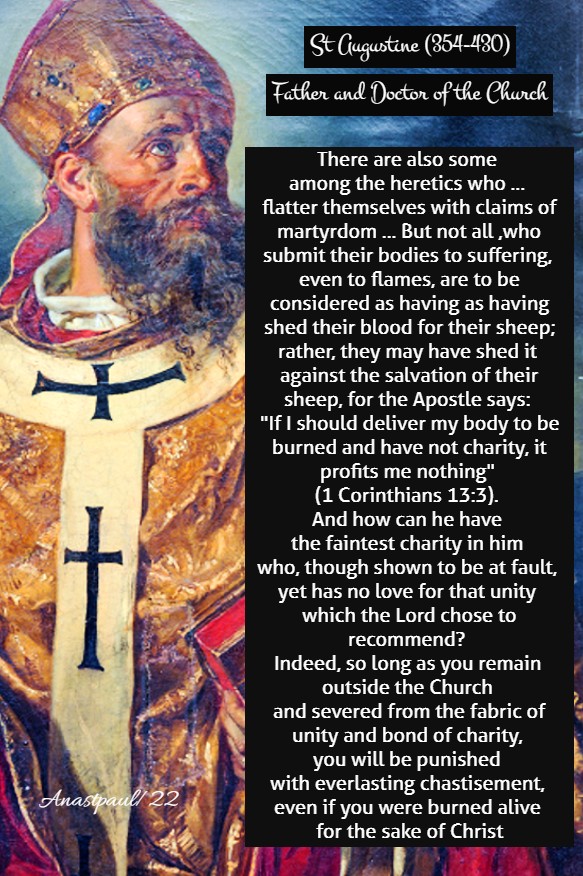
There are also some among the heretics who …
flatter themselves with claims of martyrdom …
But not all ,who submit their bodies to suffering,
even to flames, are to be considered

as having as having shed their blood for their sheep;
rather, they may have shed it
against the salvation of their sheep,
for the Apostle says:
“If I should deliver my body to be burned
and have not charity, it profits me nothing”
(1 Corinthians 13:3).
And how can he have
the faintest charity in him
who, though shown to be at fault,

yet has no love for that unity
which the Lord chose to recommend?
Indeed, so long as you remain
outside the Church
and severed from the fabric of unity
and bond of charity,
you will be punished
with everlasting chastisement,
even if you were burned alive
for the sake of Christ

St Augustine (354-430)
Father and Doctor of the Church

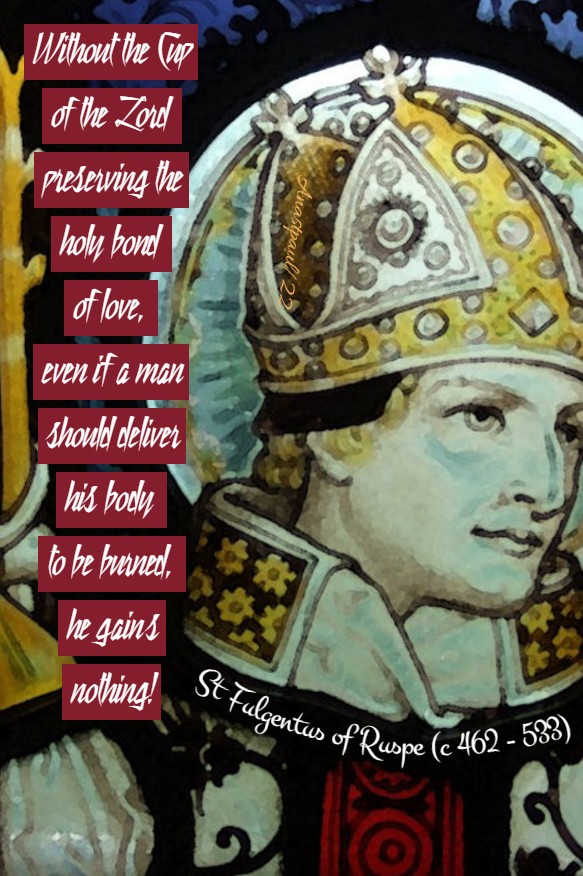
“Without the Cup of the Lord
preserving the holy bond of love,
even if a man should deliver his body
to be burned, he gains nothing!

St Fulgentus of Ruspe (c 462 – 533)

“We should not forget,
that the devil has his martyrs
and that he infuses into them
a false constancy.
It is not the punishment
but the cause,
that makes the Martyr;
that is – the confession
of the True Faith.

St Alphonsus Maria de Liguori (1696-1787)
Doctor of the Church

Posted in DOCTORS of the Church, FATHERS of the Church, ONE Minute REFLECTION, Quotes on SALVATION, QUOTES on the CHURCH, SAINT of the DAY, The WORD

One Minute Reflection – 15 February – ‘ … We really are first to receive a denarius … ‘

One Minute Reflection – 15 February – “Month of the Most Blessed Trinity” – the Commemoration of Sts Faustinus and Jovinus – 1 Cor. 9:24-27; 10:1-5, Matthew 20:1-16

When evening had come, the owner of the vineyard said to his steward, ‘Call the labourers and pay them their wages, beginning from the last even to the first.’” – Matthew 20:8

REFLECTION – The last ones, receiving the generosity of the Master instead of troubles, are first to receive their reward, since all those, after the Lord’s coming, have become — through Baptism and the union with the Spirit — “sharers in God’s nature” and are called sons of God. For the prophets too have become sharers in the Spirit but not in the same way as the faithful, since the Holy Spirit is ,in some way, like a leaven for the souls of the faithful and changes the entire man to another condition of life. And so, we have become “participants in God’s nature” and openly we cry “Abba, Father.” The more ancient peoples did not receive the same grace. So Paul too says, “For you did not receive a spirit that makes you a slave again to fear but you received the Spirit of sonship.” The ancients then received a spirit of slavery without the honour of adoption. Since, therefore, we really are first to receive a denarius, we must, of necessity, be said to be honoured above the rest!” – St Cyril of Alexandria (376-444) Archbishop of Alexandria, Father and Doctor of the Incarnation of the Church (Fragment 226).

PRAYER – O God, Who gladden us each year by the feast of Your holy Martyrs, Faustinus and Jovinus, graciously grant that, as we rejoice in their merits, we may be inspired by their example. Through Jesus Christ, Thy Son our Lord, Who lives and reigns with Thee, in the unity of the Holy Ghost, God, world without end. Amen (Collect).

Posted in DOCTORS of the Church, FATHERS of the Church, HOLY SPIRIT, Our MORNING Offering, PRAYERS of the CHURCH, PRAYERS of the SAINTS, QUOTES of the SAINTS, The HOLY GHOST

Our Morning Offering – 15 February – Nunc, Sancte, nobis Spiritus

Our Morning Offering – 15 February – The Commermoration of Sts Faustinus and Jovinus (Died c 120) Martyrs – 1 Cor. 9:24-27; 10:1-5, Matthew 20:1-16

Nunc, Sancte, nobis Spiritus
Come, Holy Ghost, Who ever One
By St Ambrose (340-397)

Trans John Henry Newman (1801-1890)
Trans 1836

Come, Holy Ghost, Who ever One
Art with the Father and the Son.
Come, Holy Ghost, our souls possess
With Thy full flood of holiness.

In will and deed, by heart and tongue,
With all our powers, Thy praise be sung.
And love light up our mortal frame,
Till others catch the living flame.

Almighty Father, hear our cry
Through Jesus Christ our Lord most high,
Who with the Holy Ghost and Thee
Doth live and reign eternally.

Posted in SAINT of the DAY

Saint of the Day – 15 February – Saints Faustinus and Jovinus (Died c 120) Martyrs

Saint of the Day – 15 February – Saints Faustinus (Died c 120) Martyr, Priest and Jovinus Martyr Deacon, both Evangelisers, Preachers. Born at Brescia, Lombardy, Italy and the two brothers died together. They was thrown to the lions but the animals refused to touch them. Then beheaded in 120 at Brescia, Italy. Patronages – Brescia, City and Diocese and the City of Credera Rubbiano, Italy.

The Roman Martyrology reads today: “At Brescia, in the time of the Emperor Hadrian, the birthday of the holy Martyrs Faustinus and Jovinus, who received the triumphant Crown of Martyrdom after many glorious combats for the Faith of Christ.

Faustinus and Jovinus were born to the nobility in the 2nd century in Italy. They were zealous preachers in Brescia, Milan, Rome and Naples, during the persecution of Emperor Hadrian.

Julian, a heathen lord, apprehended them and the Emperor himself, passing through Brescia, when neither threats nor torments could shake their constancy, commanded them to be beheaded.

Both Saints Faustinus and Jovinus, are honoured as the chief Patrons of Brescia and their relics are located in the ancient Church bearing the names of both.

Brescia, the Capital of one of the Italian Provinces, can scarcely remember the names of those who were its governors or leading men, in the second century and yet, here are two of her citizens, whose names will be handed down, with veneration and love, to the end of the world and the whole of Christendom is filled with the praise of their glorious Martyrdom. Glory, then, to these sainted Brothers, whose example so eloquently preaches to us the great lesson of our Season,–fidelity in God’s service. (from the Liturgical Year, 1870).

The glorification of Sts Faustinus and Jovinus by Giovanni Battista Tiepolo
Posted in AUGUSTINIANS OSA, JESUIT SJ, MARIAN TITLES, SAINT of the DAY

Notre-Dame de Paris / Our Lady of Paris, France (522) and Memorials of the Saints – 15 February

Notre-Dame de Paris / Our Lady of Paris, France (522) – 15 February:
HERE:

https://anastpaul.com/2021/02/15/our-lady-of-paris-france-522-and-memorials-of-the-saints-15-february/

St Agape of Terni

Blessed Angelus de Scarpetti OSA (Died c 1306) Religious of the Order of the Hermits of St Augustine, Missionary, miracle-worker.
Biography:

https://anastpaul.com/2021/02/15/saint-of-the-day-15-february-blessed-angelus-de-scarpetti-osa-died-c-1306/

St Berach of Kilbarry

St Claude de la Colombiere SJ (1641-1682) Religious Priest, Confessor, Patron of the Sacred Heart of Jesus, Apostle of the Society of Jesuscal Writer, Teacher, Preacher, Missionary.
Beautiful St Claude of the Sacred Heart:

https://anastpaul.wordpress.com/2018/02/15/saint-of-the-day-15-february-st-claude-de-la-colombiere-s-j-1641-1682/

St Craton
St Decorosus of Capua
St Dochow
St Druthmar of Corvey
St Eusebius of Asehia
St Farannan of Iona
St Faustinus (Died c 120) Martyr, Priest

St Faustus of Monte Cassino
St Georgia
St Joseph of Antioch
St Jovita
St Onesimus the Slave
St Quinidius of Vaison

St Sigfrid of Sweden (Died 11th Century) “Apostle of Sweden,” Bishop, Missionary, Miracle-worker.
About St Sigfrid:

https://anastpaul.com/2020/02/15/saint-of-the-day-15-february-saint-sigfrid-of-sweden-died-11th-century-apostle-of-sweden/

St Severus of Abruzzi
St Walfrid

Martyrs of Antioch: 5 Saints:
A group of Christians murdered together. We know the names of five of them – Agapev, Baralo, Isicio, Joseph and Zosimus.

Martyrs of Passae:
Castulus
Lucius
Magnus
Saturninus

Martyrs of Prague – 14 Beati – Franciscan Friars Minor martyred together by a mob led by Lutherans –
• Blessed Antonín of Prague
• Blessed Bartolomeo Dalmasoni
• Blessed Bedrich Bachstein
• Blessed Christoffel Zelt
• Blessed Didak Jan
• Blessed Emmanuel of Prague
• Blessed Gaspare Daverio
• Blessed Giovanni Bodeo
• Blessed Girolamo degli Arese
• Blessed Jakob of Prague
• Blessed Jan of Prague
• Blessed Juan Martínez
• Blessed Klemens of Prague
• BlessedSimon of Prague
They were martyred on
• Shrove Tuesday 15 February 1611 at the Church of Our Lady of the Snows in Prague, Czech Republic
• body dumped nearby but given Christian burial on 19 February 1611 in the monastery
• re-interred in the side Chapel of the Church in 1616.

Martyrs of Sweden:
Sigfrid
Sunaman
Unaman
Winaman

Martyred in the Spanish Civil War:
Bl Pere Vallmitjana Abarca

Posted in MEDITATIONS - ANTONIO CARD BACCI, Our MORNING Offering, QUOTES on LOVE of GOD, QUOTES on PRAYER, QUOTES on REPARATION/EXPIATION, QUOTES on THANKSGIVING, The HEART, The SIGN of the CROSS

Thought for the Day – 14 February – The Early Hours of the Day

Thought for the Day – 14 February – Meditations with Antonio Cardinal Bacci (1881-1971)

The Early Hours of the Day

Unfortunately, there are many who never give the slightest thought to God when they rise in the morning.
Or perhaps they think that a quick mechanical Sign of the Cross satisfies all their religious obligations.

A good Catholic could not behave in this fashion.
He kneels to say his morning prayers and raises his mind and heart to God in acts of thanksgiving, reparation and love.

Only in this way, can he begin the day with peace and confidence, knowing that during it, he will have continual need of God’s assistance.

If hitherto you have not behaved like this, make up your mind to begin everyday in future, by offering yourself to God, along with all your work, plans and worries.
This offering will be a wonderful spiritual advantage throughout the day.”

Antonio Cardinal Bacci

PART ONE HERE:
https://anastpaul.com/2020/02/14/thought-for-the-day-14-february-the-early-hours-of-the-day/

Posted in AUGUSTINIANS OSA, DOCTORS of the Church, FATHERS of the Church, franciscan OFM, GOD is LOVE, LOVE of NEIGHBOUR, PRAYERS of the SAINTS, QUOTES on LOVE, QUOTES on LOVE of GOD, QUOTES on SIN, The HEART, The WORD, Thomas a Kempis

Quote/s of the Day – 14 February – LOVE!

Quote/s of the Day – 14 February – The Memorial of St Valentine (176-273) Bishop and Martyr

LOVE!

Many sins are forgiven her
because she has loved much.

Luke 7:42

Whatever you do, do from the heart,
as for the Lord and not for others,
knowing that you will receive
from the Lord
the due payment of the inheritance;
be slaves of the Lord Christ.

Colossians 3:23-24

Without love,
there is only faith,
which the devil has.

Once for all, then,
a short precept is given you –
Love and do what you will,
whether you hold your peace,
through love, hold your peace;
whether you cry out,
through love cry out;
whether you correct,
through love correct;
whether you spare,
through love do you spare.
Let the root of love be within,
of this root, can nothing spring

but what is good.”

St Augustine (354-430)
Father nd Doctor of Grace

“Love[ing] one another
with the charity of Christ,
let the love you have in your hearts,
be shown outwardly in your deeds
…”

St Clare of Assisi (1194-1253)

Nothing is sweeter than love,
nothing stronger or higher or wider;
nothing is more pleasant, nothing fuller
and nothing better in heaven or on earth,
for love is born of God

and cannot rest except in God,
Who is above all created things.

Thomas à Kempis (1380-1471)

… It is Him you should love and no other.
Of Him you could and should say

“My Beloved is mine and I am his” (Sg 2:16);
my God has given Himself without reserve
and, without reserve, I give myself to Him;
He has chosen me as the object of His tenderness
and He, among thousands,
He, the radiant and ruddy one (Sg 5:10),
so loveable and so loving,
He is the chosen of my heart,
the only one I wish to love.

St Alphonsus Maria de Liguori (1696-1787)

I Love You, O My God
By St Jean Marie Baptiste Vianney (1786-1859)

I love You,
O my God
and my only desire is to love You
until the last breath of my life.
I love You,
O my infinitely lovable God
and I would rather die loving You,
than live without loving You.
I love You, Lord
and the only grace I ask,
is to love You eternally
My God,
if my tongue cannot say
in every moment that I love You,
I want my heart to repeat it to You
as often as I draw breath.
Amen

Posted in "Follow Me", CHRIST the WORD and WISDOM, GOD ALONE!, LOVE of NEIGHBOUR, ONE Minute REFLECTION, PRAYERS to the SAINTS, QUOTES on JUSTICE, QUOTES on LOVE of GOD, Quotes on SALVATION, QUOTES on VIRTUE, SAINT of the DAY, The KINGDOM of GOD / HEAVEN, The WORD

One Minute Reflection – 14 February – ‘ … Be aware that we have been hired as labourers…. ‘

One Minute Reflection – 14 February – “Month of the Most Blessed Trinity” – The Memorial of St Valentine (176-273) Bishop and Martyr, 1 Cor. 9:24-27; 10:1-5, Matthew 20:1-16

The kingdom of heaven is like a householder who went out early in the morning to hire labourers for his vineyard.” – Matthew 20:1

REFLECTION – “To hire labourers for his vineyard.” What is the vineyard of God here? Not men, as elsewhere; for men are called the cultivators of the vineyard. The vineyard is justice and in it different kinds of virtues are placed like vines. For example, gentleness, chastity, patience, high-mindedness and countless other good qualities, which are all in general called virtues. So let us note how earnestly we should cultivate the heavenly vineyard. Adam was put in paradise to cultivate it and work it, but because he neglected it, he was ejected from it. We have been put here to cultivate justice; if we neglect it, we will be cast out, just as the Jews also were cast out, of whom it was written: “Add iniquity to their iniquity, that they may not enter thy justice.” The fall of those going before, should be a warning for those following. But if we the followers have also fallen into ruin, those who were the first to fall, deserve pardon more than we, who follow. A hired hand placed in the vineyard will not only lose his pay if he neglects it but, he will also be charged with the loss of the abandoned vineyard! So we too, if we neglect the justice committed to us, will not only have no reward but, we will also be charged for the justice that has been abolished. For God’s vineyard is not outside us but has been planted inside our very selves. So anyone who commits sin destroys the justice of God within himself but anyone who does good works, cultivates it in himself. The well-cultivated justice of God within you, brings forth grapes, that is, Christ. For those who do just deeds form Christ in themselves, as is written: “My little children, with whom I am again in travail, until Christ be formed in you.

Anyone who consigns a vineyard to another to work consigns it, not so much for the other’s benefit, as for his own but God, giving His justice to our understanding, gave it, not for His own benefit but for ours. God does not need our labour but we, who do just work, may live because of it. The owner who consigned the vineyard to someone else for his own benefit, expects to receive it back in the same condition as He handed it over. How then will justice not be demanded back from us, in as immaculate a condition as He created it in us, particularly as He gave it, not for His own benefit but for our salvation?

Be aware that we have been hired as labourers. If we have been hired as labourers, we ought to know what our tasks are, for a hired labourer cannot be without a task. Our tasks are the works of justice, not to till our fields and vineyards; not to amass riches and pile up honours but to benefit our neighbours. And although we can do this tilling and amassing without sin, yet they are not our tasks but our daily occupations.

No-one hires a labourer to work, only so that the labourer may eat. So we too have been called by Christ, to do, not merely what pertains to our own benefit but, to do what pertains, to the glory of God. The hired hand, who only works so that he may fill his belly, wanders purposelessly about the house. So we too, if we do only what pertains to our benefit, live without reason on the earth. And just as the hired hand first looks to his work and then to his wages, so we too are Christ’s hired hands and first ought to look at what pertains to God’s glory and to the benefit of our neighbours …. Charity and true love toward God “does not insist on its own way” but desires to perform everything to the wish of the Beloved—than to what pertains to our own benefit.” – An anonymous Ancient Christian Writer (ACW) known as the Incomplete Work on Matthew (Sermon 34).

PRAYER – O glorious advocate and protector, St Valentine,
look with pity upon our wants,
hear our requests,
attend to our prayers,
relieve by your intercession,
the miseries under which we labour
and obtain for us the divine blessing,
that we may be found worthy
to join you in praising the
Almighty for all eternity:
through the merits of
Our Lord Jesus Christ.
Amen

Posted in BREVIARY Prayers, HYMNS, Our MORNING Offering, PRAYERS for VARIOUS NEEDS, PRAYERS of the CHURCH

Our Morning Offering – 14 February – Deus Tuorum Militum – St Valentine

Our Morning Offering – 14 February – The Memorial of St Valentine (176-273) Bishop and Martyr

Deus Tuorum Militum
O God, of Those Who Fought Thy Fight
Unknown Author

O God, of those Who fought Thy fight,
Portion and Prize and crown of Light,
Break every bond of sin and shame,
As now we praise Thy Martyr’s name.

He recked not of the world’s allure,
But sin and pomp of sin forswore;
Knew all their gall and passed them by
And reached the throne prepared on high.

Bravely the course of pain he ran
And bore his torments as a man:
For love of Thee, his blood outpoured
And thus obtained the great reward.

With humble voice and suppliant word
We pray Thee, therefore, holy Lord,
While we Thy Martyr’s Feast-day keep,
Forgive Thy loved and erring sheep.

Glory and praise for aye be done
To God the Father and the Son,
And Holy Ghost, Who reign on high,
One God, to all eternity.
Amen

An Ambrosian hymn historically assigned for Matins and Vespers for the Common Feast of a Martyr in the Roman Breviary. It dates probably from the sixth century and is attributed to the Unknown Author of Rex Gloriose Martyrum and Jesu, Redemptor Omnium. The hymn exists in a longer version of eight strophes and a shorter one of four, which is probably earlier.
The Vatican antiphonary provided two different melodies for use in the Paschal season and during the Octave of the Nativity, during which the Feast of Saint Stephen the Protomartyr occurs.
The hymn is a prayer of the Catholic assembly, asking God to forgive the sins of His servants, on the day of the martyr’s triumph over the pleasures of the world and the torture of persecution.

Posted in SAINT of the DAY

Saint of the Day – 14 February – Saint Modestinus of Avellino (c 245-311) Martyr

Saint of the Day – 14 February – Saint Modestinus of Avellino (c 245-311) Bishop Martyr. Confessor, Missionary, miracle-worker. Also known as – Modestinus of Mercogliano, Modestin…Modestino… Additional Memorials – 10 June (re-internment of relics), 13 August on some calendars. Patronages – Avellino, Italy, City of (given in 1220 by Ruggiero of Avellino). Avellino, Italy, Diocese of (given in 1220 by Ruggiero of Avellino), Mercogliano, Italy.

Modestinus was born in Antioch in c 245 of a noble family. In 302 he was Consecrated Bishop of the City and Patriarch of the region of Antioch. During the persecution of Diocletian (year 303), he retired to a hermitage on Mount Silpio,. But in 310 he returned to his See.

He preached the Gospel of Christ and performed numerous miracles and cures. Arrested and tortured, he was released from prison by the faithful of his Diocese.
Modestinus, with his collaborators Fiorentinus a Priest and Flavianus a Deacon, left to travel to Italy. They arrived by sea in Locri (in Calabria) where they preached the Gospel, were arrested again and taken to prison in Sibari. .According to tradition, they were freed by the Archangel Michael.

They left by sea and reached near Avellino – it is believed that St Michael led the Saint to the regions that most needed the Gospel teachings and the truth of Christ. It is reported that Modestinus and his assistants, were successful in their preaching, converting and Baptising around 4,000 souls in one area. Modestinys performed many miracles and cures.

Again they were arrested, imprisoned and tried by an envoy of the Emperor Maxentius and taken to the place called the “Praetorium” where they suffered Martyrdom wrapped in red-hot robes and burned to death. They died in the night between 14 and 15 February in the year 311.

Their bodies were collected by the Christians and buried. A sign with their names was placed on the graves. In St Modestinus Church, a silver sculpture depicting a dove was placed on the tomb.

The Cathedral of Avellino dedicated to the Blessed Virgin and St Modestinus
The Chapel of St Modestinus

Their bodies, found in the summer of 1166, were taken to the Cathedral of Avellino, where they are still preserved today in the Chapel of St Modestinus.
In 1220 they were appointed primary Patrons of the City and of the Diocese of Avellino by the Bishop Ruggiero.

Relics of the three Sains
Posted in MARIAN TITLES, SAINT of the DAY

Notre-Dame de Bourbourg / Our Lady of Bourbourg, Flanders (1383) and Memorials of the Saints – 14 February

Notre-Dame de Bourbourg / Our Lady of Bourbourg, Flanders (1383) – 14 February:
HERE:

https://anastpaul.com/2021/02/14/quinquagesima-sunday-2021-our-lady-of-bourbourg-flanders-1383-and-memorials-of-the-saints-14-february/

St Valentine (176-273) Bishop and Martyr (Memorial)
The story of Saint Valentine:

https://anastpaul.wordpress.com/2017/02/14/blessed-memorial-of-st-valentine-14-february/

St Cyril (827-869) (Memorial) “Apostles to the Slavs,” Sibling Brother Bishops, Confessors, Theologians, Missionaries, Writers, Preachers, Patrons of Europe. Creators of the Glagolitic alphabet, the first alphabet used to transcribe Old Church Slavonic and Cyrillac Alphabet, which was developed from it.
St Methodius (826-885) (Memorial)
Their Feast Day is 7 July (moved in 1969)
The great Saints Cyril & Methodius:
https://anastpaul.wordpress.com/2018/02/14/saints-of-the-day-14-february-sts-cyril-827-869-methodius-826-885/

St Abraham of Harran

St Antoninus of Sorrento OSB (c 555-625) Italian Abbot, Hermit, miracle-worker.
Biography:

https://anastpaul.com/2021/02/14/saint-of-the-day-14-february-saint-antoninus-of-sorrento-osb-c-555-625-abbot/

St Auxentius of Bithynia
St Conran of Orkney
St Eleuchadius

St Juan García López-Rico O.SS.T. (1561-1613) Priest of the Trinitarian Order (The Order of the Most Holy Trinity and of the Captives), Reformer, Ascetic and Penitent, prolific Writer, Theologian.
Biography:

https://anastpaul.com/2019/02/14/saint-of-the-day-14-february-st-juan-garcia-lopez-rico-o-ss-t-1561-1613/

St Modestinus of Avellino (c 245-311) Bishop Martyr

St Nostrianus of Naples
St Theodosius of Vaison
St Valentine of Terni

Blessed Vicente Vilar David (1889-1937) Martyr, Martyr, Layman, Social reformer, Worker for Justice and Peace, Apostle of Charity.
His Life and Death:

https://anastpaul.com/2020/02/14/saint-of-the-day-14-february-blessed-vicente-vilar-david-1889-1937-martyr/

St Vitale of Spoleto

20 Mercedarians of Palermo
Martyrs of Alexandria – 16 saints
Martyrs of Rome

Felicula
Vitalis
Zeno

Martyrs of Terni: Three Christians who gave proper burial to Saint Valentine of Terni. Martyred in the persecutions of Aurelius.
273 in Terni, Italy – Apollonius, Ephebus, Proculus.

Martyrs of Alexandria: A group of Christians murdered in various ways for their faith in Alexandria, Egypt. We know the names and a few details about 16 of them – Agatho, Agatone, Ammonio, Ammonius, Antonius, Bassiano, Bassianus, Cirione, Cyrio, Dionysius, Dionysius, Lucio, Moses, Moses, Proto and Tonione.

Posted in "Follow Me", GOD ALONE!, MEDITATIONS - ANTONIO CARD BACCI, QUOTES on GRATITUDE, QUOTES on JOY, QUOTES on LOVE of GOD, QUOTES on SANCTITY, QUOTES on SUFFERING, QUOTES on THANKSGIVING, QUOTES on WORRY/ANXIETY, The HEART, The WILL of GOD

Thought for the Day – 13 February – The Causes of Discontent

Thought for the Day – 13 February – Meditations with Antonio Cardinal Bacci (1881-1971)

The Causes of Discontent

There are a few people in the world, who are always content.
They walk lightly upon the earth, for their minds are already with God in Heaven and their hearts are united to Him
.

Have they any anxieties or disappointments?
They have and they feel them deeply.
But, sorrow can make them bow their heads only for a moment and then, they raise them cheerfully again.
They understand that they are suffering for God, even as they live and work only for Him.
Therefore, their reaction to every sorrow or humiliation, is always the same:
Deo Gratias!
If God wants it this way, I must be satisfied too.
May His Holy Will be done in all things.

These people are the Saints who are never lacking in the Church.
The Apostles rejoiced in the insults and ill-treatment they received from the Sanhedrin, “They departed from the Sanhedrin, rejoicing that they had been counted worthy to suffer disgrace for the name of Jesus” (Acts 5:41).

Do we desire to possess also, the only kind of contentment it is possible to have on earth?
Let us do our best to become holy.
That is the only way open to us.

Antonio Cardinal Bacci

PART ONE:
https://anastpaul.com/2020/02/13/thought-for-the-day-13-february-the-causes-of-discontent/

Posted in "Follow Me", GOD ALONE!, GOD is LOVE, MYSTICS, PRACTISING CATHOLIC, QUOTES on GRACE, QUOTES on GRATITUDE, QUOTES on HUMILITY, QUOTES on LOVE of GOD, QUOTES on PEACE, QUOTES on PURITY, QUOTES on PURITY of INTENTION, QUOTES on SANCTITY, QUOTES on SELF-DENIAL, QUOTES on SUFFERING, QUOTES on THE WORLD, SAINT of the DAY, The FAITHFUL on PILGRIMAGE, The HEART, The WILL of GOD

Quote/s of the Day – 13 February – Three Points on the Spiritual Life By St Catherine de Ricci

Quote/s of the Day – 13 February – Septuagesima Sunday and the Memorial of Saint Catherine de Ricci OP (1522-1590) Virgin, Mystic, Stigmatist.

Three Points on the Spiritual Life
By St Catherine de Ricci (1522-1590)
1) Detach 2) Direct 3) Accomplish

Letter to a Fellow Nun
by St Catherine de Ricci

Very dear daughter, I have already sent you a letter to exhort you to the service of our Lord and now, I send you this one, in which I am going to give—first for myself and then for you—an account of the true way of faithfullyserving our Divine Spouse and a resume of the spiritual life, so that, by following it, we shall carry out the Holy Will of God.

If, then, my daughter, you would be the true spouses of Jesus, you must do His Holy Will in all things and you will do this, if you entirely give up your own will on every occasion and if you love the divine Spouse with your whole heart, your whole soul and your whole strength. Then, you must carefully attend to the following points (but it is necessary to weigh all these words), as they contain the summary of Christian perfection:

  1. We must force ourselves to DETACH the heart and the will from all earthly love; to love no fleeting things, except for the love of God and, above all, not to love God for our own sakes, for self-interest but with a love as pure as His own goodness.
  2. We must DIRECT all our thoughts, words and actions to His honour and by prayer, counsel and good example, seek His glory solely, whether for ourselves or for others, so that through our means, all may love and honour God.
    This second point is more pleasing to Him than the first, as it better fulfils His will.
  3. We must aim more and more at the ACCOMPLISHMENT of the Divine Will – not only desiring nothing special to happen to us, bad or even good, in this wretched life and thus, keeping ourselves always at God’s disposal, with heart and soul at peace but also, believing, with a firm faith, that Almighty God loves us more than we love ourselves and takes more care of us, than we could take care of ourselves.

The more we conform to this way of acting, the more we shall find God present to help us and the more we shall experience, His most gentle love.
But no-one can reach such perfection except by constant and courageous sacrifice of self-will and, if we would learn to practice such abnegation, it is necessary to keep ourselves in a state of great and deep humility, so that, by perfect knowledge of our own misery and weakness, we may rise to learn the greatness and beauty of our God.

Consider how just and necessary it is, to serve Him unceasingly, with love and obedience.
I say just, because, God being Father and Master of all things, it is just that His Son and Servant, should obey and love Him.
I say necessary because,, by acting otherwise, we could not be saved.

Let us always remember, never doubting, that it is the Eternal, Sovereign, All-powerful God, Who does, orders, or allows, everything that happens and that nothing comes to pass, without His Divine Will.

Let us remember that He is Himself that Wisdom, which, in the government of the universe – of heaven, earth and every single creature – cannot be deceived. (He would be neither God nor most wise, if it were otherwise). Let us look upon Him as supremely good, loving and beneficent.

If, through His Mercy, this conviction becomes strongly impressed upon our wills, we shall easily take all things from His Sacred Hand, with well-contented hearts, always thanking Him for fulfilling His most holy will in us. By acting thus. (with the help of His holy grace) we shall unite ourselves to Him, by true love in this life and by glory in eternity.

May He grant it to us in His goodness! Of your charity pray for me, a wretched sinner, who commends herself to you all.”

Your sister in Christ,
Amen
Catherine

Posted in CHRIST the WORD and WISDOM, DIVINE Mercy, Goodness, Patience, DOCTORS of the Church, FATHERS of the Church, ONE Minute REFLECTION, QUOTES on GRACE, The WORD

One Minute Reflection – 13 February – ‘… Let none murmur against the Master of the House…’

One Minute Reflection – 13 February – Septuagesima Sunday – 1 Cor. 9:24-27; 10:1-5, Matthew 20:1-16

Have I not a right to do what I choose? Or are you envious because I am generous?’ Even so the last shall be first and the first last; for many are called, but few are chosen.” – Matthew 20:15-16

REFLECTION – “One of the robbers crucified with Jesus cried out: “Lord, remember me; it is to you I now turn (…). Remember not my works, for of these I am afraid. Every man has a feeling for his fellow-traveller; I am travelling with you towards death; remember me, your fellow-wayfarer. I do not say, Remember me now, but, “when you come in your kingdom” (Lk 23:42).

What power, O robber, led you to the Light? Who taught you to worship that despised Man, your companion on the cross? O Light Eternal, which gives light to them that are in darkness! (Lk 1:79) “Take courage! Amen, I say to you, today you will be with me in paradise” because “today you have heard my voice, and have not hardened your heart” (Ps 95[94]:8). Very speedily I passed sentence upon Adam … but you, who today have obeyed the faith, today is your salvation. By the tree Adam fell away; by the tree you are brought into paradise (…)

O mighty and ineffable grace! The faithful Abraham had not yet entered but the robber enters! Paul also wondered at this before you, saying, “Where sin increased, grace overflowed all the more” (Rom 5:20). They who had borne the heat of the day had not yet entered and he of the eleventh hour entered. Let none murmur against the Master of the House, for He says, “My friend, I am not cheating you. Am I not free to do as I wish with what is my own?” The robber has a will to work righteousness … I accept his faith … I, the Shepherd, have “found the sheep that was lost”; I lay it on my shoulders (Lk 15:5); since he himself has said, “I have gone astray like a lost sheep; Lord, remember me when You come in Your kingdom.” St Cyril of Jerusalem (315-387) Bishop of Jerusalem, Father, Doctor of the Church

PRAYER – O Lord, we beseech You, graciously hear the prayers of Your people, that we who are justly punished for our sins may be mercifully delivered for the glory of Your name. Through Jesus Christ, Thy Son our Lord, Who lives and reigns with Thee, in the unity of the Holy Ghost, God, world without end. Amen (Collect).

Posted in DOCTORS of the Church, FATHERS of the Church, Our MORNING Offering, PRAYERS of the SAINTS, The HOLY EUCHARIST / The HOLY MASS

Our Morning Offering – 13 February – O Lord, My God, I Am Not Worthy

Our Morning Offering – 13 February – Septuagesima Sunday

O Lord, My God,
I Am Not Worthy
Prayer Before Holy Communion
By St John Chrysostom (347-407)

Father and Doctor of the Church

O Lord, my God,
I am not worthy
that You should come into my soul
but I rejoice that You have come to me
because, in Your loving kindness
You desire to dwell in me.
You ask me to open the door of my soul,
which You alone have created,
so that You may enter into it
with Your loving kindness
and dispel the darkness of my mind.
I believe that You will do this,
for You did not turn away Mary Magdalene
when she approached You in tears.
Neither did You withhold forgiveness
from the tax collector
who repented of his sins
or from the good thief
who asked to be received into Your kingdom.
Indeed, You numbered as Your friends,
all who came to You with repentant hearts.
O God, You alone are blessed always,
now and forever.
Amen

Posted in DOMINICAN OP, INCORRUPTIBLES, MYSTICS, SAINT of the DAY

Saint of the Day – 13 February – Saint Catherine de Ricci OP (1522-1590)

Saint of the Day – 13 February – Saint Catherine de Ricci OP (1522-1590) Virgin, Tertiary of the Order of Preachers, Mystic, Stigmatist, Ecstatic, Counsellor to many in both secular and spiritual matters, a highly admired Administrator and Advisor,blessed with many mystical charism including visions of Christ, both as a Baby and Adult, bilocation and miracles. Born as Alessandra Lucrezia Romola de’ Ricci in Florence on 23 April 1522 and died on 2 February 1590 (aged 67) at Prato, Grand Duchy of Tuscany, of natural causes. Patronage – the sick. Her body is incorrupt.

The Roman Martyrology states of her today: “At Prato, in Tuscany, St Catherine de Ricci, a Florentine Virgin of the Order of St Dominic, replenished with her heavenly gifts, whom Pope Benedict XIV inscribed on tbe catalogue of holy Virgins. She died in virtues and merits, on the 2nd of this month but her festival is celebrated on this day, 13th.”

The Ricci are an ancient family, which still subsists in a flourishing condition in Tuscany today. Alessandra was born in Florence to Pier Francesco de’ Ricci, of a patrician family and his wife, Caterina Bonza, who died soon after the birth of Alessandra. At age 6 or 7, her father enrolled her in a school run by a Monastery of Benedictine Nuns in the Monticelli quarter of the City, near their home and the City gates, where her Aunt, Luisa de’ Ricci, was the Abbess.

Catherine was a devout and pious child and it was here, in the Convent of her Aunt, that she developed a lifelong devotion to the Passion of Christ. After a short time back at home and after finally persuading her father,, at the age of 14, she entered the Convent of St Vincent in Prato, Tuscany, a cloistered community of religious sisters of the Third Order of St Dominic, disciples of the noted Dominican Friar Girolamo Savonarola, who followed the strict regimen of life she desired. In May 1535 she received the religious habit from her uncle, Timoteo de’ Ricci, who was Confessor to the Convent and the religious name of Catherine, after the Dominican tertiary, St Catherine of Siena.

Her novitiate was a time of trial. She would experience ecstasies during her routine, which caused her to seem asleep during community prayer , dropping plates and food, so much so, that the community began to question her competence, if not her sanity. Eventually, the other Sisters became aware of the spiritual basis for her behaviour. By the age of 30 she had risen to the post of Prioress.

After the recovery of her health, which seemed miraculous, she studied more perfectly to die to her senses and to advance in a penitential life and spirit, in which God had begun to conduct her, by practising the greatest austerities which were compatible with the obedience she had professed; – she fasted two or three days a week on bread and water alone and sometimes passed the whole day without taking any nourishment and chastised her body with disciplines and a sharp iron chain which she wore next her skin. Her obedience, humility and meekness were still more admirable than her spirit of penance. Much of penitential practice and oblation of her sufferings, were directed to the succour of the Souls in Purgatory.

It was by profound humility and perfect interior self-denial that she learned to vanquish in her heart, the sentiments or life of the first Adam – that is, of corruption, sin and inordinate self-love. But this victory over herself,and purgation of her affections, was completed by a perfect spirit of prayer. By the union of her soul with God and the establishment of the absolute reign of His love in her heart, she was dead to and disengaged from, all earthly things. Her visions became most vivid allowing her to hold Baby Jesus dressed in swaddling clothes and to be mystically married and united with adult Jesus. Catherine’s meditations on the Passion of Christ were so deep, that she spontaneously bled, as if scourged. She also bore the Stigmata. During times of deep prayer, like Catherine of Siena, her Patron Saint, a coral ring representing her marriage to Christ, appeared on her finger.

Crowds gathered to witness her prayer and ecstasies and it began to distract from the life of the Convent. Catherine herself was embarrassed by all the attention. The community prayed that her wounds and experience would lessen in intensity so that they could go about the work of their common life together in peace and in 1554 the visions ceased.

As the Prioress, Catherine developed into an effective and greatly admired administrator. She was an advisor on various topics to Princes, Bishops and Cardinals. She corresponded with three figures who were destined to become Popes: Pope Marcellus II, Pope Clement VIII and Pope Leo XI. An expert on religion, management and administration, her advice was widely sought. She gave counsel both in person and through exchanging letters. It is reported that she was extremely effective in her work, managing her priorities with great zeal and efficiency.

One of the miracles that was documented for her Canonisation was her appearance many hundreds of miles away from where she was physically located, in a vision to St Philip Neri, a resident of Rome, with whom she had maintained a long-term correspondence. St Philip, who was otherwise very reluctant to discuss miraculous events, confirmed the event.

Catherine lived in the Convent until her death in 1590 after a prolonged illness. Her remains are visible under the Altar of the Minor Basilica of Santi Vicenzo e Caterina de’ Ricci, Prato, which is next to the Convent associated with her life..

The Minor Basilica of Santi Vicenzo e Caterina de’ Ricci, Prato, Italy

Catherine was Beatified by Pope Clement XII in 1732 and Canonised by Pope Benedict XIV in 1746 in a spectacular ceremony for which a magnificent ‘canopy’ was constructed. In celebration of the Saint’s Canonisation, Domenico Maria Sandrini wrote an authorative biography of the new Saint.

Posted in AUGUSTINIANS OSA, DOMINICAN OP, INCORRUPTIBLES, LENT, LENT 2022, MARIAN TITLES, MYSTICS, SAINT of the DAY

Septuagesima Sunday, Notre-Dame de Pellevoisin / Our Lady of Pellevoisin, France (1876) and Memorials of the Saints – 13 February

Septuagesima Sunday:
The word Septuagesima is Latin for “seventieth.” It is both the name of the liturgical season and the name of the Sunday. Septuagesima Sunday marks the beginning of the shortest Liturgical season. This season is seventeen (17) days long and includes the three Sundays before Ash Wednesday. The length of the season never changes but the start date is dependent on the movable date of Easter, which can fall between 22 March-25 April. Septuagesima Sunday can be as early as 18 January.
The Septuagesima season helps the faithful ease into Lent. It is a gradual preparation for the serious time of penance and sorrow; to remind the sinner of the grievousness of his errors and to exhort him to penance.
Liturgically it looks very much like Lent. The Gloria and Alleluia are omitted, the tone becomes penitential with the Priest wearing purple vestments. The main difference is that there are no fasting requirements.

Mother of Mercy, Notre-Dame de Pellevoisin / Our Lady of Pellevoisin, France (1876) – 13 February:
HERE:

https://anastpaul.com/2021/02/13/mother-of-mercy-our-lady-of-pellevoisin-france-1876-and-memorials-of-the-saints-13-february/

St Adolphus of Osnabruk
St Aimo of Meda

Blessed Archangela Girlani O Carm (1460-1494) Virgin, Carmelite Nun, Mystic with the gift of levitation.
Her Life:

https://anastpaul.com/2020/02/13/saint-of-the-day-13-february-blessed-archangela-girlani-o-carm-1460-1494/

Bl Beatrix of Ornacieux
St Benignus of Todi
Bl Berengar of Assisi
St Castor of Karden
St Catherine de Ricci OP (1522-1590) Virgin, Tertiary of the Order of Preachers, Mystic, Stimatist. Her body is incorrupt.

Blessed Christine of Spoleto OSA (1435-1458) Widow, mother, religious nun of the Order of Saint Augustine.
About Blessed Christine:

https://anastpaul.com/2019/02/13/saint-of-the-day-13-february-blessed-christine-of-spoleto-osa-1435-1458/

St Dyfnog
St Ermenilda of Ely
Bl Eustochium of Padua OSB (1444-1469) Virgin

St Fulcran of Lodève (Died 1006) Bishop of Lodève, Reformer, especially within the clergy and religious orders, builder of many Churches, Convents and Hospitals, apostle of the poor and needy, miracle-worker.
St Futeran’s Life:

https://anastpaul.com/2021/02/13/saint-of-the-day-13-february-saint-fulcran-of-lodeve-died-1006-bishop/

St Fusca of Ravenna
St Gilbert of Meaux
St Gosbert of Osnabruck
St Pope Gregory II
St Guimérra of Carcassone
St Huno

Blessed Jordan of Saxony OP (1190-1237) Religious Priest, Preacher, the Second Master-General of the Order of Preachers, after St Dominic.
Biography:

https://anastpaul.wordpress.com/2018/02/13/saint-of-the-day-13-february-blessed-jordan-of-saxony-o-p-1190-1237/

St Julian of Lyon
St Lucinus of Angers
St Marice
St Martinian the Hermit
St Maura of Ravenna
St Modomnoc
St Paulus Lio Hanzuo
St Peter I of Vercelli
St Phaolô Lê Van Loc
St Stephen of Lyons
St Stephen of Rieti

Posted in MEDITATIONS - ANTONIO CARD BACCI, QUOTES on HUMILITY, QUOTES on PRIDE, QUOTES on SELF-DENIAL

Thought for the Day – 12 February – SELF-LOVE

Thought for the Day – 12 February – Meditations with Antonio Cardinal Bacci (1881-1971)

SELF-LOVE

Self-love dies three days after ourselves,” St Francis de Sales was accustomed to remark.
What he meant was that it is very difficult to think and act only for God, without our own ego raising its head and stealing some of His glory.

It is difficult to be humble in the presence of God.
But, it is more difficult still,to be humble before men.

When anyone genuflects in front of the Altar and begins to pray in the presence of God, it is not too difficult for him to bow his head and recognise his own weakness and dependance.
But it is different among other men.
In the presence of men, we are easily tempted to display ourselves and our endowments.
We feel displeased when we are not noticed, not praised.

Let us steer clear of the esteem of men.
Humility is the foundation of every virtue.
If we are not humble, we can never become holy!”

Antonio Cardinal Bacci

Posted in "Follow Me", AUGUSTINIANS OSA, CARMELITES, CHRIST the JUDGE, CHRIST the KING, CHRIST the WORD and WISDOM, CHRIST, the WAY,TRUTH,LIFE, DOCTORS of the Church, FATHERS of the Church, GOD ALONE!, GOD is LOVE, OUR Cross, QUOTES for CHRIST, QUOTES on COURAGE, QUOTES on LOVE of GOD, QUOTES on SUFFERING, QUOTES on THE WORLD, QUOTES on TRUST and complete CONFIDENCE in GOD, QUOTES on TRUTH, Thomas a Kempis

Quote/s of the Day – 12 February – You who have followed me

Quote/s of the Day – 12 February – The Memorial of the Seven Holy Founders of the Servite Order (1233) – Ecclus 44:1-15, Matthew 19:27-29

… You who have followed me …”

Matthew 19:28

“Let us listen to the Lord:
“I am the Way, the Truth and the Life” (Jn 14:6).
If you are looking for the Truth,
follow the Way which is also the Truth.
This is where you are going and it is how you go.
It is not by another thing that you go to something;
it is not by anything else that you come to Christ;
it is through Christ, that you come to Christ.
How to Christ through Christ?
To Christ God through Christ Man;
through the Word made flesh,
to the Word Who was with God, from the beginning;
through what we have eaten, to what the angels eat daily.
In fact, it is what is written:
“He gave them bread from heaven;
man ate the bread of angels” (Ps 77[78]:24-25).
What is the bread of angels?
“In the beginning was the Word
and the Word was in God
and the Word was God” (Jn 1:1-3).
How has man eaten the bread of angels?
“And the Word was made flesh and dwelt among us.

Saint Augustine (354-430)
Father and Doctor of Grace

The love of Jesus is noble and generous,
it spurs us on to do great things
and excites us to desire always,
that which is most perfect.
Love will tend upwards
and is not to be detained by things beneath.
Love will be at liberty
and free from all worldly affections…
for love proceeds from God
and cannot rest but in God,
above all things created.
The lover flies, runs and rejoices,
he is free and not held.
He gives all for all and has all in all,
because he rests in One Sovereign Good above all,
from Whom all good flows and proceeds
.”

Thomas à Kempis CRSA (1380-1471)

(Book III, Chapter V, 3-4)

He gives according to the love He bears us …,
according to the courage He sees in each
and the love each has for His Majesty.
He will see, that whoever loves Him much,
will be able to suffer much for Him;
whoever loves Him little,
will be capable of little.
I myself hold,
that the measure for being able to bear,
a large or small cross, is love …

Those who risk all for God,
will find. that they have
both lost all and gained all
.”

St Teresa of Jesus of Ávila (1515-1582)
Doctor of Prayer of the Church