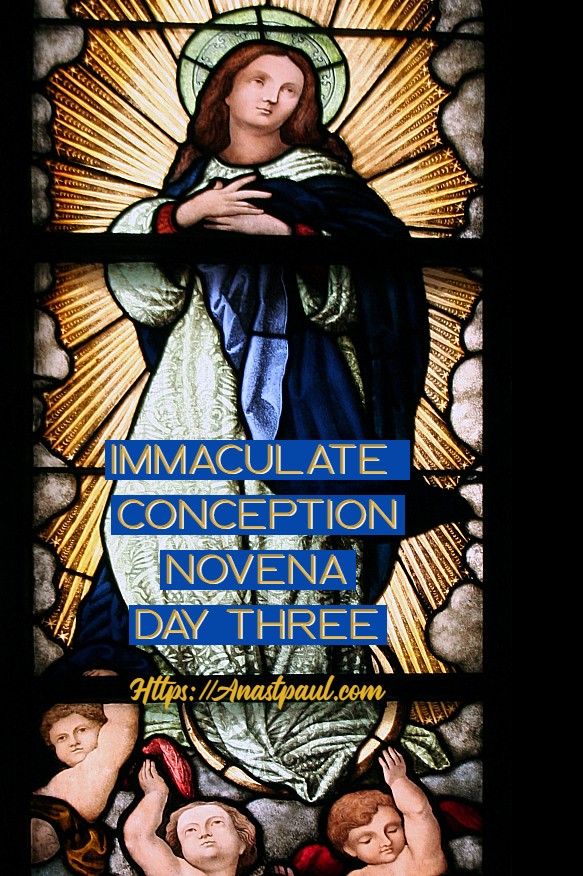
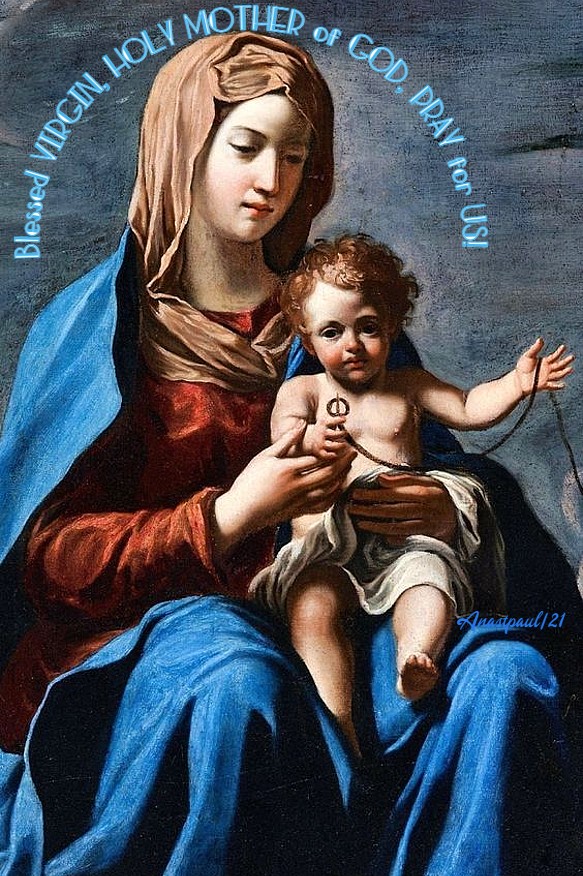
The Immaculate Conception was not, as many people mistakenly believe, a precondition for Christ’s act of redemption but the result of it. Standing outside of time, God knew that Mary would humbly submit herself to His will and in His love for this perfect servant, He applied to her, at the moment of her conception, the redemption, won by Christ, that all Christians receive at their Baptism.
It is appropriate, then, that the Church has long declared the month in which the Blessed Virgin not only was conceived but gave birth to the Saviour of the world, as the Month of the Immaculate Conception.
Holy Light on earth’s horizon, Star of hope to those who fall, Light amid a world of shadows, Dawn of God’s design for all.
Mary, Virgin of Advent, may we always walk with you in the Light of the Lord Jesus, the fruit of your womb! Amen
Let us begin: In the Name of the Father and of the Son and of the Holy Spirit. Amen
O most Holy Virgin, who was pleasing to the Lord and became His Mother, Immaculate in body and spirit, in faith and in love, look kindly on me as I implore your powerful intercession.
O Blessed Virgin Mary, glory of the Christian Catholic people, joy of the universal Church and Mother of Our Lord, speak for us to the Heart of Jesus, Who is your Son and our Brother. O Mary, who by your holy Immaculate Conception did enter the world free from stain, in your mercy obtain for us from Jesus, the special favour which we now so earnestly seek… ………………………………….. (State your intention here… ) O Mary of the Immaculate Conception, Mother of Christ, you had influence with your Divine Son while upon this eart, you have the same influence now in Heaven. Pray for us and obtain for us from Him the granting of our petitions if it be the Divine Will. Amen
Say the: Our Father… the: Hail Mary… the: Glory Be…
Thought for the Day – 1 December – Meditations with Antonio Cardinal Bacci (1881-1971)
The Blessedness of Those who Hunger and Thirst for Justice
“Blessed are they who hunger and thirst for justice” says Jesus Christ, “for they shall be satified” (Mt 5:6). These words oblige us to seek justice in our actions, if we desire the happiness which Our Lord promised to the just.
We must understand, of course, what is intended here by the word “justice.” It may be interpreted in two ways. According to its most common meaning, justice is the cardinal virtue which obliges us to give every man his due. Often in Sacred Scripture, however, the word is synonymous with perfection or holiness; that is, it is the synthesis of all the virtues. It is in this sense, that Jesus employs the term when He says: “Seek first the kingdom of God and his justice and all these things shall be given you besides” (Mt 6:33).
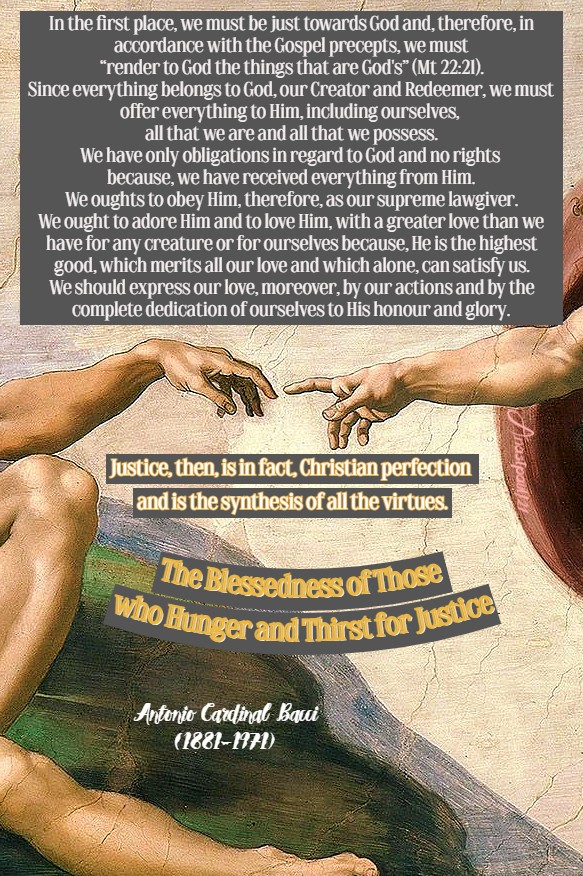
In its fullest sense then, justice embraces our relations with God, with ourselves and with our neighbour. In the first place, we must be just towards God and, therefore, in accordance with the Gospel precepts, we must “render to God the things that are God’s” (Mt 22:21). Since everything belongs to God, our Creator and Redeemer, we must offer everything to Him, including ourselves, all that we are and all that we possess. We have only obligations in regard to God and no rights because, we have received everything from Him. We oughts to obey Him, therefore, as our supreme lawgiver. We ought to adore Him and to love Him, with a greater love than we have for any creature or for ourselves because, He is the highest good, which merits all our love and which alone, can satisfy us. We should express our love, moreover, by our actions and by the complete dedication of ourselves to His honour and glory.
Justice, then, is in fact, Christian perfection and is the synthesis of all the virtues. That great pagan writer, Cicero, had already perceived this, when he wrote that “piety is the foundation of all the virtues” (Pro Plancio, 12:29) and that “piety is justice in regard to God” (De natura deorum, I, 4). Justice in our relations with God, demands, that we adore, love and obey Him. In this way, we lay the basis of all the virtues. “”
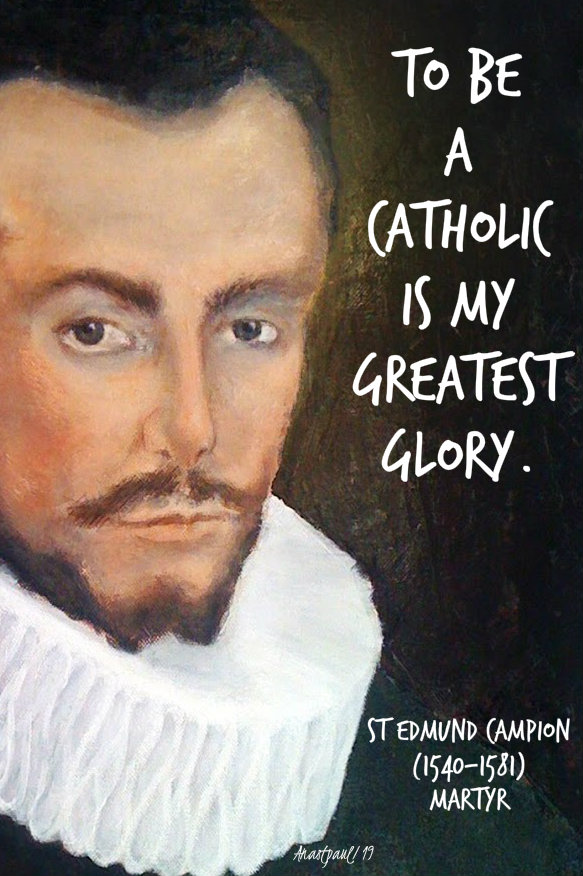
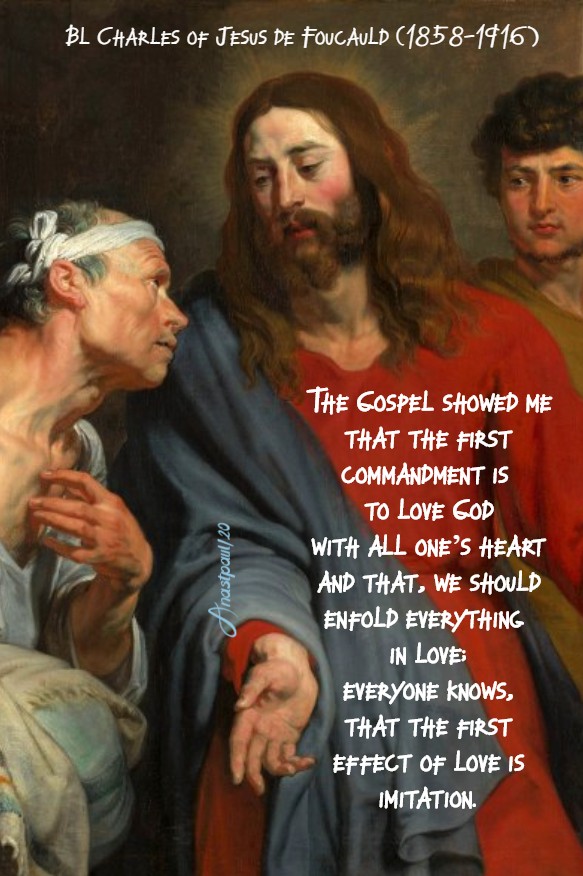
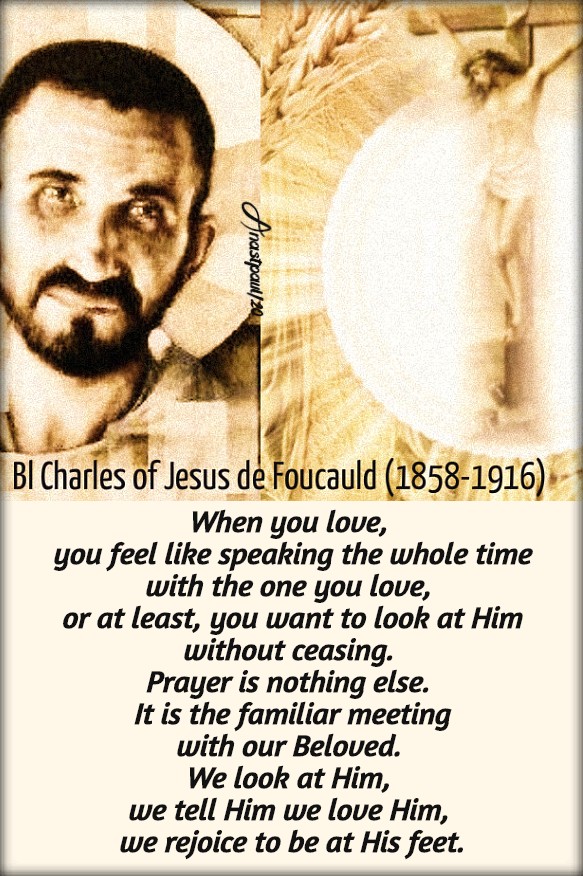
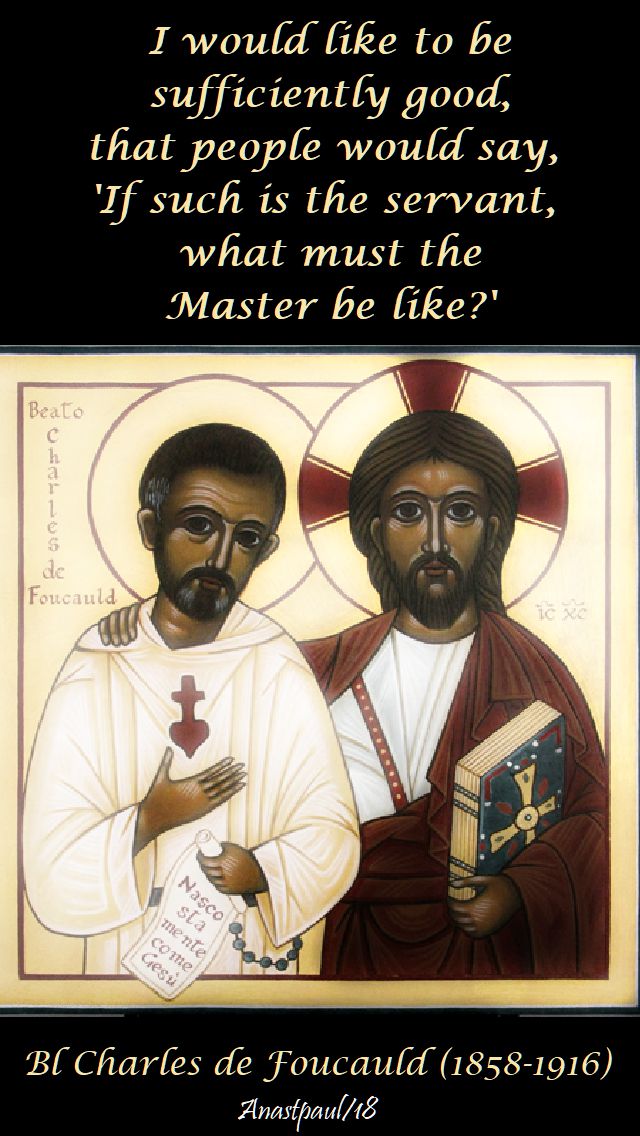
Quote/s of the Day – 1 December – The Memorial of St Edmund Campion SJ (1540-1581) and Bl Charles of Jesus de Foucauld (1858-1916) Both Martyrs
“To be a Catholic is my greatest glory.”
St Edmund Campion (1540-1581 Martyr
“The Gospel showed me that the first commandment is to love God with all one’s heart and that, we should enfold everything in love; everyone knows, that the first effect of love is imitation.”
“Every person is a child of God, who loves them infinitely: it is, therefore, impossible to want to love God, without loving human beings – the more one loves God, the more one loves people. The love of God, the love of people, is my whole life; it will be my whole life, I hope.”
“When you love, you feel like speaking the whole time with the one you love, or at least, you want to look at Him without ceasing. Prayer is nothing else. It is the familiar meeting with our Beloved. We look at Him, we tell Him we love Him, we rejoice to be at His feet.”
“I would like to be sufficiently good that people would say: ‘If such is the servant, what must the Master be like.’”
From the (Auto)Biography of
Blessed Charles of Jesus de Foucauld (1858-1916) Martyr
One Minute Reflection – 1 December – Wednesday of the First Week of Advent – Readings: Isaiah 25: 6-10a; Psalm 23: 1-6; Matthew 15: 29-37
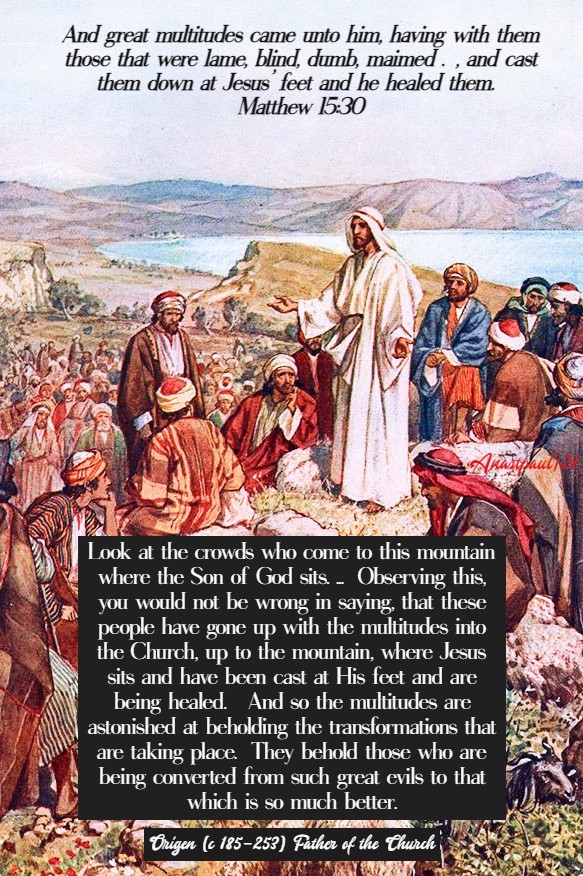
“And great multitudes came unto him, having with them those that were lame, blind, dumb, maimed …, and cast them down at Jesus’ feet and he healed them…” – Matthew 15:30
REFLECTION – “Again Jesus went up on the mountain where He sat down. Not only people who were healthy but also those suffering from various disorders, went up on the mountain where Jesus was sitting. Think of this mountain to which Jesus went up and sat down, as the Church. It has been set up through the word of God, over the rest of the world and all sorts of people come to it. To this assembly have come, not only the disciples, as if they were leaving behind the multitudes, as they did in the case of the Beatitudes. Rather, there are great crowds here, many of whom are deaf or suffer from many afflictions. Look at the crowds who come to this mountain where the Son of God sits. Some of them have become deaf to the things that have been promised. Others have become blind in soul, not looking toward the true light. Others are lame and not able to walk according to reason. Others are maimed and unable to work profitably. Each of these who are suffering in soul, from such things, go up, along with the multitudes, into the mountain, where Jesus sits.
Som,e who do not draw near to the feet of Jesus, are not healed. But those, who are brought by the multitude and cast at His feet, are being healed. Even those who come only to the edges, just the extremities of the Body of Christ, who feel themselves unworthy to obtain such things, are being healed. So now you come into the congregation of what is more commonly called the Church. See the catechumens? They are, as it were, cast in the far side or back of those who are the extreme end of the Body, as if they were coming merely to the feet of the Body of Jesus—the Church. They are coming to it with their own deafness and blindness and lameness and crookedness. In time, they will be cured,according to the Word. Observing this, you would not be wrong in saying, that these people have gone up with the multitudes into the Church, up to the mountain, where Jesus sits and have been cast at His feet and are being healed. And so the multitudes are astonished at beholding the transformations that are taking place. They behold those who are being converted from such great evils to that which is so much better.” – Origen Adamantius of Alexandria (c 185-253) Priest, Theologian, Exegist, Writer, Apologist, Father – (Commentary on Matthew, 11).
PRAYER – Prepare our hearts, we pray, O Lord our God, by Your divine power, so that at the coming of Christ Your Son we may be found worthy of the banquet of eternal life and merit to receive heavenly nourishment from His hands. Who lives and reigns with You in the unity of the Holy Spirit, one God, forever and ever. Amen
Our Morning Offering – 1 December – Wednesday of the First Week of Adven
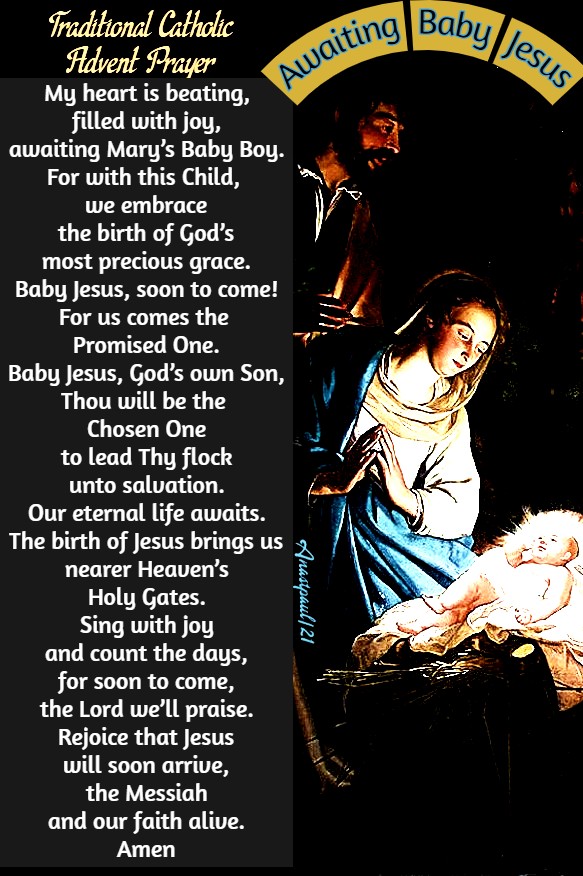
Awaiting Baby Jesus Traditional Catholic Advent Prayer
My heart is beating, filled with joy, awaiting Mary’s baby boy. For with this child, we embrace the birth of God’s most precious grace. Baby Jesus, soon to come! For us comes the Promised One. Baby Jesus, God’s own Son, you will be the Chosen One to lead our flock into salvation. Our eternal life awaits. The birth of Jesus brings us nearer Heaven’s holy gates. Sing with joy and count the days, for soon to come, the Lord we’ll praise. Rejoice that Jesus will soon arrive, the Messiah and our faith alive. Amen
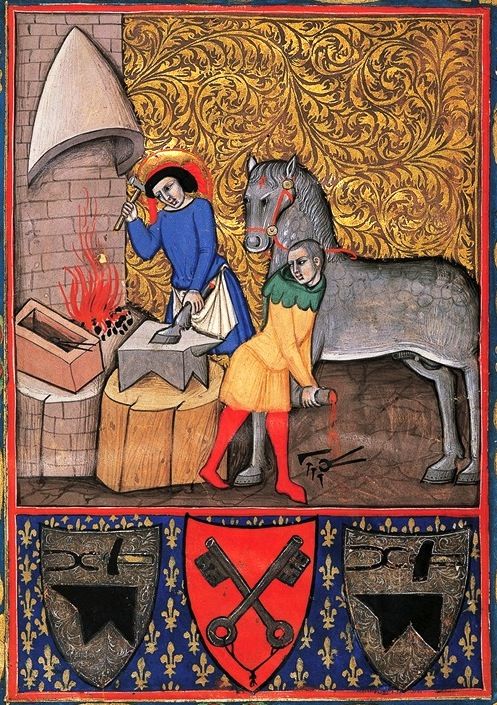
Saint of the Day – 1 December – “Good St Eligius”- St Eligius of Noyon (c 588-660) Bishop, Goldsmith, Royal Courtier and adviser to the King, peace-maker, servant of the poor and of slaves. He founded Monasteries and donated his own property for the founding of the first female Monastery in the area. Born in c 588 at at Catelat, near Limoges, France and died on 1 December 660 at Noyon, France of high fever, Also known as – Alar, Elaere, Elar, Elard, Eler, Eloi, Eloy, Eloye, Iler, Loie, Loije, Loy, Additional Memorials – 24 June (translation of relics, and blessing of horses), 8 November as one of the Saints of the Diocese of Evry. Patronages – carpenters, cartwrights, clock/watch makers, coin collectors, craftsmen of all kinds, cutlers, gilders, goldsmiths, harness makers, horses especially sick horses, jewelers; jockeys; knife makers; labourers, locksmiths, metalworkers in general, miners, minters, Royal Electrical and Mechanical Engineers, Royal Australian Electrical and Mechanical Engineers, saddlers, tool makers, Veterinarians, against boils, against epidemics, against equine diseases, against poverty, against ulcers, agricultural workers, basket makers, Eloois-Vijve, Belgium, Sint-Eloois-Winkel, Belgium, Schinveld, Netherlands.
The Roman Martyrology states: “In Noyon in Neustria, now in France, Saint Eligius, Bishop, who, goldsmith and adviser to King Dagobert, after having contributed to the foundation of many Monasteries and built Sepulchral buildings of outstanding art and beauty in honour of the Saints, was raised to the See of Noyon and Tournai, where he zealously evangelised.”
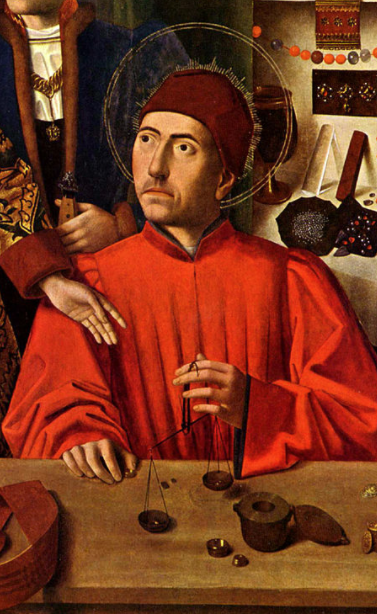
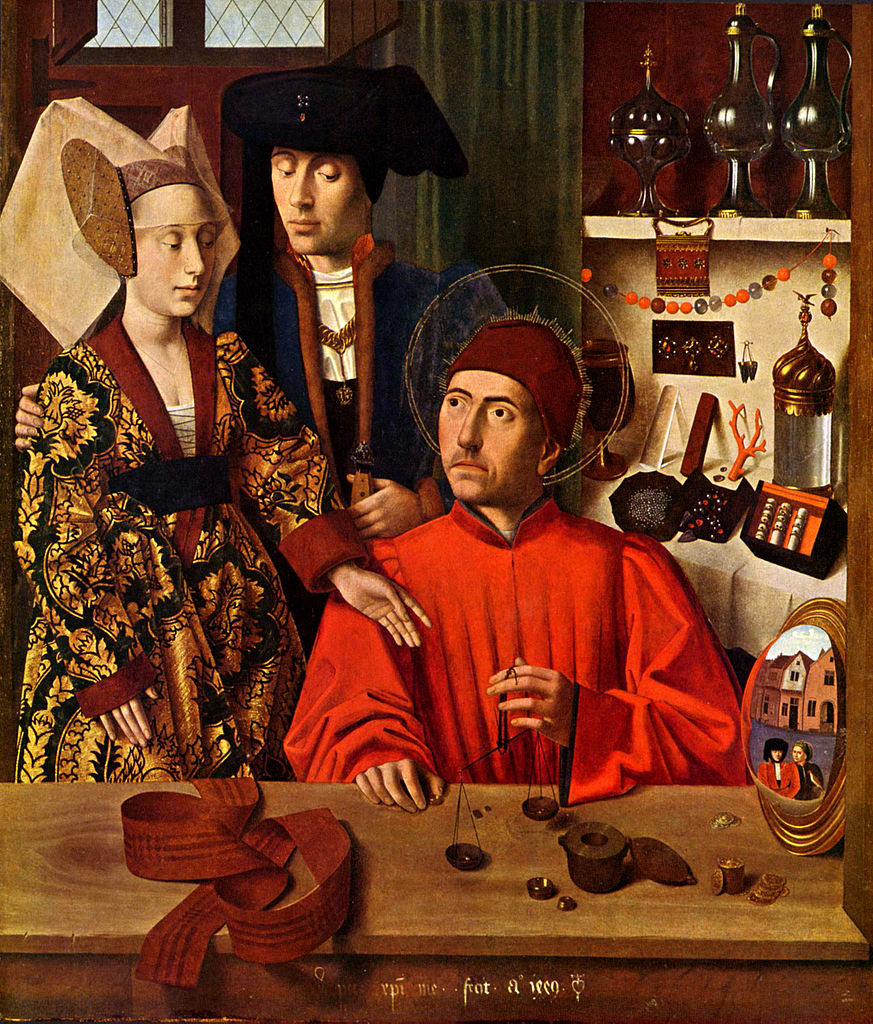
The Legend of Saint Eligius and Saint Godeberta, by Petrus Christus.
Eligius was born around 588, originally from Chaptelat in Limousin. He belonged to a wealthy rural family who worked their own land, unlike many landowners who left the cultivation to slaves. He left the care of the family farm to one of his brothers and entered trade as a Goldsmith apprentice in a shop in which the Royal Coin was hammered, according to ancient Roman methods. He saved some of the income from his family and gave it in charity to the poor and to slaves. He was as clever in enamel as in gold chiselling. These professional qualities went hand-in-hand with a scrupulous honesty. When they asked him to make a golden throne for King Clothair II (613-629), he made a second with the extra gold he did not want to hold for himself.
This gesture, extraordinary at the time, earned him the trust of the King, who asked him to reside in Paris as the Royal Goldsmith, a Royal Court Officer and Court Counselor. Named coinmaster in Marseilles, he would redeem many of the slaves sold at the Port. When Dagobert became King in 629, he was summoned to Paris where he directed the shops of the Frankish kingdom in which coin was minted, which were in Paris on the Quai des Orfèvres at the present-day Rue de la Monnaie. Among others, he had the task of embellishing the tombs of Saint Genevieve and Saint Denis.
He made Reliquaries for Saint Germain, Saint Severinus, Saint Martin and Saint Columba and numerous Liturgical objects for the new Abbey of Saint Denis. Thanks to his honesty, his frankness and his capacity for peaceable judgement, he came so far into the King’s trust, that the latter called him to himself, and entrusted him with a peace mission to the Breton king, King Judicael.
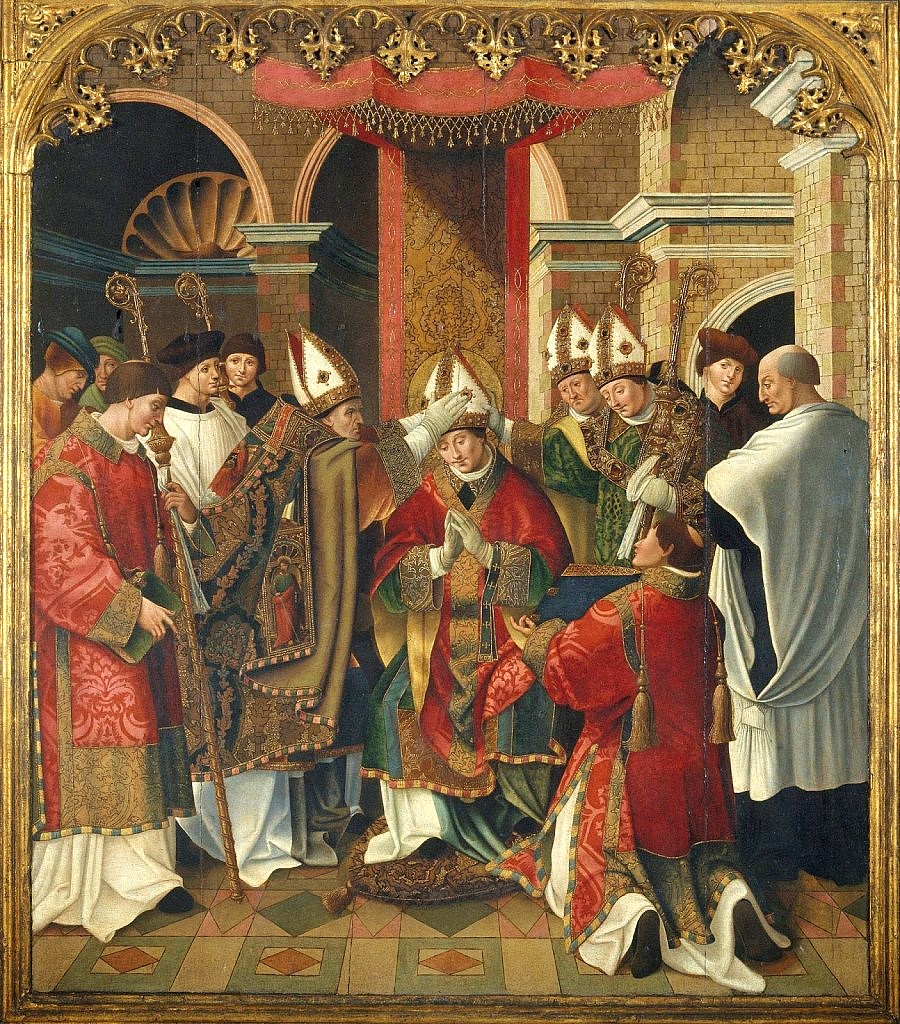
St Eligius Consecrated Bishop of Novon
Great was the piety and prayer life of this layman, who often attended monastic offices. In 632 he founded the Solignac Monastery south of Limoges. While Eligius still lived, the Monastery had grown to count more than 150 Monks under the two rules of St Benedict and St Colomba: – the Monastery was under the protection of the King and not under the authority of the Bishop. The religious fervour and the ardour of the Monks, made it one of the most illustrious Monasteries of the time. One year after the foundation of Solignac, Eligius founded, in his Ile de la Cité home, the first Monastic house for women religious in Paris, whose direction he entrusted to Saint Aurea.
A year after the death of King Dagobert, whom he had seen in the last moments of his life, Eligius left the Court together with Saint Audenus, who had served as adviser and Chancellor under Dagobert . Like Audenus, Eligius also entered formation and was Ordained Priest. On the same day, 13 May 641, they received the Episcopate: Saint Audenus to the See of Rouen; Eligius to that of Noyon and Tournai. Eligius put all his zeal into apostolic mission.
He died in 660, on the eve of his departure for Cahors. Holy Queen Bathilde travelled to greet him but she arrived too late.
There is a wonderful legend of St Eligius – the devil appeared to him dressed as a woman and he, Eligius, quickly grabbed him by the nose with his pincers. This colourful legend is depicted in two French Cathedrals (Angers and Le Mans) and in the Milan Cathedral, with the stained glass window by Niccolò da Varallo, a gift from the Milanese Goldsmiths in the fifteenth century. Ungfortunately, I cannot find any of these artworks.
In Paris, a Church was dedicated to him in the quarter of the blacksmiths, locksmiths and cabinet-makers. The Church of Saint Eligius was rebuilt in 1967. A church destroyed in 1793 was dedicated to him in the Rue des Orfèvres near the Hôtel de la Monnaie (the mint). In Notre Dame Cathedral, in the Chapel of Saint Ann, once home to the jewellers’ and goldsmiths’ confraternity, the jewellers and goldsmiths of Paris have placed his Statue and restored his Altar.
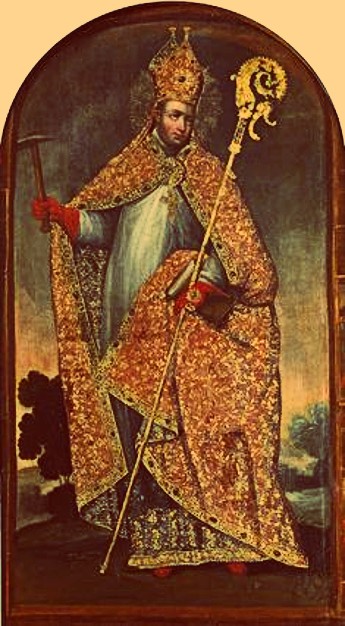
These are the Representations of this our little-known but o so holy and worthy Saint: • anvil • Bishop with a Crosier in his right hand, on the open palm of his left a miniature Church of chased gold • Bishop with a hammer, anvil and horseshoe • Bishop with a horse • Courtier • Goldsmith • hammer • horseshoe • man grasping a devil’s nose with pincers • man holding a Chalice and Goldsmith’s hammer • man holding a horse’s leg, which he detached from the horse in order to shoe it more easily • man shoeing a horse • man with hammer and crown near a smithy • man with hammer, anvil and Saint Anthony • pincers • man with Saint Godebertha of Noyon • man giving a ring to Saint Godebertha • man working as a Goldsmith. (catholicsaintsinfo.mobi).
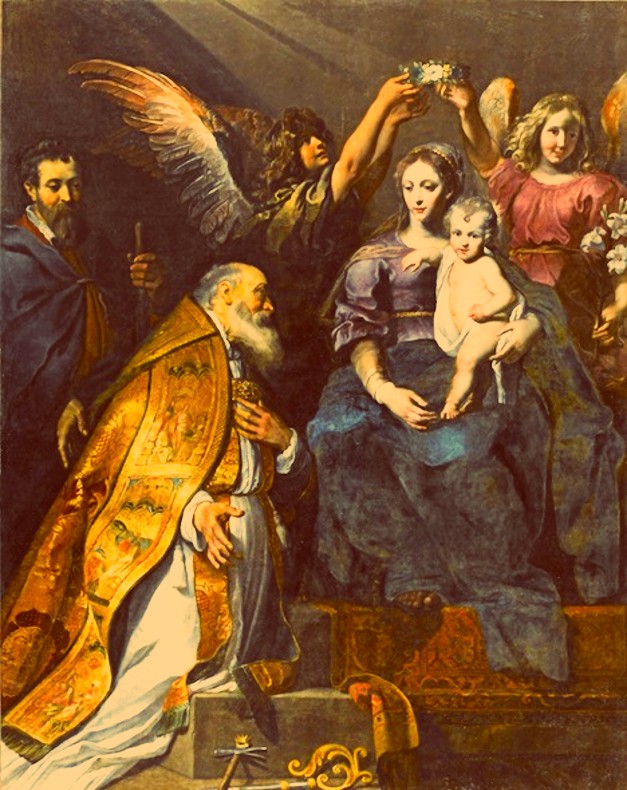
St Eligius at the feet of the Virgin and Child by Gerard Seghers
Our Lady of Ratisbon, Bavaria (1842) – 1 December:
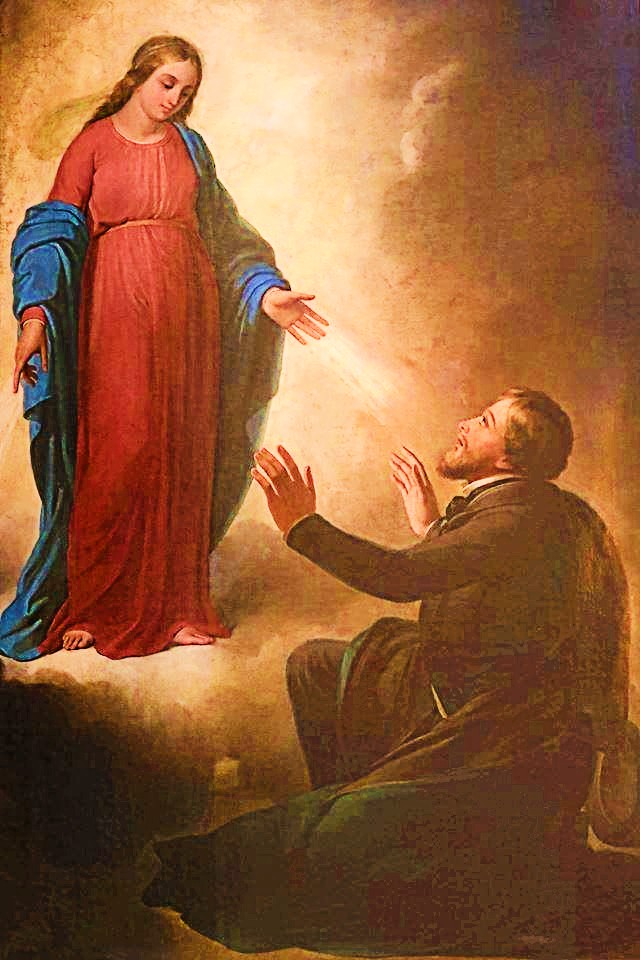
One of the most famous examples of Our Lady’s bounty in granting favours to the wearers of the Miraculous Medal occurred less than ten years after the Medal had been struck. Alphonse Ratisbonne was a French Jew who had no religion. When his brother, Theodore became a Catholic and then a Priest, Alphonse was filled with aversion. He was a typical intellectual of the nineteenth century, a worshipper of humanity, who sneered at anything spiritual. In November 1841, Alphonse found himself in Rome, although his itinerary had not called for a stop in the Eternal City. There he met Baron de Bussiere. The Baron urgently requested him to wear the Miraculous Medal and to recite daily the prayer of St Bernard, “The Memorare”. Alphonse did so in the spirit of acceptance and of dare but without the slightest bit of faith. On 20 January 1842, Monsieur de Bussiere saw Alphonse walking along the street and invited him into his carriage. They stopped at St Andrea Delle Fratee because the Baron wished to see a Priest there. In order to kill time, Ratisbonne entered the Church. He was not very much impressed and was walking around rather listlessly. Suddenly the Church seemed to be plunged into darkness and all the light concentrated on one Chapel. Very much startled he saw there, our Blessed Mother bathed in glorious light, Her face radiant. He went toward her. She motioned with her right hand for him to kneel. As he knelt, he realised, at last, the sad state of his soul. He perceived, that mankind had been redeemed through the Blood of Christ and he was seized with a great longing to be taken into the Church of Christ. The Blessed Virgin spoke not a word but these things came to him as he knelt before her. The next day Alphonse was baptised by Cardinal Patrizi, Vicar of Pope Gregory XVI. The Holy Father as Bishop of Rome, ordered an official inquiry and after four months, the authenticity of the miracle was recognised. Alphonse Maria Ratisbonne, as he was named after his Baptism,bwcame a Priest too and devoted the remainder of his life to winning over his fellow Jews to Christ.
St Agericus of Verdun St Agnofleta St Alexander Briant Bl Alphonsine Anuarite Nengapeta St Ambon of Rome St Ananias of Arbela St Ansanus the Baptizer Bl Antony Bonfadini Bl Bruna Pellesi St Candida of Rome St Candres of Maestricht St Cassian of Rome St Castritian of Milan
St Eligius (c 588-660) Bishop St Evasius of Asti St Filatus of Rome St Florence of Poitiers St Florentius St Grwst St Jabinus of Rome and Companions Bl John Beche Bl Kazimierz Tomasz Sykulski St Latinus of Rome St Leontius of Fréjus Bl Liduina Meneguzzi St Lucius of Rome Bl Maria Clara of the Child Jesus St Marianus St Marina of Rome St Martinus St Nahum the Prophet St Natalia of Nicomedia St Olympiades St Proculus of Narni St Ralph Sherwin St Resignatus of Maastricht Bl Richard Langley St Rogatus of Rome St Simon of Cyrene St Superatus of Rome St Ursicinus of Brescia — Martyrs of Oxford University: A joint commemoration of all the men who studied at one of the colleges of Oxford University, and who were later martyred for their loyalty to the Catholic Church during the official persecutions in the Protestant Reformation. They are: • Blessed Edward James • Blessed Edward Powell • Blessed Edward Stransham • Blessed George Napper • Blessed George Nichols • Blessed Hugh More • Blessed Humphrey Pritchard • Blessed James Bell • Blessed James Fenn • Blessed John Bodey • Blessed John Cornelius • Blessed John Forest • Blessed John Ingram • Blessed John Mason • Blessed John Munden • Blessed John Shert • Blessed John Slade • Blessed John Storey • Blessed Lawrence Richardson • Blessed Mark Barkworth • Blessed Richard Bere • Blessed Richard Rolle de Hampole • Blessed Richard Sergeant • Blessed Richard Thirkeld • Blessed Richard Yaxley • Blessed Robert Anderton • Blessed Robert Nutter • Blessed Robert Widmerpool • Blessed Stephen Rowsham • Blessed Thomas Belson • Blessed Thomas Cottam • Blessed Thomas Pilcher • Blessed Thomas Plumtree • Blessed Thomas Reynolds • Blessed William Filby • Blessed William Hart • Blessed William Hartley • Saint Alexander Briant • Saint Cuthbert Mayne • Saint Edmund Campion • Saint John Boste • Saint John of Bridlington • Saint John Roberts • Saint Ralph Sherwin • Saint Thomas Garnet • Saint Thomas More.
Let us begin: In the Name of the Father and of the Son and of the Holy Spirit. Amen
O God, Who by the Immaculate Conception of the Blessed Virgin Mary, did prepare a worthy dwelling place for Your Son, we beseech You that, as by the foreseen death of this, Your Son, You did preserve Her from all stain, so too You would permit us, purified through Her intercession, to come unto You. Through the same Lord Jesus Christ, Your Son, who lives and reigns with You in the unity of the Holy Spirit, God, world without end. Amen.
O Mary, ever blessed Virgin, Mother of God, Queen of angels and of Saints, we salute you with the most profound veneration and filial devotion as we contemplate your holy Immaculate Conception, We thank you for your maternal protection and for the many blessings that we have received through your wondrous mercy and most powerful intercession. In all our necessities we have recourse to you with unbounded confidence. O Mother of Mercy, we beseech you now to hear our prayer and to obtain for us, of your Divine Son the favour that we so earnestly request in this Novena. …………………………………… (Mention your request here…) O Mary of the Immaculate Conception, Mother of Christ, you had influence with your Divine Son, while upon this earth; you have the same influence now in heaven. Pray for us and obtain for us from him the granting of my petition if it be the Divine Will. Amen.
Say the: Our Father… the: Hail Mary… the: Glory Be…
Thought for the Day – 30 November – Meditations with Antonio Cardinal Bacci (1881-1971)
The Blessedness of Those Who Mourn
“Blessed are they who mourn” (Mt 5:5), says Jesus Christ, in direct contrast to the opinion of the world, which believes, that happiness is to be found in merrymaking. Who is correct? The Gospel does not forbid us to rejoice, indeed, a blessing was given to the wedding celebration in Cana. This, however, was a manifestation of good and honest joy. It is the immoderate revelling of irresponsible worldlings and sinners, which is condemned in the Gospel. God does not promise these any of His consolations but, only remorse and perhaps despair. On the other hand, those who suffer are called blessed by Jesus Christ, Who has promised to console them. The consolations which they will receive are those which spring from their repentance, from the forgiveness which they obtain for their sins and from the expectation of everlasting life, which is promised to those who choose the royal road of the Cross. They will also enjoy, the consolations of contemplation and of the love of God.
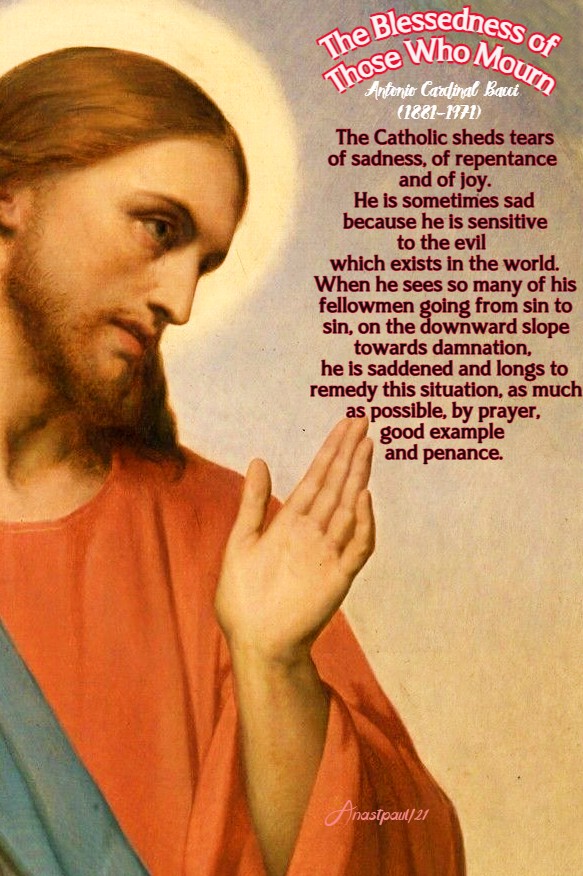
The Catholic sheds tears of sadness, of repentance and of joy. He is sometimes sad because he is sensitive to the evil which exists in the world. When he sees so many of his fellowmen going from sin to sin, on the downward slope towards damnation, he is saddened and longs to remedy this situation, as much as possible, by prayer, good example and penance.
Perhaps you are indifferent to the evil which is being perpetrated in the world? Perhaps nothing has power to upset you, apart from yur own petty troubles and frustrated ambitions? This kind of sadness is not pleasing to God.
Another motive for sadness, is the great physical and moral suffering which afflicts so many of our brethren. We should be generous in tendering whatever assistance we can, generous also in our understanding and in our sympathy. Very often, a single gesture of compassion towards a man who is suffering, is of greater value than a substantial alms, which is offered with coldness and indifference.
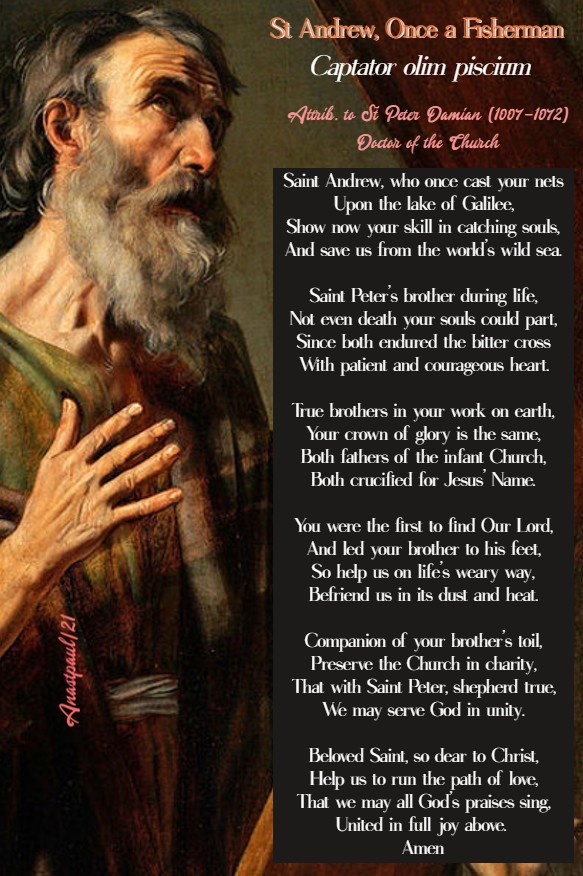
The St Andrew’s Christmas Novena The Christmas Anticipation Prayer
The Novena is not actually addressed to Saint Andrew but to God Himself, asking Him to grant our request in honour of the birth of His Son at Christmas. You can say the prayer all 15 times, all at once; or divide up the recitation as necessary (perhaps five times at each meal). We say ours after the Family Rosary each day, with each member saying it a number of times to total 15.
Prayed as a family, the Saint Andrew Christmas Novena is a very good way to help focus the attention of your family and children on the Advent season. nd the reason for the festivities to come.
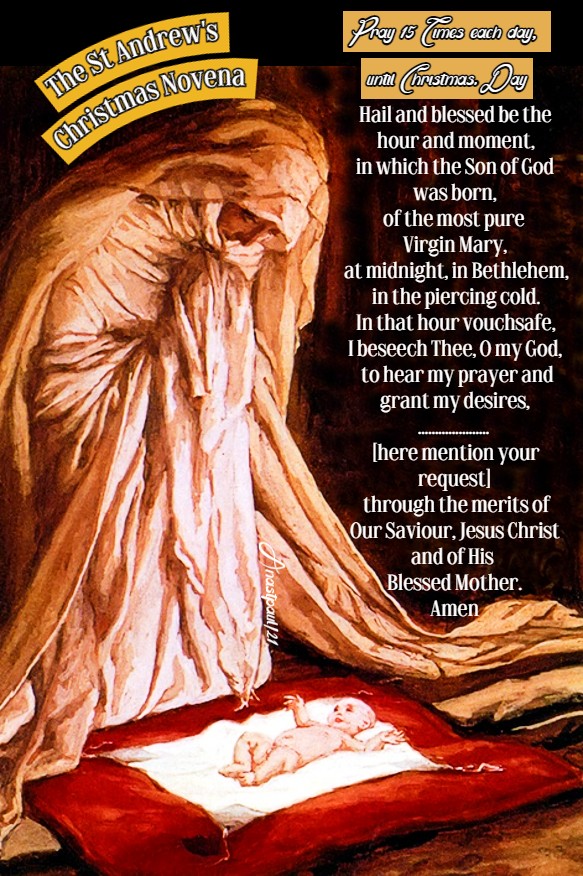
Pray 15 Times each day, until Christmas Day
Hail and blessed be the hour and moment, in which the Son of God was born, of the most pure Virgin Mary, at midnight, in Bethlehem, in the piercing cold. In that hour vouchsafe, I beseech Thee, O my God, to hear my prayer and grant my desires, ………………… [here mention your request] through the merits of Our Saviour, Jesus Christ and of His Blessed Mother. Amen
Quote of the Day – 30 November – The Feast of St Andrew, Apostle of Christ, Martyr on the Cross for Christ
This is what the Apostle is claimed to have been said on the occasion of St Andrew’s Martyrdom, according to an ancient story (which dates to the beginning of the sixth century), entitled –
The Passion of Andrew:
“Hail, O Cross, inaugurated by the Body of Christ and adorned with His limbs as though they were precious pearls. Before the Lord mounted you, you inspired an earthly fear. Now, instead, endowed with heavenly love, you are accepted as a gift.
Believers know of the great joy that you possess and of the multitude of gifts you have prepared. I come to you, therefore, confident and joyful, so that you too may receive me, exultant as a disciple of the One Who was hung upon you….
O blessed Cross, clothed in the majesty and beauty of the Lord’s limbs!…
Take me, carry me far from men and restore me to my Teacher, so that, through you, the One who redeemed me by you, may receive me.
One Minute Reflection – 30 November – The Feast of St Andrew, Apostle of Christ – Readings: Romans 10: 9-18; Psalms 19: 8,-11; Matthew 4: 18-22
“At once they left their nets and followed him.” – Matthew 4:20
REFLECTION – “After Andrew had remained with Jesus (Jn 1:39) and had learned what he did learn, he did not keep his treasure concealed for himself but hastened to run quickly to his brother, Simon Peter, to share with him, the good things that he had received. Consider what he told his brother: “We have found the Messiah (which interpreted is Christ)” (Jn 1:41). Do you perceive, in these words, the fruit of what he had learned in such a short time? It shows, at once, the authority of the Teacher who taught His disciples and their own enthusiasm and will to learn from Him, since the very beginning.
Indeed Andrew’s eagerness, his zeal in wanting to spread immediately such a good news, supposes a soul who was longing to see the accomplishment of the many prophecies concerning Christ. It is a mark of brotherly kindness, of loving kinship, of genuine goodwill, to hasten to stretch out a helping hand to one another in spiritual matters. … ”We have found the Messiah”, he says; not any messiah but “the Messiah,” the one Christ they were awaiting.” – St John Chrysostom (347-407) Father and Doctor of the Church (Homely on the Gospel of Saint John, 19,1).
PRAYER – Lord, in Your kindness hear our petitions. You called Andrew the Apostle, to preach the Gospel and guide Your Church in faith. May he always be our friend in Your Presence, to help us with his prayers. We ask this through our Lord Jesus Christ, Your Son, who lives and reigns with You and the Holy Spirit, one God, forever and ever. Amen.
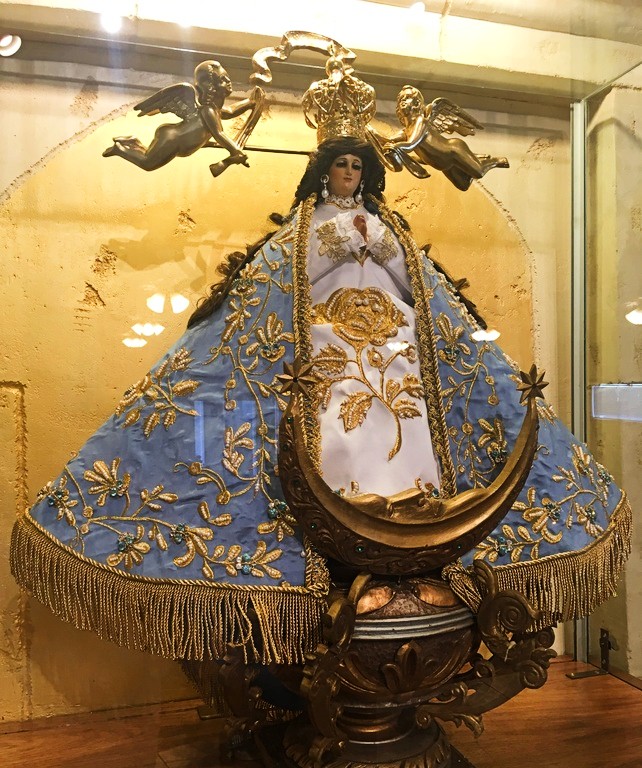
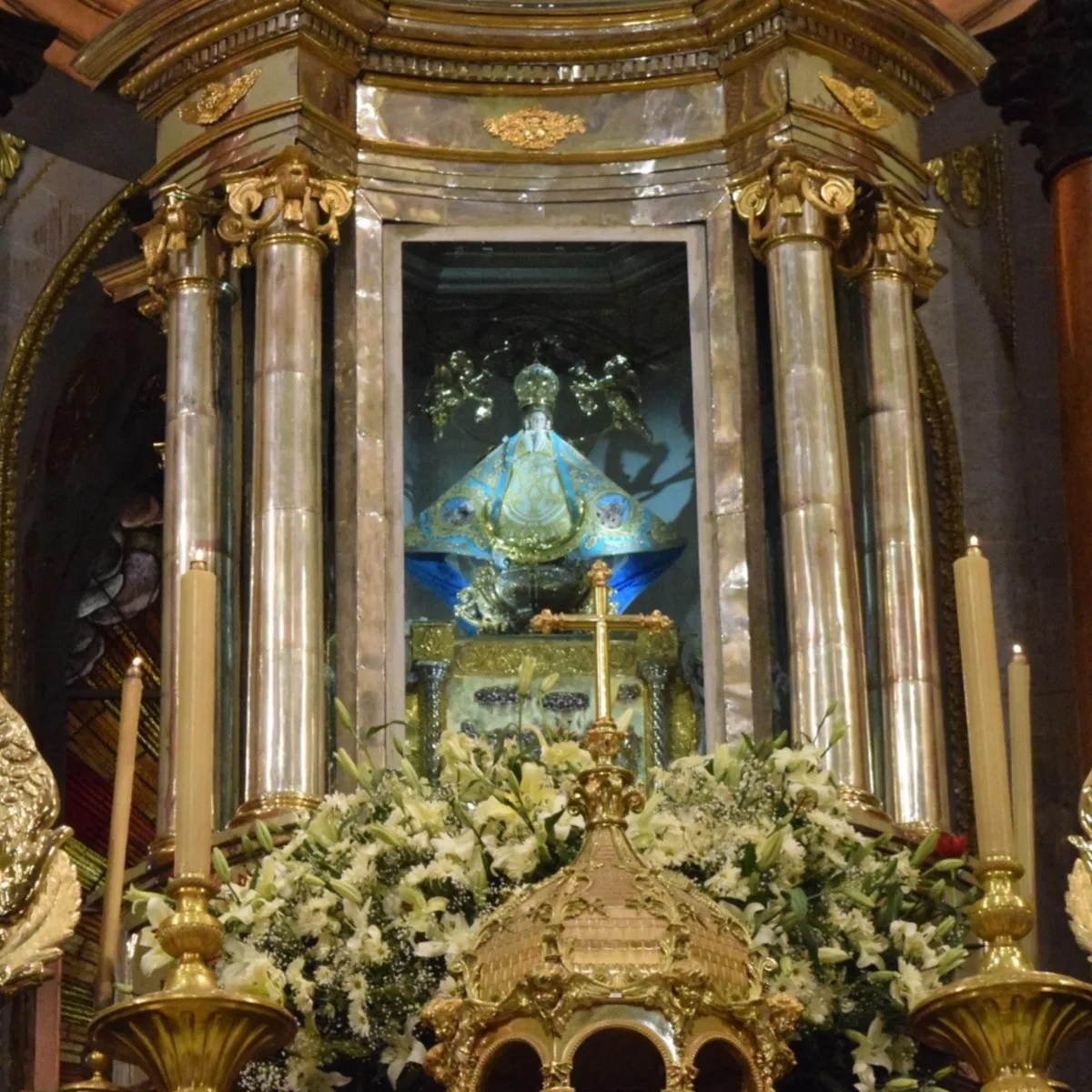
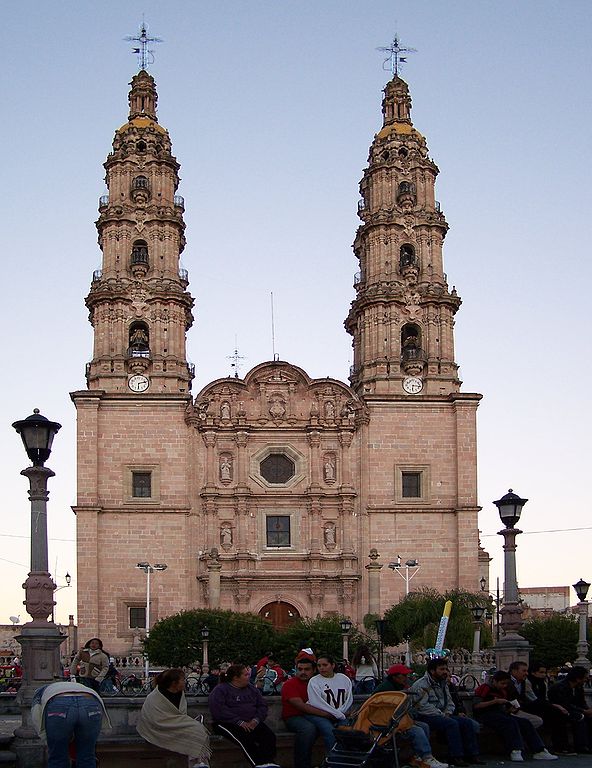
Virgen de la Concepción, San Juan de los Lagos / Mary Immaculate of Saint John of the Lakes, Mexico) (1524) – 30 November, 2 February, 24 June, 15 August, 8 December:
Fray Miguel de Bolonia, of the Spanish Netherlands, was one of the first Franciscans to enter Mexico in 1524. A saintly missionary who learned the native languages and stood up for natives when Spanish rulers threatened them, he travelled through Mexico, teaching and building, until his death in 1580. In 1542, he founded the village of San Juan Bautista de Mezquititlán (land of mesquite trees), where he built a hospital and Chapel in which he placed a half metre tall Statue of Mary Immaculate. In 1623, some trapeze artists brought the body of their daughter to the San Juan Chapel for burial. The young acrobat had fallen during practice onto some upright blades, buried blade side upward, in the earth to ensure the show was more dangerous and exciting. The chapel caretaker, an old woman named Ana Lucia put the Virgin’s Statue on the girl’s breast and the child revived. The grateful father took the fragile Statue, made of cornstalks and glue, to Guadalajara for restoration. From then on, the Shrine’s fame and miracles multiplied.
Meanwhile, the Town grew, changing its name to San Juan de los Lagos (St. John of the Lakes). A new Church was built and then another–each larger, more splendid, more worthy of the Immaculate Virgin. On 30 November, 1769, the Statue was installed in the third Church which is now a Basilica.
San Juan de los Lagos began holding a market fair in commemoration, annually around 30 November with festivities extending to the Feast of the Immaculate Conception, 8 December. The celebration eventually became so rowdy that the hierarchy decided to move the feast of the Virgen de San Juan de los Lagos to 2 February (Candlemas). The Candelaria fiesta has evolved into a month-long, mass pilgrimage to the Shrine from all over Mexico but 8 December is still observed, as well as 15 August (Feast of the Assumption). The beauty of the Sanctuary that hosts the Virgin, has become the main promoter of tourism in the region. After Our Lady of Guadalupe, it is the most visited Shrine in Mexico.
St Abraham of Persia Bl Alexander Crow St Anders of Slagelse Bl Andrew of Antioch Bl Arnold of Gemblours St Castulus of Rome St Constantius of Rome St Crider of Cornwall St Cuthbert Mayne St Domninus of Antioch St Euprepis of Rome Bl Everard of Stahleck Blessed Frederick of Regensburg OSA (Died 1329) Lay Friar of the Order of St Augustine St Galganus St Isaac of Beth Seleucia
Bl Joscius Roseus St Joseph Marchand St Justina of Constantinople Bl Ludwik Gietyngier St Mahanes the Persian St Maura of Constantinople St Merola of Antioch St Mirocles of Milan St Sapor St Simeon of Persia St Thaddeus Liu Ruiting St Trojan St Tudwal of Tréguier Bl William de Paulo Zosimus the Wonder Worker — Martyrs of Saxony – 6 saints: Missionaries who worked with Saint Willehad of Bremen. Martyrs. – Attroban, Benjamin, Emmingen, Folkard, Gerwald and Grisold. They were martyred on 30 November 782 at River Weser, Lawer Saxony, Germany.
Martyred in the Spanish Civil War – Martyred Augustinians of Madrid – 51 beati and Martyred Hospitallers of Madrid – 7 beati – Thousands of people were murdered in the anti-Catholic persecutions of the Spanish Civil War from 1934 to 1939.
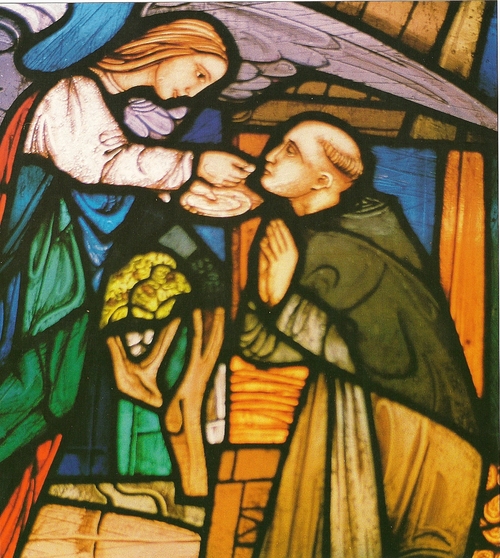
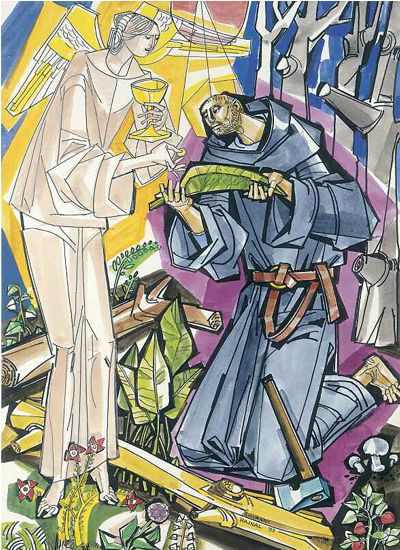
Saint of the Day – 30 November – Blessed Frederick of Regensburg OSA (Died 1329) Lay Friar of the Order of St Augustine, devotee of the Blessed Sacrament. Born in the late 13th century in Regensburg, Bohemia (in modern Germany) and died on 30 November 1329 in Regensburg, of natural causes. Additional Memorial – 29 November in the Augustinian Order.
The Holy Communion of the Blessed Frederick of Regensburg by Jan van den Hoecke (1611-1651) (detail)
History has not left us a great deal of factual information about Blessed Frederick. Perhaps this is an indication of the ‘ordinariness’ of this servant of God, who spent his religious life in fidelity to the daily cycle of prayer and work, which characterises so many religious of his day and ours. Frederick reminds us that loyal devotion to one’s state in life, lived in fidelity to the Gospel is the means to holiness.
Blessed Frederick was born of poor parents in Regensburg, Germany. He entered the Augustinian Monastery of Saint Nicholas in that City as a lay brother. At that time, the Monastery of Saint Nicholas was considered to be the most important community of the Bavarian Province of the Order and even hosted the General Chapter of 1290, at which the first Constitution of the Augustinians was promulgated.
His life as an Augustinian was marked by humility and generosity, dedication to prayer and great devotion to the Blessed Sacrament.
His talents served the community principally as carpenter and woodcutter, activities in which he demonstrated his concern for his fellow religious and the needs of the Moonastery.
Frederick died on 30 November 1329 in Regensburg where devotion to him continued without interruption and the testimony of miracles attributed to his intercession, were gathered. Frederick is buried at St Cecelia Church in the City of Regensburg.
St Pius X Beatified him on 12 May 1909.
Blessed Frederick’s secret to holiness and message to us, is one of humble service and generous offering of self for the well being of others. His life of prayer and devotion to the Blessed Sacrament were the food that nourished his spirit and strengthened his daily resolve, to live for God and to practice love for his brothers – which is the heart of the Gospel.
PRAYER
Almighty and eternal God, source of all that is good, You gave to Blessed Frederick a wonderful spirit of dedication, of penance and a love for the Holy Eucharist. Through his prayers and example may we grow to be like him as your good and faithful servants. We ask this through our Lord Jesus Christ, your Son, Who lives and reigns with You and the Holy Spirit, one God forever and ever. Amen
The Holy Communion of the Blessed Frederick of Regensburg by Jan van den Hoecke (1611-1651)
Let us begin: In the Name of the Father and of the Son and of the Holy Spirit. Amen
O most Holy Virgin, who was pleasing to the Lord and became His Mother, immaculate in body and spirit, in faith and in love, look kindly on me as I implore your powerful intercession.
O most Holy Mother, who by your blessed Immaculate Conception, from the first moment of your conception did crush the head of the enemy, receive my prayer as I implore you to present, at the throne of God, the favour I now request… ……………………. (Mention your request here…)
O Mary of the Immaculate Conception, Mother of Christ, Mother of God, you had influence with your Divine Son while upon this earth; you have the same influence now in Heaven. Pray for me and obtain for me from Him, the granting of my petitions. if it be the Divine Will. Amen
Say the: Our Father… the: Hail Mary… the: Glory Be…
Thought for the Day – 29 November – Meditations with Antonio Cardinal Bacci (1881-1971)
The Blessedness of the Meek
“Charity, as St Thomas Aquinas says, is the source of all the virtues (Summa Theologiae, II-II, q 157, a 2). This includes meekness, or that quality of moderation by which a Christian ought to govern his passions, especially anger and keep them subject to the control of reason. This virtue is opposed to pride and to vanity, in that these passions, when wounded, culminate in outbursts of anger and in quests for revenge.
Meekness is not simply a form of apathy or of good natured affability. On the contrary, it is based both on humility and on fortitude. It feels insults and ingratitude and does not remove the suffering which accompanies them but it demands the heroism of silence and of charitable behaviour towards those who hurt us. For this reason it is not identical with weakness but, requires spiritual fortitude because, it makes a man complete master of himself (Cf Summa Theologiae II-II, 1 157 a 4). Anger is not always sinful, as the Holy Spirit indicates (Ps 4-5). If it remains subject to the control of reason and of charity, indeed, it is only a reaction against evil and can exist alongside Christian meekness. It is fatal, however, to allow anger to become blind and tyrannical, for it will then betray a man into hatred and vengefulness. It will grow noisy and vulgar, give scandal to others and leave, in the soul, a sense of restlessness and of vexation (Cf St Francis de Sales, Introduction to the Devout Life, Bk III, ch 9). “If the Holy Spirit may be called, the peace of the soul, uncontrolled anger may be called, its disturber. Nothing is more hostile than anger to the indwelling of the Holy Spirit within us” (St John Climacus Scala Paradisi p 286).
Let us resolve never to allow ourselves to be led away by immoderate anger but, to preserve, at all times, our meekness and peace of soul.”
Quote/s of the Day – 29 November – Monday of the First Week of Advent – Readings: Isaiah 2: 1-5; Psalms 122: 1-9; Matthew 8: 5-11
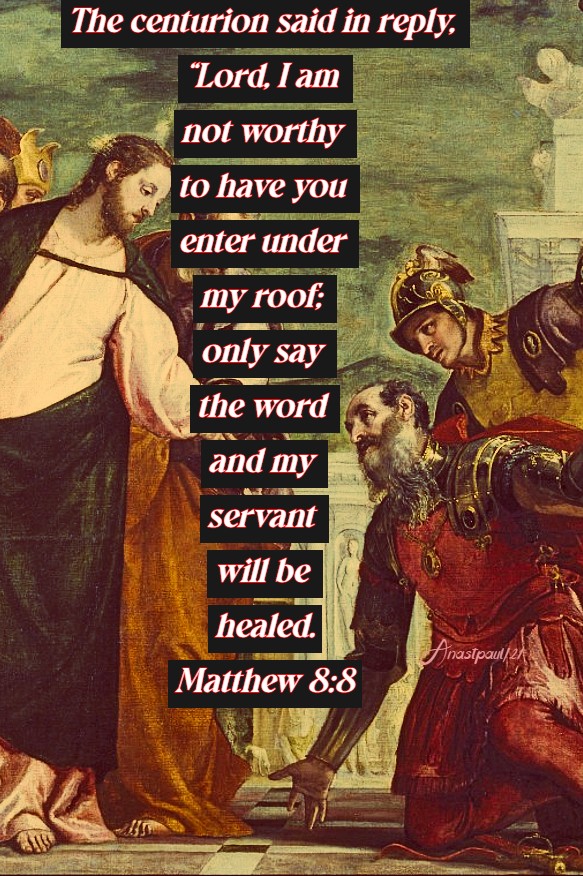
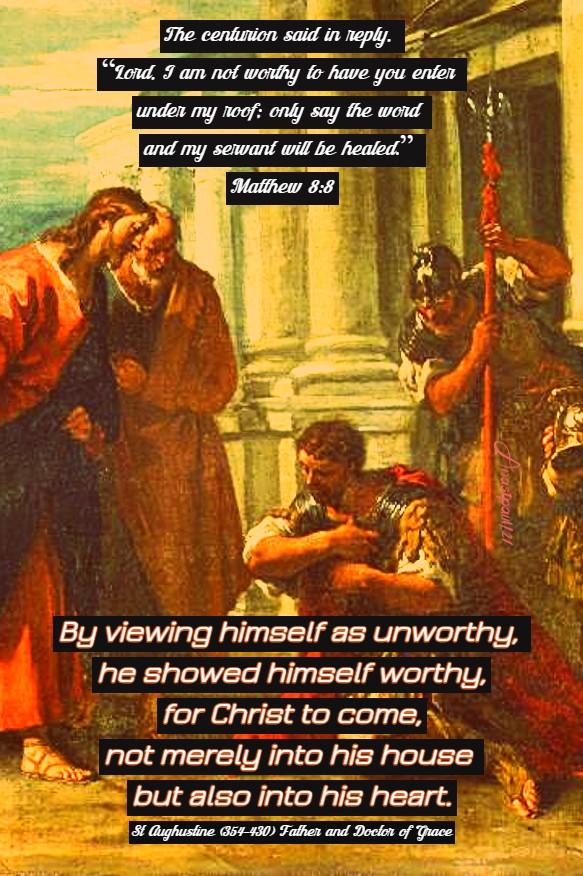
“The centurion said in reply, “Lord, I am not worthy to have you enter under my roof; only say the word and my servant will be healed.”
Matthew 8:8
“By viewing himself as unworthy, he showed himself worthy, for Christ to come, not merely into his house but also into his heart.”
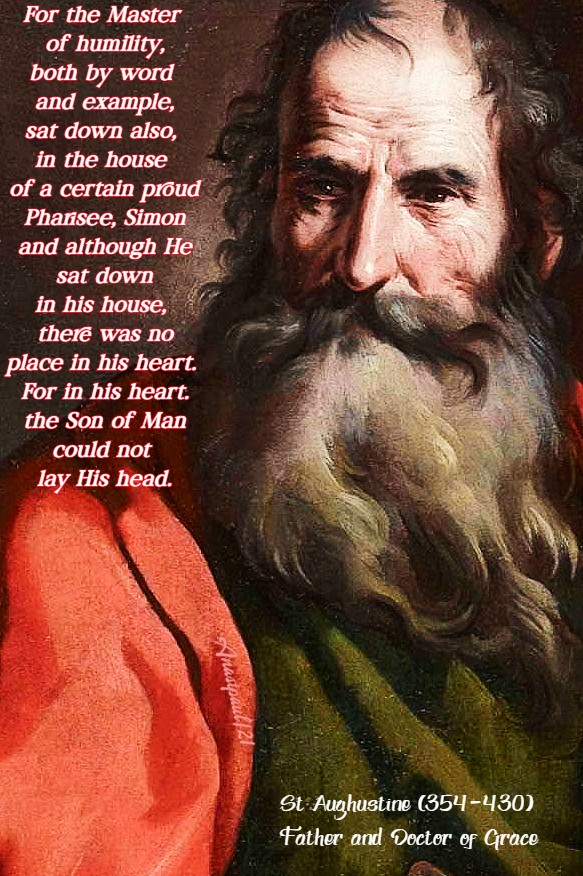
“For the Master of humility, both by word and example, sat down also, in the house of a certain proud Pharisee, Simon and although He sat down in his house, there was no place in his heart. For in his heart. the Son of Man could not lay His head.”
St Aughustine (354-430) Father and Doctor of Grace
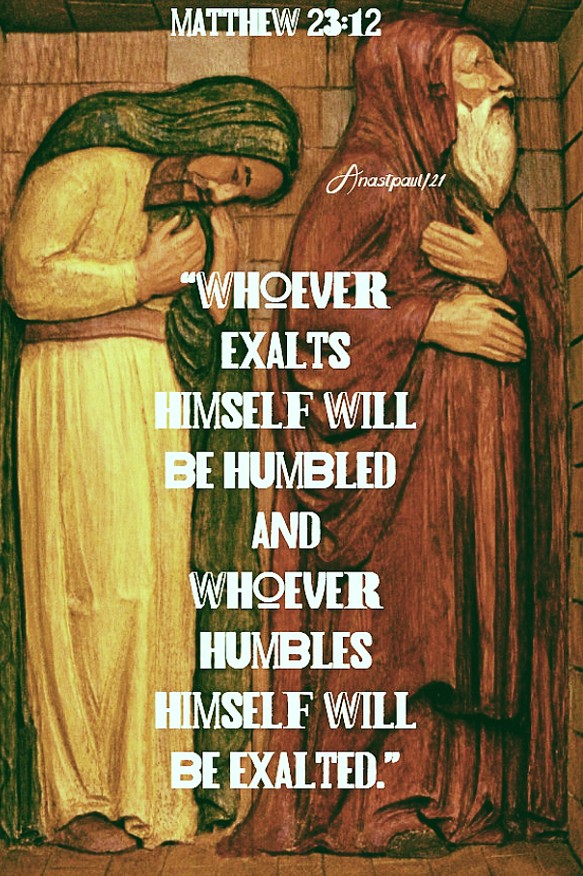
“Whoever exalts himself will be humbled and whoever humbles himself will be exalted.”
Matthew 23:12
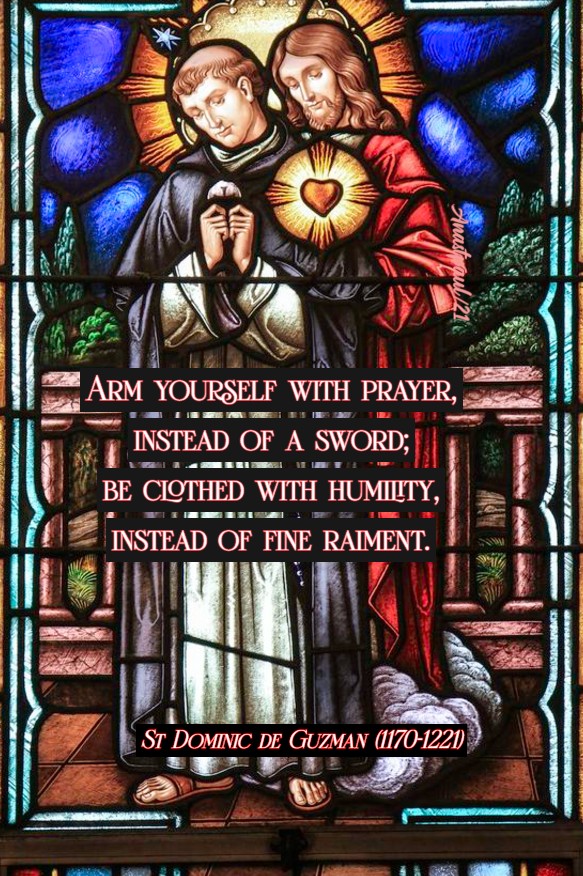
“Arm yourself with prayer, instead of a sword; be clothed with humility, instead of fine raiment.”
St Dominic de Guzman OP (1170-1221)
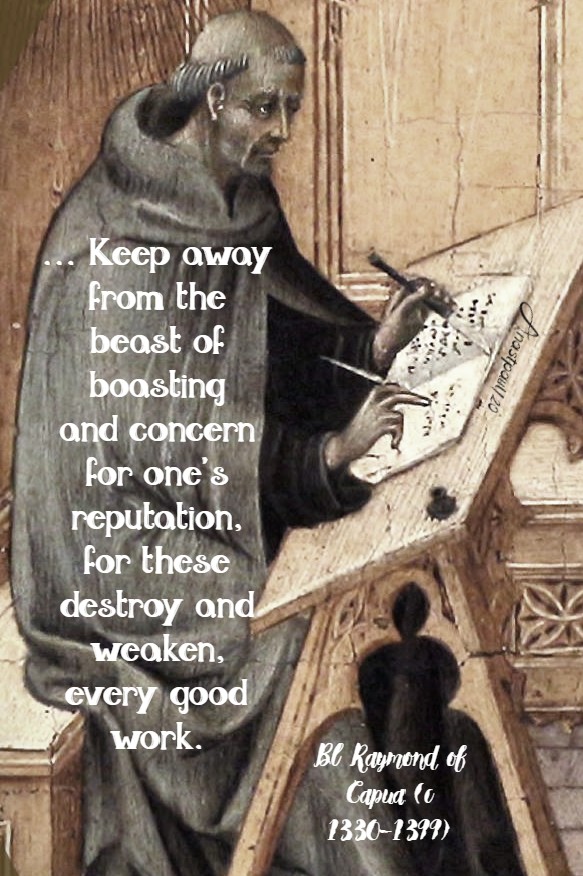
“My brothers, keep away from the beast of boasting and concern for one’s reputation, for these destroy and weaken, every good work.”
Bl Raymond of Capua (c 1330-1399)
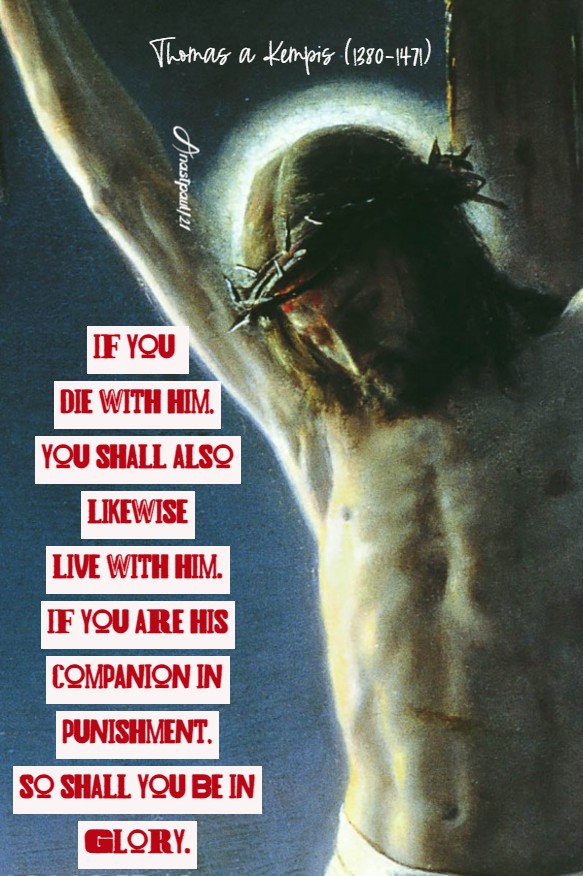
“ … If you die with Him, you shall also likewise live with Him. If you are His companion in punishment, so shall you be in glory.”
Thomas à Kempis (1380-1471)
“Humility and charity are the two master chords – one, the lowest; the other, the highest; all the others are dependent on them. Therefore, it is necessary, above all. to maintain ourselves in these two virtues, for observe well, that the preservation of the whole edifice depends on the foundation and the roof!”
One Minute Reflection – 29 November – Monday of the First Week of Advent – Readings: Isaiah 2: 1-5; Psalms 122: 1-9; Matthew 8: 5-11
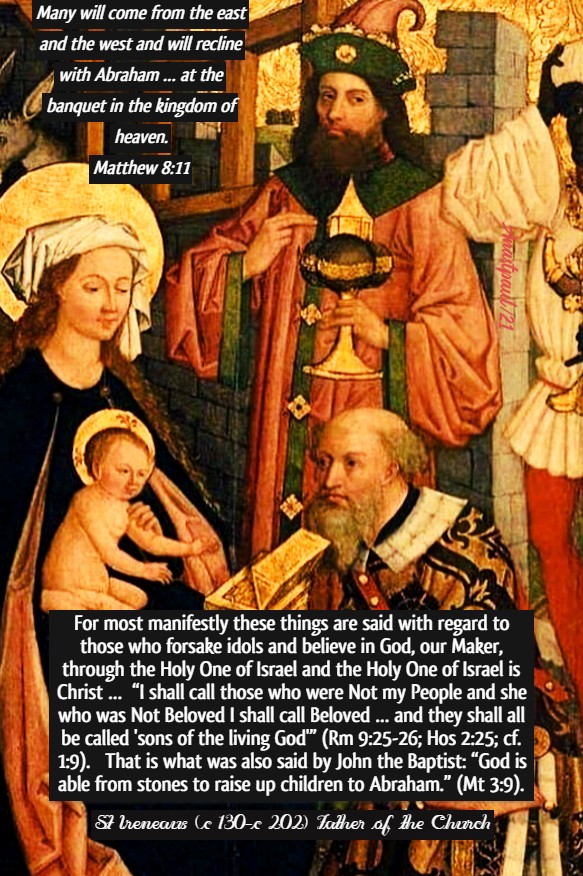
“Many will come from the east and the west and will recline with Abraham … at the banquet in the kingdom of heaven.” – Matthew 8:11
REFLECTION – “Behold, the days are coming, says the Lord, when I shall make a new covenant with the house of Israel and the house of Jacob … I will put my laws in their minds and will write them in their hearts” (Jr 31:31 f.) … And that these promises were going to be inherited by the calling of the Gentiles, in whom also, the New Covenant was opened, Isaiah says in this way, “Thus says the God of Israel, In that day man shall be confident in his Maker, and his eyes shall look to the Holy One of Israel and they shall not be confident in altars nor in the works of their hands, which their fingers have made…” (Is 17:7 f.). For most manifestly these things are said with regard to those who forsake idols and believe in God, our Maker, through the Holy One of Israel and the Holy One of Israel, is Christ …
PRAYER – Grant Almighty Father, that when Christ comes again, we may go out to meet Him,bearing the harvest of good works, achieved by Your grace. We pray that He will receive us int6o the company of the Saints and call us into the Kingdom of Heaven. And may His Mother and ours, the most pure Virgin Mary be our intercessor and advocate. We make our prayer through Christ our Lord, in the unity of the Holy Spirit, God forever, amen.
Our Morning Offering – 29 November – Monday of the4 First Week of Advent
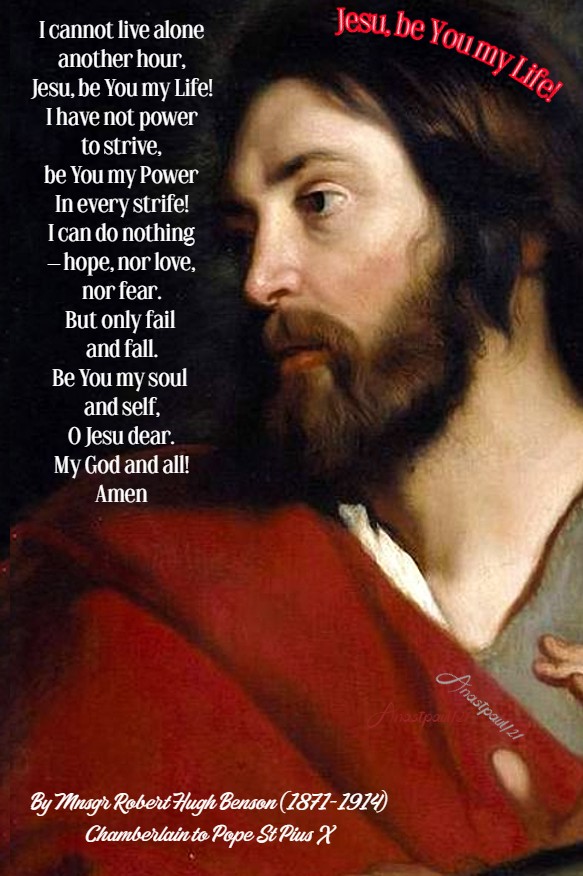
Jesu, be You my Life! Mnsgr Robert Hugh Benson (1871-1914) Chamberlain to Pope St Pius X
I cannot live alone another hour, Jesu, be You my Life! I have not power to strive, be You my Power In every strife! I can do nothing – hope, nor love, nor fear. But only fail and fall. Be You my soul and self, O Jesu dear. My God and all! Amen
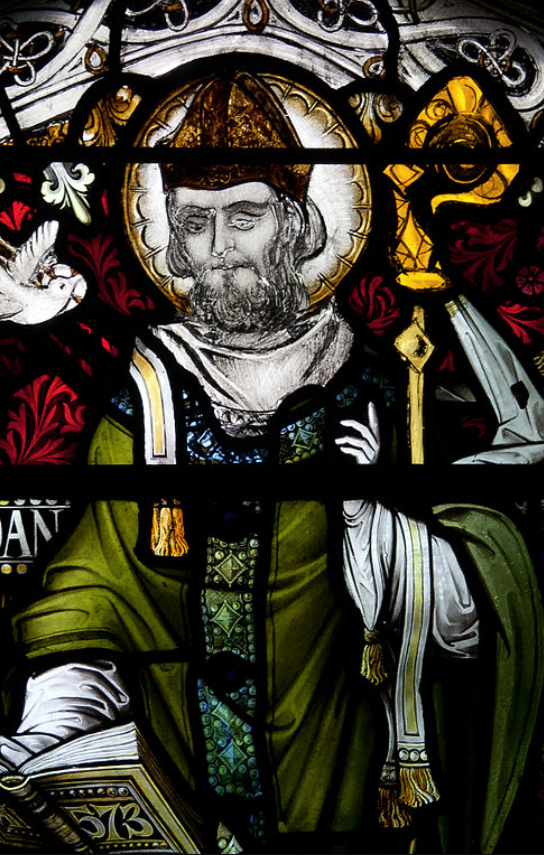
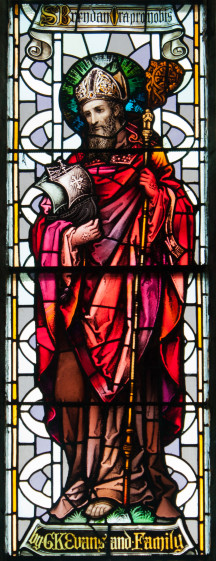
Saint of the Day – 29 November – Saint Brendan of Birr (Died c 573) Abbot known as “Prophet of Ireland,” Founder of the Monastery at Birr in Central Ireland. Brendan is one of the Twelve Apostles of Ireland and a friend and disciple of Saint Columba. Born in Ireland and died in c 573 at Birr, Ireland of natural causes. Patronage – Birr, Ireland. Also known as – Brendan mac Nemain, Brendan of Biorra, Brendan the Elder, (to distinguish him from his contemporary and friend, St Brendan the Navigator of Clonfert.) Prophet of Ireland, Brandan, Brandon, Breandan, Brenainn, Brendanus. Additional Memorial – 6 January, as one of the Twelve Apostles of Ireland.
In early Christian Ireland the druid tradition collapsed with the spread of the new faith. Study of Latin learning and Christian theology in monasteries flourished. Brendan became a pupil at the Monastic school at Clonard Abbey. During the sixth century, some of the most significant names in the history of Irish Church studied at the Clonard Monastery. It is said that the average number of scholars under instruction at Clonard, was 3,000. Twelve students who studied under Saint Finian became known as the Twelve Apostles of Ireland; Brendan of Birr was one of these.
Brendan of Birr is said to have been of a noble Munster family. It was at Clonard that Brendan became a friend and companion of St Kierán and St Brendan the Navigator.
Brendan founded the Monastery at Birr in central Ireland in about 540, serving as its first Abbot. He emerges from early Irish writings as a man of generous hospitality with a reputation for sanctity and devotion who was an intuitive judge of character. He was considered one of the chief prophets of Ireland. This is evidenced both in his title (‘Prophet of Ireland’) and by his attendance at the Synod of Meltown, in which Saint Columba was brought to trial over his role in the Battle of Cúl Dreimhne in 561. Brendan spoke on Columba’s behalf, prompting the assembled clerics to sentence Columba with exile, rather than excommunication. His friendship and support for Columba resulted in important connections between Birr and the Columban foundations. An adviser of Columba said that the saint saw a vision of Brendan’s soul being carried away by angels after his death. He thereupon ordered a mass to be said in his honour.
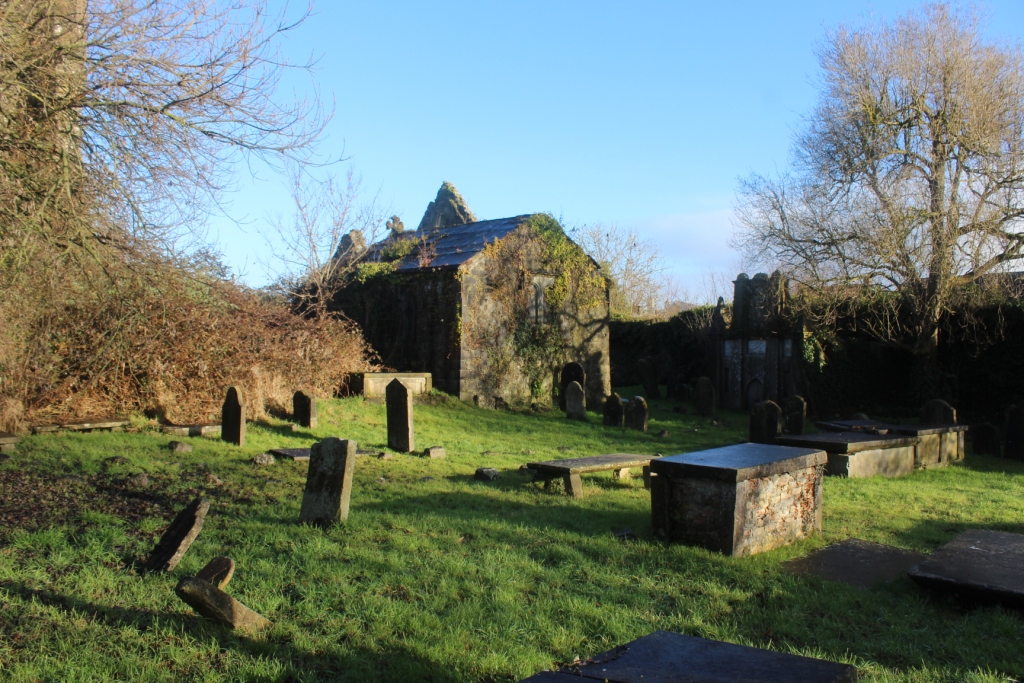
Ruins of Birr Monastery
Brendan’s monastery at Birr was later to produce the MacRegol Gospels, which are now housed at the Bodleian Library in Oxford.
Most glorious ascetic and chief of Ireland‘s Prophets, O Father Brendan, thou wast a bright beacon in the western isle, guiding many to salvation. At thy heavenly birthday, the Angels rejoiced and miraculously announced their joy to our Father Columba. The prayers of the righteous avail much for us sinners. Wherefore O Saint, pray to God for us that He will find us a place in the Mansions of the Blest. Amen Hymn of Saint Brendan of Birr
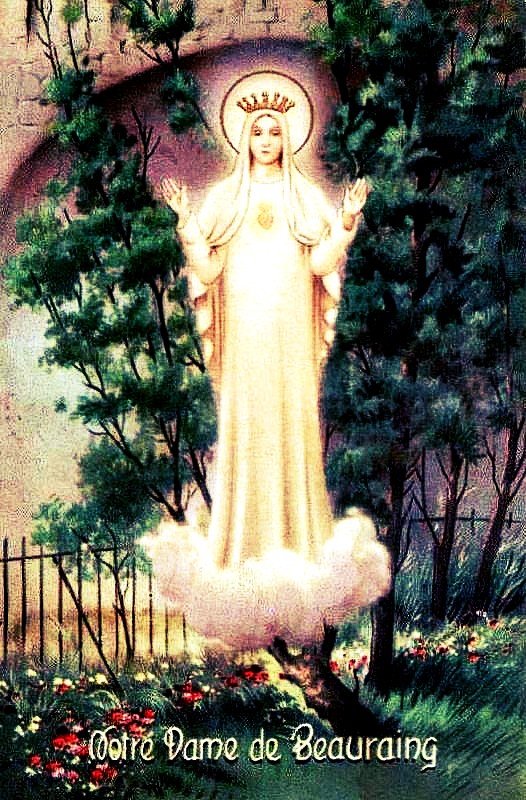
Notre Dame au Coeur d’Or / Our Lady of the Golden Heart of Beauraing, Belgium (1932) – 29 November:
On the evening of 29 November 1932, five children, fun-loving, mischievous playmates, ranging from the fifteen to nine years of age, were walking toward the railway viaduct in the Vallon part of Belgium, in the simple and quiet village of Beauraing. Suddenly one of them exclaimed that there was a bright light moving at the viaduct. First they thought these the lights of a moving car. Very soon, however, they discovered the figure of a lady and they instantly recognised that this could be nothing less than the Blessed Virgin.
Nobody wished to believe what the children related. But the next evening they came home with the same story. The village laughed at them and their parents were angry. The next time the children related with more details that they had seen a lady who was more beautiful than her Statues, dressed in pure white, with a crown of golden rays on her head.
On 2 December the children asked the lady some questions; she, smiling, confirmed that she was the Immaculate Virgin and demanded they “always be good.” As the visions continued, more people came to Beauraing, including police officials, doctors and psychologists. There were thirty-three apparitions in all. On 29 December the children related, the Blessed Virgin revealed, on her breast, a heart of gold. The next evening she asked for more prayers. On 1 January 1933, Our Lady of Beauraing reiterated this request and told Fernande, the fifteen year old girl:
“If you love my Son and love me, then sacrifice yourself for me.”
The Belgian Bishops forbade any processions or cults and started an investigation that was to last for ten years, during which serious objections were brought against the children. Finally, in 1943, a Decree was issued by the Bishop of Namur authorising the cult of Our Lady of Beauraing. On 18 July 1947, Msngr. Charue personally received the Papal blessings for the Sanctuary dedicated to Our Lady of Beauraing – the Virgin of the Golden Heart. This devotion has since taken on new and ever increasing proportions. The final approbation was given on 2 July1949. The cures of Miss Van Laer and Mrs. Acar were declared miraculous by a Decree given by Msgr. Charue. Many conversions and graces have been obtained through the intercession of Our Lady of Beauraing. The editor of the Belgian Communist paper, “Le Drapeau Rouge” (the Red Flag), was one of the first to become Catholic at the Shrine of Our Lady of Beauraing.
All Saints of the Seraphic Order (Franciscan): the Church celebrates the many Franciscan saints who followed in the footsteps of St Francis. It is a special day for all Franciscans to celebrate the feast of ‘All the Saints of the Seraphic Order.’ Also on this day in 1223, the final Rule of life for Franciscan Friars was approved. To commemorate this and all the saintly examples produced in the Franciscan Order, on this day all the saints of the Seraphic order are remembered at Franciscan Churches.
St Blaise of Veroli St Brendan of Birr (Died c573) Abbot St Demetrius of Veroli Blessed Denis of the Nativity OCD (1600-1638) Priest Martyr Bl Edward Burden
Bl Frederick of Ratisbon Bl George Errington St Hardoin of Brittany St Illuminata of Todi St James of Saroug Bl Jutta of Heiligenthal St Paphnutius of Heracleopolis St Paramon St Philomenus of Ancyra St Radbod of Utrecht Bl Redemptorus of the Cross St Sadwen of Wales St Saturninus of Rome St Saturninus of Toulouse St Sisinius of Rome St Walderic of Murrhardt Bl William Gibson Bl William Knight
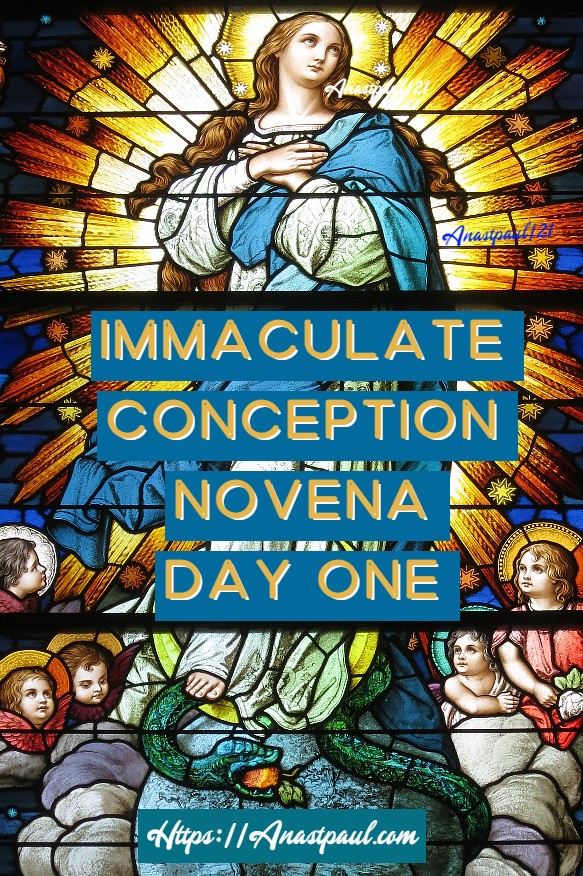
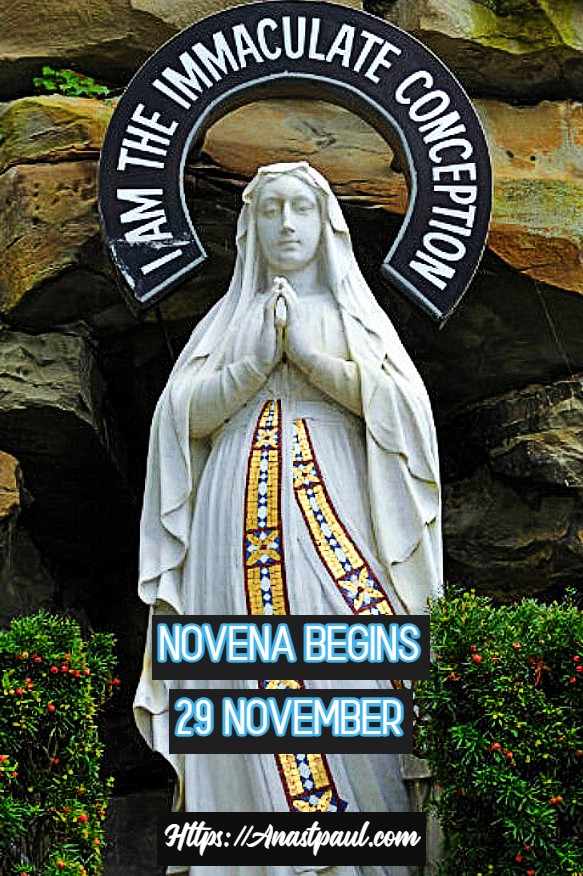
Novena in honour of the Immaculate Conception Begins 29 November Feast 8 December
The Dogma was promulgated by Blessed Pius IX in 1854 in the Bull Ineffabilis Deus. This Dogma is rejected by all Protestants including the Orthodox – another reason why we cannot interact with these the way some do and the Vatican II church endorses.
Let us Pray to our Mother, the Immaculate and Blessed Virgin Mary, conceived without sin.
Thought for the Day – 28 November – Meditations with Antonio Cardinal Bacci (1881-1971)
The Blessedness of the Poor
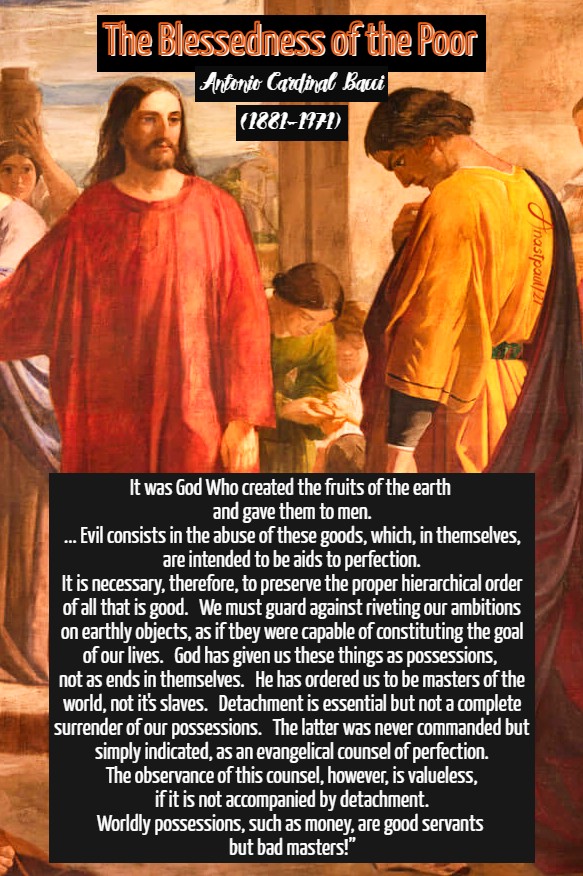
“Blessed are the poor in spirit” said Jesus, “for theirs is the kingdom of heaven” (Mt 5:3). We should take care to have a proper understanding of the meaning of these words. Catholic perfection does not actually consist in being poor. A man can be poor, even voluntarily so, without being vittuous and without receiving any blessing thereby. “Christian perfection,” explains St Thomas Aquinas, “does not especially consist in voluntary poverty, which is only an instrument of perfection. Therefore, it cannot be said that where there is greater poverty there is greater sanctity. The highest perfection can co-exist with great wealth, for we read that Abraham was wealthy and God said to him, ‘Walk in my presence and be perfect‘” (Summa Theologiae, II-II, q 185, a 6 ad 1).
Perfection then, does not consist in poverty as such but, in detachment from worldly possessions. Whether we are rich or poor, we must have this detachment, if we wish to be true followers of Christ. It was God Who created the fruits of the earth and gave them to men. When He had created them, He was pleased with His Work and declared, that all things were good. Evil consists in the abuse of these goods, which, in themselves, are intended to be aids to perfection. It is necessary, therefore, to preserve the proper hierarchical order of all that is good. We must guard against riveting our ambitions on earthly objects, as if tbey were capable of constituting the goal of our lives.
God has given us these things as possessions, not as ends in themselves. He has ordered us to be masters of the world, not it’s slaves. Detachment is essential but not a complete surrender of our possessions. The latter was never commanded but simply indicated, as an evangelical counsel of perfection. The observance of this counsel, however, is valueless, if it is not accompanied by detachment. Worldly possessions, such as money, are good servants but bad masters!”
Quote/s of the Day – 28 November – The Memorial of St Pope Gregory III (Died 741
“The only true riches are those that make us rich in virtue. Therefore, if you want to be rich, beloved, love true riches. If you aspire to the heights of real honour, strive to reach the Kingdom of Heaven. If you value rank and renown, hasten to be enrolled in the heavenly court of the Angels.”
St Pope Gregory III (Died 741)
“When God is our strength, it is strength indeed; when our strength is our own, it is only weakness.”
St Augustine (354-430) Father and Doctor of the Church
One Minute Reflection – 28 November – The First Sunday of Advent – Readings: Jeremiah 33: 14-16; Psalm 25: 4-5, 8-10, 14; First Thessalonians 3: 12 – 4: 2; Luke 21: 25-28, 34-36
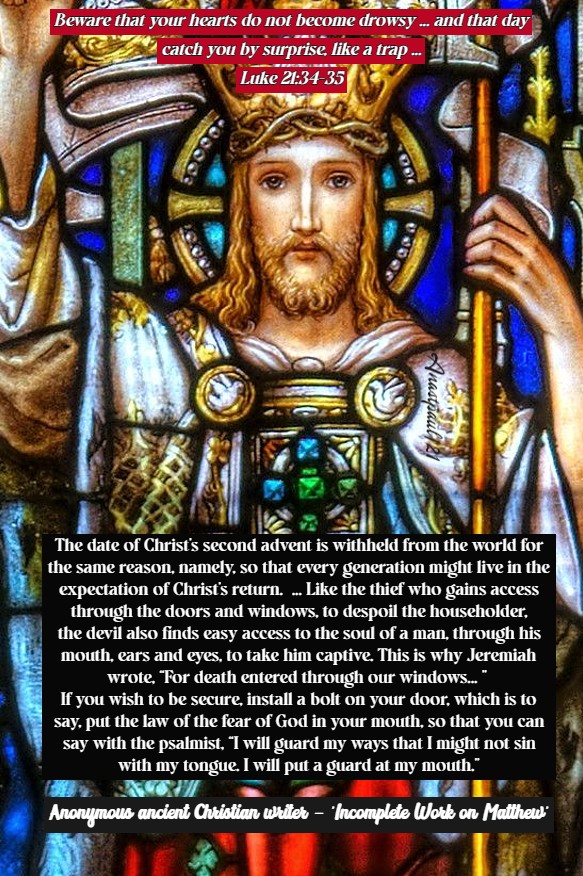
“Beware that your hearts do not become drowsy, from carousing and drunkenness and the anxieties of daily life and that day catch you by surprise, like a trap.”- Luke 21:34-35
REFLECTION – “Why is the date of an individual’s death hidden from him? Clearly, it is so that he might always do good, since he can expect to die at any moment.
The date of Christ’s second advent is withheld from the world for the same reason, namely, so that every generation might live in the expectation of Christ’s return. This is why when His disciples asked Him, “Lord, will you restore the kingdom to Israel at this time?” Jesus replied, “It is not for you to know the times and the seasons, which the Father has established by his authority. But know this, that if the head of the household had known the hour at which the thief would arrive, he would have been vigilant and would never have allowed his house to be burglarised.”
The head of the household represents the human soul, the thief is the devil, the house is the body, the doors are the mouth and ears and the windows are the eyes. Like the thief who gains access through the doors and windows, to despoil the householder, the devil also finds easy access to the soul of a man, through his mouth, ears and eyes, to take him captive. This is why Jeremiah wrote, “For death entered through our windows .. ”
If you wish to be secure, install a bolt on your door, which is to say, put the law of the fear of God in your mouth, so that you can say with the psalmist, “I will guard my ways that I might not sin with my tongue. I will put a guard at my mouth.” – Anonymous ancient Christian writer. The ancient work is known as the ‘Incomplete Work on Matthew’ – (Homily 51)
PRAYER – Holy God, Father Almighty, grant we pray, by the true Light of the world, Your only-begotten Son, our Lord Jesus Christ, Who enlightens all men for their salvation, give us grace to herald His coming, by preparing the ways of justice, love and peace. May the Holy Spirit fill us with all His gifts and virtues, so that we may await the coming of Your Son, guided by His Light and may Mary, the blessed Virgin, accompany us, guarding and giving us her prayerful help. Through Christ our Lord, with the Holy Spirit, God forever, amen.
Our Morning Offering – 28 November – Th4 First Sunday of Advent
Come, Sun and Saviour 8th Century Catholic Advent Prayer/Hymn
Come, Sun and Saviour, to embrace our gloomy world, its weary race. As groom to bride, as bride to groom, The wedding chamber, Mary’s womb. At Your great Name, O Jesus, now All knees must bend, all hearts must bow, All things on earth with one accord, Like those in heaven, shall call You Lord. Come in Your holy might, we pray, Redeem us for eternal day. Defend us, while we dwell below, From all assaults of our dread foe. Amen
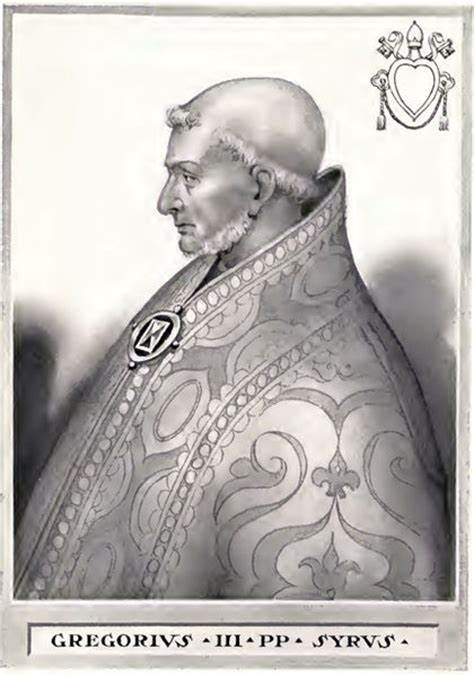
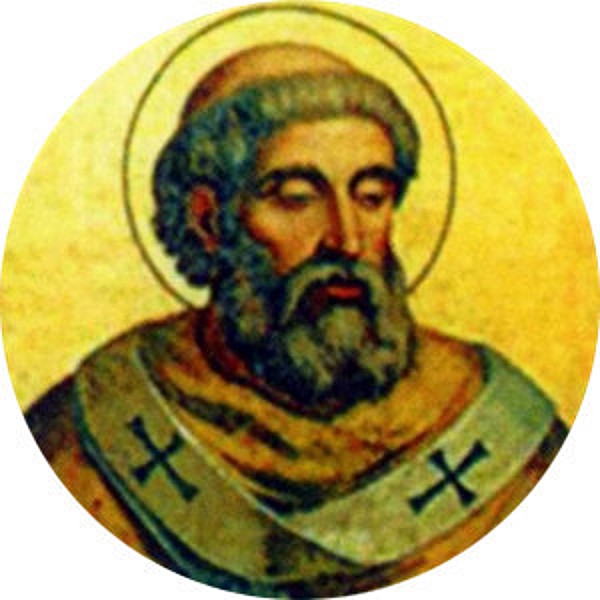
Saint of the Day – 28 November – Saint Pope Gregory III (Died 741) Bishop of Rome 11 February 731 until his death on 28 November 741. Born in Syria and died on 28 November 741 of natural causes.
The Roman Martyrology states: “St Rome, the blessed Pope Gregory III, who departed for Heaven with a reputation for great sanctity and miracles.“
Beside the fact that Gregory was a Priest at Saint Crisogono Church in Rome and that he was the son of a Syrian named John nothing else is known about his life prior to being elected the 90th pope. He was elected by popular acclamation in 731, during the funeral procession of his predecessor, because of his reputation for virtue and learninge.
Gregory’s Pontificate, like that of his predecessor, was troubled by the iconoclastic controversy (the deliberate destruction of religious icons and other symbols) in the Byzantine Empire.
Upon his accession as Pope, Gregory immediately appealed to the Byzantine Emperor Leo III, to moderate his position on the Iconoclastic controversy. When Pope Gregory’s representative was arrested on the orders of the Emperor, Gregory called a Synod in November 731, which condemned Iconoclasm outright. Leo responded by trying to bring the Pope under control, although the fleet he sent to enforce the imperial will, was shipwrecked in the Adriatic Sea. Failing, he appropriated Papal territories in Sicily and Calabria, transferring ecclesiastical jurisdictions in the former Praetorian Prefect, to the Patriarch of Constantinople. His attempt to force the Duke of Naples to enforce an imperial decree to confiscate [apal territory in the duchy failed, as the Duke was supportive of the Pope’s stand.
Pope Gregory demonstrated his opposition to Iconoclasm by emphasising his veneration of icons and relics. He repaired numerous beautiful Churches, adorning them with icons and images of Jesus Christ, the Virgin Mary and many Saints. He ordered, in the heart of St. Peter’s Basilica and Iconostasis, (an iconostasis is a wall of artworks and religious paintings, used to separate the Nave from the Sanctuary) situated between six onyx and marble columns. He also built a new oratory in St. Peter’s Basilica, which housed relics of several Saints. He was also an enthusiastic supporter of monasticism – he established the Monastery of S. Chrysogonus and rebuilt the Hospice of Saints Sergius and Bacchus near St Peter’s.
Pope Gregory also promoted the Church in northern Europe. He supported the continuing mission of St. Boniface in Germany, elevating him to the rank of Archbishop in 732. In 732, Gregory banned the consumption of horsemeat, both domestic and wild, comparing it as an “abomination” since it was associated with pagan ritual feastings. He was very conscious of the ongoing Lombard threat but was unsuccessful at stopping their advance. He also undertook and completed, the restoration of the Walls of Rome.
Pope Gregory III died on 28 November 741. He was succeeded by Pope Zachary and was buried in St Peter’s Basilica, in the oratory he had built at the start of his Pontificate.






























You must be logged in to post a comment.