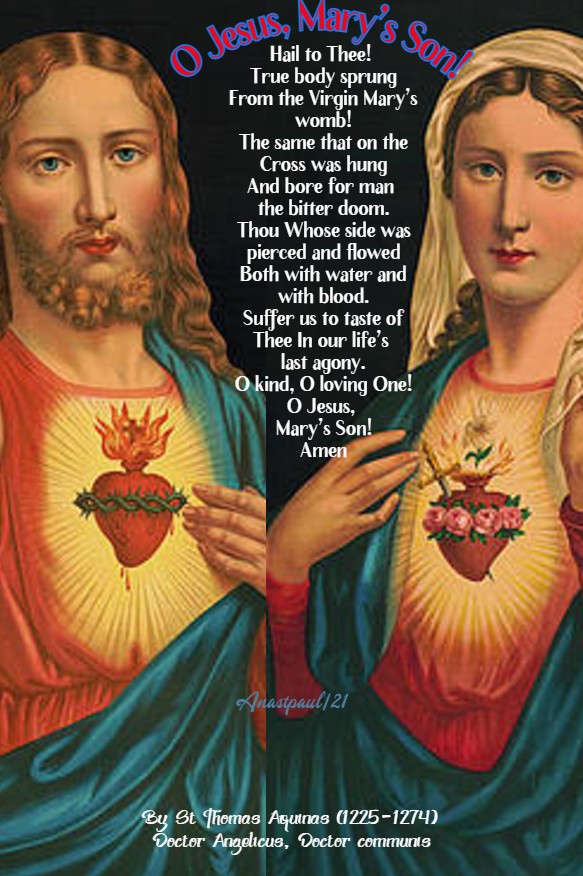
Quote/s of the Day – 9 June – “Month of the Sacred Heart” – The Memorial of St Ephrem (306-373) Father & Doctor of the Church, , “The Harp of the Holy Spirit!”
“Scripture brought me to the Gate of Paradise and the mind stood in wonder as it entered.”
“When you begin to read or listen to the Holy Scriptures, pray to God thus: “Lord Jesus Christ, open the ears and eyes of my heart so that I may hear Thy words and understand them and may fulfill Thy will.” Always pray to God like this, that He might illumine your mind and open to you, the power of His words. Many, having trusted in their own reason, have turned away into deception.”
“Have mercy, O Lord, on our children, In our children, Call to mind Your childhood, You who were a child. Let them that are like Your childhood Be saved by Your grace.”
O Lord and Master of My Life By Saint Ephrem (306-373) Father & Doctor of the Church
O Lord and Master of my life, give me not a spirit of sloth, vain curiosity, lust for power and idle talk. But give to me, Thy servant, a spirit of soberness, humility, patience and love. O Lord and King, grant me to see my own faults and not to condemn my brother. For blessed art Thou to the ages of ages. Amen O God, be merciful to me a sinner. O God, cleanse me, a sinner. O God, my Creator, save me and for my many sins forgive me!
One Minute Reflection – 9 June – “Month of the Sacred Heart” – Readings: First: Second Corinthians 3: 4-11, Psalm: Psalms 99: 5, 6, 7, 8, 9m Gospel: Matthew 5: 17-19
“I have come, not to abolish but to fulfil.” … Matthew 5:17
REFLECTION – “Do you want to know how Jesus, far from abolishing the law and the prophets, comes rather to confirm and to complete them? Where the prophets are concerned, this happens first of all ,when He confirms, through His works, what they had announced. This is where the expression comes from, constantly repeated in St Matthew: “That the word of the prophets might be fulfilled” …
Where the law is concerned, Jesus fulfilled it in three ways. First of all, by not omitting any of its legal requirements. He told John the Baptist: “We must do this if we would fulfil all of God’s demands,” (Mt 3:15). To the Jews He said: “Can any of you convict me of sin?” (Jn 8:46) … In the second place, He fulfils it because He wanted to submit Himself to it for our salvation. Oh marvel! By submitting to it, He communicated to us, too, the grace of fulfilling it! St Paul teaches us this when he says: “Christ is the end of the law. Through him, justice comes to everyone who believes,” (Rom 10:4). He also says that the Saviour condemned sin in the flesh “so that the just demands of the law might be fulfilled in us who live not according to the flesh,” (Rom 8:4.) He also says: “Are we then abolishing the law by means of faith? Not at all! On the contrary, we are confirming the law,” (Rom 3:31).
For the law aimed at making a person righteous but it didn’t have the strength do so so; then Christ came, He who is the end of the law and He showed us the way which leads to righteousness, that is to say – faith. Thus He fulfilled the law’s intention. The letter of the law could not justify the sinner; faith in Jesus Christ will justify him. That is why He can say: “I have not come to abolish the law.”
Now, if we look more closely, we can perceive a third way of fulfilling the law. What is this? It consists in the very precepts, which Christ had to give; far from overturning those of Moses, they are their just consequence and their natural complement.” – St John Chrysostom (345-407) Bishop of Constantinople, Father and Doctor of the Church – Homilies on St. Matthew 16
PRAYER – Shed your clear light on our hearts, Lord, so that walking continually in the way of Your commandments, we may never be deceived or misled. May the Mother of Our God and our Mother, be at our side and guide our way. We make our prayer through our Lord Jesus Christ in the unity of the Holy Spirit, one God forever and ever, amen. All praise, honour and glory to the divine Heart of JESUS.50 Days Indulgence, Once a day, Raccolta, 168 Pope Leo XIII, 13 June 1901.
Our Morning Offering – 9 June – “Month of the Sacred Heart”
Be my Strength, O Sacred Heart! By St Margaret Mary Alacoque (1647-1690) Visionary of the Sacred Heart
O Sacred Heart of Jesus, I fly to You, I unite myself with You, I enclose myself in You! Receive my call for help, O my Saviour, as a sign of my horror of all within me, contrary to Your holy love. Let me die rather a thousand times, than consent to sin against You! Be my strength, O God – defend me, protect me. I am Yours and desire forever to be Yours! Amen
Saint of the Day – 9 June – Blessed Anna Maria Taigi O.SS.T. (1769-1837) Secular Religious of The Order of the Most Holy Trinity and of the Captives – known as the Trinitarians, Married laywoma, Mystic. Born on 29 May 1769 at Siena, Italy as Anna Maria Gianetti and died on 9 June 1837 at Rome, Italy of natural causes. Patronages – Housewives,Mothers,Victims of verbal abuse, Victims of spousal abuse,Families,Trinitarian tertiaries. Also known as – Anne Marie Gesualda Antonia Taigi, Anna Maria Taigi, Anne Marie Gianetti. Her body incorrupt.
Hailing from Siena, Italy, Taigi’s family moved to Rome when her pharmacist father needed to find employment after financial ruin. Poverty, although unchosen then, later in life would be embraced as one of her defining characteristics.
Unsure of her vocation as a young woman, Taigi considered religious life but because she was too ambivalent to it, a confessor suggested marriage. Her future husband’s path crossed hers while both were engaged in service work in the homes of Italian nobility. Domenico Taigi was a rough and tumble man, prone to making life difficult for those around him in word and deed. And his wife got the brunt of his temperament. But Taigi softened him, showing love when least expected. A hardened heart, almost assuredly will melt over time from love’s gentleness — such as an unwarranted smile. Taigi models how one takes seriously the marriage vows as a means to one’s own sanctification and growth in holiness.
This self-denial for which Anna Maria became known was not always what defined her. In the early years of their marriage, her life was marked by vanity and luxury. It has been disputed that she engaged in an adulterous affair.
But a conversion experience led Anna Maria to embrace a Gospel way of life that came to define her life. Baptised the day after her birth, Anna Maria’s faith had not blossomed until after her marriage. A chance encounter with a Priest in S. Peter’s Square prompted her to subsequently make a fruitful Confession, in which she renounced the life of worldly priorities which she had been living. That night, Taigi had been moved by an inner voice that said God desired more from her. Her husband described years later, how, as a first step in this new life, his wife “took to wearing the plainest possible clothes,” noting ,that, in obedience to her spouse, she asked for his consent. He gave it completely, he said, for he saw “she was entirely given to the love of God.”
All this had kept her from giving her all to Christ, which took place while in prayer before a Crucifix. She heard Jesus ask from the Cross, “What is your wish? To follow Jesus poor and naked and stripped of all, or to follow Him in His triumph and glory? Which do you choose?” To which she replied, “I embrace the Cross of my Jesus. I will carry it like Him in pain and ignominy. I wait at His hands, triumph and glory in the hereafter.”
Single-minded dedication to Christ, defined the rest of Anna Maria’s life, which was a constant display of the closeness to Christ she experienced in the Sacrament. She worked to serve Christ in the sick and poor as a Third Order Trinitarian ,while keeping up with the duties of a wife and mother. A gift of prophesying the future was the spiritual fruit of visions and ecstasies — all the more incredible that this came to an ordinary housewife, not the likes of a cloistered nun. Her prophetic abilities caused her to become sought after by many notable figures, including Napoleon’s Mother and the Pope. Anna Maria became acquainted with Cardinal Luigi Ercolani, and Giovanni Maria Mastai Ferretti ,who would become Blessed Pope Pius IX. Pope Pius VII often asked St Vincent Strambi , the Priest who had assisted her in her convesion, how she was doing and would send his blessings to her. Pope Leo XII and Giuseppe Bartolomeo Menocchio both held her in high esteem Anna Maria composed a prayer to the Blessed Virgin Mary. Pedicini took this prayer to Pius VII who, in a rescript on 6 March 1809, granted an indulgence. For 100 days, those who recited it, a plenary indulgence once a month on the usual conditions.
Anna Maria attended the 1825 Jubilee which Pope Leo XII had summoned. She knew of the latter Pope’s ill health. Before he died, in 1829, she saw the morning sun and prayed for him. She heard a heavenly voice say, “Arise and pray. My Vicar is on the point of coming to render an account to Me.” Pope Leo’s successor Pope Pius VIII lived in the shadow of ill health. Anna Maria foresaw his death and prayed for his soul as she did with his predecessor. She had predicted the pontificate of Pius VIII would be a short one.
She successfully foresaw that Cardinal Bartolomeo Alberto Cappellari would be elected as Pope Gregory XVI. Before Pius VIII died, Anna Maria went to San Paolo fuori le Mura. When Cappellari arrived she fixed her eyes on him When she was asked why she was doing this, she frankly responded, “That is the future Pope.”
On 24 October 1836, Anna Maria fell ill. She was confined to her bed and would never rise again. On 2 June 1837, her fever slightly declined but a few days later, her fever rose again. On 5 June she bid farewell to those who visited her bedside. On 8 June she received the last rites of Extreme Unction.
Ana Maria received the Viaticum and the Anointing of the Sick from the local curate. On 9 June 1837, at 4 a.m., she died. Pedicini sent a letter at once to Cardinal Carlo Odescalchi to inform him of her death. Anna Maria’s remains were exposed until 11 June in the Church of Santa Maria in Via Lata. She was buried at Campo Verano where, on the orders of Pope Gregory XVI, her remains were enclosed in a leaden sepulcher with seals affixed to it. Cardinal Odescalchi asked her Confessor to compile all documents so that her biography could be published.
Upon her death in 1837, the future St Vincent Pallotti praised her holiness. This was reiterated by Venerable Bernardo Clausi who said, “If she is not in heaven, there is no room there for anybody.” She was Beatified by Pope Benedict XV on 30 May 1920.
Madonna della Fontenuova / Our Lady of the Plain , Monsummano Terme, Pistoia, Tuscany, Italy, 1573 – 9 June
In the year 500, in the area where now stands the Church, there were only swamps, forests and meadows, an area used only by shepherds on the slopes of Monsummano Alto, with streets that wind their way through marshes and grassy fields., a place unlikely for a town to develop.
But what nature seems to deny was achieved, by a sudden and unexpected intervention of Our Lady. On 9 June 1573, in fact, Jacopina Mariotti, a shepherdess sweet and mild, as well as pious, simple and modest, prayed in front of one of the many pictures painted in fresco on the wall,s that dot the streets of the plan. After the prayer, she realised that she had lost her flock. Her crying moved the Virgin Mary who, according to a documented records, appearing to Jacopinam and showed her where her flock had wandered.
In addition, the Blessed Mother asked Jacopina to go to the Priest of the Church of the Castle, to sask him to build a Church in her honour on the spot where she had appeared. Devotion to Our Lady of the Plain grew with great fervour and faith. Just two months after the first event, local authorities, agreeing with the will of the people to build a Chapel to Our Lady of the Plain and allocated for this purpose, the many offerings of pilgrims from all over the Valdinievole area.
Another appearance, this time more crucial and decisive for the erection of the Shrine and the Marian movement resulting therefrom, occurred on10 June 1602 and was witnessed by the Priest of Monsummano, Alto Simone Casciani. On 7 July of the same year, during the celebration of the Mass, aftera long drought, the rain began to pour with abundance. The people attributed this long needed rain to their novena to Our Lady of the Plain. .
From that day, the Madonna del Piano was called: Our Lady of Fontenova. The explosion of devotion to Mary, already significant after the events of 9 June 1573, became even greater, requiring the intervention of the Grand Duke of Tuscany, Ferdinando I de ‘Medici. He ordered that the building work of the Marian Shrine proceed with speed, the first stone was laid 30 December 1602. On 13 February 1607 the Grand Duke of Tuscany approved the project for the construction of the Hostel for pilgrims to be administered by the Sanctuary.
On 8 June 1608 Cosimo de ‘Medici in fulfillment of a vow made by his father Ferdinand, crowned the Blessed Mother in a precious and costly diadem, finely crafted and carved. Experts consider it the best and most intricate example of the art of the period. This Crown was placed on the head of the Virgin Mary by the Vatican Chapter in 1782. (Apologies for this Italia translation).
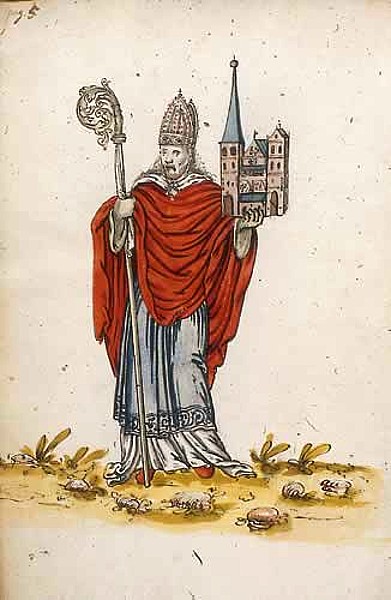
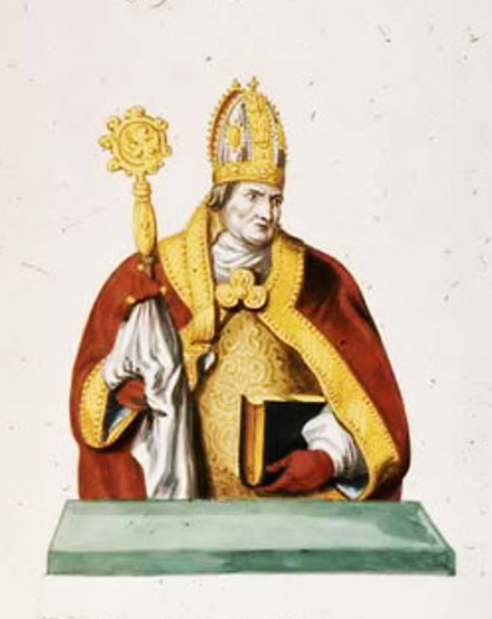
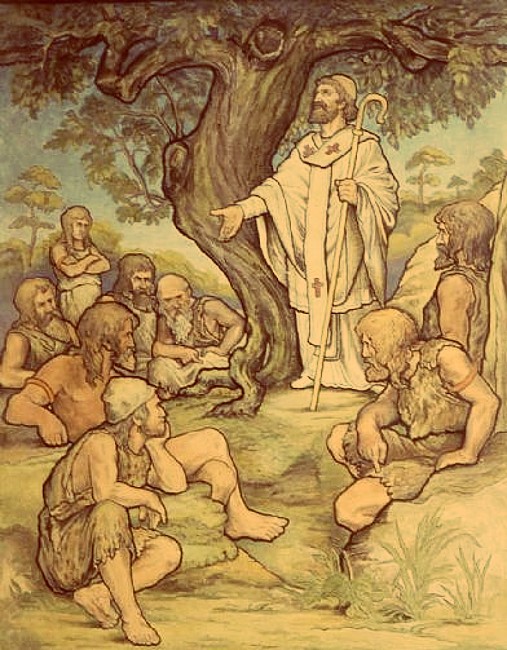
Bl Alexander of Kouchta St Alexander of Prusa Blessed Anna Maria Taigi O.SS.T. (1769-1837) Religious of the Secular Trinitarians, Married laywoma, Mystic St Arnulf of Velseca St Baithen of Iona
St Comus of Scotland St Cumian of Bobbio St Cyrus Bl Diana d’Andalo St Diomedes of Tarsus St Felicianus Bl Henry the Shoemaker St Jose de Anchieta Bl Joseph Imbert St Julian of Mesopotamia St Luciano Verdejo Acuña Bl Luigi Boccardo St Maximian of Syracuse St Pelagia of Antioch St Primus St Richard of Andria Bl Robert Salt Bl Sylvester Ventura St Valerius of Milan St Vincent of Agen — Martyrs of Arbil – 5 saints: Five nuns who were martyred together in the persecutions of Tamsabur for refusing to renounce Christianity for sun-worship – Amai, Mariamne, Martha, Mary and Tecla. They were beheaded on 31 May 347 at Arbil, Assyria (in modern Kurdistan, Iraq).
Thought for the Day – 8 June – “Month of the Sacred Heart” – Meditations with Antonio Cardinal Bacci (1881-1971)
Our Response to the Love
of the Sacred Heart
“We owe an immense debt of satisfaction and expiation to the Sacred Heart of Jesus, for the many sins with which we have repaid Hs graces. Let us picture the divine Redeemer, kneeling in the Garden of Gethsemane, while His divine vision pierces the centuries and sees the sins and atrocities of men. He sees the offences of each one of us! He groans and perspires blood, then he offers Himself as an innocent victim for us all. This was an act of infinite love, which cost the life of the God-Man in the most atrocious way.
What must our reaction be? Shall we continue to sin and remain cold? The Passion of Jesus demands our participation in His sufferings, not only in reparation for our own sins but also, in expiation of the sins of others. Let us look around us and see how many men are so indifferent and wicked, as if Jesus had never come to save us, had never shed His Precious Blood for us and, had never loved us with an infinite love. At this spectacle, the Saints inflicted penances on themselves, in order to offer to Jesus, a return of love and reparation for sin.”
One Minute Reflection – 8 June – Readings: First: Second Corinthians 1: 18-22, Psalm: Psalms 119: 129, 130, 131, 132, 133, 135, Gospel: Matthew 5: 13-16
“You are the salt of the earth” – Matthew 5:13
REFLECTION – “Salt is useful for so many purposes in human life! What need is there to speak about this? Now is the proper time to say why Jesus’ disciples are compared with salt. Salt preserves meats from decaying into stench and worms. It makes them edible for a longer period. They would not last through time and be found useful without salt. So also Christ’s disciples, standing in the way of the stench that comes from the sins of idolatry and fornication, support and hold together, this whole earthly realm.” – Origen Adamantius (c 185-253) Priest, Theologian, Exegist, Writer, Apologist, Father – (Fragment 91)
PRAYER – Holy Almighty Father, we pray that we may be the light of Your divine Son and the salt of the earth. Help us, we pray, to ever strive to be both the light and salt of the earth and may the protection of Our Lady of Grace, first disciple of Jesus and model, be of help to believers who live every day their vocation and mission in history. May our Mother help us, to let ourselves always be purified and illumined by the Lord, to become in turn “salt of the earth” and “light of the world. Through the Sacred Heart of Jesus in the unity of the Holy Ghost, God now and for all eternity, amen. MAY the HEART of JESUS be loved everywhere. 100 Days, Indulgence Once a day – Bl Pope Pius IX 23 September 1860
Our Morning Offering – 08 June – “Month of the Sacred Heart”
Daily Offering to the Sacred Heart By St Therese of the Child Jesus of Lisieux (1873-1897) Doctor of the Church
O my God! I offer You all my actions of this day for the intentions and for the glory of the Sacred Heart of Jesus. I desire to sanctify every beat of my heart, my every thought, my simplest works, by uniting them to His infinite merits and I wish to make reparation for my sins by casting them into the furnace of His Merciful Love. O my God! I ask of You for myself and for those whom I hold dear, the grace to fulfil perfectly Your Holy Will, to accept for love of You the joys and sorrows of this passing life, so that we may one day be united together in heaven for all Eternity. Amen
Saint of the Day – 8 June – Saint William of York (Died 1154) Archbishop of York, Monk. Also known as William FitzHerbert, William FitzHerbert of York, William of Thwayt.
Born William FitzHerbert in York, William was the son of Herbert of Winchester, Chancellor and Treasurer of King Henry I. Thus born into a powerful family in 12th-century England, William seemed destined for great things. His uncle was next in line for the English throne—though a nasty dynastic struggle complicated things. William himself faced an internal Church feud.
He was elected as the Archbishop of York in 1140. His selection was challenged by reformers, especially a group of Cistercians and William was accused of simony, sexual misconduct and being unduly influenced by his connections to the Royal Court.
The Vatican investigated and Pope Innocent cleared him of all charges,and confirmed him as Archbishop on 26 September 1143, 3 years of his election. However, the charges resurfaced a few years later under Pope Eugene III, a Cistercian; Eugene suspended William from his See and in 1147 removed him as Archbishop, replacing him with the Cistercian Henry Murdac, Abbot of Fountains’ Abbey. Some of William’s supporters took to the streets to defend him and during a riot, they attacked and burned a section of the Monastery of Fountains’ Abbey. William, however, retired to Winchester and became a Monk, noted for his austerities and active prayer life.
In 1154, in the reign of Pope Anastasius IV, William was called from his seclusion and again became the Archbishop of York. When he entered the City that Spring after years of exile, he received an enthusiastic welcome. Within two months, however, he was dead, probably from poisoning believed to be in the sacramental wine. One of William’s Clerks accused Osbert de Bayeux, an Archdeacon of York and Osbert was summoned before the King to be tried at the Royal Court. But the King died before the trial could take place ad it seems to have never occurred.
William was buried at York Cathedral. A few months of his death, miracles were attributed to his intervention and a sweet smell came from his tomb when it was damaged during a fire. Nor was the body decayed or burnt in the fire. Pope Honorius III then ordered an investigation into the miracles. In 1226, he was Canonised in Rome by Pope Honorius III on 18 March 1226, just 73 years after his death.
Notre-Dame du Dimanche/ Our Lady of Sunday, Saint-Bauzille-de-la-Sylve, l’Hérault, France (1873) – 8 June:
An apparition of the Blessed Virgin Mary to Auguste Arnaud on 8 June 1873 and 8 July 1873. Arnaud was married, the father of two,and a winemaker who regularly skipped Sunday Mass to work his vineyards. Our Lady appeared to him in the vineyard on 8 June and reminded him:
“You must not work on Sundays.”
In honour of this blessing, Arnaud placed a Cross and a Statue of Mary at the site in the field. Later a little Chapel in honour of the Virgin was built there too.
On 8 July Our Lady appeared again, this time to both Auguste and his neighbours who had gathered there and told them again:
“You must never work on Sunday! Blessed are those who believe.”
In 1876, the Diocesan Bishop, Bishop De Cabrières, after the establishment of a commission of inquiry and having questioned several times the seer, he recognised the supernatural origin of the apparitions.
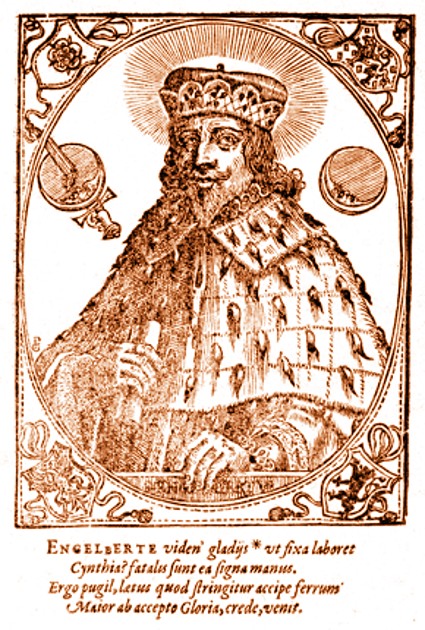
St Anne Mary Taigi St Bron of Cassel St Calliope St Clodulf of Metz Bl Engelbert of Schäftlarn St Eustadiola of Moyen-Moutier St Fortunato of Fano St Gildard of Rouen * Twin Brother of St Medard below Bl Giorgio Porta Bl Giselbert of Cappenberg St Heraclius of Sens Bl István Sándor
The Roman Martyrology states of St Medard and his twin brother, St Gildard, today: “At Soissons, in France, the birthday of St Medard, Bishop of Novon, whose life and precios death are illustrated by glorious miracles – at Rouen, St Gildard, Bishop, twin brother of St Medard,who was born with his brother on the same day, Consecrated Bishops at the same time and being taken away from this life, also on the same day, they entered Heaven together!”
St Melania the Elder St Muirchu St Pacificus of Cerano Bl Peter de Amer Bl Robert of Frassinoro St Sallustian St Syra of Troyes St Victorinus of Camerino St William of York (Died 1154) ArchBishop of York, Monk
Thought for the Day – 7 June – “Month of the Sacred Heart” – Meditations with Antonio Cardinal Bacci (1881-1971)
The Promises Made to Those Who Practise Devotion to the Sacred Heart
“When Jesus appeared to St Margaret Mary Alacoque and commanded her to propagate the worship of His Sacred Heart, He promised very special blessings to those who would be truly devoted to His Sacrd Heart and spread this devotion among others. “I will give them all the graces necessary for their state in life…consolation in all their trouble…peace in their families…blessings on all their undertakings.”
These promises are an inducement to us, to love Jesus and to spread devotion to His Sacred Heart.
Our Divine Saviour, is not content with having loved us so much during His mortal life and given us His Precious Blood, the Blessed Eucharist and His most Holy Mother, for our salvation. He sees that His infinite love is not returned as it ought to be and seems to exercise a gentle pressure, in order to compel us to love Him. “Behold this Heart which has so loved men that It spare nothing…to prove to them It’s love. And, in return, I receive from the greater part of men, nothing but ingratitude, by the contempt, irreverence, sacrileges and coldness with which they treat Me in this Sacrament of Love.”
“I thirst, I burn with a consuming desire for men’s love and I find none to quench this thirst, according to My wish, by making any return of love.”
Quote/s of the Day – 7 June – “Month of the Sacred Heart” – Readings: First: Second Corinthians 1: 1-7, Psalm: Psalms 34: 2-3, 4-5, 6-7, 8-9, Gospel: Matthew 5: 1-12
“Rejoice and be glad, for your reward will be great in heaven.”
Matthew 5:12
“Why do we on earth not strive to find rest with Him in heaven even now, through the faith, hope and love that unites us to Him? While in heaven. He is also with us and we, while on earth, are with Him. He is here with us by His divinity, His power and His love. We cannot be in heaven, as He is on earth, by divinity but in Him, we can be there by love.”
St Augustine (354-430) Great Western Father and Doctor of the Church
“Keep a clear eye toward life’s end. Do not forget your purpose and destiny as God’s creature. What you are in His sight, is what you are and nothing more. Remember that when you leave this earth, you can take nothing that you have received… but only what you have given – a full heart enriched by honest service, love, sacrifice and courage.”
St Francis of Assisi (c 1181-1226)
“In truth, the loss or gain of God’s kingdom, is up to you.”
Thomas à Kempis (1380-1471)
“We should work and pray with our feet on the earth and our minds in heaven. We should seek God, not ourselves, in everything which we do. Let us remember, that one moment in Heaven, is worth infinitely more than all the pleasure, love and vanity of this world!”
One Minute Reflection –7 June – “Month of the Sacred Heart” – Readings: First: Second Corinthians 1: 1-7, Psalm: Psalms 34: 2-3, 4-5, 6-7, 8-9, Gospel: Matthew 5: 1-12
“Rejoice and be glad, for your reward will be great in heaven.” – Matthew 5:12
REFLECTION – “Rejoice in the Lord without ceasing (cf. Phil 4:4), my dear children. I beg you rejoice, citizens of heaven but exiles on earth, inhabitants of the Jerusalem on high (cf. Gal 4:26) but banished from affairs here below, inheritors of the kingdom of heaven but disinherited from taking any part at all, in earthly pleasures! Rejoice, ardent travellers, at undergoing exile and maltreatment in a foreign land in the name of the commandment of God! Rejoice, you who are last in this world but lords of blessings that exceed our understanding (cf. Phil 4:7). Rejoice, noble company, brought together by God, assembly united in heart and soul, who give life to filial and fraternal love, a replica on earth of the host of angels! (…) Rejoice, God’s workers, apostolic men. … Rejoice, you who set your joy in each other, each making his own the reputation of his brother, you in whom is found neither jealousy, rivalry nor envy but, in their place, peace and charity and life in common. In truth, I do not say that we are not attacked – indeed, who is crowned if not the one who struggles and fights, who exchanges thrusts and wounds with his assailants? – but I say that we should not let ourselves be brought down by the machinations of Satan. Yes, my children, assembly of God, nourish yourselves with the food of the Spirit and drink the water given by the Lord – whoever comes to possess this water, will never thirst again but it will become, in Him, a spring of living water welling up to eternal life (cf. Jn 4:14). … Yet a little while and we shall have vanquished. And blessed shall we be; blessed also, it shall be said, are the places, family and countries that have borne you (cf. Lk 11:27-28).” – St Theodore the Studite (759-826) – Catechesis 47 (The Great Catecheses)
PRAYER – King of heaven and earth, Lord God, rule over or hearts and bodies this day. Sanctify us and guide our every thought, word and deed according to the commandments of Your law, so that now and forever, Your grace may free and save us. Teach us Lord to walk in the ways of the Cross of Your Son, our Saviour, rlonging for and rejoicing always in our heavenly home as St Robert Newminster so lovingly and willingly inspires us to do. Through Christ our Lord, with the Holy Spirit, God, forever, amen. Sweet Heart of my JESUS, make me love Thee ever more and more!300 Days Once a Day. ii. Plenary, Once a month. Raccolta – 162. Blessed Pope Pius IX, 26 November 1876.
Our Morning Offering – 7 June – “Month of the Sacred Heart”
Morning Offering to the Sacred Heart Everyday of My Life Belongs to Thee, O My God! (Treasury of the Sacred Heart 1950)
Everyday of my life belongs to Thee, O my God! and every action of my life should be performed with the pure intention of honouring Thee alone. From this moment, I offer them to Thy Sacred Heart and by this offering, I consecrate them, without reserve, to Thy glory. What a motive for performing all my actions with all possible perfection! Do not permit them, O my Divine Saviour, to be sullied by any motives unworthy of Thy Sacred Heart. I renounce all which could lessen the merit of my offering. I renounce all vanity, self-love and human respect. Grant, O my God, that I may commence, continue and end this day in Thine grace and solely from the pure motive of pleasing and honouring Thee. Amen
Saint of the Day – 7 June – Saint Robert of Newminster O.Cist. (c 1100–1159) English Priest, Abbot, Apostle of the poor, Miracle-worker. He was one of the Monks who founded Fountains Abbey in North Yorkshire, England, another at Newminster, Northumbria and 3 other Monasteries Robert ruled and directed the Monks at Newminster for 21 years. Born in c 1100 at Gargrave, Craven district, Yorkshire County, England and died on 7 June 1159 at Newminster England of natural causes. Saint Robert of Newminster is remembered as a generous, compassionate and capable man devoted to God. A man of great simplicity, he was reported to be strong and active and committed to fasting. His acts and miracles continue to inspire people to help others and to honoUr , love and obey God.
Robert was born in what is now the district of Craven, near Skipton in North Yorkshire, probably in the village of Gargrave. He studied at the University of Paris, where he composed a commentary – since lost – on the Psalms. He became a parish priest, returning to serve Gargrave.
Aftrer a time he became a Benedictine joining the Monks of Saint Mary’s Abbey in York. A group of Monks, including Robert, established a Monastery in a valley near Skeldale, on land given them by Archbishop Thurstan in 1132. The first two years were difficult and the Monks struggled in extreme poverty. Initially they lived in a makeshift structure on the banks of the River Skell. Despite the hardships, the Monks were known for their holiness, austerity and dedication to the strict Benedictine way of life. Their fame brought a new novice, St Hugh, Dean of York, who relinquished all his wealth to the community who built more suitable facilities.
Because of the many natural springs in the area, the Monastery was called Fountains’ Abbey. Fountains Abbey became affiliated with the Cistercian reform which had been introduced by St Bernard of Clairvaux and became a Cistercian Abbey. (I lived very near Fountains’ Abbey for 10 years. It is still a pilgrimage site, although in ruins, destroyed and pillaged by the excesses of the Henry VIII and Elizabeth I. I have attended Holy Mass in the Crypt, a place still ofpalpable holiness and great beauty. Of course, many of the so-called pilgrims are really just tourists now and there is a very fine restaurant too, which attracts those unconcerned with or even unaware of, the holy history of the amazing Abbey.)
Robert was described as a devout, prayerful, and gentle man. He is known for being merciful in his judgement of others and a warm and considerate companion. He was zealous regarding his own vows of poverty. About 1138 he headed a group of Monks sent out from Fountains’ to establish Newminster Abbey near the Castle of Ralph de Merlay and his wife, Juliana, , west of Morpeth in Northumberland. Abbot Robert was said to be blessed with the gift of prophecy and miracles. During his Abbacy three colonies of Monks were sent to found new Monasteries at Pipewell in Northamptonshire (1143), Roche in South Yorkshire (1147), and Sawley in Lancashire (1148).
Capgrave’s life tells that an accusation of misconduct was brought against him by his own Monks. . He went to defend himself before St Bernard of Clairvaux in 1147–1148. Bernard did not doubt Robert’s innocence as he had received a heavenly sign of his virtuous conduct
Robert ruled and directed the Monks at Newminster for 21 years. The small Monastery of only 17 Monks, was one of the first to be dissolved in 1535 by Henry VIII and the site has been privately owned since.
Robert was a close spiritual friend of the Hermit St Godric of Finchale. On the night Robert died, Godric s saw a vision of Robert’s soul, like a ball of fire, being lifted by Angels on a pathway of light ,toward the gates of Heaven. As they approached, Godric heard a voice saying, “Enter now my friends.”
When Robert died in 1159 he was buried in Newminster,but after its dissolution his remains were entombed in the local Church of Newminister, where many miracles were reported and which still remain a place of veneration and pilgraimage.
Relief of St Robert at the pulpit in the former Cistercian Abbey at Baumgartenberg, Austria
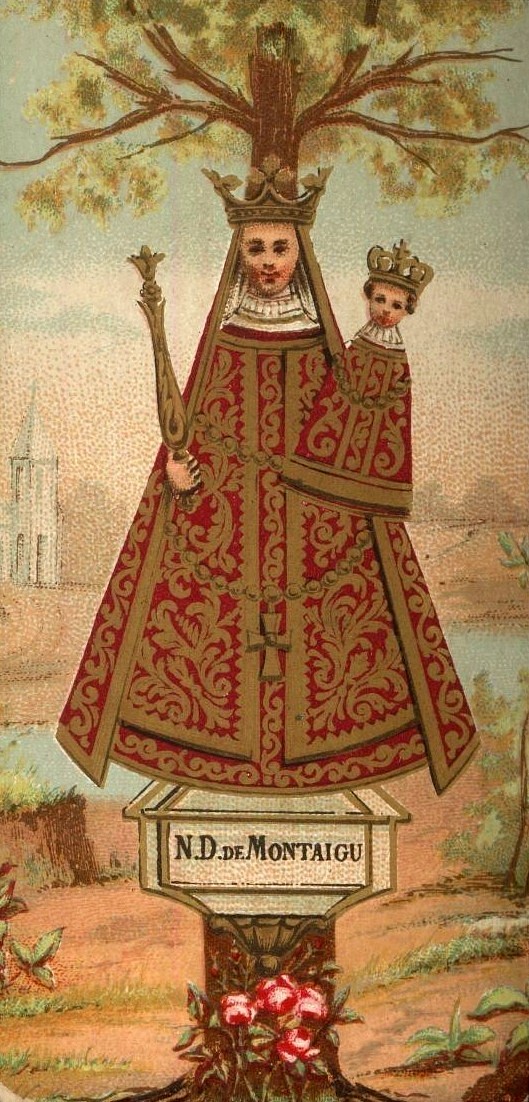
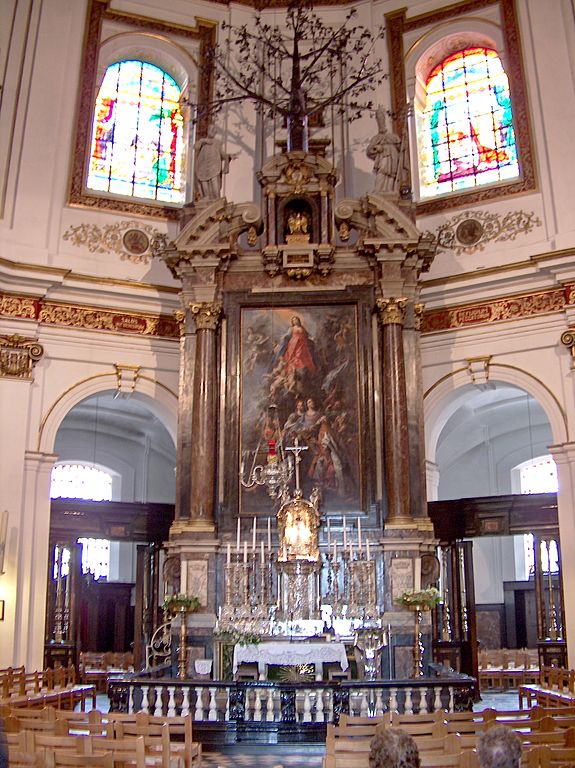
Madonna della Quercia / Our Lady of the Oak – Visora di Conflenti, Italy (1578) – 7 June:
On 7 June 1578, the Virgin appeared for the first time to a shepherd of humble conditions, named Lorenzo Folino. Due to the sultry heat, the young man had lain down under a Chestnut tree and had fallen asleep. He was suddenly awakened by the sound of a beautiful melody, which became gradually clearer and more intense. Frightened, he looked at a small hill called Serracampanara and saw the Virgin Mary surrounded by angels, descending on a large Oak tree. Lorenzo immediately rushed to the tree and knelt devoutly in prayer. Smiling, Our Lady asked him to come closer and entrusted him with this message:
“Go, my son, to the Mayor and the Parish Priest and tell them what you have seen. Say that I am the Mother of God and that I want a Church to be built in the place which I will show to you.“
After showing him a large Oak tree, in the place called Visora, not far from the Town of Conflenti, she disappeared. Lorenzo ran into the village and told the Parish Priest and the Mayor what he had seen and heard, referring to Mary’s message. However, his story provoked general laughter, many believed he had gone mad and turned him away with derision. The Madonna della Quercia then appeared to the peasant Vermiglia Mercuri and, finally, to the housewife Delicia Mastroianni always asking for the erection of a Church to be dedicated to her. Since the reactions of the people did not change and even the ecclesiastical authorities did not give weight to the reports of the three visionaries, Mary reappeared many other times, both to individual citizens and to all the people. She worked numerous miracles, until it was evident that it was a supernatural event and was finally decided, that a Church had to be built. In 1862 a Church was built ad even the Oak tree on which the Our Lady had appeared was kept as a part of the Shrine.
But, on the evening of 21 July 1921, the Church was destroyed by fire. After a decade of complete abandonment, the Church was eventually rebuilt, with the help of the emigrants of Conflenti, scattered around the world. On 7 Jue each year, a Procession and festival is held and attended by many from the Town and surrounding villages.
St Aventinus of Larboust Bl Basilissa Fernandez St Colman of Dromore Bl Demosthenes Ranzi St Deochar St Gotteschalk St Justus of Condat St Landulf of Yariglia St Lycarion of Egypt
Venerable Matt Talbot (1856 – 1925) (born Matthew Talbot) – Layman, Ascetic, Mystic – known as the “Saint in Overalls” and “the Workers’ Saint” disciple of Eucharistic Adoration and the Blessed Virgin – Patron of Struggling and Recovering Addicts and Alcoholics and many addiction treatment programs, retreats and centres throughout the world bear his name. The Matt Talbot Story: https://anastpaul.com/2017/06/07/saint-of-the-day-7-june-venerable-matt-talbot-ofs/
St Meriadoc I of Vannes St Meriadoc II of Vannes St Odo of Massay St Potamiaena of Alexandria the Younger St Quirinus of Cluny St Robert of Newminster O.Cist. (c 1100–1159) Priest, Abbot St Sergius of Cluny St Vulflagius of Abbeville — Martyrs of Africa – 7 saints: A group of seven Christians who were martyred together. No details about them have survived except the names – Donata, Evasius, Guirillus, Januaria, Privata, Spisinna, Victurus. The precise location in Africa and date are unknown.
Martyred in Córdoba, Spain: Habentius of Córdoba Jeremiah of Córdoba Peter of Córdoba Sabinian of Córdoba Wallabonsus of Córdoba Wistremundus of Córdoba
Thought for the Day – 6 June – Meditations with Antonio Cardinal Bacci (1881-1971)
The Feast of Corpus Christi
“Human words cannot express the beauty ad depth of the passage from the Gospel which the liturgy of the Holy Mass offers for our meditation. It is the passage in which Jesus promises the institution of the Blessed Eucharist.
“ For my flesh is food indeed and my blood is drink indeed. He that eateth my flesh and drinketh my blood, abideth in me and I in him. As the living Father hath sent me and I live by the Father; so he that eateth me, the same also shall live by me. This is the bread that came down from heaven. Not as your fathers did eat manna and are dead. He that eateth this bread, shall live forever.” (Jn 6:56-59)
No human being could have visualised or uttered such words. Only the God-Man could have spoken them.
Even outside the Eucharist, God communicates with us, descending with His grace into our souls. We feel that He is present, we experience His supernatural influence and inspiration, His appeals to us to do good. But in the Eucharist, we have far more than this. We have the God-Man as the food of our souls, through which we live His own life, so that, like St Paul, it is no longer we who live but Christ Who lives in us.
This intimate and mysterious union has been compared with the unfathomable union in which the Son of God, lives the life of His heavenly Father because. by means of the Eucharist, we should live the supernatural life of Jesus. A a result of this transformation, there can be no further place in us for sin, nor for disordered affectations and desires but only for virtue and for God.”
Quote/s of the Day – 6 June – “Month of the Sacred Heart” – Corpus Christi, The Solemnity of The Most Holy Body and Blood of Christ
“O how unspeakable is this Sacrament which sets our affections ablaze with charity. … It is the fulfillment of Christ’s Mystical Body.”
“Source of all we have or know, feed and lead us here below. Grant that with Your saints above, Sitting at the feast of love, We may see You face to face.”
Amen Alleluia!
(Last verse of the Lauda Sion)
“The Eucharist is the Sacrament of Love. It signifies Love, It produces love. The Eucharist is the consummation of the whole spiritual life.”
St Thomas Aquinas (1225-1274) Doctor angelicus/Doctor communis
One Minute Reflection – 6 June – “Month of the Sacred Heart” – Corpus Christi, The Solemnity of The Most Holy Body and Blood of Christ, Readings: First: Exodus 24: 3-8, Psalm: Psalms 116: 12-13, 15-16, 17-18 (13), Second: Hebrews 9: 11-15, Gospel: Mark 14: 12-16, 22-26
“ This is my body … this is my blood ” – Mark14: 22,24
REFLECTION – “The lovers of this world display their generosity by giving money, clothes and various gifts but not one of them gives his own blood. Christ gives His. In this way He demonstrates the tenderness He feels for us and His ardent love. Under the Old Law … God consented to receive the blood of sacrifices but this was just to prevent His people from offering it to false gods and, already, this was proof of a very great love. But Christ transformed this rite… there is no longer the same sacrificial victim – it is Himself He offers in sacrifice.
“The bread that we break, is it not a communion in the body of Christ?” (1 Cor 10:16) What is this bread? The Body of Christ. What becomes of those who communicate in it? The Body of Christ – not a large number of bodies but just one Body. Just as this bread, made up of so many wheat grains, makes only one loaf into which the grains disappear – for even though the grains remain in it, yet it is impossible to distinguish them in such a closely compacted mass – so all of us, together with Christ, make up a single whole … Now, if we all share in the same bread and are united to the same Christ, why don’t we show the same love to each other? Why don’t we become one in this case too?
This is what was seen at the beginning: “The community of believers was of one heart and mind” (Acts 4:32) … Christ came in search of you who were far away from Him to unite Himself to you but you do not wish to become one with your brother? … You violently separate yourself from him, after winning from the Lord so great a proof of His love – and life! For He did not only give His Body but, just as our flesh, drawn from the earth, had lost its life and died through sin, so He has introduced, so to speak, another substance like a leaven, this is His Body, the Body sharing the same nature as ours but free from sin and abounding in life. And He has given it to all of us, so that, fed with the banquet of this new food … we might enter immortal life.” – St John Chrysostom (347-407) Archbishop of Constantinople, Father ad Doctor of the Church – 24th homily on the 1st letter to the Corinthians 2
PRAYER – Lord Jesus Christ, You gave Your Church, an admirable Sacrament as the abiding memorial of Your Passion. Teach us to worship the sacred mystery of Your Body and Blood, that it’s redeeming power may sanctify us always. Who live and reign with the Father and the Holy Spirit, God, forever, amen.
Our Morning Offering – 6 June – “Month of the Sacred Heart” – The Solemnity of Corpus Christi – The Most Holy Body ad Blood of Our Lord Jesus Christ
Pange Lingua Sing, My Tongue By St Thomas Aquinas (1225-1274) Eng trans – Fr Edward Caswell CO (1814-1878) (Excerpt on the image – the 4 last stanzas)
Sing, my tongue, the Saviour’s glory, Of His Flesh, the mystery sing; Of the Blood, all price exceeding, Shed by our Immortal King, Destined, for the world’s redemption, From a noble Womb to spring.
Of a pure and spotless Virgin Born for us on earth below, He, as Man, with man conversing, Stayed, the seeds of truth to sow; Then He closed in solemn order Wondrously His Life of woe.
On the night of that Last Supper, Seated with His chosen band, He, the Paschal Victim eating, First fulfils the Law’s command; Then as Food to all His brethren Gives Himself with His own Hand.
Word-made-Flesh, the bread of nature By His Word to Flesh He turns; Wine into His Blood He changes, What though sense no change discerns. Only be the heart in earnest, Faith her lesson quickly learns.
Down in adoration falling, Lo, the sacred Host we hail, Lo, o’er ancient forms departing Newer rites of grace prevail, Faith for all defects supplying, When the feeble senses fail.
To the Everlasting Father And the Son who comes on high With the Holy Ghost proceeding Forth from each eternally, Be salvation, honour, blessing, Might and endless majesty. Amen. Alleluia.
Written by St Thomas Aquinas (1225-1274) for the Solemnity of Corpus Christi, this Hymn is considered the most beautiful of Aquinas’ Hymns and one of the great seven Hymns of the Church. The Hymn is also used on Holy Thursday. The last two stanzas make up the Tantum Ergo (Down in Adoration Falling) that is used at Benediction of the Blessed Sacrament.
PANGE, lingua, gloriosi Corporis mysterium, Sanguinisque pretiosi, quem in mundi pretium fructus ventris generosi Rex effudit Gentium.
Nobis datus, nobis natus ex intacta Virgine, et in mundo conversatus, sparso verbi semine, sui moras incolatus miro clausit ordine.
In supremae nocte cenae recumbens cum fratribus observata lege plene cibis in legalibus, cibum turbae duodenae se dat suis manibus.
Verbum caro, panem verum verbo carnem efficit: fitque sanguis Christi merum, et si sensus deficit, ad firmandum cor sincerum sola fides sufficit.
Tantum ergo Sacramentum veneremur cernui: et antiquum documentum novo cedat ritui: praestet fides supplementum sensuum defectui.
Genitori, Genitoque laus et iubilatio, salus, honor, virtus quoque sit et benedictio: procedenti ab utroque compar sit laudatio. Amen. Alleluia.
Saint of the Day – 6 June – Saint Jarlath of Tuam (c 445-c 540) Priest, Bishop, Abbot, Scholar, Founder of the Monastic School of Tuam and of the Archdiocese of Tuam, in Galway, Ireland. The Féilire of Aengus, tells us that he was noted for his mortification, fasting, and prayer. Born in c 445 at Connaught, Galway, Ireland and died in c 540 of natural causes. Patronage – The Archdiocese of Tuam, Ireland. Also known as – Iarlaith, Iarlath.
Very little is known about the life of Jarlath. He firstly studed under Benen, a disciple of St Patrick and then became a disciple of St Enda at Arran Island. The Monasteries he founded, first at Cloonfush and later at Tuam, were renowned for their scholarship and learning.
From the second syllable of his name in Irish, fhlaith, meaning “lord,”,it could be taken that he came from a wealthy family.
He own first monastic foundation was at Cloonfush, some miles east of Tuam. His students at the monastic college included Saint Brendan of Clonard and Saint Colman of Cloyne.
Jarlath appears briefly as a prominent figure in the medieval Irish Lives of St Brendan of Clonfert. Brendan is said to have visited Connacht to study under the famous Jarlath. One day, when Jarlath was in his old age, Brendan advised his mentor to leave the school and to depart in a newly built chariot until its two hind shafts broke because there would be the place of his resurrection and that of many after him. Because Jarlath acknowledged the holiness and superior wisdom of his pupil, saying “take me into thy service forever and ever,” he gladly accepted his advice. His travel did not take him very far, as the shafts broke at Tuaim Mound. From this incident, the chariot wheel has become the symbol of the Town of Tuam.
St Jarlath’s Chariot Wheel at Tuam
The ruins of Tuam Monastery
The Diocese was established by the twelfth-century synods of Rathbreasail and Kells and subsequently became an Archdiocese absorbing into it two other medieval Dioceses: Annaghdown and Mayo.
St Jarlath as depicted in a stained glass window of Tuam Cathedral, designed by Richard King in 1961
Jarlath died, “full of days,” on 26 December, c 540, aged about 90 years old. Saint Jarlath’s Feast day is 6 June, which is the date of the translation of his relics to a Church especially built in his honour next to the Cathedral of Tuam. His remains were encased in a silver Shrine, from which the 13th-century Church gained the name Teampul na scrín, that is the “Church of the Shrine.“
Solemnity of Corpus Christi – The Most Holy Body ad Blood of Our Lord Jesus Christ +2021 – celebrated today in many countries, where Thursday was not a Holy Day
Panna Mária,/ Blessed Virgin Mary, Pozba, Nové Zámky, Nitra, Slovakia 1512 –Second Sunday after Feast of the Ascension:
In 1512, the Pauline Fathers built a Marian Shrine, in the southwest Slovakian Town of Vel’ké Lovce. In the 1700s is was a popular place of pilgrimage. One day in those years, shepherds and pilgrims, observed a white dove bathing in a spring in the woods five miles away, outside the village of Pozba. The story circulated that a shepherd’s blind daughter regained her sight after washing her eyes with the dove’s bathwater. The landowner made fun of this, wondering if the spring could help his blind horse. It did, but he went blind instead. A sick girl saw the Virgin, wearing a white dress and blue sash, in a pear tree and was immediately cured. From the wood of this tree, a Pietà was carved, still venerated in a Chapel by the spring, which hosts annual pilgrimages on Pentecost Sunday and on 15 September, Feast of Our Lady of Sorrows.
St Norbert (c 1080-1134) (Optional Memorial) Bishop, Confessor, Founder of the Premonstratensian or theNorbertine Canons and Sisters, “Defender of the Eucharist” and “Apostle of the Eucharist,” Exorcist, Reformer, Preacher His amazing life: https://anastpaul.com/2017/06/06/saint-of-the-day-6-june-st-norbert/
St Agobard of Lyon St Alexander of Fiesole St Alexander of Noyon St Amantius of Noyon St Anoub of Skete St Artemius of Rome St Bazalota of Abyssinia St Bertrand of Aquileia (1258– 1350) Bishop St Candida of Rome St Ceratius of Grenoble St Claudius of Besançon St Cocca St Colmán of Orkney Bl Daniel of Bergamo St Euphemia of Abyssinia St Eustorgius II of Milan Bl Falco of La Cava Bl Gilbert of Neufontaines St Grazia of Germagno St Gudwall Bl Gundisalvus of Azebeyro St Hilarion the Younger
St Paulina of Rome St Phêrô Dung St Phêrô Thuan St Rafael Guízar y Valencia St Vincent of Bevagna St Vinh-Son Duong — Marytrs of Tarsus: A group of 20 martyrs who were killed together during the persecutions of Diocletian. They were martyred in Tarsus (in modern Turkey).
Mercedarian Fathers of Avignon: Several Mercedarians from the Santa Maria convent of Avignon, France who worked with plague victims in that city and died of the disease themselves. They died in Avignon, France of plague and are remembered together today for their great charity and commitment to their people.
Thought for the Day – 5 June – “Month of the Sacred Heart” – Meditations with Antonio Cardinal Bacci (1881-1971)
The Sacred Heart and the Holy Viaticum
“We should particularly ask the Sacred Heart for the grace to die a good death, strengthened by the Holy Viaticum. Let us picture ourselves in this final hour. The world is fading away and nothing remains of the honours, successes and pleasures of our passing life. There will remain only two things – on one side, the merits which we have obtained by our prayers, penances and good works; on the other side, the sum total of our sins and ingratitude to God. May Jesus come, at this moment, into our poor hearts, which is trembling for our sins and lacking in virtue. May the Holy Viaticum come to strengthen us. May the white Host bear with it, forgiveness, hope and the purifying flame of love.
Then, the infinite love of the Heart of Jesus will be mingled with th weak limited love of our hearts. It will waft us into a state of everlasting happiness, where, to love, is to possess, the boundless joy of God.
Quote/s of the Day – 5 June – The Memorial of St Boniface (c 672-754) “The Apostle of Germany” – Martyr
“Let us stand fast in what is right and prepare our souls for trial. Let us wait upon God’s strengthening aid and say to Him: ‘O Lord, you have been our refuge in all generations.’”
St Boniface (c 672-754) “The Apostle of Germany” – Martyr
One Minute Reflection – 5 June – “Month of the Sacred Heart” – Readings: First: Tobit 12: 1, 5-15, 20, Psalm: Tobit 13: 2, 6efgh, 7, 8, Gospel: Mark 12: 38-44 and the Memorial of St Bopniface (672-754) “The Apostle of Germany,” Martyr and Bl Ferdinand of Portugal (1402-1443) “The Holy Prince”
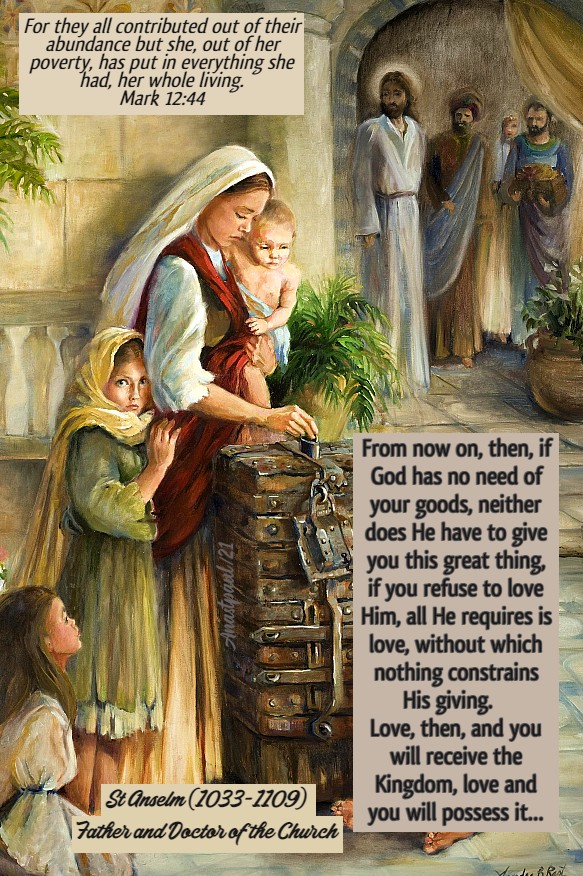
“For they all contributed out of their abundance but she, out of her poverty, has put in everything she had, her whole living.”… Mark 12:44
REFLECTION – “Now, if someone is wondering what the cost is, here is their answer – He who offers a Kingdom in heaven has no need of earthly coin. No-one can offer God anything, except what already belongs to Him, since all that exists is His. And yet, God does not give away so great a thing, without a price being placed on it, He does not give it to someone who doesn’t value it. For indeed, nobody gives away something they hold dear without placing some kind of value on it. From now on, then, if God has no need of your goods, neither does He have to give you this great thing, if you refuse to love Him, all He requires is love, without which nothing constrains His giving. Love, then and you will receive the Kingdom, love and you will possess it… Love God more than yourself and already, you begin to have what it is your desire to possess fully, in heaven.”… St Anselm (1033-1109) Doctor of the Church
PRAYER – Lord God, Your Son has shown us the way. As we follow in His steps, may we never wander from the path that leads to life. Renew the wonders of Your grace in our hearts so that neither death nor life may separate us from Your love. Holy Father, as You were glorified by the life and death of St Boniface and Blessed Ferdinand of Portugal, grant that by their prayers, we may receive strength to always give You our hearts, minds and complete selves. Through our Lord, Jesus Christ, with You in union with the Holy Spirit, one God for all eternity, amen.Sweet Heart of Jesus, be my love.300 days ONCE A DAY – Unless otherwise stated, e.g., “once a day,” a partial Indulgence may be gained any number of times in succession.) Pope Leo XIII 21 May 1892.
Our Morning Offering – 5 June – “Month of the Sacred Heart” and a Marian Saturday
To the Two Loving Hearts By St John Eudes (1601-1680)
O Jesus, only Son of God, only Son of Mary, I offer You the most loving Heart of Your divine Mother which is more precious and pleasing to You than all hearts.
O Mary, Mother of Jesus, I offer you the most adorable Heart of your well-beloved Son, who is the life and love and joy of your Heart.
Blessed be the Most Loving Heart and Sweet Name of Our Lord Jesus Christ and the most glorious Virgin Mary, His Mother, in eternity and forever. Amen
Saint of the Day – 5 June – Blessed Ferdinand of Portugal (1402-1443) “The Holy Prince.” Blessed Ferdinand spent as much time as he could in adoration of the Most Blessed Sacrament especially during the Easter Triduum when his habit was to be constantly in adoration, from Holy Thursday to Easter. He was the youngest of the “Illustrious Generation” of 15th-century Portuguese Princes of the House of Aviz and lay Master of the Knightly Order of Aviz. Born on 29 September 1402 at Santarem, Portugal and died on 5 June 1443 (aged 40) in prison in Fez, Morocco of maltreatment by the Moors – for this reason some call him a Martyr. Also known as Ferdinand the Prince, “Saint Prince” or the “Constant Prince.”
Ferdinand was born in Santarém on 29 September 1402, the Feast of St Michael, a Saint to whom he would remain affectionately attached. He had a complicated birth and would remain a sickly child throughout much of his youth. Relatively sheltered because of his illnesses, Ferdinand had a quiet and very pious upbringing, a favourite of his English mother, from whom he acquired a preference for the Sarum Rite of Salisbury in the religious Liturgy of Holy Mass. Bodily weakness did not hinder his growth in spirit and even in his boyhood and youth, he gave evidence of remarkable qualities of soul and intellect. With great strength of character and a keen sense of justice and order, he combined an innocence, gentleness, and charity which excited the wonder of the Royal Court.
Ferdinand had a special predilection for prayer and for the ceremonies and devotions of the Church, especially time in adoration before our lord in the Blessed Sacrament. After his fourteenth year, he recited daily, the canonical hours, rising at midnight for Matins. Always severe with himself, he was abstemious in his diet and fasted on Saturdays and on the eves of the Feasts of the Church. He cared for the spiritual, as well as the corporal, necessities of his domestics, while his solicitude for the poor and oppressed was unbounded. His generosity towards the Monasteries was impelled by his desire to share in their prayers and good works. He had himself enrolled for the same reason in all the pious Congregations of the Kingdom.
He was one of five sons, his mother being, Philippa, daughter of John of Gaunt, Duke of Lancaster and his father, King John I, known in history for his victories over the Moors and in particular, for his conquest of Ceuta, a powerful Moorish stronghold and his establishment of an episcopal see within its walls. Upon the death of his father in 1433, his brother, Edward (Duarte) ascended the throne, while he himself received but a small inheritance. It was then that he was induced to accept the Grand-Mastership of the Knightly Order of Aviz, in order that he might be better able to help the poor. As he was not a cleric, his brother, the King, obtained for him the necessary Papal dispensation. The fame of his charity went abroad, and Pope Eugene IV, through the Papal Legate, offered him the Cardinal’s hat. This he refused, not wishing, as he declared, to burden his conscience.
Though living a life of great sanctity in the midst of the Court, Ferdinand was not a mere recluse. He was also a man of action and in his boyhood, his soul was stirred by the heroic campaign against the Moors. His mother, the Queen, had nurtured the martial spirit of her sons, and it is even said that on her deathbed, she gave them each a sword, charging them to use it in defence of widows, orphans and their country and, in particular, against unbelievers. An opportunity soon presented itself. In 1437 Edward planned an expedition against the Moors in Africa and placed his brothers Henry and Ferdinand, in command. They set sail on 22 August 1437 and four days later, arrived at Ceuta. During the voyage, Ferdinand became dangerously ill, in consequence of an abcess and fever which he had concealed before the departure, in order not to delay the fleet. Through some mismanagement, the Portuguese numbered only 6000 men, instead of 14,000, as ordered by the King. Though advised to wait for reinforcements, the two Princes, impatient for the fray, advanced towards Tangiers, to which they lay siege. Ferdinand recovered slowly but was not able to take part in the first battle.
The Portuguese fought bravely against great odds but were finally compelled to make terms with the enemy, agreeing to restore Ceuta in return for a safe passage to their vessels. The Moors likewise demanded that one of the Princes be delivered into their hands as a hostage for the delivery of the City. Ferdinand offered himself for the dangerous post and, with a few faithful followers,, including João Alvarez, his Secretary and later his Biographer, began a painful captivity which ended only, with his death.
He was first brought to Arsilla by Salà ben Salà, the Moorish Ameer. In spite of sickness and bodily sufferings, he continued all his devotions and showed great charity towards his Christian fellow-captives. Henry at first repaired to Ceuta, where he was joined by his brother John. Realising that it would be difficult to obtain the Royal consent to the restoration of the fortress, they proposed to exchange their brother for the son of Salà ben Salà, whom Henry held as a hostage. The Moor scornfully rejected the proposal, and both returned to Portugal to devise means of setting the Prince free. Though his position was perilous in the extreme, the Portuguese Cortes refused to surrender Ceuta, not only on account of the treachery of the Moors but because the place had cost them so dearly and might serve as a point of departure for future conquests. It was resolved to ransom him if possible. Salà ben Salà refused all offers, his purpose being to recover his former seat of government.
Scenes from Ferdinand’s captivity and death in Fez (from the Bollandist’s Acta Sanctorum, 1695). The only known depiction of Ferdinand with a saint’s halo.
Various attempts were made to free the Prince, but all proved futile and only served to make his lot more unbearable. On 25 May, 1438, he was sent to Fez and handed over to the cruel Lazurac, the King’s vizier. He was first condemned to a dark dungeon and, after some months of imprisonment, was compelled to work like a slave in the royal gardens and stables. Amid insult and misery, Ferdinand never lost patience. Though often urged to seek safety in flight, he refused to abandon his companions and grieved more for their sufferings, of which he considered himself the cause, than for his own. His treatment of his persecutors was respectful and dignified, but he would not descend to flattery to obtain any alleviation of his sufferings. During the last fifteen months of his life, he was confined alone in a dark dungeon with a block of wood for his pillow and the stone floor for a bed. He spent most of his time in prayer and in preparation for death, which his rapidly failing health warned him, was near at hand. In May, 1443, he was stricken with the fatal disease to which he finally succumbed. His persecutors refused to change his loathsome abode, although they allowed a physician and a few faithful friends to attend him.
On the evening of 5 June, after making a general confession and a profession of faith, he peacefully gave up his soul to God. aged just 40. During the day he had confided to his Confessor, who frequently visited him, that the Blessed Virgin with St John and the Archangel Michael had appeared to him in a vision. Lazurac ordered the body of the Prince to be opened and the vital organs removed and then caused it to be suspended head downwards for four days on the walls of Fez. Nevertheless, he was compelled to pay tribute to the constancy, innocence and spirit of prayer of his royal victim. Of Ferdinand’s companions, four shortly afterwards followed him to the grave, one joined the ranks of the Moors and the others regained their liberty after Lazurac’s death. One of the latter, João Alvarez, his Secretary and Biographer, carried his heart to Portugal in 1451 and in 1473, his body was brought to Portugal, and laid to rest in the Royal Vault at Batalha Monastery amid imposing ceremonies.
Effigy of Ferdinand the Holy Prince in the Monument of the Discoveries, in Lisbon,
Prince Ferdinand has ever been held in great veneration by the Portuguese on account of his saintly life and devotion to the country. Miracles were wrought at his intercession and in 1470, he was Beatified by Paul II.
Beata Vergine dell’Aiuto, / Our Lady of Help, Bobbio, Piacenza, Emilia Romagna, Italy 15th century – 5 June :
In the 1400s, Adriano Repetino had a vineyard in fields of Corgnate outside Bobbio, on the road to the hub of Piacenza. He built a wall along the road,and in it, a niche, with an image of Mary seated with the Child, who held a bouquet with one hand and raised the other in blessing. In the summer of 1472, the image became a focus of local devotion – there were miracles and the picture was seen to change its appearance. After an investigation, Church authorities decided the site merited a Chapel. Adriano Repetino donated some property and the building was dedicated to the Annunciation of Maria. On 5 June 1611, miracles resumed. The picture was found covered in sweat. Cures and other miracles multiplied. The Bishop named the wonder-working image the “Blessed Virgin of Help.” A larger, finer Church, begun in 1621, was finally consecrated on 13 July 1738 and construction continued into the 1800s. Built over the old, the newer Shrine houses the Madonna of Help’s processional Statue, modelled on the miraculous fresco in the old Shrine below.
In thanks for her protection during World War II, the Town of Bobbio named the Madonna of Help its principal Patron in 1947, when the image was officially Crowned. In 1970 Pope Paul VI elevated the Church to the rank of Basilica Minor.
St Adalar of Erfurt Bl Adalbert Radiouski Bl Adam Arakawa St Austrebertus of Vienne St Claudius of Egypt and Companions St Ðaminh Huyen St Ðaminh Toai St Dorotheus of Tyre St Elleher St Eoban of Utrecht St Eutichius of Como St Evasius of Africa St Felix of Fritzlar Blessed Ferdinand of Portugal (1402-1443) “The Holy Prince” St Franco of Assergi St Genesius, Count of Clermont St Gregory of Lilybaeum St Gundekar St Hadulph St Luke Loan Bl Meinwerk of Paderborn St Privatus of Africa St Sanctius of Córdoba St Tudno of Caernarvon St Waccar
Martyrs of Caesarea: A group of Christians who converted together, were imprisoned together, tortured together, and martyred together. We know nothing more about them but their names – Cyria, Marcia, Valeria and Zenaides. Died Caesarea, Palestine, date unknown.
Martyrs of Egypt: A group of Christians martyred together in the persecutions of Galerius Maximian. The only other information was have is three of their names – Apollonius, Marcian and Nicanor. Died in Egypt, date unknown.
Martyrs of Perugia: A group of Christians martyred together in the persecutions of Decius. We know little more than their names – Cyriacus, Faustinus, Florentius, Julian and Marcellinus. Died beheaded in 250 in Perugia, Italy
Martyrs of Rome: 26 Christians martyred together. We have no details about them but their names – Candida, Castula, Fappa, Felician, Felicitas (2 of), Felicula, Fortunatus, Gagus, Gregor, Hilarius, Ingenuus, Juliana, Martialis, Maurus, Mustilus, Nicander, Prima, Rogata, Rutianus, Sacrinus, Saturnin, Secundian, Secundus, Urbicus, Victurus. Died • Rome, Italy, date unknown • relics transferred to Antwerp, Belgium, date unknown.
Thought for the Day – 4 June – “Month of the Sacred Heart” – Meditations with Antonio Cardinal Bacci (1881-1971)
The Sacred Heart of Jesus and the Blessed Eucharist
“By means of this wonderful gift, we can live the life of Jesus Himself.
It is Our Lord Himself, Who says to us: “As the living Father has sent me and as I live because of the Father, so he who eats me, he also shall live because of me” (Jn 6:58). In other words, as He draws His divine and human life from the Father and lives by means of Him, to Whom as God, He is substantially united and equal, so anyone who partakes of the Eucharist, is united closely to Jesus, lives His life and is transformed by His supernatural grace. When Holy Communion is received, therefore, as it ought to be and as the Saints received it, it leads to the mysterious union of which St Paul speaks: “To me to live is Christ” (Phil 1:21). “It is now no longer I that live but Christ, lives in me” (Gal 2:20).
The effect of Holy Communion on us, should be similar to that of a graft upon a tree, whose life is thereby transformed and which begins to produce the fruit of the new shoot instead of the old trunk. We should no longer live the life of the old man but, that of the new, which is Jesus. We ought, therefore, to produce His divine fruits. Our actions will have a supernatural value because they are performed in Jesus and through Jesus. We should be very grateful to the Sacred Heart of Jesus for this gift of His infinite love and goodness. We should approach Holy Communion with humility, love and complete self-surrender. Our hearts should be fused in the Heart of Jesus and our love should be fused in His infinite love.”
You must be logged in to post a comment.