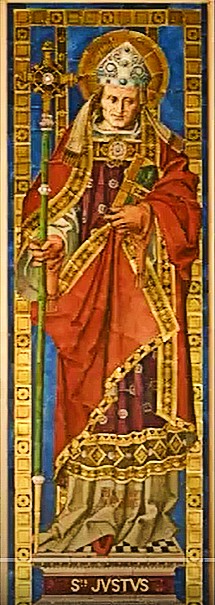
Quote/s of the Day – 24 June – The Solemnity of the Nativity of St John the Baptist
“ And when Elizabeth heard the greeting of Mary, the baby leaped in her womb. And Elizabeth was filled with the Holy Spirit … “For behold, when the sound of your greeting came to my ears, the baby in my womb leaped for joy.”
Luke 1:41,44
“What, then, will this child be? For surely the hand of the Lord is with him.”
Luke 1:66
“At my birth, I took away my mother’s barrenness and while still an infant, I healed my father’s dumbness, for You gave me in childhood, the gift of working miracles.”
St Gregory the Illuminator (c 213-270) Bishop
Homily on the holy Incarnation, 4
“John is a voice for a time but Christ is the eternal Word, from the beginning.”
St Augustine (354-430) Bishop, Father, Doctor of Grace
One Minute Reflection – 24 June – The Solemnity of the Nativity of St John the Baptist – Readings: Isaiah 49:1-6, Psalm 139:1-3, 13-15, Acts 13:22-26, Luke 1:57-66, 80
“The Lord called me from birth, from my mother’s womb he pronounced my name.” – Isaias 49:1
REFLECTION – “The birth of John the Baptist is full of miracles. An Archangel announced the coming of our Lord and Saviour Jesus; similarly, an Archangel announced the birth of John (Lk 1:13) and said: “He will be filled with the Holy Spirit from his mother’s womb.” The Jewish people did not see that our Lord did “signs and wonders” and healed their illnesses but John leapt for joy when he was still in his mother’s womb. It was impossible to hold him back and when the mother of Jesus arrived, the child already tried to come out of Elizabeth’s womb. “The moment your greeting sounded in my ears, the baby leapt in my womb for joy.” (Lk 1:44) Still in his mother’s womb, John had already received the Holy Spirit …
Scripture then says: “Many of the sons of Israel will he bring back to the Lord their God.” (Lk 1:16) John brought back “a large number,” the Lord brought back not a large number but everyone. For it is his task to bring all men back to God the Father …
I, for my part, think that the mystery of John is being fulfilled in the world until the present. The spirit and the power of John, must first fill the soul of whoever is destined to believe in Christ Jesus, “to prepare for the Lord a people well-disposed” (Lk 1:17) and to “make ready the way of the Lord, [to] clear him a straight path” (Lk 3:5) in the roughness of their hearts. Not only at that time were “the winding paths … made straight and the rough ways smooth;” rather, the spirit and the power of John still go before the Lord and Saviour’s coming today. Oh greatness of the Lord’s mystery and of his plan for the world! ” – Origen Adamantius (c 185-253) Priest, Theologian, Exegist, Writer, Apologist, Father – Homilies on St Luke, no. 4, 4-6
PRAYER – Almighty God and Father, You sent St John the Baptist, to the people of Israel to make them ready for Christ the Lord. Give us the grace of joy in the Spirit and guide the hearts of all the faithful, in the way of salvation and peace, as they harken to the voice of John, the Lord’s herald and bring them safely to Jesus, whom John foretold. St John the Baptist, may your intercession for the Church, bring us to the Light and the Way. We make our prayer through our Lord Jesus Christ, in the unity of the Holy Spirit, one God with You, forever amen.
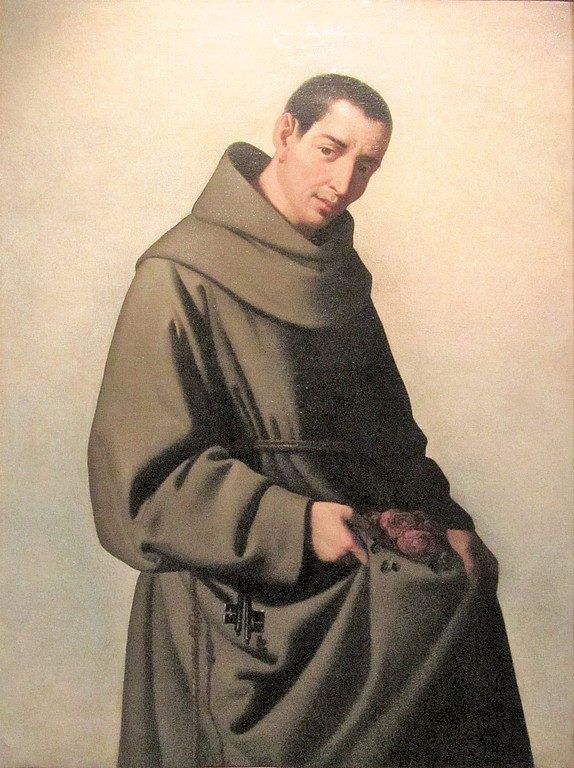
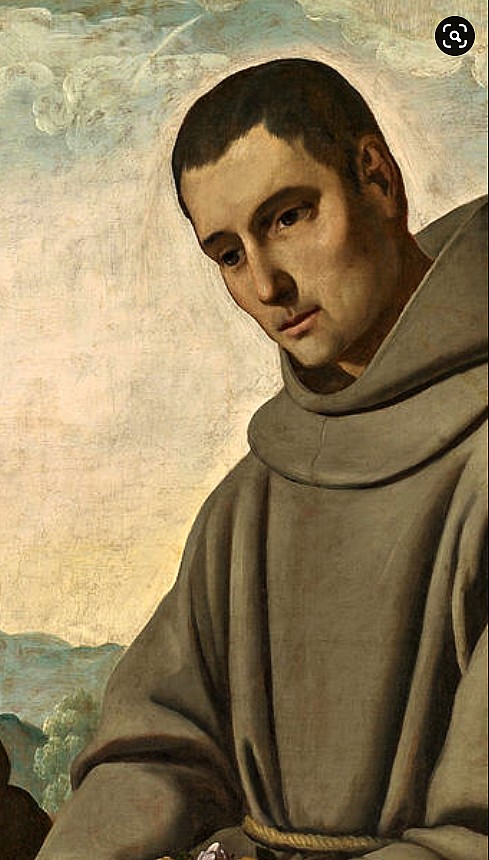
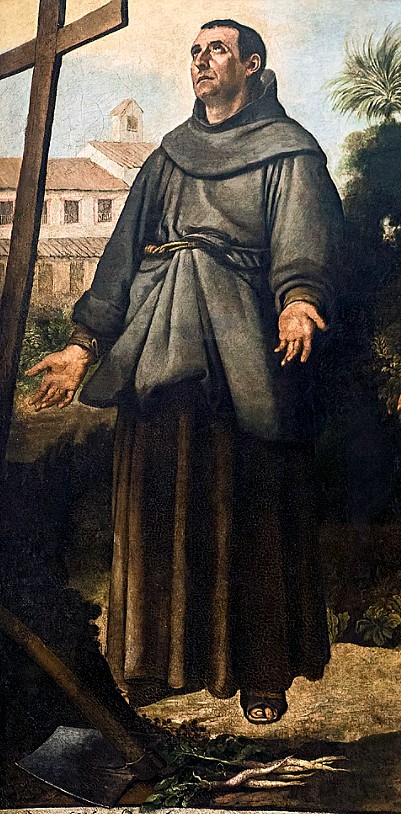
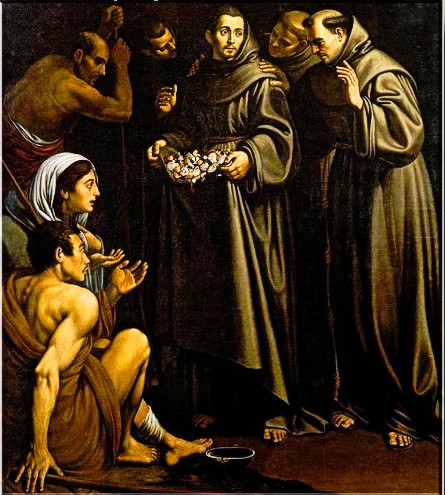
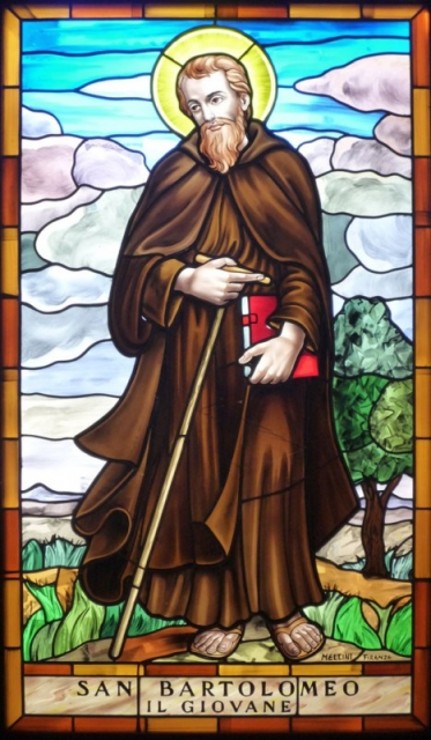
Saint of the Day – 23 June – St John Theristus (c 1049-1129) Italian Basilian Monk and Hermit, called Theristus or “Harvester,” miracle-worker. Born in c 1049 im Palermo, Sicily and died on 24 June 1129 at Calabria, Sicily.
John’s father, Arconte di Cursano, a farmer near Botterio Signore in the territory of Stylus, was killed in a Saracen raid on the coasts of Calabria. His Calabrian mother was captured Saracens and brought to Palermo, where she gave birth. He grew up in the Christian faith in a Muslim environment. At the age of 14, he was encouraged by his mother to flee to his native country. He crossed the Strait of Messina in a boat without oars or sail and reached Monasterace. The inhabitants, seeing him dressed as a Moor, took him to the Bishop, who interrogated him. The boy answered that he was seeking Baptism but the bishop subjected him to harsh trials before giving him his name, being ‘John” after St John the Baptist, whose feast day it was, telling little John to spend his life in imitation of the great Precursor of Christ.
Once he grew up, he felt more and more attracted to the life of the Monks who lived in the caves around Stylus, fascinated by the example of two Basilian ascetics, Ambrose and Nicholas. After much insistence, despite his young age, he was admitted into the community. He distinguished himself by virtue, so such an extent, that he was later elected Abbot. He found in Cursano a treasure that belonged to his family and following the rule of Saint Basil. he distributed it to the poor.
St John’s cell
Once in June, at harvest time, he went to visit a knight who had provided food for the Monastery. He took with him a flask of wine and some bread. When he arrived at two fields, called Marone and Maturavolo, he offered the farmers the bread and wine. A furious storm arose, risking destruction of the harvest but through John’s prayer the storm retreated until the wheat had been harvested and gathered in sheaves. Thus he helped to miraculously harvest a large crop ahead of destructive weather, saving the locals from starvation. This and other miracles testifying to the help given to the farmers, earned him the nickname of Therìstis, that is “harvester” or “reaper.” The owner of the fields, struck by the incident, donated much of his harvest to the Monastery.
According to tradition, King Roger, suffering from an incurable wound on his face, was healed upon contact with John’s tunic and many others were healed: crippled, blind, deaf and demonic. Roger II then founded the Monastery of St. John in Nemore and named it after John Theristus.
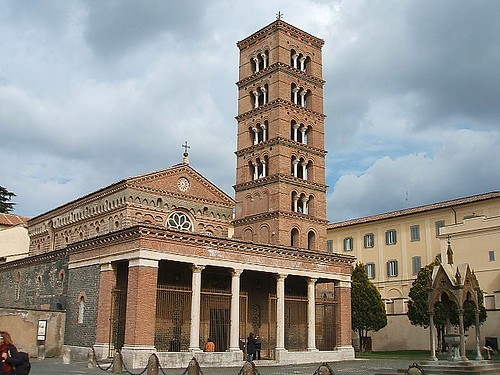
The memory of John Theristus is found in all Greek traditions. It also entered the Roman Martyrology on 24 June. In 1660 Pope Alexander VIII had his body transferred to Stylus to avoid the raids of brigands and earthquakes. On 12 March 1662, together with the relics of Saints Ambrose and Nicholas, the remains were placed in a Church built by the Minims Fathers and later purchased by the Basilians who dedicated it to our Saint In 1791 it passed to the Redemptorists, who embellished the Church and Convent with marble works. In the left aisle, under the Altar, are venerated the relics of St John and his fellow Monks and mentors, Ambrose and Nicholas. The Convent is accessed through a marble portal. In the centre of the Cloister stands an ancient well in pink granite with four columns, covered by a canopy surmounted by a tin ship, with a praying child holding a Cross, in memory of the young John’s miraculous journey by sea.
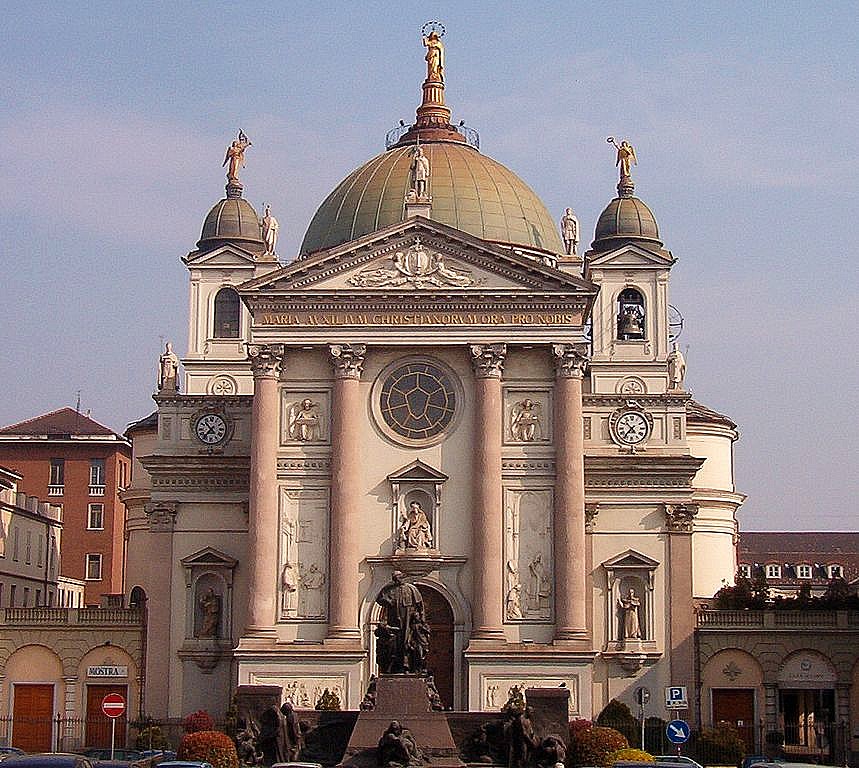
Madonna della Navicella / Our Lady of the Ship , Chioggia, Venezia, Veneto, Italy (1508) – 24 June:
On 24 June 1508, in the afternoon, a strong storm, with disastrous effects, hit the inhabited area of Chioggia and Sottomarina. Rain, wind and storm had lashed the coast for a few hours. In the evening, fortunately, the storm abated and the weather improved. A greengrocer, Baldissera Zalon, went to the vegetable gardens, where the Sanctuary now stands , to see for himself the damage that the powerful storm had caused. Baldissera was a simple man, a peasant, who lived near his fields and lived on his work in the vegetable gardens. As soon as he left the house, after scanning the clouds of the sky that were moving away and the setting sun was peeping, he heard himself called by name. After the first moments of amazement, Baldissera turned and saw a majestic Lady, all dressed in black, who sat on a treetrunk thrown on the beach by the waves of the stormy sea. The greengrocer was stunned, so much so, that he was about to pass out, when the Lady revealed to him that she was the Mother of God, giving him courage and inviting him to go to the Bishop to warn him that the sins of the Chioggia challenged the justice of God and that penance had to be preached tenaciously, to avoid worse punishment. Then the Lady got on a craft that was near the shore but before leaving and disappearing, she opened her cloak showing the wounded and bleeding body of Jesus, making it clear that it had also been reduced by the sins of the Chioggiotti.
Baldiserra wasted no time and went to the Bishop, who organised a pilgrimage to the place of the apparition and the turnout of the faithful became more and more consistent day after day. In a short time, a Chapel was built on the spot and then, in 1515, a Sanctuary which was, however, destroyed in 1814. The current Church was built between 1952 and 1958 and was Consecrated on 24-25 June 1958 by Bishop Piasentini. The miraculous image was found, according to popular belief, a few days after the apparition, together with the log on which the Madonna sat when she appeared to Baldissera. The image and the LOG are preserved and are visible in the Basilica of San Giacomo.
St Aglibert of Créteil St Agoard of Créteil St Alena of Brussels St Amphibalus of Verulam
Bl Christopher de Albarran St Erembert I of Kremsmünster St Faustus of Rome and Companions St Festus of Rome St Germoc St Gohardus of Nantes Bl Henry of Auxerre/the Hagiographer St Ivan of Bohemia St John of Rome St John Theristus (c 1049-1129) Monk St John of Tuy St Joseph Yuan Zaide Bl Maksymilian Binkiewicz
St Rumold St Simplicio of Autun Bl Theodgar of Vestervig St Theodulphus of Lobbes — Martyrs of Satala: Seven Christian brothers who were soldiers in the imperial Roman army. They were kicked out of the military, exiled and eventually martyred in the persecutions of Maximian. We know little more about them than their names – Cyriacus, Firminus, Firmus, Longinus, Pharnacius, Heros and Orentius. The martyrdoms occurred in c 311 at assorted locations around the Black Sea.
DAY TWO – NOVENA of DEVOTION to the PRECIOUS BLOOD of JESUS
Opening Prayer for each Day:
Grant me the grace to know You, to love You and to be truly sorry that I have offended You. I ask this grace by Your Precious Blood – By that Precious Blood, which bathed Your Sacred Body and trickled down to the ground in the Garden of Olives. By that Precious Blood, which poured forth from Your Sacred Body during the scourging. By that Precious Blood, which covered Your Sacred Face when You were Crowned with Thorns. By that Precious Blood, which burst from Your hands and feet on Calvary. By that Precious Blood, which came forth from Your Sacred Heart after Your death. By that Precious Blood, which we drink in Holy Communion and of which You said: “He who feeds on My Flesh and drinks My Blood has life eternal.“ Amen.
Day Two: Jesus Sheds Blood in the Circumcision
Final prayer:
Eternal Father, we offer You the Precious Blood of Jesus shed in the circumcision. In the fullness of time, You sent Your only Son, born of a woman, born under the Law. Help us to live in our lives the true spirit of laws. In Baptism we have become Your children, the new people of God. Preserve in us, Your strength, to live with faith, hope and charity. Through Jesus Christ, our Lord. Amen.
Our Father … Glory be … V. Praise and thanksgiving be evermore to Jesus. R. Who by His Blood has saved us. V. Glory to the Blood of Jesus! R. Now and forever. Amen
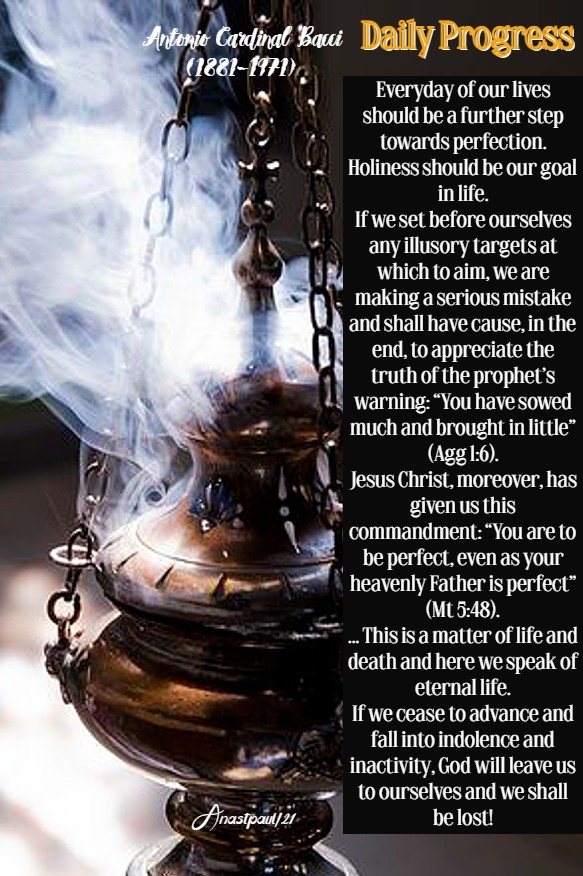
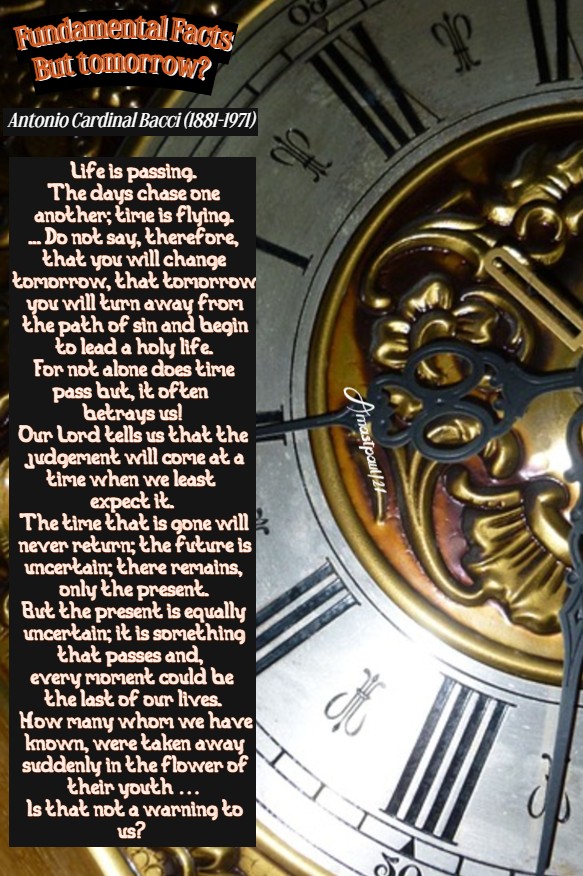
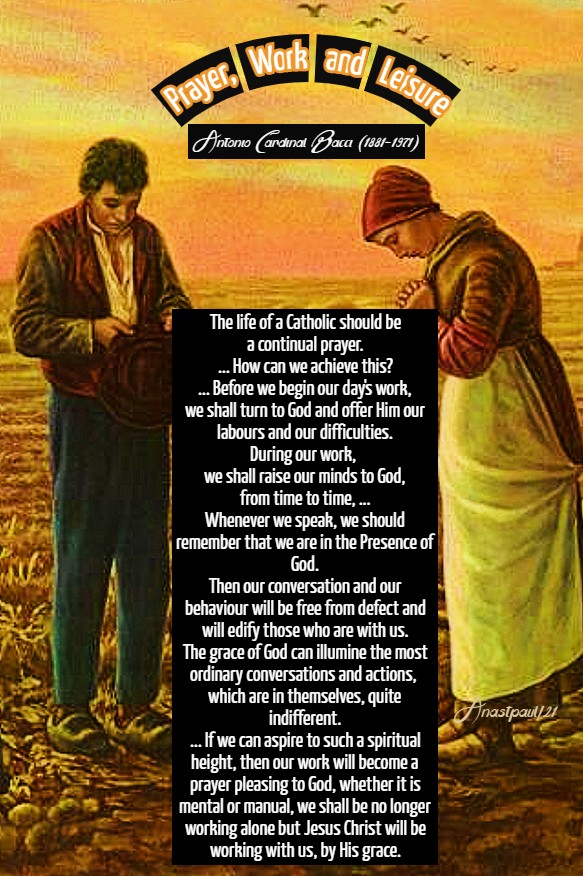
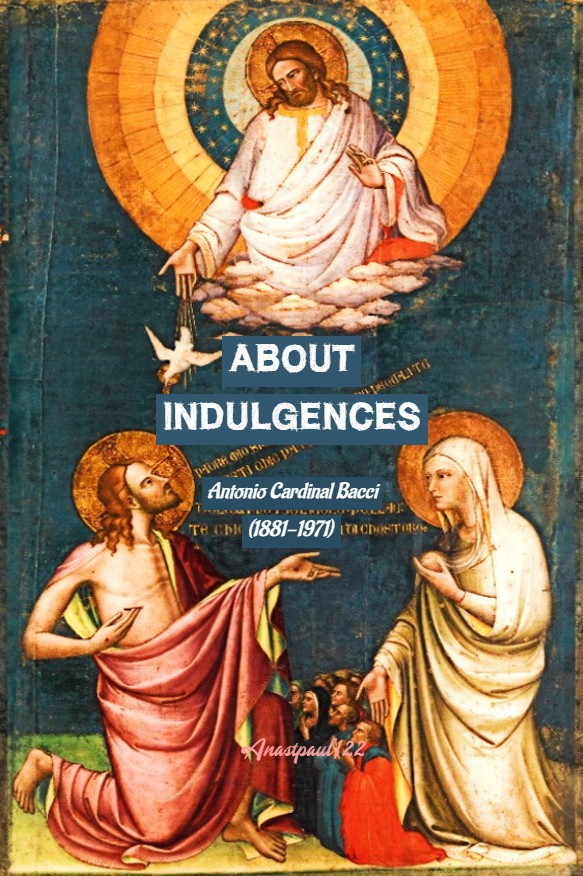
Thought for the Day – 23 June – Meditations with Antonio Cardinal Bacci (1881-1971)
Progress in the Love of God
“The entire Christian system is based on the love of God. This, is “the greatest and first commandment” (Mt 22:38) of Jesus, from which the second commandment, to love our neighbour, naturally flows. A man who does not observe this first commandment is not a Christian, whereas a man who endeavours to increase, everyday, his love for God, is a saint. There are may grades of ascent in this love but, the basic step is indicated in the words of our Divine Master: “He who has my commandments and keeps them, he is is who loves me” (Jn 14:15,21).
The love of God should not consist of an empty and ineffective sentimentality but, should comprise, a sincere determinations to please God by carrying out His will, without reserve and by becoming more closely united to Him, by the help of His holy grace. Progress in the love of God is divided by the masters of the spiritual lfe into three stages: (1) the period of purification; (2) the period of illuminations and; (3) the period of union with God. We may have advanced no farther than the first stage because there is still so much to be purified in our souls. Nevertheless, let us ask God’s grace, to help us to begin this work immediately!”
Quote/s of the Day – 23 June – The Memorial of St Joseph Cafasso (1811-1860)
“A single word from him – a look, a smile, his very presence – sufficed to dispel melancholy, drive away temptation and produce holy resolution in the soul.”
St John Bosco, writing about St Joseph
“All a person’s holiness, perfection and profit lies in doing God’s will perfectly…. Happy are we, if we succeed in pouring out our heart into God’s, in uniting our desires and our will to His, to the point, that one heart and one will are formed, wanting, what God wants, wanting, in the way, in the time and in the circumstances, what He desires and willing it all, for no other reason, than that God wills it.”
“We are born to love, we live to love and we will die, to love still more.”
“Never do anything that your heart tells you, is displeasing to Mary and, in addition, never deny her anything that you know she would welcome and desire from you.”
“Heaven is filled with converted sinners , of all kinds and there is room for more!”
One Minute Reflection – 23 June – “Month of the Sacred Heart” – Readings: Genesis 15: 1-12, 17-18, Psalms 105: 1-2, 3-4, 6-7, 8-9, Matthew 7: 15-20
“By their fruits, you shall know them.” – Matthew 7:20
REFLECTION – “Try to gather together more frequently to give thanks to God and to praise Him. For when you come together frequently, Satan’s powers are undermined, and the destruction he threatens, is destroyed in the unanimity of your faith. Nothing is better than peace, in which all warfare between heaven and earth is brought to an end.
None of this will escape you if you have perfect faith and love toward Jesus Christ. These are the beginning and the end of life – faith the beginning, love the end. When these two are found together, there is God and everything else concerning right living follows from them. No-one professing faith sins; no-one possessing love hates. “A tree is known by its fruit.” So those who profess to belong to Christ will be known by what they do. For the work we are about, is not a matter of words here and now but depends on the power of faith and on being found faithful to the end.
It is better to remain silent and to be, than to talk and not be. Teaching is good if the teacher also acts. Now there was one teacher who “spoke, and it was made” (Ps 33:9) and even what He did in silence, is worthy of the Father. He who has the word of Jesus can truly listen also to His silence in order to be perfect, that he may act through his speech and be known by his silence. Nothing is hidden from the Lord but even our secrets are close to Him. Let us then do everything, in the knowledge, that He is dwelling within us, so that we may be His temples and He may be God within us.” – St Ignatius of Antioch (c 35-c 108) Bishop and Martyr, Apostolic Father of the Church – Letter to the Ephesians, 13-15
PRAYER – God our Father, You open the gates of the kingdom of heaven to those who are born again of water and the Holy Spirit. Increase the grace You have given, so that the people who have been purified from all sin, may not forfeit the promised blessing of Your love. Grant that the Holy Spirit may ever guide and bear us in His inspiration. We make our pray through Christ, our Lord, in union with You and the Holy Spirit, one God forever, amen O HEART of love, I place all my trust in Thee; for though I fear all things from my weakness, I hope all things from Thy mercies. – Ejaculation of Saint Margaret Mary – Indulgence 300 Days, Everytime – Raccolta 180 St Pius X, 3 June 1908.
Our Morning Offering – 23 June – “Month of the Sacred Heart”
May the Heart of Jesus be the King of My Heart! By St Francis de Sales (1567-1622) Doctor of Charity
May Your Heart dwell always, in our hearts! May Your Blood ever flow, in the veins of our souls! O Sun of our hearts, You give life to all things, by the rays of Your goodness! I will not go, until Your Heart has strengthened me, O Lord Jesus! May the Heart of Jesus be the King of my heart! Blessed be God. Amen
Saint of the Day – 23 June – Blessed Marie of Oignies (1167-1213) Recluse, Mystic, Ascetic, chastely married in continence, spiritual advisor., gifted with supernatural insight and prophesy. Marie had a deep devotion to the Passion, the Blessed Virgin and for the Souls in Purgatory, for whom she offered many prayers and penances. Born in 1167 at Nivelles, Diocese of Liege, Belgium and died n 23 June 1213 of natural causes. Patronages – against fever, of women in labour . Also known as Mary, Maria, Mariam. Miriam.
Marie of Oignies was born of very wealthy parents. But while still very young, she rejected everything childish or vain — games, beautiful clothing, ornaments. At the age of fourteen, despite her desire to be a nun, she was obliged to marry a virtuous young lord. Her holy life caused admiration in her spouse and decided him to follow her examples and together they resolved to practice continence for life, to distribute their wealth to the poor and consecrate themselves to works of piety. The demon tried every artifice to make them relent in their holy resolution but failed. They drew down on themselves the most abundant blessings, as well as sarcasms and insults from the worldly.
Marie had the gift of tears and could not look at a Crucifix without breaking into a torrent of tears or being ravished in ecstasy. When a Priest told her to cease these exhibitions, she asked God to make him understand that it was not possible for a creature to arrest tears which the Holy Spirit obliges to well up. And the Priest, that same day while saying his Mass, began to shed so many tears that the Altar cloths and his vestments, were wet with them.
She had a great devotion to Saint John the Evangelist and conversed with him, as well as with her Guardian Angel. By vision and revelation, she often knew the temptations and secrets of the hearts of the persons who consulted her. She converted many, obtained graces by her prayers for the living and especially for the dead, for whom she offered prayers and sacrifices and suffered various illnesses with invincible patience. Her many visitors made her life of contemplation difficult and she decided to change her residence; her husband permitted her to go to Oignies, where she lived in retreat amidst her heavenly favours and conversations.
She saw the place destined for her in heaven and gave up her holy soul surrounded by angelic songs of bliss. The faithful who had addressed her, were so impressed with the value of her intercession, that her relics became the object of great respect. Buried at Oignies, her remains in 1609 were placed in a silver reliquary in its Parish Church of Our Lady; in 1817 they were transferred to the Church of Saint Nicolas at Nivelle, near her birthplace.
Saint John‘s Eve Vigil of the Feast of the Nativity of Saint John the Baptist
Madonna del Sasso, Bibbiena, Arezzo, Toscana, Italy (1347) – 23 June:
The little seer , Caterina, 7 years old, while her mother was washing clothes in the Vessa stream, moved away a little, placing herself near a stone . Here she saw a beautiful lady dressed all in white who, having entered the nearby field of beans, collected several and placed them in the bosom of the girl. Meanwhile, the mother was busy and the little girl ran to tell her of the lady and showed her the beans she had received but the mother paid no attention to her daughter’s meeting.
Returning to the village, Caterina complained to her mother because the beans had grown so much that their weight was difficult for her to bear but her mother told her to be patient as they would soon be home. In the evening, the mother wanted to cook some of those beans but she noticed that they were full of blood. The whole country ran to see the prodigy. The following morning, everyone went in procession to the stone and here they decided to build a Chapel in honour of the Madonna. The apparition of the Madonna del Sasso was preceded and followed by two further miraculous events.
Also in 1347, shortly before the vision, a white dove appeared on the top of the stone and was approached only by children and an old hermit , Beato Martino da Poppi, a Camaldolese Monk, who had his hermitage nearby . When the children approached it, the dove pecked at their fingers and hands but if adults approached, it flew away. In 1444, several people saw golden-blue light globes inside and outside the C hurch these appeared for about three months The podestà, together with some family and friends, returning from a hunting party, about 300 meters away from the sacred stone, saw a crowd of white-dressed young men heading in procession to the Church. A small Chapel was immediately built next to the boulder, later enlarged to include the entire boulder. It now host sthe beautiful image of the Madonna del Sasso, painted by Bicci di Lorenzo in 1435 . This image miraculously remained intact in the fire that completely destroyed the Church in 1486.
The Dominican Fathers were custodians of the Sanctuary since 1468,. They immediately worked on the construction of the current Sanctuary, in pure Renaissance style, based on a design by Giuliano da Maiano. A great amount of funds for the construction of the Sanctuary and Convent, came from Savonarola in 1495, who solicited help from noble families of Florence and from the Medici in particular.
Bl Félix of Cîteaux St Felix of Sutri Bl Frances Martel Bl Francis O’Sullivan St Hidulphus of Hainault St James of Toul St John of Rome
St Joseph Cafasso (1811-1860) “Priest of the Gallows”, Priest, Theology Lecturer, Social Reformer, Confessor, Spiritual Director (of St John Bosco and quite a few other Saints), Rector of a post-Ordination Theological College, member of the Third Order of St Francis. His will bequeathed everything to aid the Little House of Divine Providence which was the religious order founded by St Joseph Benedict Cottolengo (1786-1842). St John Bosco (1815-1888) preached the funeral Mass homily. Patronages – Italian prisons, Prison chaplains, Prisoners, those condemned to death. St Joseph Cafasso’s Biography: https://anastpaul.com/2018/06/23/saint-of-the-day-23-june-st-joseph-cafasso-1811-1860-priest-of-the-gallows/
Bl Lupo de Paredes Blessed Marie of Oignies (1167-1213) Recluse, Mystic, Ascetic St Moeliai of Nendrum Bl Peter of Juilly Bl Thomas Corsini of Orvieto St Thomas Garnet Bl Walhere of Dinant St Zenas of Philadelphia St Zeno of Philadelphia — Martyrs of Ancyra: A family of converts who were arrested, tortured and sent in chains to Ancyra, Galatia (modern Ankara, Turkey) where he was tortured more by order of governor Agrippinus during the persecutions of Diocletian. Martyr. They were – Eustochius, Gaius, Lollia, Probus, Urban. They were roasted over a fire and finally beheaded c 300 in Ancyra, Galatia (modern Ankara, Turkey).
Martyrs of Nicomedia: During the persecutions of Diocletian, many Christians fled their homes to live in caves in the area of Nicomedia. In 303 troops descended on the area, systematically hunted them down and murdered all they could find.
DAY ONE – NOVENA of DEVOTION to the PRECIOUS BLOOD of JESUS
Opening Prayer for each Day:
Grant me the grace to know You, to love You and to be truly sorry that I have offended You. I ask this grace by Your Precious Blood – By that Precious Blood, which bathed Your Sacred Body and trickled down to the ground in the Garden of Olives. By that Precious Blood, which poured forth from Your Sacred Body during the Scourging. By that Precious Blood, which covered Your Sacred Face when You were Crowned with Thorns. By that Precious Blood, which burst from Your Hands and Feet on Calvary. By that Precious Blood, which came forth from Your Sacred Heart after Your death. By that Precious Blood, which we drink in Holy Communion and of which You said: “He who feeds on My Flesh and drinks My Blood has life eternal.” Amen.
Day One: Blood Is Life
Final prayer:
Eternal Father, Creator of the universe, God of life, You have created us in Your image and likeness. We are living creatures through blood. You listen to the cries of the Blood of Your Son Jesus which calls to Heaven for reconciliation and pardon. Help us to be attentive to the cries of the blood of our brothers and sisters. Preserve in us, the work of Your love, so that, remembering always the mystery of our salvation, we are able to integrate, in our daily lives, this very mystery. Through Jesus Christ, Your Son, Our Lord. Amen
Our Father … Glory be … V. Praise and thanksgiving be evermore to Jesus. R. Who by His Blood has saved us. V. Glory to the Blood of Jesus! R. Now and forever. Amen
Thought for the Day – 22 June – “Month of the Sacred Heart” – Meditations with Antonio Cardinal Bacci (1881-1971)
The Love of the Sacred Heart of Jesus Revealed in the Gospel
“If we meditate on the pages of the Gospel, we shall find that they are vibrant with the infinite love of the Sacred Heart of Jesus. Let us, in imagination, enter the cave of Bethlehem and kneel before the crib where the Divine Infant is lying. Darkness is all around, darkness over the earth, darkness in the minds and hearts of the majority of men. But, now, the heavens open and from the brightness the voices of angels ring out, “Glory to God in the highest and on earth, peace among men of goodwill.” Who is this infant? He is the Eternal Word, the substantial image of God, Who, for love of us, has been made man. He is the Infinite One Who has willed to unite Himself with the finite, in order to lift us towards Himself. This little heart is throbbing like that of any baby but, in this throb, is expressed the love of the God-Man. It is a profound mystery, that God should have loved man so much, that He became a tiny infant. Yet, He did this so that we might love Him more easily and in order to show us His own immeasurable love. There is about this Infant, a fascination, at once human and divine, which compels us to love Him, even as Mary, Joseph and the simple shepherds loved Him. He is asking us for love, adoration and complete surrender. Can we refuse Him?
Now let us take ourselves in imagination to Calvary and kneel at the foot of the Cross. The heart which began to beat with the sacred love in the manger at Bethlehem, has given everything for us, has poured forth it’s precious blood for our salvation and, has bestowed on us, as a final gift, the Blessed Mother of God. Now, this heart is consumed with love for us and ceases to beat only when it has give us everything. “It is consummated” (Jn 19:30). At Bethlehem we have experienced a joyful ecstasy of love. Here, at the foot of the Cross, we should experience a deep sorrow, which will cause us to weep for our sins and to transform our lives after the model of Jesus Christ.”
Quote/s of the Day – 22 June – “Month of the Sacred Heart” – The Memorial of St Paulinus of Nola (c 354-431)
“He is the Light of Truth, the Path of life, the Power and Mind, Hand and Strength of the Father. He is the Sun of Justice, Source of Blessings, Flower of God, God’s Son, Creator of the world, Life of our mortality and Death to our death. He is the Master of the virtues. He is God to us …!”
“By His rights as Lord, He demands wholly our hearts, tongues and heads. He wishes to be the object of our thought and understanding, our belief and reading, our fear and love. . . ”
Above Poem 10, from The Poems of St. Paulinus of Nola,
“With all my heart I pray, for the hope of heaven because hope and faith, are of much more value, than all the riches of this world.”
“The man without Christ is dust and shadow.”
St Paulinus of Nola (c 354-431) Bishop, Confessor, Father of the Church
One Minute Reflection – 22 June – “Month of the Sacred Heart” – Genesis 13: 2, 5-18, Psalms 15: 2-3a, 3bc-4ab, 5, Matthew 7: 6, 12-14
“The road that leads to life” … Matthew 7:14
REFLECTION – “This, beloved, is the way in which we found our salvation, Jesus Christ, the High Priest who offers our gifts, the patron and helper in our weakness (Heb 10:20; 7:27; 4:15). It is through Him, that we look straight at the heavens above. Through Him, we see mirrored, God’s faultless and transcendent countenance. Through Him, the eyes of our heart were opened. Through Him, our unintelligent and darkened mind shoots up into the light. Through Him, the Master was pleased to let us taste the knowledge that never fades, He who is “the radiance of His splendour, who towers as much above the angels, as the title He has inherited, is superior to theirs” (He 1:3-4) (…)
Let us take our body. The head is nothing without the feet and the feet are nothing without the head. The smallest organs of our body are necessary and valuable to the whole body, in fact, all parts conspire and yield the same obedience, toward maintaining the whole of the body (cf.1 Co 12:12f.). Therefore, let the whole of our body be maintained in Christ Jesus and let each submit to their neighbour’s rights in the measure determined by the special gift bestowed on them. Let the strong care for the weak and the weak respect the strong; let the rich support the poor and the poor render thanks to God for giving them the means of supplying their needs; let the wise show their wisdom, not in words but in active help; the humble must not testify to themselves but leave it to another to testify in their behalf. Those who are continent must not boast, knowing that it is another who confers on them the ability to remain continent.
Let us, therefore, reflect brethren, of what clay we were made, what and who we were when we entered the world, out of what grave and darkness, our Maker and Creator has brought us into the world, where He has prepared His benefits before our birth. Since, then, we owe all these blessings to Him, we are obliged to thank Him in every way.” … St Pope Clement I (c 35 – c 99) –Pope from c 90 to c 99 – Letter to the Corinthians, § 36-38
PRAYER – Increase in us, Lord, Your gift of faith, so that the praise we offer You, may ever yield its fruit from heaven, May the Spirit pour into our hearts, that we may walk in Your light and become like You. May the prayers of the Blessed Virgin Mary, Our Lady of Grace and all Your Saints, help us in our striving for holiness. Through Christ, our Lord in union with the Holy Spirit, God forever, amen. SWEET HEART of my JESUS, Make me love Thee ever more and more! – Indulgence 300 Days Everytime –Plenary Once a Month – Raccolta 162 – Bl Pius IX 26 November 1876.
Our Morning Offering – 22 June – “Month of the Sacred Heart”
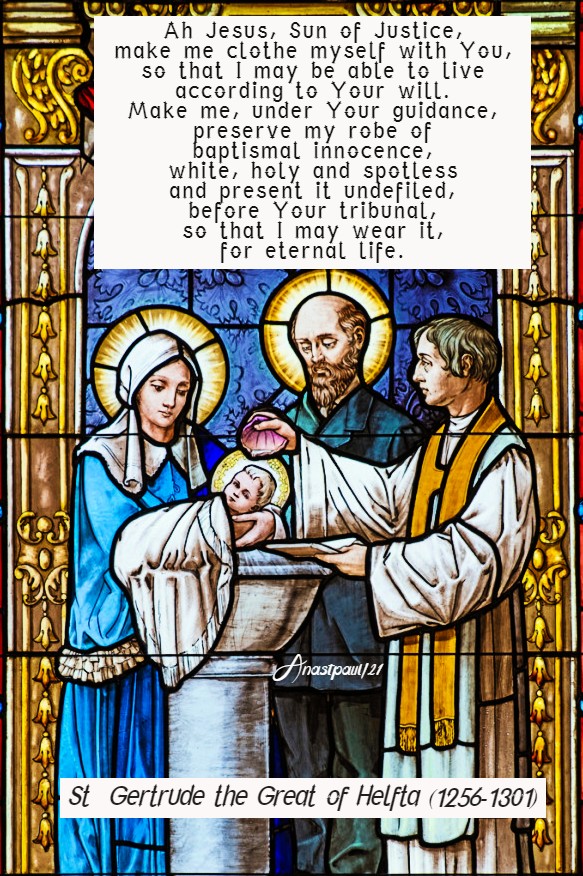
O Sacred Heart of Jesus By St Gertrude the Great (1256-1302)
O Sacred Heart of Jesus, Fountain of eternal life, Your Heart is a glowing Furnace of Love. You are my Refuge and my Sanctuary. O my adorable and loving Saviour, consume my heart with the burning fire with which Your Heart is enflamed. Pour down on my soul those graces which flow from Your love. Let my heart be united with Your Heart. Let my will be conformed to Your Will in all things. May Your Will be the Rule of all my desires and actions. Amen
Saint of the Day – 22 June – Blessed Pope Innocent V OP (c 1225-1275) Bishop of Rome and Ruler of the Papal States from 21 January to 22 June 1276 (the date of his death), Friar of the Order of Preachers, Theologian, renowned Preacher, Scholar, Writer, Dominican Office bearer, disciple of St Albert the Great and collaborator and friend of St Thomas Aquinas.and St Bonaventure. He acquired a reputation as an effective preacher. He held one of the two “Dominican Chairs” at the University of Paris, the other being held by St Albert the Great and was instrumental in helping with the compilation of the “program of studies” for the Order. In 1269, Peter of Tarentaise was Provincial of the French Province of Dominicans. He was a close collaborator of Blessed Pope Gregory X, who named him Bishop of Ostia and raised him to Cardinal in 1273. Upon the death of Gregory in 1276, Peter was elected Pope, taking the name Innocent V. He died about five months later but during his brief tenure facilitated a peace between Genoa and King Charles I of Sicily. Innocent V was Beatified on 9 March 1898 by Pope Leo XIII. Born in c 1225 at Tarentaise, Burgundy, France as Petrus a Tarentasia and died on 22 June 1276 at Rome, Italy of natural causes. Also known as – Doctor famosissimus, Petrus a Tarentasia, Peter of Tarentaise.
The Roman Martyrology states of him today: “At Rome, Blessed Innocent V, Pope who laboured with mildness and prudence, to maintain liberty for the Church and harmony among Christians. The veneration paid to him. Pope Leo XIII approved and confirmed.”
Petrus a Tarentasia, was barely 10 years old when he was admitted to the Dominican Order by Blessed Jordan of Saxony as a boy-novice and sent to Paris to study. Like Saint Thomas Aquinas, Blessed Ambrose of Siena and other luminaries of the 13th century, he fell under the masterly tutelage of Saint Albert the Great. He received his Master’s Degree in theology in 1259, then he taught for some years in Paris, where he contributed a great deal to the Order’s reputation for learning. He wrote a number of commentaries on Scripture and the Commentary on the Sentences of Peter Lombard but he devoted most of his time to the classroom. He soon became famous as a preacher and theologian, and in 1259, with a committee including his friend Thomas Aquinas, composed a plan of study that is still the basis of Dominican teaching.
At age 37, Peter began the long years of responsibility in the various offices he was to hold in his lifetime as Prior Provincial of France. He visited ,on foot, all Dominican houses under his care and was then sent to Paris to replace Thomas Aquinas at the University of Paris. Twice Provincial, he was chosen Archbishop of Lyons in 1272 and administered the affairs of the Diocese for some time, though he was never actually Consecrated for that See.
The next year Peter was appointed Cardinal-Archbishop of Ostia, Italy, while still administering the See of Lyons. With the great Franciscan, Saint Bonaventure, he assumed much of the labour of the Council of Lyons, to which Saint Thomas was hastening at the time of his death. To the problems of clerical reform and the healing of the Greek schism the two gifted Friars devoted their finest talents. Before the Council was over, Bonaventure died, and Peter of Tarentaise preached the funeral panegyric.
In January 1276, Peter was with Blessed Pope Gregory X when the latter died at Arezzo. The conclave was held in the following month. On 21 January, 1276, Peter of Tarentaise received every vote except his own. With a sad heart, he left the seclusion of his religious home to ascend the Fisherman’s Throne as Pope Innocent V.
The reign of the new Pope, which promised so much to a harassed people, was to be very brief. But, imbued with the spirit of the Apostles, he crowded a lifetime into the short space given him.
He instigated a new crusade against the Saracens and began reforms in the matter of regular observance. He actually succeeded in solving many of the questions of the Greek schism and in establishing a short-lived truce. He struggled to reconcile the Guelphs and Ghibellines, restored peace between Pisa and Lucca and acted as mediator between Rudolph of Hapsburg and Charles of Anjou. He restored the custom of personally assisting at choral functions with the canons of the Lateran and he inspired all, with the love that animated his heart.
Had the measures begun by Innocent V had time to be fully realised, he might have accomplished great good for the Church; he did at least open the way for those who were to follow him.
Death stopped the hand of the zealous Pope when he had reigned only five months. Like his friends Saint Thomas and Saint Bonaventure, he was untouched by the honours and dignity with which he had been favoured and death found him exactly what he had been for more than 40 years–a simple, humble Friar.
Madonna Ta’ Pinu, Gharb, Gozo, Malta ( 1883) – 22 June and 15 Augus,the Feast of the Assumpton:
“Ta’ Pinu” means “Philip’s,” a reference to Pinu (Philip) Gauchi, who financed restoration of the country Chapel and in 1619, commissioned its Altarpiece, a painting of the Assumption by Amadeo Perugino. The Chapel was again in disrepair by 22 June 1883, when Karmela Grima, a 40, year old woman, heard a female voice coming from the Chapel on her way home from the nearby fields: “Come, because it will be another year before you will be able to return.” After Karmela knelt to pray in the Chapel, the voice said, “Recite three Hail Marys in honour of the three days my body remained in the tomb” (before being assumed into heaven). Very soon the pious woman fell ill, remaining bedridden over a year without telling anyone about the voice. In 1885, she told a friend, Francesco Pinelli, who revealed that about the same time, he also had heard a woman’s voice, asking for devotion to the “hidden wound” of her Son from carrying the Cross. When Francesco’s mother was miraculously healed after praying to Our Lady of Ta Pinu, the isolated Chapel began attracting pilgrims. Soon a better building was needed. A new Church, begun in 1920, was finally Consecrated in 1932. Still a place of pilgrimage, its major festival is the Assumption, on 15 August.
Basilica of the Blessed Virgin Of Ta’ Pinu.
Ta’ Pinu Sanctuary holds an annual ceremony of the presentation of babies to Our Lady of Ta’ Pinu, during which. Baptised babies are presented to The Blessed Mother of Ta’ Pinu, while the parents pray to the Mother of God that she may keep her maternal protection over their children and families. The Virgin of Ta’ Pinu has often been connected to several miraculous cures and graces, of both Maltese and foreigners, who have been saved, cured or helped through the intercession of the Virgin. The Sanctuary is adorned with many ex-votos which have been left by those who have either been cured, saved or received favours and graces through the intercession of Our Lady Of Ta’ Pinu. Today, these can still be seen by the many people who everyday visit the Basilica.
A mosaic of the Altarpiece image, one of 6 mosaics. There are also 76 stained glass windows in the Basilica.
Some of the ex-voto in the Ta’ Pinu Sanctuary.
St Paulinus of Nola (c 354-431) Bishop, Confessor, Poet, Writer, Apostle of Charity, Preacher, Orator, Senator and Governor. St Paulinus was an inspiration to many—including six great Saints of the Church, who referenced him in letters of encouragement to others: St Augustine, St Jerome, Melania, St Martin of Tours, St Gregory and St Ambrose. St Augustine wrote, “Go to Campania– there study Paulinus, that choice servant of God. With what generosity, with what still greater humility, he has flung from himself the burden of this world’s grandeurs to take on him the yoke of Christ and in His service how serene and unobtrusive his life!” About St Paulinus: https://anastpaul.com/2018/06/22/saint-of-the-day-22-june-st-paulinus-of-nola-c-354-431/
St Aaron of Brettany St Aaron of Pais-de-Laon St Alban of Britain Bl Altrude of Rome St Consortia St Cronan of Ferns St Eberhard of Salzburg St Eusebius of Samosata St Exuperantius of Como St Flavius Clemens St Gregory of Agrigento St Heraclius the Soldier St Hespérius of Metz Blessed Pope Innocent V OP (c 1225-1275) Papal Ascesion 21 January 1276 St John IV of Naples St Julius of Pais-de-Laon Bl Kristina Hamm Bl Marie Lhuilier St Nicetas of Remesiana St Precia of Epinal St Rotrudis of Saint-Omer St Rufinus of Alexandria — Martyrs of Samaria – 1480 saints: 1480 Christians massacred in and near Samaria during the war between the Greek Emperor Heraclius and the pagan Chosroas of Persia. c 614 in the vicinity of Samaria, Palestine.
I nearly forgot to remind you – please pray with me.
Devotion to the Most Precious Blood is not a spiritual option, it is a spiritual obligation and that, not only for Priests but for every follower of Christ. I really believe that one of the symptoms of modern society (and I would even include, sadly, modern Catholic society) one of the symptoms of a growing, gnawing secularism is the lessening and the weakening of devotion to the Precious Blood. Devotion, as we know, is a composite of three elements: -It is first- veneration, it is secondly- invocation, and it is thirdly- imitation. In other words, devotion to the Precious Blood of Christ, the Lamb of God who was slain, is first of all to be veneration on our part, which is a composite of knowledge, love and adoration. We are to study to come to a deeper understanding of what those two casual words, Precious Blood, really mean.
I found this passage in the oldest document, outside of Sacred Scripture, from the first century of the Christian era – to be exact, from Pope St. Clement I, dated about 96. Says Pope Clement: “Let us fix our gaze on the Blood of Christ and realise how truly precious It is, seeing that it was poured out for our salvation and brought the grace of conversion to the whole world.“
To understand the meaning of the Precious Blood, we must get some comprehension of the gravity of sin, of the awfulness of offending God because, it required the Blood of the Son of God to forgive that sin. We are living in an age in which to sin has become fashionable.
This veneration of the Precious Blood, which is the first element in our devotion to the Precious Blood, means, that we have a deep sensitivity to the awfulness of sin. Sin must be terrible. It must be awful. It must be the most dreadful thing in the universe. Why? Because it cost the living God in human form, the shedding of His Blood.
Lord Jesus, You became Man, in order, by Your Passion and Death and the draining of Your Blood on the Cross, might prove to us, how much You, our God, love us. Protect us, dear Jesus, from ever running away from the sight of blood. Strengthen our weak human wills so that we will not only, not run away from the Cross but welcome every opportunity to shed our blood in spirit, in union with Your Precious Blood, so that, dying to ourselves in time. we might live with You in Eternity. Amen
Thought for the Day – 21 June – Meditations with Antonio Cardinal Bacci (1881-1971)
St Aloysius Gonzaga
“St Aloysius Gonzaga is one of the outstanding models of holy purity, for young and old alike. We are told, that when he was nine years of age and went to the City of Florence, he went to the Church of the Annunziata, to pray before the picture of our Blessed Lady. It was then, that he experienced the ardent desire to consecrate himself to God. He was the eldest son of Prince Ferdinand de Gonzaga and, therefore, heir to his father’s title. But, from this moment, he was determined to spend his life in the service of God. He made a vow of perpetual chastity and placed himself under the protection of the Blessed Virgin.
Now, his life became a continual ascent towards perfection. Hs chastity, which he had offered to Our Lady, remained spotless until his death. The spirit of evil could make no headway against his angelic virtue. This was a grace which he merited as a result of his prayers and penances. He often spent three or four hours, kneeling in prayer and contemplation. Even at night, he rose from his bed, in order to pray. His mind and heart where in Heaven, rather than upon earth. His prayer was an intimate conversation with Jesus, Mary and the Saints. Innocent though he was, he practised servere mortifications. Believing himself to be a great sinner, he scourged his body until his blood flowed freely and deprived himself of food and sleep.
Do we wish to preserve our purity and to become saints? If so, let us remember that without prayer and mortification, this is impossible. Jesus said to His disciples “that they must always pray and not lose heart” (Lk 18:1) “Pray” He said again, “that you may not enter into temptation” (Lk 22:40) and further, “Unless you repent, you will all perish” (Lk 13:5).”
Quote/s of the Day – 21 June – The Memorial of St Aloysius de Gonzaga SJ (1568-1591)
“There is no more evident sign that anyone is a saint and of the number of the elect, than to see him leading a good life and, at the same time, a prey to desolation, suffering and trials.”
O Holy Mary, my mistress, into your blessed trust and special custody and into the grasp of your mercy I this day, everyday and in the hour of my death, commend my soul and my body. To you, I commit, all my anxieties and miseries, my life and the end of my life, that by your most holy intercession and by your merits all my actions may be directed and disposed according to your will and that of your Son. Amen
One Minute Reflection – 22 June – “Month of the Sacred Heart” , Readings: Genesis 12: 1-9, Psalms 33: 12-13, 18-19, 20 and 22, Matthew 7:1-5 .
“Thou hypocrite, cast out first, the beam in thy own eye and then shalt thou see, to cast the mote out of thy brother’s eye.” – Matthew 7:5
REFLECTION – “You are very good at excusing and whitewashing your own behaviour but you will not allow your neighbour’s excuses. You might more fairly accuse yourself and excuse your brother. If you wish to be borne with, then bear. Look how far you are, even now, from a true and lowly love which knows no anger nor indignation except against itself. It is no great thing to live with the good and docile; everyone naturally likes to do so – just as we are all delighted to live in peace with friends who share our views. But if you can live at peace with harsh, wayward, unbridled and disputatious folk; this is a great grace and a virile achievement worthy of all praise … The greater the skill in suffering, the greater the peace. In this is self-mastery, lordship over the world, friendship with Christ, the inheritance of Heaven.” – Thomas à Kempis CRSA (1380-1471) – The Imitation of Christ – Book II, Ch 3
PRAYER – As we pray before You Lord, we ask You, in Your loving kindness, for the grace always to ponder in our hearts what we proclaim with our lips. Keep us in Your commandments and strengthen us by the prayers of the Blessed Virgin Mother, that we may live by a holy conscience and never flinch from the protection of truth. Grant this we pray through Jesus Christ, Your Son, our Lord, in the love and unity of the Holy Spirit, God for always and forever, amen. SACRED Heart of JESUS, Thy Kingdom come! Indulgence 300 Days.Everytime Raccolta 178 St Pius X, 4 May 1906.
Our Morning Offering – 21 June – “Month of the Sacred Heart”
Heart of Jesus! Unknown author (Published 1929)
Heart of Jesus! I entreat Fill my soul with graces sweet! Heart of Jesus! Help me win Freedom from all mortal sin!
Heart of Jesus! Keep my soul Ever under Thy control! Heart of Jesus! Kindle mine With the fire of faith divine!
Heart of Jesus! Give me a light To see, to think, to act aright! Heart of Jesus! Sorrow-rent Make me truly penitent!
Heart of Jesus! Soften mine Out of gratitude to Thine! Heart of Jesus! Full of love Lead my thoughts to heaven above!
Heart of Jesus! Give me grace My purgatory here to face! Heart of Jesus! Let me be Ever filled with love of Thee! Heart of Jesus! Holy shrine, Be It ever home of mine!
Saint of the Day – 21 June – Saint Alban of Mainz (Died c 400) Martyr, Priest, Missionary, Confessor Born in Greece or Albania (sources vary) and died in c 400 by pagan Vandals at Hanum, Germany. His body was beheaded post-mortem. Patronages – against epilepsy, of epileptics, against kidney stones, against hernia; hernia victims. Also known as – Albano di Magonza, Albinus of Mainz.
The Roman Martyrology states of him today: “St Alban. Martyr, who was made worthy of the crown of life, after long laours and severe combats.”
The oldest surviving substantial source about Alban of Mainz is the Martyrologium (c 845) of Blessed Rabanus Maurus (776-856), who had two separate entries for the Mainzer Alban and the English Alban. Concerning Alban of Mainz, he wrote:
21 June: The Martyr Alban from native Moguntia [Mainz], who during the reign of Emperor Theodosius went forward from the island of Namsia with the Saint Theonestus and Ursus and reached Mediolanum [Milan] and from there he went out and, with the help of the Lord, he arrived in the provinces of Gaul, and stayed there in the Saviour’s name, willing to suffer Martyrdom in the service of God. But after Martyrdom took the blessed Ursus in the City of Augusta, Theonestus arrived with Alban in Moguntiacum [Mainz]; while preaching the word of God there, his pupil Alban fulfilled Martyrdom and was buried there, near the City.
— Rabanus Maurus, Martyrologium. Iunius (c. 845)
The second substantial source is the Passio sancti Albani, an incomplete hagiography written in the 1060s or 1070s by schoolmaster Gozwin, who lamented that very little evidence about Alban had survived to his day. Gozwin’s account is much longer and adds many elements not found in Rabanus’ Martyrologium, including a prologue about the First Council of Nicaea (325) which condemned Arianism, that, nevertheless, persisted until Honorius and Arcadius succeeded Theodosius (395). In that time, Alban is mentioned as one of four disciples of St Theonestus, the others being Sts Ursus, Tabraha and Tabratha. These five Catholic clerics are forced to flee from North Africa to Italy after being persecuted by Huneric, the fiercely Arian King of the Vandals, travelling to St Ambrose, Bishop of Milan. The most wise Ambrose teaches Theonestus and his disciples refined theology and sends them out to convert the ‘Arian beasts’ in Gaul and Germany. They pass a City called Augusta, where Ursus is killed by Arians, and Alban is eventually beheaded in Mainz by local Arians to whom he was preaching the Catholic doctrine of the Trinity. The legend finishes by narrating, that Alban carried his head in his hands to the place where he wanted to be buried.
A Church and Monastery were built in Mainz in 804 to honour Alban. A map of Fulda from 786 seems to have already mentioned a chapel in Mainz dedicated to Alban. It became the centre of Saint Alban’s Abbey, a large Benedictine Monastery, which was renovated by Charlemagne in 806. The Monastery was devastated in 1557 and never restored.
Albert II, Count of Namur founded the collegiate Church of St Alban at Namur in 1047. When the Diocese of Namur was created in 1559, it was expanded as St Aubin’s Cathedral, which claims to possess relics of Alban of Mainz.
Madonna dei Miracoli / Our Lady of the Miracles, Alcamo, Sicily (1547) – 21 June:
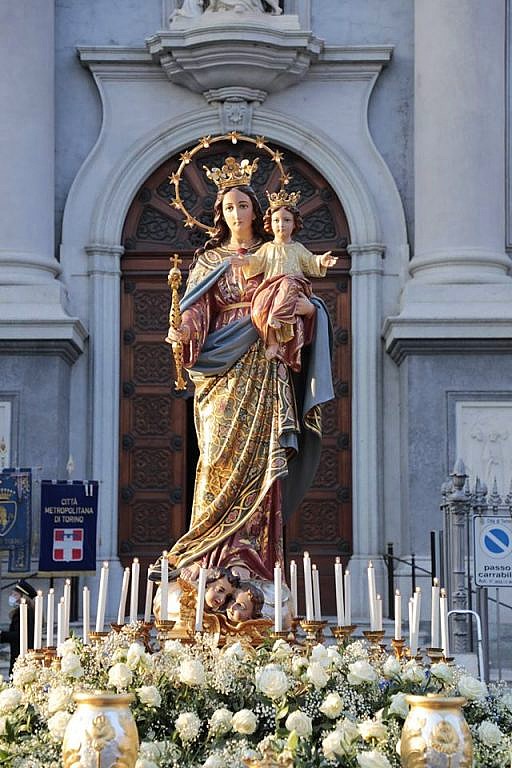
The Processional Statue
The cult of Our Lady of the Miracles in Alcamo dates to 21 June 1547, the day people remember the Madonna’s apparition to some women near a stream running north of Alcamo. According to tradition while washing their clothes in the stream, the women, with a blind and a deaf one among them, saw the apparition of a woman with a child and were hit by a gust of pebbles, during the apparition but without receiving any injury or pain; on the contrary, after being hit by the pebbles, they strangely felt a certain sense of wellbeing and recovered their health. After learning the news, the women’s husbands, thinking that it was a joke, went to investigate, thinking that someone was hidden among the bushes but they didn’t find anybody. Then the local authorities inquired on the spot, cut down the near grove and found the ruins of a “cuba,” an old arc of a mill that nobody remembered any longer and insidem there was a fresco on a stone made by an anonymous painter of the 13th century representing Our Lady with the Child Jesus, which at first. the believers called “Madonna Fons Misericordiae” (that is Our Lady Source of Mercy).
A representation of the discovery of Our Lady of Miracles’ image (inside its Chapel in the Basilica of Our Lady of the Assumption in Alcamo).
After this discovery, all the people started praying before the rediscovered image and in the following days there were several miracles. Our Lady of Miracles became the Patron of Alcamo, in substitution of the Holy Crucified, who was the Patron Saint of Alcamo and other near small towns (among which Calatafimi and Salemi). The old Patron Saint’s memory however, remains: in fact, they call St Francesco of Paola “santu patri” (whose translation means “Patron Saint”) as the Church named after him was called the Holy Crucified Church. The Madonna’s discovered image was first called “Our Lady Source of Mercy” but thanks to the high number of subsequent miracles, in 1583 the name was changed into “Our Lady of Miracles”. Further to these events, Don Fernando Vega, Alcamo’s governor, ordered the construction of the Sanctuary of Our Lady of Miracles, which hosts the Madonna’s image. Inside the Church there is a white marble sarcophagus containing the mortal remains of the governor Don Fernando Vega, according to his will.
The Crowned Painting of the Madonna of Miracles in the Sanctuary at Alcamo
Every year in Alcamo there are the celebrations in honour of Our Lady of Miracles from 19 June until 21 of June. This is the most important religious festivity in Alcamo. The real celebrations are often anticipated by other events, so extending the feast to about two weeks, in this way the beginning of the celebrations changes every year, while the last day is always the 21 June. The celebrations include: The pealing of church bells” which opens the celebrations together with the burst of fireworks and the passing of the band through the town streets; in the past Alcamo’s band also joined the musical band of Partinico (a neighbouring small town). The Holy Mass in honour of Our Lady of Miracles in the Basilica di Santa Maria Assunta (also called “Mother Church”), in which all confraternities and laity groups in Alcamo take part. The procession to the Sanctuary of Madonna of Miracles (called “calata”), in which all civil and religious authorities of the town (together with the Mayor) take part; they are preceded by the band of the town. In old times people took also the animals that had recovered from an illness. Inside the Sanctuary they sing Vespers and then there is the Eucharistic Blessing/Benediction.
St Raymond of Barbastro St Rufinus of Syracuse St Suibhne the Sage St Terence St Ursicenus of Pavia — Martyrs of Taw – 3+ saints: Three Christians of different backgrounds who were martyred together – Moses, Paphnutius, Thomas. They were beheaded in Taw, Egypt, date unknown.
Thought for the Day – 20 June – Meditations with Antonio Cardinal Bacci (1881-1971)
The Storms of Life
“At other times however, the tempest will come from outside ourselves and will have a shattering effect on our spiritual life. It may be some insult which has seriously wounded us. There may be somebody near to us who has grown quite insufferable. Or perhaps suffering will come to us in the guise of illness, disgrace or loss of our dear ones. We shall feel lonely and abandoned in the midst of the storm. To whom shall we have recourse in our hour of need? Shall we turn to our fellow-men? Perhaps there will be nobody able to understand us perfectly, or, if there is somebody who sympathises with us,he may be able to do nothing for us, save to utter a few kind words.
Let us turn, therefore, to Jesus on the Cross and to Jesus in the Blessed Eucharist. The Crucifix will teach us how to suffer with resignation and with love. Before this mystery of infinite love, all our anguish and unrest, will give way to a Christian acceptance of suffering.
If this is not enough, let us turn to Jesus in the Blessed Eucharist. Let us invite Him into our hearts to calm the tempest and to give us His divine grace, which will conquer every temptation and heal every wound.”
Quote/s of the day – 20 June – “Month of the Sacred Heart” – Job 38: 1, 8-11, Psalms 107: 23-24, 25-26, 28-29, 30-31 (1b), Second Corinthians 5: 14-17, Fospel: Mark 4: 35-41
“And the wind ceased and there was a great calm. He said to them, “Why are you so afraid? Have you still no faith?”
Mark 4:39-40
“Let not your hearts be troubled, neither let them be afraid.”
John 14:27
“Can any of you by worrying add a moment to your life-span?”
Luke 12:25
“Place all your trust in God, let Him be your fear and your love. He will answer for you, He will do what is best for you. You have here no lasting home. You are a stranger and a pilgrim wherever you may be and you shall have no rest, until you are wholly united with Christ. Why do you look about here when this is not the place of your repose?”
Thomas à Kempis CRSA (1380-1471)
“Let nothing perturb you, nothing frighten you. All things pass. God does not change. Patience achieves everything.”
St Teresa of Jesus of Avila (1515-1582) Doctor of Prayer
“ … Let the fine point of your spirit always turn towards God, its north. Your are about to take to the high seas of the world, do not, on this account, alter dial or mast, sail or anchor or wind. Keep Jesus Christ as your dial, at all times, His Cross for mast, on which to hoist your resolutions, as a sail. Let your anchor be, profound trust in Him and set out early!”
St Francis de Sales (1567-1622) Doctor of the Church
“Throw yourself into God’s arms. He will carry you when the road is rough.”
One Minute Reflection – 20 June – “Month of the Sacred Heart” – Job 38: 1, 8-11, Psalms 107: 23-24, 25-26, 28-29, 30-31 (1b), Second Corinthians 5: 14-17, Gospel: Mark 4: 35-41
And the wind ceased and there was a great calm. He said to them, “Why are you so afraid? Have you still no faith?” – Mark 4:39-40
REFLECTION – “Your heart is imperilled, your heart is taking a battering. On hearing yourself insulted, you long to retaliate but, the joy of revenge, brings with it another kind of misfortune – shipwreck. Why is this? Because Christ is asleep in you. What do I mean? I mean you have forgotten His presence. Rouse Him, then; remember Him, let Him keep watch within you, pay heed to Him. … You have forgotten that when Christ was being crucified He said: “Father, forgive them, for they know not what they do” (Lk 23:34). Christ, the sleeper in your heart, had no desire for vengeance in His.
Rouse Him, then, call Him to mind. (To remember Him, is to recall His words; to remember Him, is to recall His commands.) Then, when He is awake within you, you will ask yourself, “Whatever kind of wretch am I to be thirsting for revenge? … He who said, ‘Give and it shall be given you; forgive and you will be forgiven,’ would indeed decline to acknowledge me. So I will curb my anger and restore peace to my heart.” Now all is calm again. Christ has rebuked the sea. … This is the moment to awaken Christ and let Him remind you of those words: “Who can this be? Even the winds and the sea obey him” Who is this whom the sea obeys? “It is he to whom the sea belongs, for he made it” (Ps 95[94]:5); “all things were made through him” (Jn 1:3).
Try, then, to be more like the wind and the sea – obey the God who made you. The sea obeys Christ’s command and are you going to turn a deaf ear to it? … Words, actions, schemes, what are all these but a constant huffing and puffing, a refusal to be still at Christ’s command? When your heart is in a troubled state, do not let the waves overwhelm you.
If, since we are only human, the driving wind should stir up in us a tumult of emotions, let us not despair but awaken Christ, so that we may sail in quiet waters and reach at last our heavenly homeland.” – St Augustine (354-430), Bishop of Hippo, Father and Doctor of Grace – Sermon 63
PRAYER – Waken us holy Lord, to Your presence in us, with us, now and forever. Open our eyes to see Your presence and our ears to hear Your voice. Teach us that You are always with us and Your presence is all we need to survive the storms and the winds of this world. For You, just You, are our rock and our foundation, our ship and our harbour. Grant that the prayers of all Your Angels and Saints with their Queen and ours, Mother Mary, may serve to remind us of Your love and power. Through Christ our Lord, with the Holy Spirit, God forever, amen. EUCHARISTIC Heart of JESUS, model of the priestly heart, have mercy on us. COR JESU Eucharisticum, cordis sacerdotalis exemplar, miserere nobis. – Indulgence 300 Days, Everytime – Raccolta 177St Pius X, 11 September 1907
Our Morning Offering – 20June – “Month of the Sacred Heart”
O Lord, My God, I am Not Worthy Prayer Before Holy Communion By St John Chrysostom (347-407) Father & Doctor of the Church
O Lord, my God, I am not worthy, that You should come into my soul but I rejoice that You will come to me, because in Your loving kindness, You desire to dwell in me. You ask me to open the door of my soul, which You alone have created, so that You may enter into it, with Your loving kindness and dispel the darkness of my mind. I believe that You will do this for You did not turn away Mary Magdalene when she approached You in tears. Neither did You withhold forgiveness from the tax collector, who repented of his sins, or from the good thief, who asked to be received into Your kingdom. Indeed, You numbered as Your friends all who came to You with repentant hearts. O God, You alone are blessed always, now and forever. Amen
You must be logged in to post a comment.